We are at 18 degrees north latitude, about six degrees further south than Key West, and this is thoroughly tropical. In the trees overhead there are occasional flashes of red in the canopy as excessively noisy macaws (parrots) make their ungainly way around the campground. I’ve been shit upon twice (so far) on this journey by pigeons, and I can say I am not looking forward to finding out how hard parrots crap on the world below them. So far, so good.

We drove here Thursday from our overnight stop on the road just south of Veracruz and as usual the drive was short in terms of miles but filled with things to see.
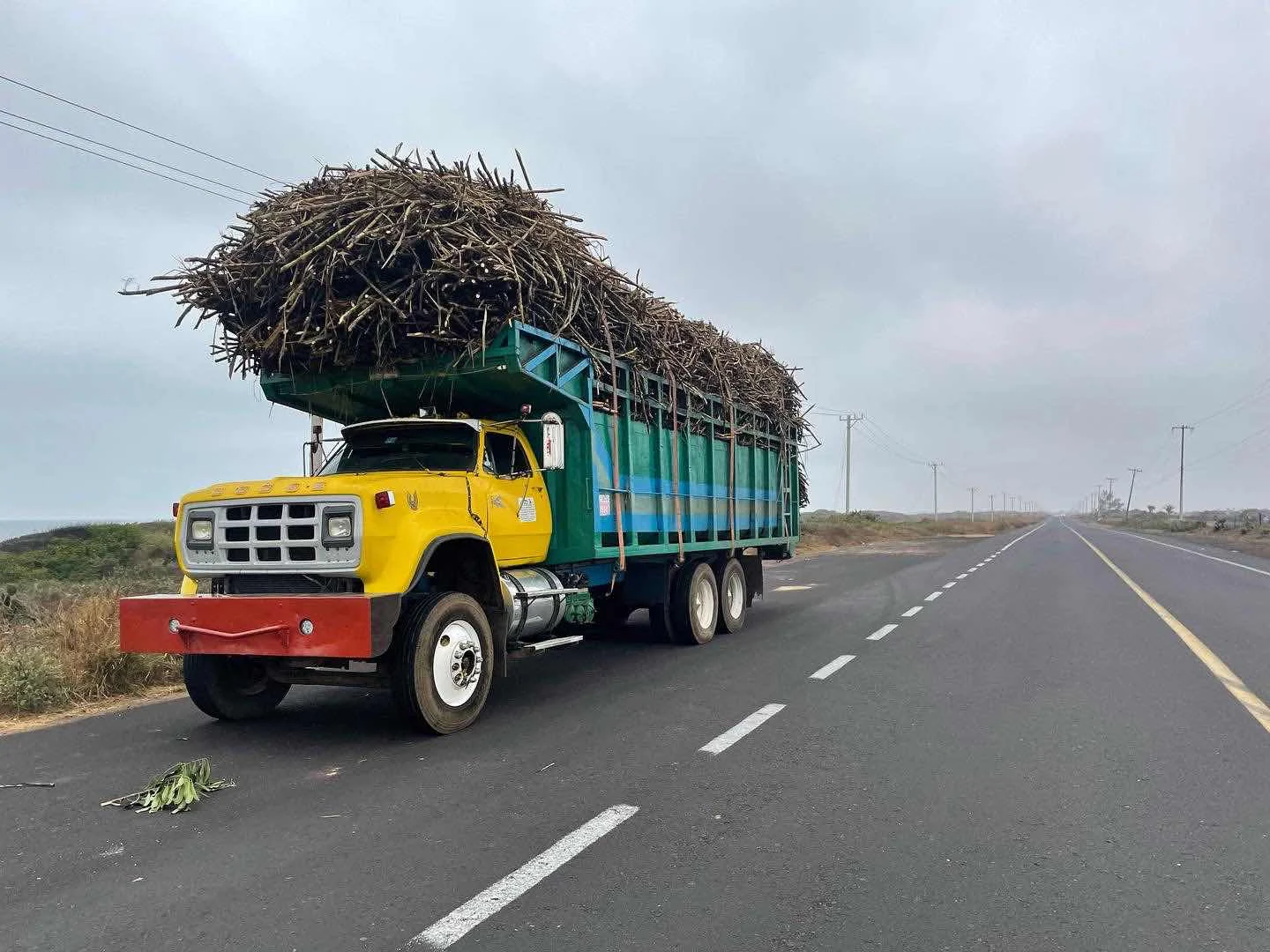
Our stopping point on Highway 180, the coast road was a small Pemex where we filled up with gas and asked if we could spend the night. “No problem” he said and we parked in a corner of the lot under a street light which gave Rusty the opportunity for an al fresco dinner.

We both really enjoyed this stop at a lovely gas station lost along the dunes of an undeveloped coastline. Free beach parking all to ourselves. We ate a fresh salad from Costco in Veracruz with roast chicken and drank boxed white wine which they sell in the Supermarket called Soriana. It is amazingly light and drinkable at three bucks a liter. Not sweet and produces no headaches.

In the morning Rusty was ready to walk and we crossed the highway to the beach.

We are at the bottom end of the Caribbean Sea here. East winds predominate which means the waves and any debris they are carrying are pushed up onto the shore along this coast. Under gray overcast skies with a sea mist hanging over everything the effect is that of a wild, lonely and barren spot. It felt rather splendid to wake up and be alone in this place.

There are some few North American travelers who drive to the Yucatán fleshpots from Texas and in a normal year one might expect to encounter Europeans up from Guatemala, 300 miles away, or landing their trucks at the port of Veracruz, but Covid stopped all that and the normal traffic is only now slowly resuming.

In the meantime we have these places to ourselves, shared with locals who are of a kindness that takes us by surprise. And then there are the normal perks while driving through Mexico. We stopped at a tope (speed bump) and bought two pizza sandwich type things for breakfast. Warm and spicy they were delicious. I doubt locals pay $1:50 each or two for fifty pesos but we assume we get the gringo rate and it’s a tax we don’t mind paying. Layne found a fifty peso bill ($2:50) and traffic calmly drove round us as we stopped in the middle of the road (!) to make our purchase. Breakfast on the go!

When driving across Mexico you usually get two choices and one is the Cuota which means Toll and is marked on the map with a “D” as on this map showing our progress roughly from Orizaba to Lake Catamaco: we took 150D from Orizaba marked heavily with my thick red line. Down the coast we took 180, a Libre (Free) Highway.

The toll roads are faster and may or may not be two or four lanes. The two lanes usually have shoulders so slower traffic like us rides the shoulders thus allowing the faster cars to pass in the “magic third lane” created in the middle of the road. Tolls can be expensive too so that’s a consideration. Fortunately toll roads also run through towns so you still get to see a slice of life. However main roads that aren’t toll roads take you right into the communities, and you get to see traffic jams, roadside stops and people and dogs all living their daily lives.


“Stop!” The Admiral shouted, not for a tope but for a fresh squeezed orange juice. A big cup for three bucks.

I monitored Rusty meanwhile as he always likes to stretch his legs when we stop.


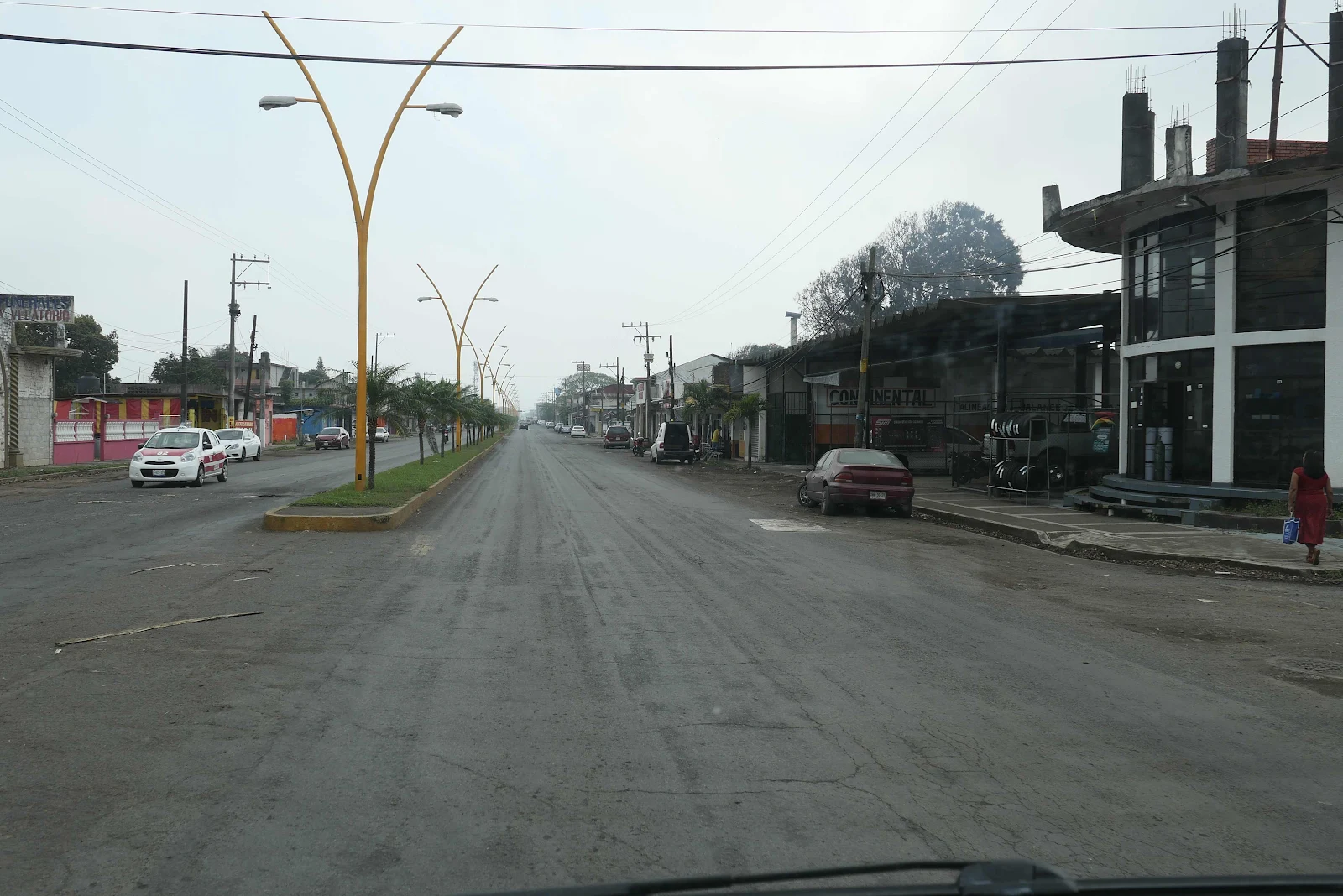


There are also a lot more checkpoints on the Libre highways and we passed three on Highway 180 bringing our total since leaving Arizona at The Naco border crossing m, to 25 and not one of them has stopped us. Not one single solitary person has checked our papers in the past three months. Make of that what you will the next time a gringo tells you Mexican police are on the make with foreign tourists.

As noted we buy and eat street food. On this trip we bought pineapple juice, delicious it turns out with a shot of Mescal and not at all sweet. We stopped to buy 15 gallons of water to fill our 30 gallon tank and a motorcyclist came by. He spent two years in Miami and two years in South Carolina but lived in Latino communities and never learned English. But he sold delicious meat and cheese sandwiches and to my surprise Layne agreed to fork over a buck fifty for one. Delicious.

Oh and I was forgetting the head. We were so startled we drove past it and had to make a U-turn.

As is usual in Mexico there is no signage, no explanation, no nothing to say why this modern representation of a colossal Olmec head is here.

This dude spotted us and obviously supplements his farm income selling hammocks to other puzzled passersby as he strolled across the highway to us.

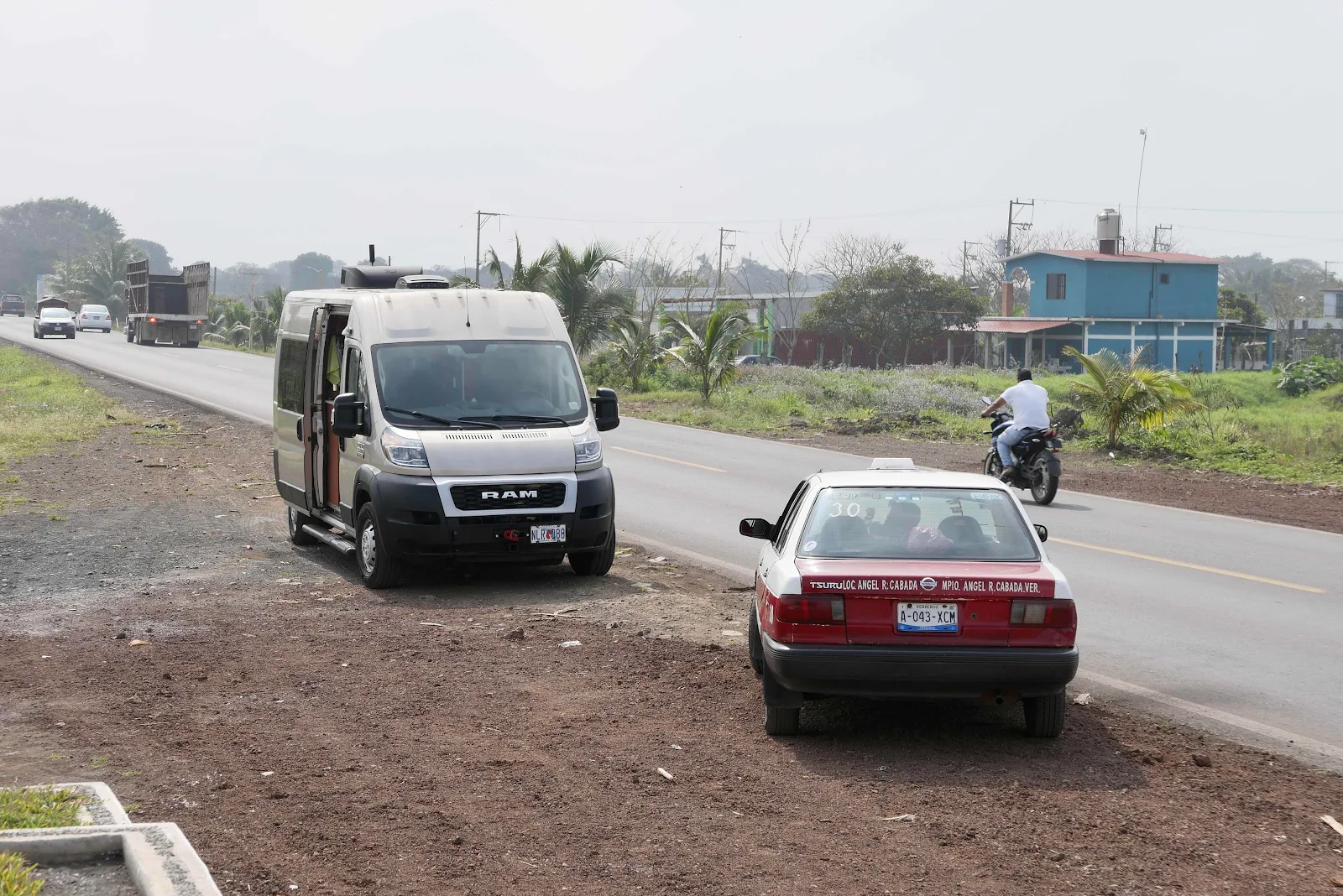
A cab driver saw Layne and stopped to ask if she’d like him to take her picture thinking she was alone. He did not, oddly enough, try to rob her.

From Wikipedia on this town of 11,000 inhabitants:
The town is named after Ángel Rosario Cabada(1872-1921), an agrarian leader. Previously, the town was named El Mesón. El Mesón had been a small regional center of the Olmec or Epi-Olmec culture during a period between 400 BCE and 100 CE. Local farmers found the El Mesón Stela in the 1950s.

And that was all I could find out with less than stellar internet service!
It seemed silly to be traveling Mexico and not have a hammock. Layne paid him $22 for a brightly colored sample and we shall see if we use it. If not it may get re-gifted as we aren’t carrying anything we don’t use.

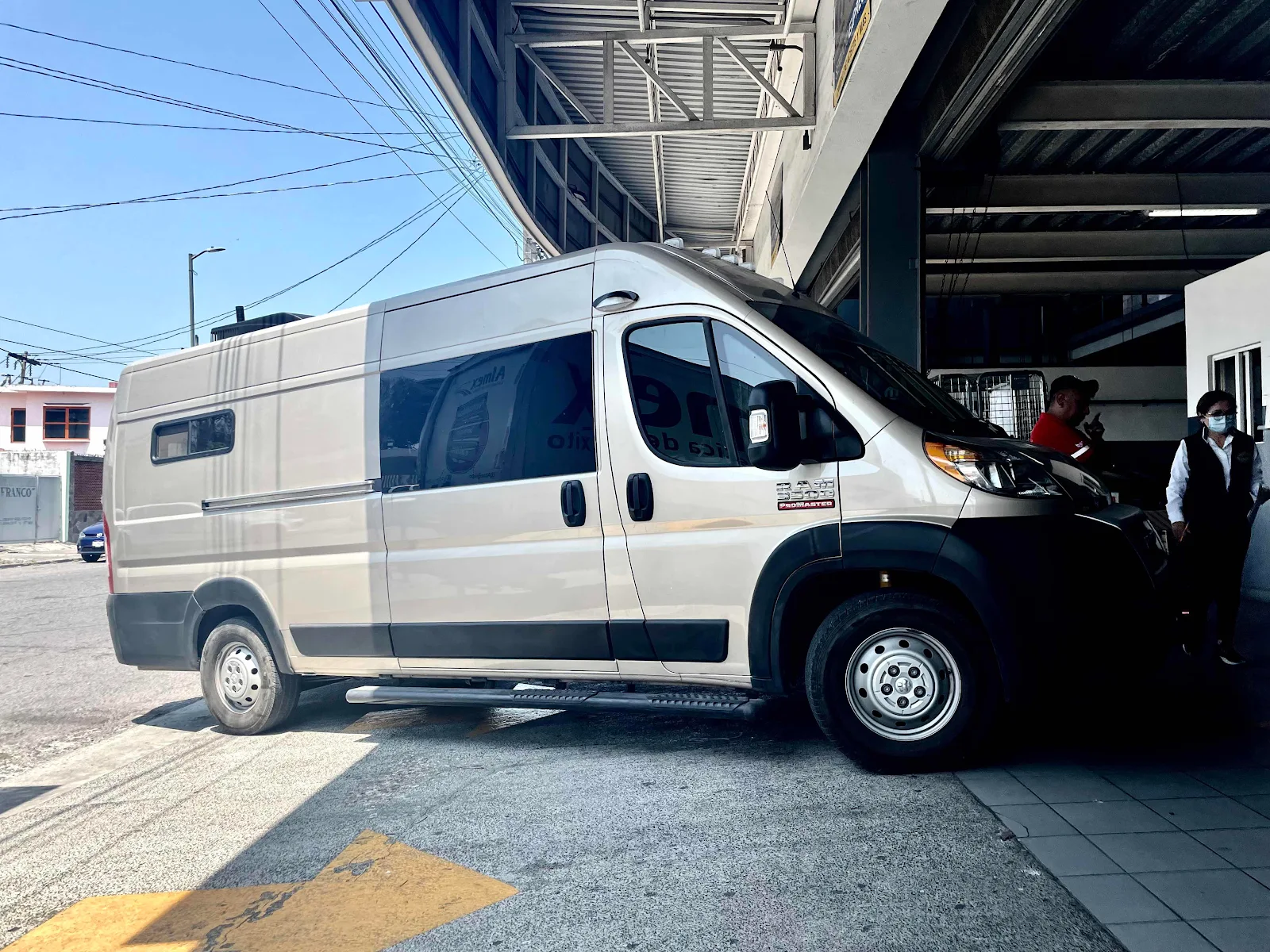
We drove up into the mountains looking for a campsite at a waterfall but Google maps took a vacation and led us like idiots into the back streets of Santiago Tuxtla (tooks-tla ) which annoyed me and I think the presence of a vast gold van driven by a scowling foreigner bouncing over topes and turning down alleys little wider than the van startled the local drivers just a little bit. There was a lot of effing and blinding about topes and Google and “why can’t they just…” It was a culturally inappropriate moment that helped relieve the build up of stress. Neither of us got any pictures of that fiasco, we were a bit involved in getting through the alleys unscathed, but soon enough we were back on the Federal Highway looking for topes. Here’s one:

Not all of them are well marked. You can barely see the one below:

So you try to follow a local who will warn you of the presence of a tope by flashing his brake lights and suddenly lurching as if for no reason. Notice what a huge four lane highway we are on and yet can’t drive it properly. It’s nuts I tell you.
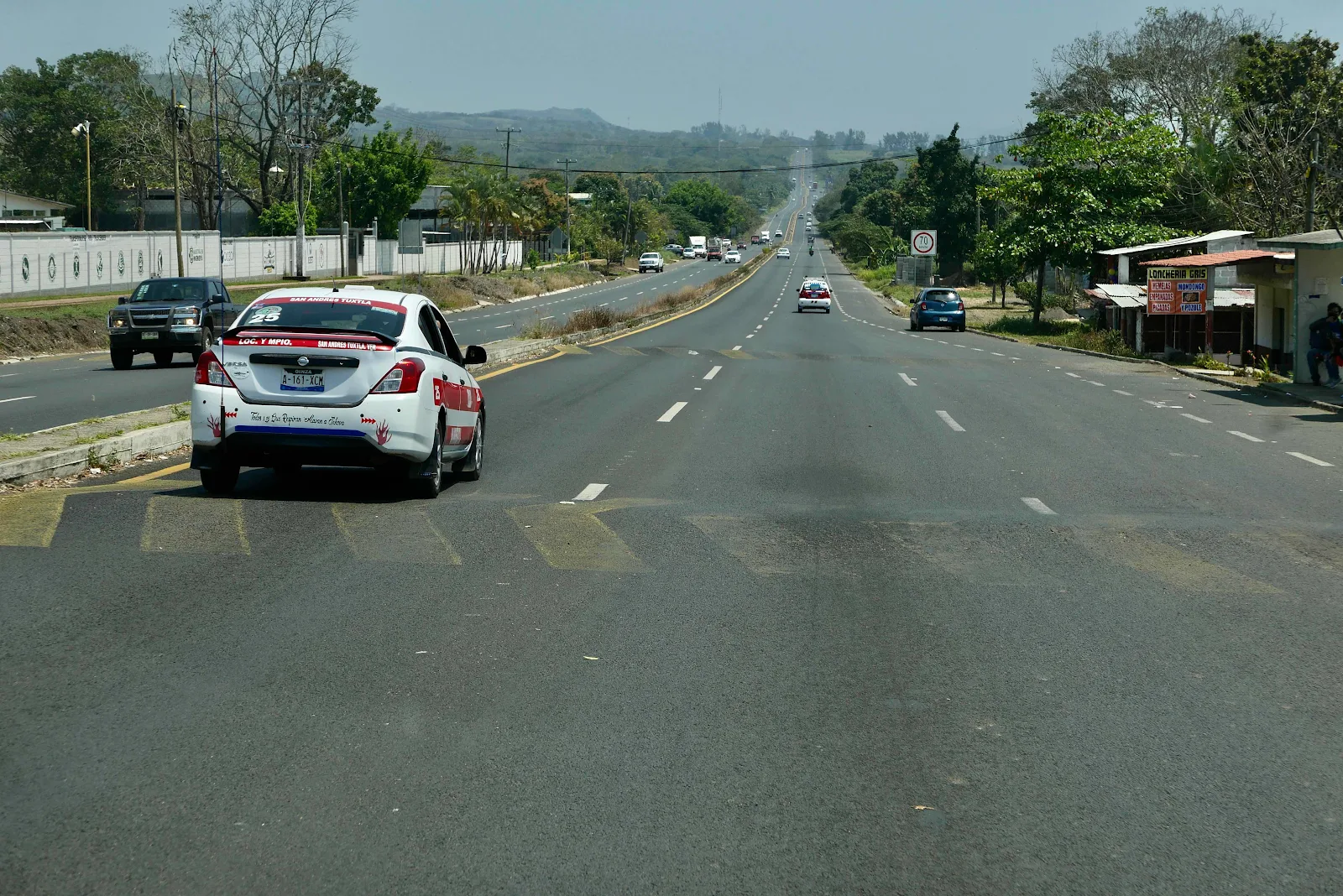
You get occasional topes on cuota ( toll) roads when they run through towns but the damned effing topes are the biggest incentive to pay tolls.

We drive so slowly on these roads usually around 35 to 40 miles per hour scanning for topes and enjoying the scenery so we even got passed by a classic VW Beetle filled with a waving friendly family. A random cyclist in the fast lane! Hence the ever present instruction to not drive at night. You never know what you might hit.

Roadside lunch. A man and his motorcycle, fond memories for me of being on the road anywhere in the world and stopping to eat next to my ride.

Pedestrians are everywhere some waiting for buses others crossing busy roads. Eyes open!


We both noticed drivers in this region are much more aggressive than other parts of Mexico. There are tons of cabs here as poverty rules and middle class car ownership is lower. Consequently these red and white aggressive irritations are everywhere and they push mercilessly. Glad I’m driving a giant van which intimidates even them a bit.

Tope! These random effing bumps are EVERYWHERE!

The highway climbed out of the coastal plain and we saw mountains and suddenly a whole lot of greenery. We had the air conditioning running as it was 91 outside and the air was warm and sticky.
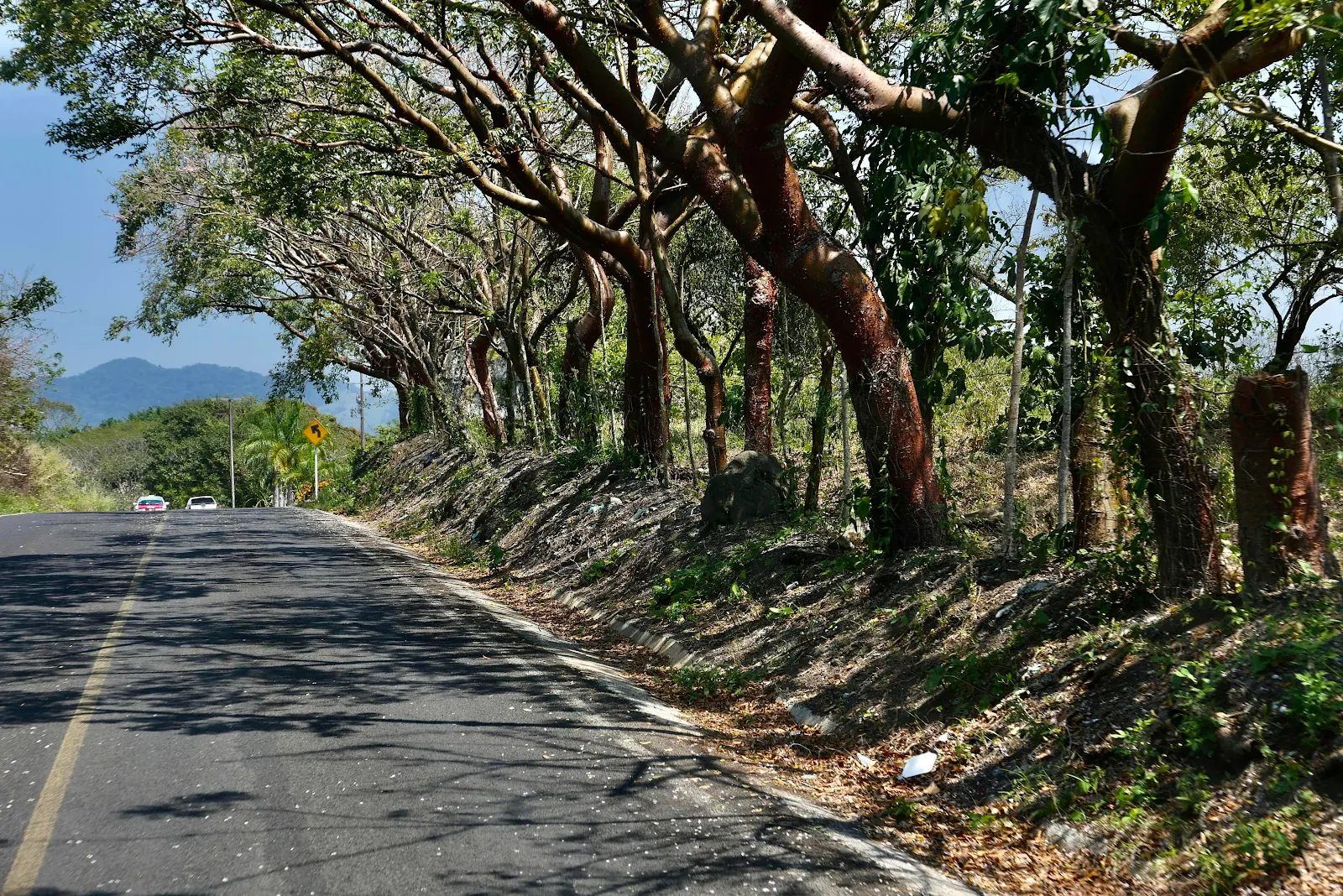
Being passed by a 150cc working man’s motorcycle. I have no pride.

It was very green especially as it isn’t even rainy season yet.

We may have missed the waterfalls which we will now have to take a day trip to check out but we didn’t miss the turn off to the lake campground. La Jungla at Lake Catemaco. Up next…