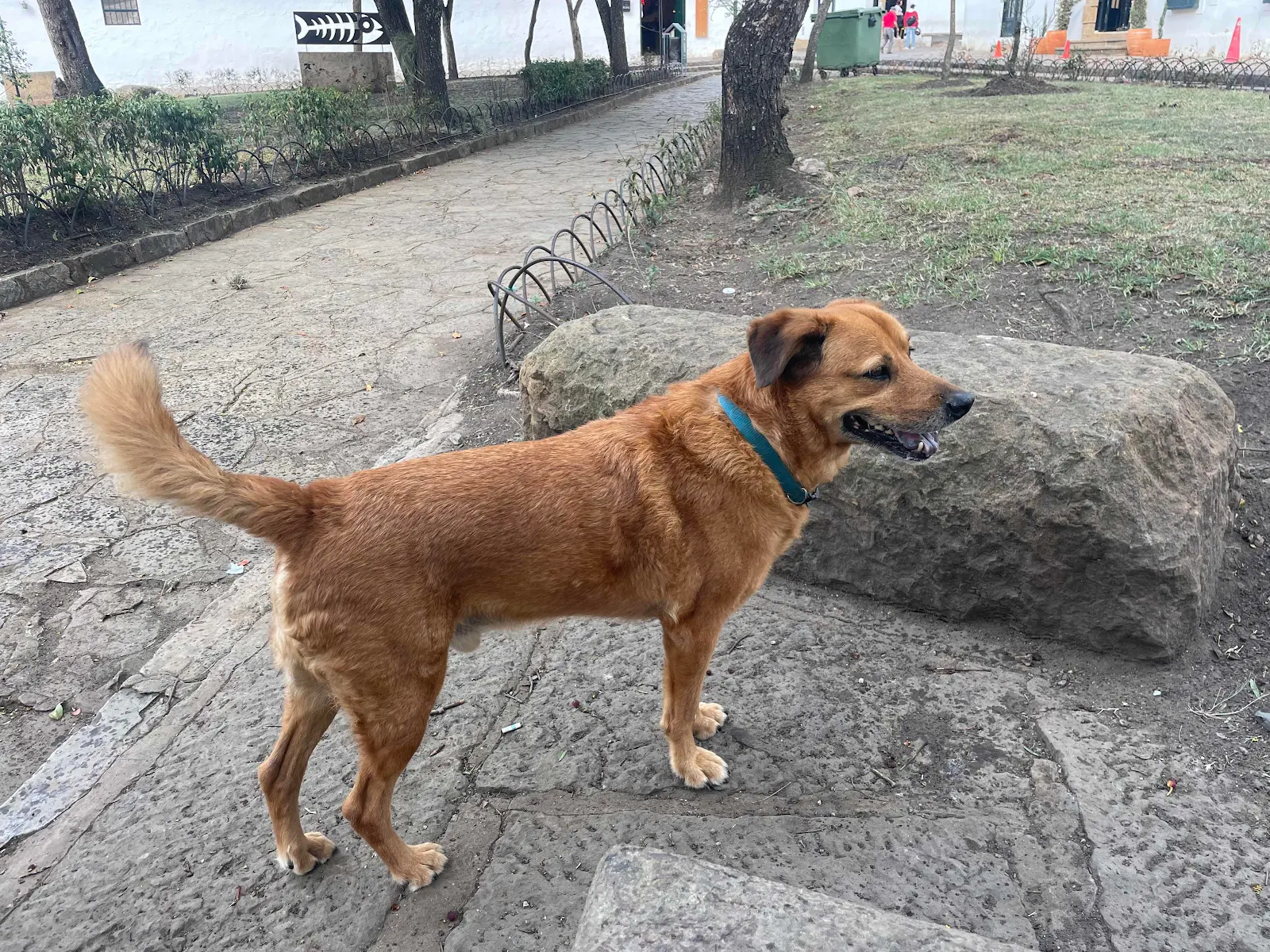
Our first morning in Villa de Leyva saw us out on the streets after the morning chores were completed. When in a campground we collect our washing up in a basin and use campground water to clean dishes. We fill our Berkey water filter with campground water and then there are the showers of course to save the expensive purified water in our tank.
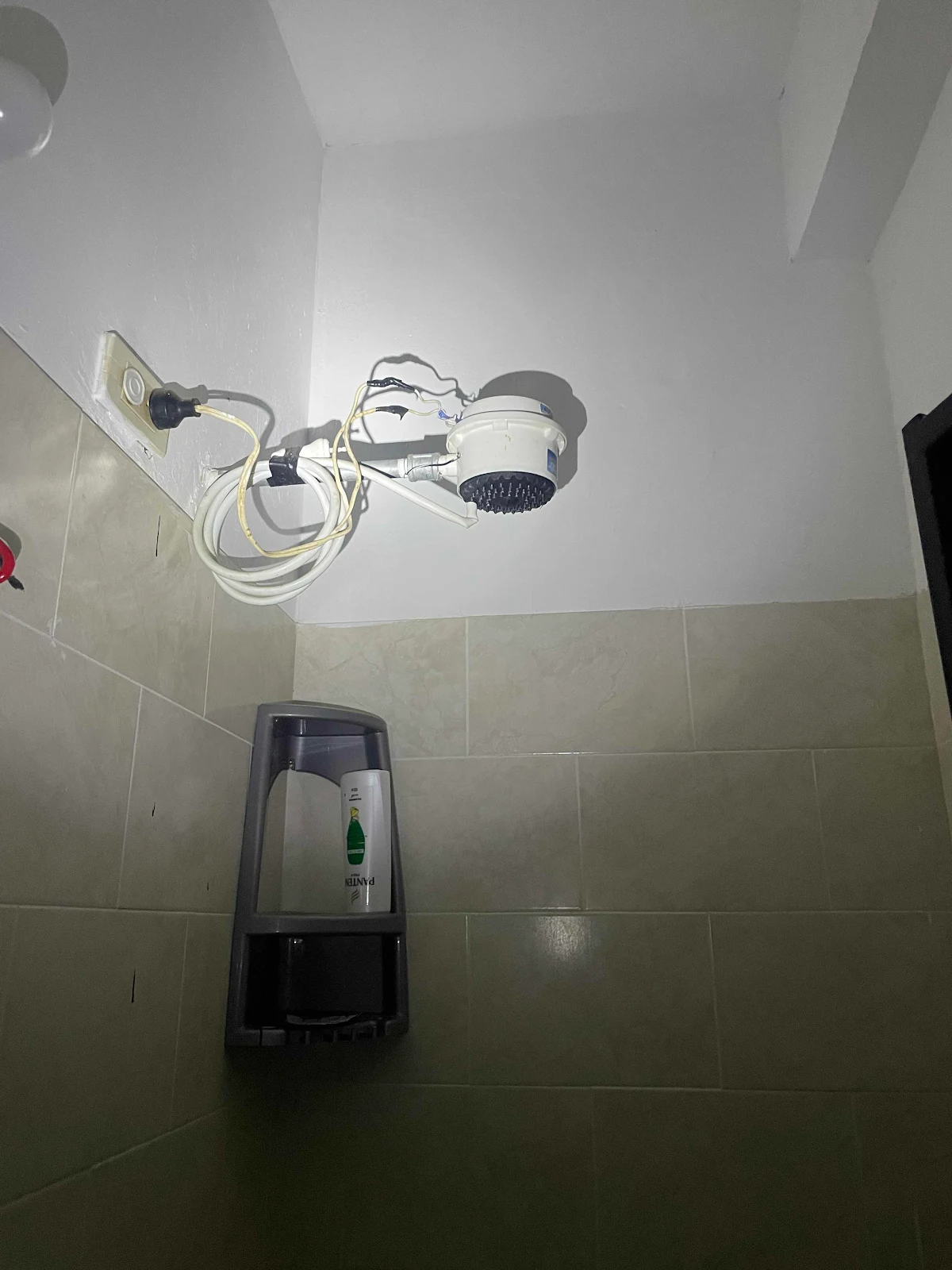
Some people call them suicide showers and the advice I was given was never raise your hands up when under the water. Theoretically the electrical box heats the water and you get a hot shower. They’re not supposed to electrocute you and in this case the water comes out cold so I don’t think I would get electrocuted but I’m never very sure. Exciting stuff!
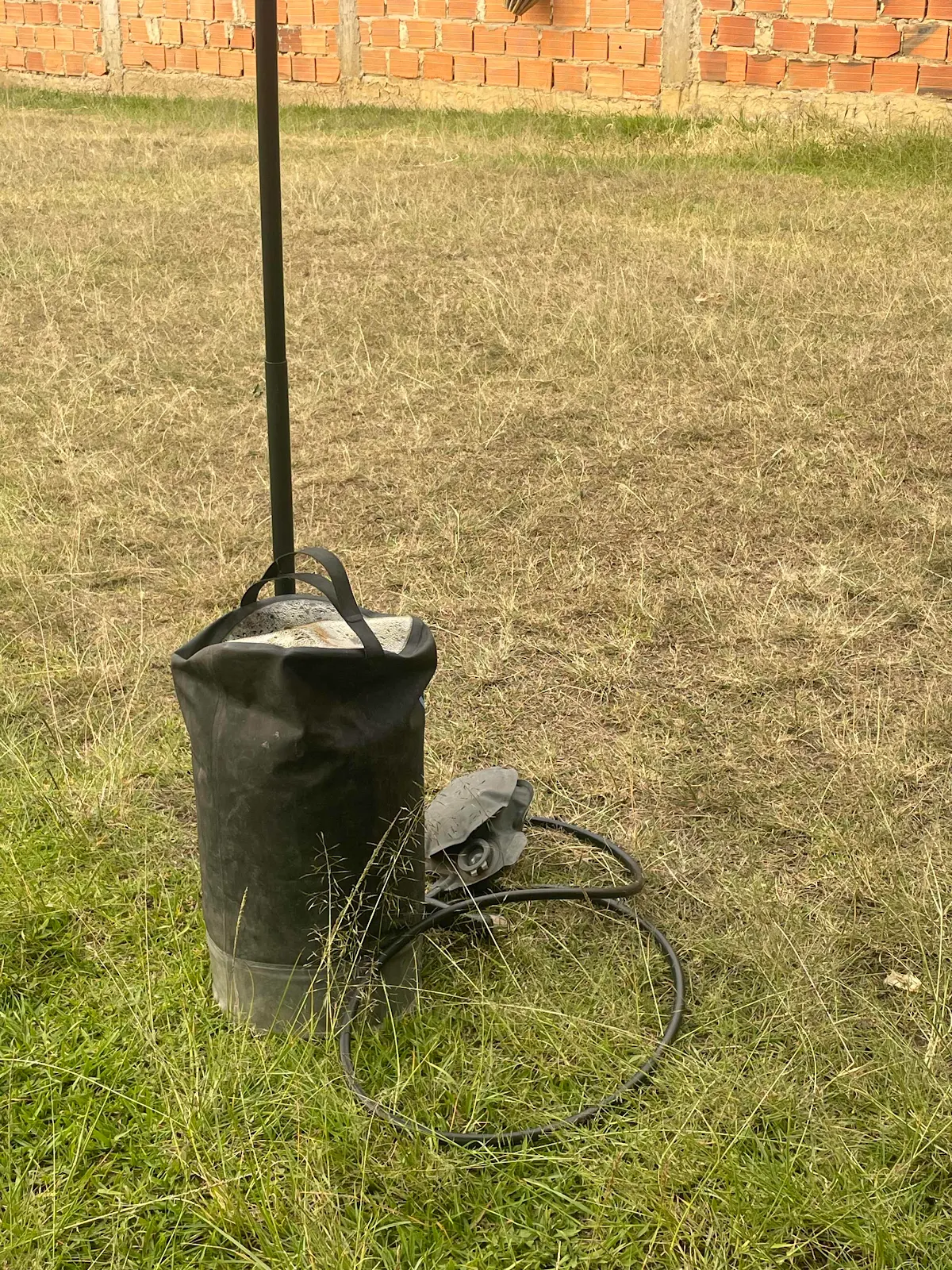
Layne’s plan is to heat water in our solar shower and use that instead however the sun has been a bit reluctant to appear. Cold showers at 7100 feet can be quite brisk.
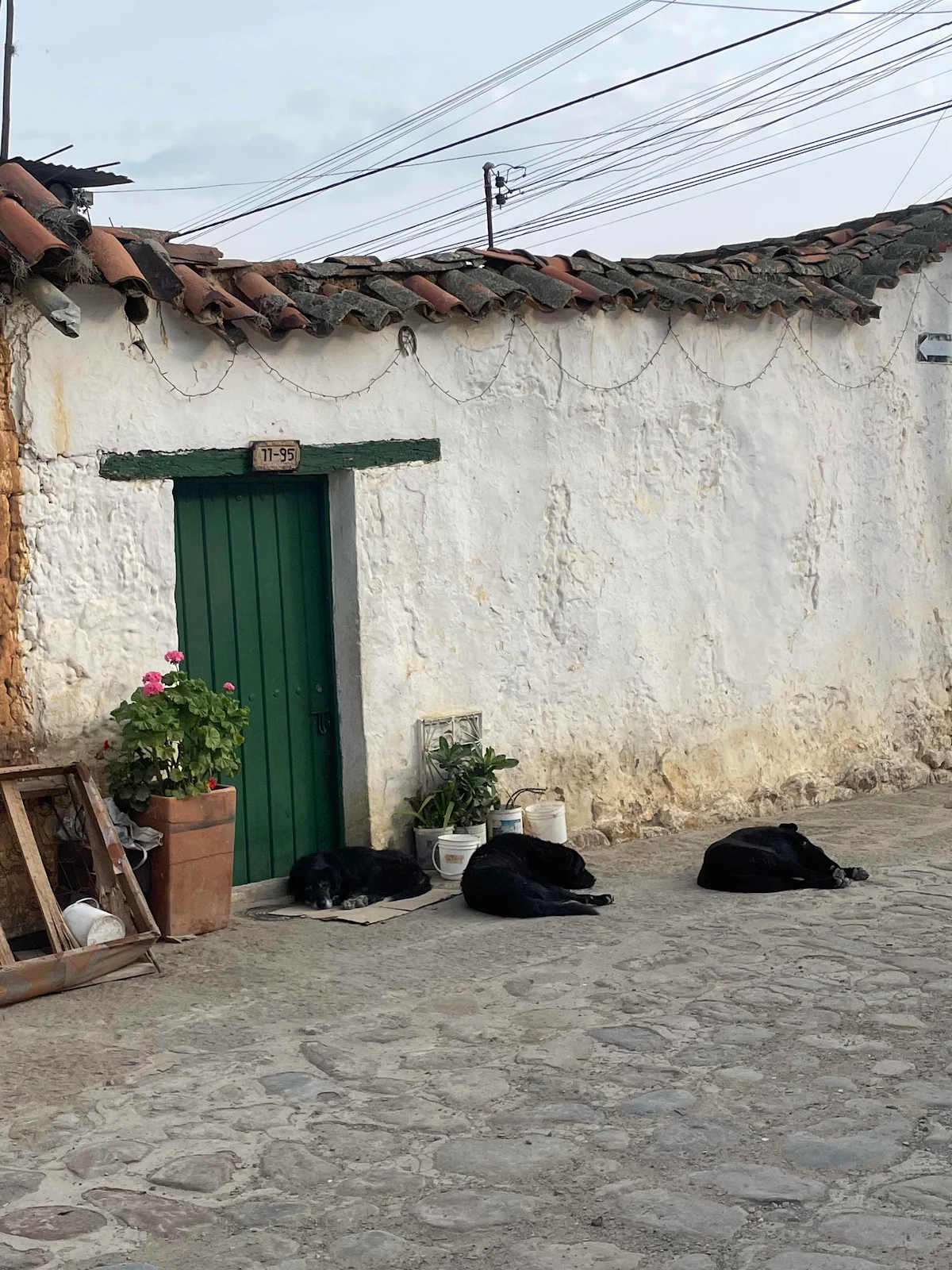
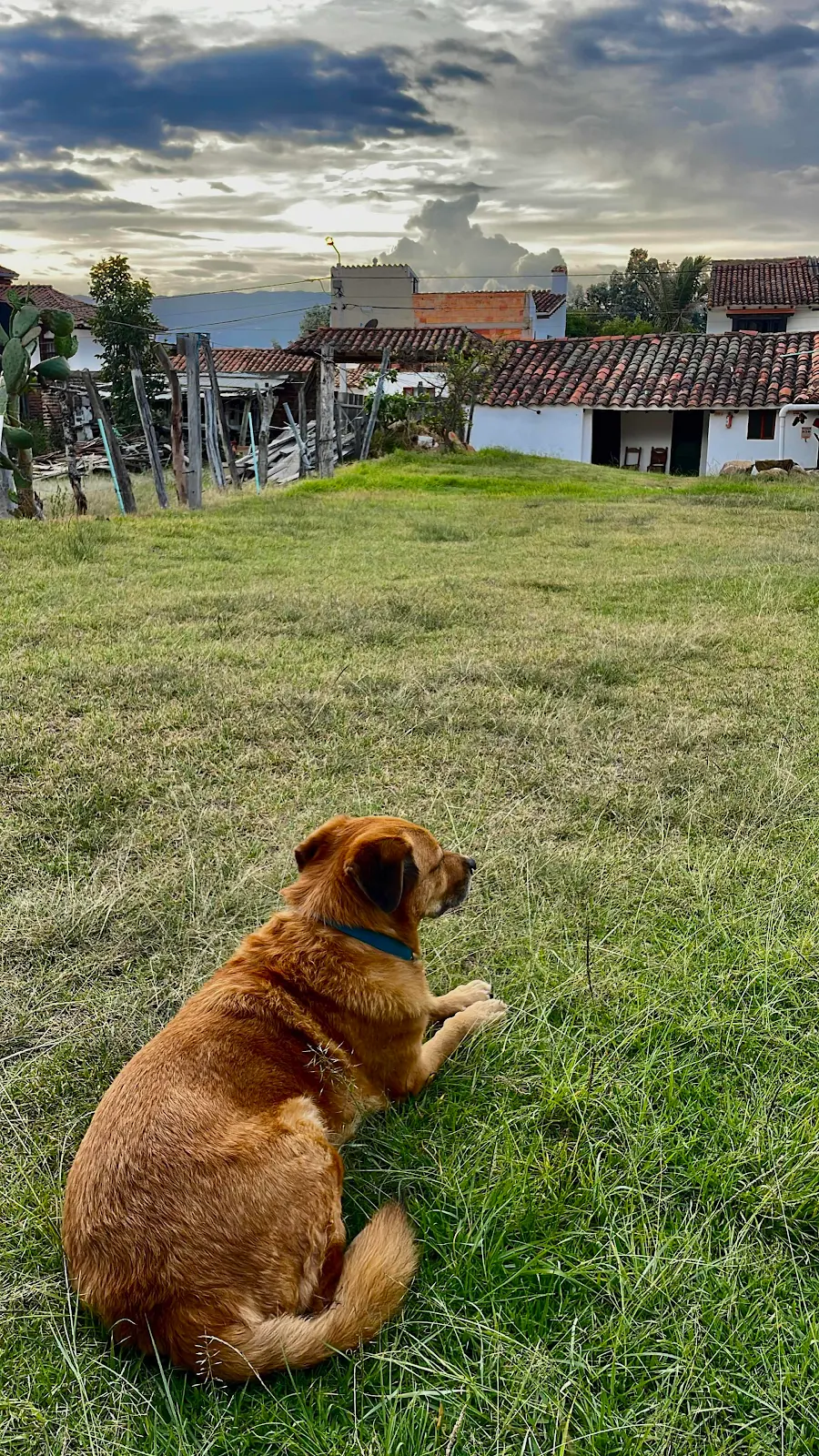
Taking Rusty for a walk first thing looked a tad problematic as we have these three neighbors half a block away. As bold as Rusty has become with street dogs he was not sure about this herd. Weirdly enough they snooze all day in front of their home fat and content and pay him no attention when he tip toes by.
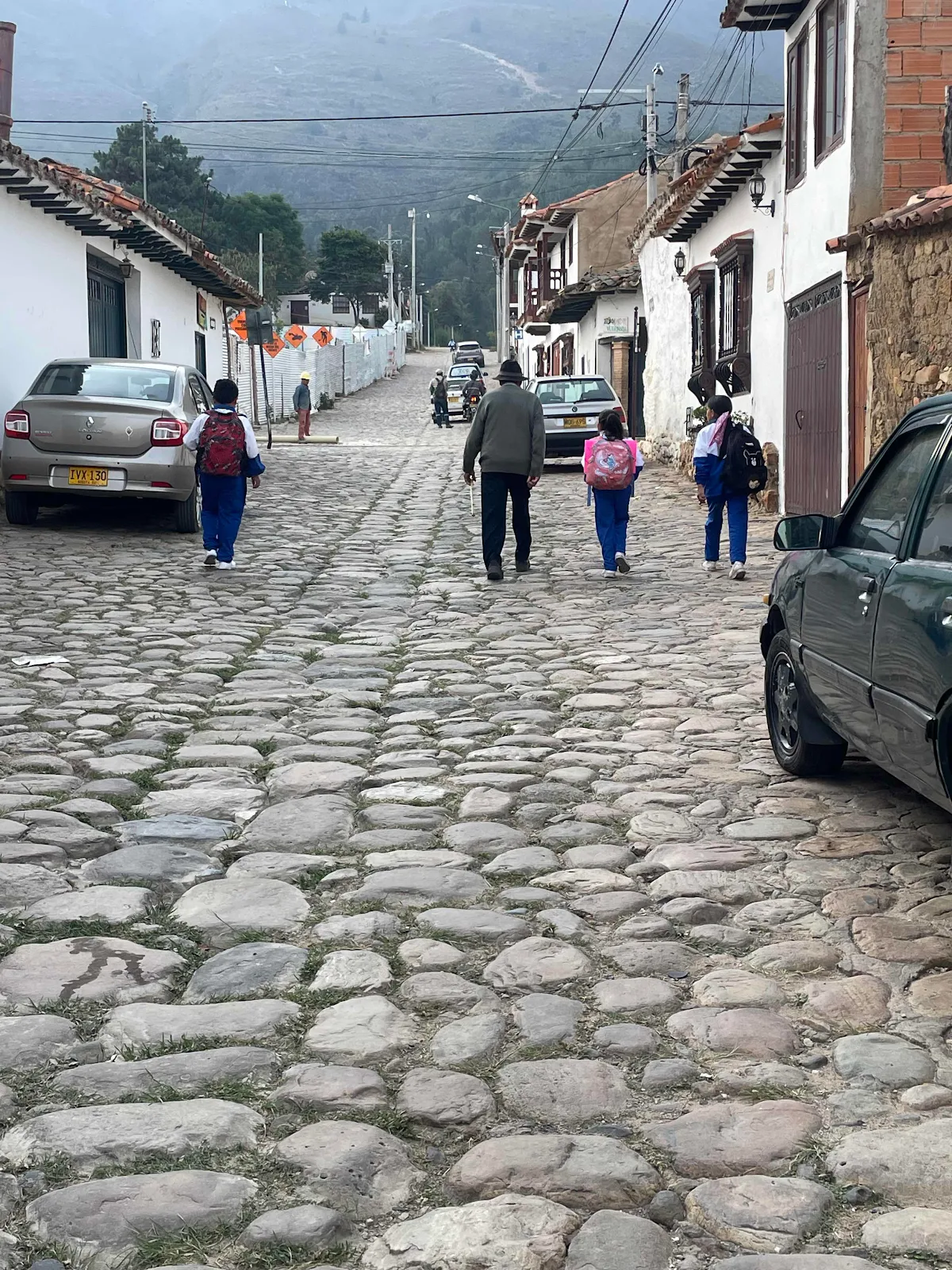
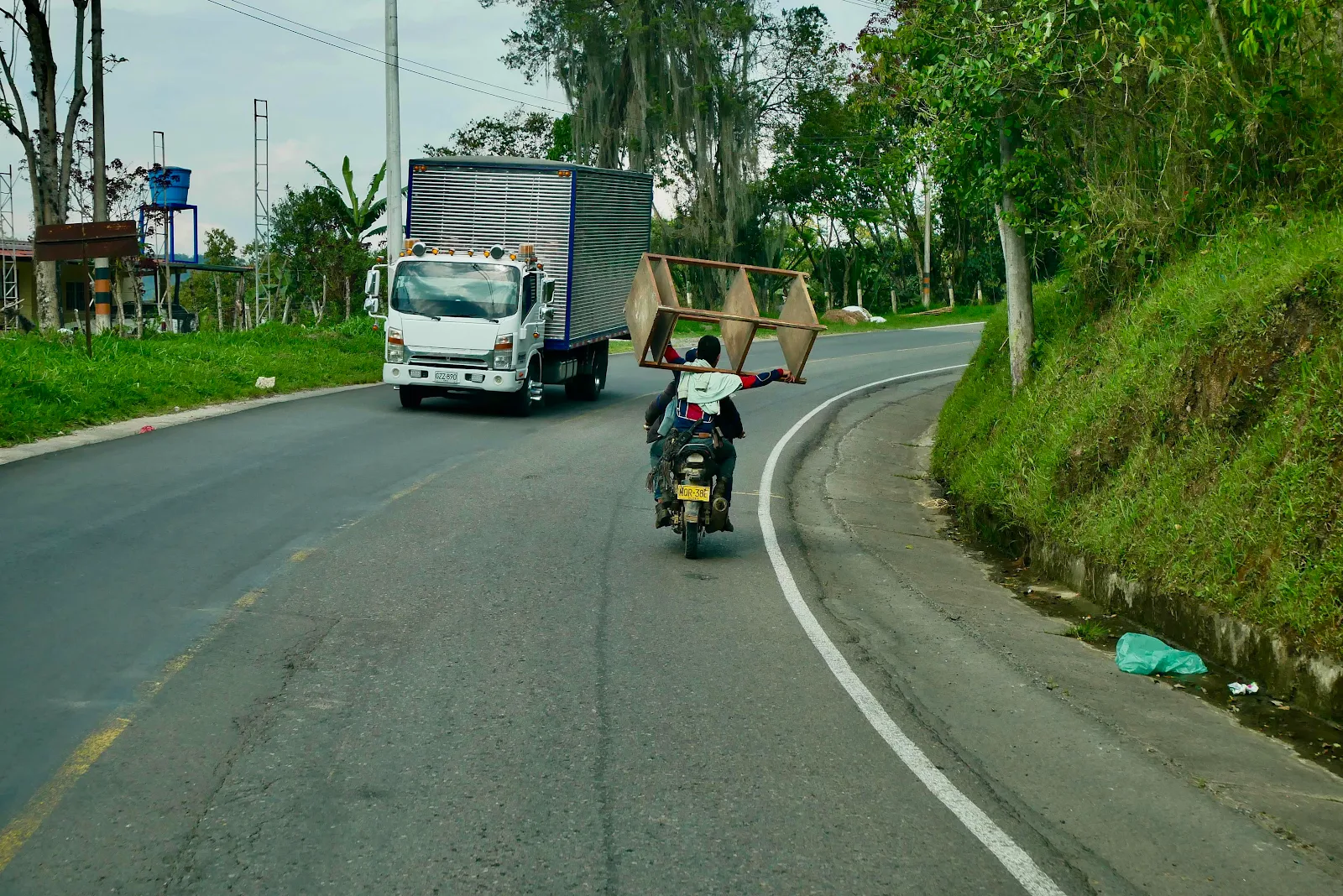
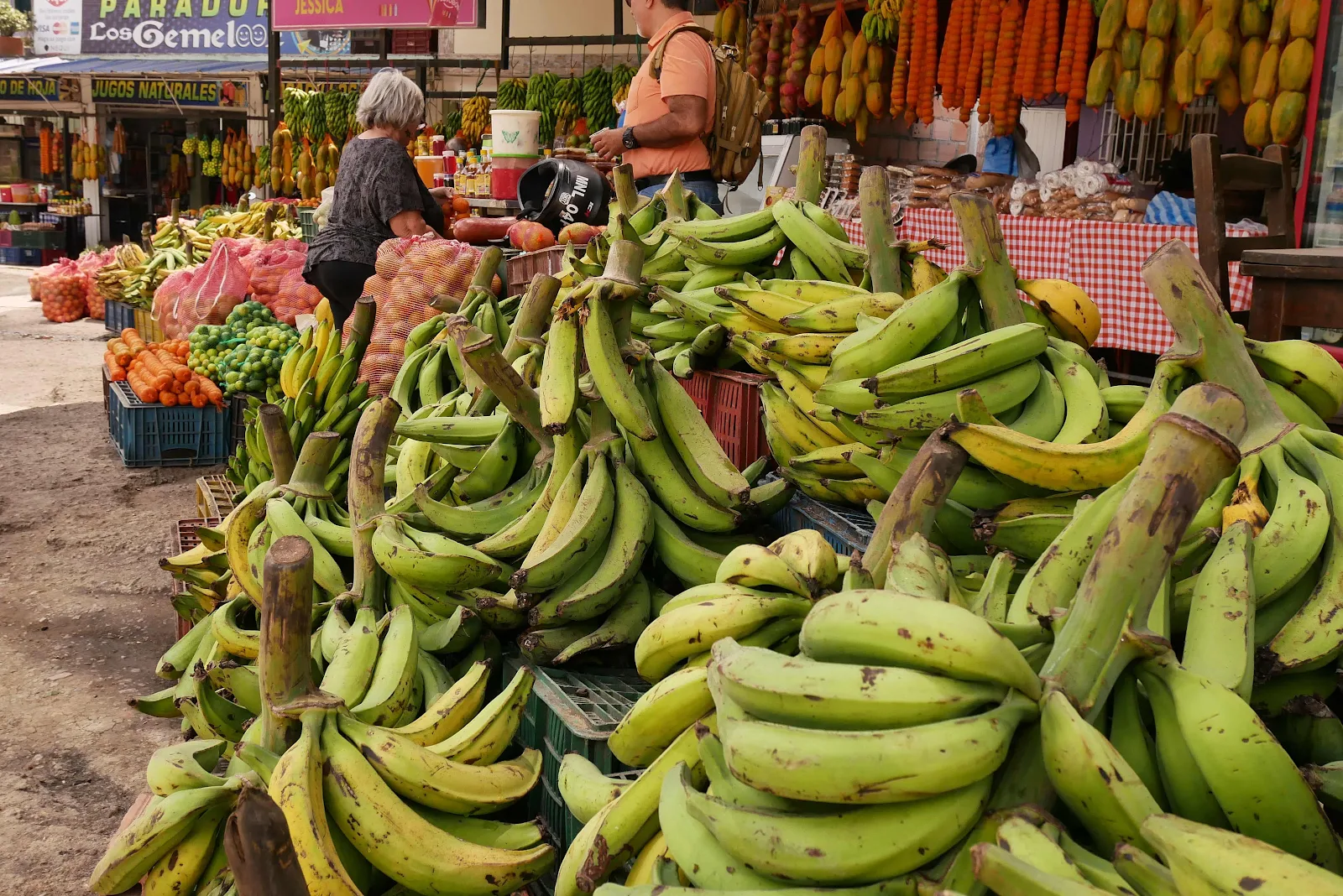
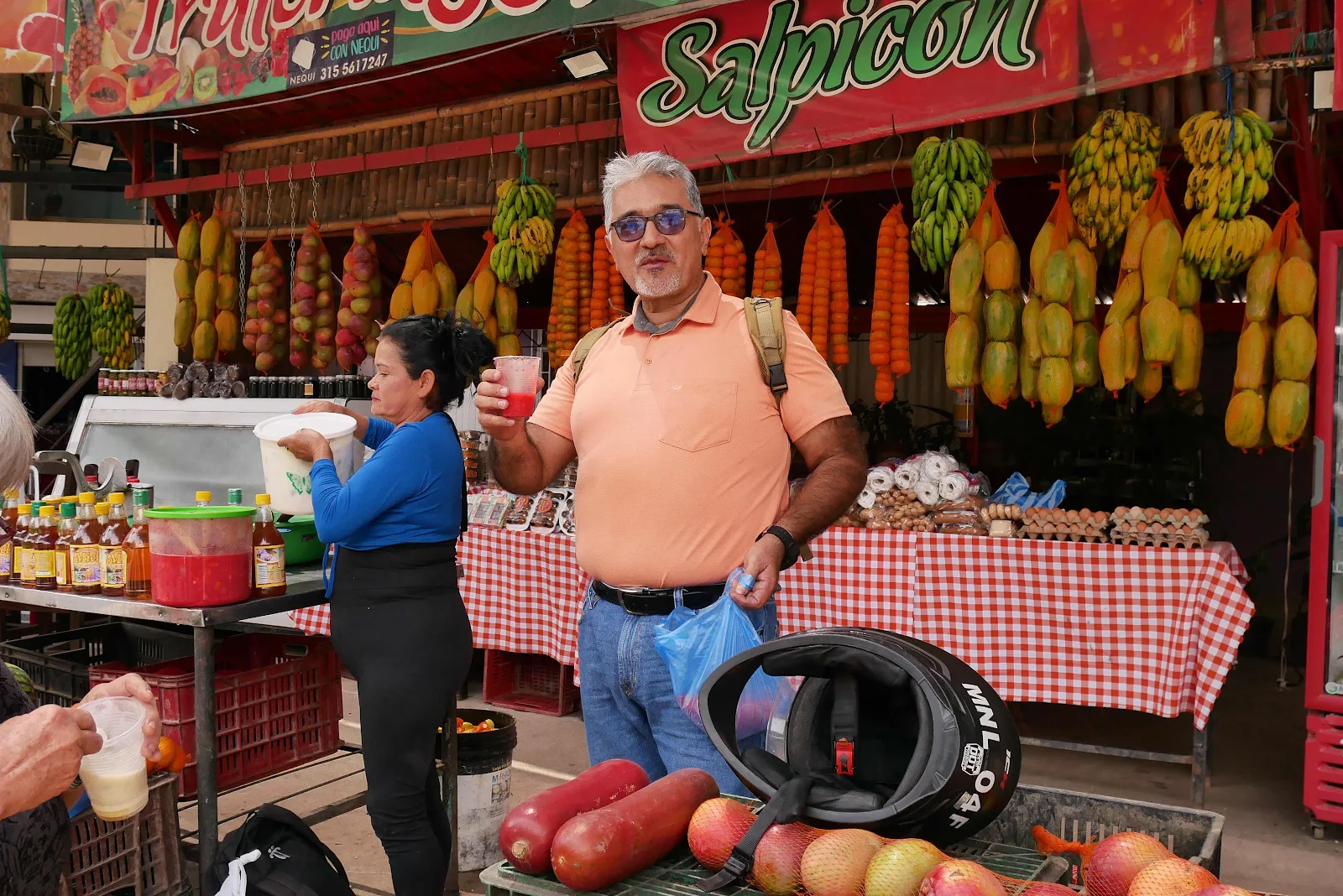
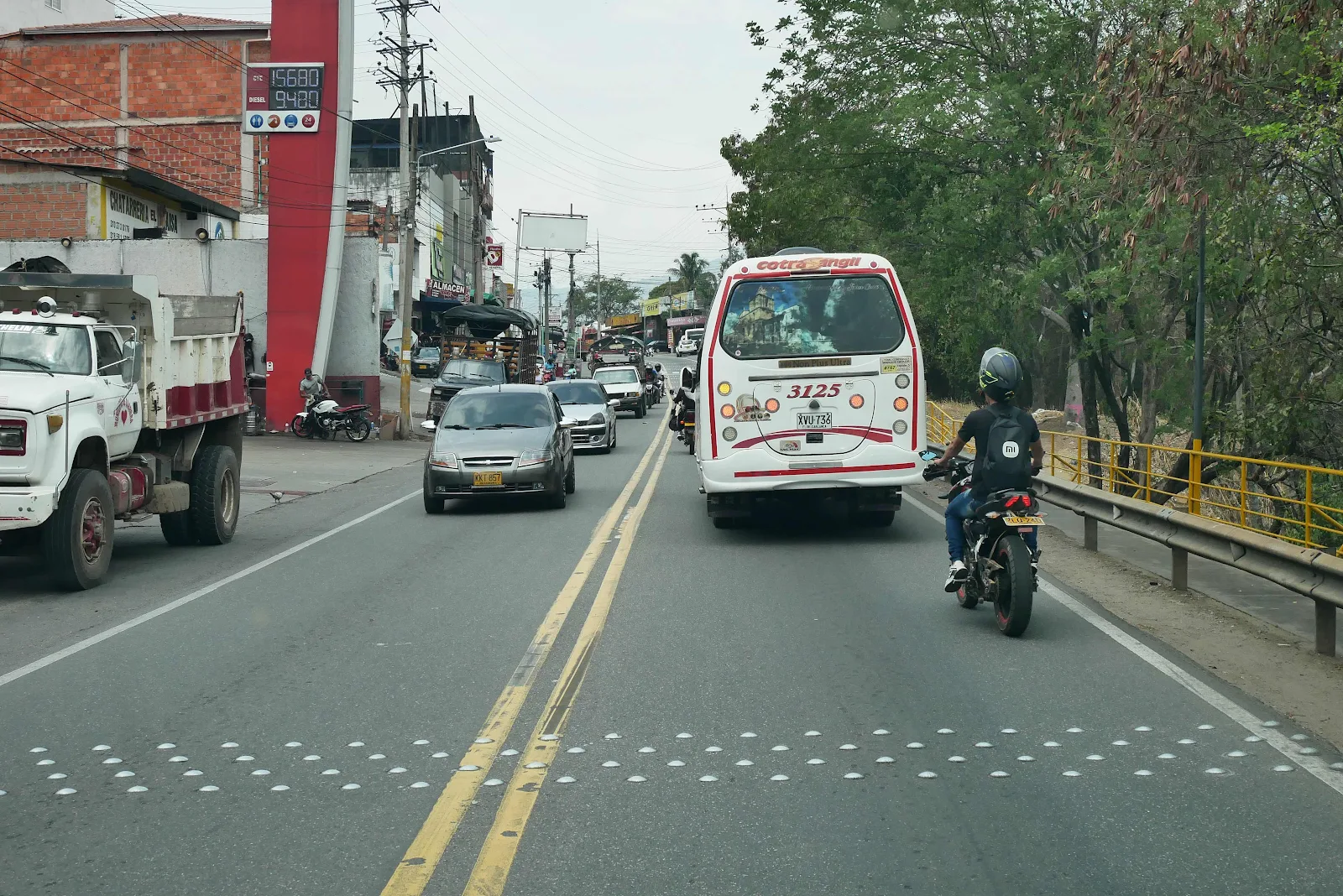
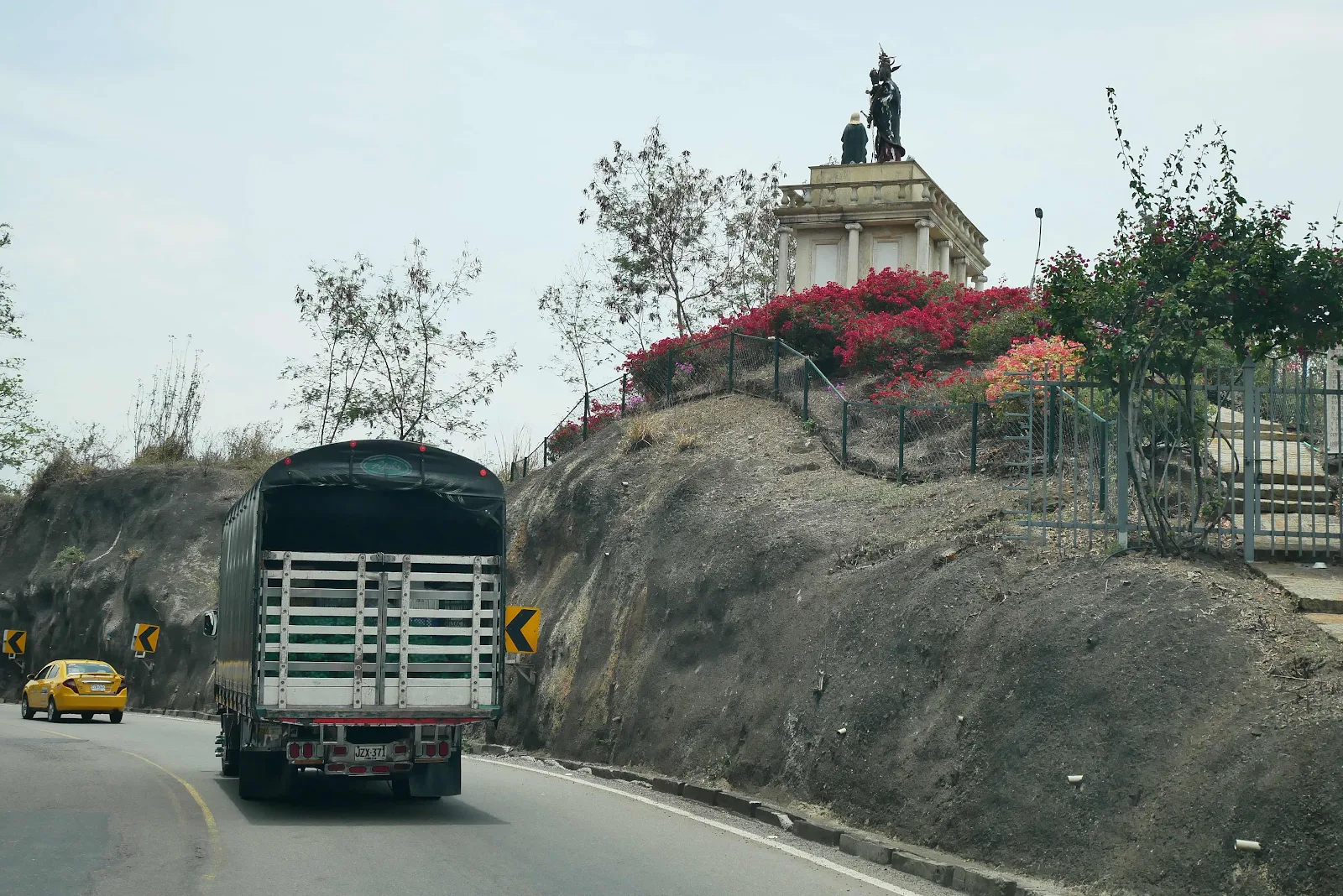
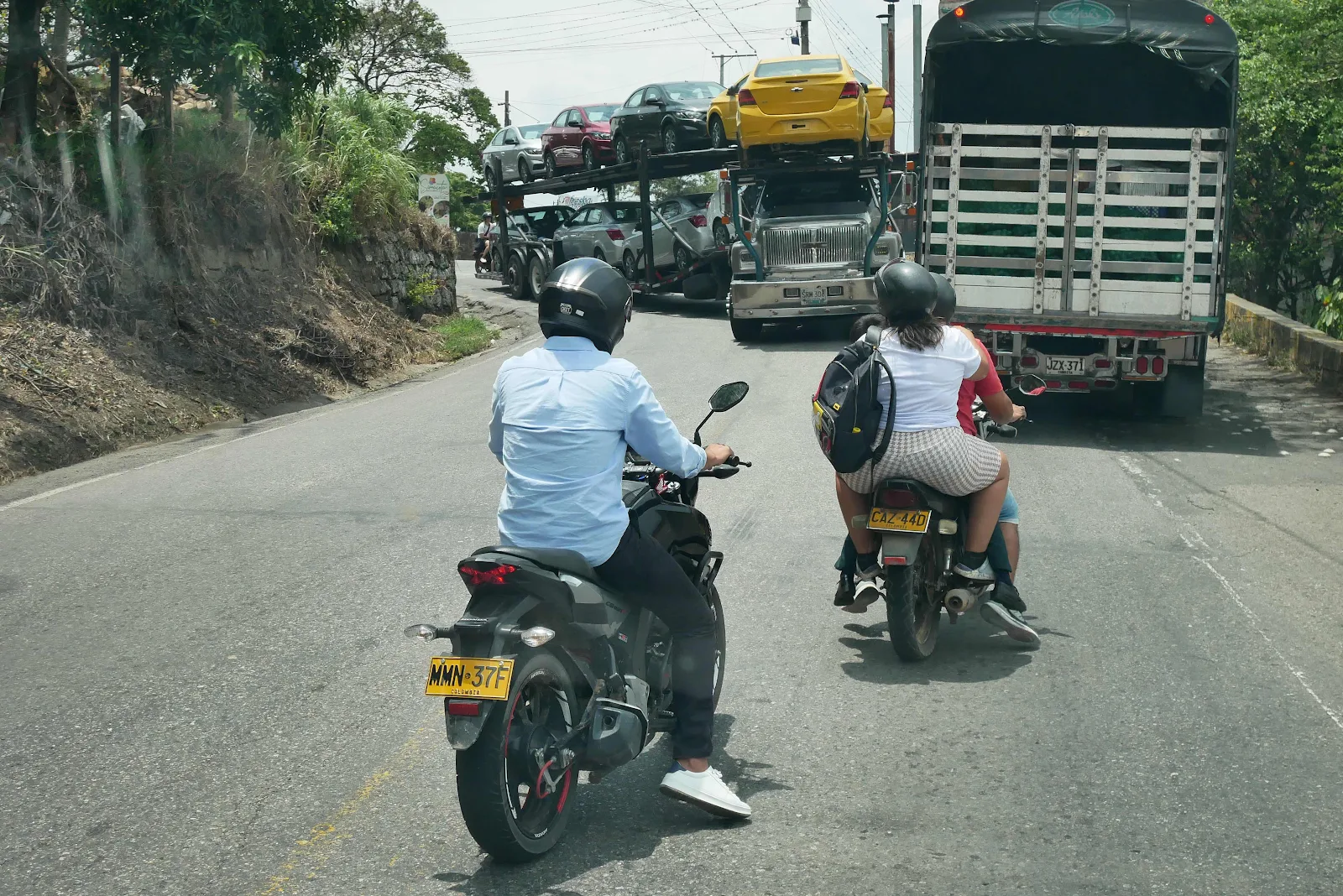
Off to school first thing, walking with grandad or riding behind your father …
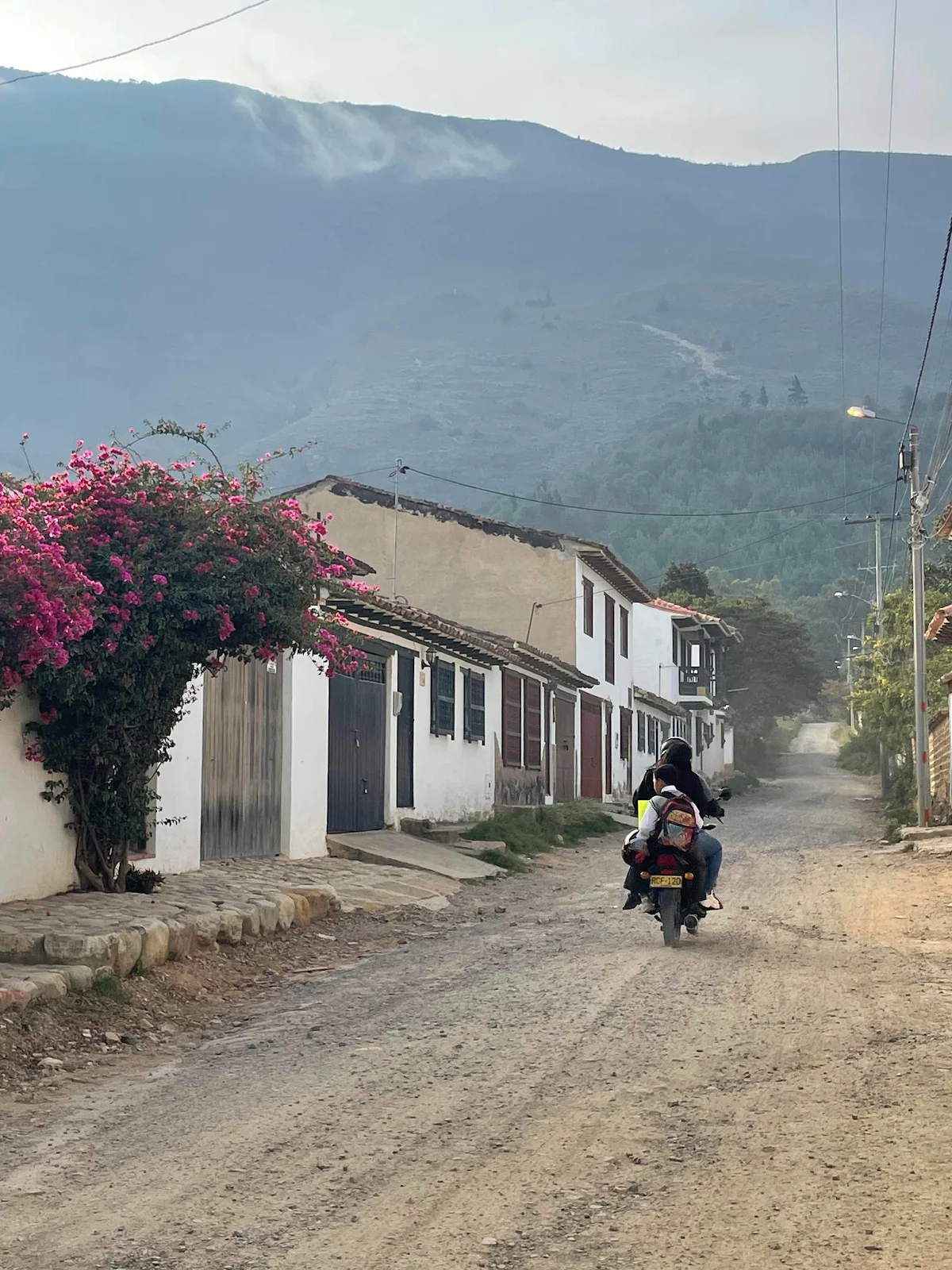
Villa de Leyva was founded in 1572 when the President of New Granada of that name ordered his commanders to find a sound location to build a city to create a garrison against the local indigenous people. The city was built out of nothing essentially, there is no great river system in this desert valley, there was nothing to mine and nothing much to build an economy on except agriculture and soldiering.
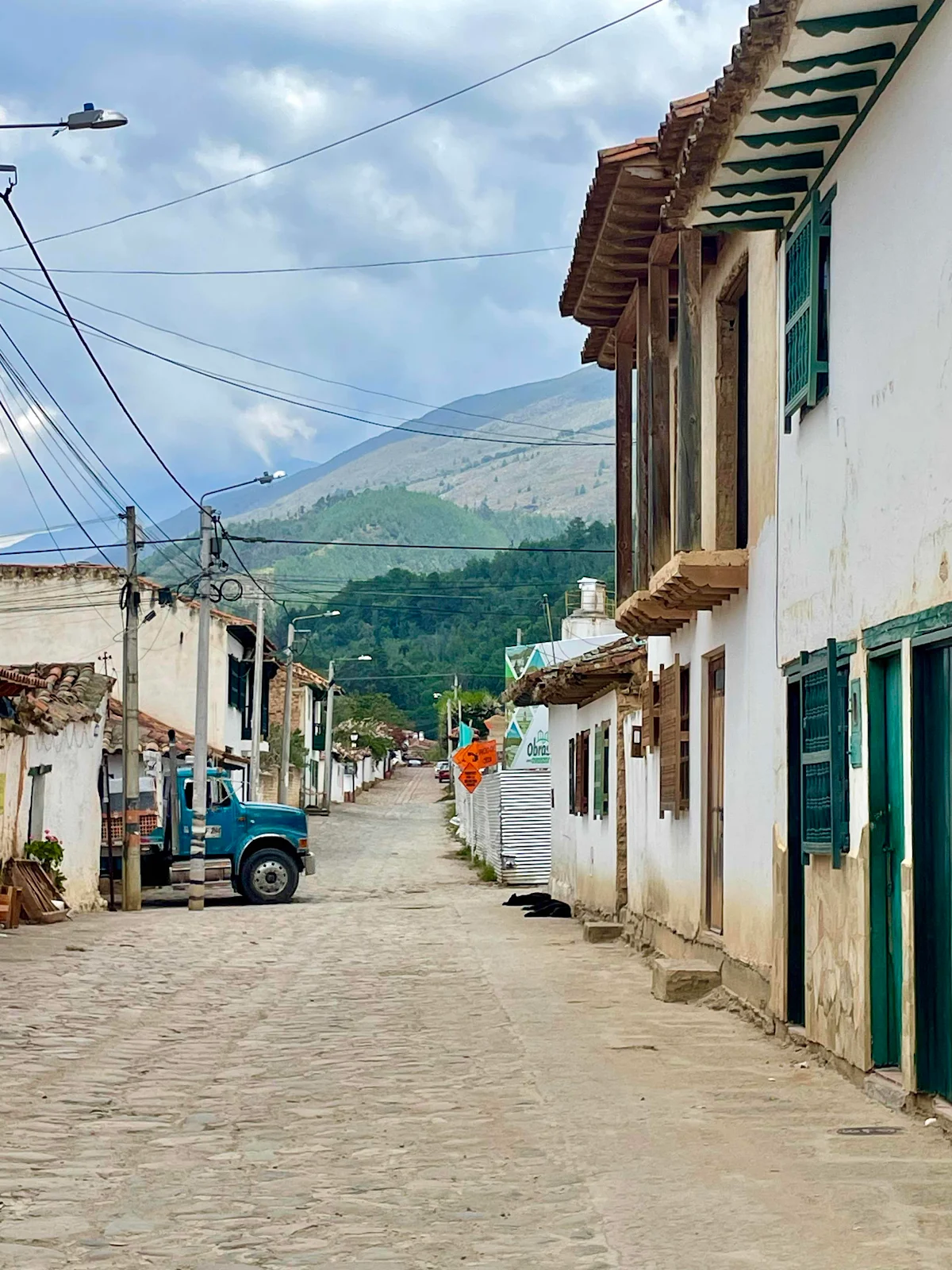
So Villa de Leyva had no real reason to exist except for a colonial whim and for that reason no one bothered to muck it up and here it is, maintained and restored as it has been for almost five hundred years.
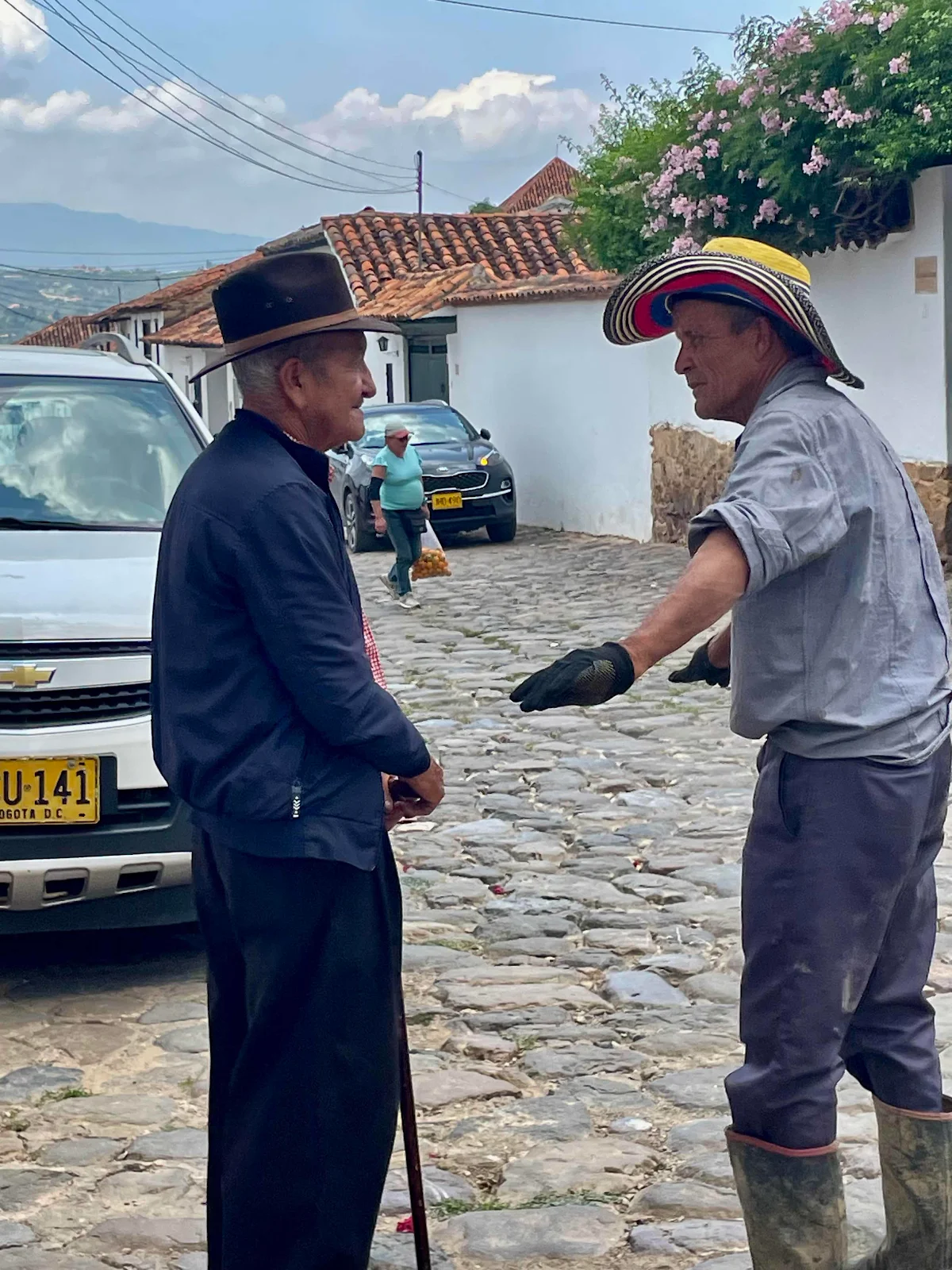
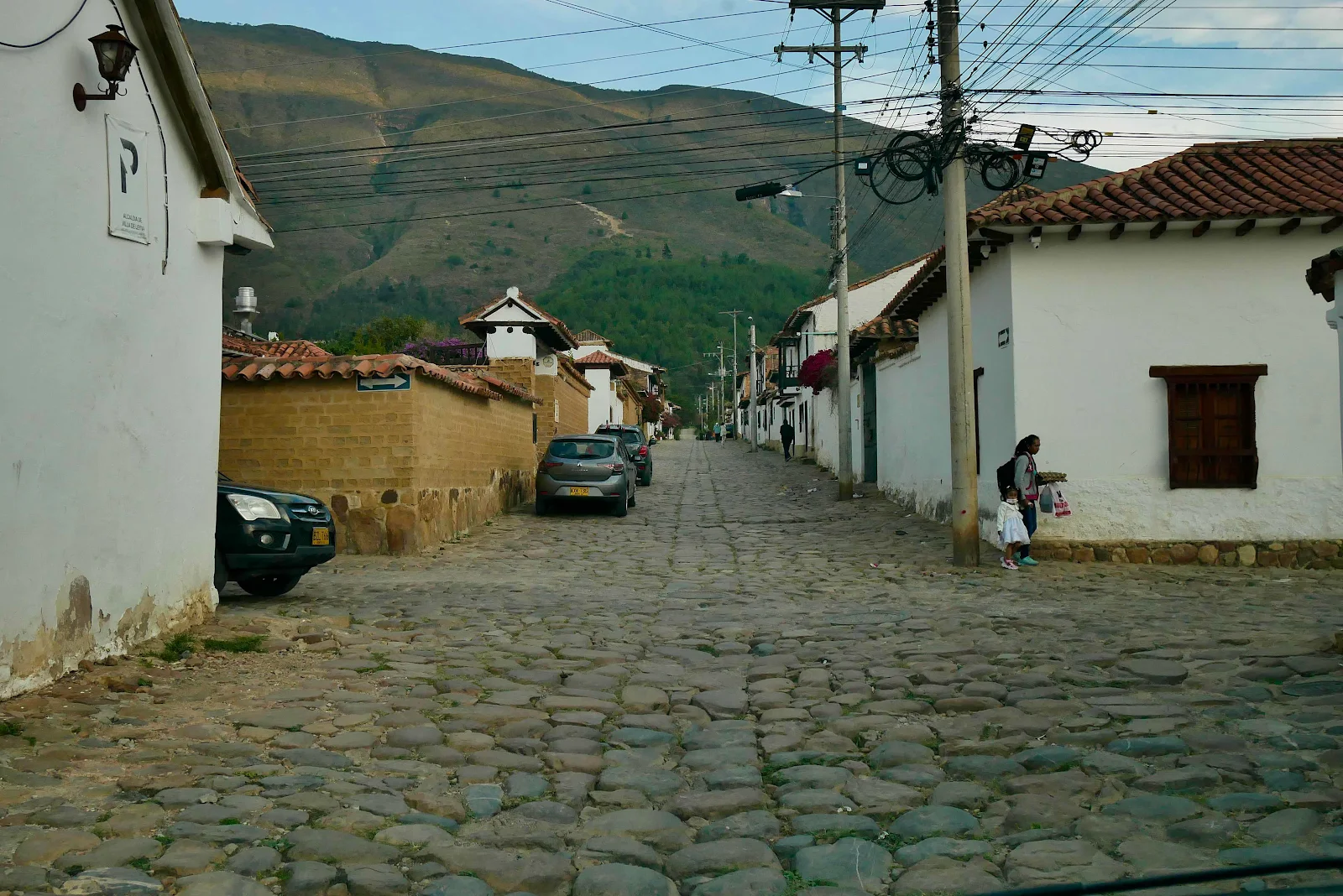
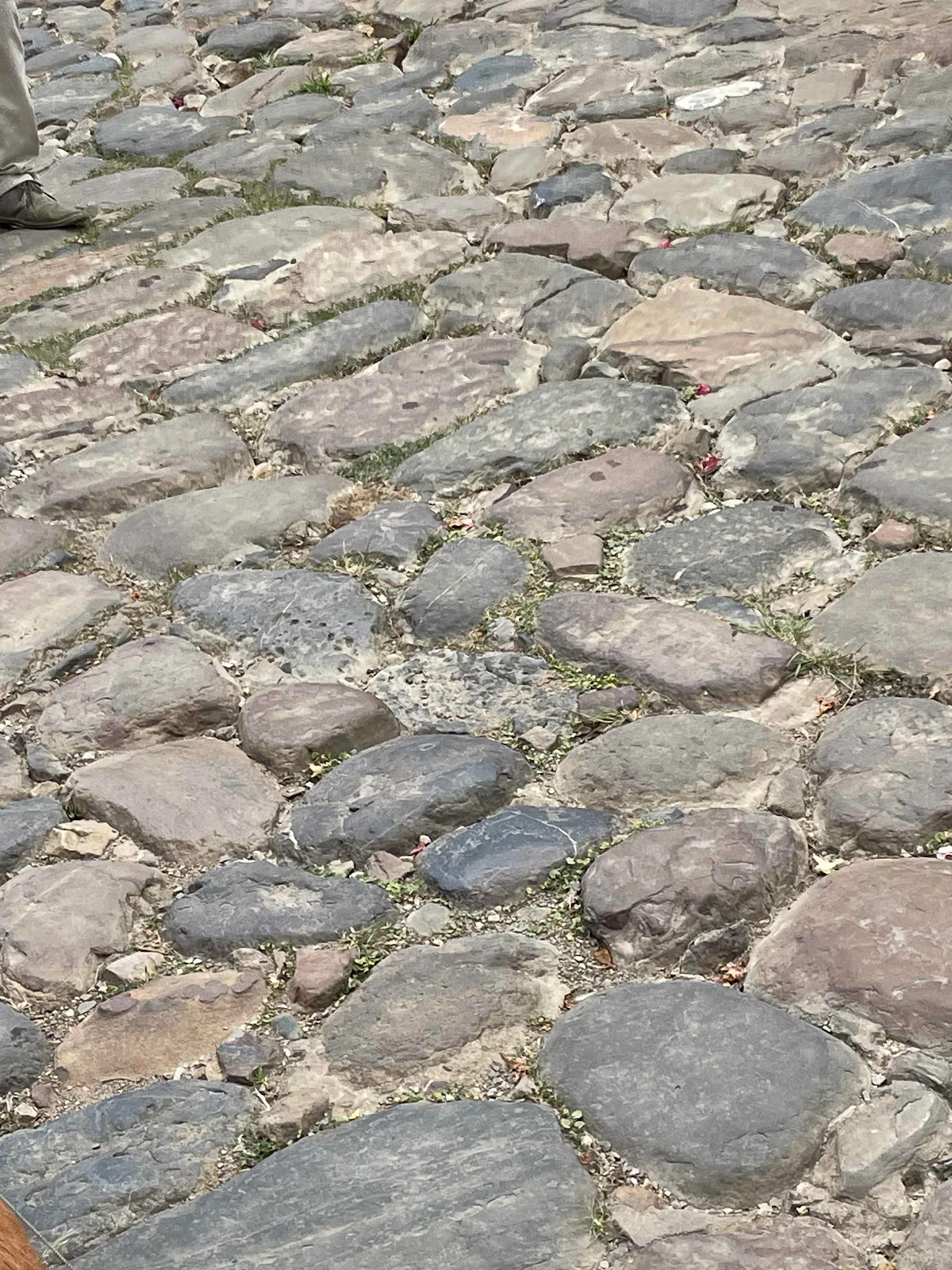
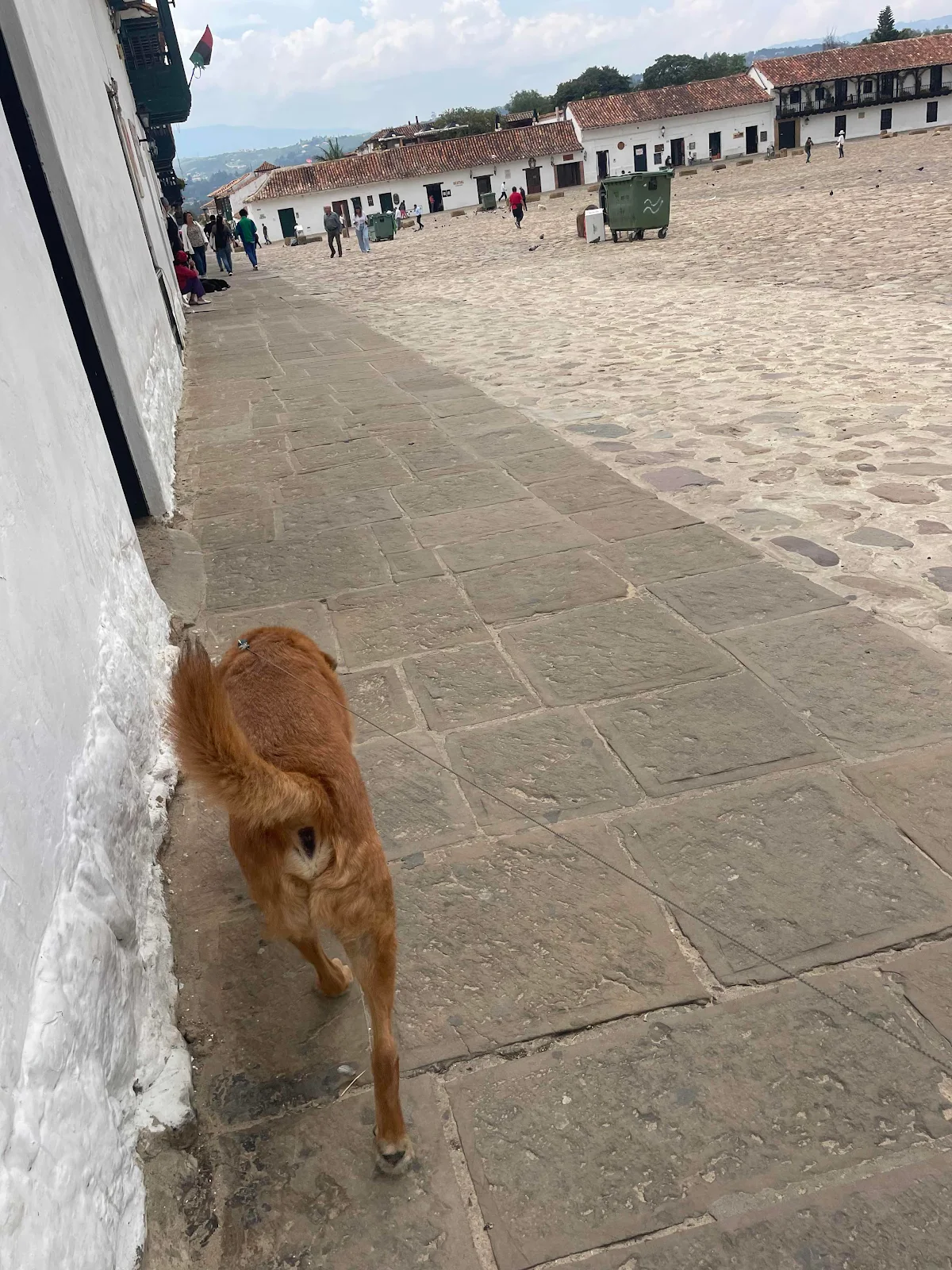
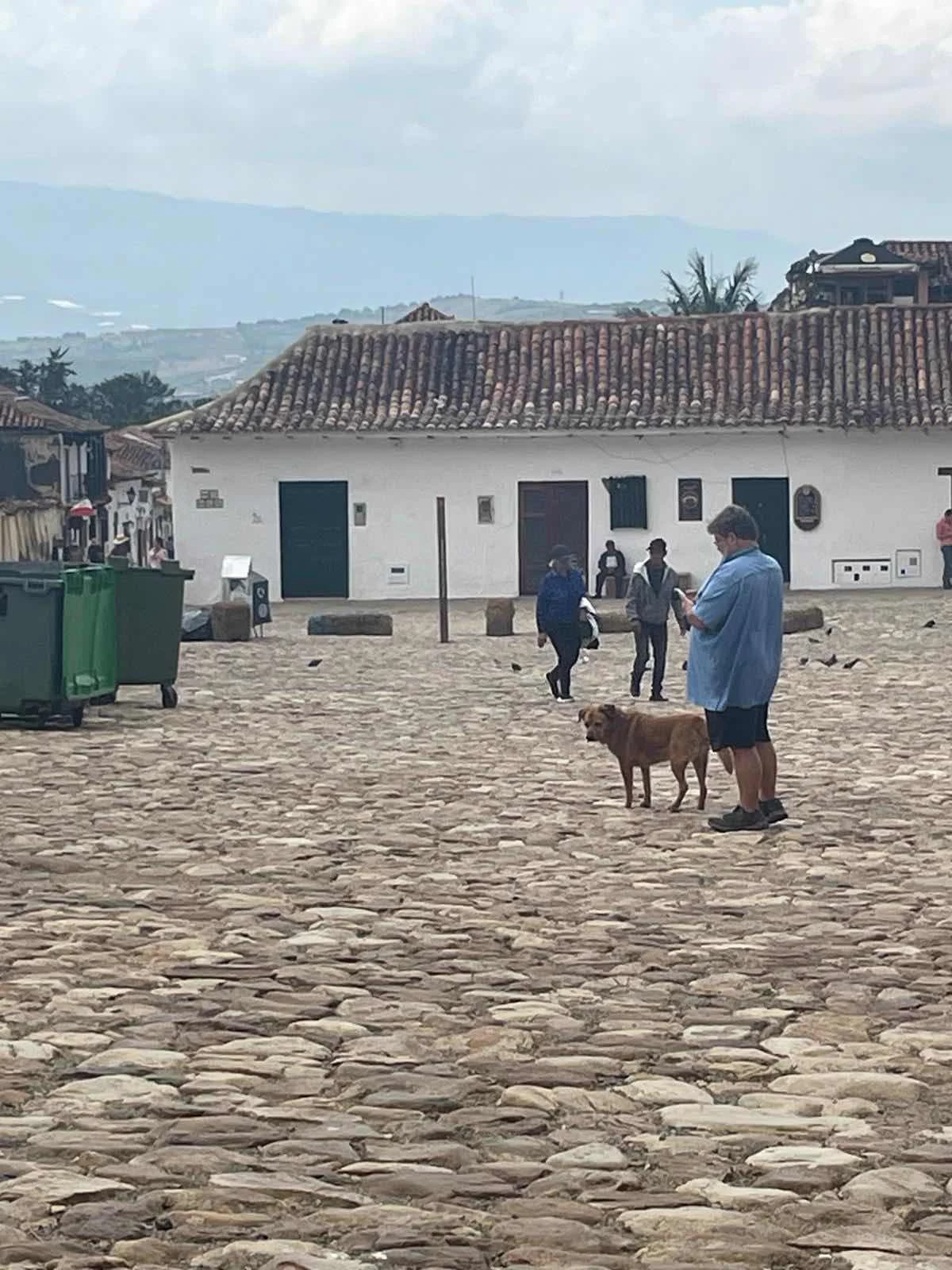
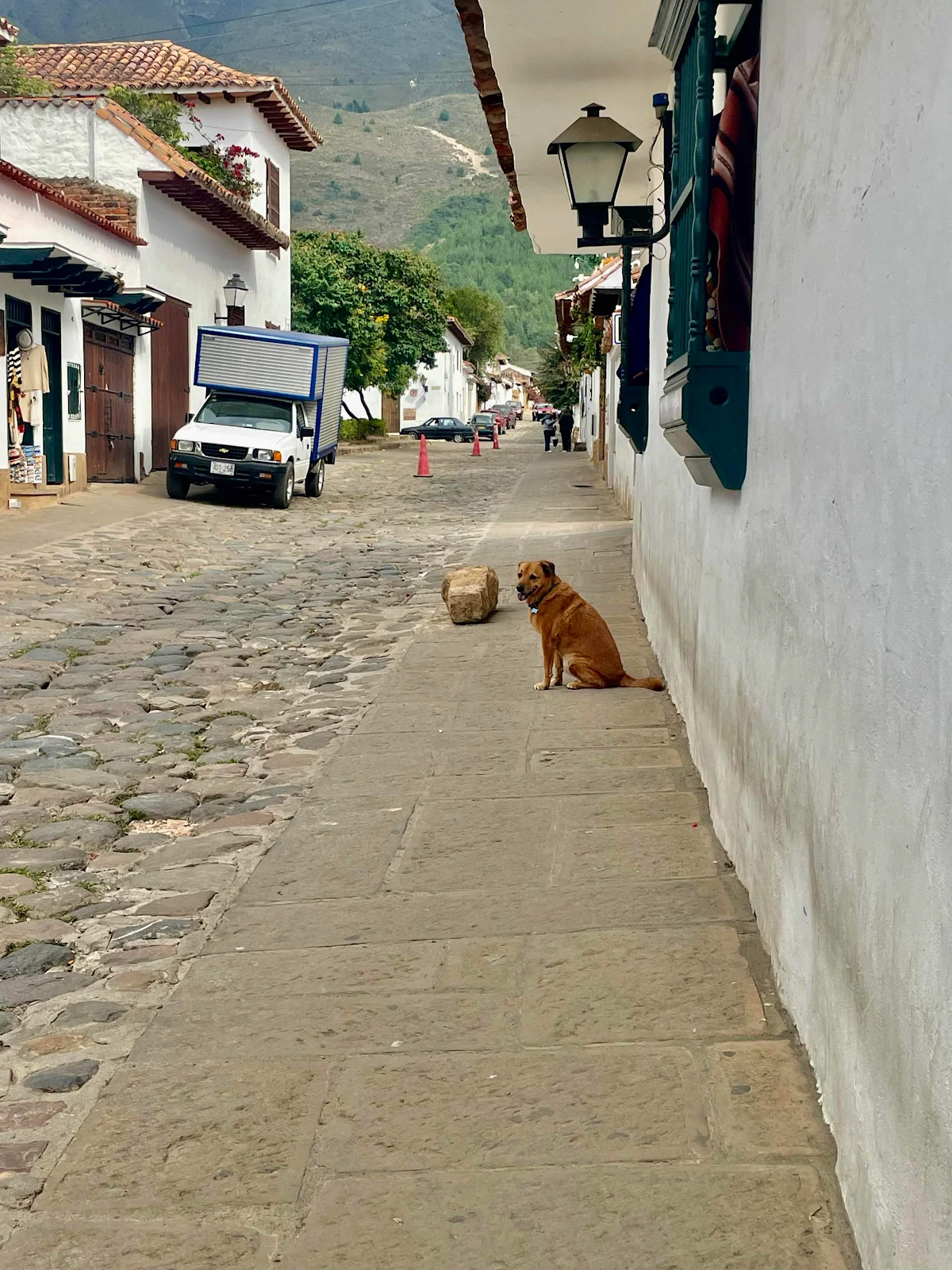
It is said the ghastly cobbled streets were paved with these rounded stones pulled from the modest little Rio Sachica and the hope was the cobbles would keep the dust down. I’m sure they have but they make for terrible walking if you’re not used to them (and we’re enphatically not!) though we see locals prancing comfortably in high heels. Rusty of course does fine.
We left our campground by late morning with Rusty dutifully leashed as we had seen dogs leashed in other Colombian cities. And there are a handful leashed here in town.
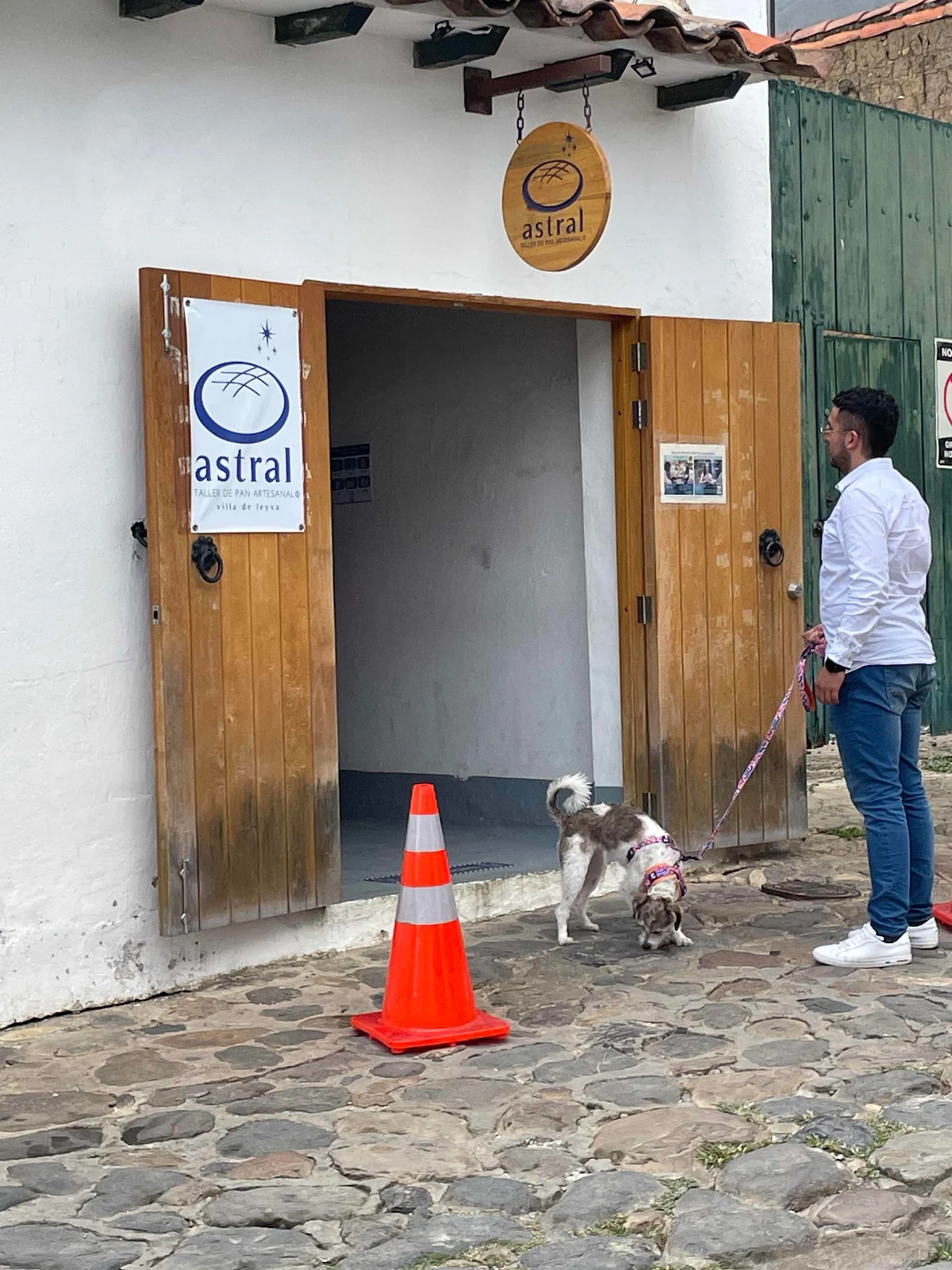
Including Rusty at first.
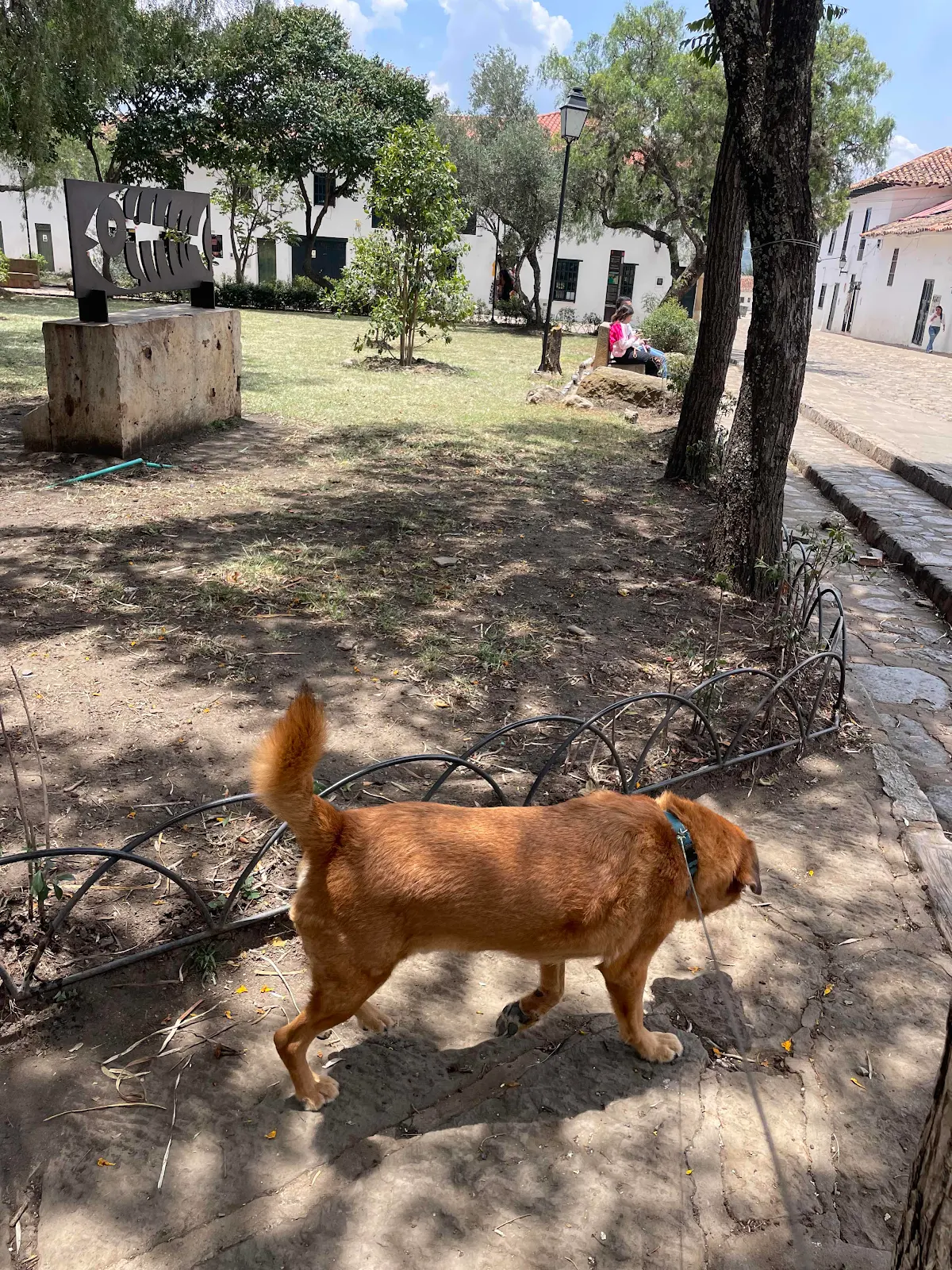
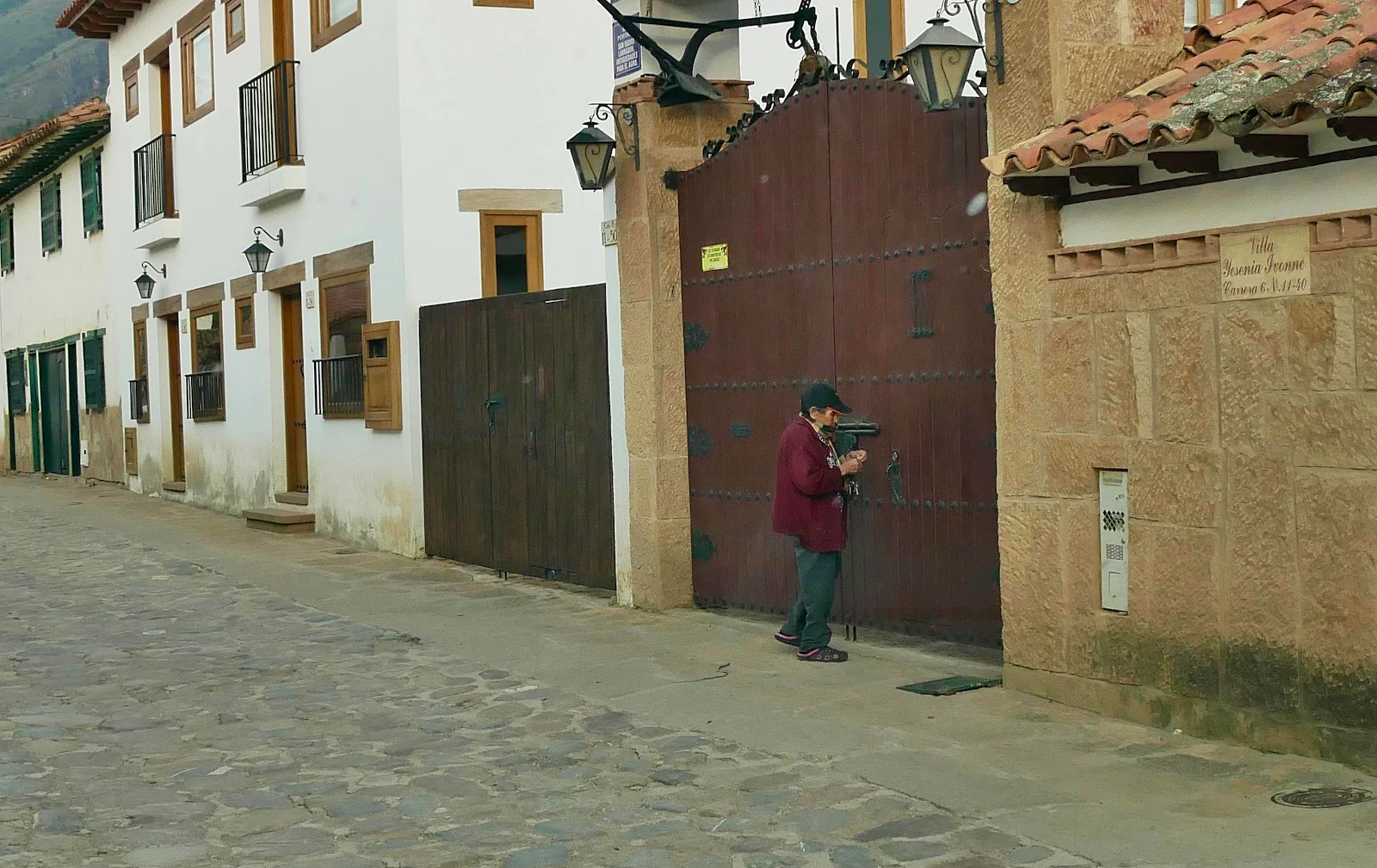
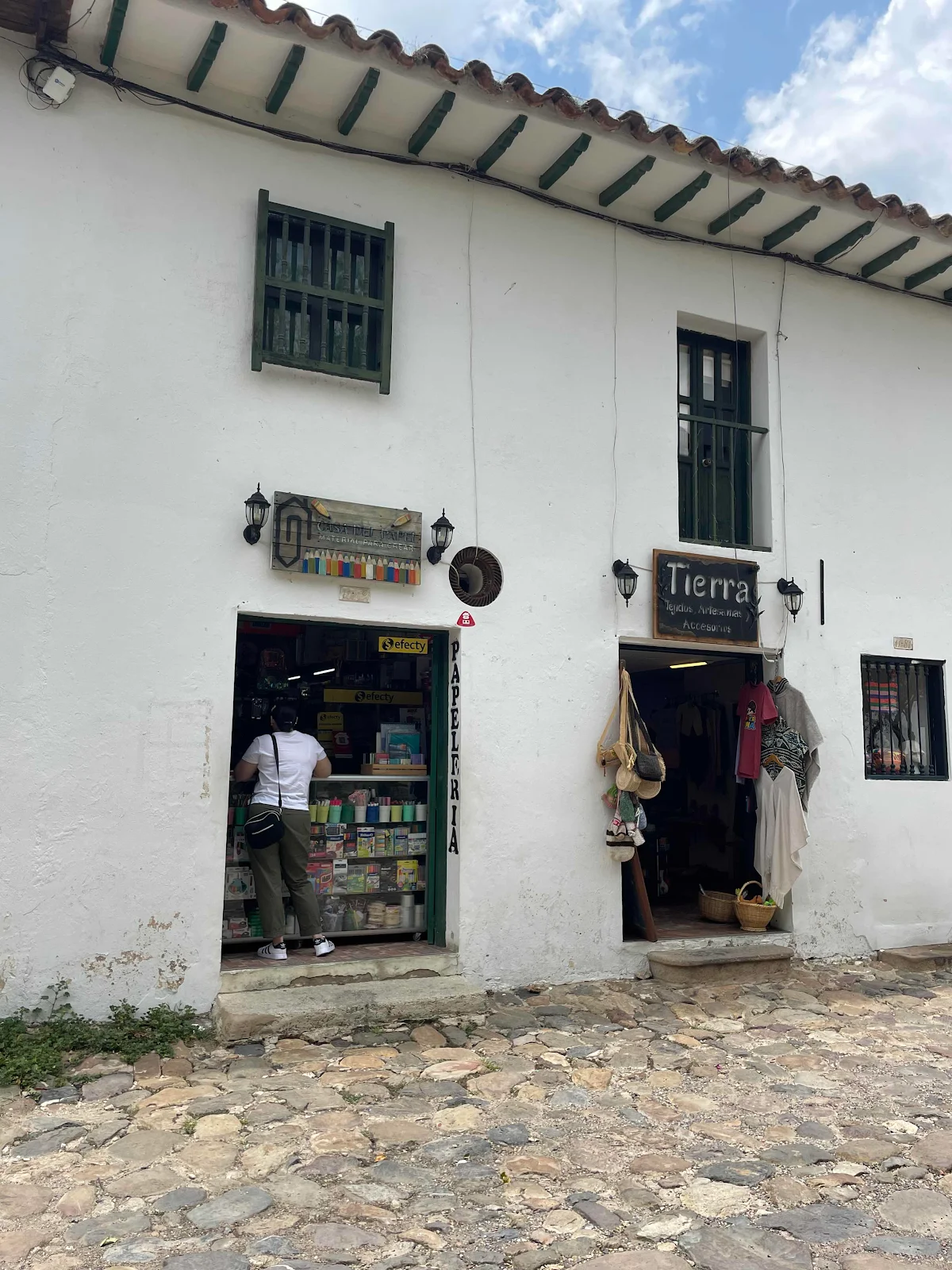
This town of 17,000 residents is similar to smaller Barichara in that the colonial architecture is treasured which is great but it does make shopping awkward for people like me. The streets look the same and storefronts are nothing more than doorways which is no problem for an eagle eyed shopper like Layne…
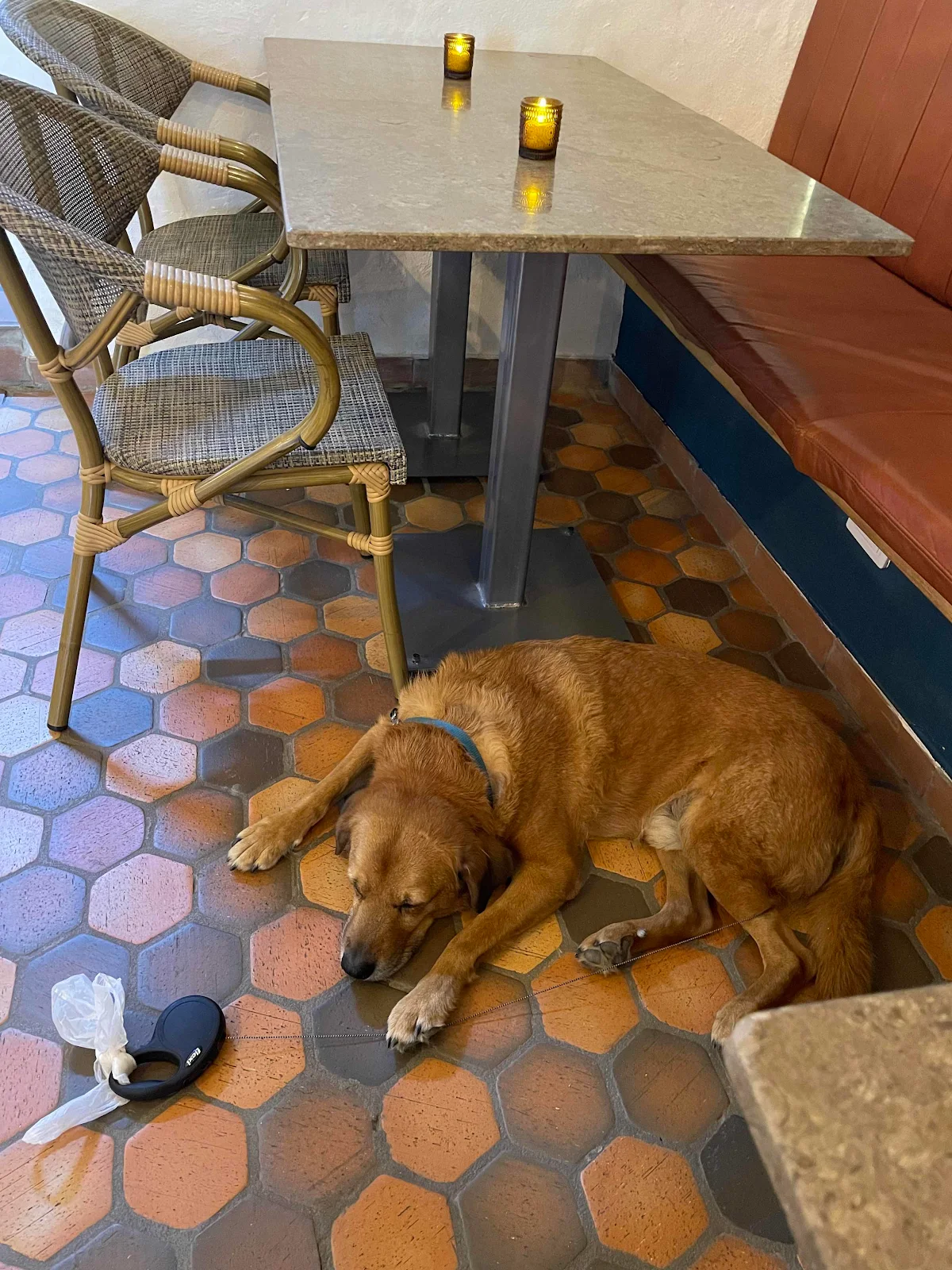
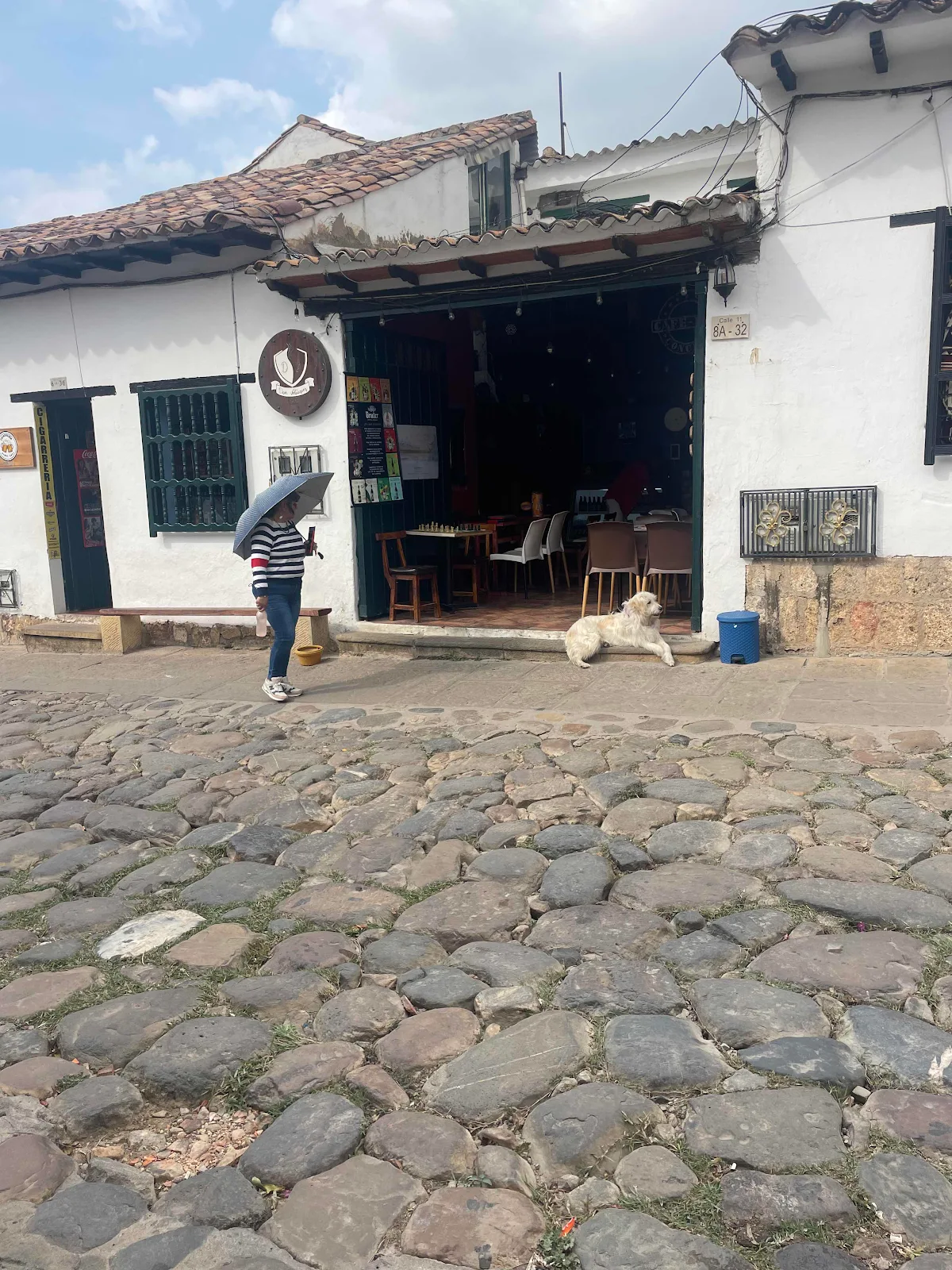
She found a pretty nice place for lunch and I was sure Rusty wouldn’t be admitted…wrong, of course! Colombia is amazingly dog friendly.
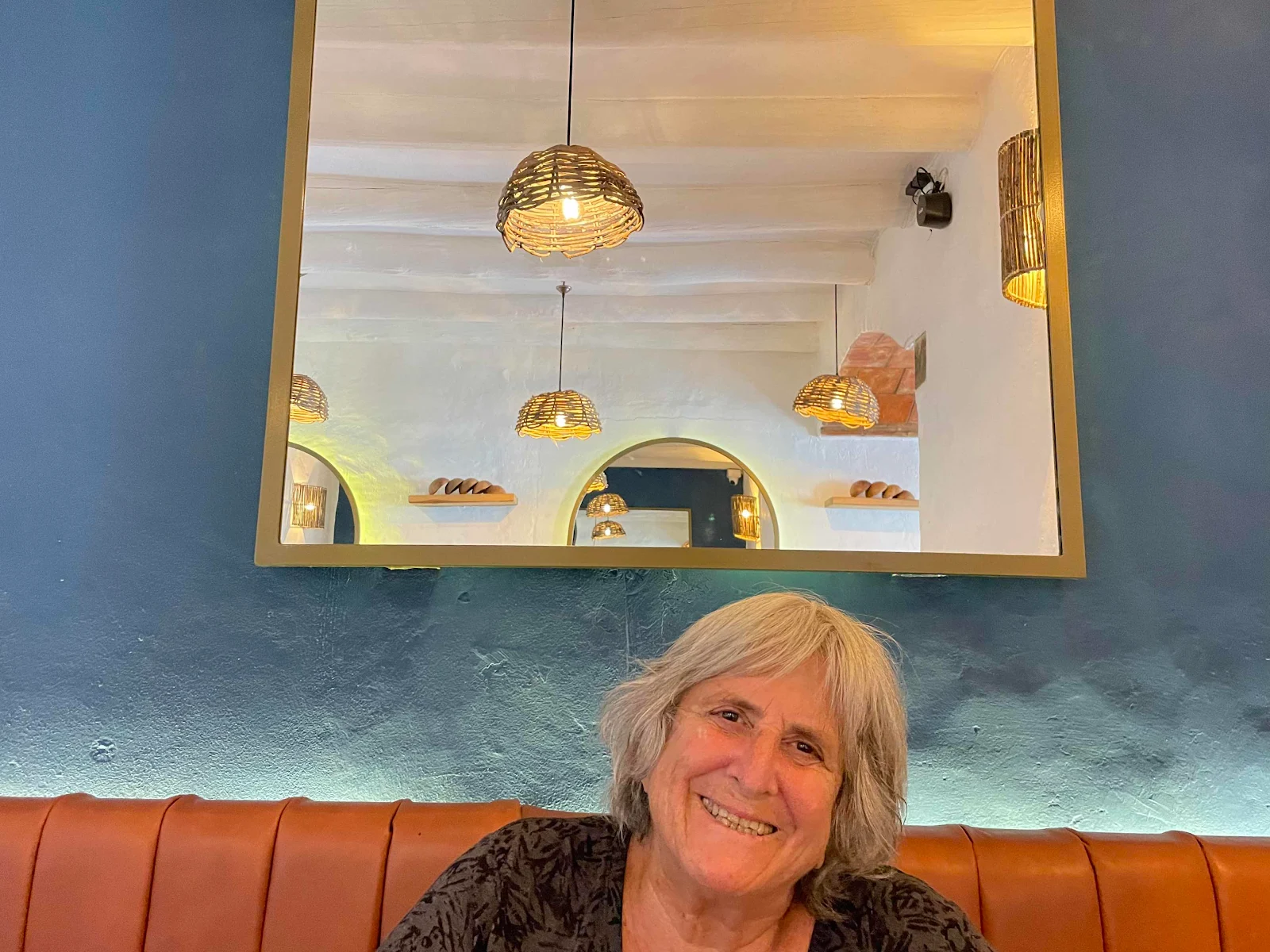
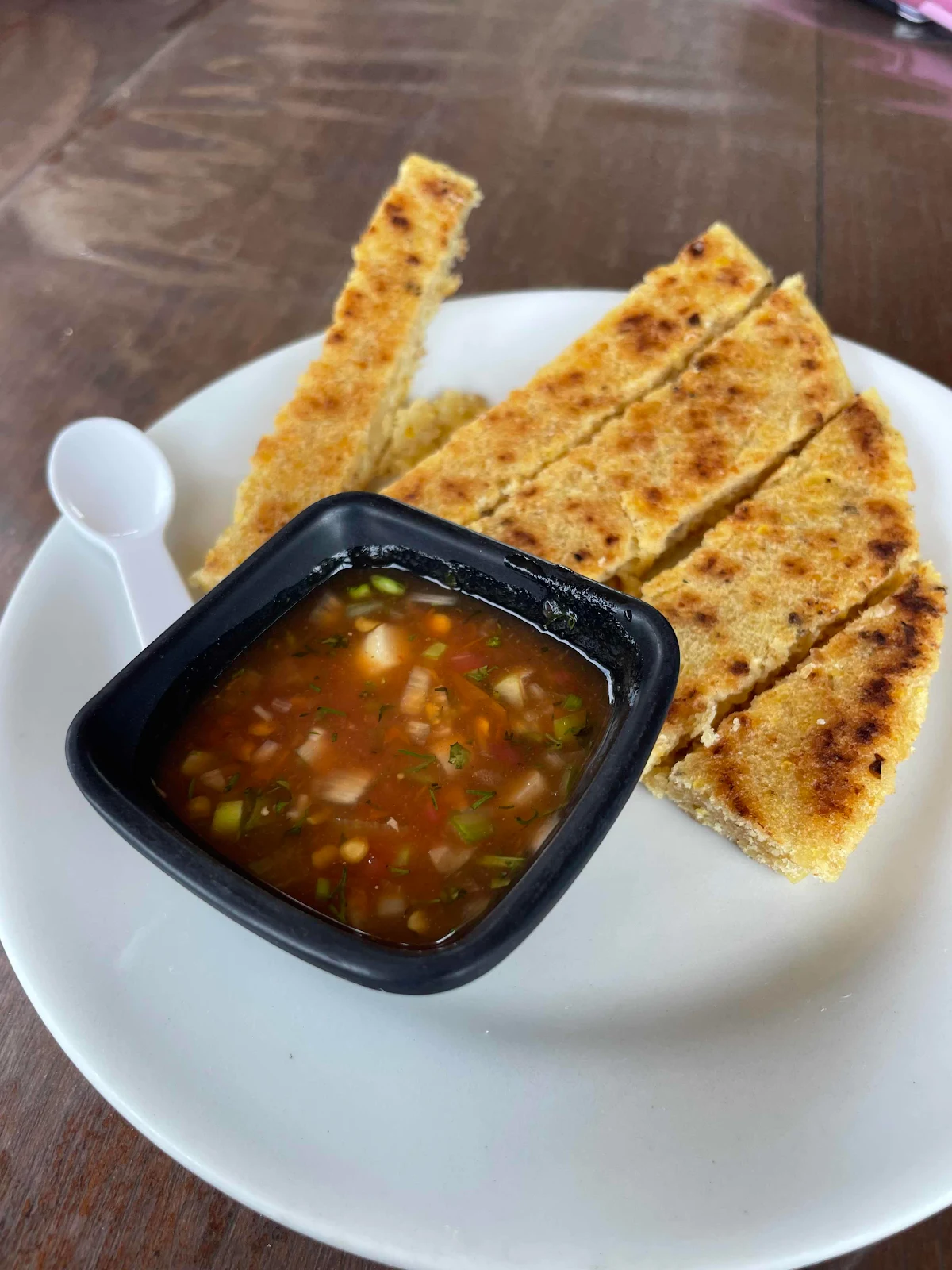
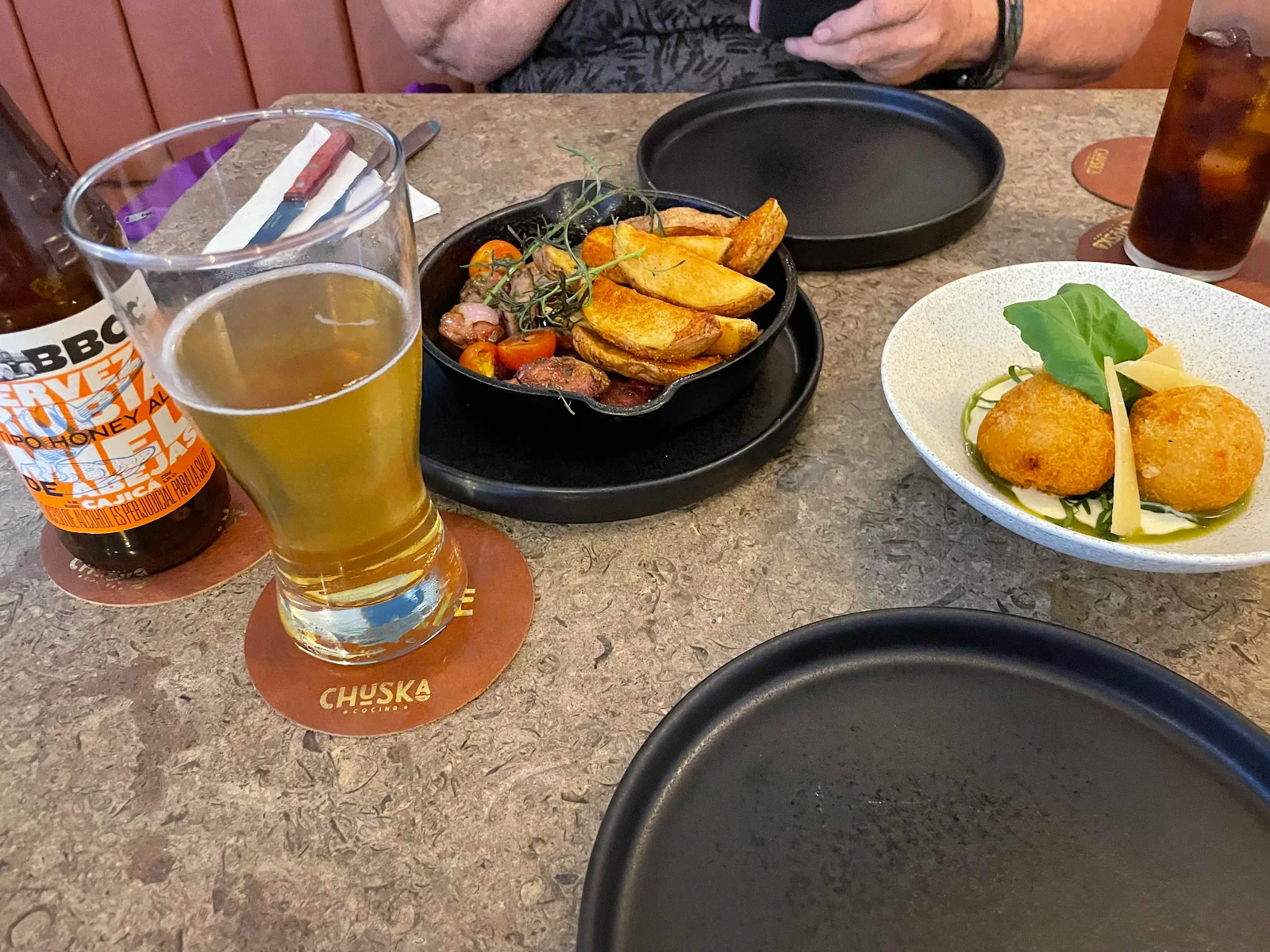
We ordered three appetizers for lunch, a locally famous spicy sausage, yuca croquettes in a blue cheese sauce…
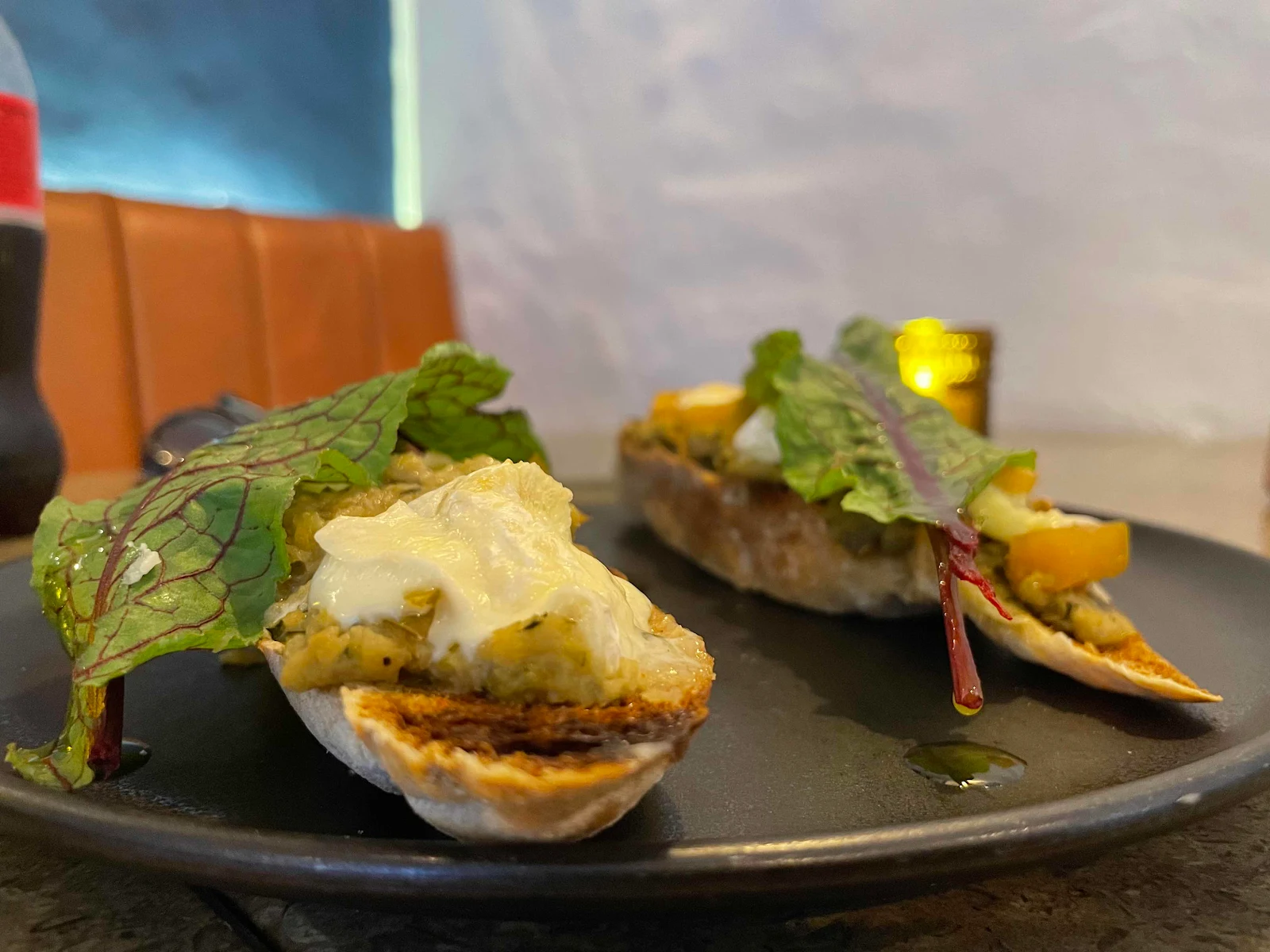
…and eggplant toast, the least flavorful of the three oddly.
Upscale Colombian you could call it and they took American Express. Credit cards are not widely accepted in Colombia and if they are, at gas stations for instance, AmEx is never an option. At smaller restaurants and shops paying with a card is not often accepted especially outside tourist areas. Cash is still king here.
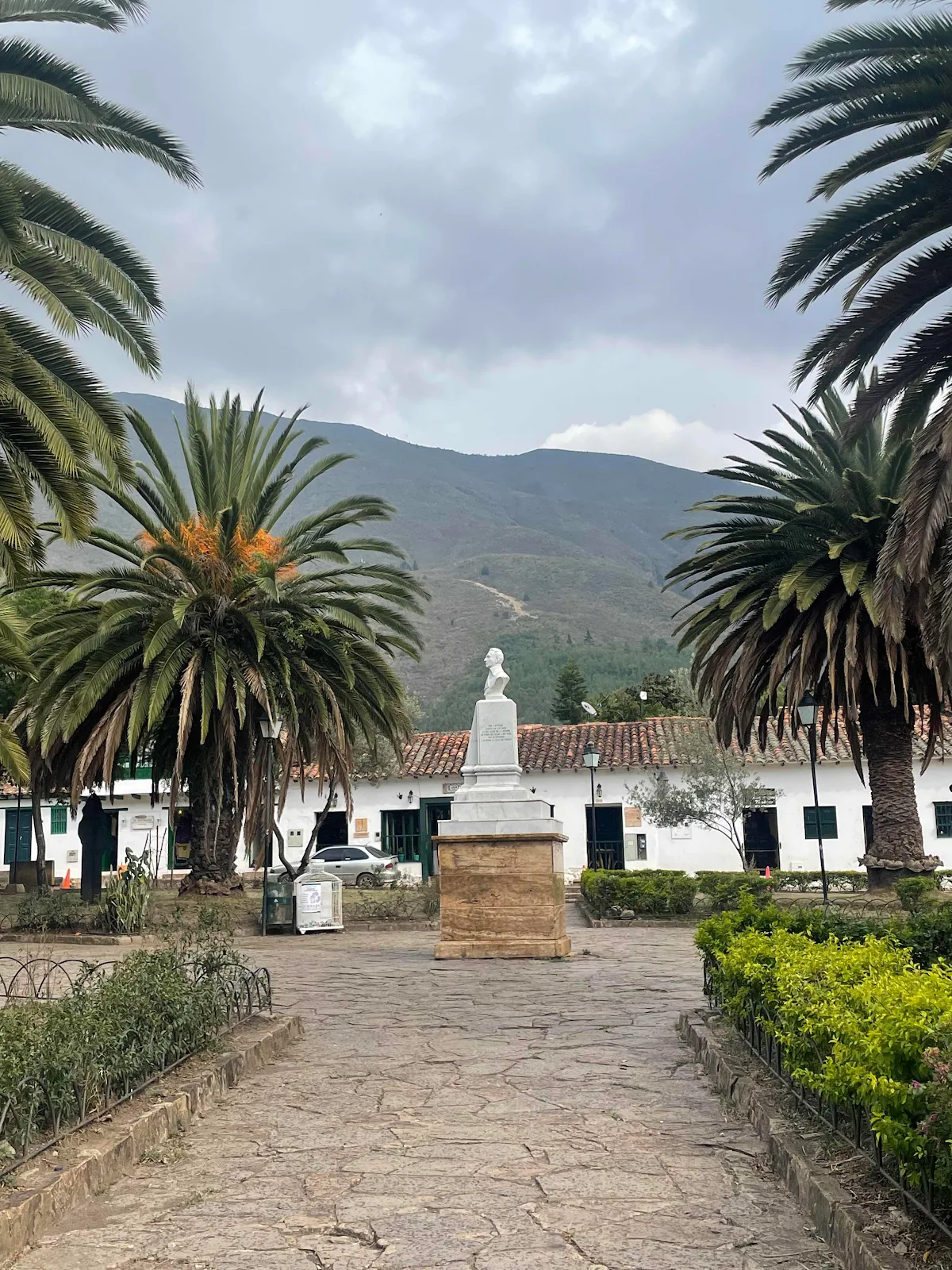
Apparently the city was built with a huge square in its center to accommodate the trading of agricultural products. And the soldiers stationed in the city were put to work cobbling the square and streets. The result is the largest cobbled square in Colombia and it is believed to be in all of South America.
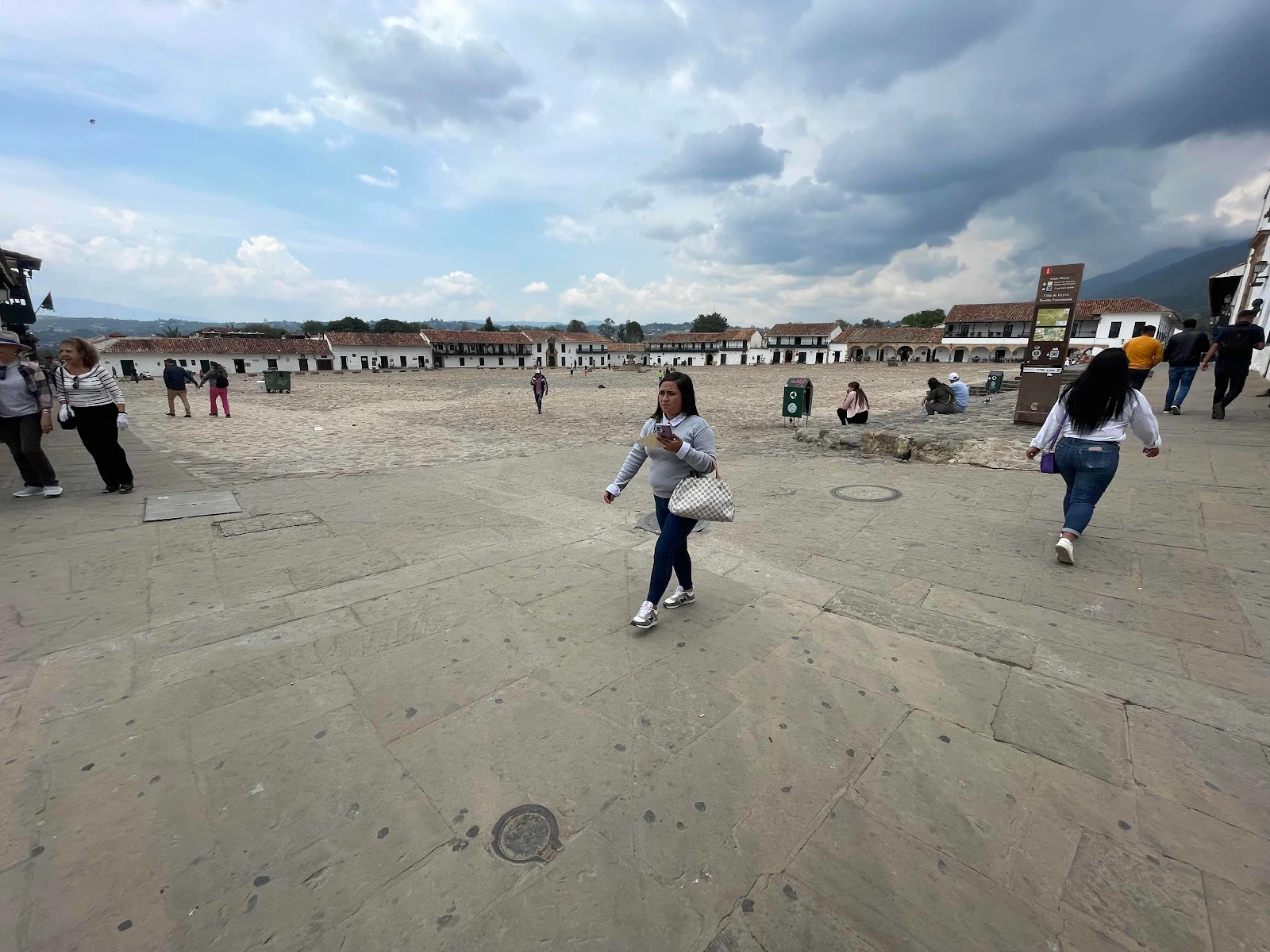
I will say this; on first inspection it is a bit desolate, I mean the absence of trees or other decoration is made all the more obvious by the tiny little empty fountain in the middle of this vast emptiness.
The church on the square is pretty modest and the bells in the church tower have a horrible clank, like someone hitting a bucket with a hammer.
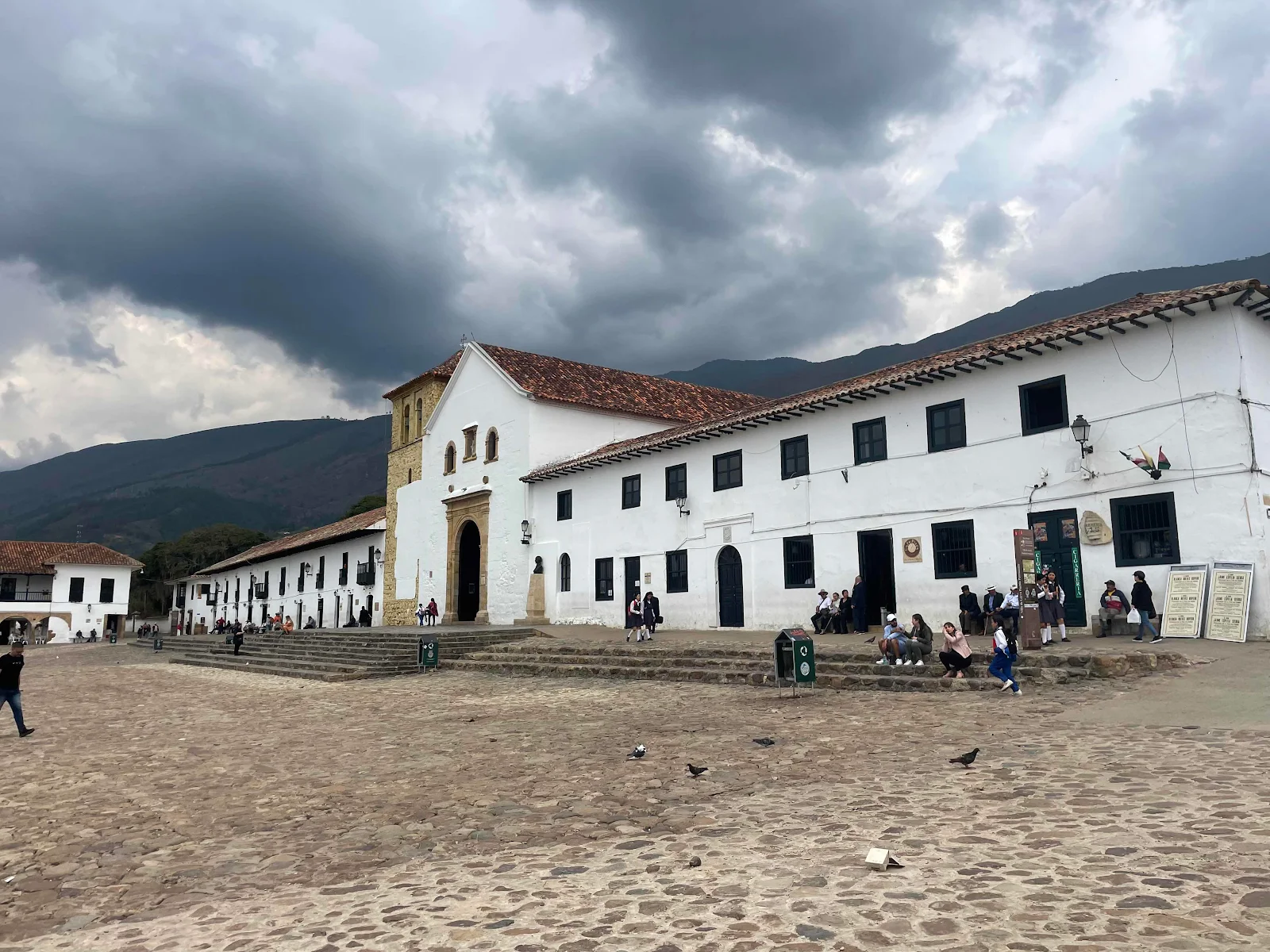
The buildings are quite beautiful and perfectly maintained with their balconies and perfectly aligned roofs.
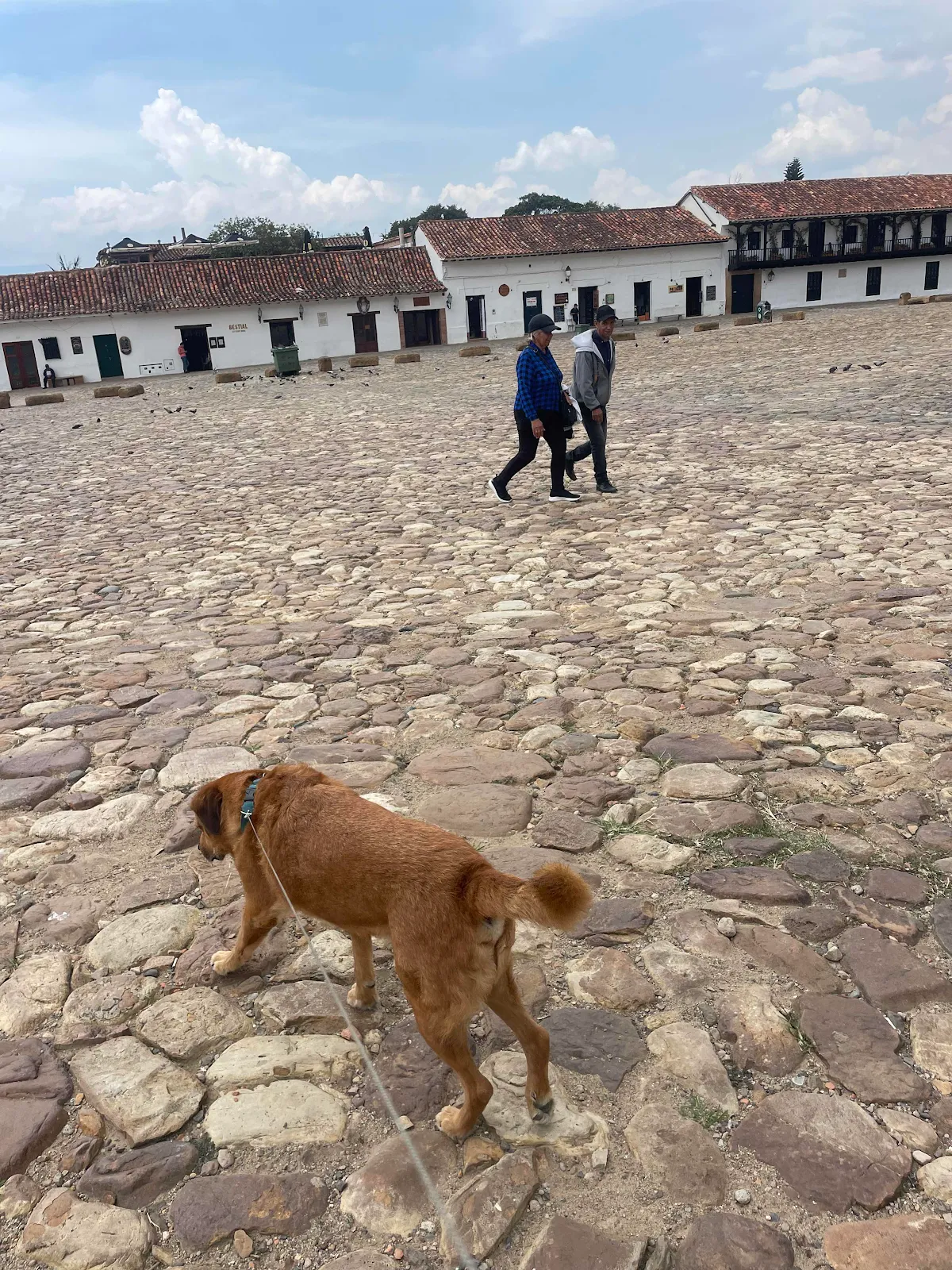
We had our first walk through and got a first impression of this city short listed to be made a UNESCO world heritage site. I’m rather surprised that hasn’t happened already. Meanwhile we got to watch a solemn procession march across the square to the church. A funeral in progress on a Wednesday afternoon.
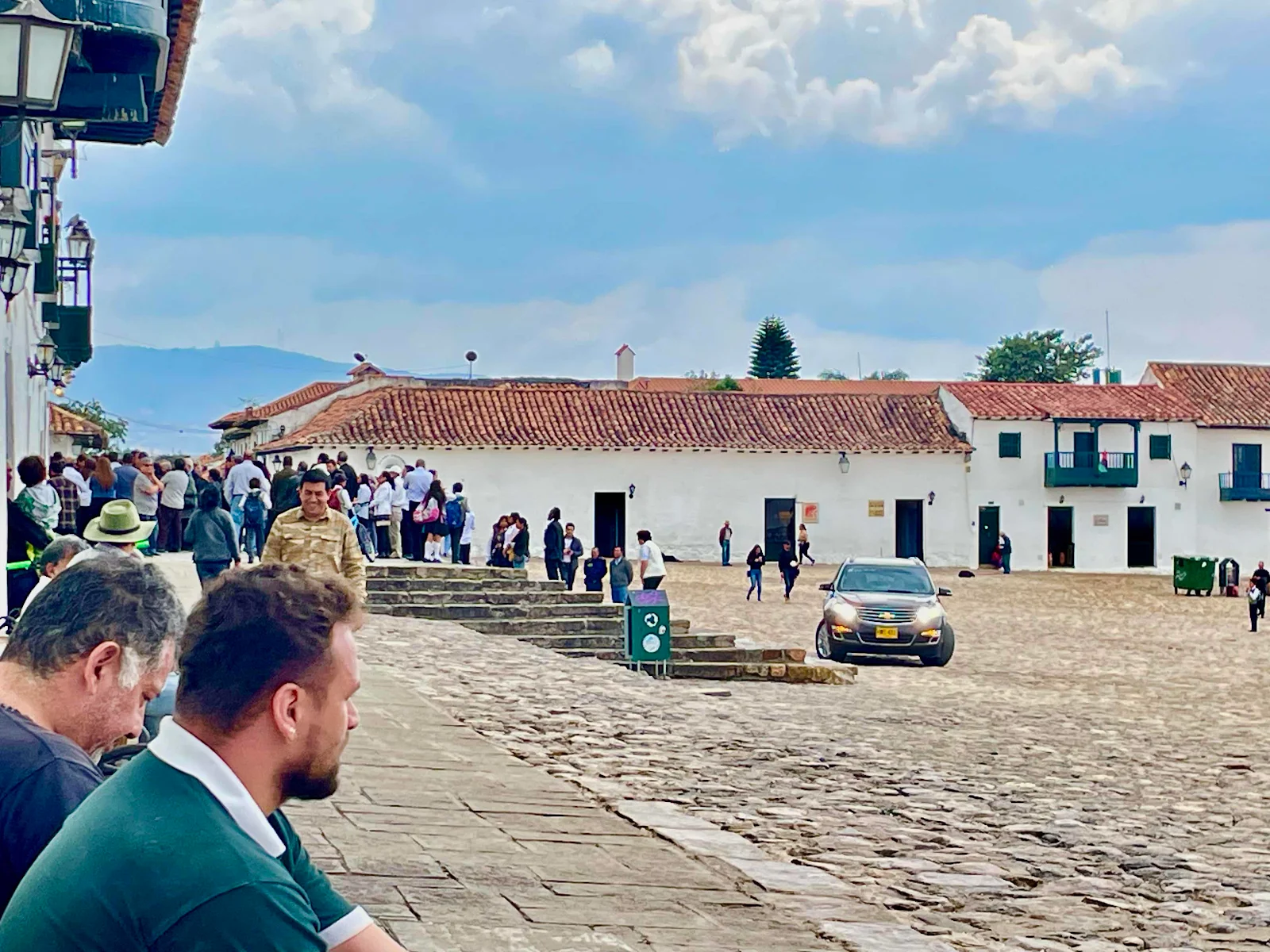
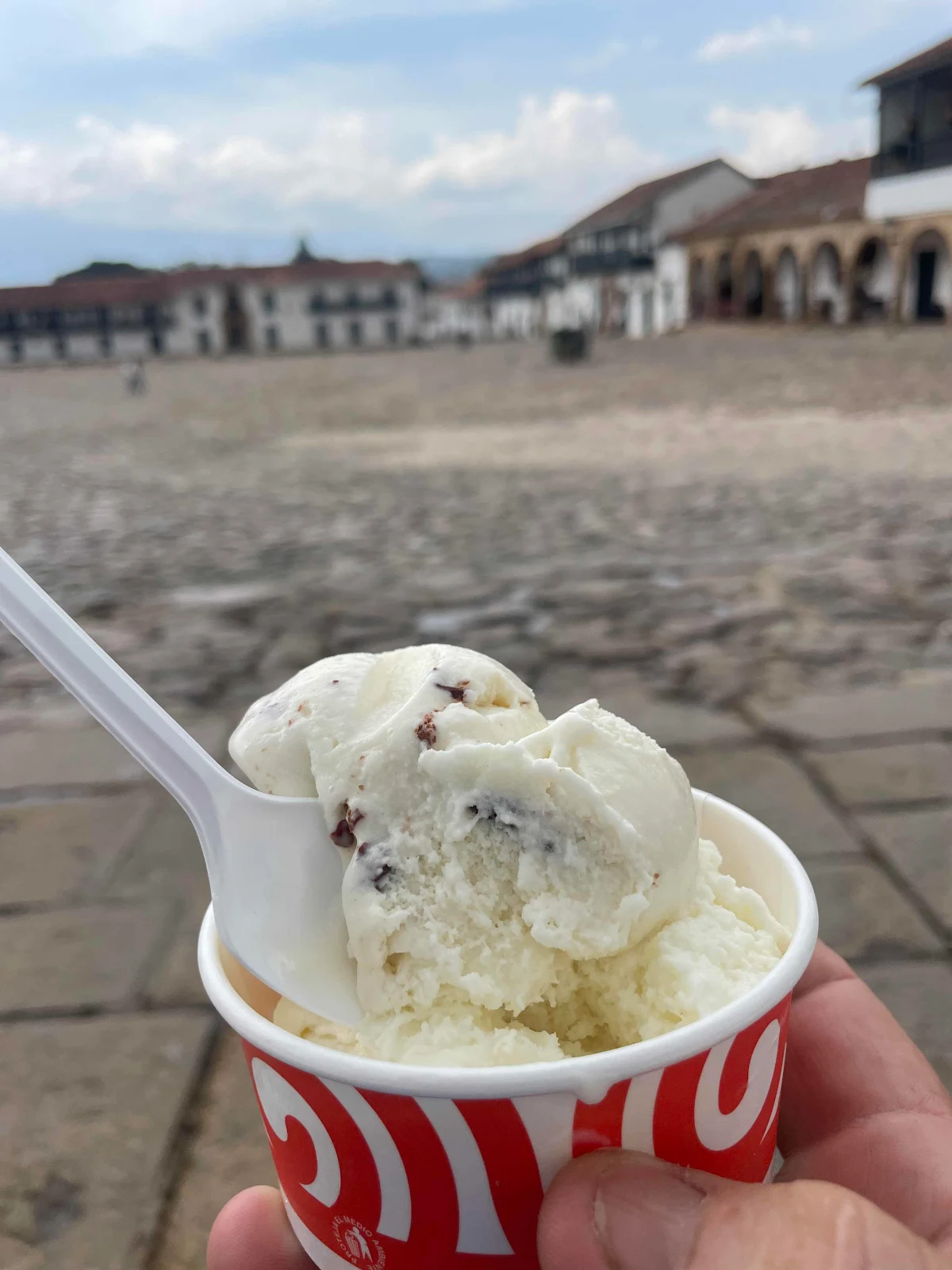
The fact that we’d just bought ice creams was purely coincidental and the dude next to us was swigging beer from the bottle. Life goes on etc… pick your own death cliché. Layne said the coffin looked rather small so the idea it might have been a child they were burying cast a bit of a pall.
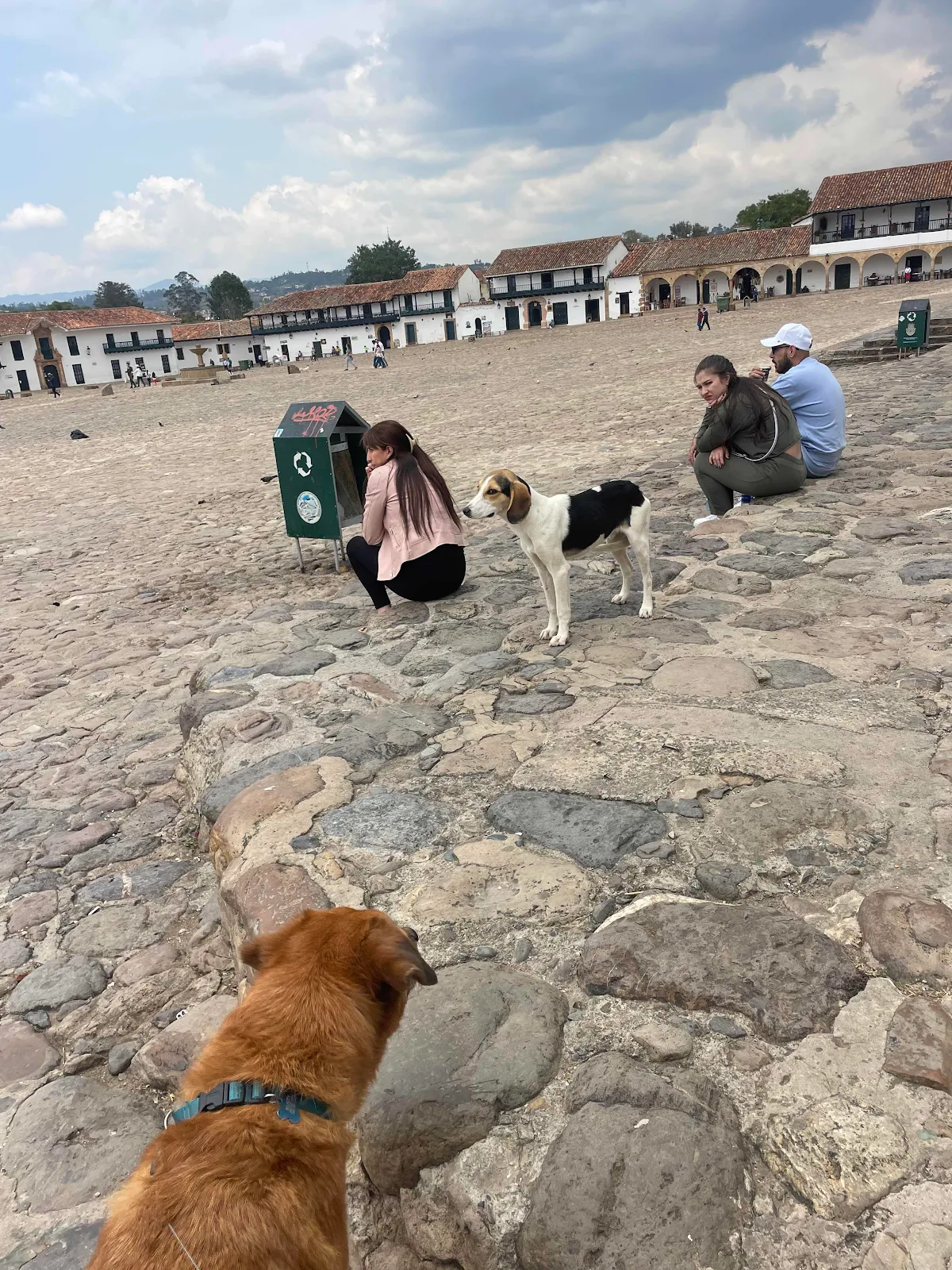
This couple was handing out treats to the dogs which wander around. They aren’t strays and as you can see they are well looked after. The big black one took a fancy to Rusty and would not leave him alone.
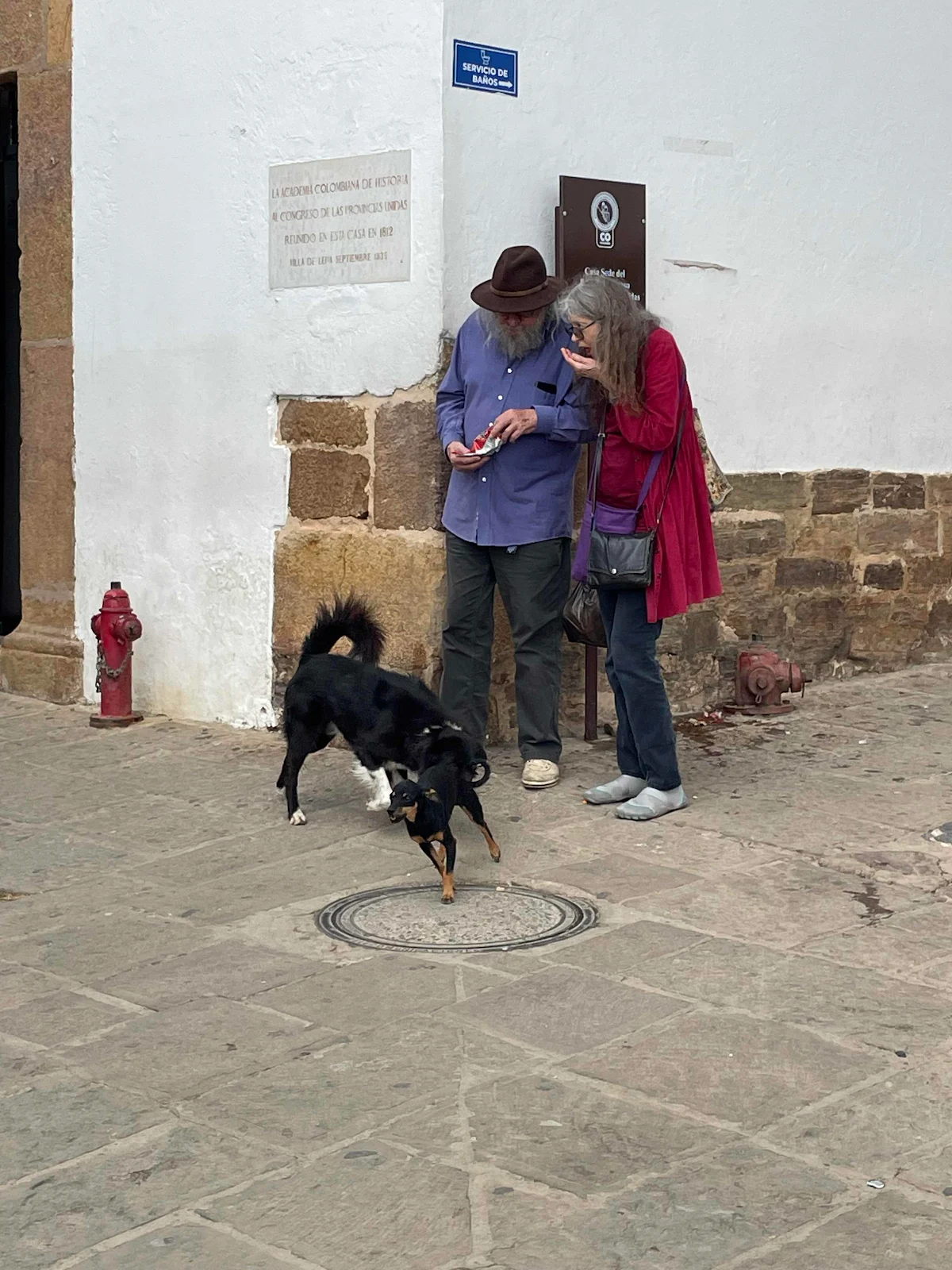
By this stage I’d figured out having him off leash is easier. People don’t think he is uncontrollably vicious if he is just wandering around. In this town if I put him on his leash he clears sidewalks. Anyway he got fed up with the black dog sniffing his butt and trying to hump him and he turned on him, growling and snapped him to the ground. The black dog left in a huff finally and Rusty preserved his honor. The Colombians thought it was hilarious, the gringo dog mucking in with the locals. Rusty off to do some banking, it’s dangerous business letting him off his leash…$$$$
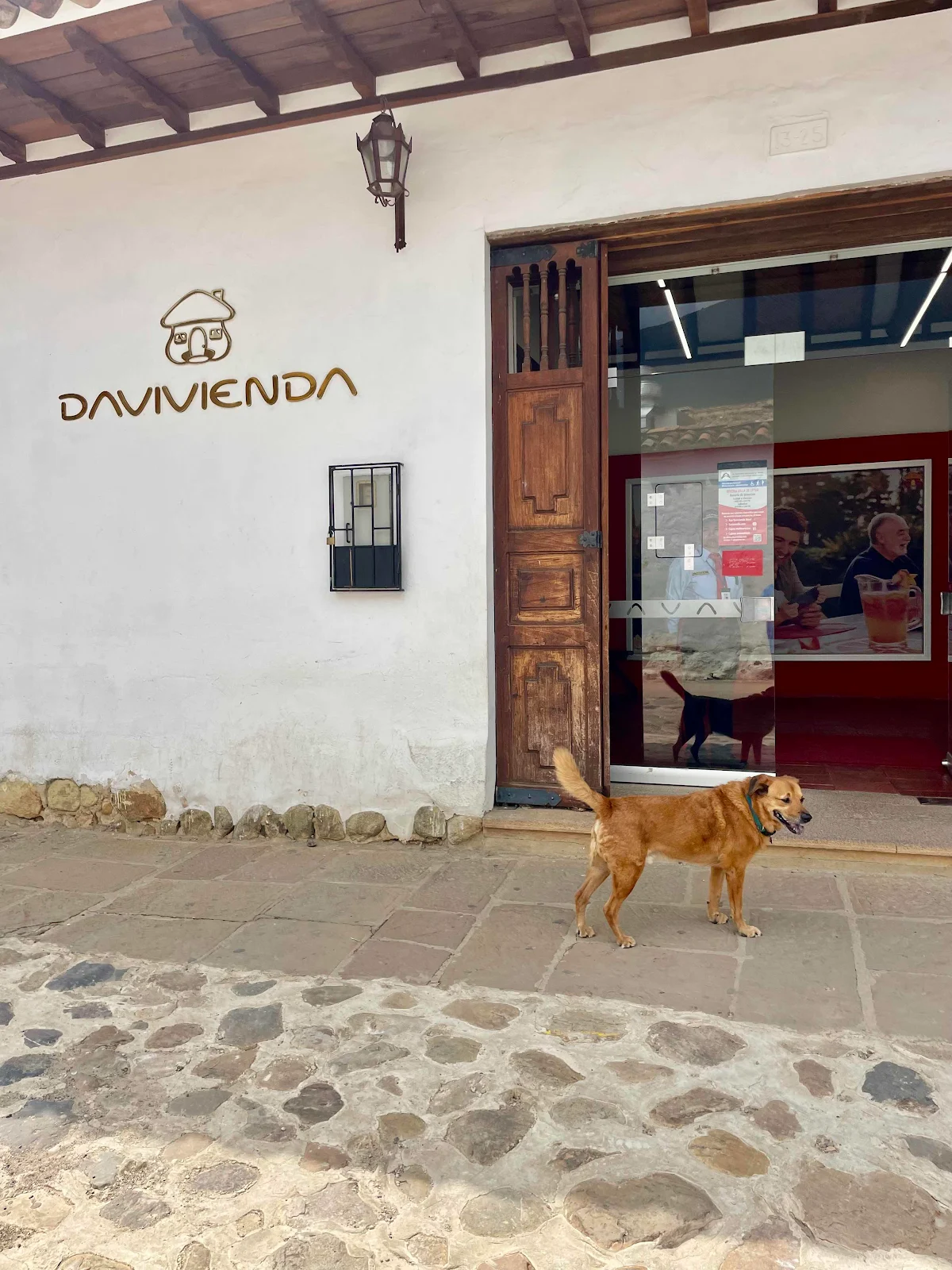
It was a lovely afternoon for a walk.
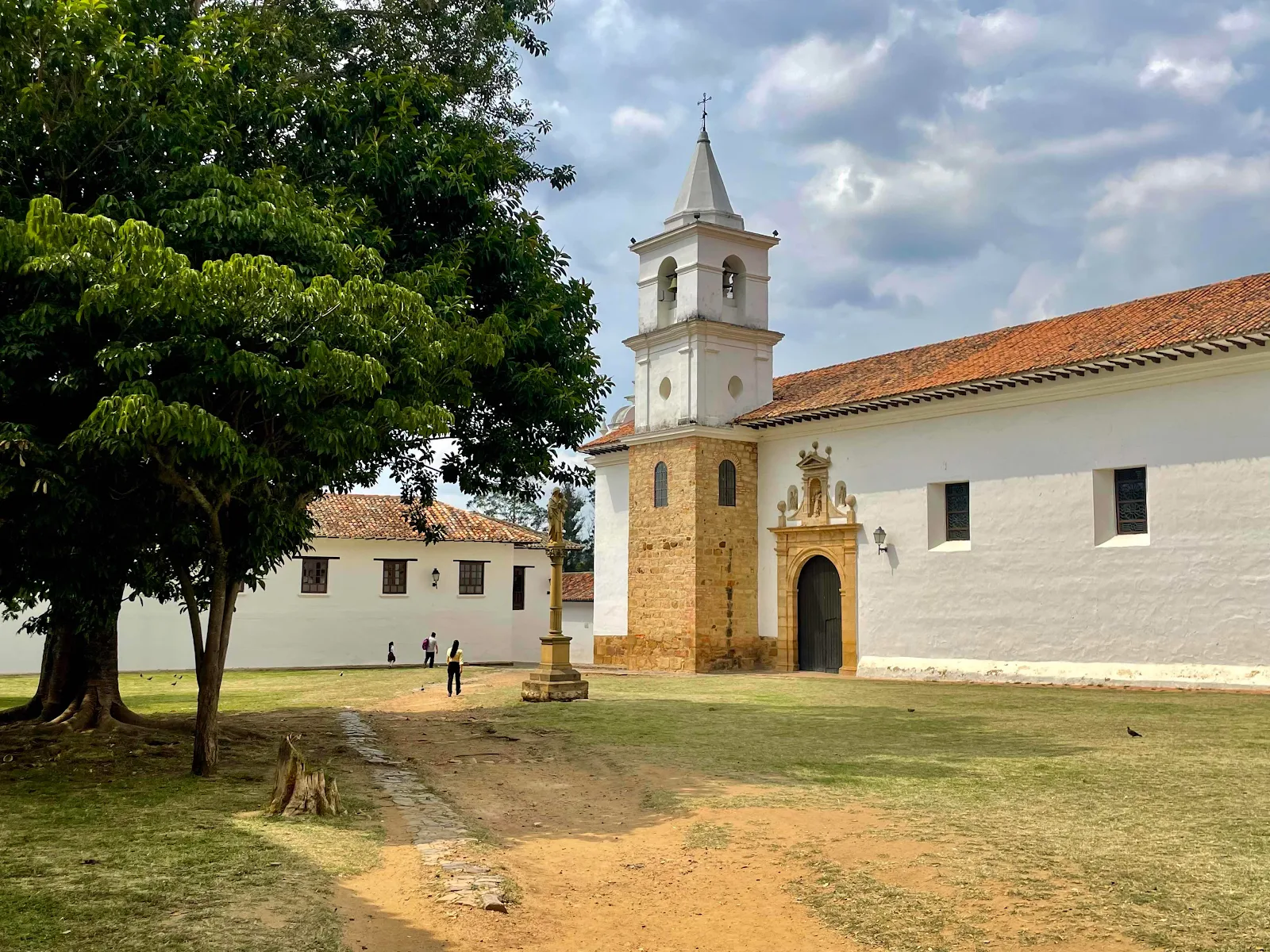
Or an occasional sit.
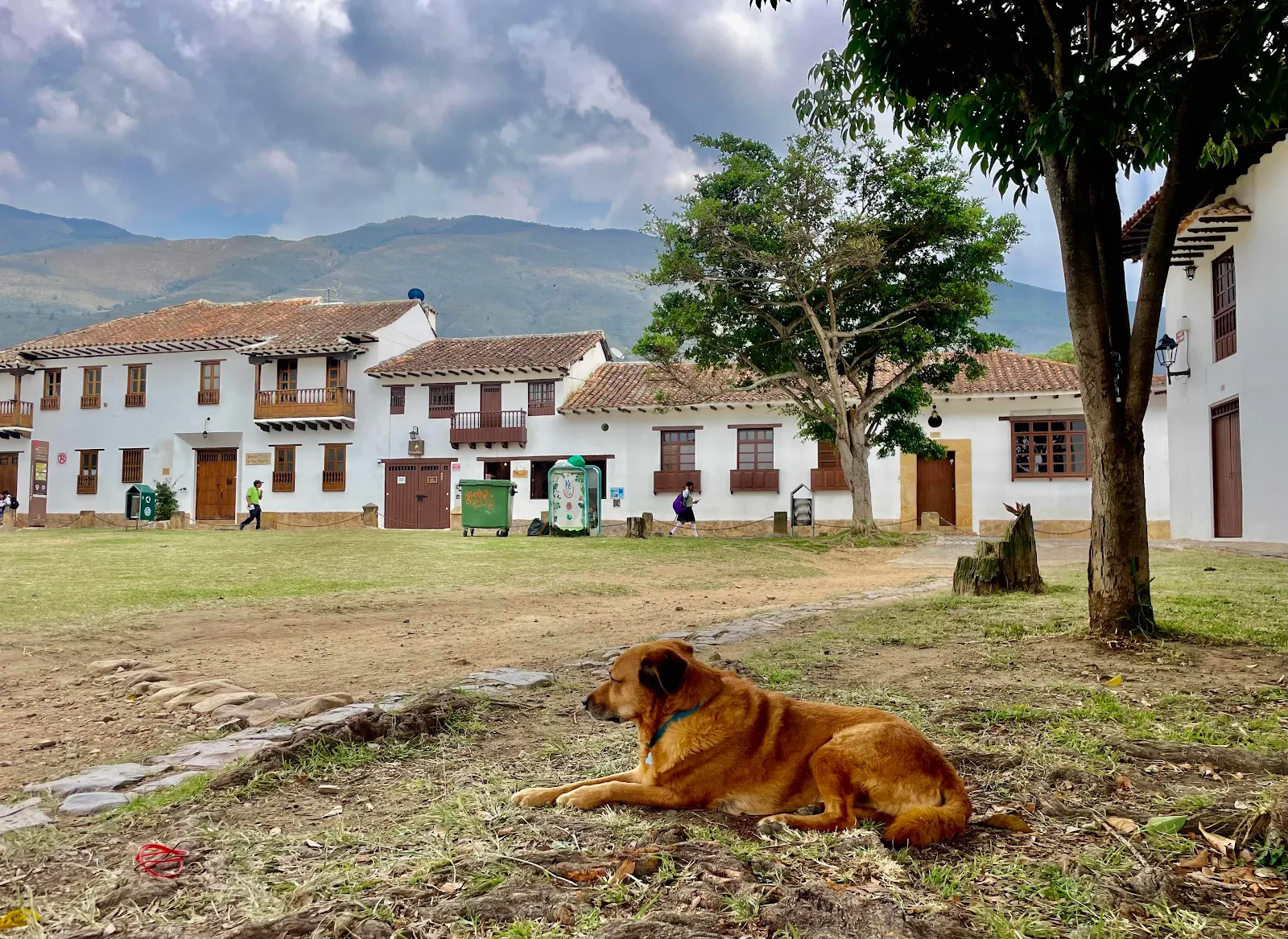
My people watching dog.
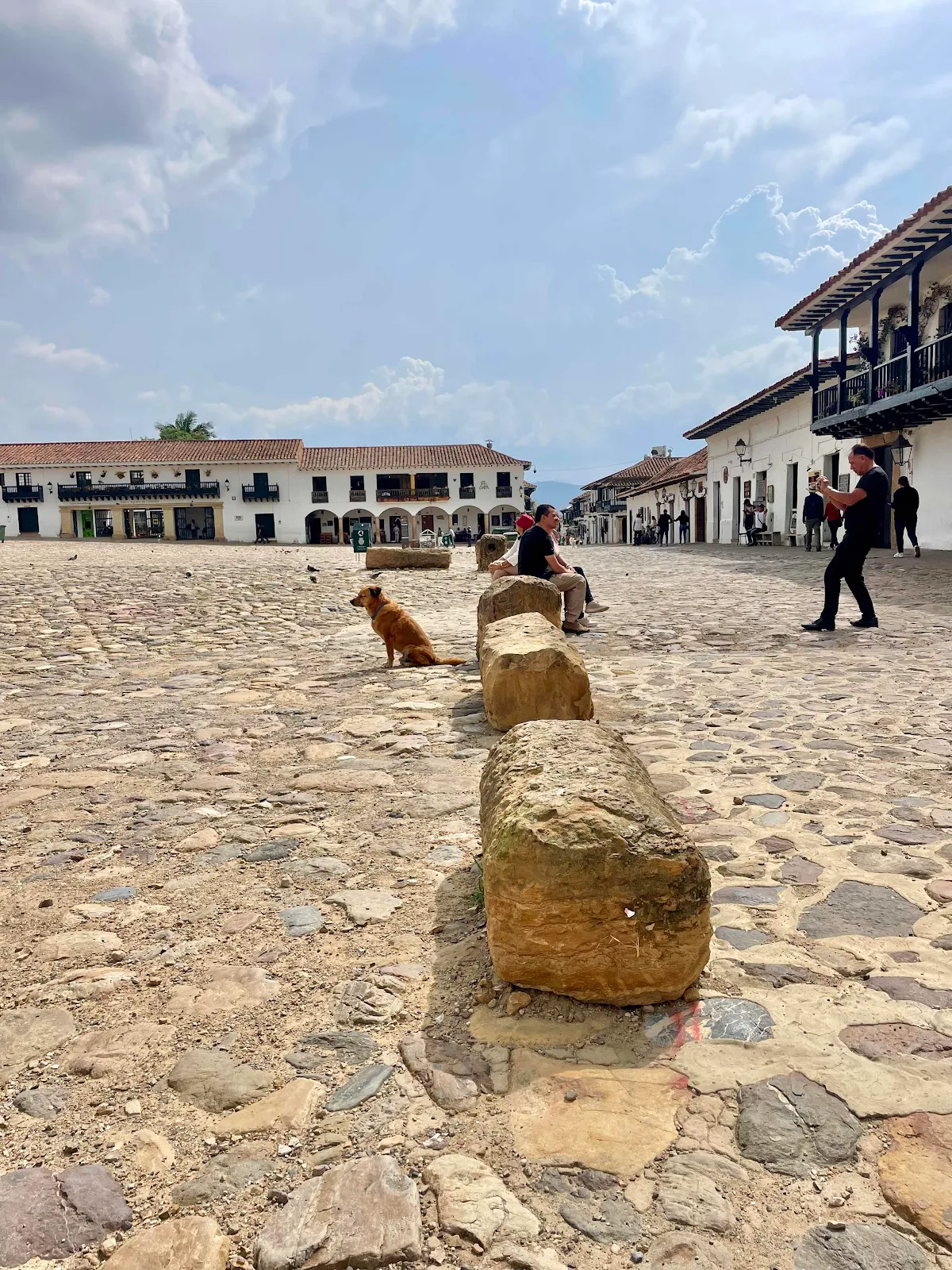
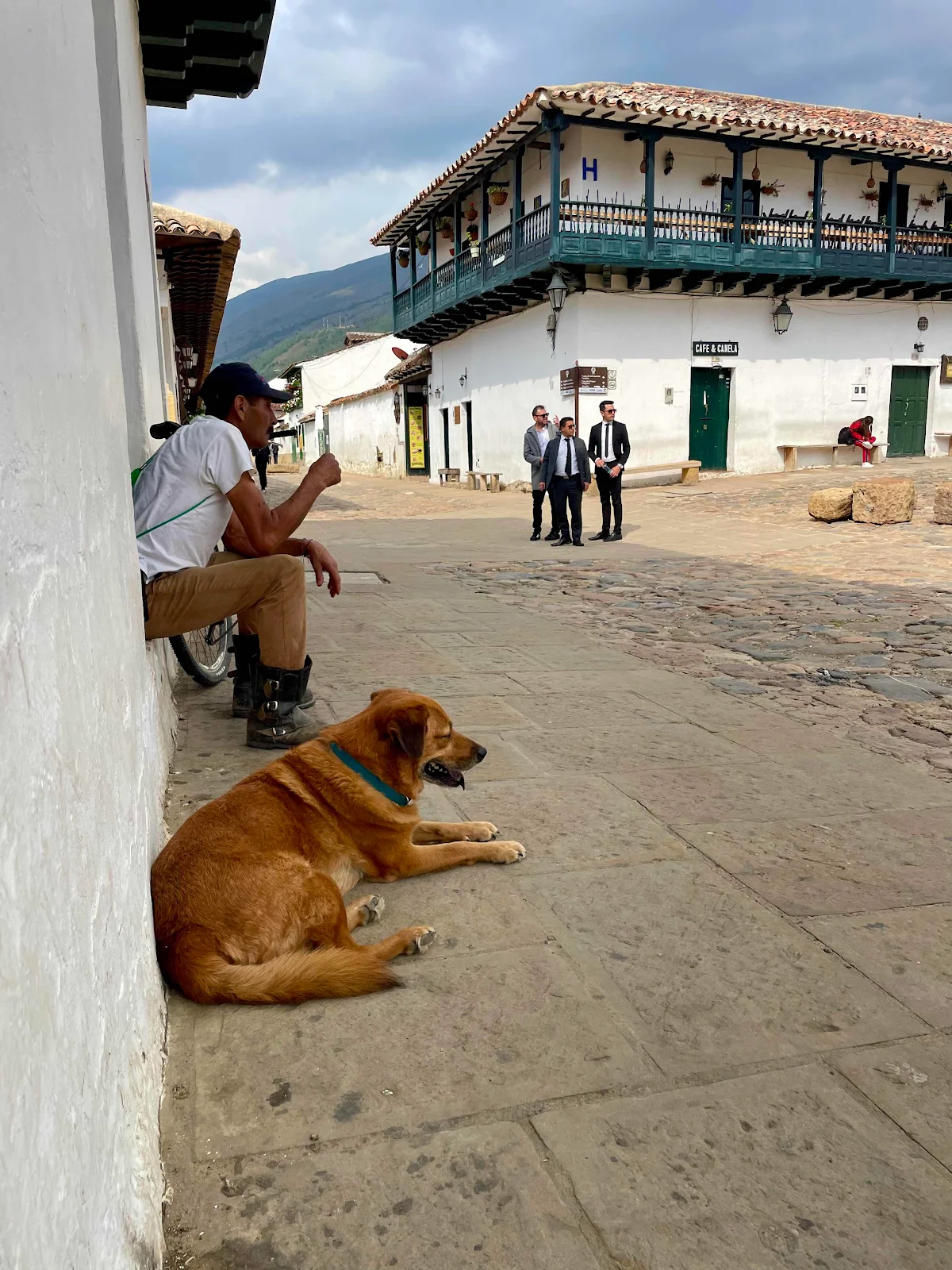
I sent Bruce the picture below and he figured they were FBI agents trying to look inconspicuous. Pretty funny even though they were actually fresh from the funeral.
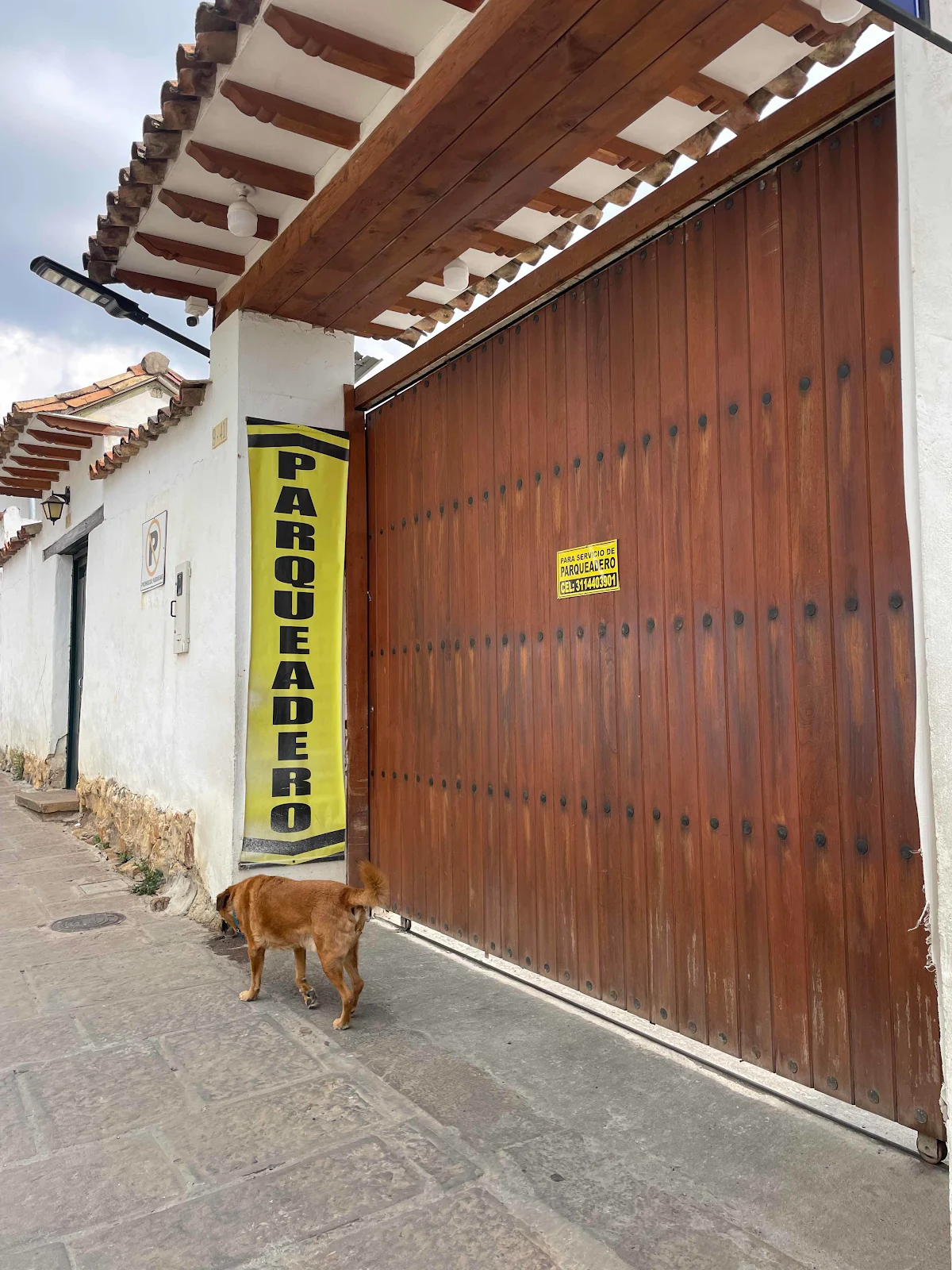
Note the roof over the entrance to the parking lot, below. It’s one of the things that drives me nuts in Latin America. They always put roofs over gates and entrances making them unavailable to a nine foot van. In Colombia they do better than most countries we driven through as they are taller, but so often you can’t get a tall vehicle into a parking lot thanks to a low decorative gate. Grrr!
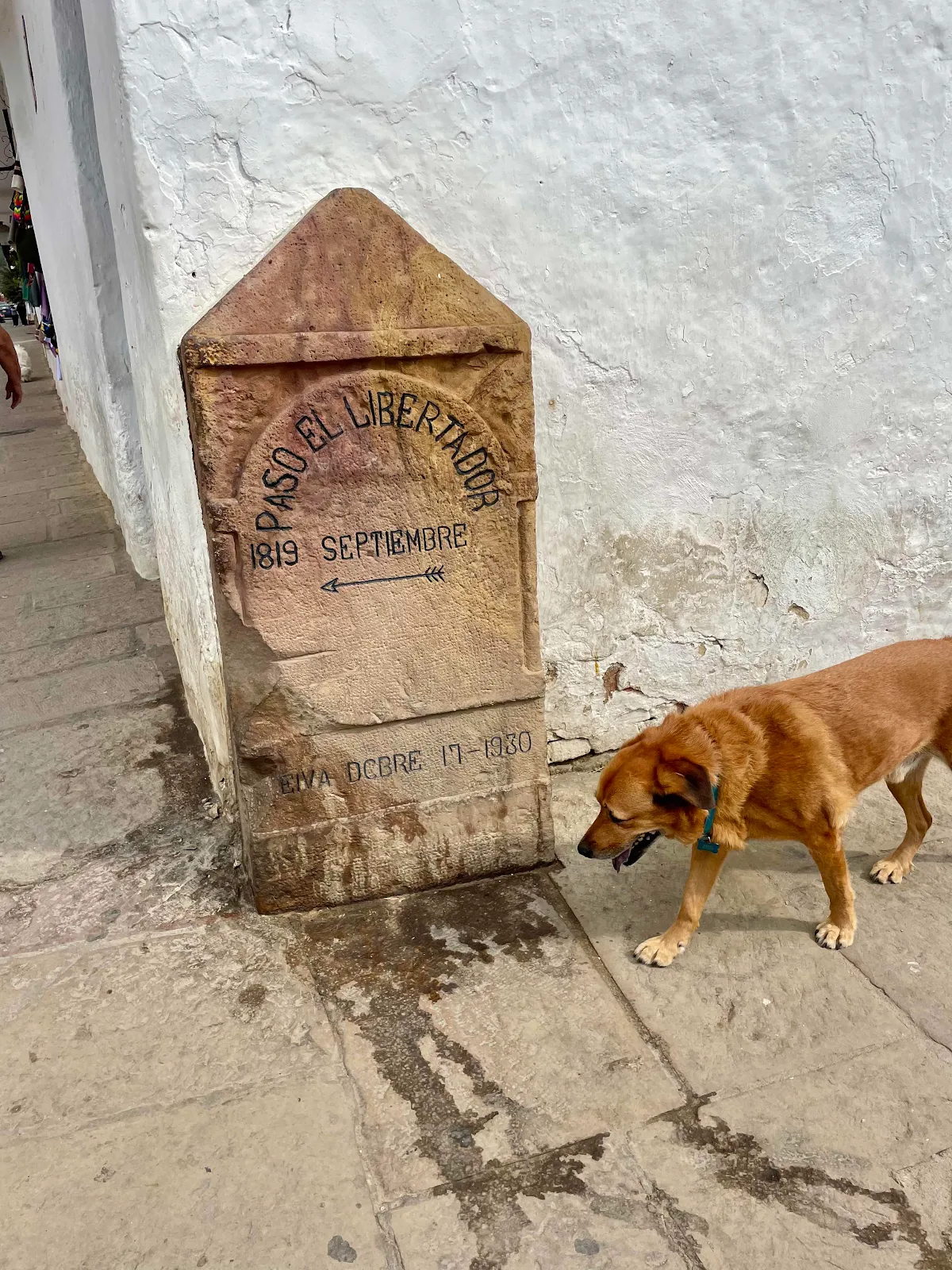
Liberator Street refers to Simón Bolívar. And Rusty.
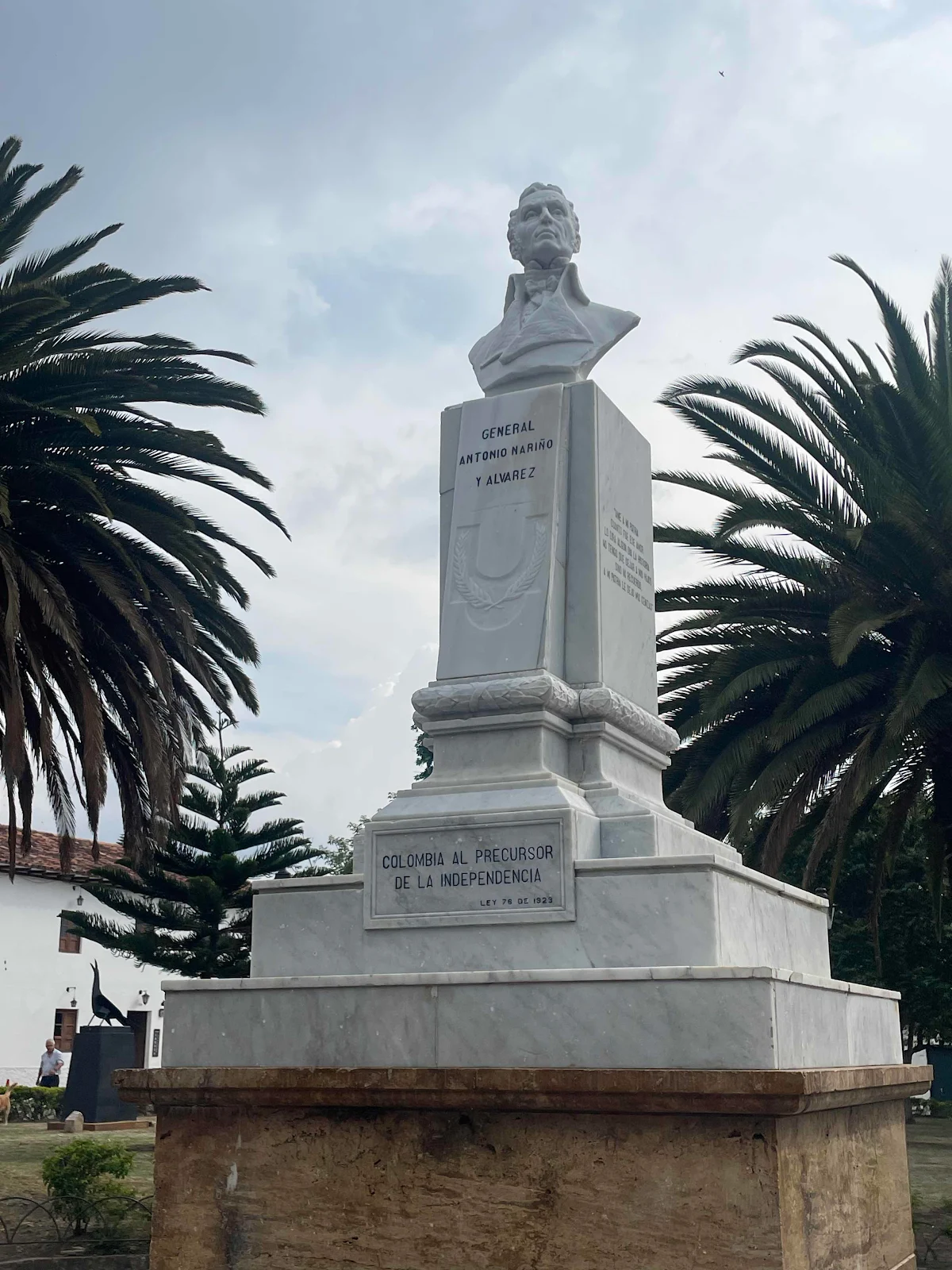
Antonio Nariño a native of this city was an early revolutionary and is best known for translating “The Rights of Man” into Spanish and disseminating radical ideas in Colombia from French Revolutionary literature. He also died here in 1824 at age 58.
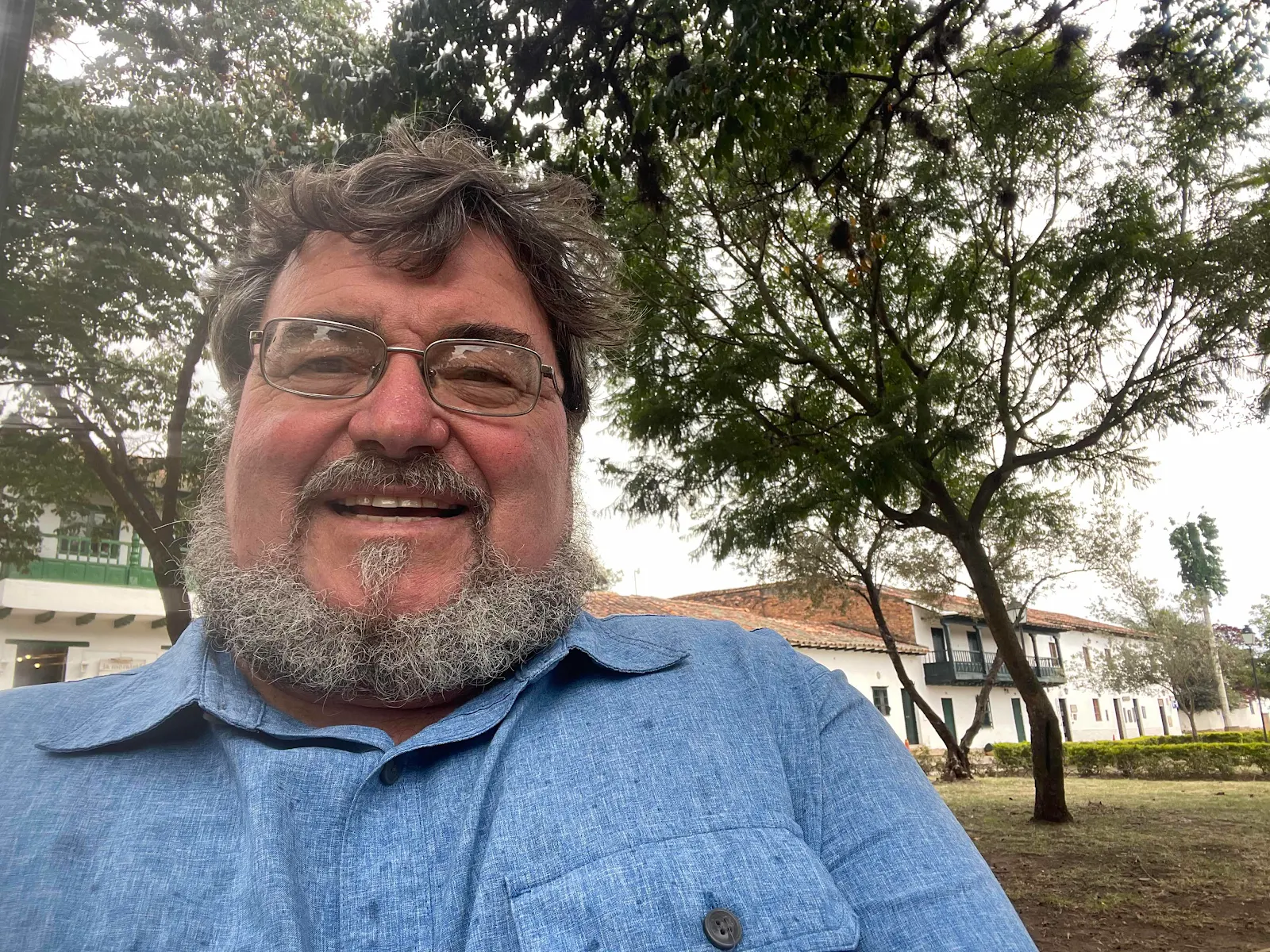
Here I am disseminating the radical idea that you can drive to Colombia. Not exactly revolutionary!
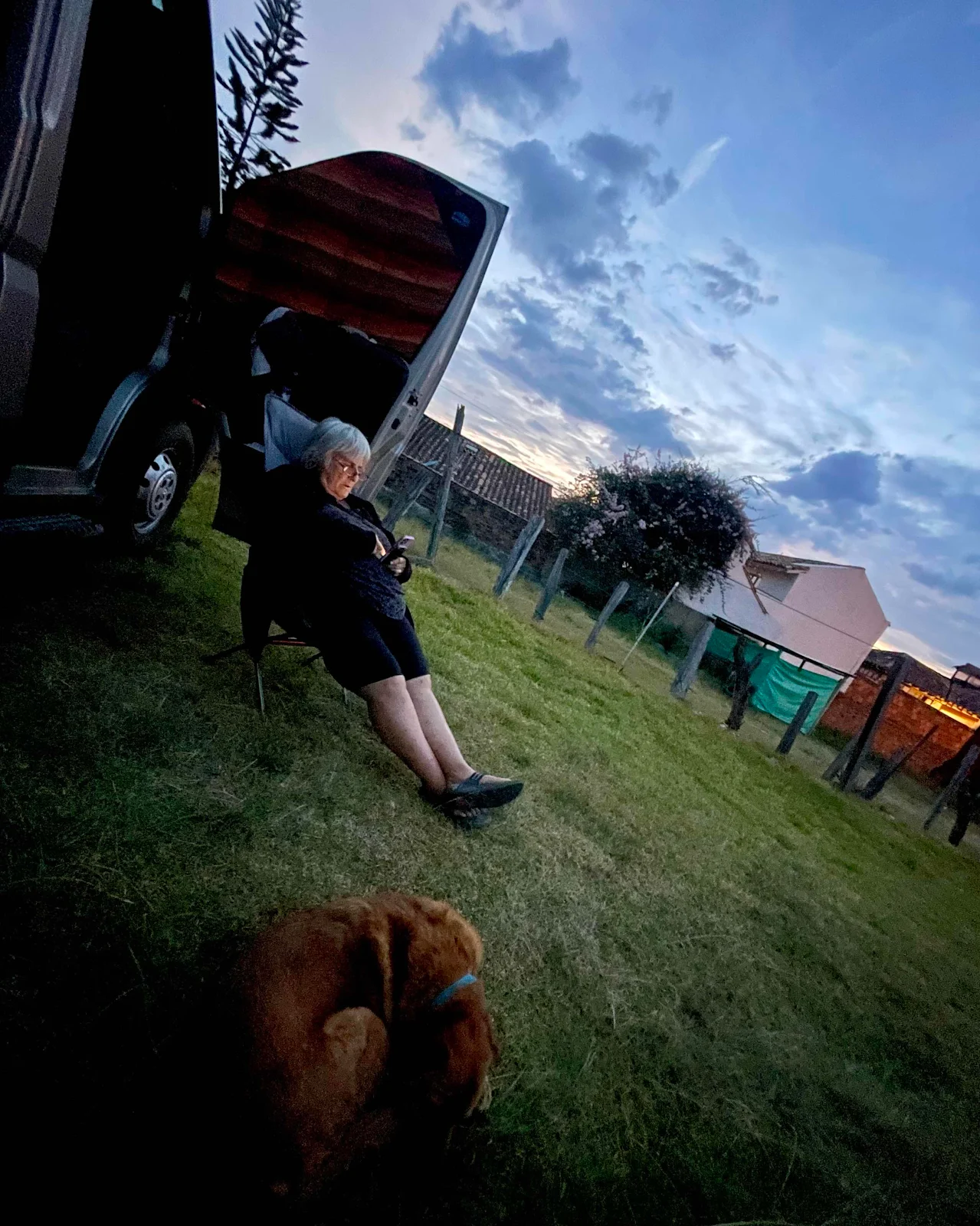
And do home to our campground all to ourselves with all facilities including electricity and aforementioned suicide showers for $17:50 a night. Right in town.