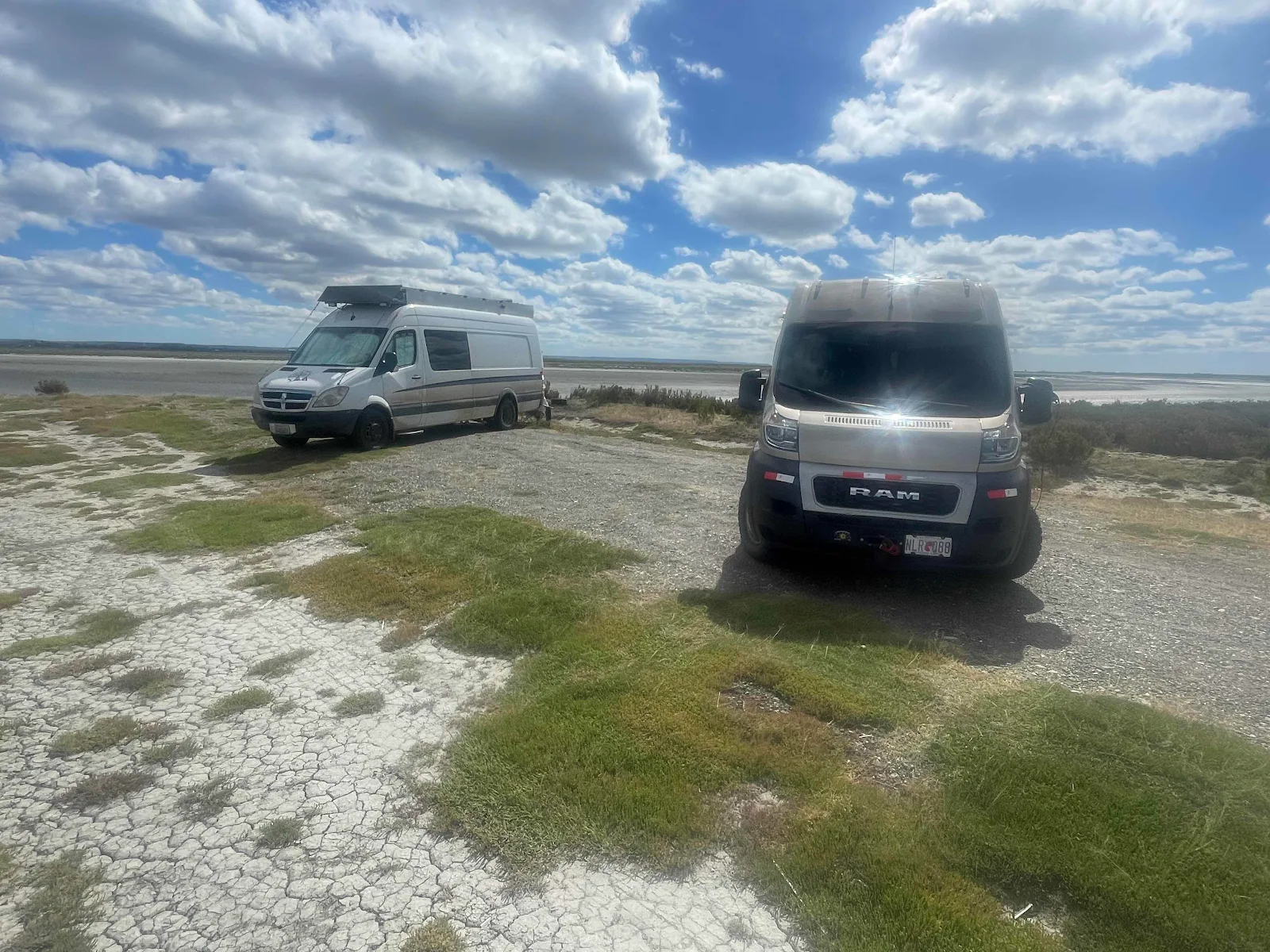
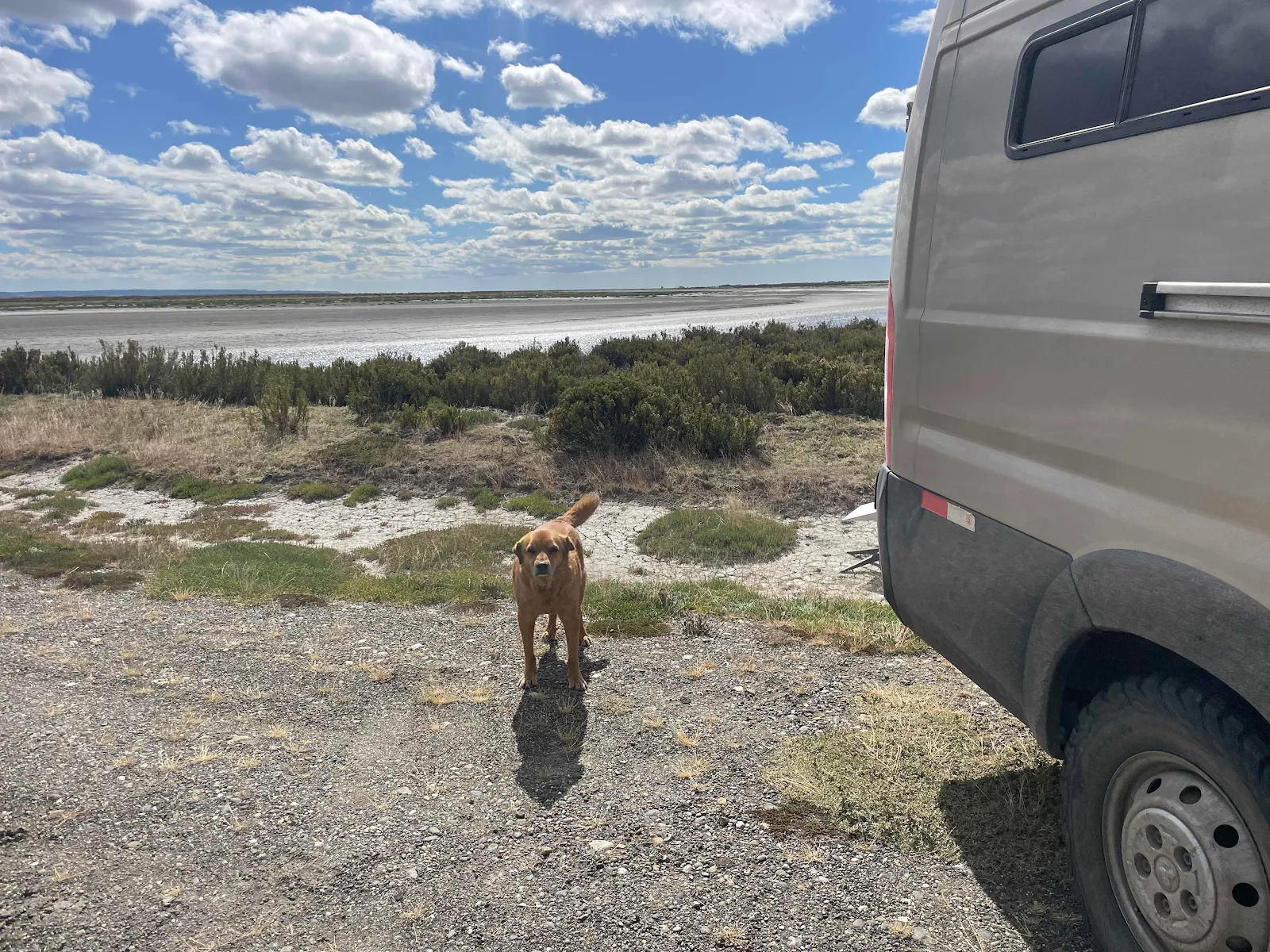
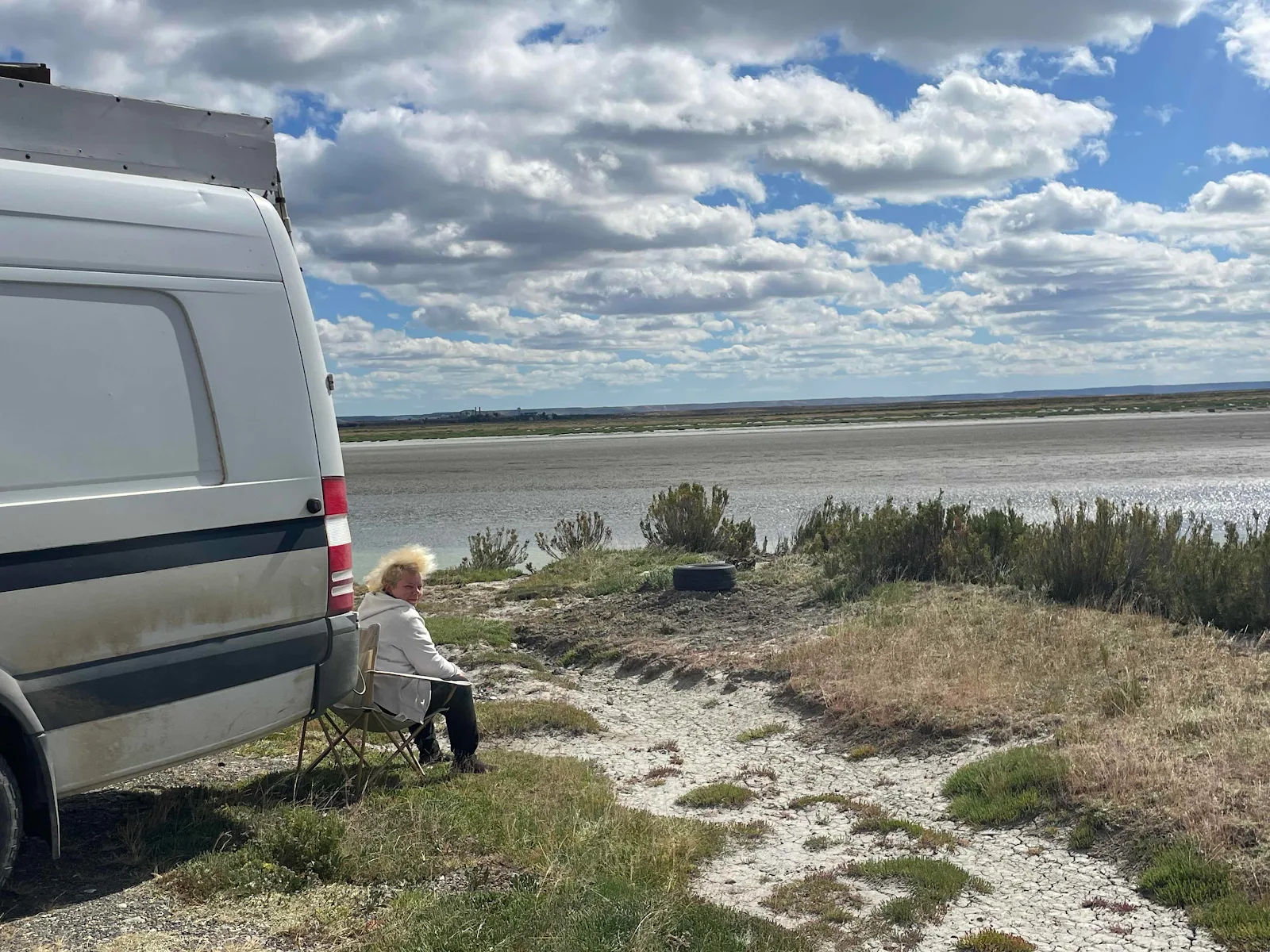
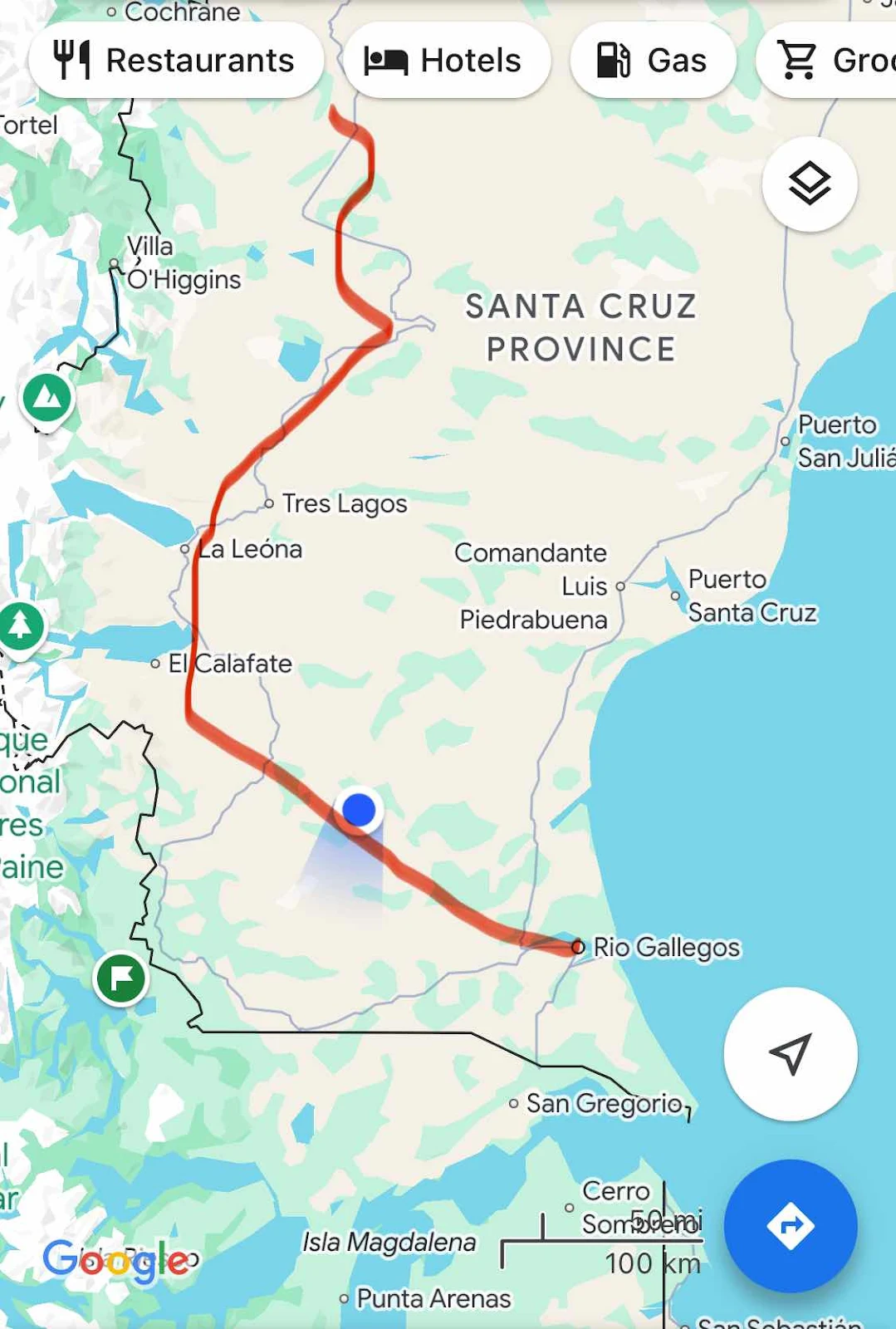
We had 200 miles to drive to get to El Calafate where a boat awaits us Sunday to tour the glaciers on the lakes. Rusty spends Sunday being boarded but I’m trying not to worry about that.
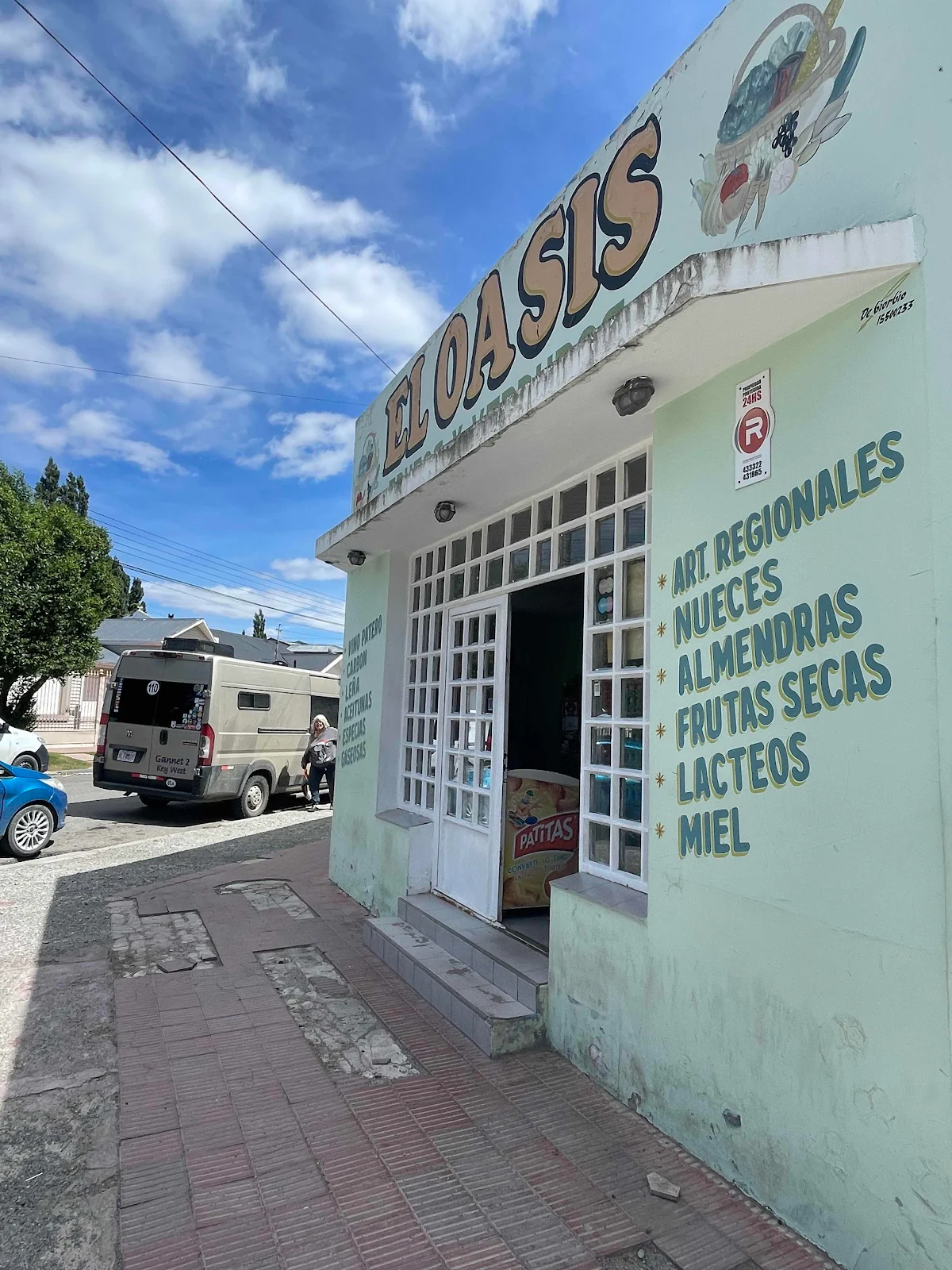
Rio Gallegos is not a tourist town and it has all the hallmarks of a place that is getting by and not flourishing but Layne got some good fruits and vegetables, including salad from a neighborhood store. She orders produce not from a supermarket so far in Argentina.
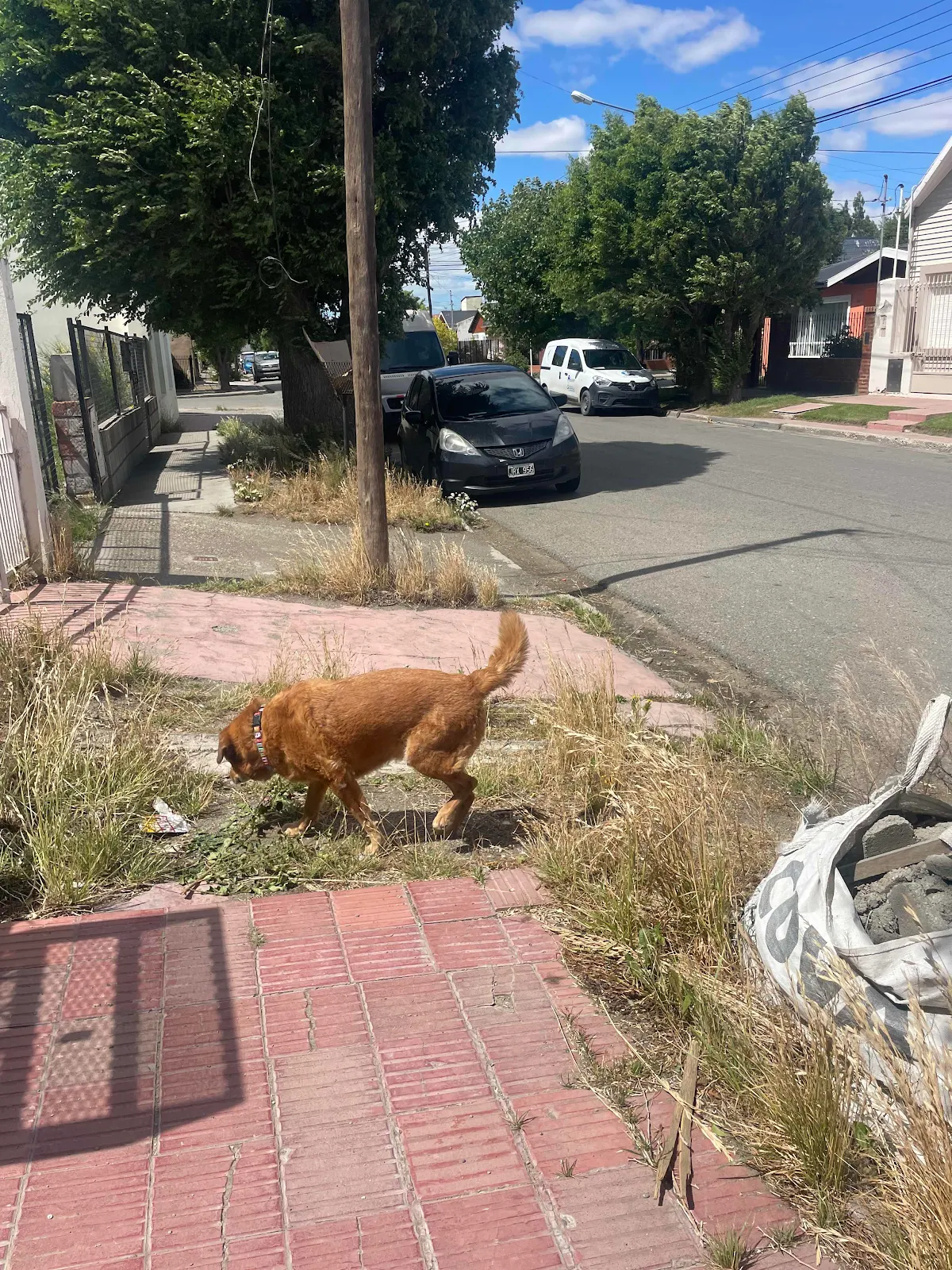
As you can see Rusty had a jungle where there should have been a sidewalk. It was also close to seventy degrees and we were enjoying the warmth, so unlike Tierra Del Fuego Island.
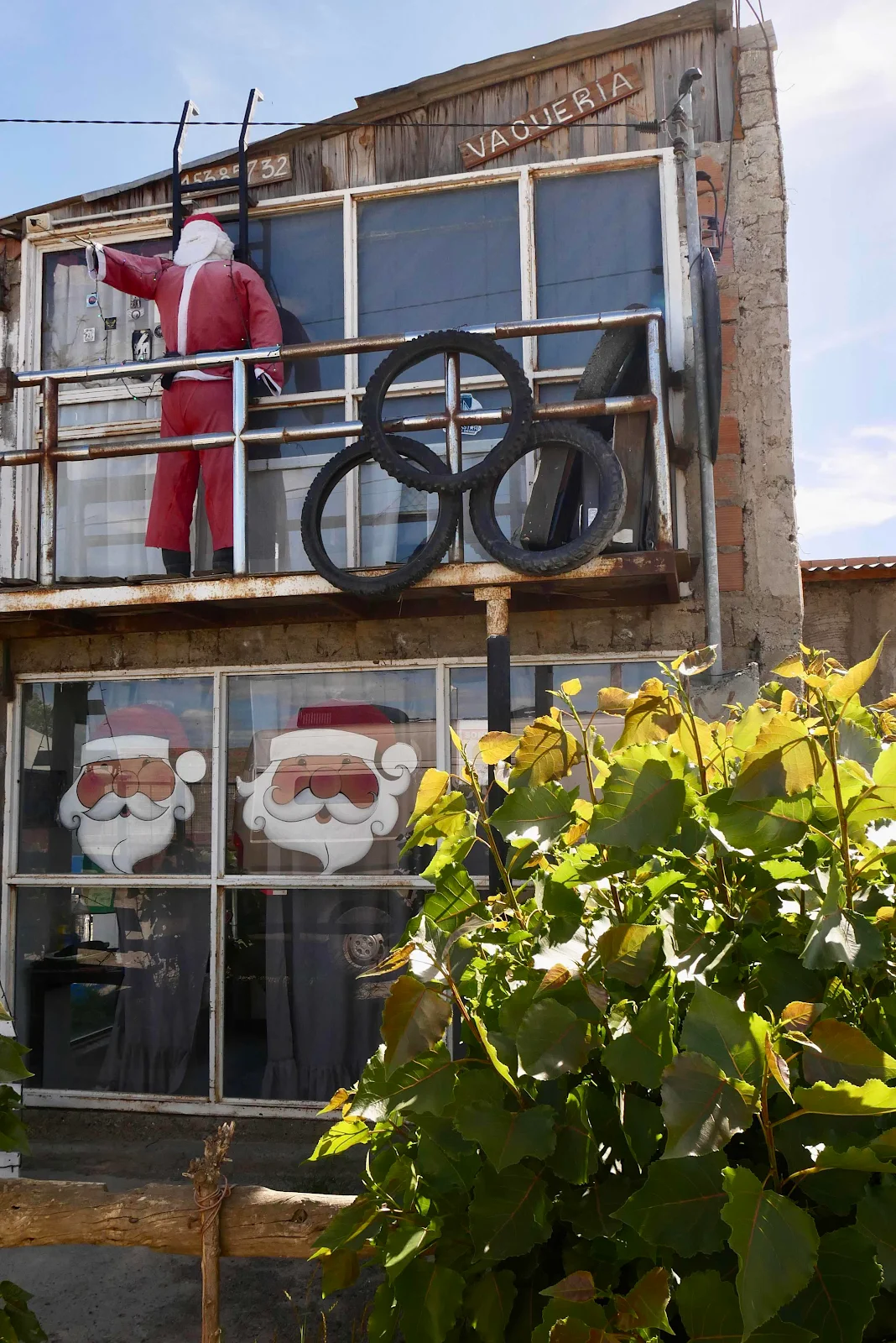
This weirdness was our shower…we had planned to go back to the modern gas station but they told us it was out of order leaving us bummed. However Layne the resourceful looked in Google maps and found a friendly hostel listed. Caesar’s welcomes motorcyclists to crude but well warmed dormitory accommodations.
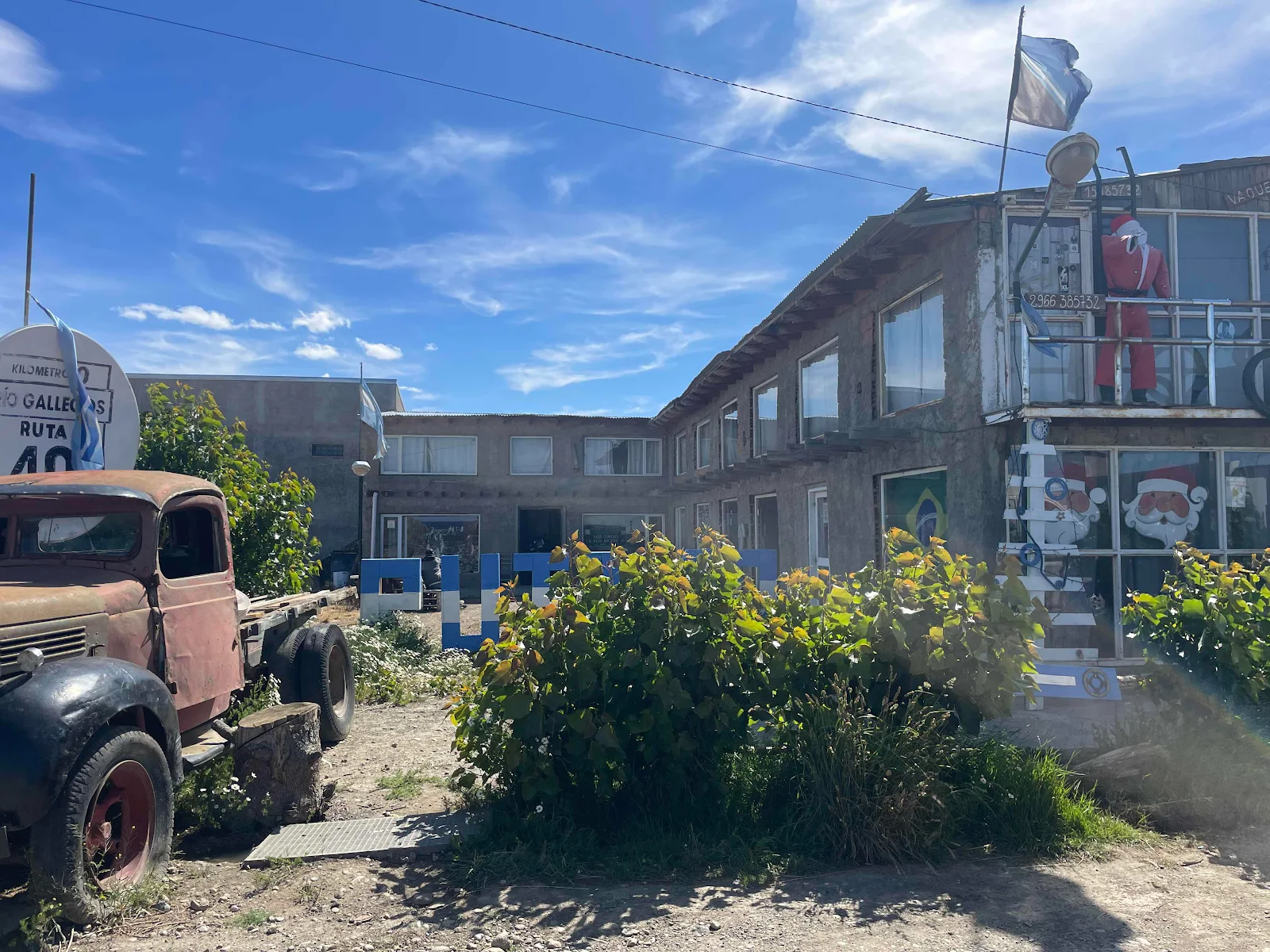
The shower had everything we needed including abundant hot water and a surprised but cheerful manager who shrugged and said sure when we surprised him by asking just to shower. Five bucks for both us was a good price too. It felt good to be clean.
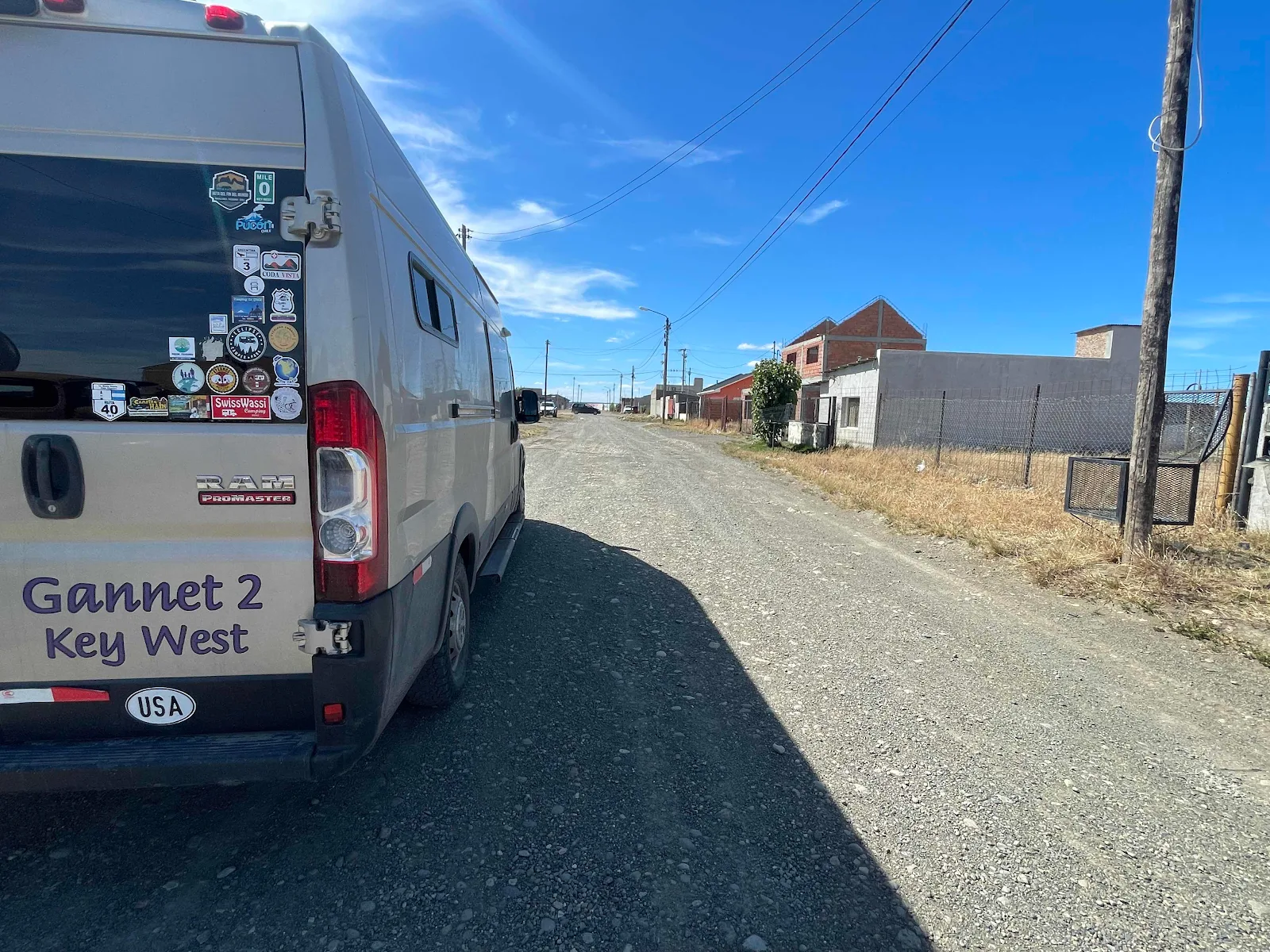
We could have included a shower in the van but we chose not to in order that our cold water faucet is a simple installation with thirty gallons in the tank and a simple 12 volt pump. Also showering inside adds humidity to a small living space, though Konstantin and Julia do it. In warm climates we have our faucet or a solar shower which works for us but in these places we like hot indoor showers only.
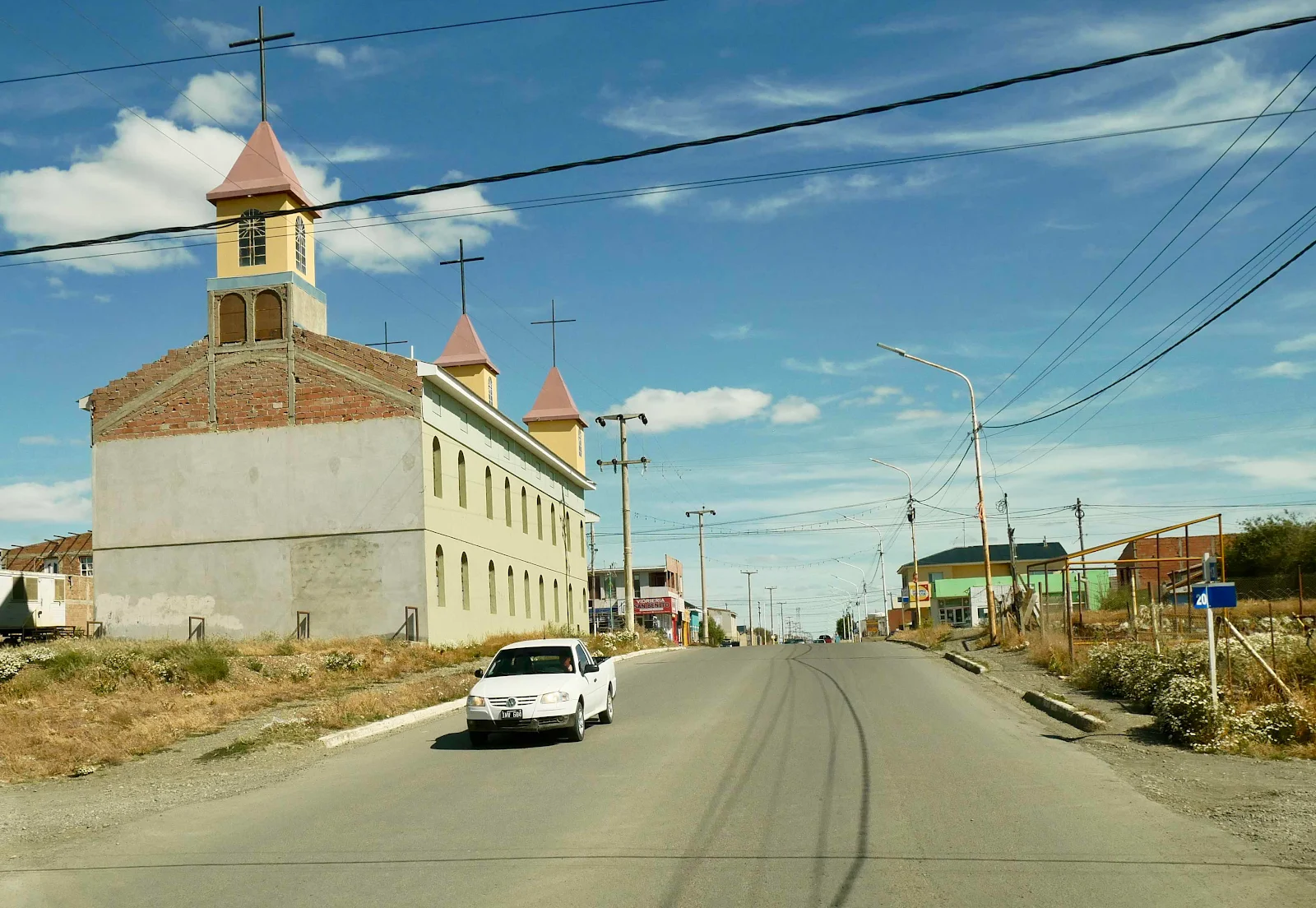
These are a few street scenes from Rio Gallegos which we toured looking for a car wash but we found none that could accommodate us right away so we left for El Calafate.
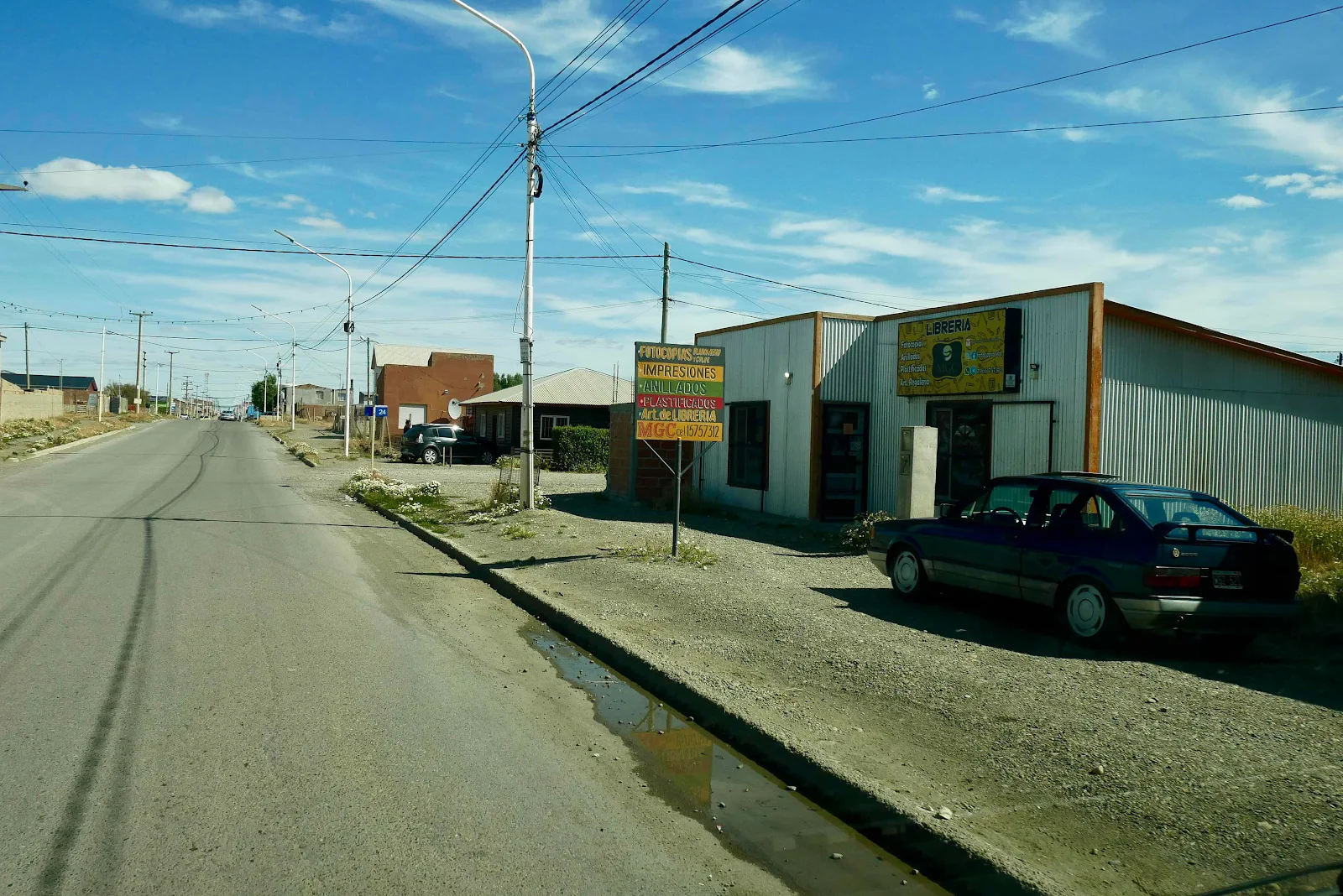
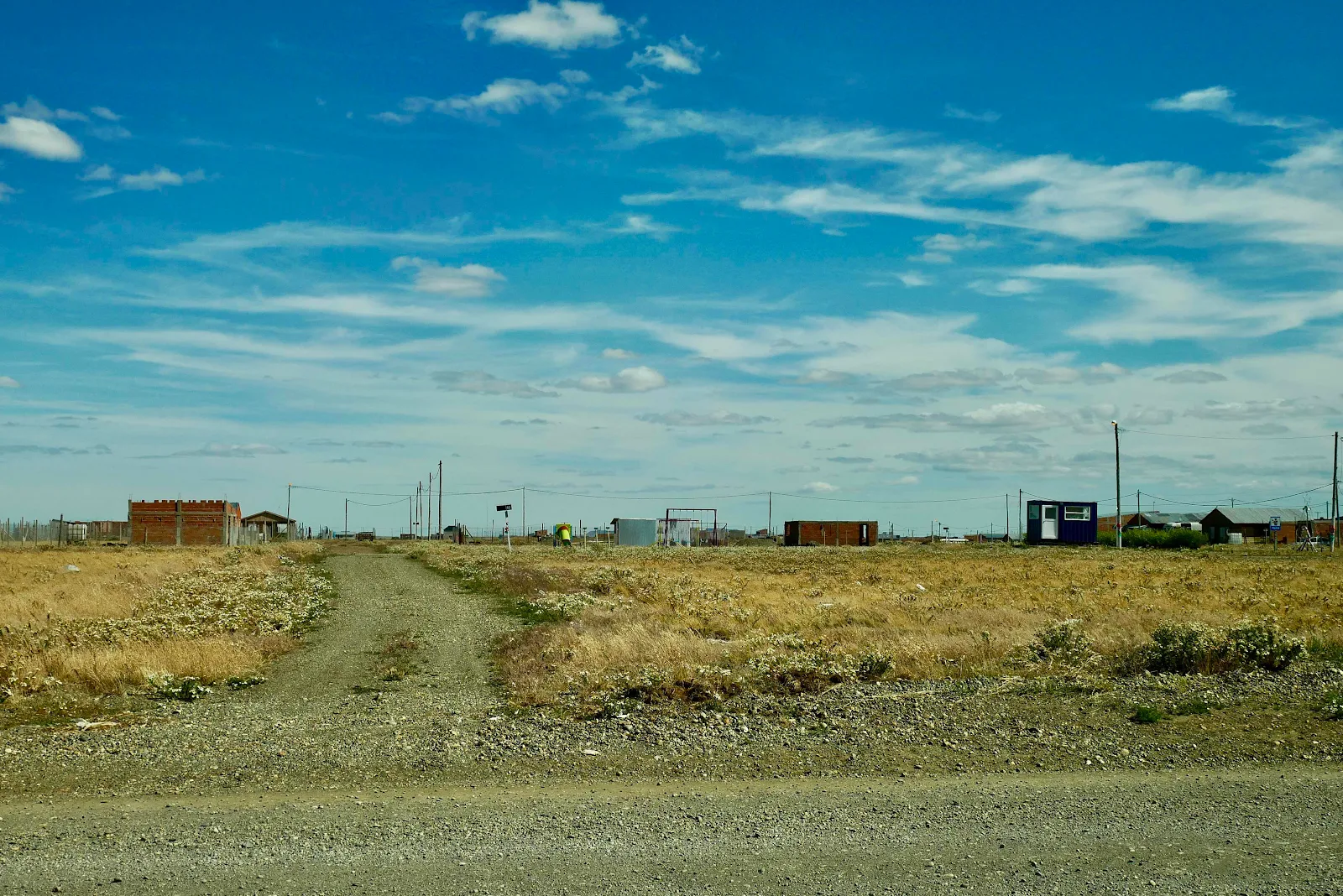
It’s a sprawling collection of minimal homes and dirt streets outside the town center.
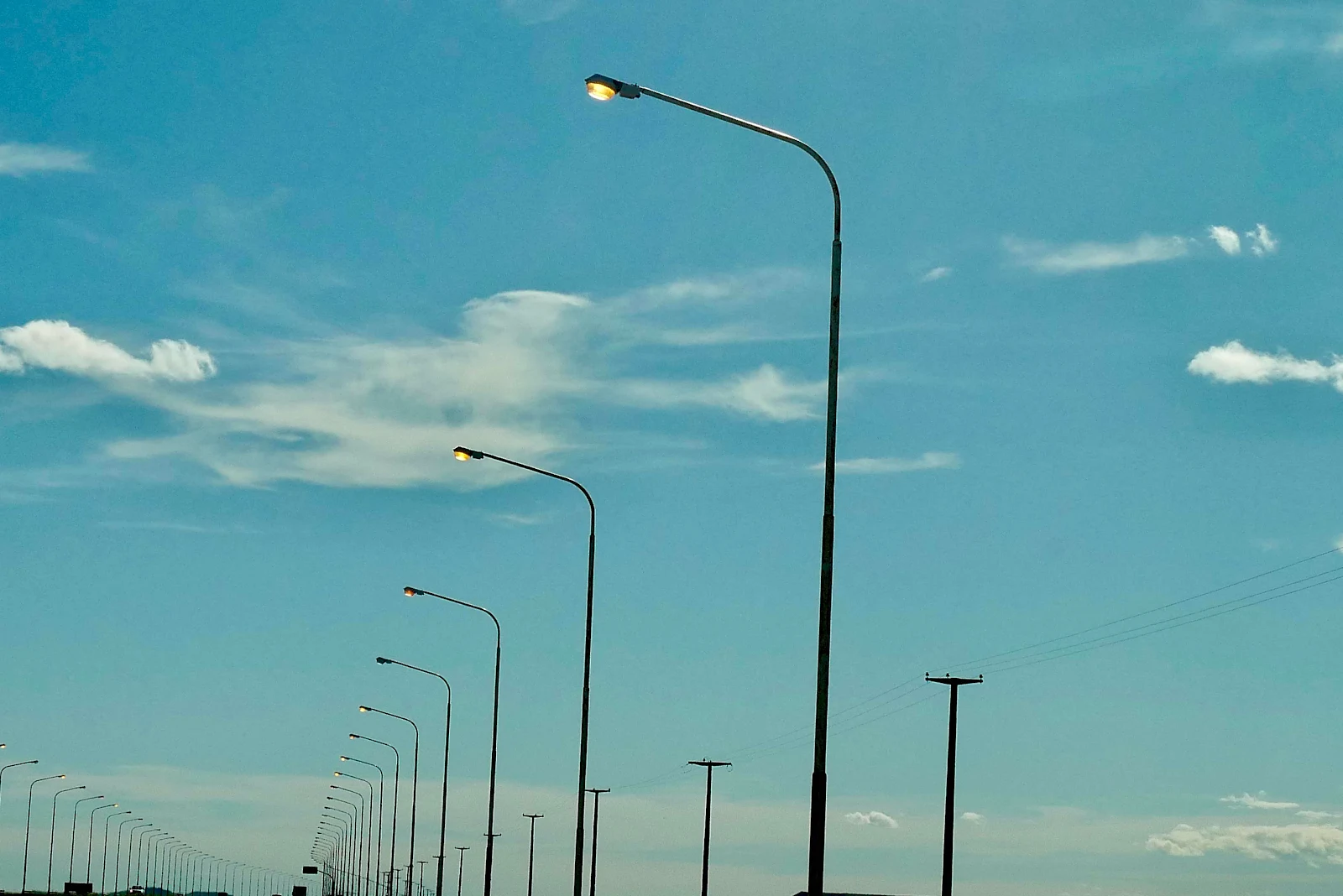
First we took Highway 5 out of Rio Gallegos which included a stretch of four lane freeway with not much signage but it did have street lights, which I found odd.
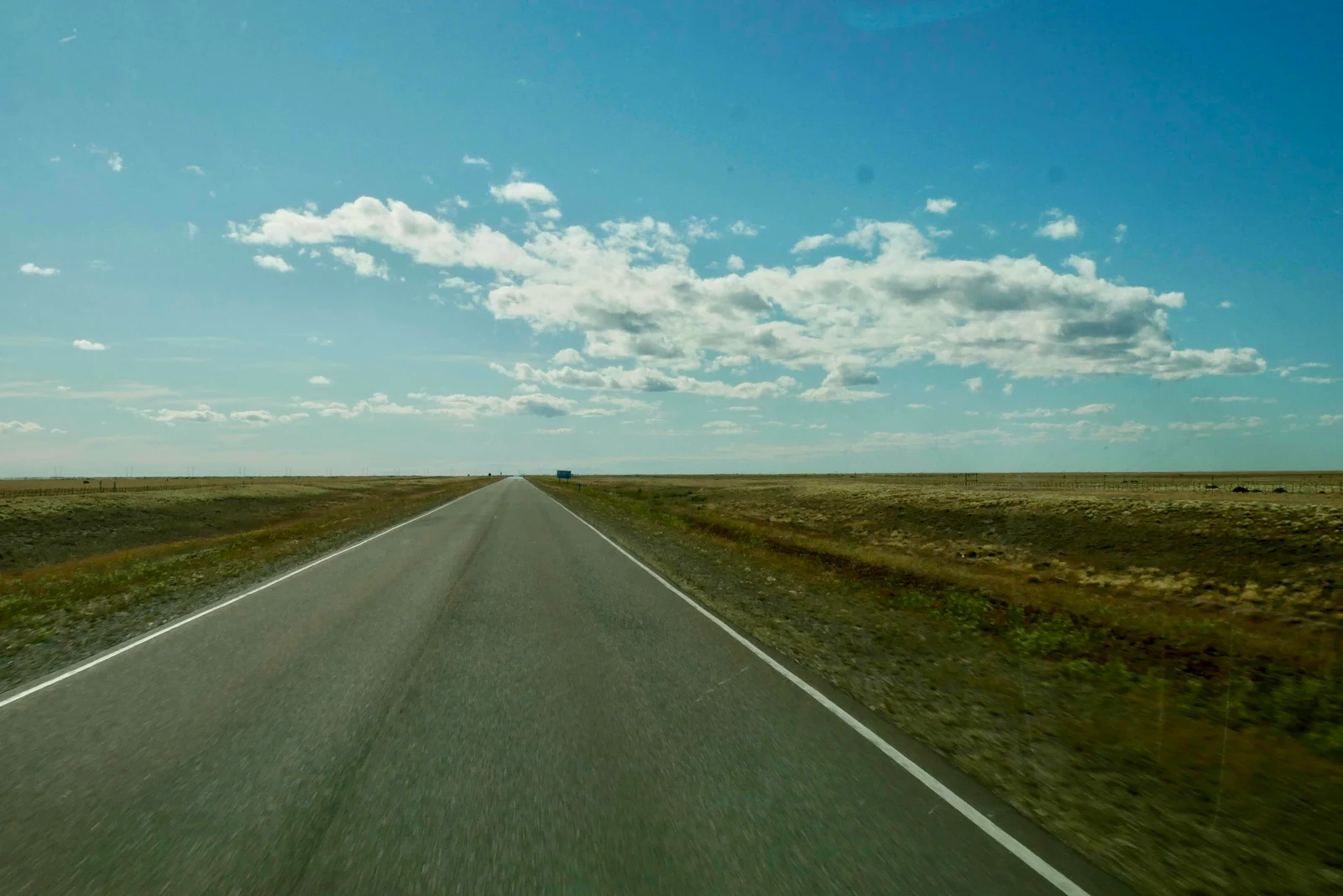
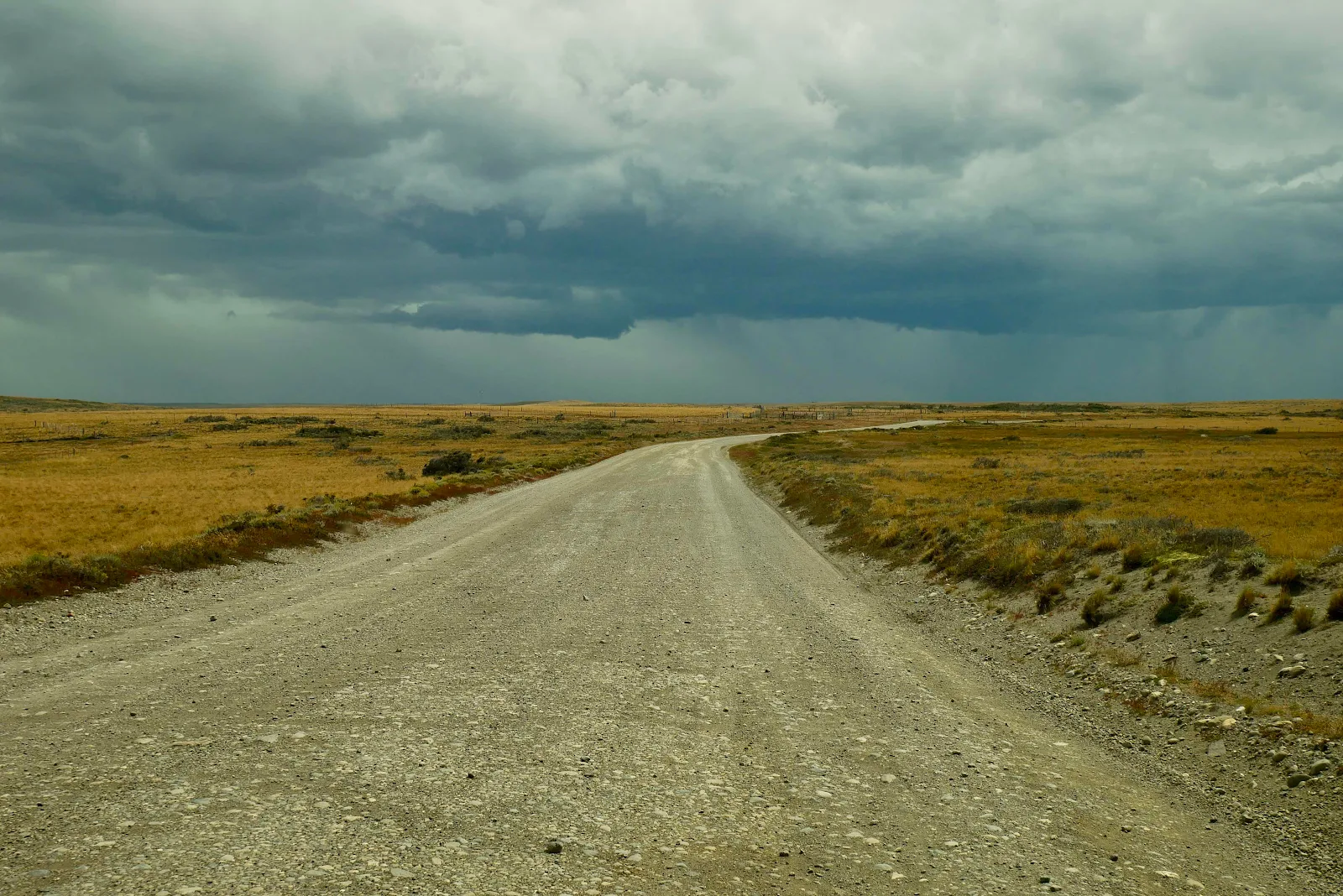
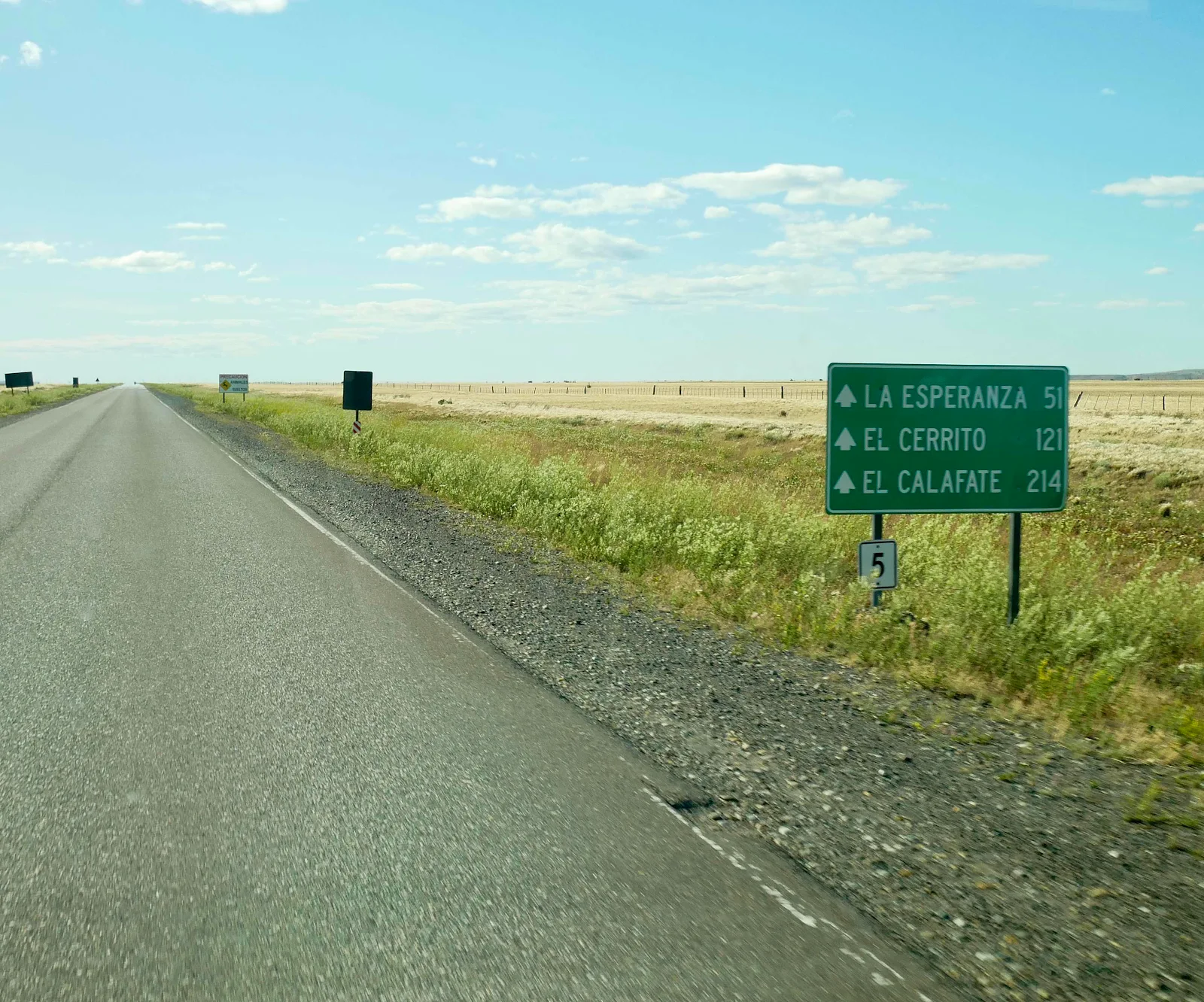
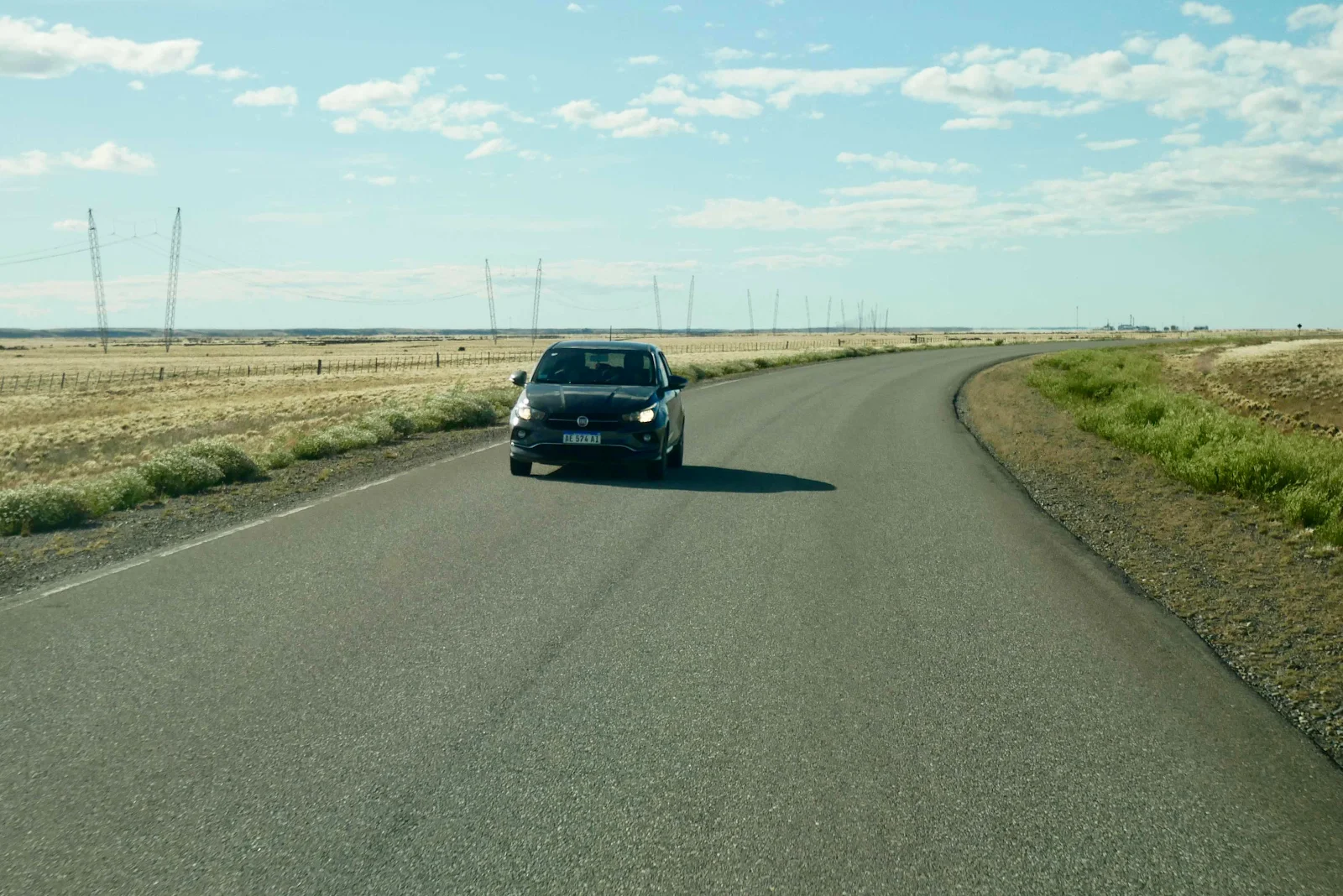
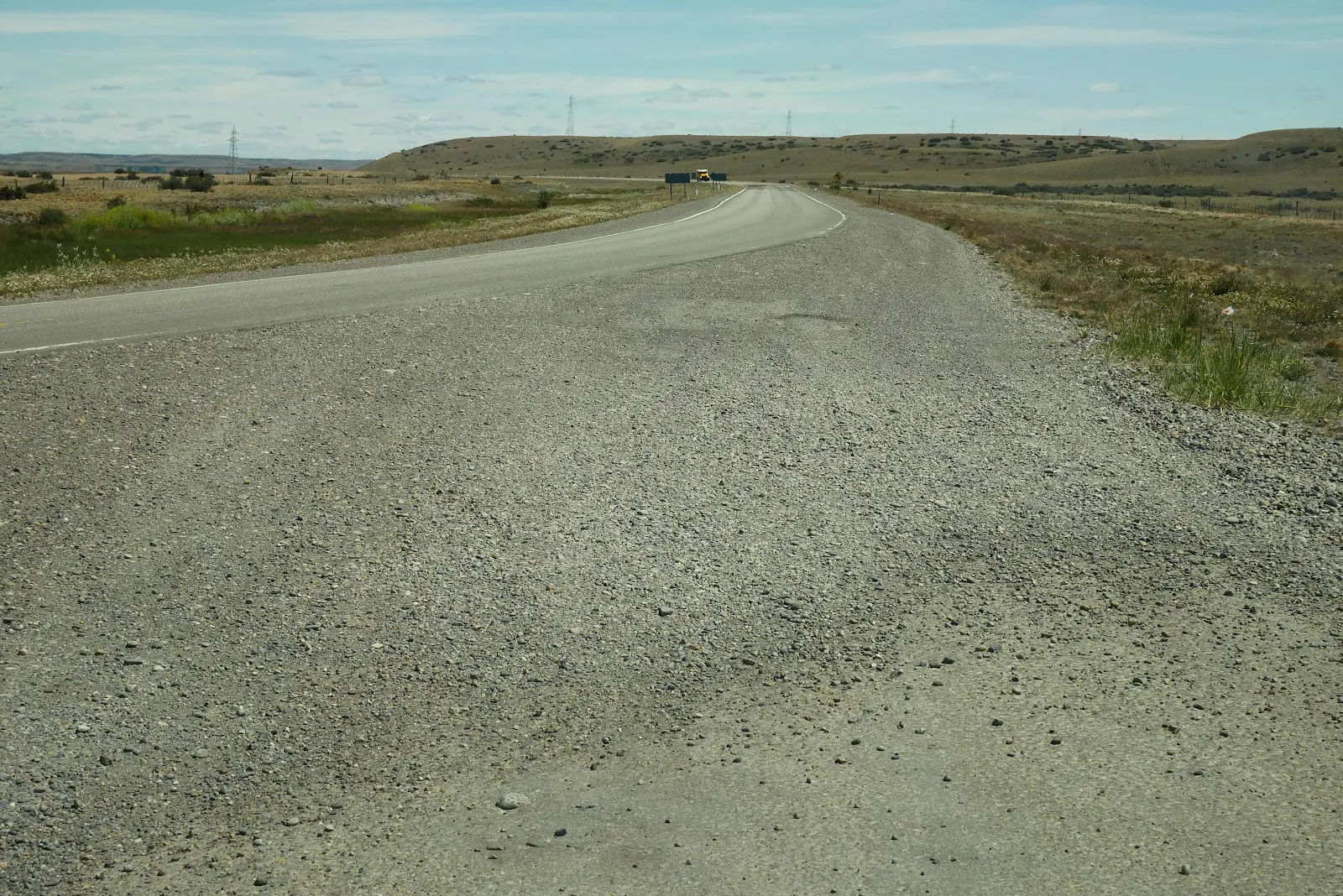
The route was mostly flat, the road surface was pretty solid and the wind was not excessive, around 20 miles an hour across the road which around here is mild.
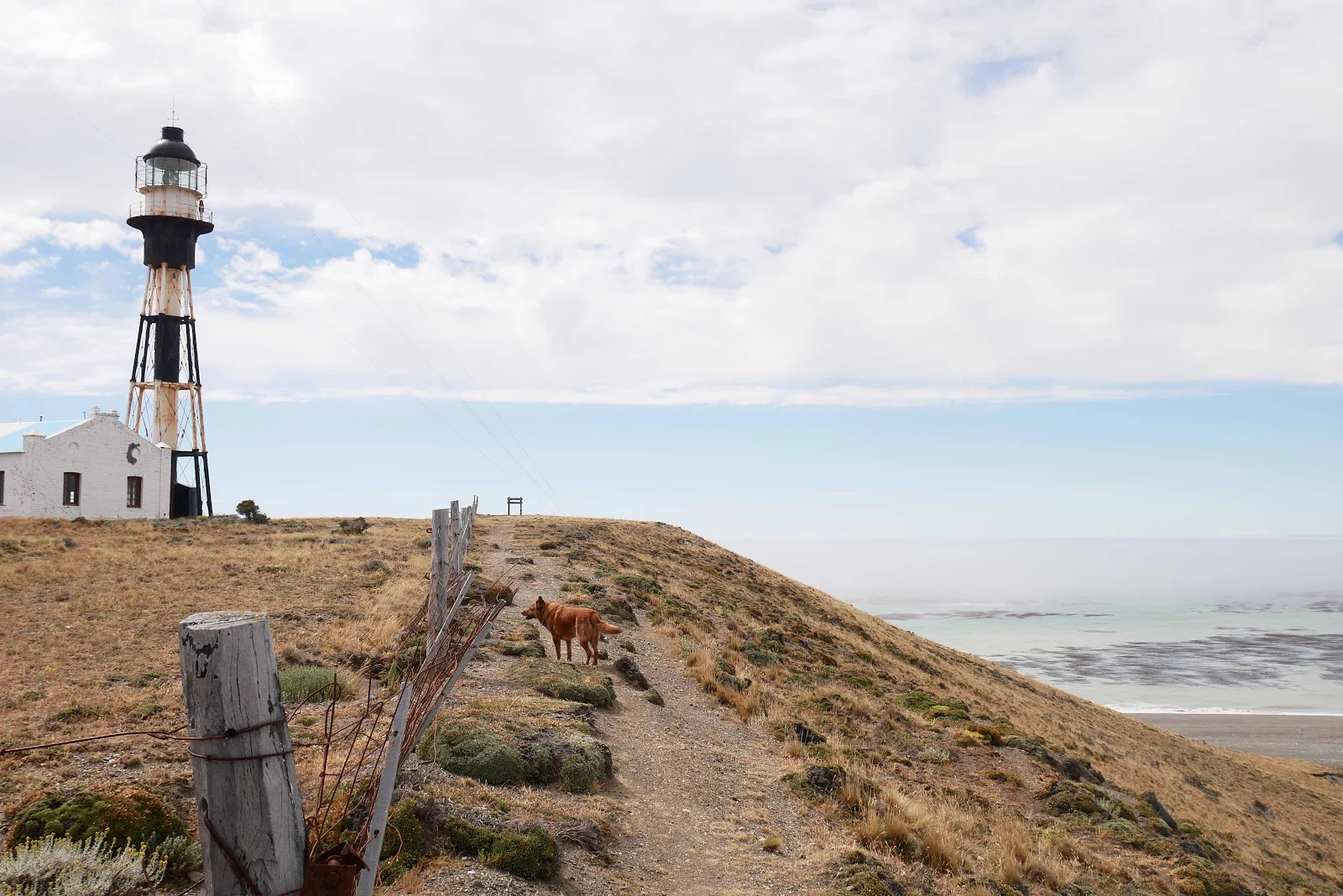
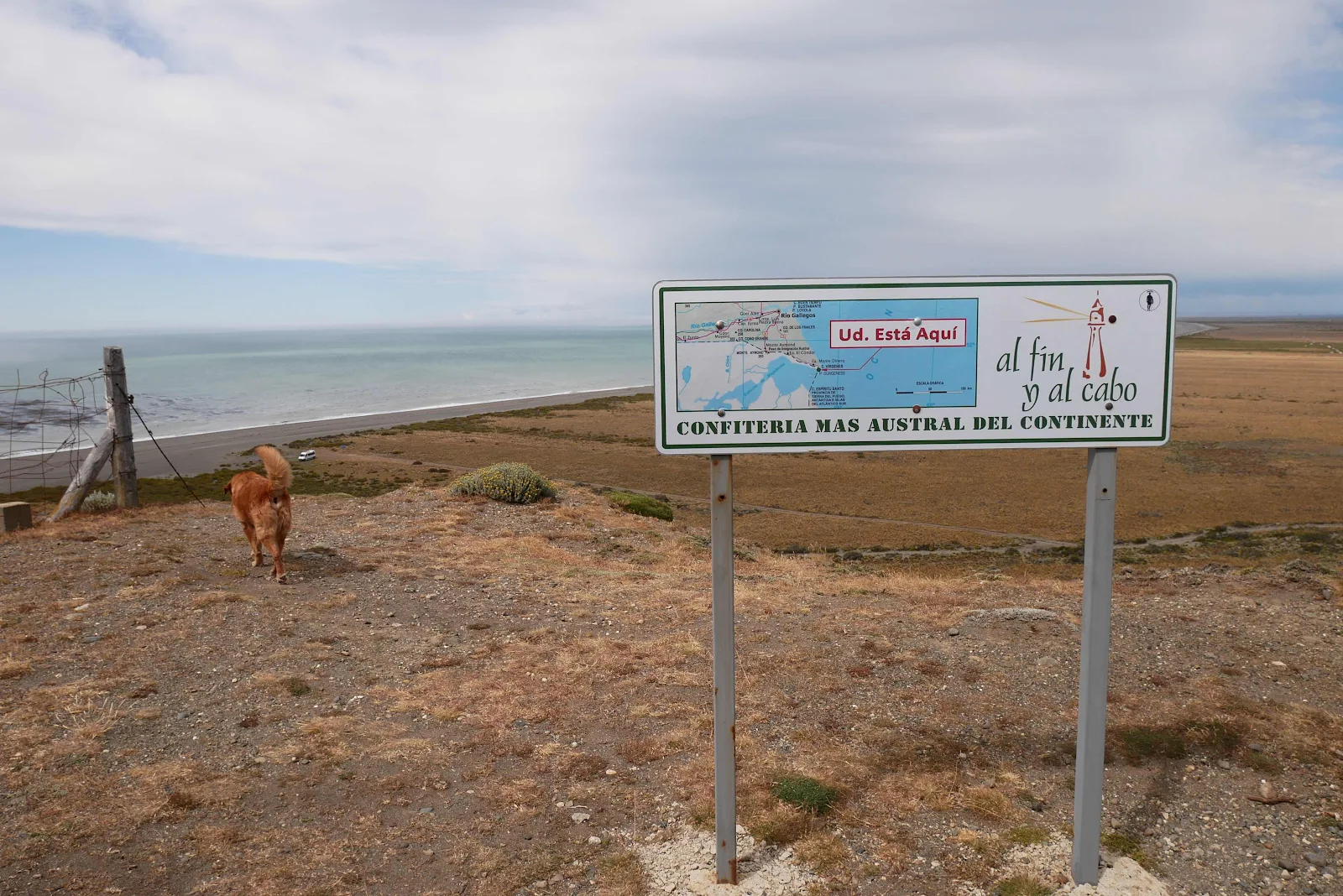
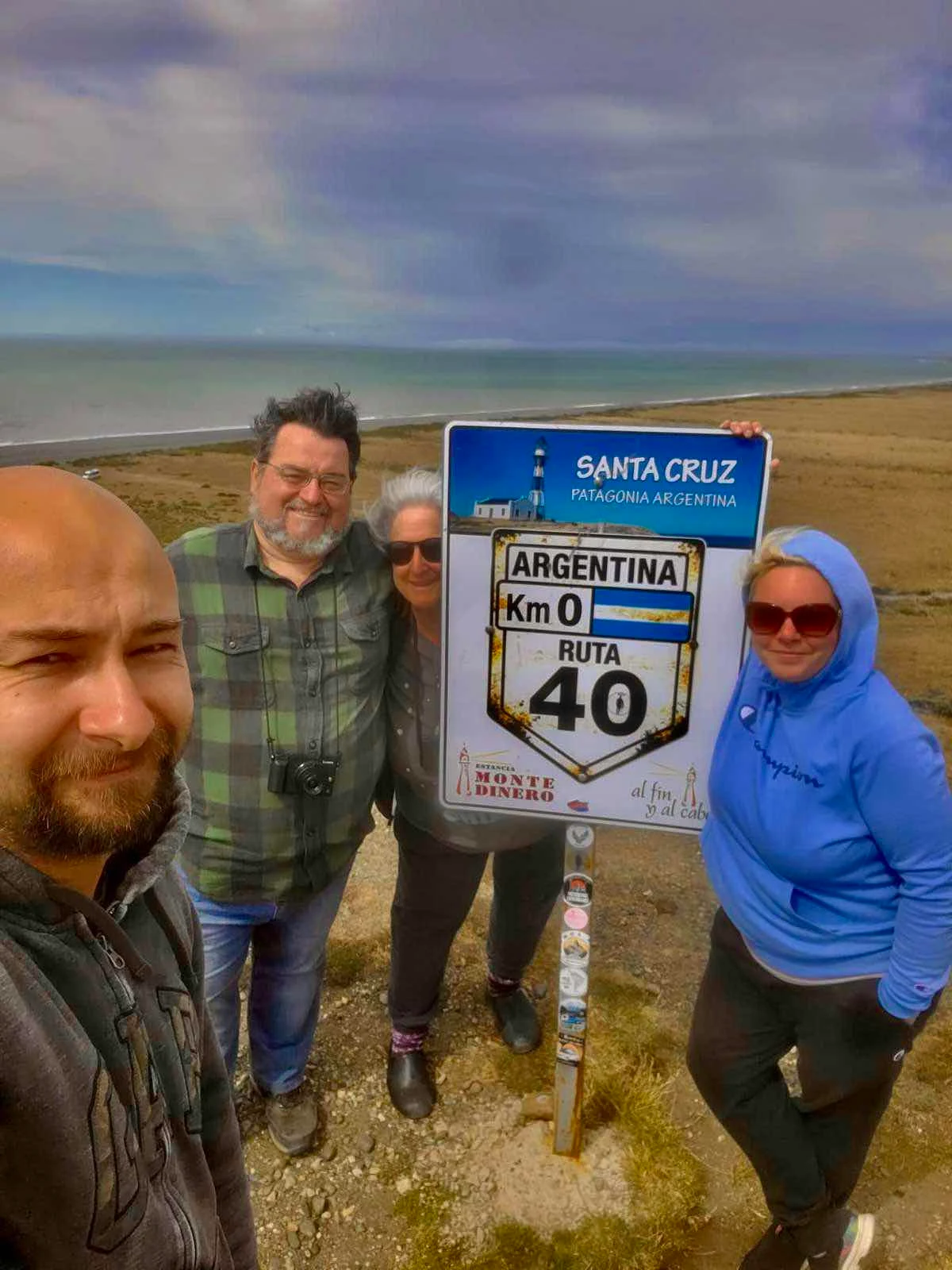
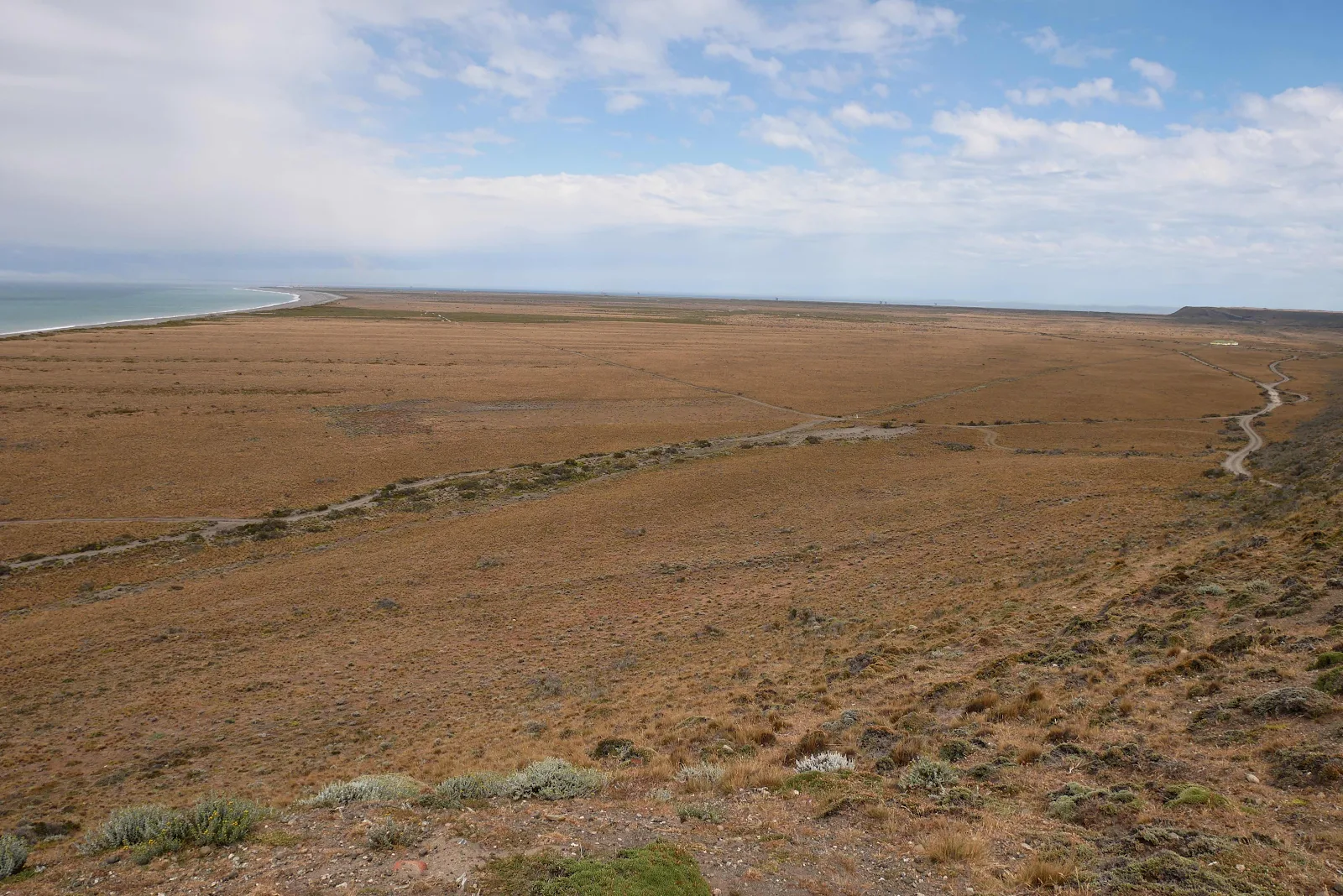
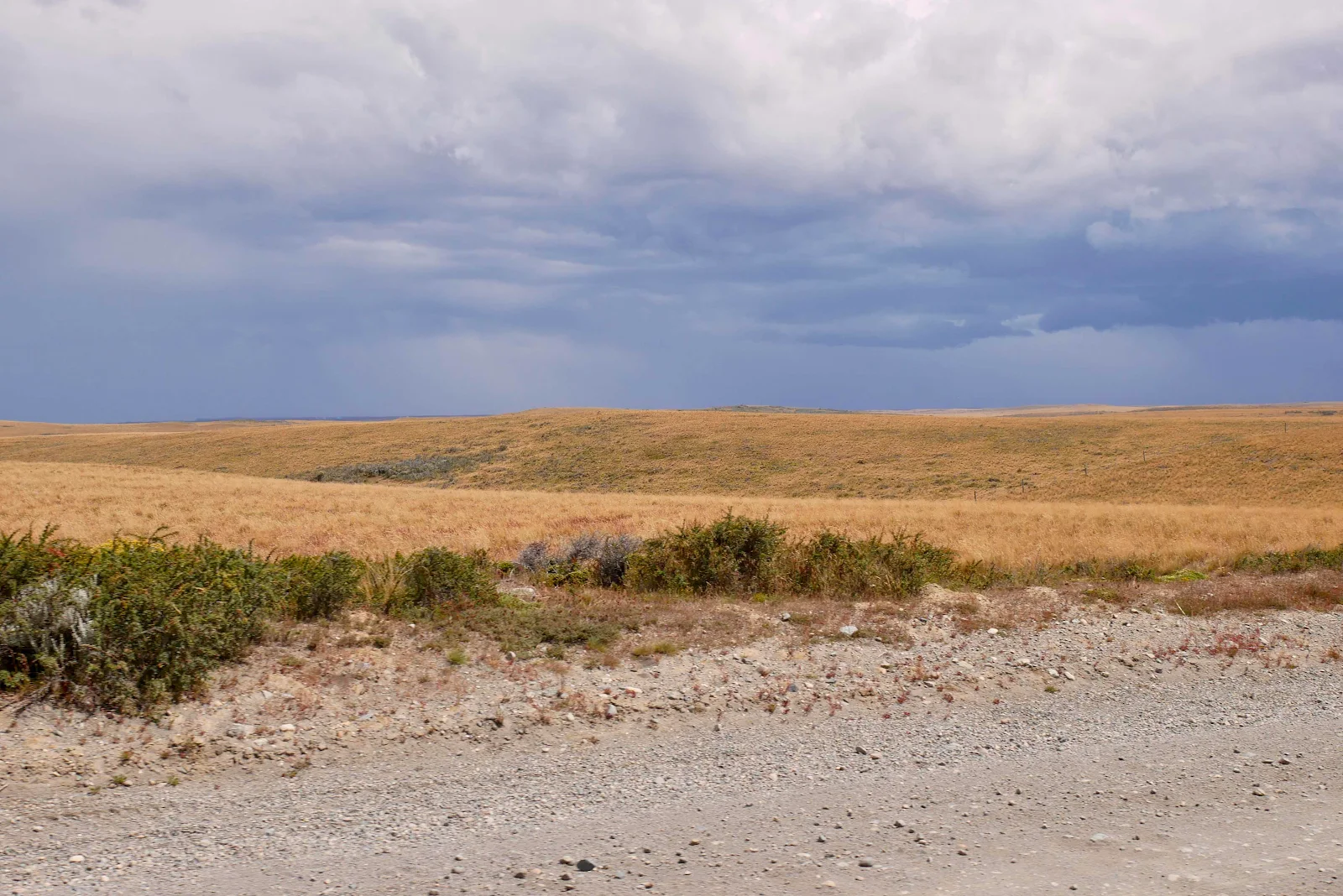
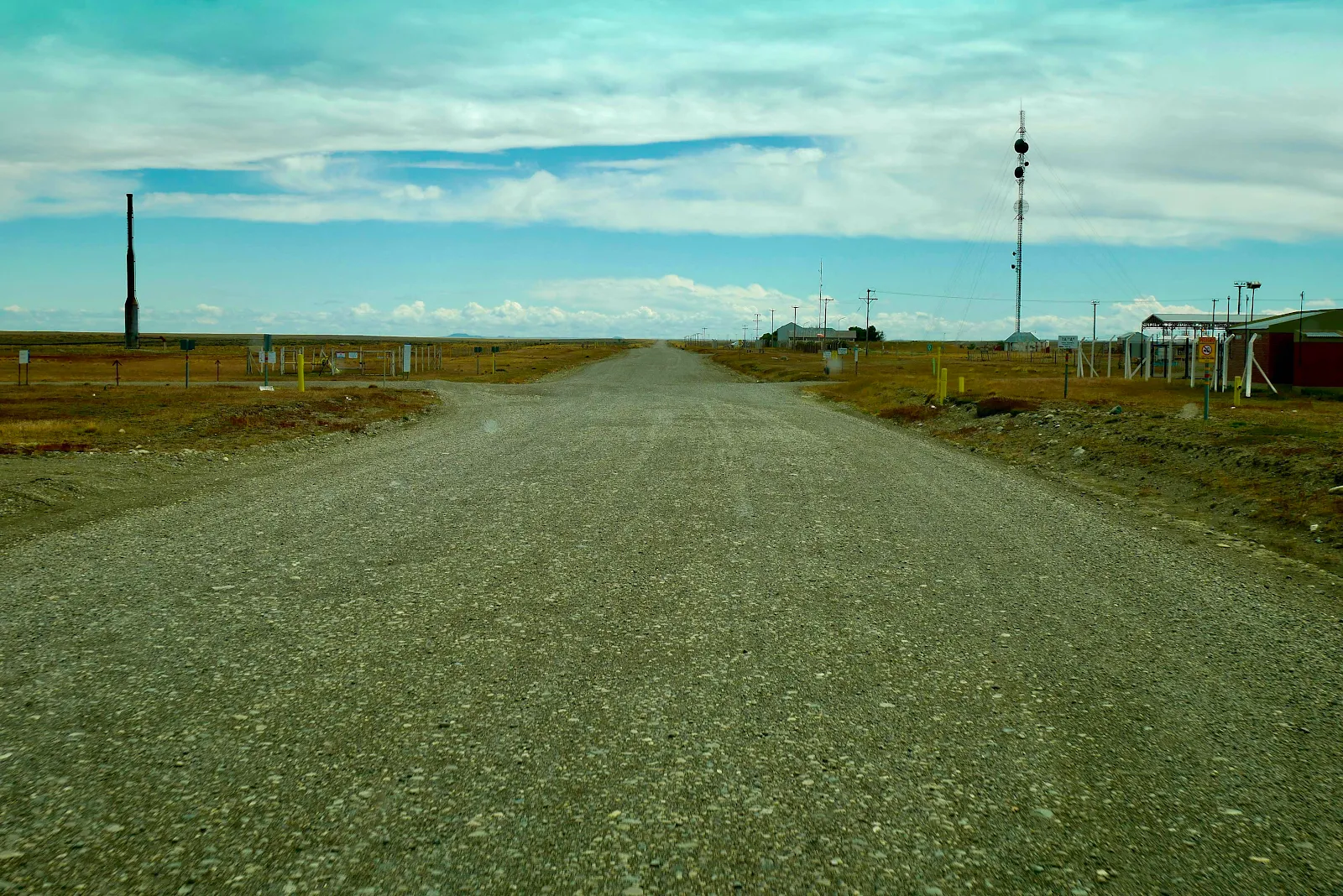
I had little idea what to expect crossing Patagonia but I will tell you I never expected it to look like Wyoming, but it did, rolling burnt prairie and no signs of human life.
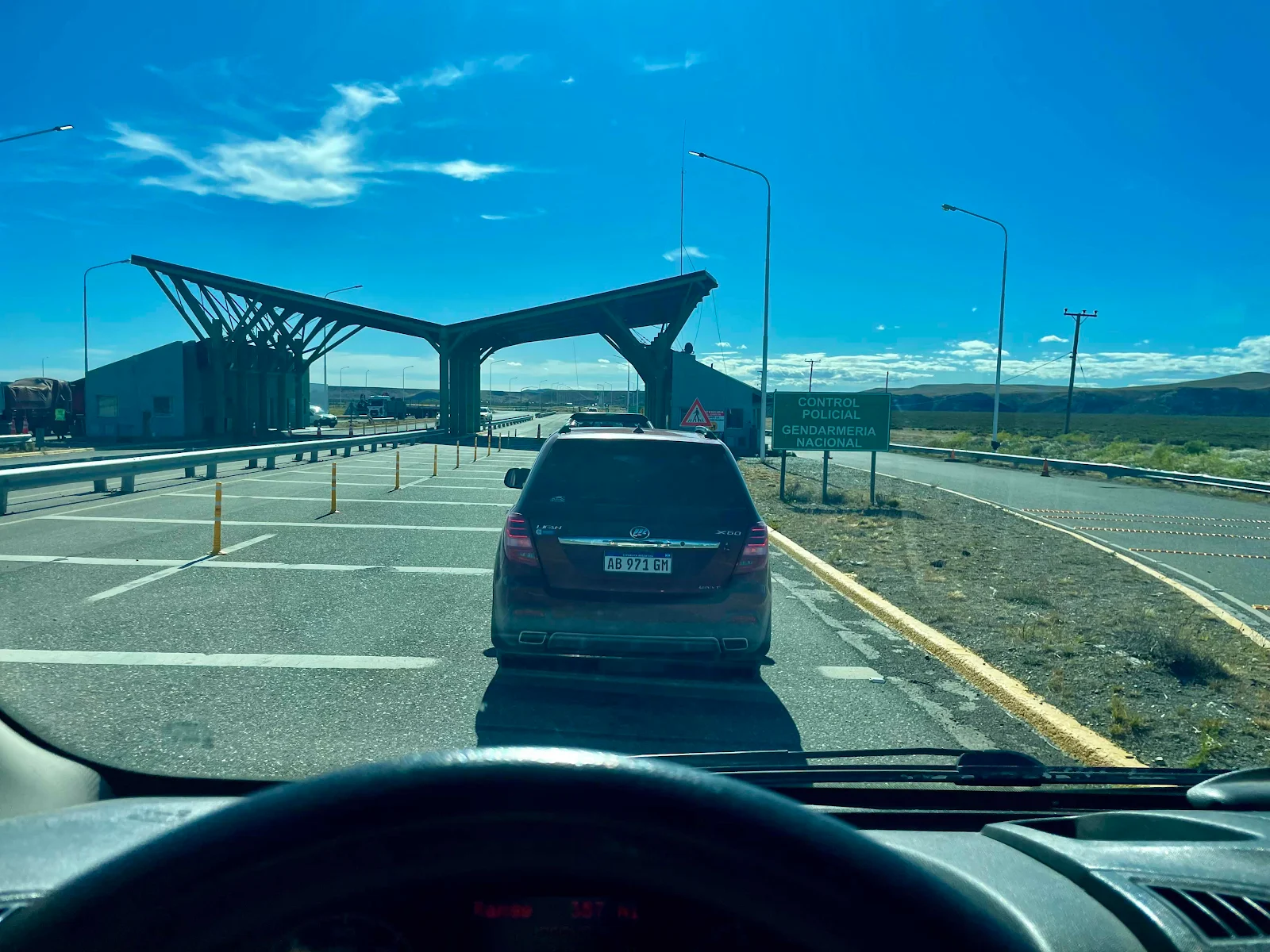
There are occasional police checkpoints on Argentine roads but we’re getting the hang of them. The officer either waves us through or if we are stopped I present my Florida drivers license (a laminated color copy actually) and they admire it and talk about our journey and on we go so they are no big deal.
I thought South Dakota, but Layne countered with Wyoming but whatever this place looks like to you you can get the idea there’s nothing much to see.
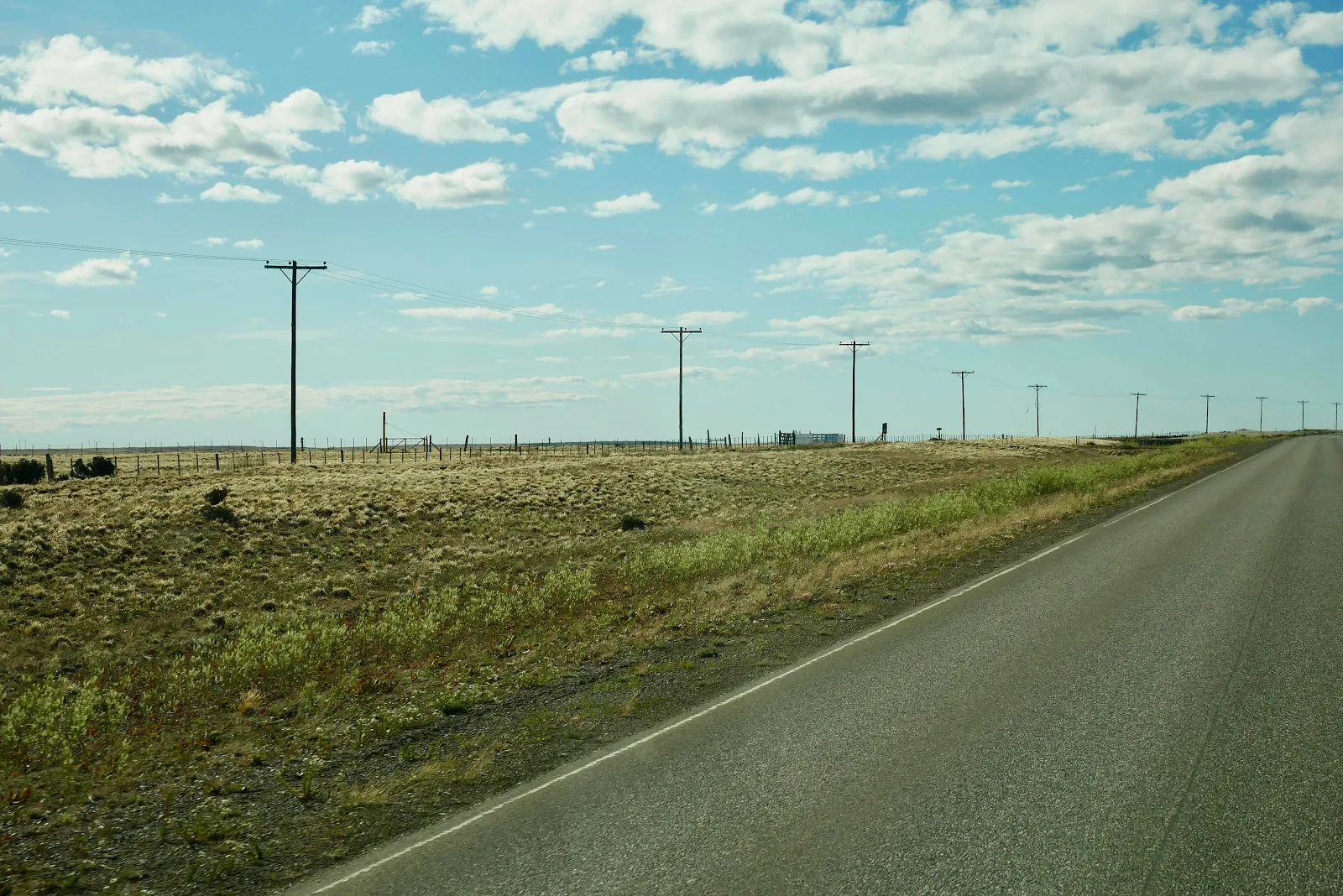
Power poles: not often seen around here. There’s not much to see but I find the drive relaxing because I’m odd.
La Esperanza is basically a truck stop with some modest housing attached. There’s a YPF gas station, two restaurants and a food truck. You can sleep here if you want but iOverlander has a better spot two miles north, so we got two fried chicken sandwiches from the food truck and spent a quiet night in the middle of nowhere.
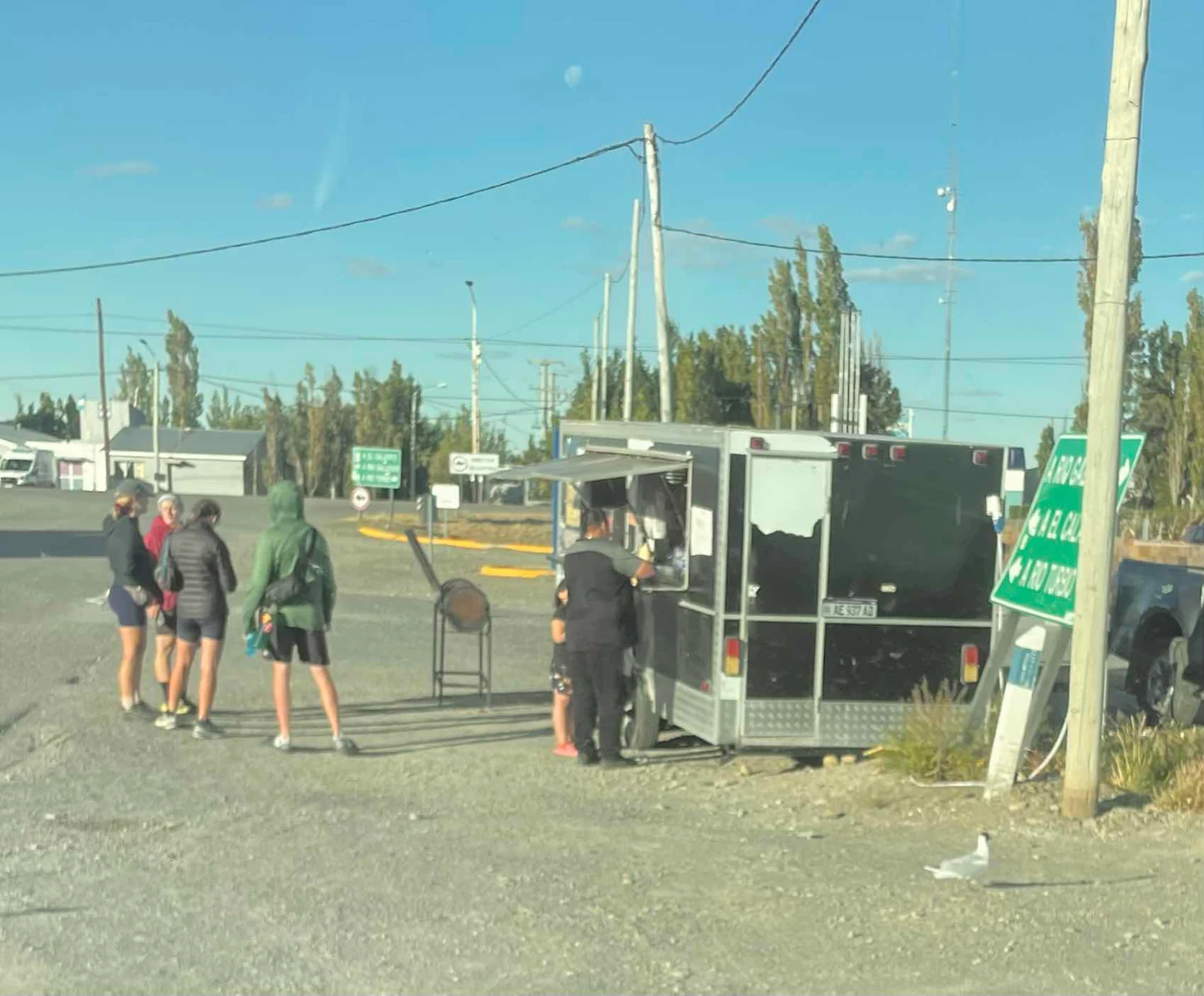
Layne had been looking forward to a sit down meal for cook’s night off but all they had was sandwiches.
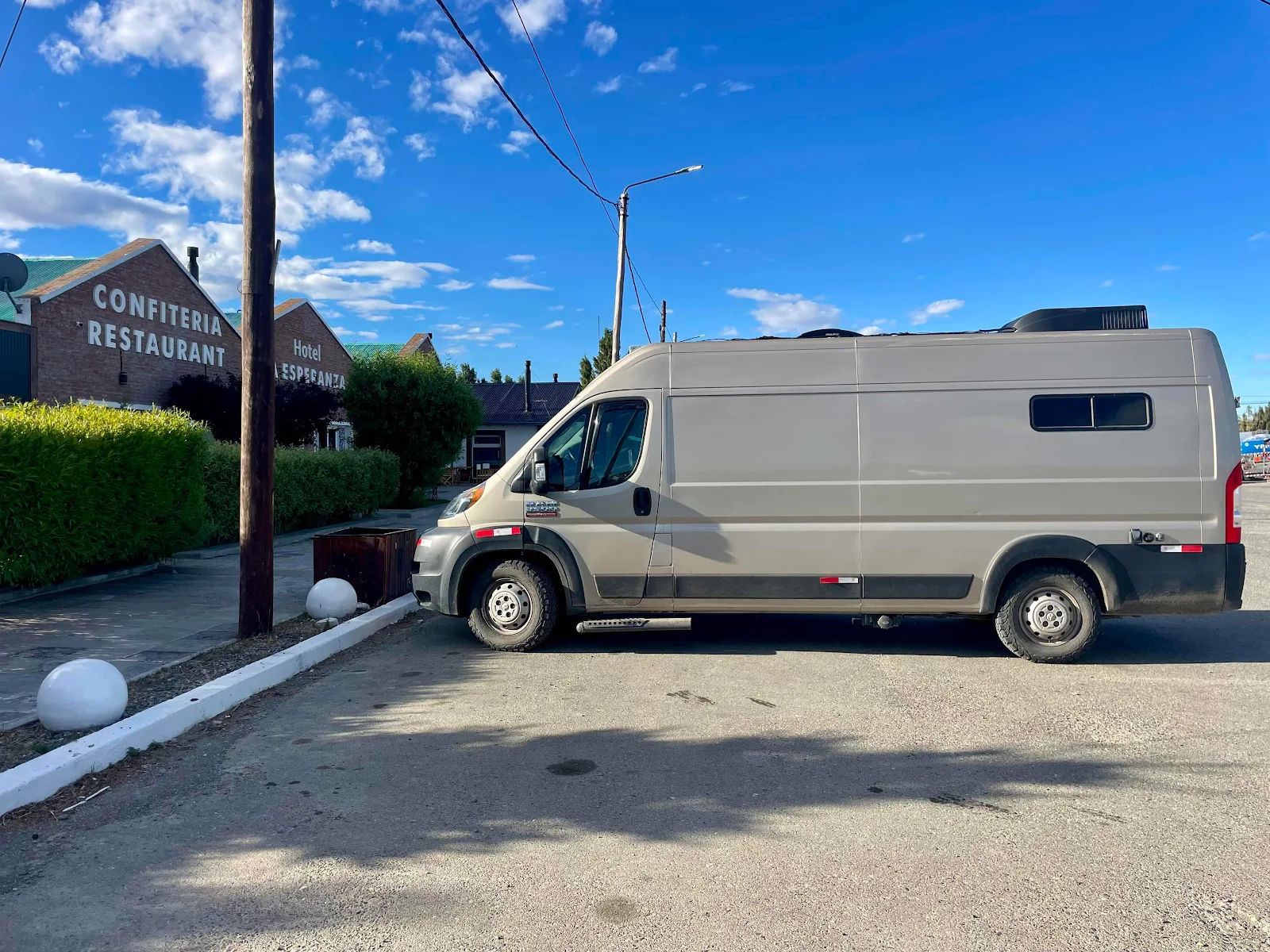
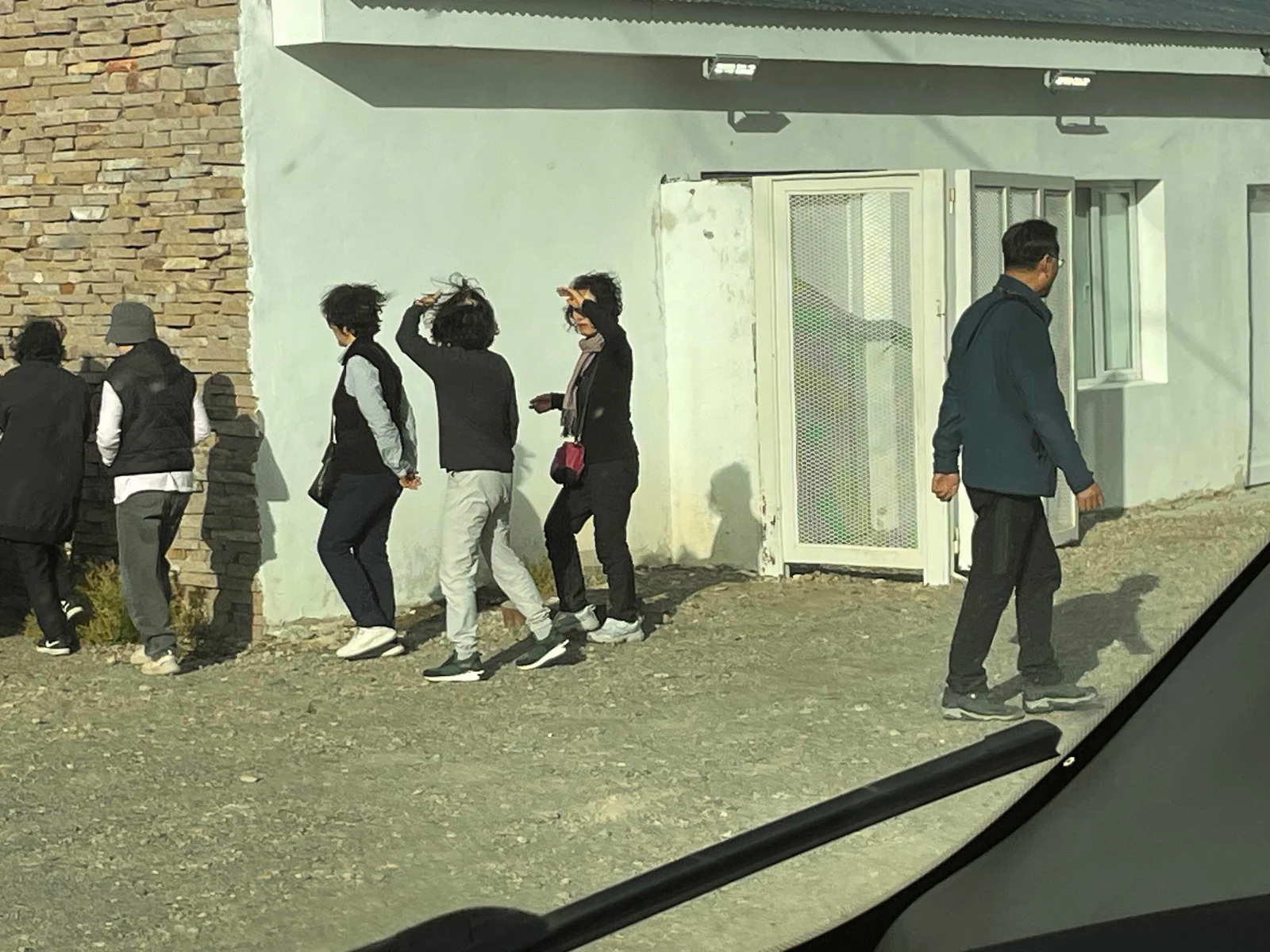
I don’t know what this bus load of Asian tourists thought about this hotel but they stuck together and vanished.
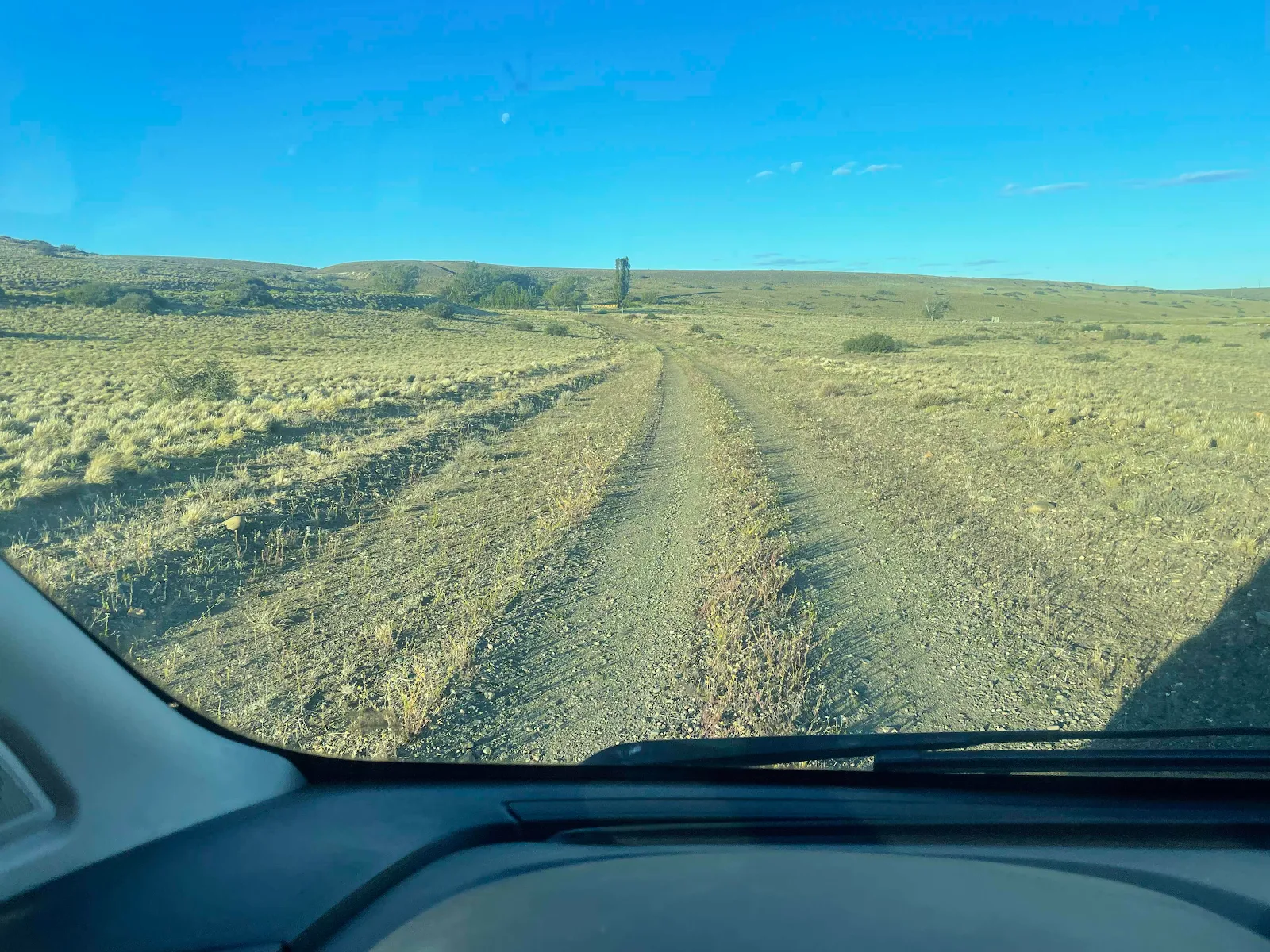
One more dirt road to our sleeping spot next to the trees.
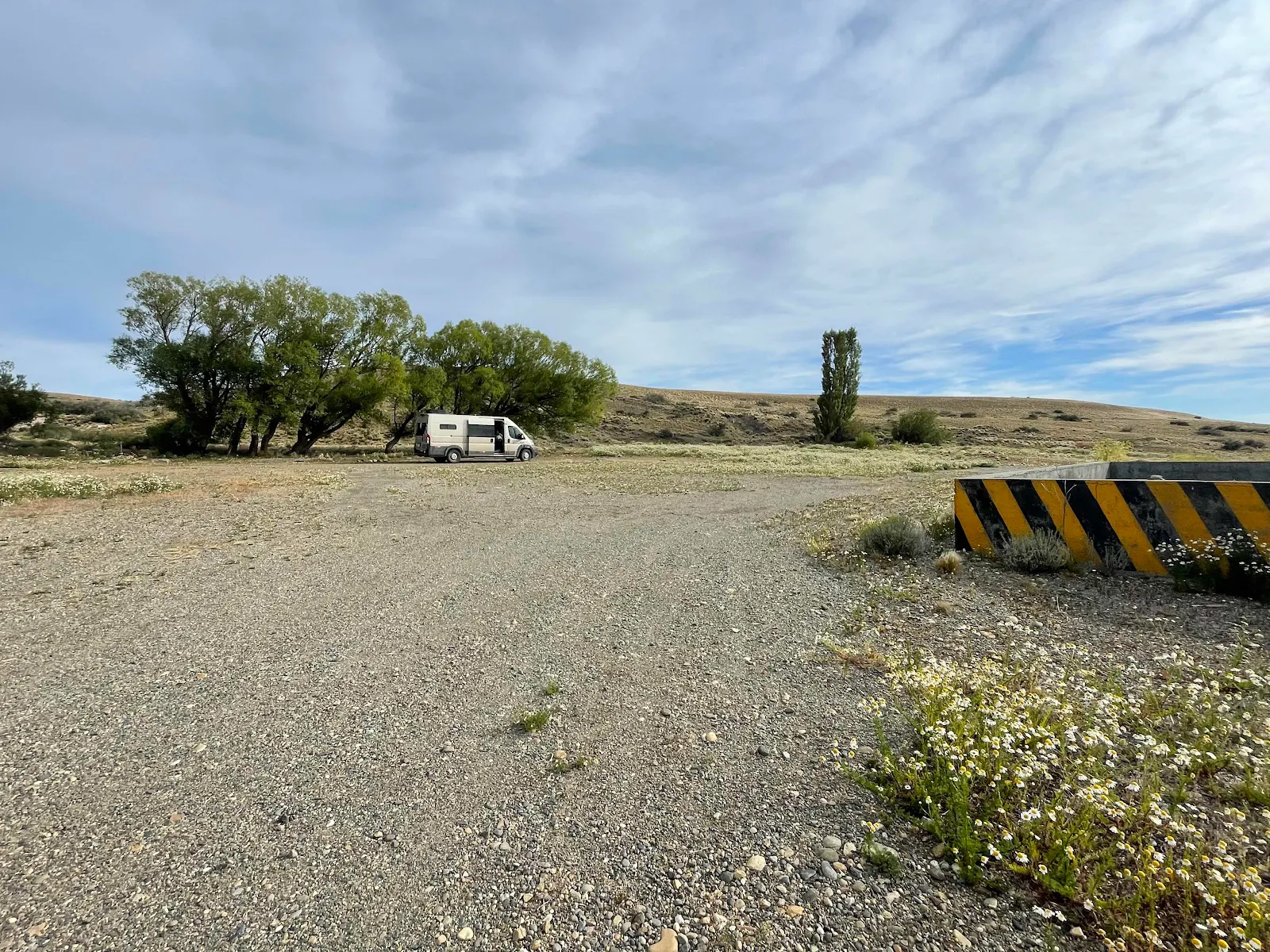
130 miles to El Calafate it was warm and snug and the wind died away to yield a quiet night after a colorful sunset which we both watched and didn’t photograph.
We left around two in the afternoon after a morning of enjoying lounging in 70 degrees sunshine with no wind. Imagine that.
I don’t mind rolling through these flatlands but I draw the line at riding a bicycle or worse yet a tandem but these two were hard at it in the middle of nowhere.
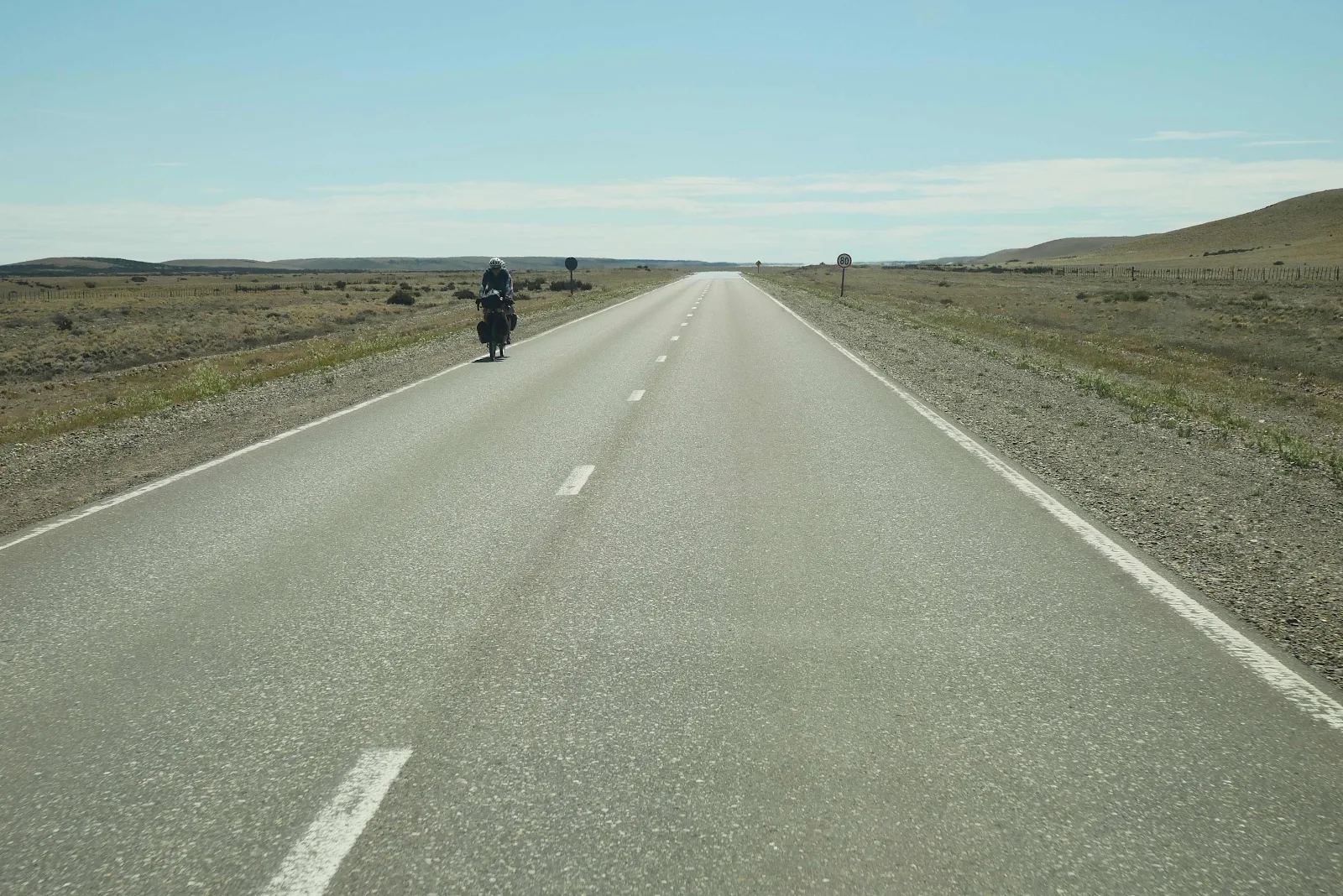
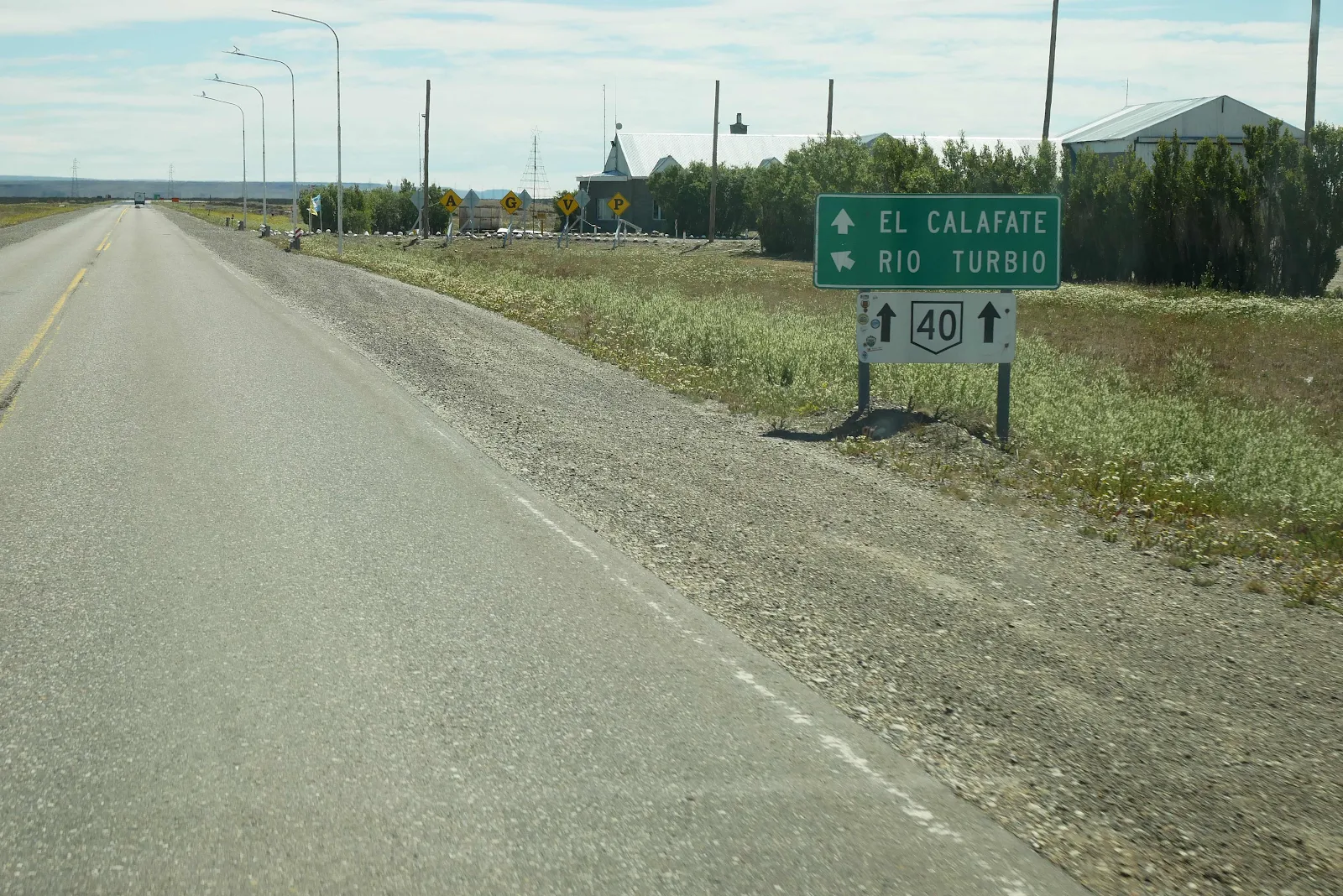
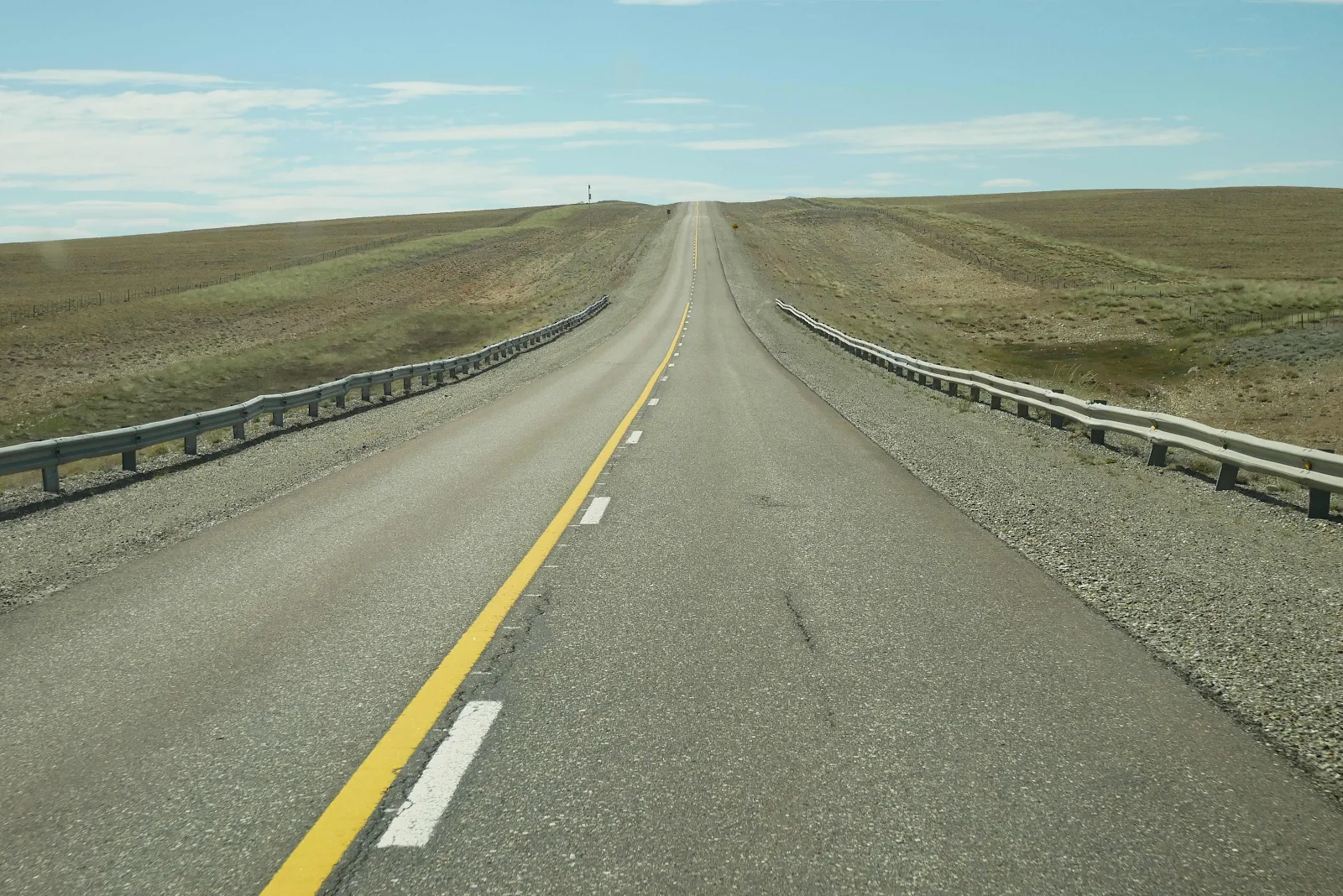
I think there’s something to see over there…
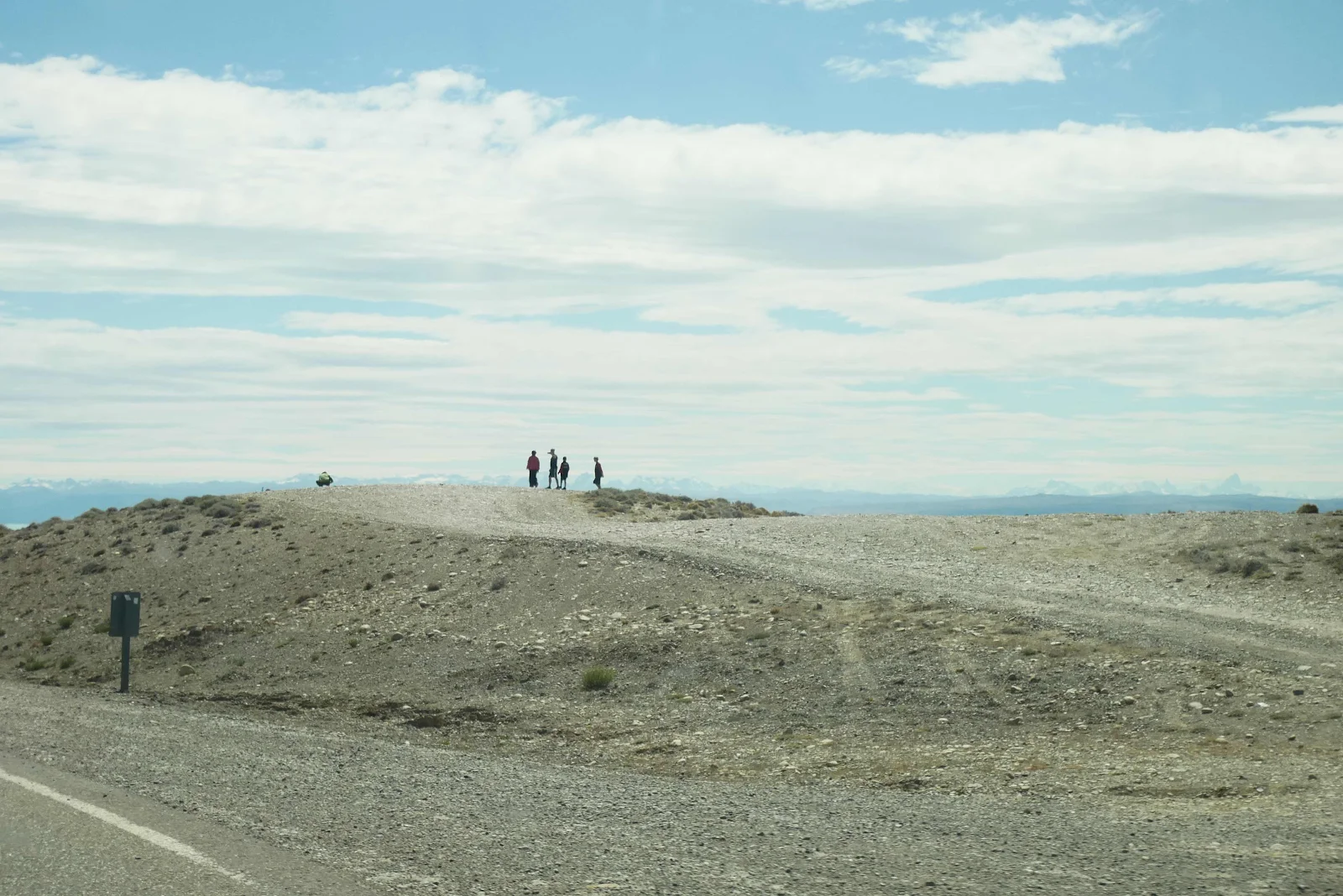
…sure enough there was another vista point.
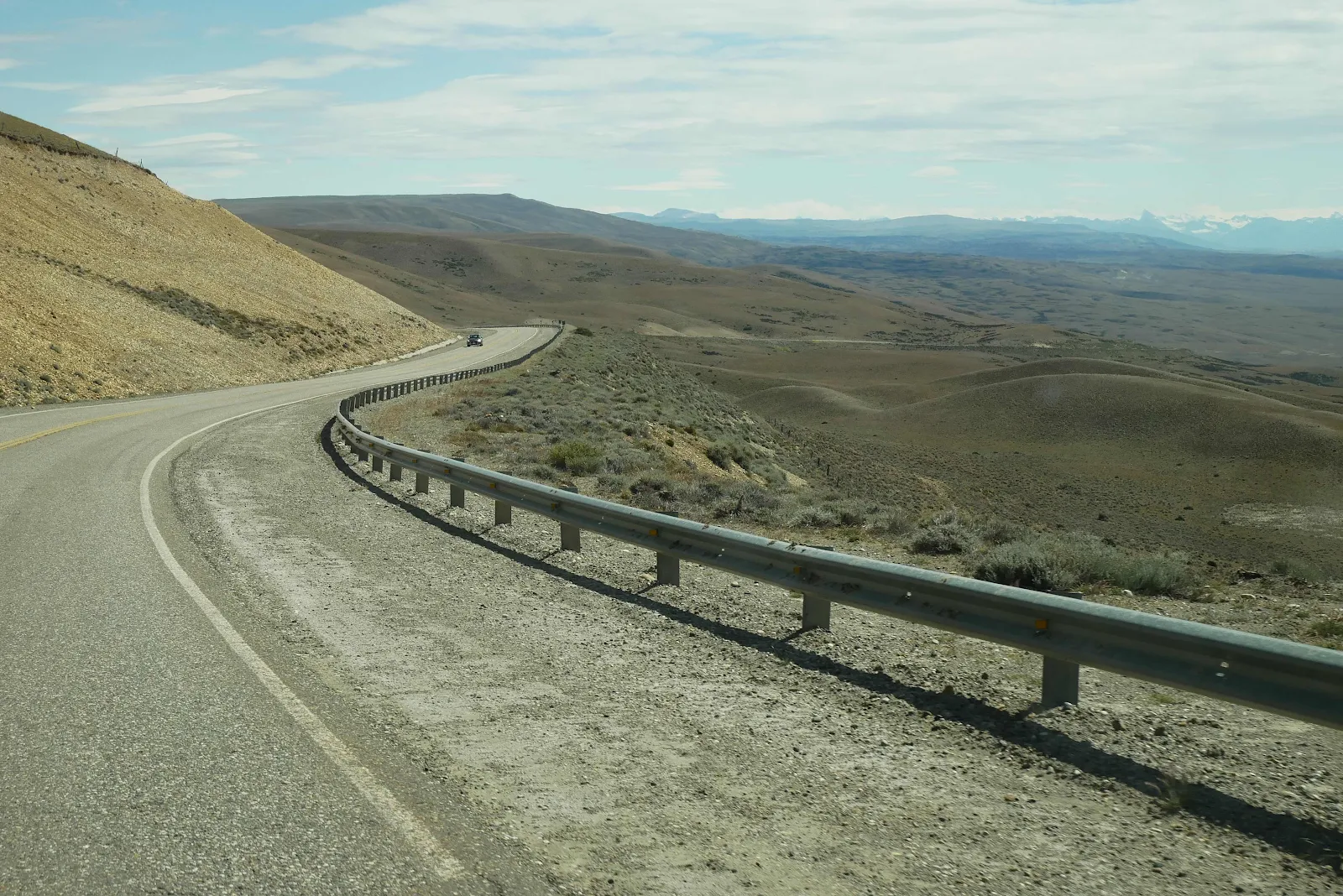
Snow sprinkled Andes on the horizon and a huge dry desert valley below with a lake around the corner. That was our goal.
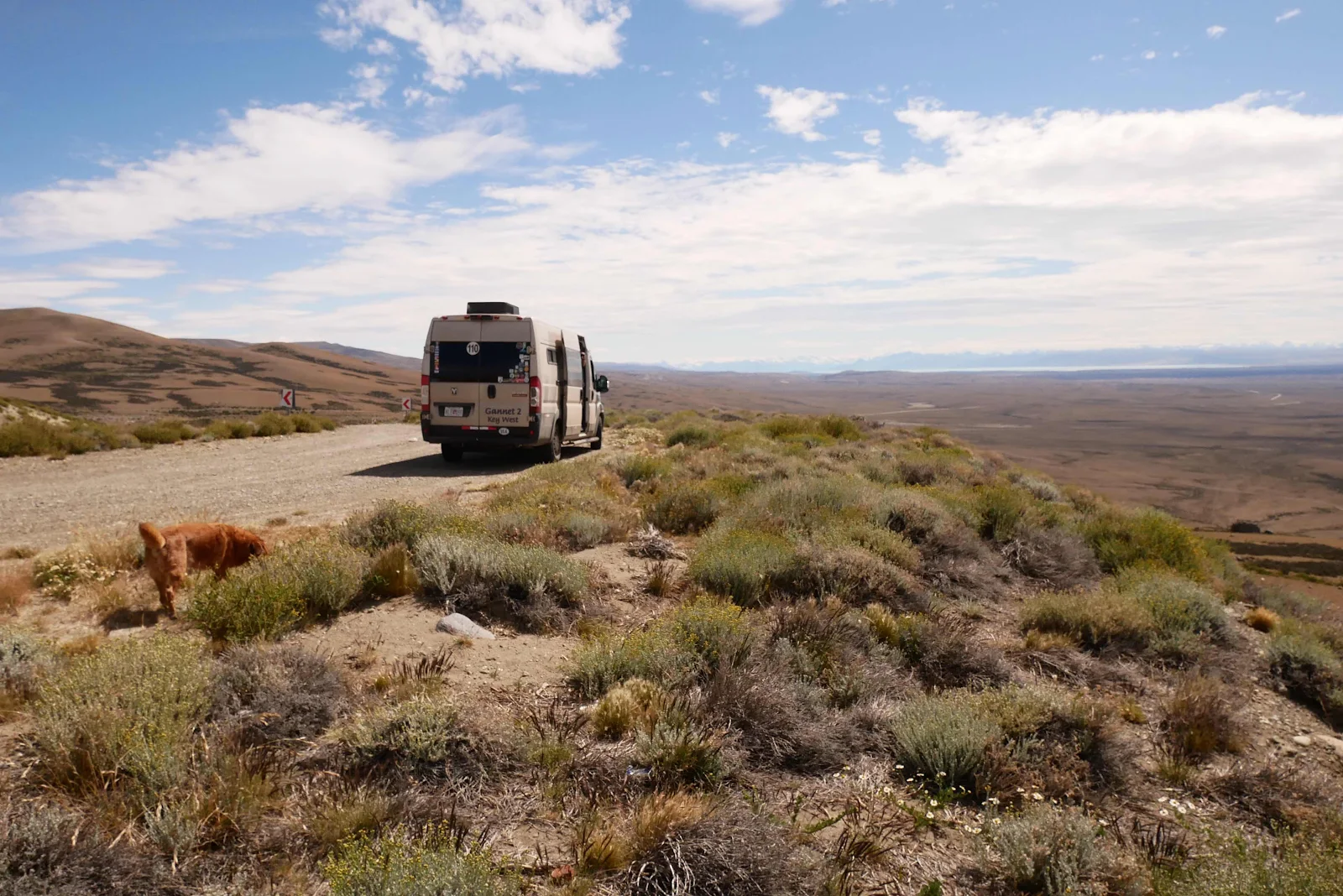
You may have seen views like this across the west at home. But this my friends is Patagonia. Drink it in. I had no idea it looked like this.
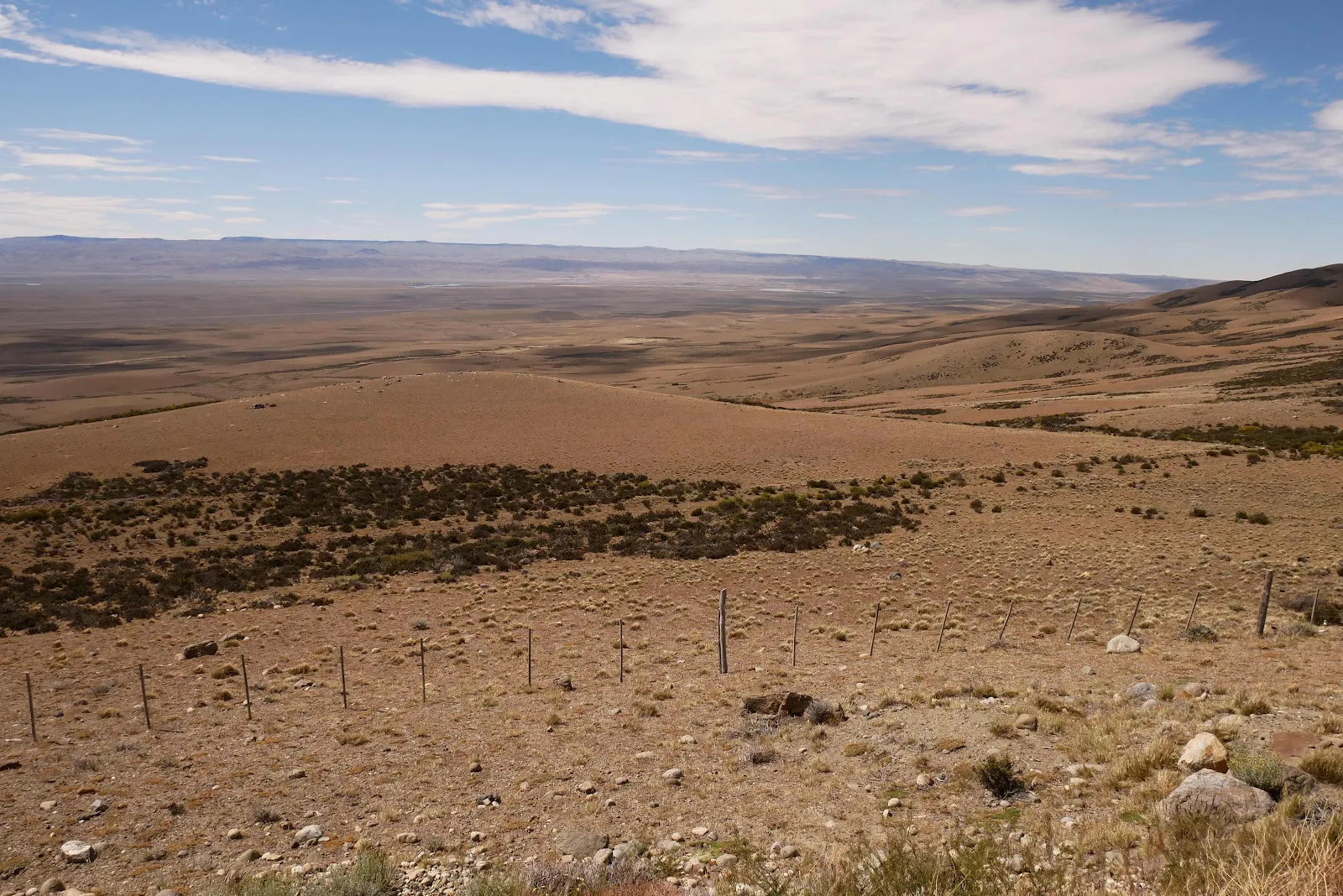
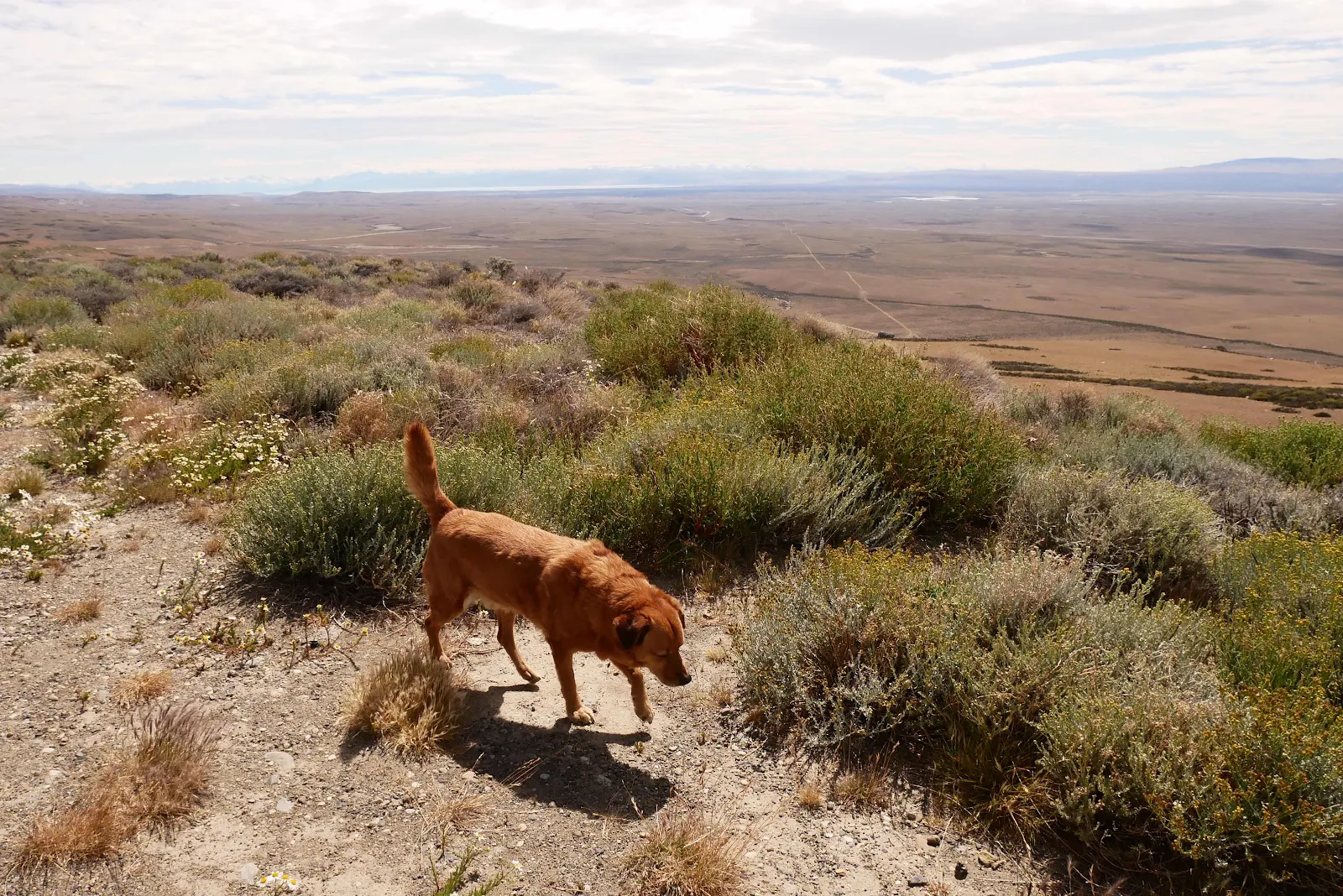
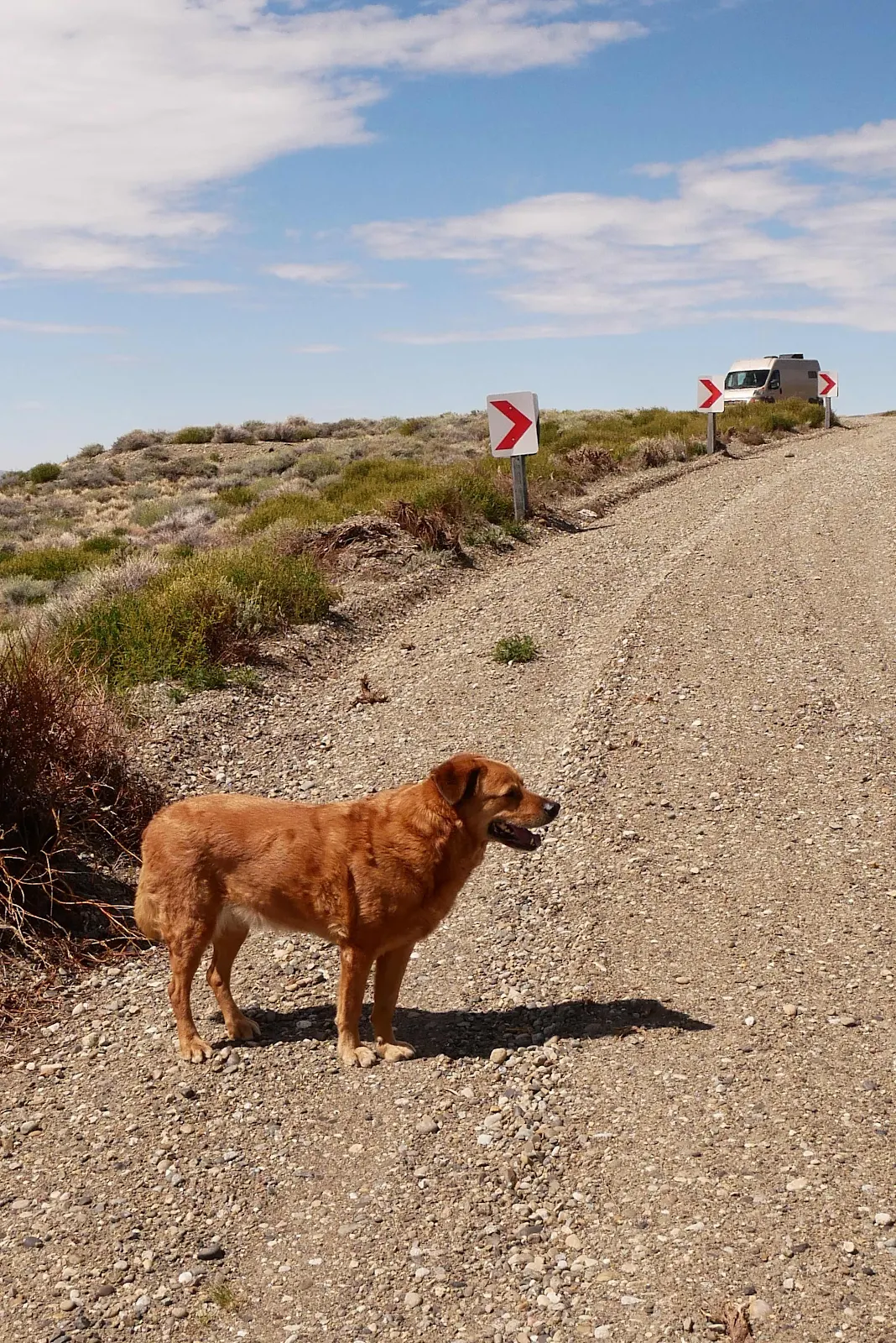
As usual Rusty was up for a long distance sniff.
And another police checkpoint. The usual by now you know the drill, hand over the license, have a chat this time about Rusty and off we go.
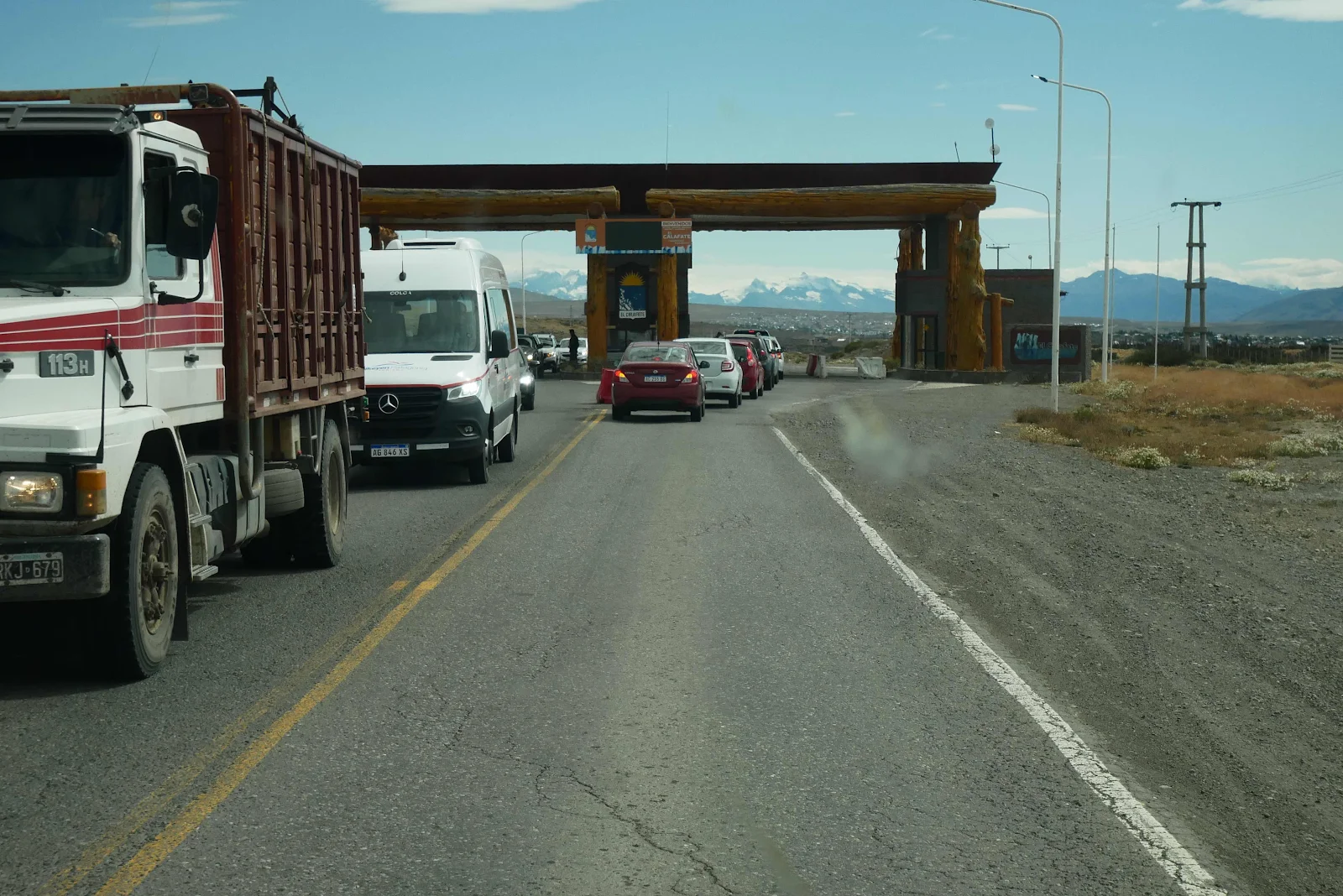
Don’t be intimidated, that’s my advice whether you’re in Baja stopped my Mexican military or down here. They’re all human and driven by curiosity and of course I had the correct papers for GANNET2.
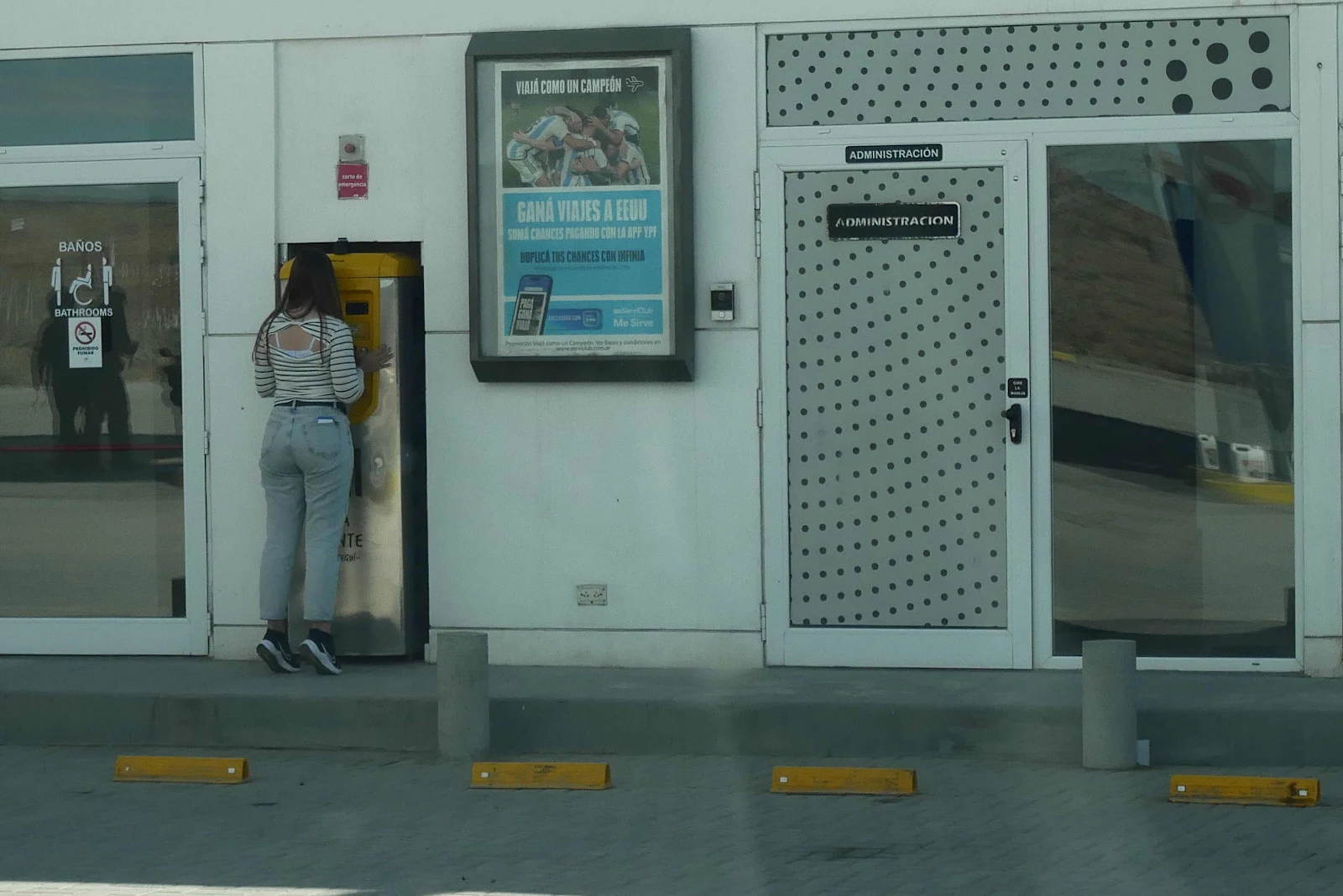
And the young lady above was not taking confession she was using the facility offered everywhere in Argentina, the hot water dispenser at the gas station.
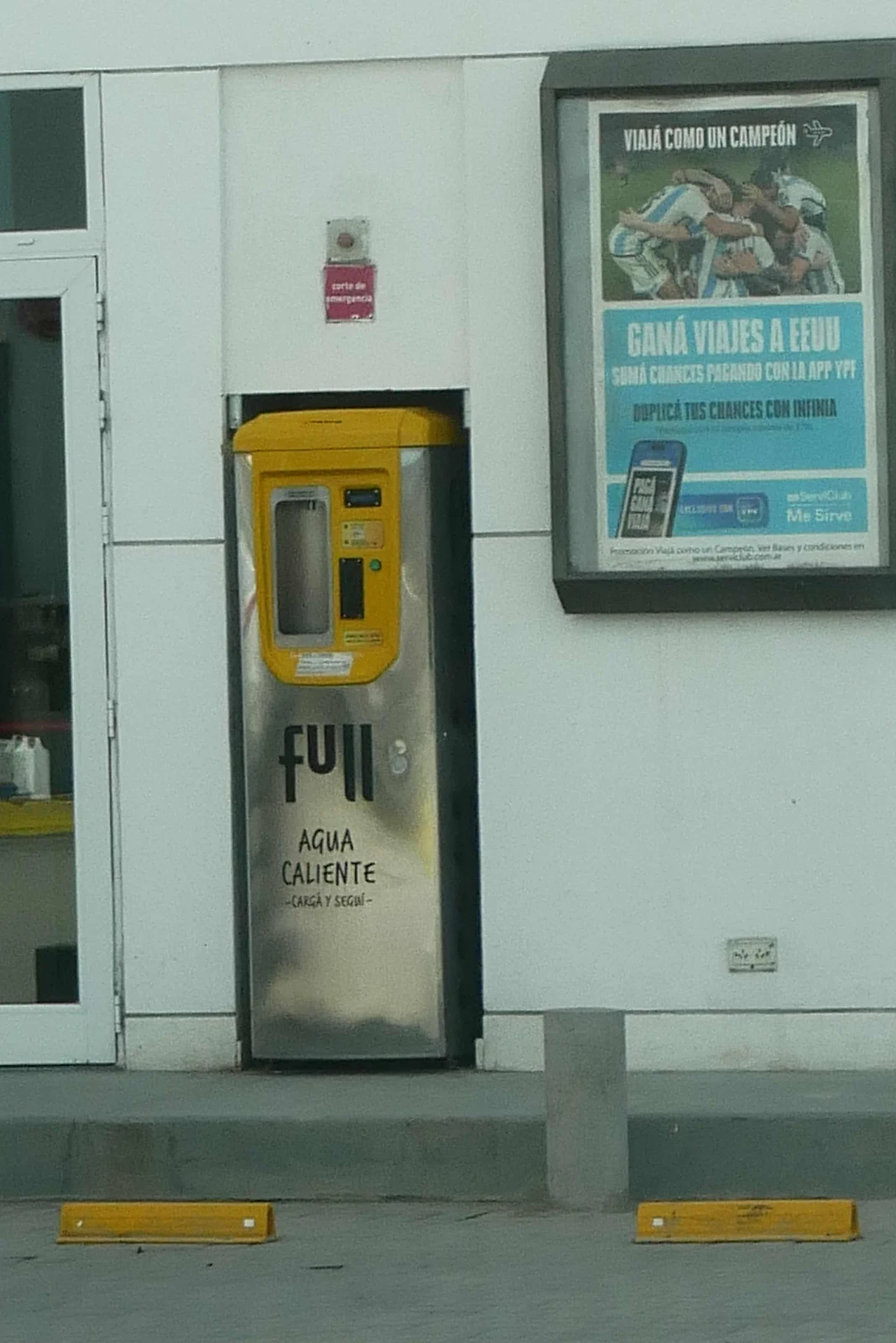
It’s free and the slogan says “ fill up and go” and Argentines bring their thermos flasks and fill them up to make their horrible maté tea. They fill a cup with chopped grass and add a few drops of hot water and stick in a metal straw with a filter on the end. They drink it everywhere all the time. Luckily they also make pretty decent wine which I prefer by a long shot.
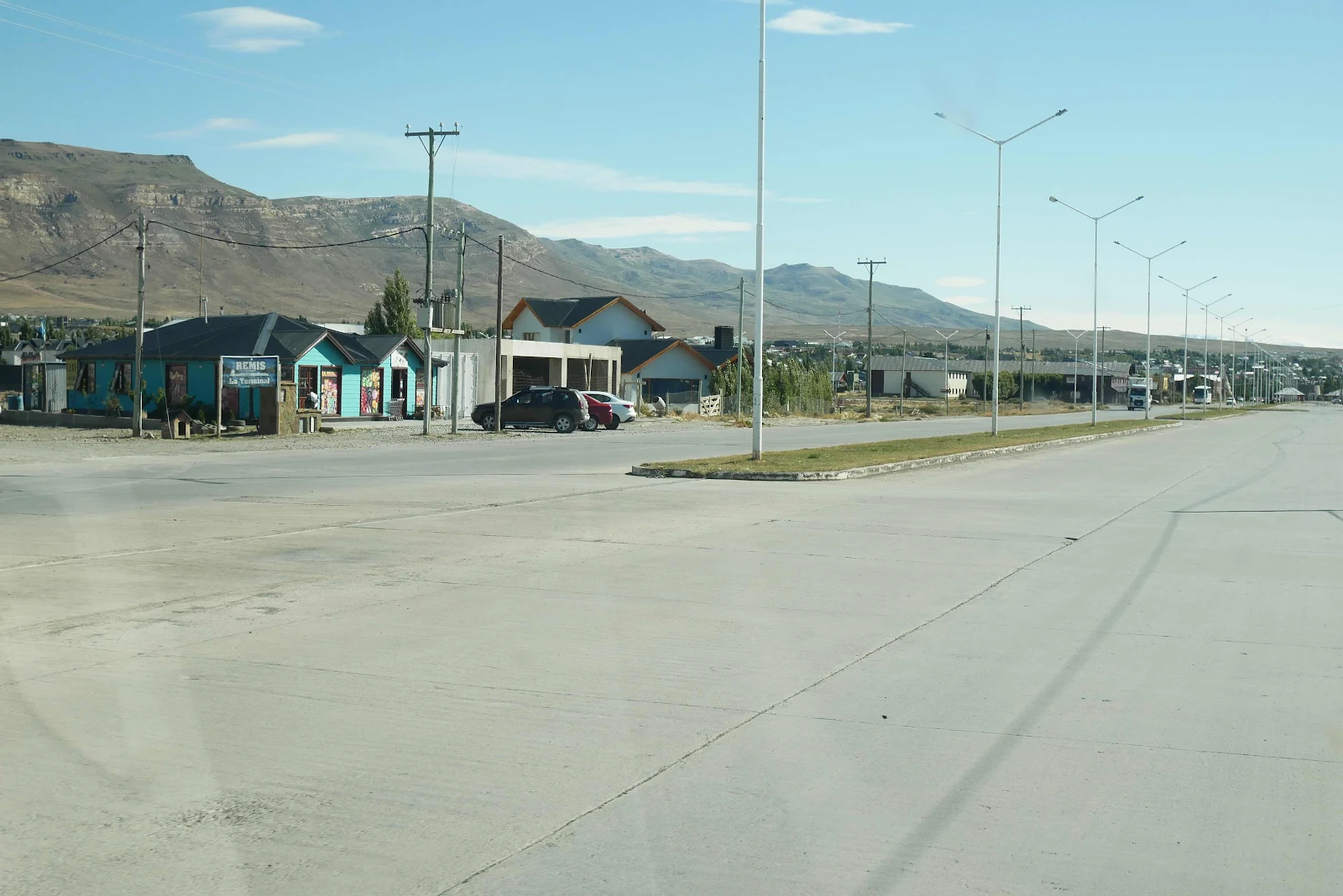
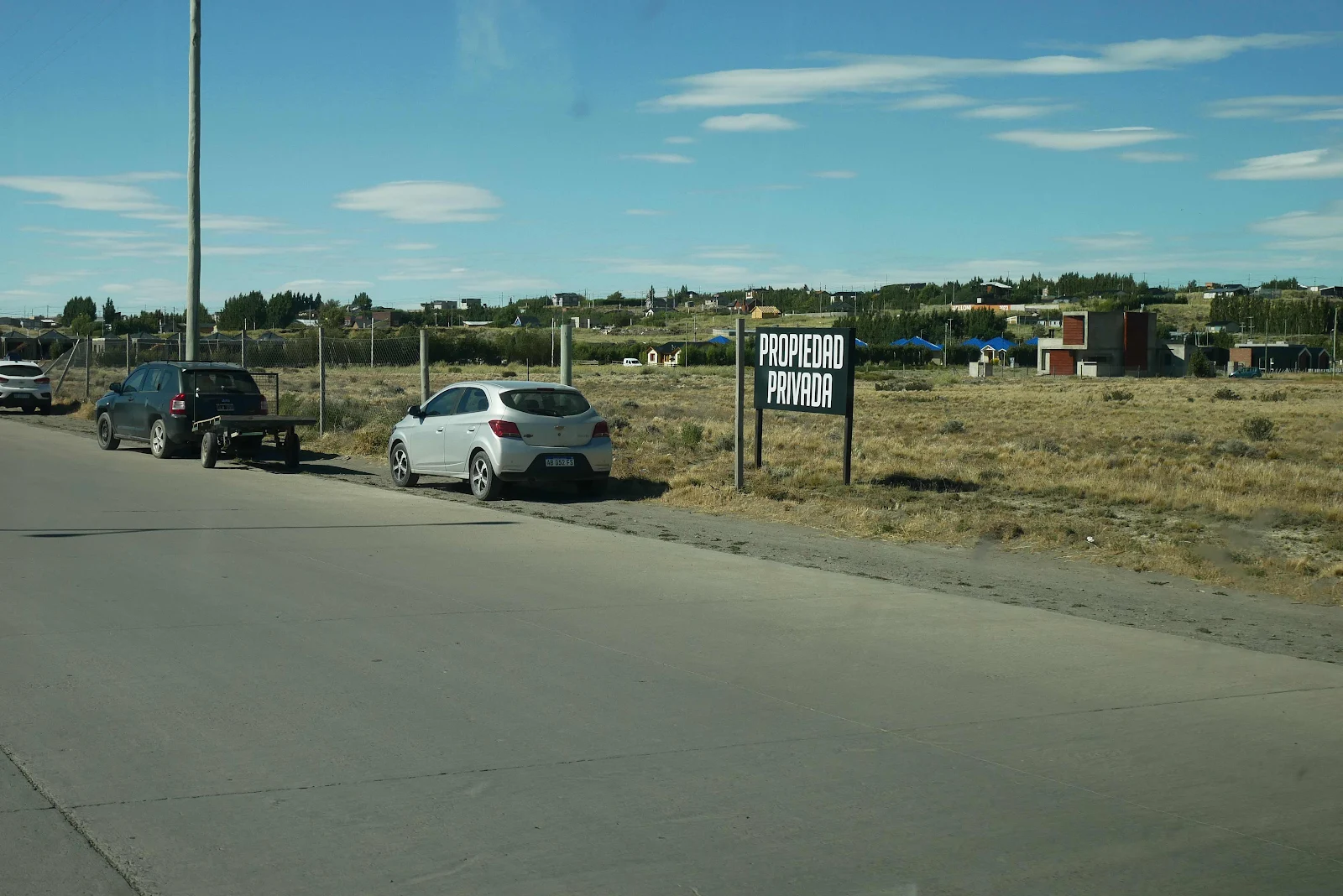
The outskirts of El Calafate are pretty dusty and scattered, but downtown is much more cute and organized. More on that later.
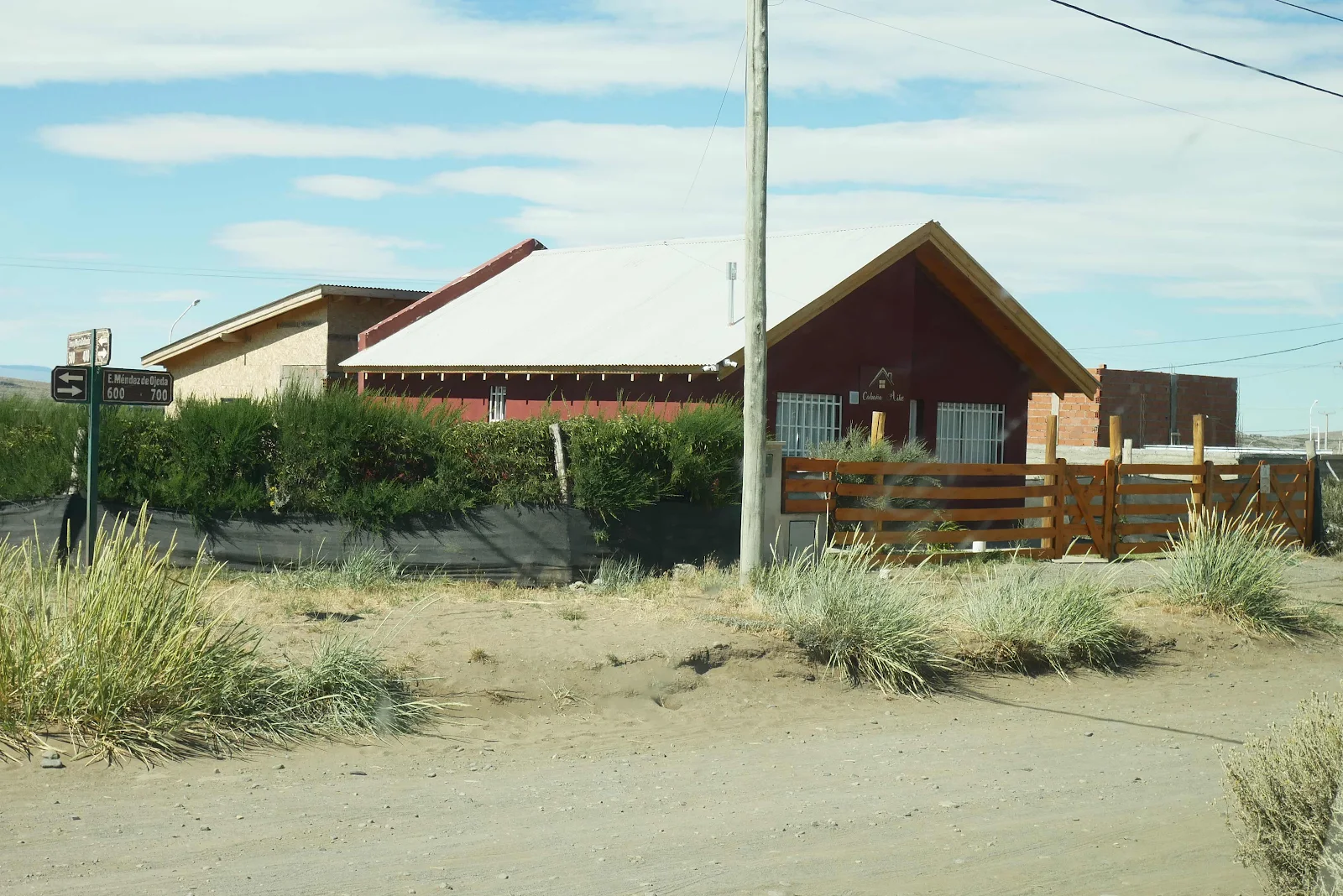
We checked out the doggie day care where Rusty will spend Sunday and then we got to the campground, $26 a night with all facilities.
It’s shaded and offers hot showers and a water hose to fill our tank and rinse GANNET2 of the residual dust and mud from the penguin visit.
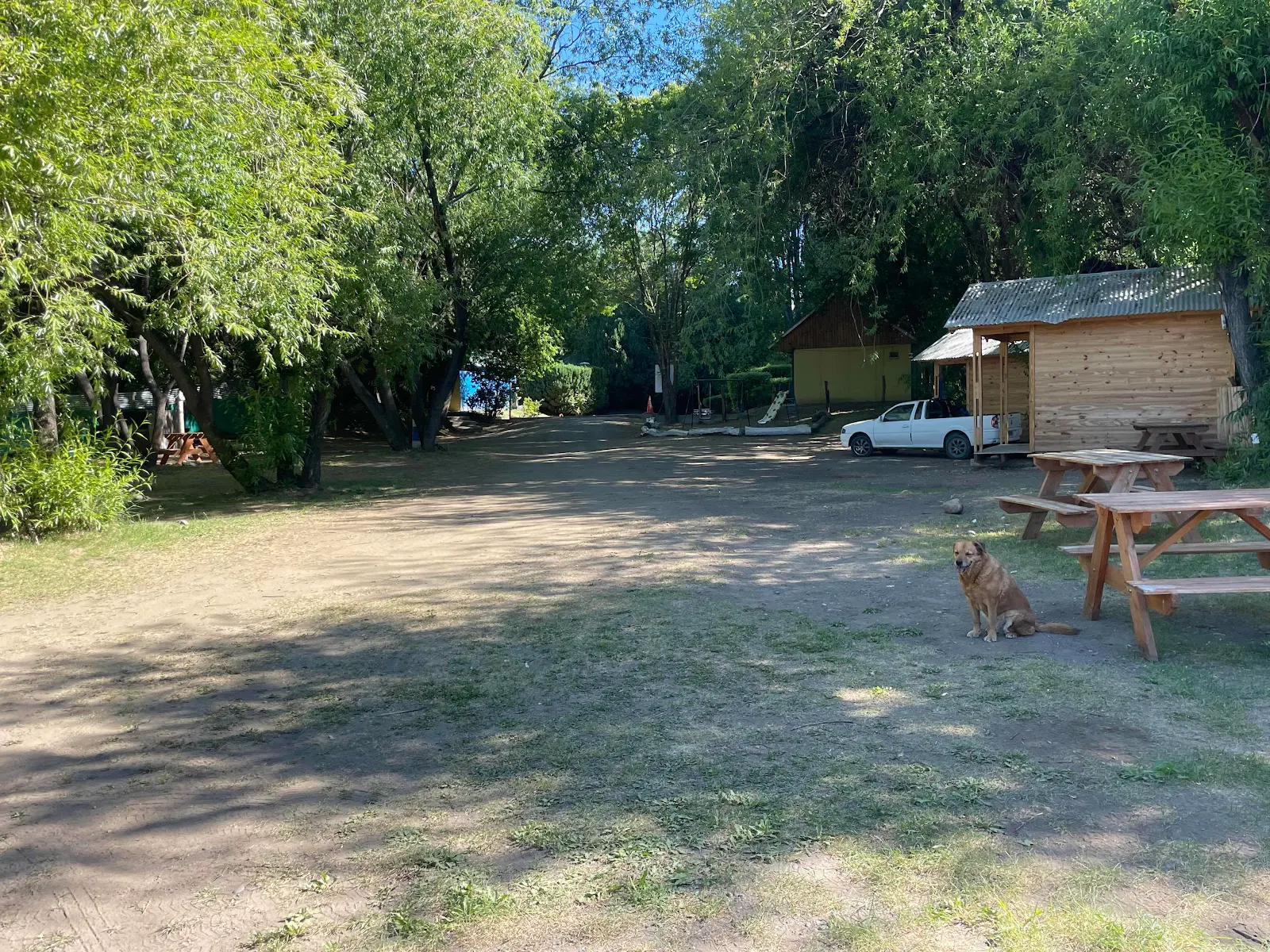
More people arrived to stay in the cabins and to camp on a Friday night. We drank wine and figured this is a good place to crash for a bit. Hell it even has a laundry across the street. That’s upscale camping for you. Viva El Calafate.