We left the campground in unusual morning sunlight as the gray clouds of the Pacific marine inversion hadn’t materialized. Our plan was to visit San Ignacio town, buy some date bread and head north after filling the gas tank.

It’s a five minute drive from the date palm lagoons into what turns out to be a lovely picturesque little town. We were pleasantly surprised.

The main square was a rectangular median surrounded on three sides by businesses most of whom weren’t stirring at nine o’clock of a Monday morning. Layne wandered into a souvenir shop selling date bread while Rusty and I wandered aimlessly.


Construction of the church began in 1736 in the familiar pattern of the Spanish missions up and down the Californias. Friars arrived eager to preach the gospels and convert the locals who gradually faded away and died of material neglect and exotic diseases imported by the strangers.

It remains today a handsome edifice surprisingly rich and imposing in what has become a little highway backwater.
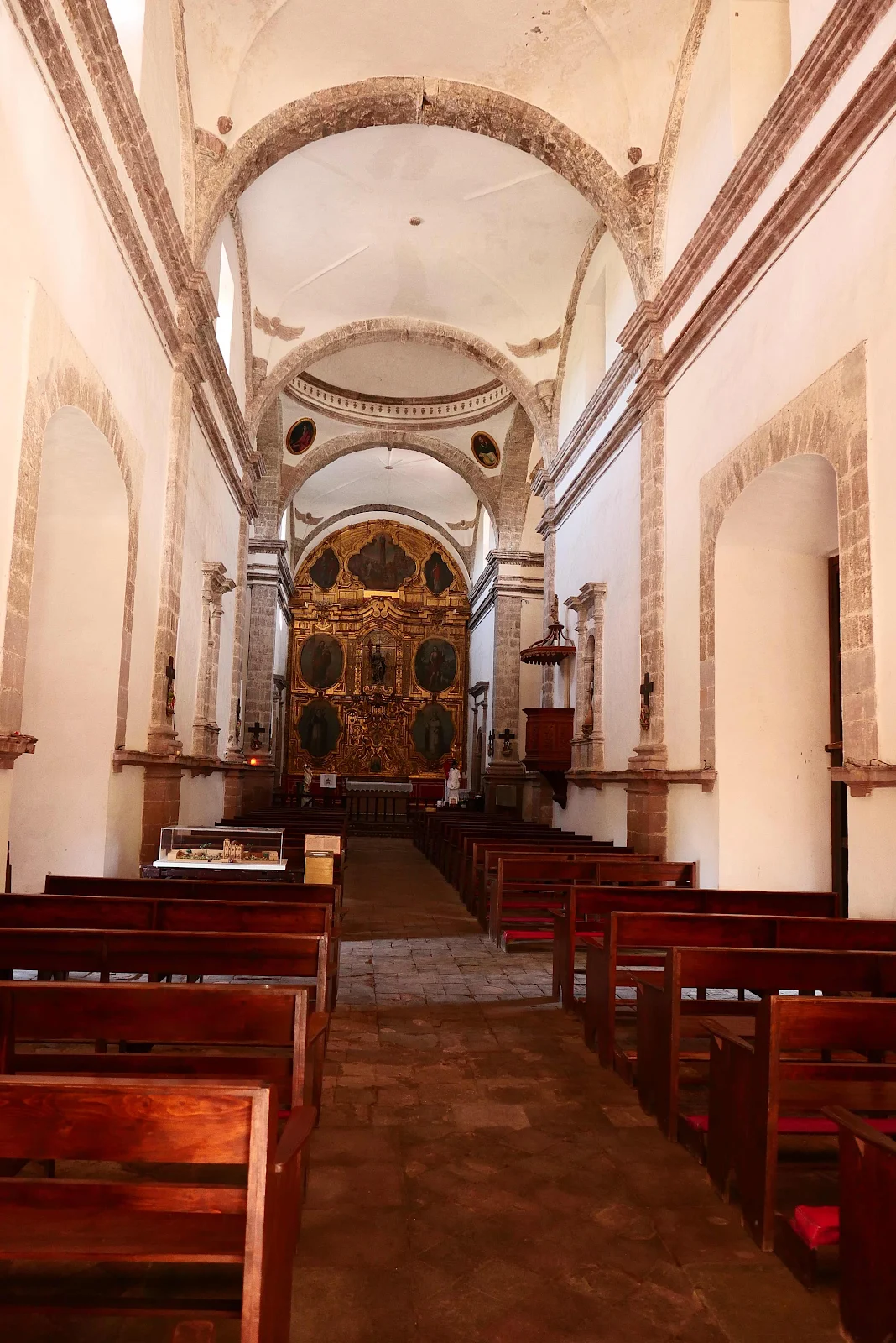
I grew up in the Catholic Church because in childhood religion is a cultural artifact handed down by parents and my mother was Italian. My English father had no time for religion and cared not one whit about the subject so these symbols and designs are as familiar to me as the parish church of my youth in Italy though that church is far less grand in design. I find traveling in Latin America is in some ways an affirmation of the cultural underpinnings of my life in 1960's and '70s Italy and are thus not as alien as they might be to other travelers.

Layne and the date bread had to sit outside to keep Rusty from entering and polluting the church. She didn’t mind the duty as she has become quite aware of Catholic architecture on our many trips to see my family in Italy. Apparently only English speakers may not eat ice cream in the church. Or possibly only English speakers are so crass as to think slurping down an ice cream is accepted protocol in church. Fast food is not on for anyone apparently.

We loaded into the van the two inch thick circular sponge cake made of dates, then we loaded ourselves and I made the awful gaffe of thinking the town was so small we could easily make our way back to the highway. Think again. I nearly had us taking off for the Laguna de San Ignacio on the Pacific Coast, whence came those cold afternoon winds. My meandering did send us accidentally past the tortilla shop so Layne yelled “stop!” and we came to a halt like a stagecoach in a cloud of dust.

I turned on the four way flashers to indicate our unsettled status and traffic took us in their stride. Rusty went for a stroll and when Layne came back we devoured a couple of the flour discs because they taste so good when fresh. This fortified we returned to the main highway that promised to take us north…
We got there via the backside of the town and past our campsite at Los Petates. Once on the main road we filled up with gas at the Pemex and we were off into the desert.

Much of what happens in Mexico baffles me. For instance when running a road up a desert peninsula with spectacular coasts why run the highway right down the middle, miles from either coast?

I assume, lacking information it was a matter of cost. As you can see the highway is smooth straight and well marked where much of the coastline has cliffs. There are rarely any shoulders and the first few close encounters with an 18 wheeler produce a pucker factor until you get used to them. Thus it drones on all day does Highway One across the middle of Baja.

On the turn outs to coastal communities there is room to pull over, make a cup of tea, ponder the infinite nature of the universe and listen to the sand filled wind. About the time Rusty gets a burr in his paw it’s time to leave anyway and get back on the road for a few more hours. Signs of life? None.

Towns come and go like more oases in the desert. Beer advertising, gas stations, tire shops, convenience stores selling packaged junk food. Of the roadside sellers we loved to see on the side of the road in mainland Mexico, of those we see none. I guess it's too hot, too desert and with too few passersby to make roadside stands worthwhile.
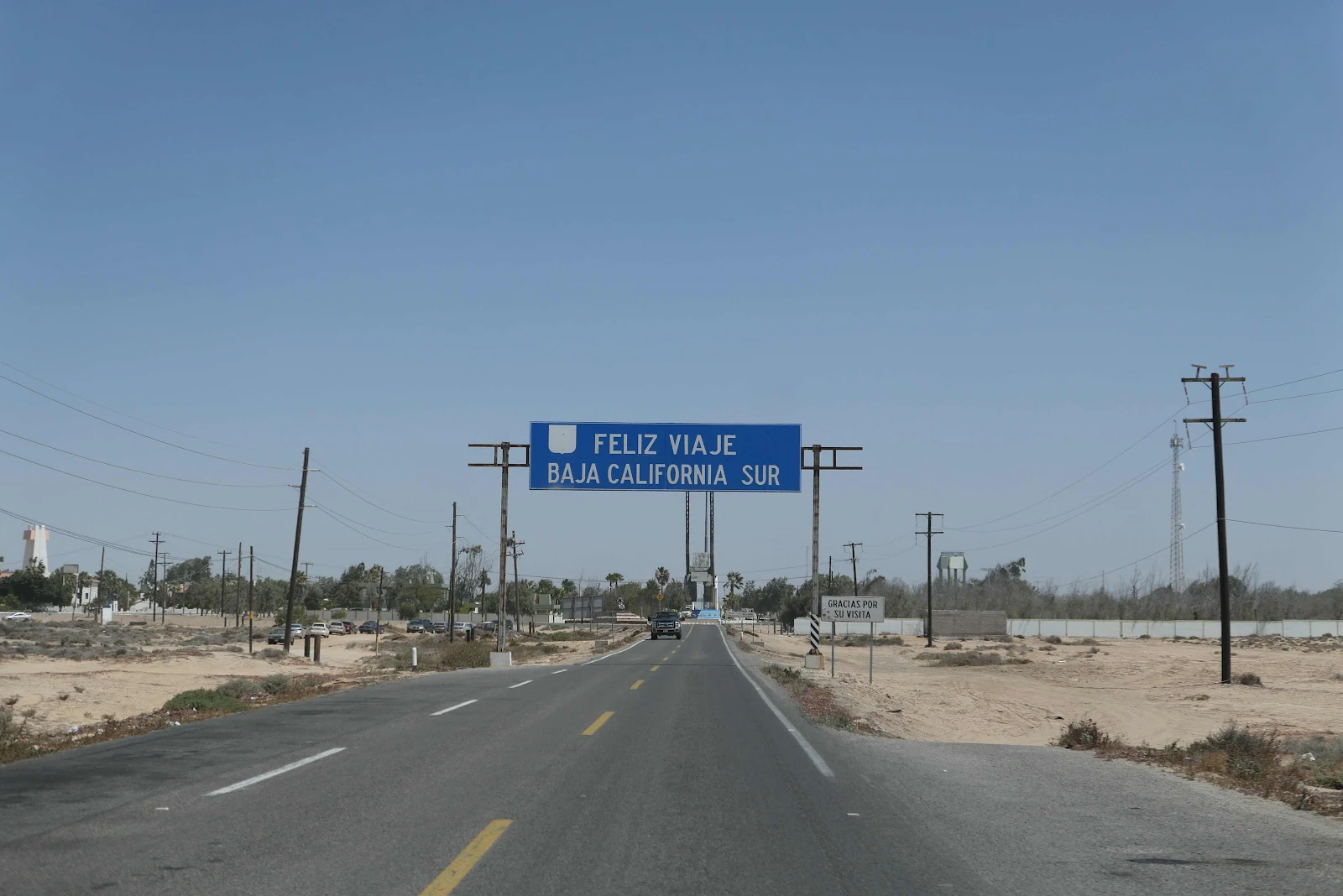
The biggest break in the journey up Baja comes at the state line. In leaving Baja California Sur our phone and van clocks automatically go back an hour to Pacific time.

We bypassed the village of Guerrero Negro and drove straight toward the bizarre monument marking the military base on the state line. Southbound traffic passes through a fitful agriculture inspection. The inspector has a hose either to sanitize vehicles or water his landscaping and he languidly stopped a couple of cars as we rolled slowly north through the checkpoint that is completely unstaffed.

The peninsula is divided into two states along the papal demarcation line from the 18th century. The north is called simply Baja California. If you add “Norte” you are being incorrect. It is far more heavily populated and immediately became a state where the southern half lacked population and resources and limped along as a territory for decades before being promoted to a state with La Paz as its capital. Thus from Baja California Sur we drove into Baja California. Aside from the clock nothing changed. We were getting pretty bored. The prospect of hours more desert till we hit the Pacific Coast was not alluring. Especially as we knew the Pacific Coast was cold gray and windy most of the time.

People in the US will tell you to take two spare tires and carry jugs of gas because this is the Wild West. It’s not. If you come to Baja to go four wheeling and off roading or surfing in remote spots you already know how to cope with wilderness conditions. If you are driving down the road with occasional beach forays like us come as you are. There is gas everywhere. From San Ignacio to San Felipe I put gas in every time I saw a Pemex and we never added more than five gallons. At 15 mpg. Figure it out for yourself.

It’s lonely desert country here but cars pass along all the time. We are completely self contained of course but even if just driving through I’d buy a three dollar jug of water at a convenience store and carry a shovel just in case. But you will have to work really hard to die out here even if you accidentally get stuck in roadside sand. It’s no longer a wild frontier. However cell service is a distant memory so have your listening pleasure downloaded! We stopped here briefly, but we did not drive the side road to nowhere:
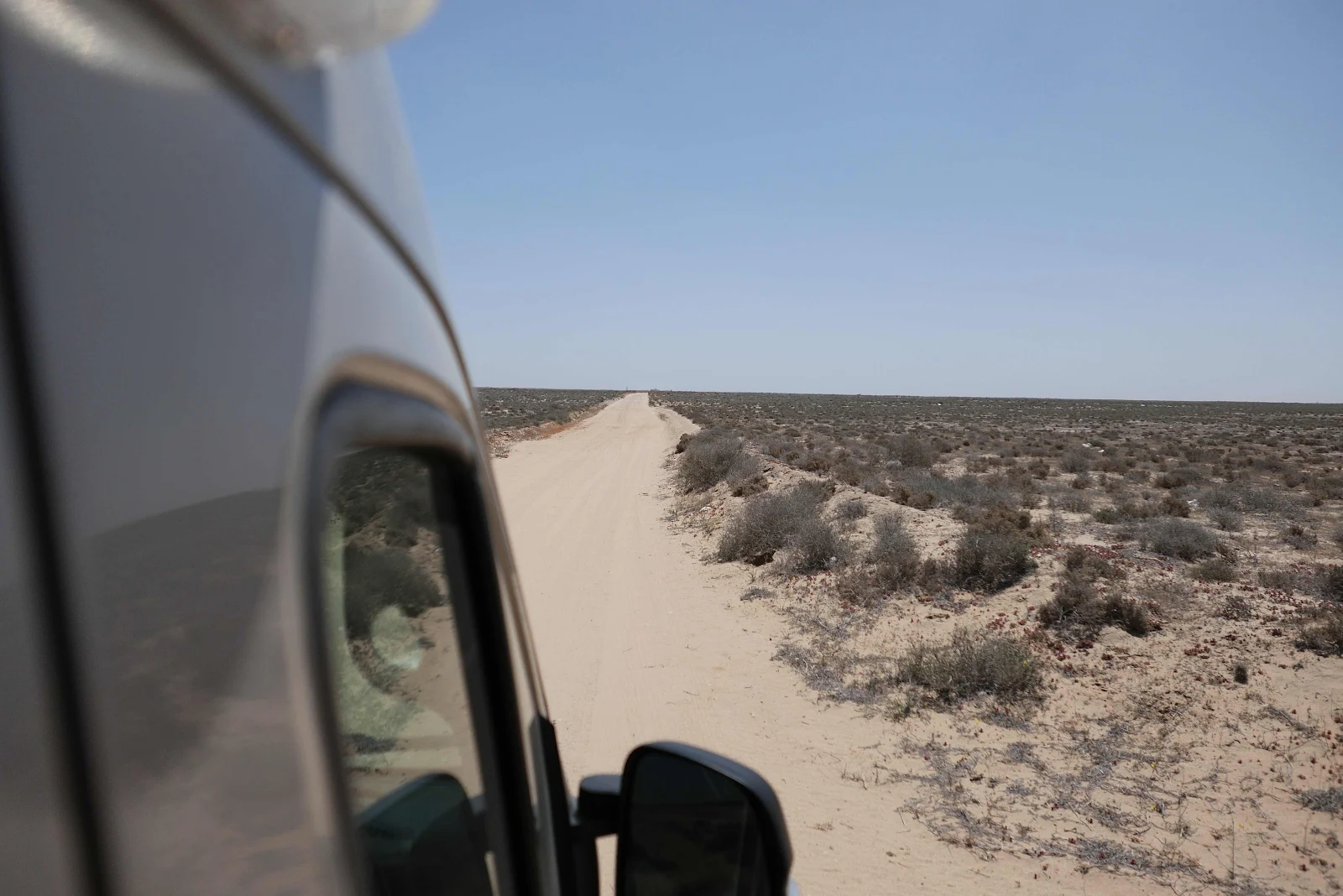
I confess: we both got even more bored. It’s true. We felt like this was endless Arizona without the amenities of wide lanes and reliably smooth road surfaces. I didn’t dare engage cruise control and we drifted along between fifty and sixty miles per hour scanning for potholes and imperfections in the surface. The only Tope we saw was so rare I made a picture of it:

We decided to break up the tedium by hitting the east coast instead of following our plan to head directly to the mountains off the Pacific Coast. We thought to try for a swimming beach at Bahia San Luis Gonzaga so we decided suddenly to turn right on highway five to San Felipe and return to the Sea of Cortez. Our plans are constantly changed by sudden changes of mood, or a moment's indecision. I change my mind constantly because retirement gives us total flexibility all the time! Every day is indecision day! And then I noticed two figures up the road. One waved a water bottle at us. We stopped.

They were looking for work and hitching to Tijuana so we gave them a lift explaining we were going to San Felipe. The turn off was a couple of hours ahead. They sat on their bedrolls on the floor and drifted off to sleep. We hauled them through some horrendously lonely country. Not too hot thanks to Pacific Ocean influence, around 80 degrees and not humid but totally empty.
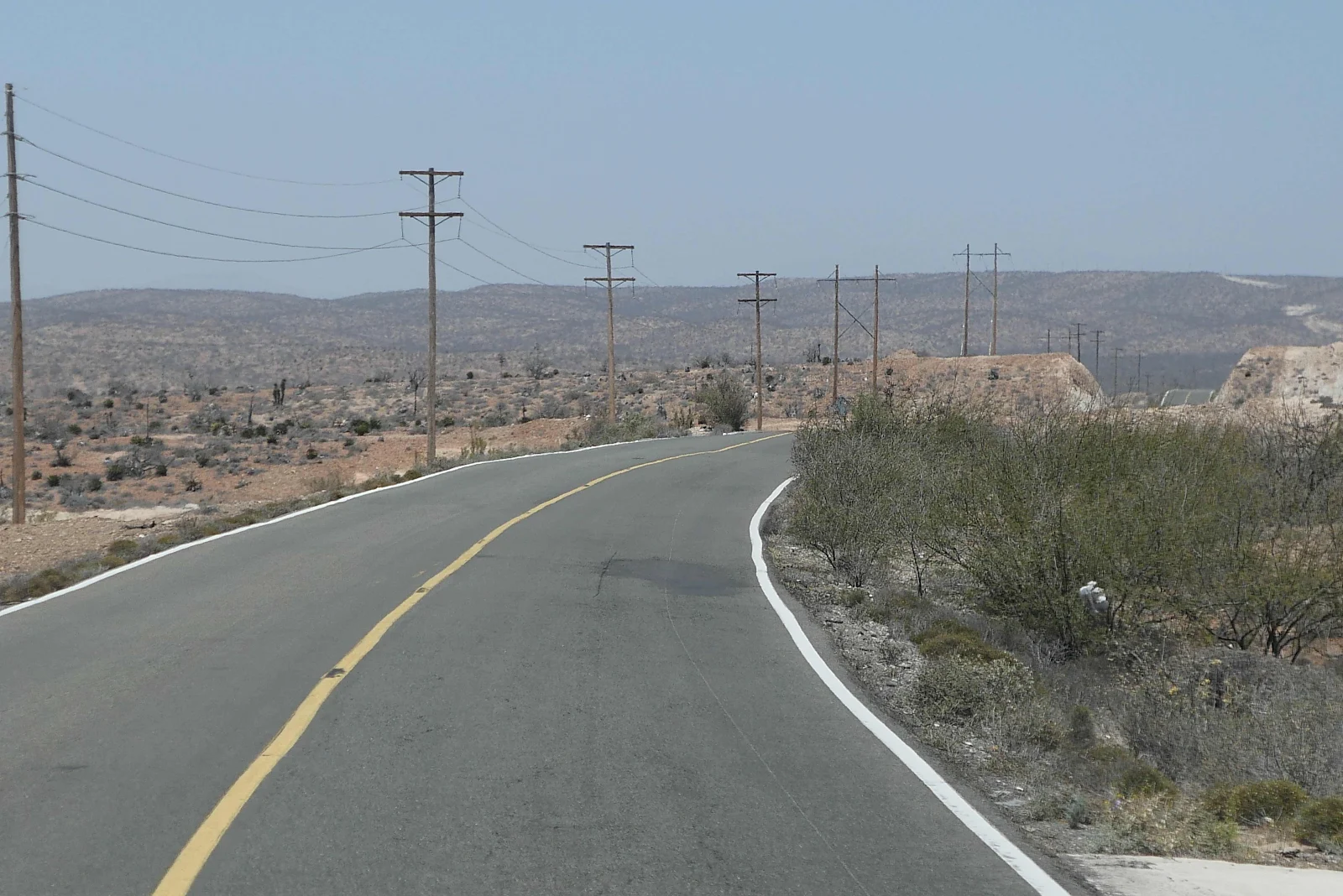
Three trucks were pulled over doing something that did not look kosher like swapping loads or something. We imitated the other cars passing this point and made like a leaf and blew. Mexicans very sensibly make no bones about peeing roadside but these three were up to something entirely different at a tiny pull out. Allow your imagination to go wild; mine did.

The village of Punta Prieta came and went. A sign promised gasoline somewhere in the village had we been in need. We carry a water and dirt fuel filter designed for sailboats actually called a “Baja filter” but we haven’t needed to use it yet. We’ve only bought gasoline from established gas stations but in South America we’ll see if we need it in some remote areas. Better to have it and not need it, as water in the fuel would be a drag.

At the turn off to San Felipe there is a well known travelers stop called Terramar, a restaurant and an informal RV park which also offers gas if you need it! I told you gas is everywhere! Tire shops too, if you recently put a hole in your spare, look for the "llantera" (pro: yan-tay-rah). I carry a set of tire plugs a breaker bar and a full sized factory spare under the van. Plus a compressor.

We woke our hitch hikers gave them water food money (500 pesos each) and a blanket we could spare. They walked into the restaurant. We hoped they’d use the money for a bus ticket but we left them to it and turned right.
 Highway Five became more rocky and volcanic as we approached the coast.
We had high hopes for Gonzaga Bay, a sandy enclave on a rocky coast. The main campground had a gate at the highway but in the distance we could see a motel collection of vehicles and palaces crowded on the sand. We weren't going to pay $30 and not know what we were getting into at the distant beach.

We approached one campground with an open gate which was also asking 30 dollars a night and the place looked like a train wreck. We drove through soft sand to a fly blown collection of plywood sheets tacked to poles to provide shelter from the biting wind and wind driven sand. It looked abandoned and miserable. We weren't going to pay $30 to huddle behind a plywood windbreak. And run the risk of getting stuck in soft sand.

We got some gas at the Pemex despite being assured by other travelers there “is no gas in Gonzaga Bay.” When you do find gas everywhere and report back, the doomsayers will shrug and tell you there won’t be any tomorrow. I don’t know what gets into these people. Perhaps they feel heroic making Baja sound more undeveloped than it is.
On we went toward San Felipe with rocky beaches to one side and dark volcanic rock on the other of Highway Five.
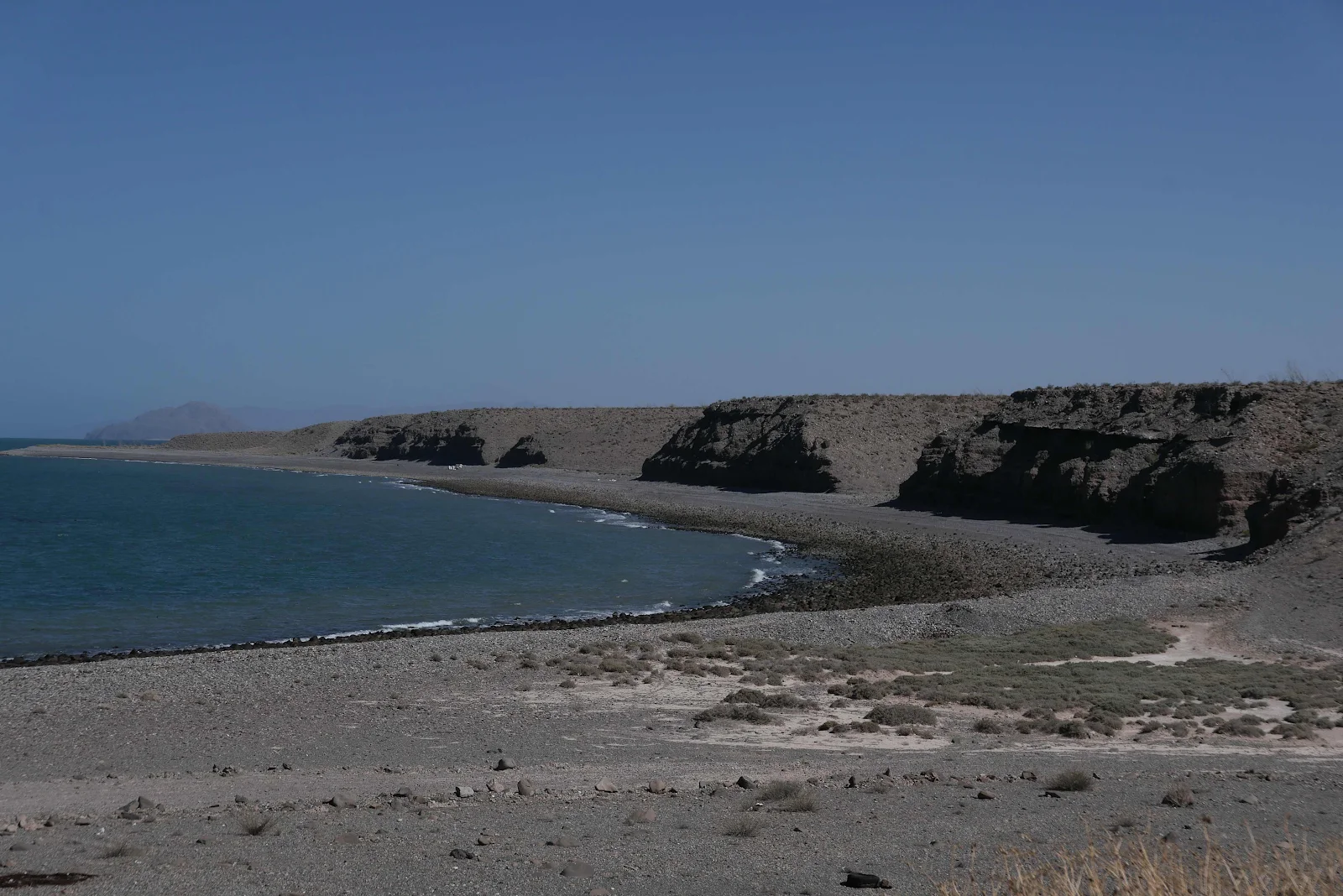


Against all the odds we found a bizarre cool little spot up the road. And not for thirty bucks.