There is a town in Western Arizona that welcomes RVs in winter. Thus it was I said to my wife: “Wife, you will come with me to Quartzsite and we shall ride camels together.” She told me not to be bloody silly and we probably wouldn’t like a giant stewpot like Quartzsite anyway.

To no one’s surprise she was correct. The town sits on I-10 where US Highway 95 comes north from Yuma and continues north to Parker. 2400 people sit on that intersection and make a living selling gas and tires to passersby. Oh and gems. Collectors of rocks come to Quartzsite and buy them by the bucketload.

In winter the town, which lacks big city amenities and facilities, attracts they say a million snowbirds who bring their own homes and camp on the public land surrounding the tiny town.
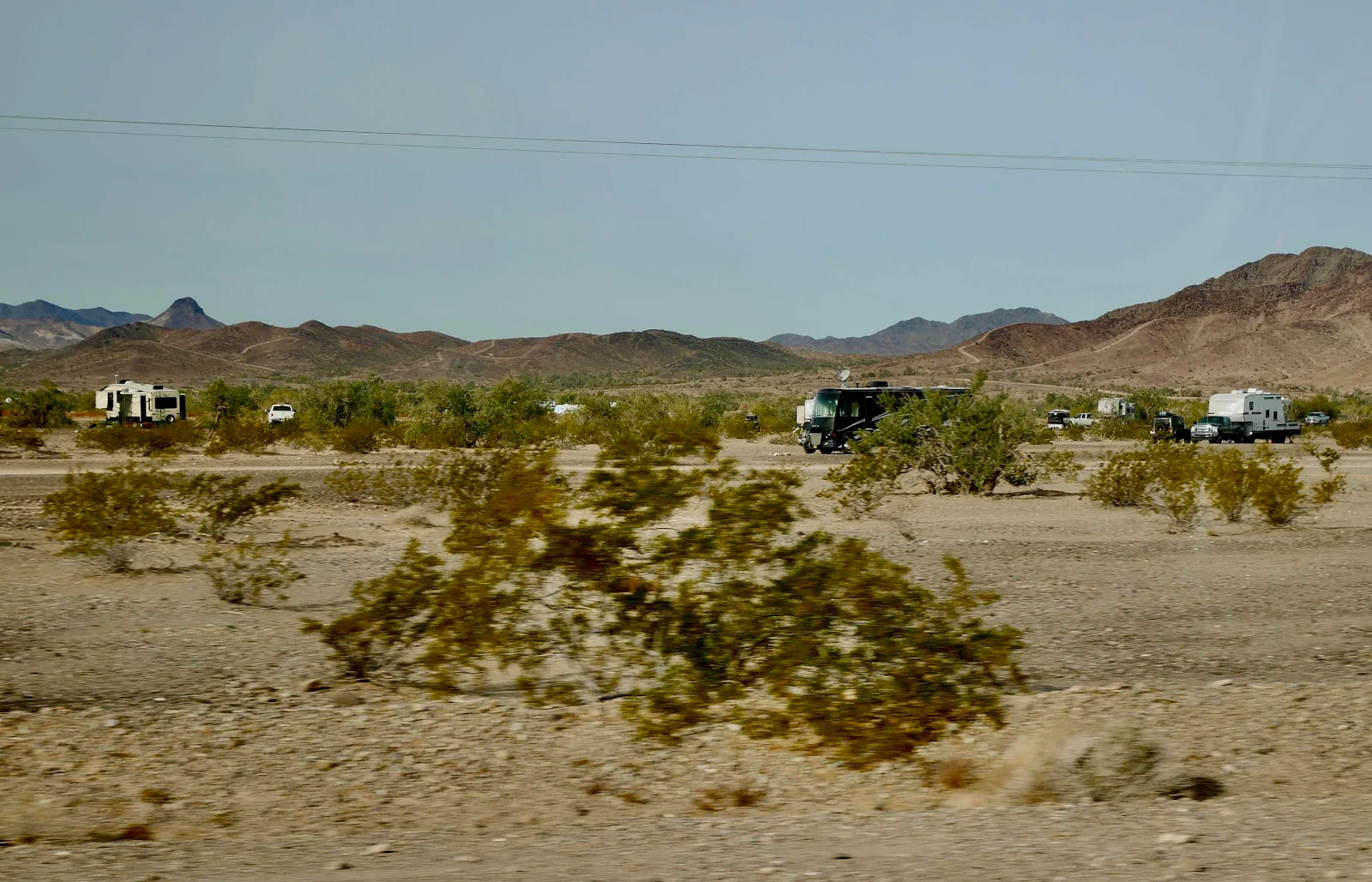
We drove north from Los Algodones on the smooth strip of pavement called US 95 through a largely featureless desert.

Lo, wait! What shed through yonder desert breaks? Why ‘tis the Border Patrol and their inspection station. At least it was something to look at but alas they were closed. These things are everywhere around here. How anyone manages to cross the border illegally baffles me, the well heeled portly middle class rule follower.

Jagged desert mountains relieve the skyline. This is a military base called the Yuma Proving Ground attested to by numerous warning signs. There is wild camping out here but you have to drive a dozen miles down designated roads to escape the clutches of the military.

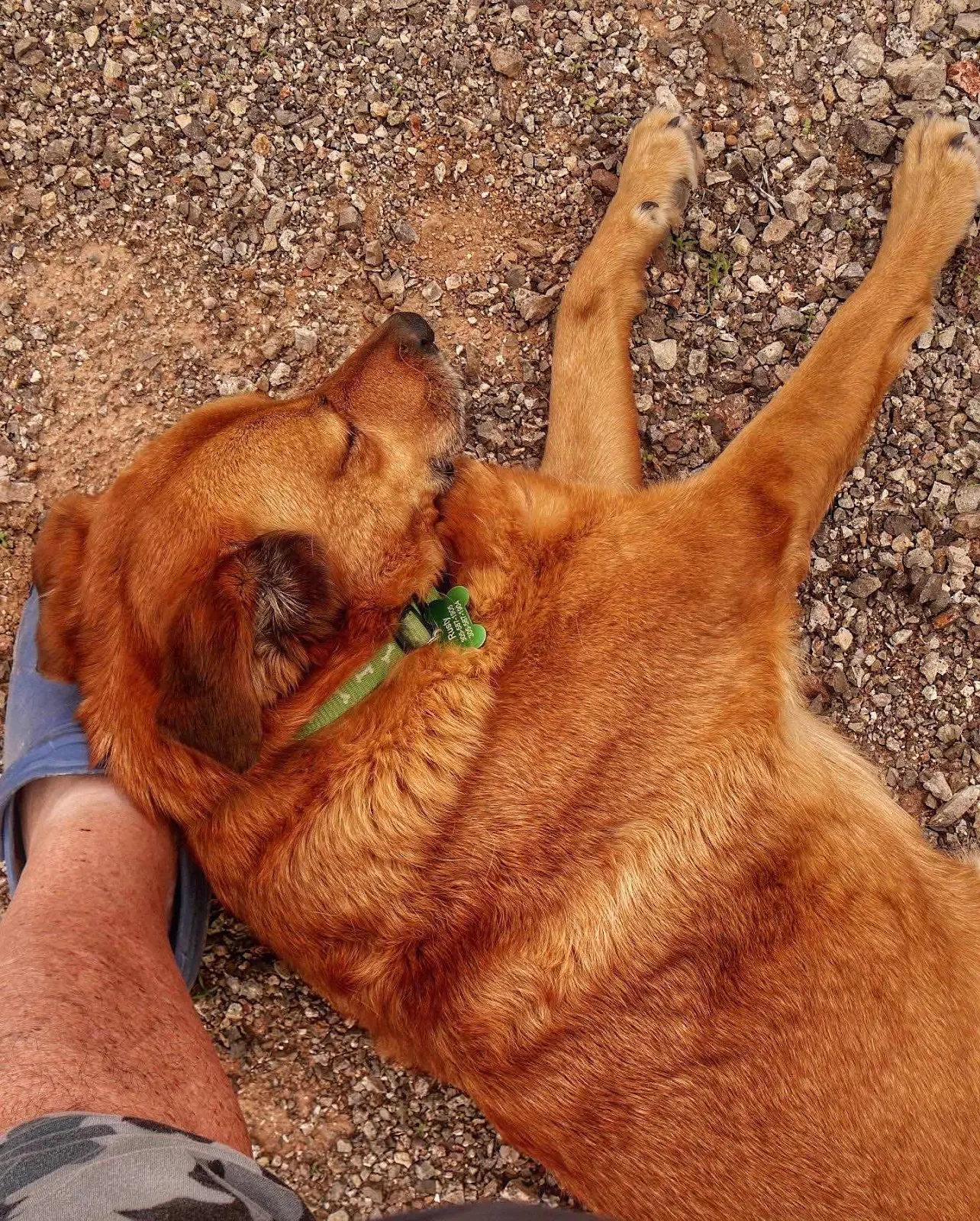
We stopped at a sort of pullout to make tea while Rusty made water on as many bushes as seemed reasonable. It was pleasantly cool, 60 degrees, hazy and with no wind. You can see why snowbirds hang out here.

The other reason why Quartzsite attracts a million RVers each winter is because the town is located on a flat basin of easily traveled desert, I’ve heard described as being made of kitty litter, and most of it is public land. Welcome to the Bureau of Land Management which allows free and nearly free camping in this desert.
 There are four Long Term Visitor Areas around Quartzsite and basically you can spend the entire winter in them for $180. They have water, trash, sewer dumps and toilets so you need never leave…I gave up trying to summarize LTVAs and append the fee schedule here. It’s so cheap as to be inconsequential. Europeans would die to have such access to vast public lands:
  In order to properly immobilize your mobile home you need a towing vehicle to unhitch from a camper trailer or a “ toad” which is a car towed (“toad”) behind your RV. A motorcycle works too especially as you don’t need a helmet in Arizona. People like us in a van have bicycles. People who are us carry no extraneous gear outside our mobile home as we like to stay mobile and inconspicuous and not make us a tempting target for thieves. Plus I dislike riding a bicycle. Layne says she likes bicycles but that seems more theory than fact to me.
  If it all goes wrong there is a back up plan they tell us.
  There is a large white tent, barely visible in the photo below, which is the center of visitor activity in Quartzsite. The town’s permanent structures are north of the I-10 bridge while the winter shops and restaurants are south of the freeway. In the peak moments in January you can even buy an RV here though for a planner like me that seems excessively spontaneous.
  This just isn’t me. I collect photos and mostly because they are digital and stored for me by Google. I am terrible at remembering names of things or identifying plants or birds or gems. I loathe hoarding stuff and Layne slaps me every time I moan “Too much stuff!” as something falls out of a locker. But there is a market for this stuff. People love it.
  Camels crop up all over the place in this desert town so naturally I had to hunt down the meaning of the symbols and Hi Jolly and all that. The short version is that in the mid 19th century a US Army officer called Jefferson Davis, who later disgraced himself by turning traitor, had the brilliant idea of importing camels to serve in the desert. They brought in about four dozen from Syria along with a young handler to teach Americans how to live with camels.
  His name was supposedly Hadji Ali born in 1828 somewhere in Syria and died in Quartzsite in 1902. Al Hadji (and spellings vary when translating Arabic to English) means “one who has made the pilgrimage to Mecca” one of the Five requirements to be a Muslim. As Hadji Ali was 28 and not wealthy when he came to the US to manage camels in 1856 it seems unlikely he made the Hajj - the expensive and complex pilgrimage to the holy site in Saudi Arabia. More likely in my opinion he was called Hadji which was a term of contempt by European soldiers for people they met in the streets. You may have heard the pejorative term “gook” used in Indochina.
  But the story gets weirder. Some people claim Hi Jolly was part Greek, and in those days Greece and Syria were provinces in the Ottoman (Turkish) Empire and his name may have been approximately Philip Tedro. There is a photo of Hi Jolly swanning round the internet.
  In the end though, when you emigrate to the US you get a fresh start so whoever Hi Jolly was he got stuck with that ridiculous name and a new life that he seems to have thoroughly enjoyed. His tomb is a monument in Quartzsite. It is in bad taste of course in the form of a pyramid which is a symbol of Egypt not Syria, but close enough in the land of the fresh start! There is however an even weirder side to the failed Great Camel Experiment of Quartzsite had I got this from National Geographic.
  It seems Jefferson Davis had an idea to develop cotton plantations in the west. Camels would have been excellent as they carry bigger loads than mules can haul in a cart and they need less maintenance. However the camel experiment failed because Americans found the animals hard to ride, ornery in character and very smelly to be around. Then the Civil War started and 650,000 Americans got killed in the next few years distracting the military mind from camel rearing.
  Jefferson Davis chose the losing side when he went home to lead the Confederacy and many of the camels were let loose in the desert while others were sold to the circus, not a fate I’d like. Hi Jolly went on to potter around in Quartzsite making a living starting businesses but never returning to the Levant. He knew where he was well off.
  National Geographic suggested camels were part of Jefferson Davis’ plans or hopes at least, to expand slavery westwards with cotton plantations in the fertile river valleys of the west. This same hope was supported in Texas by Sam Huston colonizing Mexican territory where slavery was banned. Hence the Alamo.
  By 1856 the slave trade across the Atlantic had long since been banned but smuggling then as now was very lucrative. The problem was how to get ships across the Atlantic without getting caught. Camel imports were the perfect cover as slavers packed far too many humans aboard and the ships were notorious for their stench produced by the ghastly unsanitary conditions onboard. Camels did the same. So a ship purportedly importing camels for the US Army had the perfect cover to smuggle in African slaves. This stuff is so weird you can’t make it up.
  Meanwhile back in the real world today’s Quartzsite offers not much in the way of services of the box store type.
  There are dump sites for sewage and water faucets and trash cans but it’s how the city makes its living so you pay. Campers aren’t an afterthought here, they are the source of winter income.
  For a van passing through it’s better to look on in wonder and then move on to quieter pastures. This was never going to be our scene but I’m glad I saw it.
  It’s one more experience I can marvel at, the determination of humans to cluster.
  We drove on and soon I-10 eastbound toward Phoenix was devoid of campers and the RVs were on the road and not parked in the desert.
  We turned south to Ajo, a small community in Pima County in the lonely desert where iOverlander said there was BLM camping more to our taste. Layne’s implant mouth is healing well and this is a good place for us inveterate travelers to rest a little.
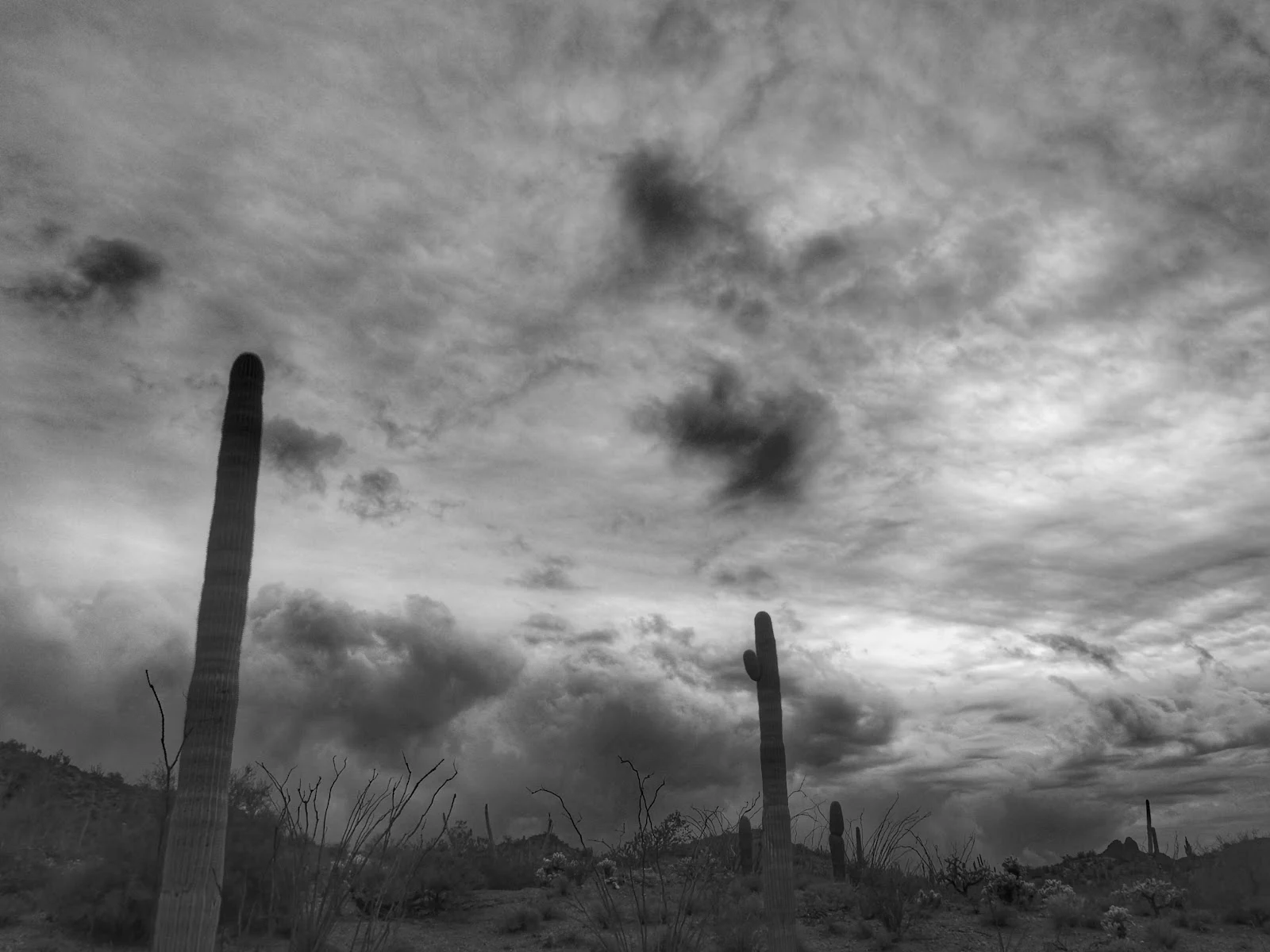
  We have neighbors scattered among the saguaro and we can occasionally hear the low drone of a generator but Quartzsite it’s not. Rest and recreation before we drive to Mexico next Wednesday I very much hope.