I walked some serious steps to get this photo. Look at it and thank me for gasping for my art.

It really was a climb both down…

…and up:

You have to be here a while before you get where the ridiculous name comes from: “boils the water.” Huh?

The name hierve el agua comes from the appearance of the place, a pool of water flowing over the edge with too much calcium carbonate thus creating long white stalactites down the hillside…imagine water boiling over and foaming down the side of the pan.

Unless you come to Oaxaca you’ll never hear of this place but for tourists in the city and around the area it’s a must see. Mexicans come by the bus load so we came on Friday and avoided the weekend. A van we had met briefly at El Rancho was parked and I stopped by to chat with the two women from Québec. They had sudvtvtwo nights in the parking lot (for free) and said it was great to be alone there.

This was our first visit, a short reconnaissance of a morning to see what the deal is. My long term plan would be to return closer to summer, spend a night aboard GANNET2 and get up with the sun and make the mile and a half hike down the canyon with the best light and cooler air.

There was no desire to go swimming as, despite the name, these aren’t hot pools of water and at 6,000 feet the water isn’t specially warm.

There is no prohibition on dogs but we walked Rusty around the lot and the overlooks but he was sleeping aboard as we struggled with the uneven steps and steep slopes. Lucky dog in a van!

Make no mistake the walk to see the stalactites is steep and tough. There is signage, in English even,

There are trash cans…

And there are warnings but things like hand holds, railings and level trails are not park of the program.

There’s no supervision and common sense is your guide. If you slip and fall or plunge to your death don’t think there’s anyone to sue. You’re free to be an idiot on your own terms but the consequences are all yours.

They want you to behave but not everyone is up to it apparently.

We had left the campground early, around seven and the drive takes an hour, so by the time we got there we were almost alone.

You can stand on the trail and admire the views on your own unmolested. It’s pretty nice.

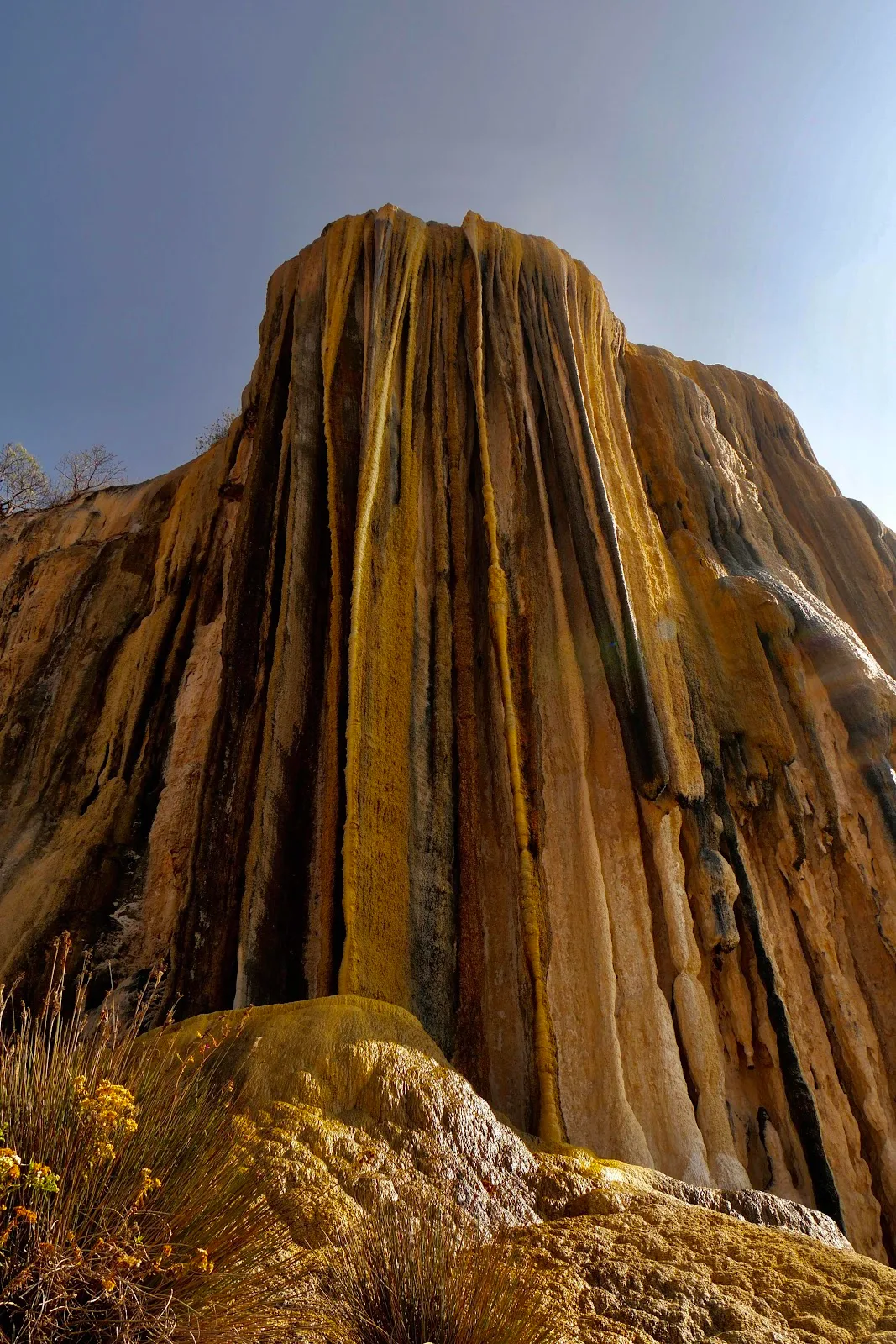
There are still discoveries to be made here as archeologists believe the water here was channeled by the Mixtecs centuries ago and used for irrigation further down the valley. Not much of these irrigation channels has been found so far but it seems the channels were unique in that period of history as they were lined by the calcium carbonate.

For some people the cold water is no deterrent.


The views are spectacular and I can only imagine how beautiful it would be to watch the sun coming up.

Felix has been here for 75 years, raised his children and now has five grand kids to keep him happy. He was curious about our travels, the time it takes to drive here from our home and so forth. A happy guy connected to the world by so many visitors. Rusty and I could have sat for a while but we had places to go.

Access to Hierve El Agua is iffy from time to time. The villages around the attraction are are as poor as you’d imagine in this marginal agricultural environment.

The monies raised are supposed to spread among the locals but mistrust and arguments have led to protests and road closures most recently during Covid. On our visit the locals charged us a buck each,
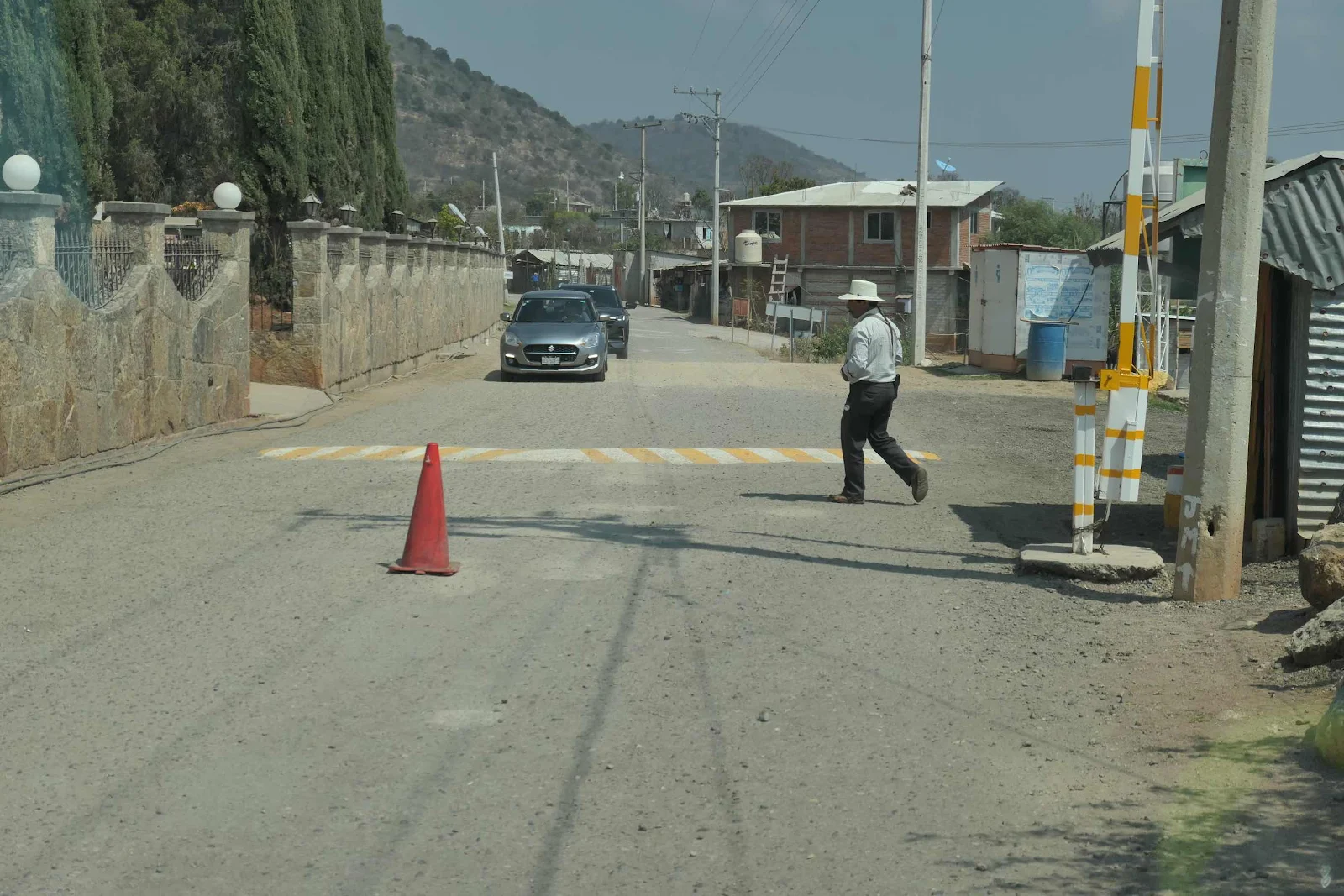
…while the state police charged three bucks at the gate to the parking lot. The road to the waters is a pretty good state highway through the mountains,

Closer to the villages it becomes dirt, bearable and easy enough rolling along the hillsides.


This is agave country.


Dog walk break.

“Keep your eyes out for the Tope!”

The winding waterfall trail:

The approach road.


“Some impacts last a life time. Wear your seatbelt.”


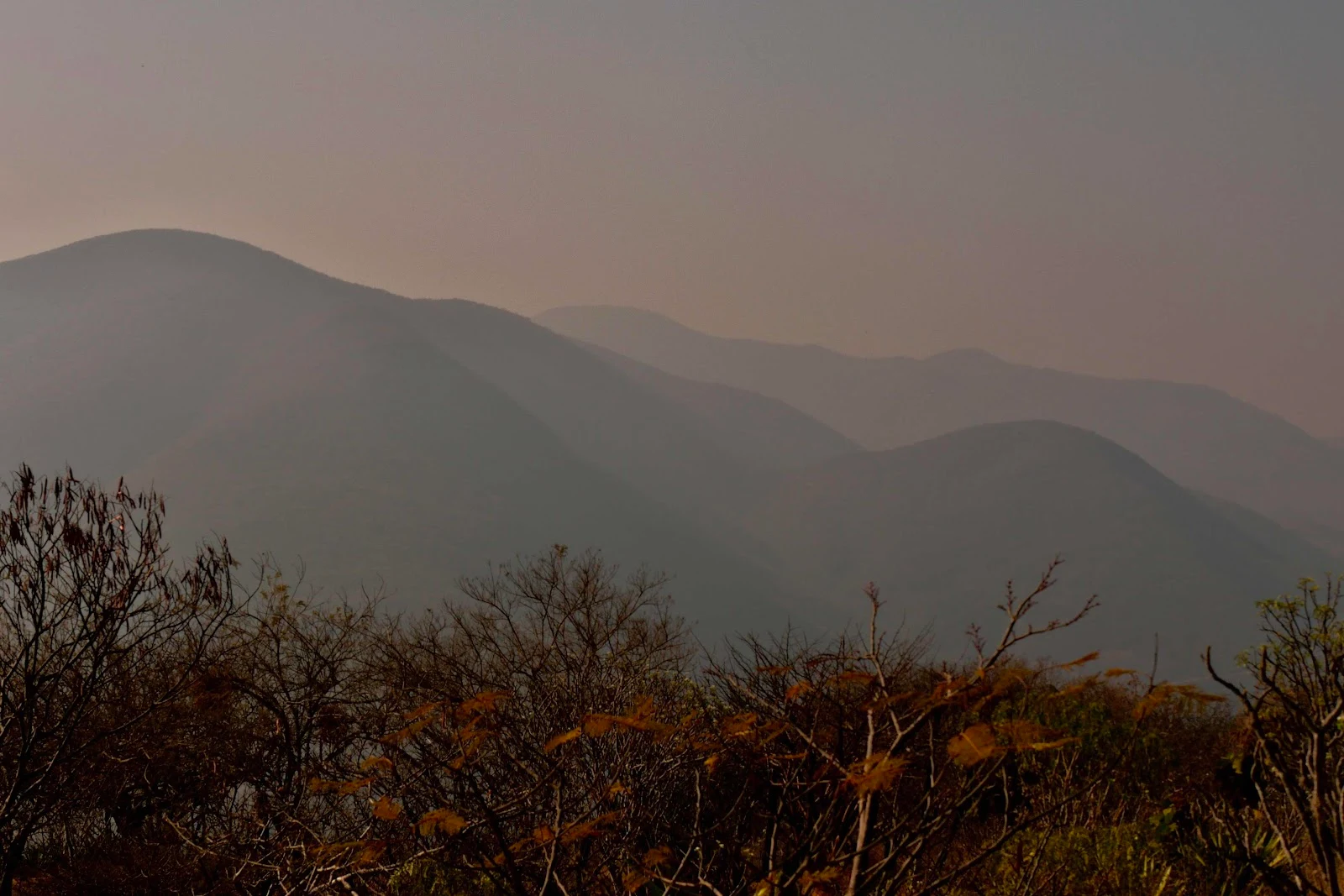
Distant agave fields across the valley:

On the highway back to Oaxaca we stopped for lunch and had tacos and hibiscus tea:


Cali keeping the grass green at El Rancho.


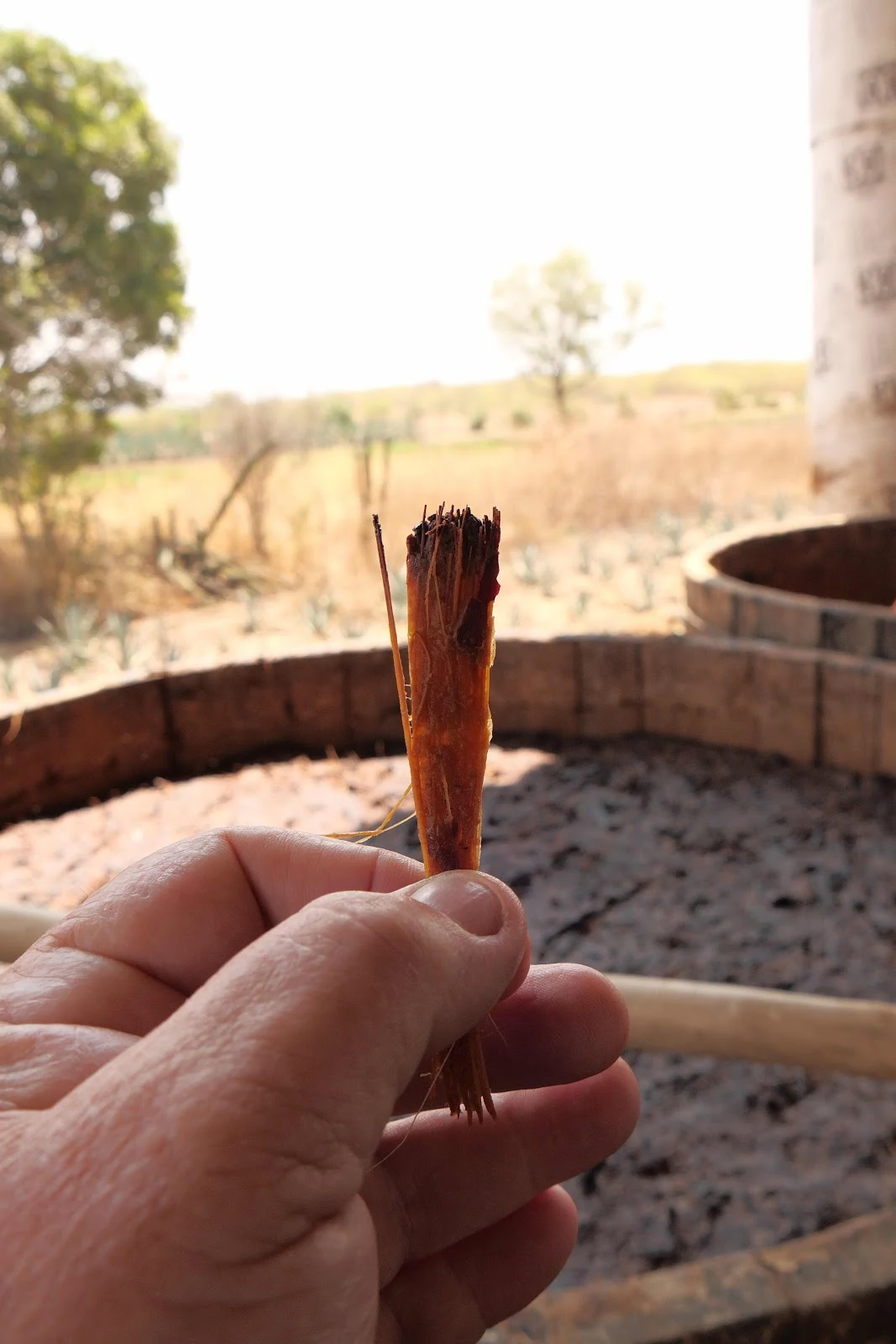


 Adding water to the still…and then putting the lid on and…