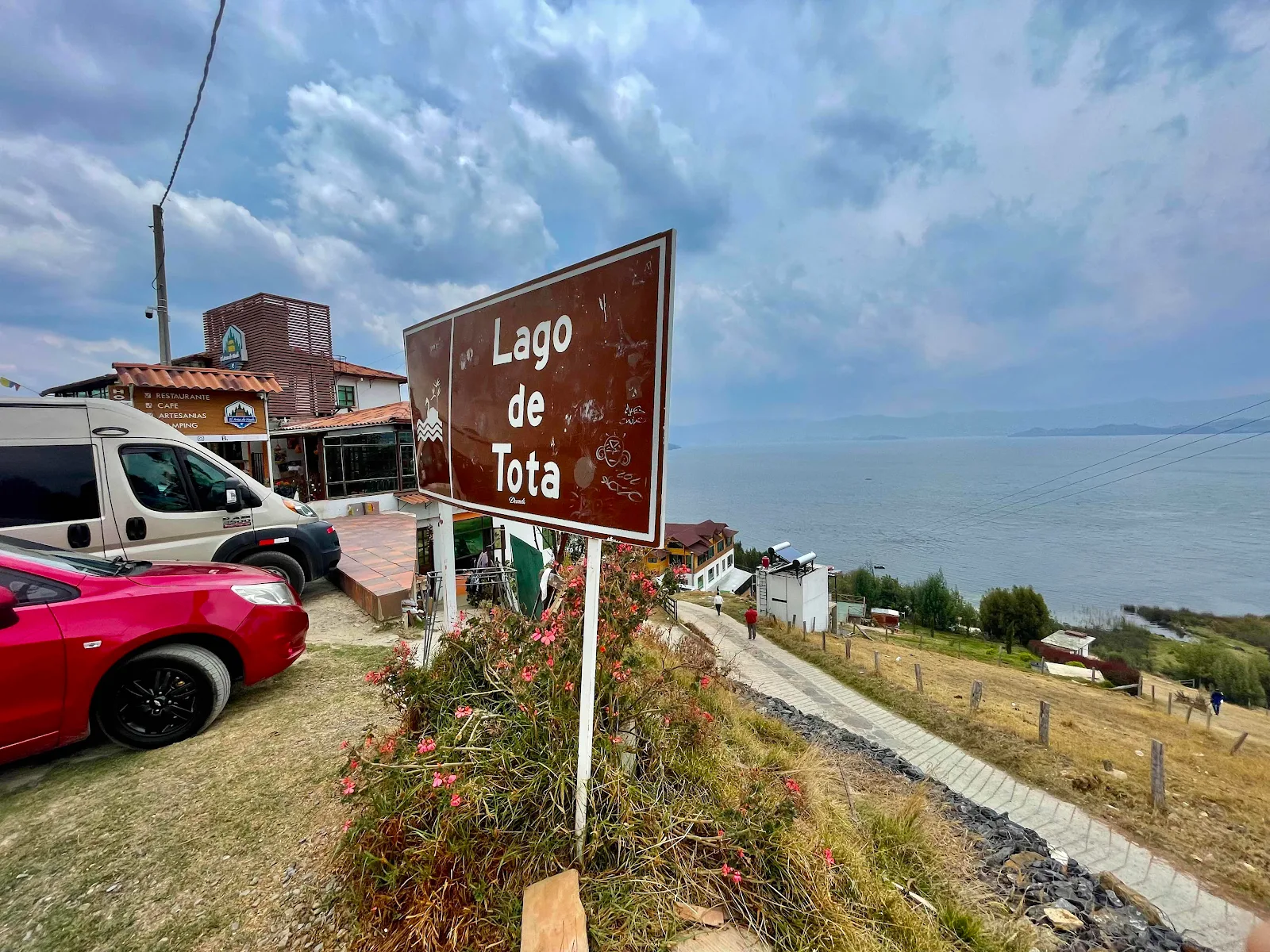
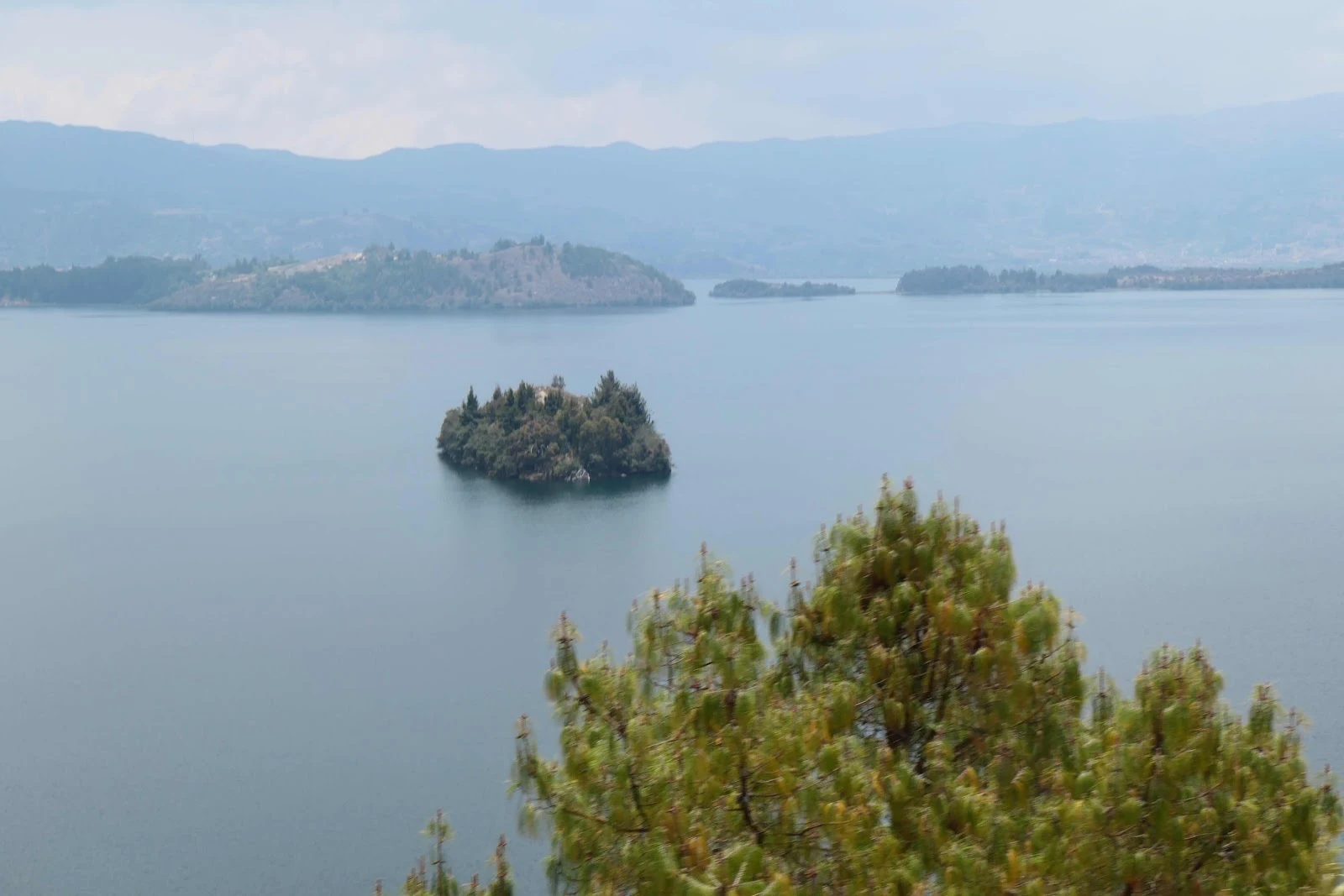
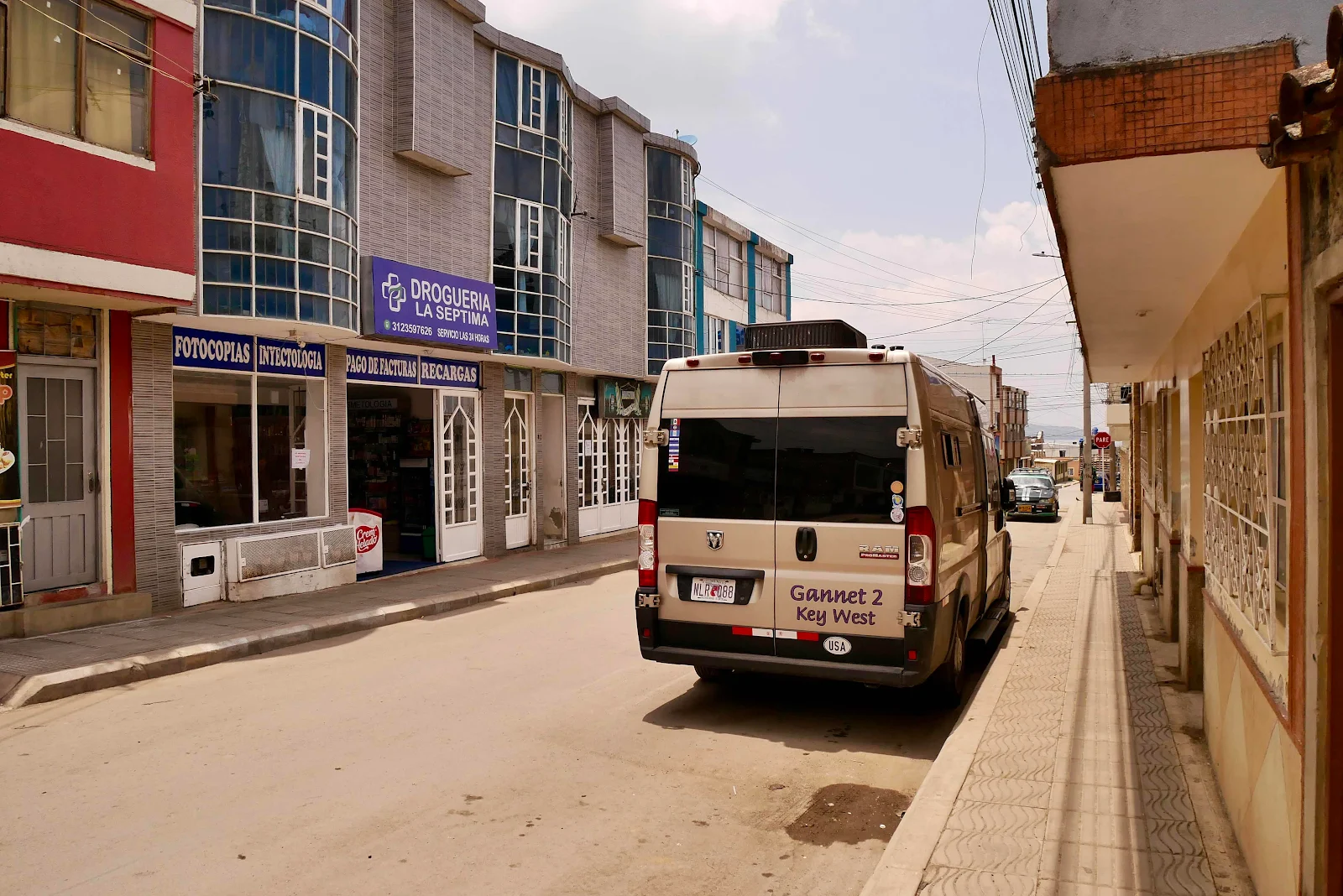
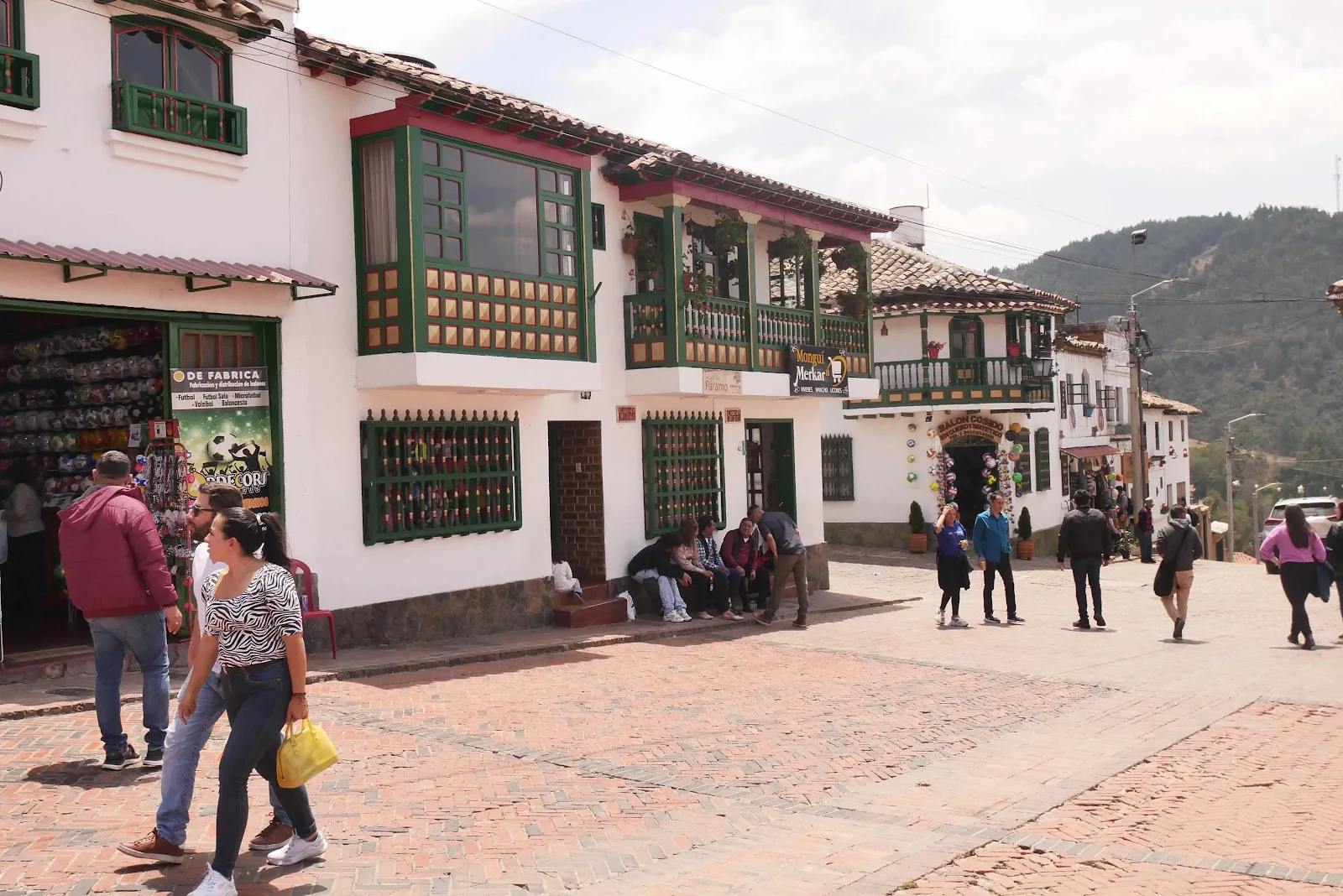
The town of Mongui (“mon-ghee”) has been on Layne’s radar for some time, said to be a beautiful heritage town high in the mountains above the industrial city of Sogamoso, so we drove there on Good Friday morning, our driver (me) anticipating horrendous crowds and much chaos. I was, as usual incorrect when I pit my feeble wits against those of my dear wife.
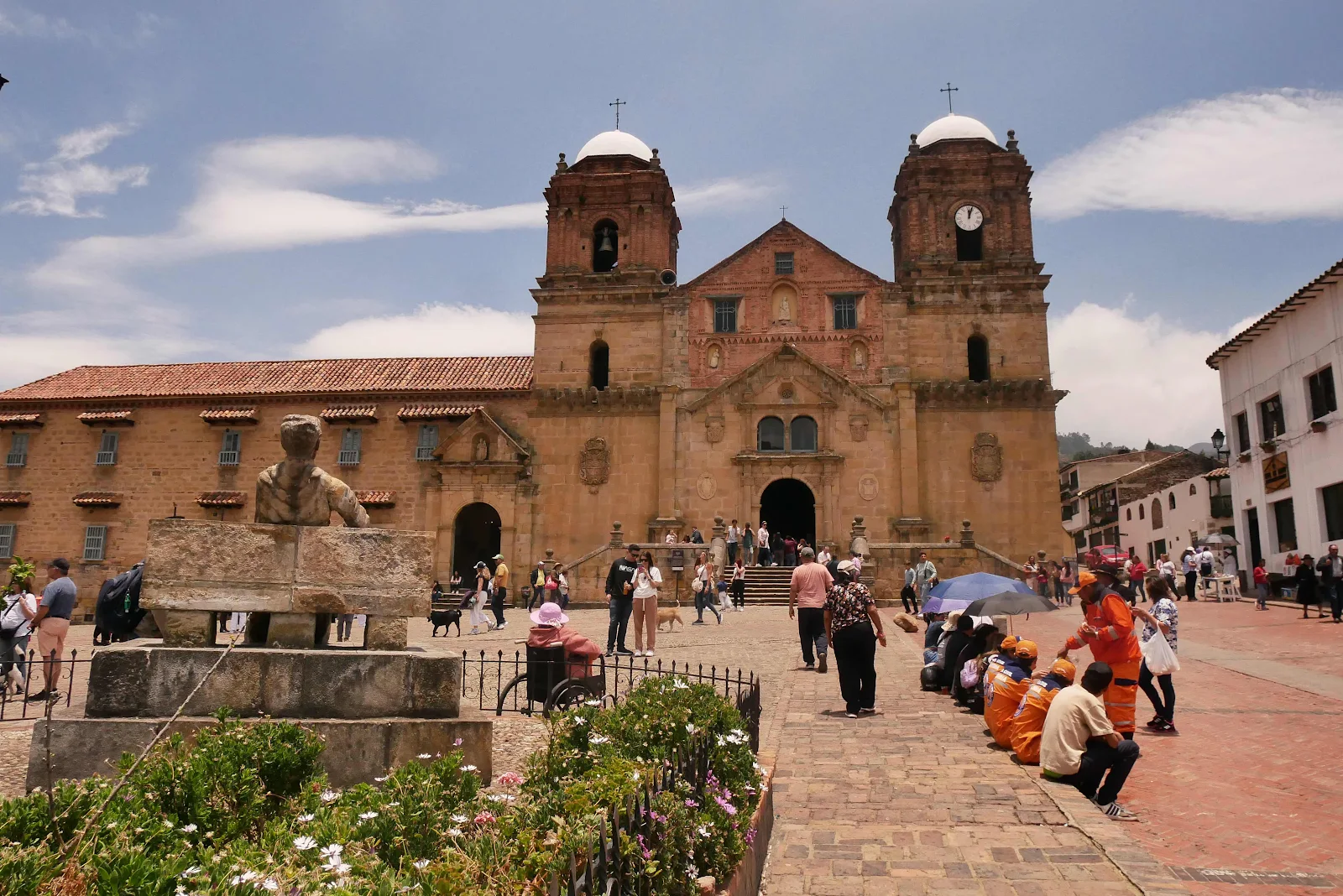
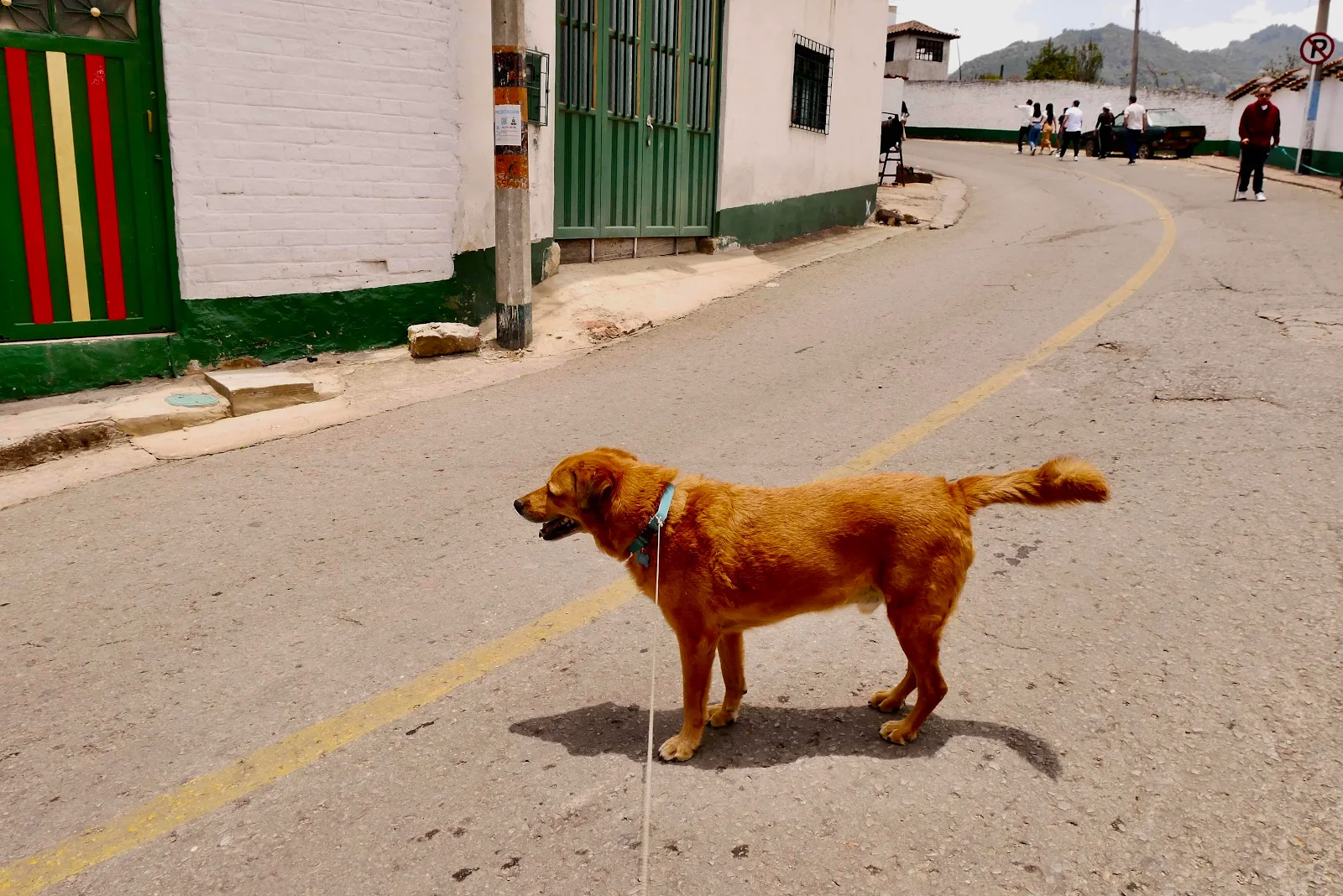
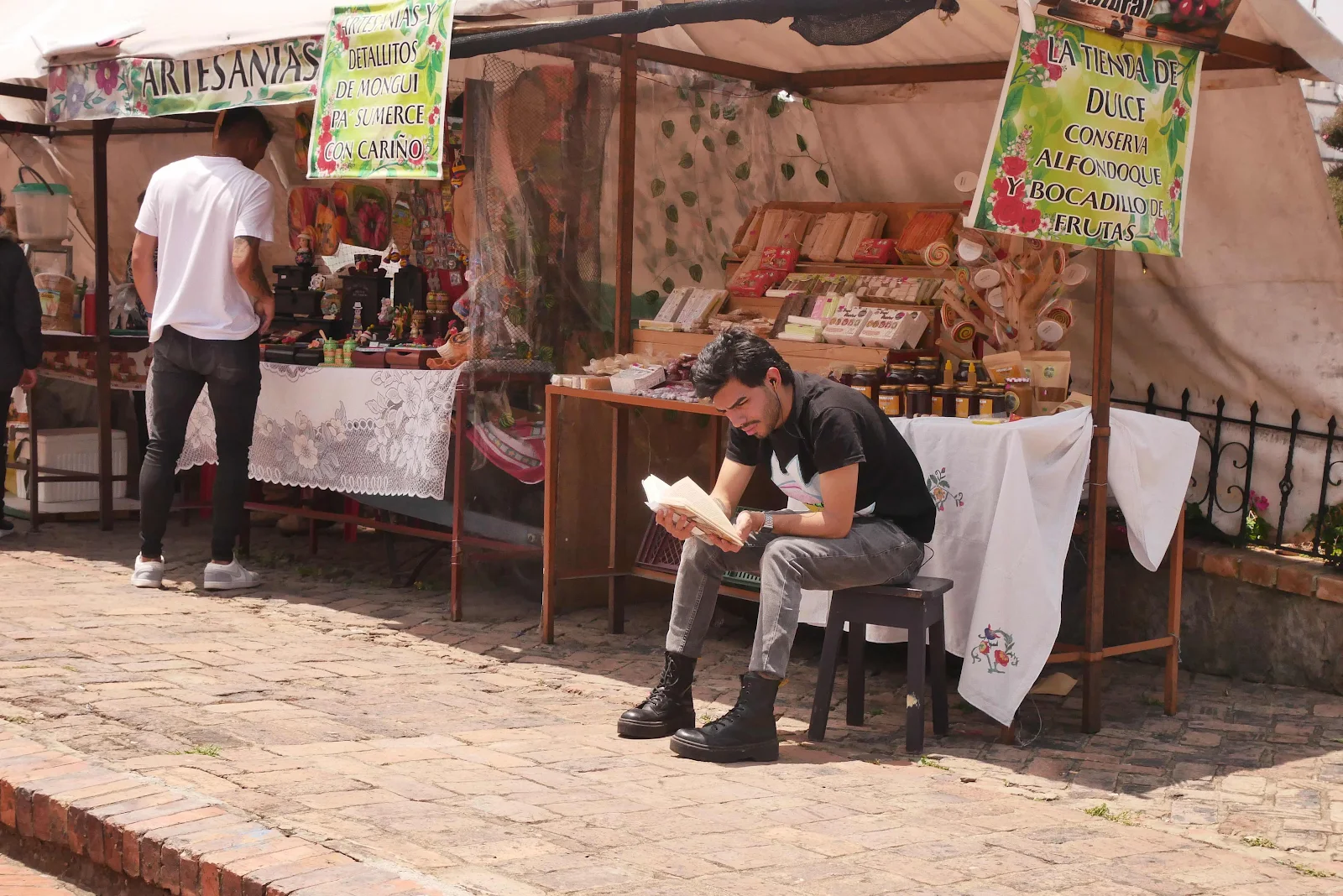
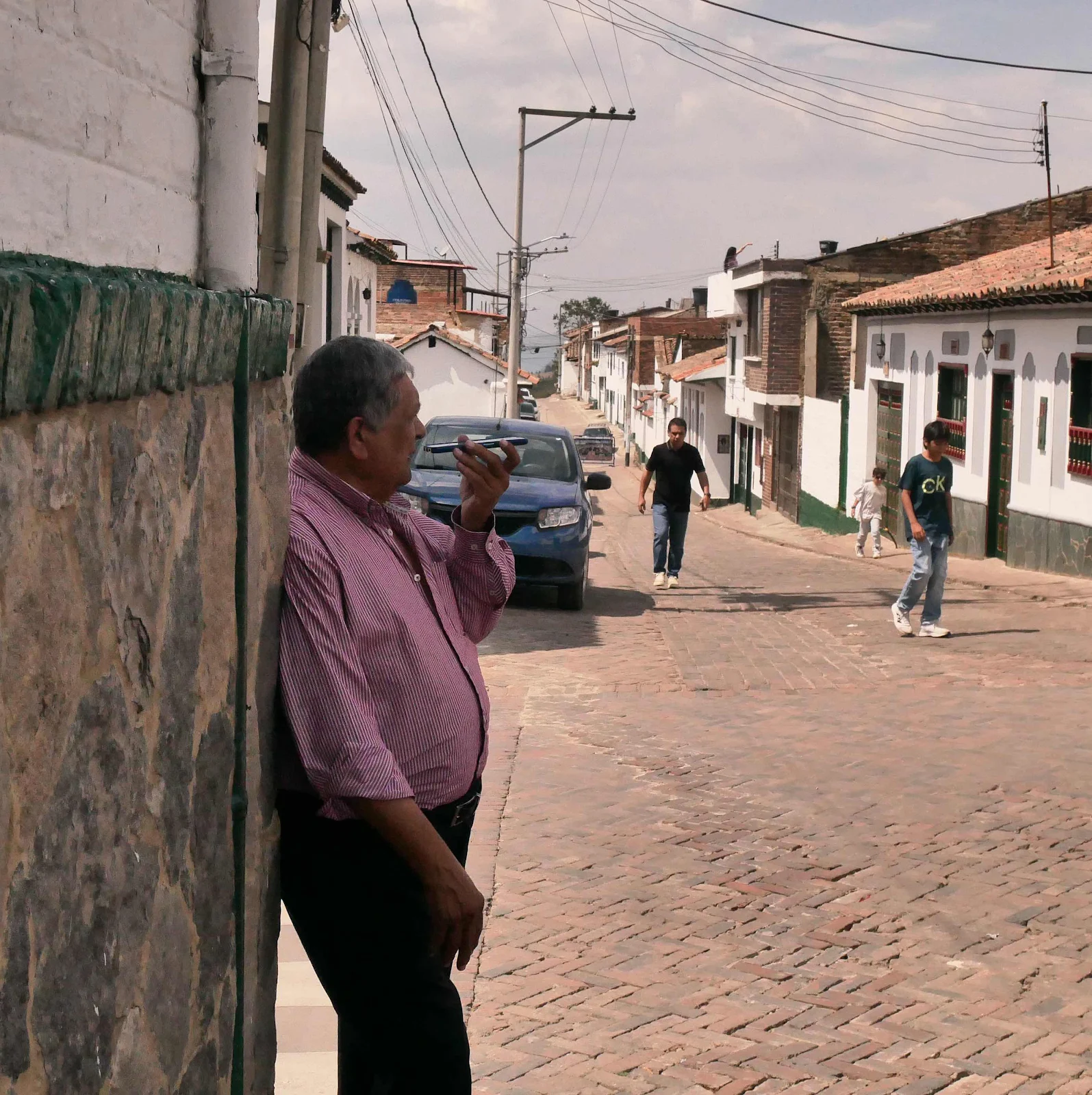
Yes the town was crowded but not overly crushing at all. In fact Good Friday it turned out was a great day to visit Mongui as every shop was open and everyone was touting for business so we got a real taste of the town. Colombians as usual were polite and friendly and curious and Rusty handled the crowds masterfully. He is really growing into a confident dog like he never was in the orderliness of the States.
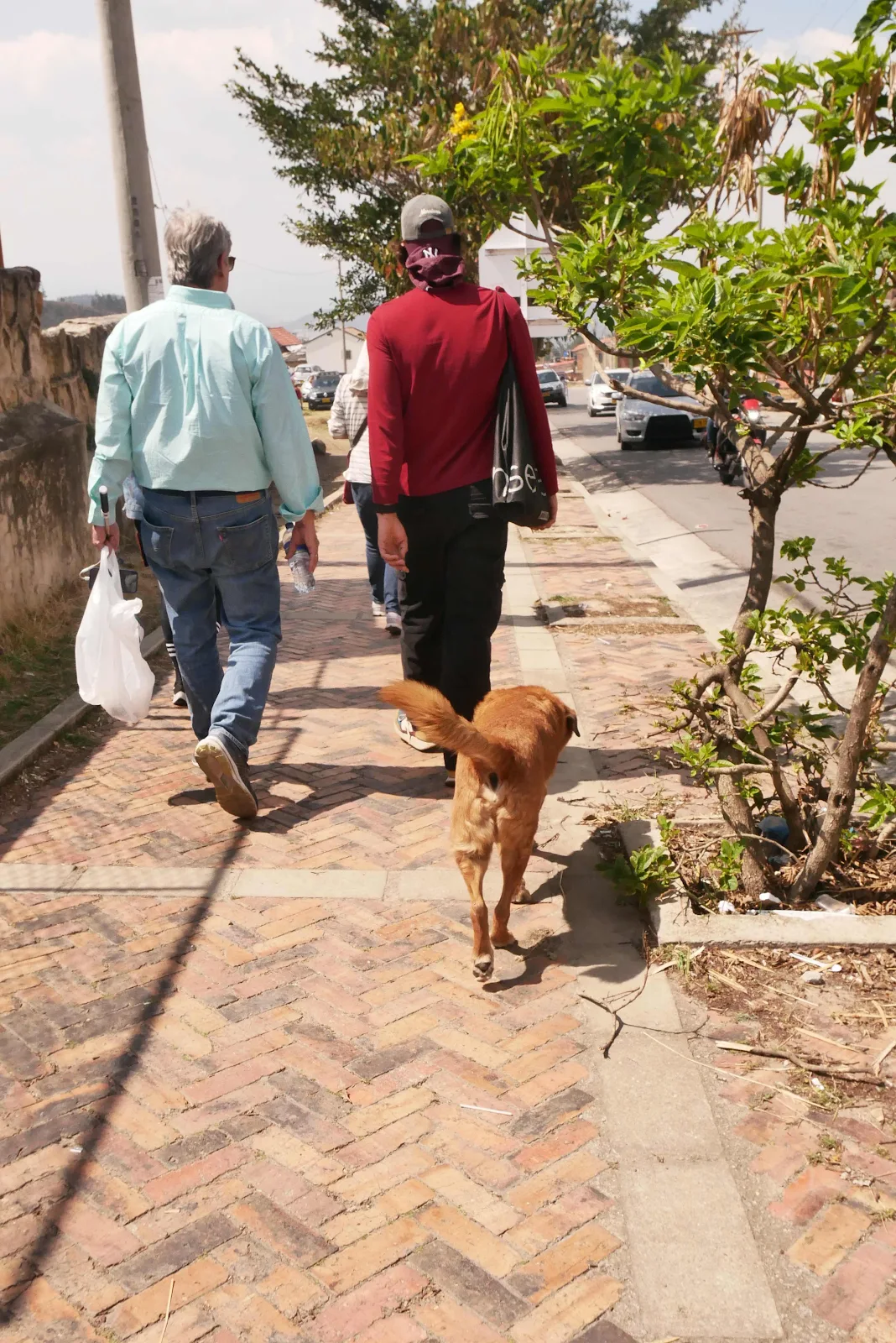
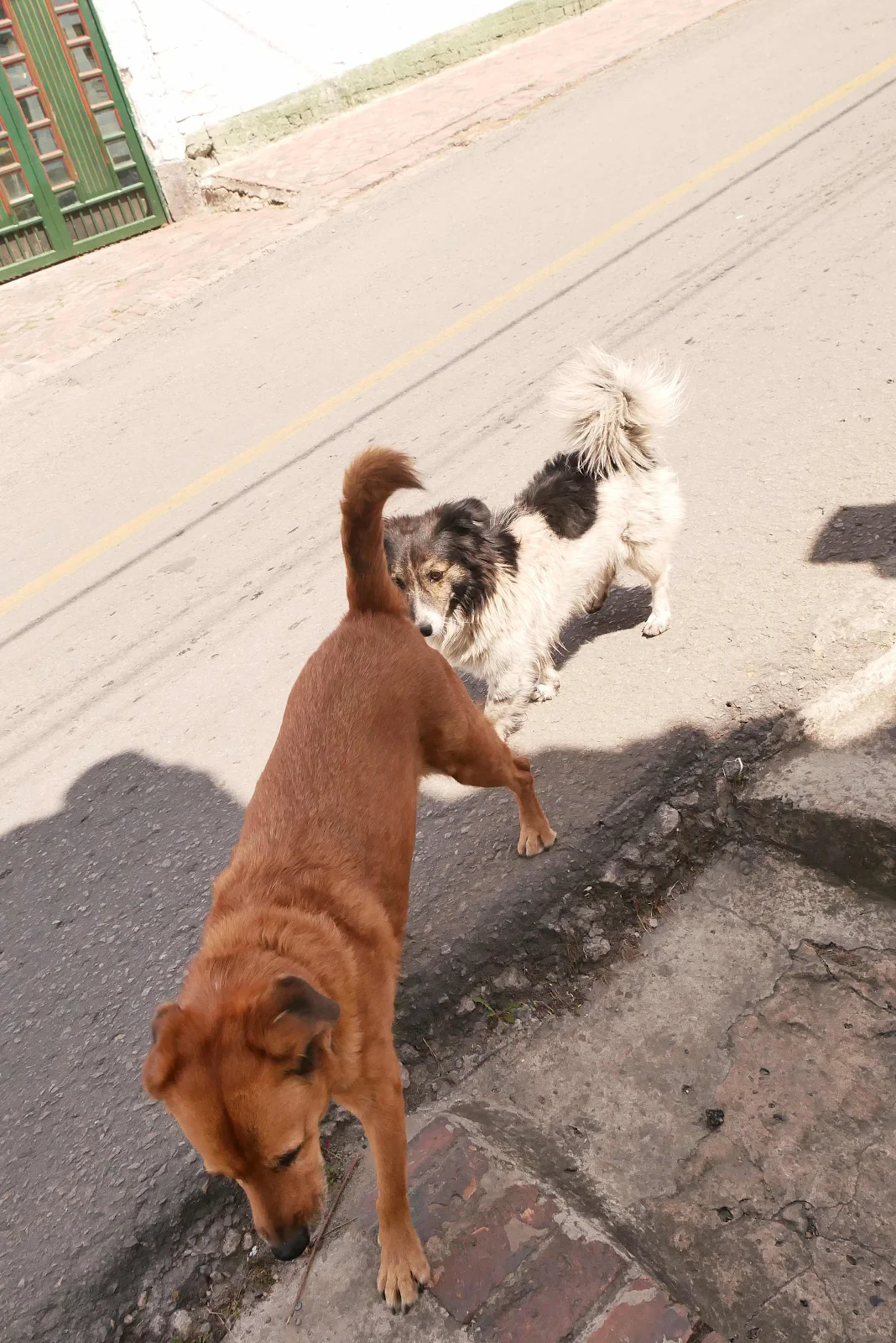
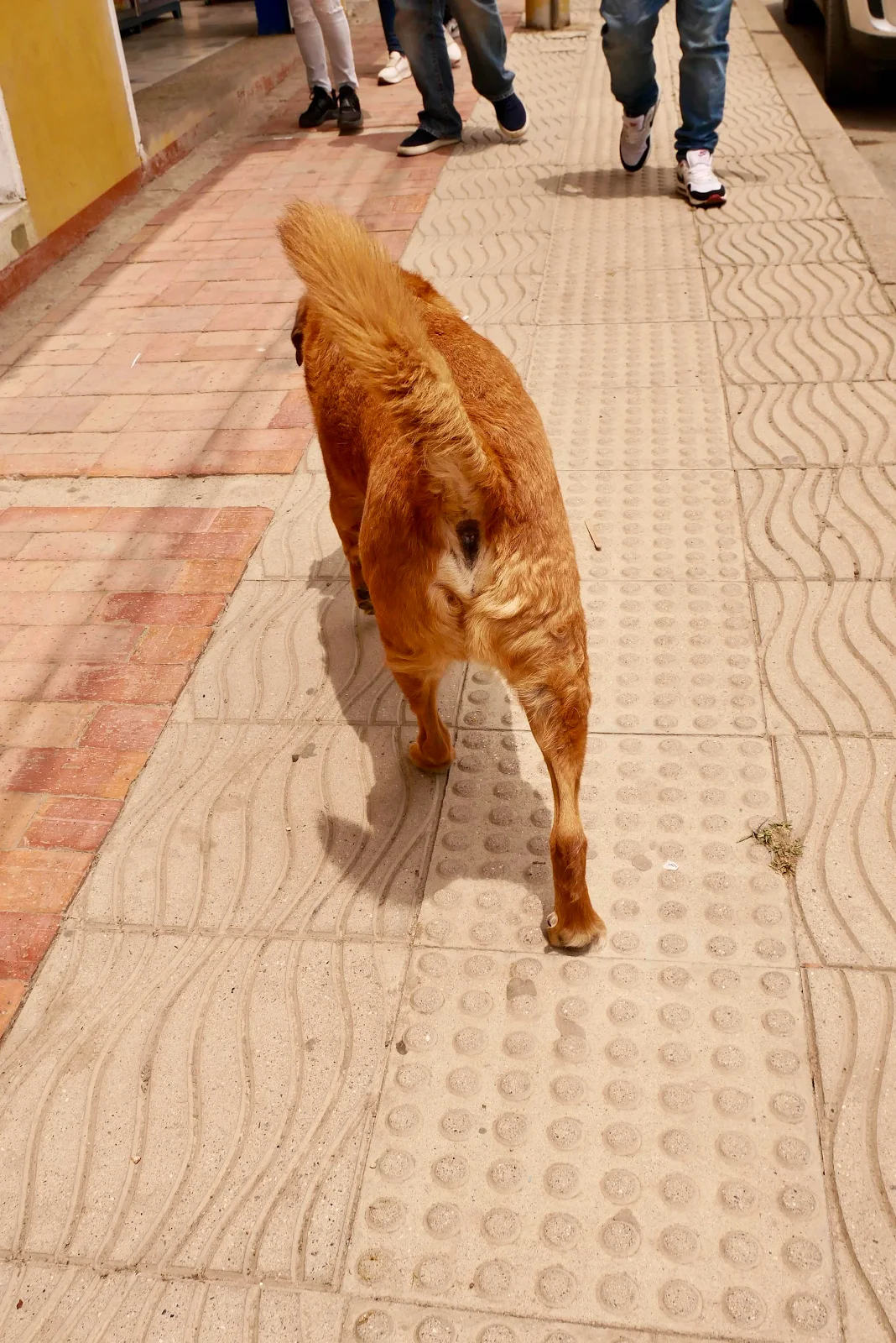
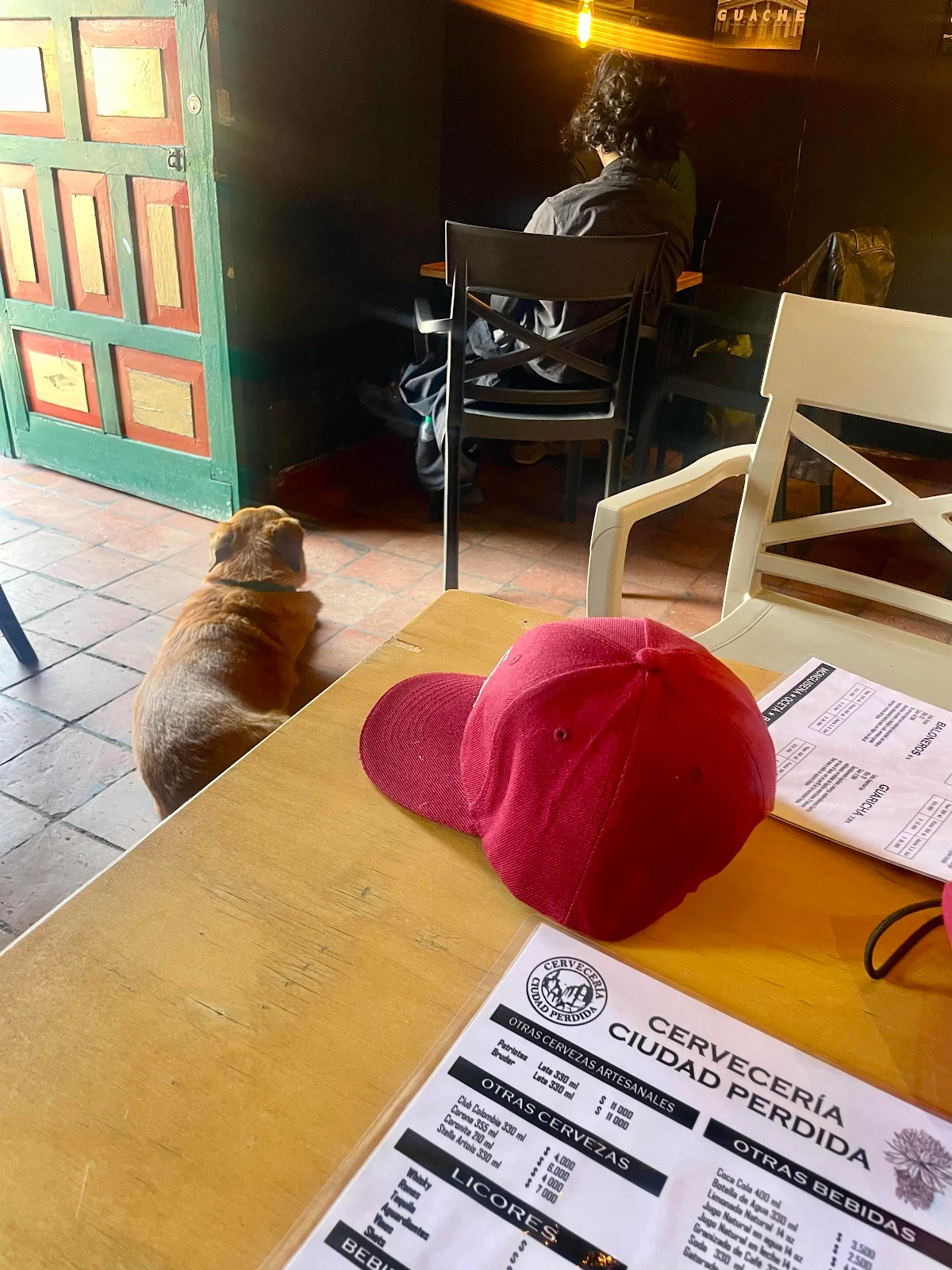
Colombians welcome dogs everywhere and locals expect to bring their beasts with them: we always ask first. If you don’t like dogs in restaurants strike Colombia from your future itineraries.
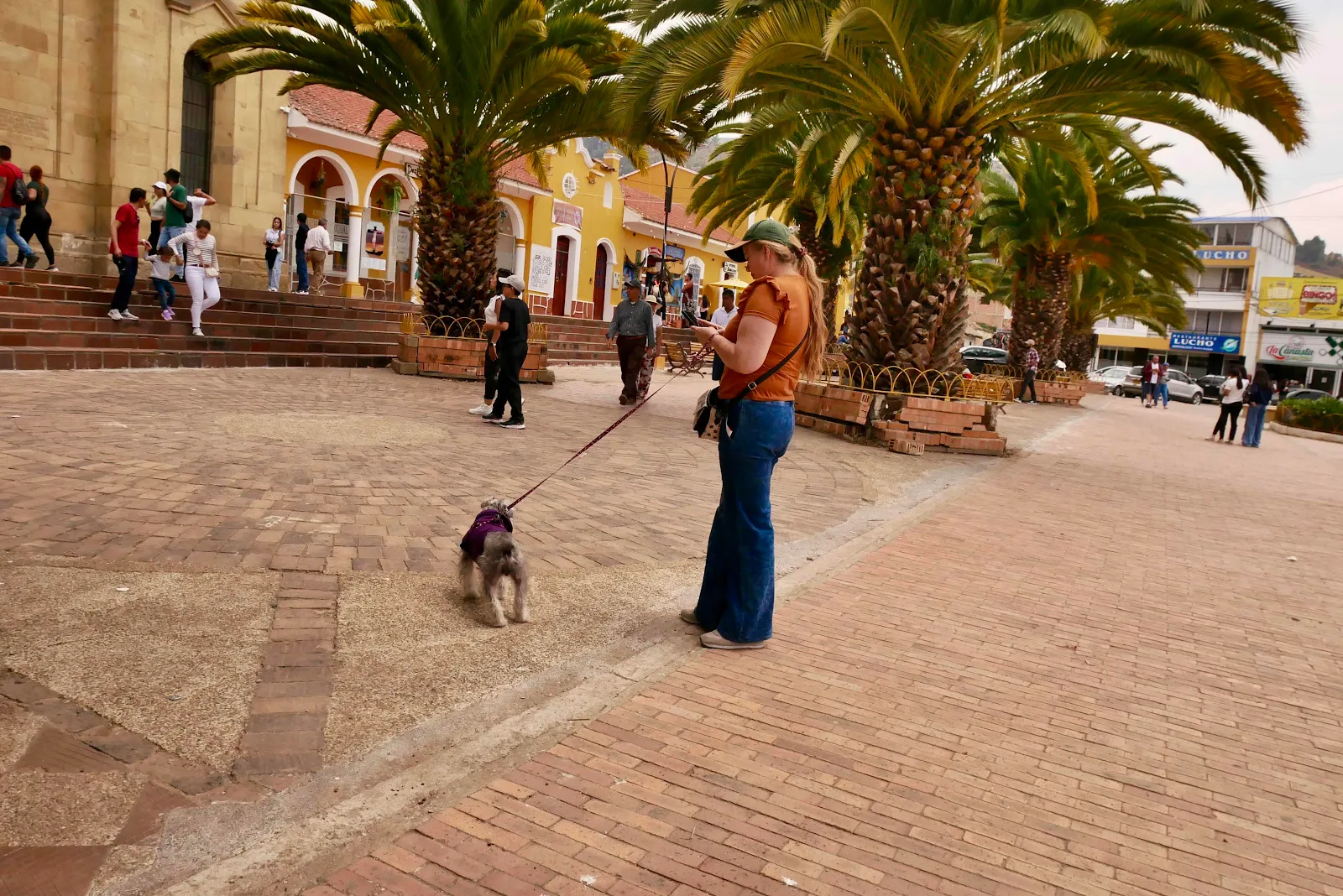
I kept him on his leash outside the pedestrian zone created for the holiday but otherwise when we were in the car-free zone he wandered around on his own each of us keeping an eye on the other. I talk to him in English so from time to time the Colombians ask “is he American? Does he bark like our dogs?”
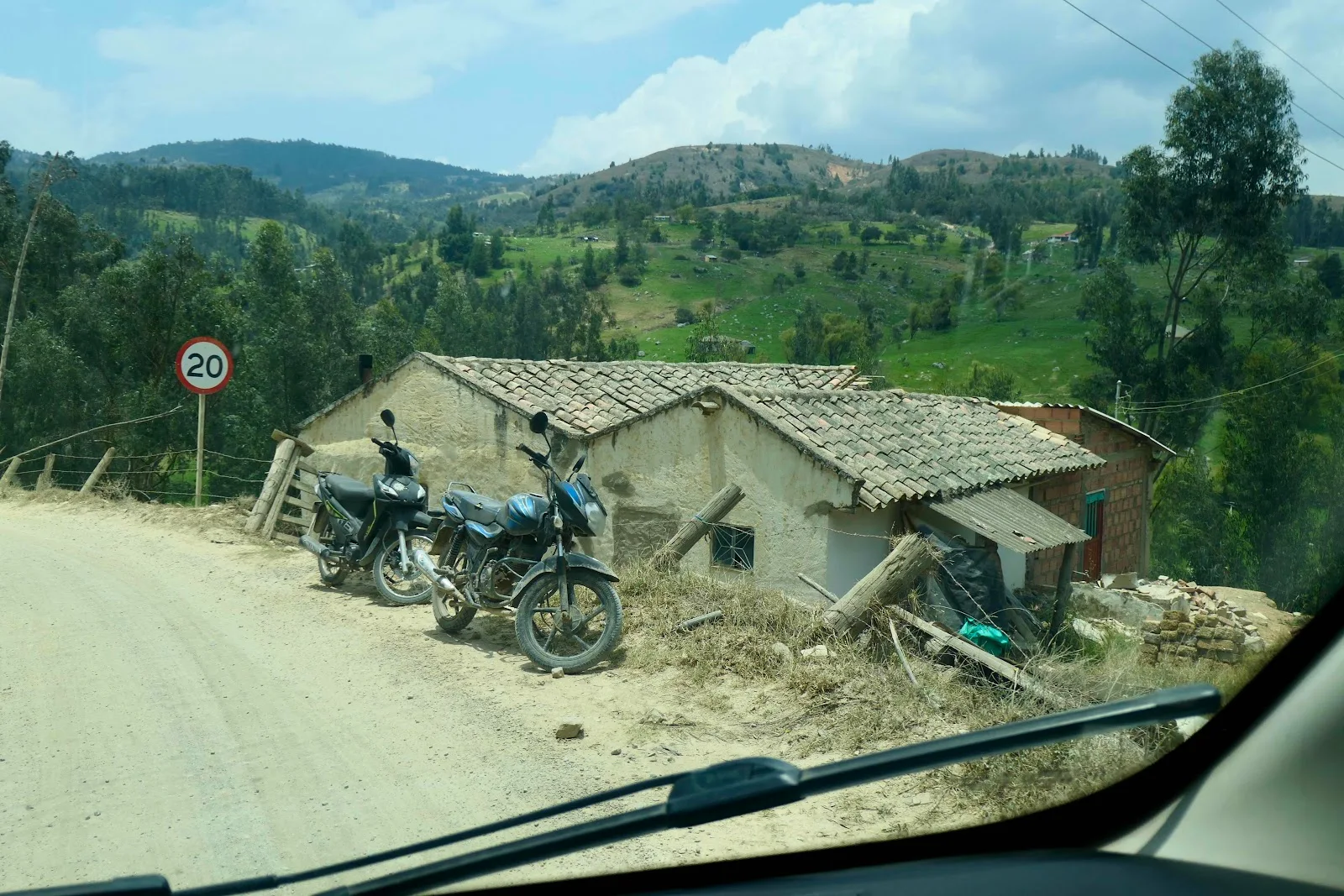
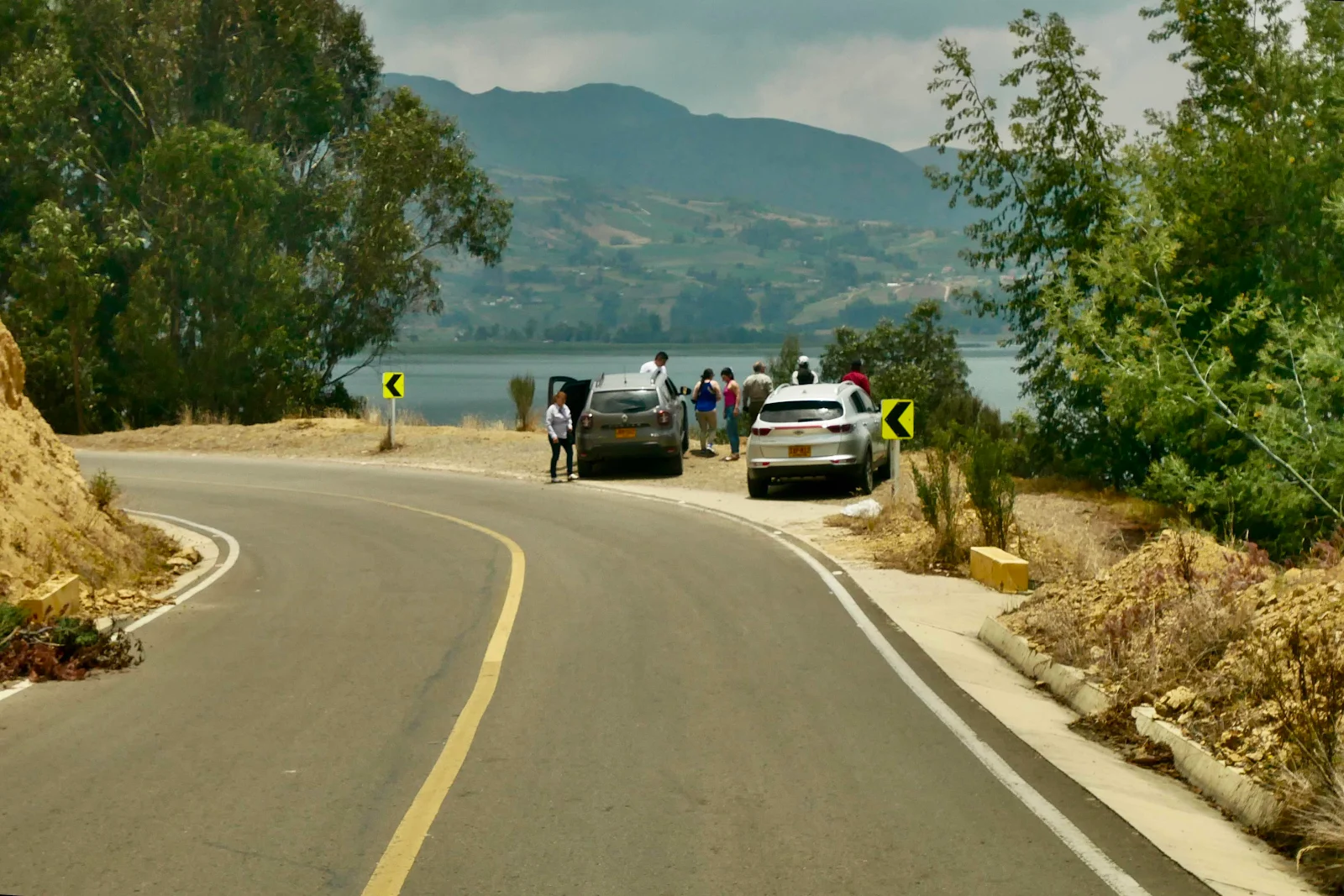
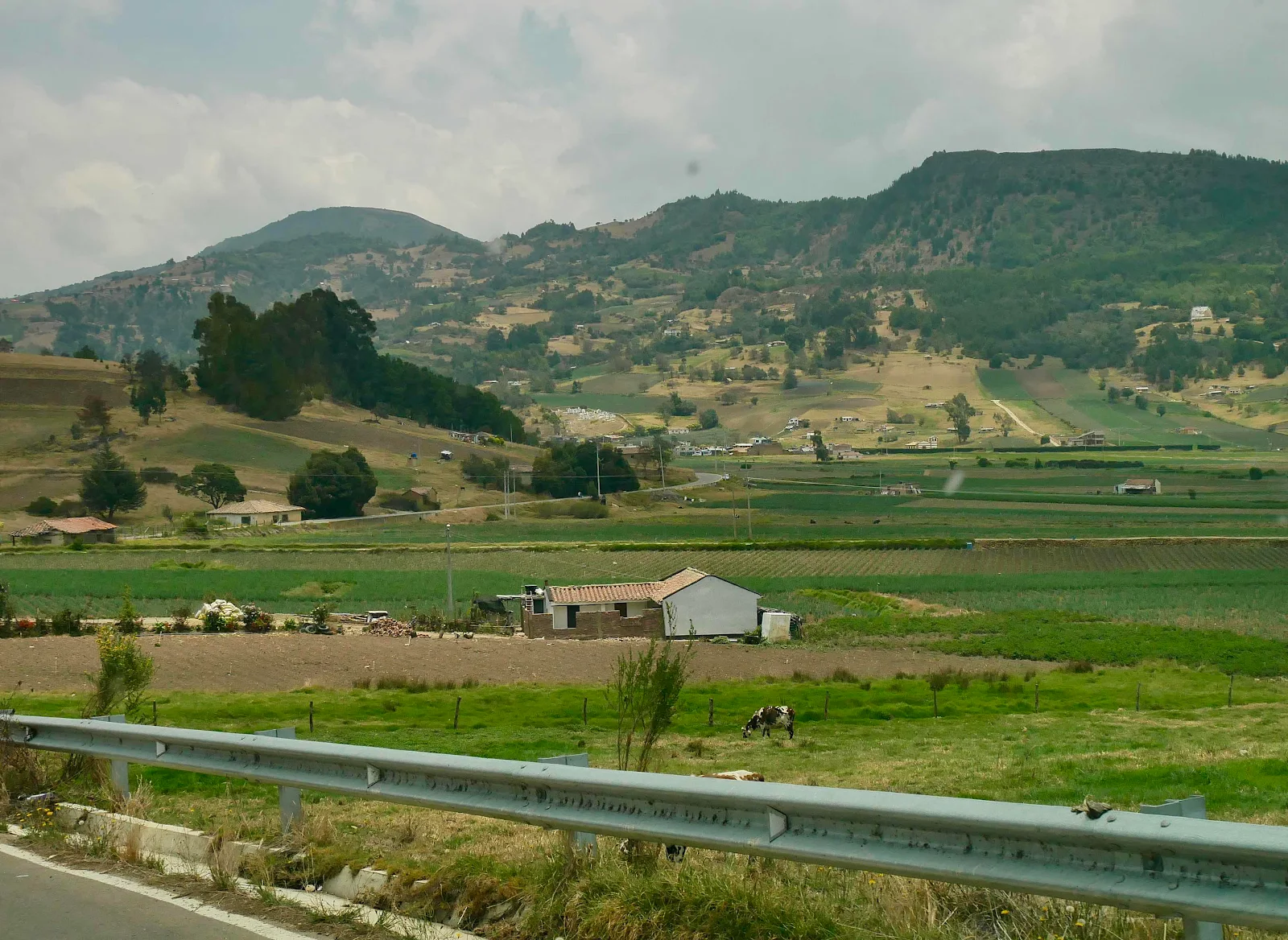
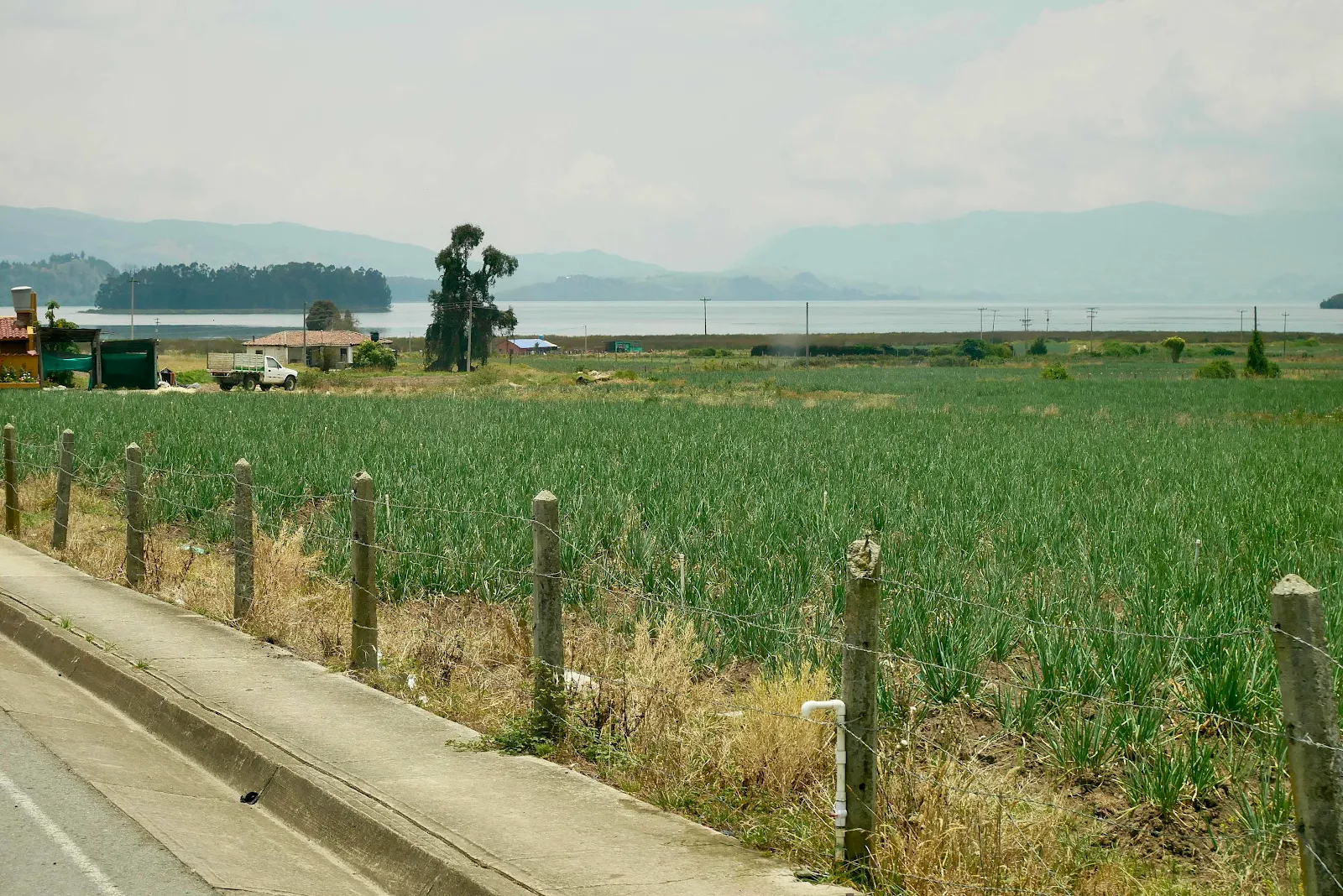
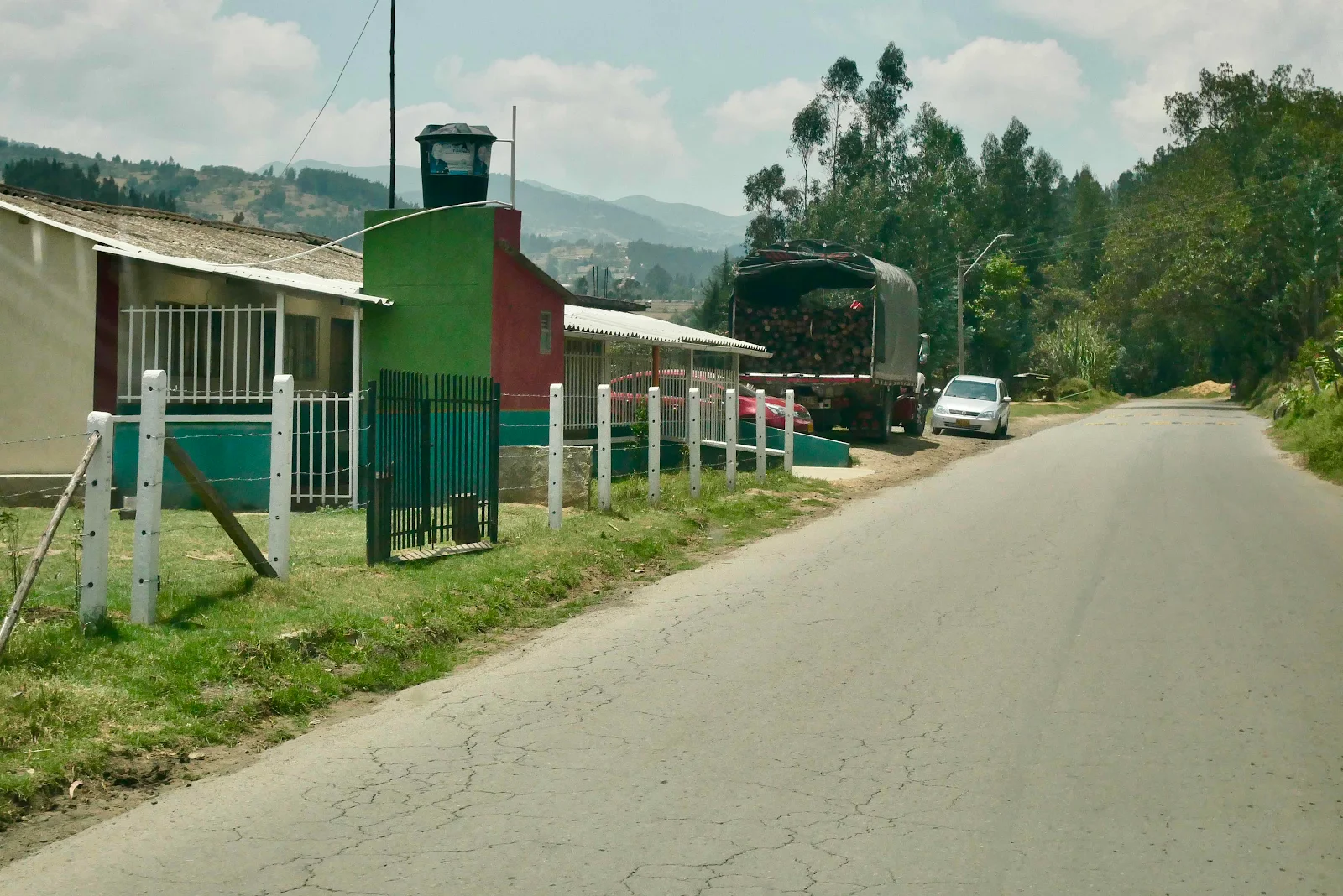
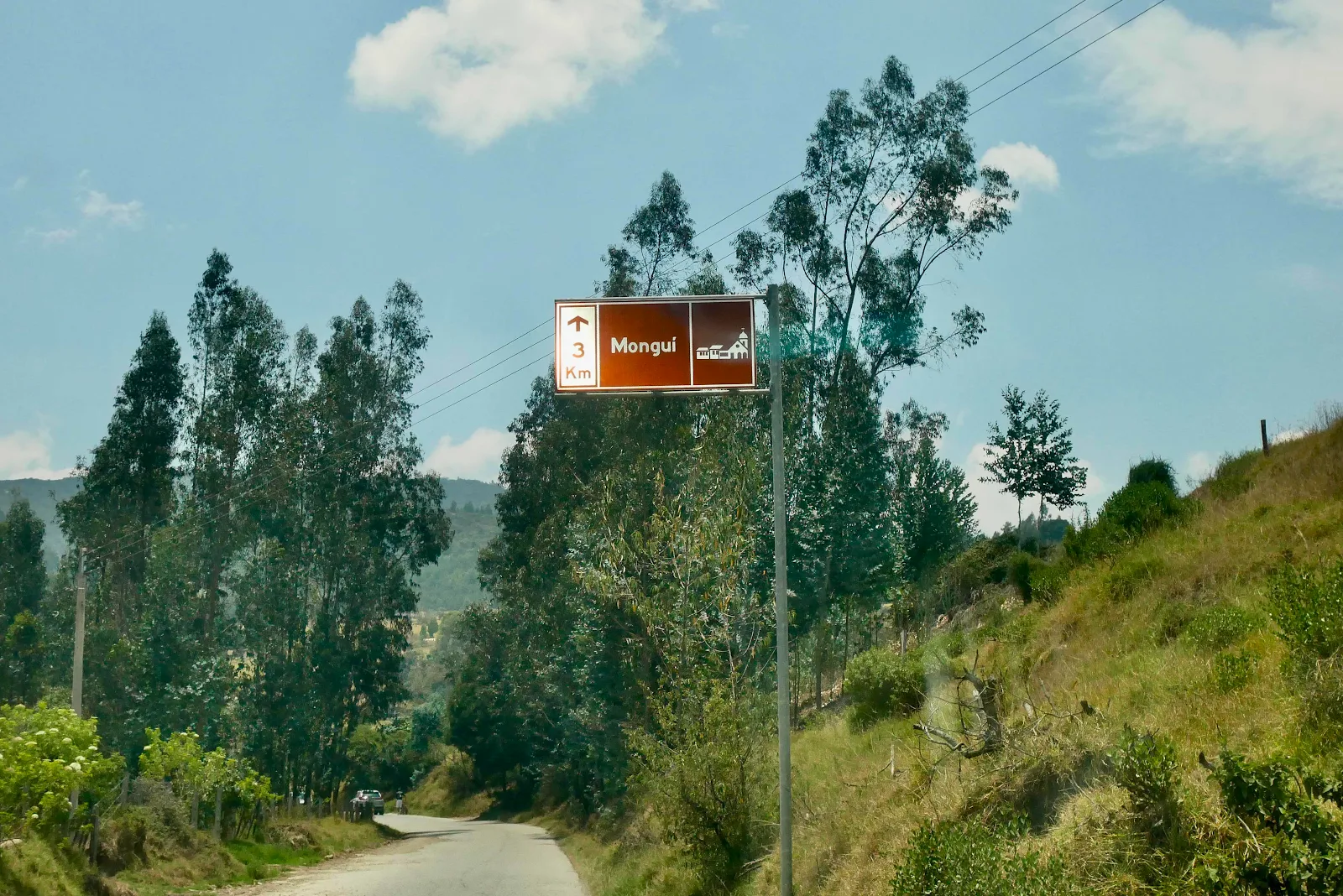
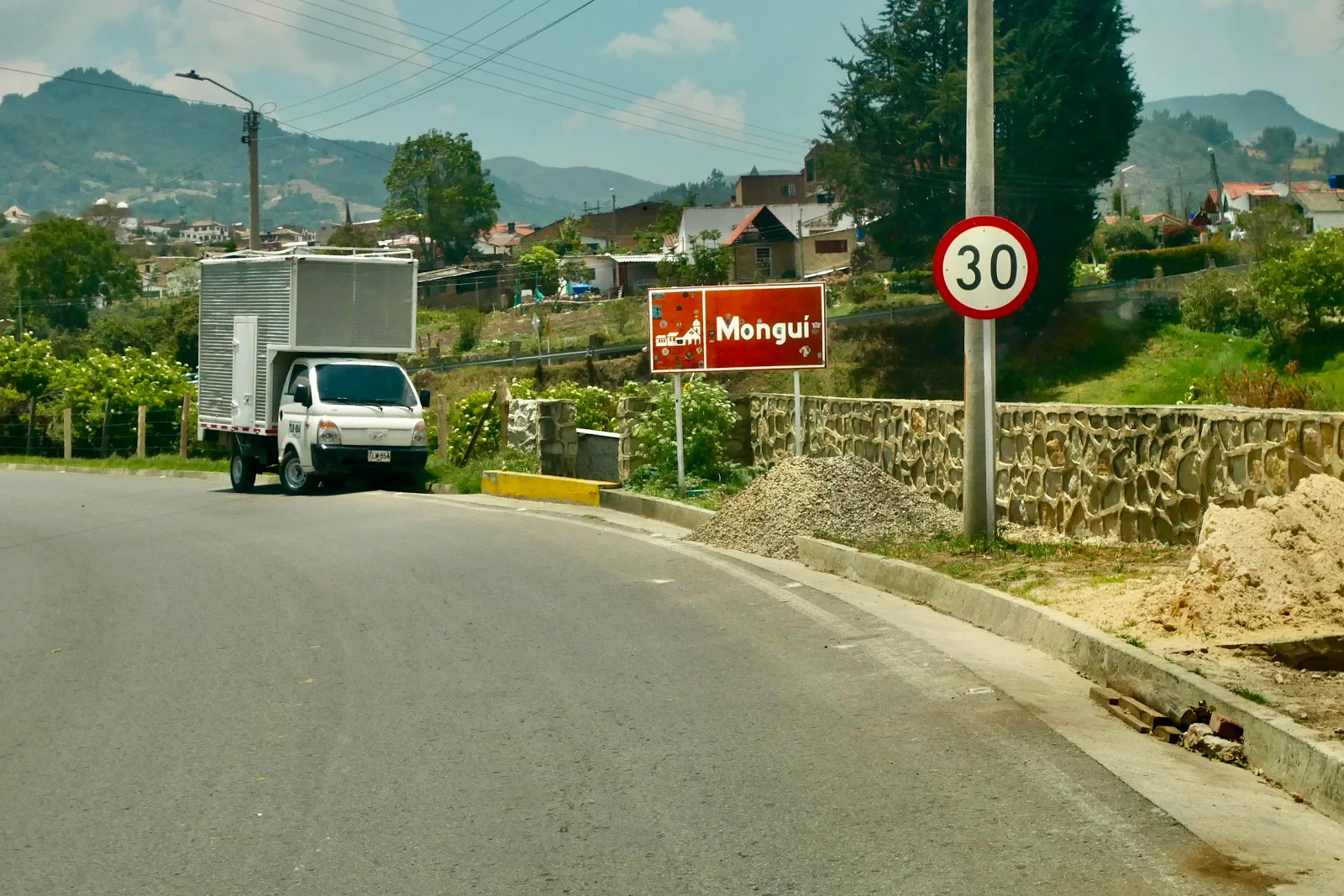
Mongui sits high in an Andean valley at 9600 feet. Or at least that seems high to us at the moment. In the future we will feel as though we are at sea level if we get below 10,000 feet…and the road to this precious jewel of Colombian tourism is less than perfect. Leave the industrial city of Sogamoso behind and you encounter stretches of crap road.
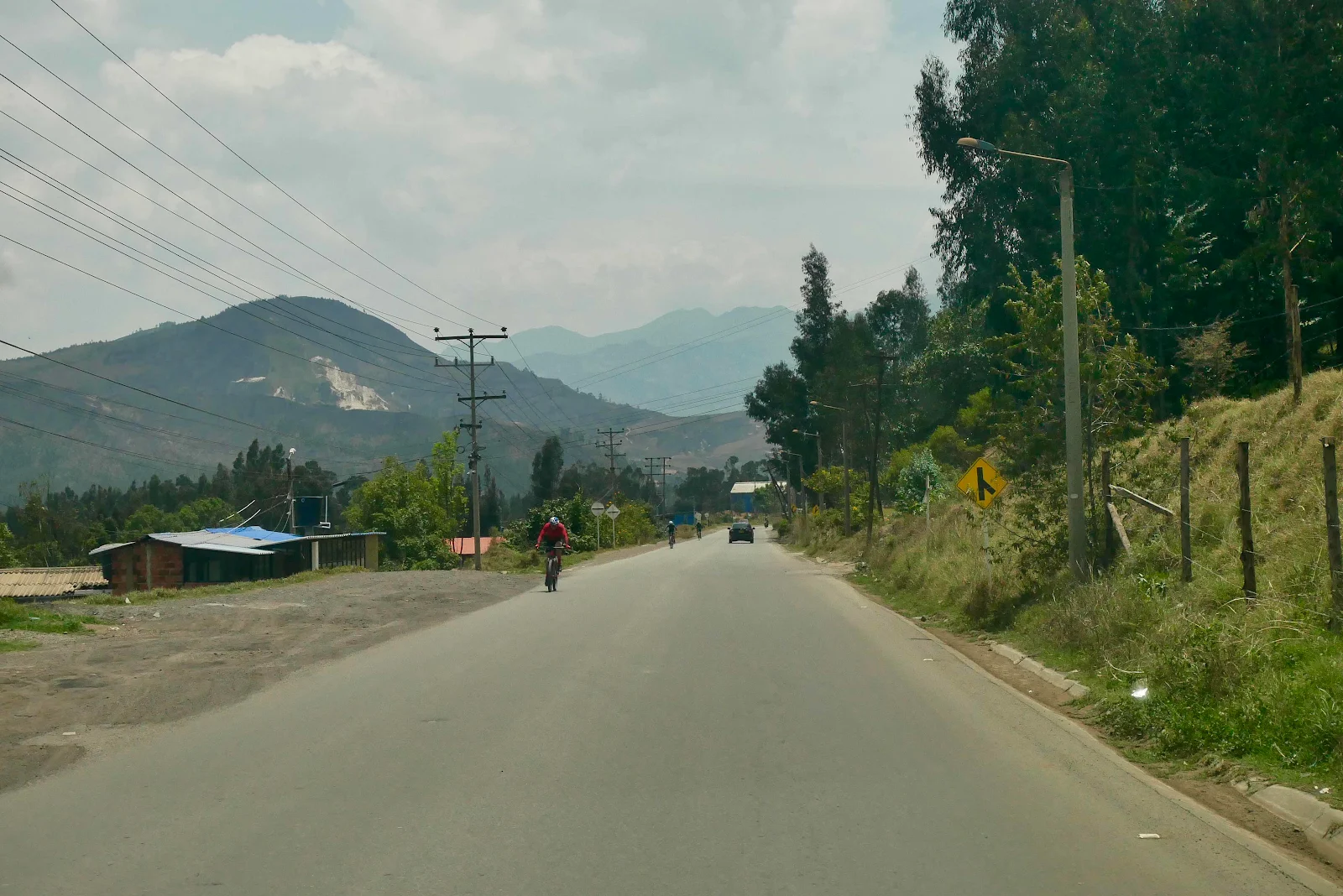
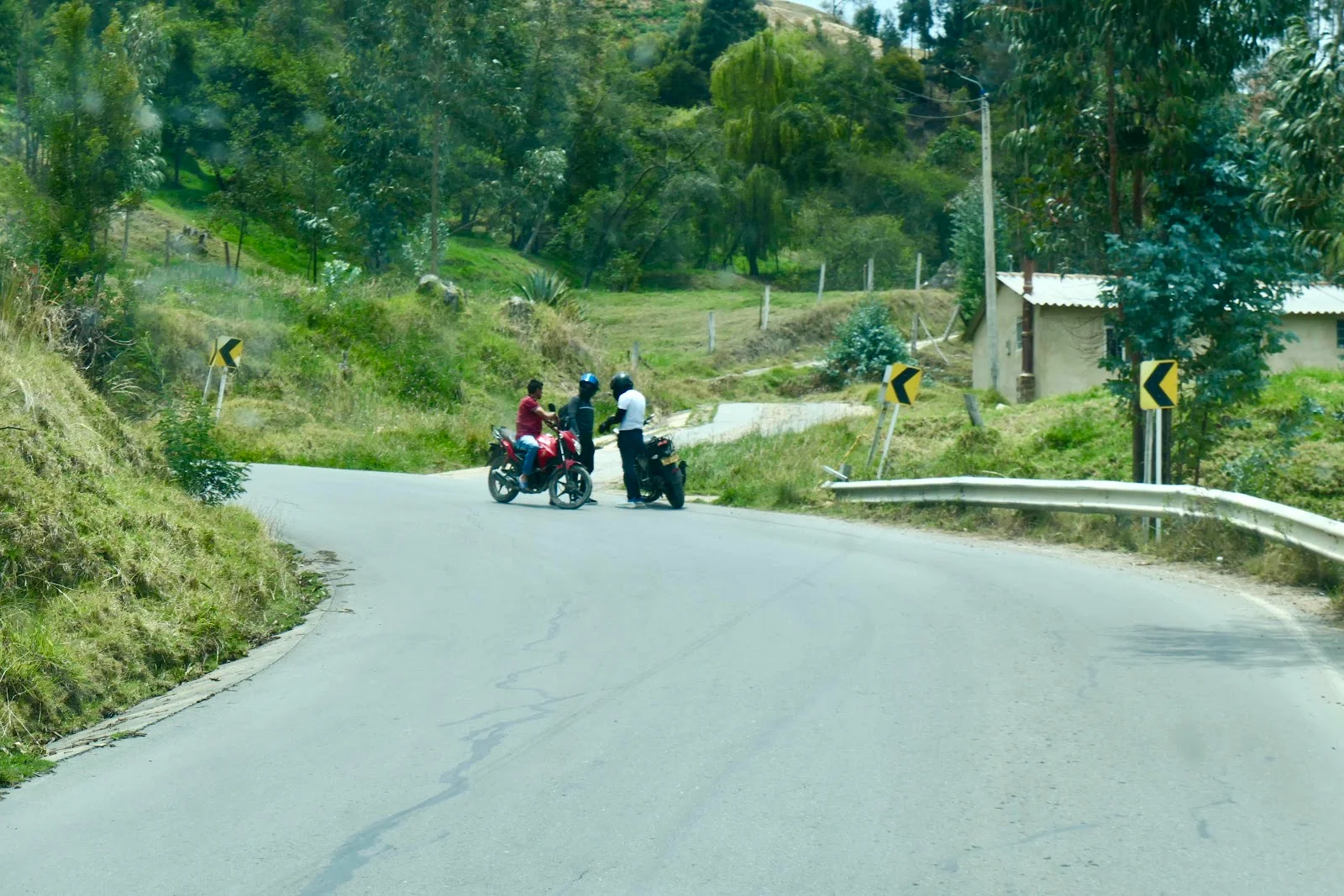
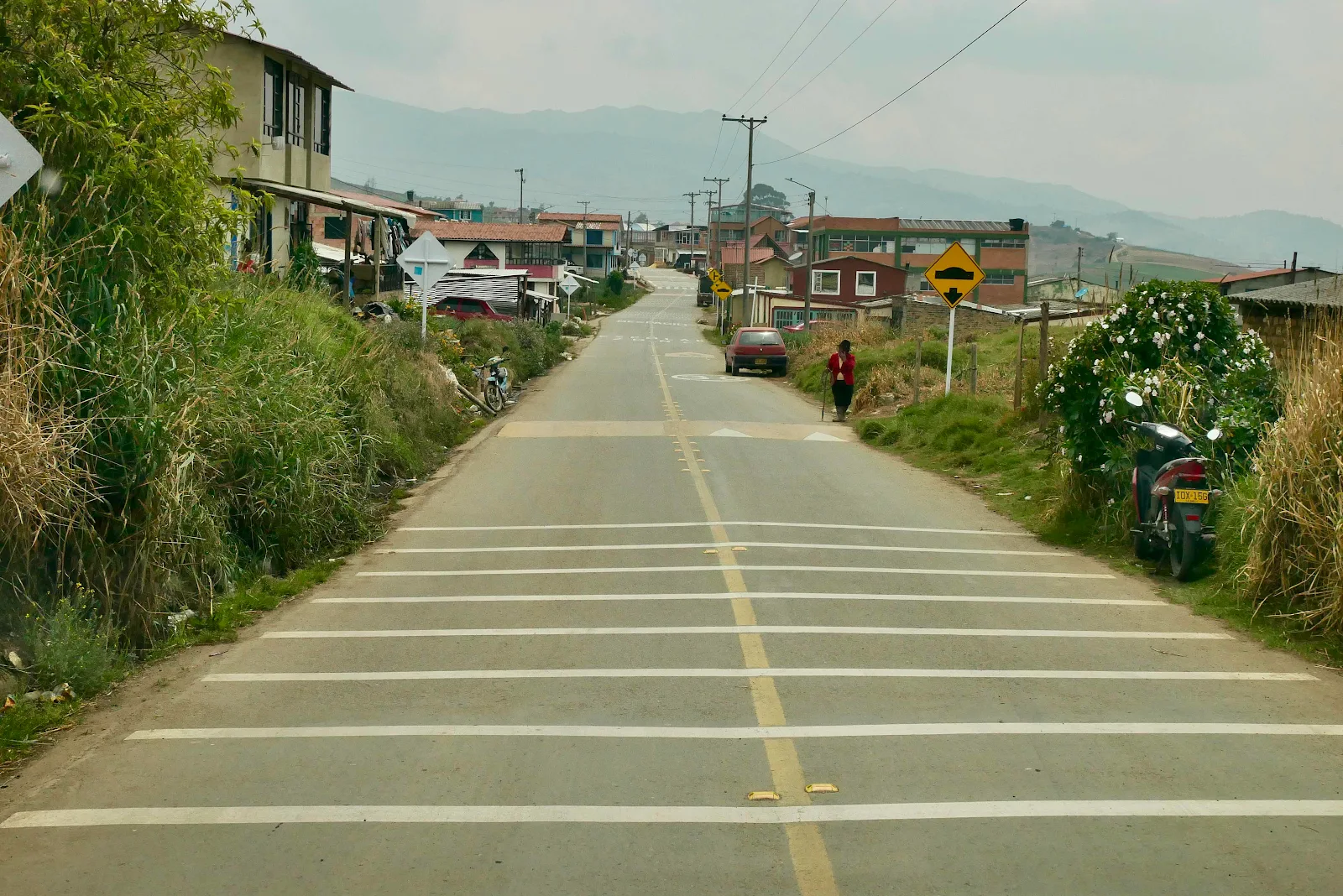
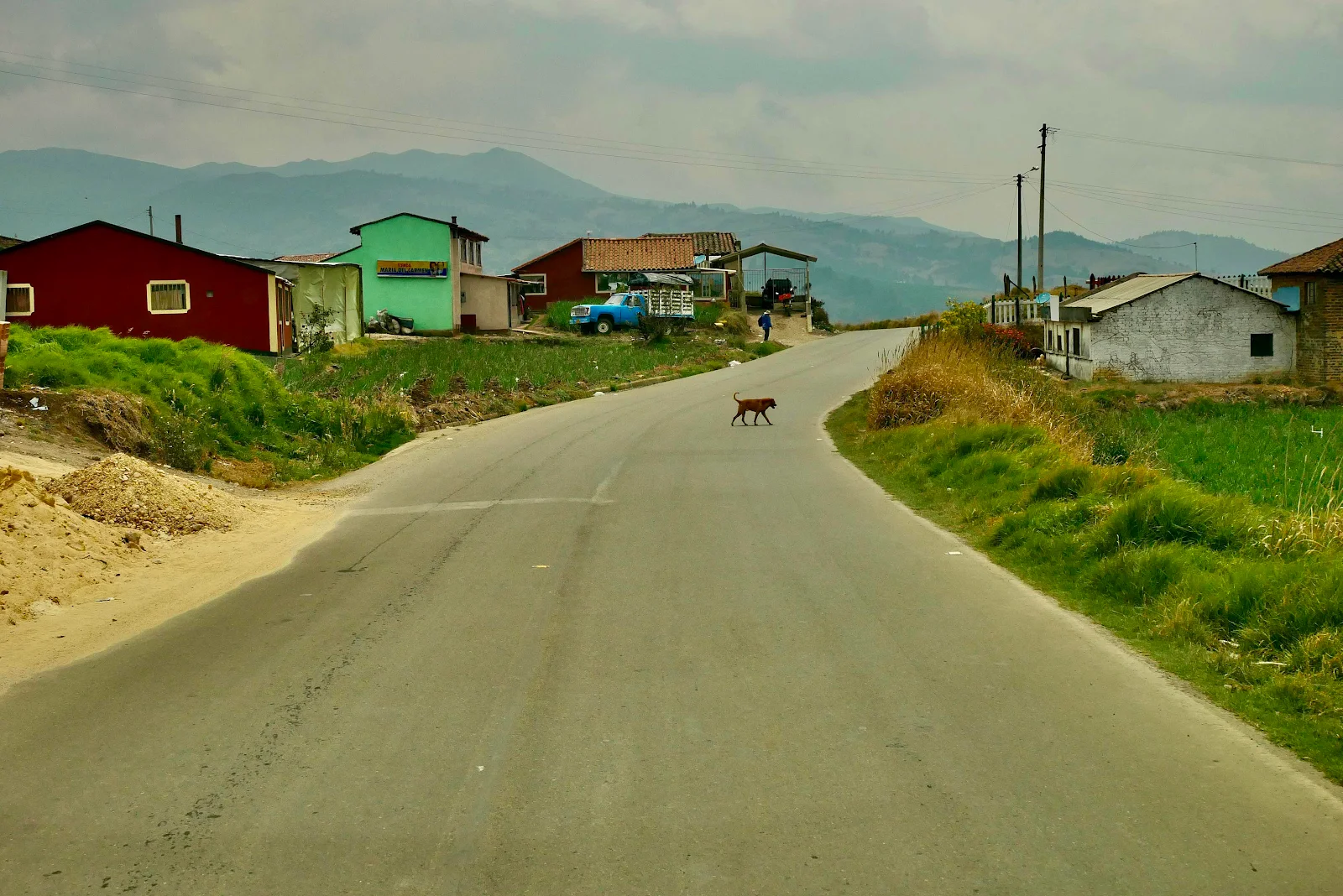
The main roads tend to be pretty good except for occasional ruffles in the asphalt. Back roads seem to get no attention at all.
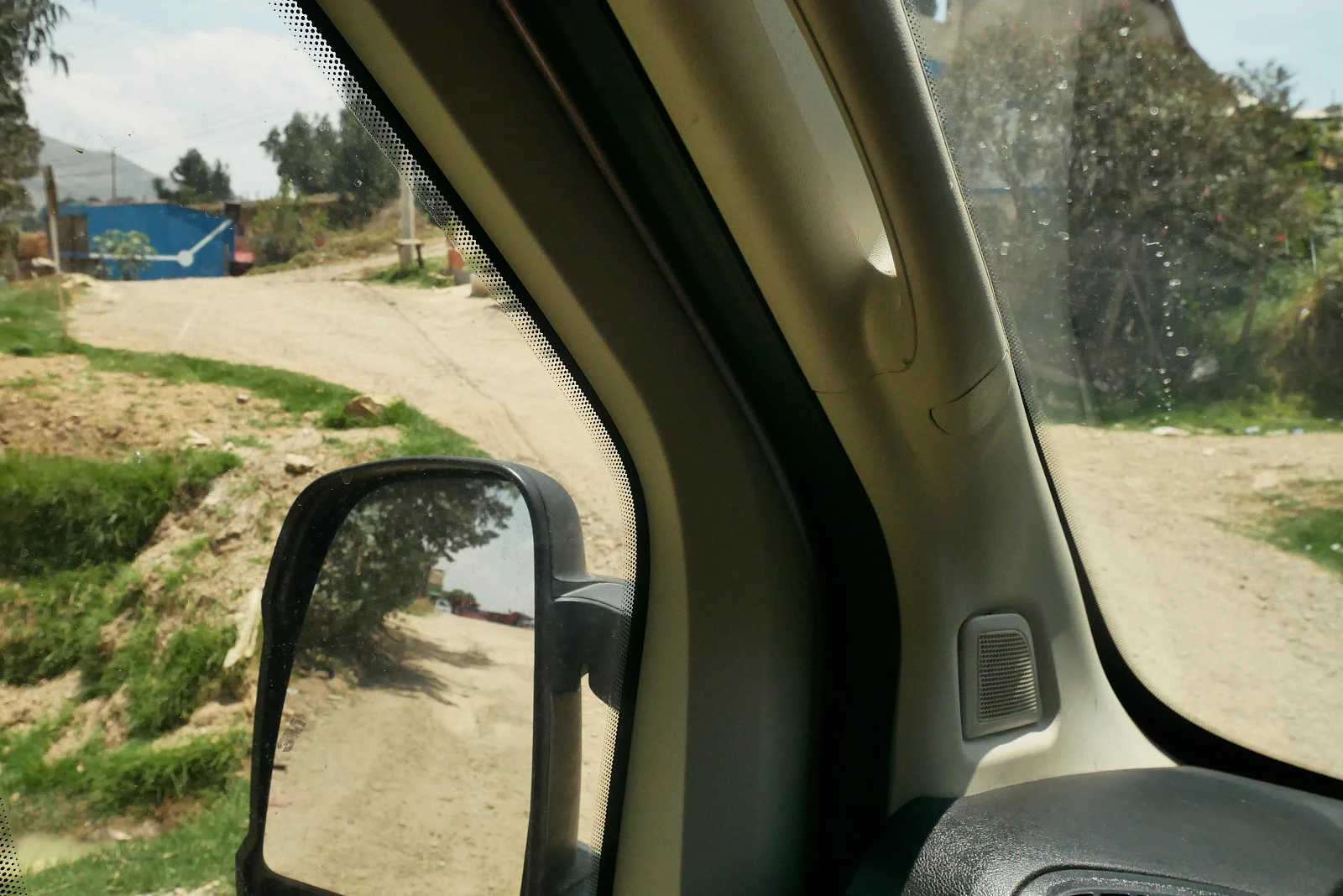
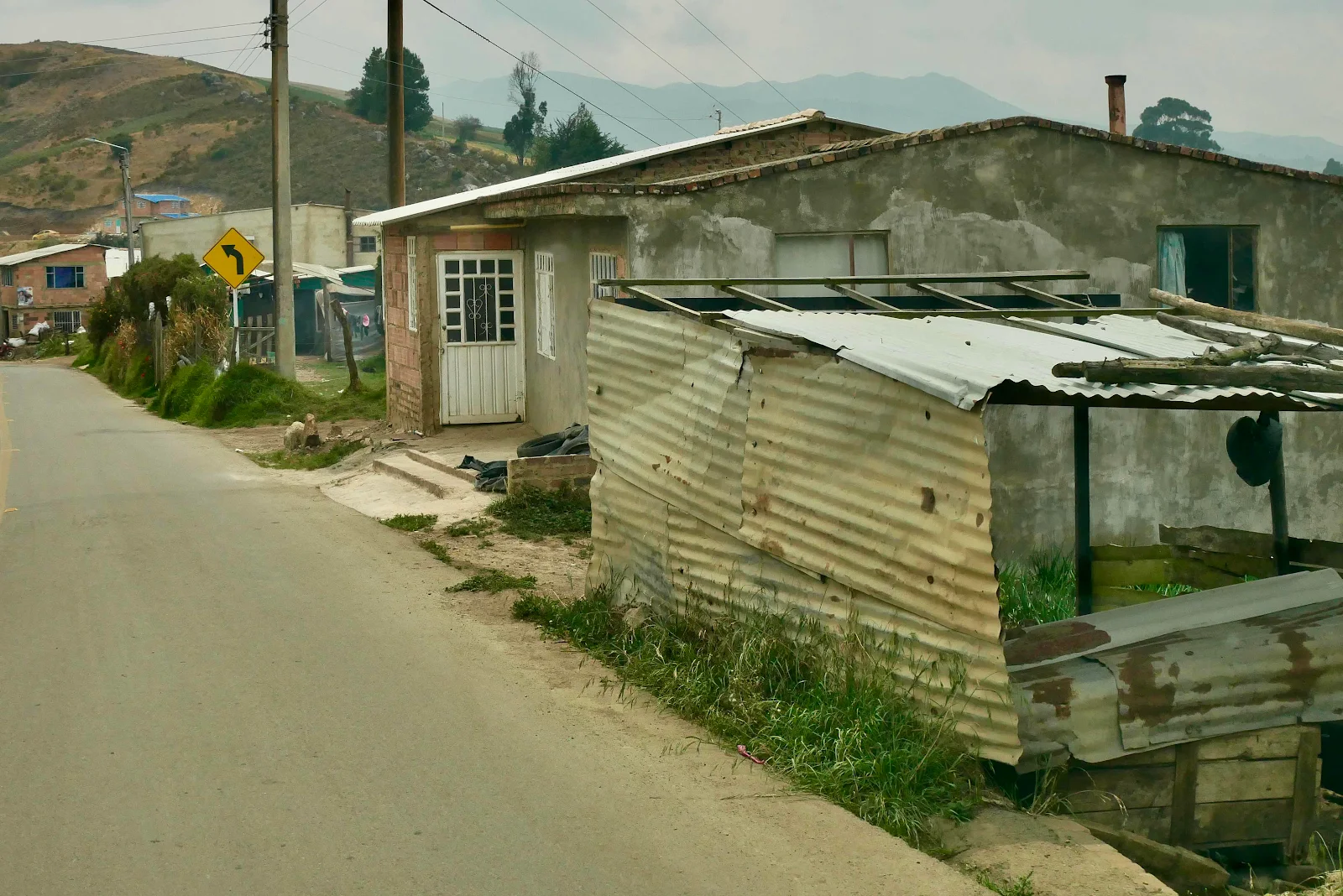
Sometimes Google maps plays tricks on you as the little blue line has a tendency to imagine the shortest distance between two points is the shortest road. That road can often be rather slow in a heavy van:
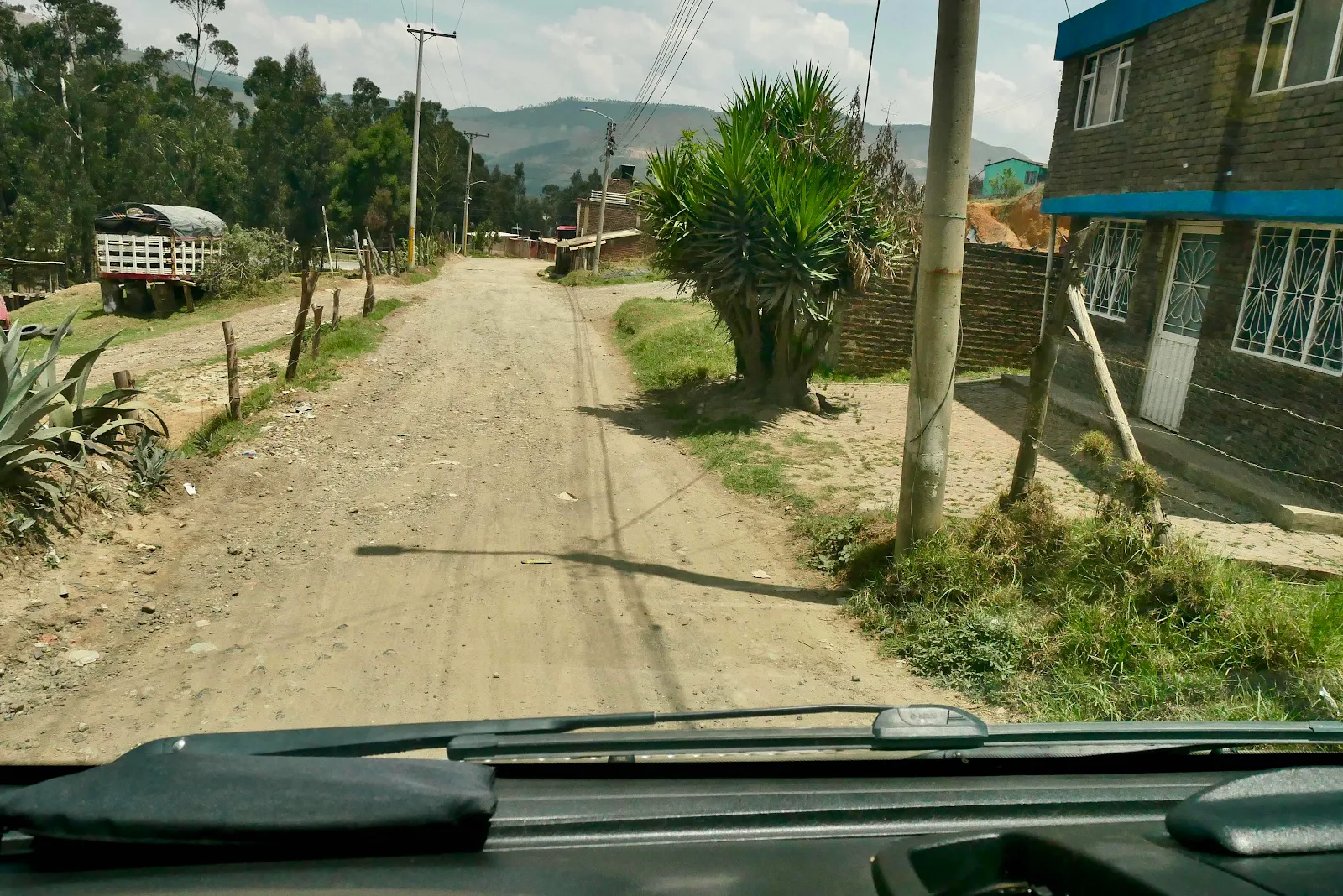
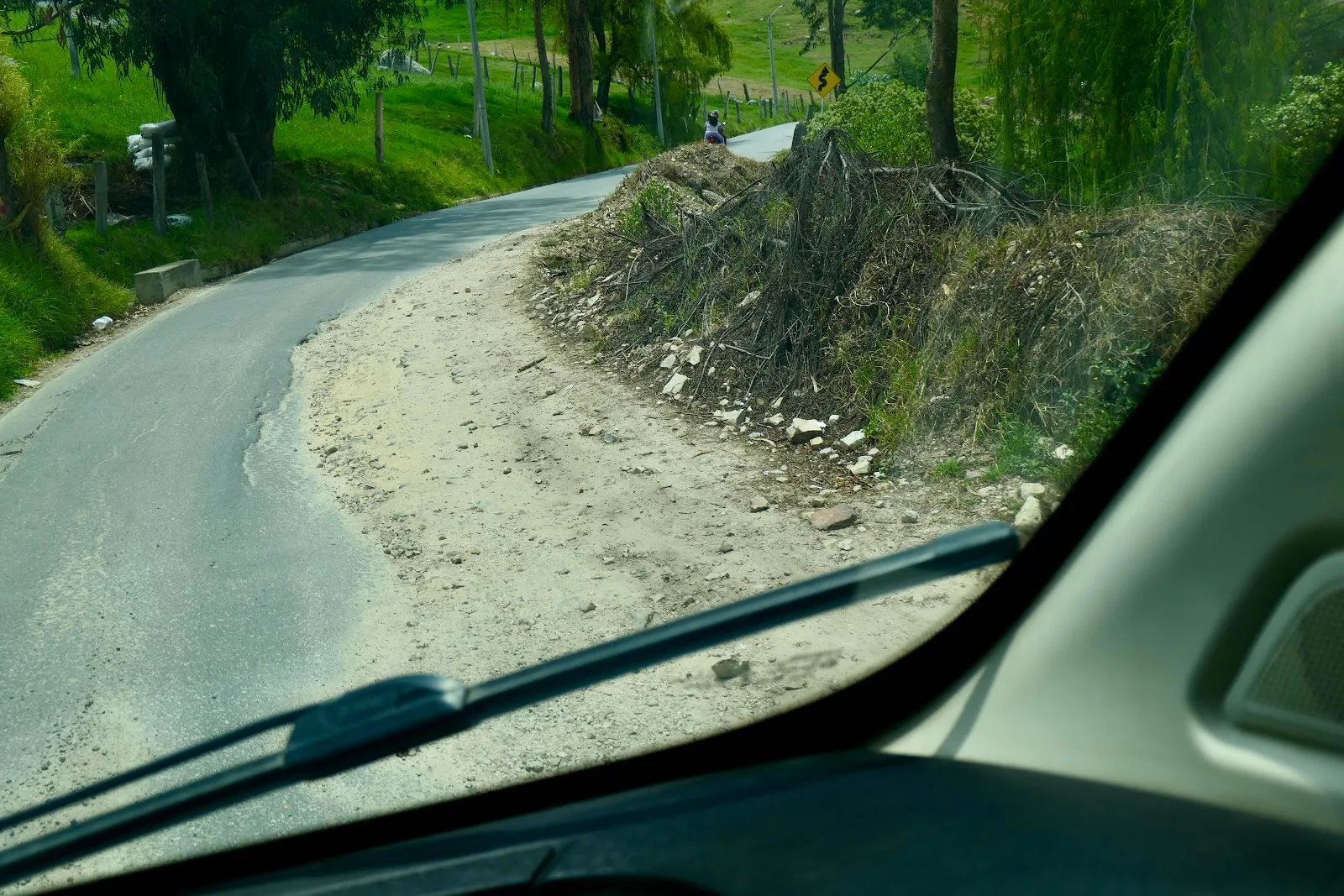
And than as if by magic pavement reappears.
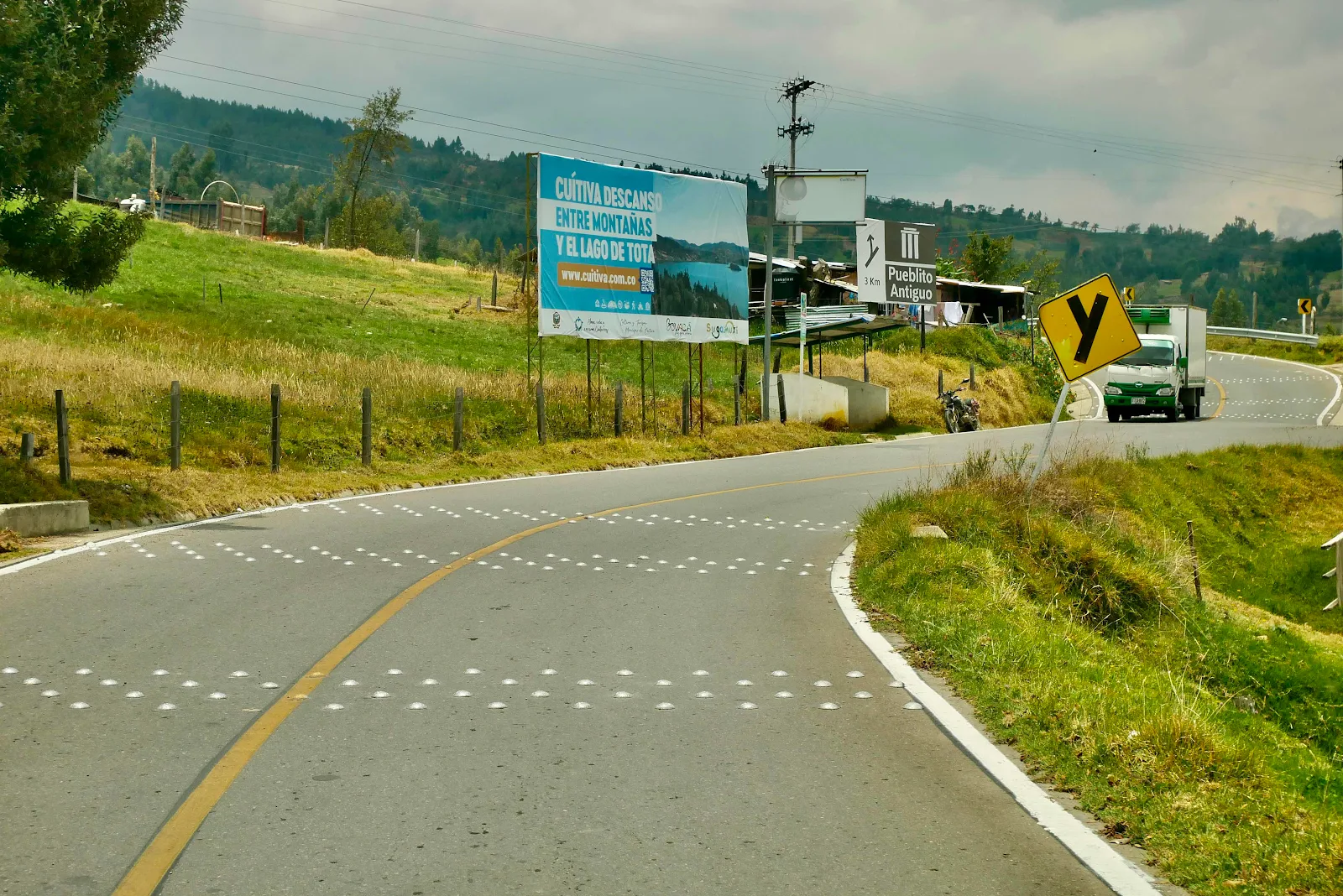
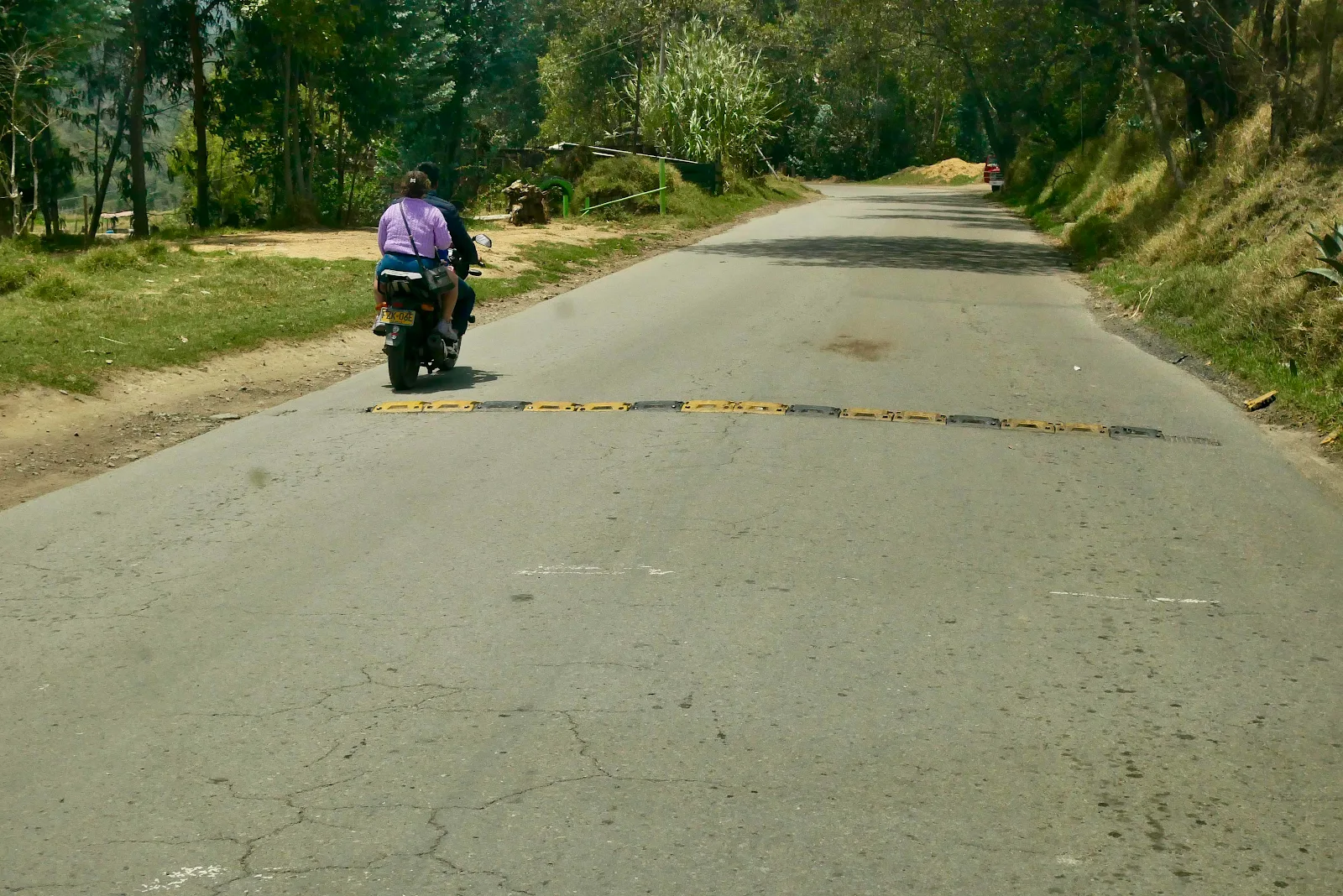
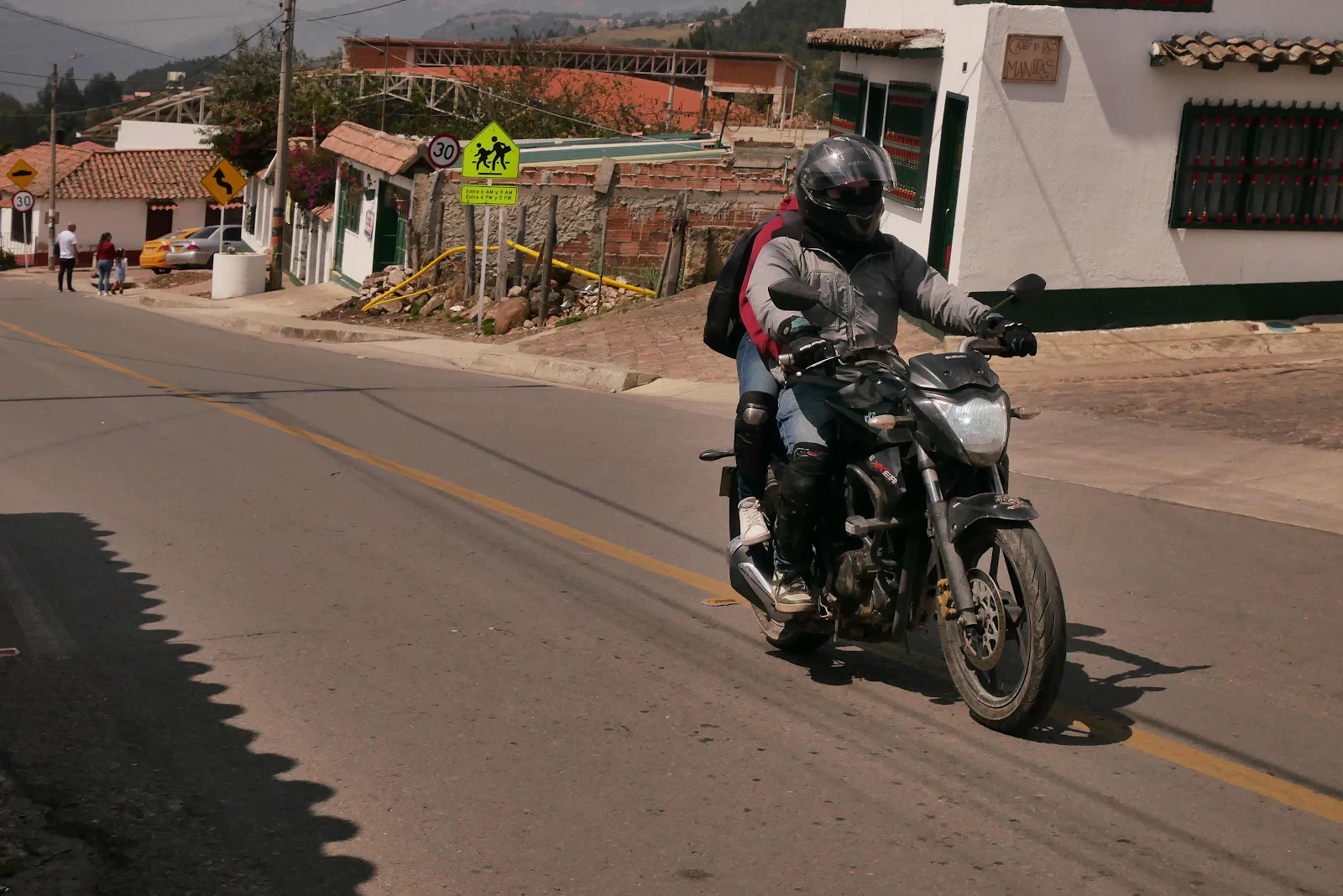
Never forget the random placement of tools designed to slow you down. Motorcycles zip by round the edges of the speed bumps! Not a big enough advantage to make me want to ride again.
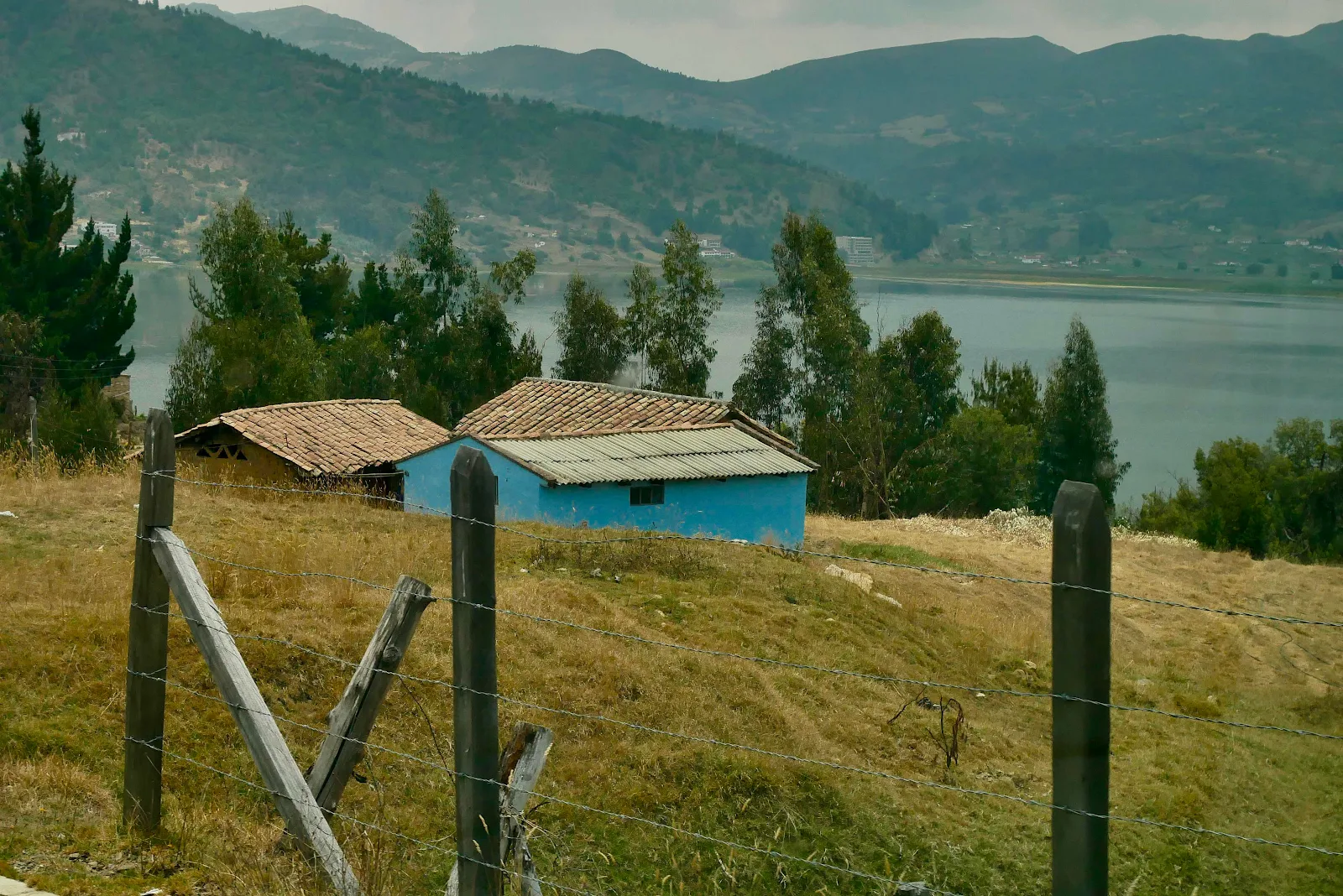
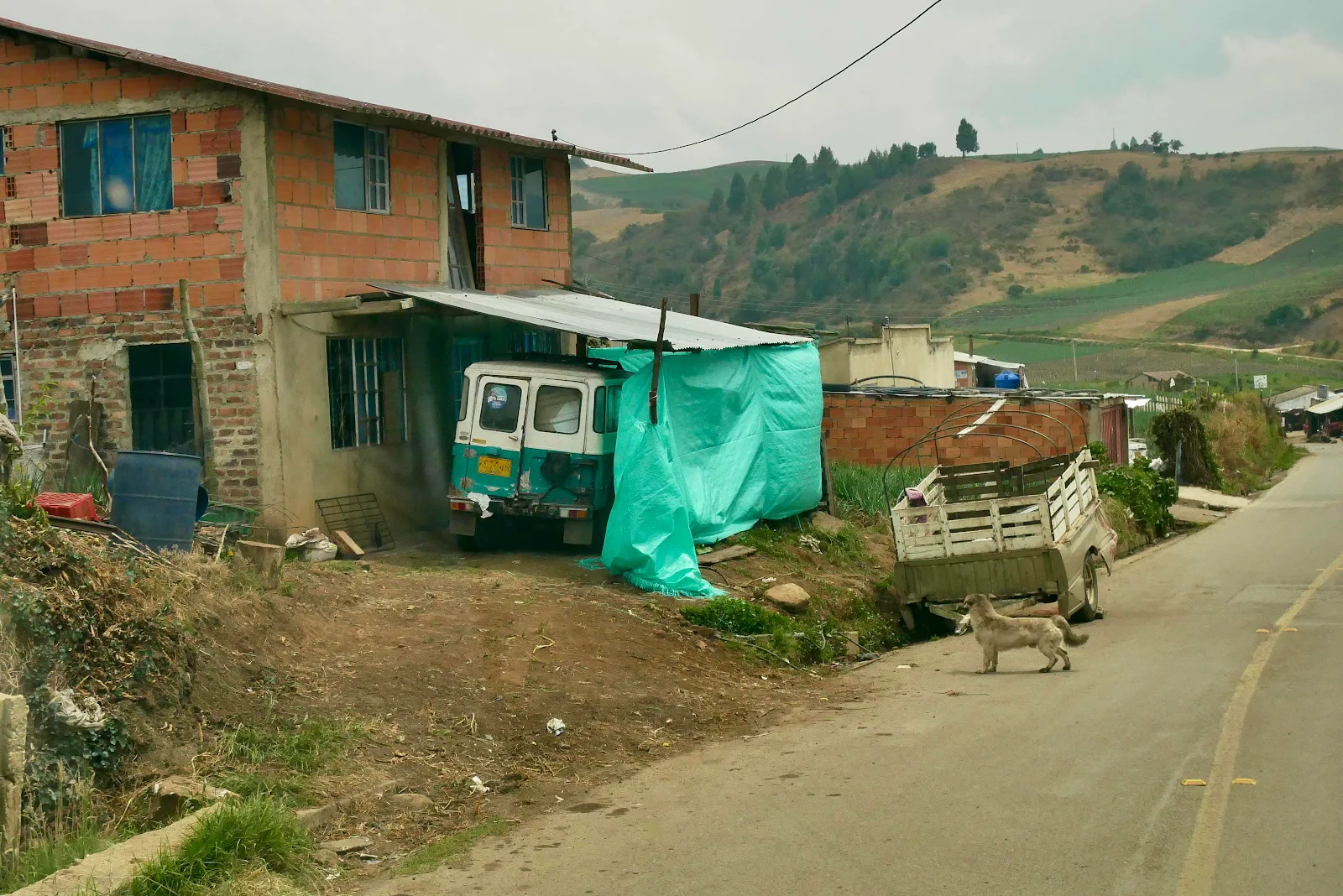
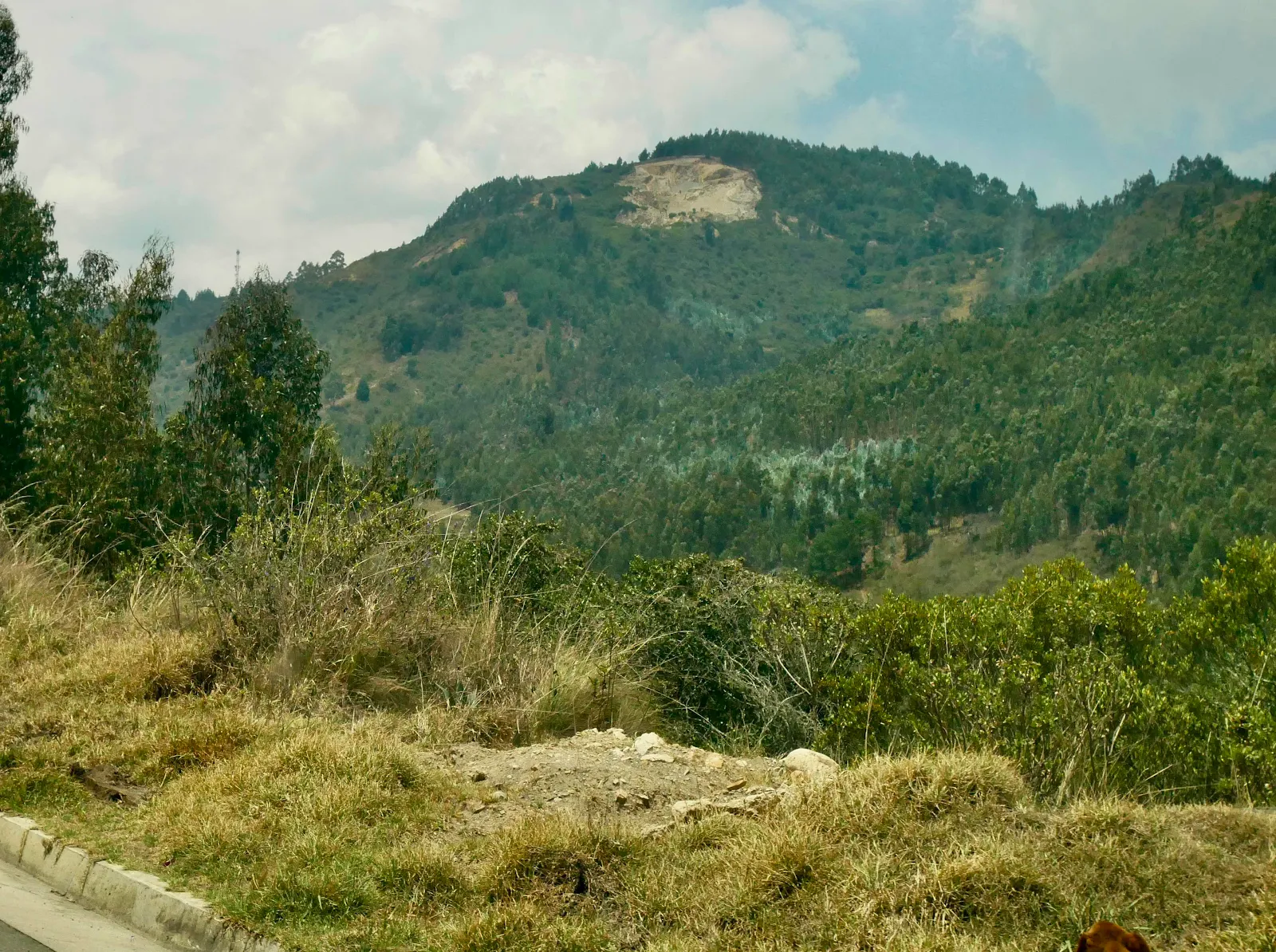
There is a great deal of wilderness in Colombia, all of it private except for an occasional national park and the scars of resource depletion are everywhere.
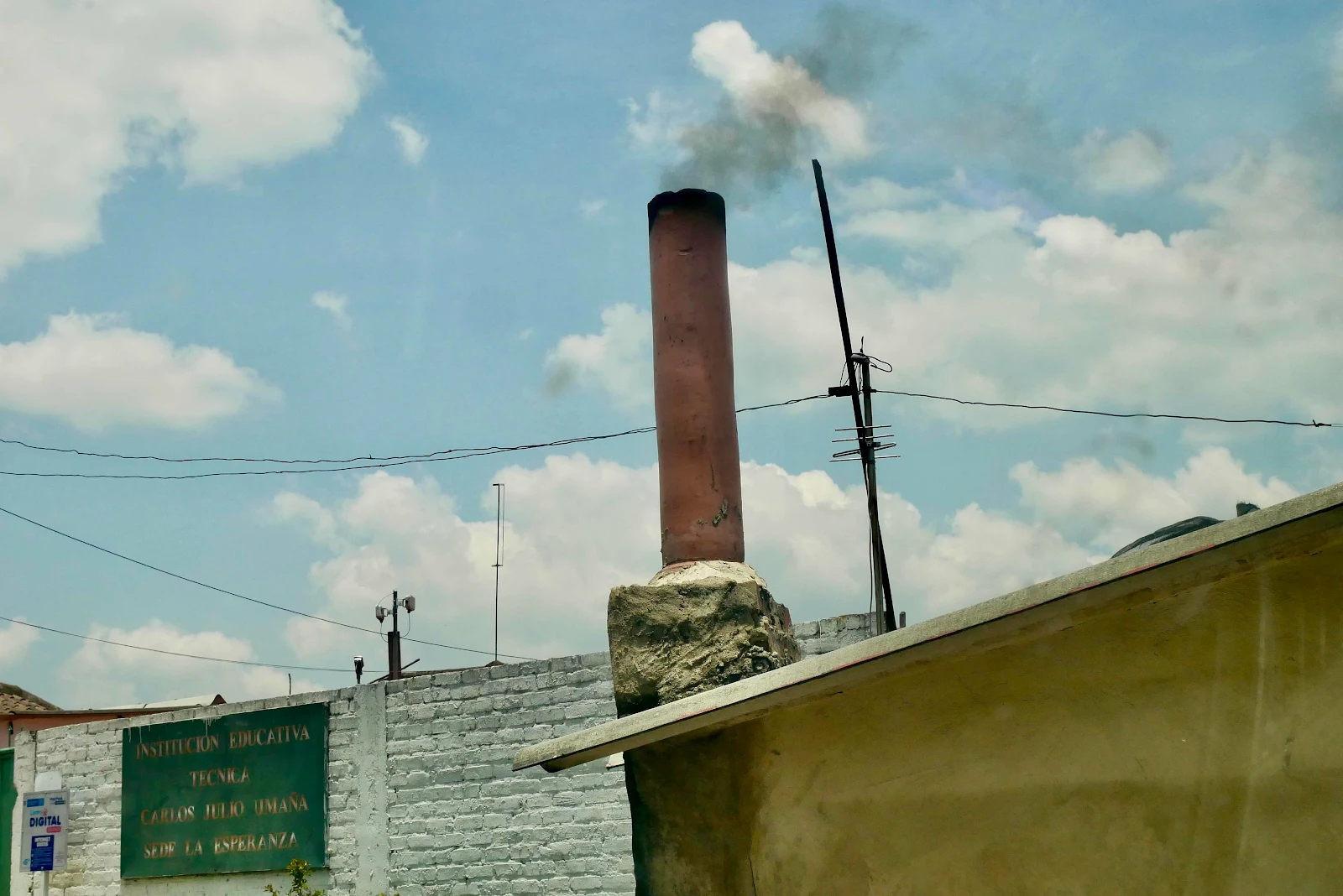
Not everyone cooks with propane as these are people with not much in the way of resources.
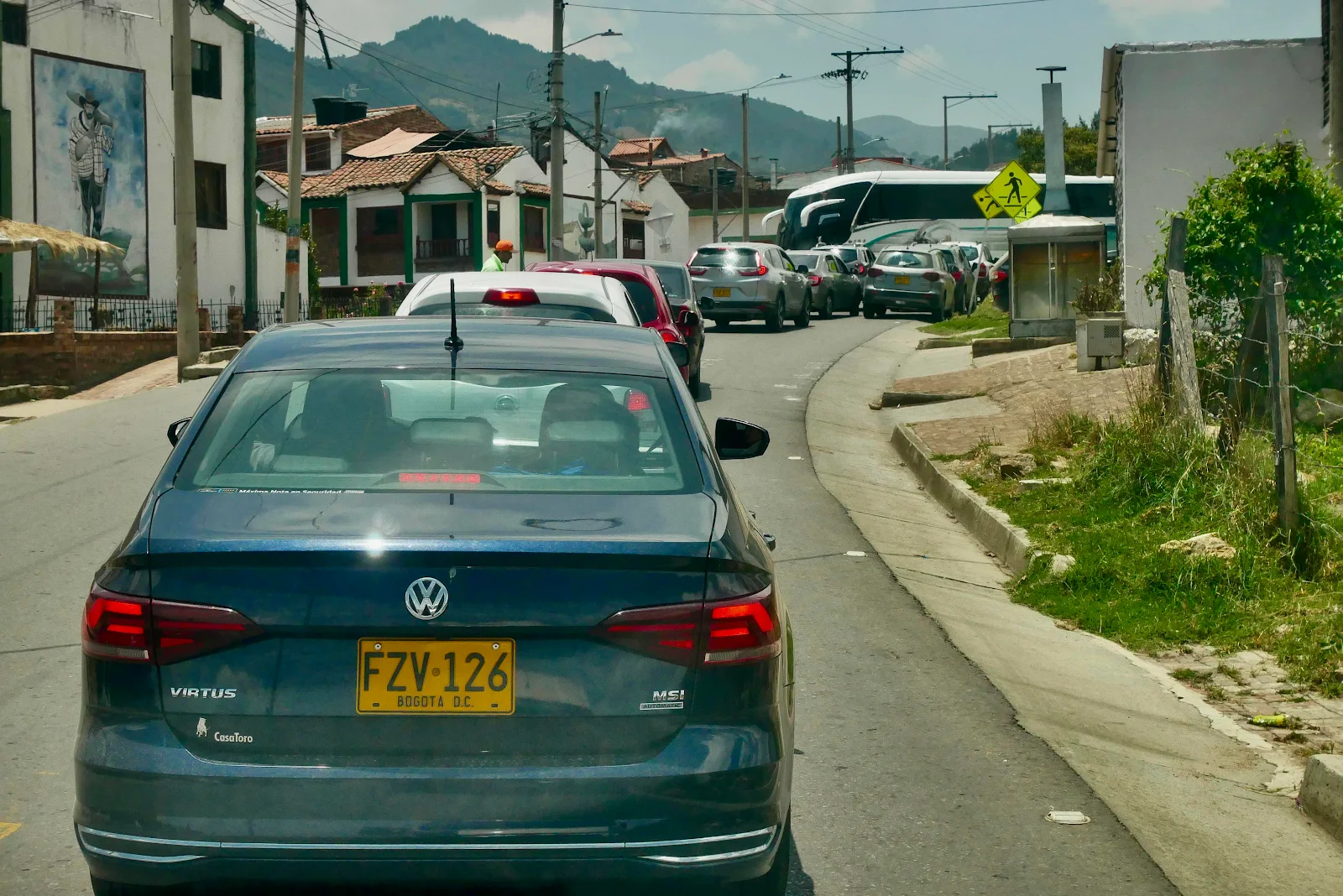
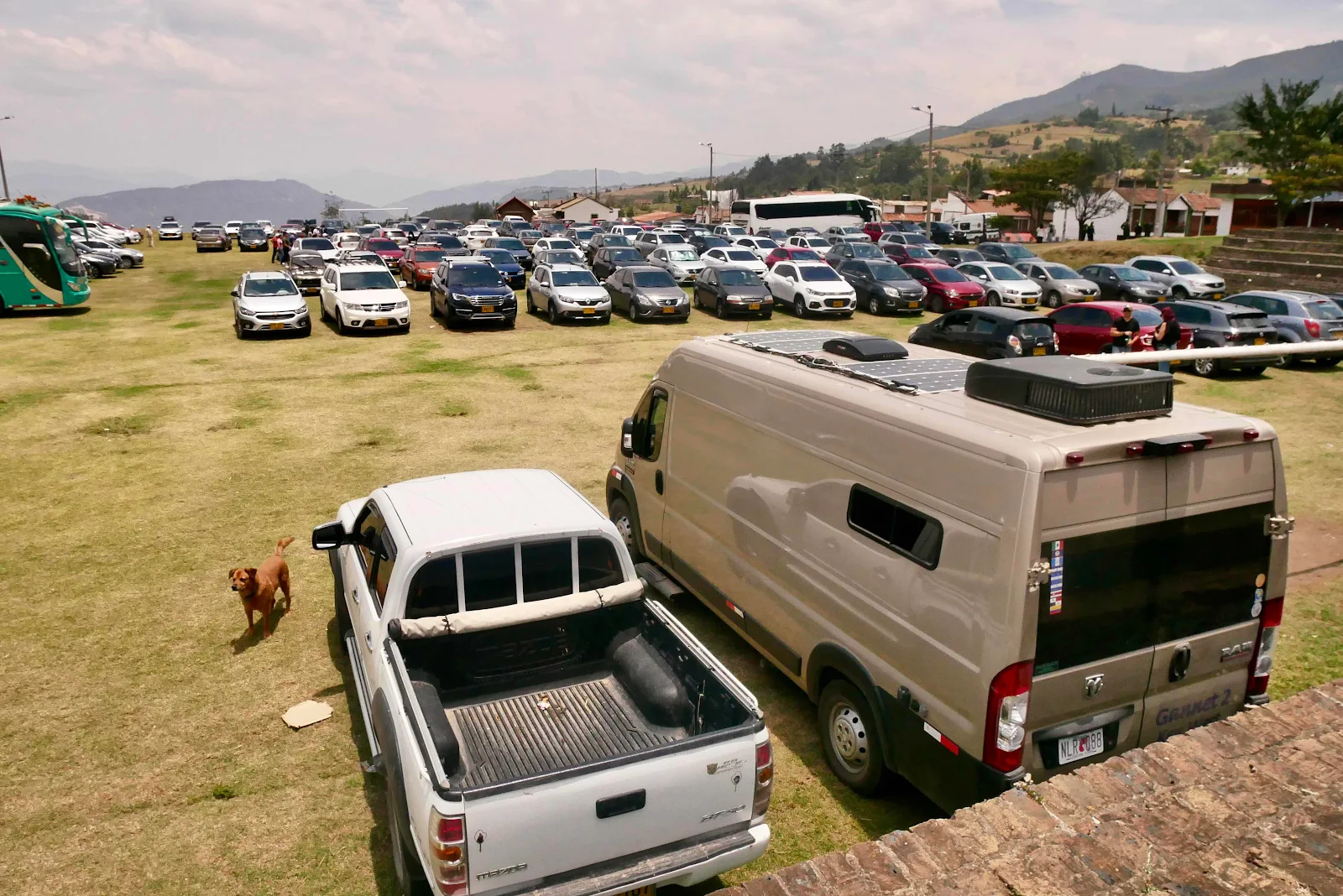
Traffic jam! It was brief, a tour bus leaving the parking lot where visitors were required to park for $2:50 (10,000 pesos).
There were no other foreign registered vehicles that I could see.
Then we hiked a few blocks up the hill into town. I found my breathing much easier than I expected so I must be acclimating. Altitude affects people in different ways and at different heights. Basically you start with a headache that can develop into nausea and making an effort causes you to feel breathless, you suck in air but feel no relief. It’s rather creepy. In extreme cases you get fluid in the lungs or blood clots and unless you descend you die. We aren’t anywhere near that kind of altitude. Yet.
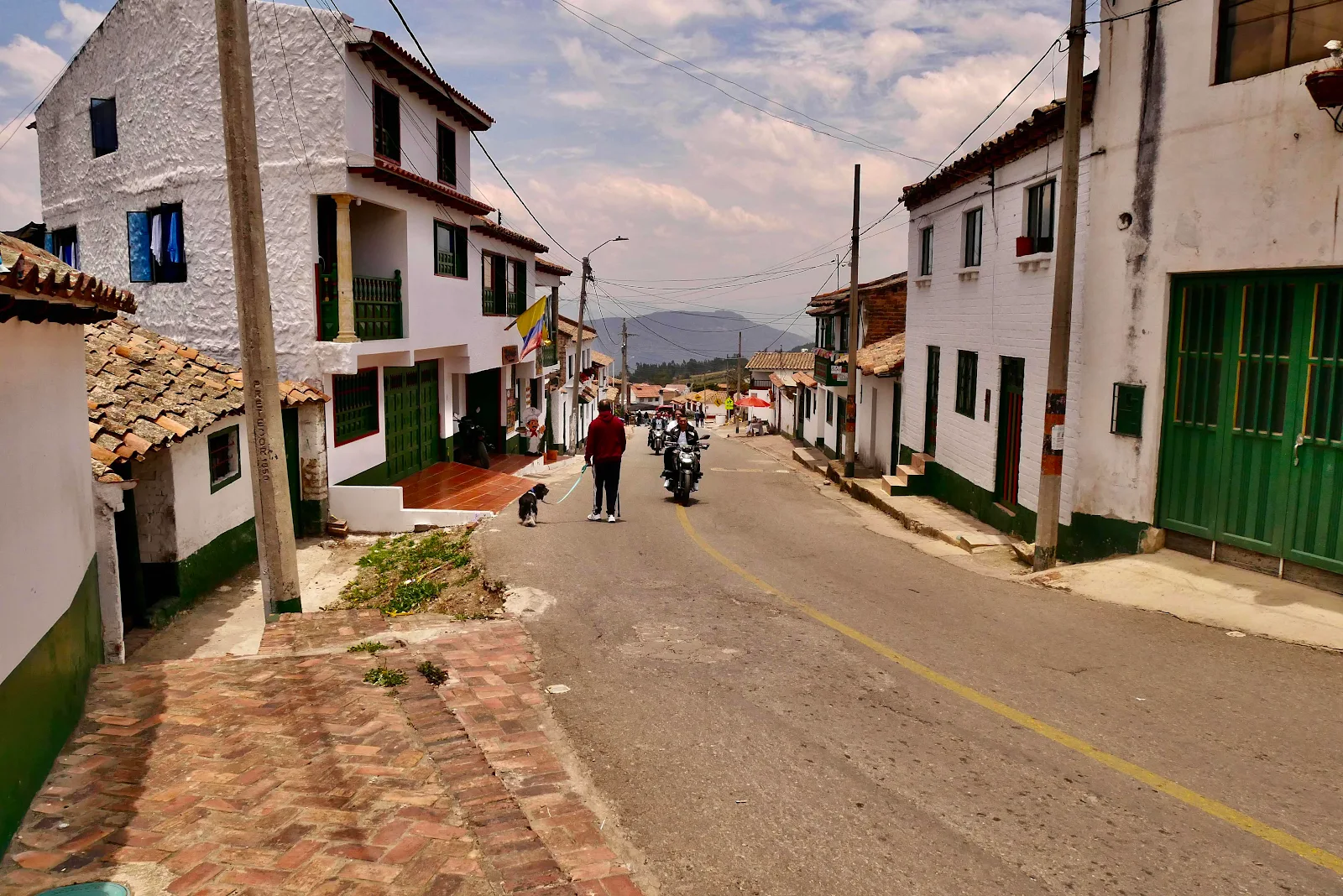
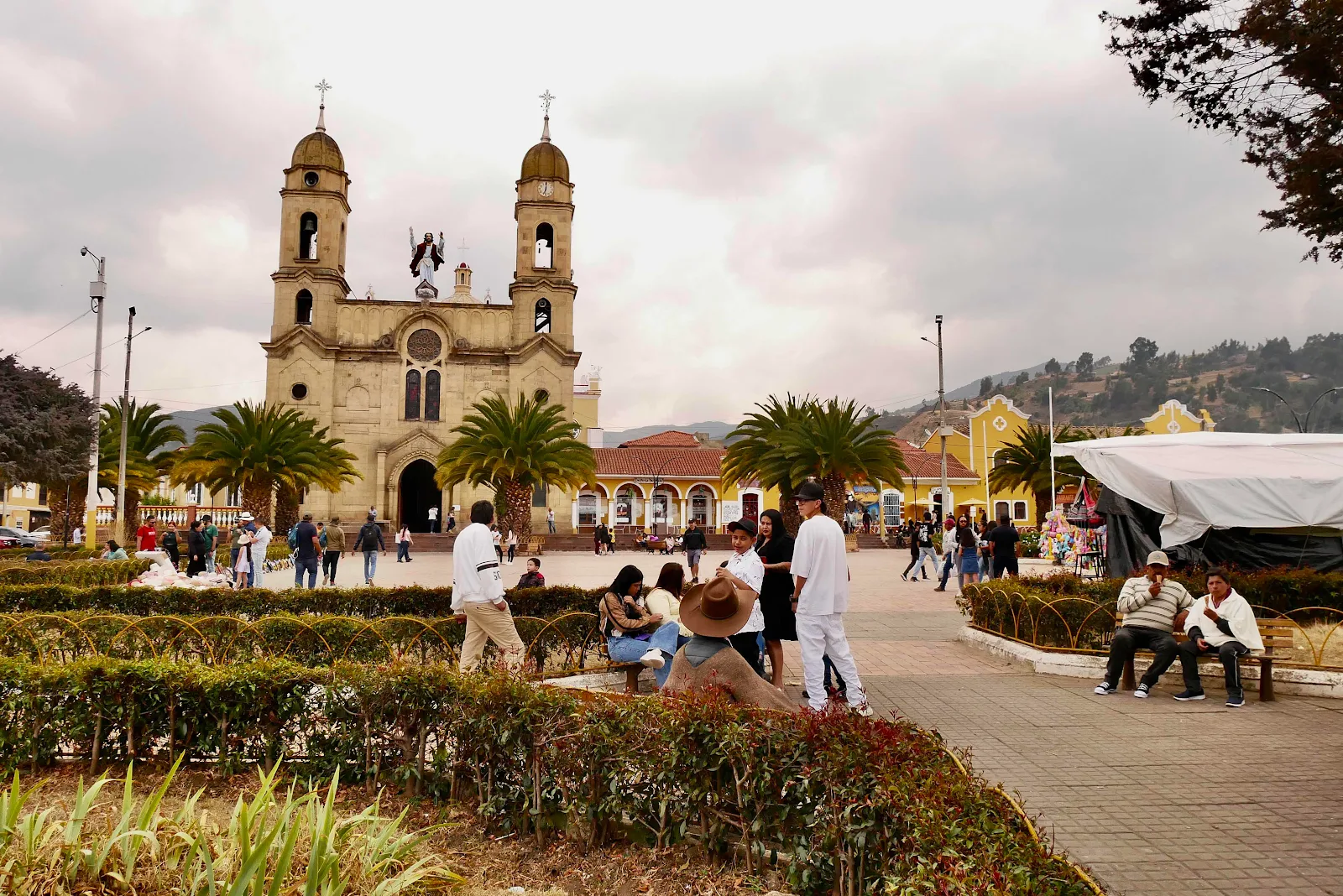
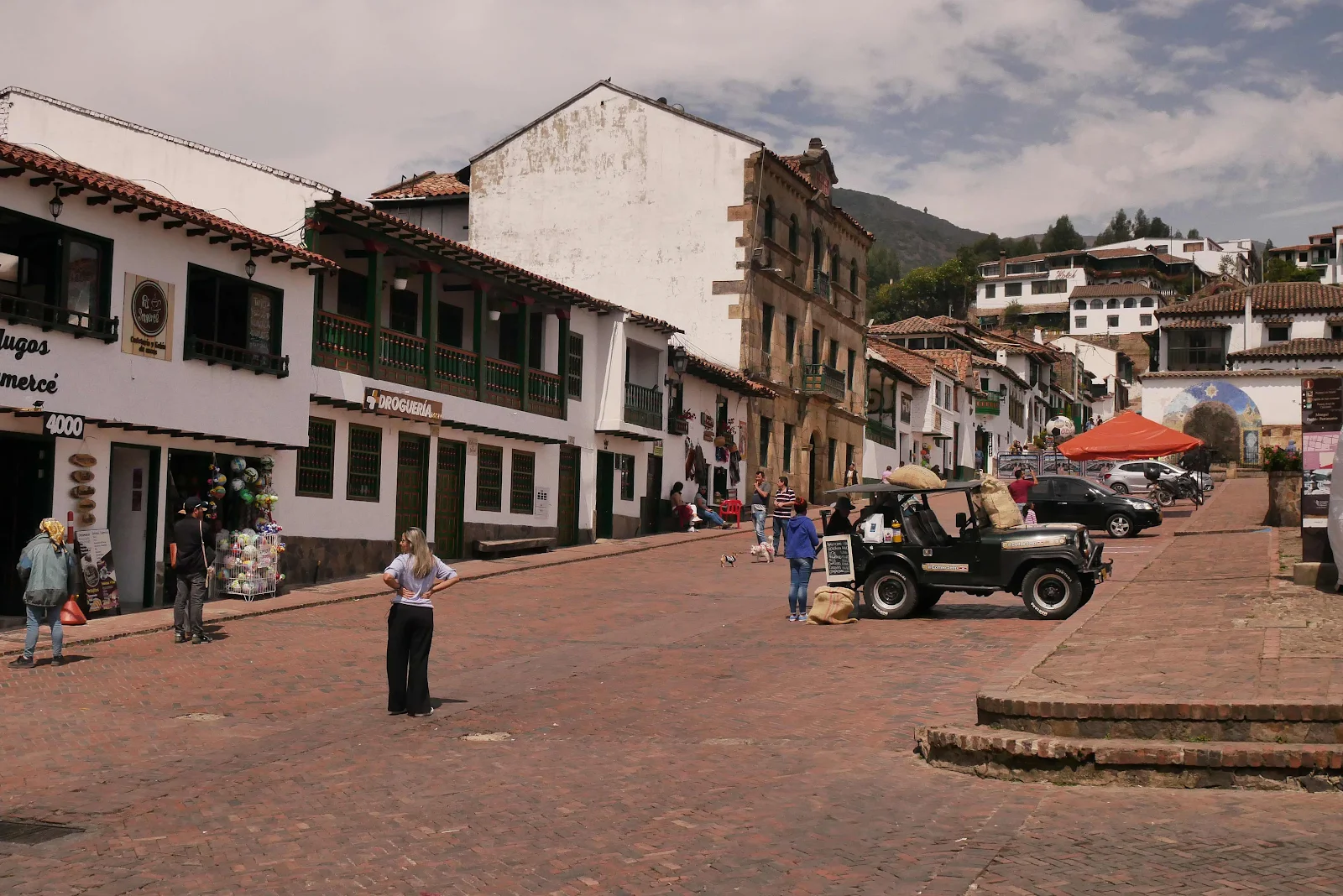
No cars allowed for Easter weekend.
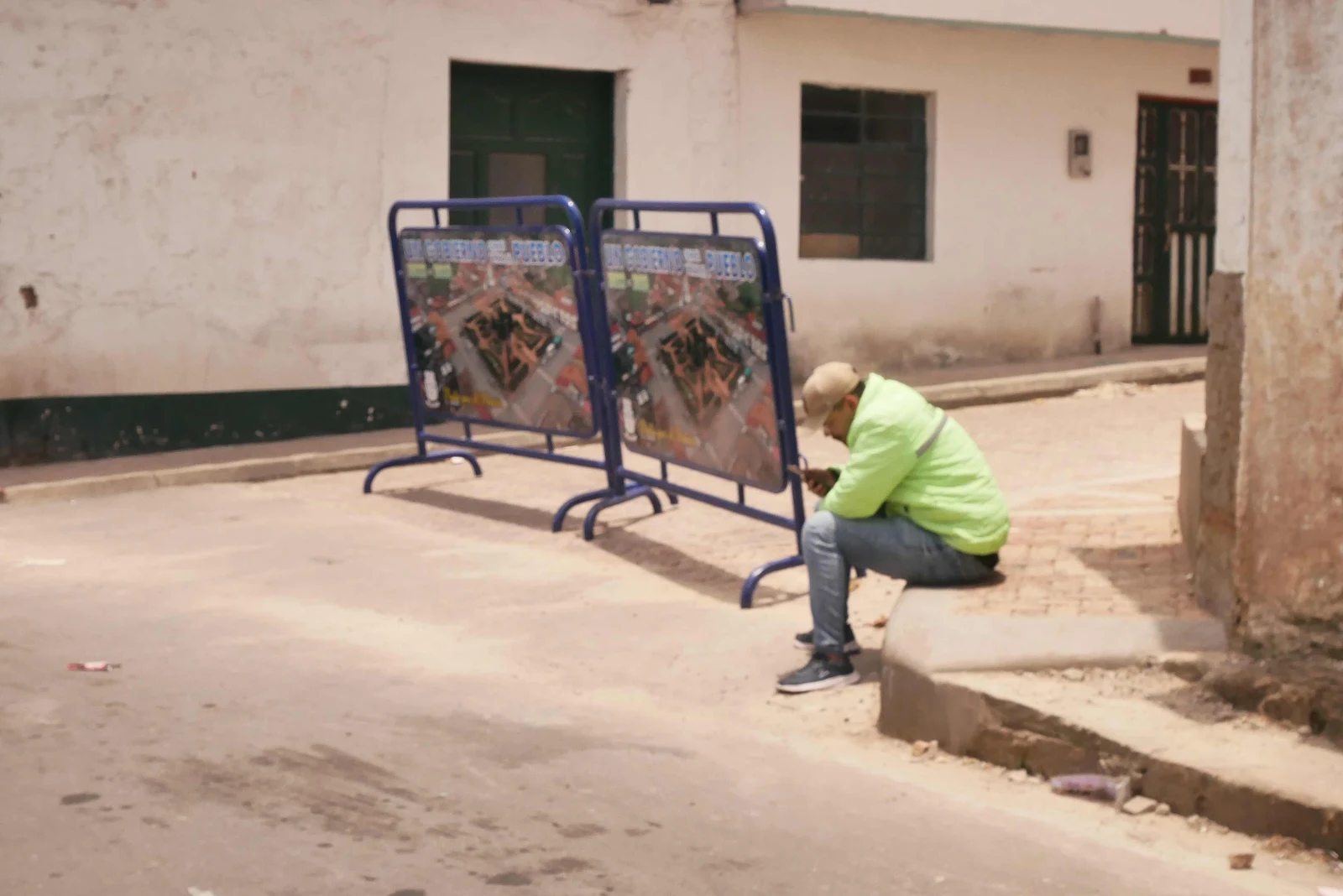
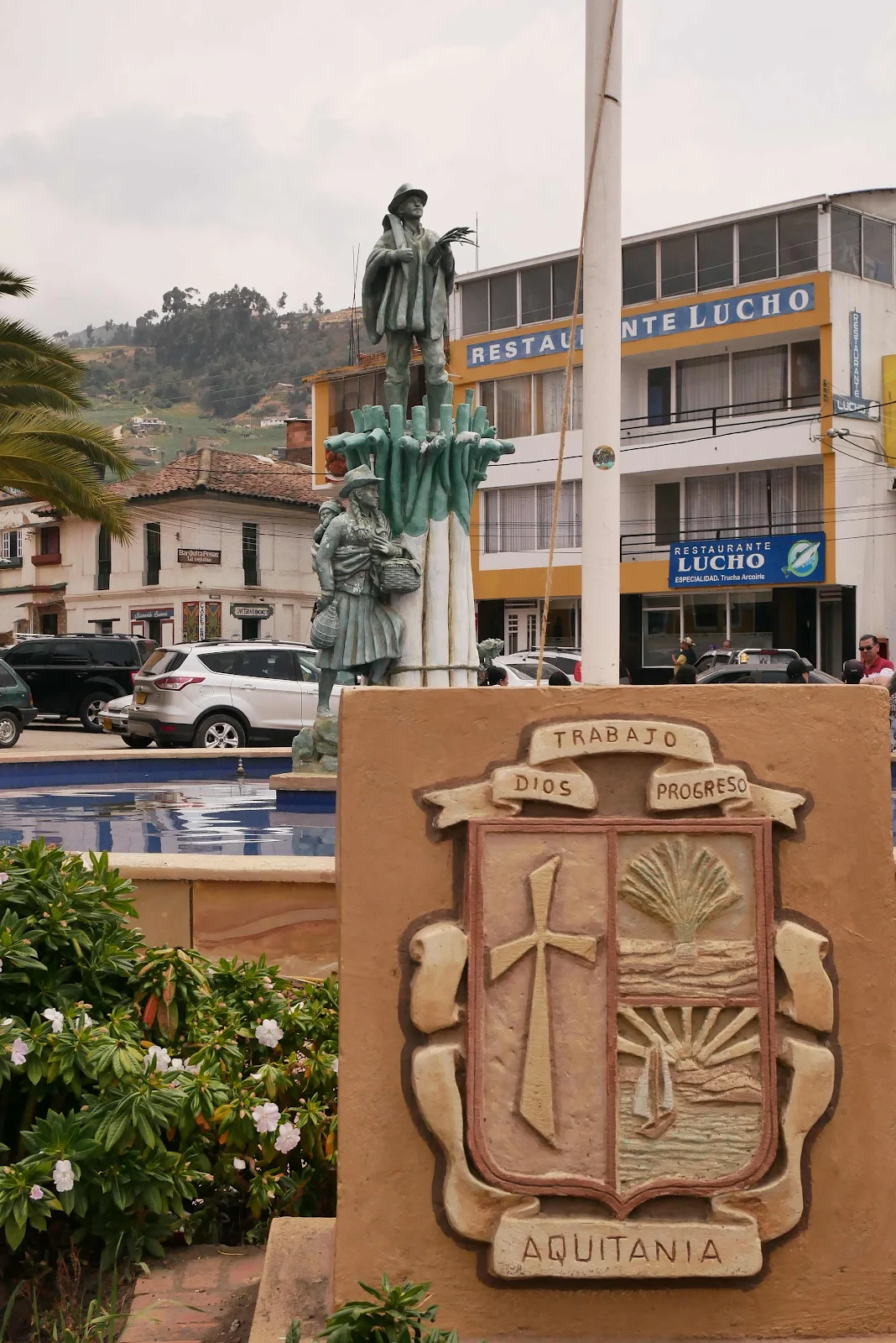
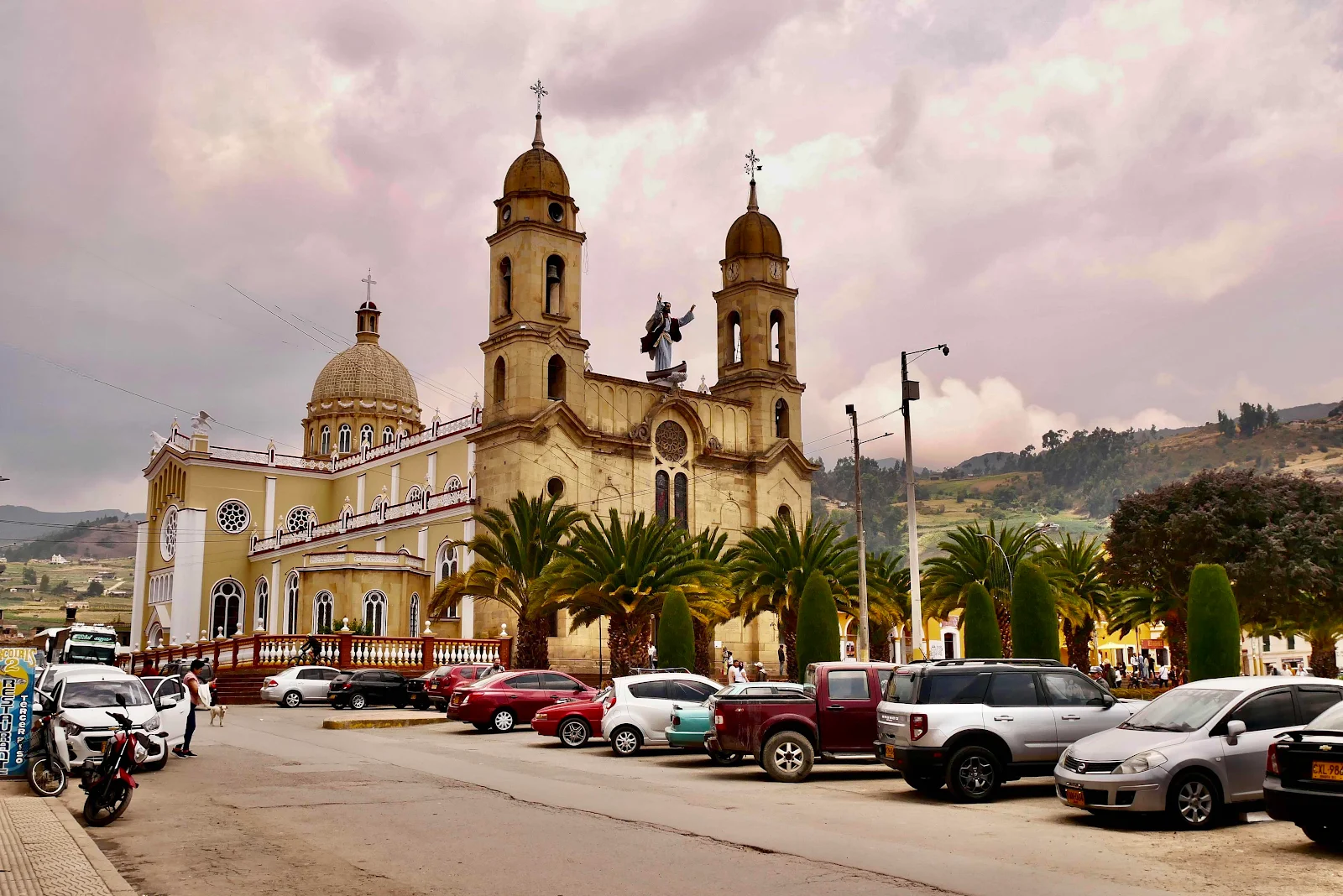
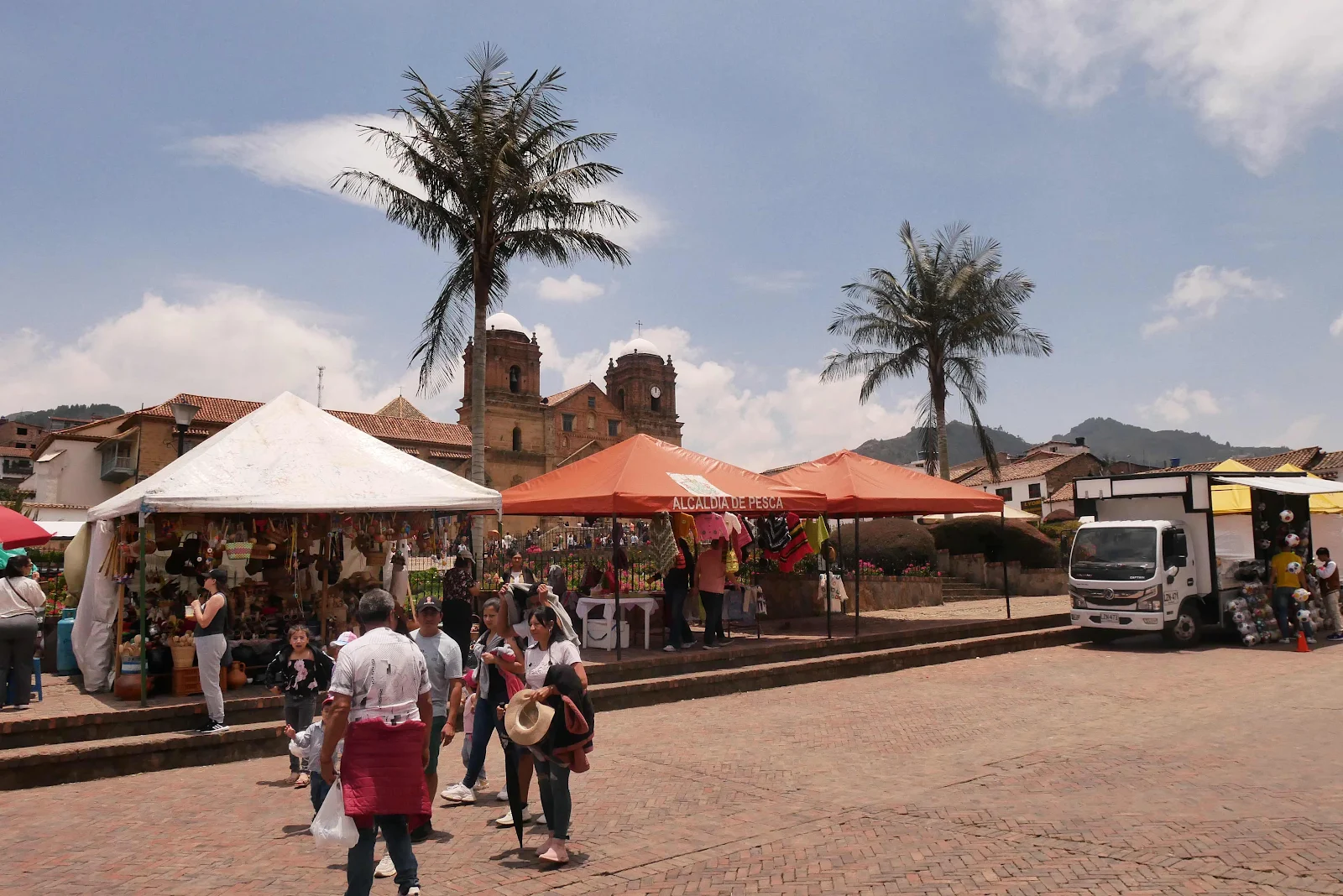
In Colombia this square is famous.
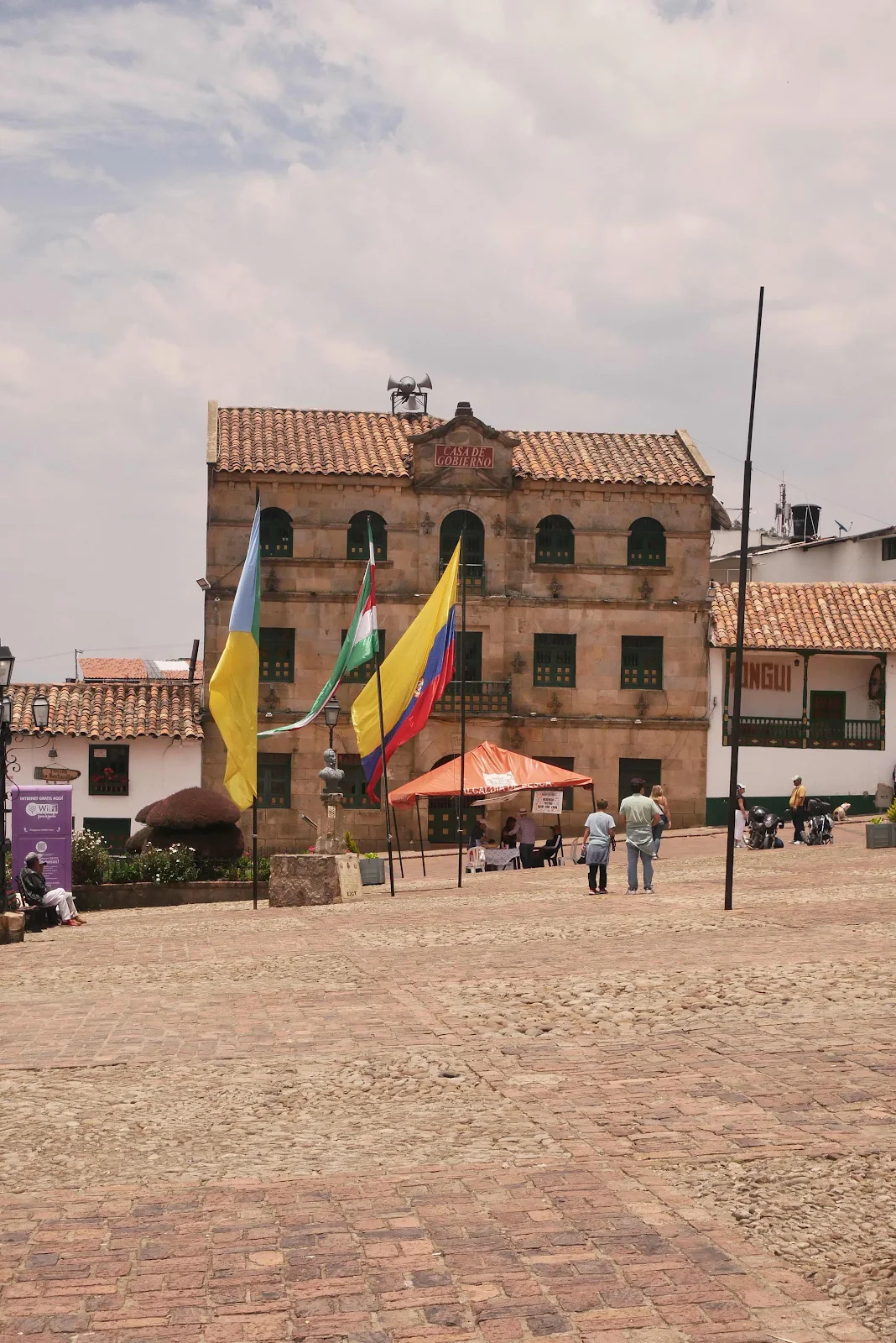
The city hall building:
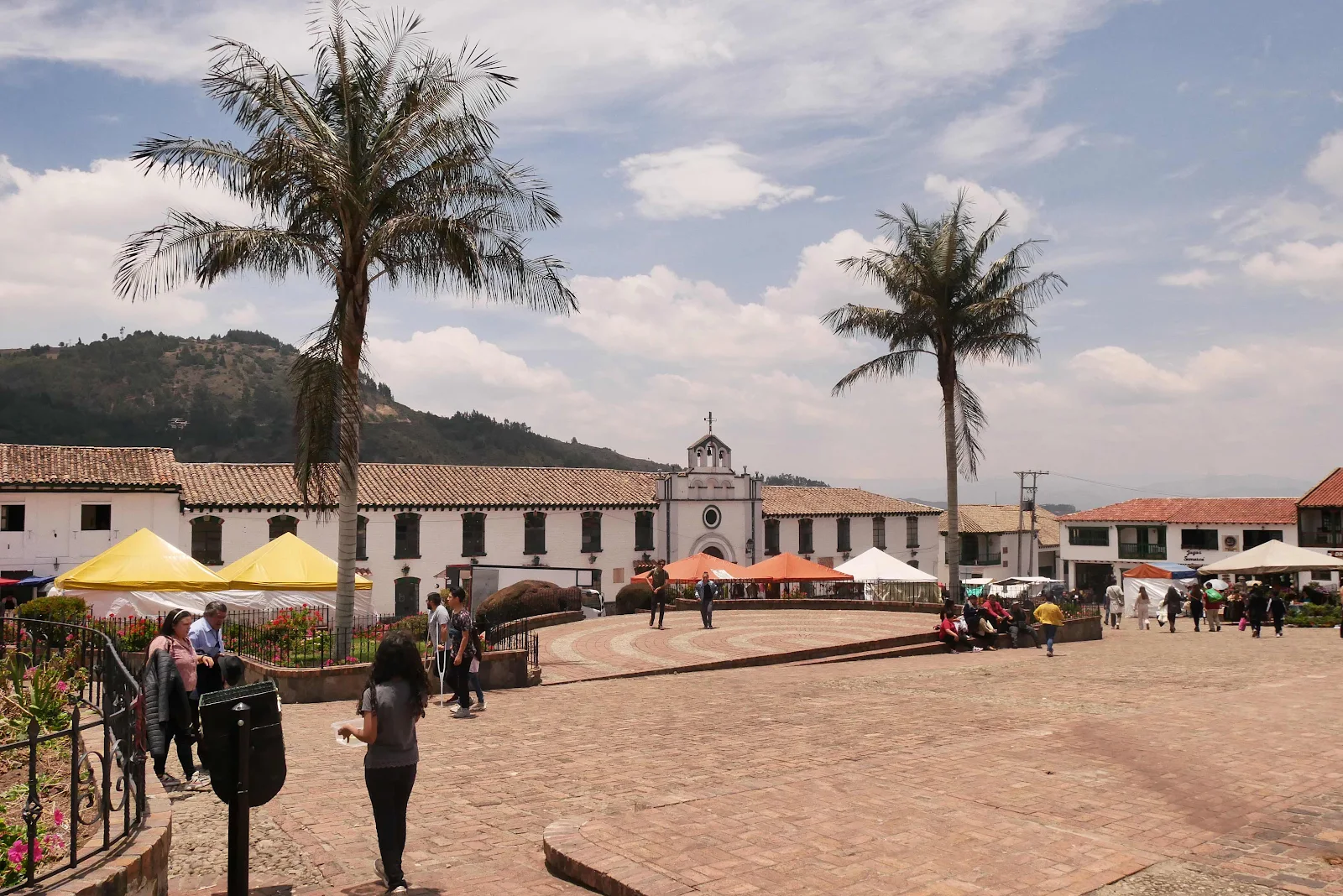
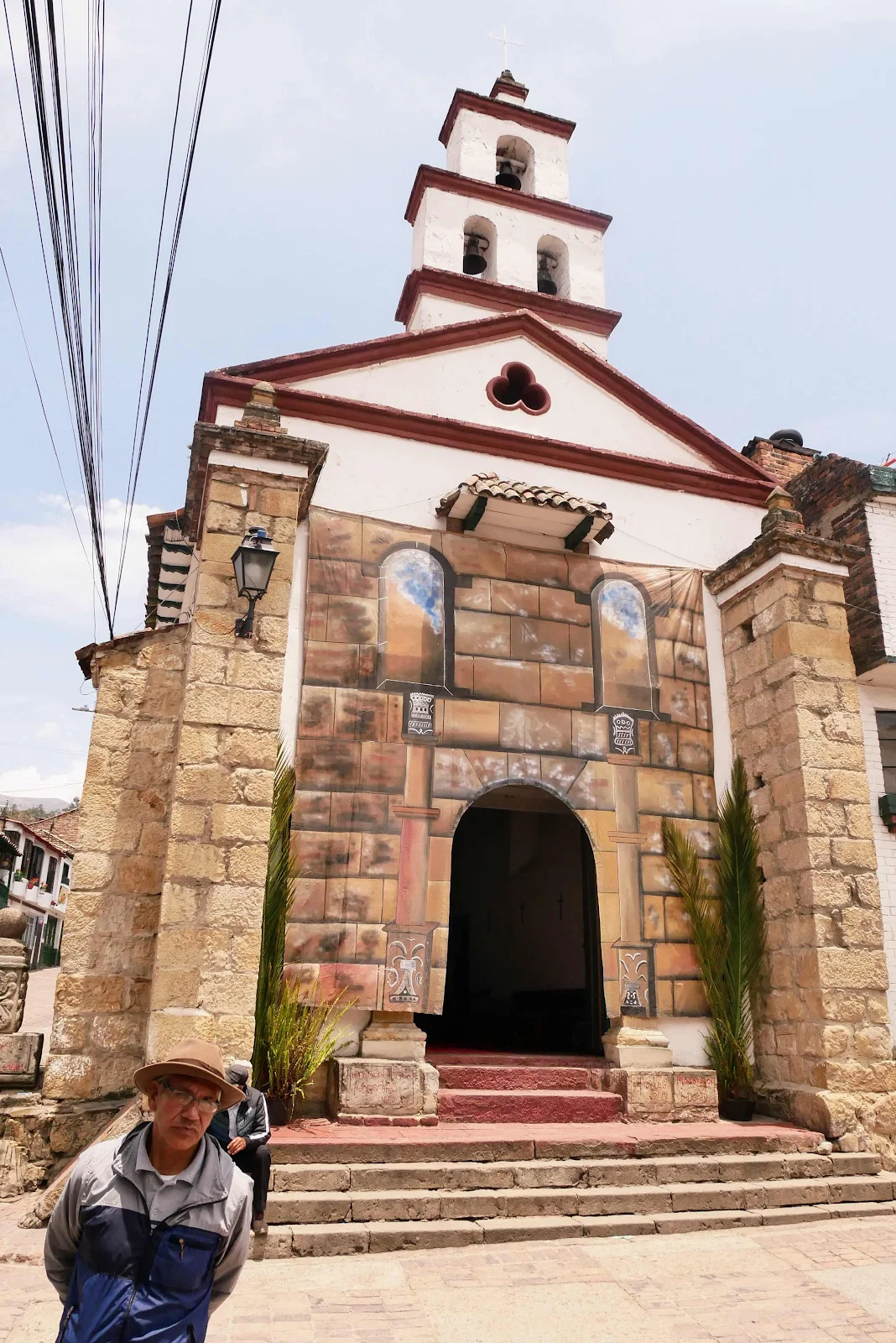
Being Good Friday the purple covers were out. Easter is actually the greatest holiday in the Catholic calendar despite the commercialization of Christmas. The way it was put to me goes: everyone is born but no one gets resurrected. Nevertheless the crowds were outside enjoying the day off not in here on their knees.
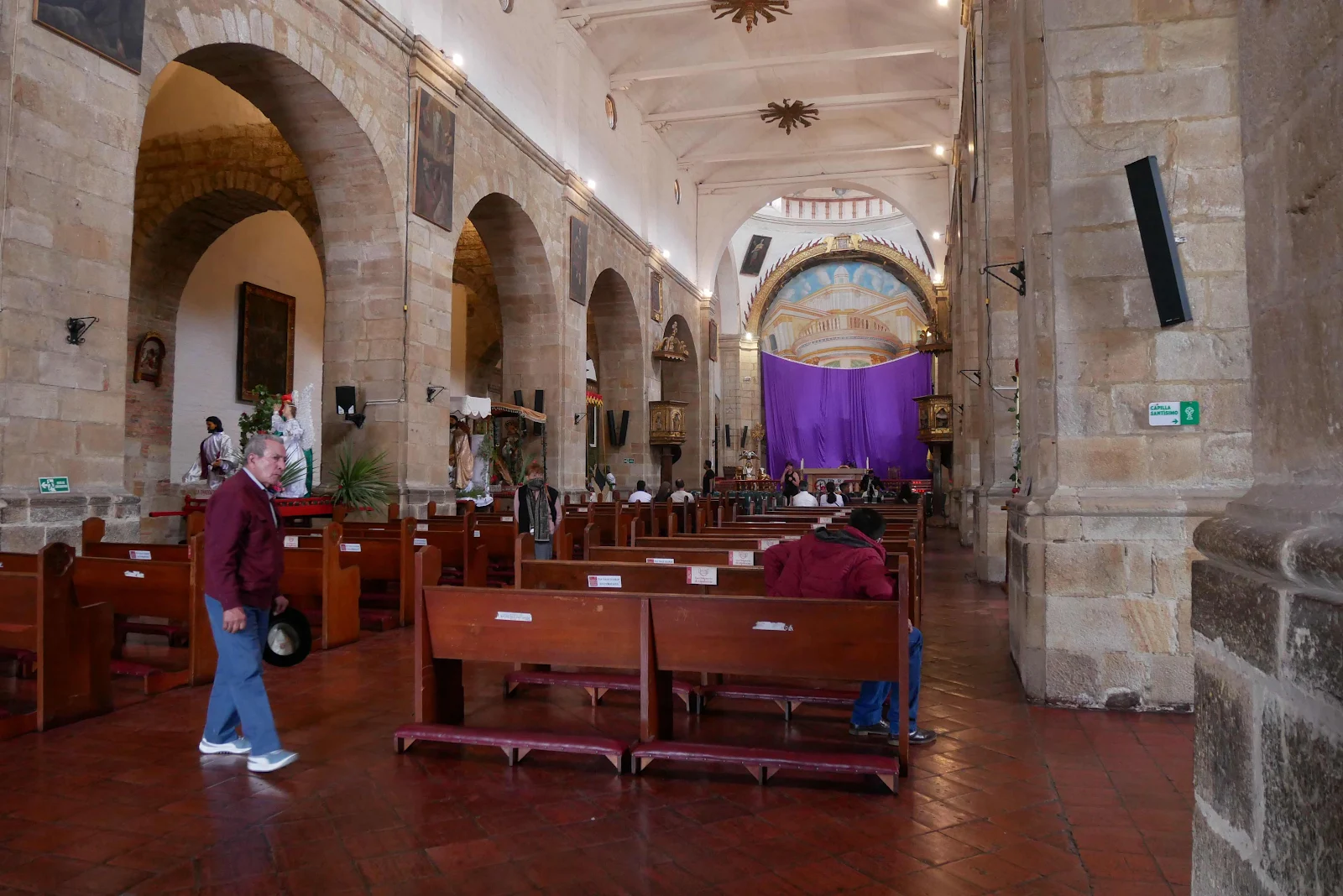
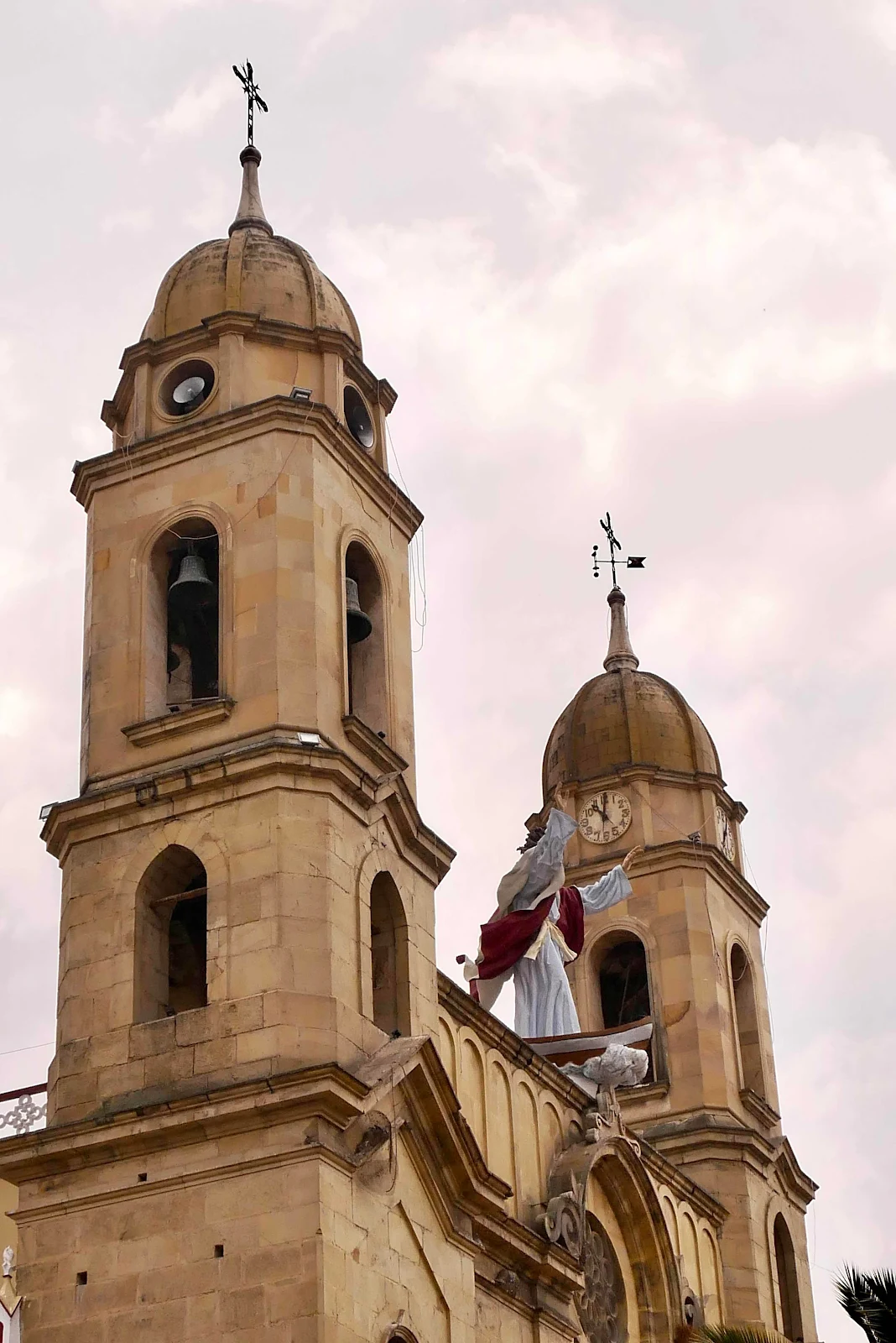
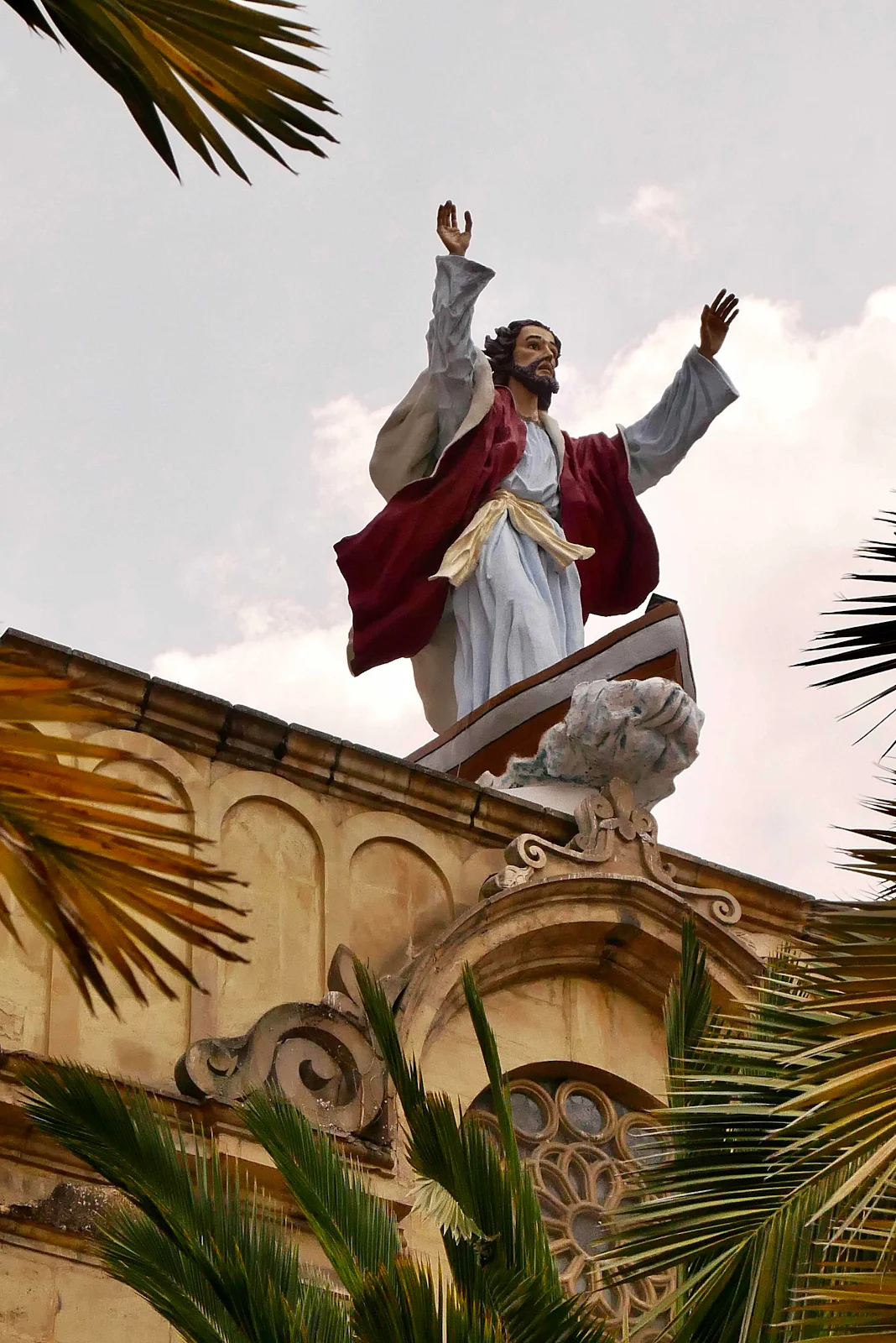
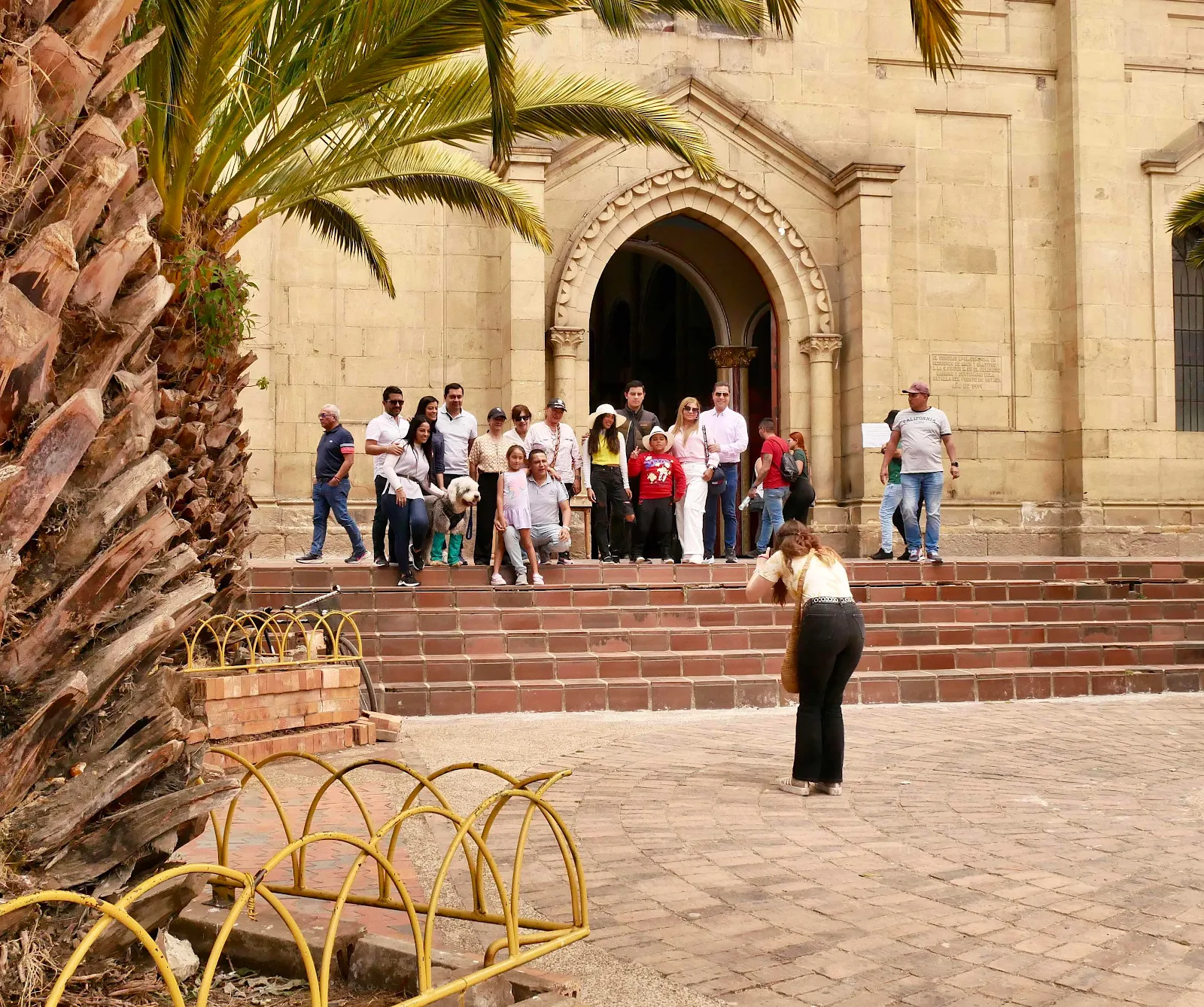
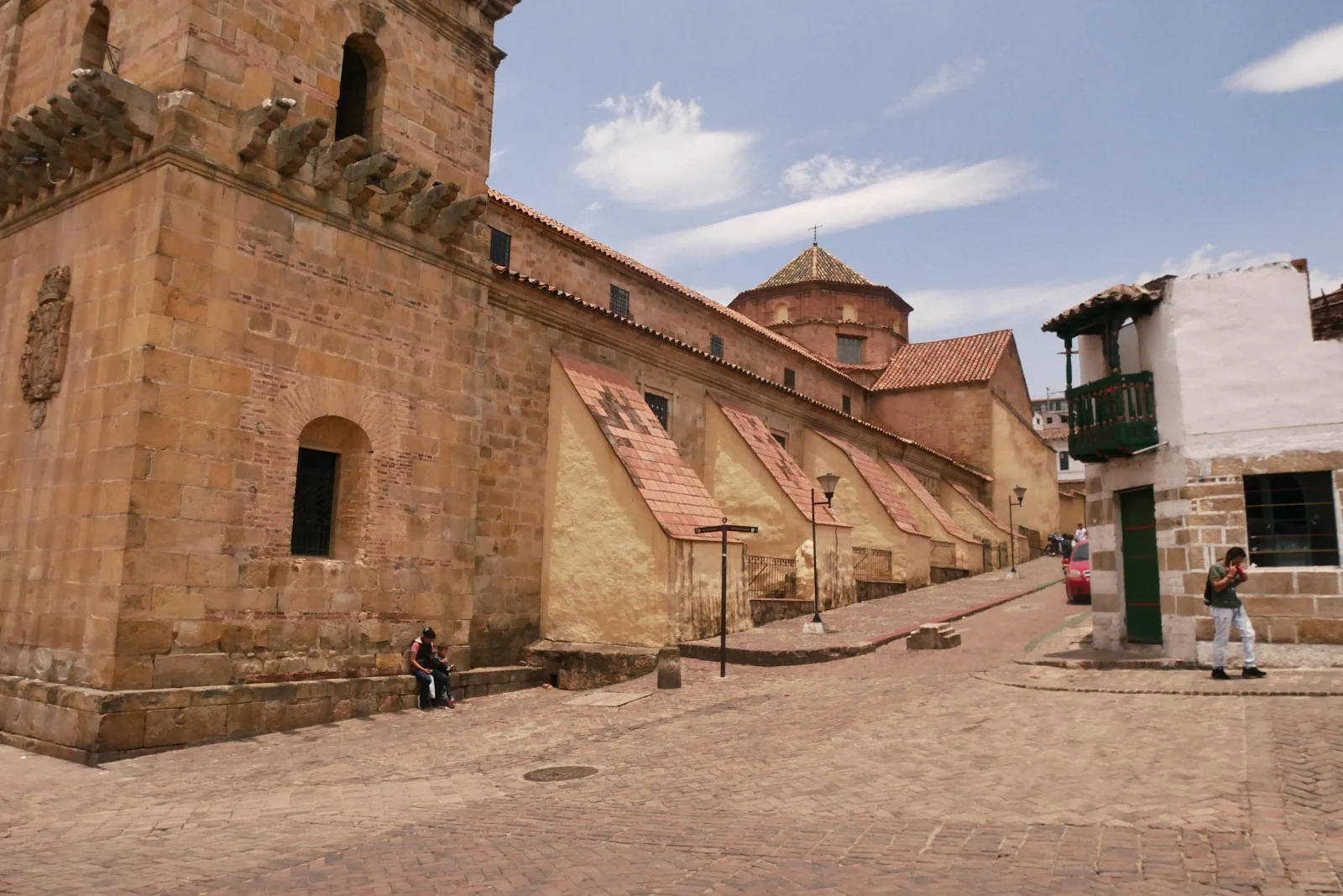
It is quite the impressive building. Like the main Catholic Church in Key West, St Mary’s, this cathedral of Our Lady of Mongui has also been declared a “minor basilica” a fact of which they are proud enough to have posted a sign to that effect.
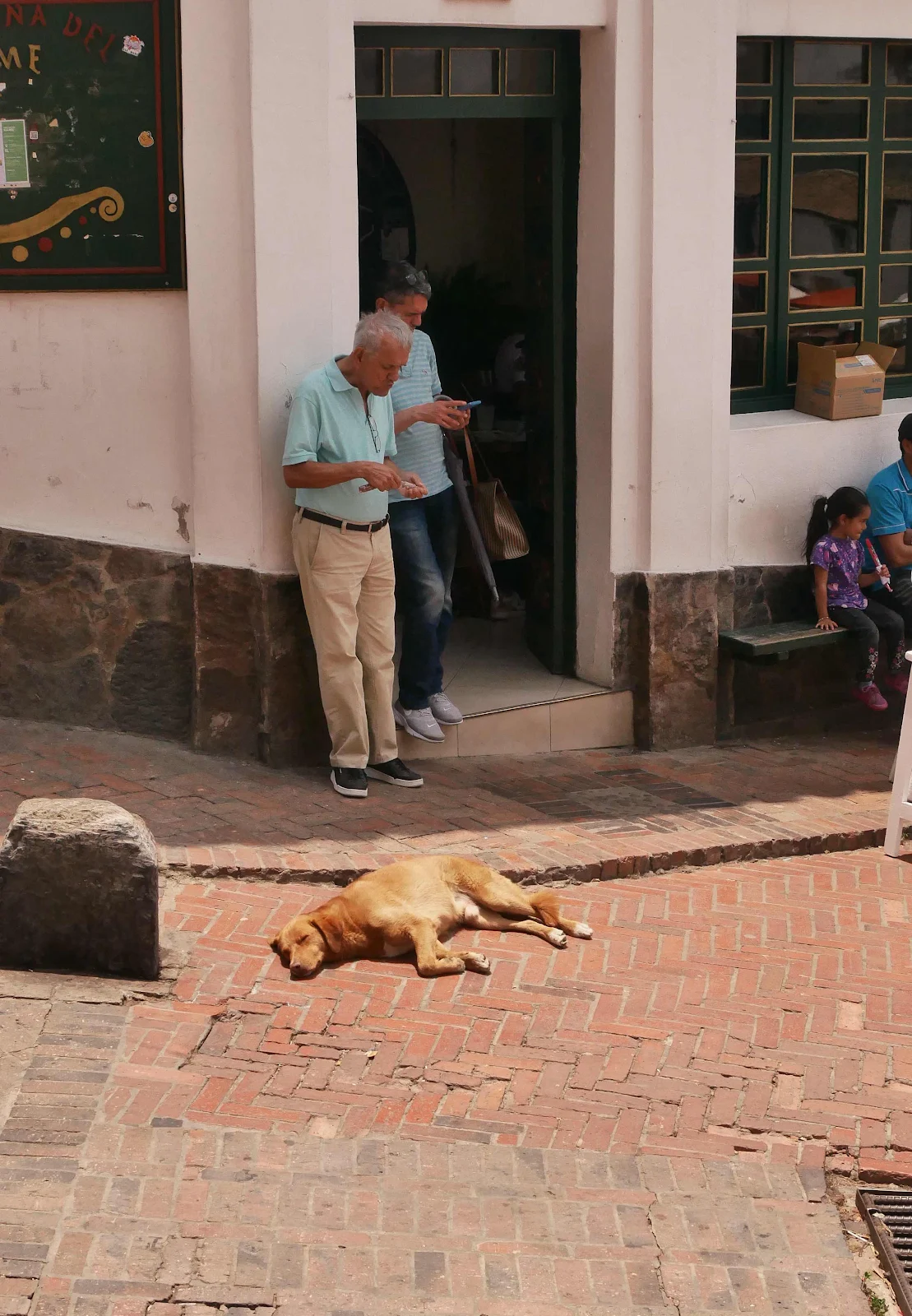
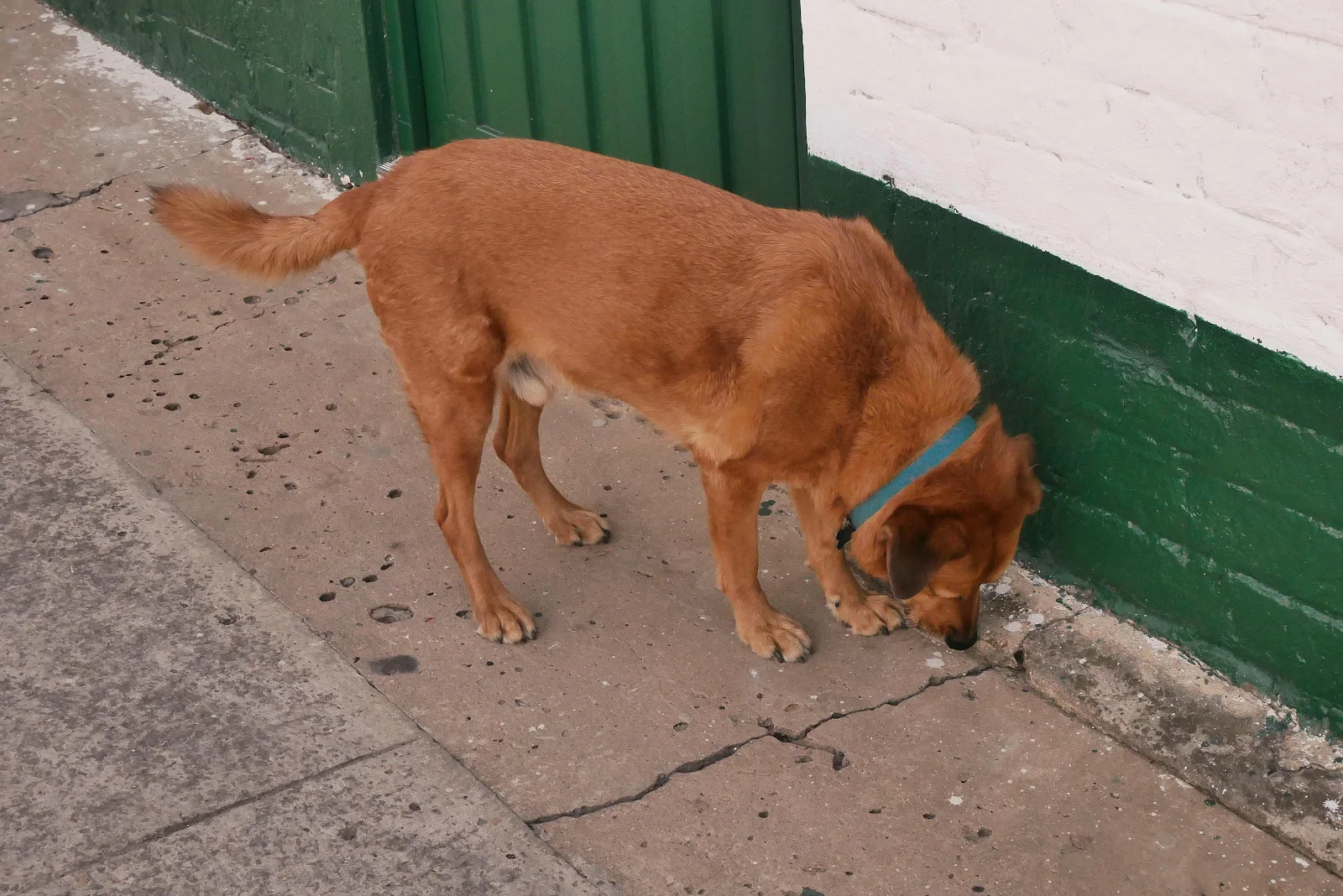
Unless you are in poverty stricken areas in the countryside you will rarely see a malnourished dog in Colombia. It’s one of the things I appreciate about this country over Mexico.
Crowded but not oppressive.
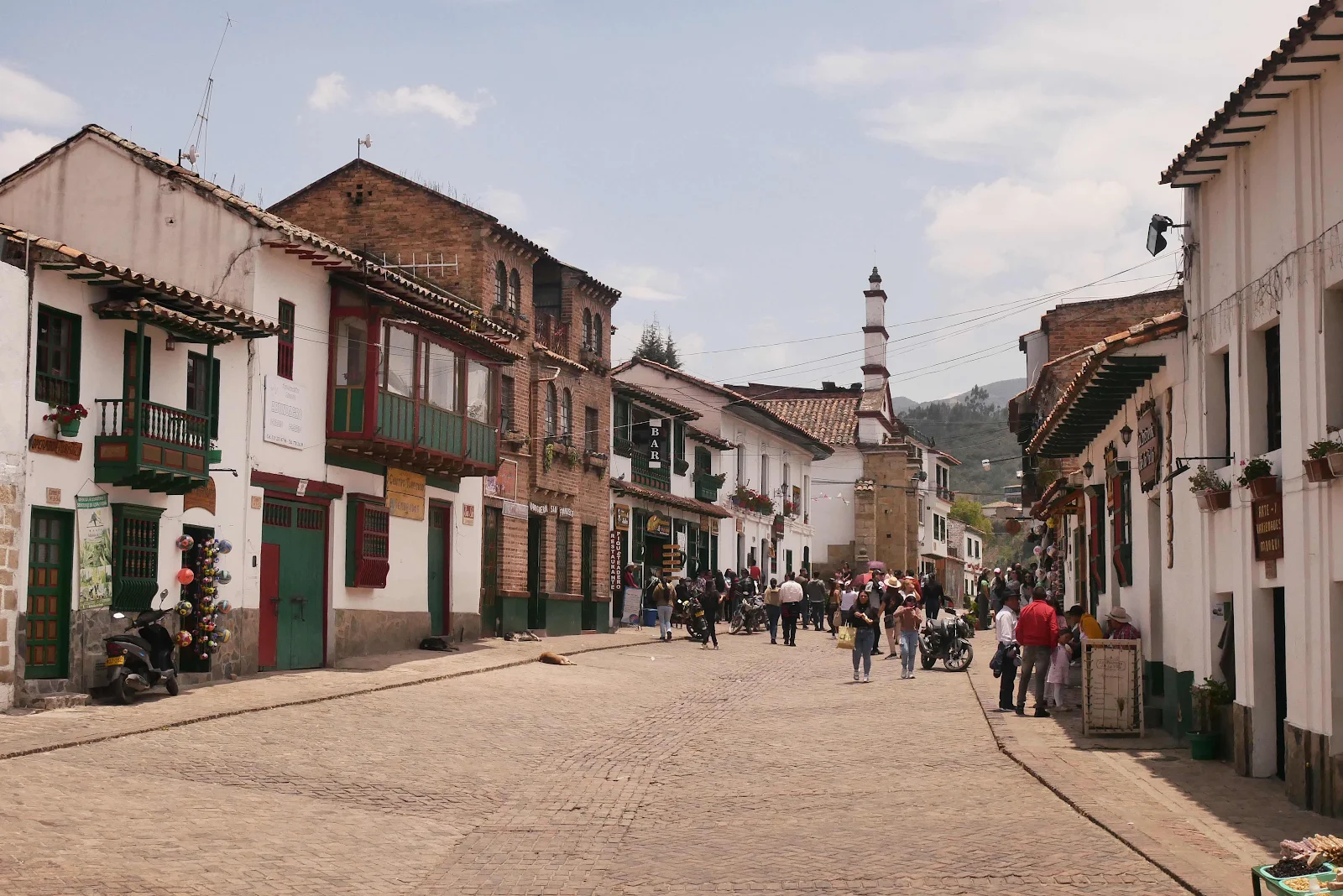
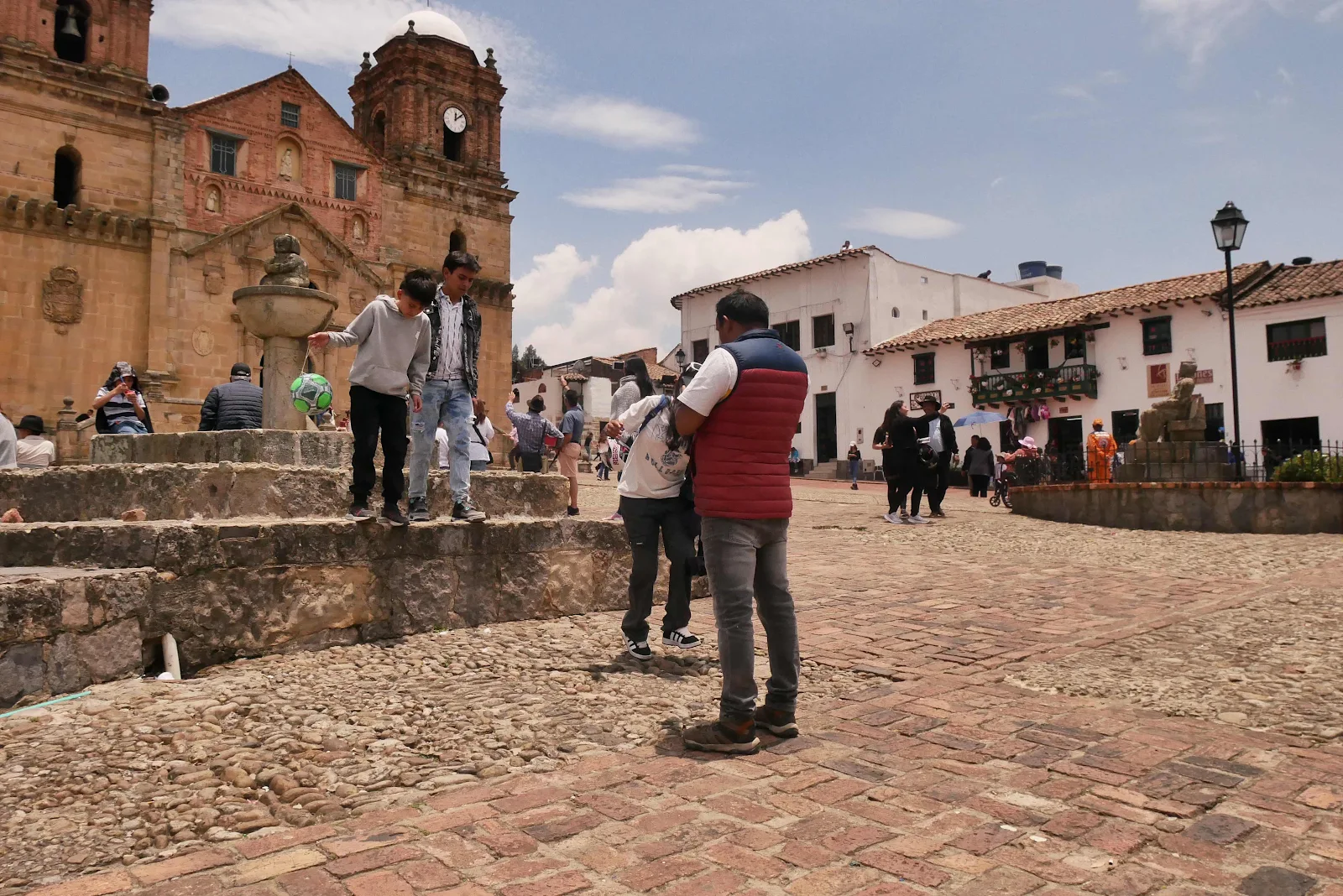
Colombians we have found are very good natured and cheerful. There is a sense of optimism here now that the civil war is history, hopefully for good, and cocaine production has moved elsewhere, notably Ecuador our next destination currently in a state of emergency. Great. Colombia though is doing well and wants tourists.

There a brew pub on the main square so we took a pause that refreshes.
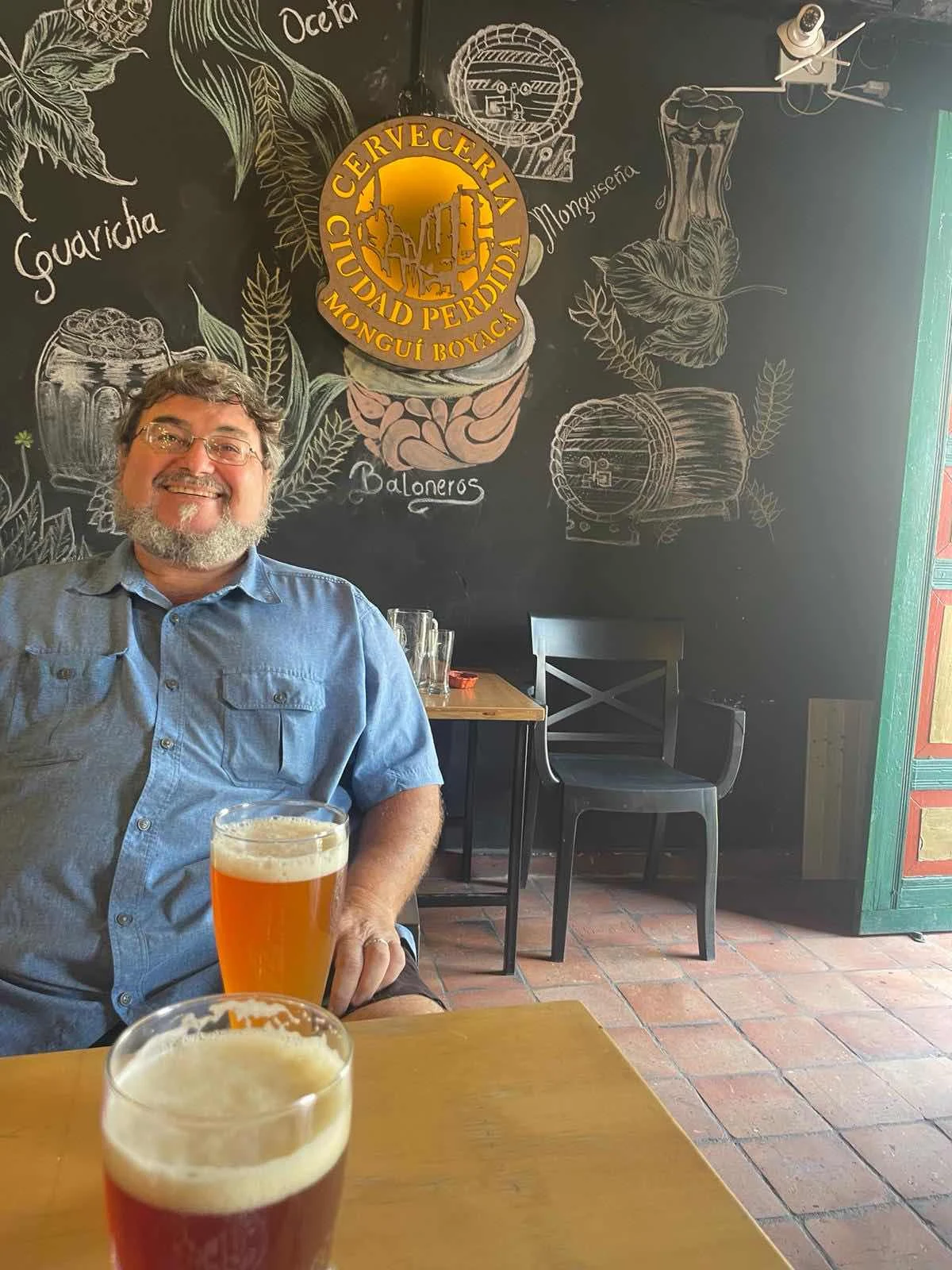
Mongui was founded on the last day of 1601 and was declared a Heritage town in 2010.
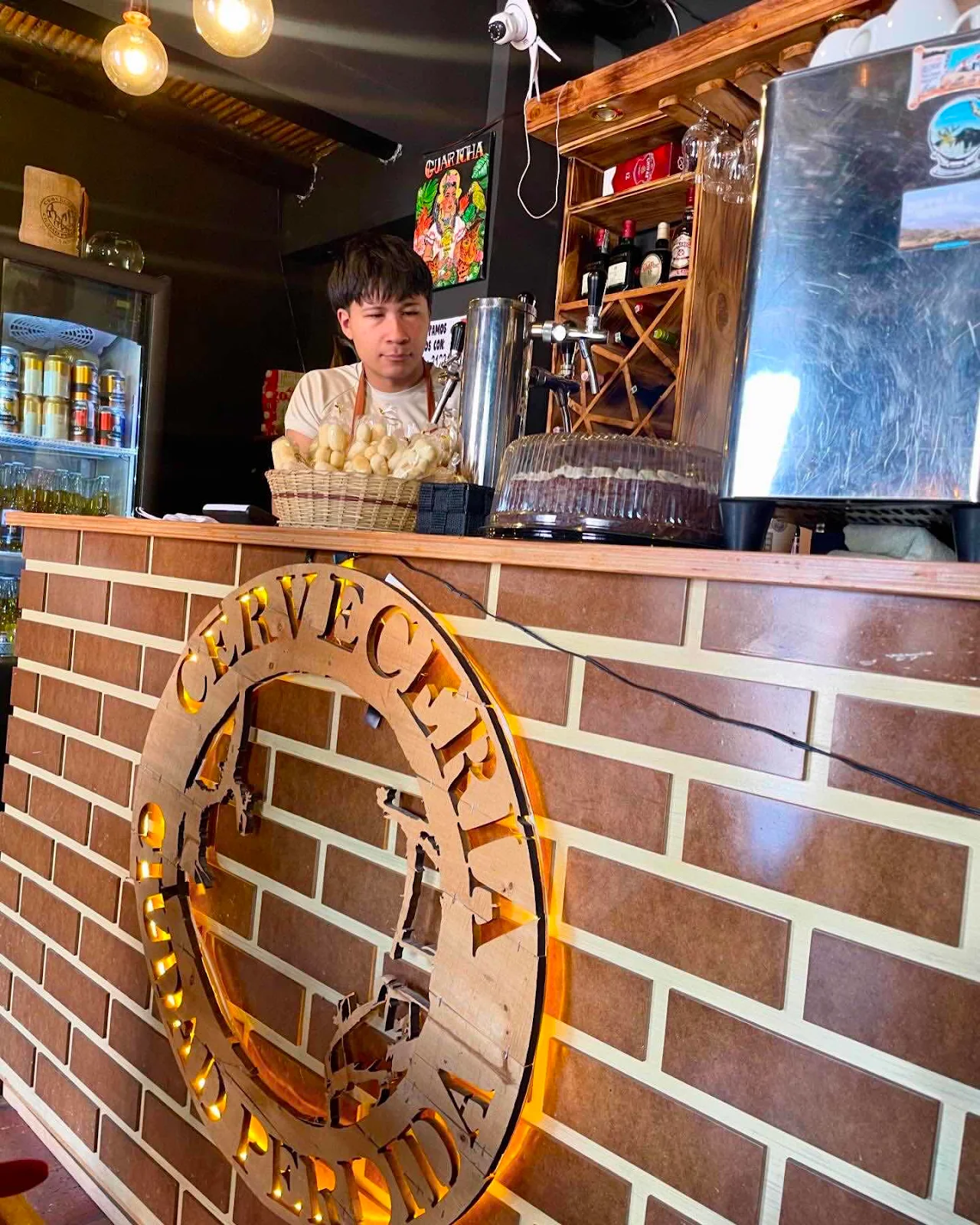
Officially there are 5,000 residents in the town and they are politically active. By my count half the city turned out to vote in municipal elections last November when the city turned away from two previous mayors and elected a new face. The new mayor is petitioning the federal government for a new hospital to be built in the city. Getting things done I guess. “Drink like the old TVs - without controls!”
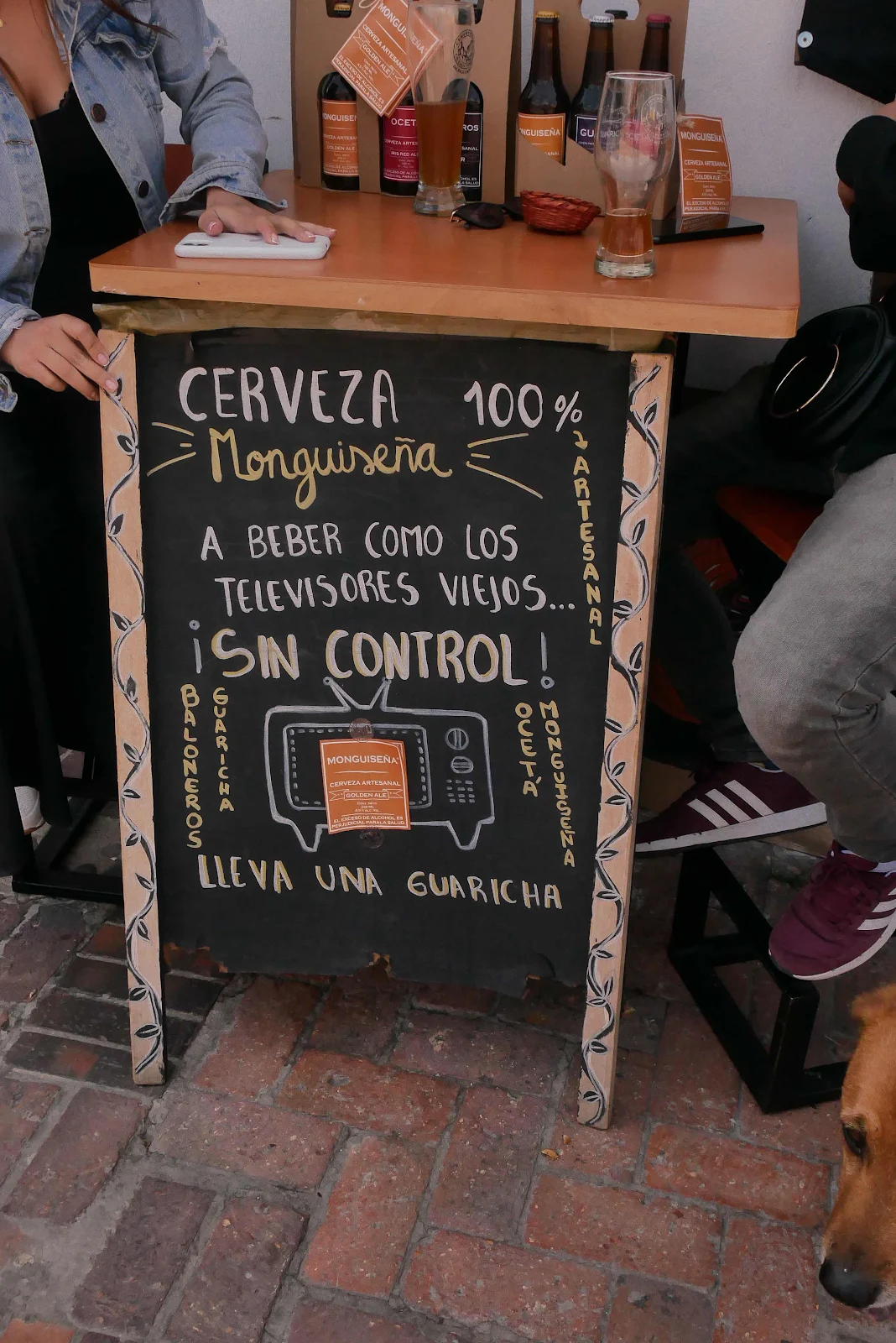
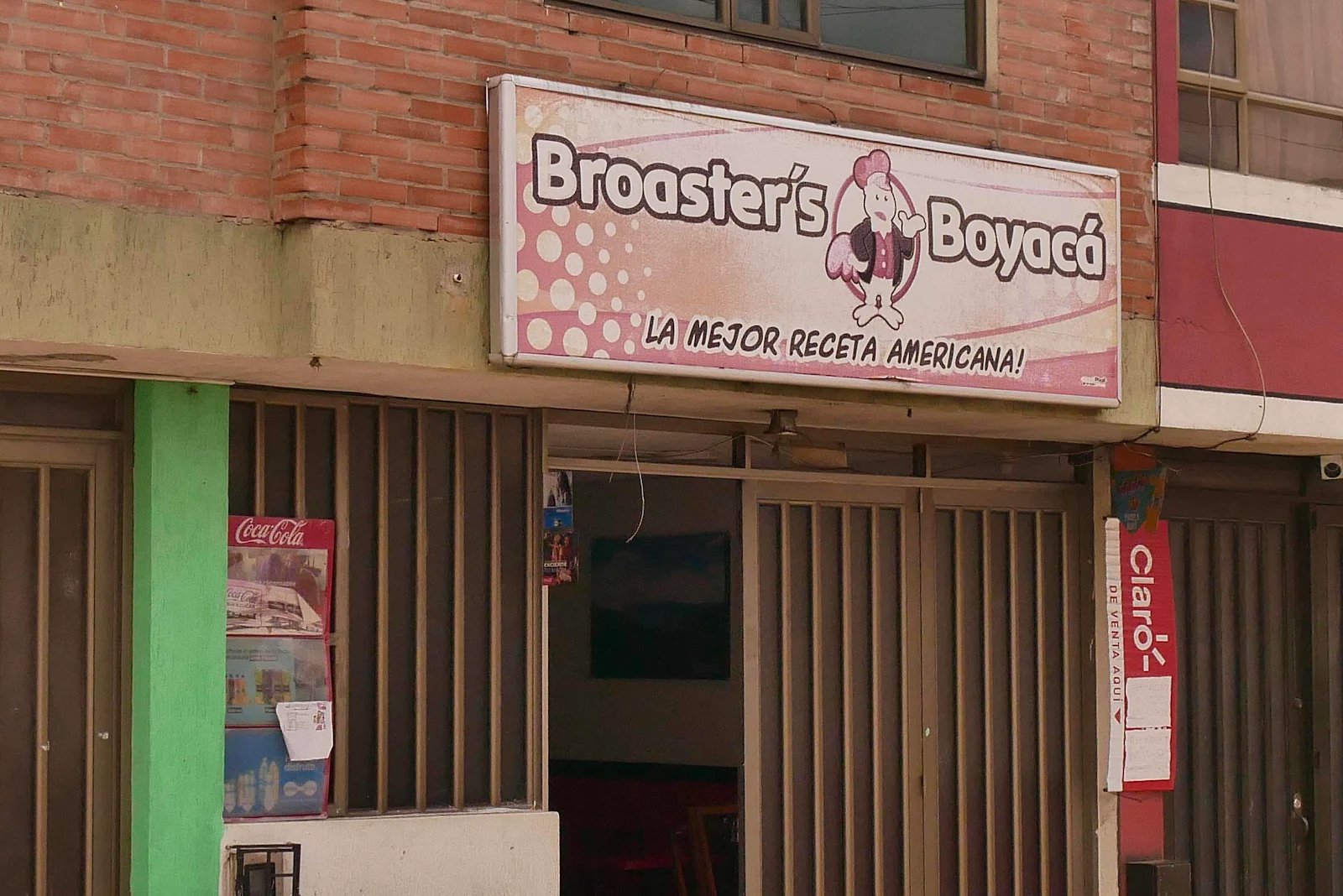
Despite the sign (above) urging people to let their hair down at the pub we limited ourselves to one and then went in search of a snack. The strange bready arepas of Boyacá were everywhere, filled with a mixture of cornmeal and cheese. They’re pretty good hot off the grill (for 50 cents each!) and Rusty couldn’t get enough of mine if you need his endorsement.
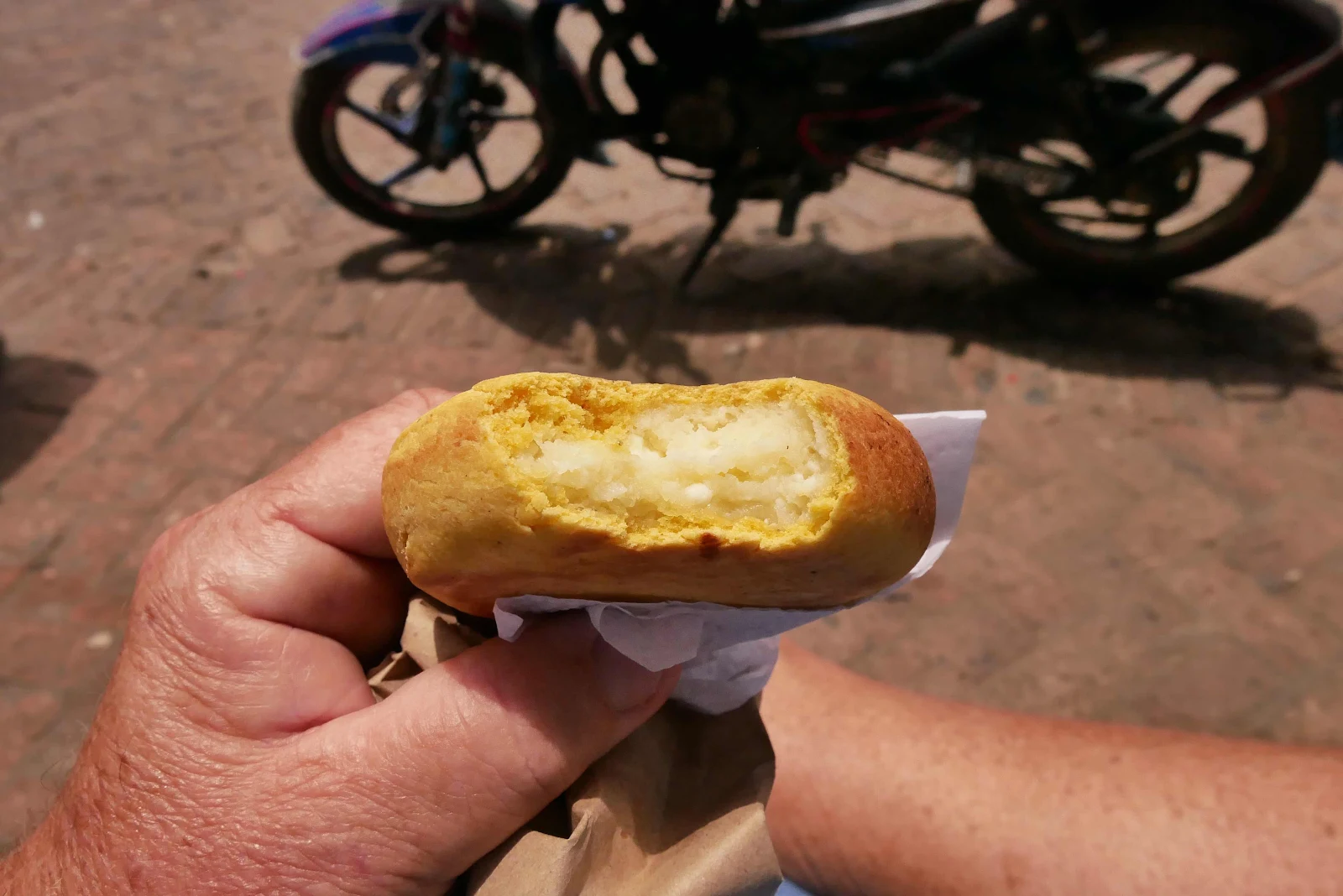

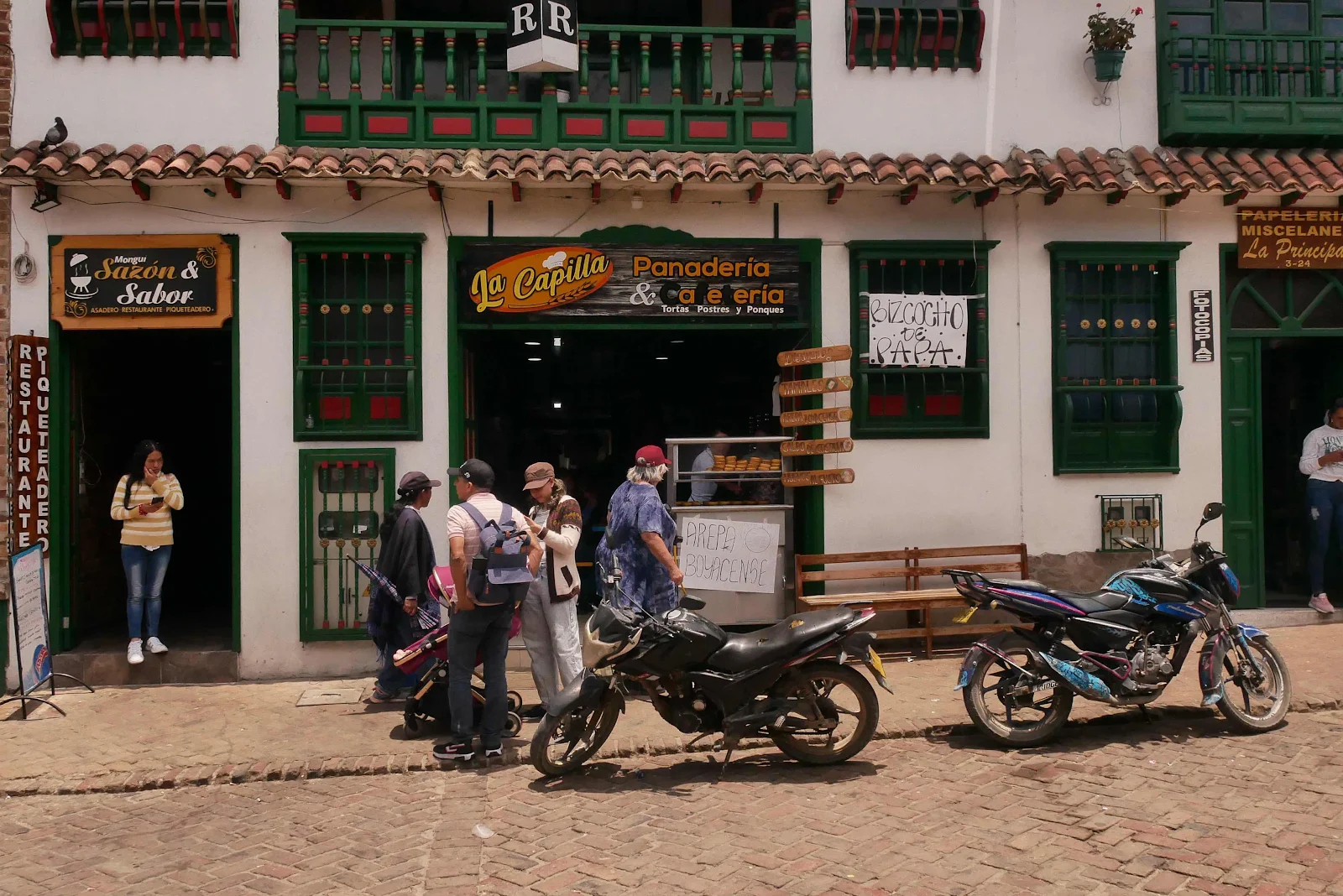
A bakery loaded with arepas:
A crisis arose in 1932 when Peru and Colombia went to war over an obscure Amazonian border separating the two countries to the east. By 1933 a treaty was signed in Geneva ceding Leticia province to Colombia. One of the soldiers sent to fight was Froulán Ladino from Mongui and while there he learned the art of making footballs from some Brazilian soldiers guarding their common frontier.
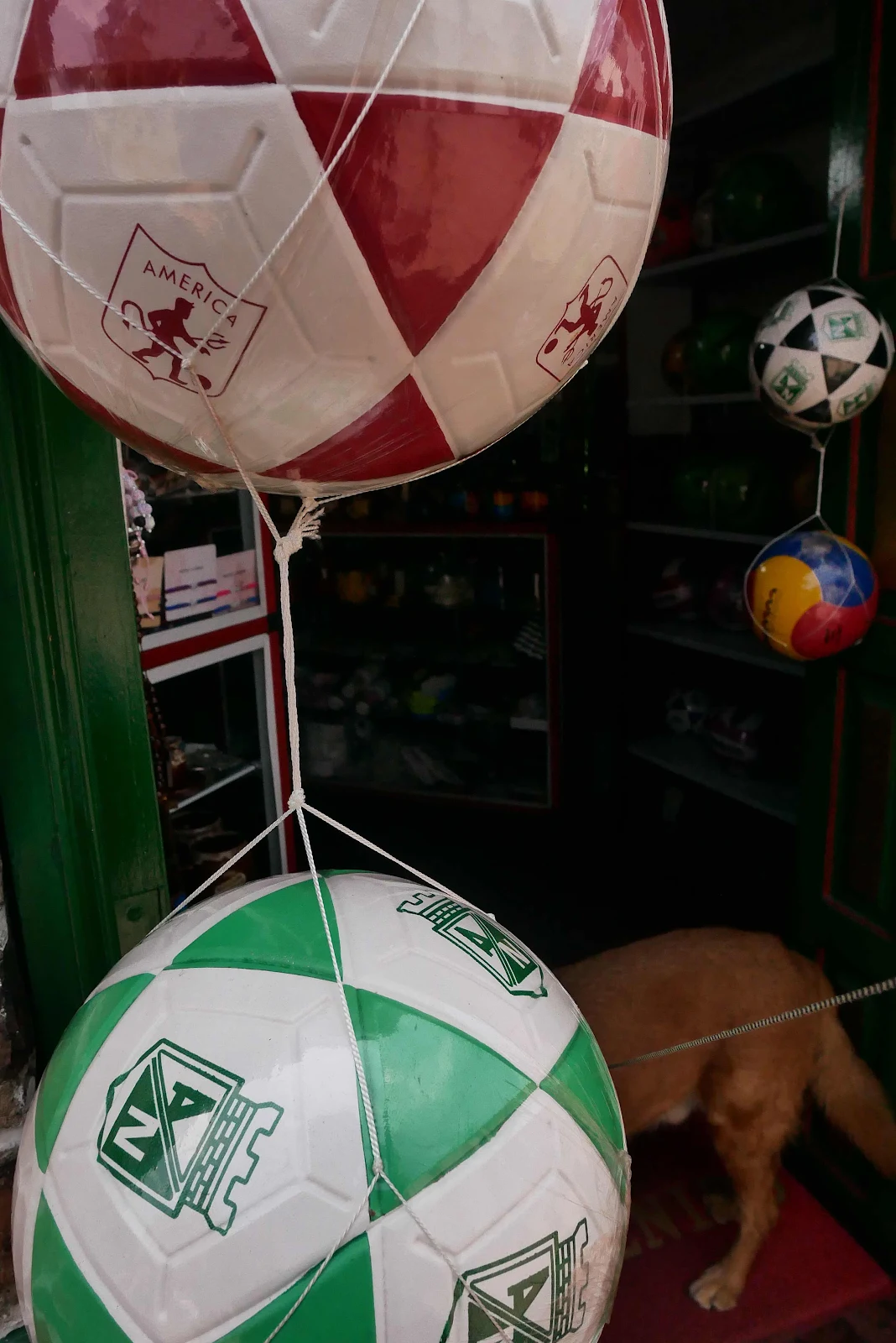
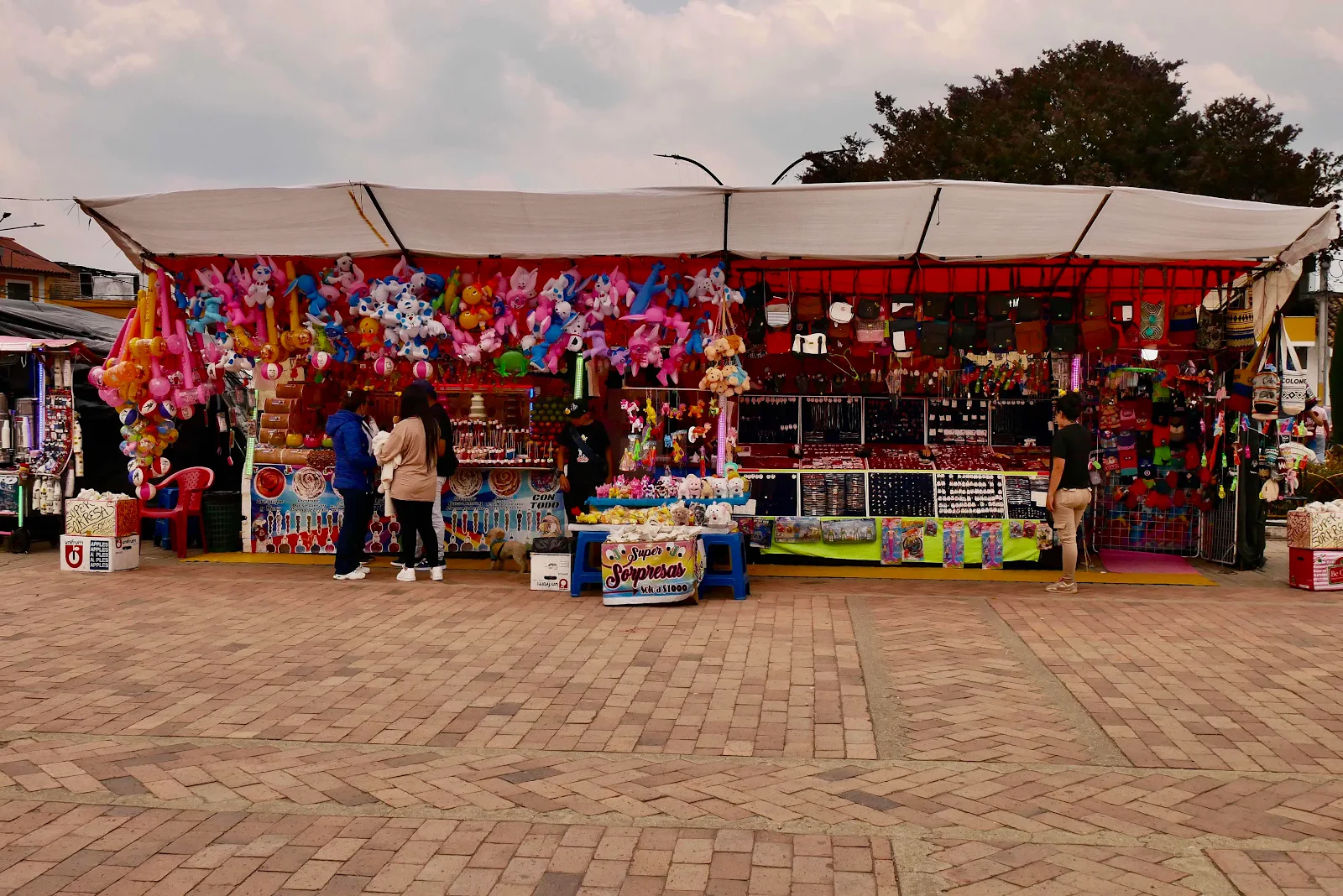
Ladino came home and started a football manufacturing business in his home town where agriculture was king. The footballs became famous across the country until the usual happened and cheap Chinese imports killed the trade. However the nostalgia for the period means soccer balls are now a tourist souvenir. Go to Mongui and come home with a soccer ball. Layne bought a van sized soccer ball key chain.
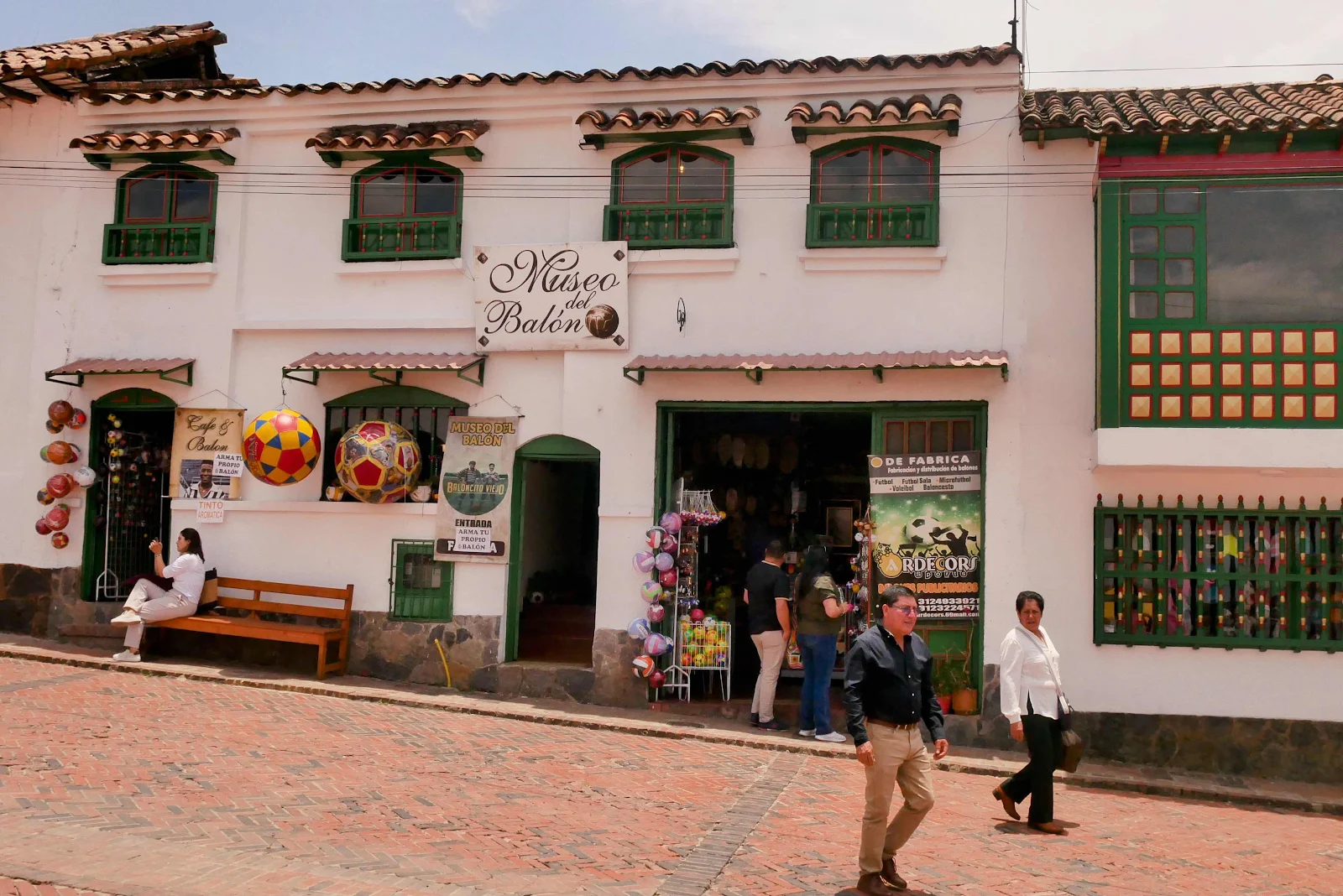
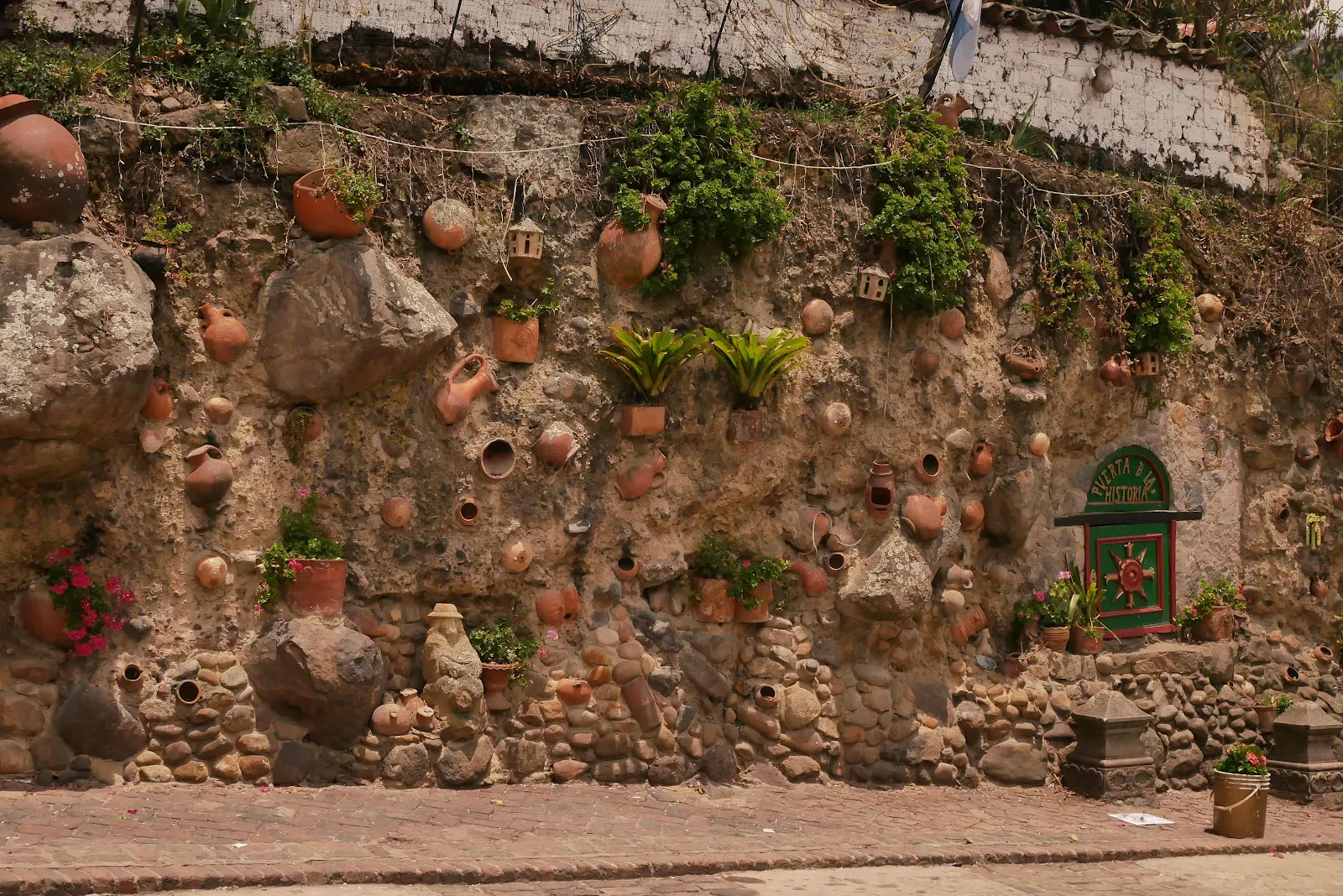
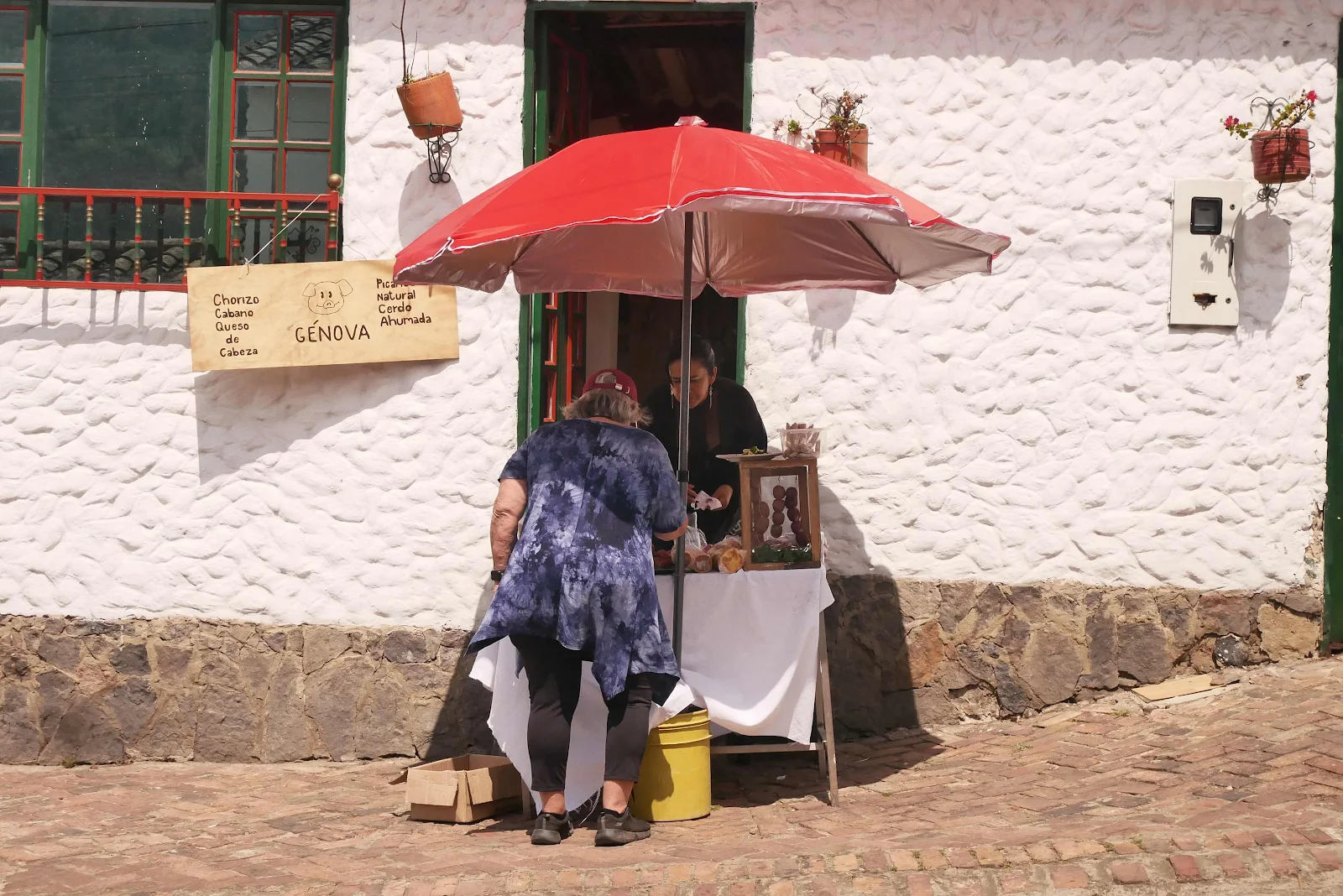
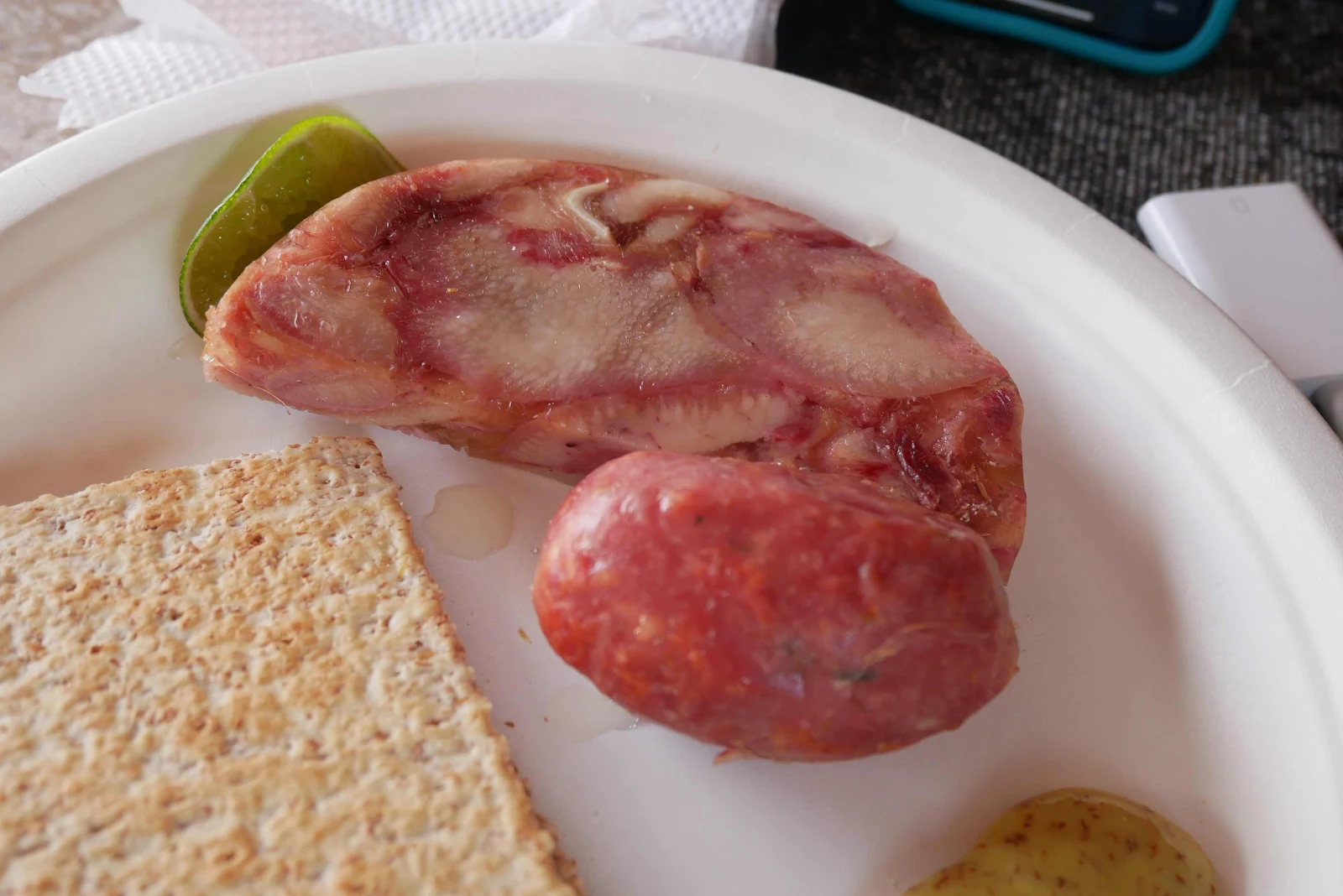
We picked up some local meat delicacies the usual sausage and head cheese to have a picnic lunch aboard GANNET2 in the grassy parking lot.
We got to lunch after Layne gave one more tour of our mobile home (“casa rodante”) to a curious Colombian family who walked up and nervously asked if they could see it.
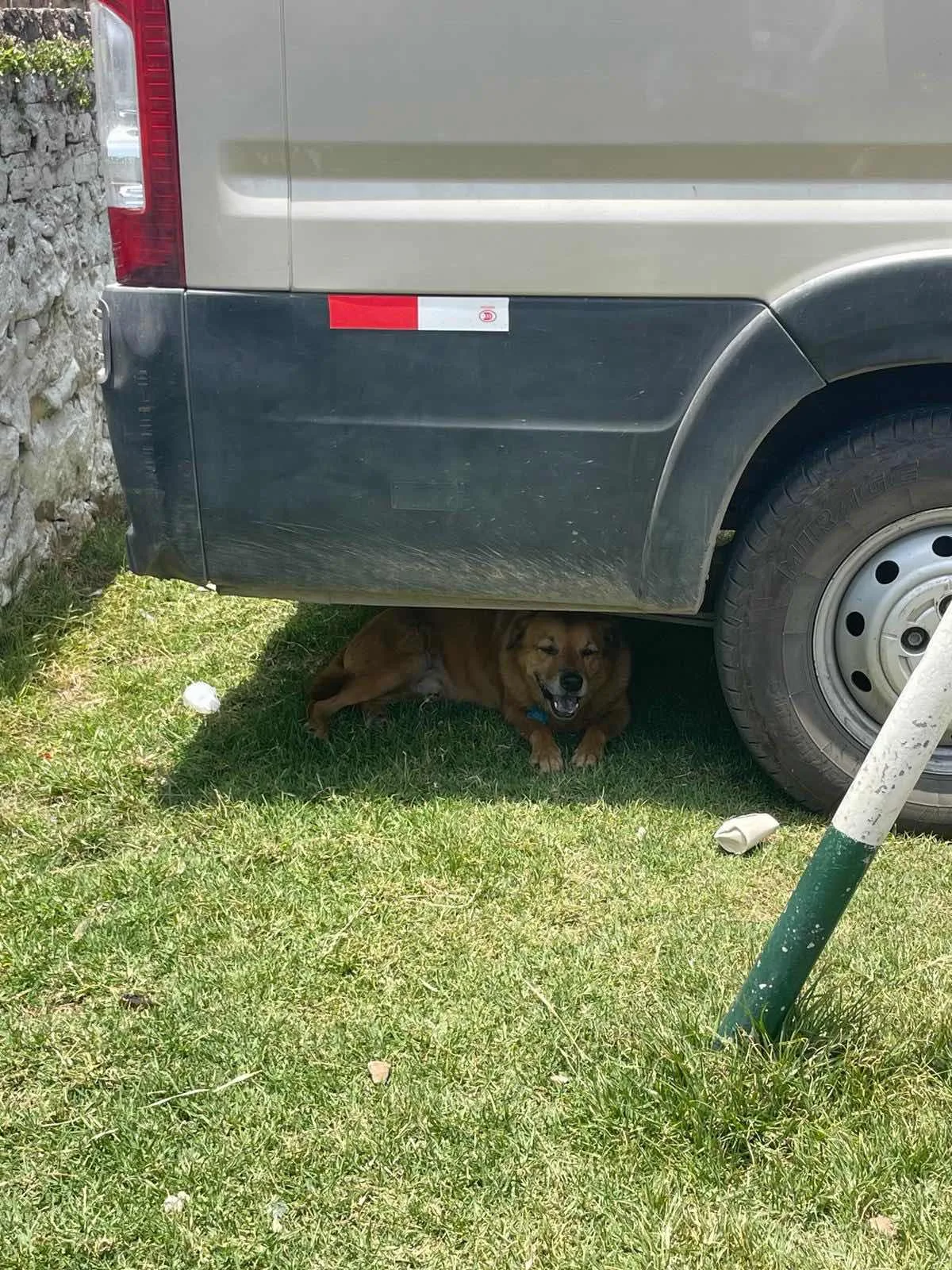
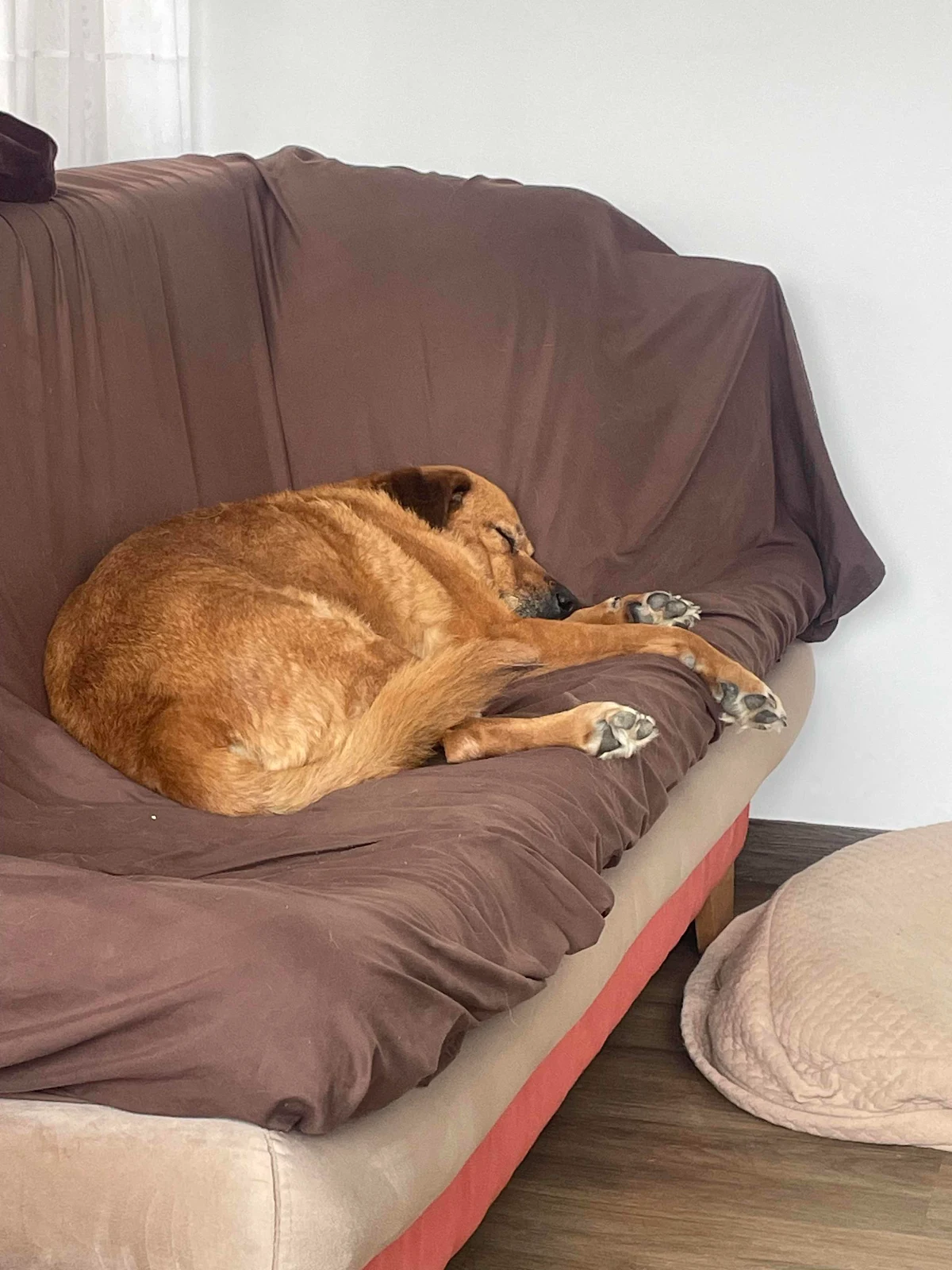
Rusty took up his favorite position.
And we got ready for the hourlong drive home. Our excursion to 10,000 feet seemed to annoy GANNET2 a bit as the check engine light came on again. I expect to see that come and go as the computer learns to cope with varying amounts of oxygen in the air as we drive the Andes over the next several months.
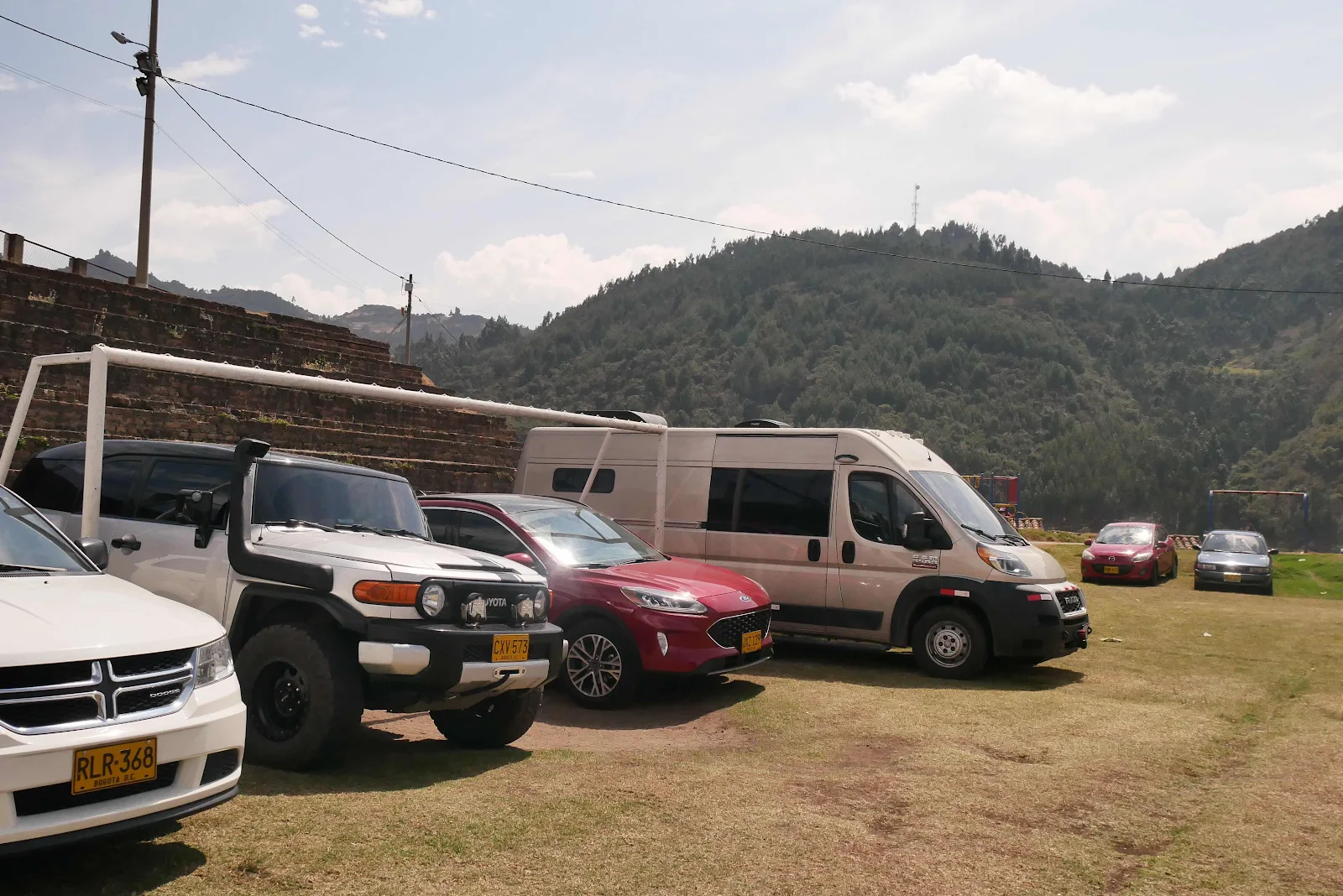
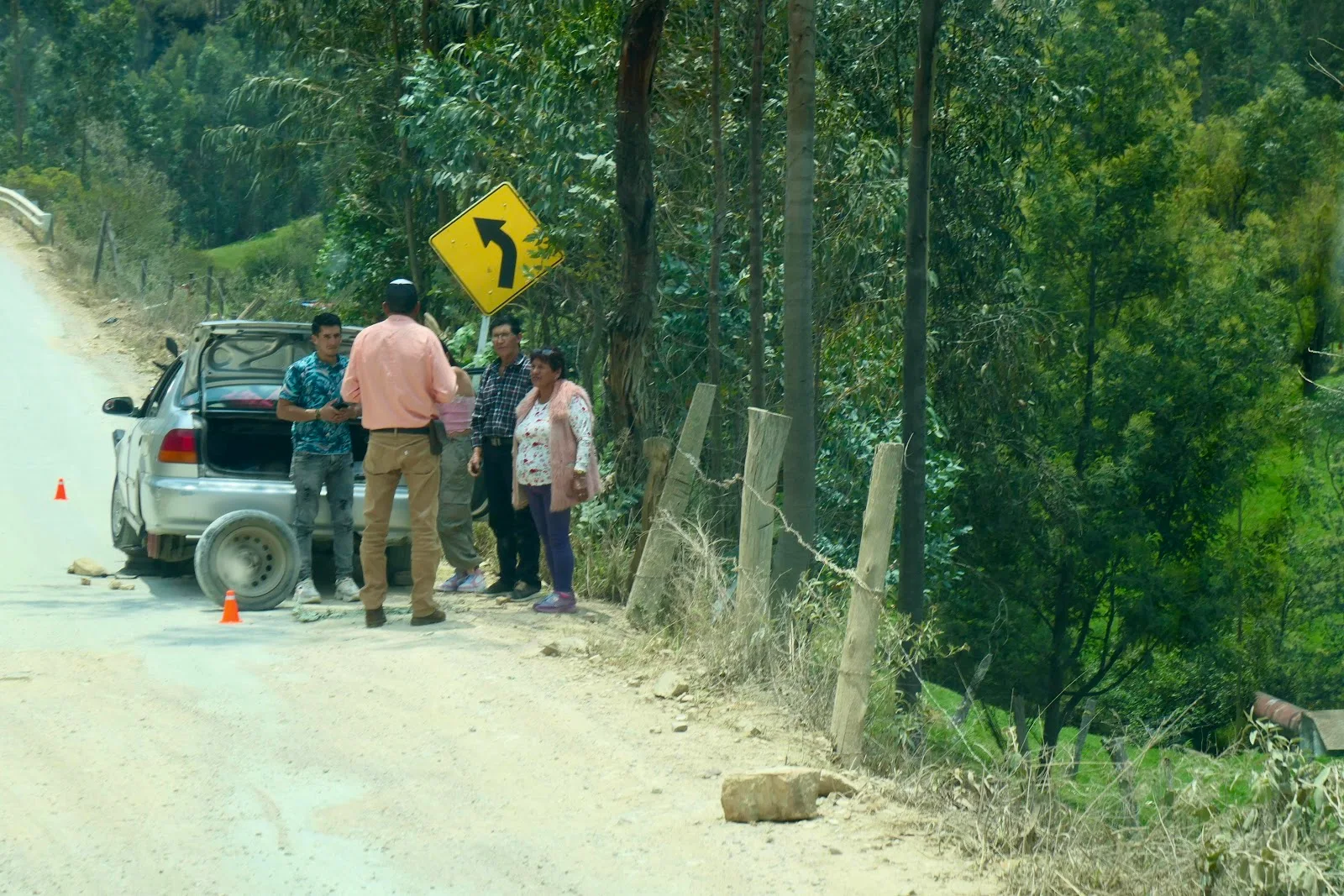
I’d like to say the drive home was uneventful but we had several near misses from over enthusiastic drivers taking mountain turns at speed which increased our resolve to stay off the roads for the weekend.
And then we witnessed a hit and run. I saw the car swerve and thought it was avoiding a branch in the road. The branch was a man lying face down motionless under his bicycle in the traffic lane. Whether he wobbled into the car or the driver was on his phone or drunk and hit him I don’t know, but the car took off. I stopped and turned on the four way flashers and went to check him out.
He was out cold face down on the roadway. He had a pulse and no broken bones that I could feel so we carefully moved him to safety, a crowd had formed but as usual. No one had a clue what to do so I asked one person to call 911 and after making sure he was awake and breathing I tried to sort out the traffic jam while we waited for the emergency services.
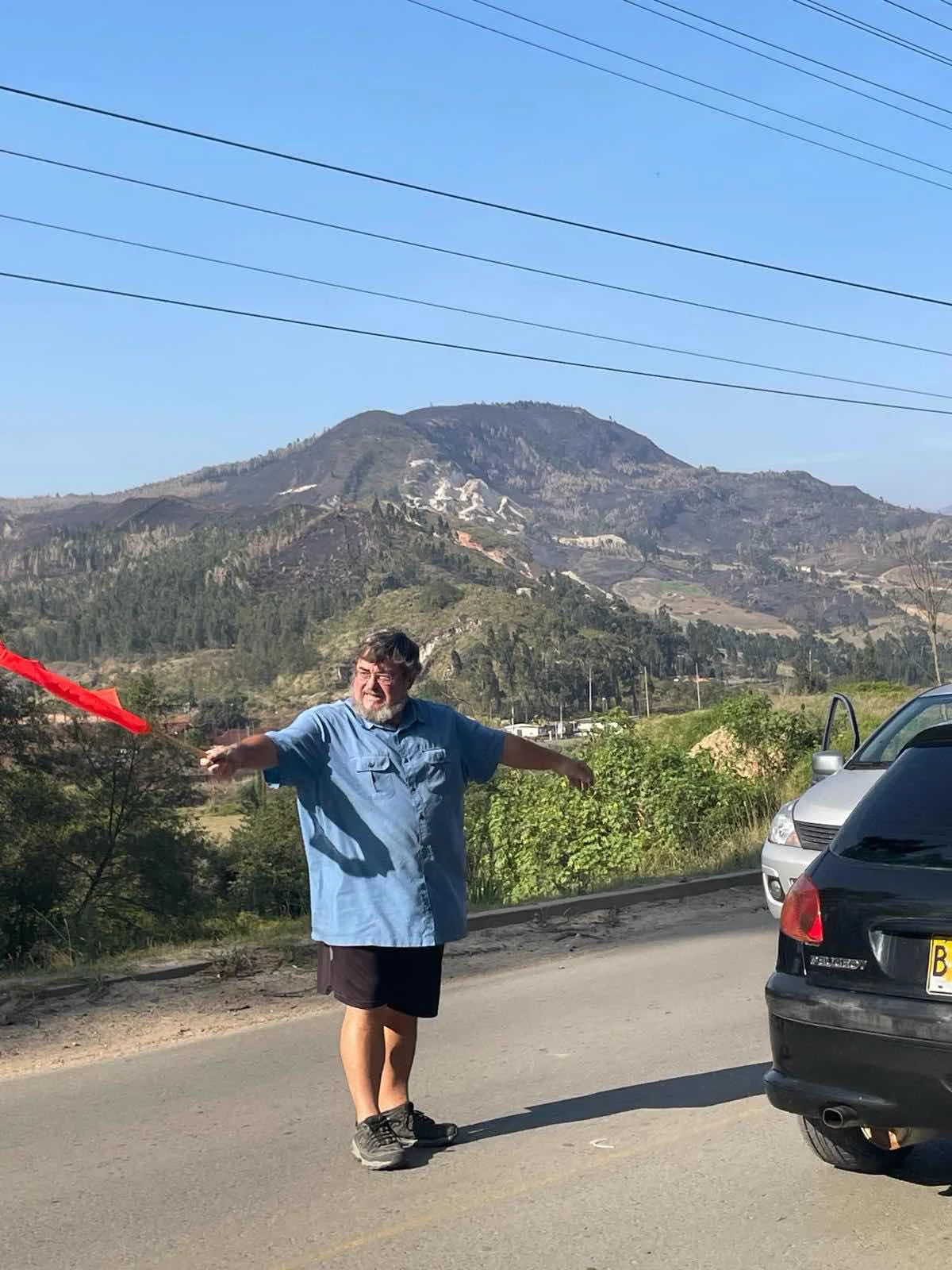
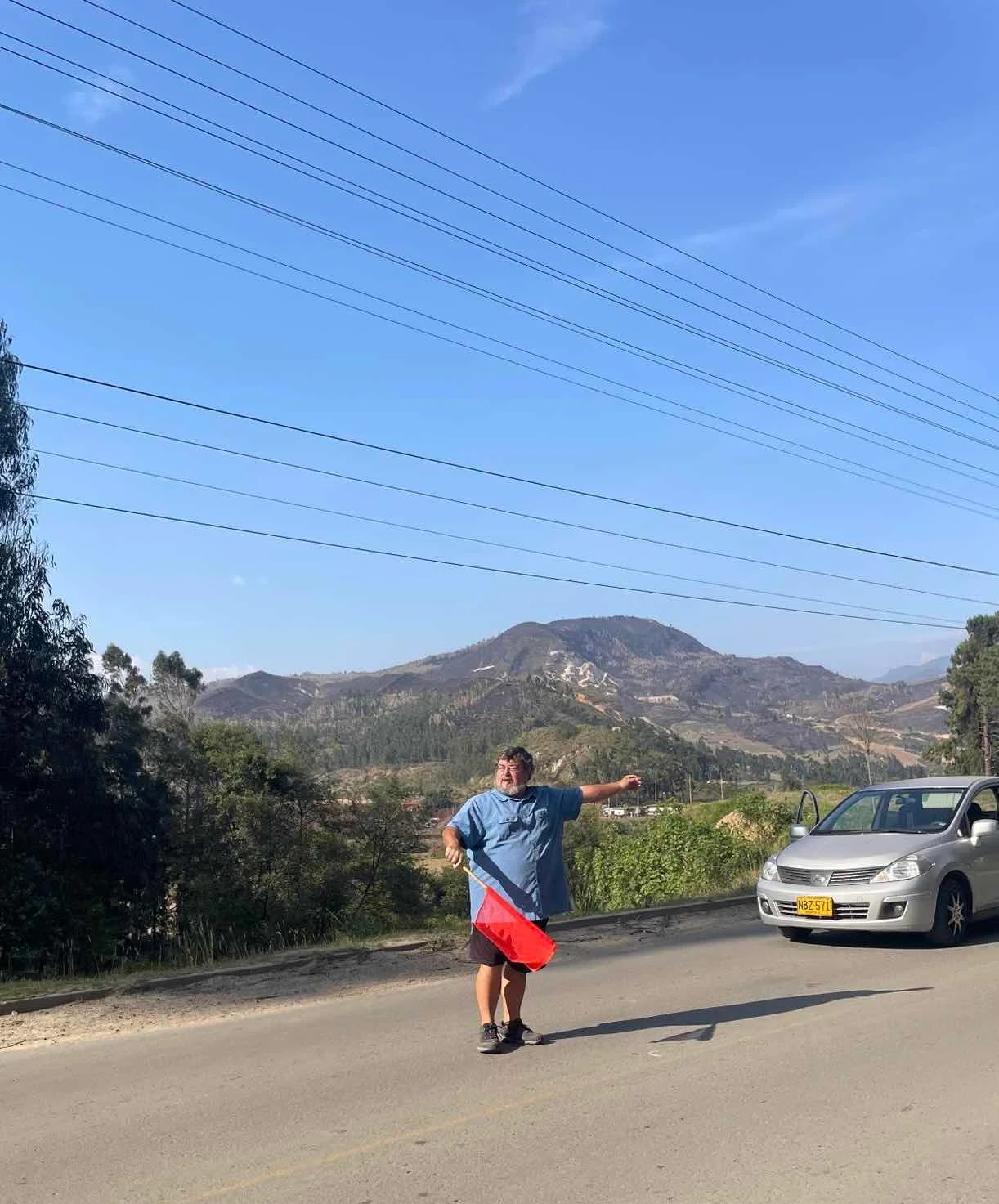
My wife took these pictures of the dispatcher (retired) doing traffic control somewhat unwillingly. We carry equipment required in Latin America, reflective vest, triangles, electric fusees and the huge red flag which isn’t actually required but has given useful service every time we come across an accident and that’s happened twice already before in Mexico. Finally I unsnarled the traffic much to my own surprise and the looky loos left. Thank god a doctor stopped to keep an eye on the patient who was awake with a smashed face and not much awareness of his surroundings, so we were free to go. So we did and no sign of police or ambulance after about half an hour of chaos.
Don’t get injured on the road is my advice. 911 doesn’t work here like it did in Key West where we had an average response time of less than two minutes downtown. 45 minutes after I was knocked off my motorcycle on Cudjoe Key I was in an MRI in a Miami trauma center hospital. Here I’d have been dead so I’m glad we’re in a big van.