Wednesday, July 31, 2024

The PanAmerican Highway

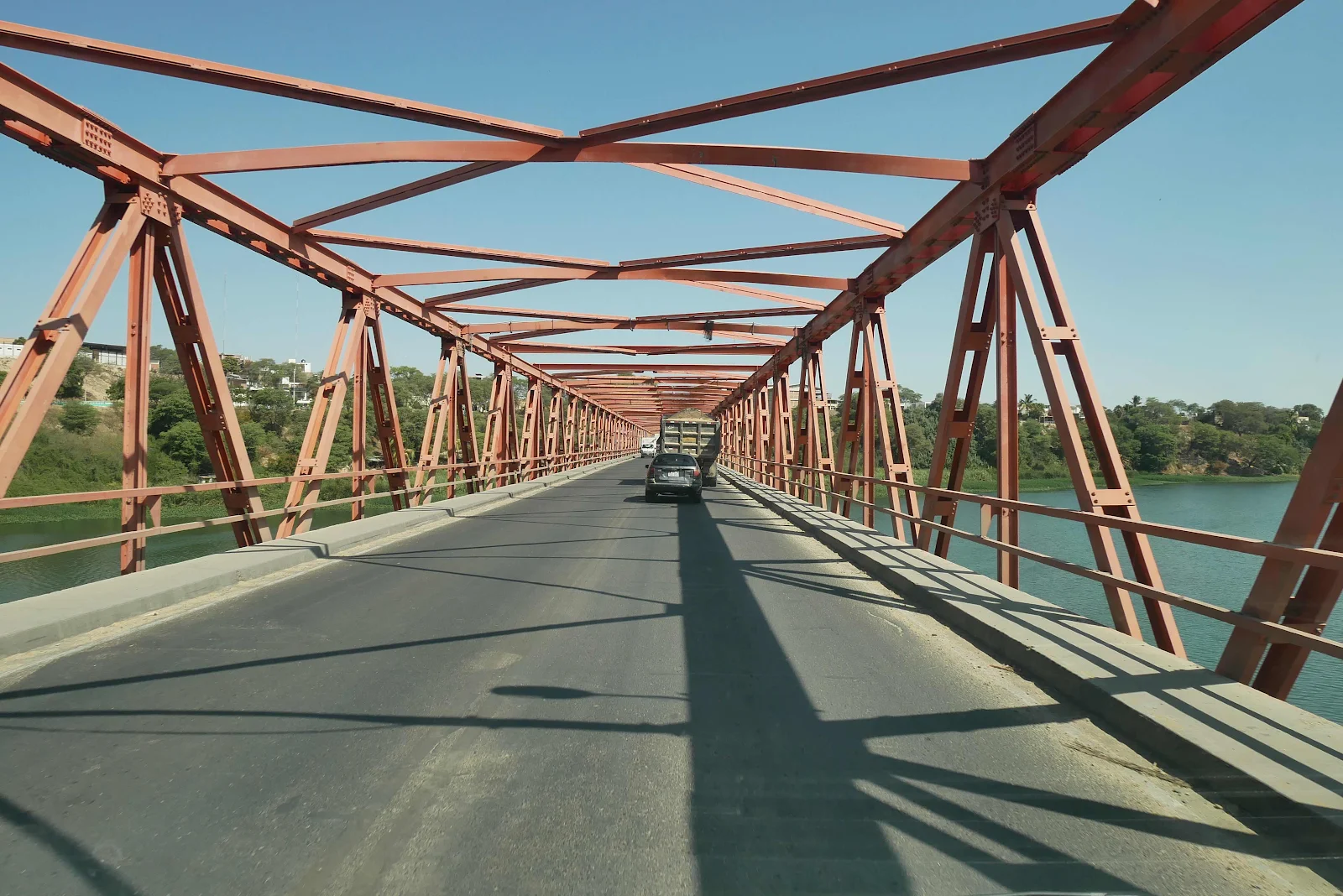
We did leave Swiss Wassi campground at 9:23 am on Tuesday. We got on the road at last. 
There was some laughter at the campground after we paid our bill, $115 for six days including a few beers and ice creams, and the sweepstake was whether or not we’d be back soon. We were pretty sure we had everything in order to pass the checkpoint an hour south on the highway. 
No photos of the checkpoint again especially as our interrogator was a severe young man. Naturally there was no mention of Rusty or his much worked-for papers but the Cudtoms agent went over our temporary import permit, matched it to our Florida registration and my passport. We both own GANNET2 on the papers so he looked at Layne and asked if she was Patricia. After all that he went and studied our front (fake) license plate and once again we were glad to added it before we left. Florida only has a rear plate but officials always invariably look for the front tag. 
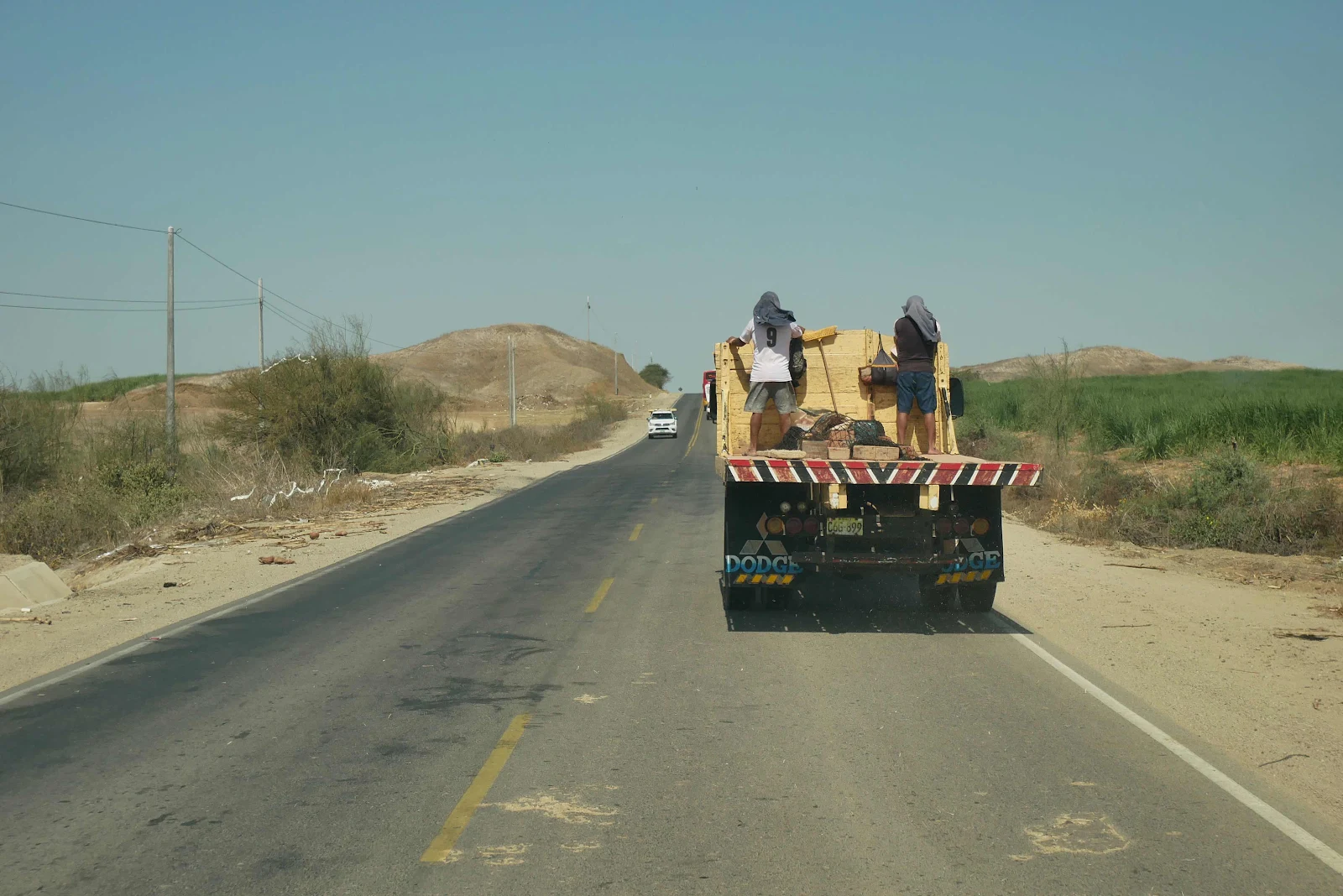
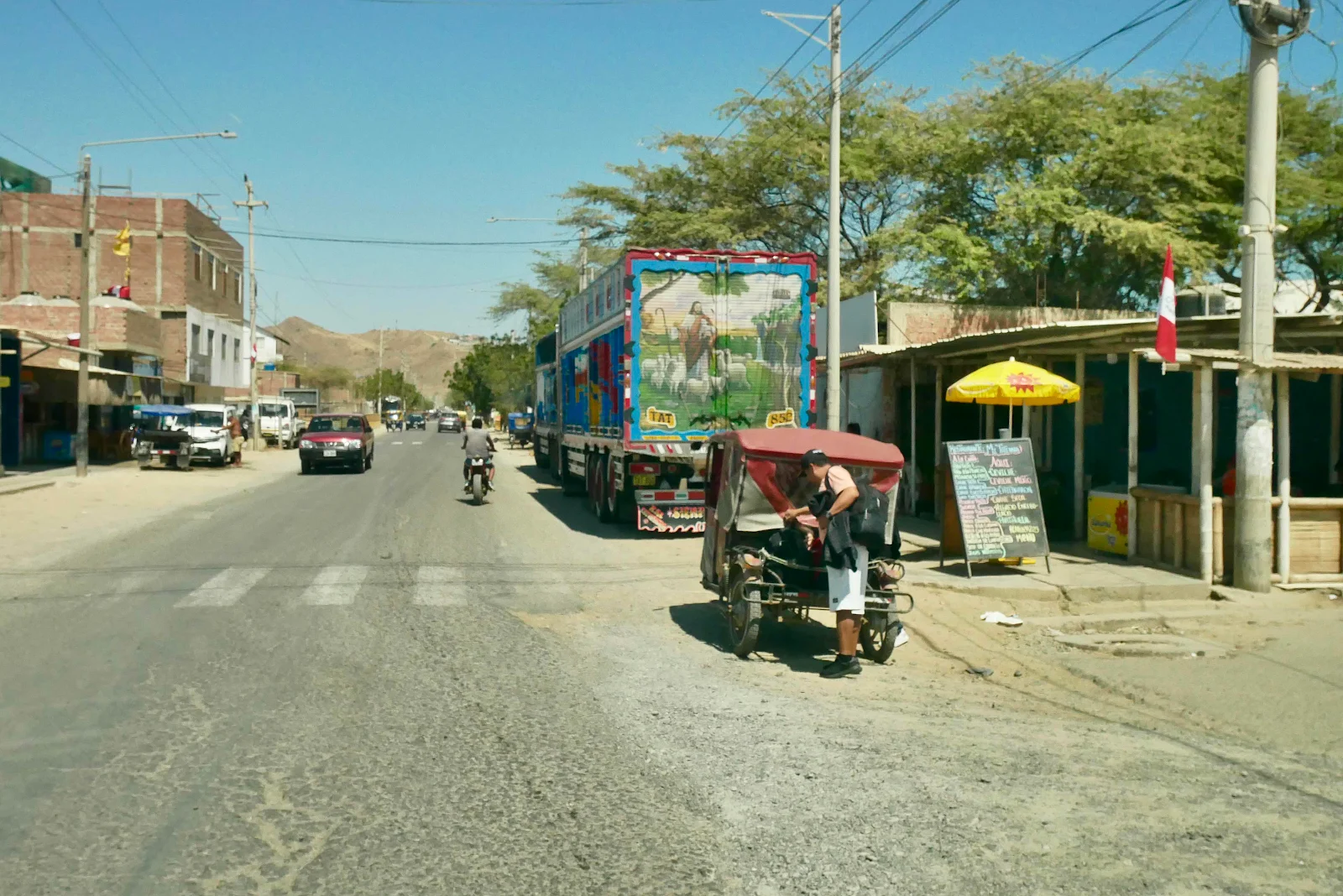
Other overlanders told us the coast road is relatively smooth and utterly boring. It didn’t start out smooth with plenty of sudden and unannounced potholes and rough patches. I noticed the murals they paint on the back of their trucks. Jesus is a popular subject with a medieval Italian renaissance look: 
Or Saint Francis of Assisi the most famous Umbrian in the world. 
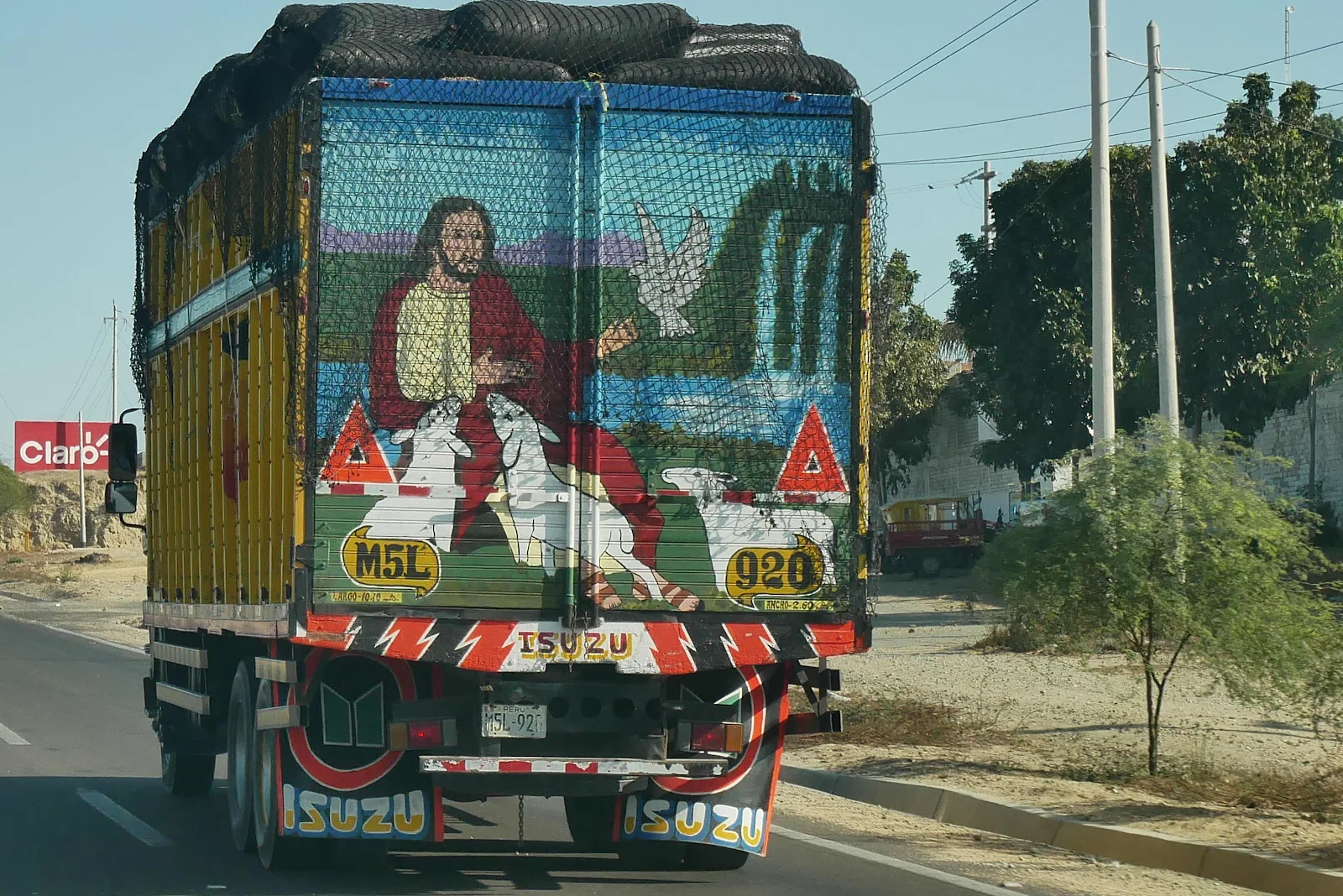
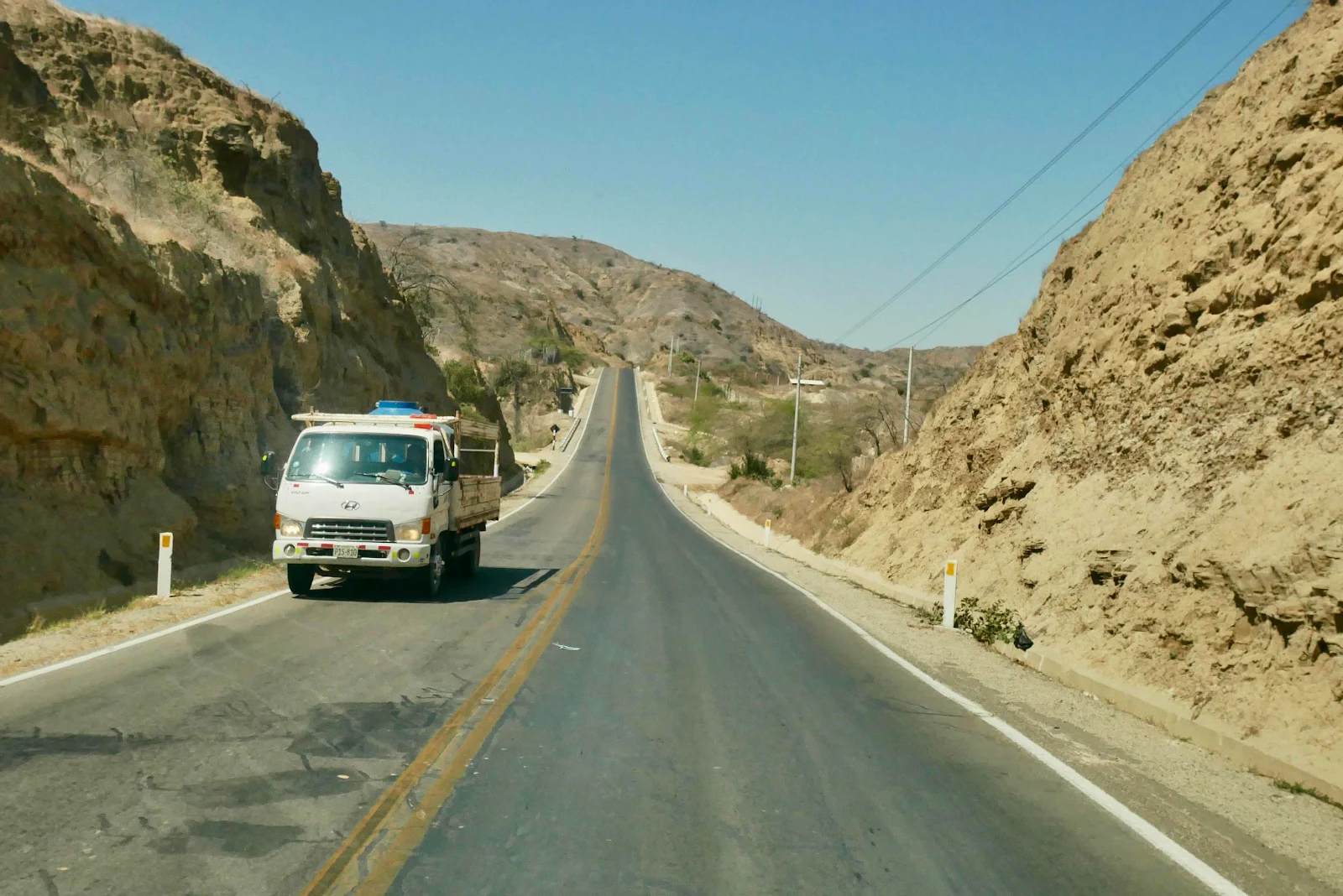
I don’t know how many times I could drive this before boredom would set in but driving it once is just fine. 
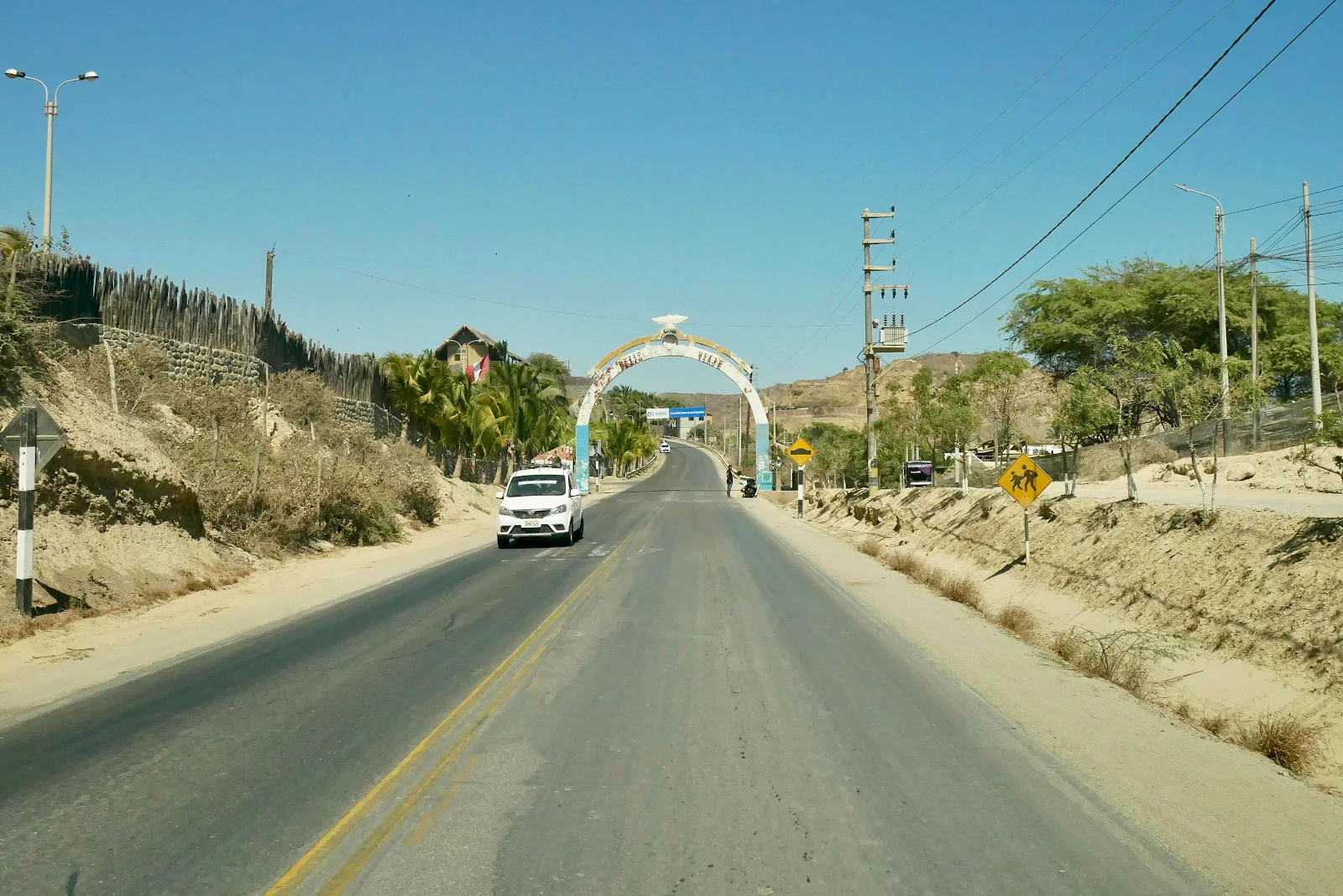
I like seeing new places and checking villages as we roll through. 
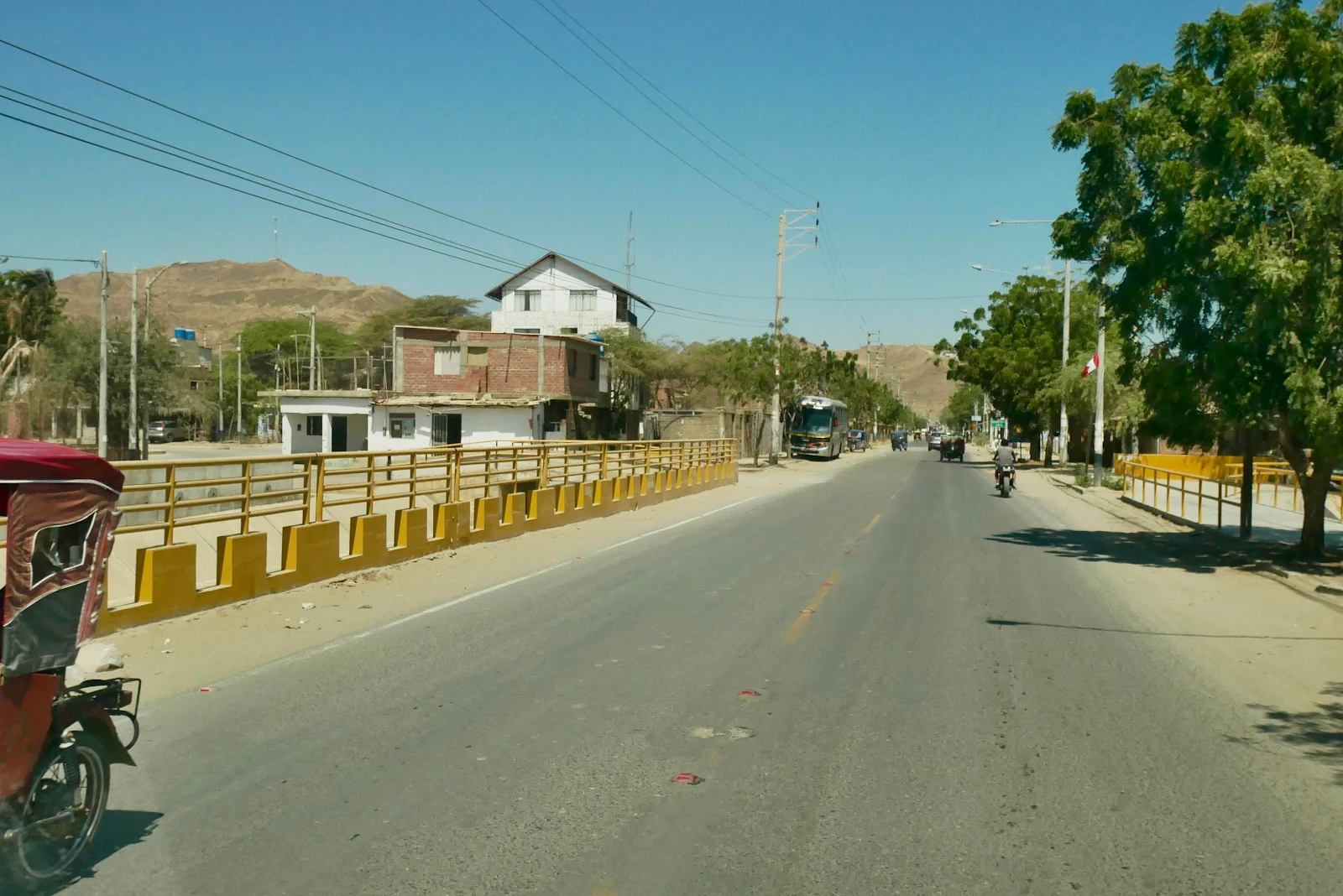
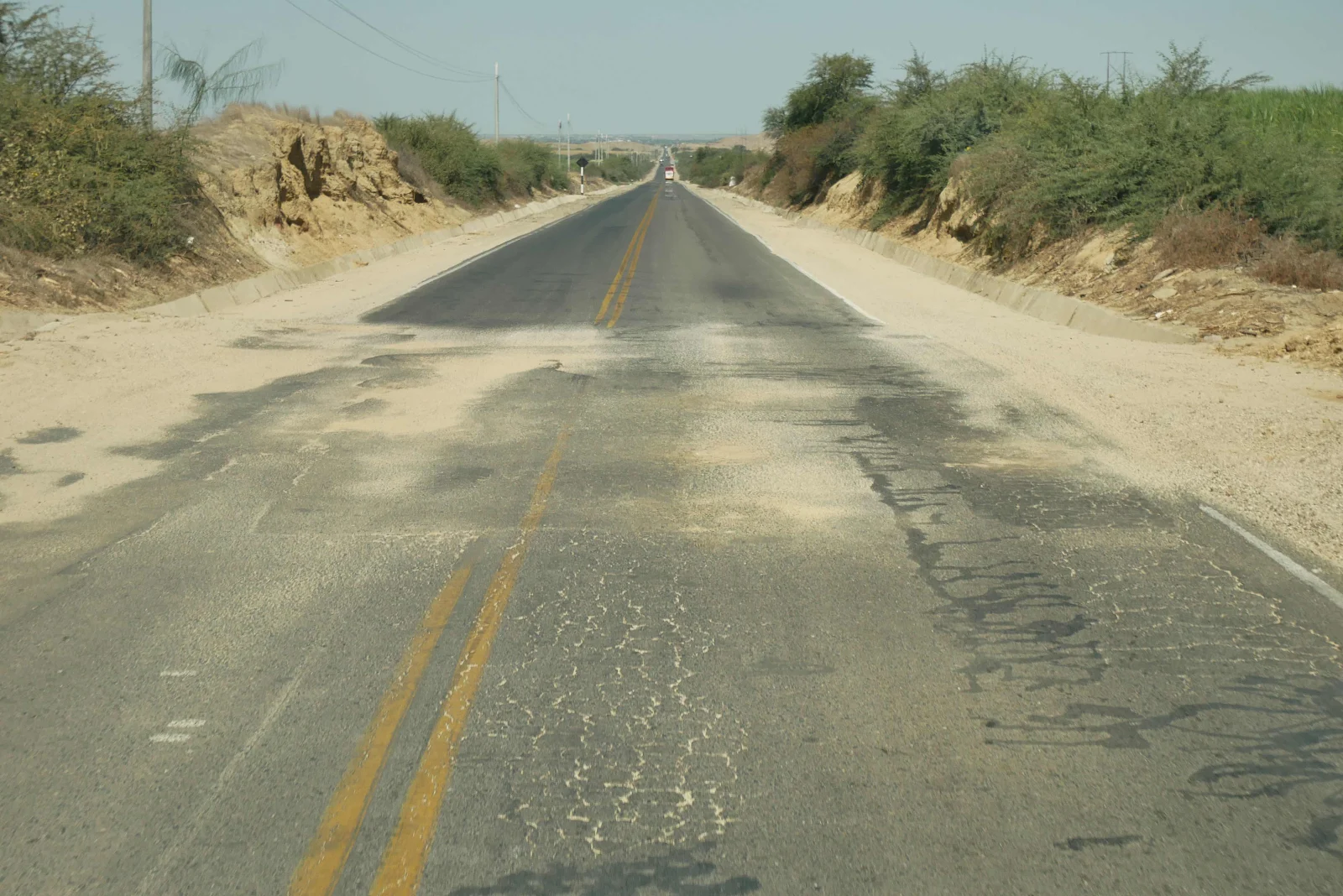
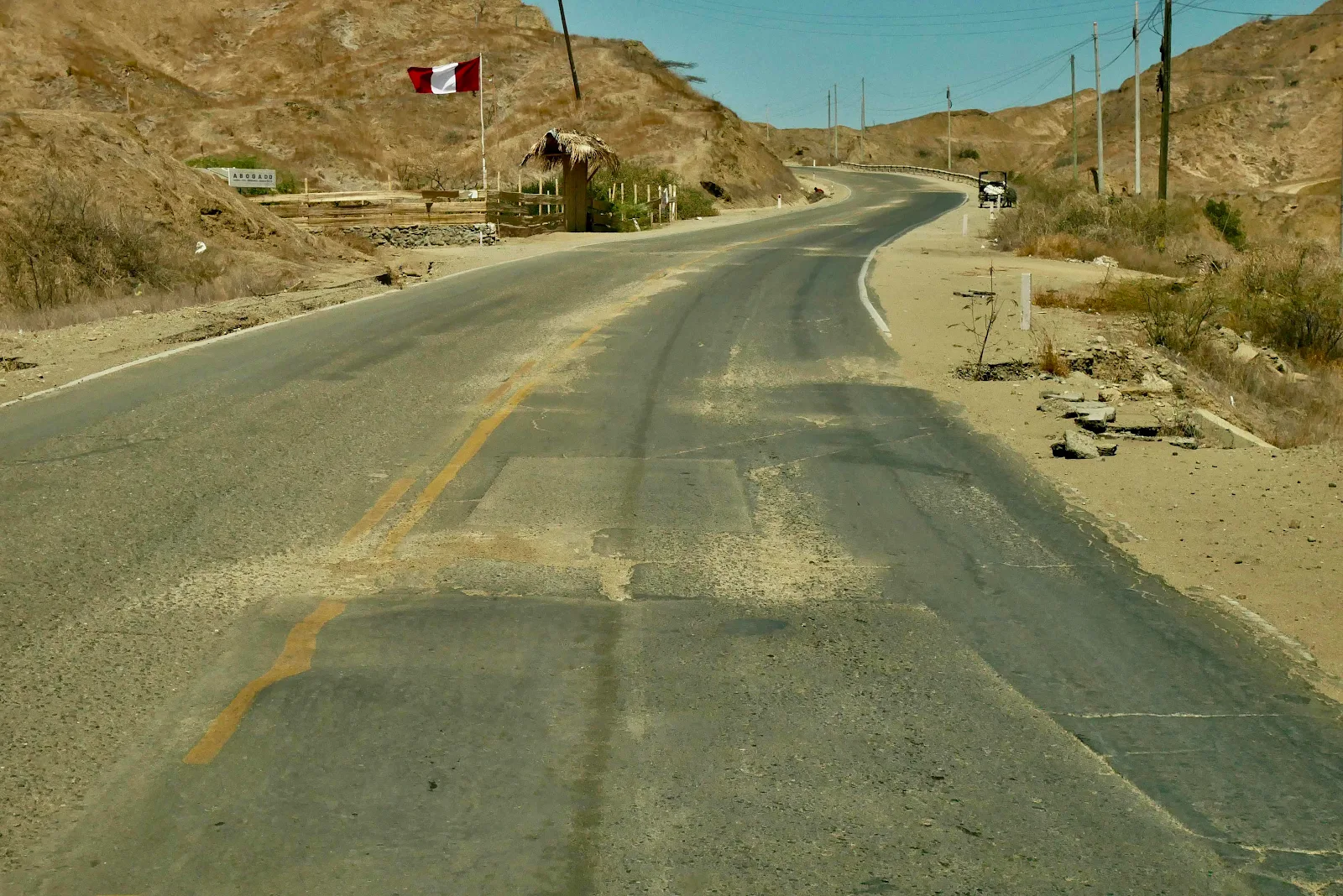
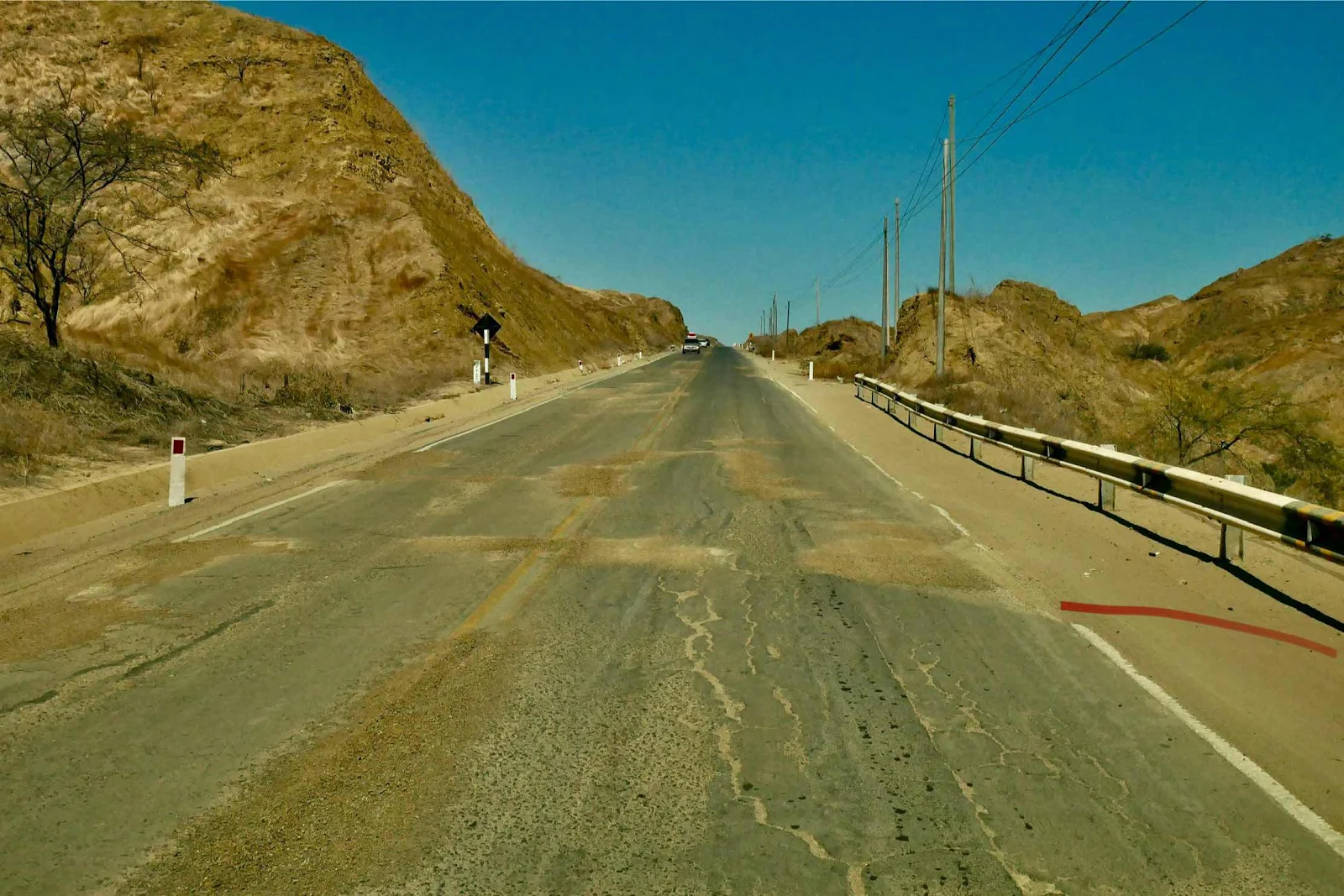
The crappy bits of pavement are easily identified by streaks of white sand:
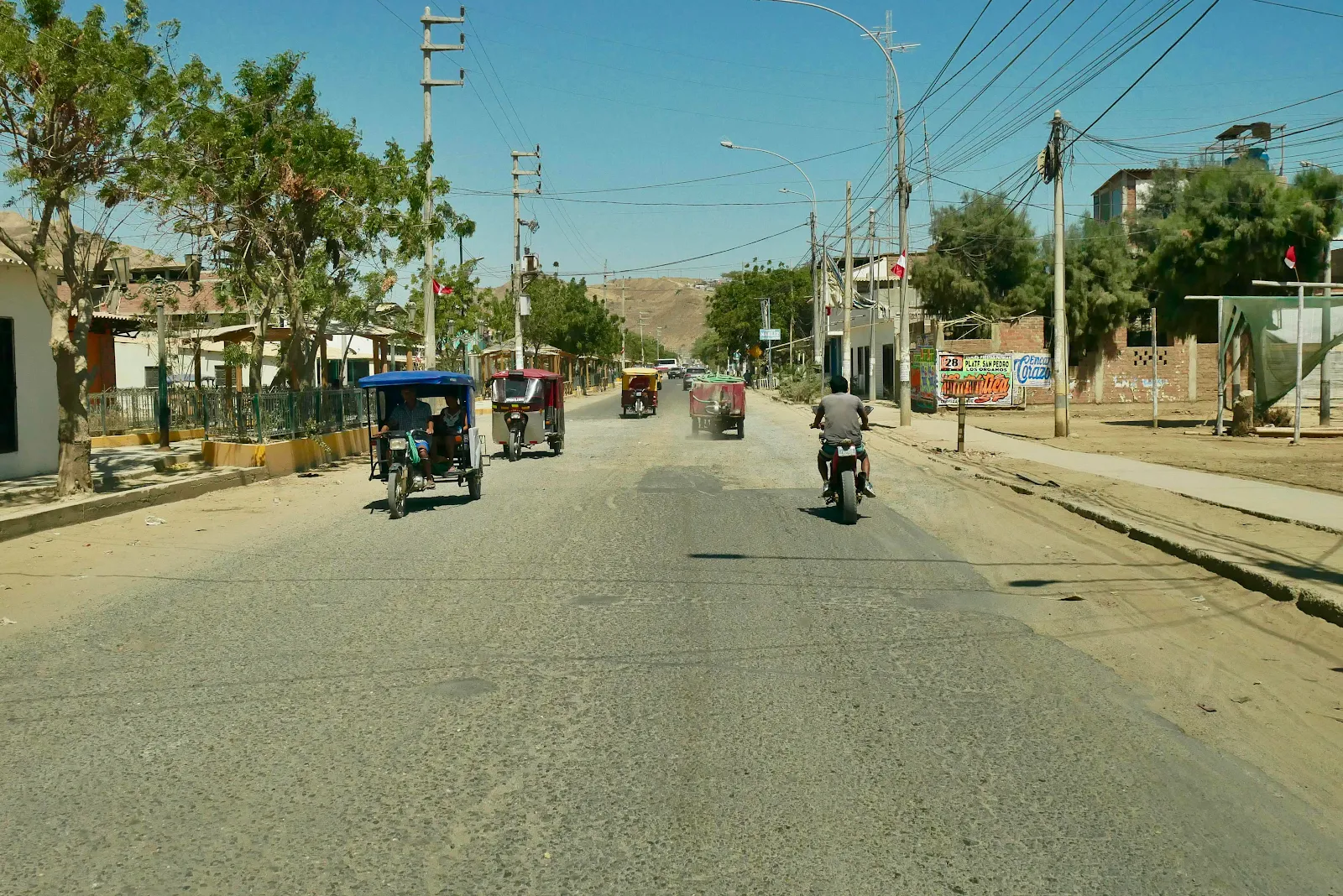
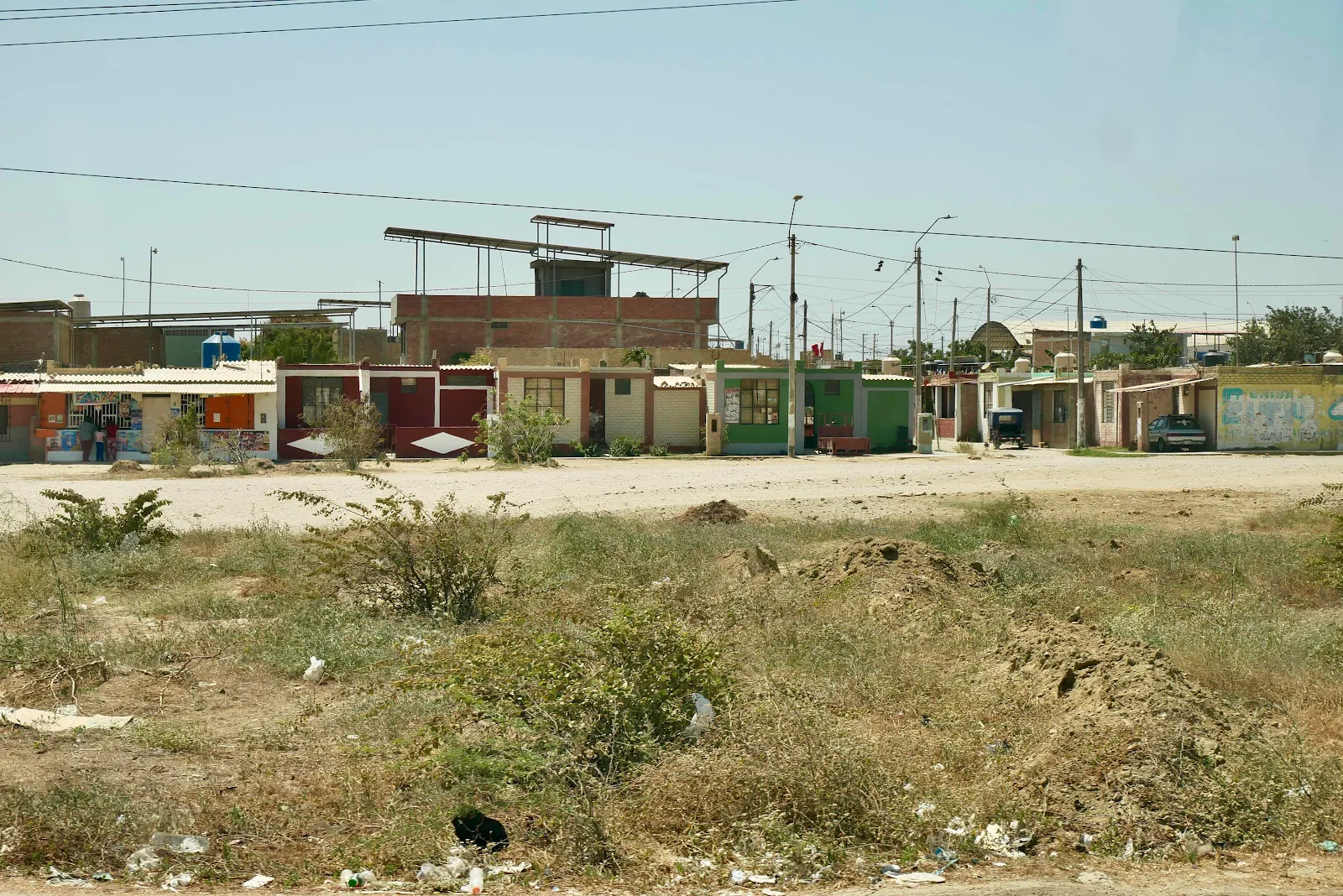
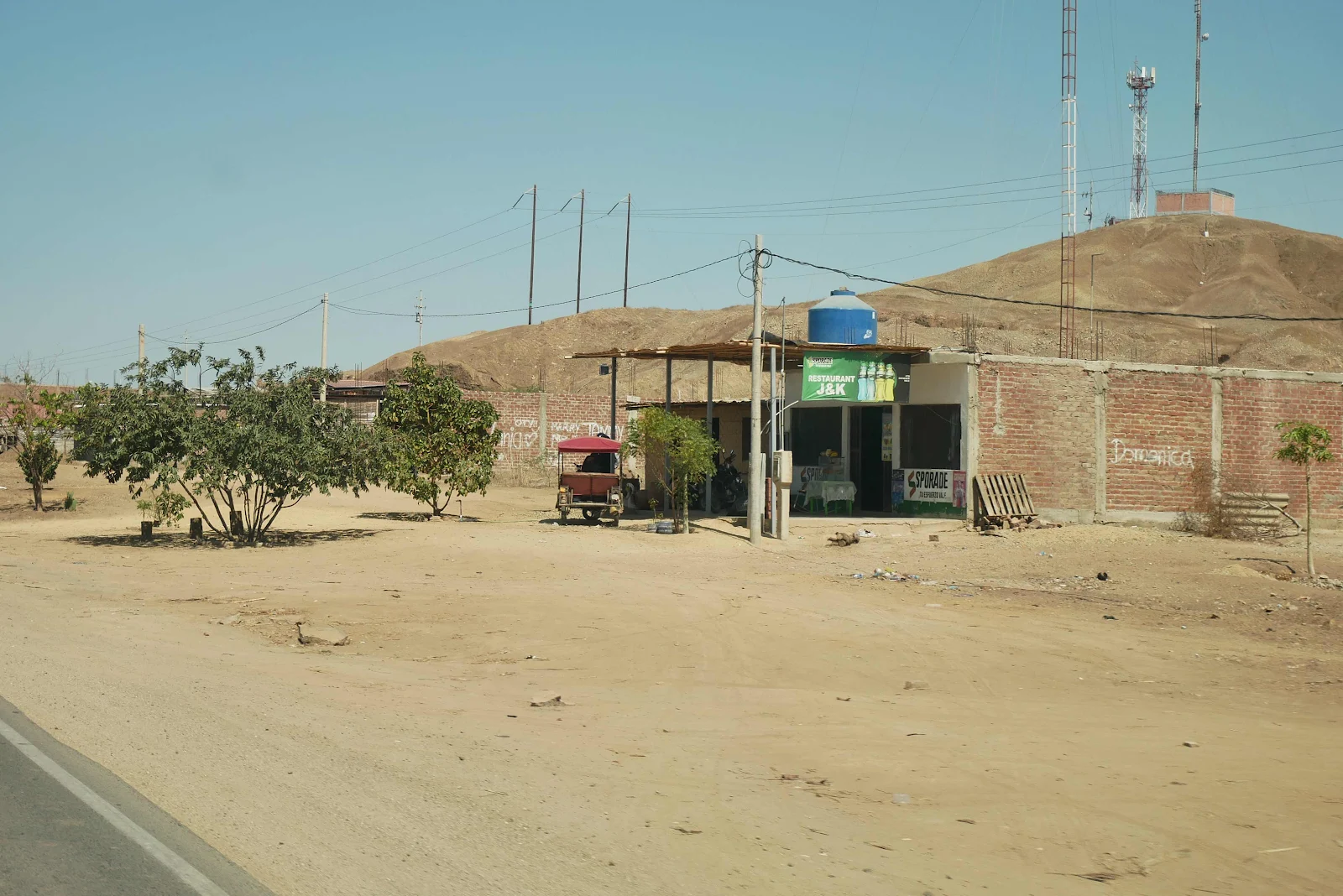
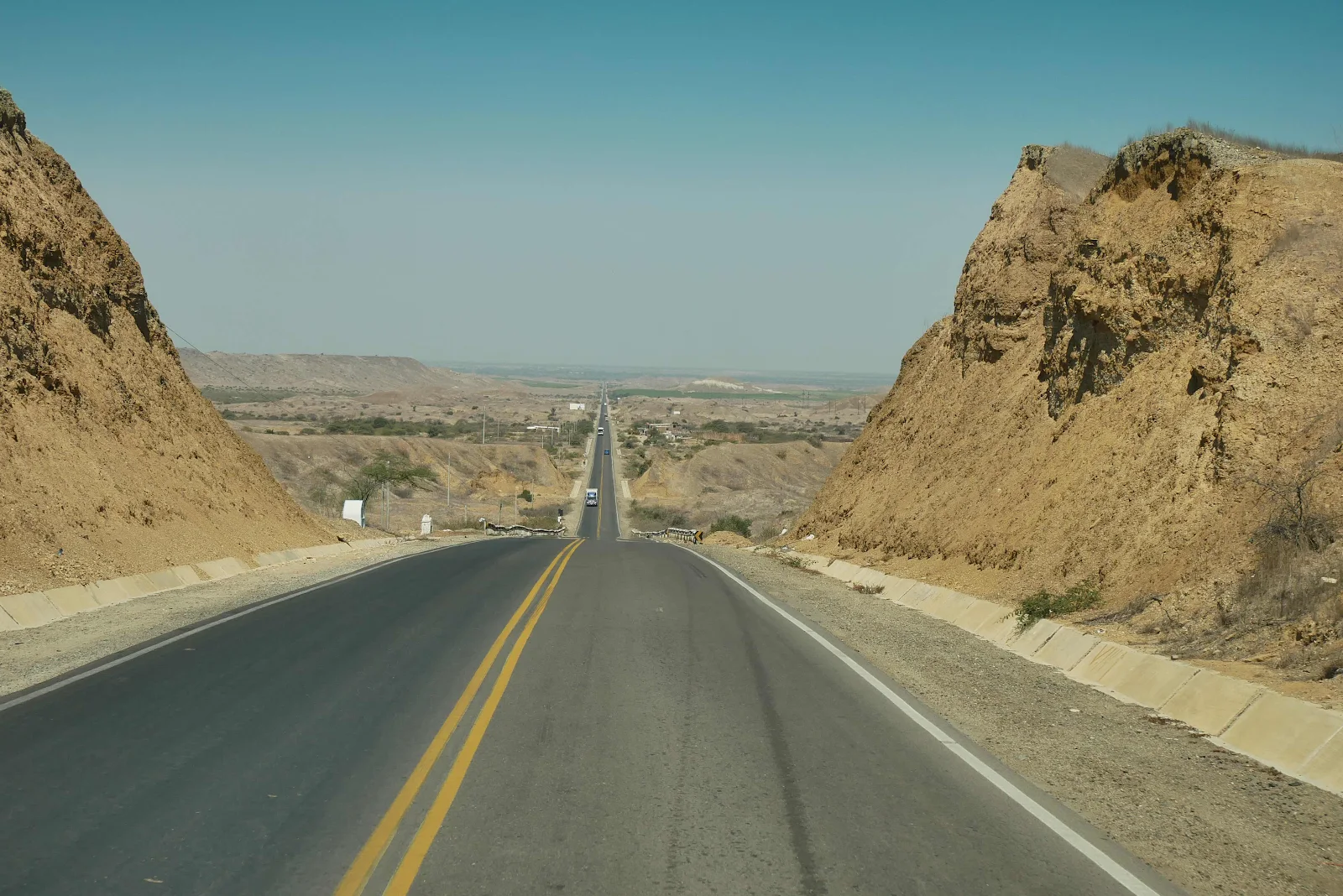
This is a poor country and the desert rolls right down to the edge of the populated areas. There’s no agriculture, no greenery, lots of dust and no opportunity that I could see. 
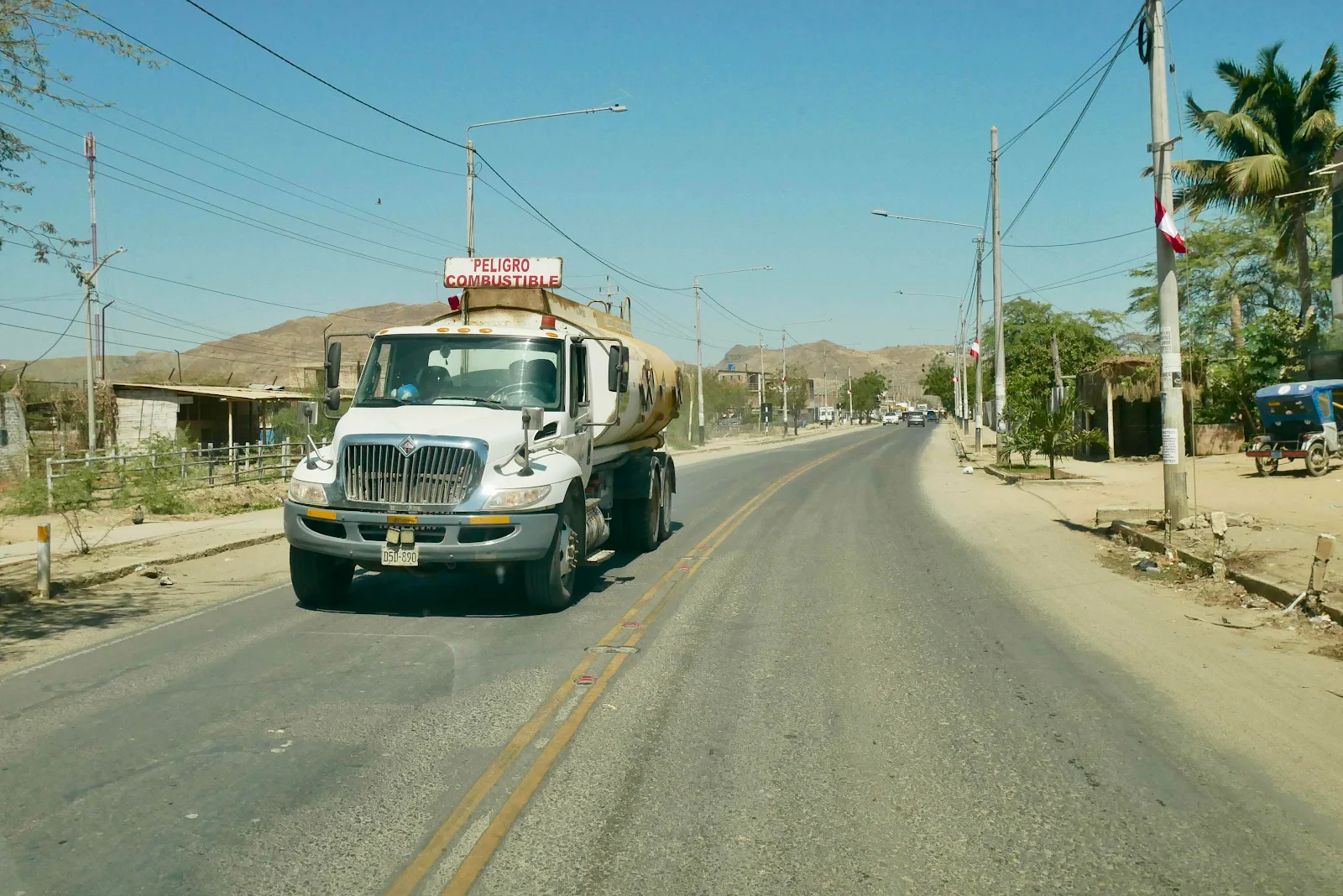
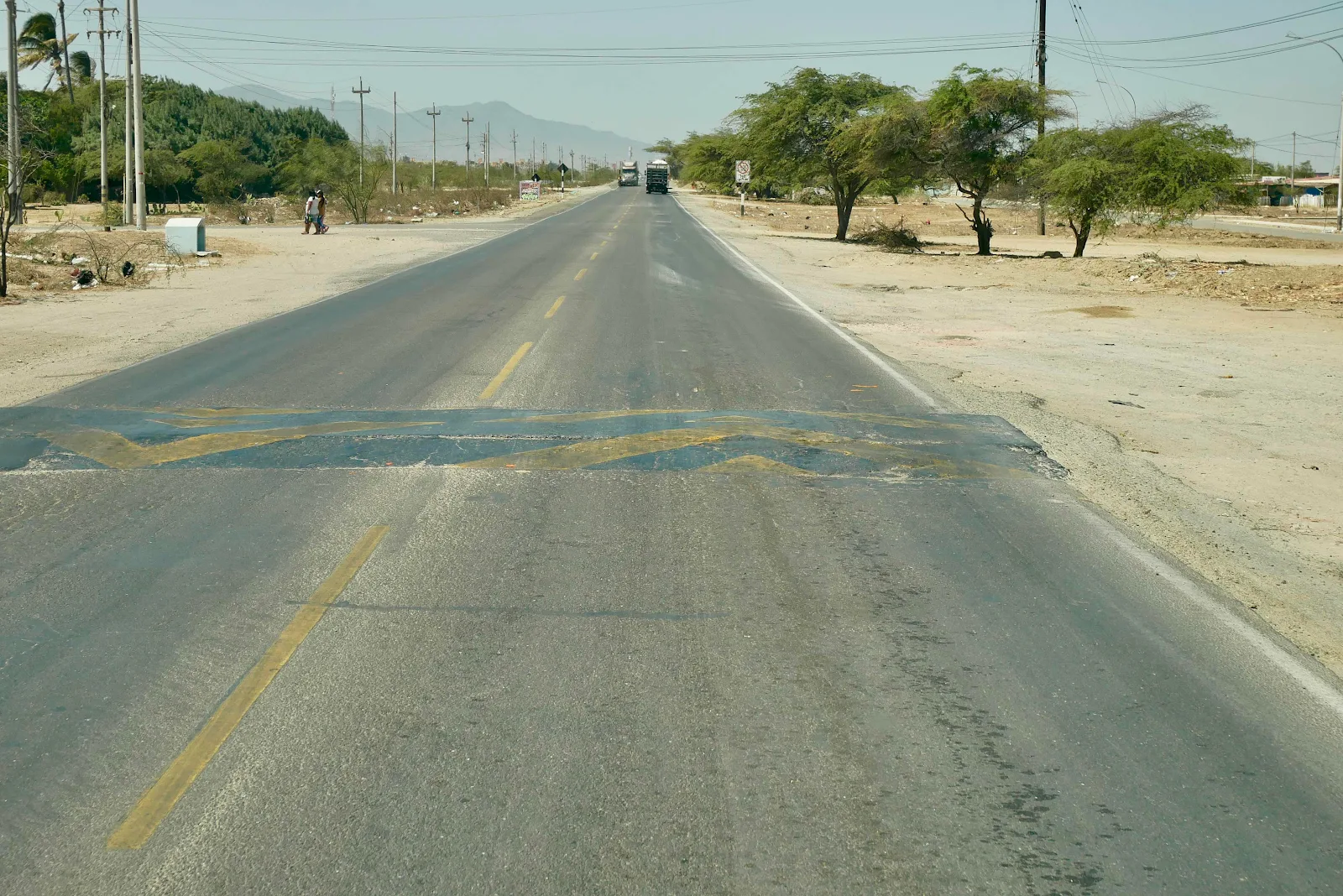
Can you see the speed bump in front of the gas station? 
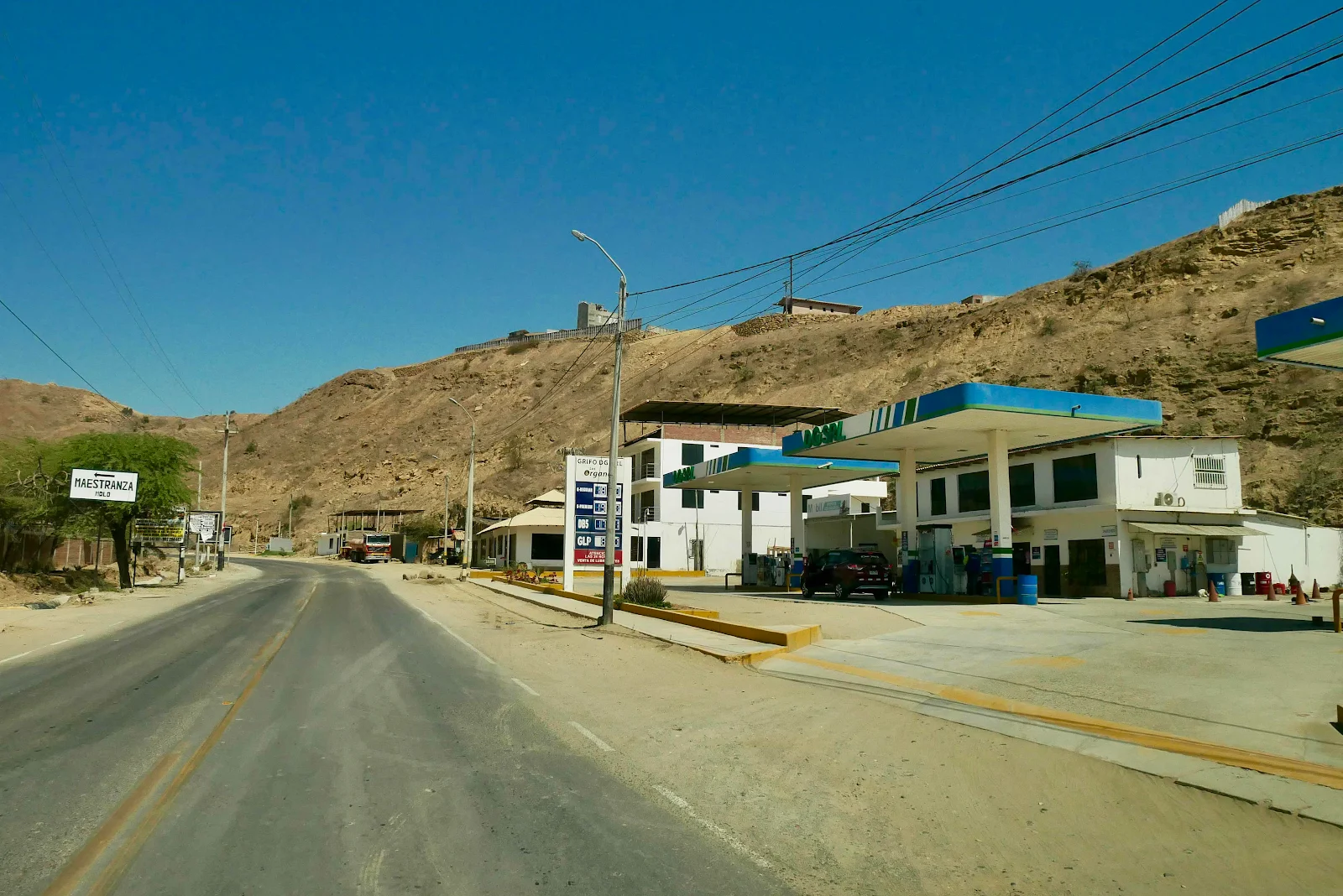
I could, even though it is technically invisible. Spend all day dodging moto taxis, potholes, and speed bumps and see how tired you get. I was worn out by the time we parked for the night. 
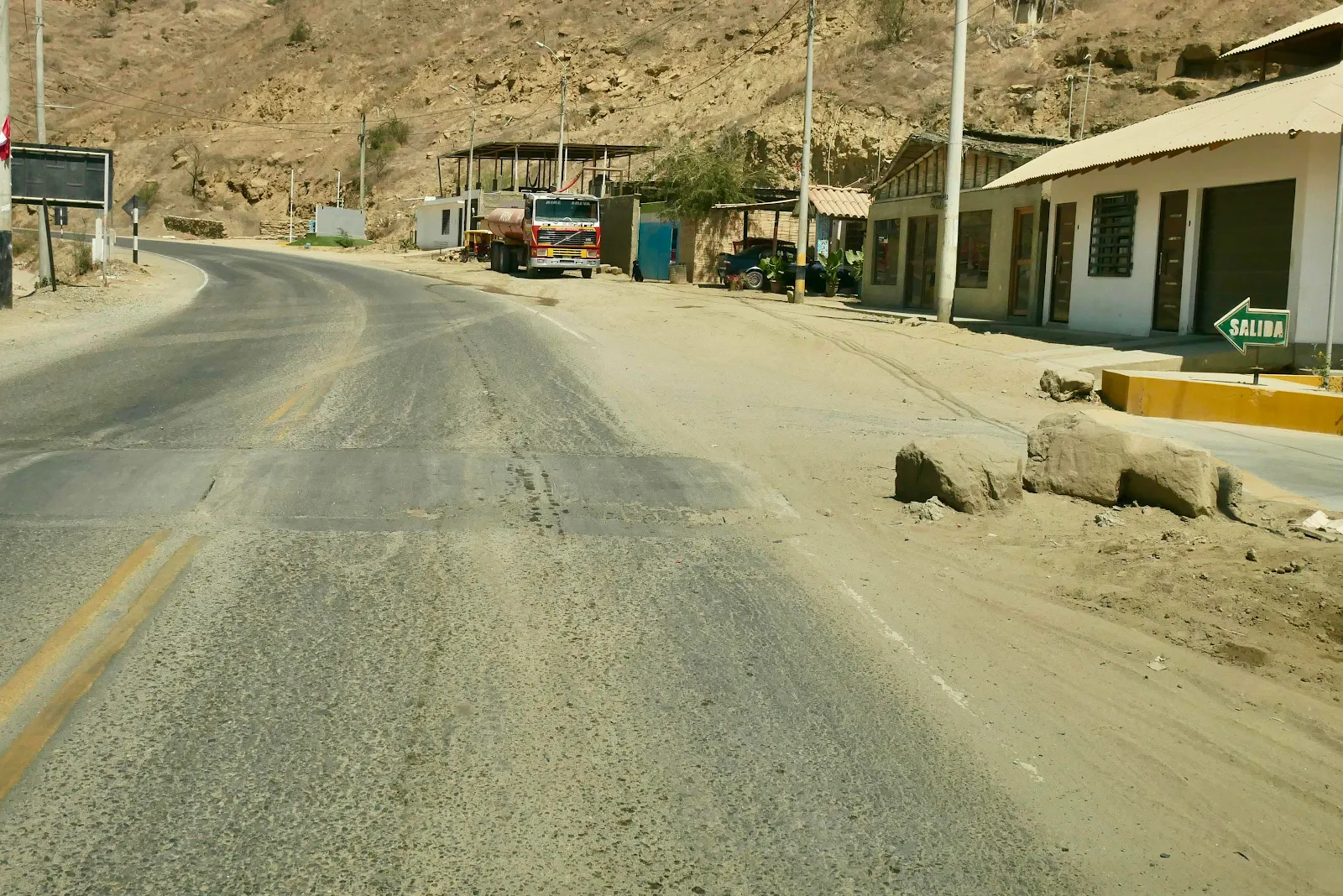
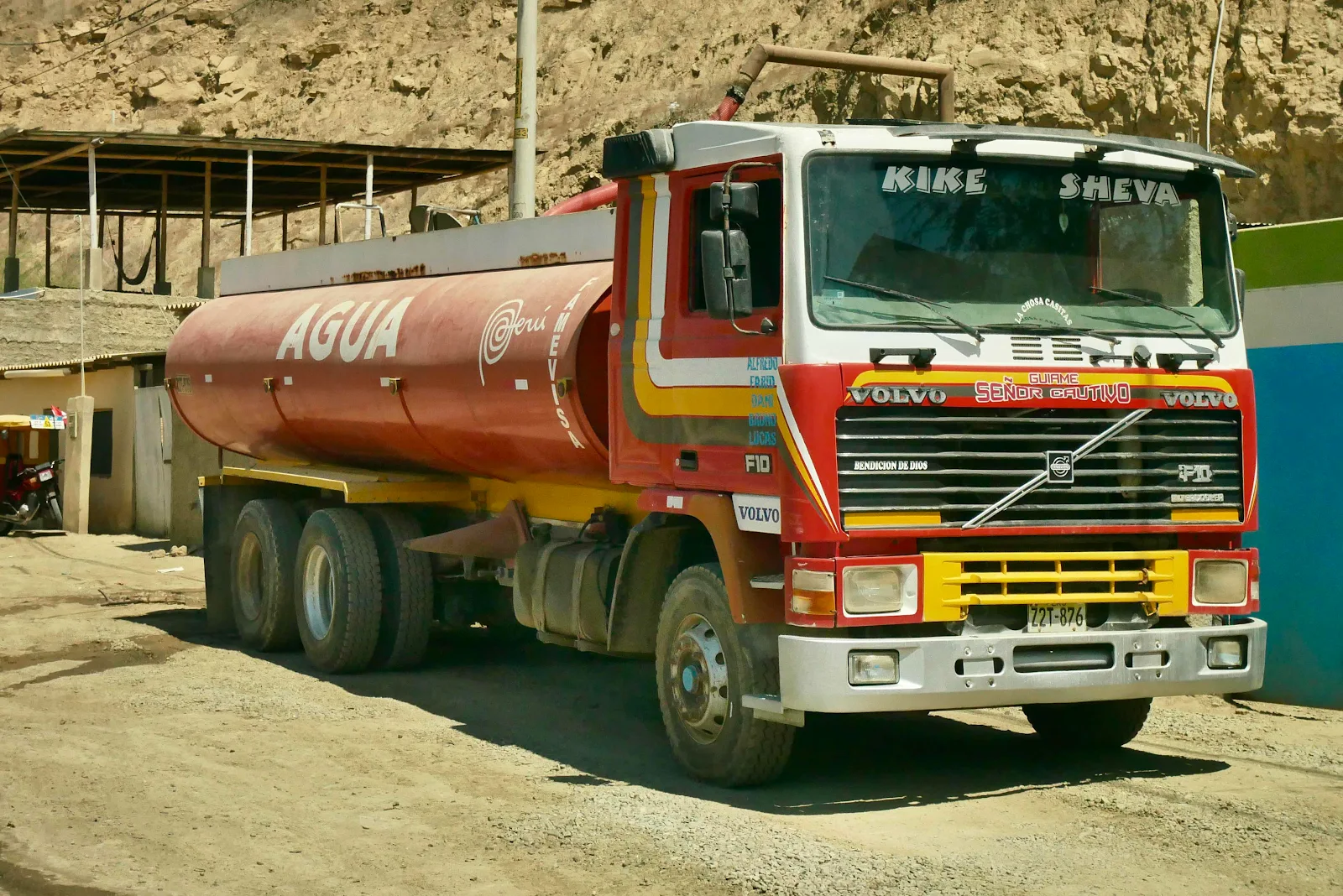
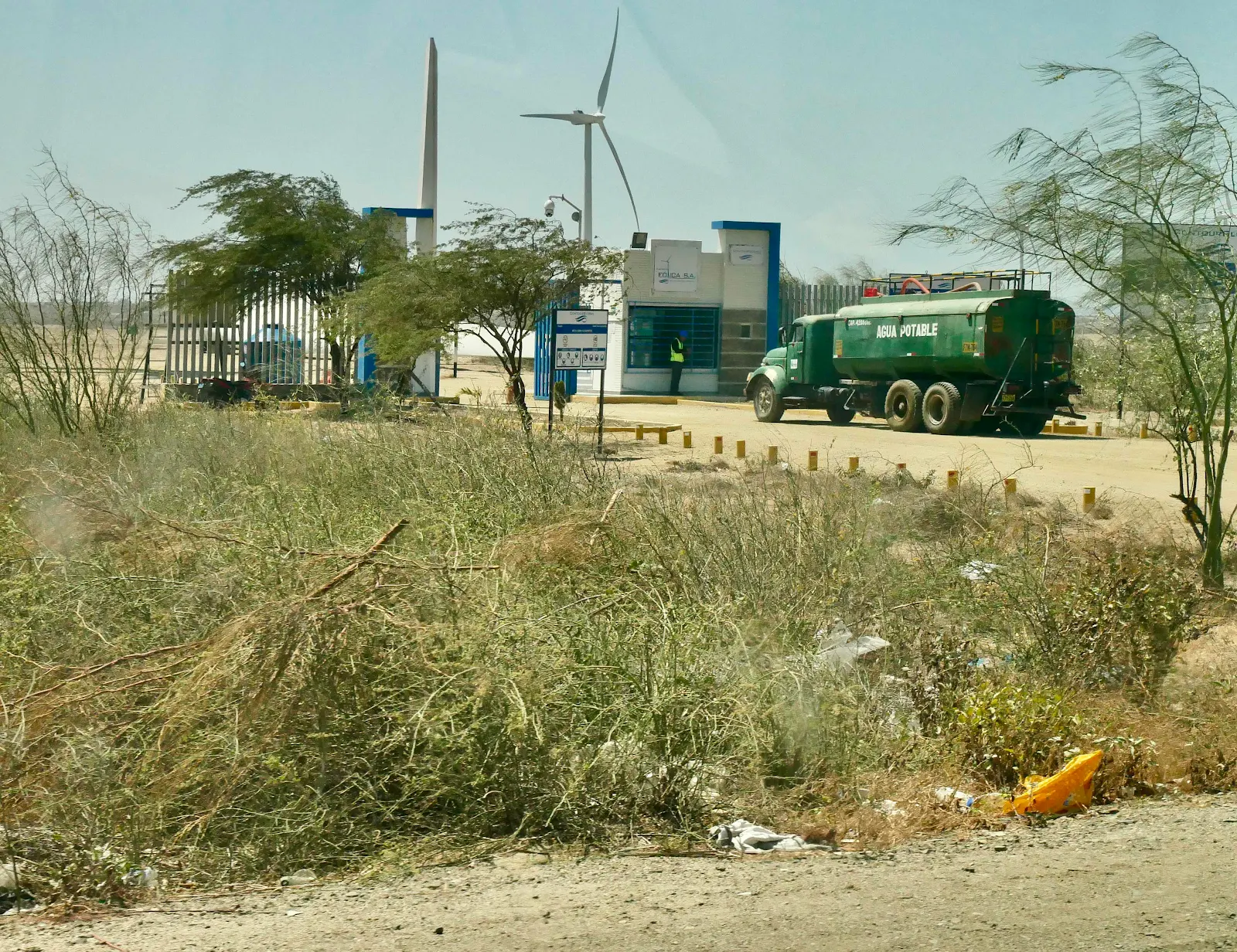
A reminder that this is desert country with lots of water trucks everywhere. 
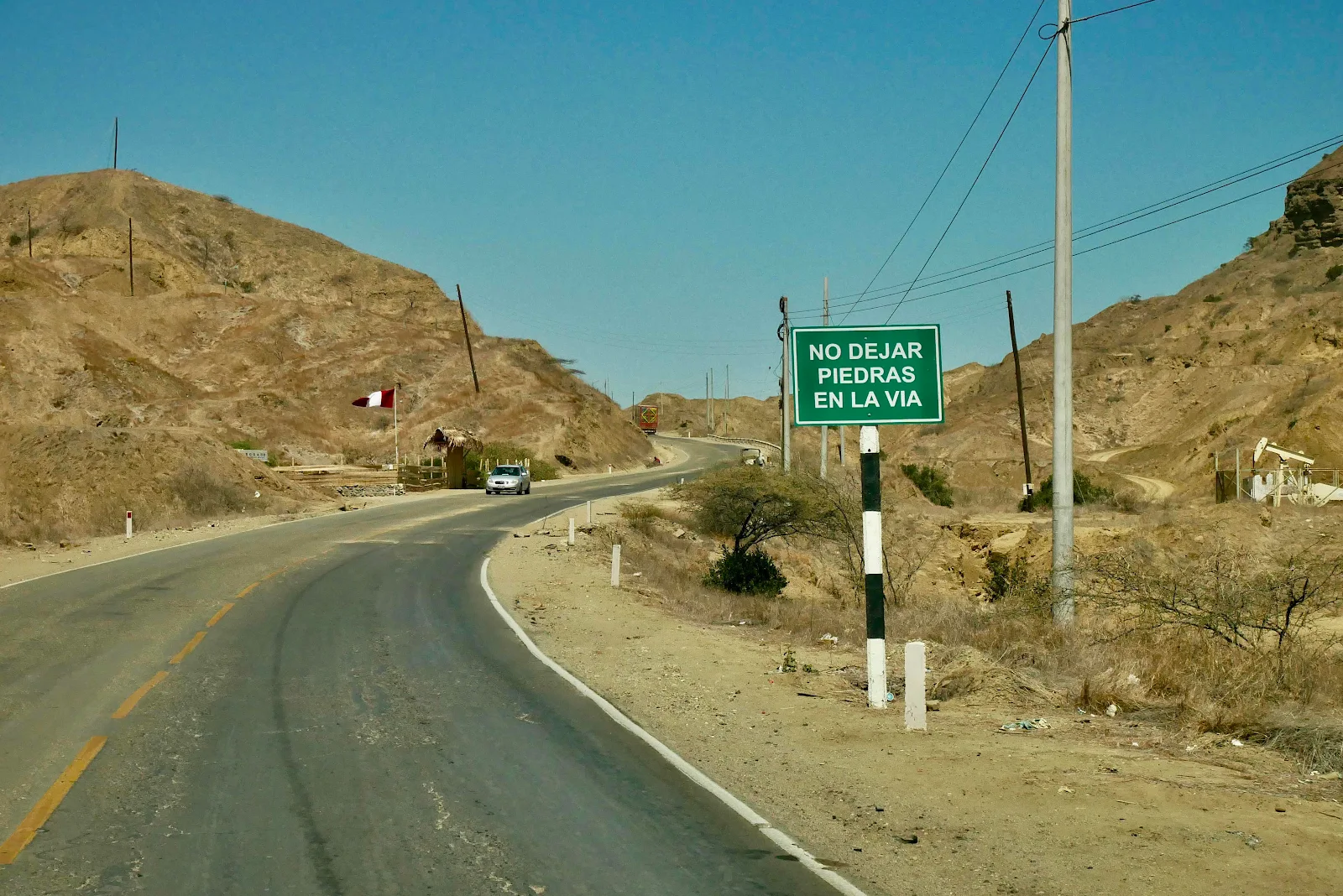
The sign reads “Don’t leave rocks on the highway.” Which I know sounds weird but when locals break down in Latin America they put branches or stones on the road to warn the boy racers coming up around the corner that there’s an obstacle ahead. And then presumably when they are repaired they forget and leave them there. 
Above you can see patches of sand on the highway. Below you can see what they look like up close. No wonder I drive on edge all the time. Bounce bounce bounce…
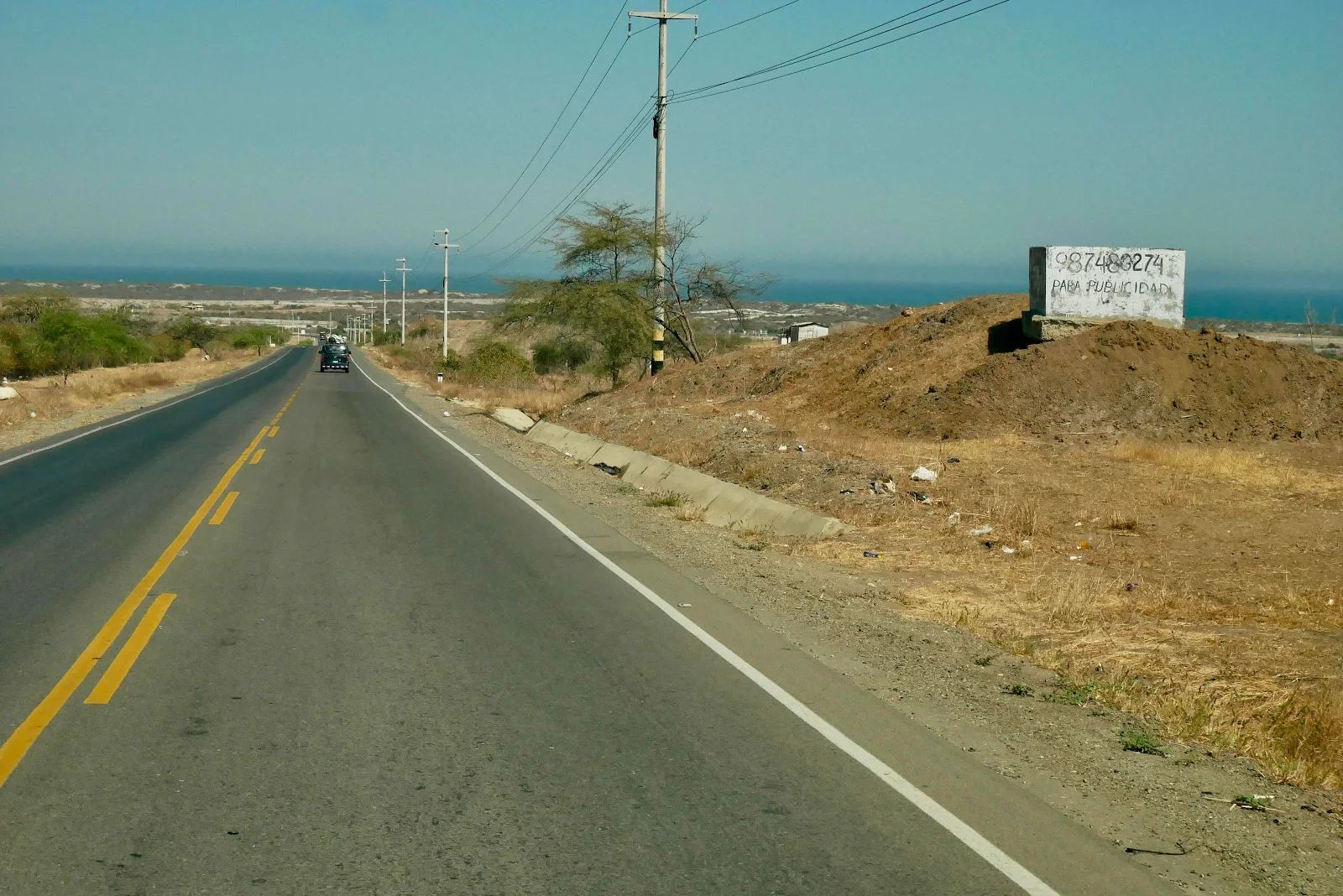
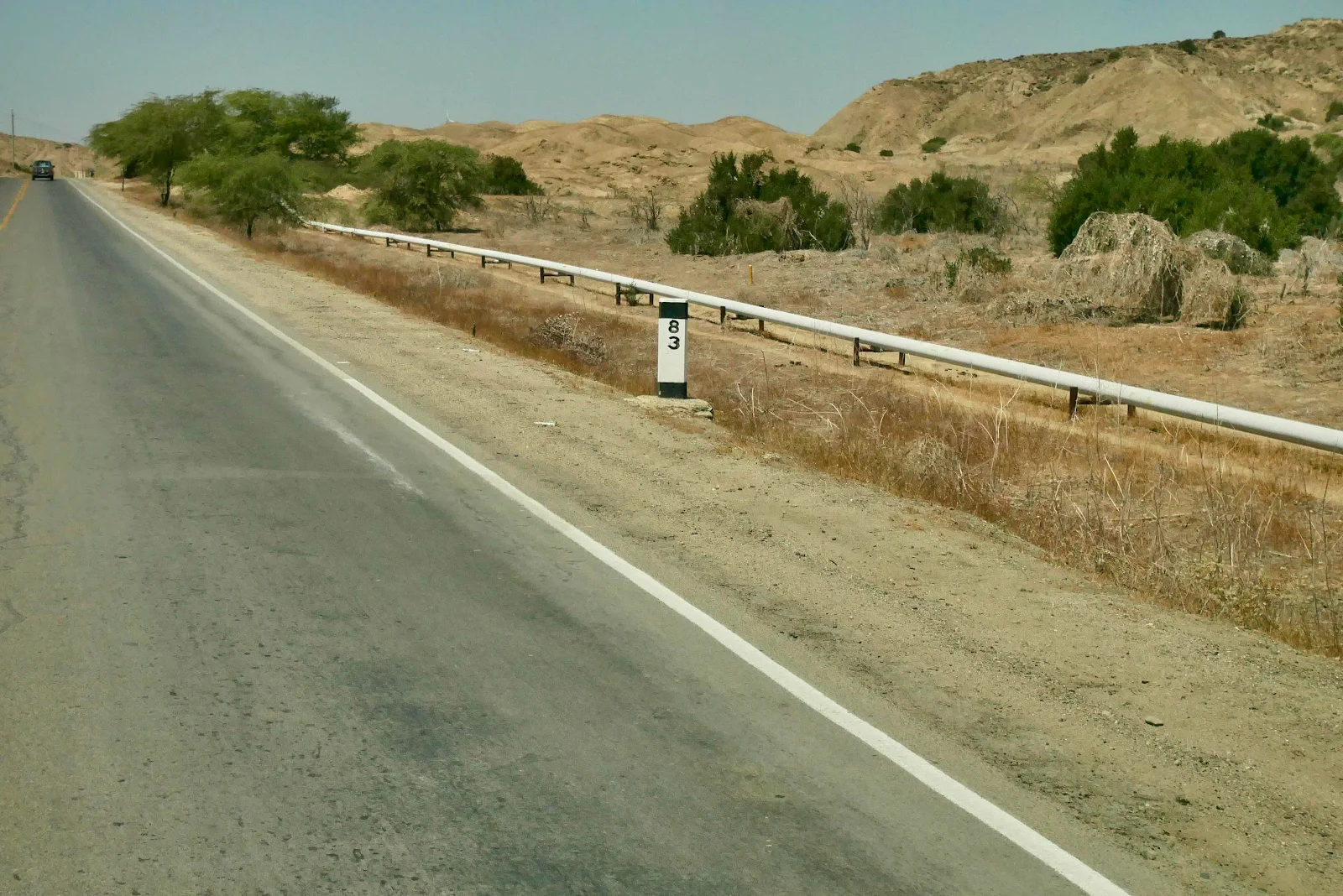
This is oil country and we were driving alongside a pipeline most of the day, not a huge Alaska sized pipe and a strong presence in the desert. 
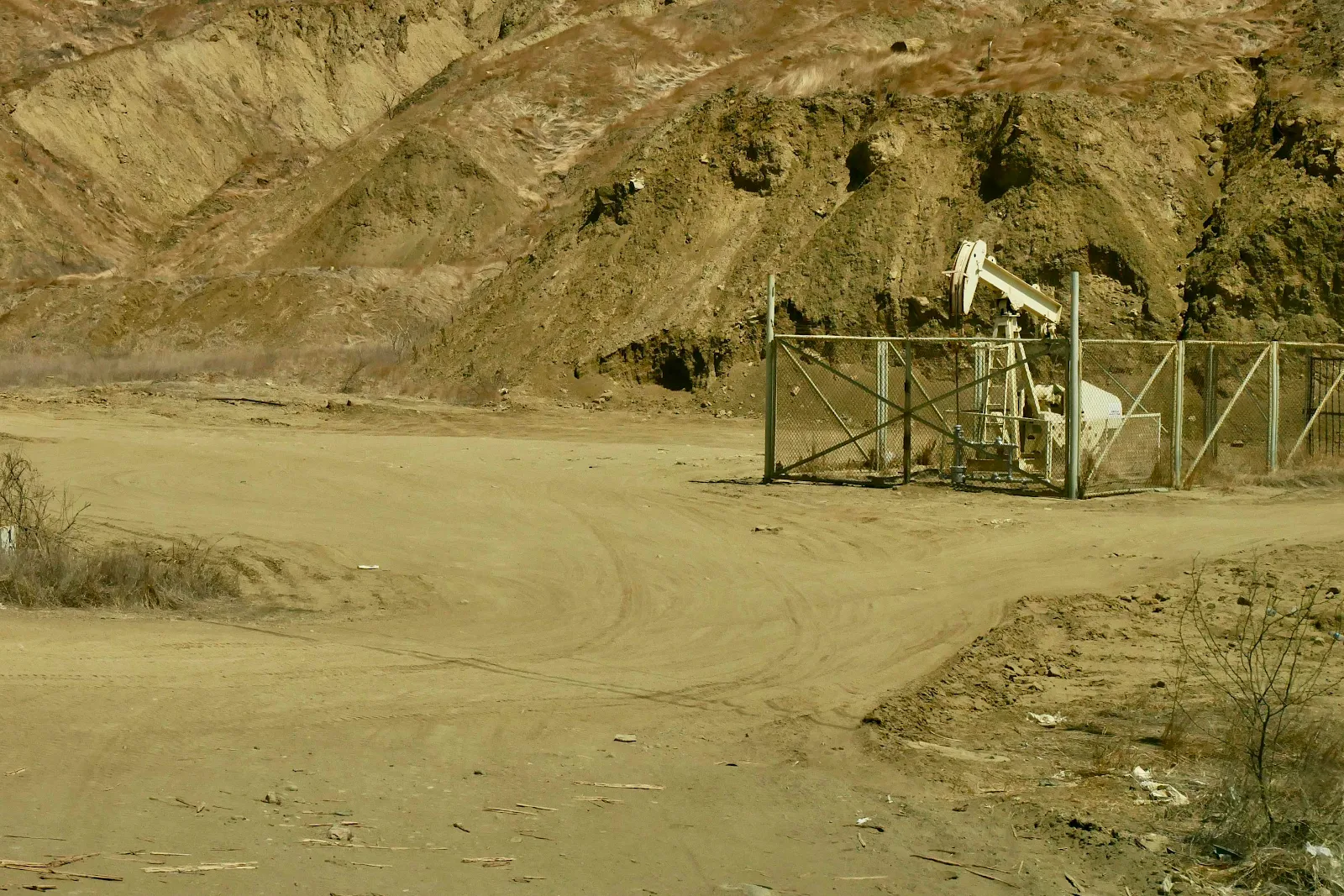
It was labeled Petroperú but I don’t know if it is gas or oil. 
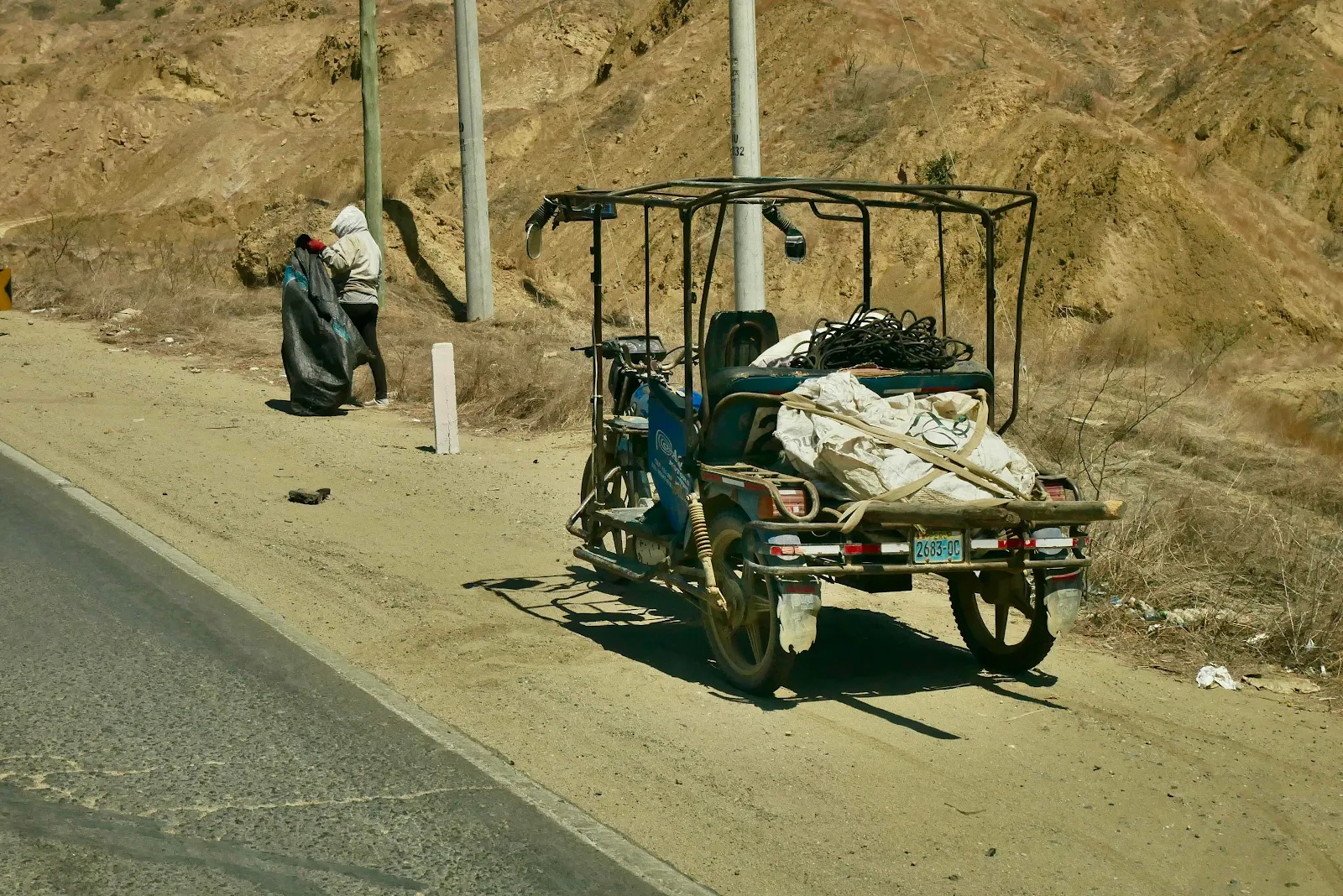
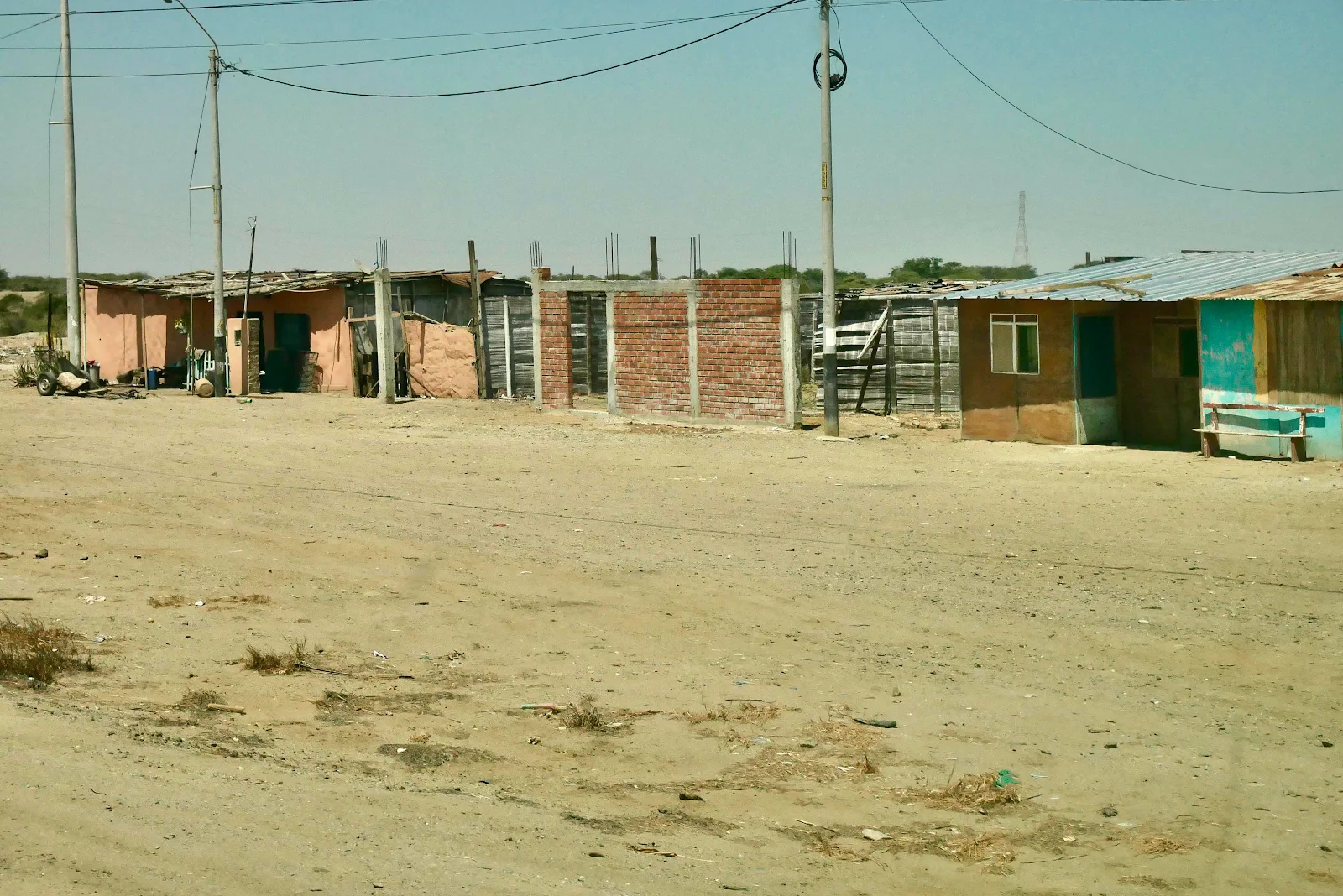
But locals are still scraping by as usual. The poverty here is not great to witness. 
I expect you to be shuddering as soon as you spot the sand on the road. From 35 mph we try to get down to ten before we hit the bouncy bits. GANNET2 had to get us to Ushuaia probably 5,000 miles away from here. 
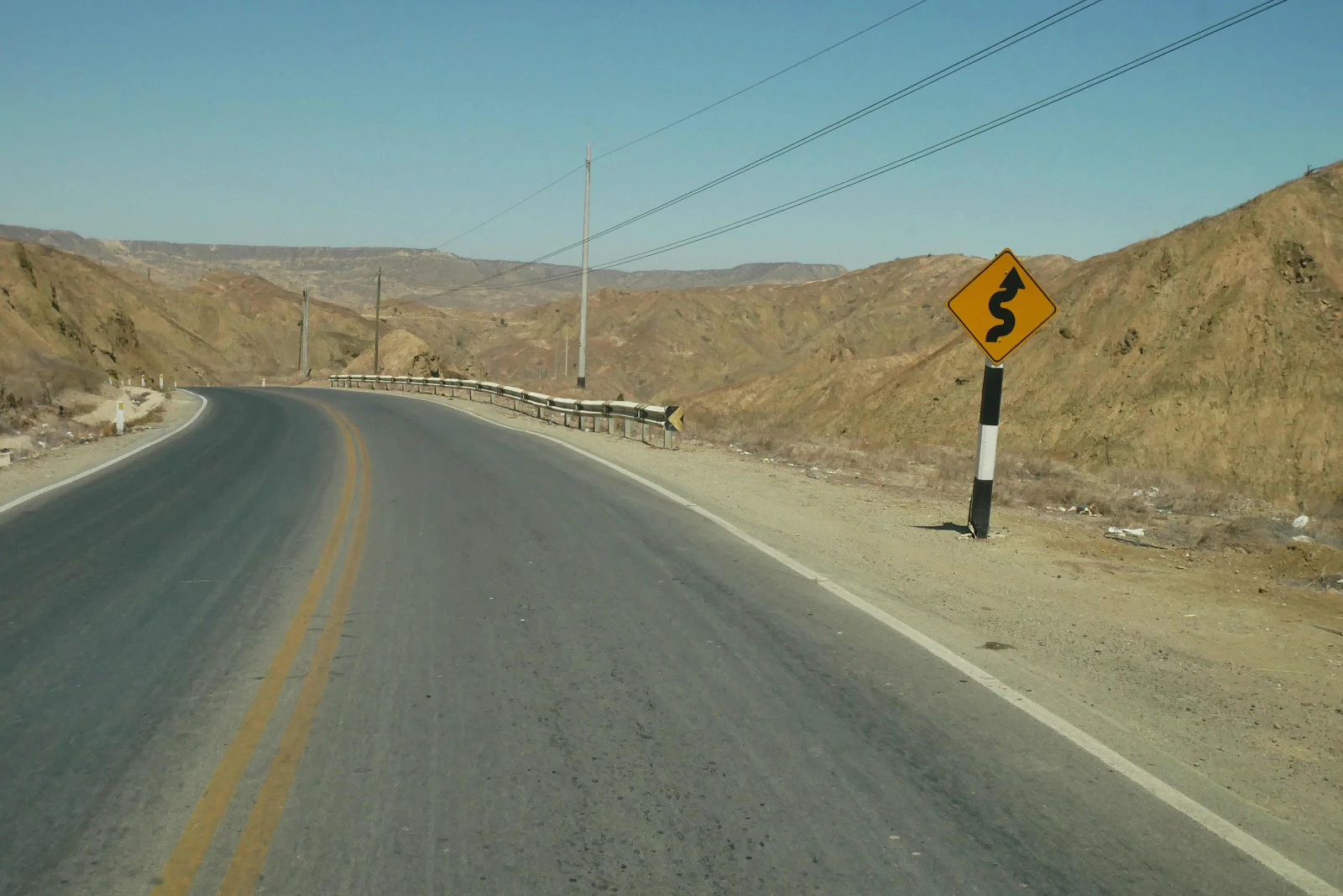
Eventually the road surface did get better and on the straight sections I felt safe rolling at 50mph. I like that kind of driving, a half meditation. But to get there one has to go there by going through more complicated sections. 
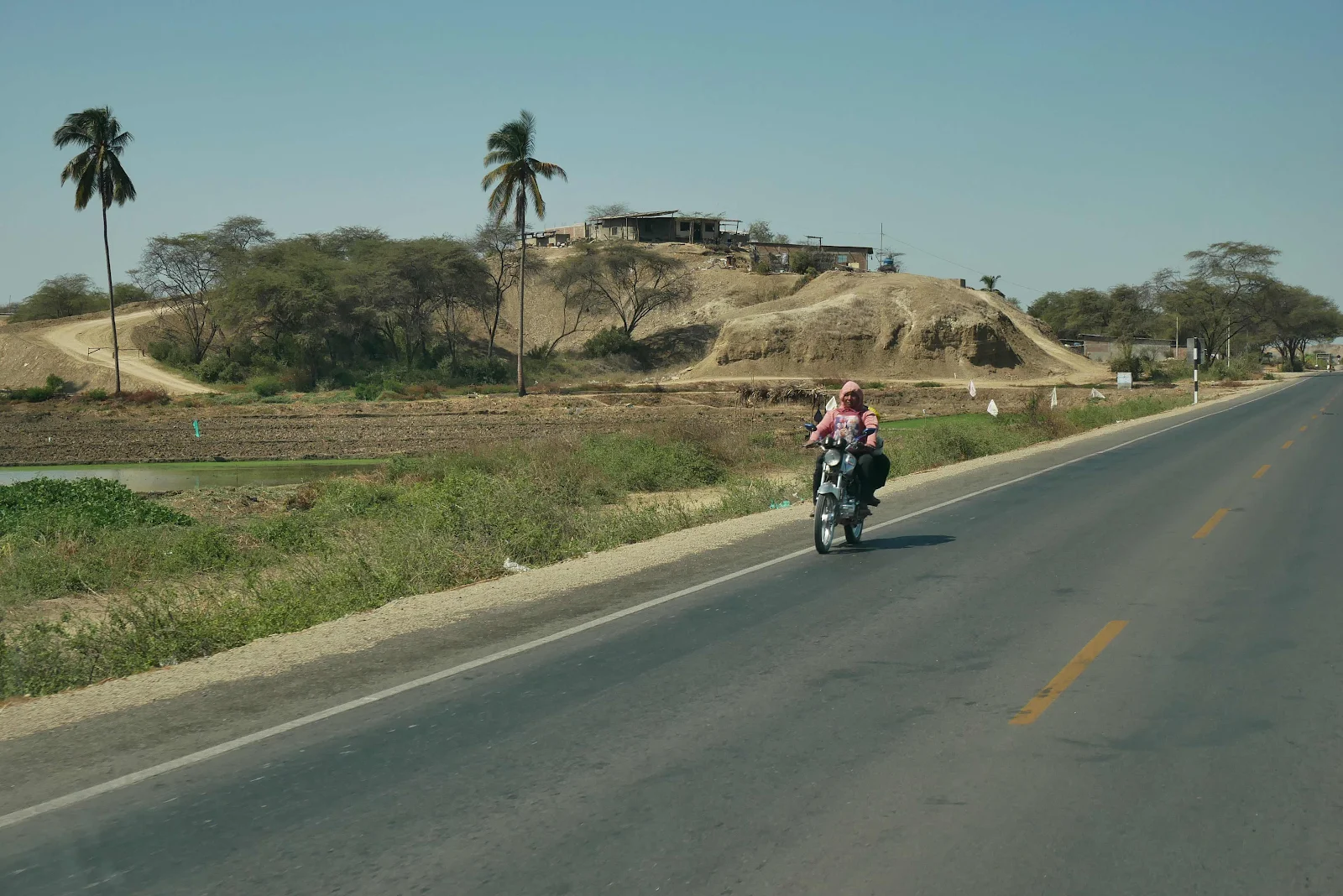
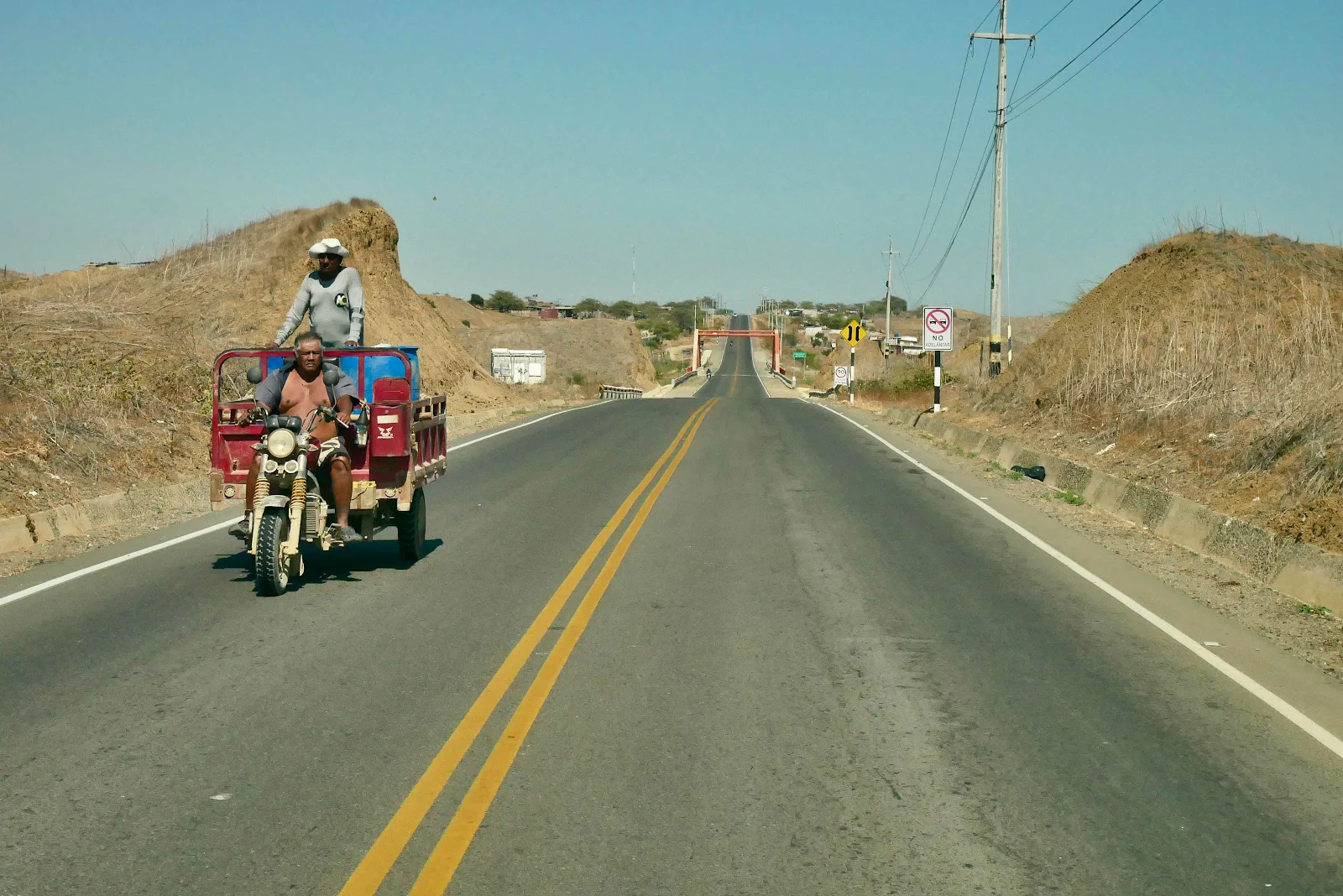
Imagine coming across a 30mph moto taxi out here plumb in the middle of absolutely nowhere. 
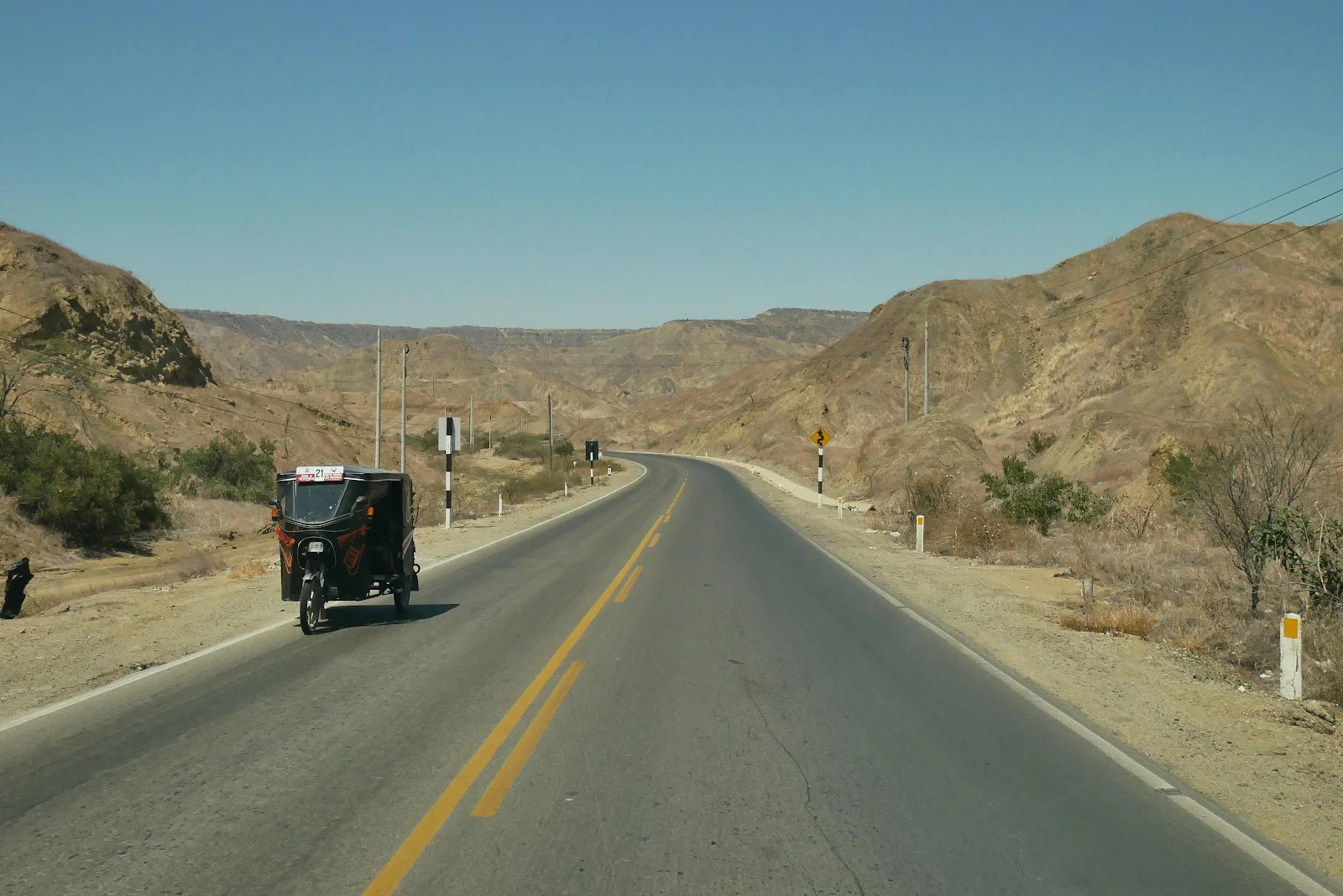
Which was a great spot for us to stop and have egg salad wraps for lunch. That’s part of the pleasure of traveling in our home. For thirty minutes we can shut out the world in which we find ourselves and just be “at home.” That helps to reset you and charge you up to cope with some more tough driving. 
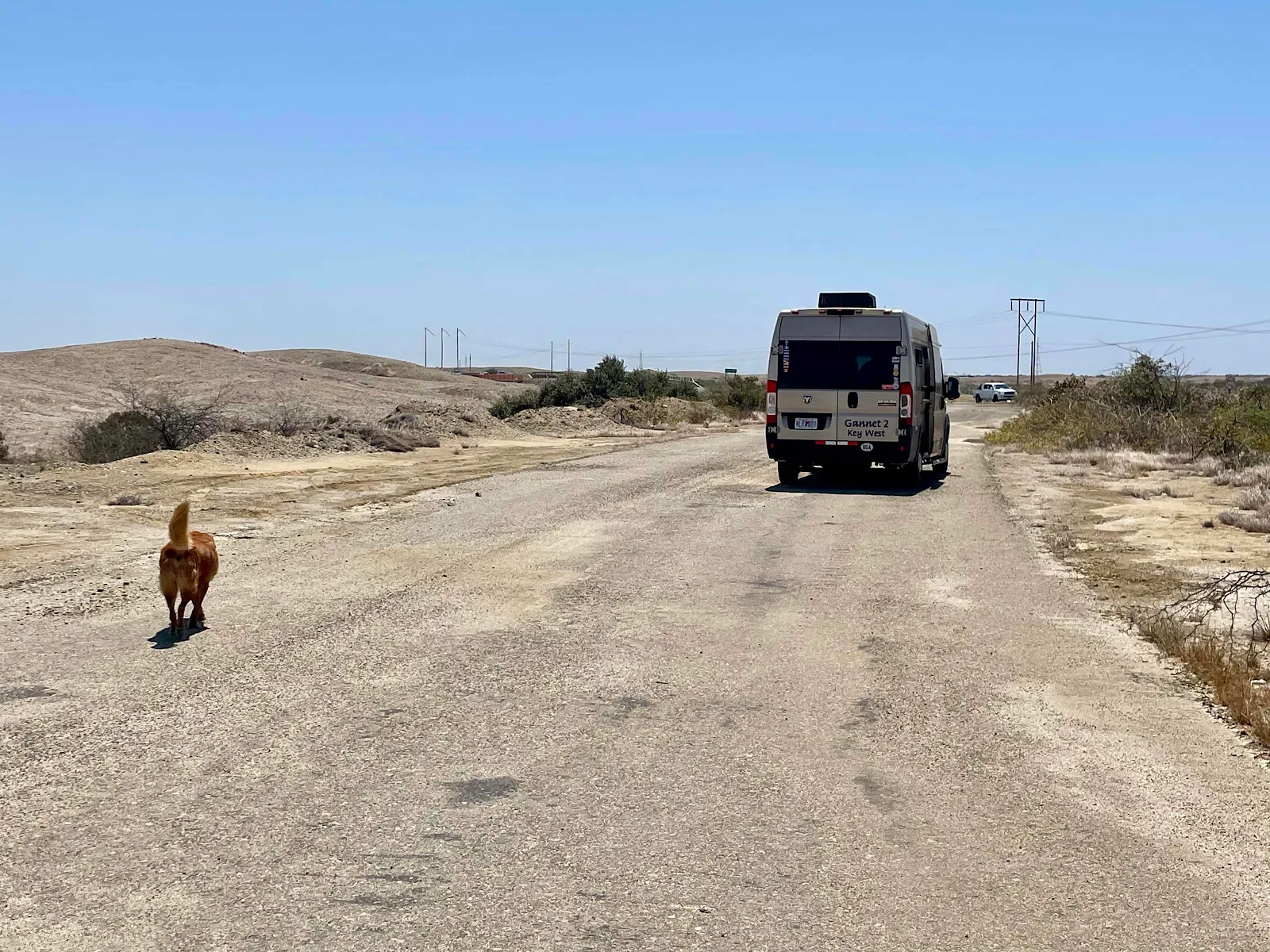
Most road signs are the modern euro-style round signs with a red rim but some of the speed limit signs look American in style. 80km/h is 50mph and we can do that here. 
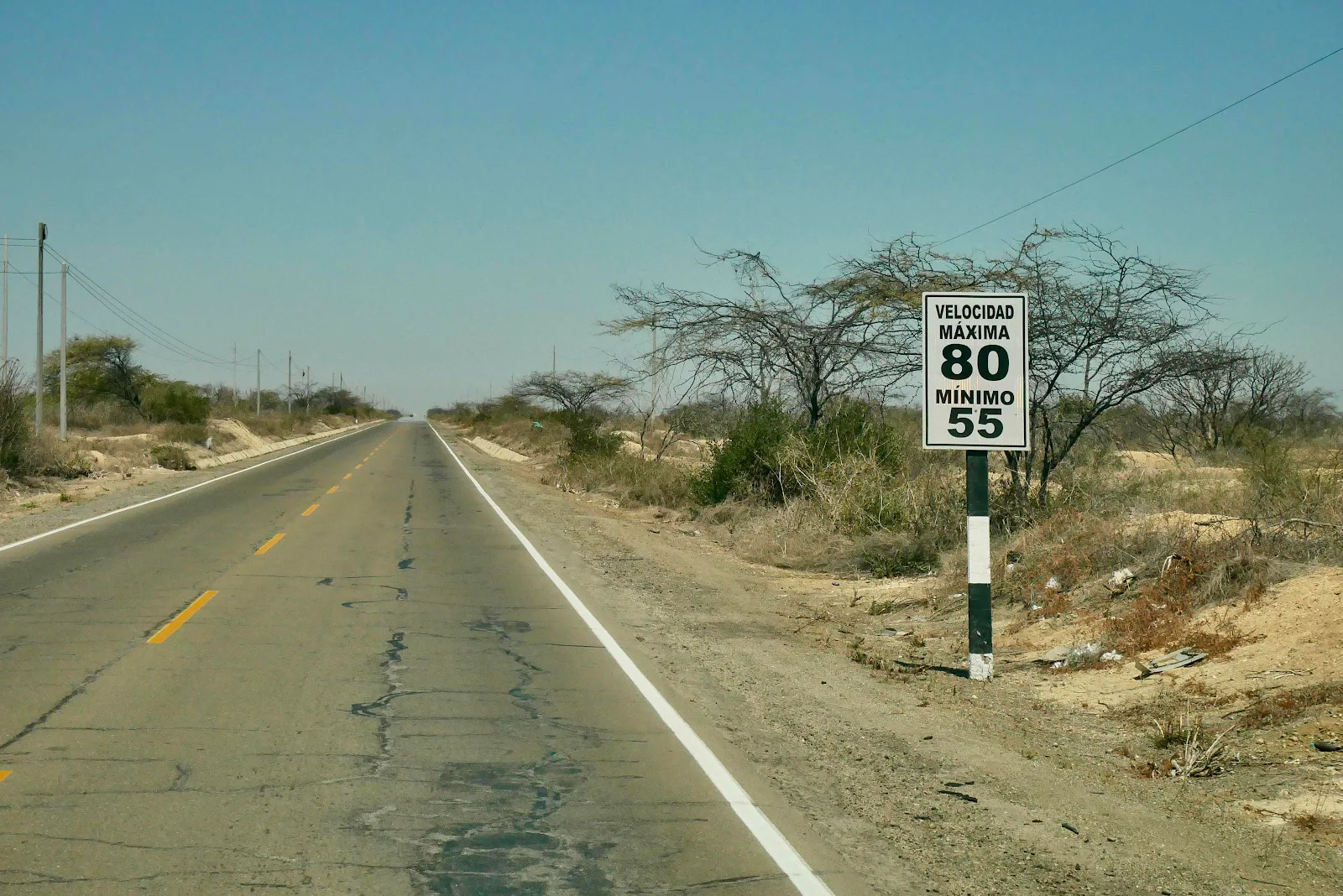
“Dangerous curves; drive carefully.”
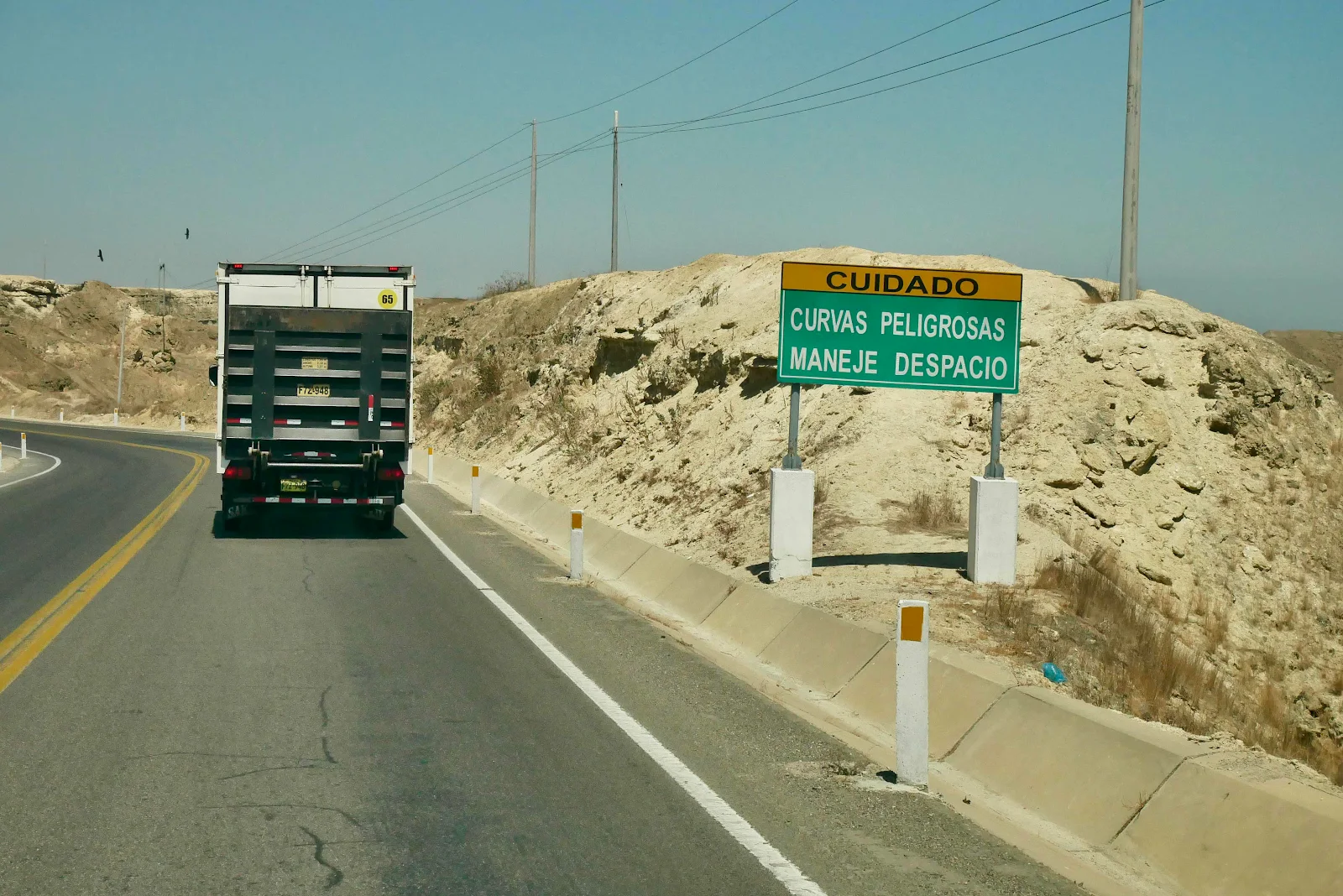
We passed an air base without spotting any checks or control points. That was a relief. We did go through another police checkpoint and got our papers reviewed again. It seemed unnecessary but there was no drama. “We’ll never get there at this rate if they keep stopping us,” Layne grumbled as we drove away. On most of our jour day thus far we just gave waved through; not in Peru. 
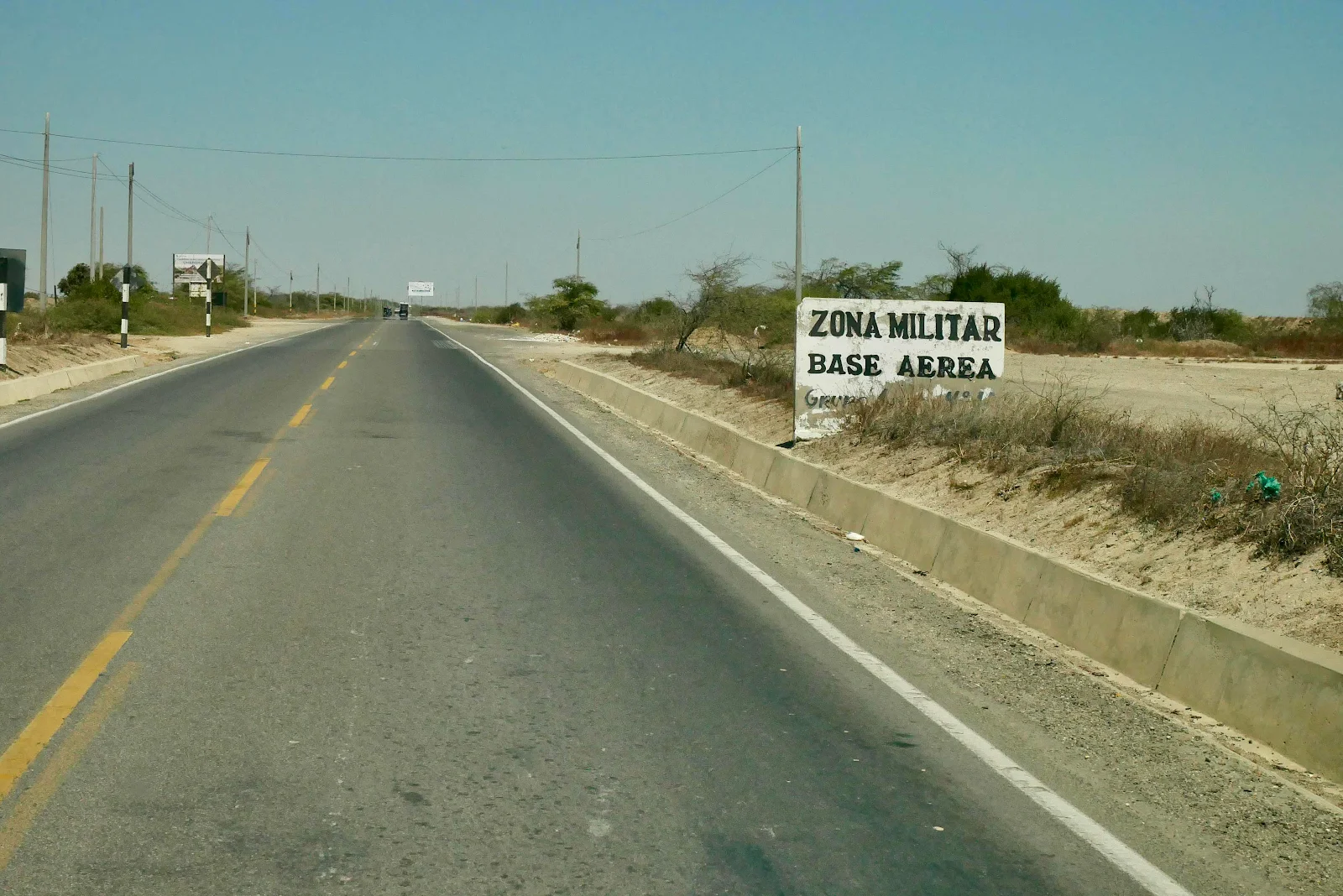
I look at these homes and wonder what possible future their children have. 
Water deliveries. 
A mechanic’s shop:
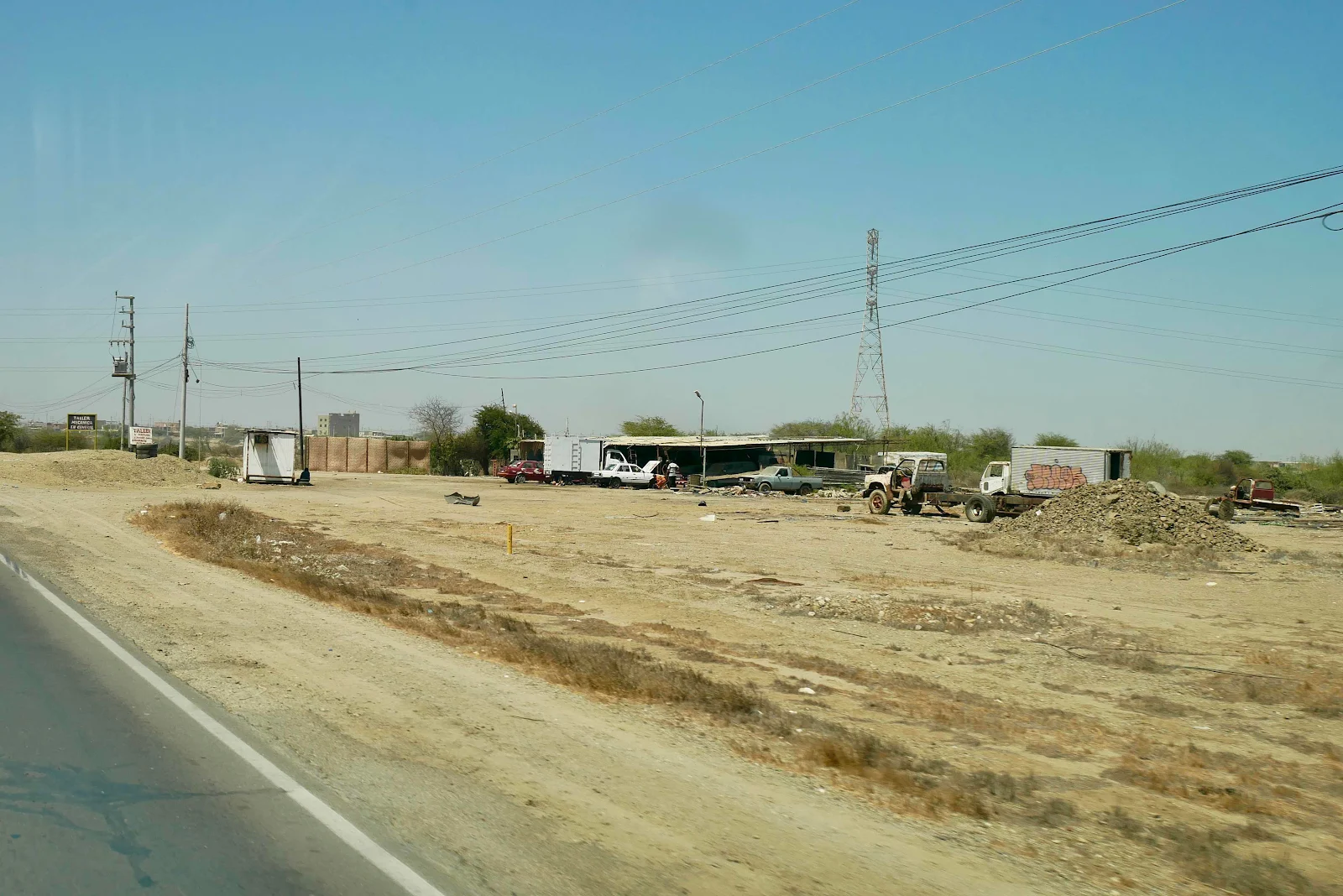
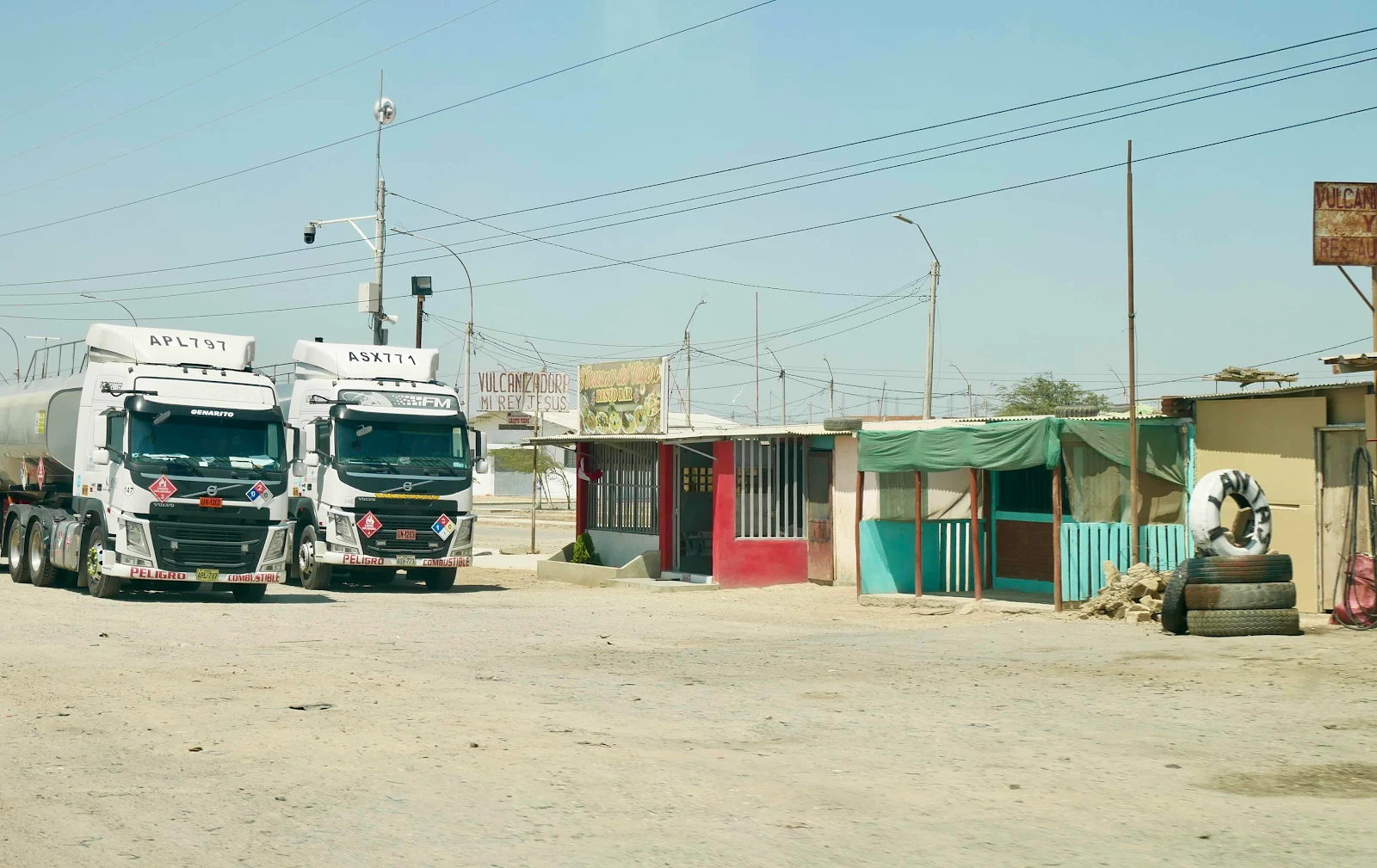
Truck stop and tire repair: 
No points for spotting this speed bump: 
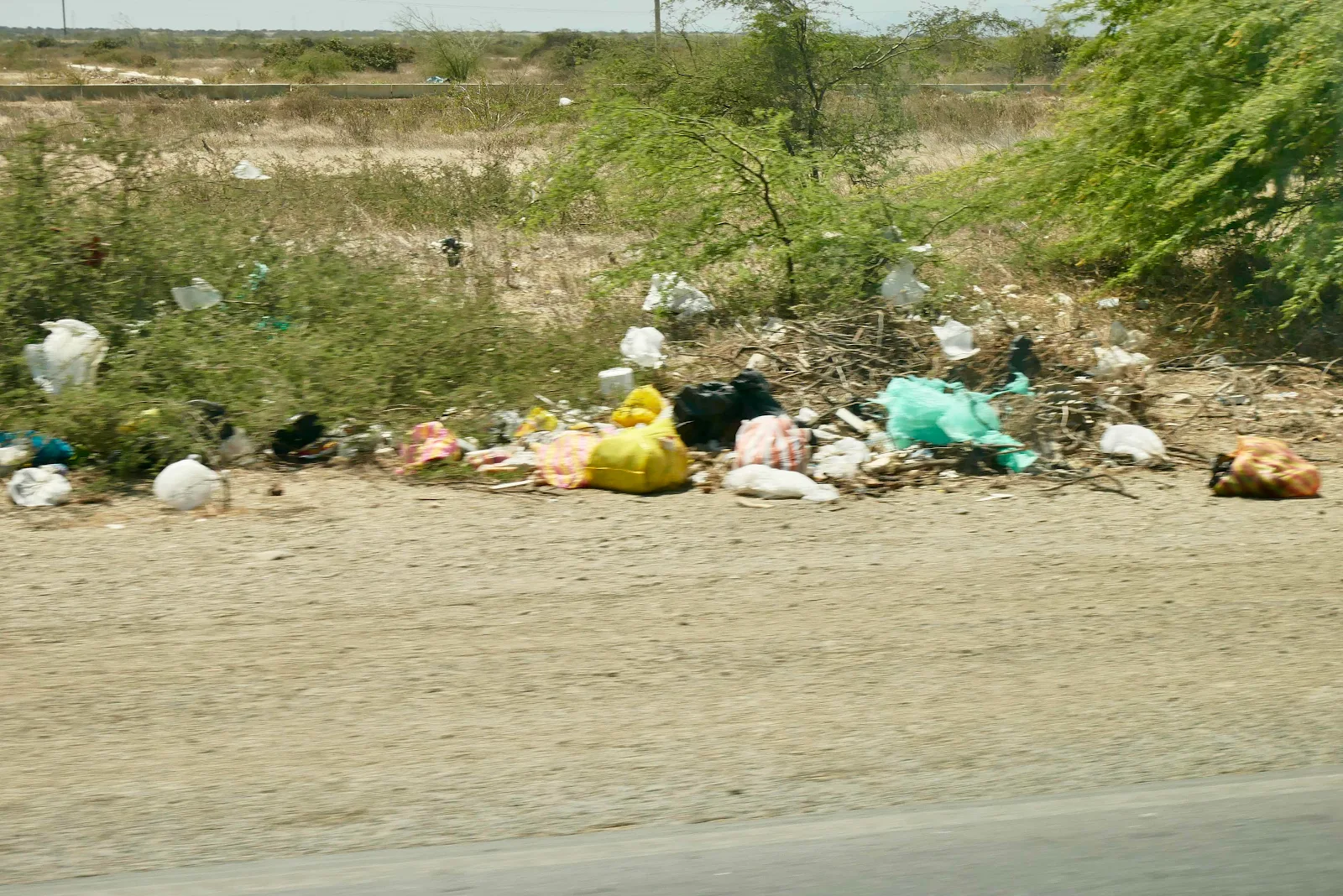
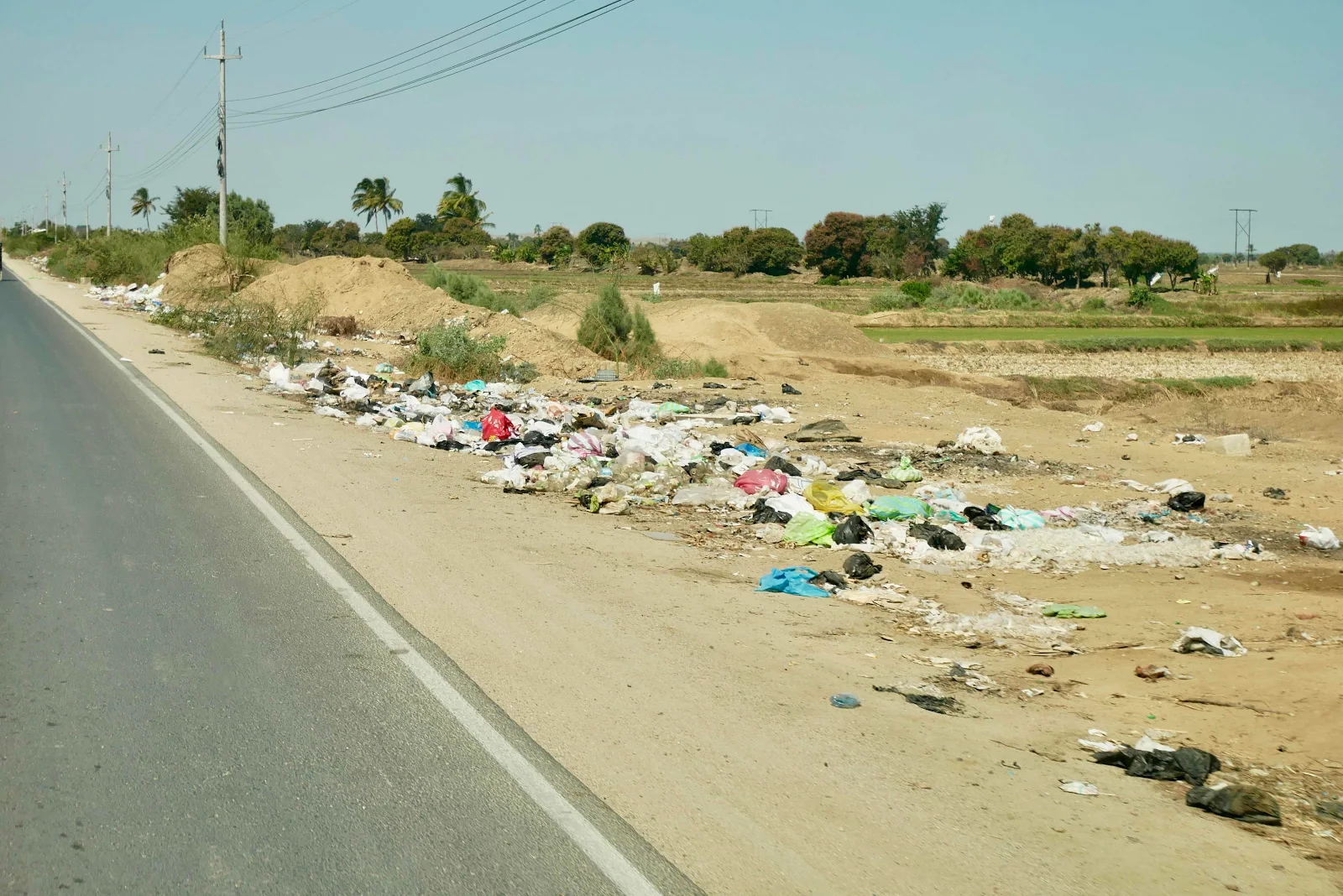
Travelers warned us Peru is filthy and they aren’t wrong. 
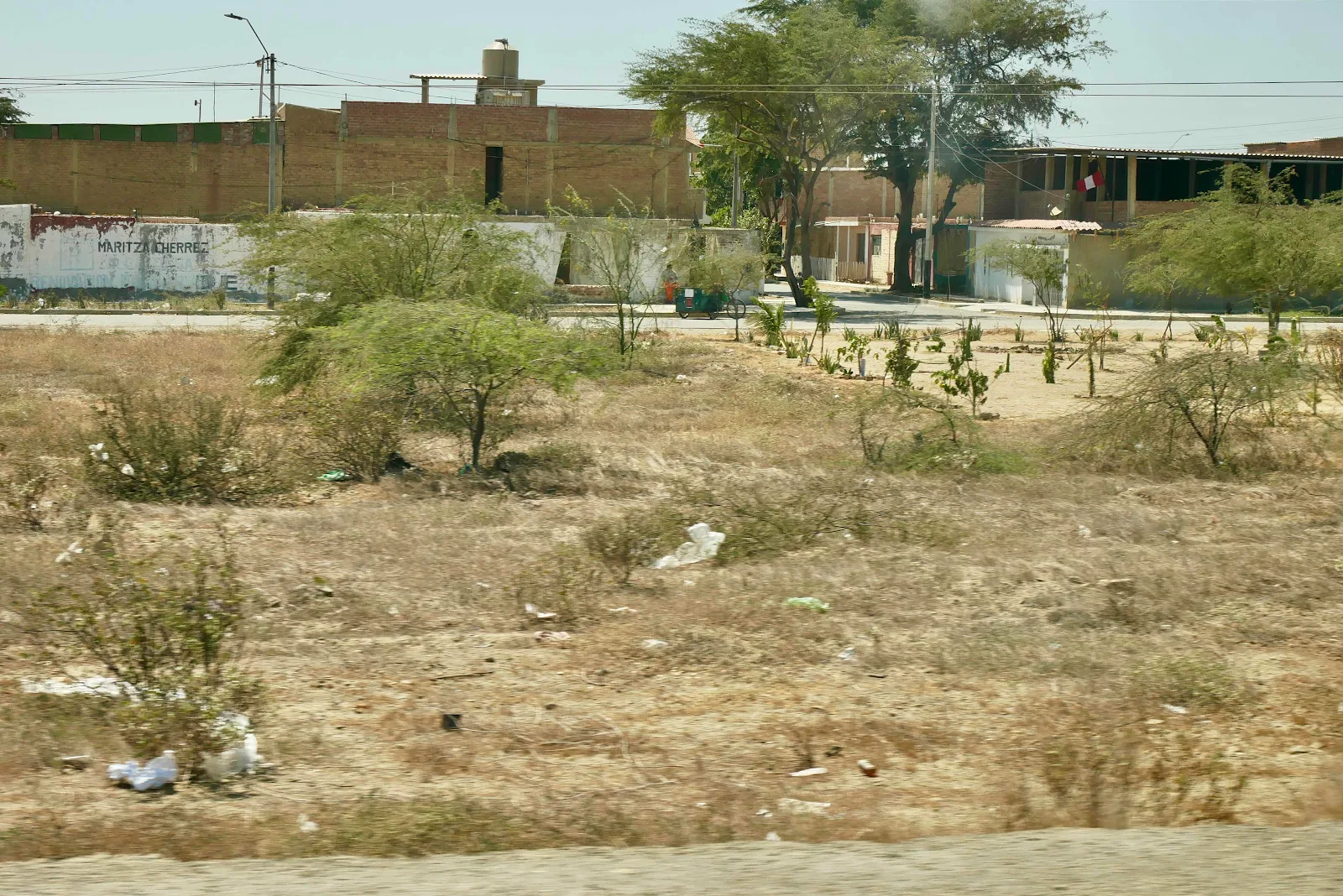


Expecting proper trash disposal around here is I suppose expecting too much but these are people living here and they deserve better. An education for a start as it shouldn’t be okay to live in a trash heap. 
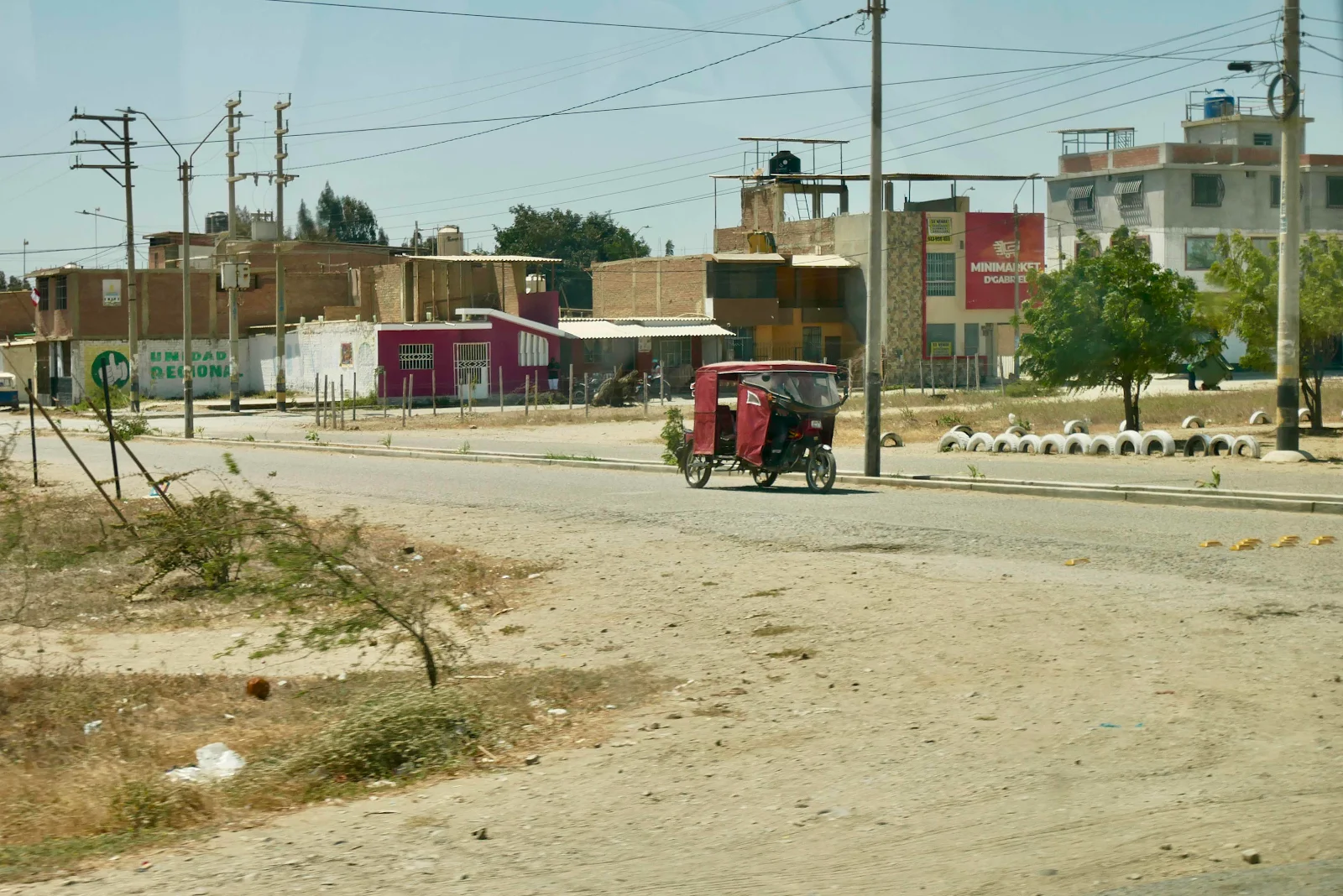
It’s not like watching a sailboat sail itself but it is meditative out here and you get time to think and grumble. 


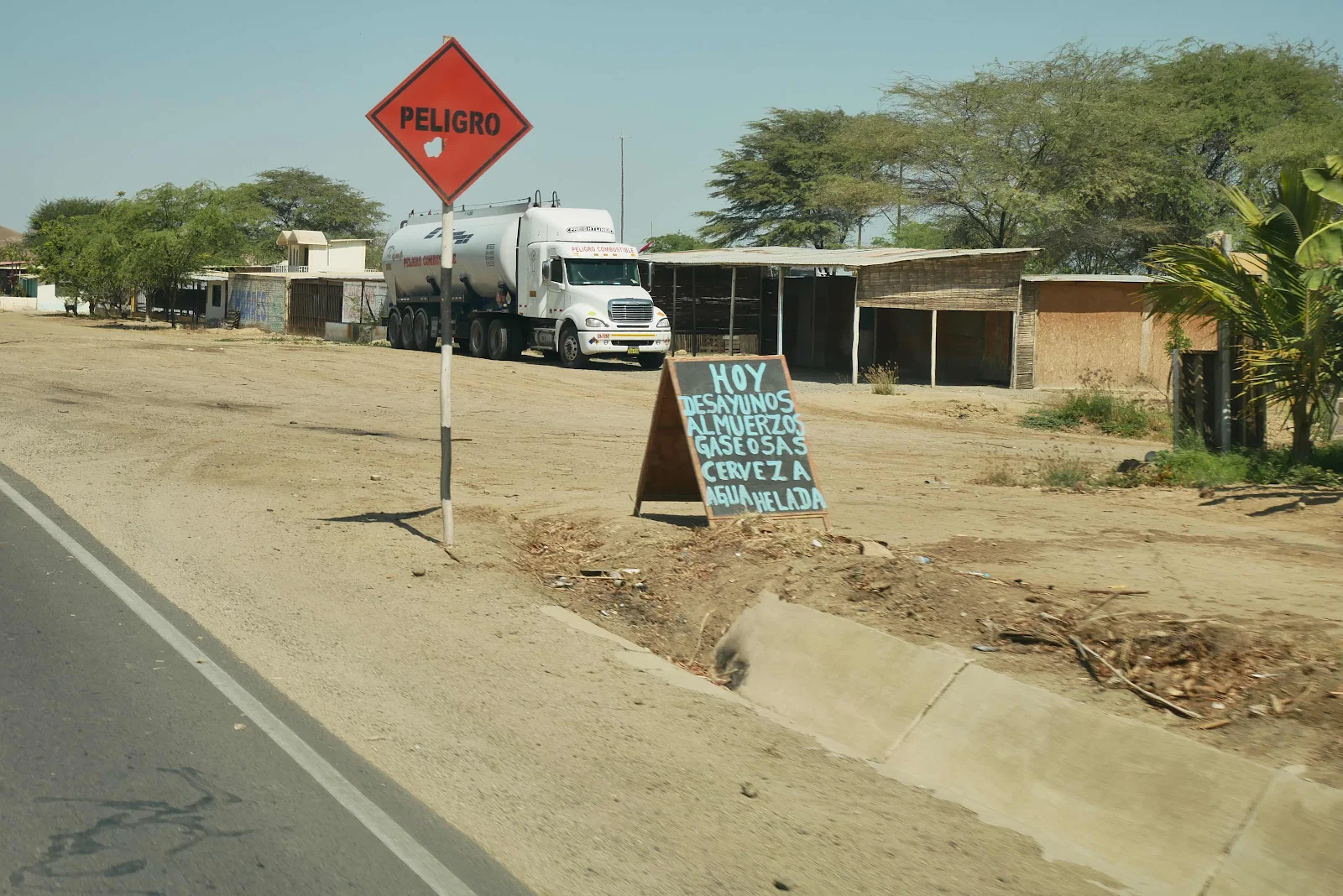
Breakfast, lunch and drinks (including beer) are for sale. The red sign advises some unspecified danger ahead. Just another day on the road in Peru then. 
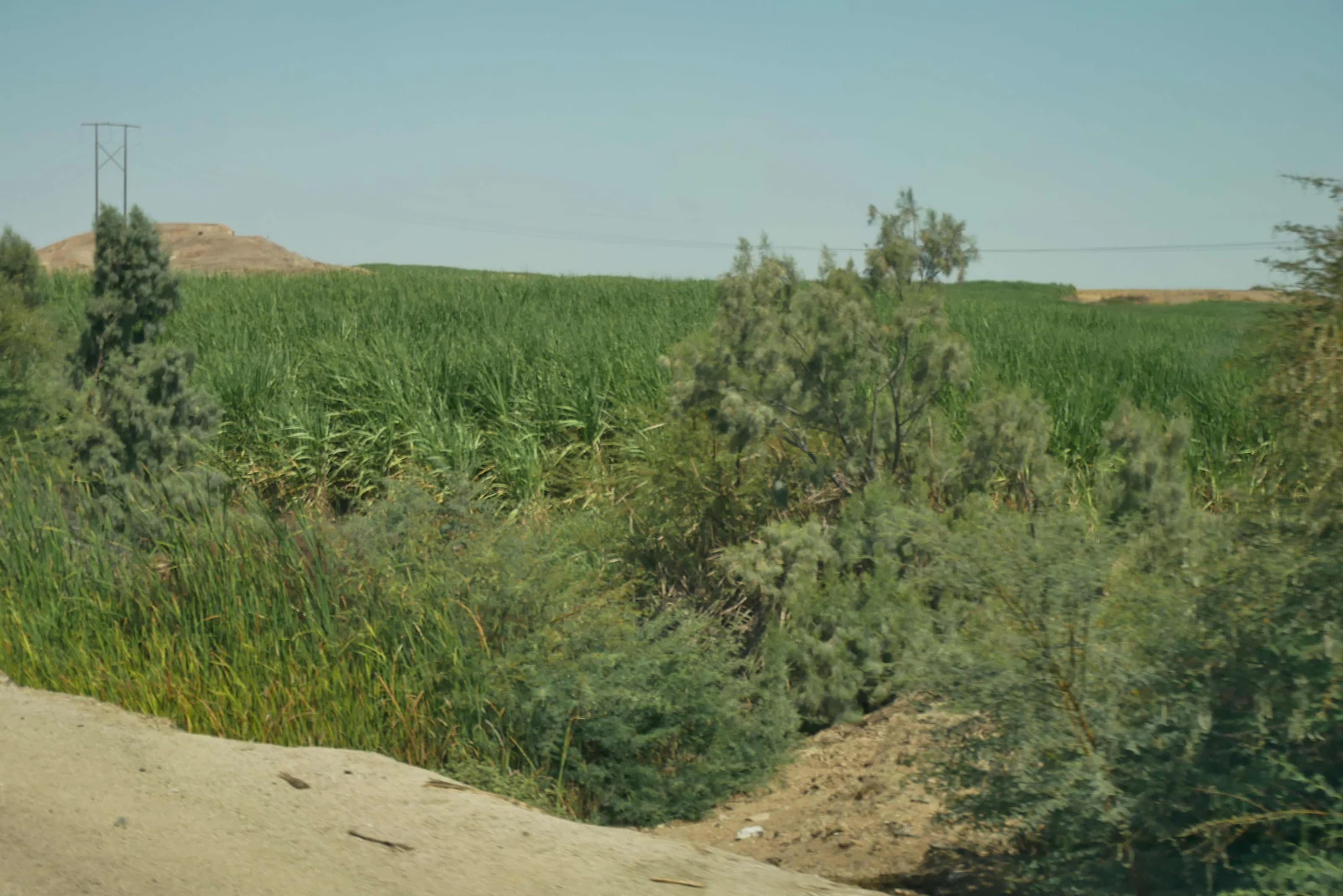
Sugar cane:


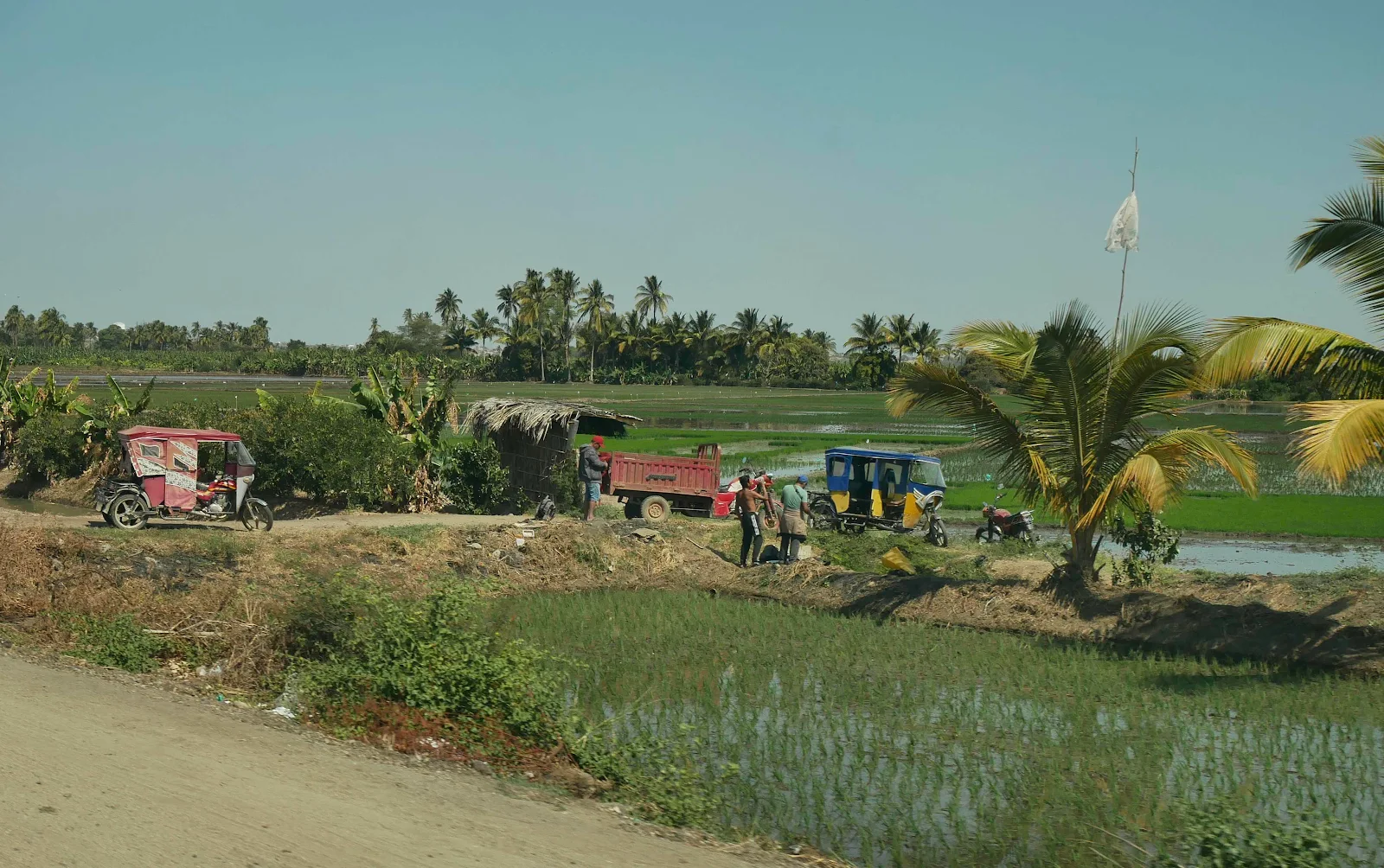
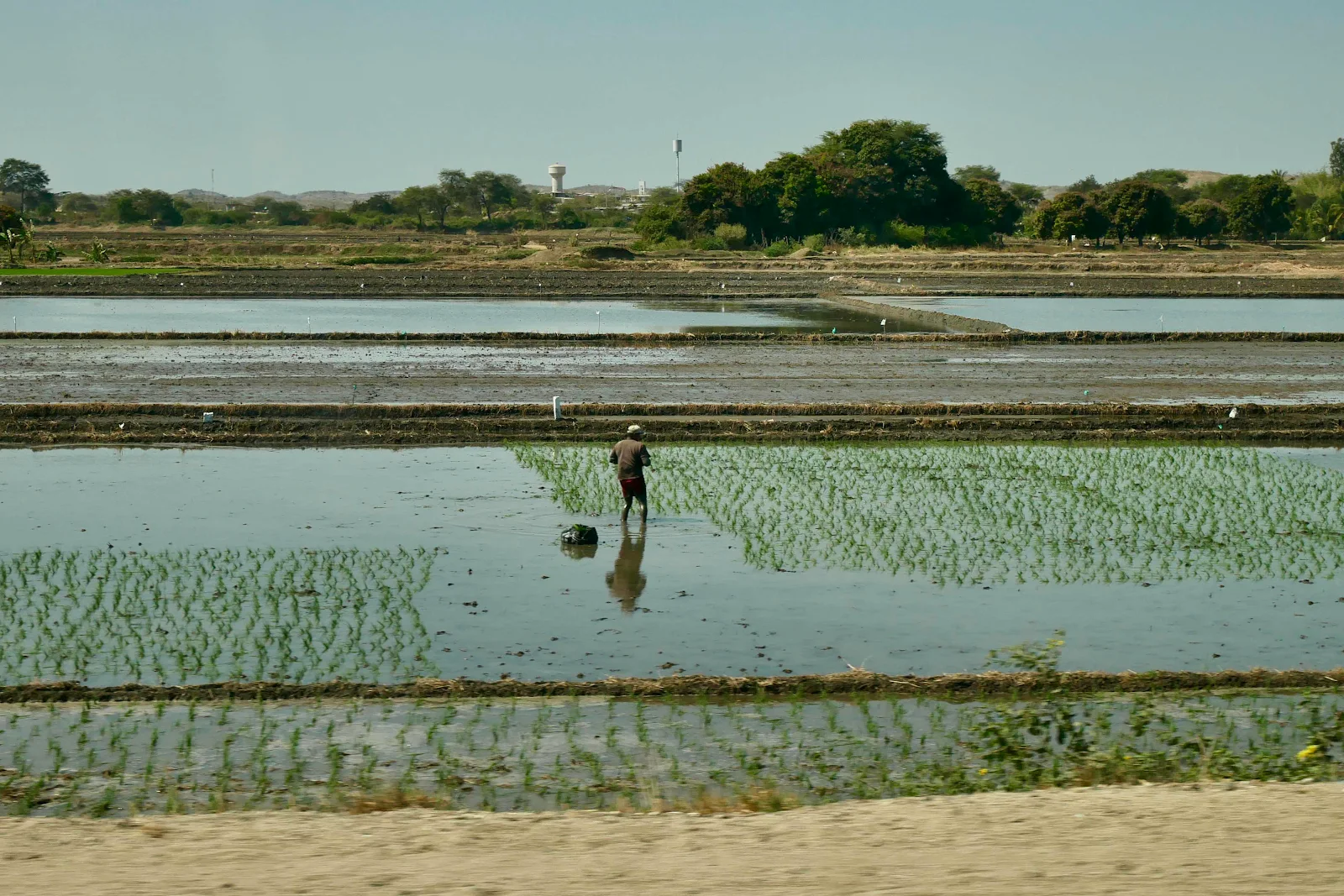
Rice paddies surprised me outside the town of Sullanta (“Su-ee-ant-ah”):


We have discovered that Walmart has bought a supermarket chain in Peru and Chile and it’s called Tottusand they are painted green. Layne's first encounter was not great but this is a store serving an impoverished town. I stayed with GANNET2 making sure no one messed with us. The vibe here was not good. 
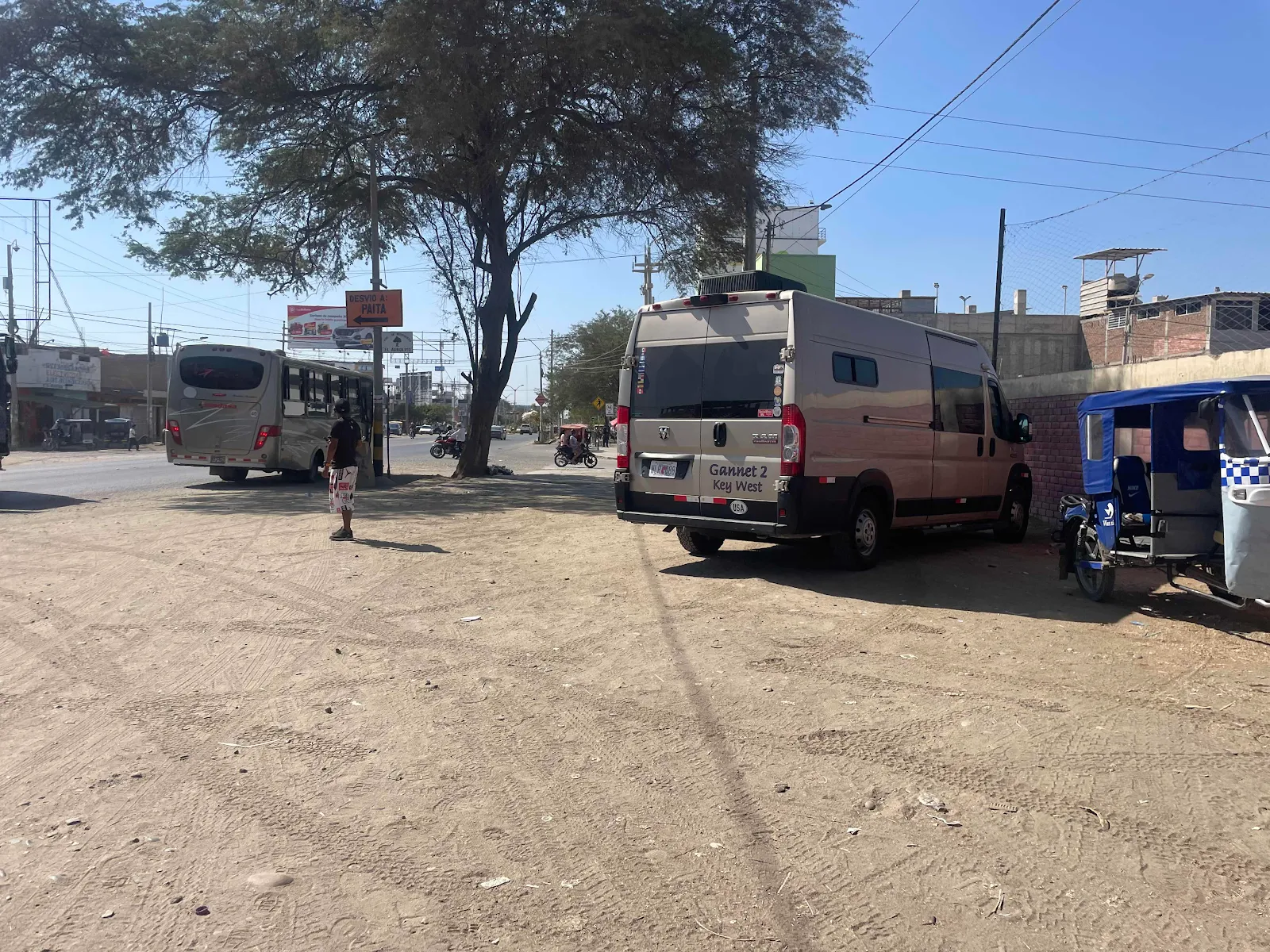
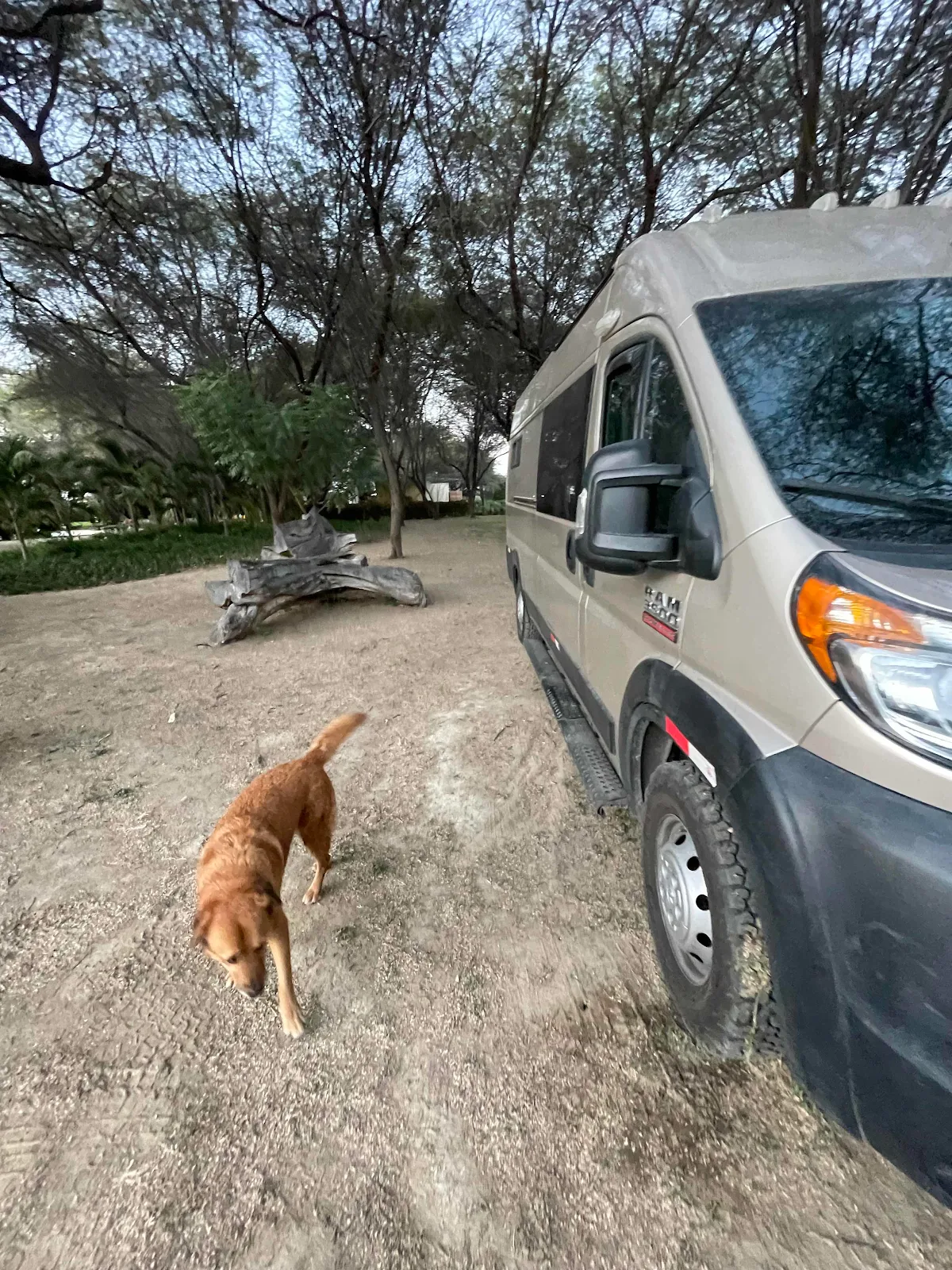
Rusty took a short walk but it wasn’t much of a place for a sensitive nose like mine as it smelled like a toilet. 
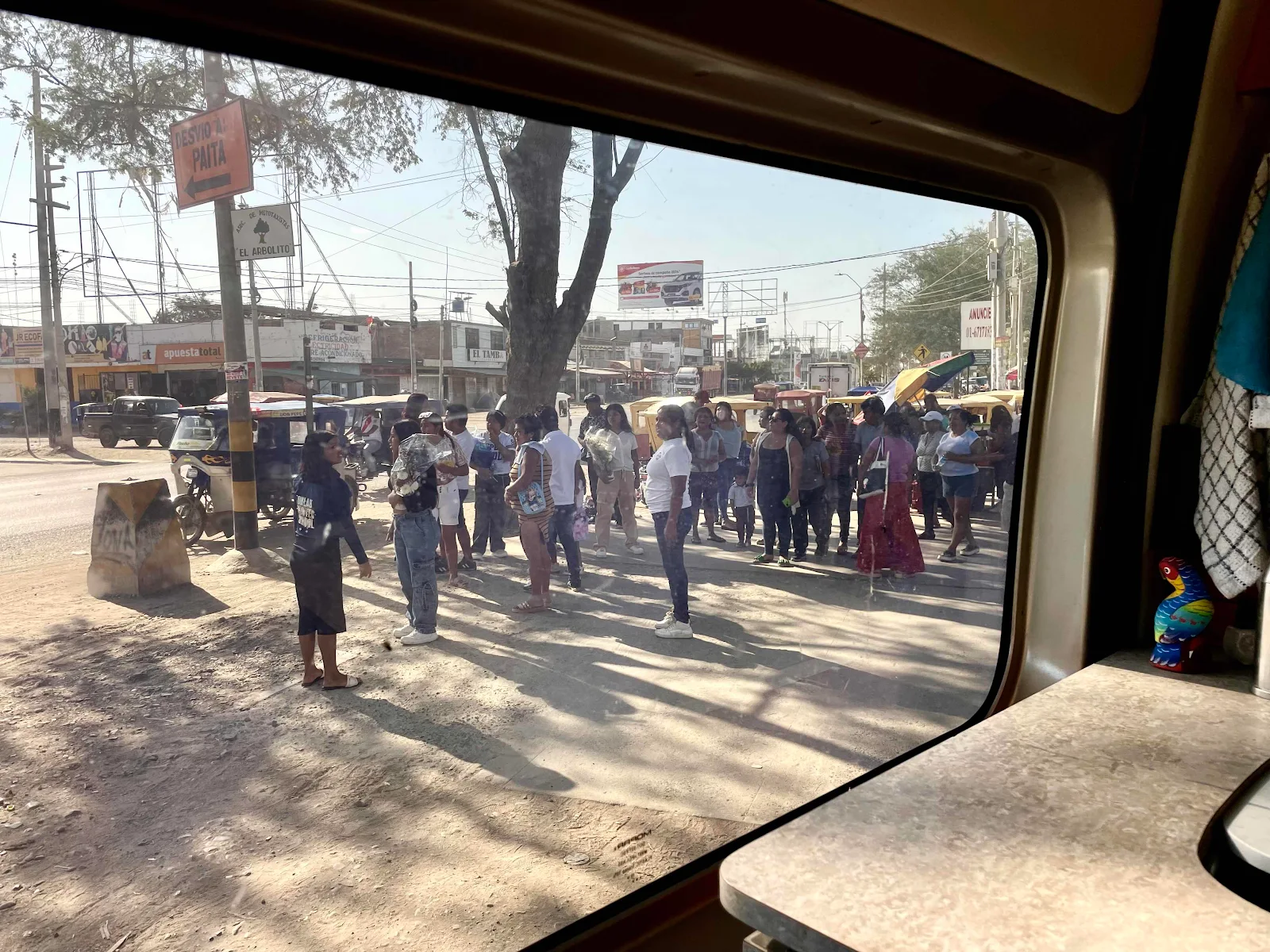
It was a bus stop outside. 
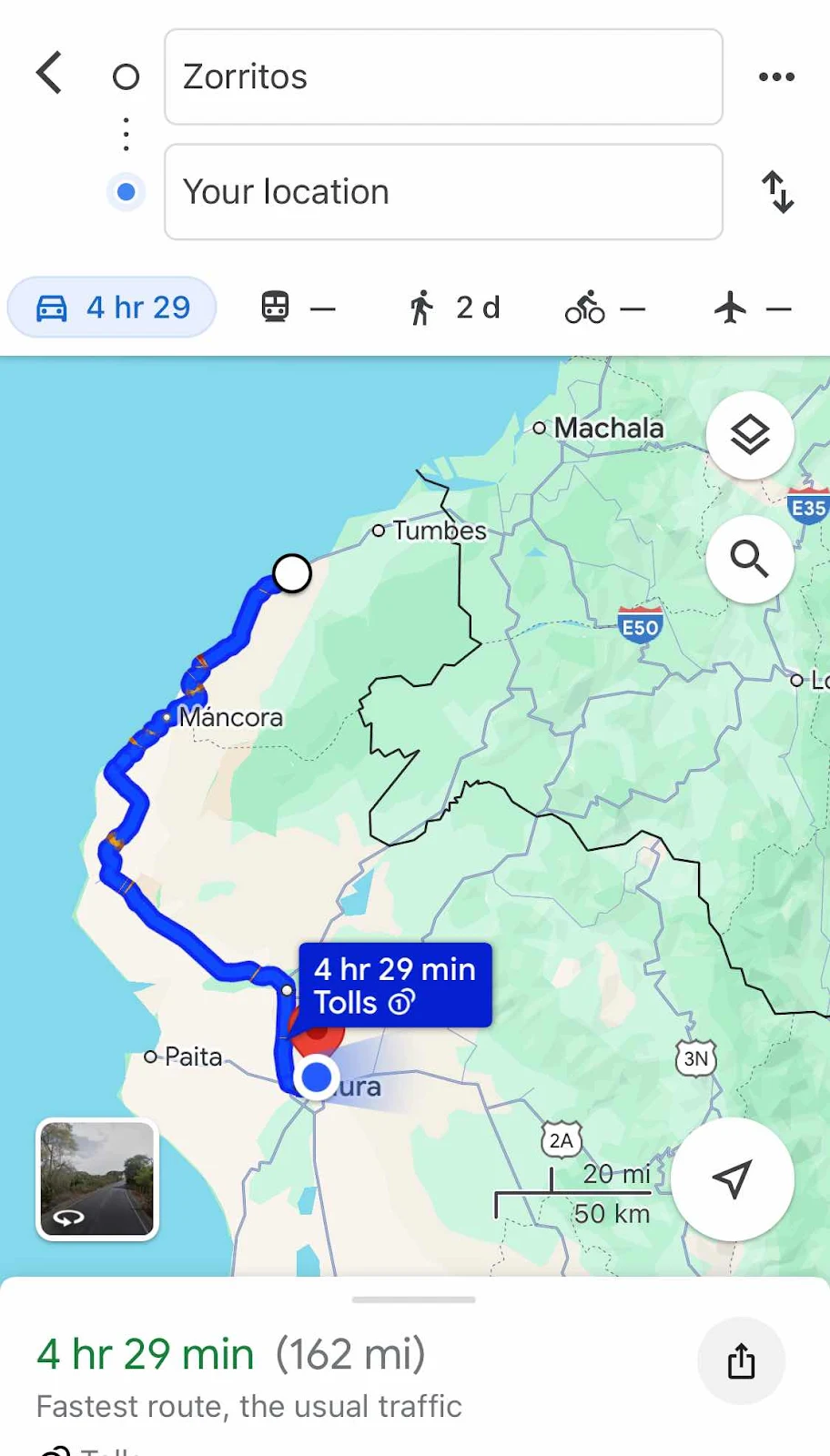
Our route to a campground Porta Verde, just outside the town of Piura. 


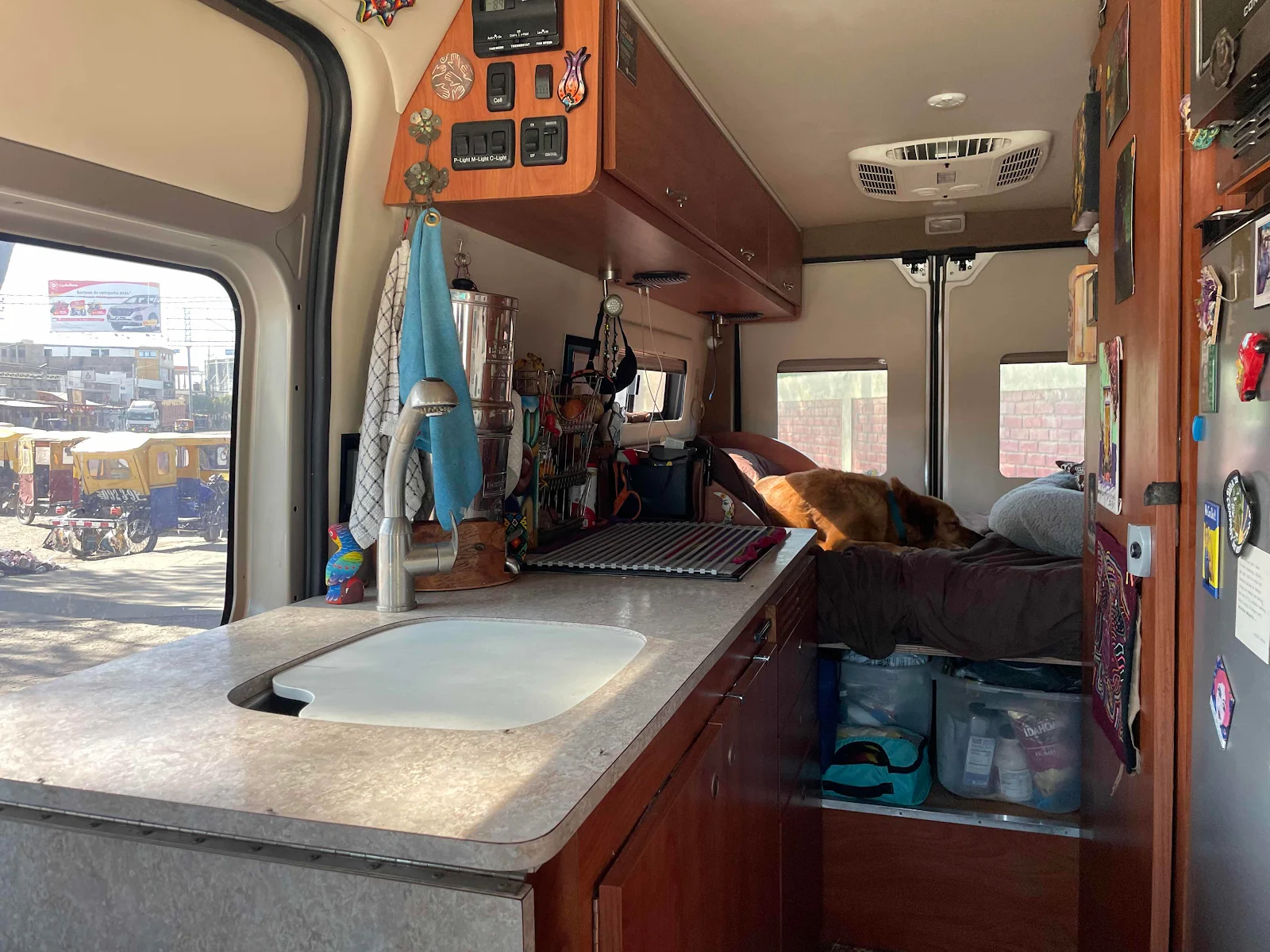
Suddenly, for eleven dollars, we had a place to stay with hot showers, a swimming pool, lots of grass and shade, and a restaurant.
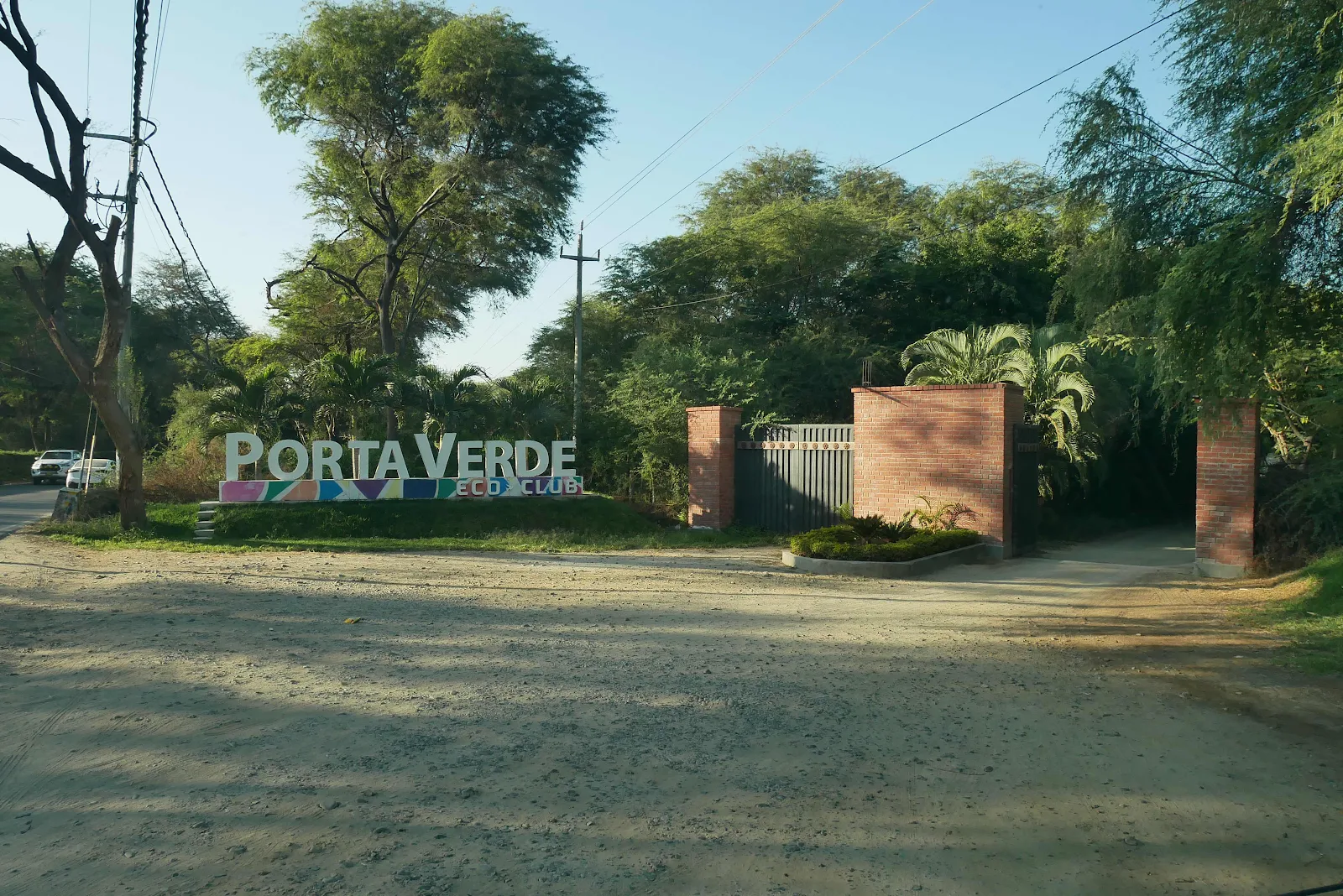
What a middle class oasis. 
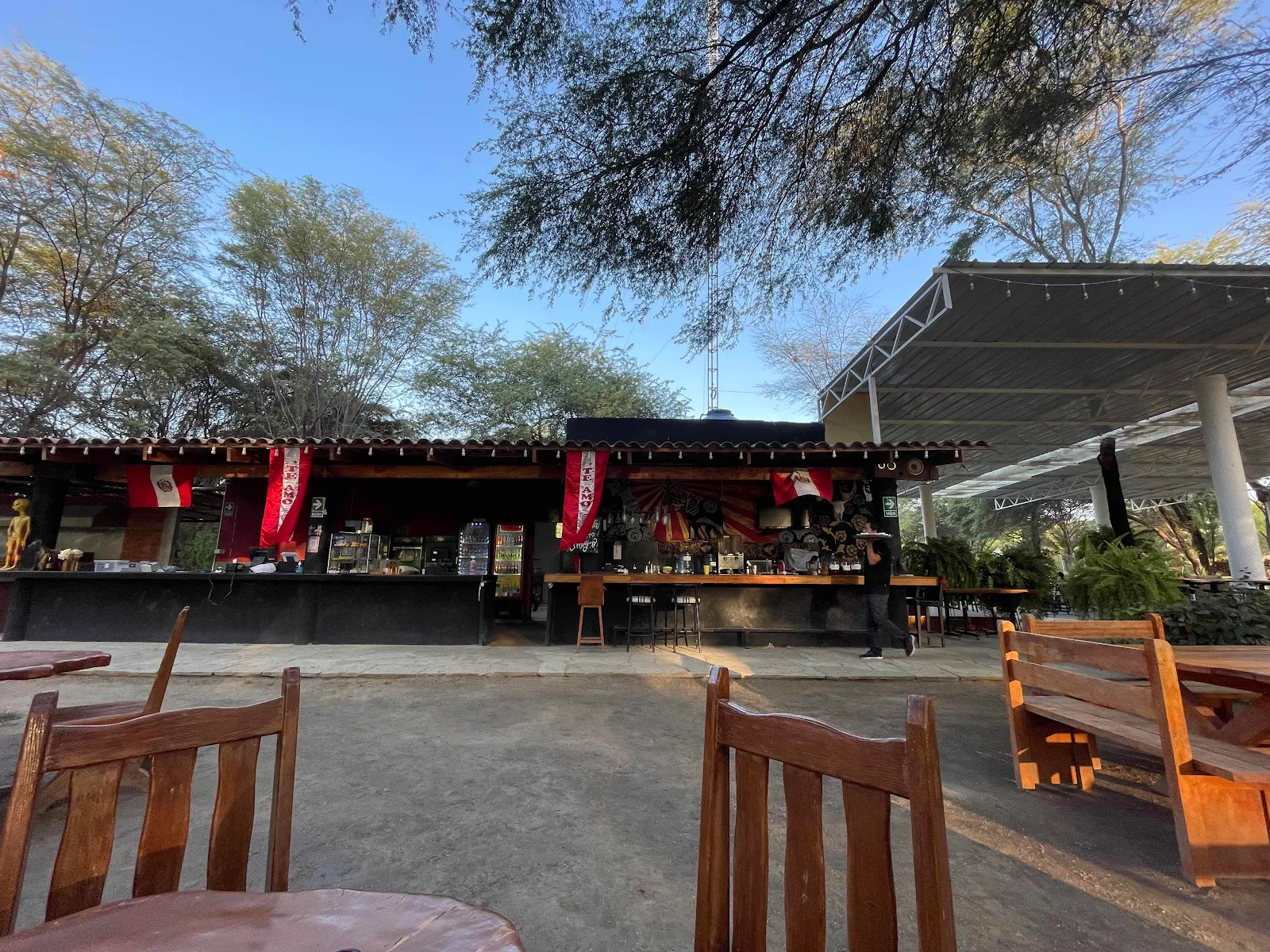
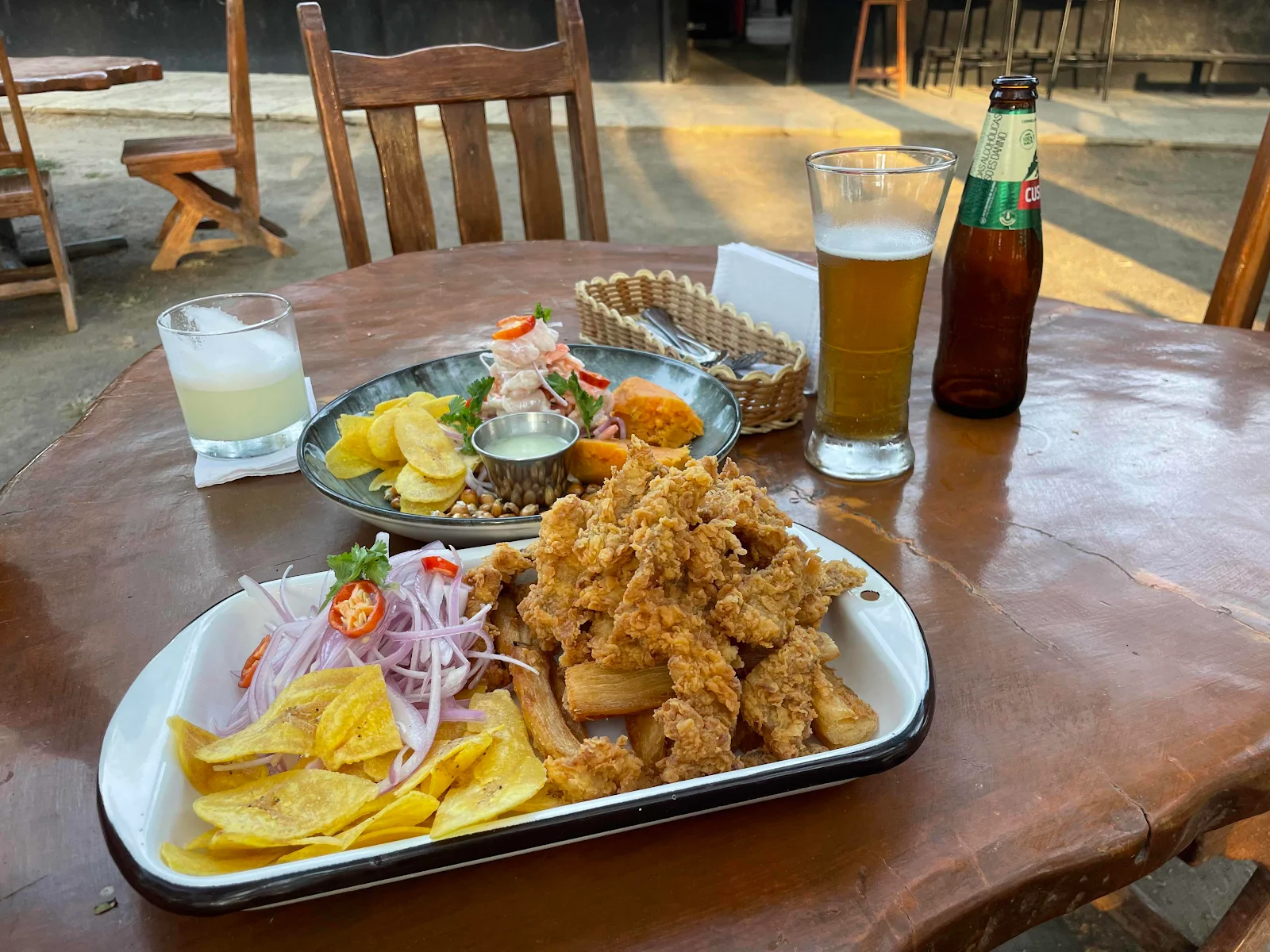
Dinner was fried fish and ceviche which we got just before they closed the restaurant for the night. 


Tuesday, July 30, 2024

On the Road

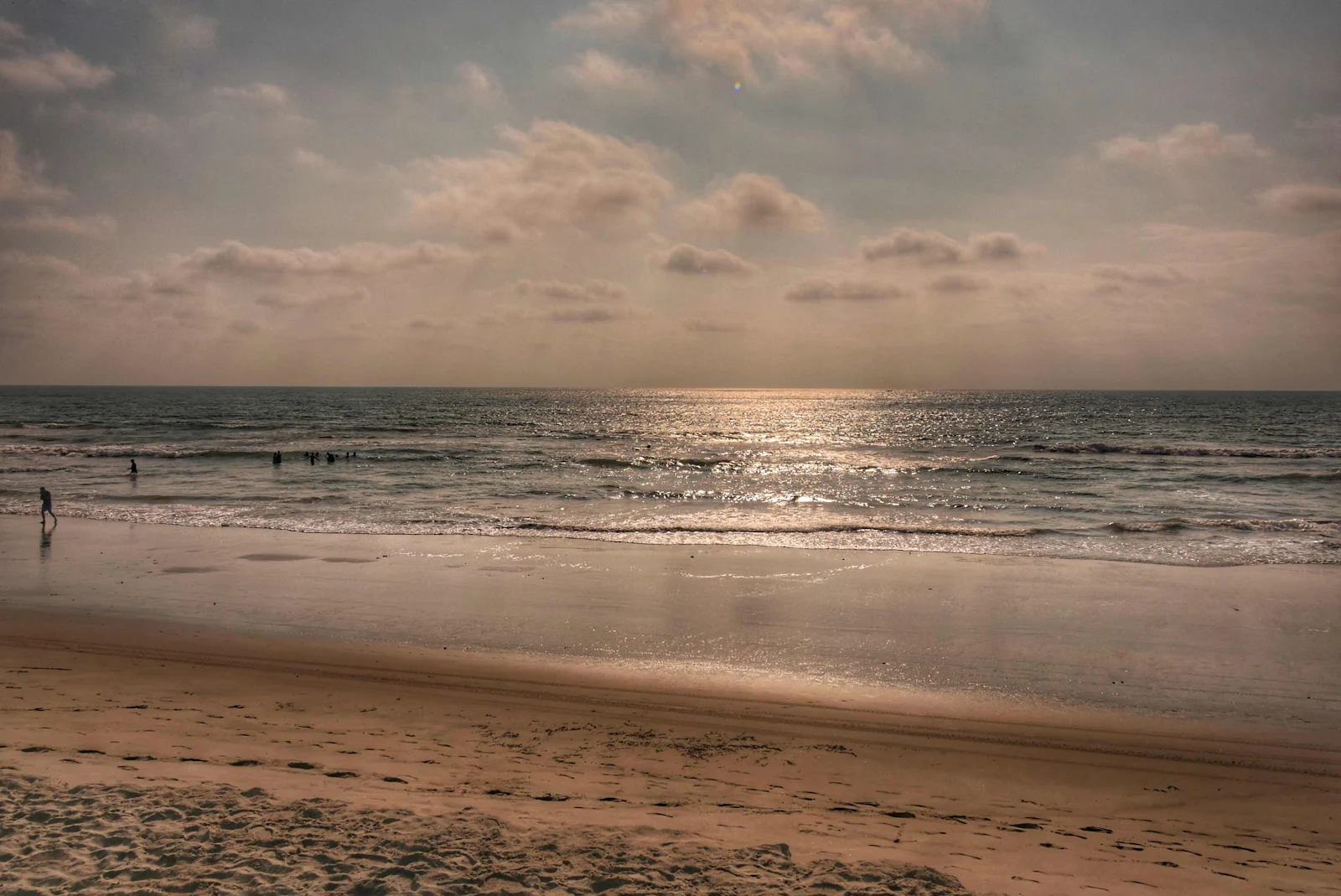
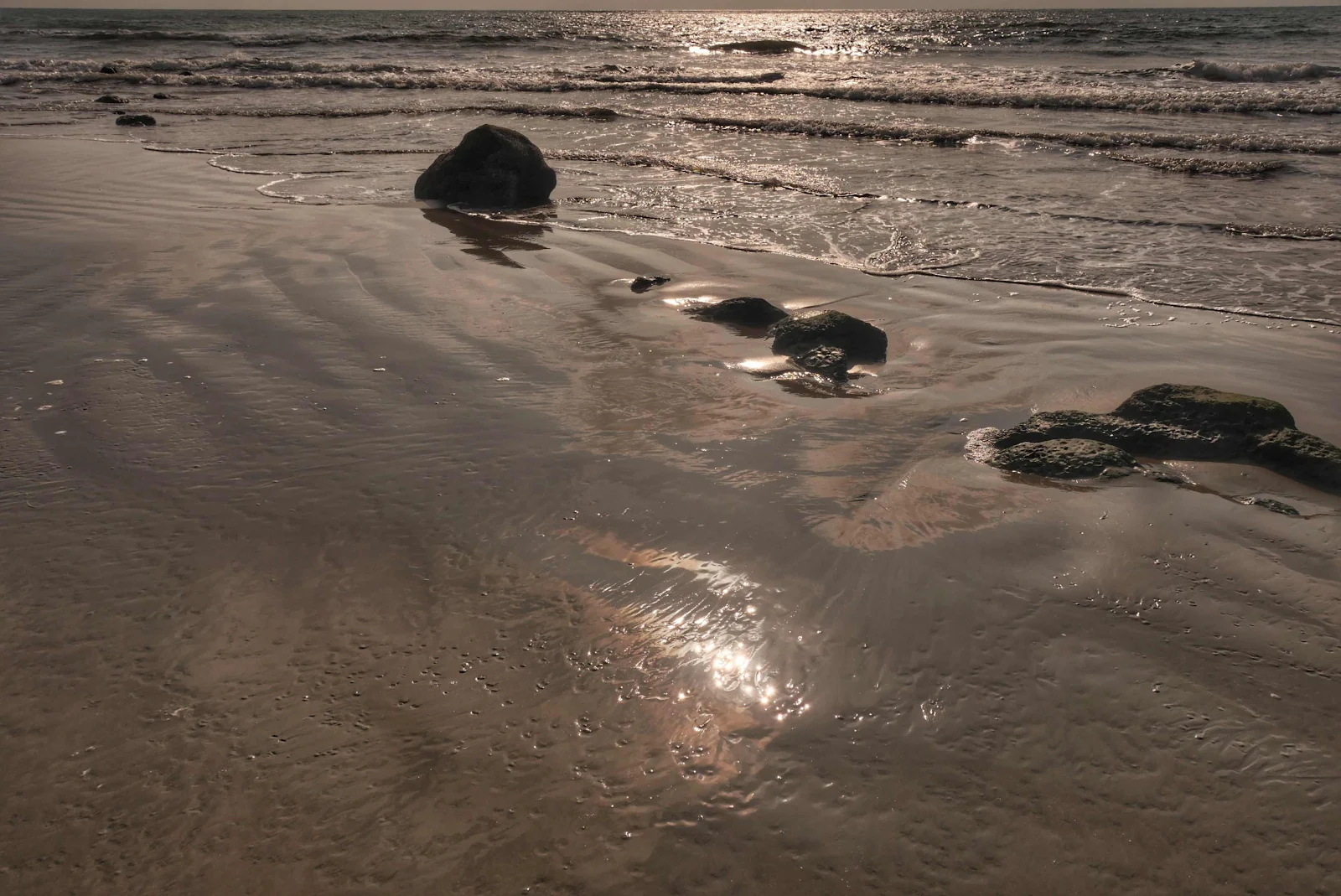
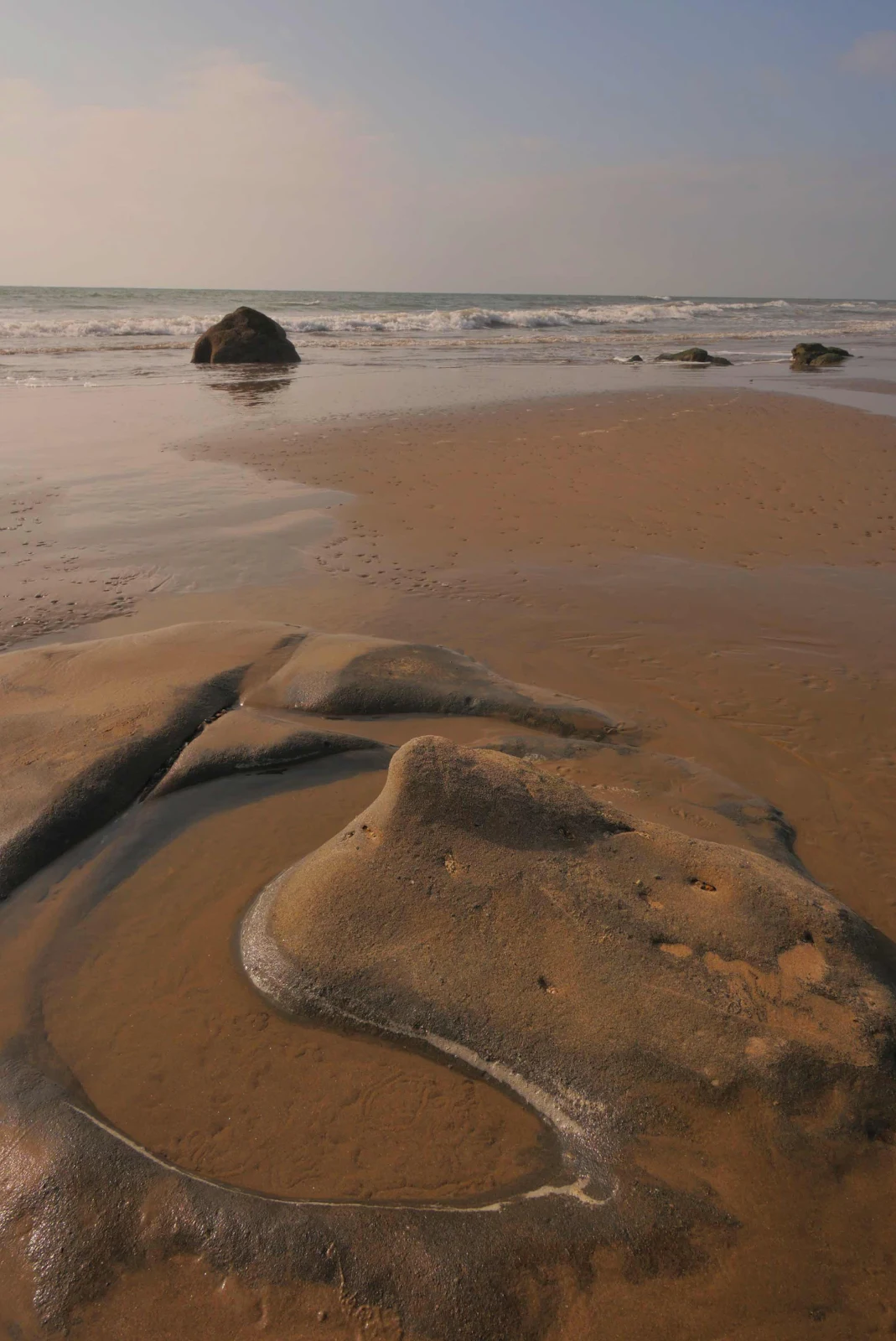
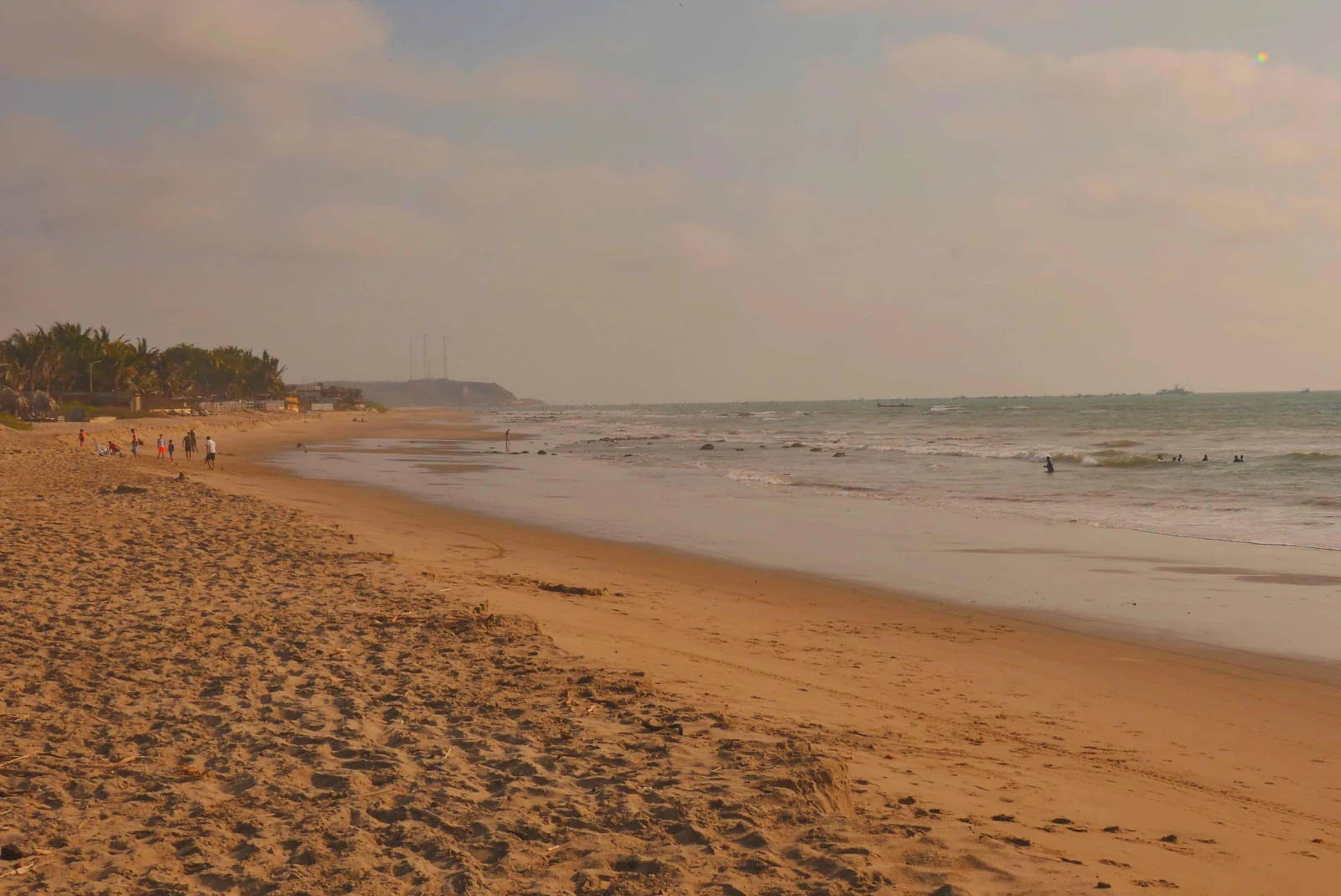
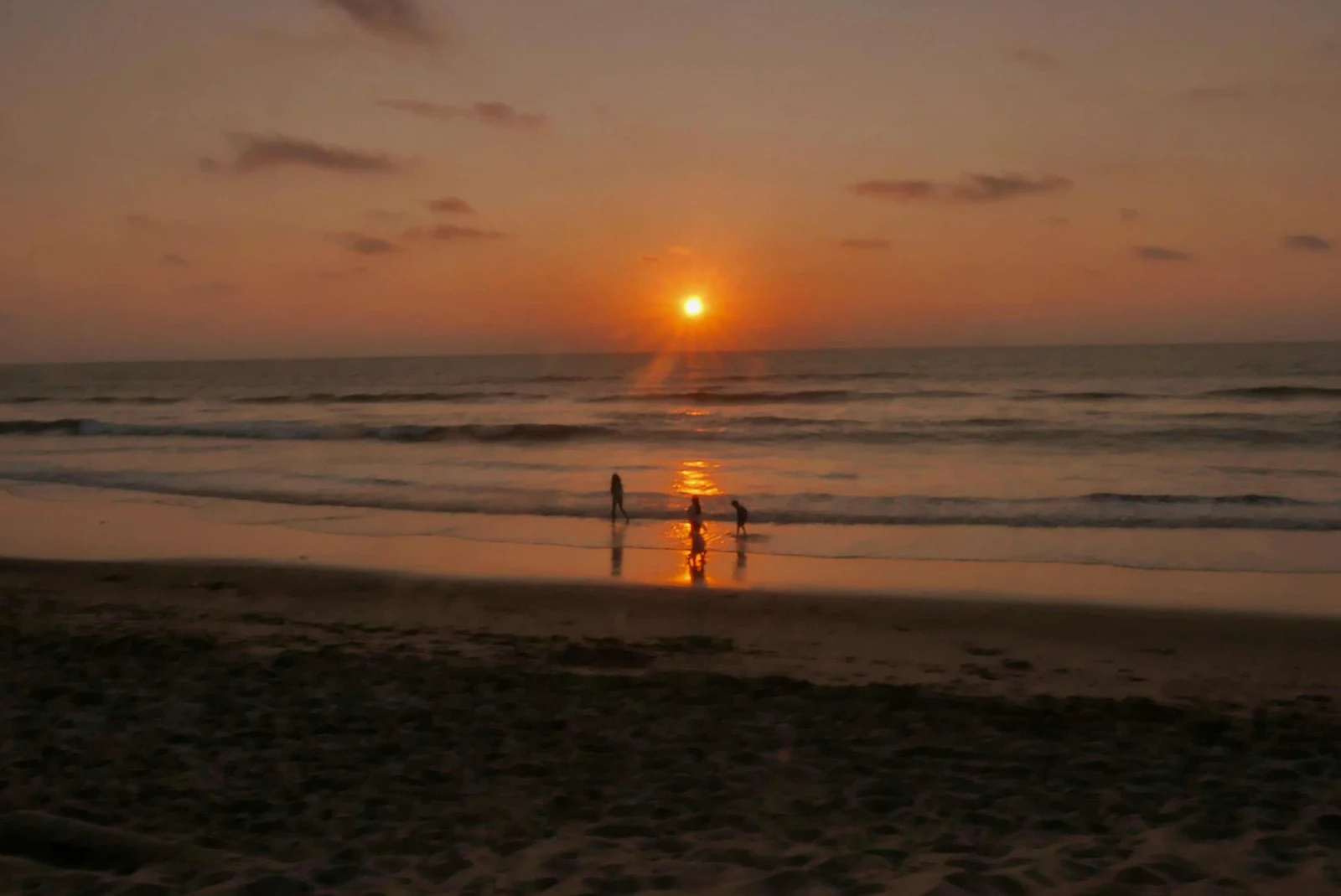
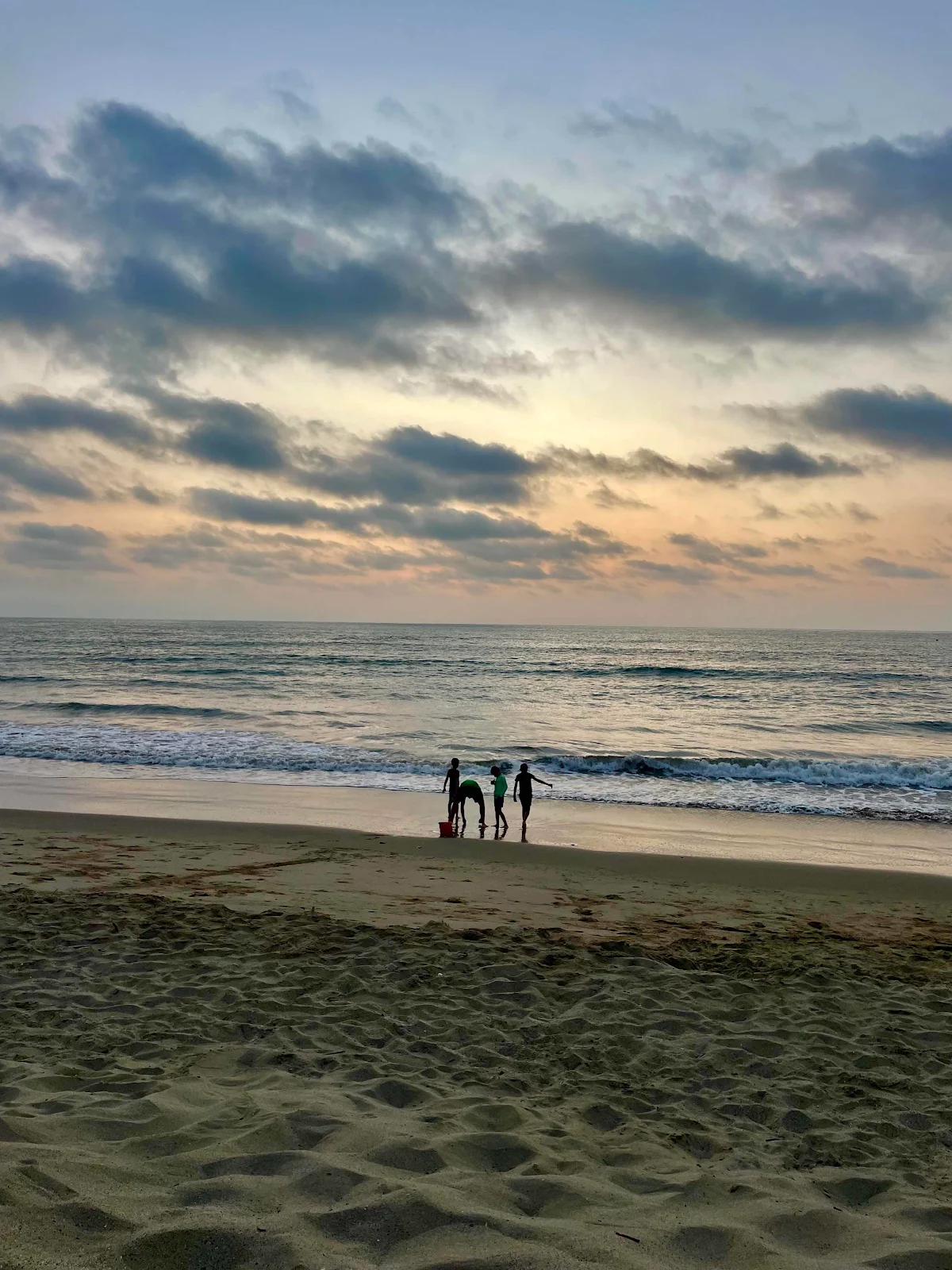
I hope with all my heart we are on the road by the time you read this. Corina and Florian’s van seems to be running properly so we are planning on driving down the coast a couple of days before we go back up into the mountains.  I am ready to see the Cordillera Blanca - the White Mountains. A few last beach pictures of a place we greatly enjoyed -and overstayed. 

Our neighbors tried whale watching and indeed we did see a picture, albeit rather fuzzy of a whale breaching on the distant horizon. Apparently it’s the migration season. 

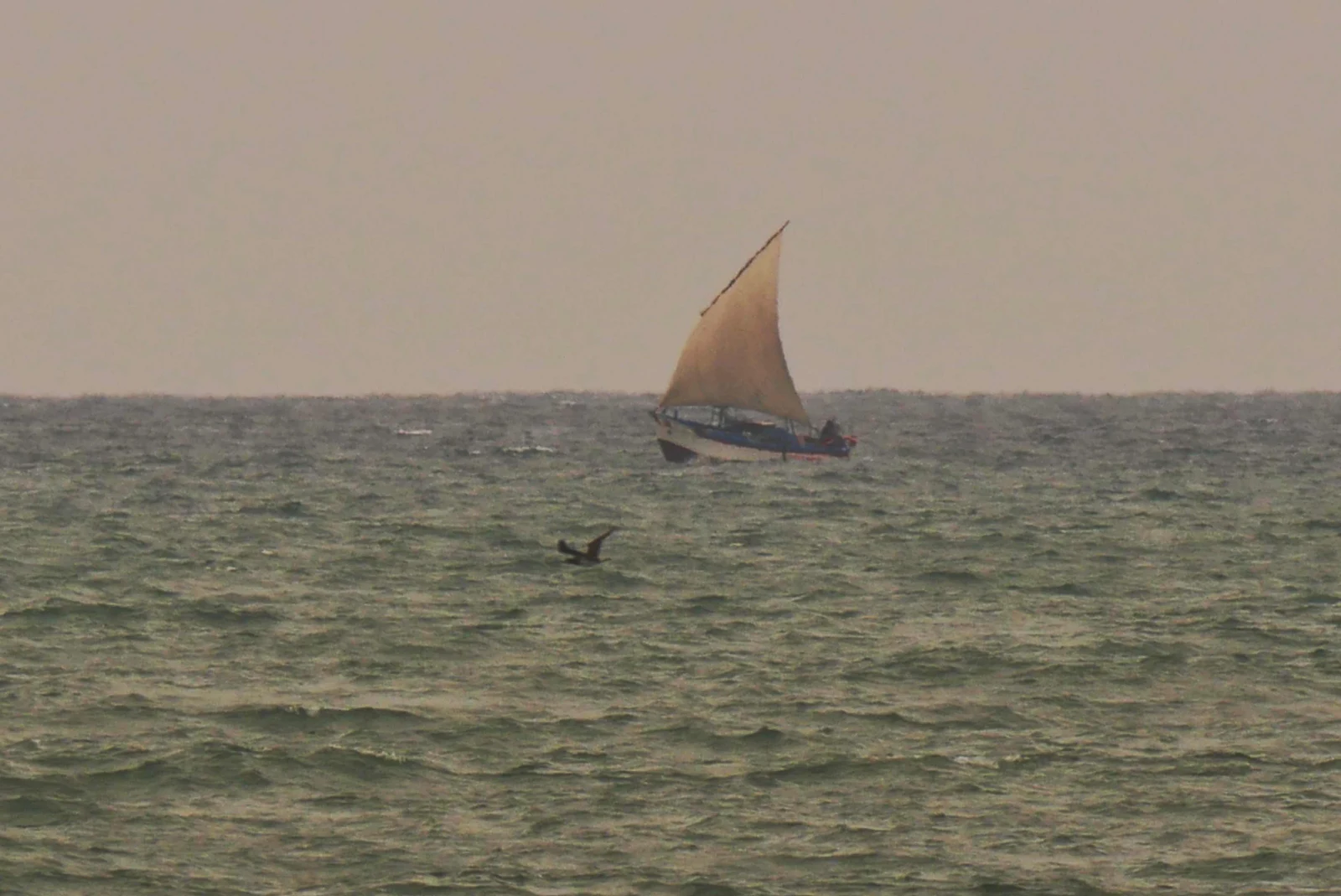
I got a picture of a sailboat which on seemed to be a sailing fishing boat on closer inspection. Winds and currents are all wrong for most travelers by sail to come down the coast of South America. 

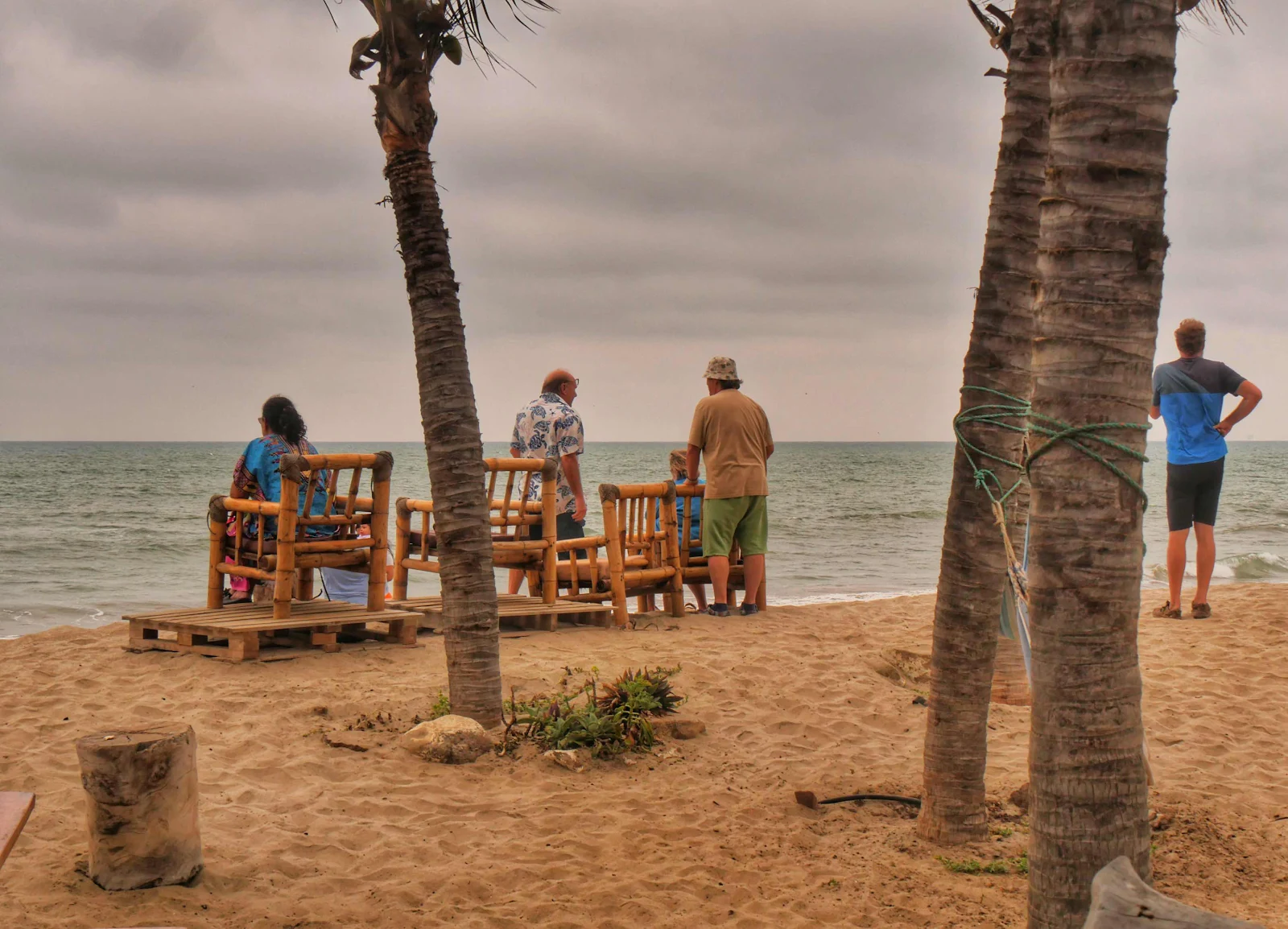
Monday was Independence Day and a few dozen Peruvians spent the long weekend on our vast empty beach. We two swam alone in the refreshingly cool waters. 

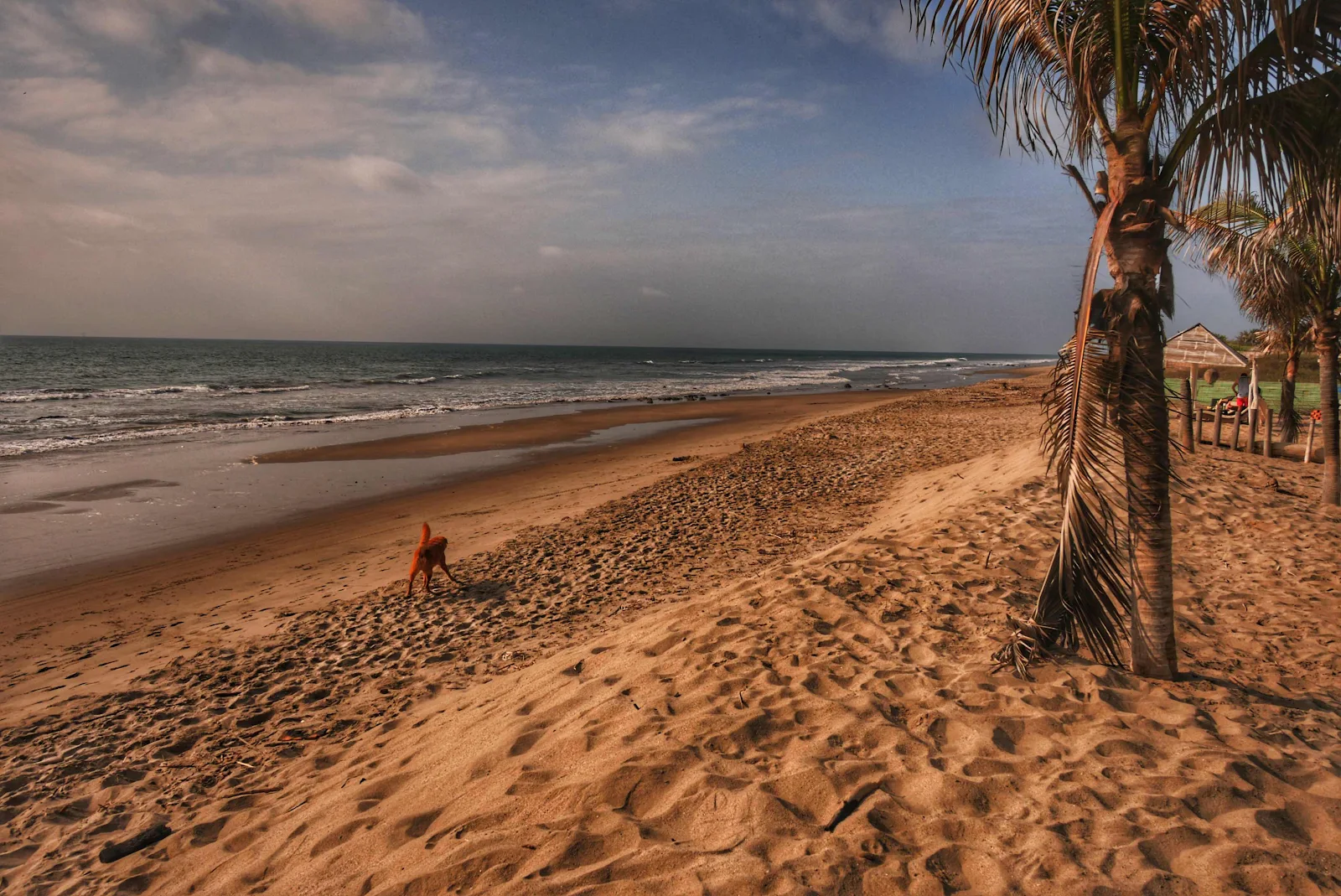
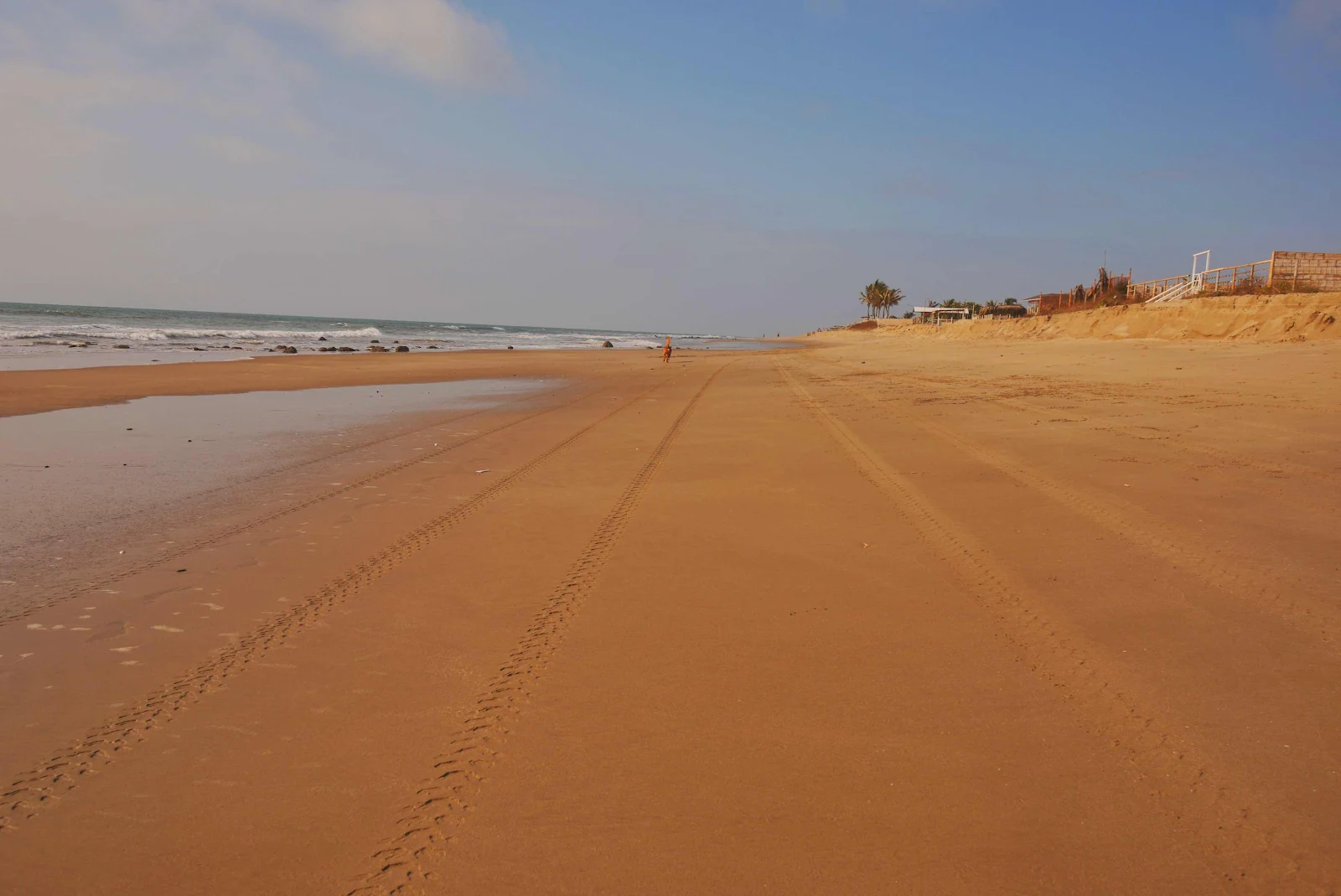
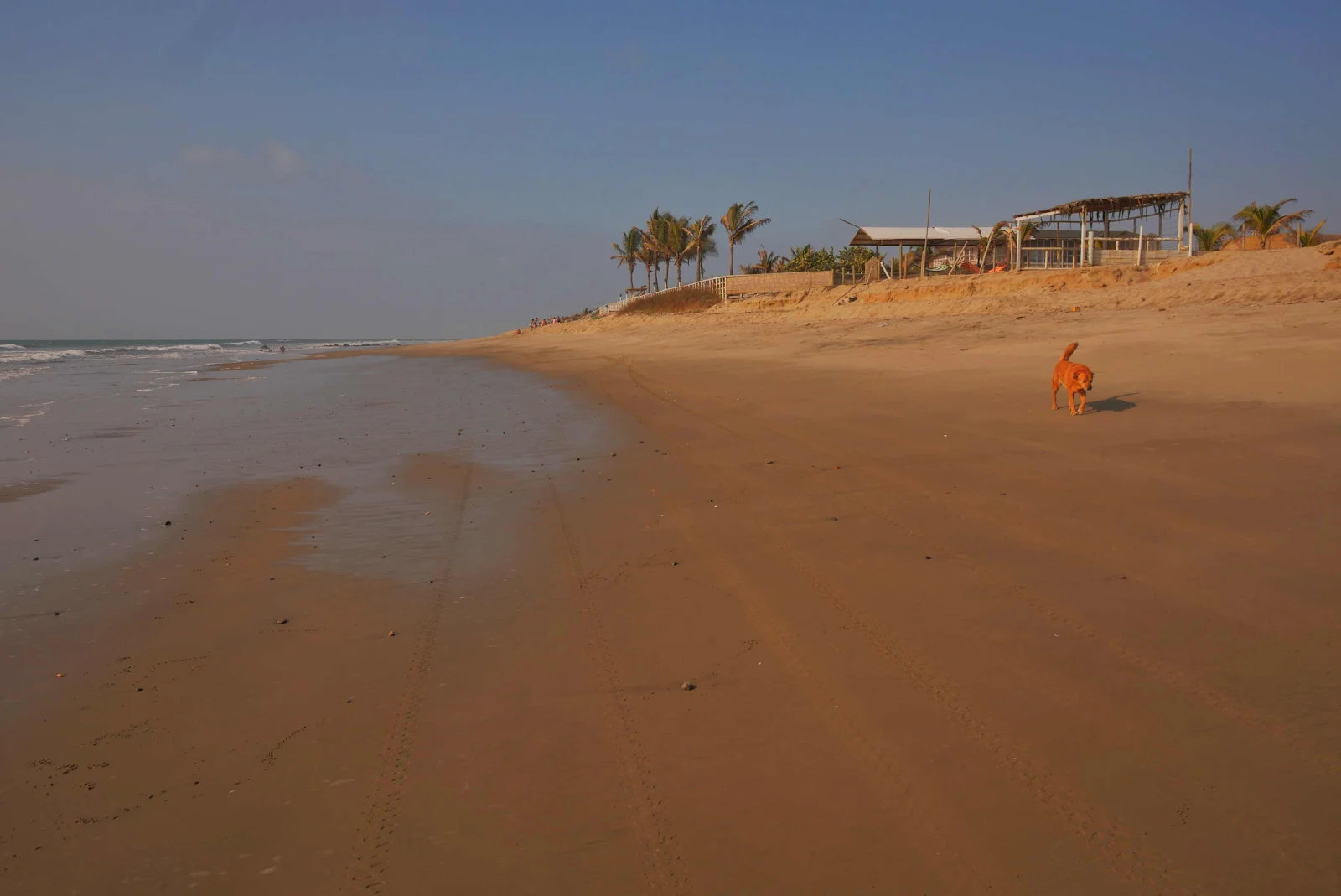
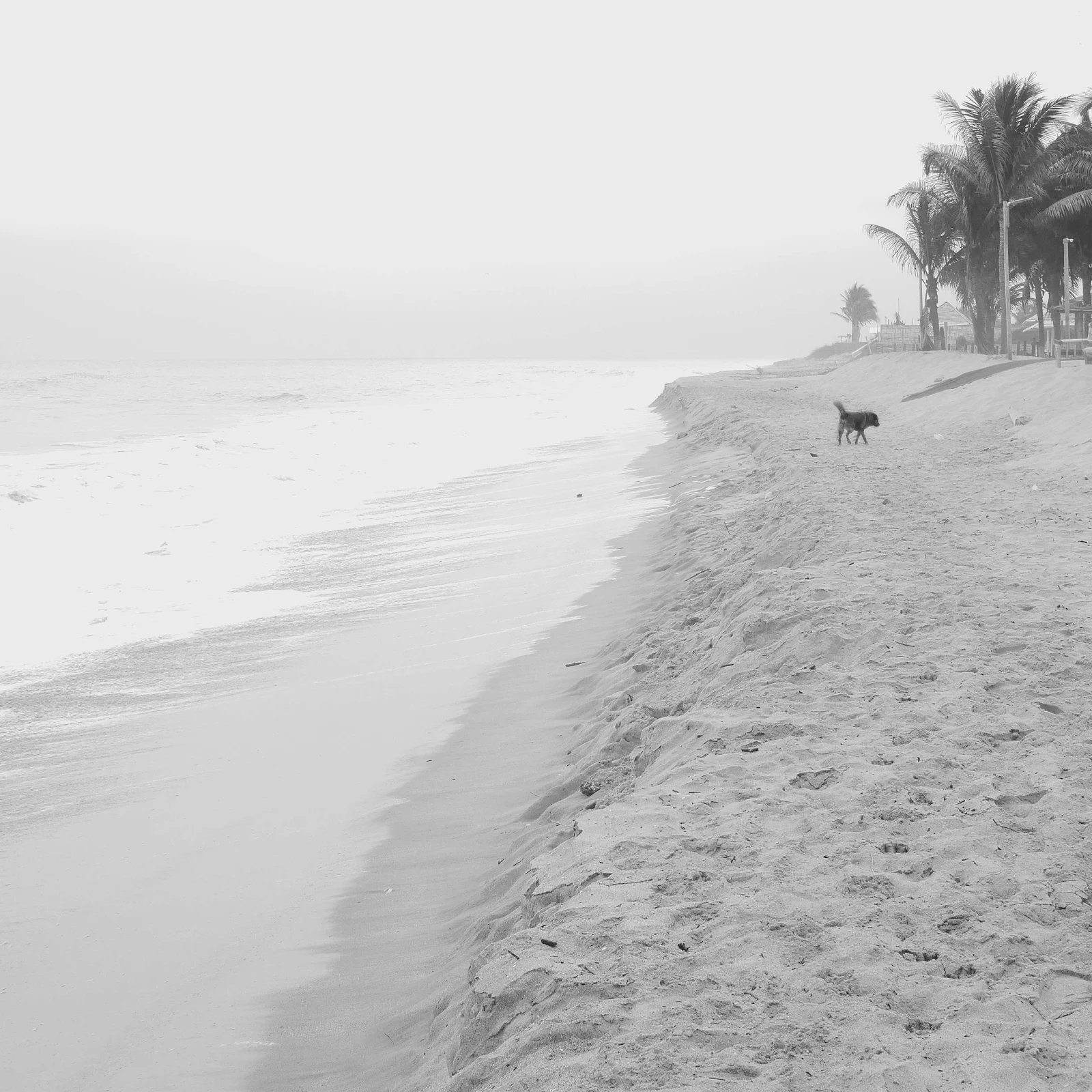
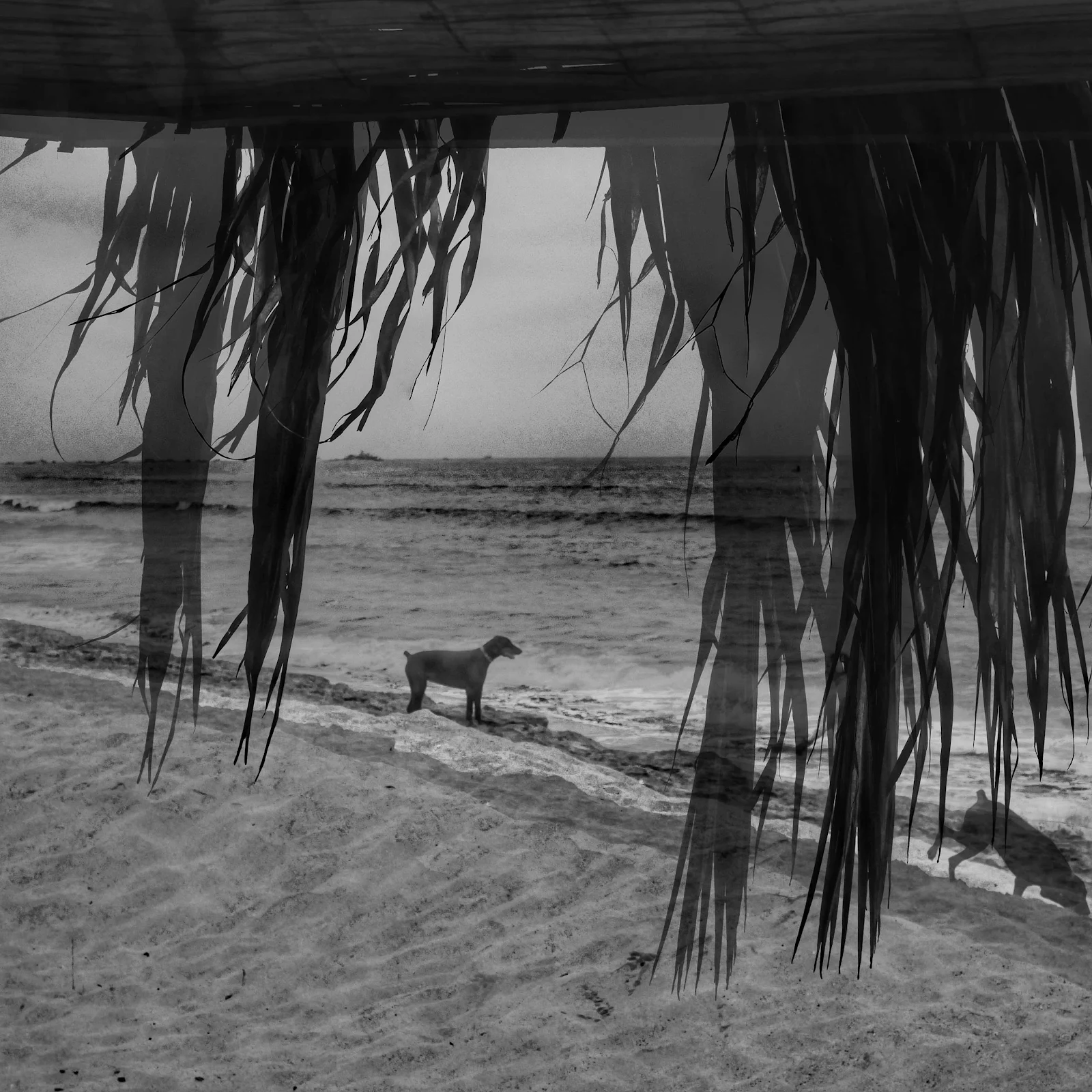
There is a dog out there enjoying himself tail up: 


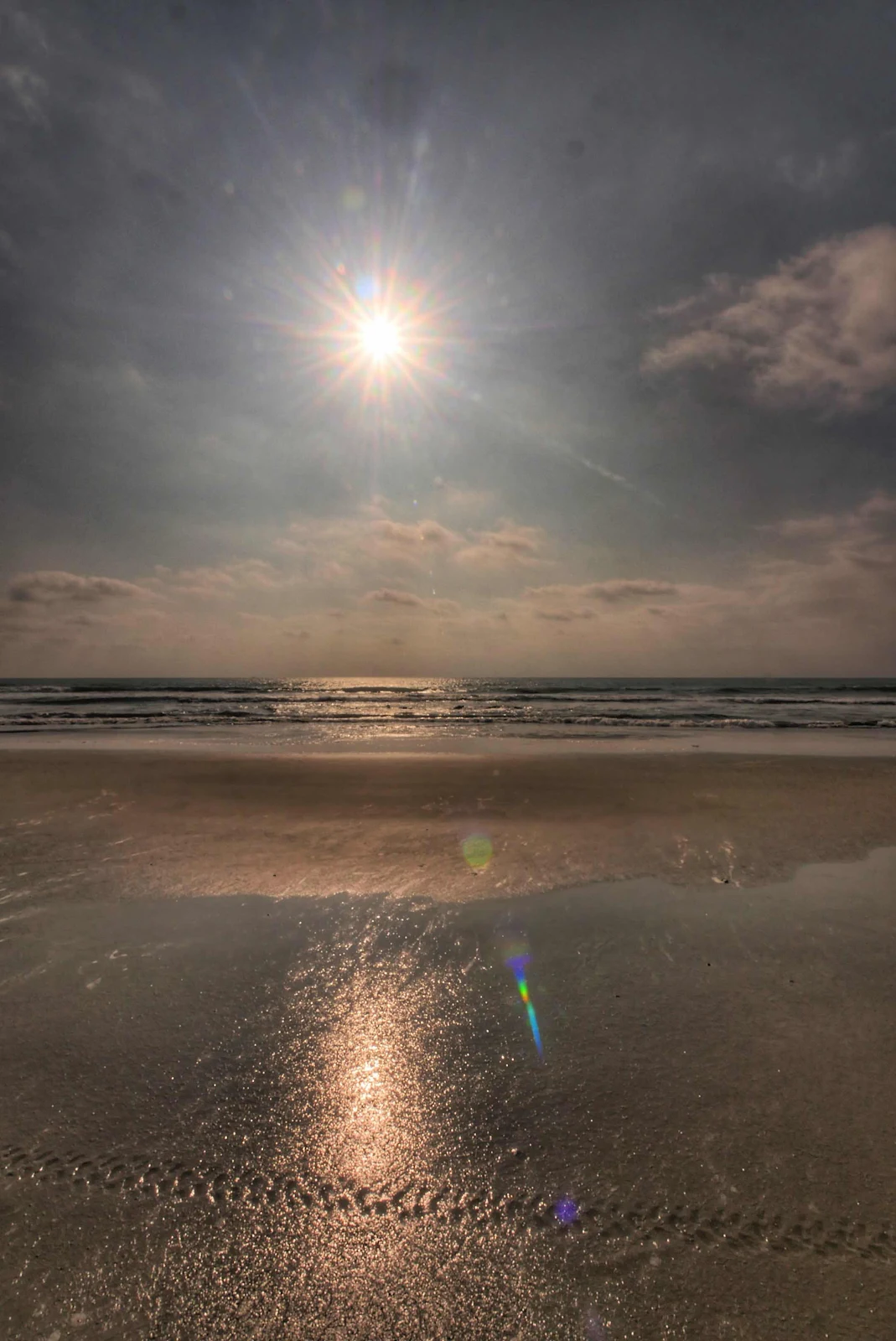
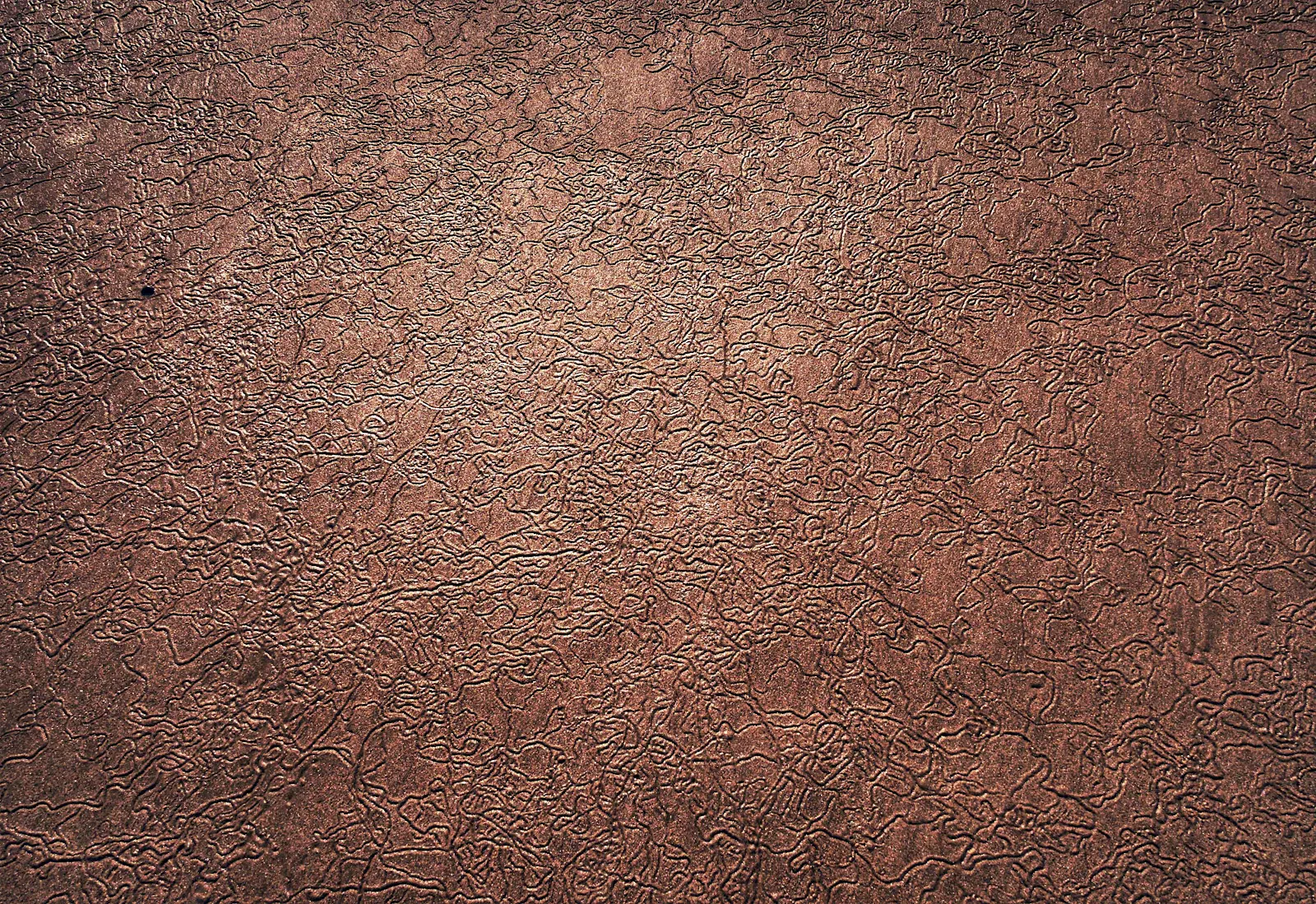
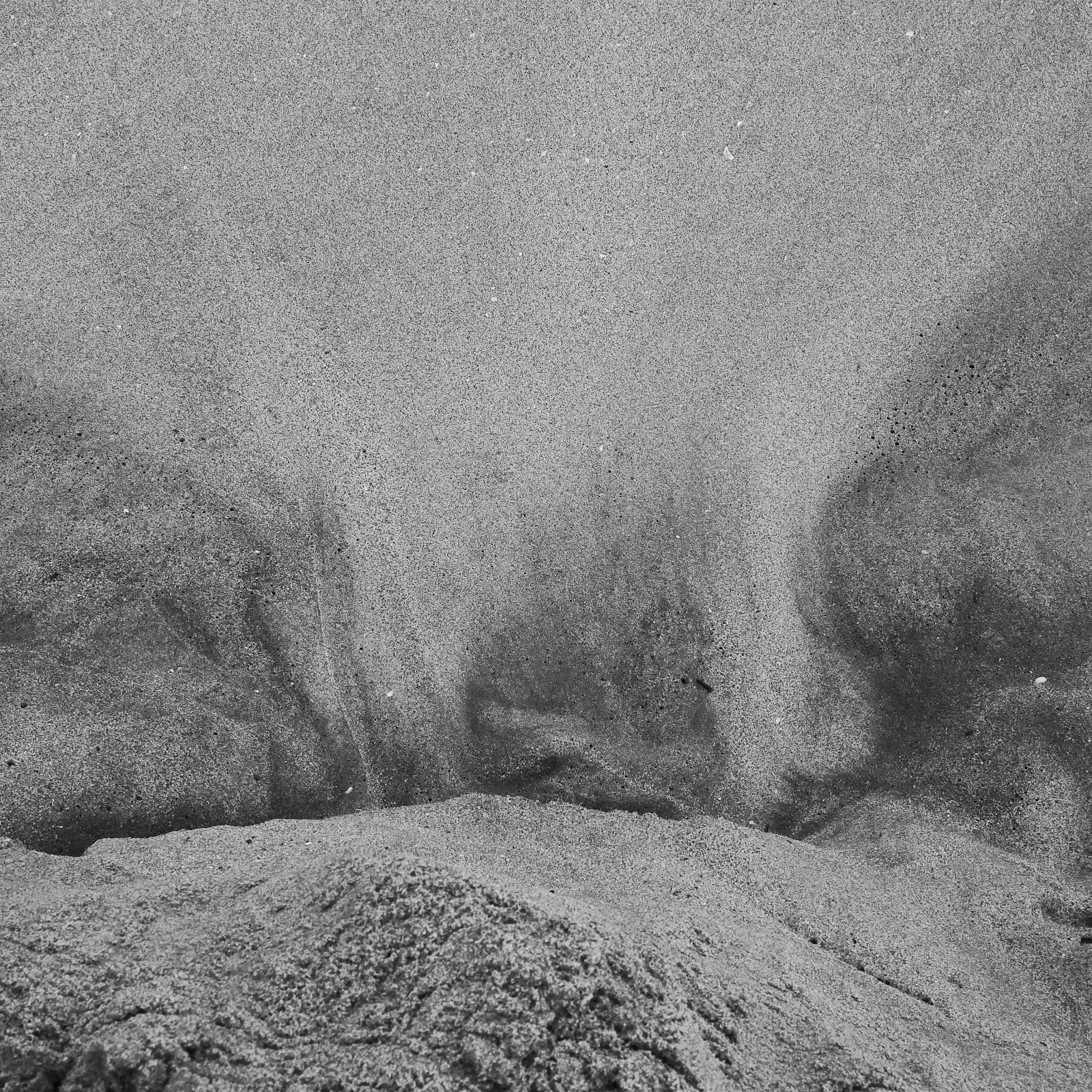
I spotted strange arabesques in the sand after the tide ran out: 


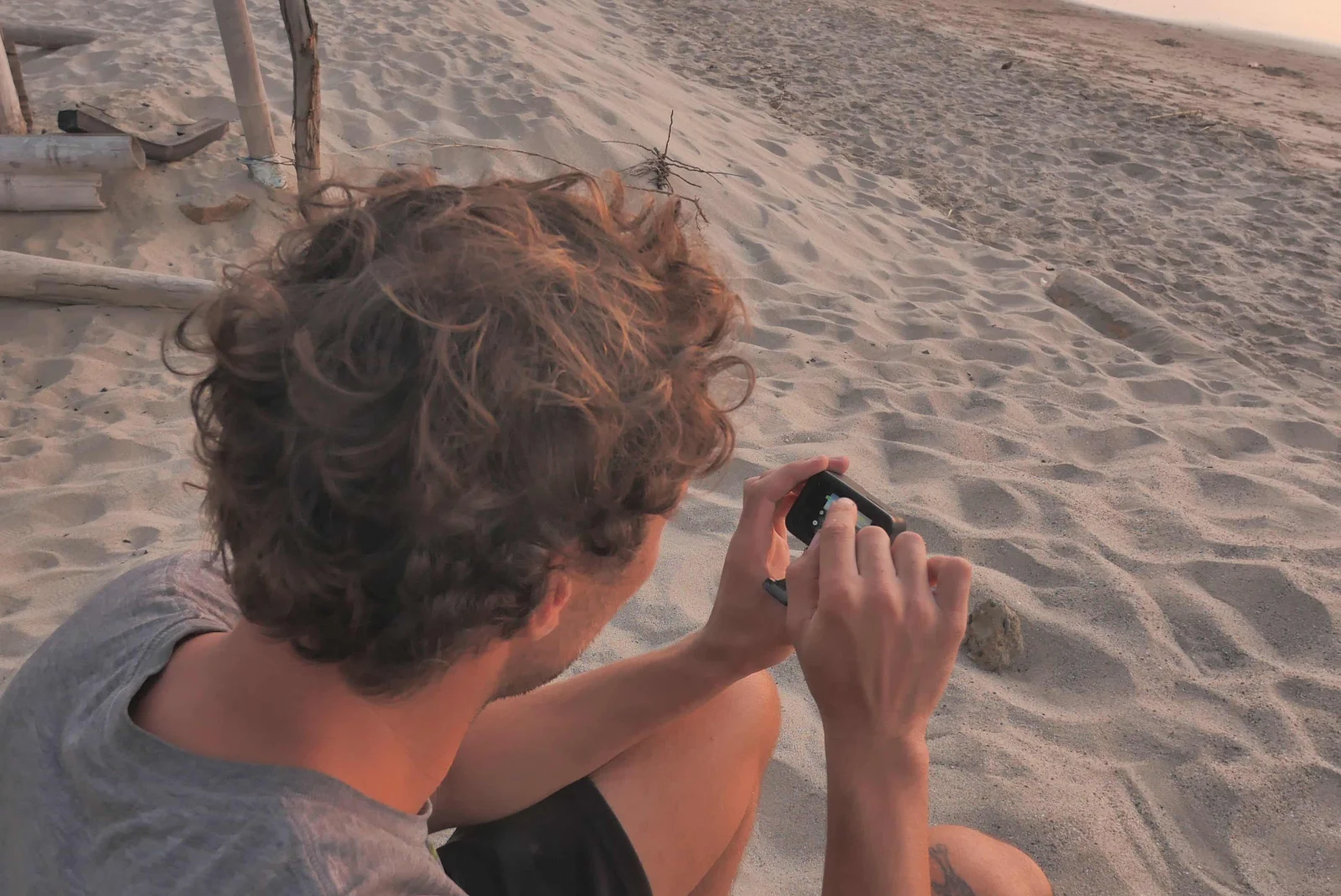
Florian brought his GoPro to the beach and I had a look at this marvelous new technology that will not be replacing my Panasonic cameras. 

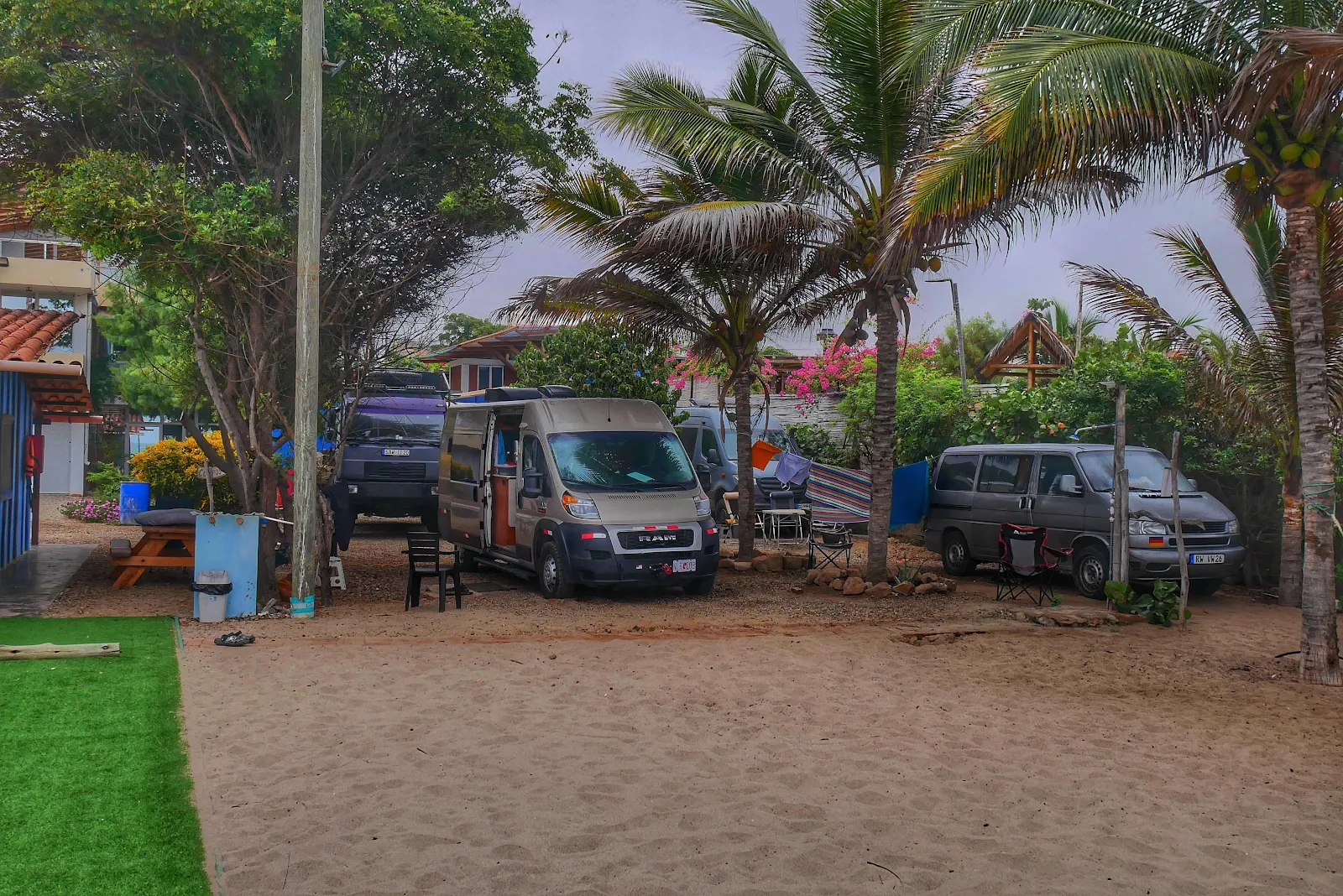
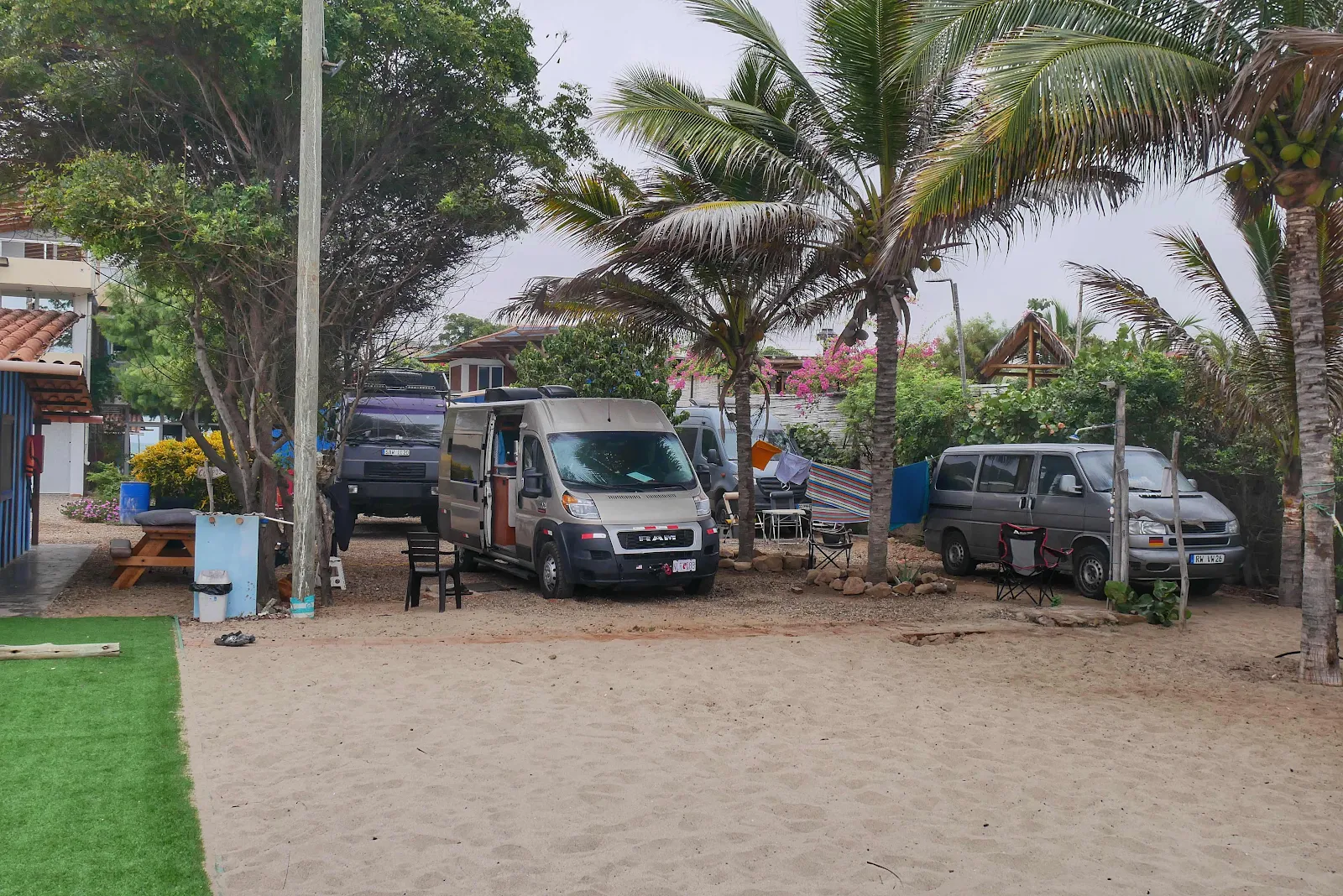
Our spot was lovely, steps from the sand and the salt water.

I shall miss it. 


Monday, July 29, 2024

Acclimate Or Acclimatize

Jimmy Buffett said it best: changes in latitudes, changes in attitudes. The idea being that the closer you get to the equator the more laid back you become. Speaking as one who has now crossed the line and is freezing cold on an overcast day at a mere three degrees south latitude… it ain’t necessarily so to quote another well known lyric.

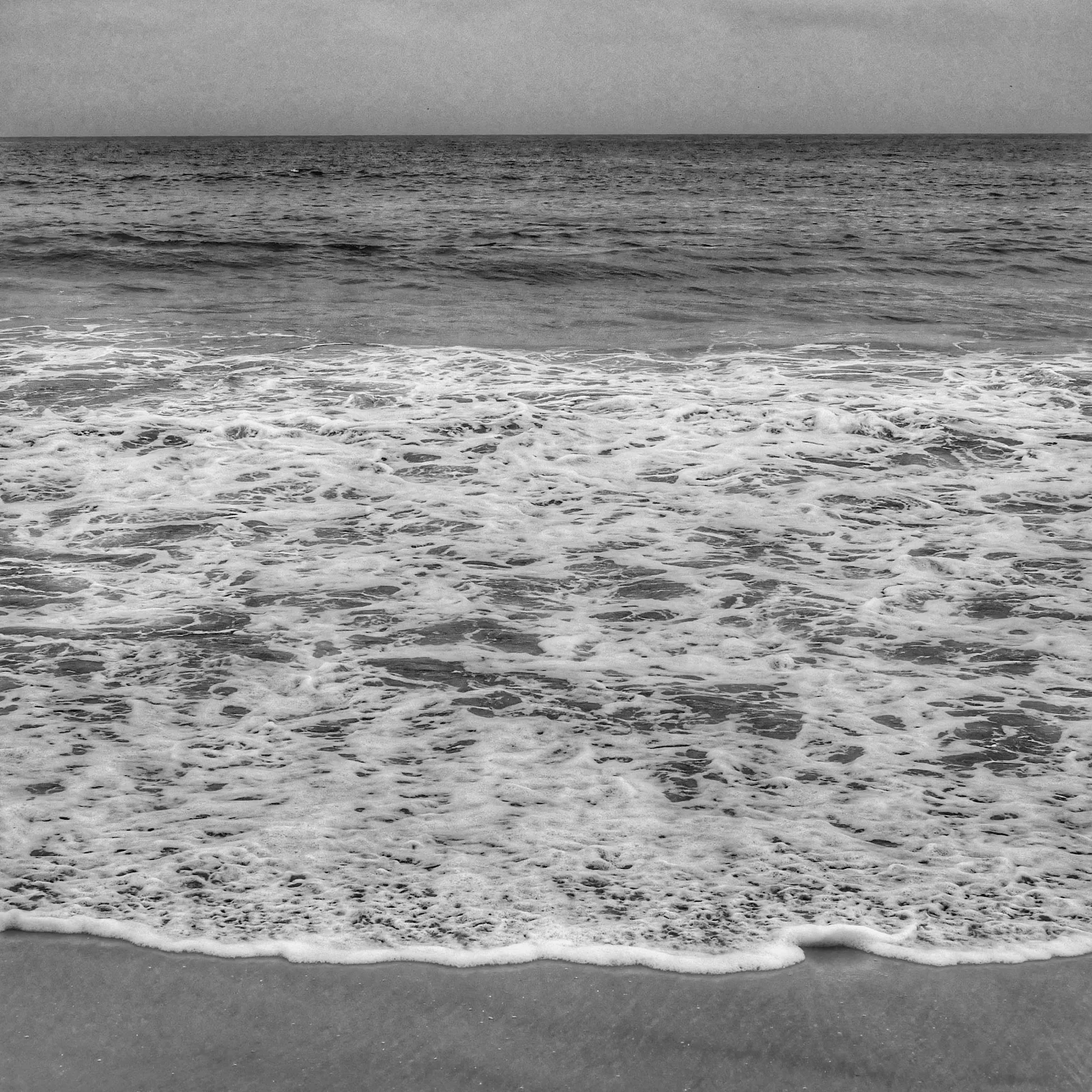
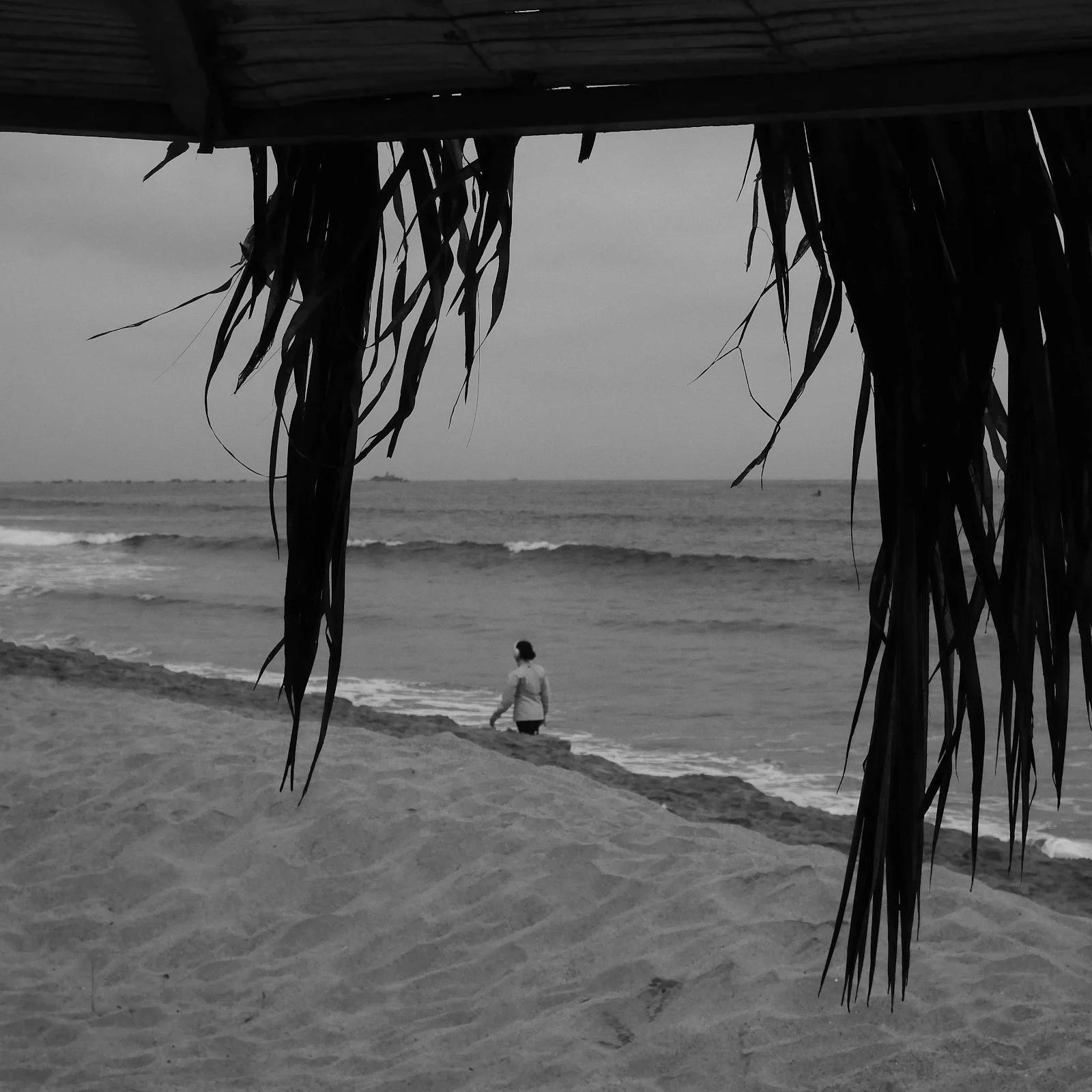
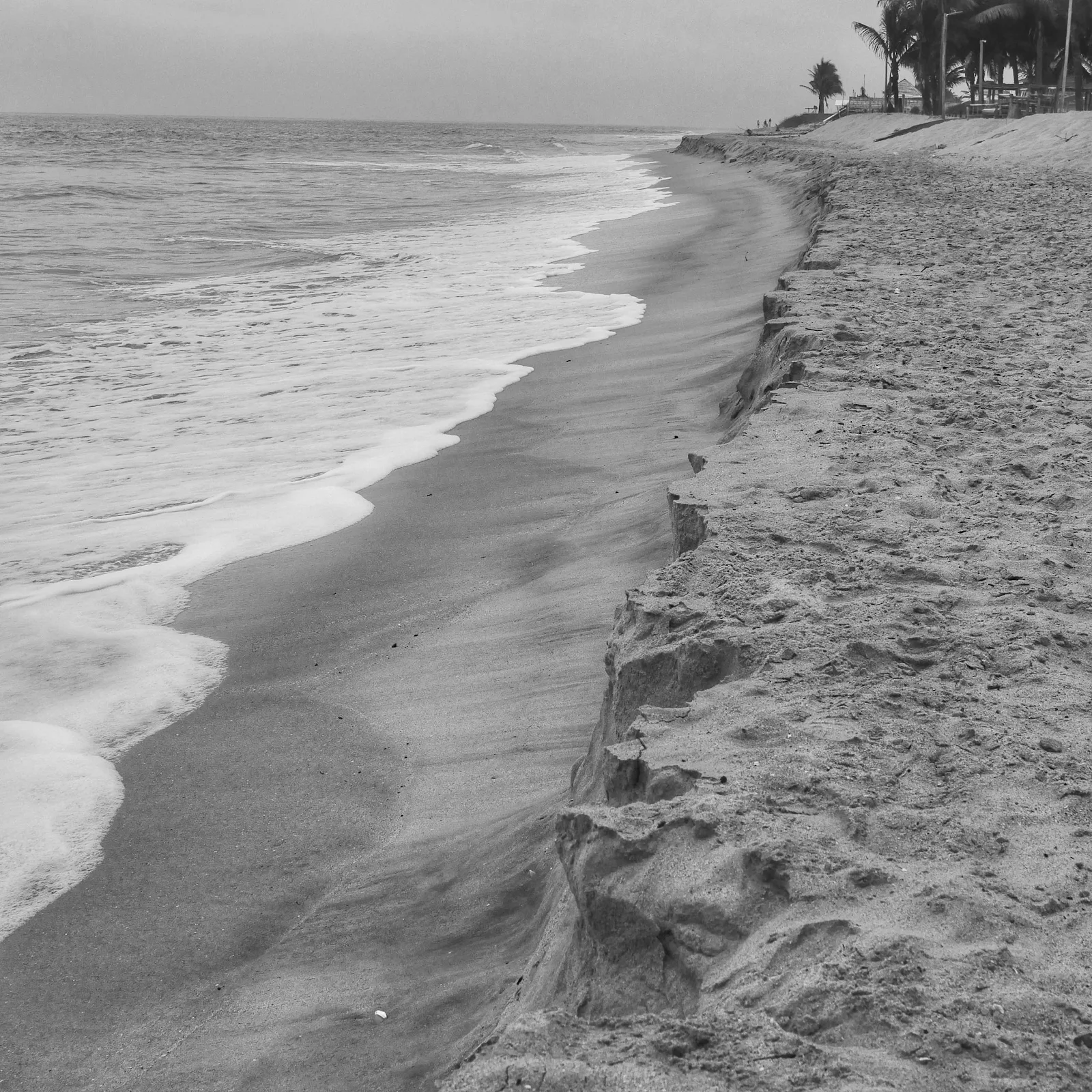
No sunshine at Swiss Wassi leads me to seek contrast in black and white on my morning walk with Rusty. And as we walked on a sunless Sunday morning I thought about changes in altitude and how we acclimate (or acclimatize) to having less oxygen in the air. GANNET2 took a moment after a few days above 10,000 feet and we saw a check engine light come on, which went away on its own apparently after the computer adjusted the fuel/oxygen mixture. Rusty seems to suffer no ill effects but we are not so lucky. 

Modern diesel engines suffer badly from Andean altitude as they are programmed for maximum altitudes around 8500 feet and are not programmed to operate long term at the extremes as we find here in South America. Indeed there is a shop in Quito which offers to remove pollution control systems (DPF) and reset computers to operate engines with good old fashioned black diesel smoke polluting the atmosphere. Altitude is serious business and even our V-6 gasoline loses power above eight thousand feet, and slow trucks are much harder to pass. At extreme altitudes like Bolivia which is mostly above 12,000 feet diesels have trouble starting and idling and warming up after a night of below freezing temperatures as low oxygen levels make reaching operating temperatures hard. The stories we hear go on and on from frustrated travelers. 

I’ve been reading about altitude sickness too and I can say it’s a weird illness as its effects are varied and strike different people in different ways. But what’s even more confusing is that these people can feel altitudes in different ways at different times. In Mexico I came down with a blinding headache and nausea above ten thousand feet while Layne had no problems. We tested ourselves by sleeping one night at 14,250 feet at Volcán de Toluca outside Mexico City and we both spent a cold sleepless night gasping. In Ecuador Layne routinely threw up after exerting herself and got a deep persistent cough that wracked her chest while I was not too bad with a scratchy throat and nothing worse.  We’ve met people half our age, in peak physical condition who can’t take a walk above certain altitudes without throwing up and feeling like passing out. Altitude sickness is unpredictable and if ignored can cause fluid on the brain (cerebral edema) with lots of severe and even terminal consequences. I know I sound like a warning label but it’s a strange byproduct of driving the Andes this altitude stuff that most travelers prefer not to talk about on their “look at me” Instagram posts. 

Red blood cells transport oxygen and they do it in response to the levels of oxygen in the air. If those levels drop suddenly you find yourself breathless until your blood cells ramp up and respond to the low levels of oxygen and that usually takes a few days depending on assorted factors. These blood cells have a life span of about four months but they don’t all die at once as they go through replacement cycles so you adapt to altitude as new cells form and respond to the low oxygen levels. After about four months you have a complete new body of red cells used to whatever environment you are in and theoretically you are completely acclimated. 

Which means that acclimatization goes away in reverse order, a few red cells at a time while you sit at the beach enjoying rich oxygen packed sea breezes and your mountain born red blood cells die to be replaced by sea level ones. And so it goes. The trouble is some people, and no one knows quite why, never adapt or manage to cope with altitude. Mountaineers, people of extreme fitness die if they fall ill on the slopes and can’t get down to normal oxygen levels in time. 

For us car travelers altitude sickness doesn’t present dangers just discomfort. Headaches, rasping breath, coughing, vomiting and sleeplessness are a pain in the ass when you are trying to be a tourist. That Rusty romps completely unaffected is just annoying. The idea of trudging back up into a place where you feel like you have the flu is unappealing. So why do it? 

In our defense we are going to cruise a section of the coast, then go inland, then come back down to sea level and go back into the mountains to see things we want to see. And therein lies the paradox of Peru. Altitude sickness, terrible roads and stark poverty are barriers to extraordinary history. People have been living and thriving in these arid and nasty mountains for centuries. The much vaunted Inca Empire lasted barely ninety years but they conquered cultures that had been thriving long before them in the Andes. And we want to see this stuff. We want to drive these extraordinary valleys and see not only the ruins but their locations too. And to do it we have to throw up sometimes. It’s silly but it’s just being human I think. 

You can admire youngsters in four wheel drive off road machines driving Peru on YouTube and we all know that to make a living from it the heroism of the deed must be inflated. I have the good fortune not to need views or likes or supporters so I am free to mock myself and announce how uncomfortable it is to be on the road. Sometimes it’s sublime and mostly it’s fun but sometimes it sucks and I don’t turn the commentary off when it sucks. 

At the moment we don’t feel like we want to go to Bolivia next. It will be there when we come back north from Ushuaia but it’s a country that lives above 12,000 feet, temperatures drop below freezing at night year round and the government is largely dysfunctional so simple things like buying fuel become a three ring circus for foreigners. YouTubers love Bolivia for its spiritual indigenous color and stuff but I know I’ll lose my shit when they won’t sell me gas. Better that we wait a while before taking that mess on. 

I crave the cleanliness and order of Chile. That country shines like a beacon of smooth roads and easy living and probably there’s a delusion there as well which will surprise me. It’s a crazy country thousands of miles long and a hundred miles wide and full of mystery to me. They export wine everywhere I’ve ever traveled.  They have fjords to rival anything Norway or New Zealand are famous for and they have an economy so strong overlanders always complain how expensive Chile is. I can’t wait. 

But Peru presents me with a challenge that I have spent time pondering as we sat on the beach filling our lungs with salt air. This is a country that is full of challenges not least for people who live here, poverty corruption mismanagement and lack of resources and lack of opportunity. We are just passing through and testing ourselves in our expensive suburban lifestyle on wheels. 

It’s eye opening comparing the struggle to live here with the complaints that pour out of the US and Europe where resentment and irritation bubble to the surface. I shall feel lucky in the coming weeks if neither we nor our vehicle breakdown as we ponder the lessons of the past and hopes for the future. 

Life on the road is pretty elemental and all we have to think about is avoiding potholes, not getting run down and making sure to throw up downwind. I can’t wait to find out what’s up in those mountains for us.

We shall change altitude and remain explorers always with one foot on the beach as we go south.