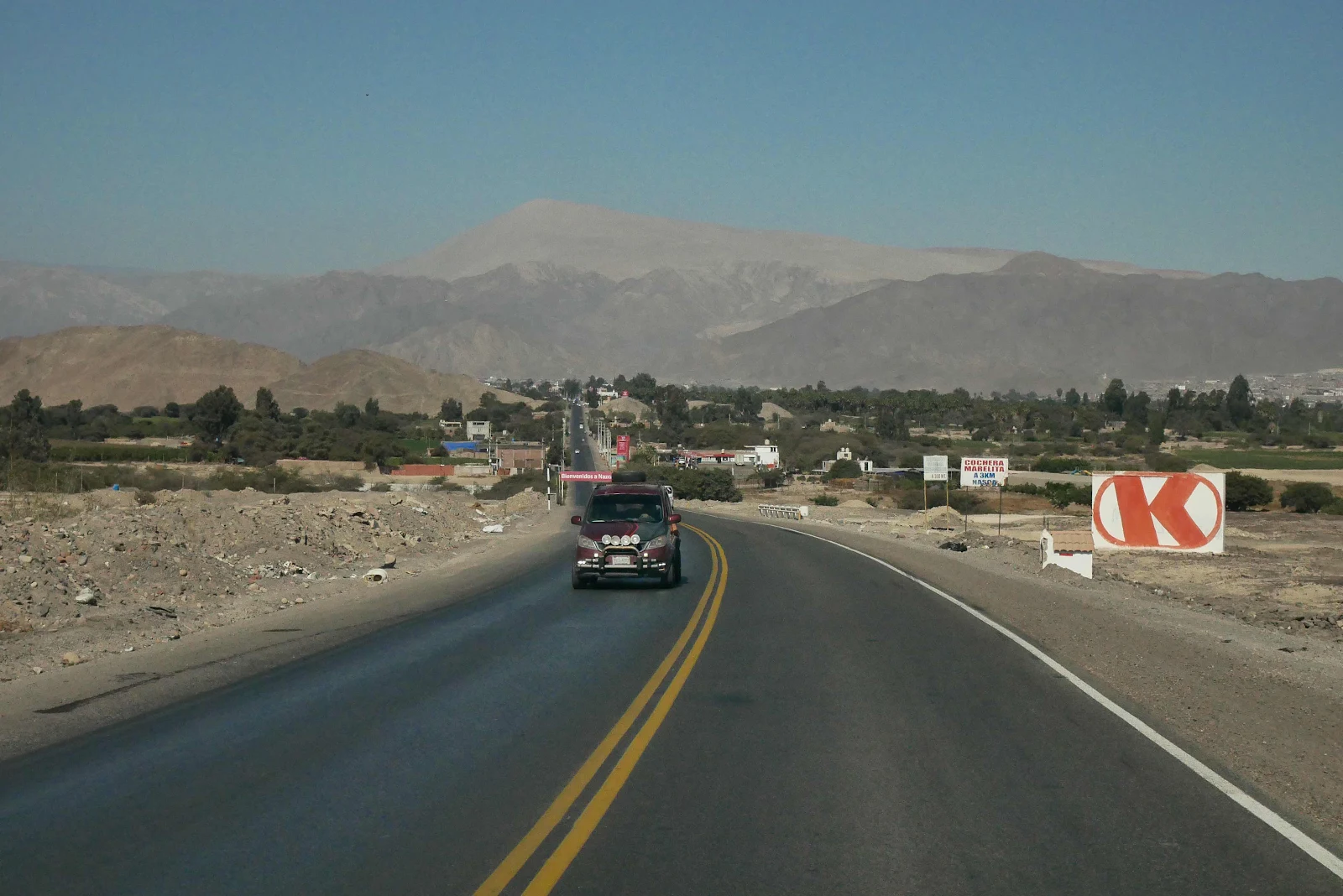
We got some advice from a campground owner up the coast to drive south from Nazca and not turn inland from the coast to go direct to Cuzco. Don Francisco the mango farmer said it was a much more interesting drive with fewer mountain climbs and hairpin descents. Most travelers in fact do what we had planned to do and drive inland from Nazca and they in fact report a dreary repetitive switch back across southern Peru.
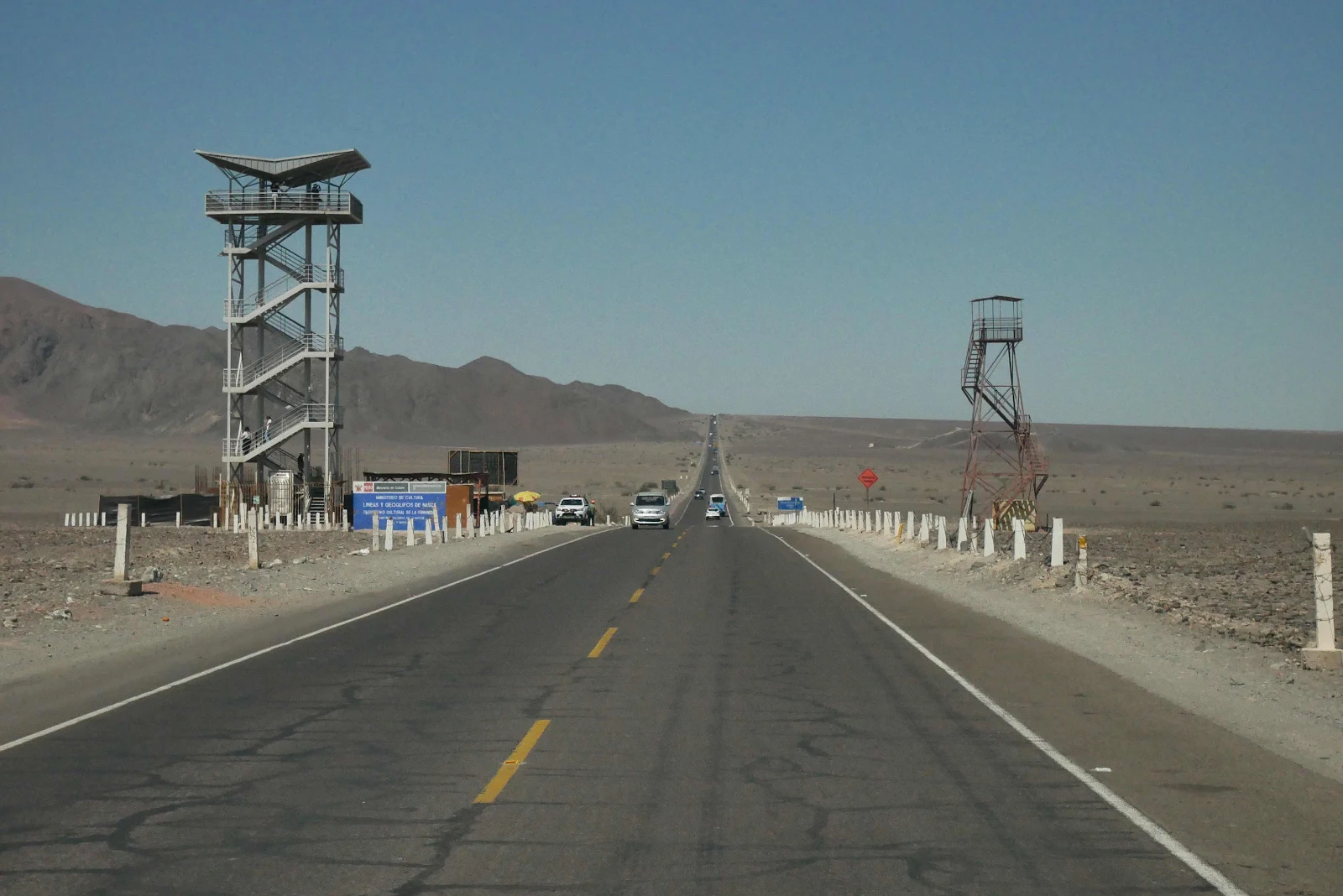
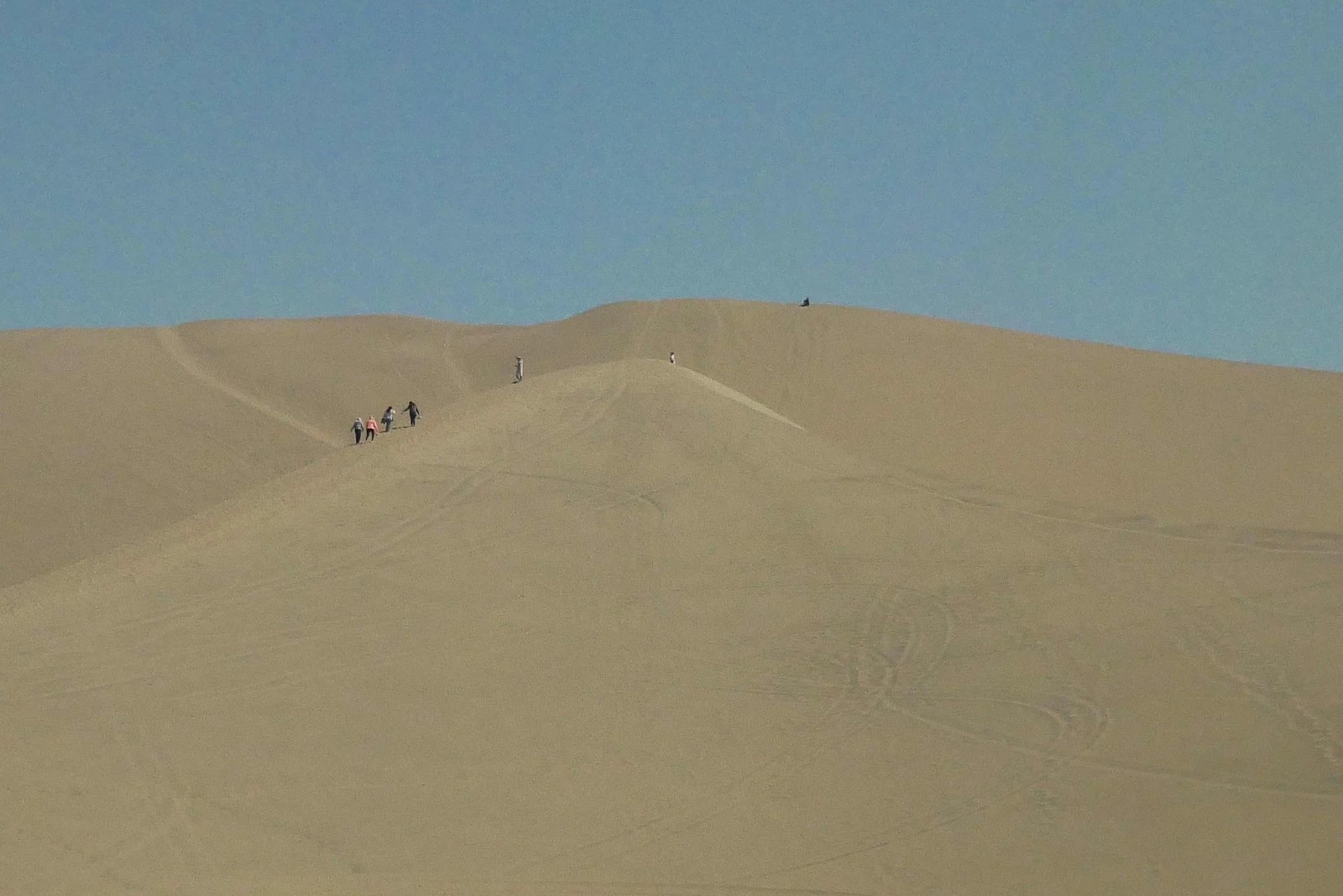
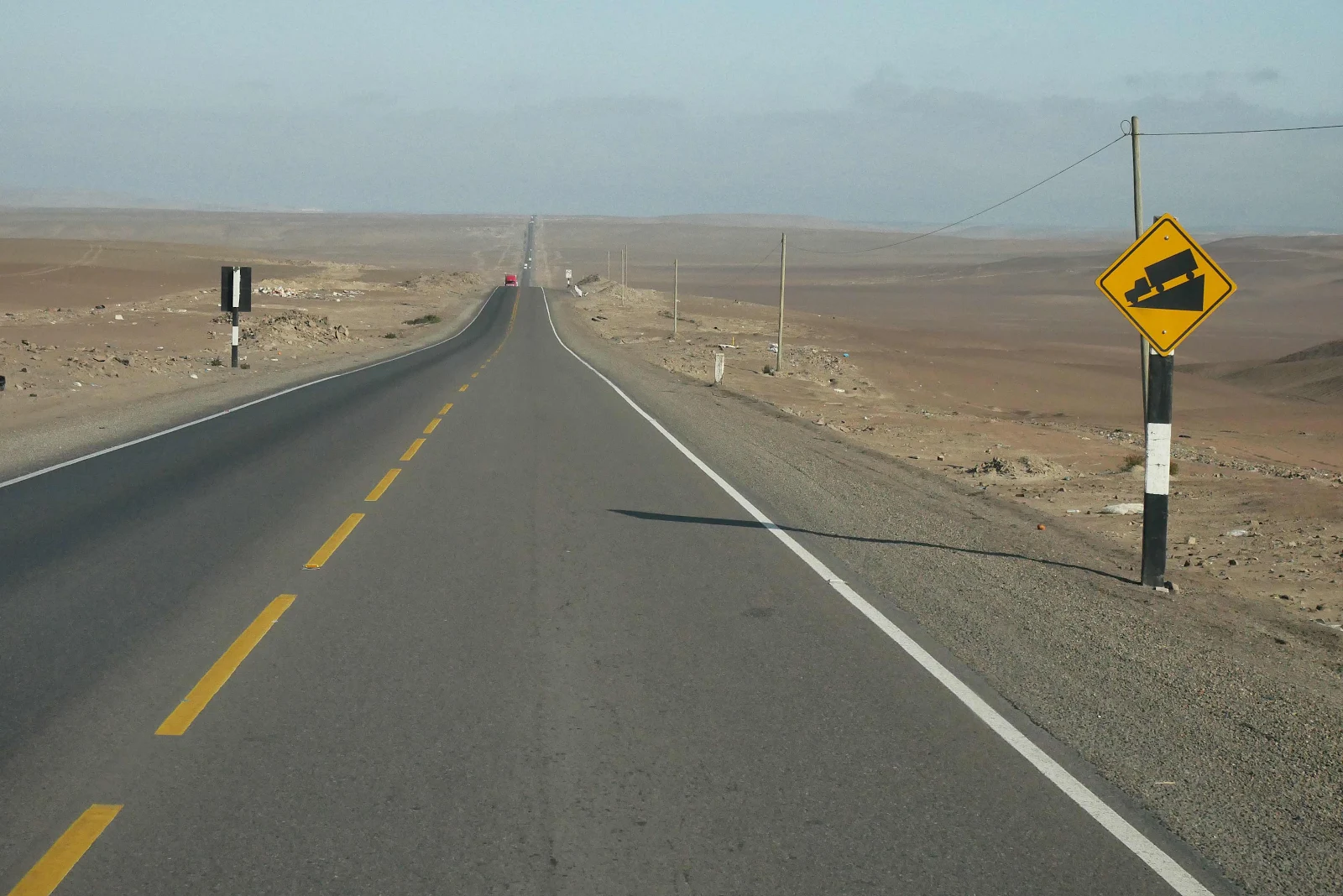
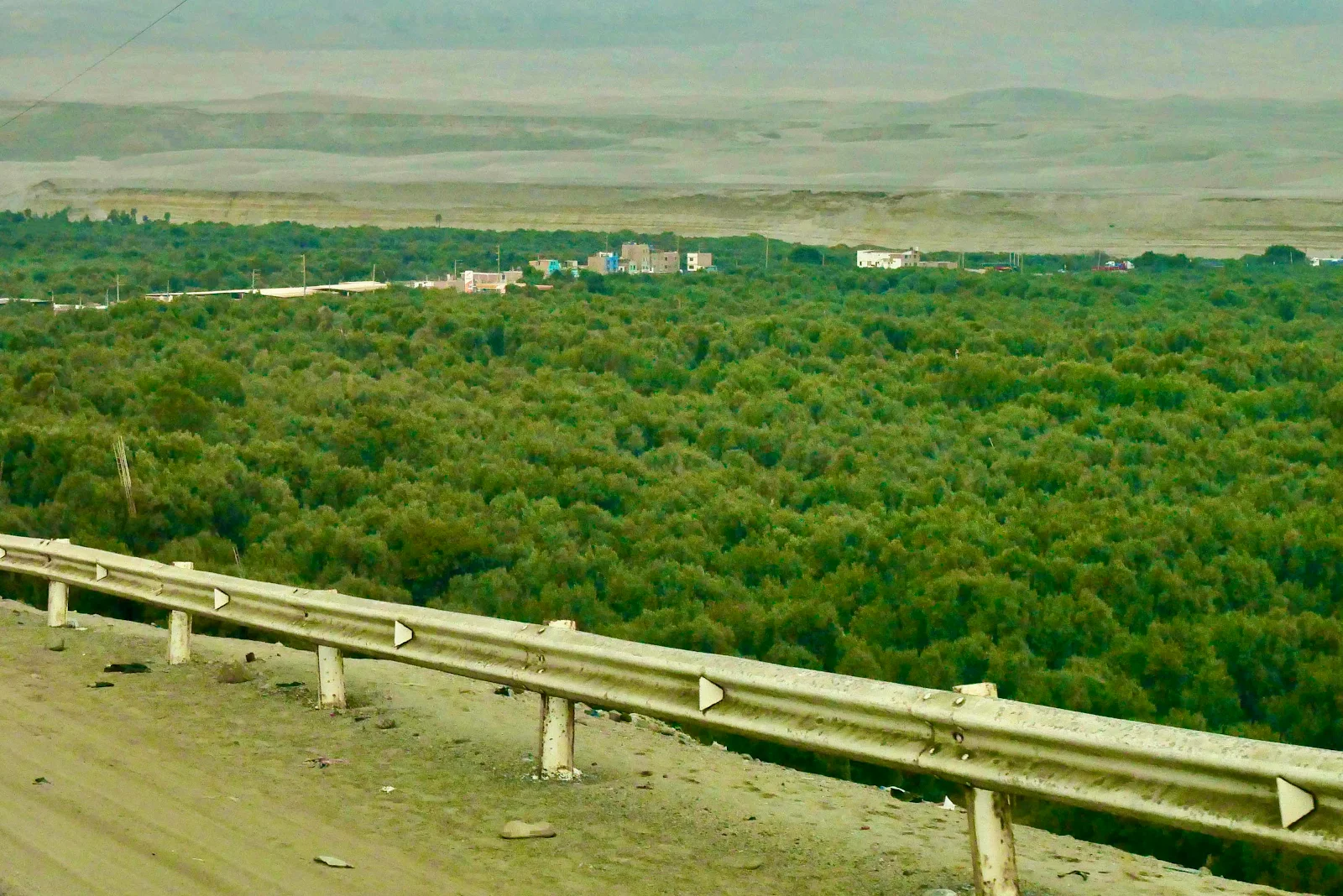
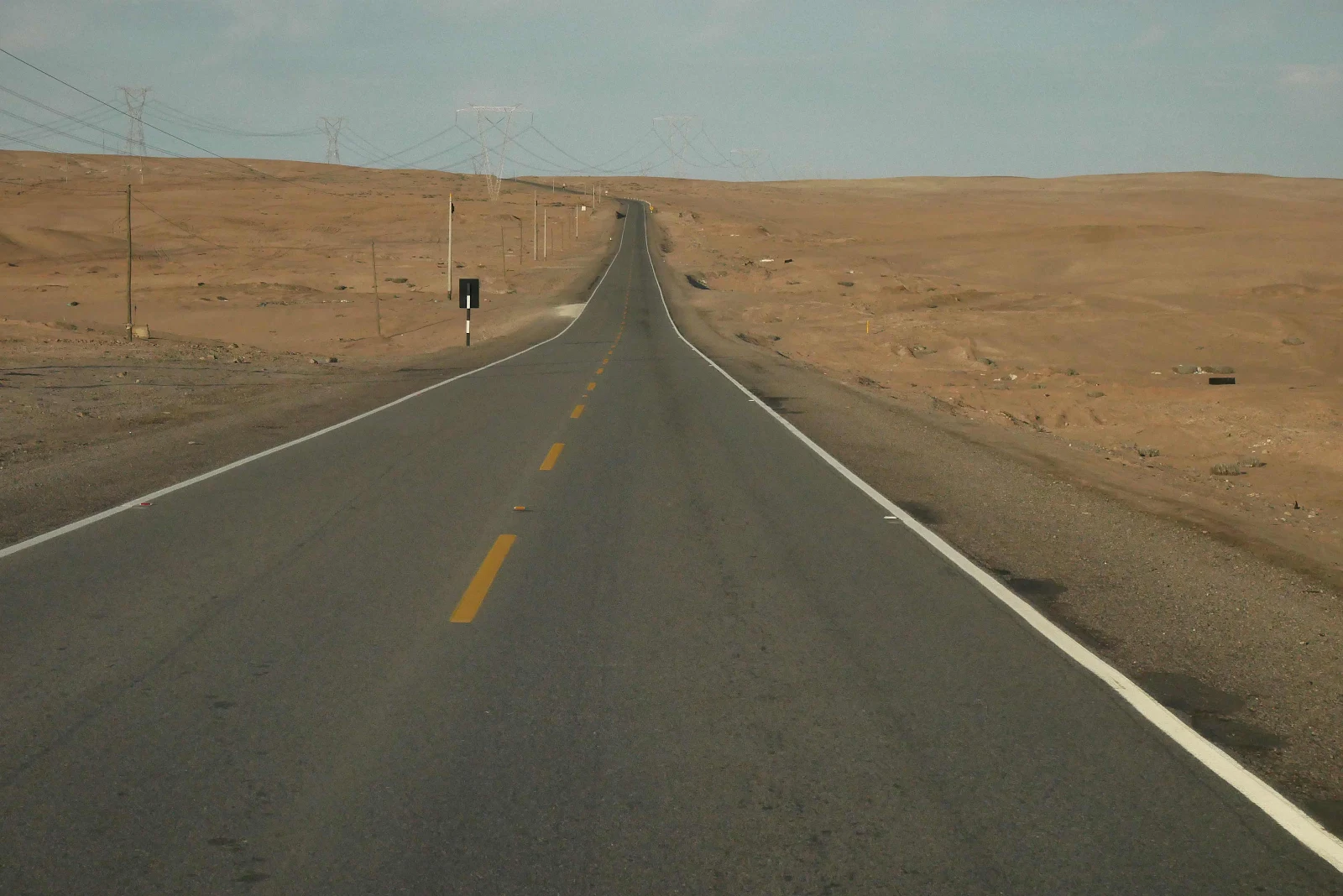
We both enjoyed the PanAmerican down the coast as the highway skirted the ocean and passed some surprising rock and sand formations on a smooth easy road. And yes, there were some long straightaways too, which are inevitable in deserts. And then you come across an oasis, in this case the village of Yauca.
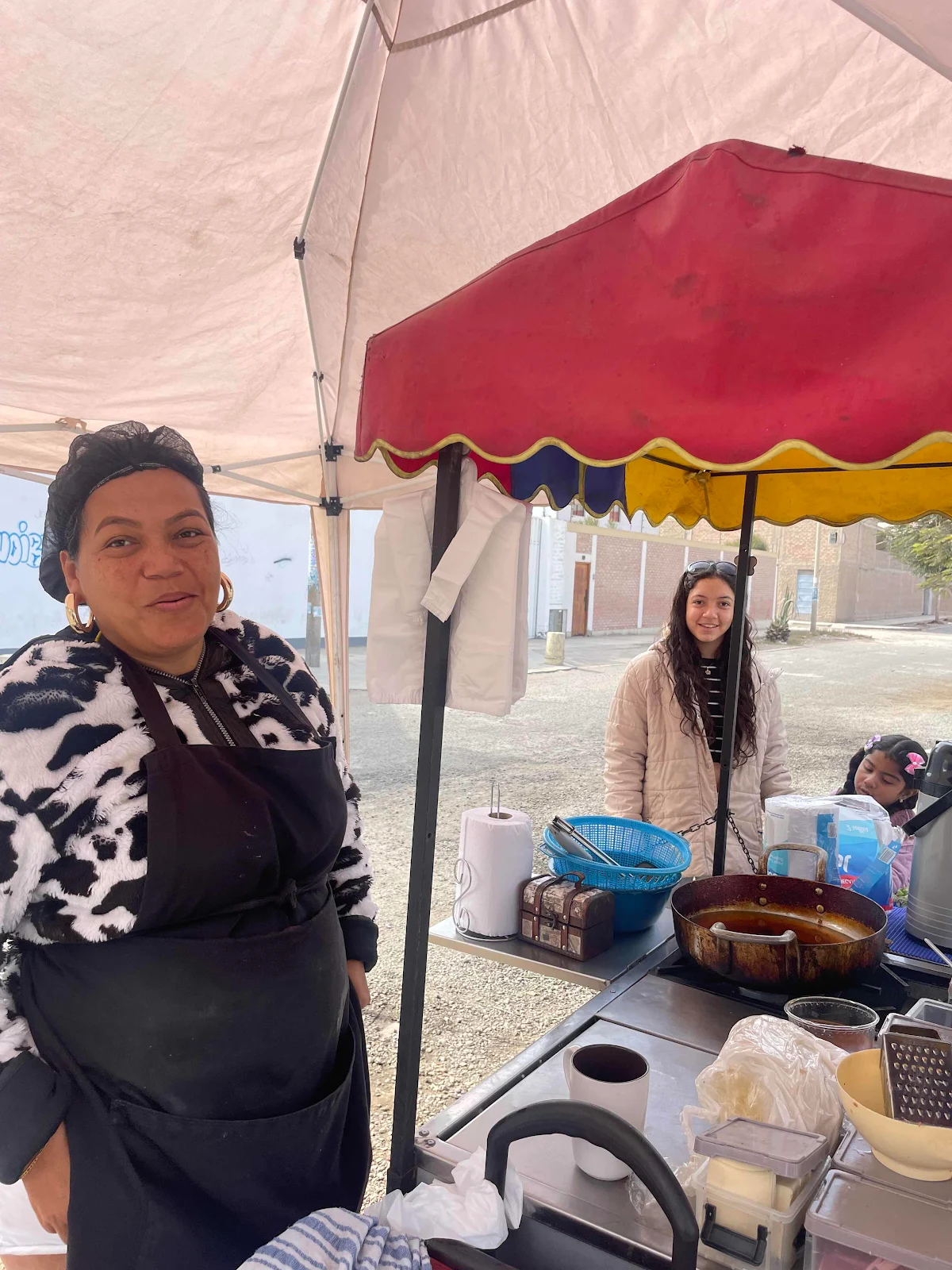
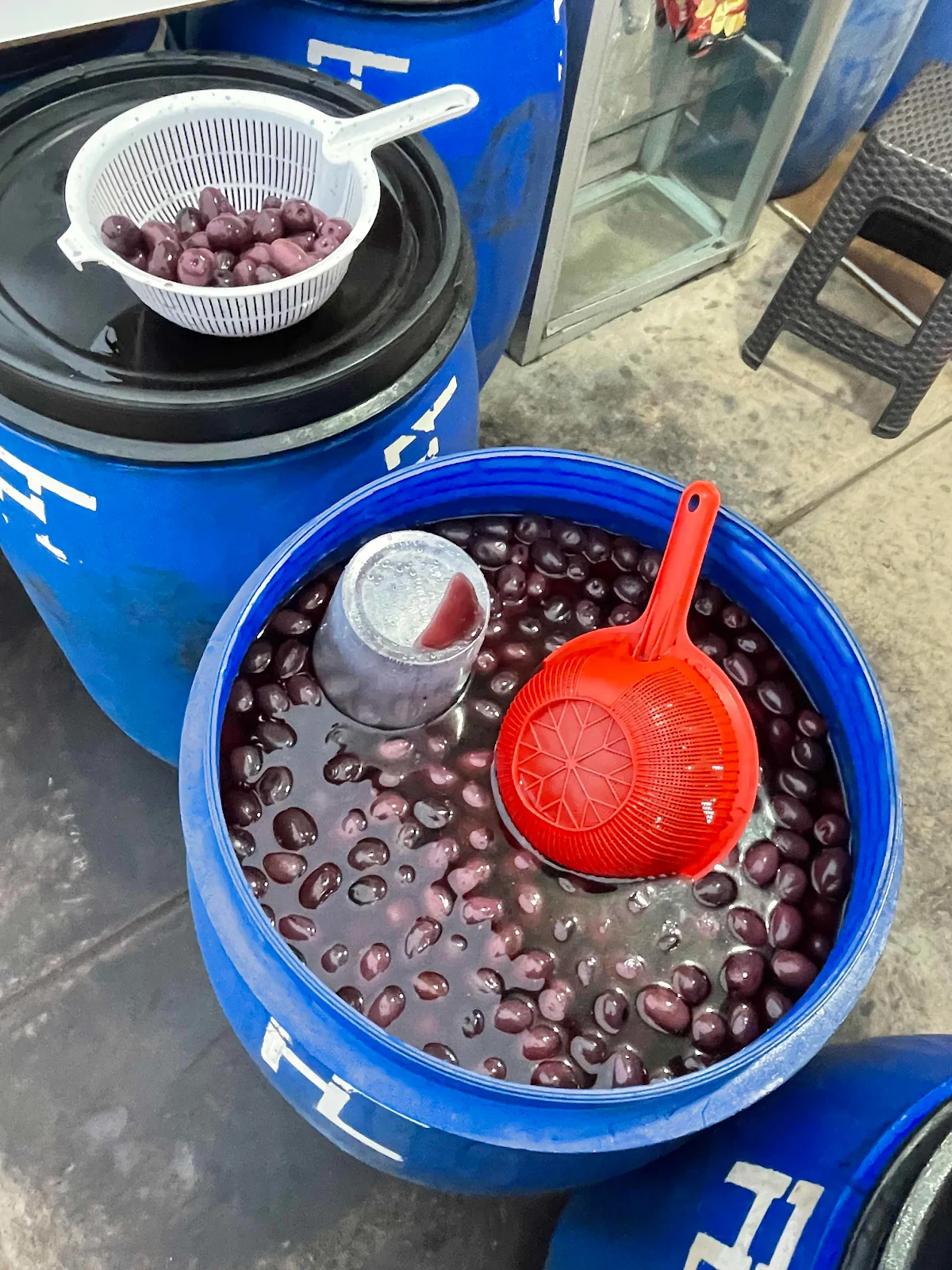
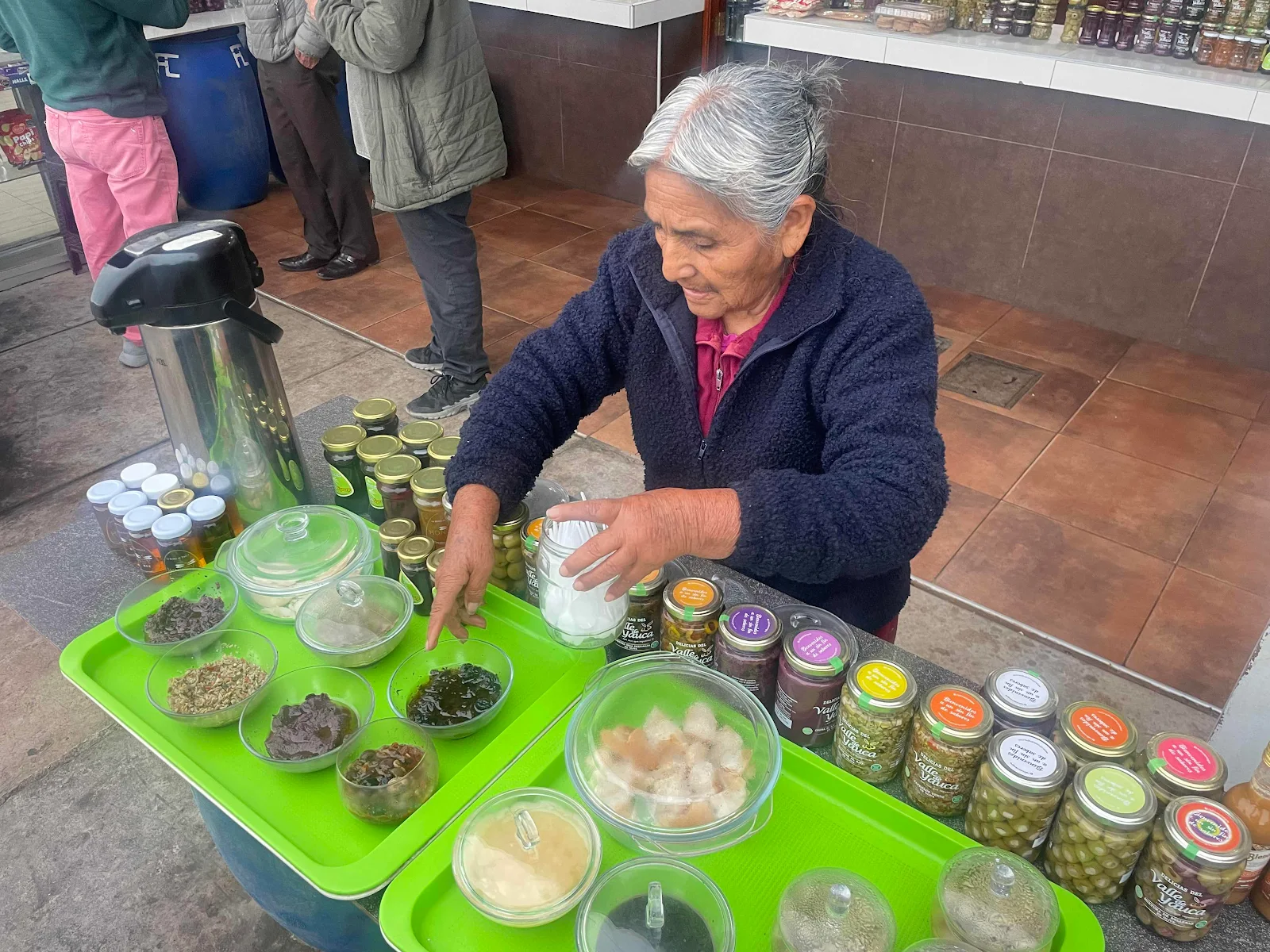
There is a campground here on iOverlander and it was five o’clock in the evening so obviously we timed it right, clever us and by the way we are not afraid to admit we like olives so our fortunes were looking up. Doña Sonia campground owner and olive saleswoman:
I don’t want to cause consternation but we have met people on our travels who -gasp - don’t like olives. Yes I know, I wanted to shield you from this awful truth but we have discovered that olives are polarizing. Rusty is indifferent to them but he was just happy to be out of the van.
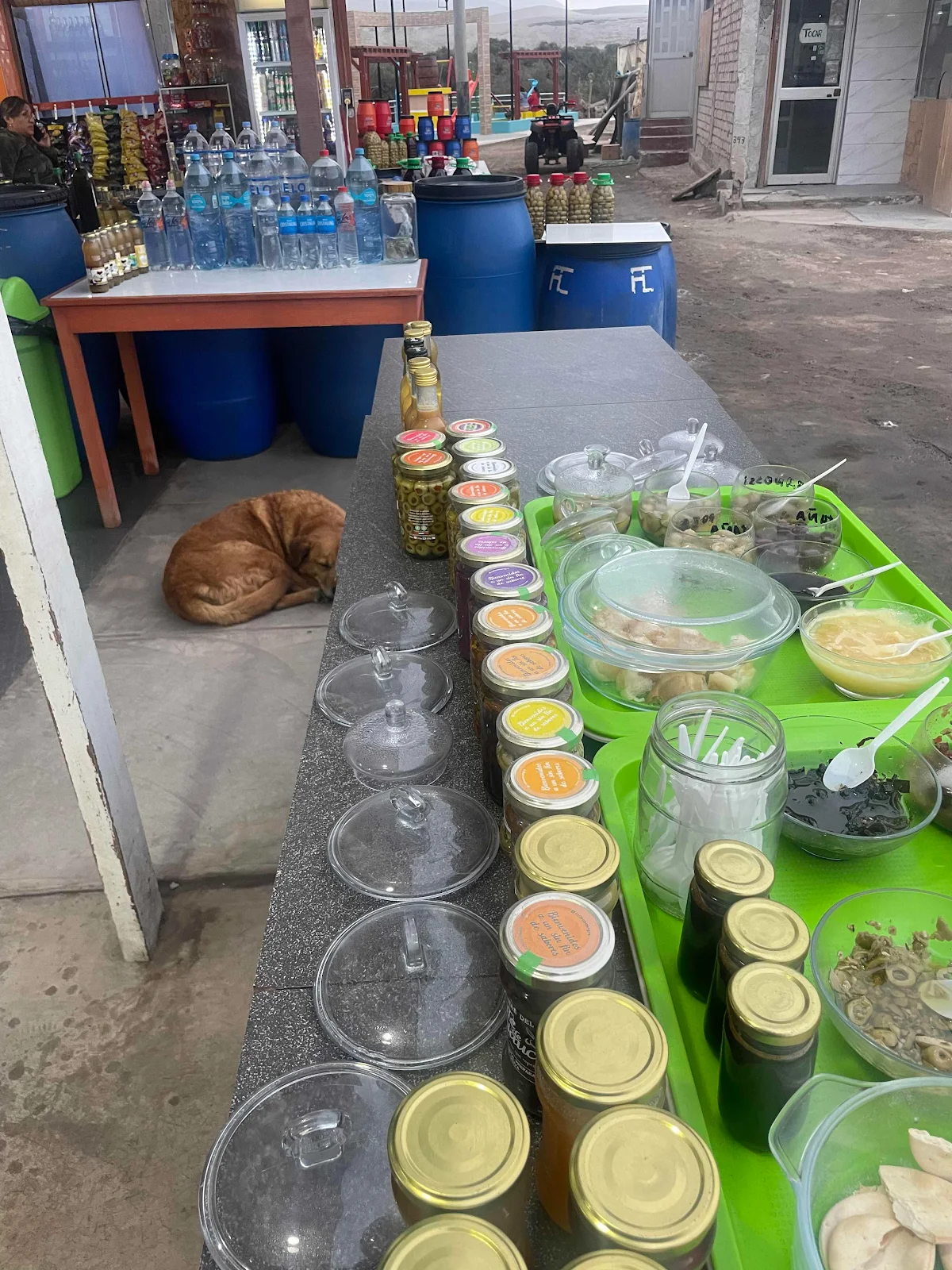
We were handed crackers and spoons right there by the side of the highway and we dug in, while olives mashed olives olive blossom honey and on and on. We bought twenty something bucks worth. We have to eat them before we enter Chile next month as the customs there are strict and don’t allow fruits vegetables meats nuts or honey. Yup; you can’t import honey to Chile; the overland madness never ceases.
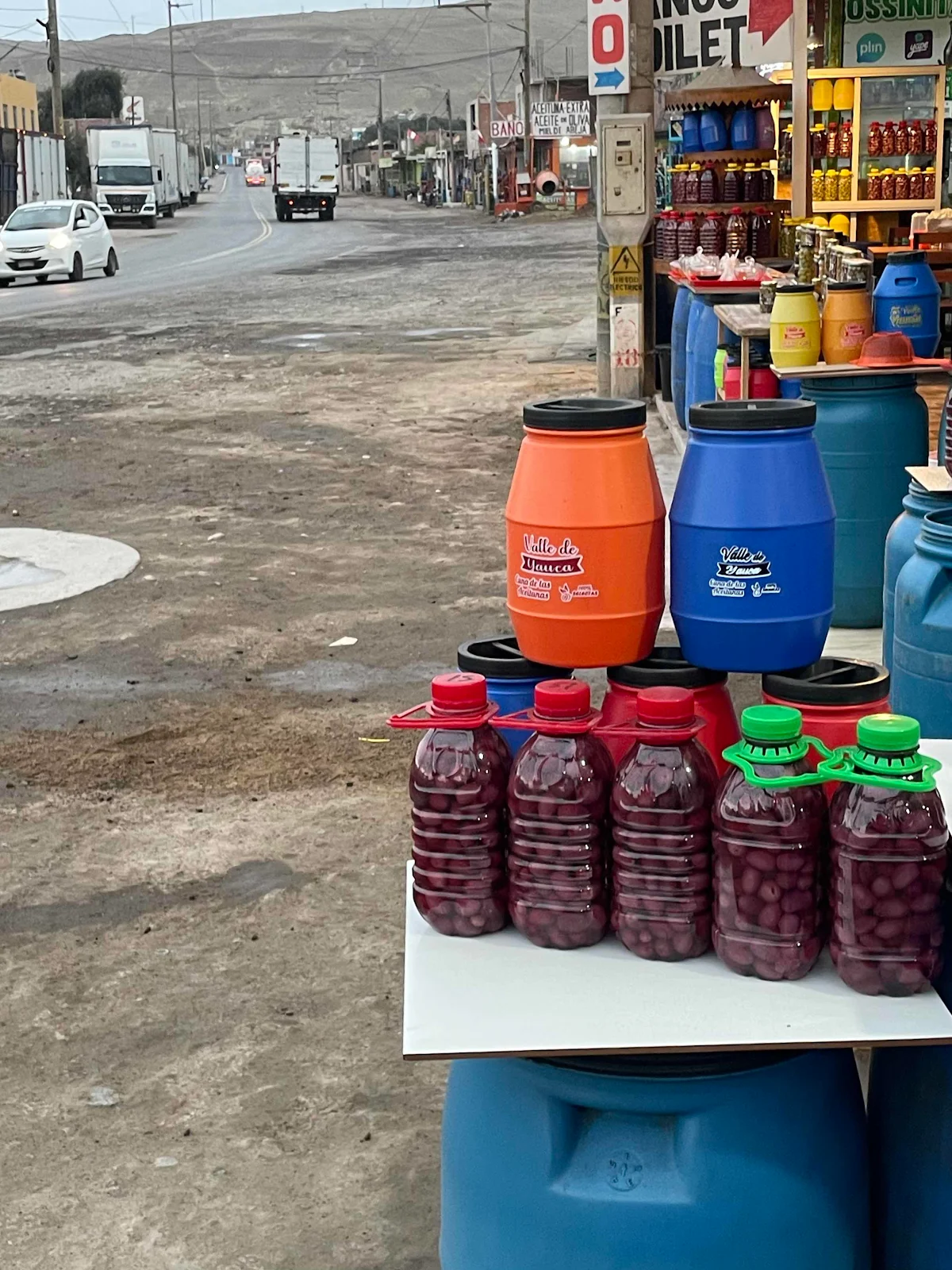
Layne checked out every jar and flavor and had me haul the overweight loot to GANNET2.
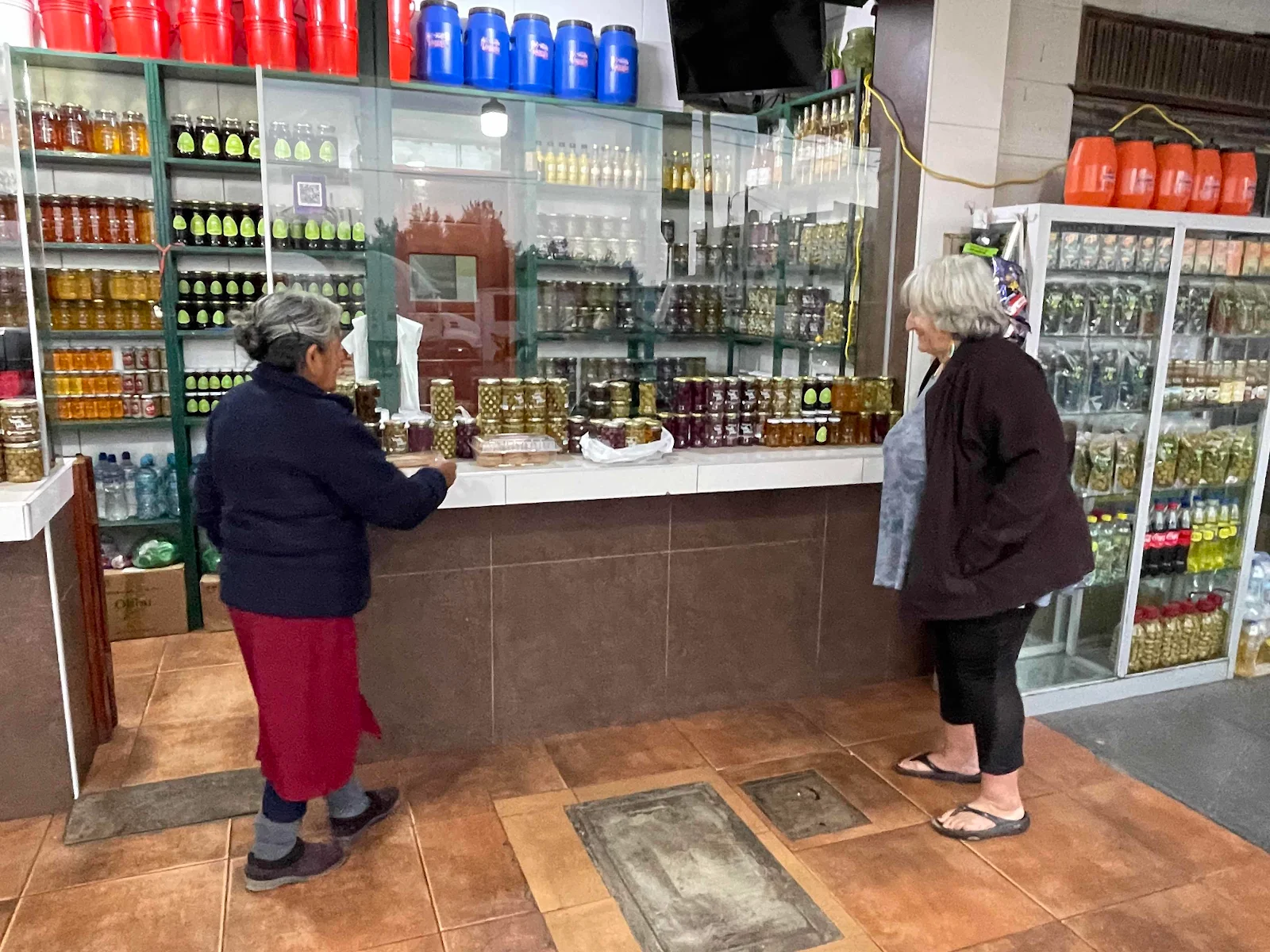
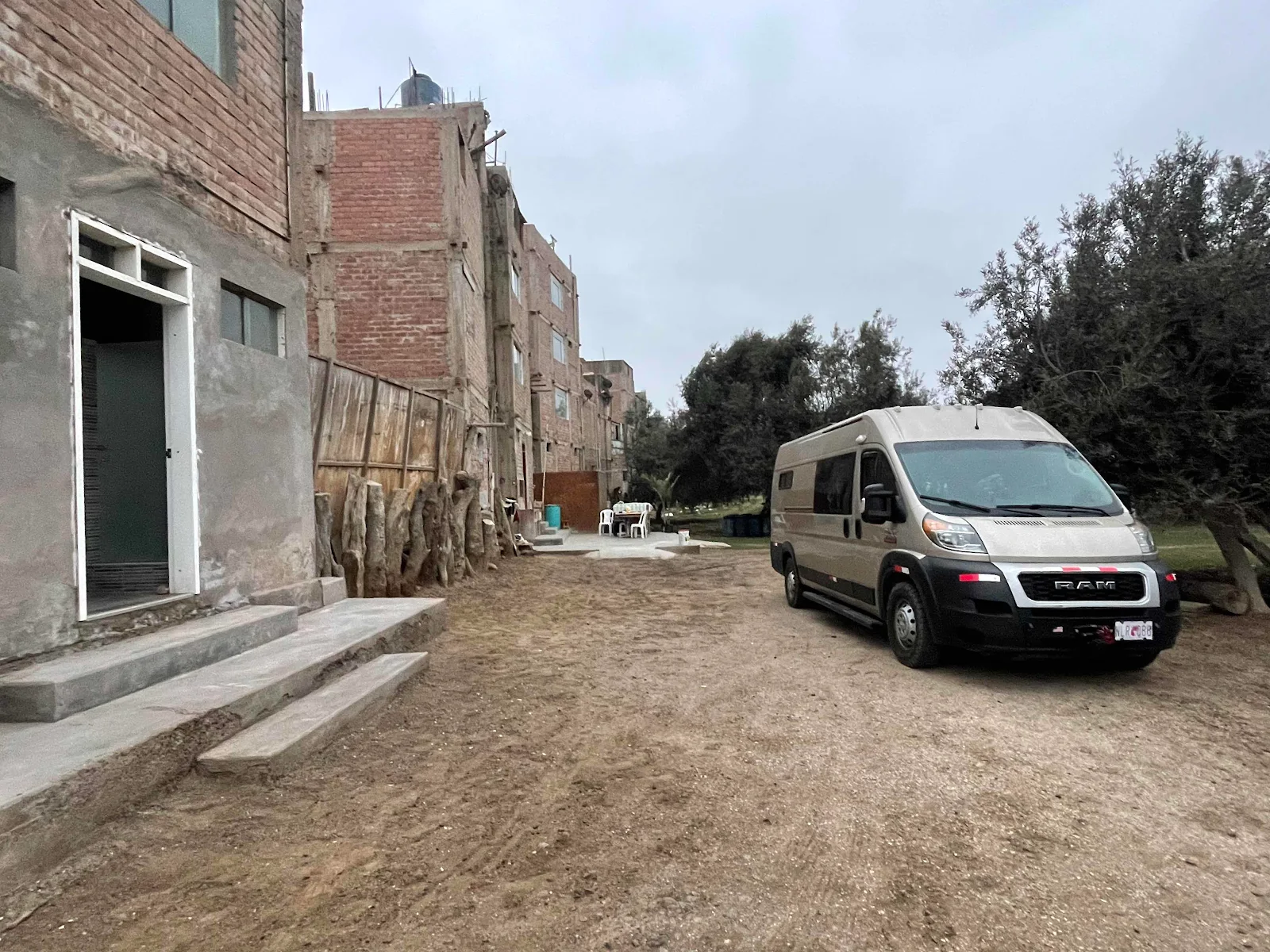
The open gate marked the spot where we planned to sleep. The cost was negligible, eleven bucks, and it wasn’t fancy but it was safe. I don’t get a great vibe for parking off the highway in Peru and we don’t wild camp in this country. I like having easy access to cheap campgrounds or gas stations for safe overnight parking as we travel.
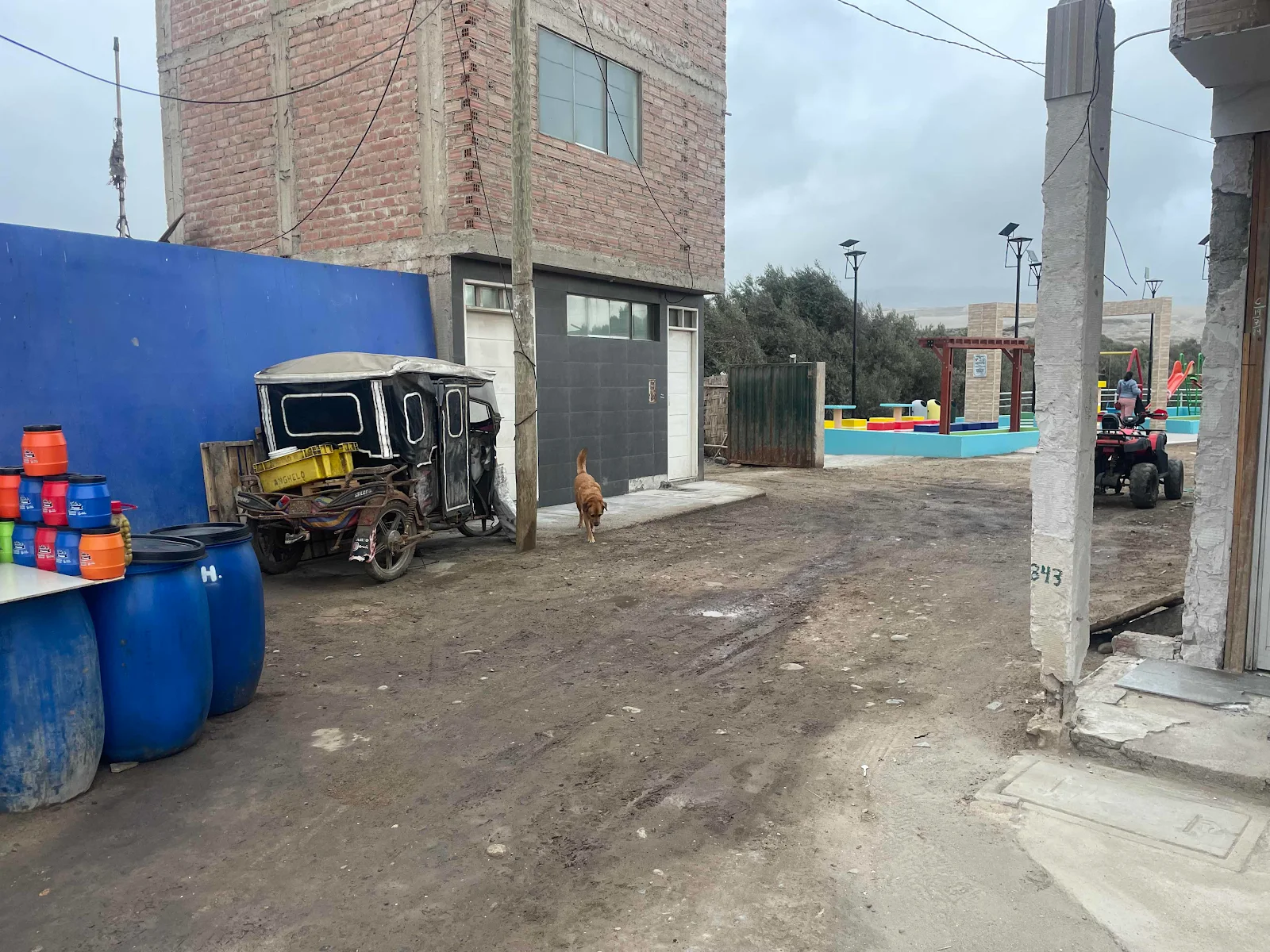
The door on the left is the vast spacious bathroom clean and with a cold shower only, on a 60 degree evening I waited till morning for my blast of cold wake up water.
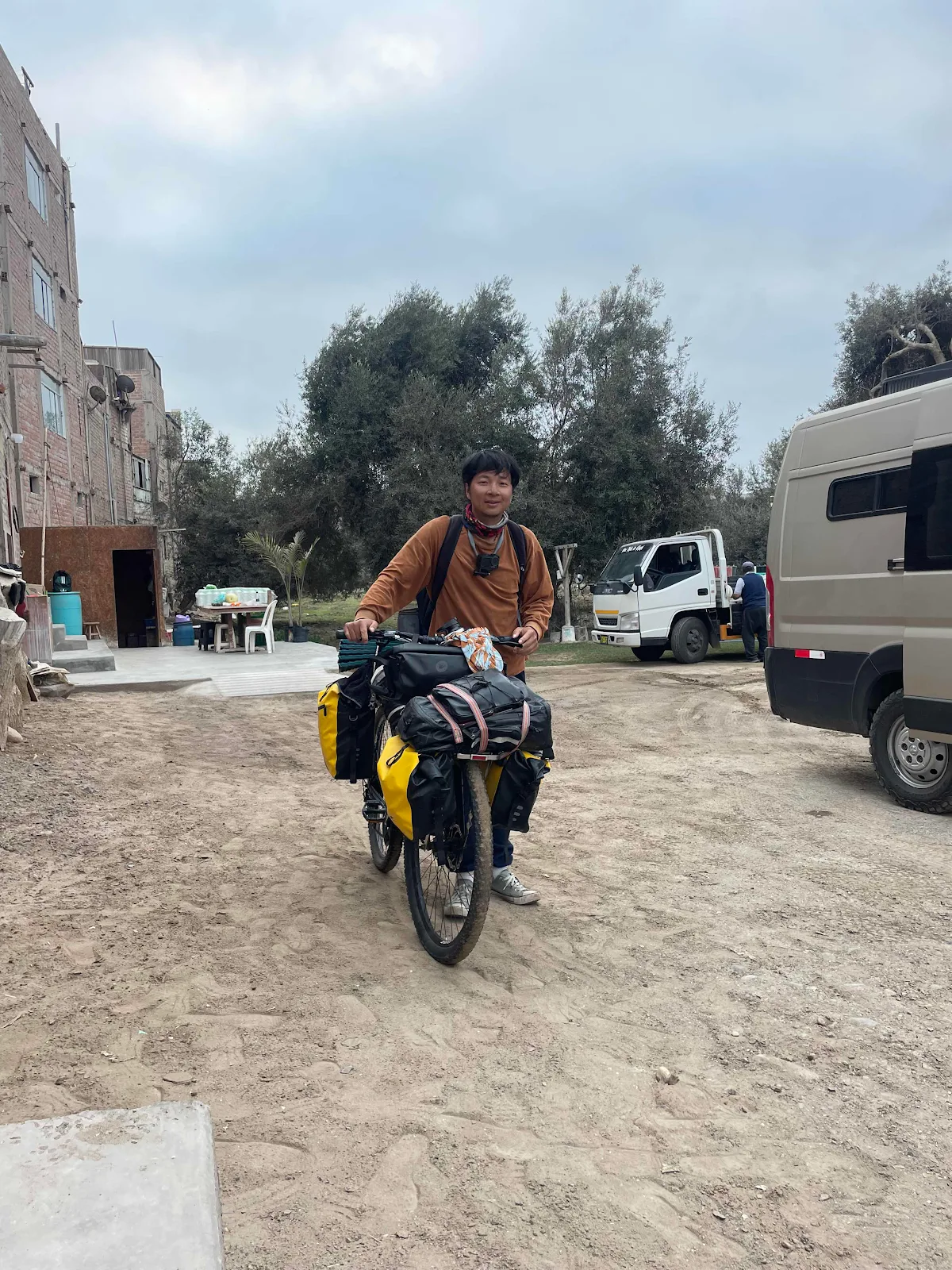
We had an all too brief conversation with “Stan from Hunan” whose real name is Fung Hao from China ( the big one, not Taiwan) who has been cycling South America for 15 months and is pedaling north toward Colombia.
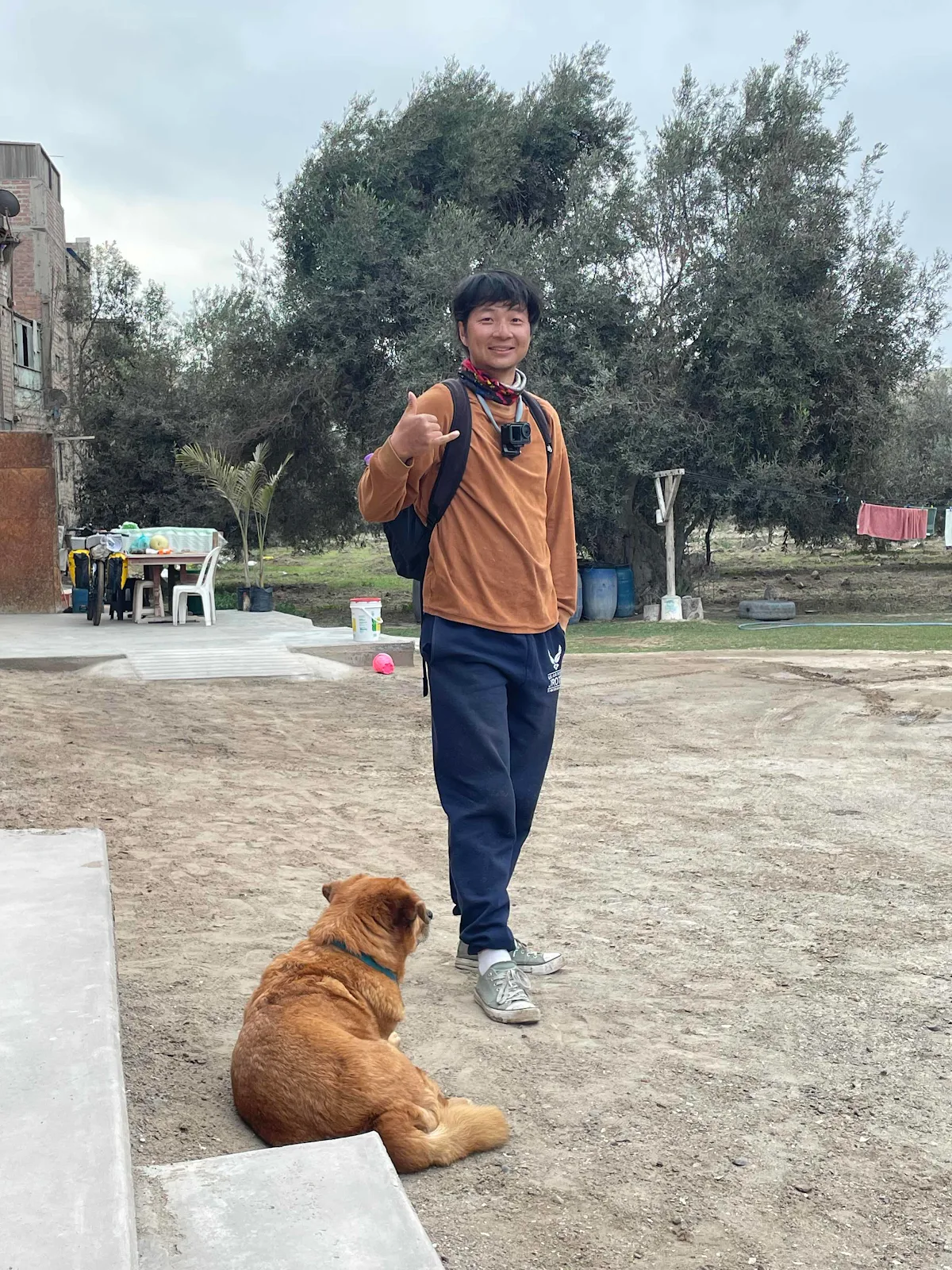
The ground was level enough and the olive trees are huge benefiting from rich river silt and lots of irrigation.
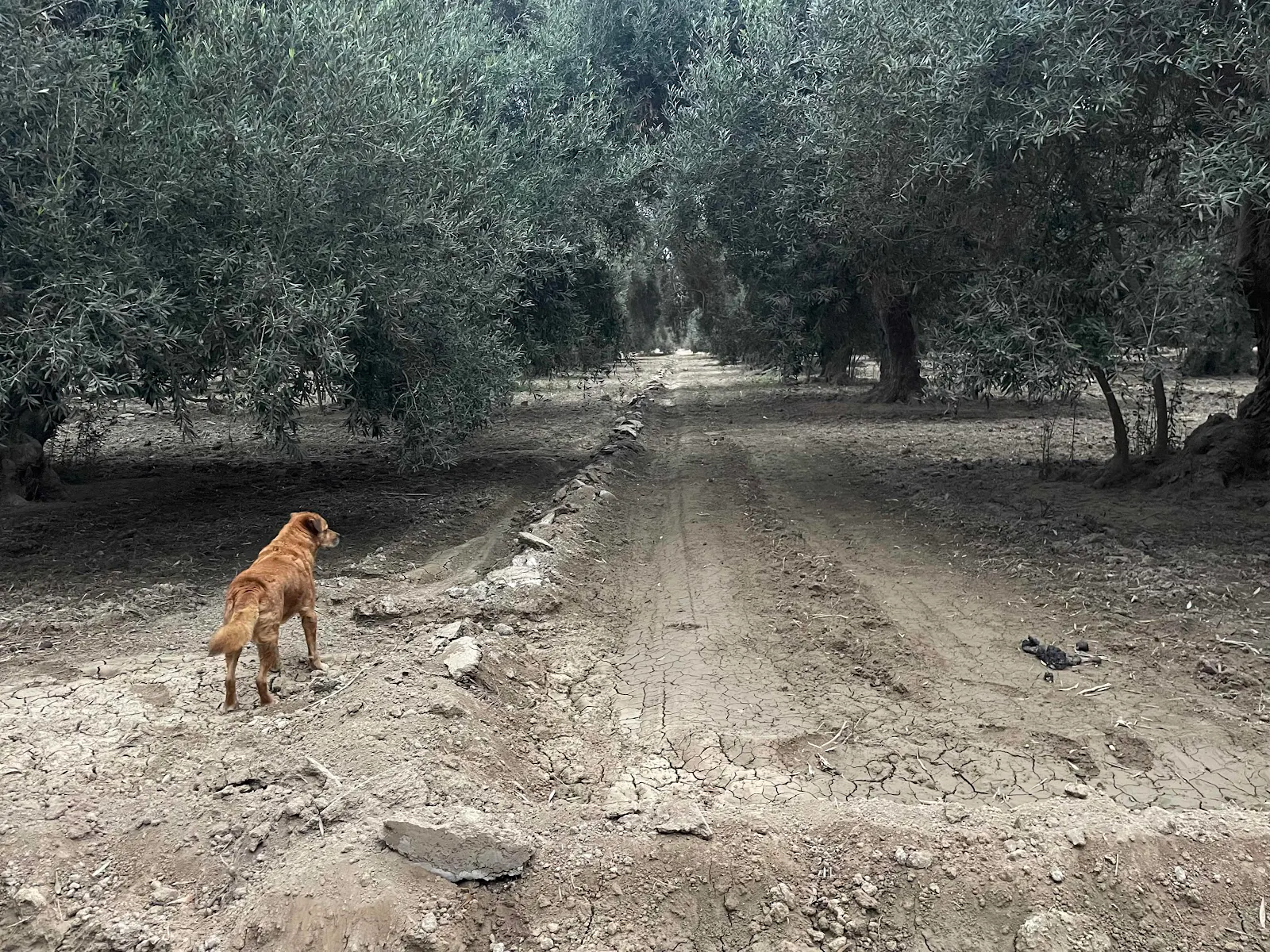
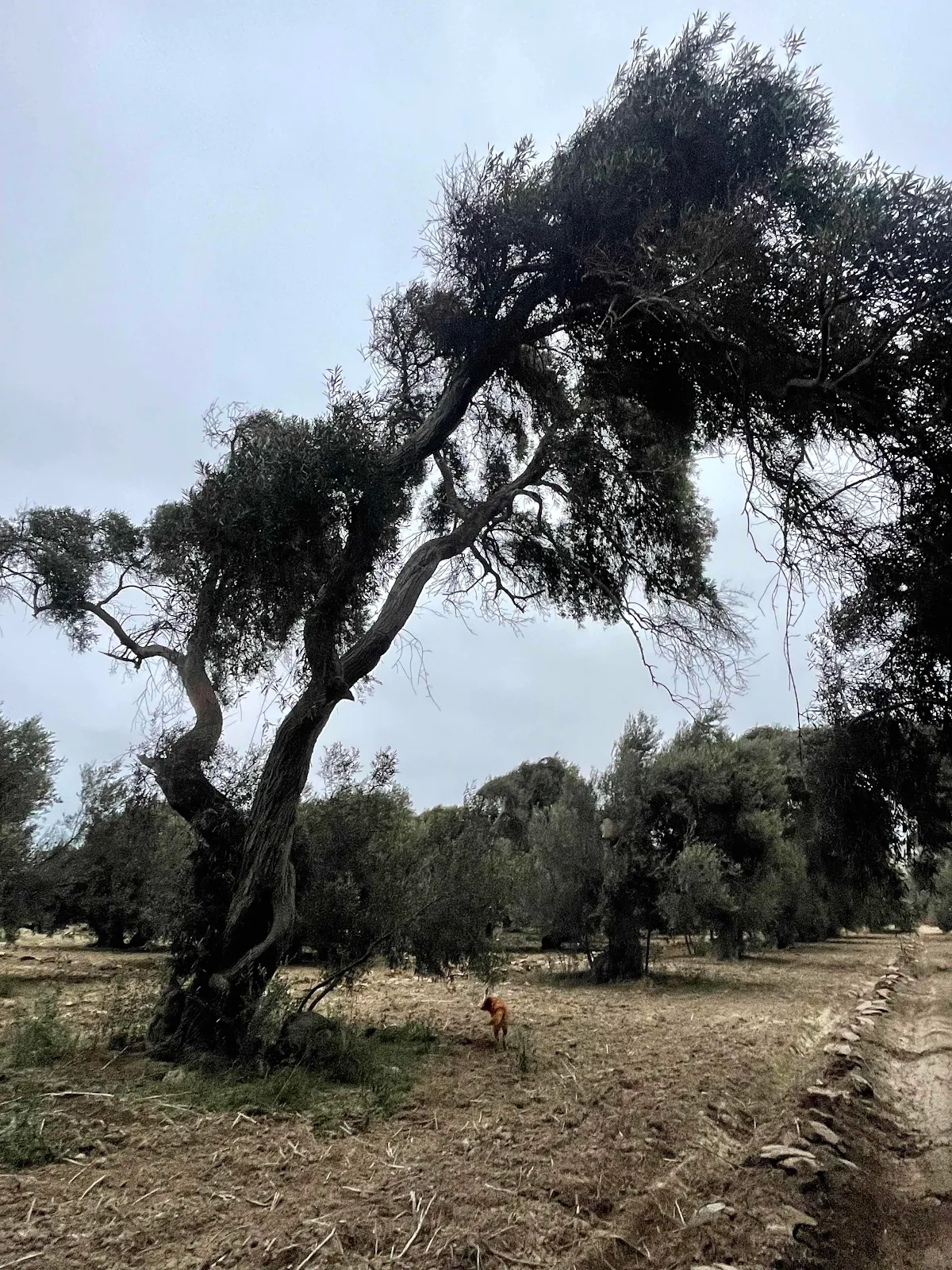
Rusty enjoyed wandering here under the cool gray inversion layer from the Pacific Ocean. I’ve never seen such gigantic olive trees.
Fung Hao, whose English was impeccable, decided to find accommodation elsewhere as he was aching for a hot shower and who can blame him after pedaling 55 miles. He was surprised to hear we knew of Hunan through the fame of its spicy cooking and he also pointed out with some pride it was the birth place of Mao Tse Dong which struck me a bit like puffing yourself up if you came from Joe Stalin’s home town but what I remember and what he’s learned in school about history probably diverges a bit. He set off, the young social media film maker to find hot water. Bummer he was interesting to talk to.
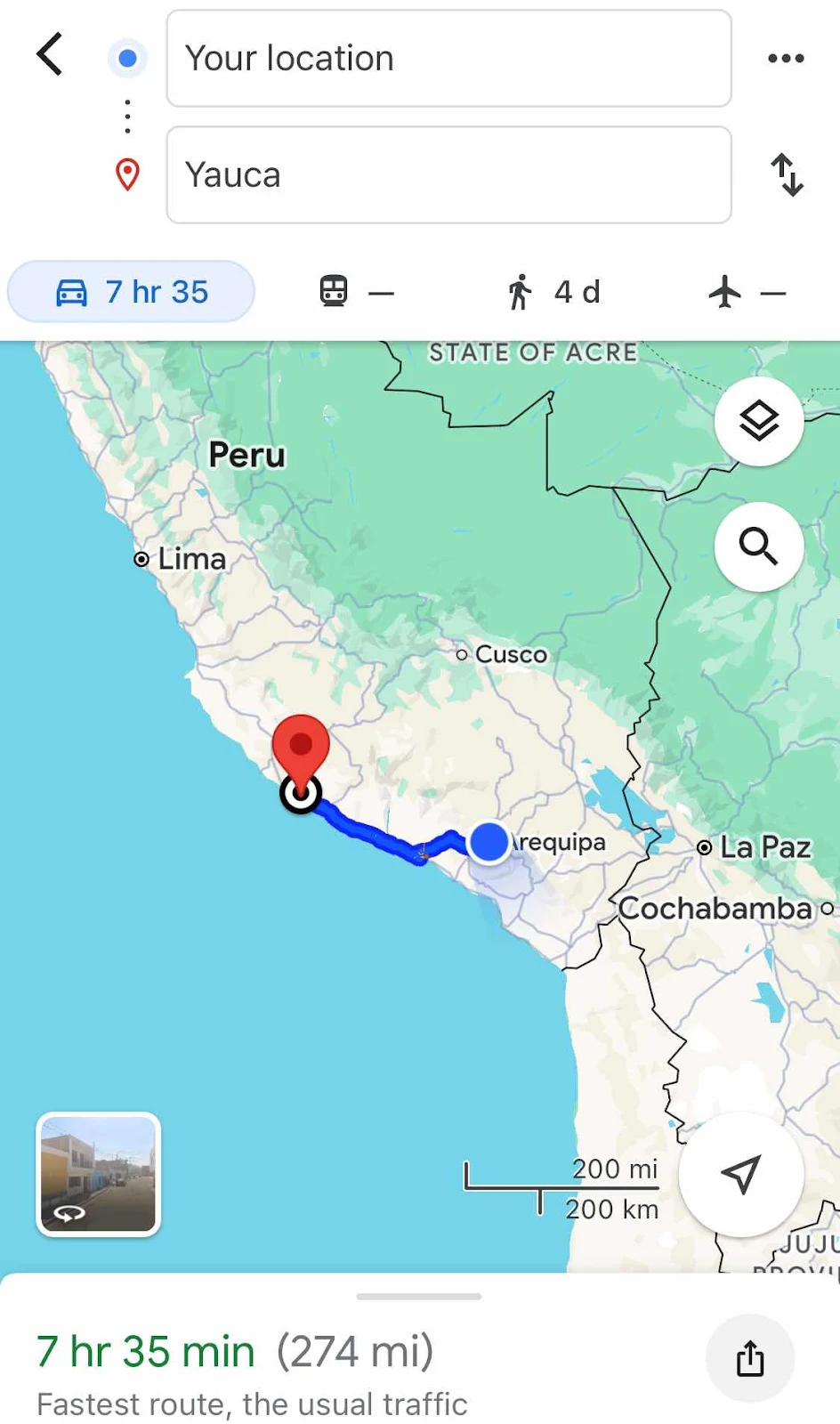
The next morning it was back on the road with an eight hour drive to Arequipa and we knew we weren’t going to get there in one day.
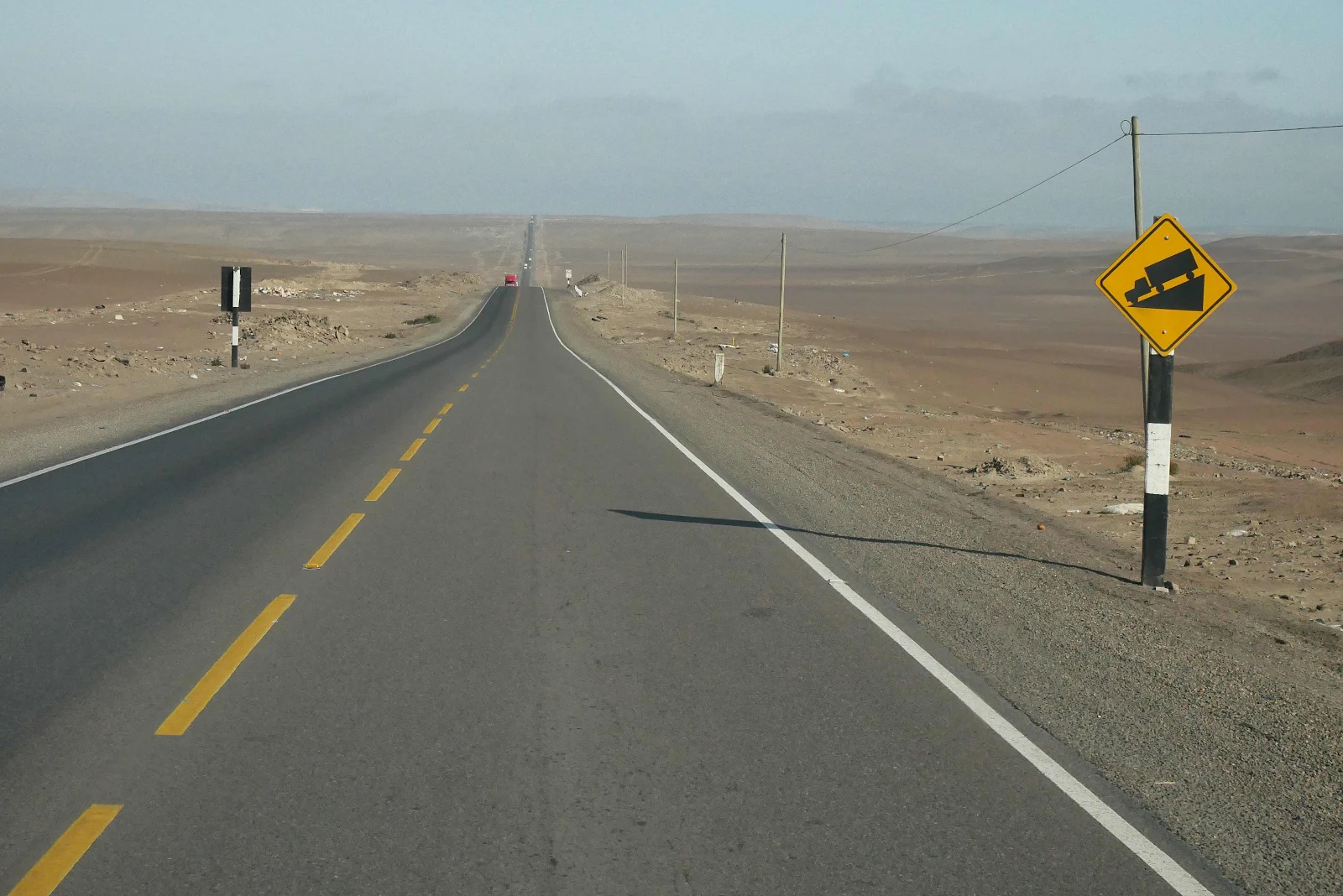
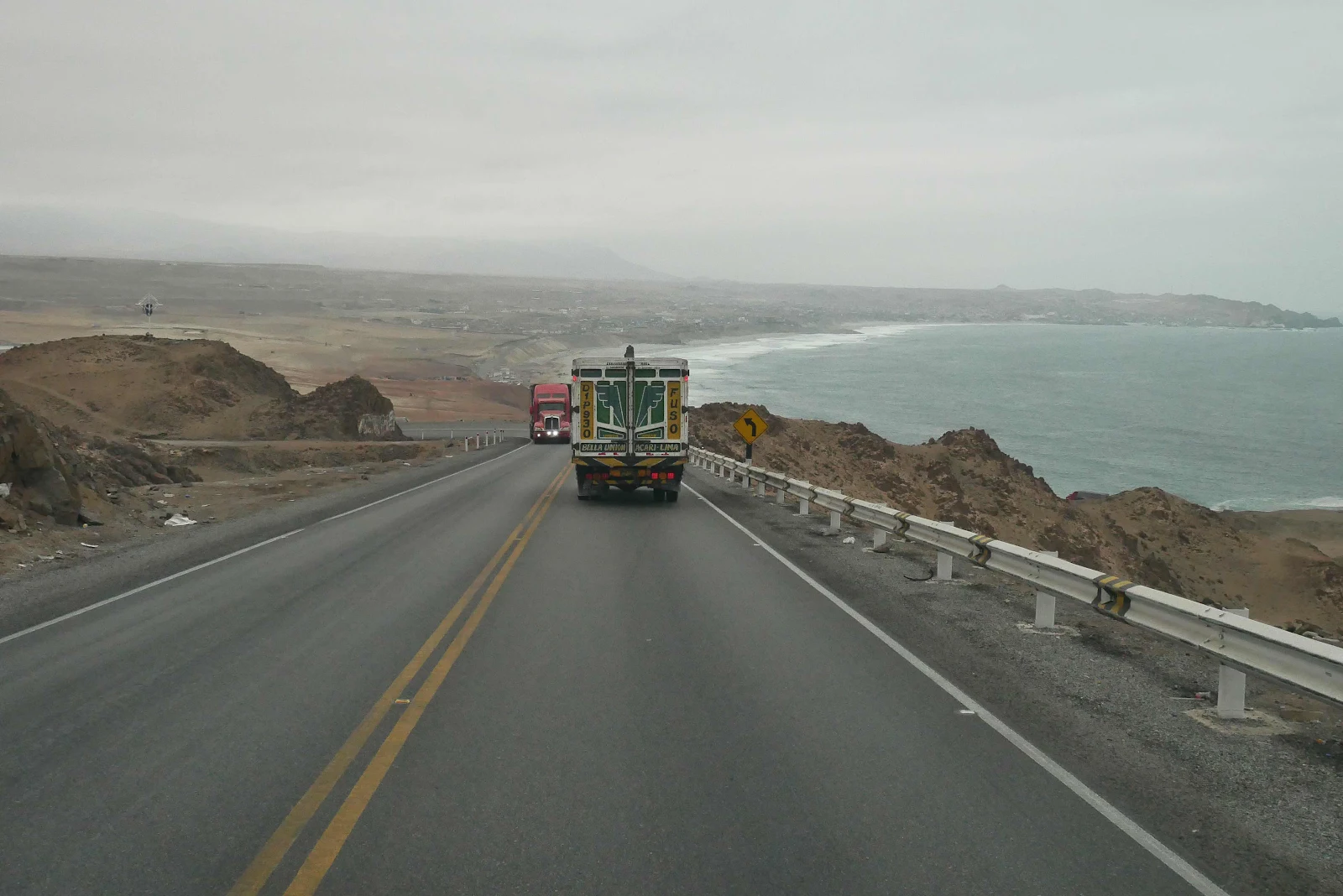
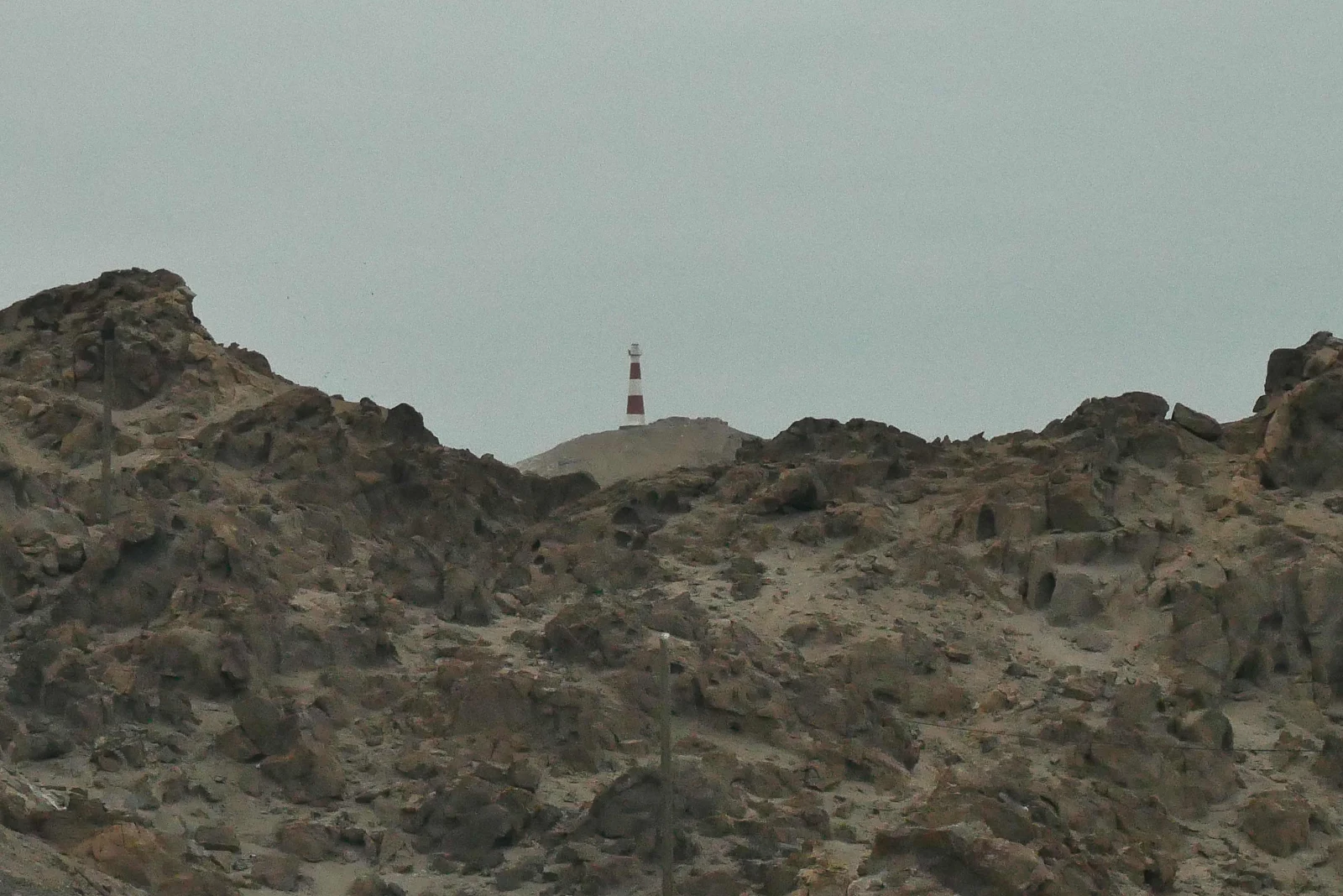
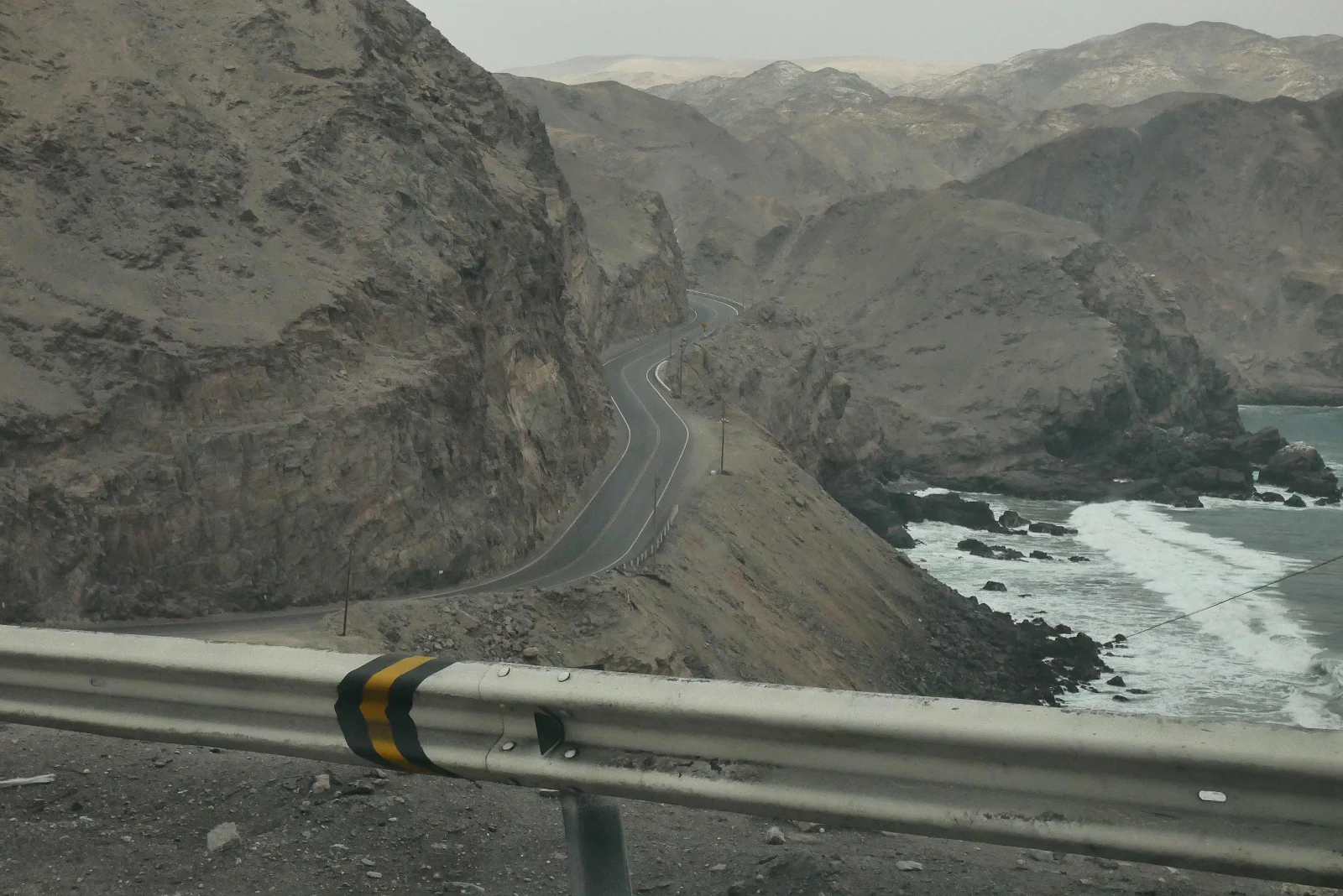
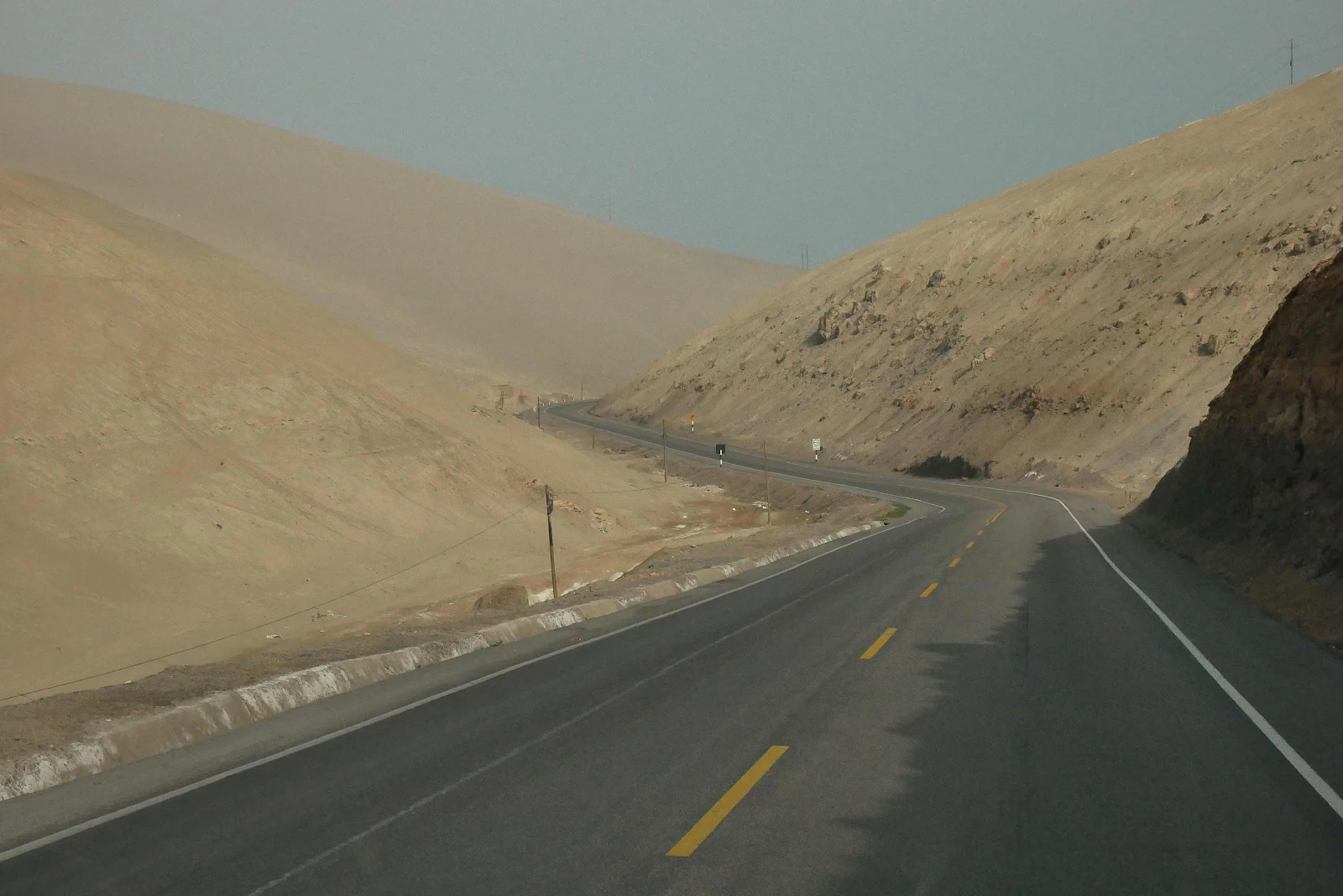
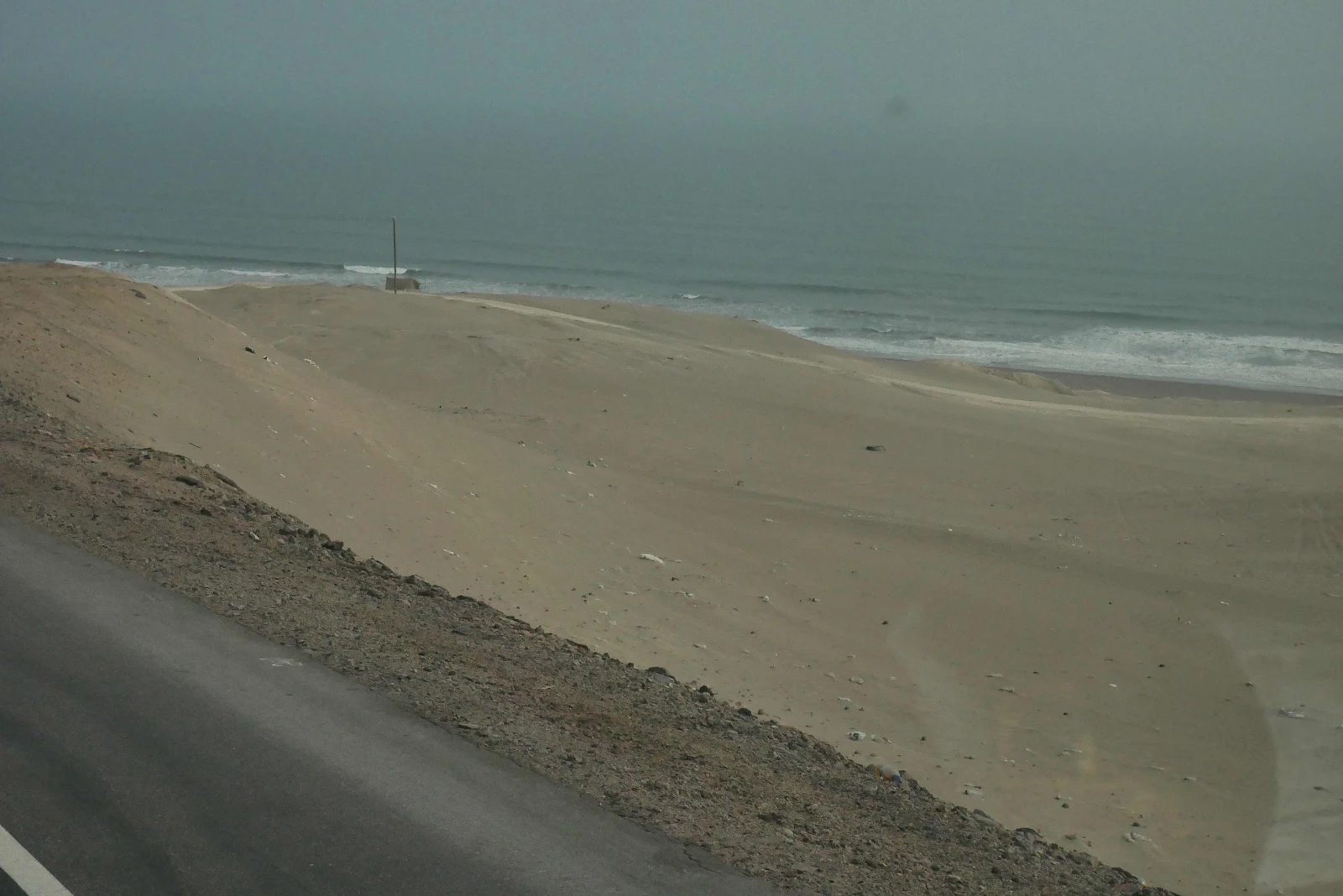
Most overlanders we’ve met describe the coast road as boring but we enjoyed it. The highway was smooth and pothole free and the scenery was stunning, Layne described it as Big Sur on steroids. First we squoze out of the bottleneck campground entrance and managed to harm no olives in the squeeze.
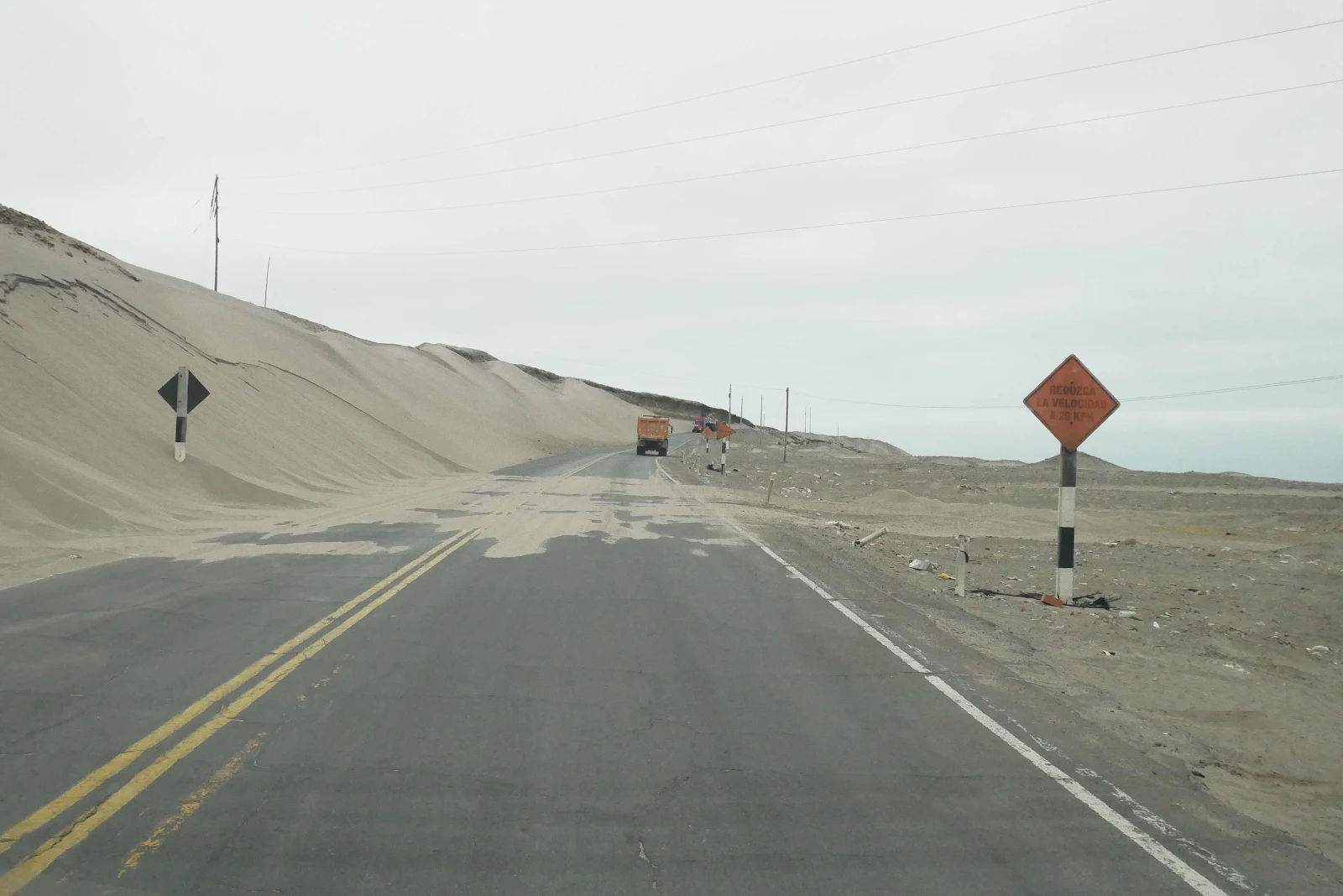
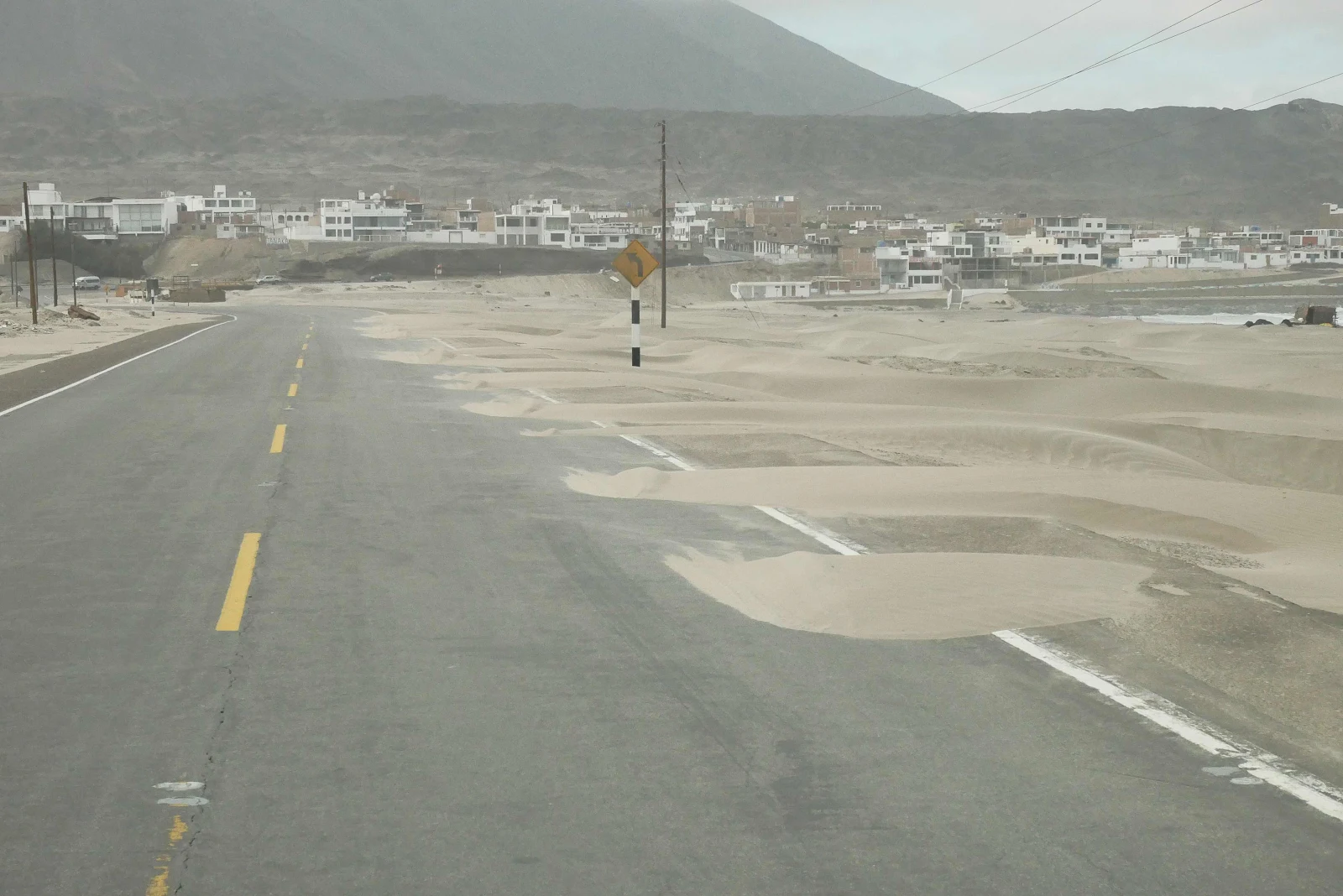
“Sand OnThe Road.” Yup.
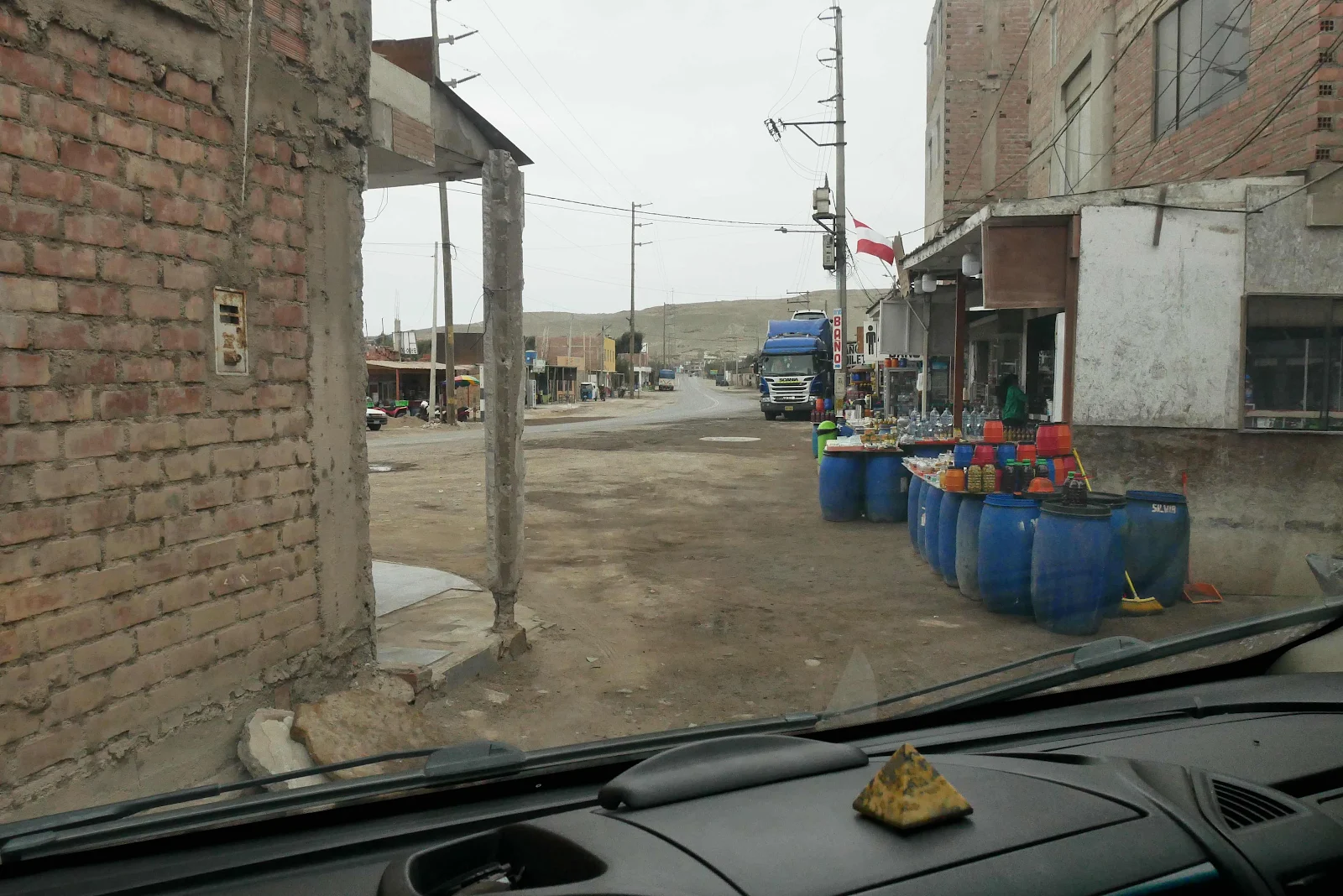
This is off season on the coast, winter, under cold gray skies and vacation homes are empty and stores are closed. I guess security cameras make sense.
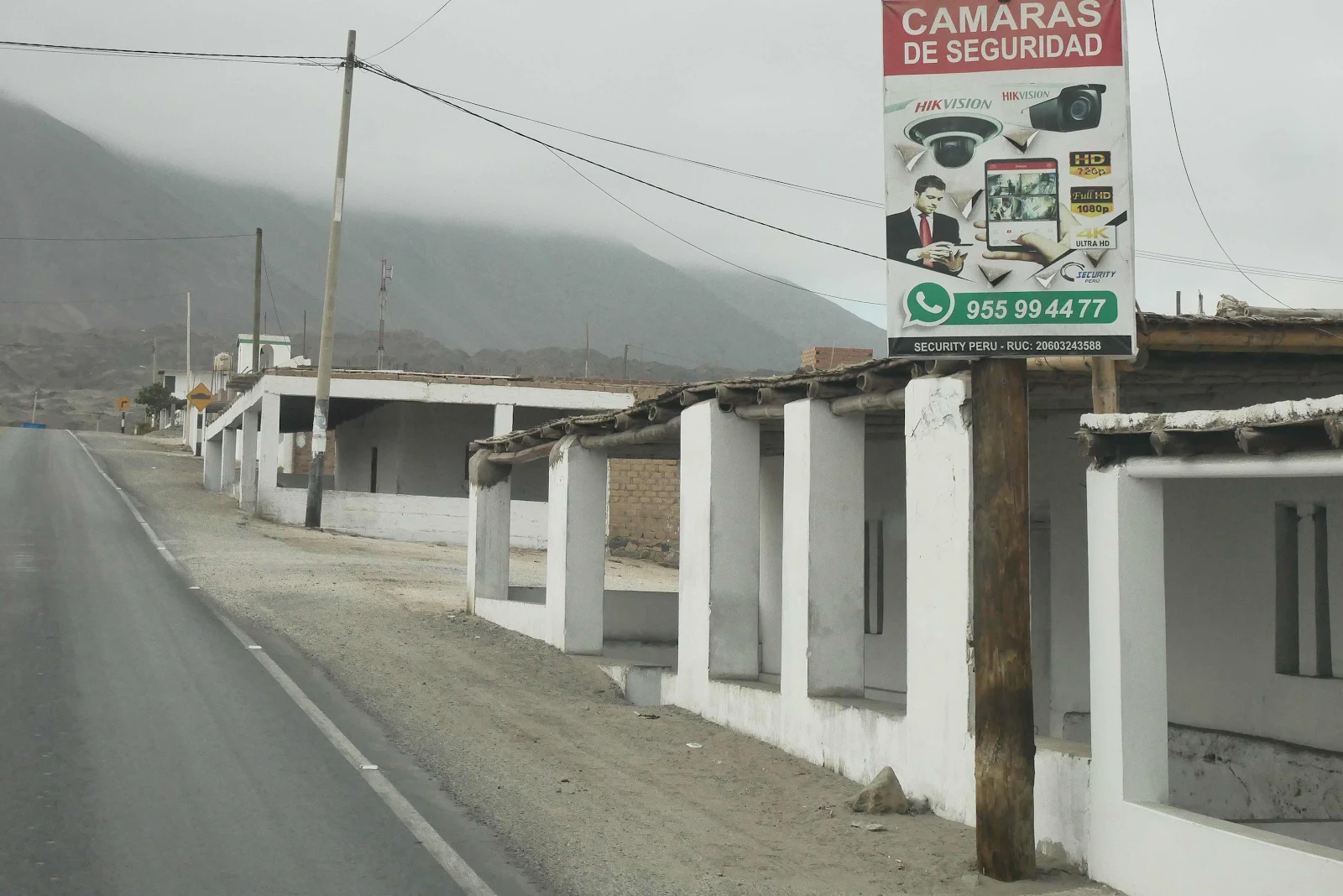
We like off season as it’s dry and rain brings rock falls and mud and being stuck in the van all day of which we enjoyed too much in Central America. But the skies are all gray in winter which can appear dreary I suppose.
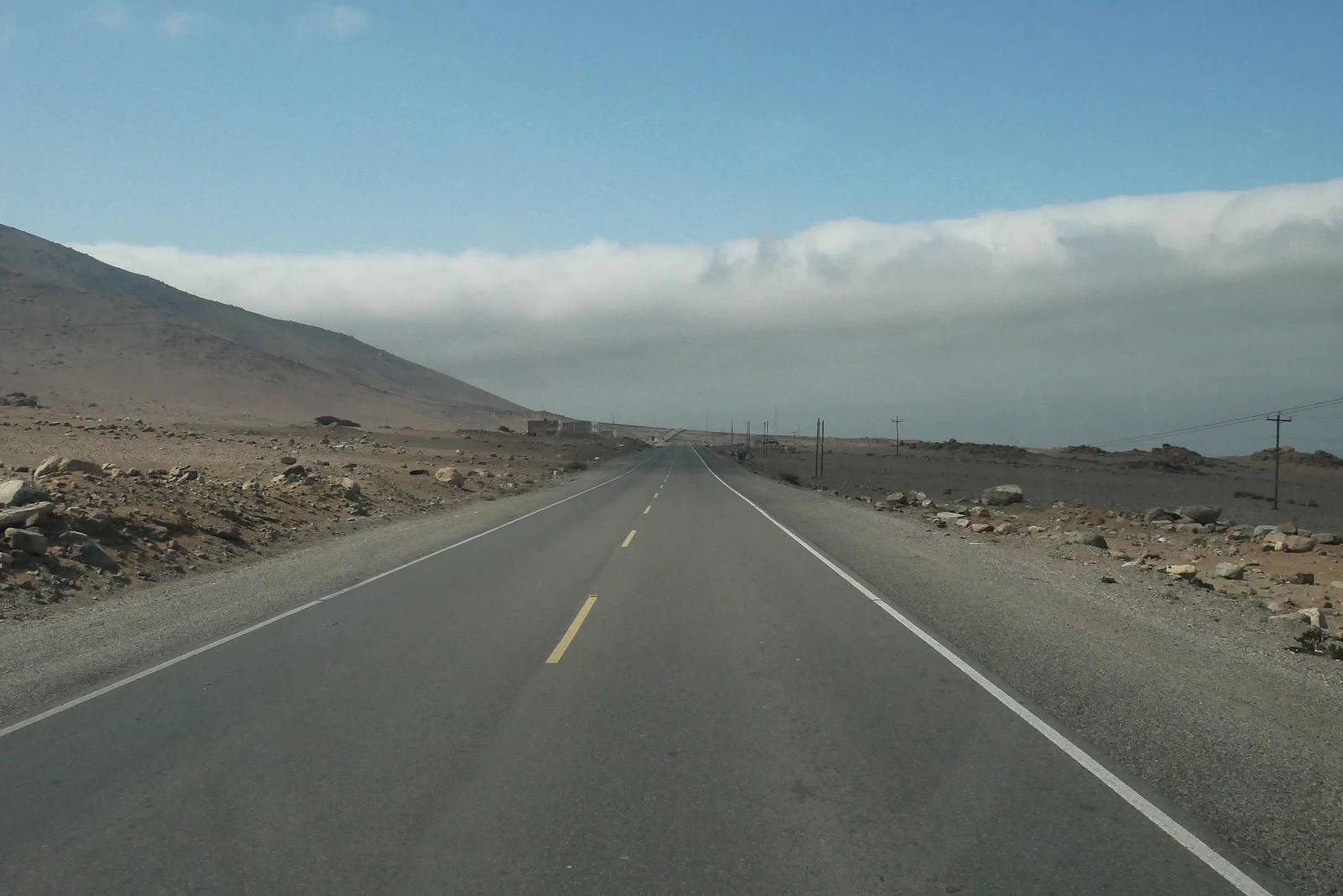
The overcast and 60 degree day reminded us of coastal California.
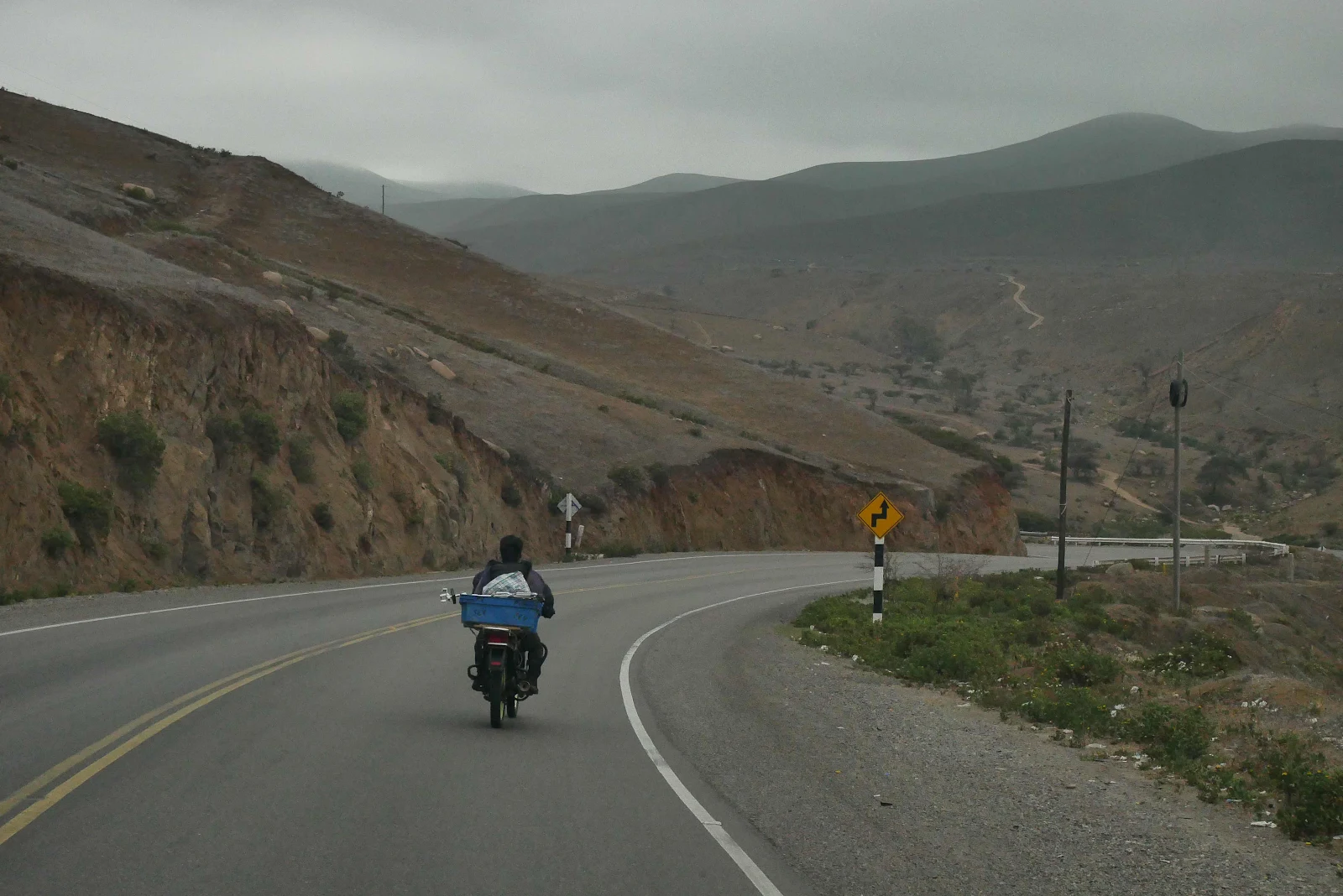
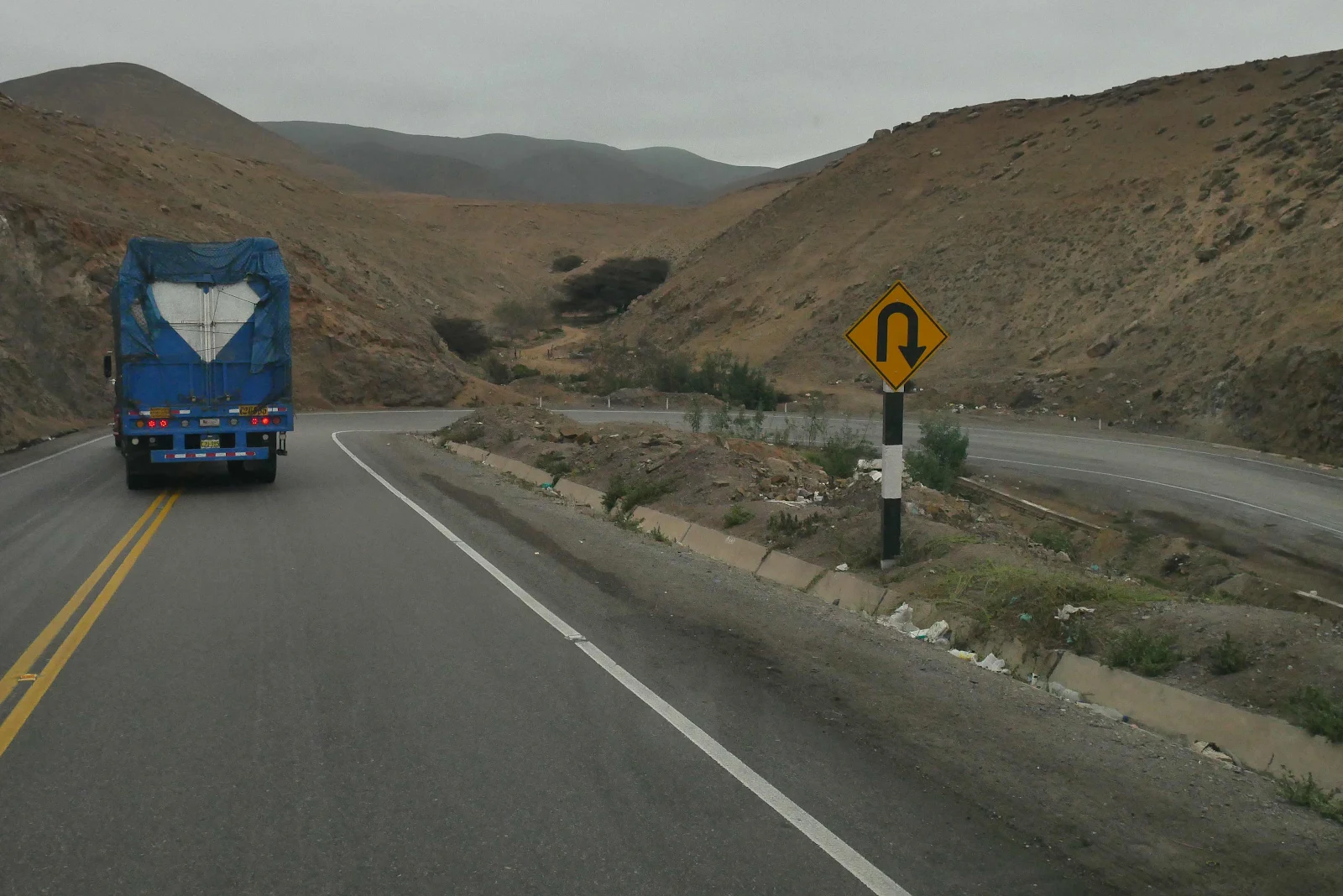
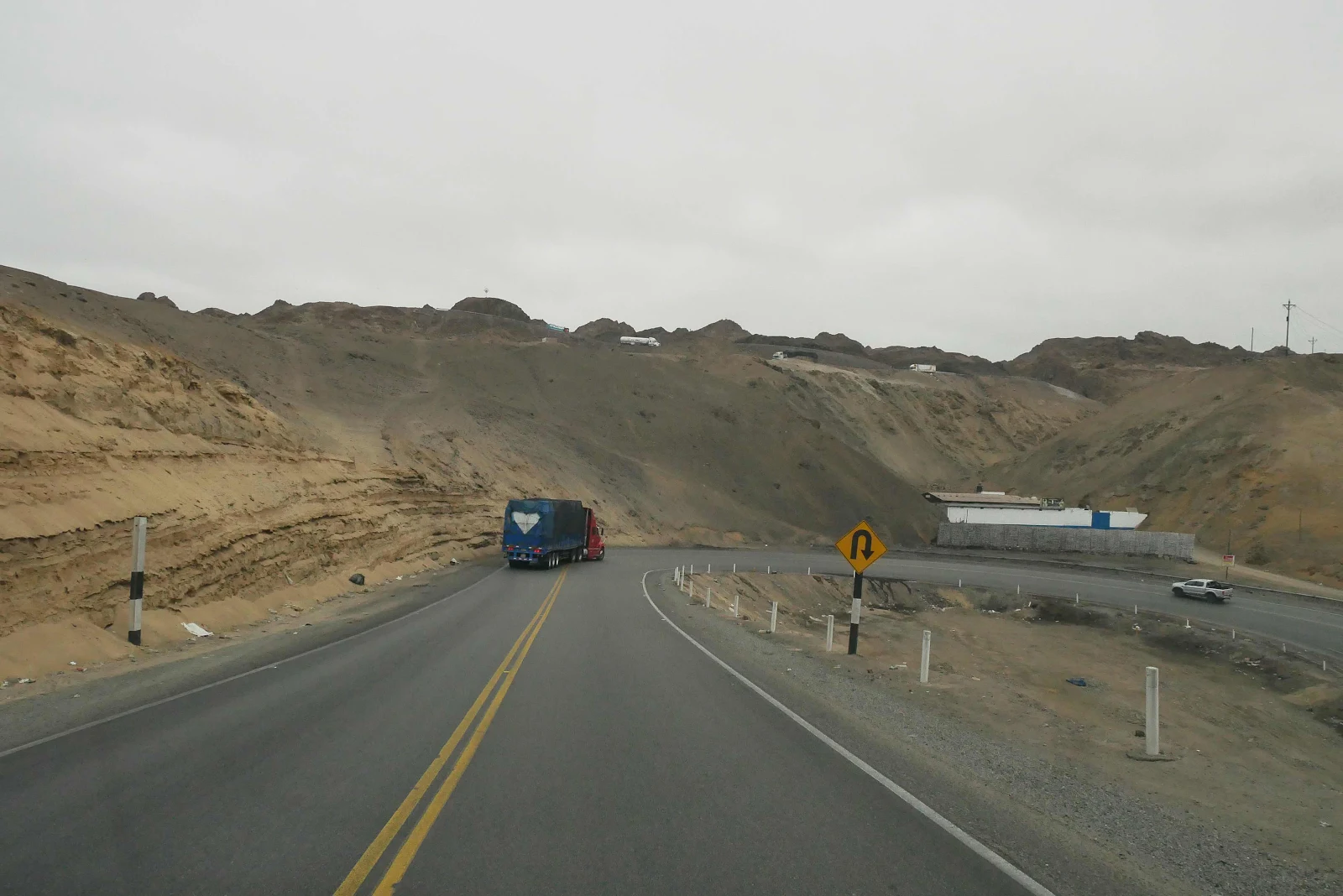
The truck took the hairpin wide (above) and despite the oncoming car (below) never changed his driving style.
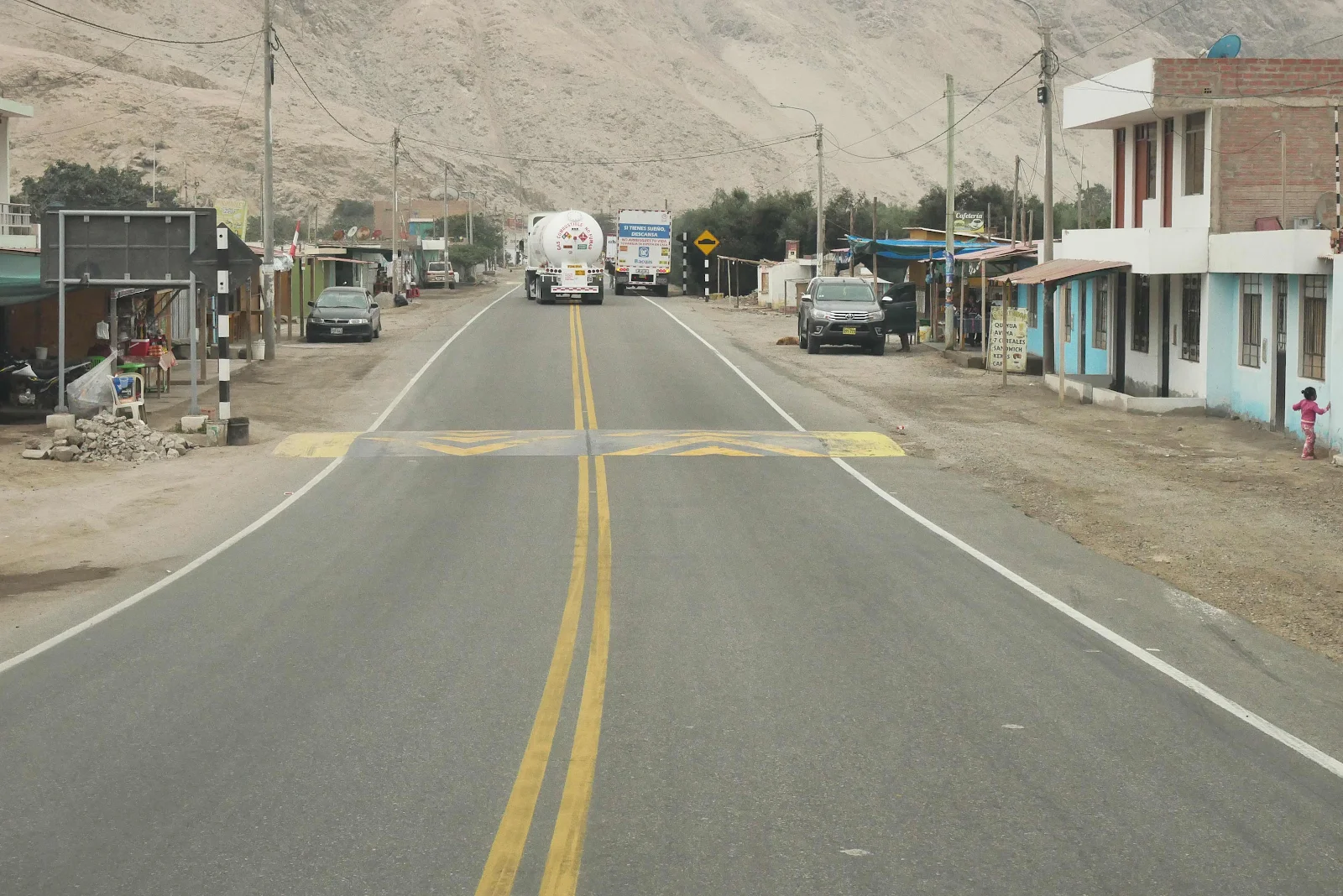
 In Peru what Mexicans call “topes” (speed bumps) they call suspension breakers. Not all of them are easily seen and they are annoying at the entrance and exit to villages.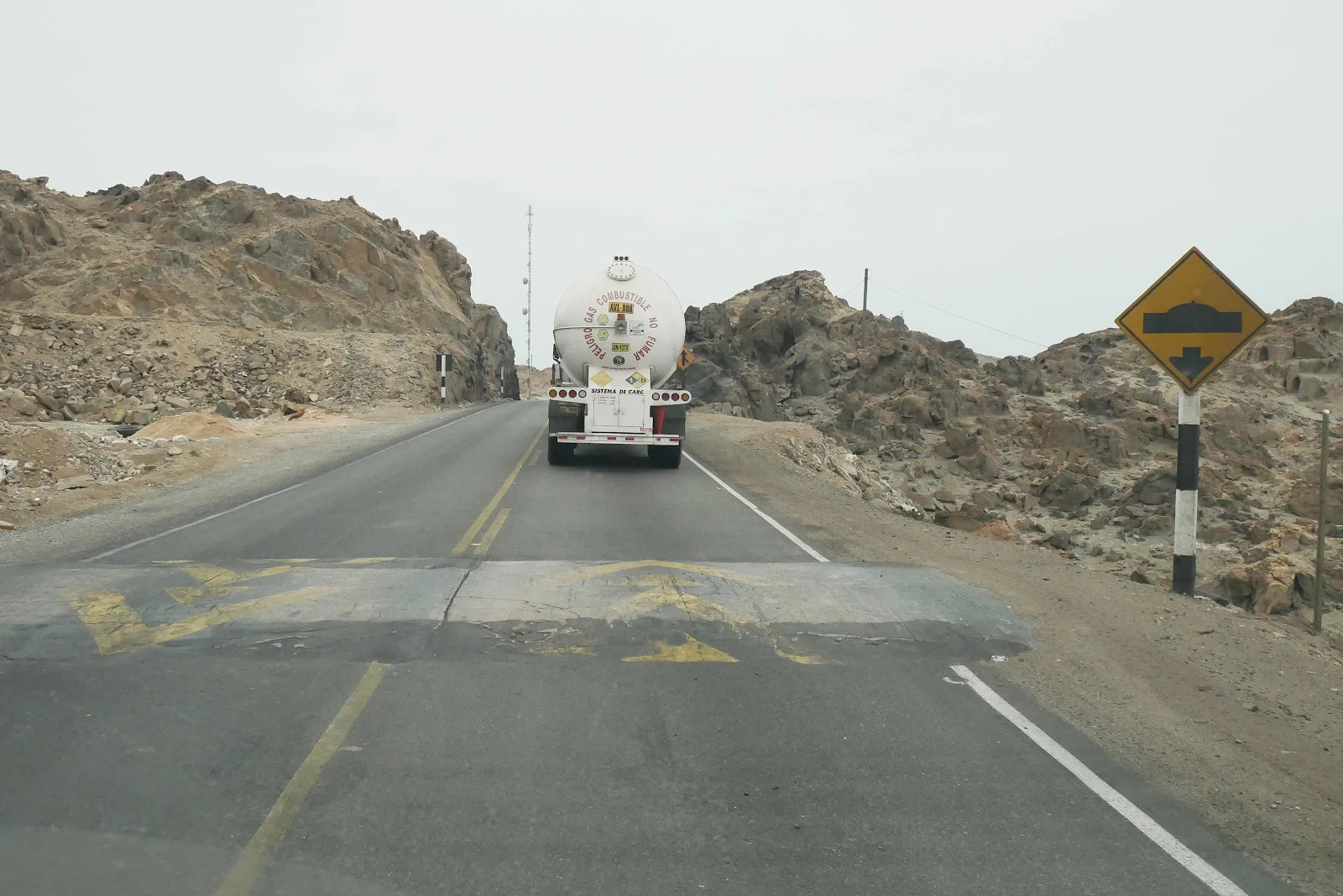
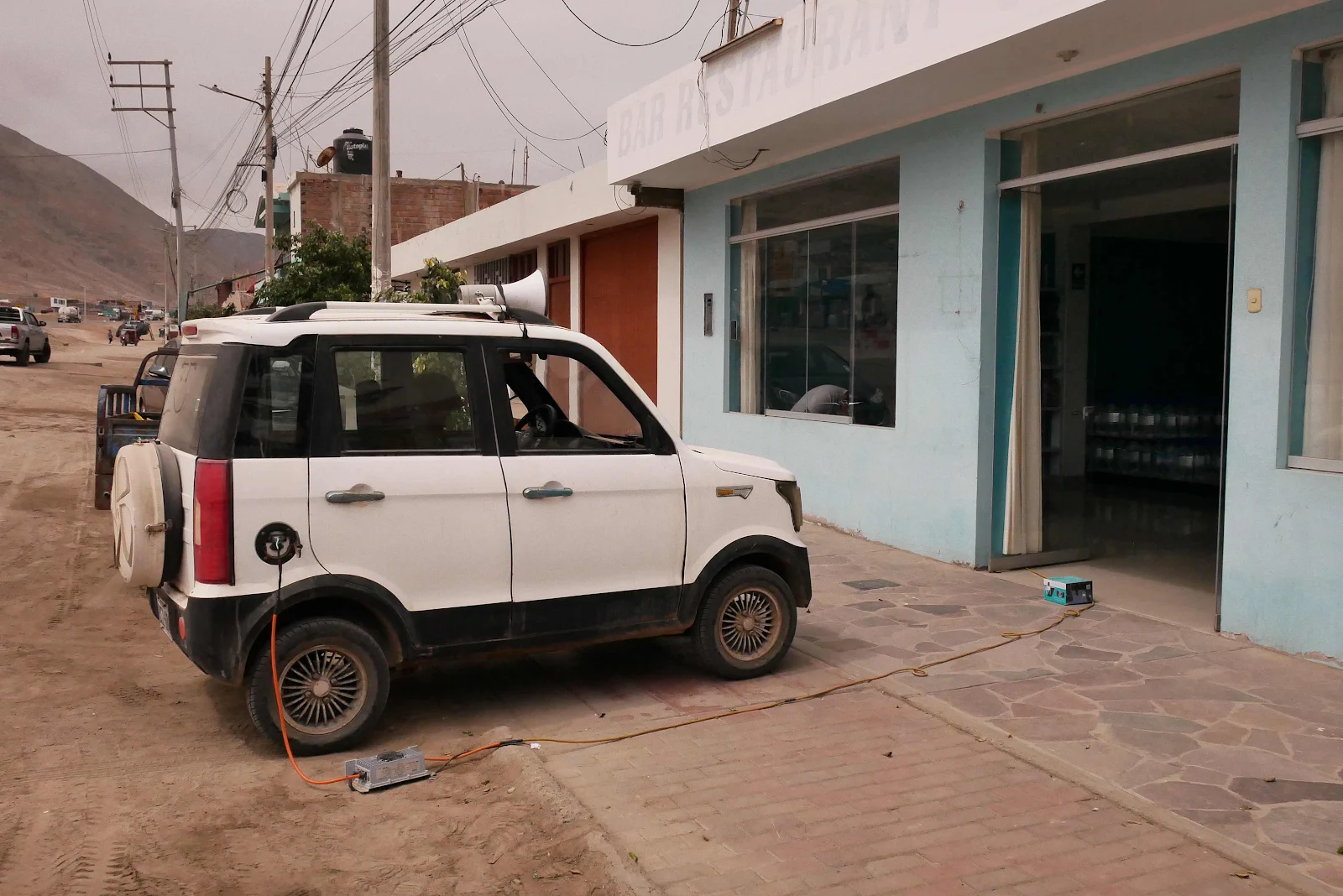
We stopped to pick up drinking water in one village where I was surprised to see an electric car getting charged. We put ten gallons in the tank and off we went. They were a pretty cheerful bunch too. We find southern Peru much more friendly than the dour north.
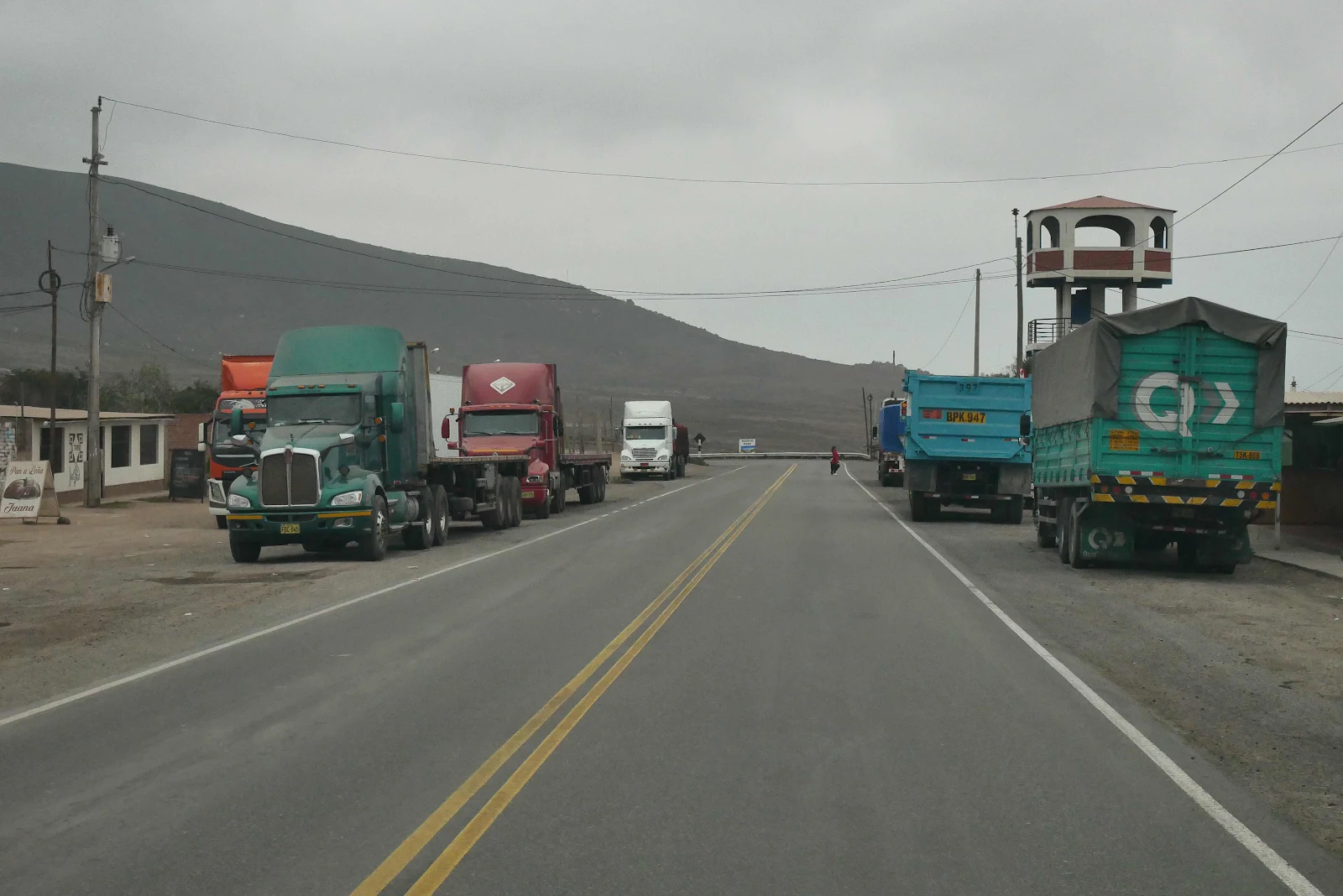
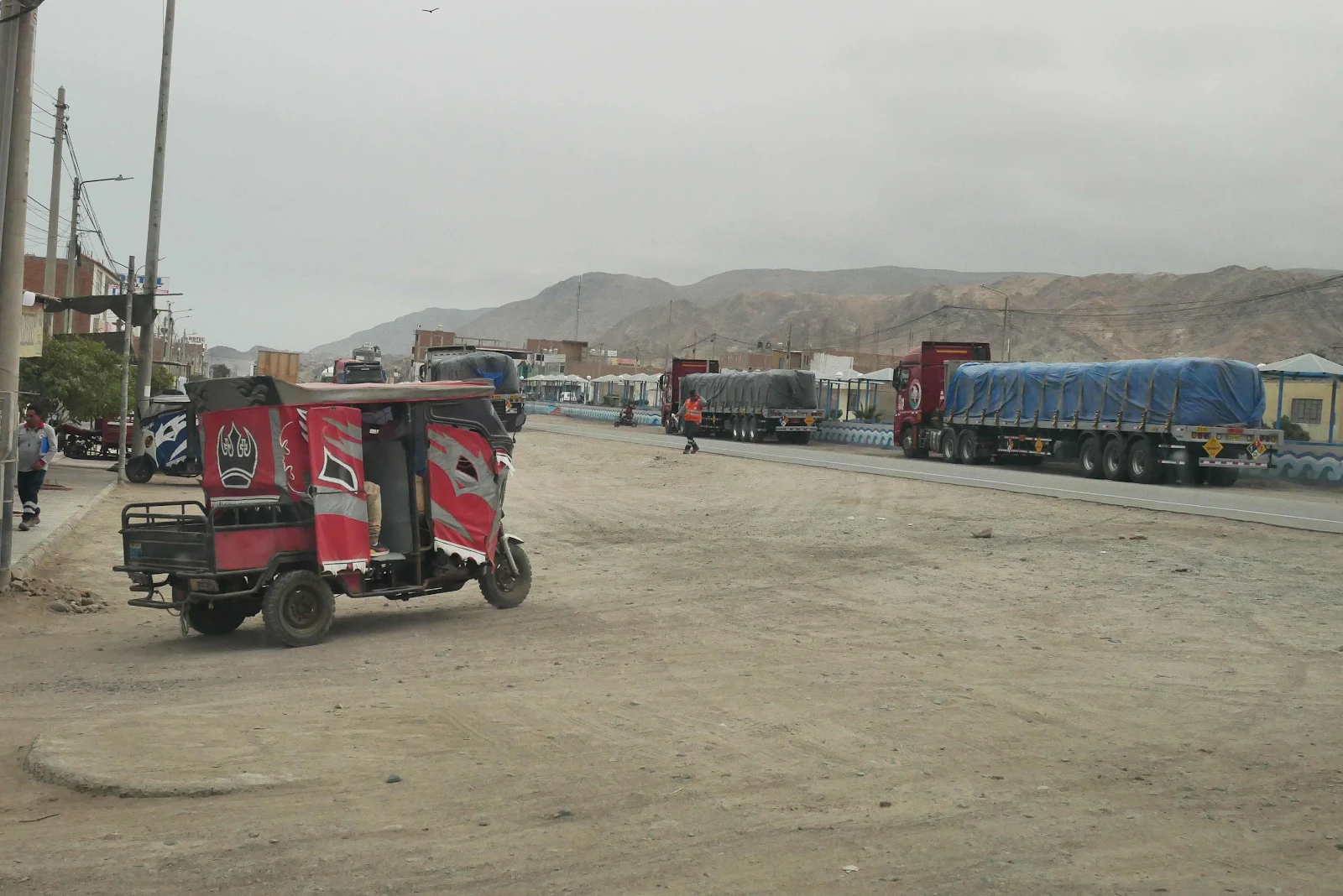
All the parked trucks indicated it was getting on for lunch time and weirdly enough Layne found a recommendation for a fish restaurant in iOverlander.
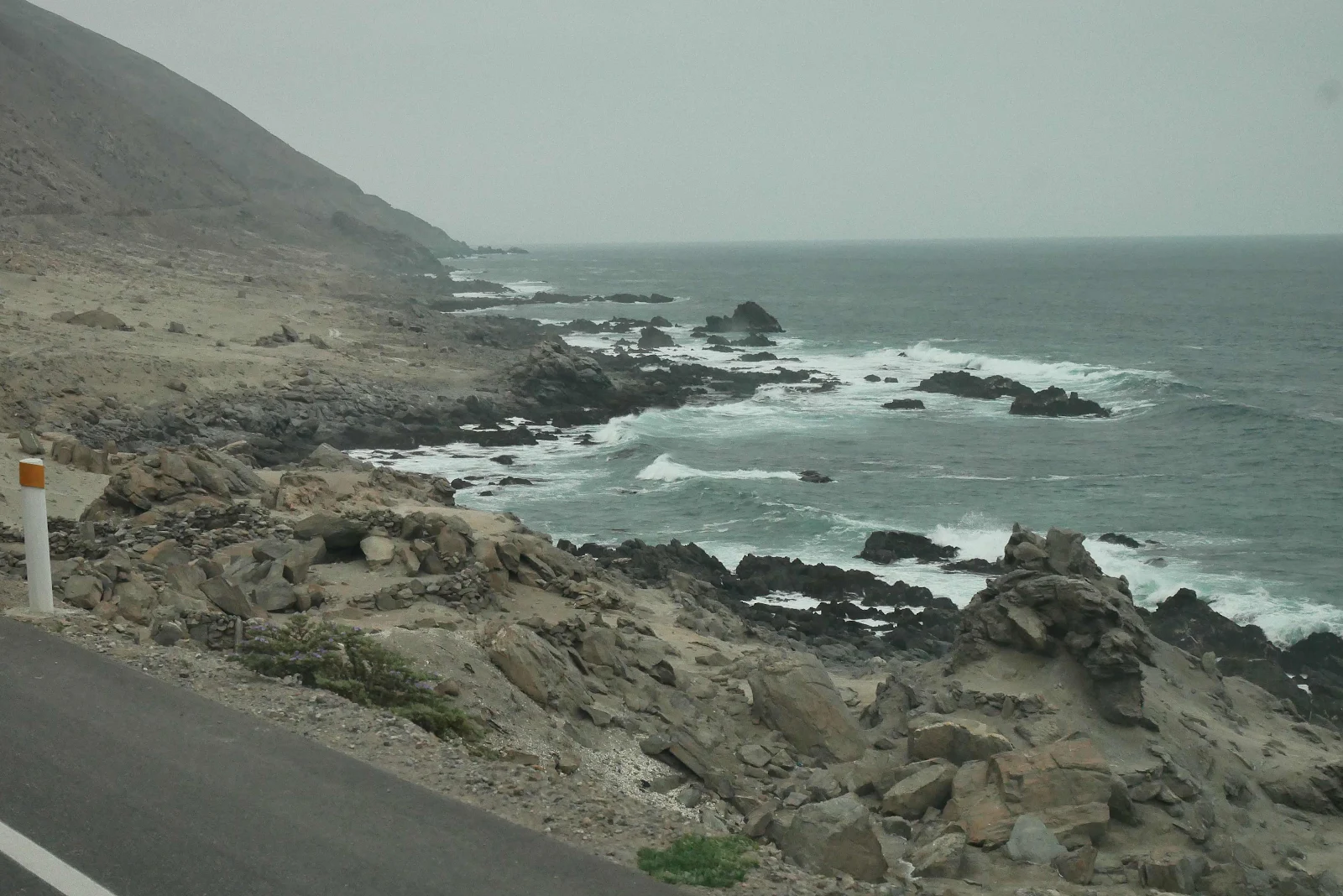
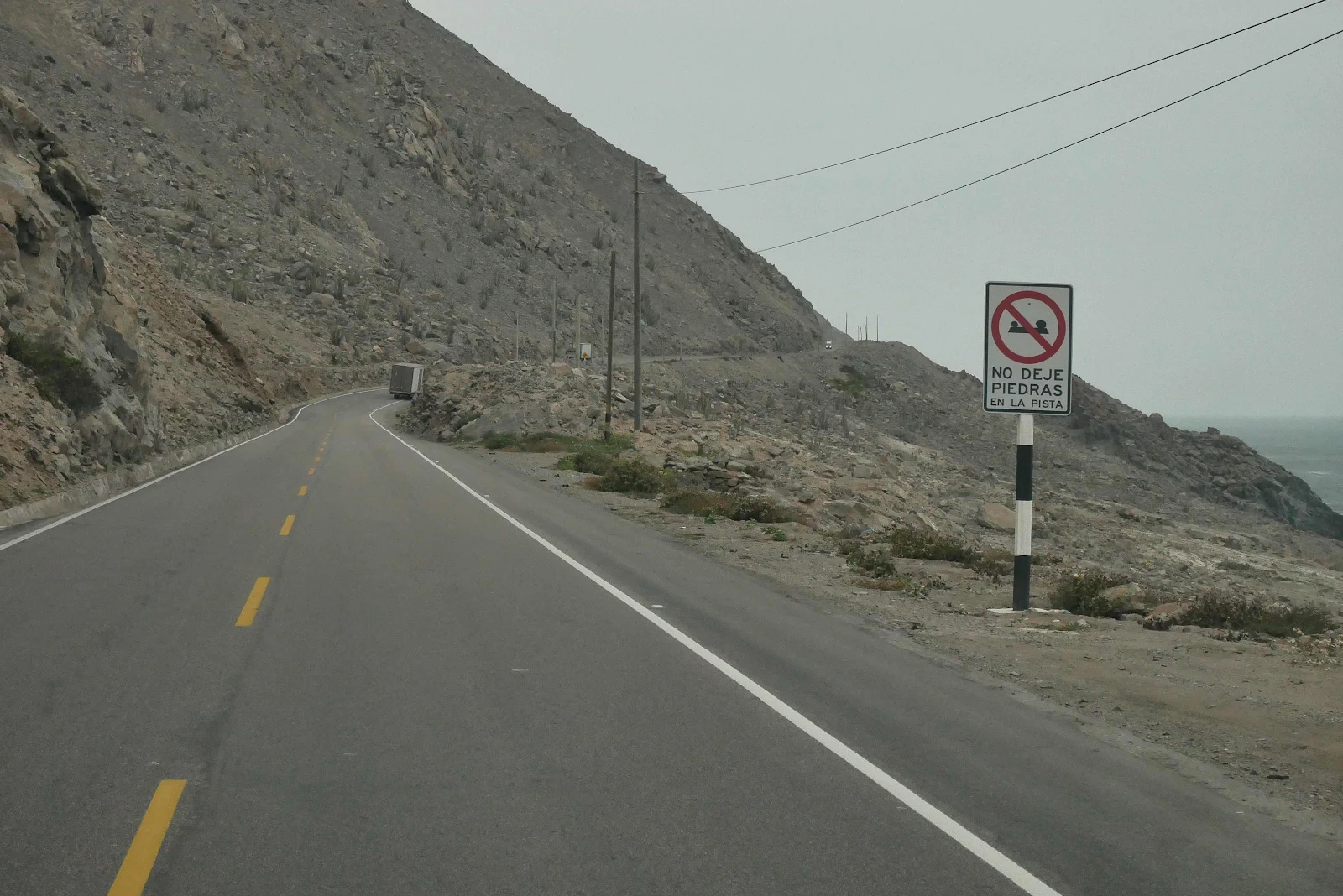
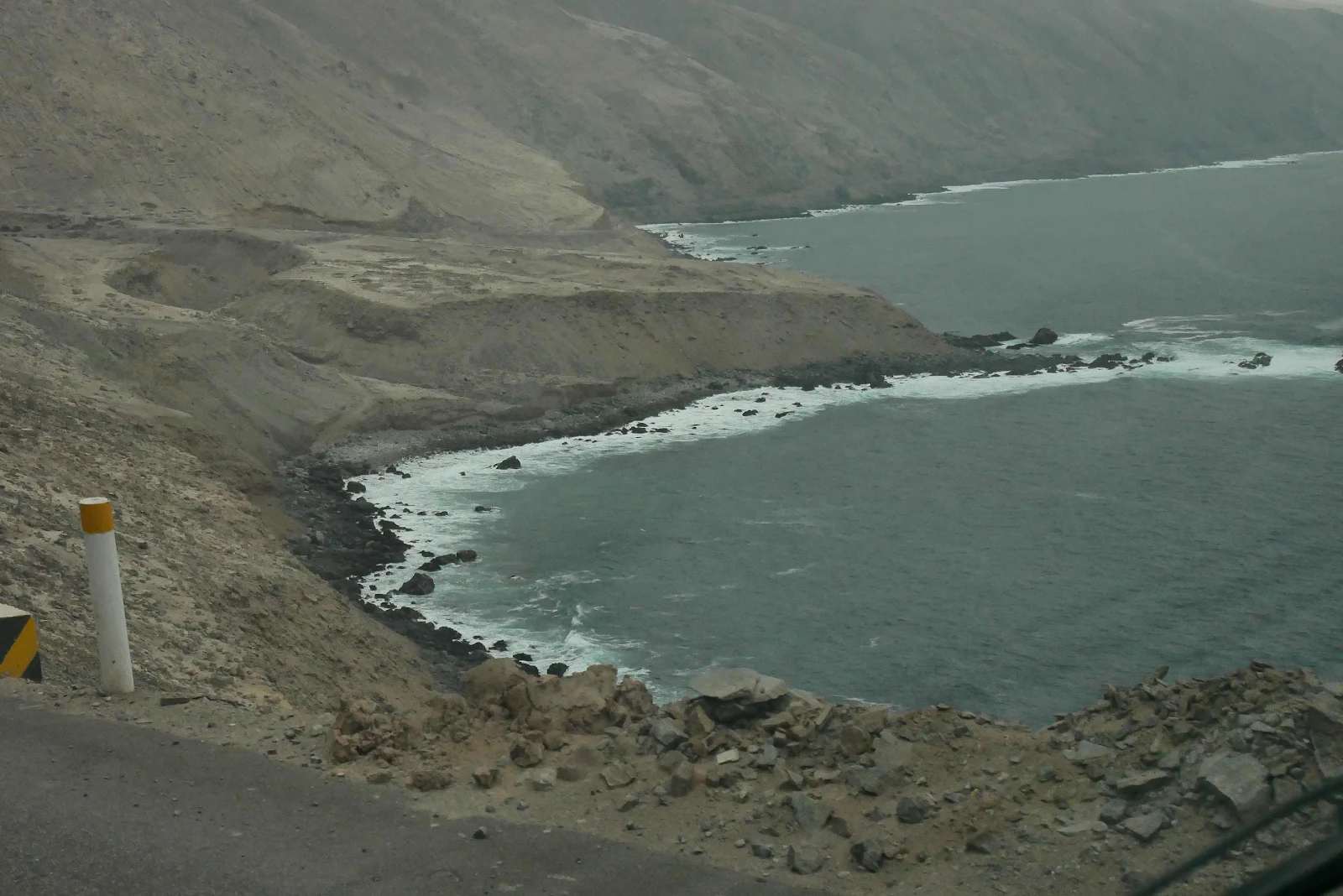
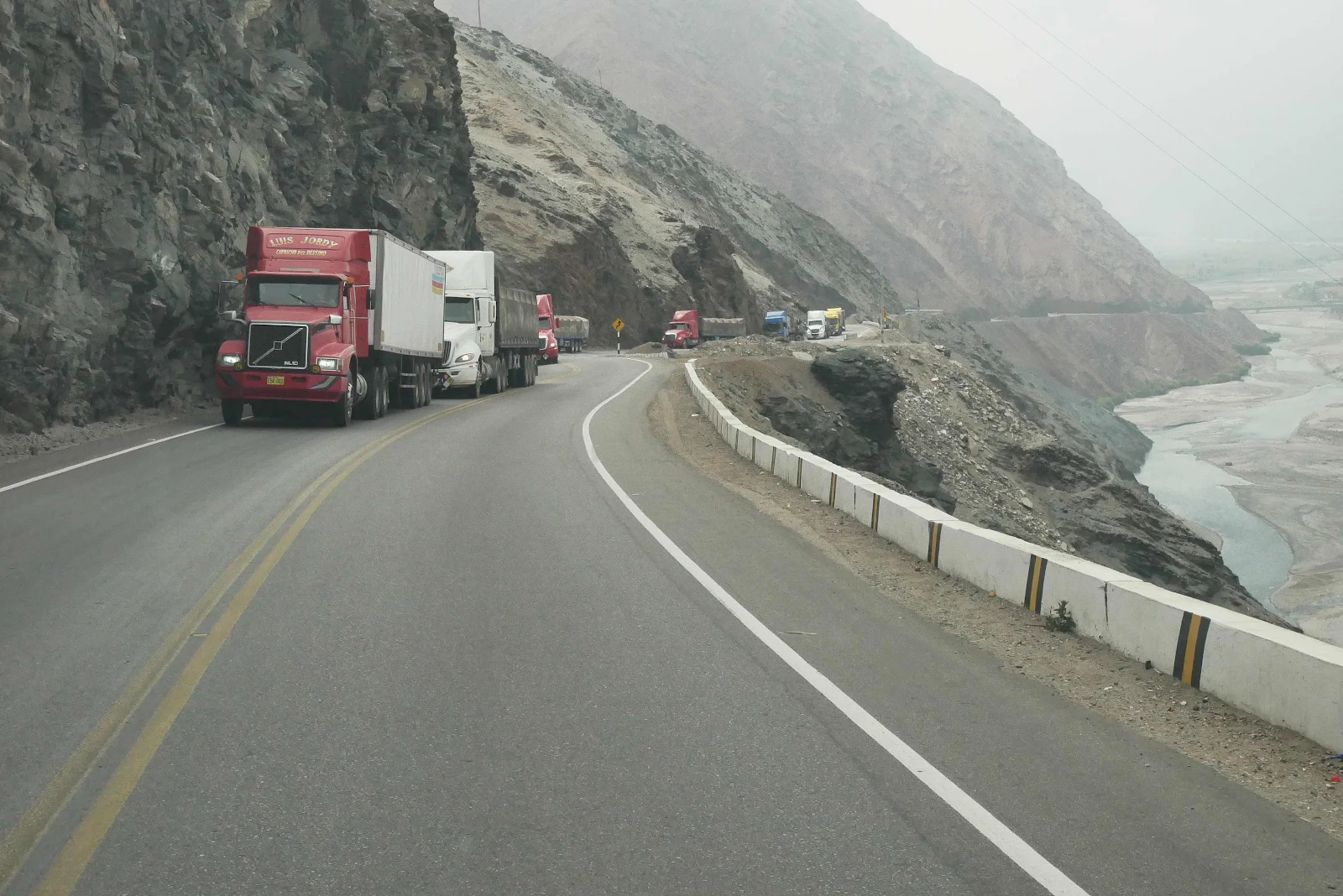
Big Sur is considered one of the memorable drives in North America. Here we had 300 miles of curvy empty highway perched a few hundred feet over the Pacific and not a foreigner in sight.
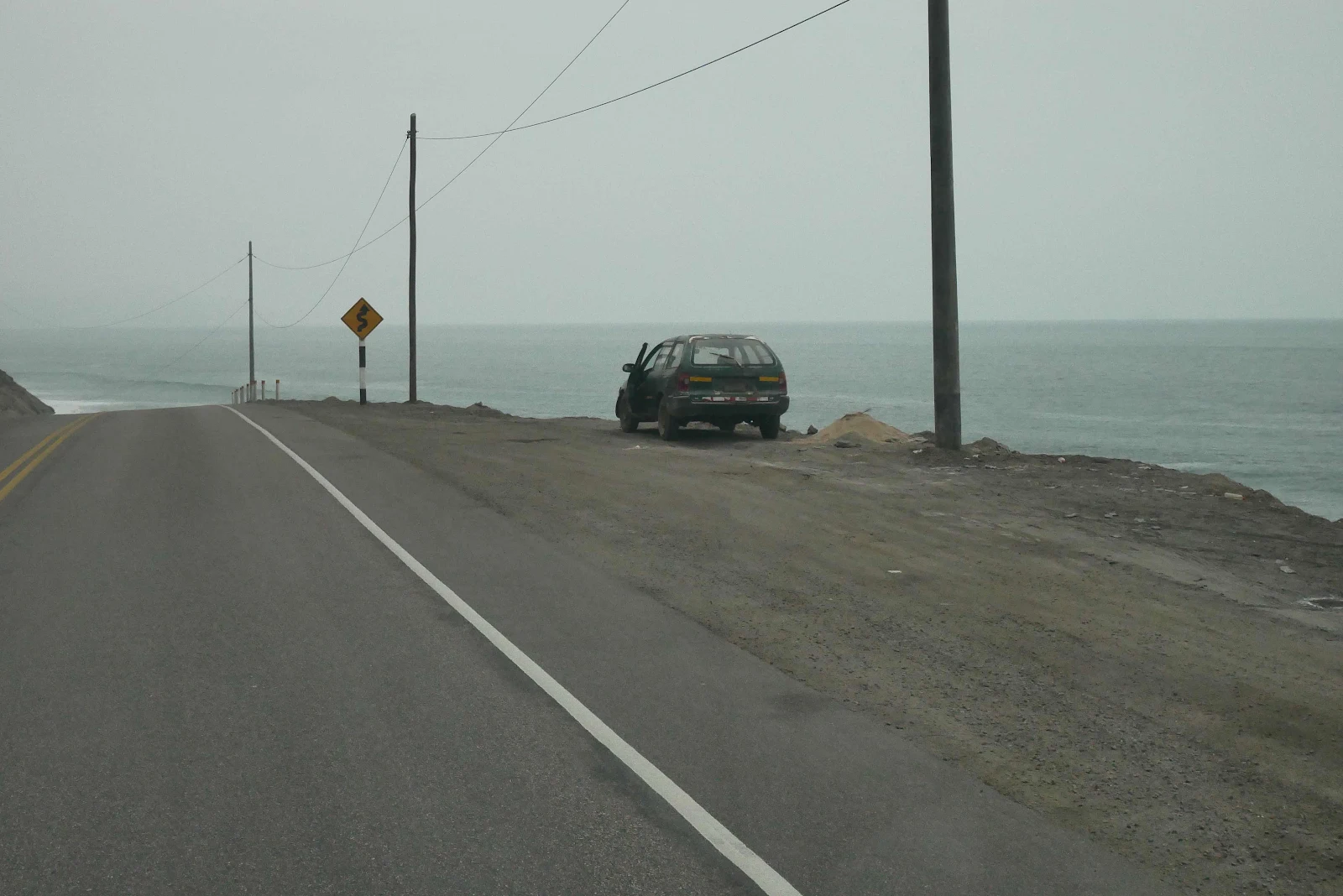
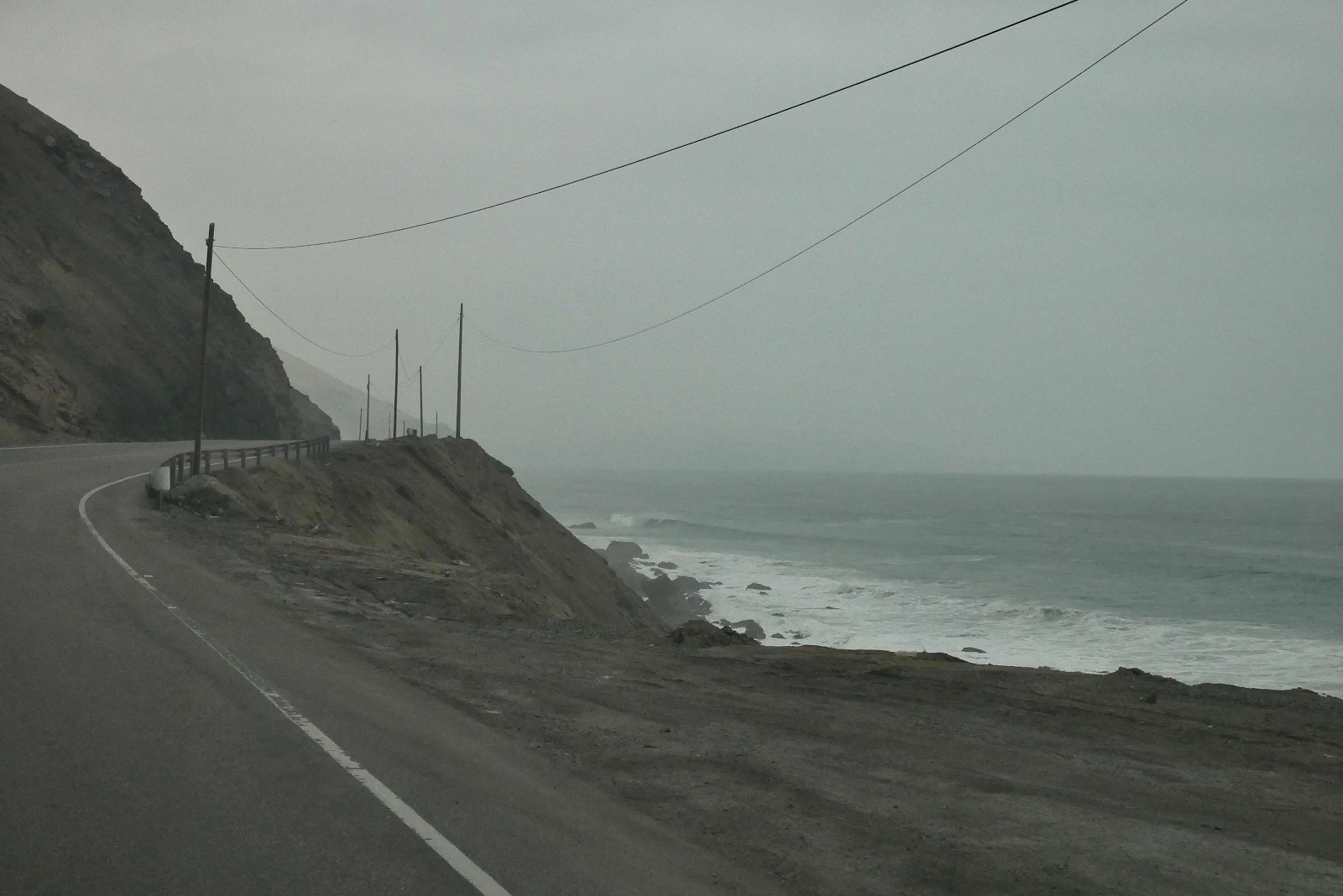
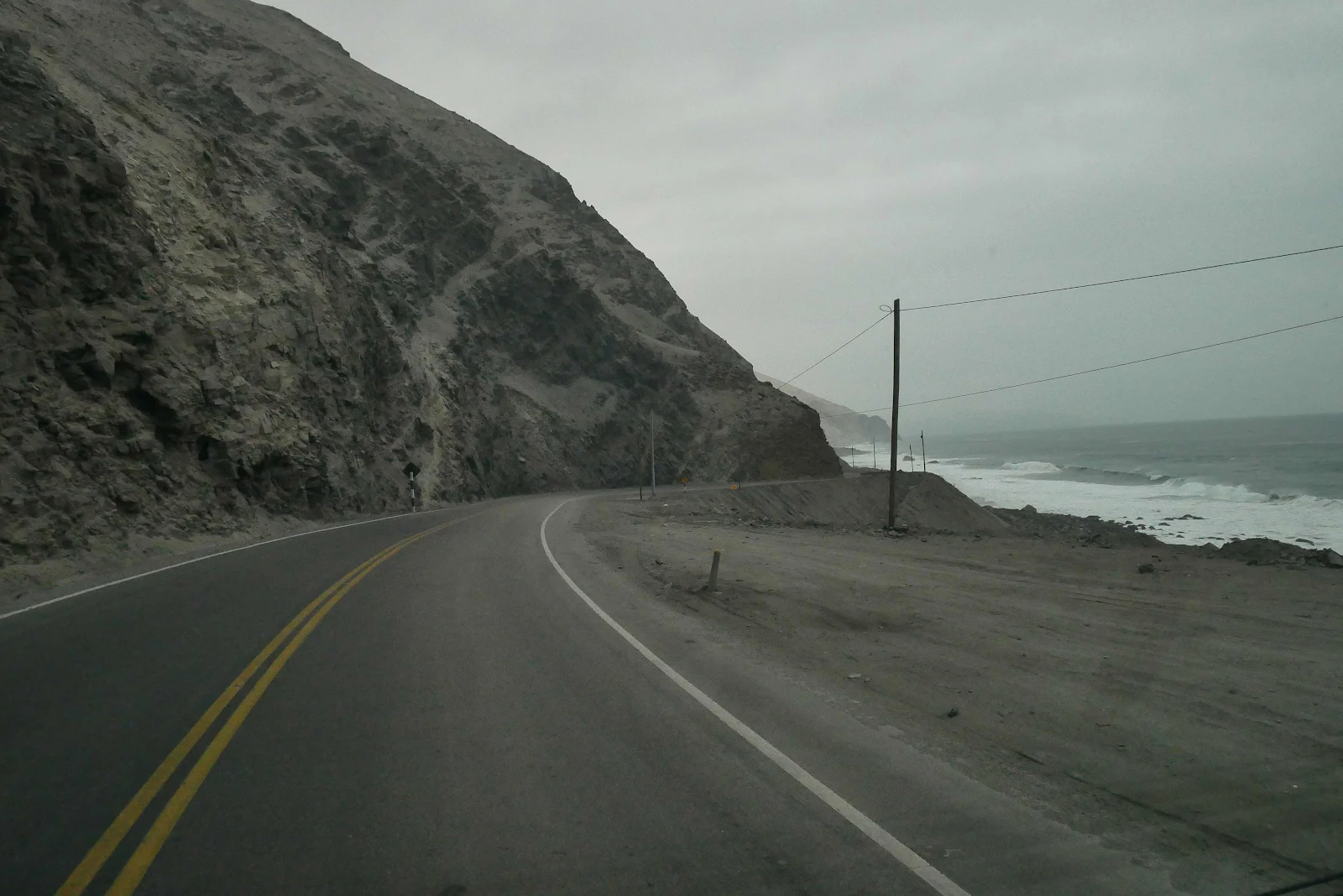
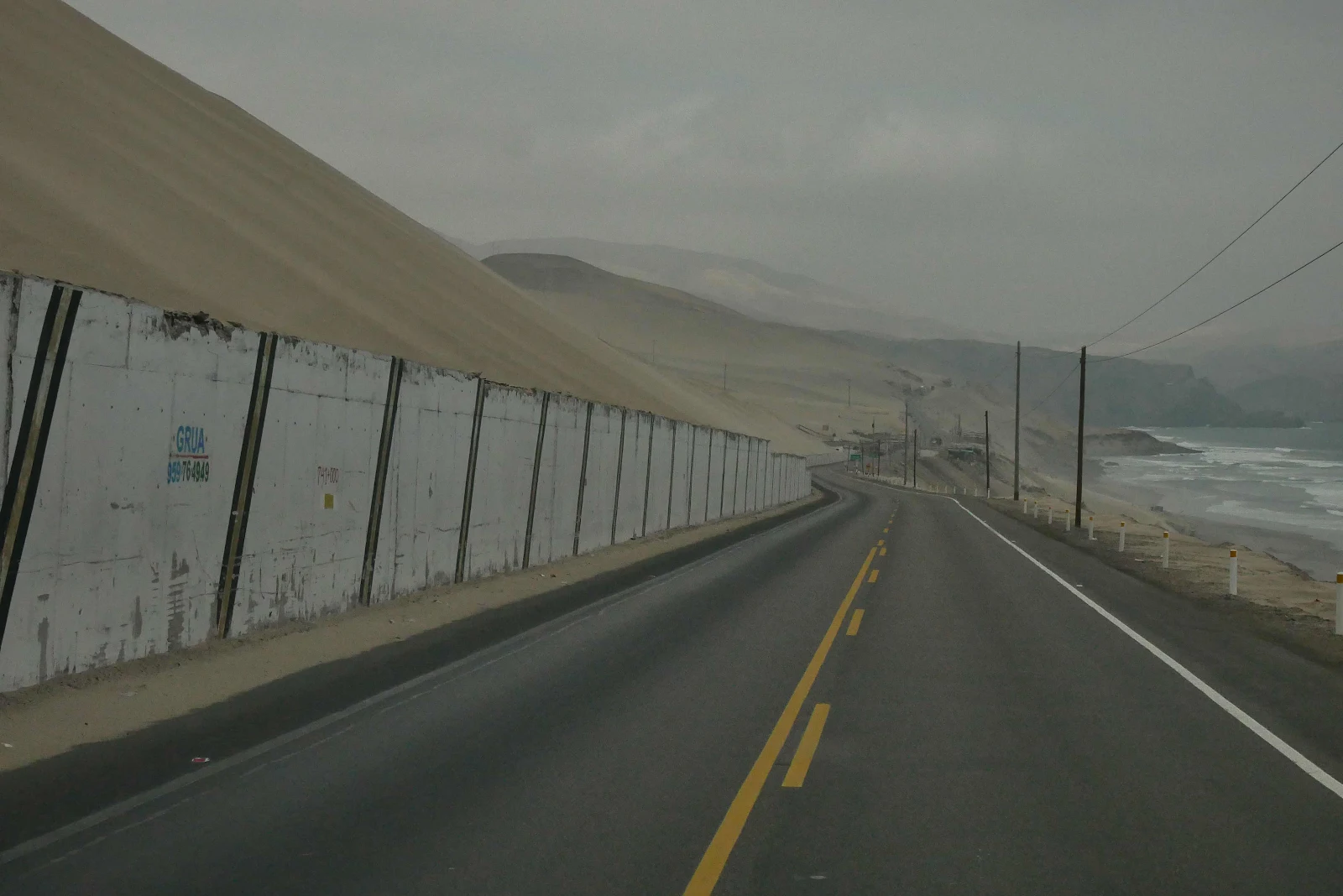
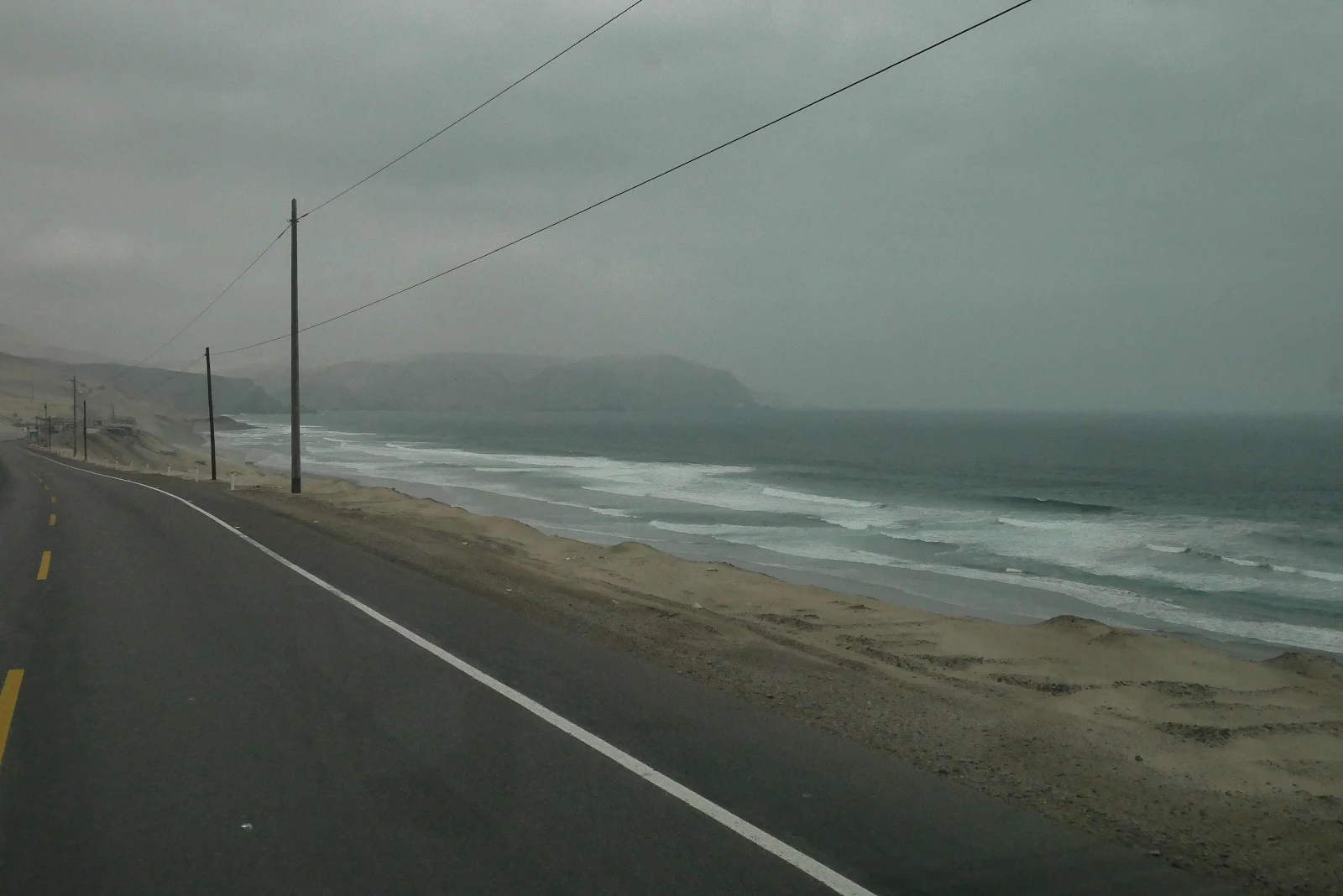
And when finally we stopped for lunch the overcast burned off like magic and it was a sunny afternoon.
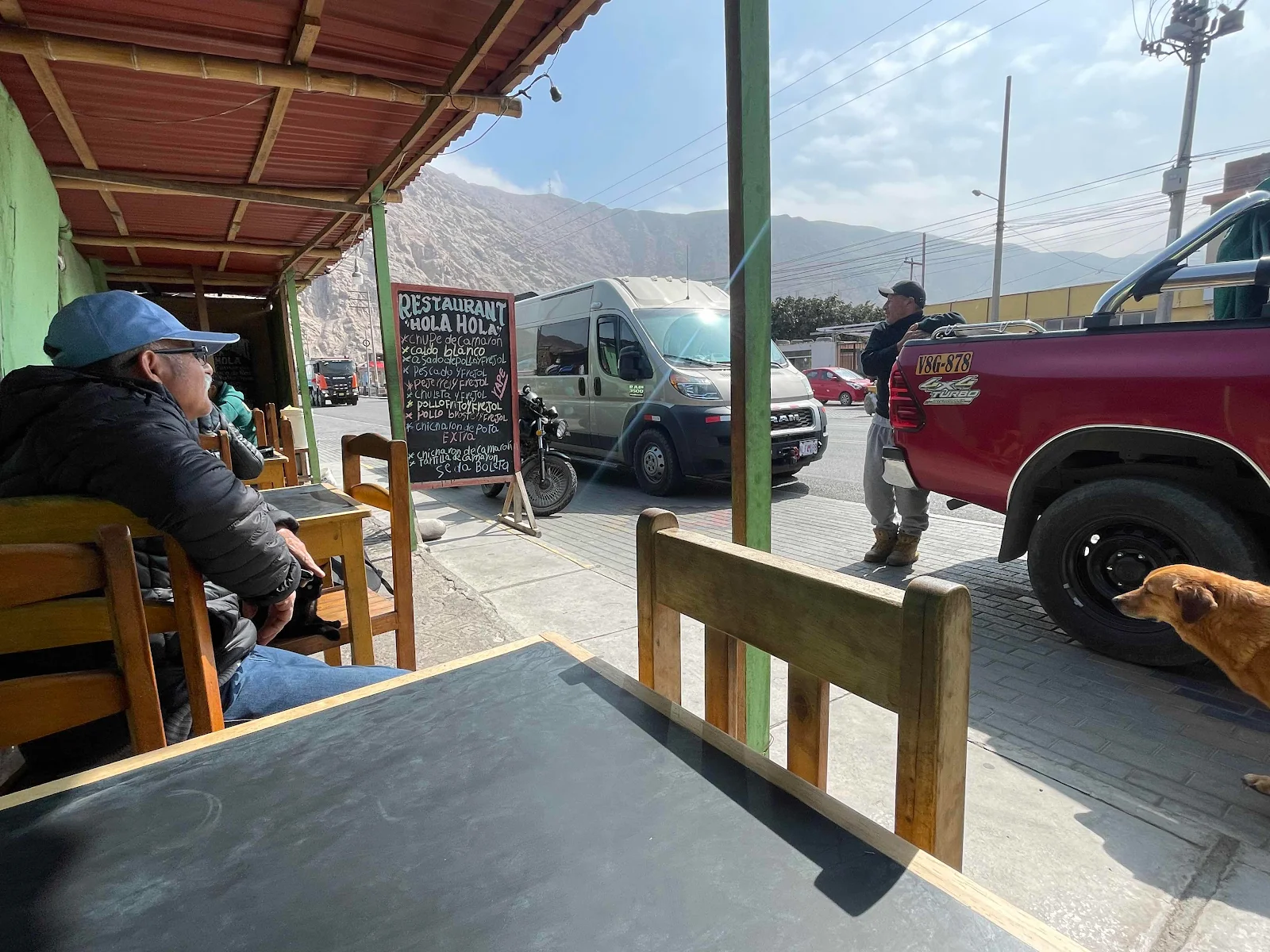
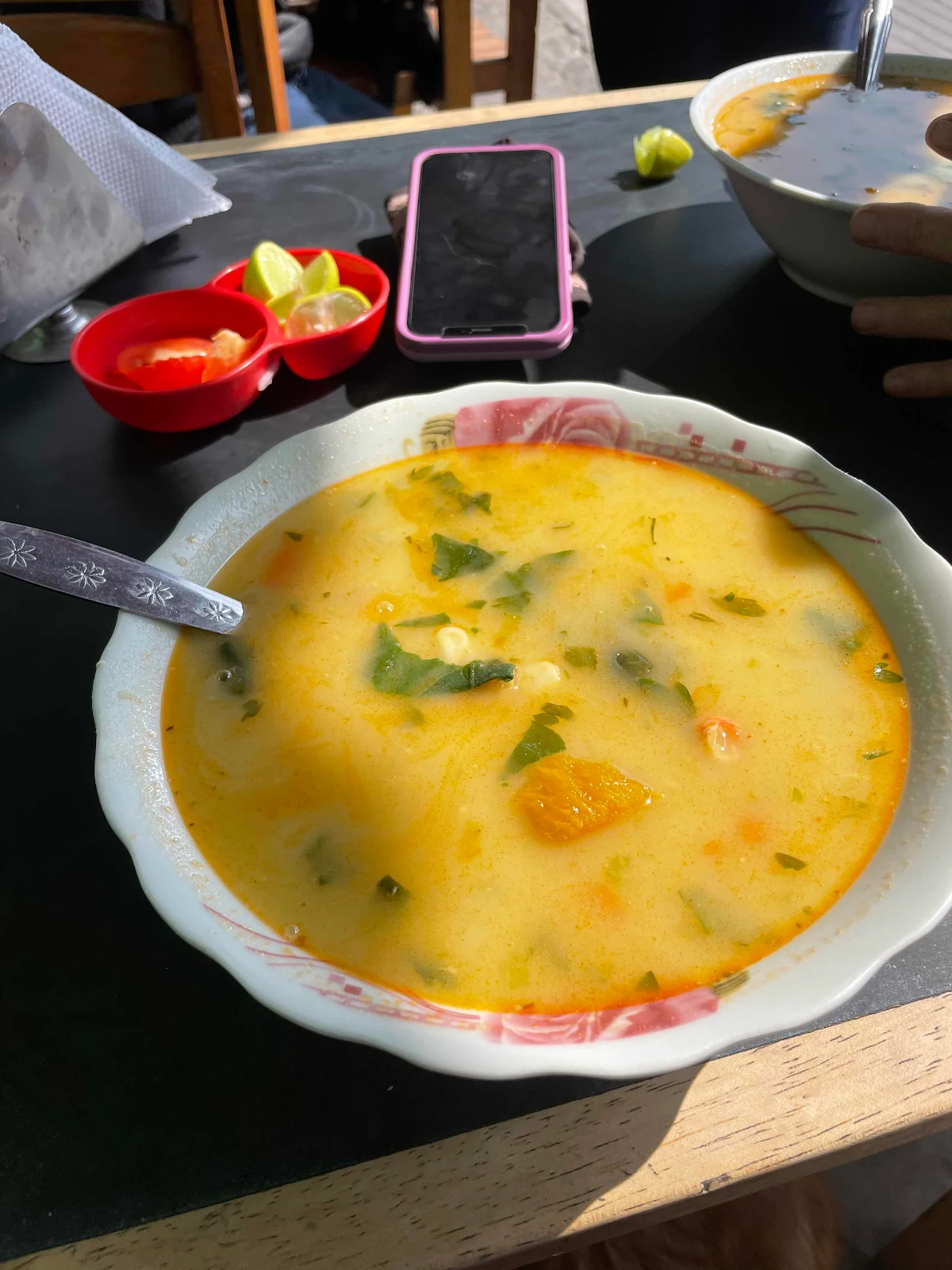
The usual soup, shrimp in this case, for first course, juice to drink and to go boxes to cope with our three dollar lunch.
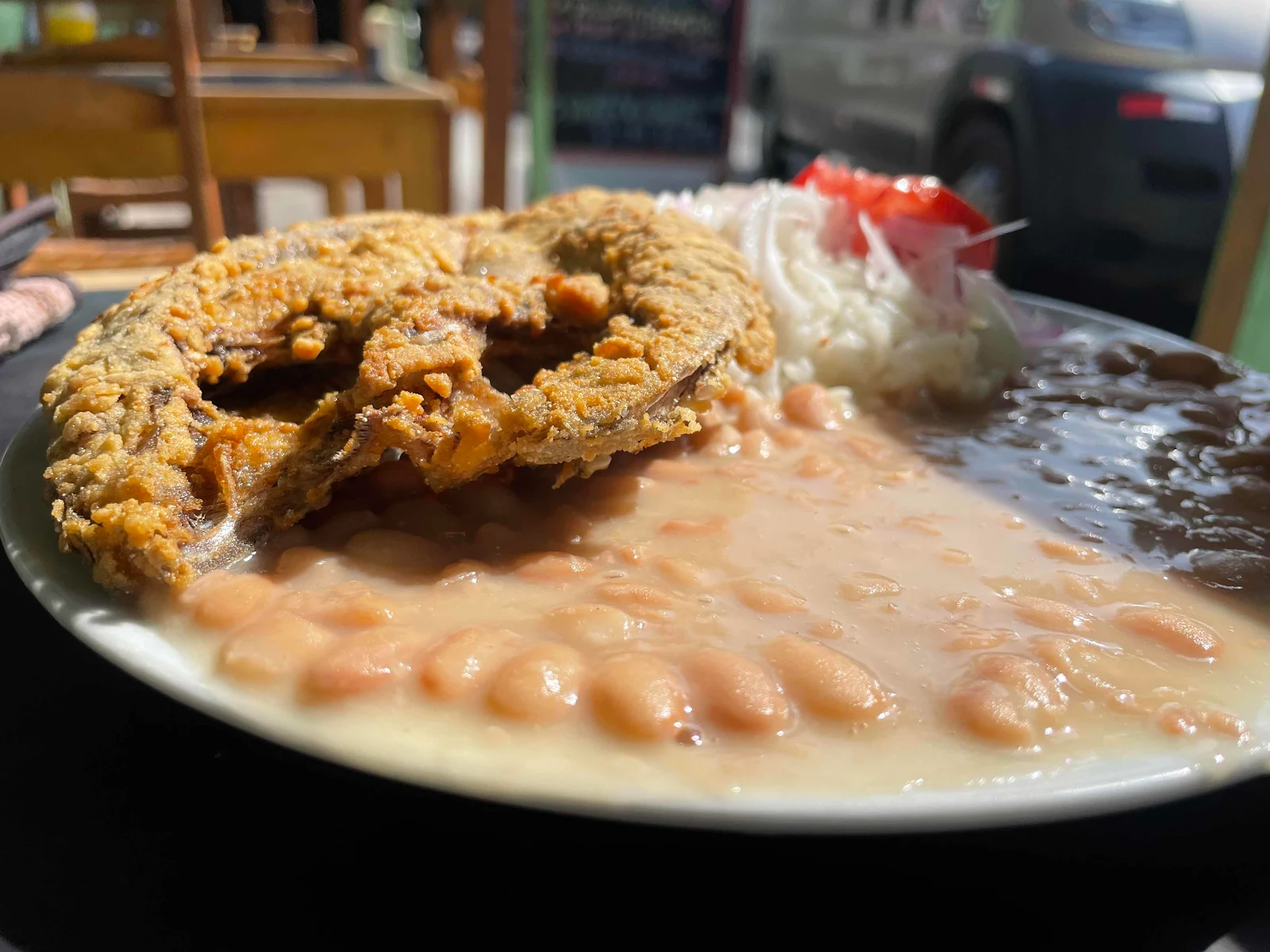
Fried fish beans and rice and conversation with some truck drivers on their way to Arequipa.
 The van fascinated them and we found ourselves back in the land of the cheerfully friendly and curious. The truck drivers work twenty four hours driving from Lima, arriving at Arequipa at nine at night, unloading, loading and driving back north.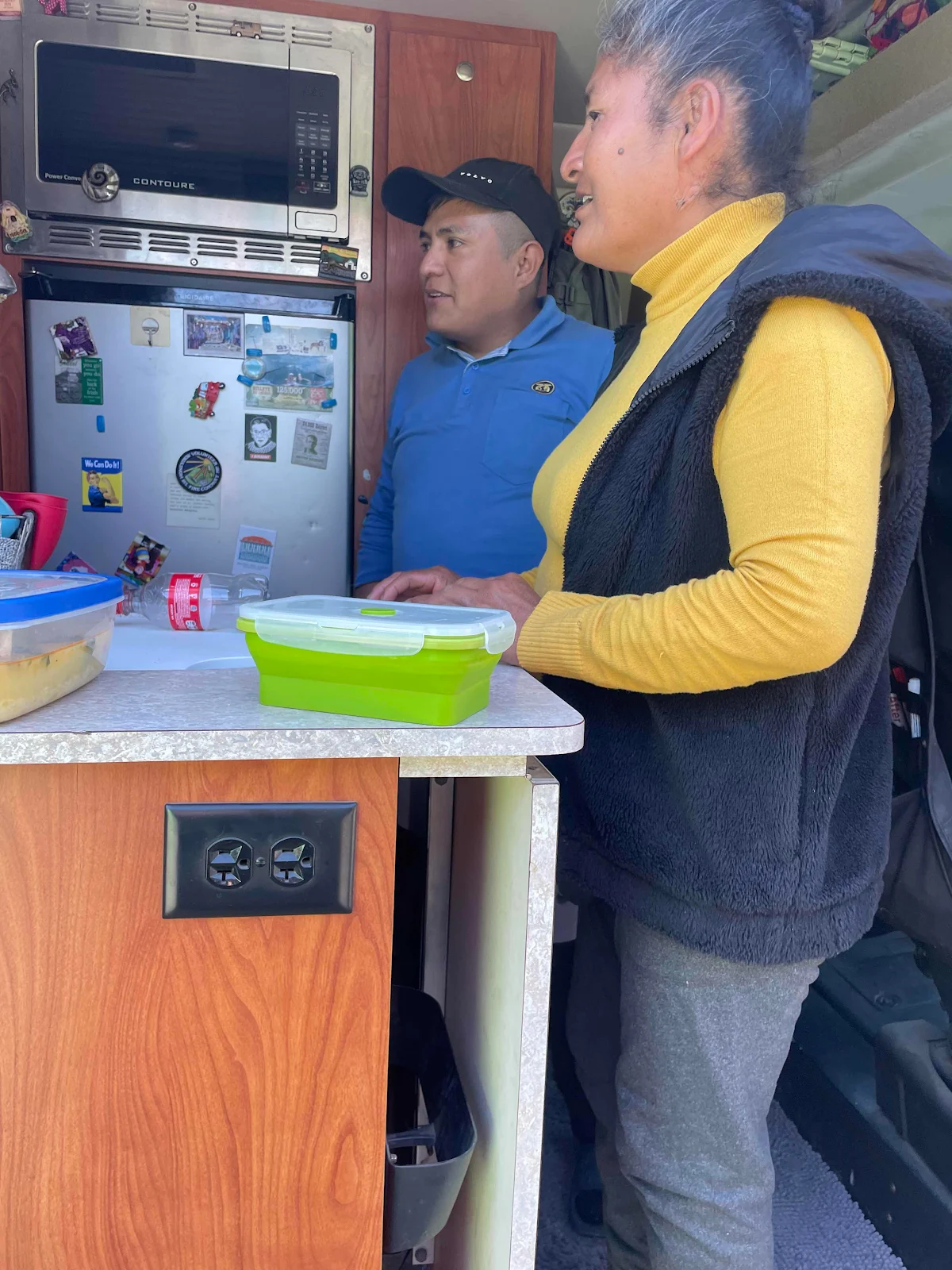
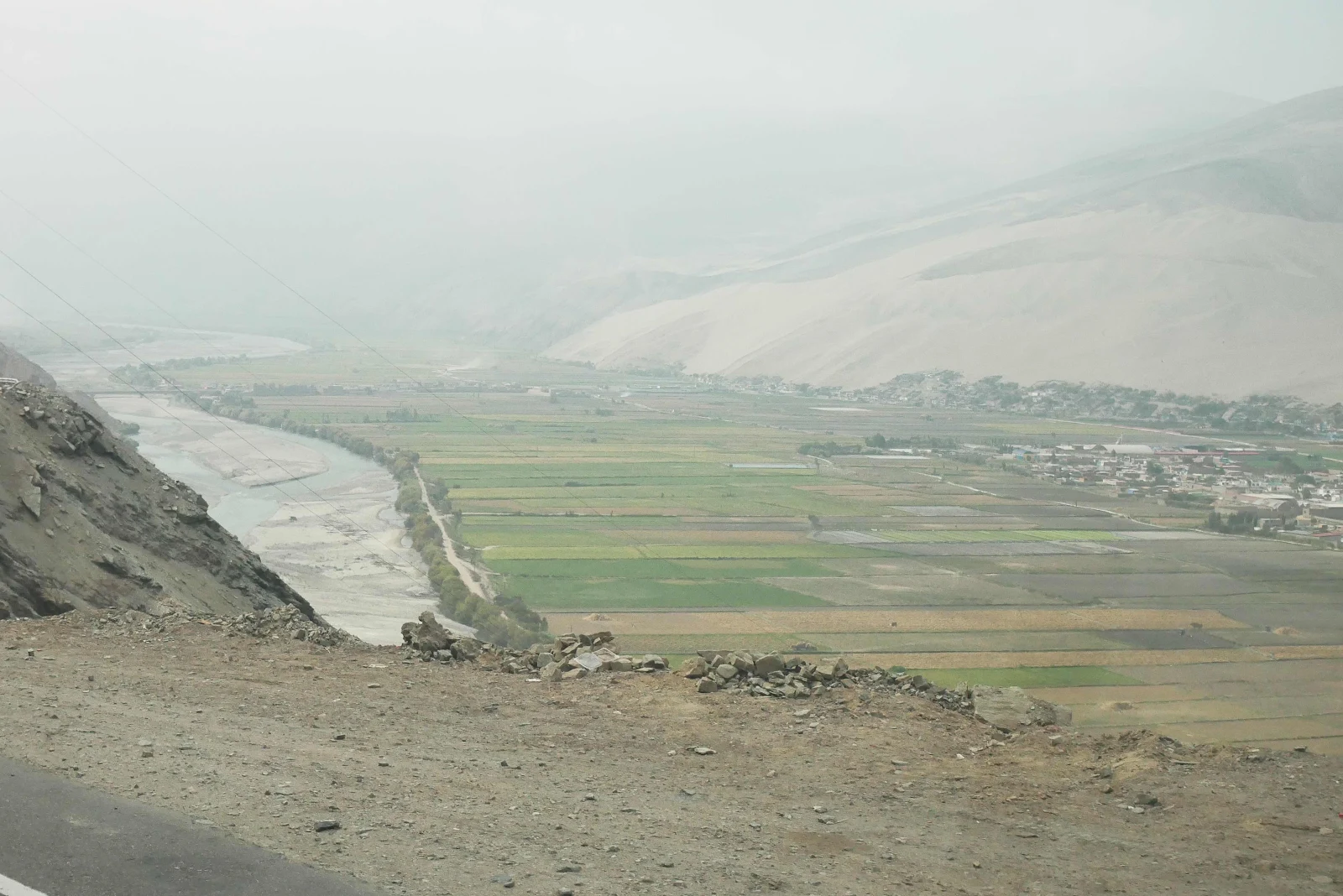
The road wound up /a bit, down a bit, inland, crossed fertile deltas and got a bit foggy and a bit sunny by turns.
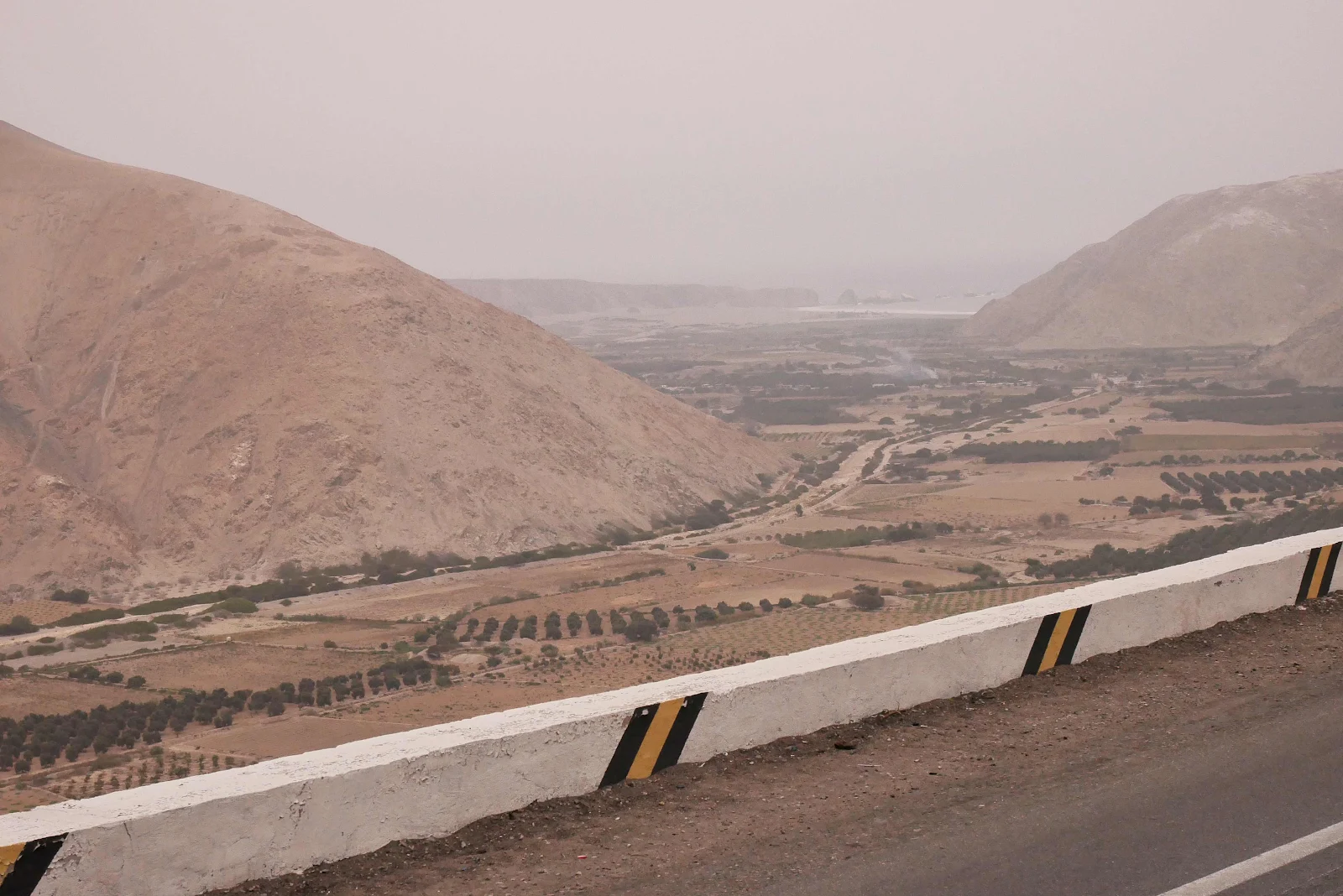
There are lots of fuel tankers and propane trucks on this road.
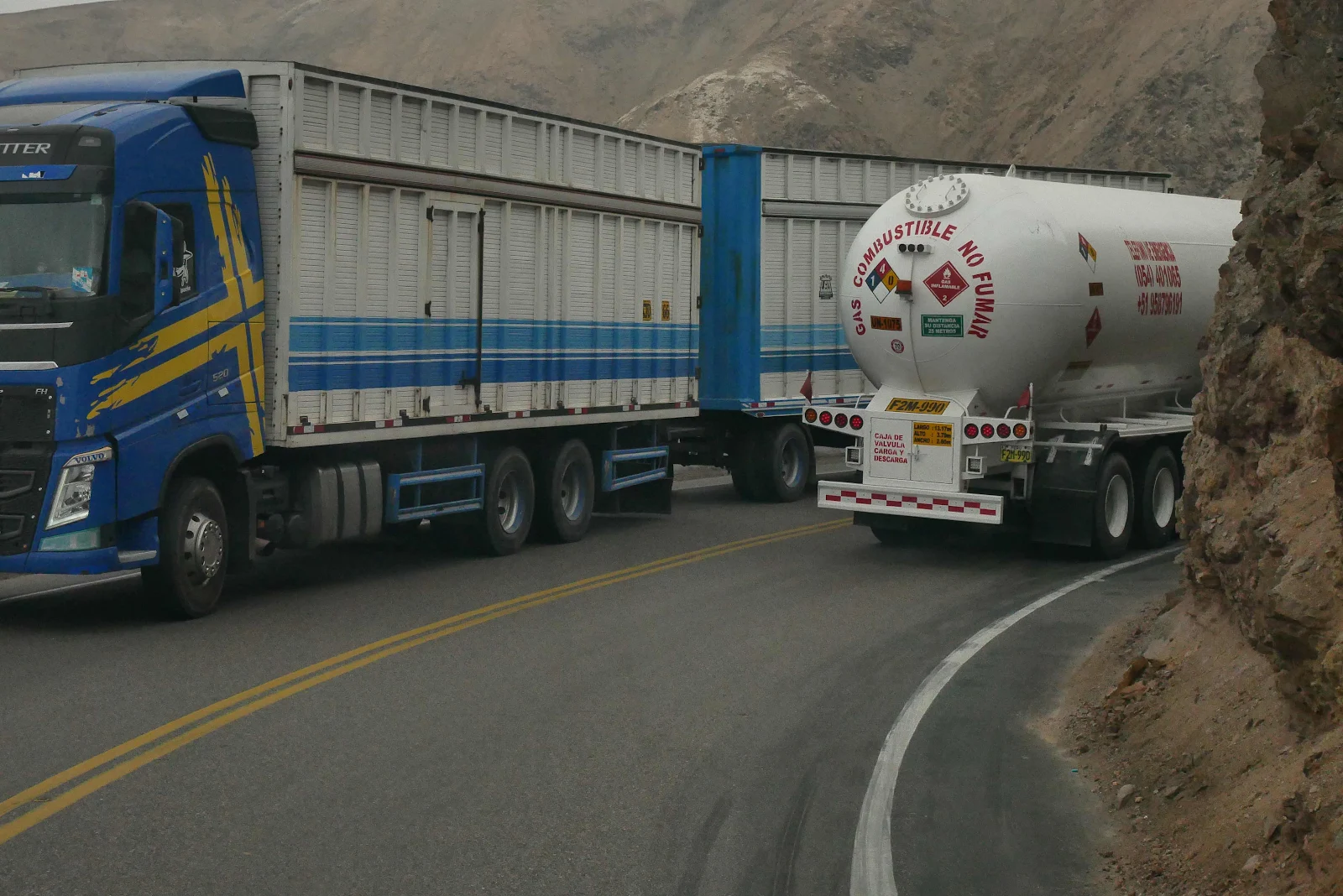
At one point we had to pull over to let a wide heavy load go by after we got flagged down by an escort car. The truck at the back was connected by a pole to the trailer to push and act as an extra brake. I’d never seen that before.
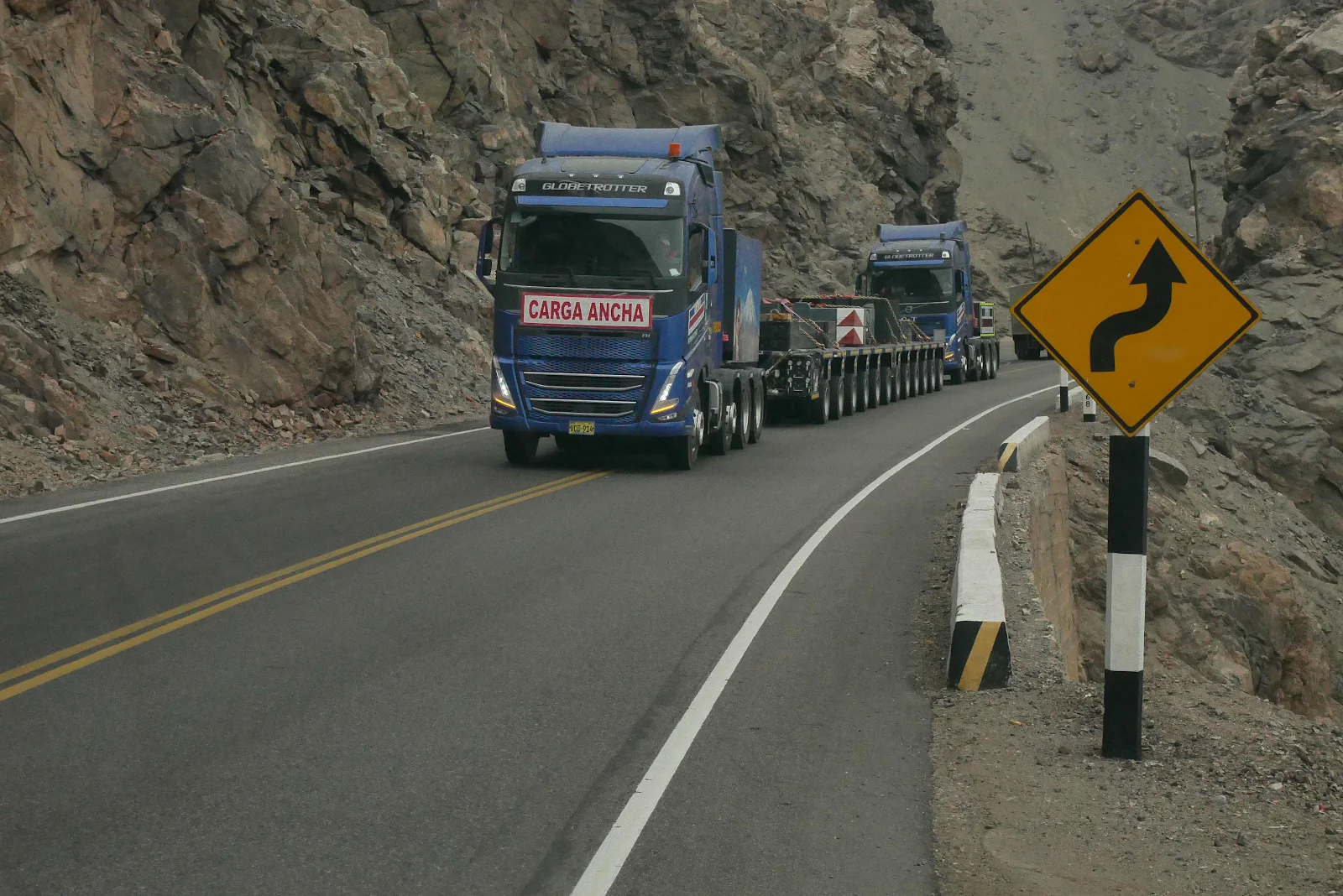
The white van wouldn’t back up to let the truck complete the turn. We sat and watched the circus.
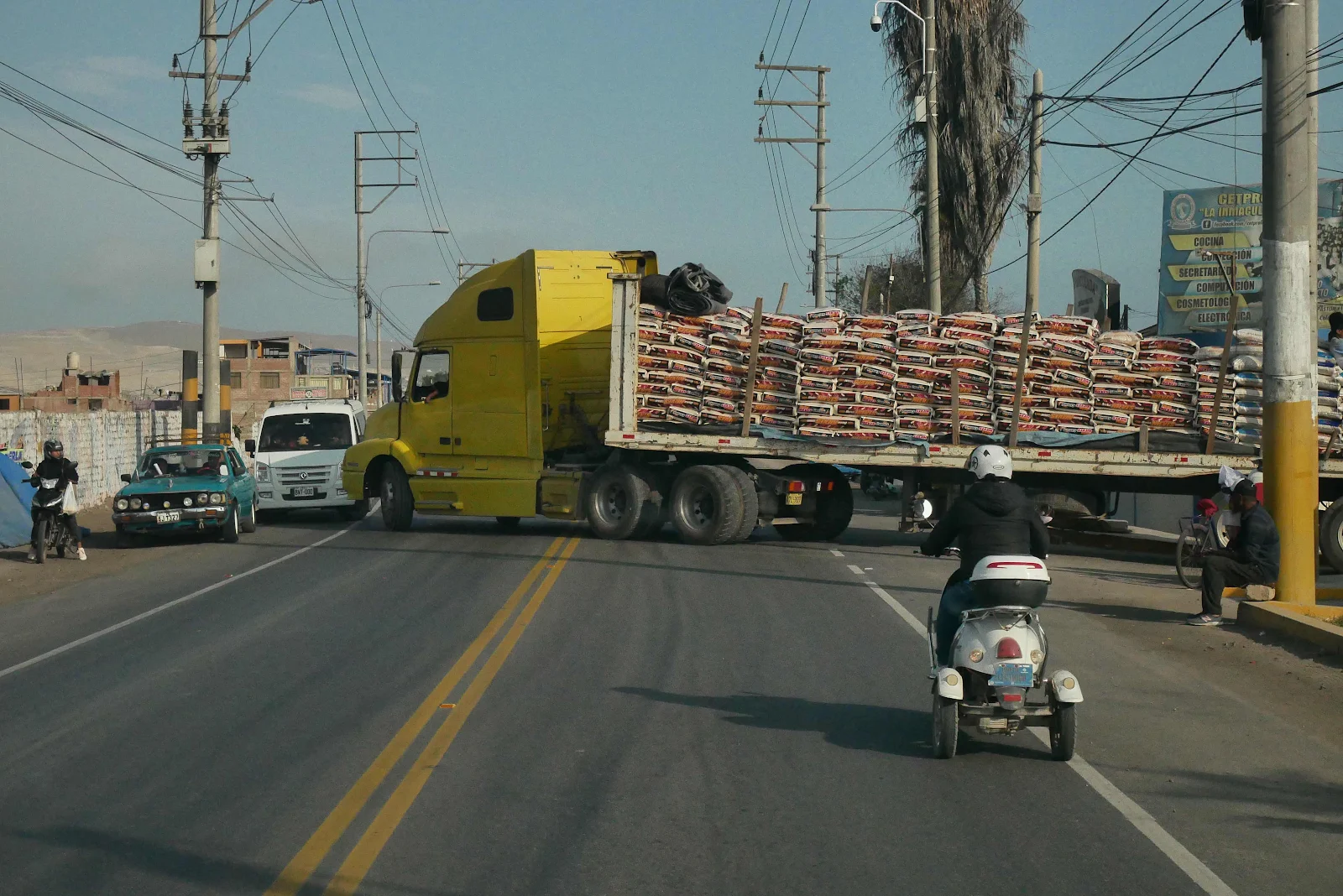
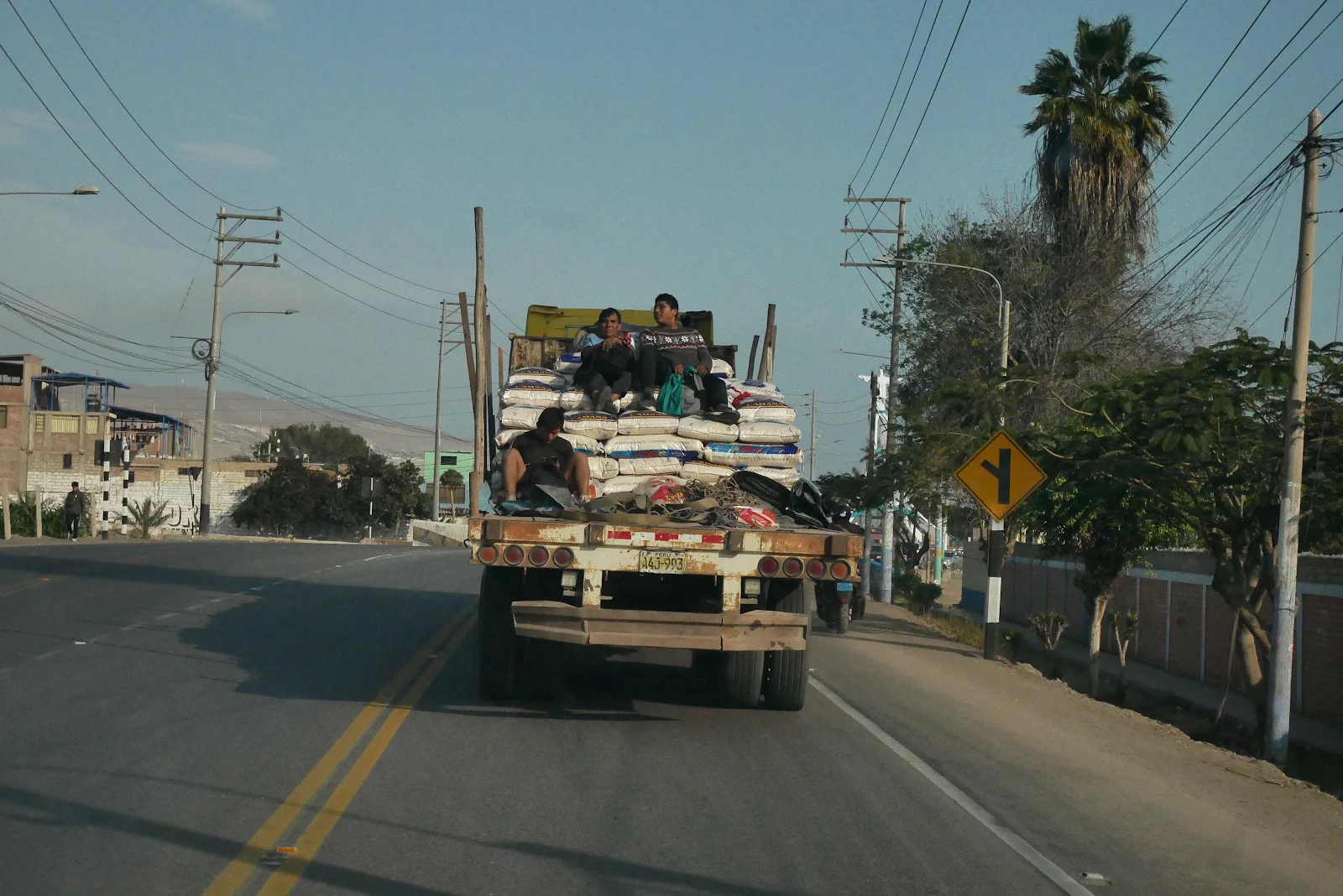
This is the freedom of not having liability laws. I often wonder if people who protest about regulations could really handle living like this but we will never know.
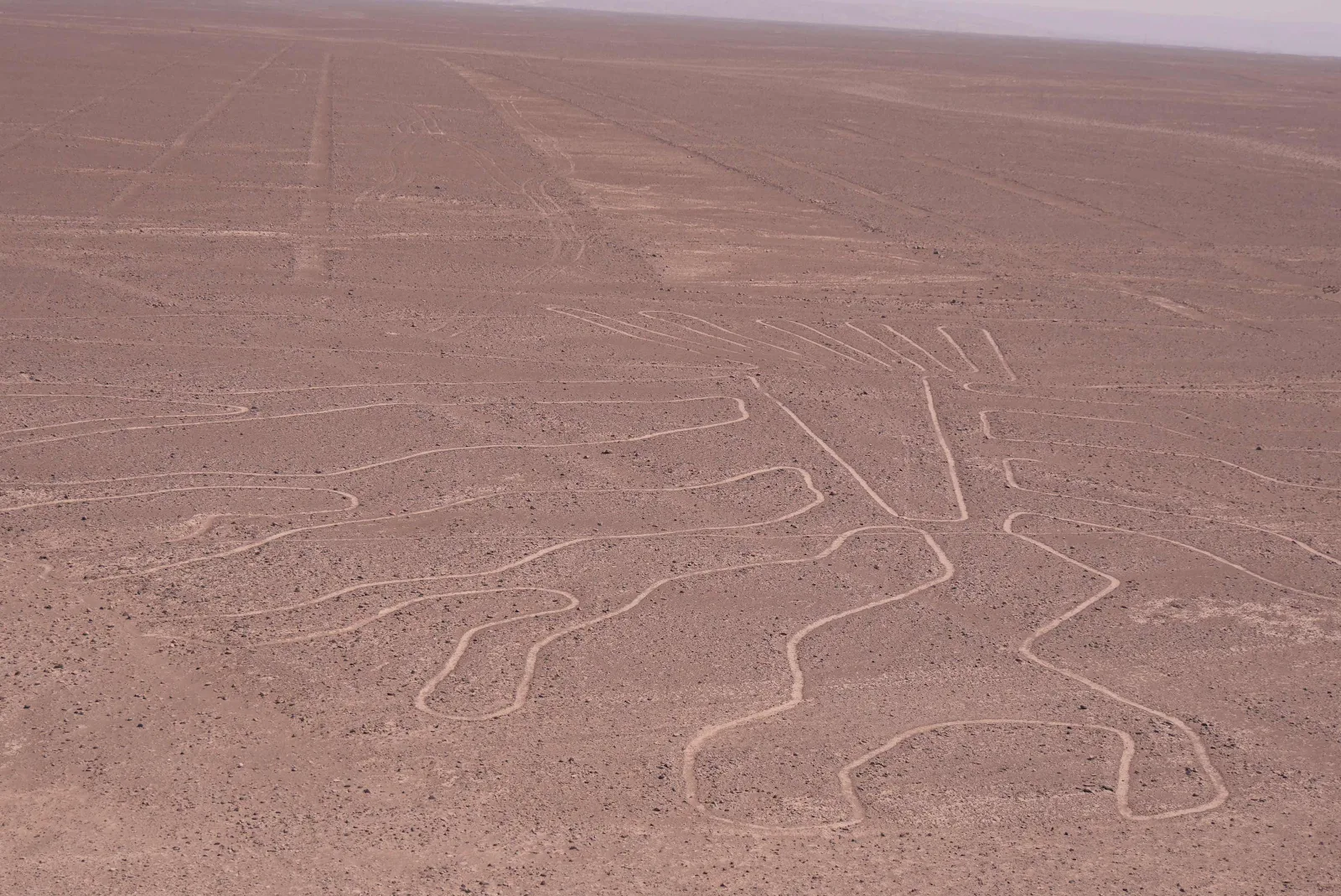
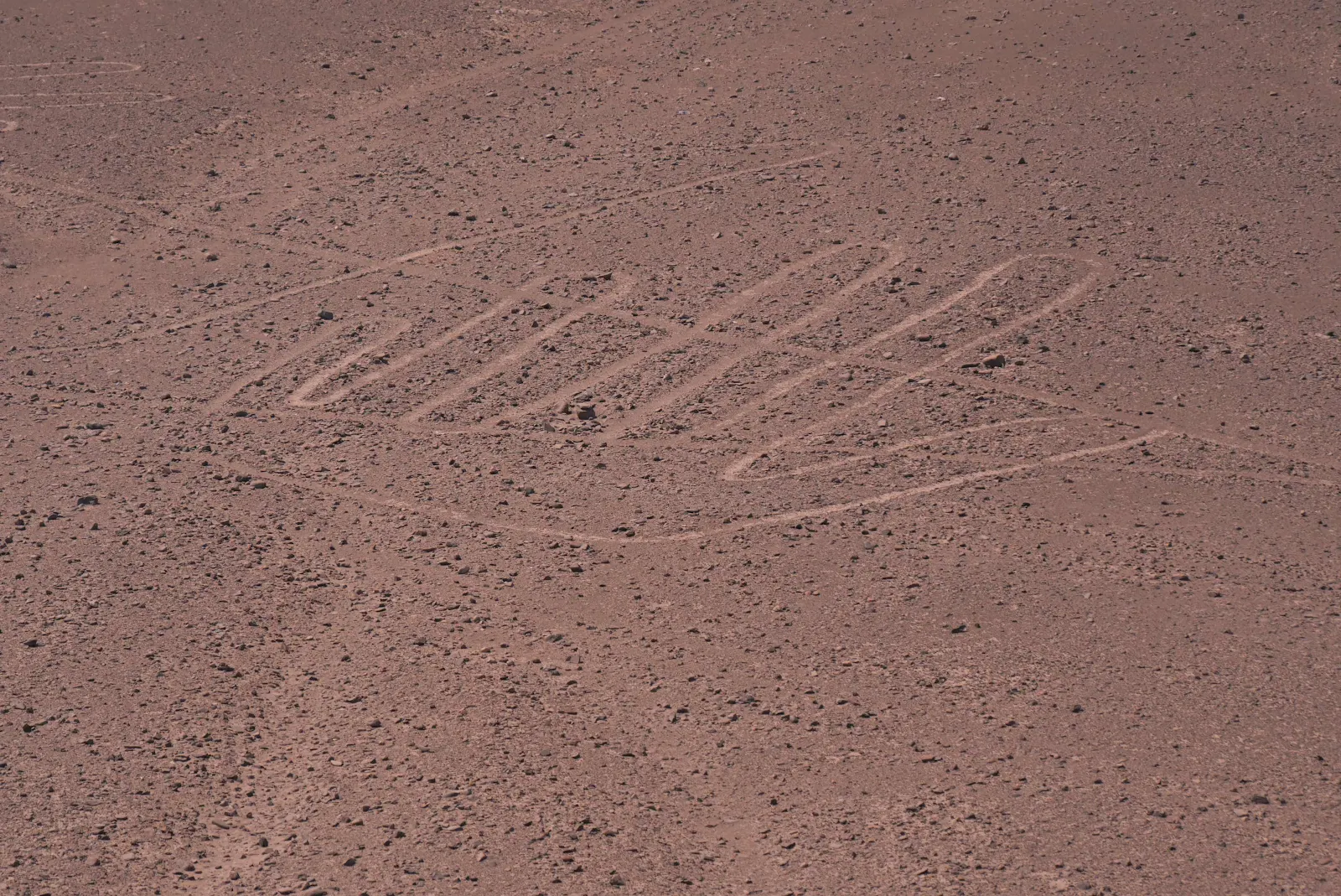
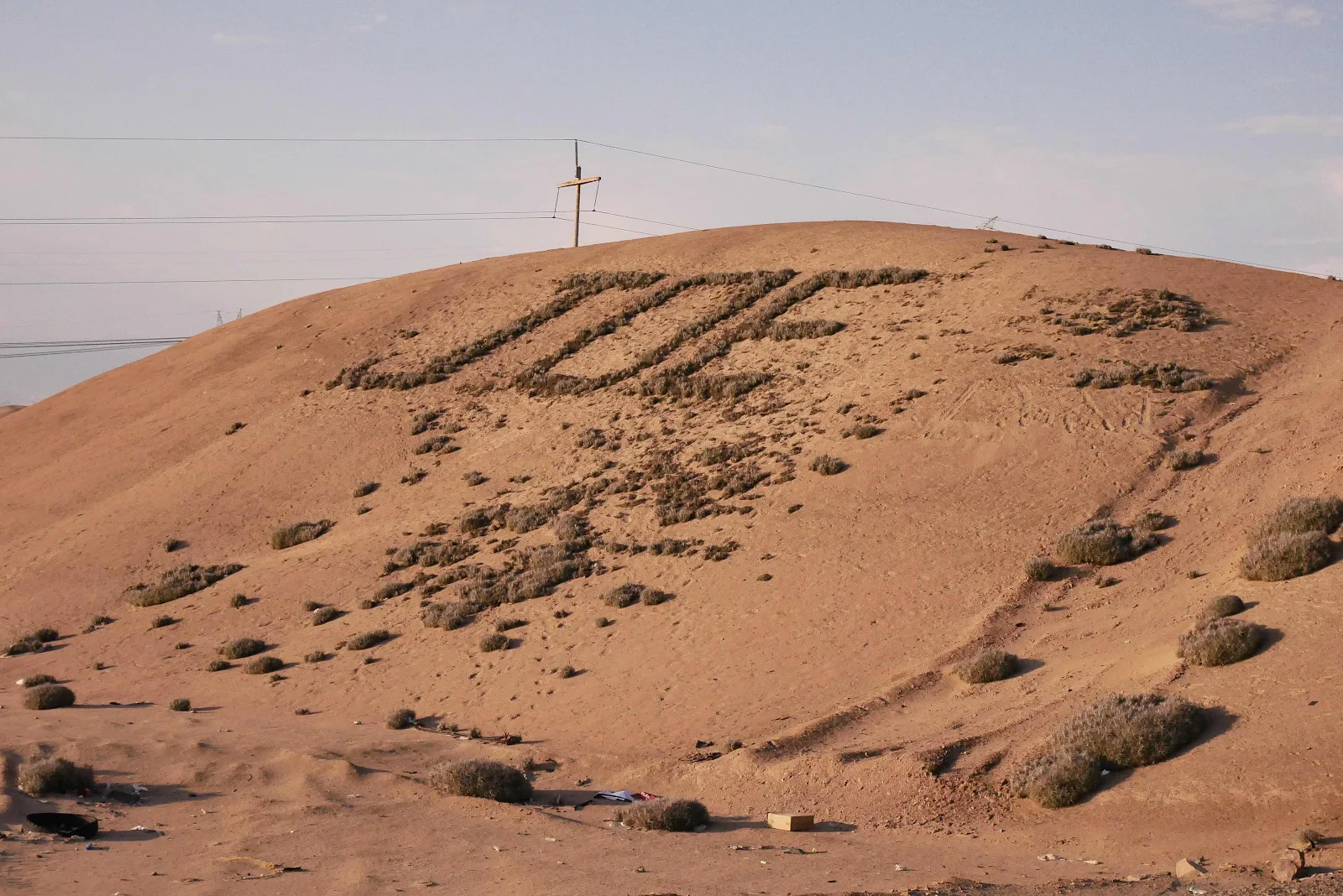
I have absolutely no idea what the rocks were spelling out in Peruvian.
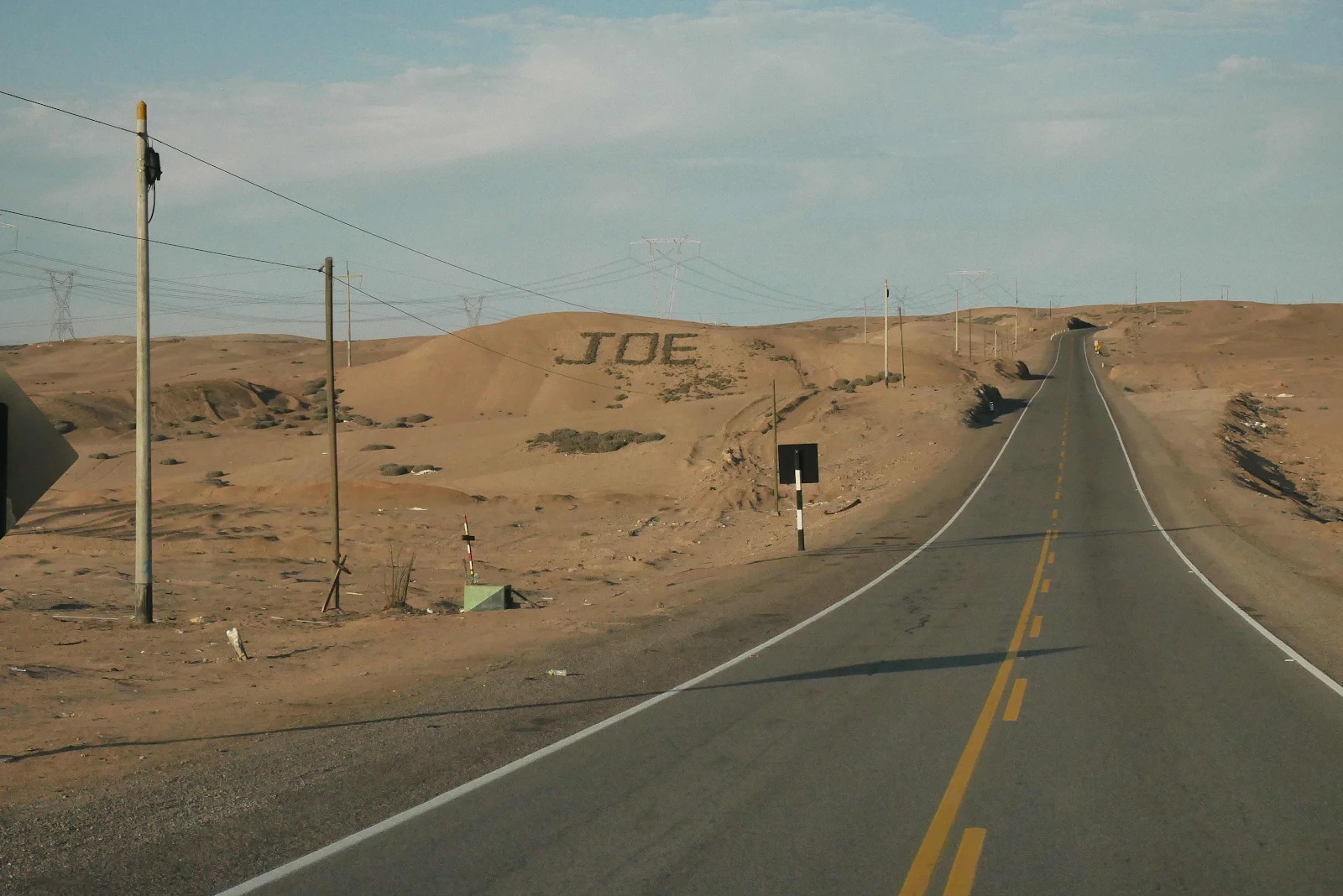
This is a dusty empty countryside.
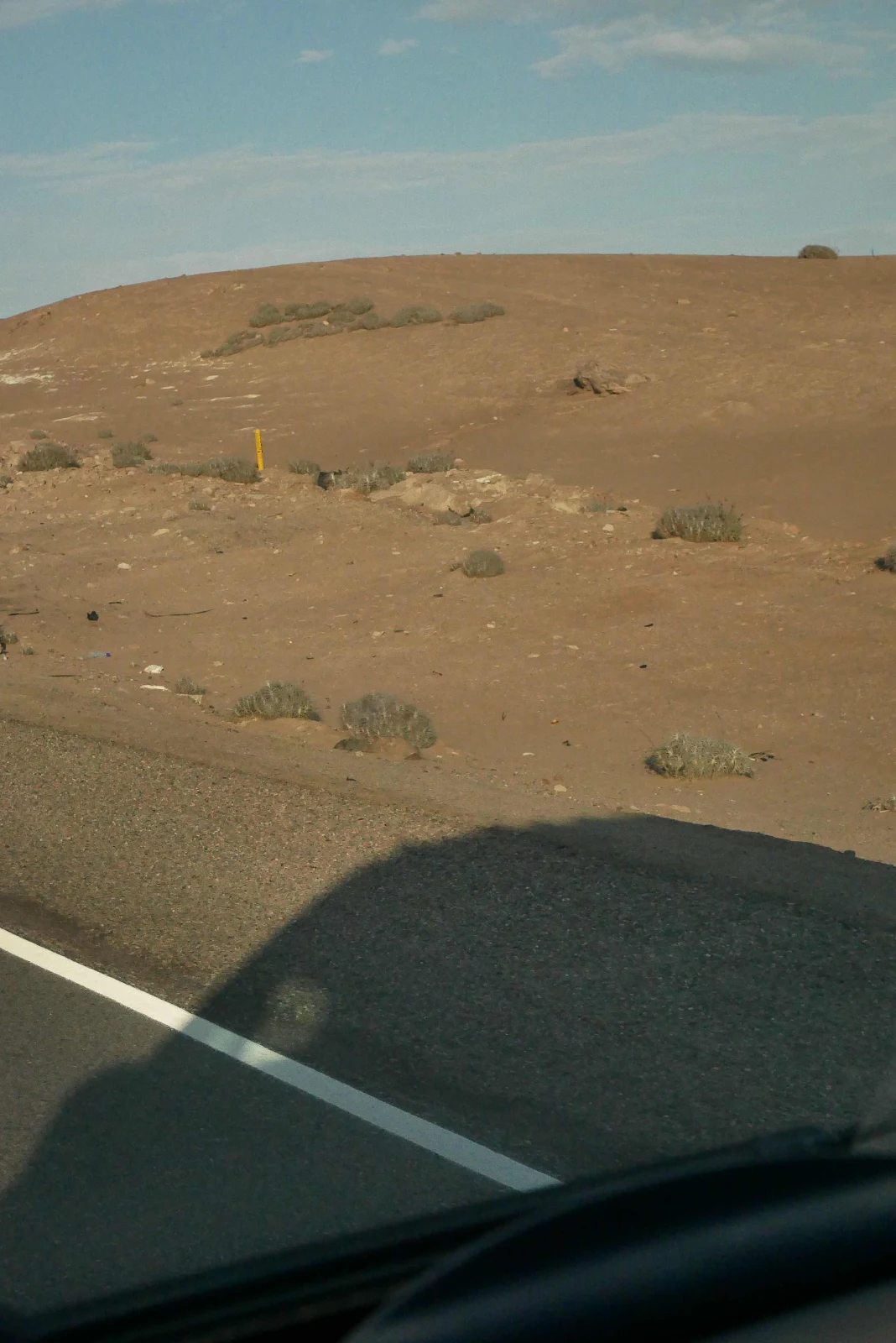
But there it was. Weird.
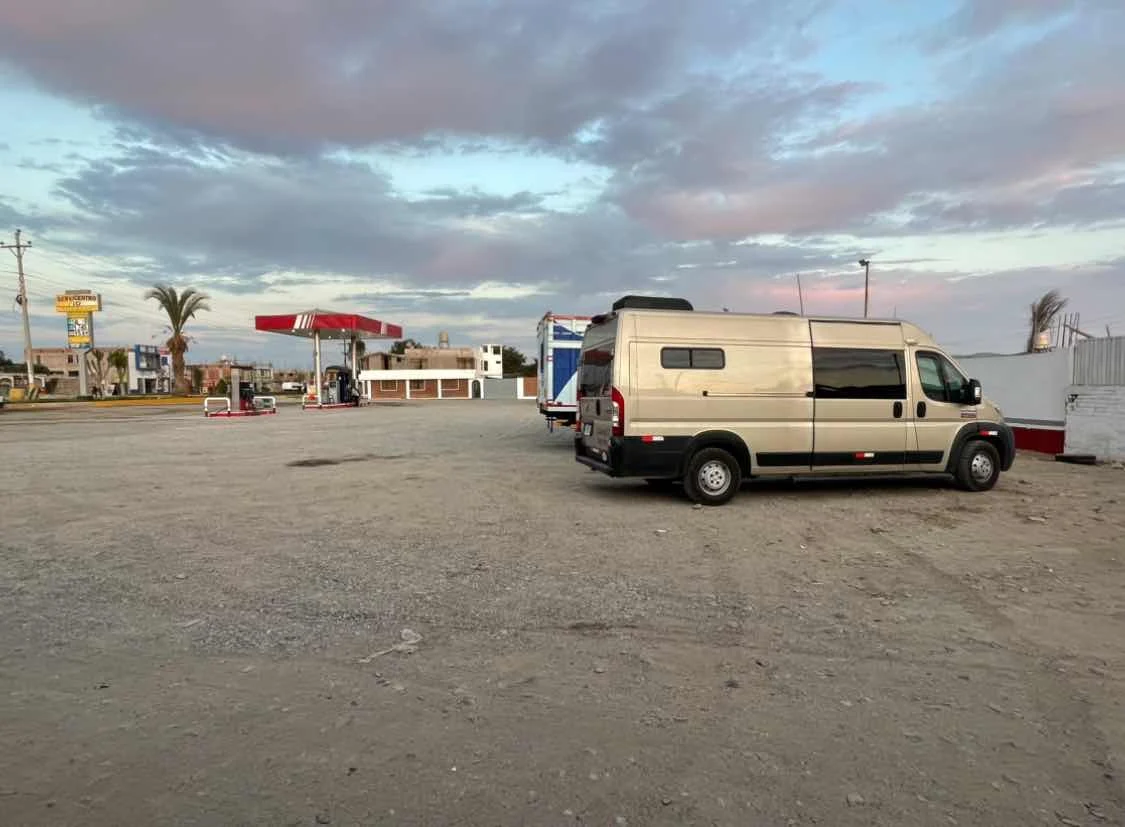
A small gas station in Majes two hours from Arequipa was our spot for the night. Traffic died away and we are self contained with good insulation and our own toilet so all we need is a safe spot to park. This fit the bill for a night. Soon Rusty was snoring in his bed.