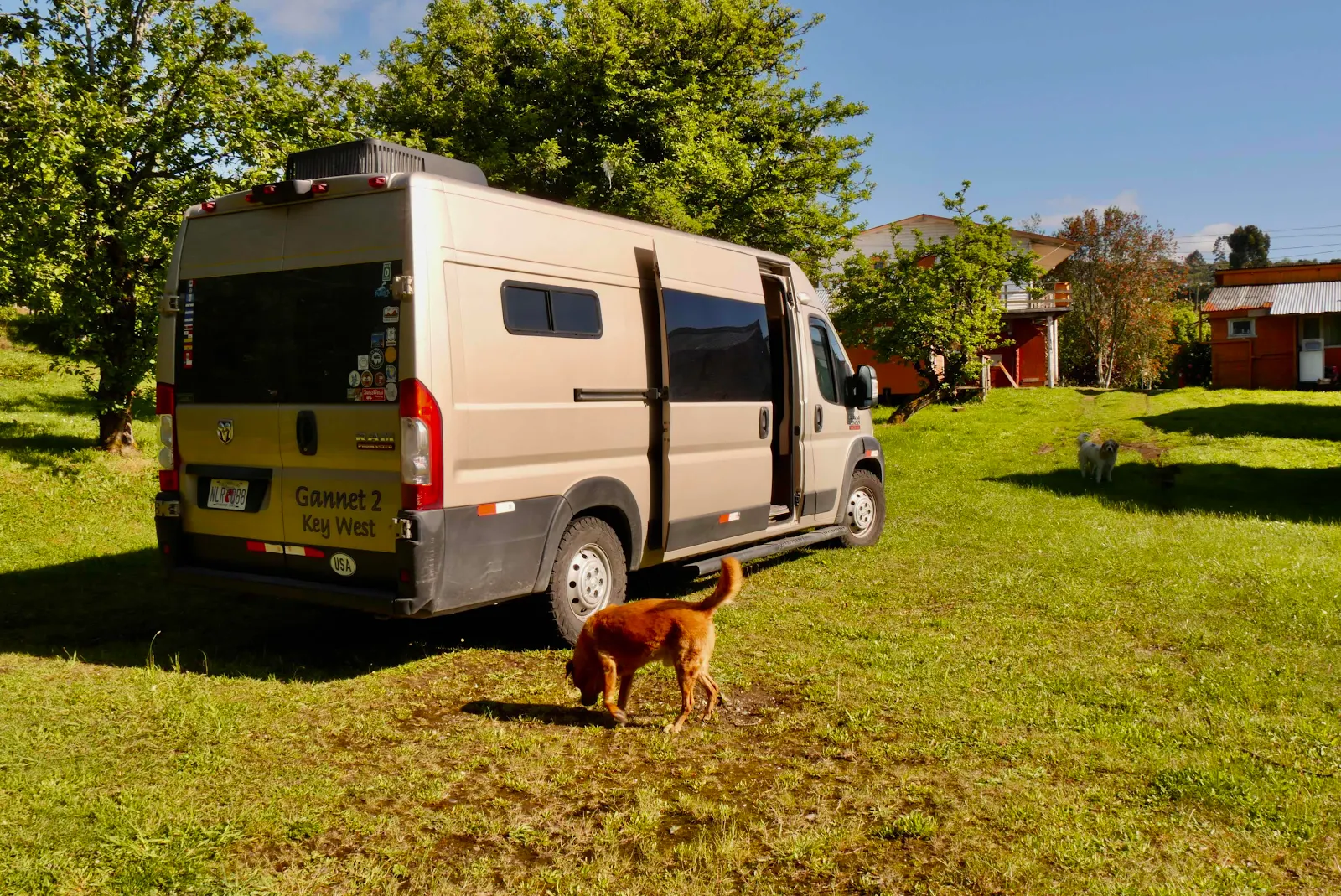
Our second day on Chiloé Island was Sunday and we expected to see some crowds but it’s low season in Chile and low means an island to yourself if you’re retired and mooching about in a van.
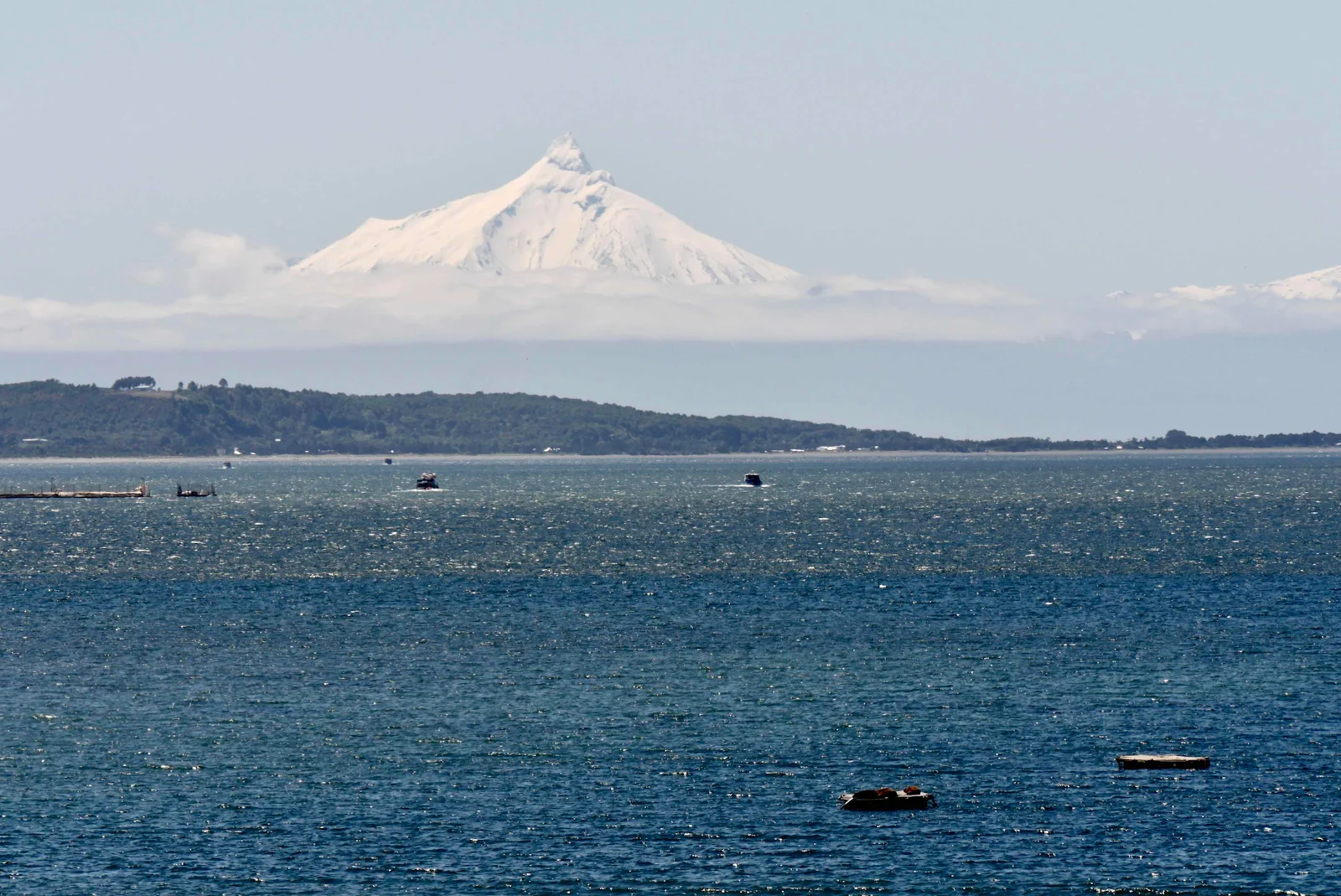
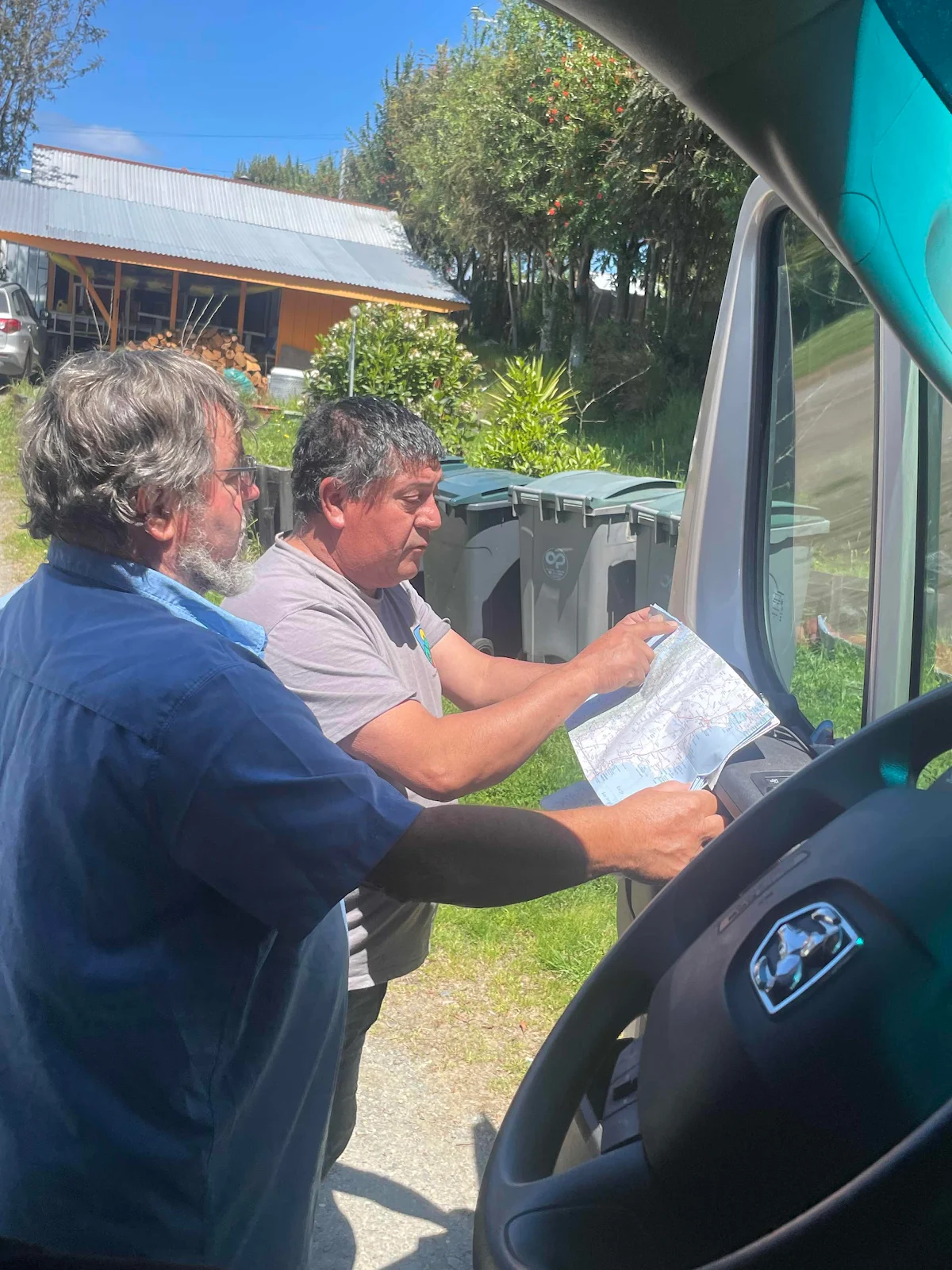
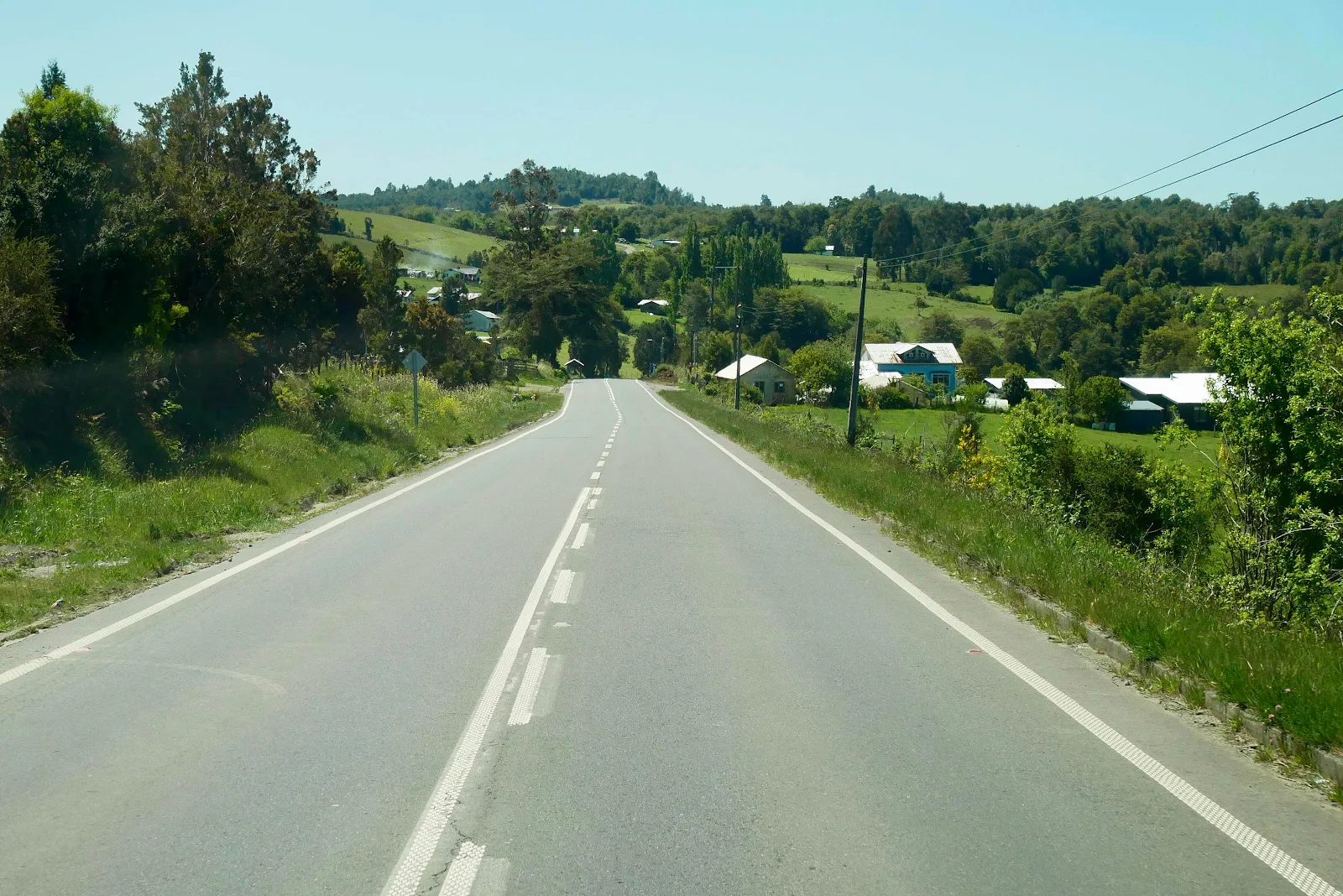
Our campground owner told us to follow the backroads back to the ferry landing…
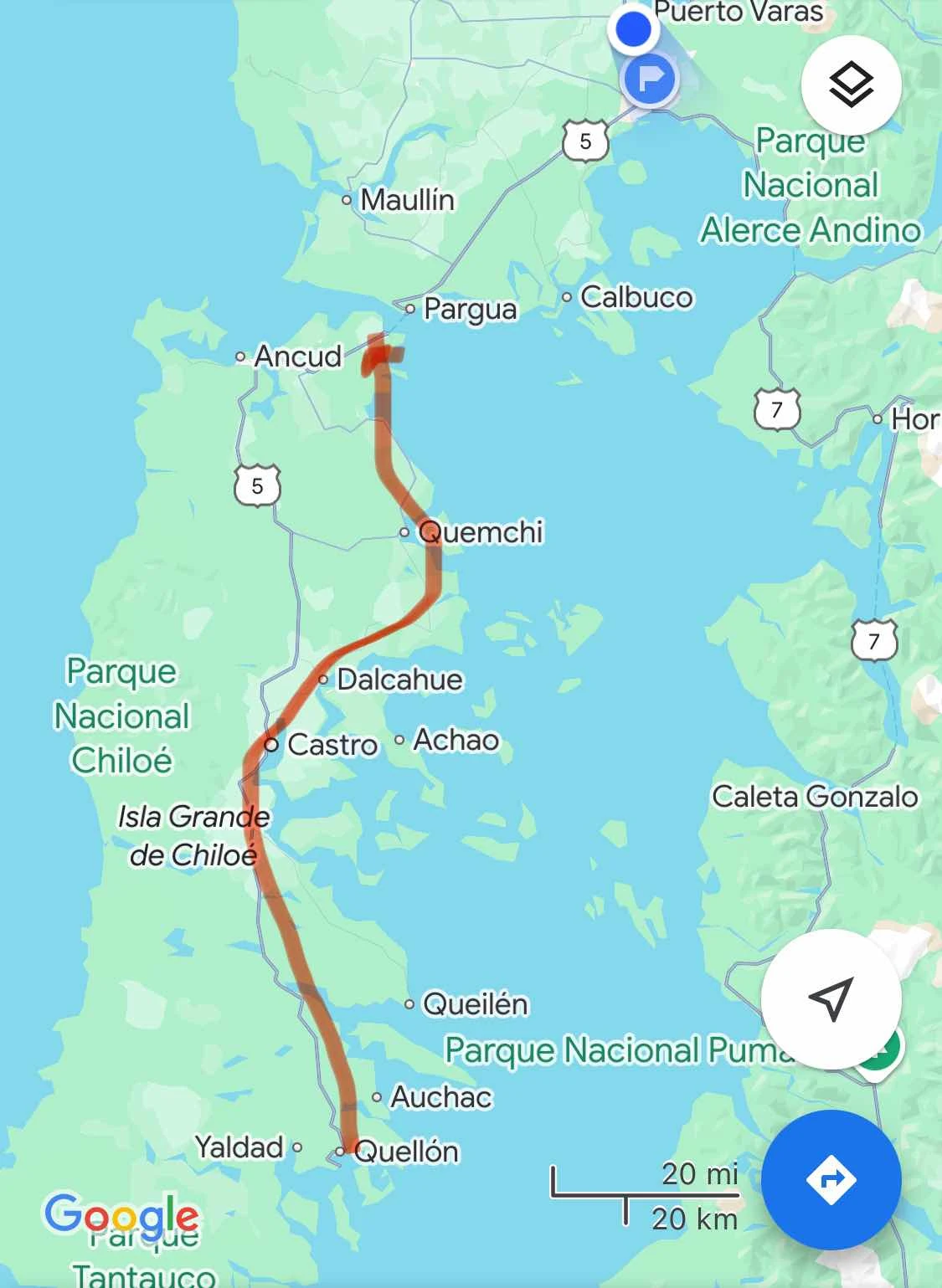
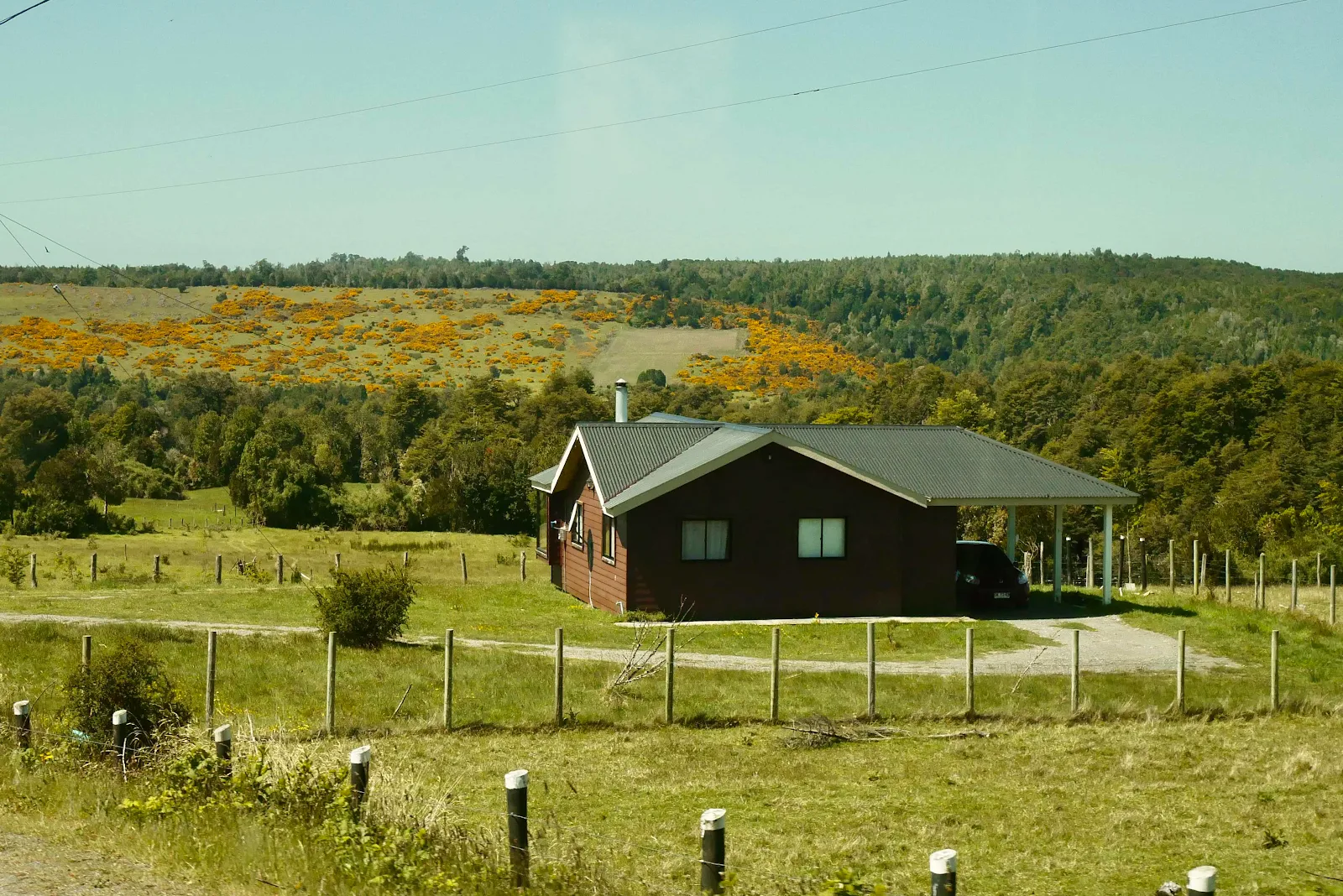
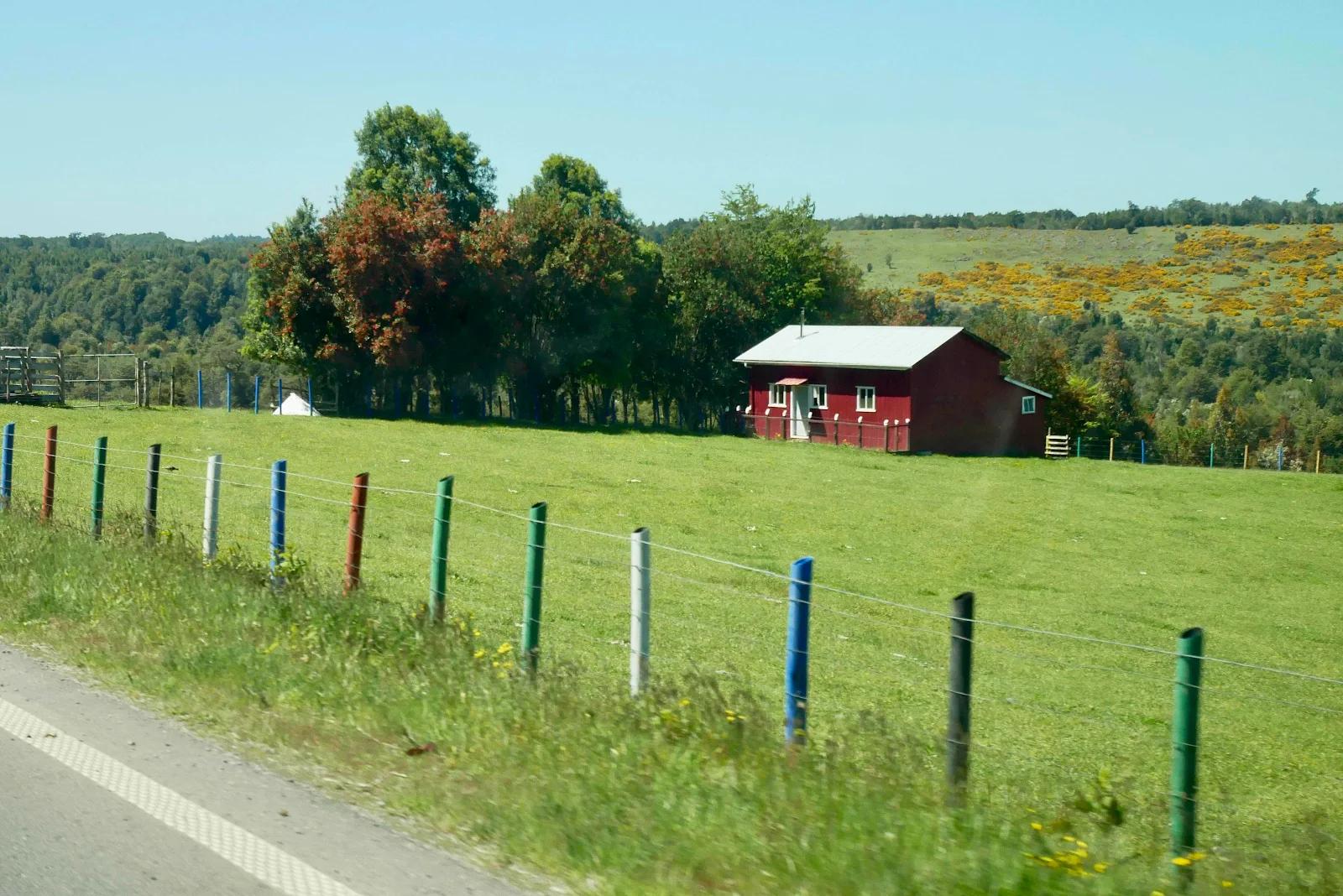
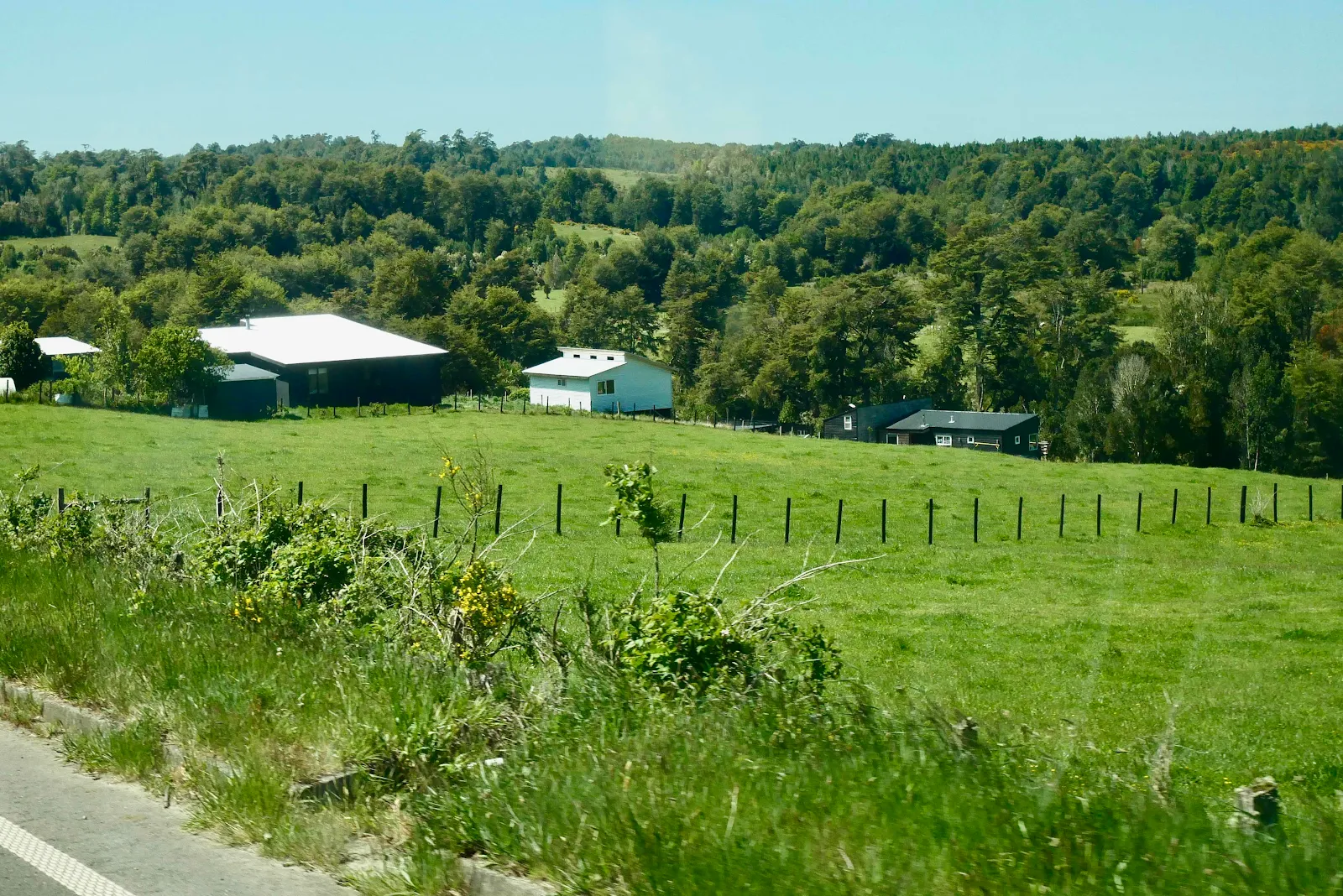
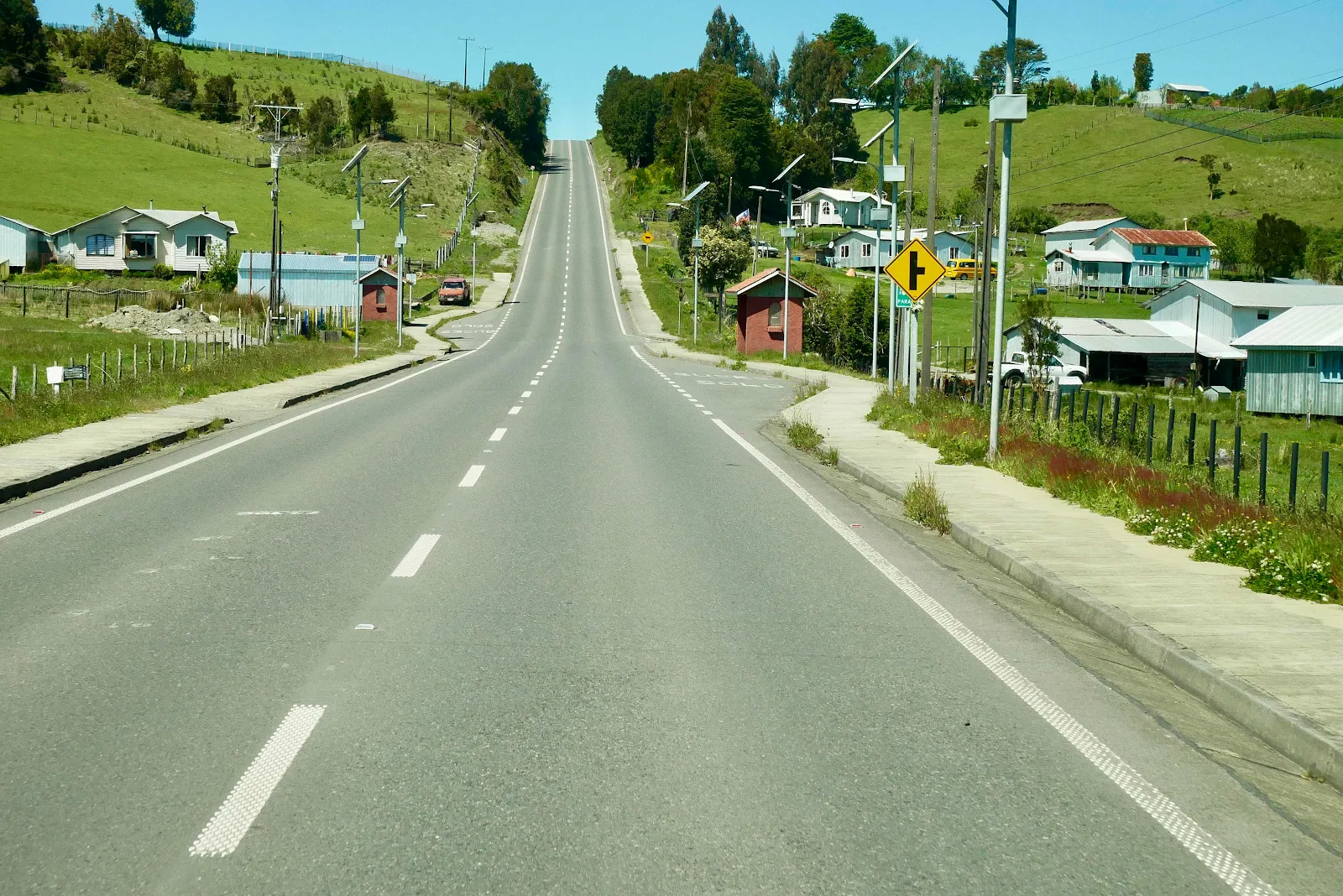
…so we did and we found a side of Isla Chiloé that offered views of saltwater inlets but also pastoral scenes that belong far from the sea, in places where farming is the trade, not fishing.
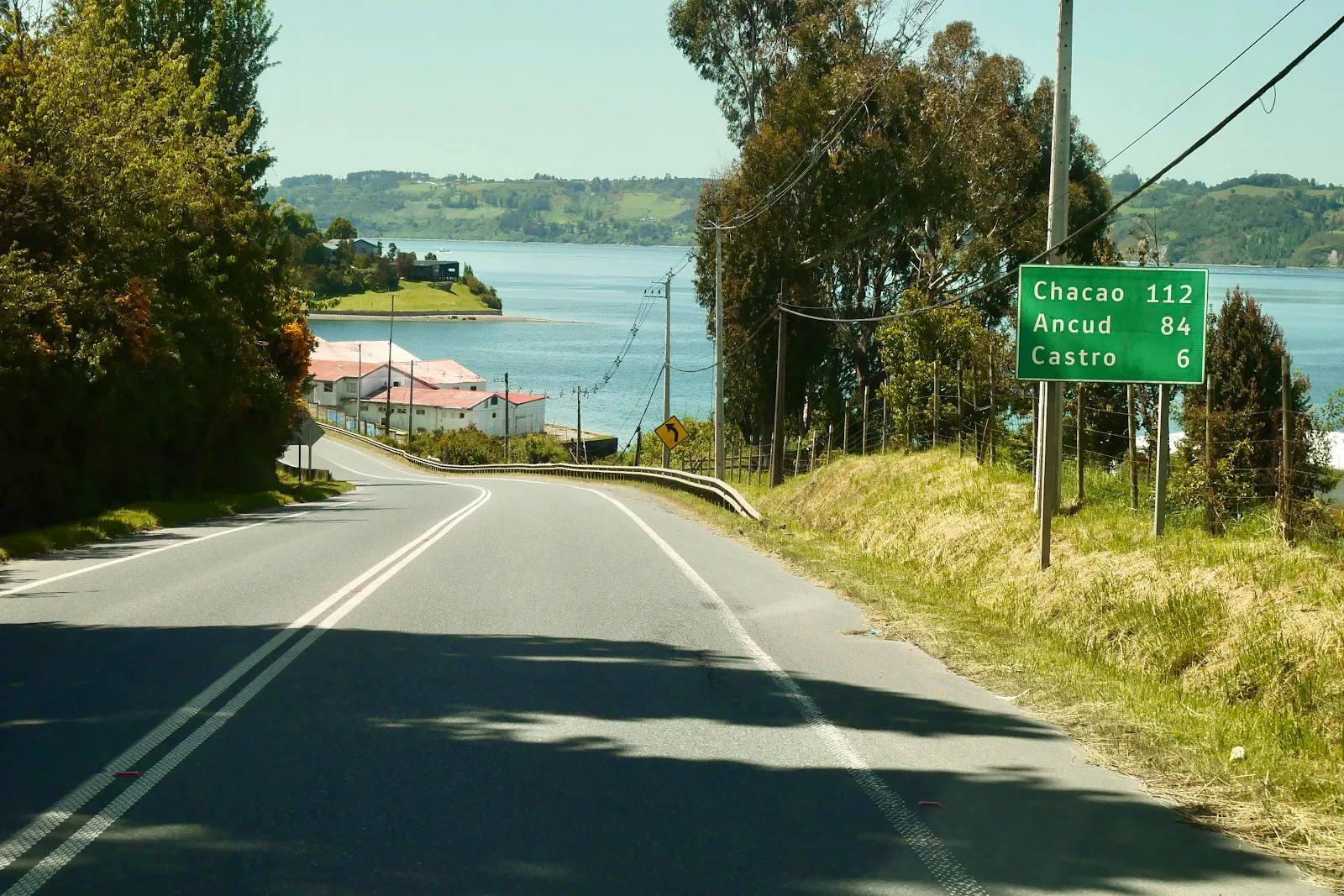
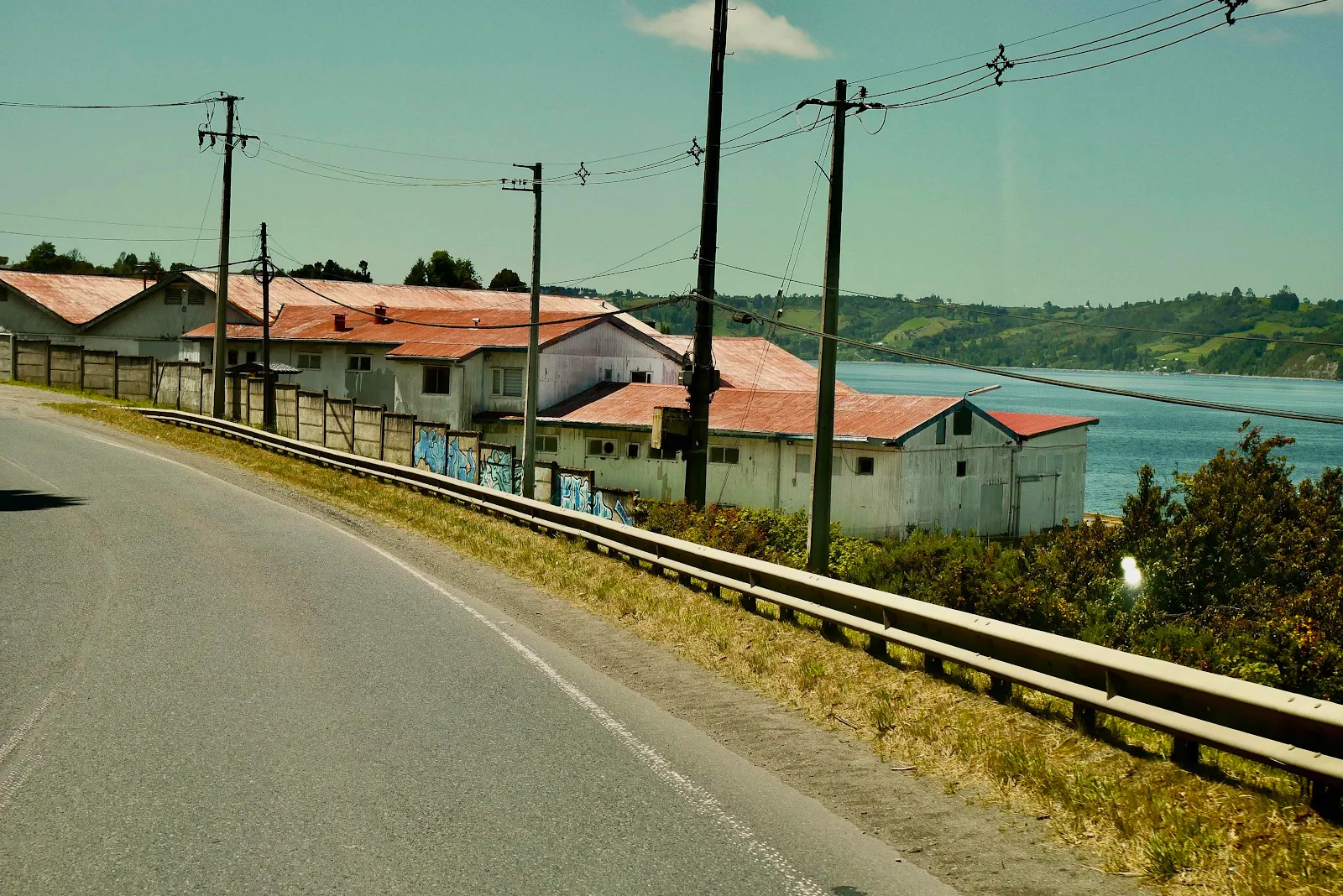
I spoke with Bruce in Arizona and he mentioned Chilean salmon. This is one of the main areas where they come from, the calm inland waters along the indented coast of Chiloé.
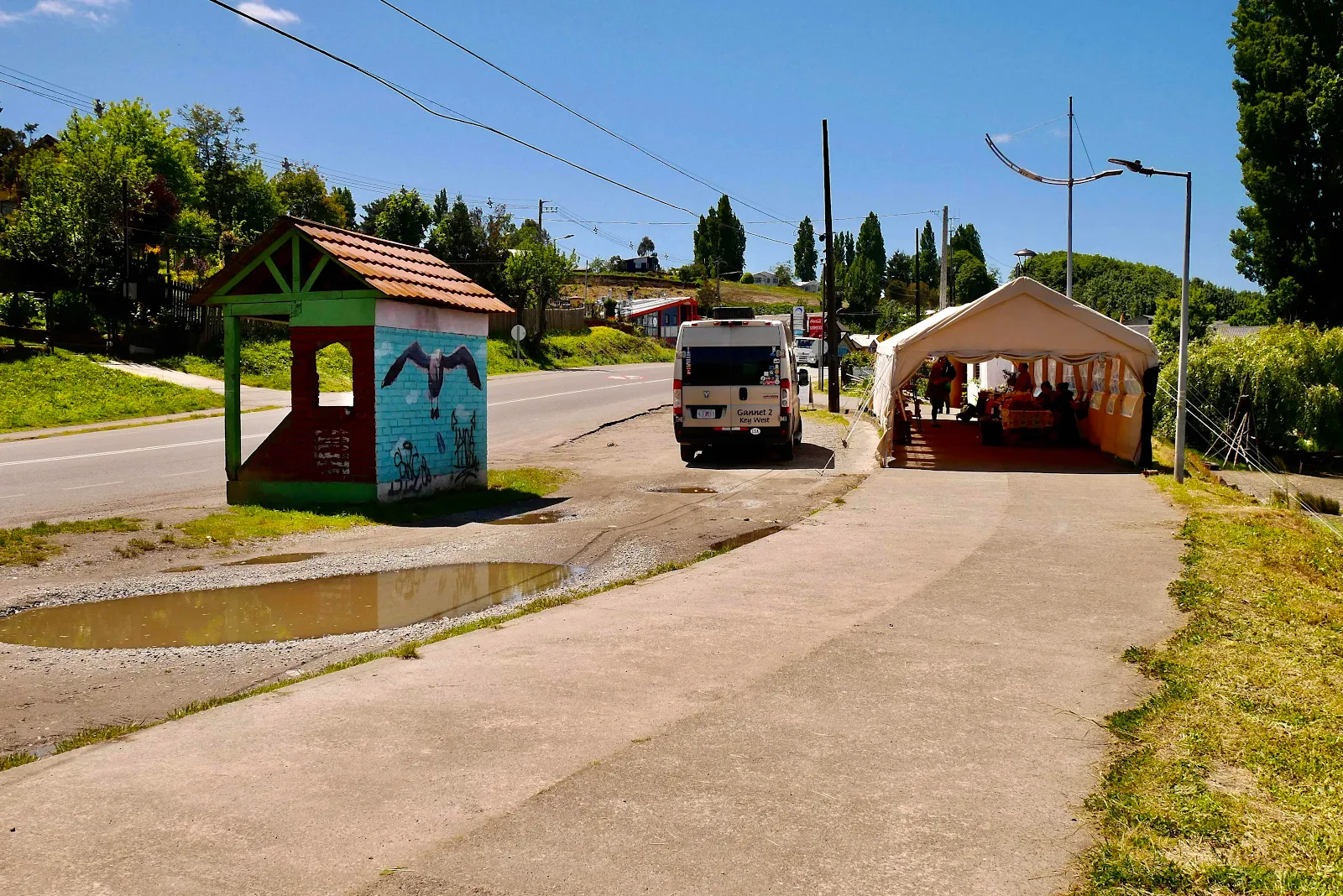
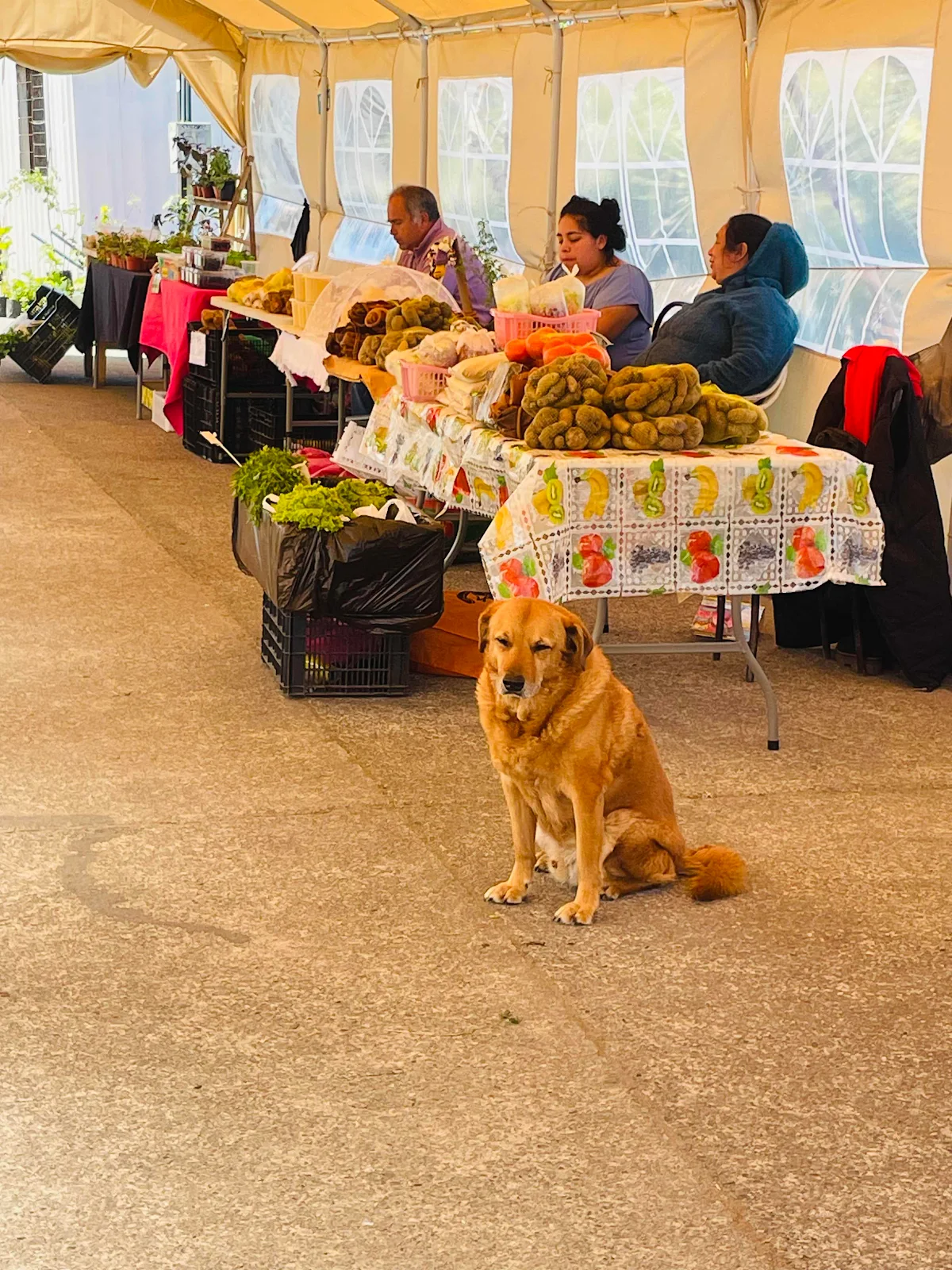
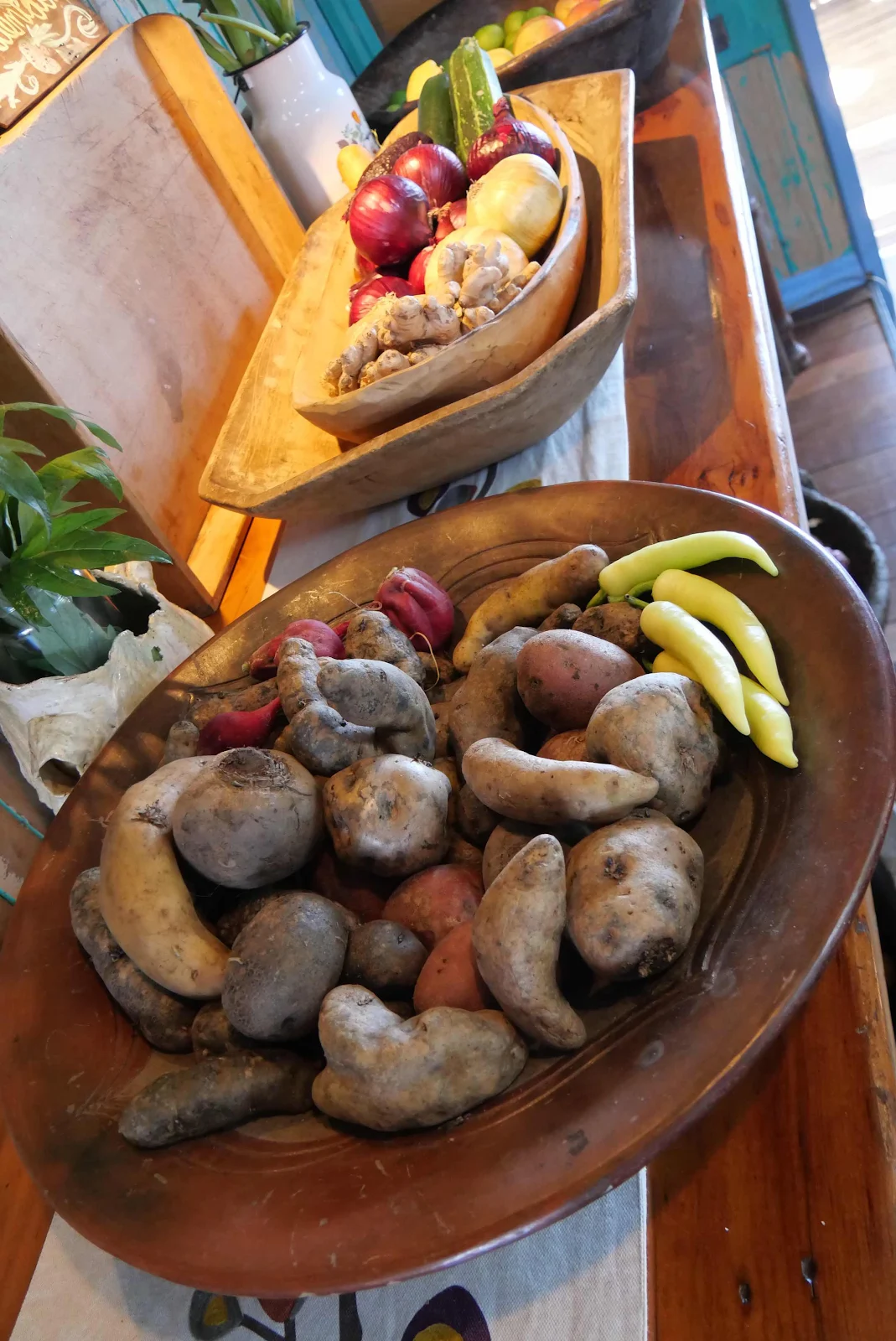
“Stop!” the navigator snapped when she spotted the fruit market.
Compared to the chaos and poverty of the street markets in the Andean countries around here you feel like you are in Europe.
Chileans don’t travel any more than other people do so when we talk about the orderly sense of well being here they recoil. Things are bad they say, the economy is weakening, the Venezuelans are invading and so on, all the usual 21st century complaints of civilization imploding.
This looks to me nothing like anywhere south of the United States. There are issues here including we have found a certain rigidity of thinking. We are used to Latin Americans figuring out solutions, as you might expect in Mexico. Chileans are much more like North Americans in that they lack that sense of being able to figure it out.
Like us they are more inclined to repair things (like our alternator) by replacing parts not by figuring out a fix. It’s not a big deal but it’s a difference I notice in this country.
Chile is also very white, and it’s rare to see dark skinned people here. If you see people who don’t look white they very often are immigrants from some unhappy country up north. Chile and Argentina have the usual history of slaughtering the locals when the Spanish arrived but down here the climate was always pretty rough so there were fewer locals to kill off and as a result the population today is startlingly white. I find this journey is really giving me an education as I get to spend time noticing the changes in scenery and culture as we travel.
The other thing about Chile is that it is expensive and that gives the truth to the complaints about the economy for locals. The biggest complaint from overlanders about Chile are the prices, with diesel around $4 a gallon and gas around $5:20 a gallon and that’s just the start. I make a point of mentioning each time we eat out as we do it a lot less here. South America is a place where you expect to see roadside food and inexpensive at that but not here. The change from Peru is immediate, where you could buy cheap delicious food everywhere.
And aside from alcohol which is curiously inexpensive Layne says the supermarkets are as expensive as the US. Which is bearable for us but imagine living on half the wage…So as visitors we like Chile which is a break from the colorful chaos of the other Andean countries but it decidedly has its drawbacks.
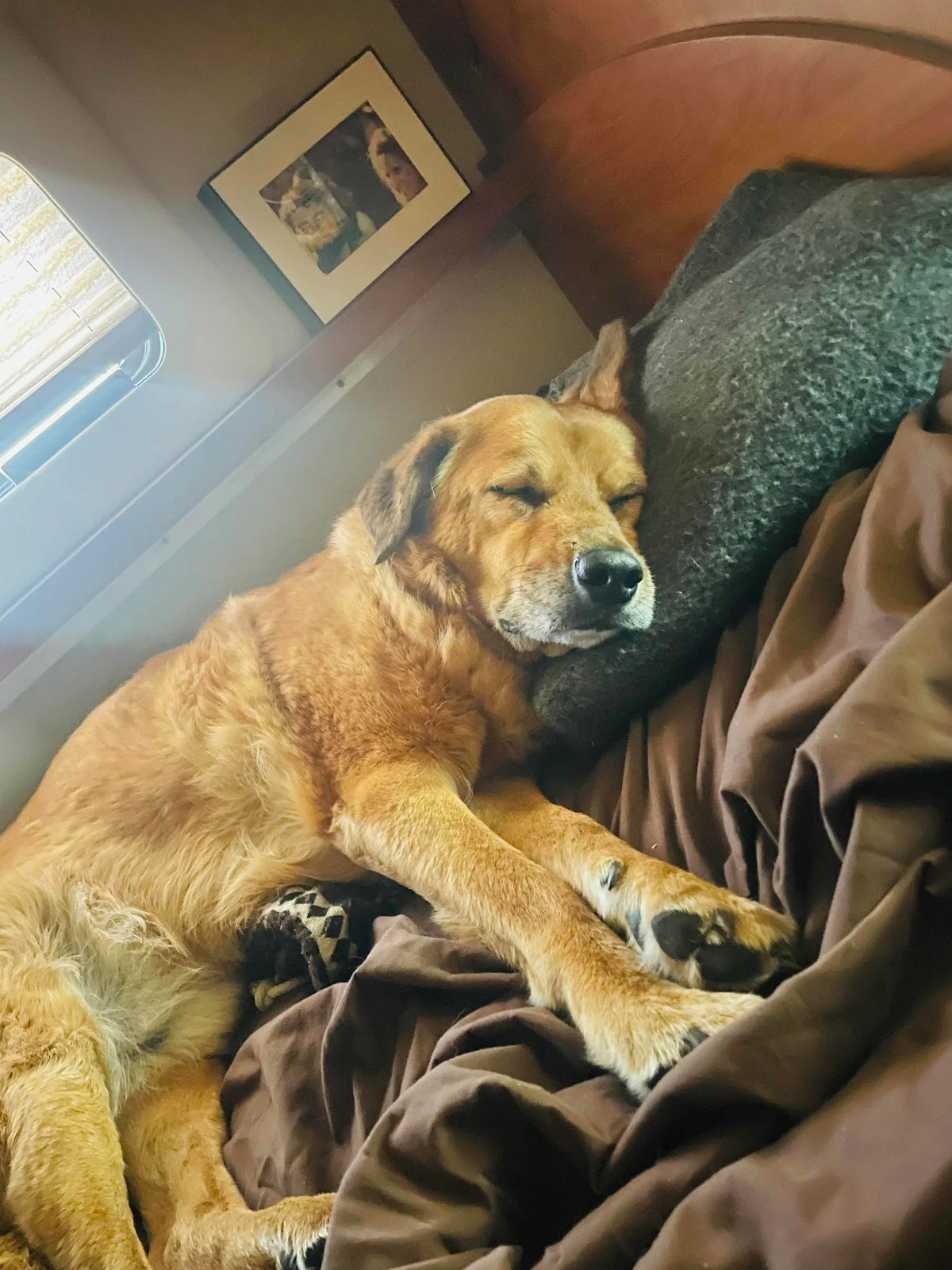
One other drawback in Chile is the no dogs in national parks or ecological reserves of which there are many and deservedly so. It’s not that you can’t hike trails with dogs, it’s that you can’t enter parks with dogs (or cats) (or ferrets, seriously) in your car. So if you expect to see pictures of famous parks on this page I shall refer you to Google. Some parks have kennels at the entrances but I’m not caging Rusty if I absolutely don’t have to, though we may have to find dog sitters to avoid missing stuff we’d really like to visit. Just thinking about it makes me anxious as I’d rather not see a glacier and hang out with Rusty.
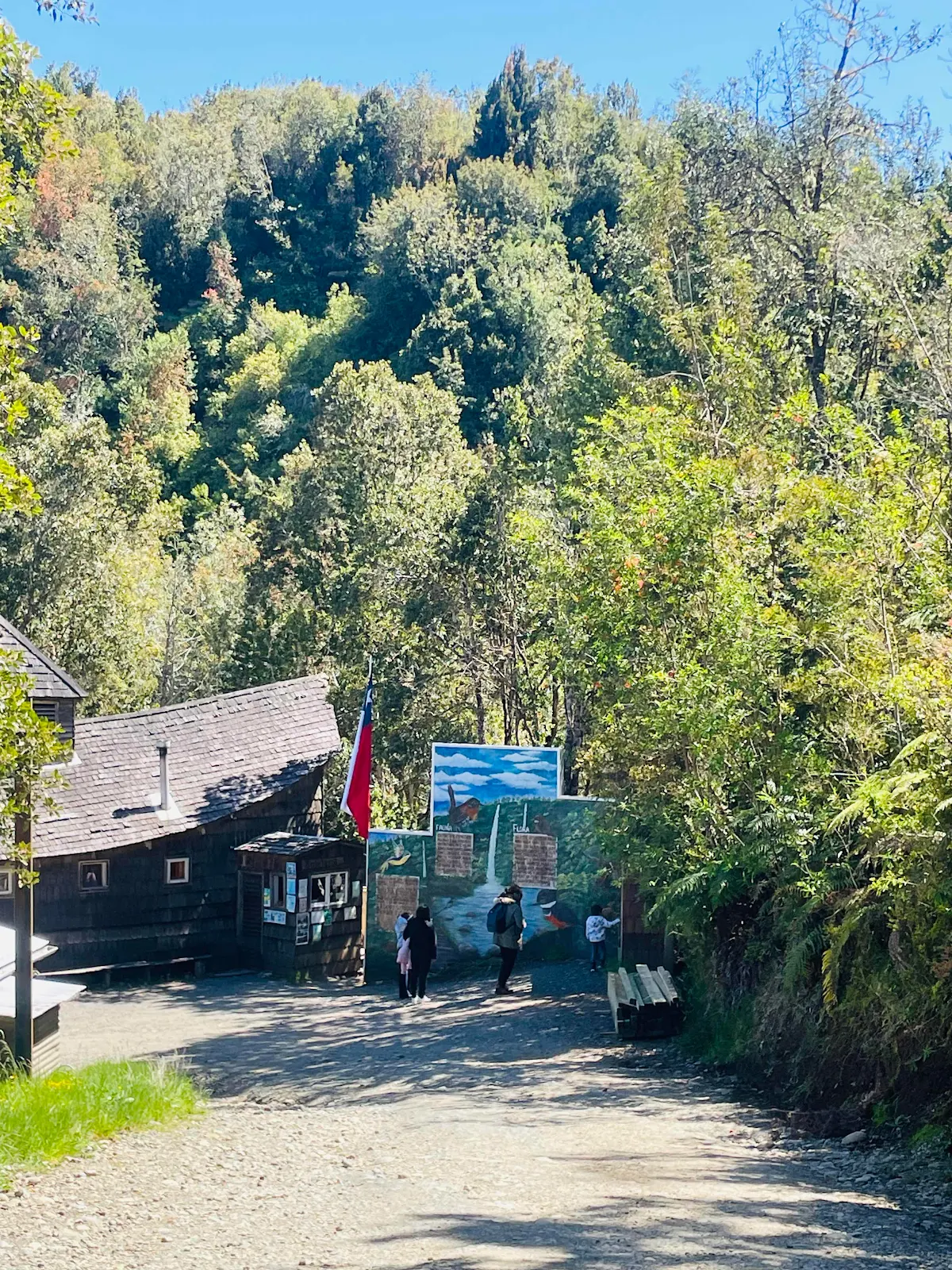
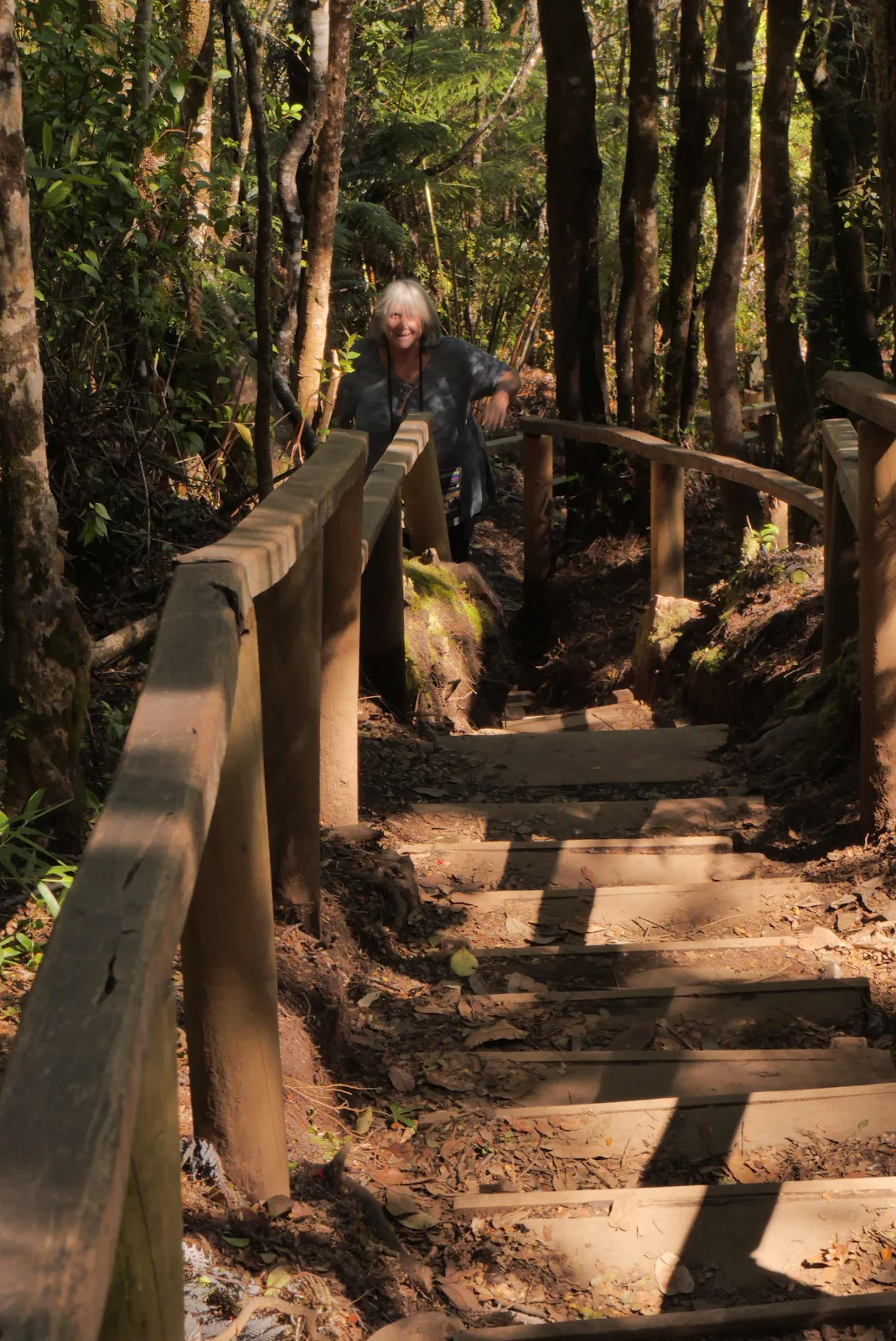
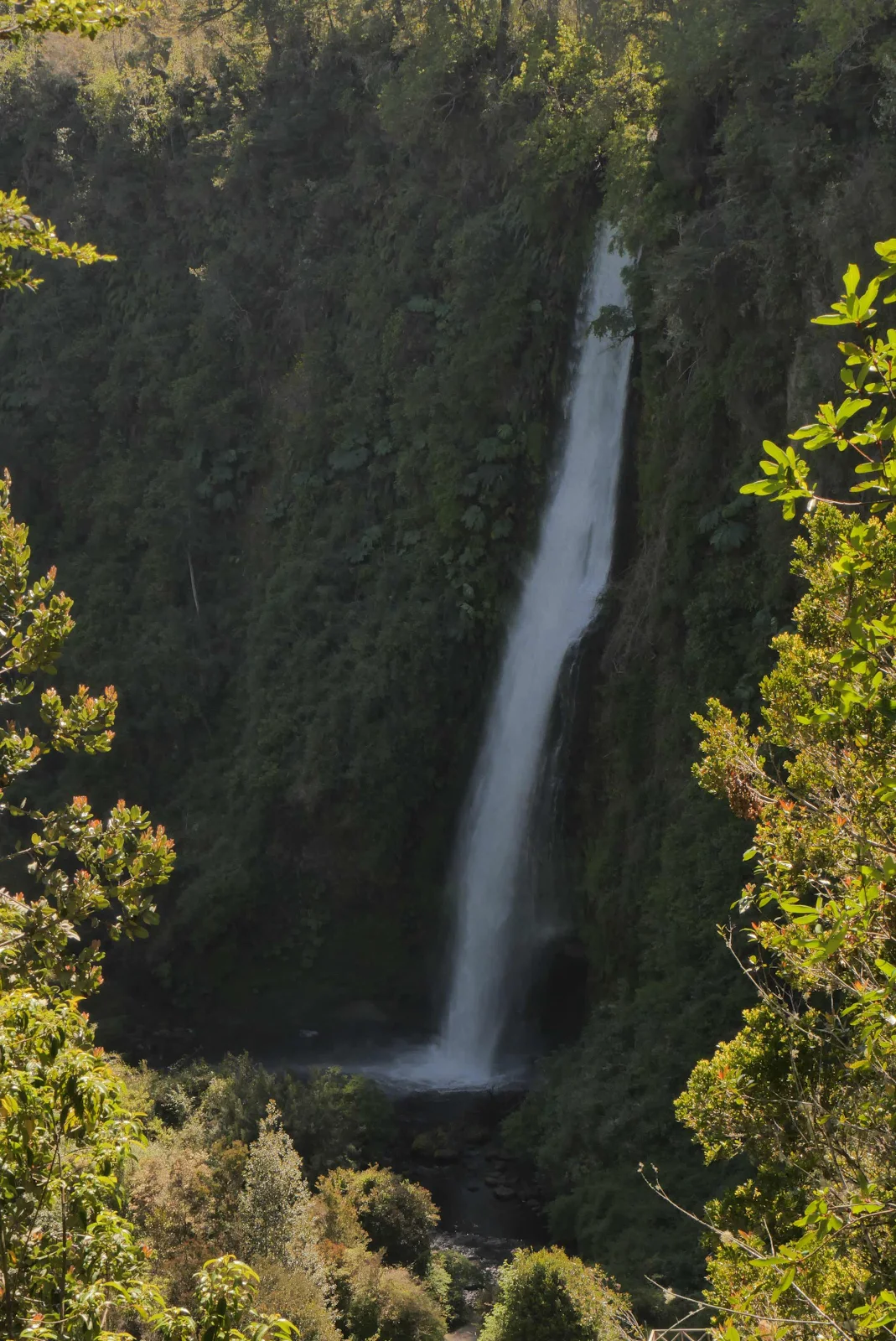
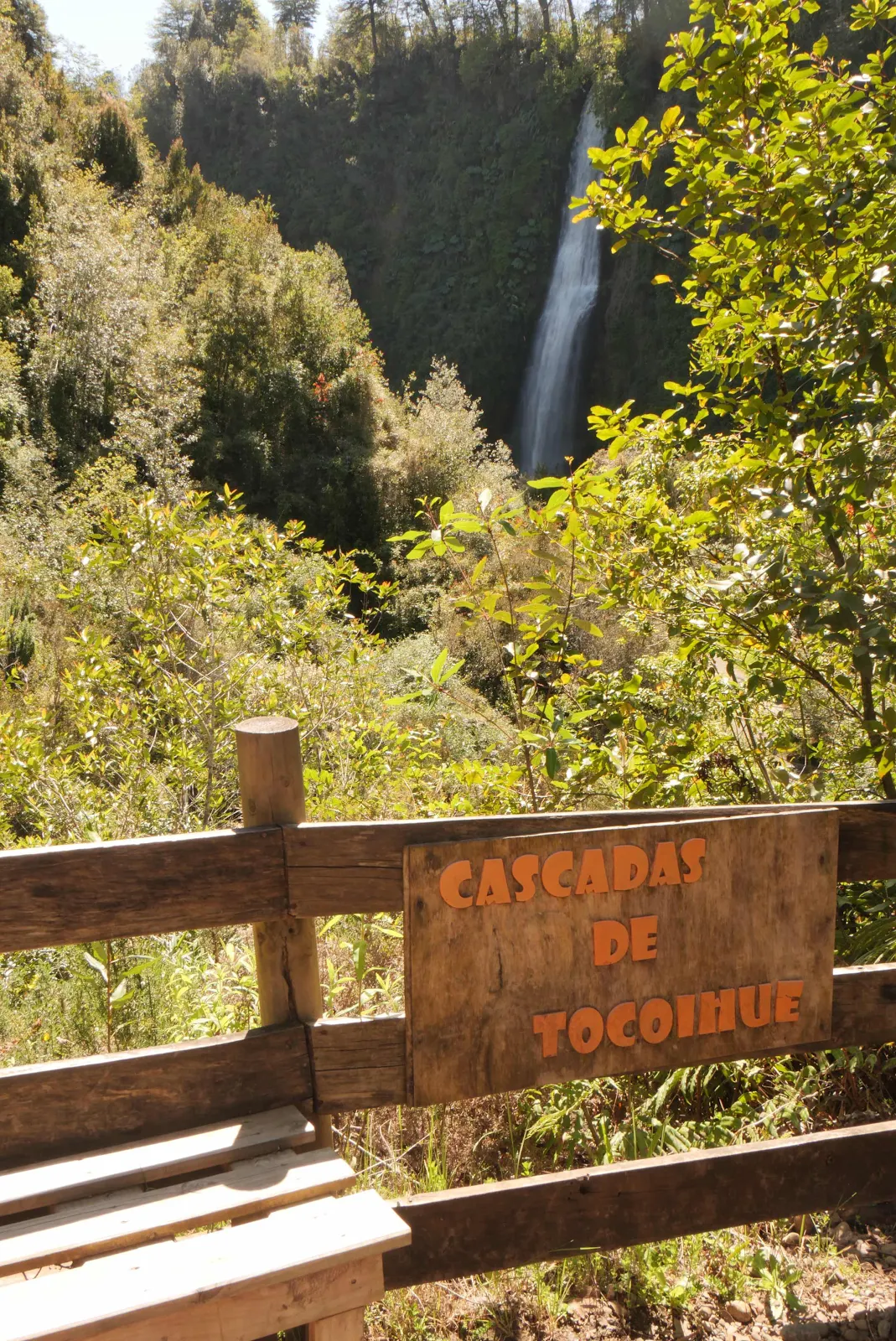
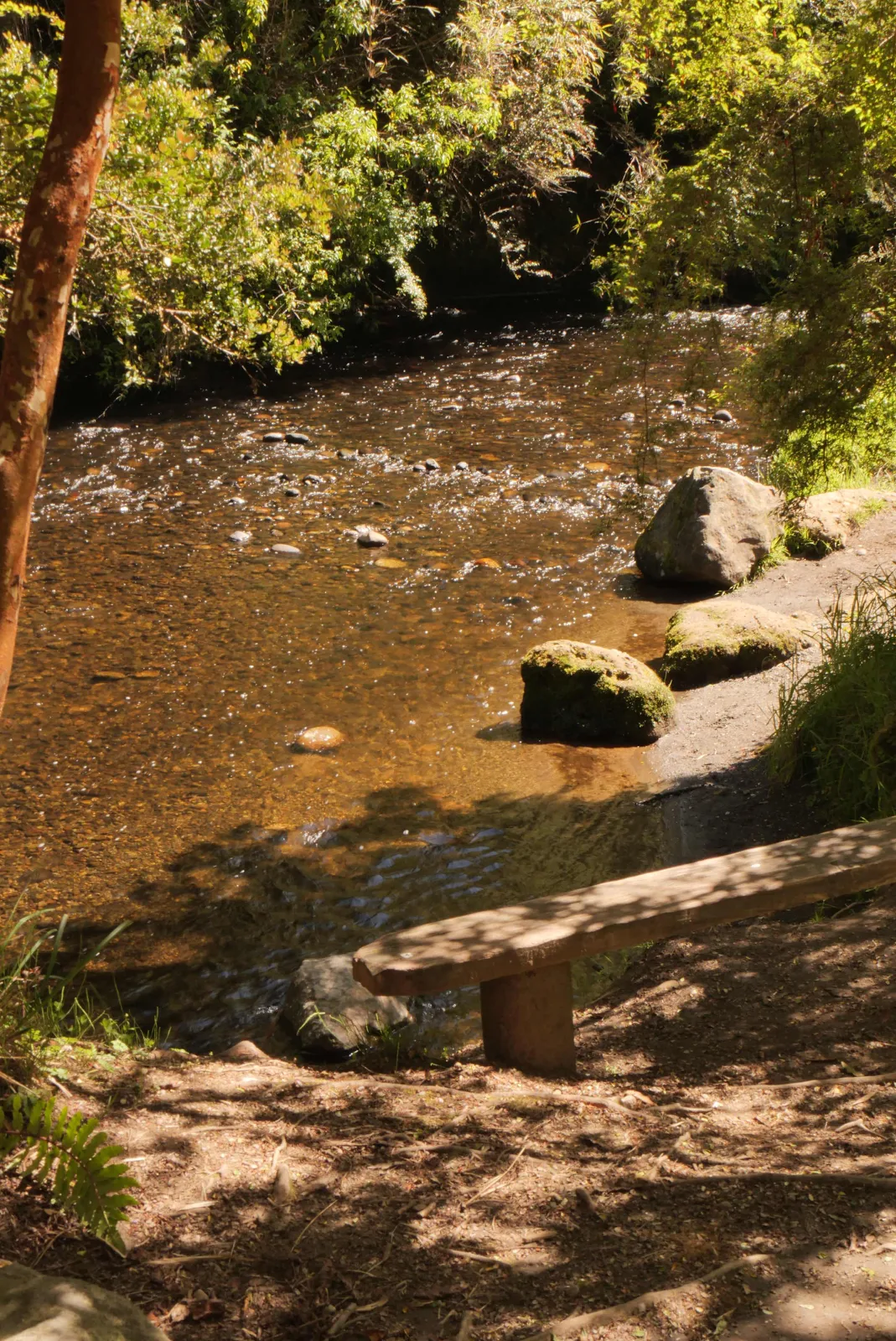
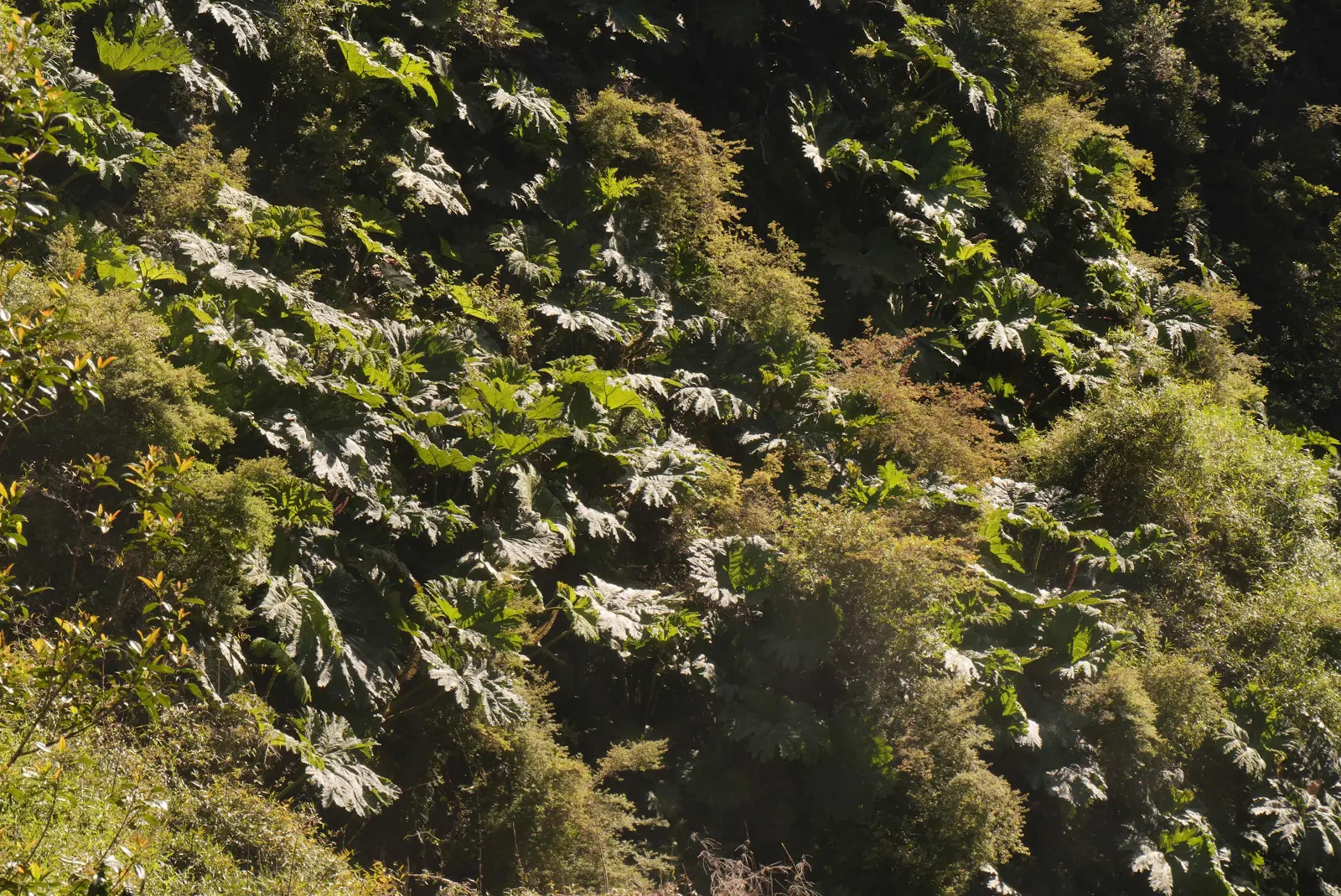
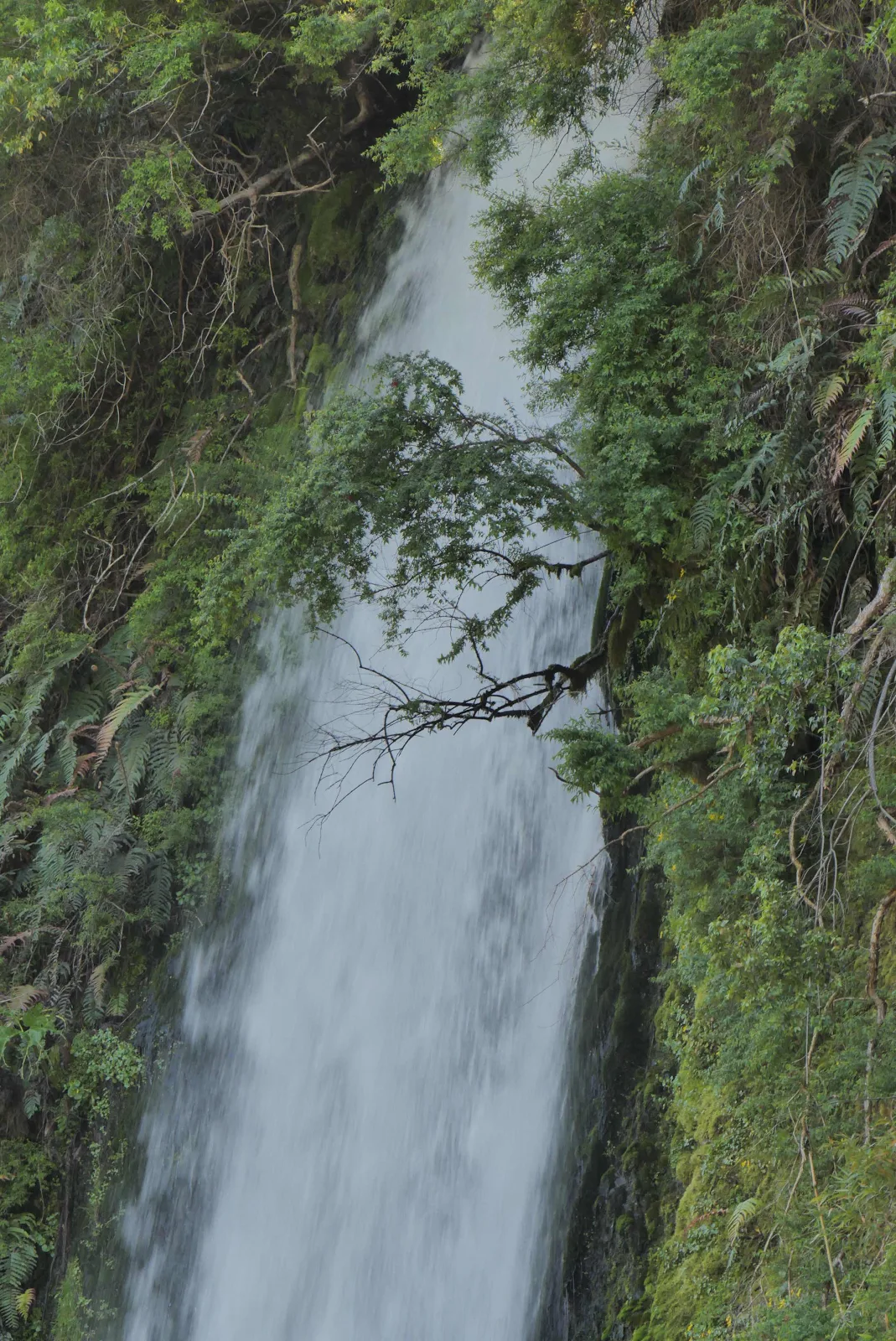
Layne likes waterfalls and luckily these are privately owned and dogs are allowed. It was a pleasant diversion.
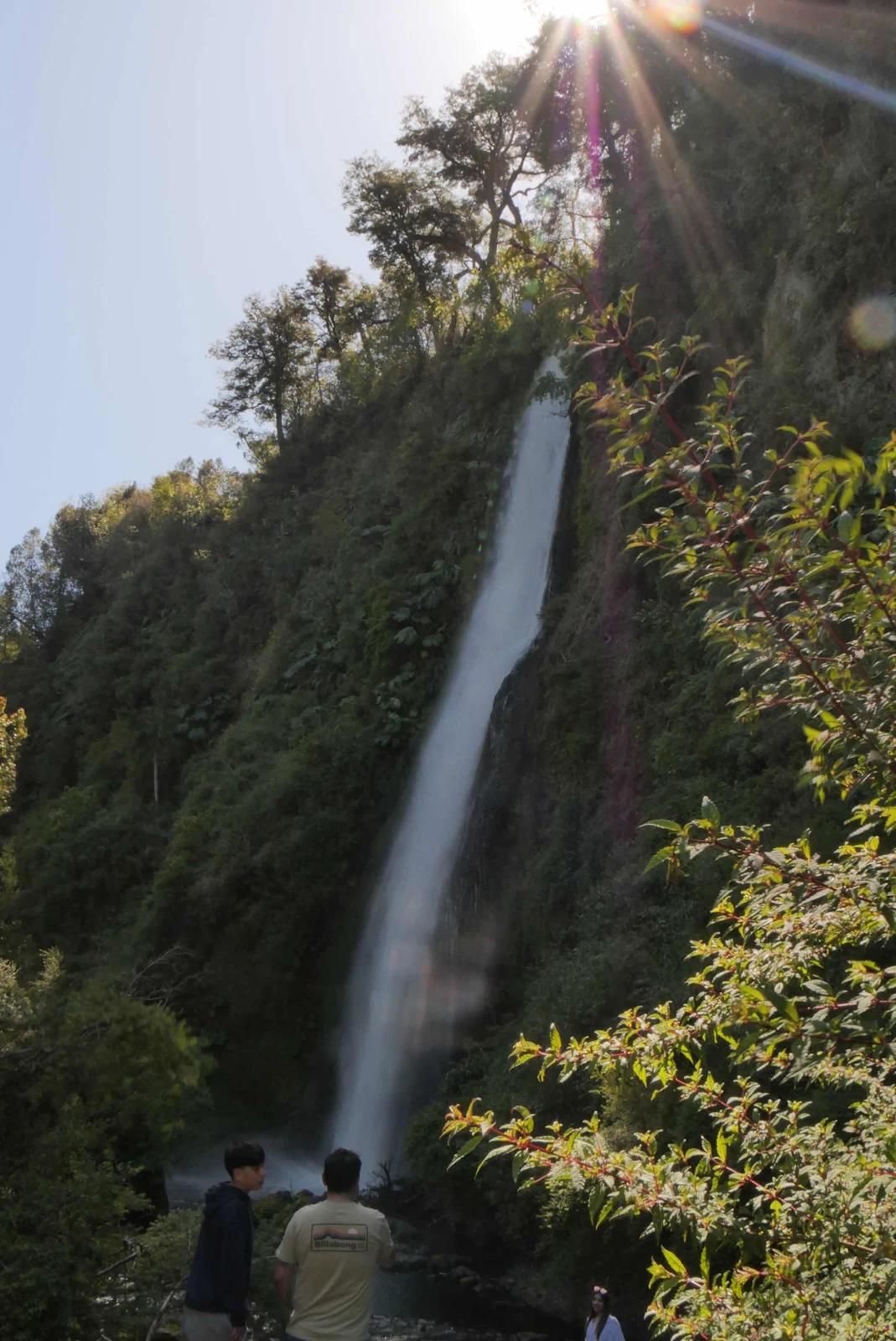
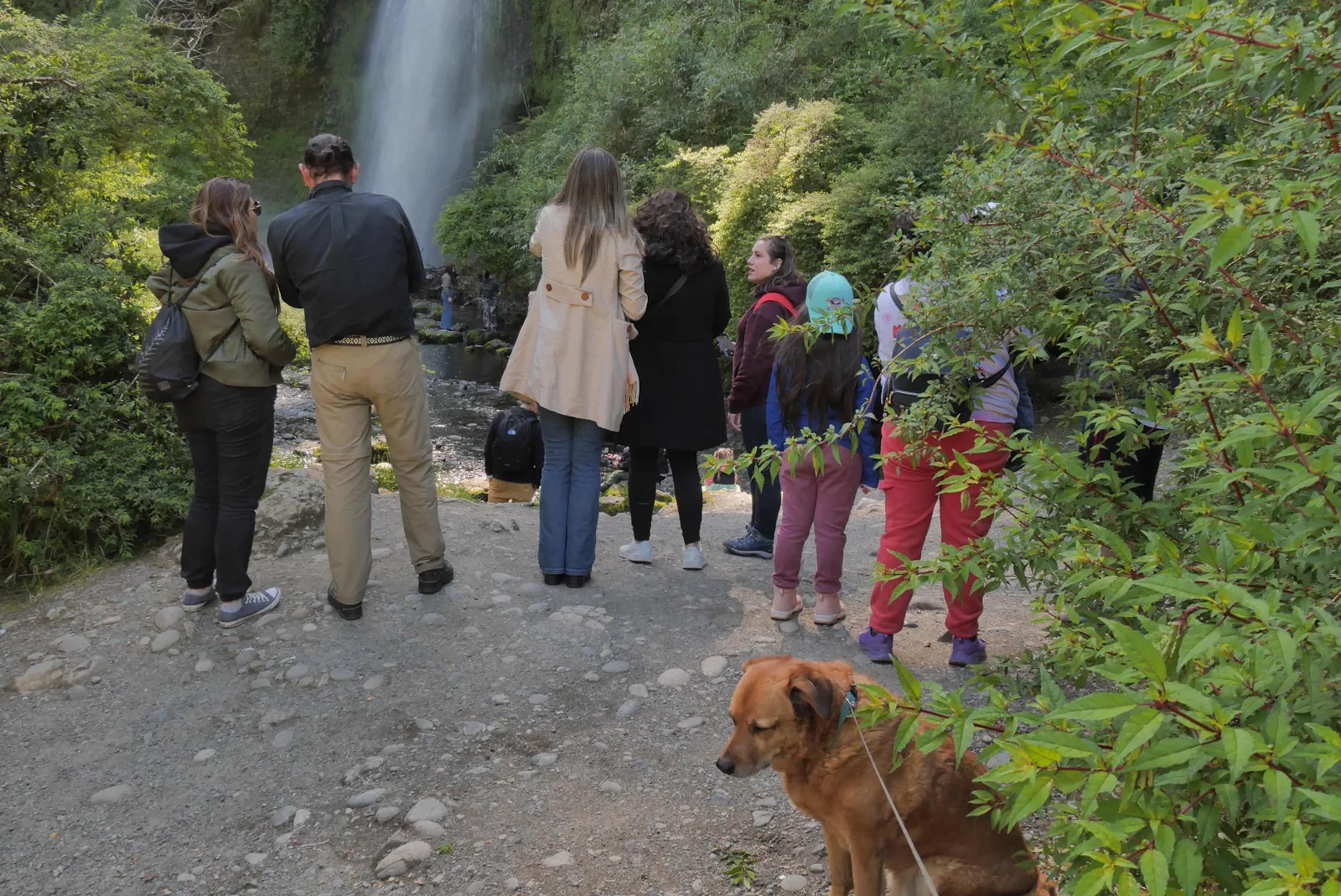
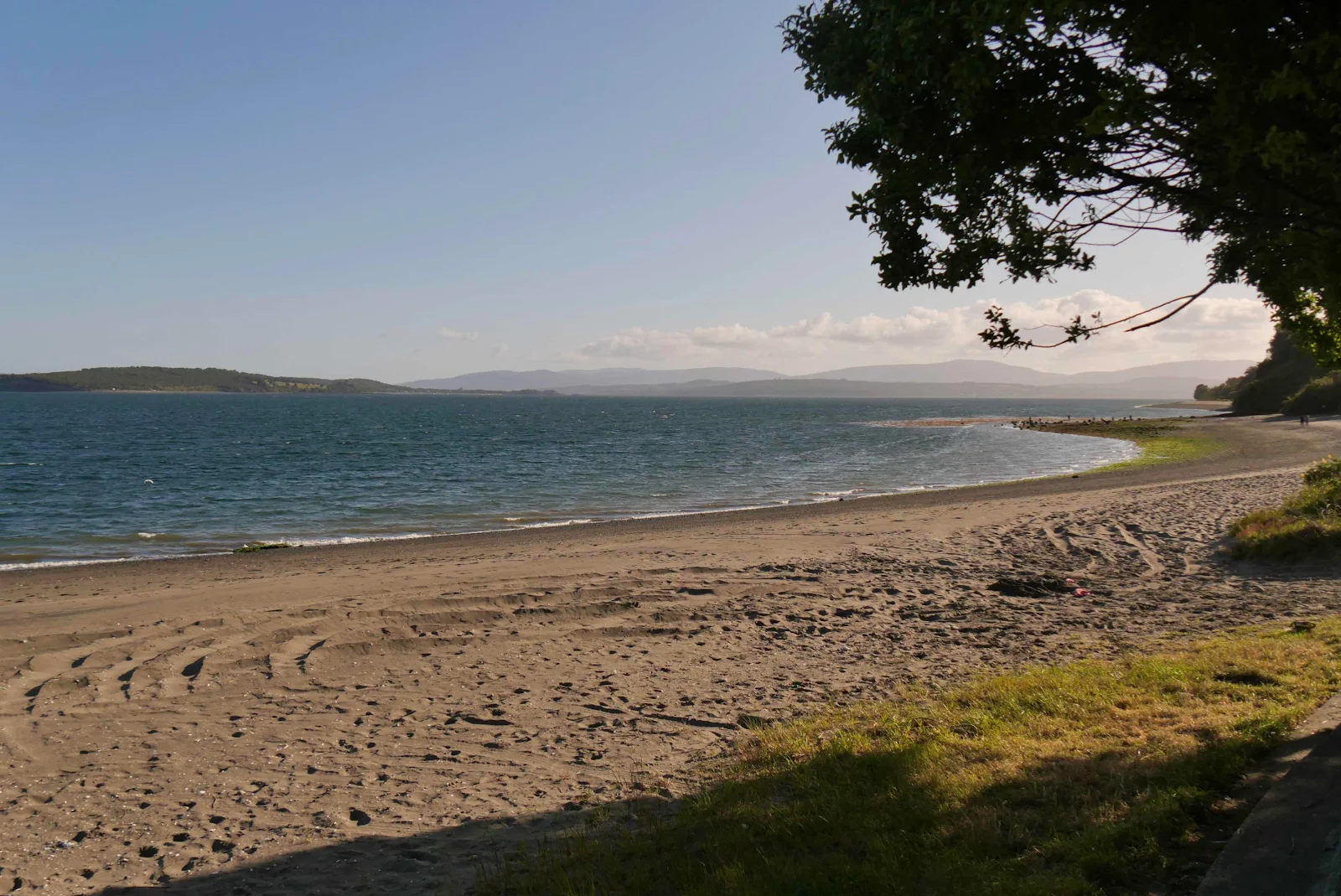
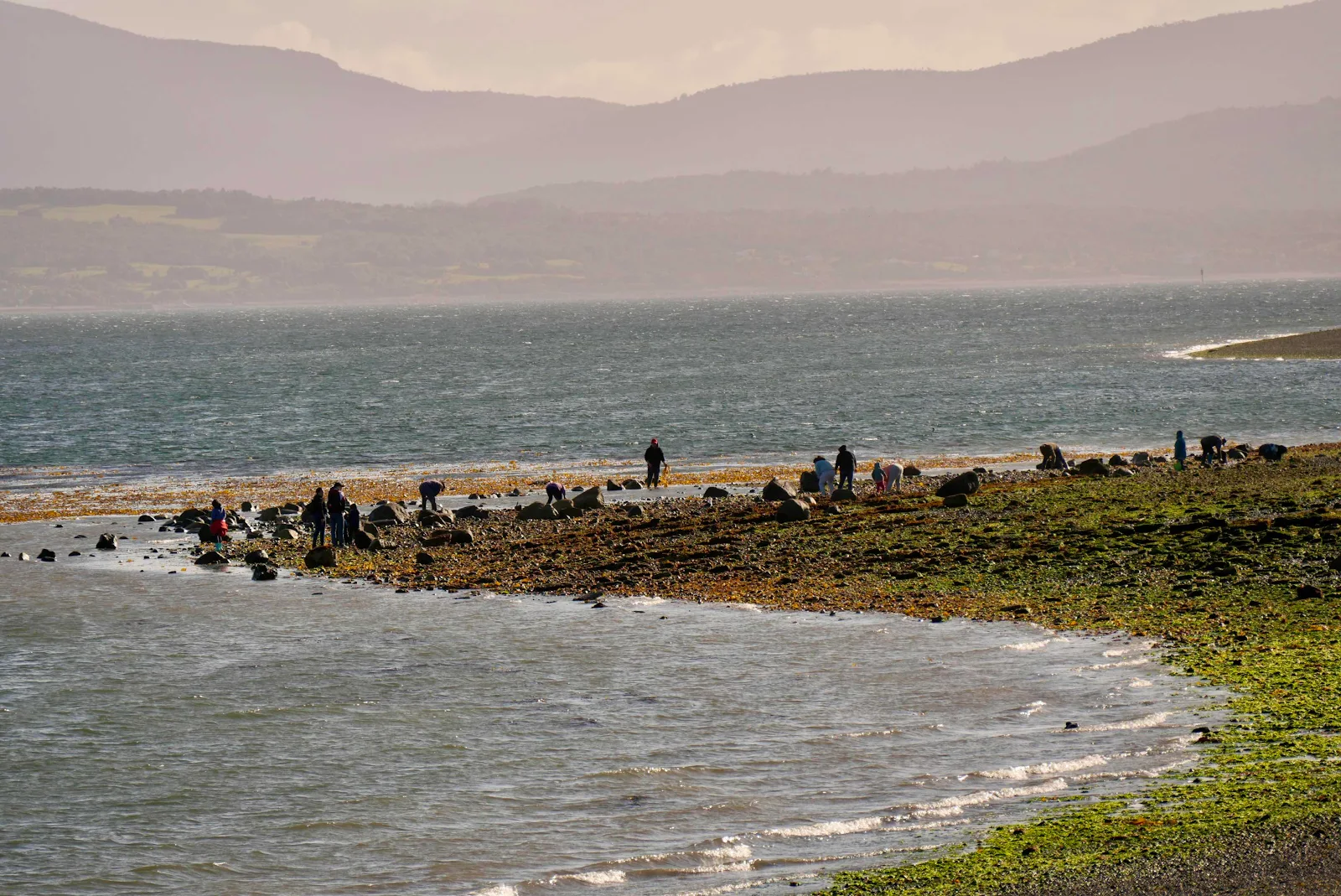
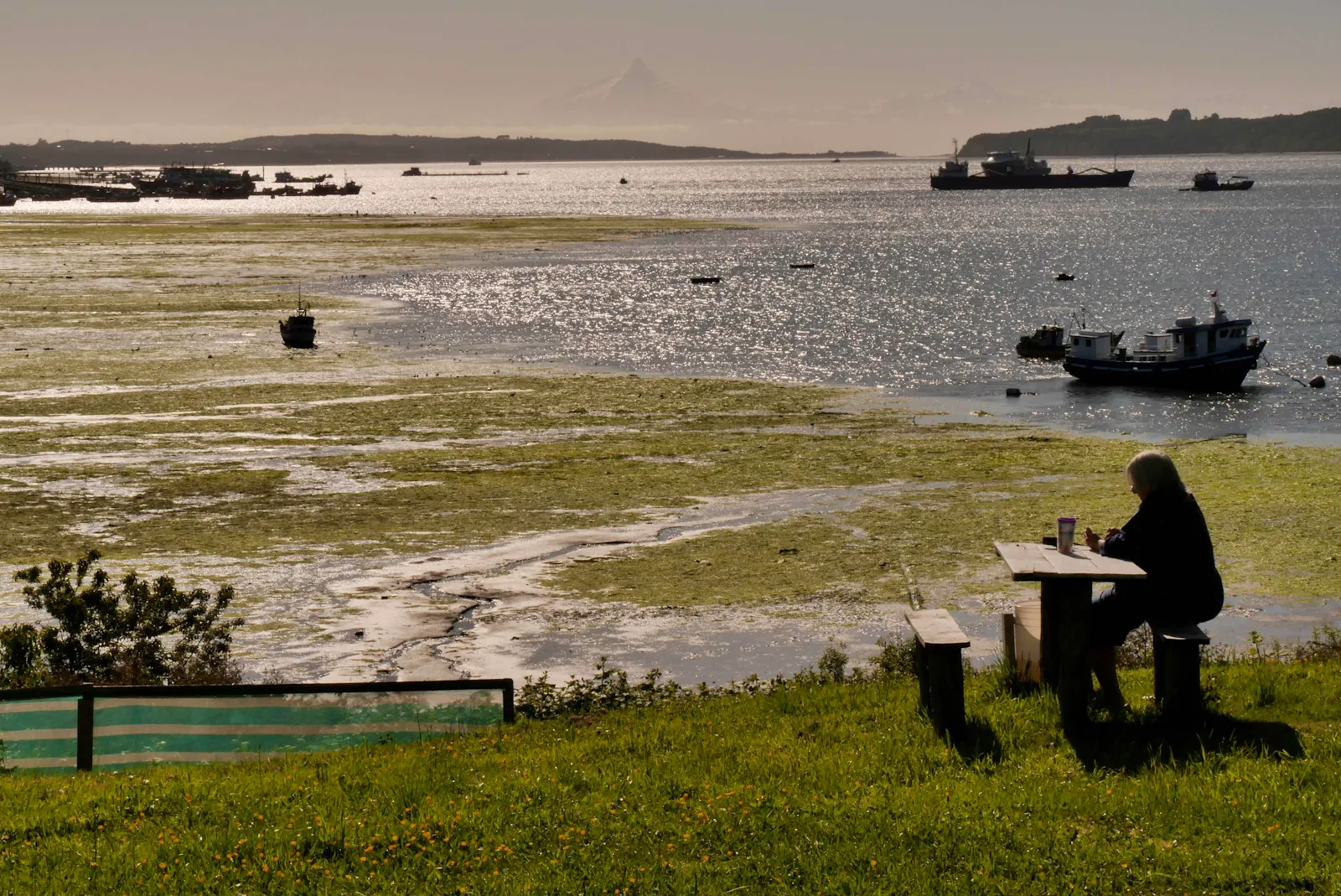
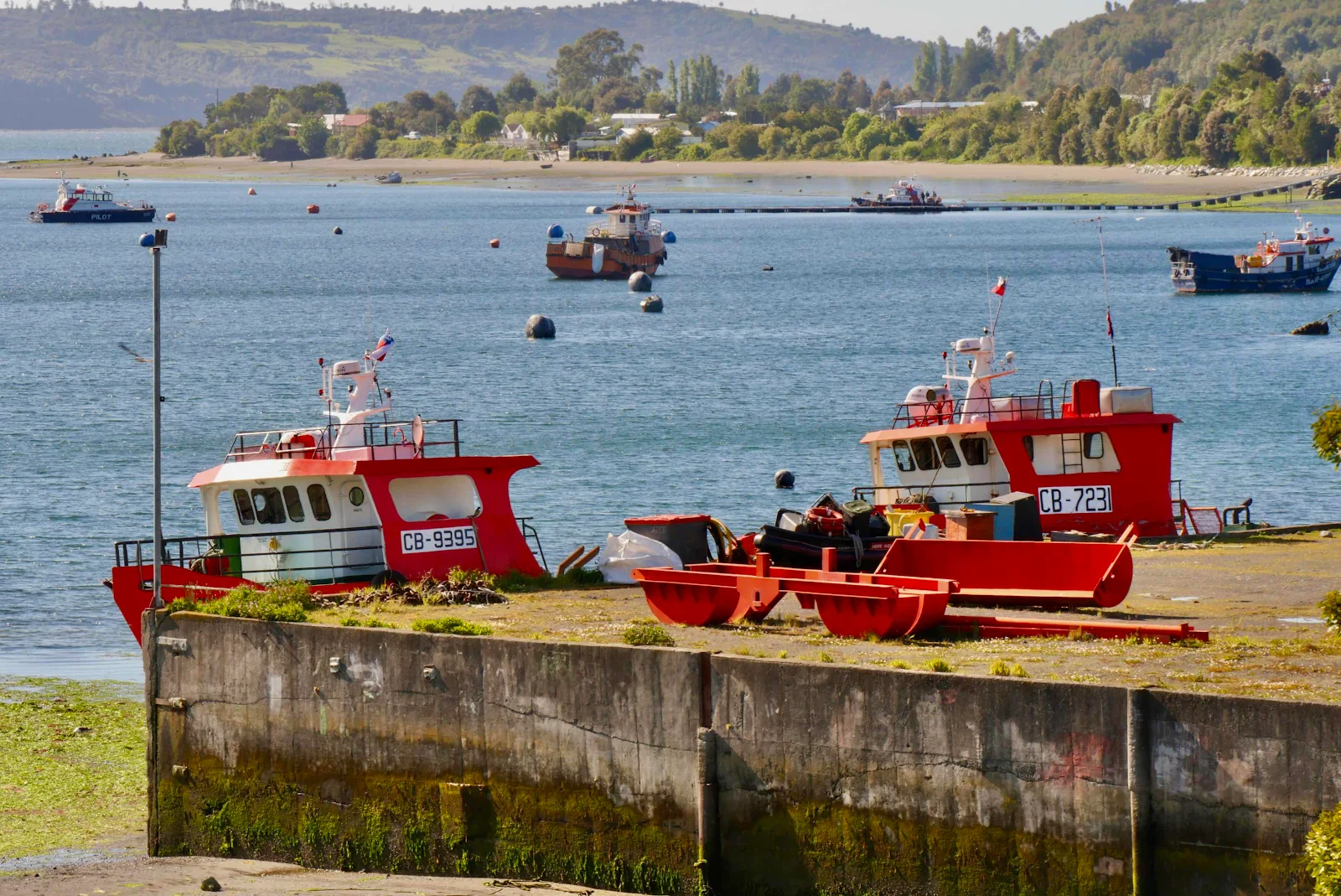
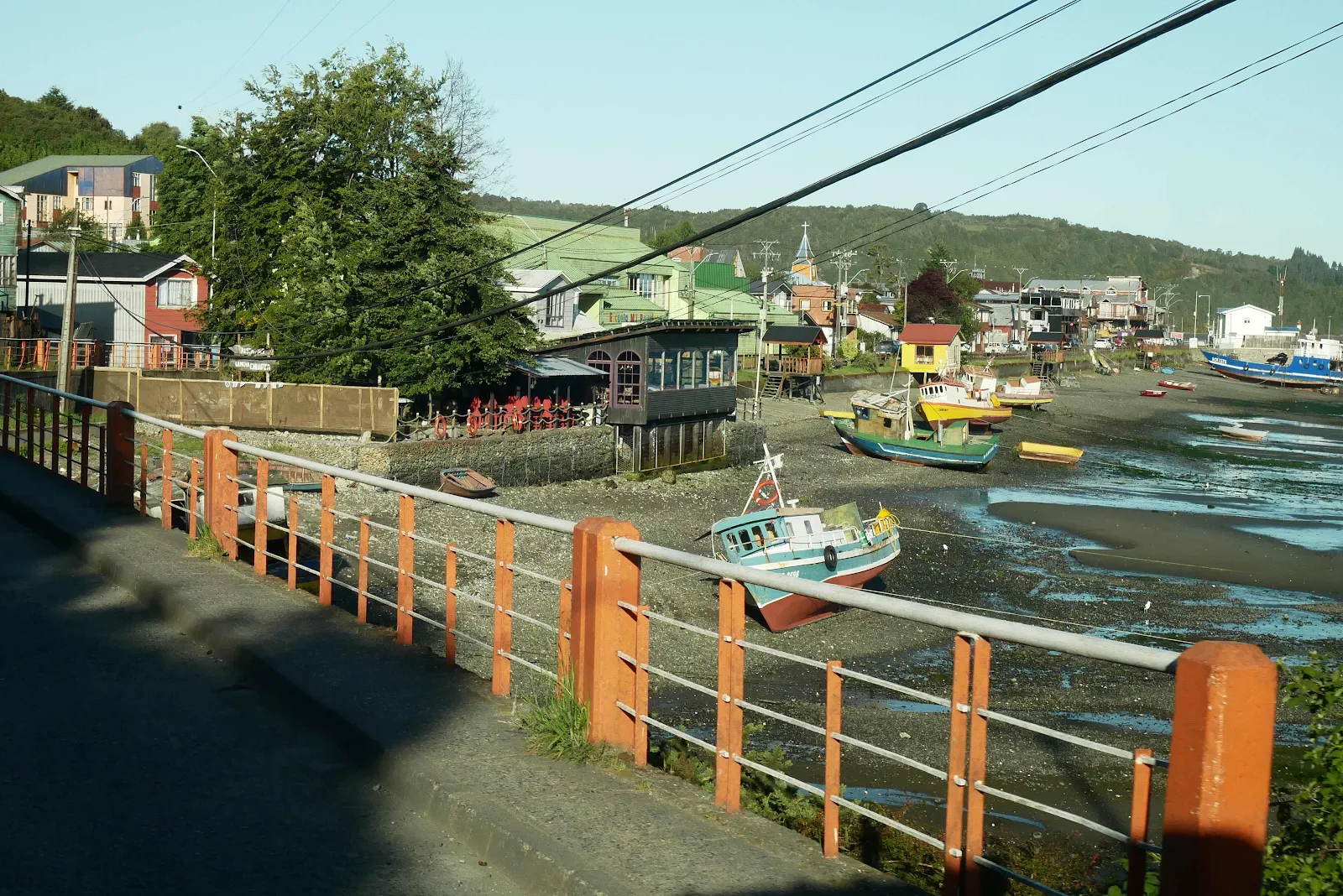
And then it was time for lunch. Quimche is a small fishing village on the east coast and I can only imagine how crowded it must get in summer but this time of year there was parking galore on the water front.
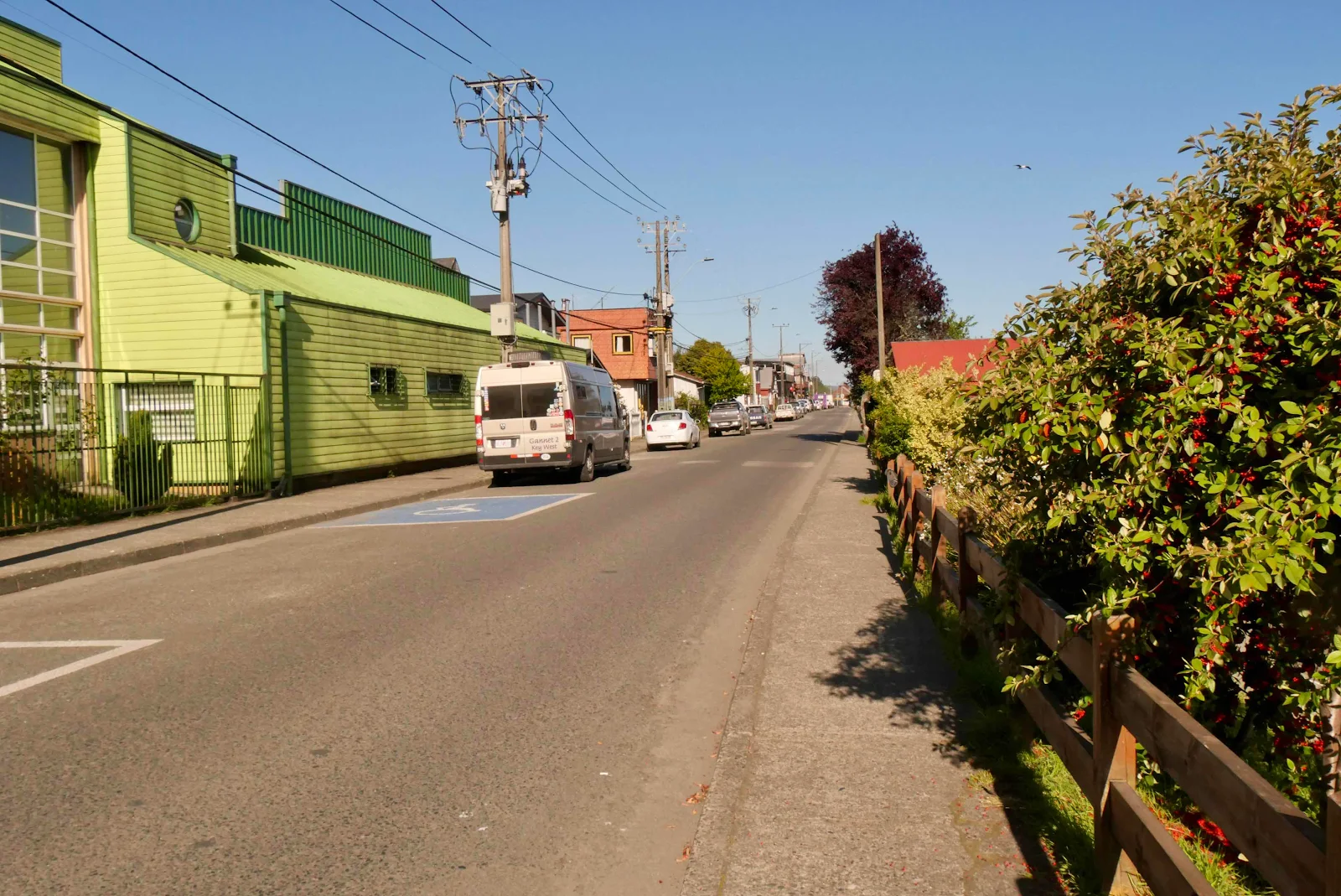
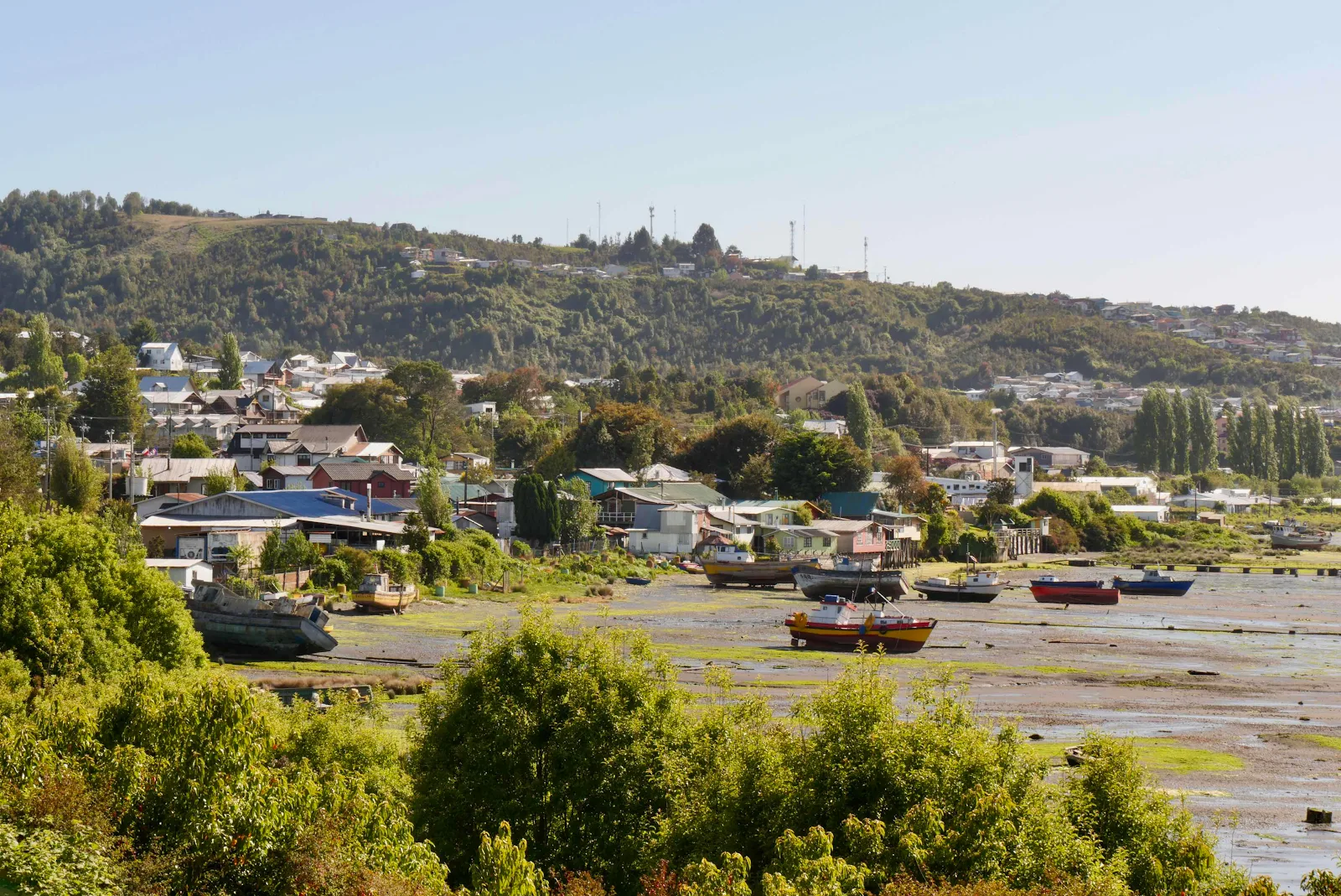
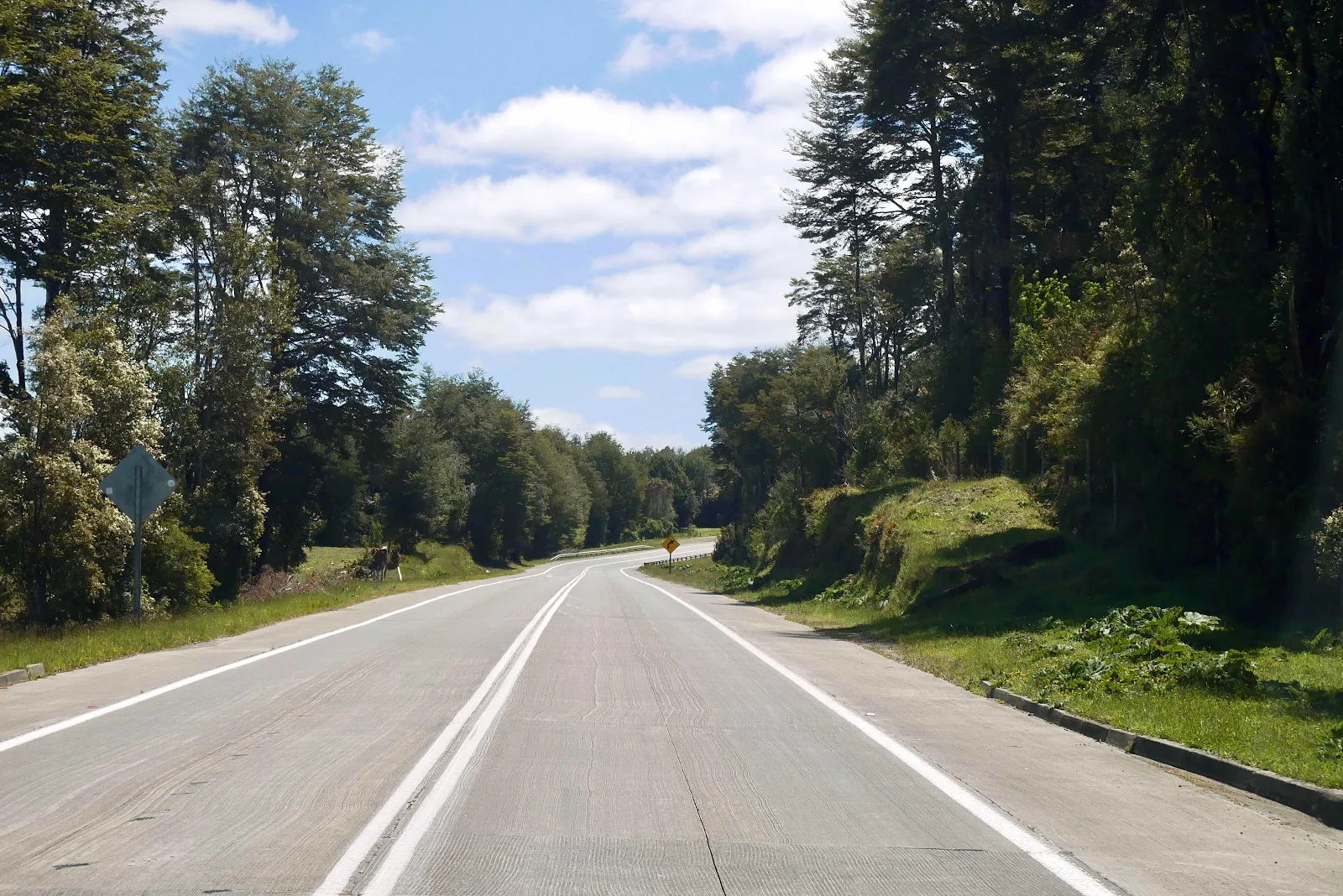
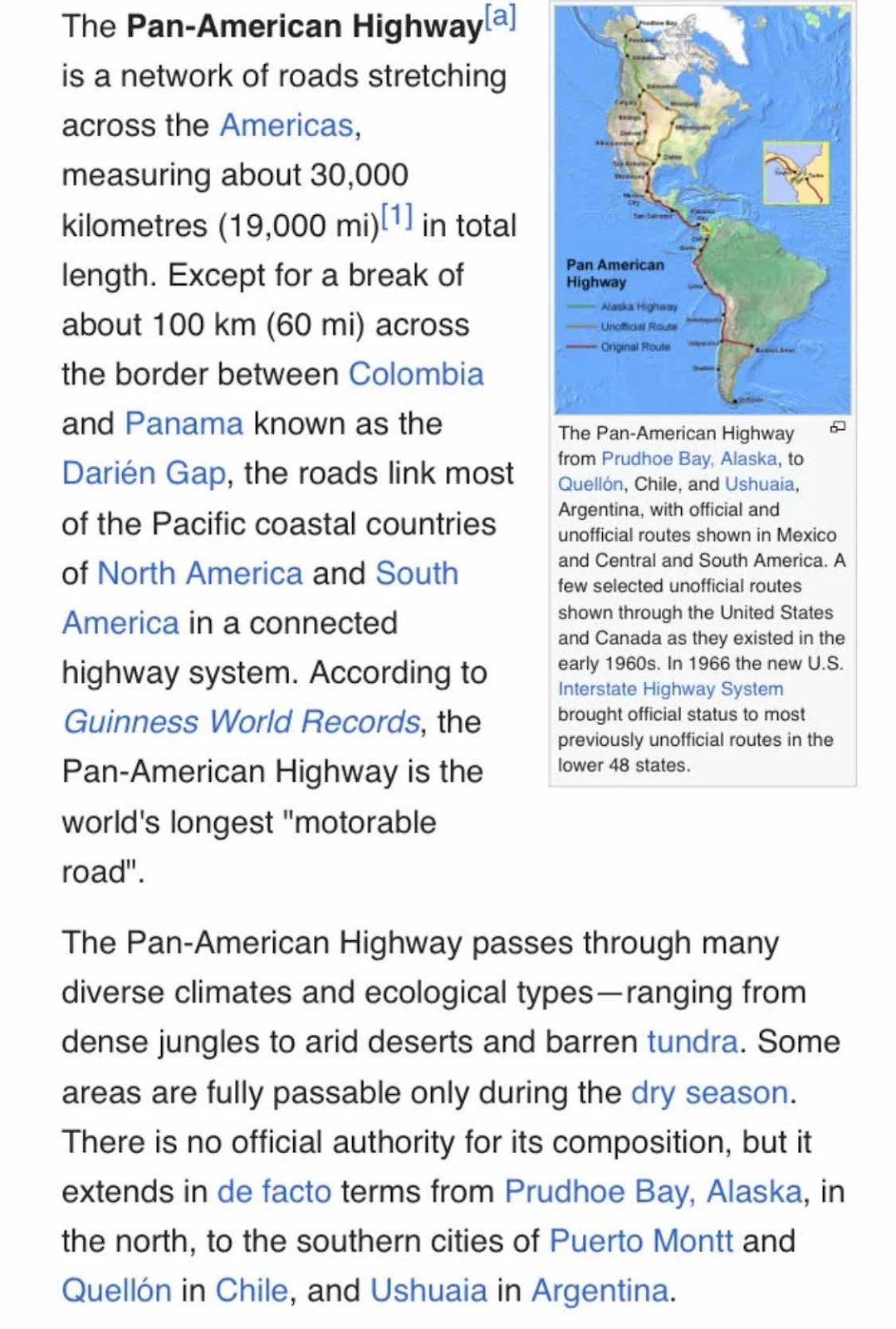
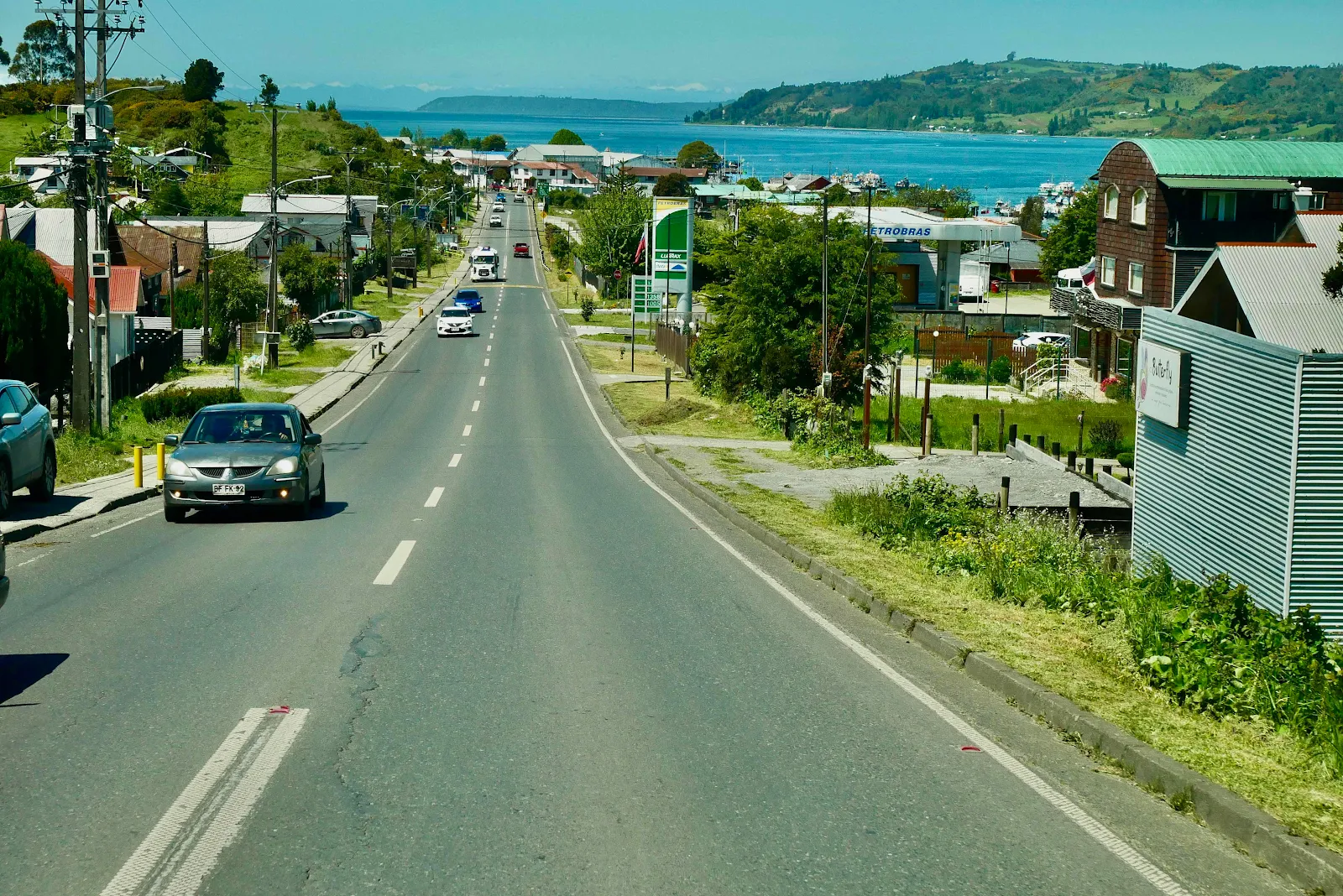
This coast road which avoids the gruesomely paved PanAmerican is smooth and winding and great fun to drive with steep hills and lovely views, here coming down the hill into Quemchi.
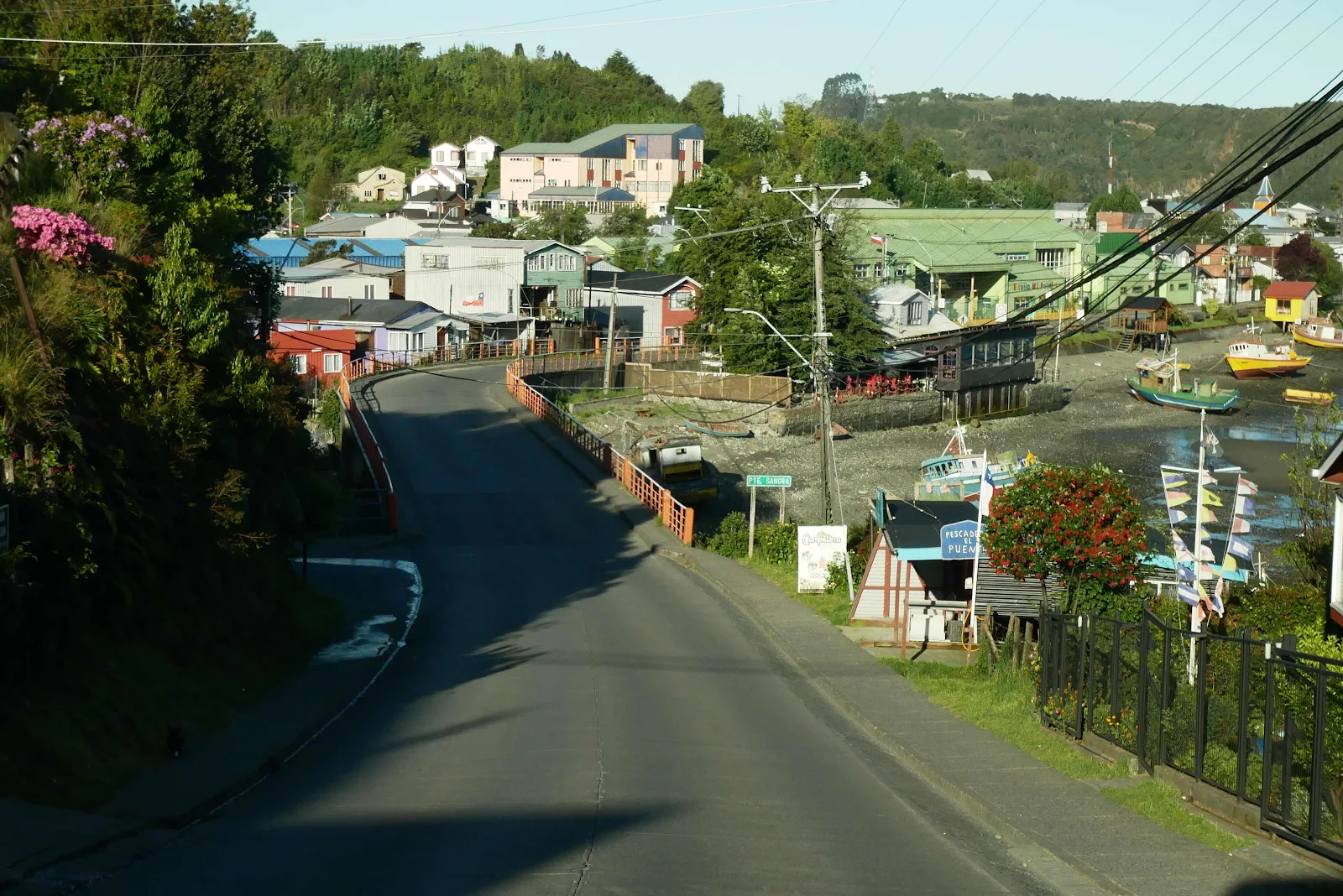
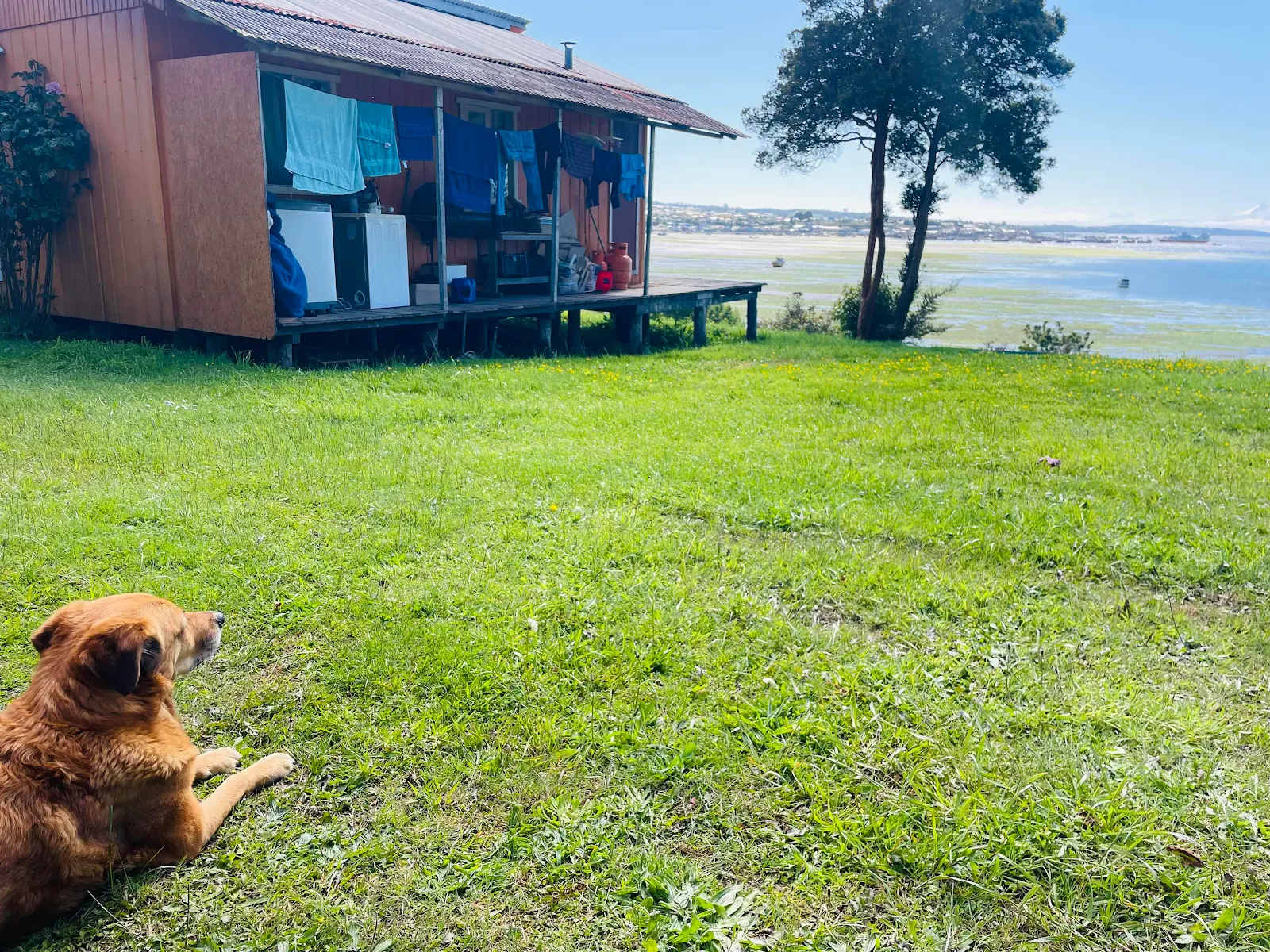
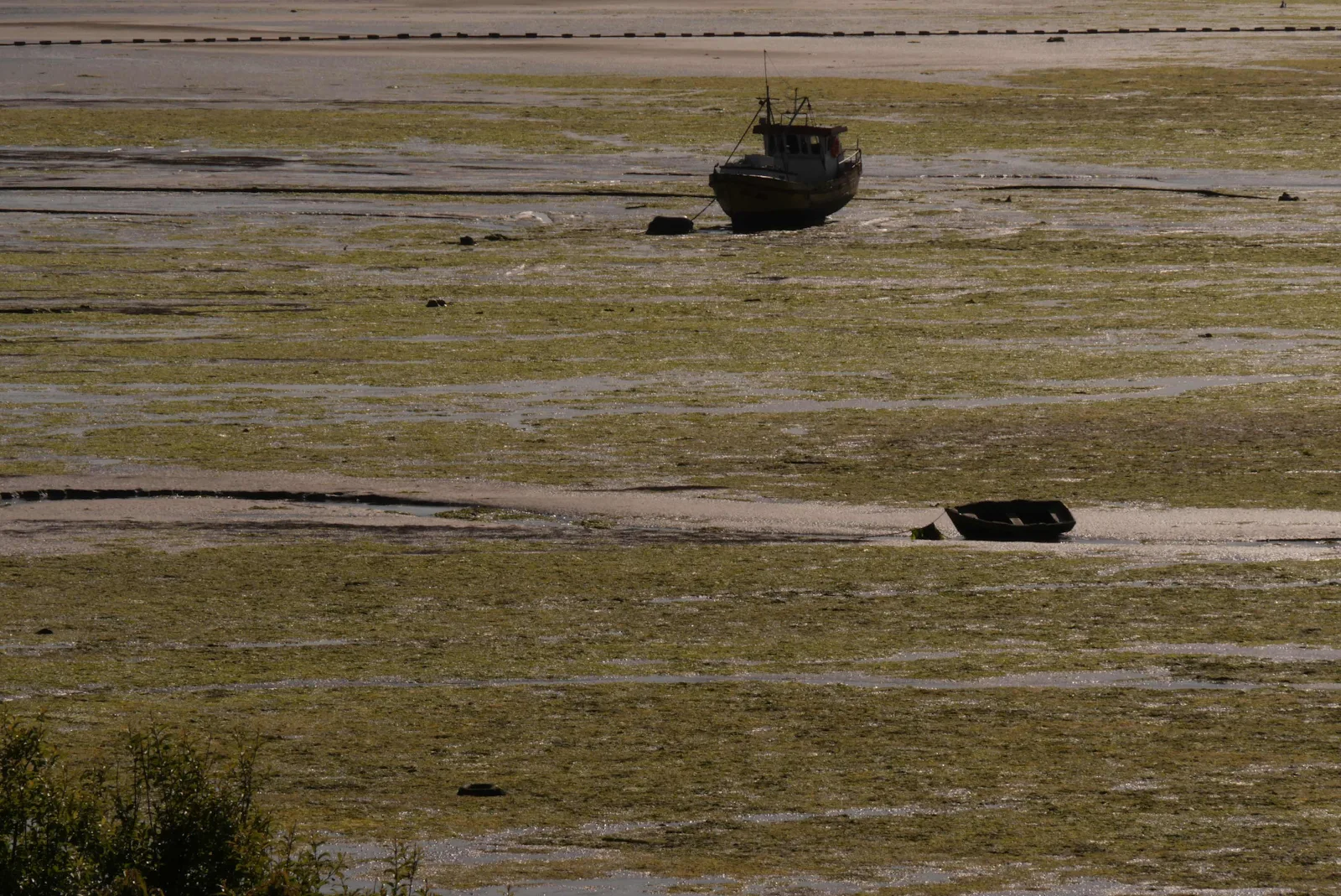
That dark wooden building overlooking the tidal flat was our goal.
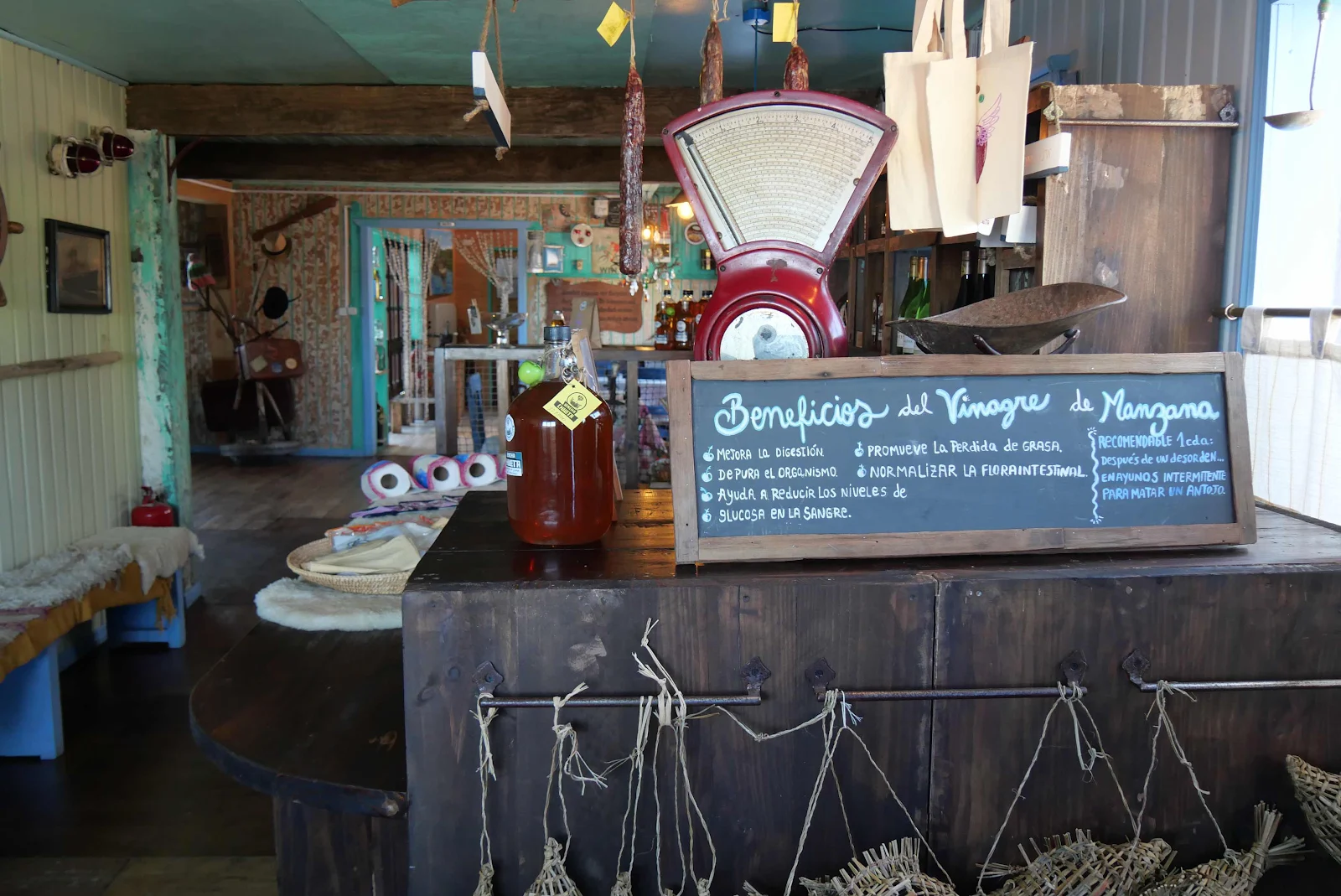
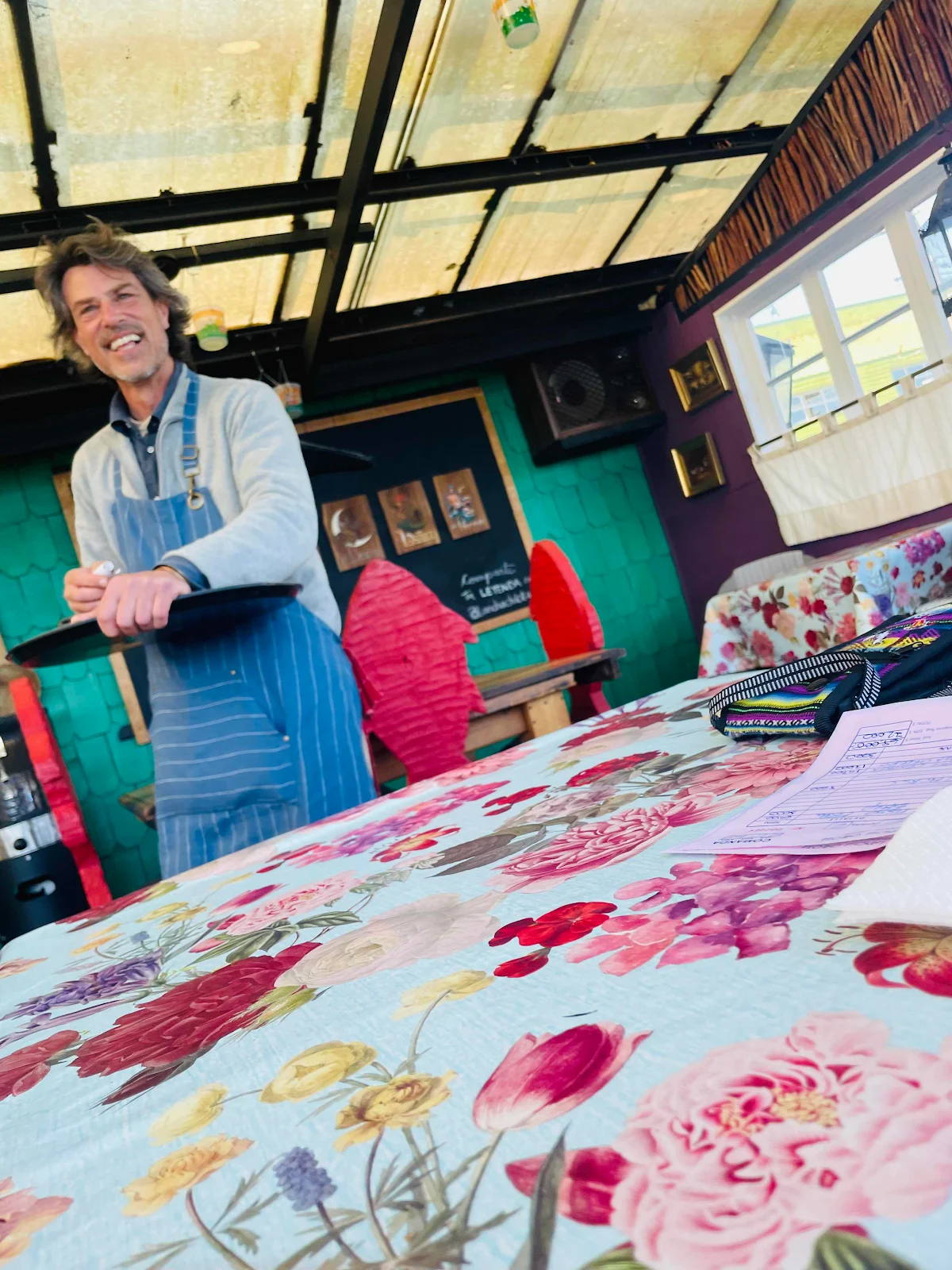
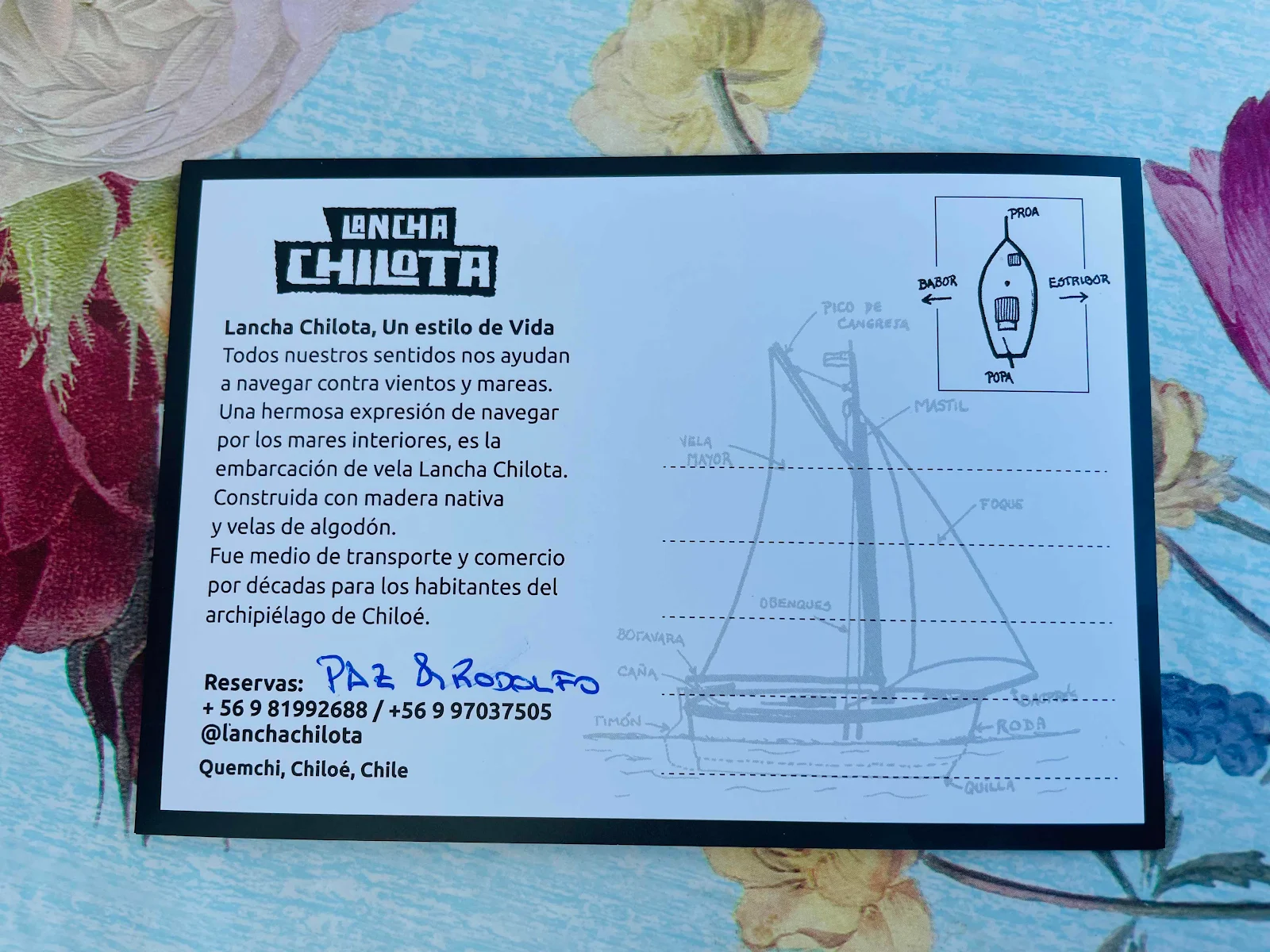
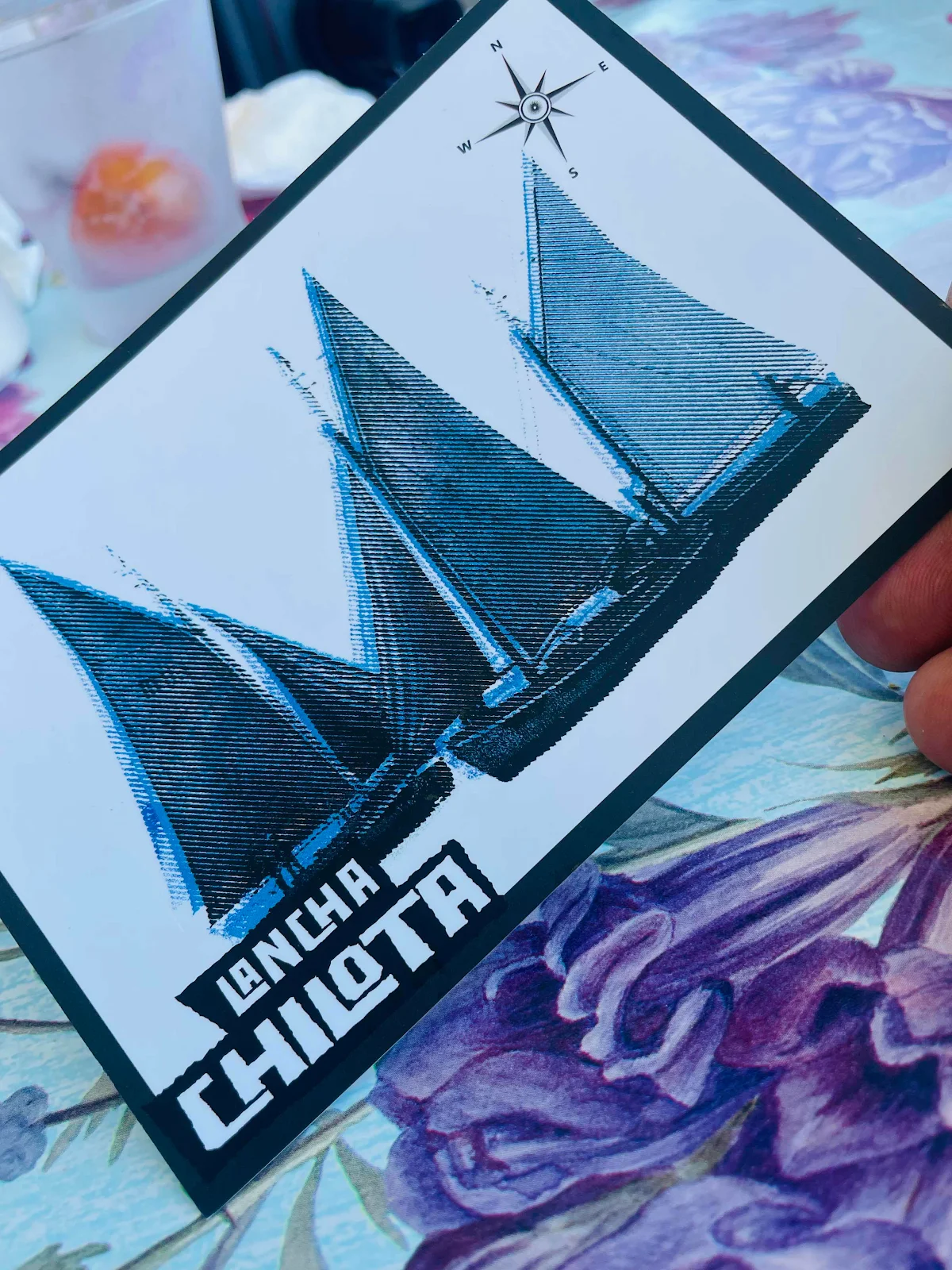
Lancia Chilota translates into “traditional sailing boat from Chiloé as the owner of the place is a sailor is building himself a traditional fishing boat. He used to come to Chiloé as a lad and did this summer vacations working as a deckhand on sailing tour boats. He got sick of the rat race so he had his wife settled here five years ago and make apple vinegar and art in the interface feed visitors in the three other seasons.
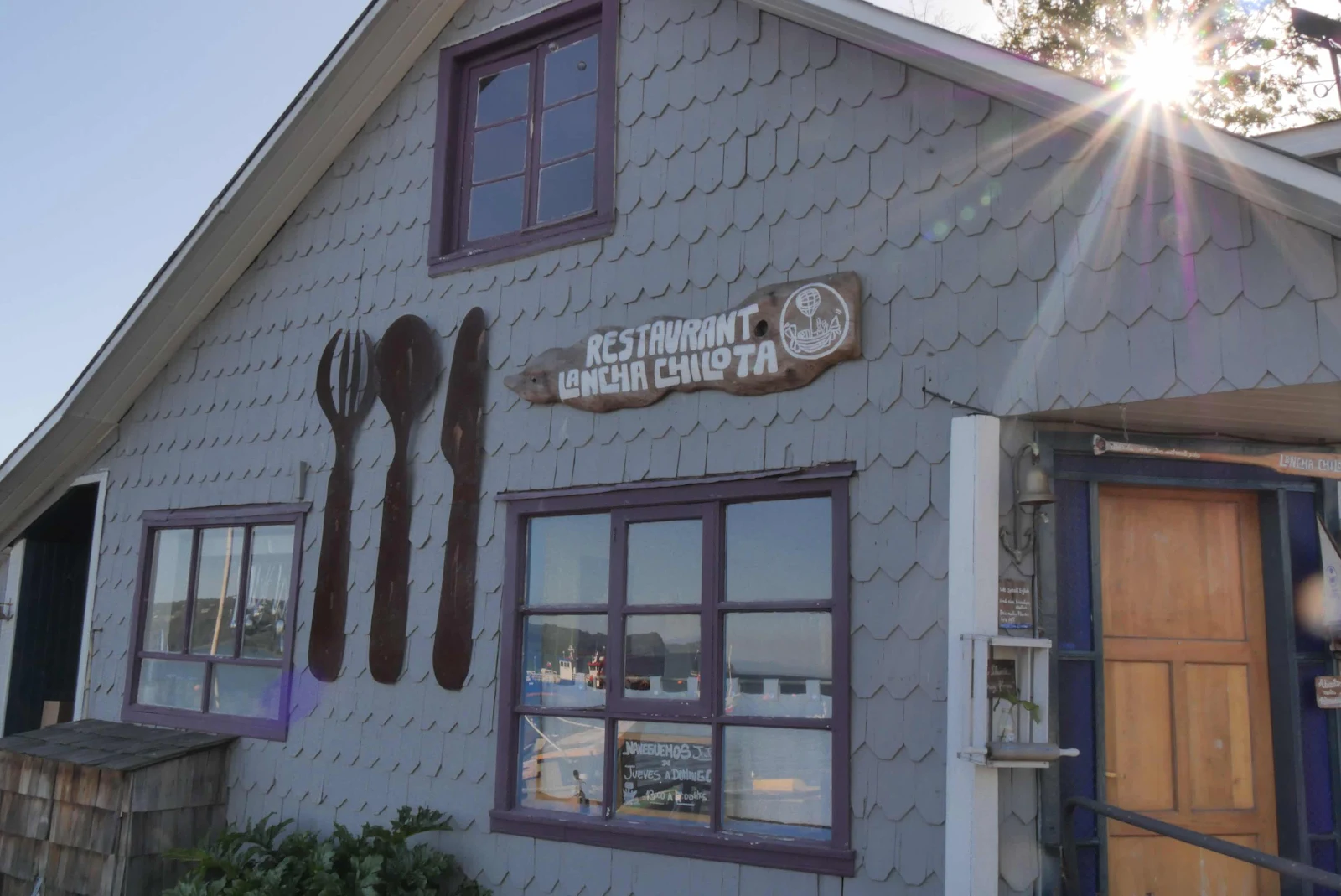
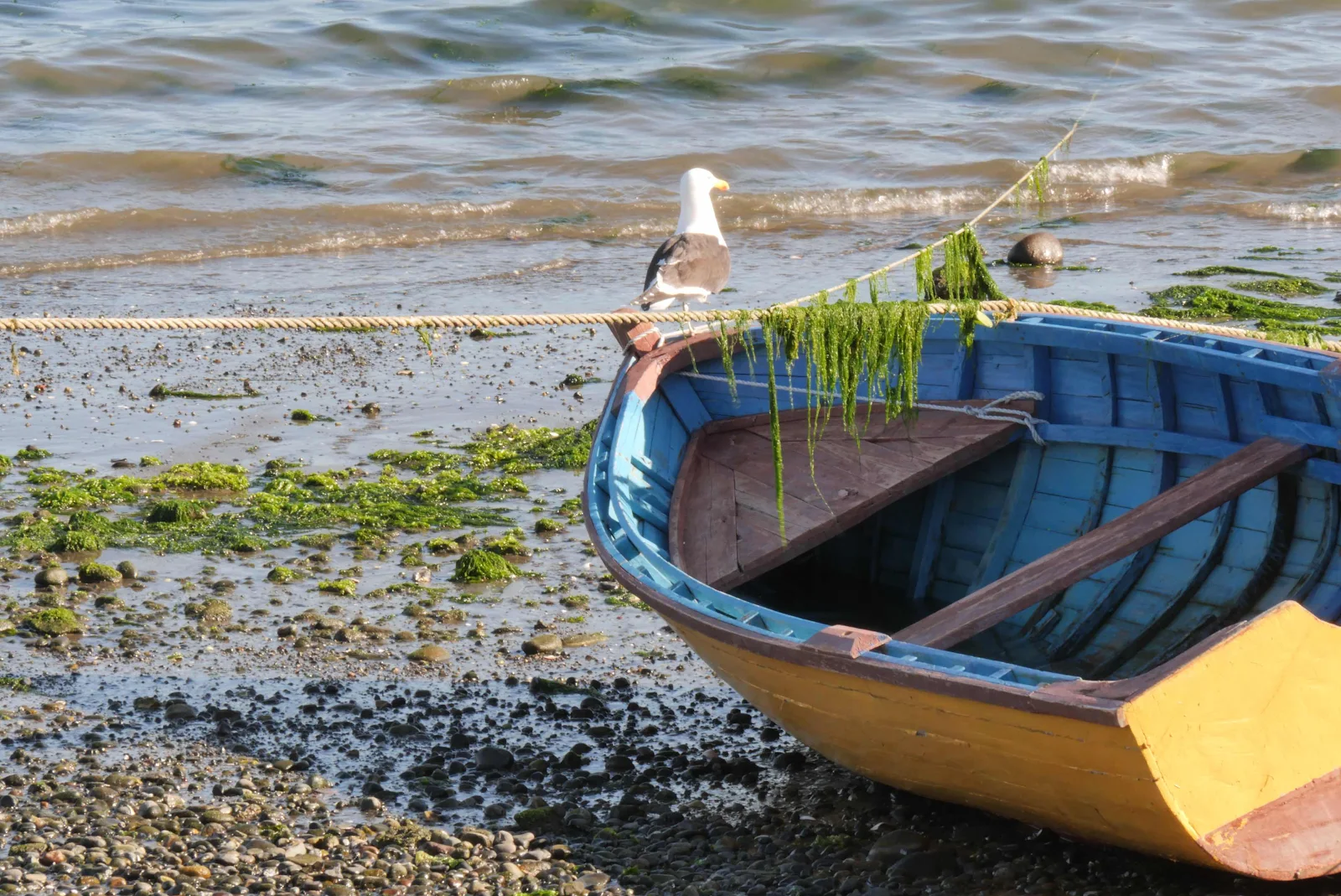
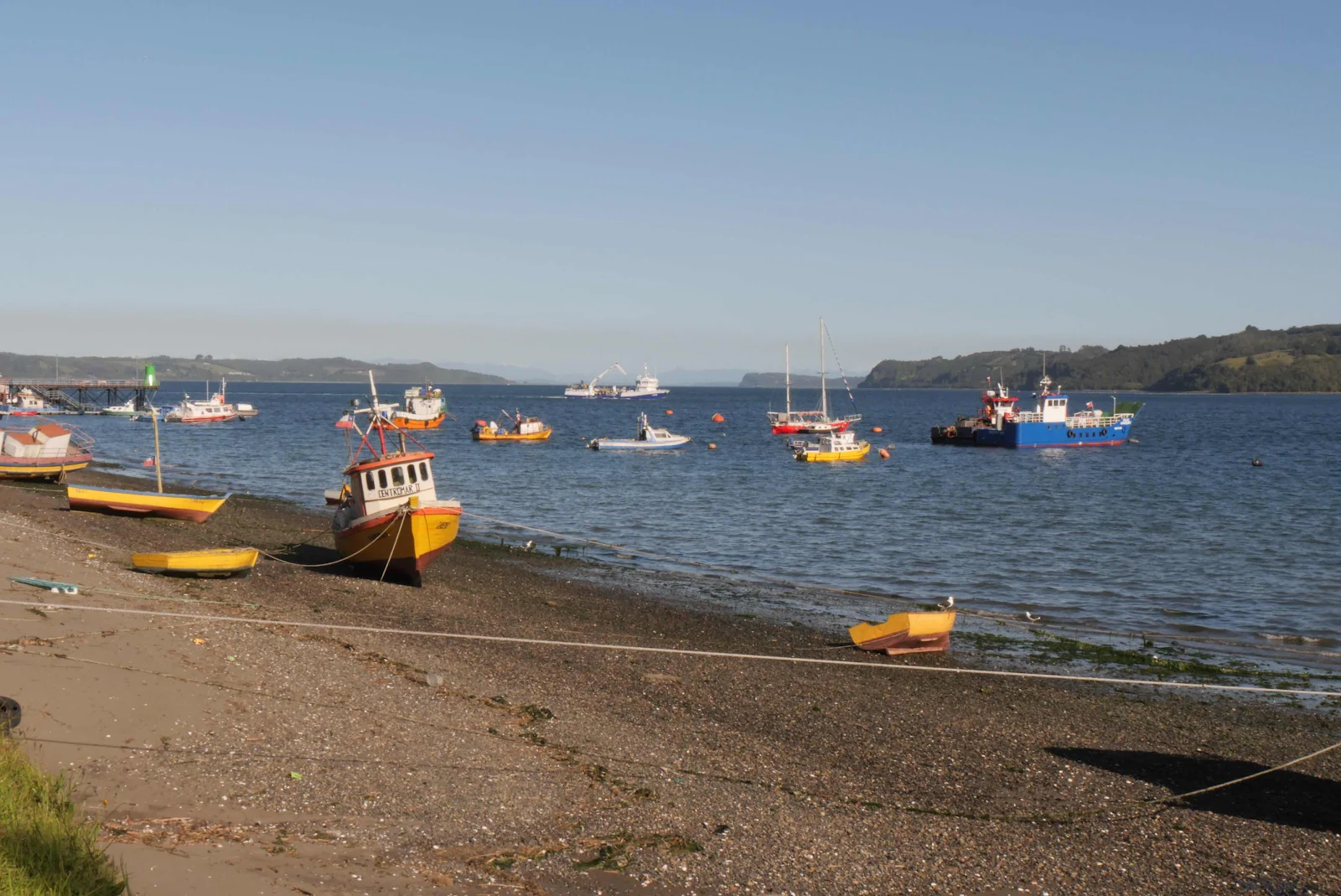
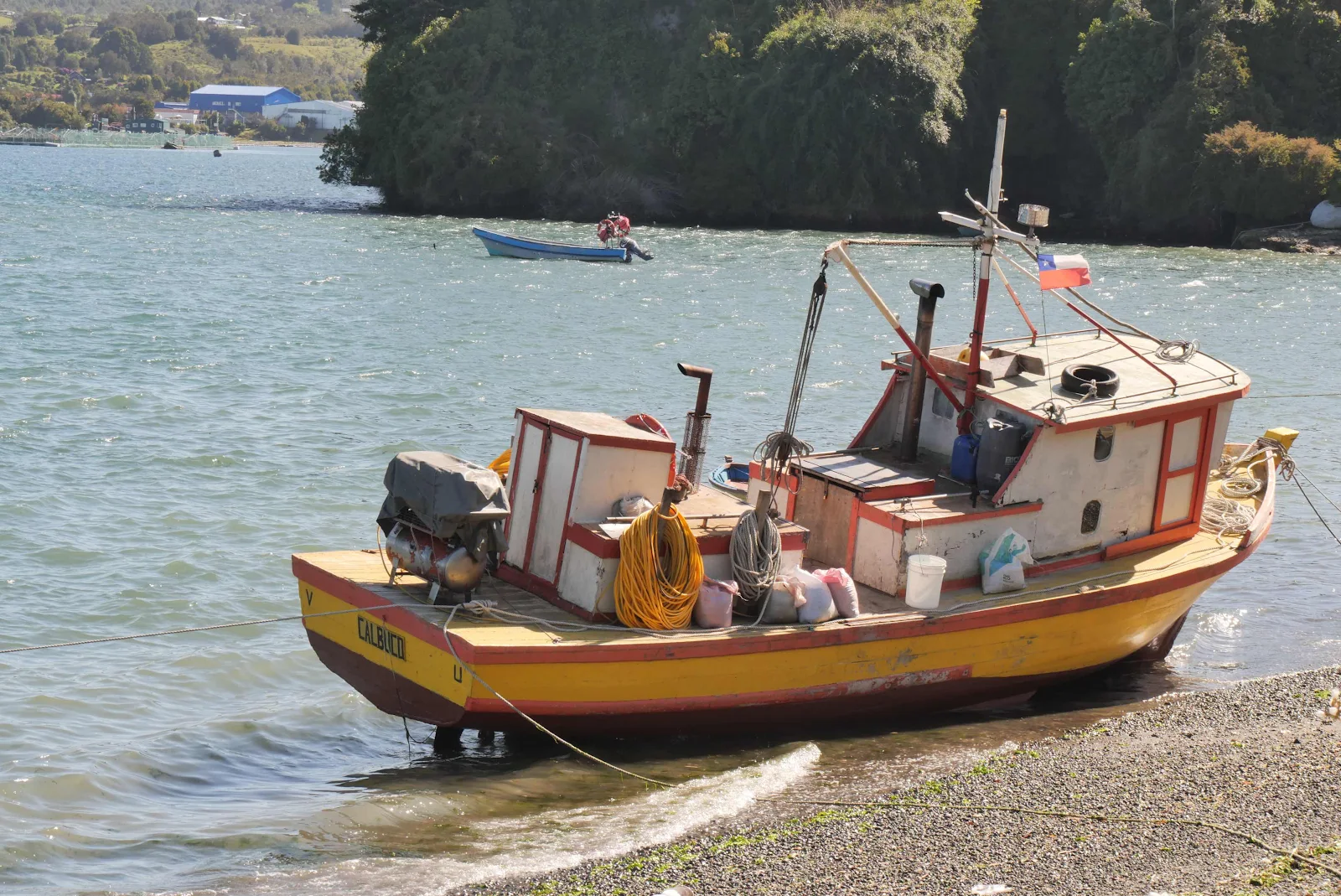
He speaks English and is totally enthusiastic about Chiloé, Chile and local produce.
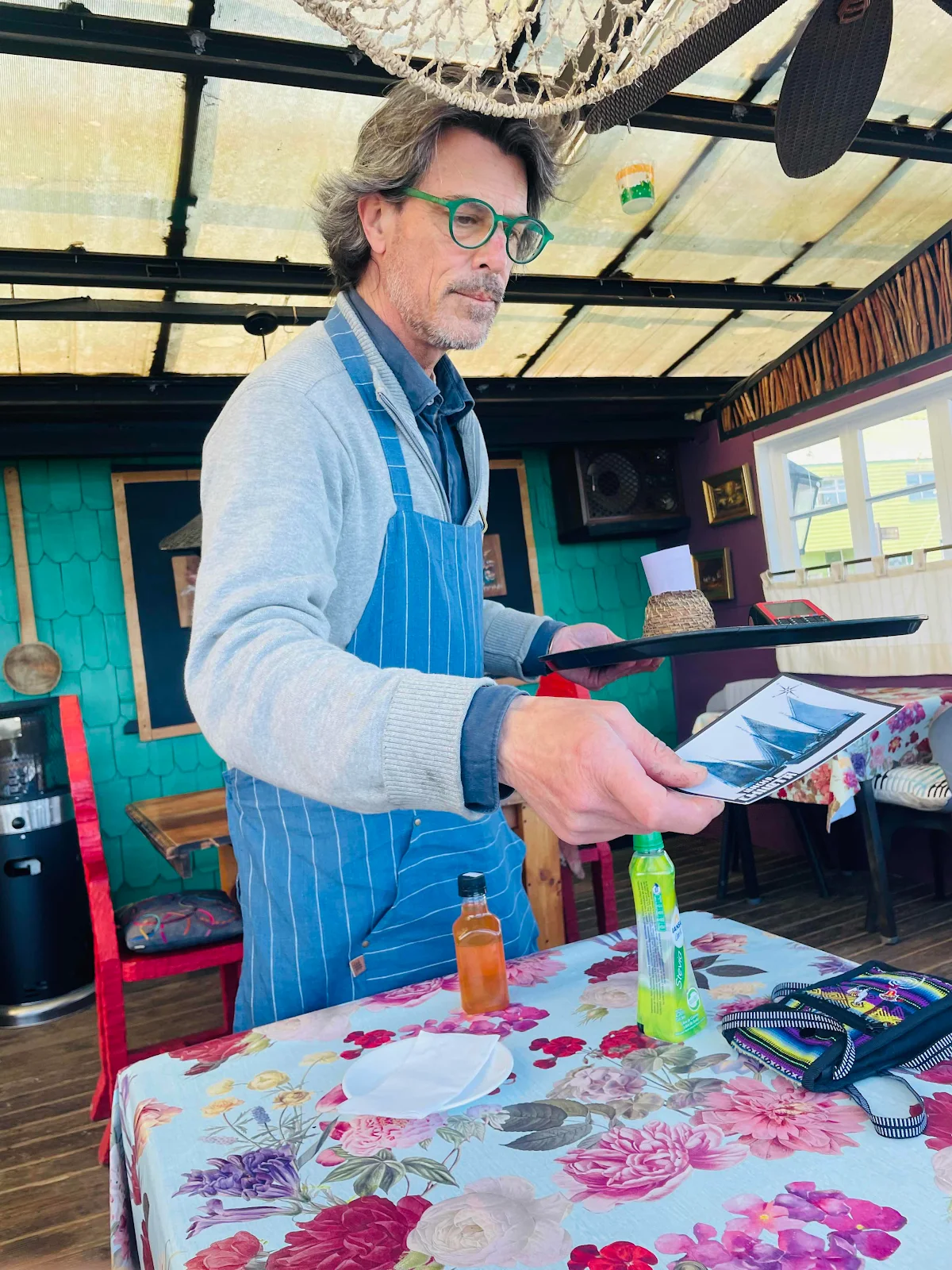
He is the most outgoing uninhibited Chilean we have met and I figured he must be a transplant from Argentina where people are known to be ebullient but no, he’s not even a traveler and Chile is his home.
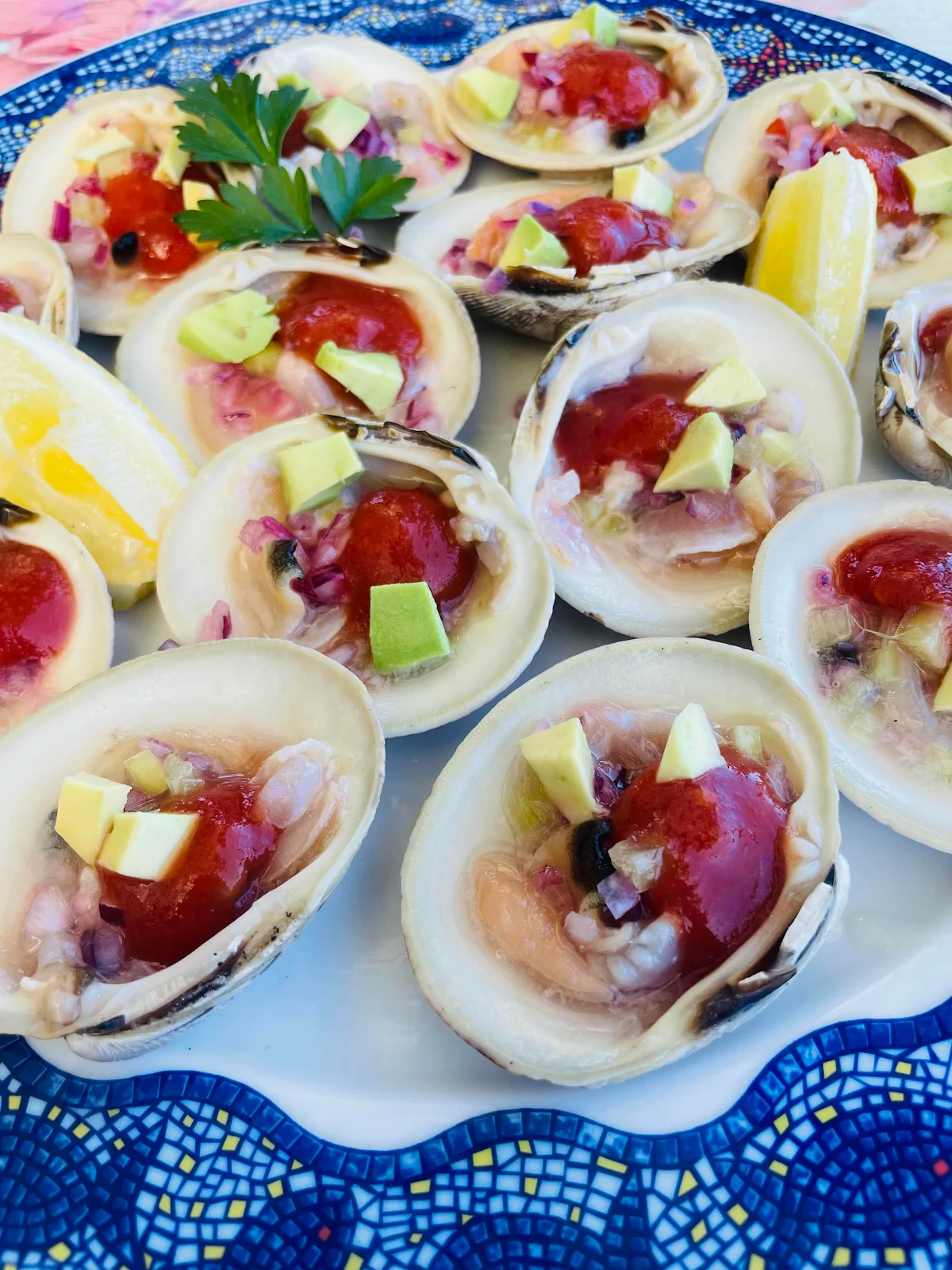
Raw clans sound gross but we trusted Rodolfo and they were delicious with hot sauce and avocado and onion, a taste of saltwater and vegetables.
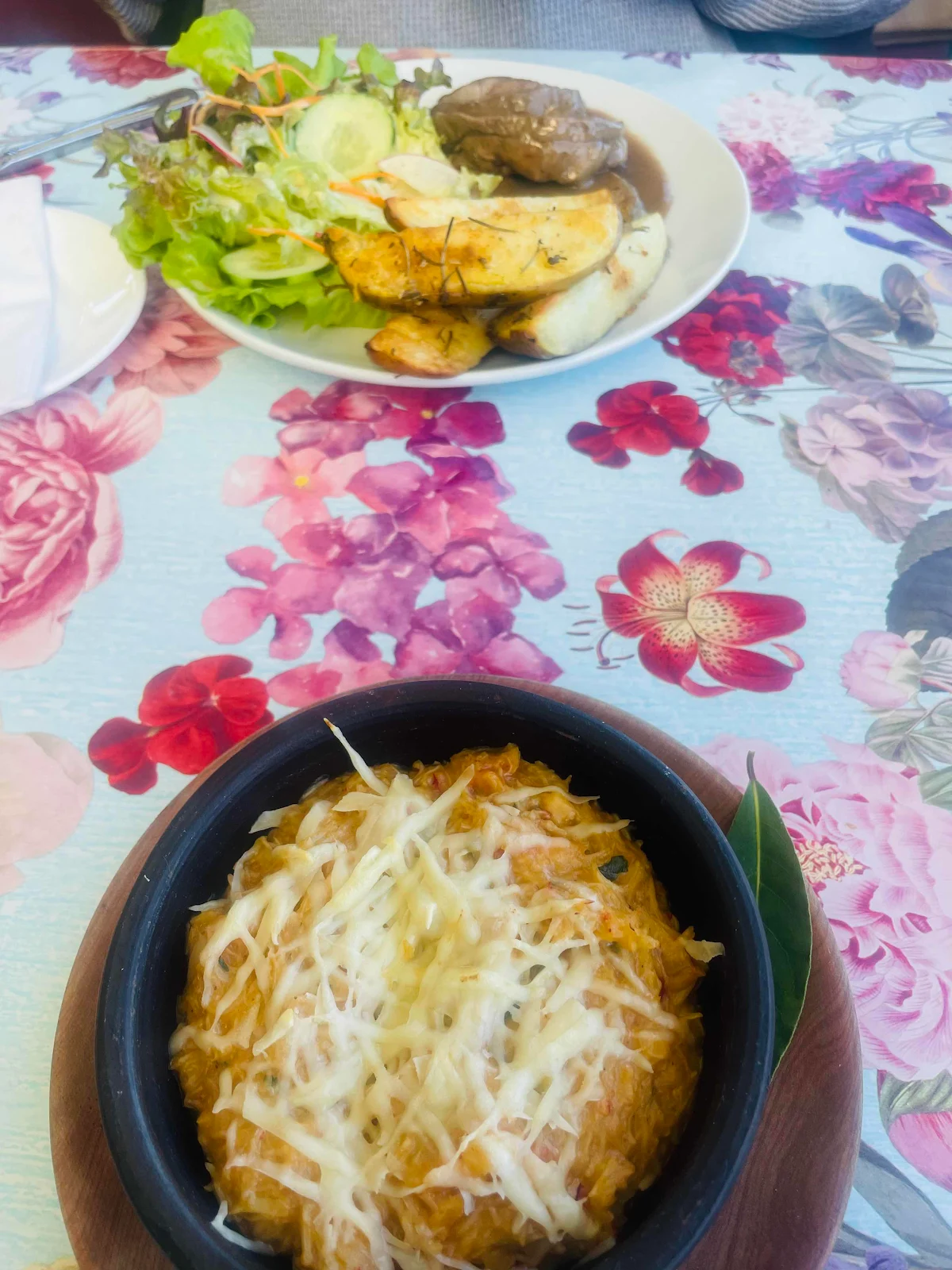
Another novelty was lamb steak using leg of lamb with the fat removed. In addition we tried a staple of Chilean cuisine, a corn pudding filled with king crab meat.
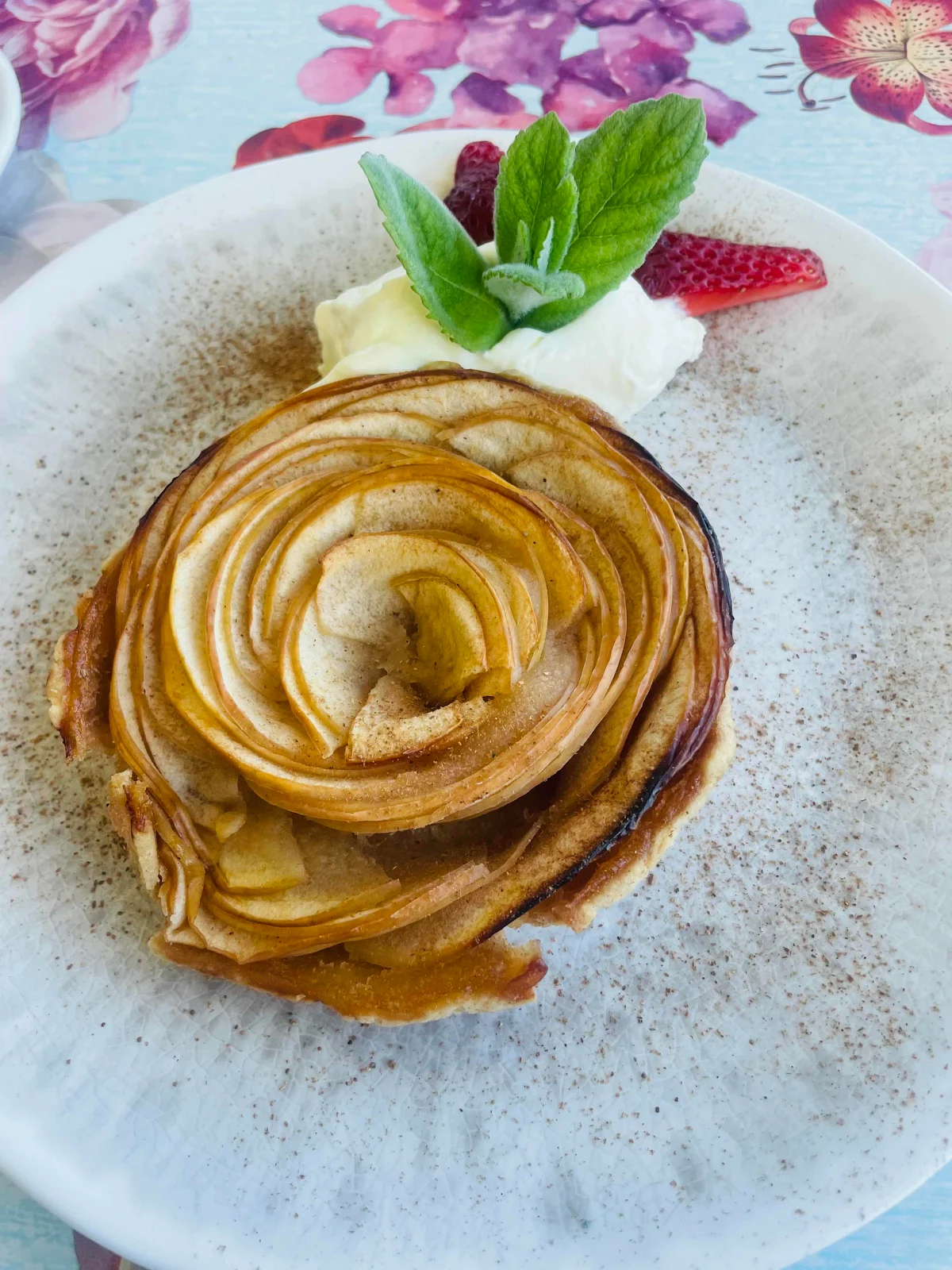
I like fruit for dessert so I had a tart…
…while Layne had a brownie.
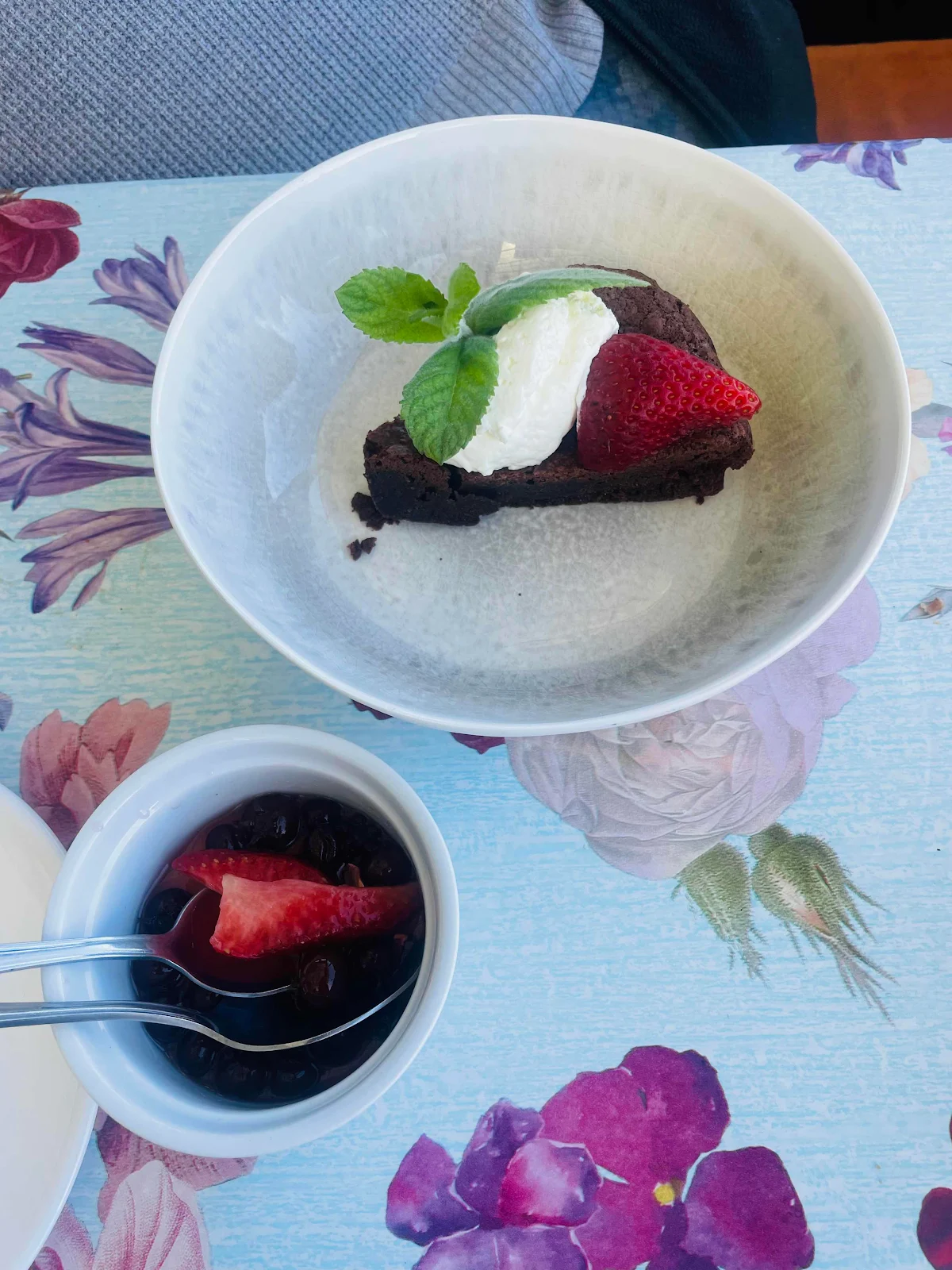
It was a treat and at $80 including drinks and coffee and a long chat about life in contemporary Chile it was a very pleasant rewarding afternoon.
We have had to adjust our interval clocks a bit this far south. We get up later as daylight is usually accompanied by temperatures to low to make getting out of bed comfortable. We get on the road later than we used to nearer the equator and with daylight stretching to 9:30pm we stay on the road later than we are used to. So lunch at 3pm if we are eating out doubles as dinner.
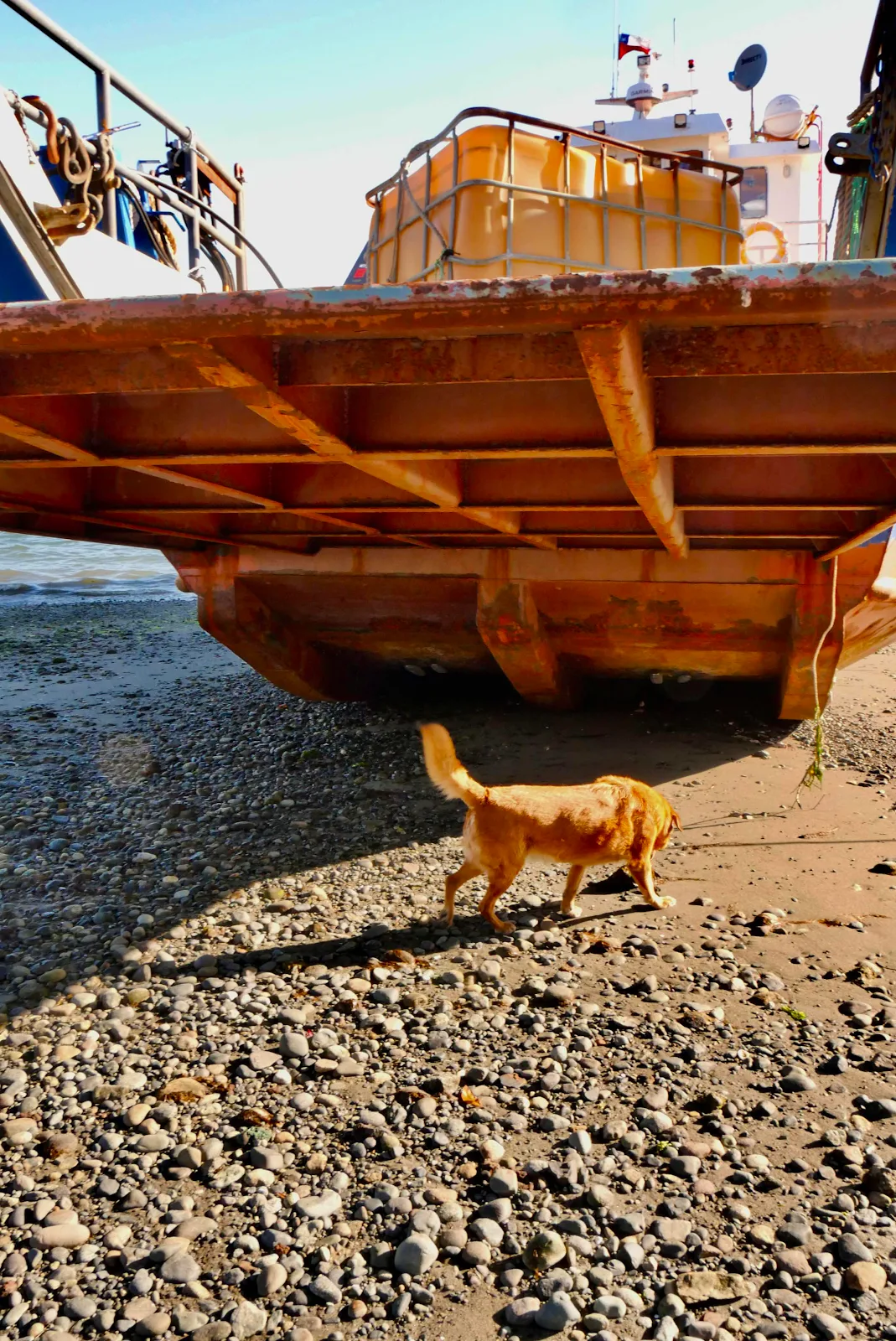

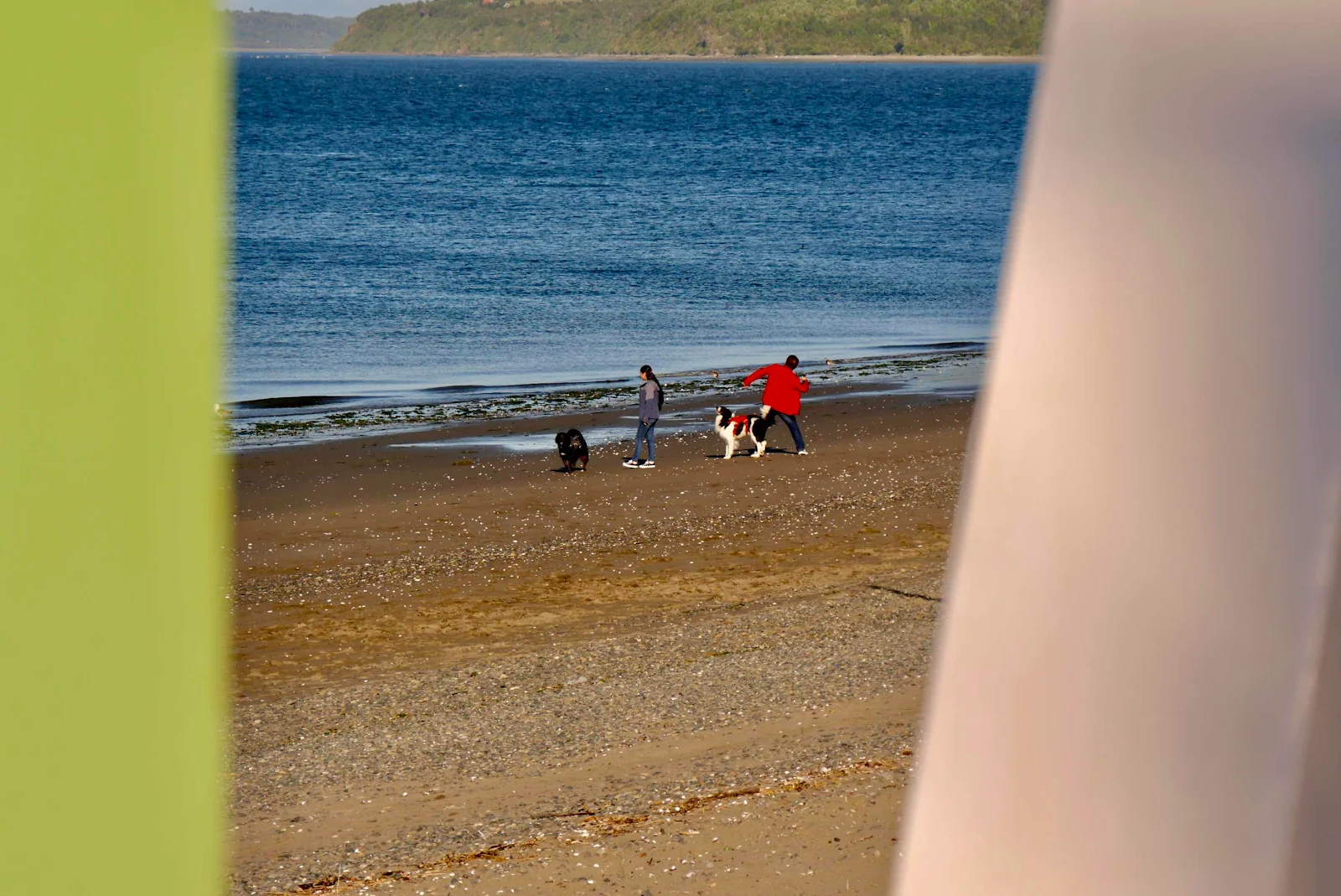
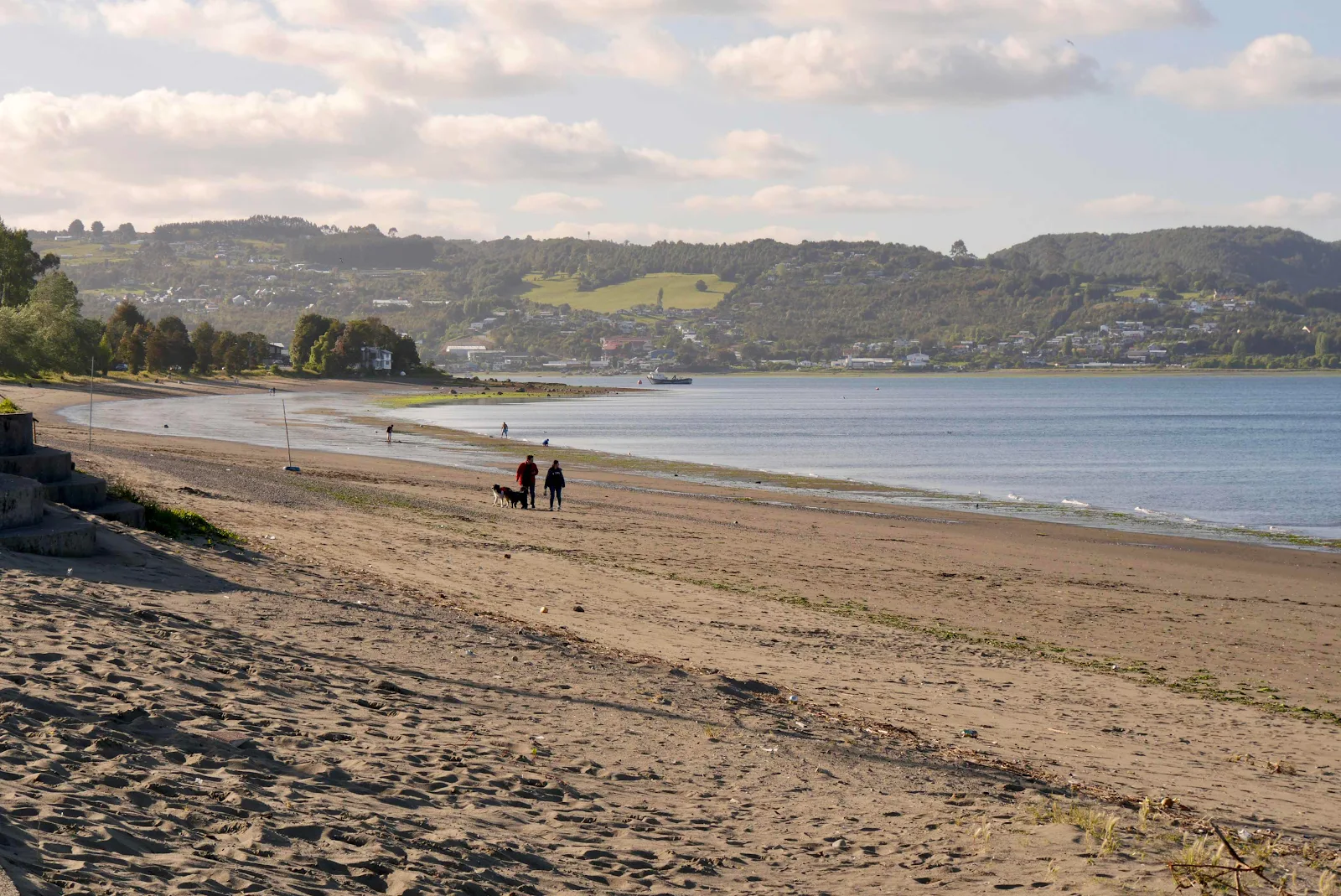
And so we mooched around some more walking the beach and checking out the coast. For the night we stopped in a vista point overlooking farmland down to the distant sea.
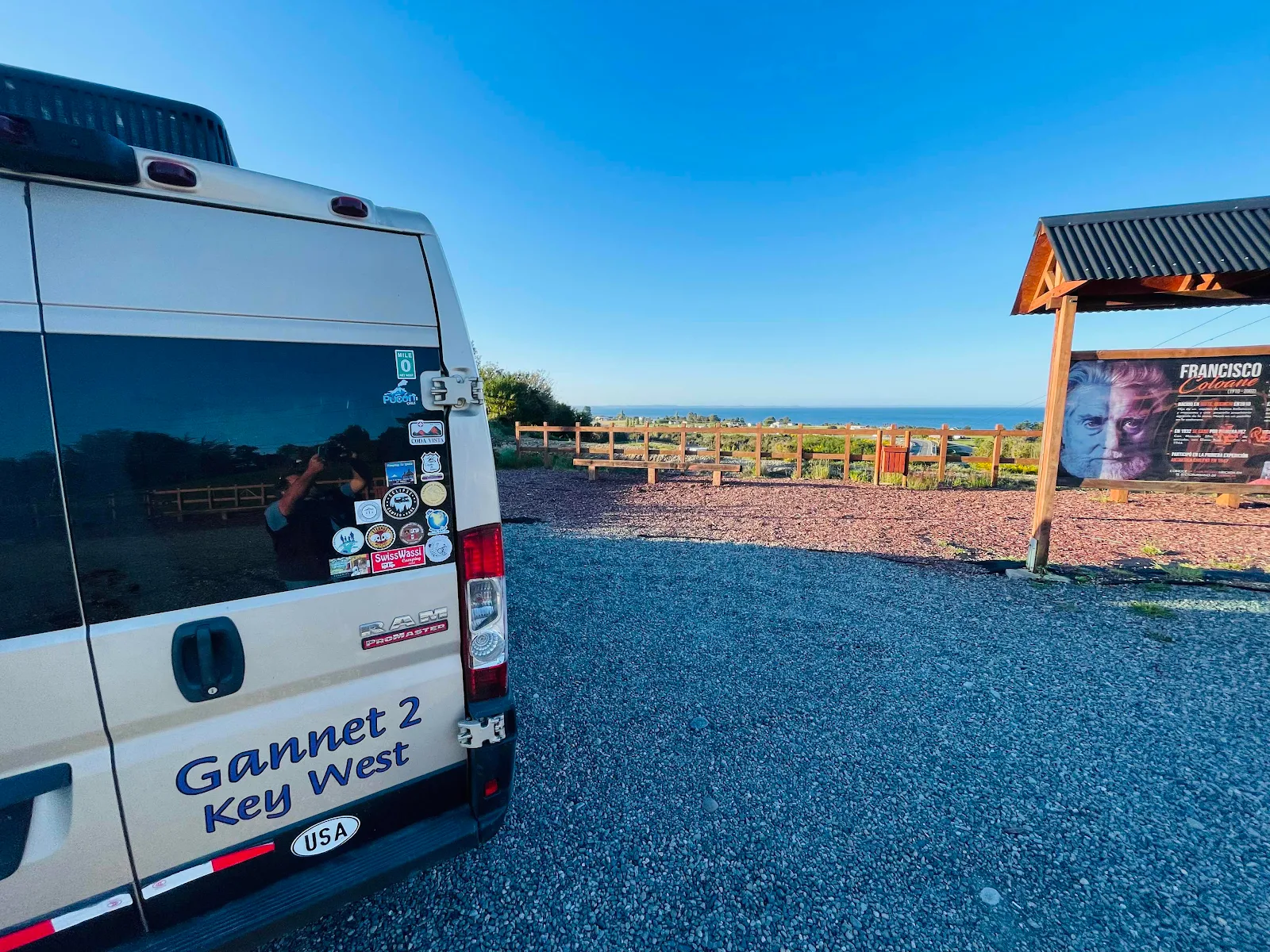
I’d be like to come to Chiloé when we drive north from the end of the continent.

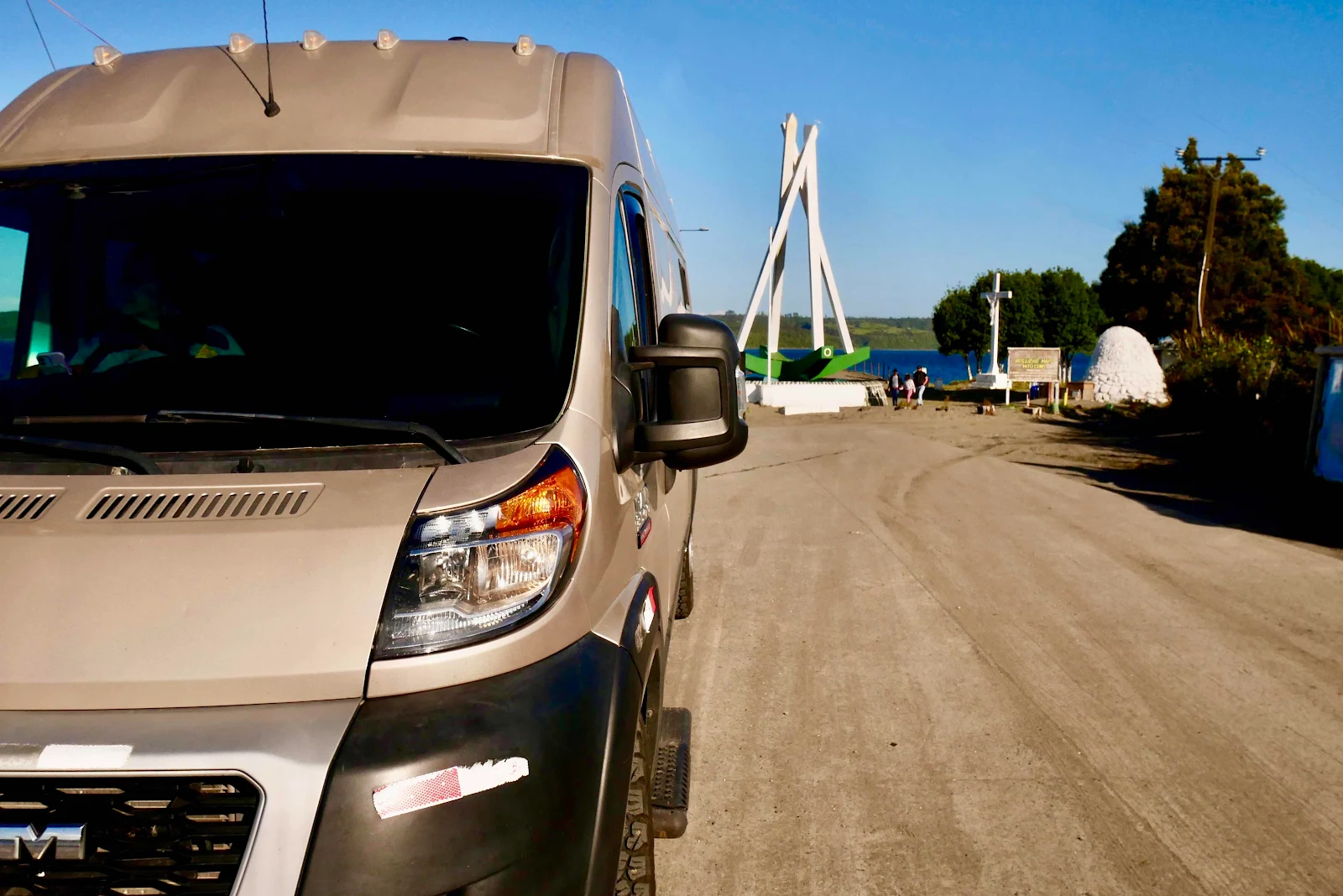
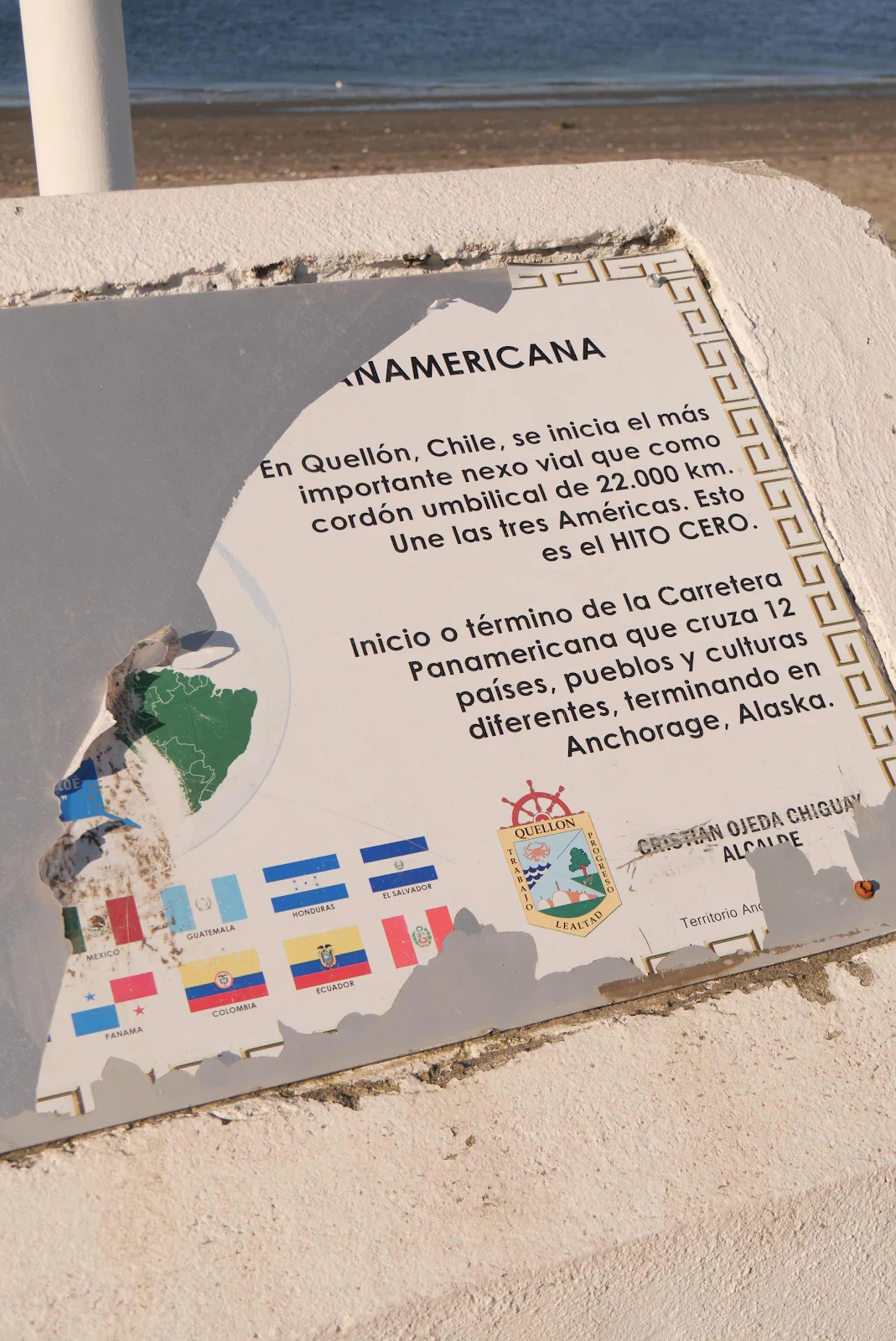
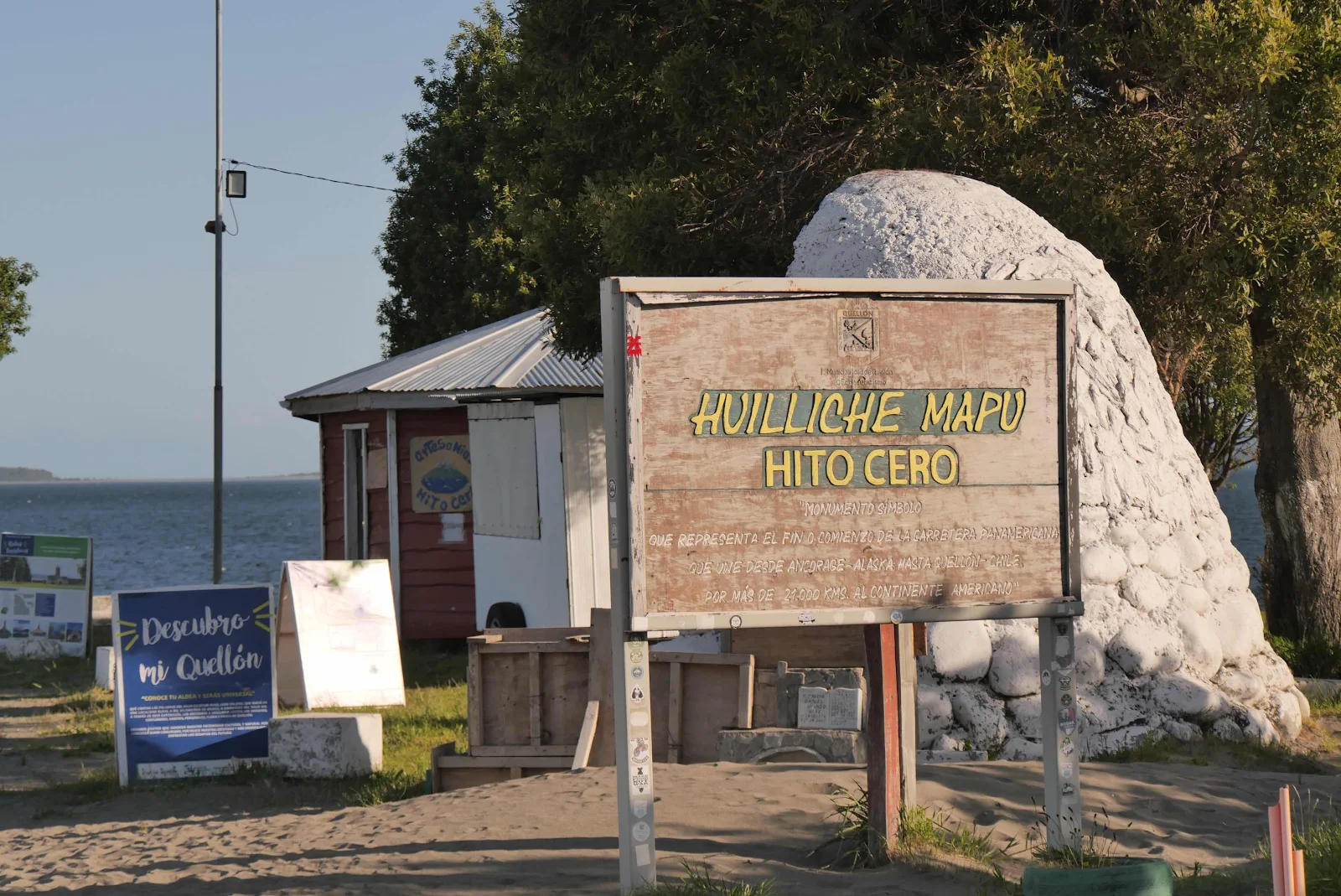
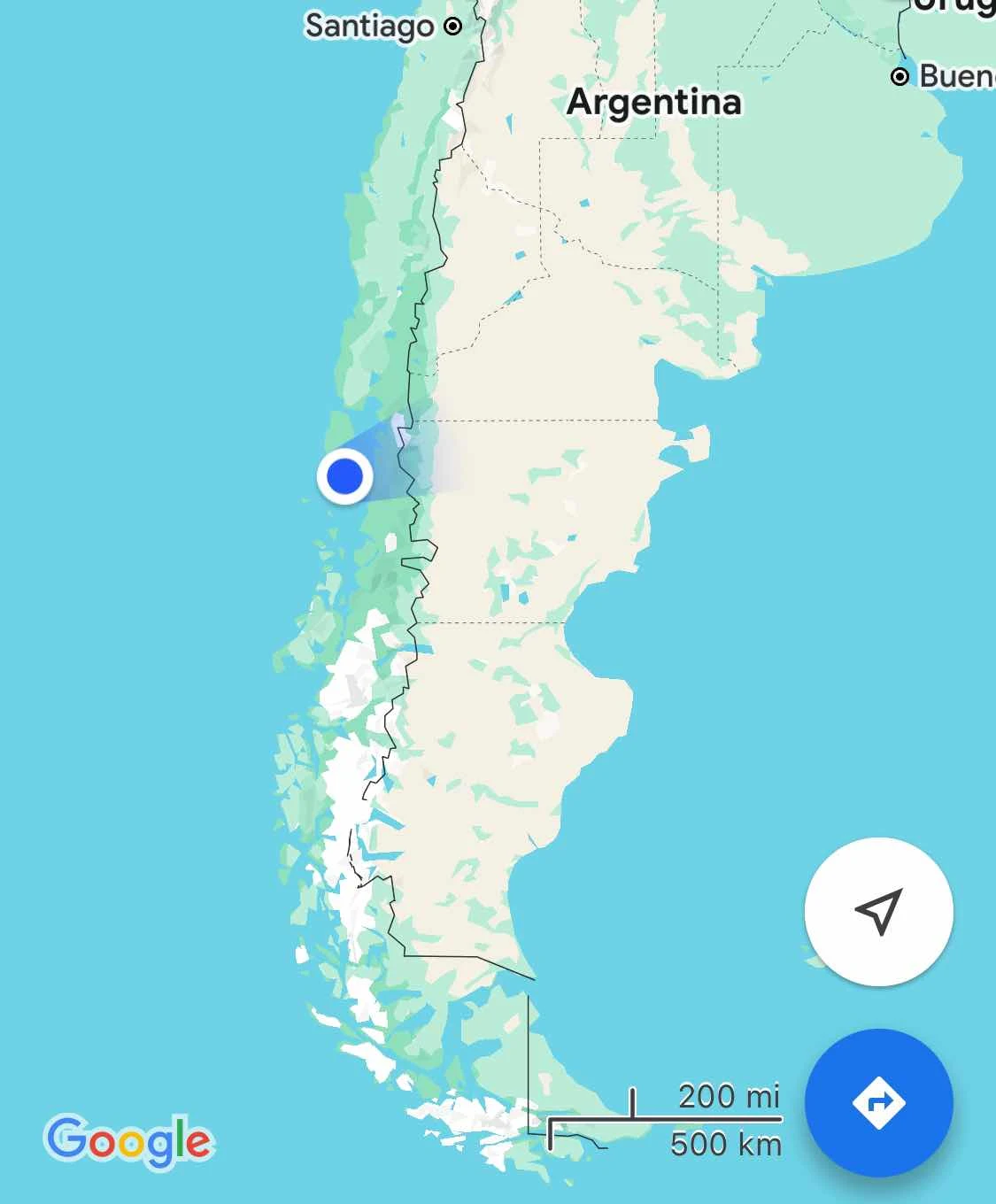
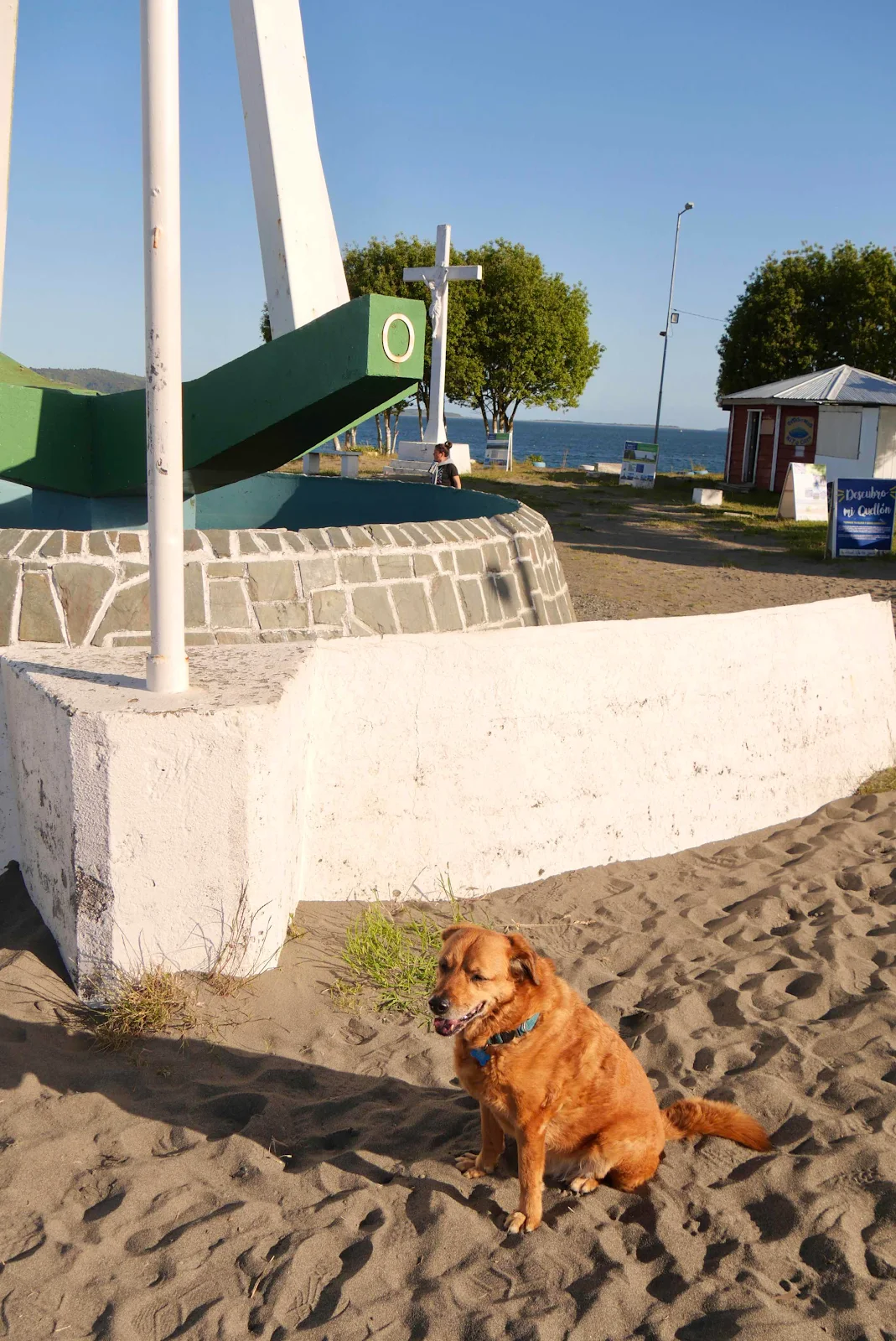
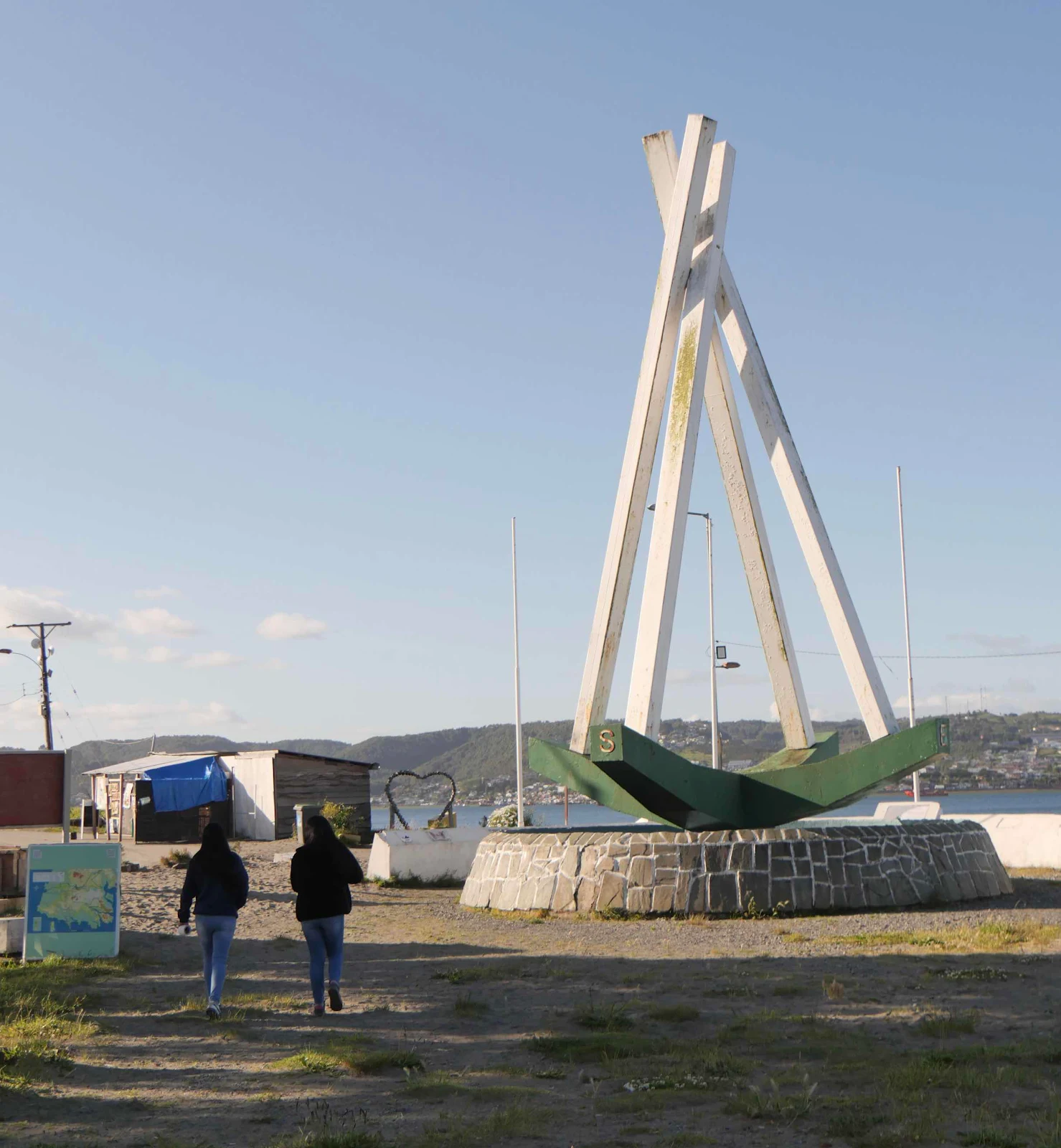
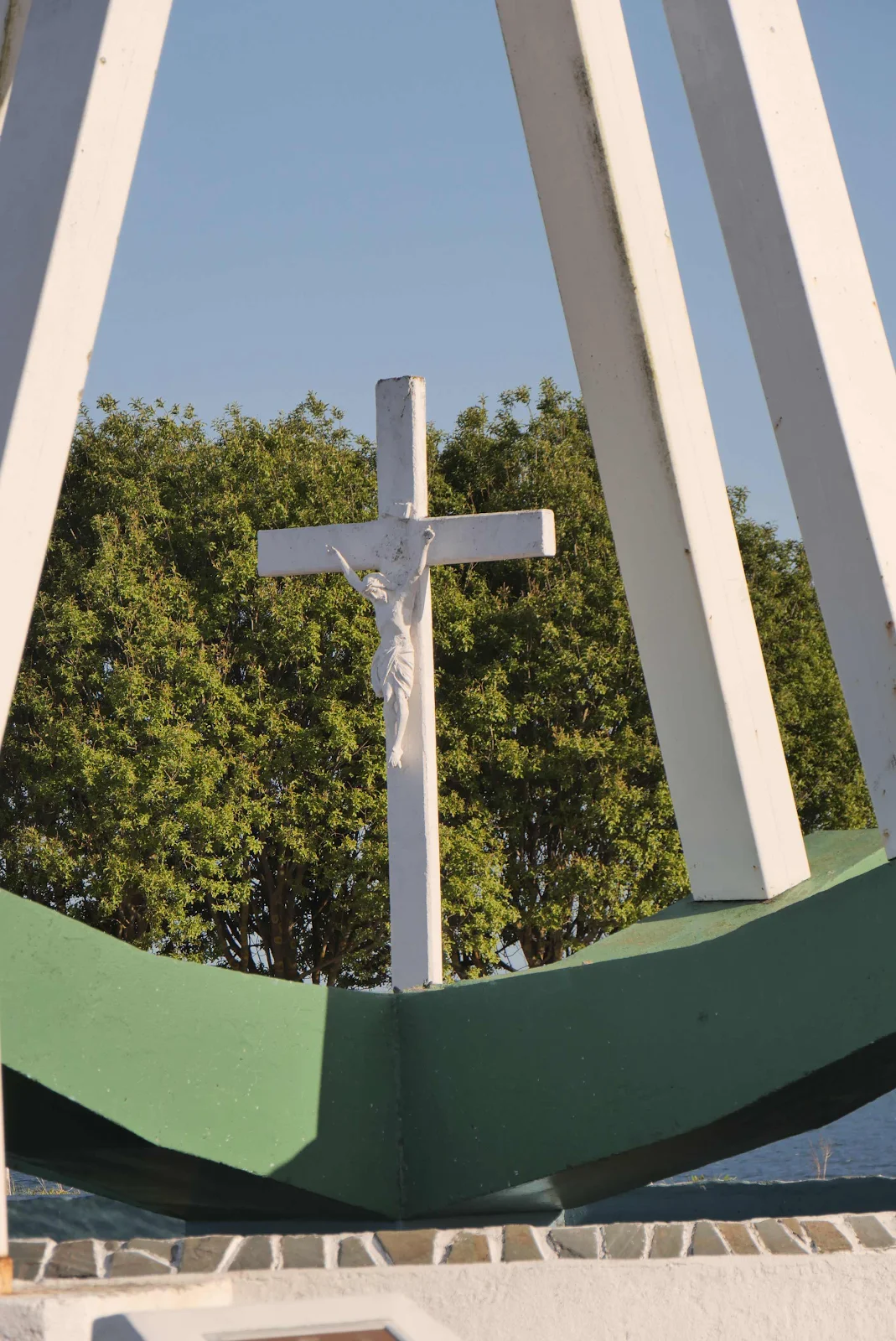
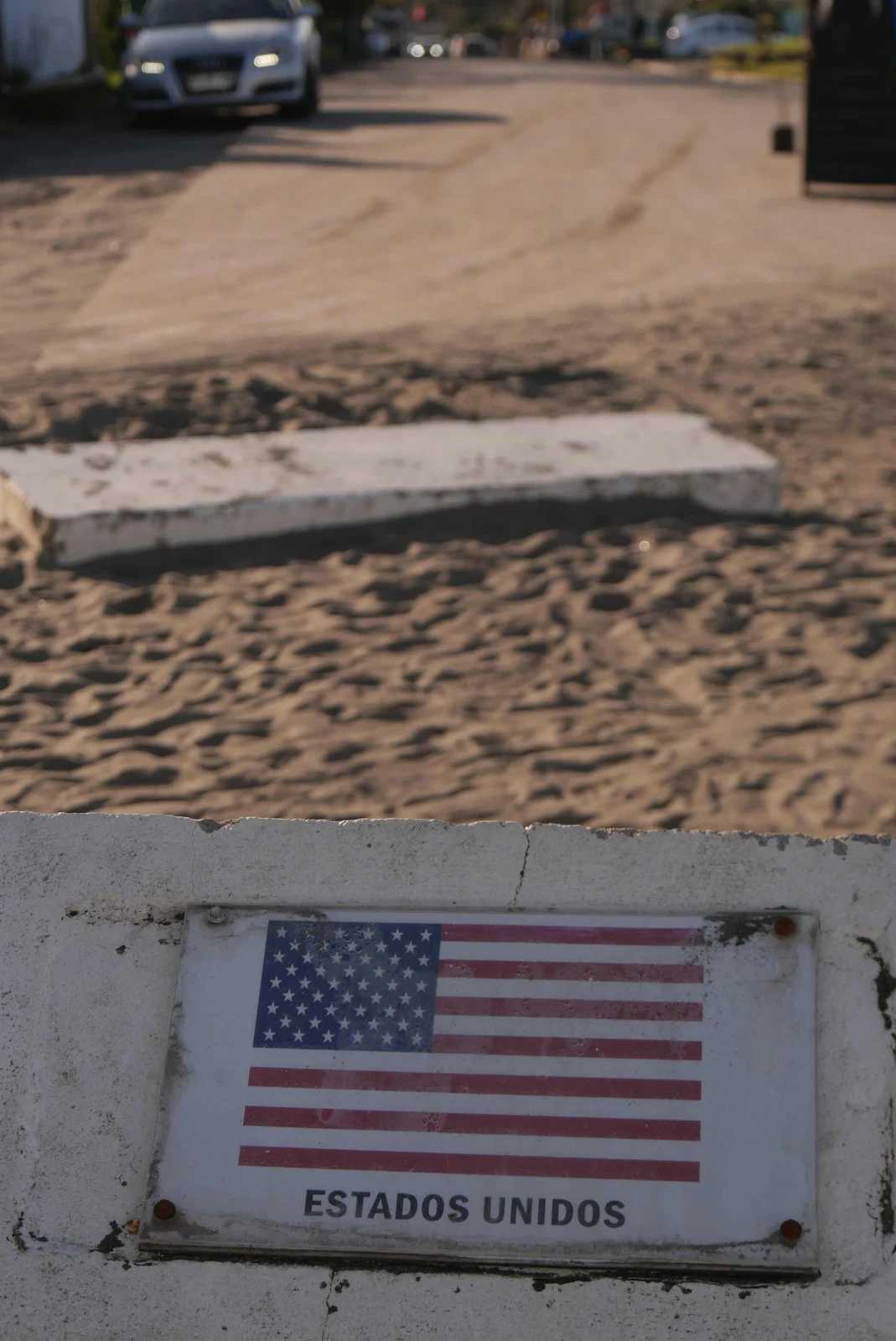
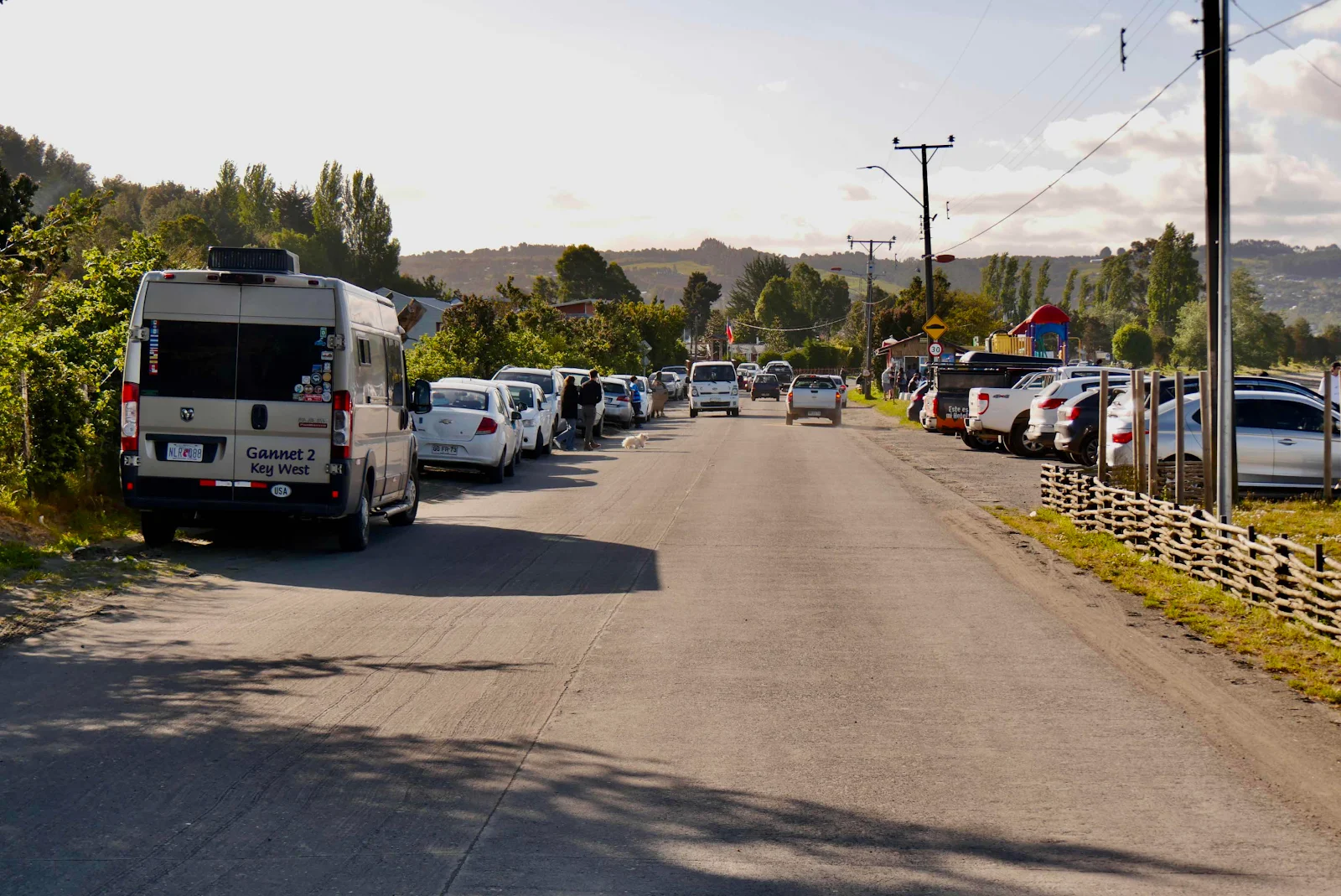 We drove away from the monument through crowds of locals strolling the beach and ignoring what we had come to see.