Monday, January 20, 2025

The Cave Of Hands

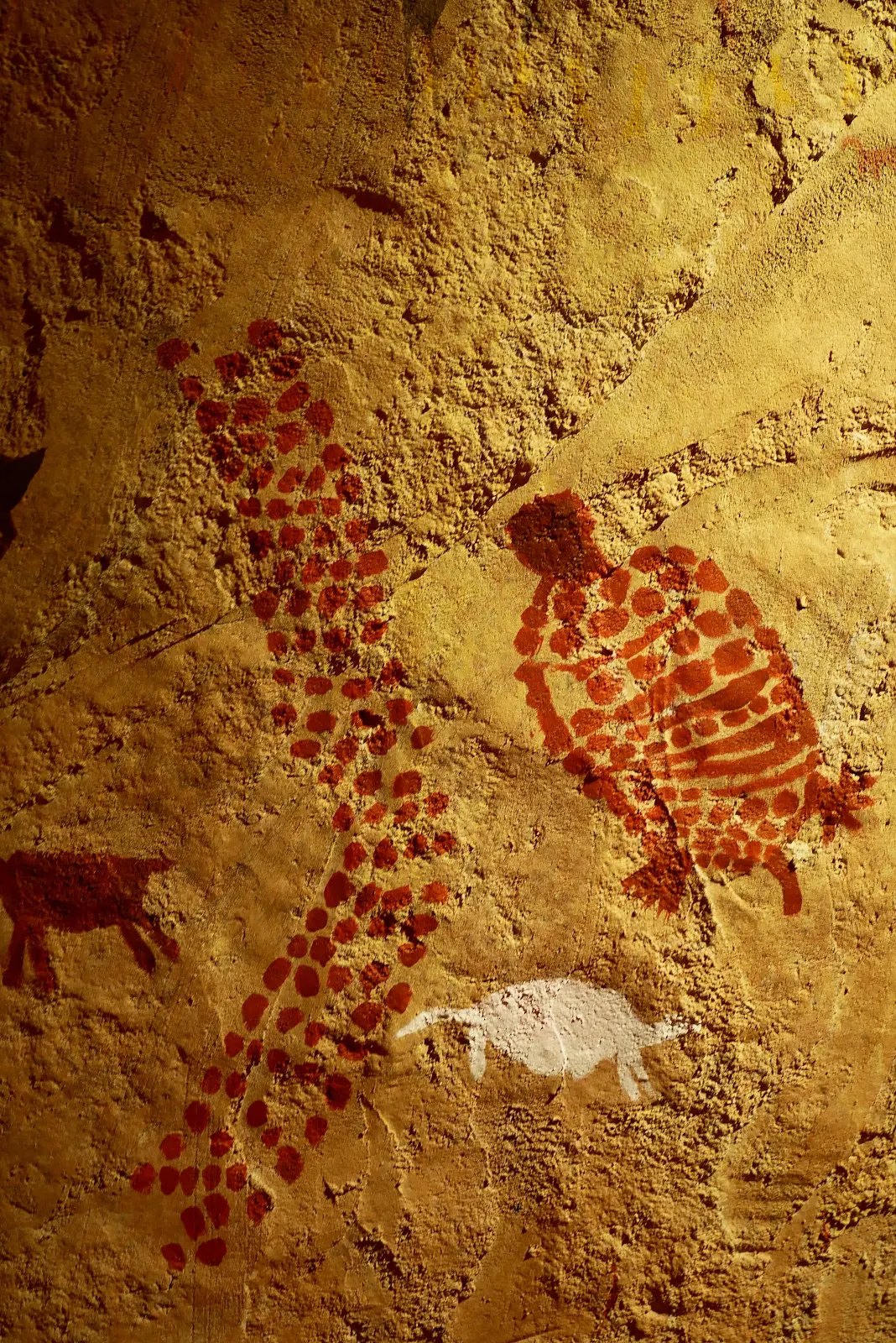
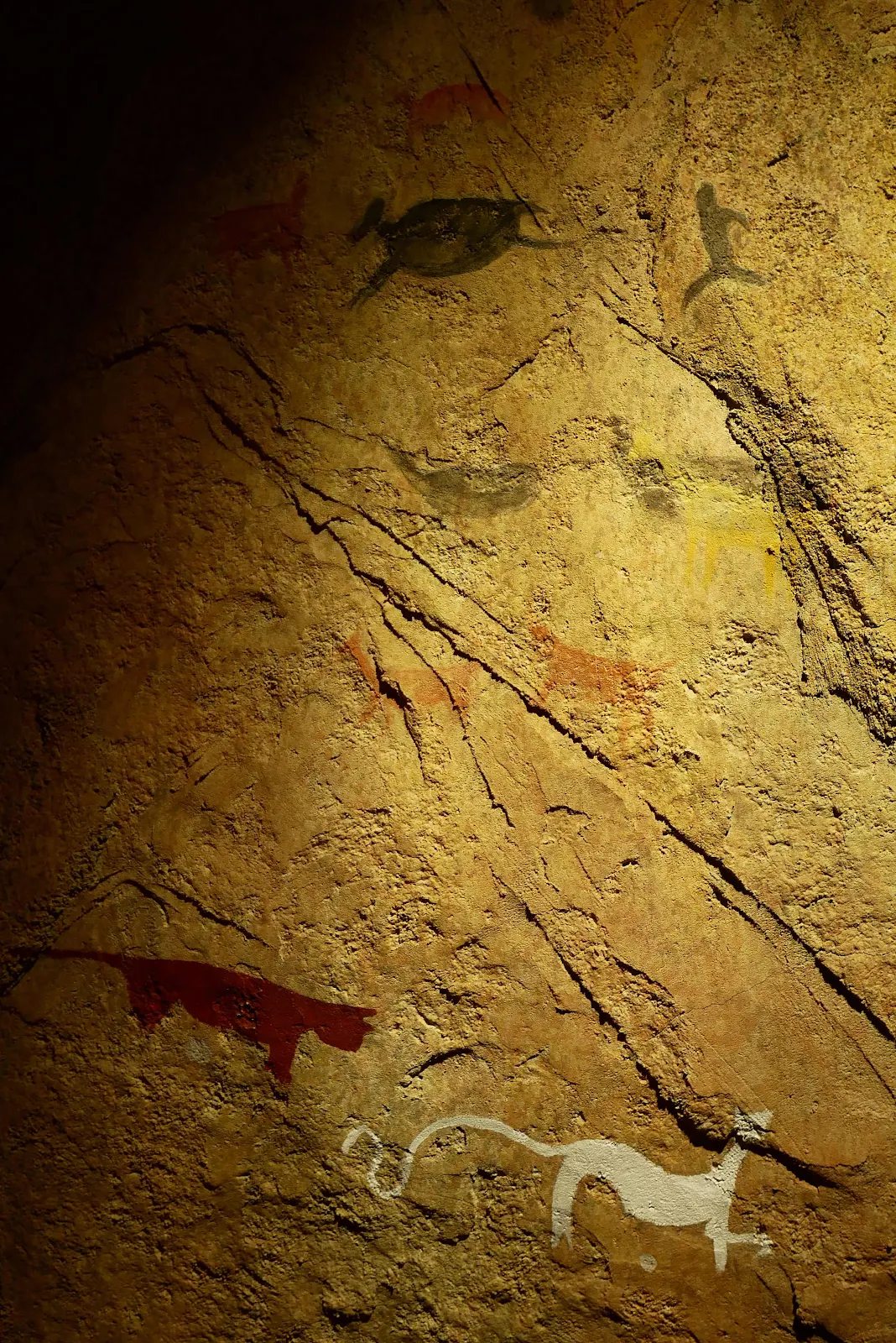
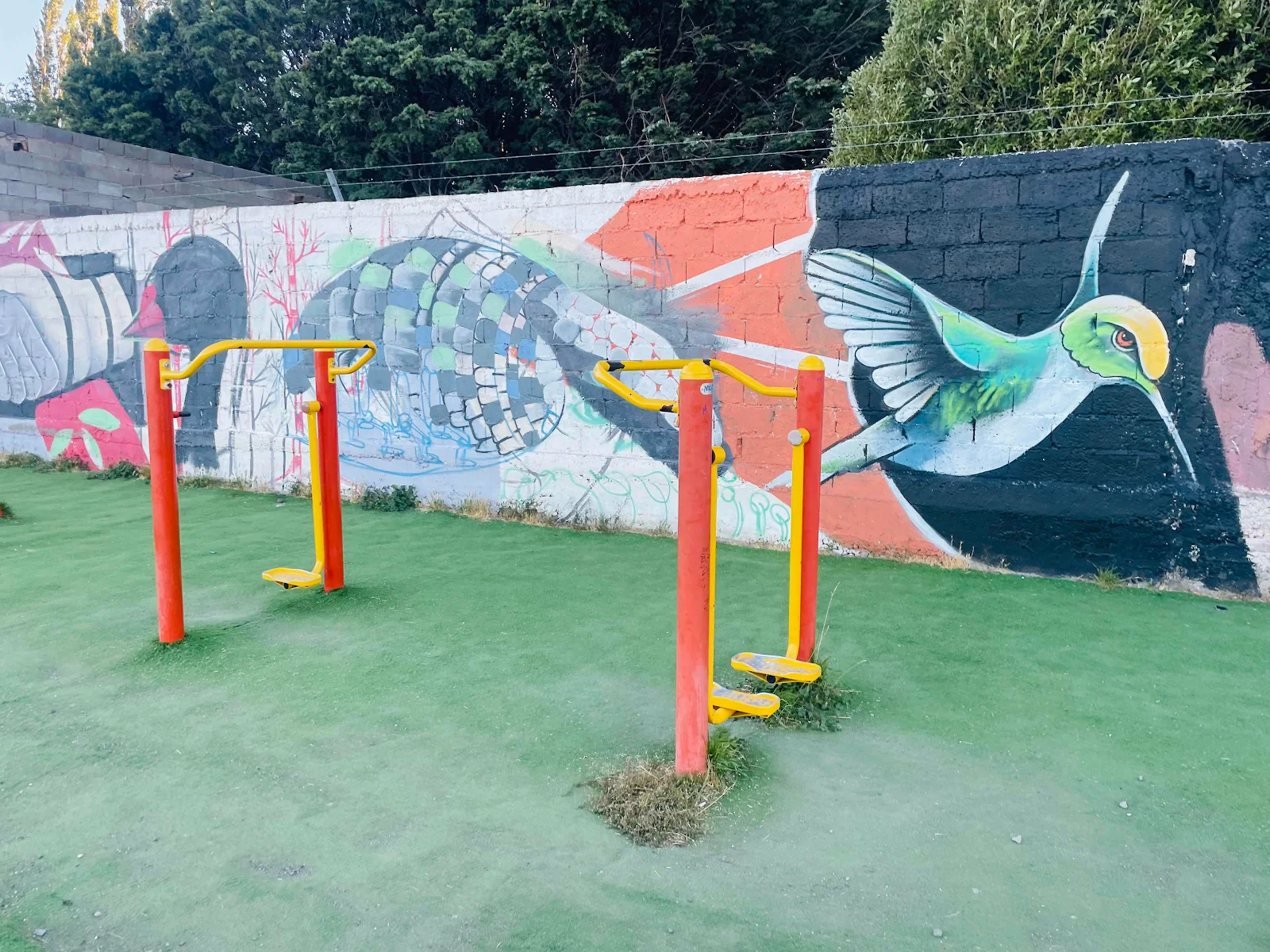
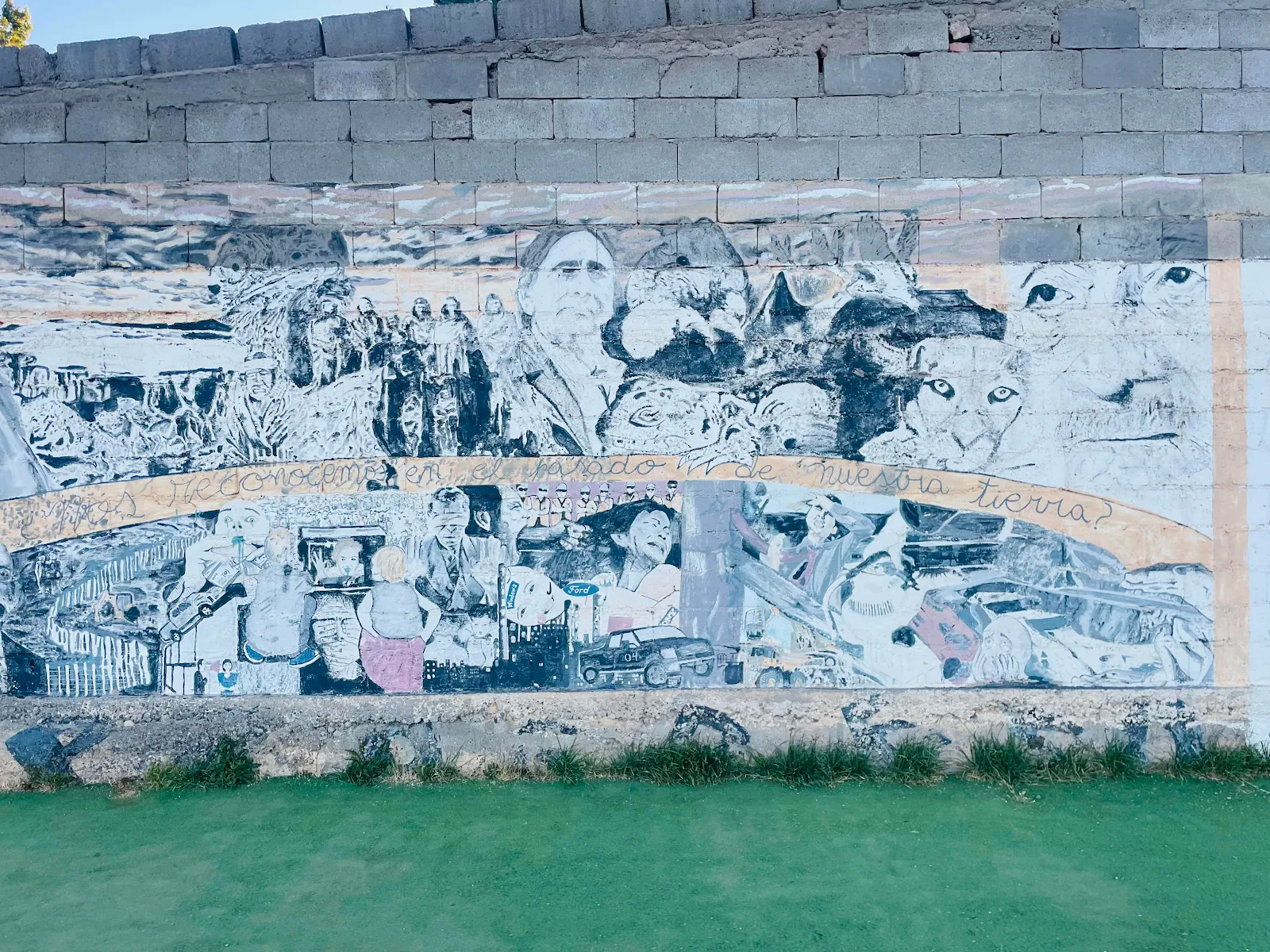
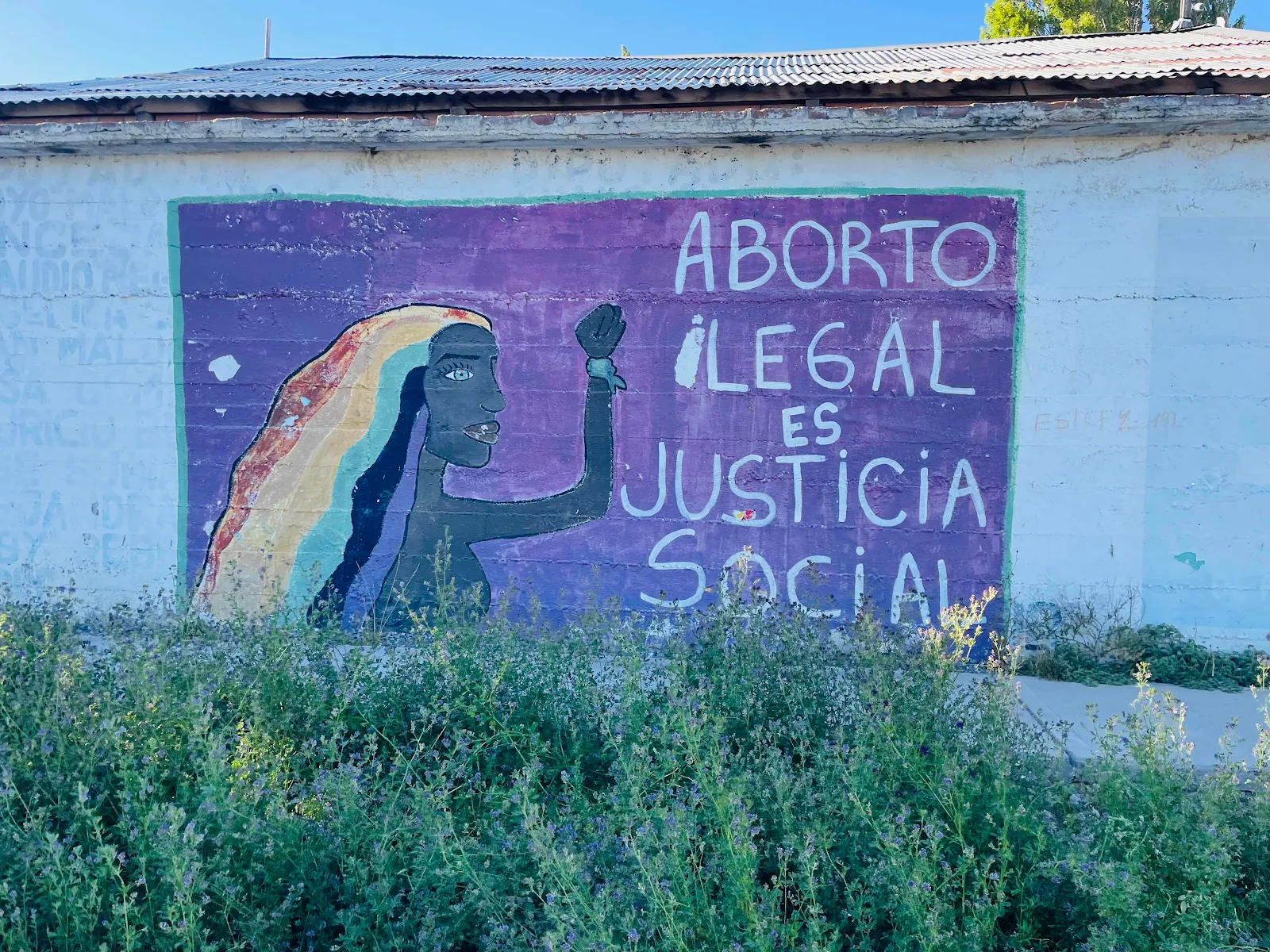
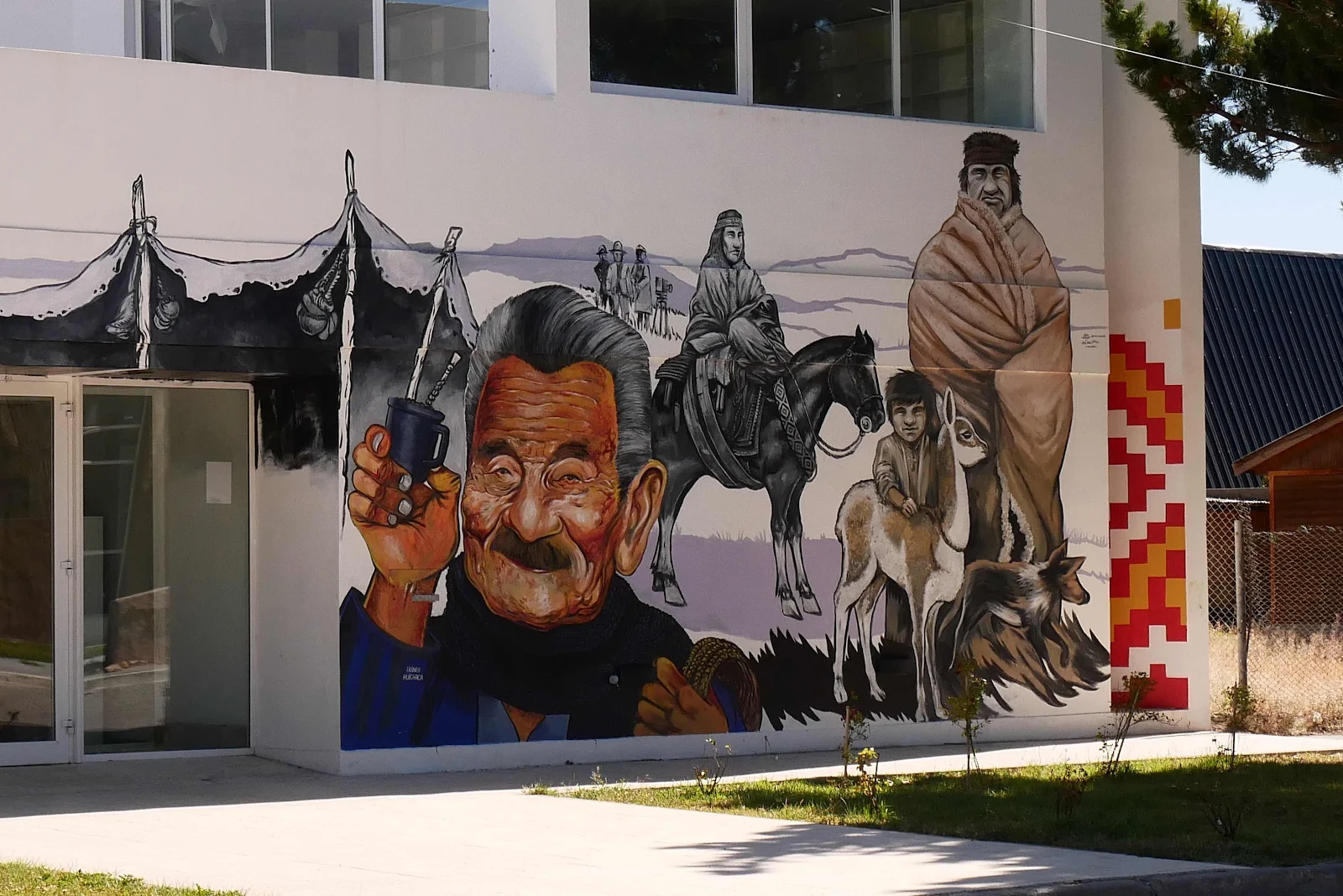
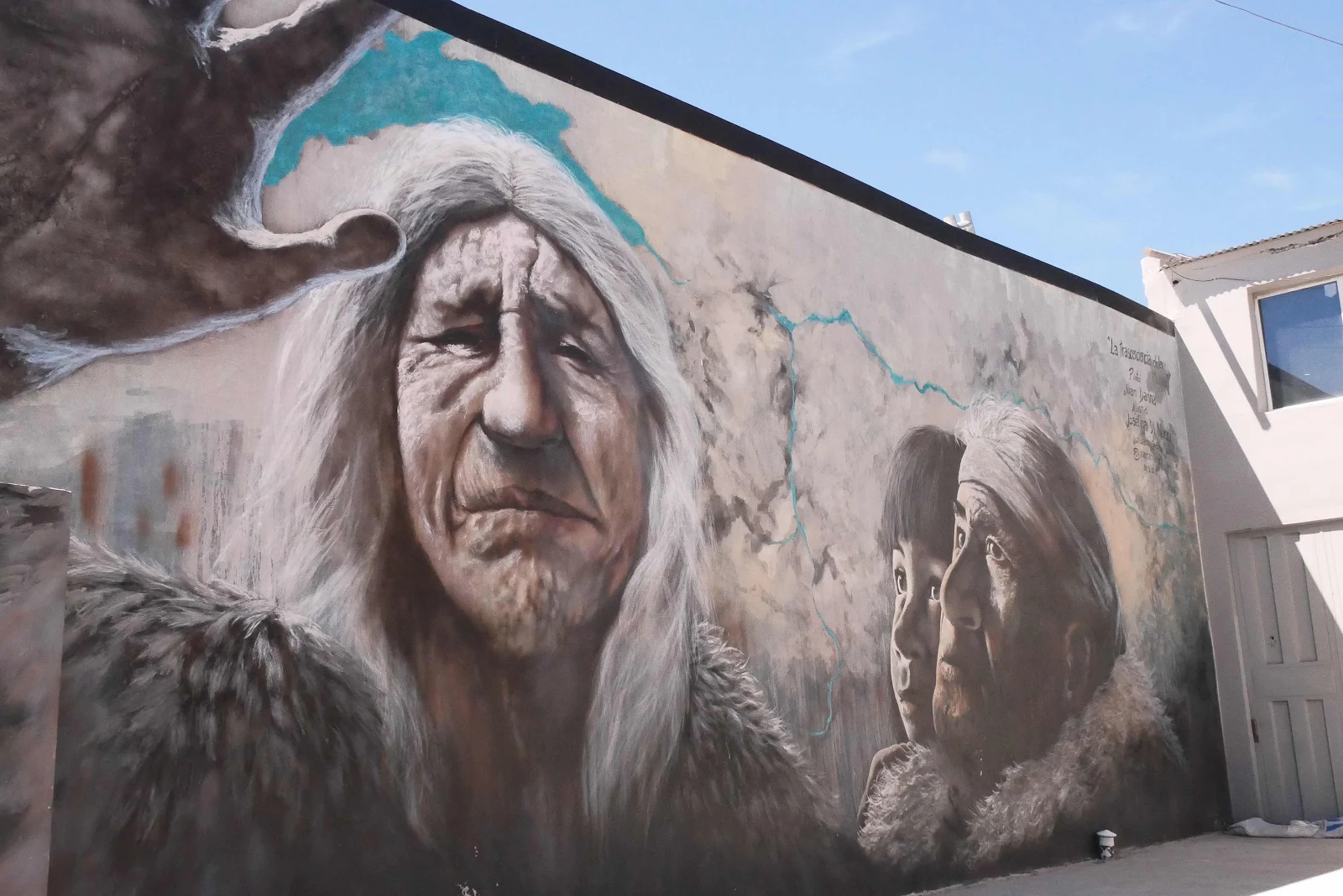
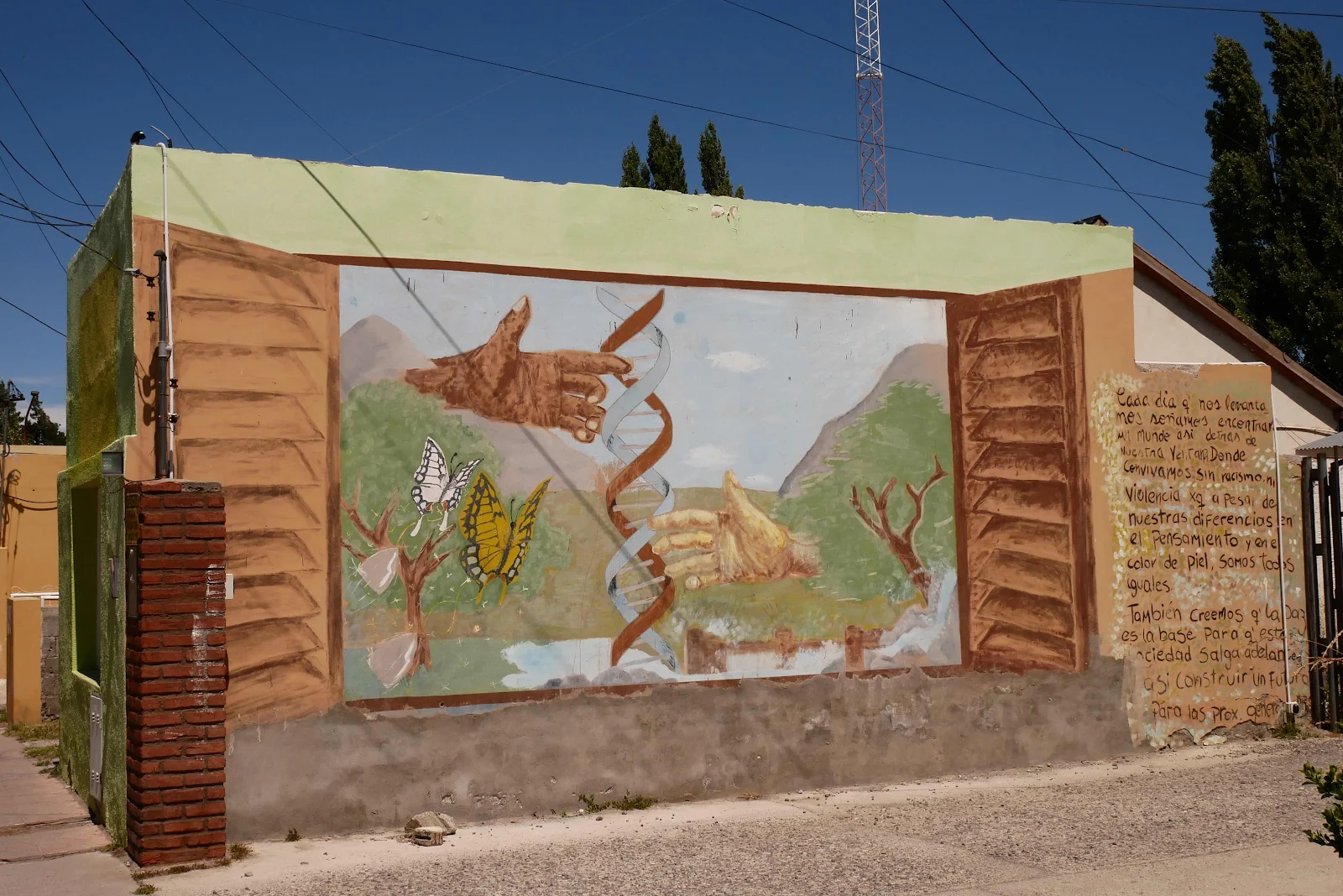
One of Perito Morelos claims to fame, indeed a top tourist attraction of Santa Cruz province they say, is the Cave of Hands. They make mural representations of the cave in town; 
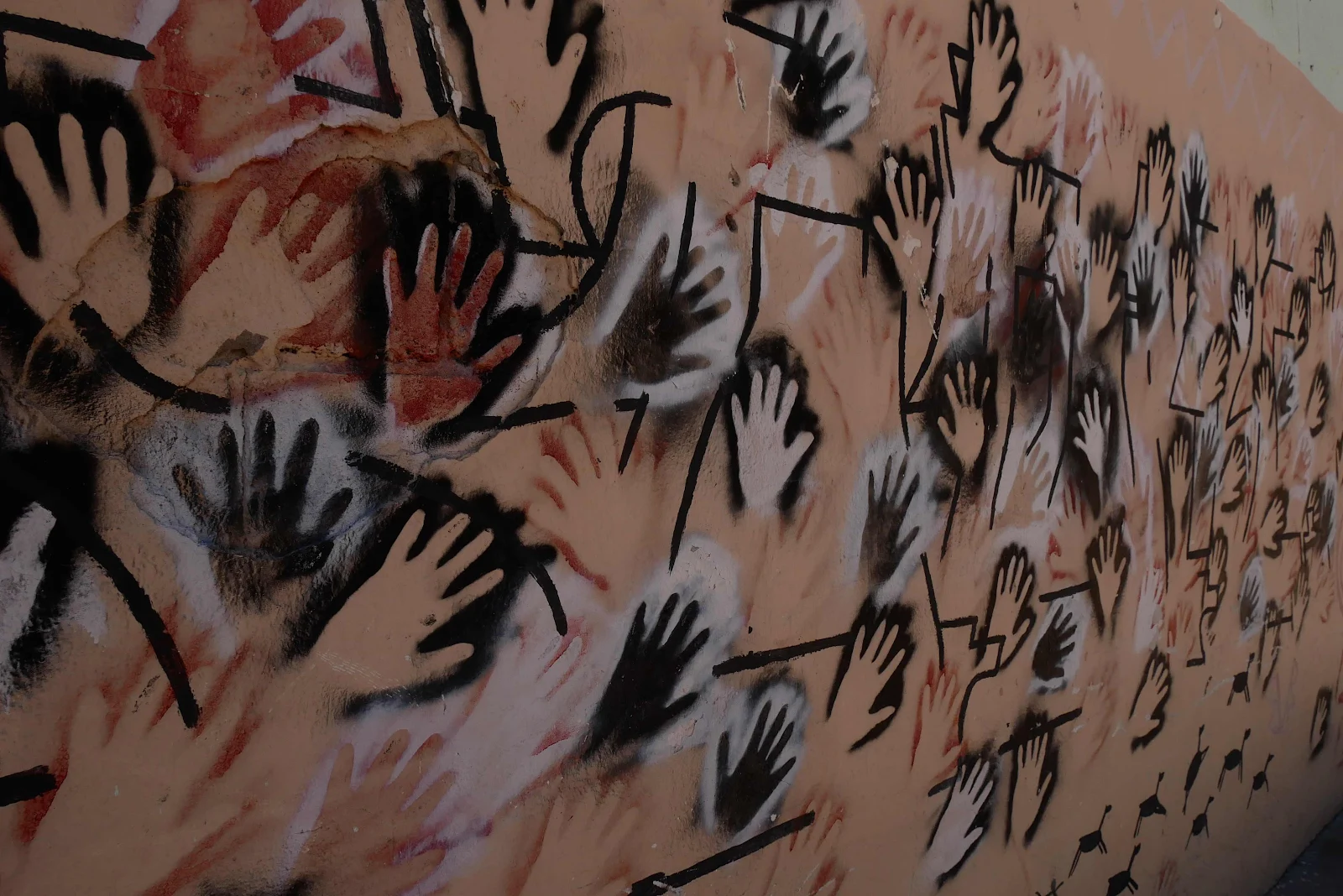
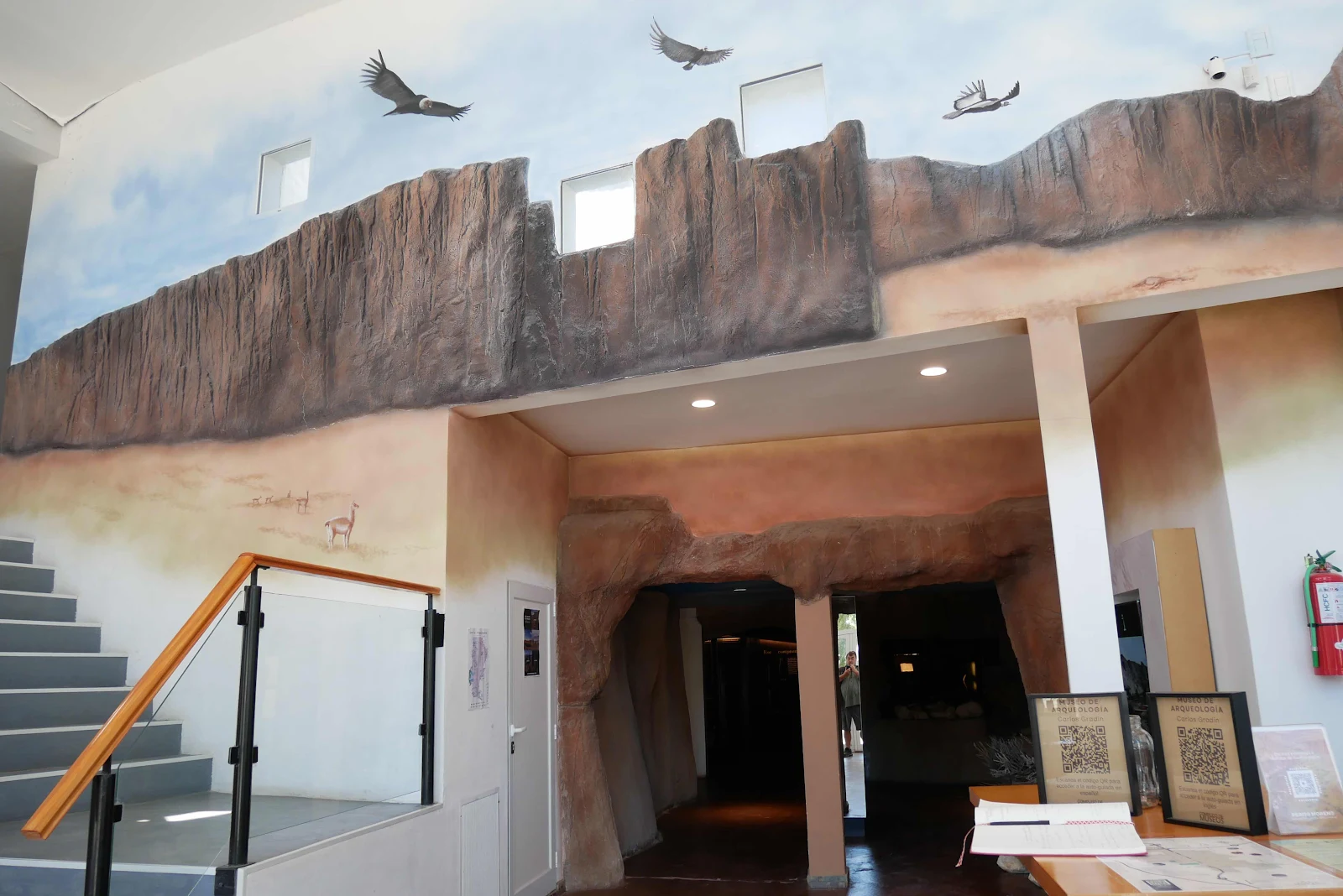
It’s a provincial park in the desert down thirty miles of bad washboard so we bagged it. The production three hours driving at six o’clock at night put us off and Layne knew there was a museum dedicated to the cave in town. 
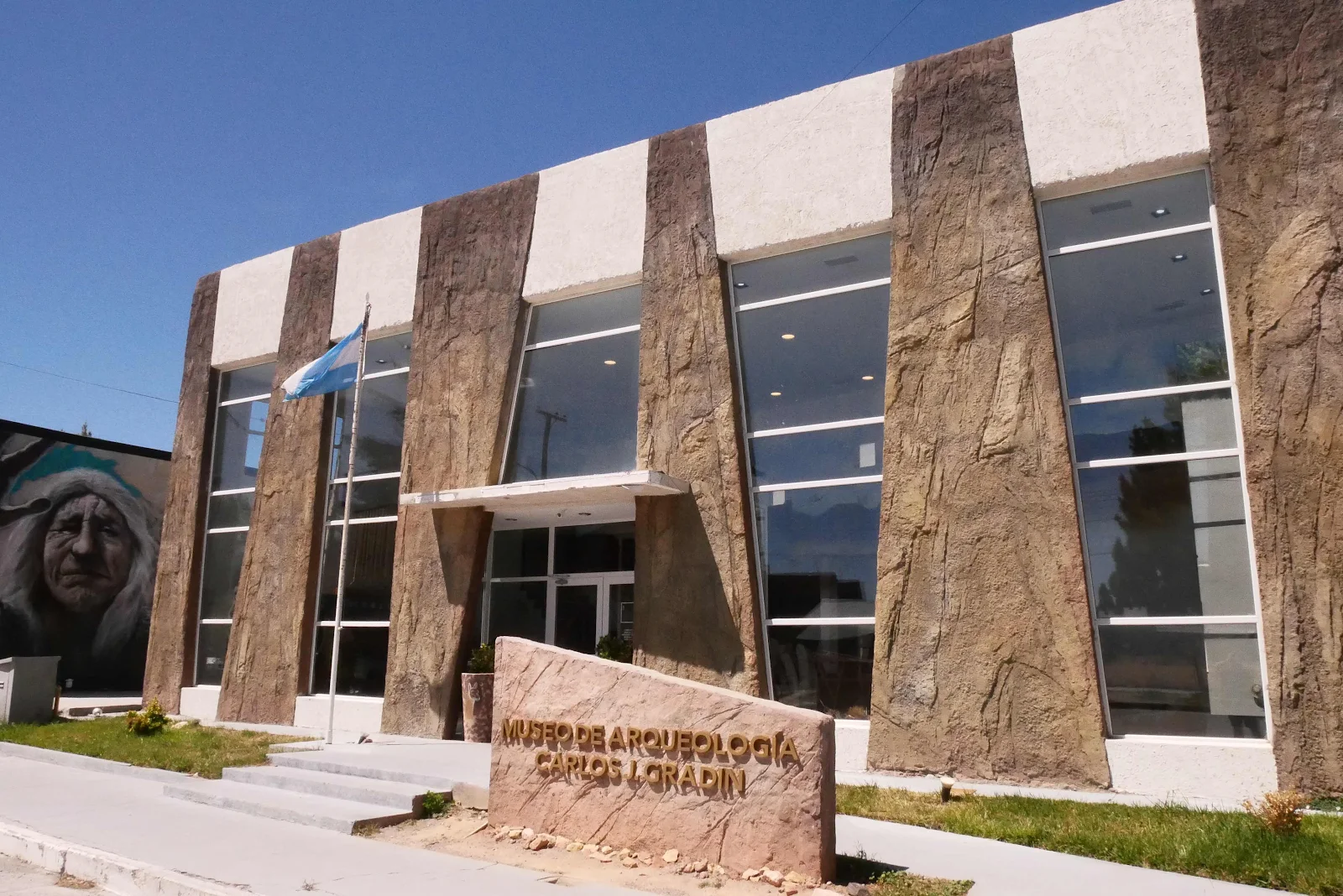
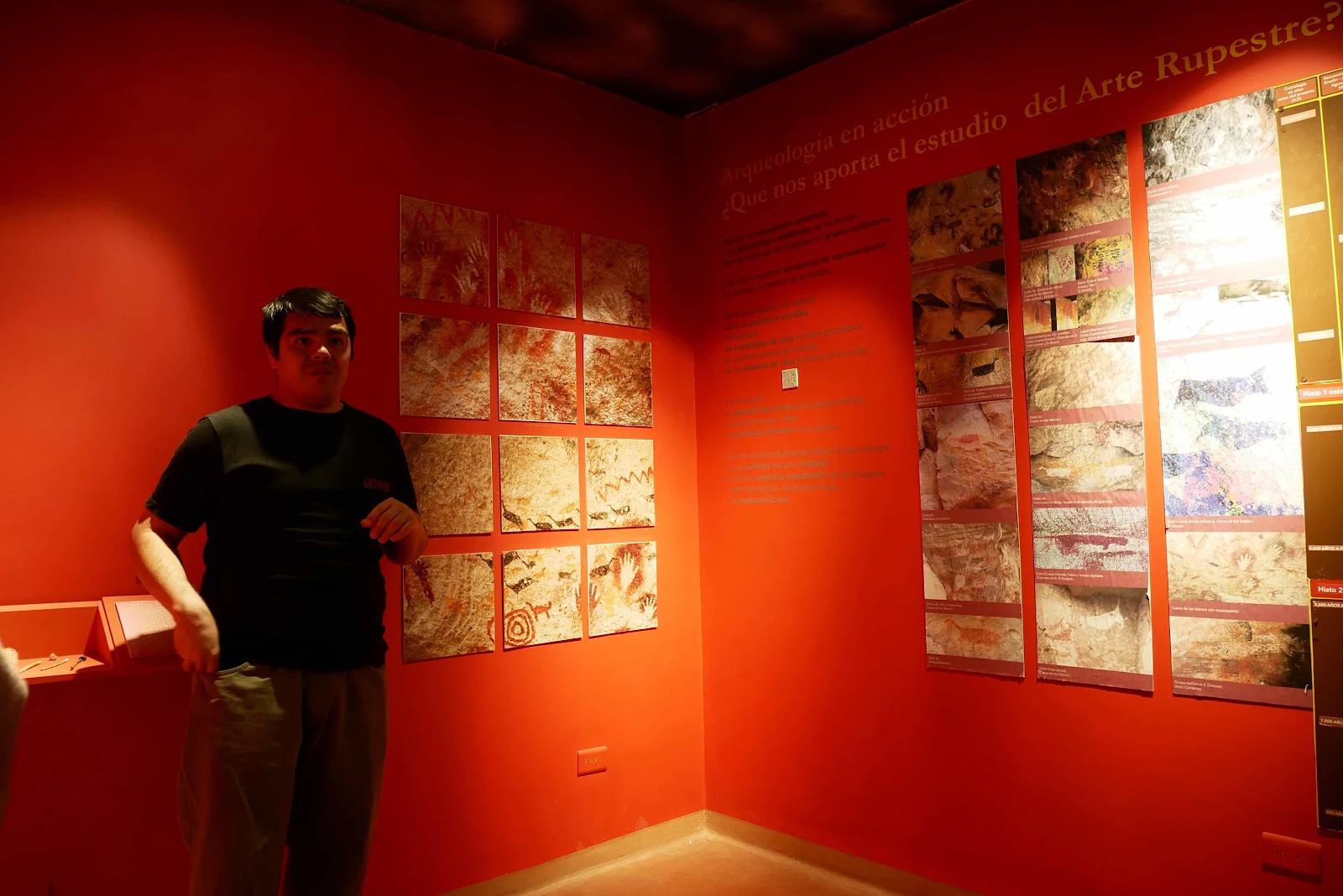
The museum is dedicated to the memory of Carlos Gradín, 1918-2002, who carried out the scientific investigation of the cave paintings. Local farmers and farm workers had known about several such caves in the area but it was only in 1941 when a local priest first photographed them. 
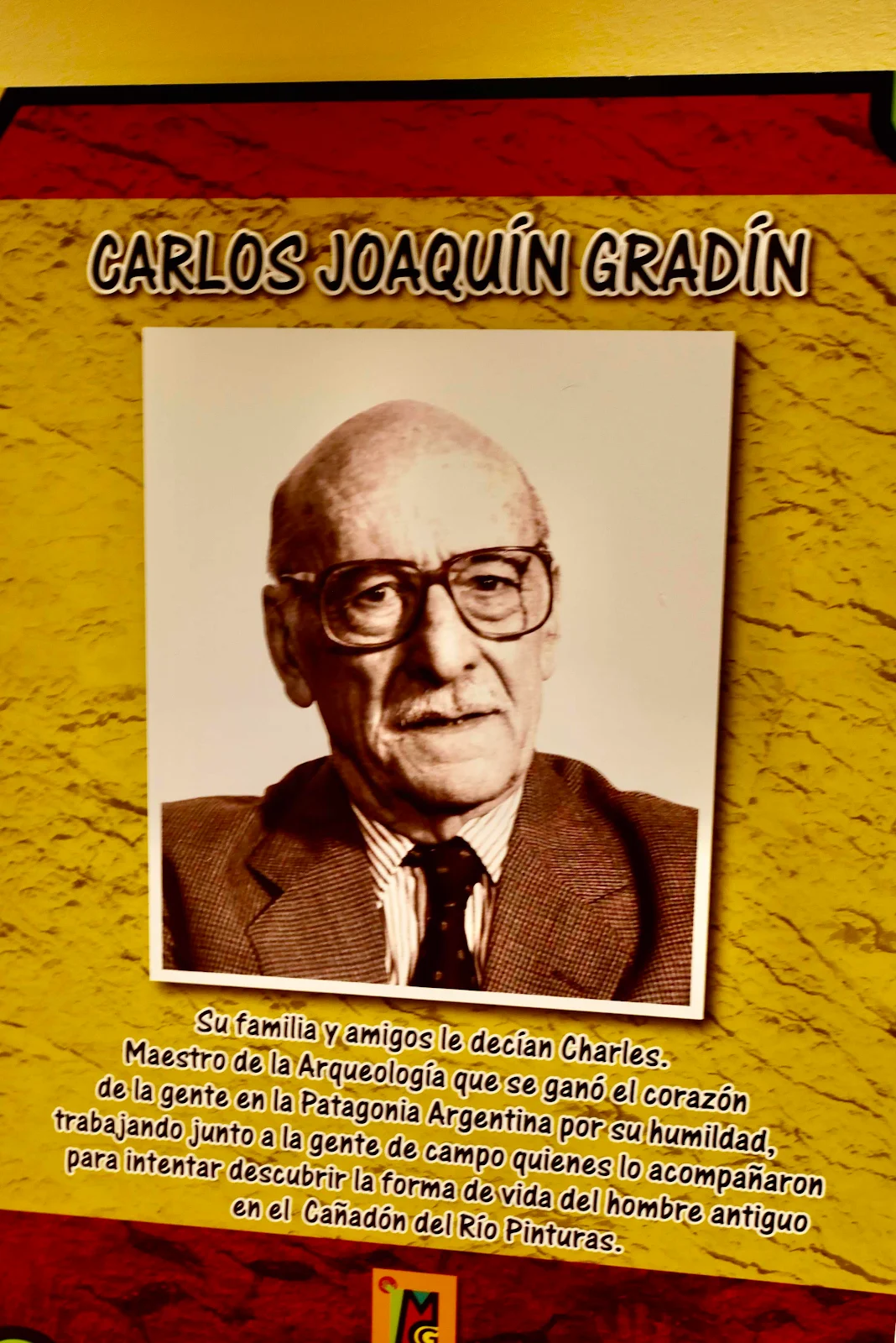
Gradín came across them when he was working in the area as a land surveyor in the 1960s and as he realized he was onto something he went back to Buenos Aires and convinced the academics he wasn’t too old to become a late blooming archeologist. Eight years later…he came back in his new career and devoted his life to the paintings. Nowadays they are a tourist attraction next to the Patagonia National Park (no dogs allowed). 
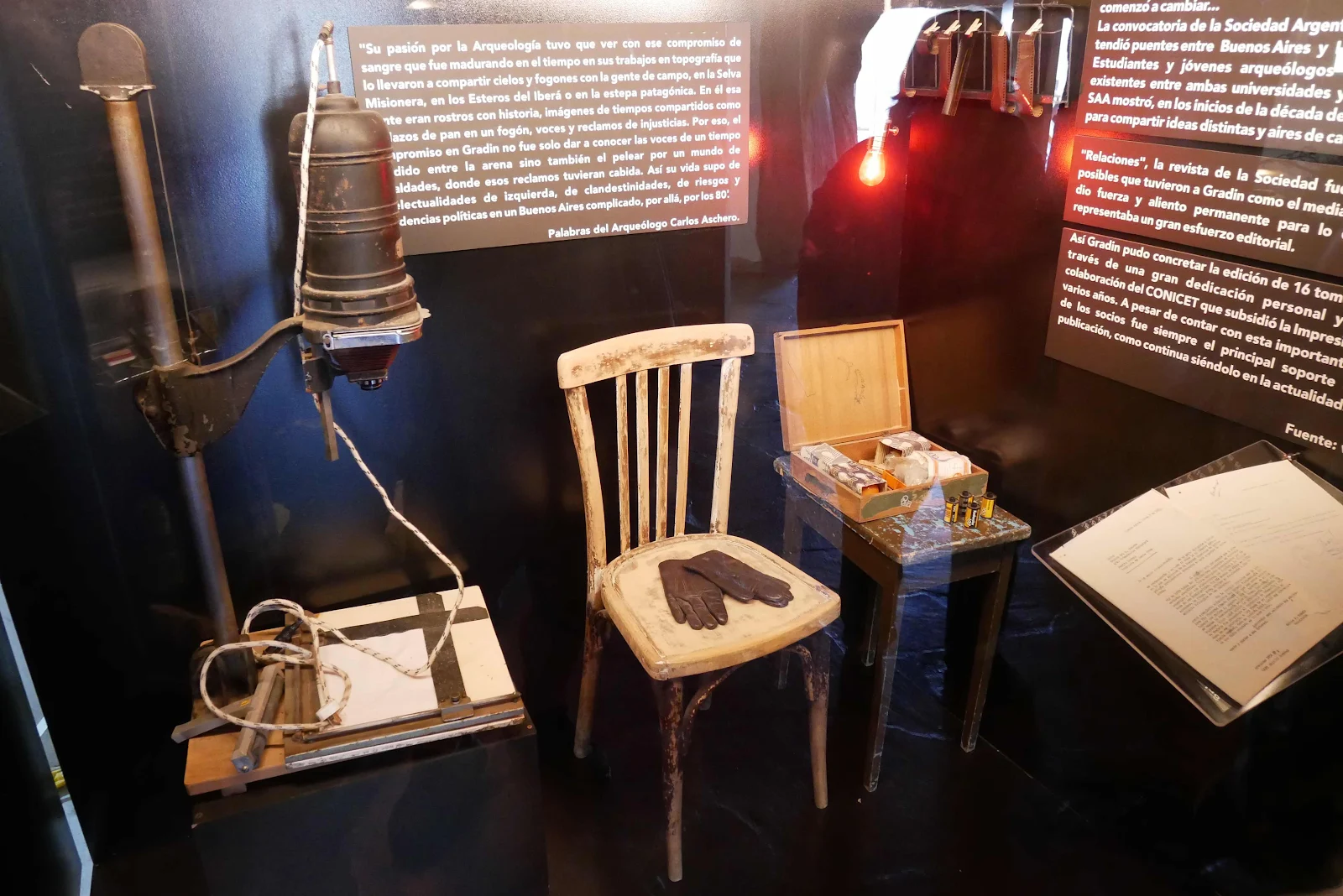
Gradín had a camera and a mobile dark room which boggled my mind a bit. 
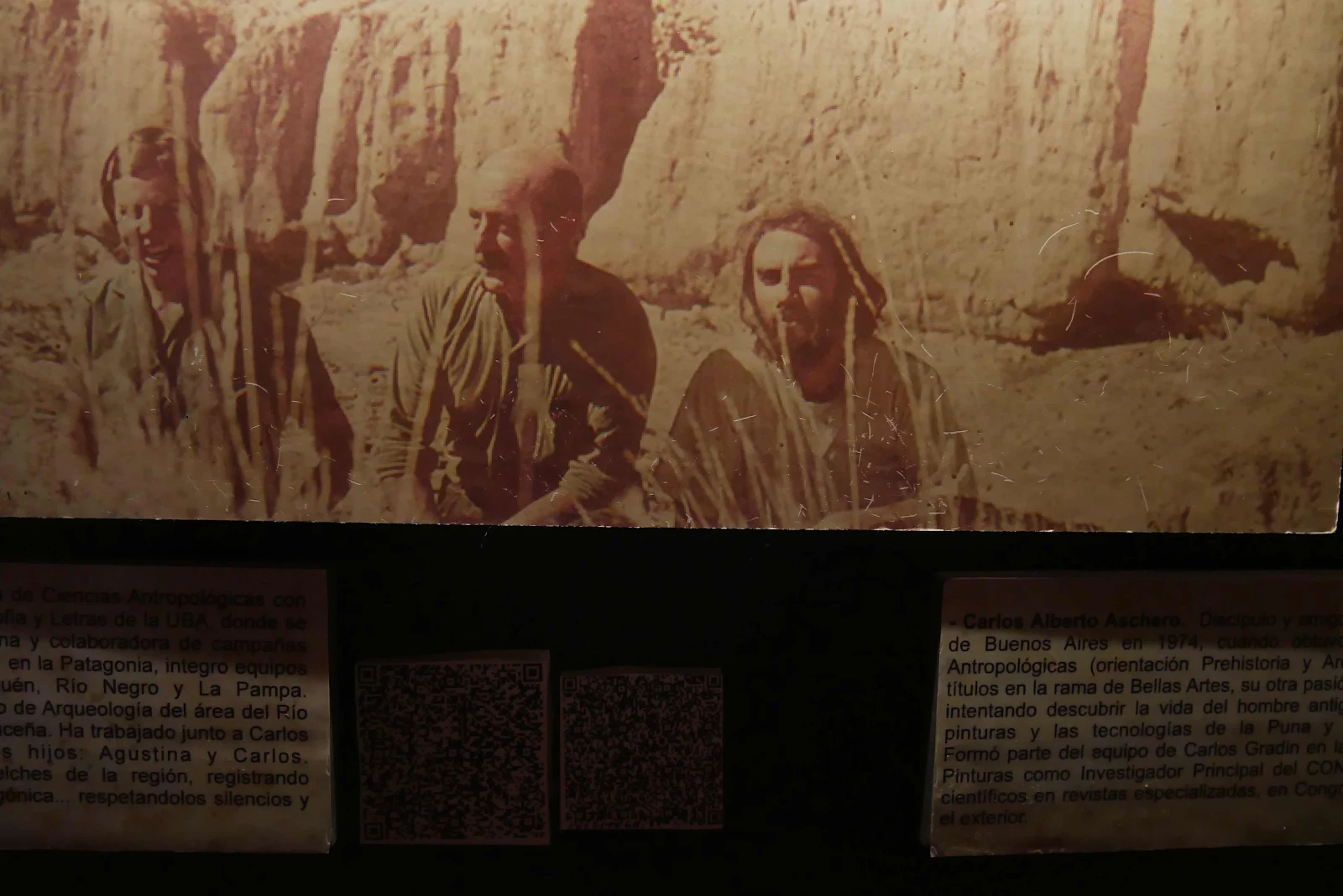
His wife, Gradin and a pupil: 
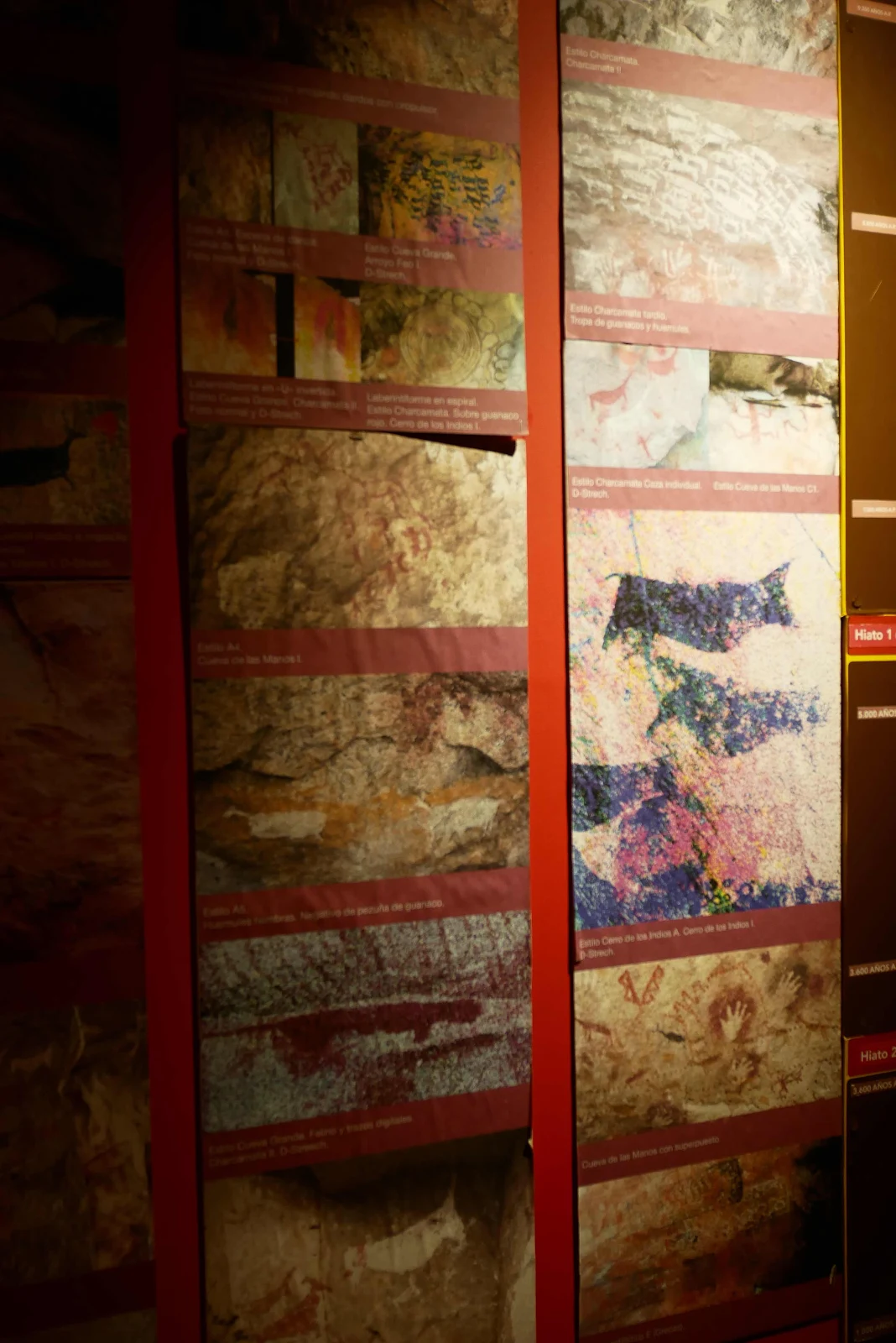
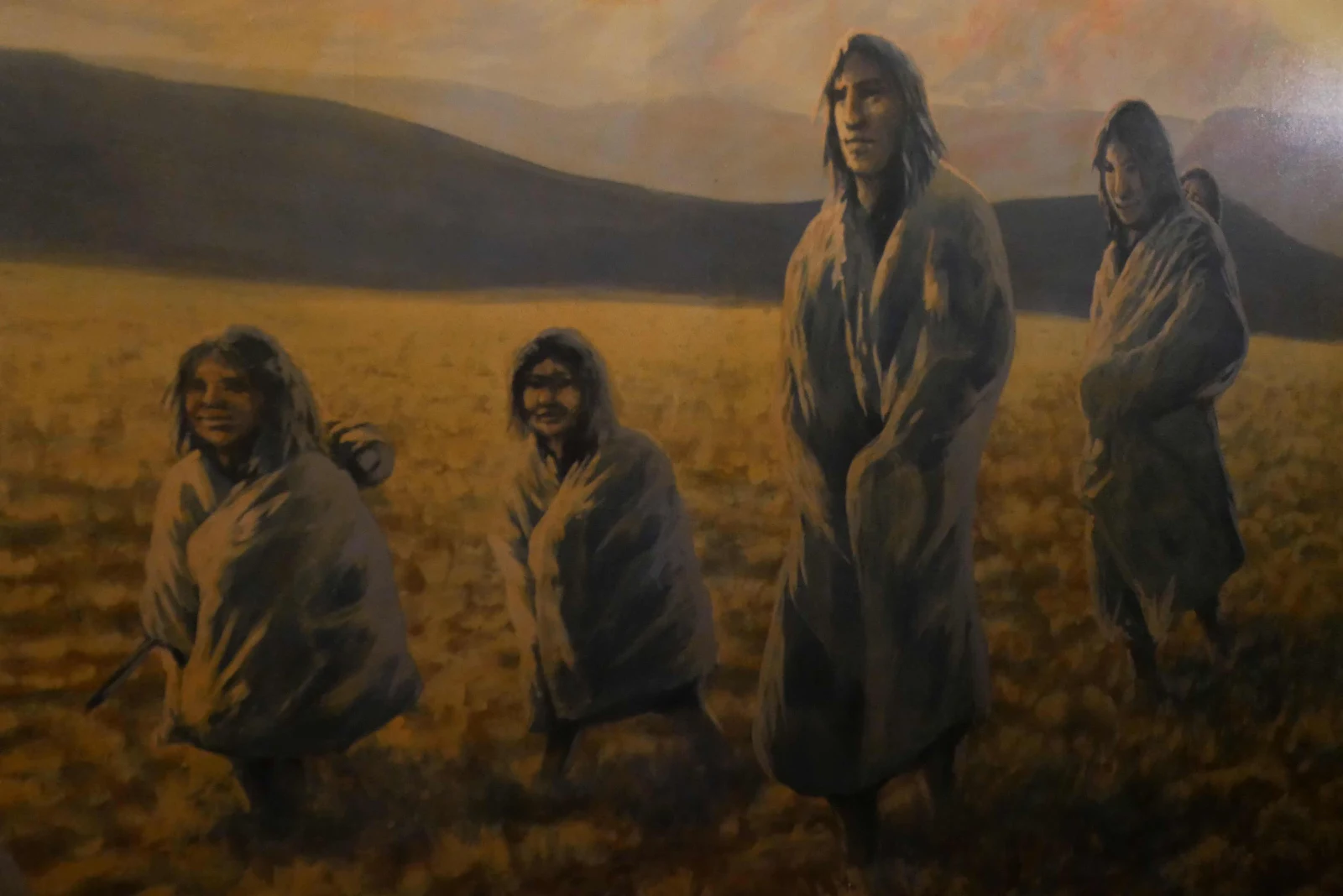
It was a different world back then as they excavated and kept notes with pen and paper. The caves were painted over millennia which is a bit hard to comprehend, between 7,000 and 700 BC. 
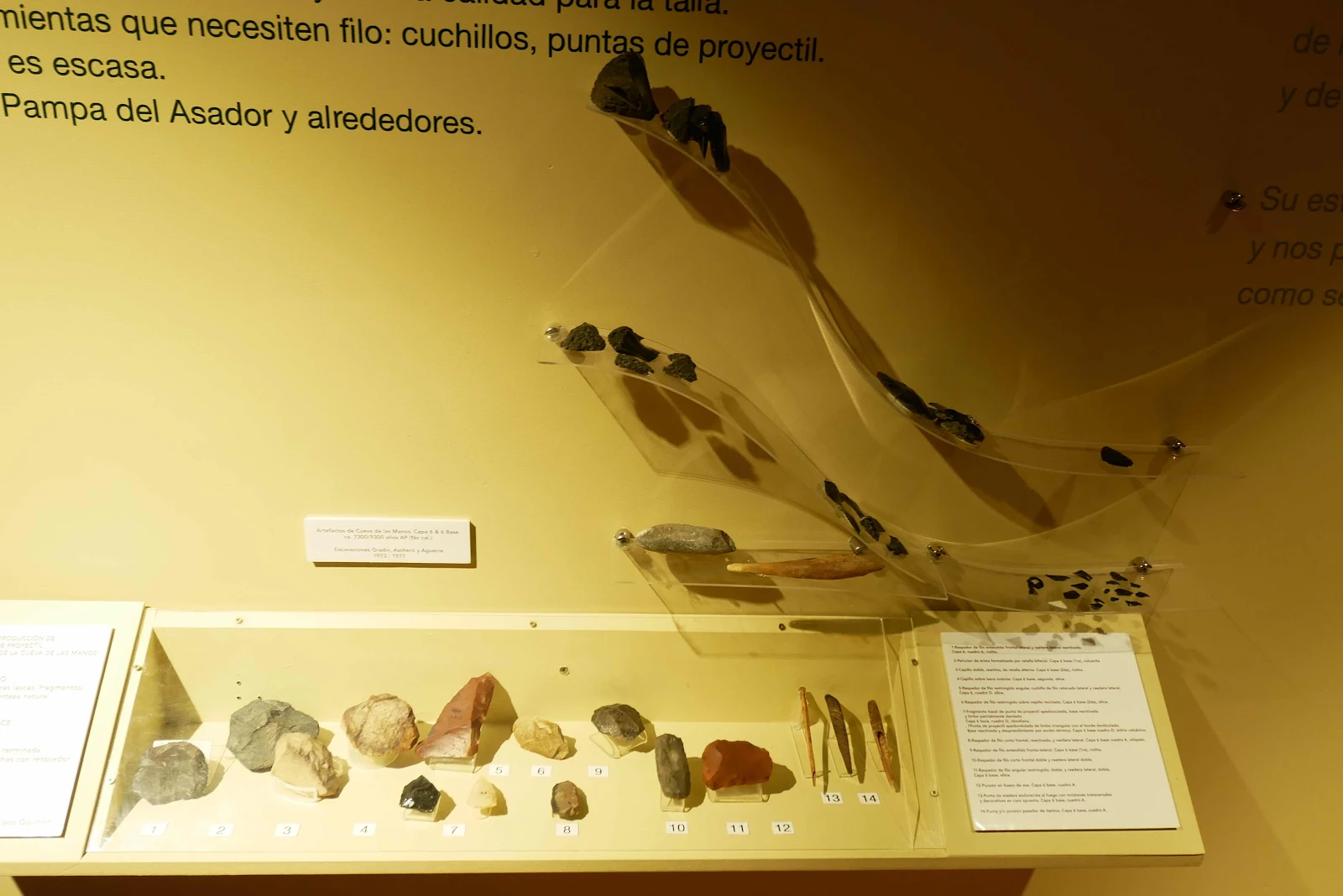
The artists belonged to the earliest inhabitants of Patagonia about whom not much is known, not even what they called themselves. But they left behind bits and pieces of their daily lives and the tools they used to paint so scientists gathered dates from those artifacts. 
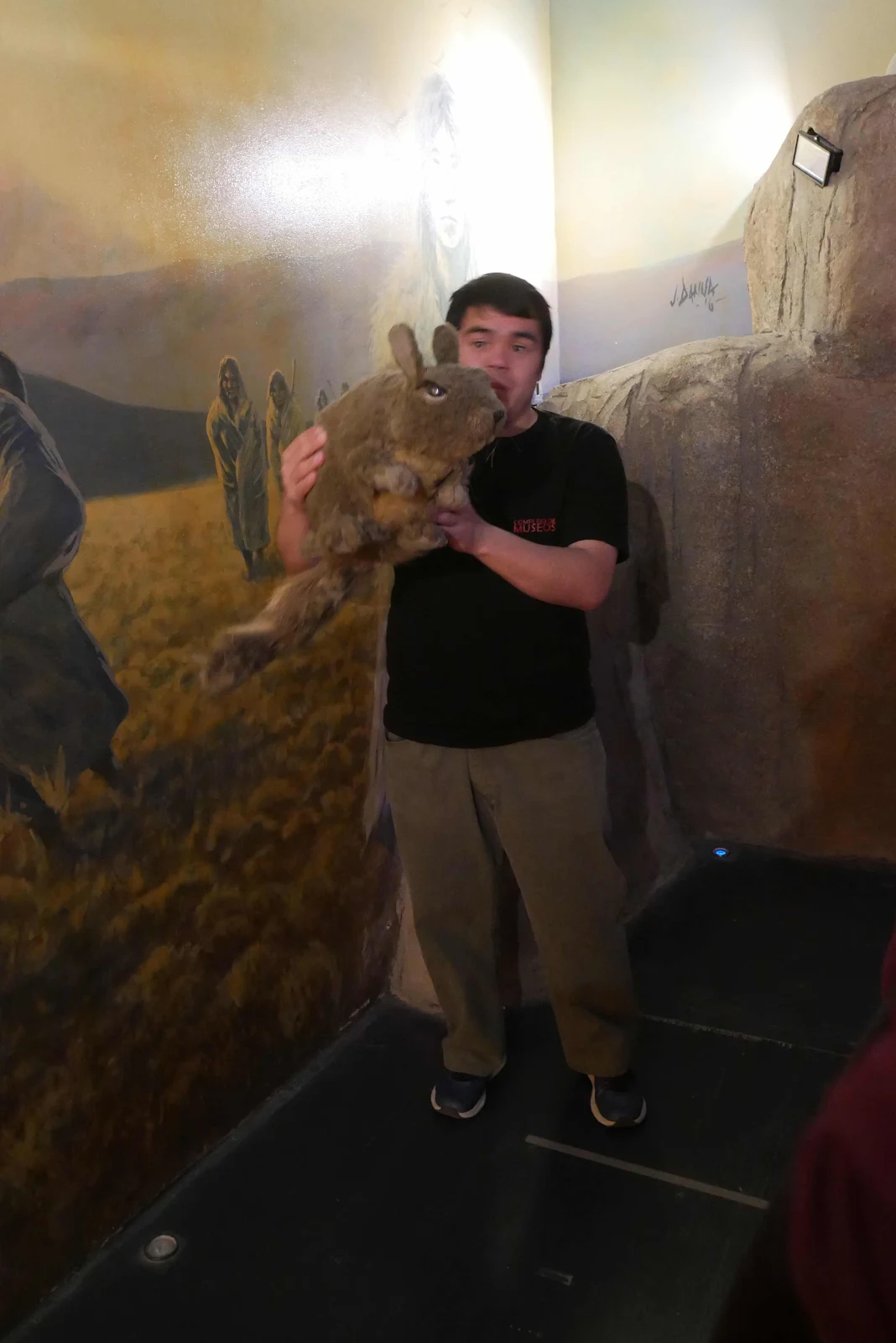
Our guide showed off another weird Patagonian animal, some sort of cross between a very large hare and a beaver. This creature lives in the cliffs which it climbs apparently like a goat. These creatures along with armadillos and guanacos formed the local human diet. 
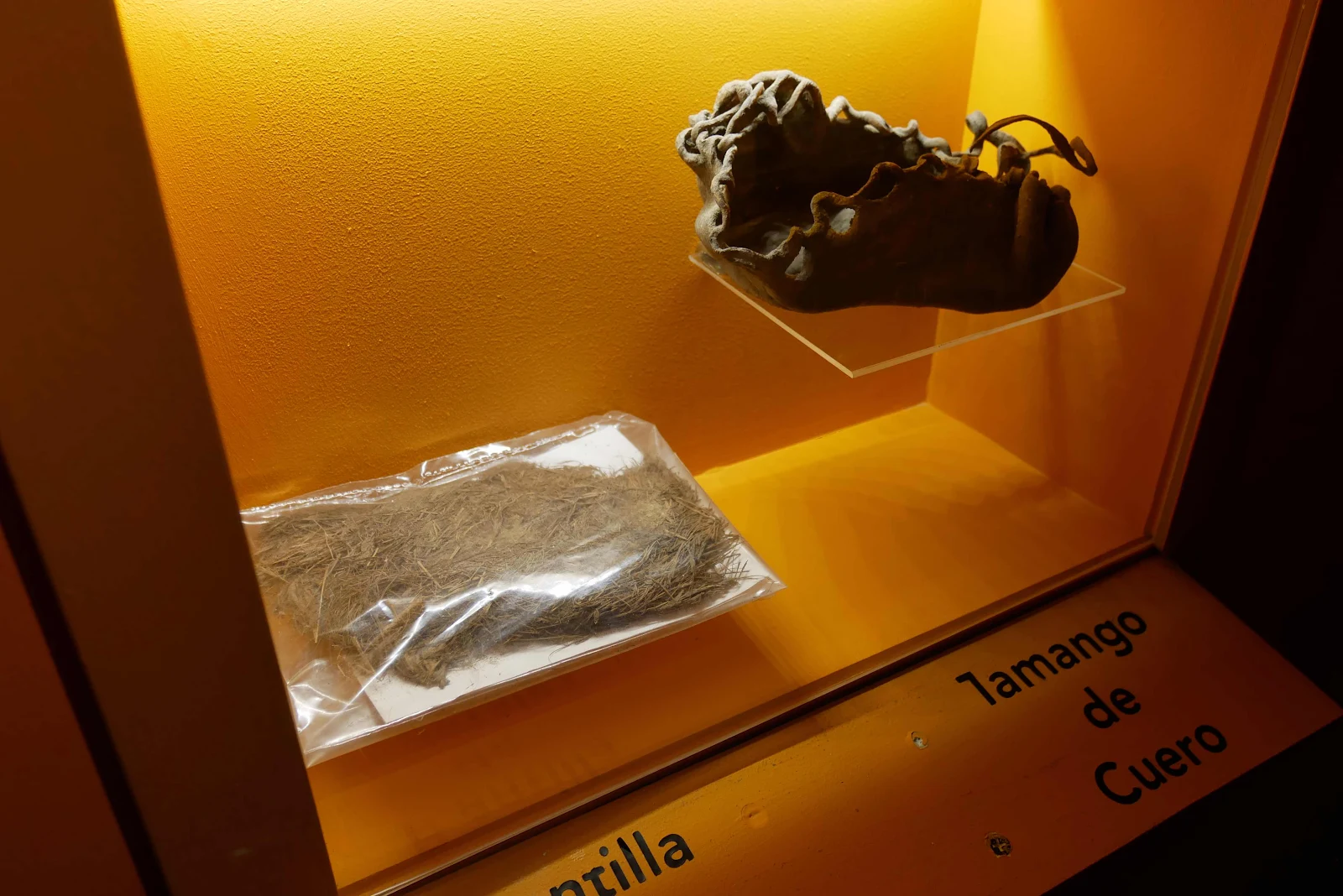
A guanaco leather shoe found in the cave. I was fascinated by the fact it was easily identifiable plus they found a soft insert made from grasses. They liked their comfort. 
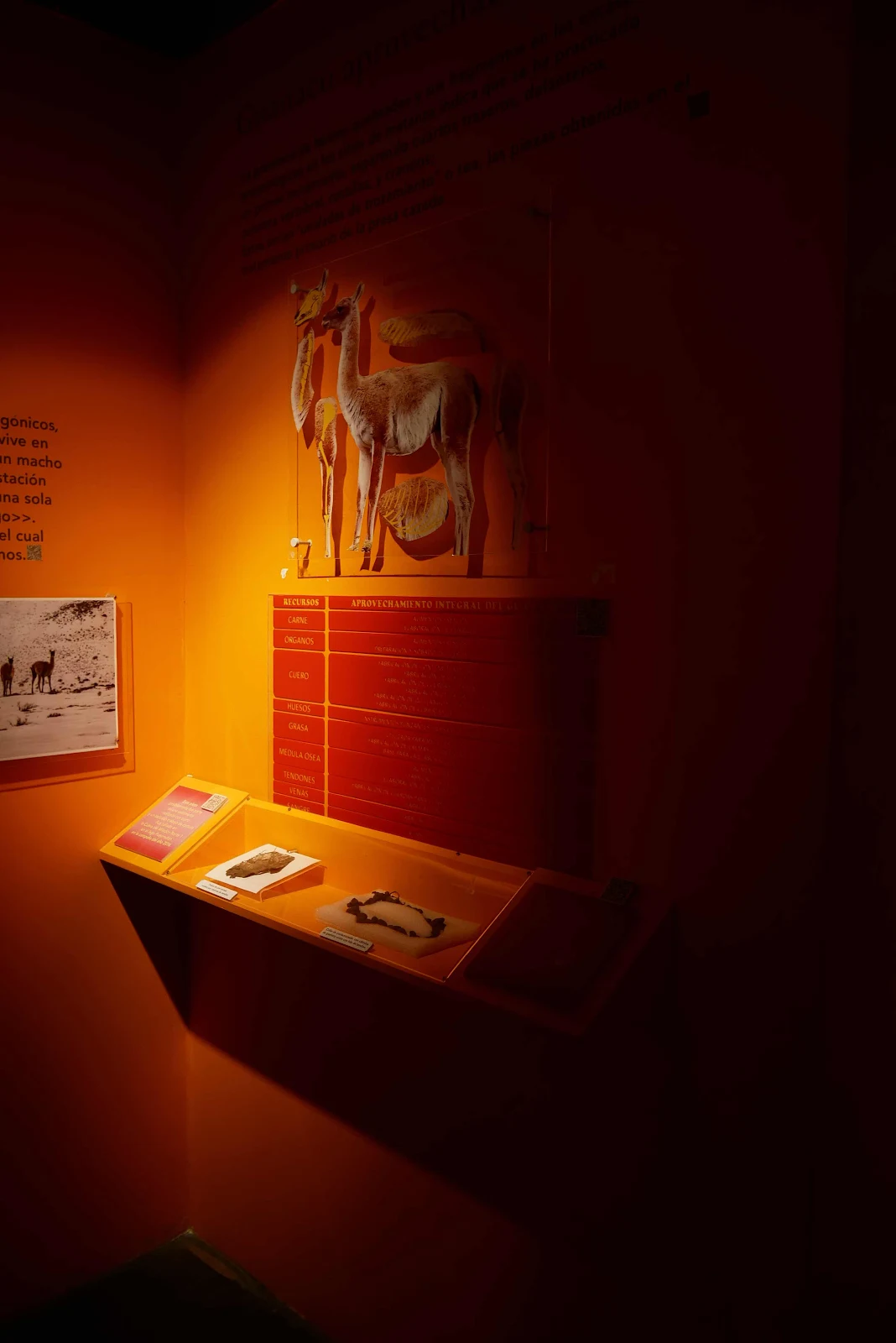
Fortunately for the cave dwellers they seemed to like guanaco meat because they hunted them and butchered them all over the place. 
They were  people who hadn’t yet encountered the bow but they used some  pretty sophisticated weapons to hunt. 
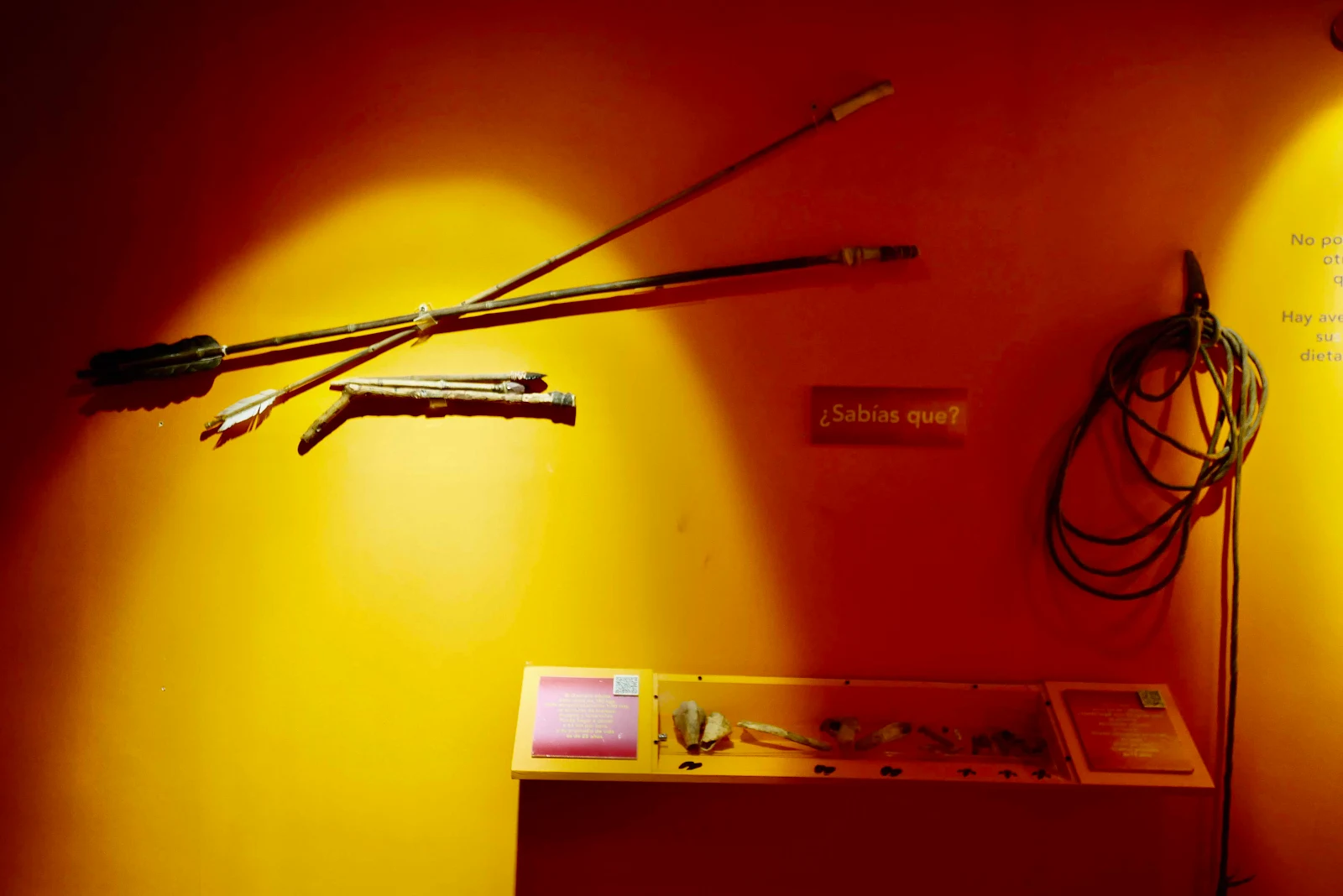
They had a spear made of bamboo cane with a removable tip so the haft would fall away had the guanaco would be stuck only by the tip.  To increase the force they used a launcher held in the hand to propel the spear further and harder. 
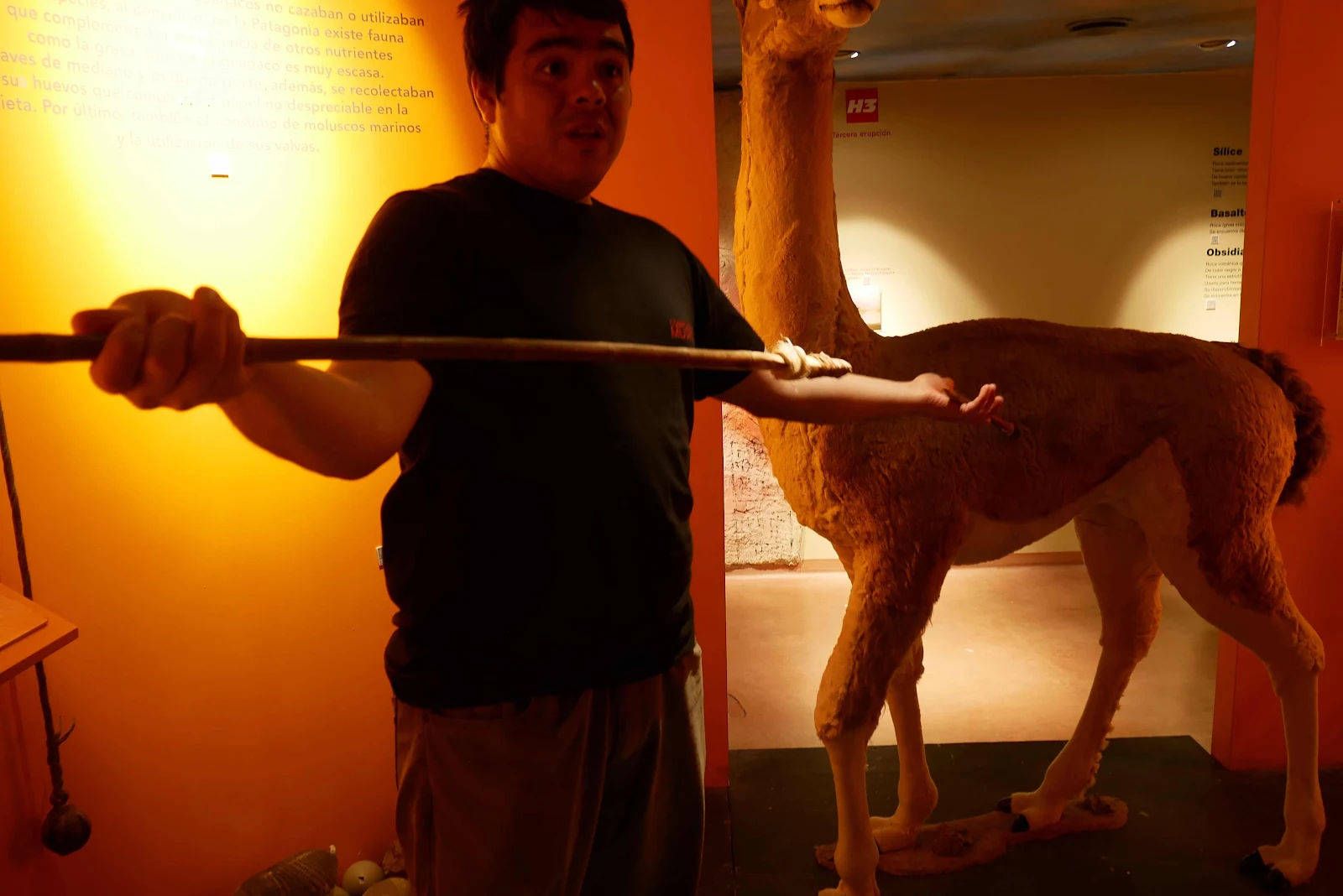
And in their spare time they made cave paintings possibly to tell stories or to teach youngsters how to identify their prey and hunting tactics. 
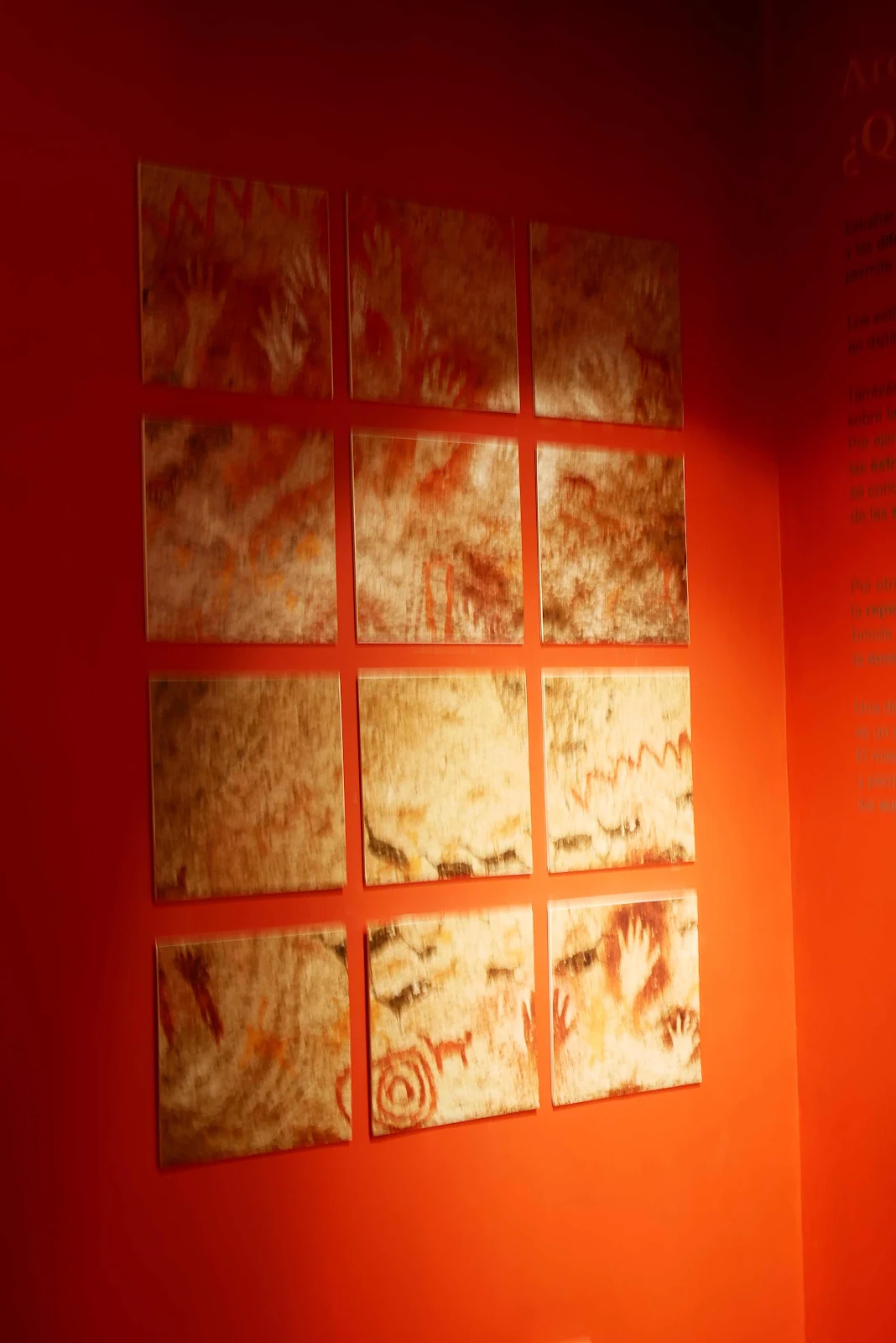


They had a kids room as part of the museum.  
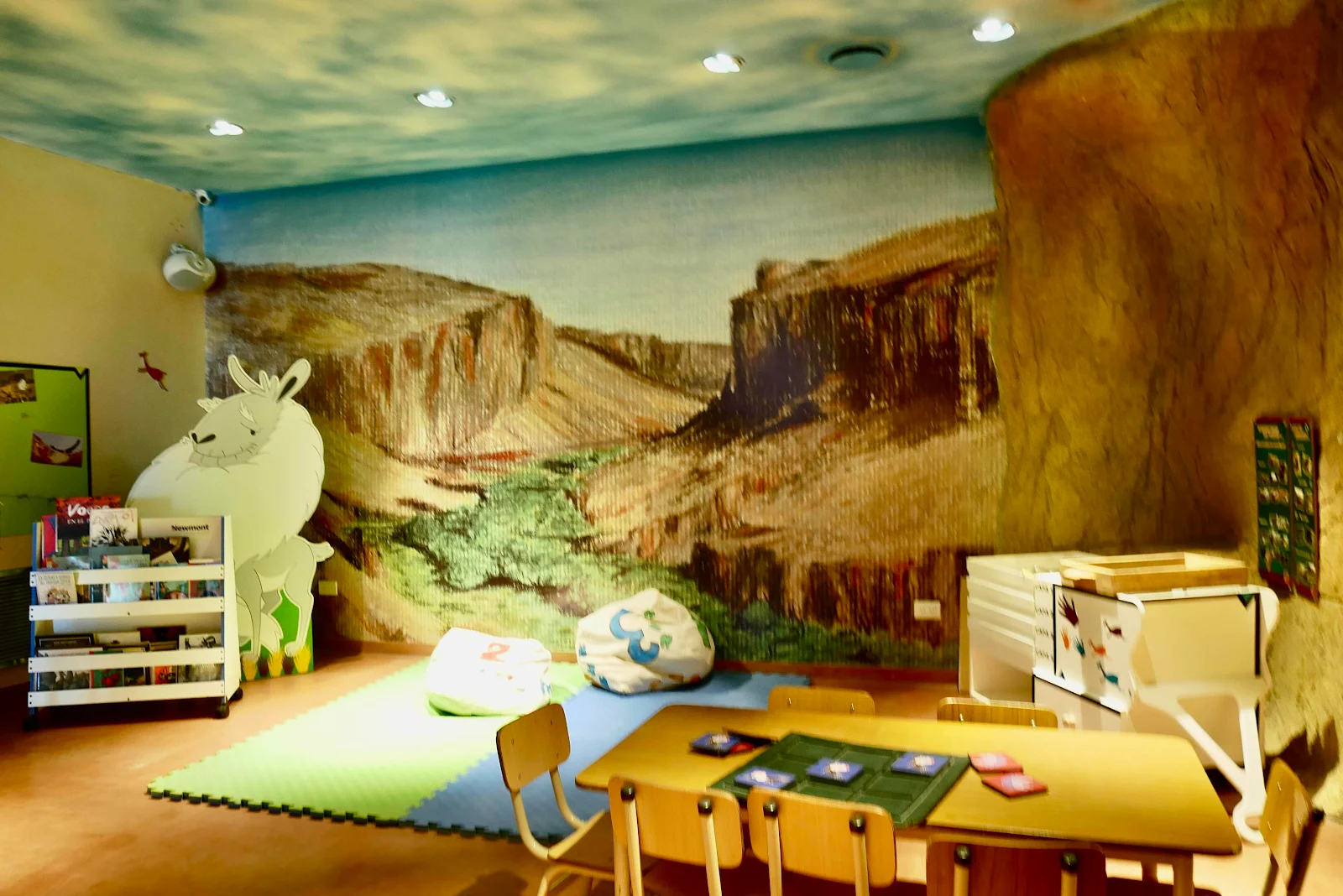
The painters used brushes and bones to paint. They filled hollow bones and blew the pigment onto the walls. They’ve noticed most painters were right handed as they painted their left hands and they even found one six fingered hand. 
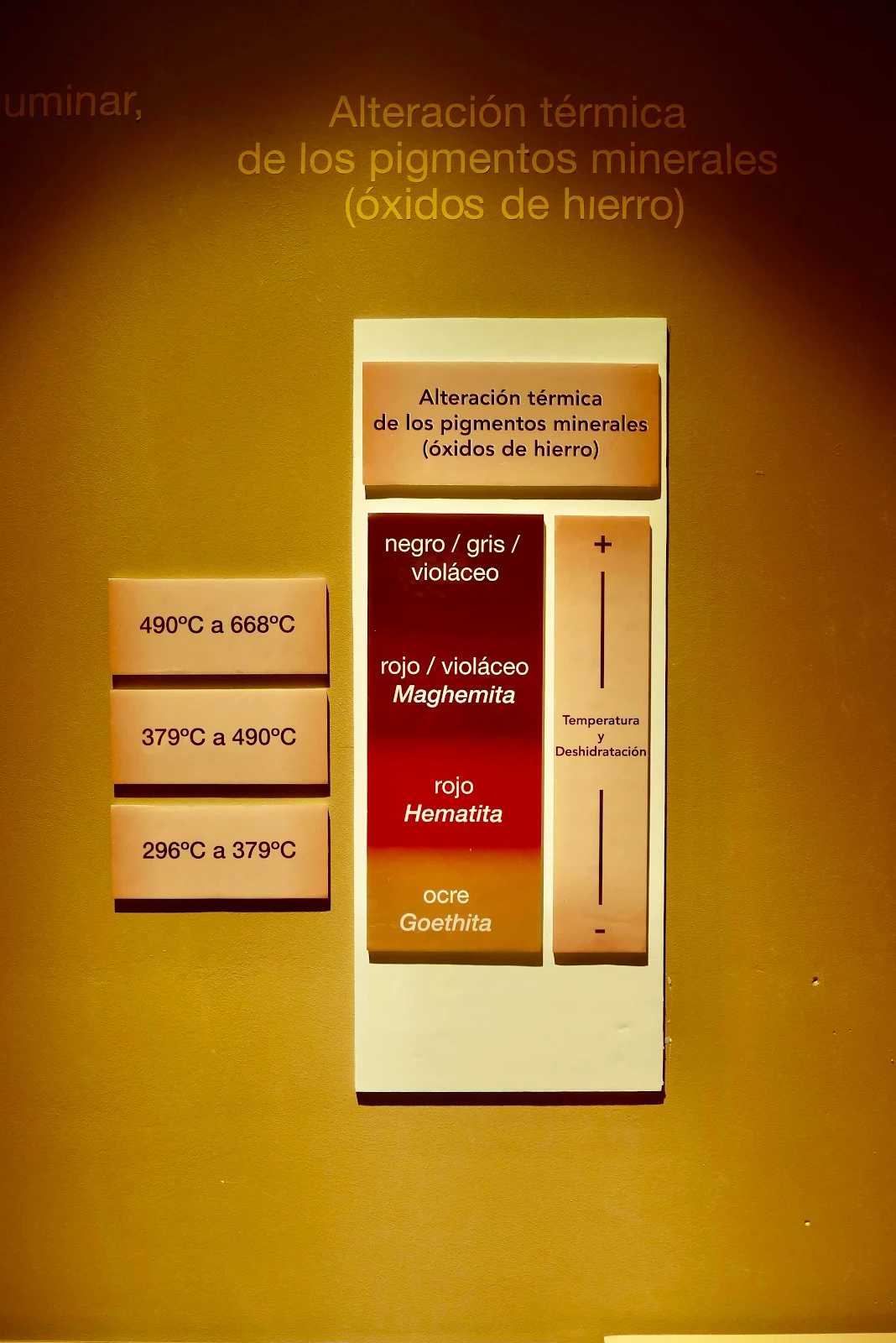
One other thing archeologists found was that some pigments aren’t found in nature but must have been created by heating up the yellows and reds that do exist naturally. Geologically South America has changed, ice in the Andes have shrunk and the coasts too, shown below by the white edges that used to be above water and no longer are. 
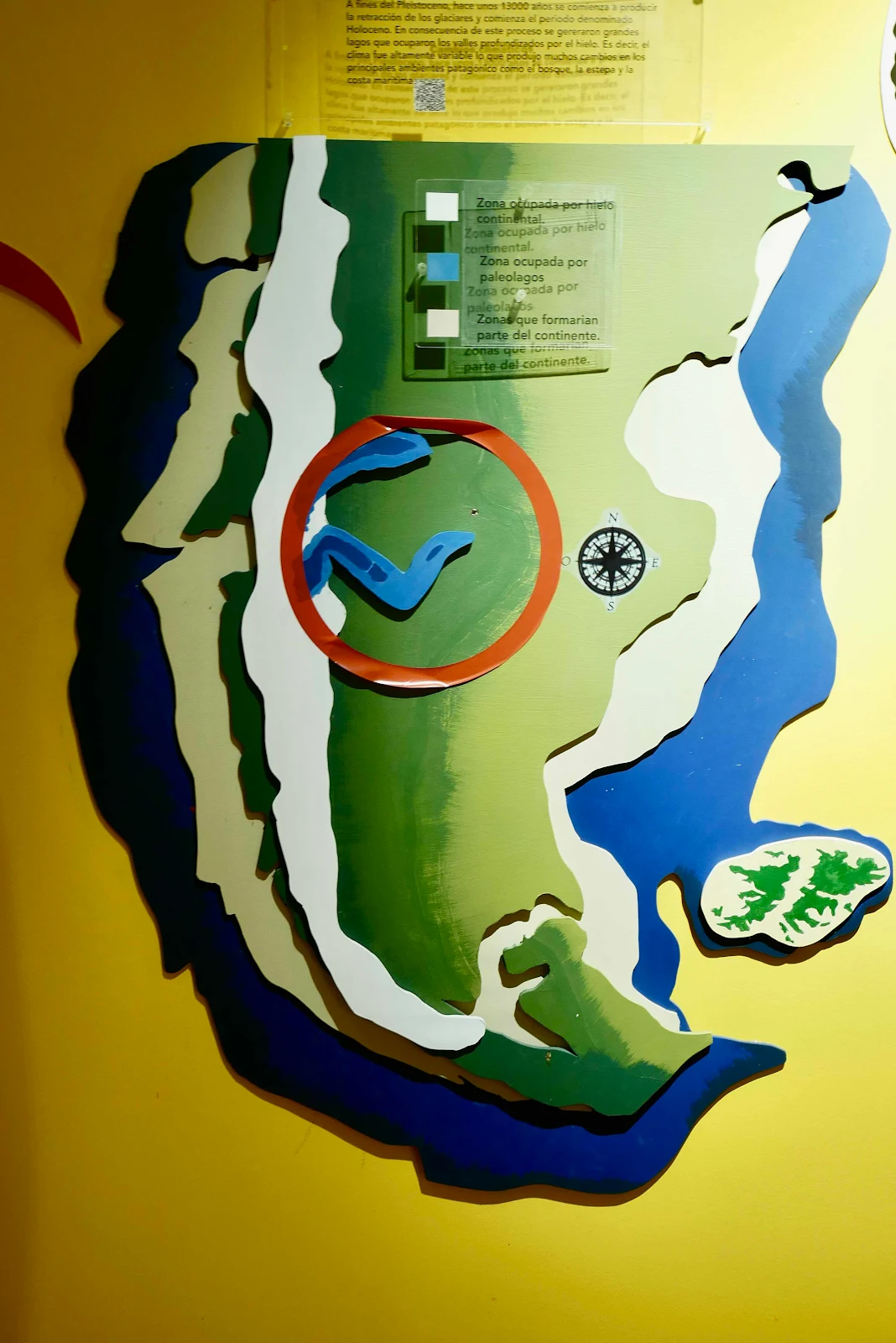
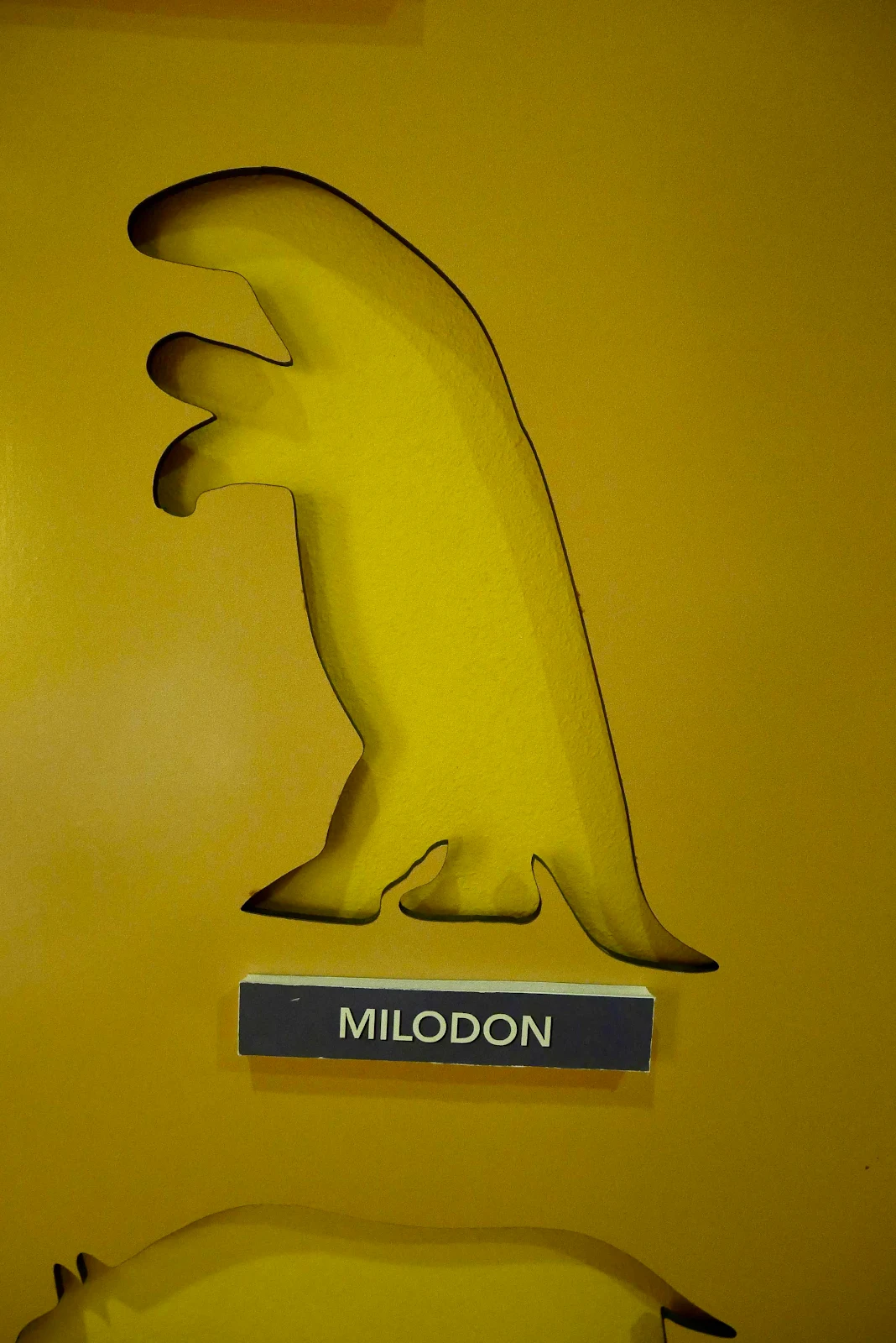
And back then prehistoric wild animals developed in their own way. 
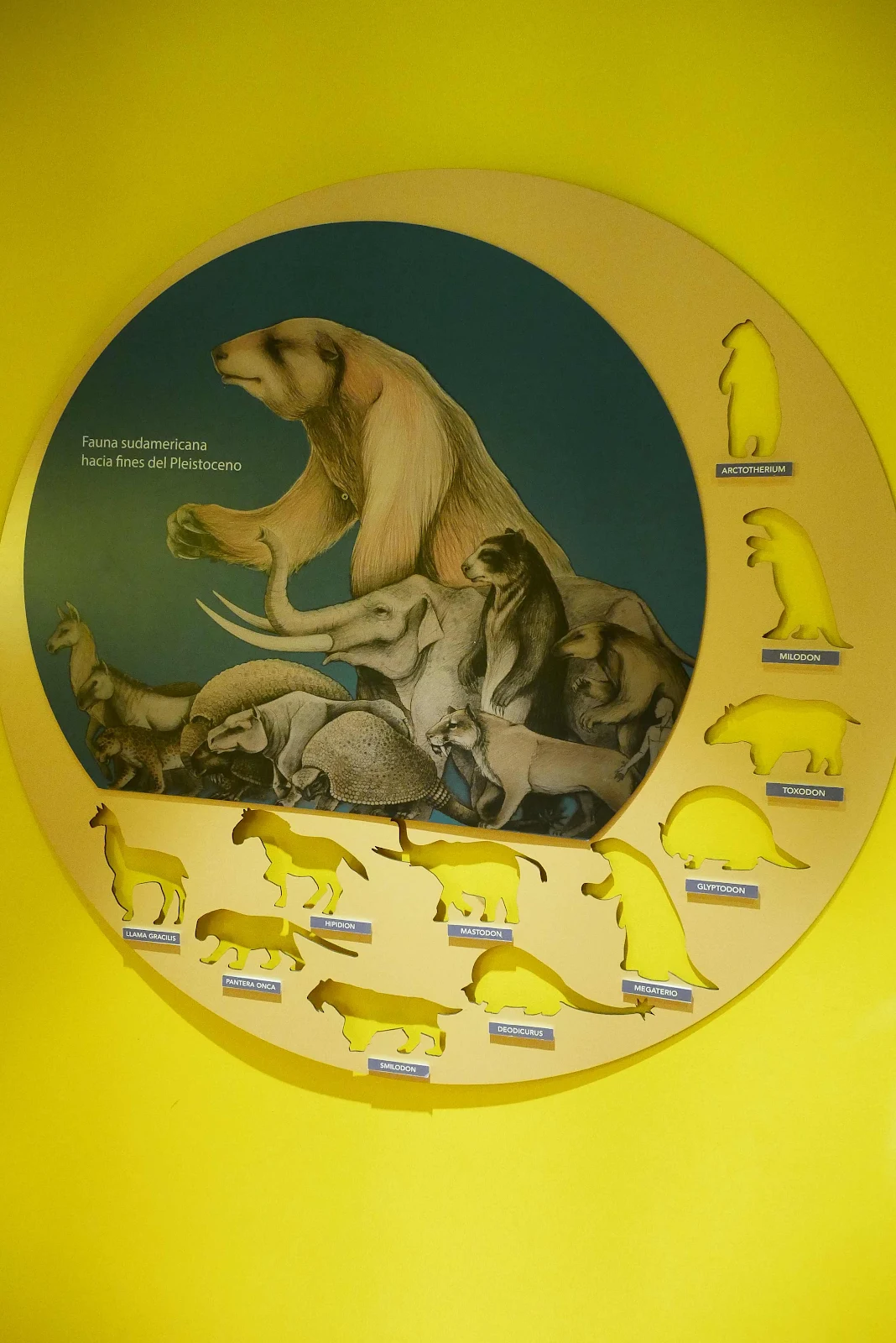
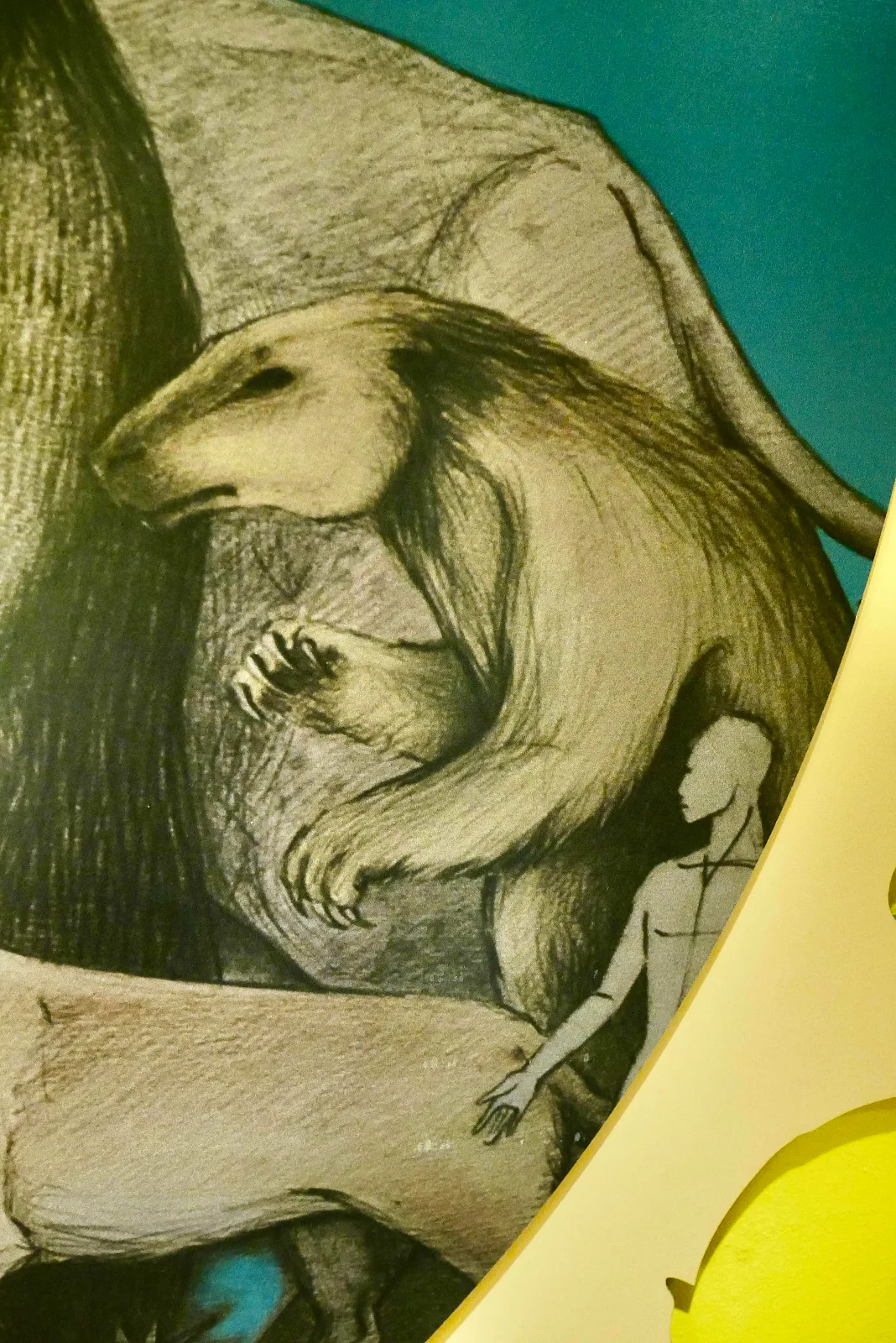
They out grew humans by a long way too. Check out the human below to give the animals scale: 

Gradín’s family…
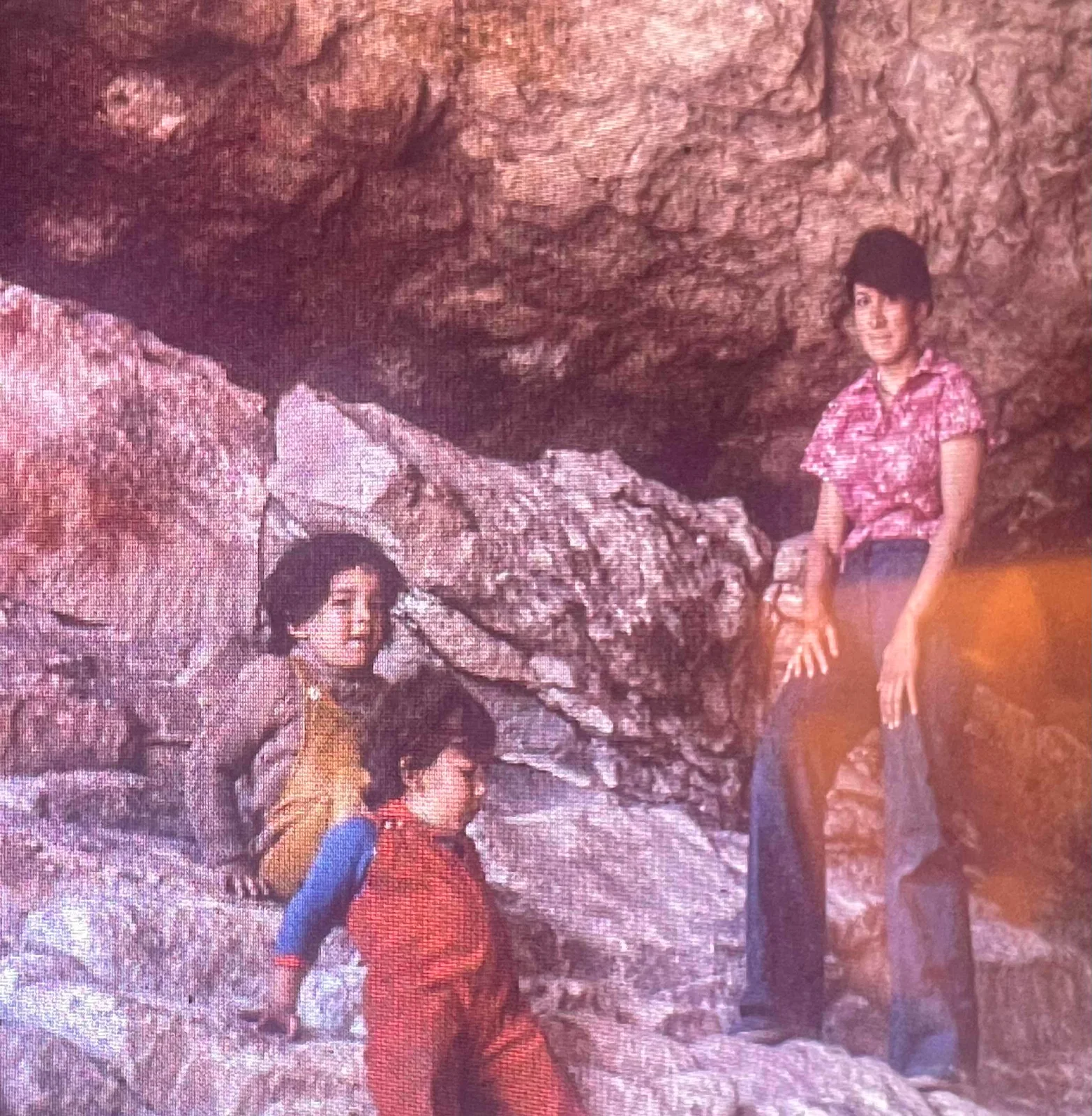
…and himself, all on the job. 
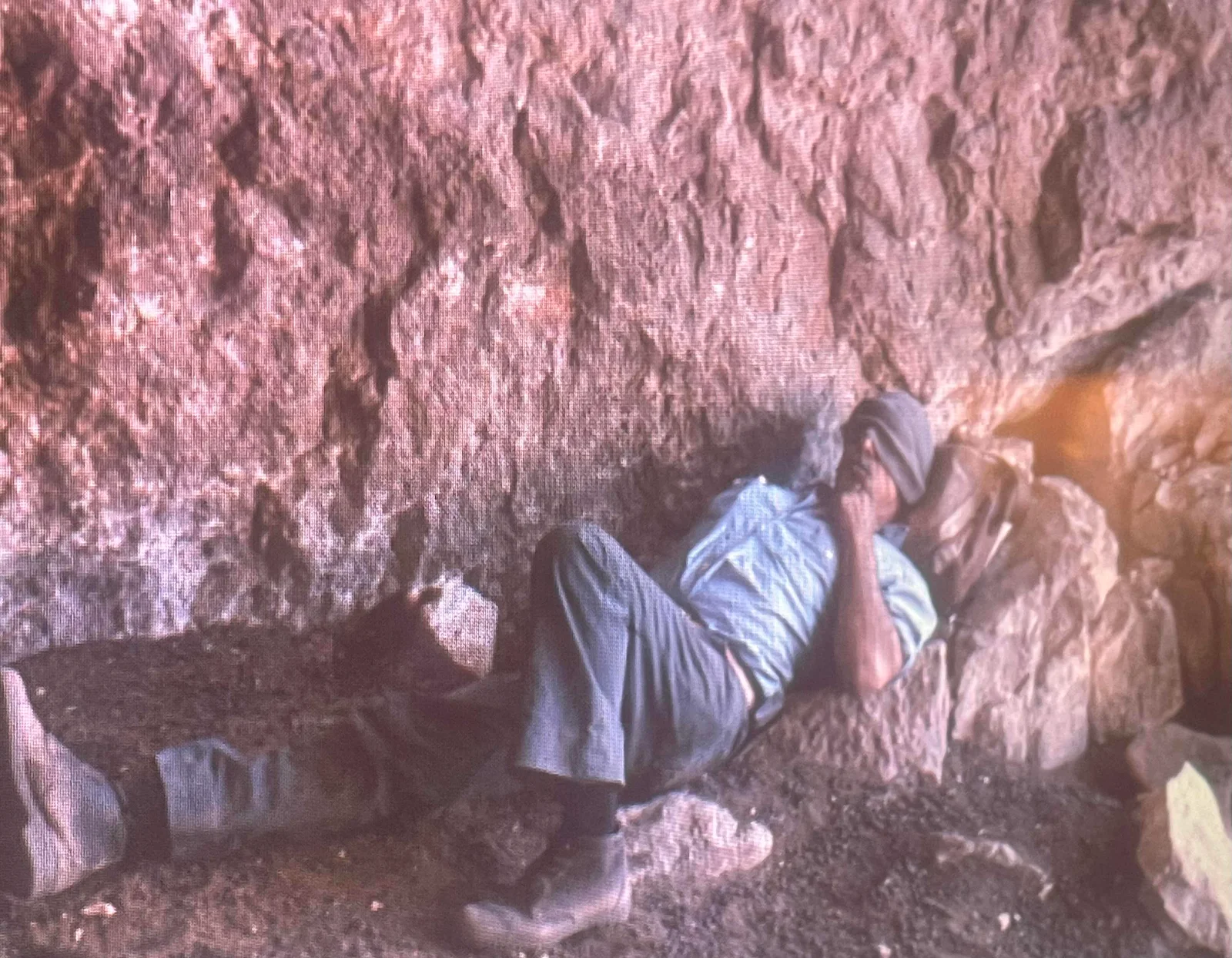
It would have been a long hard slog to drive out there. Maybe we should have arrived earlier in the day. Maybe we could have left Rusty aboard GANNET2 while we took the cave tour. 
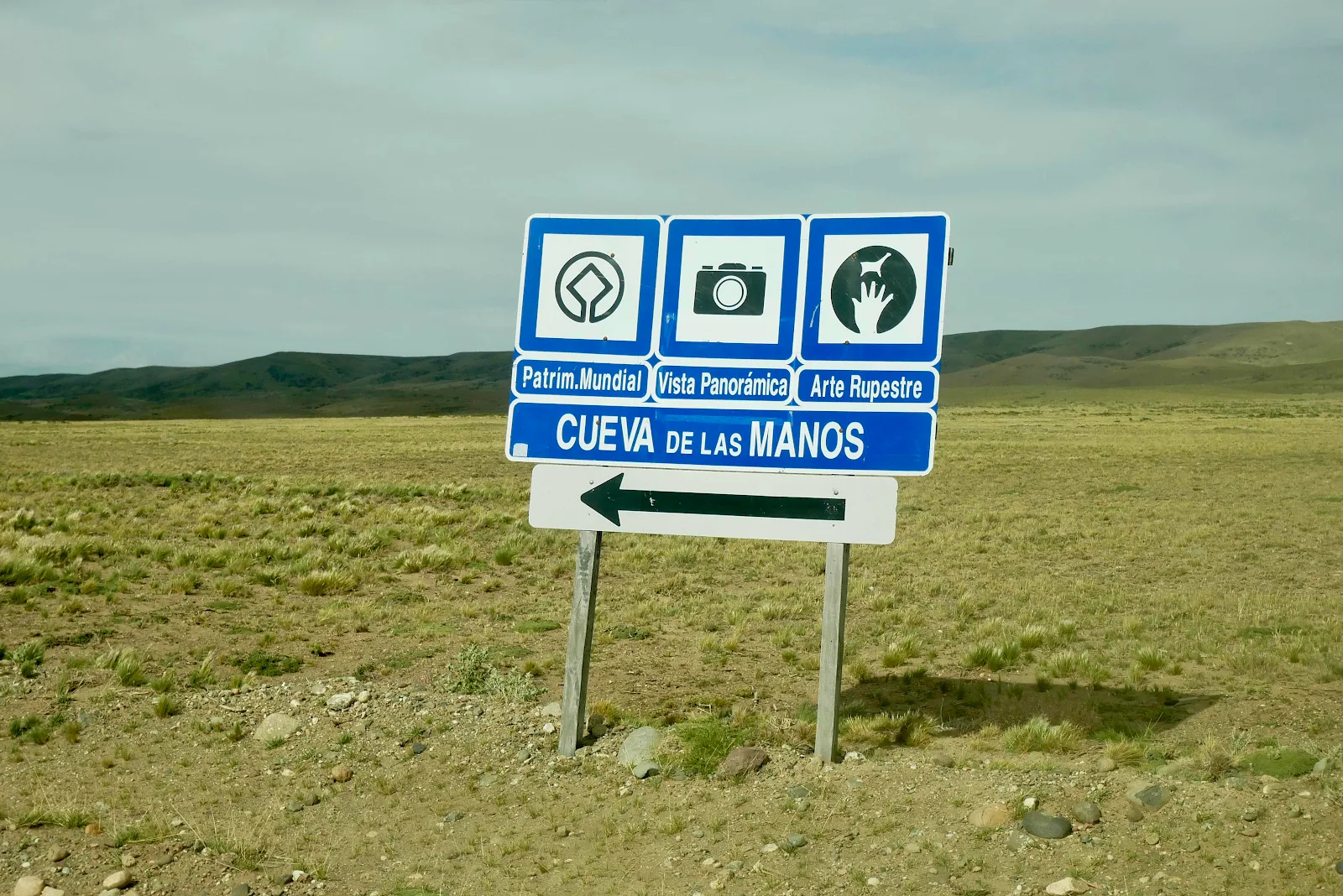
Now we’ll never know. 

Sunday, January 19, 2025

Enjoying Perito Moreno

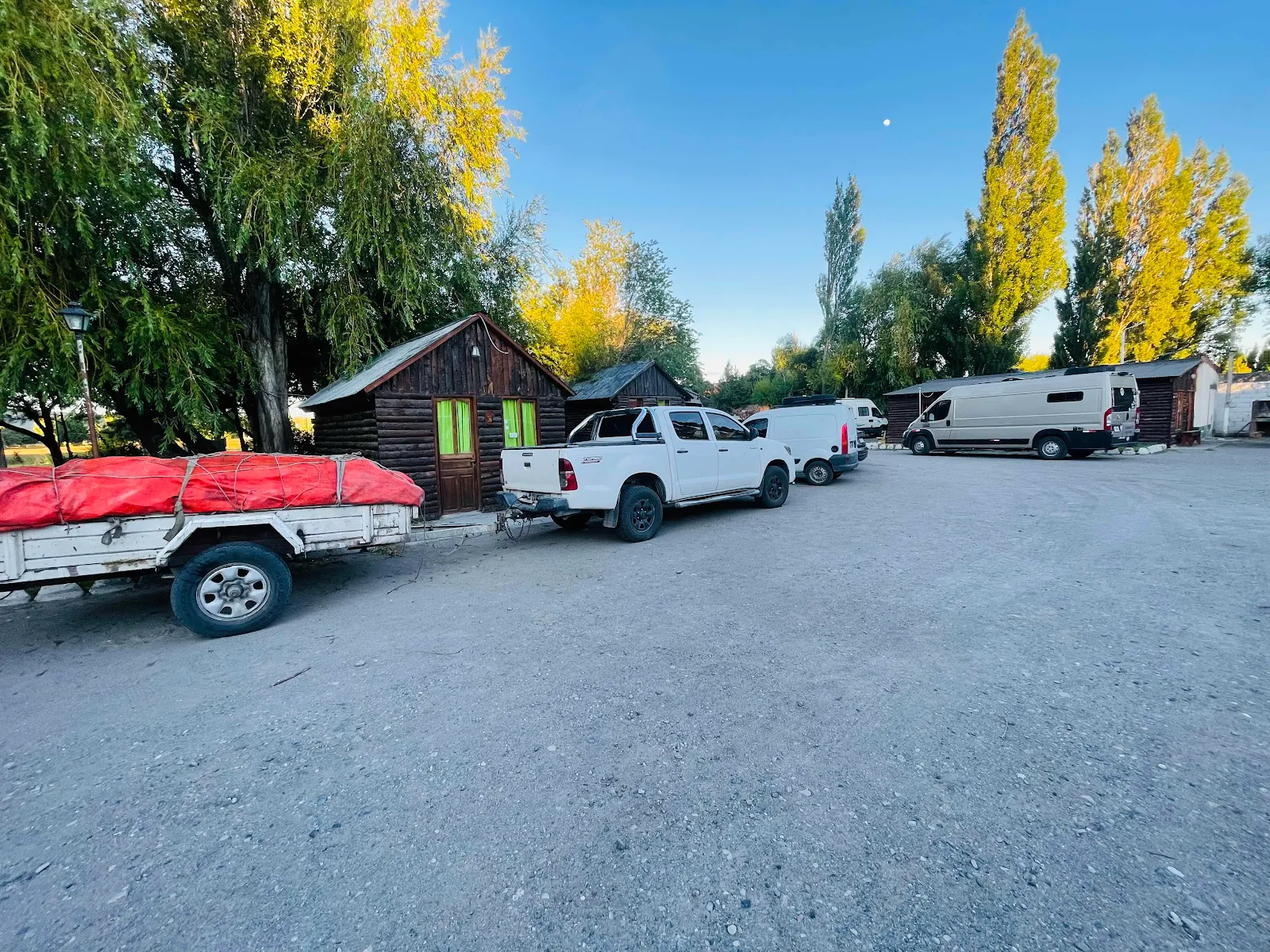
We have a temporary home in Perito Moreno at the municipal campground. At seven dollars a night with hot showers in a heated washhouse seems like a deal. It’s high season now with families on summer vacation so it can get crowded in the evenings. 
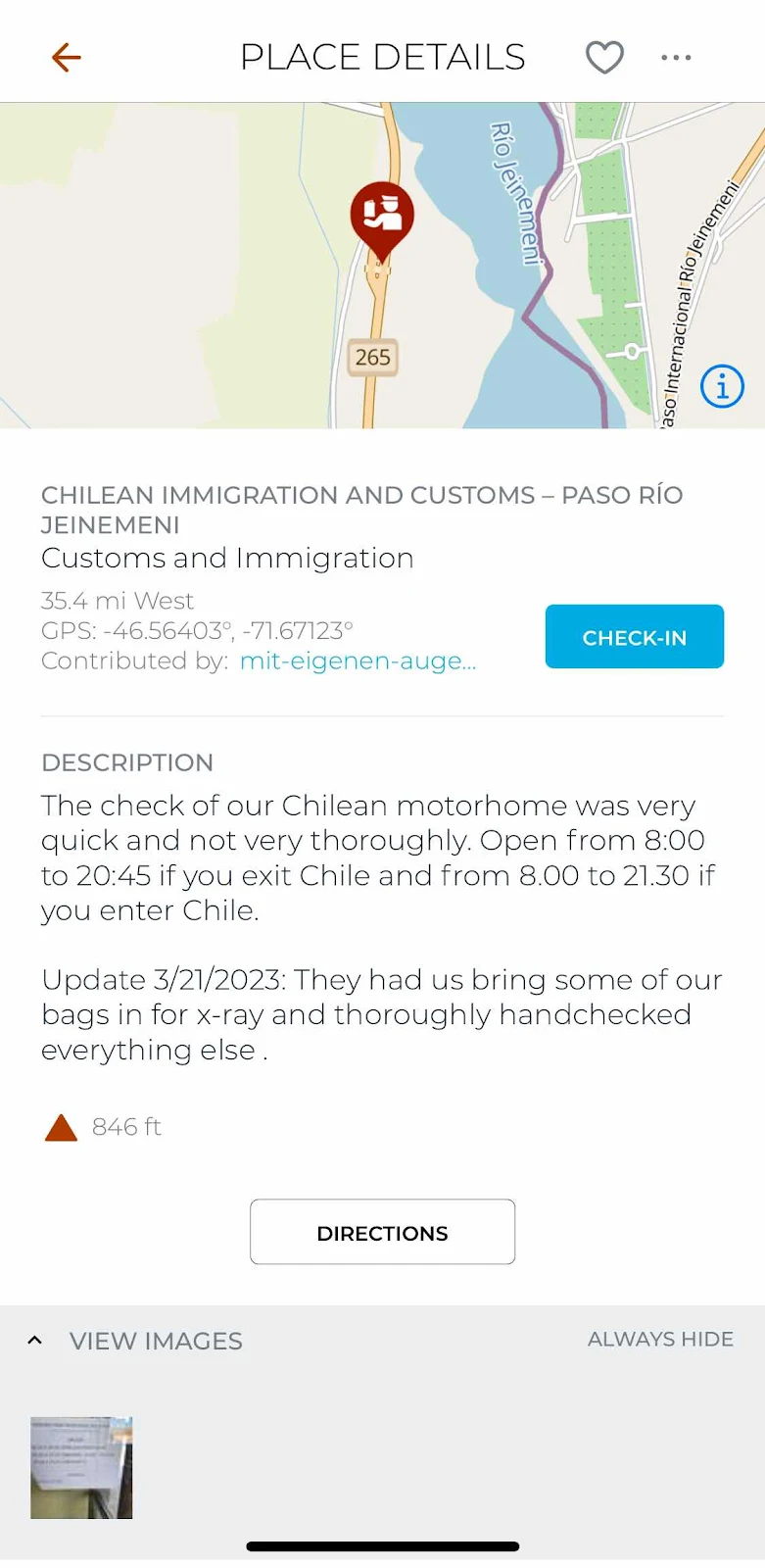
Sunday (today) with clean bodies and clean laundry we plan to hang around and be idle and tomorrow drive 40 miles to the border with Chile. This poses a problem as we have to plan to give up fruits and vegetables as we enter Chile and they are about as strict as the US is on the subject of prohibited items. So we need to not over shop and hopefully a day of rest will give us time to eat the fruit rather than have it confiscated at the border. 
Rusty is good to go as his Chilean border permit is valid until February 10th so we will just have to get it stamped on both sides as we cross. Then when we arrive in the town of Chile Chico we have already noted the location of the supermarket and a fruit stand. After that we will drive west on the gravel road out of town. We wanted to see if there is room on the ferry to cross the lake at the town of Chile Chico but it only runs once a day early in the morning and we won’t make it so we drive around the lake 130 miles on gravel to our destination, a cave tour. 
We have a date Wednesday morning to take a boat ride to see some marble caves at the far end of the Chilean lake and with a hundred miles of gravel to drive we’ve given ourselves a day, Tuesday to get there. Bit Sunday will be a day of reading and resting and enjoying a breezy sunny day in camp. Even retirees need a day off every now and then. 
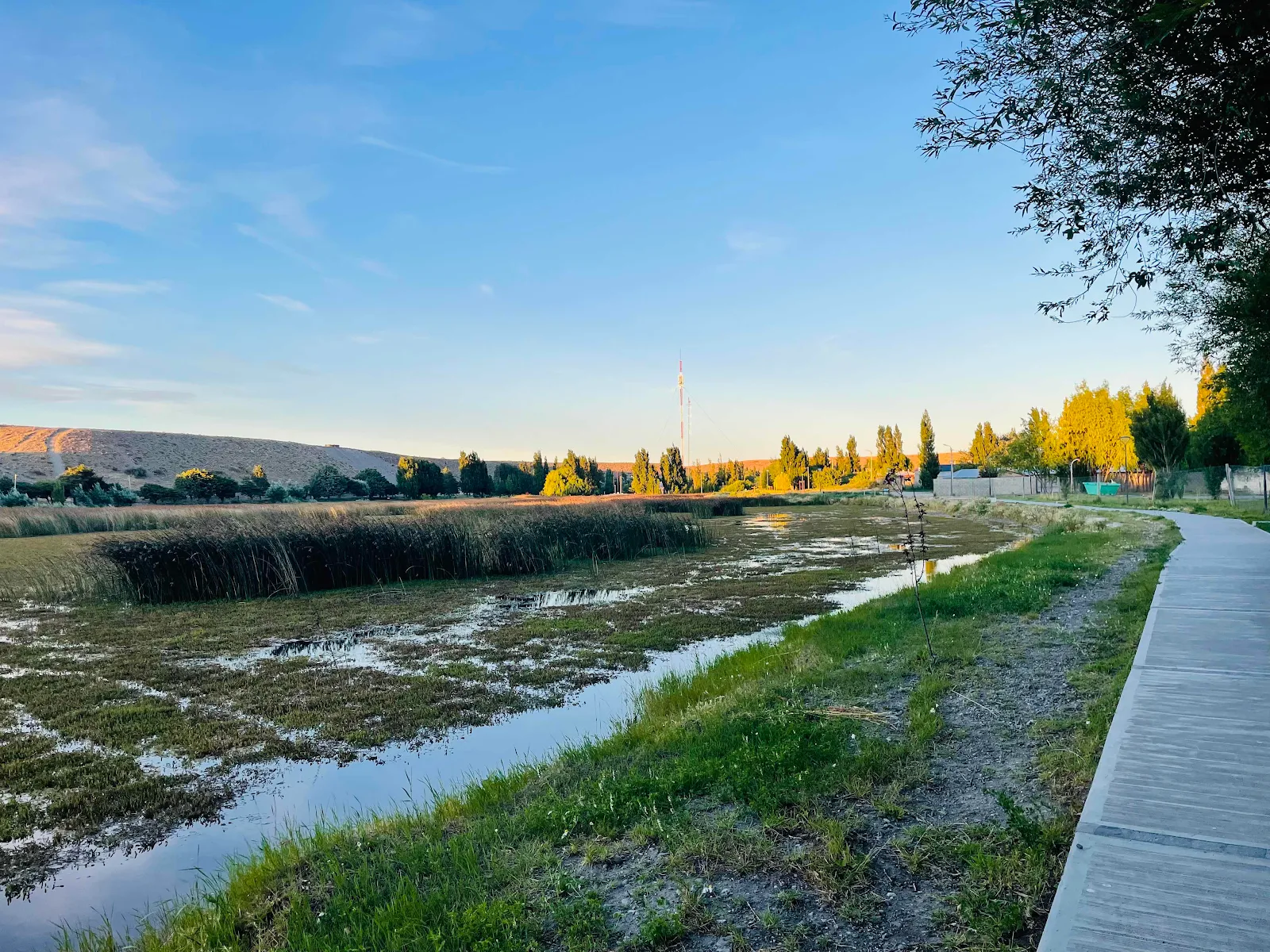
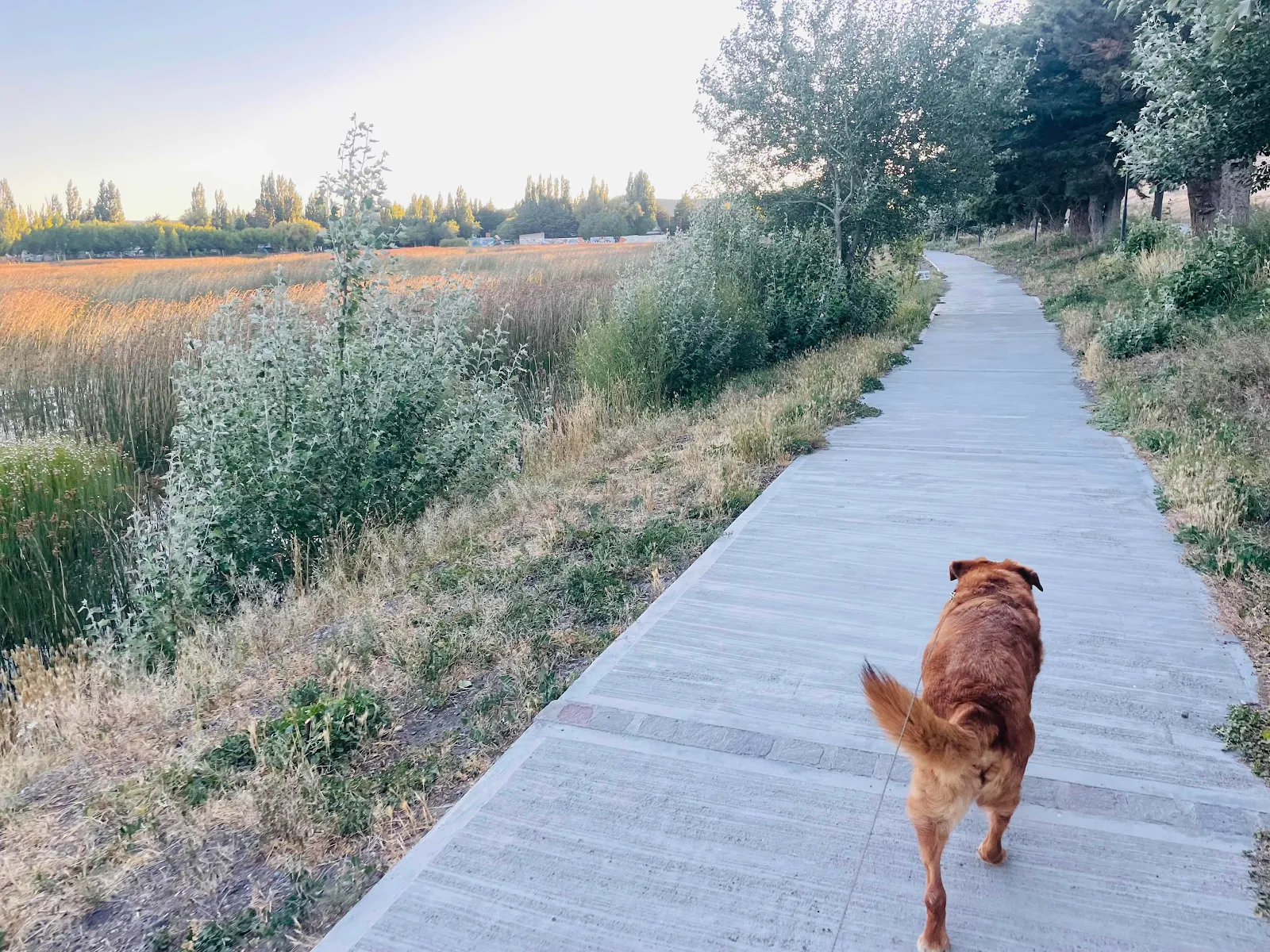
It’s been cold at night but Rusty doesn’t care because when he hears me wake up he starts yowling for me to let him out. And so at 6:30 we were out there walking Swan Lake as the sun came up. 
Daytime highs get near 70 but at this hour it’s nowhere near that warm with a cold west wind lowering temperatures significantly. 
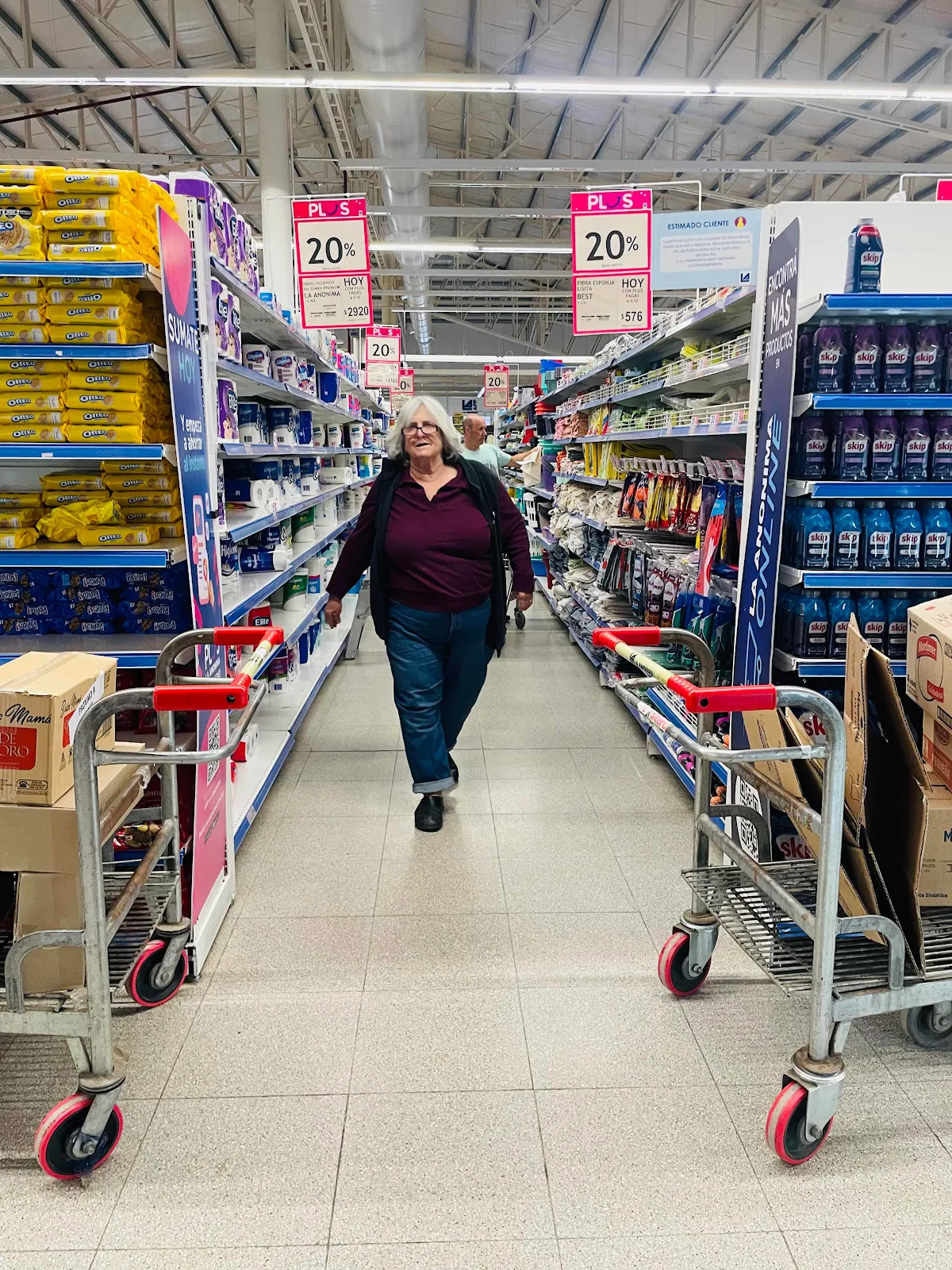
There’s a laundry with a great reputation so we got our smelly rags dropped off and went food shopping at the La Anonima outlet, the supermarket chain that owns Argentine Patagonia. When we picked up our clothes twenty four hours later they were perfectly folded and fresh. 
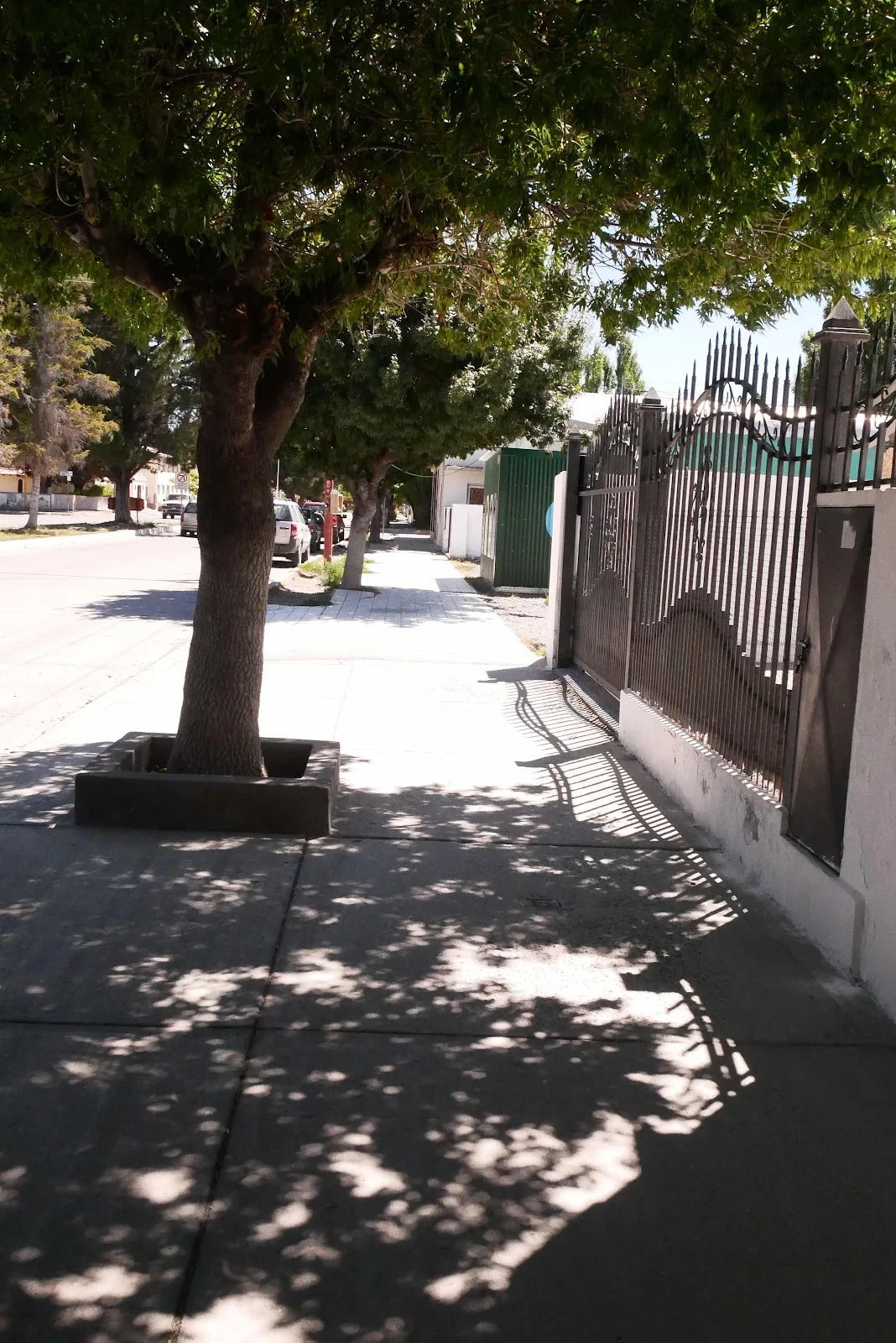
Perito Moreno is a funny little town but I like it. The streets are broad and even though the paving is dreadful there is lots of greenery, lovely gardens and lots of poplar trees (alamos) shimmering in the wind. 
I asked the lady cleaning the campground if she’d lived here all her life and she smiled and admitted as much. She was sweeping the sidewalks and I said you know the wind will blow it all back and she looked at me. “The people are far worse than the wind,” she said as she swept. 
You know I went on, there are places in the world where  the wind doesn’t blow everyday? She looked surprised, “You’re not used to it?” No I said emphatically and she laughed. My hat is off to these people, they are tough. 
La Anonima: 
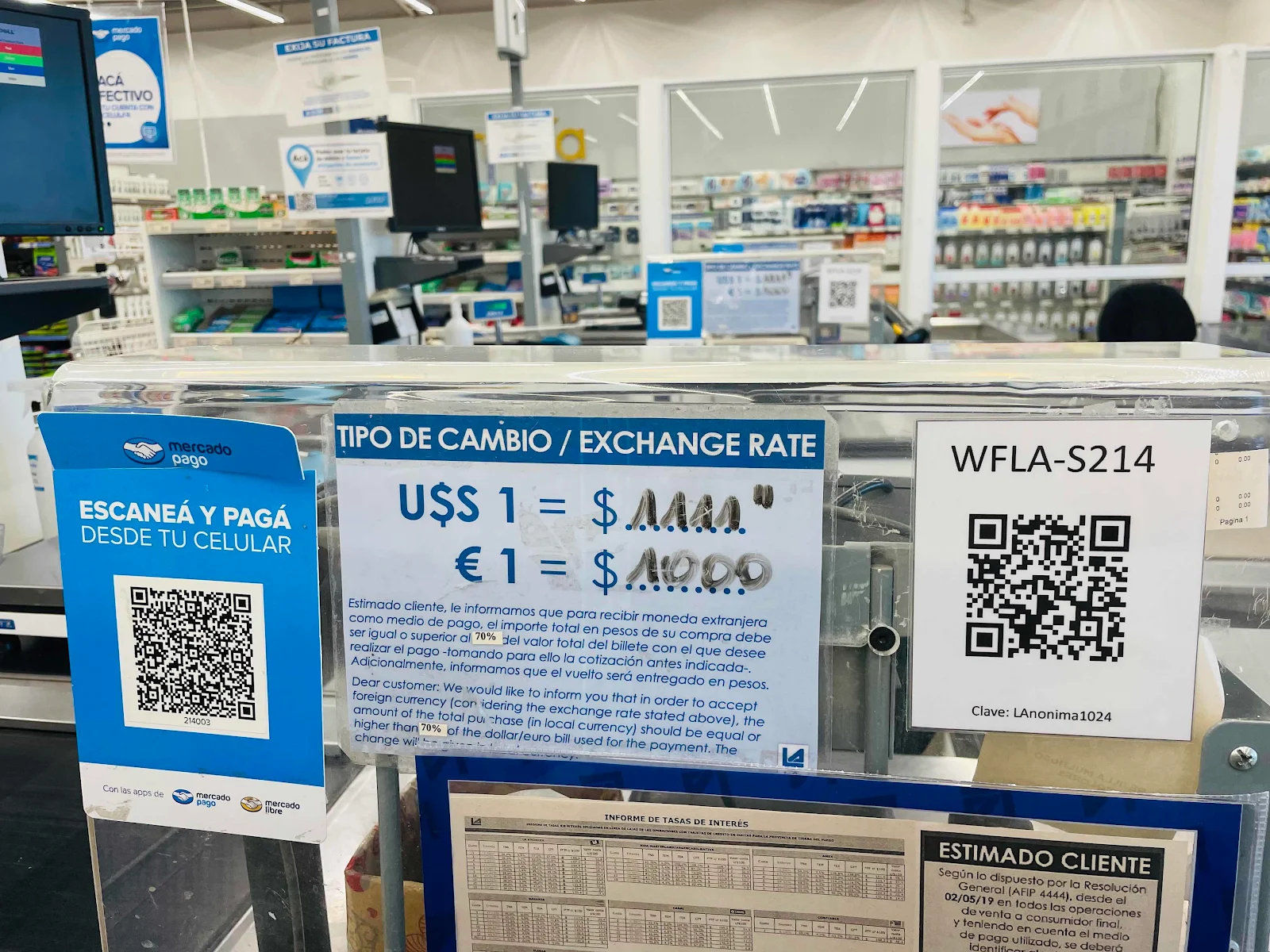
I was surprised to see they take Euros and dollars and no doubt Chilean pesos in the supermarket. We pay with a credit card and get a good rate of exchange without having to deal with a cash economy that only uses dollar bills. 
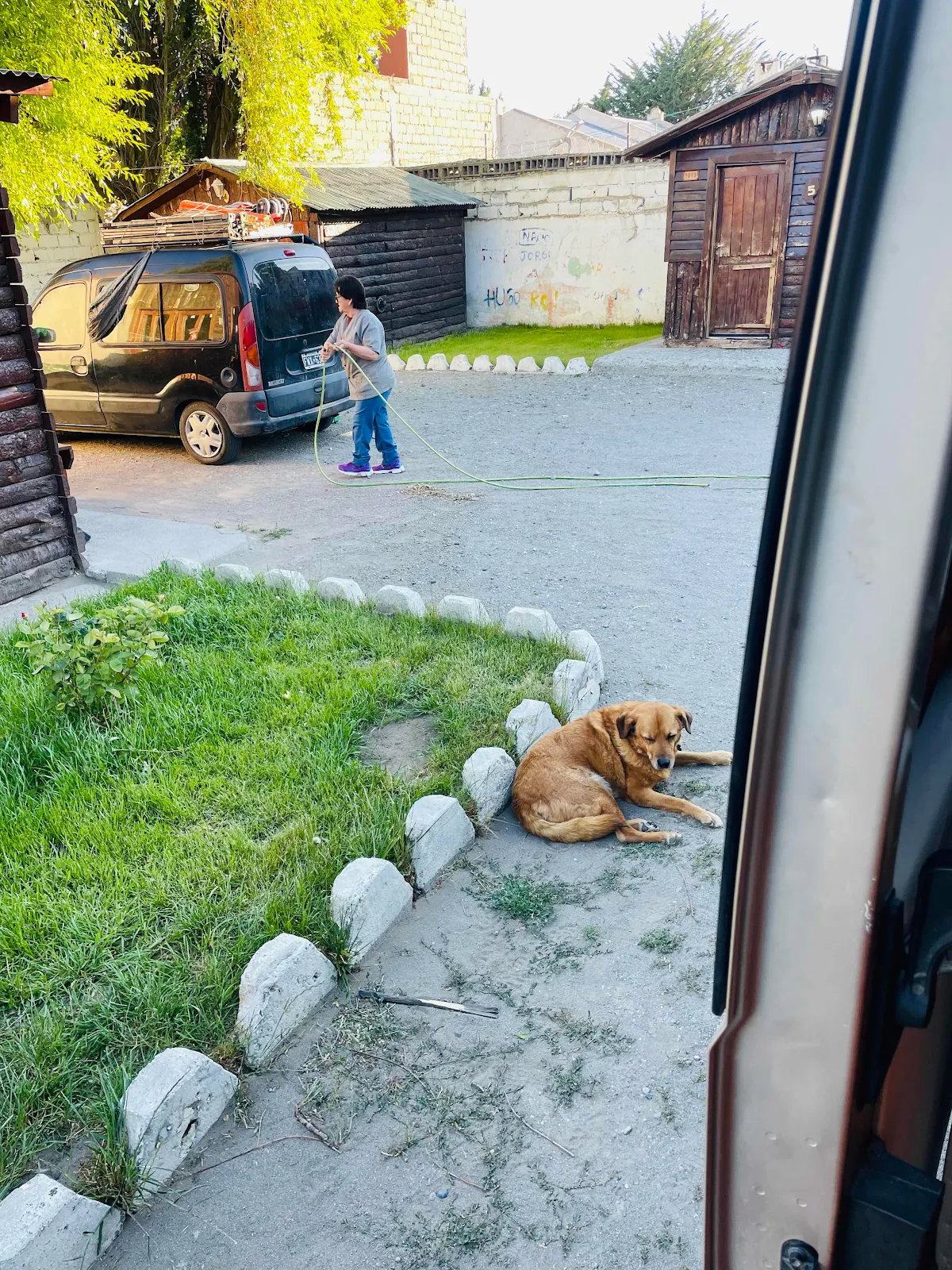
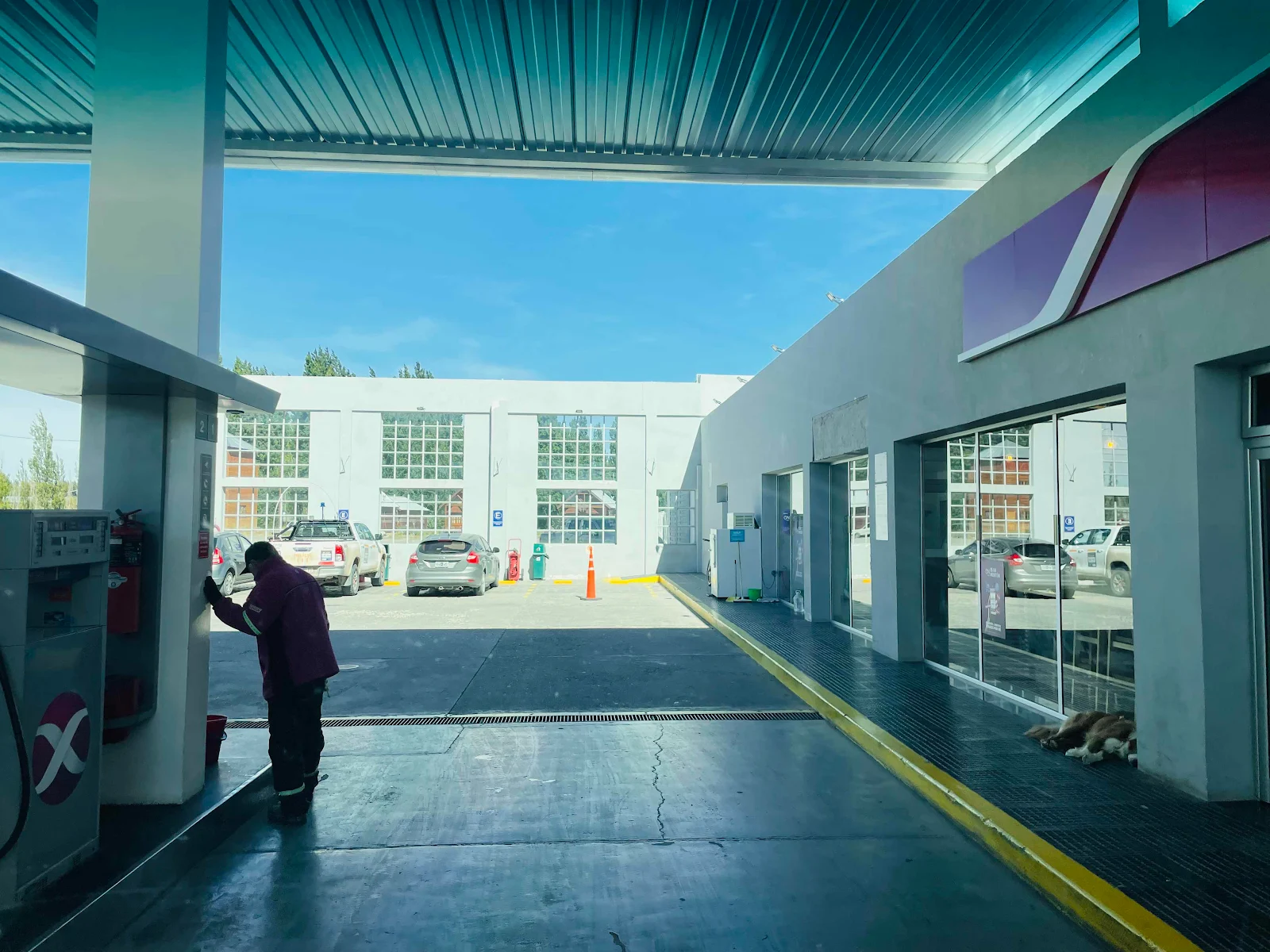
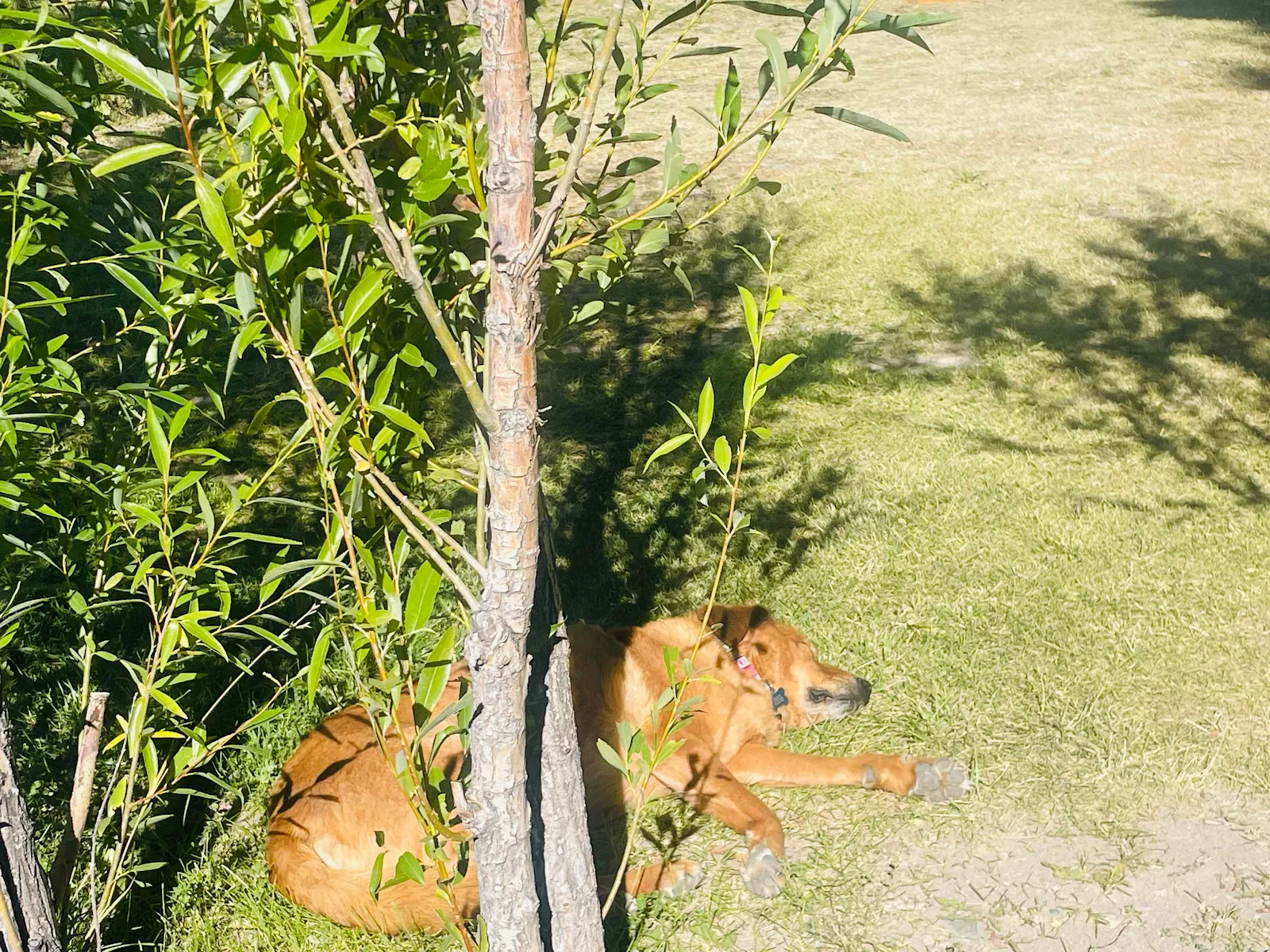
It’s hard to believe but there are only one thousand peso bills in circulation which are worth about a dollar. There are 20 and ten thousand peso bills authorized now but you never see them on the street. Can you imagine function with dollar bills only? Me neither and thank god the card exchange rate is so good. Below you are the Axion gas station with the station dog snoozing on the right and a windbreak wall on the west side of the station: 
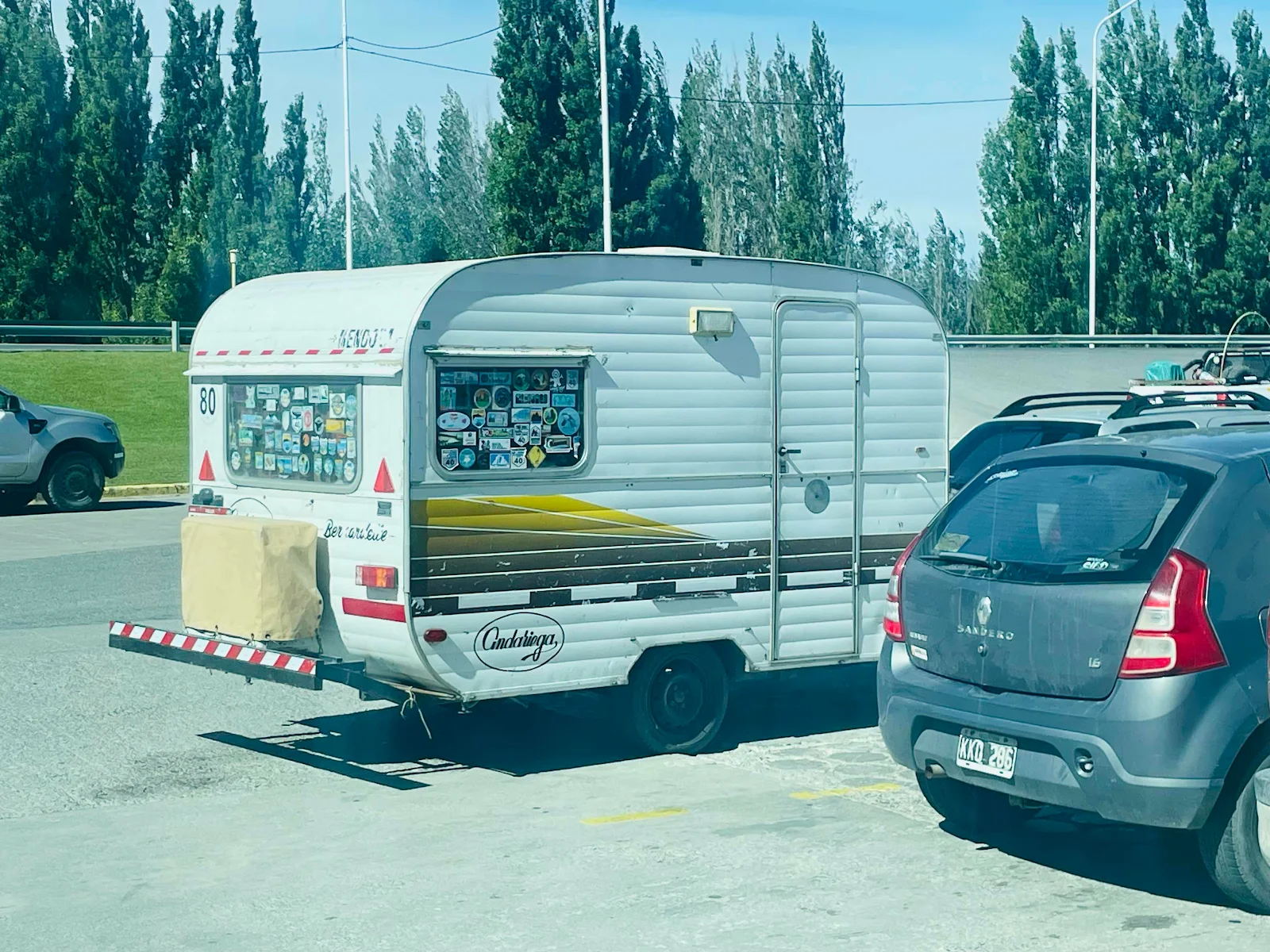
I see travel trailers everywhere and just like in the US they make perfect sense for family vacations. This one looks well used: 
We parked GANNET2 in the shade and paid a visit to the local museum, pictures tomorrow. 

The Layne and I went for a walk. In case you were wondering and I was after I saw the mural, abortion is legal in Argentina up to 14 weeks. Now we know. 

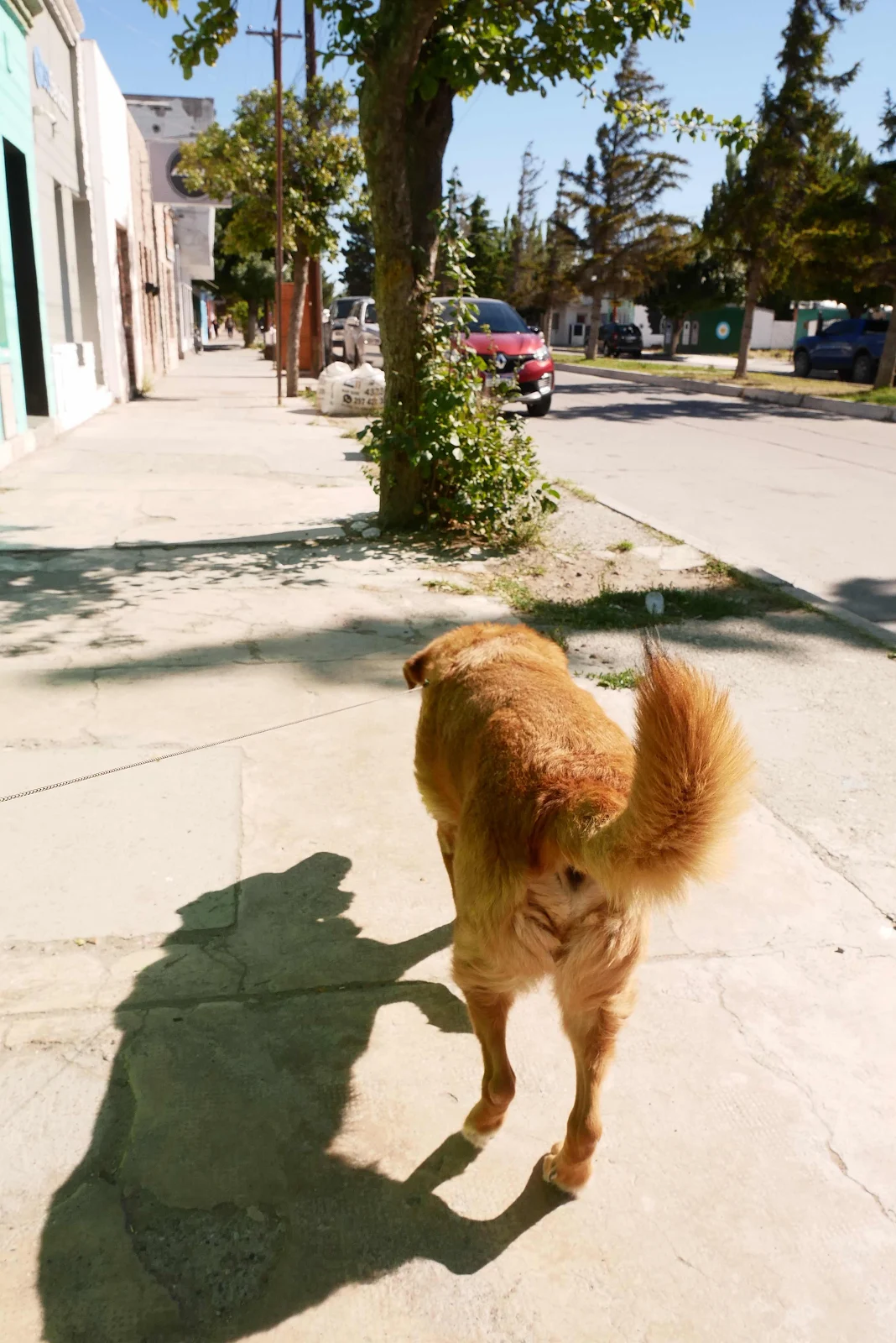
There are quite a few street dogs so Rusty prefers walking on his leash when we go into town. Many of the dogs are strays but not in bad shape. You just know from the hopeful looks they’d like a home.  Rusty is not interested in sharing. 


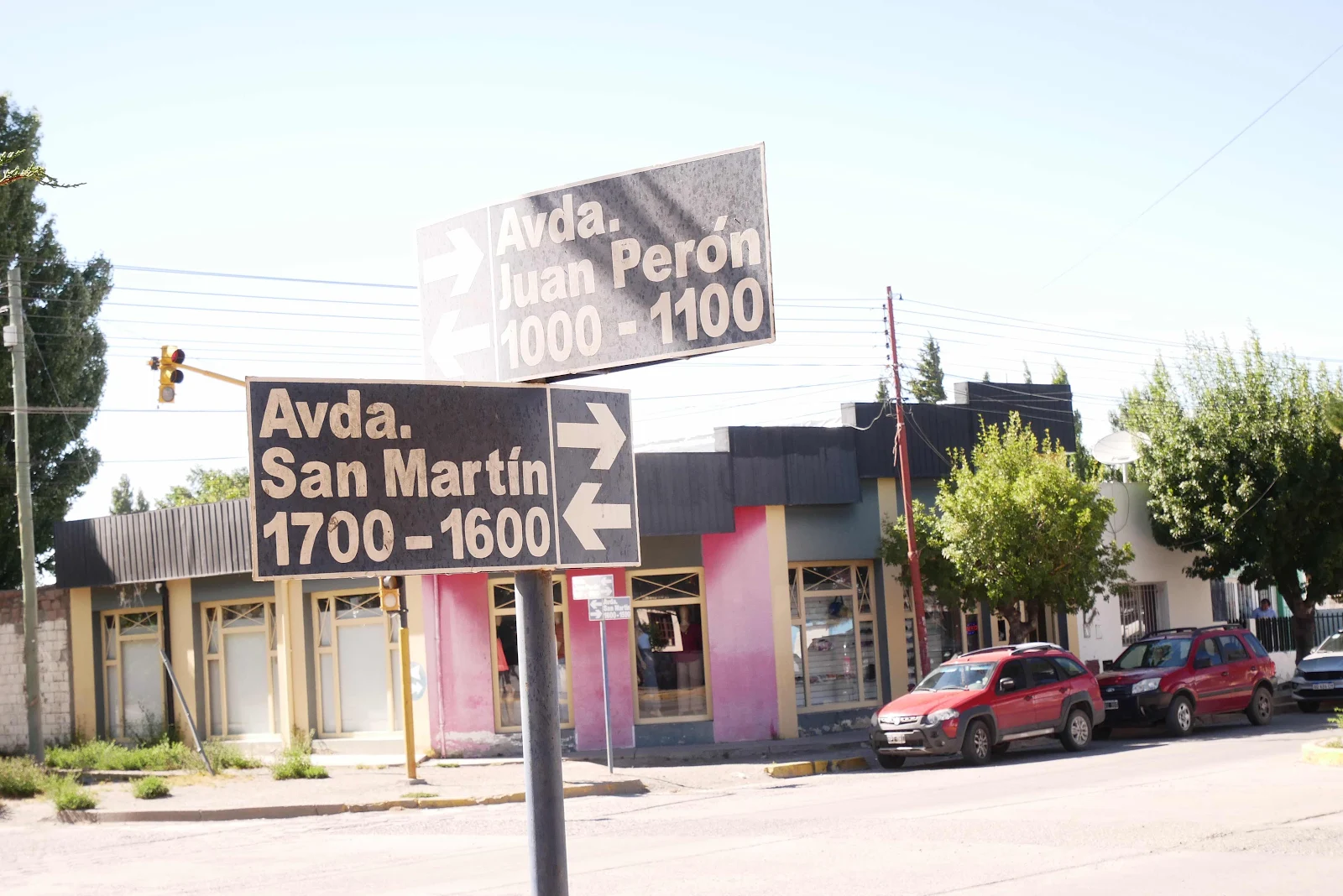
General San Martín was the George Washington of Argentina in the fight to get rid of Spanish rule. Juan Perón was a polarizing president made famous by his glamorous wife Evita. You can spend hours looking them up online. 

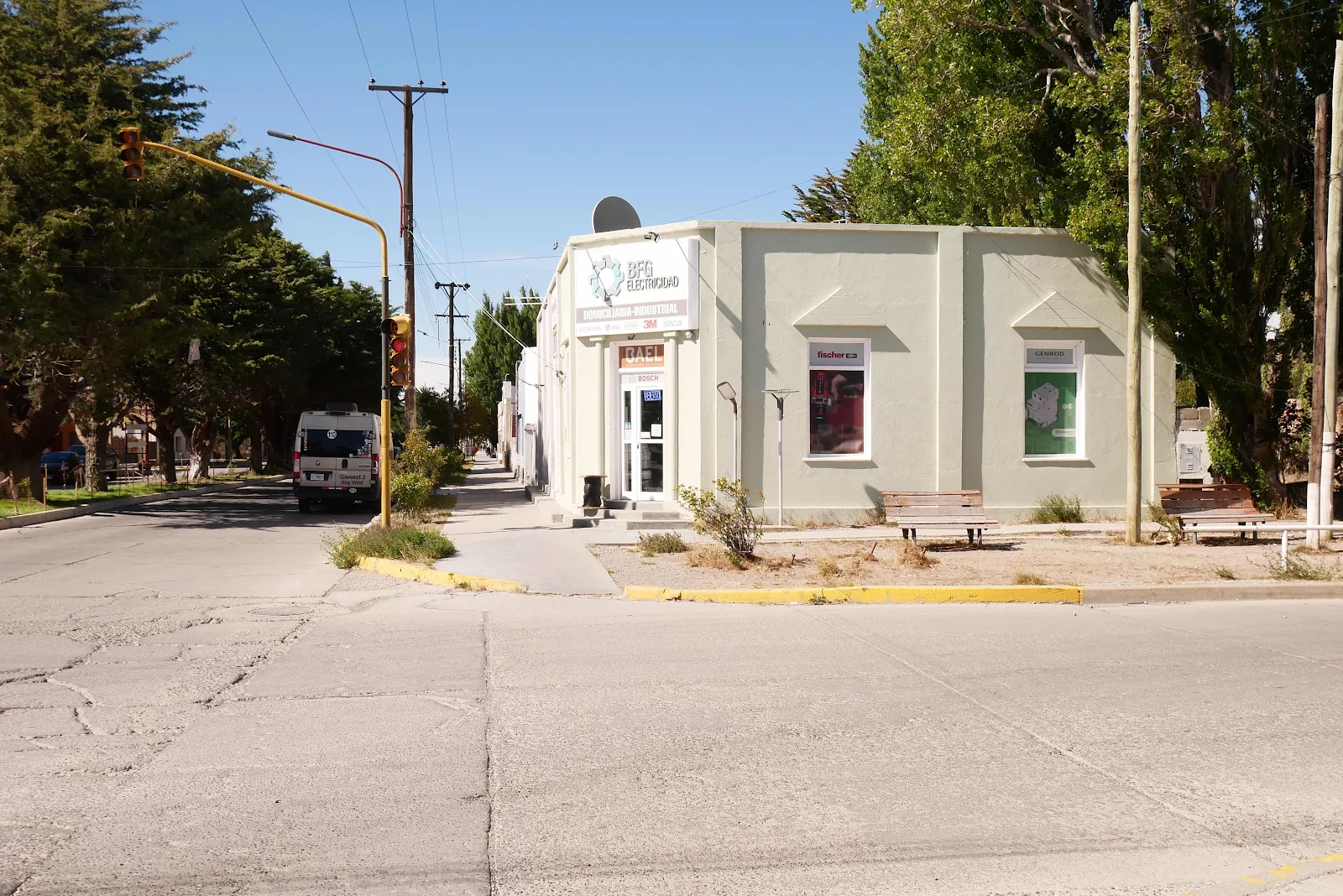
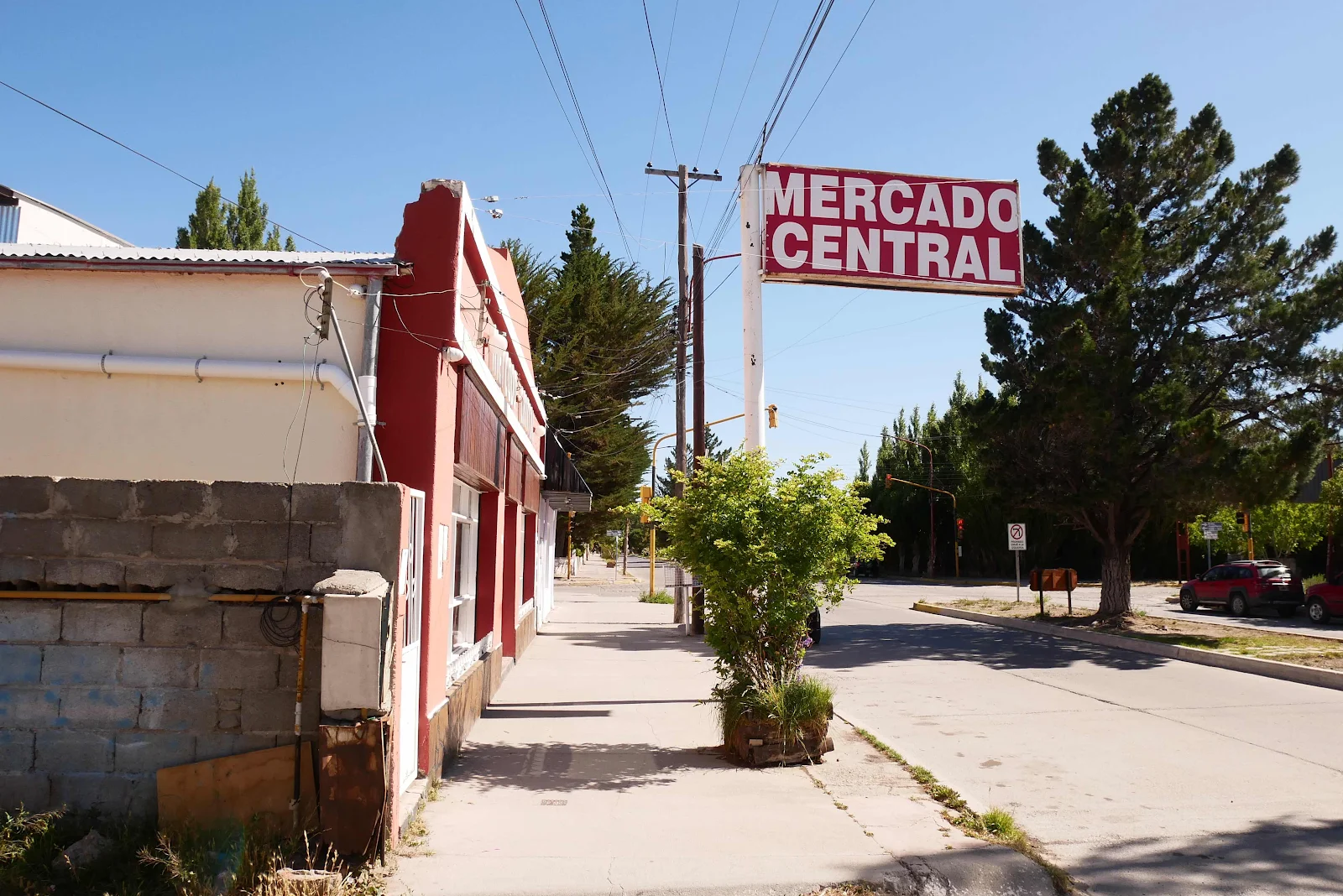
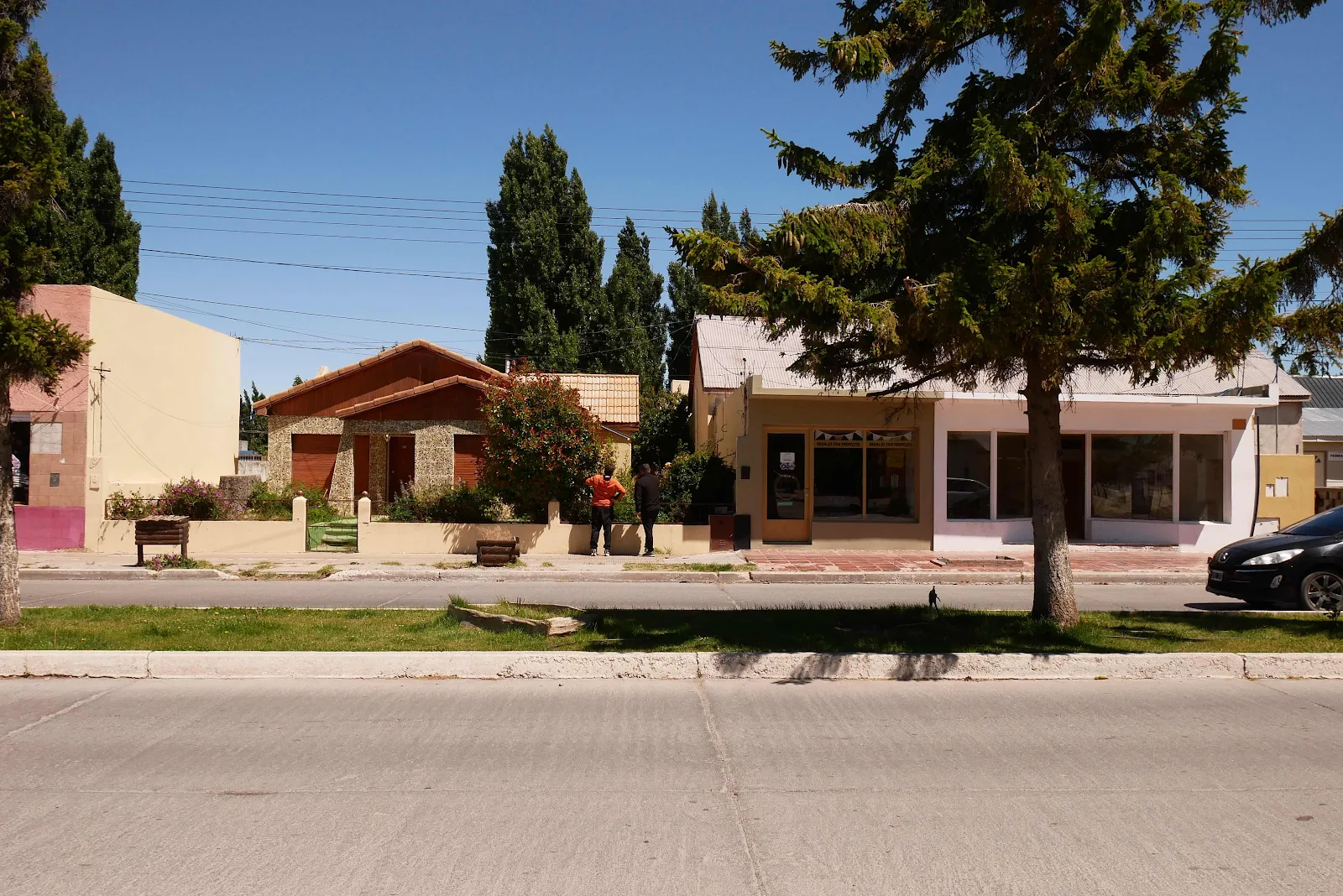
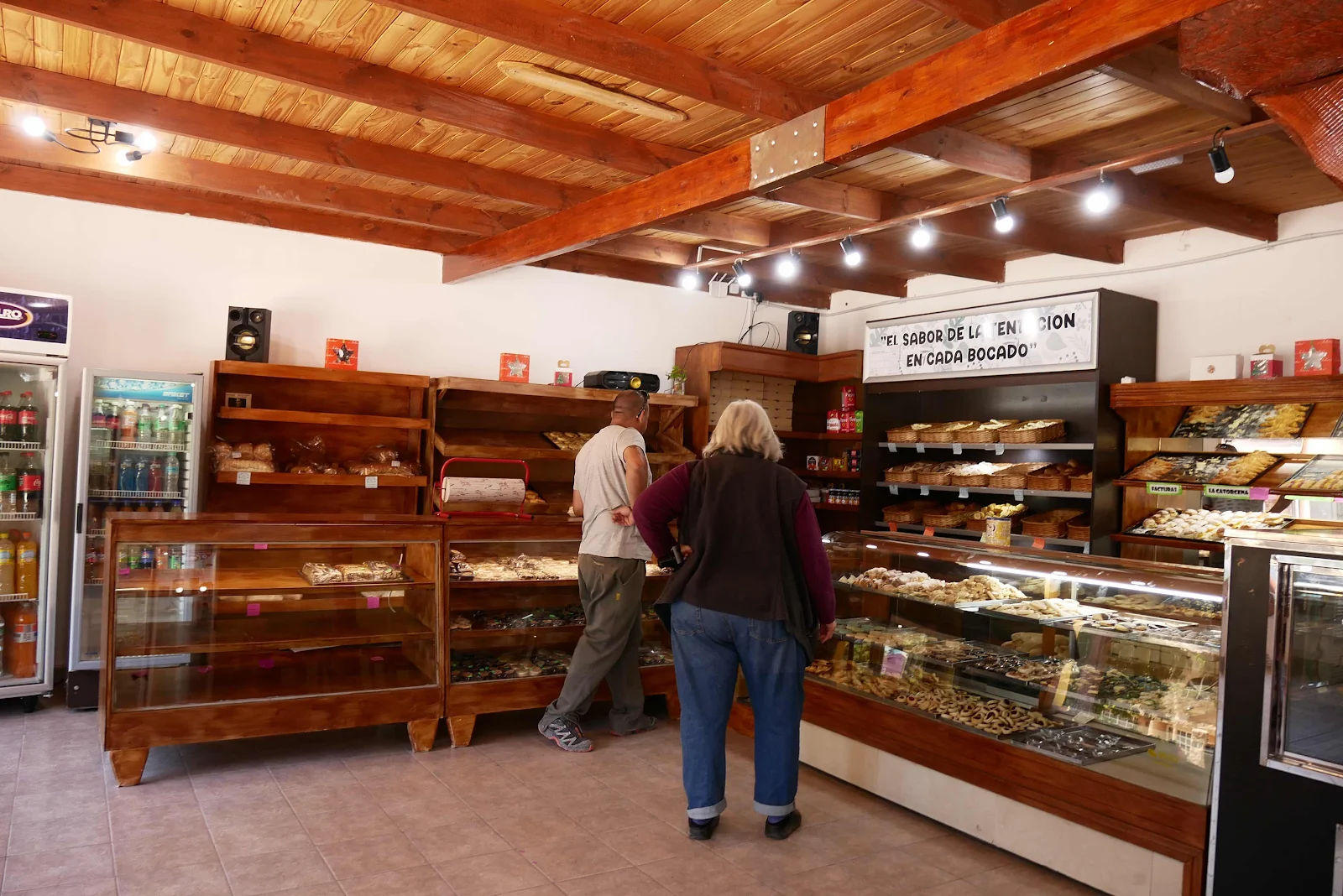
The town is full of bakeries, butchers and hardware stores. 

Argentines are always celebrating their maté, a dried leaf shredded and stuffed into a cup. They then add a little hot water and duck the fluid up through a filtered straw. It tastes like creosote to me but what makes it worse the experience is supposed to be social; people share the foil brew from a common cup. During Covid things got a bit hairy but you’ll see people walking around with thermos flasks and the cups filled with rotting leafs. I love tea but maté is not my thing. 


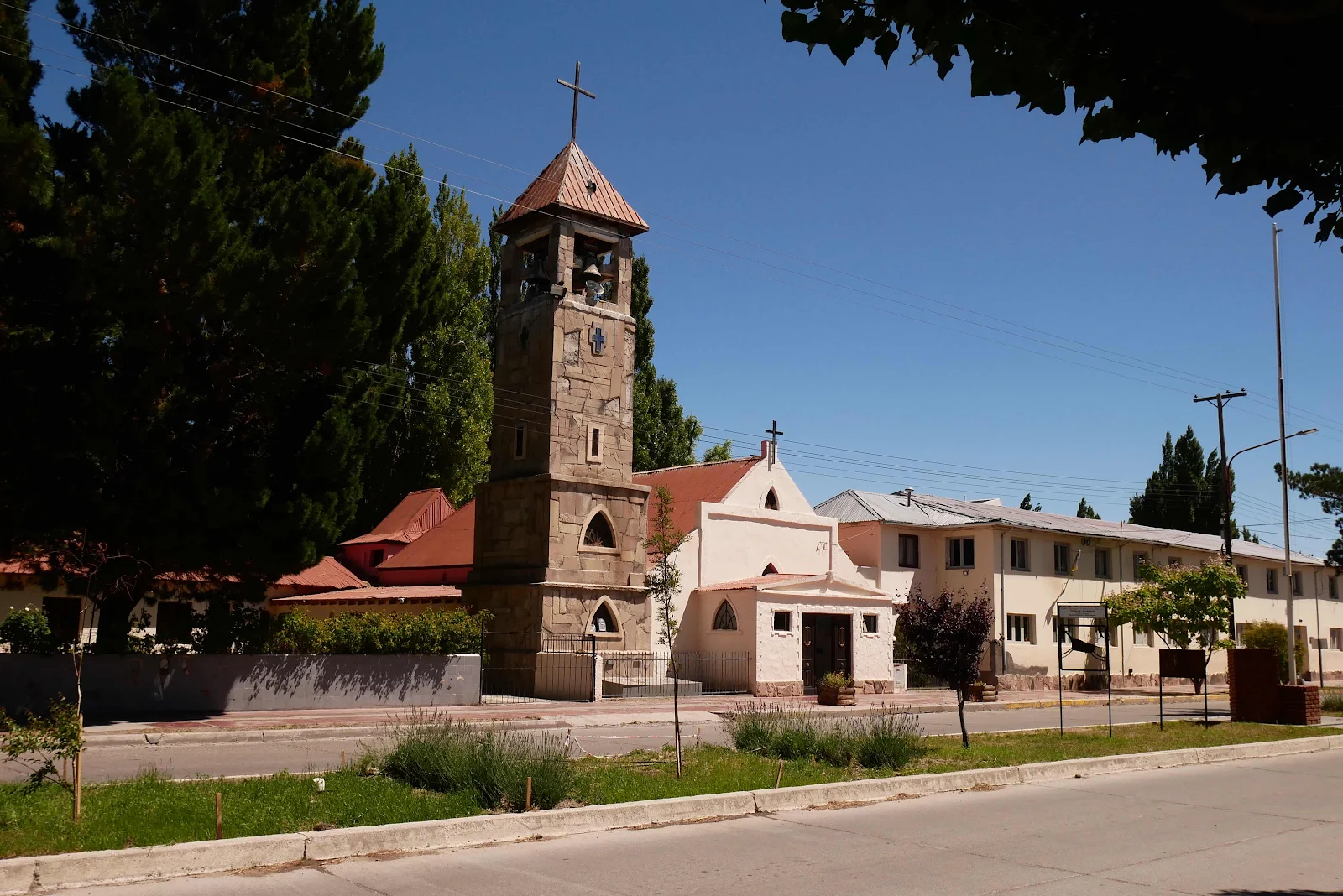
It’s a charming quiet desert town like any you could see in the US southwest. 

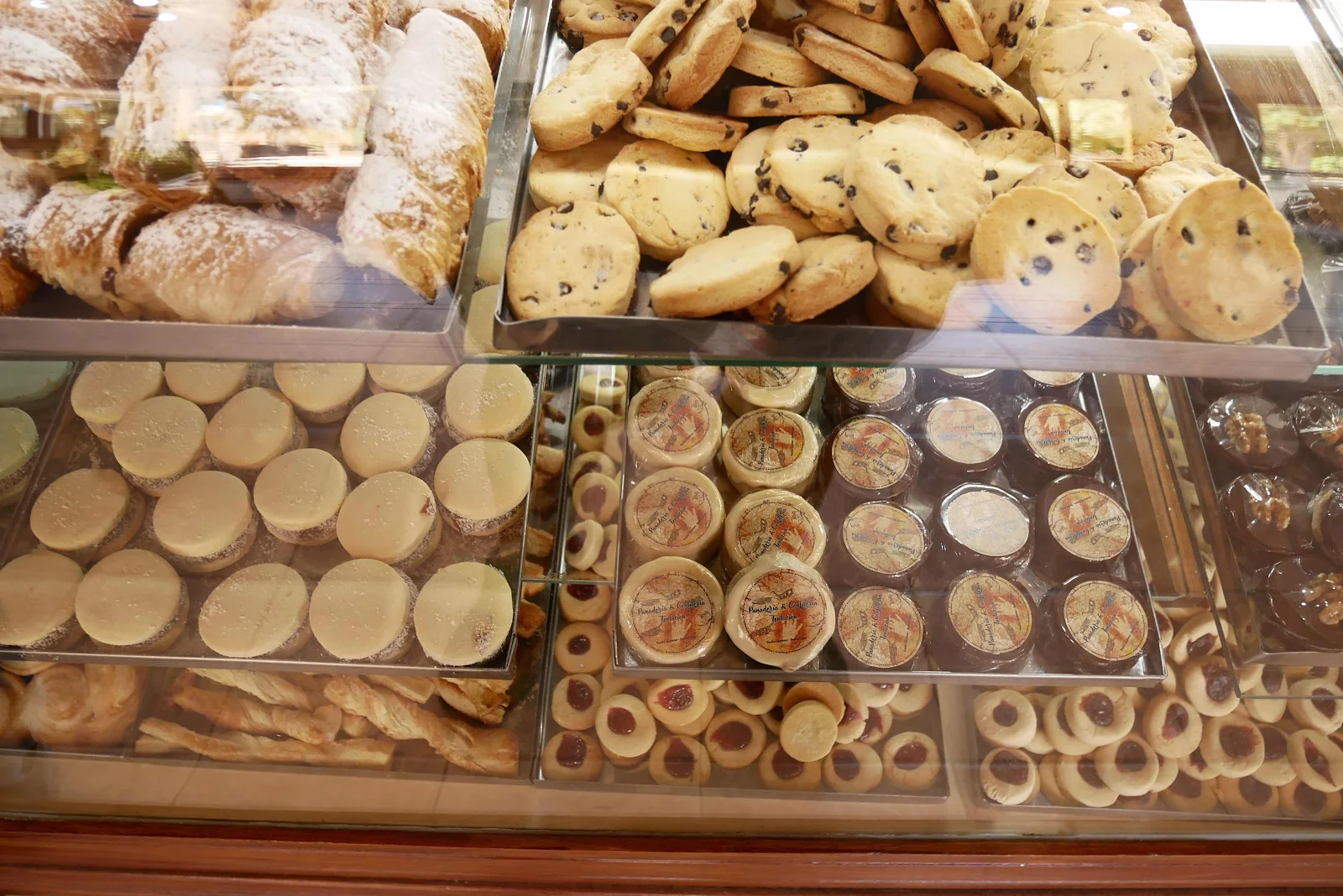
Yes we got some cookies. 


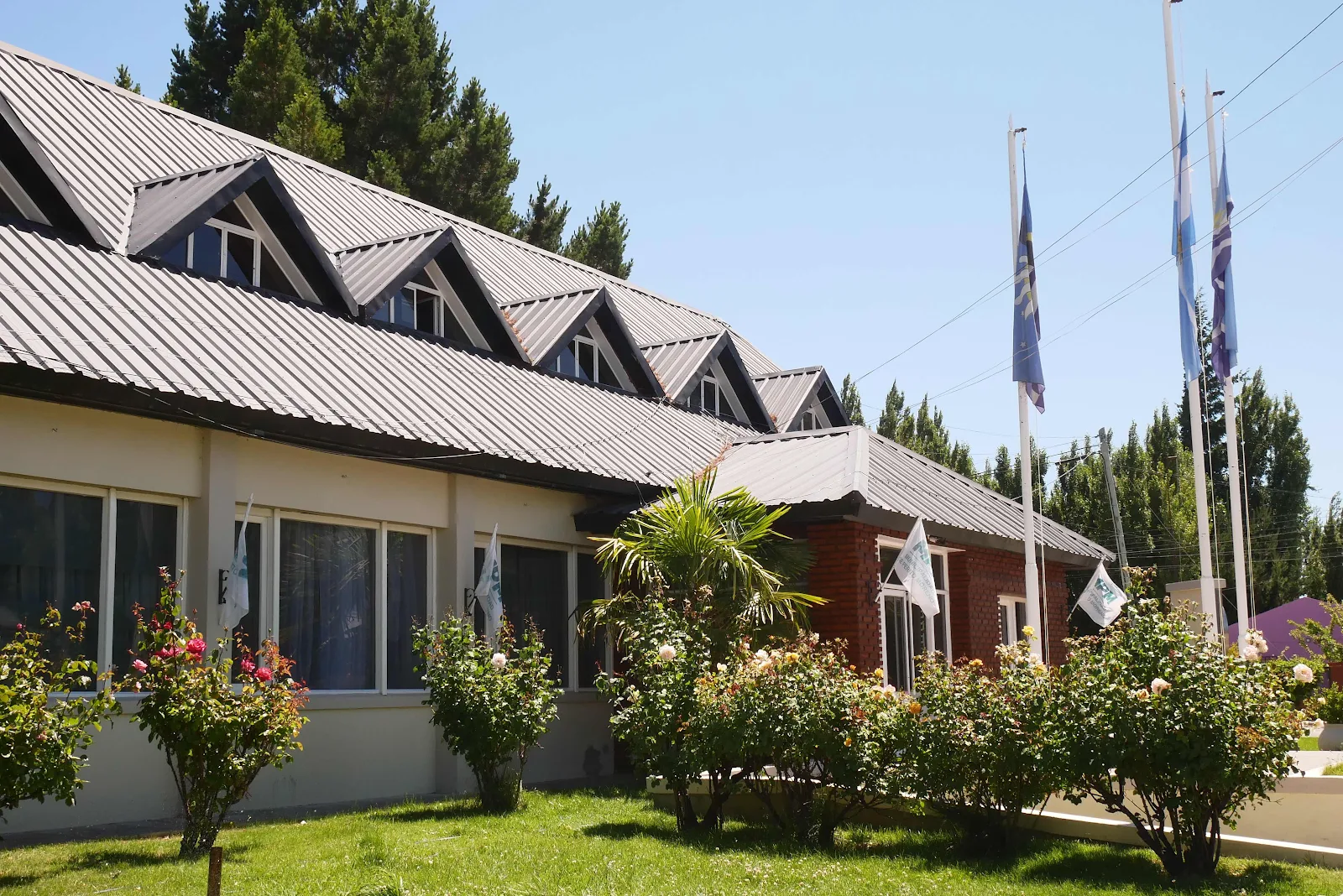
City hall:

And there is always one good reason to stop an extra day and take a pause:
He’s an old boy now and needs his rest.