Wednesday, March 13, 2024

The Road Ahead

We are leaving Barichara on Friday and we have forced the issue by making a doctor appointment in the town of San Gil. The owner of the campground had an upset stomach cured rapidly by a visit so we figured a check up after the bug (identified accurately I thought by one reader as novovirus) swept the campground. Medical care in Colombia is not eye wateringly expensive. A fellow traveler told us they had an MRI in a private clinic for $50.  In any event we have to be in San Gil Friday afternoon so Rusty will be bitterly disappointed that we must leave.
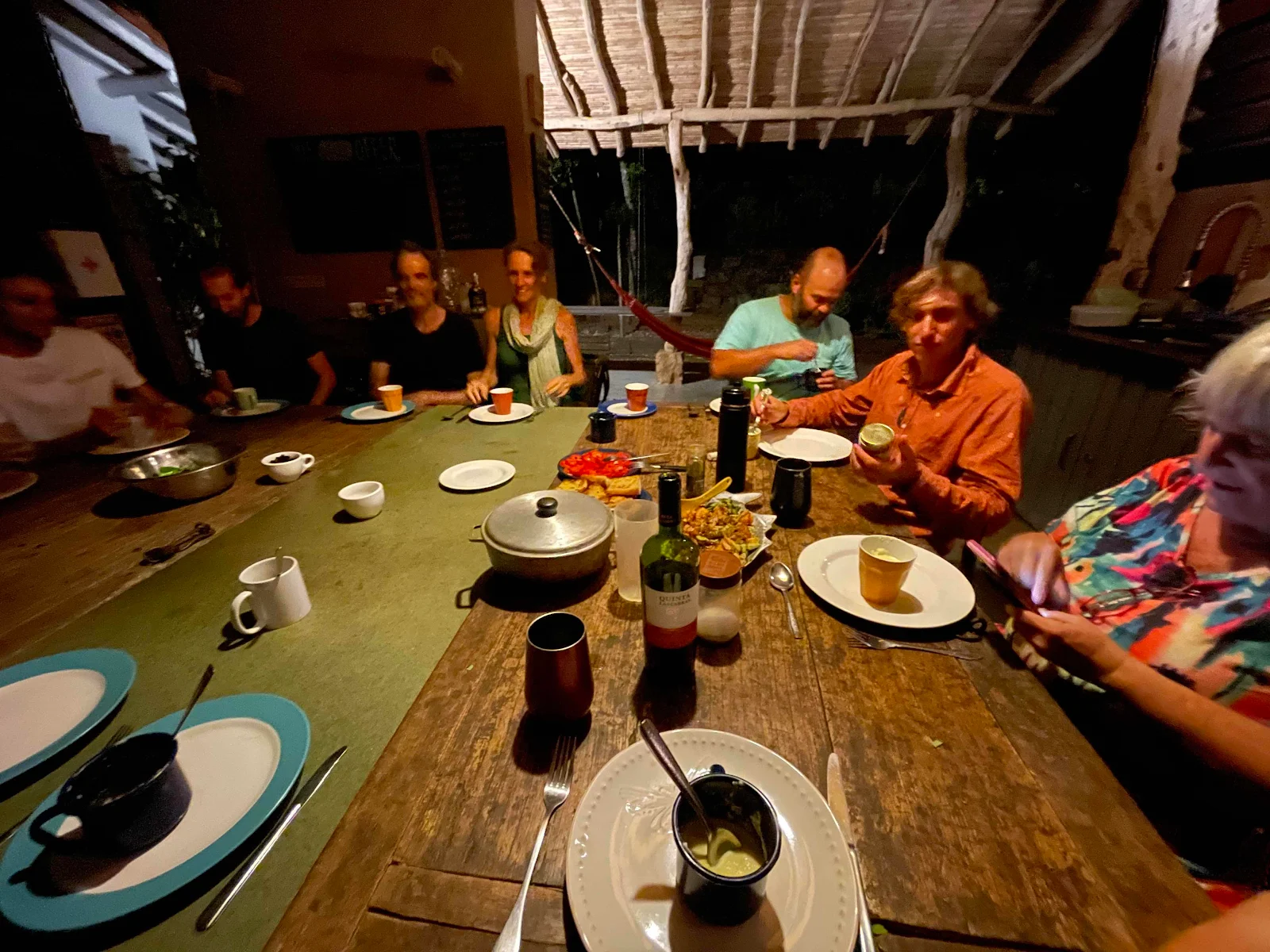
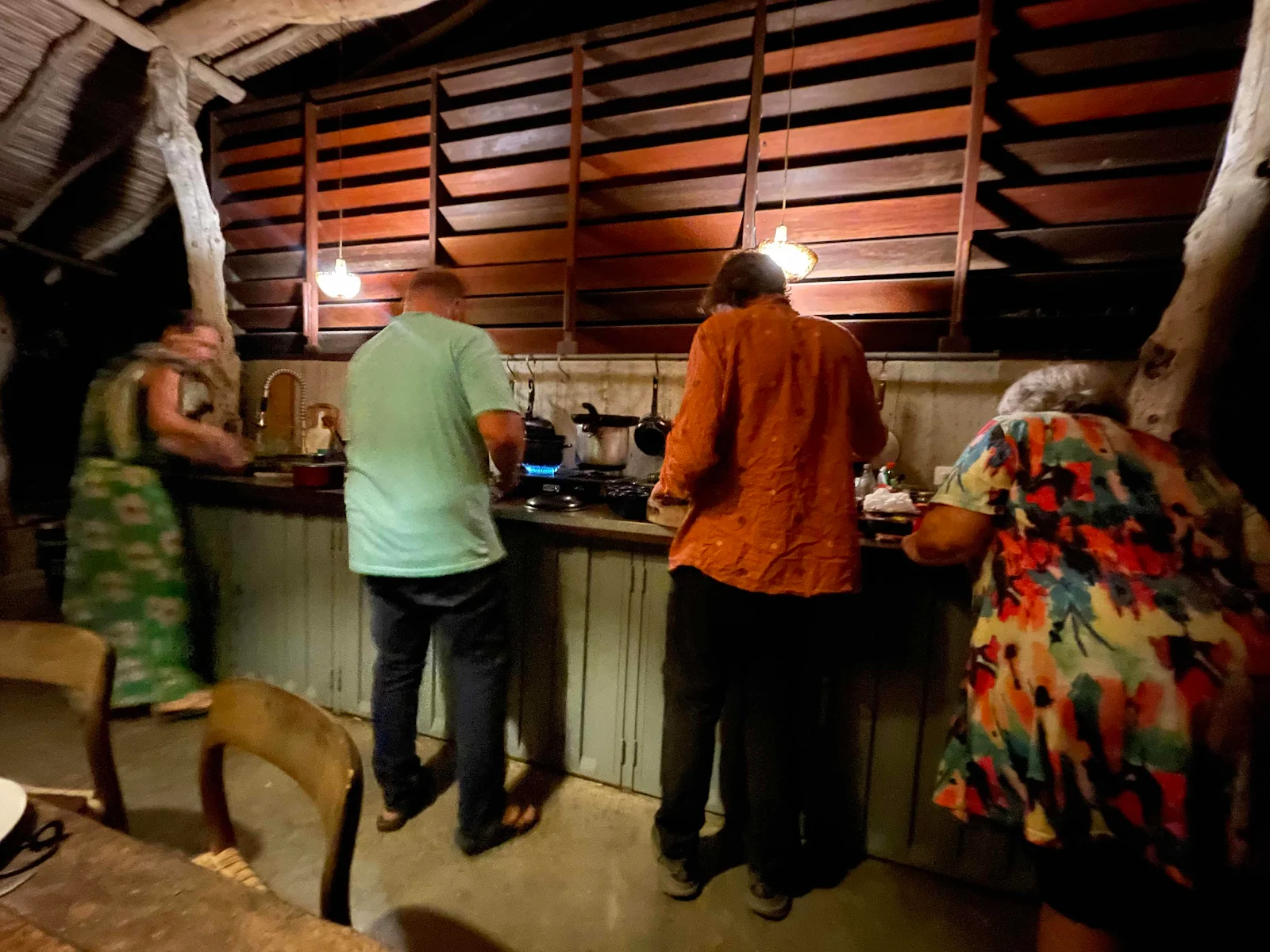
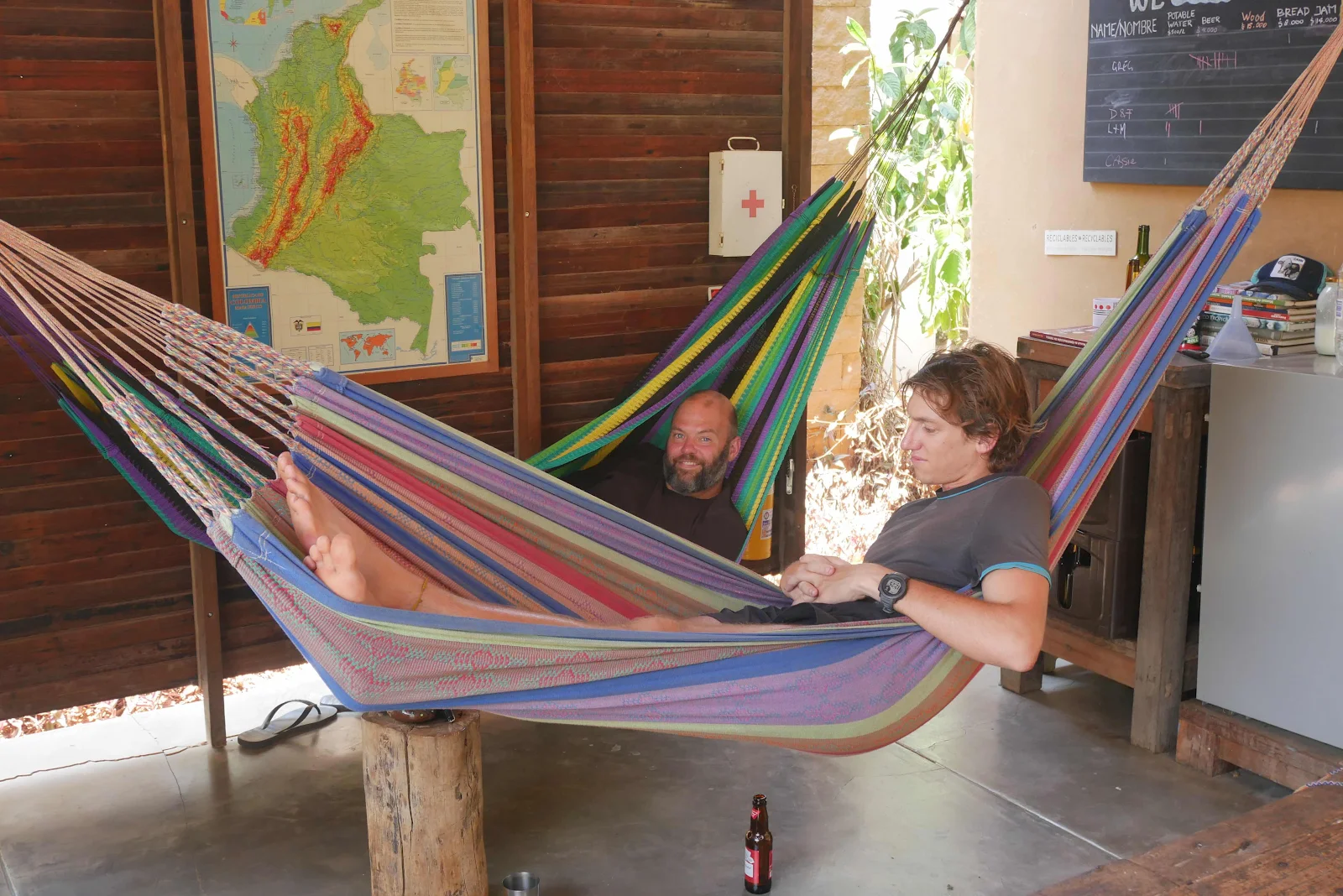
We arrived at Guaimaro March 1st so two weeks in one spot measures the enjoyment we have had sitting here baking in the shade and chilling under blankets at night. Layne found good company with a fellow chef, Greg from England and they have worked together on recipes for his restaurant planned to open soon on the coast of Colombia. Lacking traveling neighbors we have found people to share ideas with here at the campground and that has been lovely. Greg on the left, Alex from New Zealand on the right at one of our communal dinners in the kitchen. 
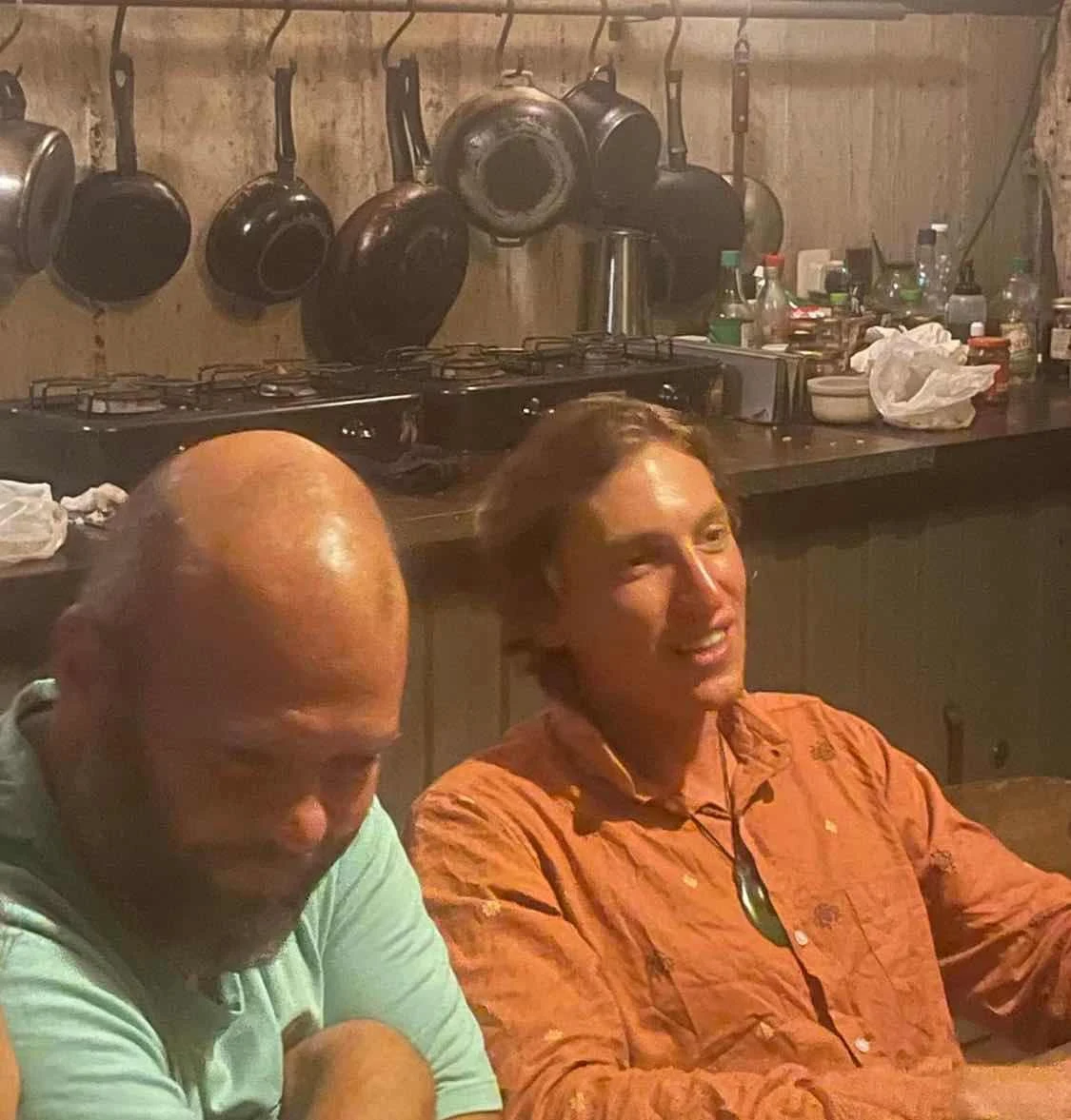
Julia and Joep (“Yup”) from The Netherlands, owners and builders of the campground over the past 14 years. 
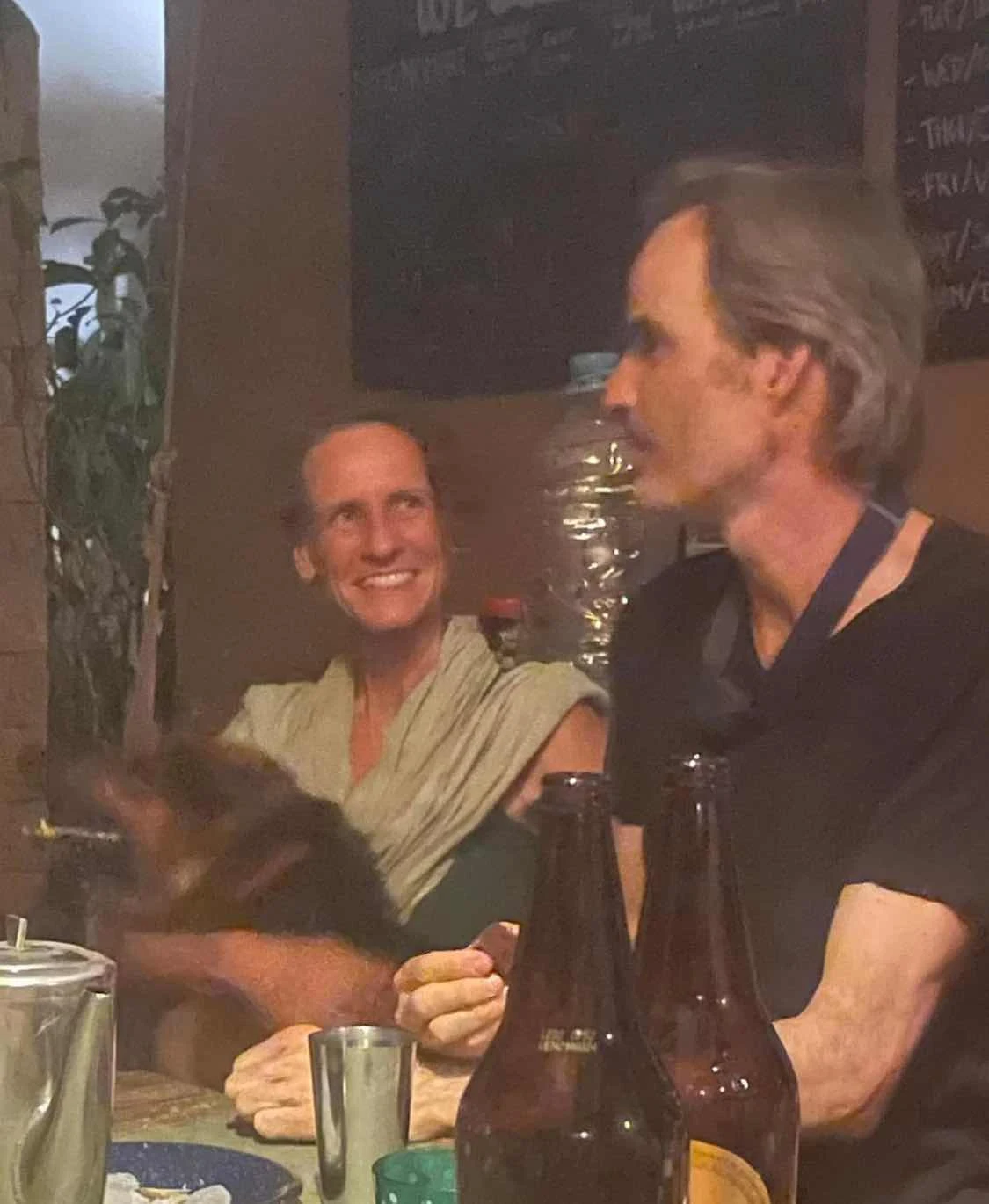
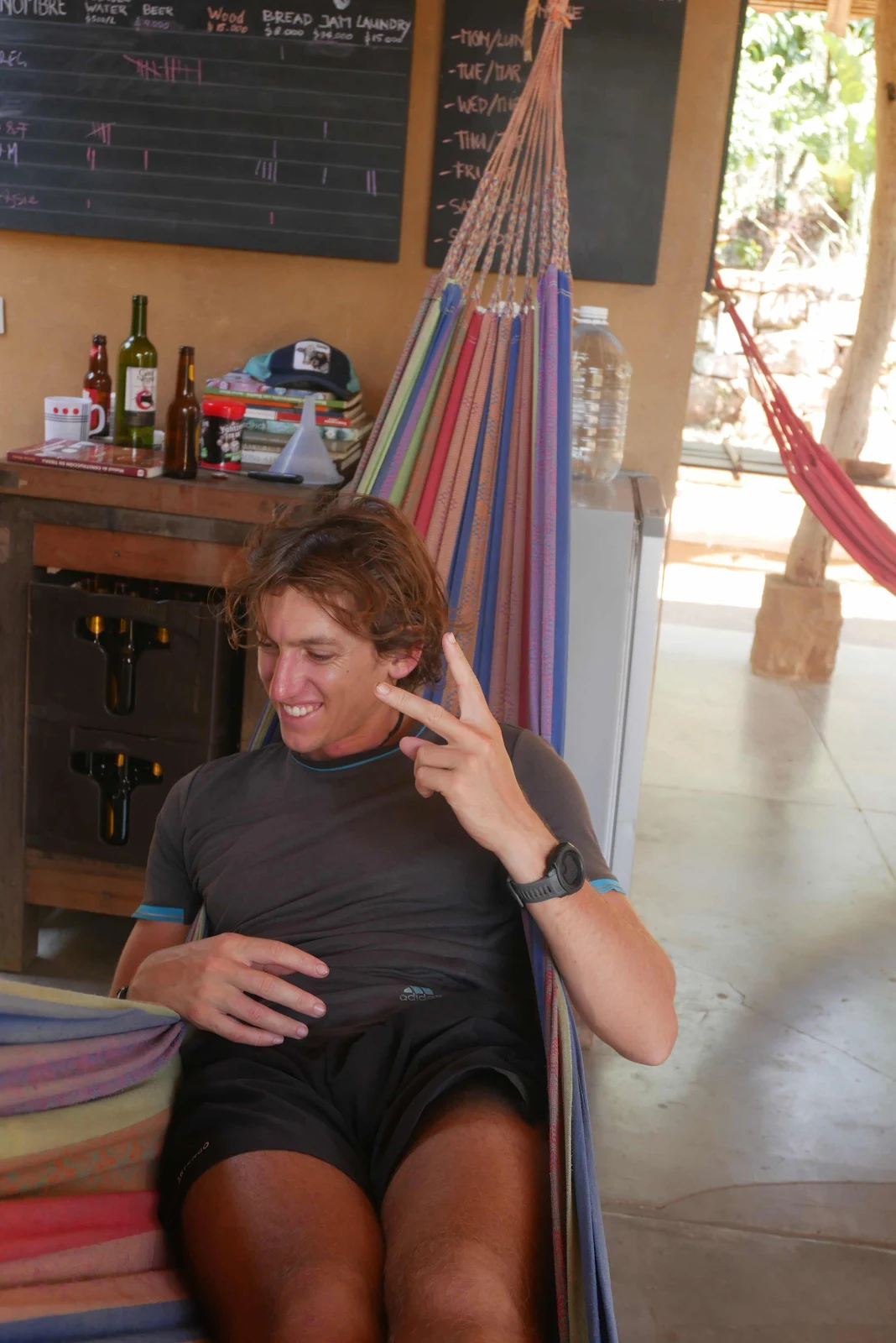
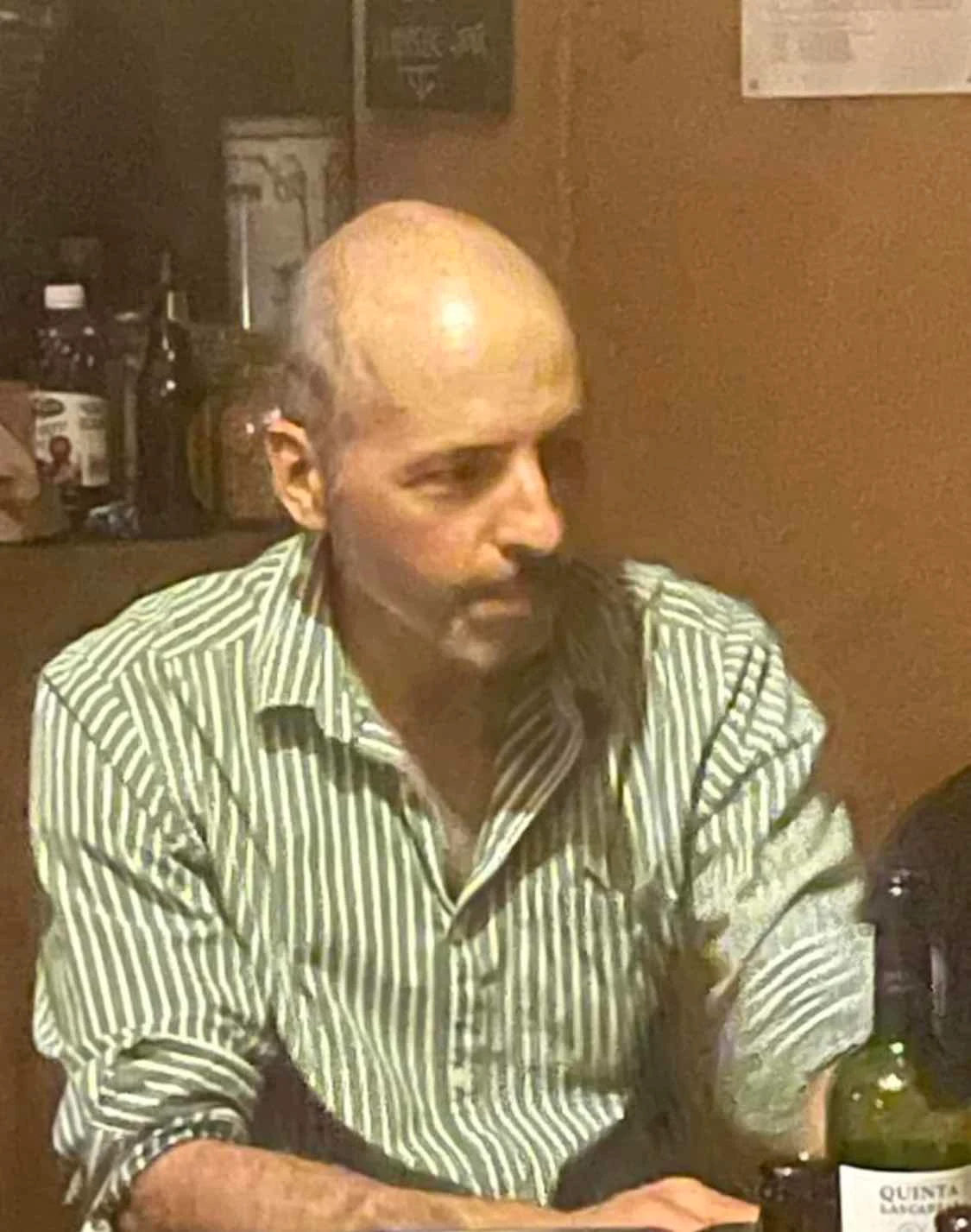
Mark from Massachusetts, a thinker and builder and anti-technology mechanic who understands the value of simplicity. It’s his second visit here and he’s learning to fill a niche in Barichara. 
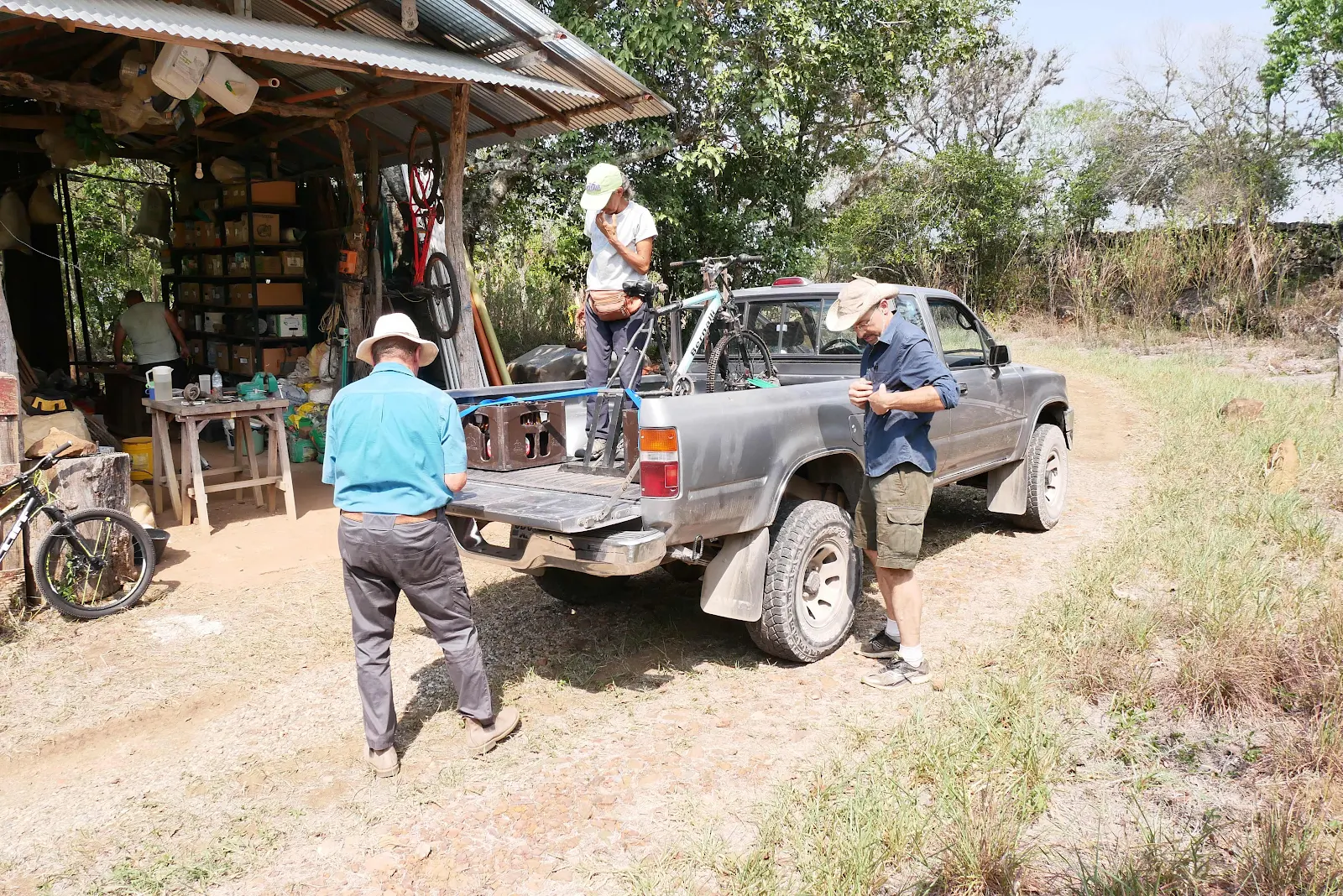
He’s learning to build human powered agricultural machines like this corn husker. The locals have done it by hand forever but Mark is learning to build machines that can make tedious hard work easier with technology easily accessible like bicycle parts. It really is lateral thinking genius. 
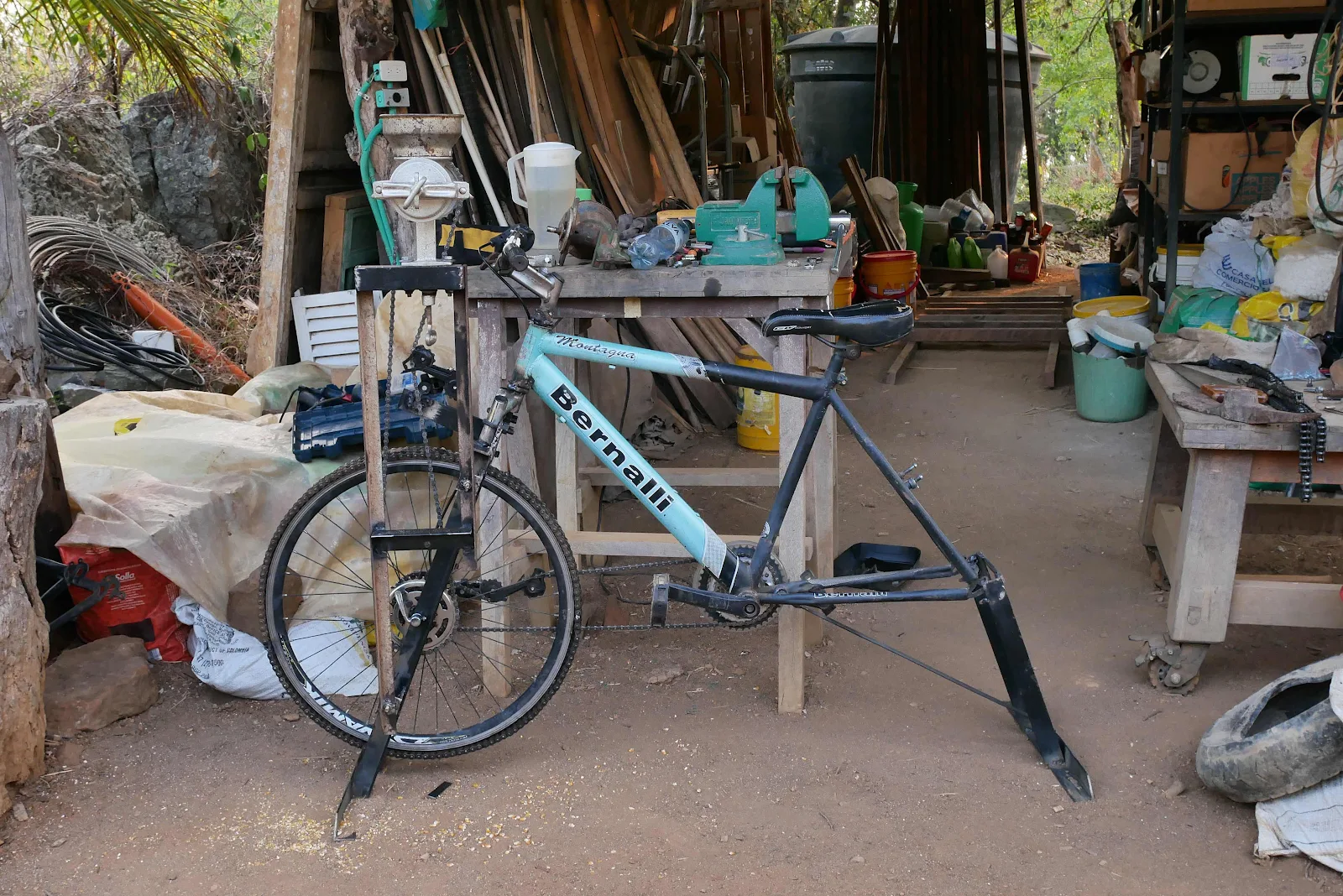
The basic application can be used to do any rotary task with leg power instead of arm effort and faces light up when the tool is explained to big armed locals. 

The prototype went to its new home and Mark is working on version number two with his new partner in town. I walked around Barichara one afternoon and on every street someone popped out and greeted him like they’d known him for years. He is full of surprises and I suspect Massachusett’s loss might soon be Barichara’s gain. 
Holidays and weekends are the curse of the retired classes as they say and up next to haunt us: Semana Santa. Holy Week is a blow out time across Latin America and even though this is our first one in South America we’ve seen the ravages several times before. Stripped of its religious connotations the week before Easter the holiday is a ten day stretch of family vacation time. 
Typically accommodations fill up, even campgrounds become zoos and all the tourist facilities, national parks, wilderness, water parks and so forth get unbearably busy. It’s a time for people like us to reflect the amazing privilege of a life of endless vacation. 
The other side of the coin is that we usually try to hide up somewhere remote not least to relieve Rusty of the anxiety of day and night long firework festivals. This year we have rented an air b and b apartment between the towns of Mongui and Sagamosa at ten thousand feet altitude.
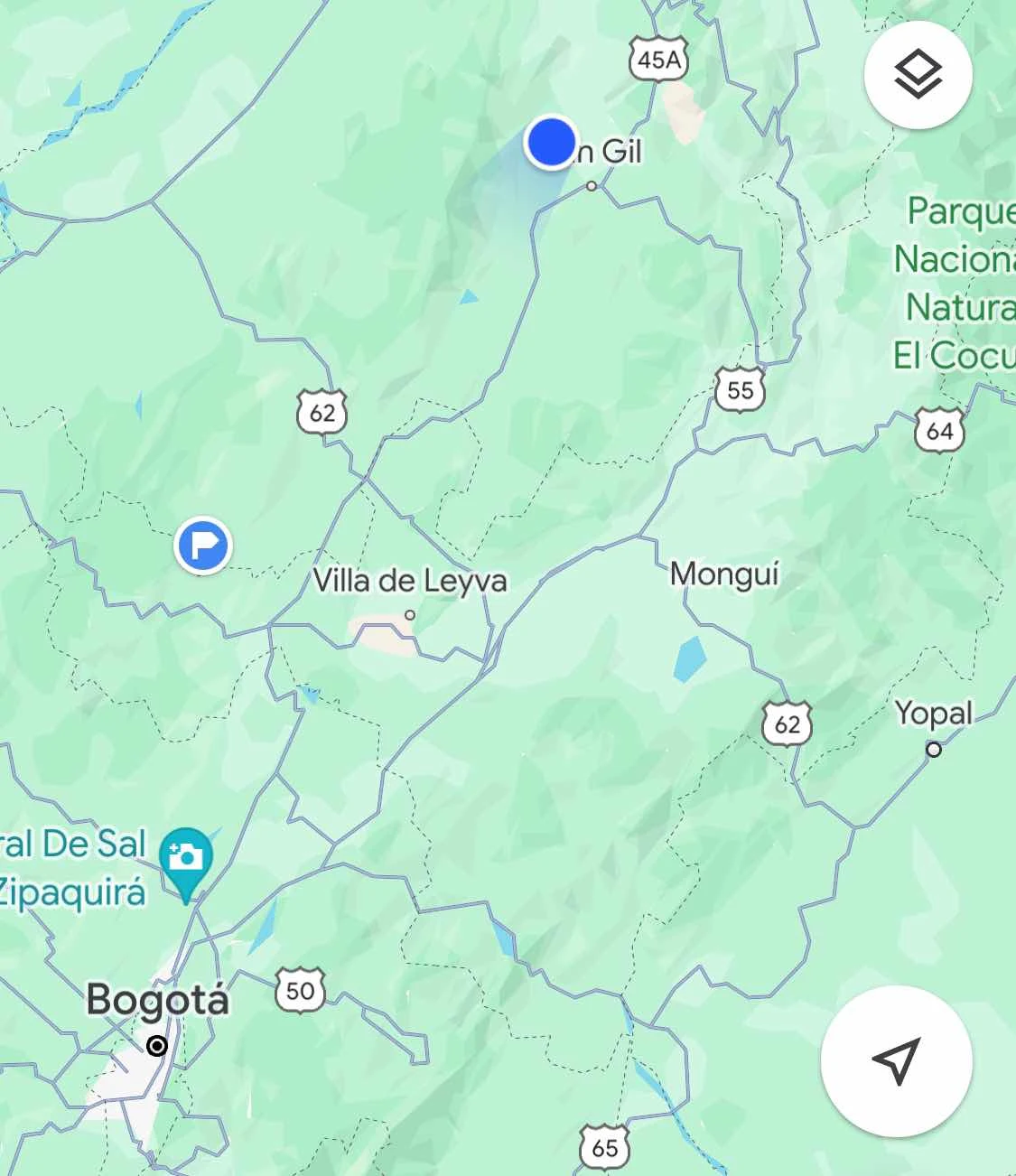
The idea is to be off the roads during the rowdy time but also to start trying to acclimate to high altitude. The fact is our future is filled with very high mountain driving and we are flat landers. We are going to spend ten days before the apartment rental touring various places of interest around Villa de Leyva and Tunja and Aquitaina and after the Easter break we will be going to the capital city of Bogotá which lies at 8600 feet. And get this: among the capital cities to come 8600 feet is practically sea level by comparison. 
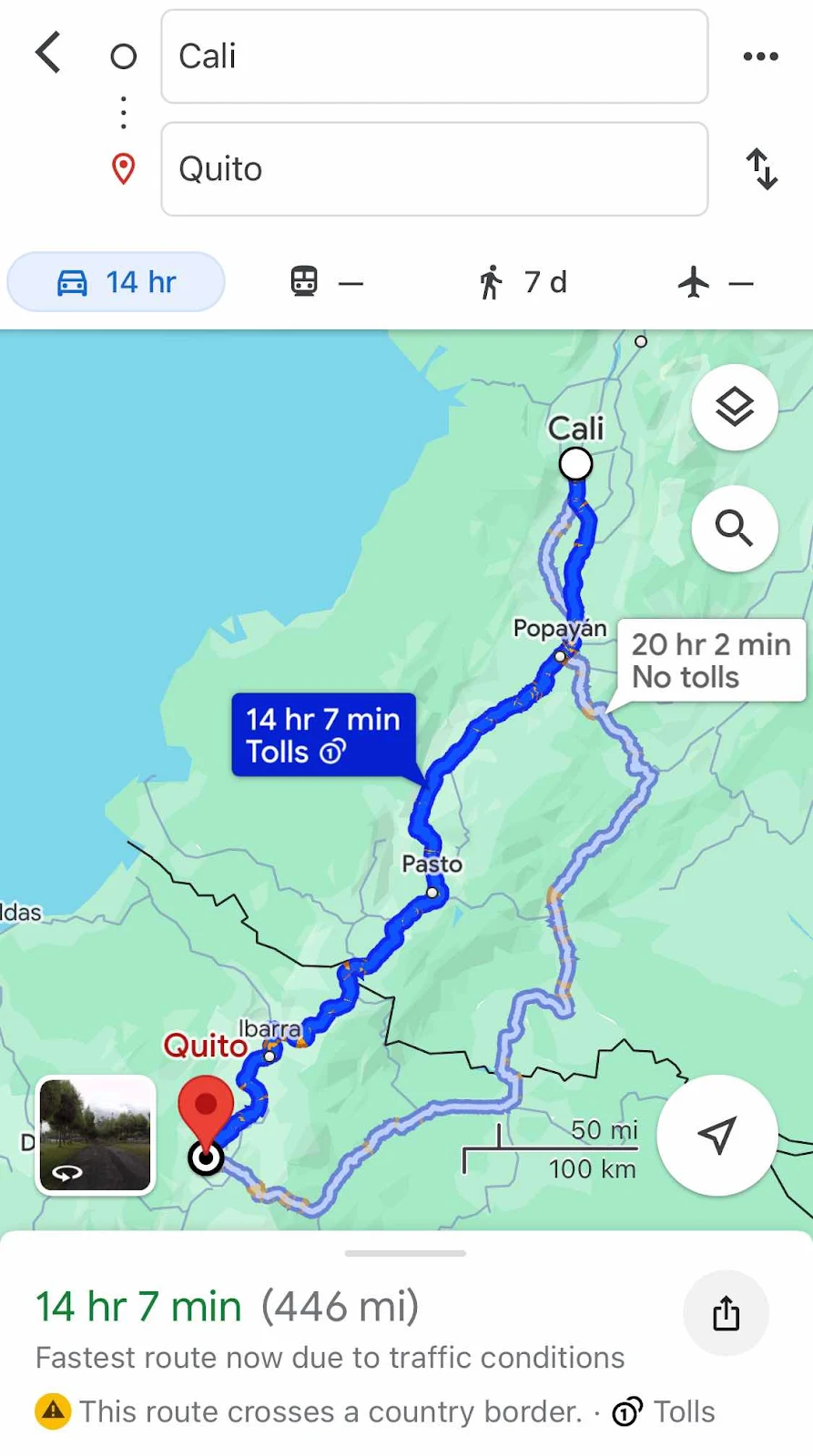
The more time we spend in South America, and we’ve only been here a month, the more planning we try to do, the more vast this undertaking becomes. We want to be out of Colombia in a couple of months and our route is to follow the PanAmerican Highway to Quito the capital of Ecuador at 9400 feet. 
The road south of Cali to the border with Ecuador has its dangers and I’m not one to hype danger. The PanAmerican has suffered many landslides and enormous roadwork between Popayan and Pasto. Our traveler app iOverlander is full of warnings about unfriendly locals. Wild camping is out of the question for us.
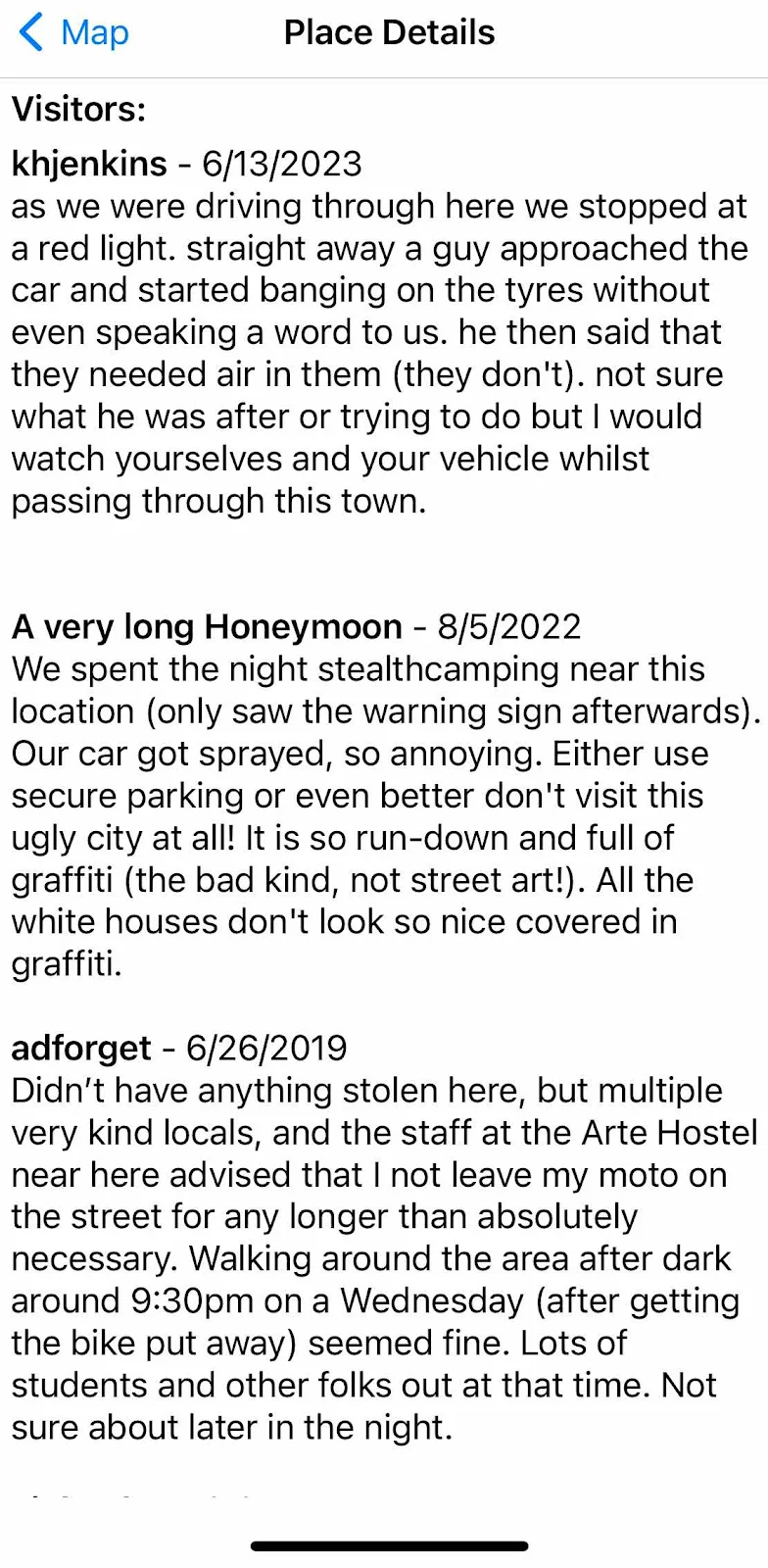
A couple wild camping a couple of months ago were woken up and robbed at gunpoint off the highway in a field. We are doing our research and using common sense and hoping we can convoy with any other travelers passing through here. But it makes you think.
So we then move to Ecuador, the country that sits astride the Equator and they have been in a state of emergency for a couple of months as the government tries to sweep up the gangs and cartels  and restore order in the heavy handed and effective manner of the job recently completed in El Salvador where we felt completely safe and welcomed. The coastal areas of Ecuador where the drugs are transported are said to be the most dangerous so once again we will stick to the main highway in daylight and camp only in secure guarded areas. It takes some planning.
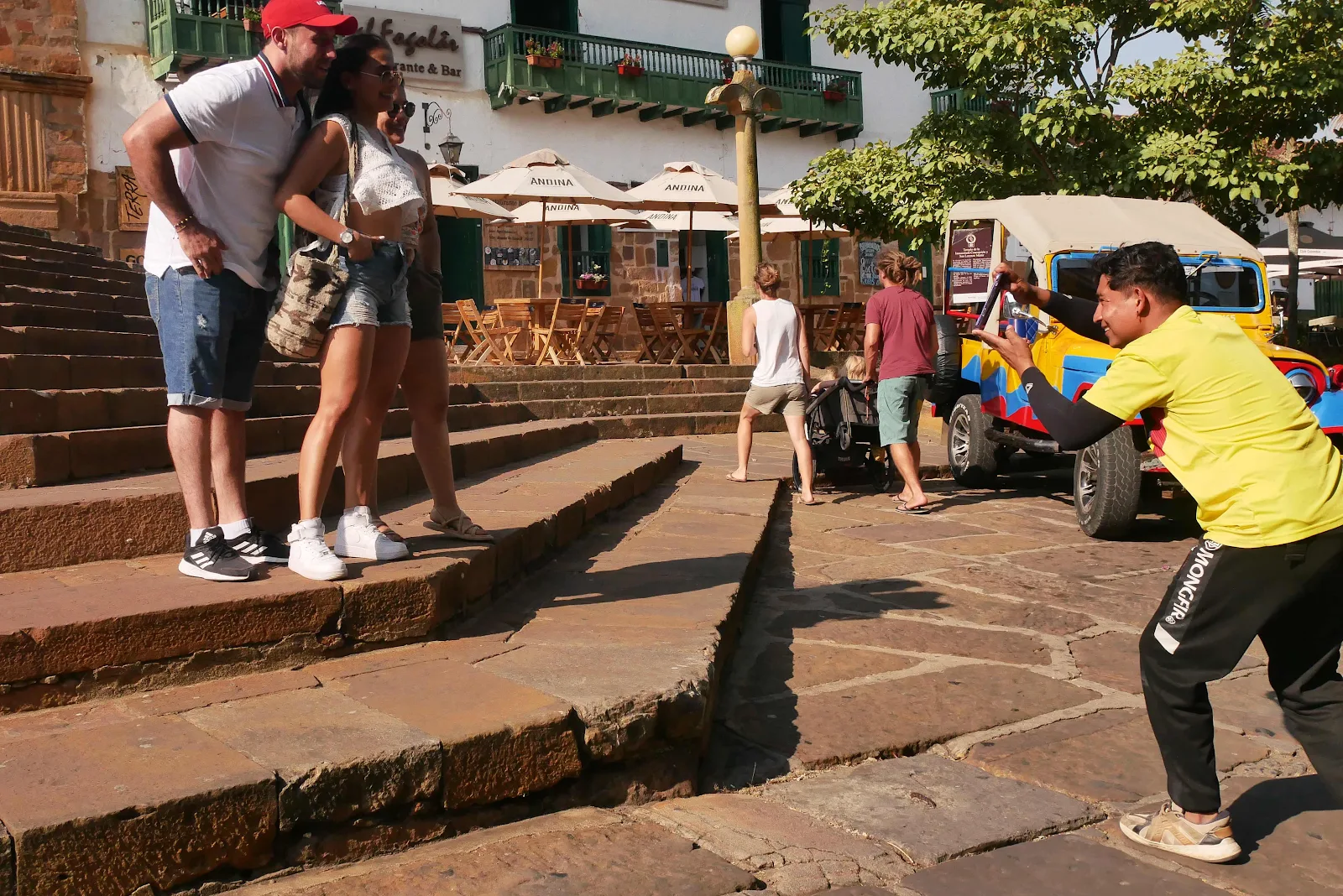
I think of South America and I think of ostriches and llamas and Incas and astonishing mountains and canyons. I think this drive to Ushuaia will feel like an accomplishment hard to relate once we return to the ease and simplicity and fun of wild camping in the US and not having to think in two or three languages.  
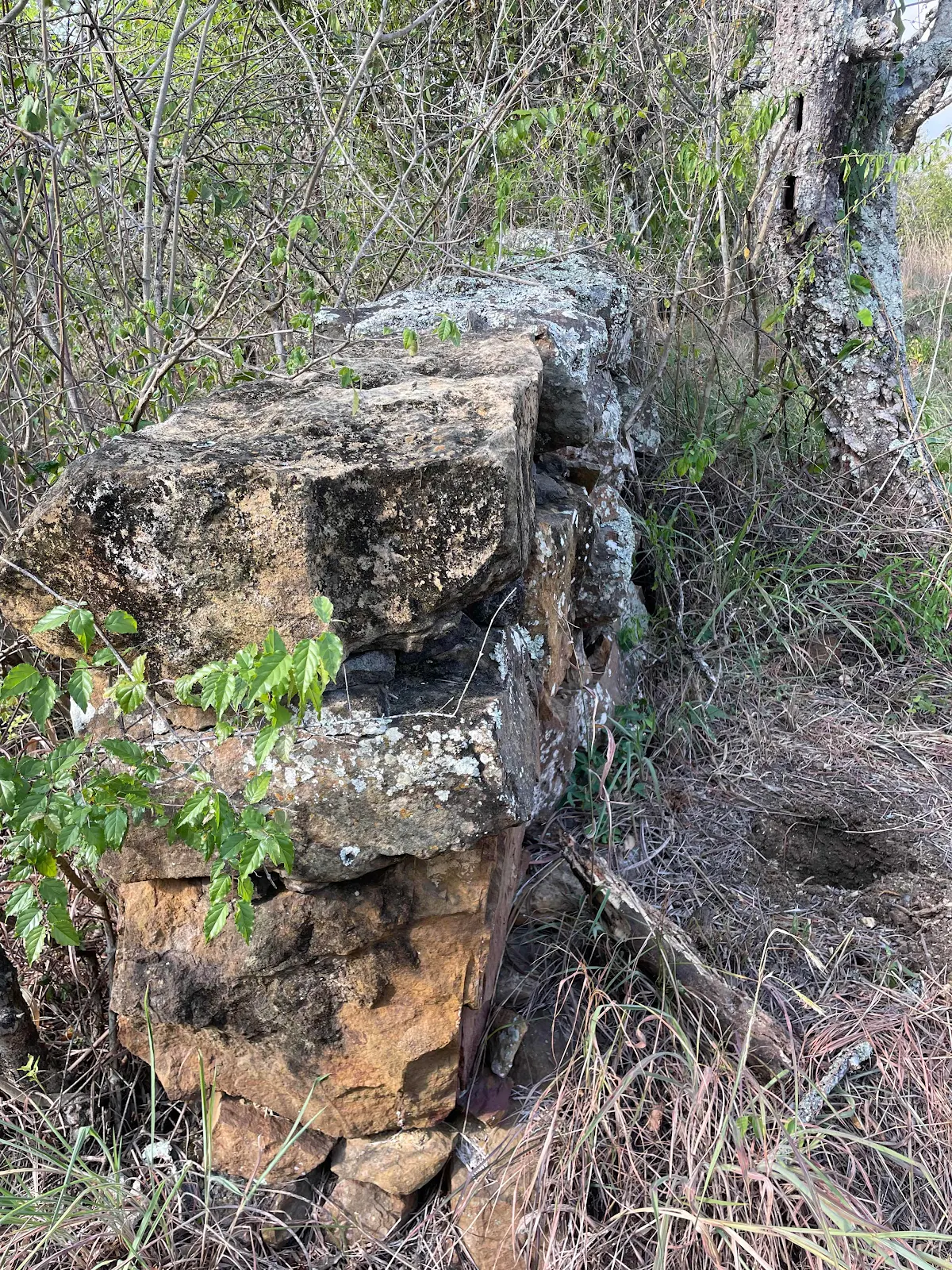
And yet, had we not come here we’d  never have seen soap nuts which we use in the washing machine here at the campground. Peel the shells and toss them in like nature’s detergent. Weird but true. 
We make no pretense of being pioneers or of being adventurers seeking out back road wilderness. Just driving the main road around here seems excitement enough. I hope the van holds well at altitude, that our brake renewals serve us as they should and that when things go wrong we shall continue to keep our heads and find the lessons to be learned in the experiences. 
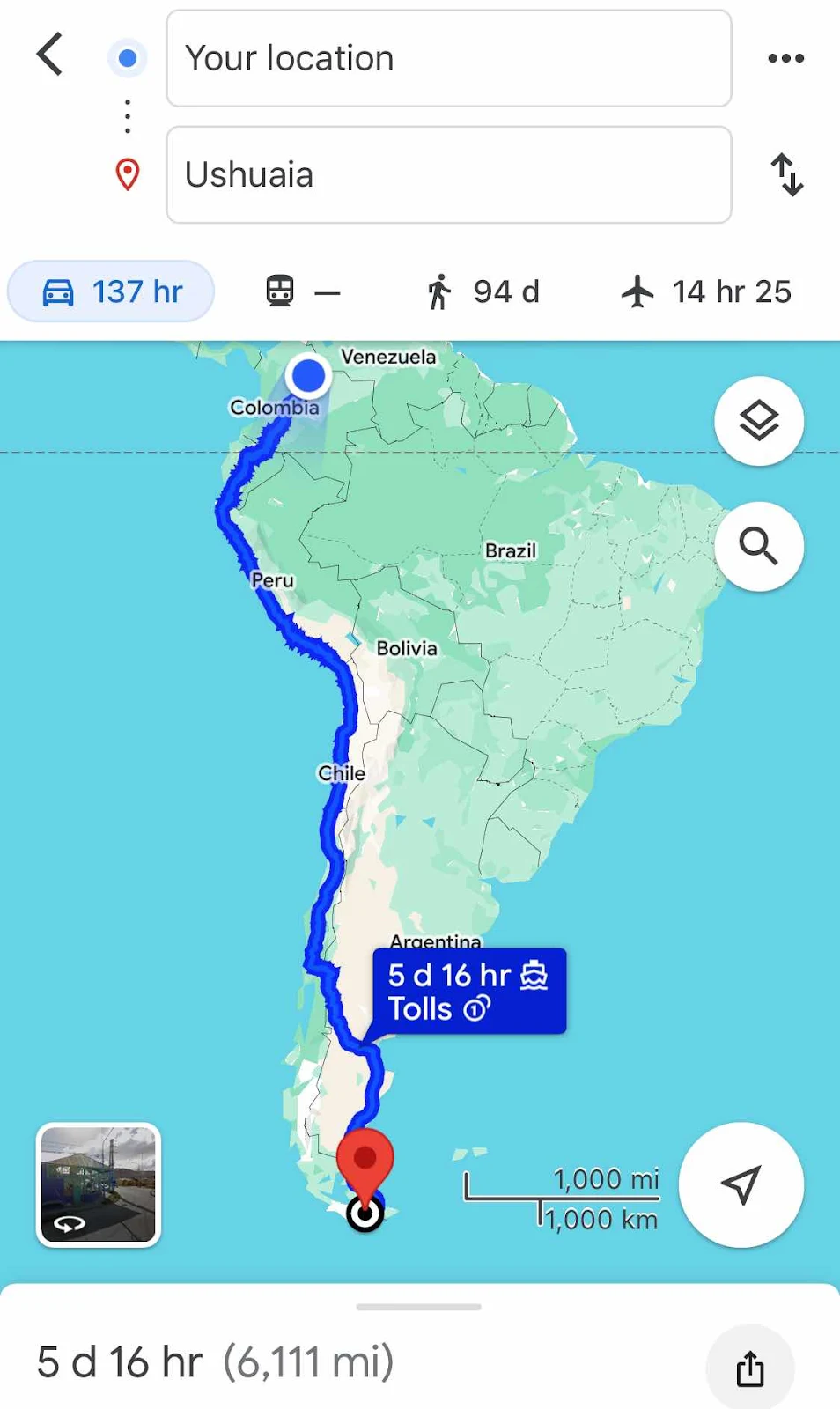
Were we to drive in a straight line we would have 6,000 miles to go just to reach the end of the continent. It does seem a long way from here. I can hardly wait to see what we will find, but fortunately Layne knows how to put the brakes on so we shall see more than road signs flashing by.

Tuesday, March 12, 2024

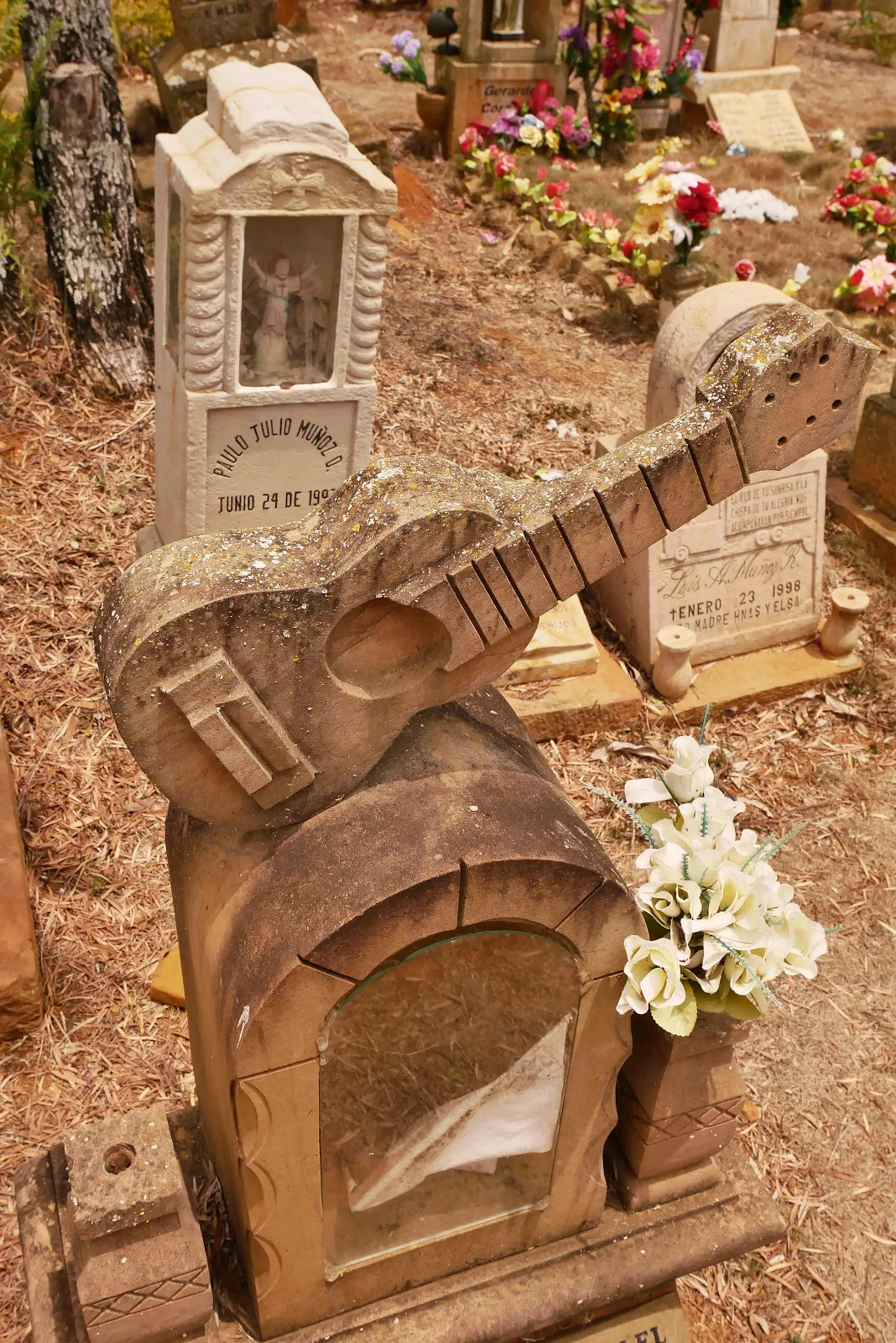
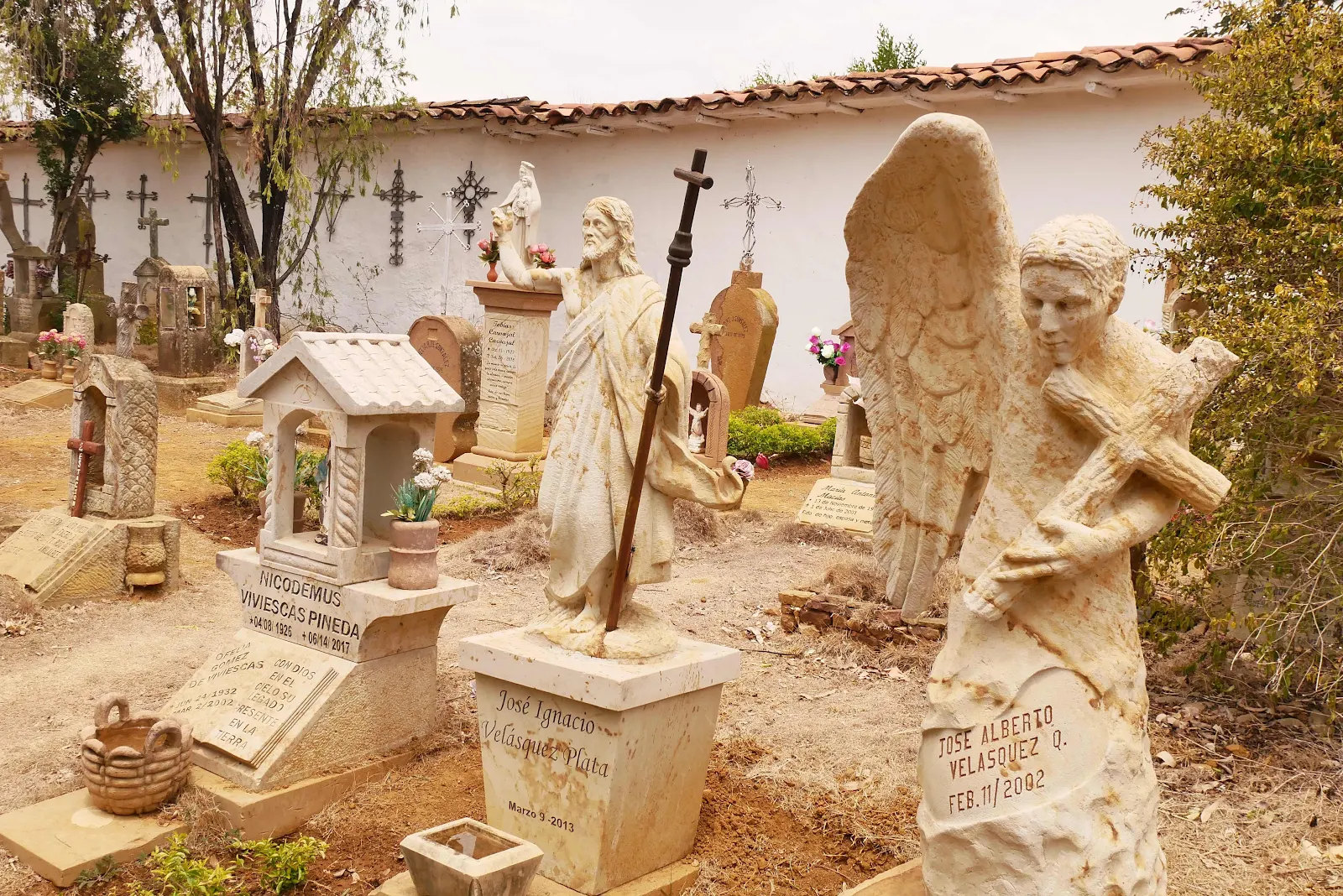
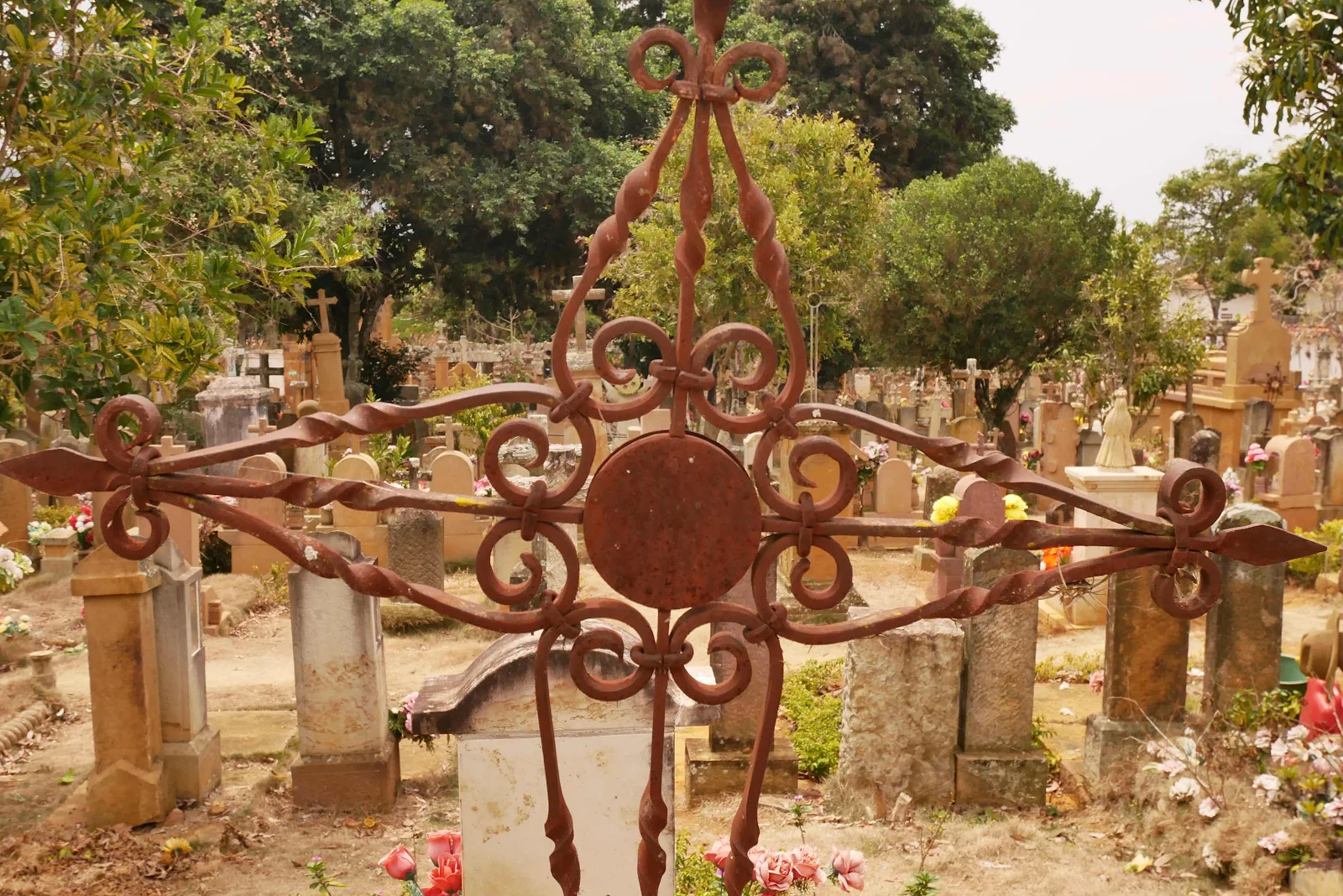
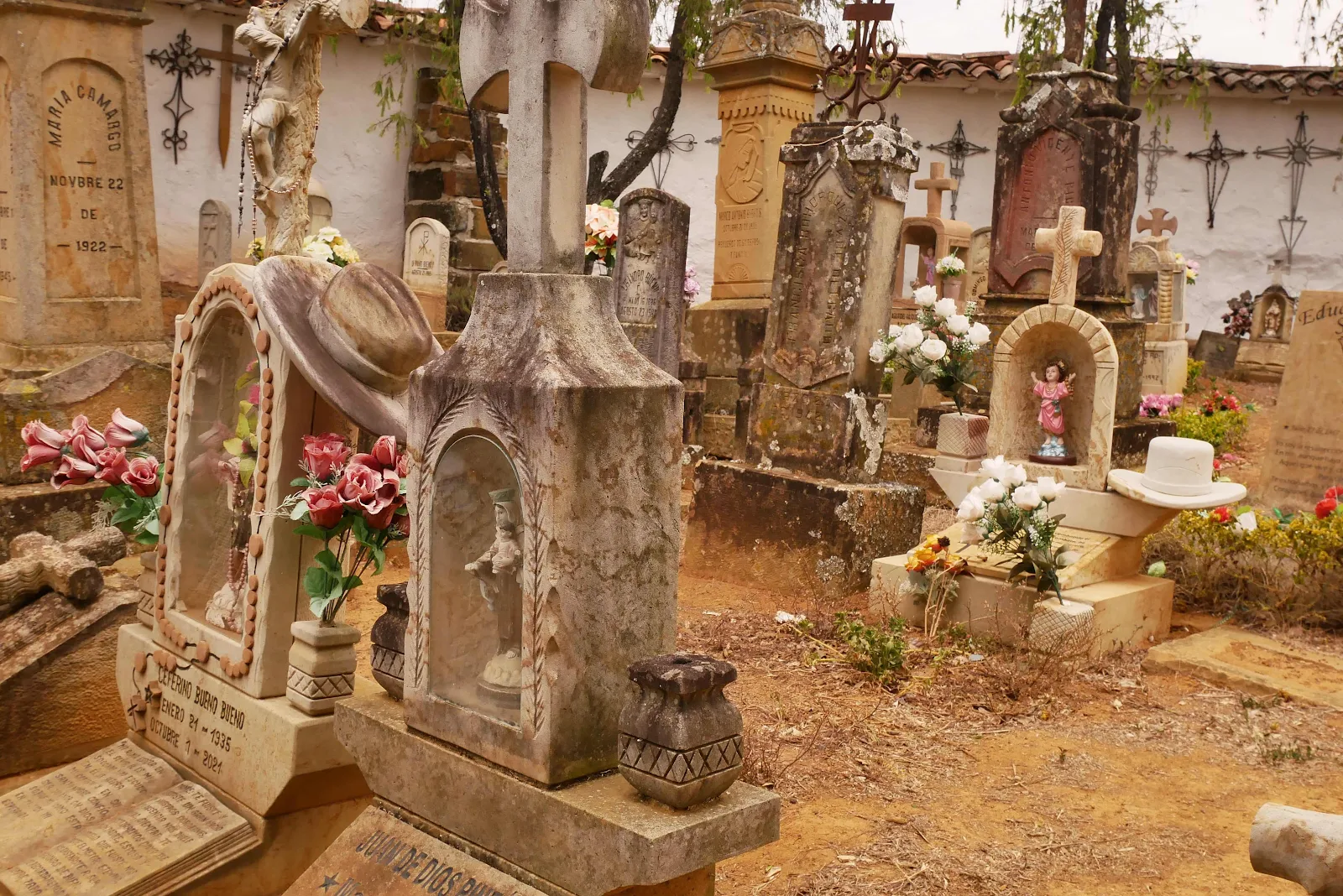
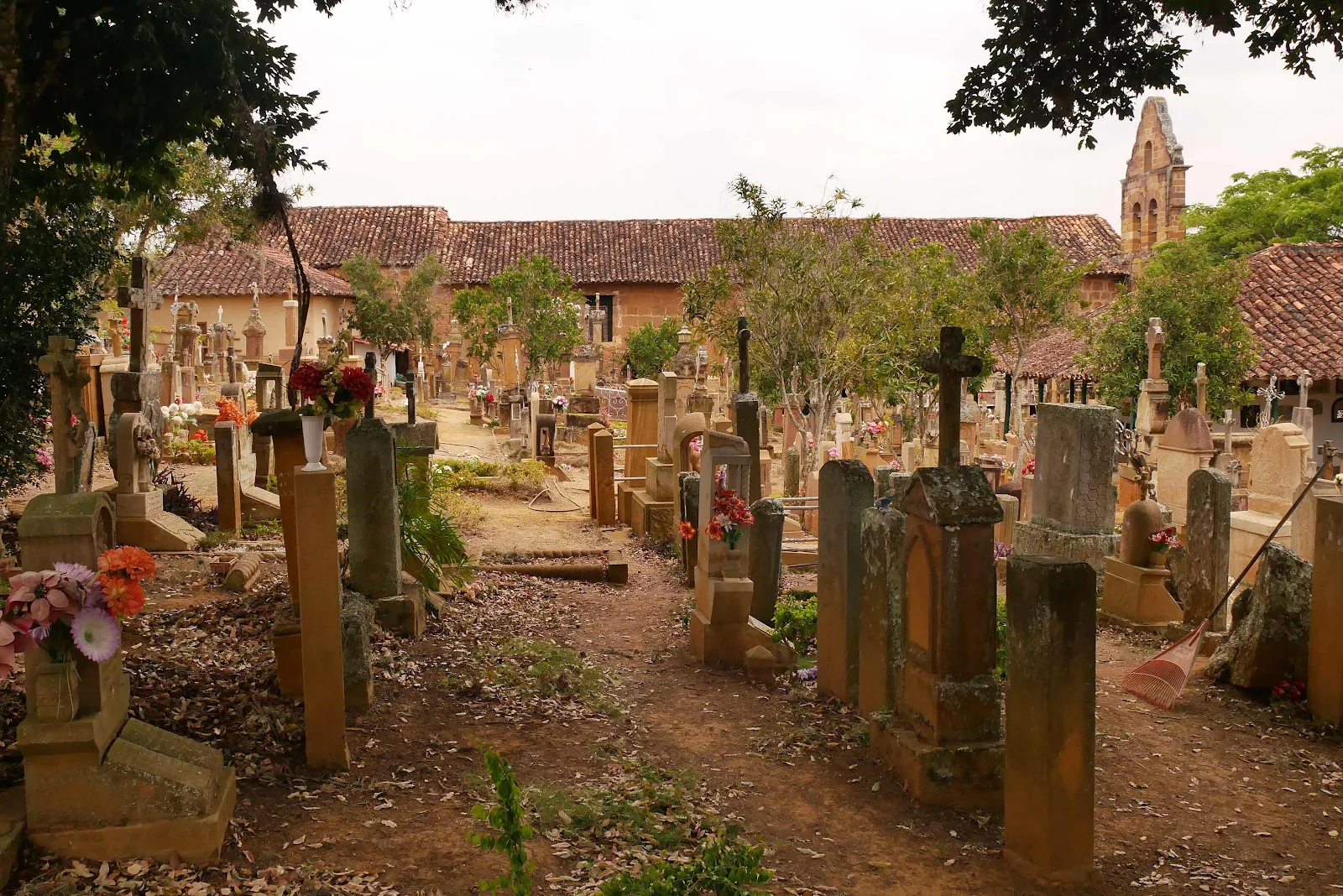
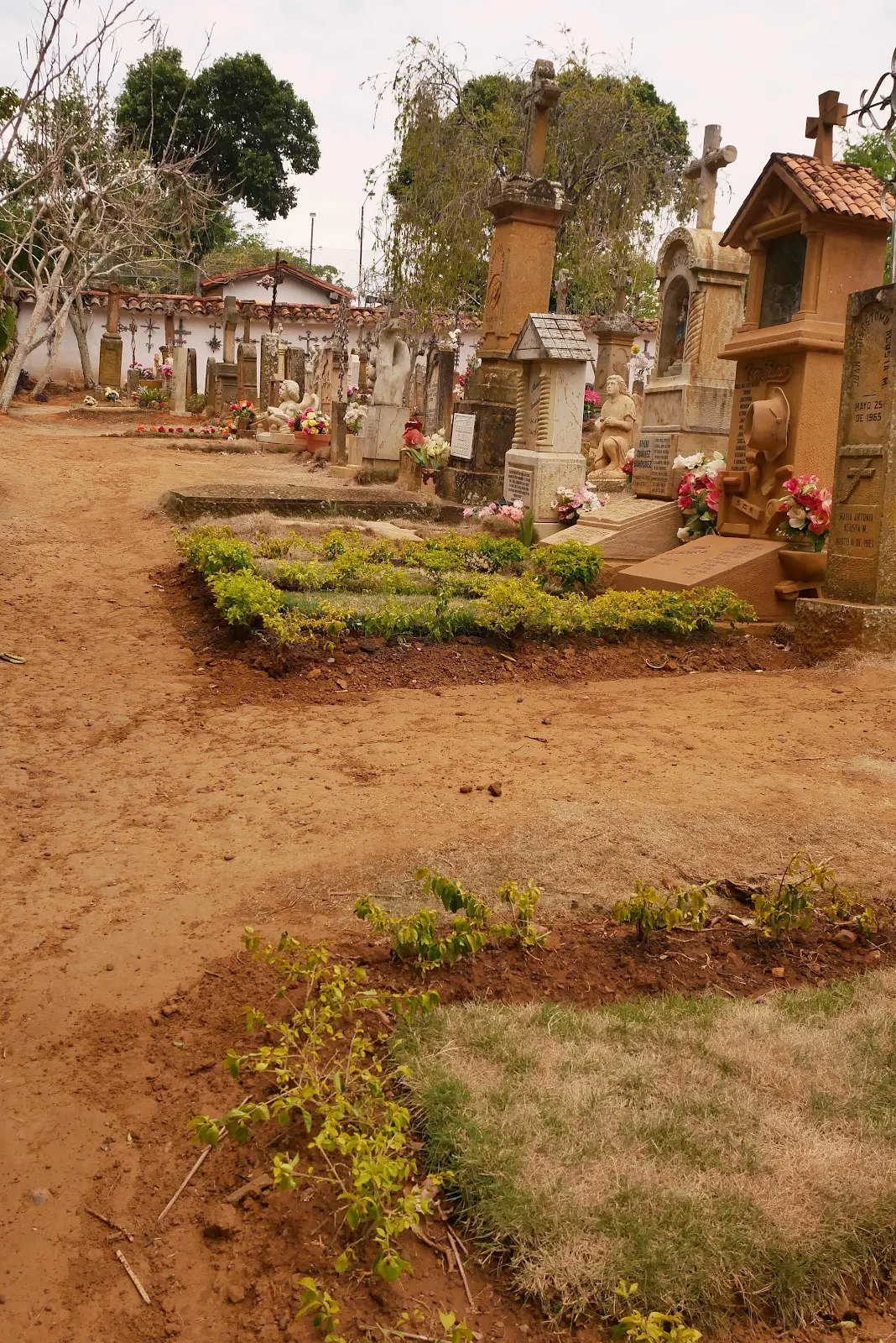
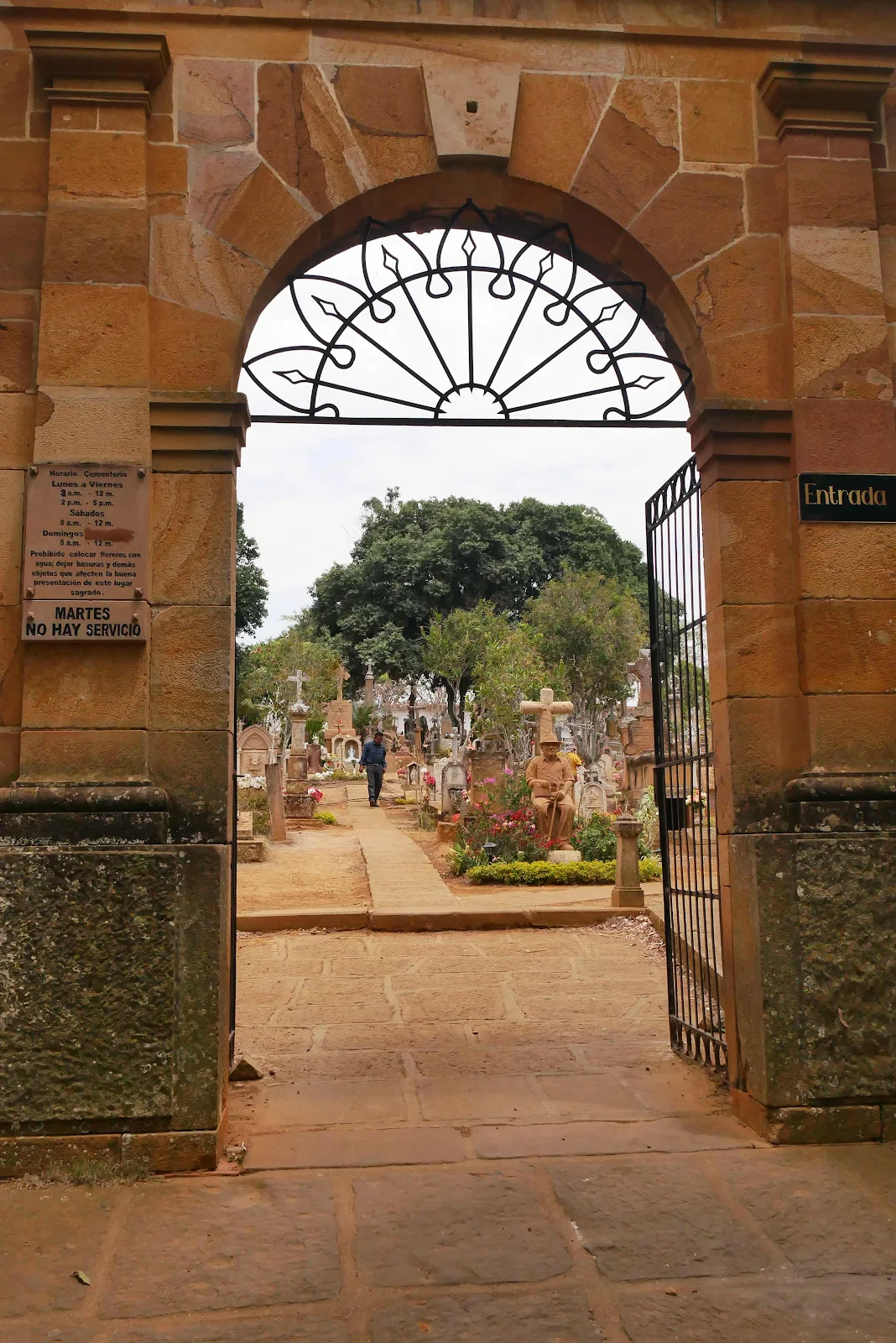
Barichara Cemetery


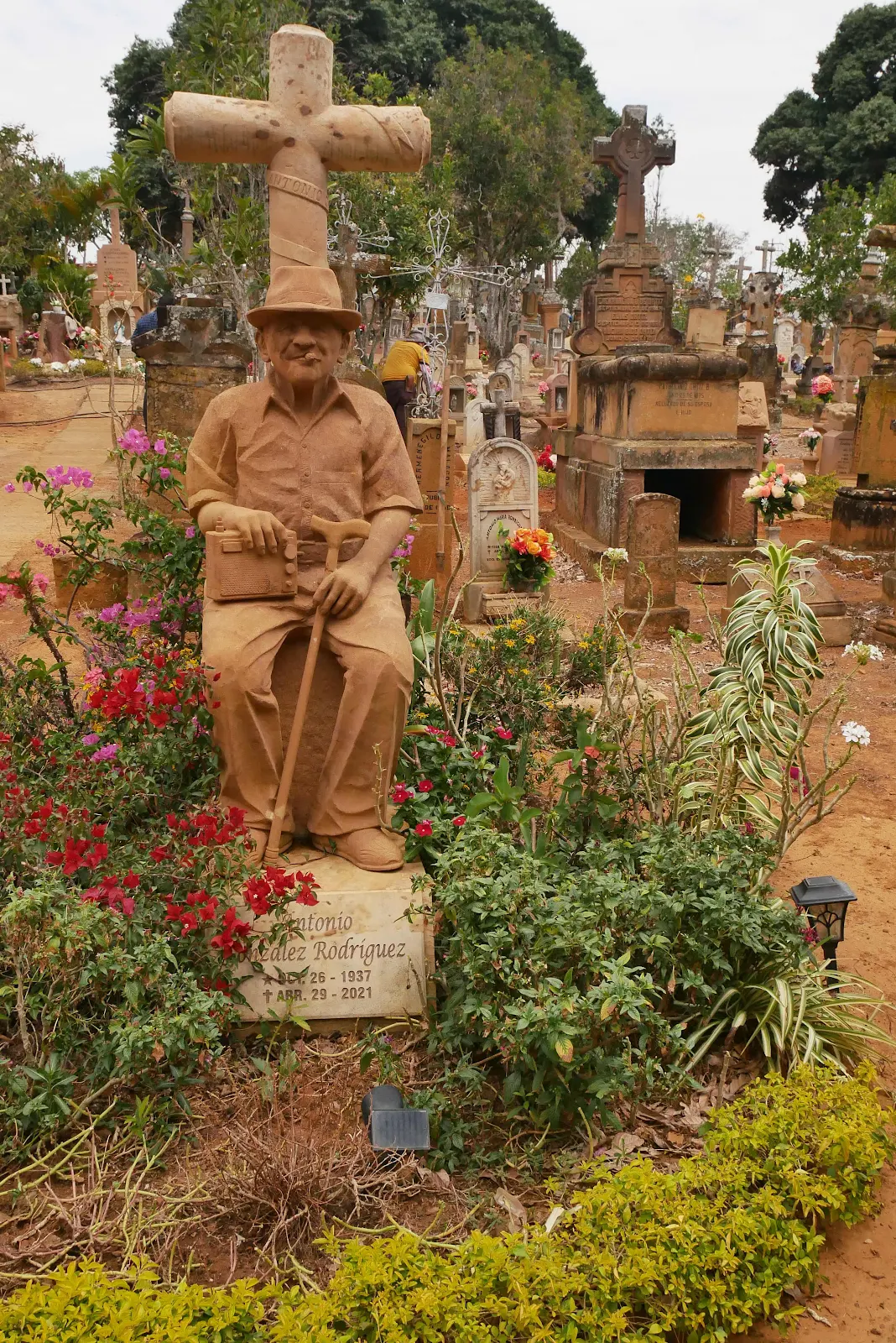
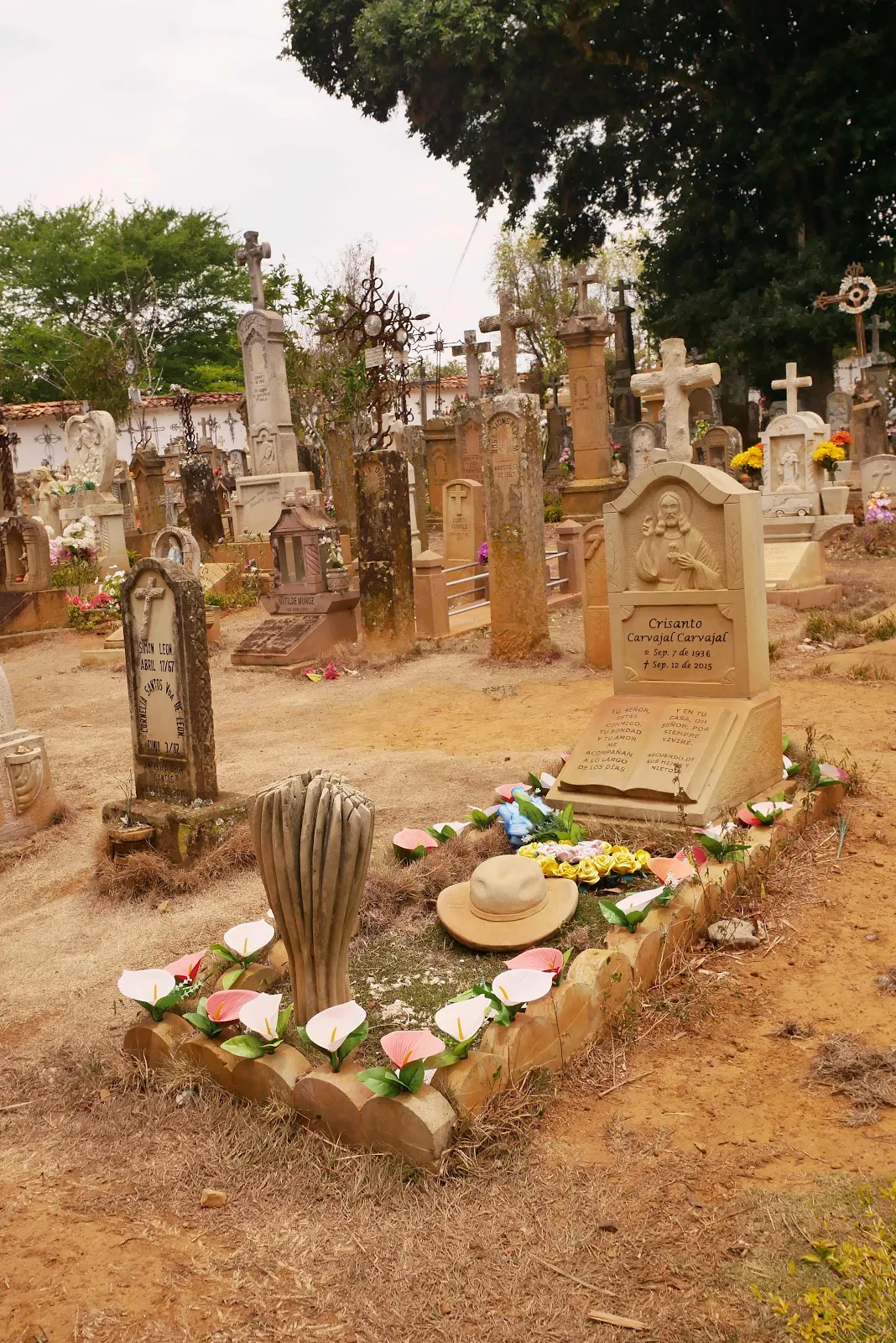
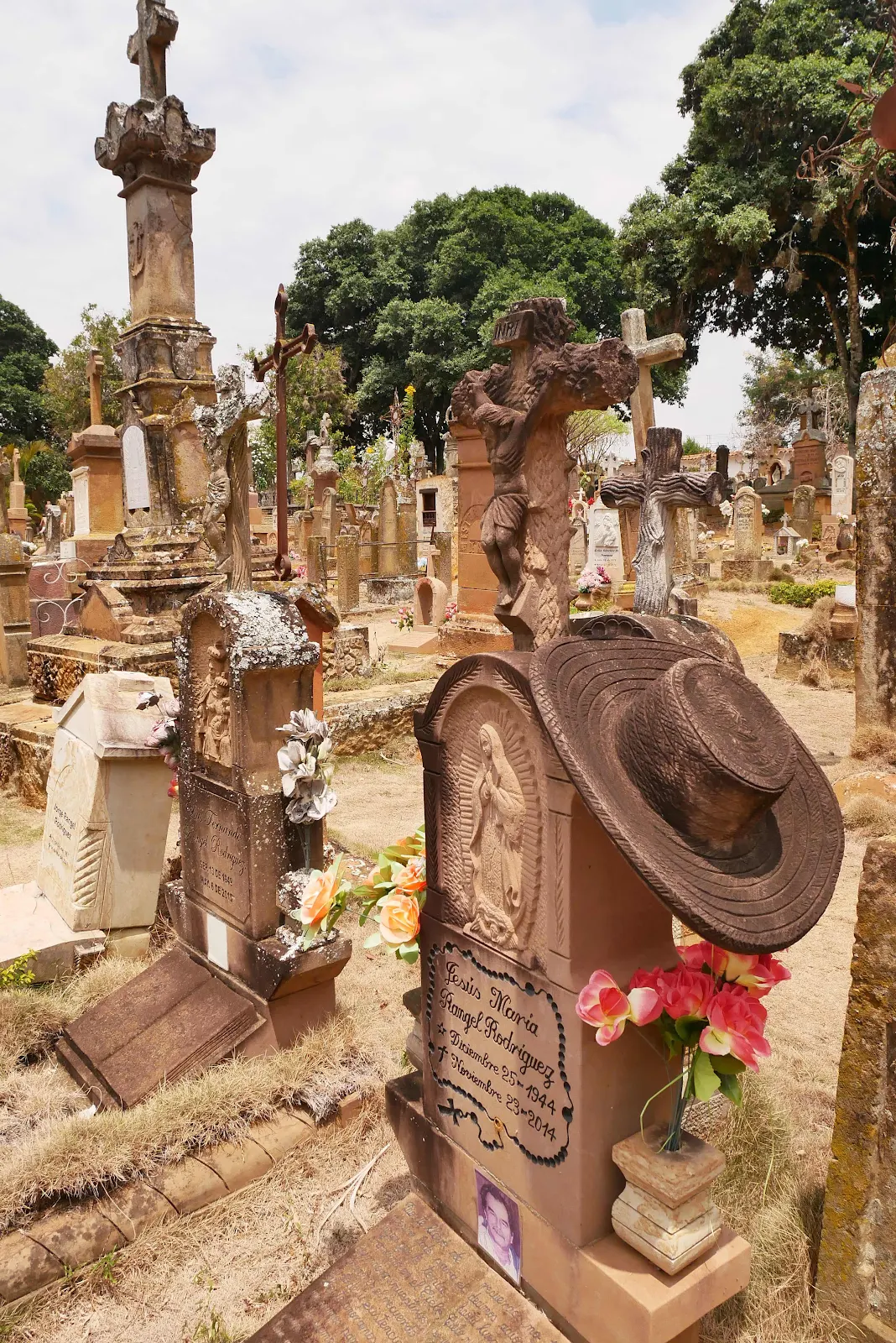
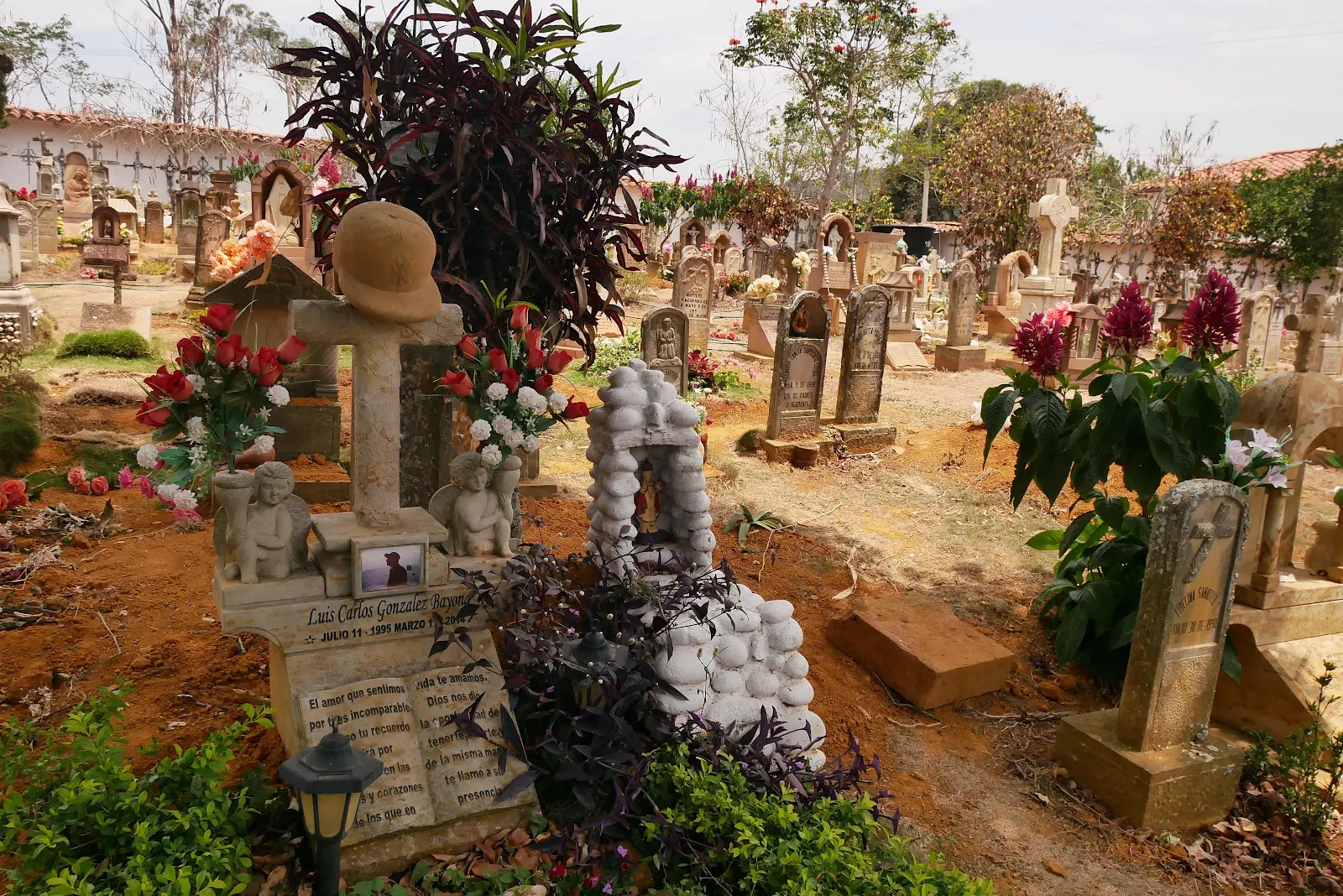
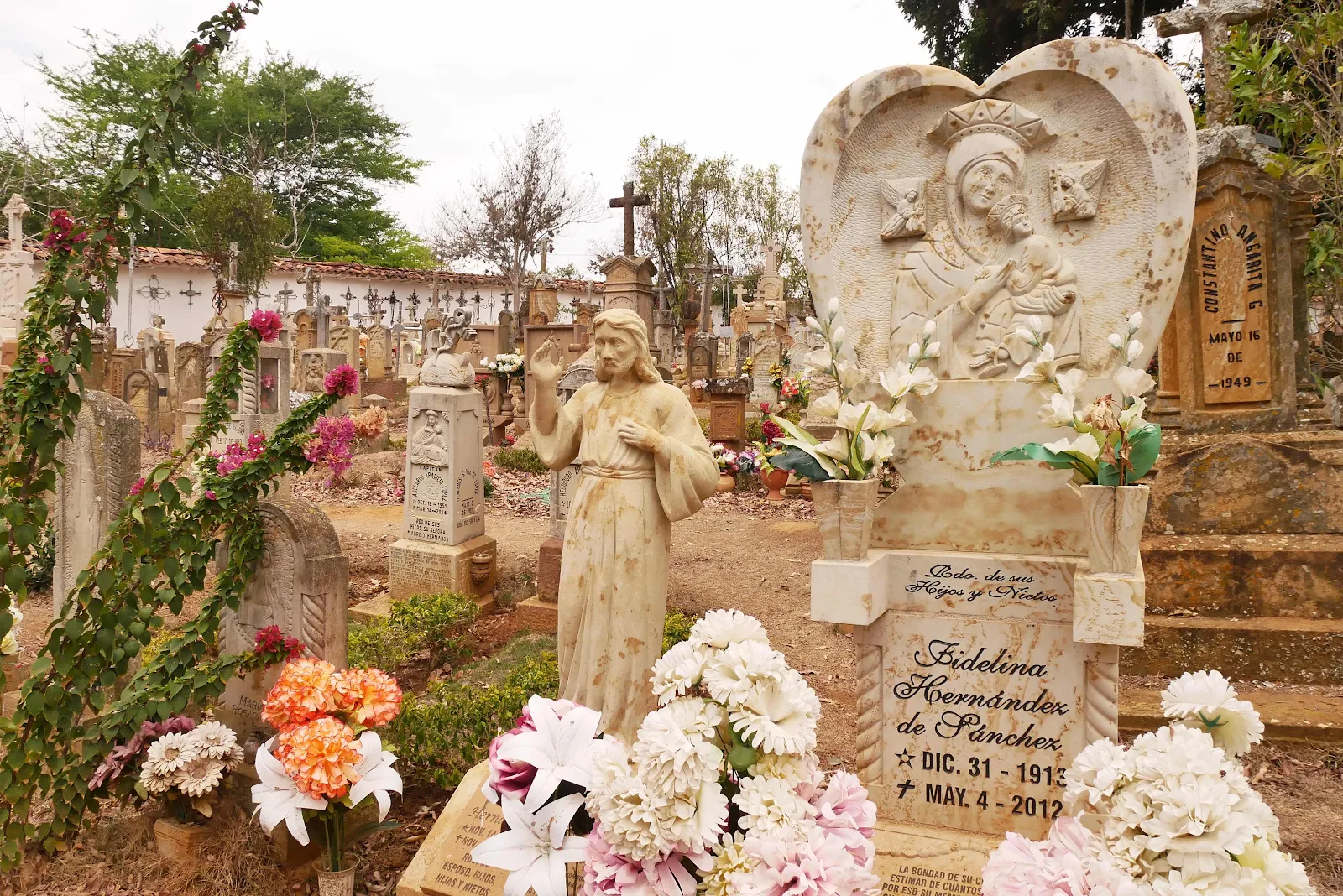
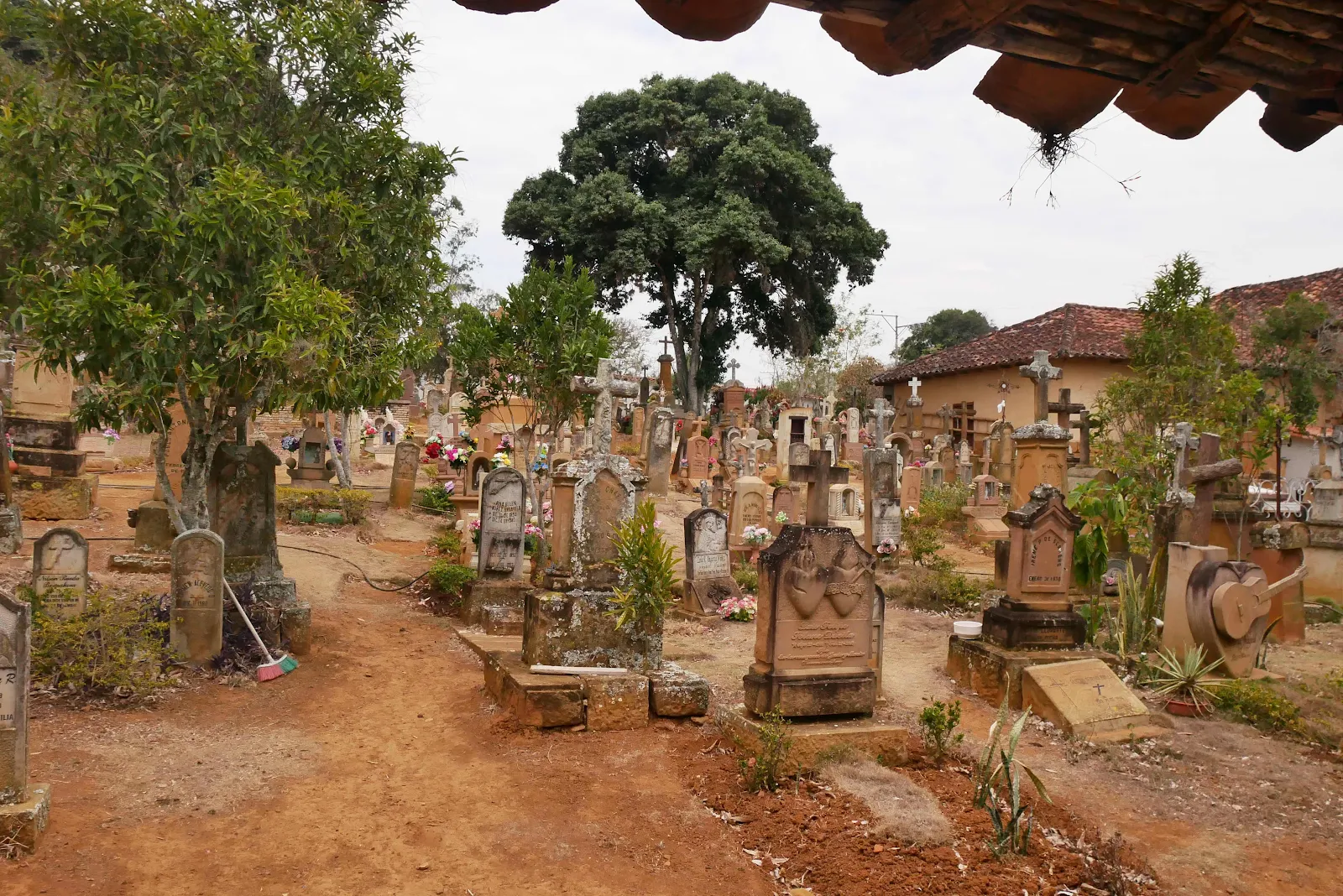
If you’ve read this blog from when I used to walk around Key West you’ll know the cemetery was one of my favorite open spaces in town. I know that some people get wigged out by the reminder of mortality that comes with these places but I love the history and the expression of local culture found in the cimenterio.

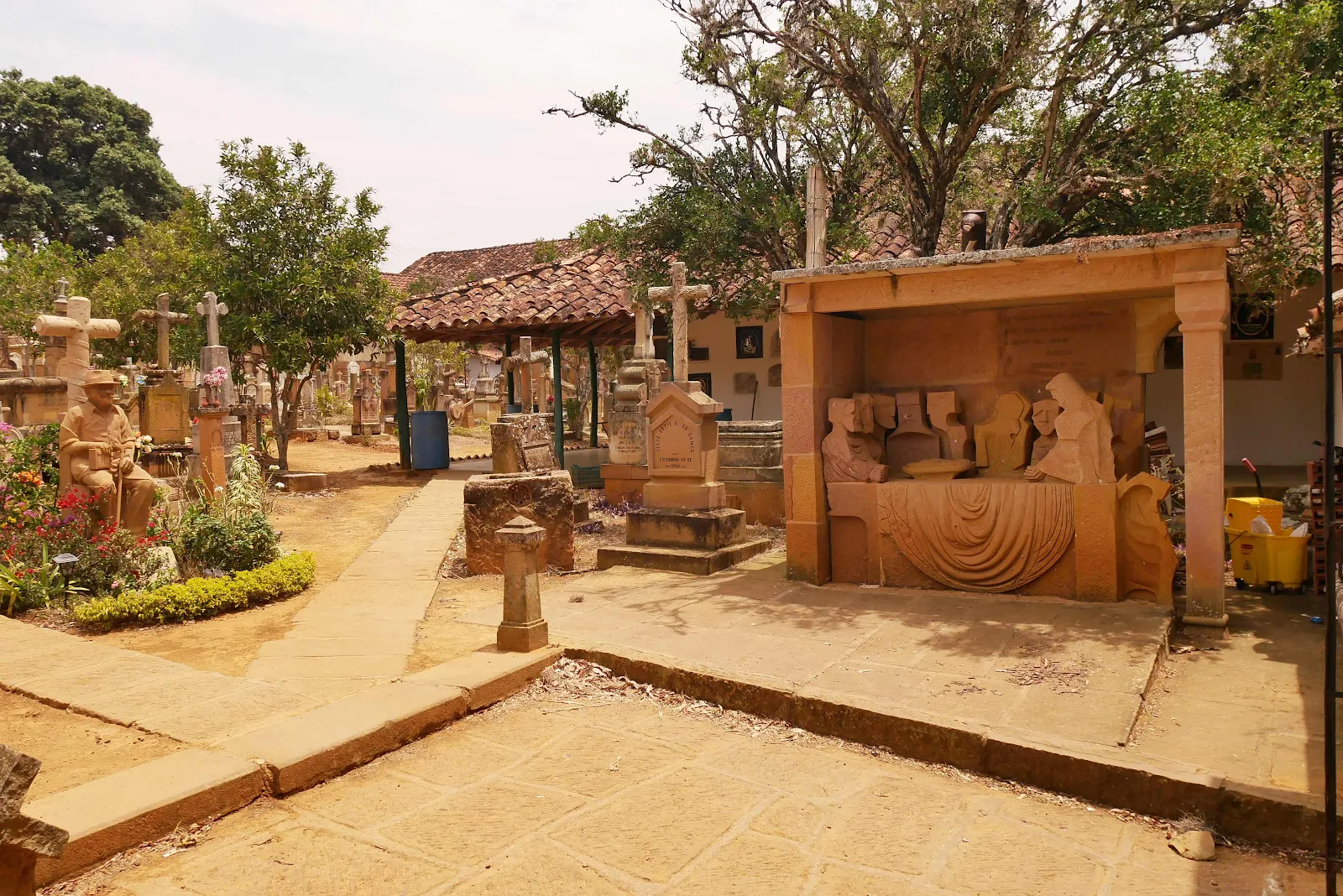
The statue above greets you at the entrance, a representation in one stone block carved to remind visitors of a local character remembered fondly as you see him here, with his transistor radio his stick and his cigar. And his hat; there are so many hats all over the cemetery. 


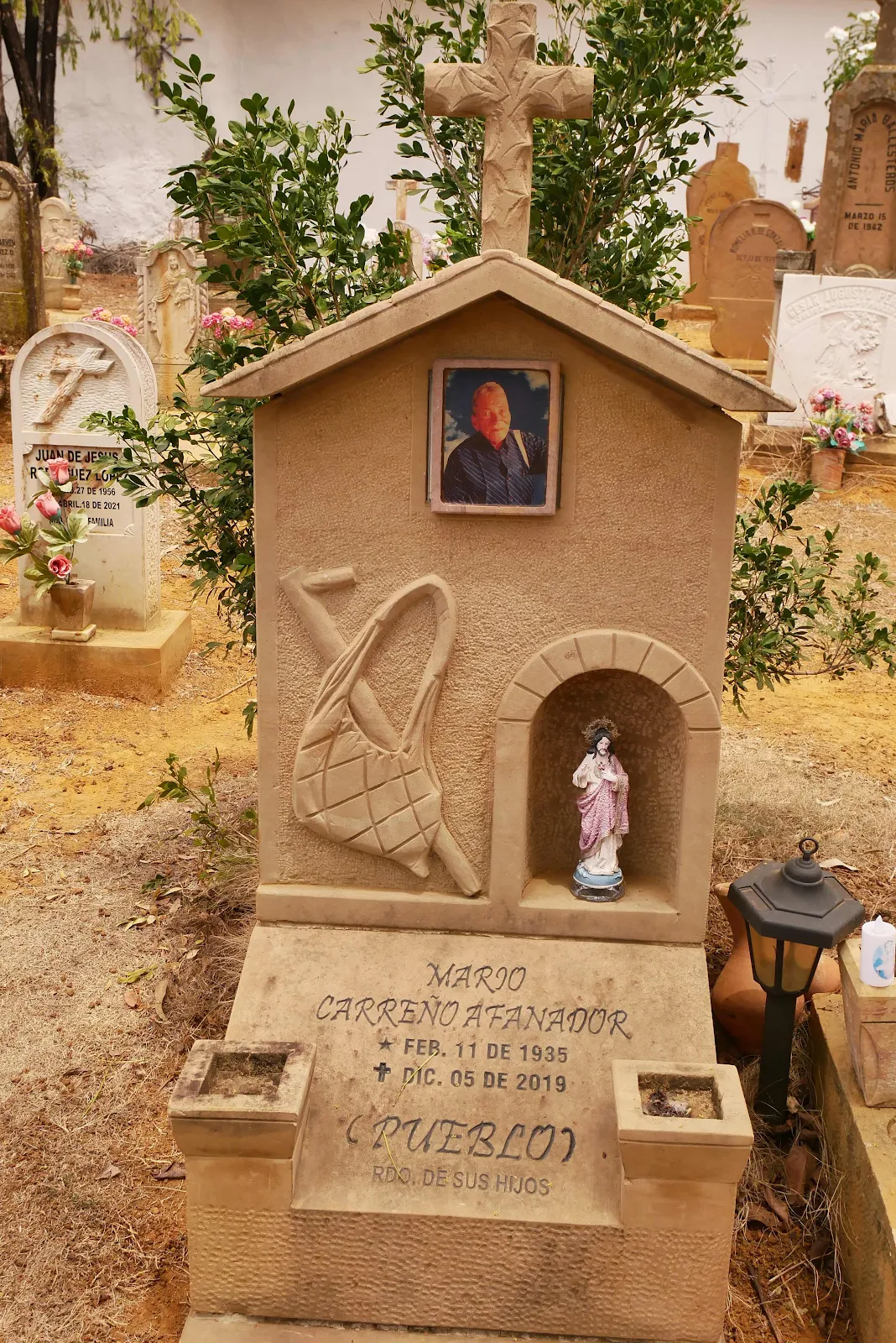
The character below was known for his bag and his stick apparently. In the photo you can see the strap of his bag over his shoulder. 
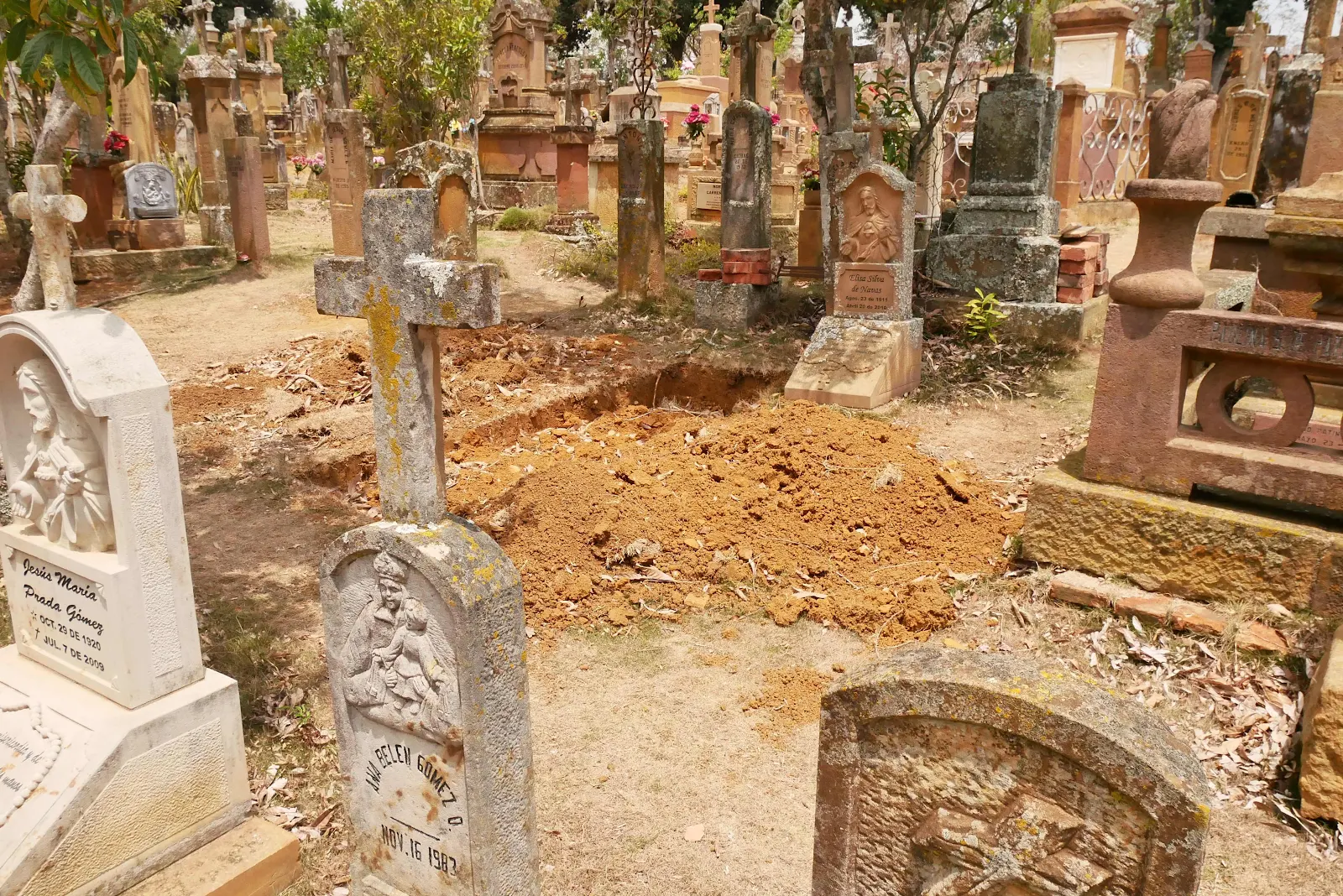
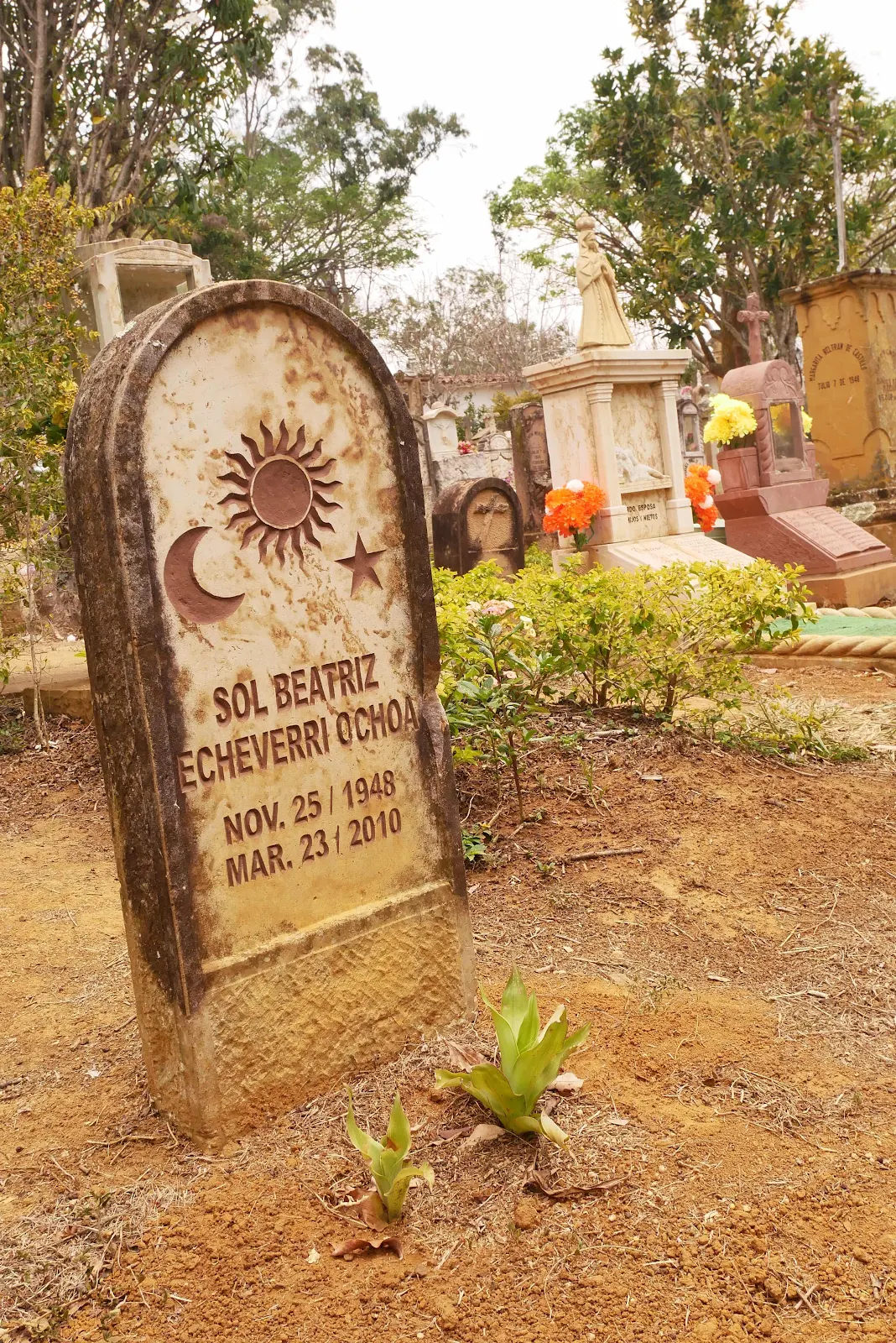
I noticed a couple of things here that I’m not used to. One is that many graves only show the date of death which is weird and uninformative. I don’t know why but I like to check out a person’s age. Maybe I like to commiserate when they were younger than me or perhaps I’m hoping they are cheering me on if they died older than I am now, at 66. This one made it to 99 and six months! So close…

The other thing I noticed was how Catholic the makes are. Colombia is a strongly Catholic country apparently and it shows.  Many Latin American countries have moved away from traditional saints’ names for their children but not here. 

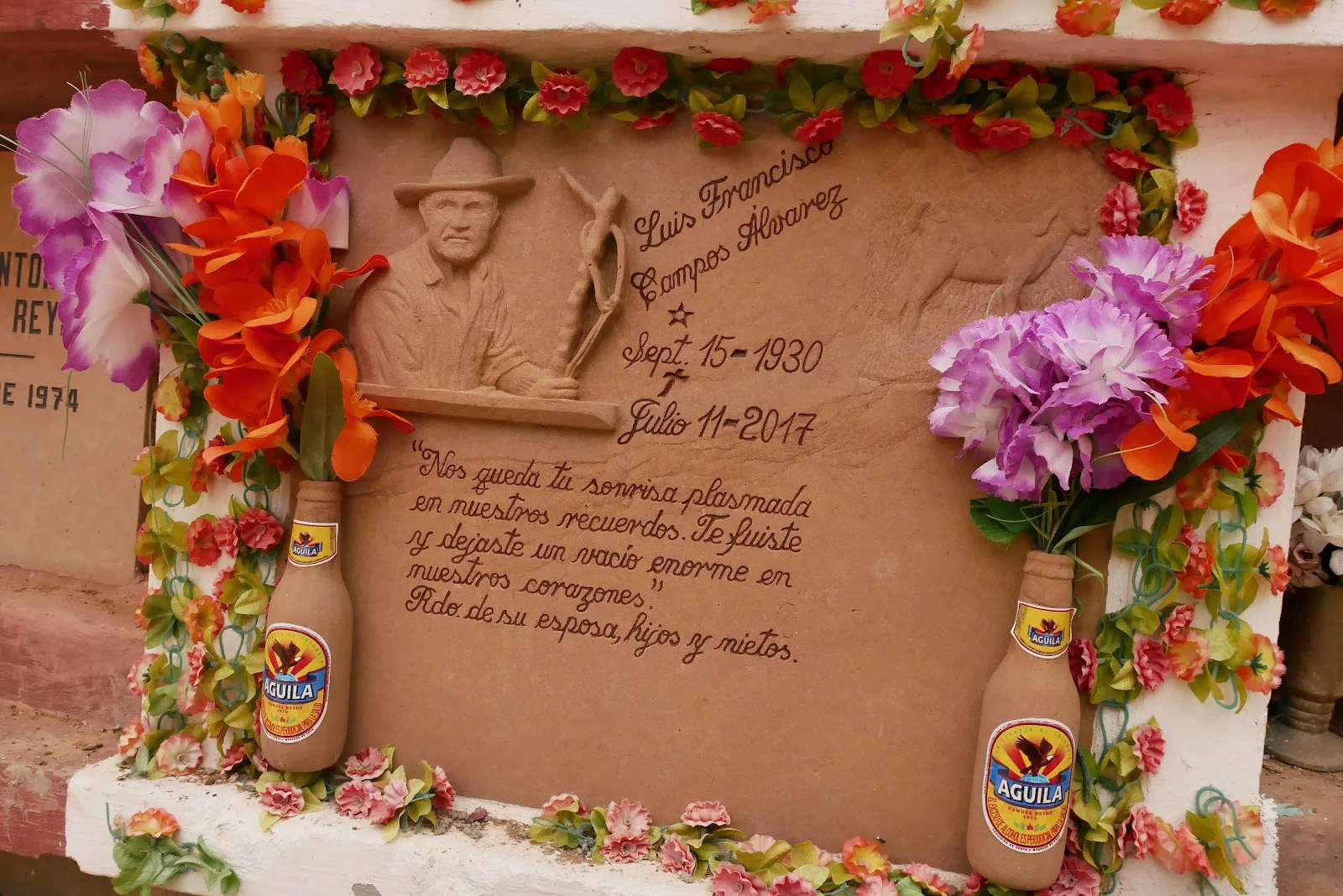
This guy below is remembered fondly and it appears he was quite fond of his Aquila beer. “Your smile lives on in our memories and your passing left a huge emptiness in our hearts.” 


They are still burying people here but the workers who keep the place organized used I overheard saying it’s getting full. One of them has worked here 38 years so I wonder if he’s got his spot sorted out.

This yellow sandstone cemetery is a noted tourist attraction along with a rather undistinguished chapel alongside which was built in 1541. 

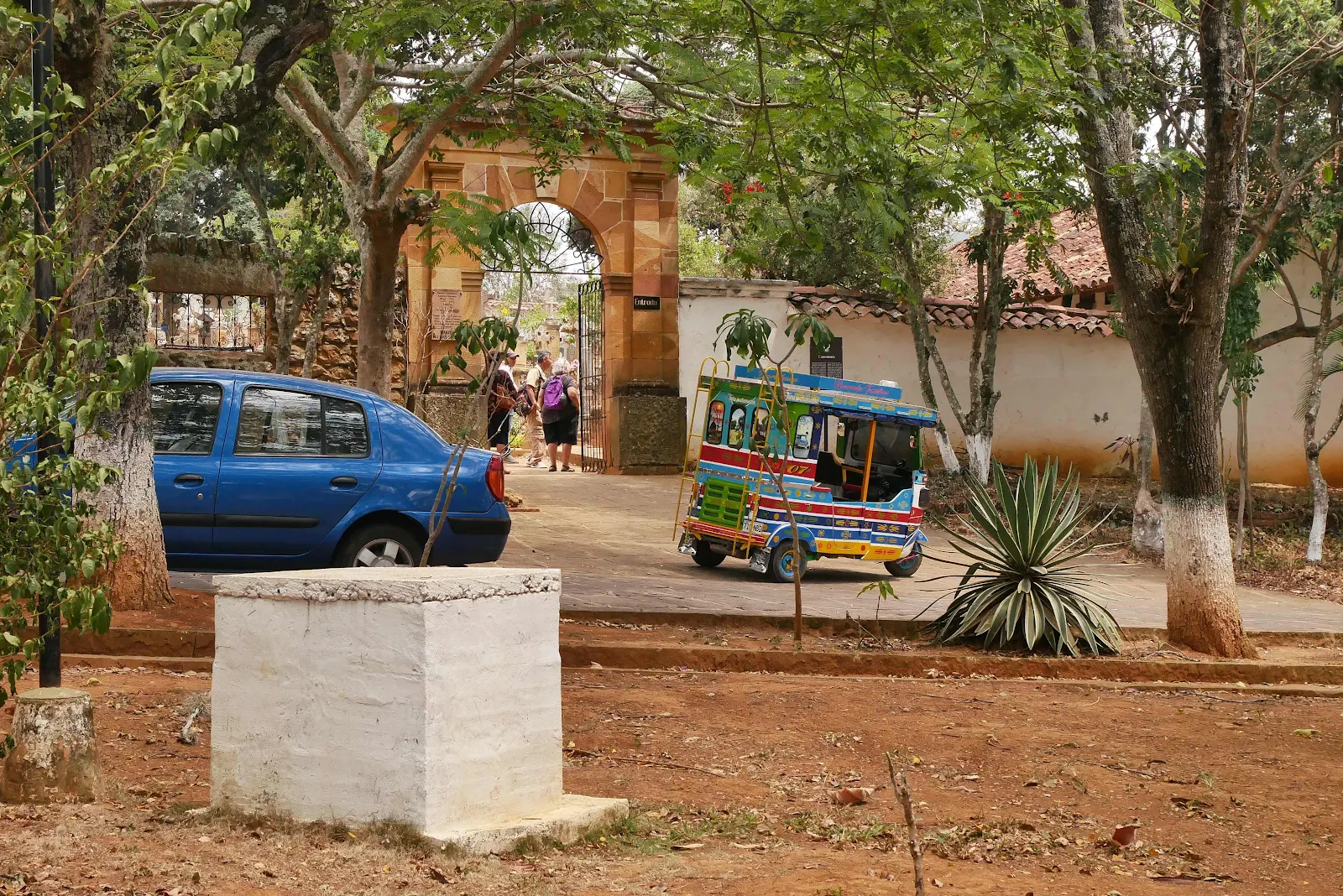
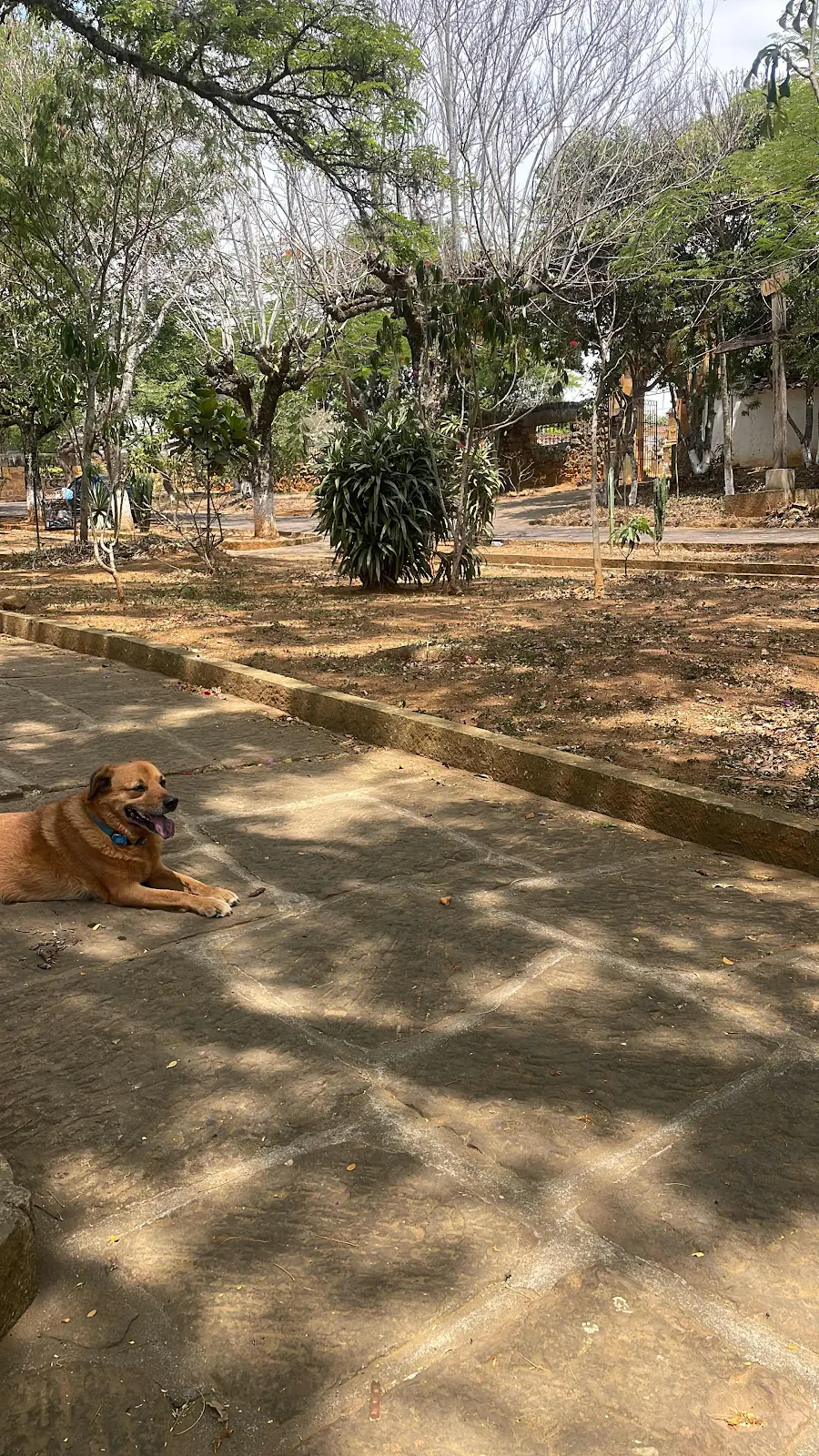
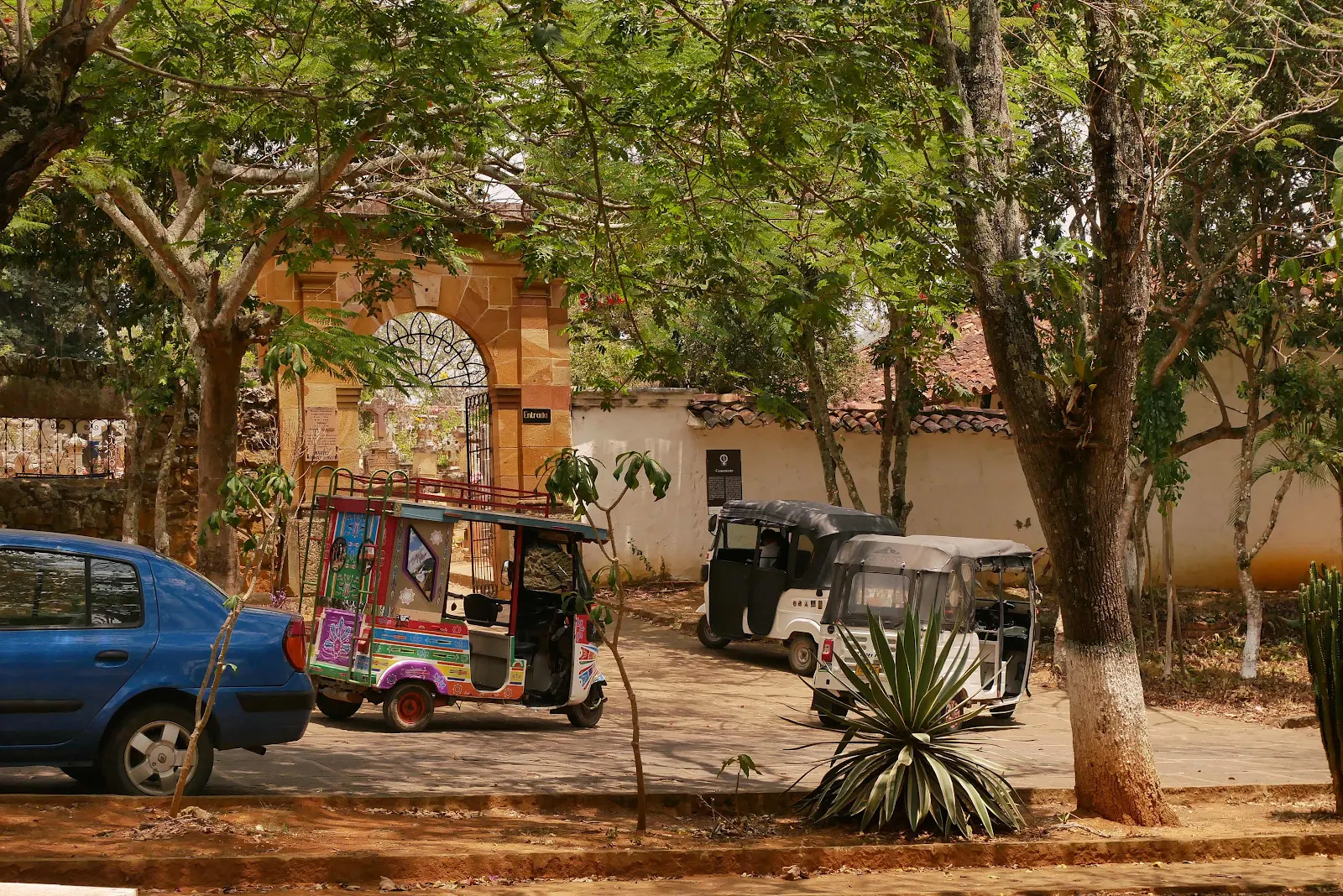
I had walked Rusty into town over the hill so he and I were rather tired and ready to rest. Layne met us at the gates as she did some chores and ride into town in a tuk tuk so while we rested she took the first walk. There were no signs prohibiting dogs but we just didn’t think they would be welcome. And who wants to get yelled at in a cemetery? 

There is a pleasant shady park in front of the cemetery so it was a good spot to get our breaths back. There was a time Rusty would hardly have noticed the hour long walk over the hill in the heat but the years have passed. He did fine but he was ready to rest. 


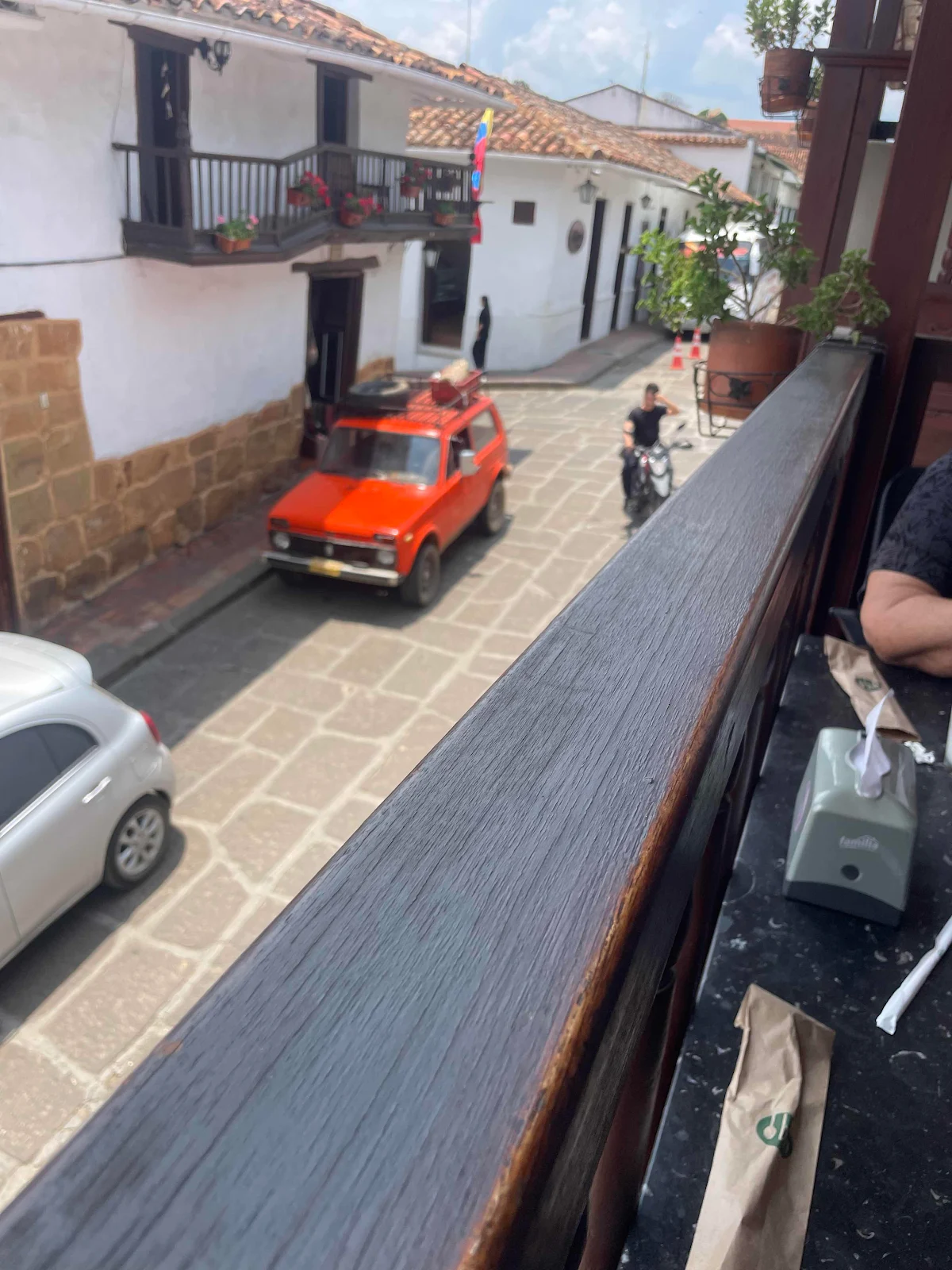
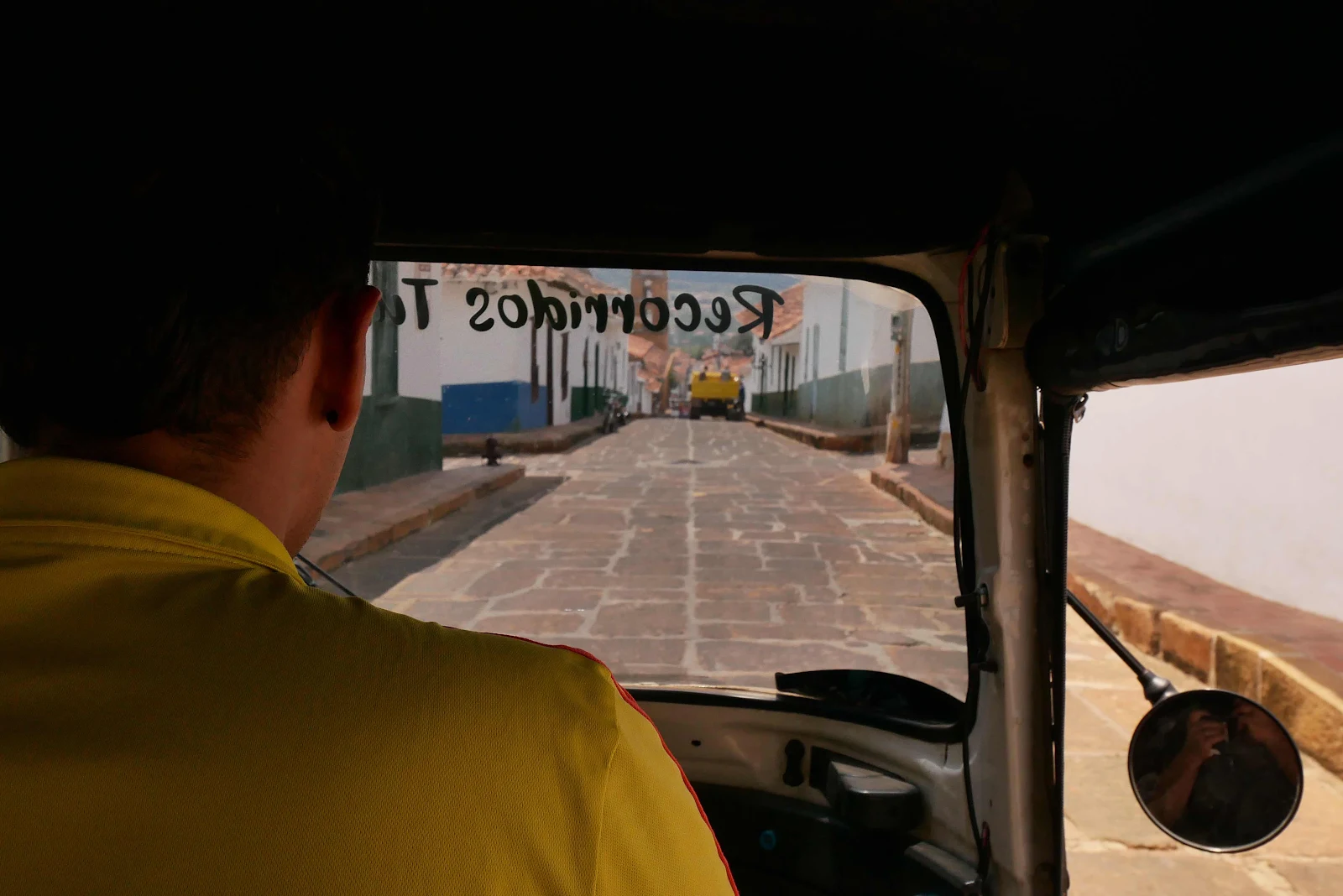
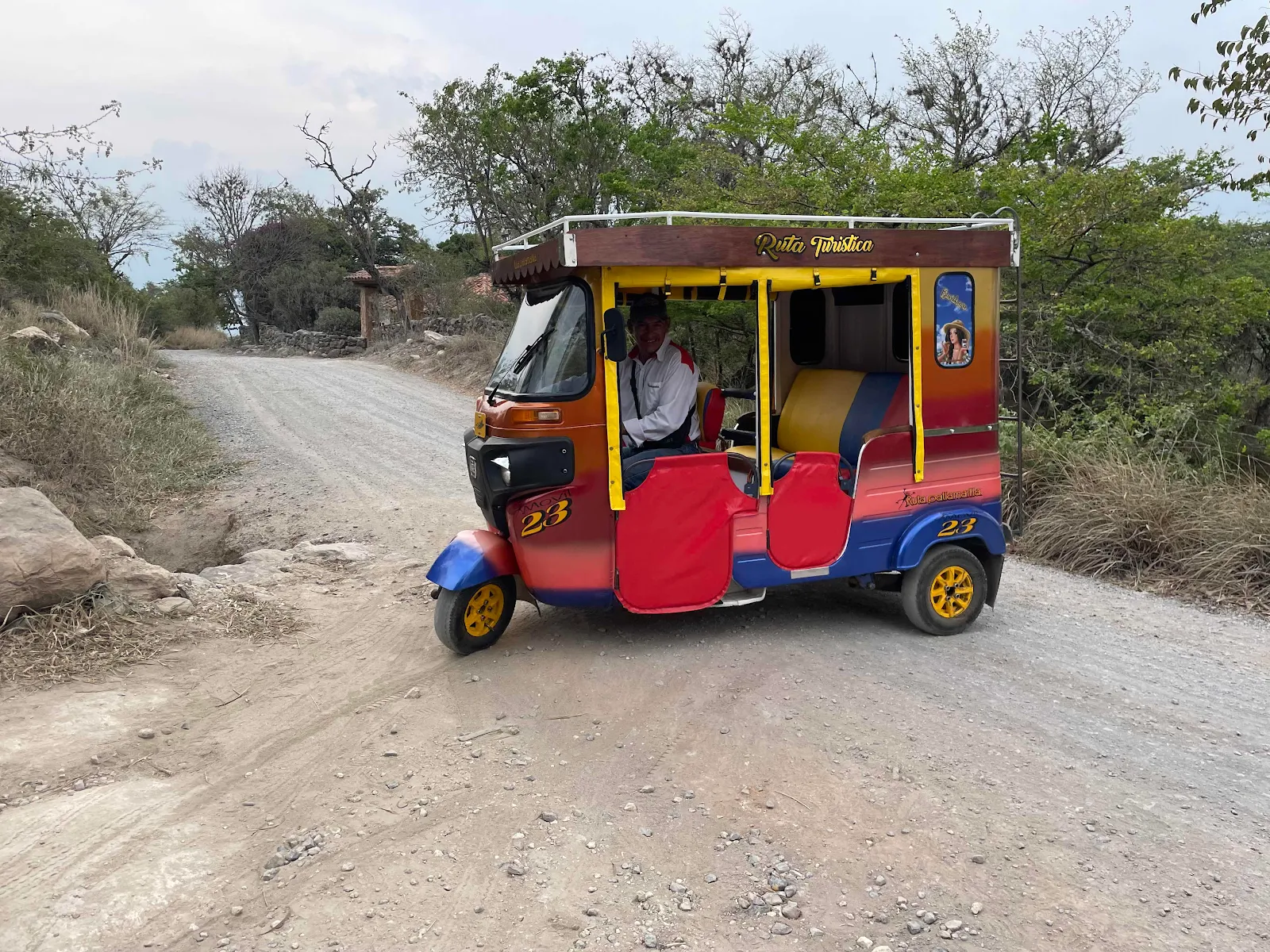
We did rest our feet by piling into a tuk tuk and spending a buck and a quarter riding across town to El Puntal, a rather pleasant spot with tables on decks hanging out over the street. 

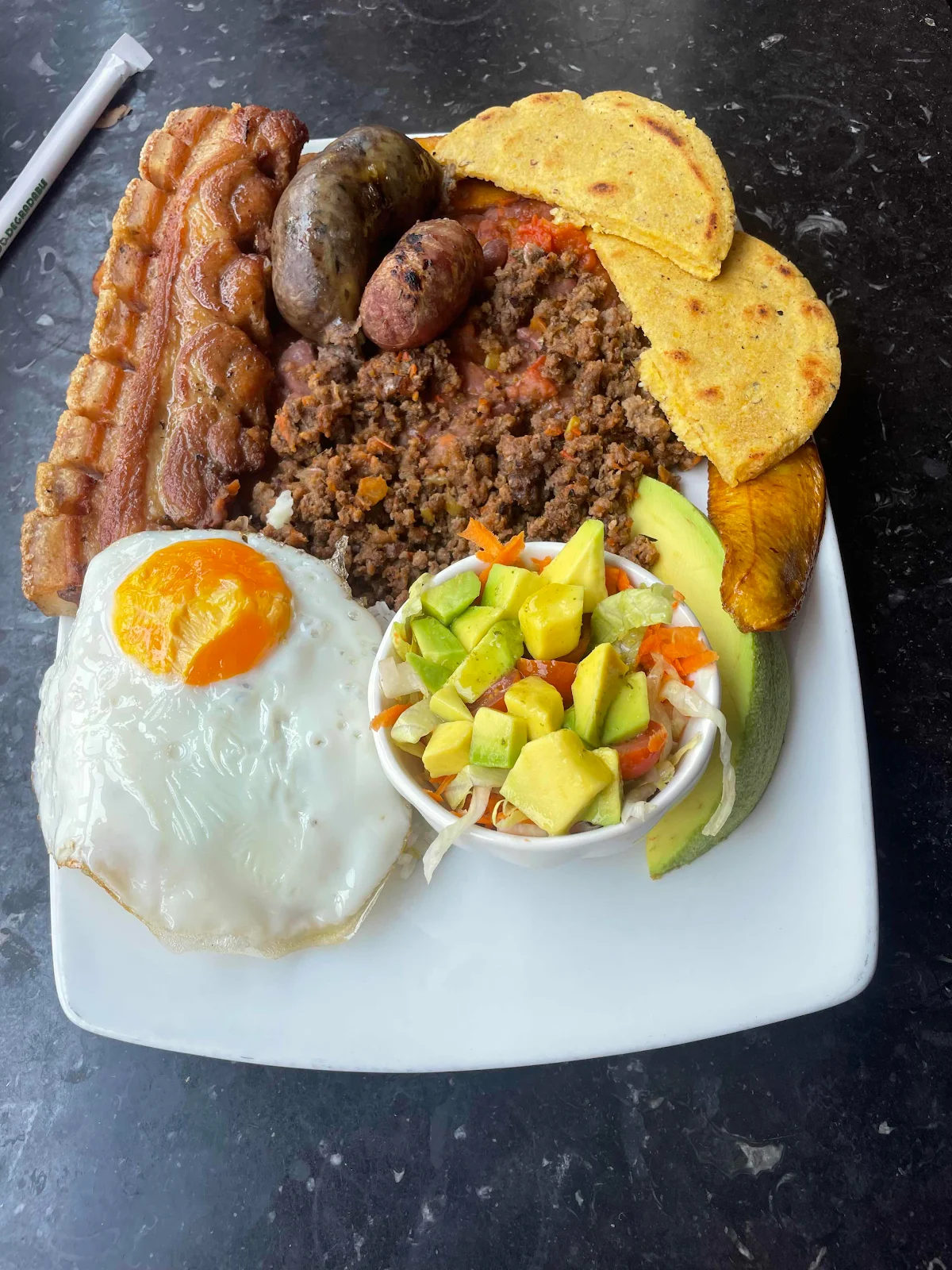
We ordered an eleven dollar mixed grill to share, with fried pork, sausages, ground meat, plantains, avocado, salad and thick corn tortillas in the arepa style particular to Colombia. Layne didn’t want the fried egg but we shared the rice underneath it. 

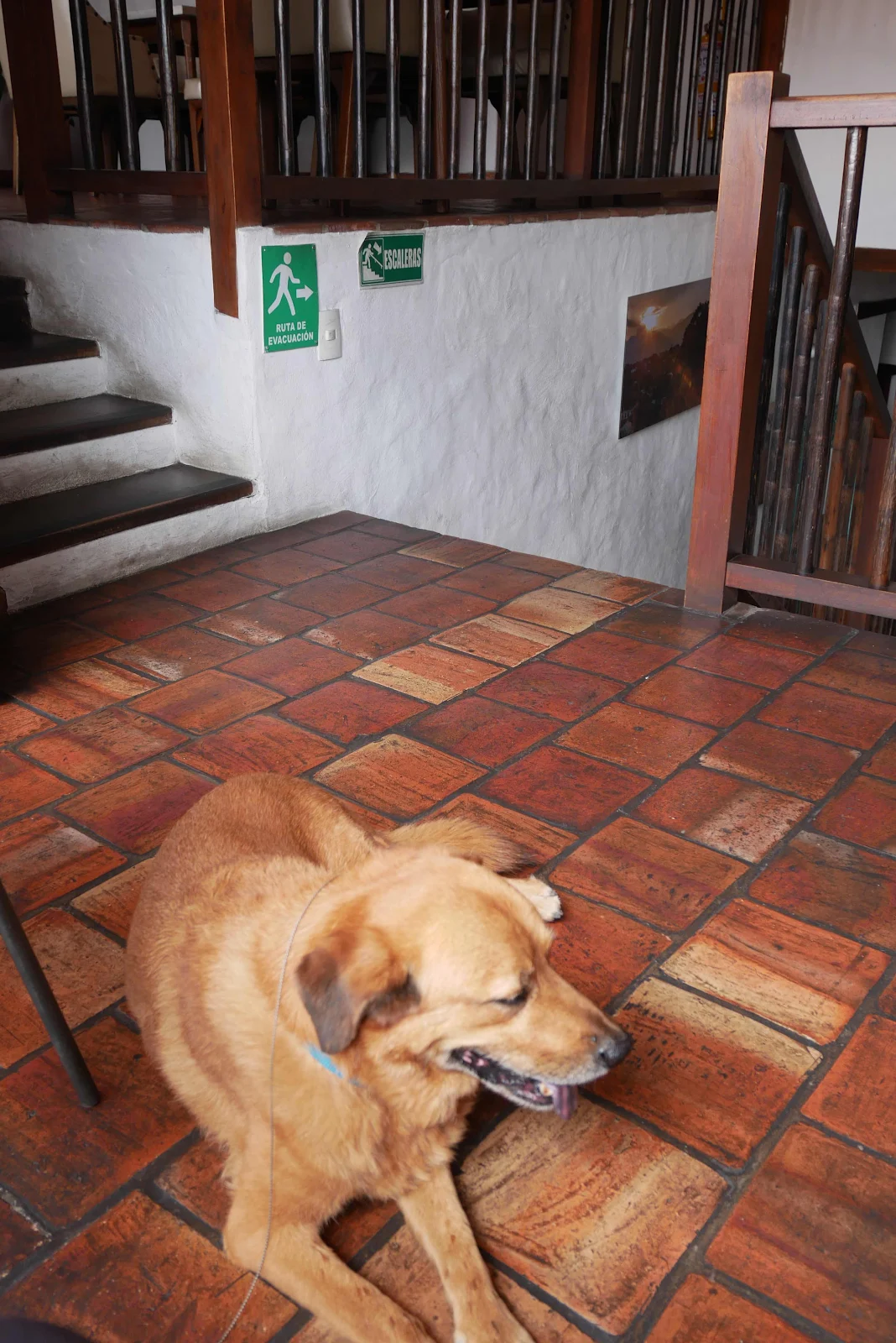
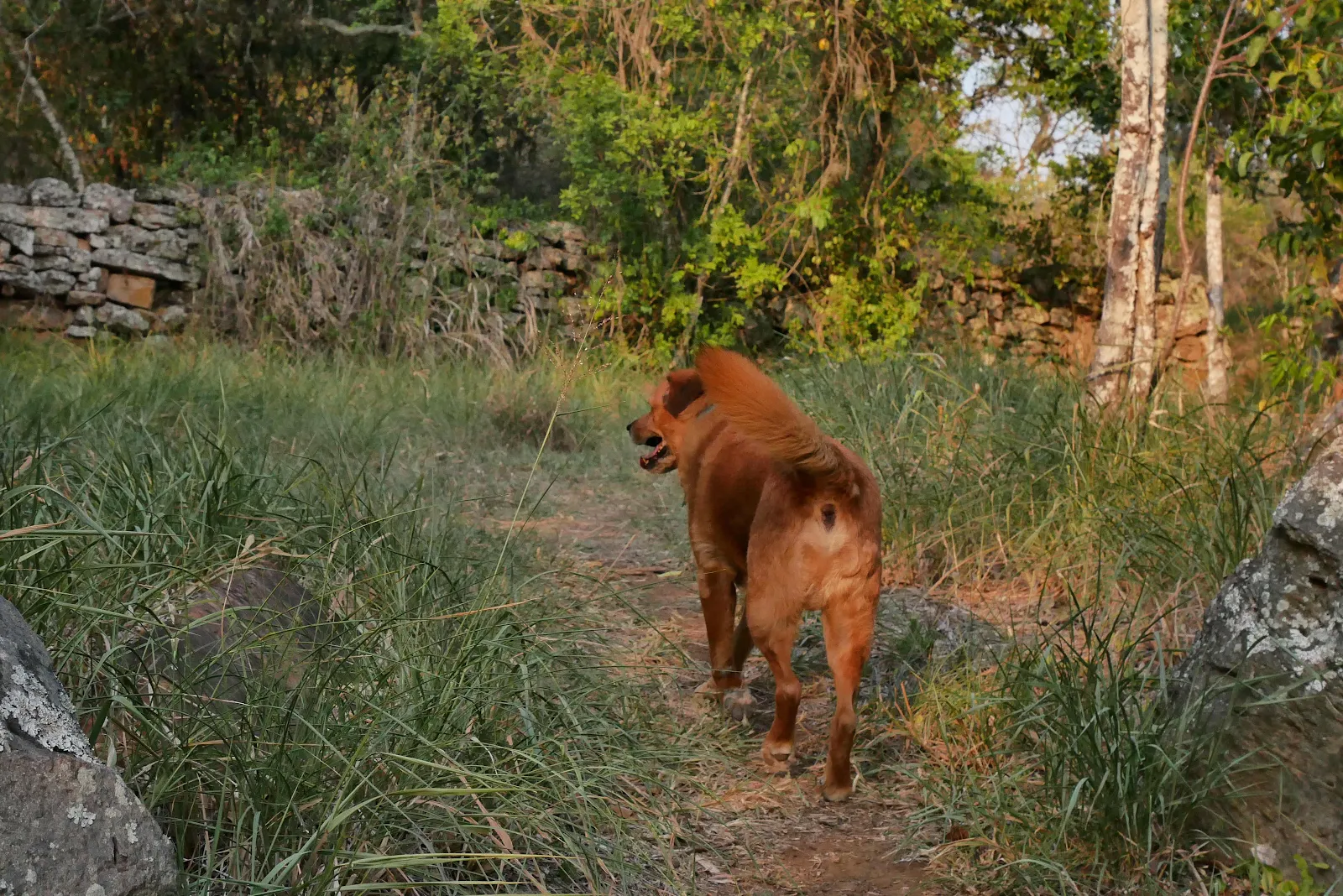
Rusty got to lay down on the cold tile floor utterly uninterested in us or the food. The waiter good maturely stepped around him. Colombians are incredibly patient with dogs and there are hardly any street dogs or hungry strays here -unlike Mexico. As you can imagine I like that a lot. 

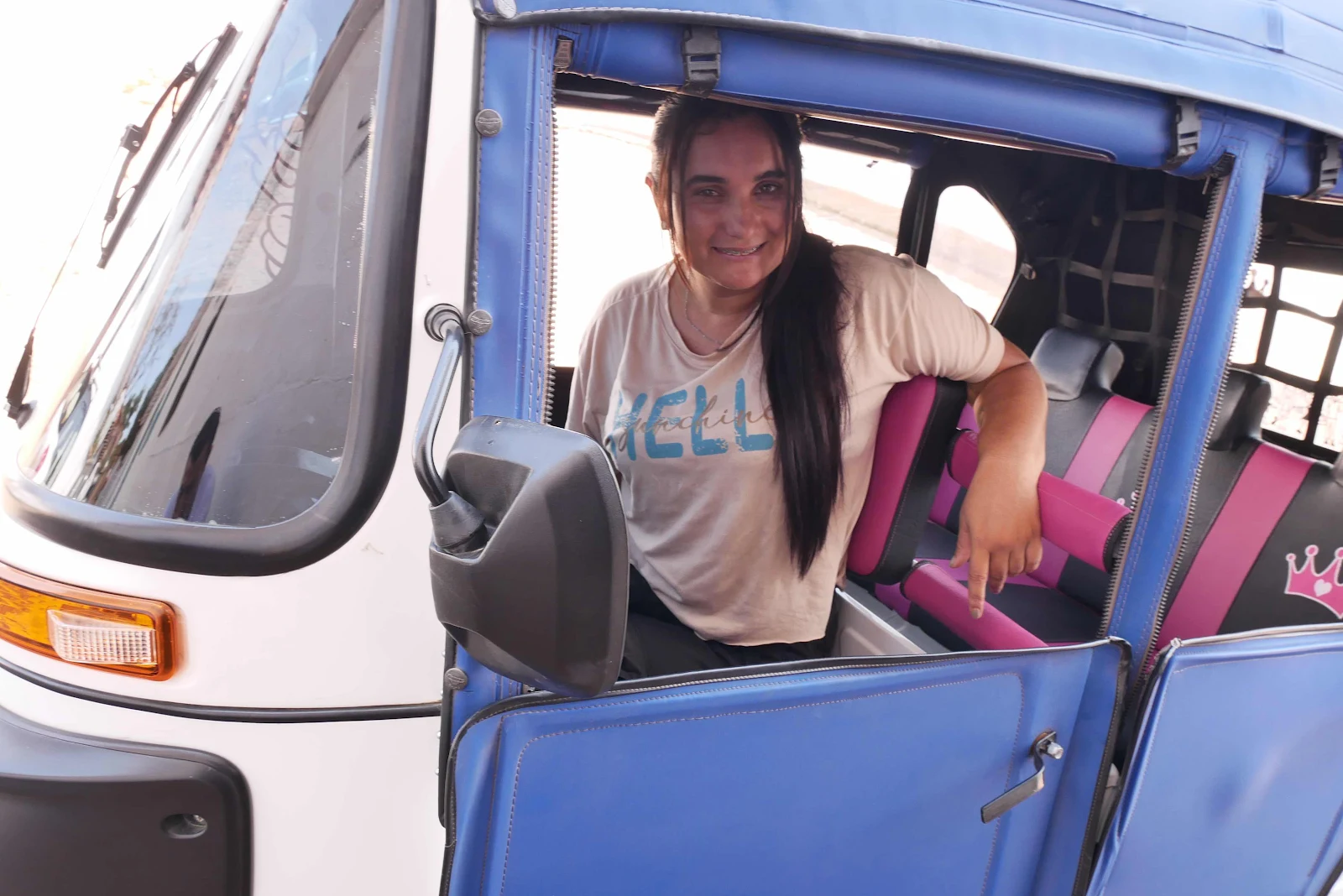
Rusty finds tuk tuks noisy but he submited to the ten minute ride back to Guaimaro campground as there was no walking involved. Layne stayed in town to wait out the daily siesta and do some shopping before coming home in her own tuk tuk. 

When I got back I found the young French people had gone. They were a strange bunch uncommunicative to the point of rudeness unless they wanted something. I was glad I saved their document bag they lost in Cartagena but I’d have liked to have done the favor to people who were more open to being nice to their neighbors. In any event they are gone and the German couple who arrived in a big expedition vehicle seem quite pleasant. 

An air conditioned nap was in order and Rusty and I stretched out together. 

Monday, March 11, 2024

Antipodean Travelers

Imagine you live in Melbourne Australia and you have a 27 year old daughter. She’s got a great job working as a lawyer in a bank and her prospects are excellent. Imagine she comes home one day and announces she’s going off to travel the world with a back pack by herself. 

Were you Cassie’s mom you’d pat her on the back, drive her to the airport and promise to meet up with her in Egypt to see the pyramids together. Lots of parents might be worried but not this one. Rusty knew a sucker when he saw one. 

She’s traveled alone around Europe North Africa, South America and Antarctica and had nothing but good times. It shocks me how scared people are of travel especially when I come across youngsters not trained to be fearful and who are open to experience. 

Why is it I ask myself there are no Americans traveling South America, their own backyard. It can’t just be fear can it? We had a birthday party for Mark Saturday night. He’s from Boston and actively considering settling down in Barichara. We had four French, two English, one German, two Dutch, two Colombians and one New Zealander around the table eating Layne and Greg’s food.

Mark Layne  and I were the only travelers from North America. Layne checked in with a Facebook group that did a roll call on people actively driving around South America and about 330 people checked in. That’s a number conjure with next time you find a campground fully booked into the foreseeable future. 

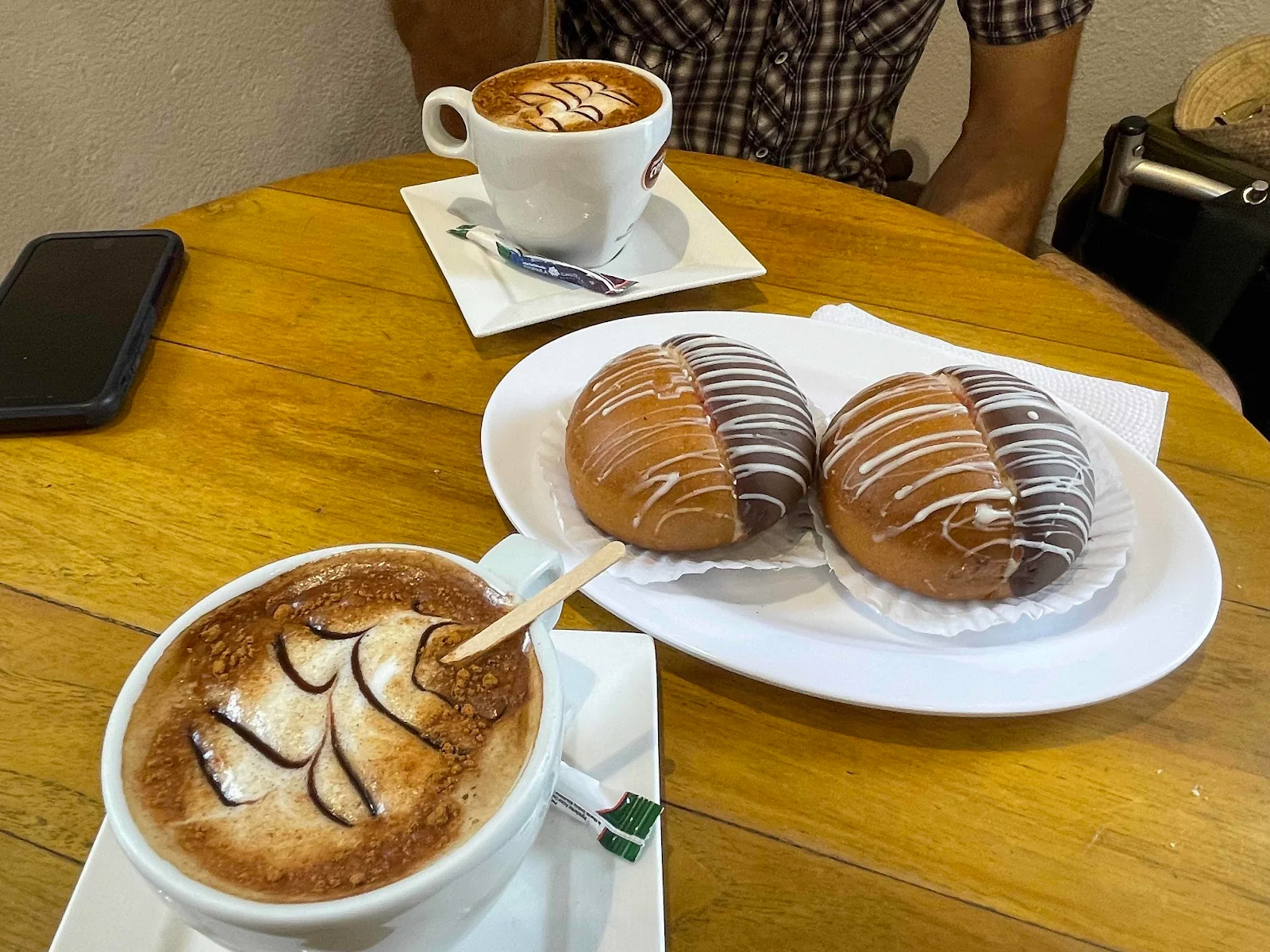
An afternoon break of stuffed doughnuts and cappuccino in Barichara, not exactly uncivilized. These musings lead me to wonder why this is my first time visiting south America and why exactly did I delay it until I was 66? 

For some people who style themselves adventurers, not a term I’d use on myself, driving from Alaska to Patagonia is an accomplishment to be achieved. Get it done. Then again I remember my neighbor on Cudjoe Key, watching us pack our lives aboard GANNET2 who asked where we were going. I was shy about our destination but I figured in 24 hours I’d never see him again so I said “Patagonia,” which seemed impossibly distant and remote from the Florida Keys. My neighbor screwed up his face in puzzlement. “Pata- what? Where’s that?” 

I was talking with young Alex twenty four years old and from New Zealand Sunday morning and he was talking about his parents happily farming and his contemporaries settling down in careers and child raising and he’s spent the past eight months wandering Europe and Latin America.

He’s looking forward to going home because he misses the freedom of New Zealand. He told me you can hunt freely in New Zealand’s open spaces and national parks. Indeed he says hunting is encouraged to reduce the out of control deer population in the parks. He was surprised to discover in the rest of the world  you need licenses and permits to hunt and fish. We compared notes on how restricted public access to wilderness is in Latin America. Hikes in Colombian parks forbid dogs of course but also require guides and scheduling.

Travel teaches you to try to appreciate different cultures but for me it also gives me a greater appreciation of the good at home. The people we meet often asking I would consider settling here or there had I’ve never been tempted. Like Alex I like the freedom we have at home simply by ignoring or sidestepping convention. I look forward to summers in the mountains wild camping Colorado or Arizona and looking back remembering the mad moments on the road in South America. 

There is much to enjoy and new places to see and weird animals to watch in South America and it’s a shame more people aren’t doing it I guess. Sooner or later, in a week maybe we will fire up the van and get back on the road.