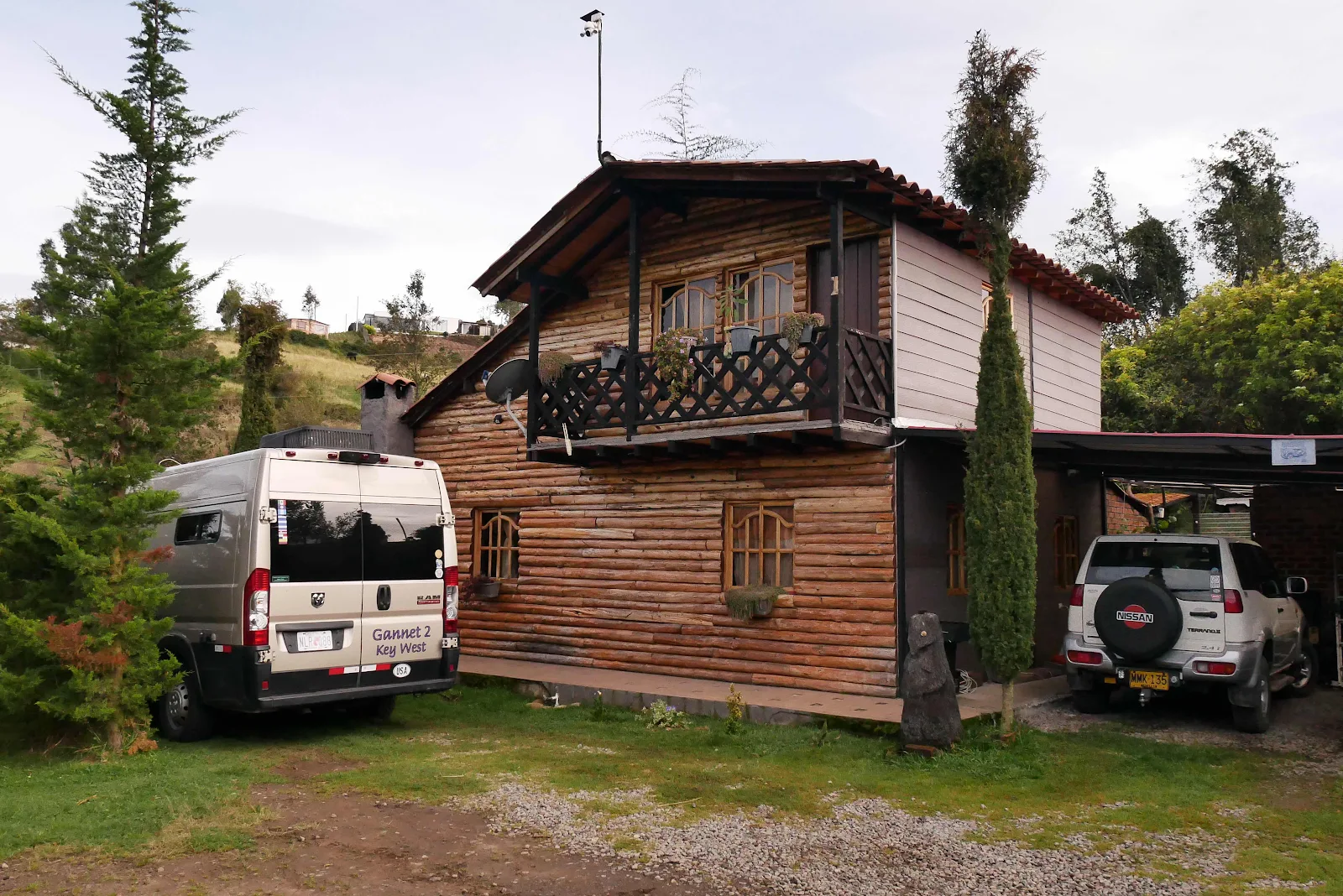
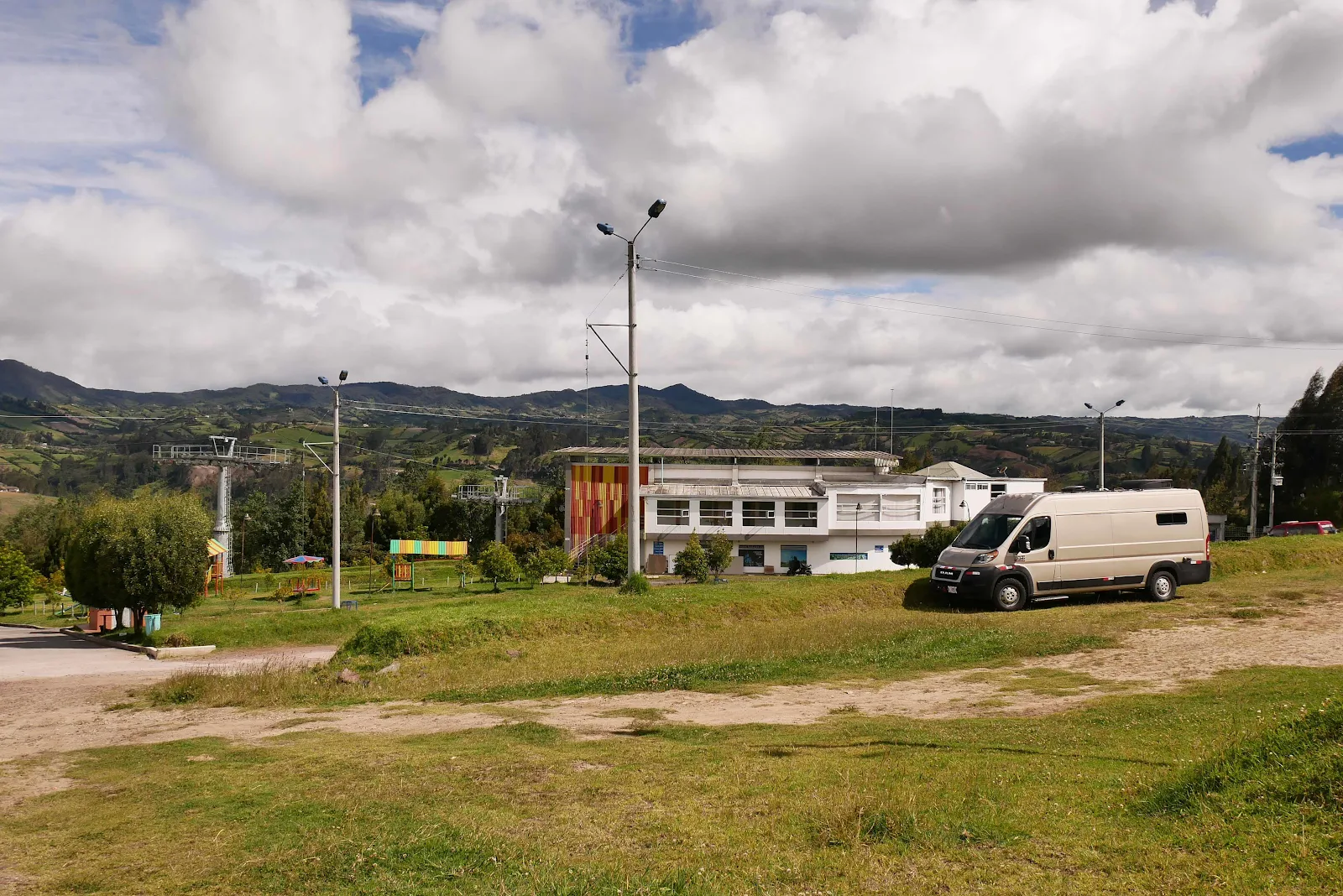
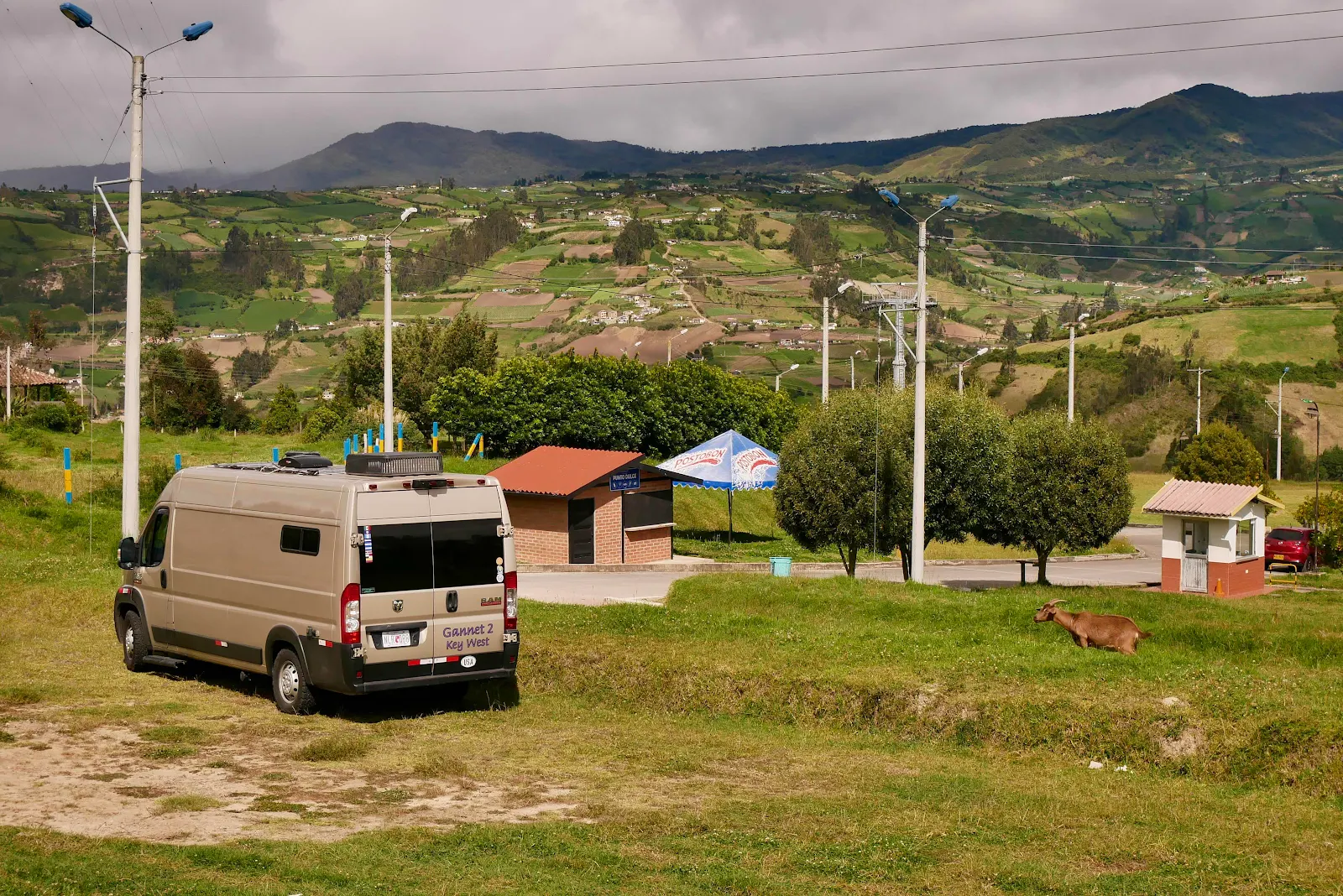
Colombia said goodbye with tears, as we awoke to cold damp drizzle in our overnight parking lot near the Catholic Church we had come to visit. Rusty wanted his walk; I wanted my morning cup of Yorkshire Gold tea. Guess who won.
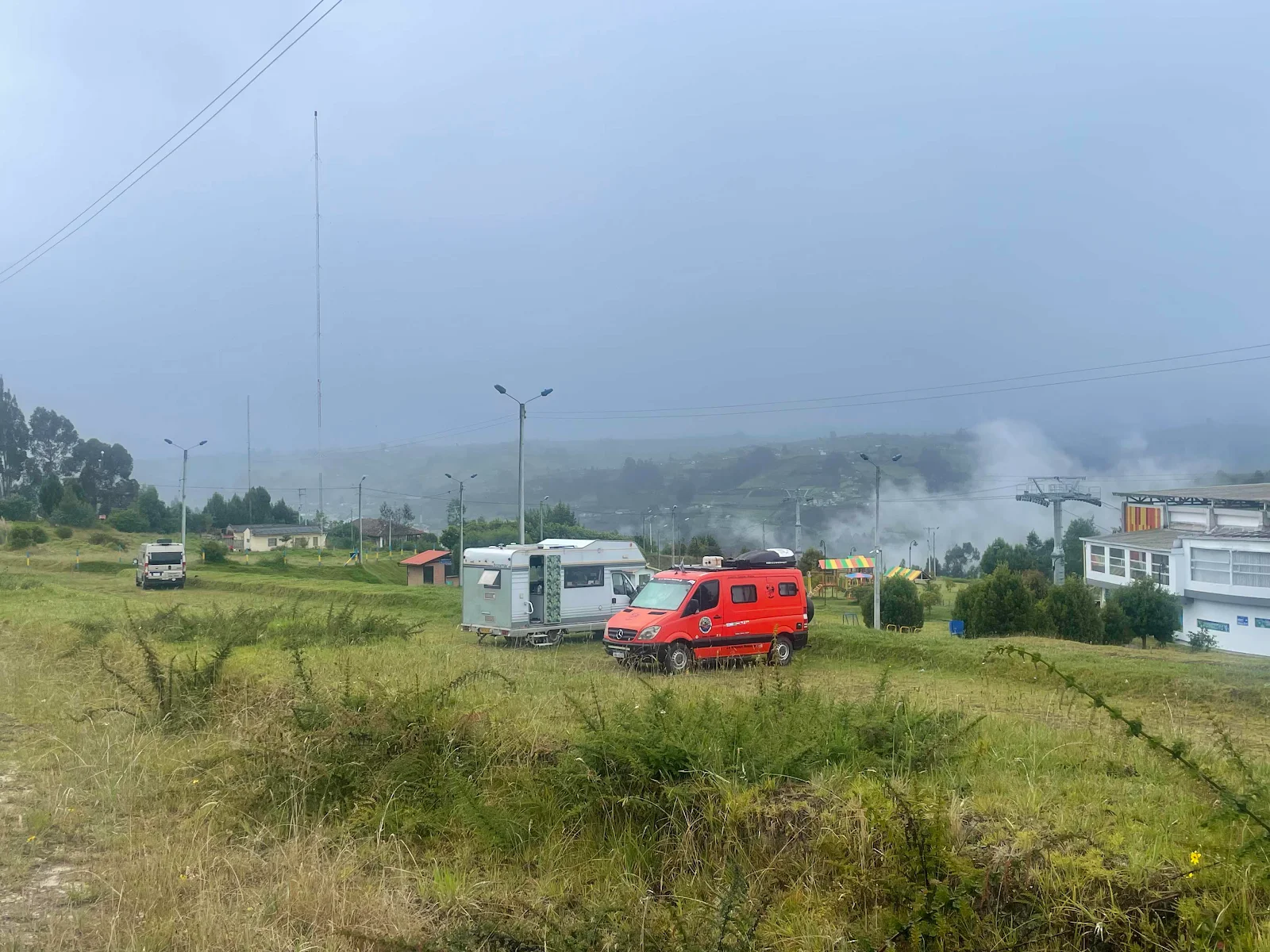
We walked then I got my tea watching the windshield get covered in droplets. We went to see our neighbors, a Dutch family going to Cartagena to ship home and Bob gave us some great ideas about visiting his favorite country, Argentina, first of all he suggested we arrive in Ushuaia before Christmas to avoid high season. That’s a top tip as we will have to time our drive to Argentina based on when we want to arrive at the southernmost point. Meanwhile this church was our last stop before Ecuador.
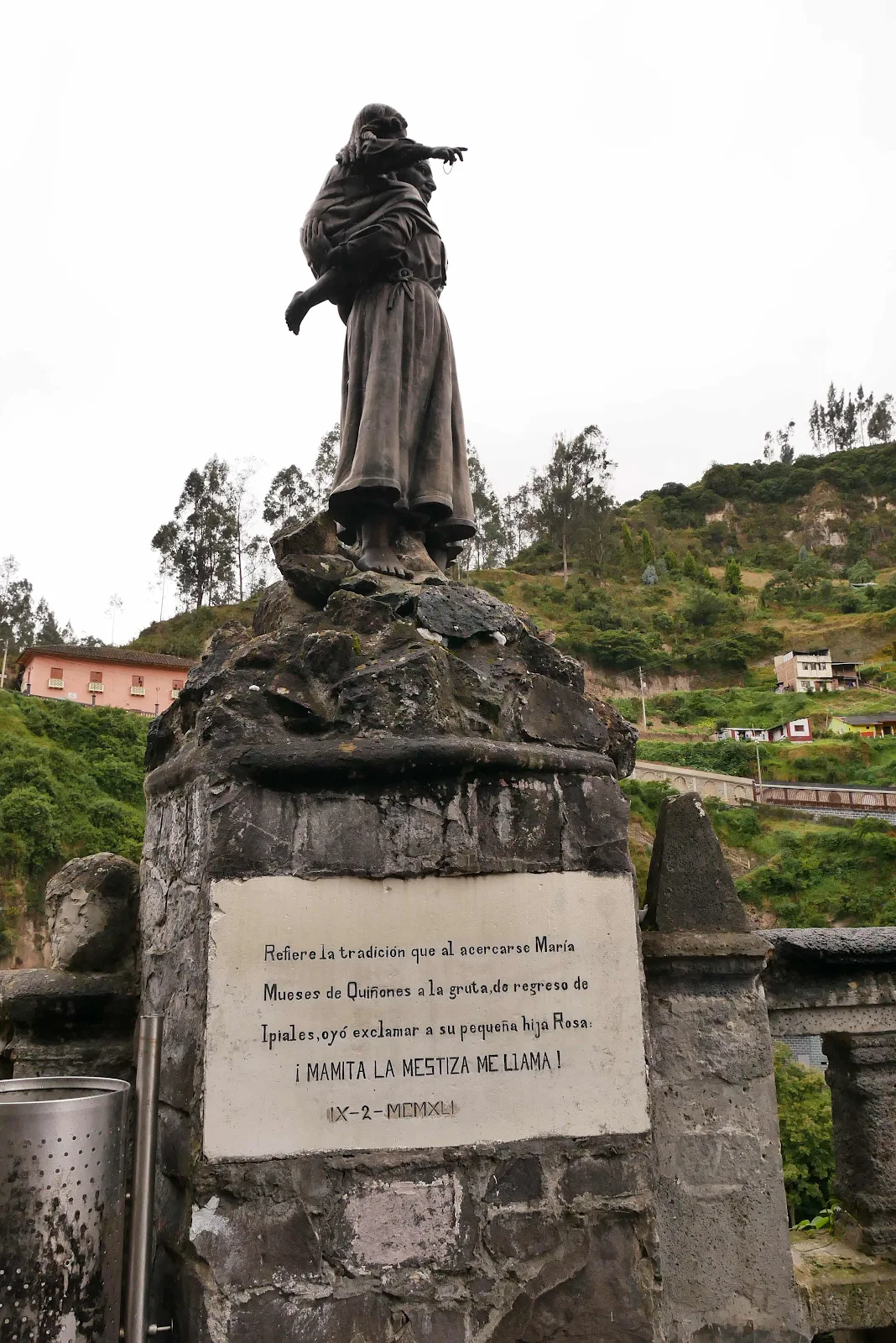
It was a cold and stormy night in 1576 when an indigenous woman Maria Mueses de Quiñones was walking home with her differently abled daughter. More precisely she could neither speak nor hear until the moment she told her mother she’d seen a white woman (a mestiza) on the trail. Turns out Our Lady of the Rosary had appeared to the child and cheer her affliction. Since then apparitions and miracles have been reported in this spot and by 1949 they finished the church as it stands today to celebrate all these going’s on.
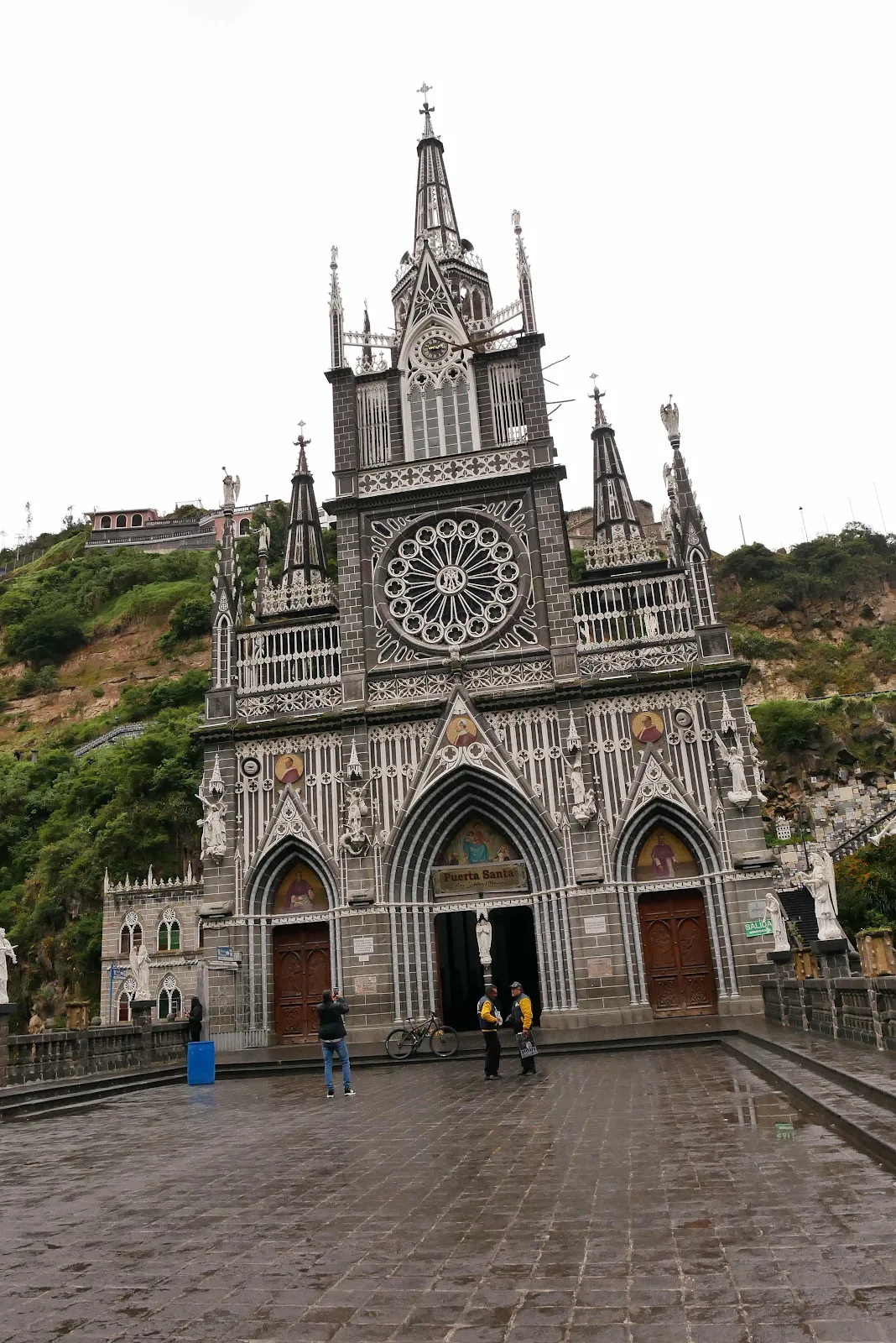
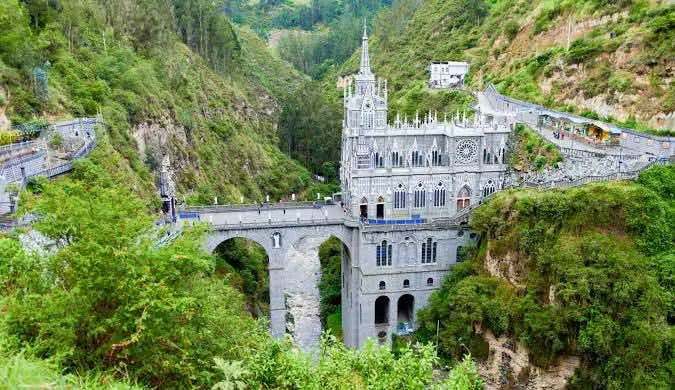
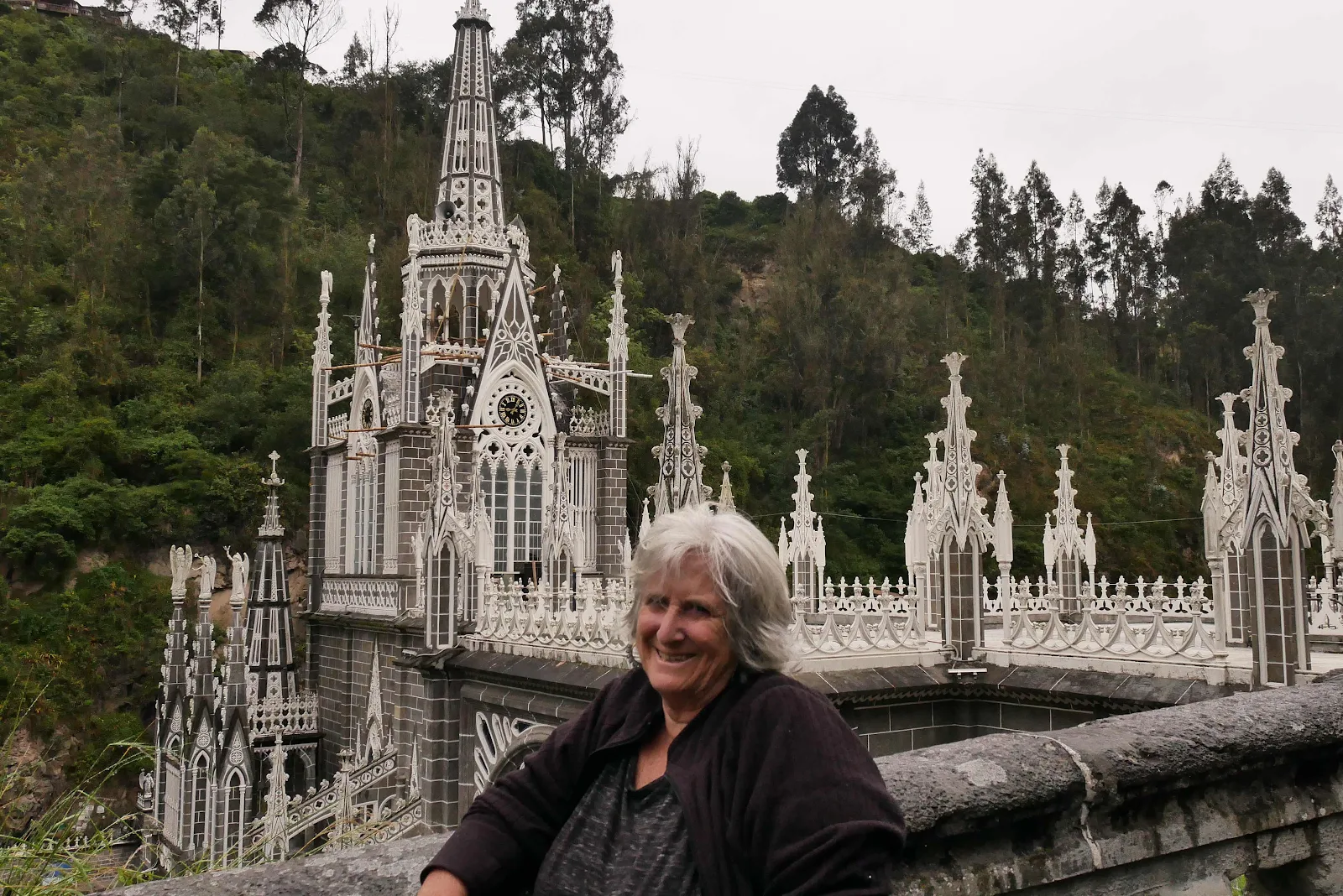
If you plug the words “Las Lajas” into a search engine or social media you will see this place pop up like it’s the size of Notre Dame dominating Paris.
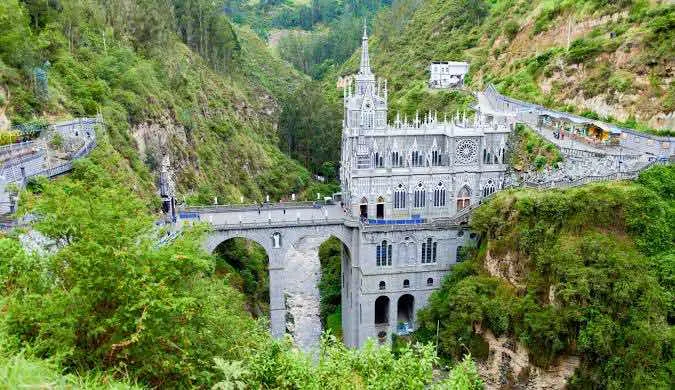
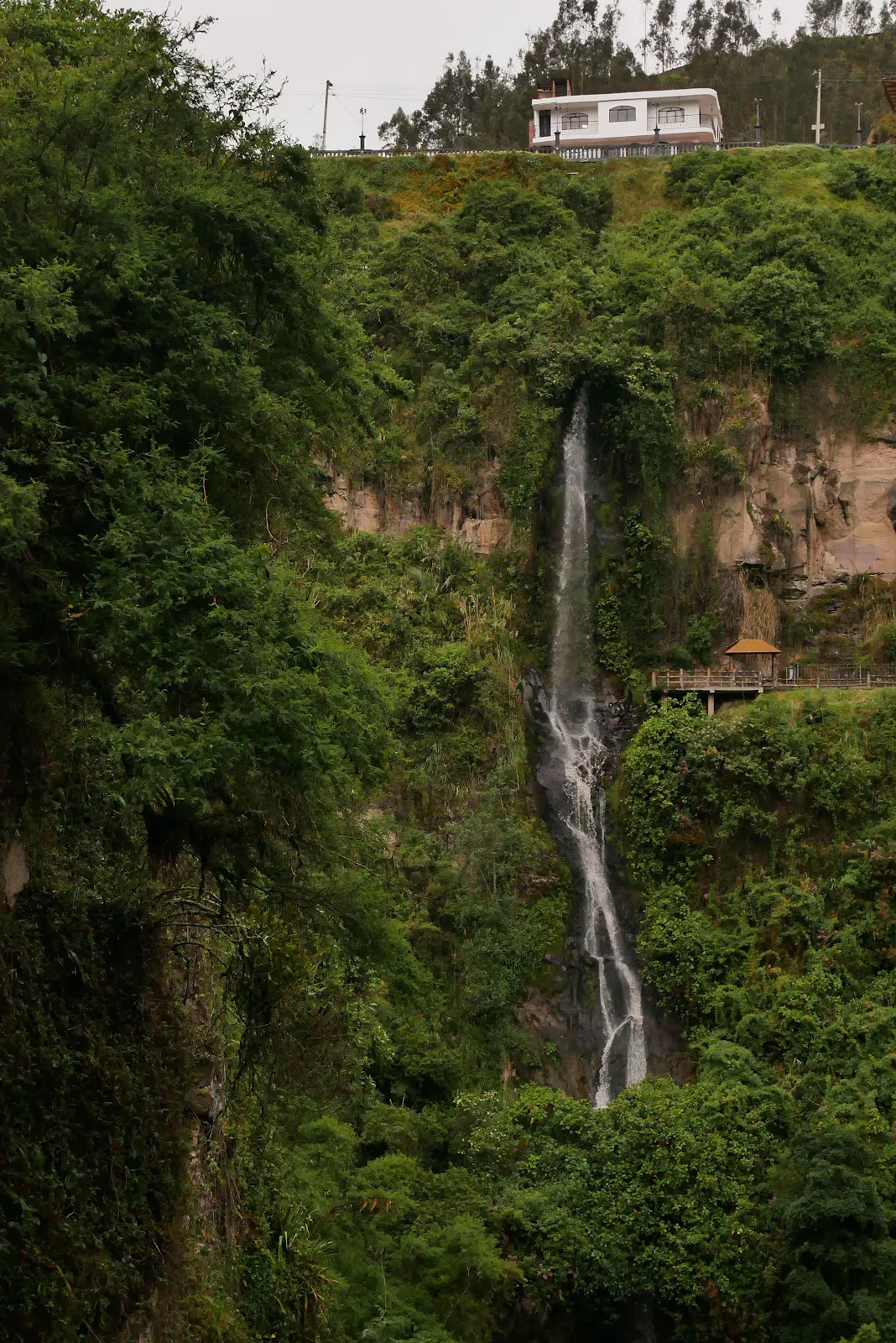
The truth is rather different as the church is deep in the gorge with a tourist trading village on the slope above. The sanctuary is therefore invisible from above and best viewed by walking into the bottom of the gorge and up the other side to the restaurant. Too much faff for me, as the walk down in the rain was plenty.
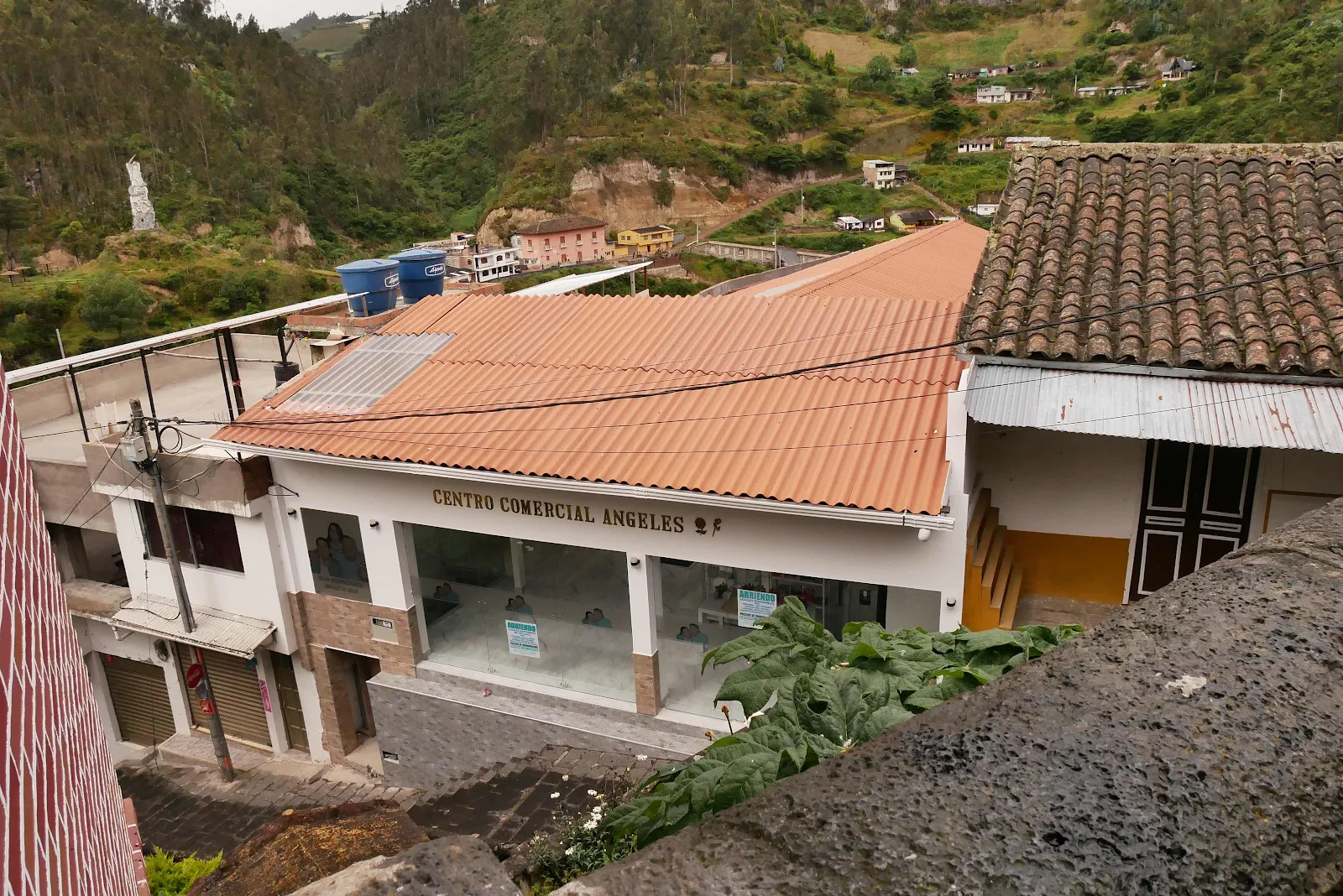
Normally you would get a spectacular view riding the cable car into the gorge or you could walk down from where we camped in the cable car parking lot and take a rugged hike, then ride the cable car back out. That option was off owing to maintenance scheduled to take the cable cars out of service on a major Colombian holiday, with brilliant timing. We decided to drive down and park in town as Tuesday wasn’t likely to be busy.
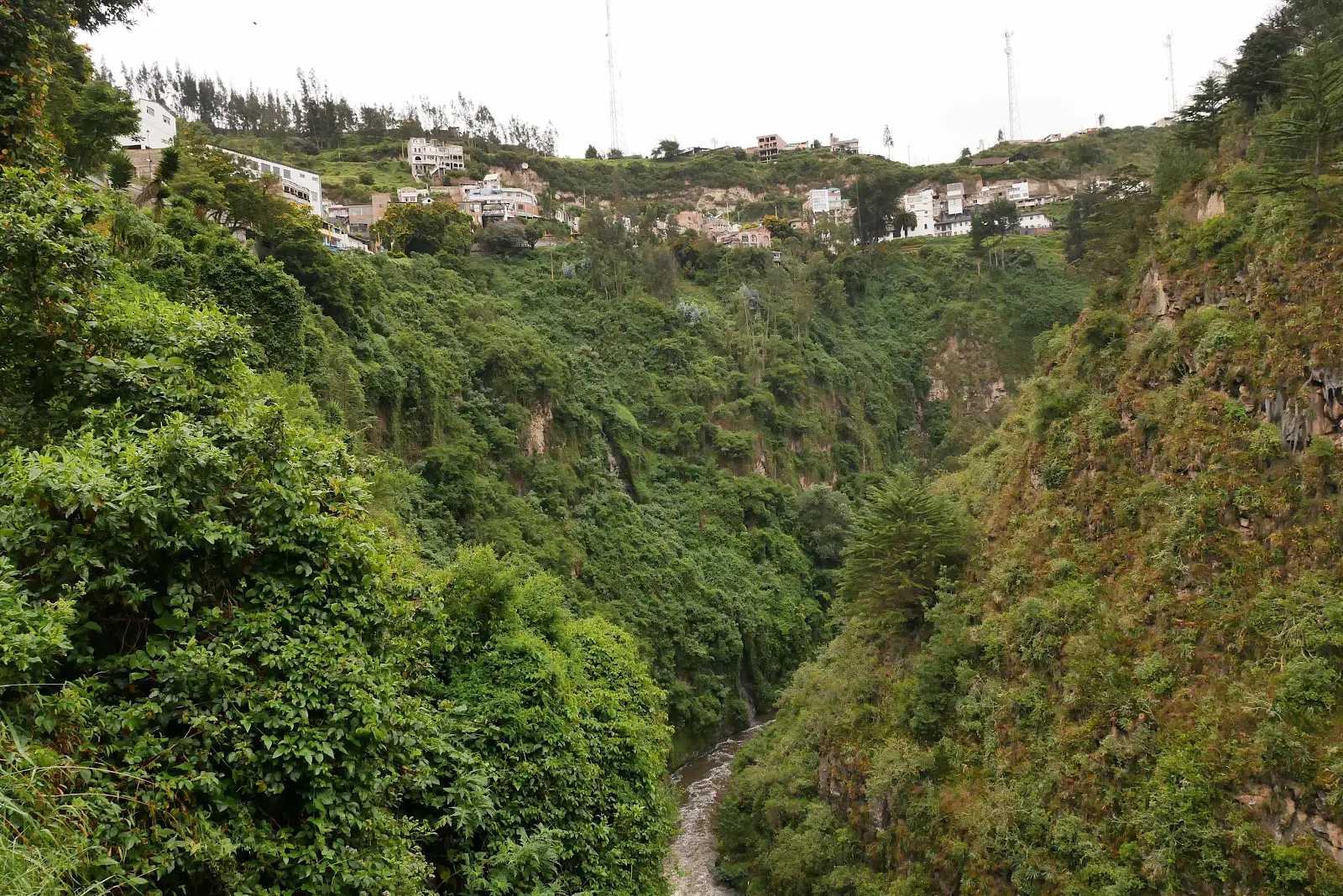
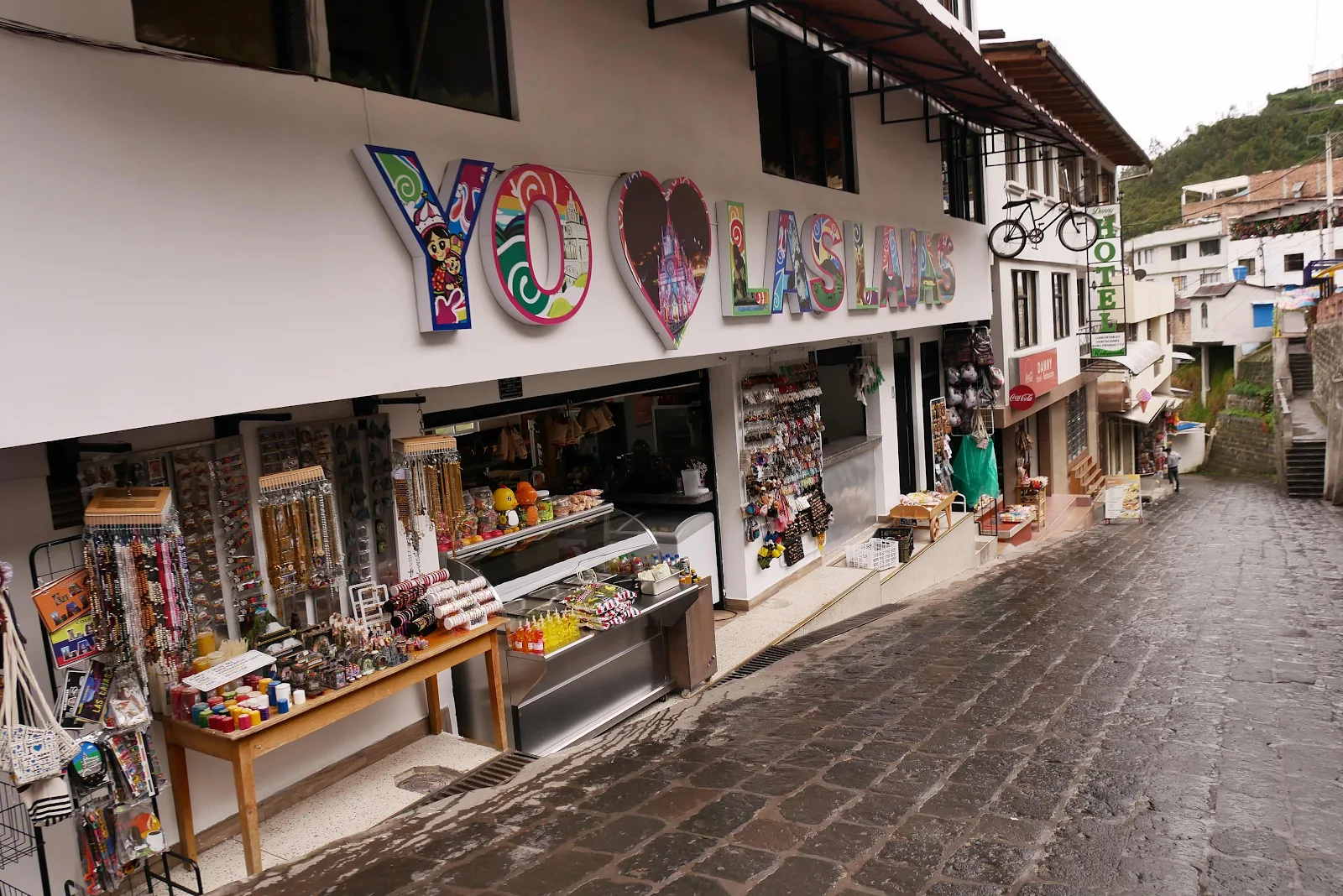
We found a spot from where we could walk down from a pay to park lot at the top of the final descent to the church. The plan was working out perfectly and no teleferico (cable car) failure was going to stop us. It was a souvenir gauntlet to walk down.
After I took Rusty for a walk we left him aboard GANNET2 as there were just too many dogs around and he was happy to take a nap. Lucky him.
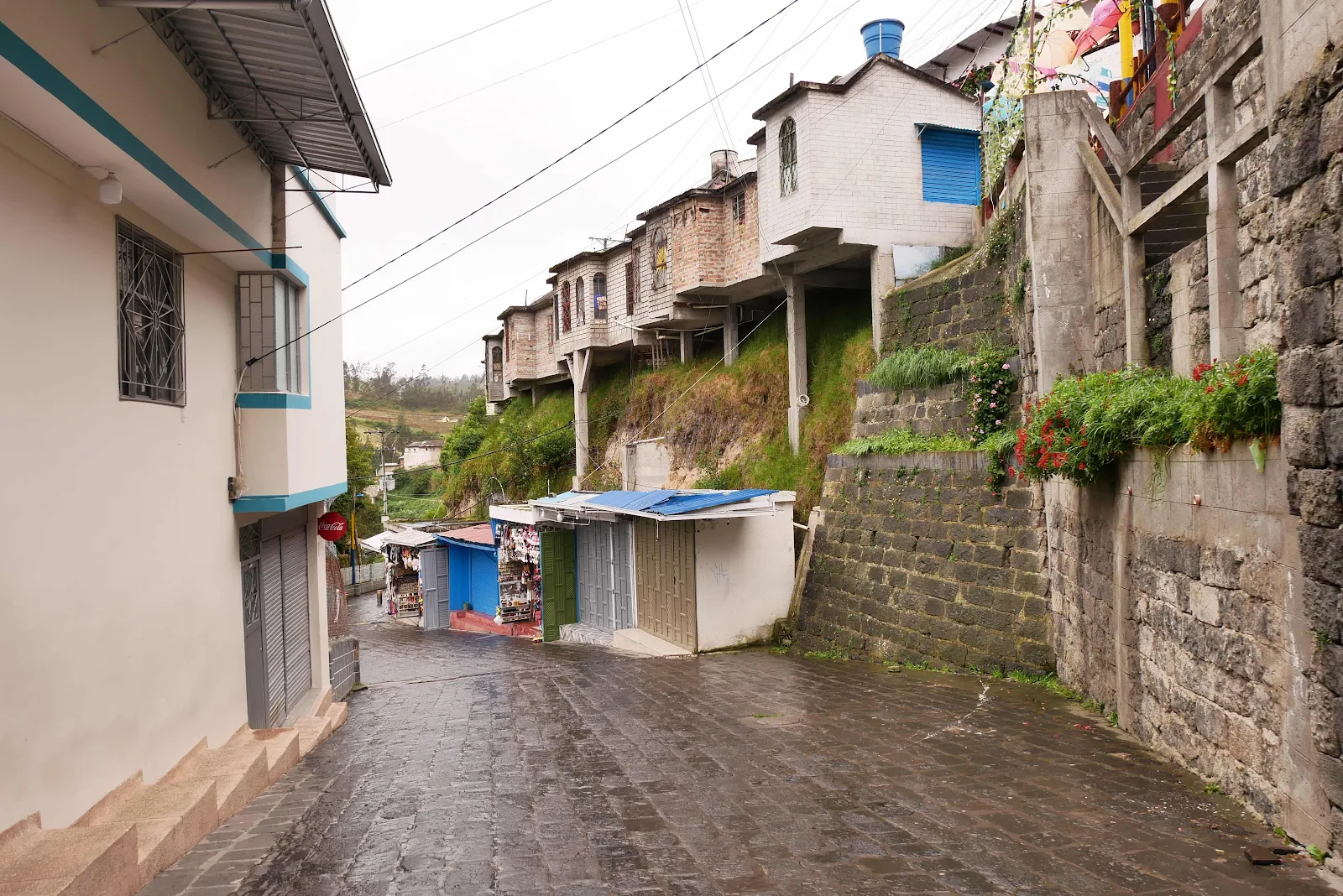
We went down on the gray slate trail. “Laja” translates to slab which describes the granite slabs in the gorge and everything reflects that.
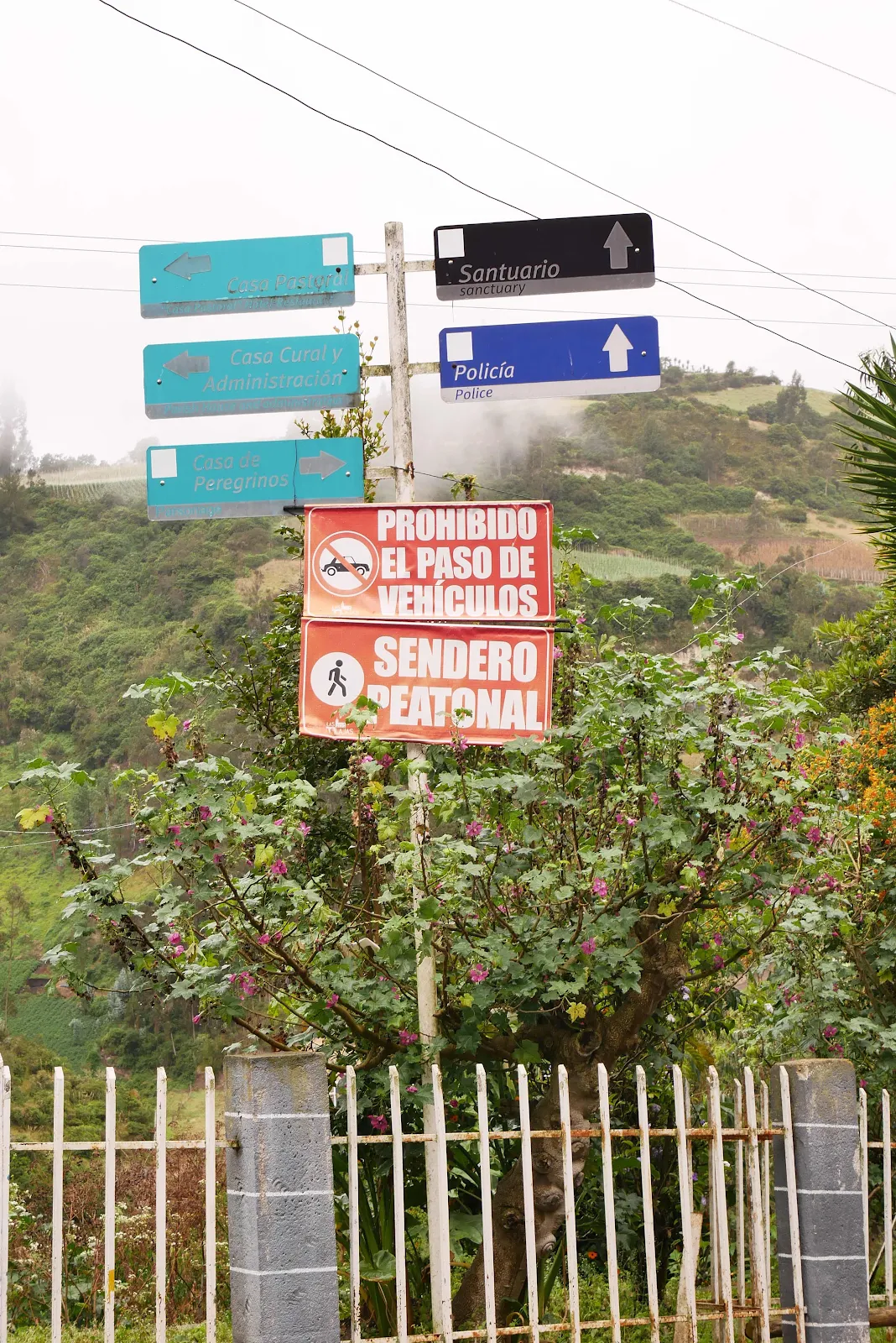
Check out the toilets whose price is also quoted in US dollars. That’s to accommodate Ecuadorean visitors as they use the dollar as their currency. Ecuador is fifteen minutes from here by car and my mind was on crossing the border, not in supernatural visitation.
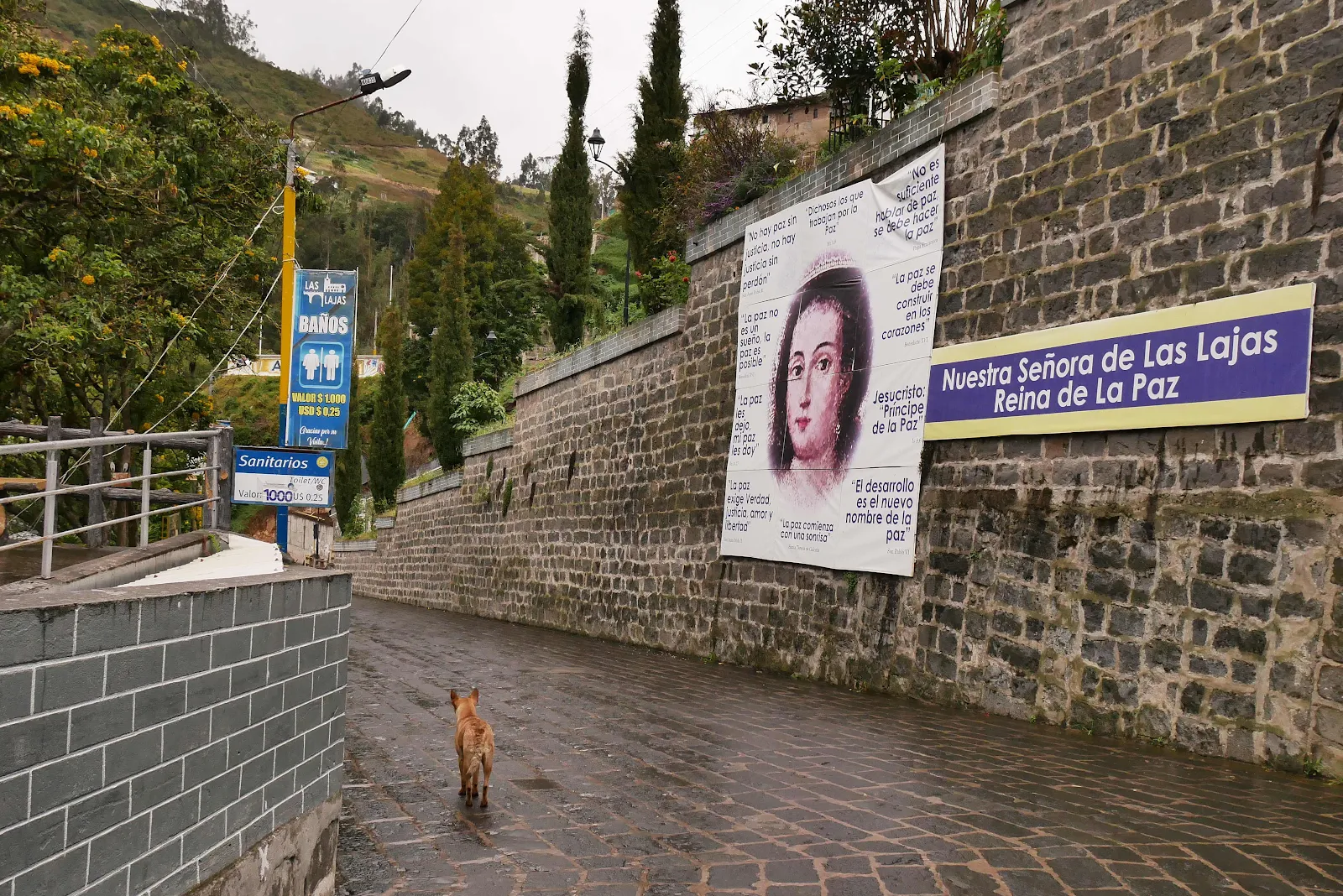
Everywhere you look recipients of miracles pay to express their thanks.
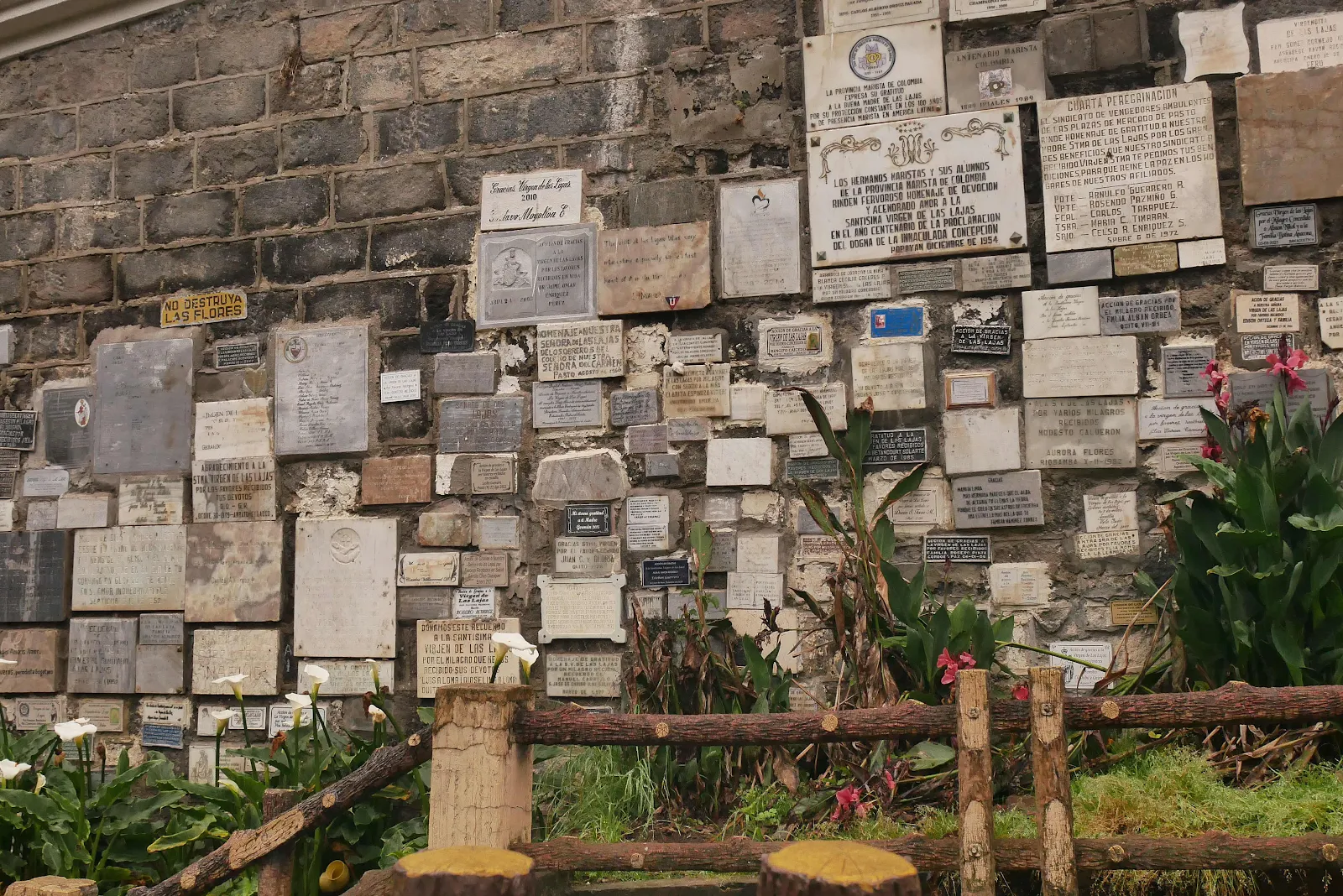
And there are cafes and restaurants and all the services and souvenirs a visitor might want.
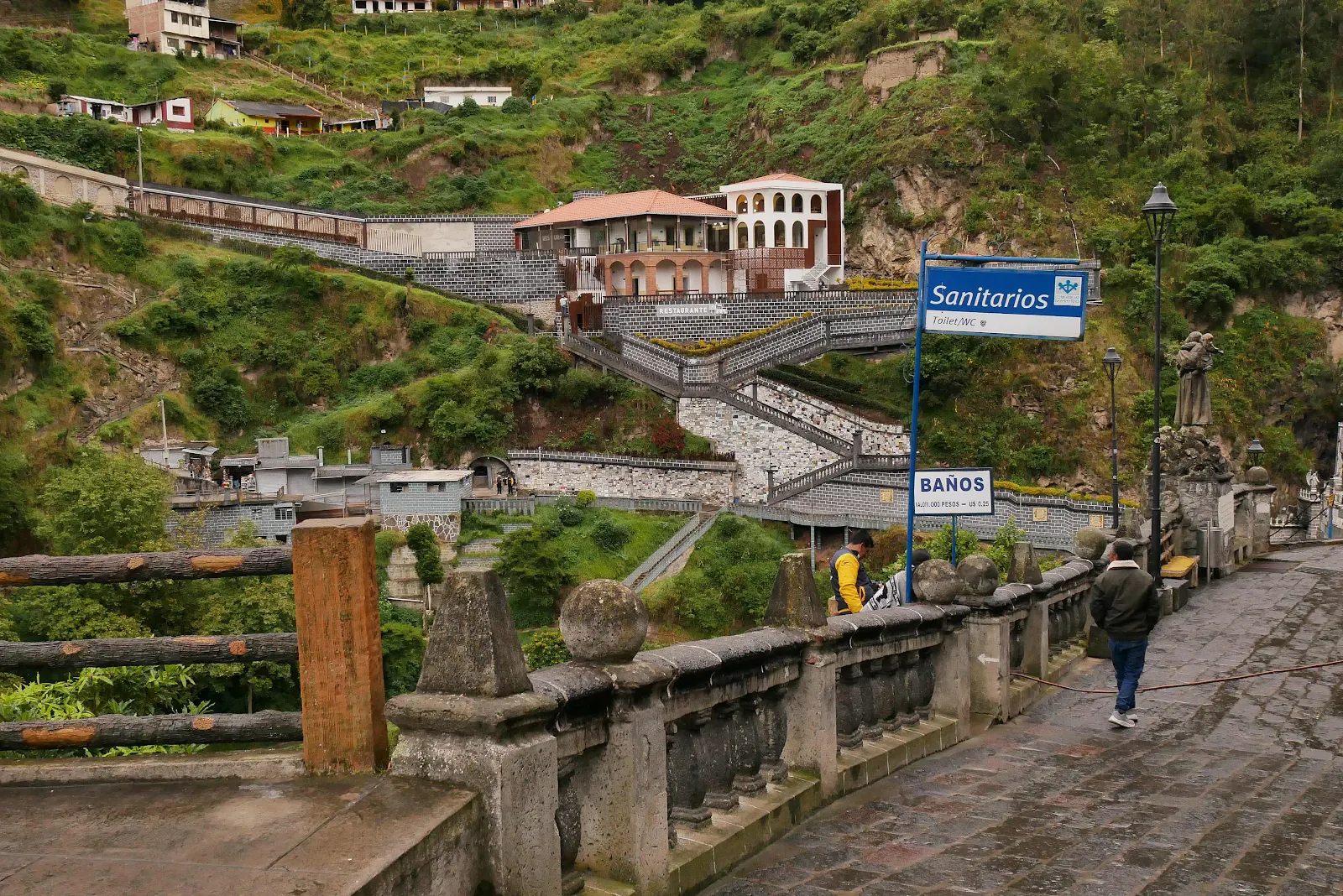
I was educated by Benedictine monks so I know how this stuff works and one can only be impressed by the church in the gorge and the trade that surrounds it.
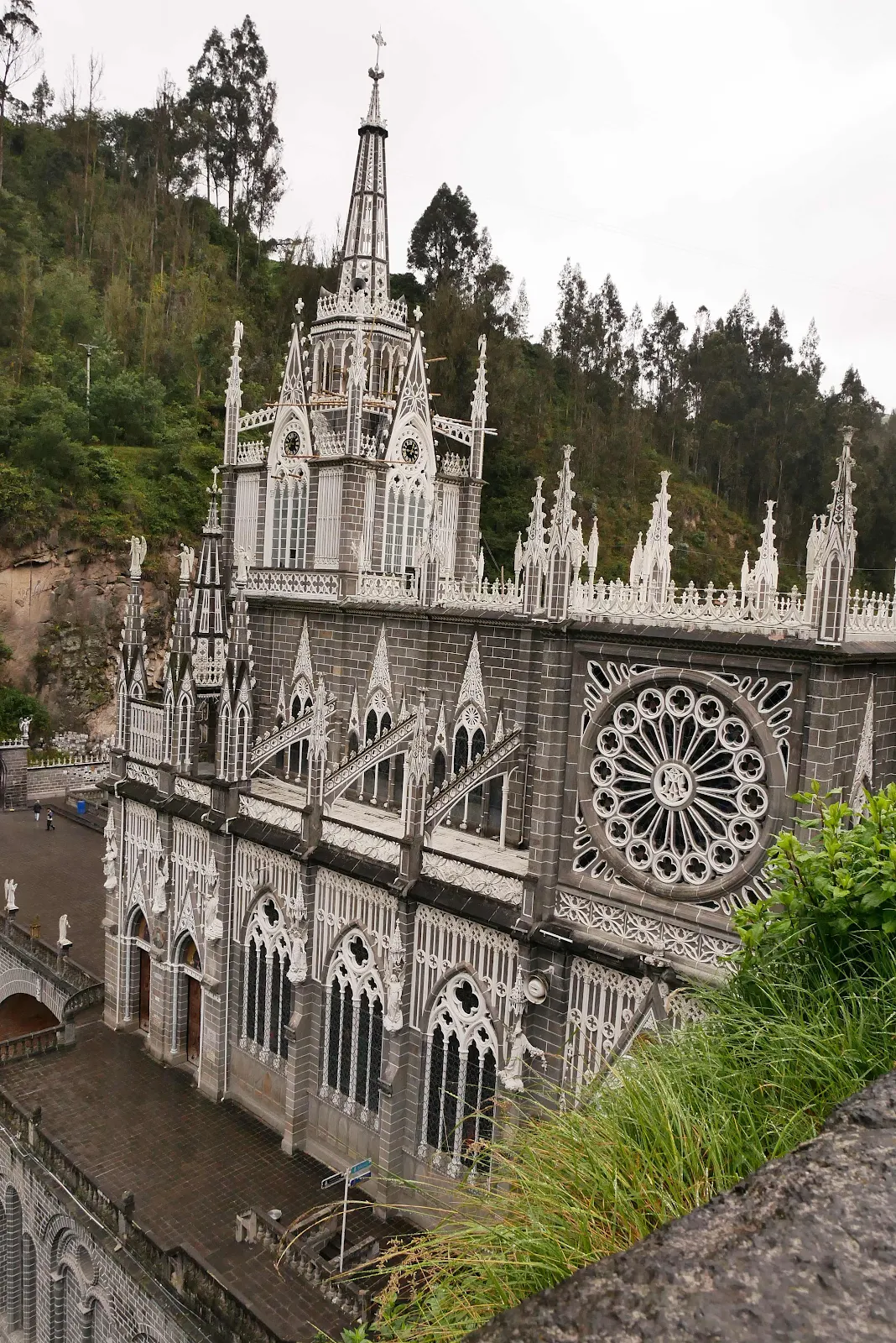
Most pictures are taken from over there:
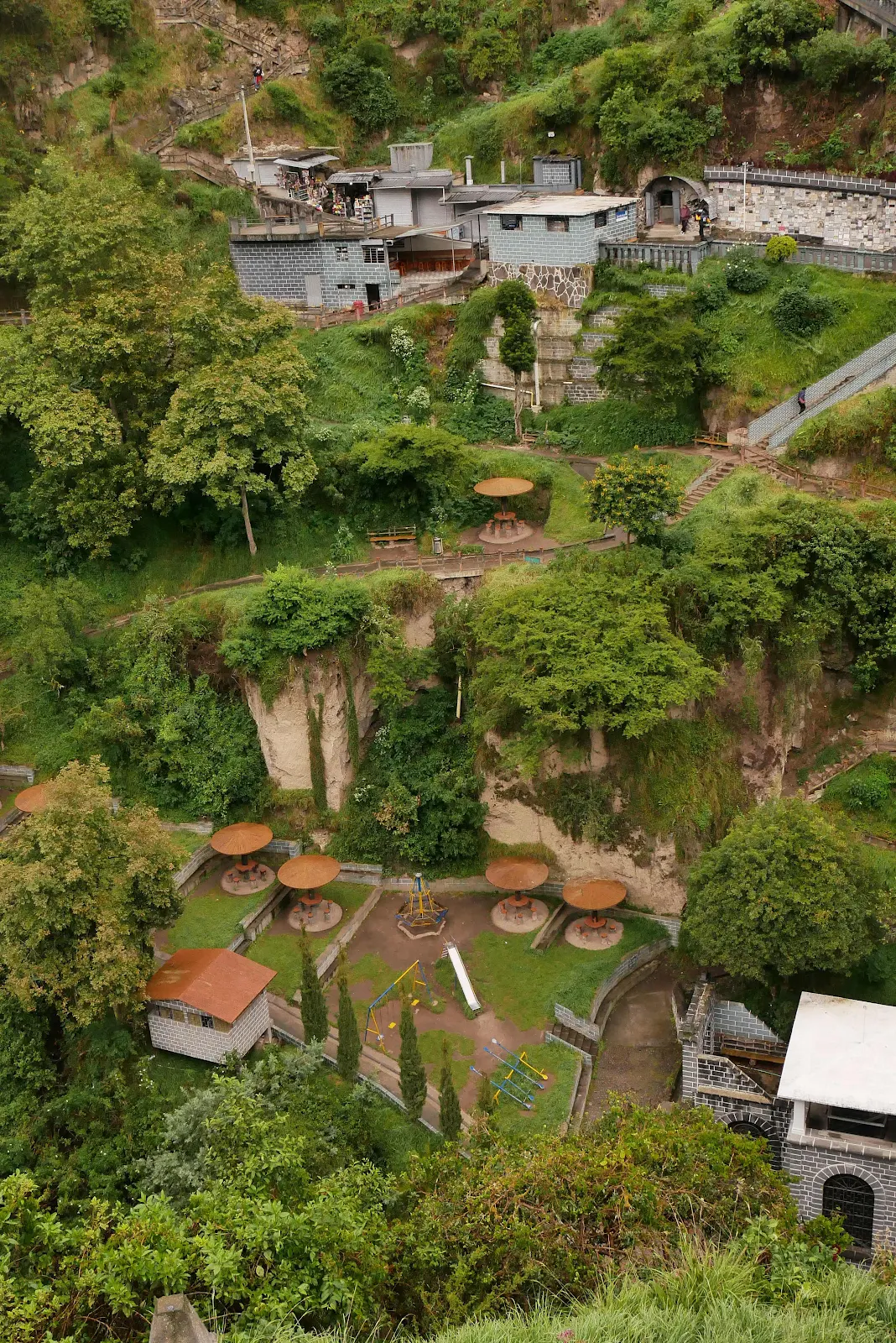
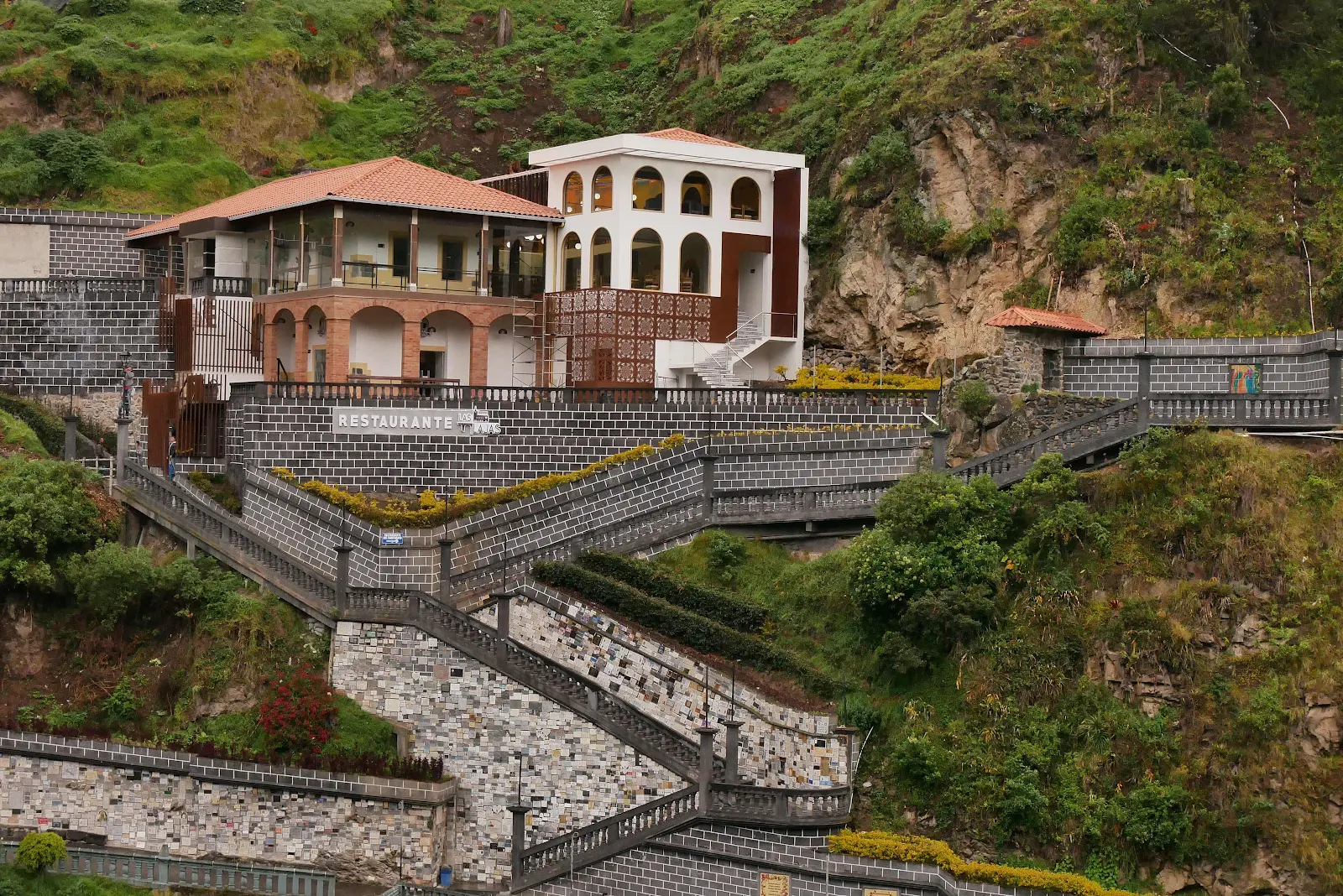
The style makes it a stand out, no doubt about that. There were signs saying the walk to the church would earn us a plenary indulgence so I found myself explaining to my Jewish wife how her sins, whether she knew them or not, were forgiven, and as she stared at me I found myself explaining Martin Luther, the Reformation and why Protestants are called Protestants. I refrained from pointing out Jews pay for the best seats in the temple.
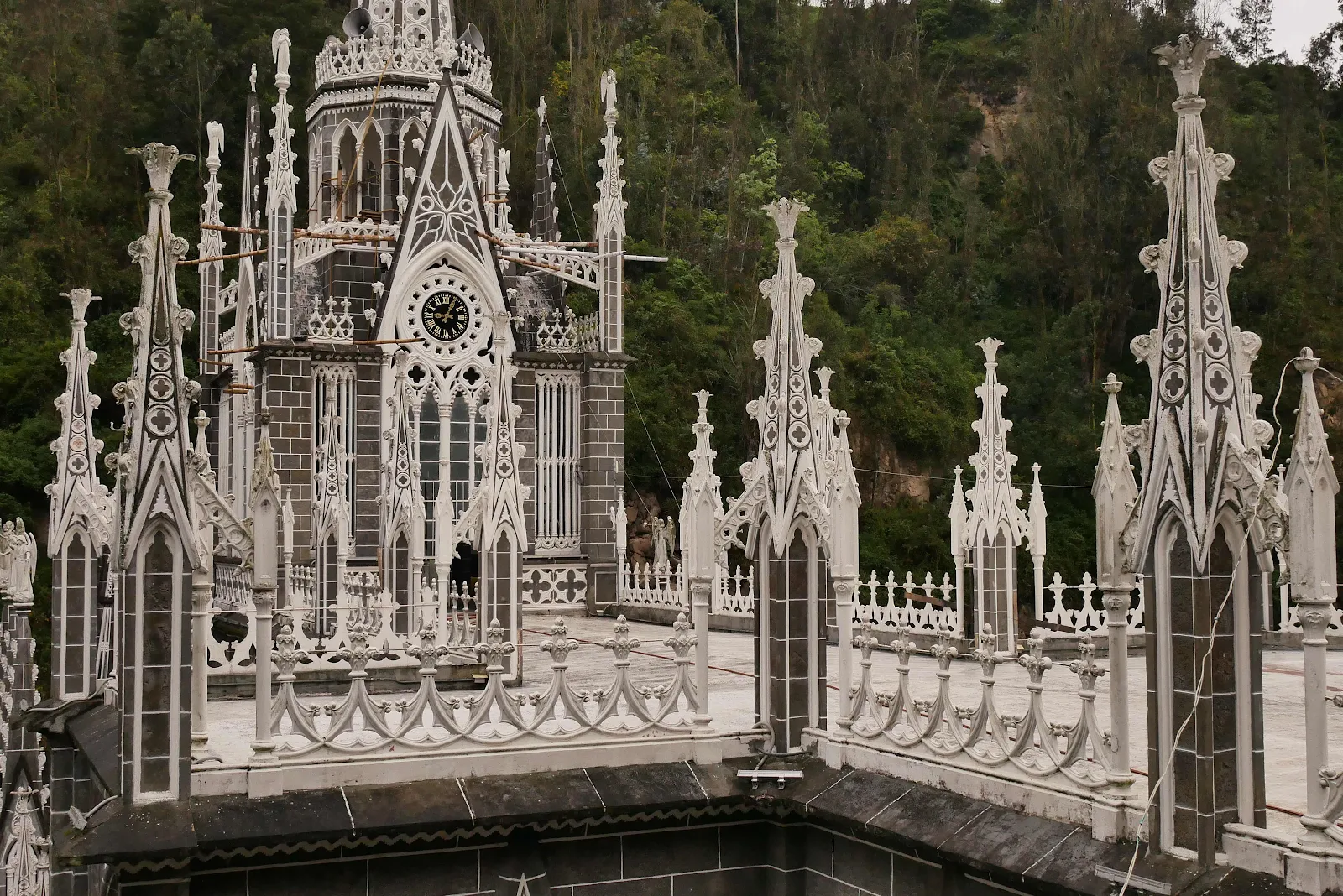
She had wanted the cable car view but she got this far.
The gospel verse from the book of Mathew Chapter 6 verse 6 does not apply here. I am a poor businessman but I am rather squeamish about this sort of salesmanship.
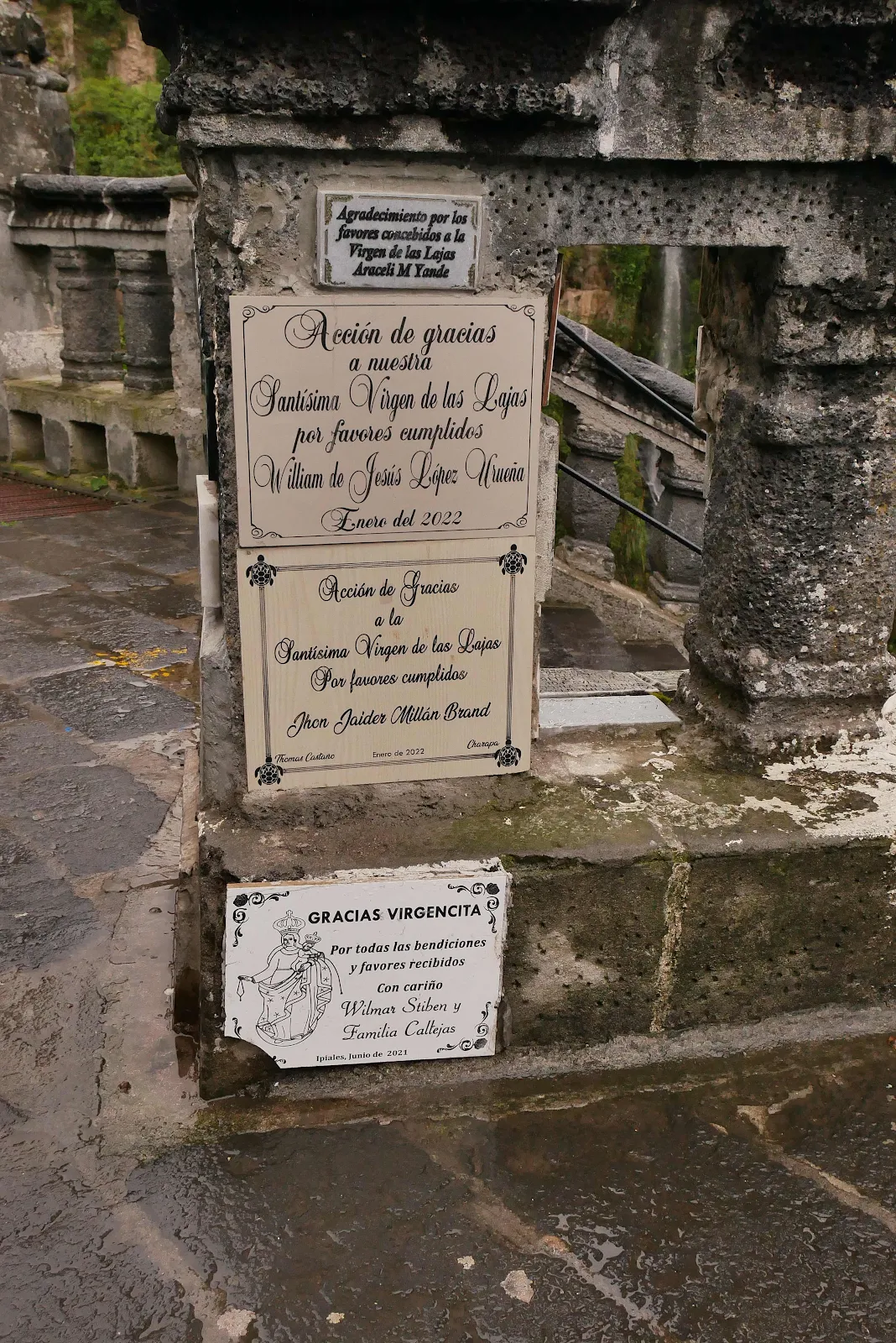
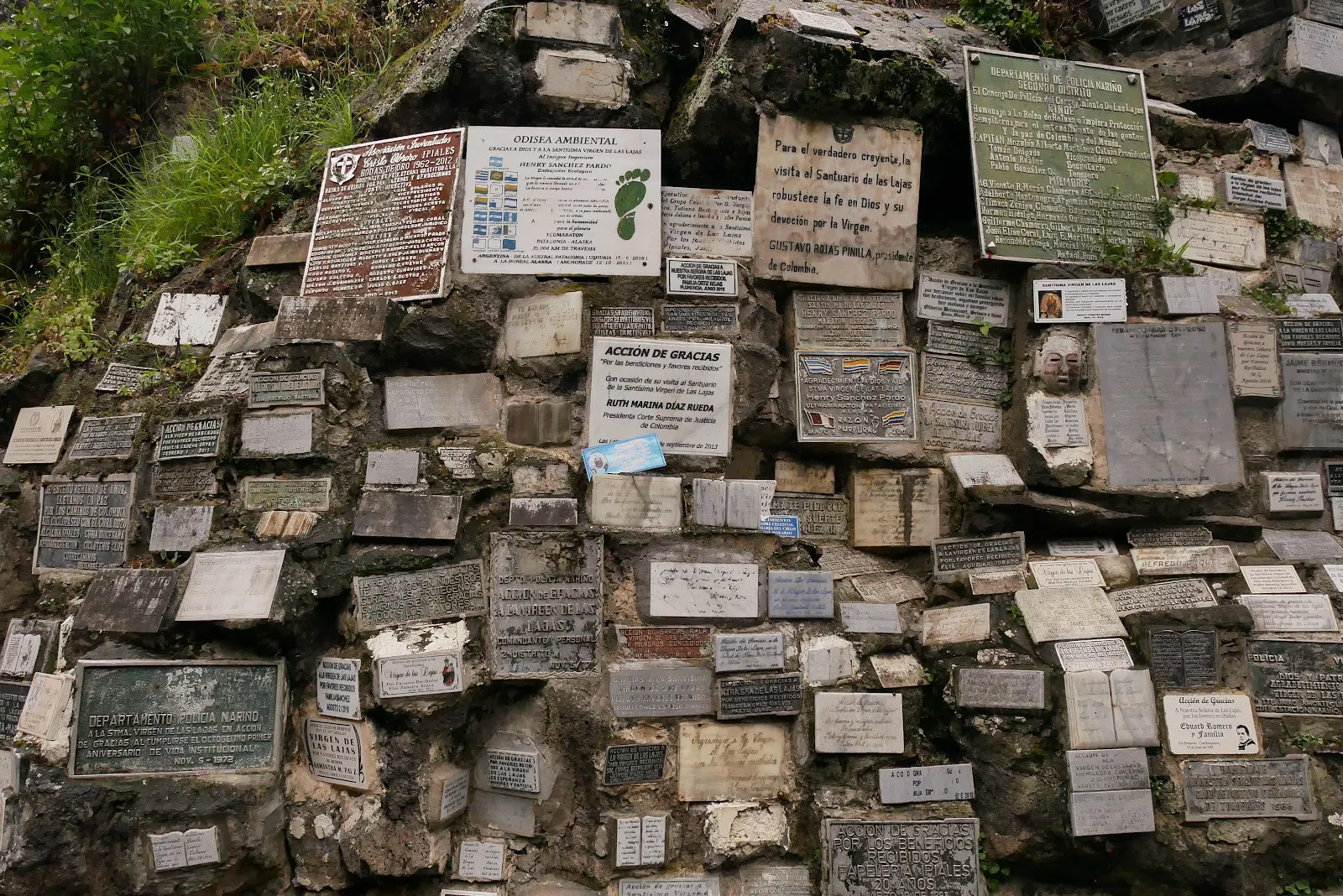
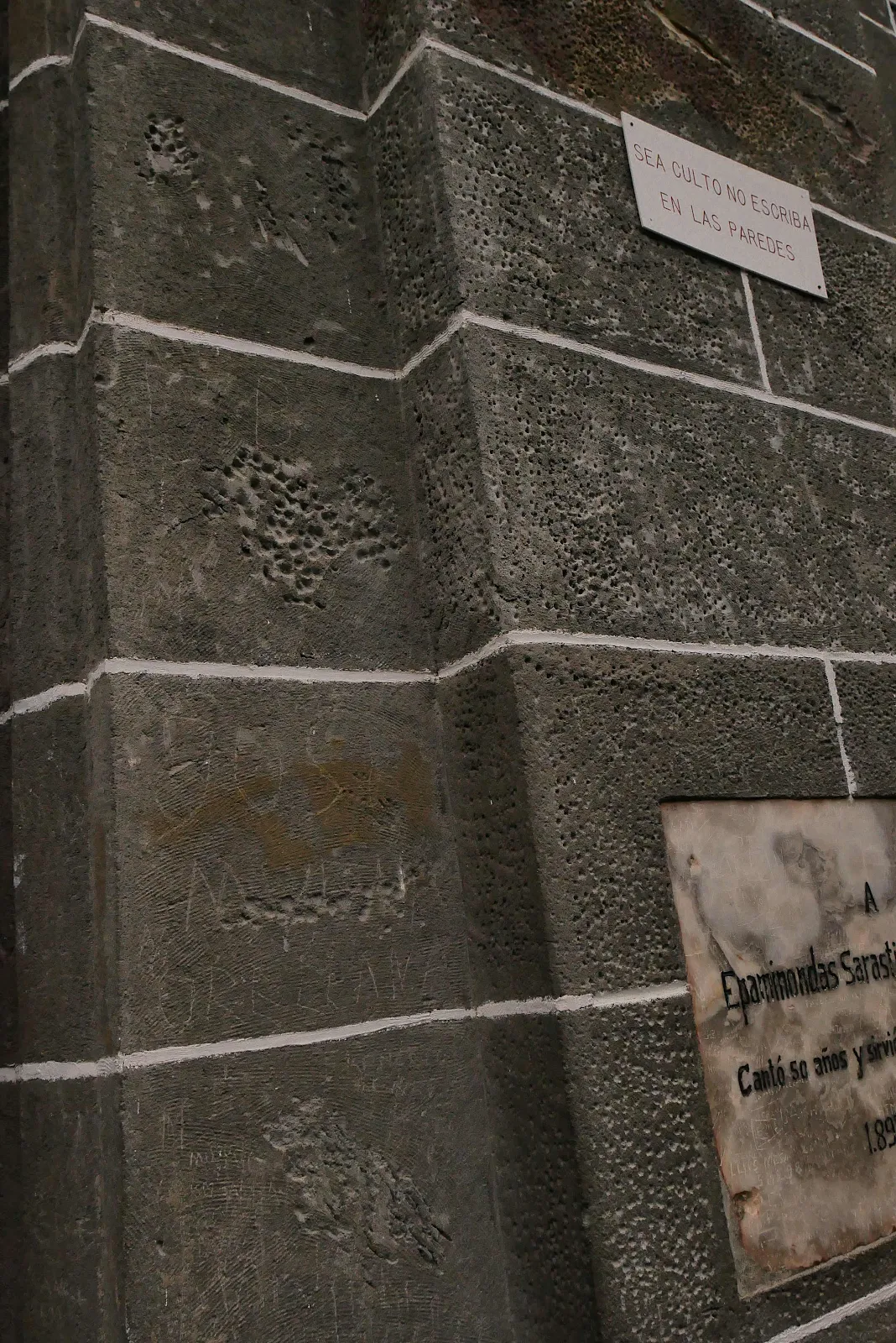
“Be well educated and don’t write on the walls” it says above a paid for plaque which is next to some graffiti. Good manners cannot be counted on even here.
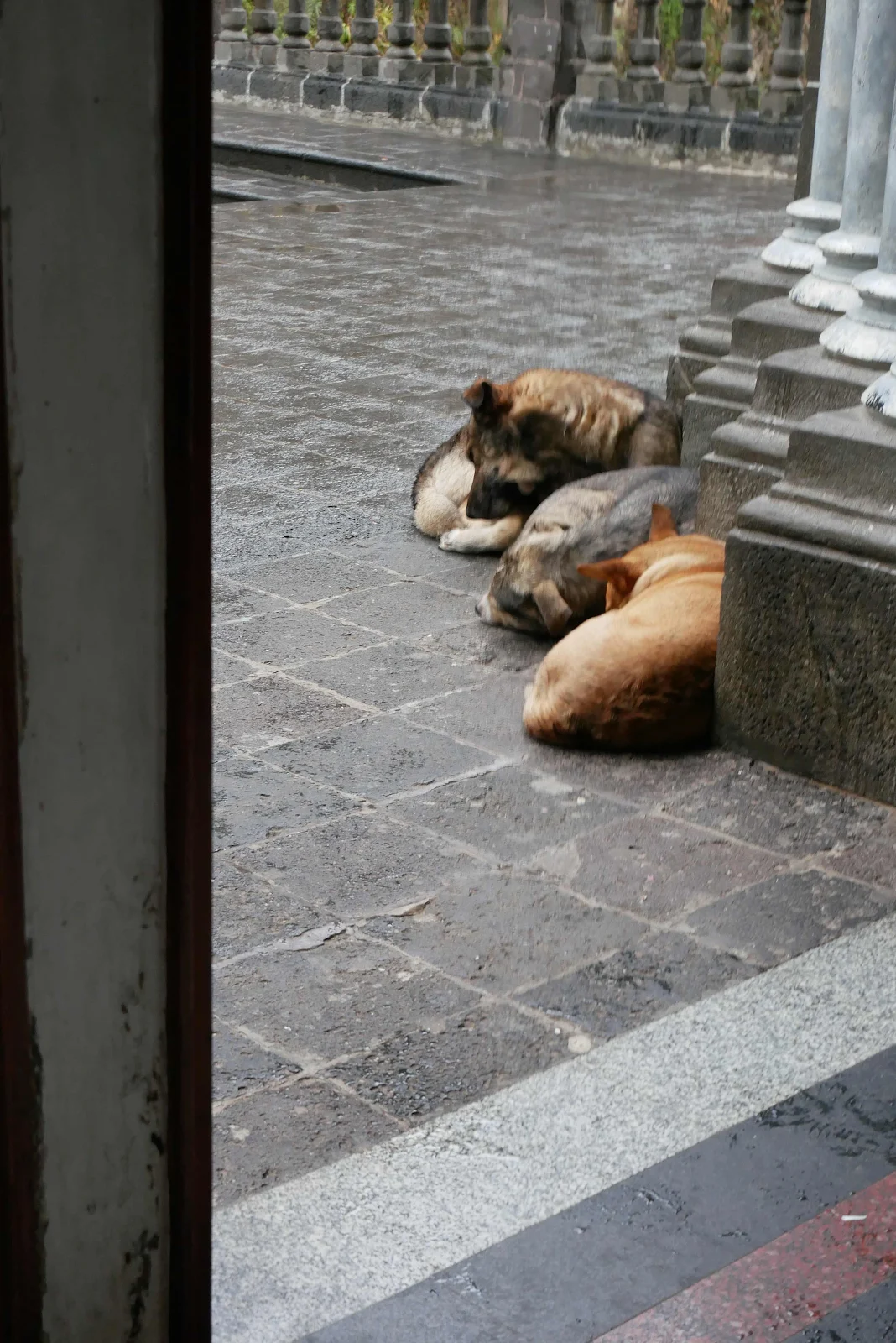
You can imagine what I think about the lack of charity to these guys. Dogs need love as well as food and as always Colombia looks after its street dogs.
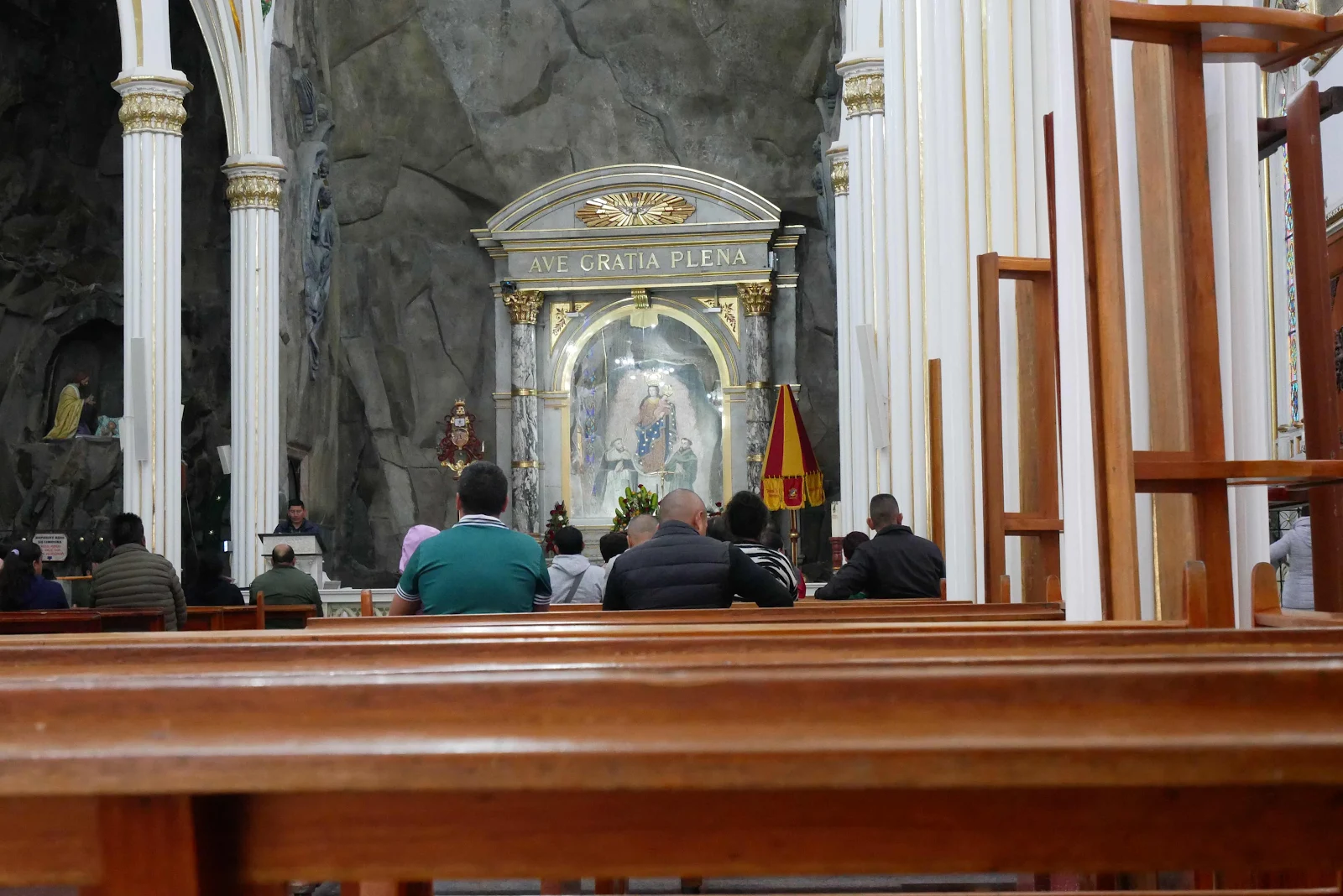
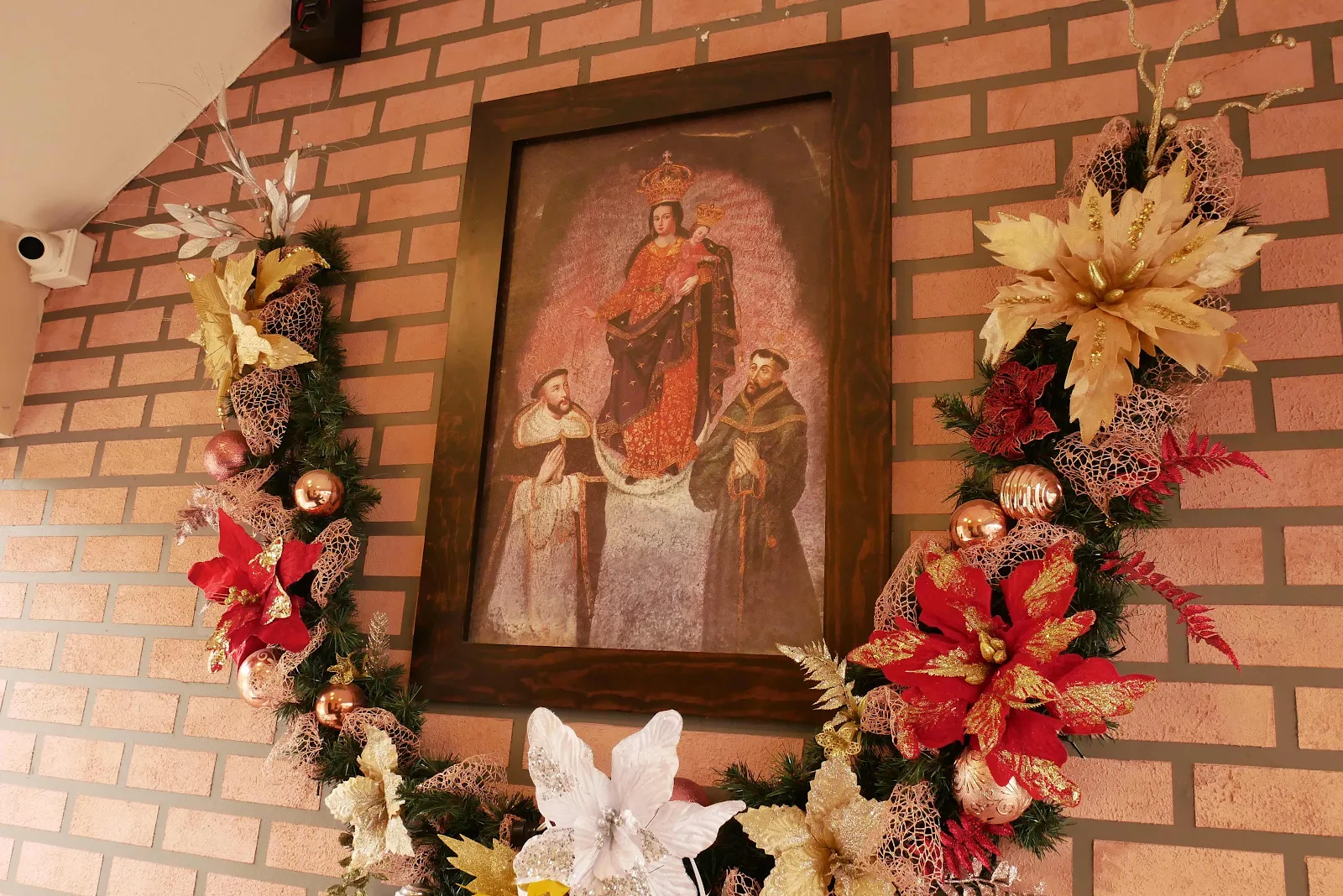
Mass was underway so if you want to see the inside you’ll need to find it online. I snuck this one during the mass and you can see the painting that apparently appeared on the slate not by human hand.
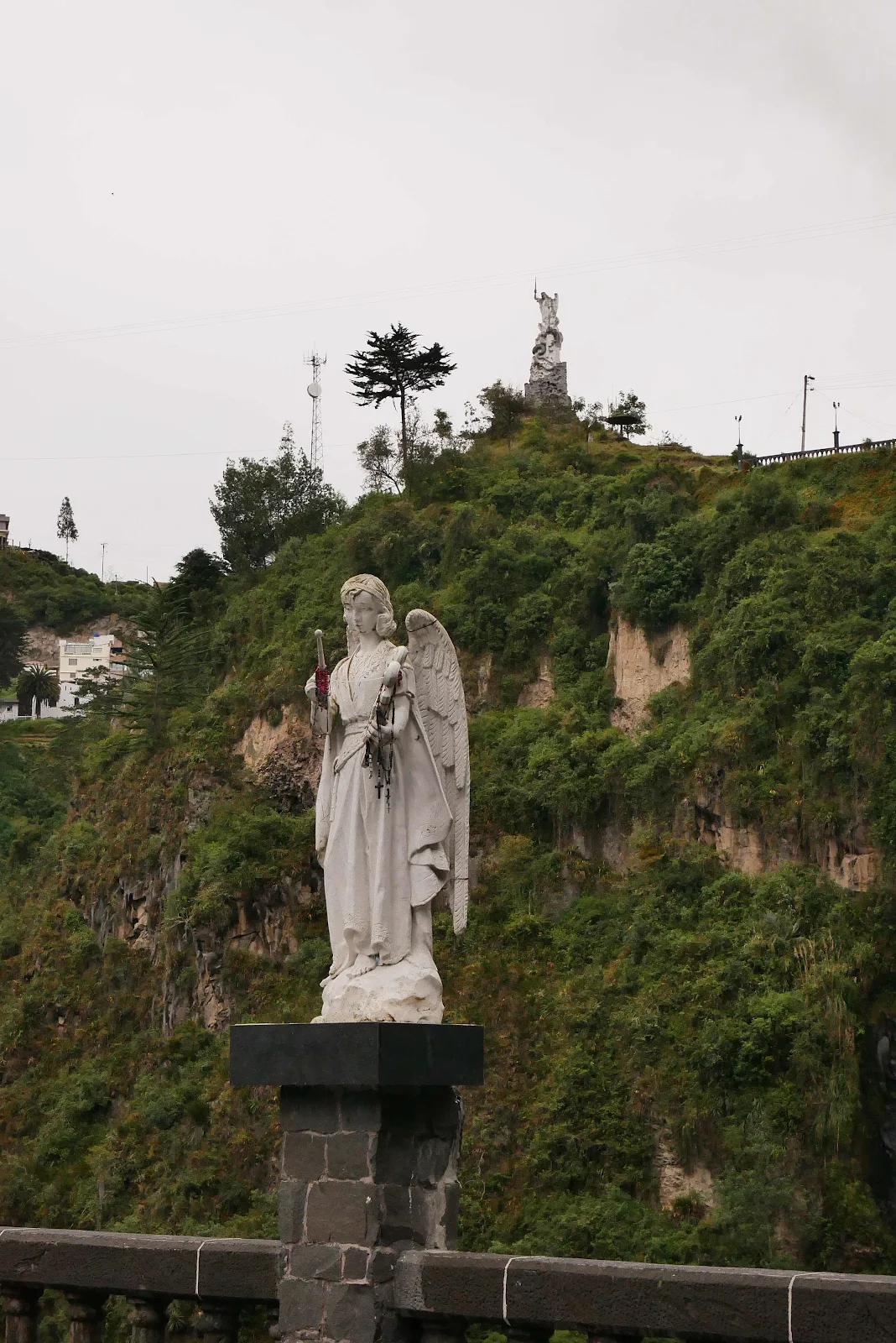
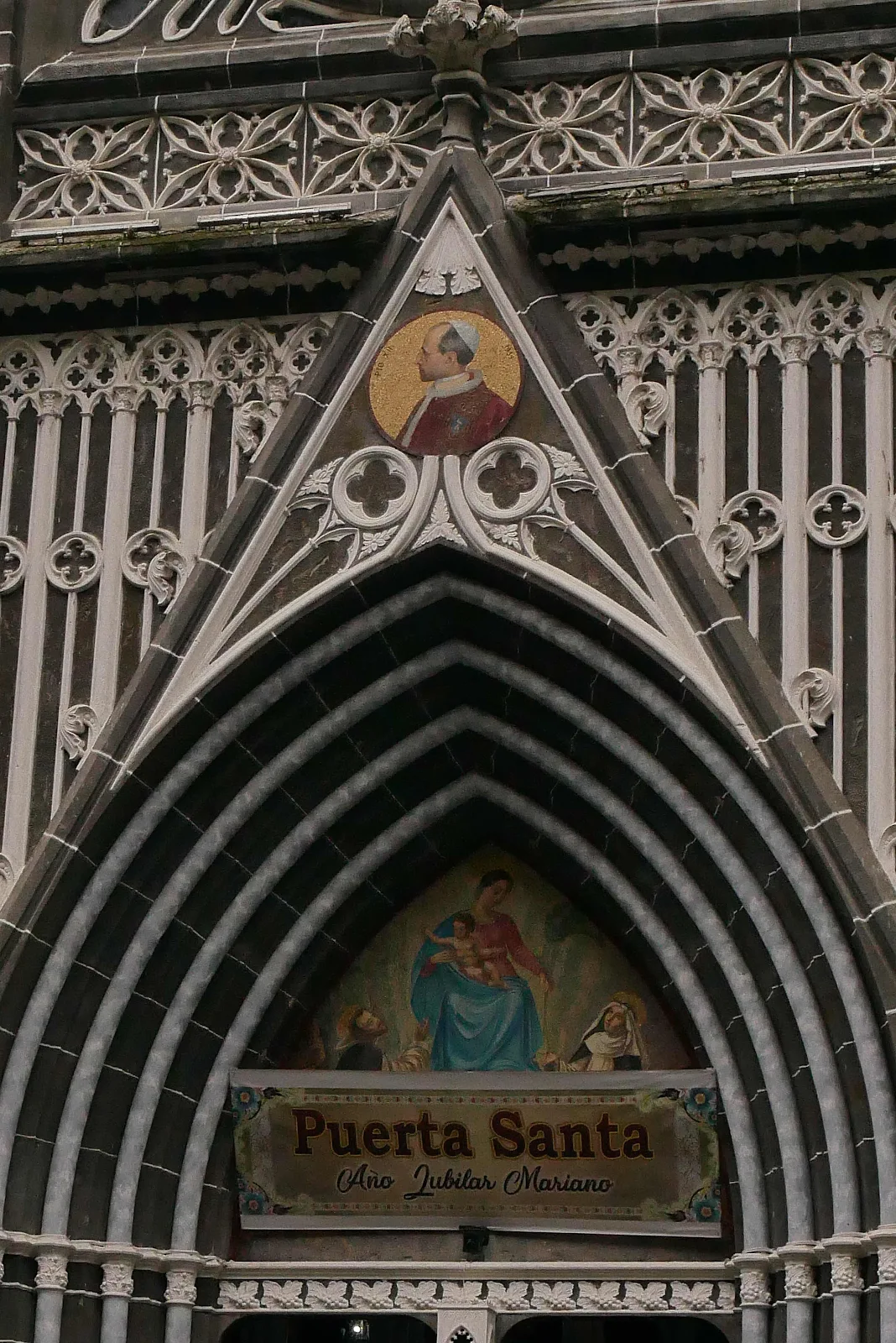
Pope Pius XII is above the main door as he designated the church a basilica. Rome’s reach is visible here.
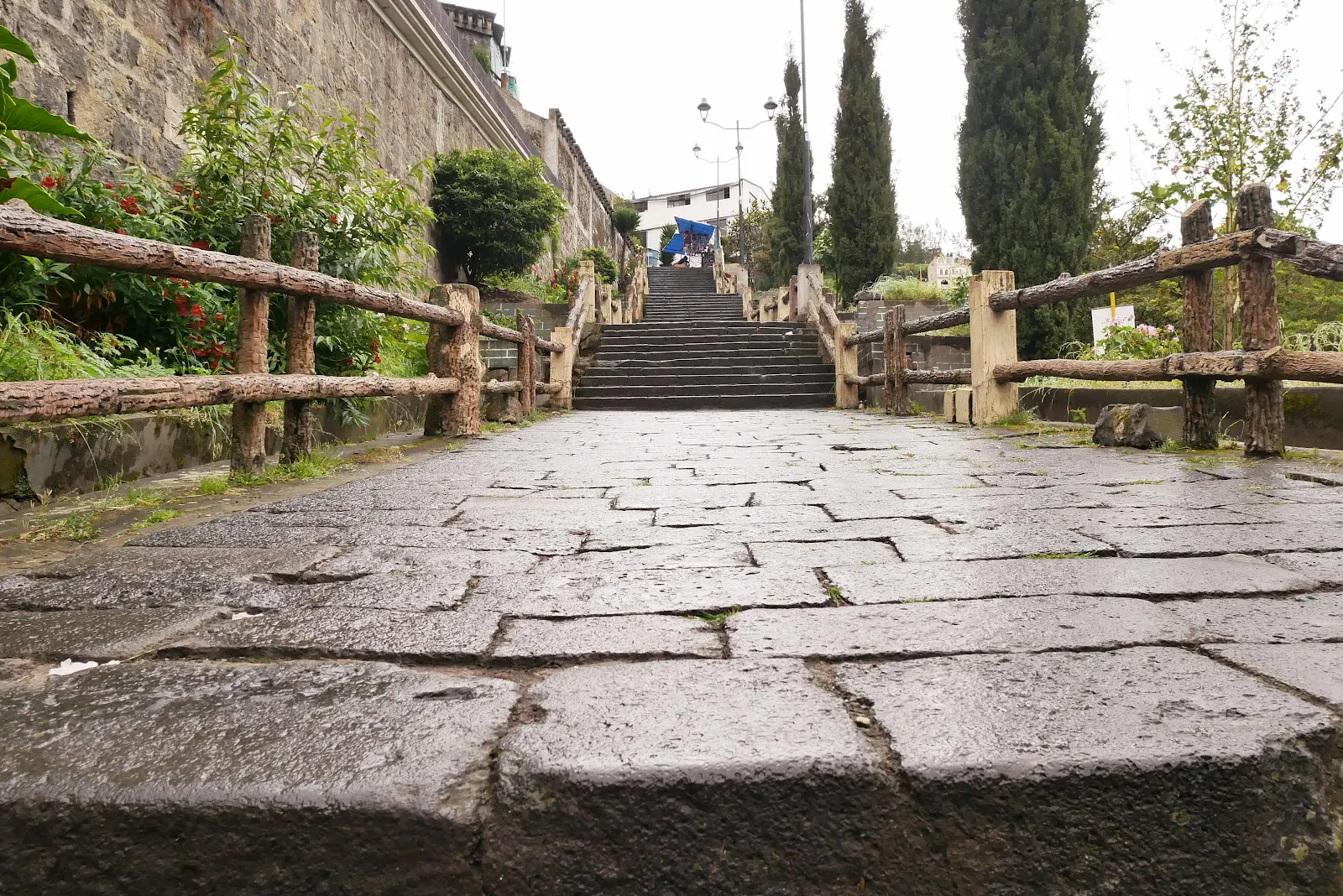
It was a long hike up the steps back to the parking lot. We accidentally took the long route and we got to clump up miles of steps and we were ready to go and do battle at the border.
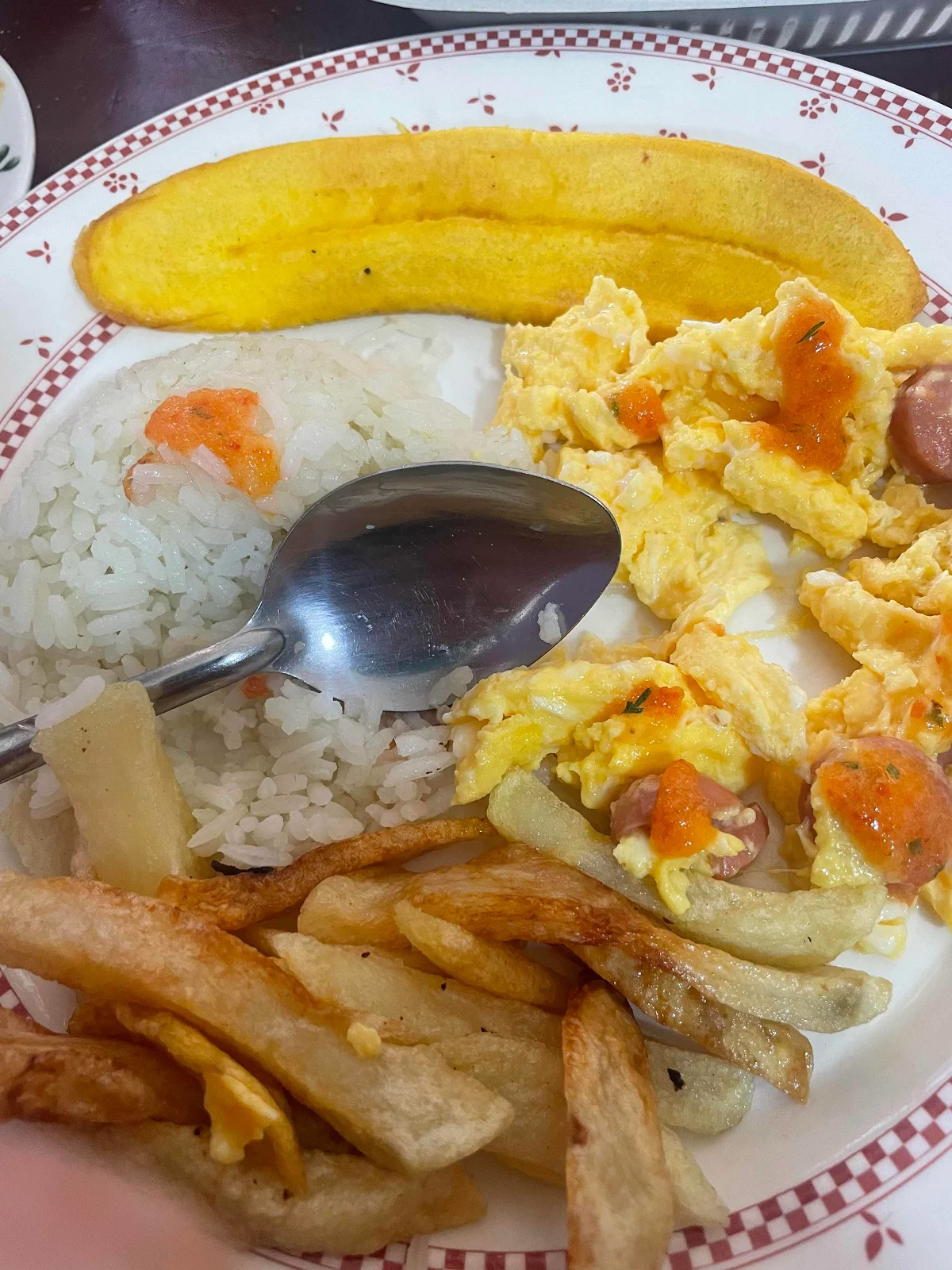
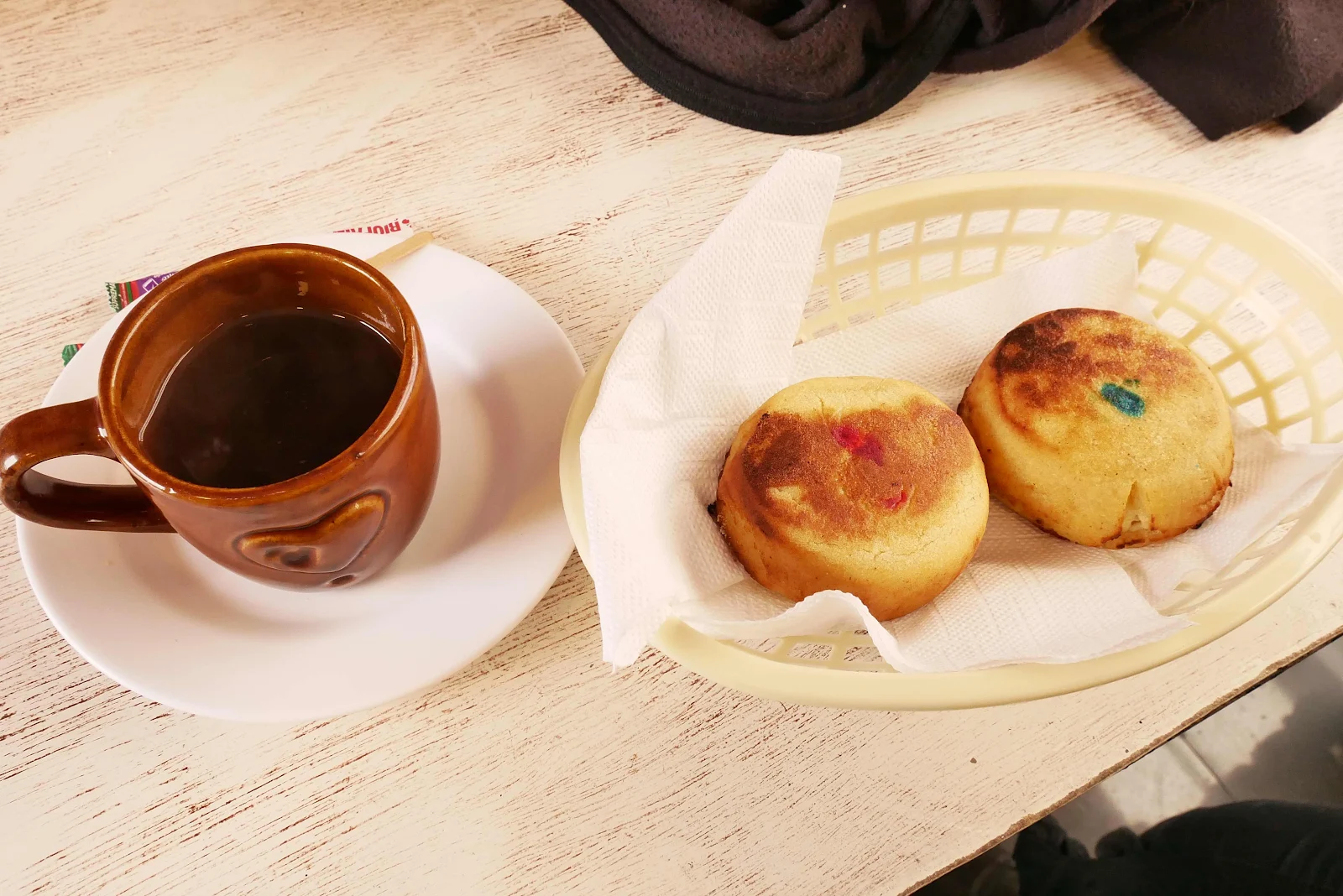
We stopped for a final Colombian meal, arepas, corn cakes and coffee.
As we ate the chicken and guava paste corn cakes we watched over by a reproduction of the miraculous painting in the church. That’s what this town is about.
And away to the border.
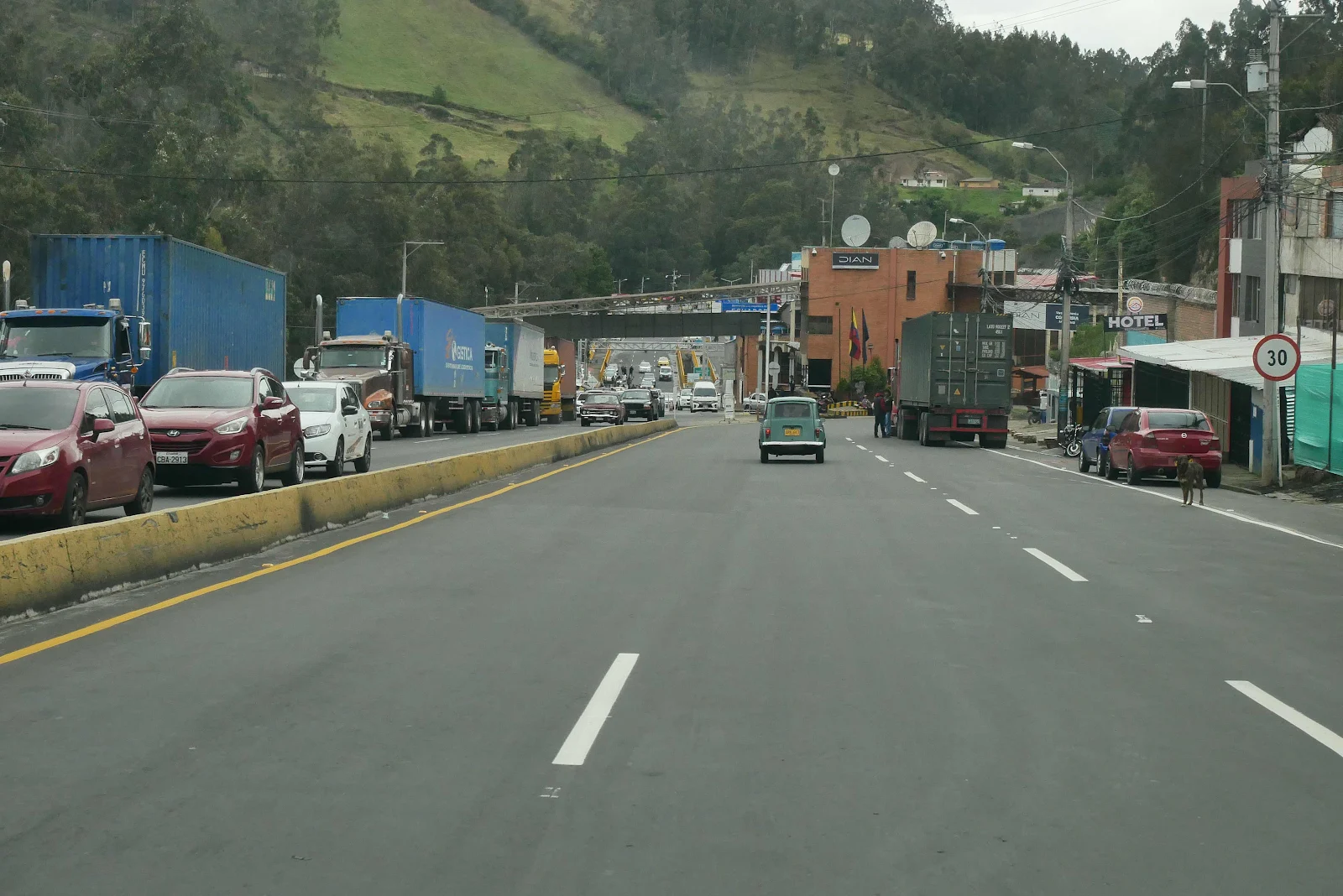
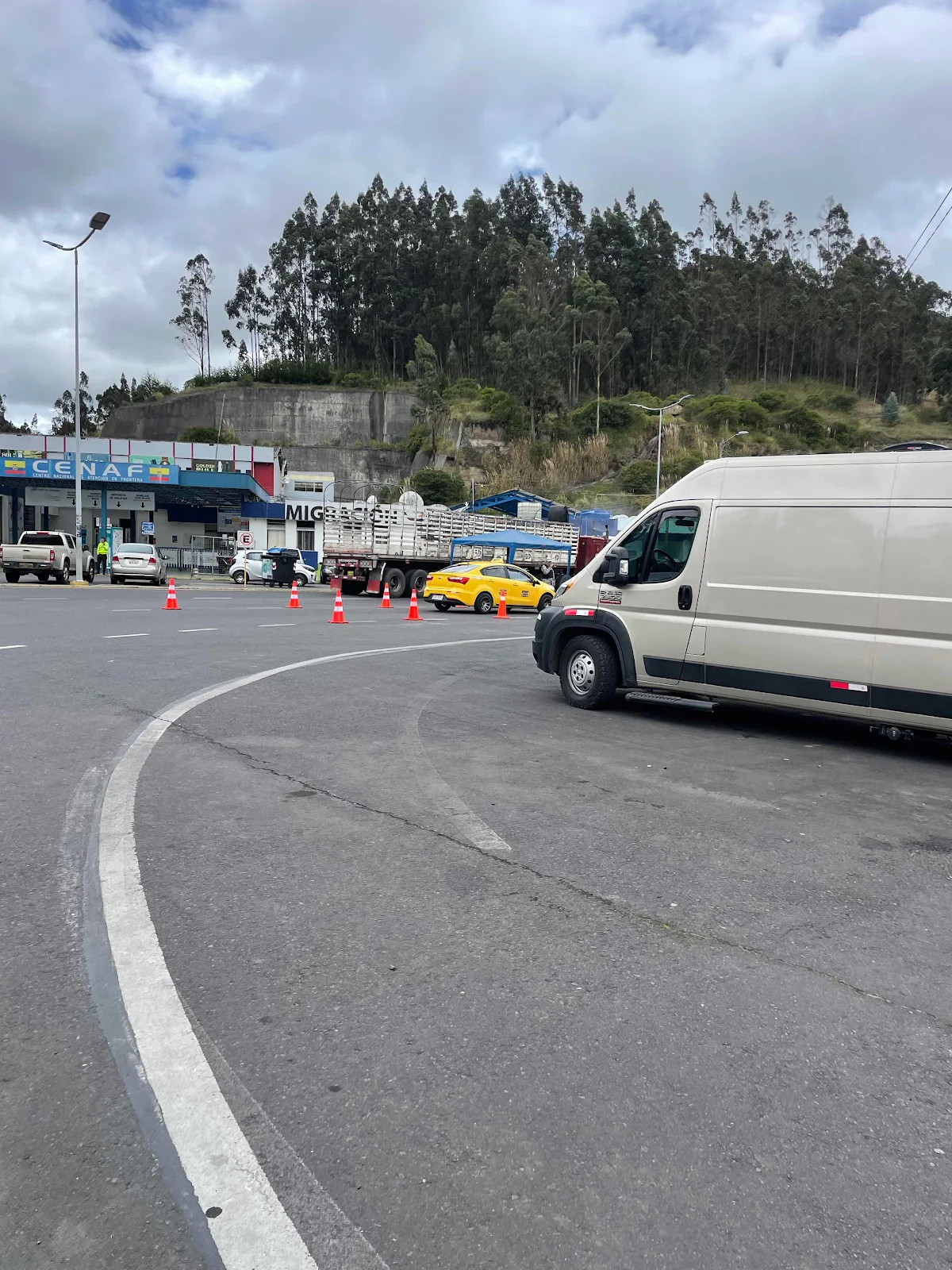
Drive past the buildings and park in the back.
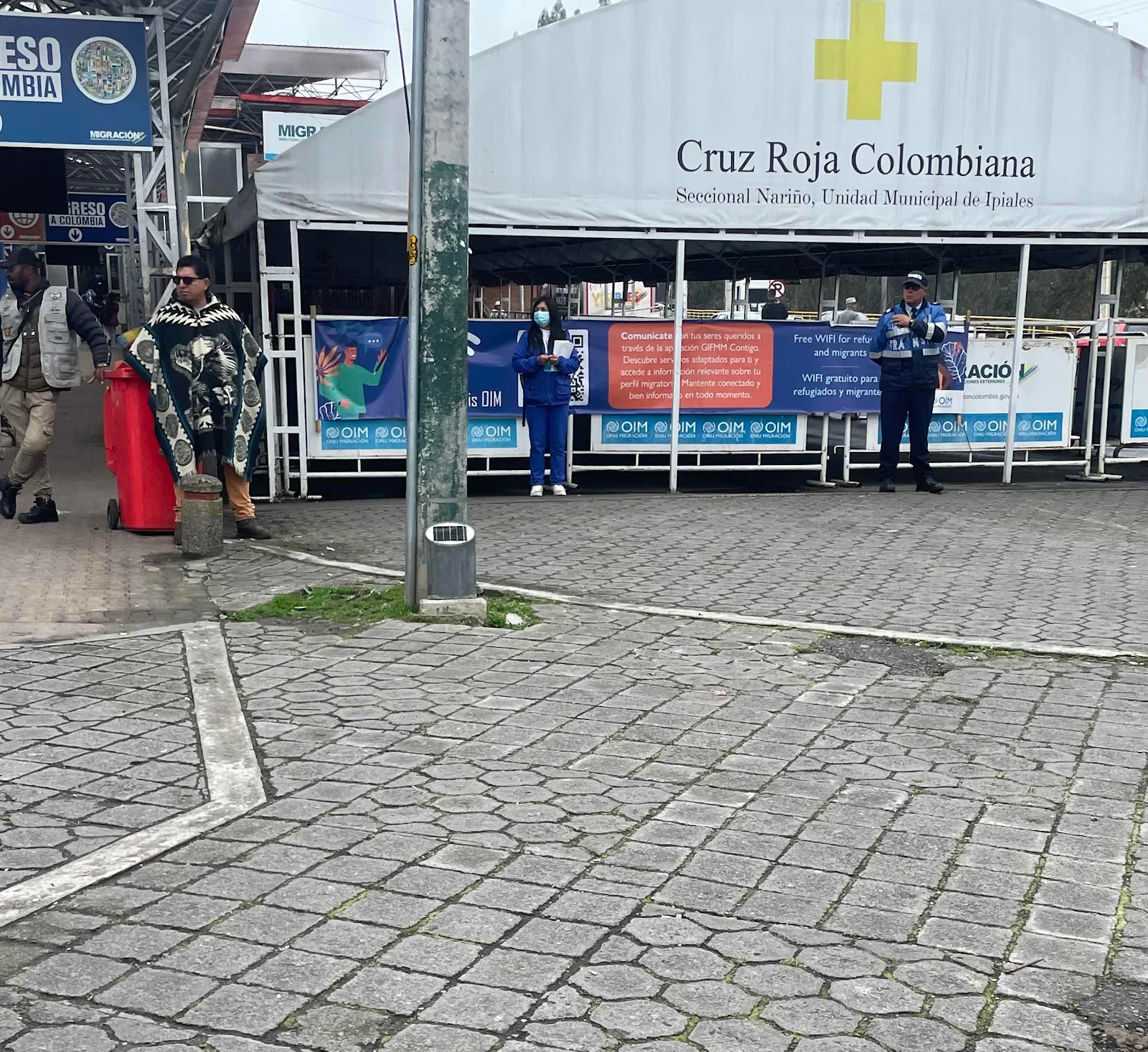
Except the parking area has been taken over the Red Cross to assist the Venezuelan refugees that are walking to try to find new lives where they can.
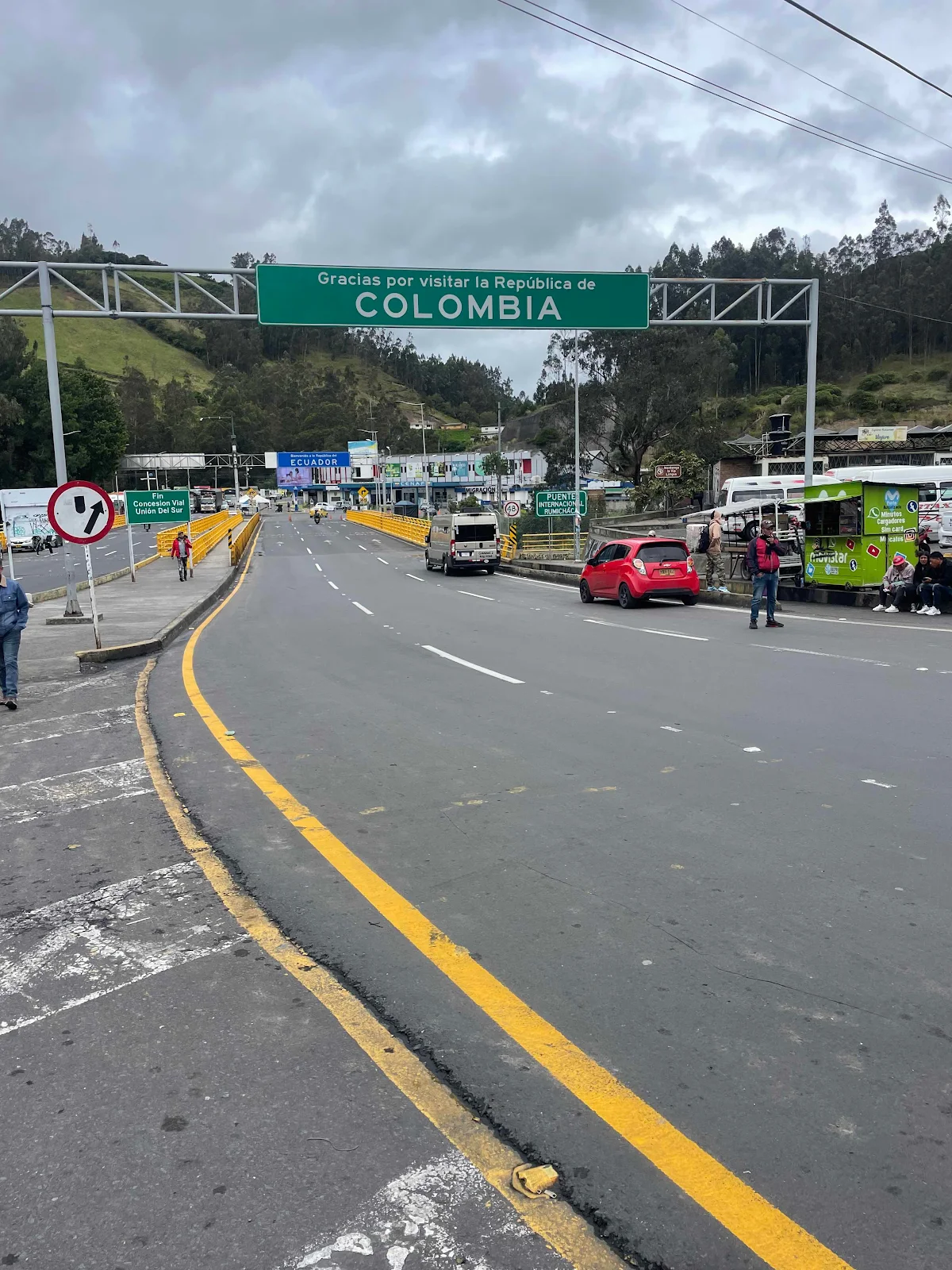
So I did as I was told and parked in the bridge almost in Ecuador. Then we walked back and officially exited Colombia at immigration and customs. I thought about stopping at the agriculture office but no one seemed to care about Rusty so I figured what the hell let’s go rebel.
We walked back to GANNET2 and drive into Ecuador and there we checked in at immigration and checked GANNET2 into customs and got 90 days. We were ready to drive out but I saw an agriculture official with the customs guard at the exit gate and I lost my nerve. I walked to Agricultire and presented Rusty’s papers to keep him legal. Oh he said you need an exit paper from
Colombia. Walk back and get that and off you go. Don’t come back to me the agriculture guy said, just drive out. I was so tempted to hang out and leave in a bit but I walked back across the bridge to Colombia…one last time and got Rusty a legal exit paper. Finally I walked back across the bridge and off we went into Ecuador. Really it was quite easy and in all it took a couple of hours.
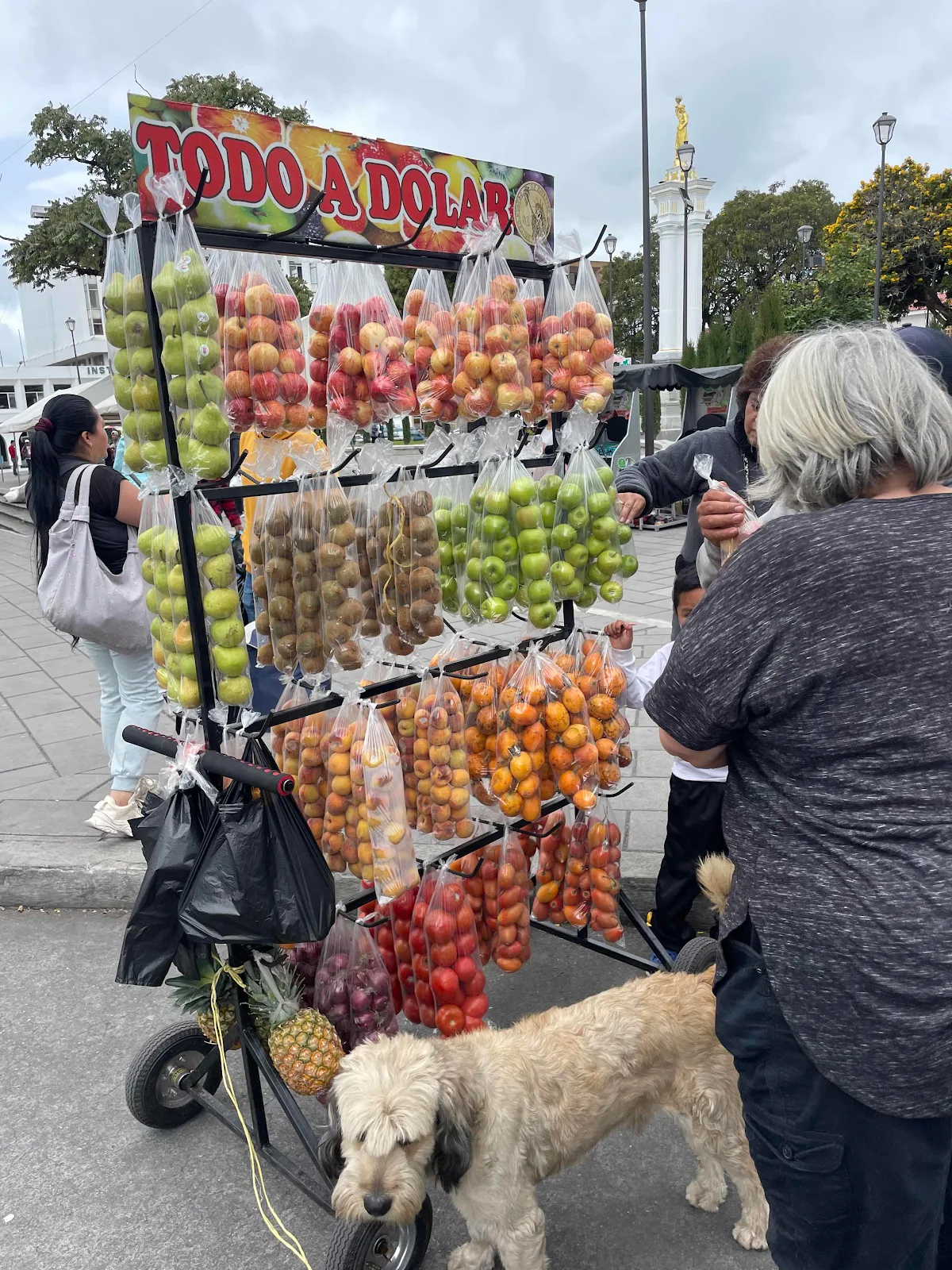
One thing is that no one indie TS the van. They photograph the vehicle identification number and the license plate but what we have in the fridge is of no interest. Sometimes inspectors look inside out of curiosity but what we carry in our home is of no real interest. Chile and Argentina are known for being more like the US and ban certain plants and foods and honey(!) but they are a long way away. Still we had some shipping to do and cash to collect.
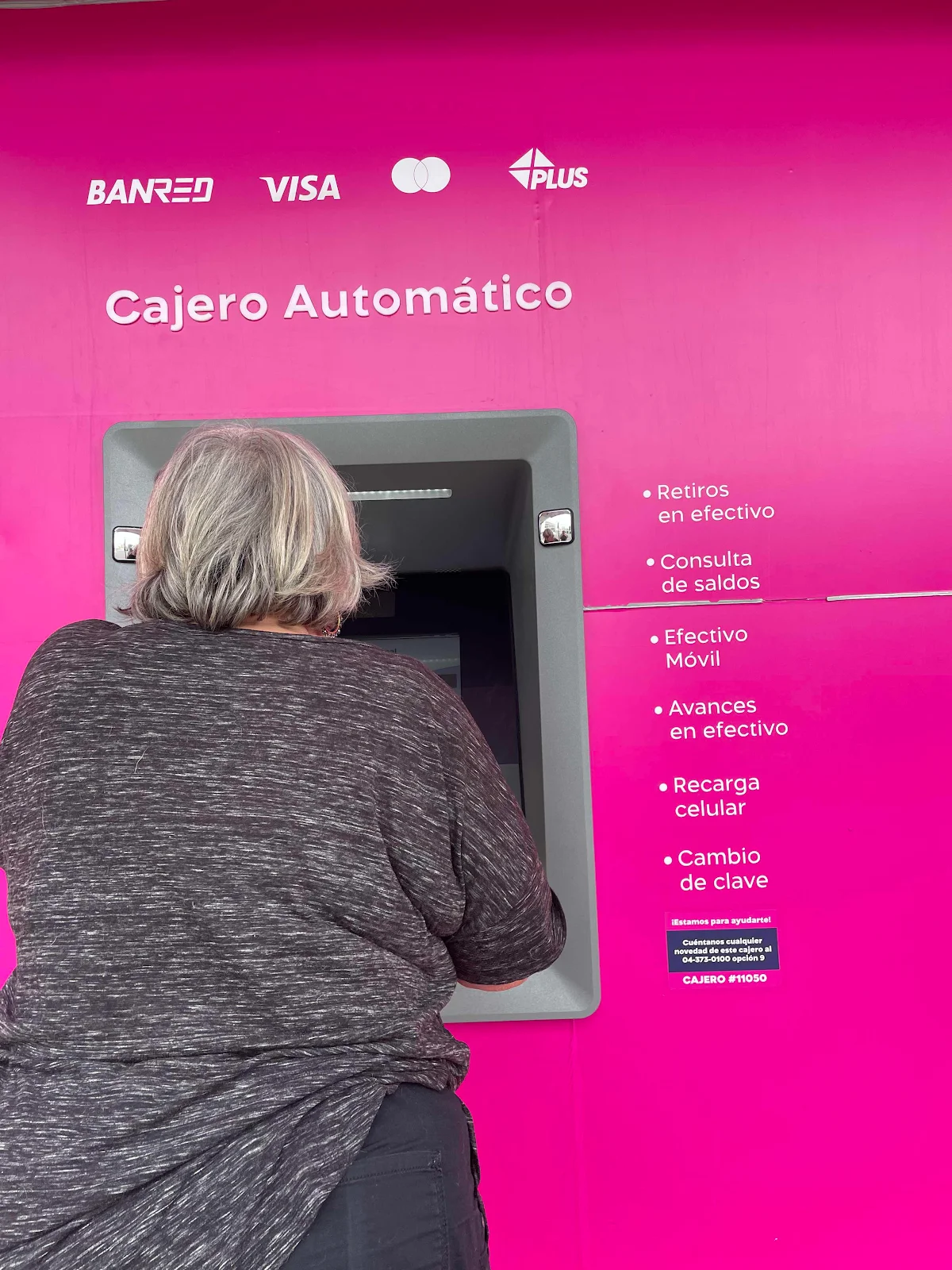
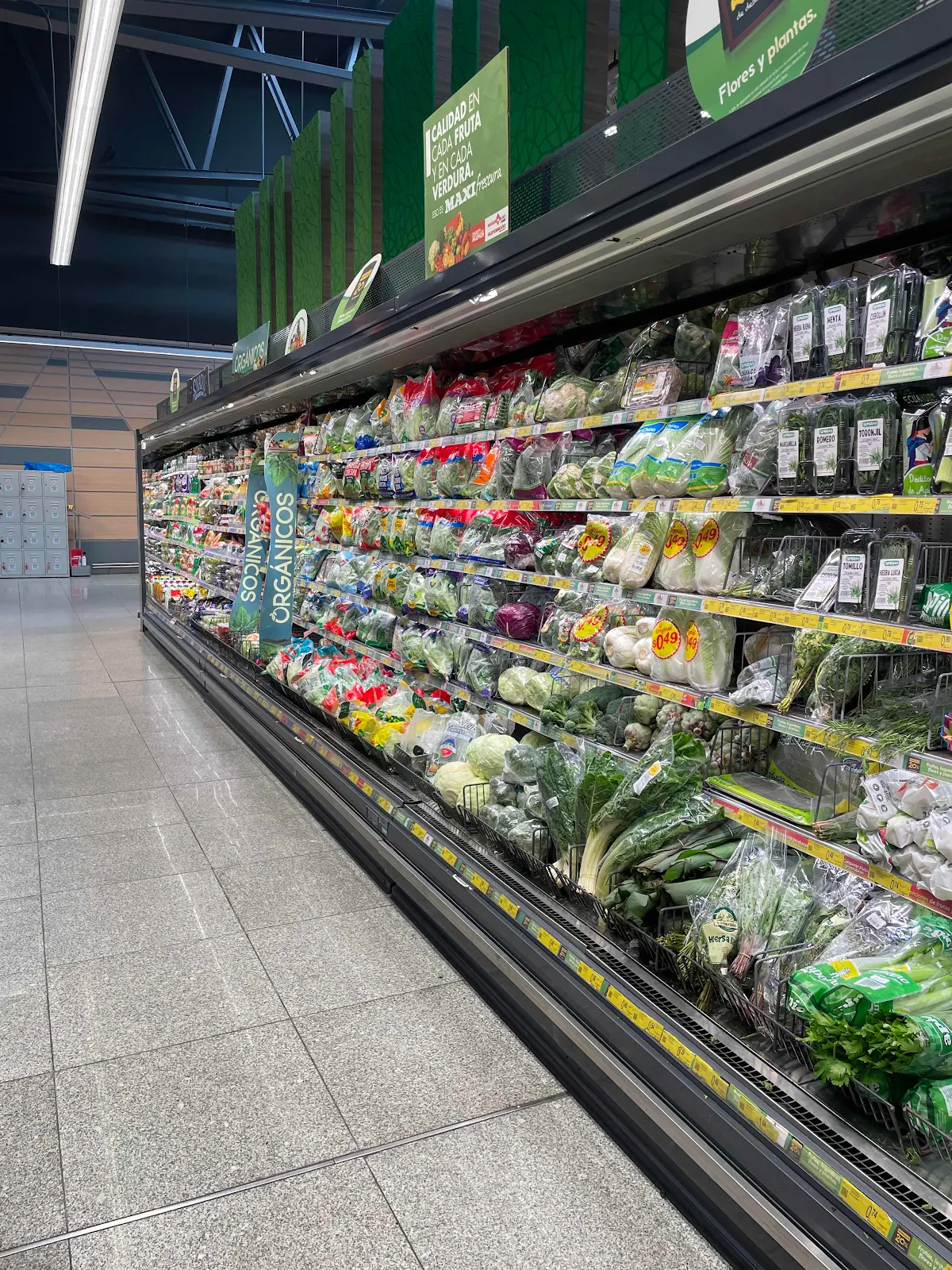
Ecuador uses the US dollar for their currency which is easy for us and we can stock up with dollars from the ATM. Regular gas is $2:47 a gallon while diesel is $1:80. Be still my beating heart. We filled up for $44 and gas is sold by the gallon not the liter so there’s no price or amount to calculate. Check out the organics section at Supermaxi at the small border town of Tulcán:
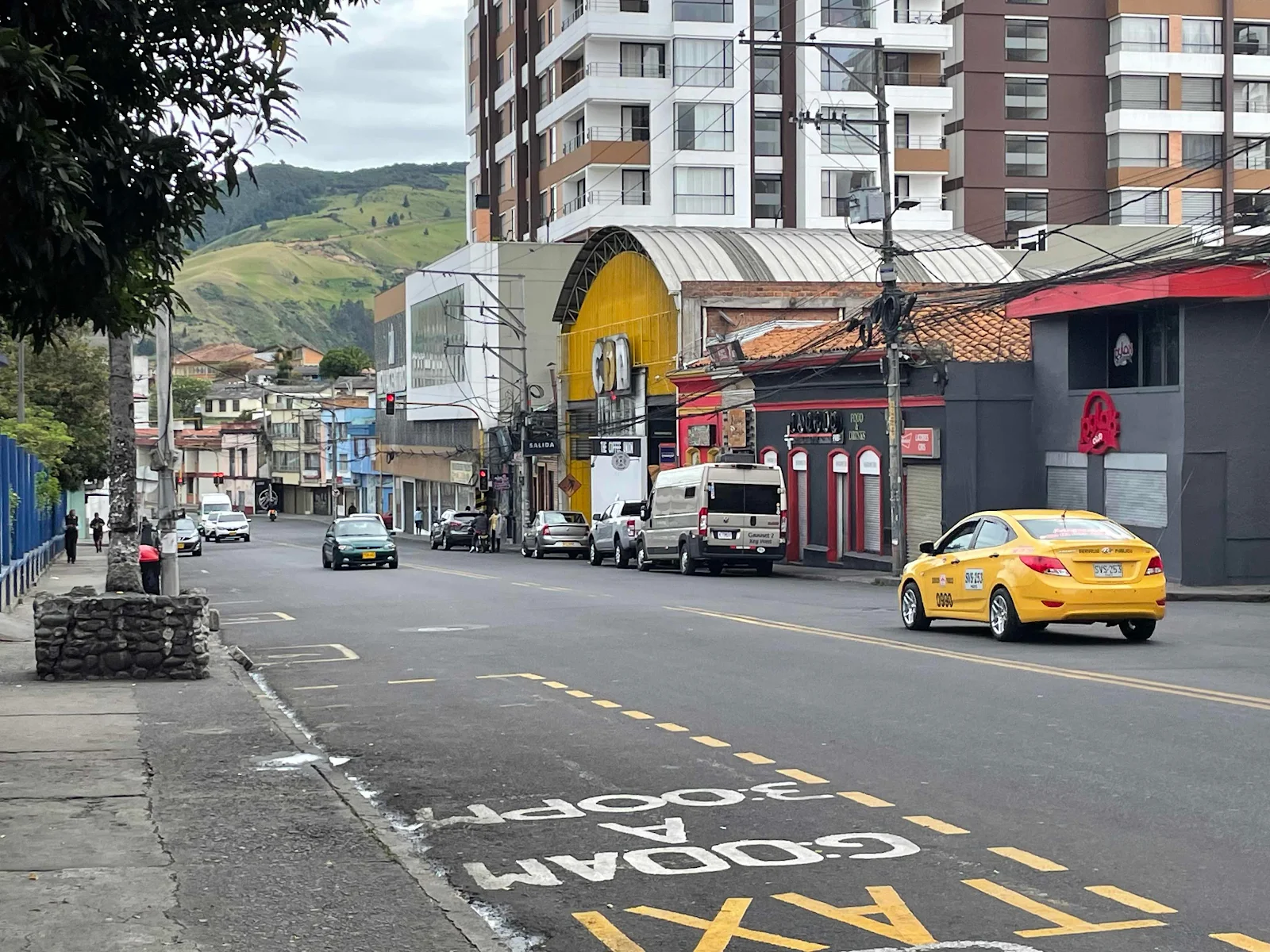
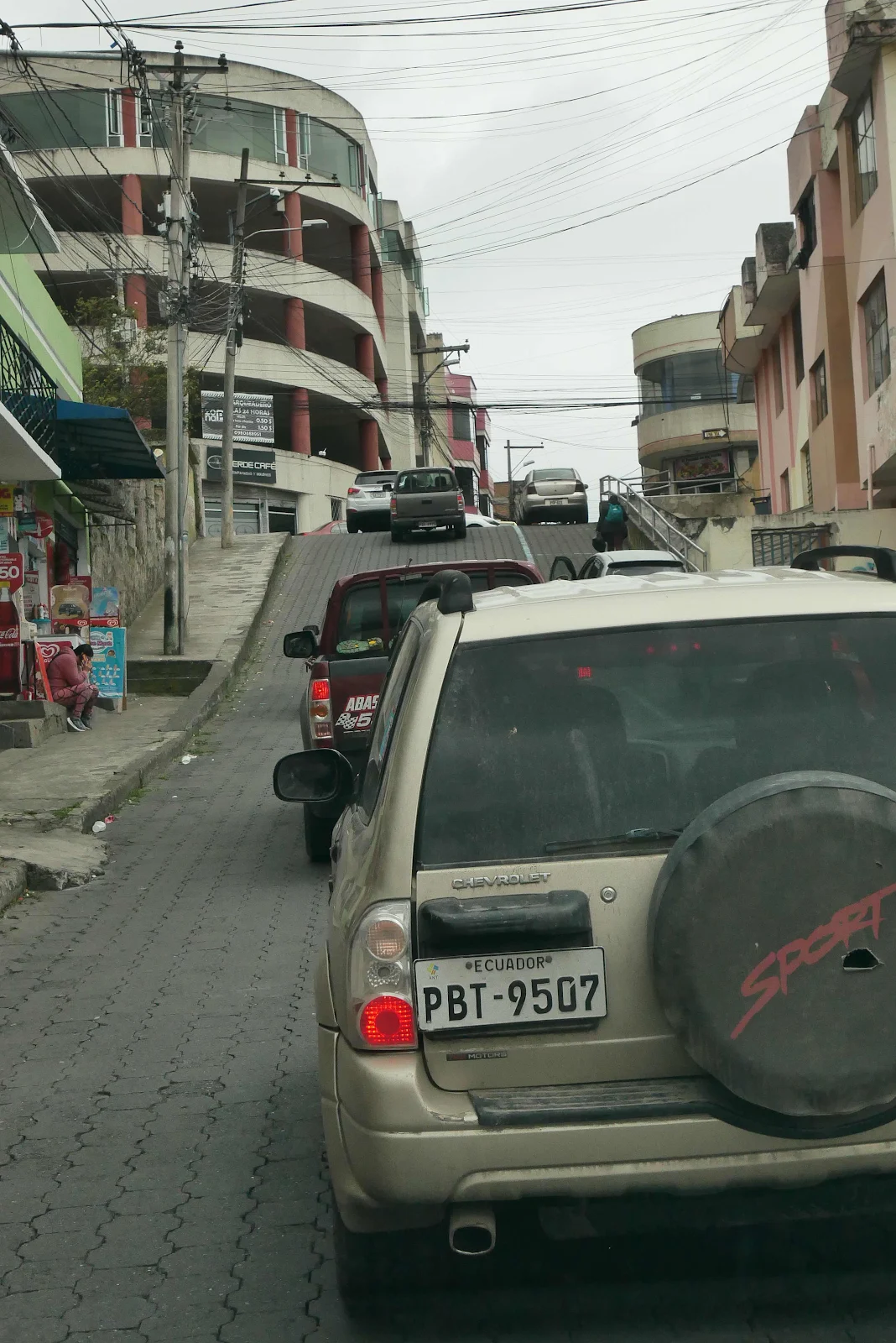
Weird steep streets are to be found here too but we were told there are very few motorcycles in Ecuador and that was very true.
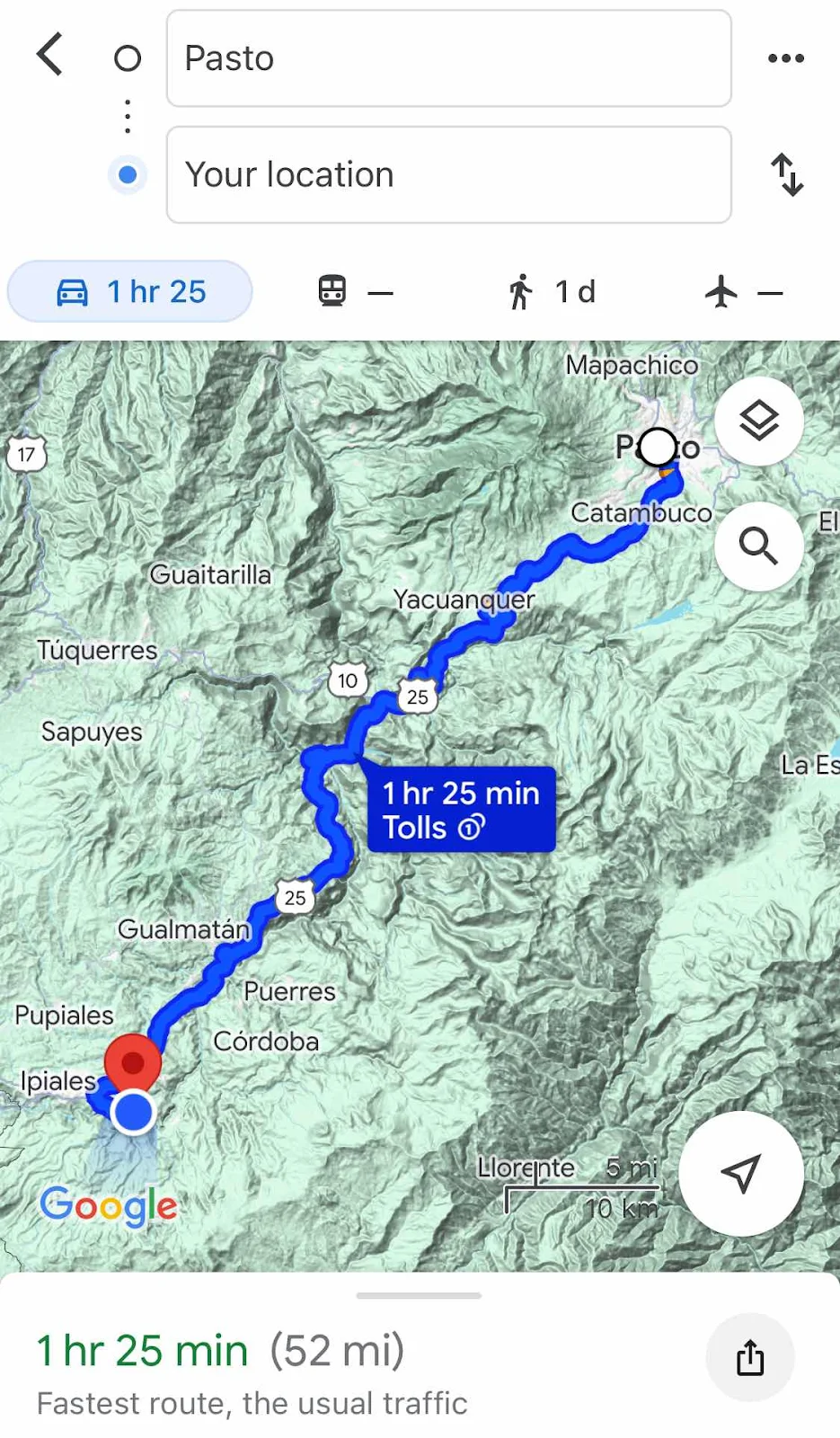
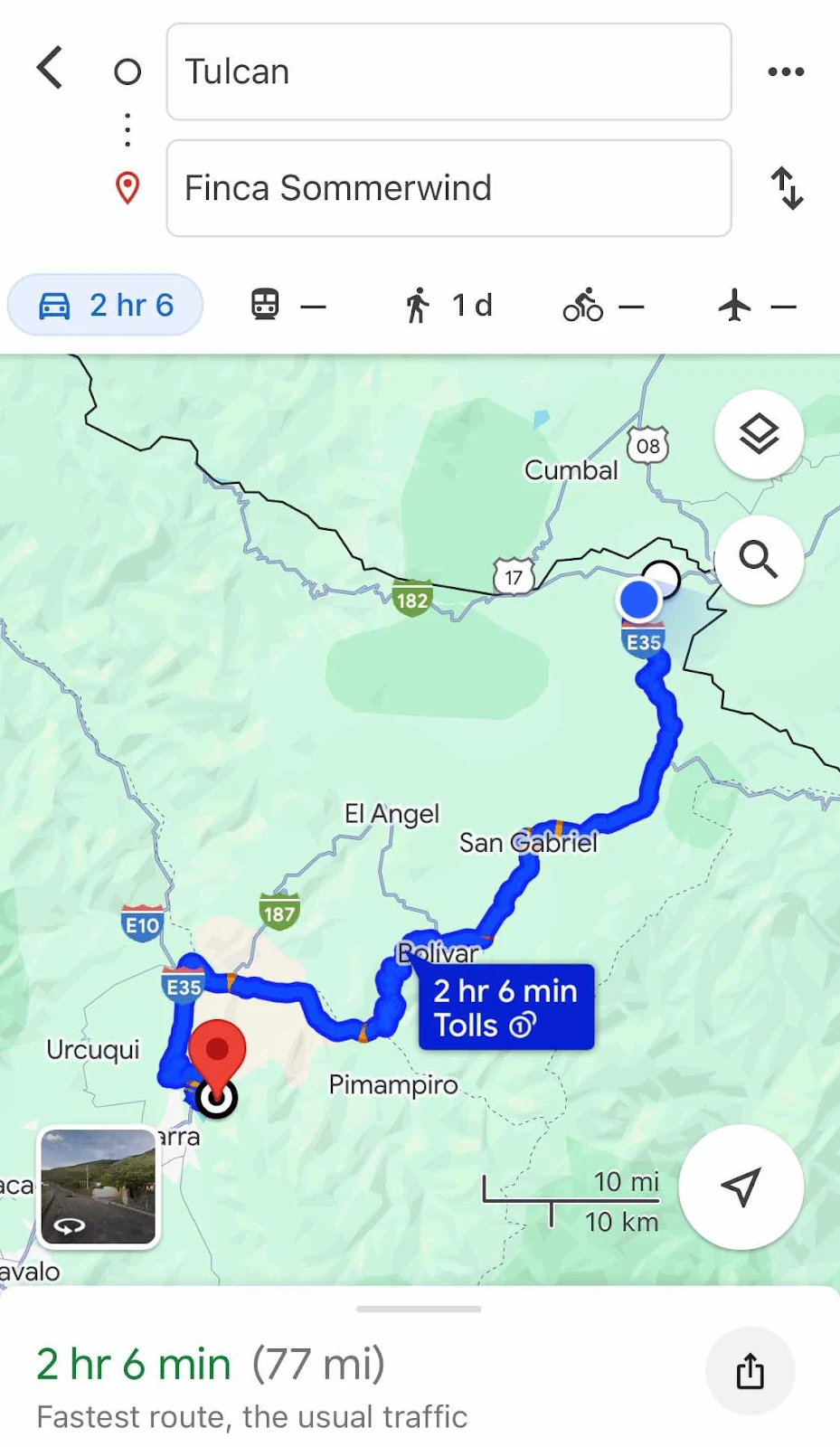
Our goal for Tuesday night was a well known campground two and a half hours inside Ecuador and two hours from Tulcán. Note Google Maps has doubled our average expected speed on Ecuador Highway 35.
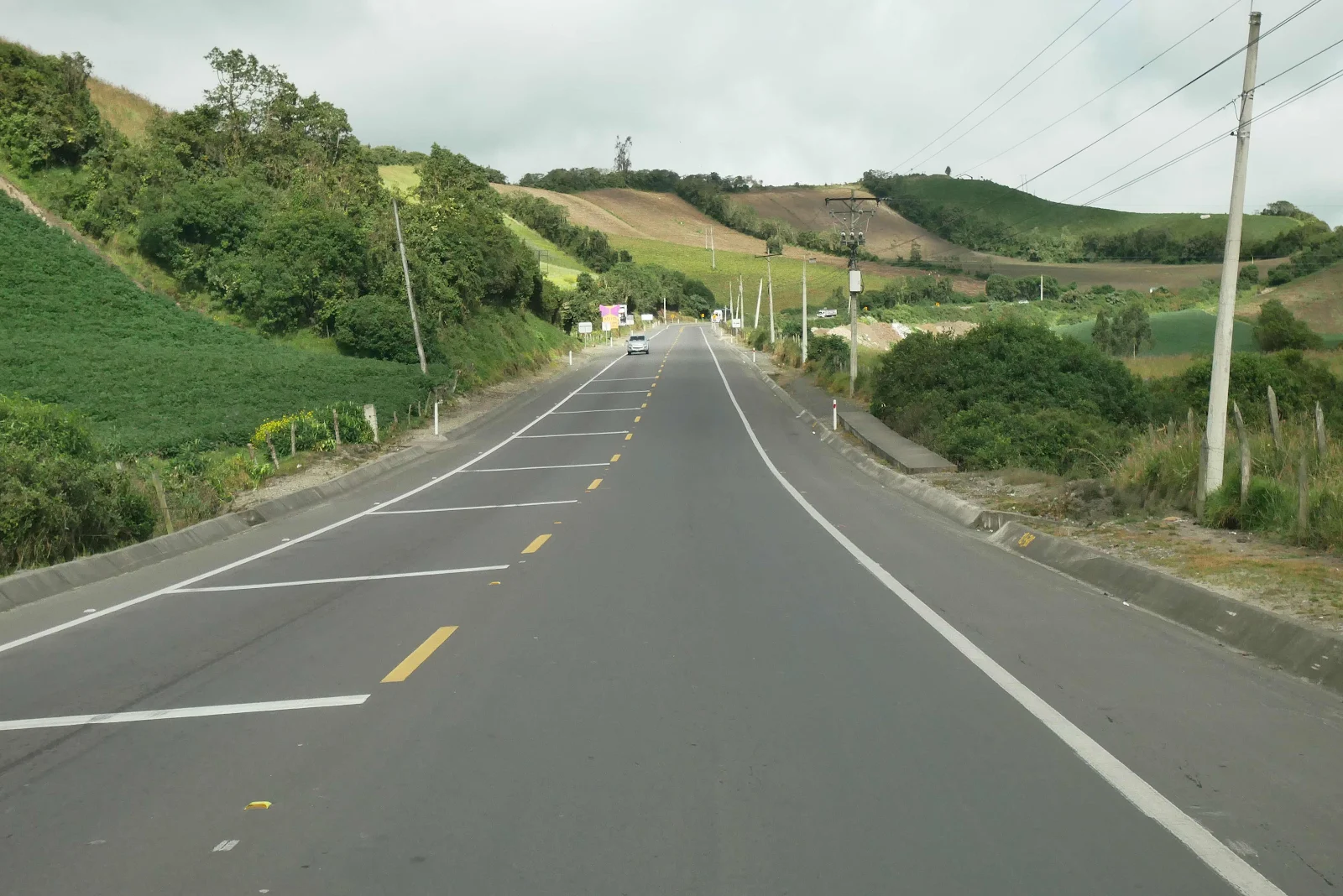
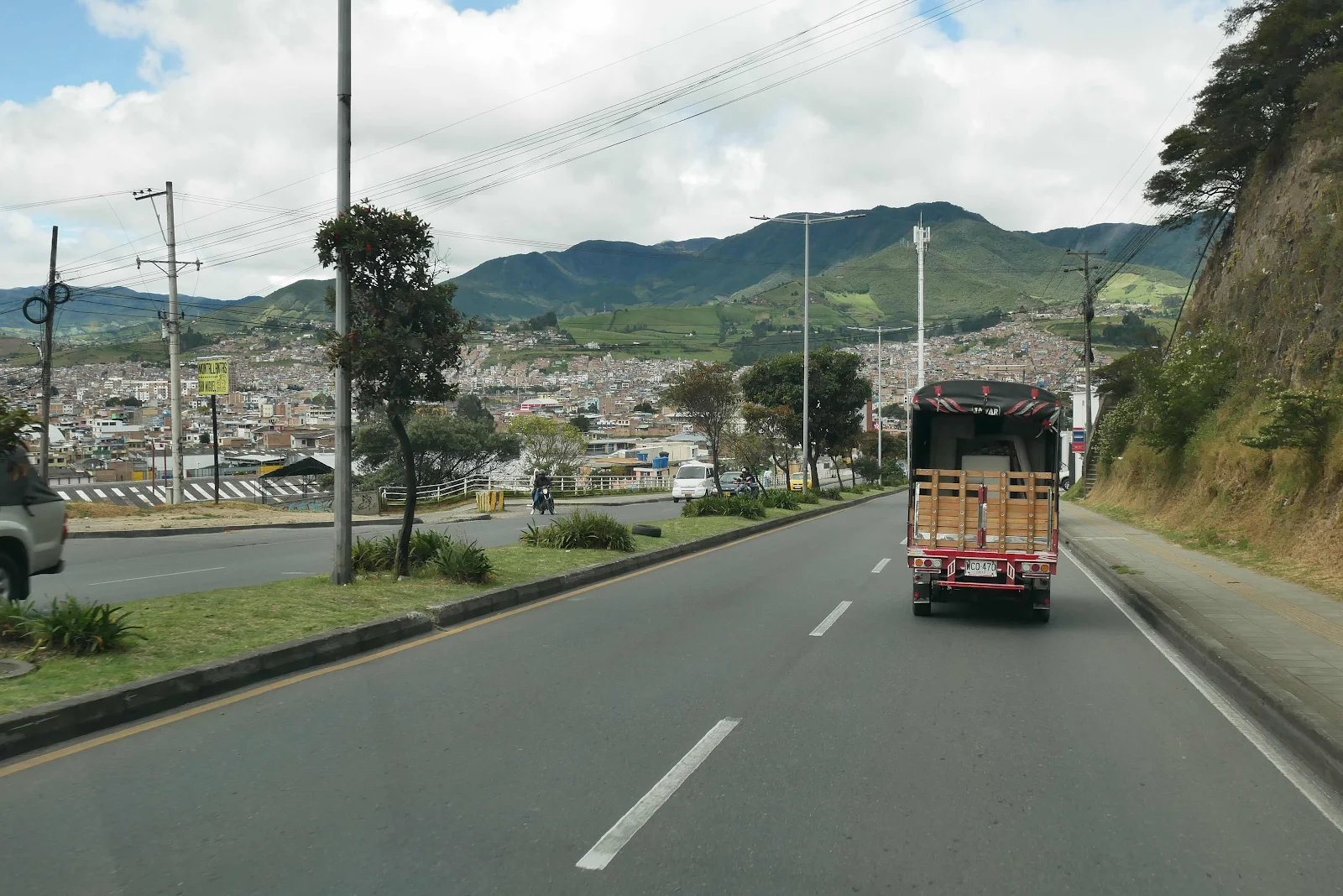
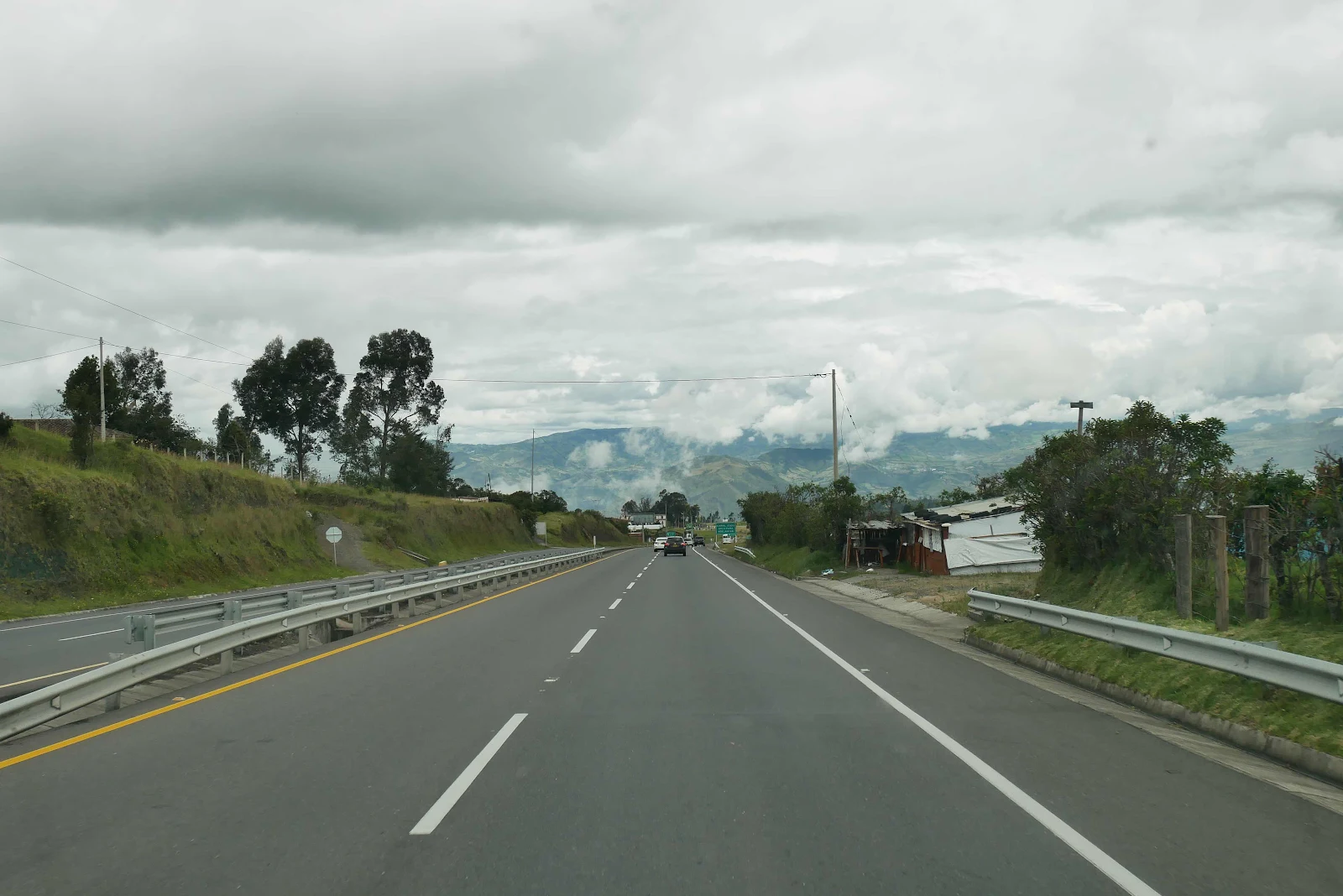
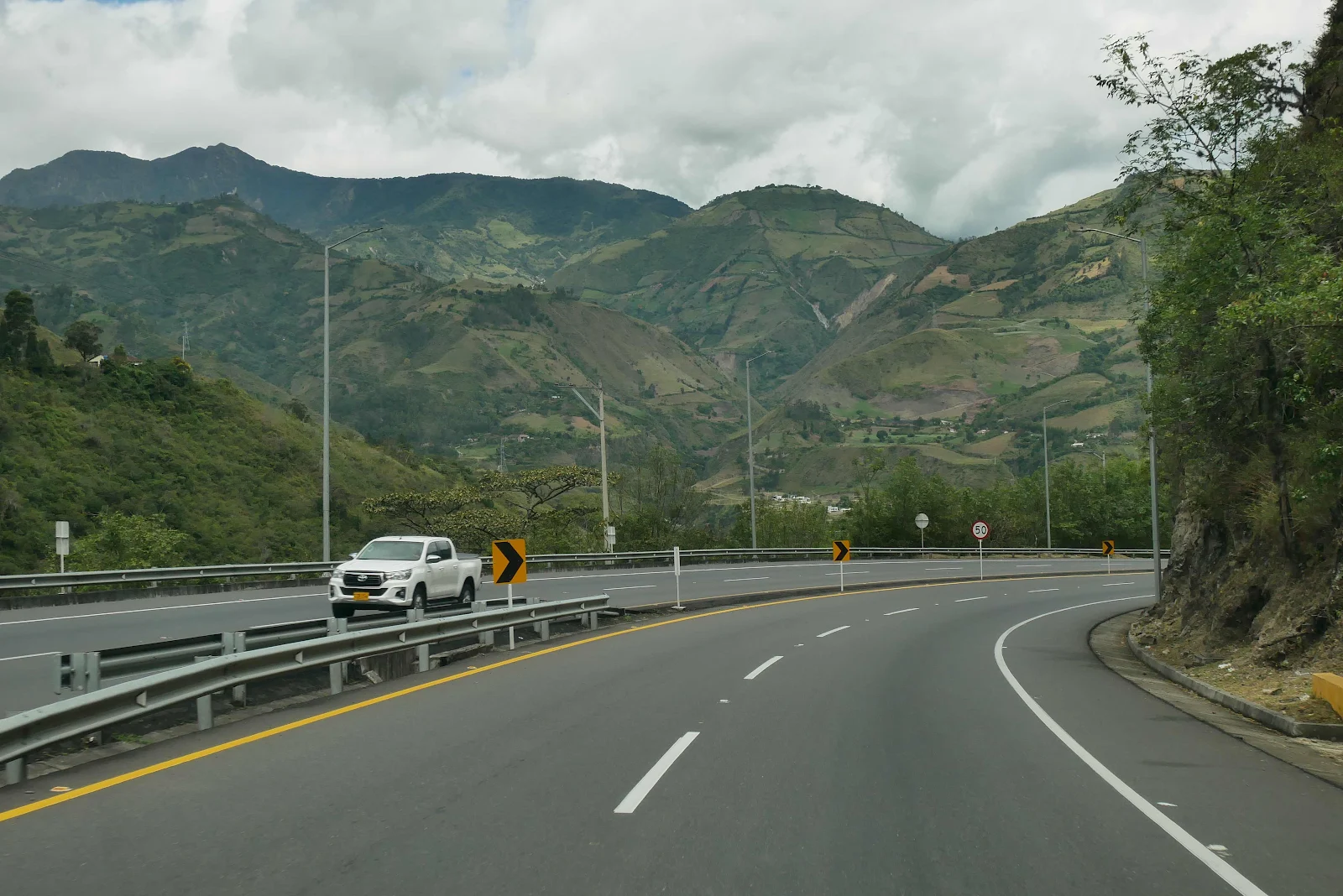
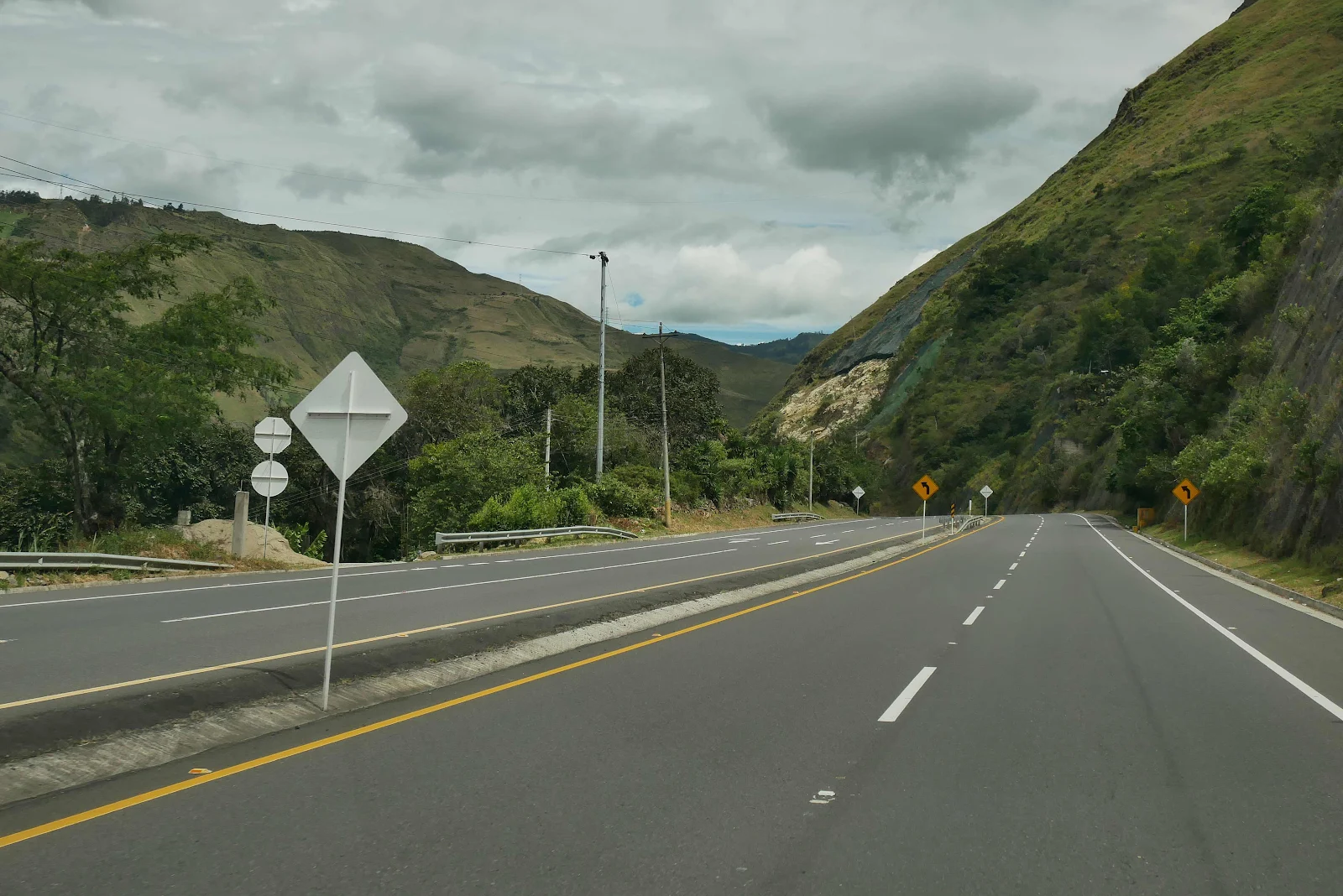
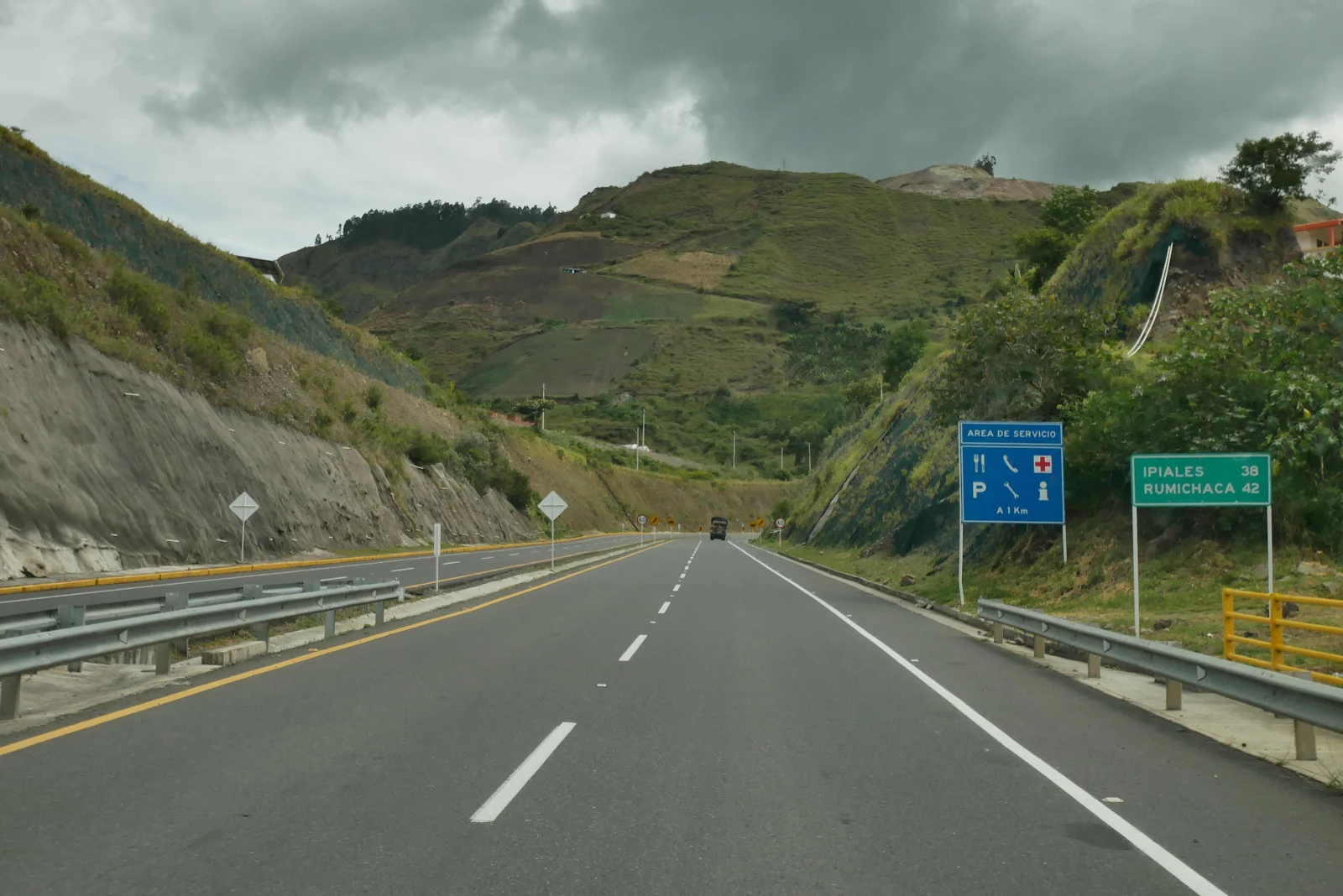
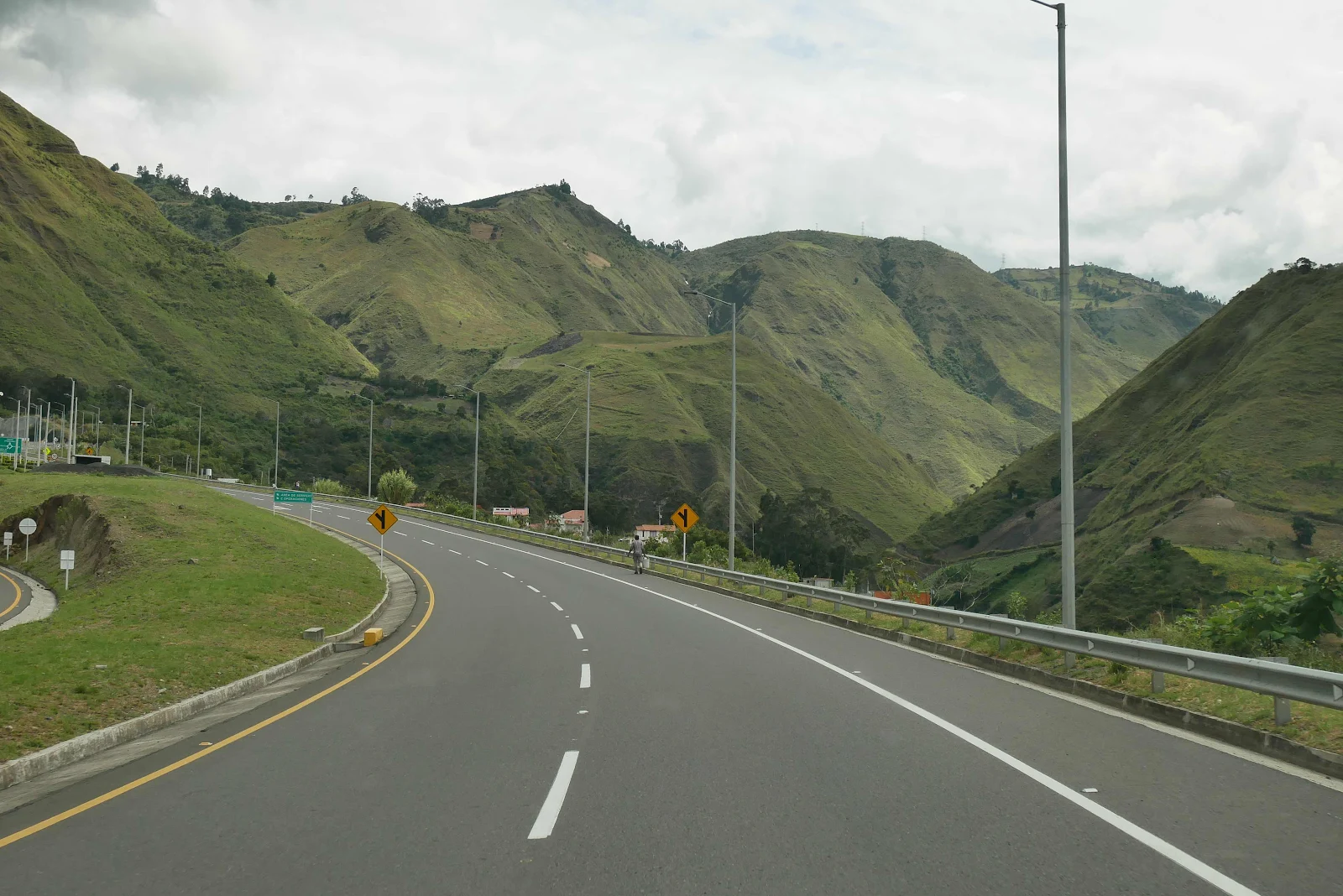
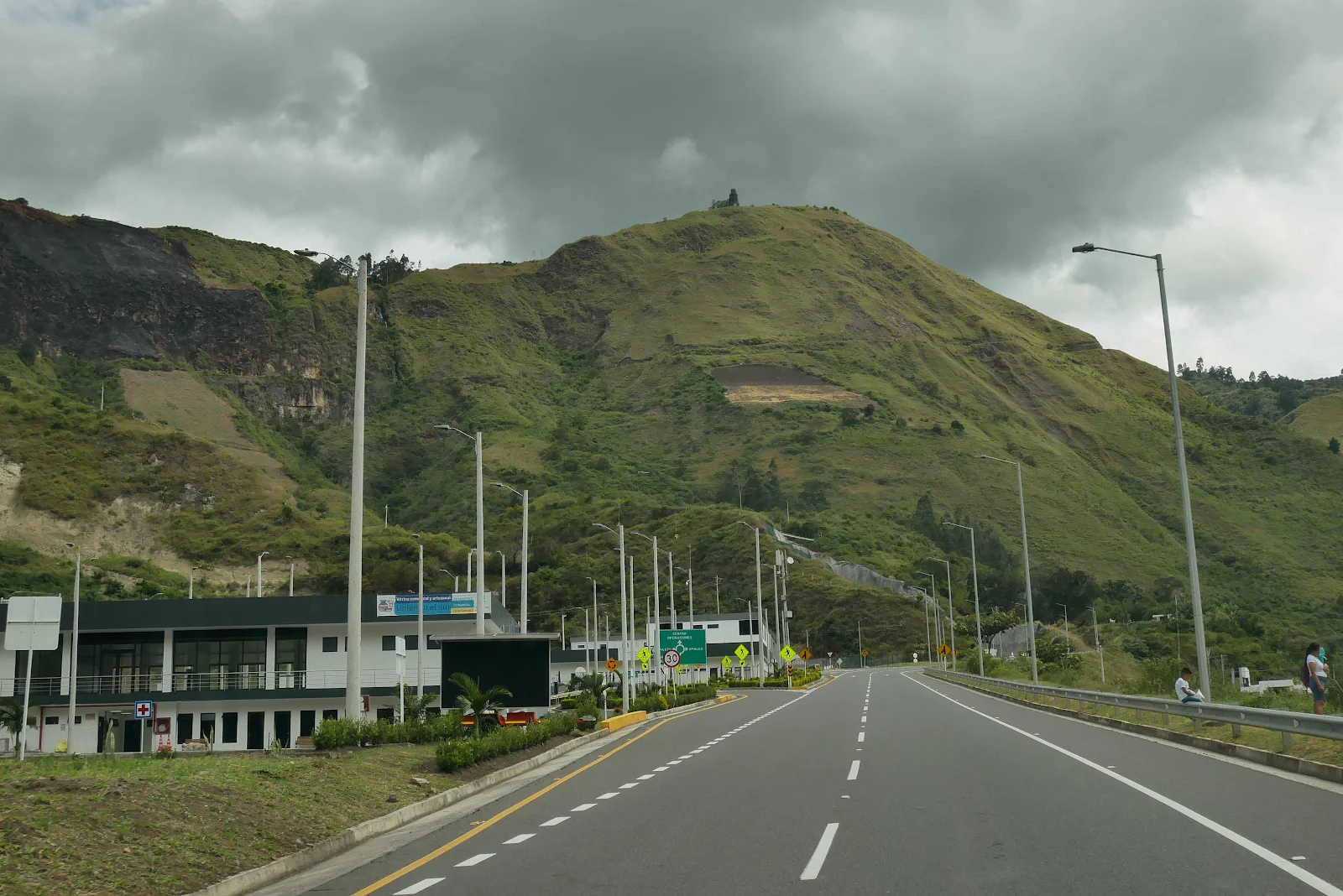
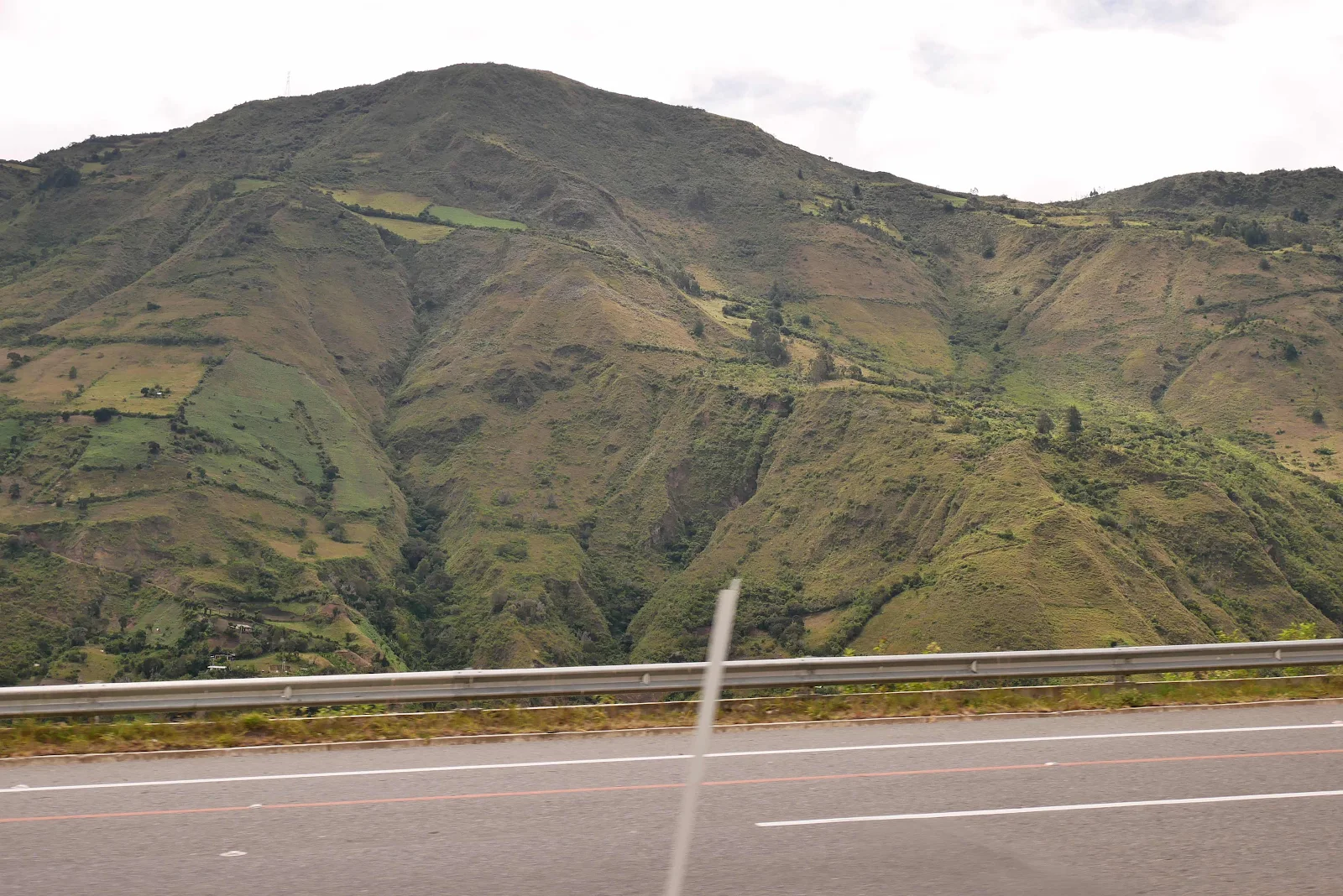
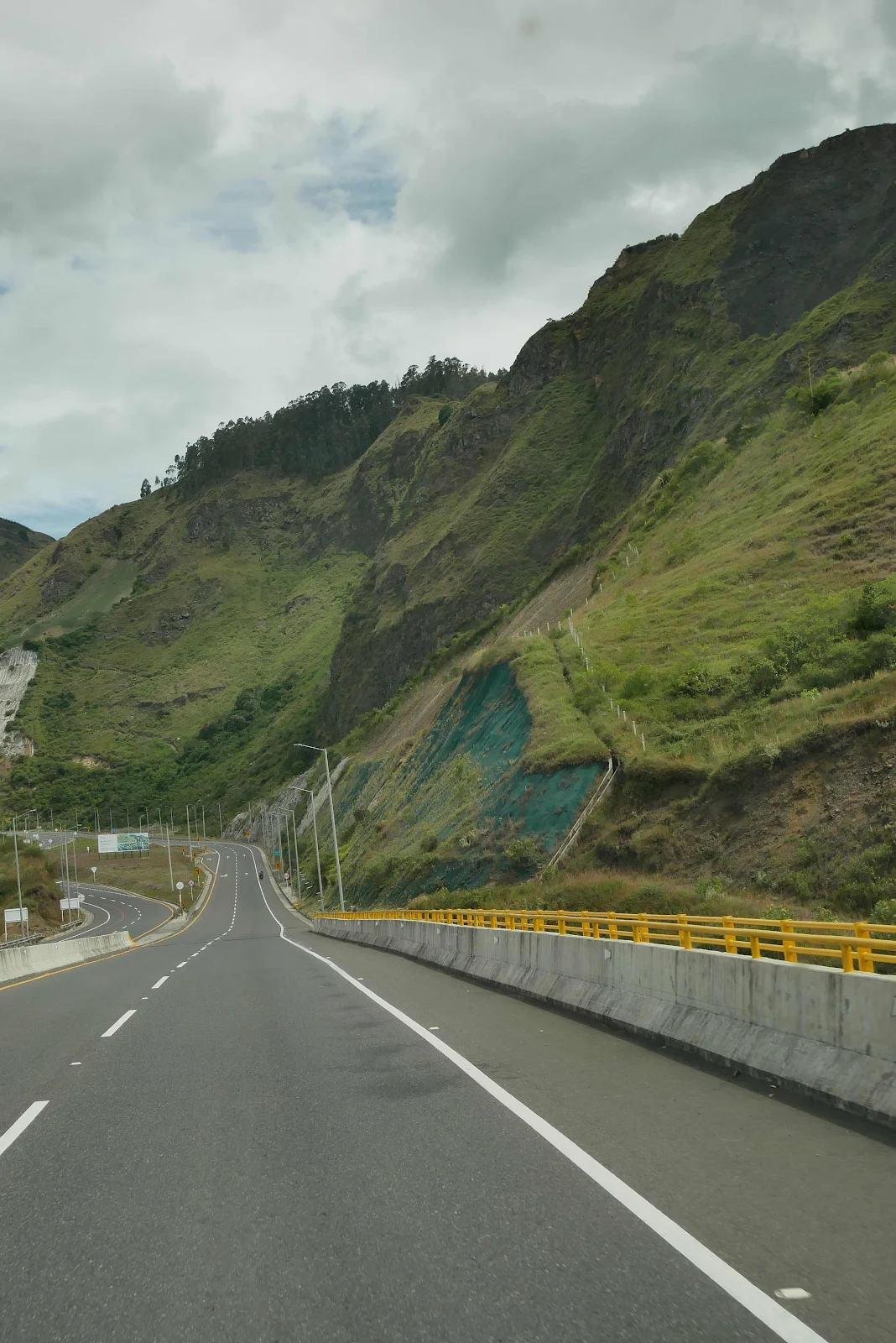
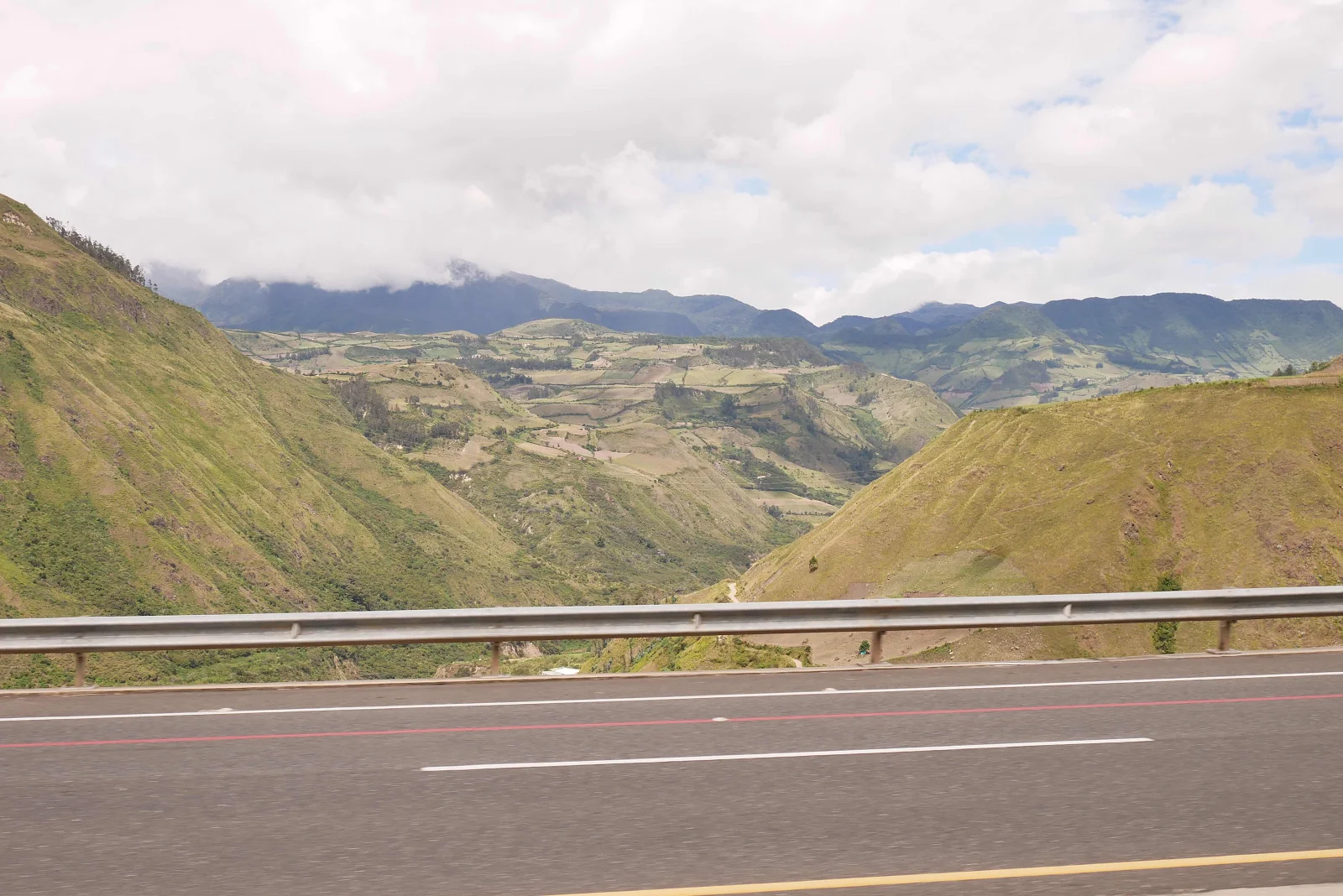
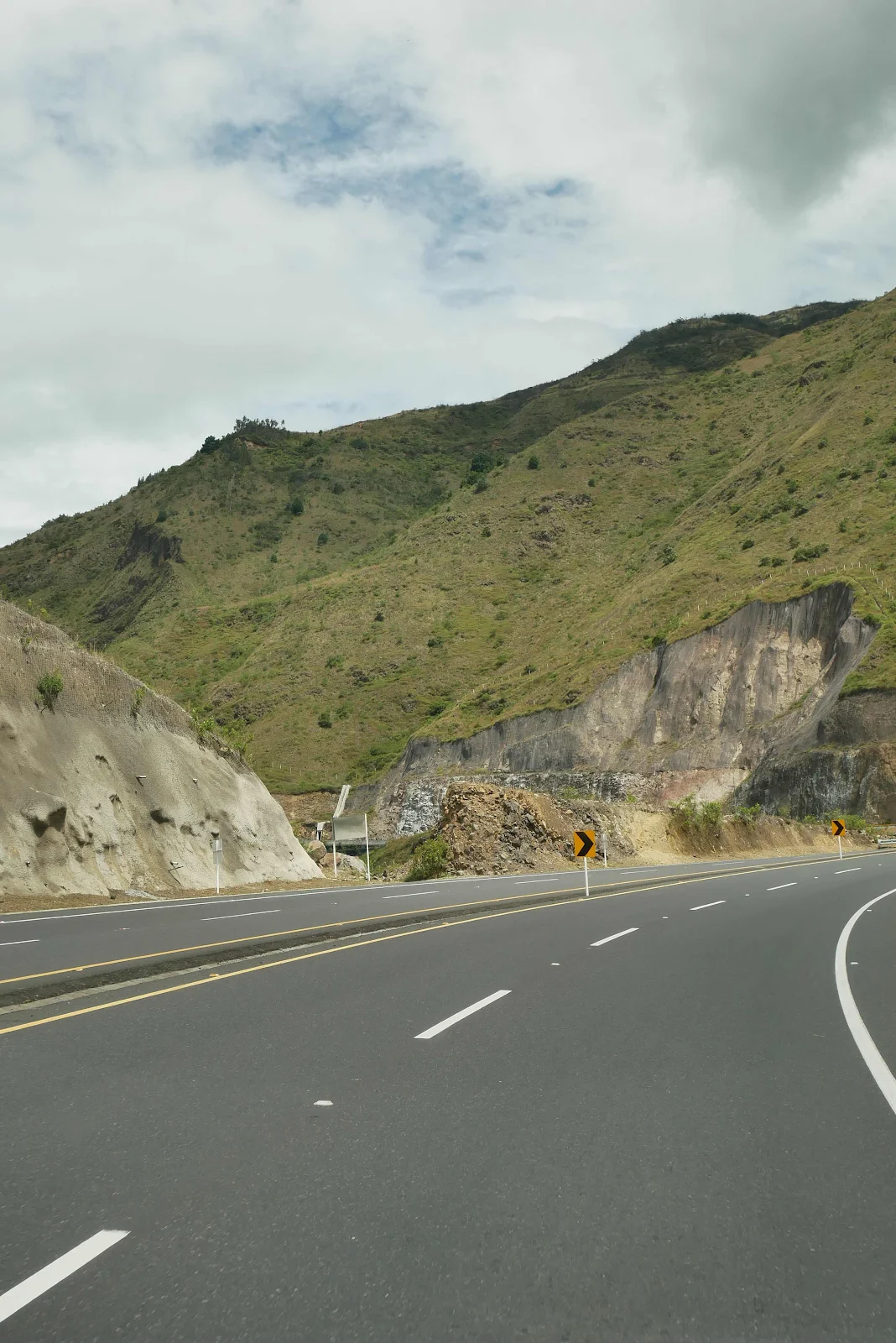
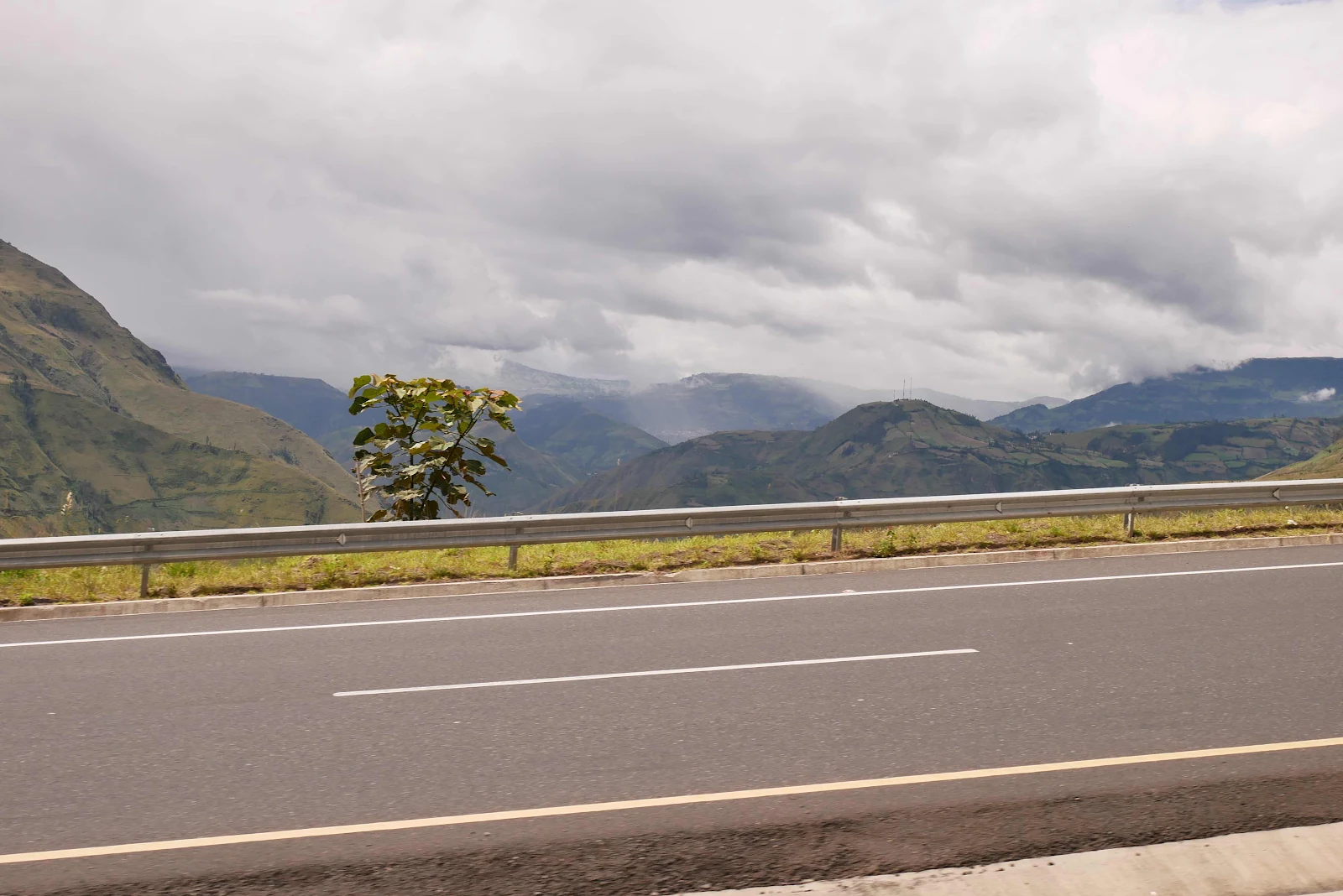
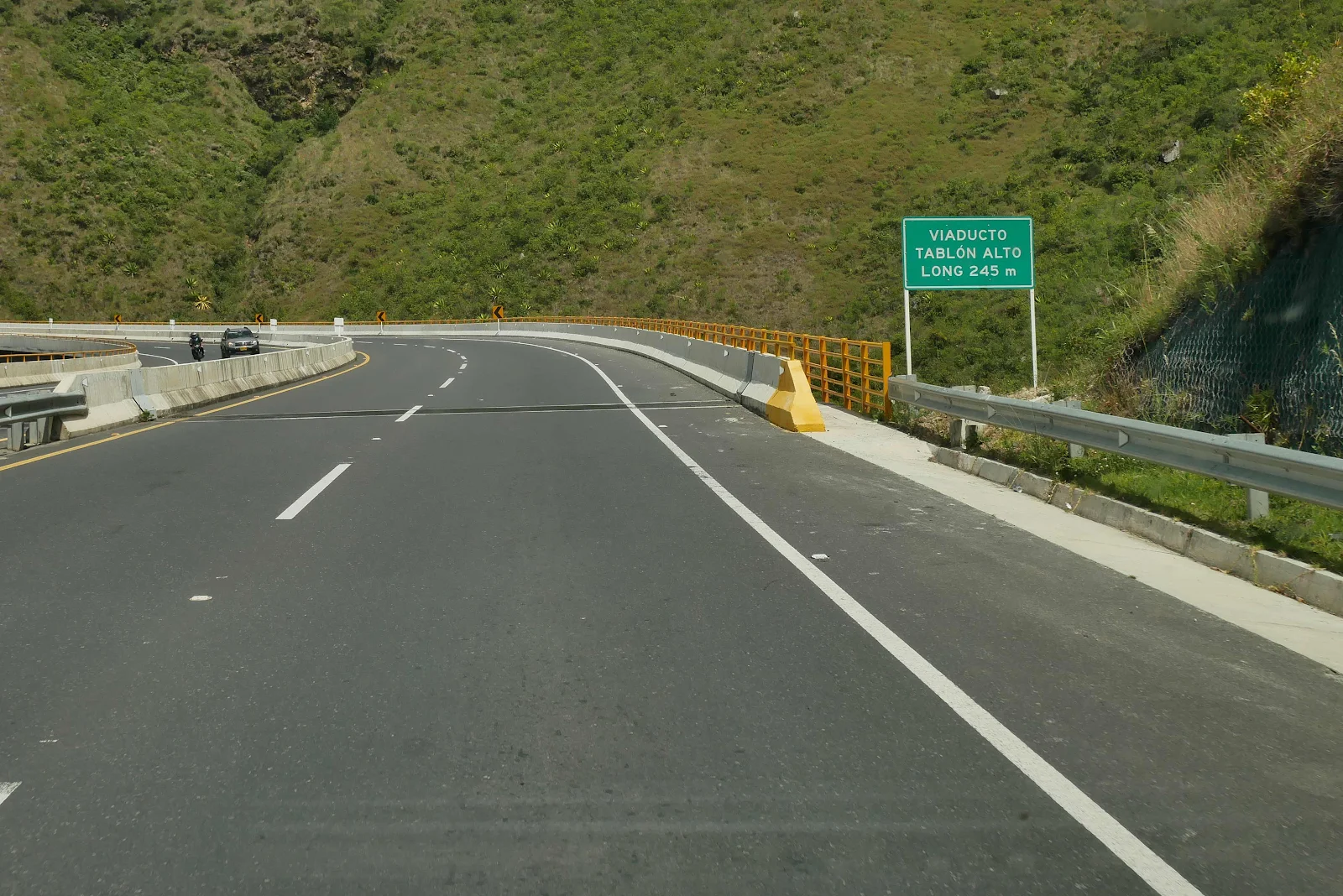
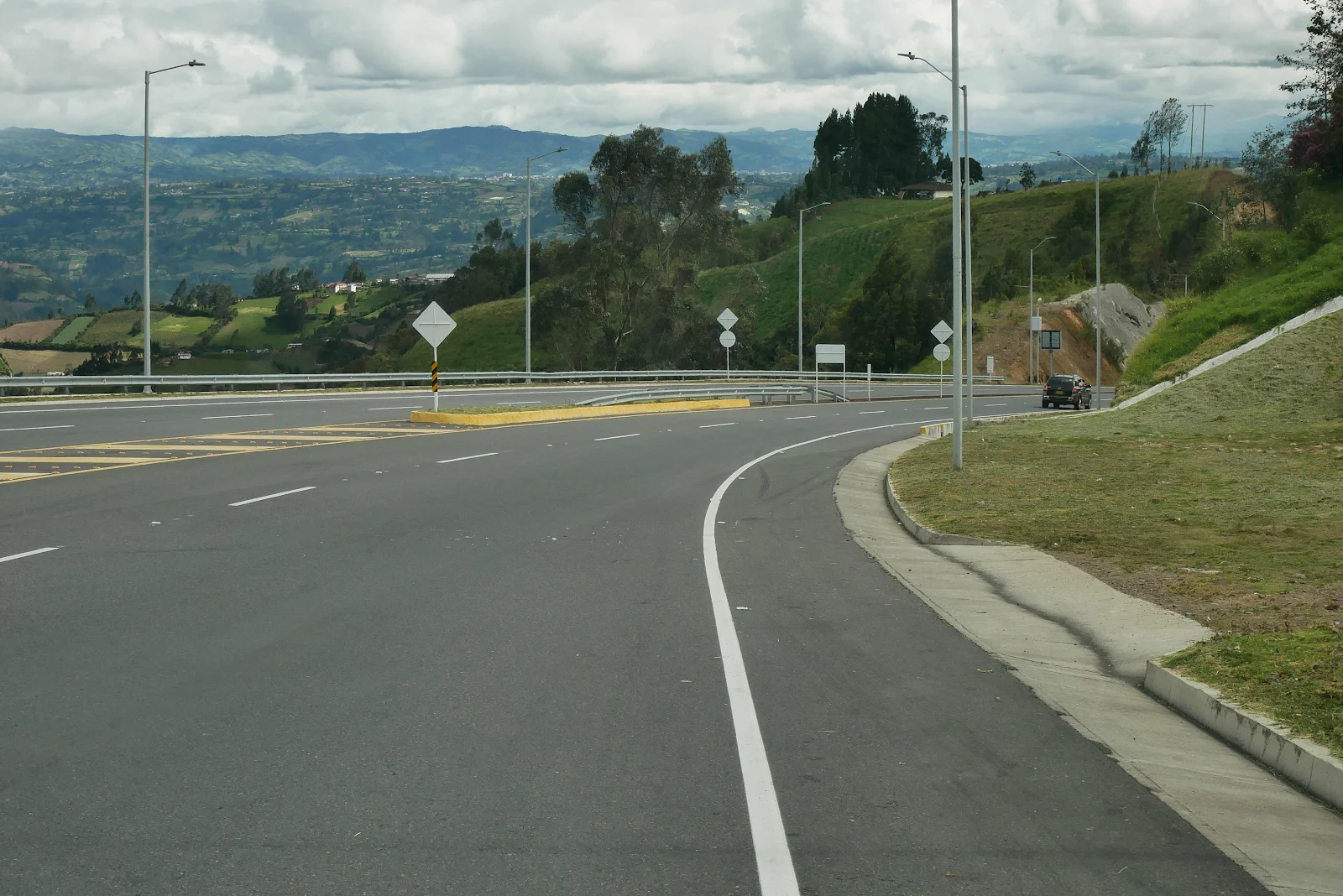
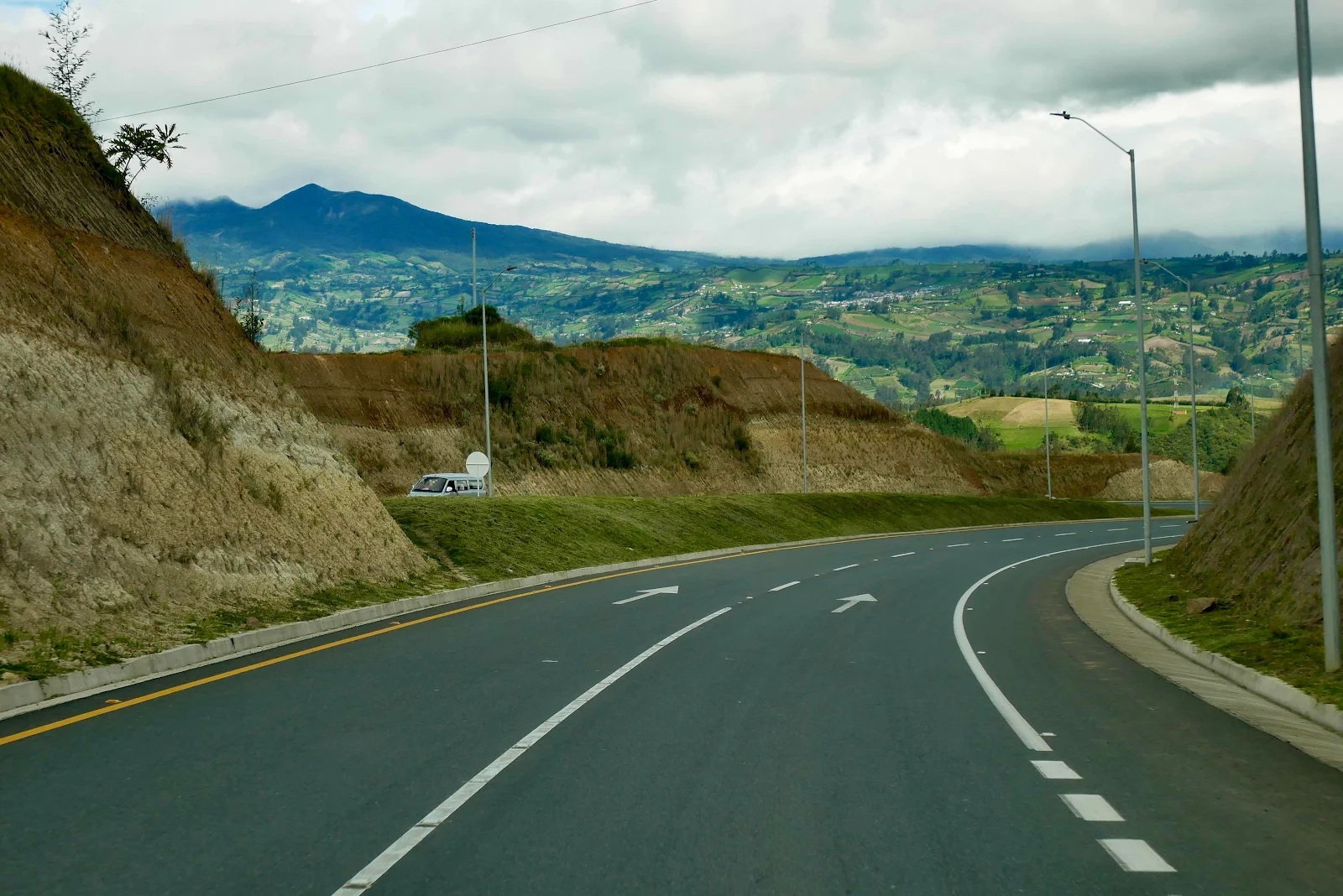
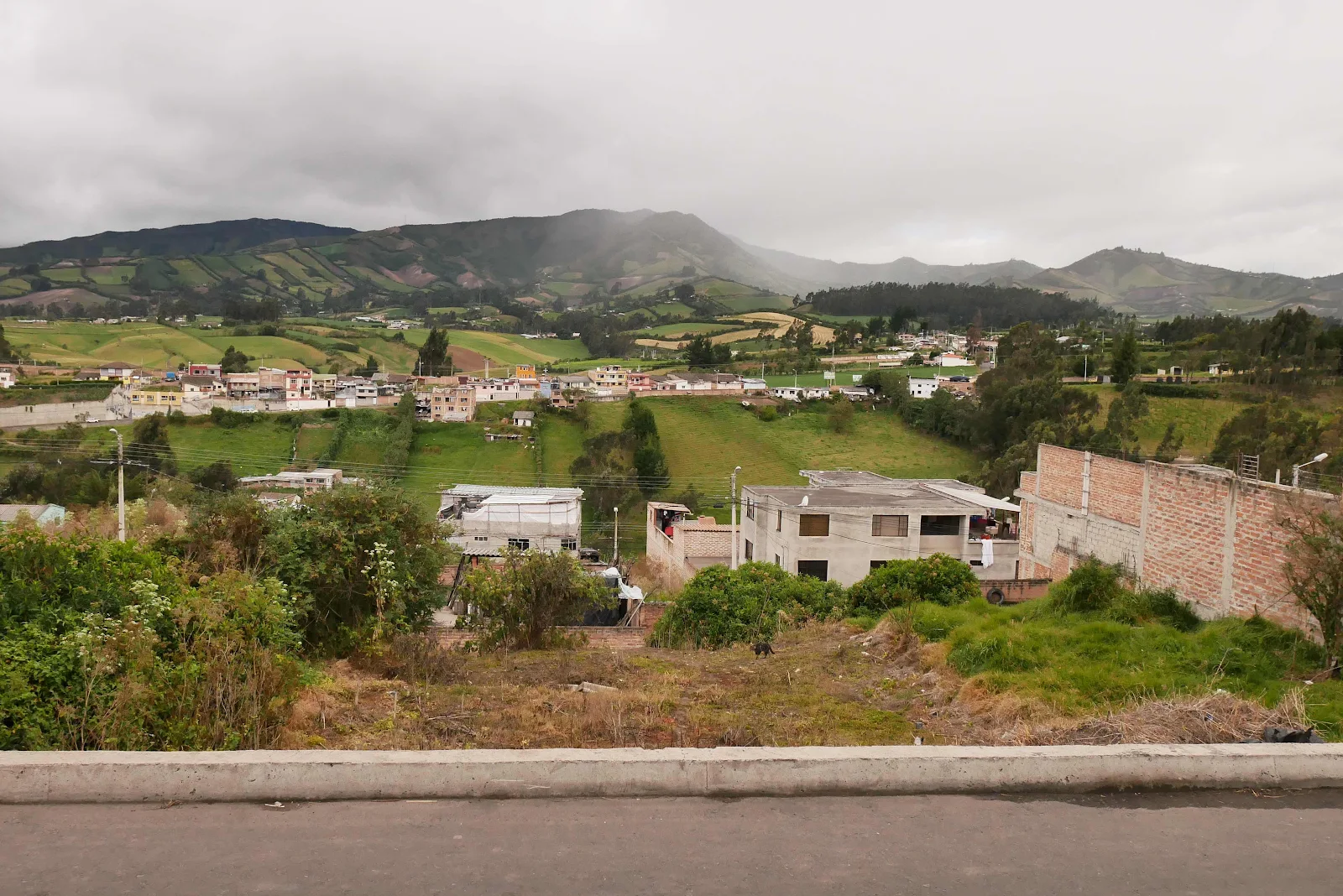
The drive set out across the altiplano (high plain) through the Andes at 10,000 feet. The road was perfect, smooth and easy with guardrails, signage and a decent shoulder. It would have been easy to drive if the locals hadn’t been crazy passers, worse even than Colombians.
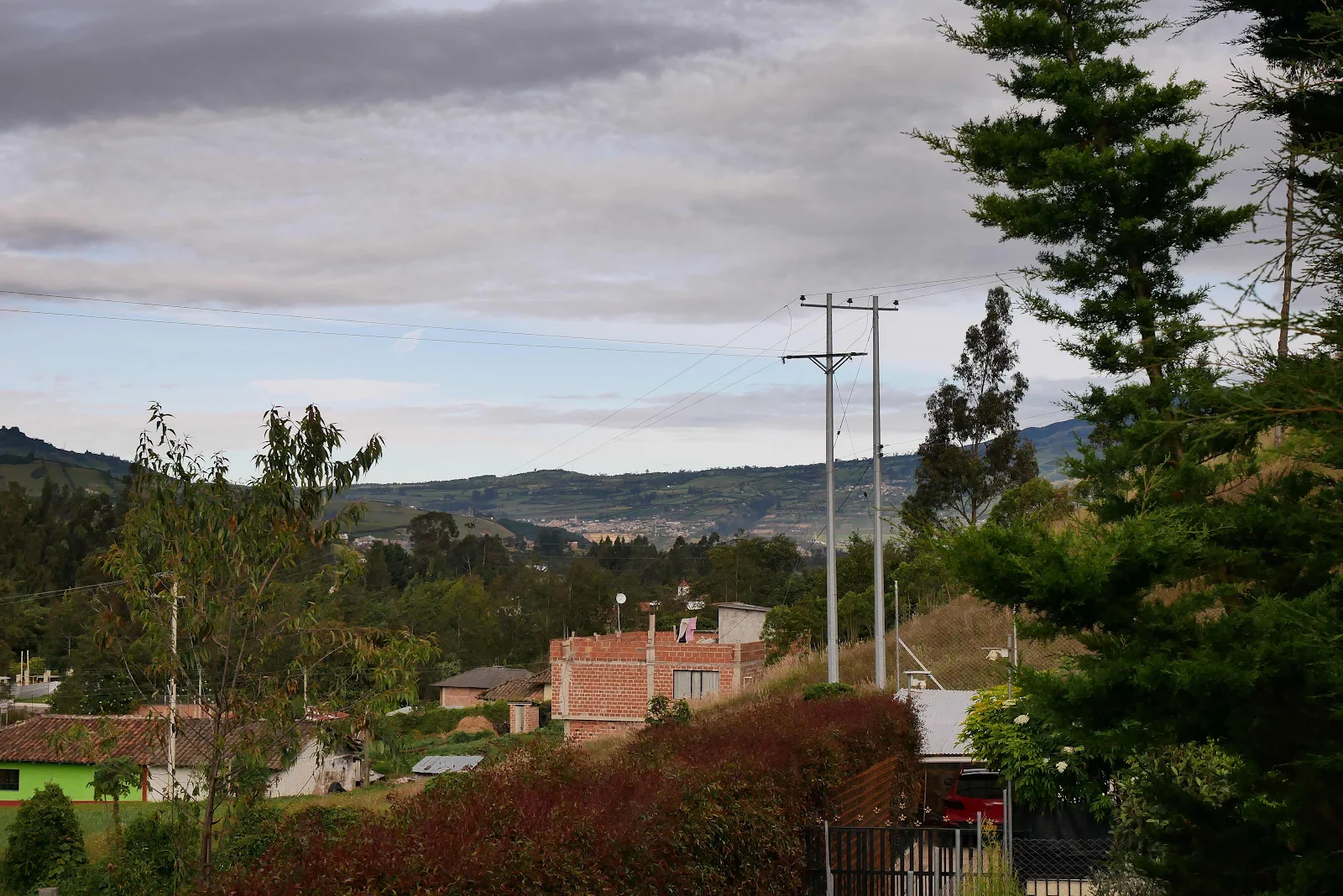
This post is long enough, tomorrow our arrival at Finca Sommerwind and settling into Ecuador. Layne has a long list of things to see before we drive to Peru.
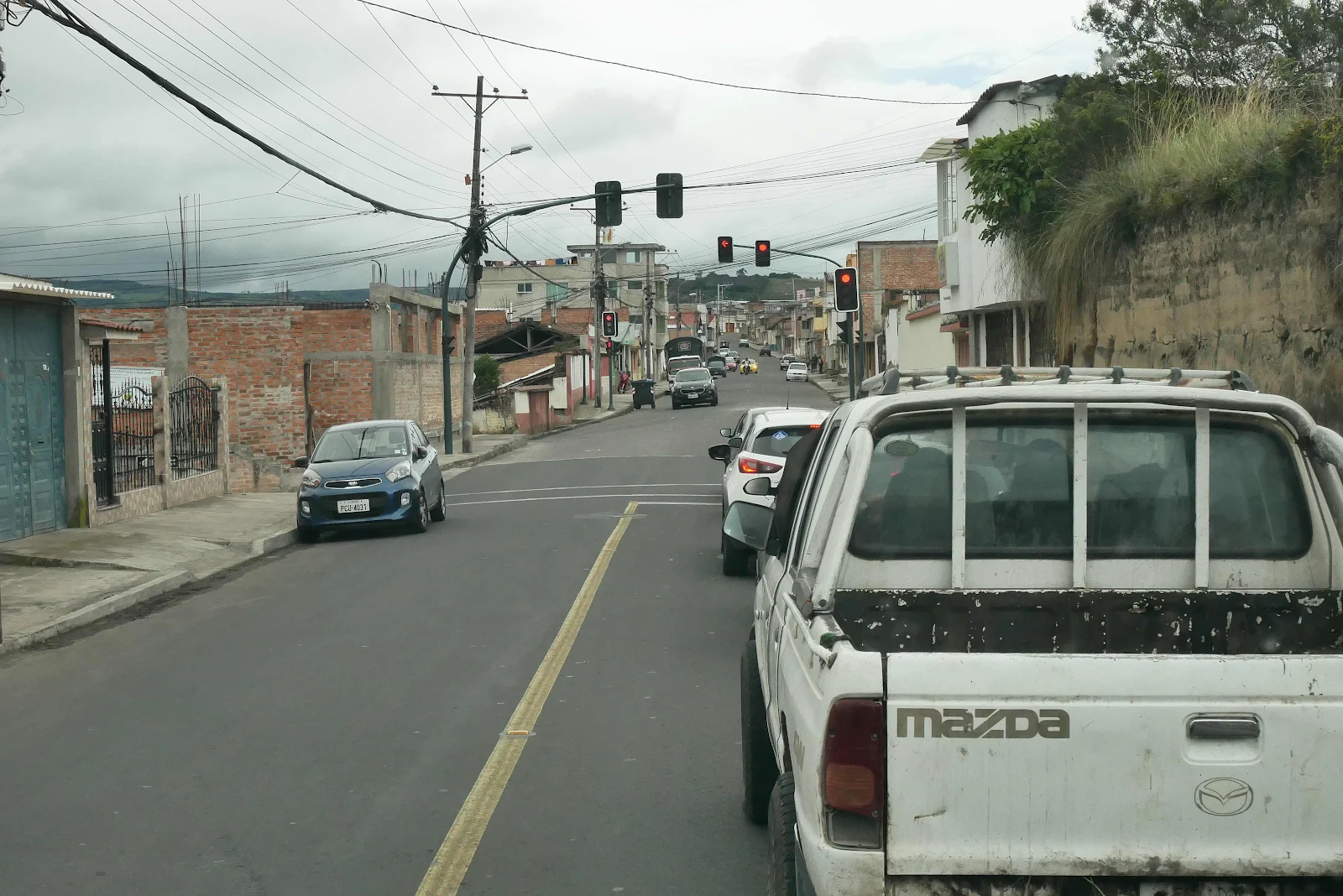
This was a lovely drive, no trash, no animals, no pot holes and lovely scenery. You’ll see.