Tuesday, August 20, 2024

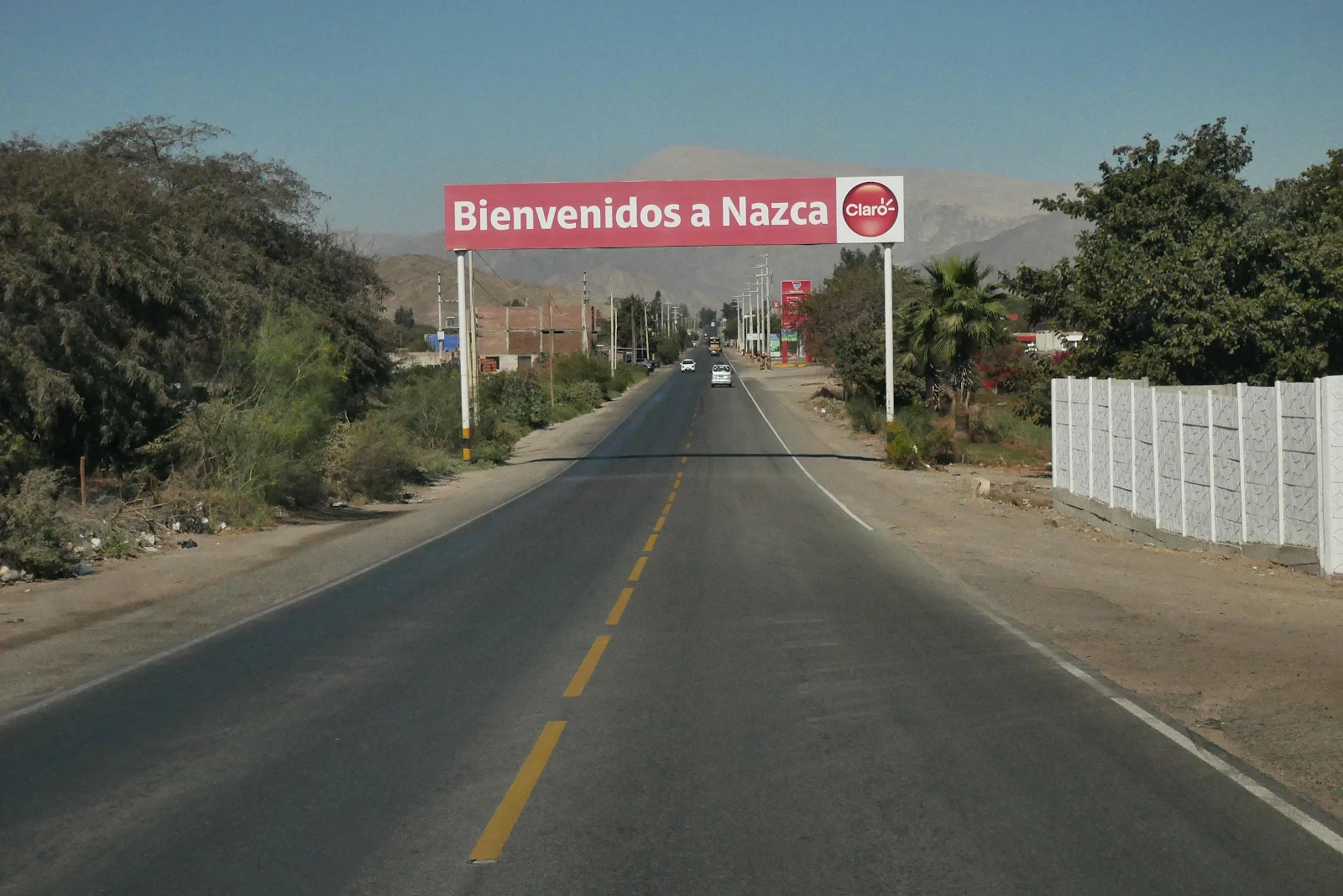
Nazca Lines

I have come to enjoy the places in Peru not exalted online, the ancient monuments we discover almost by accident on our travels by van. Think of Sipan, Chan Chan and Áspero, evocative slices of history, monuments to pre Inca civilizations developing in isolation on this remote Pacific Coast, places never before heard of that predate the more famous monuments of the Middle East. We’ve seen them and following along on our iconoclastic path you have too. Not many outsiders or Peruvians have.
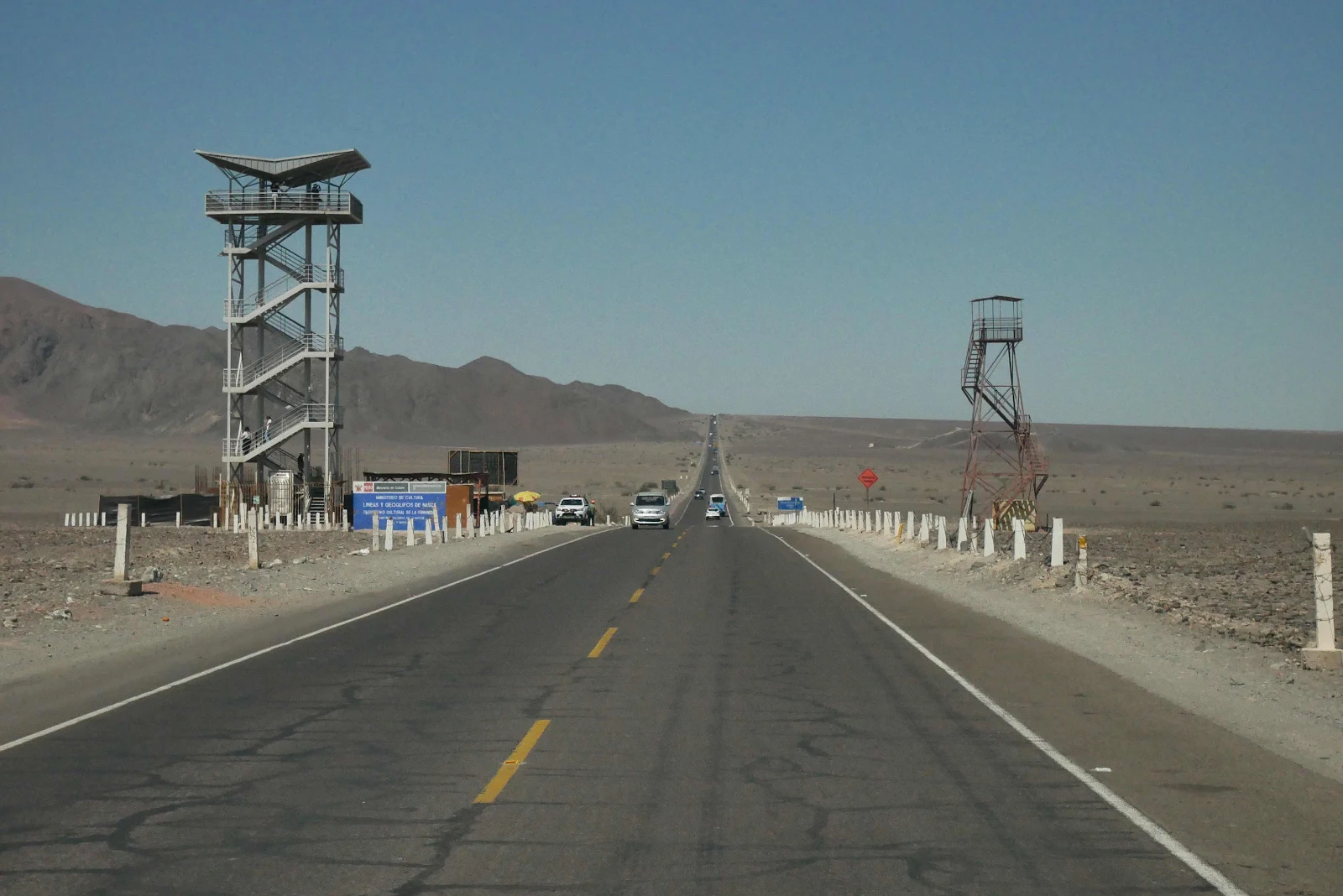
And then there are the Nazca Lines mysterious symbols etched into a remote inhospitable corner of coastal Peru a few hours south of Lima. They were seen and ignored by Conquistadors crossing the mountains and looking down into the valley. They were seen in the age of flight in the early 20th century and in the 1970s they were the subject of preposterous alien theories which we heard of alright. It was as though impossible to believe brown people 2500 years ago could create outsized art in the desert so we attributed these designs to aliens on a desert vacation. 
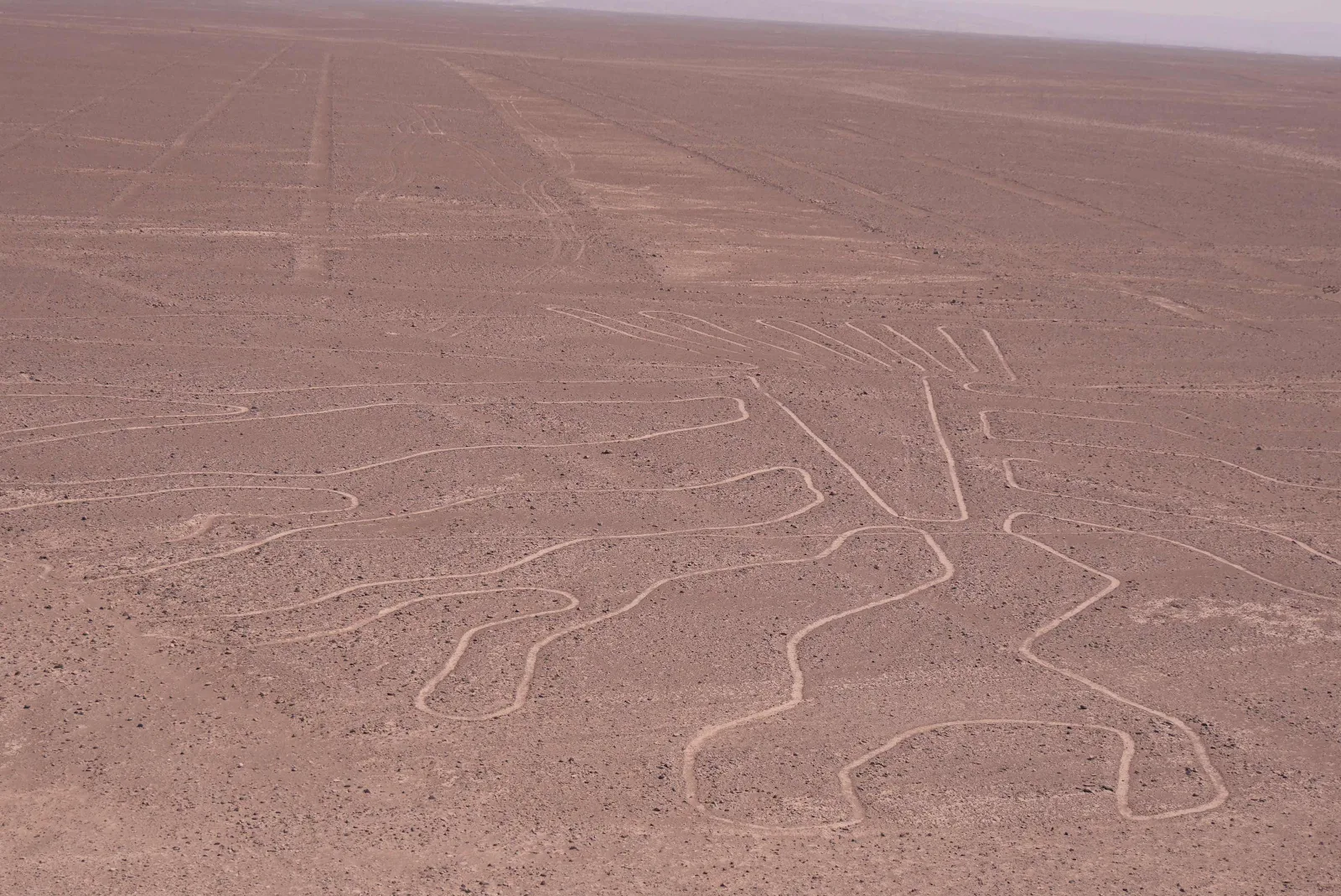
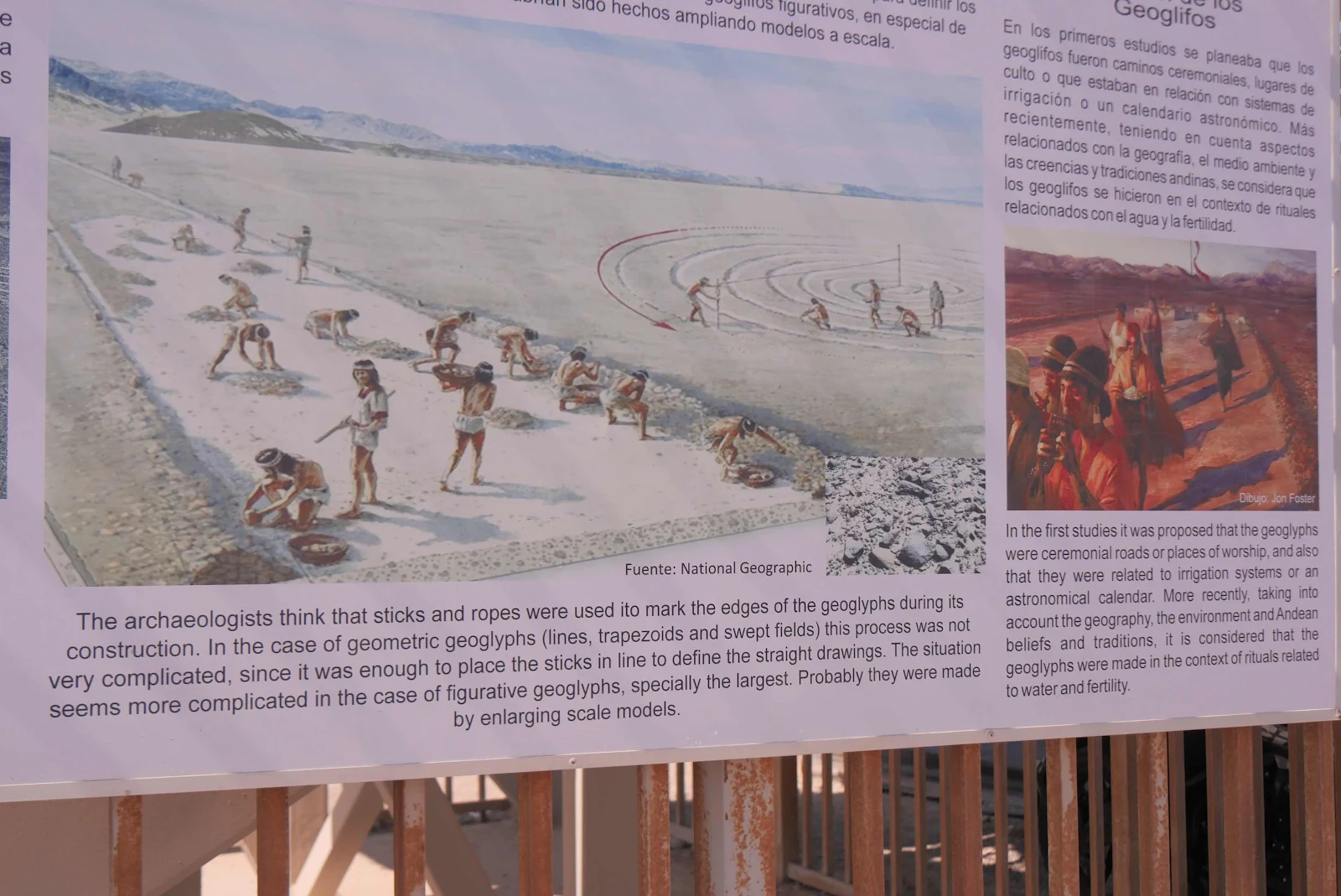
Archeologists have figured them out and attribute to them   no  practical significance but suggest they are one more example of religious symbolism to communicate with the gods they hoped ruled their lives.
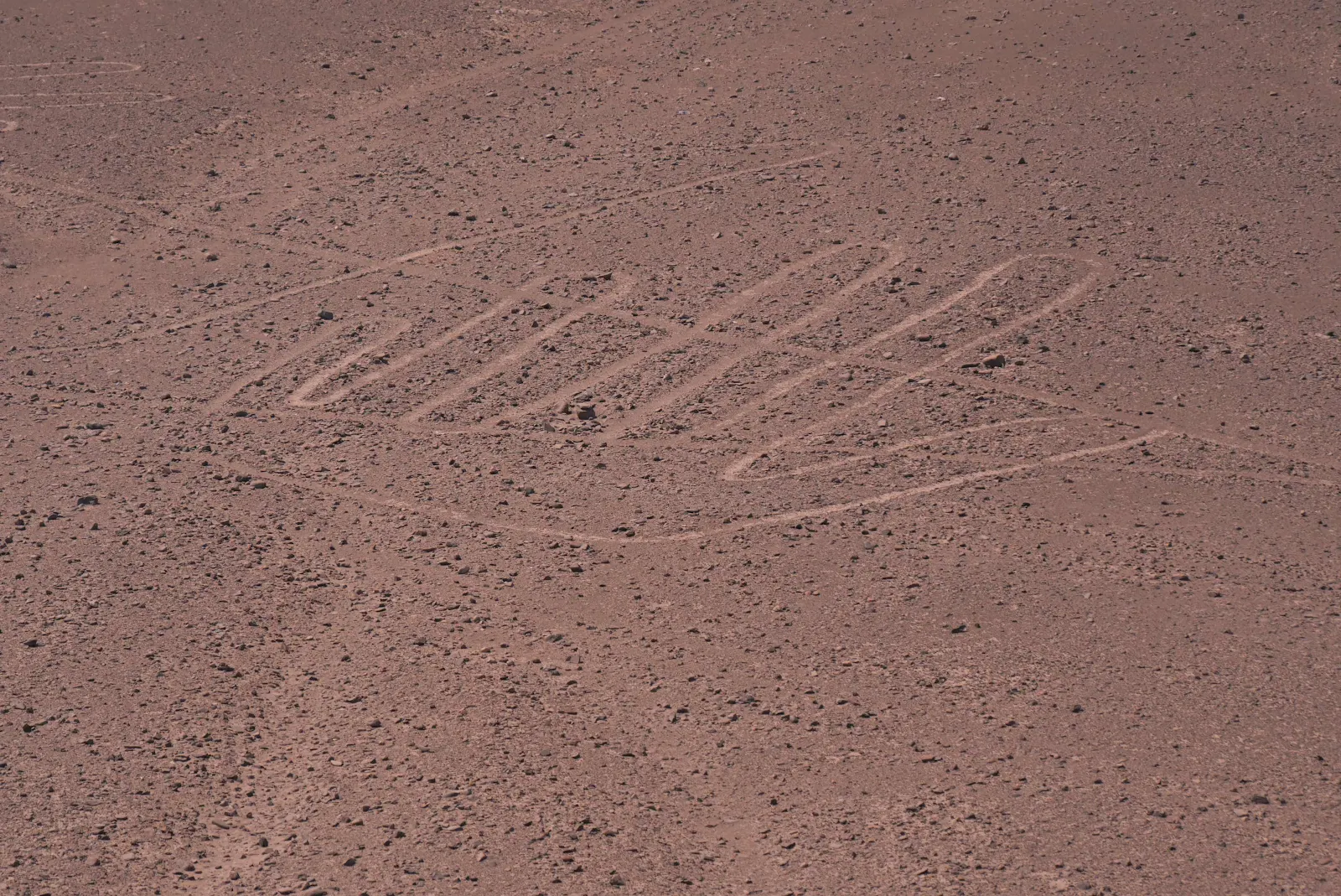
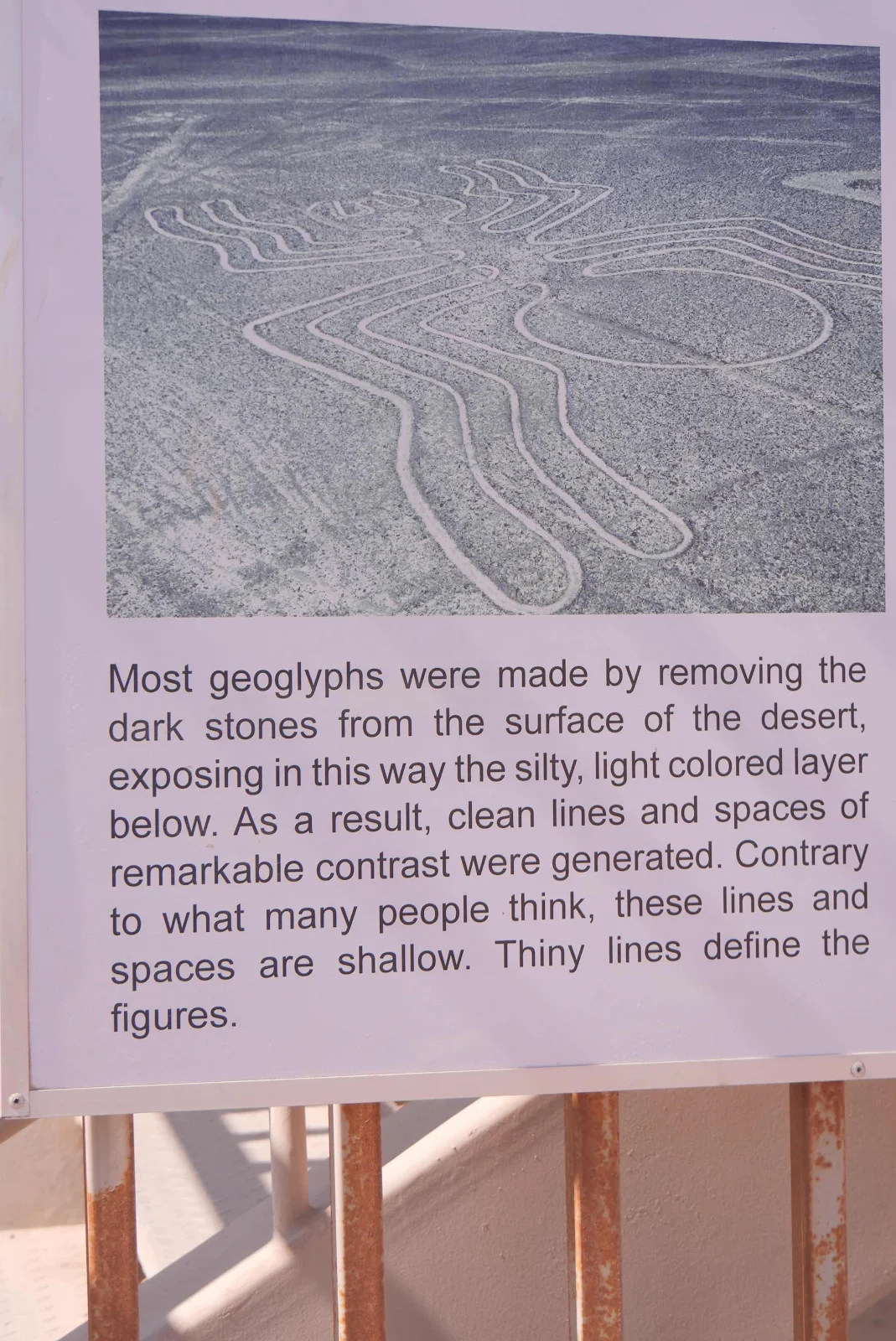
By carbon dating wooden pegs found at the location sciebtists know when the lines were built, a period of  five hundred years either side of the birth of Christ. They planted pegs and scribed arcs with string or drew straight lines removing the dark pebbles and creating light colored lines a few inches deep. 
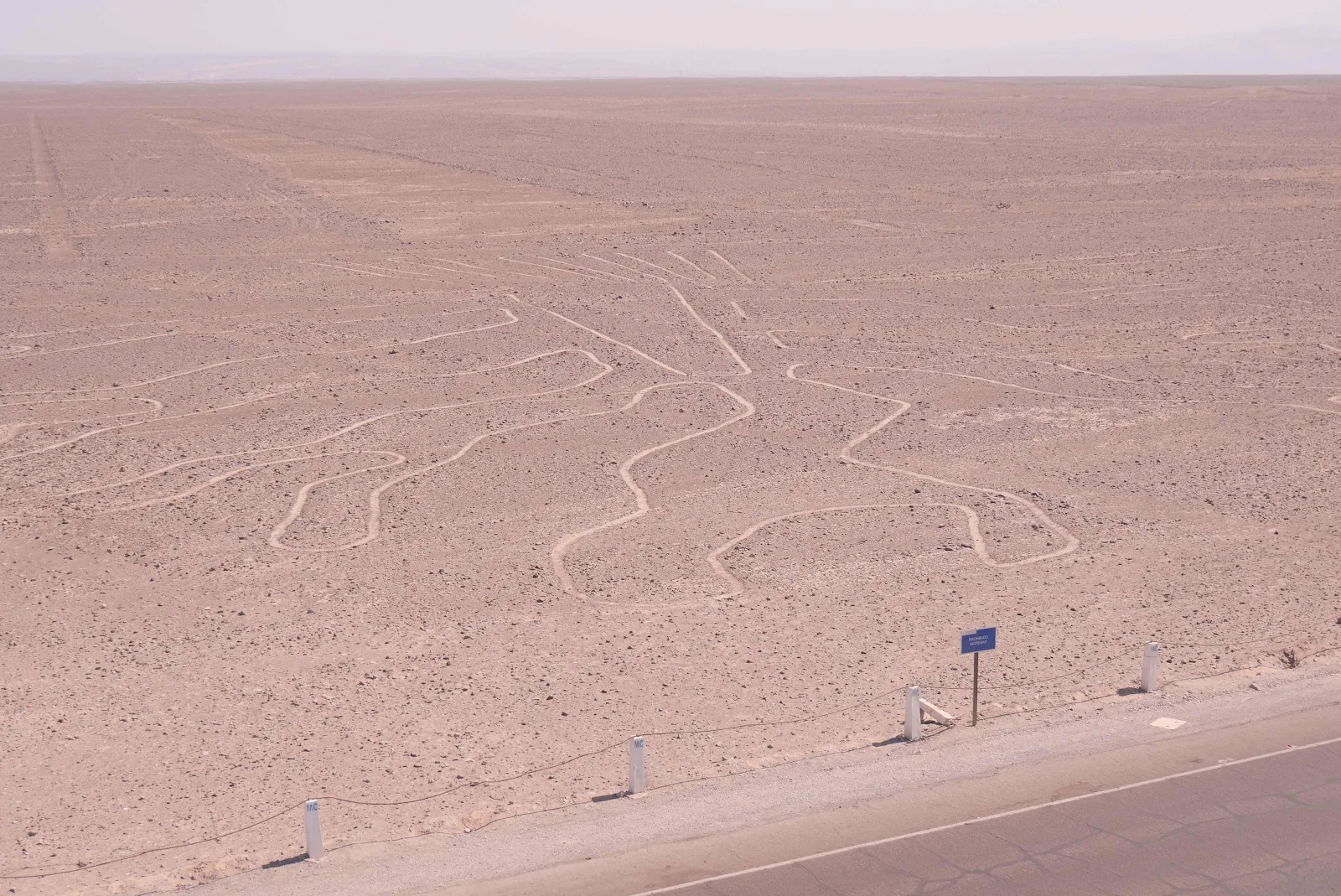
Other than that no one knows anything about them so if you want to believe aliens came here to draw pictures of what they found, you are welcome to, but what none of us can deny is their fame thanks to the looney alien speculation. 
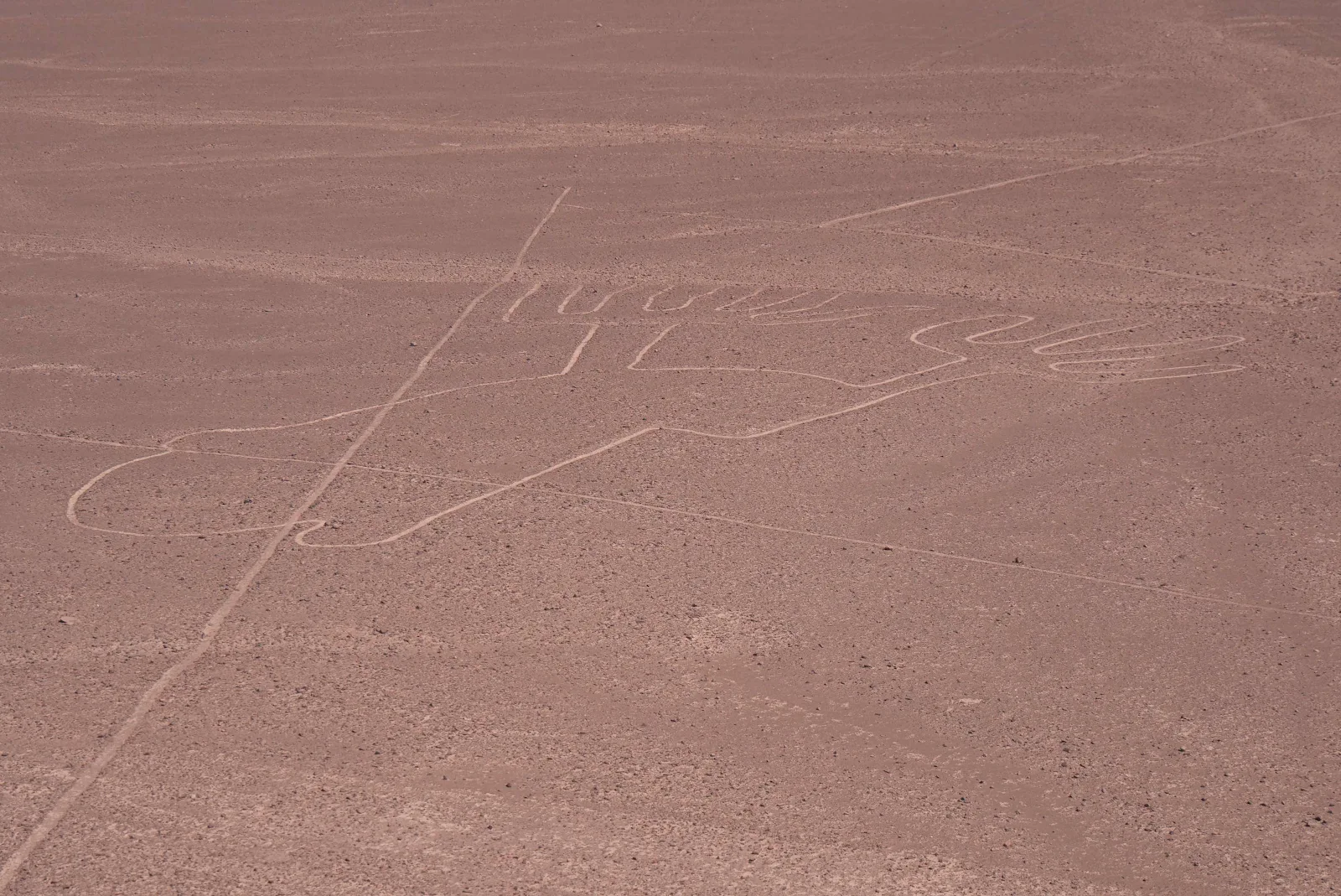
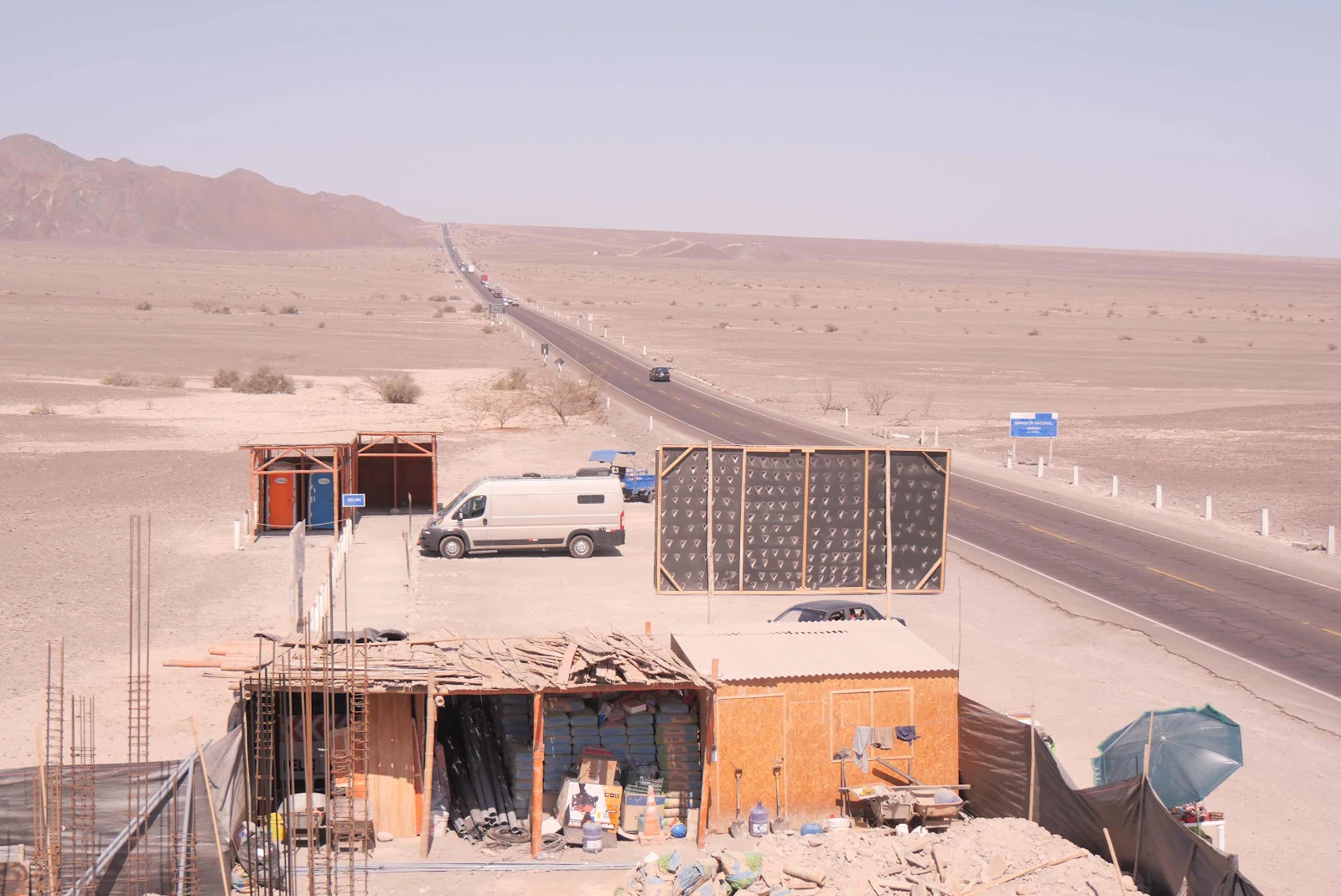
That people lived out here boggles the mind. 
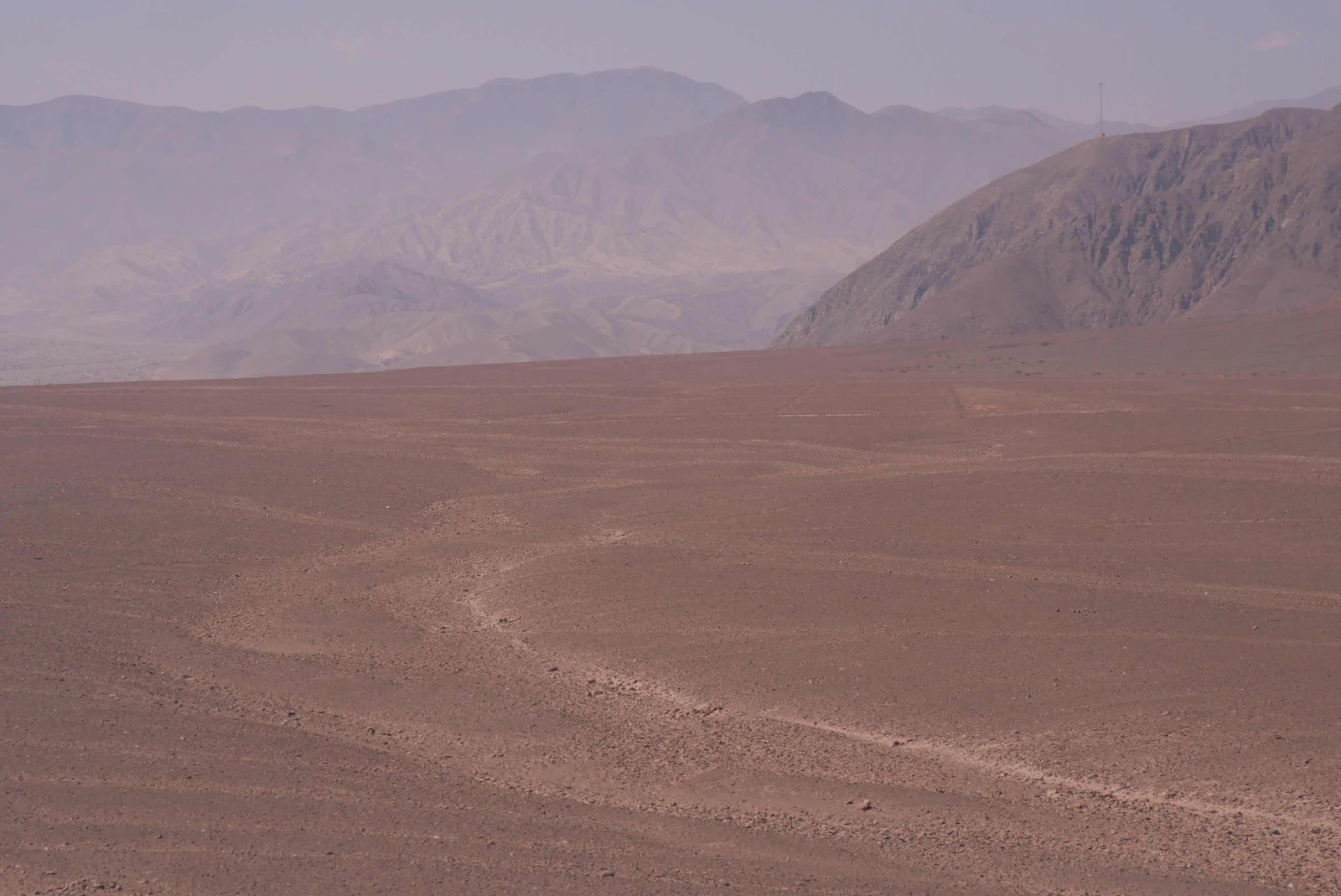
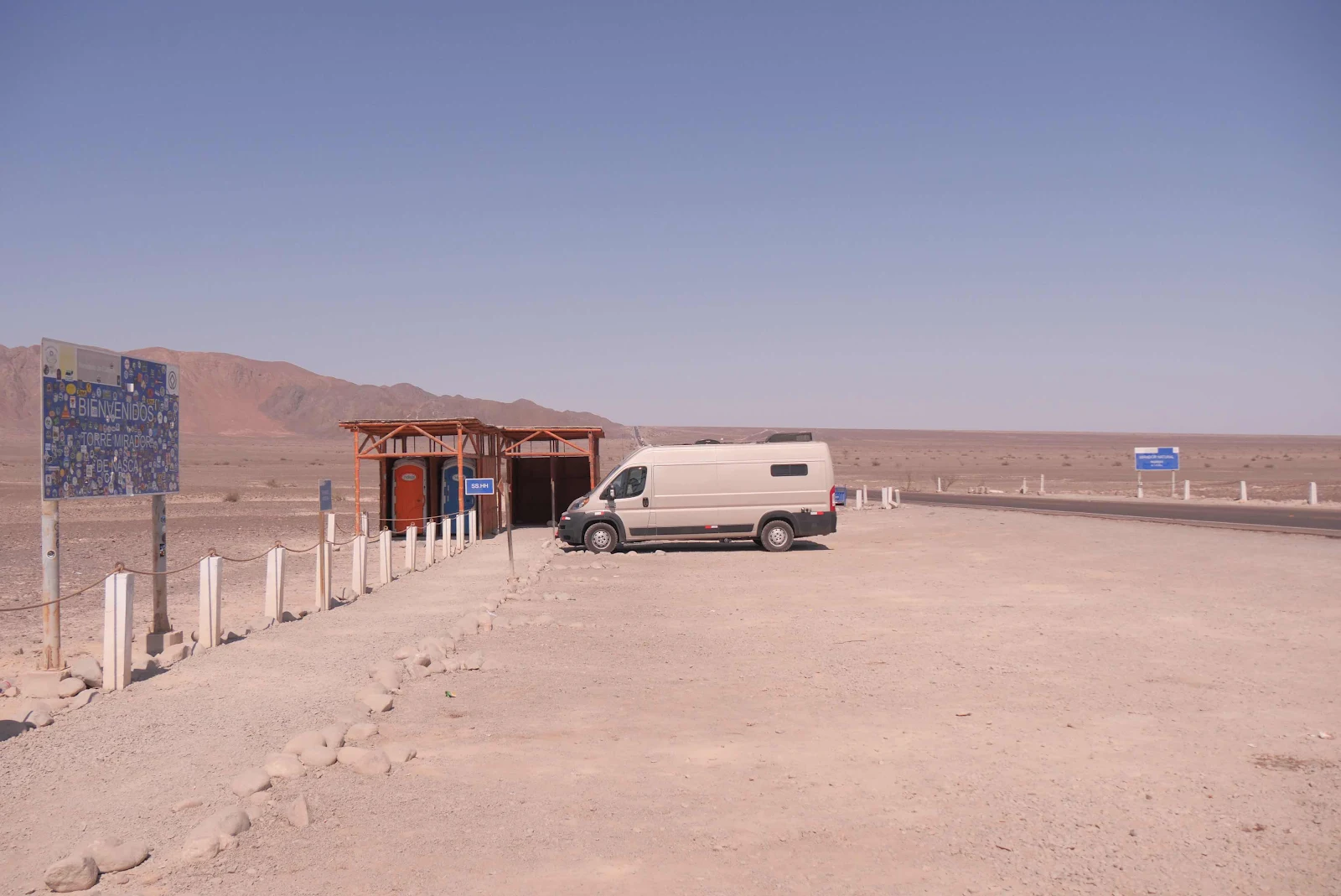
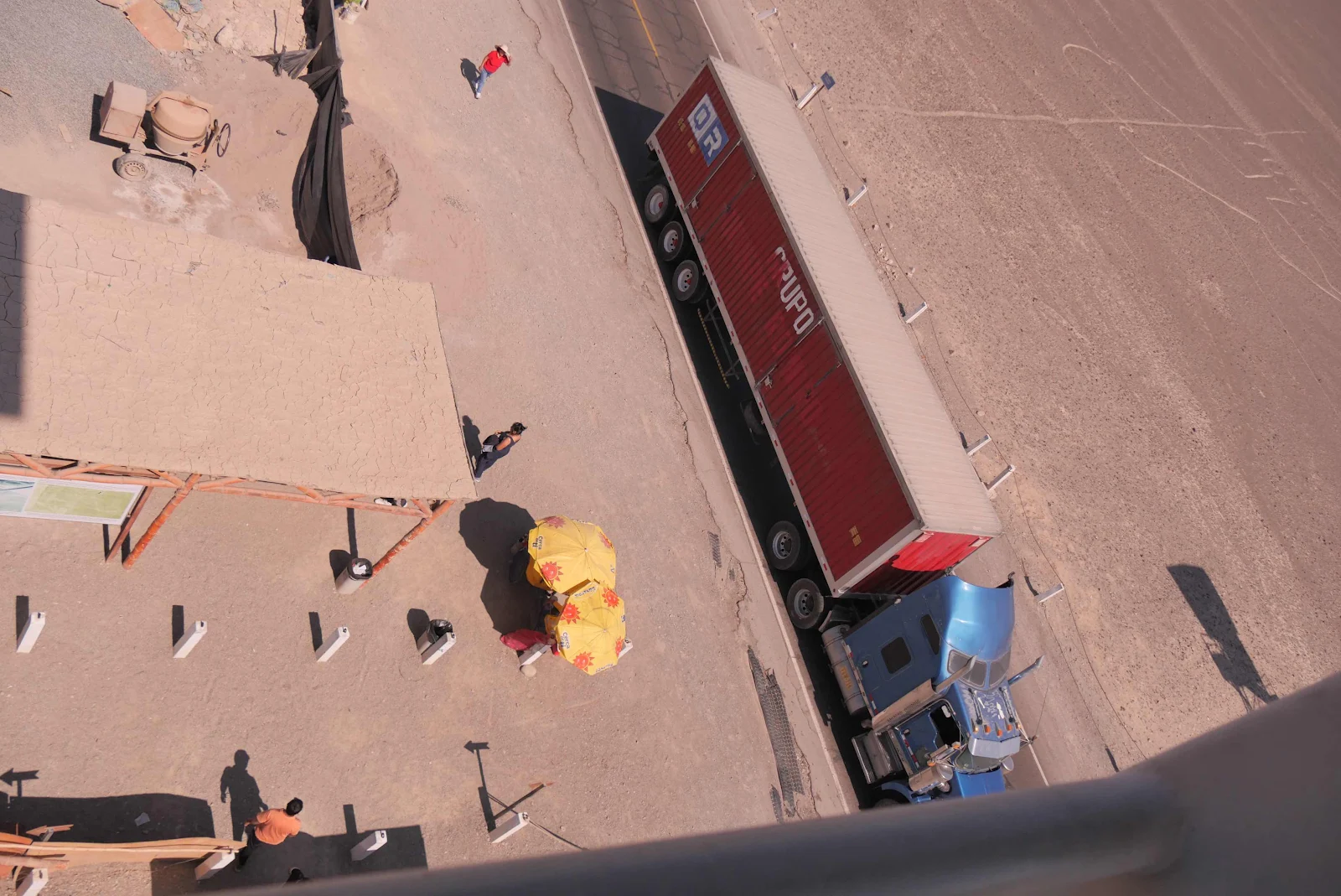
That’s the original smaller observation tower now closed. 
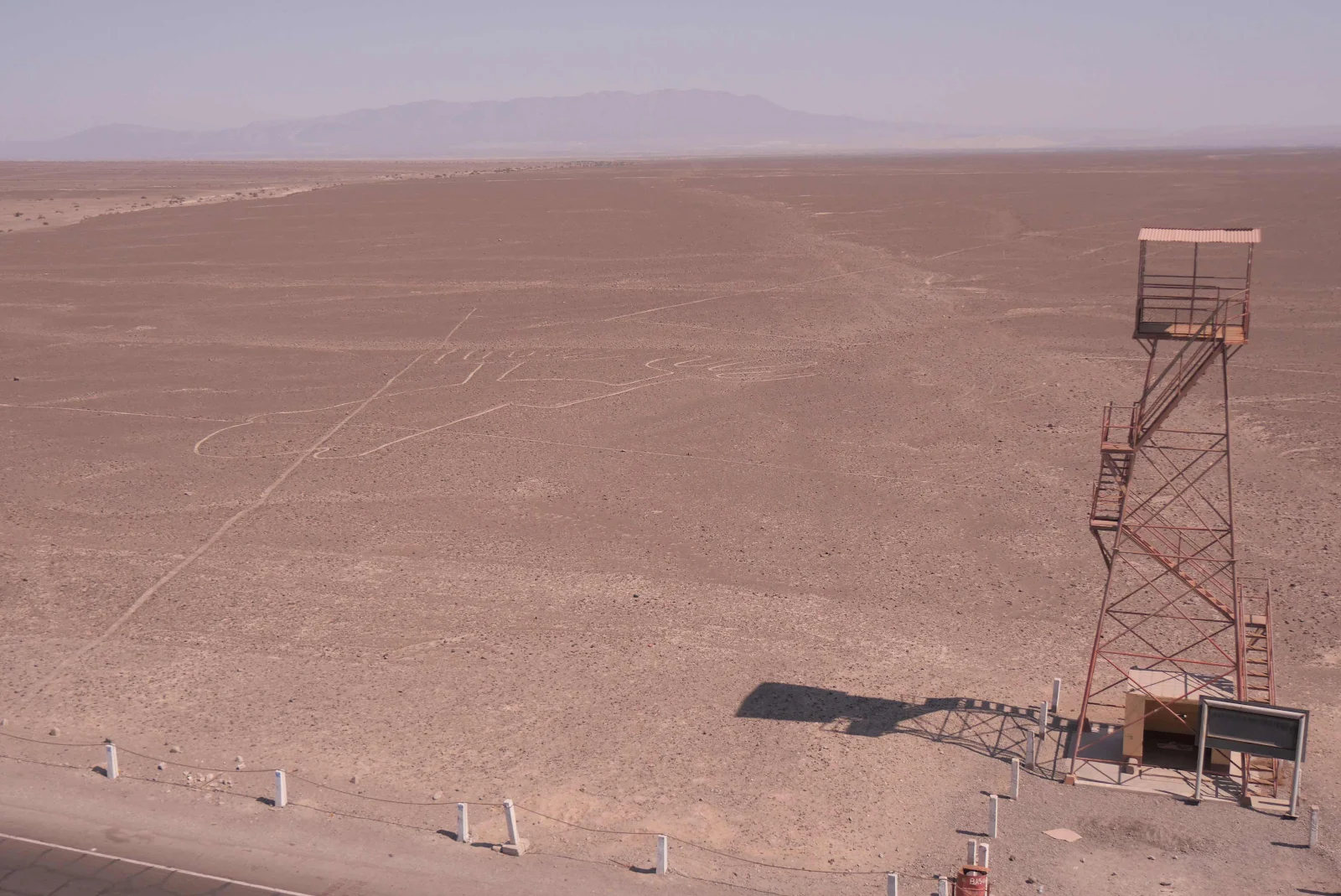
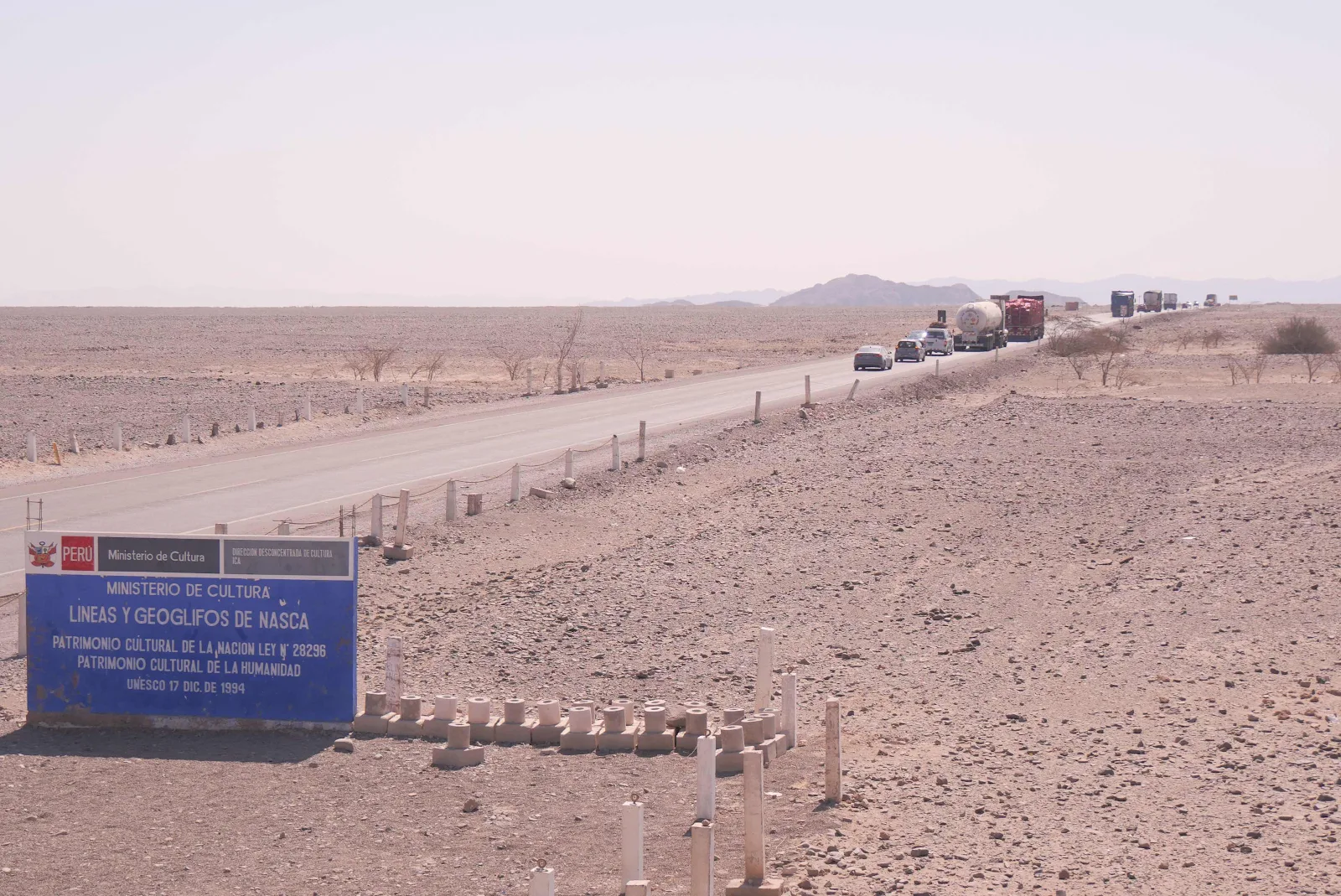
It’s an odd spot to do such elaborate art work which is invisible from the ground. And then to run the PanAmerican Highway through the middle of it seems odder still. 
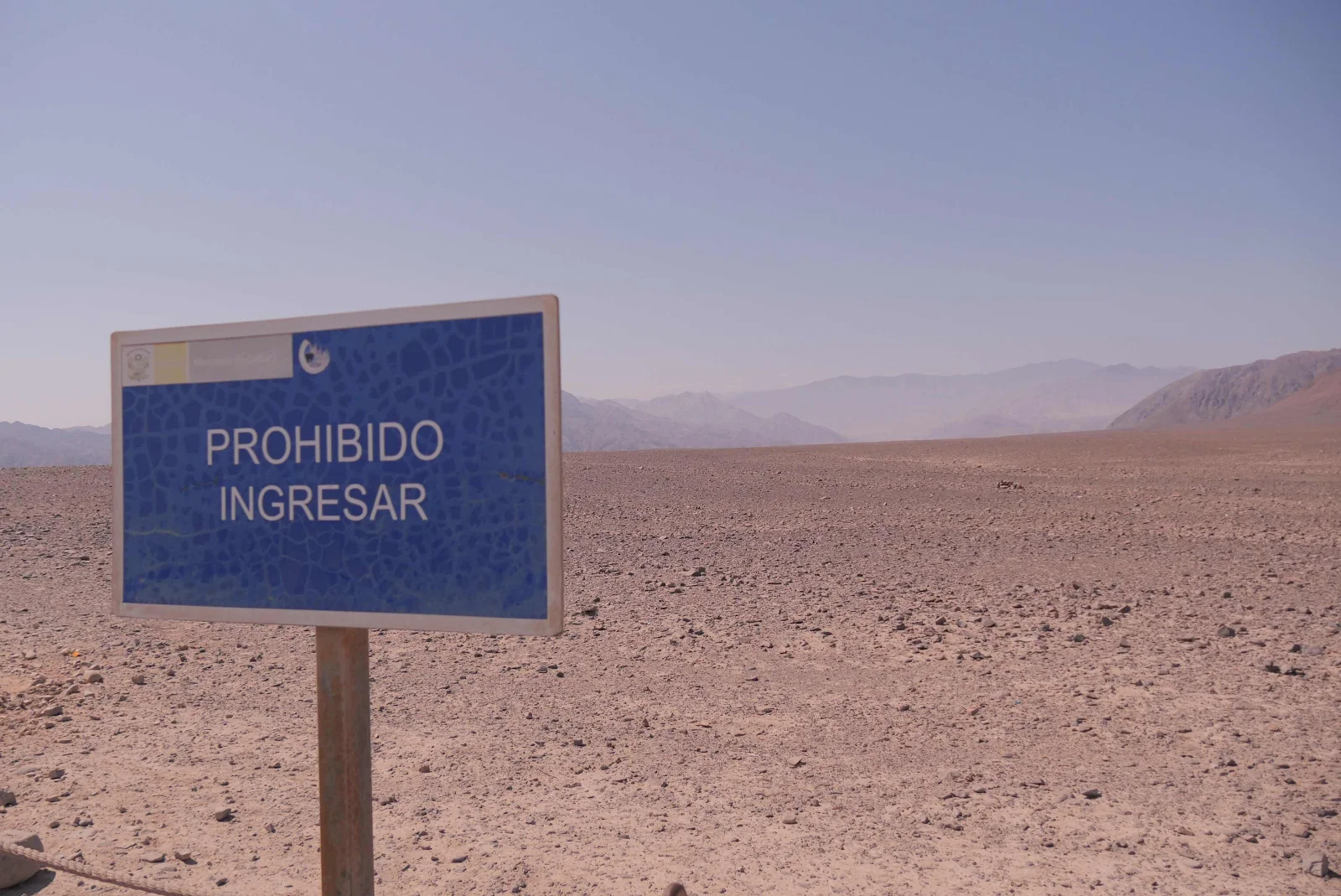


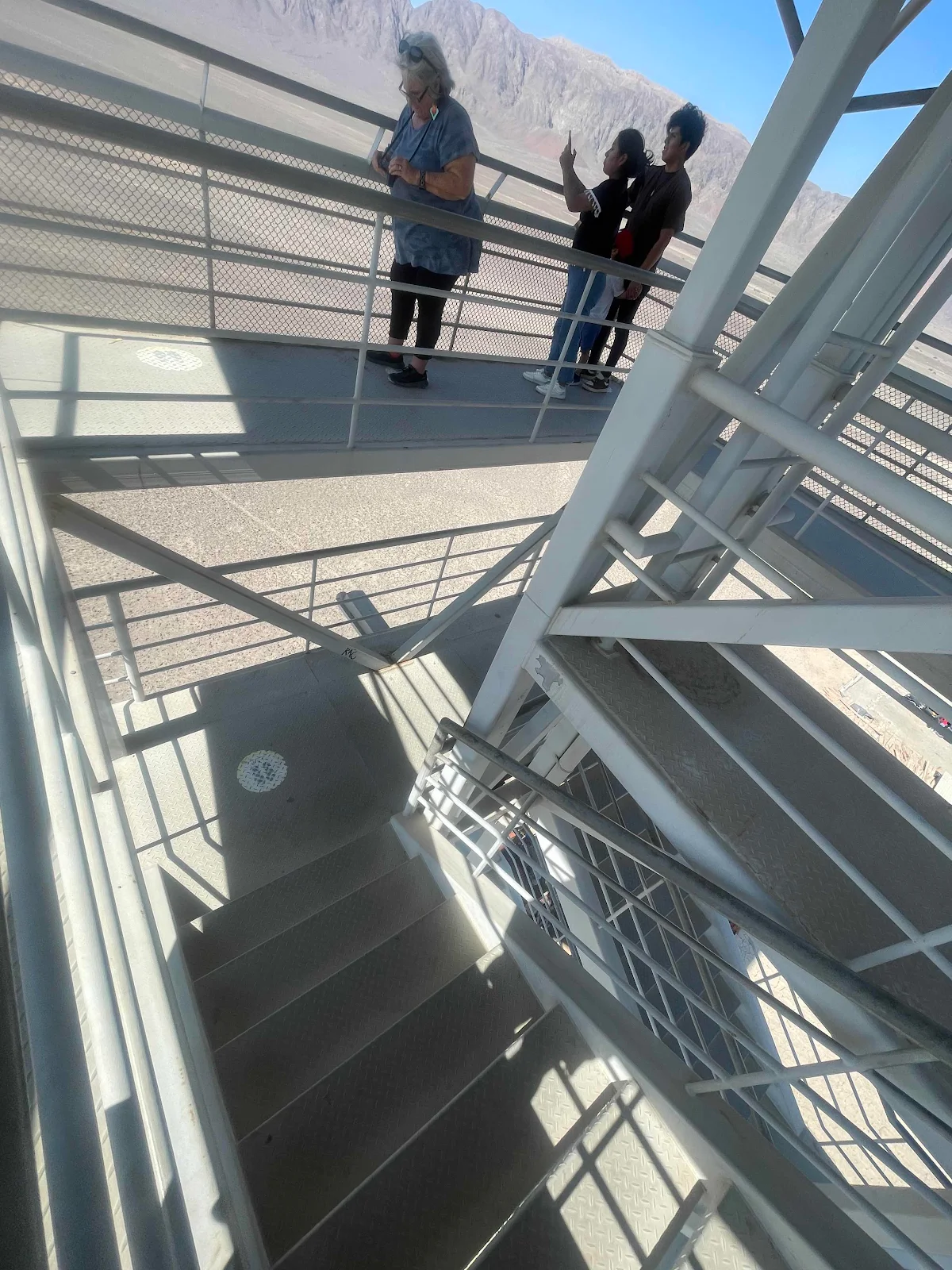
Loud telephone conversations intrude on any attempt to meditate or puzzle out or just feel these places. 
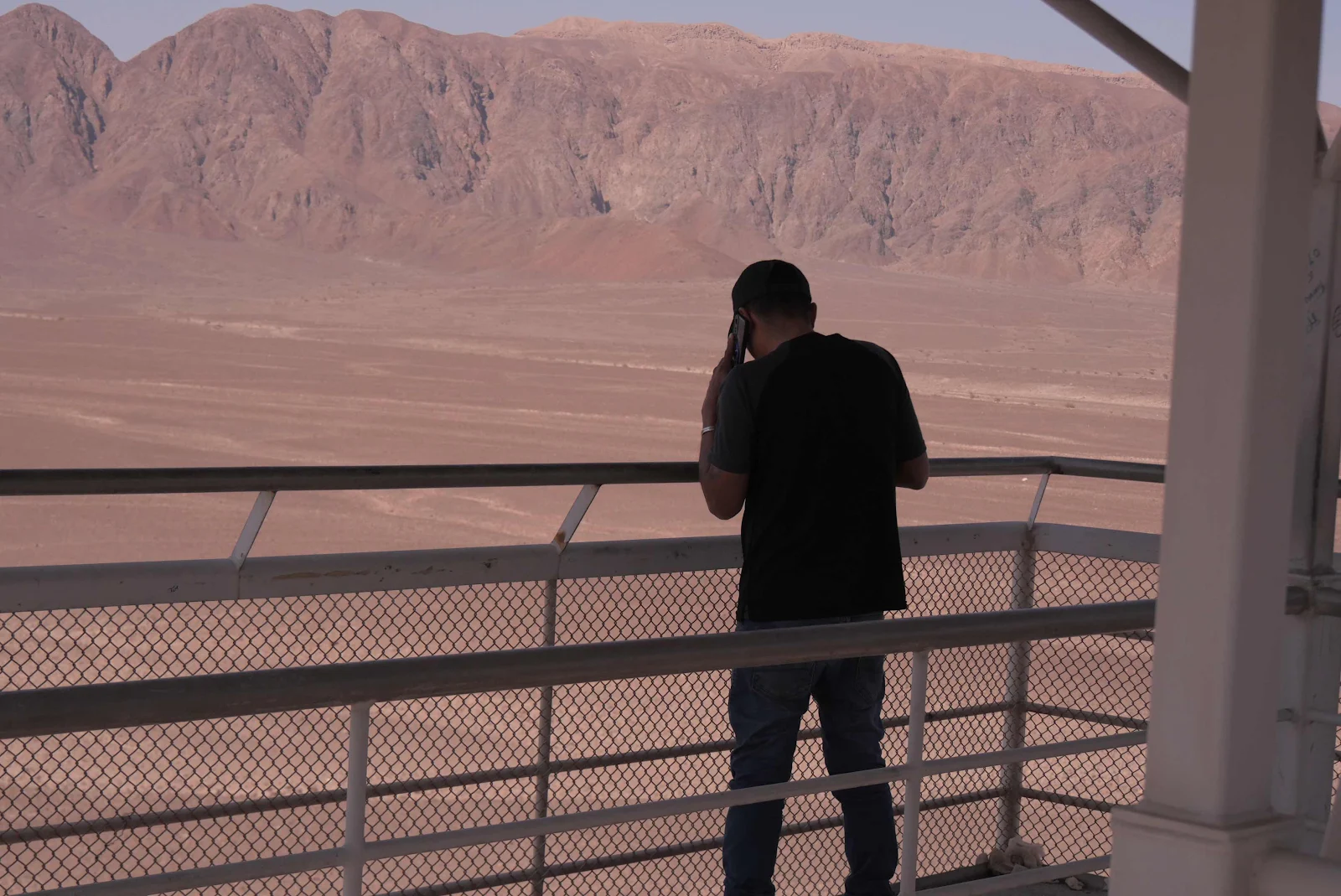
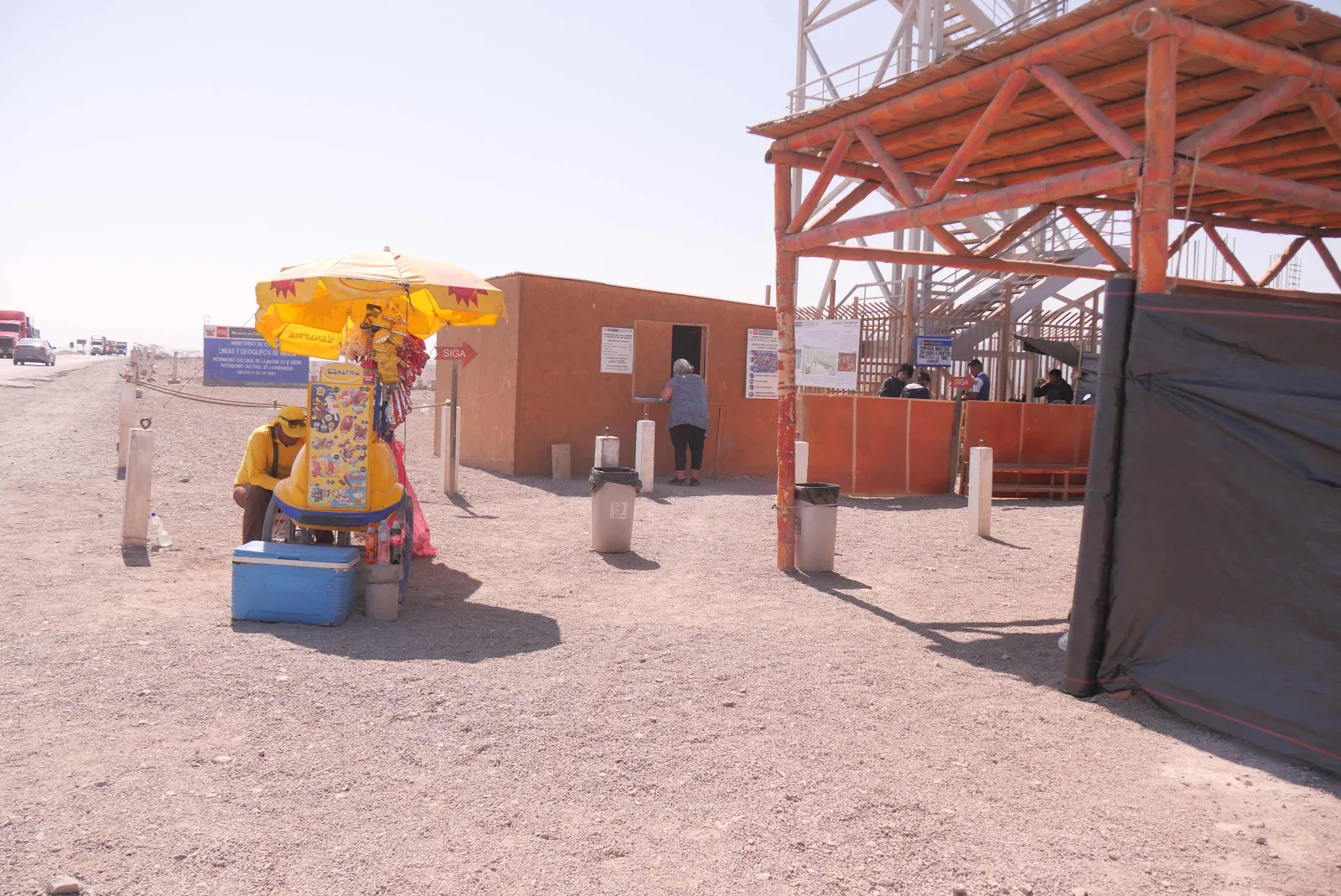
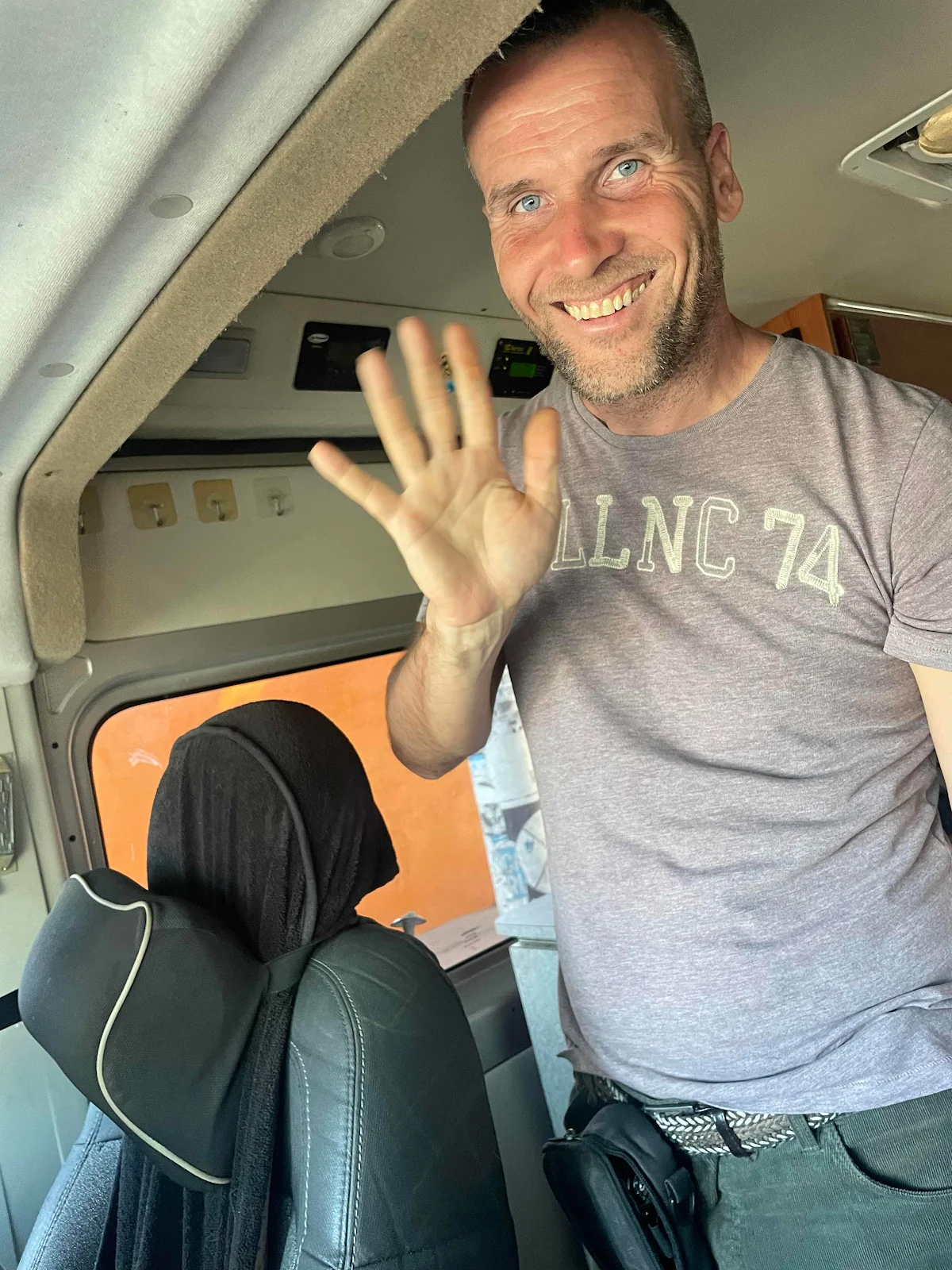
The foreigner checking souvenirs. His name was Stefano and he lives near Venice. He looked like Cary Grant (with the inevitable modern  reusable water bottle) in North by Northwest waiting for a bus. We extracted him from his fate and gave him a lift back to his hotel in Nazca. 
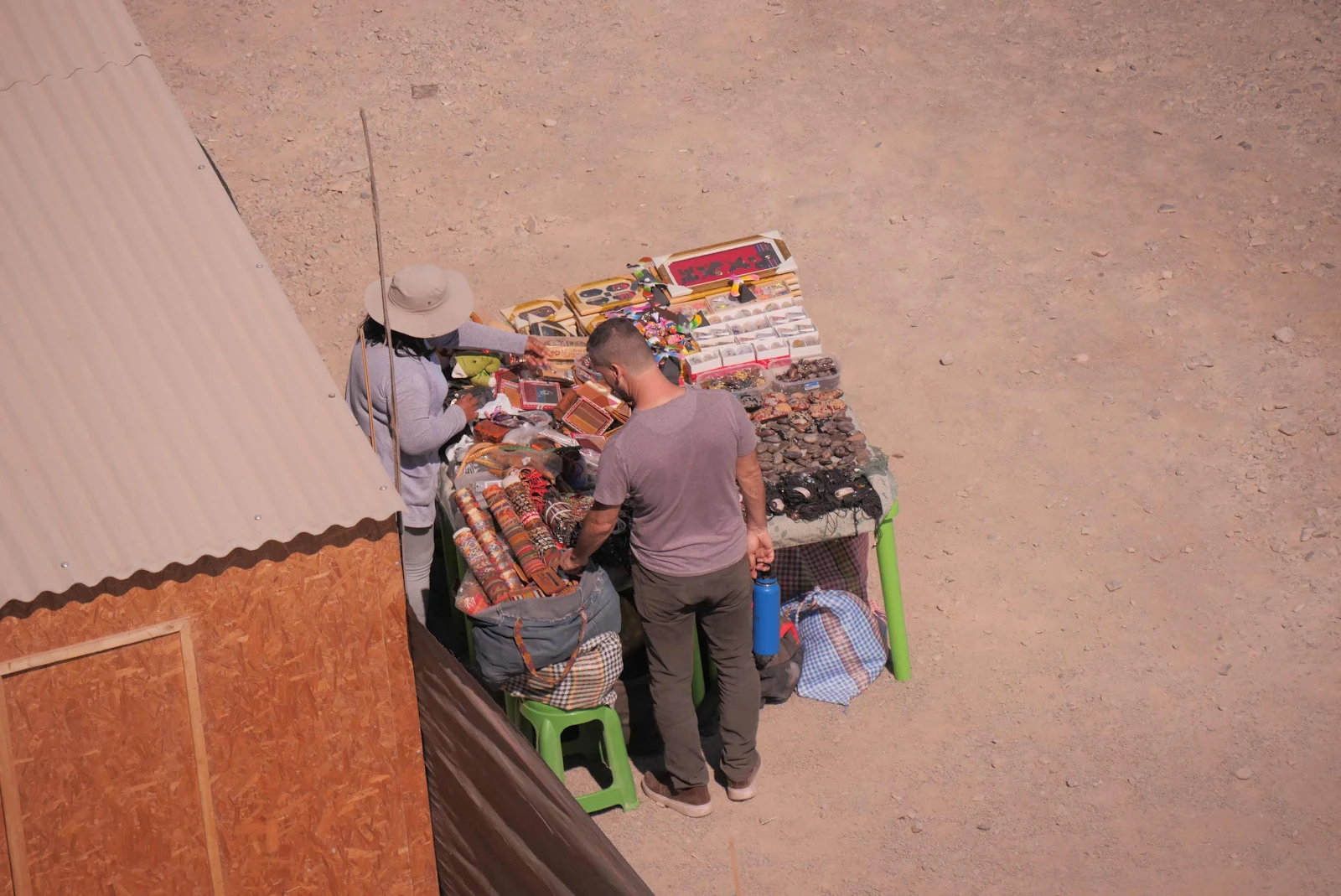
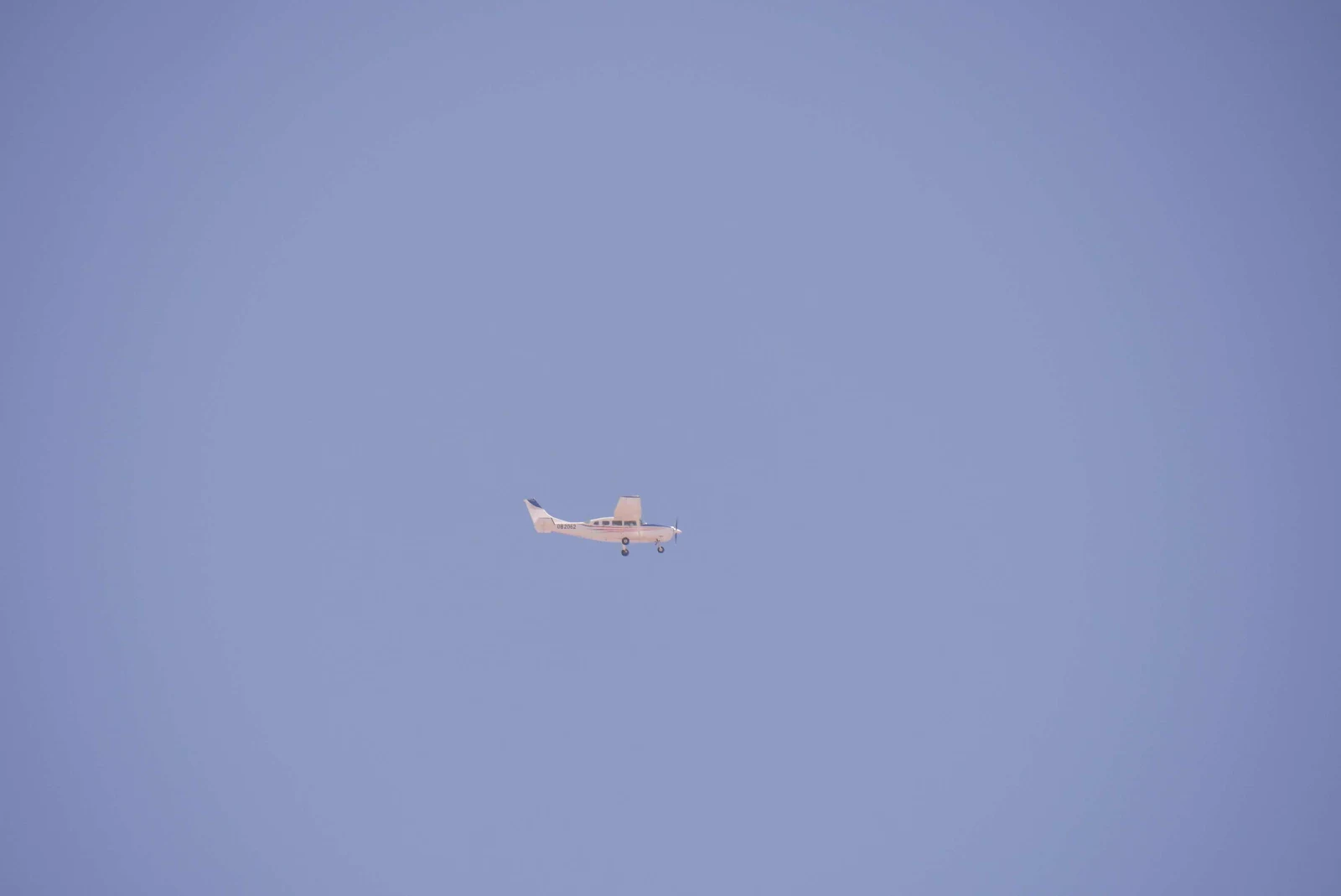
We spent half an hour here and determined we wanted to take a flight to see more.


We loaded Stefano the Silent in the back and he was grateful for the ride and that it was free which struck me as odd as a bus ticket for a half hour journey couldn’t cost that much.  We travel high on the hog. He was interested to see how much gas cost us and how far we could drive on $70 of regular (about 300 miles). 
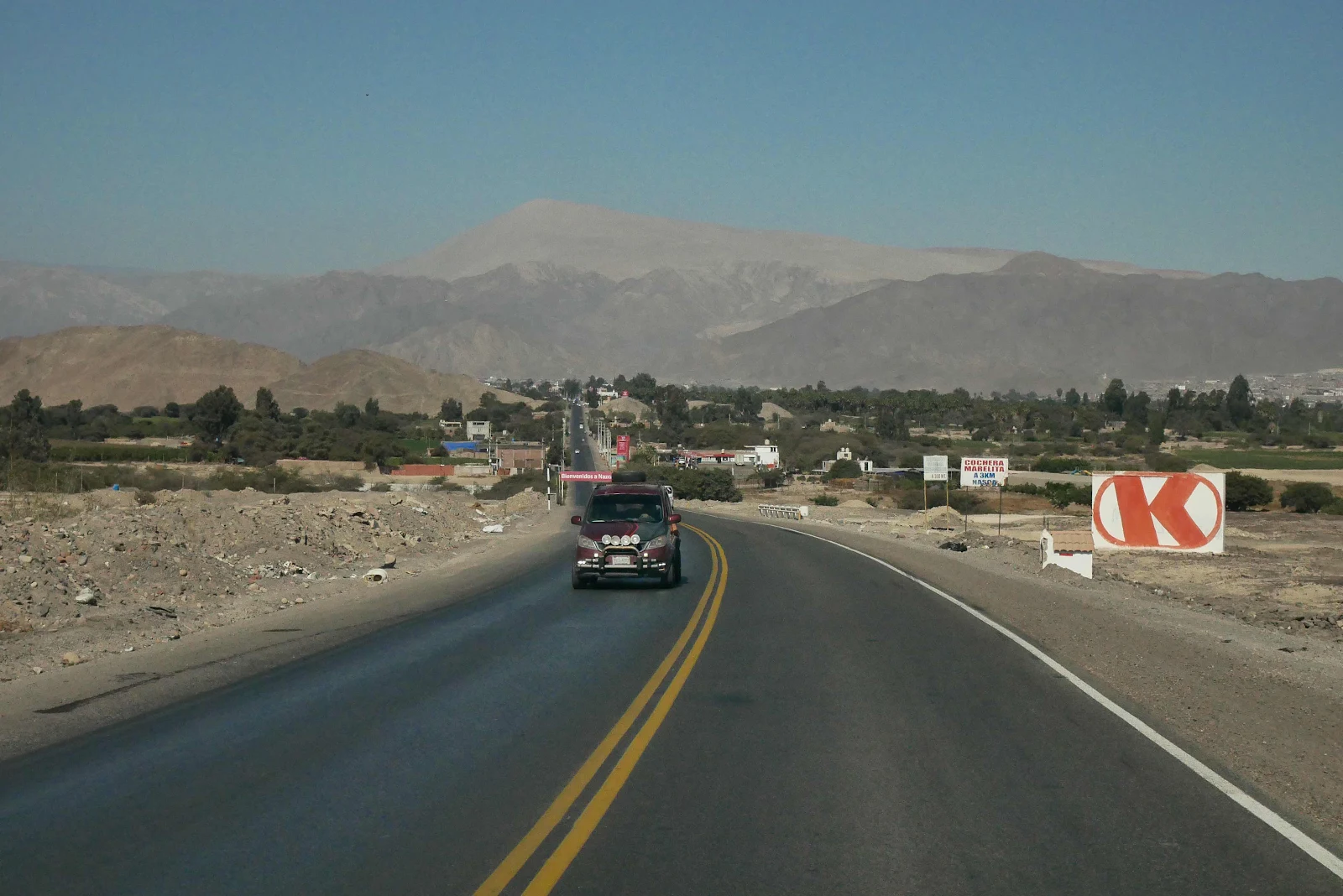


We dropped him off and set our course for the airport on the south side of town planning to spend $70 each for a thirty minute flight. 
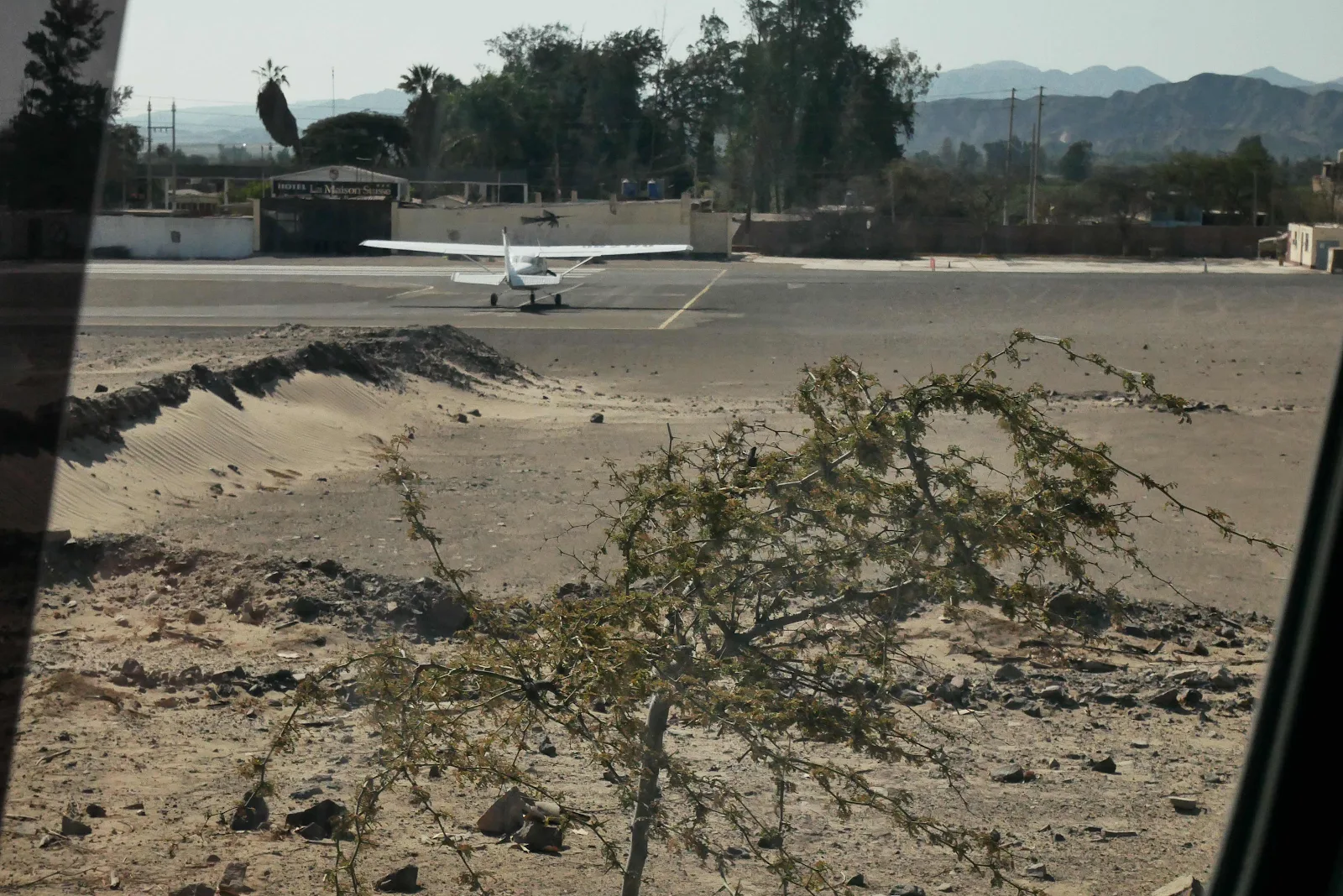
The hustle was on as we saw planes taxiing in continuation as we drove up. A man in an orange vest flagged us down and that was our doom. He started in on how we had to hurry as the plane was leaving - hurry hurry- and so forth. 
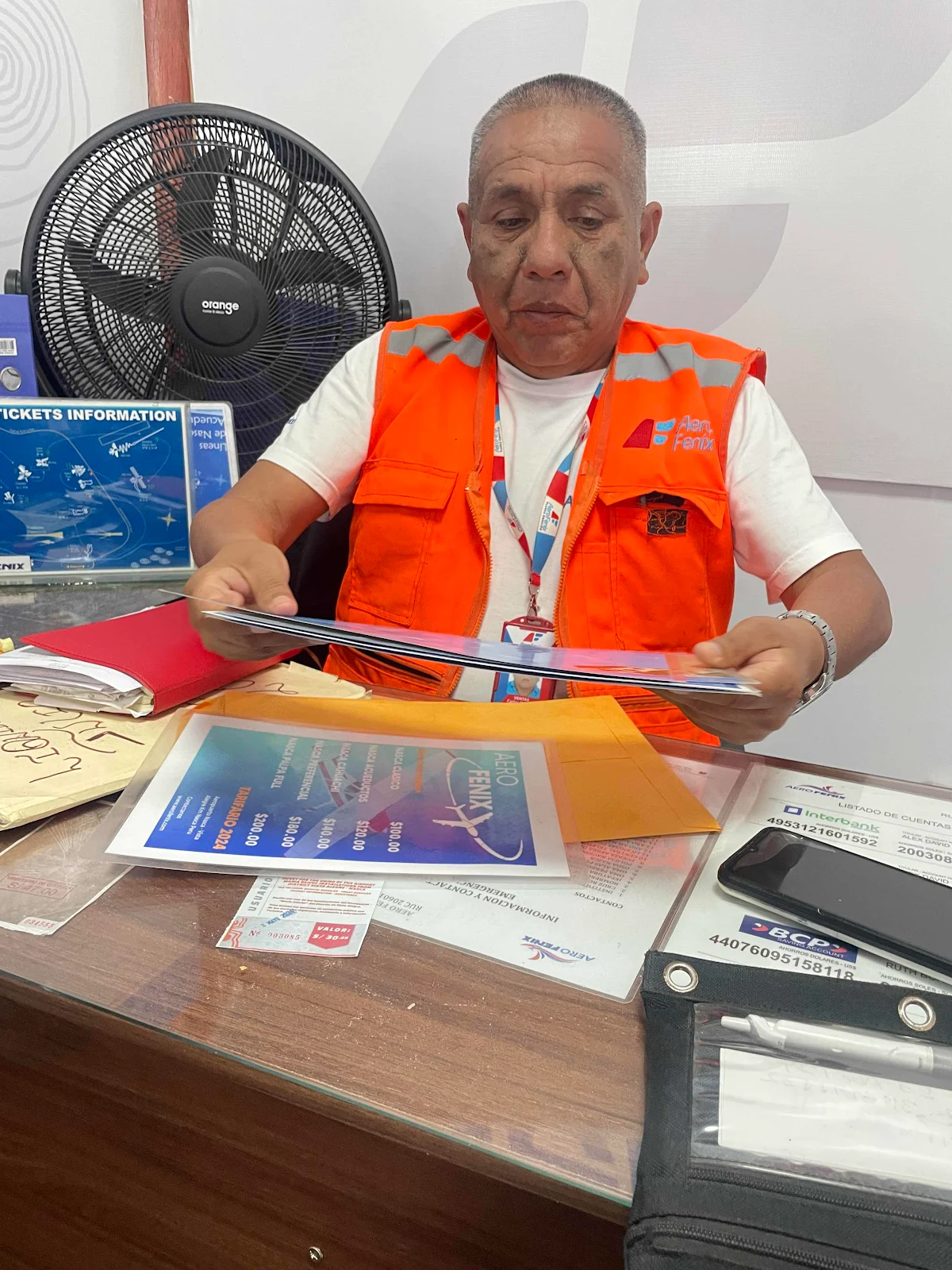
Then when we got to the building the hurry ceased and the price increases began. $600 for a plane to ourselves. Or two hundred dollars to share a six seater. And surcharges and I don’t know what. We looked at each other and got up. “Special price,” he yelped. Suddenly discounts appeared but we put our heads down and trotted back to the safety of our lockable home. He followed yelling and sent a woman to talk to us but I got in gear and left. 
And that is why we did not fly over the lines. 

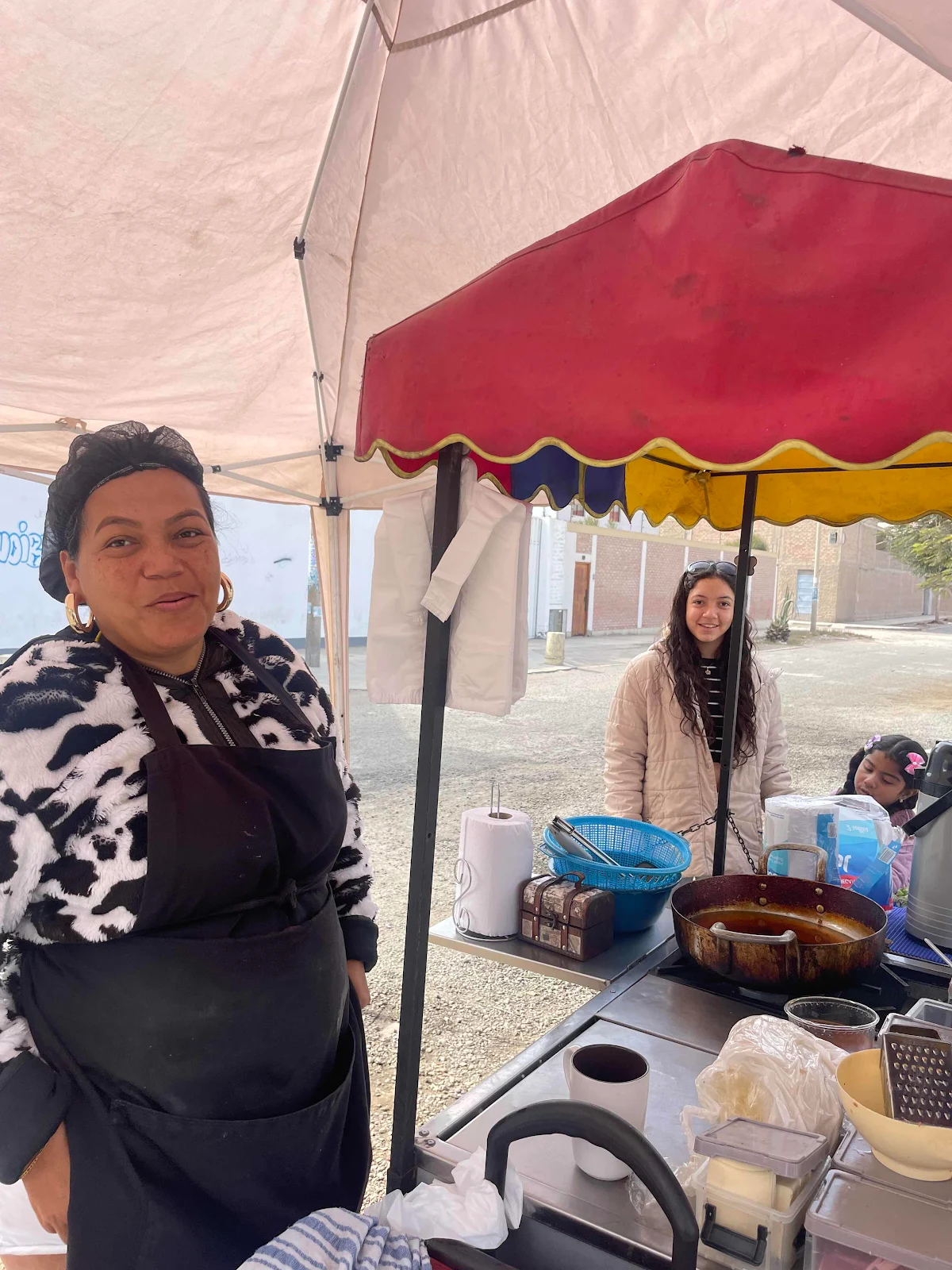
We met a Venezuelan refugee who sold us empanadas for lunch with no hustle. 
But we skipped the famous sand dunes at Huacachina where we had wanted to ride a dune buggy as the hustle was tremendous and there was no secure parking for GANNET2 away from the tours, the crowds, and the pimps selling whatever they thought you wanted. We were not leaving  Rusty in our home unprotected on the street filled with humans on the make. We fled. 
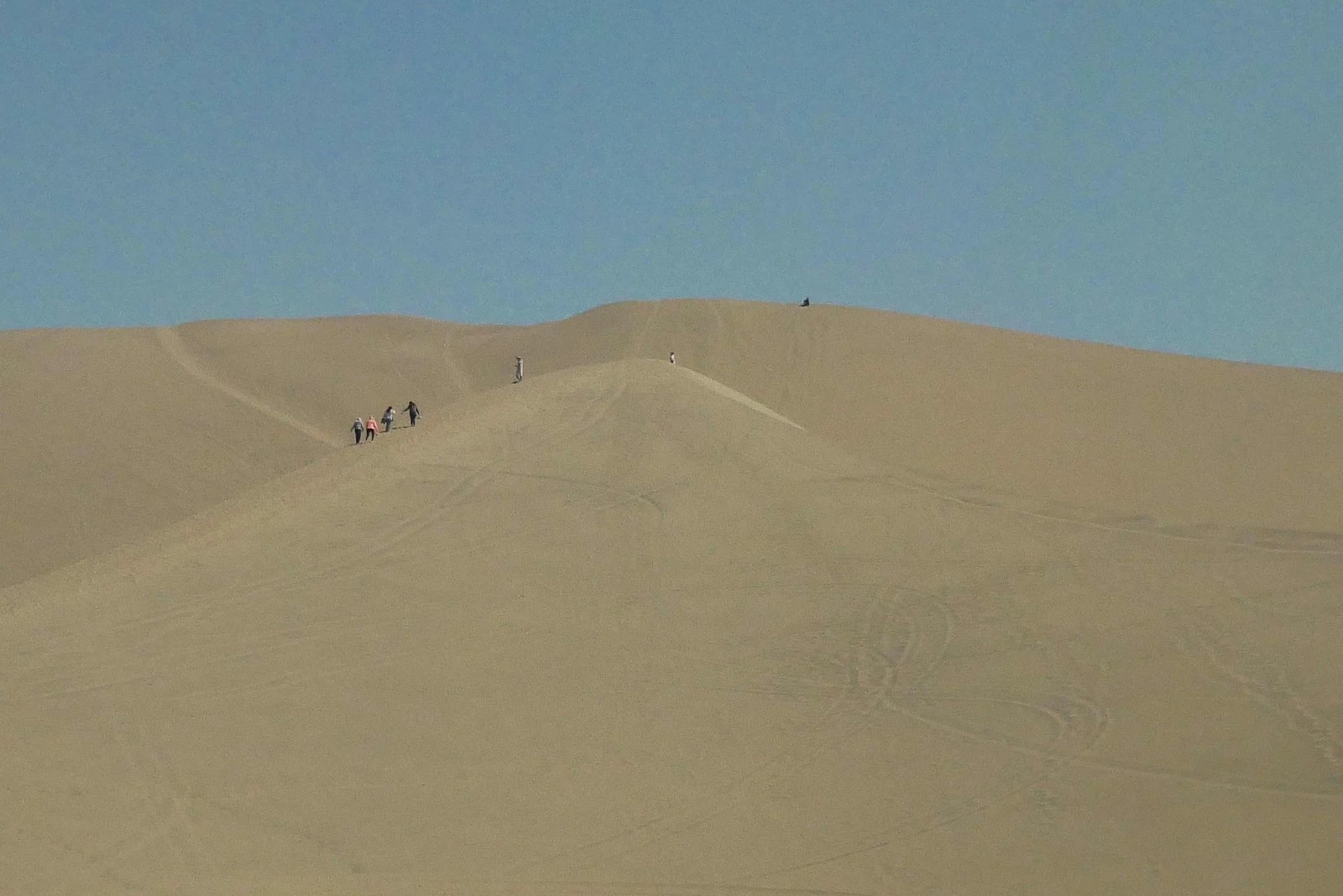
We’ve enjoyed sand dunes in the peace and serenity of a US national park and the more I travel the more I look forward to going home and wild camping in our peaceful wilderness at home. 
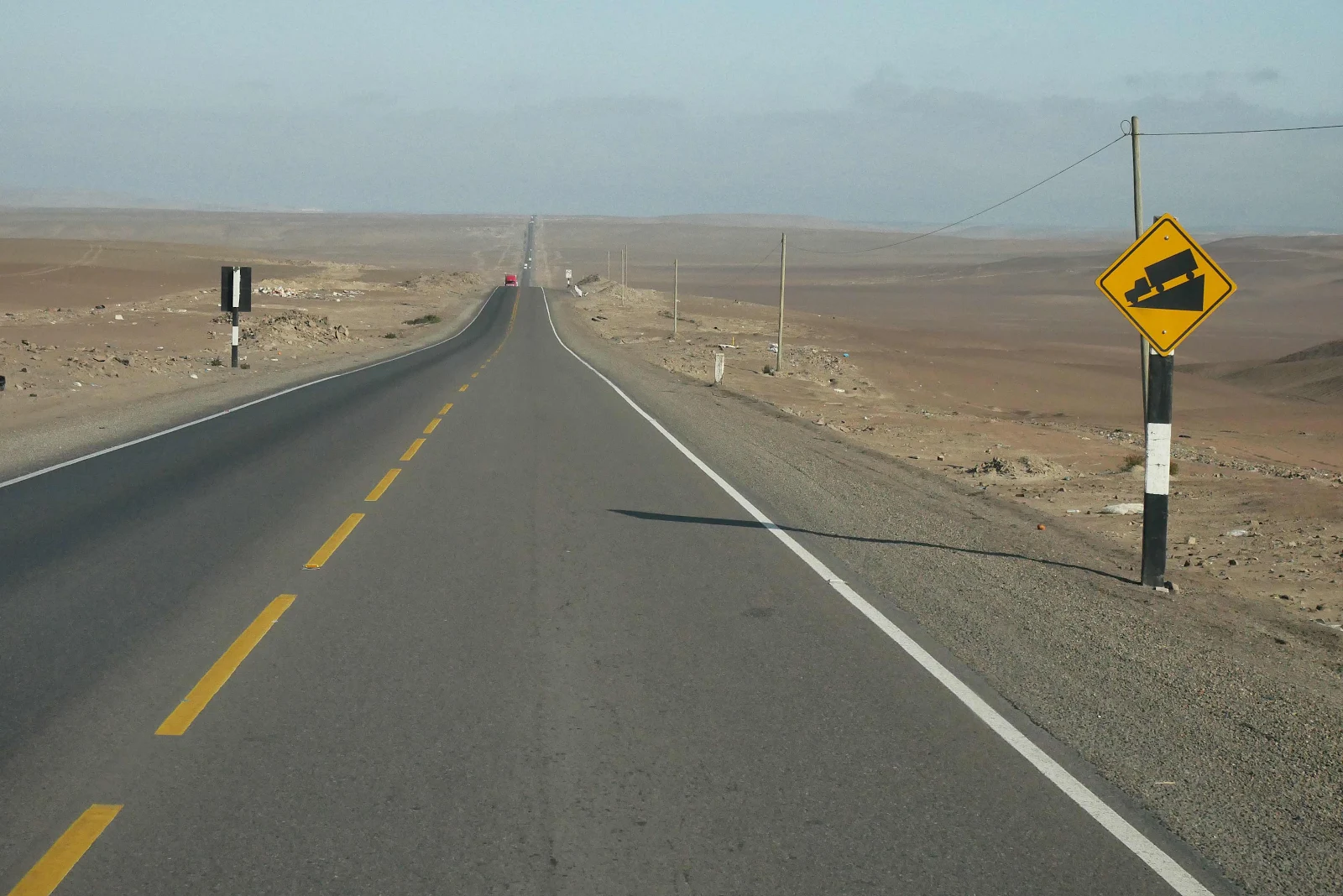
We kept on driving toward Arequipa the colonial city off the coast but on the southern route to Cusco the former Inca capital. I’m growing less sure I want to deal with Machu Picchu. 

Monday, August 19, 2024

Ica

There are days on the road you feel like you accomplish almost nothing and Saturday felt like that. In a straight line we drove an hour from our campground in Paracas to a campground in Ica, and we spent most of the day doing it.

We had had to wait a day in Paracas after the boat ride as the sun remained hidden by heavy overcast and our laundry stubbornly refused to dry. We sat in the cab out of the freezing sea air and watched “Oppenheimer” on our iPad.we had to keep our eyes on Rusty as he had inadvertently decided he liked sitting in some plants that apparently were valued by management so that was a bit of a stress but he cooperated when we said no to him. The forbidden zone which, when he understood was forbidden, Rusty no longer slept in. Good boy. 

They charge an absurd one time fee for a dog here, $10 so it felt rather odd they couldn’t put a fence around whatever piece of dust they want to protect. In the end though you just have to expect some cross cultural lack of communication and the campground otherwise was excellent. We foreigners have the privilege of being able to indulge our dogs like children which lower class Latin Americans neither approve of nor can afford to indulge in. They have costly children to raise, a mighty struggle and dogs are farm animals. That’s why we travel: to see, to learn, to report back.

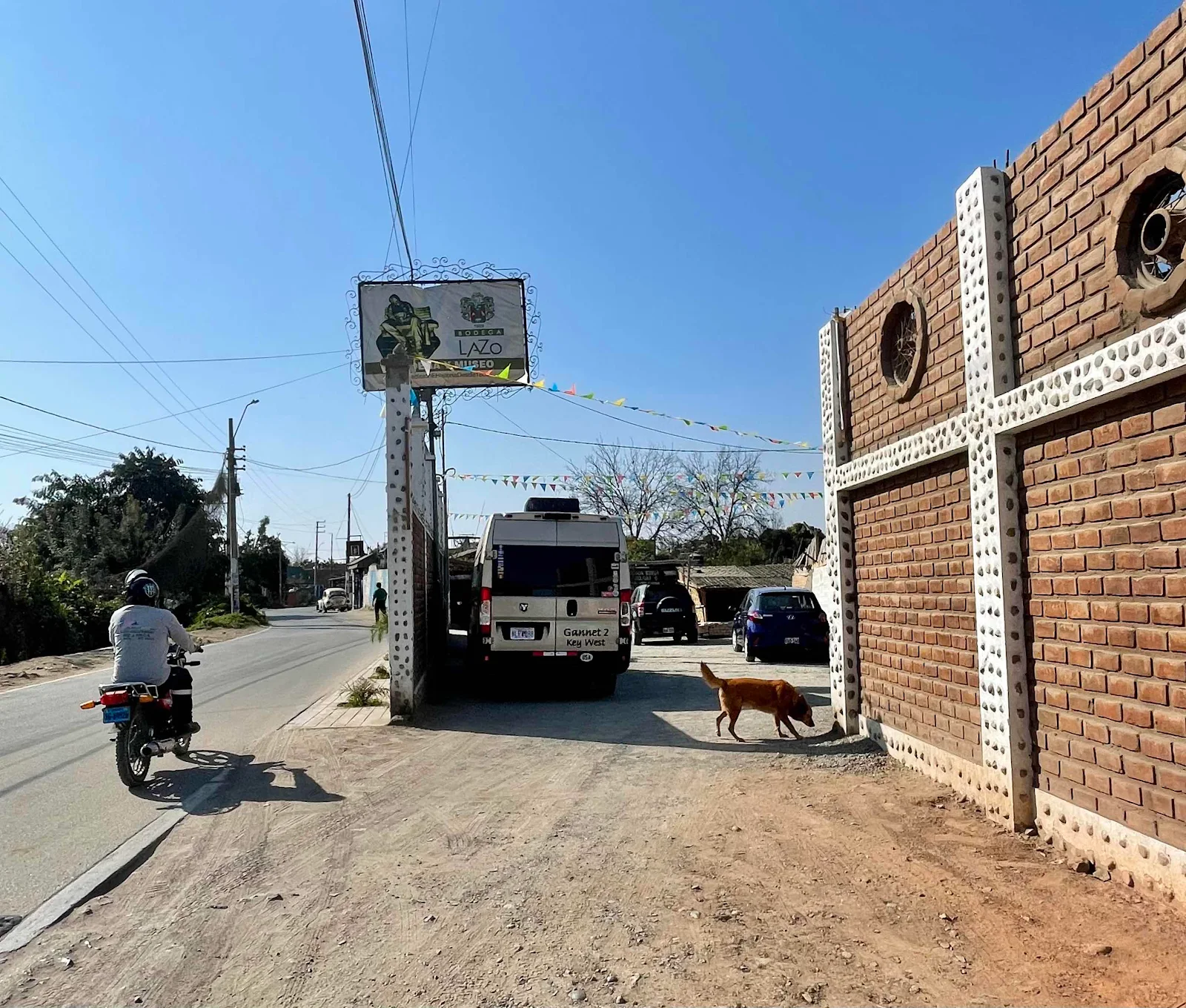
We said goodbye and stopped at the bodega on the nearby block to load twenty liters of water into our tank. In campgrounds we wash dishes in their sinks but we carry thirty gallons of water in our tank. In Latin America we only fill it with potable water (and then filter it through our Berkey) and potable water costs money. In Mexico 20 liters is between fifty cents and a dollar but here it costs nearly five dollars so we hoard it as much as we can. In campgrounds we will fill our Berkey filter with water directly from a faucet but the non potable stuff does tend to clog the filters with impurities and I end up cleaning them quite often. Having clean safe water of our own has been excellent in these countries where even potable water is a public works project too far. Multinational private water companies are making fortunes in the third world.

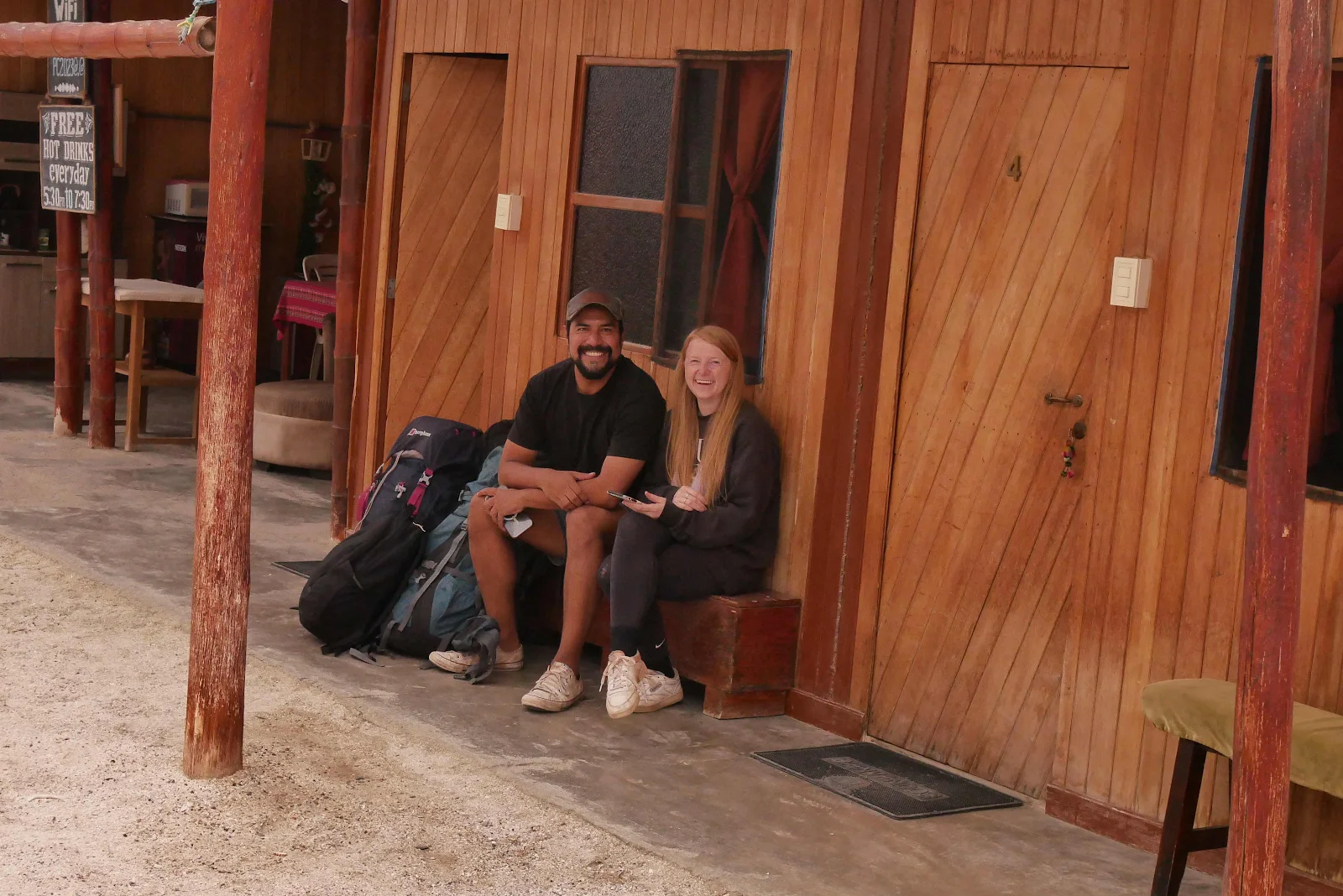
We said goodbye to Dan and Jane two Australian backpackers with whom we crossed paths. His parents fled El Salvador’s civil war in the 1980s and took him to Australia where he grew up bilingual and could enjoy die along with the locals here. Jane got severely drunk one night in London six years ago and woke up with a one way ticket to Australia. She went on a whim, got a job, got residence and got a boyfriend. A life changing binge. Soon they will be home having children and being normal but for now they wander from Hostal to Hostal creating memories. 

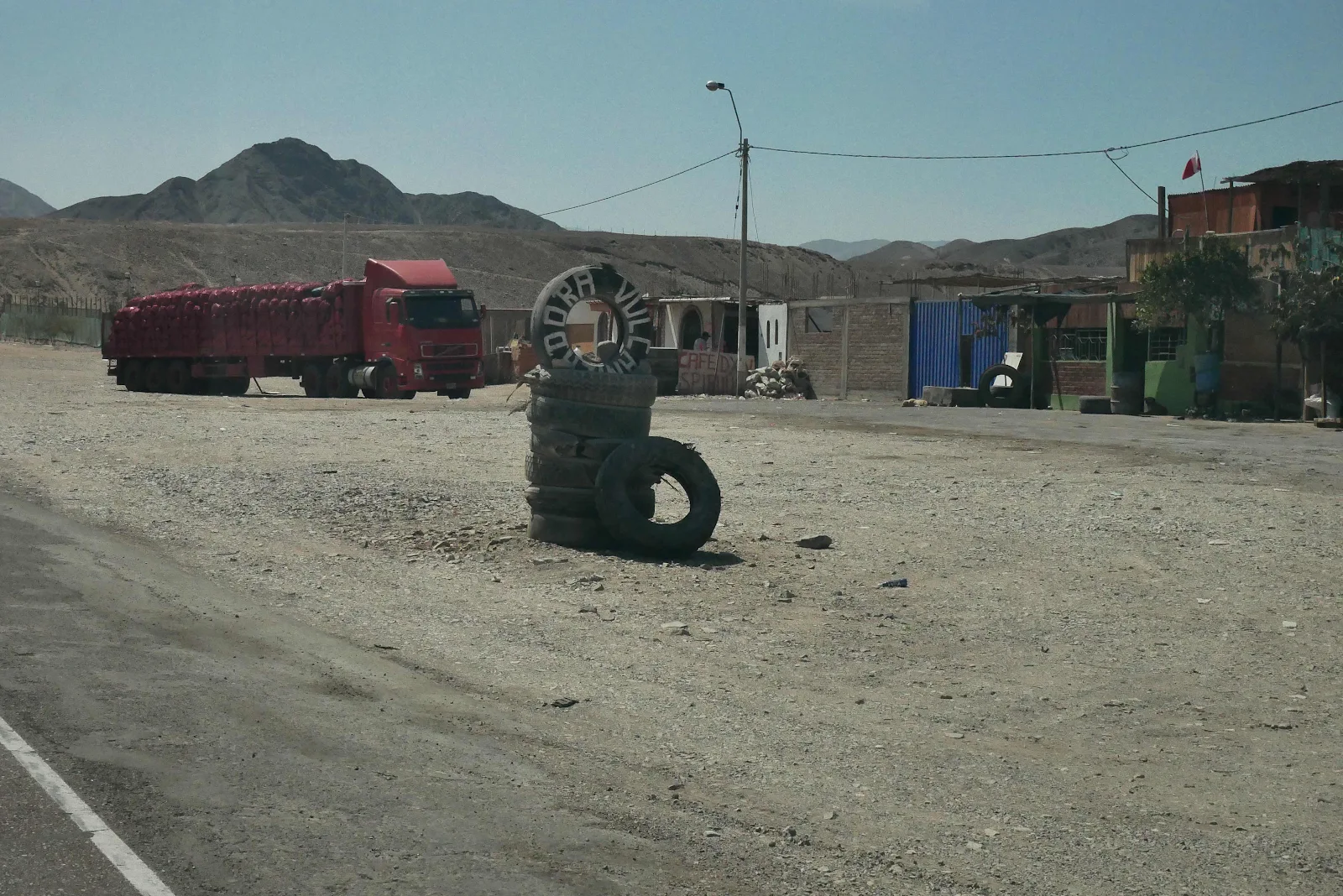
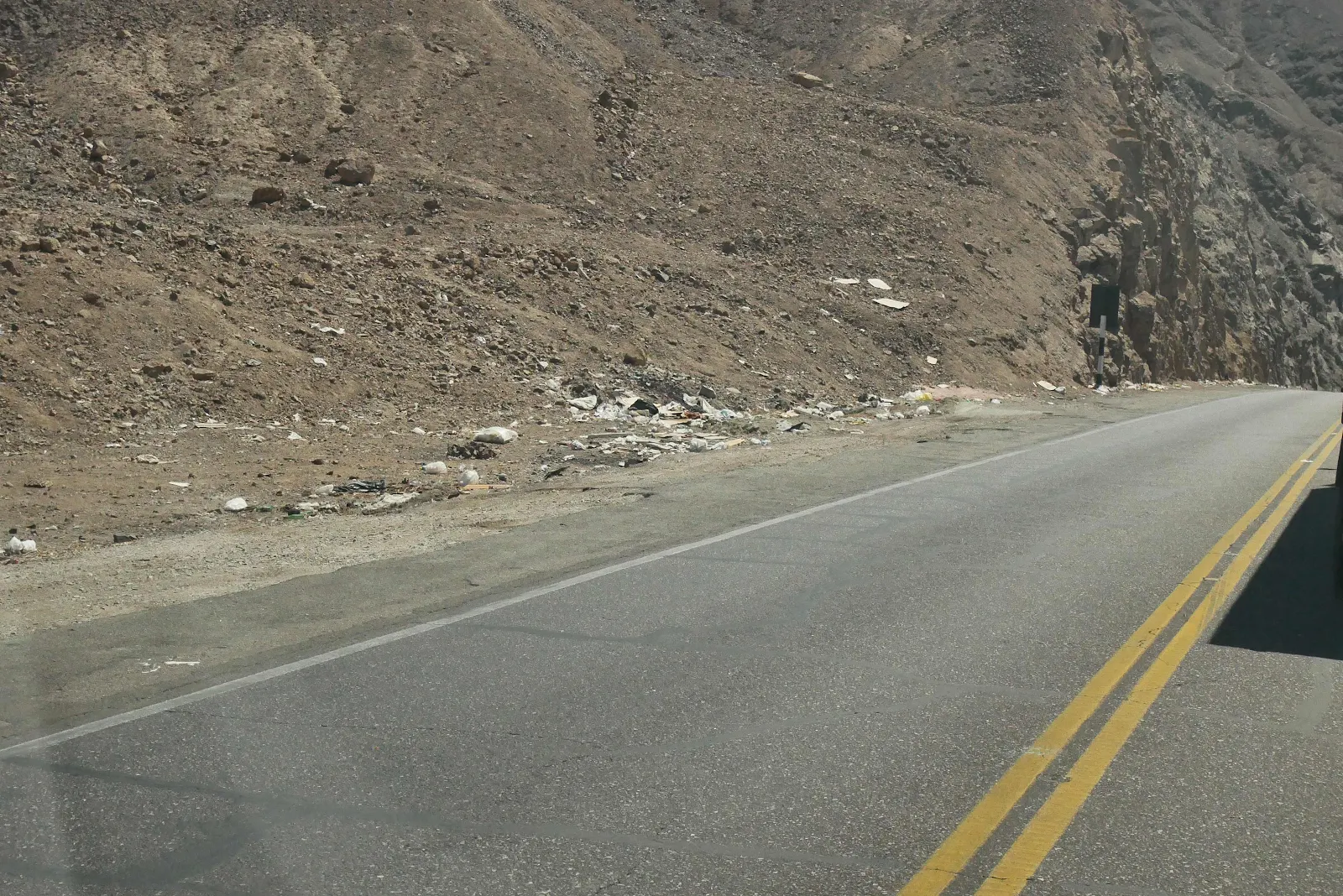
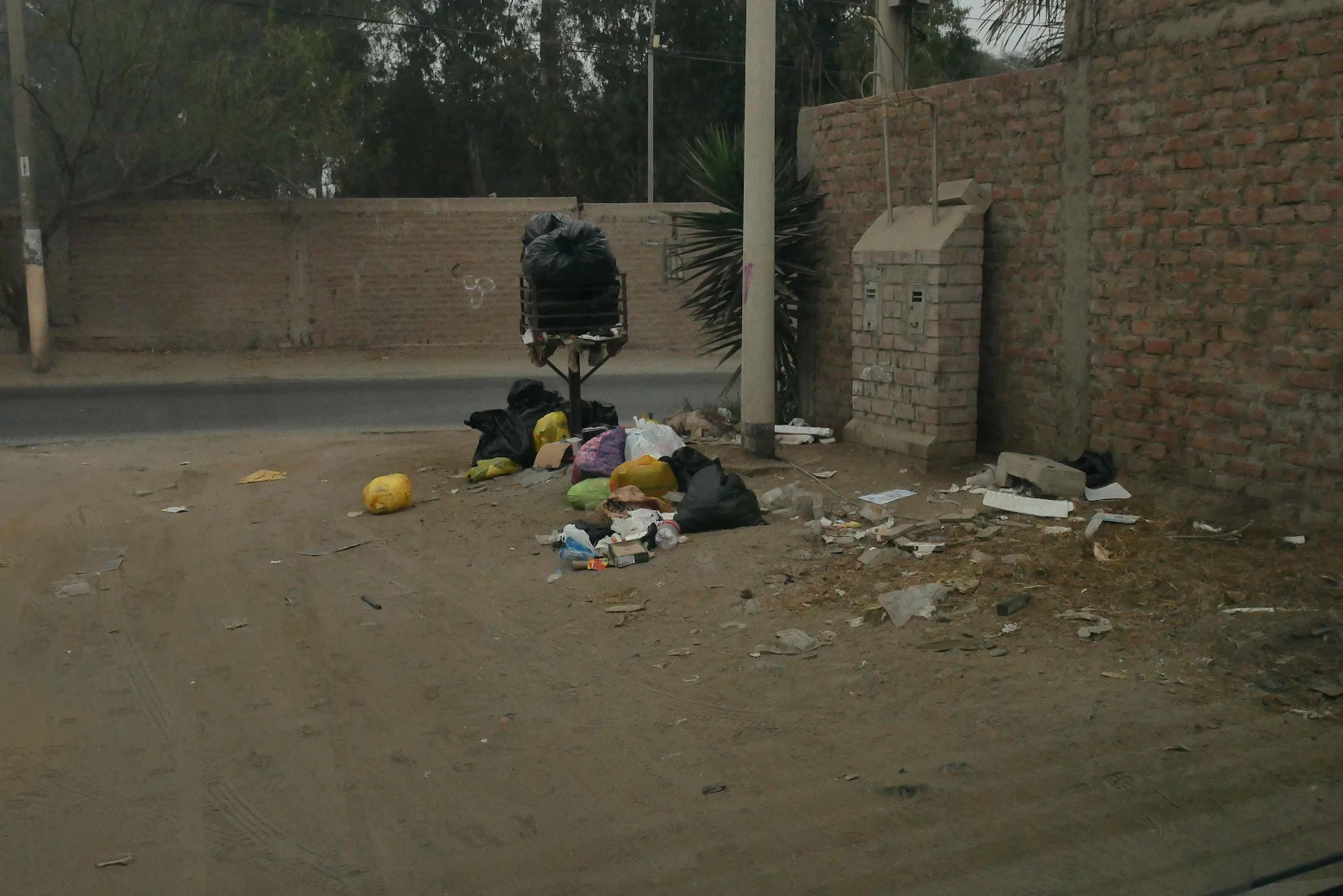
We pressed on to Ica a small tourist town with a couple of attractions we wanted to see, including a dune buggy ride on sand dunes and a Pisco tasting vineyard. Roadside art is always present in Peru, we hardly comment anymore on the filth. 

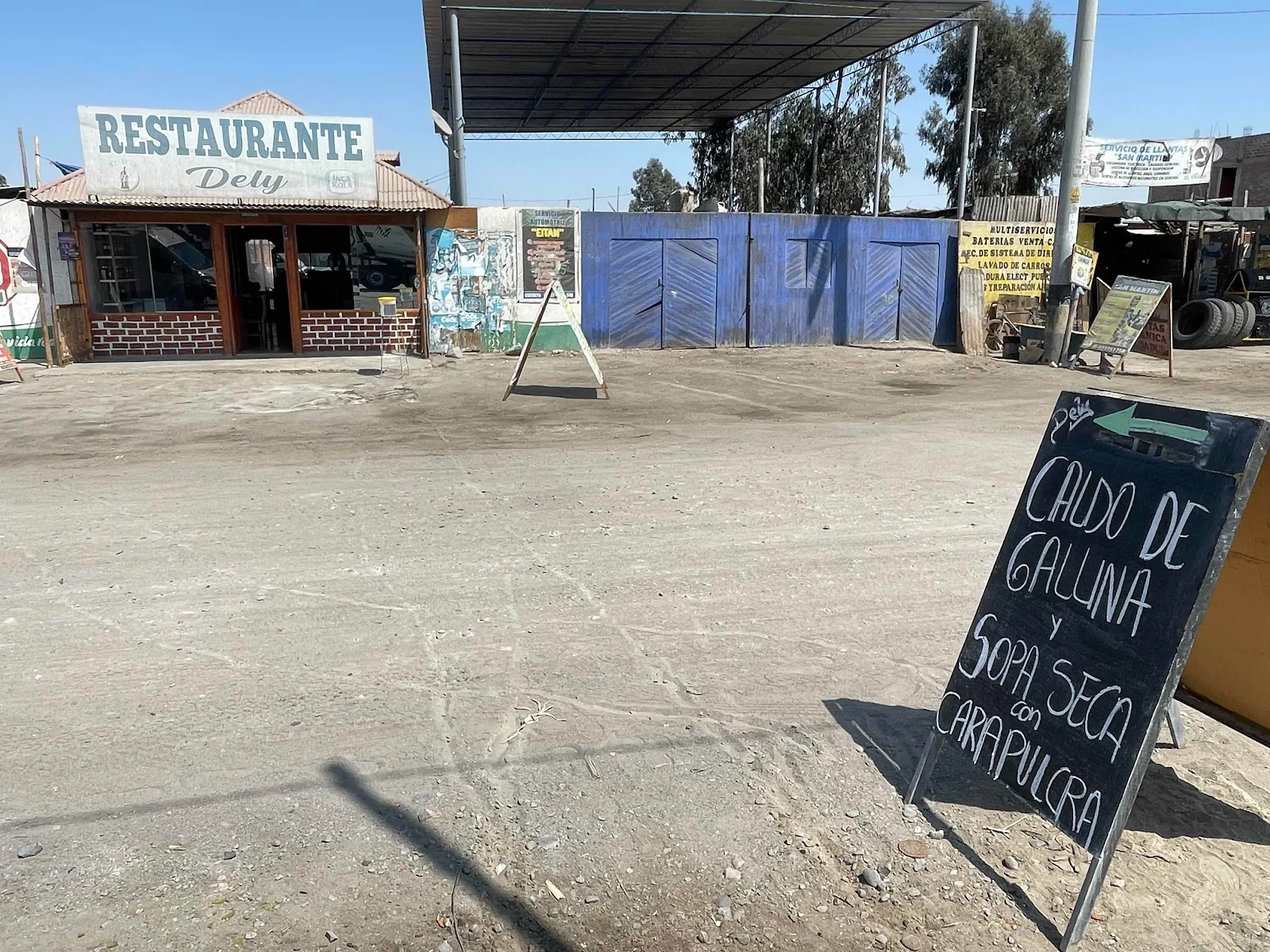
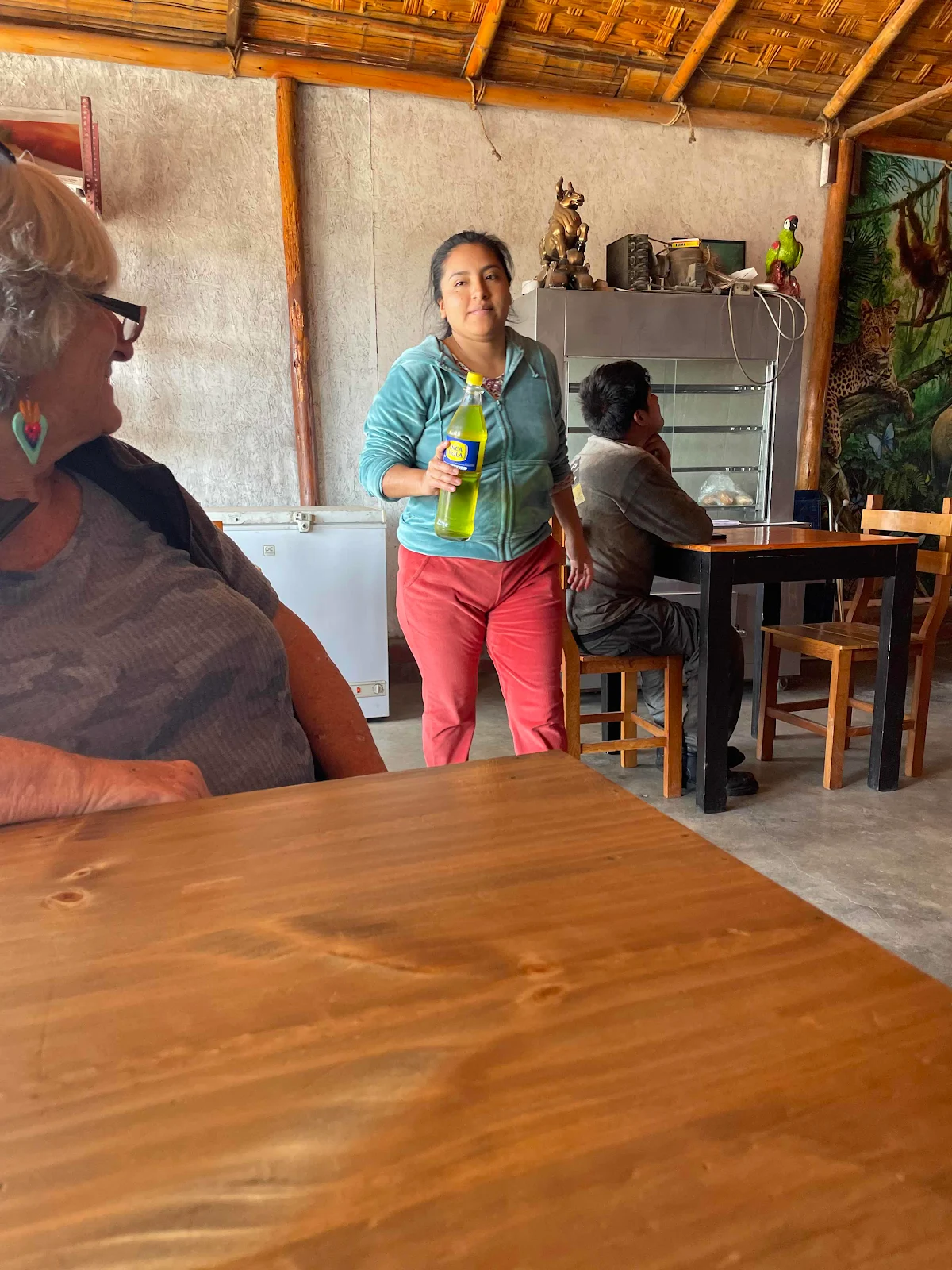
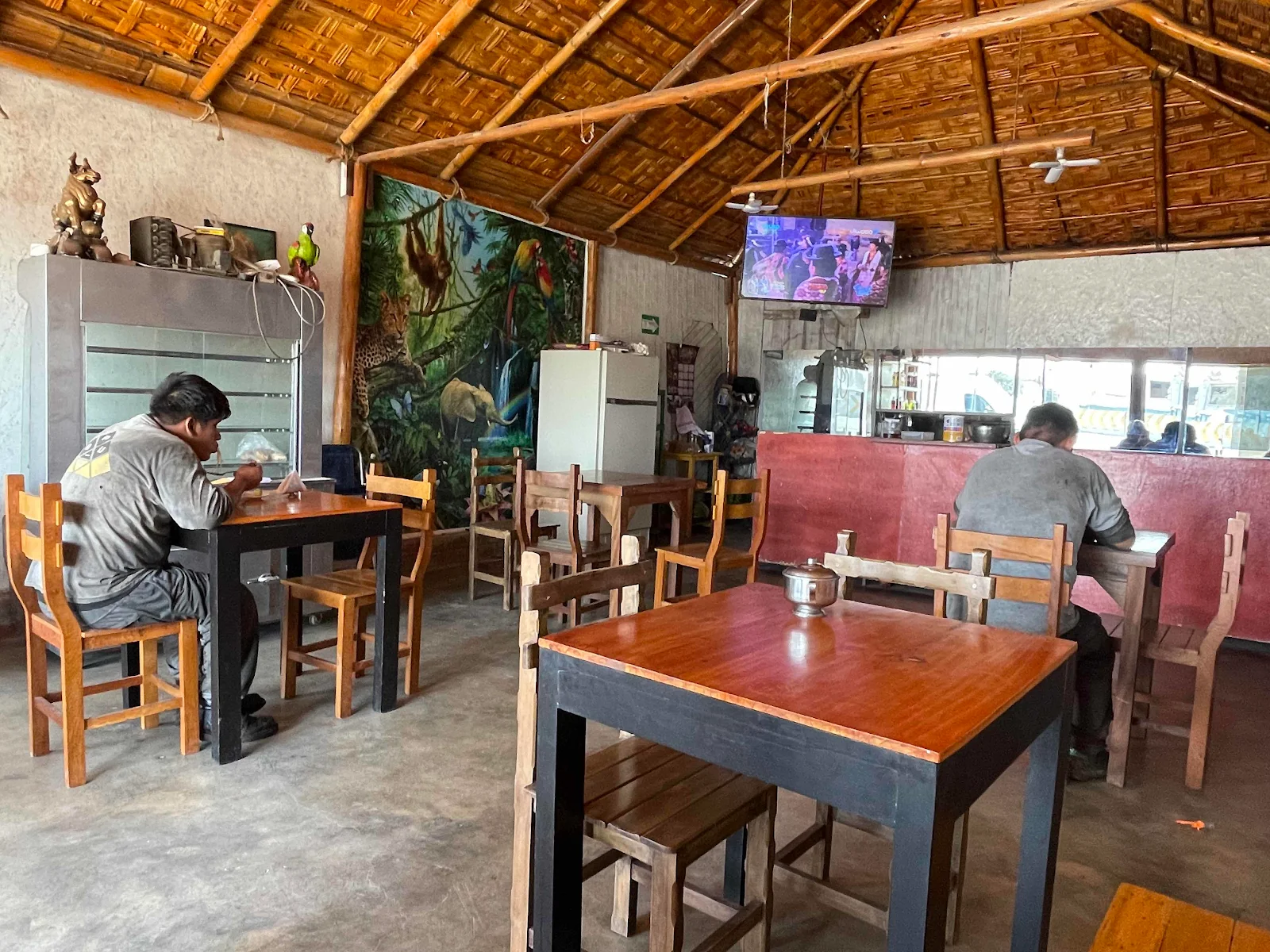
We left late had the day got late so we stopped for lunch at what looked like a reasonably clean establishment at the side of the road.

Our server was a bright spark as we answered every question with a shrug and the inevitable question: how do you like it? 

In Colombia our entrance would produce smiles and waves and we would say “Buen provecho” to the room which is like saying bon appetit in France. Here the downtrodden Peruvians took a glance and hunched their backs fearful of any connection with the strangers. It wears on you and reminds me of the Soviet Union of my youth a drab place filled with oddly similar people. 

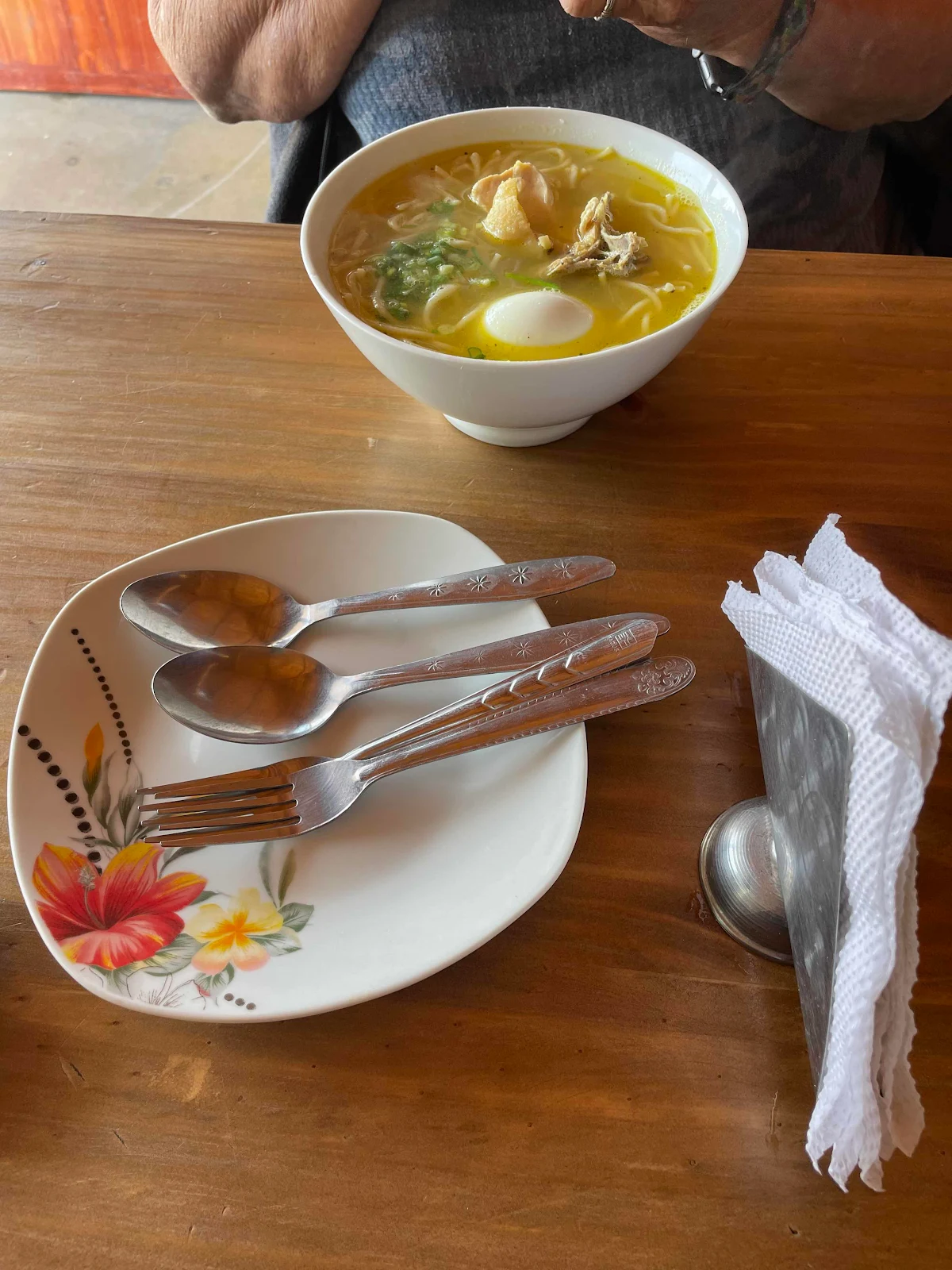
The good of course is abundant and interesting starting with a robust chicken noodle soup. The question of which came first is at last scared here as we had chicken and a boiled egg in the bowl. 

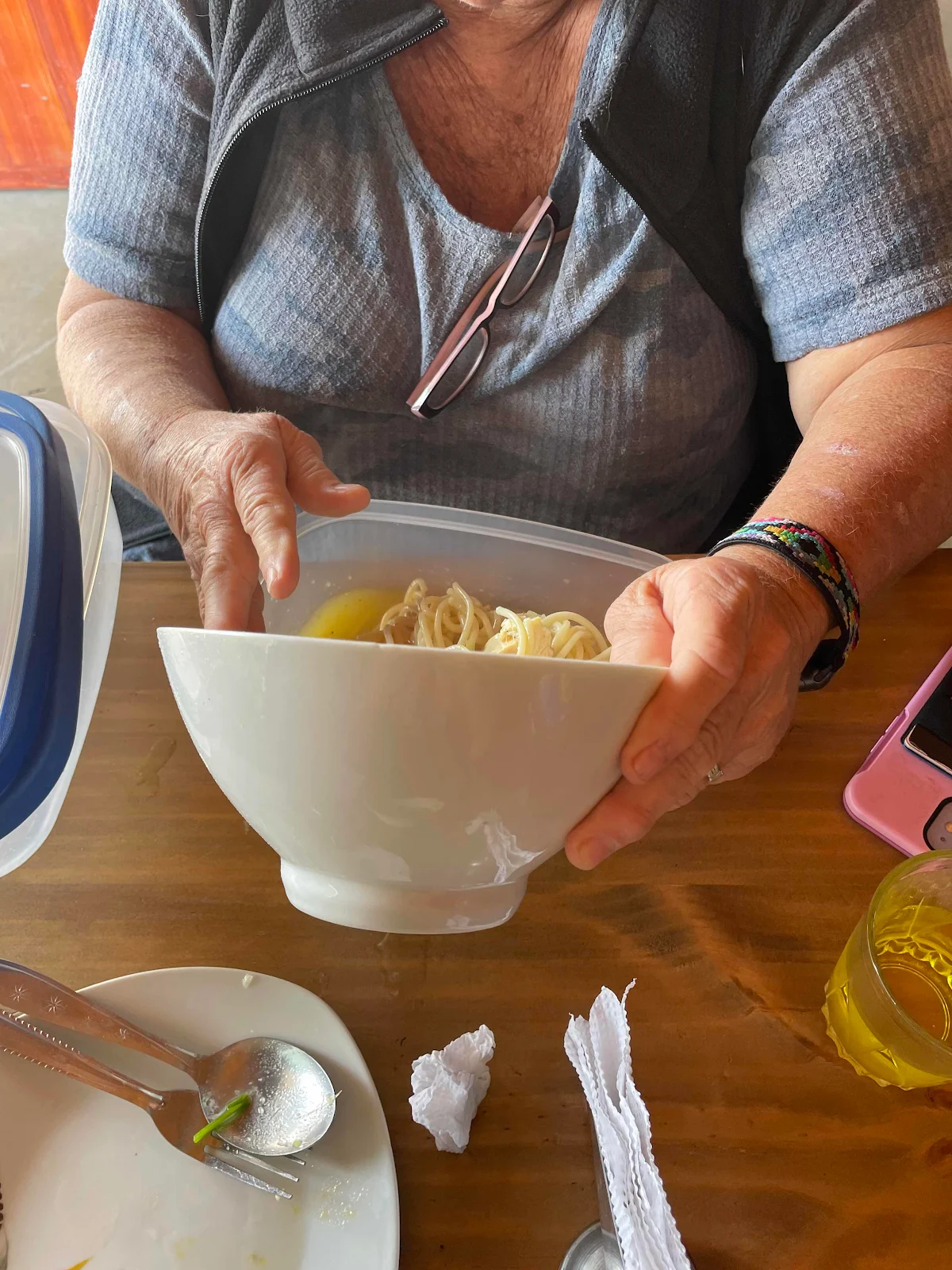
Layne brought a to go box which fascinated our waitress. That and the fact we travel with a fridge. We had soup for dinner Sunday night, and this was the base.  

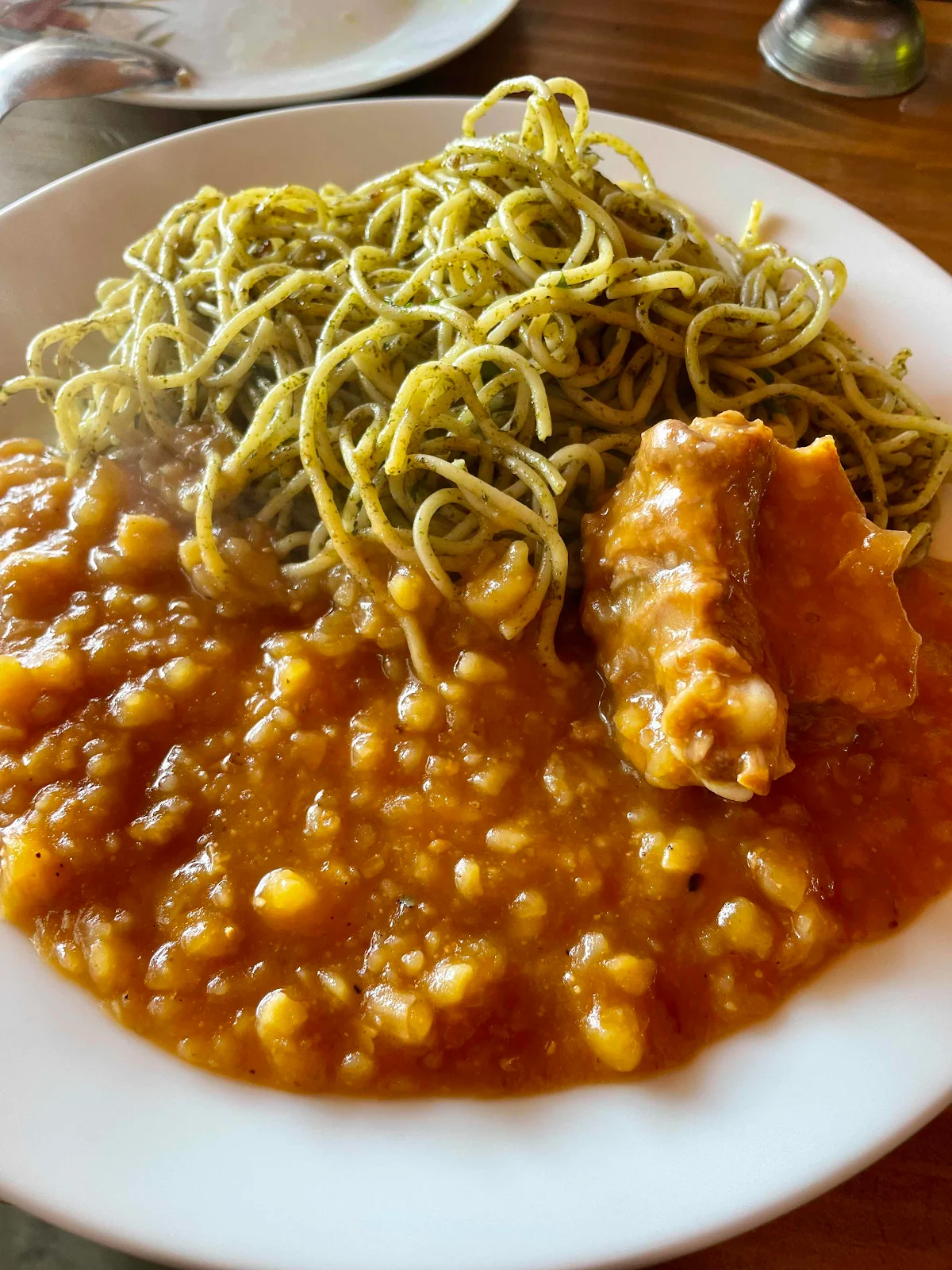
Main course was carapulcra a Peruvian stew originating among the poor and adopted by the hip and wealthy as a cultural icon. It’s made with pork (or llama or guinea pig) and beans and freeze dried potatoes. Ours was starchy and not especially flavor filled but it was…interesting. The pasta was well cooked and tasted slightly of pesto. 

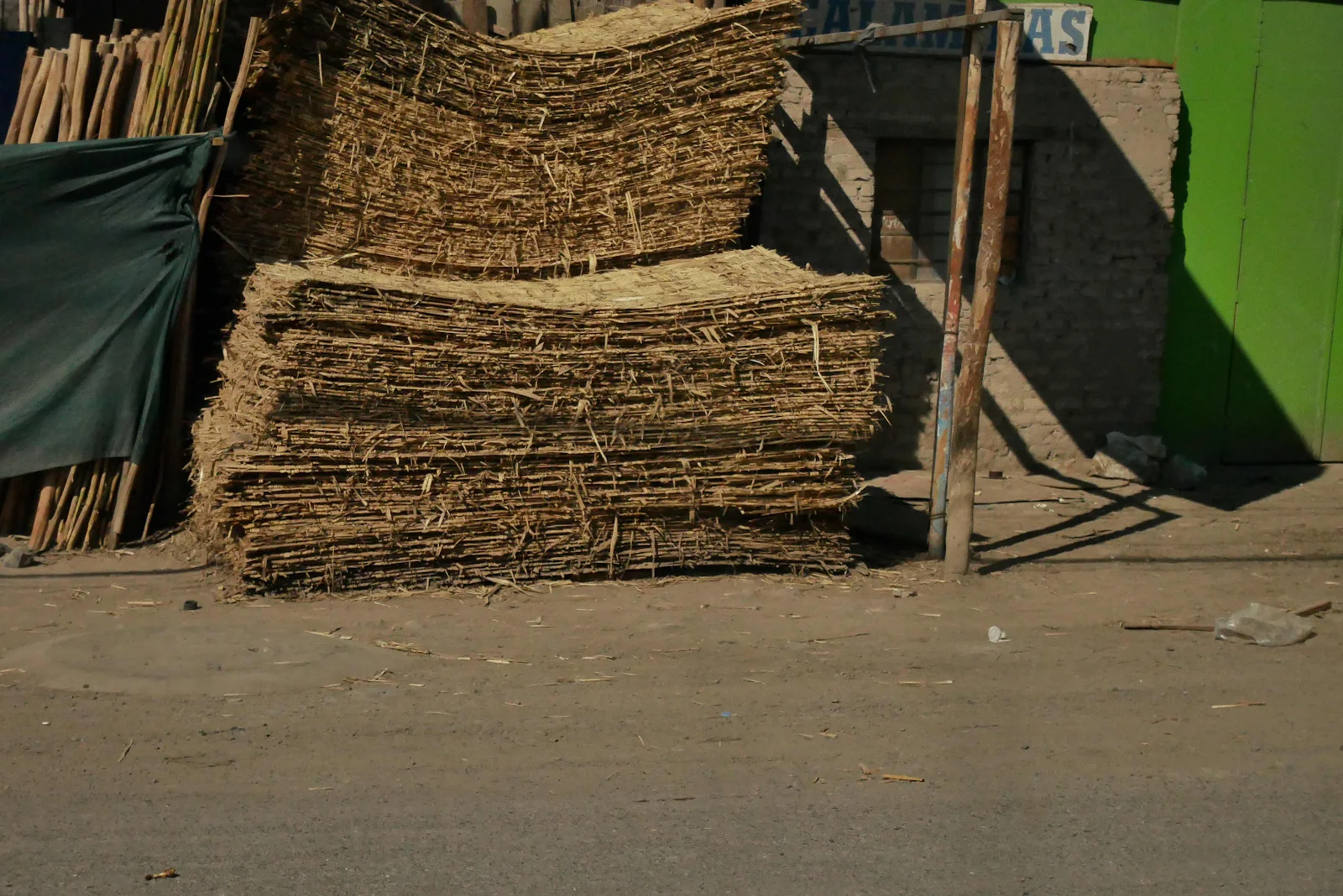
We had the pasta as part of our dinner. Portions are huge in Peru but they do not get lambasted by foreigners like Americans are. Oh well. Prefab housing walls made of reeds for desert dwellers: 

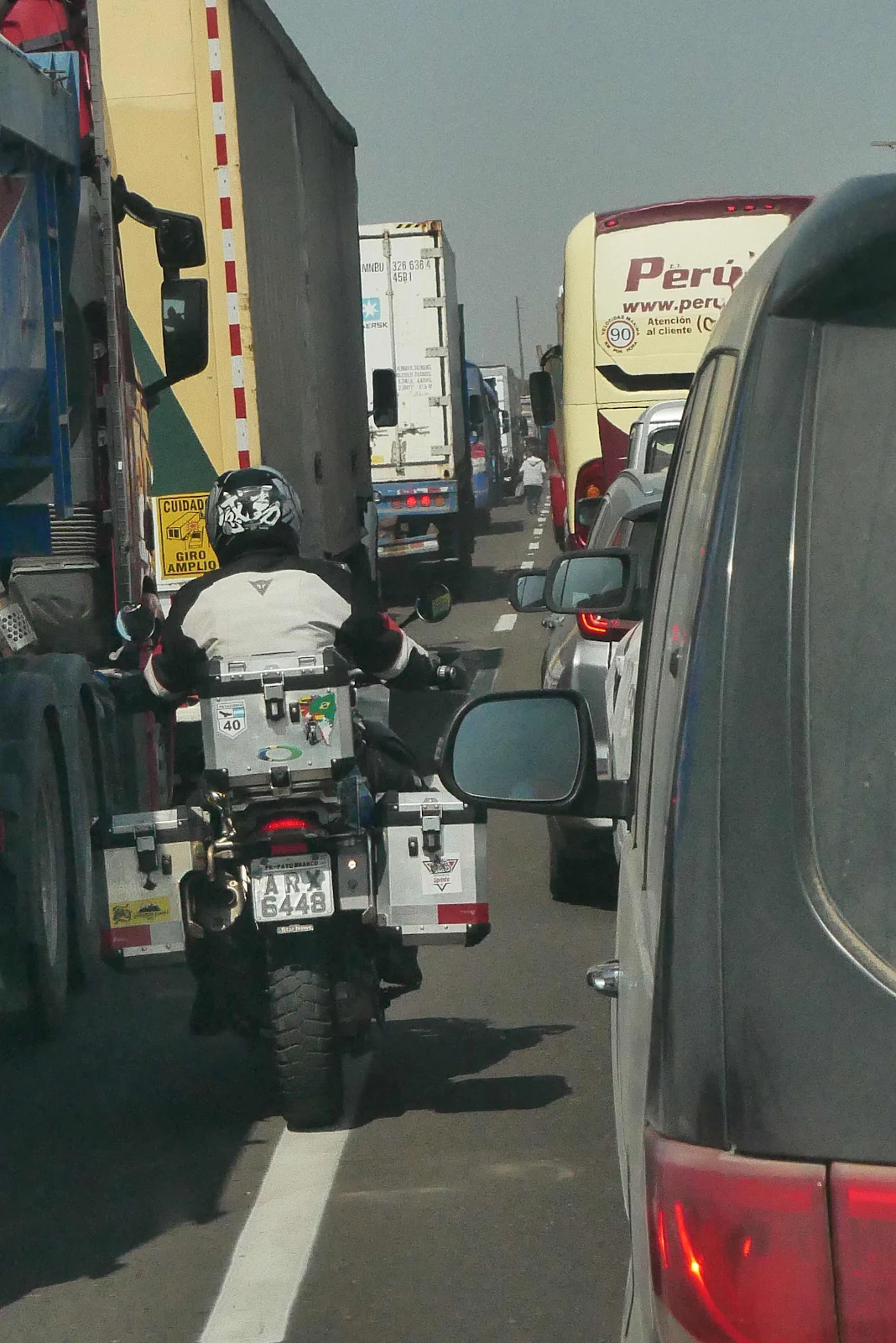
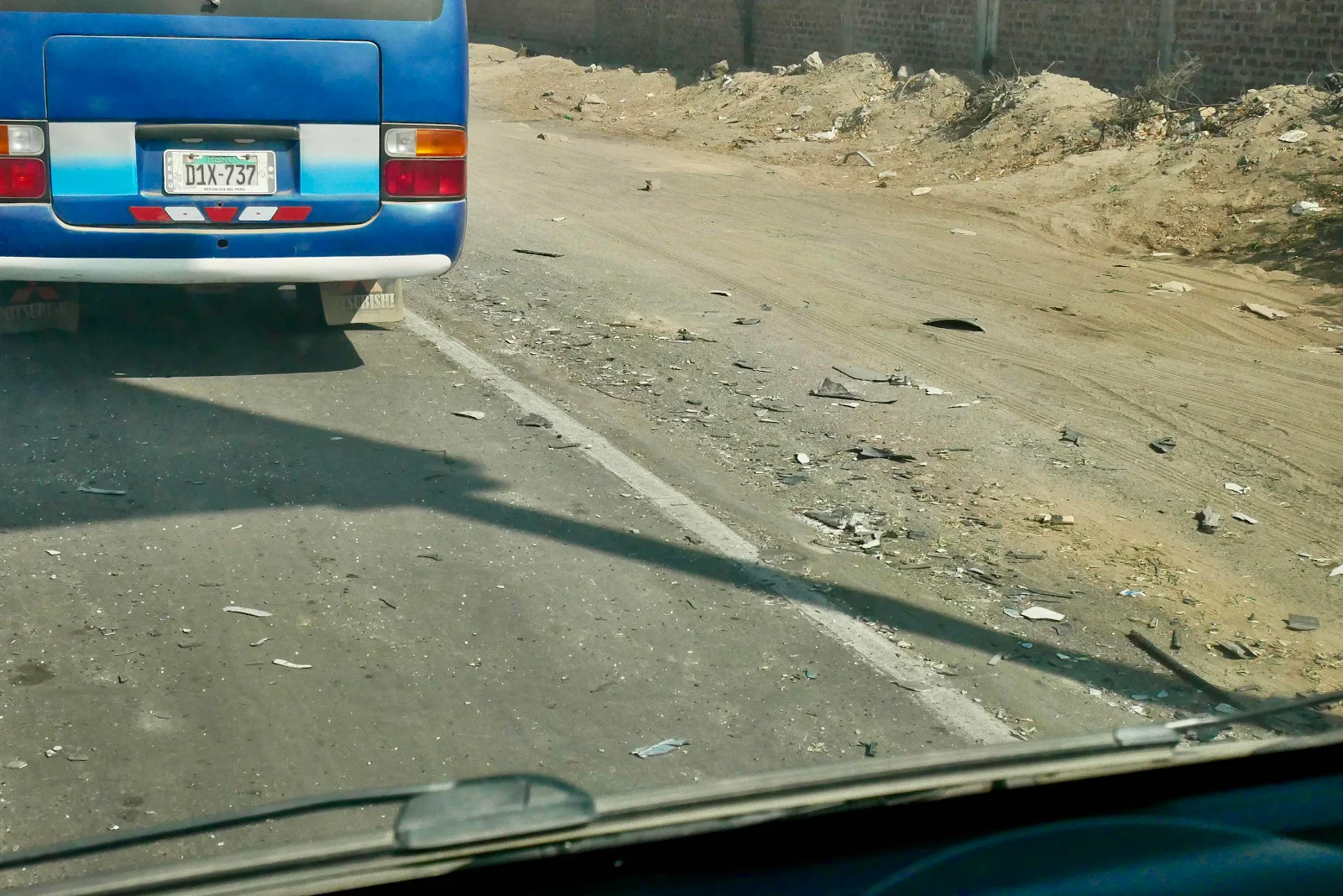
Google Maps warned of a 38 minute delay on the PanAmerican but there was no alternative route and sure enough there we were being passed by a Brazilian overlander on two wheels lucky him: 

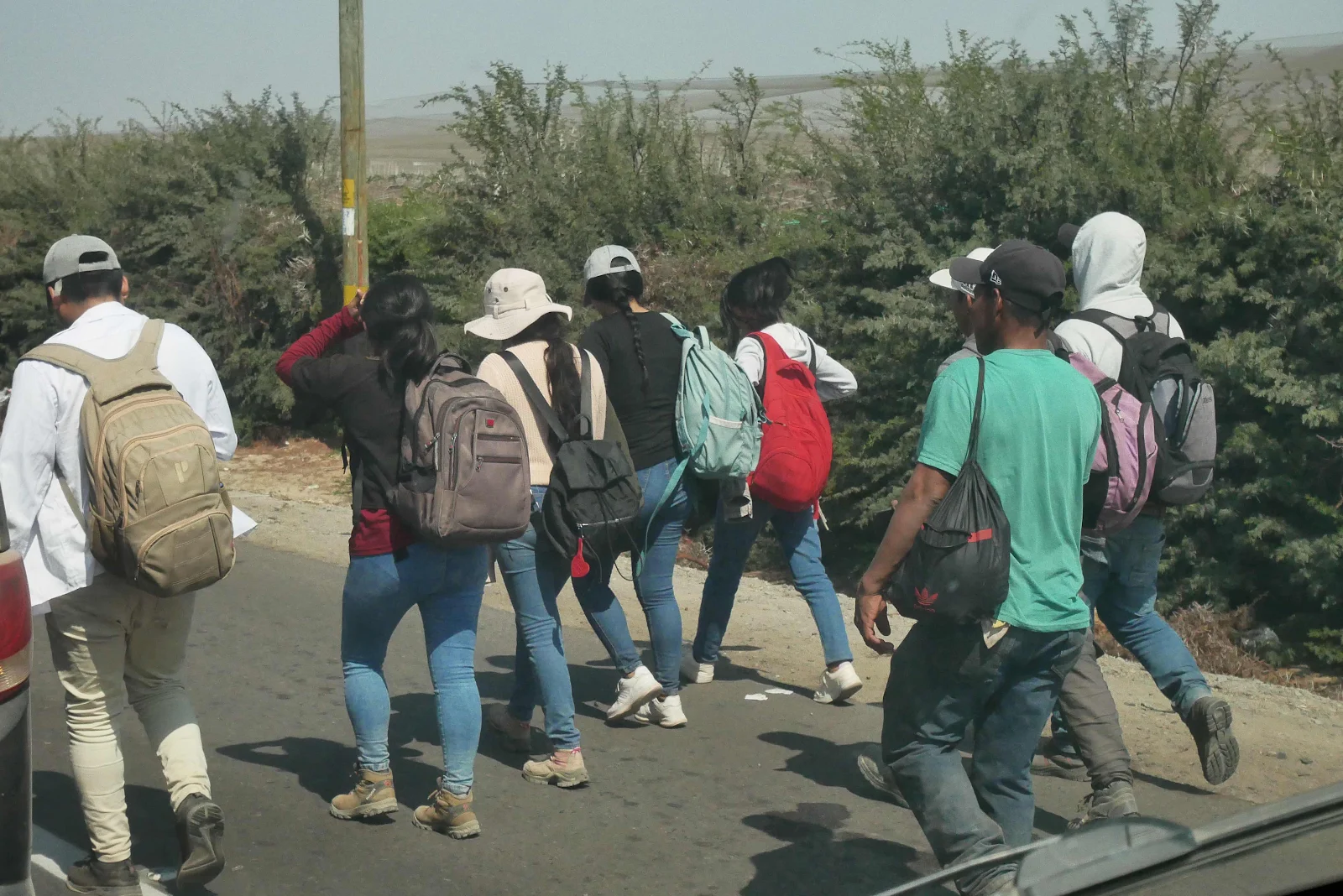
With no deadlines to meet and with slow nudging forward it was much more relaxed for us than it might have been. Layne made me tea and we listened to Detective Bosch work at a murder problem and pondered how slow this would be when we saw bus passengers preferring to get off and walk home:

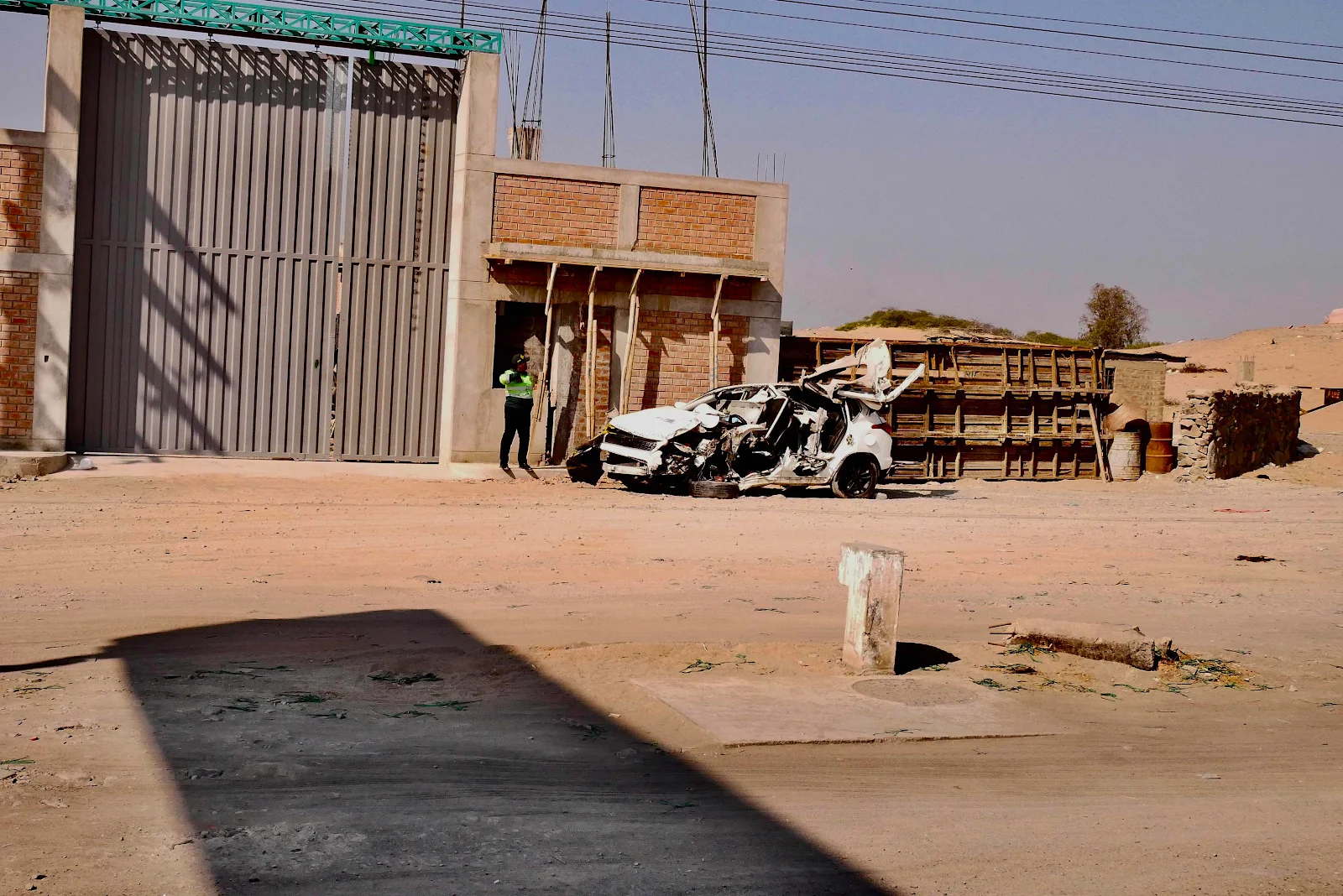
It took an hour or dinner we finally reached the accident site…

…and one has to wonder how badly they got hurt on this straight stretch of highway. No helicopters to whisk them to a trauma center, the modern response that saved my unworthy life. 

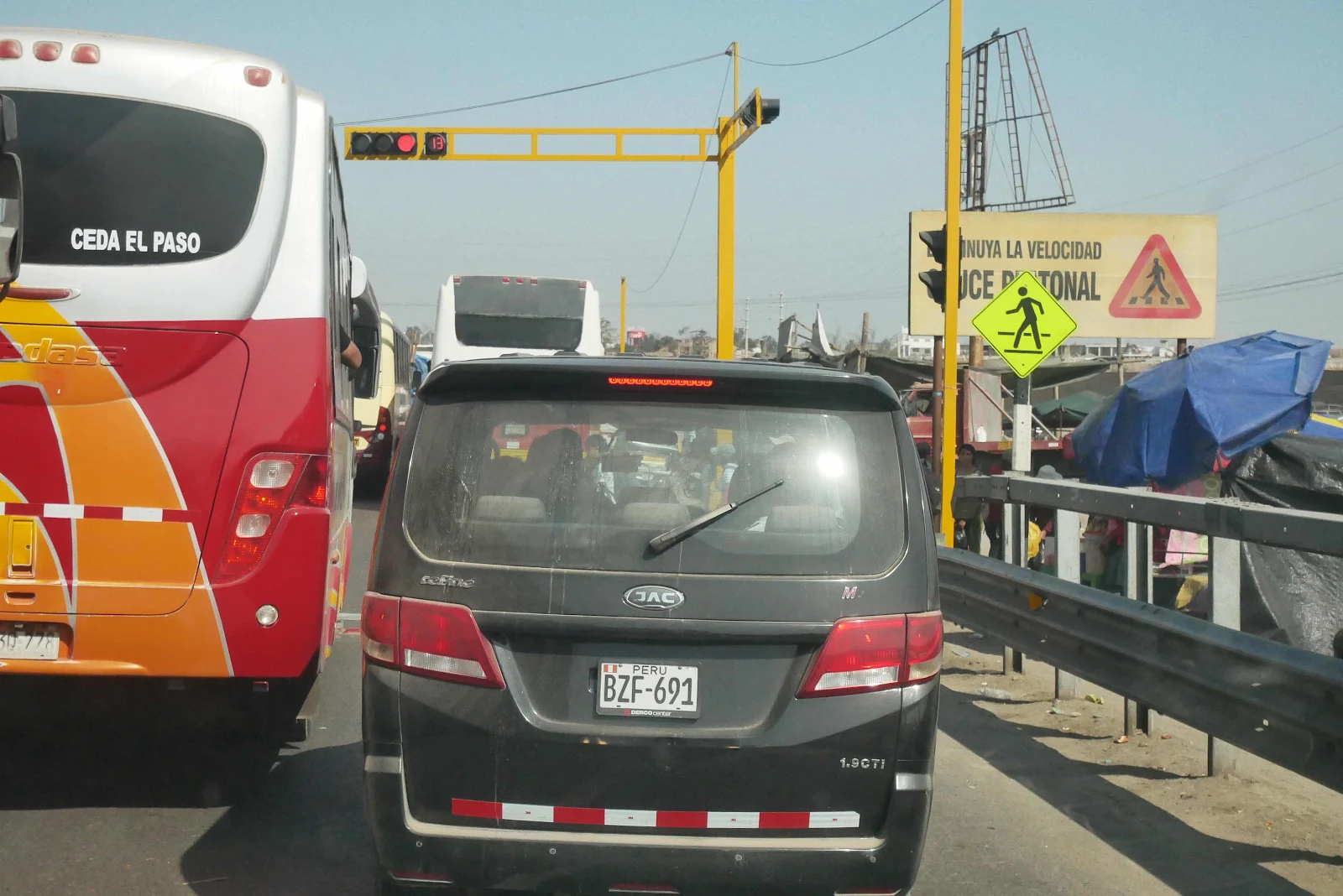
On and on the jam went as we saw freedom ahead and everyone started to jostle and honk. I have come to learn that Peruvian drivers aren’t nearly as aggressive behind the wheel as they want to look, compared to Guatemalans and Panamanians they are easy to ignore when they pretend to push. 

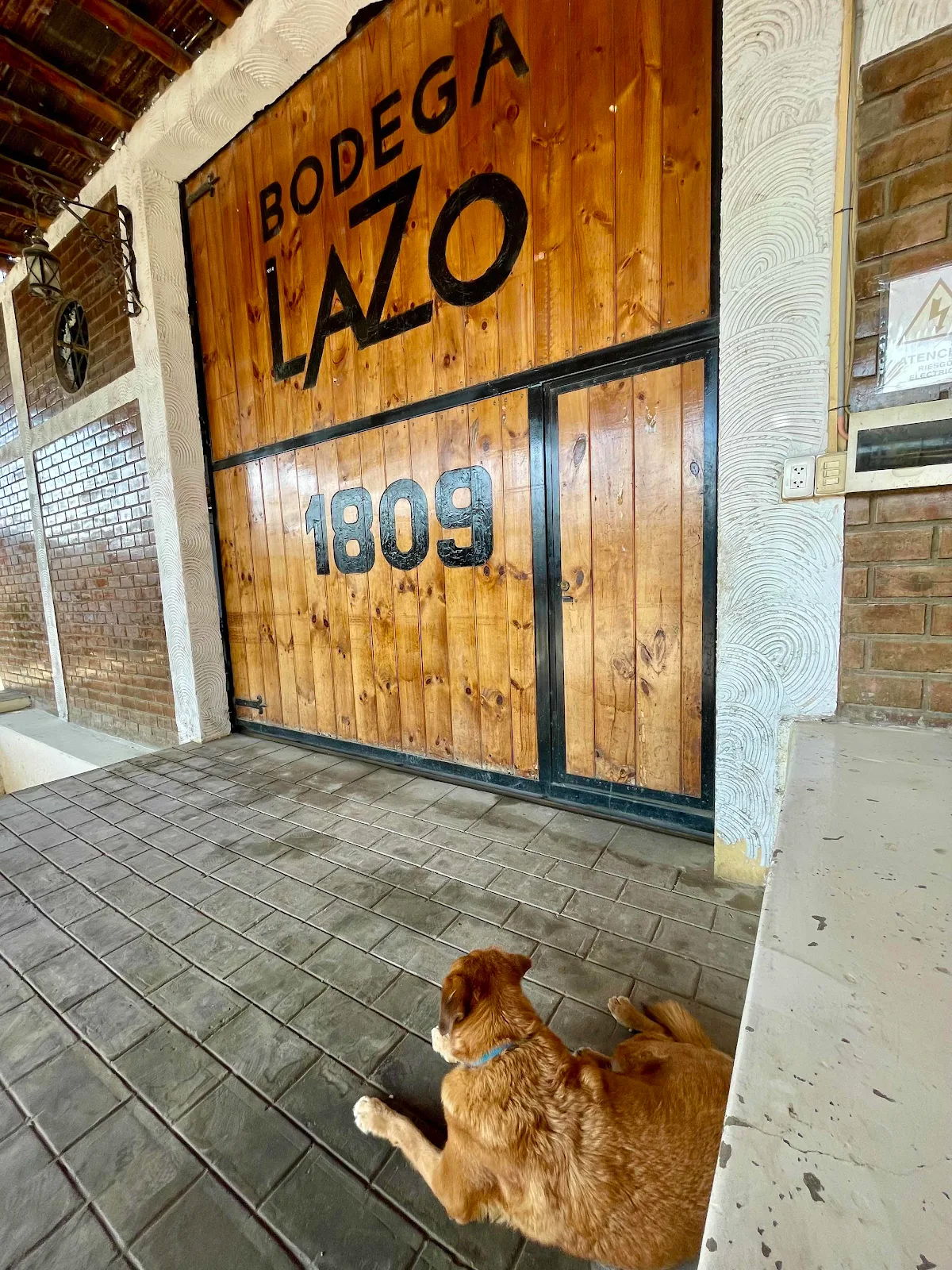
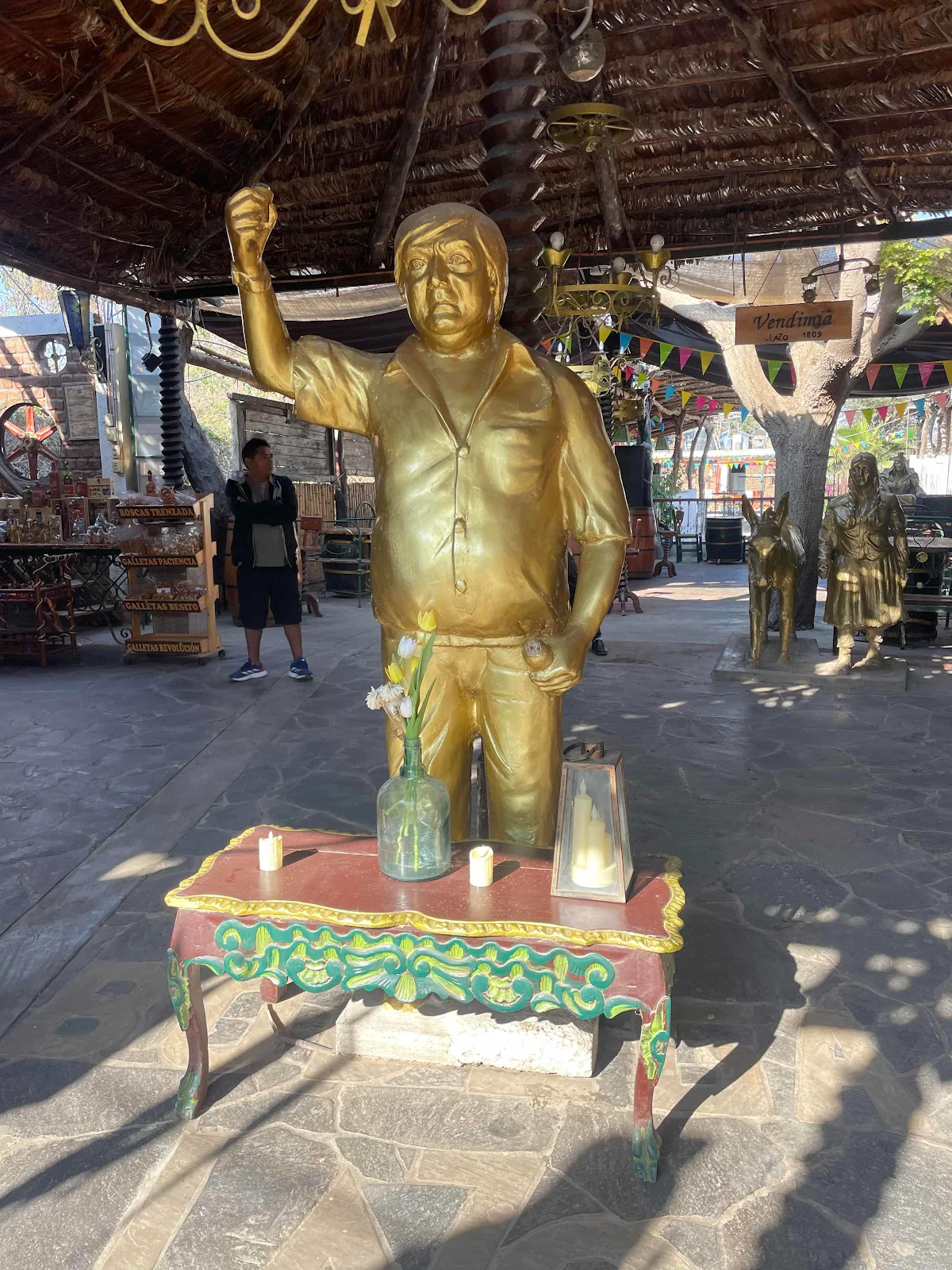
We made it thanks to Google maps to the peace and quiet of a vineyard said to make excellent Pisco the national bravery of Peru most often drunk in a cocktail of lime juice and egg whites called a Pisco sour. 

Unlike US wineries tasting here is a commercial business. They dumped dollops of Pisco into a plastic cup and left us to decide what we wanted with no discussion of how it’s made its history or anything else. If you don’t like the languid snobbery of American wine tastings this was for you. 

We tasted, we bought, we left with some decent booze and no warm fuzzies. 

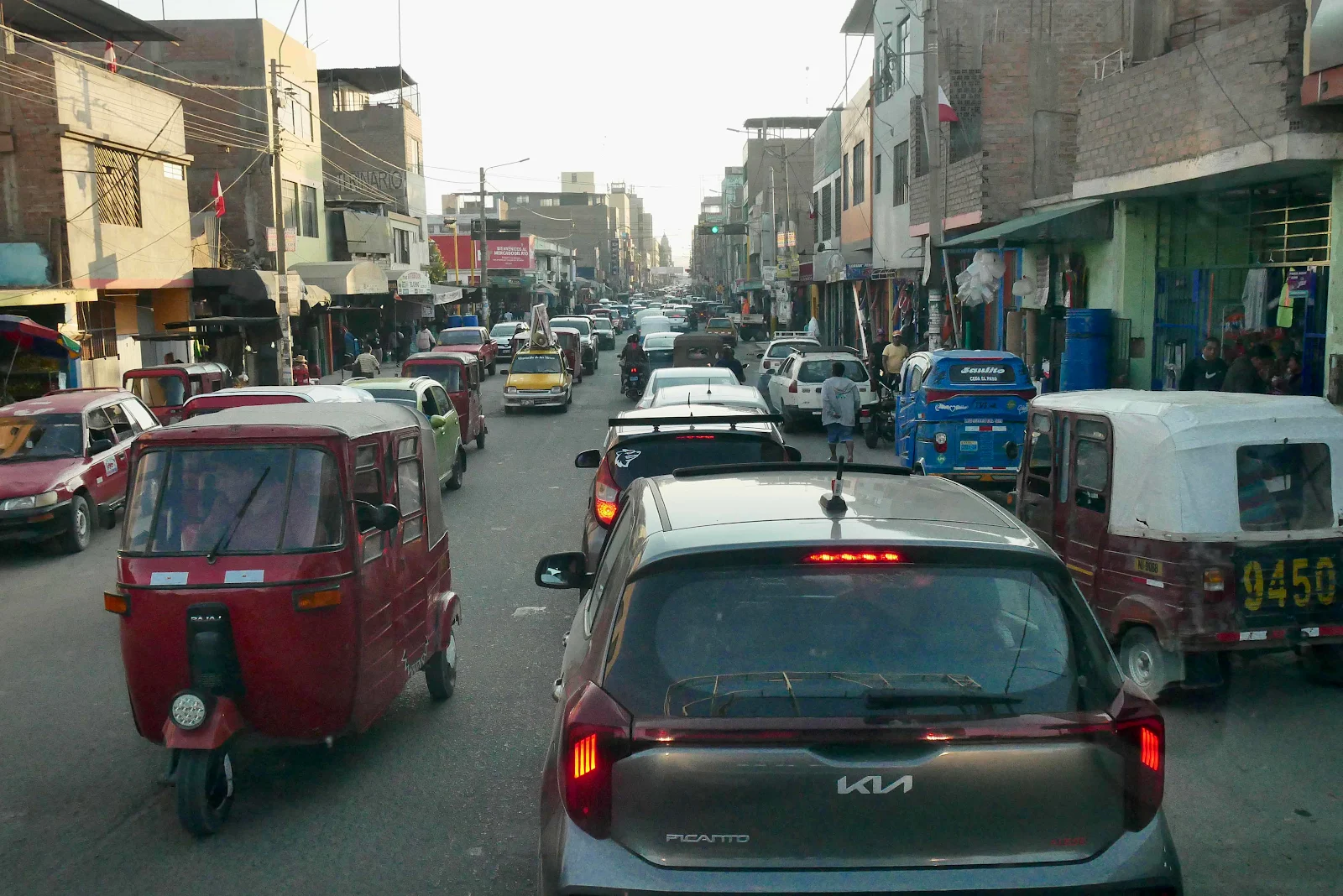
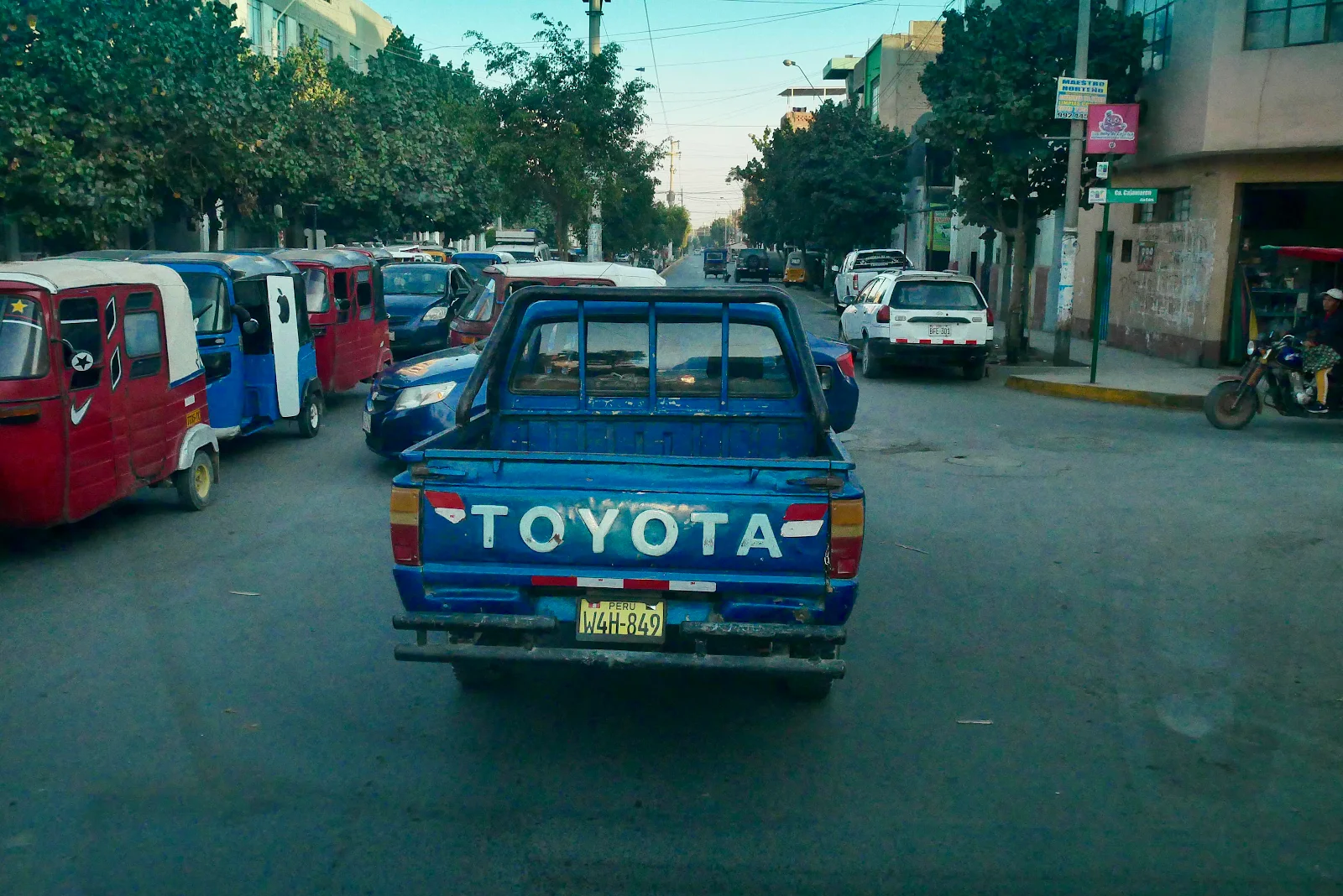
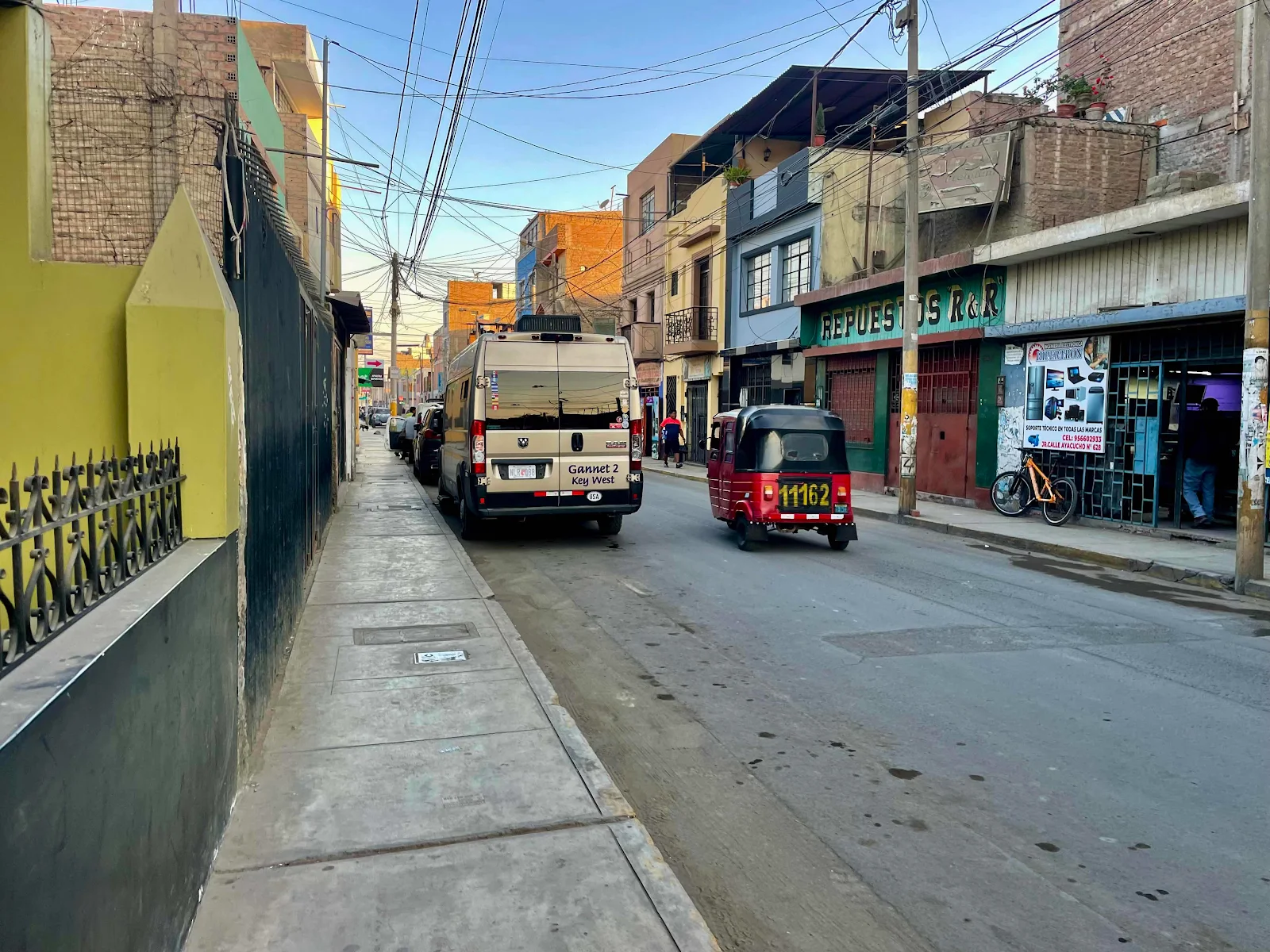
I had taken sips from Layne’s tasting thimble which was just as well as Saturday night in Ica was traffic bloody hell. I had a gringo moment with all the pot holes and torn up asphalt, the dust, the aimless pedestrians and random tuk tuks. Oh and the sun was starting to set. Perfect. 

Pushy carsxblockedcintersections and horns were cascading across the city like a call to battle. I used GANNET2’s imposing bulk with my peripheral vision(no eye contact) to muscle through to the no fee ATM at Banco de La Nacion. 

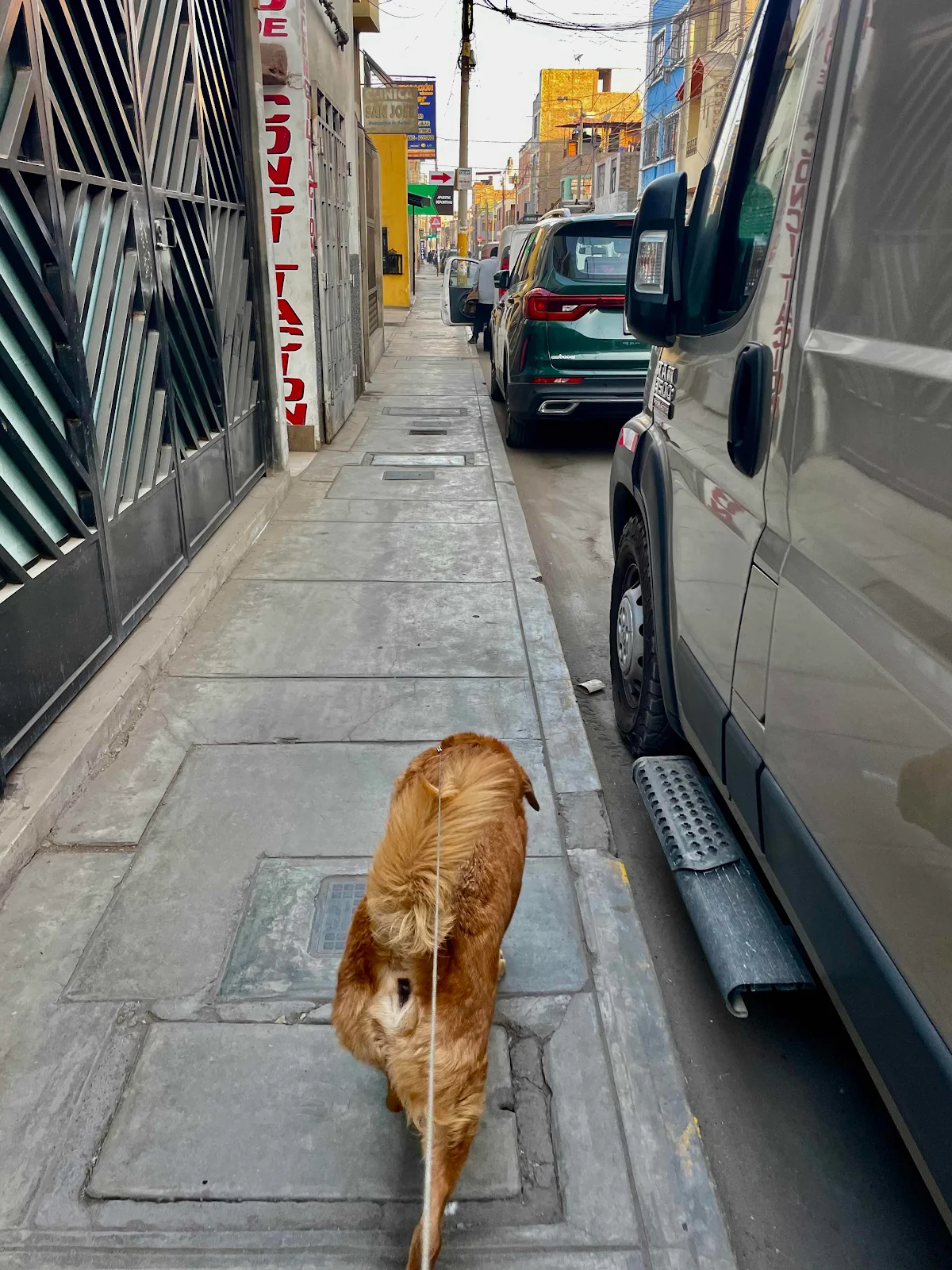
Rusty and I walked keeping an eye on our home but as cruddy as the town was, everyone acted busy and ignored us completely. We felt like we stood out lost and vulnerable in a run down city center. 

We got our $100 each, the limit for daily ATM withdrawals on our Key West debit cards as set by the Peruvian authorities. In Colombia we could get $500 a day but this country is its own misery.

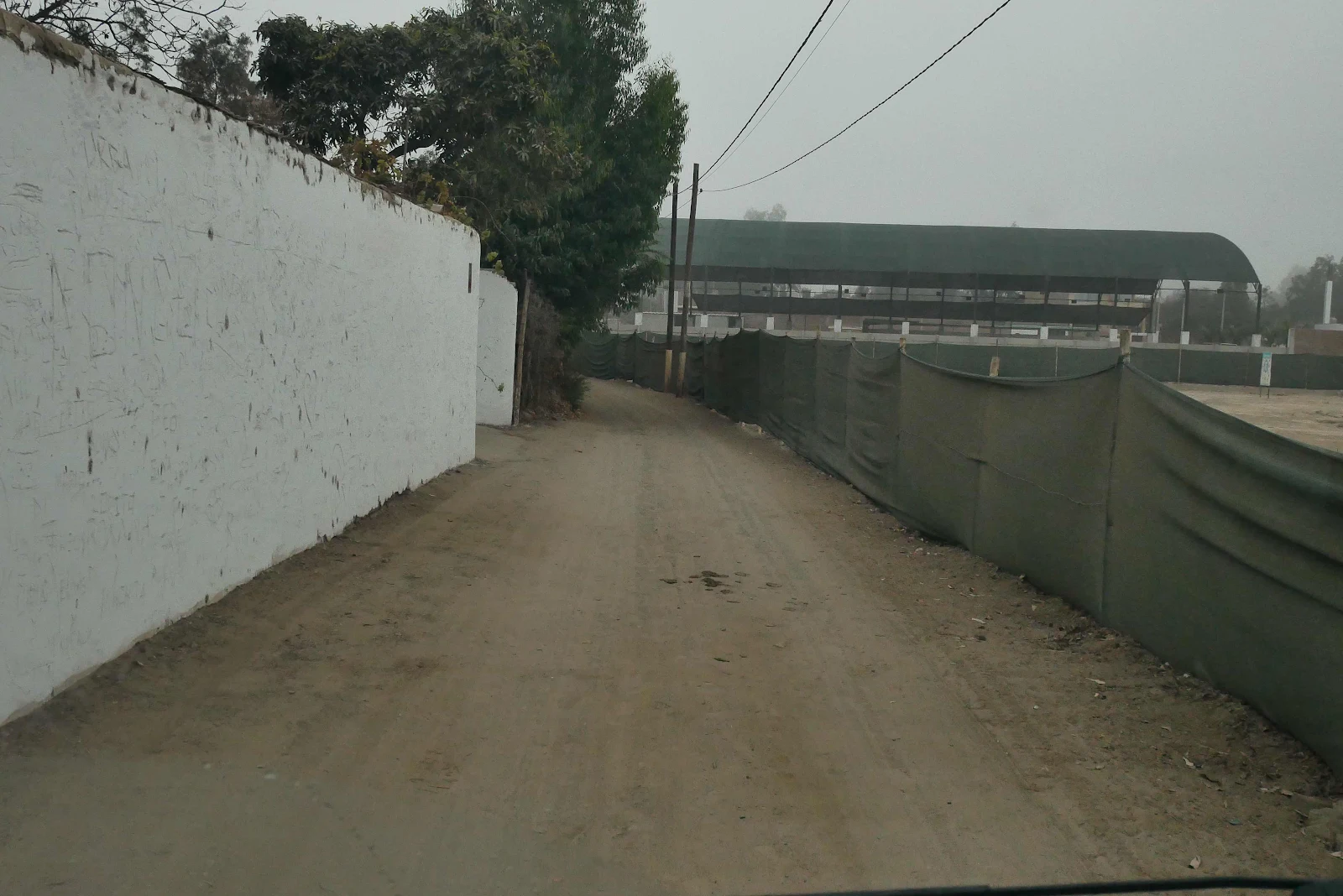
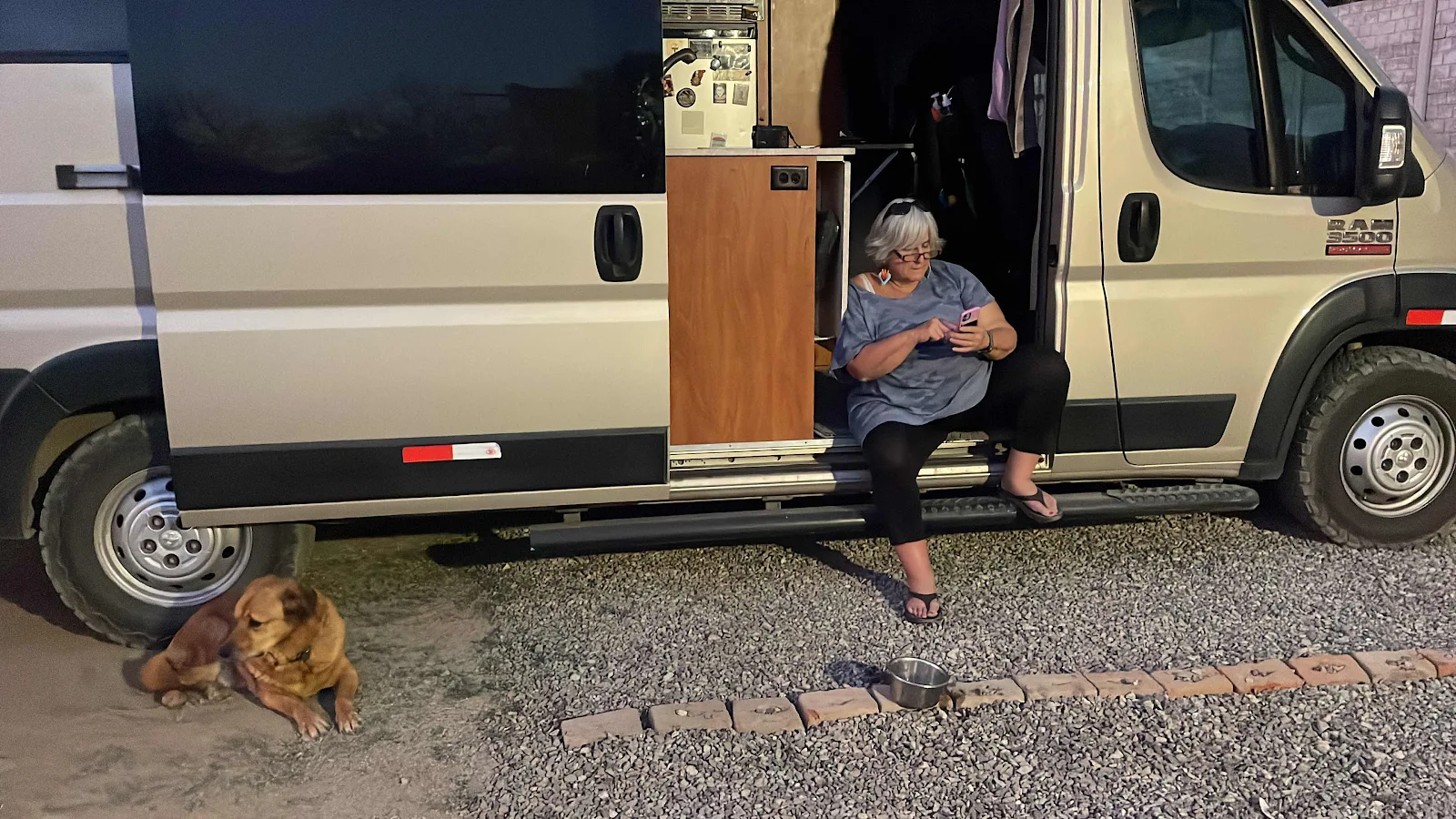
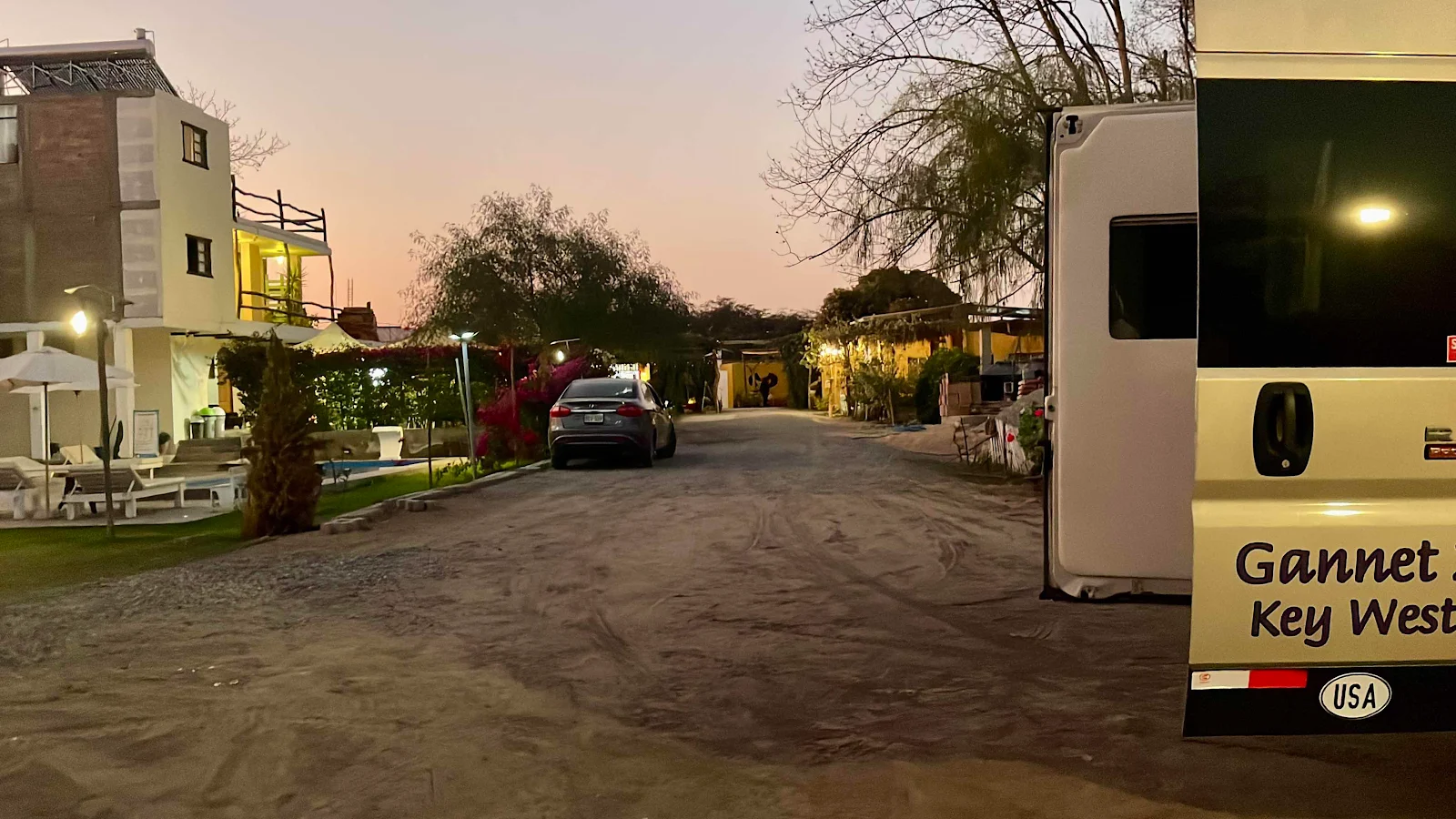
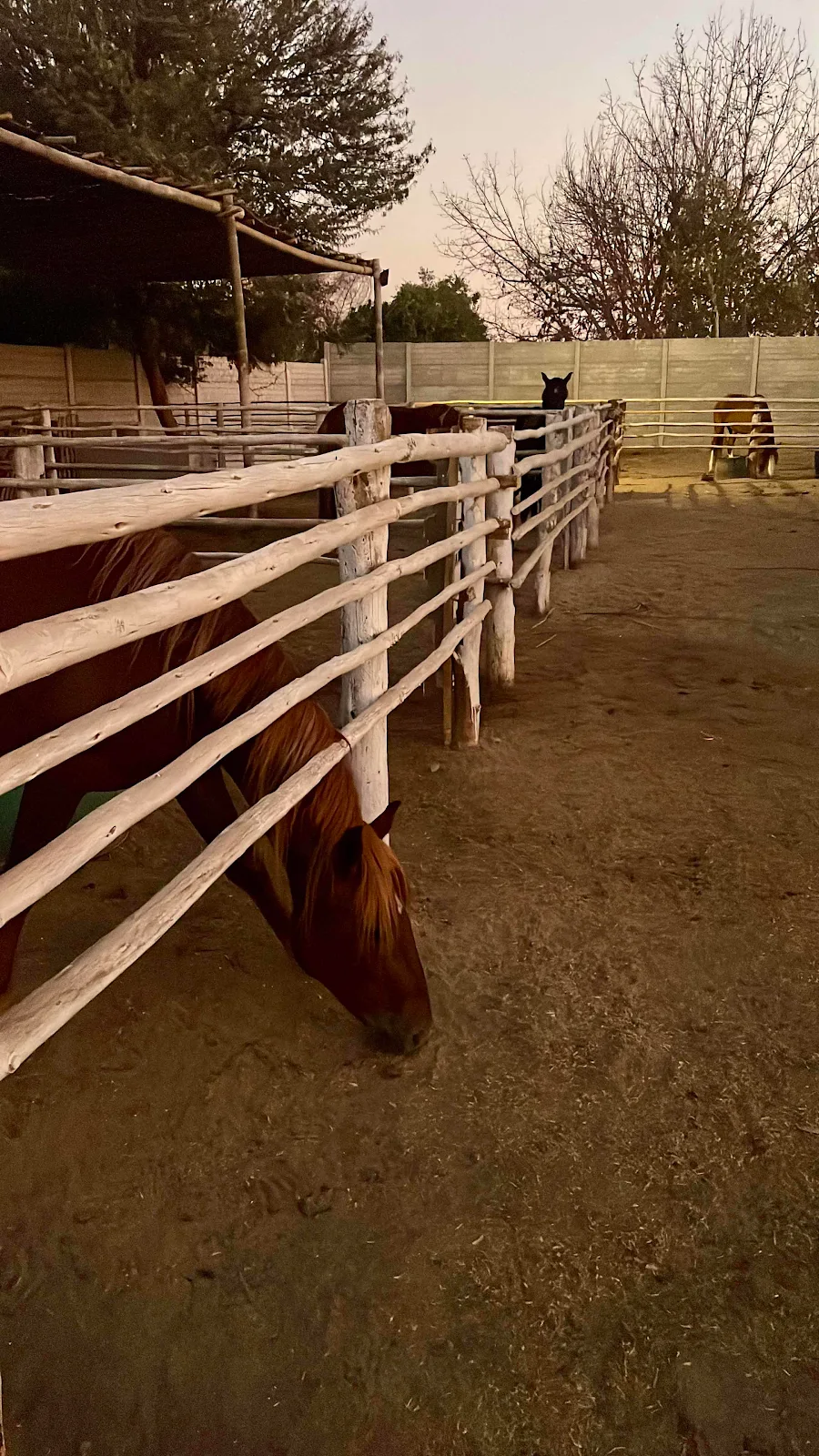
Our iOverlander campground for the night was called Serenity and so it was, a dude ranch on the edge of town with farm animals, a pool, hot showers and a dirt road to drive to the gate which happily was talk bought for us to get in and relax. 

Where were we going?

We elected to eat leftovers at home rather than use the restaurant and that is the joy of a comfortable van that feels like home because it busy your home. We blocked our Peru for a few hours and were ourselves in our own space. 

A time to recharge our batteries before we take on more coastal driving in the morning to see more of southern Peru on our way to Arequipa.