Tuesday, November 12, 2024

Electrical Life

Our onboard box that charges the house batteries has stopped working so we can only charge them using 400 watts of solar panels on the roof.
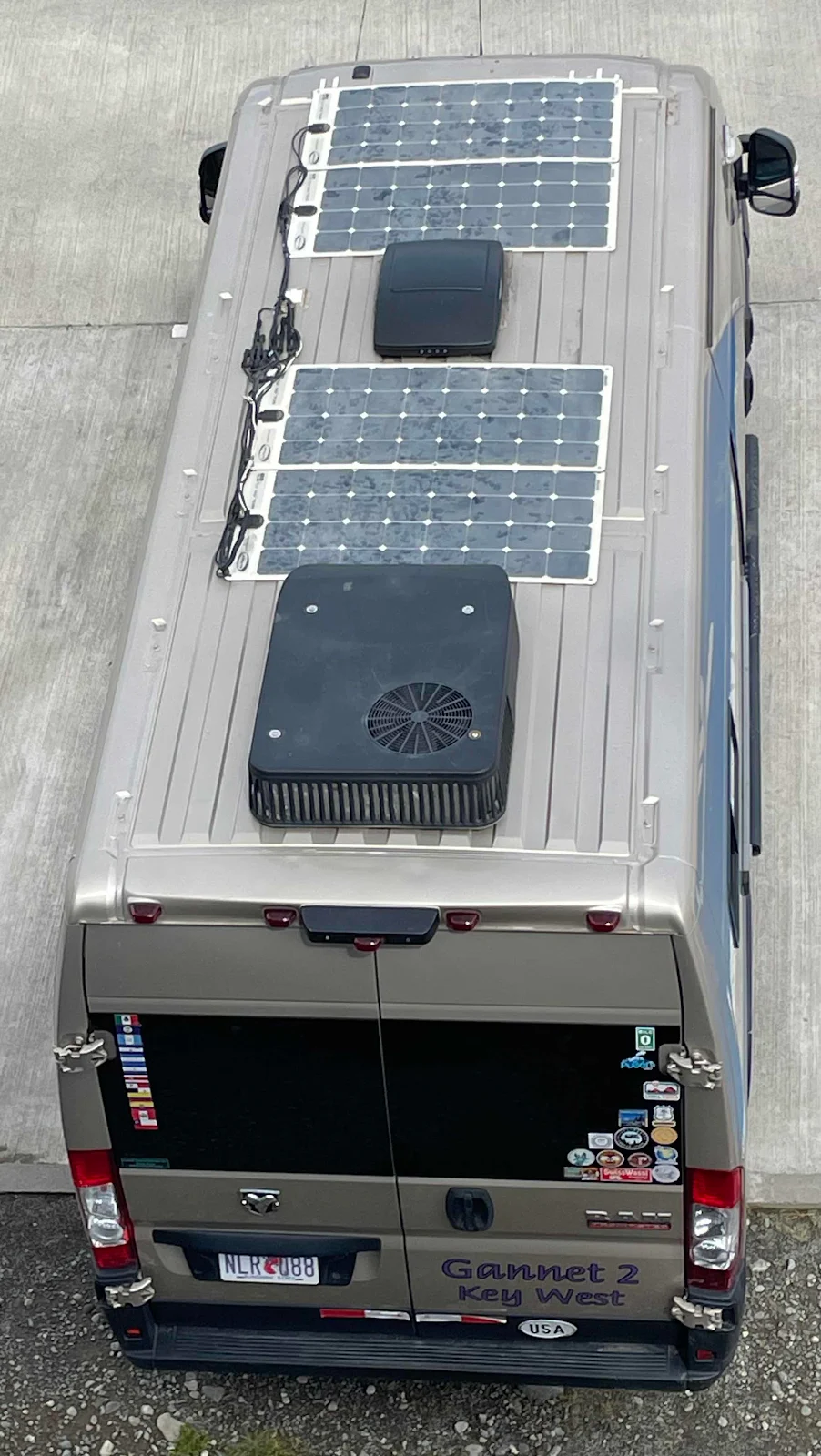
We chose to have the van be propane free because it’s complicated finding compatible refilling systems outside North America and we bought the van and had it converted with South America as our goal.  That means we rely on plugging in to shorepower sometimes and on our two alternators when driving to keep our large battery bank charged. So this inverter/charger breakdown was a problem needing to be solved. 
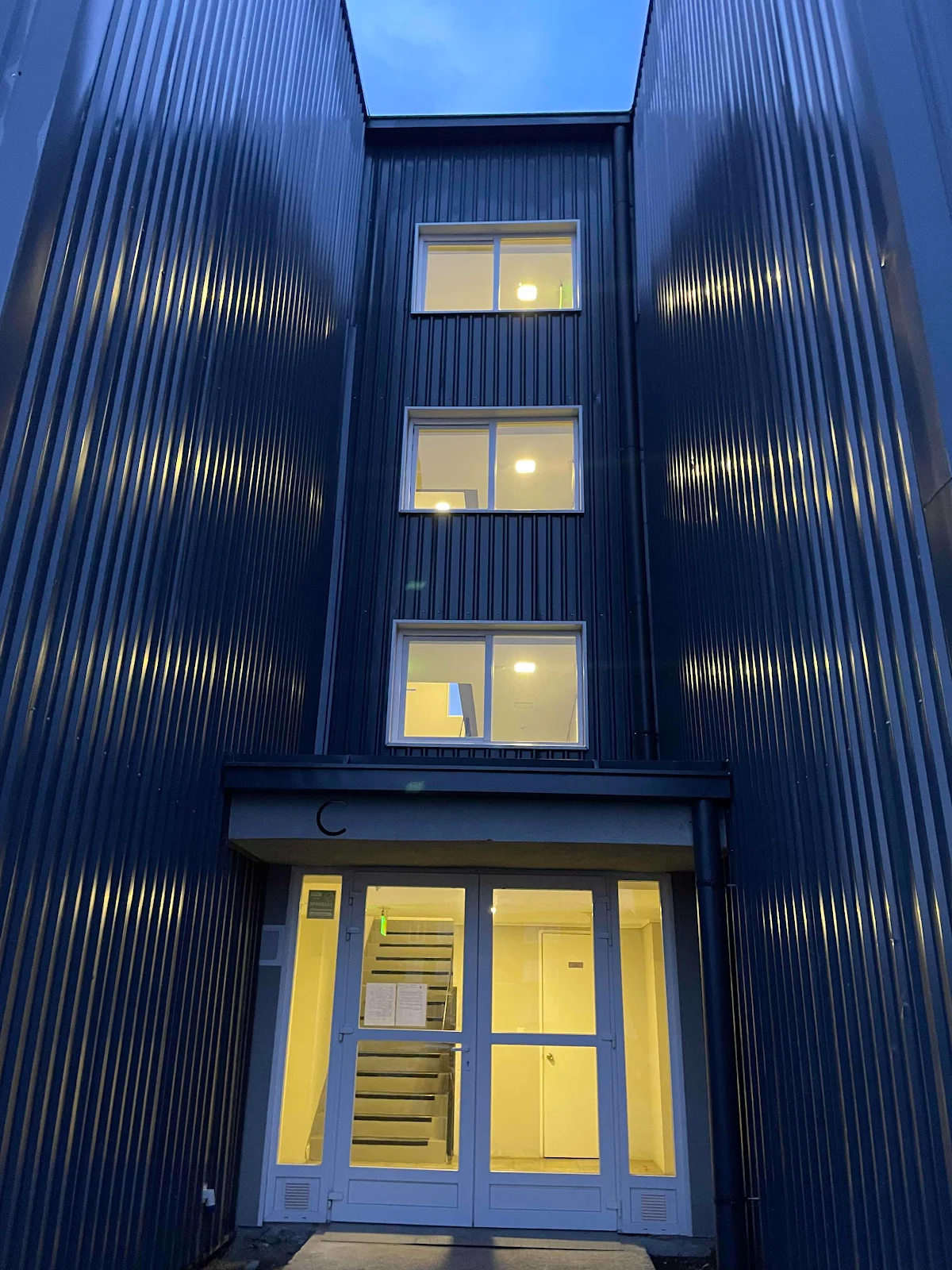
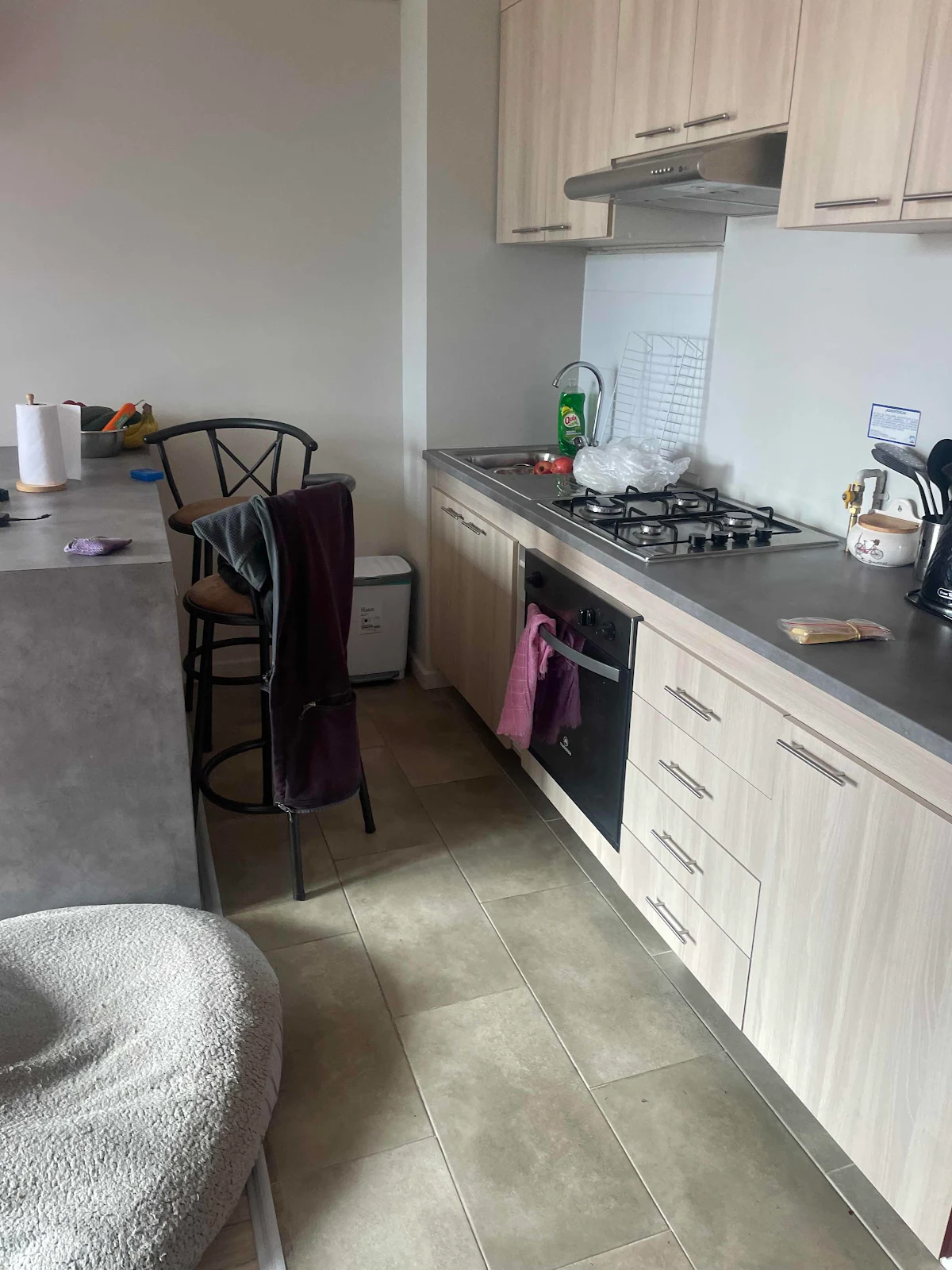
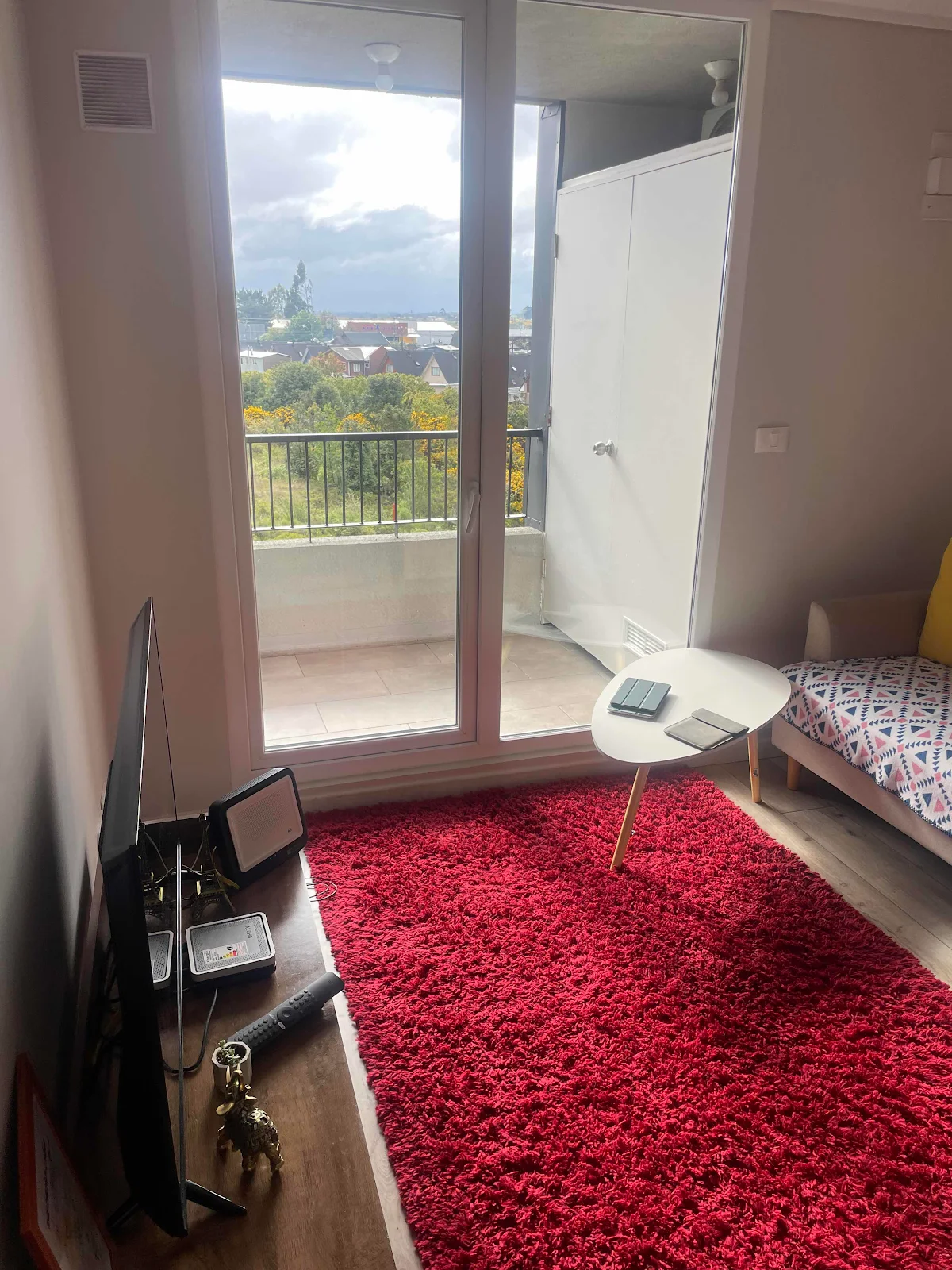
First step: rent an air b and b at $46 a night. Ours naturally was in a fourth floor walk up which is no big deal except that to create full access to our electrical system under our bed I had to carry lots of glorious stuff upstairs for safekeeping. Good exercise. 
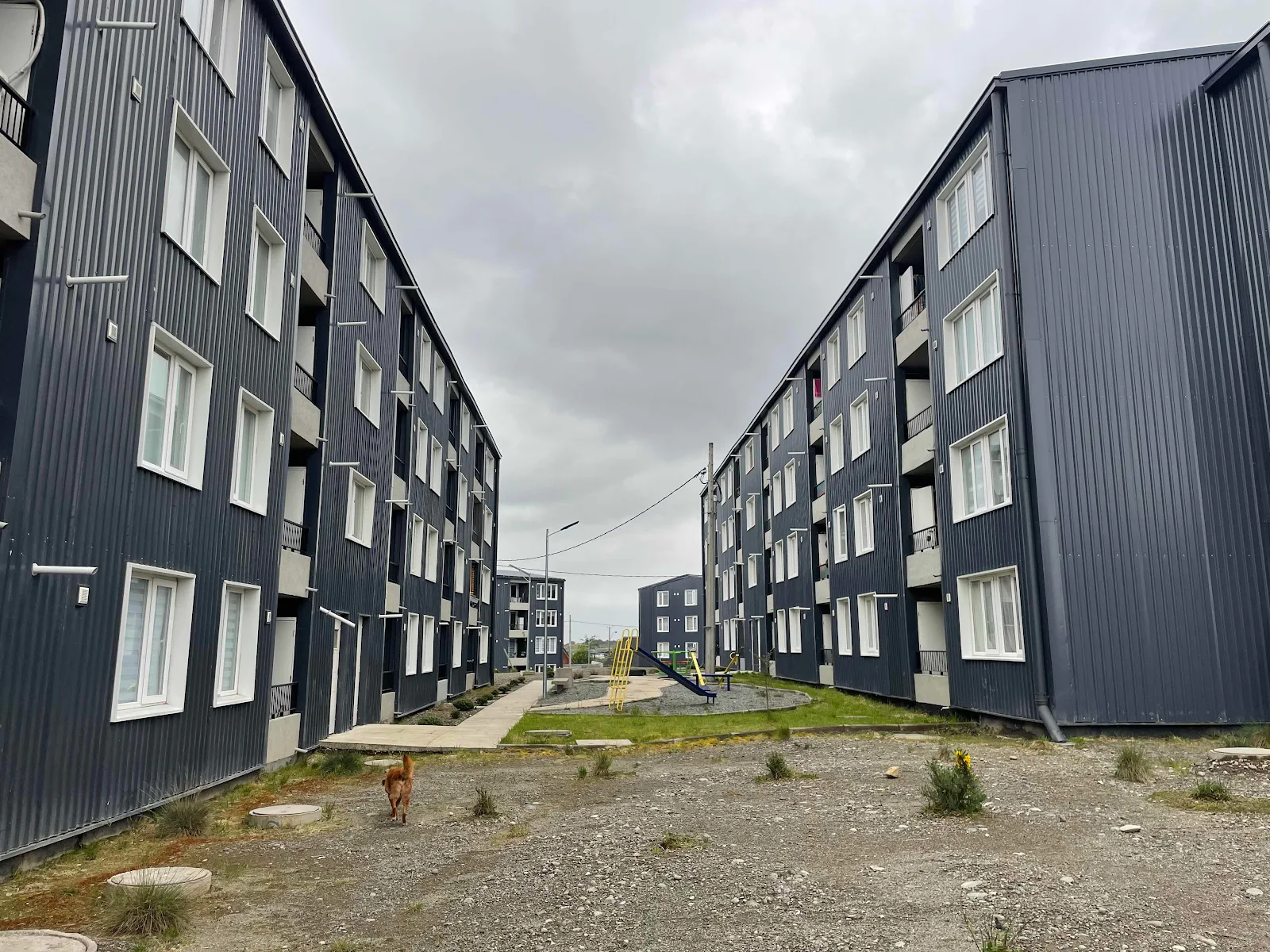
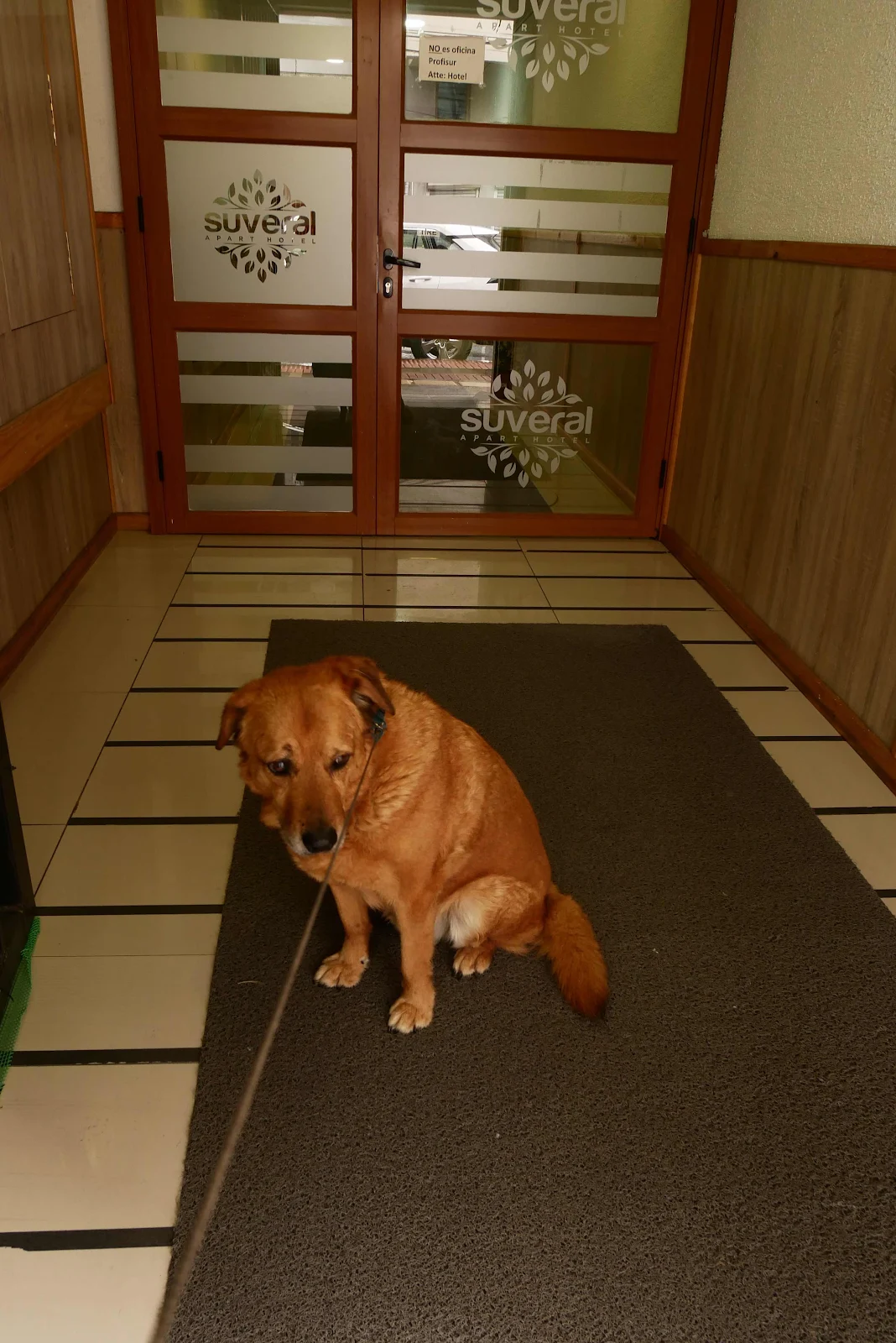
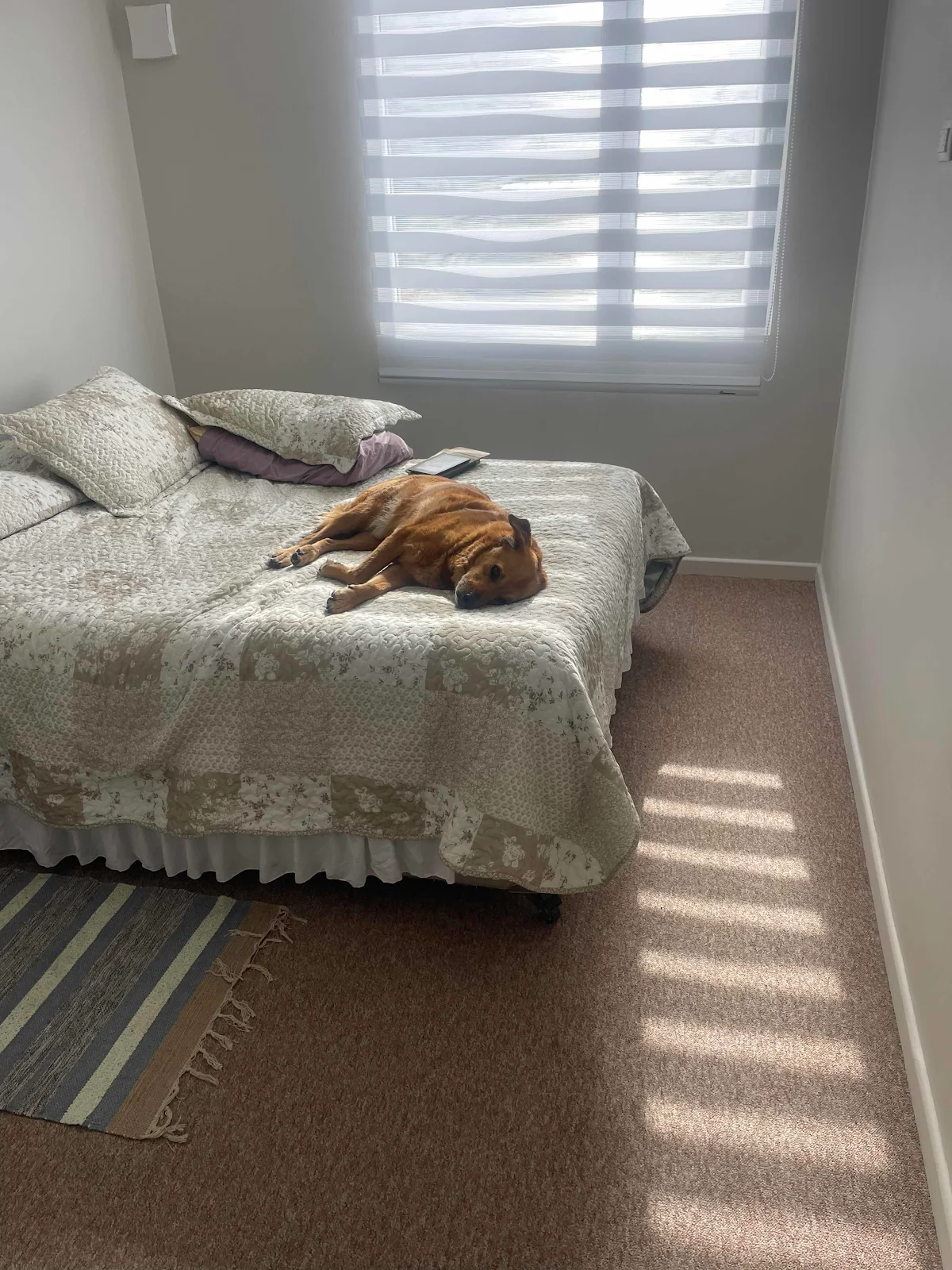
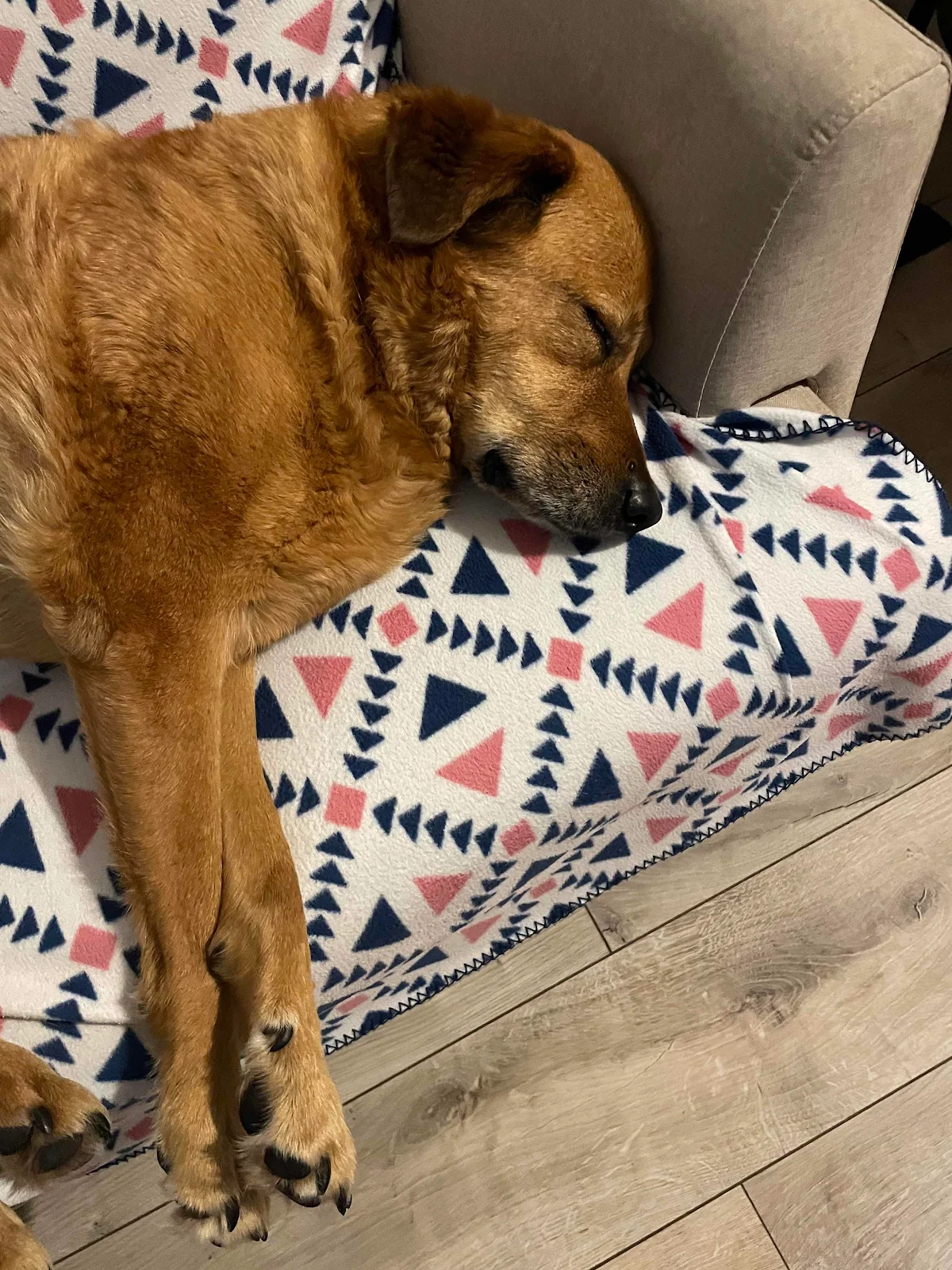
The apartment complex in Puerto Montt is efficient and comfortable but not heartwarming or cheerful or engaging. Rusty likes it. 
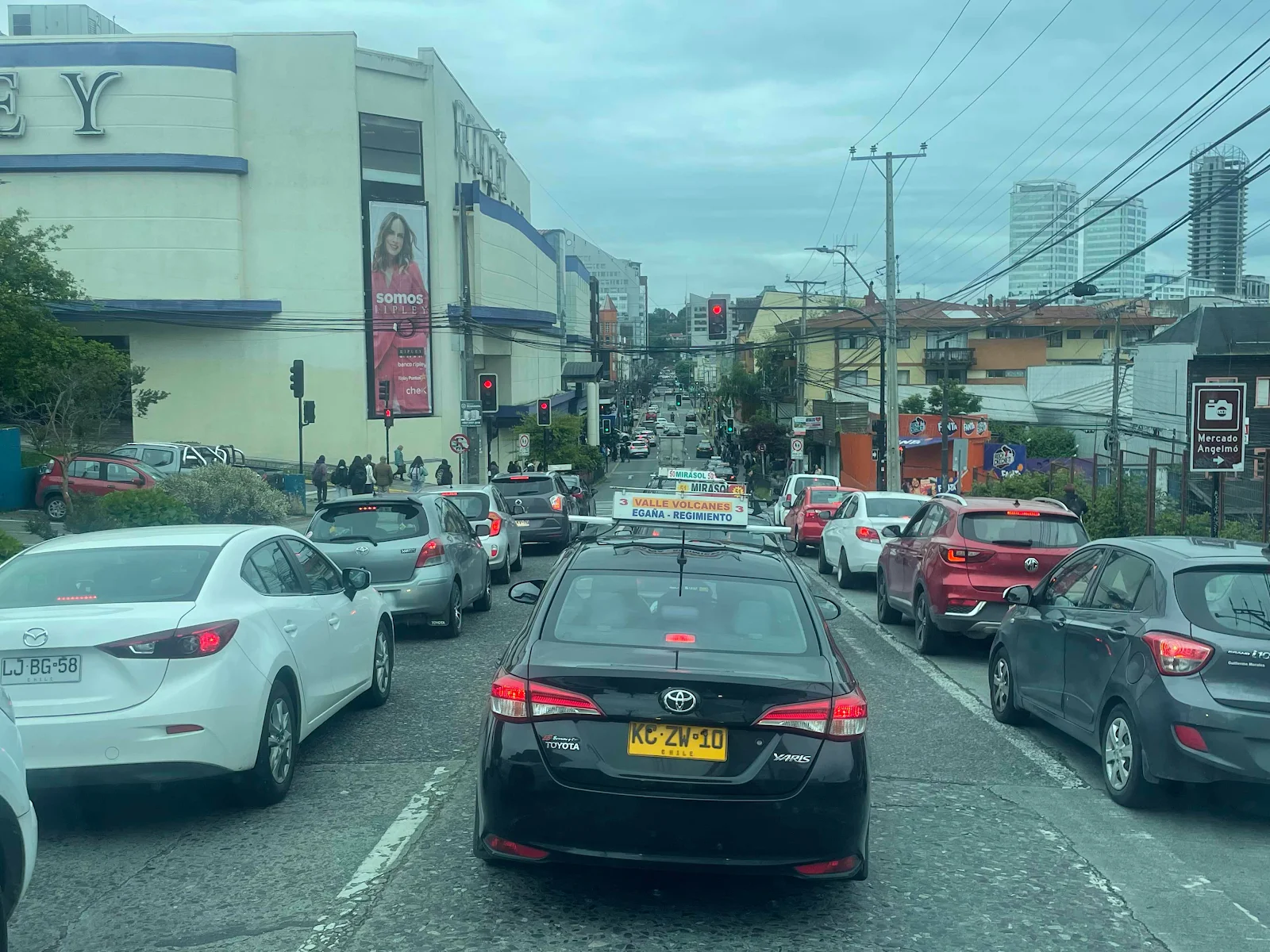
It was a struggle and we got lots of “nos” as we searched around town for a suitable electrician. But we may have struck the motherlode thanks to persistence. 
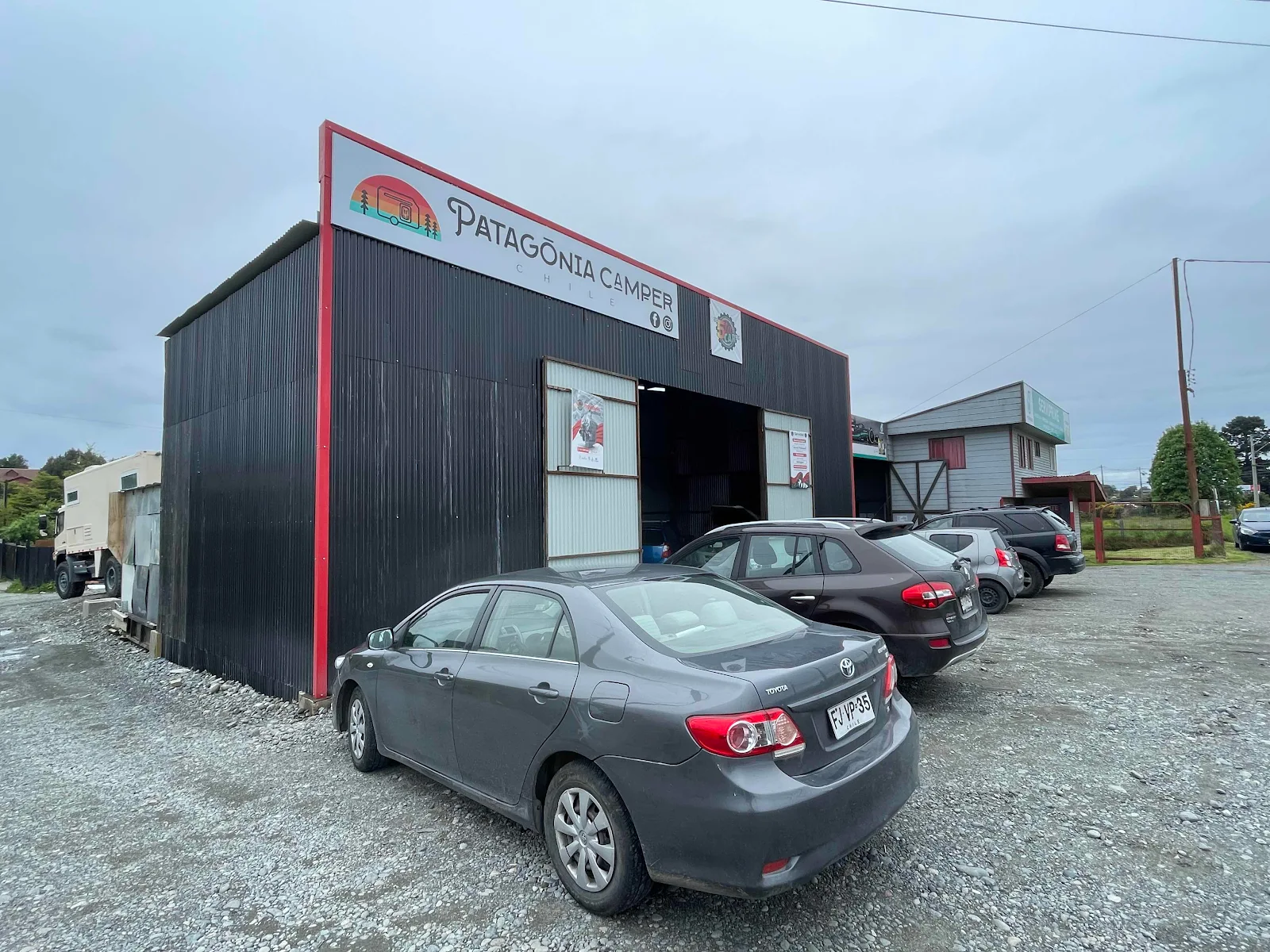
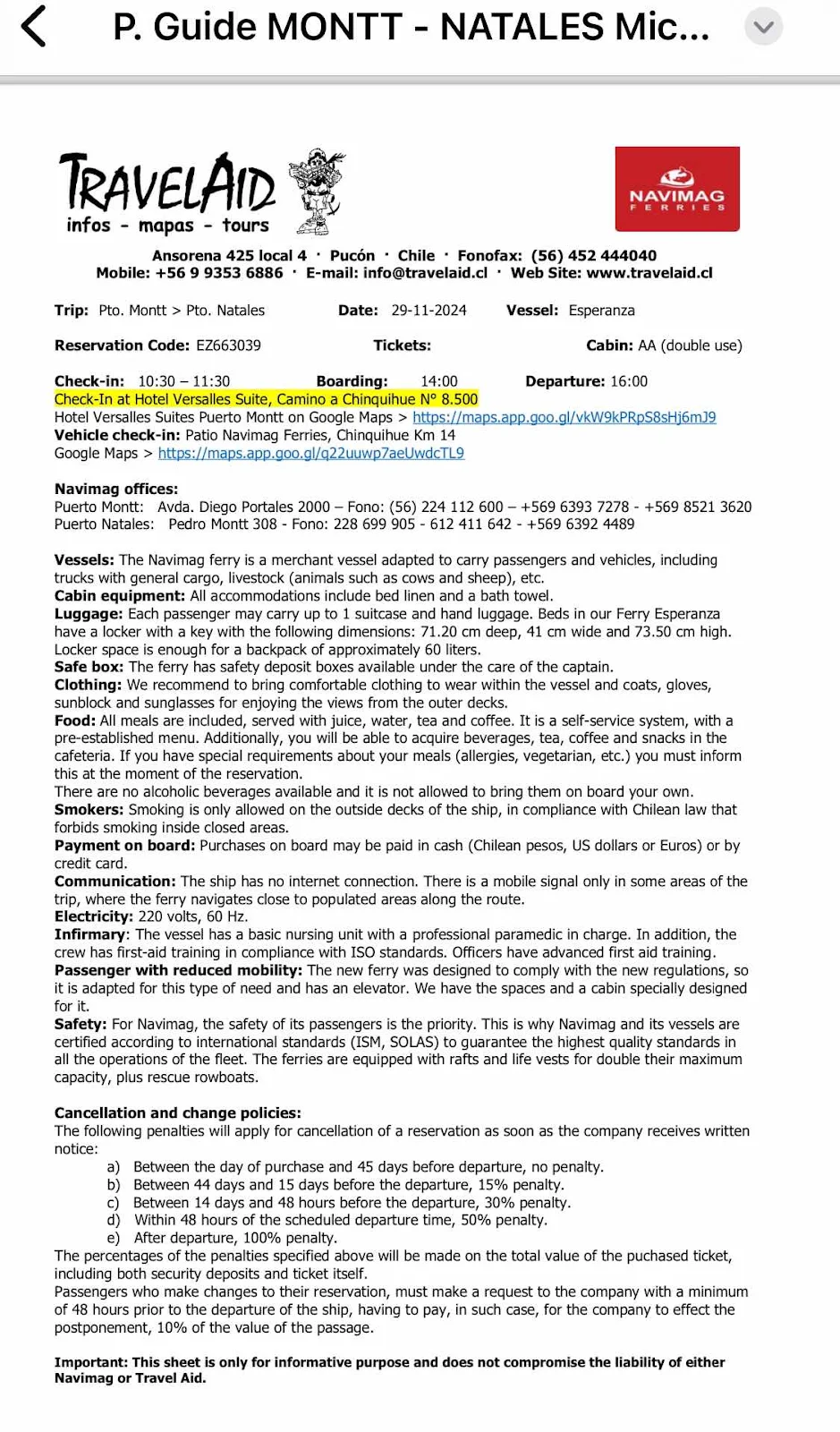
Facundo, a lanky cheerful bearded Argentine didn’t freak out when I mentioned our inverter. He wants to upgrade our battery system which he says is not a great installation. They can order parts from Santiago to rebuild our inverter/charger layout. He seems confident and capable. It’ll take two days he said or a few more if we need to order parts from Santiago. I hope for the best. We have 16 days until the ferry leaves Puerto Montt for Puerto Natales. We got a memo from our travel agents.
Meanwhile our landlady said the apartment rental couldn’t be extended so we drove back to the complex and carried down all our crap back to GANNET2 and drive it fifteen minutes across town to a new place, a cabin in the woods with a wood stove and lots of grass for Rusty to roll in. How Layne  found it on short order was an act of brilliance on her part. Explanations to follow later. We keep tottering along on a tightrope between being bummed out and relieved.  So far so good. We shall see. Hope for the best. Insert cliché here: 
It’s a voyage of discovery and I feel alive. 

Monday, November 11, 2024

Puerto Montt

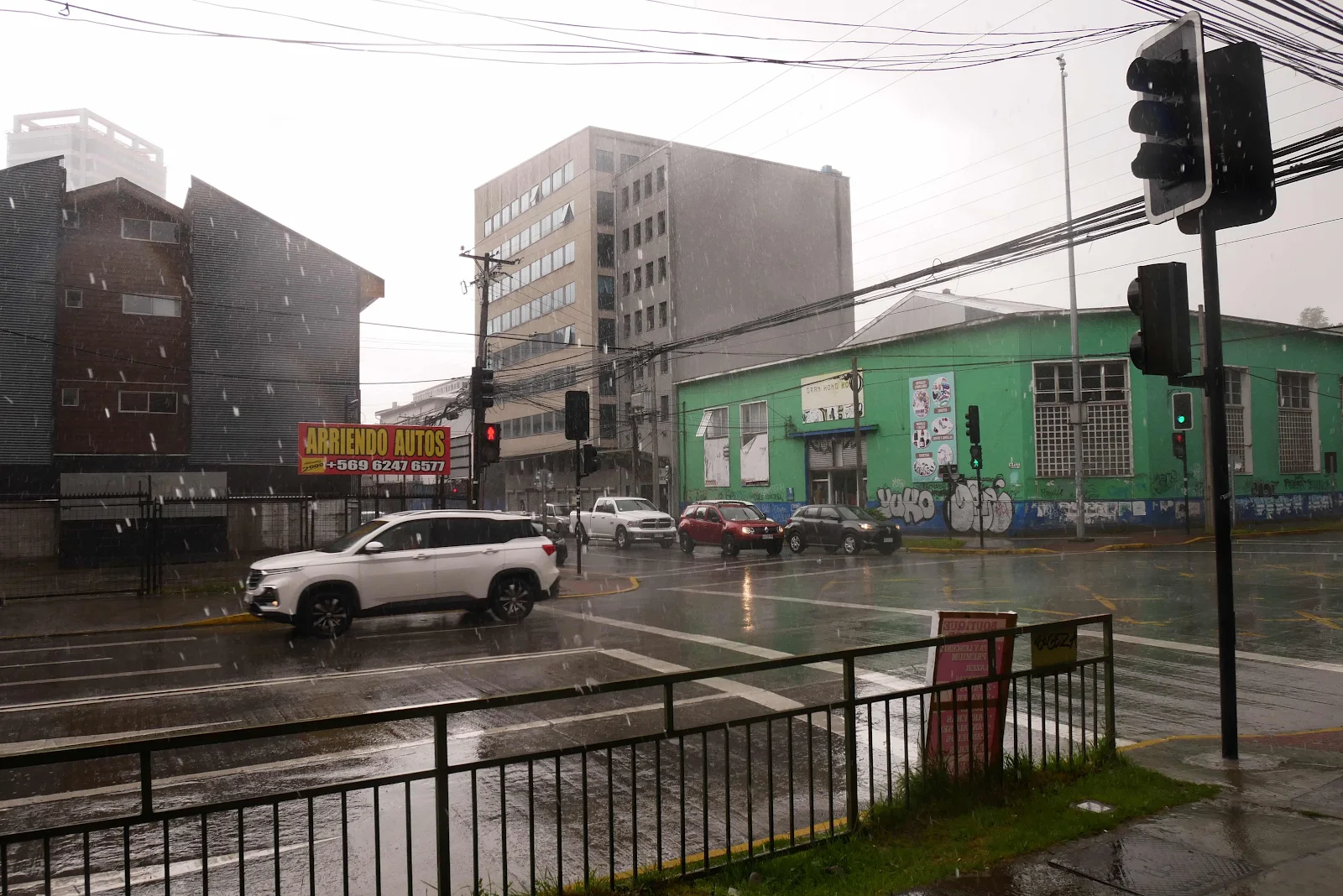
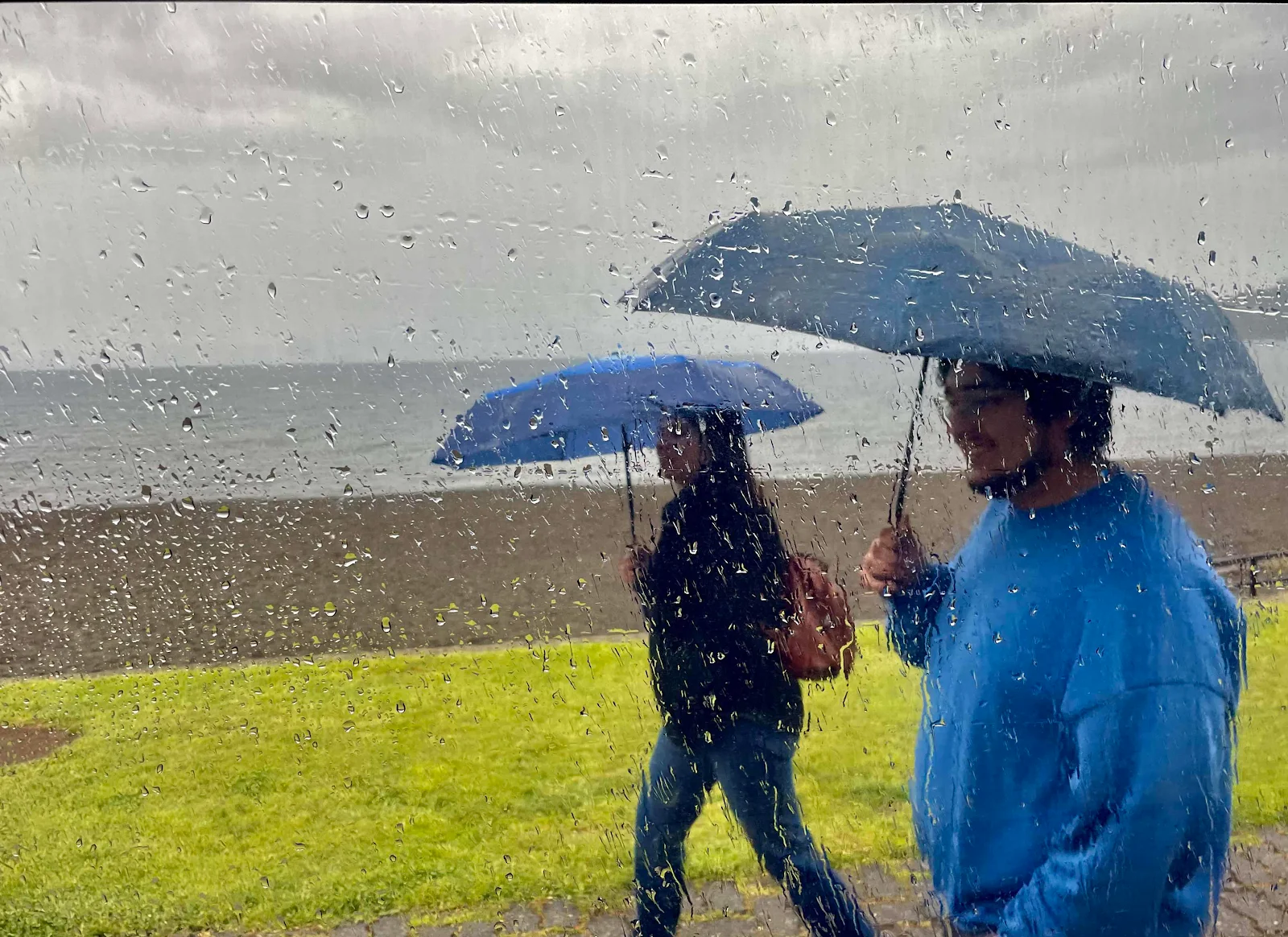
I tried to induce Rusty to head over to the Plaza de Armas but he had had enough of the rain and he put his head down and headed back home. I couldn’t blame him.

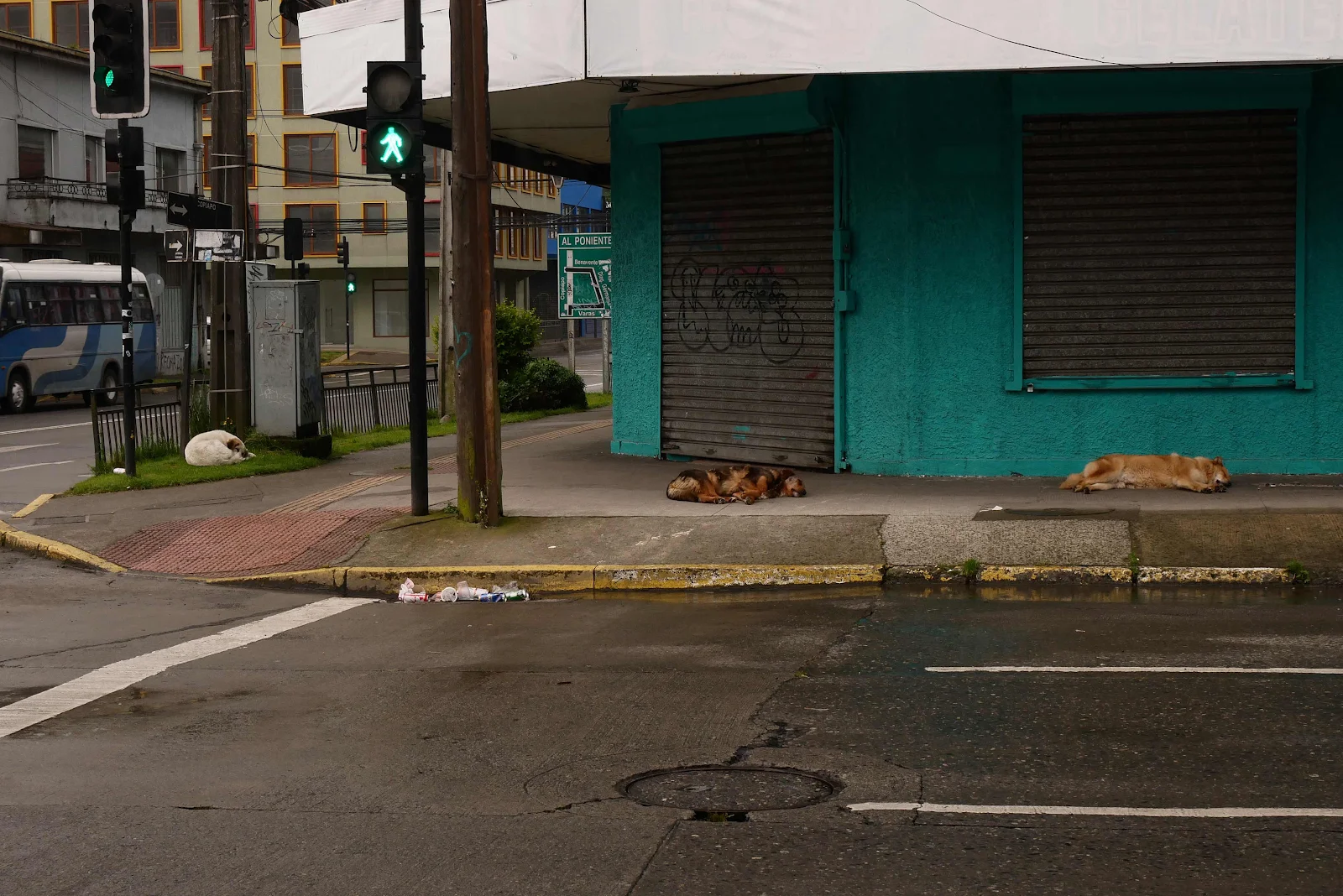
The latest rain shower blew through town and we huddled under an awning like the street dogs on the other sidewalk about four blocks from the comfort of GANNET2. 

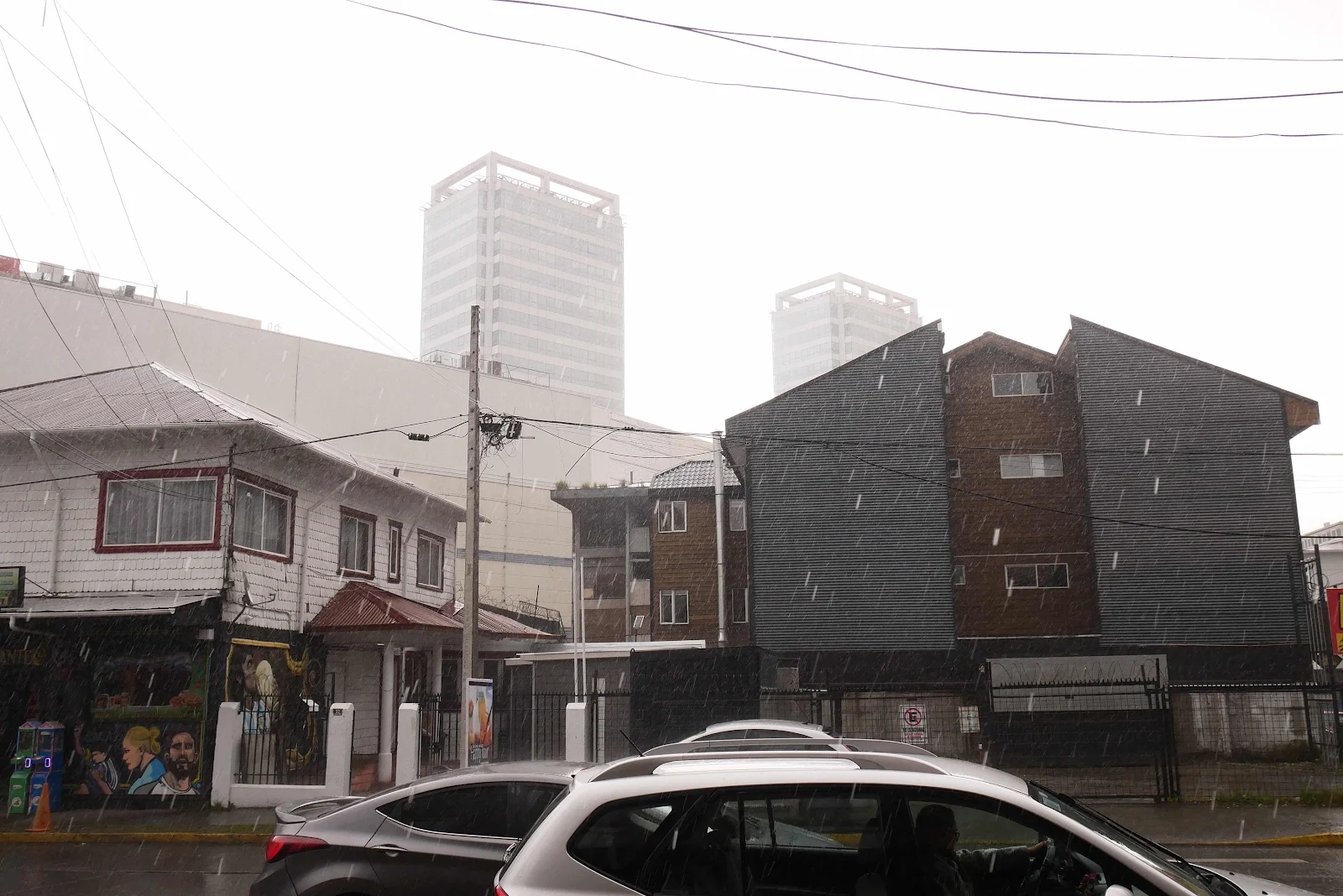
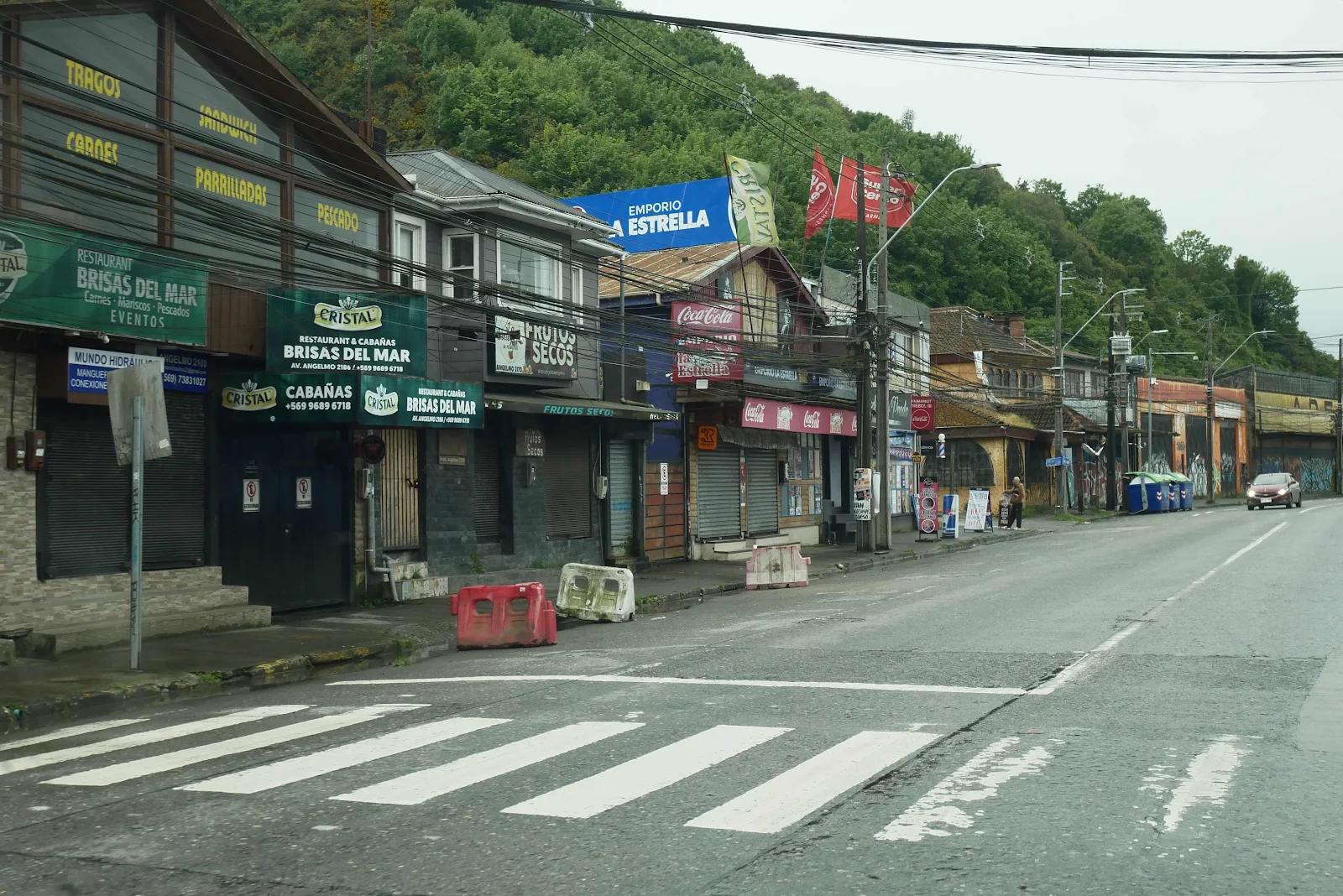
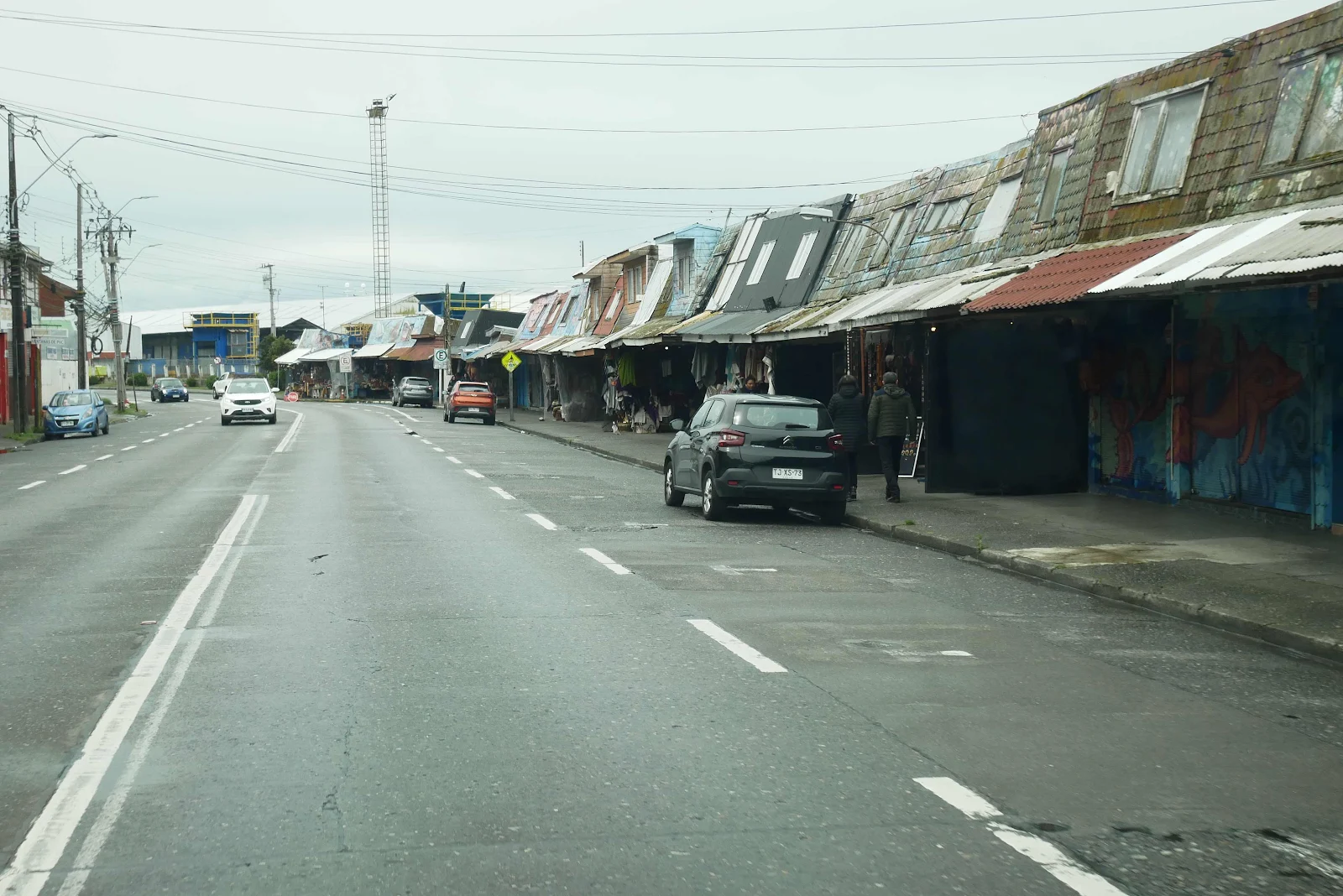
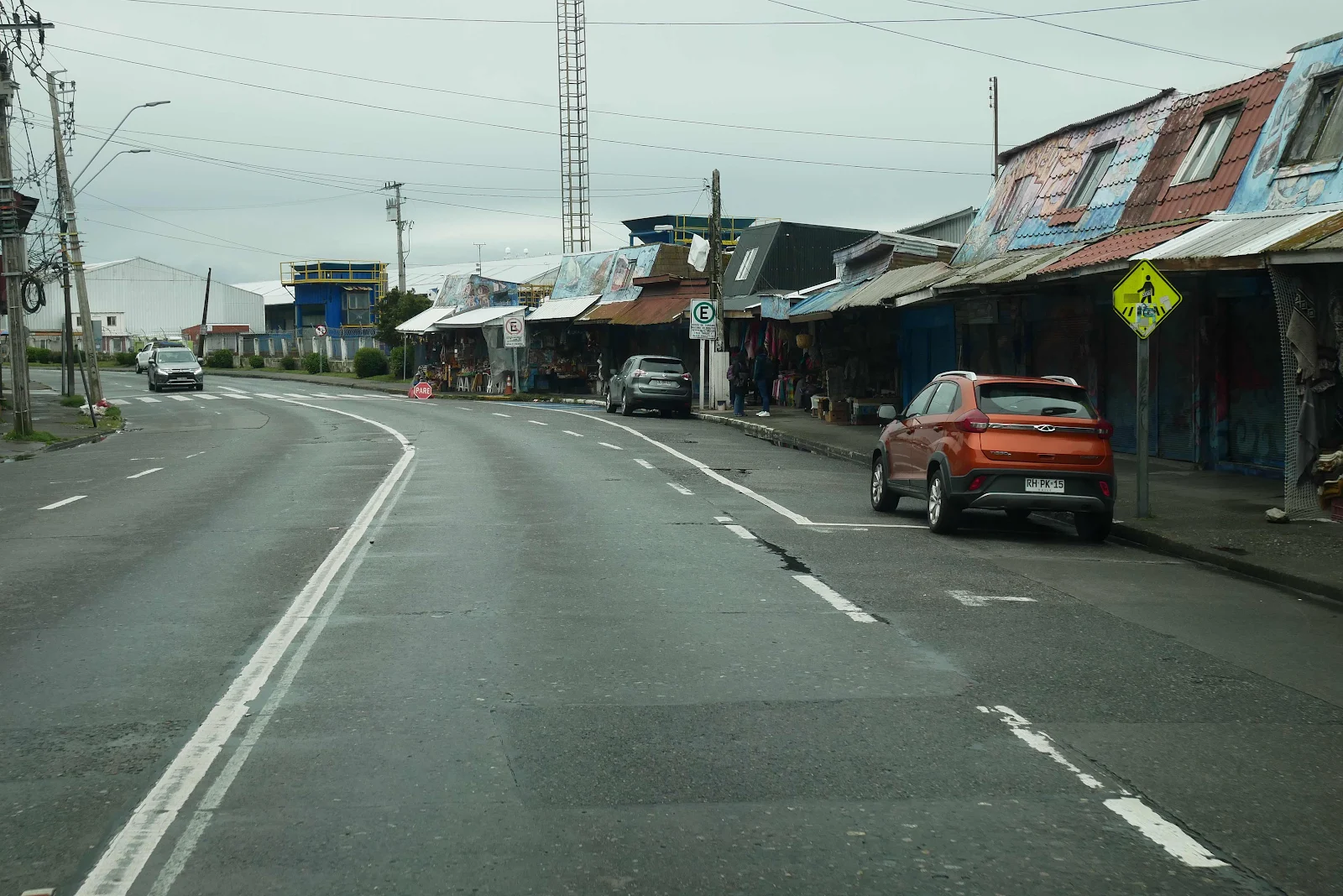
And after it blew over no way was Rusty going to walk to the Plaza de Armas, the centrally located park three blocks away wherein lies Puerto Montt’s famous (they say) wooden cathedral. We were walking the scuzzier side of town.

Even on a Sunday lunchtime there was hardly any parking on downtown streets and in this case a 21 foot van made it no easier to get off the street but eventually we found a spot a little further from the center of town.  

Rusty is not a fan of sudden down pours and gusts of cold wind. He took refuge in a doorway and refused to budge. 

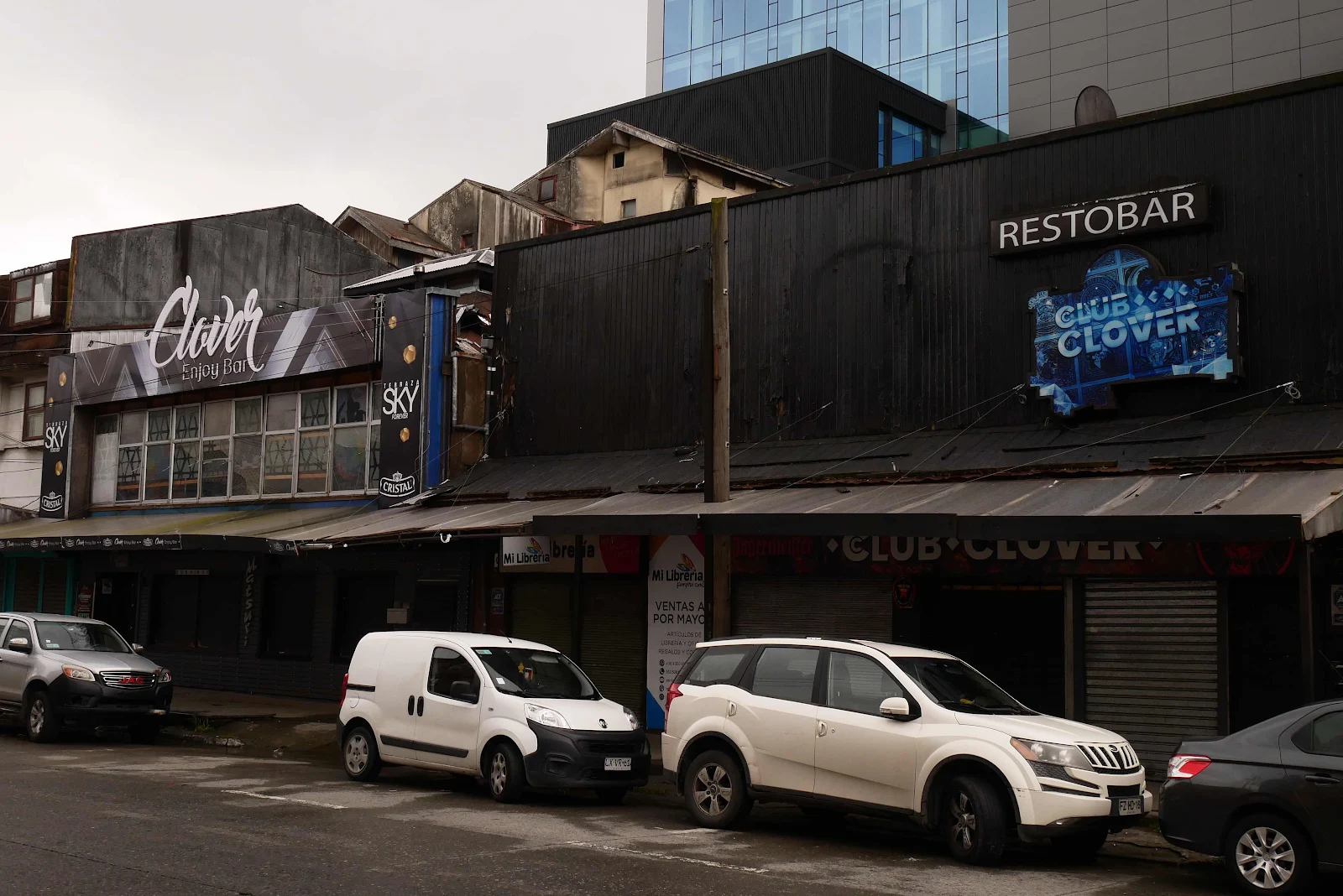
The facade of the sports bar across the street caught my eye. Men and women and soccer; not what you’d see advertised in a US sports bar.  

I don’t see puerto Montt as a tourist town. And in fact we aren’t here for tourism.  

We had a slight problem to deal with first: our house battery charger had stopped charging the battery bank we live on, the batteries that we use to cook and run the refrigerator and so forth. We noticed as we started exploring the fjords south of the lakes there was this problem so after just one night spent in fjord country looking forward to more spectacular scenery, we had to turn back to see about getting it fixed in the big southernmost city. 

We were on the road to Hornopirén from Frutillar when I noticed the engine wasn’t charging the house batteries. The alternators seemed to be fine and the starter battery turned over no problem and when we got a burst of sunlight the solar panels, scrubbed by all the rain, put out lots of electricity. But there was something wrong with the inverter/charger, the brains of our electrical system. 

It was a dismal rainy drive direct to Puerto Montt Saturday but on the way Layne contacted the importer of our electrical system, Go Power in Santiago and he can ship us parts if we need them. Good to know. 
 Thanks to an overlander contact in Puerto Montt we got in touch with an electrician (who happens to speak English) who will give us an appointment this week sometime, and on Monday said he was too busy so back to square one! Life on the road. 

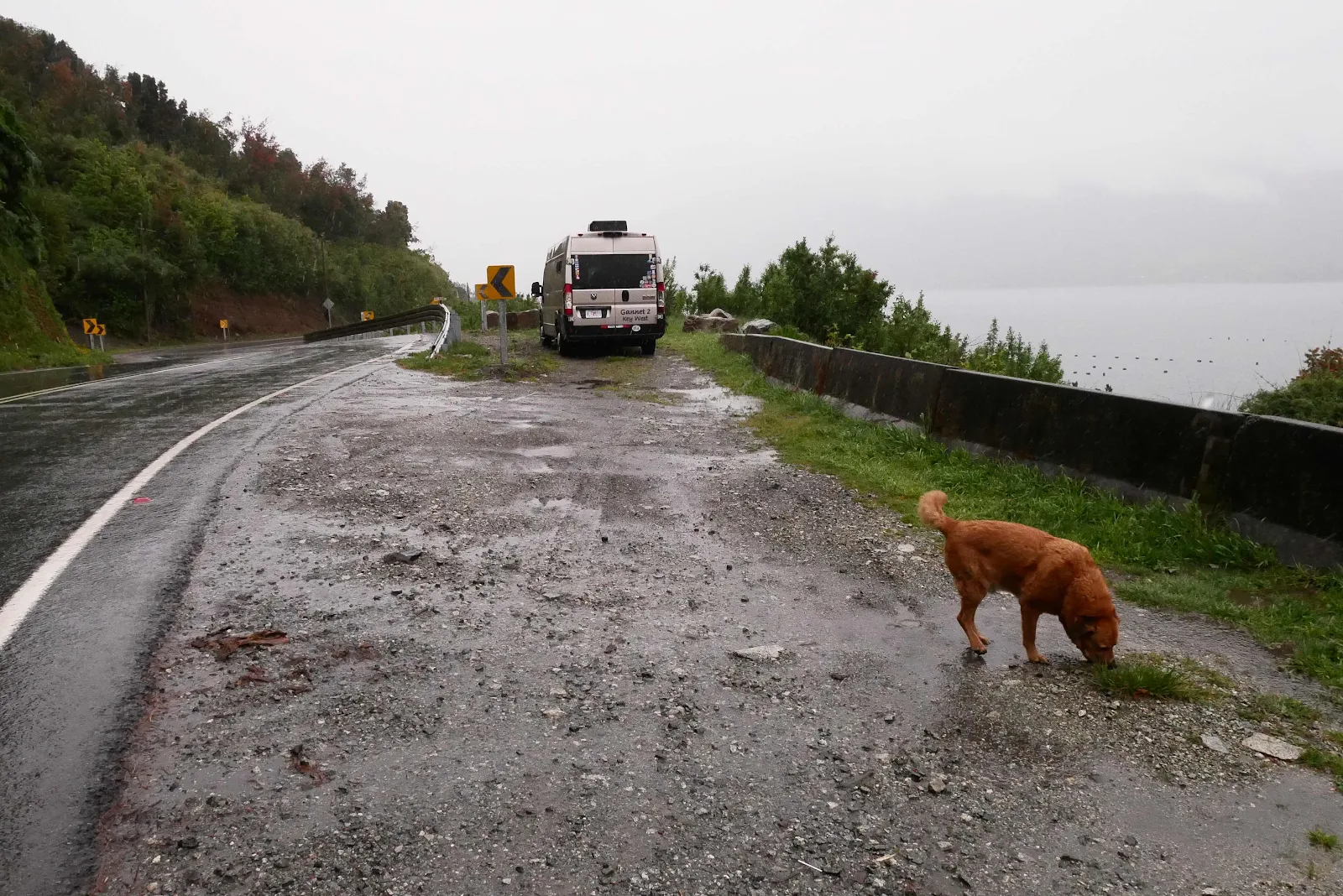
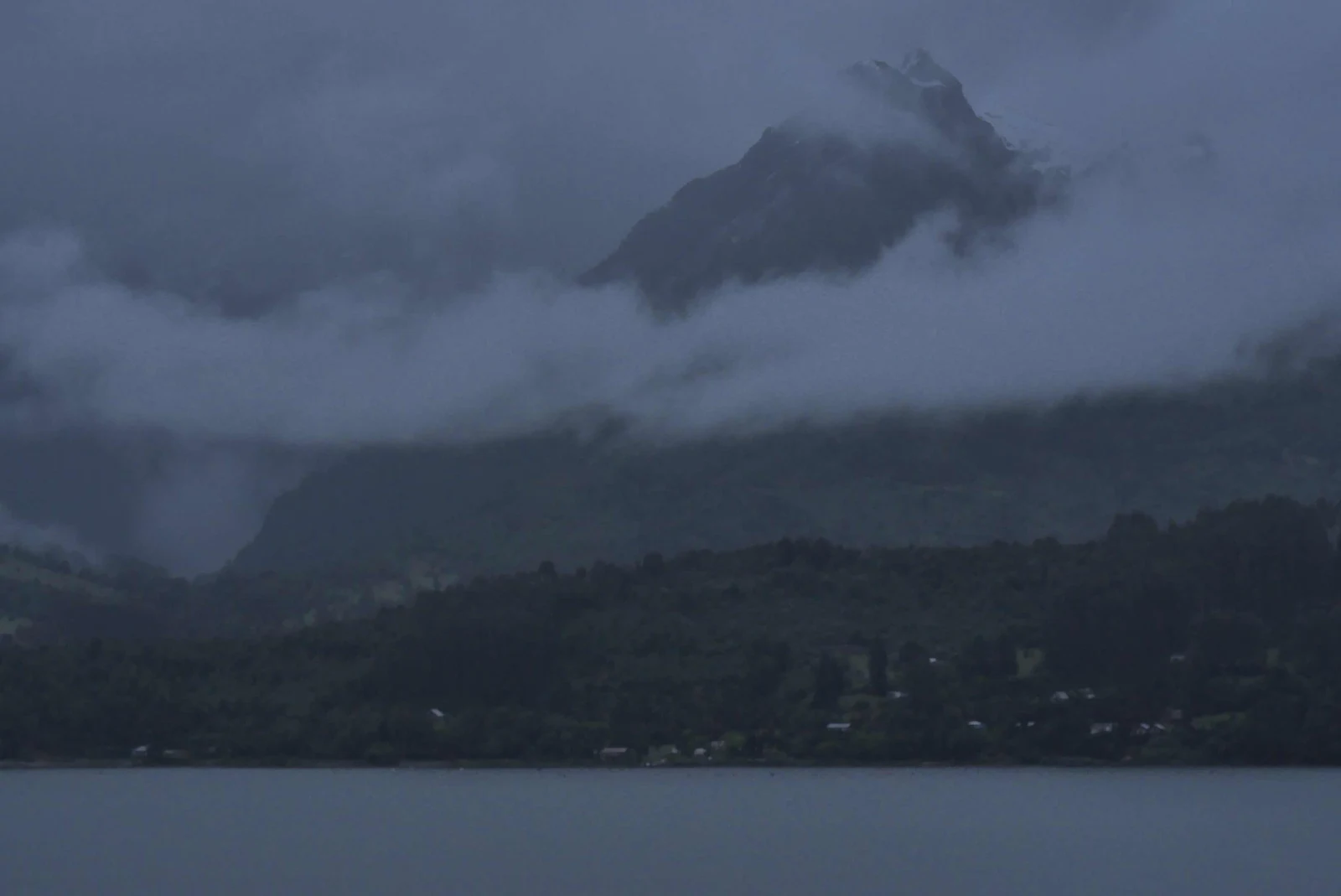
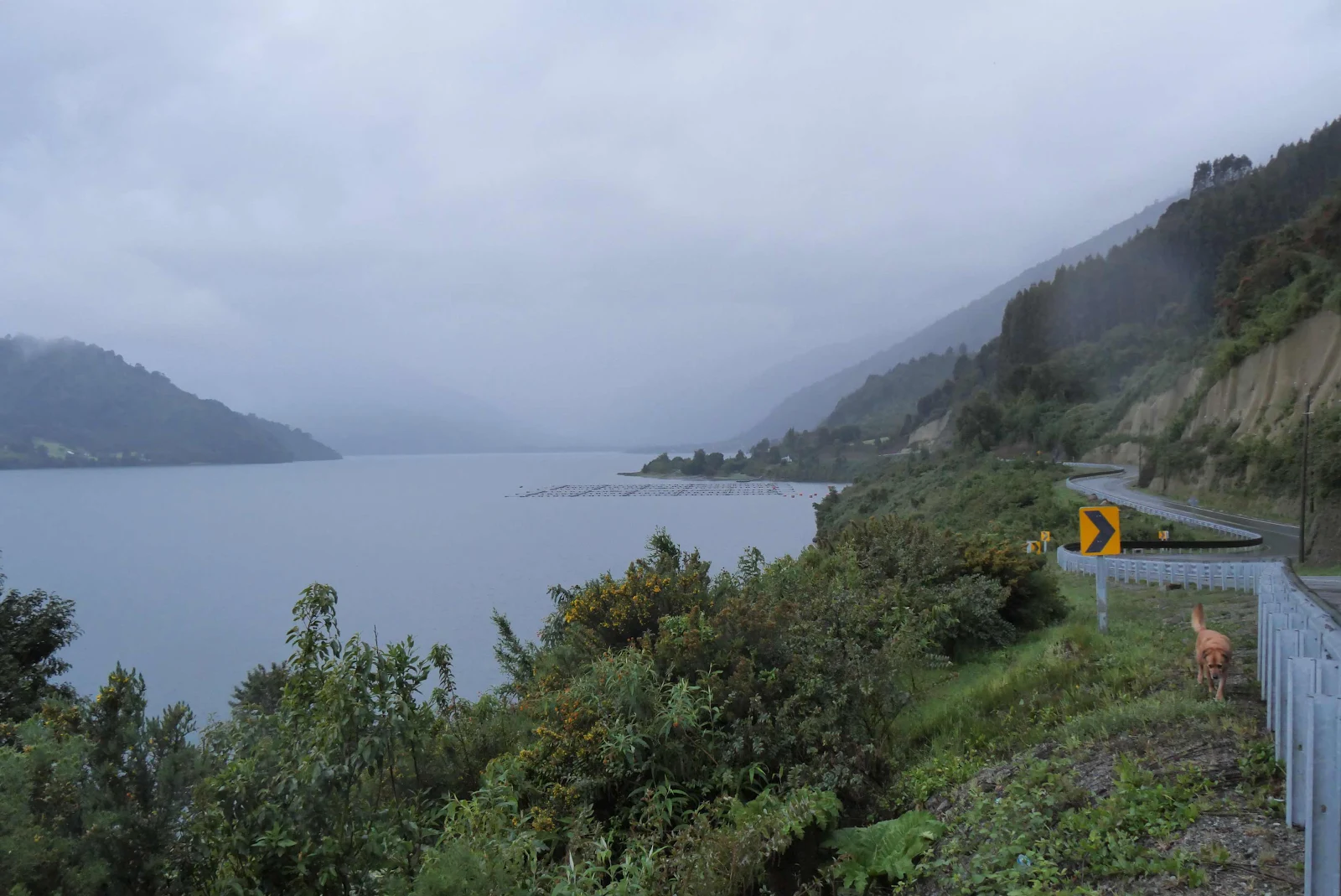
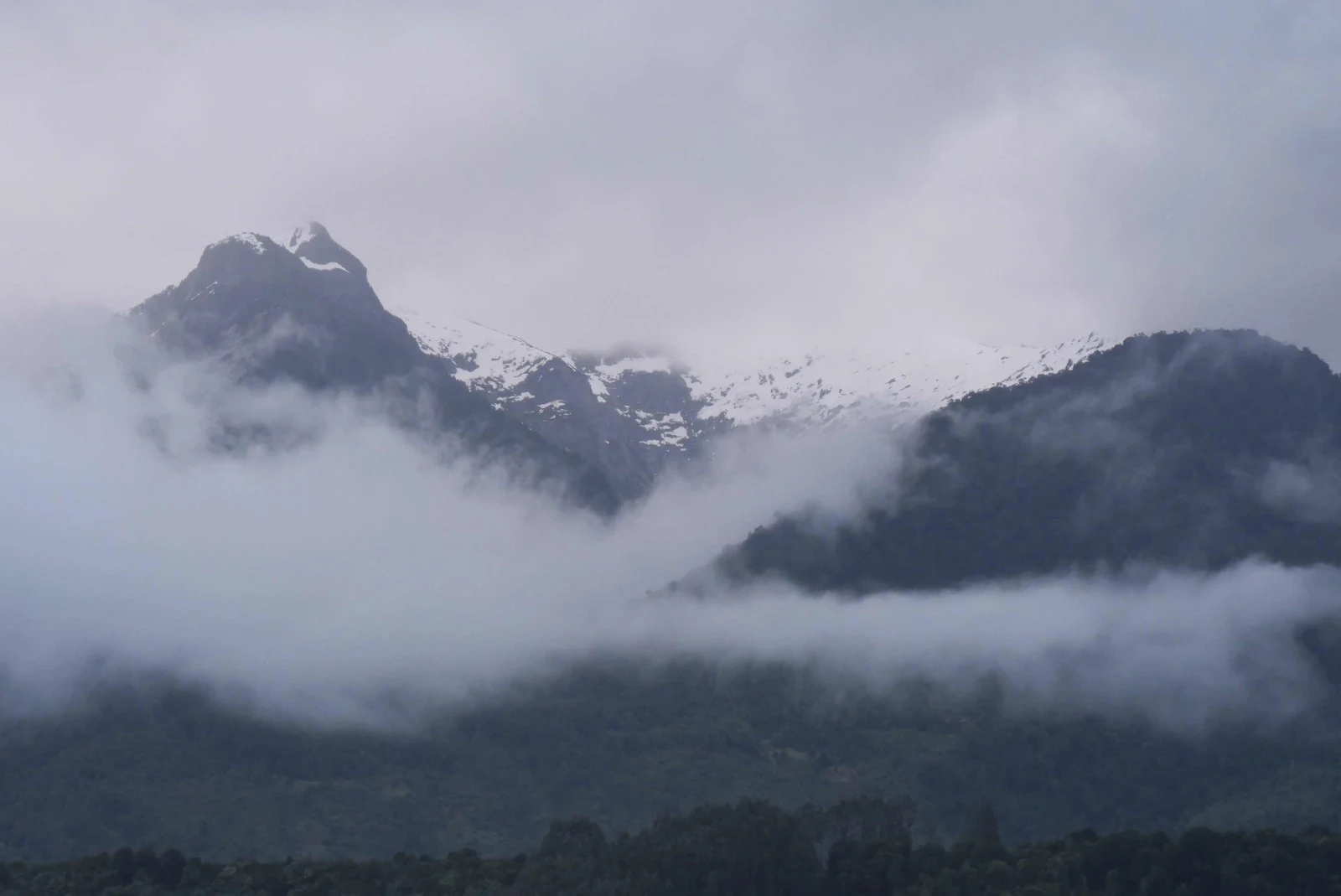
(Overcast yes, but spectacular scenery to wake up to in the fjords, especially compared to Puerto Montt).

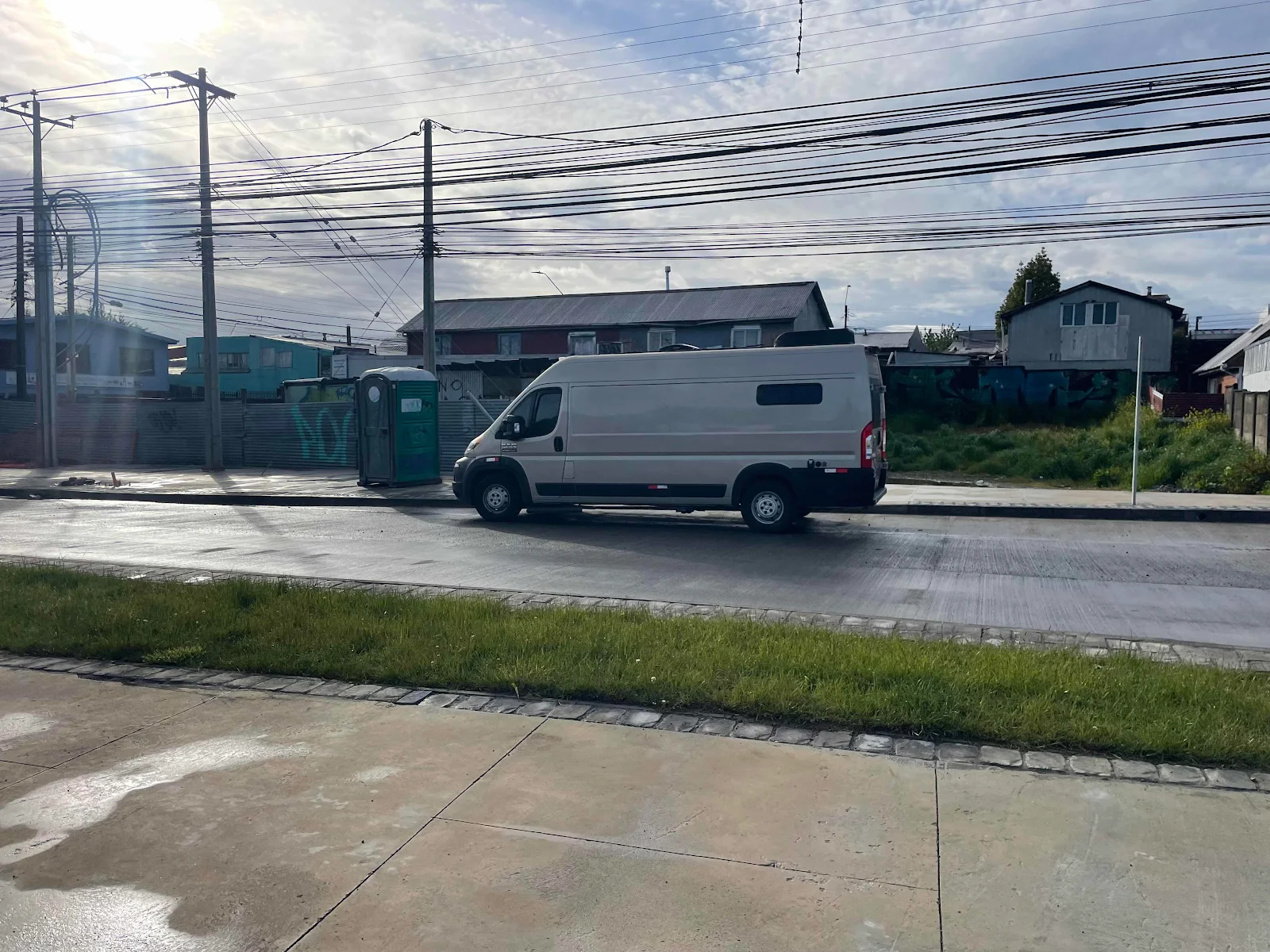
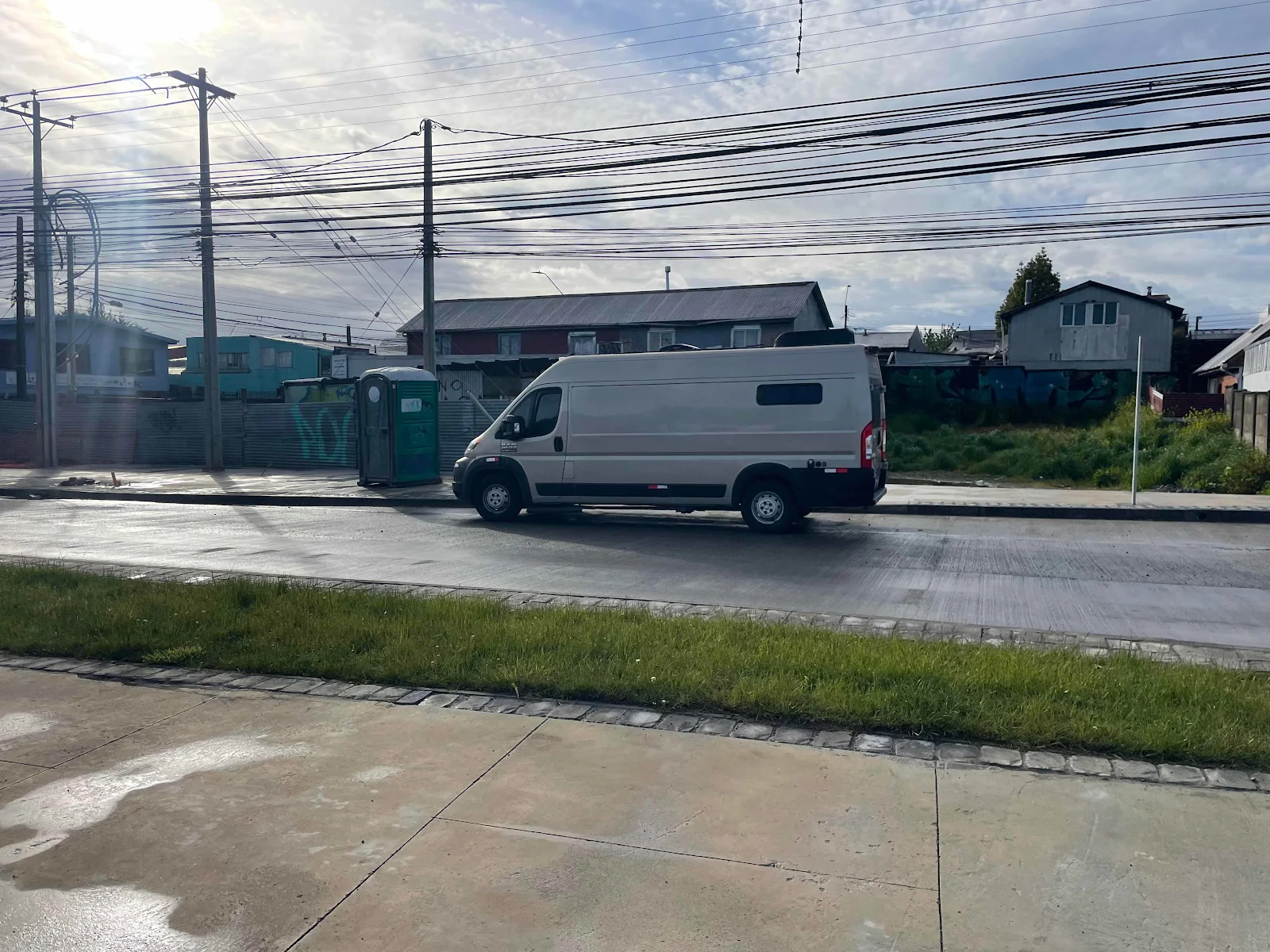
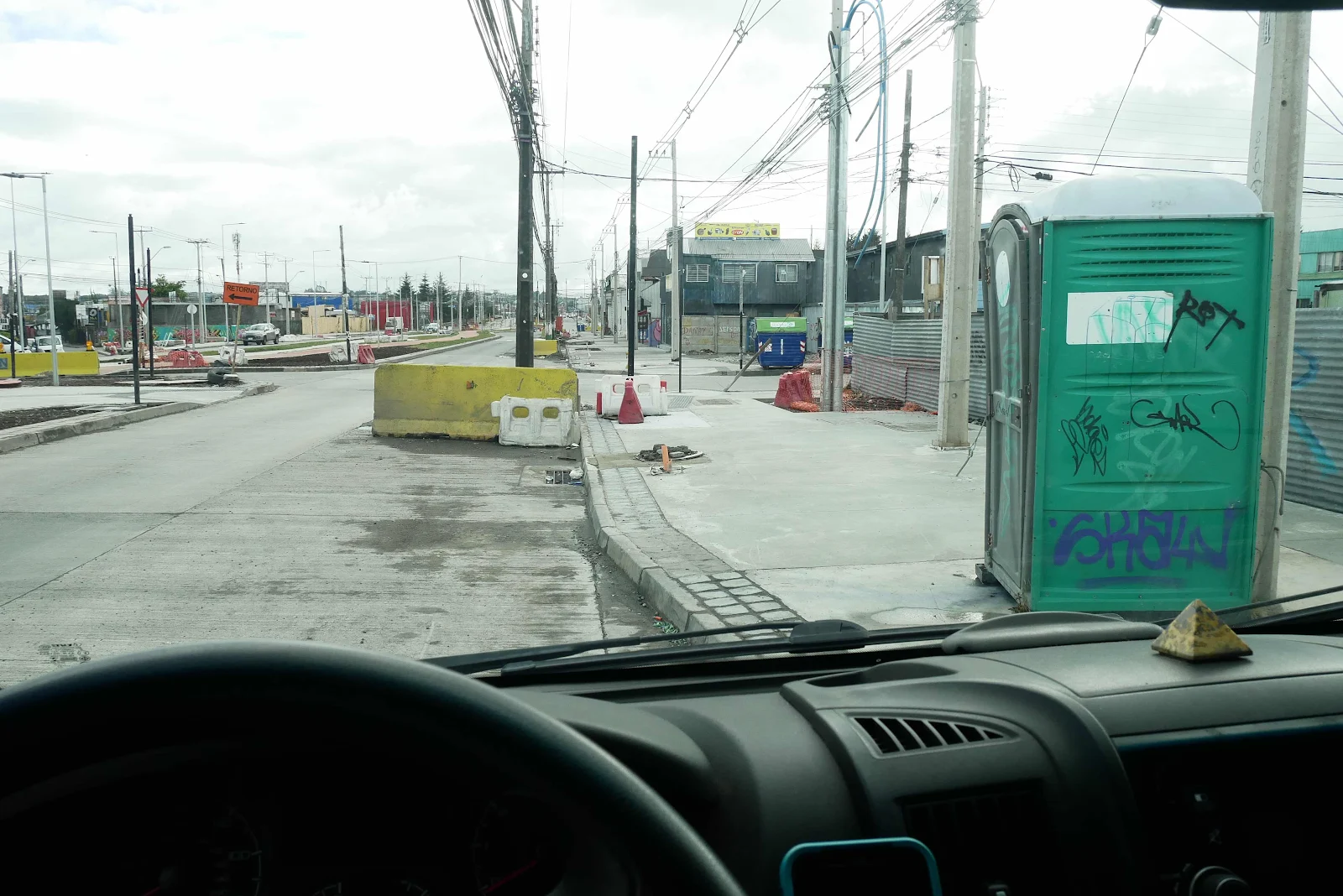
We spent the  night on the street with a vault toilet to empty our porta potty in and a dumpster to take out trash… 

It wasn’t scenic like the fjords we’d wanted to explore, but it had what we needed. We turned off the fridge at night to save amps and watched the rain showers roll through. This is the less glamorous side of travel. 


Puerto Montt is a city of 250,000 founded in 1853 and named in honor of Manuel Montt President of Chile who encouraged Germans to migrate to southern Chile after the revolutions and protests of 1848 across Europe. 

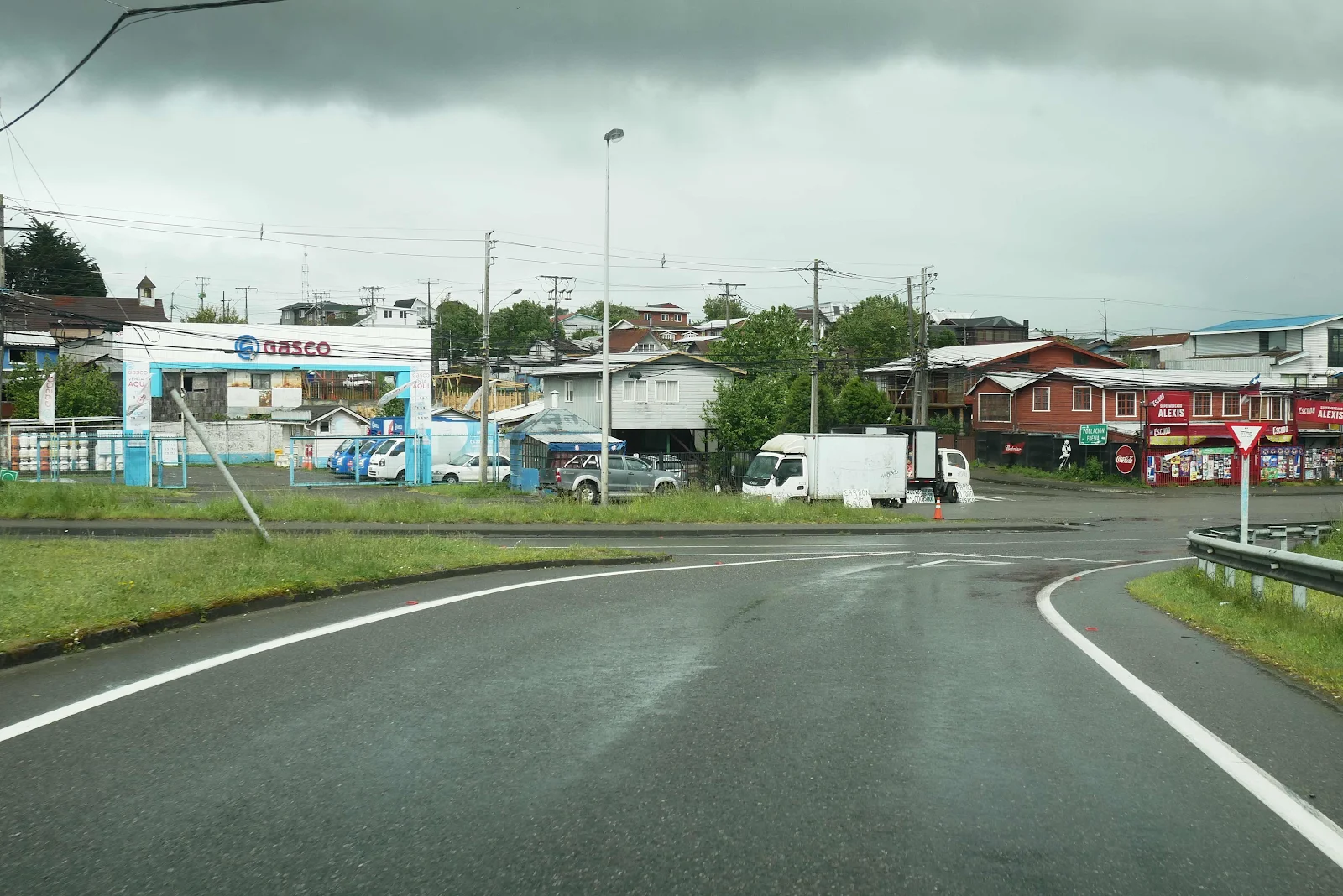
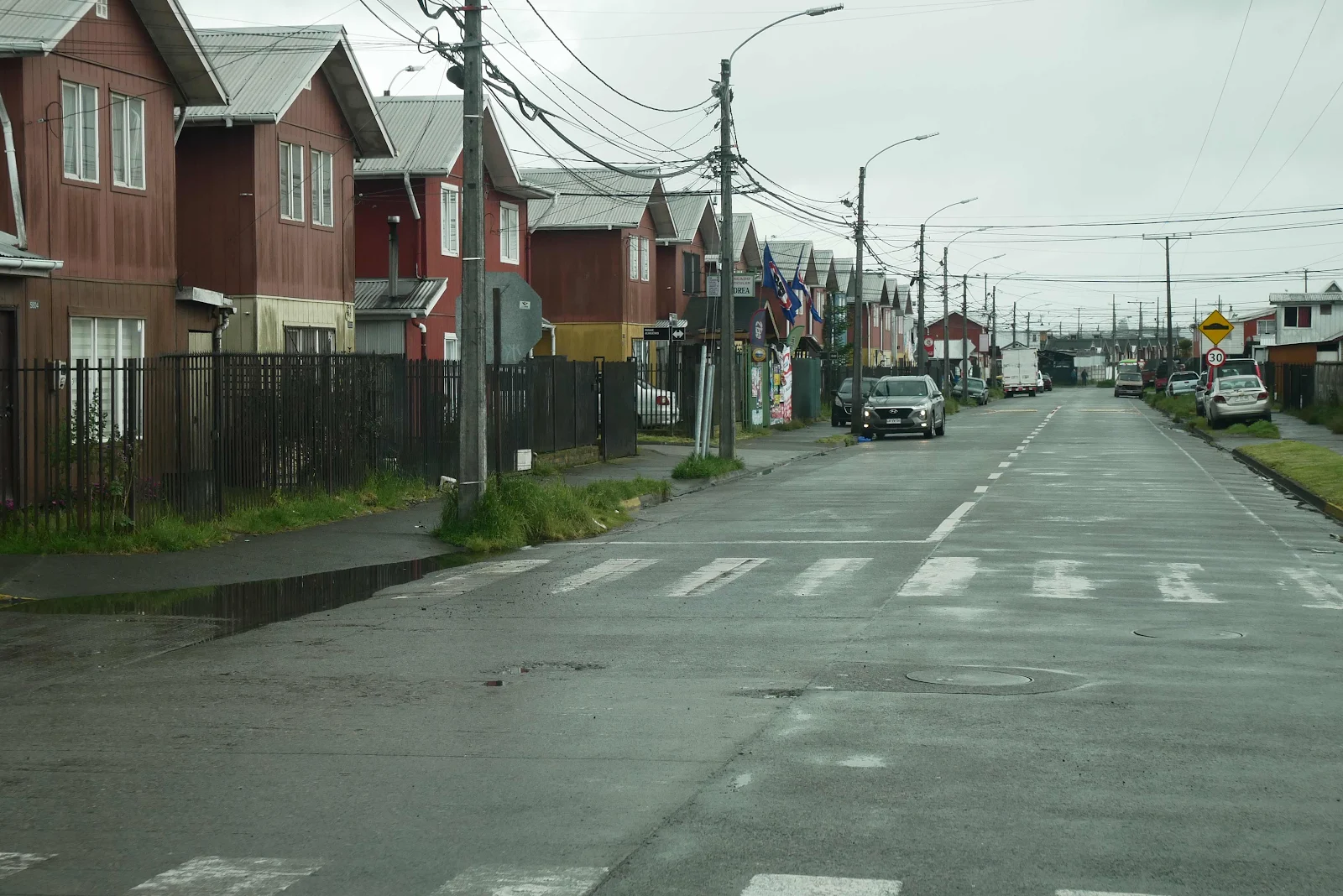
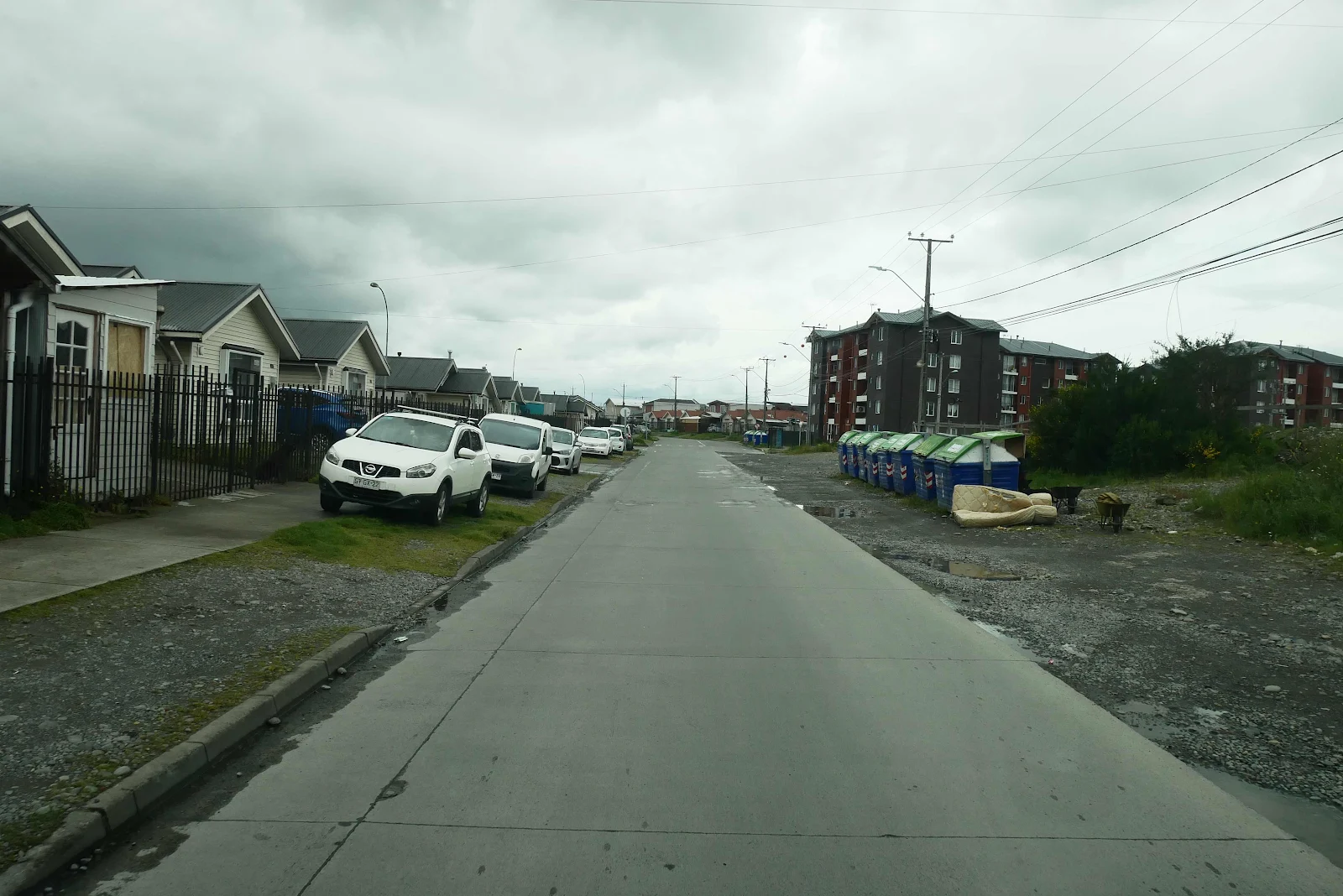
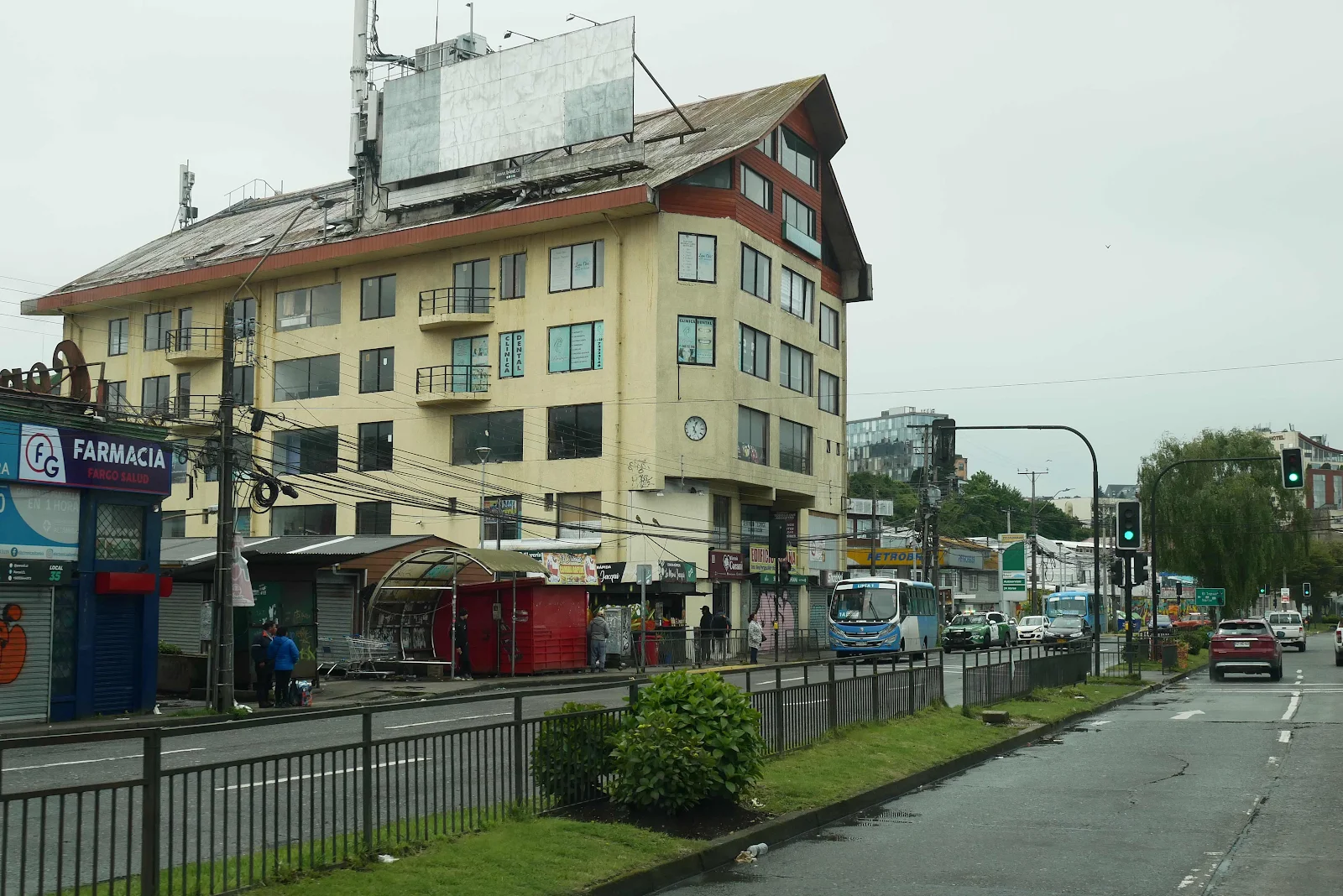
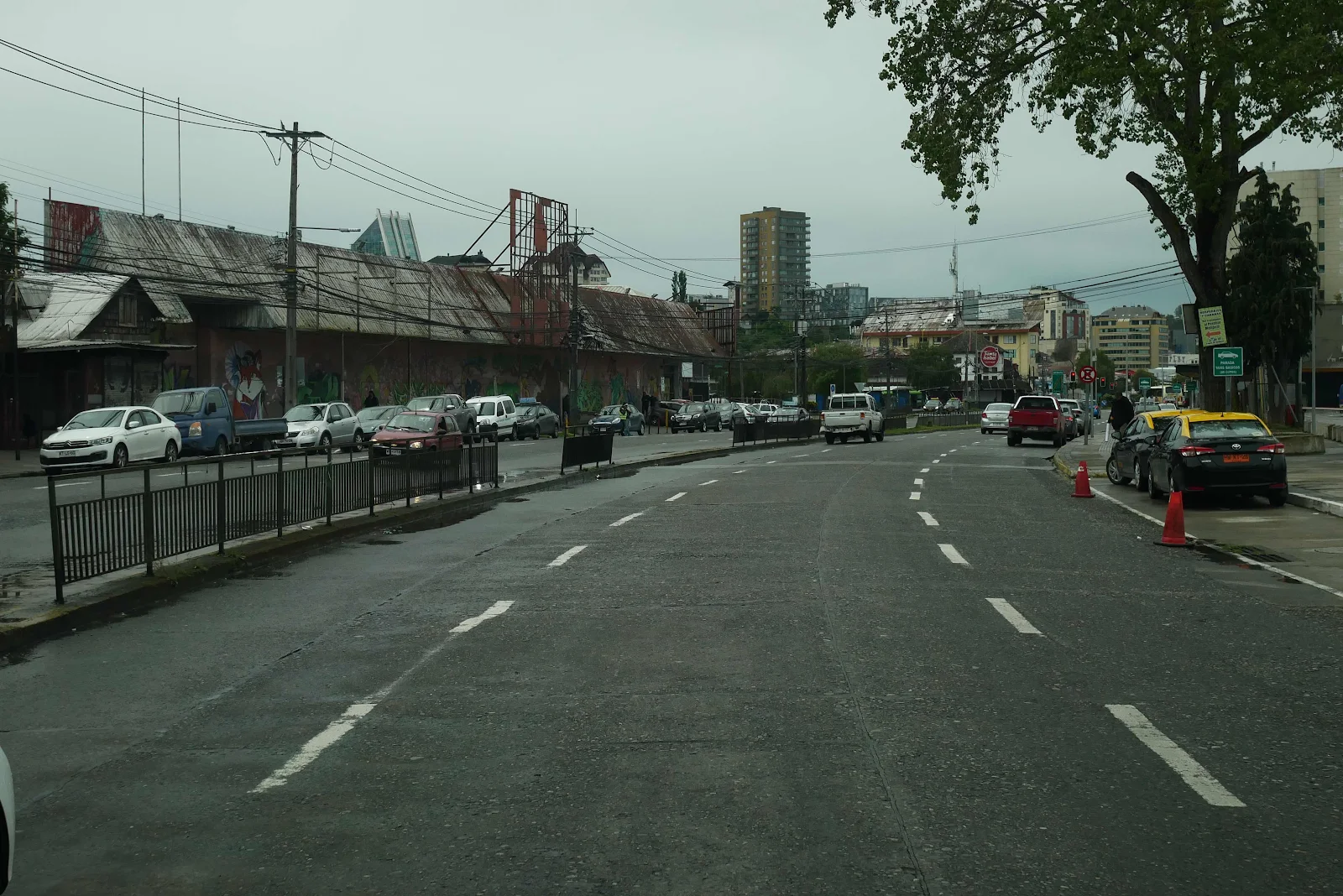
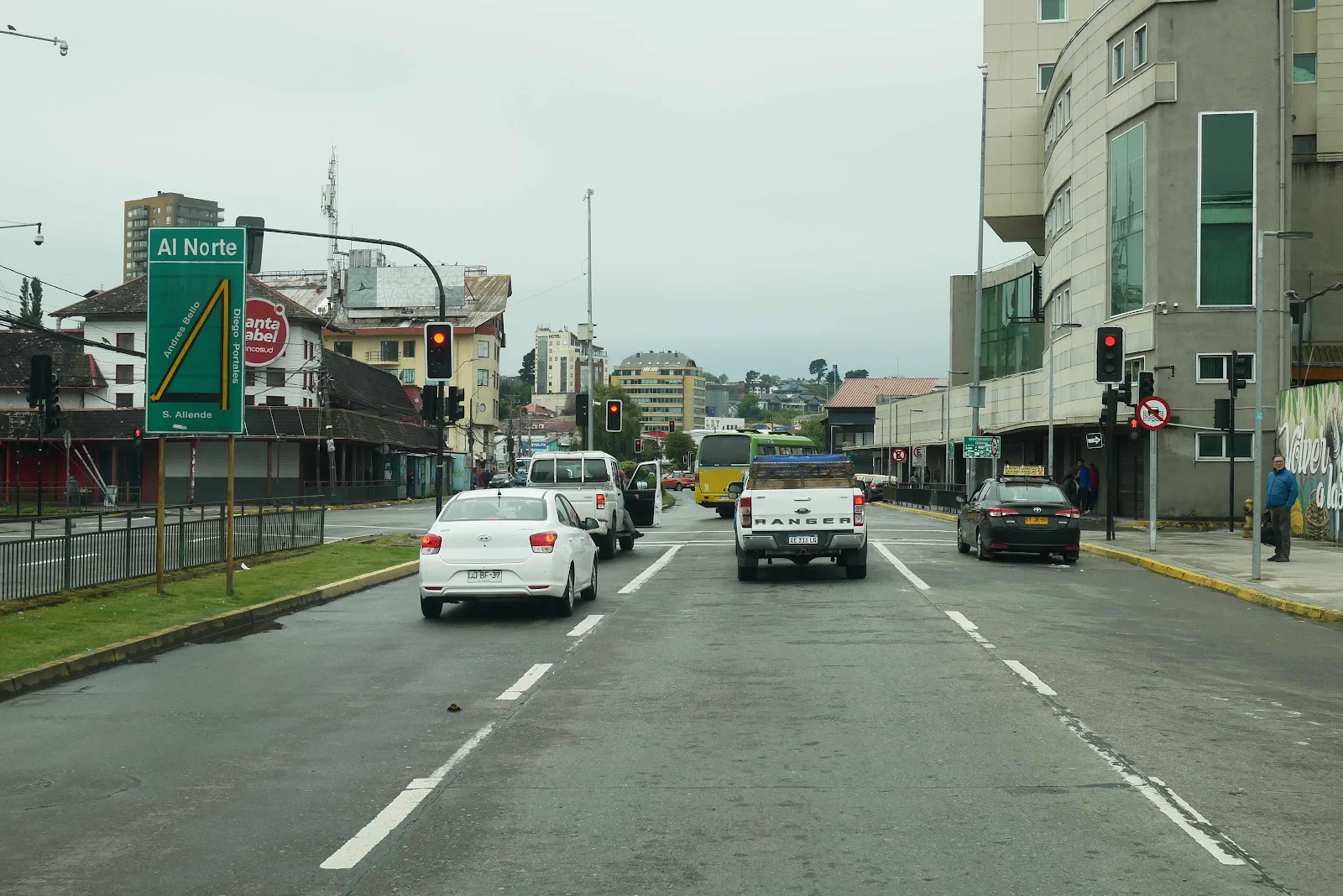
The city’s known for salmon production and is viewed as a high employment hub in Chile attracting a lot of incomers. It’s not much for tourists and the streets are lined with small suburban homes and huge blocks of apartments. It’s not a place to visit for fun but it is useful with lots of light industry and the kinds of repair shops we overlanders  love. 
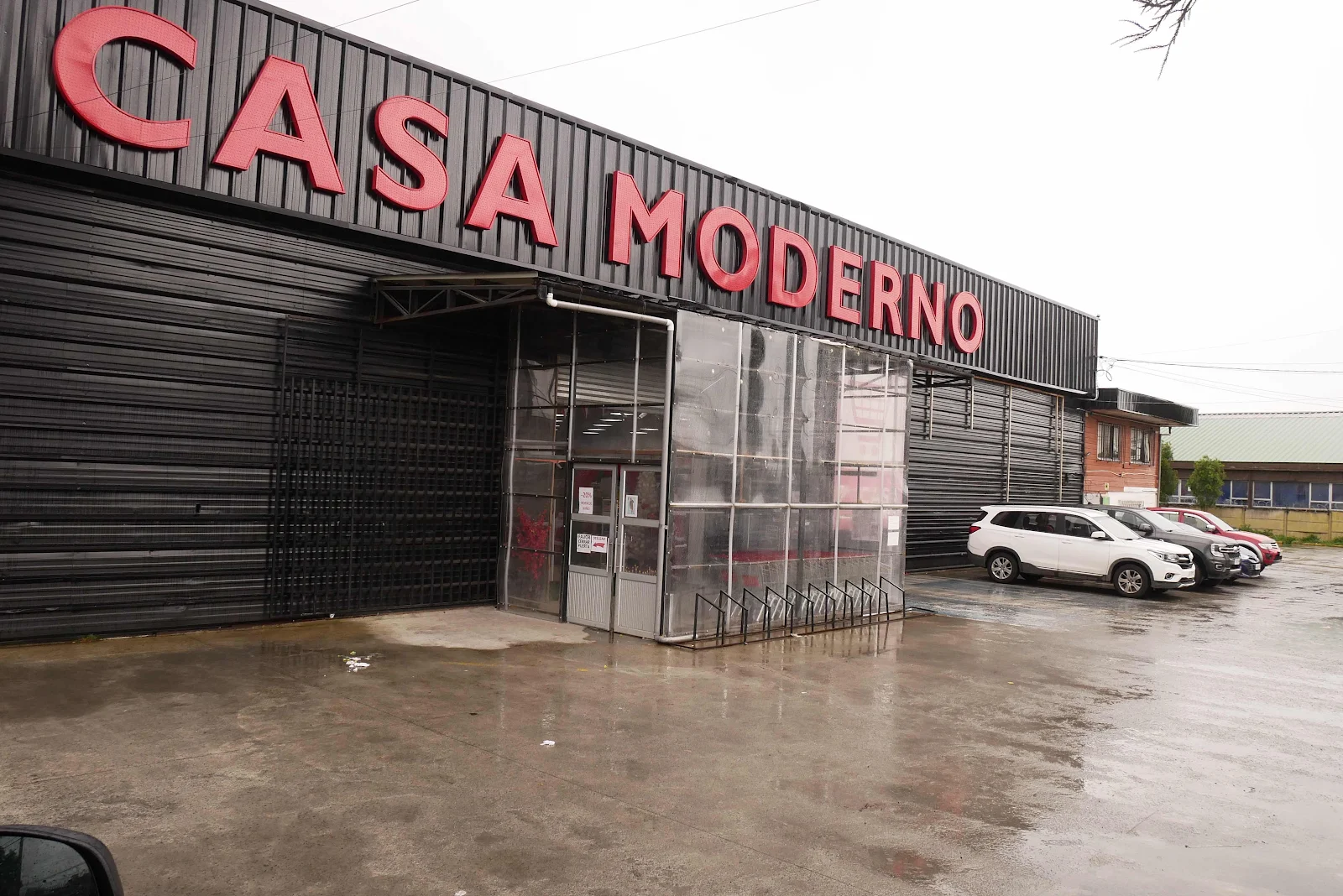
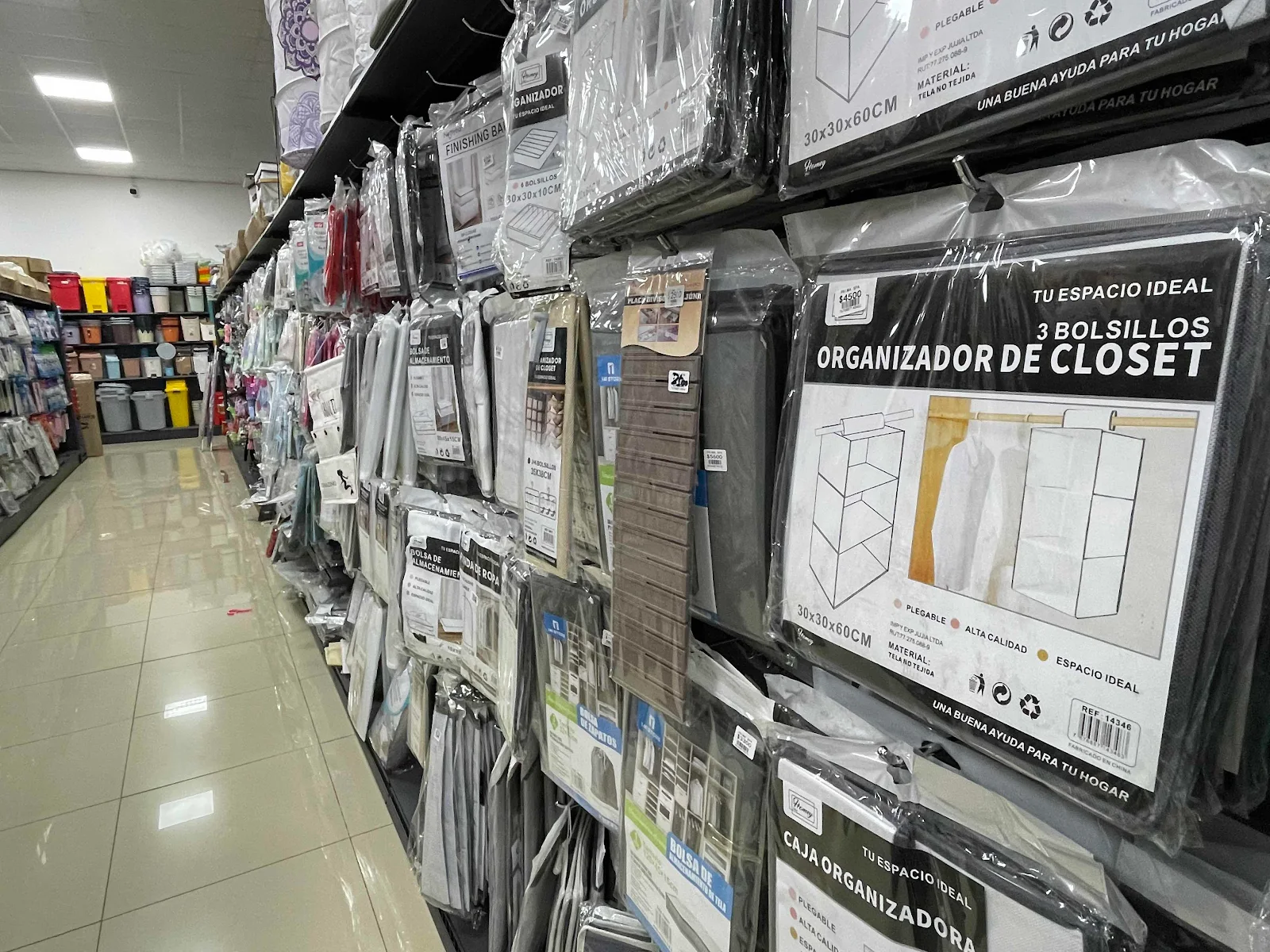
Sunday morning we went shopping at what they call the Mall Chino, an emporium of Chinese products, all the stuff you didn’t know you wanted in some kind of overstuffed dollar store. 
Our toilet paper basket committed suicide when I missed spotting a rope and we flew over the speed bump at speed. Oops. Our folding stools have gotten tired and we would like to replace them but so far no luck. It’s odd how some things so common at home are unobtanium here. 
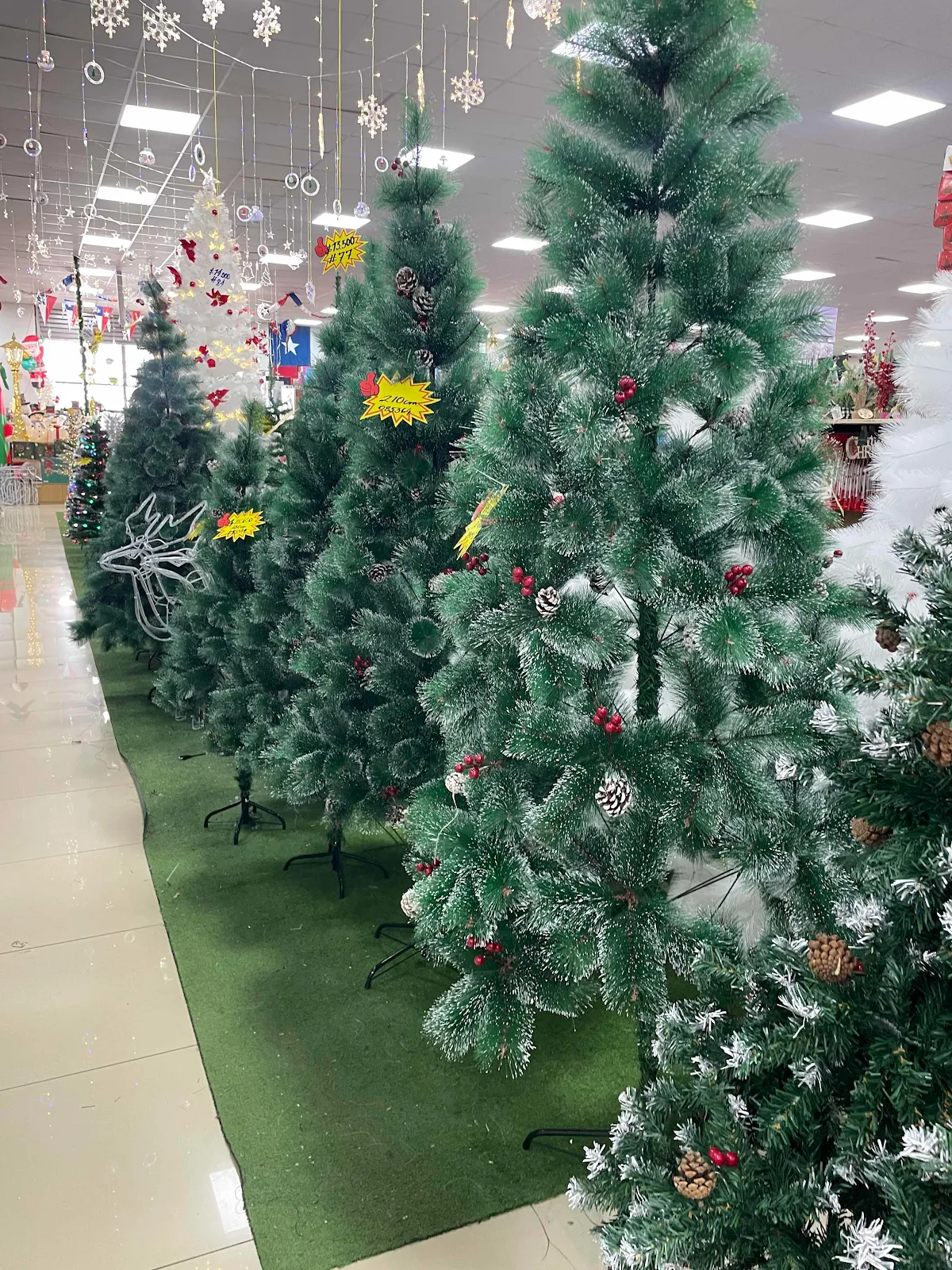
Christmas shopping is in full swing here and this store made it extra special by playing competing carols at the same time. I had to go and walk Rusty. 


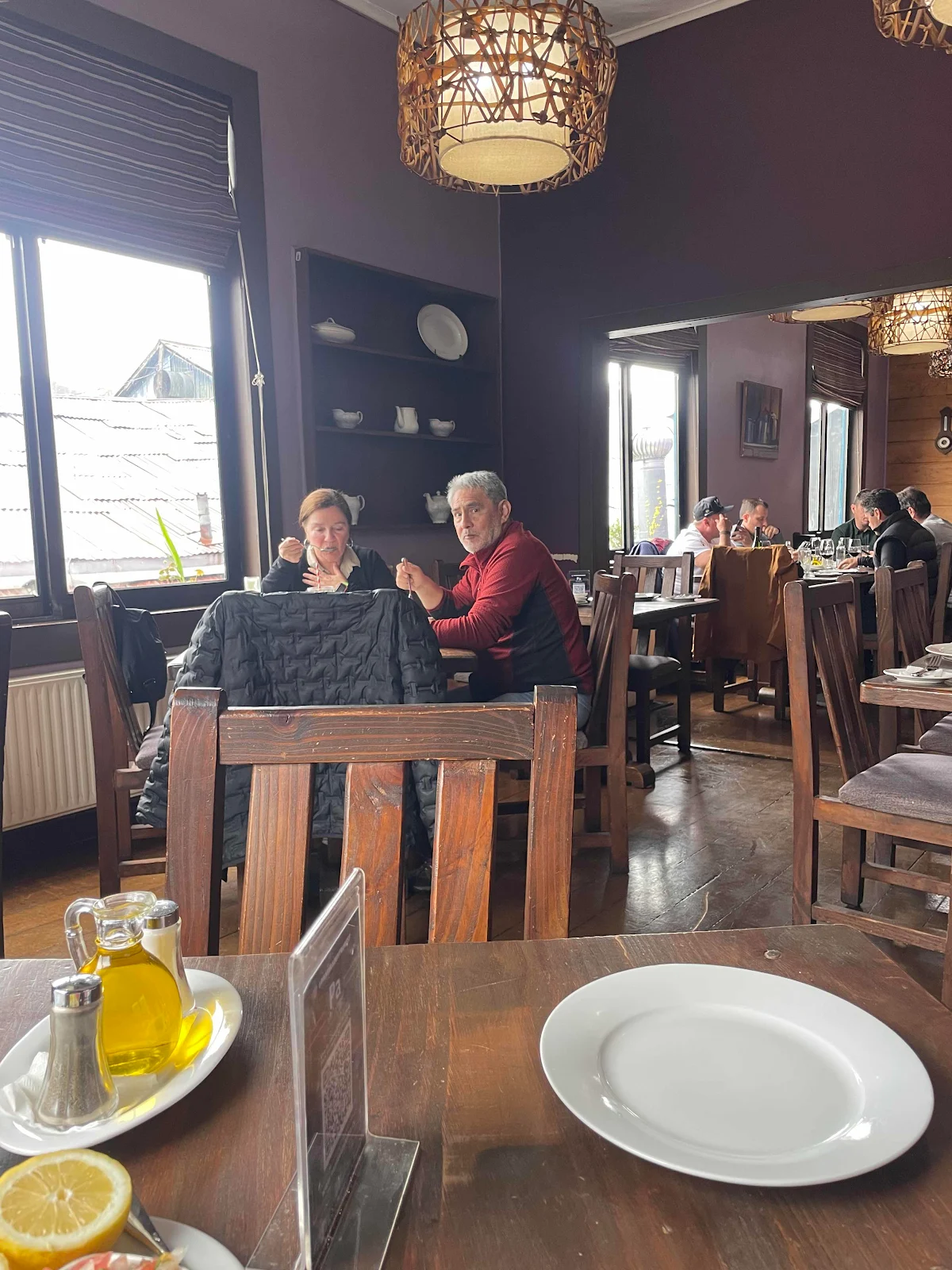
We drive to the waterfront to have fish for lunch in a rather attractive restaurant, at least on the inside. 


Grilled cod and mashed potatoes to keep the cold out. 

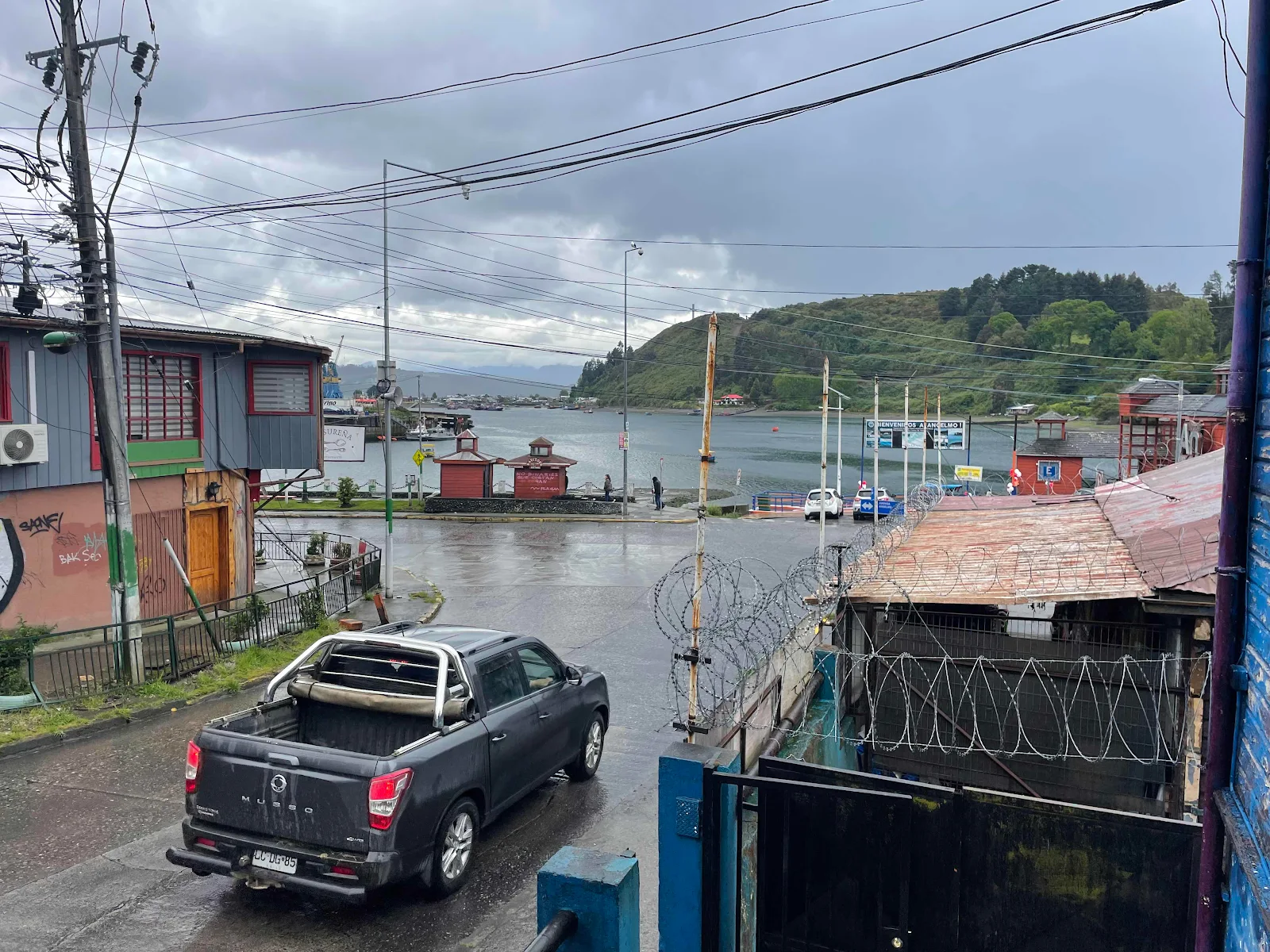
Even the waterfront has a bit of a dilapidated air to it, moldy with rain and damp. 

It doesn’t entice me to go shopping. 


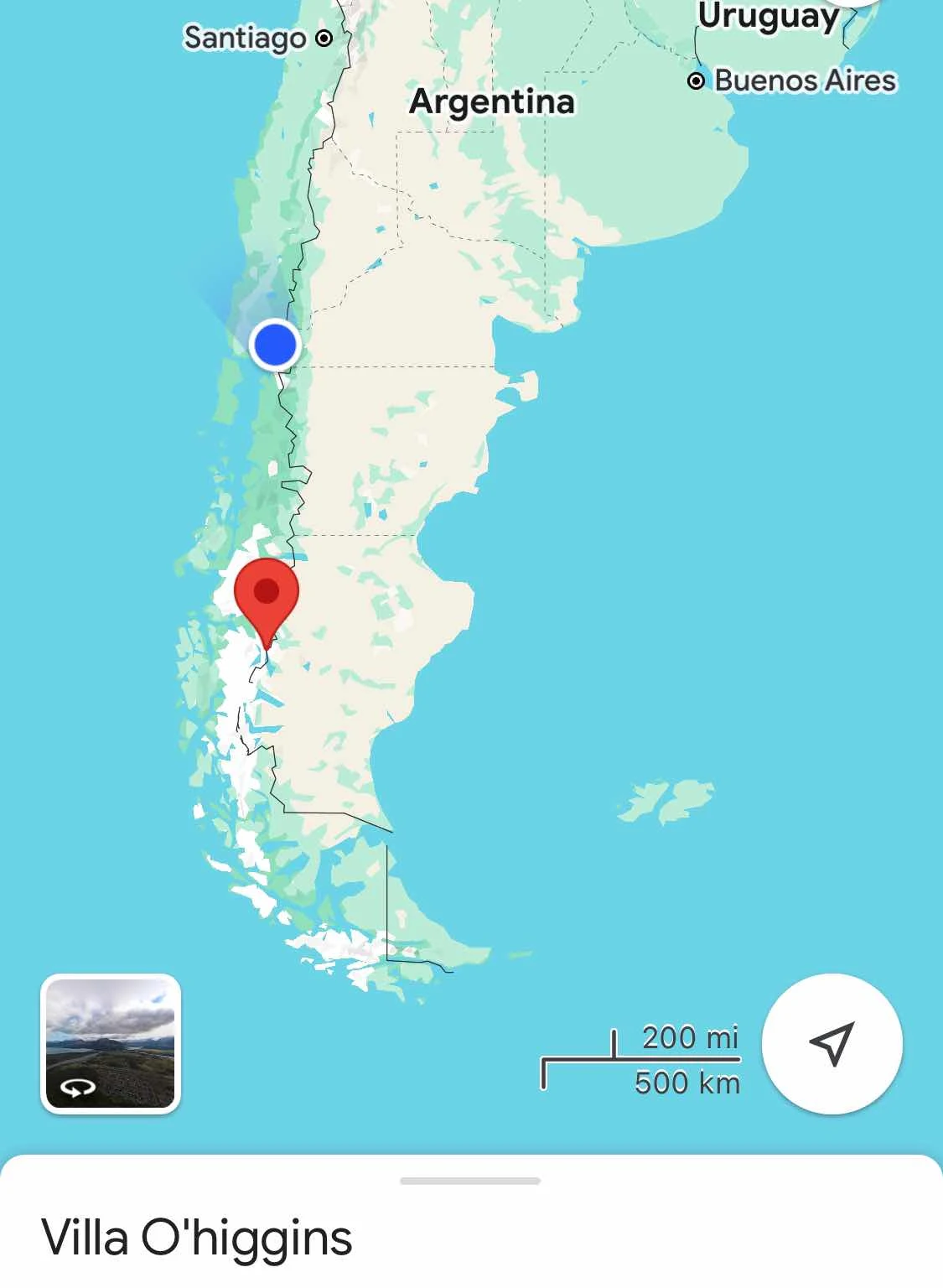
And this below is kilometer zero of the Carretera Austral - the Southern Highway -  that goes to the tip of mainland Chile at Villa O’Higgins 800 miles away. It was built during the dictatorship to connect the isolated communities in Chilean Patagonia to the rest of the country. It’s a combination of short ferry hops, paved highway and the bottom third is gravel just for added fun. We will be bypassing most of it by taking our four day ferry ride at the end of the month. 

And while we wait to get our electrical system re-organized we’ve taken an apartment for a few days, heat WiFi and washer/dryer for $46 a night. 

GANNET2 is very comfortable but endless rain and no exploration does get tedious. 

And most important, Rusty likes it. 

Blue dot is Puerto Montt. Red dot is the end of the Carretera Austral. Our goal is the very bottom of the map, where the black border line makes a right angle, 1700 miles away is Ushuaia in Argentina. 


Sunday, November 10, 2024

Frutillar


We’ve been quite enchanted with Chiles Lakes Region, a series of mountain ranges and volcanoes surrounding large dark bodies of water, but in the Spring it’s not warm enough to swim for people like us so it’s been a spectator sport. 

We camped above the town of Frutillar for a couple of nights repacking our clothes and stowing our summer clothes for the next few weeks. We are entering in the coldest stretch of our trip trying to reach Ushuaia before the official start of summer when Argentina goes on vacation and reportedly floods the place. 

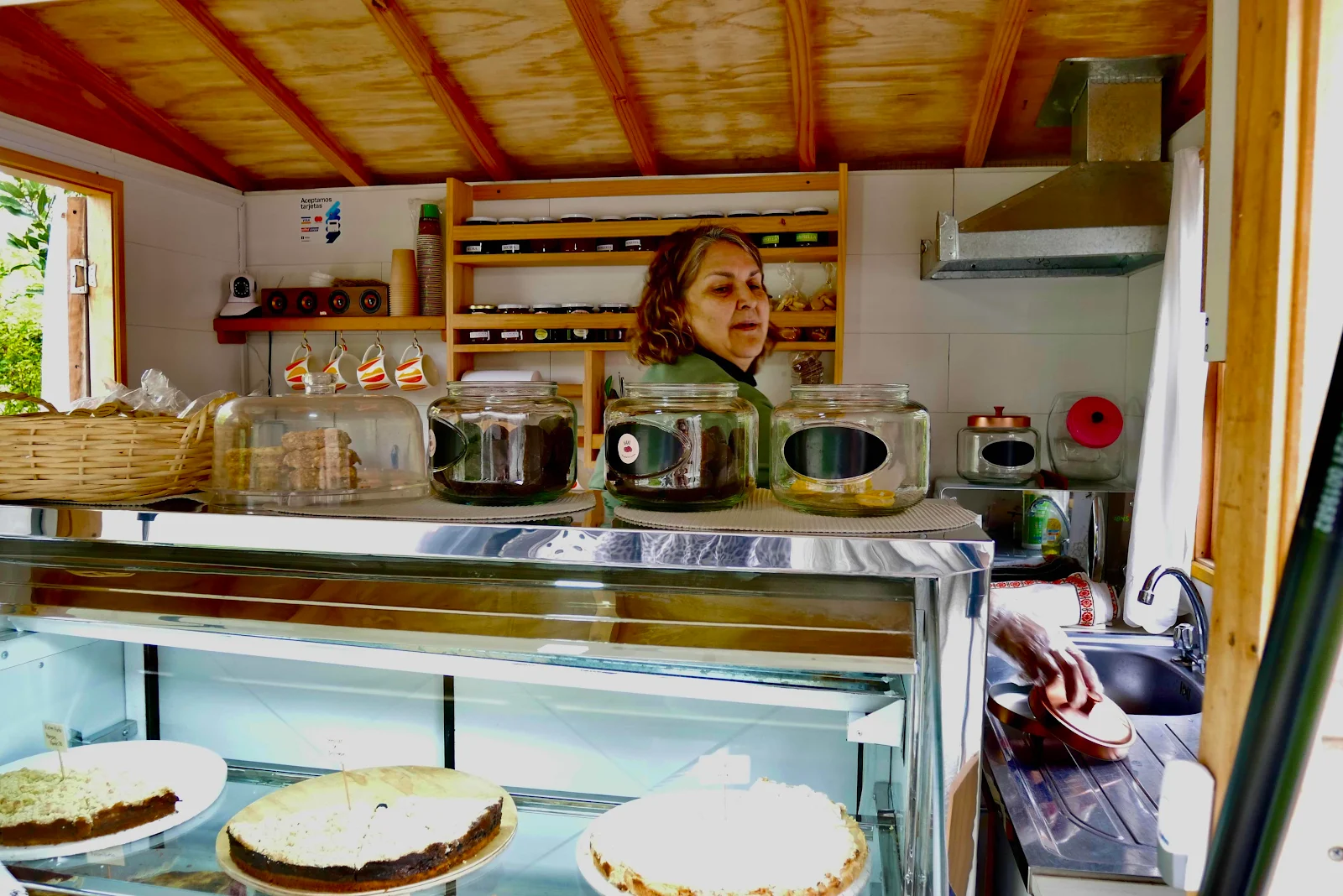
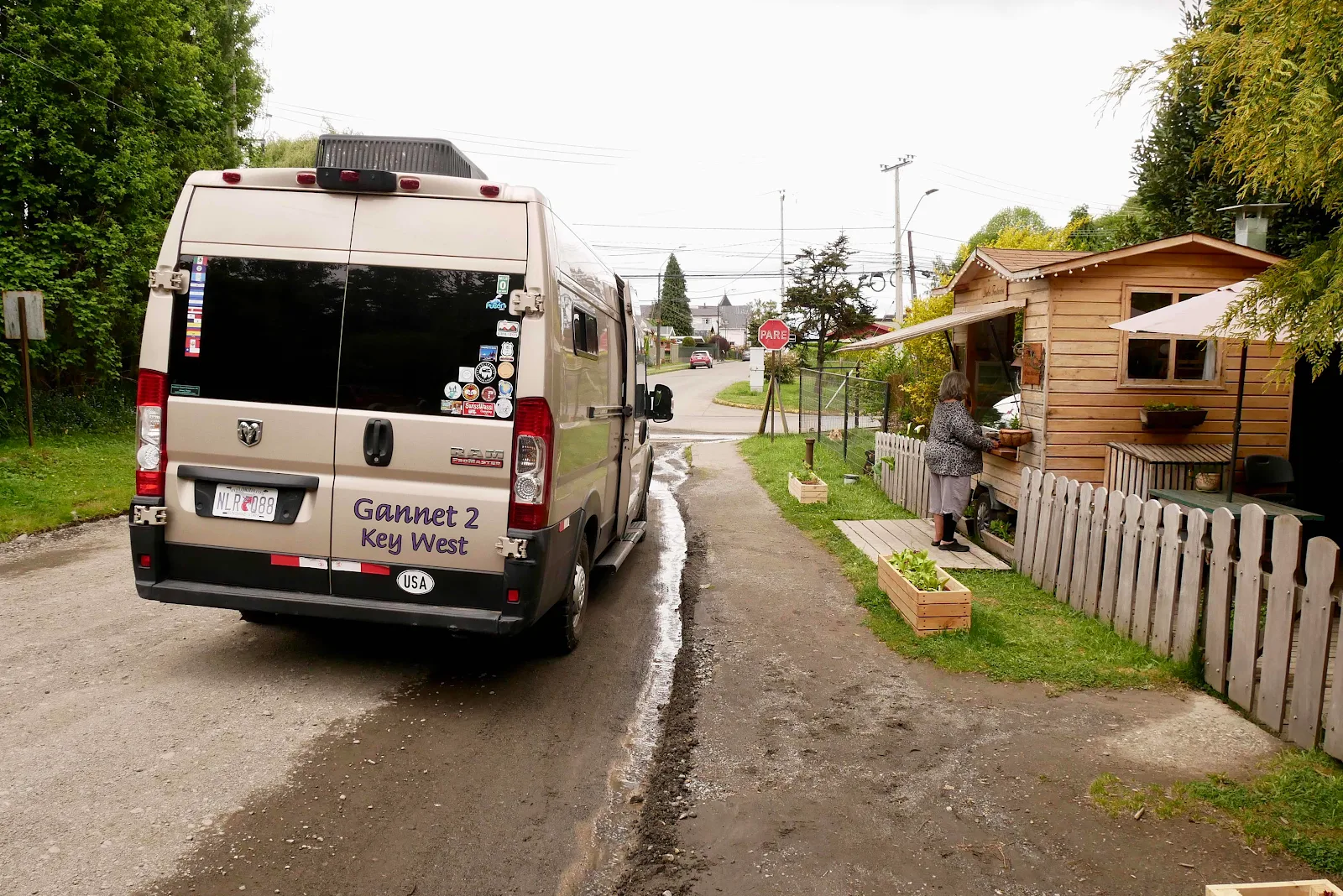
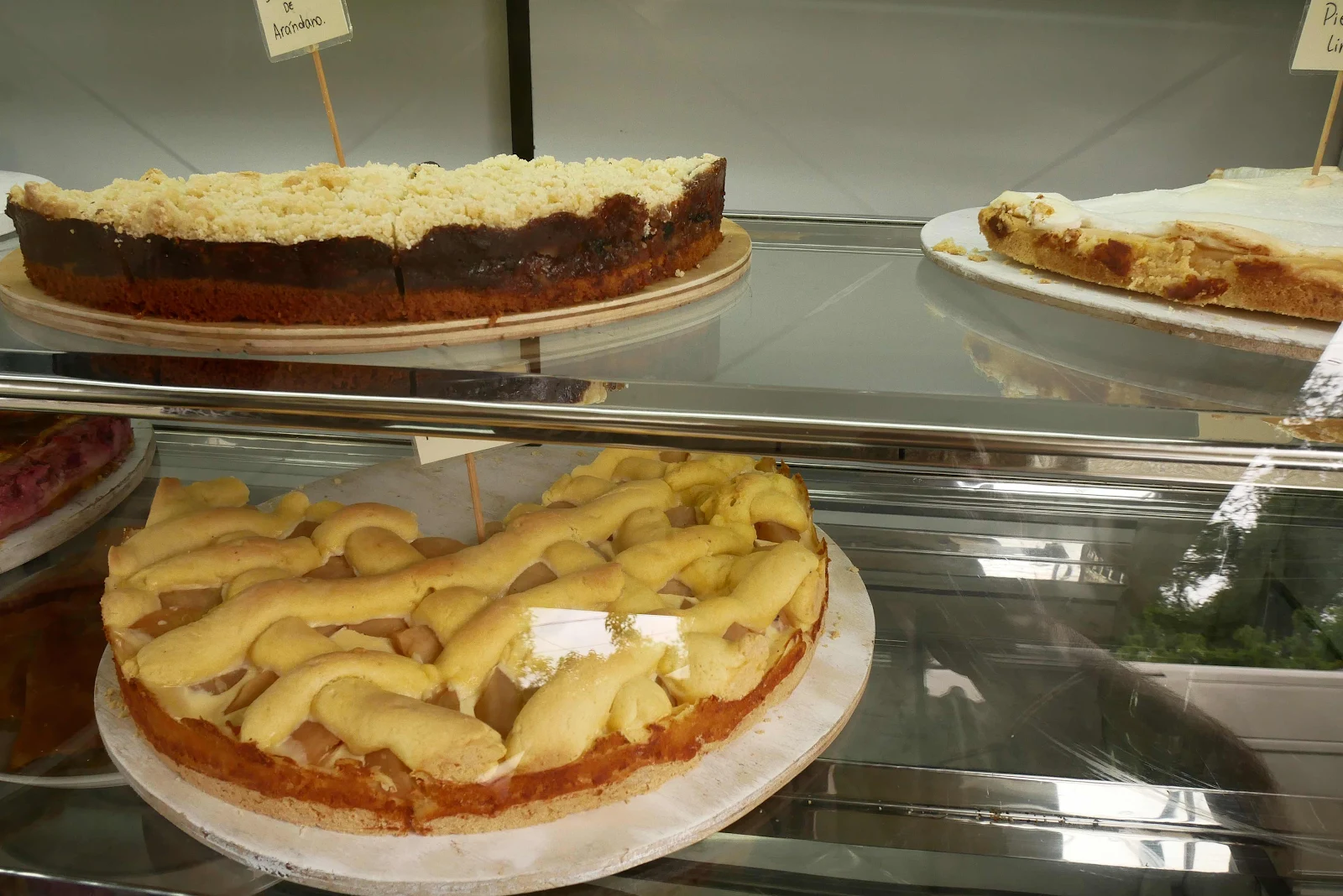
We slithered down the very steep hill from the campground and landed in the arms of a cake lady selling “küchen” a German word imported by immigrants 160 years ago and retained by modern Chileans. 

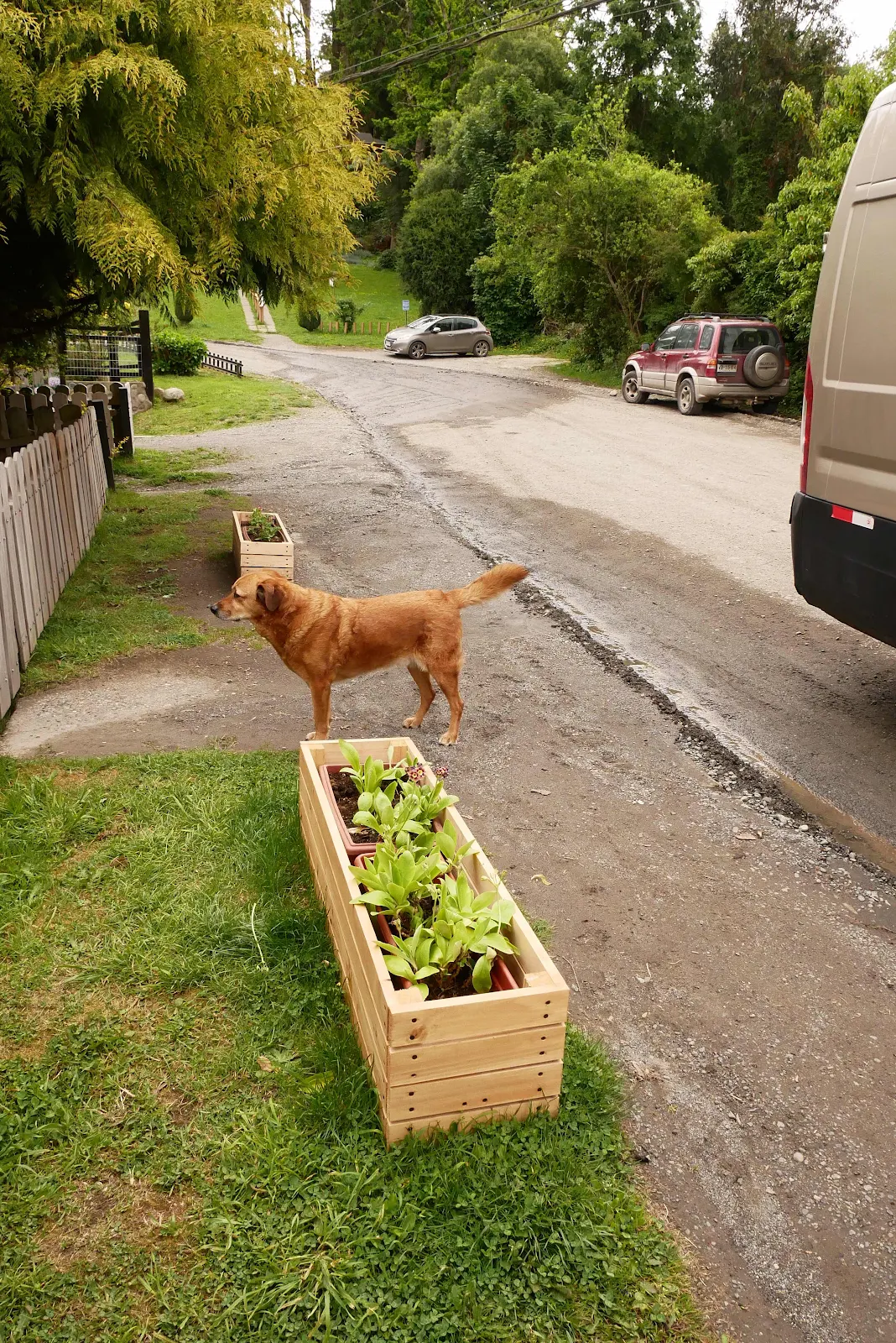
Rusty wanted to explore more than baked goods. 

She bakes it all herself and when I complained my wife loves to cook not bake, she laughed and said no one’s perfect. My raspberry cheesecake slice was pretty close all the same. 


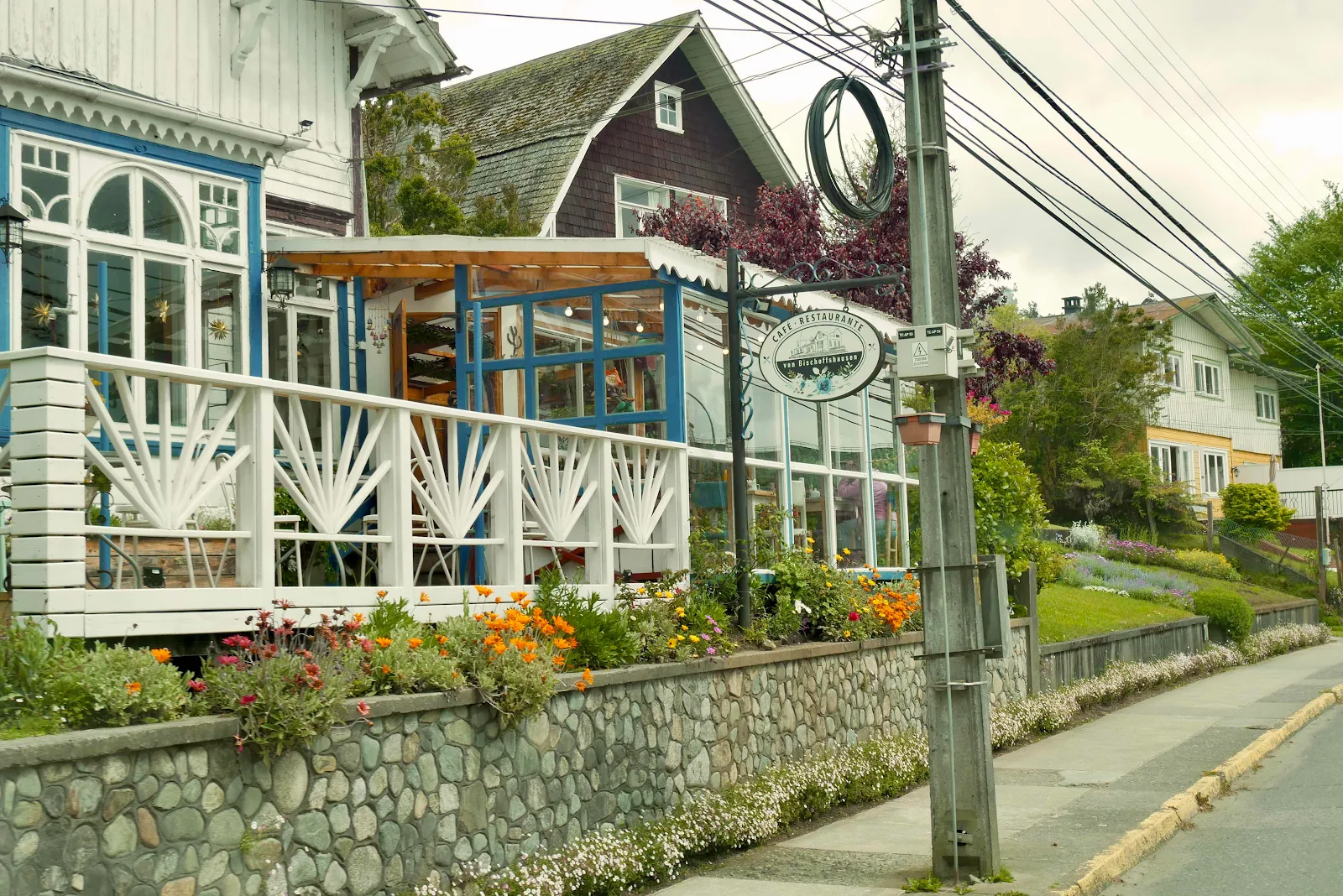
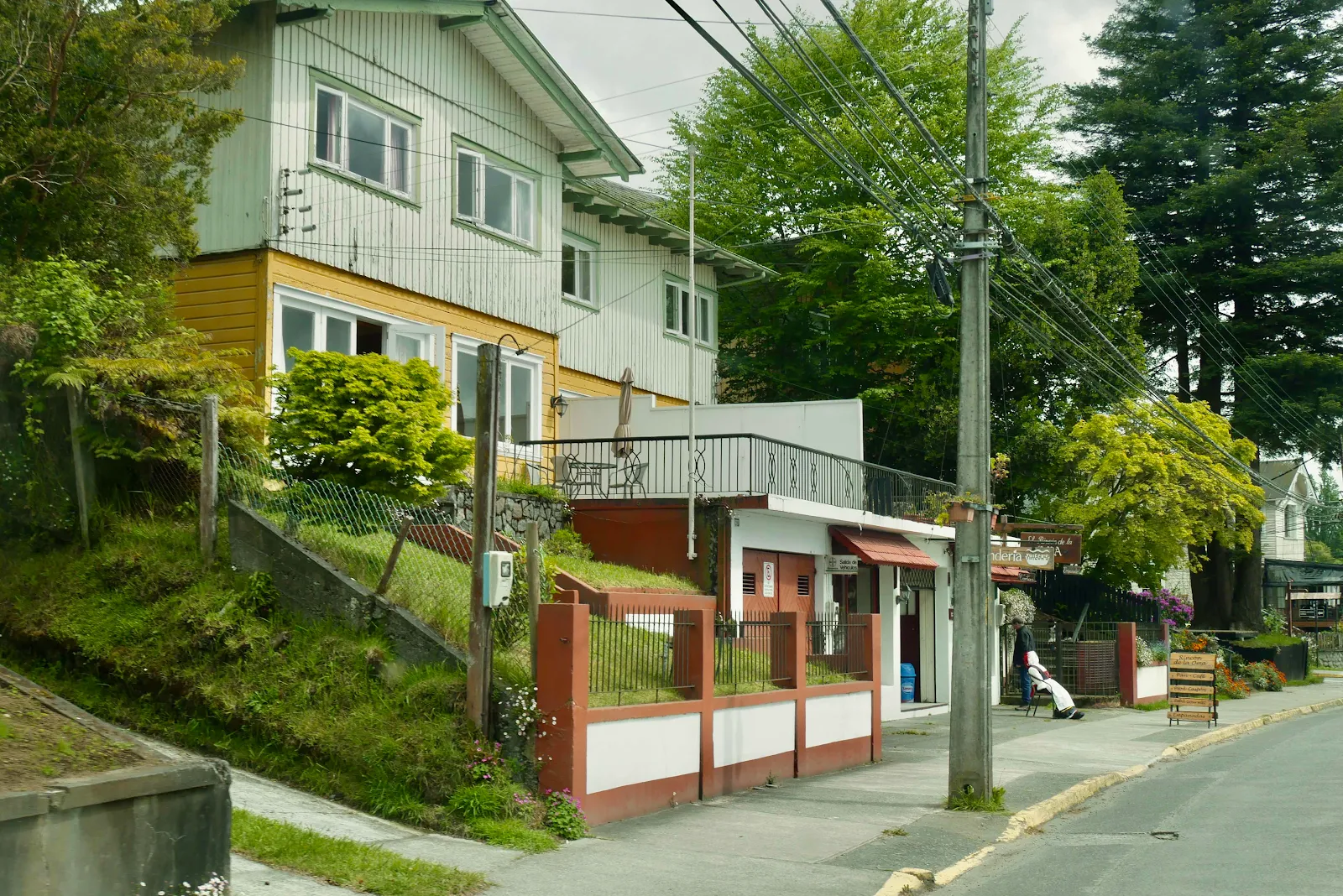
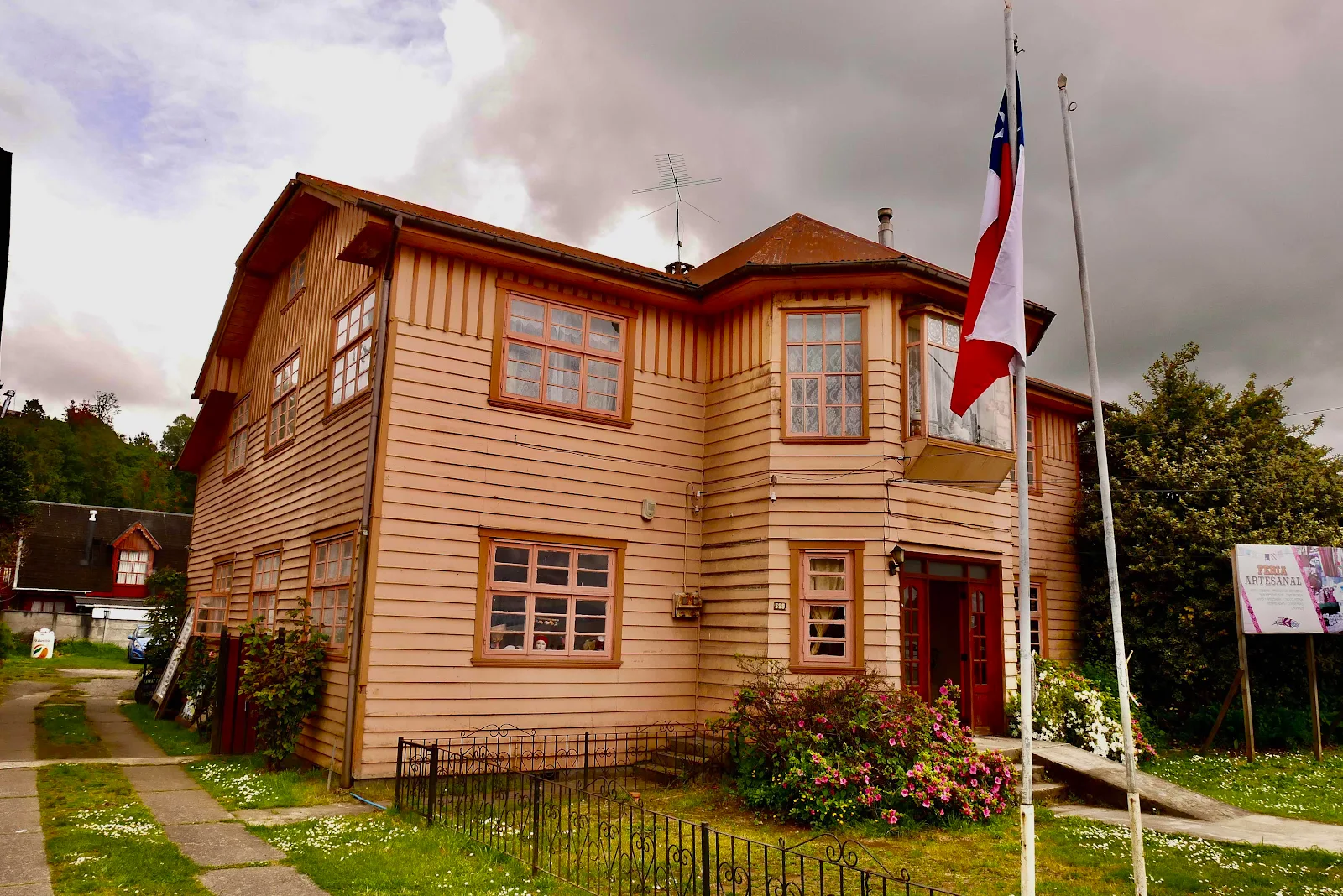
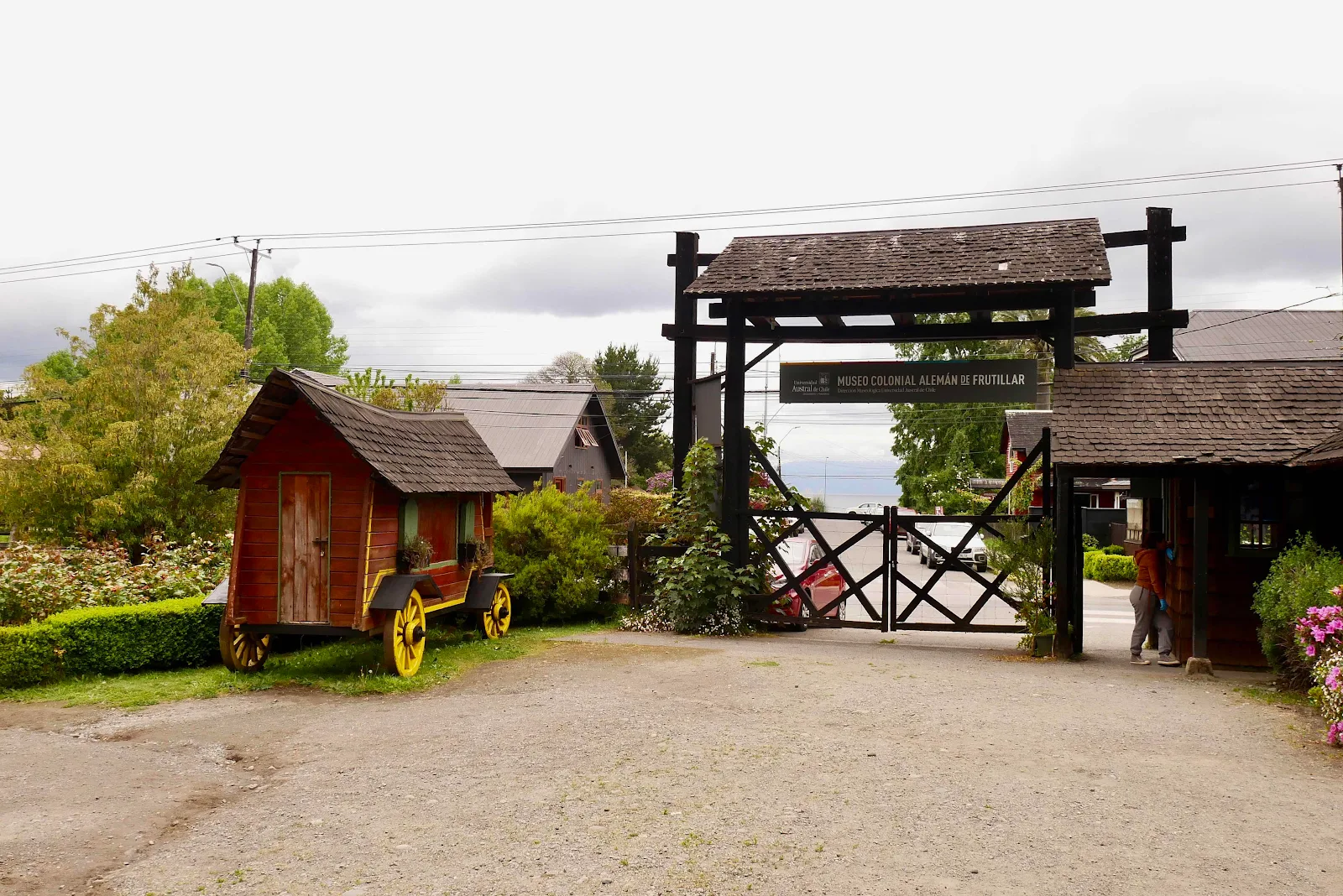
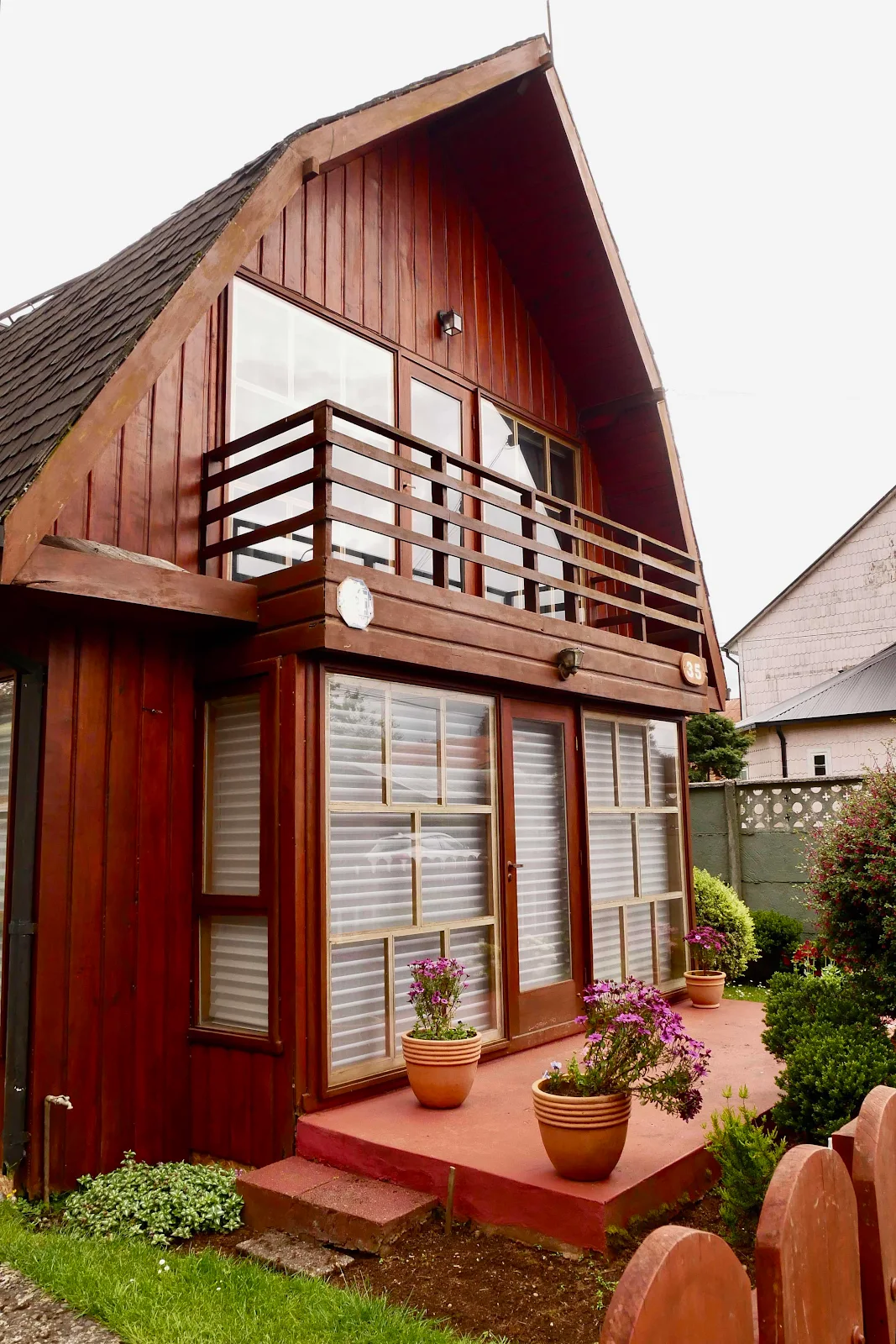
Frutillar is dedicated to preserving its waterfront architecture and we drove it all to find the German museum. 

Some of it is more modern.  

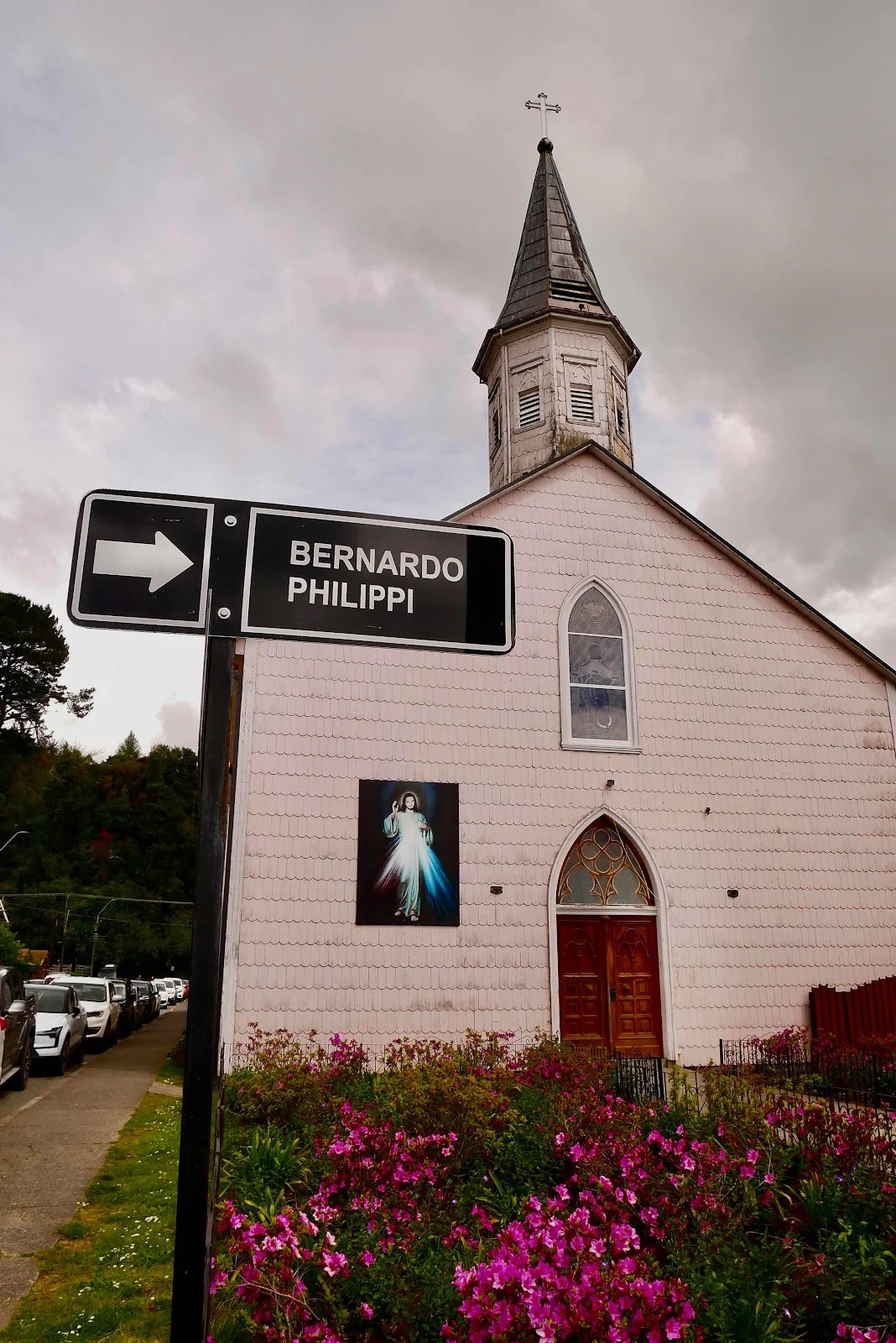
Bernardo Phillipi was a German who decided in 1842 to explore and map the Lake District, an area where indigenous tribes had fought off Spanish and later Chilean settlers for two hundred years. He was born in Prussia in 1811, grew up in Switzerland and after several visits to South America he settled in Chile in 1838. 

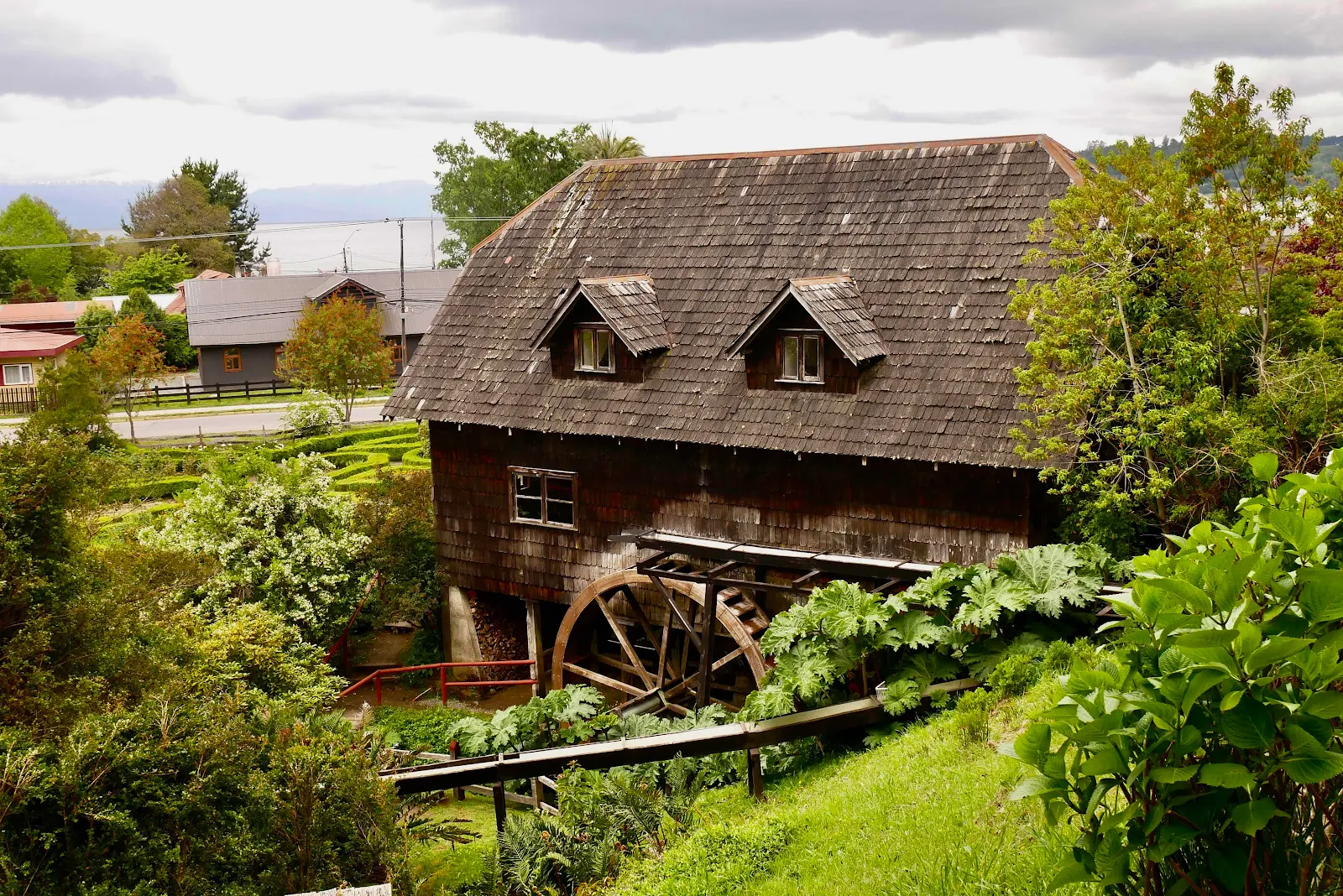
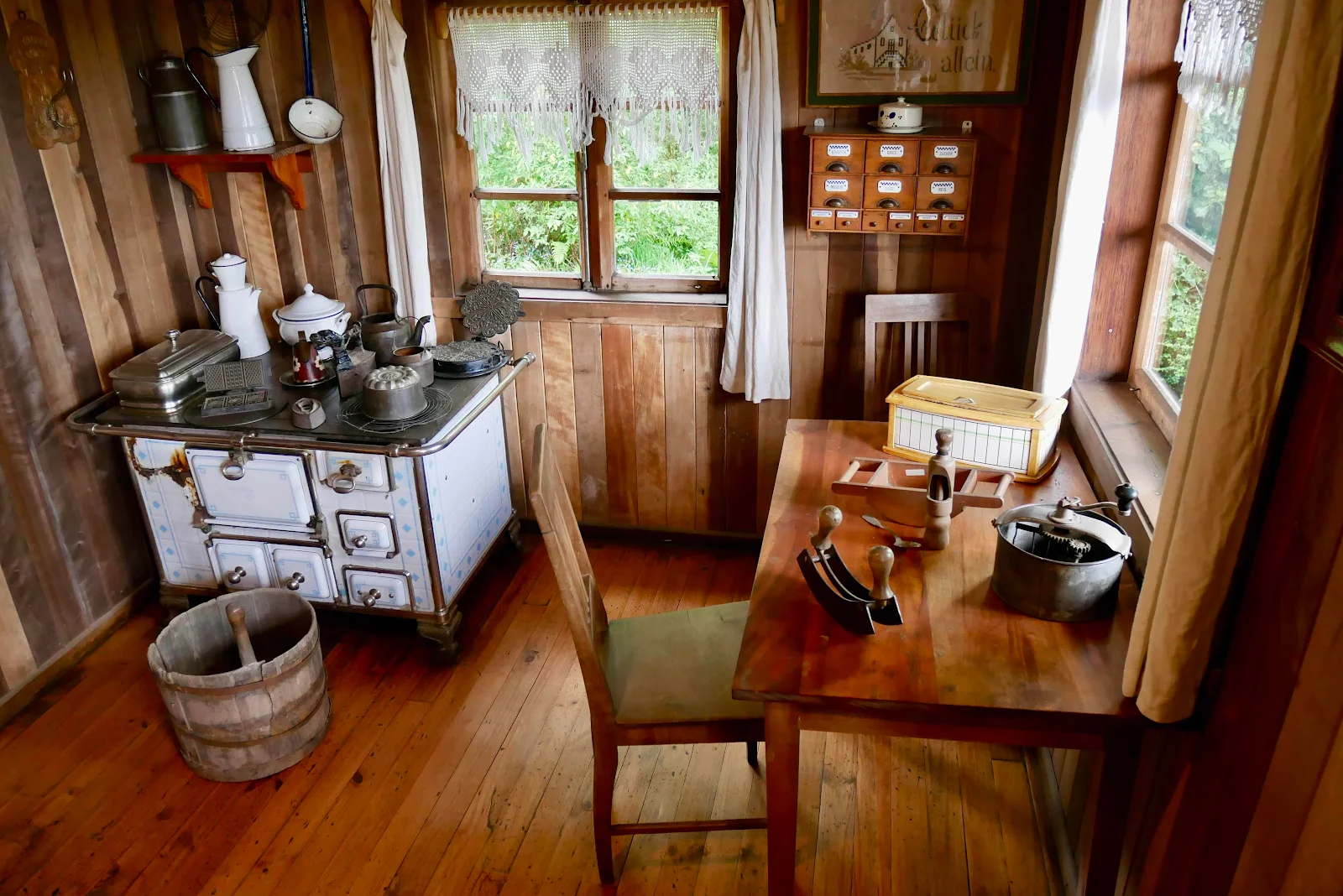
The German Colonial Museum in Frutillar was our goal to see how those early settlers from the German state of Hesse learned to cope with life on the frontier. 

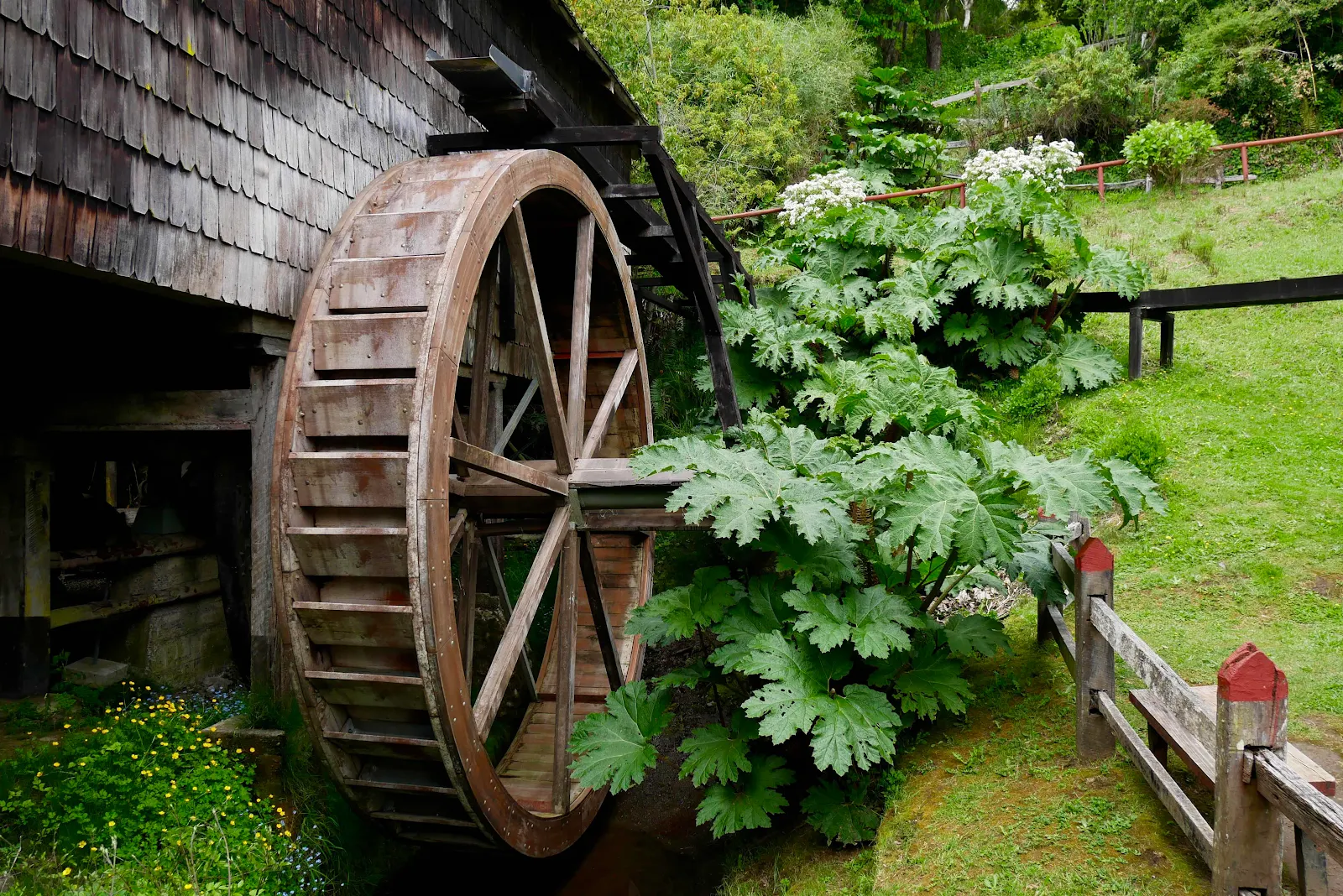
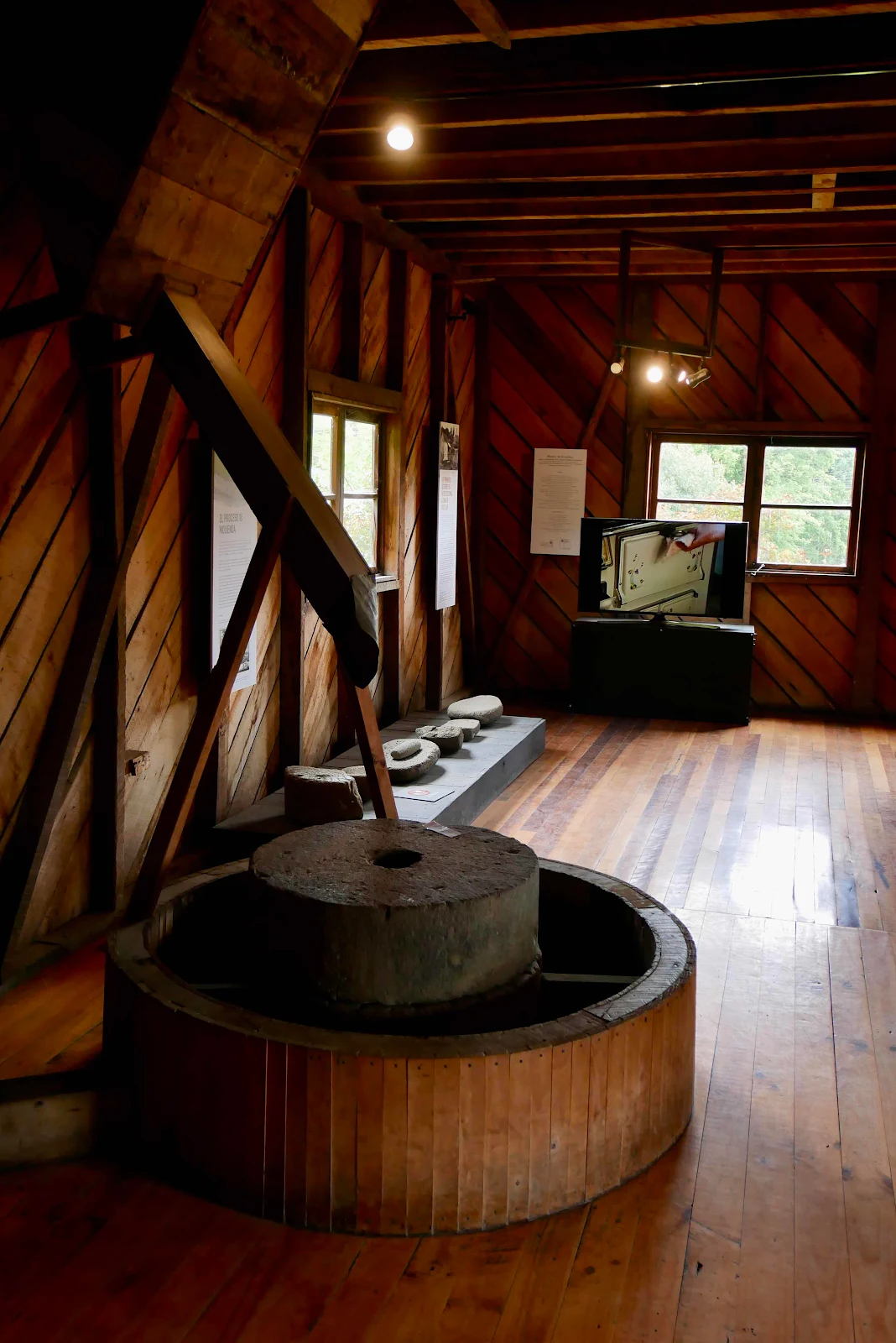
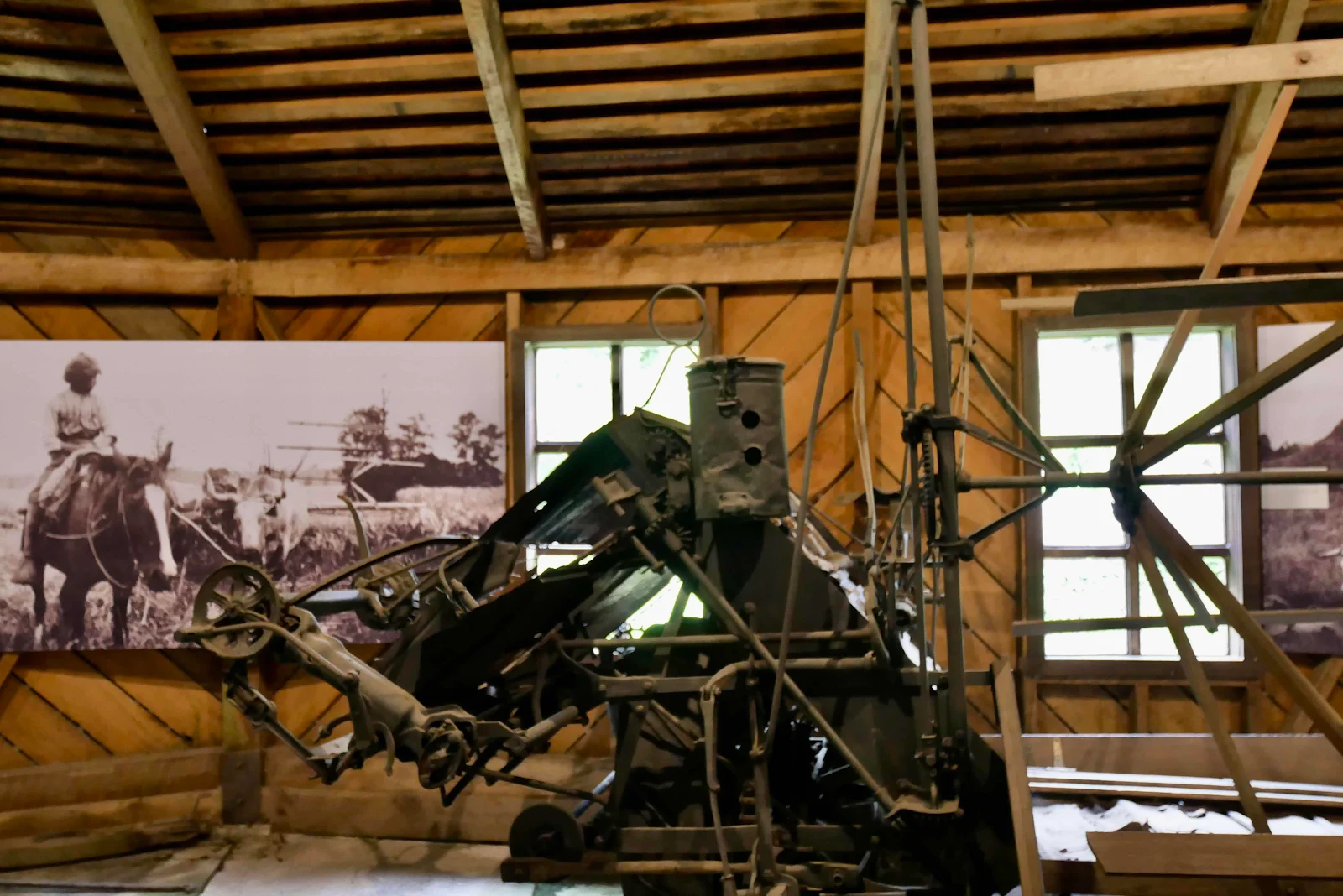
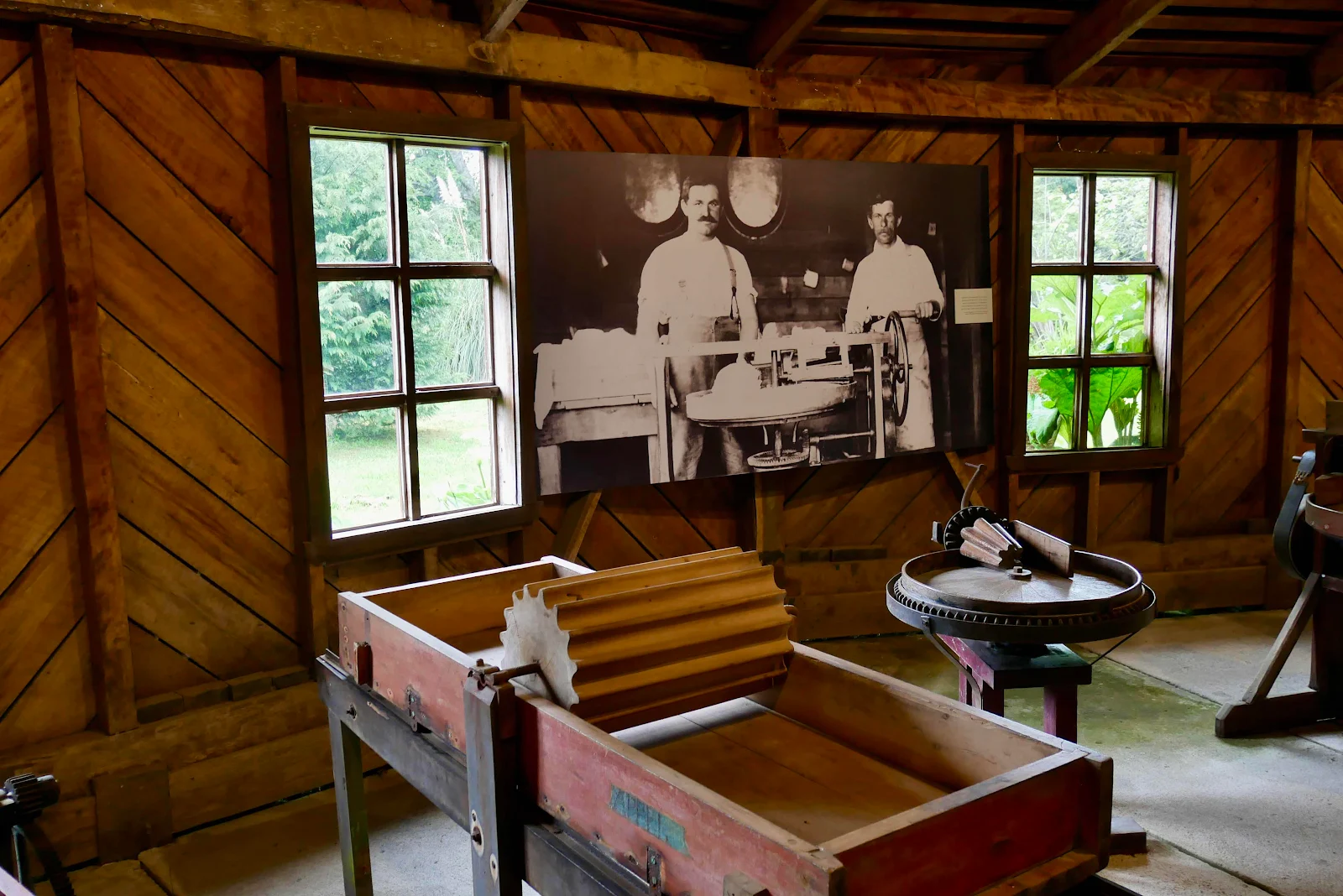
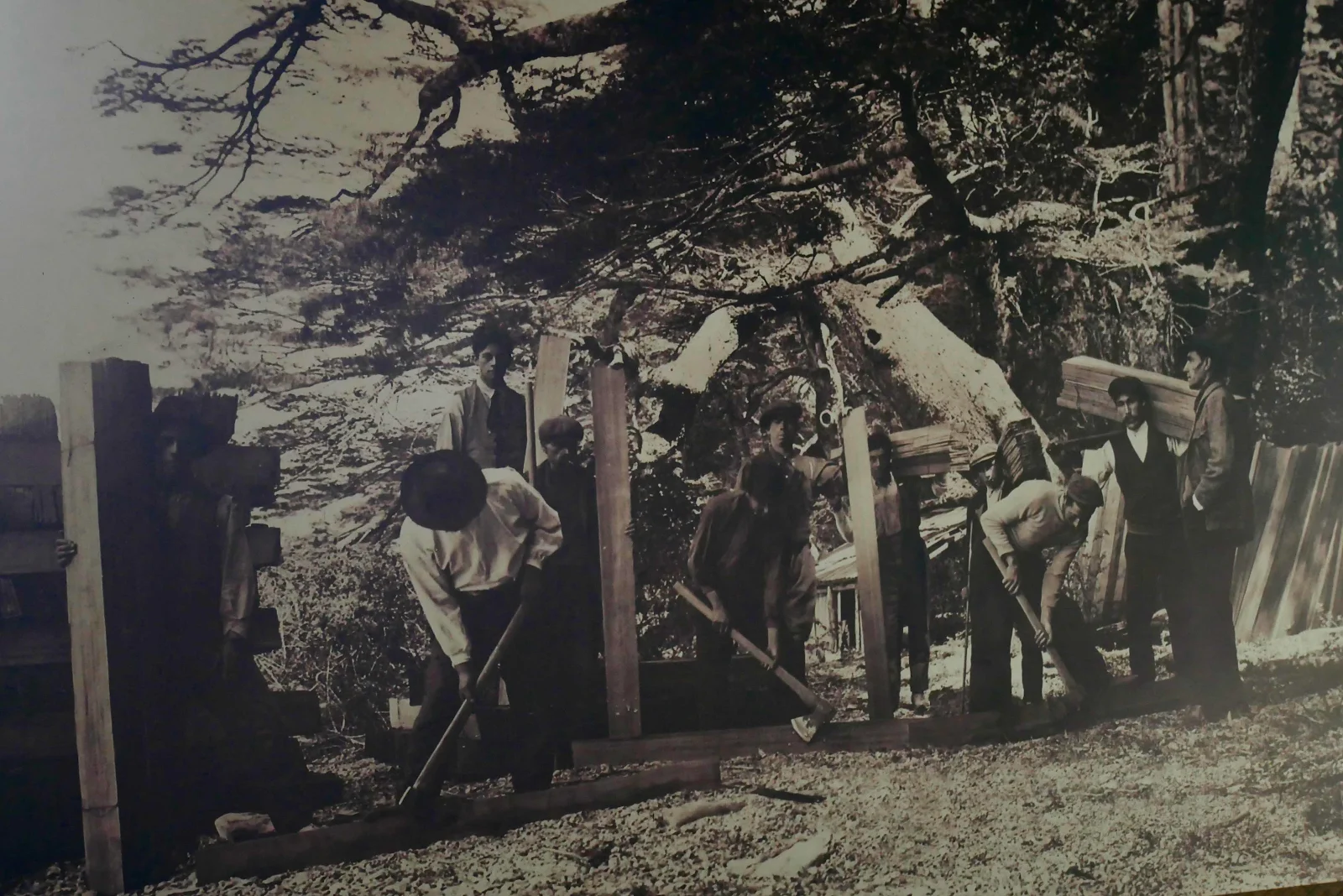
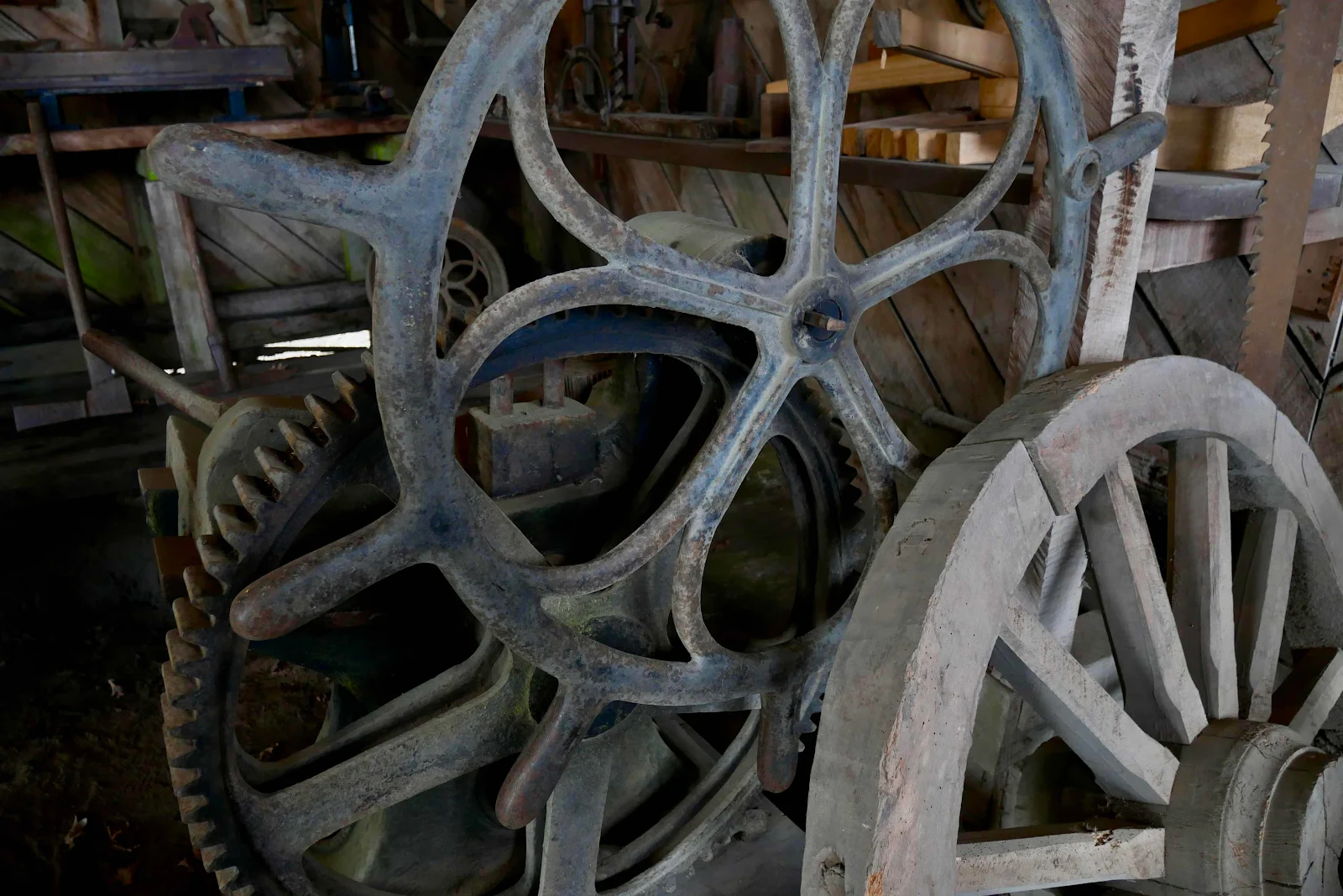
They brought their German technology with them and they also brought artisans to make  tools, repair machinery and build water mills for power. 

Philippi led the drive to give Germans a new home in southern Chile and he became enough of a public figure he was made governor of the southern region of the country. But he died young, 41 years old murdered while trying to peacefully settle a dispute among locals  in the town of Punta Arenas. 

He left his mark around here though and even though he had to double tradesmen’s wages to convince them to come to the new world they built a flourishing community here. 

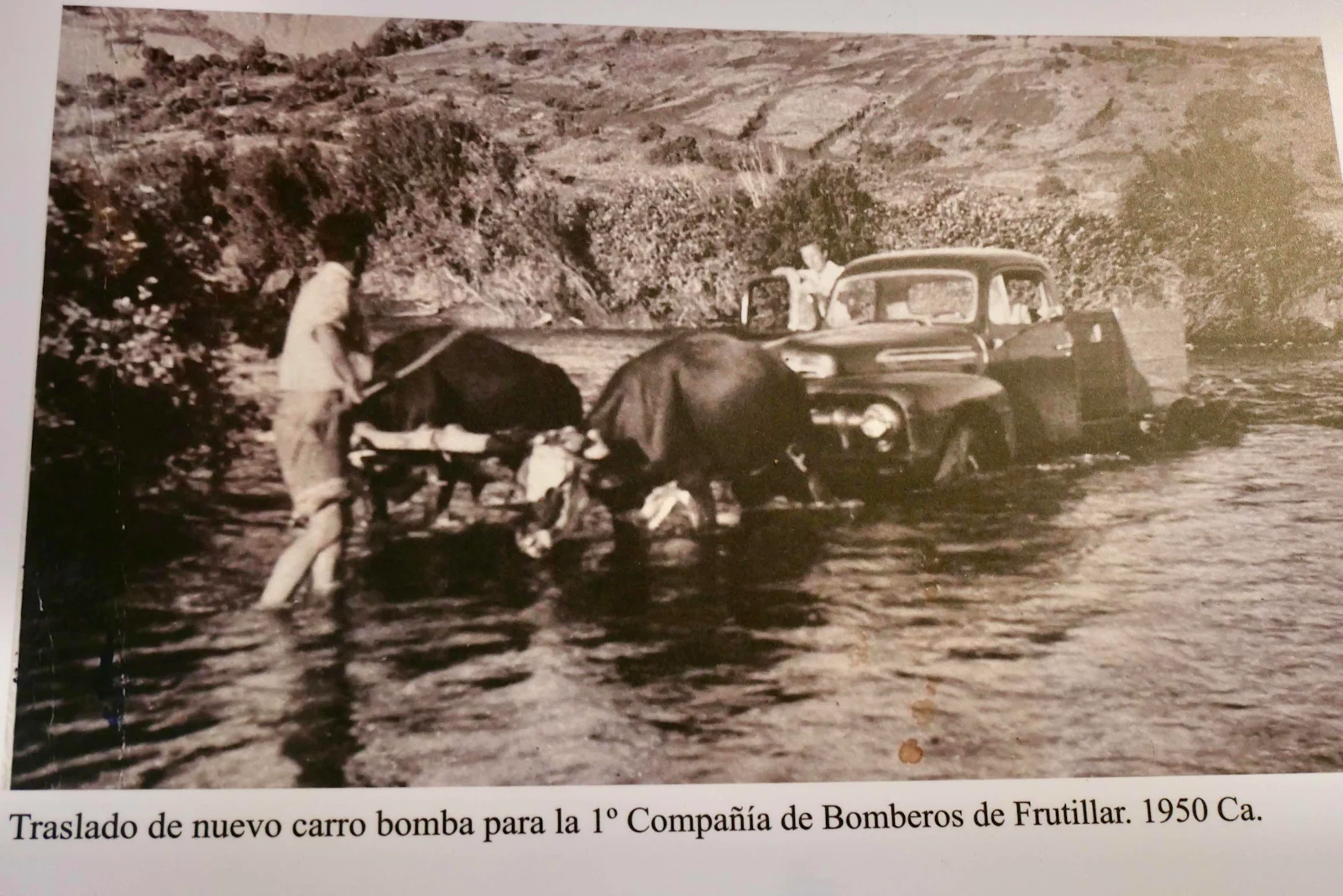
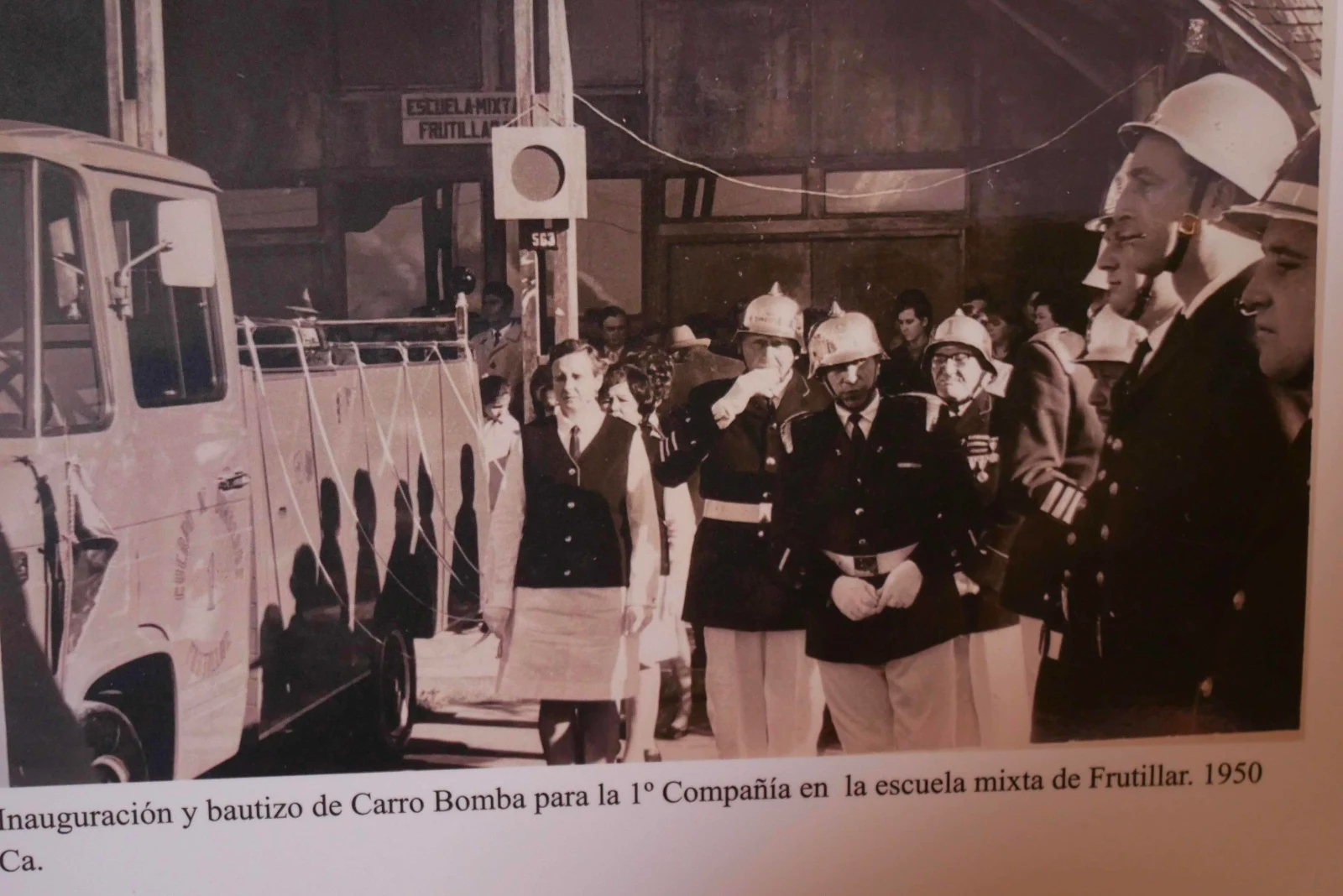
They had a fire department founded in 1911 and they struggled to bring new equipment into a town that was still quite isolated: 

And to this day they celebrate the founding of the city’s fire brigade called “Germania.”

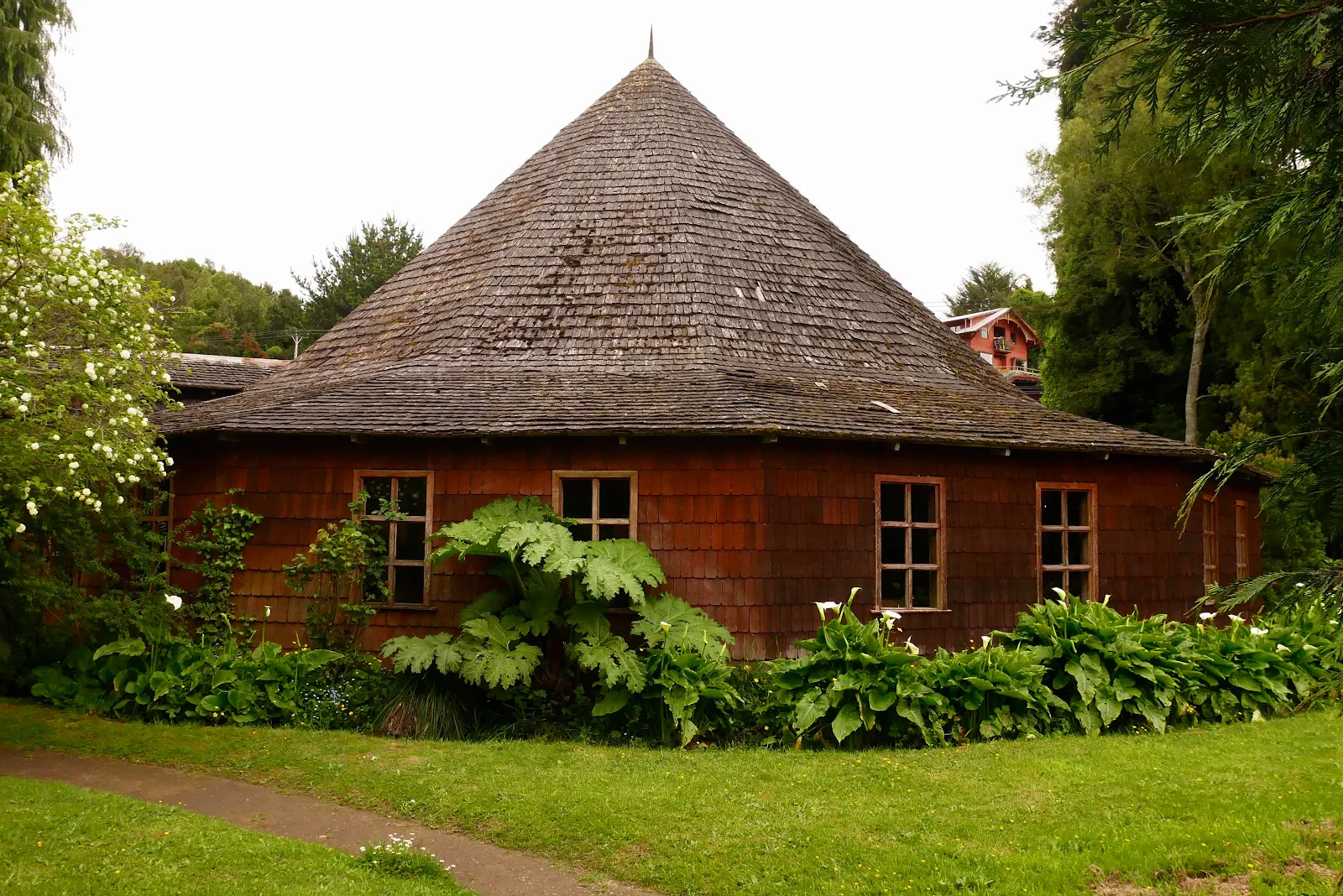
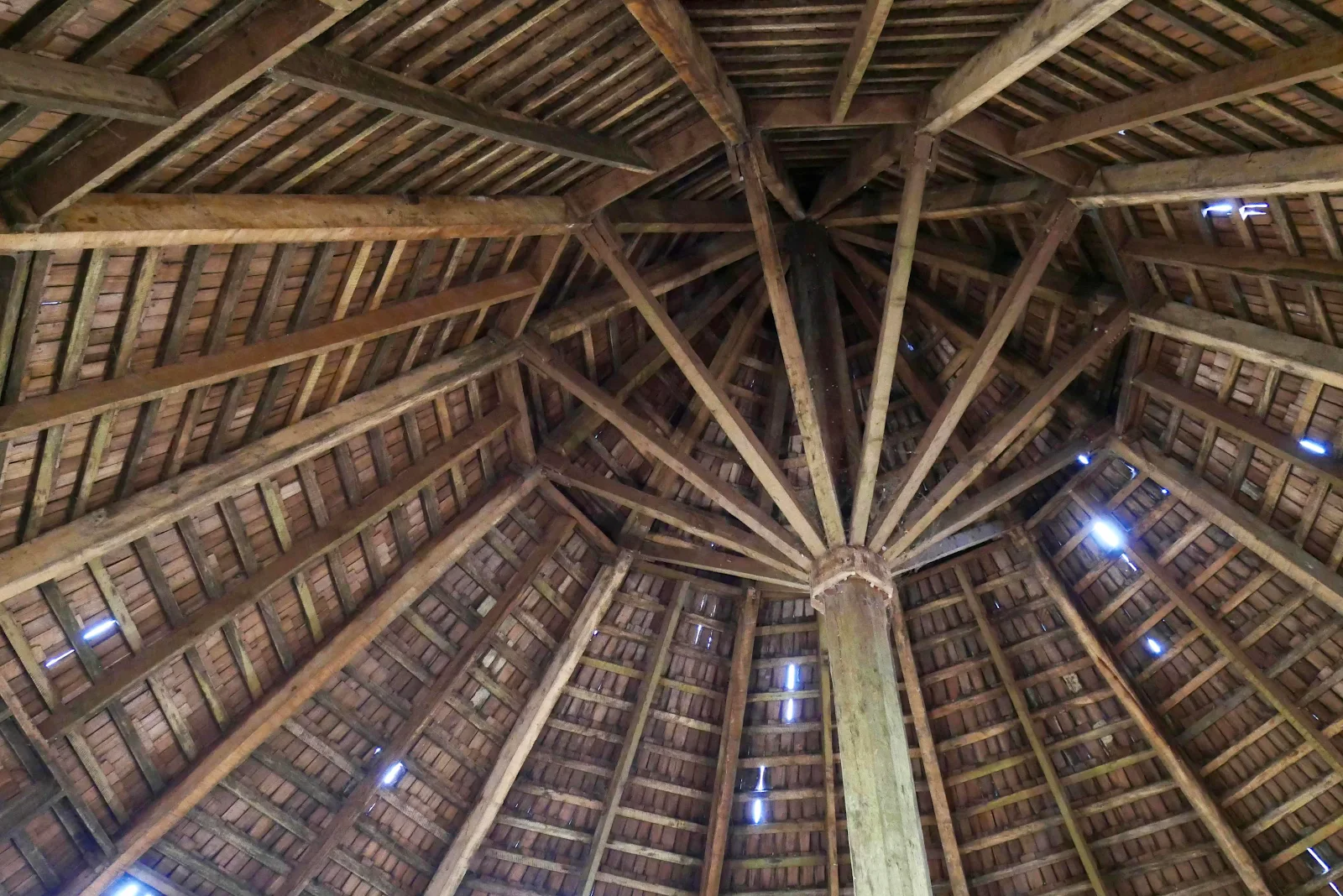
The climate in these parts id do miserable they built threshing barns in this peculiar shape:

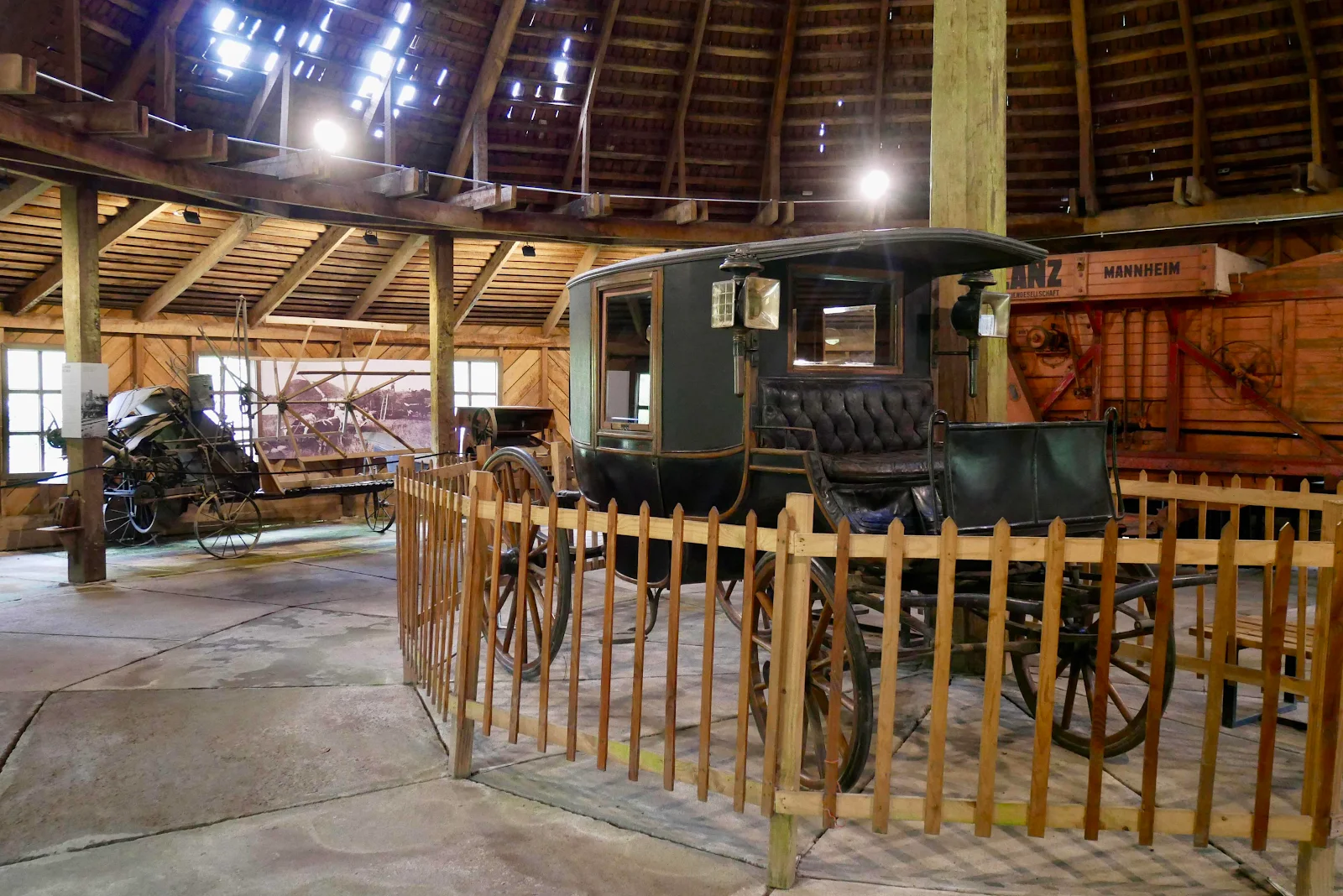
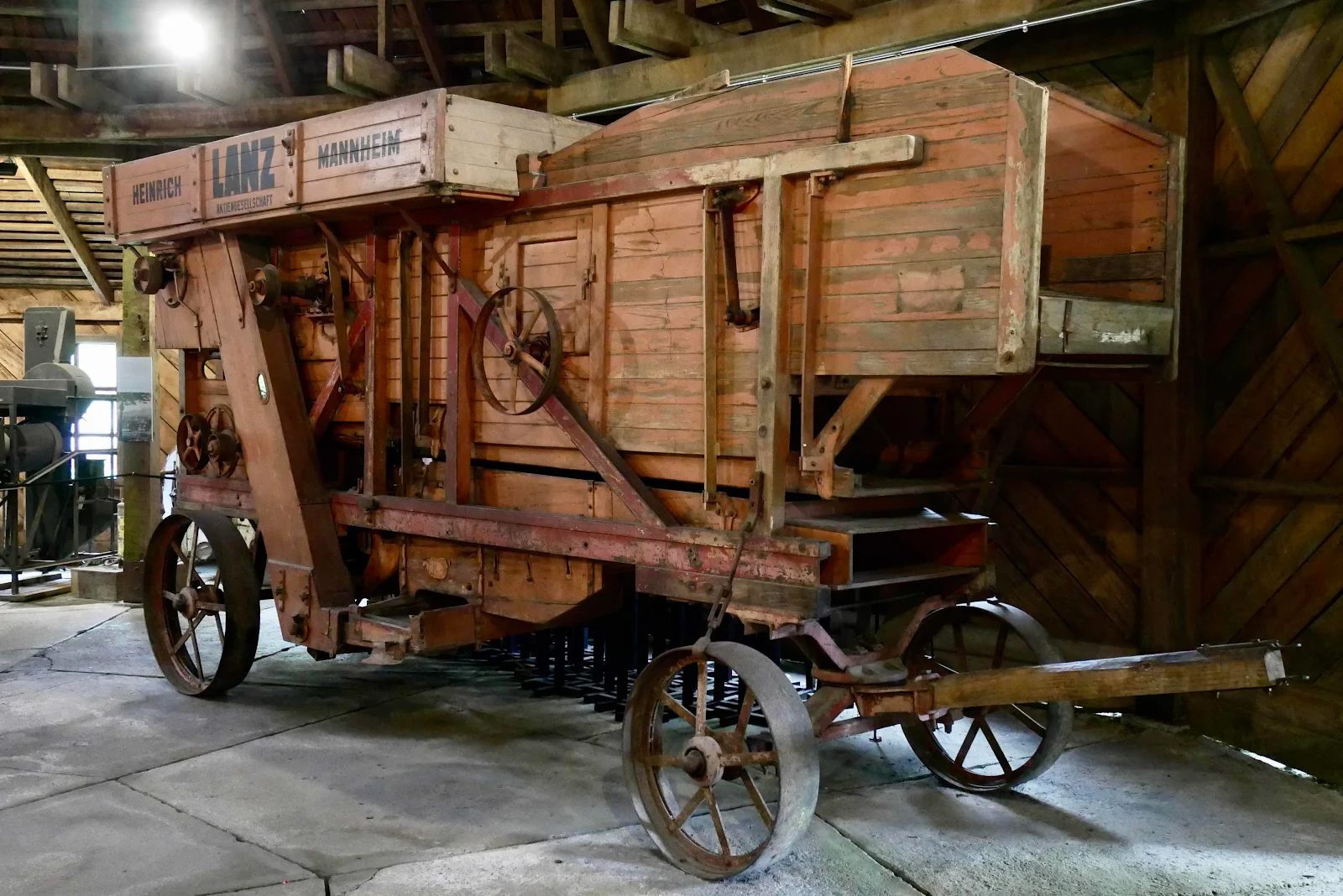
During harvest they would bring the wheat in, thresh it and store it in here out of the rain. They also garaged their machines inside, away from the weather.


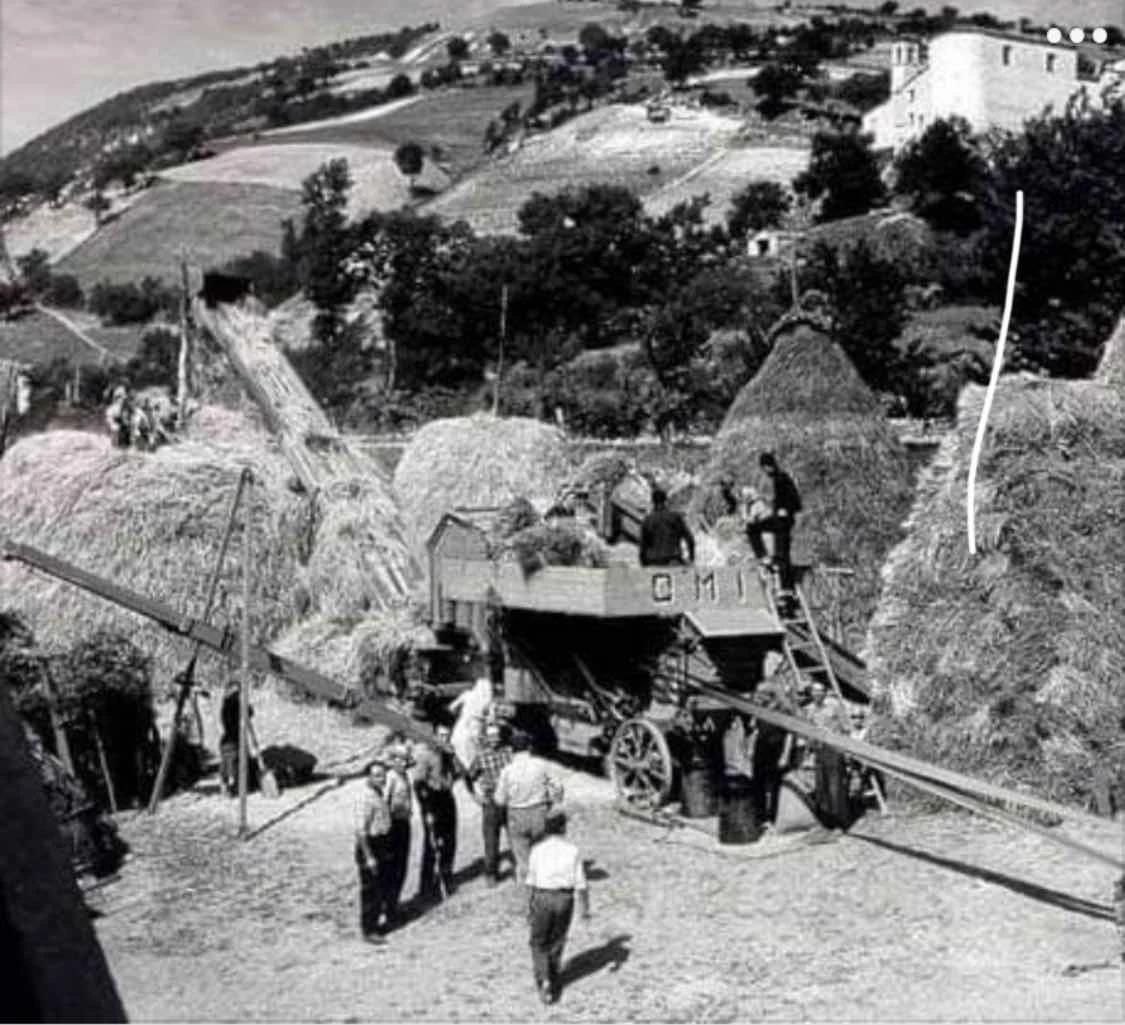
When I was a child my family in Italy used one of these stationary threshing machines. Layne was astounded I could explain to her how it worked. 


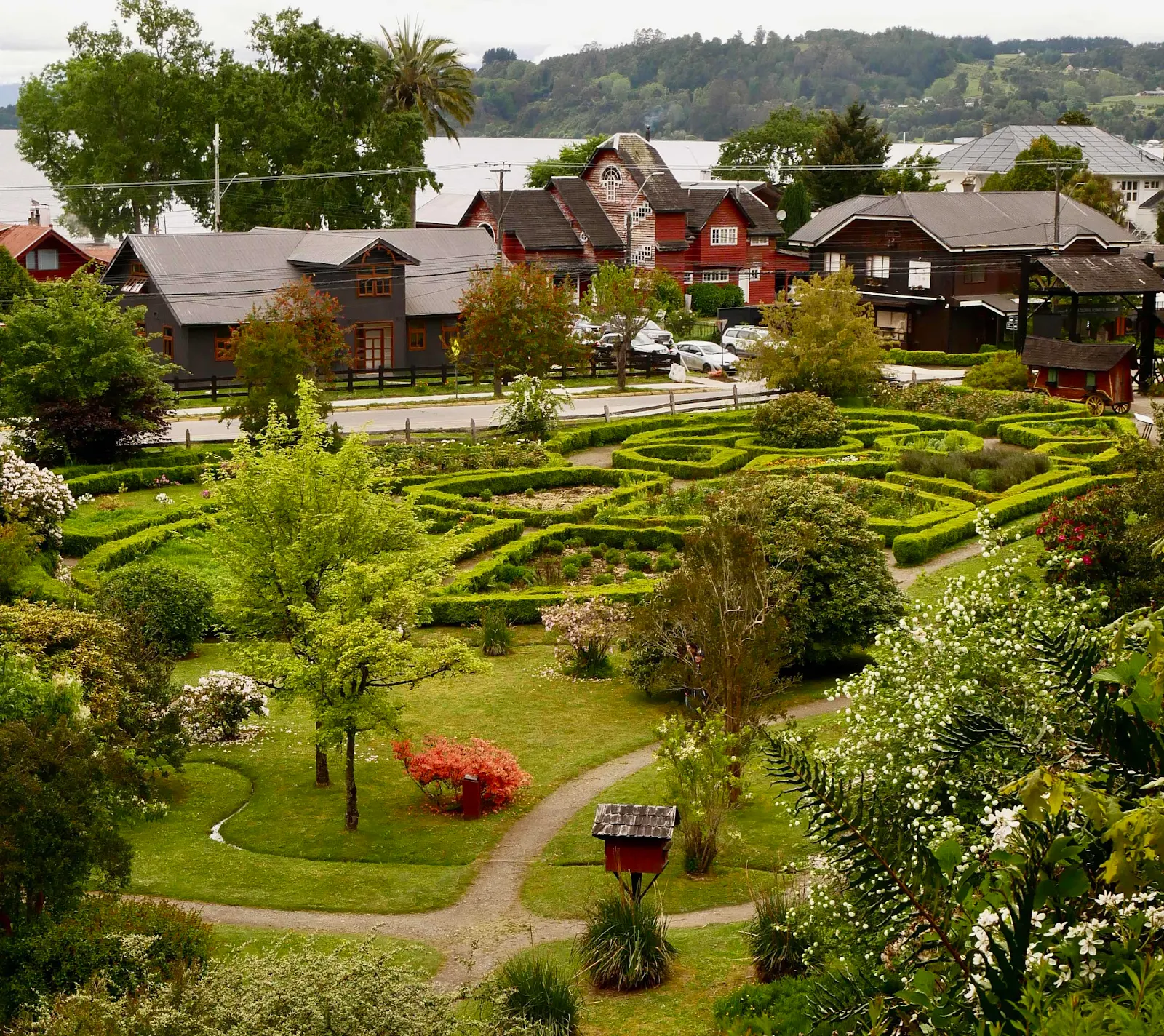
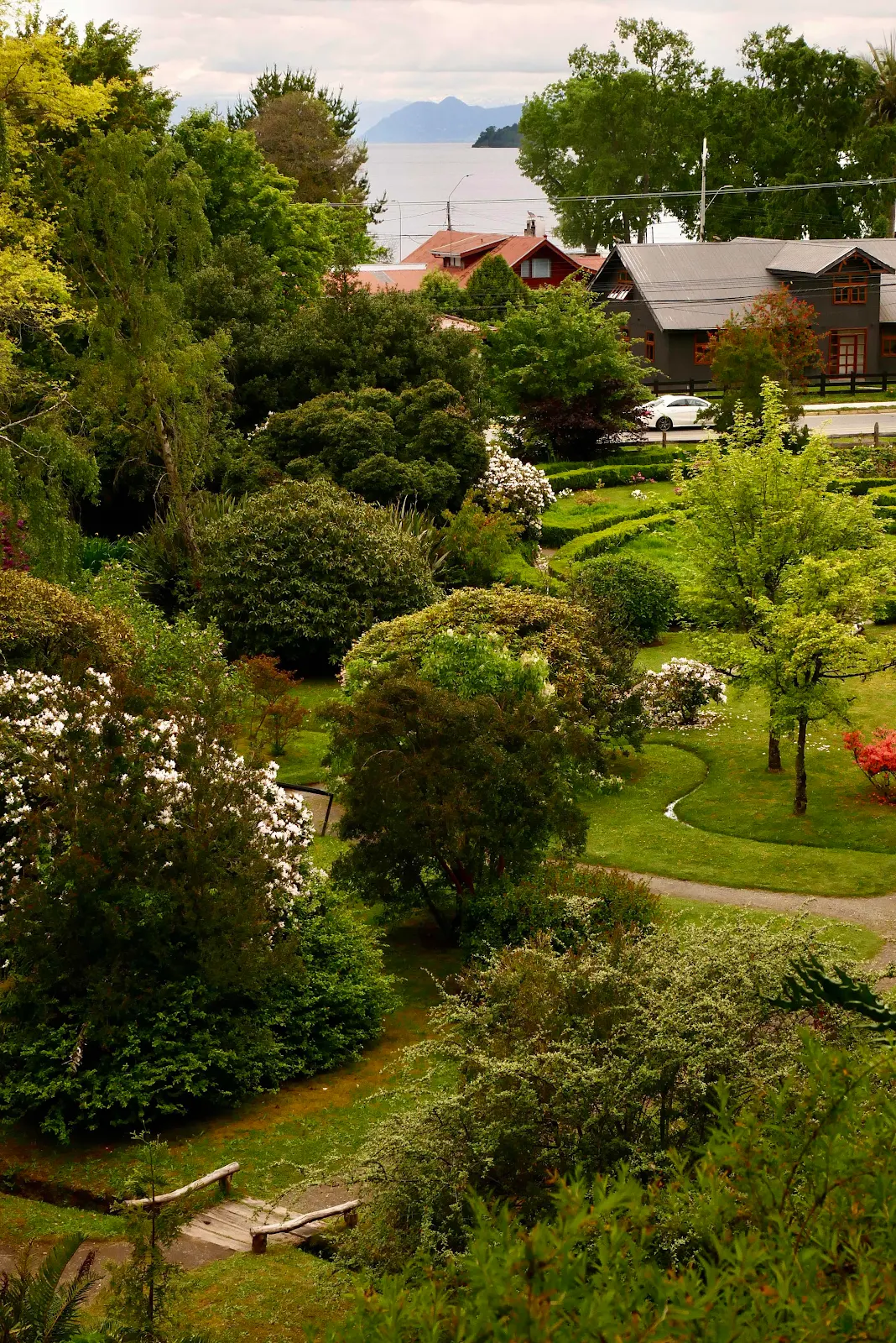
There was some discussion also of the settlers bringing native plants from Germany to mix it up with local ornamentals and the formal gardens they built in the European style. 


I guess they needed some distraction as life wasn’t easy, dawn to dusk chores and jobs done by hand. 

I have seen a lot of interest among people who think they want to go back to the land and live off their own labor but I am not one of them. 

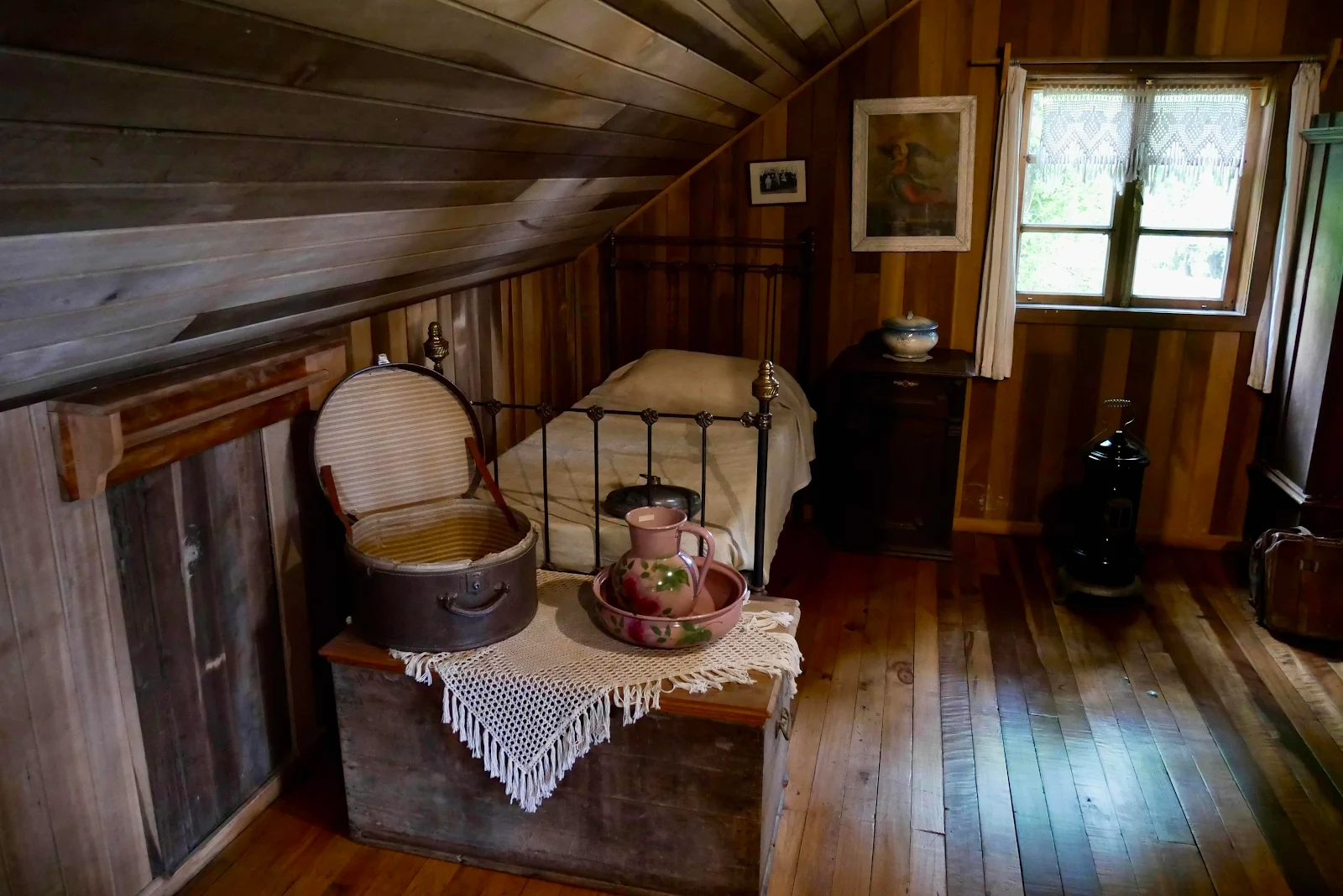
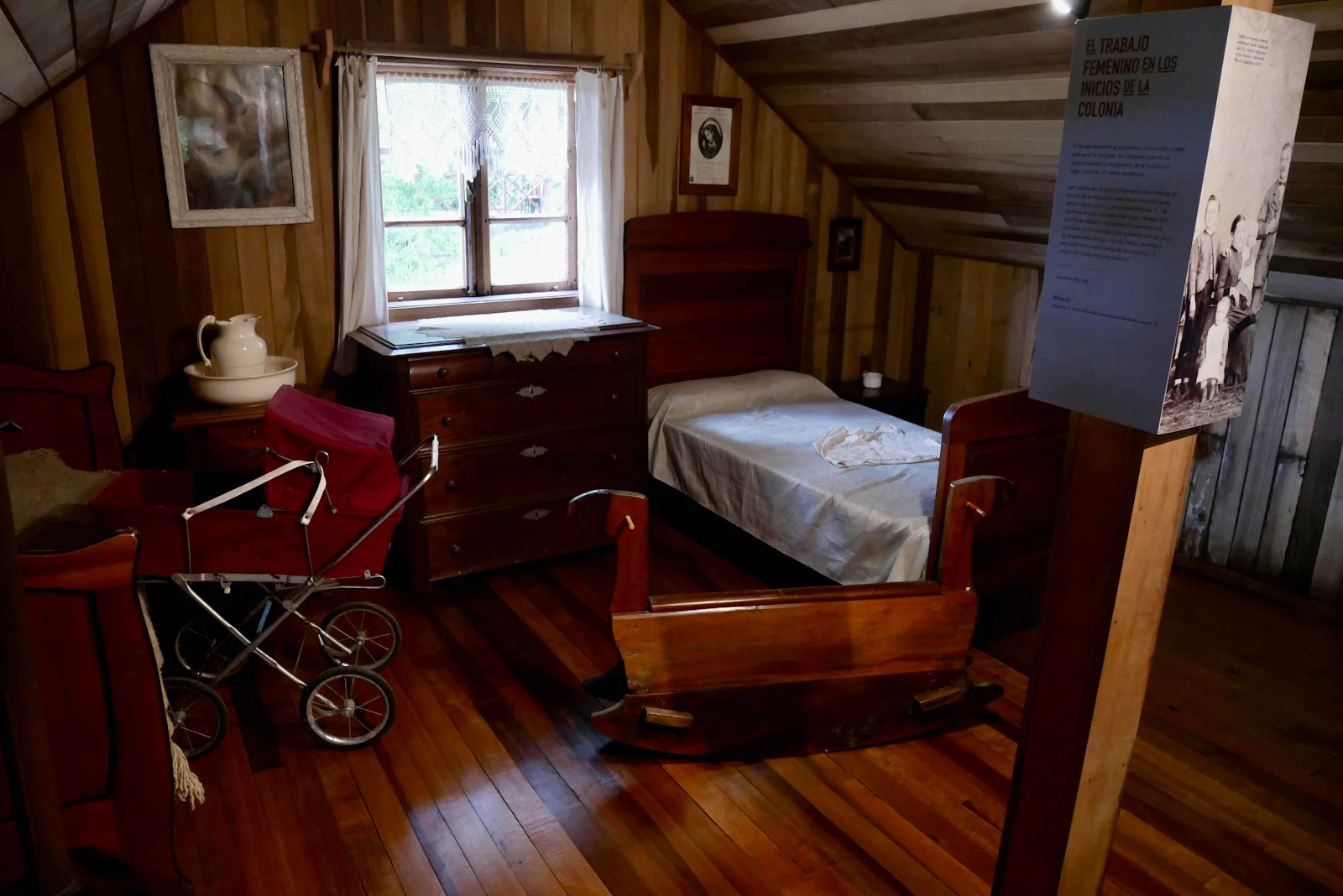
Layne remarked our bed in the van is a full sized queen unlike the settlers here. 

It reminded me a lot of the Amish technophobe societies I’ve seen back home. 

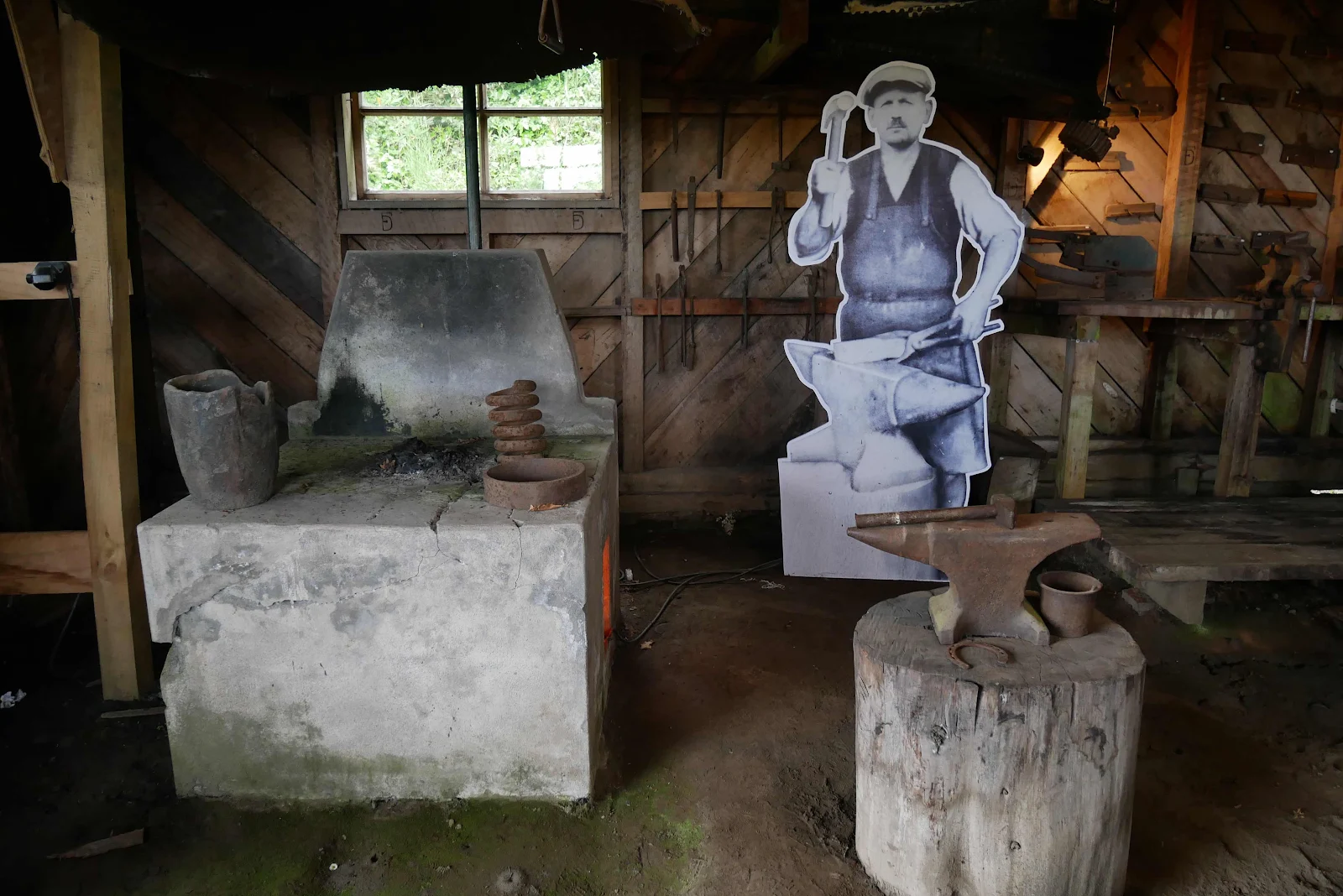
And the smithy. They had a motion sensor that set off a tape recording of a hammer on an anvil to give the younger generation some understanding of a blacksmith’s work. 


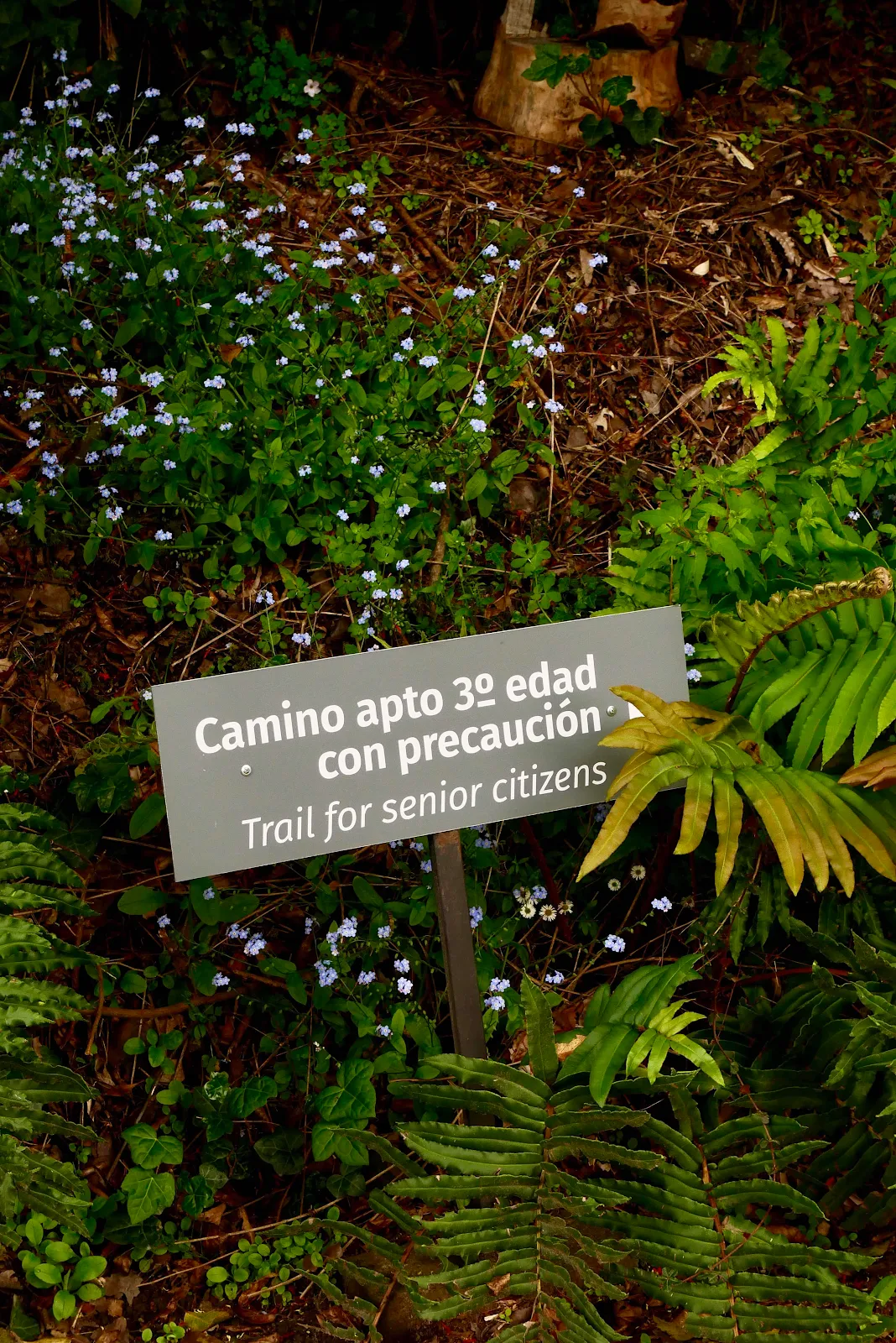
“Path suitable for the elderly”


I doubt I’d have been tough enough to be a pioneer. 


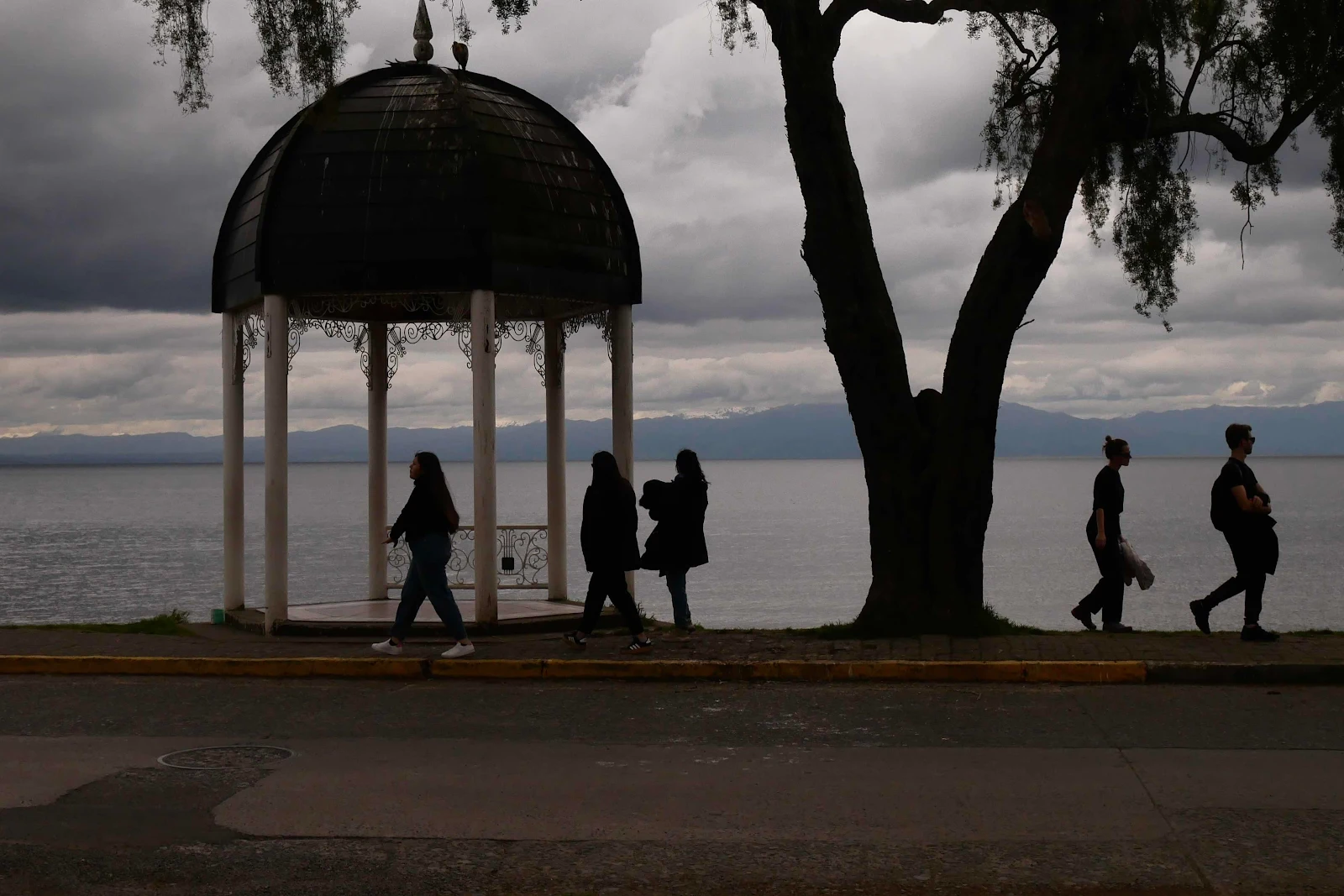
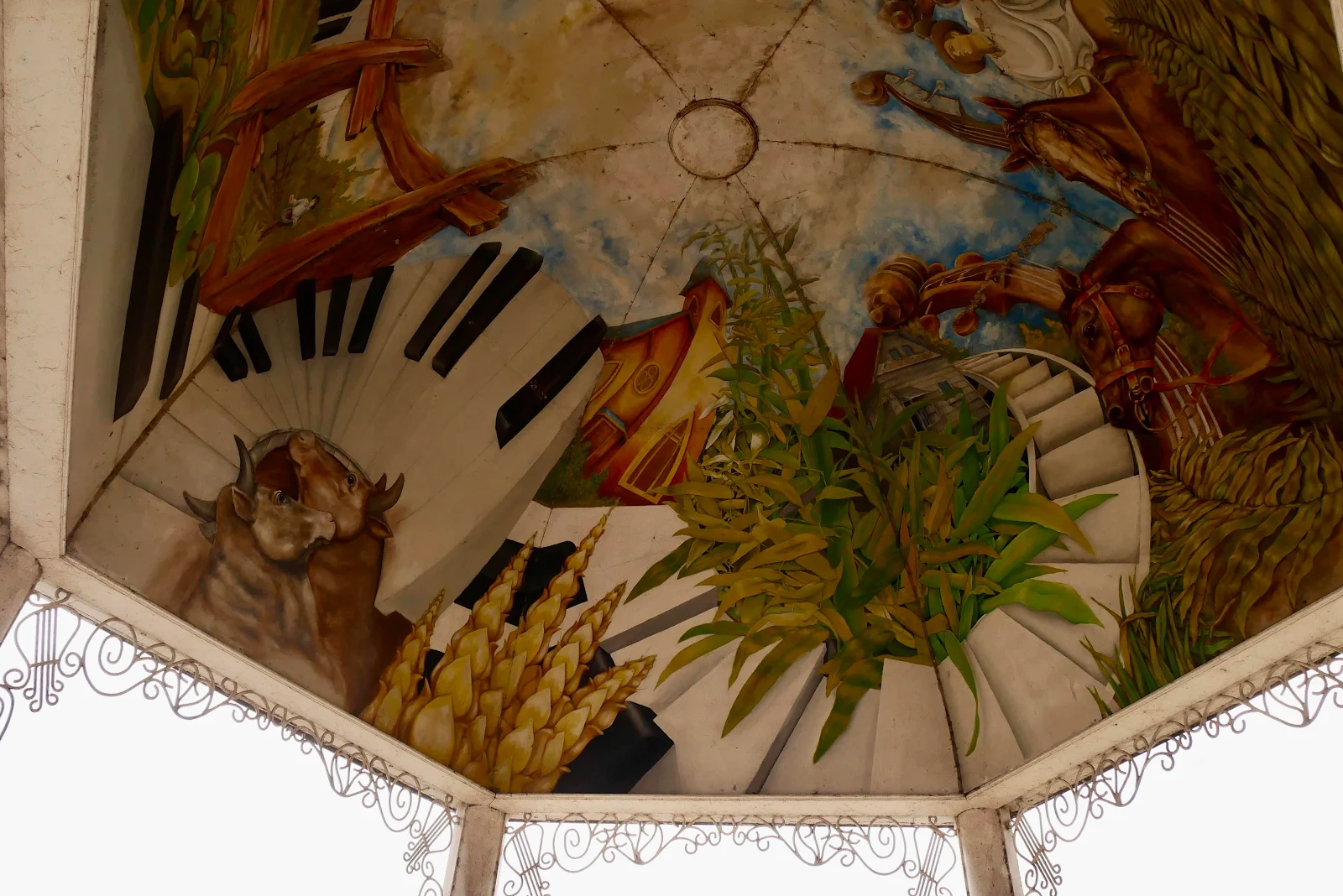
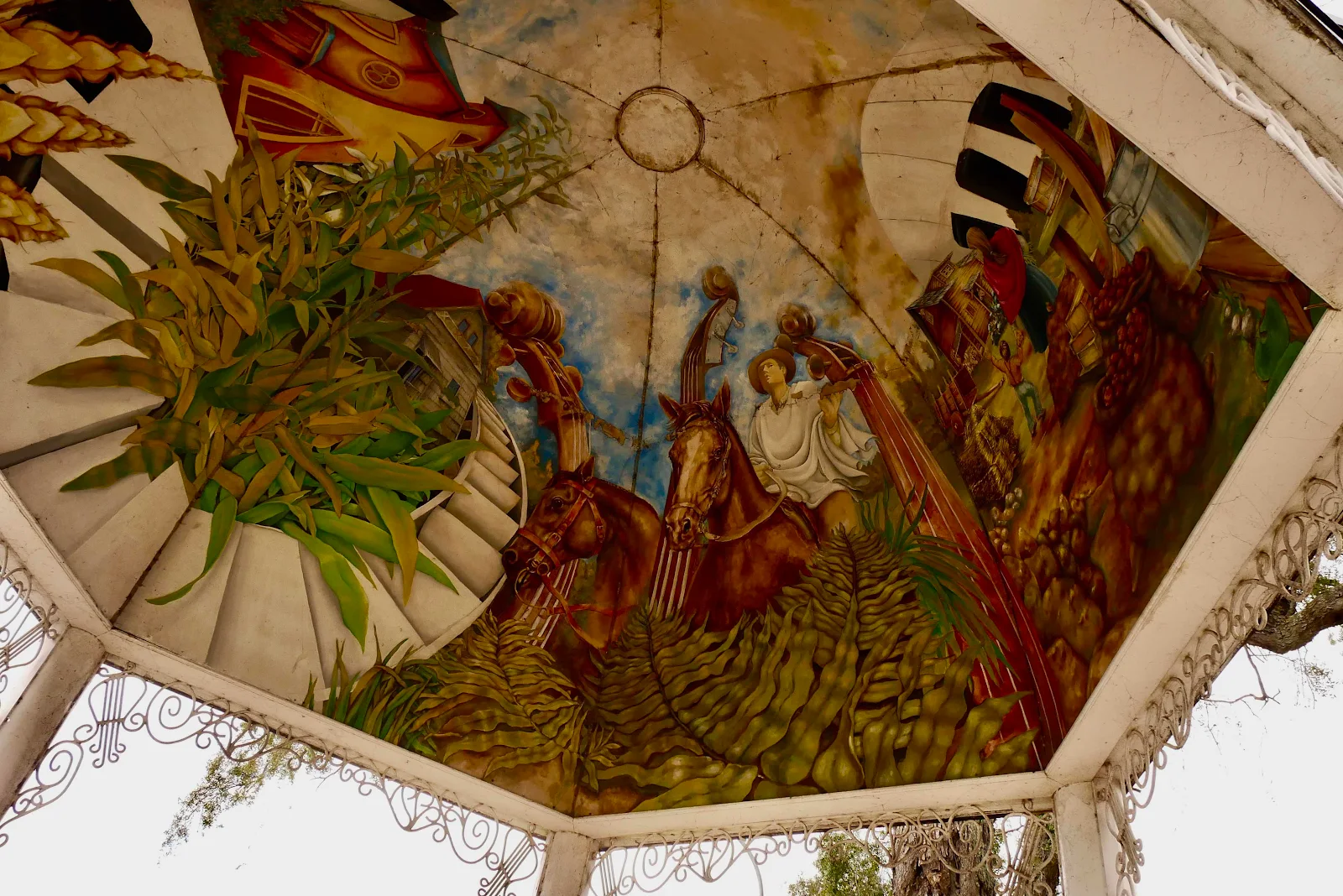
The interior of the roof of the waterfront gazebo: 


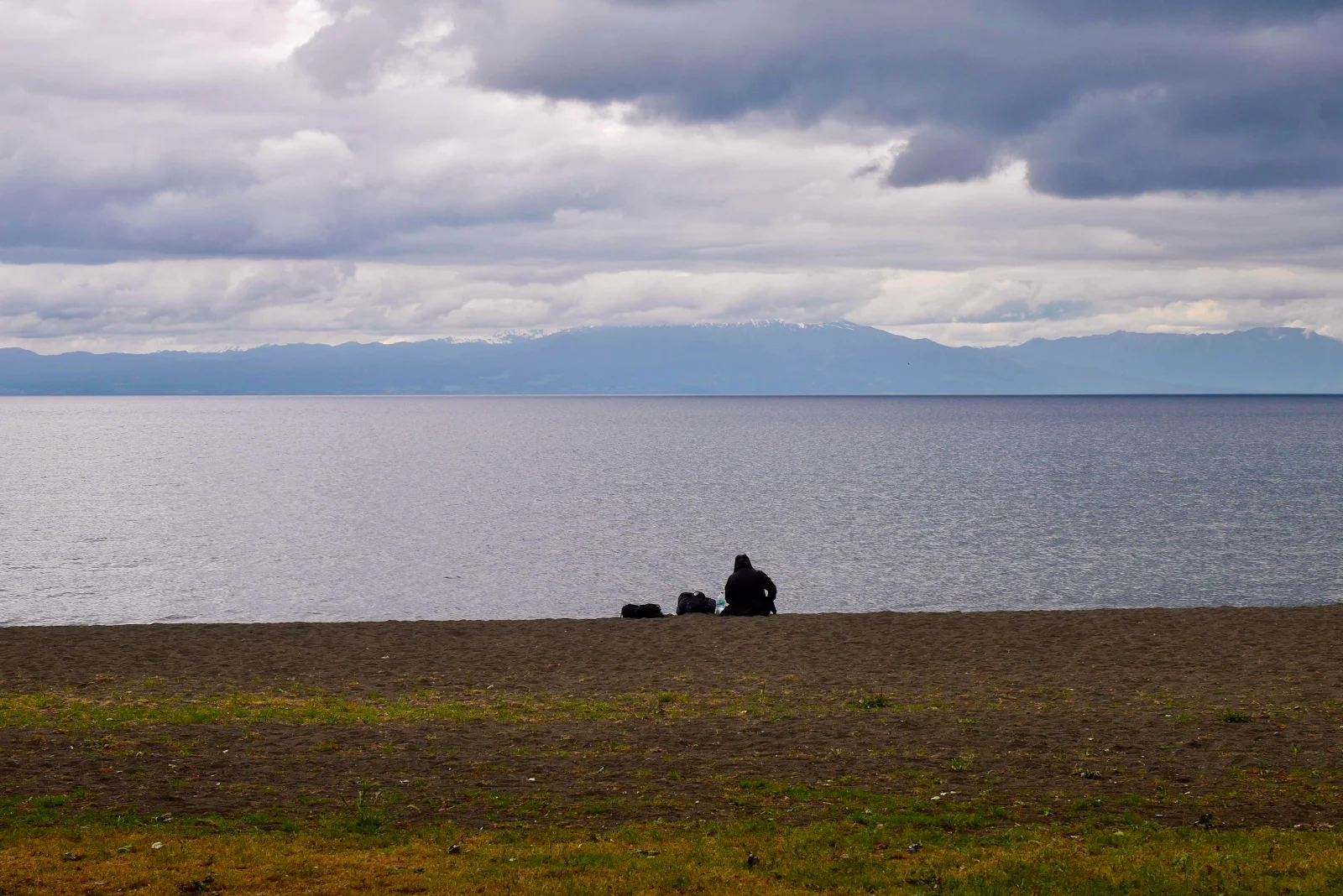
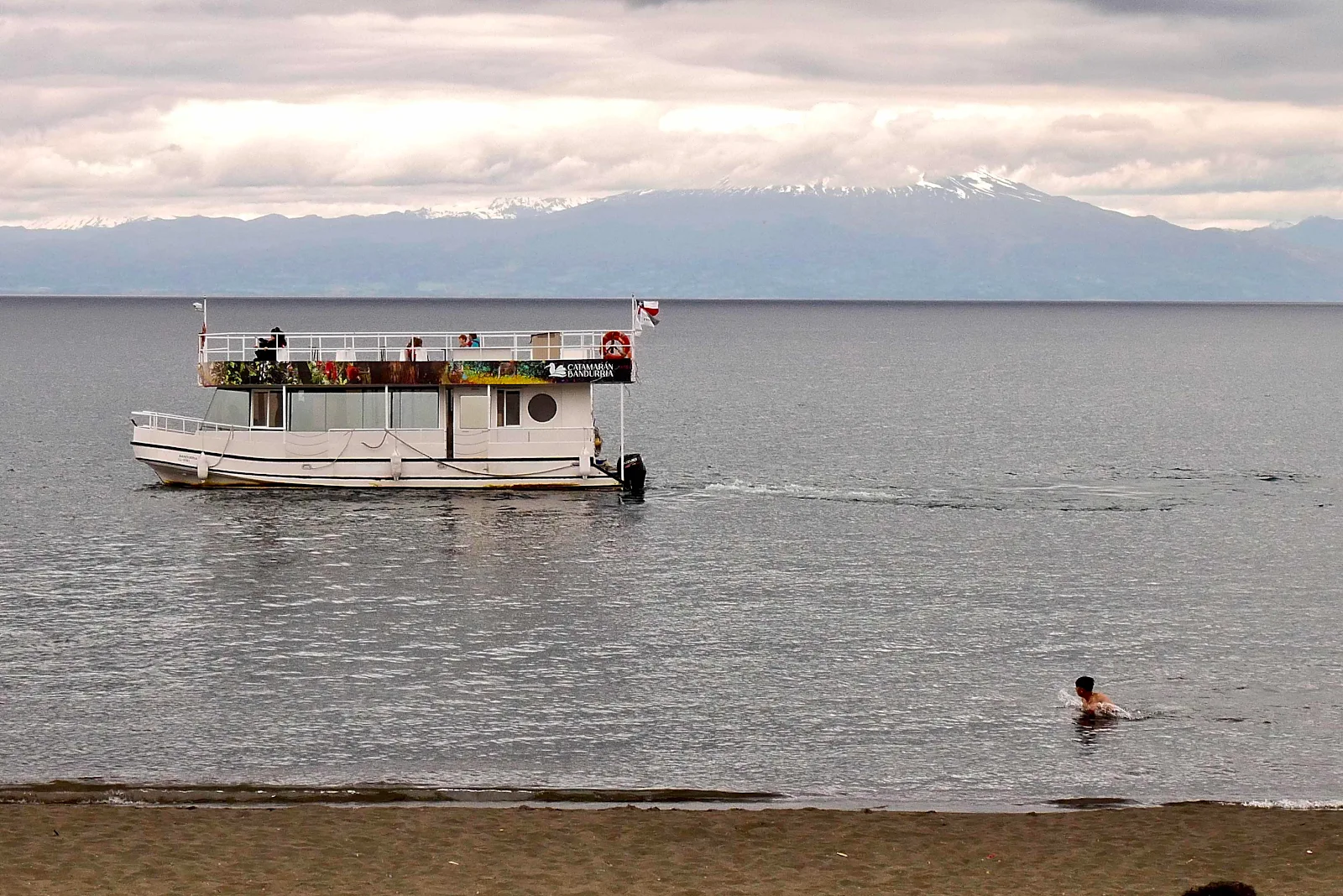
One person was actually swimming but he was young and we must forgive him his impetuosity. There was a sign up the street saying it was safe to bathe off the black volcanic beach but the season starts next month of course. Too cold for me in any event as it was barely 60 degrees as we walked around. 

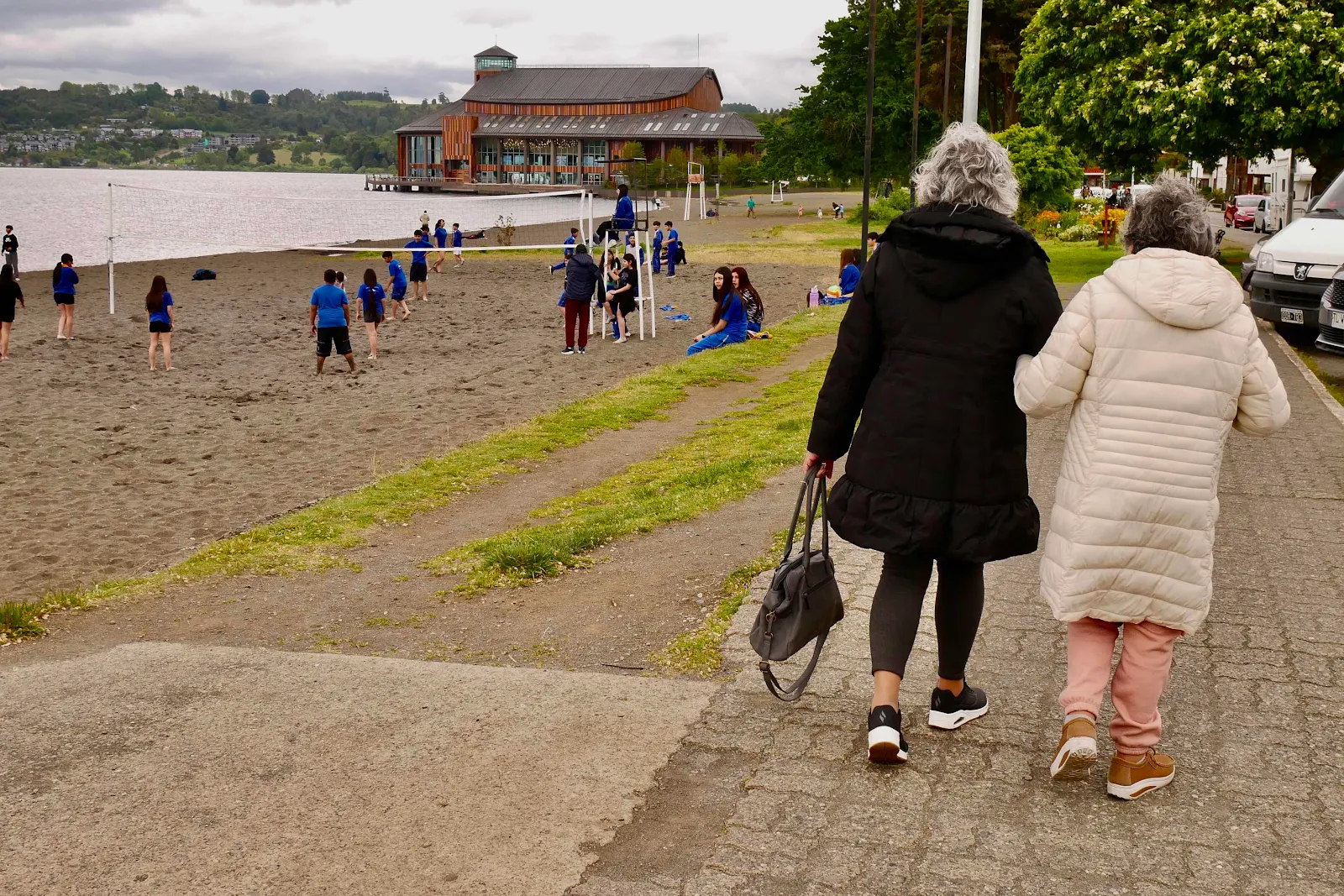
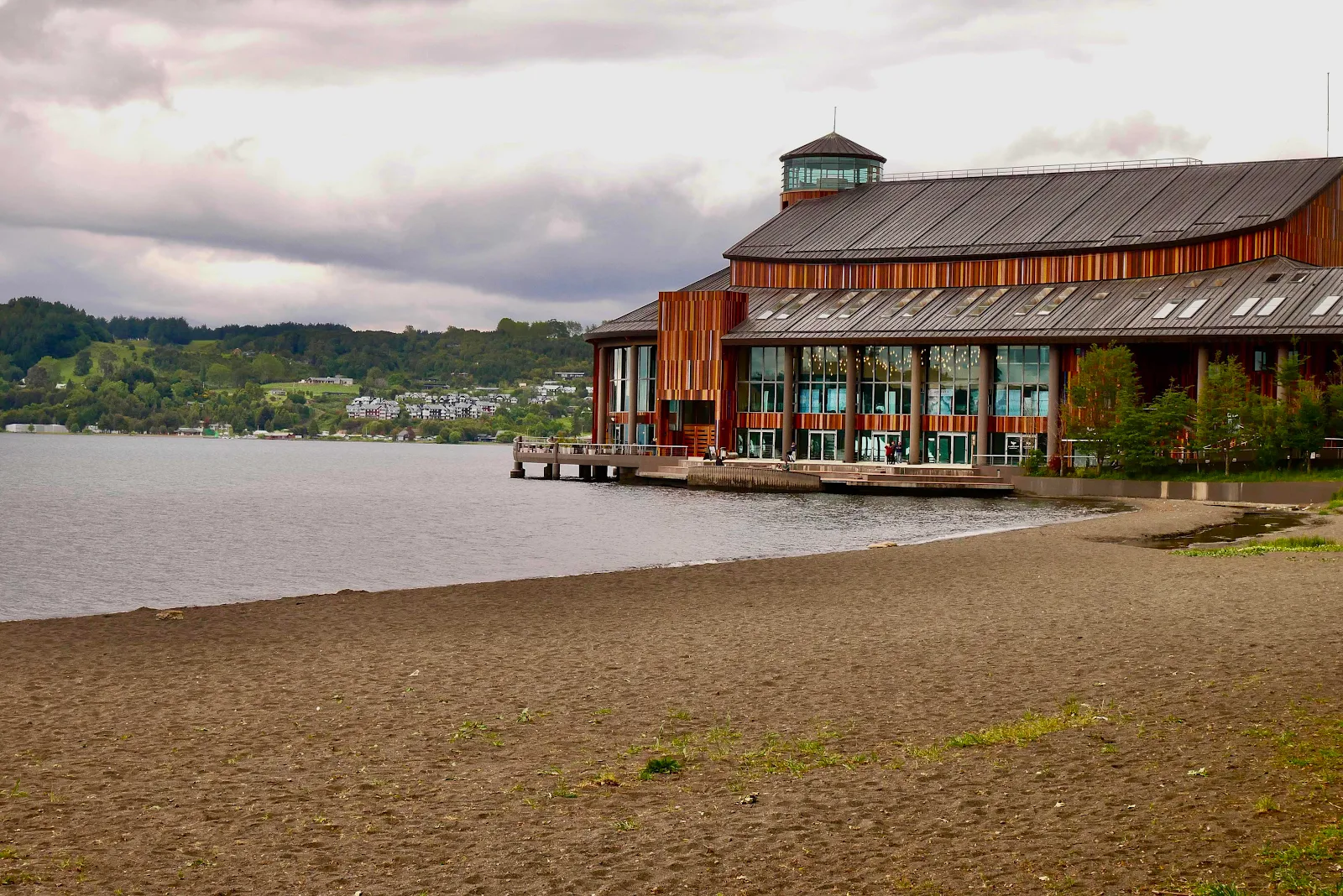
The cathedral-like building in the background is a waterfront playhouse. Chile is very civilized. 


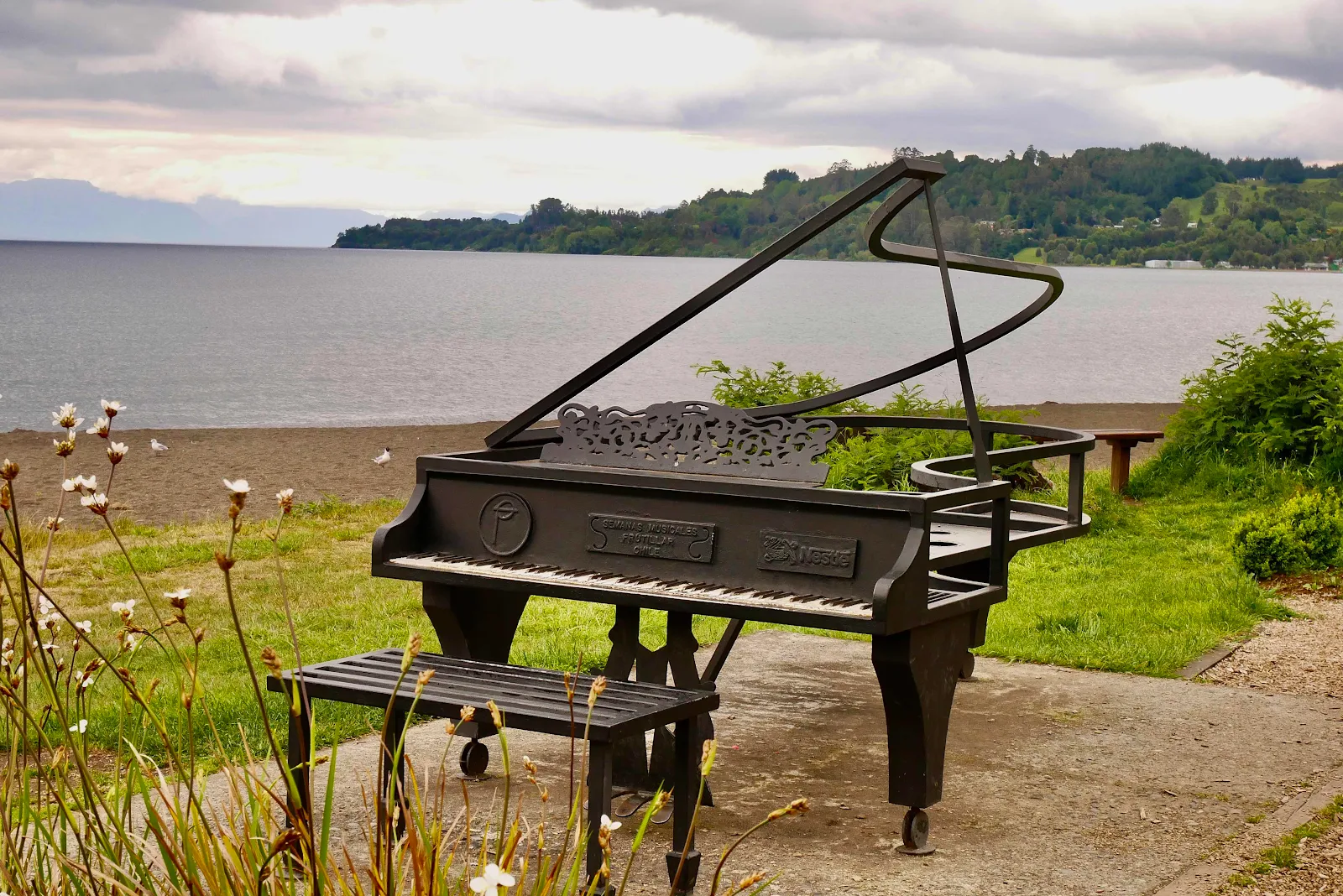
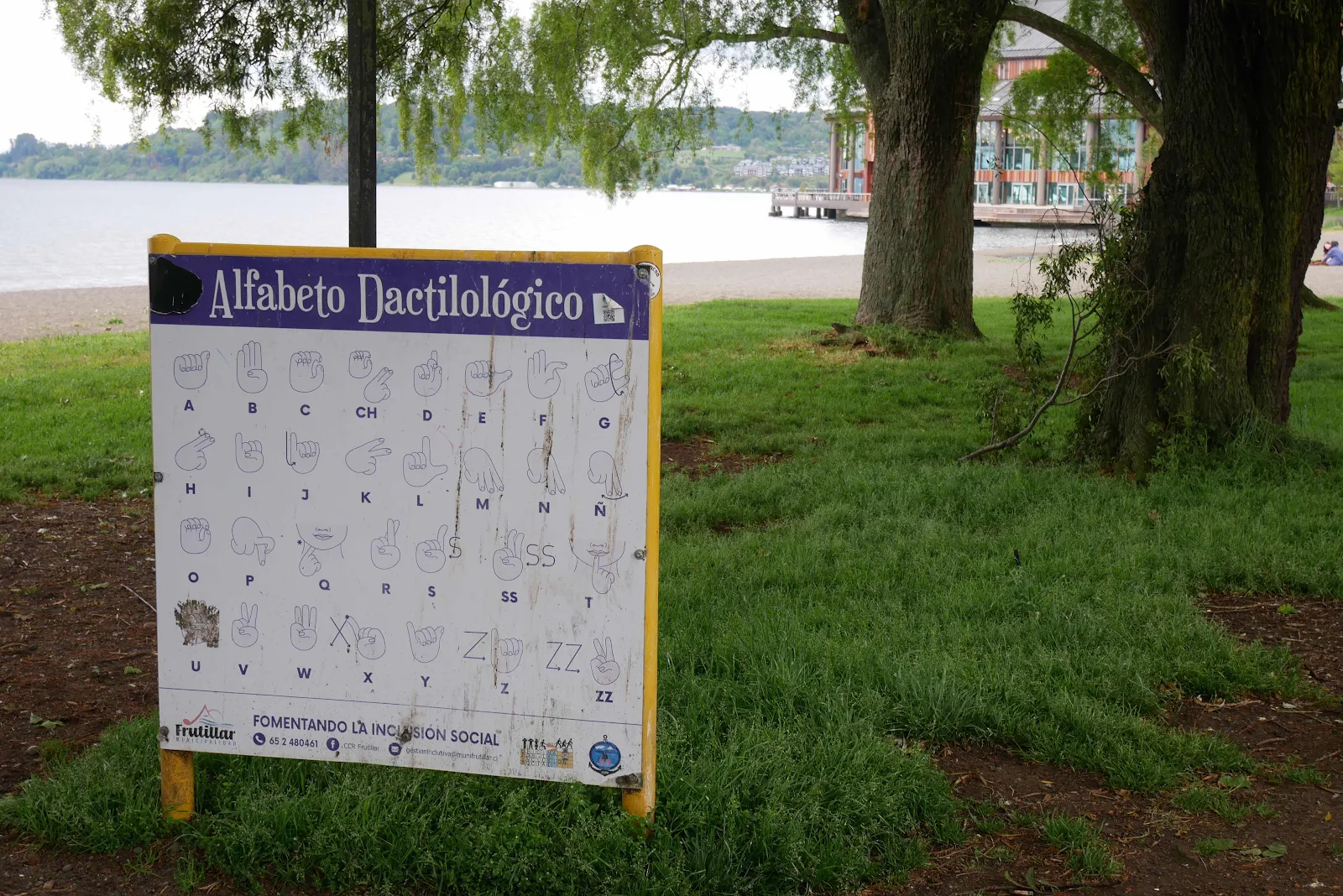
If you need a brainteaser on your constitutional you could set yourself to learn sign language I suppose. Chile is also slightly weird. 


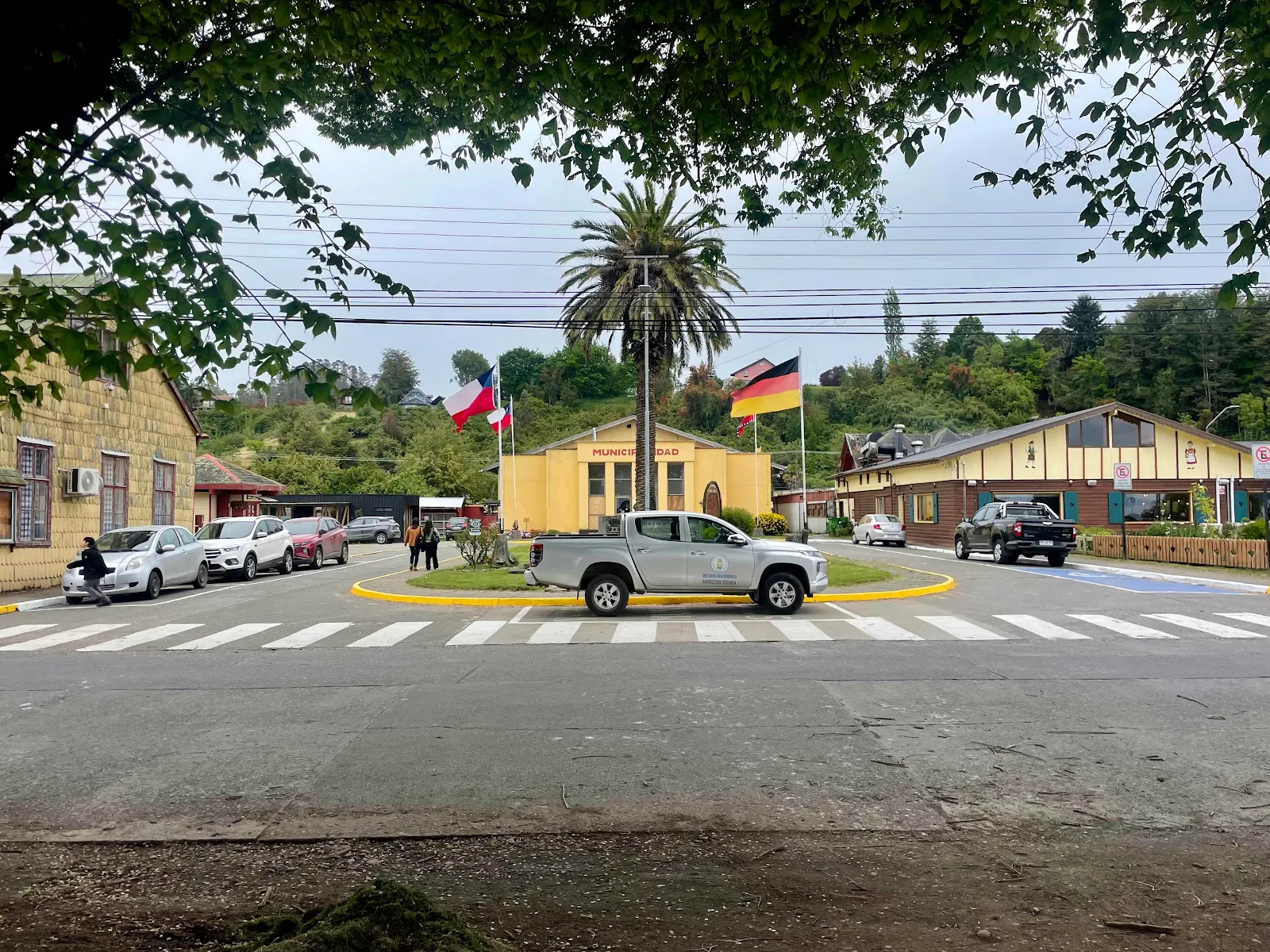
City hall proudly flying the German flag. 

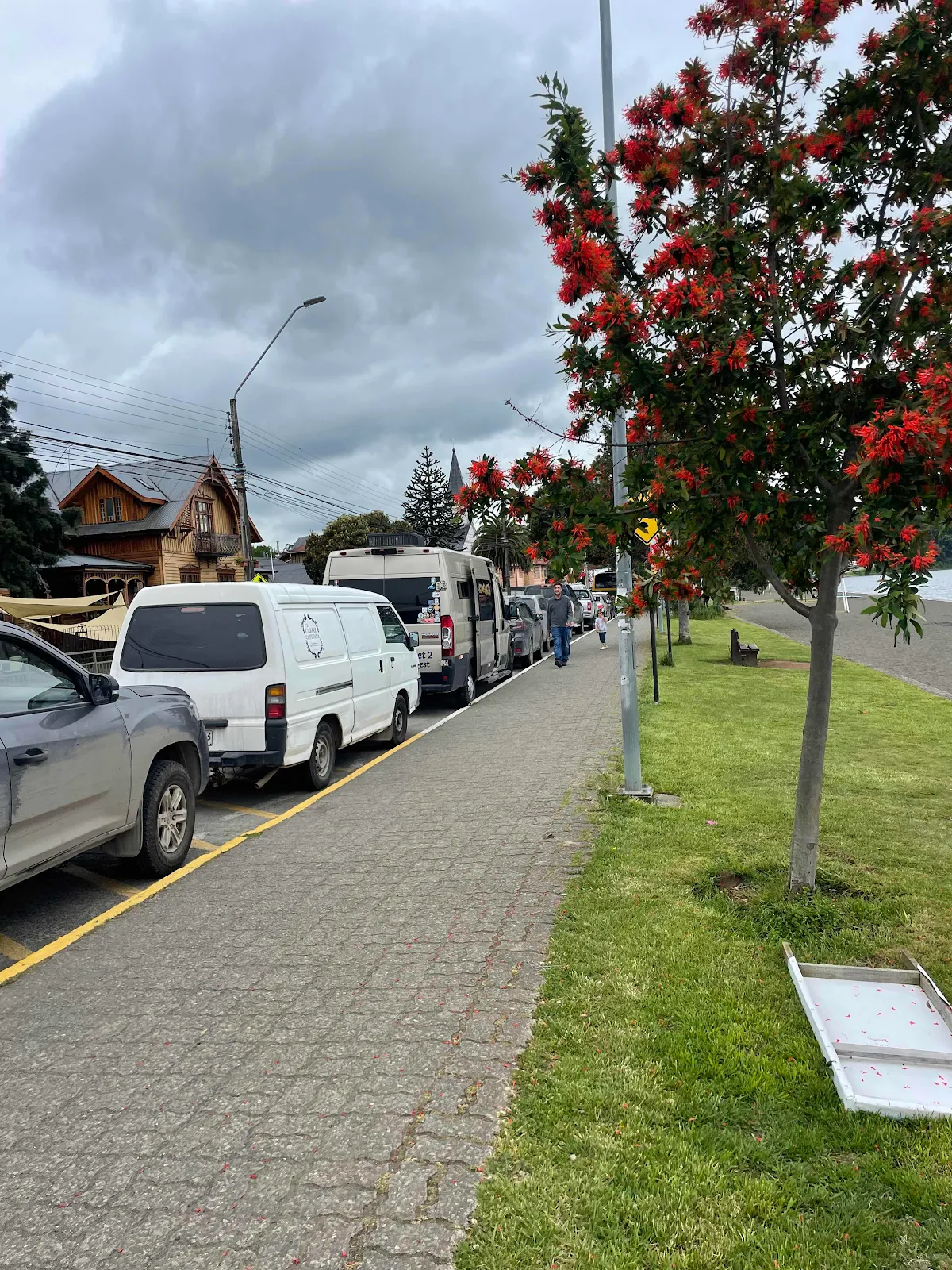
We deftly parked right next to a sign saying “No RV parking” which Layne photographed with much glee. I ignored it hoping it would go away. I had read in iOverlander of people sleeping on the waterfront while others noted that was illegal. I had no idea they didn’t want us parking there even during the day. I bet it’s enforced during summer tourist madness. As it was a van from Argentina was parked a couple of blocks away like us. 

And the day ended as nearly all do, here in almost Patagonia.