Thursday, November 21, 2024

The PanAmerican Highway

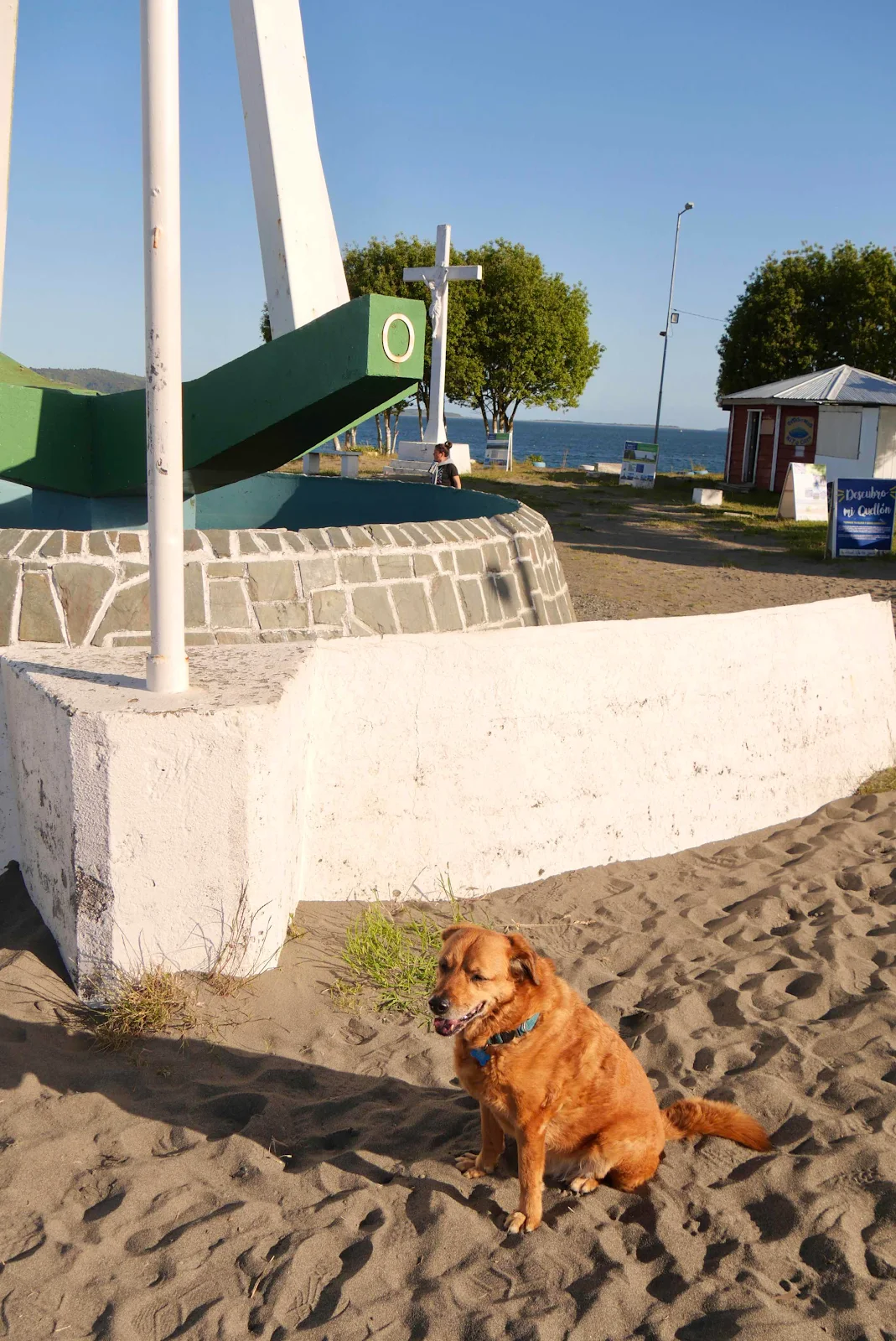
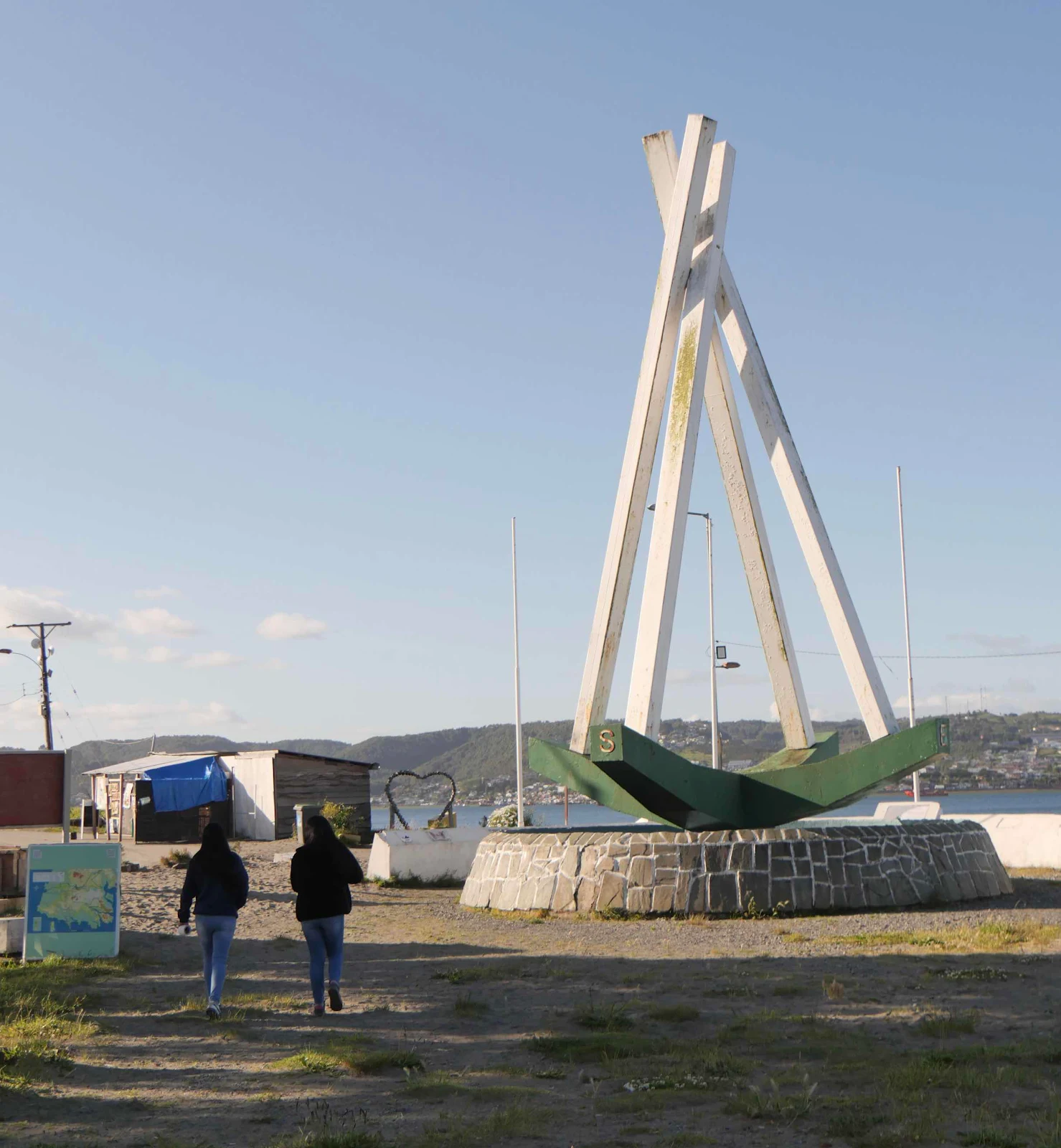
There have been several landmarks on this journey I wanted to take note of on our drive to Ushuaia and the end of the PanAmerican Highway was one. We got there and we felt a mixture of emotions but most of all there was in our minds a hint of unreality. Had we really arrived? Indeed we had.
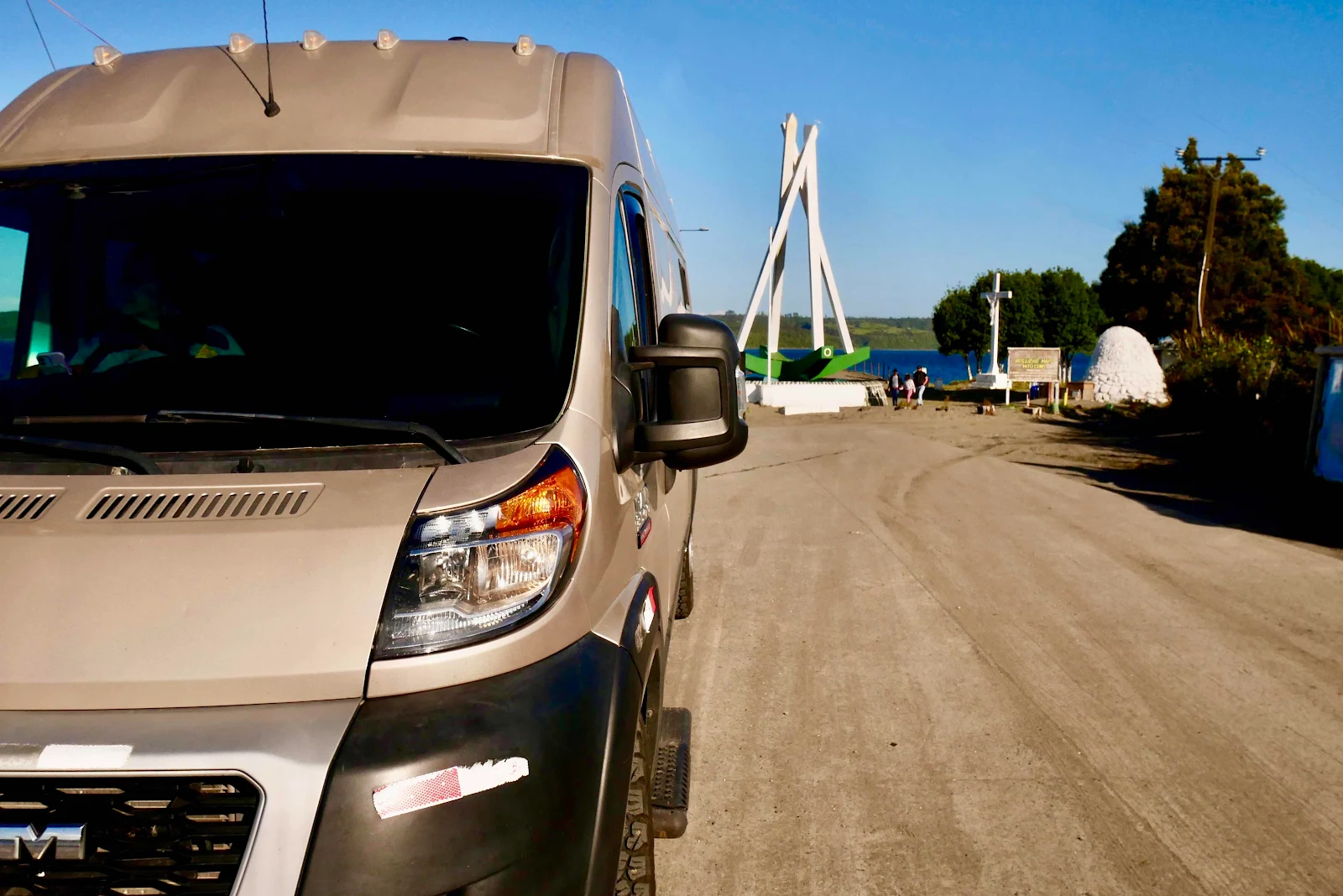
Last Saturday on a sunny, at last, 58 degree afternoon,  with a cold west wind whipping up whitecaps on the water we arrived at Milestone Zero.
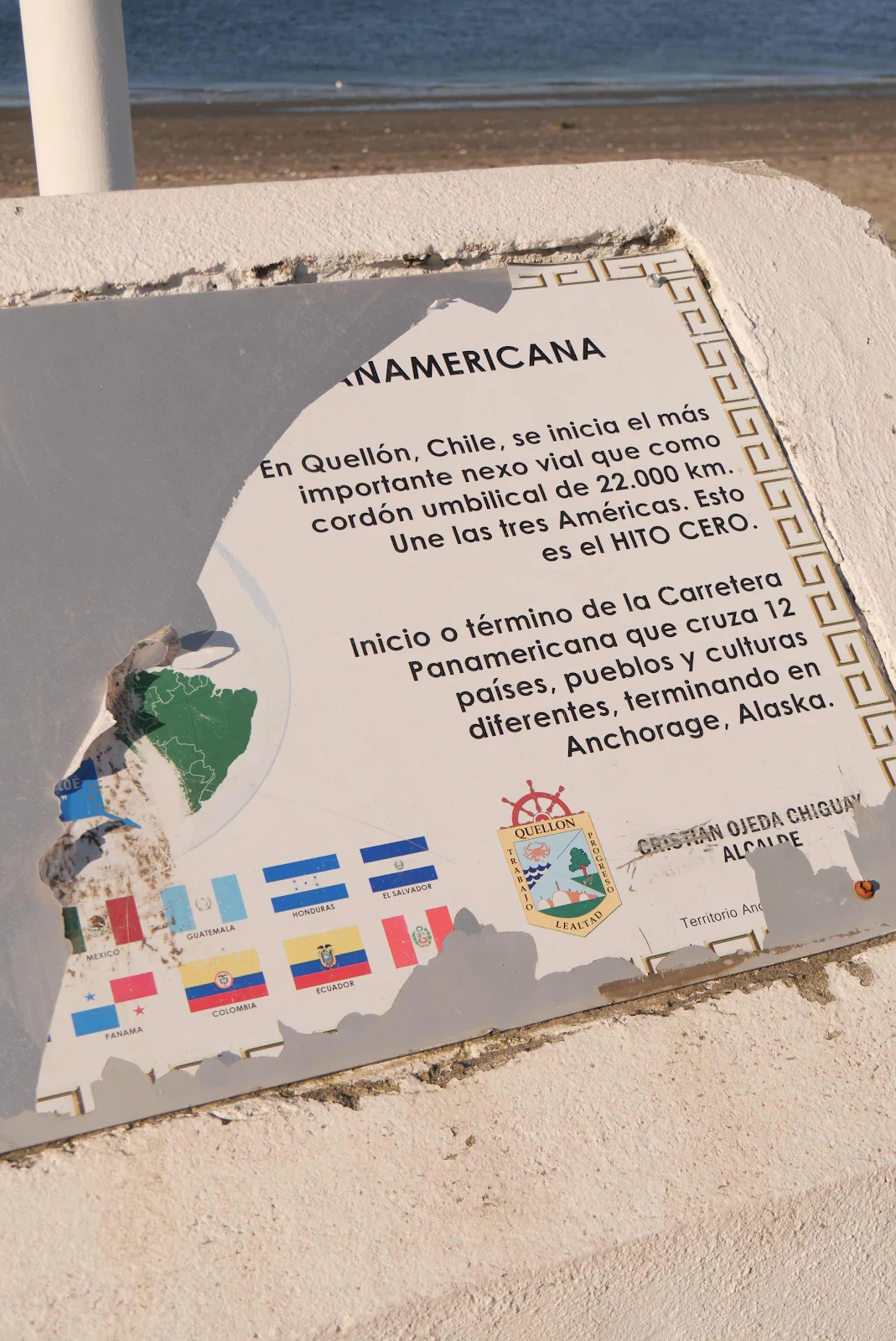
“Hito Cero” is the beginning, or for us the end, of the PanAmerican, the road that starts or ends in Alaska. That point we will have to drive to later, but we were there at the undisputed end of the road in obscure little Quellón.  
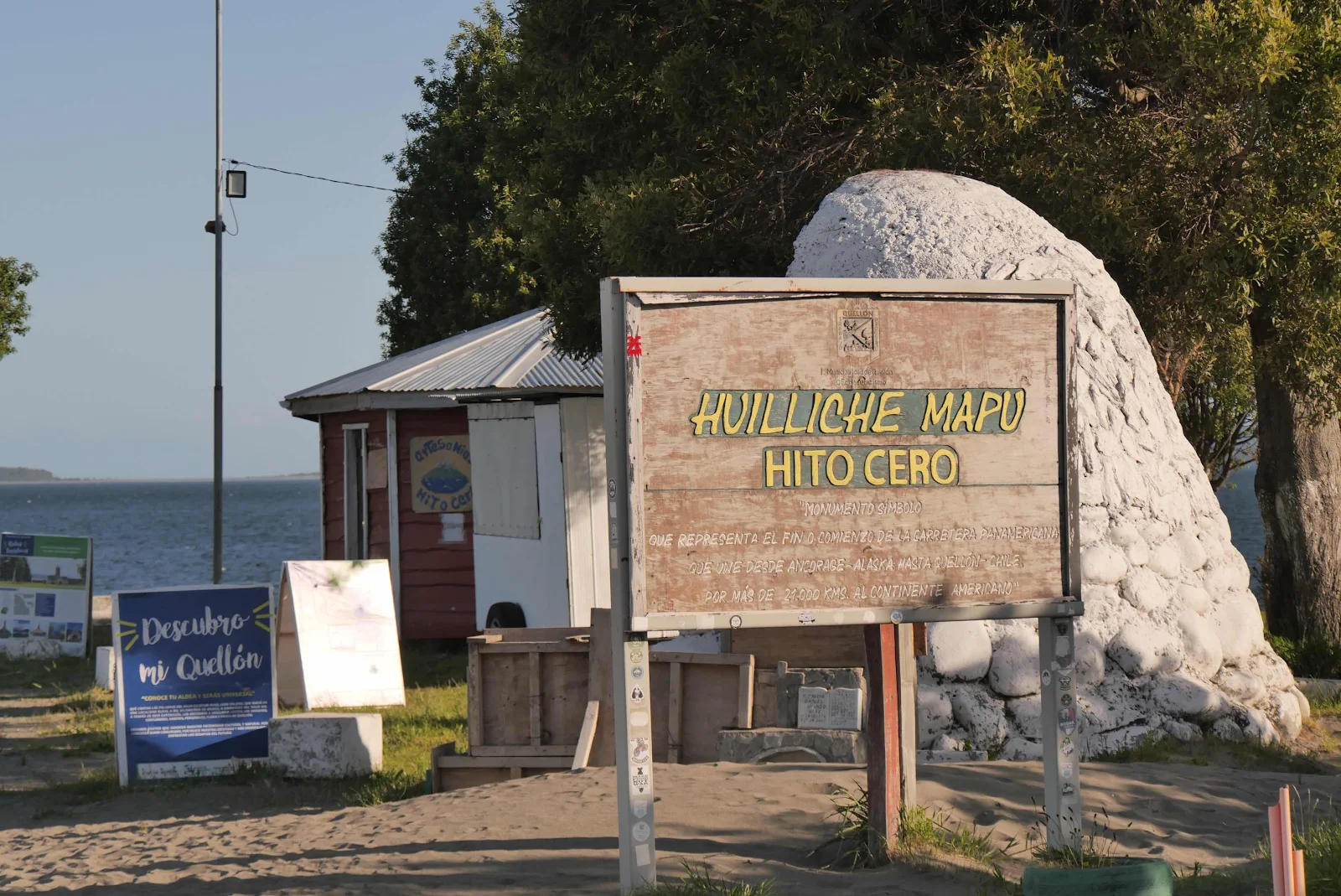
And yet this point isn’t really the end of anything geographical, it is but an emotional landmark for us. We’ve been “driving the PanAmerican” for so long we now are orphaned from the great Highway, the “longest motorable road in the world” as the Guinness book of records calls it. But we’re hardly at the end of the continent.  
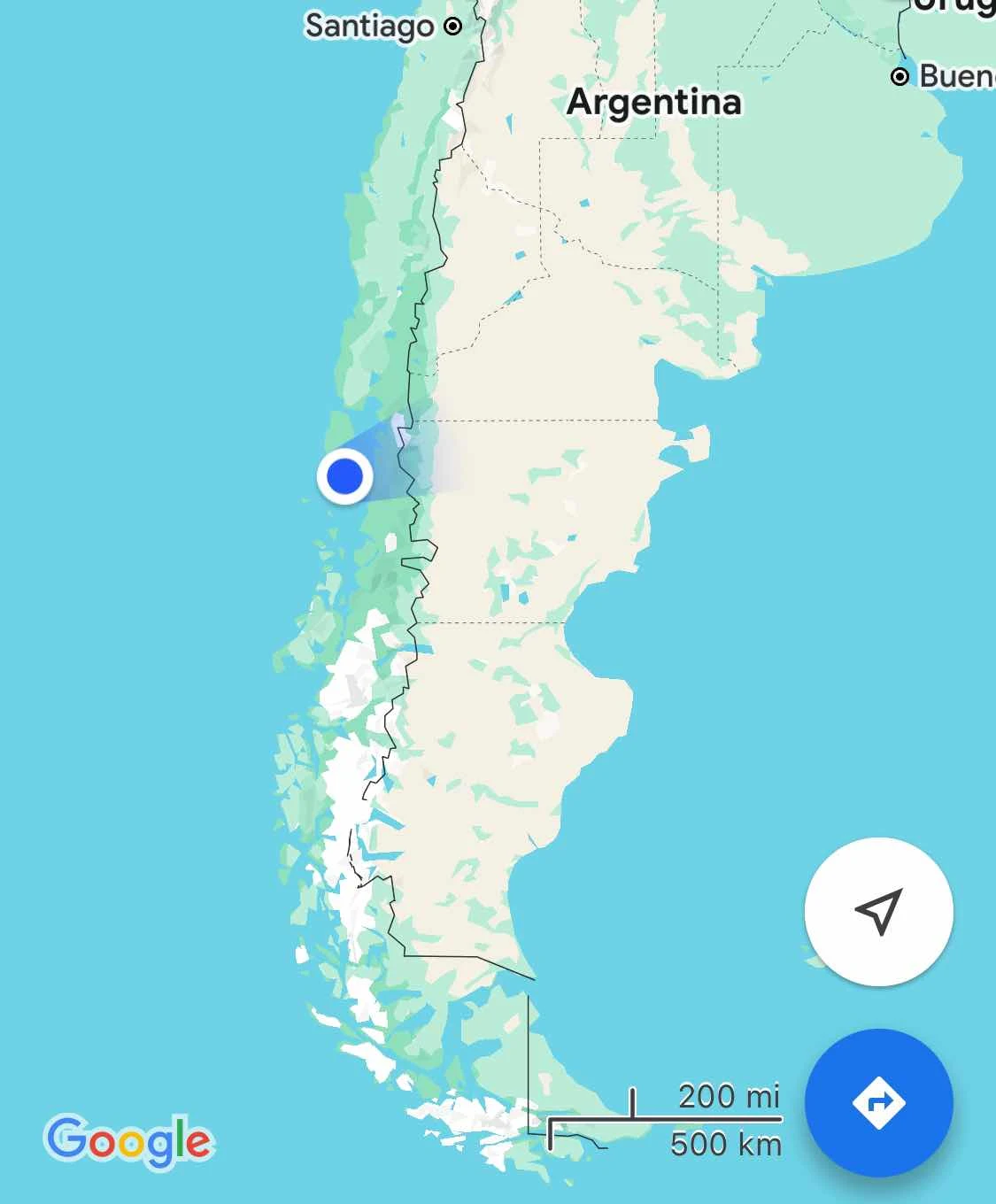
There’s lots more South America to come. Plus we have to drive back up, partly that we might catch monuments we’ve missed on the way down, as we go back to Colombia passing through Brazil and I hope a little of Bolivia. I wanted desperately to get to Lake Titicaca but Layne’s leg surgery prevented that as we left Peru two days before our visitor permits expired. There are other places we would like to see, Machu Picchu perhaps, I’d like to explore Lima a bit and Cajamarca the city where Pizarro first defeated the Incas.
And I suppose that finding oneself here the human mind goes back to the past and leaps forward to an unknowable future instead of sitting still in the present. I remember my excitement at seeing the Andes for the first time, a tumble of mountains falling directly into the Caribbean Sea at Santa Marta, and further south in Colombia we first saw the classic women in bowler hats at the market in the mountain town of Sylvia, and later we stepped in the Eauator in of course Ecuador and the PanAmerican threaded its way through it all. 
Still, we had to park for the night and there was a campground nearby with electricity which we thought we might need to plug in to as we were relying on solar energy until our second alternator was repaired.
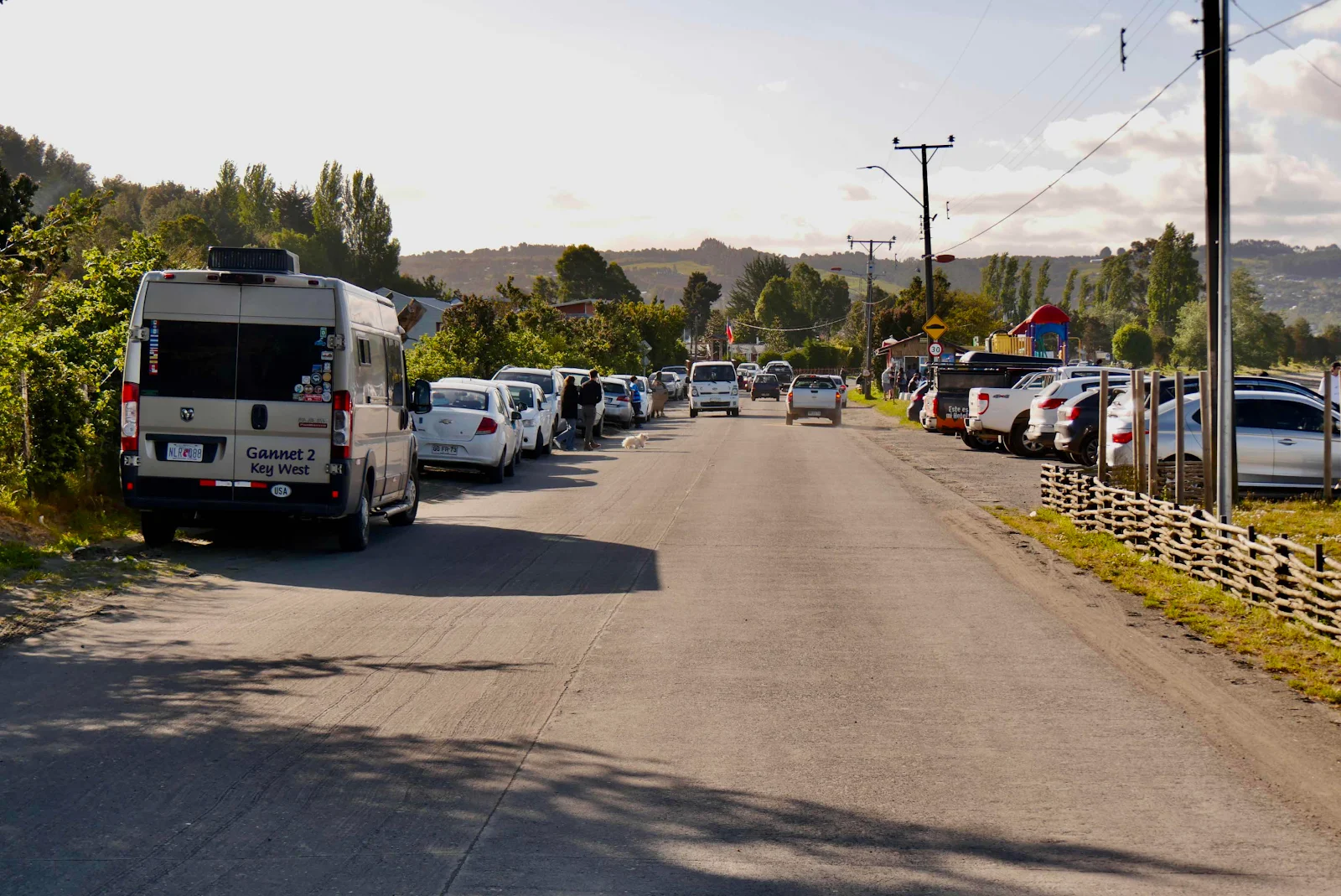
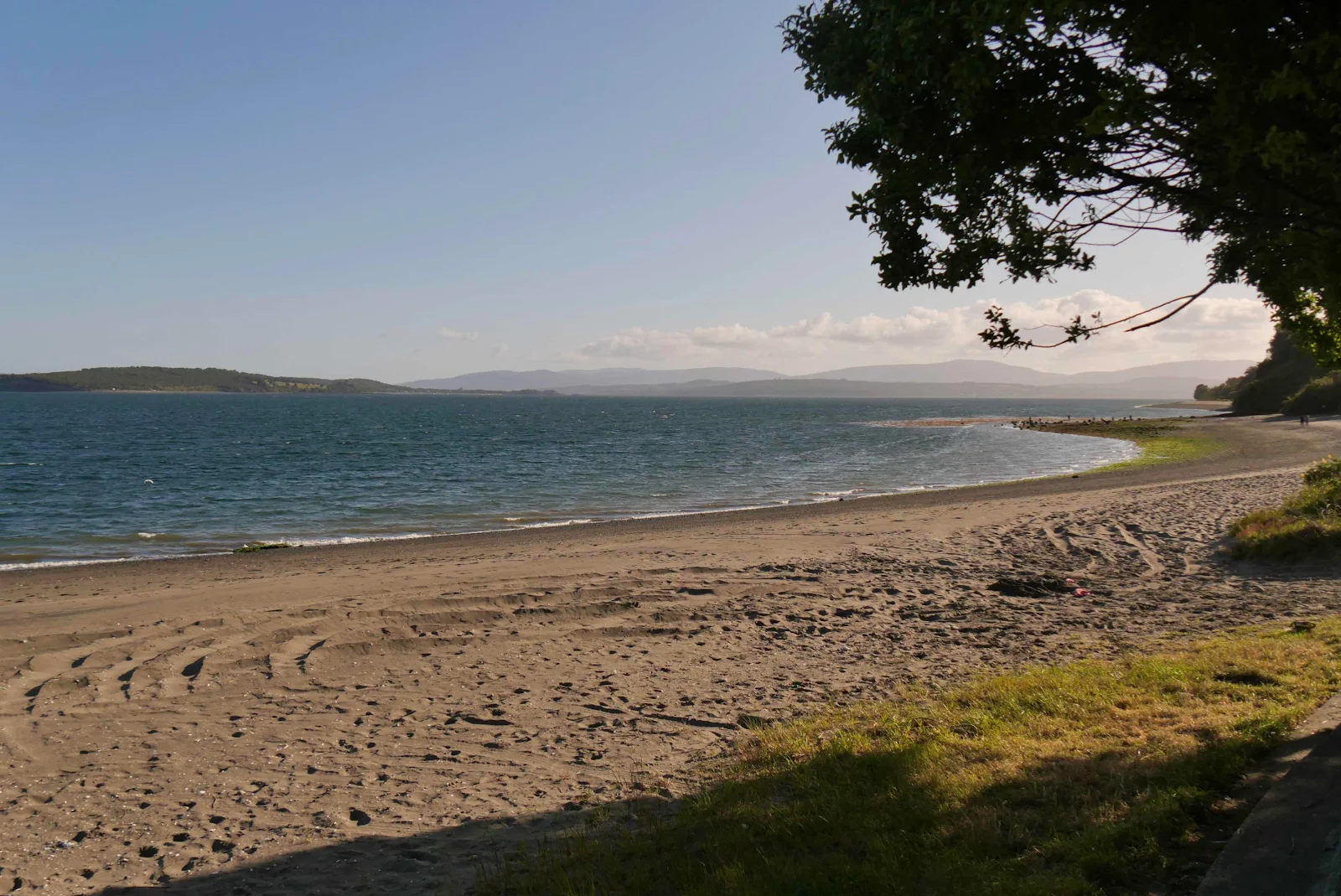
We drove away from the monument through crowds of locals strolling the beach and ignoring what we had come to see.
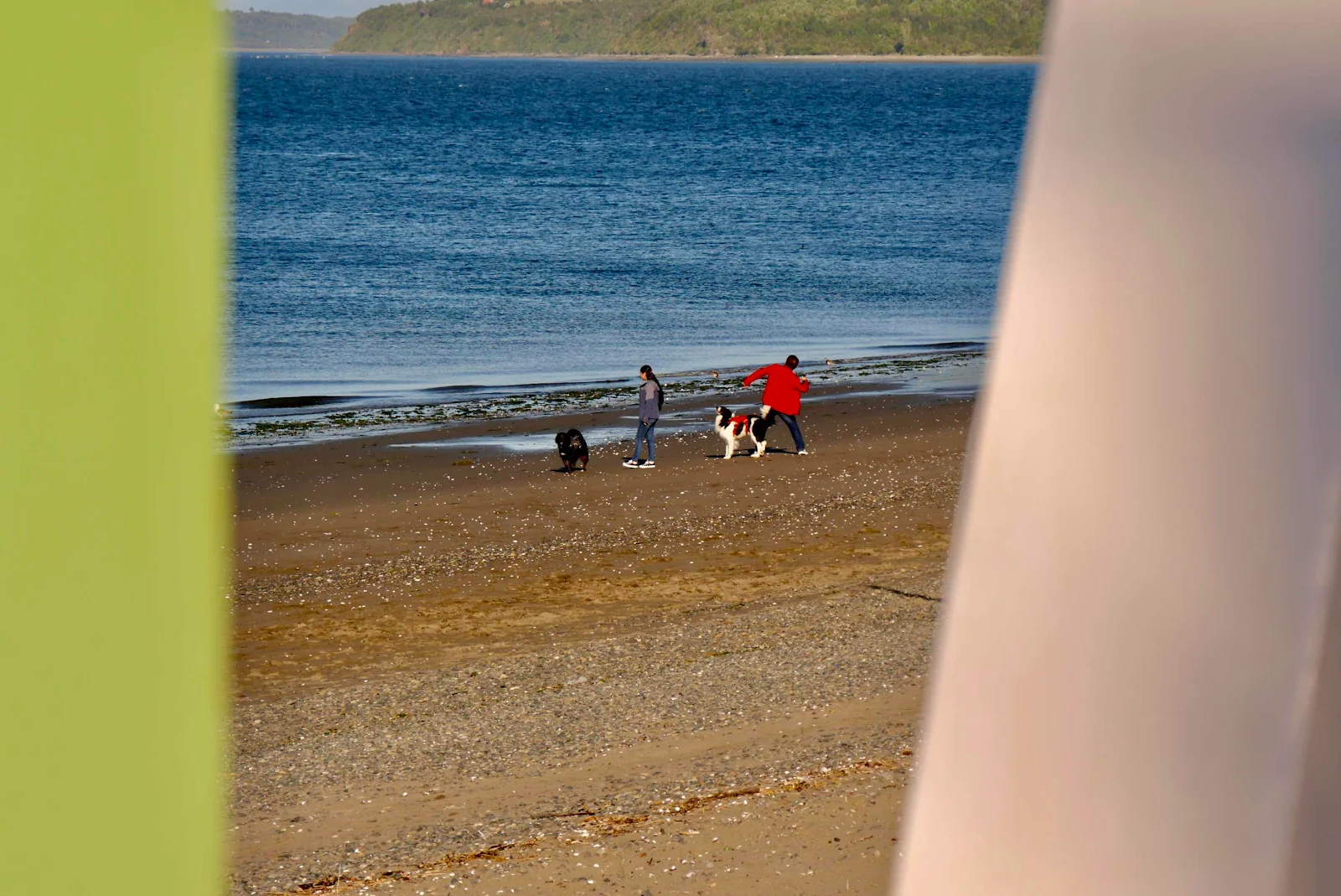
It put me in mind of locals in Key West who avoid the Southernmost Point to bypass the traffic jams of hordes of people eager to be photographed there. 


The campground was open but none was there to greet us so we drove in.  We are used to this state of affairs in
offseason Chilean campgrounds. We knew someone would be by to collect our twenty bucks. 
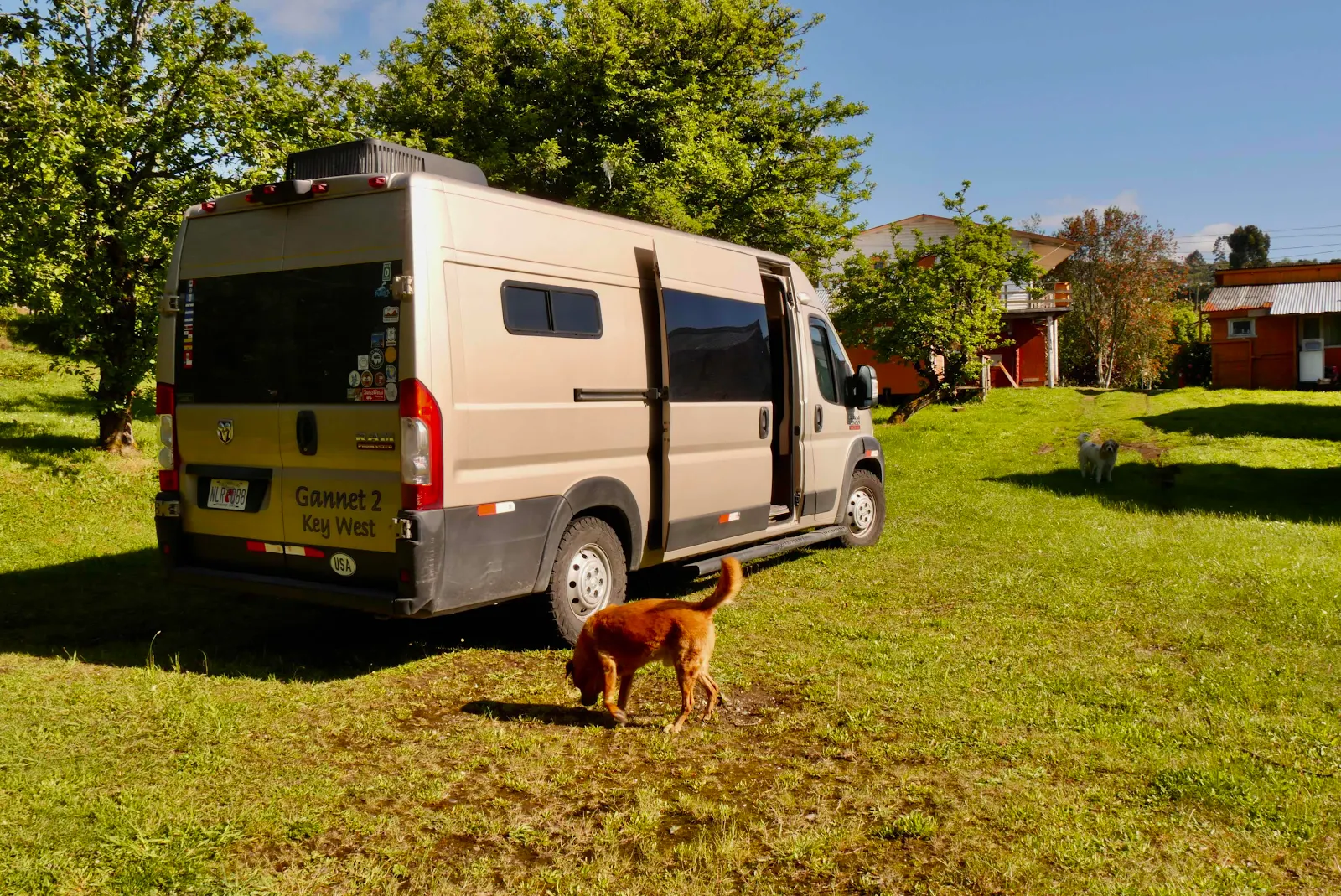
Unfortunately we discovered the inextricably outlets no longer work so we were essentially paying for nothing but we were loathe to disturb ourselves and move. “Might as well help the local economy” Layne the book keeper said.
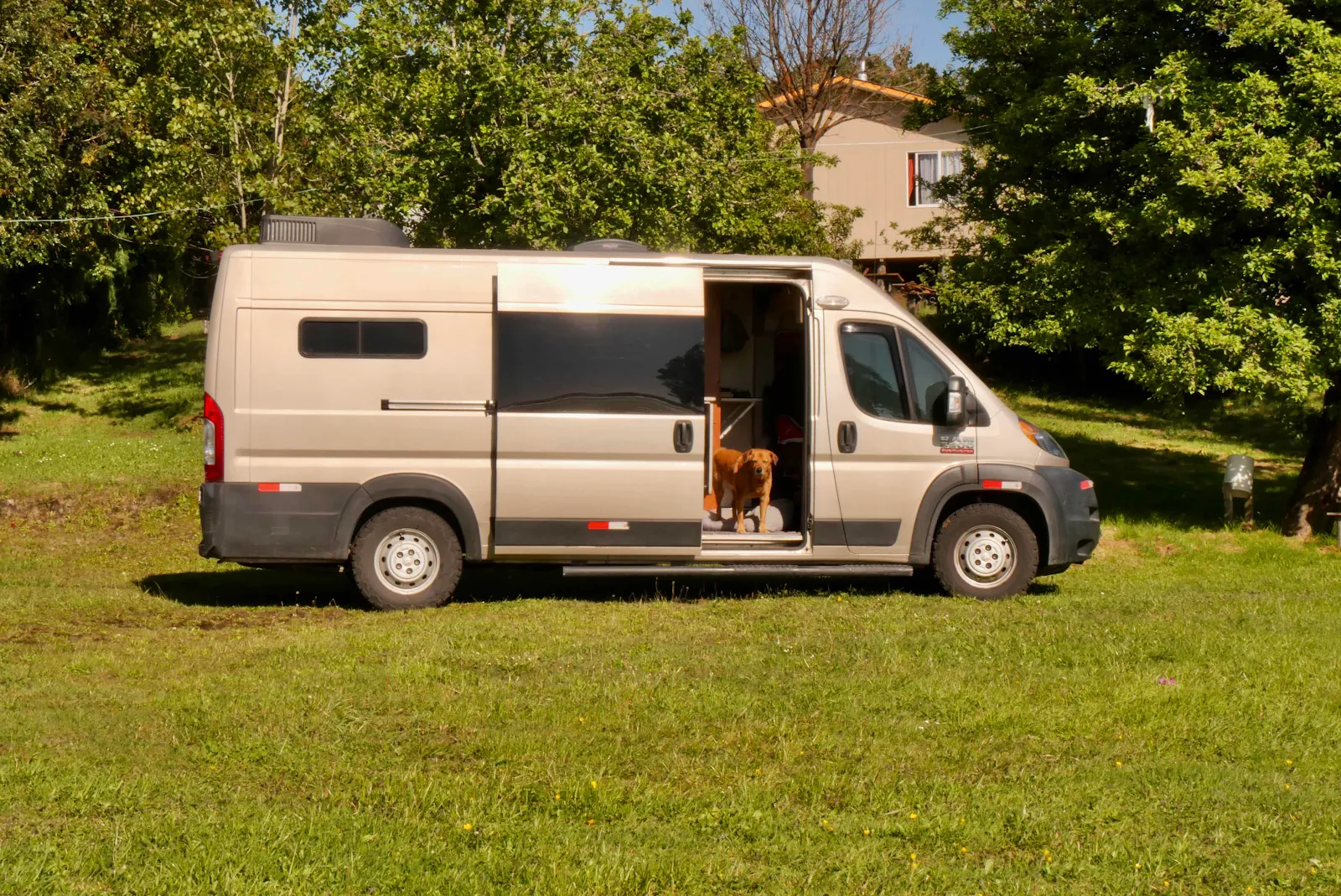
We’ve modified our electrical system on advice from our mechanic in Puerto Montt and we seem to be seeing some benefits. We turned the fridge off at night and a series of sunny days saw our solar panels pouring energy into our 500 amp battery bank. We were doing okay without the alternator. 
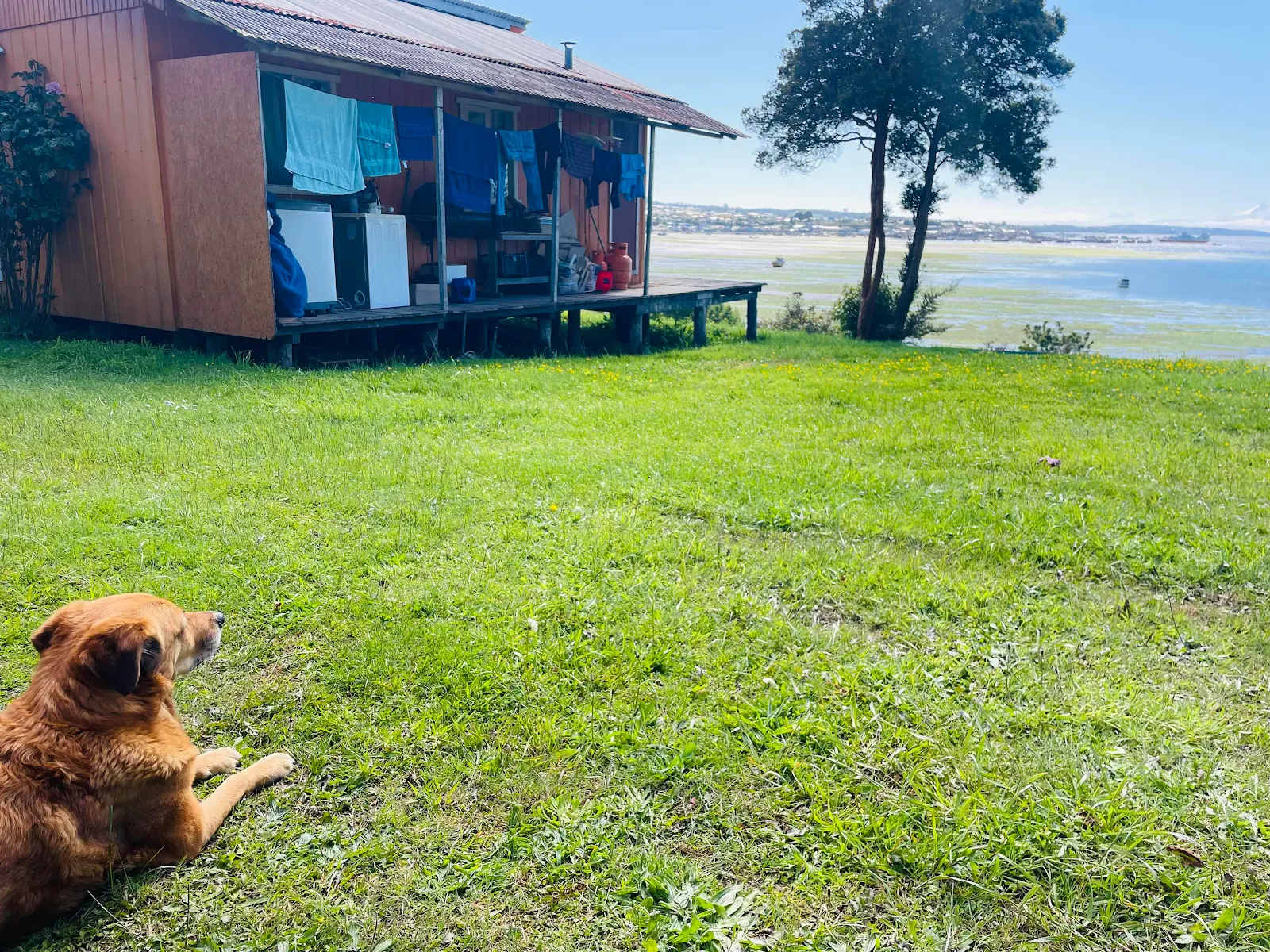
We have taken to getting up later in the morning and getting slow starts. It’s light until 9:30 at night and we haven’t even reached the longest day yet. 
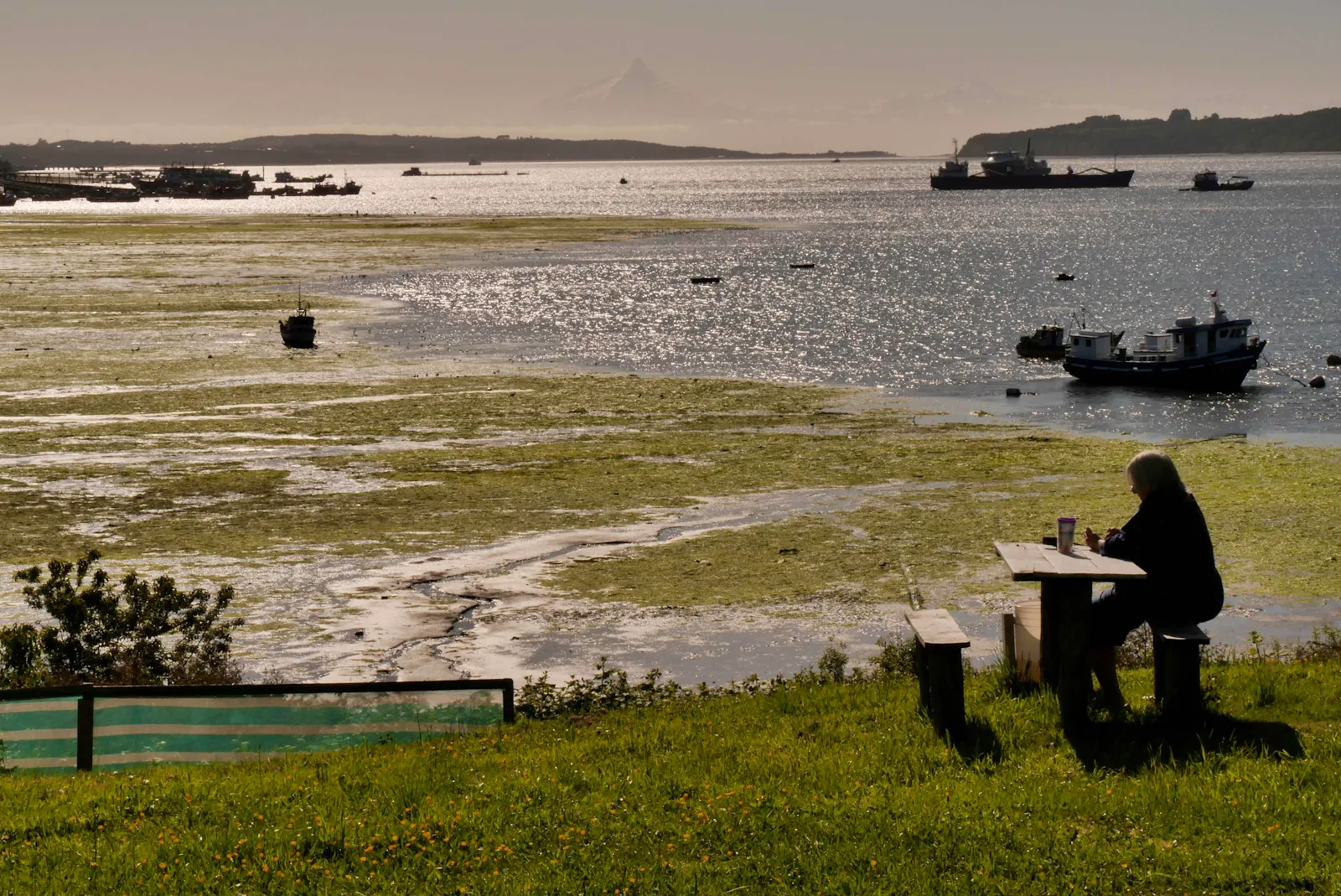
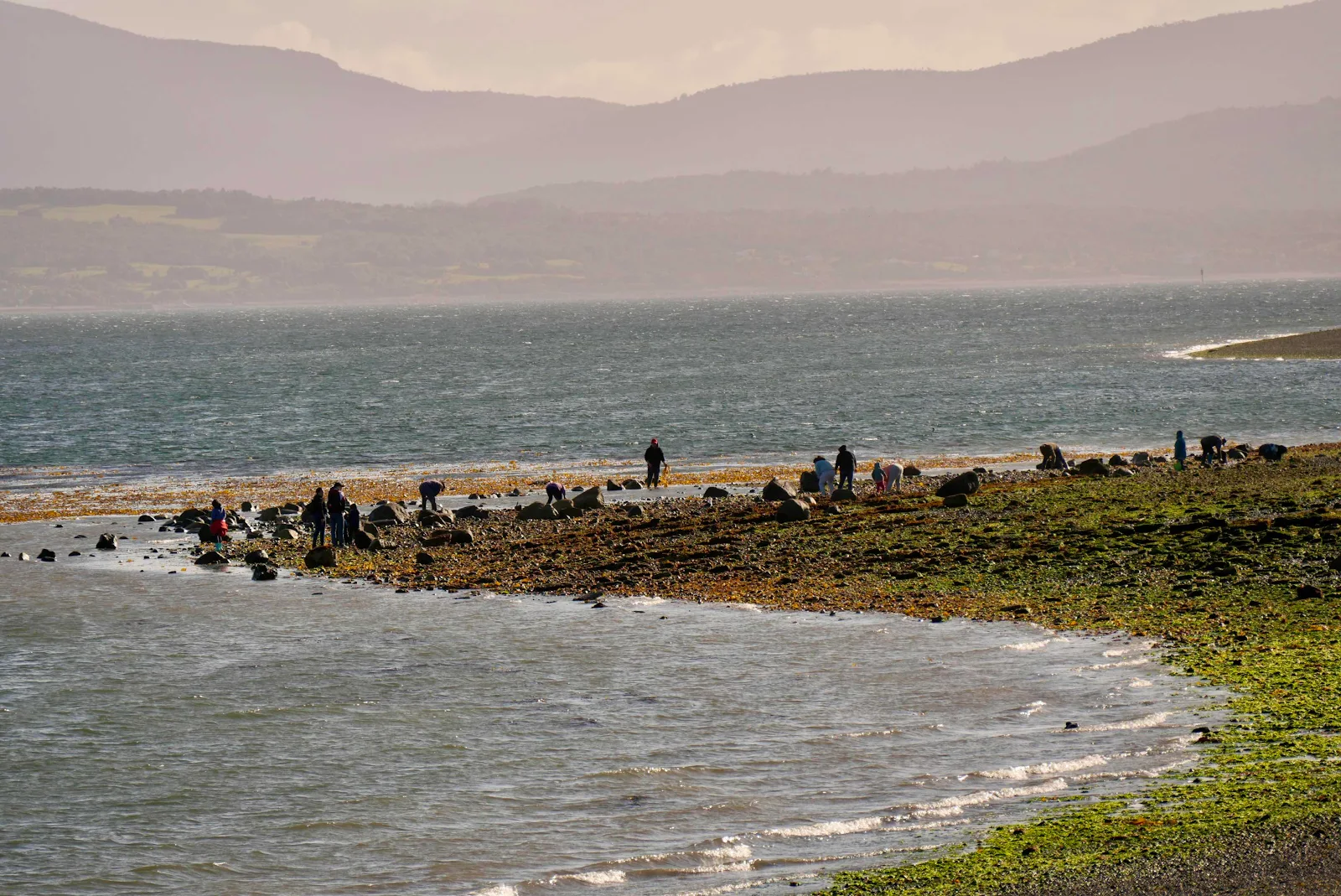
The tidal range here is 23 feet so we got to watch the mud flats disappear as we got tea and coffee from water heated by solar energy. 
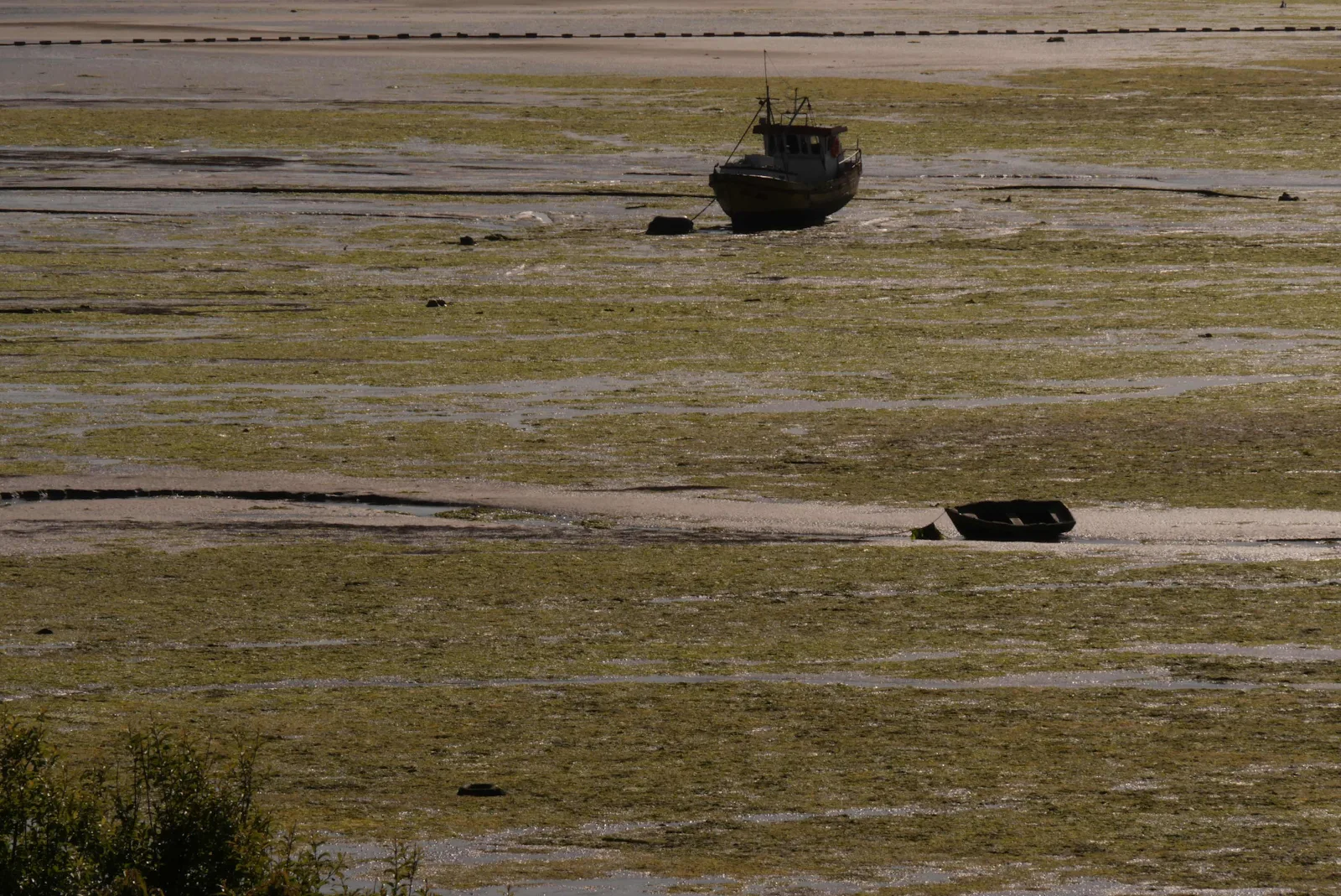


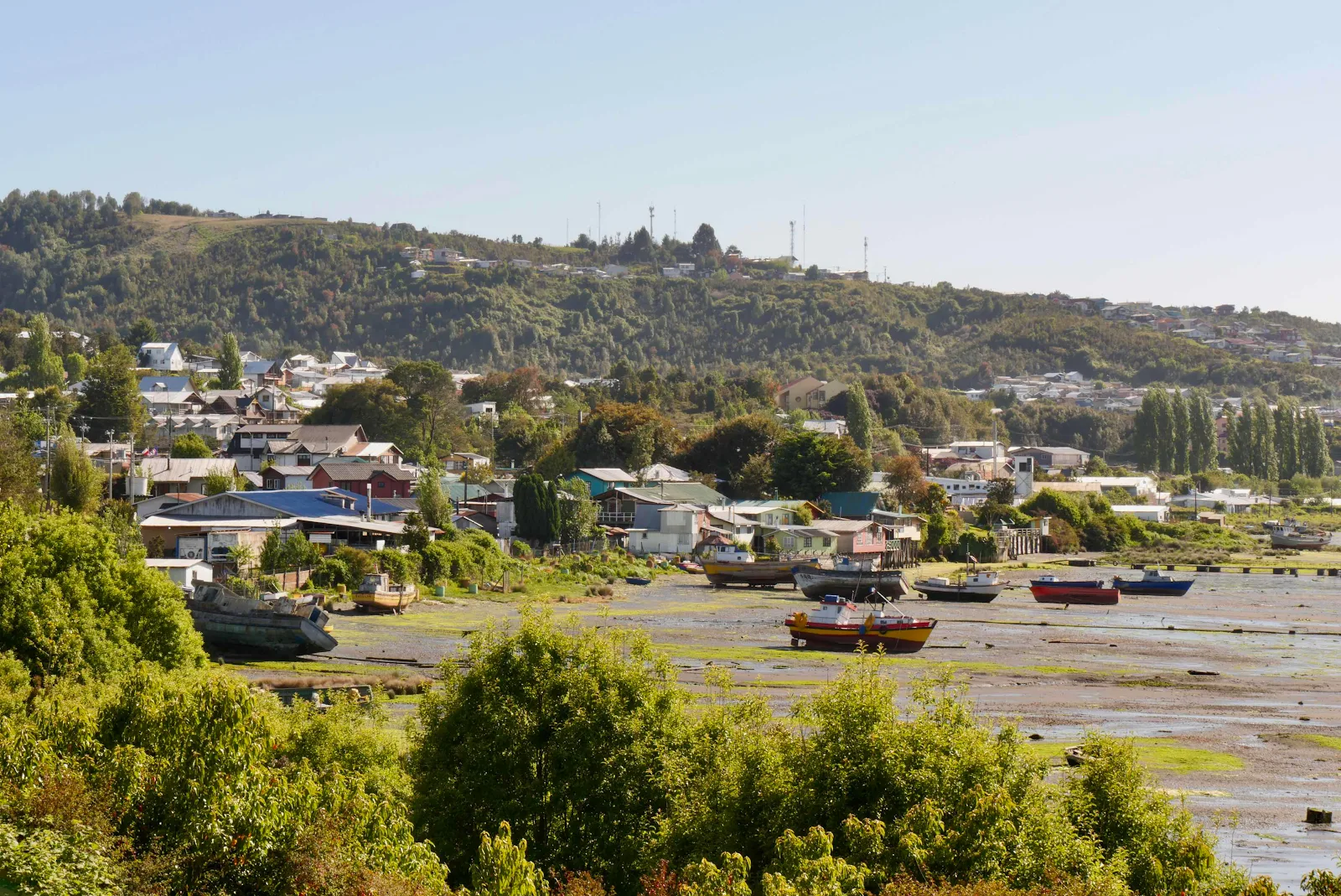
Quellón:
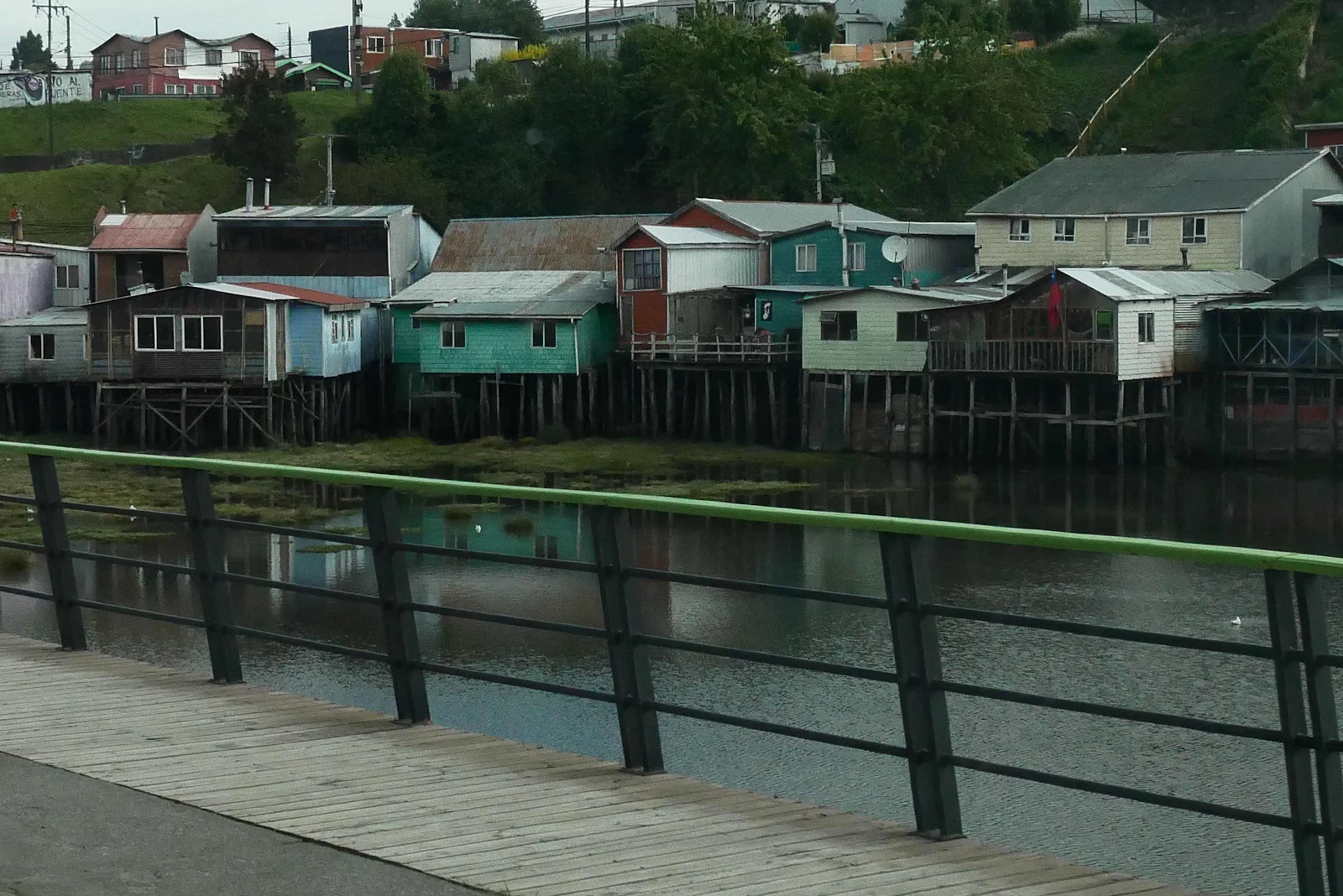
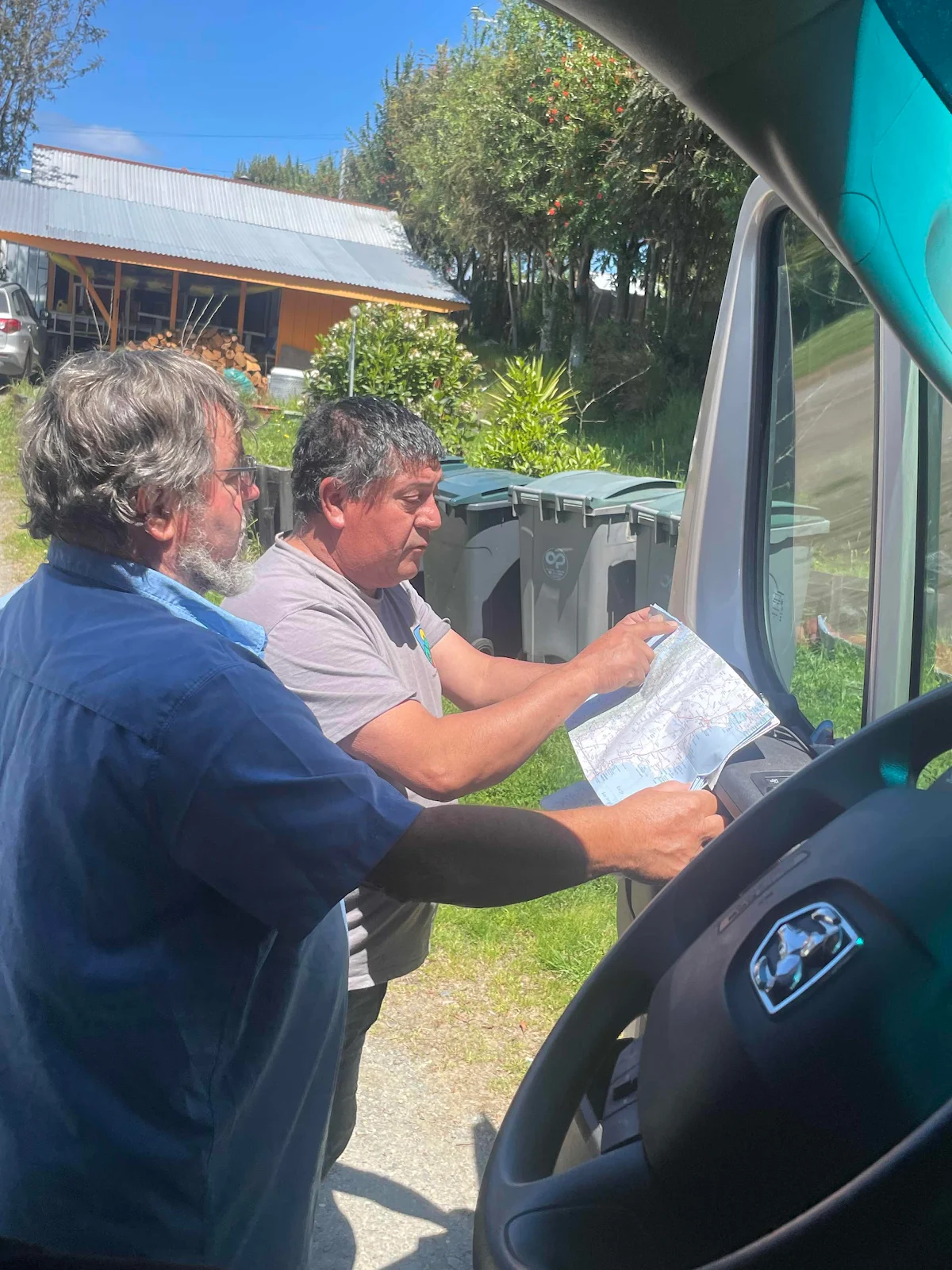
The campground owner Alvaro was enthusiastic about our travels  and our van and showed us places to visit on the island. 
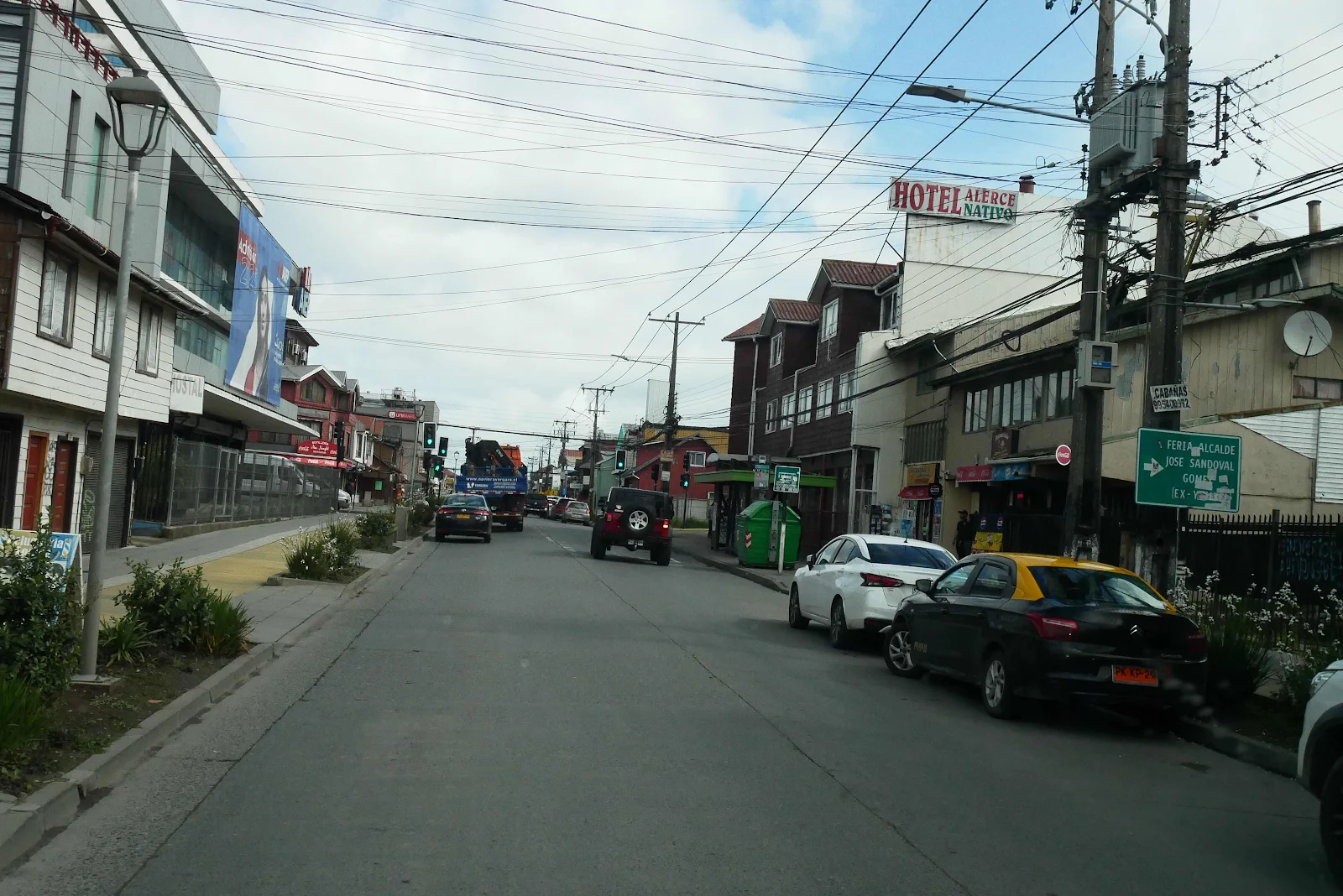
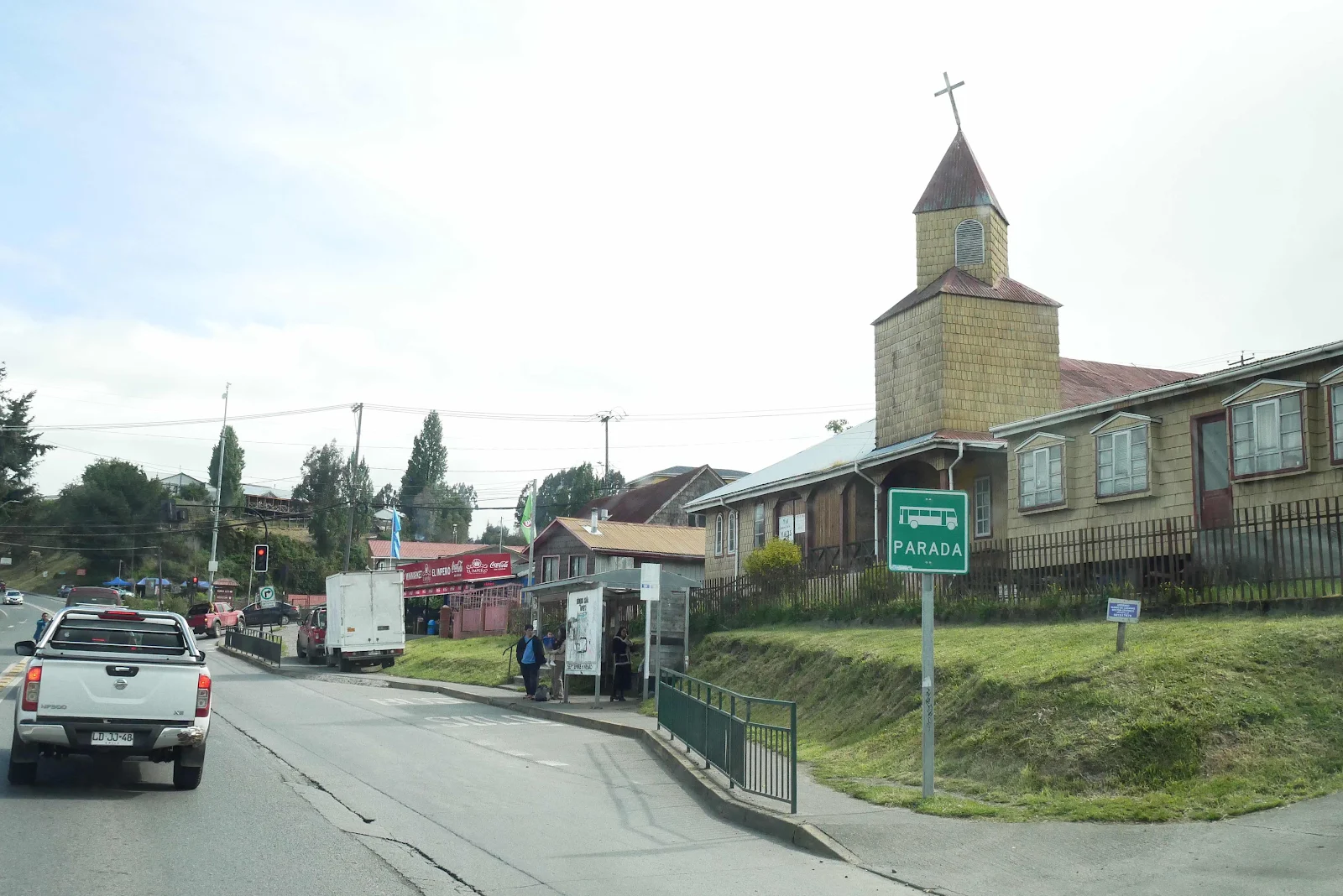
Sunday morning was quiet in Quellón and the day was ours. 


PS I’ve seen Layne off to Key West where our alternator parts are waiting with friend so Rusty and I are in the cabin doing nothing of great note do I figured I would write about Chiloé as I wait for her to return. Our ferry date remains December 2nd for the four day ride to Puerto Natales. 

Wednesday, November 20, 2024

The Road To Chiloé

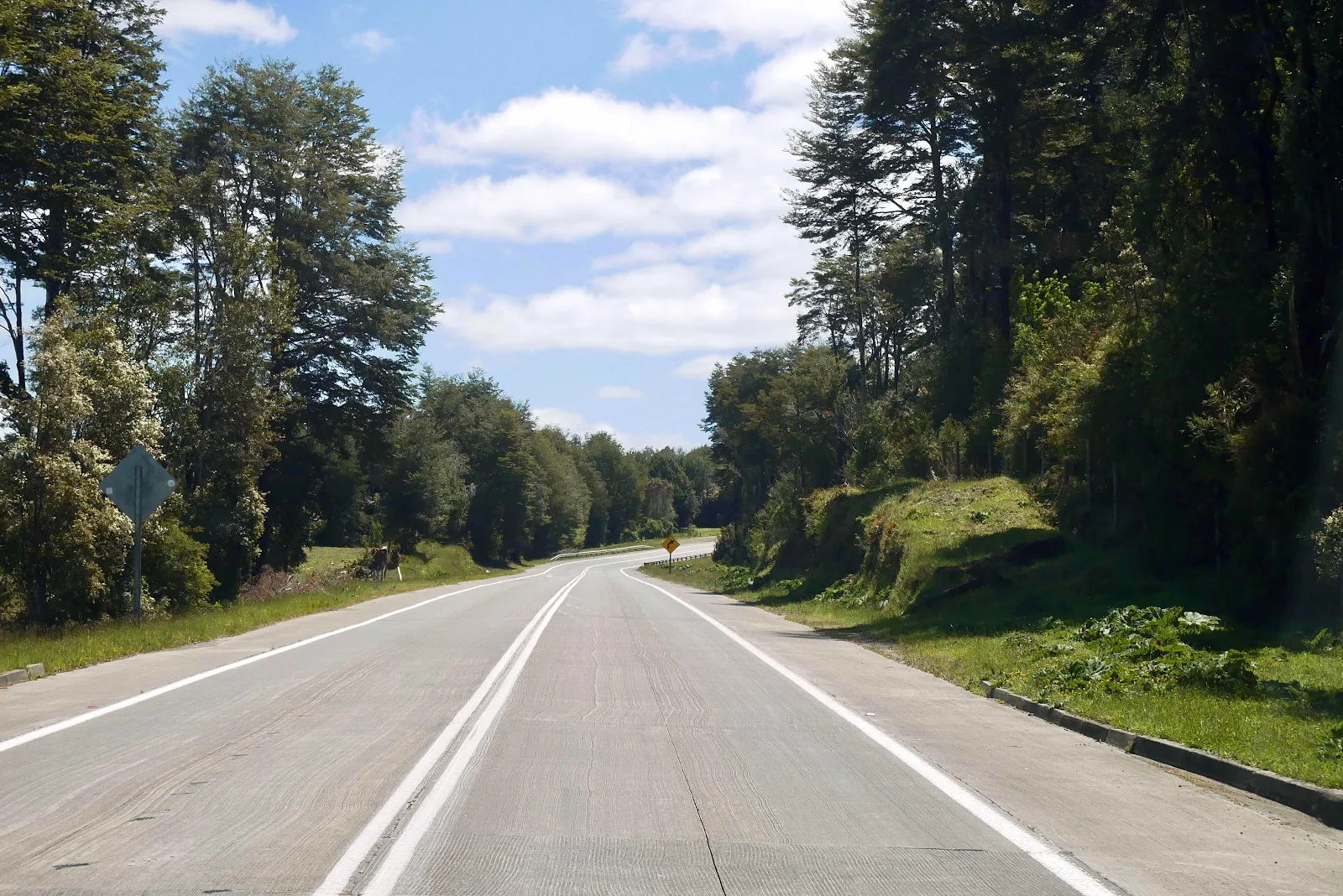
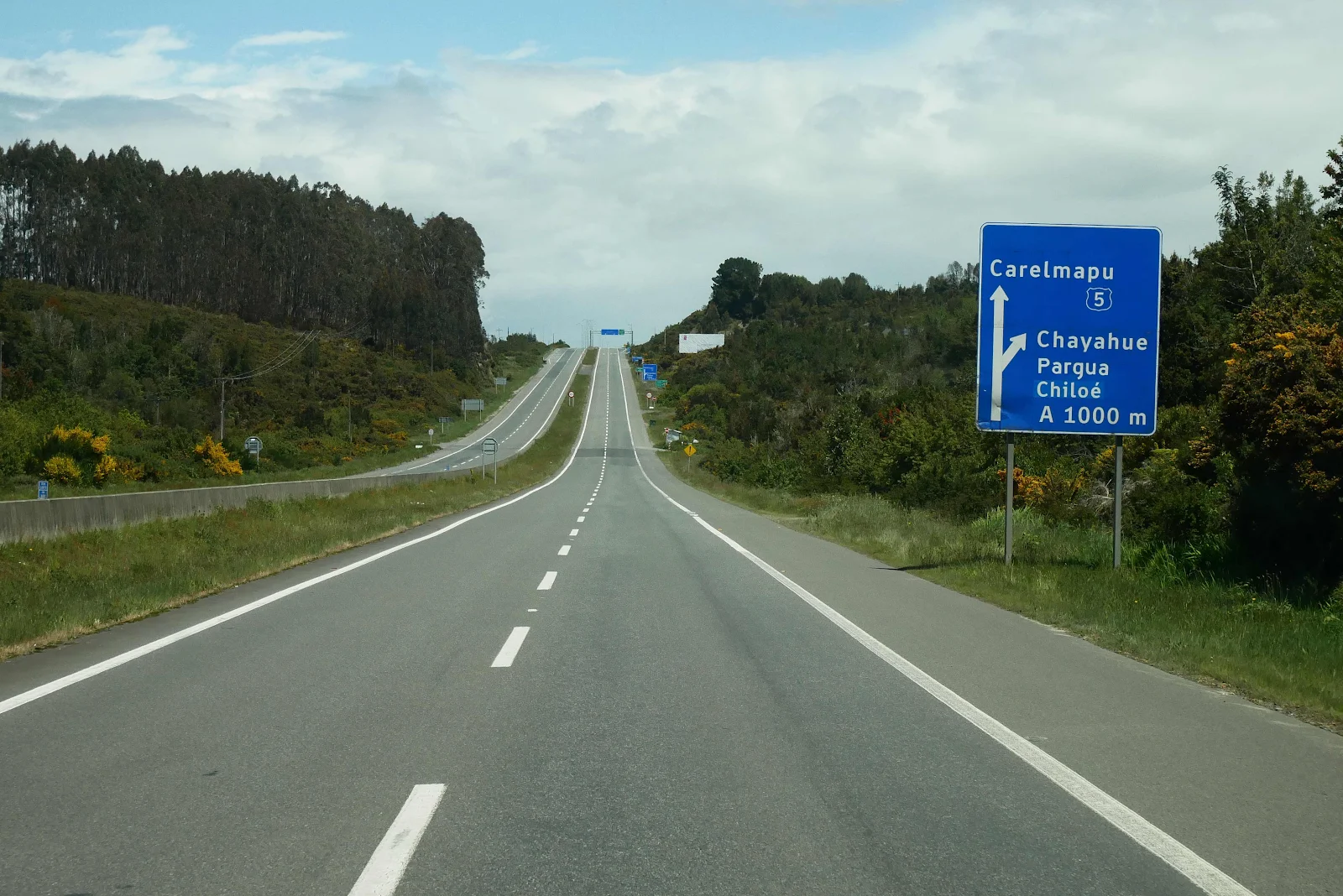
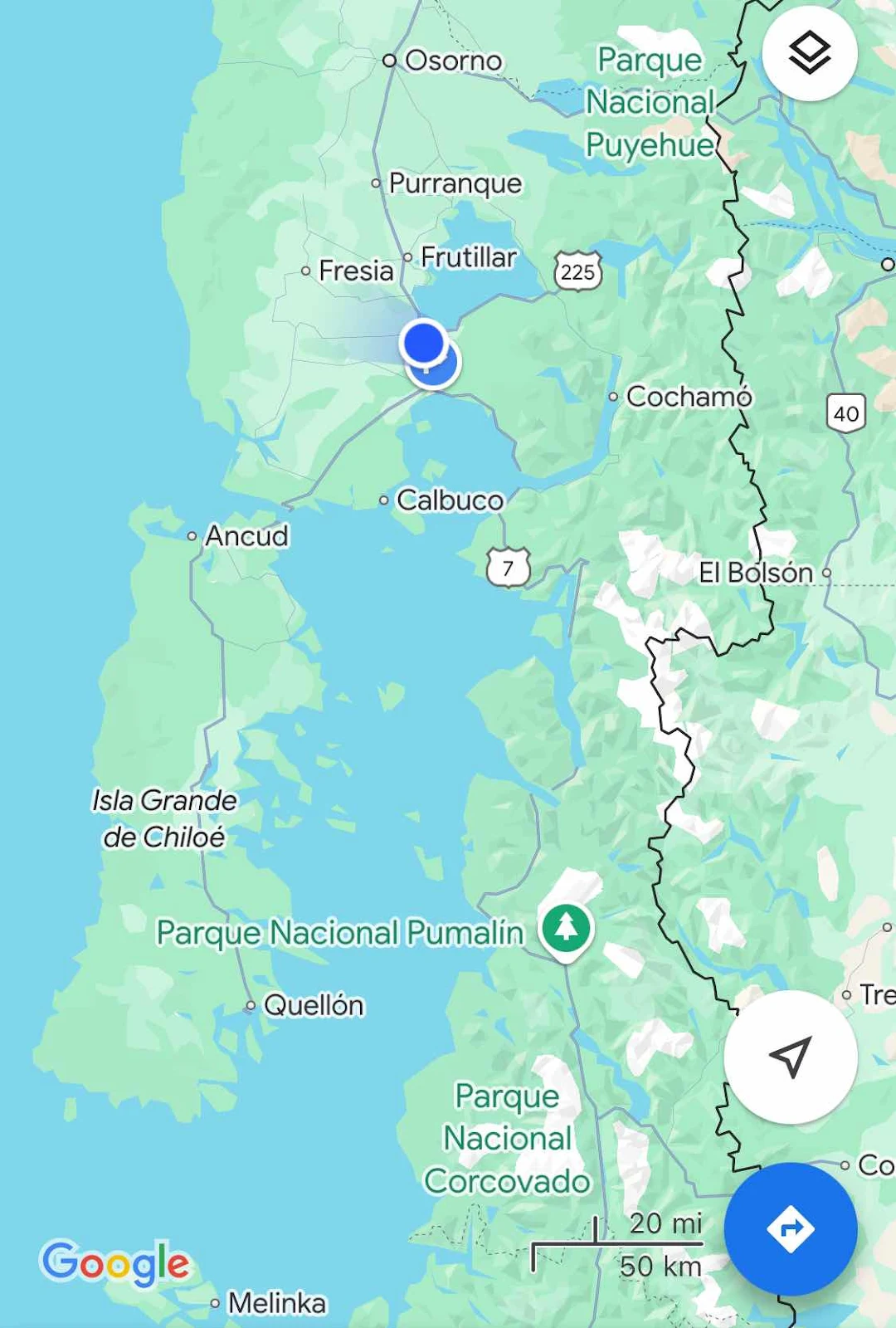
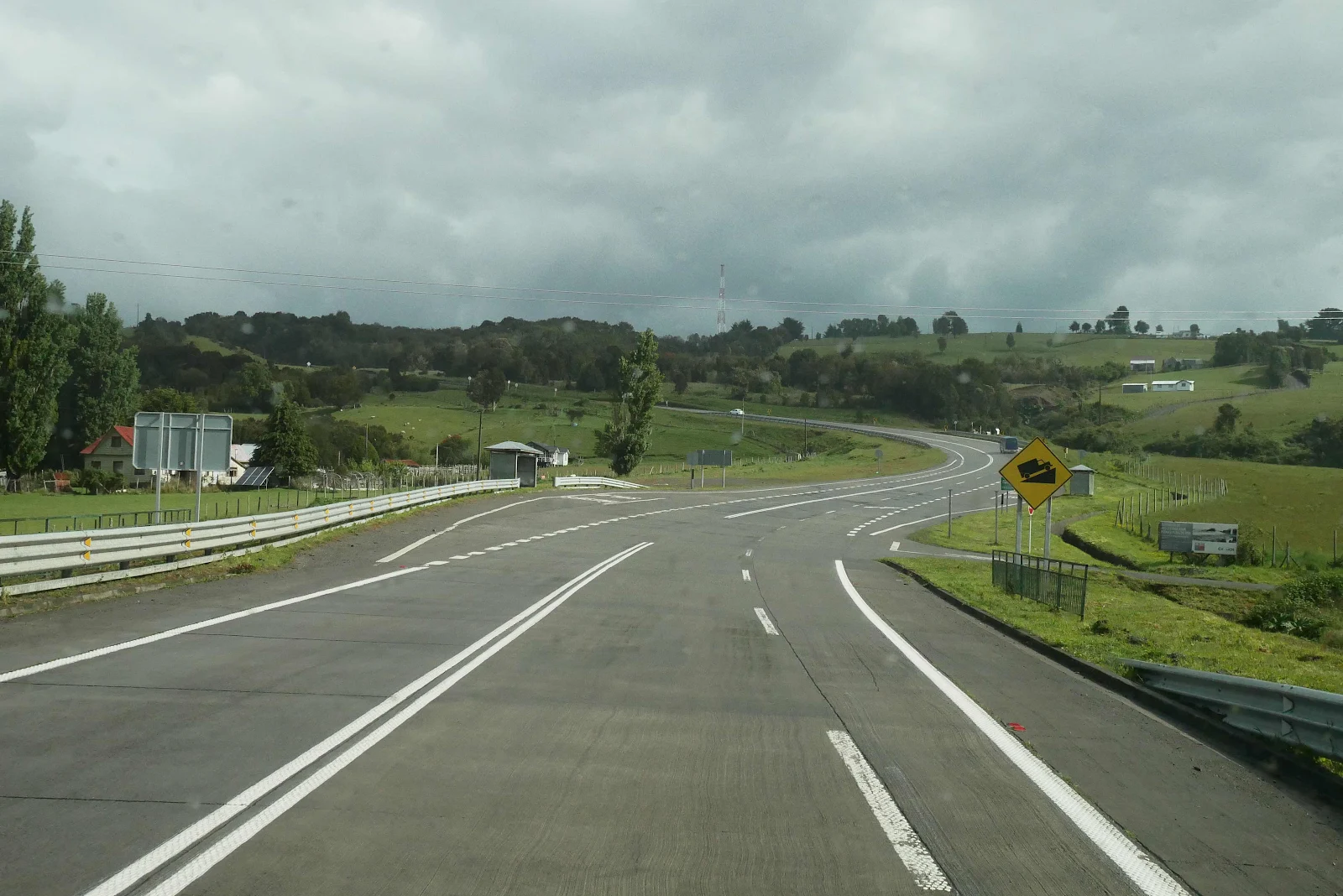
We left our cabin in the woods on Saturday morning with a plan to visit Chiloé Island thirty miles south of Puerto Montt. Travelers rave about the place and we figured with a few days to burn before Layne’s flight to Florida it would be a good place to check out. The road to the ferry is the usual PanAmerican freeway:

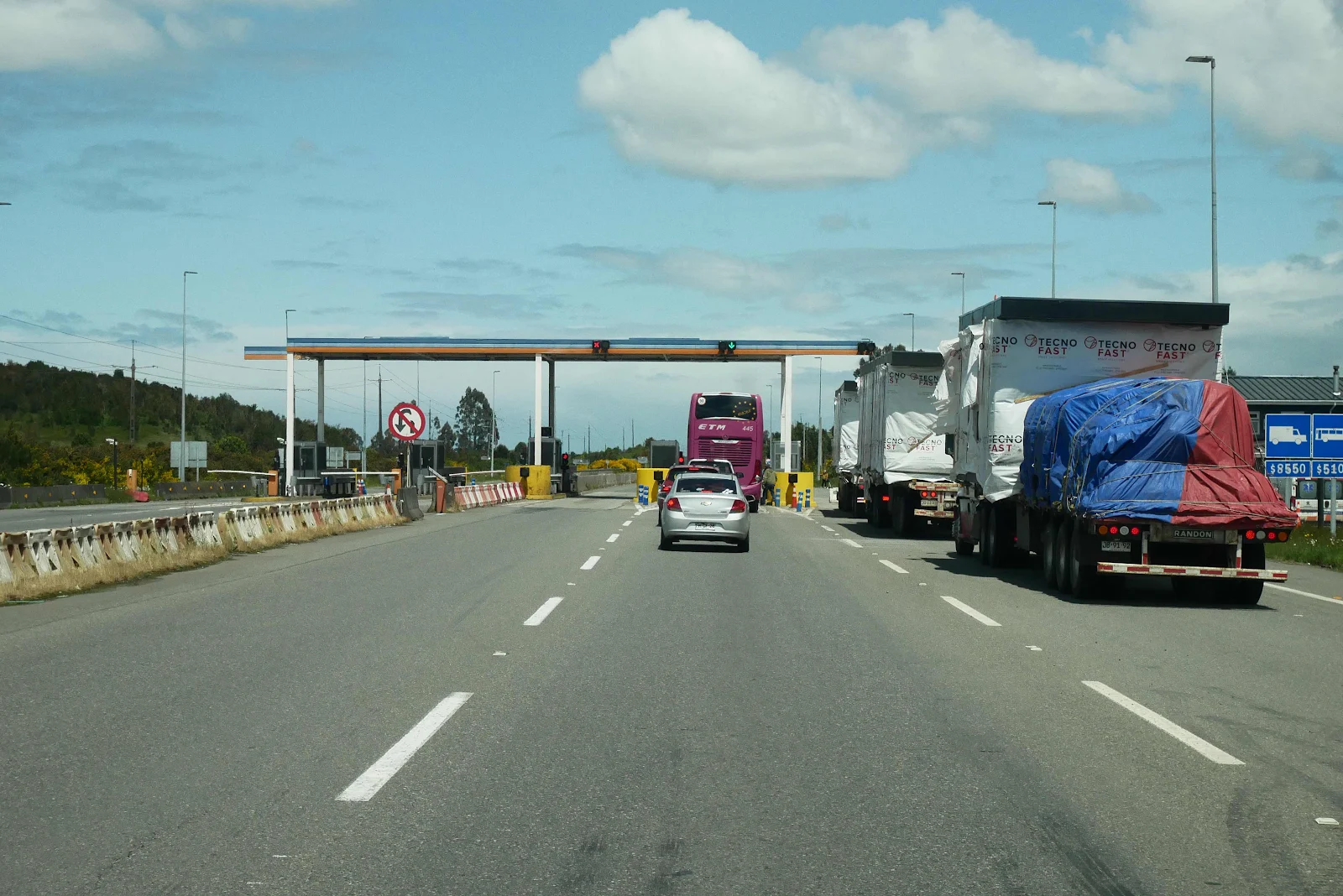
And it’s not exactly a freeway, tolls vary but are never more than $4 for a car. I rationalize tolls by pointing out to myself at least here the highway is smooth and well maintained…

It takes about three hours to drive the 120 miles from the ferry landing near Ancud in the north to Quellón at the southernmost point of the highway. And the PanAmerican in the northern half is terrible quality, cement slabs that made the Promaster bounce as we crossed every seam with some potholes thrown in for good measure. We asked ourselves why we were here. 

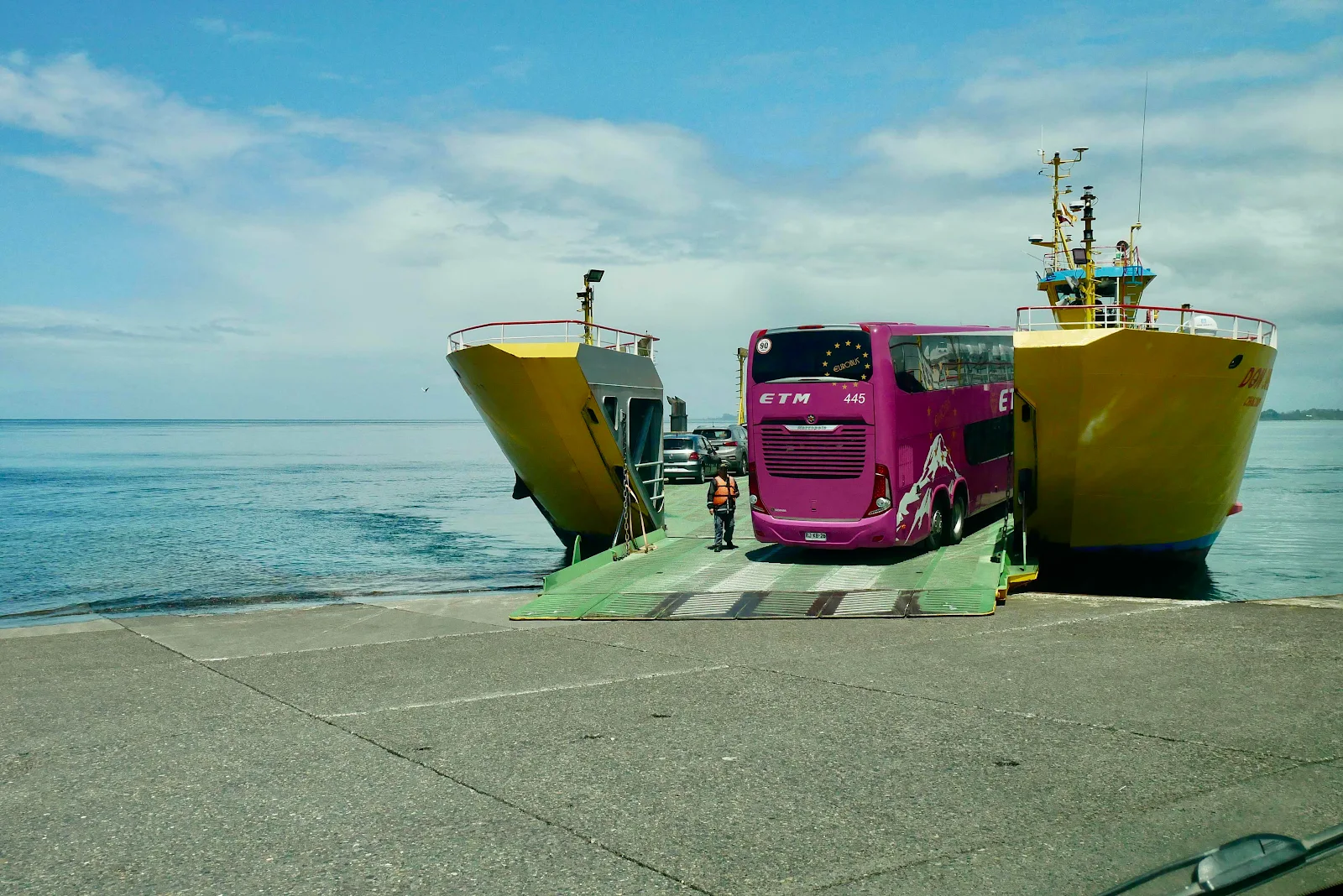
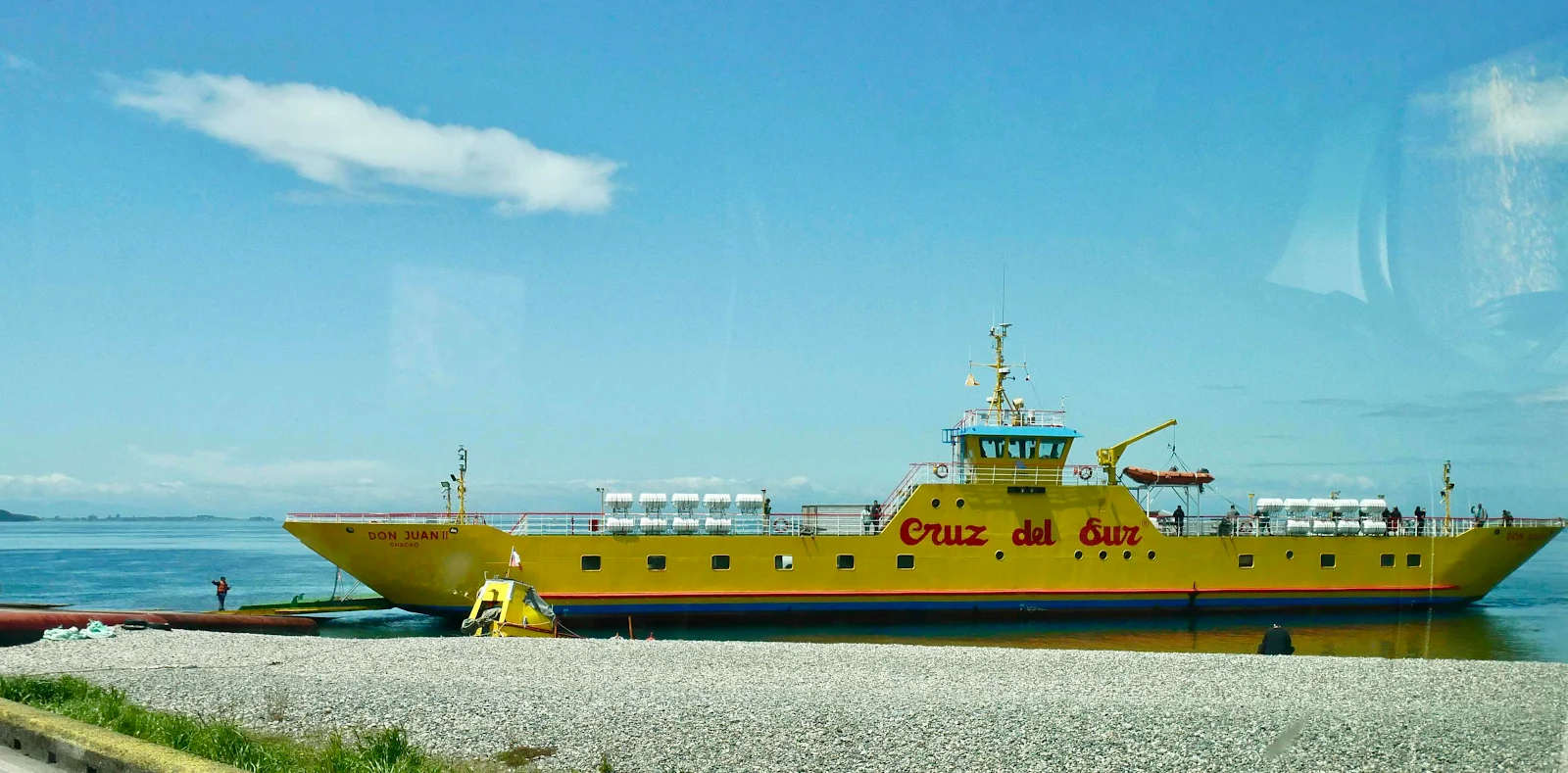
Our neighbors back at the cabin had explained how the ferry works and it’s very simple. You drive on…

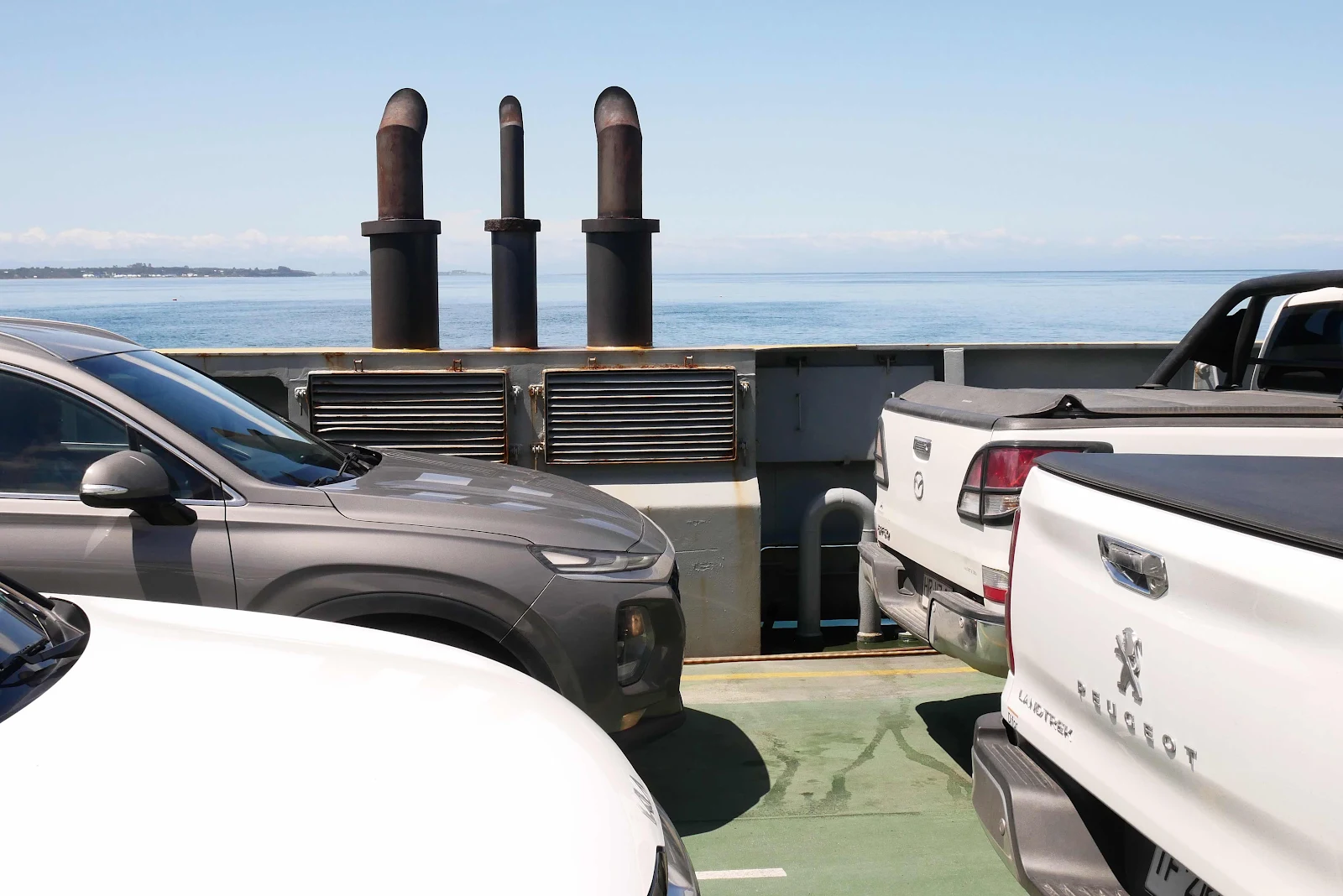
…a crew member with a card reader comes by and charges your card, $20 for us, and you drive off 35 minutes later, all very quick and easy. 

Pets must stay in the their vehicles but people are free to move around. It was here we started to go incommunicado with a feeble phone signal and almost no internet for a couple of days.
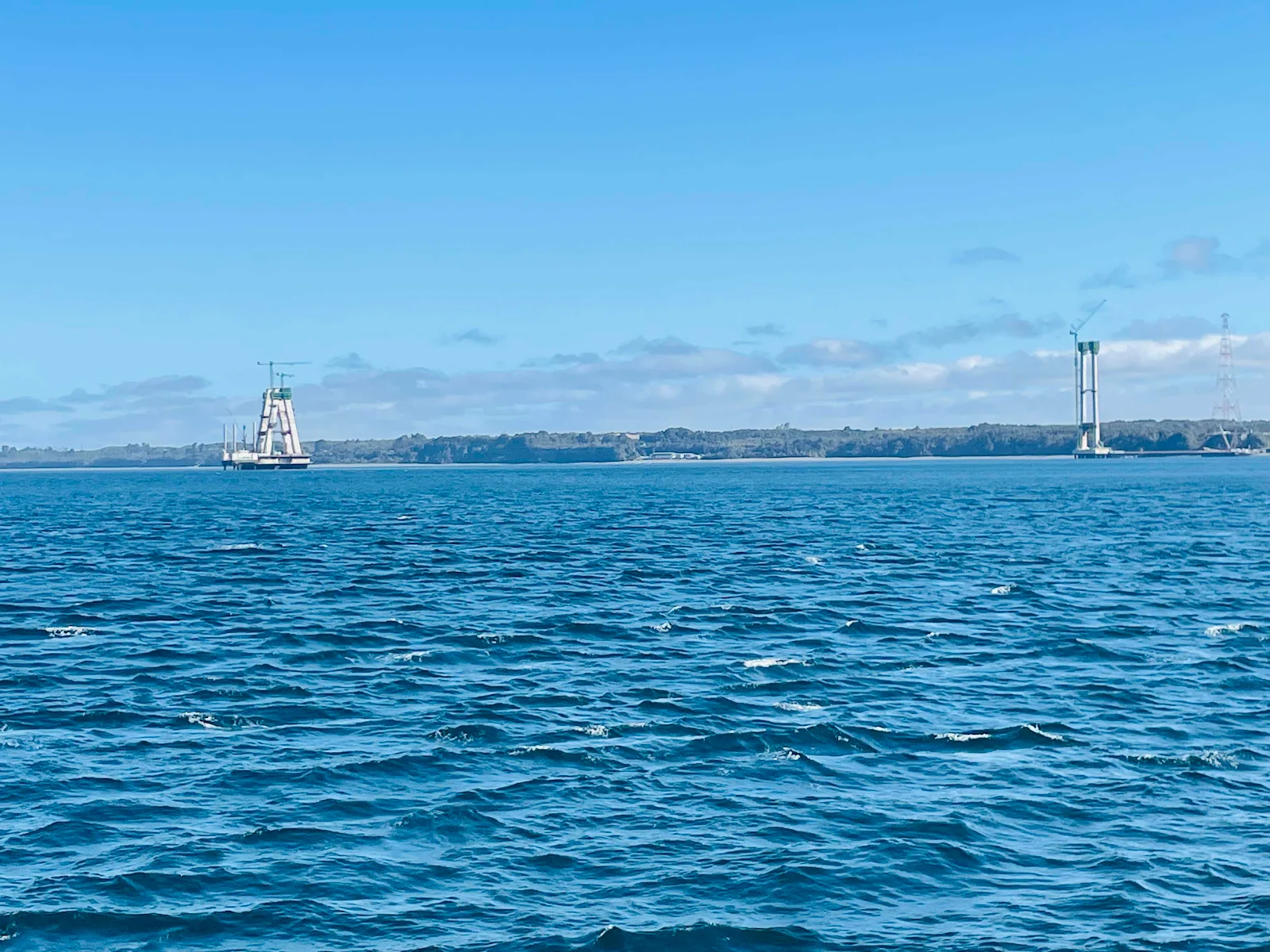
I also noticed they are building a bridge so I guess the four ferry boats running continuous twenty four hour service will be gone soon. For us it was an easy crossing but I imagine in winter it must be pretty sketchy. 
After we rolled off the boat the day went dark and as we bounced down the PanAmerican on that awful cement slab pavement the rain started to slash down, just to improve our mood. Chiloé at this point looked just like the mainland. 

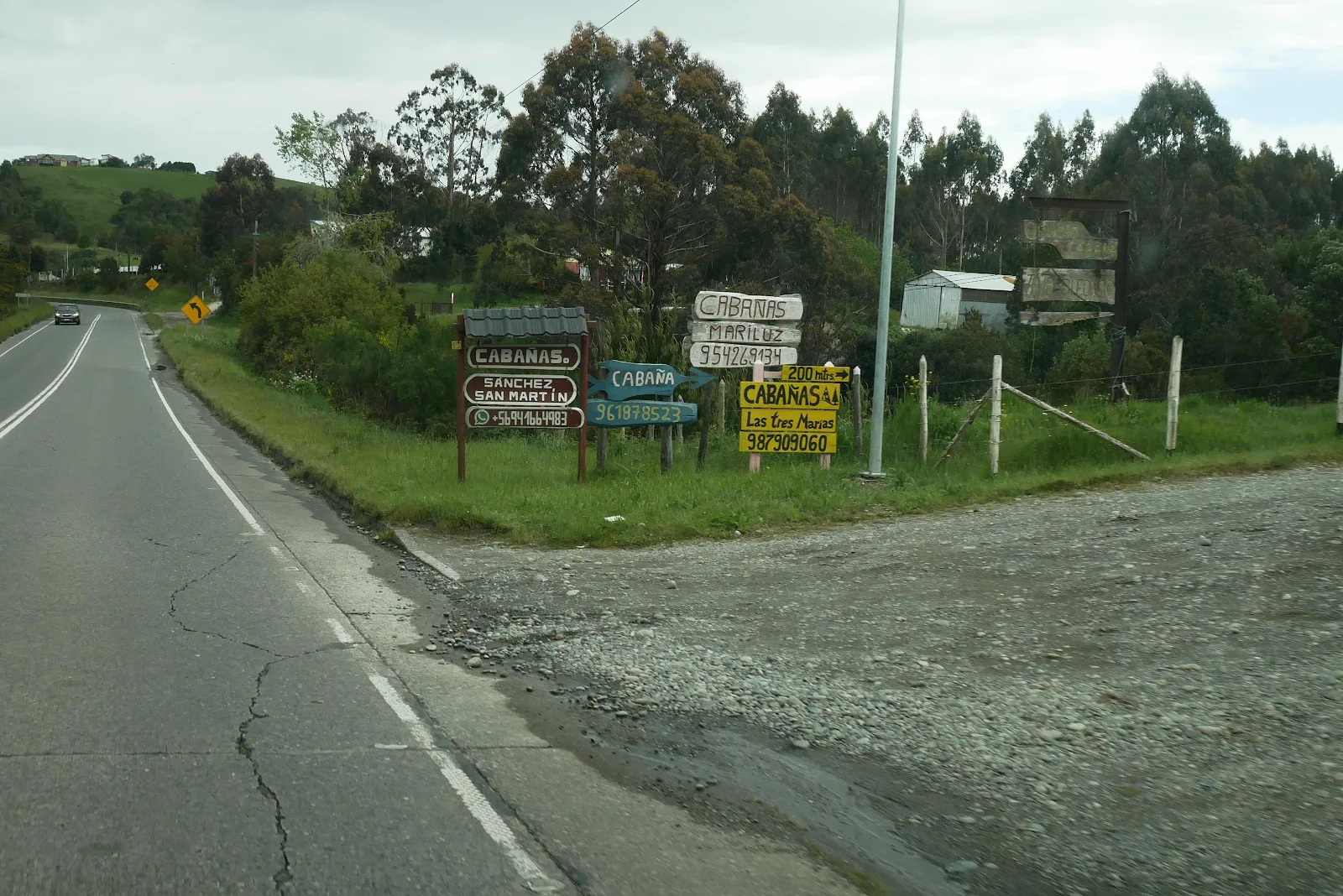
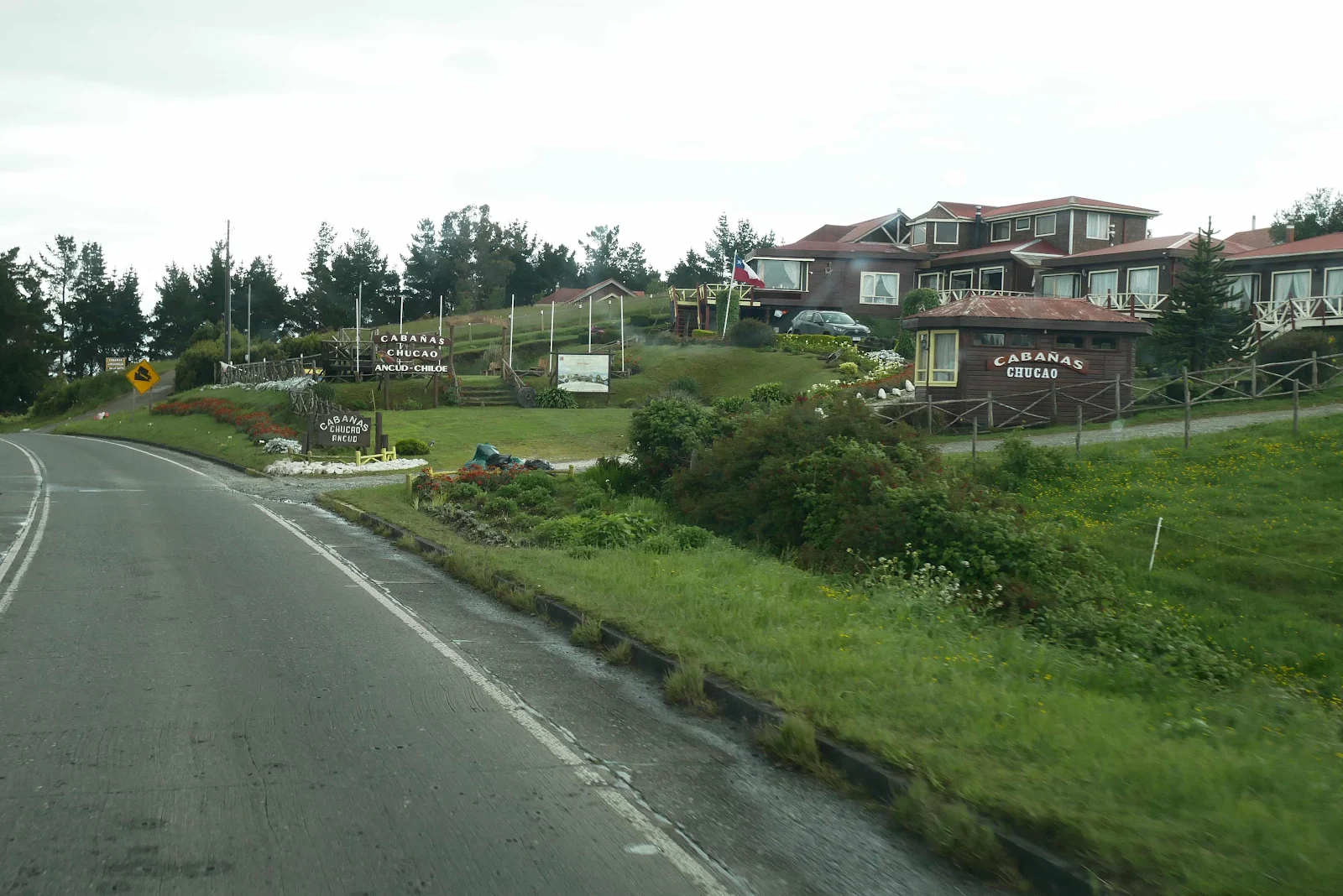
It’s clearly a summer tourist destination with camping glamping and accommodations on offer everywhere. Most of the island is still asleep this early in the Spring. 


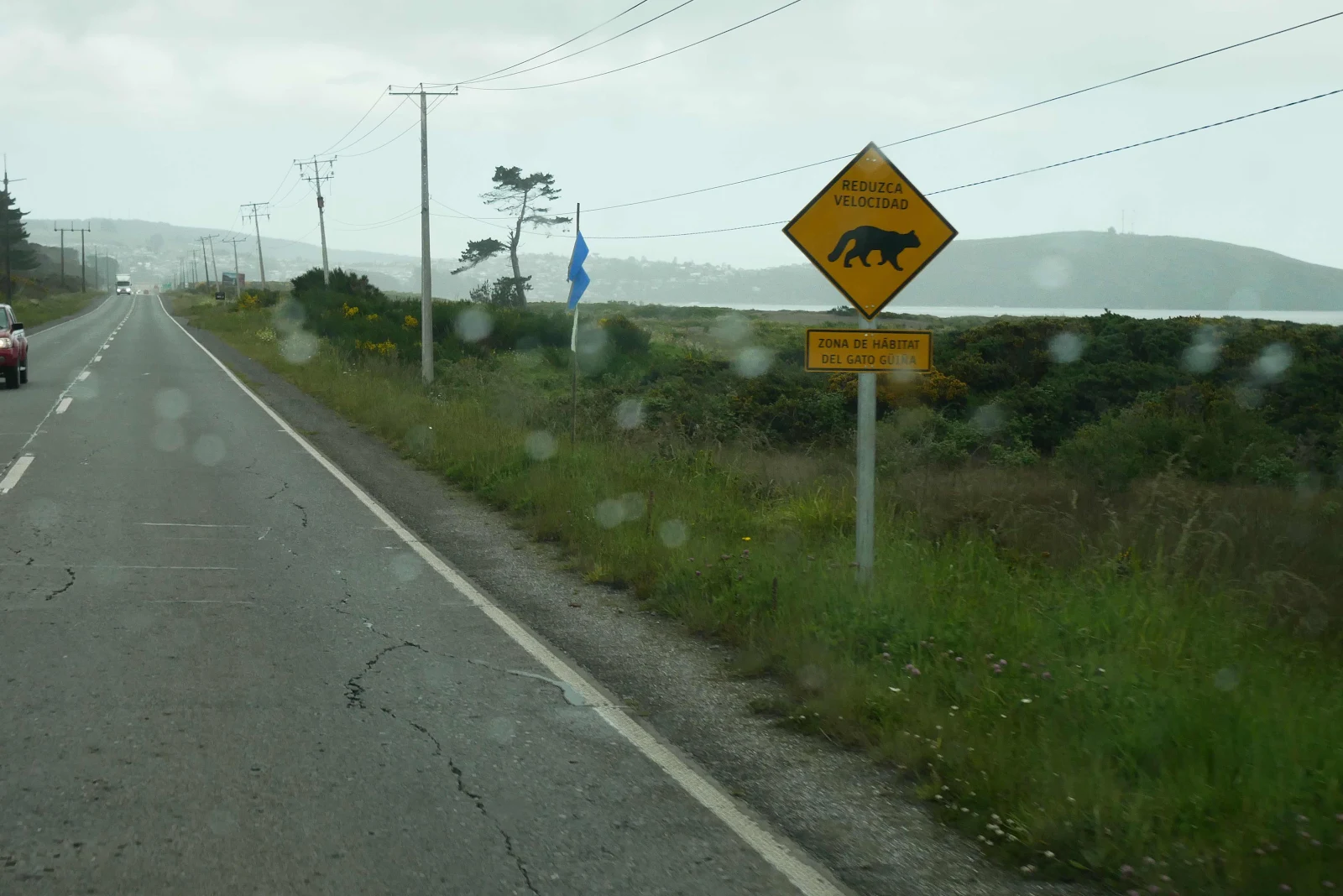
There are wildlife warning signs everywhere, not that we’d see them.  

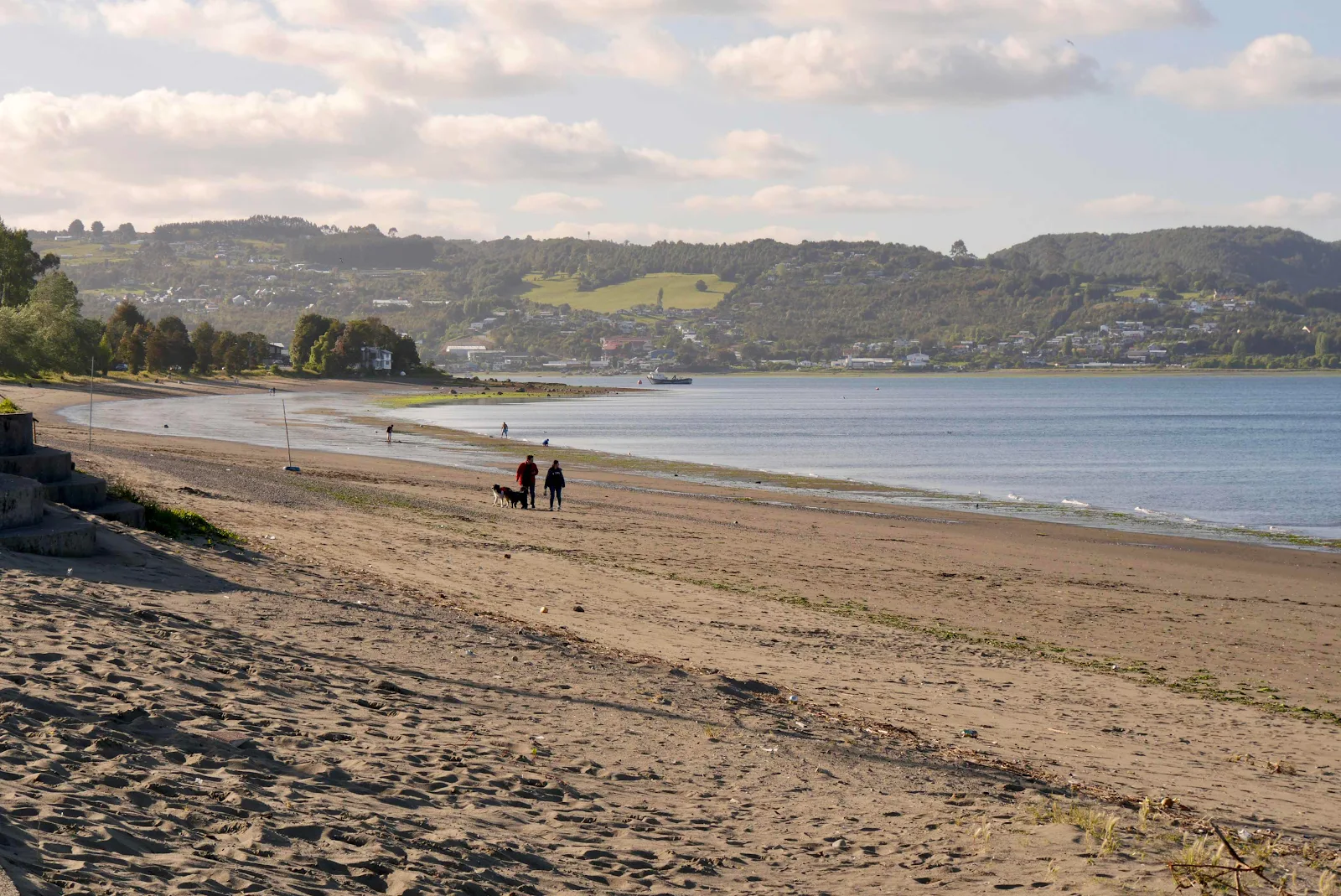
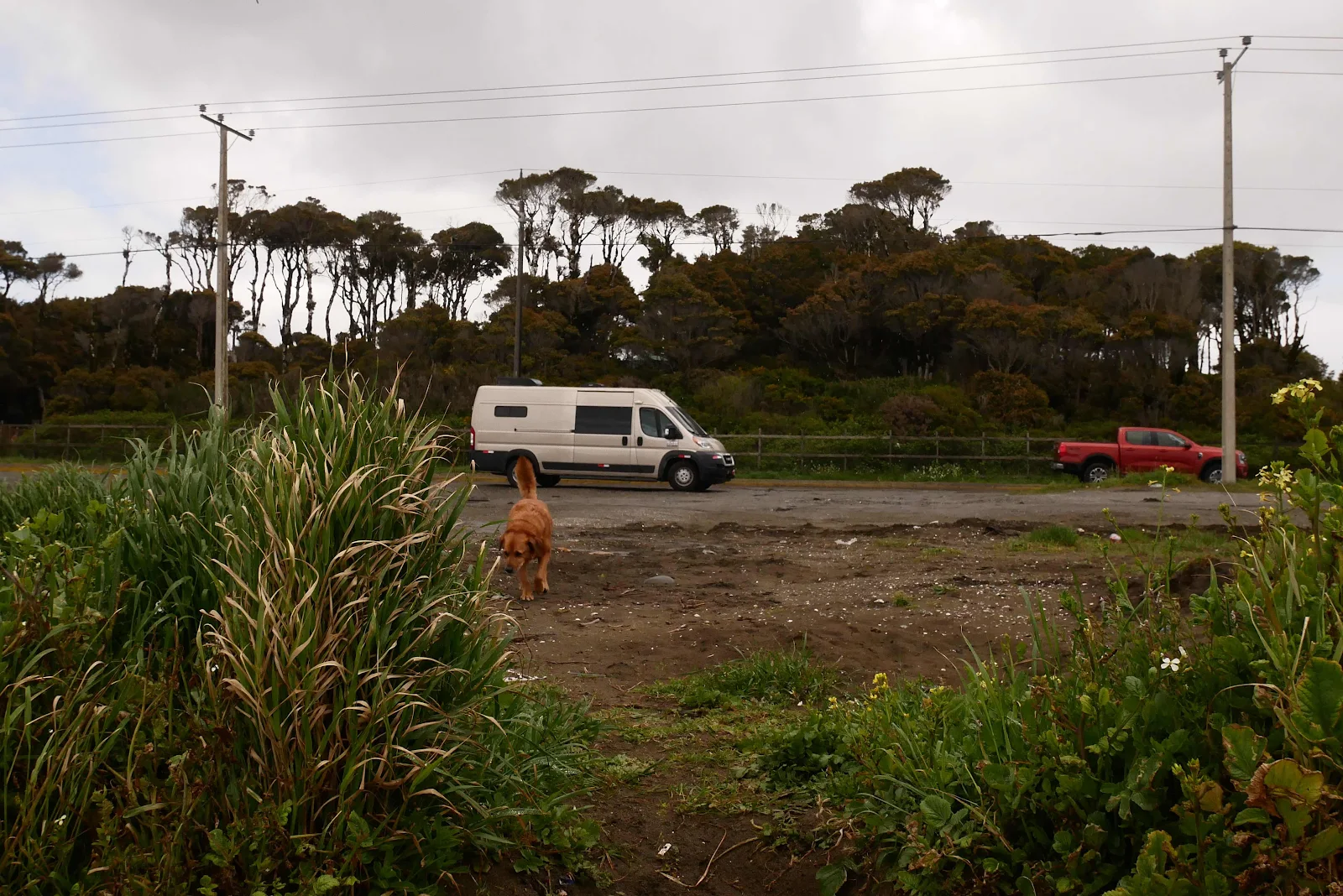
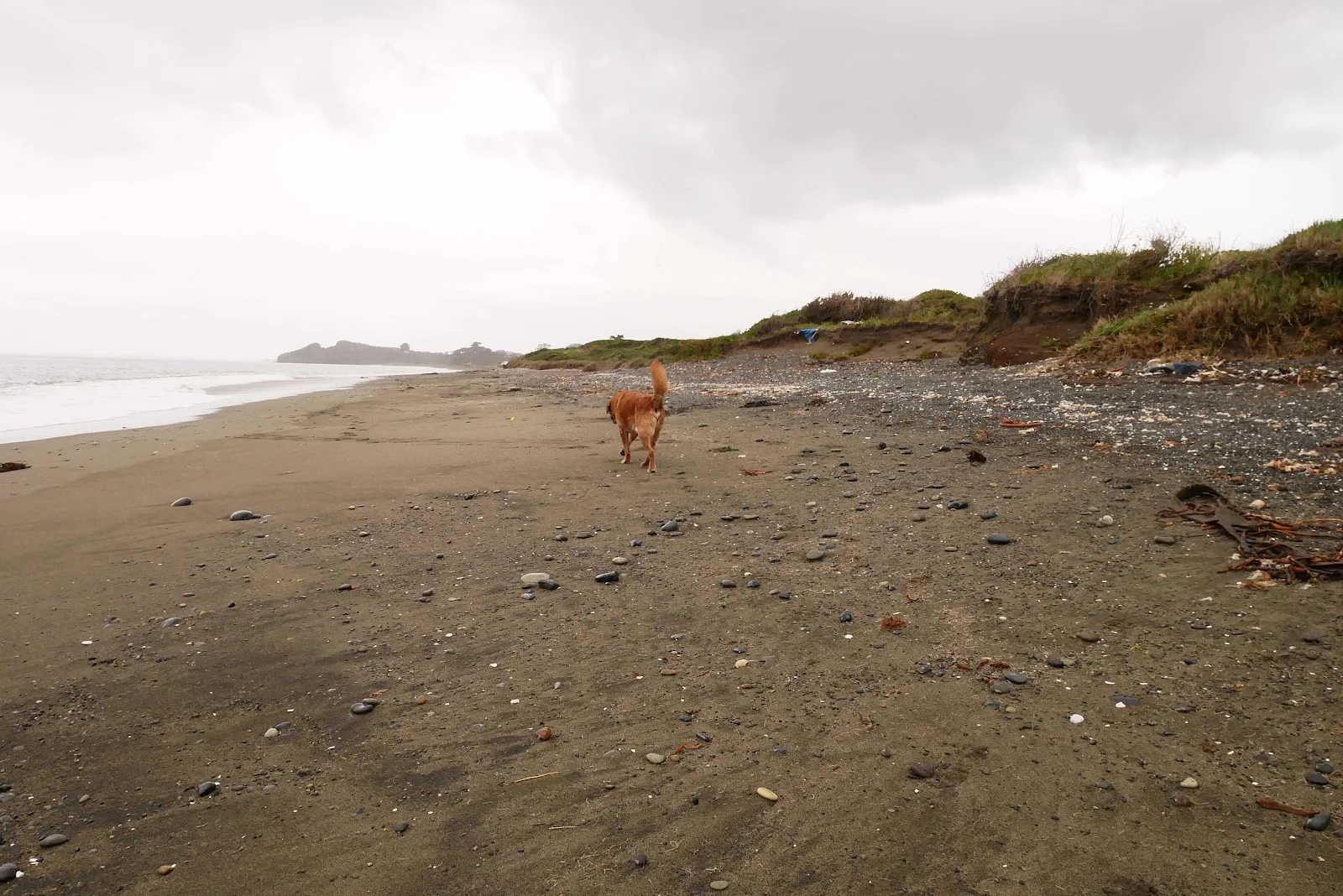
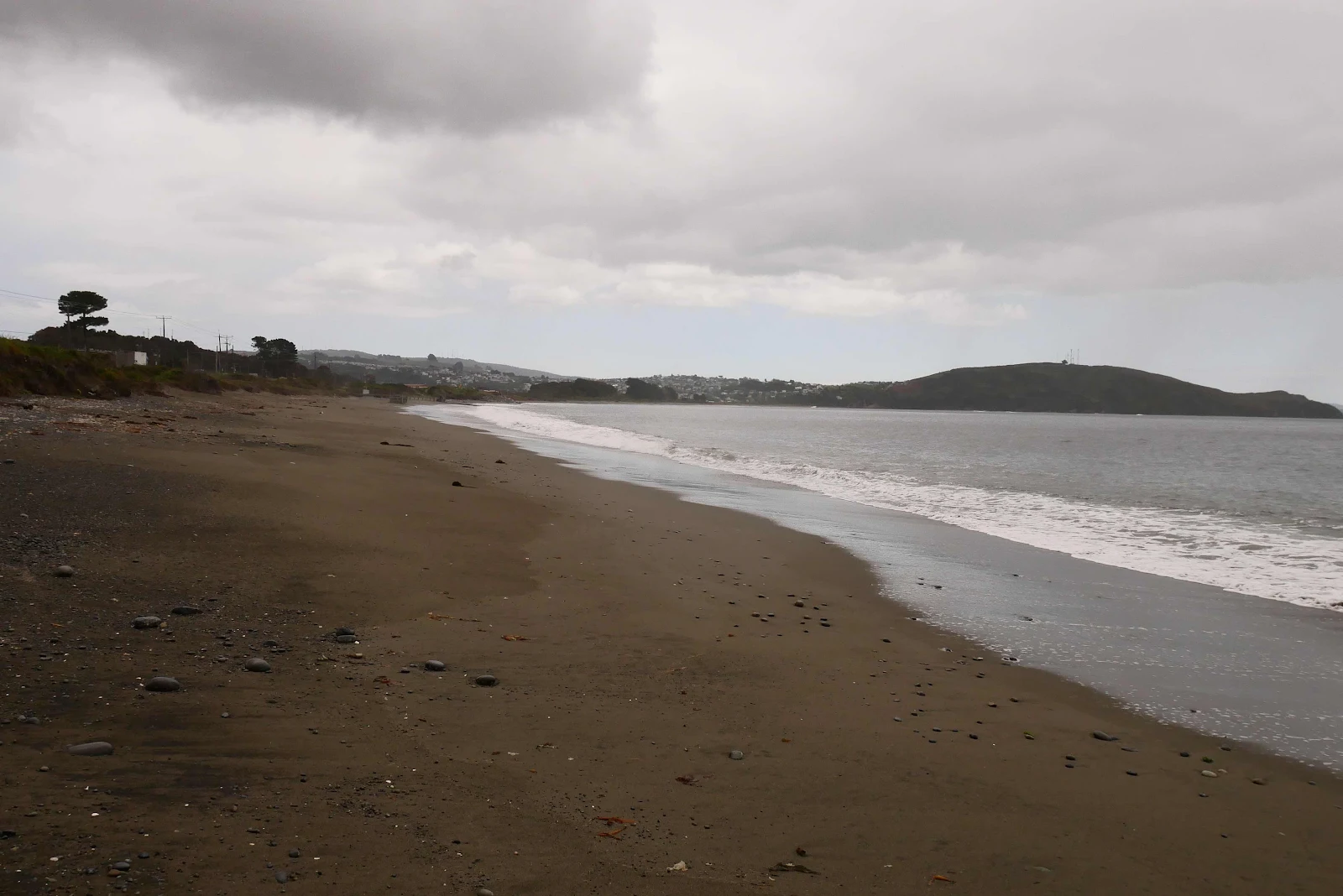
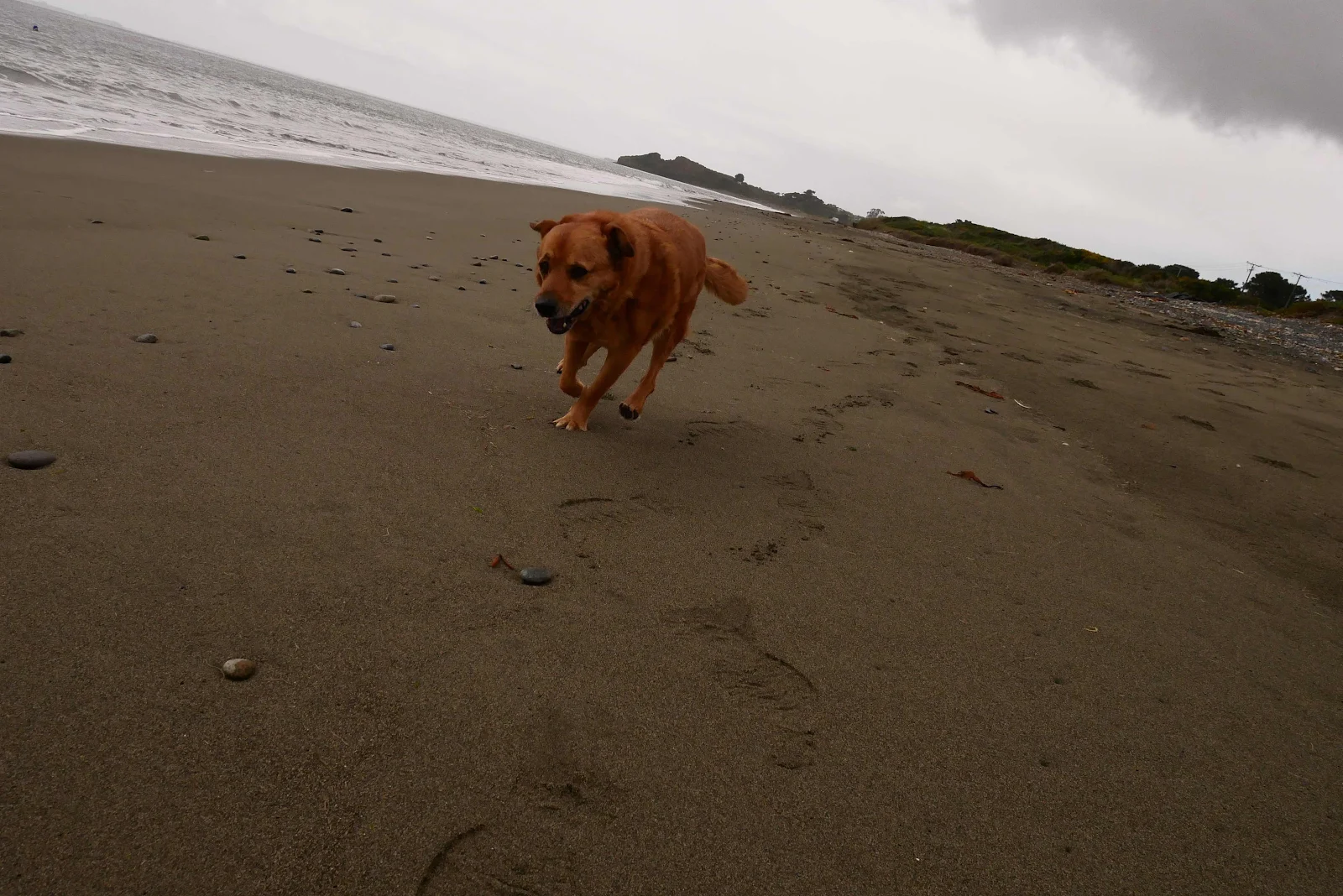
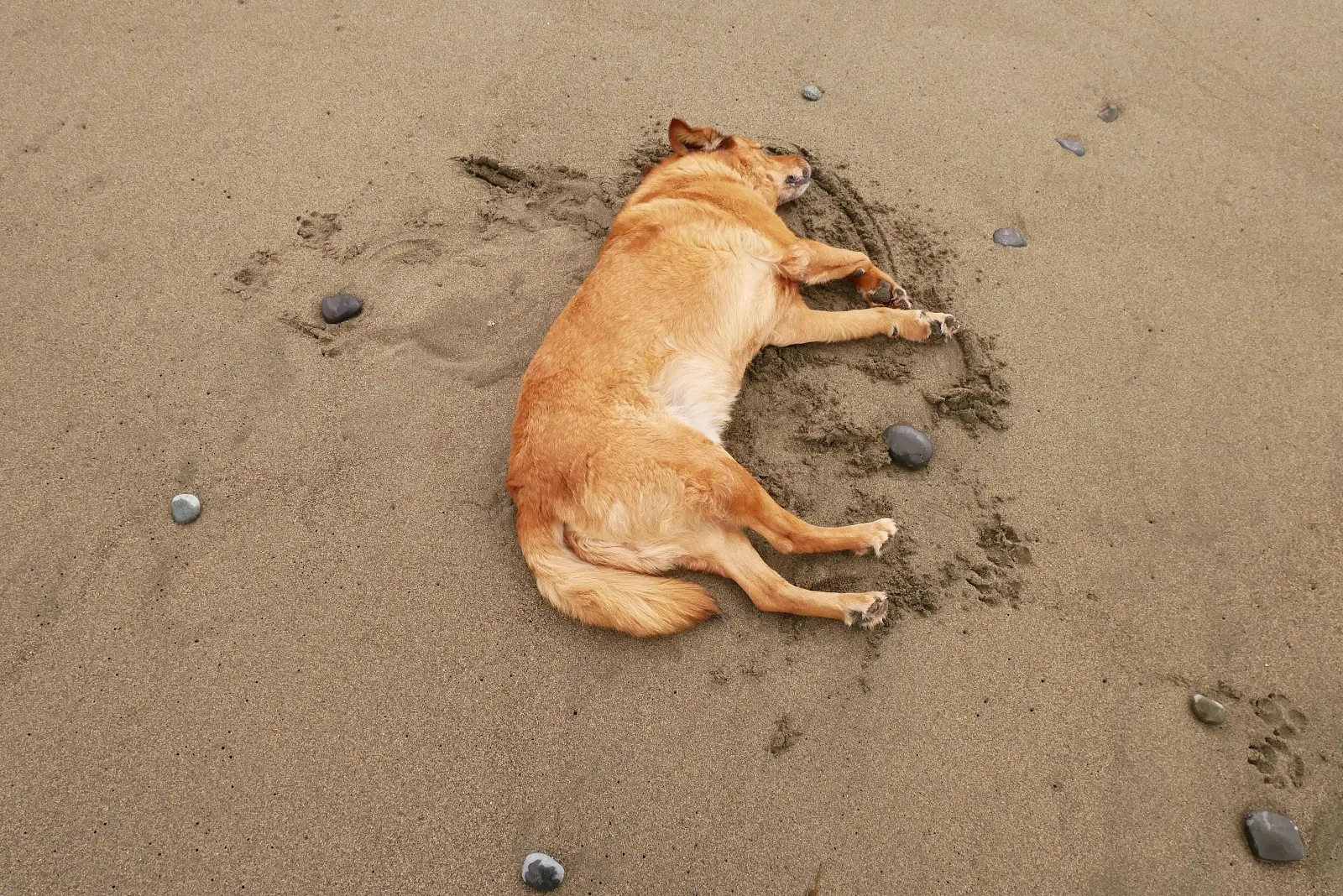
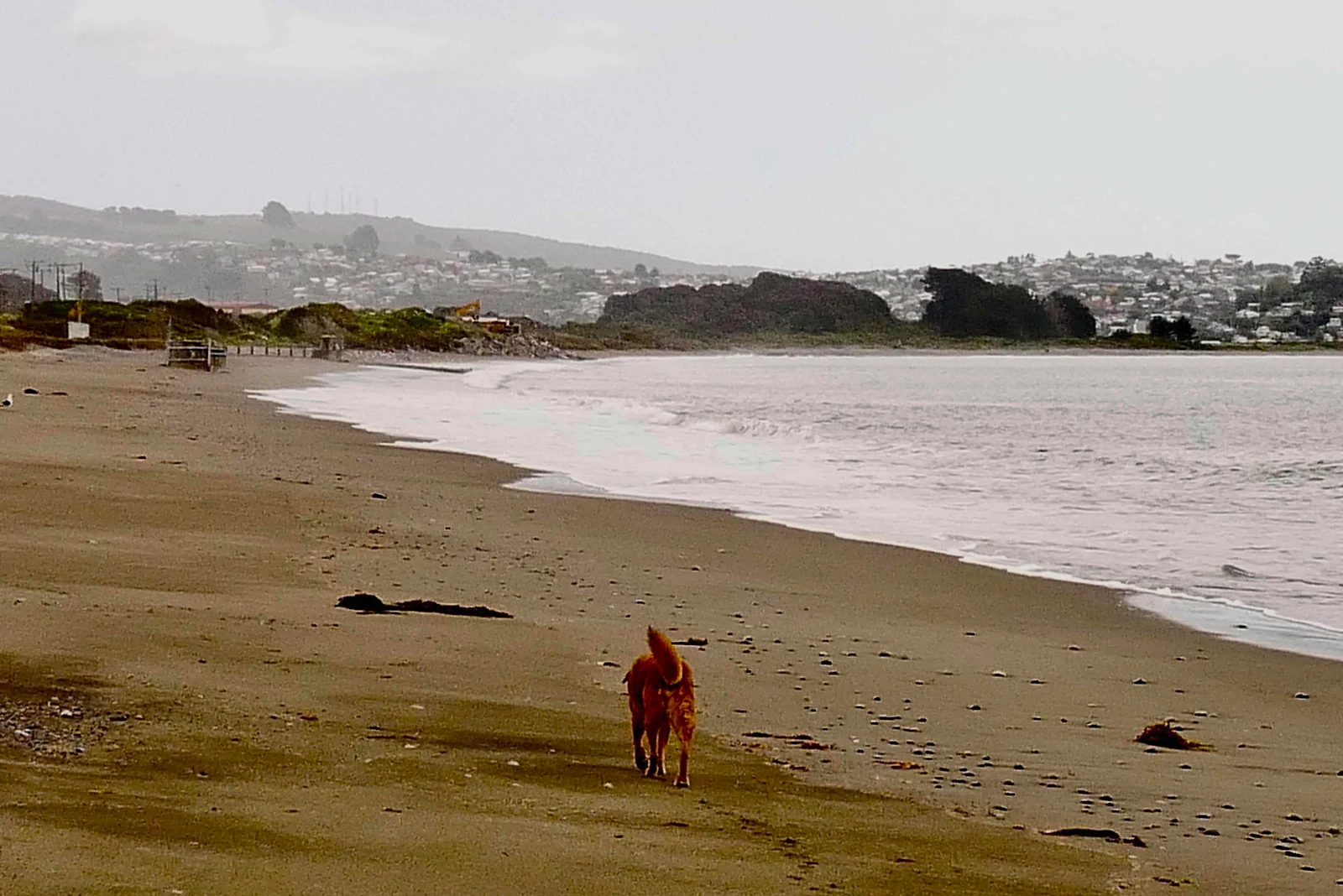
I decided Rusty the perfect deserved a walk so we stopped at the first beach for a walk. The drizzle was intermittent but the tide was ebbing so there was room to stretch on the strand. 

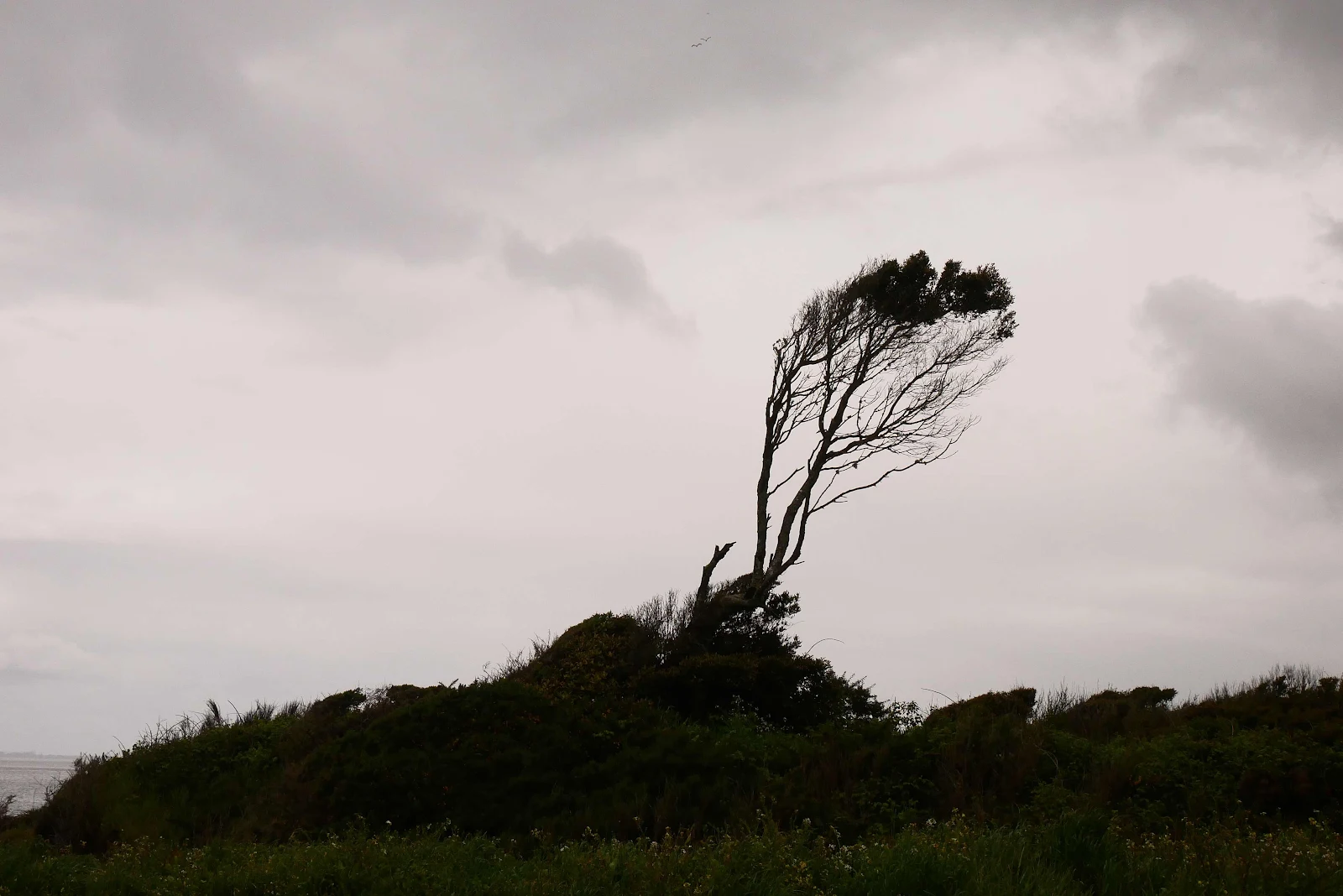
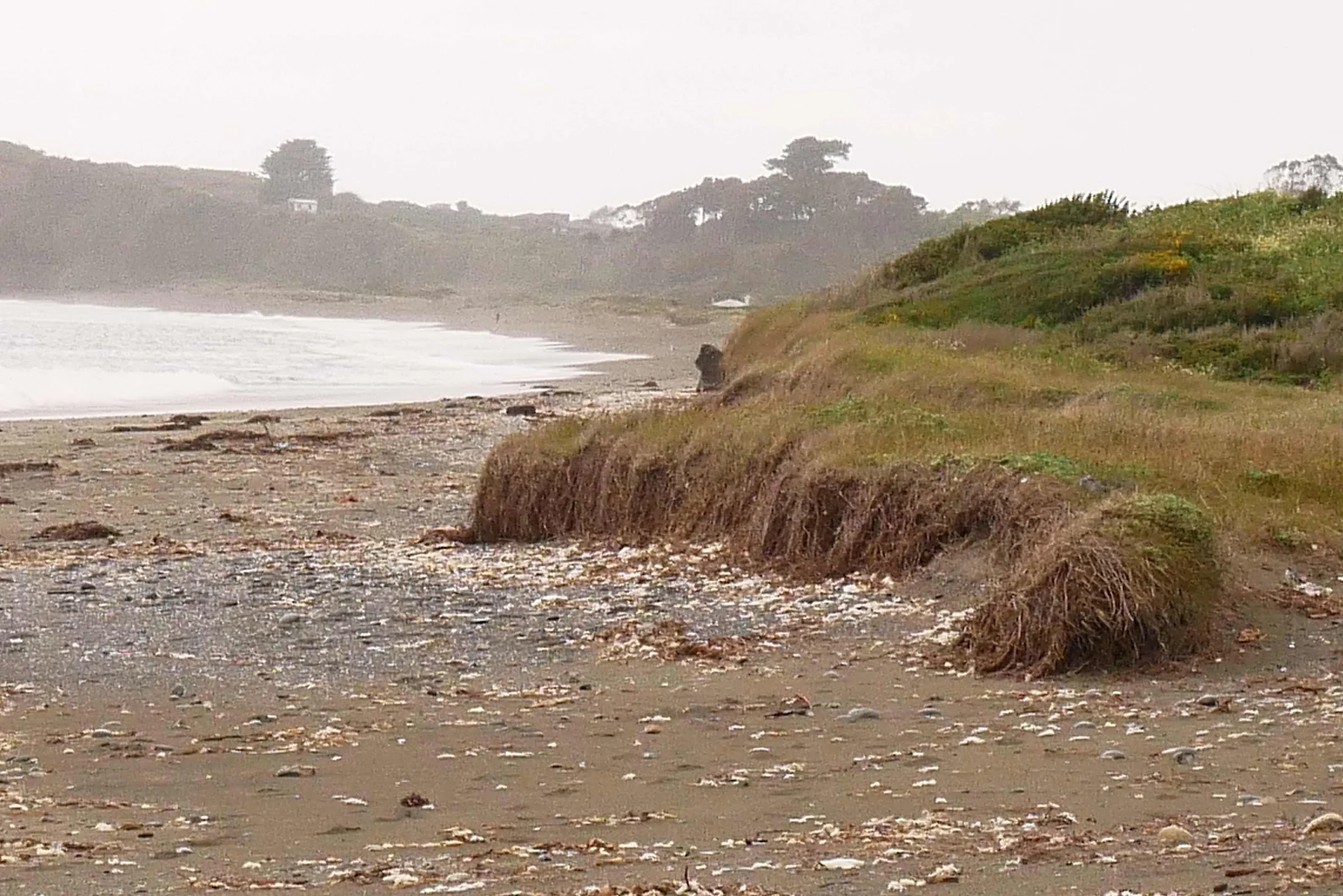
This is indisputably Chilean Patagonia, land of rain cold and extreme wind of which there was evidence growing out of the ground. 


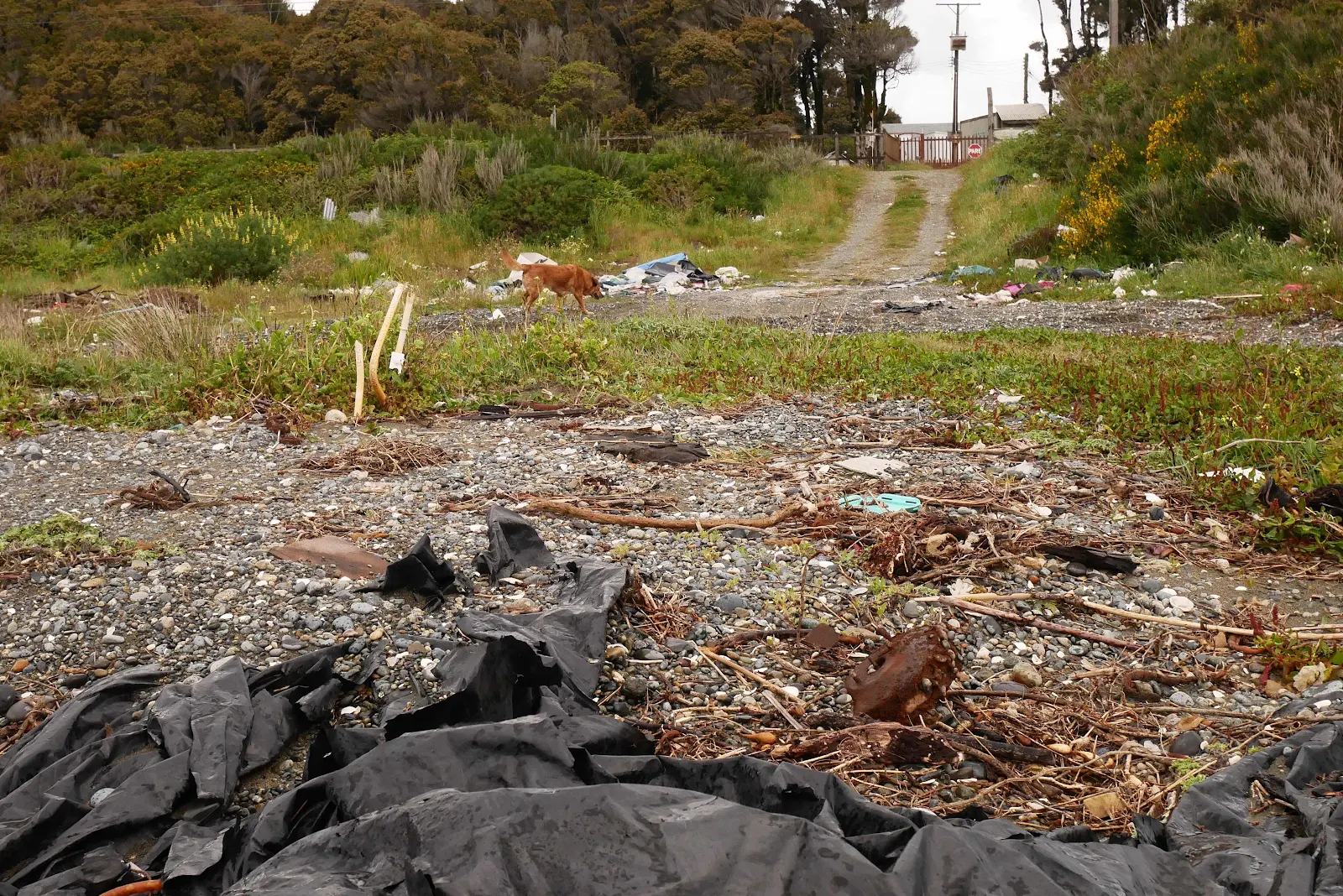
Chiloé is probably the most trash riddled place in Chile, not e revere on the island but a lot of it shows the poverty and relative isolation of the island.


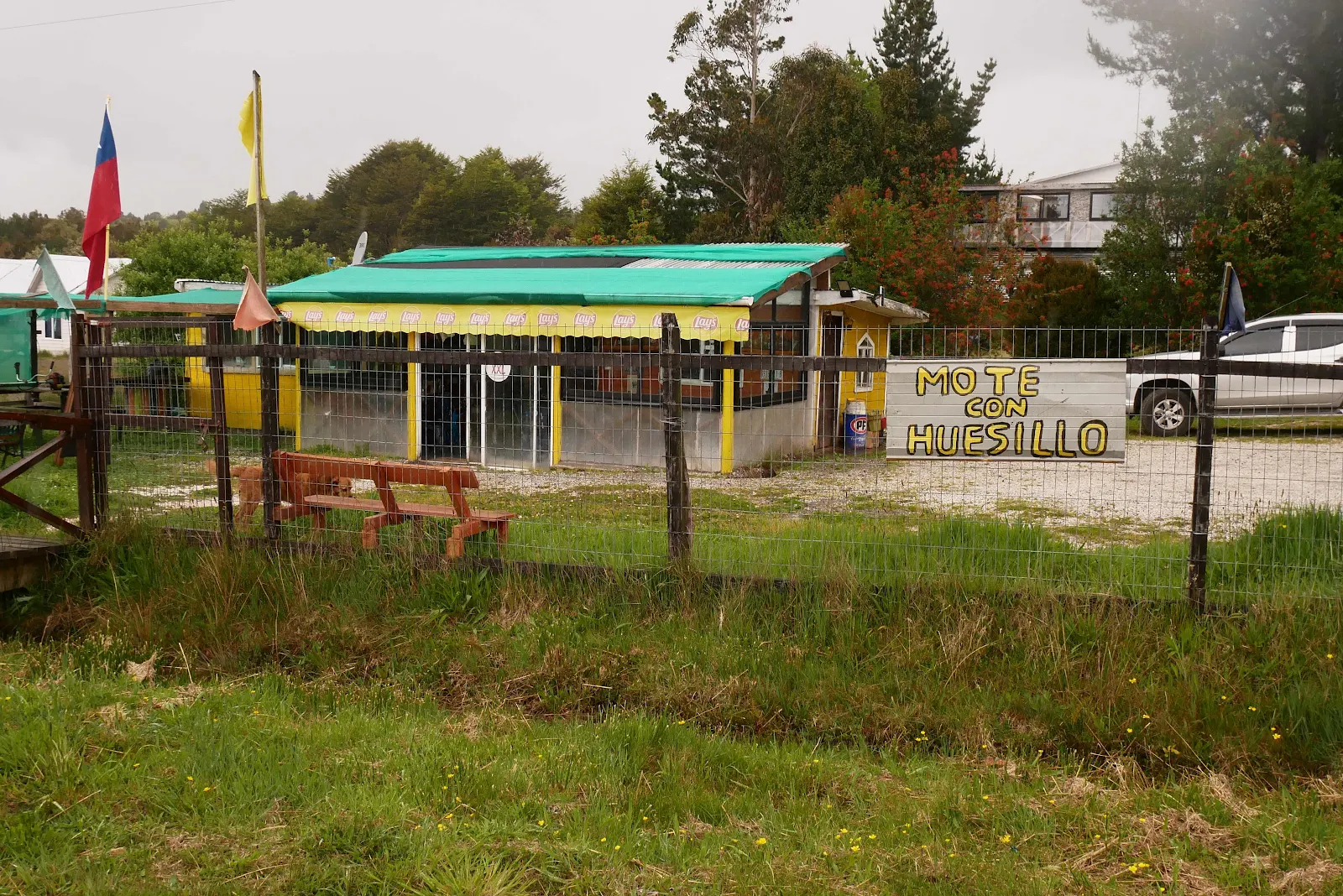
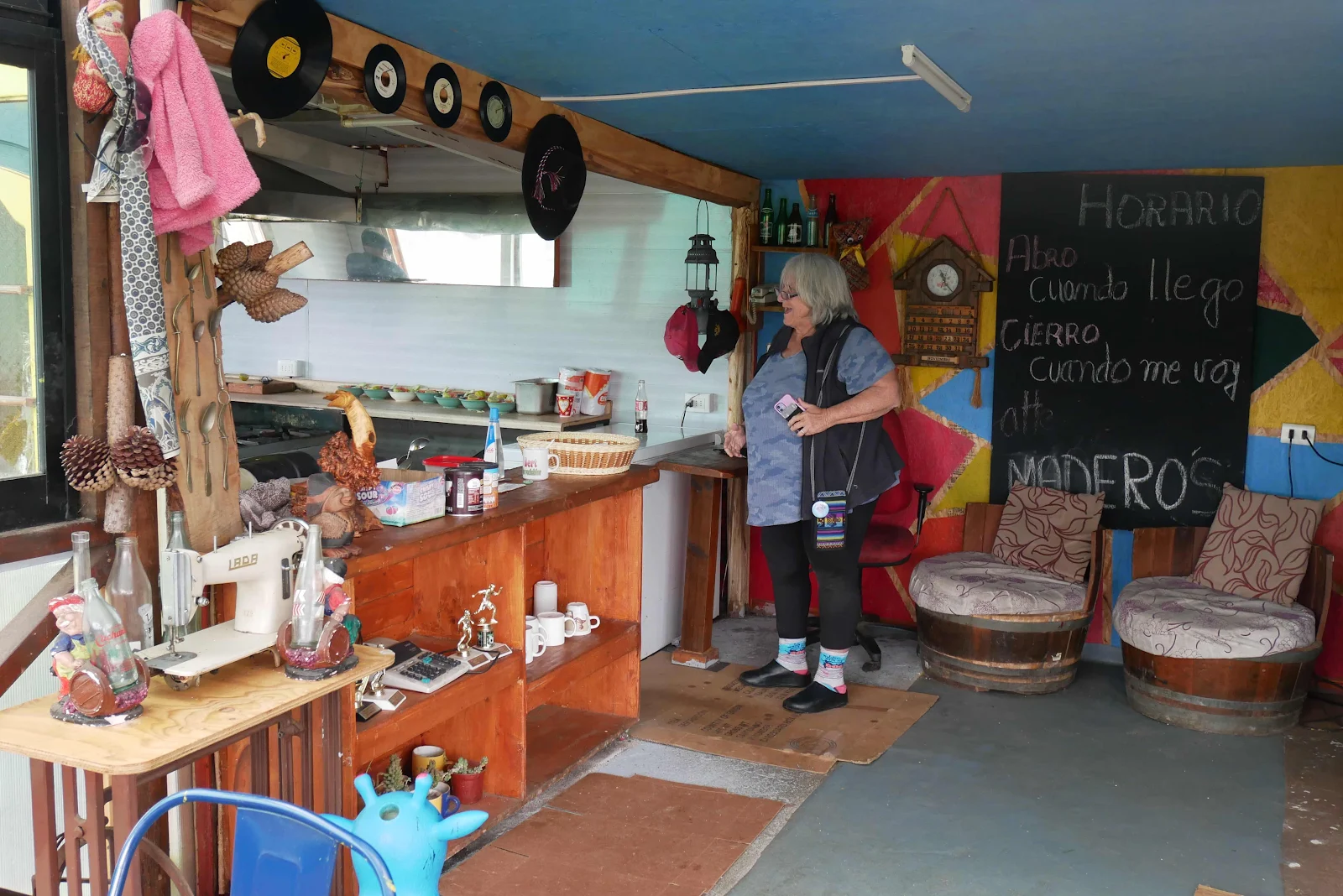
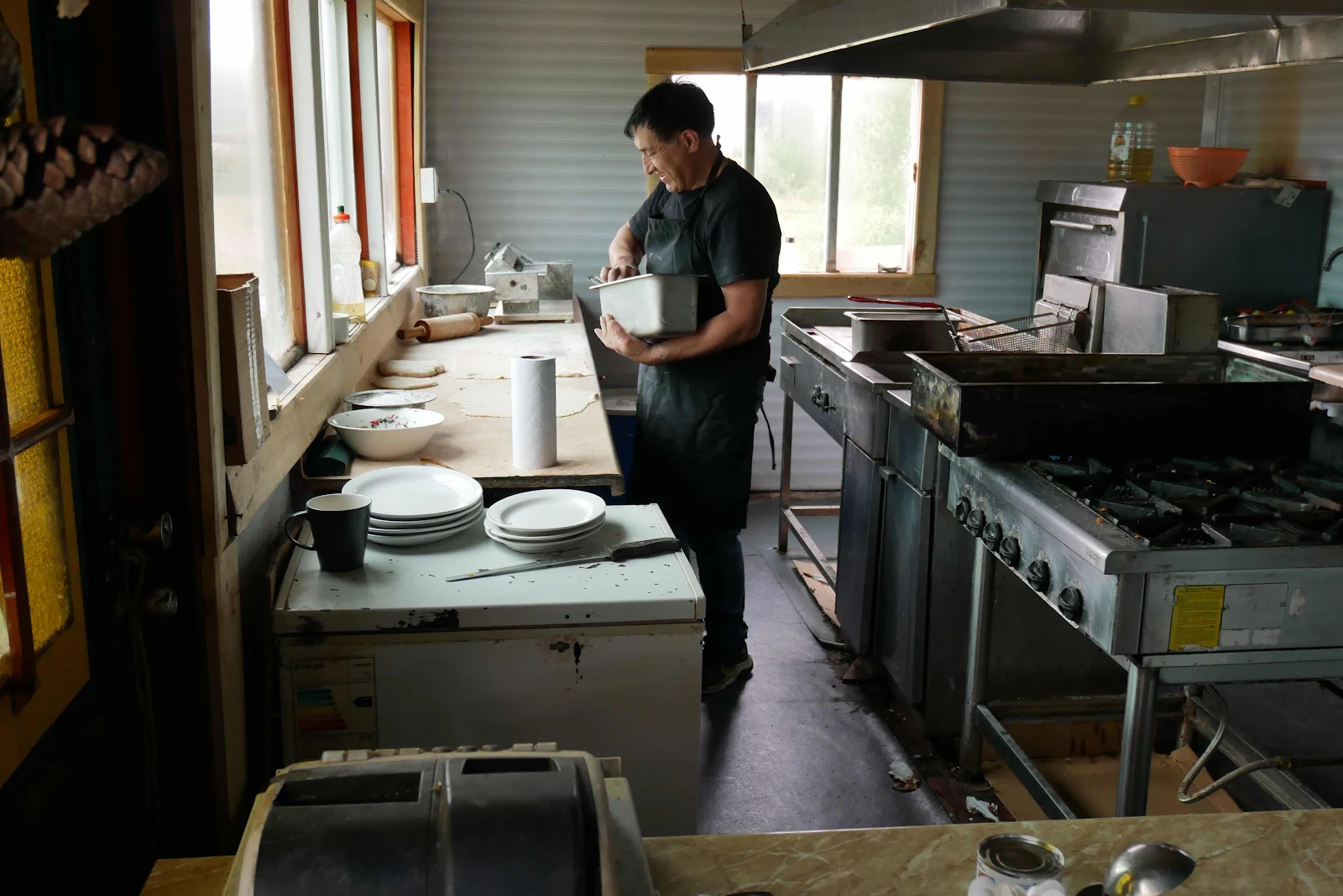
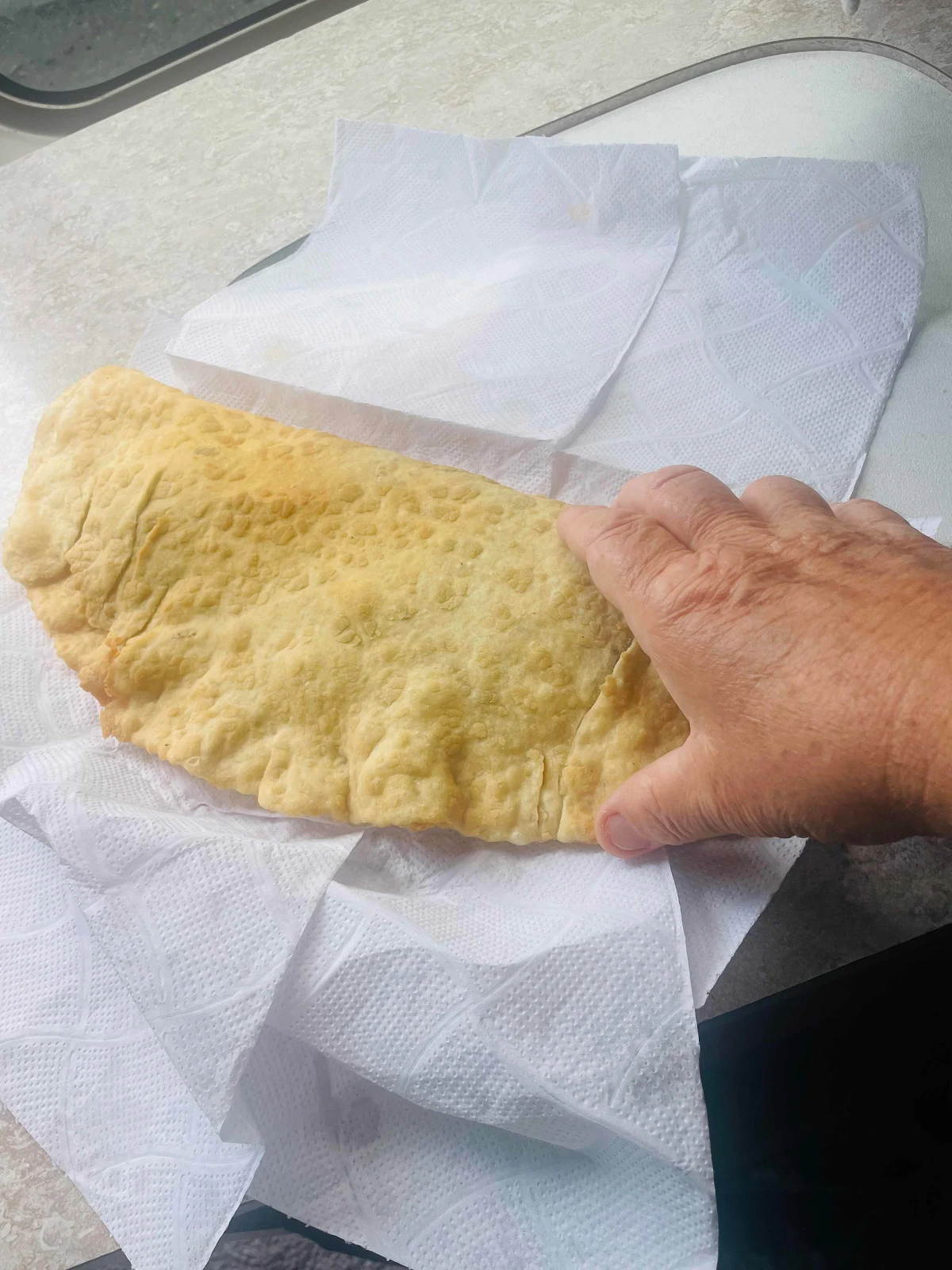
Back on the road we stopped for lunch and to relieve the bouncing from the pavement at Madero’s empanadas, the biggest I’ve ever seen and handmade to order while you wait. 


They didn’t take long and he said truckers like to stop by as this is the island’s version of fast food. 

Lunch for two filed with ground beef and fried onions in a rich gravy. 

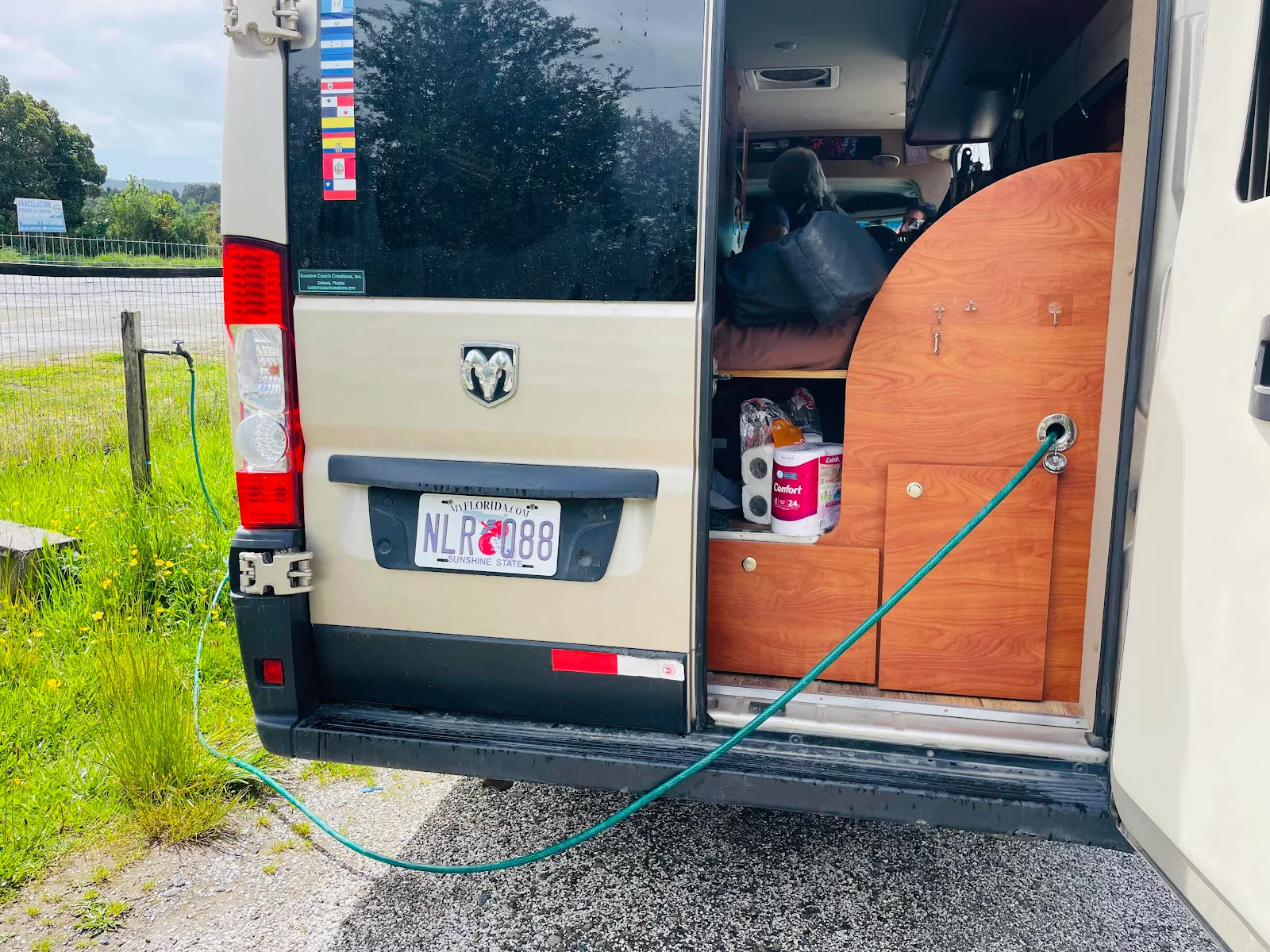
He offered to let us fill up our tank with spring water so while I loaded 15 gallons Layne gave him the nickel tour of our home. 

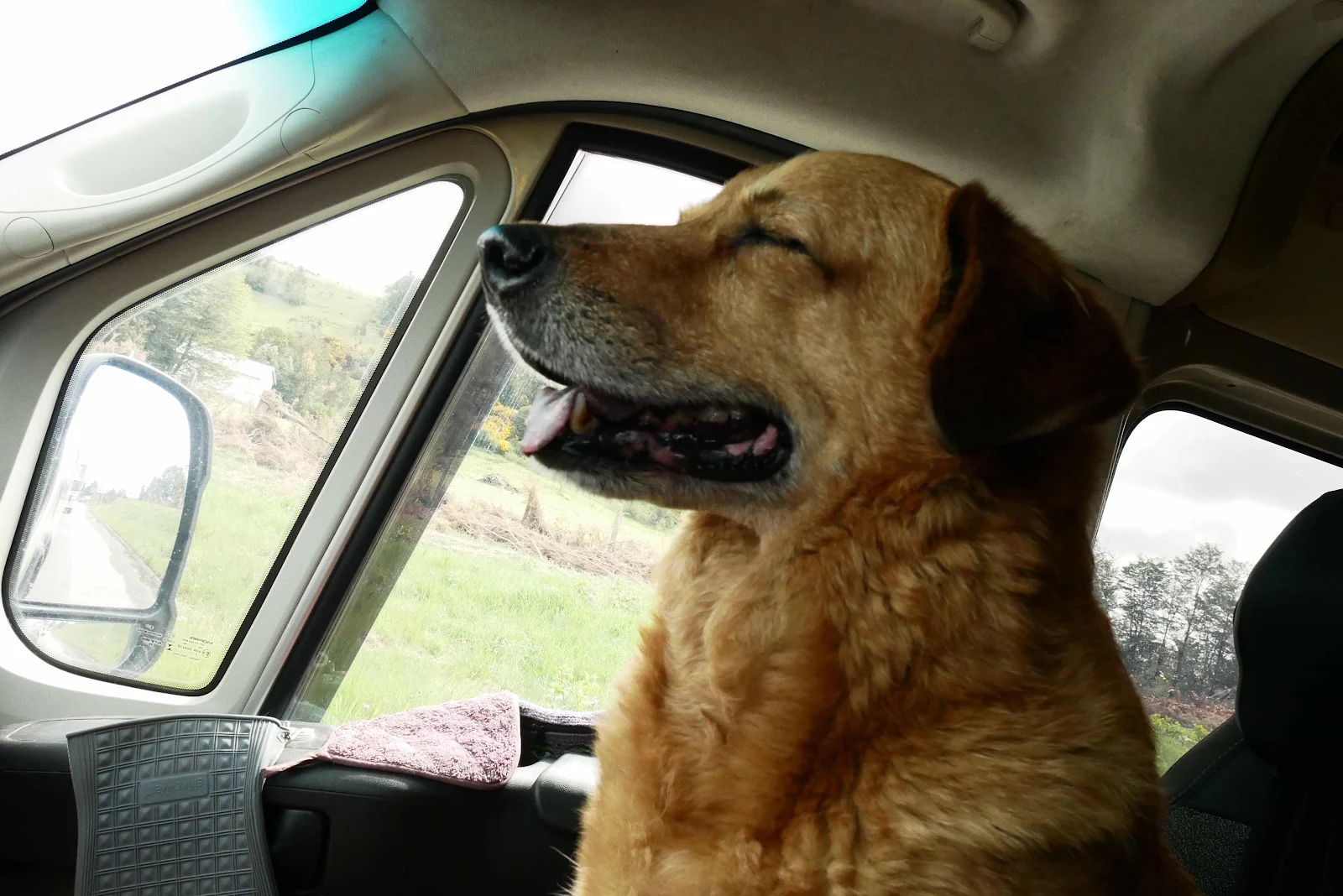
Rusty kept an eye on the proceedings. He is getting gray. 

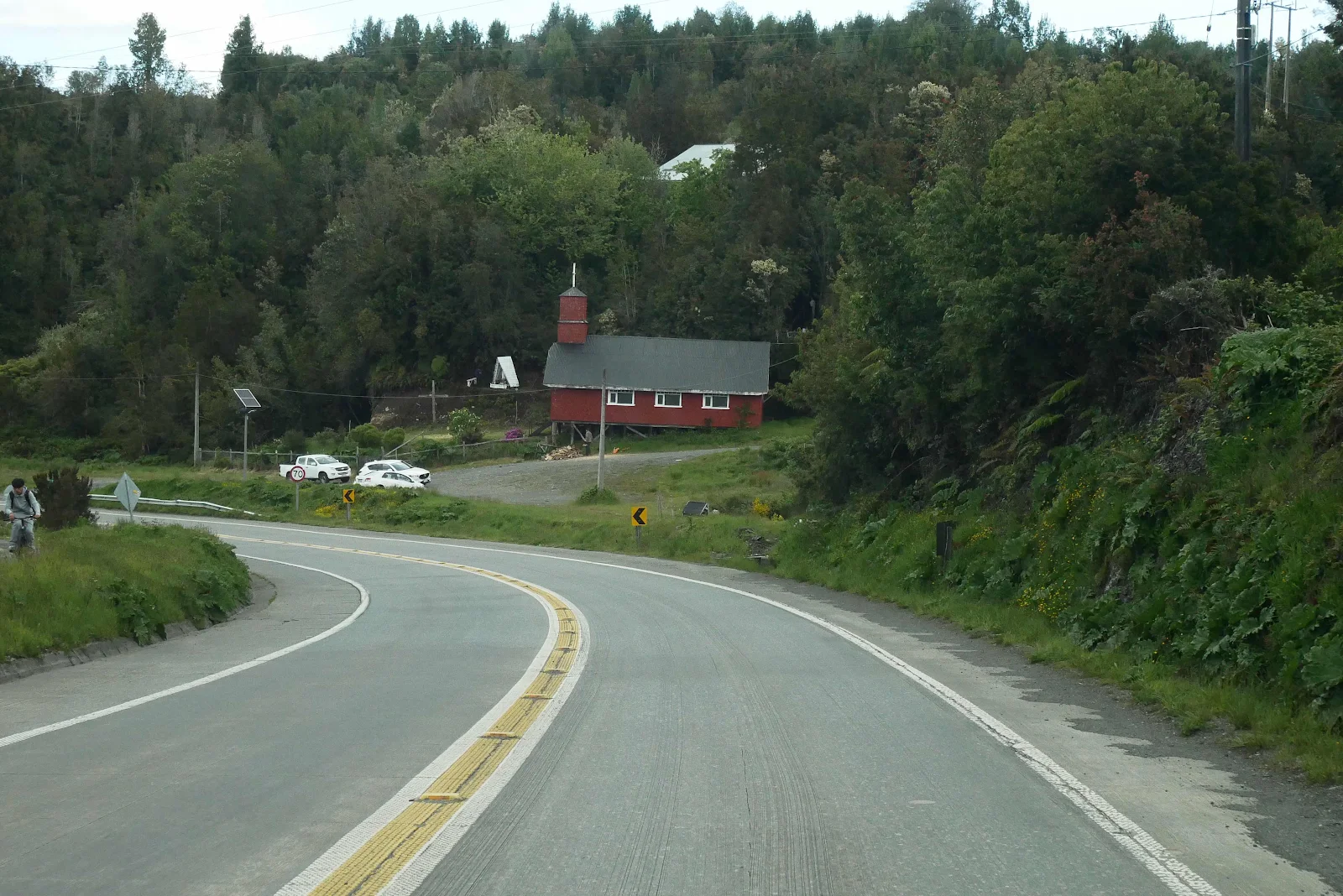
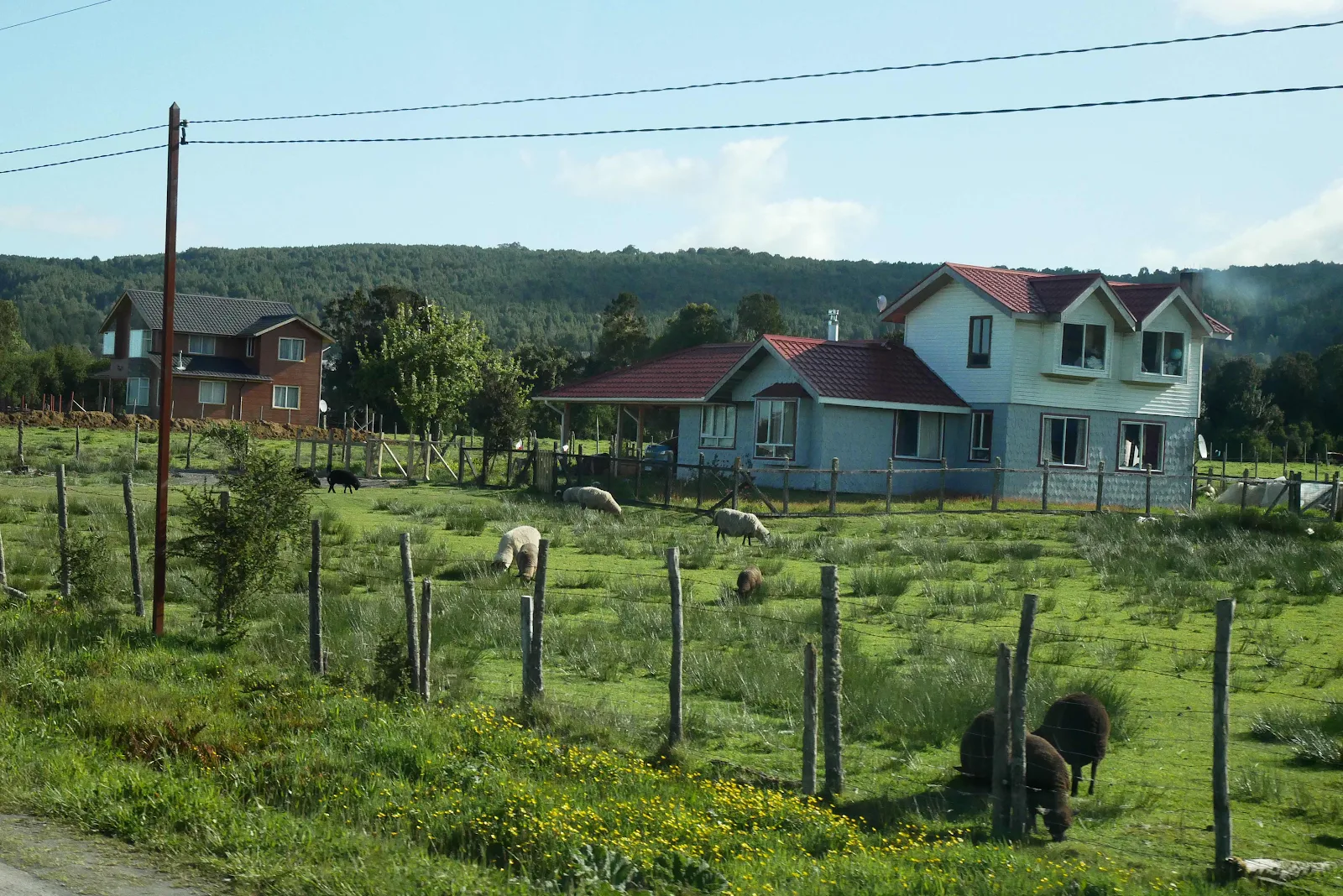
Most of Chiloé is neat orderly rolling farmland but every now and again the true nature of the place, an island surrounded by salt water pokes through. 


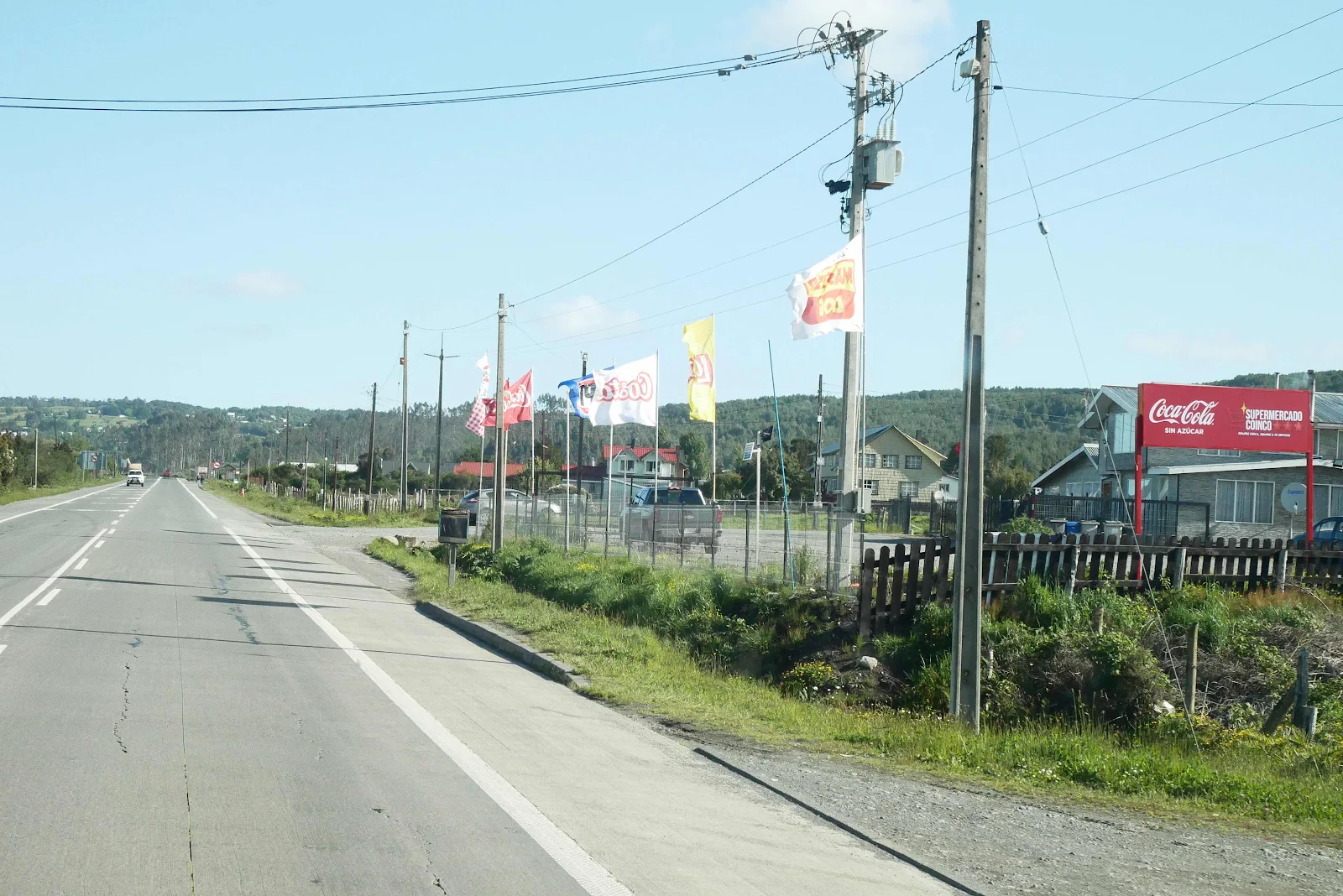
Castro, about half way down is the main town with supermarkets and box stores and lots of traffic.  

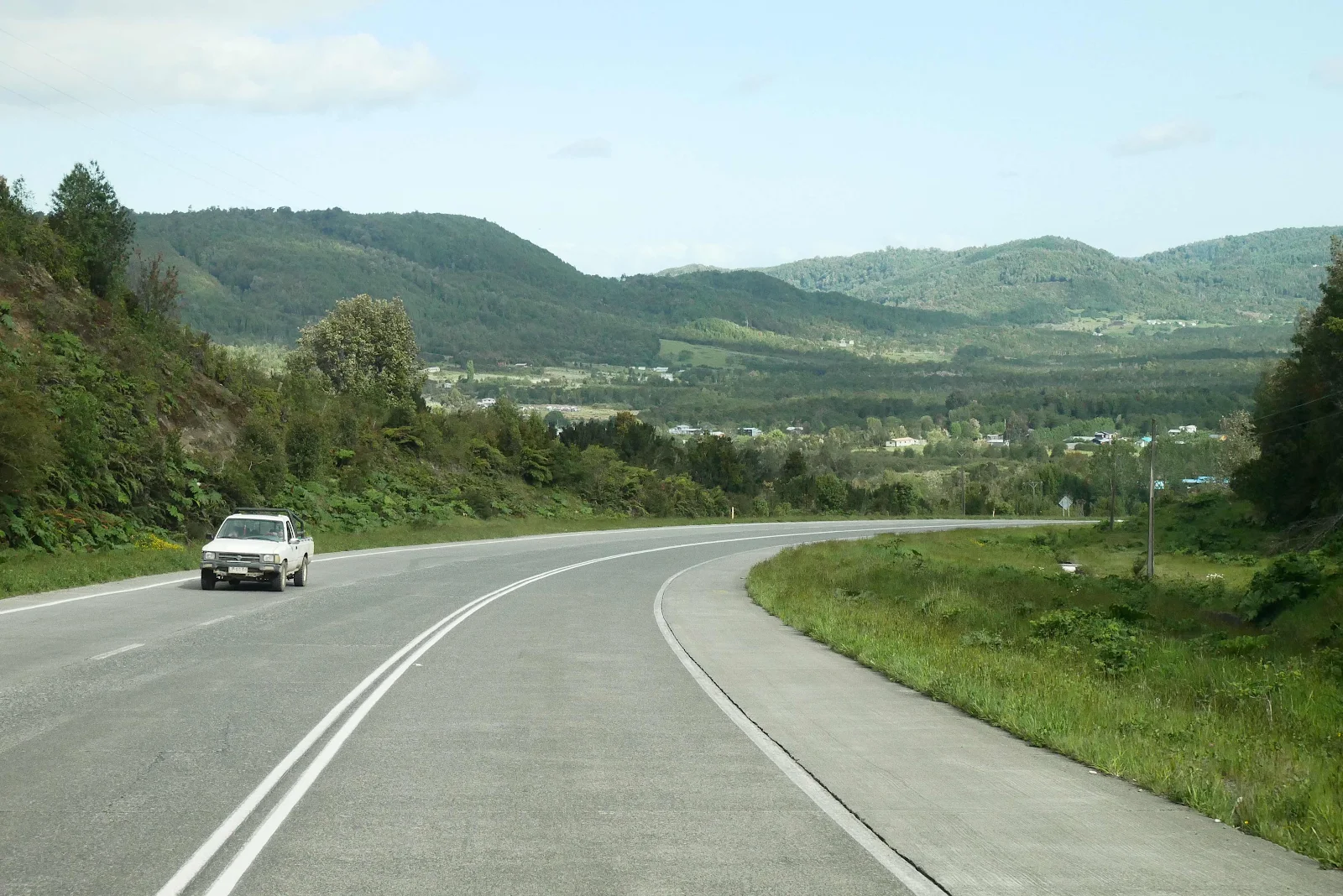
The southern half of the island is more wooded and hilly with some impressive hills to negotiate. 


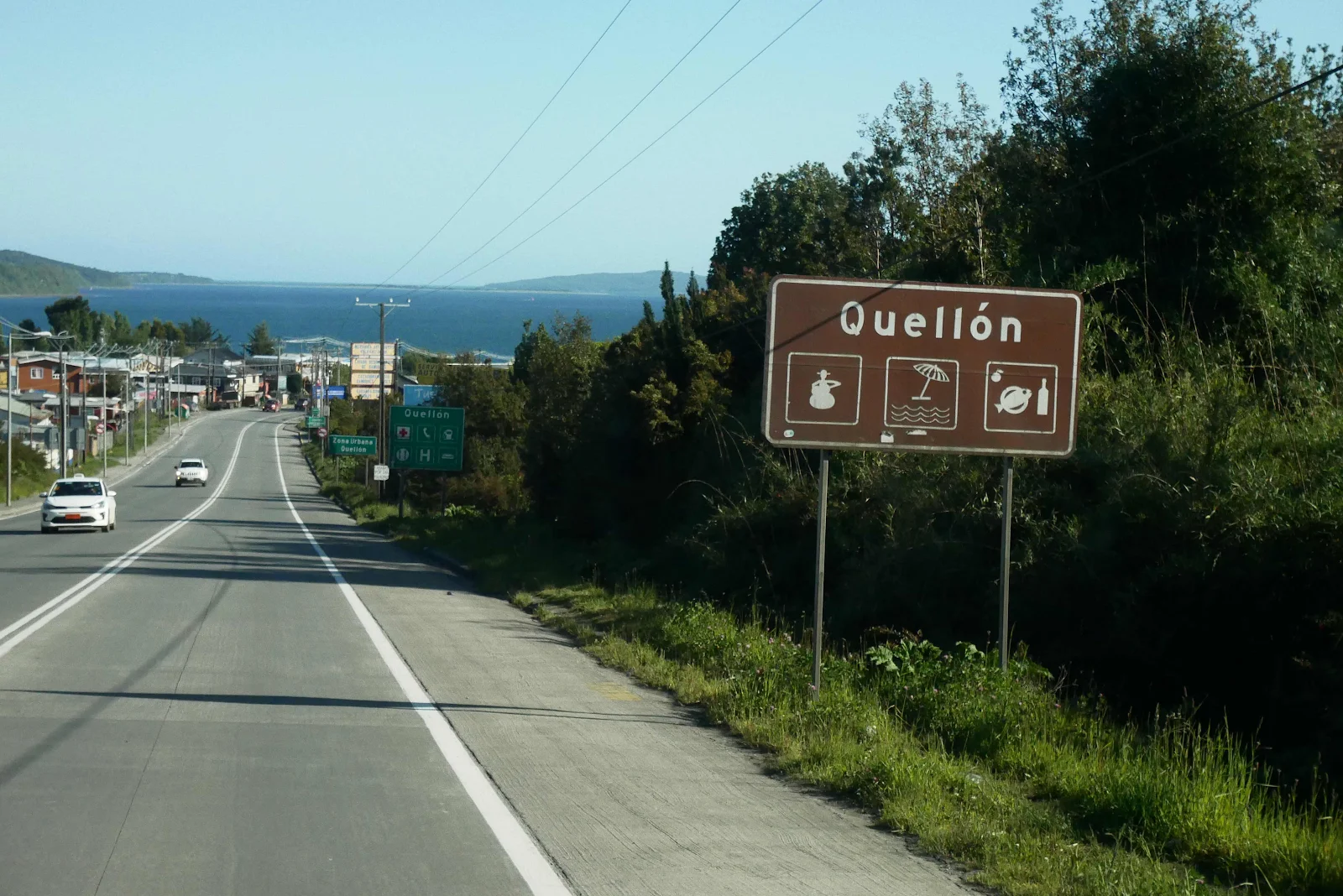
Our destination for our first day was Quellón at the southern terminus of the PanAmerican Highway. The ever the road from Alaska yet still 1700 miles from the tip of the continent…


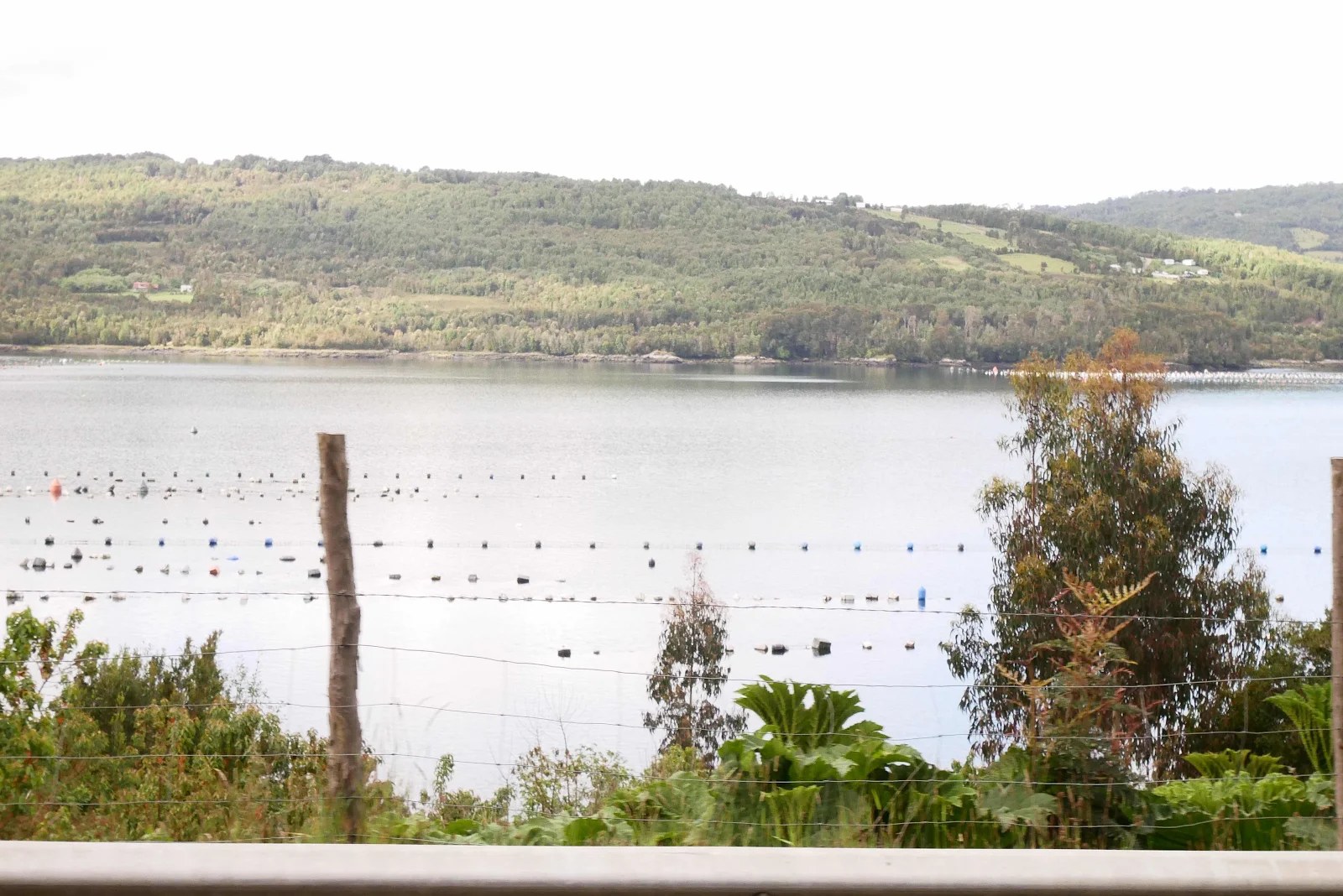
Fish farming is a big deal in the calmer inner bay waters around the island. 


Slowly the rain clouds drew back and the afternoon turned sunny and breezy which was doubly good for us as the house batteries were relying on our solar panels to charge. 


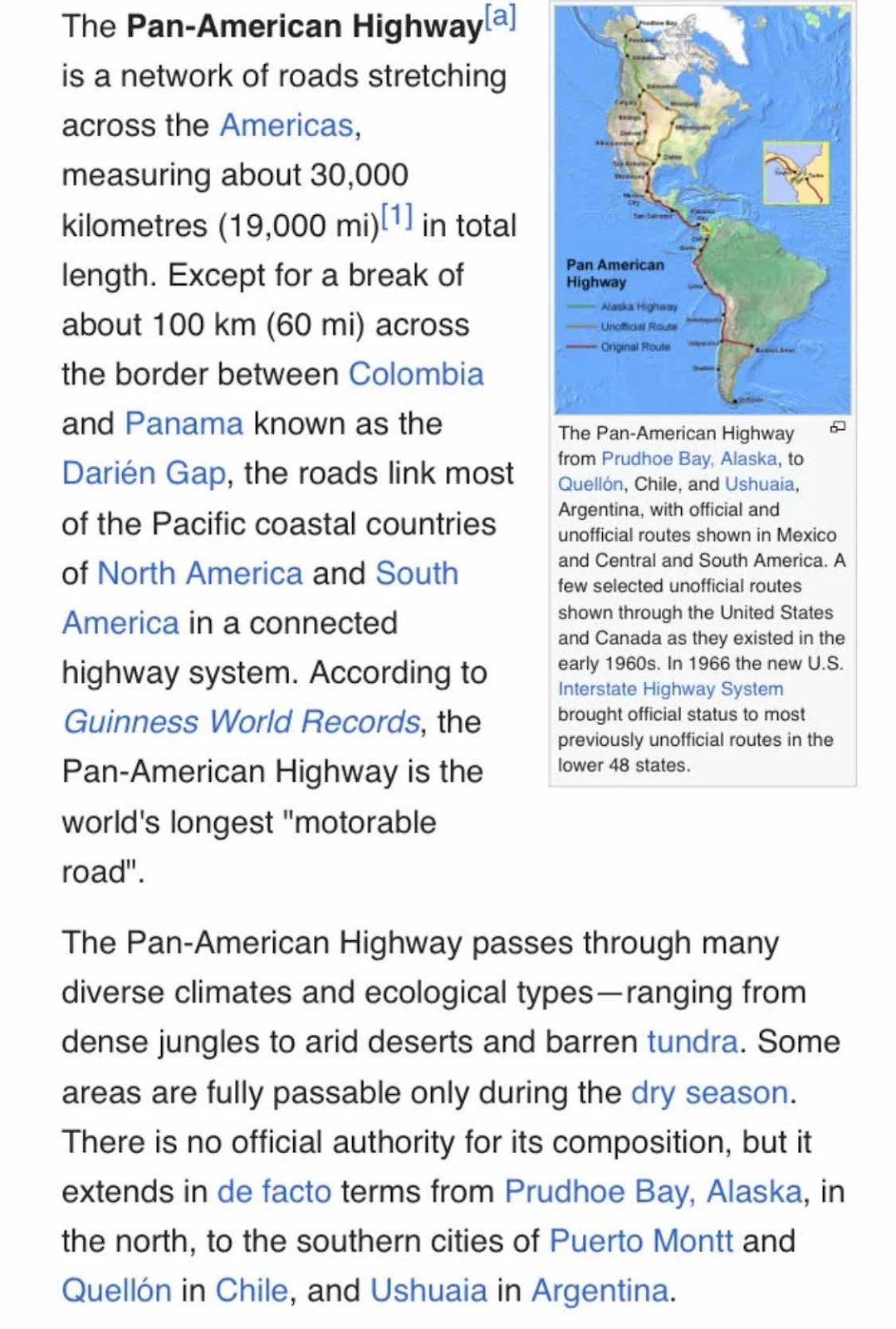
We were four miles from the end of the PanAmerican Highway, the longest motorable road in the world, whose other end is in Alaska.  

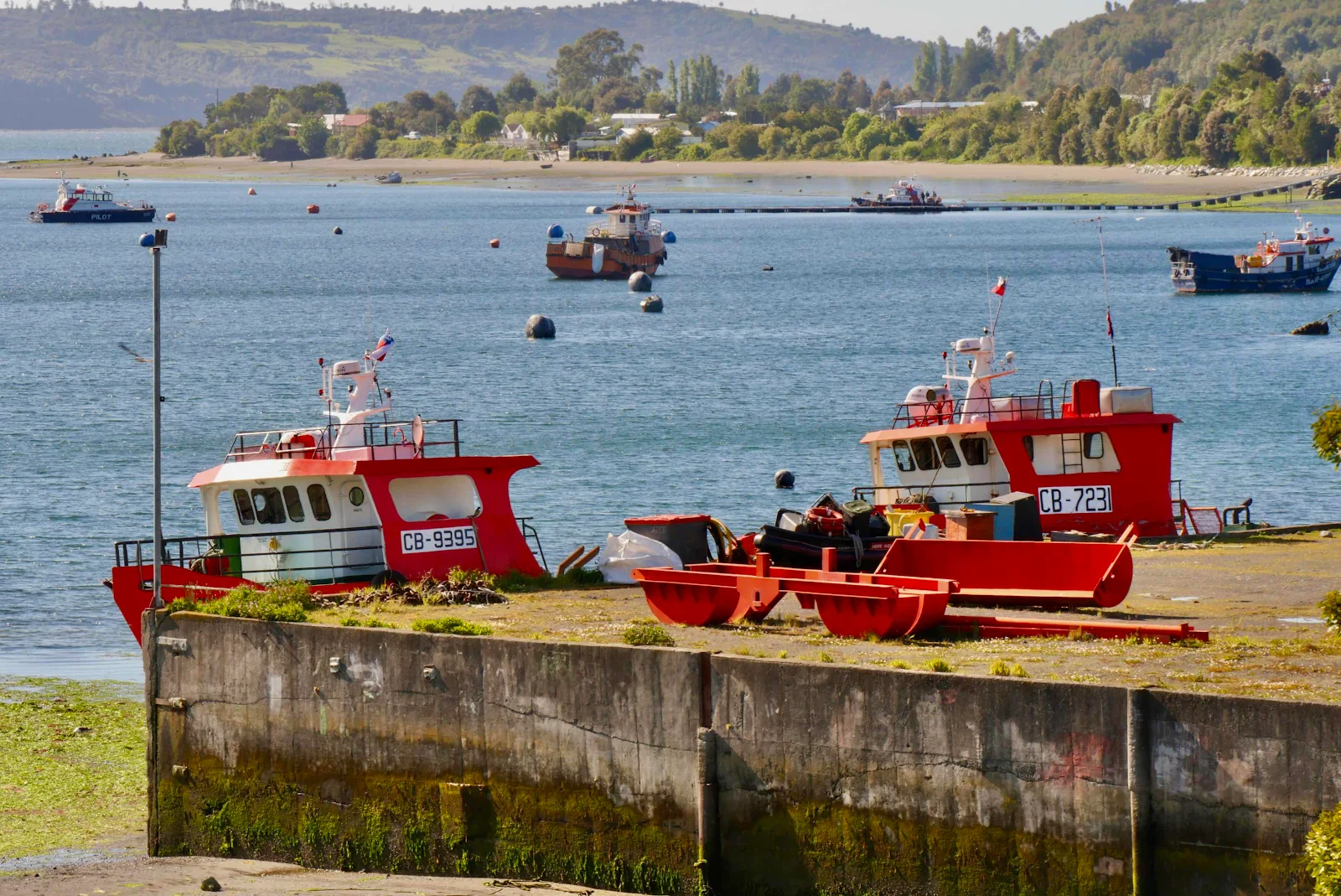
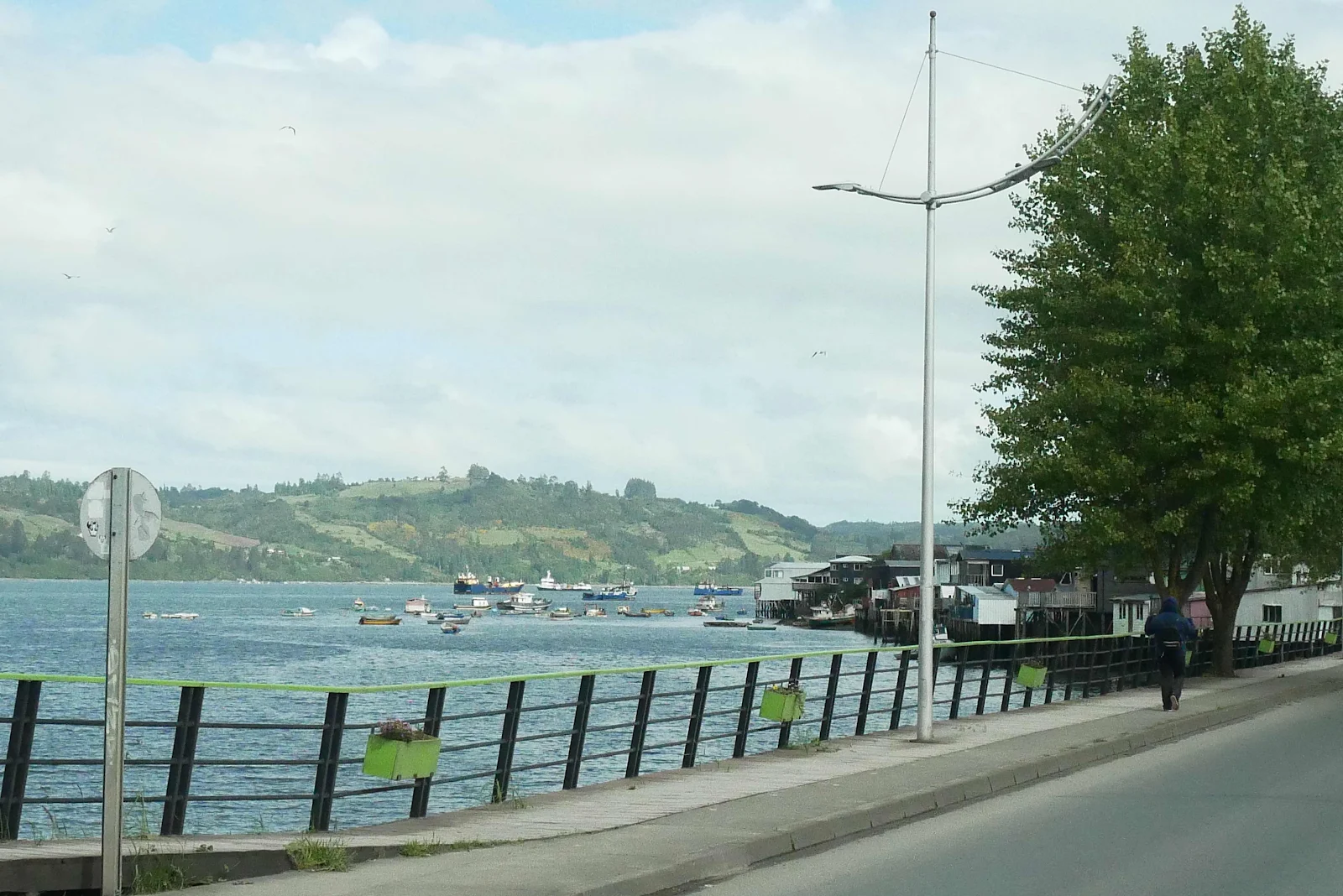
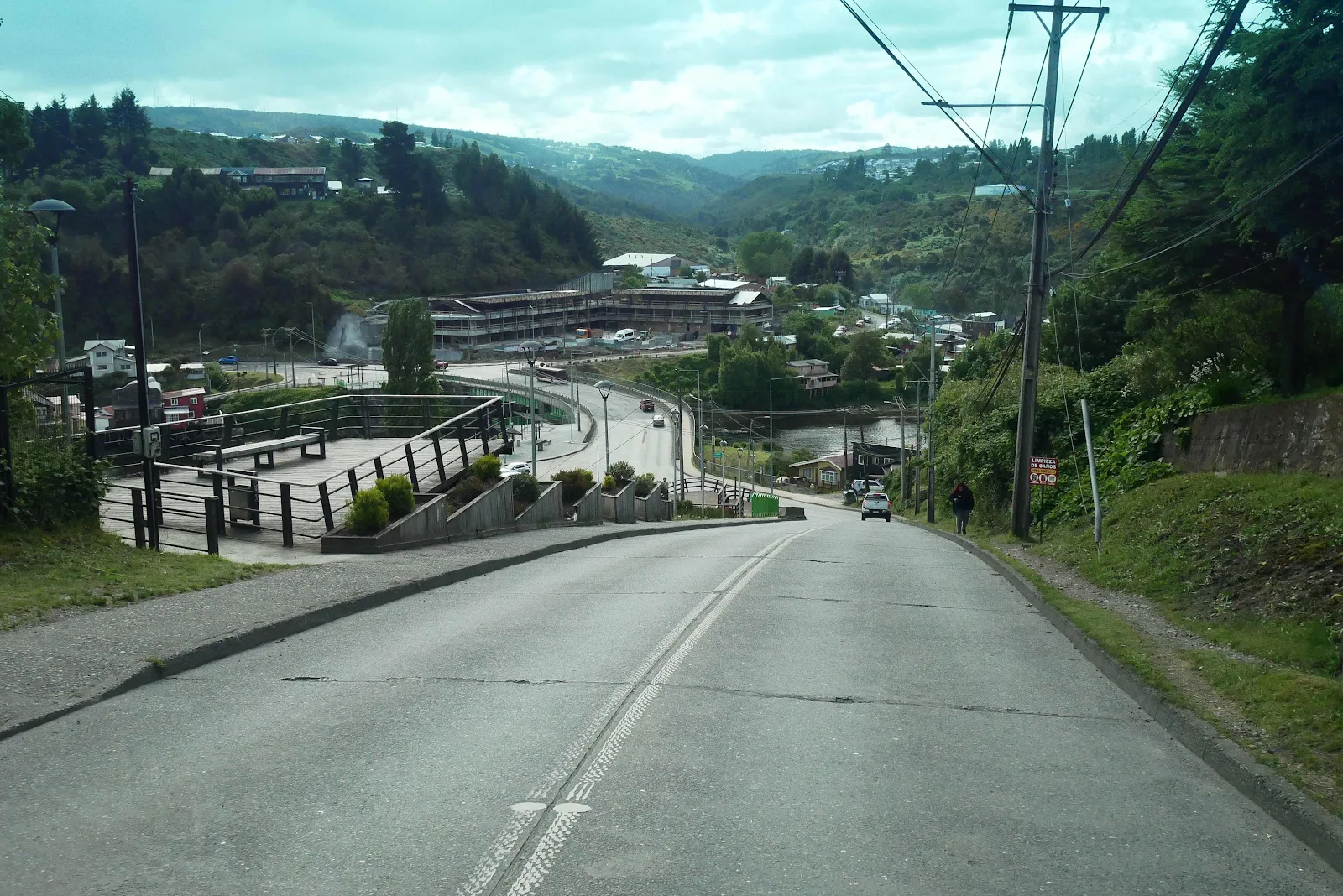
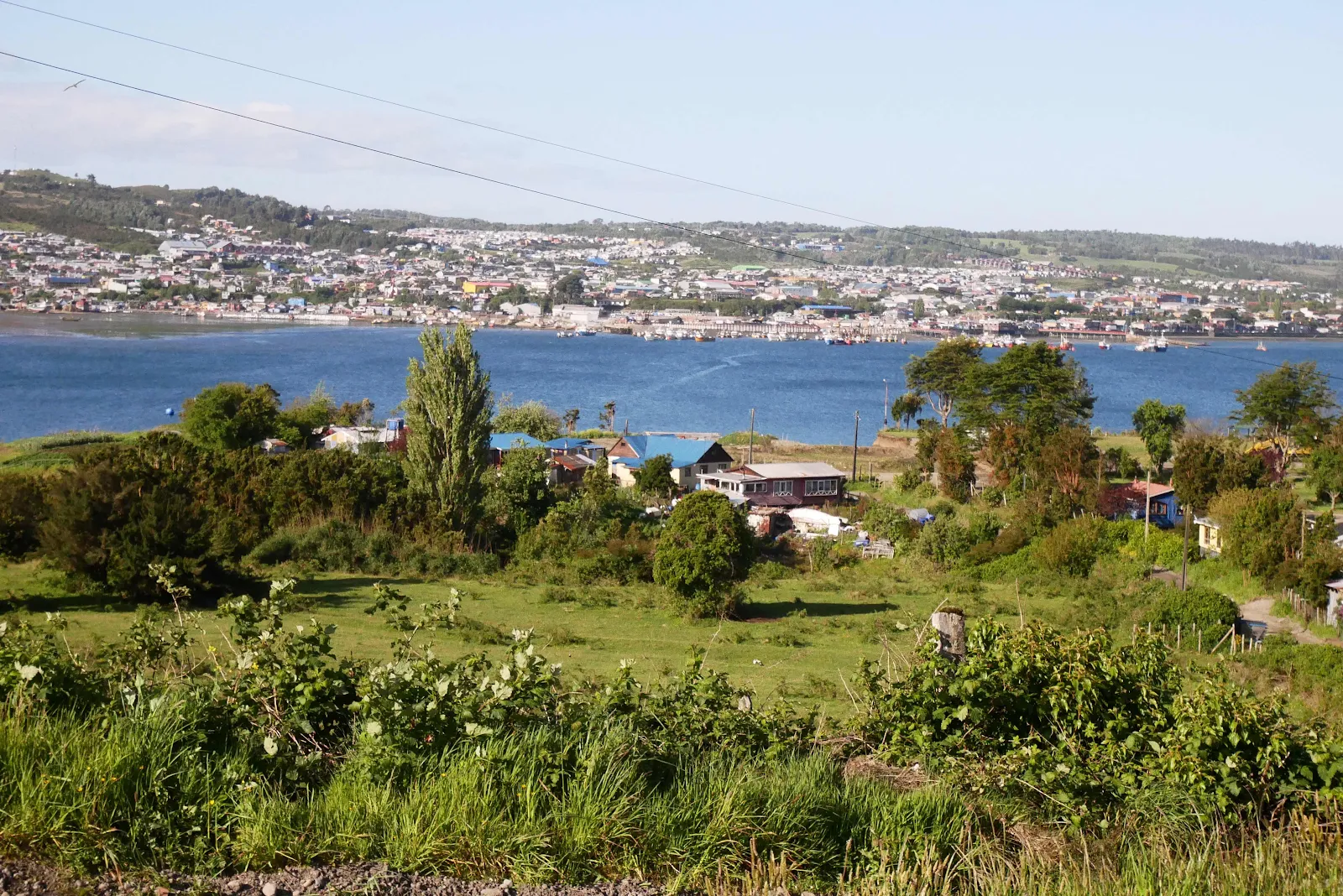
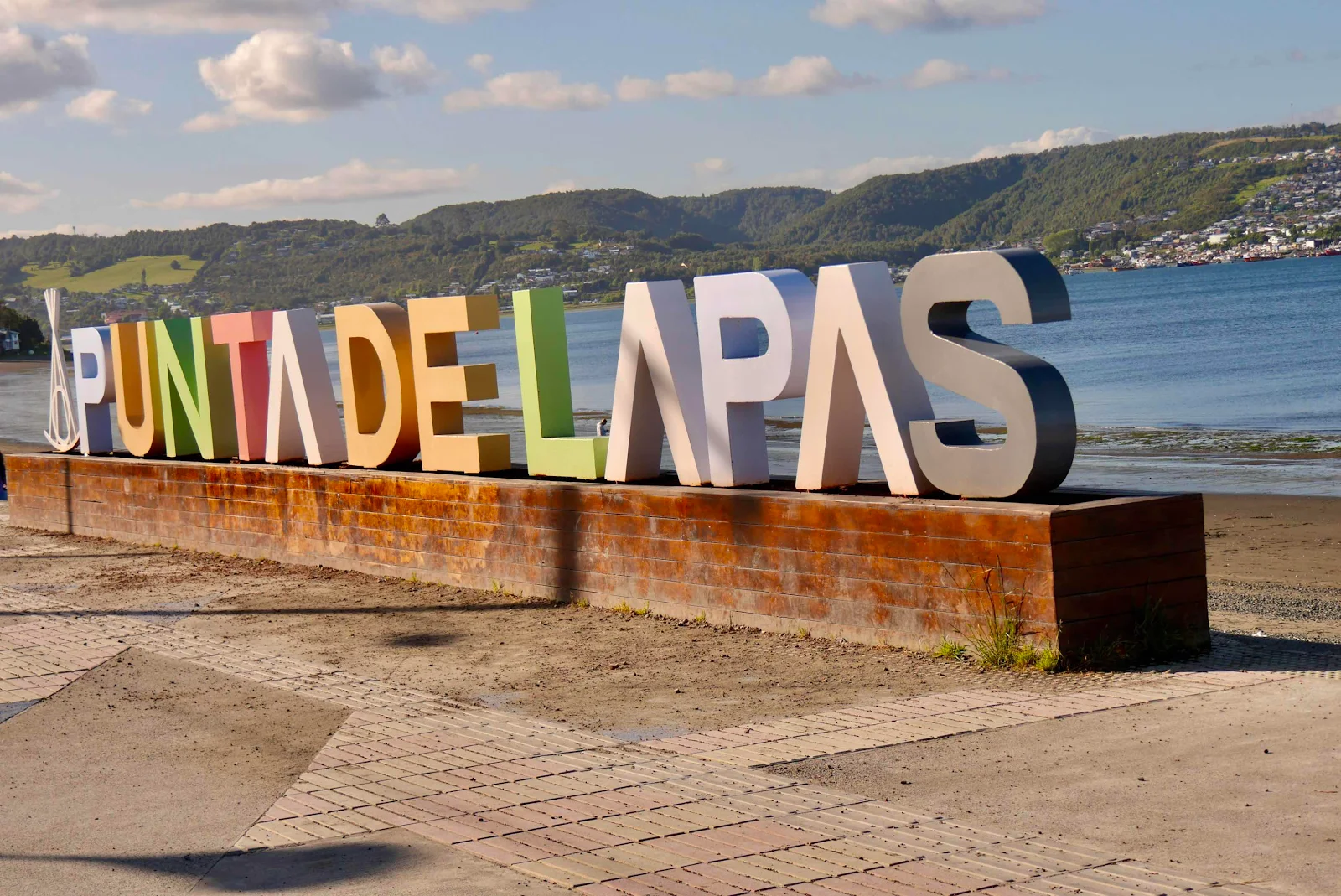
We drive around the inlet and could look back across the water to Quellón: 

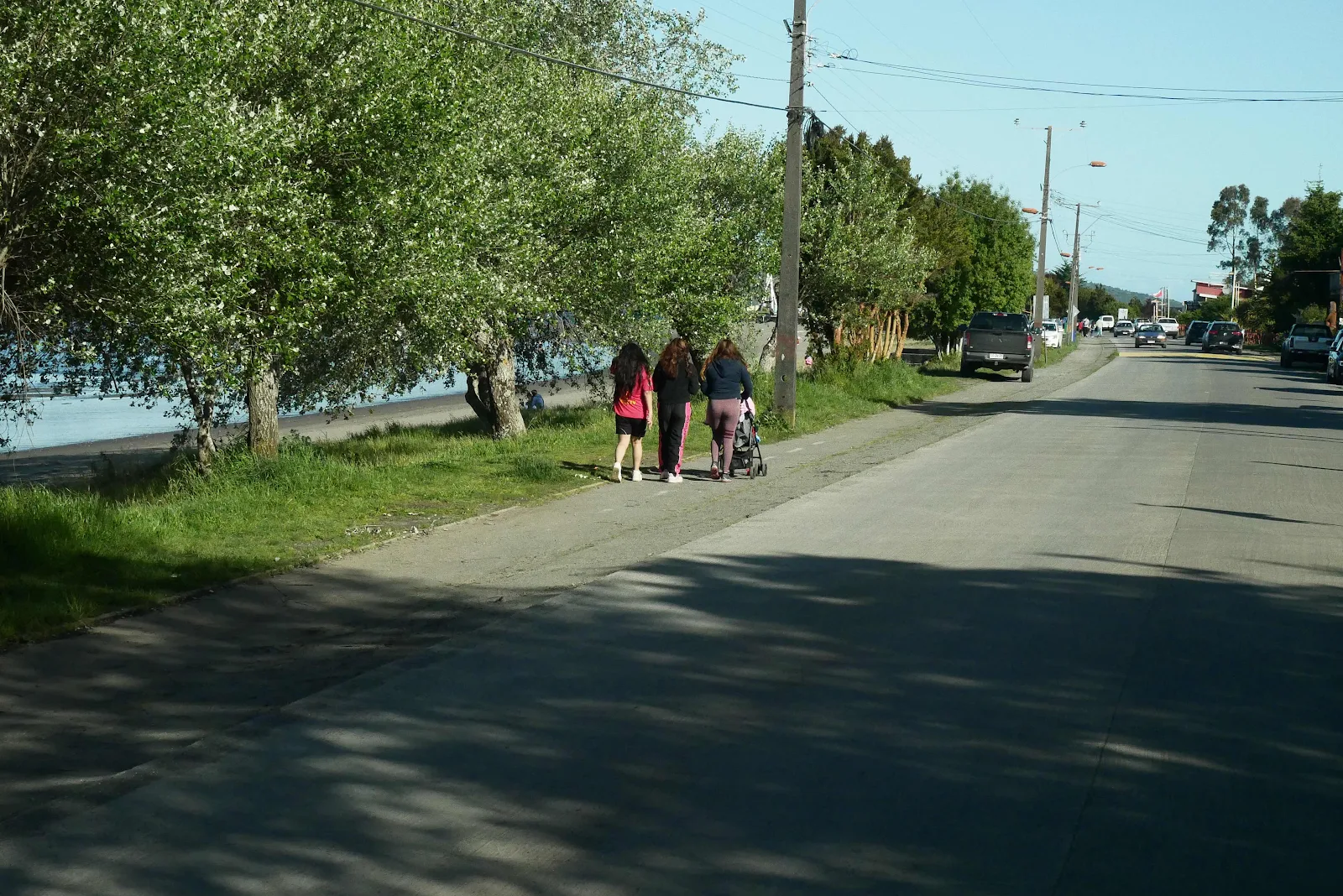
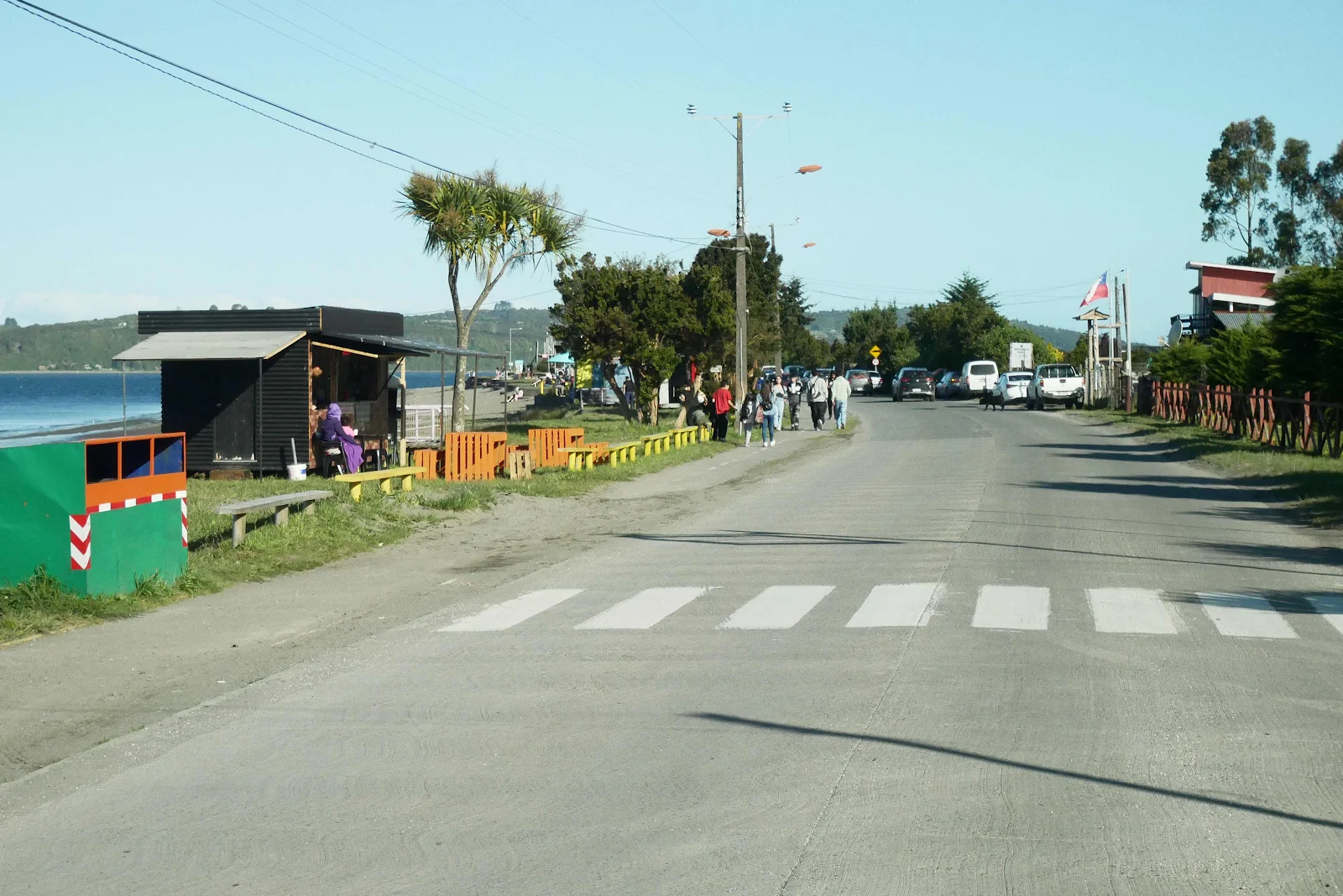
The approach road to the monument is apparently popular with locals in a Saturday afternoon in the Spring. 


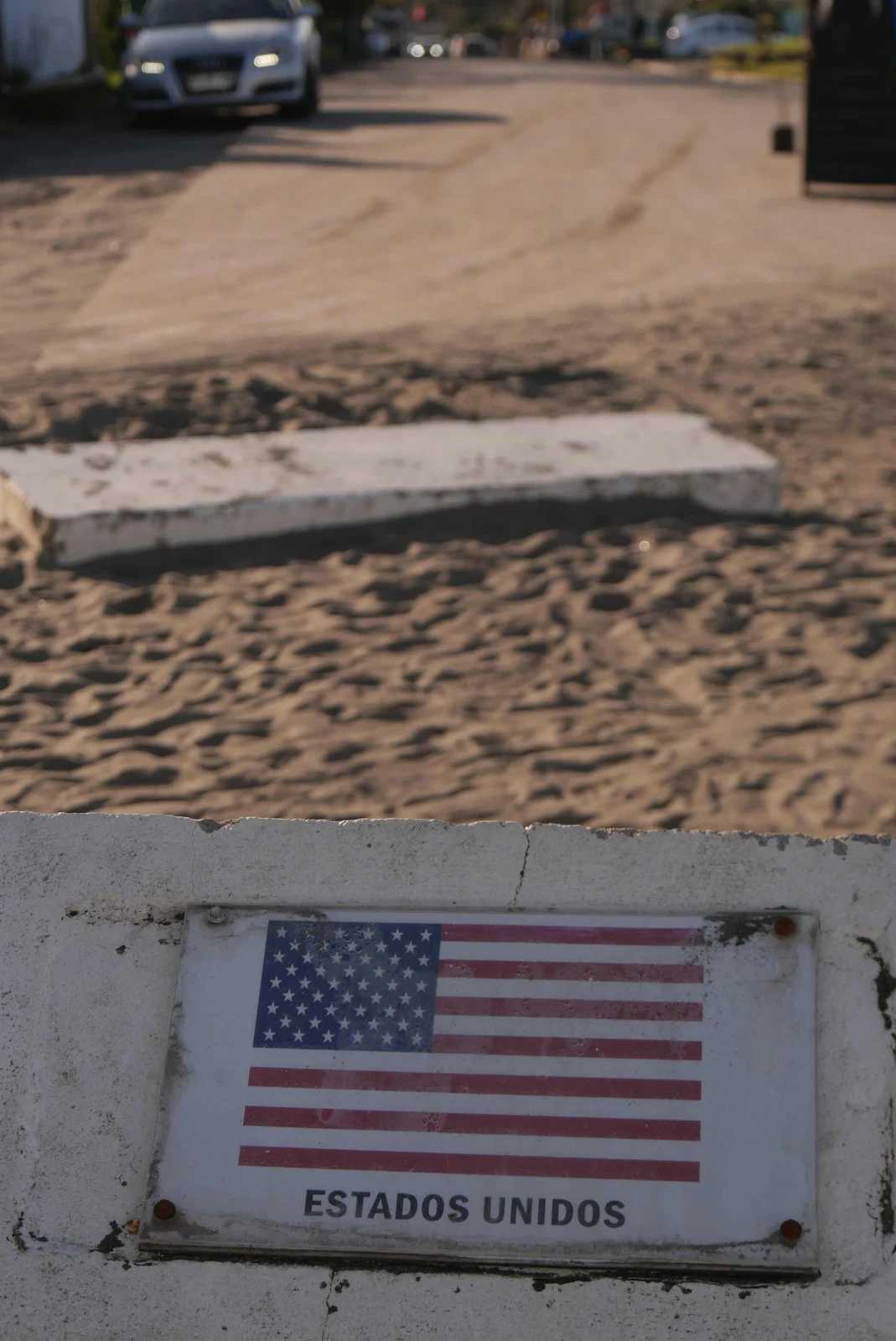
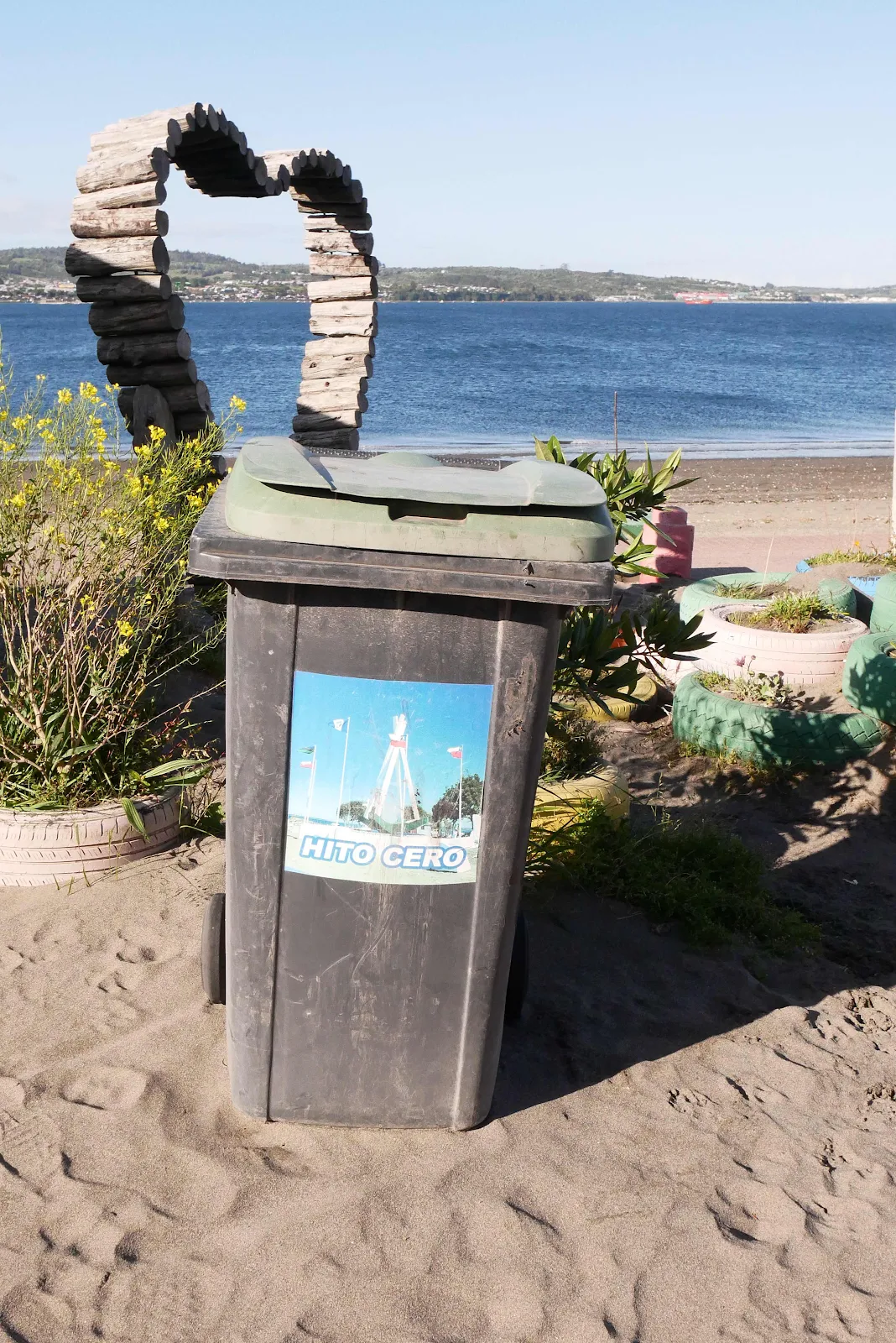
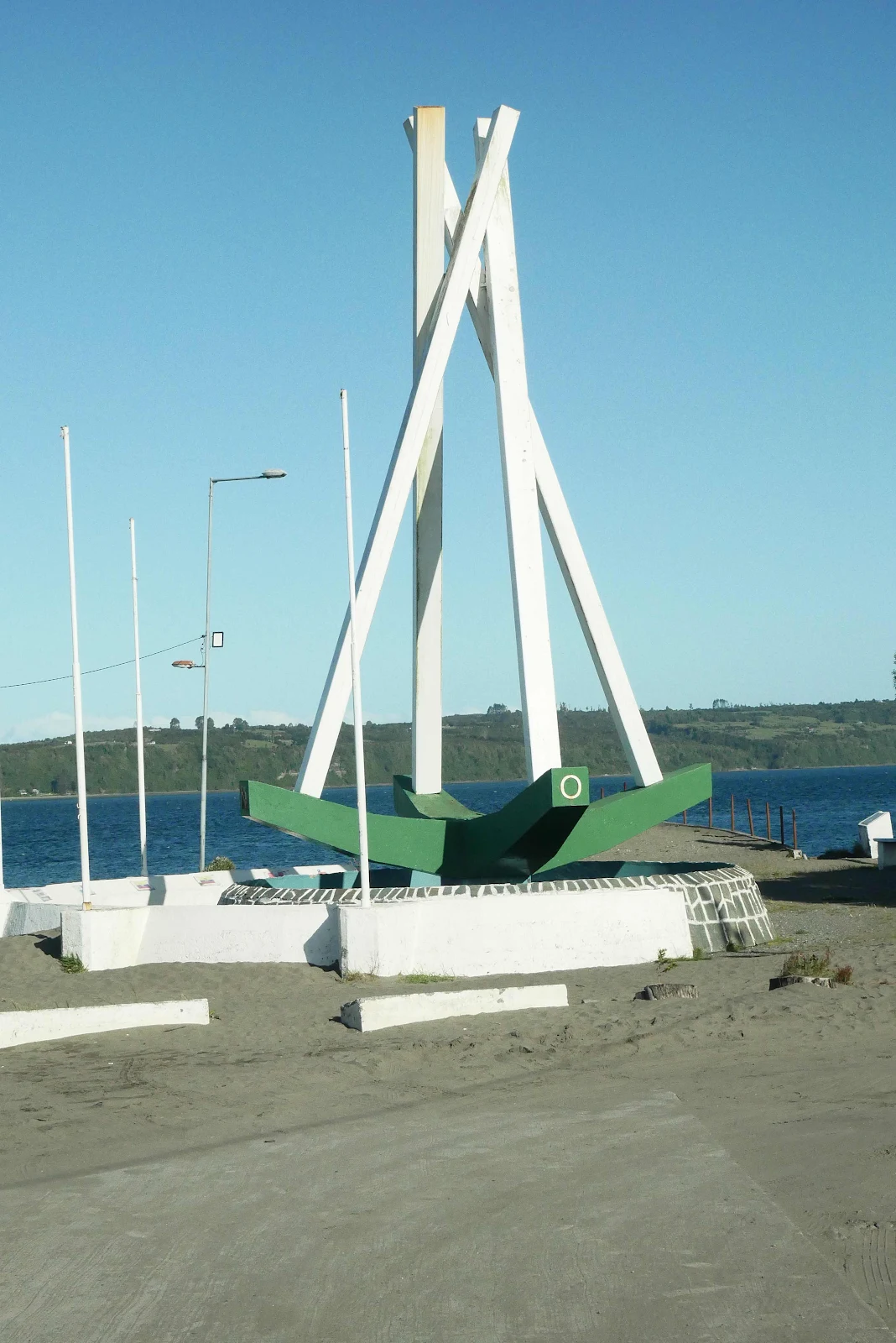
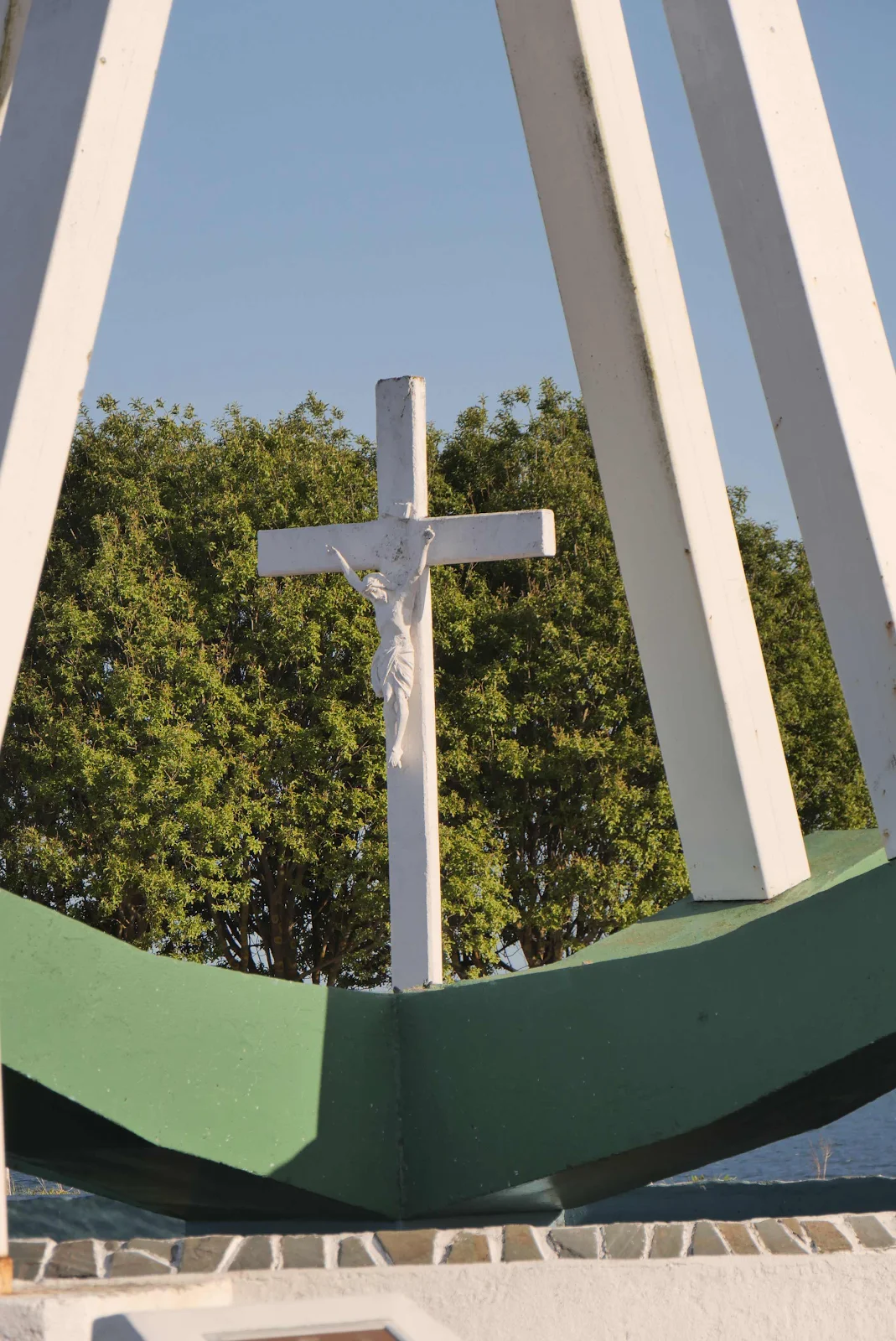
Hito Cero - Milestone Zero. 

And there it was, the end of the PanAmerican Highway. 

14 months and 16,000 miles since we crossed into Mexico at Laredo.