Saturday, March 8, 2025

The Rio Negro Valley

The solid red line is the approximate course of the Rio Negro infamous in history but helpful nowadays offering a slightly less boring drive across Argentina.
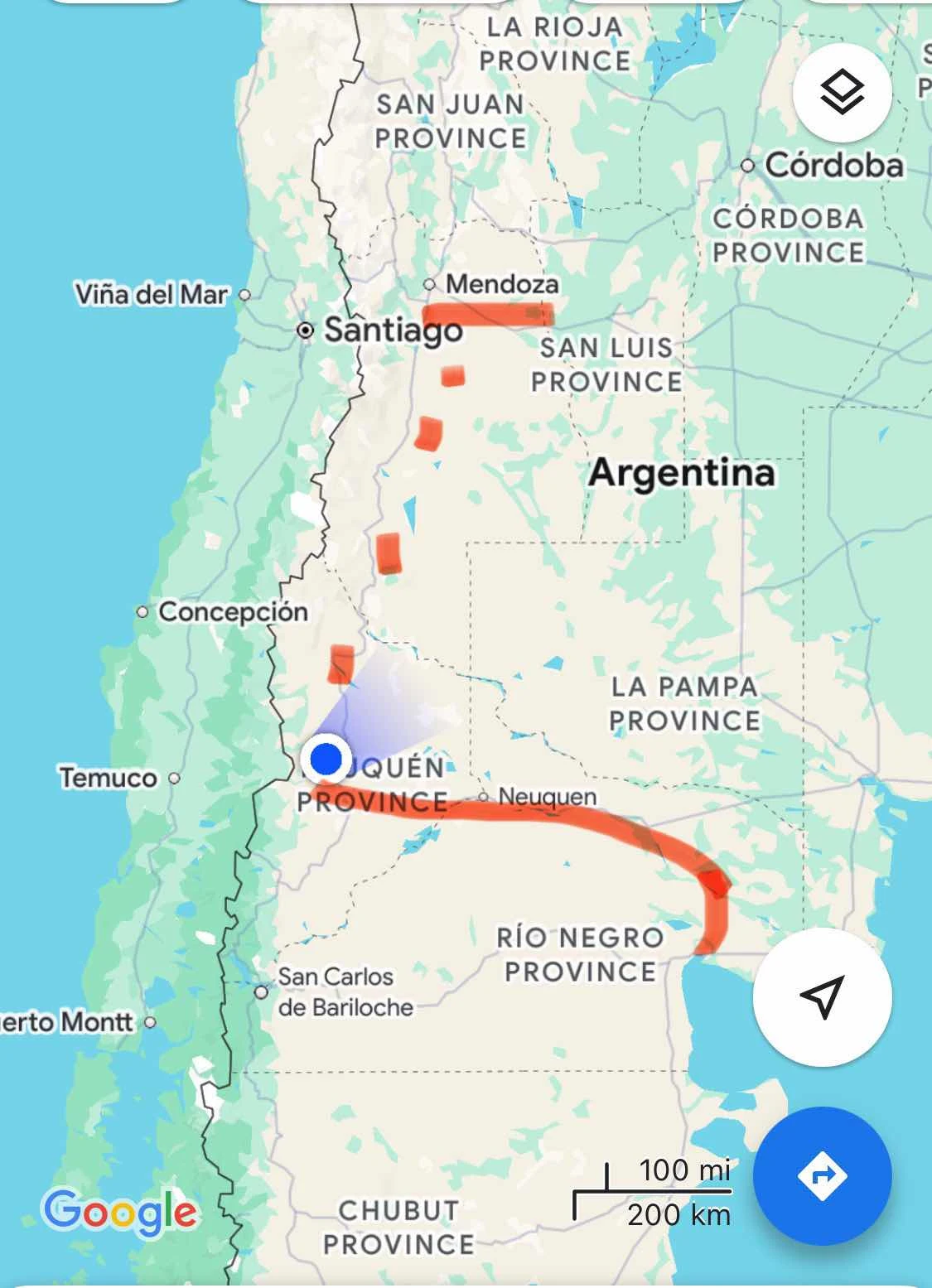
The dotted red line is our route north to the wine country around the large city of Mendoza. After that we head west to Santiago in Chile to take care of some paperwork - a visa for Brazil principally.
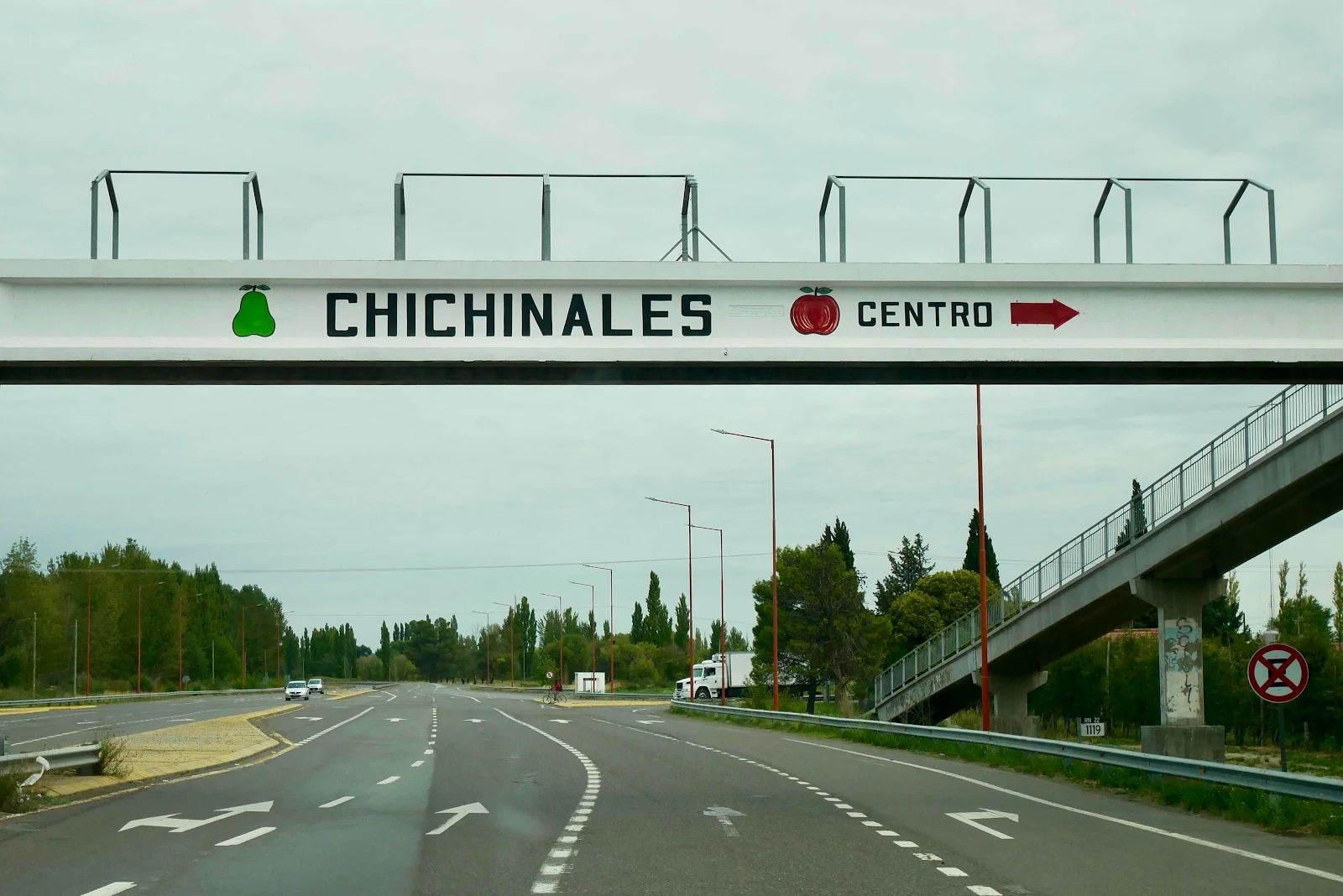
Meanwhile there was a country to cross so we left the campground around eleven, a slow start of course, and got on Highway 22. This is apple and pear country and the river valley is packed with orchards. Below you can see the back end of a truck hauling fruit in the boxes. 
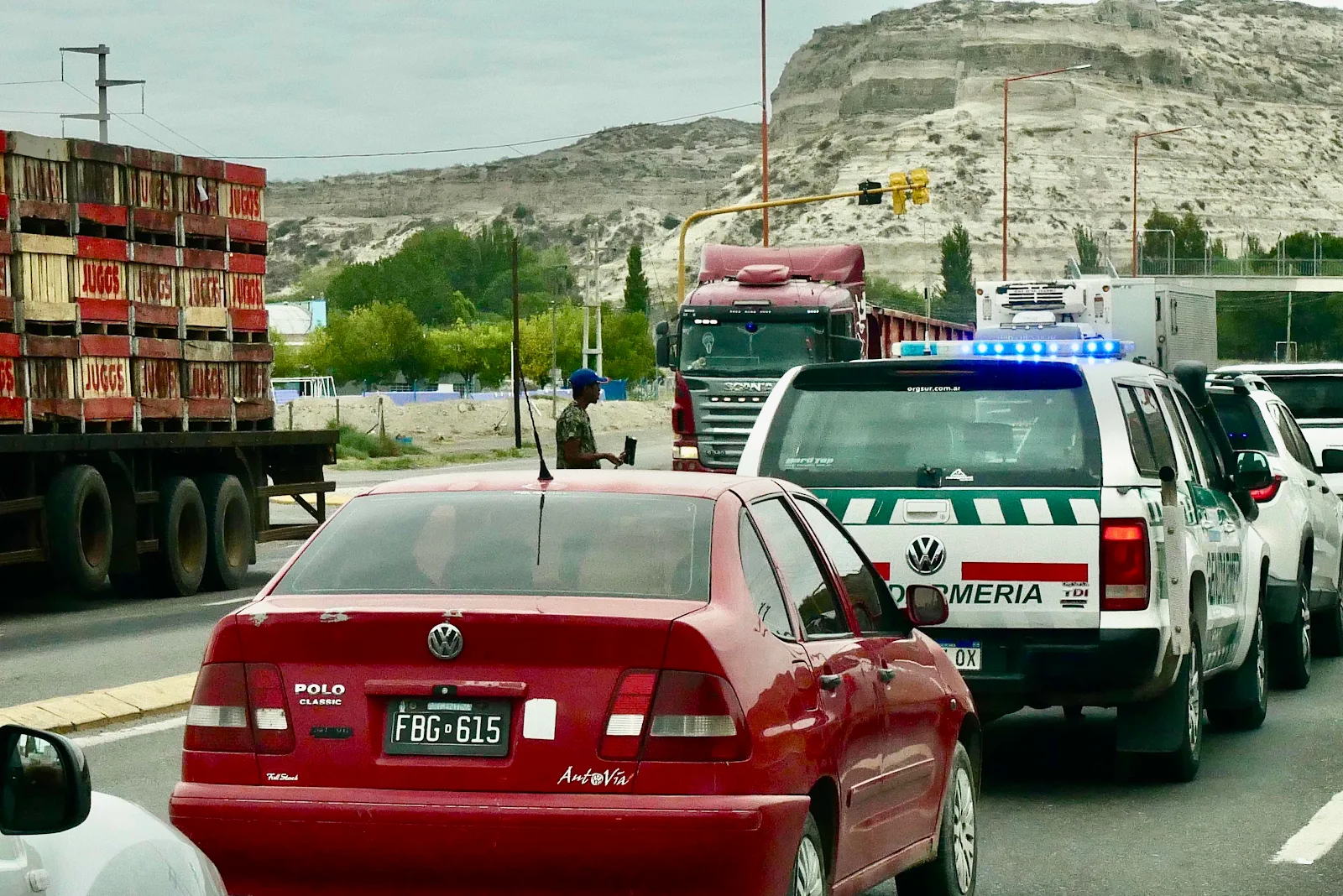
There were lots of beggars on the highway here, juggling or washing windshields. In the photo above I caught an illegal window washer waiting for the police car, the Gendarmeria Nacional, to drive on. He’s probably a Venezuelan refugee making ends meet. 
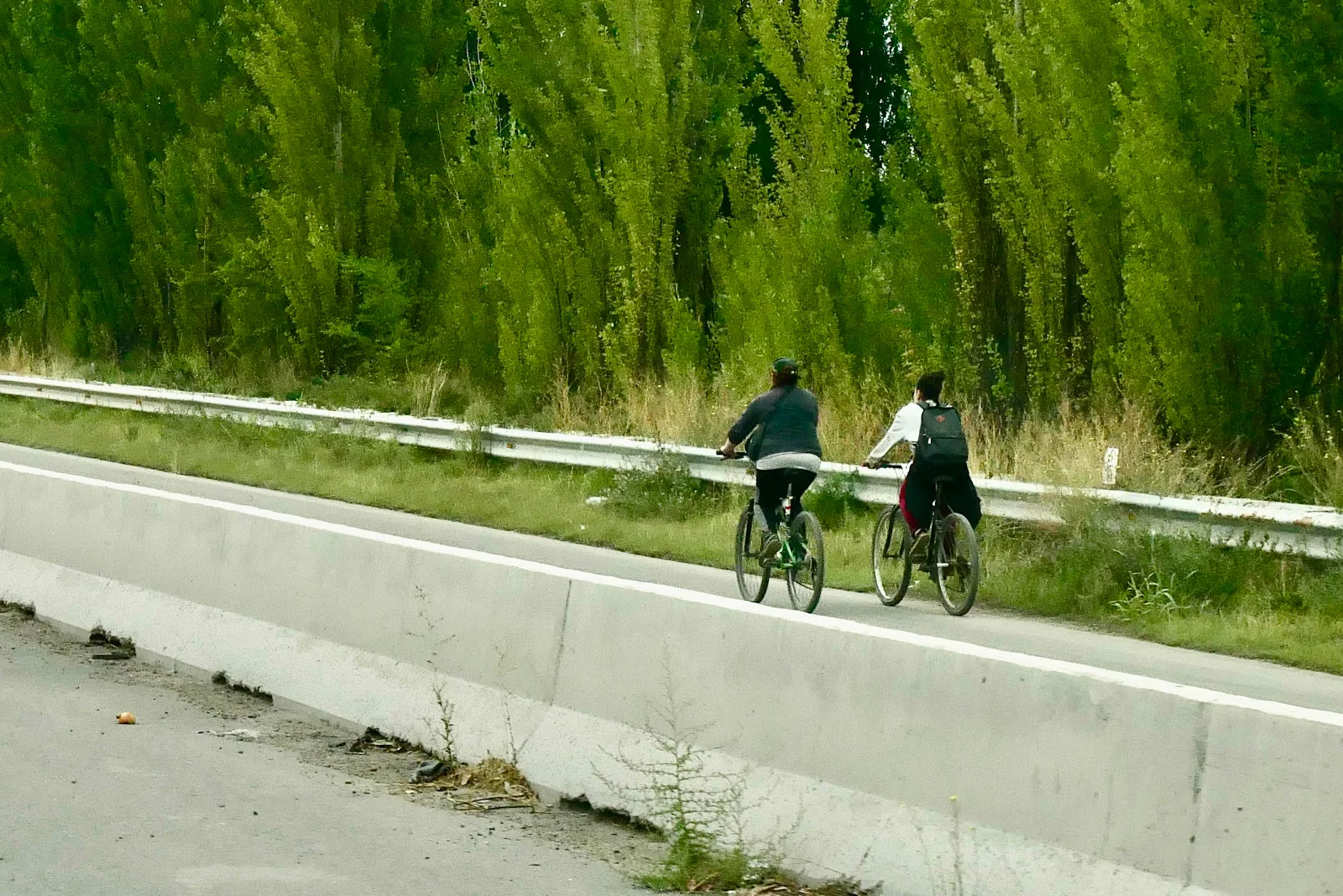
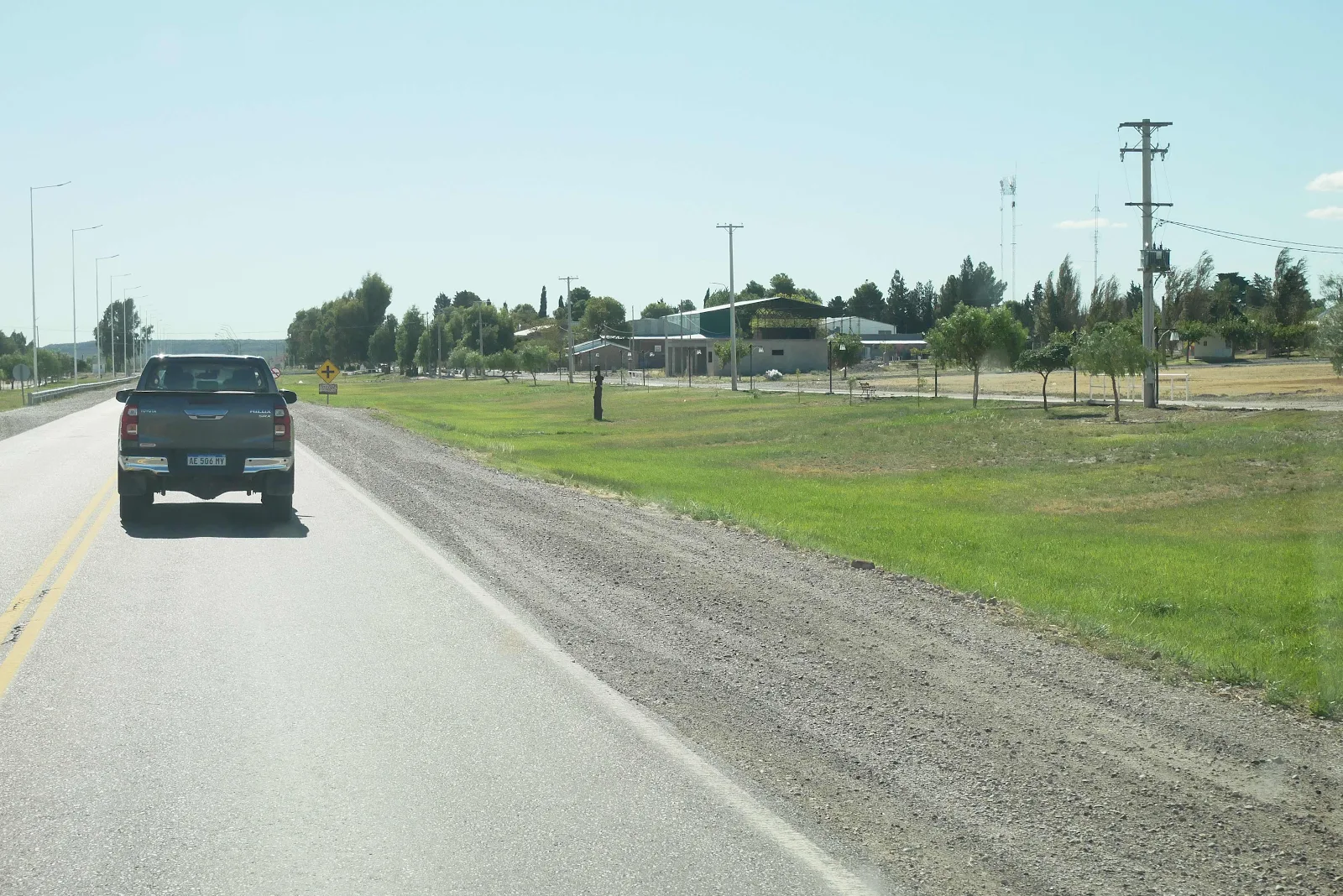
Highway 22 is for a stretch at least a four lane freeway which luckily for all concerned got built before the great shutdown stopped all public works. 
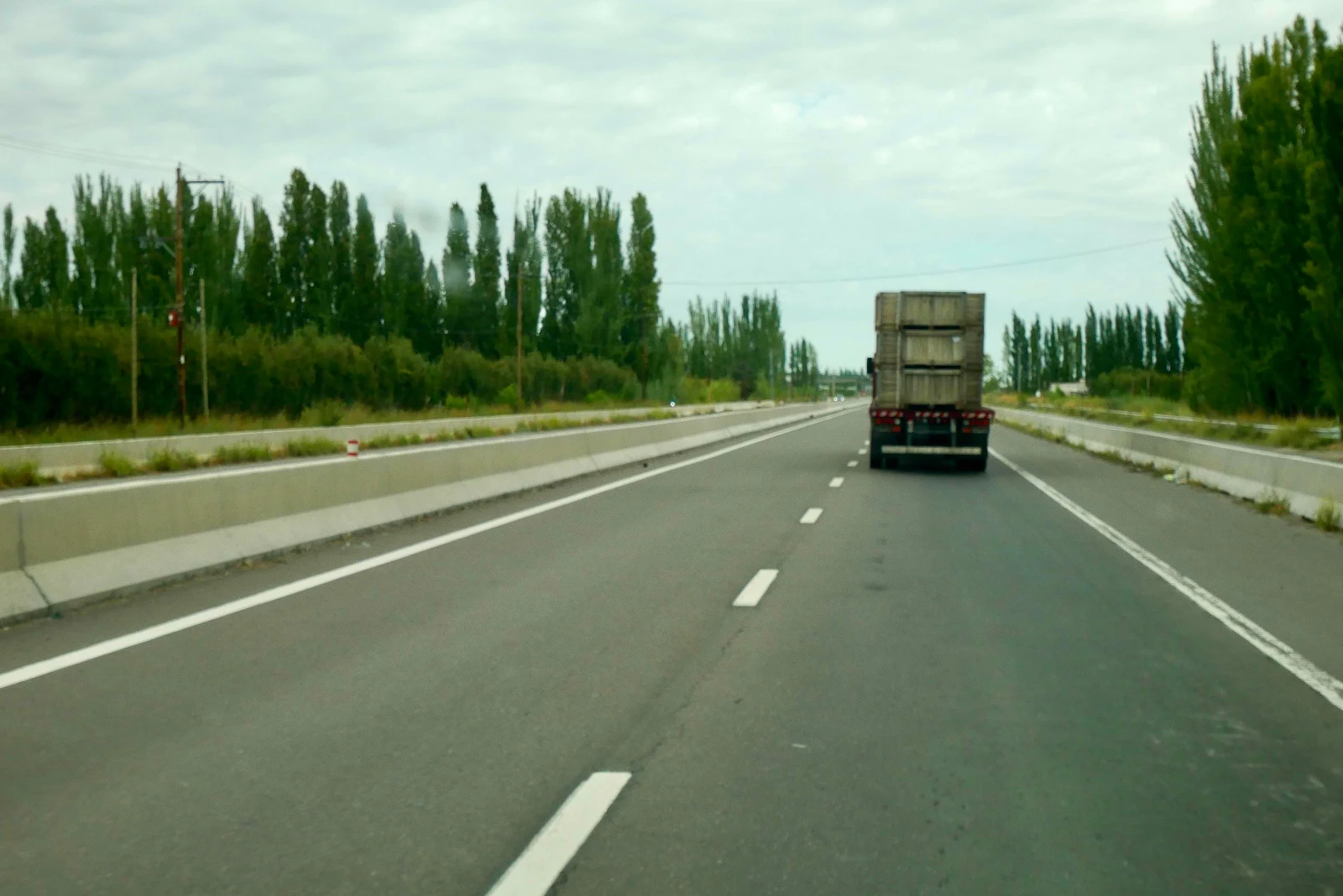
It’s obvious everywhere decay is creeping in. 

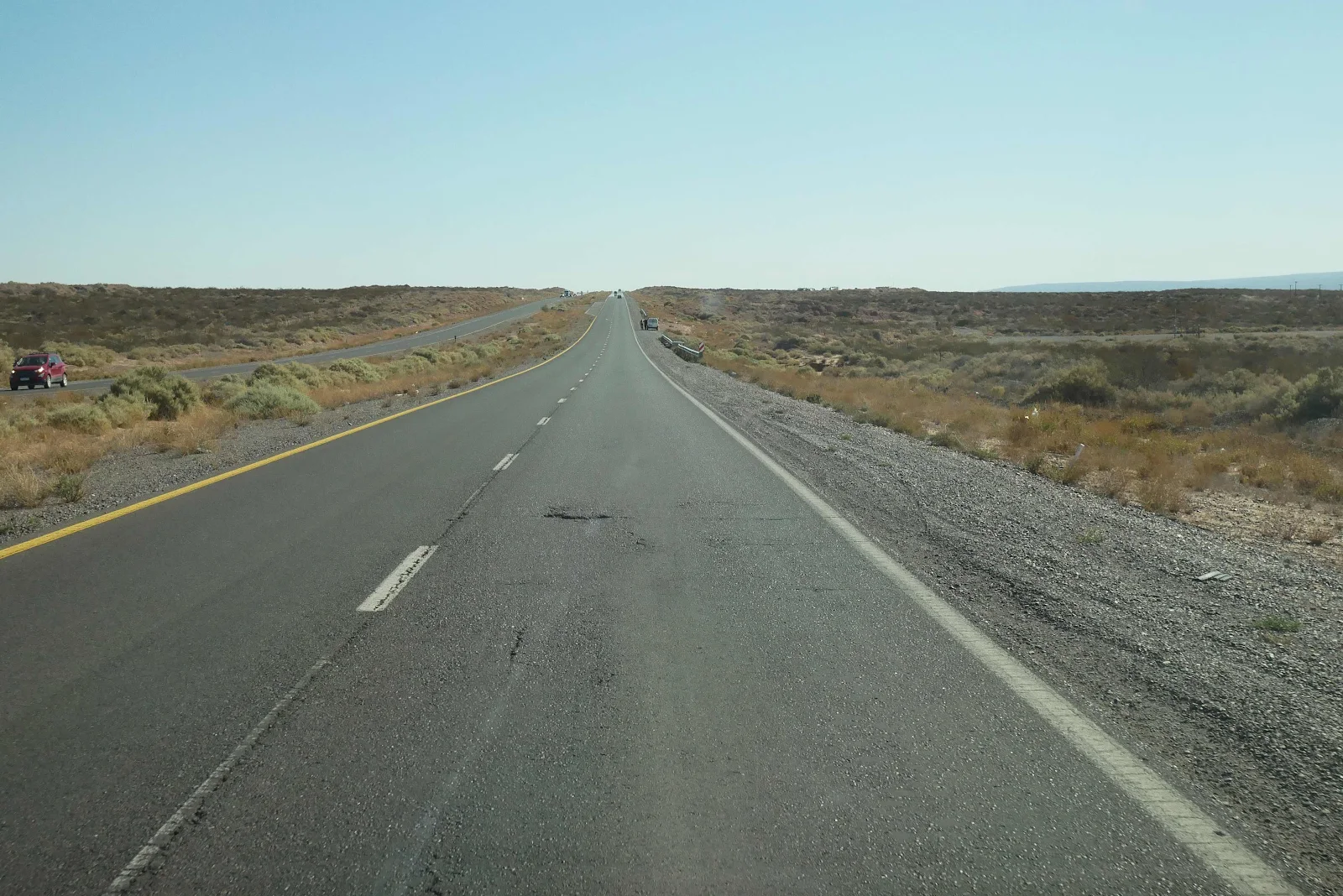
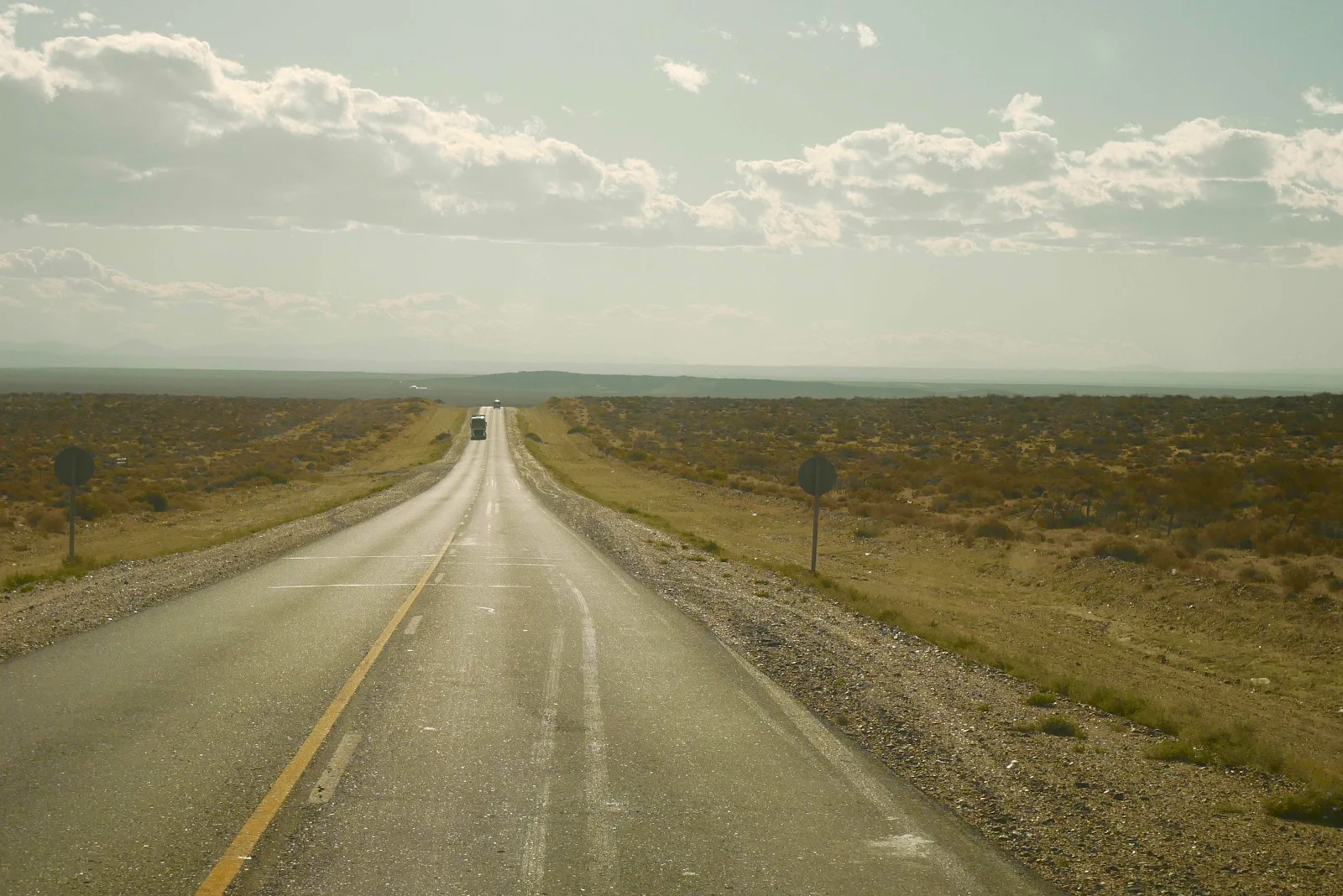
Away from the towns the highway runs through countryside that reminds me of west Texas or Arizona  with buttes and mesas and nothing much else. The air is dry and it feels like the desert here with hot sunny days to 90 degrees and nighttime cooling down to 50. 
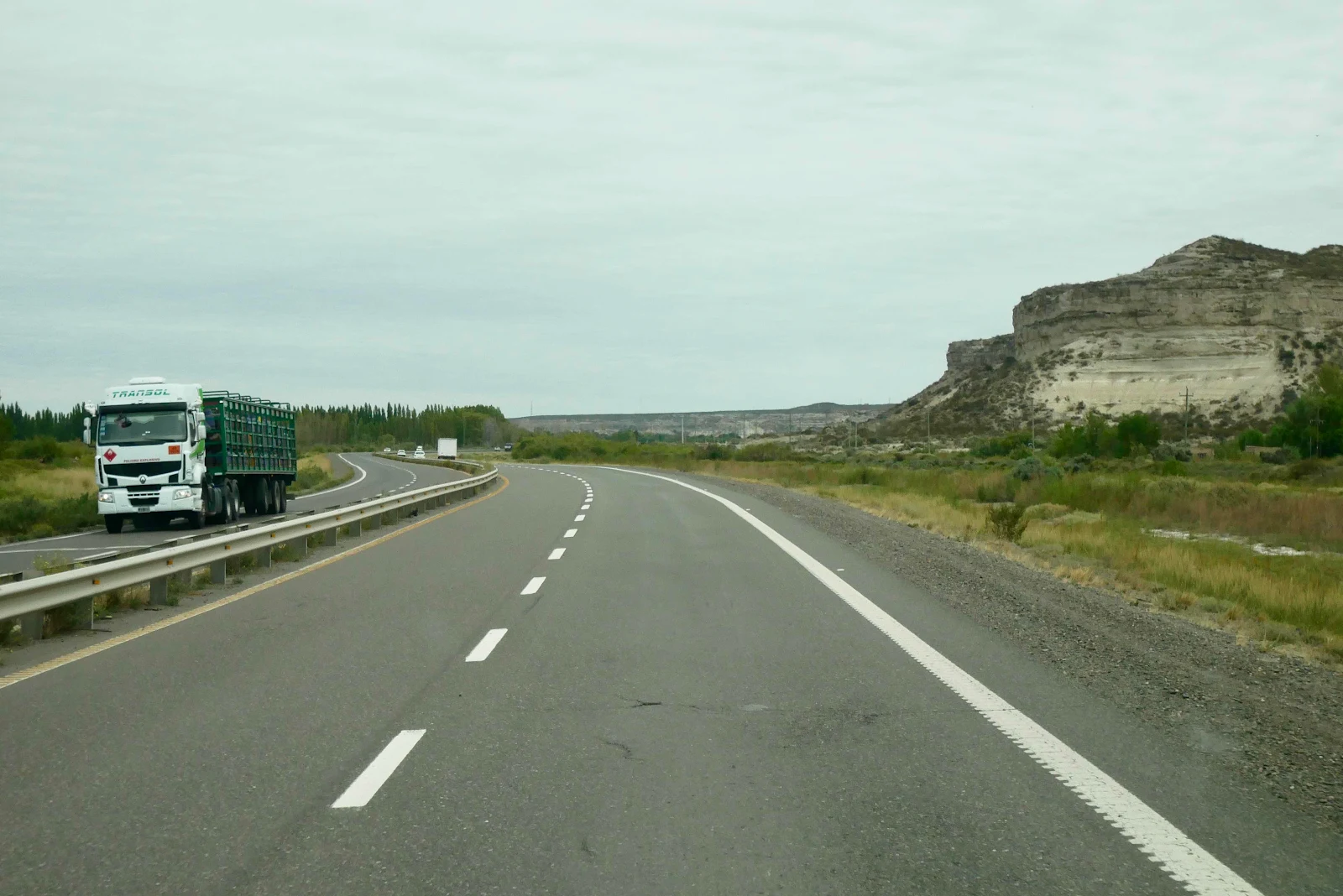
Layne found a winery she wanted to visit because it turns out Neuquén is a much less famous wine producing area of Argentina. It turns out this valley is full of agriculture with apples pears and grapes growing in abundance. It was the last hold out of indigenous tribes in what was then southern Argentina  so in the 1870s the government decided to establish control here not only by turfing out the native tribes (Tepulche and Mapuche) but also by keeping an eye on territorial creep by Chile. These two neighbors have a long history of hating each other and arguing over who owns what. I’ve heard modern day Argentines sneer about the odious Chileans and I say nothing as I quite like Chile. 
Both countries encouraged European migration in the second hand of the 19th century so you got the Welsh escaping English oppression, Italians escaping the social disruptions of unification and Germans trying to find a piece of land to call their own. It must have been intoxicating to come to these vast open spaces and agricultural possibilities swept clean of the unfortunate natives who had been ethnically cleansed out of existence. It’s what you did in those days and as we’ve seen it still goes on today. 
Argentina calls it the Conquest of the Desert and General Roca lead the fight which is why his name pops up all over the country on street signs. We in the north have never heard of this but it parallels what was going on in the US with the drive to conquer the Great Plains. 
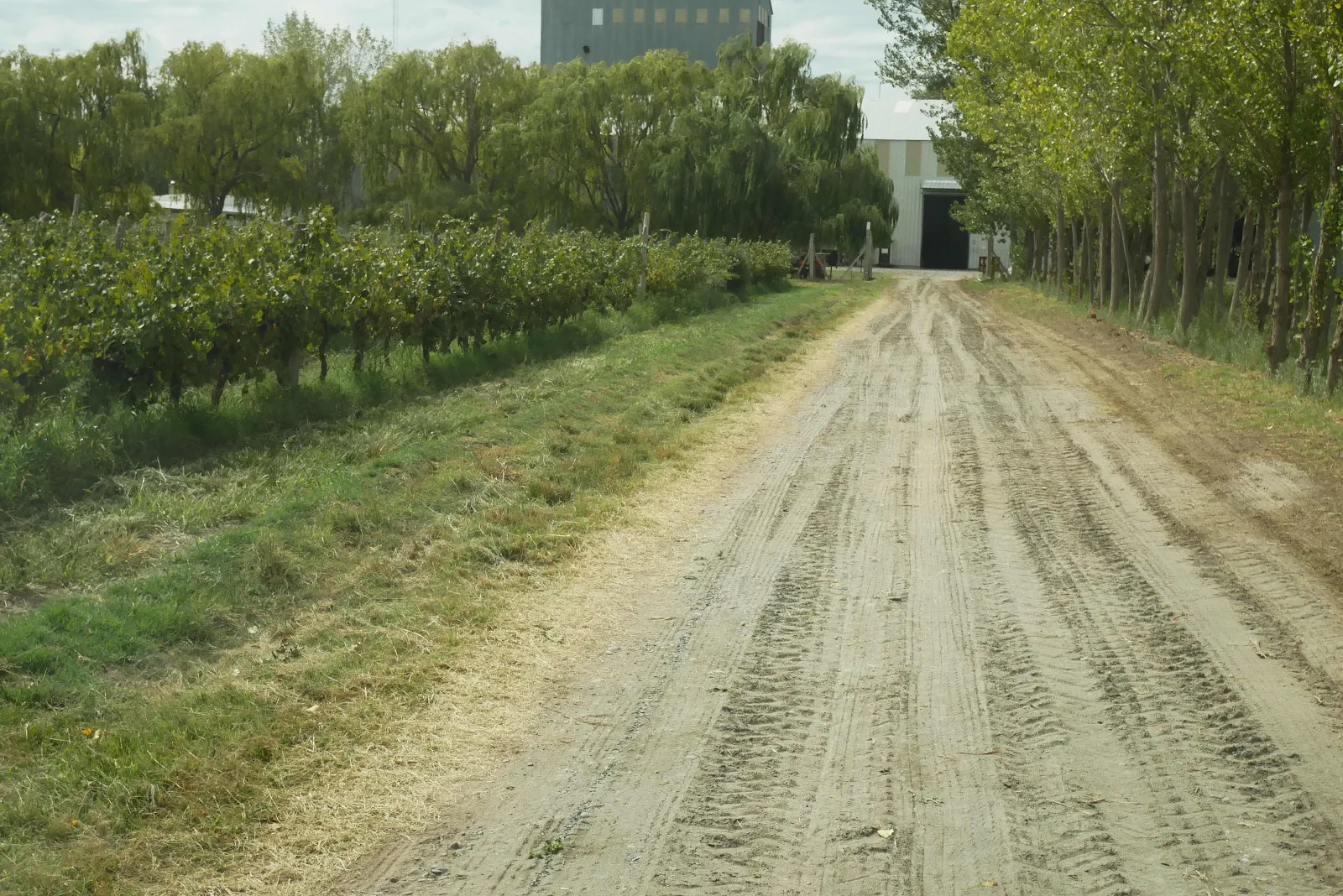
Which also explains why the populations of both Chile and Argentina are almost entirely white. If you see anyone with dark skin they are almost certainly immigrants from the Caribbean, Haiti and Venezuela principally, as everyone here nowadays reveres the Mapuche Indians as artifacts of history in the sane way Americans like to claim Indian ancestry. 
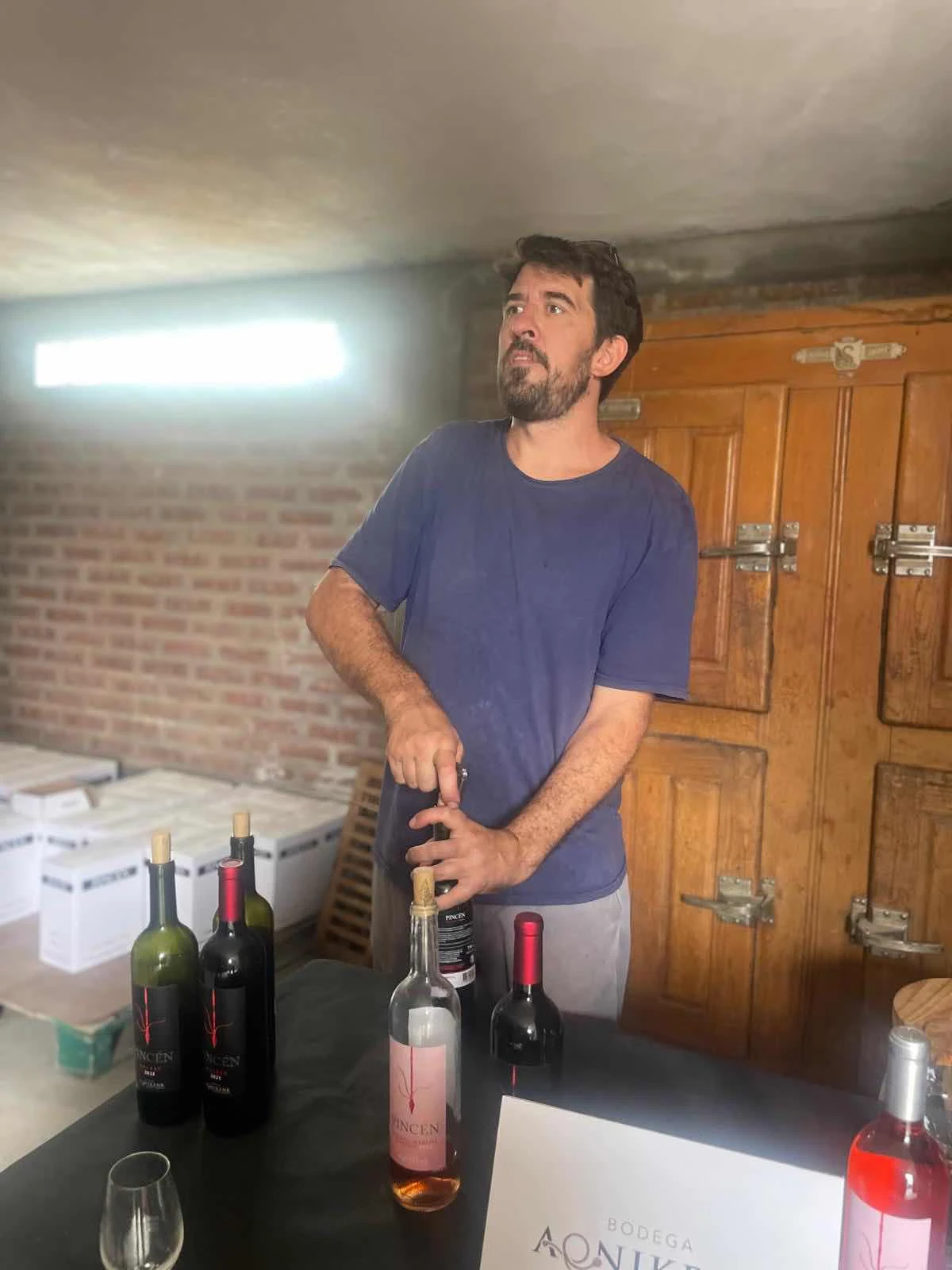
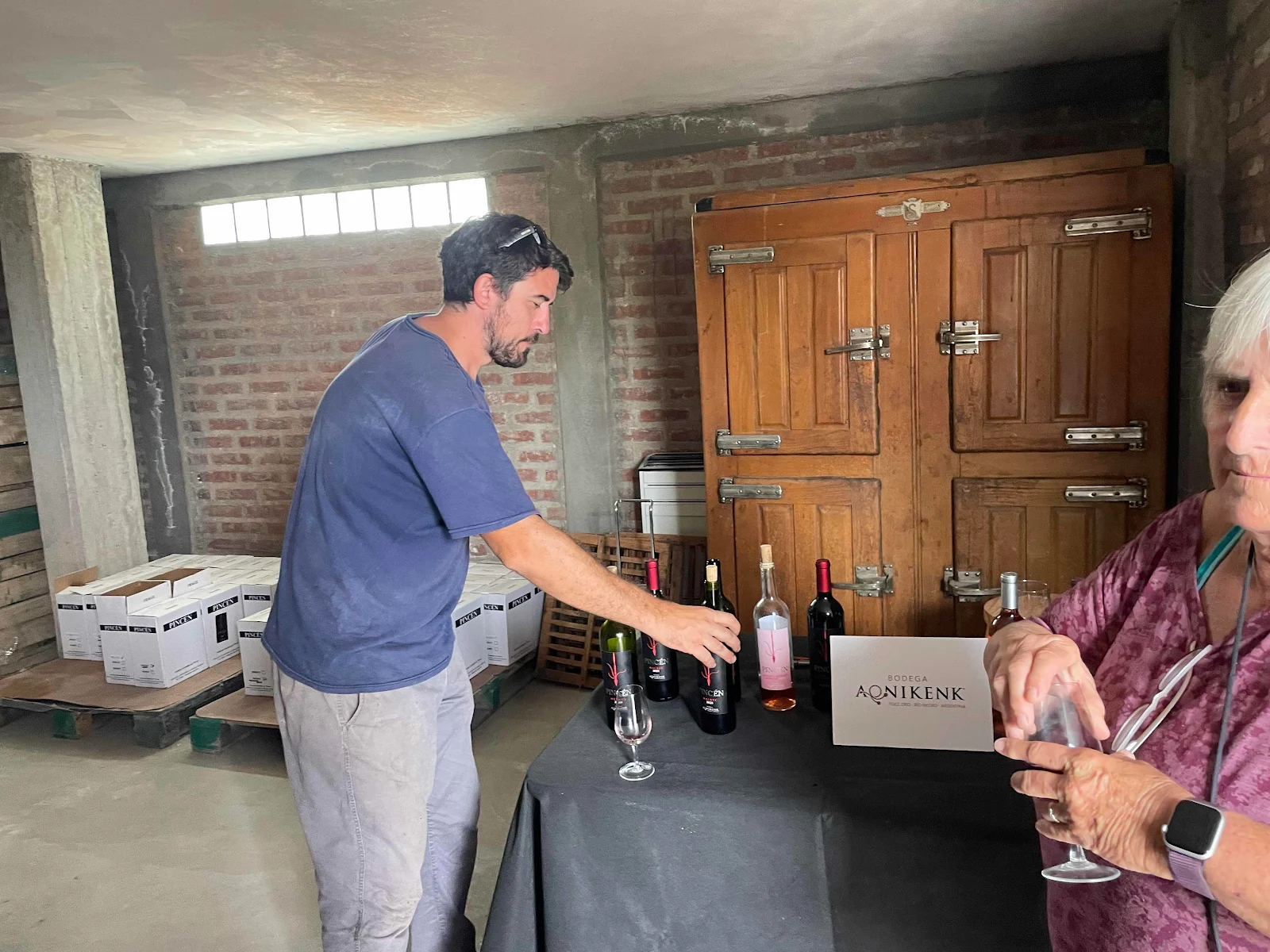
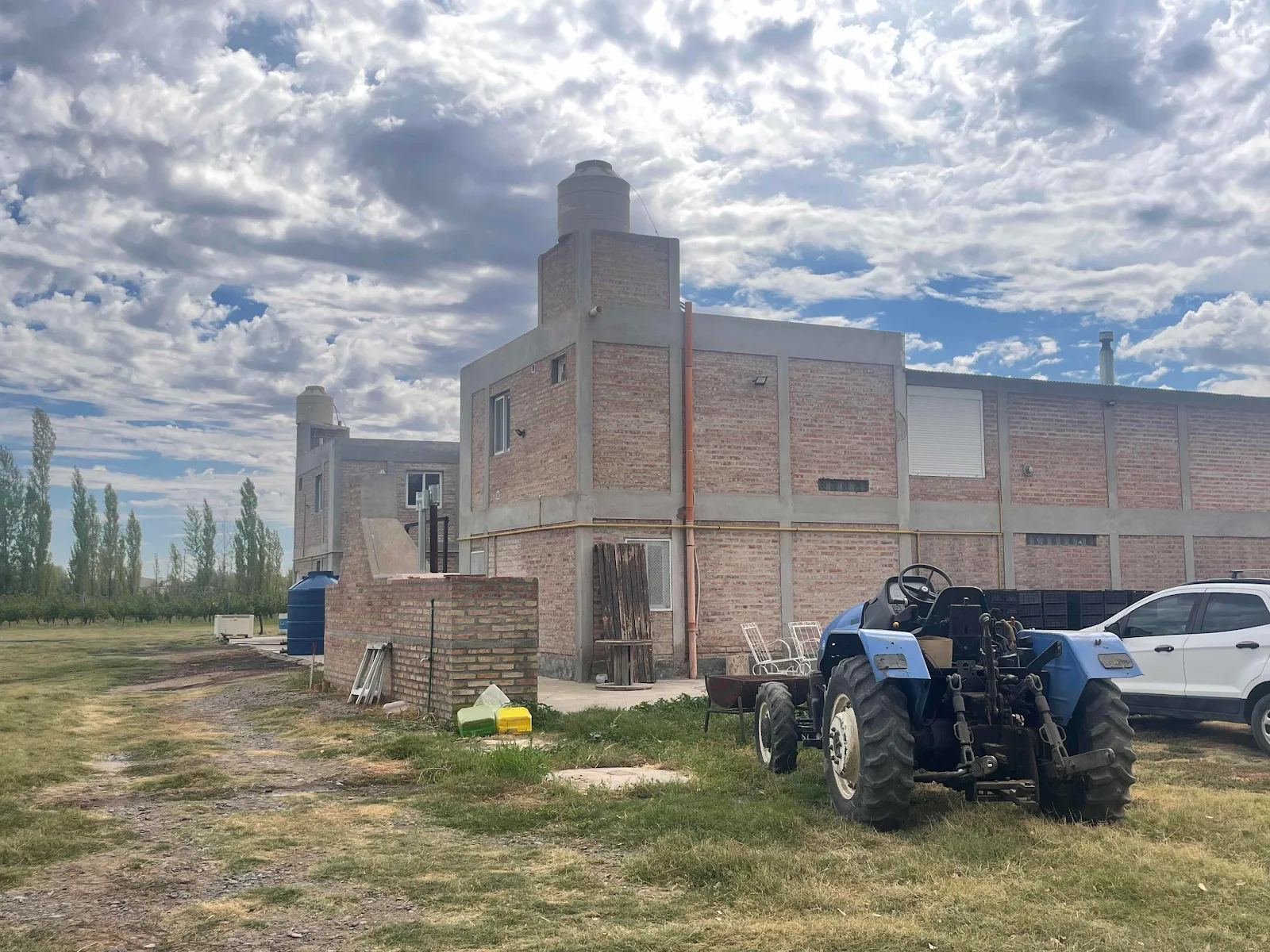
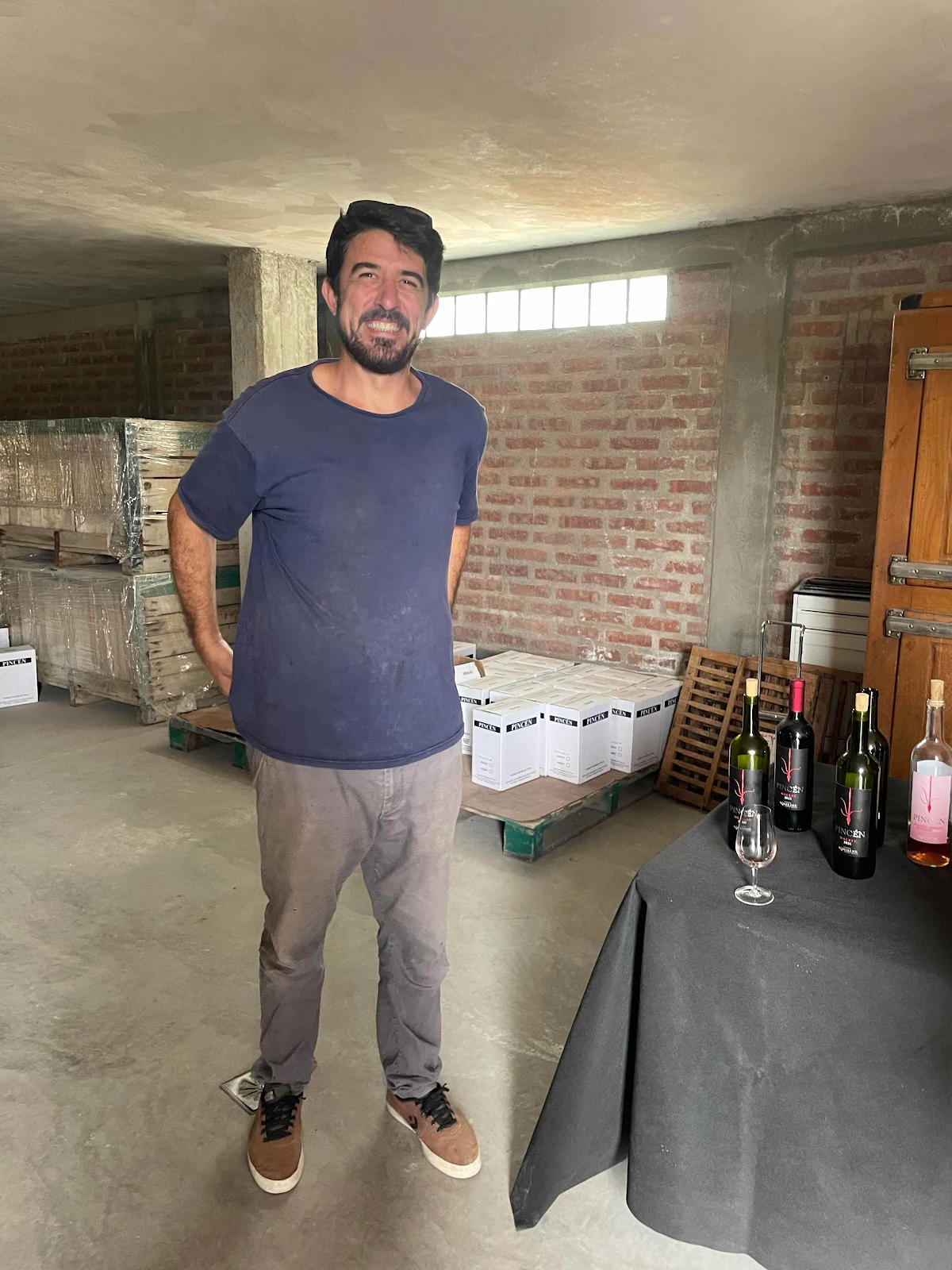
But the good news for heathens like us is the wine production is excellent. Caritel is the youngest son in the family that has been making here for 25 years. 
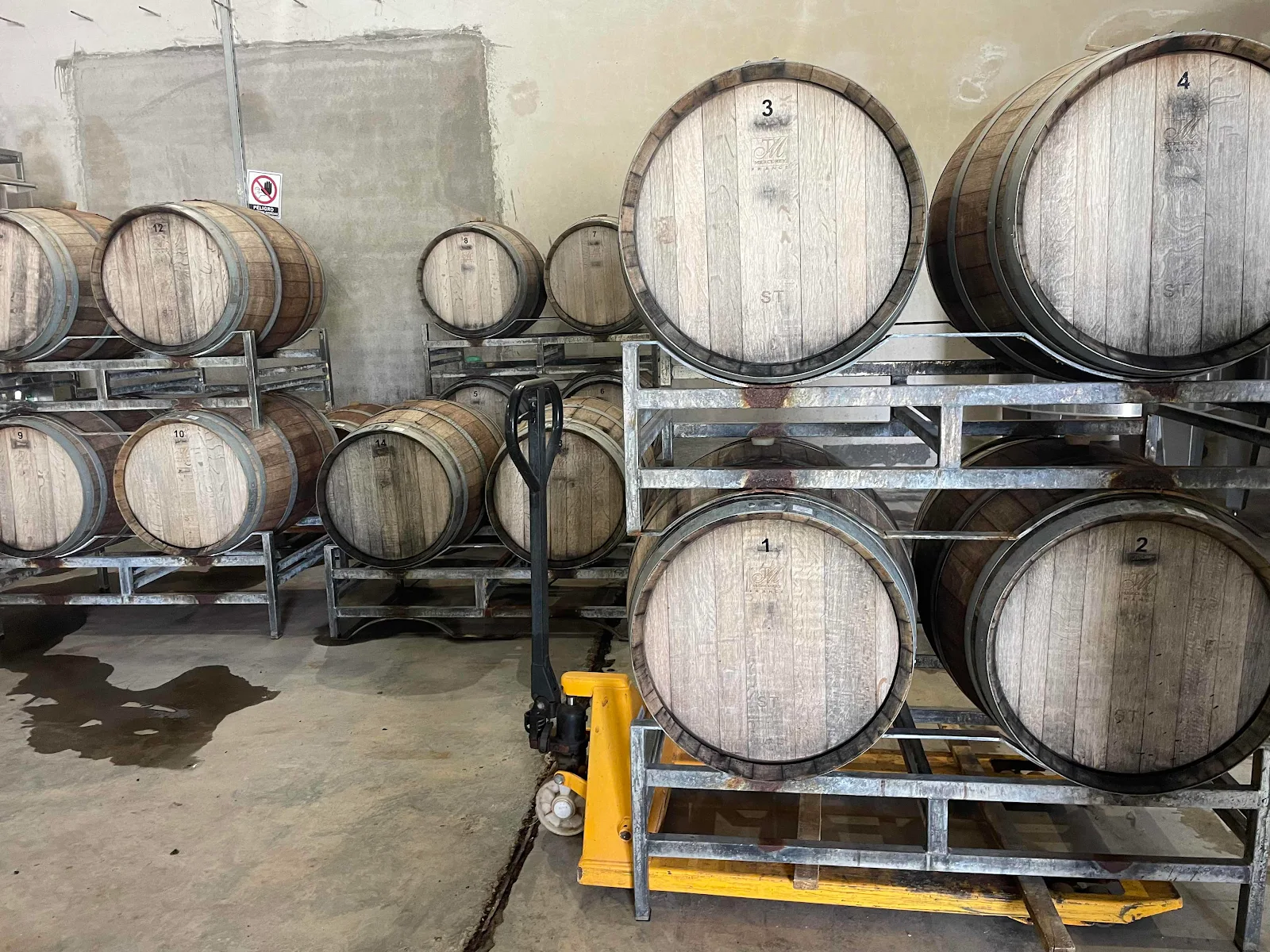
It’s odd to me is how wine production is universally similar. It’s like gas stations: if you drive far from home the fuel stations look if not identical easily identifiable anywhere in the world. Wine making does too. 
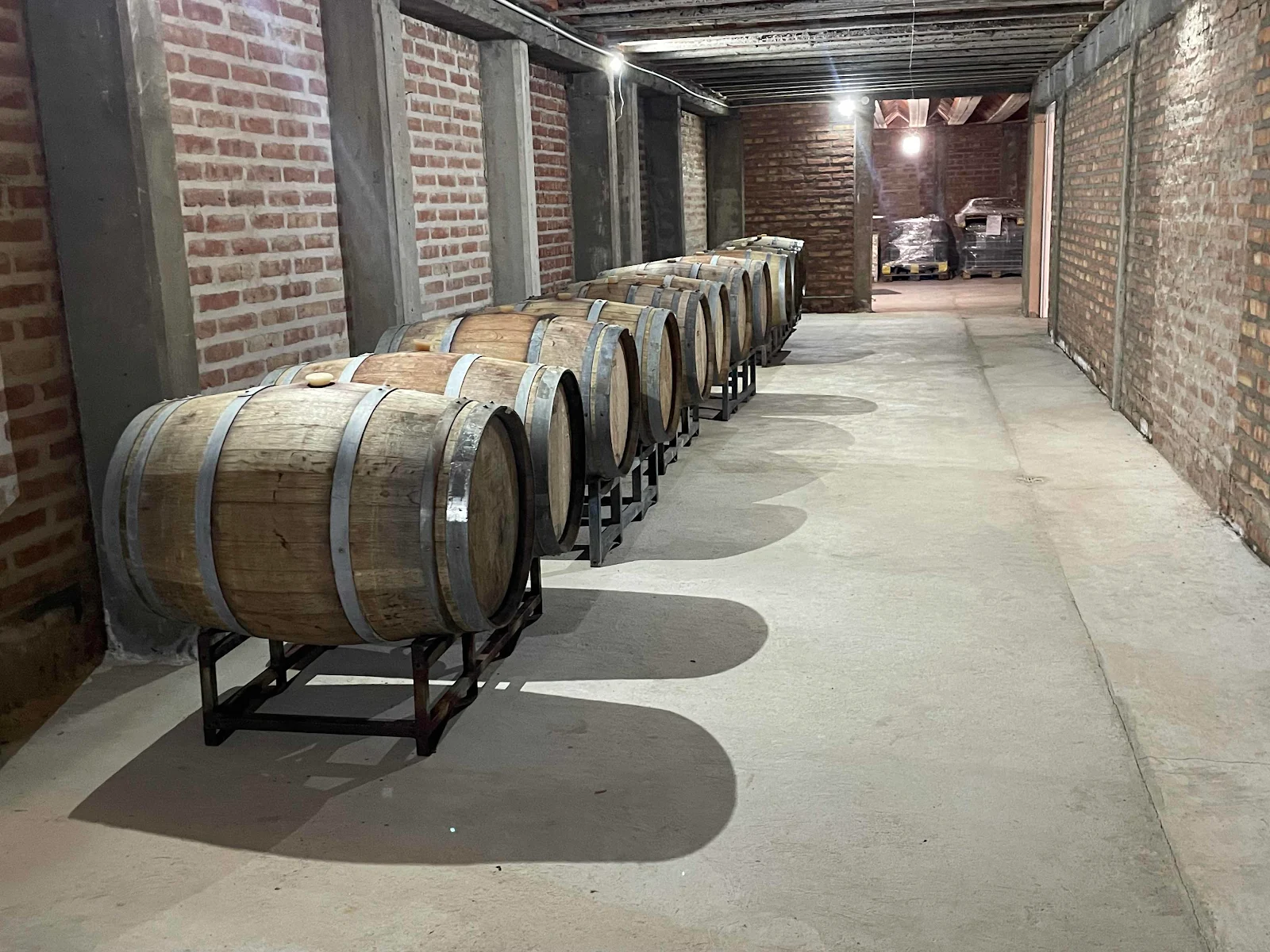
French oak barrels, stainless steel fermentation vats and grape crushing machinery made in Europe or the USA. And a winery name for a long lost indigenous tribe. 
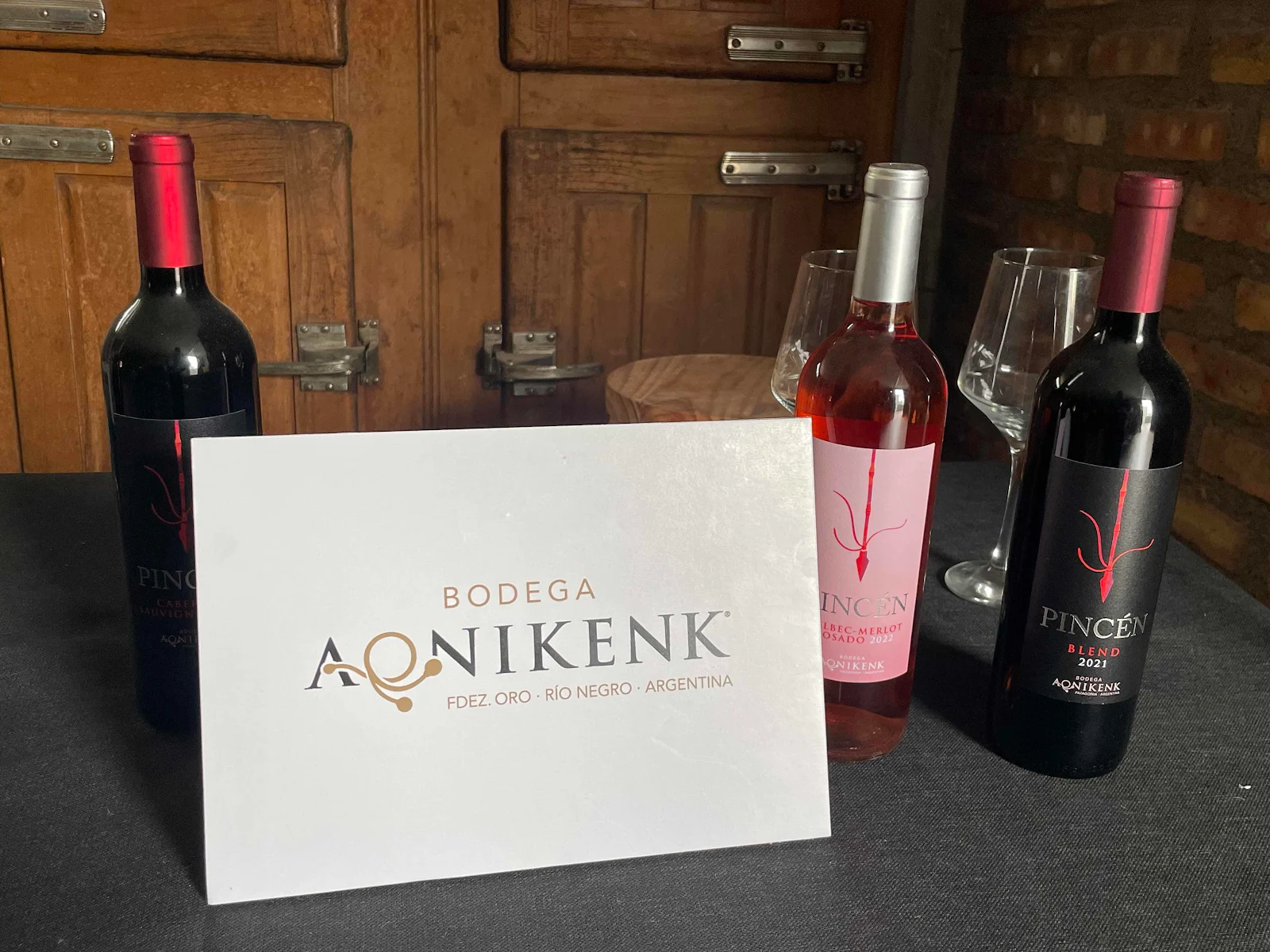
They make reds here and Caritel’s elder brother, a graduate of agricultural college is trying his hand at producing a pink wine. 
I like innovation and the rose was dry and delicious so we got a bottle of that too. Pincén was a native warrior who fought with a long powerful spear as depicted on the label. 
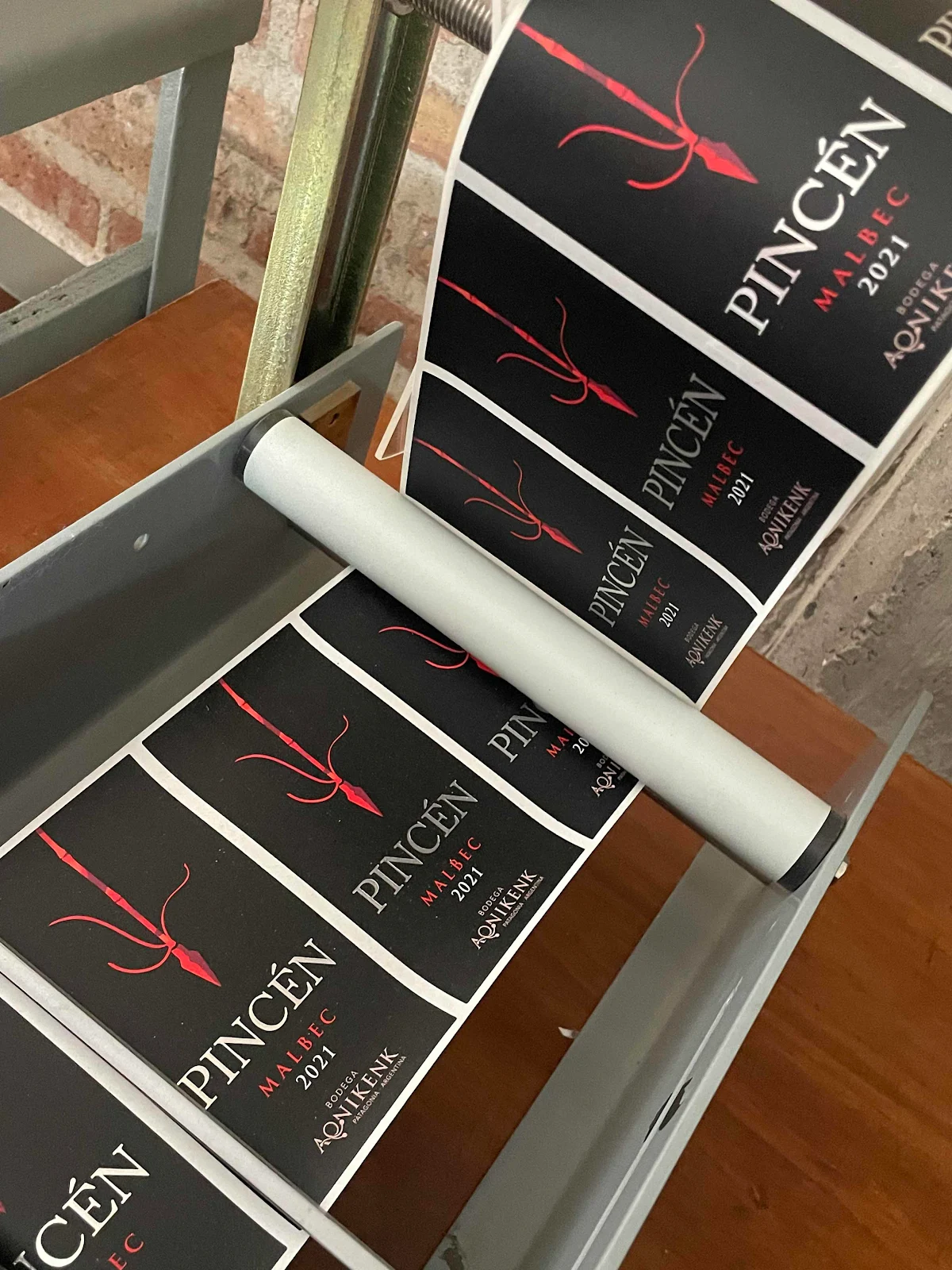
My first job in the US was bottling wine at the now defunct Felton Empire winery in Santa Cruz county when I landed in California in the 1980s. I was married and had permission to work and was paying taxes so I needed to work. And all I knew of a practical nature was agriculture so there I was. This place reminded me of those distant days. 
They make 40,000 liters of red wine every year. They sell a little in the US but mostly it goes to Buenos Aires the capital. For us it was a privilege to drive around lost in the bs country to find a winery never heard of and you couldn’t find if not living our lifestyle. Lucky us. 
We talked a lot about Argentina, the history and the hardships and the bureaucracy (getting wine permitted for sale) and how he learned English and rarely gets to use it. We cane away with three bottles and I had a good time which is not guaranteed when visiting wineries. This one was interesting. 
Back to the road and the desert. It turns out western Argentina leading up to the Andes is desert. 
Who knew?
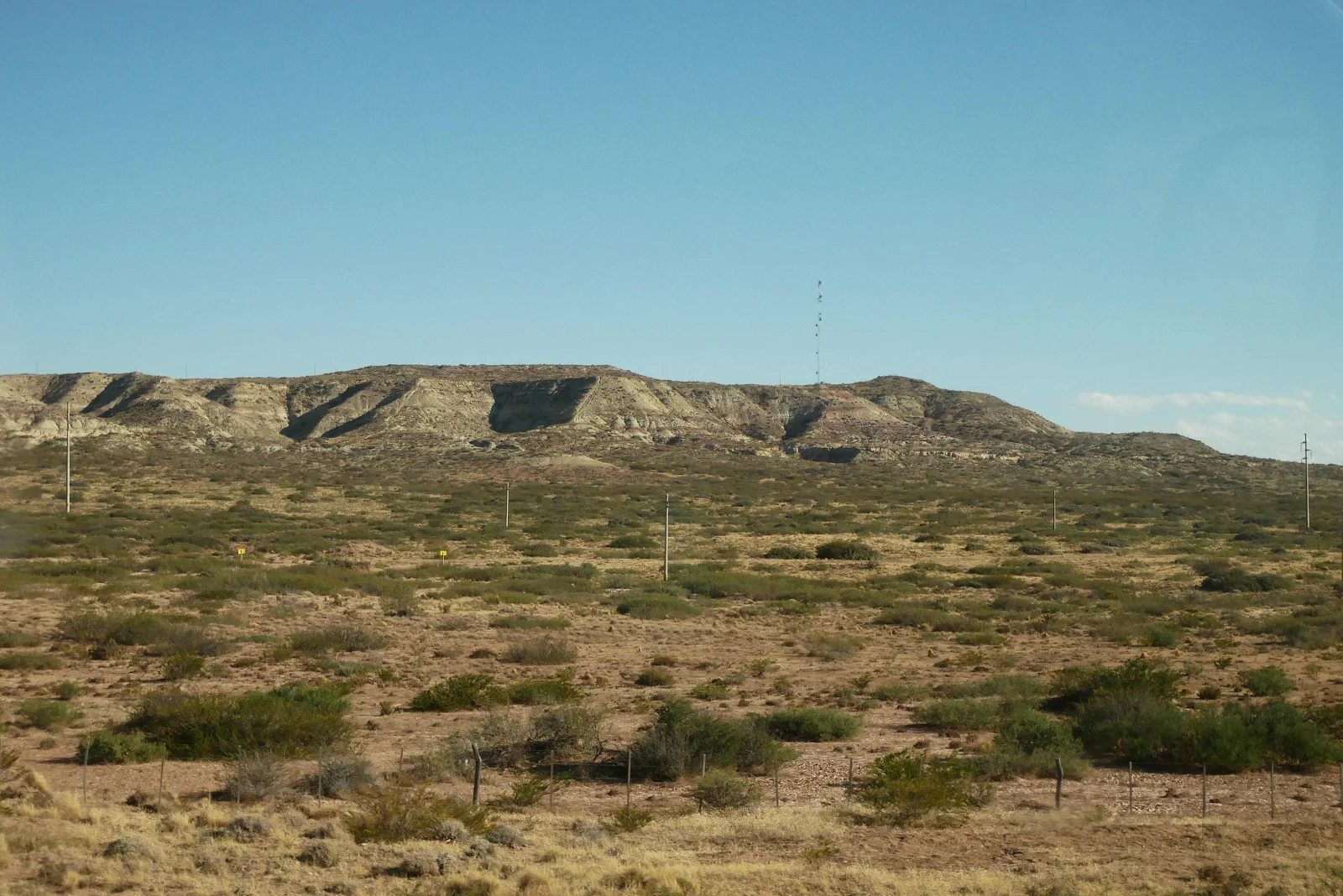
I’ll bet if I plunked Celia Bruce down here from their home in Southern Arizona they’d look around for the way home. The landscape’s not so different. 
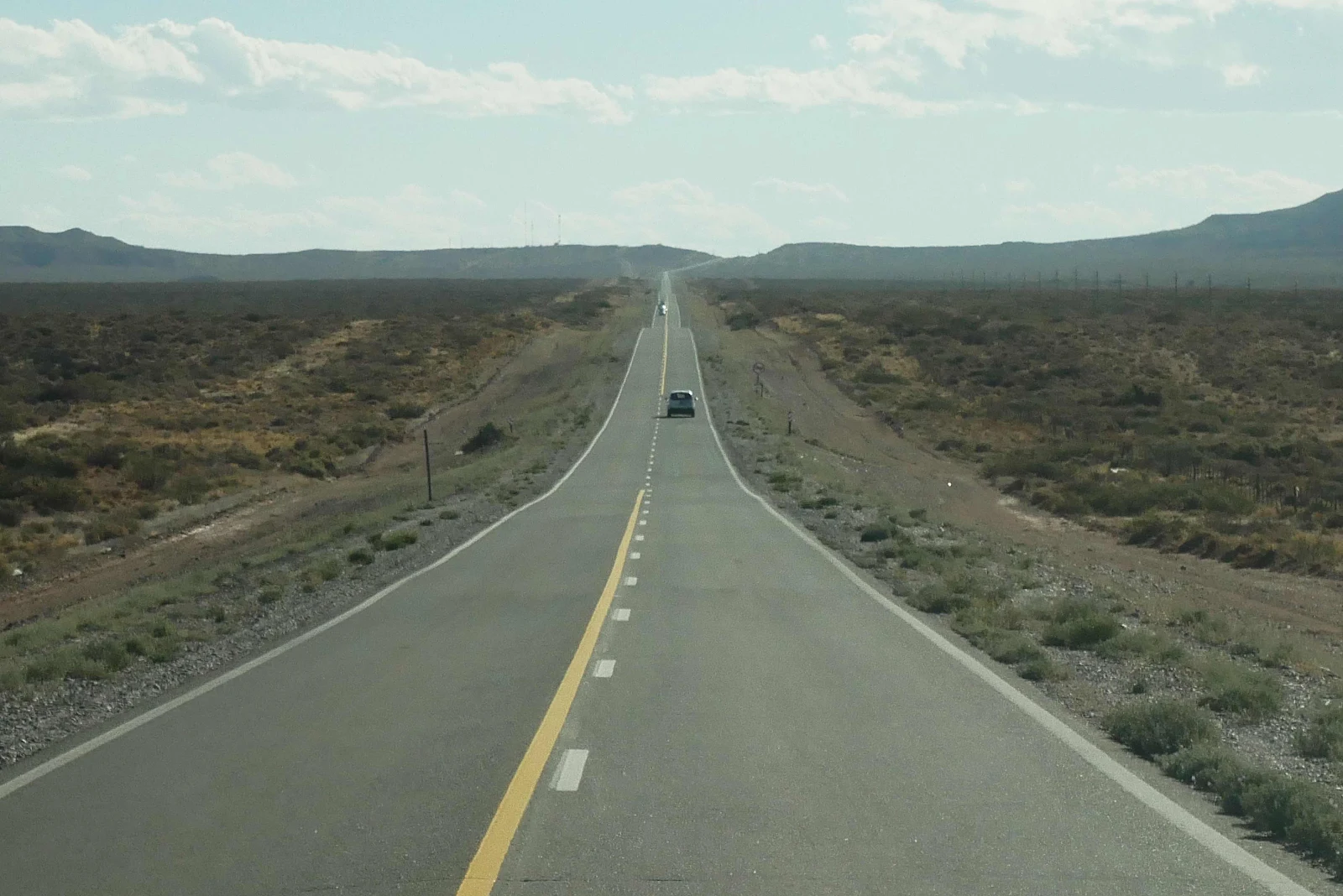
Go west young man. Of old men too. 
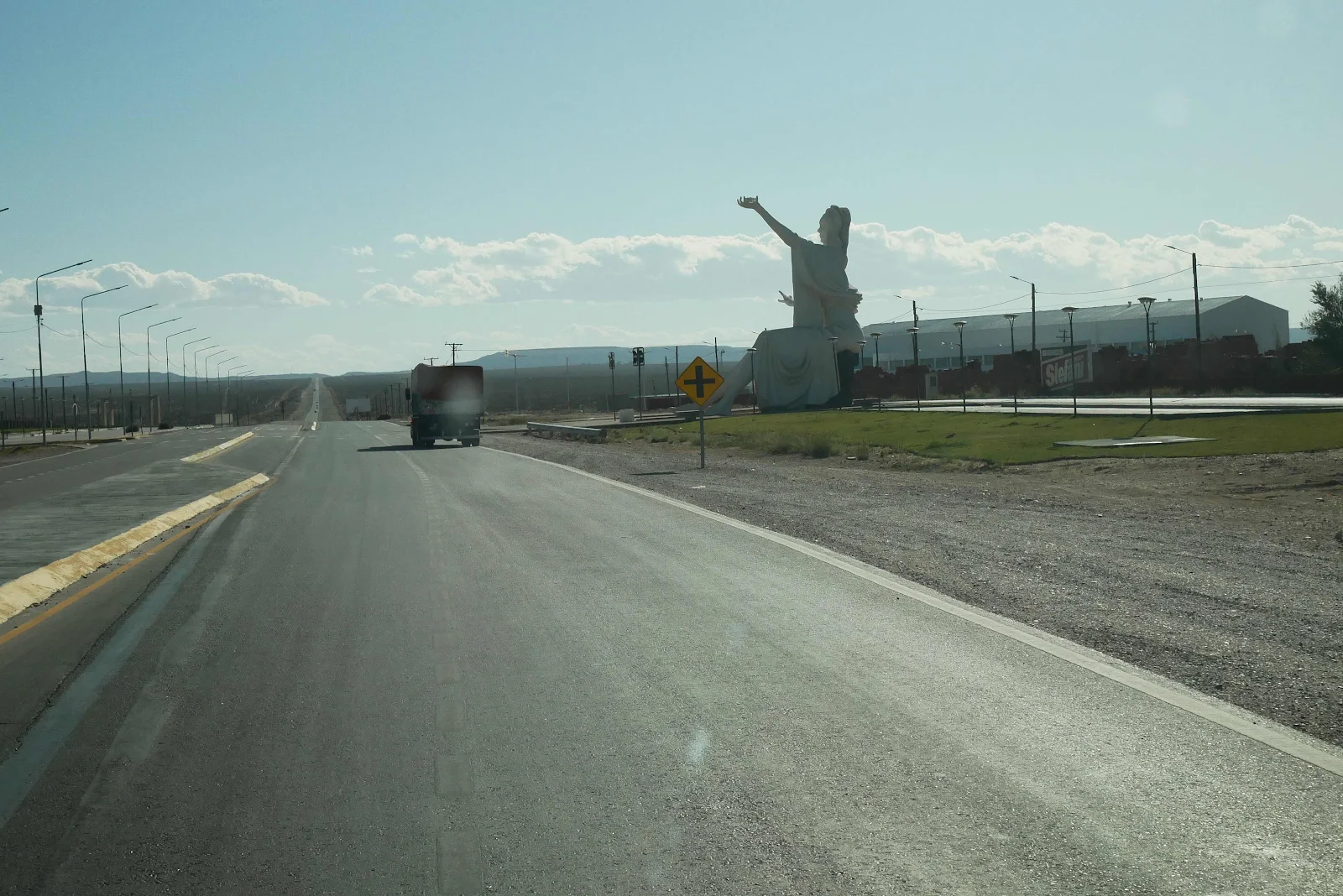
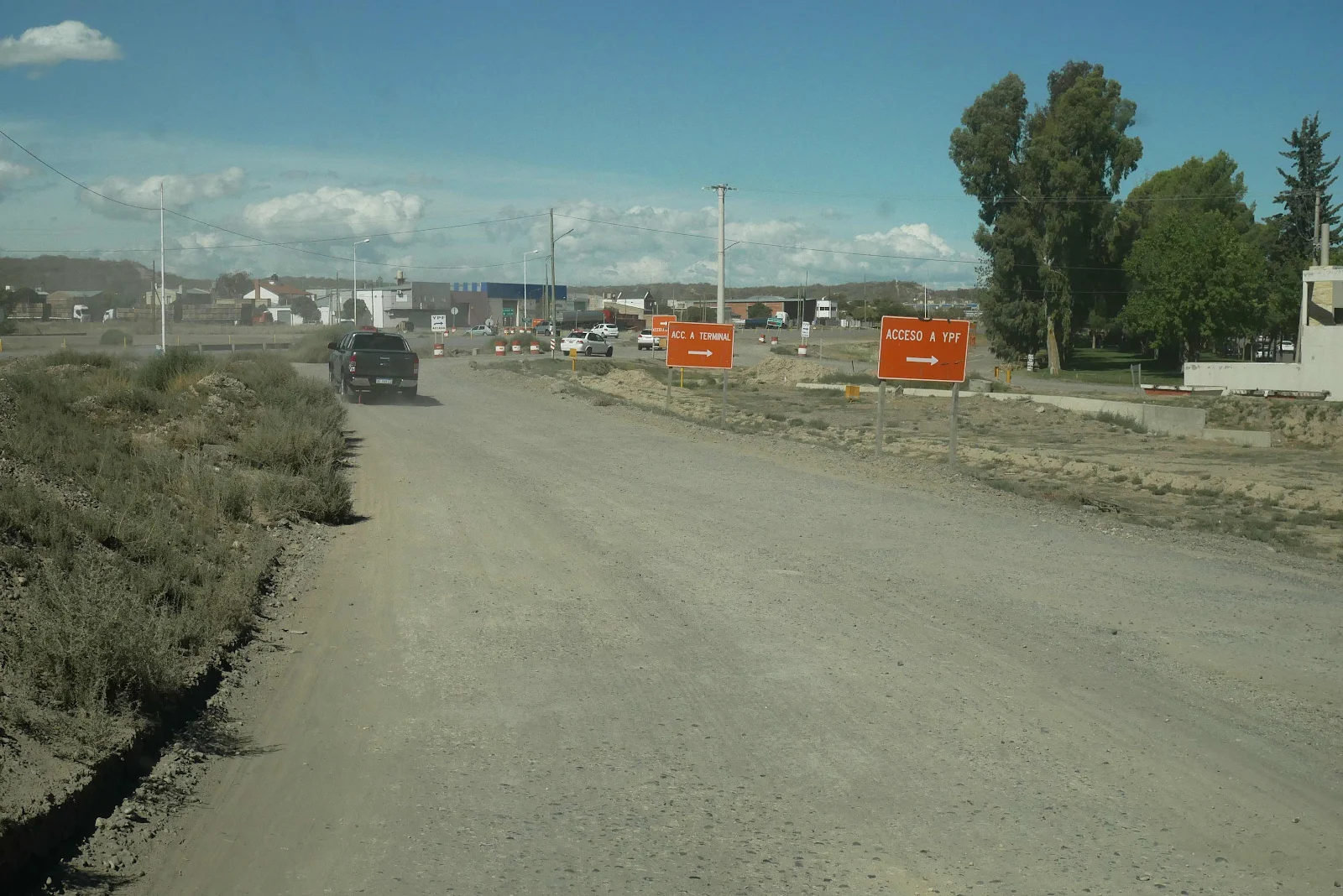
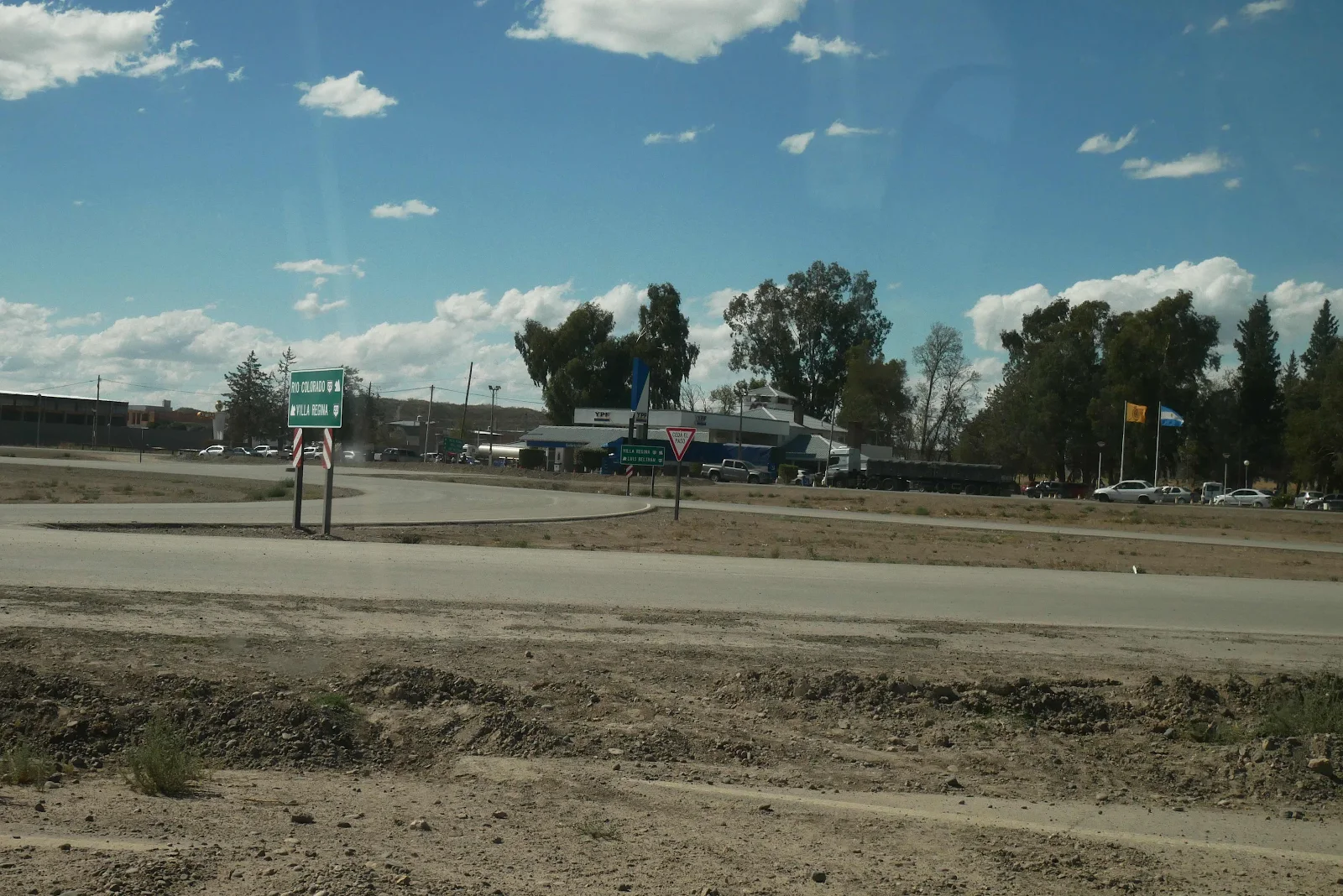
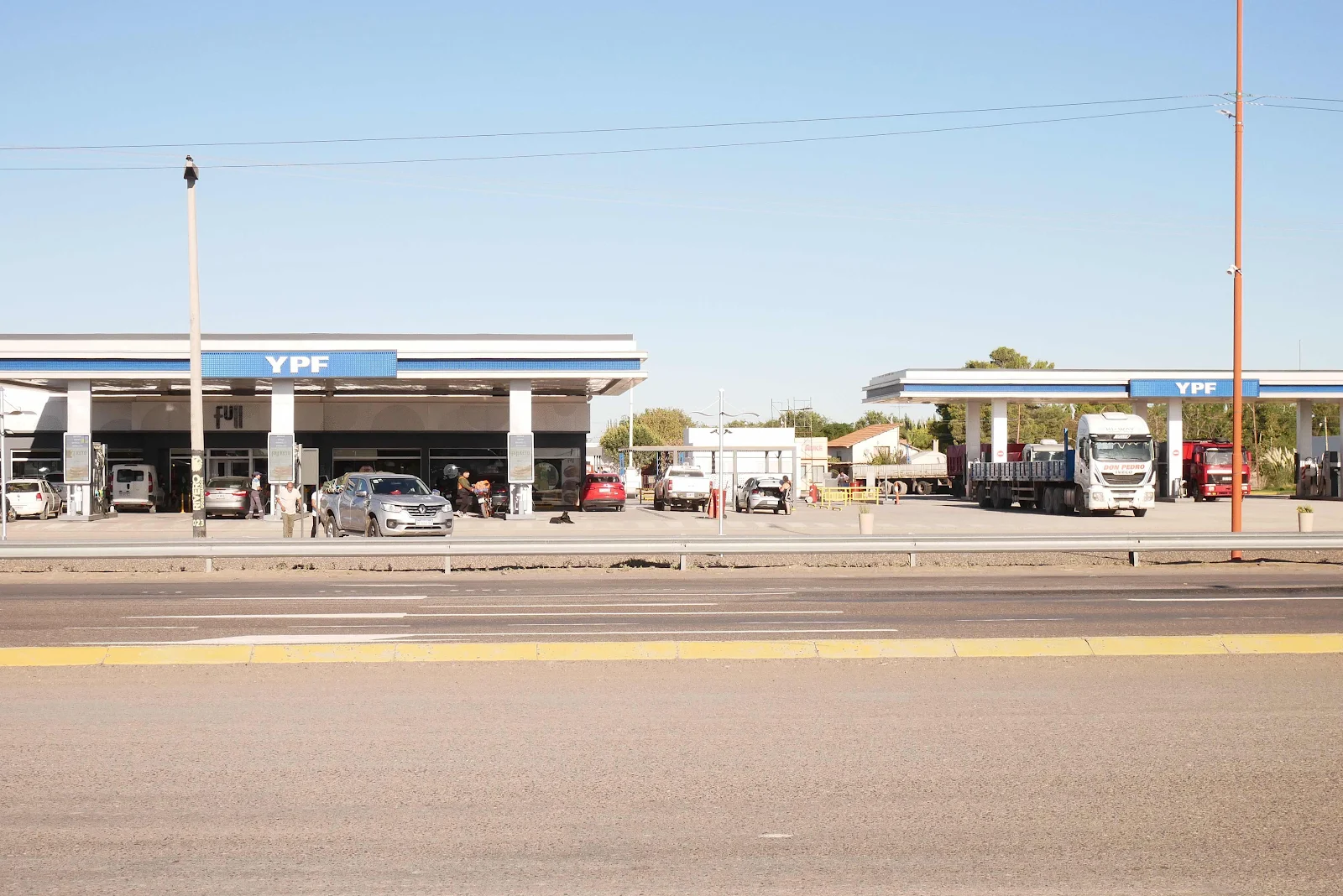
YPF is Argentina’s national oil company and we passed drills and a chemical plant a distribution center and gas stations with lines. 
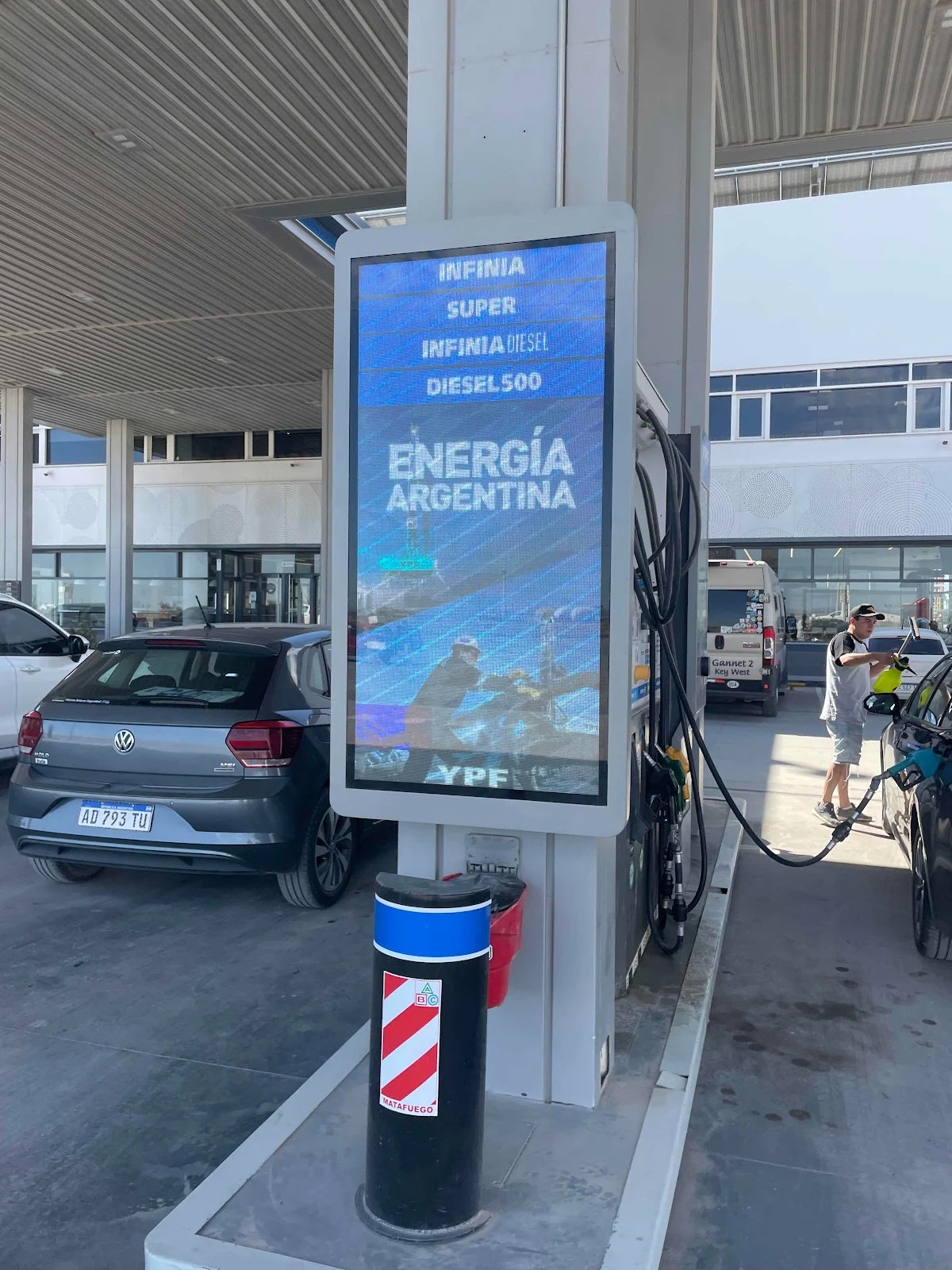
They do full service gas stations with restaurants, spotless bathrooms, water faucets, tire shops, oil change bays all very modern. We prefer to wild camp but you can park overnight if you feel like it. 
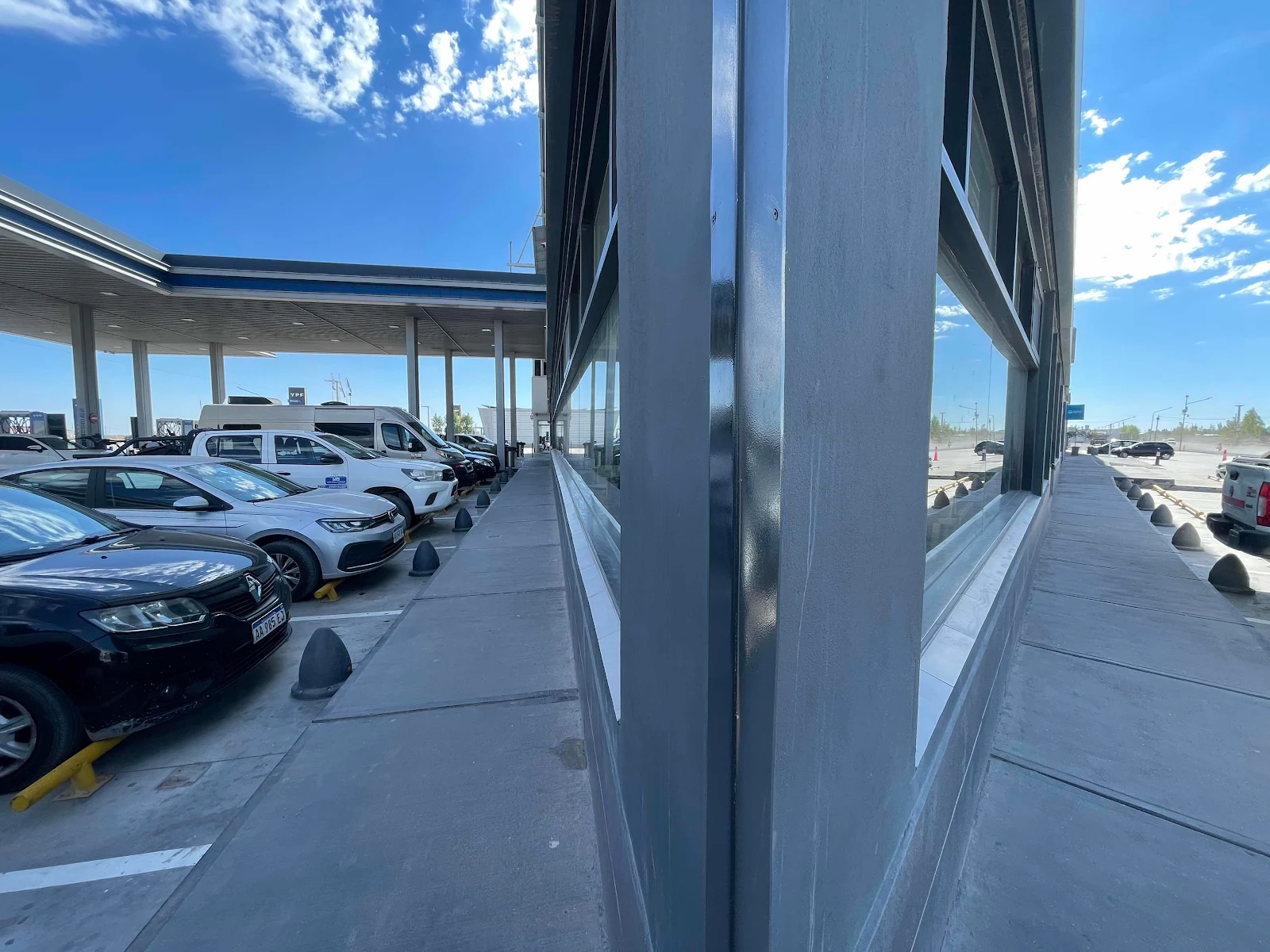
Road trip! 


Friday, March 7, 2025

Seeking Argentina

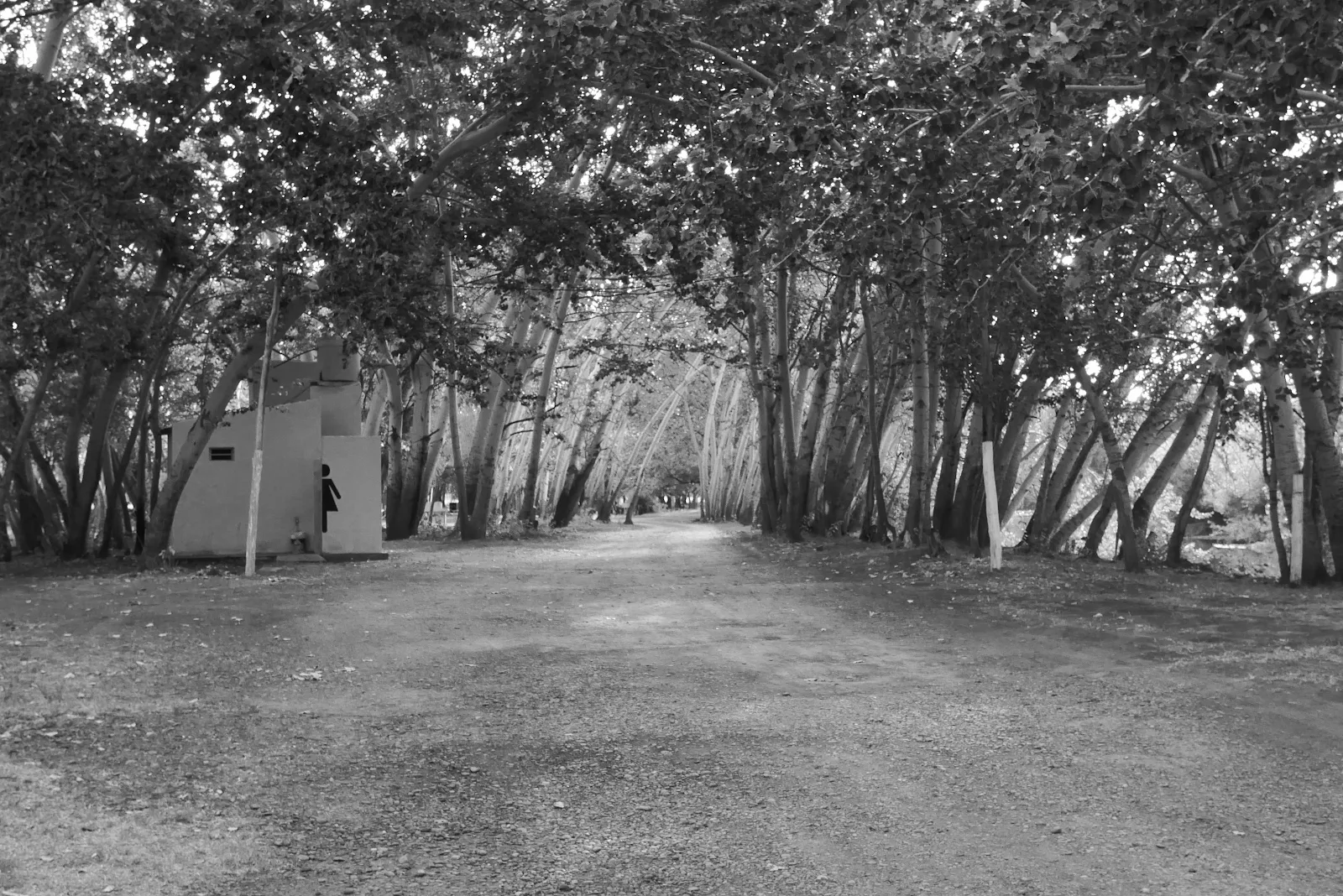
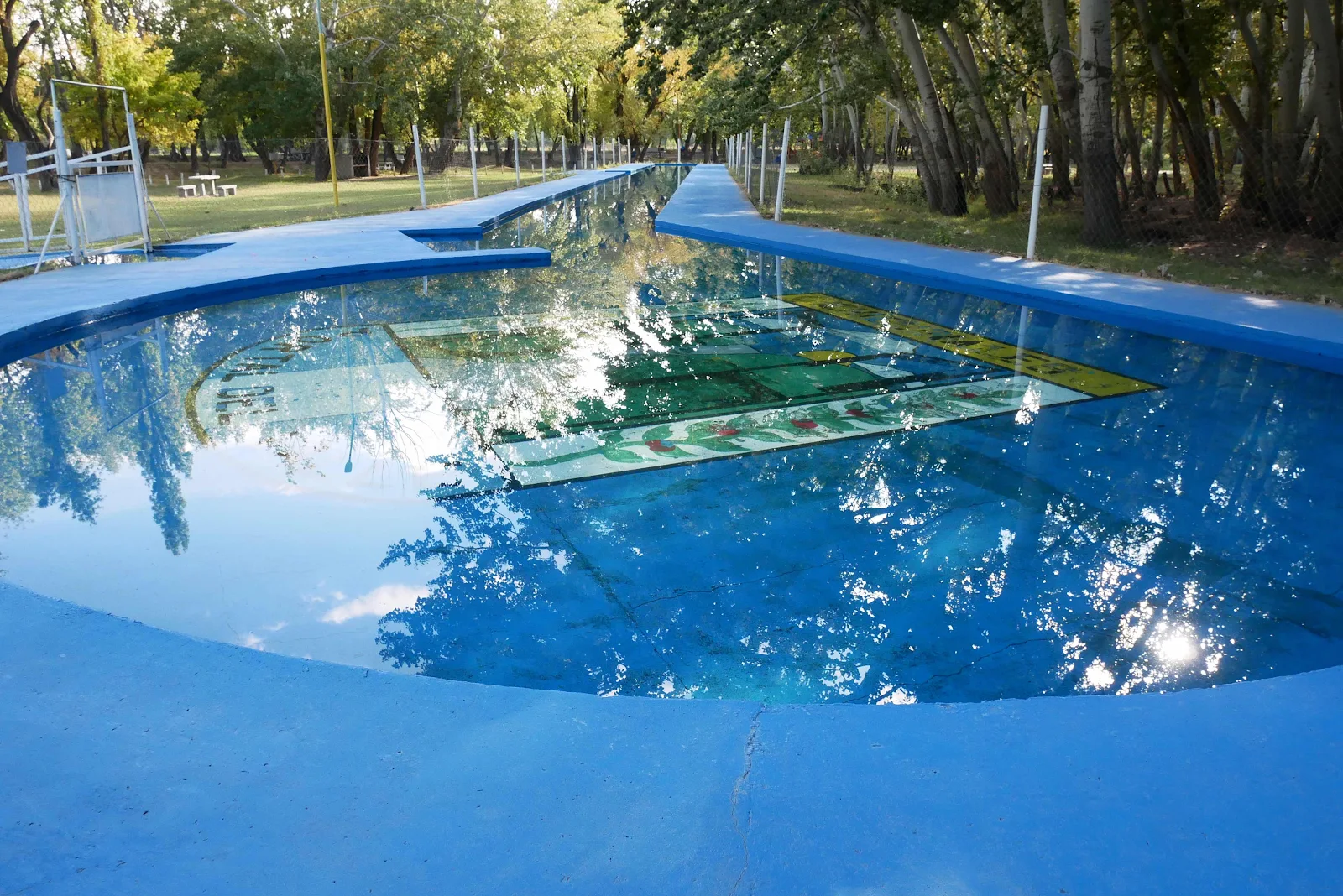
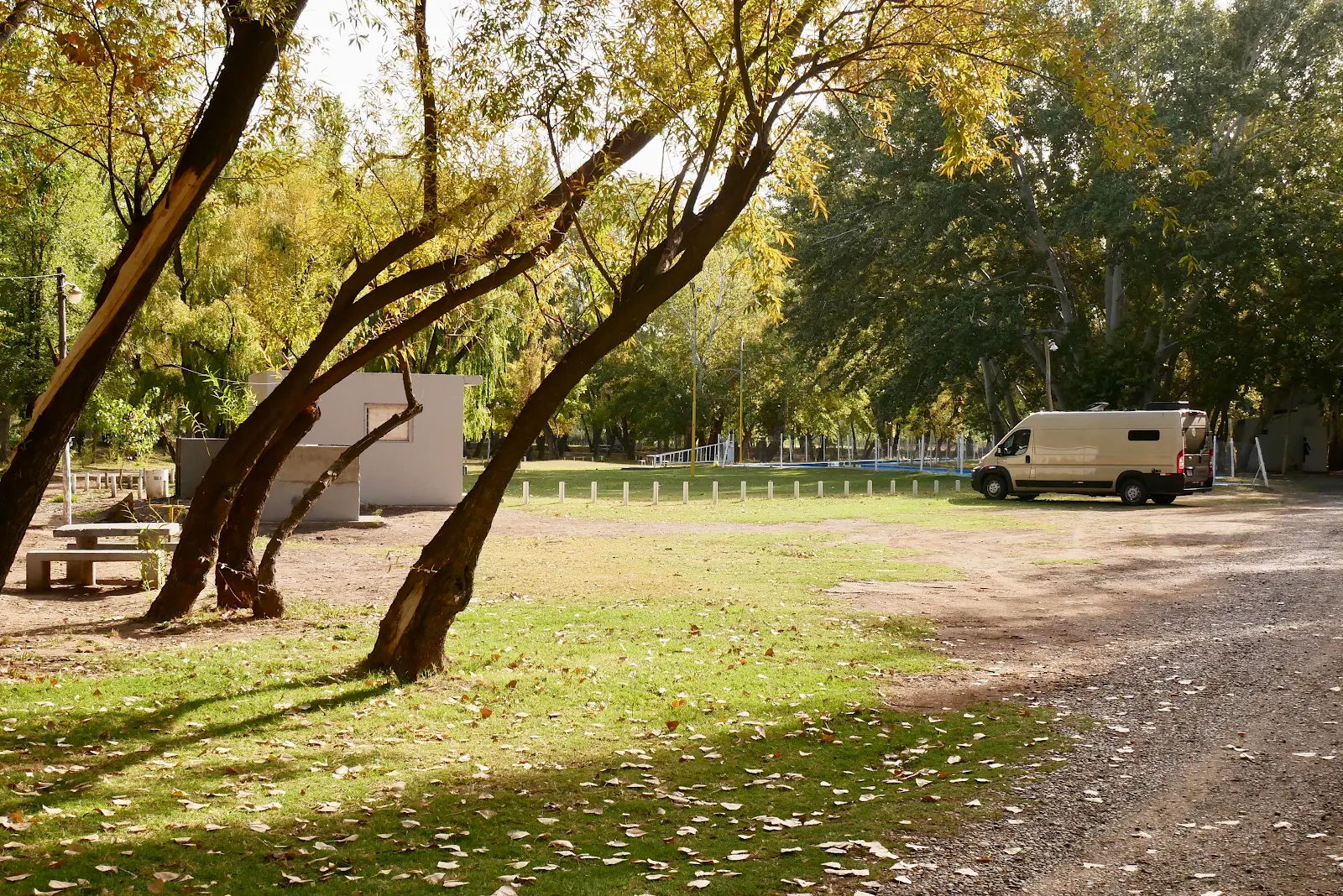
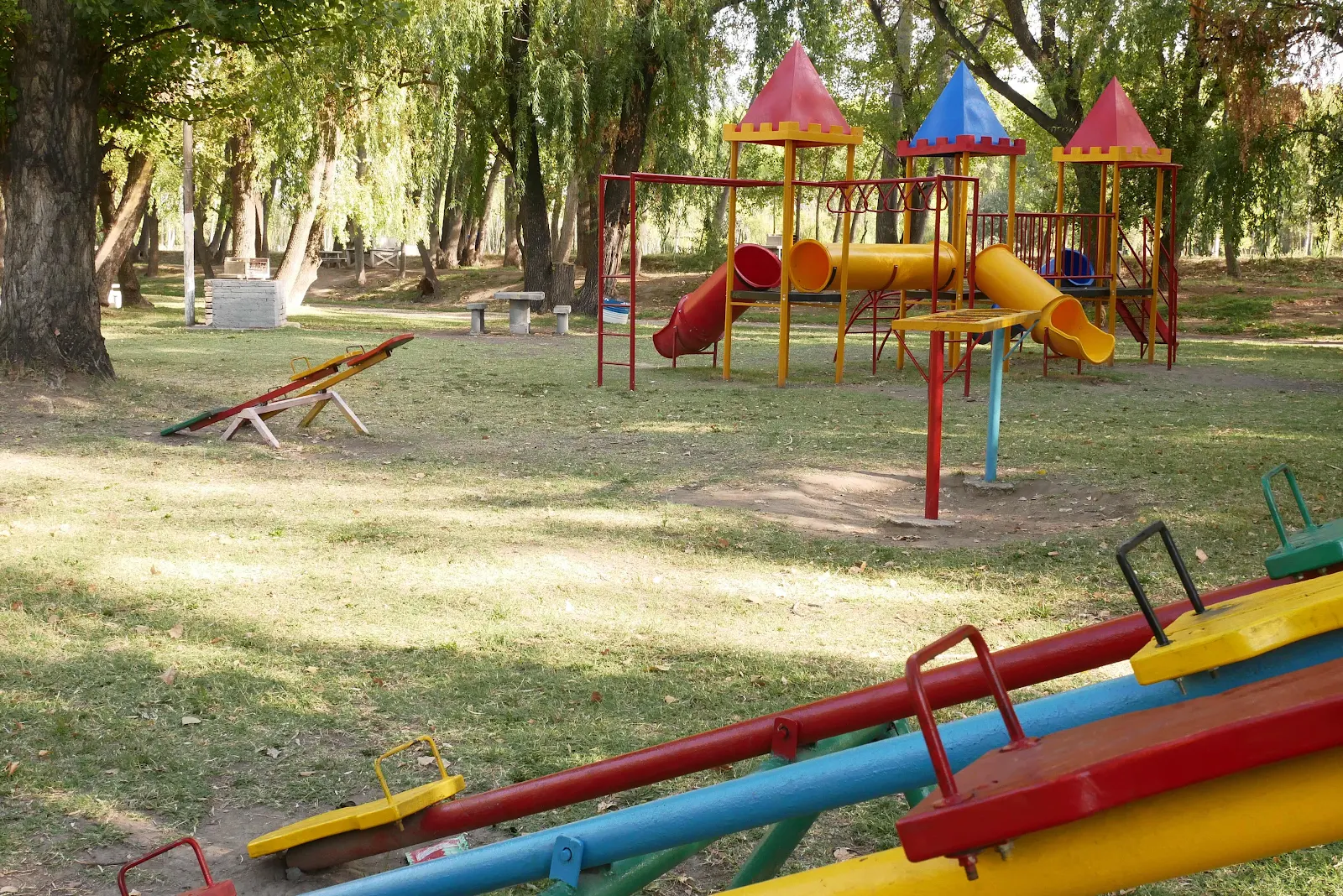
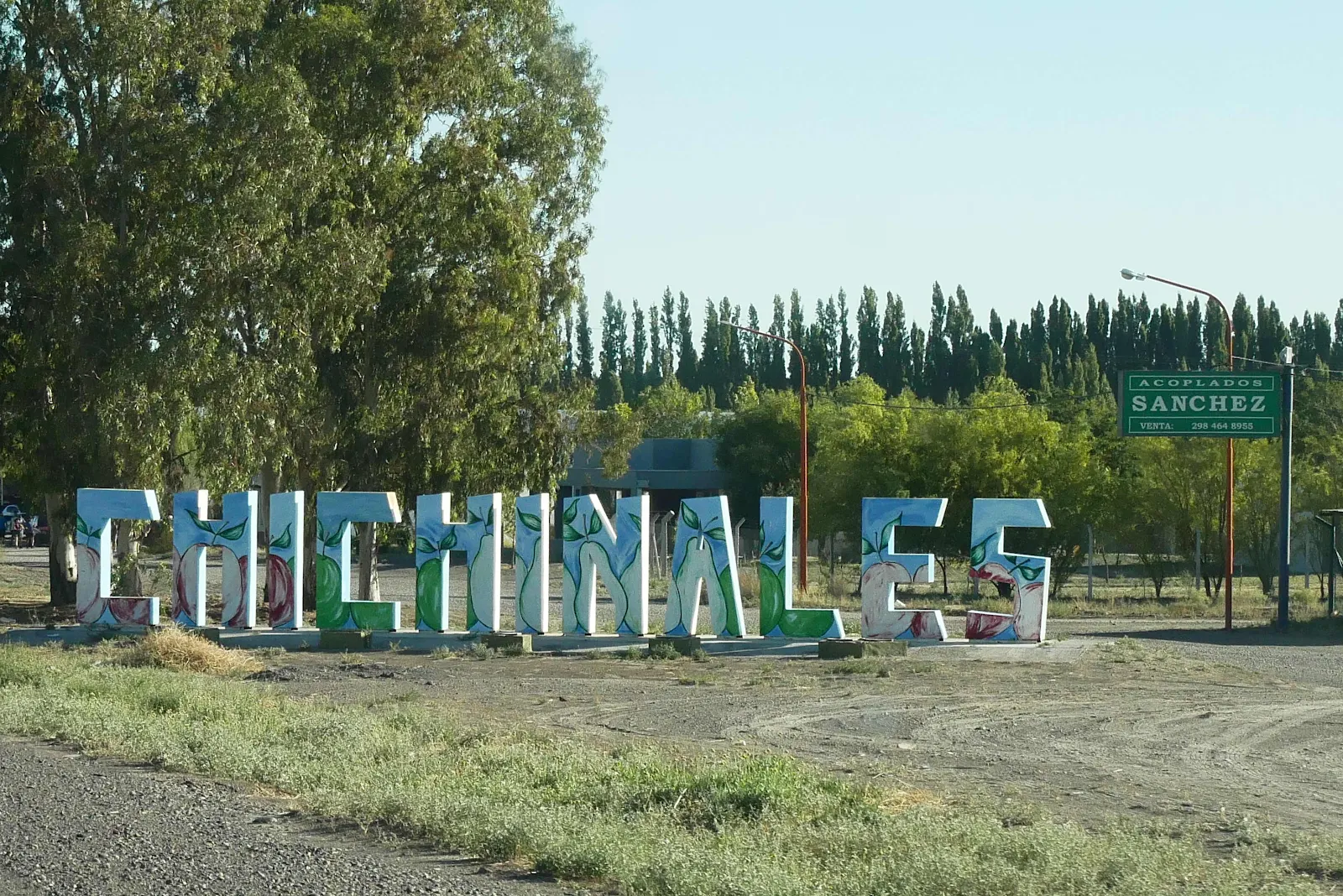
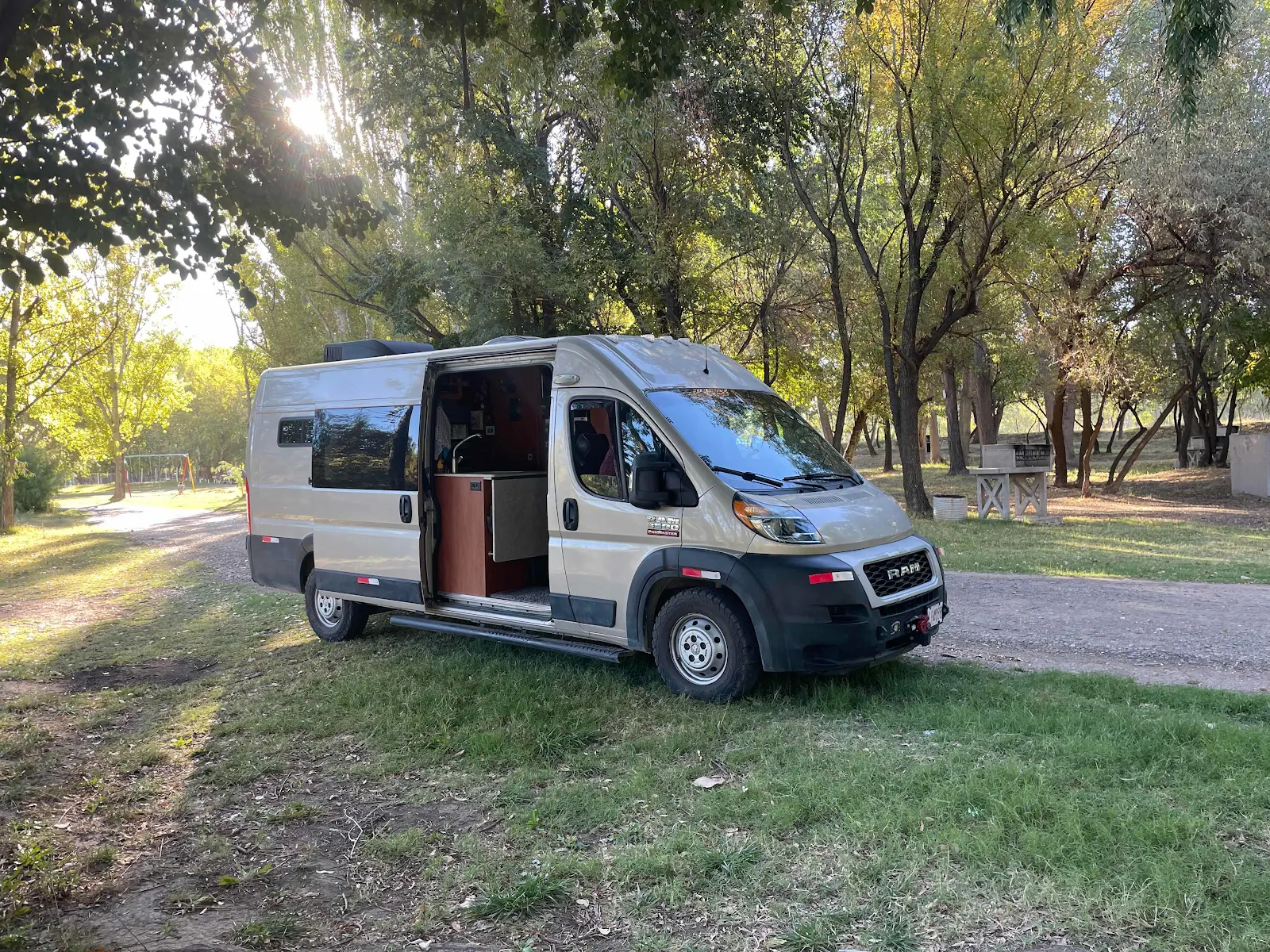
Argentina is famous among overlanders for its free or low cost municipal campgrounds. Chichinales has its own well shaded facility and we spent a night here. The pool was closed; don’t get excited. 
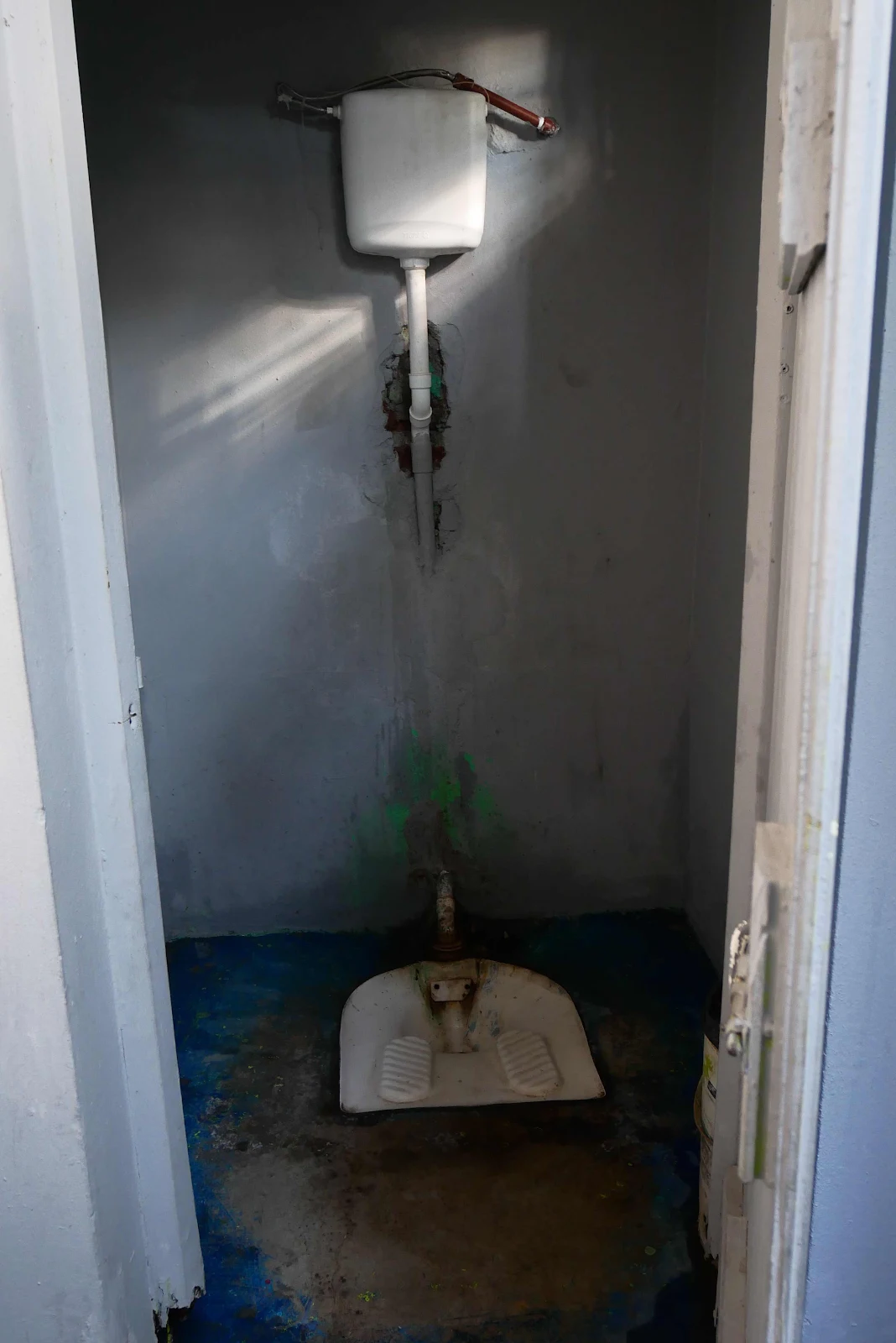
The toilets were open as well as a cold shower but I have to admit I have not seen one of these since I was in France half a century ago. I never did miss them either. 
The free campground is a nice touch but Argentina is a tough country to travel through with your camper. It is not Chile, not one bit. Chile is clean tidy and organized with good roads and high prices. Argentina is the most expensive country in South America that we have come across (Uruguay is said to be pricier) but it is not doing well. 
It’s not easy to get to talk to Argentines in random encounters as they shy away and get a look of panic in their eyes if you try to talk to them. We have had conversations obviously along this very long road and I have pieced together an unsettling view of Argentina. 
It’s annoying to pass through as a tourist in a country with crumbling infrastructure and mildly irritating bureaucracy but to live here is to know pain. If people do open up its to acknowledge the country’s failure, their inability to function collectively coherently and there is a curtain of shame behind which they hide. It really is painful to see it up close.
In 1982 the generals running the country decided the Falklands War would be a good distraction from the sorry mess that was the economy. That plan went wrong and the generals got overthrown and replaced by a civilian democratic government. But you know things didn’t go well because subsequent presidents keep bringing up the Falklands and there’s only one reason for that. 
In 2001 Argentina defaulted on its obligations and a struggling economy went catatonic. It took until 2015 to sort of sort out the bondholders claims but in 2020 the country defaulted on another half billion dollar loan.  So you can see why in 2023 when a performance artist with a shock of hair and 18th century side burns who said he could fix this once and for all got elected president. Everyone was fed up with the old order. Just like the United States in 2024. 
Unlike Argentina the United States had a functioning if ill balanced economy but slash and burn will have the same effect and I can tell you Argentina is not a happy place even though their government operates in surplus. 
I lived a work life of stagnating wages and no clear future until I got to Key West where my wife worked out a plan which we have been living. I never expected to see my life raft sink behind me but here we are in one messed up economy watching our own get torn down. Unlike a lot of people I am not convinced billionaires want to rebuild it bigger and better for working peoples’ benefit. But there again I’ve listened for years to people telling me the second amendment prevented a government take over. Apparently they too were bluffing. 
Argentines aren’t armed. Violent crime is on the rise even as fewer police are on the streets. We keep hearing from overlanders whose vehicles have been broken into so we never leave GANNET2 alone on public streets or parking areas. We don’t camp on the streets either choosing campgrounds or isolated wild camps far from city limits. Worrying like this is not how I like to travel 
I think what makes theft so unfashionable in Argentina is how much the country has slipped. They like to think of themselves, like Chileans, as Europeans but when you look around you see the sort of social decay common in poorer countries like Peru and Ecuador. Cars run on bald tires and rust patches, lines are long outside government buildings and gas stations, shopping in the supermarket is an exercise in frustration with a mixture of high prices (higher than the US) and empty shelves. We try to buy as little as possible. New tires for $250 each are available in Chile while here in Argentina I’ve been quoted $700 for one. We must get a new headlight bulb so we’re going to look for one in Mendoza because you have to keep headlights on in day time and I don’t like using my high beams as I get occasional irritated headlight flashes back. God knows how much it will cost. 
We don’t eat out much and when we try to buy off street vendors a sandwich we share might cost six dollars. The minimum wage here is three times less than the US, so imagine it costing $18 at home.

It’s just untenable but it is also a little scary. We are postponing a visit to Buenos Aires until next year hoping things will be better. If you walk the streets you must keep your phone on a leash to try to avoid it being snatched out of your hand. Petty theft is rampant we have been warned. As bad as it may be for us it must be hell for residents. 
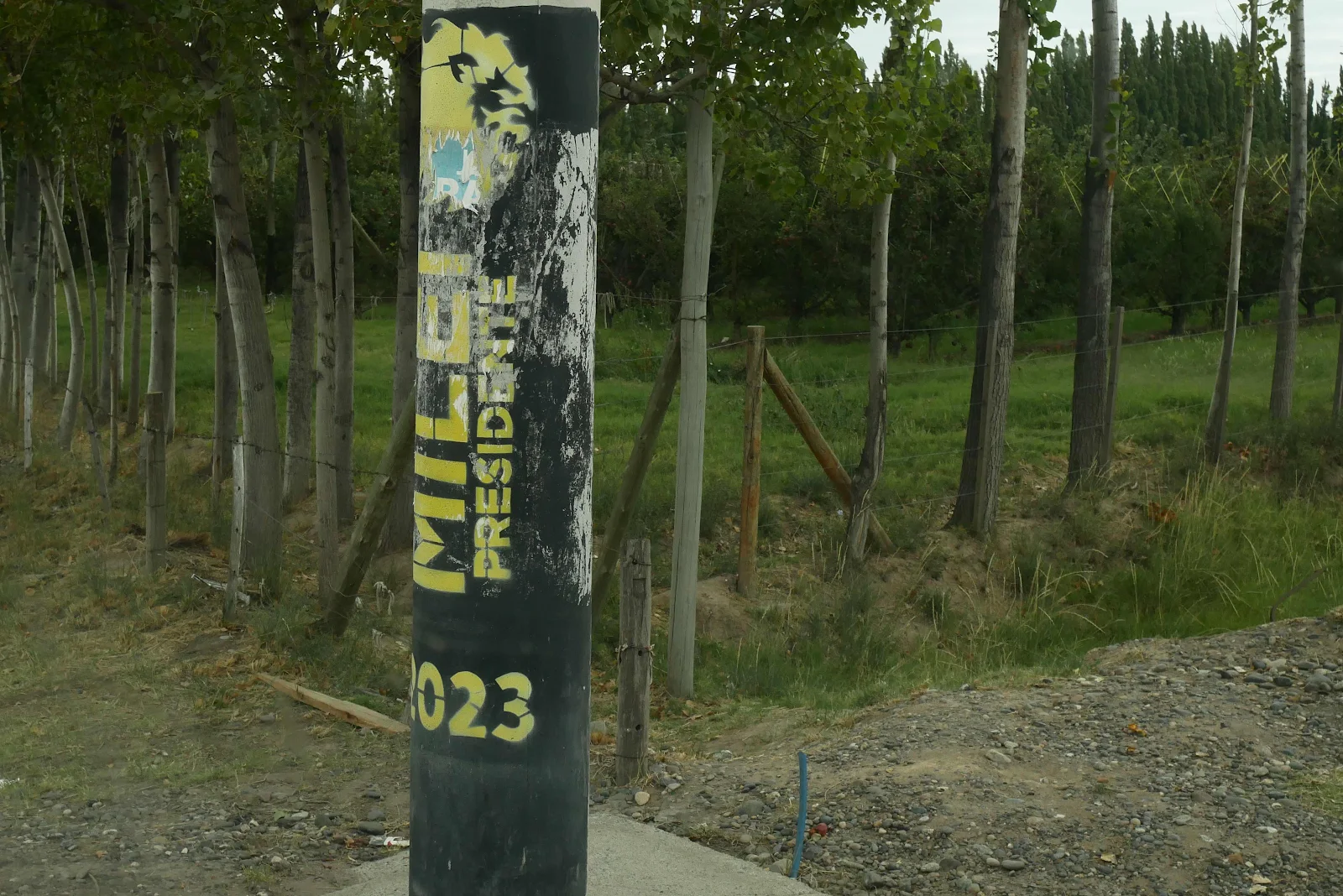
I dread the thought of a similar descent into a lower level of economic insecurity at home. President Milei here has promised a better future but after two years of his chain saw attacks on government the people I spoke to are exhausted. 
I wanted to like Argentina a lot more than other countries and I expected to love it here. Through the grime and the frustration I can see what was, and for me the current state of affairs is a disappointment not a disaster. We got here two years too late, a time when the cost of living was low, the government was overspending and the elections were ahead and people had hope. 
It’s odd to me how the United States had a functioning economy, a growing stock market and investment plans and the voters threw it all away. I paid attention when the elders said you needed to save for retirement but now I learn I was a parasite at my union supoorted government job. I’m glad I’ve gone but our carefully crafted retirement seems at risk of dismemberment by an unelected billionaire playing Monopoly with our lives. And being cheered on by his next victims. 
We seem to have found our way in South America learning to be nomads in societies where summer camping is much enjoyed but permanence in a camper van is an oddity. We both still enjoy this life with all its challenges and are glad to be away from the intolerance of the US. 
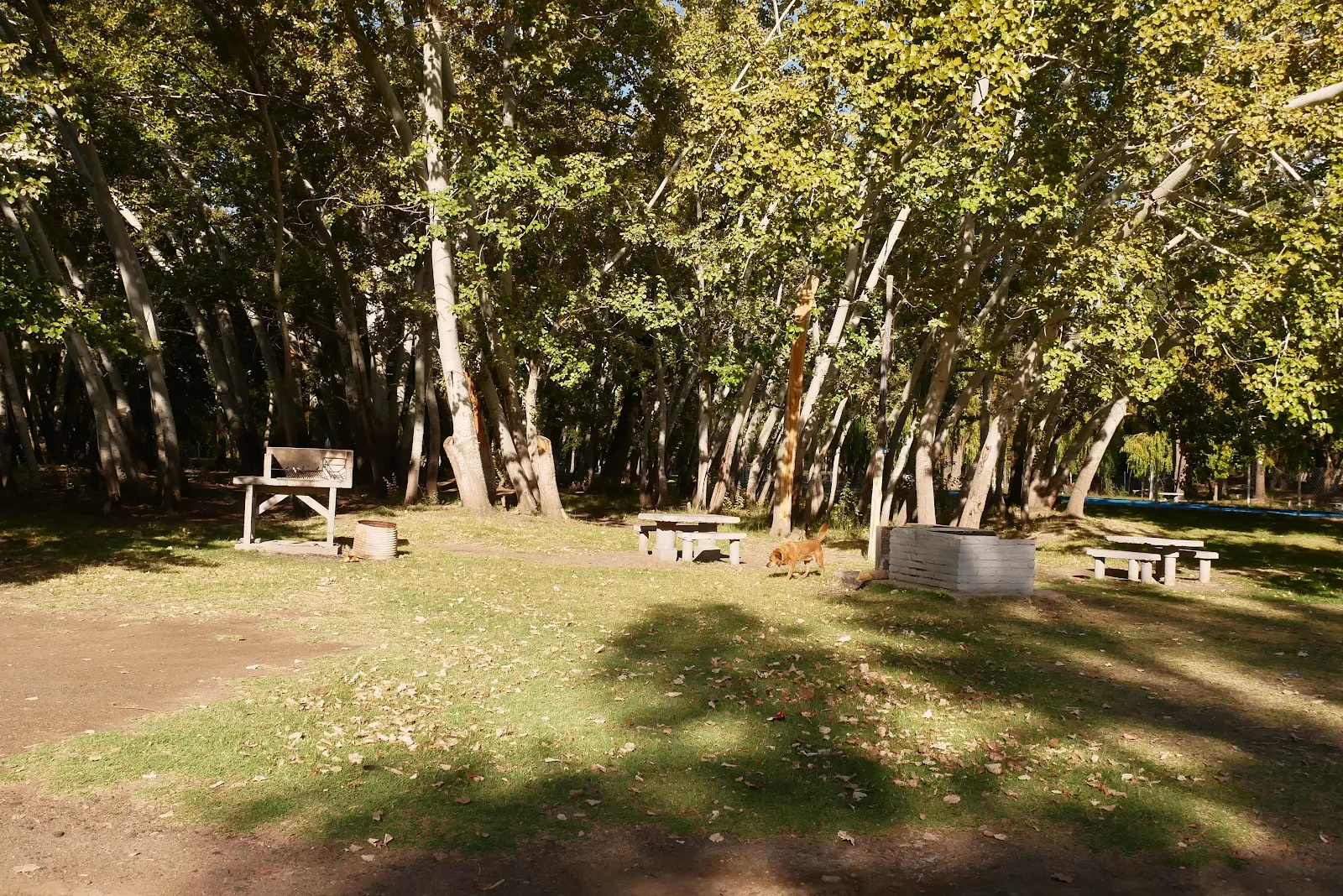
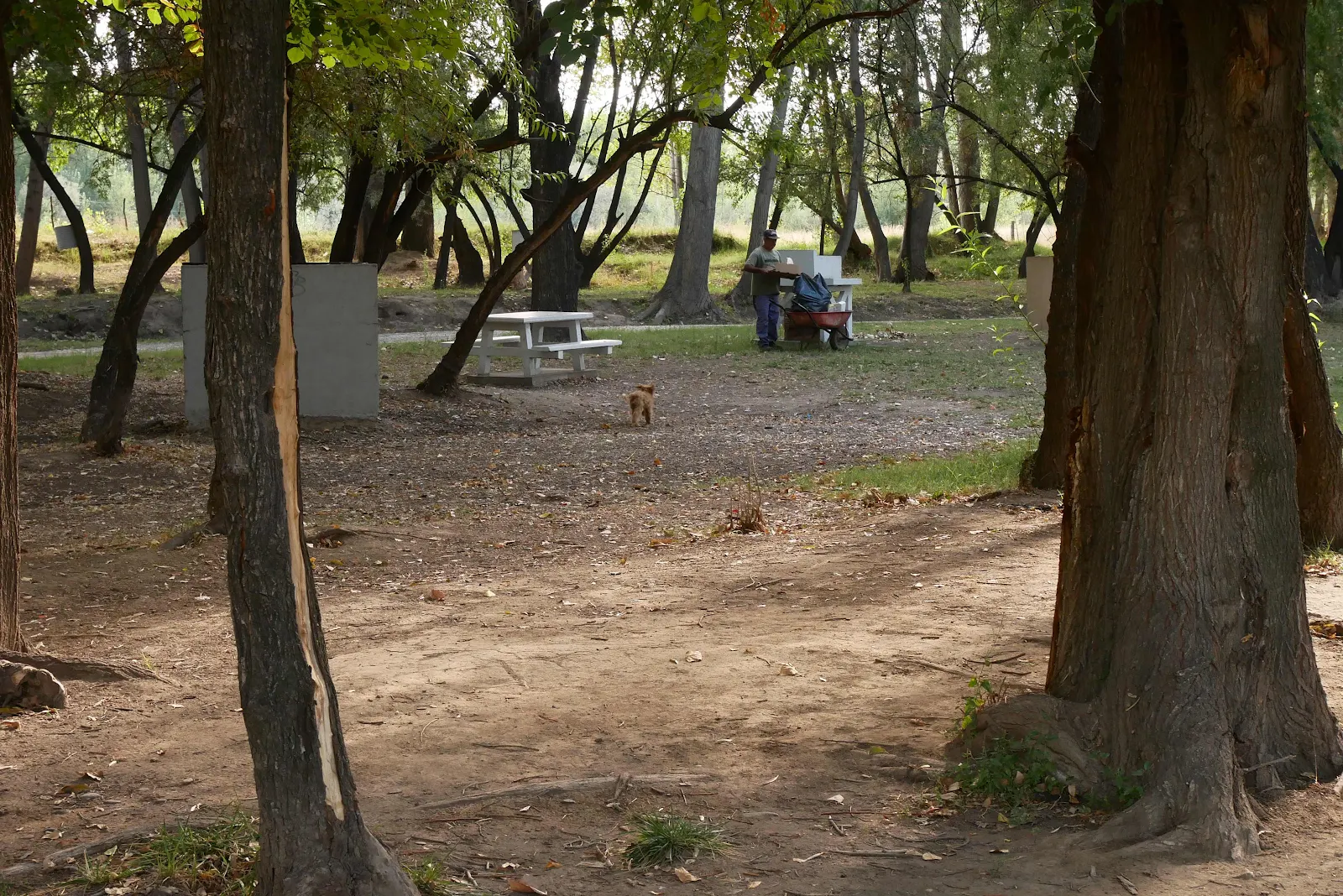
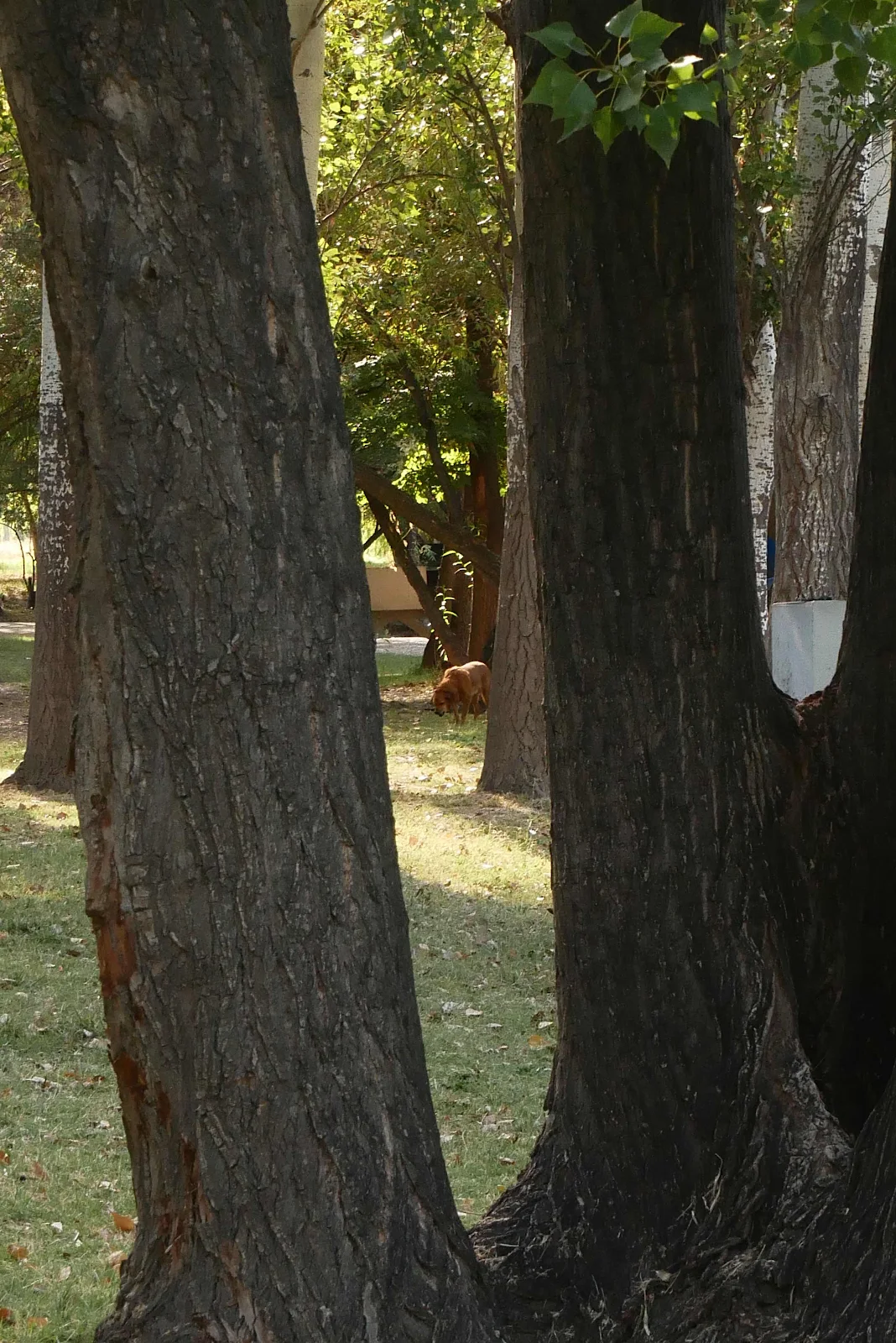
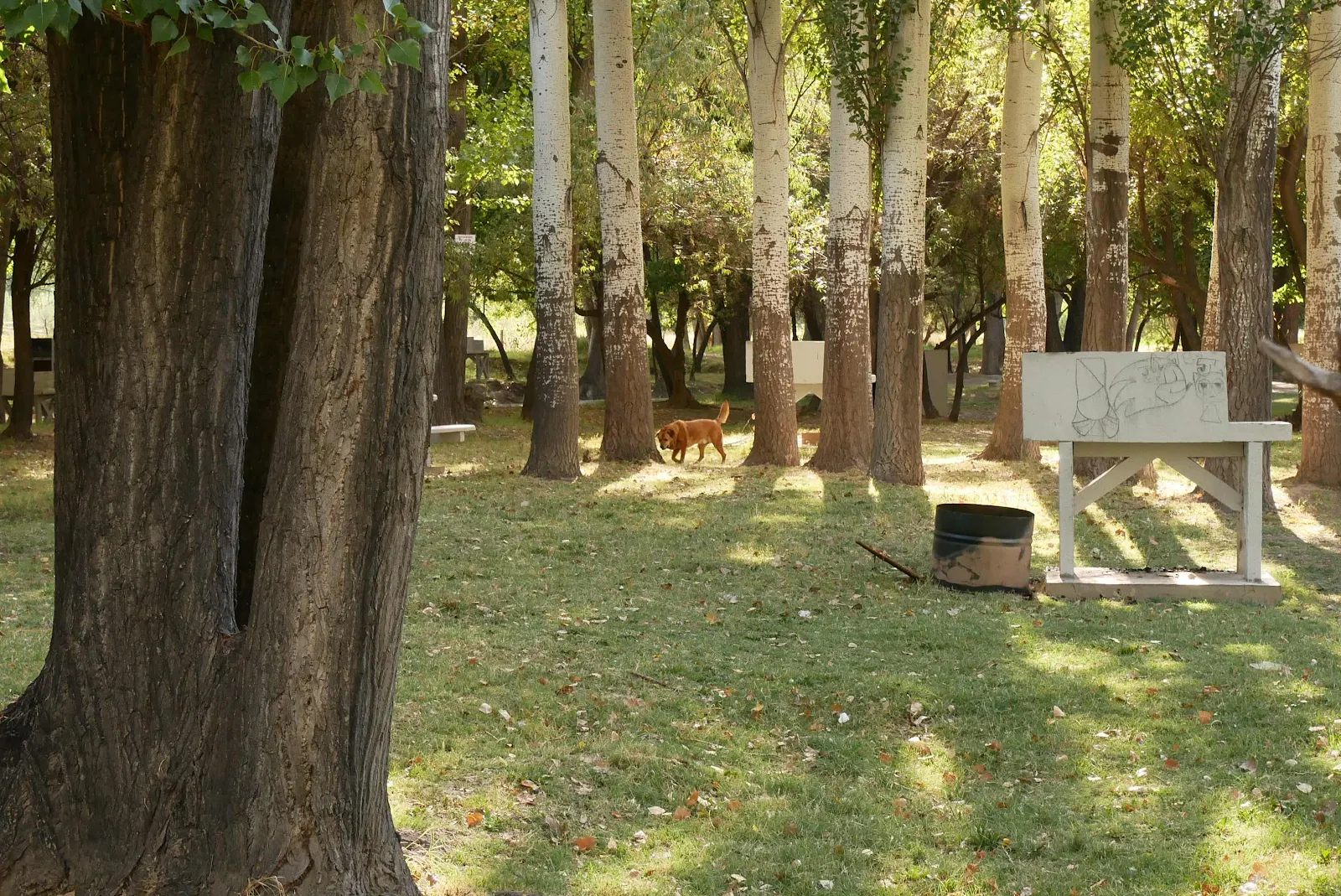
The man in the photo above  came in to clean the campground after a long weekend of families enjoying the woods. His three dogs followed him around playing and barking at the grumpy old American dog who didn’t want to play. We talked a little about our trip and I joked about how quiet this private park was. Private? he said…this is public. Yes I said but we get to enjoy it alone so it’s as good as private. He looked around nodding. The locals had left as had the friendly Brazilians in their van. We were alone. 
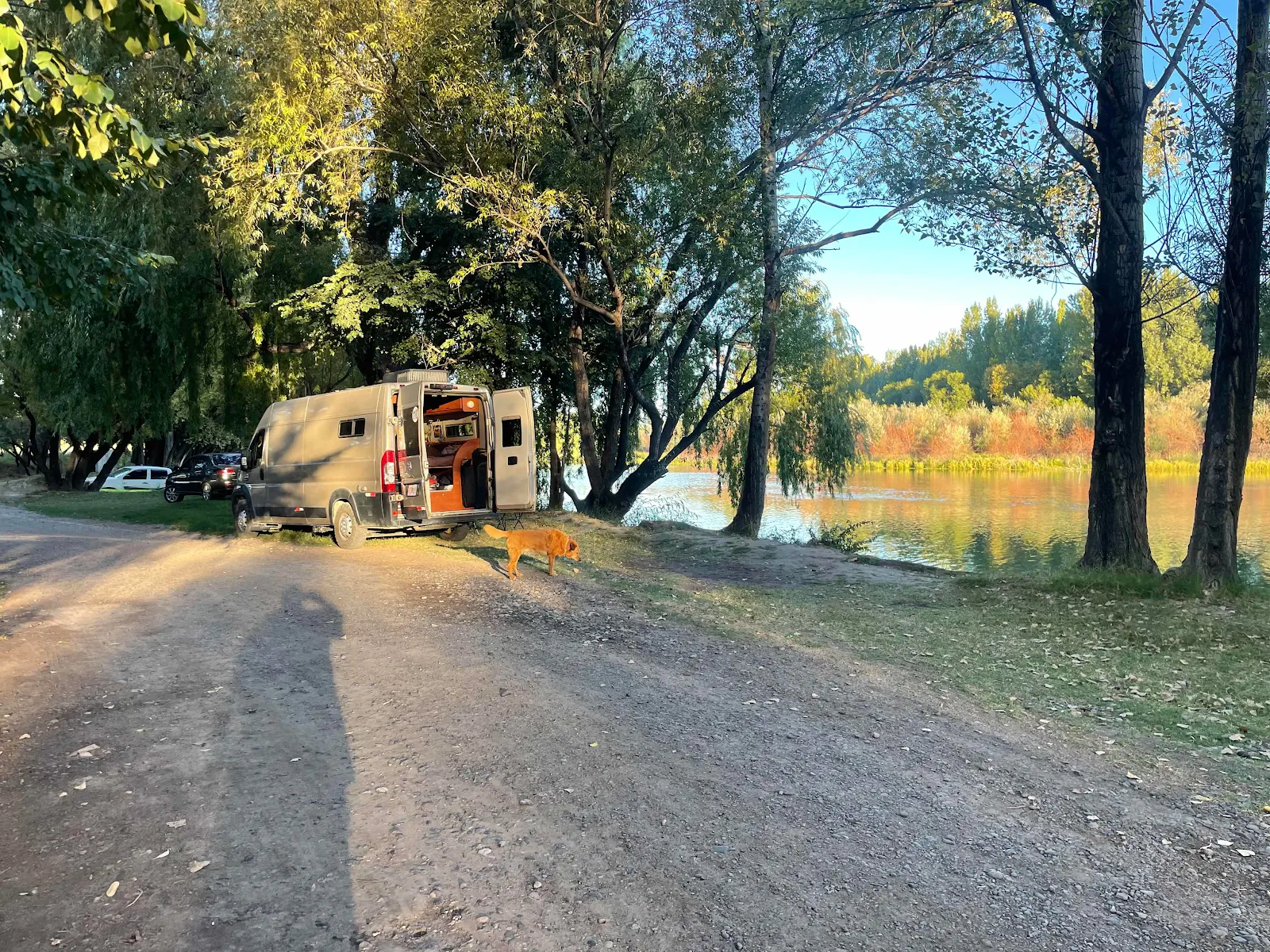
The night before a nice lady waiting for her husband to bring the car back advised us to move to the other end of the campground where the lights came on at night. It’s safe here she said but it’s better near the lights so we moved. Layne was up at two in the morning and saw a police car on patrol. 
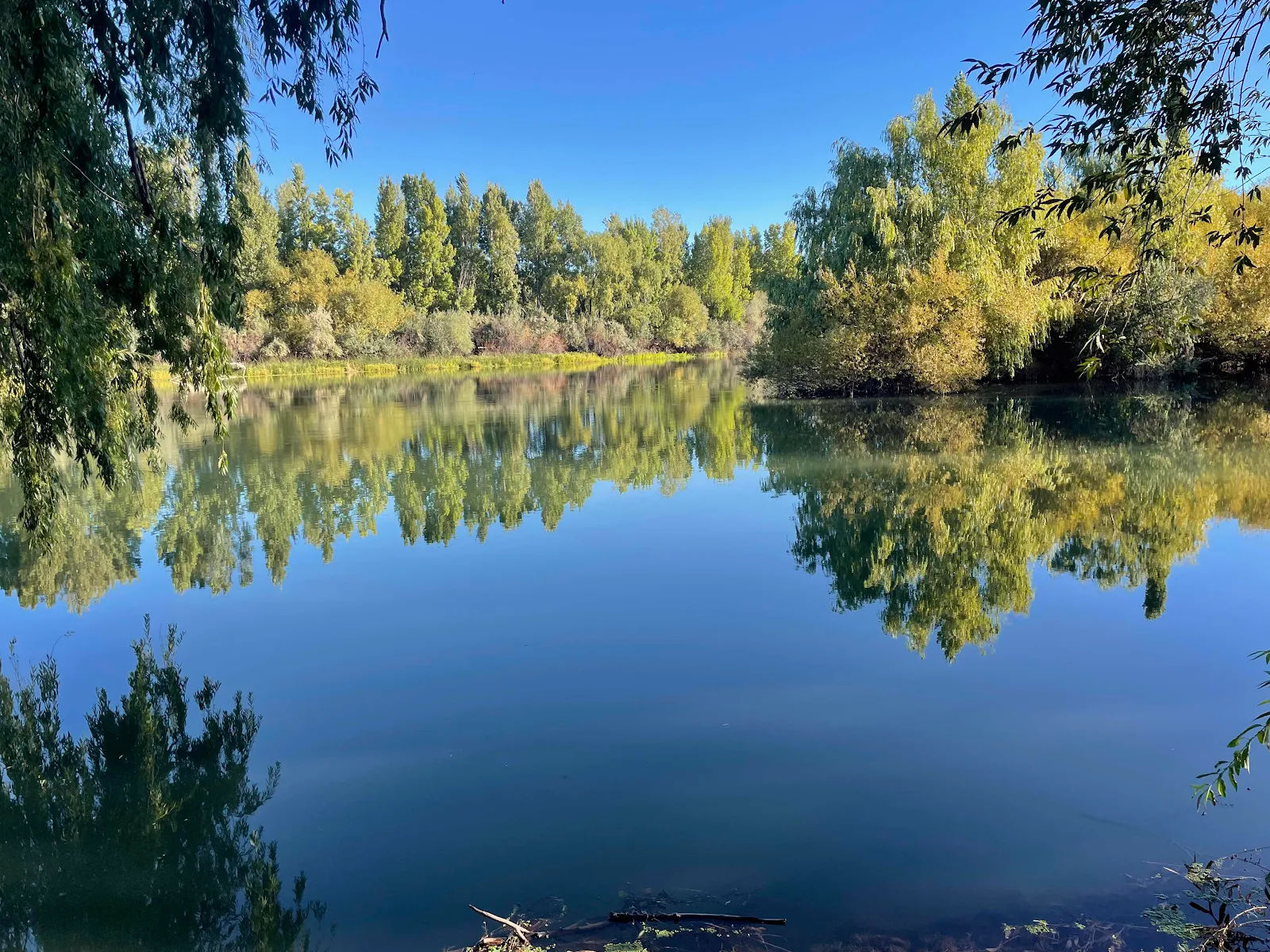
We are moving north slowly into central Argentina and indeed we were camped in the north bank of the Rio Negro which is generally accepted to be the northern boundary of Argentine Patagonia. So technically we are out of the region we originally set out to visit. New countryside awaits us. 
And they say the further north you go the poorer Argentina becomes. 
This journey might get interesting as we approach Bolivia, the poorest of them all. 

Thursday, March 6, 2025

Out Of Patagonia

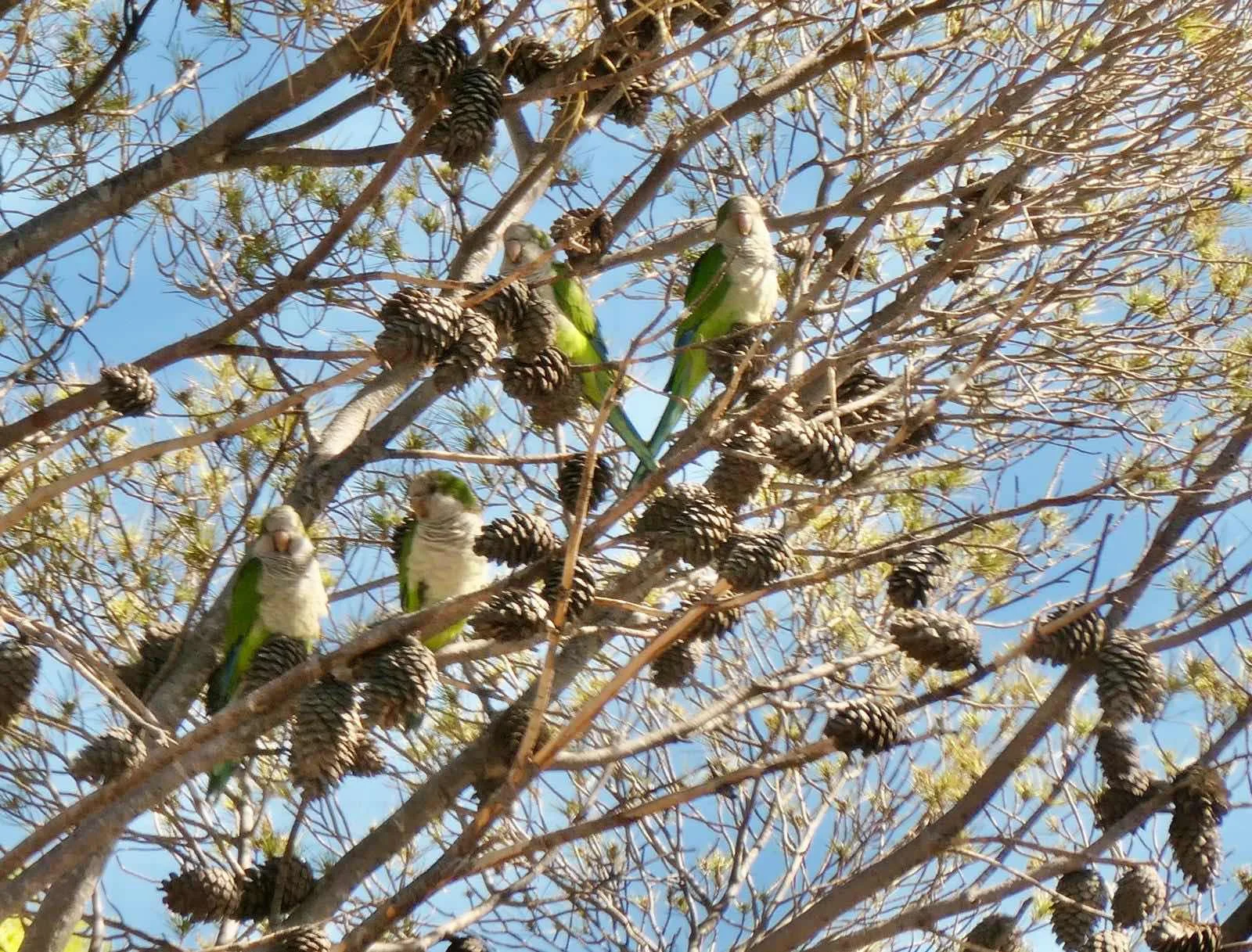
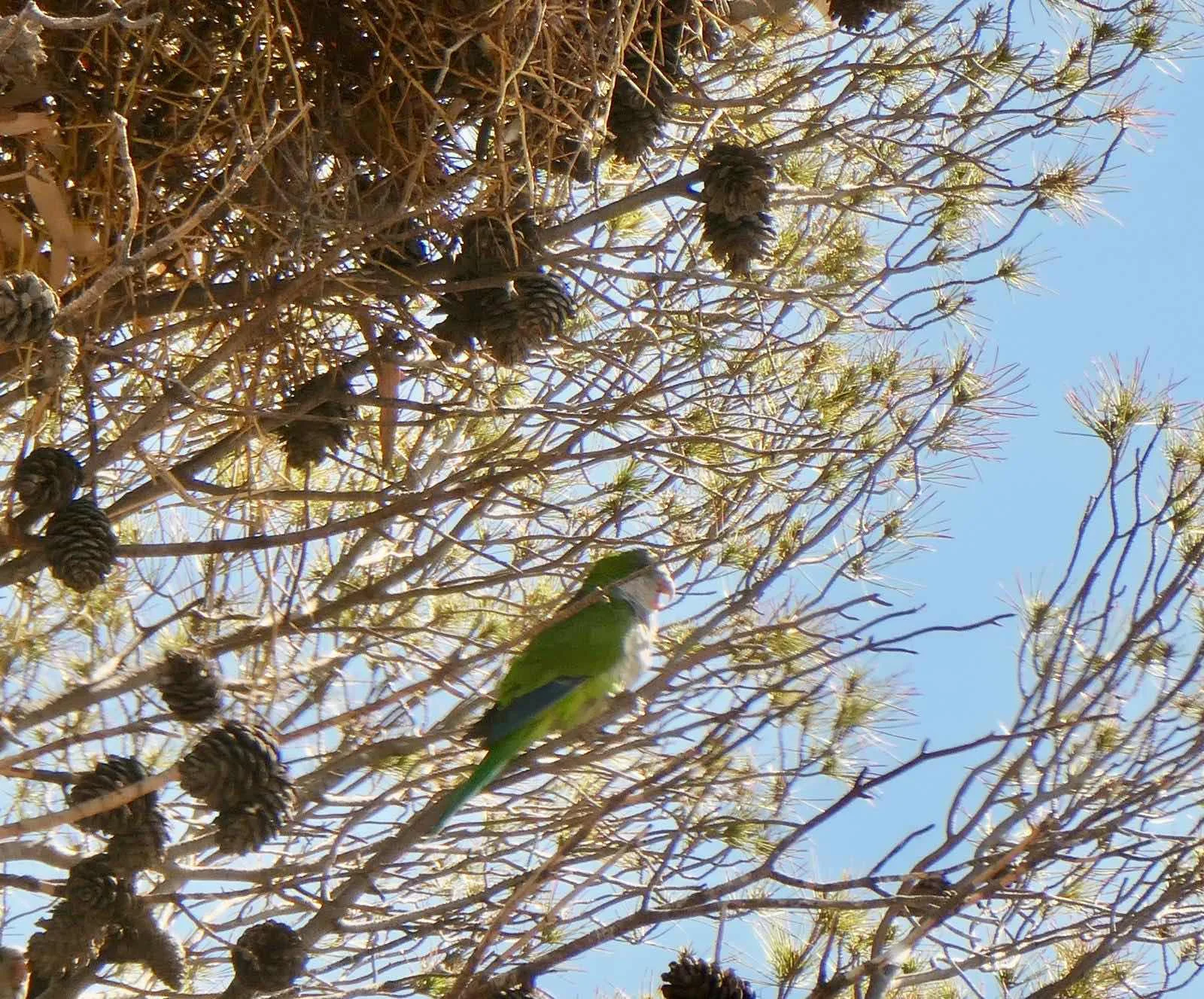
We woke up to the squawks of parrots squabbling in the eucalyptus overhead. Layne postponed her parrot hunt and went back to sleep. Rusty and I went for walk. 
I try to be really careful and not be reckless or risk injury but boy howdy, scrambling up a little hill to get a better view I took a face plant. Blam! Straight down as I tripped in a root. Luckily I hit dirt, my camera was dusty but undamaged and the blood I lost came from scratches and splinters. Rusty thought I was an idiot and stayed close by as I collected myself. 
This was a pretty nice spot to spend the night. The air was cool, the Southern Cross was overhead and we were alone. 
Meanwhile herself got diverging useful done. She washed the fruit and put away her laundry. 

Oh and the she went photographing parrots. 

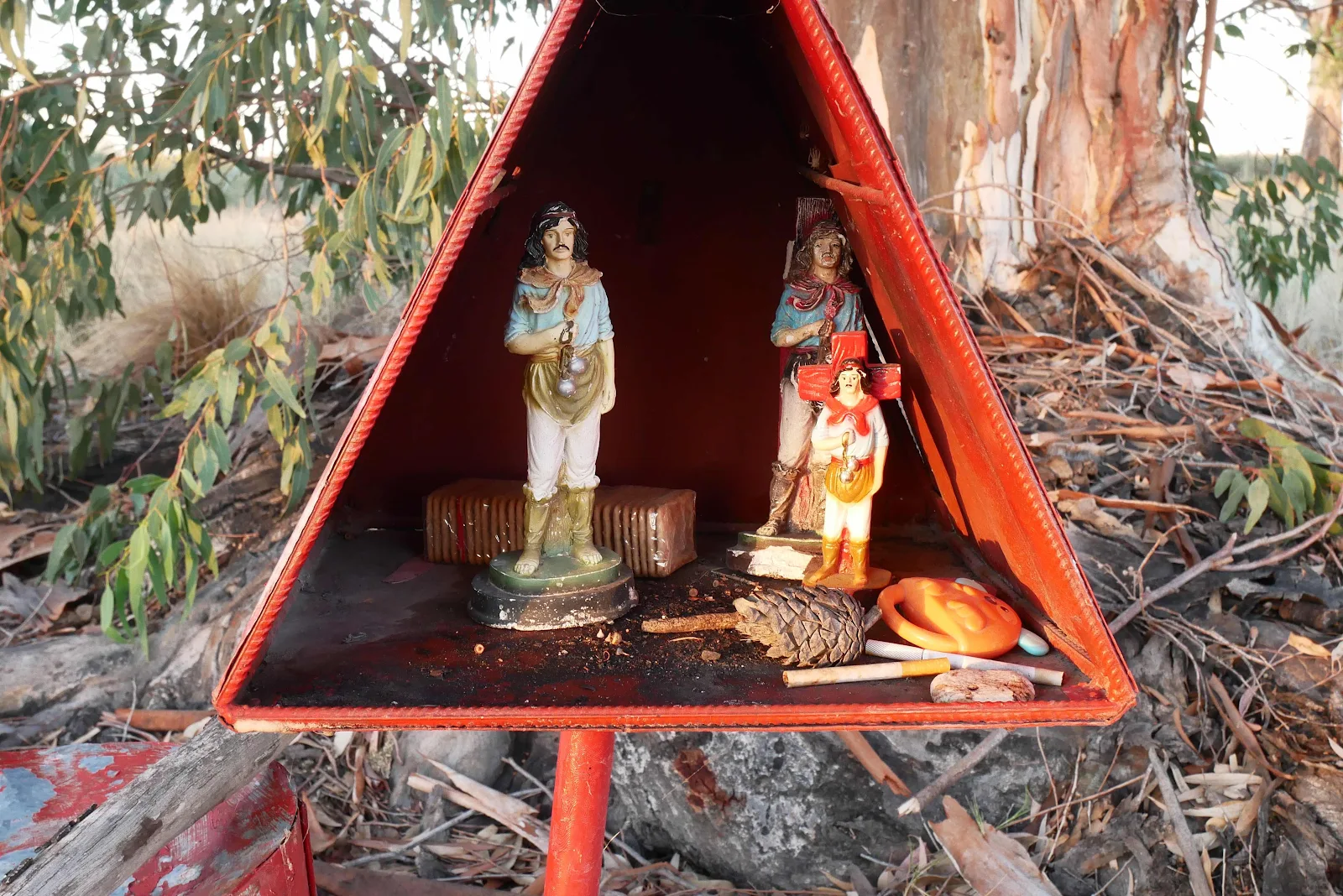
I found Gauchito Gil the truckers’ guardian hanging out near the rest stop. He deserted from the Triple Alliance War of 1864 (Argentina Brazil and Uruguay fought Paraguay) and while on the lam he became a cattle rustler eventually getting caught and sentenced to death. He promised his executioner he would cure his son who was ill and after the man cut off Gil’s head he went home and prayed to Gil to cure his son. So you’ll see these red shrines all over Argentina and I’m told Bolivia. Now you know. 
And sure enough as we got ready to leave after lunch (yeah, did yeah a slow start, we’re retired) a truck showed up for a nap. 
Argentina is a weird country. The President promised a new start for a country beset by inflation and a devalued currency and he promised a change. He got elected after waving a chain saw around to symbolize his cost cutting program. 
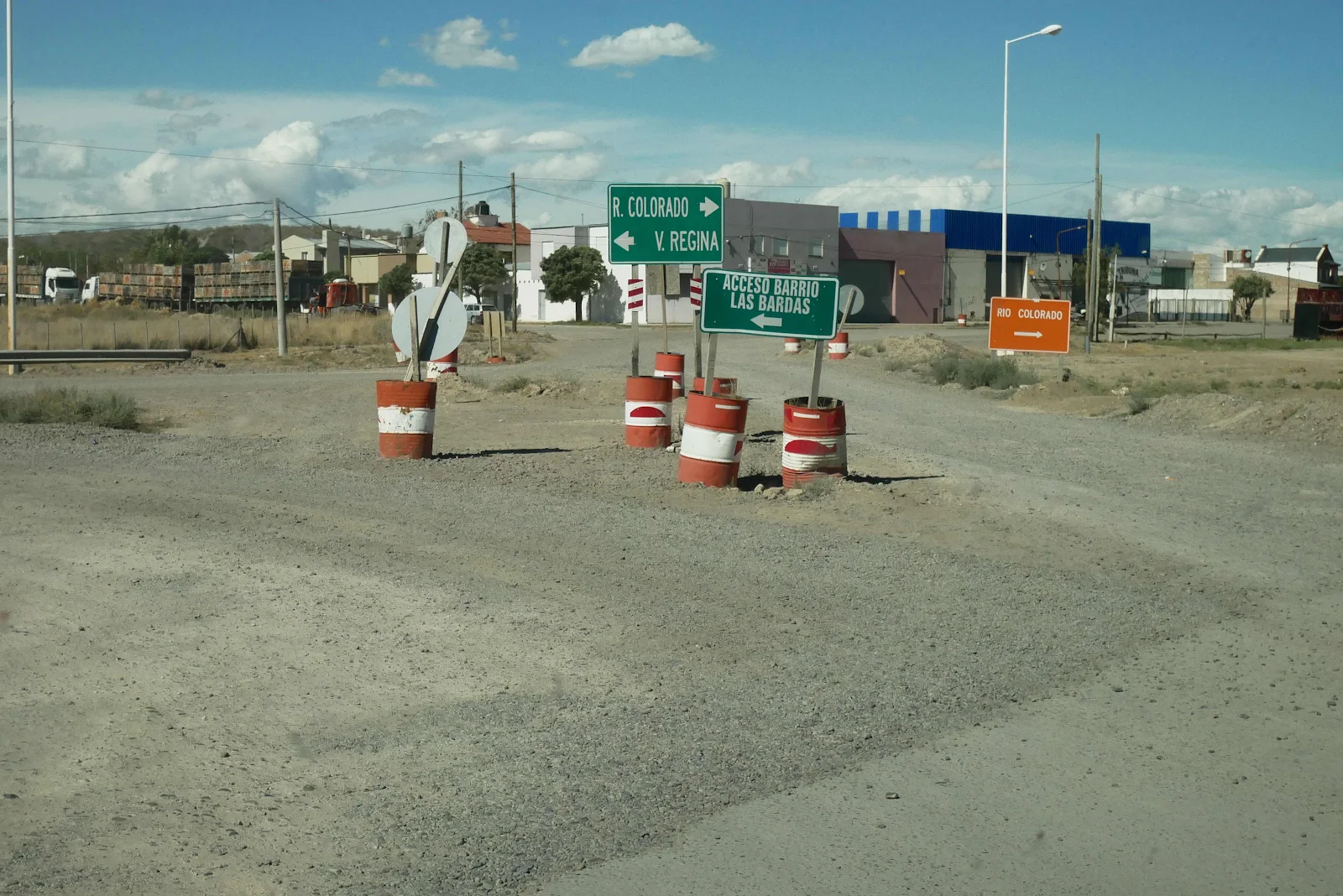
Check out this roundabout. Work has ceased. There is no progress, no workers, no parked equipment, no activity. 
The new traffic circle is three quarters finished but it’s going to remain like this until somebody in charge figures out how to restart a stalled country. 
President Musk waved his own chain saw around in imitation of Milei and his cost cutting doesn’t fill me with much hope. I’ve never seen forensic accounting  carried out  the way his twenty year olds are trashing institutions and as I look at Argentina slipping into physical collapse I dread the future. 
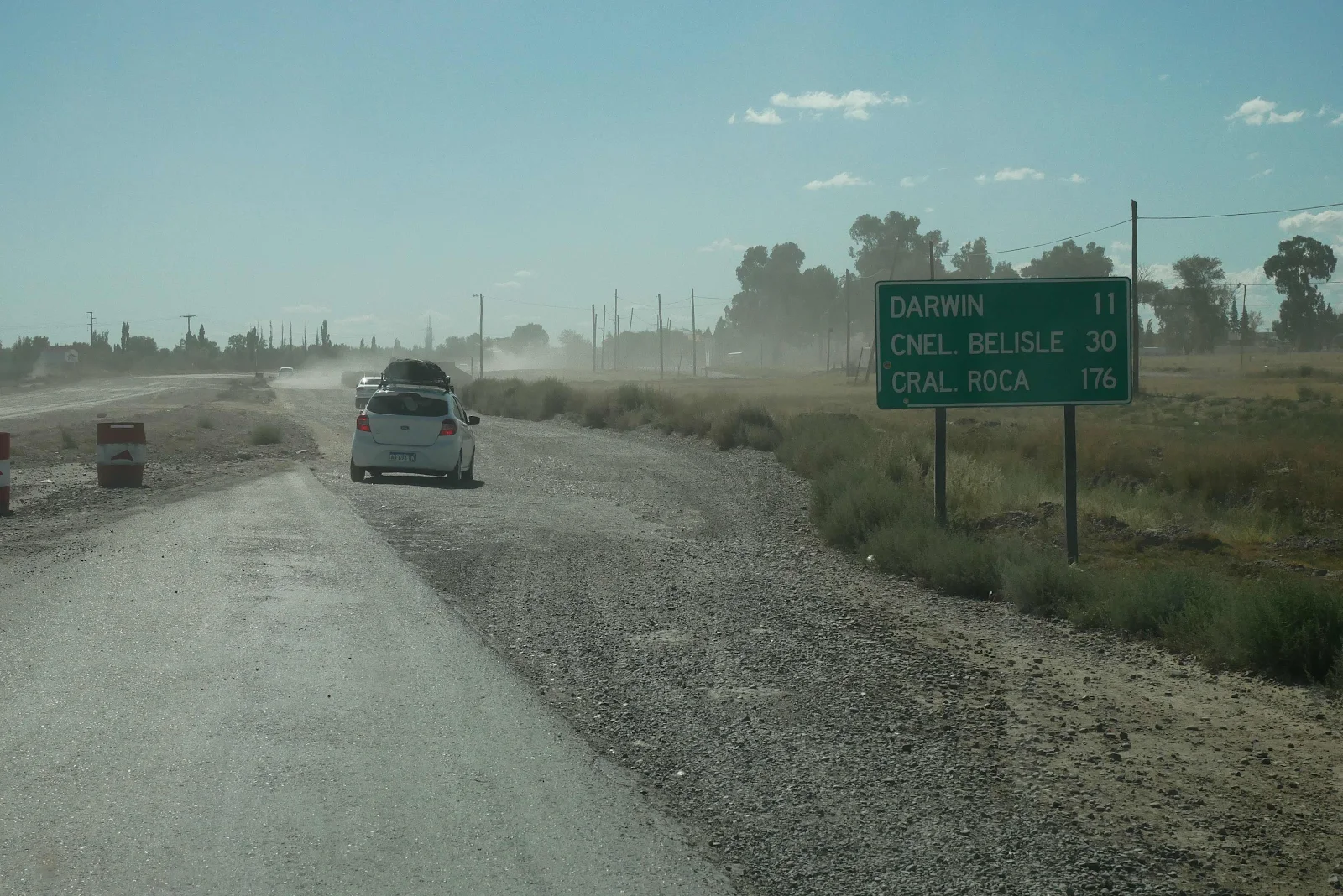
I talked to a lady at the campground and she told me about her 34 year old daughter living in a wheelchair. She told me about the immense hassles to get a chair, the bureaucracy to get help, the paperwork to get her daughter a chance at a life. Then the gravel roads, the mud sidewalks, the immobility. I found Key West totally wheelchair unfriendly but I knew not what to say. This gravel garbage is an inconvenience for us but for locals it’s just another sign of collapse. That and sky high prices. 
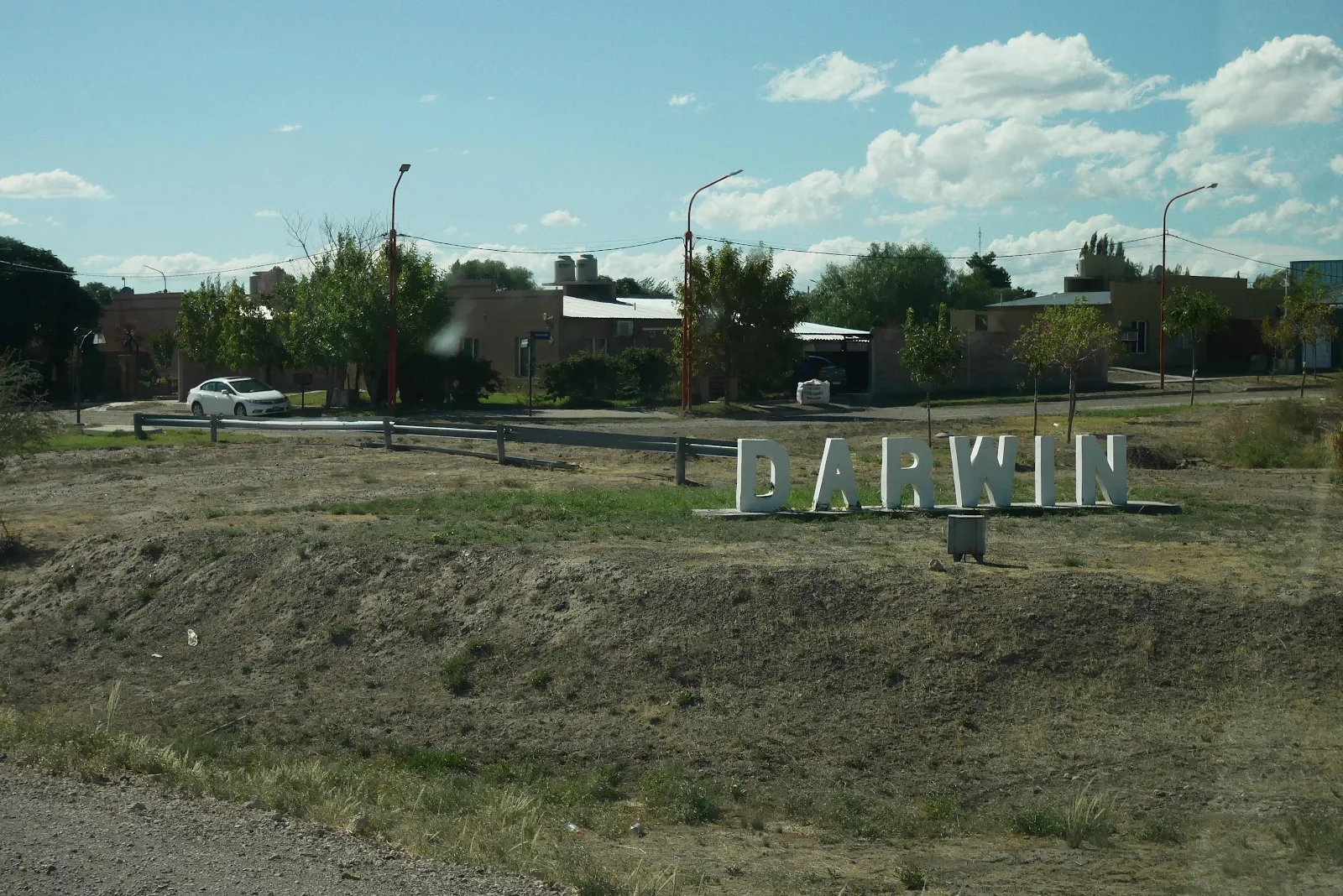
There you are driving down the highway and then you are in Darwin. The man is everywhere in Patagonia but we’ve crossed the Rio Negro so we are in the pampas. Patagonia is behind us. 
I can’t say I saw any difference. The mesquite bushes stretched to the horizon. The sun shone. The road ran straight. It was still 90 summer degrees. But it was no longer the mythical Patagonian desert. 
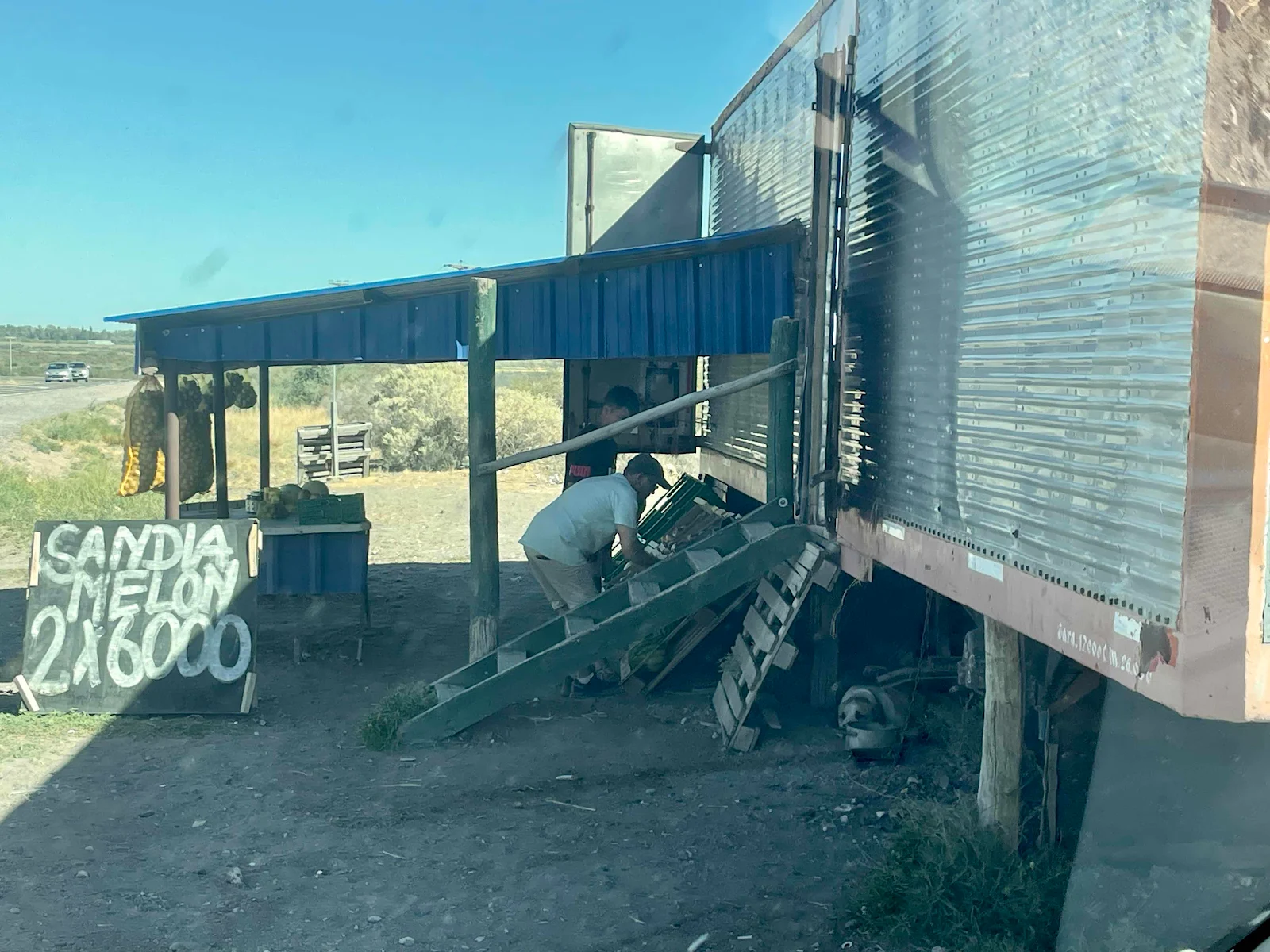
They sell fruit from truck trailers here. We stopped at a gas station and the attendant said the bathrooms were wrecked and the water faucet was wrecked and they were out of regular. This town sucks he said to me speaking about Choele Choel. 
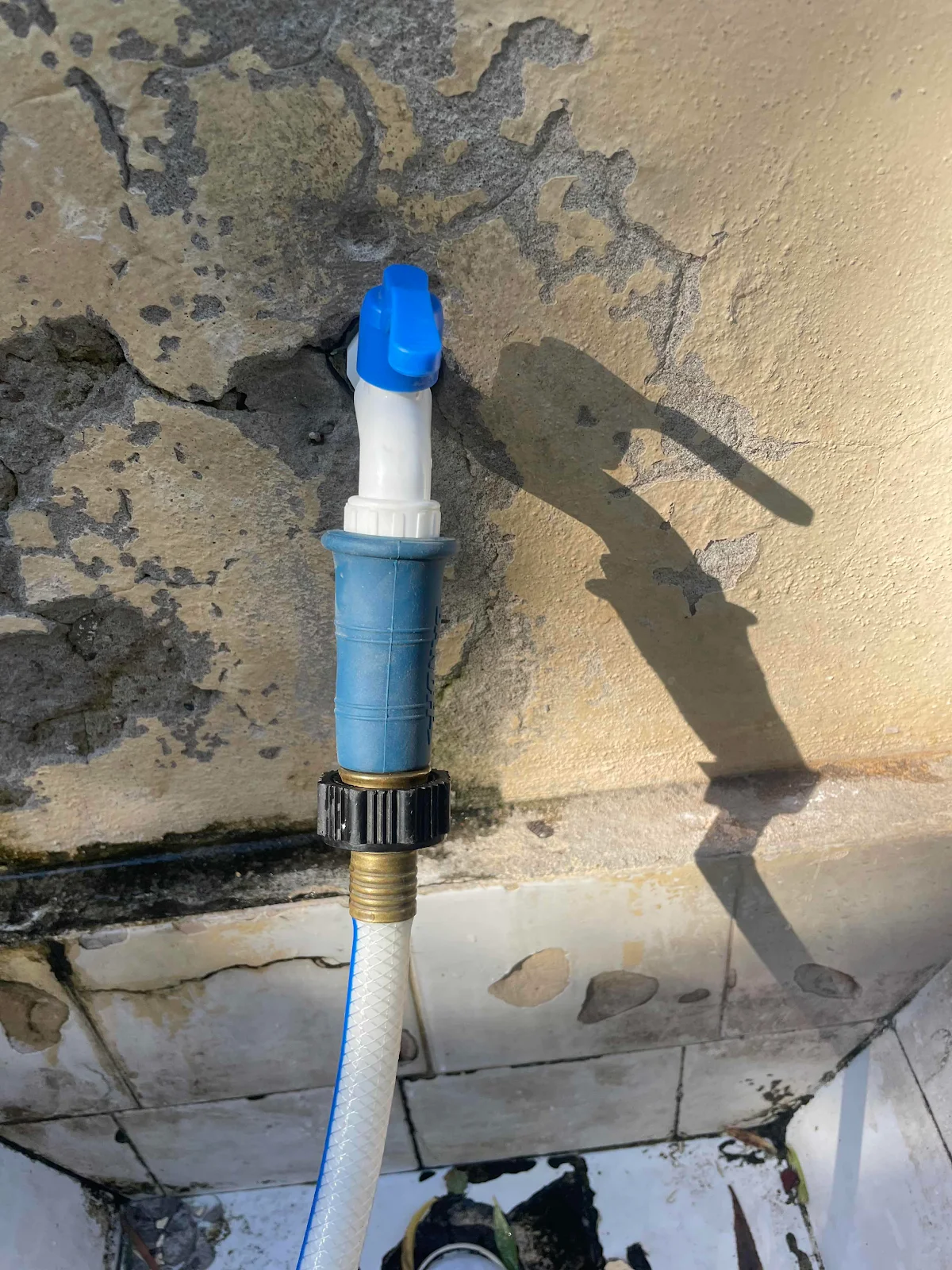
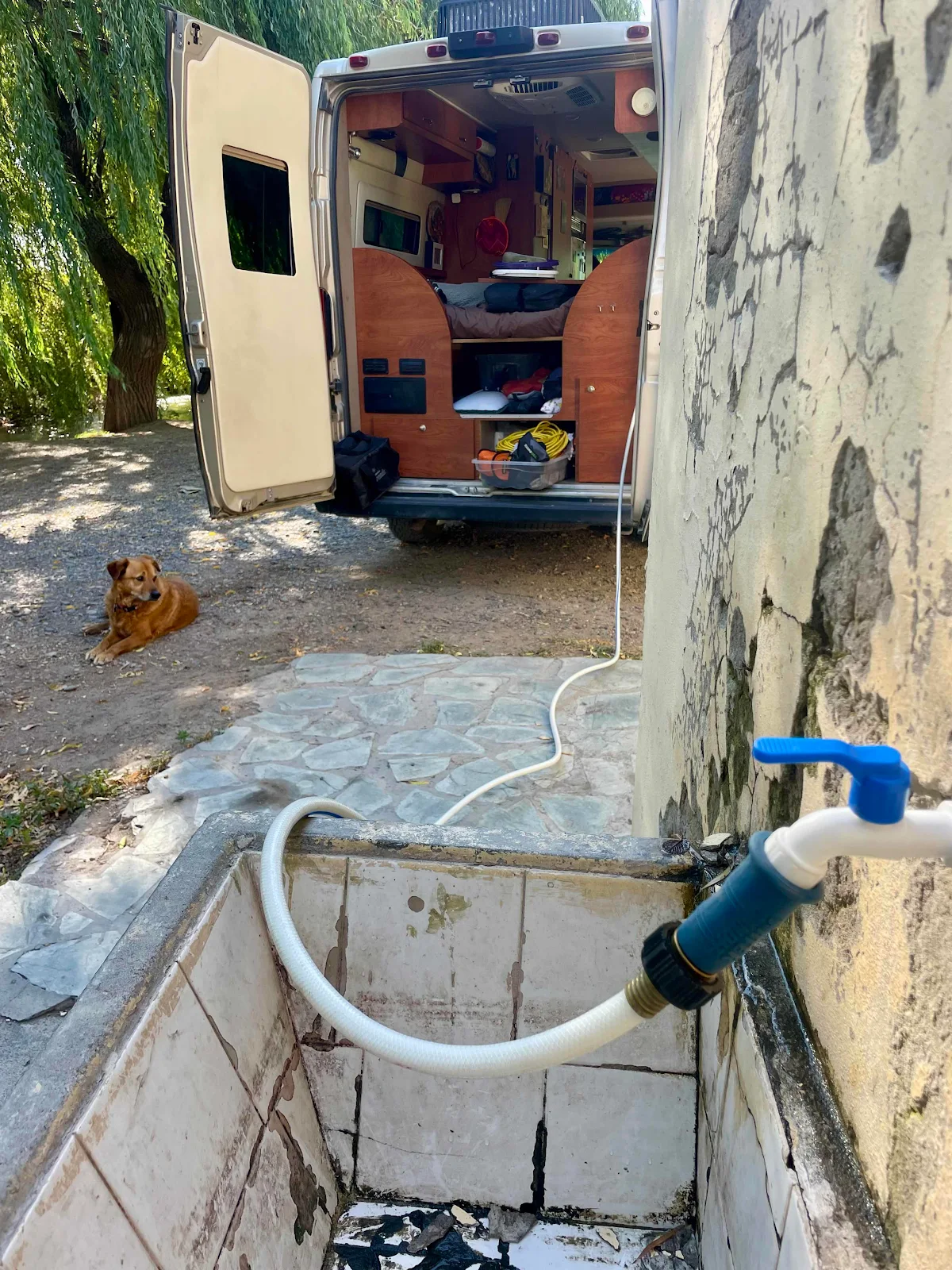
It’s one of the larger towns in central Argentina but we skipped it. Up the road we found a potable water faucet in an unattended city park. I filled our tank using the water bandit (the blue rubber nozzle below) to attach our hose to the faucet. 
One guy said hi and asked a few questions but most of the day users looked away when we waved. We freaked them out which made me miss cheerful friendly Chile. Economic depression takes its toll. 
A gas station without a line, just for the record, they do exist. 
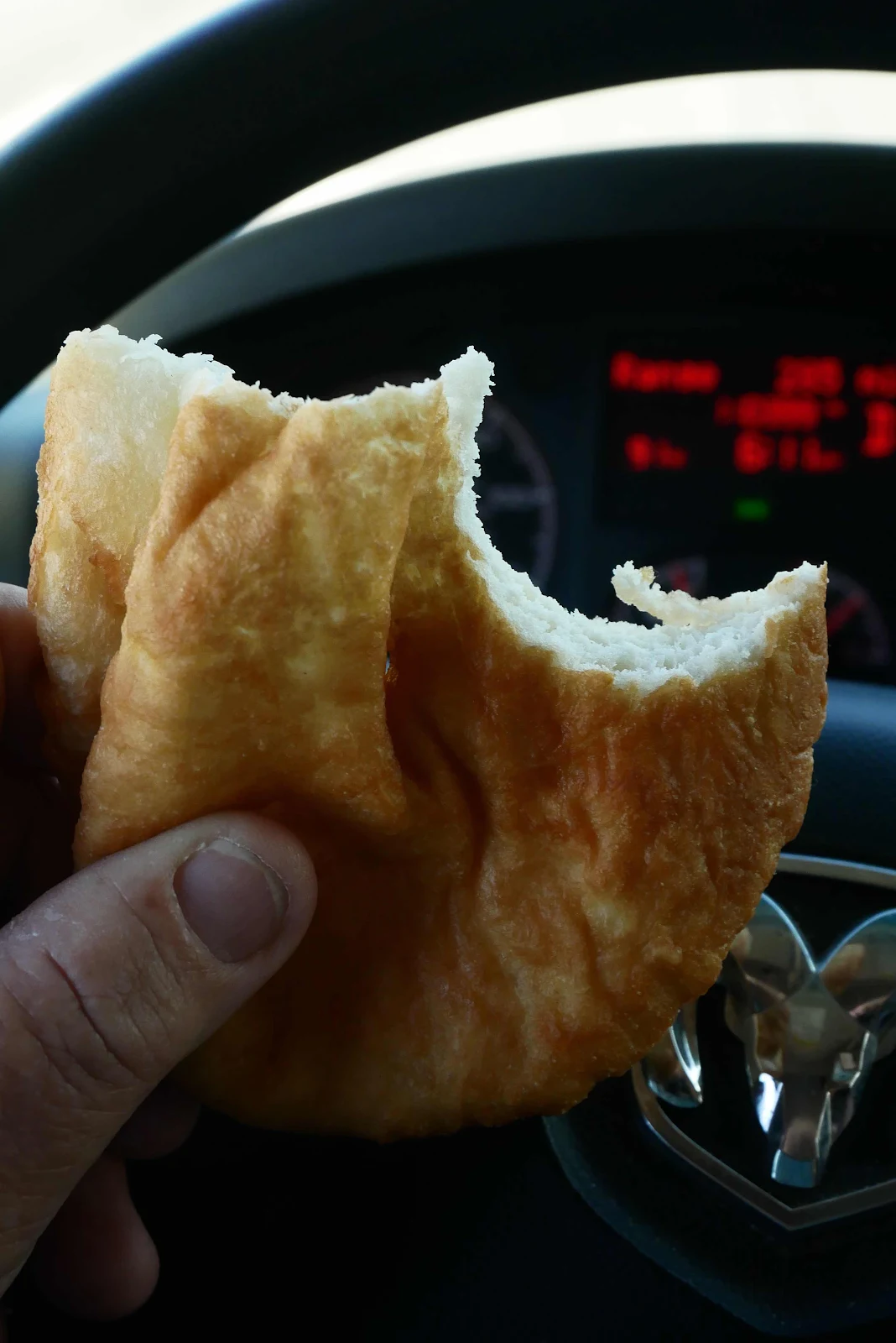
The sign said “fried sandwiches” and what we got was a bag of fry bread. Not what we expected but delicious. We like to shop roadside to help spread the wealth. 
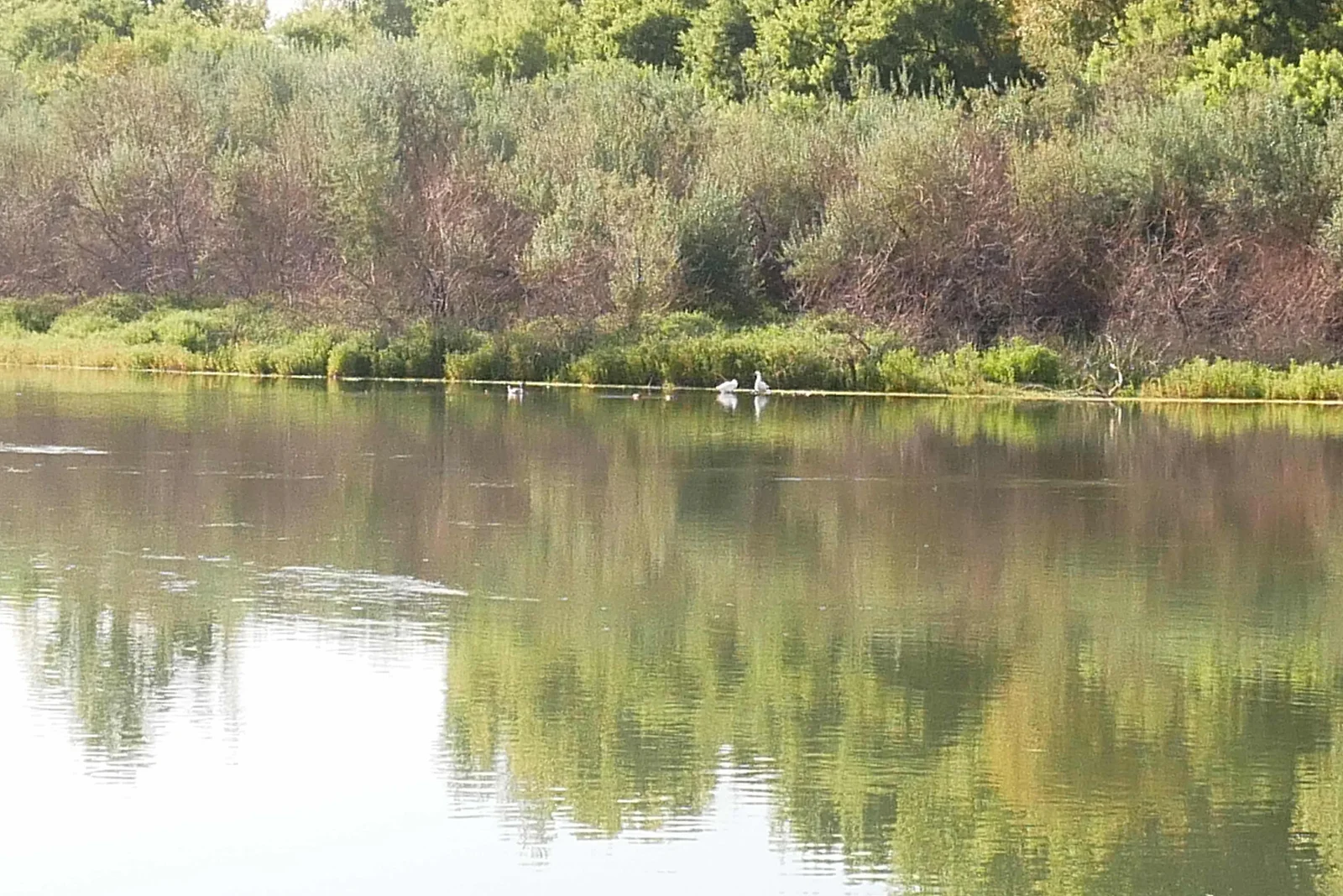
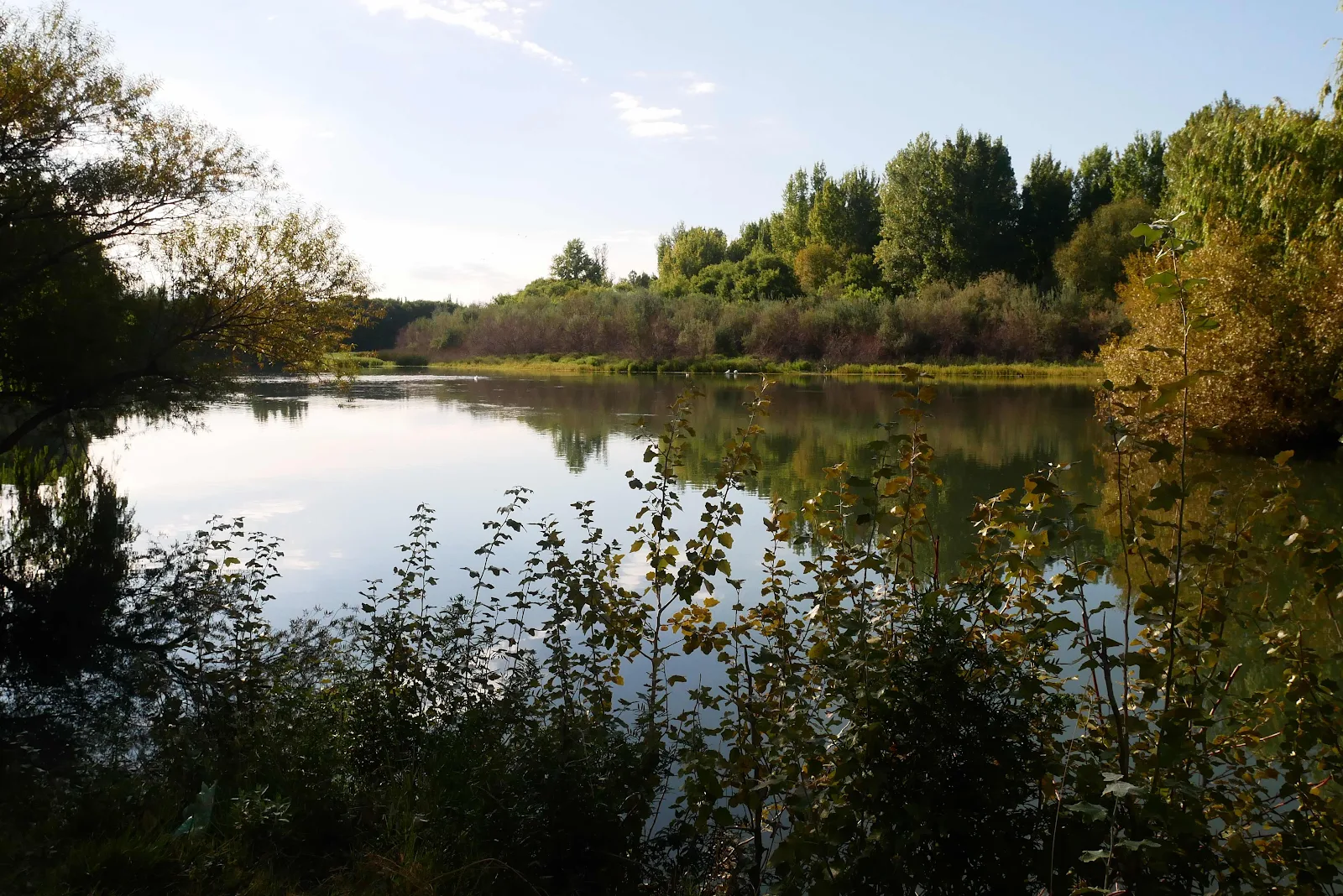
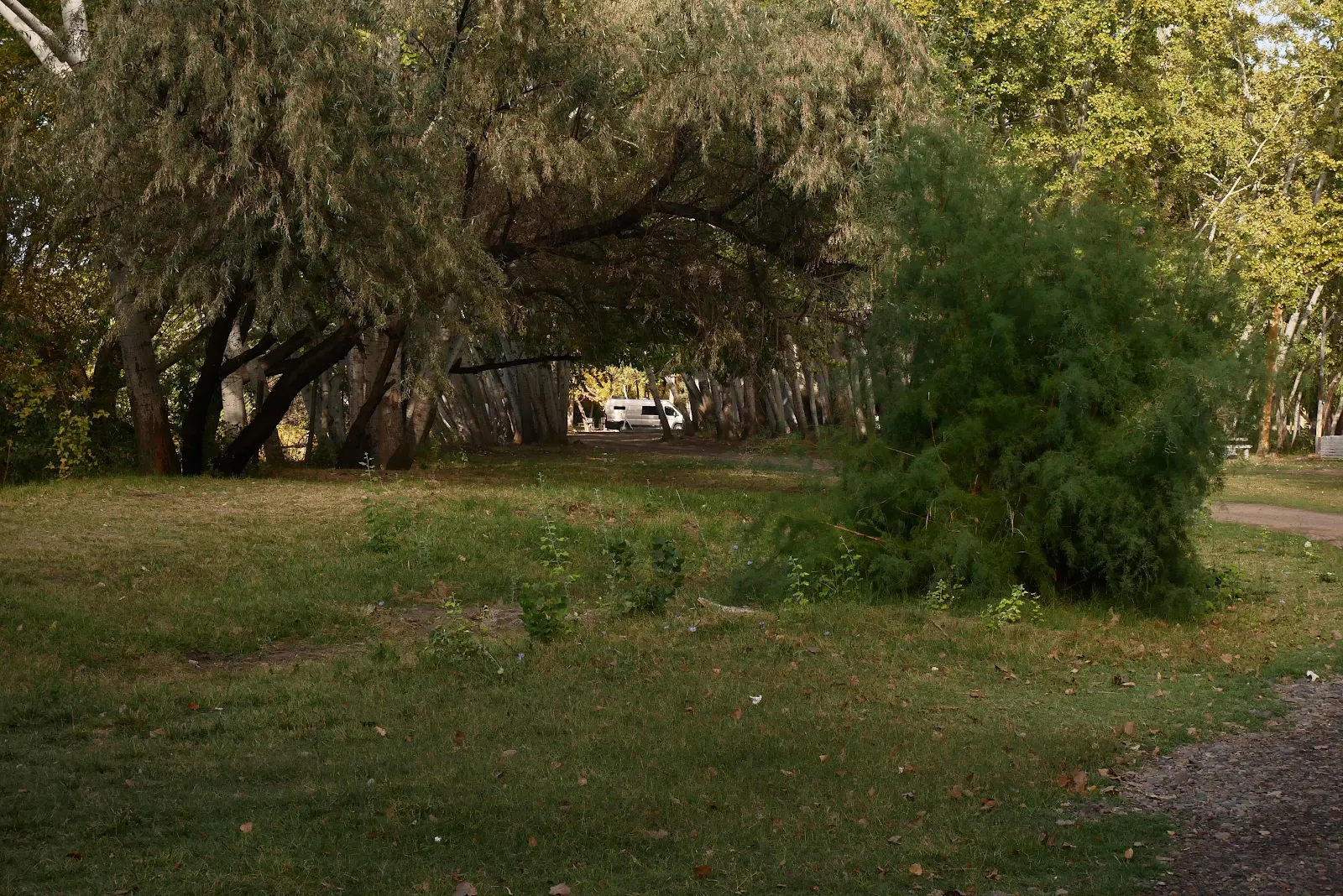
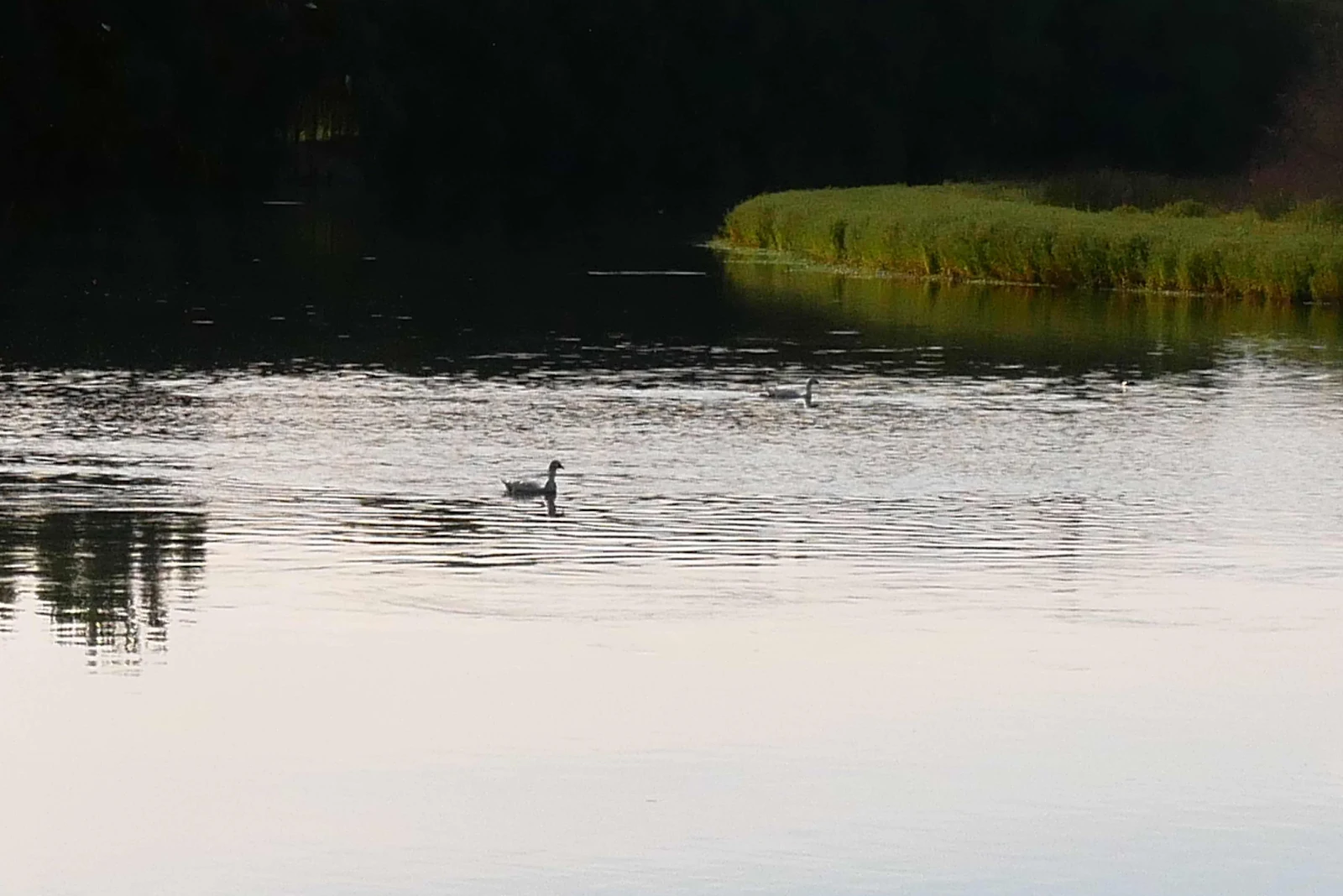
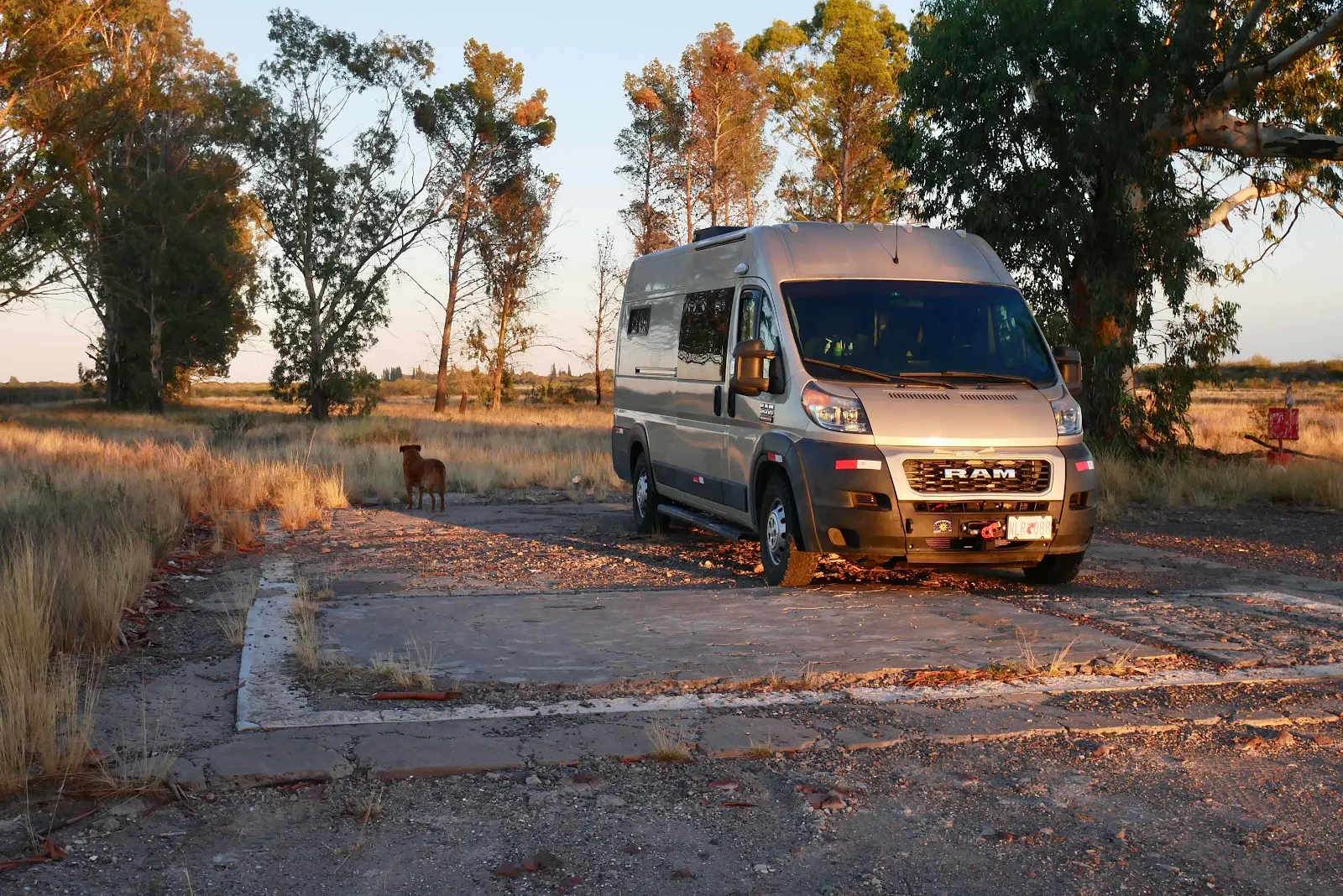
In case you are hard of seeing this is where we spent the night in a free municipal campground. 
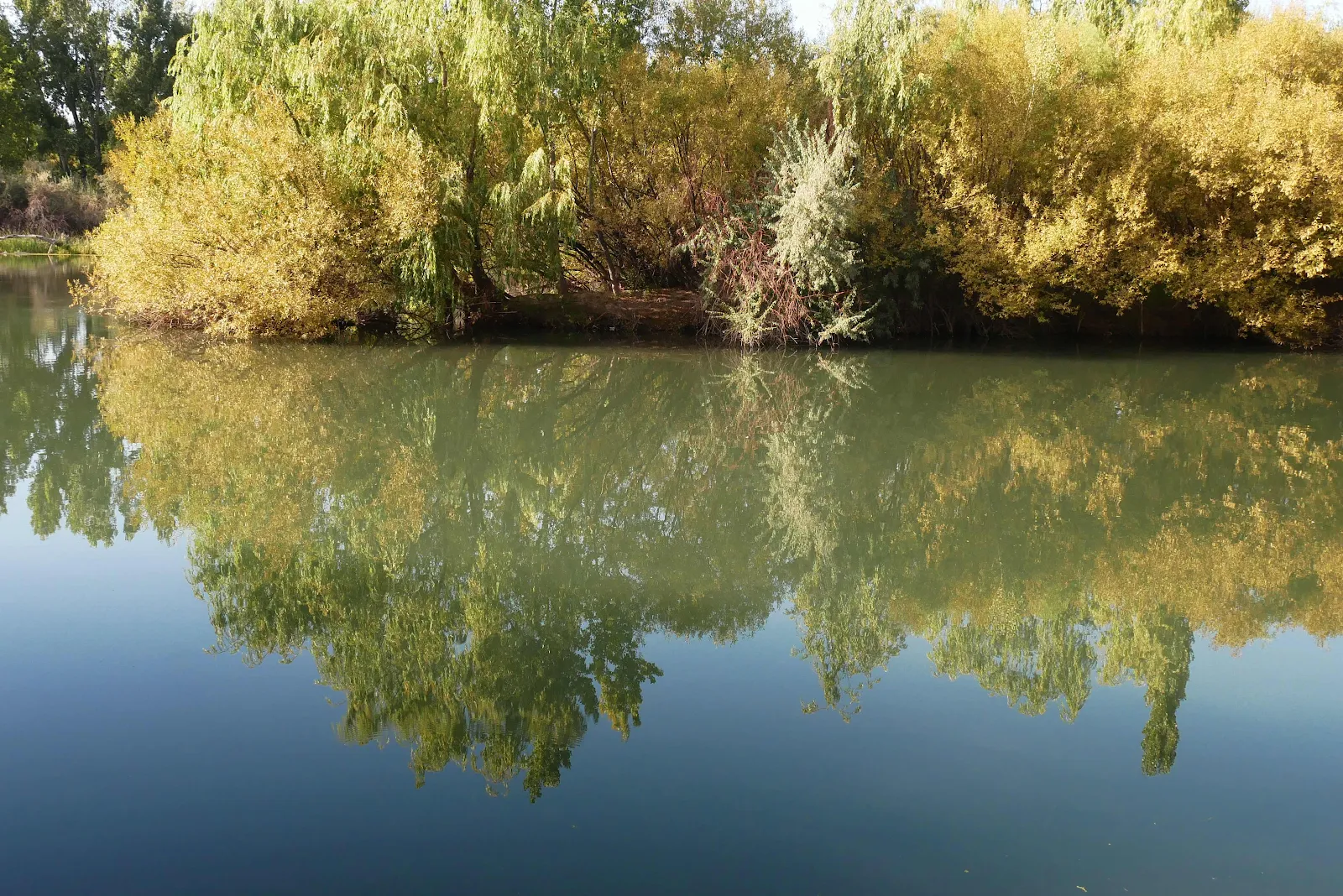
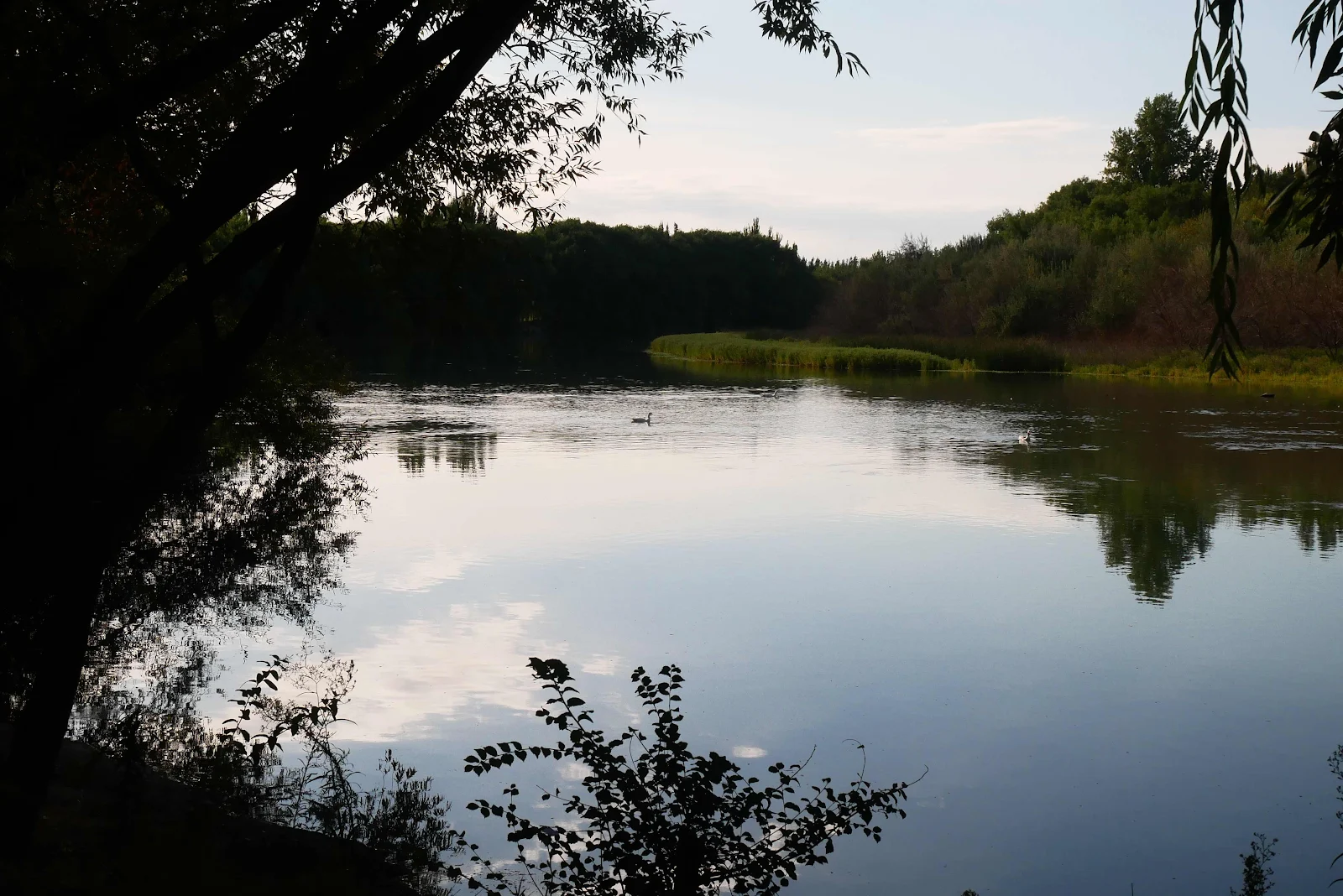
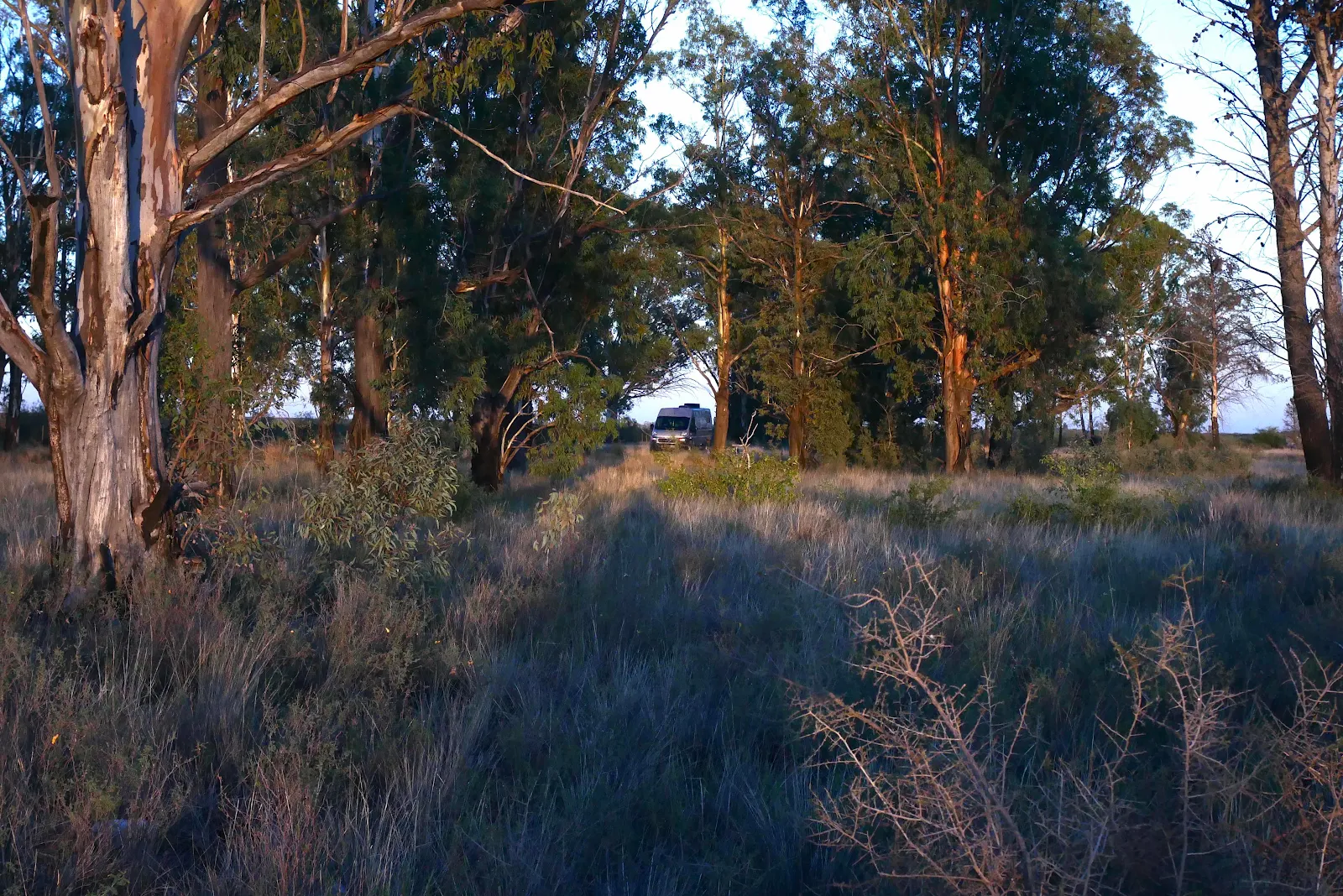
With a nice view. 

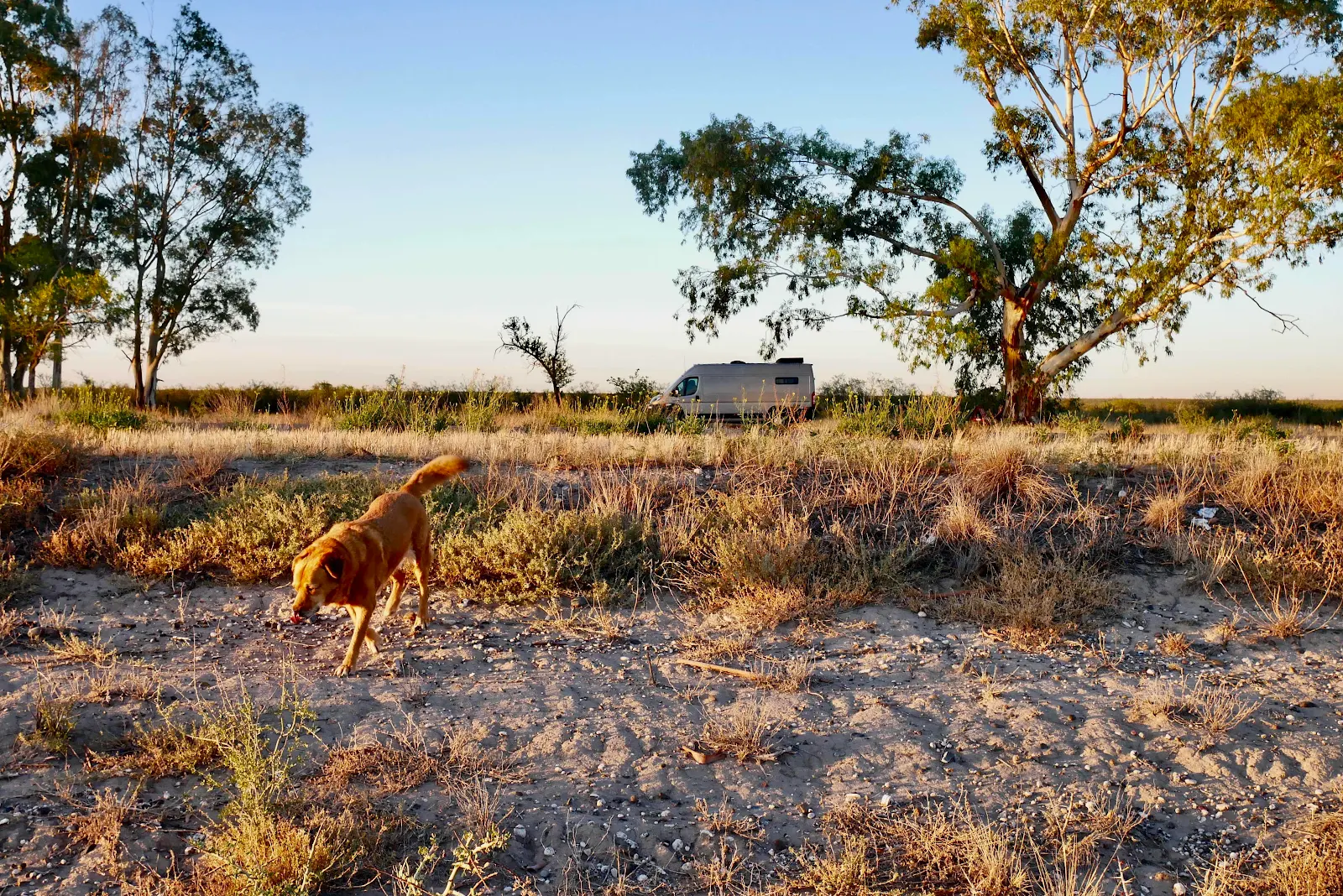
Rusty liked the grass. Steak and corn on the cob for dinner. With fry bread of course.