Saturday, September 18, 2021

The Mosquito Coast 1999

The Mosquito Coast was without doubt the most dangerous section of our trip from San Francisco to Key West. I hope it is obvious by now I am not given to hysterics, at least not publicly, at the thought of exploring strange new places and I approached this desolate part of the Western Caribbean more worried about getting lost among unmarked, poorly charted islands than I was about getting shot. In case you are wondering we met no one on the journey among the islands and we did not get shot. We were lucky. Or foolhardy.

As the name implies the Mosquito Coast, the Caribbean shore of Nicaragua is buggy, swampy, low lying and utterly unremarkable.  Which was why I was attracted to it! I was pretty sure we wouldn't be back in the neighborhood and even though we had no intention of sailing into the communities on the mainland, Bluefields principal among them I was attracted to the idea of exploring a relatively unknown bunch of desert islands. This coast is occupied by English speaking descendants of Africans brought by the British and abandoned when the coast proved uneconomical to farm even with slaves. The pearl divers and fishermen of the area scratch a living and are largely ignored by the central government, Spanish speaking and far away in Managua.  Most of the many offshore islands are uninhabited specks and thus interesting to me. I wanted to walk my dogs in unusual places. 

The danger here in 1999 was from former Contra rebels funded and armed by the US to overthrow the Sandinista government, an outside effort which as we have seen more recently seems bound to fail. When the Americans withdrew they left behind expectations among armed isolated disaffected former guerillas. By the time we got to Guatemala the story of a sudden attack by armed men on a Dutch family cruising these islands left the child paralyzed, the wife dead and the father seriously injured when their dinghy was sprayed with bullets. Just like that; no report of provocation it was pure and simple banditry. Why we were spared was pure luck. We wandered for a few days, landing on buggy islands walking the dogs of course and taking short day sails trying to unravel the ancient charts whose latitudes and longitudes bore only the faintest resemblance to modern GPS signals. It was a strange overcast interlude drifting between reefs and low lying islands and very satisfying, despite the gloomy nature of the places we stopped at. Finally we arrived at a well known anchorage back in “normal cruising country”: Bobel Cay. 

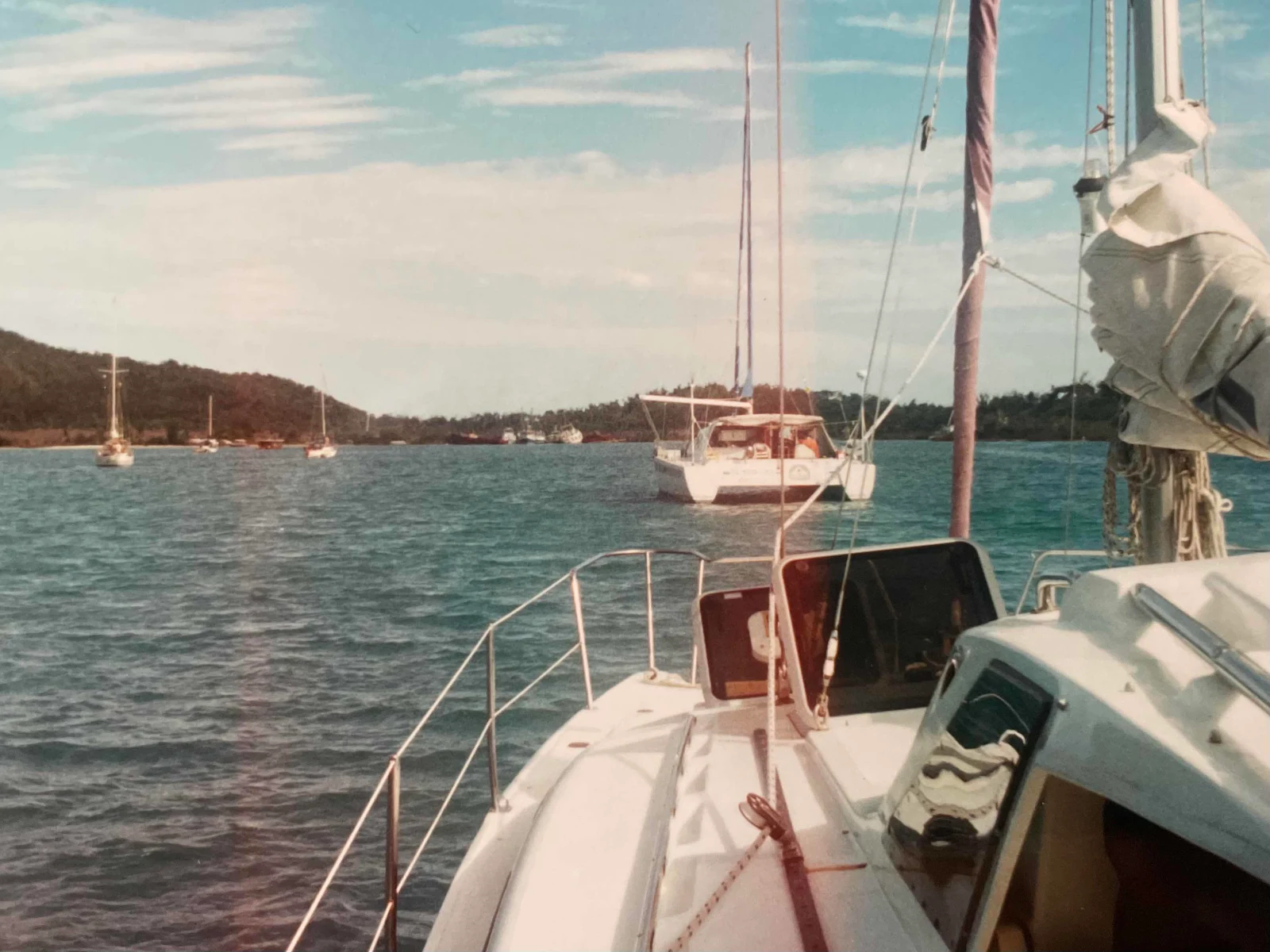
The photographs of old structures refer to our longer stop in fact  at Bobel Cay, Honduras, a small uninhabited island with a mile long reef curving away to the north. These small islands are known to sailors as the Vivario Cays (pronounced "keys") and are a rest stop for commercial fishing boats. Indeed the formal building you see above was once an ice house complete with docks where the fishing boats would drop off their catches and buy supplies. Now it is as you see it (or at least it was in 1999!) abandoned and perfect for Debs and Emma to explore.

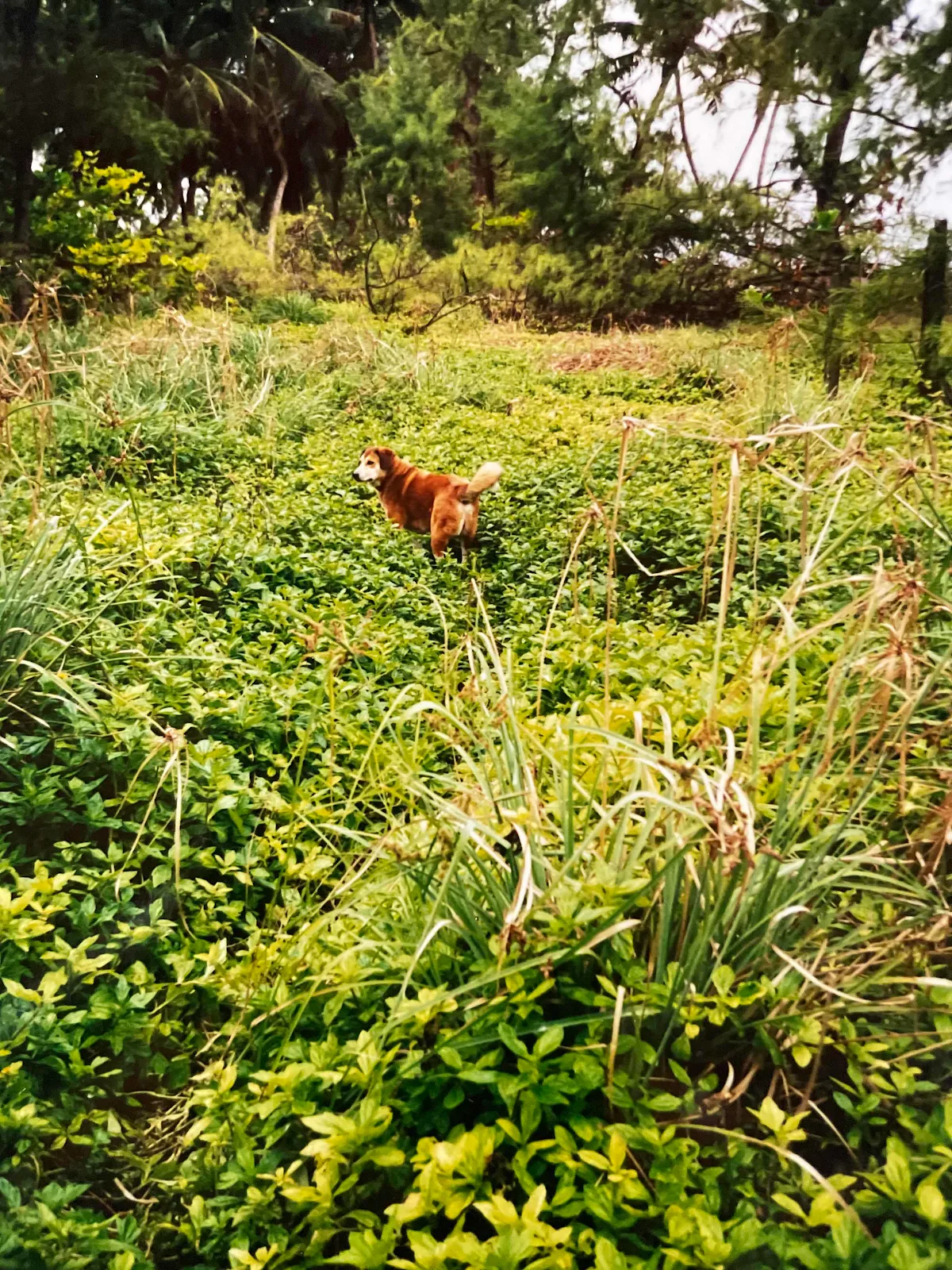
The dogs loved it but I will tell you I have never ever been any place so buggy. The no see 'ums and mosquitoes were unbearable even with lashings of deet on ourselves and some on the dogs. I guess they were desperate from mammals blood but we resorted to putting spray on our hands and brushing the dogs. The island was their canine kingdom and we explored it all and that didn't take long...a ten minute amble in each direction at most.
I came across this marker and I know nothing about it. He died before the Internet put all of us online so a quick Web search shows nothing. I have no idea if it was a memorial or the burial spot for Rolf Stieber who lived his dream. I assume he was English speaking thanks to his epitaph but who knows? My notes recall the spot as sad and spooky. Emma was too busy rooting around for such sentiments.

A group of sailors stopped here, one of them with a sailing dinghy taking advantage of the strong breeze and flat waters behind the reef. 350 miles east of this spot lies Puerto Rico roughly.  Aside from a. few Honduran fishing boats we were alone and the end of the century was in sight in a. few short weeks. Y2K was the subject of conversation but we were so remote the implications of a world wide computing crash meant very little to us. We deiced to have a grill on one of the sand spits at low tide, dusk. So we did and I photographed it! I quite admire my pictures from this trip actually. Imagine I had no chance to see any of them as we went along and we bought film and stashed t to be developed later and hoped for the best. Some film was spoiled but we told a story with our pictures and I quite like the street scenes and spontaneous involvement of the camera among us sailors.

We brought food and wood to the little lump fo sand in the ocean and we ate and drank and told stories and wondered what the new century would bring. We made wishes until one of the sailors traveling with a Columbian girlfriend much younger than he brought the party to a crashing halt. Curly made his wish, the usual generic thing you do and then Maria piped up "I wish for a beautiful American baby" which caused Curly to spit up his beer and the rest of us to go suddenly silent with embarrassment. We stared at our toes in the sand and tried to figure out what to say next. There was quite a lot of picking up of girlfriends by older solo American sailors in Colombia at that time, a country with no future and lots of beautiful young women anxious to find a way out. We described the old men as having. great deal of "Peso-nality" which perhaps was cruel but I did not much like to see the ease with which desperate people could be used. Curly was better than most inasmuch as he took her along and tried to treat her as one of us, but there was that reminder that we were privileged and rich in a world where wealth is reserved for the few.

Of course our dogs were there in the midst of us, as much a part of our cruise as anyone, stargazing, poking the fire, cleaning up the remains of the picnic. Even at high tide the sand bar was above water and we lounged into the night pondering the sailing life and Curly's future progeny and the next step along the road to Guatemala by way of the Honduran Bay Islands.

Tom from the 48 foot catamaran had a spare small spinnaker he sold us for $75 and we went for a test sail to learn the ropes...Flying a cruising spinnaker on a. catamaran is easy and we had the extra halyard to raise the sail so up it went and out it flew and along we dashed under the master's watchful eye. Sailors in catamarans were rare in those days and he was glad to pass on the knowledge he had learned from years of sailing and fishing the Caribbean in his bg old boat. 

We liked to snorkel the reef in the Vivario Cays, a long slice of underwater coral filled with fish. However the ocean side of the reef fell off into great dark depths and one day Tom came alongside in his dinghy and told us he wasn't going swimming anymore. There were just too many sharks in the water, big hammerheads and bull sharks from the ocean waters among them. The idea that Tom found "too many" sharks in the water scared us rigid- if he wouldn't go swimming you can be damned sure we were never going to put a toe in the water!

It was time to leave and as we rode a weak cold front west towards Guanaja, the first Honduran island 90 miles away I struggled with the confounded outboard whose fuel tank had sprung a leak, To my astonishment I fixed it with some JB Weld and a lot of patience. One of the great pleasures of catamaran sailing was that the boat didn't lean from side to side ("heel") so I could fiddle easily with repairs while the autopilot steered.

One more night watch and we saw mountains in the morning. Well, at least they were hills, all green and everything.

Below is how you sail into a coral pass, Kee-kimmer (you knew the crew by the name of their boat) stood in the rigging underneath his yellow quarantine flag, flown when entering a new country looking for shallow rocks and sand bars.  I ran aground once in the San Blas islands as we entered an anchorage but with an 18 inch draft the water came up to my knees when I jumped in and put my shoulder to the hull that was aground. I pushed us off the sand and swam back to the ladder to climb aboard and try again. I was 41 years old so a van in my sixties might be more sensible...

Tucked up behind Tom's catamaran in the anchorage, another round of Customs and Immigration, resenting our papers from distant Panama and a quick dog walk to acquaint ourselves with the new town, the shops and the facilities on offer. The officials spoke Spanish, the locals spoke Caribbean English, and we knew we were somewhere new.
We traveled from Panama at bottom right to Bobel Cay via San Andres and then sailed off the left side of the map to the Bay Islands of Honduras.

And for those of you freaked out by the notion of a government issued vaccination card, I've had one of these for my bizarre distant travels since I was 19 years old. I dug this one up as we pack up the house and I expect to add a dew more vaccinations before we head to South America. There is nothing new under the sun and nothing to fear.


Friday, September 17, 2021

Santiago’s Bodega

Our very good friend Gary and his wife Barbara bought us a retirement dinner at Santiago's Bodega, the notoriously delicious tapas restaurant on Petronia Street at the corner of Emma. 

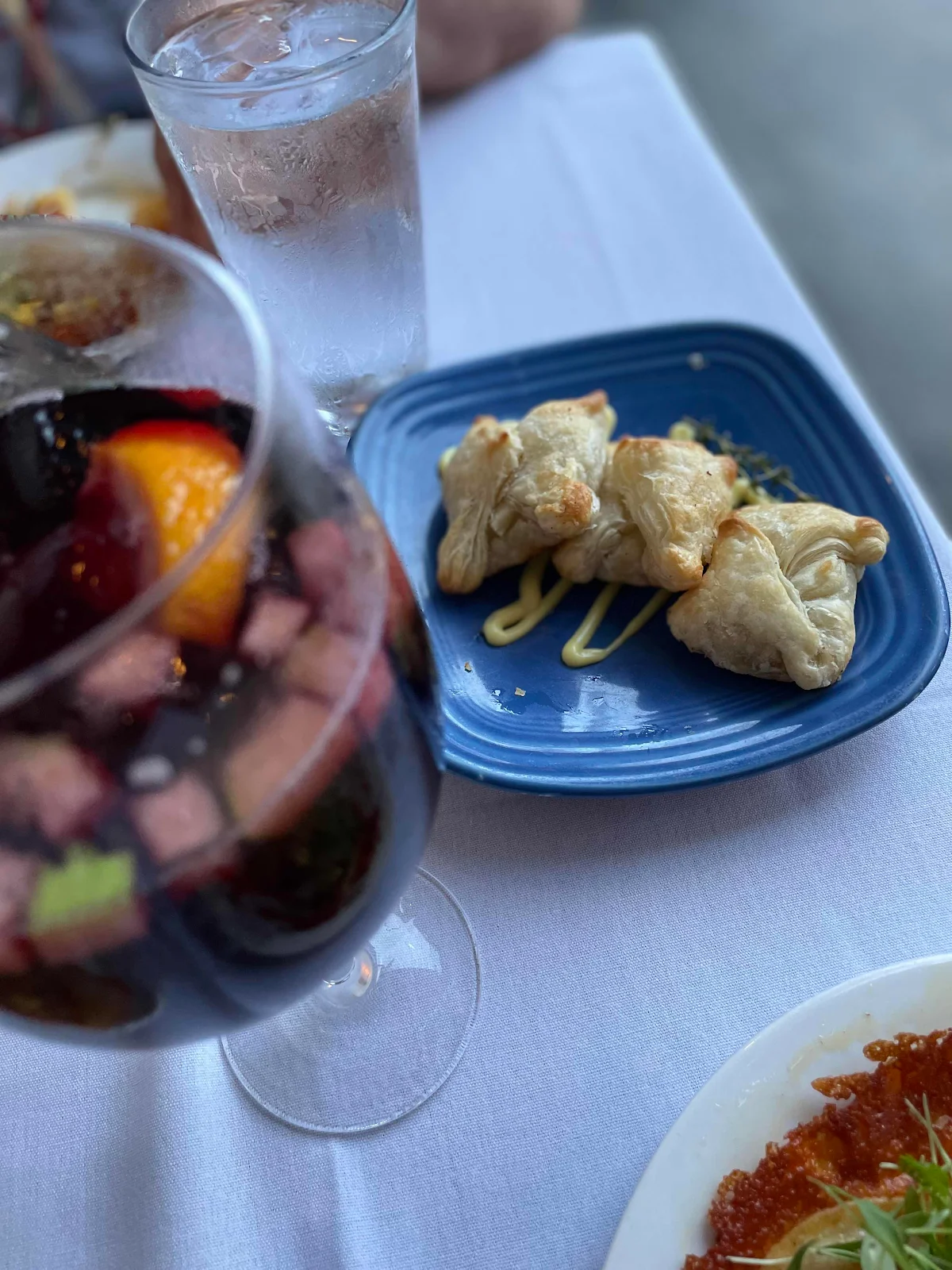
I like their Portuguese wines the whites tend to be tart and fruity and light and especially delicious when you see the rich food. However their sangria comes in red and white and we usually go there for the festivtive flavor of fruit and wine. We chose red.

The gazpacho cup was fresh and peppery but the shrimp bisque was really divine, as our server Sam assured us it would be. 

We both knew Sam from various exercise classes, and I really like her work ethic. She is a thin and flexible blond with none of the attributes of the bad jokes. She made our evening extra special and it was a nice way to say good bye.

We reserved outdoor seats after Layne's doctor approved eating outdoors as safe for her immune system. Dr Ritter is an unusually cautious  doctor so an outdoor table was surprisingly do-able. We did it.

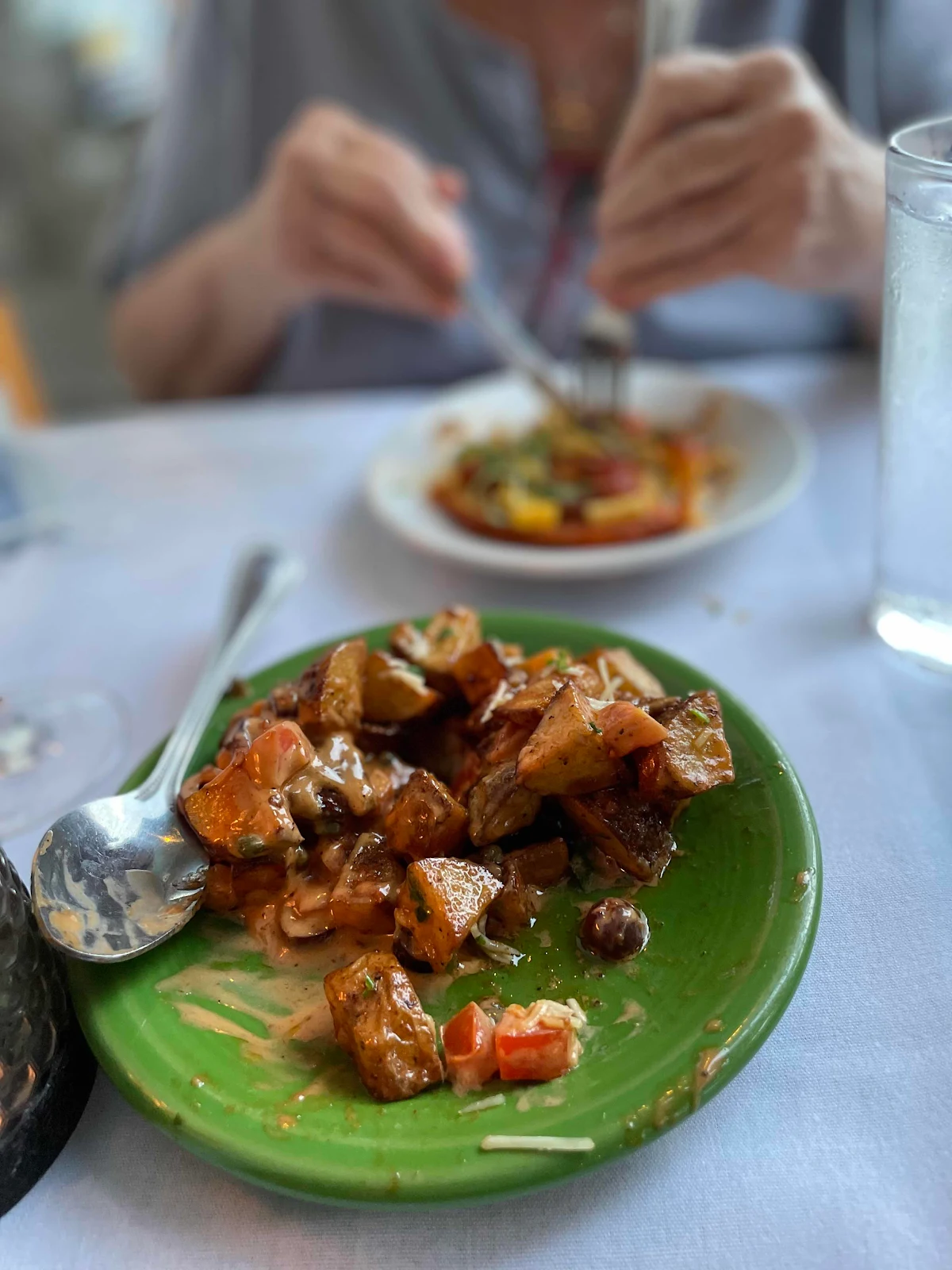
"Fierce potatoes" aren't Layne's favorites but I am fond of tubers and to get them all roasted and creamy and spicy and mixed in with peppers and olives makes them perfect.  Papas bravas every time. 

The quesadillas are crisps of cheese with a sweet and cheesy topping. Very rich and very filling. 

Mushroom puffs because puff pastry and mushrooms can't be beat...except by those potatoes!

Rack of lamb.

We haven't eat since June when we met friends at the outdoor tables at Off the Hook on Caroline Street.

Happily Santiago's didn't miss a beat and the evening escape from packing boxes was well worth while.

Bread pudding was an extravagance, a sugary brioche with ice cream.

I have no idea how to smile for the camera but I enjoyed playing with my iPhone mini.

Parking was crap as always so we walked two blocks to the car which in point of fact was no bad things as the food needed to be settled. 

I don't know how some people eat out every night. Aside from the expense the rich flavors packed with salt and fats and exaggerations that make an occasional indulgence memorable, would make me dyspeptic.

A glance up Petronia Street, then a  short walk down Emma Street and finally home.


Thursday, September 16, 2021

San Andres 1999

So there we were living the idyll in the San Blas islands of Panama, however the purser had been on the satellite phone from Corazon de Jesus, the twin village to Rio Diablo and the news from the bank was not great. These days my wife has all our banking and credit cards and auto pay accounts linked through our bank account. In those distant days there was no now online to tell us our plans were mad so we took off on the first available weather window. Tom on Thundercloud agreed and that encouraged me as he was a long time western Caribbean sailor. However like all idiots I ignored his very sage advice that I have since then never forgotten. In the Caribbean keep north and west of your intended target. That's because  frontal weather comes from the north and east and will push you home. Silly me I laid a rhumb line to San Andres on the lovely southeast breeze and off we went.

We had two nights and a day to get across the western Caribbean, the idea being we would arrive earlier in the day and have plenty of time to find the pass through the reef and then locate the clearing in officials. It would have been brilliant had I followed the sage's advice. He took the southeast breeze and promptly buggered off due north as though aiming for Jamaica. We streaked on a straight line northwest towards the tiny dot of Columbian land off the coast of Nicaragua. San Andres and Providencia have been fought over by Colombia and Nicaragua after the pirates who actually inhabited Providencia Island were kicked out. Providencia in English is known as Old Providence and was a real pirate haunt in the 18th century as it launched raiders right across the path of the bullion convoys traveling from Portobello got Havana where they staged to sail to Spain. I finally learned why Nassau, the capital of the Bahamas is located on New Providence Island. That's because after they were kicked out of Old Providence they fled north and established a base whence they could harass the convoys after they left Havana bound for Cadiz. Key West never was a pirate base sorry to say. On Tom's routing plan it's too far west to catch the gallons leaving Havana.

These are pictures I took with my rapidly failing film camera after we landed in San Andres. That's because the journey there turned into a version of one of Dante's circles of hell and I ad no time for frivolities. In the middle of the night Layne woke me from a deep and dreamless sleep to inform me the wind instrument was being very odd. It sure was: boat speed was rocketing in concert with increasing wind speeds. One thing about the catamaran was that the roof over the cockpit gave protection to the person driving but by the same token judging conditions especially at night was harder to do without instruments. What followed was one of those ghastly fire drills, happily on the broad flat heaving deck of our boat with two hulls, as I put two reefs in the main and rolled up the foresail. Boat speed barely dropped and we roared off, more or less under control towards San Andres, hard on the wind crashing through waves with the wind howling and tossing buckets of cold seawater over the fiberglass canopy above the wheel. Debs was in bed with Layne bouncing like a trampoline, Emma was in her spot on the bench in the cockpit behind me never complaining as we got hosed by cold seawater thrown by the howling winds. After a couple of hours I figured the boat wasn't going to break and we might live through this nightmare. I check our course and naturally there was a cluster of small island across our path, owned by Colombia and occupied by soldiers according to our guide book. Indeed after I wiped salt spray off my eyes I spotted the properly winking light on the horizon putting us on a. safe course. All I had to do now was monitor everything and try to keep us pointing far enough north not to kiss the seven mile long island. As I recall the instruments recorded top speeds of 13 knots but we never went below eight which are bicycle speeds but we were carrying our home with us. Through water with next to no sails aloft. It was exhilarating once I figured I wasn't going to drown.

The navigational problem was that if we missed San Andres in the darkness we would sail into a maze of sandbars, islands, mangroves and uncharted perils of all sorts on the infamous Mosquito Coast of Nicaragua. In these winds we would surely crash and once past San Andres there was no way we could sail back. We were plowing at high speed into the bottom of a very painful sack, a lee shore in sailing terminology, and I absolutely had to hit San Andres fair and square. We had a primitive GPS but I spent hours peering through binoculars looking for the lighthouse in the murk. Happily as the photos show all was well. Funnily enough as we sailed into the calm waters under the protective hook of the north shore Thundercloud rolled up and Tom hailed us cheerily. His wandering off to the north gave him an easy downwind sail with never a drop of salt water in the boat; I was a drowned rat. We arrived at the same time. Confirmation I was an idiot. 

In 1999 Colombia was a mess rife, with drug traffickers, FARC guerrillas and hijacking and kidnapping were rife along the highways. San Andres was completely safe and peaceful, because we were told, the cartels declared it a safe zone for, of all things, their vacations. They split the calendar up between their factions and life here went on tranquilly like any other place in the Caribbean. Luckily for us it turned out, as we were stuck here for a couple of weeks, hemmed in by the cold front that frothed up the sea outside the reef. It was an expensive stop as we replaced camera and laptop here through a Dutch guy who married a local and ran an electronics shop in town, a resource for all passing sailors. He ordered stuff from Bogota and his electronics flew in with the vacationing Colombian cartels and their families. The airport was massive and modern to make the drug lords' flights as smooth as possible, I guess. We stayed at anchor in the harbor next to a little uninhabited island that gave me a place to walk the dogs close by on rainy days and there were many of those. As you can see Emma and Debs took every place they went in their stride. As long as they were off leash they presented no threat and the locals ignored them. A leashed dog meant danger (why else would you hang on to it?) and cleared the sidewalks. They never came to any harm in defiance of all the Facebook worry warts you can read about these days. I think they like us, had the time of their lives. I expect Rusty will too.

It rained, God it rained. It was more of the rainy season we had endured in Costa Rica and Panama. Rainy days in Key West remind me of these tropical downpours we endured while sailing. You can't stop living because of rain so we went ashore, walked the dogs into a coma then left them aboard and took tours while they slept. By he time we got back I had to drive them back to the docks for anther walk around town. I must have walked miles every day. In the morning I walked the main sea trail on the eastern shore, a broad sidewalk resembling Smathers Beach except they had little coffee carts which sold hot sweet mild Colombian coffee and fried pastries, savory with meat and sweet with cheese and guava. Luckily I was walking so much and getting exercise because dollars bought me many pastries. Best dog walks ever! Colombians in our experience save their strong dark beans for foreigners and seem to prefer a light mild coffee for themselves. This suited me just fine but other cruisers were disappointed they couldn't get rot gut black coffee in Colombia.

We had no Internet in those days of dial up e-mail and lost connections but we had books and DVDs and we organized a bus tour with an English speaking guide who led us around the island which is seven miles long north to south, and a coupe of miles wide with a hilly spine down the middle separating the east from the west coast. There was a coast road all the way round and as we drove up the east side I looked out at the water where I had sailed in a few days earlier. I remembered the relief of landing my family in exactly the right spot. I could see school buses chugging up the coast road past brightly colored houses and churches surrounded by bright flowers and coconut palms. I was filled with relief. In Key West when I looked at Smathers Beach from the water I remembered my landfall in San Andres after that stormy night. There is a saying among mortal sailors "I'd rather be in here wishing I were out there, than out there wishing I were in here." 

We played tourists, we ate Colombian food, much like other Central American countries where three dollars bought you rice, vegetables meat and fish and in Colombia they have a tradition of soup to start with, which was unexpected and much enjoyed. Its not worth cooking Layne the chef grumbled as we sat on the sidewalk protected by the dogs sipping soup. We also went to the movies in a glorious old single screen theater. many theaters at least in those days all across Central America showed American films in English with Spanish subtitles. We got scared rigid at a showing of Sixth Sense, the supernatural movie that came at us out of nowhere. We had never heard of it or had any expectation of the plot and we spent the darkness clutching each other like a row of schoolchildren, not seasoned sailors. I see dead people, that unforgettable line struck us rather harder than the joke line it became later. I think there is something very naive and wholesome in an old fashioned way about traveling by boat.  You revert whether you realize it or not to a simpler time. Perhaps you don't any more but we did. We were alone in our circle of strangers and we helped each other out without thinking and without expectations. To me it was a tranquil time and the movie reminded us of the complexities and social demands of life back home.

San Andres itself was a place out of time. Colombians could only live there by special permission from the government. I guess everyone would have liked to move there to escape the civil war but they couldn't. You'd think maybe that wouldn't be a bad rule for the Keys! People who did live there were trapped on a tiny island with limited facilities and we who were visiting soon got bored by the limitations of life.

Its a fact that every time we put down an anchor and settled into a life "on the hook" we tended to be glad to have arrived. Yet always after a few days or several days or many days a switch clicked in our brains and suddenly we were ready to go. If we left too soon we regretted not staying, but if, after that switched clicked we stayed we got progressively more antsy and frustrated. The weather hemmed us in and soon coffee and pastries for breakfast lost their appeal. The streets started to look the same with duty free watches and stands filled with fruit that so enchanted us at first. The dogs did fine, meeting the locals and living such full lives they filled the boat with the sound of snoring at night.

Finally the winds let up a bit, the skies remained leaden and gray but it was time to go. Tom got this picture of me ready to drive outside the reef and head north along what was actually the most dangerous stretch of our journey though we had no idea at the time. I was anxious to thread the Mosquito Coast, a mysterious land of literature rarely visited by cruising sailors. 

Miki G, a Gemini catamaran model 105M, 34 feet long, 14 feet wide with an 18 inch draught with a five foot centerboard in each hull. Displacing 7500 pounds we always sailed on the waterline and the boat was a joy to sail. Too lightweight they told us in California, but we found the boat tough as nails with an even worse storm between Cuba and Key West proving that point to us. The lilac sail covers were Layne's idea in case you didn't guess already.

Wednesday, September 15, 2021

Driving Miami

We left the house late yesterday morning and had one of the worst rides I can remember on US 1. An unloaded Miami tow truck waltzed from Marathon to Tavernier at 35 miles per hour developing a line of road rage over the horizon behind us. I was four cars behind him and unable to pass thanks to oncoming traffic,  though his driving did send two drivers into the danger zone passing in median lanes, which if caught, gets a reckless ticket no questions asked. I admired their nerve. The problem with amblers on the highway especially when driving a flying barn like the Promaster is the car behind gets impatient with the slowpoke van and the risk of being rear ended is ever present. I drove 40 miles with a car glued to my rear bumper as though the delay were my fault  and all I could do was hope for the best and curse the endless stream of oncoming traffic. The day did get better...
My wife was the chef d'orchestre as is usual when we visit The Big City so we zipped from Robert Is Here for lunchtime smoothies as usual...I did happen to notice this vaguely precise Awful Warning dangling from the fence as I trailed Rusty. It rather reminded me to beware of heffalumps.


We somehow managed once again to avoid heffalump traps inherent to buying food at an agritourism establishment and went on our merry way to the storage locker. It took me four trips up to the second floor to deliver three loads of boxes on our dolly. This was because I forgot the keys to the padlock on my first trip and had to make an extra round trip to get into the infernal chamber. Sweaty work overseen by Rusty who  sat in the driving seat and watched and approved of me opening up his space on the bed.  
We went to Target to return needed packing materials and some other stuff whose details escape me. Layne decided to add the money to our cash pile for Mexican travel. I wandered around the parking lots with a sniffing dog hence the apparently random pictures of trees and shrubs and buildings.
The boxes are gone and though order was not entirely restored Rusty staked his claim immediately. He has made the van his home at last and runs for his bed in the van at the slightest growl of thunder when he is in the driveway watching the world go by.
Layne had to make a last visit to see Dr Ritter at the Rheumatology center. I'm not sure how this happened but her arthritis after 25 years residence appears to have gone into remission, just in time for her to get off the drugs and hopefully get a successful vaccination. The afternoon, though rainy, brightened up considerably when the doctor could detect no signs of swelling or inflammation. Quite the surprise.
I was allowed up to the office after a walk with Rusty around the the block so I got my chance to say goodbye to the good doctor who himself suffers from Rheumatoid arthritis. I used to come out of the consulting room in the days before Covid to a roomful of patients and wave my fingers and thank him loudly for curing me. Arthritis of this sort is a bastard disease of endless suffering and I figured give 'em hope. Never a truer word spoken in jest. Only thing is, the waiting room is Covid empty these days and no one was there to see Layne's miracle.
Dr Ritter the workaholic seemed fascinated by the idea of an open ended journey though he wagged his finger in warning about not going south where danger lies. Said the lifelong Miami resident though probably not resident in the drive by shooting neighborhoods. If he only knew our plans Layne said to me after we were out of hearing. Better say nothing or give him a heart attack. We will send him a postcard from Patagonia when they can't hold us responsible for the outcome. (He doesn't do electronics).
Travel is always a series of goodbyes, and to my fevered imagination travel resembles death inasmuch as here today and vanished tomorrow. Of course it's not as serious as we will be back and most probably after Alaska next year but the bonds are slipping with a mixture of excitement and sadness. 
After the doctor we crossed the street and ordered a Jamaican dinner, curried goat for Layne and curried chicken for me from a hole in the wall we've been visiting forever.  We had beef patties for old times' sake and they reminded me how good Dion's patties are in the Keys' convenience stores. We sat in the van eating the beef pastries while Rusty chowed down on a dog thing. "I can feel the end closing in," I said to Layne. "Last time here and there." 
Next stop was Lenscrafters in the Falls shopping mall. I'm not a fan of shopping malls but this one is different, an open air tropical walkway alongside a rushing stream of water tumbling between ferns and over rocks creating small waterfalls. Apparently there is new ownership investing in renovations and I was glad to see that one day people will be able to walk through what may be the antithesis of the traditional shopping mall. Hopefully mask free. I wore a mask as I handed over Dr Douville's lens prescription from the Professional Building in Key West. New lenses in my favorite frame (plus a spare) in a week or when next we drive up.
While walking Rusty I passed a left over protestor from the recent burst of Free Cuba marches and flag waving. I have little sympathy for the Cubans who have been given the good life, perhaps the best life, in the US while their fellow Cubans suffer 90 miles away and they can't be bothered to do anything more than wave flags and demand another intervention from the US to get them their properties back. Fidel Castro took his life in his hands and fought for what he wanted and believed in. This lot can't get off their middle class backsides to do the same for what they say they believe in. I can't imagine the hard put upon people of Cuba will ever get rid of the tyranny of the Castros to replace it with the tyranny of these people. Some people never get the breaks and I can't imagine how rough Cubans have it caught between an oppressive past and a no hope future. Meanwhile the Miami Cubans live well and complain. I have no desire to go back where I came from and I have an irrational belief they should feel the same way.
Our last stop on our shopping trip was Petsmart naturally. Rusty needs (needs?) a van sized bed and he gets to choose it. I followed Layne's directions and led Rusty to the bed section. He is like me and knows what he likes. The model he laid down in was the same as the ones at home. Only this time Layne got a slightly smaller size thank heavens and he slept in it all the way home so it passed the Rusty test and should be easier to handle in the small van space. Meanwhile 90 miles away people have to queue to buy staple foods. The unfairness of life seems insurmountable to me.
It's going to be a problem on the road but I shall have to harden up. I keep reminding myself suffering is everywhere even when I am not there and it will be after I pass through. Insurmountable. But there is beauty too.
At least he's where he wants to be:

Tuesday, September 14, 2021

The Packing Grind

These are not, I fear the days of great blog posts but bear with me as I have to use the material I have to hand and these days it's all about choice. Does it come with us? Do we store it in the locker in Miami for future use? Do we sell it? Do we toss it? These are not thirty days that shook the world, but I will tell you this need for continuous unending decision-making gives you a taste for how much of our normal lives we live on autopilot. I took a break to read Bad Land by Jonathan Raban. I read his book Coasting years ago when I lived on my boat in Santa Cruz and absorbed sailing by proxy. Webb Chiles recommended Bad Land when I talked of crossing that part of the country to drive to Alaska. The lives of English Ã©migré would-be farmers is stark and a fascinating review of the immigrant fables as told as part of the myth of westward migration.
Unfortunately it doesn't take Layne long to finish her project and we're back at it. A complete set of pots and pans to be photographed for instance, is the next chore. She posts them on Facebook. On Sunday she sold our outdoor furniture to a man with an SUV who hauled away what was in effect our dining room in two trips. Our first Instapot is sold. The utility trailer used to haul motorcycles is sold. On and on the list goes. My preferred method would be to get a dumpster delivered and toss everything off the balcony. But I would be wrong; I think we might have made enough to keep us in Mexico for three months this winter so there's proof positive I'm an idiot. An impatient idiot.
We bundled our winter clothes and packed them alongside proper walking boots in a space not instantly accessible under the bed. The idea is when we reach frigid regions we will pull out knit caps, scarves, long underwear and heavy socks to deal with the cold, but until then we shall exist in an optimistic Spring of not too heavy clothes until the weather tells us, by force, we are no longer in the Keys.
My other clothes, and I do own some long pants by the way, are reduced to four bags which required some decision making. Do you want this or that...? I am the despair of the fashion conscious.
Happily the bags fit in the overhead bins on my side of the back of the van. The two bins on my side are smaller because the original dimensions mean I couldn't sit up so we went back to Custom Coach Creations in Deland for a re-do, and they rebuilt the boxes a little smaller so my seated frame will fit underneath without giving me a headache. $600 well spent. The little green patch masks the join where the liner was cut behind the old bins. They do a nice job in Deland.
As we demolish the house we practice storage for the van. Luckily we took the time to vacation last year in Michigan and those experiences gave us a chance to test ideas we had. Layne has been revamping her pantry as a result. And I am carrying boxes of spices and sauces up and down the stairs. One important thing for us to remember, and we sometimes forget, is that unlike sailing we will be traveling this time right past supermarkets and all manner of stores as we go, and we have to curb our tendency to picture ourselves away from stuff and thus overthink what we need to carry all the time. 
We pause too in the business of cleaning up when we come across certain stuff, including my old travel wallet (now for sale) with a strange assortment of small bills from Albania, Bosnia, Croatia and Nicaragua. Completely random. Layne says we may well use them and they have gone in the foreign currency drawer, wherever that is. I think it may be a few years before we get to spend two hundred Leks again but I certainly wouldn't mind driving Gannet2 through Albania and seeing what has changed since last time. 
But first we have to pack.