Showing posts with label Sailing. Show all posts

Tuesday, November 2, 2021

Driving Webb Chiles

There was a joke making the rounds in the Brezhnev era in the Soviet Union that came to mind Monday morning as I went out with author and circumnavigator Webb Chiles. The connection to a common-or-garden daysail may seem tenuous at best but it was a feeling I had all morning as I went on a modest boat ride with a man revered by sailors the world over for his fearlessness and ability to manage peril on the ocean. 

It seems President Leonid Brezhnev had a penchant for Western cars and he apparently imported many to his dacha (vacation home) outside Moscow where he would test them out. On this particular day he decided he wanted to take the wheel and he told his chauffeur to sink into the luxurious seat in the darkness of the rear of the limousine he had chosen to drive.  The gate guard saluted as rigidly as ever as the supreme leader of the Soviet Union rolled by.

"I just saluted the man who really rules the country" the guard told his colleague in high excitement. "Who is he, then?" his colleague asked. "I have no idea," the first guard replied. "But Brezhnev is his chauffeur."  

Somewhat to my surprise Webb agreed to go for a daysail with me, which is odd as a casual sail for Webb might involve a couple of weeks and a thousand miles, which seemed unlikely for us as we only had a morning at our disposal. What a morning it was! Sunny and warm with a light breeze and glittering waters outside the marina on Skull Creek. "I'll be the passenger," I told Webb because even though I enjoy sailing to undertake a task sitting next to a sailing legend might, I figured, break my last nerve. 

My friend Wayne sent me a message after seeing a photo of me out sailing: Judging by your man-out-of-captivity facial expression on Webb’s boat I’d guess maybe it was among your best birthdays?  
"Take the helm" Webb said in a tone that brooked no discussion.  I plunked my tightly sphincter bottom down where his rear had sat for thousands of miles between here and here by way of Darwin, Australia, and tried to concentrate on sailing. To make matters worse the creek is narrow and winding and the wind was at just the right angle to require the ultralight Moore 24 to tack and tack again. Sailors call it short  tacking as you buzz madly from one side of the channel to the other, trying to make each tack count while not running into shallow water and mud at the end of each leg.

"Watch the depth sounder and if it goes under twenty feet call out," was the first instruction. I felt a light trembling through the tiller as I sat next to my very agile 79 year old line handler and kept glancing at the depth sounder and trying to keep the sails full and drawing. "Point higher," he said and obediently I drove the boat closer the wind, closer at an impossible angle and of course the racer turned long distance  thoroughbred of a boat responded just fine. One had to assume Webb knows what he's talking about when he gives direction (!) and the ride became a wonderful series of swoops, occasionally heeled hard and sometimes riding flat and fast. It was tremendous fun.

As the depth sounder hit 19.9 we'd get ready to turn and I'd push the tiller away and lumber after it in the unfamiliar space. Webb leaped from side to side like a teenager hauling in the jib sheet and watching the situation develop as we sailed back and forth up the creek toward the sound. I have no photos of this section of the sail as it was a bit busy for poor old me, the least legendary helmsman in the history of Moore 24s, a boat which was built in Santa Cruz where I lived as a new immigrant. Also the town where I once delivered a pizza to George Olson, known as the "father" of ultra light sailboat design. I was young and paid for my VW van by working for  Pizza My Heart doing deliveries to the great and good around town which included famous names and hungry bored whores. That was a job with a few stories I should get around to one day. Anyway the former pizza delivery youth was now helming the world renowned sailor up the creek...and feeling nervous.

Lots of boats passed us, all under power many creaming bow waves and leaving largish wakes behind them. I kept my eye on little strings of wool attached to the foresail such that we were in the groove when the string flowed back horizontally showing clean passage of air over the sailcloth. That and watching the depth sounder kept me busy enough not to keep harking on who it was who was sitting next to me. A friend, yes, but in his element, and what an element it is. I was not wanting to let him down.

As the other boats passed us, sailboats using engines not sails, I had to wonder who among them was wondering who that famous sailor must be? They couldn't quite place him but he must at the peak of his sailing powers obviously, because no lesser a figure than Webb Chiles was his obedient crew!

On the way back from the sound Webb relieved me at the helm and replaced me with an electronic device that steers without human intervention, following the trend of grocery stores given to automating checkout cashiers thus eliminating the human touch. In this case he gave the human touch a chance to sit back and enjoy the surroundings which was considerate. He also deployed the electric motor that powered him in and out of harbors around the world. This is the newer Torqeedo, made in Germany, that replaced the original model he started with half way round. Nevertheless I looked at the modest little motor and figured it had been further on the water than I had and it still pushed us at walking speed. Webb sails, he doesn't motor boat.

Three hours after we started we were back and I allowed my crew to do the dreary work of disassembly and tidying up for me. Especially as he has done it a few thousand times and I had no clue where or how things went. The orange ring floating around the post is an innovation from New Zealand that allows you to tie the boat off  to a point that rises and drops with the tide. A very clever thought.

Many years ago I lived on a tubby little 20 foot sailboat  that I could stand up in and offered a surprising degree of comfort and sailing ability. I bought the Flicka for ease of sailing, as I wanted a boat easier to handle in Santa Cruz than the 30 foot Catalina I started out with. I showed the boat to my new wife in Ft Myers whence I had sailed and she took one look and said: cute but no. We lived on a spacious 34 foot catamaran with all amenities as a result. Webb's boat is so spartan inside I would balk at living aboard but he loves the life and the intimacy with the environment and the speed and ease with which the Moore 24 sails. I got a small taste of that and was astonished by her ability to point and to move at the merest suggestion of wind. It was a great sail and a superb birthday present. That and the autographed book which will be very helpful when things go wrong. Whatever van problems present themselves they will be as nothing compared to some of the issues he has dealt with and written about.

Webb lives in sight of the marina and he was quick to point out the short black mast as belonging to Gannet, the original after which we named our van Gannet 2. Webb was very complimentary about my sailing which was a bit of a surprise as I hadn't done any in years and I did get a bit of a twinge of nostalgia as we tacked up the channel in flat water and crisp sunshine. You may actually be a sailor he said, giving me a steely look. In my head I agreed I might be underneath the veneer of a van lifer!

Ah well, it will take a while for the warm glow to fade but we had traveling to do and Webb had people to meet. You don't circumnavigate six times and write a fair few books -LINK -without having to do interviews. One reviewer said if you aren't too fond of the sea read Webb Chiles and he will change your mind. He does have a rather seductive way of describing life at sea but I am van committed as I have a wife and dog to live with and no desire to start again.

What these two pictures show is Gannet 2 ( the 21 foot Promaster, not the 24 foot Moore- now you know) parked at a Walmart for the first time. The store on Hilton Head is surrounded by a pine forest and we found it to be the perfect place for tuna fish sandwiches and a full strength energy drink for the drive ahead. We had no intention of sleeping there which was lucky, because it was clearly sign posted: 
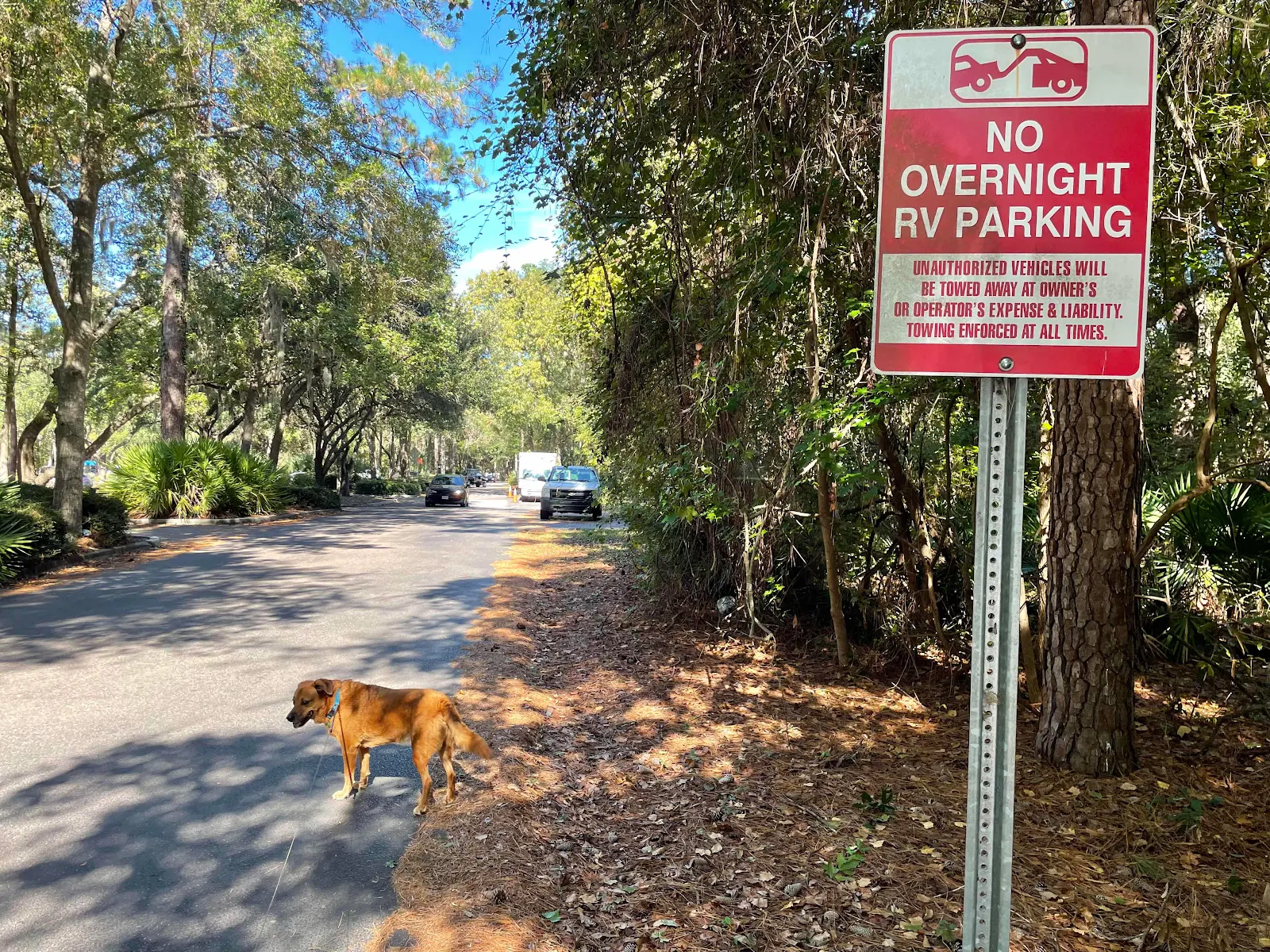
And the next picture doesn't look much different except it's three hours away, not counting freeway accidents which had us diverted all over the countryside for some more pleasant driving, in a national forest near Greenville, South Carolina. Fully pre-paid and reserved for us.
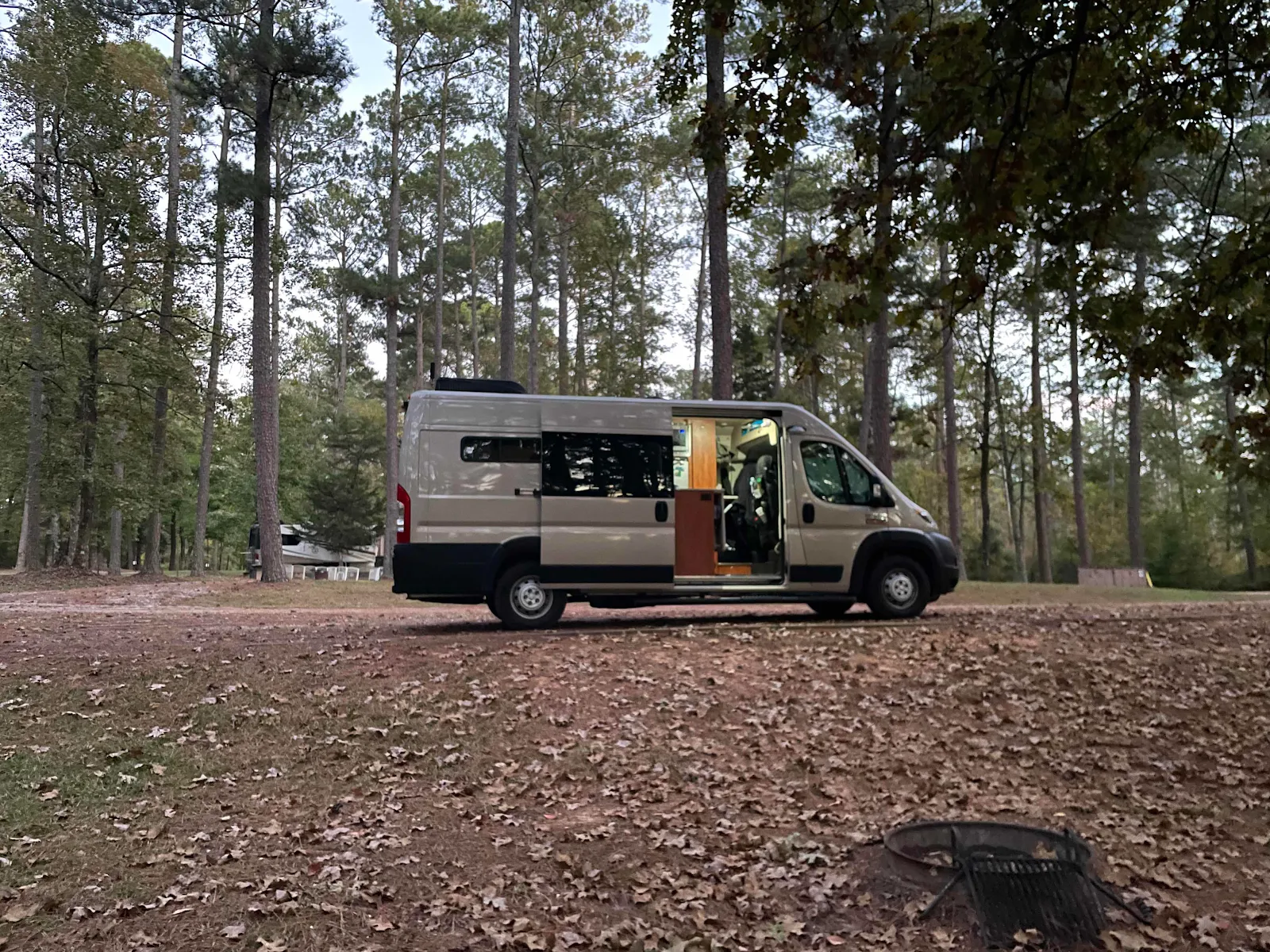
I found the place on the iOverlander app and followed up by getting the recreation.gov app (I am very Modern) and reserving a spot for a couple of nights. I wanted to expand our experience and learn by doing, how to handle all this up to date way of stopping and camping and it worked quite easily. Next time I will know we have the National Parks pass which entitled us to half price fees, from $5 a night to $2:50...and next time I won't cock up my times so we will only pay the $8 administrative fee once and not twice...Even at $26 for two nights it's not bad, even though it should have cost us half that! Layne was very forgiving. I promised, after the flogging stopped, I'd do better next time.

It is an organized campground but there are no hookups, just a few spaces occupied by empty trailers and tents, slightly weird and possibly reserved by hunters as this is the season, and a couple of pit toilets, the cleanest I've ever seen, and some trash cans. There is some traffic noise in the distance but if you saw me sitting here at the picnic table typing in the gentle autumn sun you wouldn't think this road trip to anywhere was a bad idea. Last night it went down to 45 degrees but our well insulated van was quite comfortable even when Rusty abandoned us and went to his own bed on the floor. By day it's 60 degrees and with no wind its warm enough for shirts only. I can do this non tropical stuff.

Rusty will need more time to adapt to a new world. He got nervous on the trails I tried to walk and pulled me back to the security of the van. We have a thirty foot tether for use in campgrounds and after a leashed walking circuit to inspect our immediate surroundings he sits in the sun on his tether  watching everything and not seeming to mind being tied up at all. It's as though being on a leash or tether gives him the secure feeling he needs. I expect by the time we get to Alaska he'll have morphed into a Jack London character and run like Buck.

Two nights here, a week with my sister-in-law in the North Carolina mountains and then we drive north for Illinois. Then back south, then at last we go west and take the Promaster where our camper van has never been before. I wonder if we'll sit in the desert and reminisce fondly about the forests of the southeast back when Rusty was a nervous van lifer?

Sunday, October 17, 2021

Belize January 2000

Belize was not on the tourist map twenty years ago and because we couldn't simply Google it we had no idea what it would be like. Layne took this picture of me outside the Immigration office at Punta Gorda, the place where we checked in with a welter of useless paperwork. Belize was a tight bureaucracy in those days and may still be for all we know.

The first thing we did was to go shopping looking for whatever might be odd and different after months of Latin American tiendas as they call the stores. A sail to the Bahamas had opened my eyes years before to the pernicious influence of my childhood when I found foods I hadn't seen for decades, squashed fly biscuits, curry pastes and weird sauces that arrived in Nassau but in those pre-internet days came no further west. Nowadays you order everything on Amazon of course. We found my childhood on the shelves once again, this time in Punta Gorda where the clerk spoke English and took US dollars pegged at one to two Belizean dollars.

Then things went wrong. The open roads of Punta Gorda got frothed into a ghastly cauldron by an unexpected cold front and we found ourselves plunging dangerously on our anchor with the ragged coast right behind us and down wind. When you are busy buying Garibaldi biscuits its hard to spot a cold front, the nautical equivalent of texting while driving. This one spanked us hard. We pulled up the anchor with some great difficulty and pondered our options.

In the end we raced downwind twenty miles back to Guatemala (!) and hid behind the spit of land outside Puerto Barrios that has first given us refuge a few weeks earlier on our arrival in Guatemala. It was cold for tropical travelers like us. We had no heat source on the Gemini catamaran except blankets and dogs. In between walks ashore we cuddled them and tried to stay warm. We were shocked by the strength and chill of the cold front this far south. After the storm blew by we went back to Belize, with no officials any the wiser and resumed our cruise.

It was a lovely interlude actually, sailing the reef, stopping in villages on the mainland zigging and zagging our way to the north of the country, about 150 miles long if I recall correctly. We weathered wind and rain, reefs and terrible visibility and had a good time. By the time we got to the north end of the country we stopped in Caye Caulker (pronounced "Key Corker") for some food and civilization. 

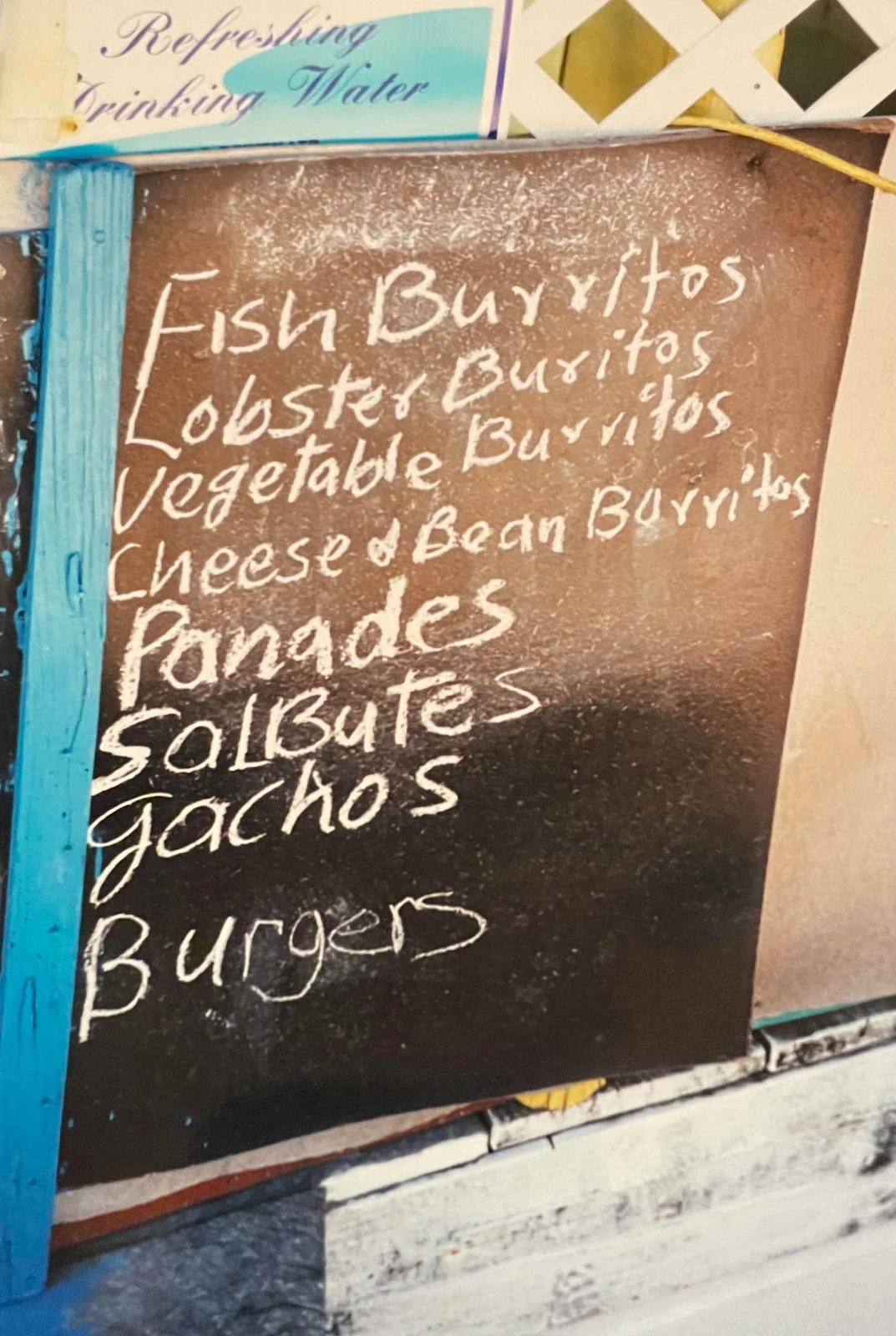
Belize was an odd country. It was British in its roots with more than a hint of English speaking Caribbean with fried foods and not enough curry in our opinion!  The British made space for Indians in their colonies which spread delicious south Asian cuisines in unexpected places. Goat curry and roti were memorable in St Vincent for instance but Belize did odd things to Mexican cuisine.

We discovered the only beer in the country was Beliken, a pleasant enough light lager in bottles and cans. What, we asked ourselves, no Dos Equis? We aren't beer snobs by a long stretch but this oddness needed investigation. We discovered the brewer of Beliken in this country of 160,000 people had persuaded the government to ban the import of beer to support his monopoly. 

We weren't moved to do much inland travel in this country. At the time Guatemala was still treating the country as a breakaway province and the Internet hadn't opened up American eyes to this strange little country. I am actually curious to go back and get a better view of the place so we are considering driving to Panama next year to make up for what we missed twenty years ago. Seems reasonable.

Remember we hadn't lived in the Keys yet so we were coming to these environments as vacation country and I at last had found tropical heat, saltwater and none of that California cold and coastal fog. I was happy.

I wouldn't mind coming back by boat to the Caribbean but I fear I may be running out of time to wrangle a boat in my seventies! Time really is passing.

Florida Keys 1950s, or Cay Caulker Year 2000.  Those dogs made themselves at home everywhere.

There wasn't much in these coastal communities but we explored diligently. I was reading a Facebook post about traveling in Baja and someone asked about taking their dogs. You can imagine the wittering that went on about every kind of danger to be encountered. I think they would have heart attacks if they ever got to see these pictures of Debs and Emma enjoying life abroad.


Eventually we got sailing again and made the 180 mile passage to Isla Mujeres, Mexico overnight from San Pedro Belize. It was a good sail with following southeast winds and mostly calm seas. Debs looks like an old hand by this stage:

They really loved each other. You can tell me dogs don't have emotions like us but I won't believe you.

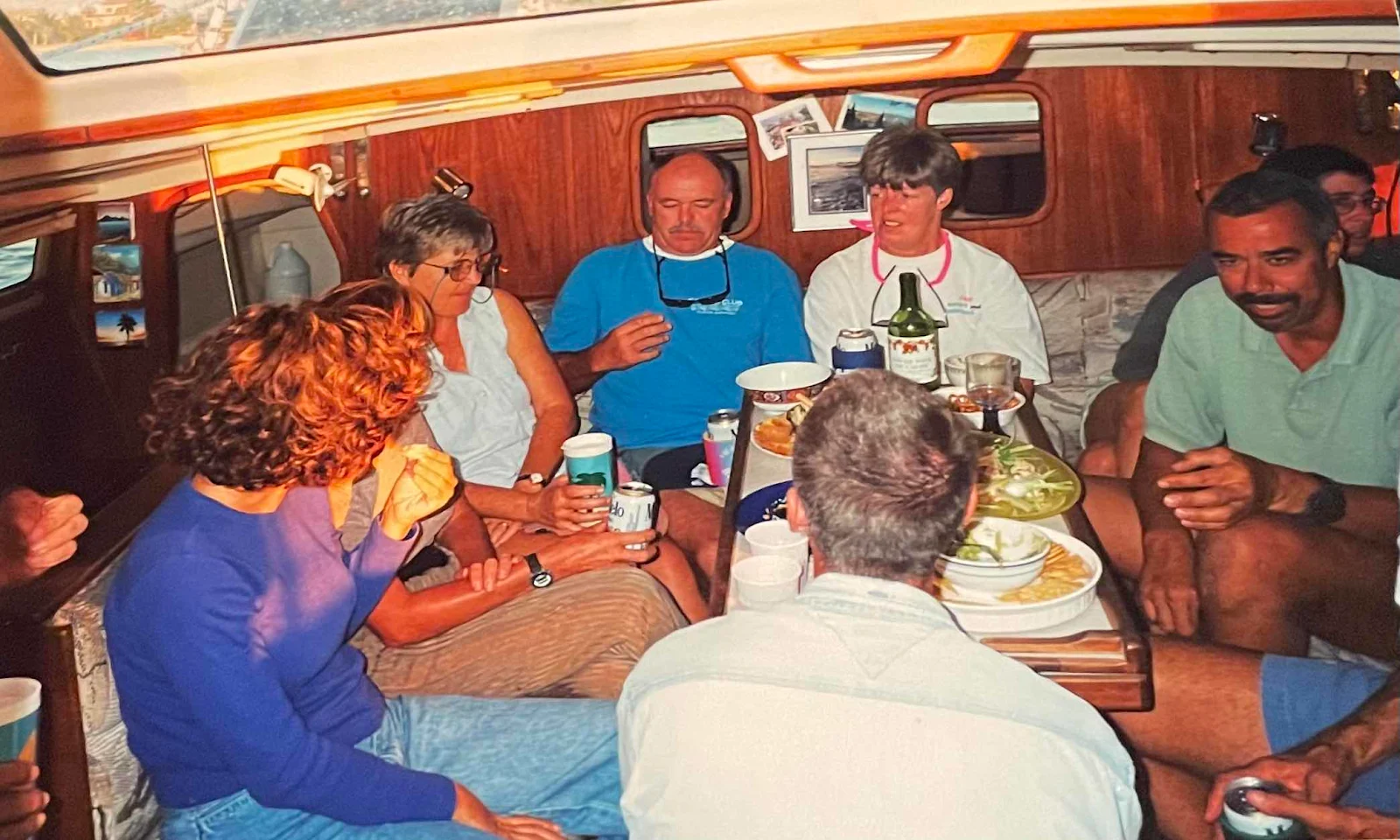
We had the catamaran with the bg cabin so we hosted the sailors get togethers. The talk was about where we last met, the cost of boat parts where we were, good places to eat, and the prospects for the next passage. It was easy going friendship among people with common experiences outside the norm.

Oh no! A 300 mile passage to Florida? Say it ain't so.

There is always fun exploring new places and new cultures and new supermarkets but one day, and I can't explain how this happens, you just wake up with the urge to move on. This place has had it's day.

We made our pre-departure preparations, organizing food fuel and paperwork. We had a water maker onboard which turned saltwater in freshwater at the rate of a gallon and a half an hour.  That was an innovation in those days and we chose fresh water over more exotic to us navigation equipment like radar. Fresh water saved us a lot of worry and allowed us to keep the dogs as well as ourselves clean without having to hump heavy jugs of water all over the place. Very decadent.

We met another couple on a similar catamaran to ours and they made their own preparations for a passage. Arlene cut Dennis's hair like the pro she was. They lived in San Diego but they loved shallow water sailing on the East Coast. We learned a lot from them as they took See Ya through shallow waters we would never otherwise have learned to enjoy.

And so we took off one fine evening after one final long dog walk. I've written elsewhere of the passage that landed us in Cuba after a rather large storm caught us half way to Key West and whipped up the Gulf Stream for us. My next story will be the essay about our arrival in Key West on Valentine's Day 2000.

Tuesday, September 21, 2021

Rio Dulce, Guatemala 1999/2000

I don't know if you remember where you were New Year's Eve the night we switched centuries but Layne and myself along with our two dogs were anchored up the Rio Dulce in Guatemala in the company of some sailors of terrible influence. I am sorry to say we all got drunk out of our gourds that night, though the blame was only partly ours. At least we were without doubt securely anchored in the Guatemalan river mud.

We had sailed under perfect following winds from the Bay Islands of Honduras into the dead end that is Guatemala's very small piece of Caribbean Coast. We anchored behind a spit of land, Punta Manabique, that protected us from the east winds and we spent the night a few miles from the port of entry across Amatique Bay so we could organize the boat and walk the dogs and arrive in Livingston in the middle of the morning with two well rested animals who would be in no hurry to go ashore. We already knew the check-in procedure in Guatemala was very by the book and it was no surprise when a launch put out from the town dock bearing Immigration and Customs officials with their paperwork. Most boats entering the Rio Dulce ("Sweet River") have to wait for high tide as the sandbar is extremely shallow but with our 18 inch draft we motored merrily across four and three foot water without. care in the world. The officials monitored our progress from their aerie above the docks and were quite surprised apparently when we didn't get stuck.

We landed in Livingston on the afternoon of December 31st 1999, not by good planning or anything but merely by chance. The rest of the world was on holiday like us and the town was buzzing. Livingston is one weird place geographically speaking. The city is named for a US lawyer Edward Livingston who wrote a constitution for Guatemala after one of their periodic revolutions when the country tried to institute democratic reforms as we under stand them. However in 1838 a counter counter revolution brought the church back into power and all good plans went to shit as they usually do. The city remained stuck by itself at the mouth of the river accessible only by water. A modern cargo port, Puerto Barrios was built across the bay as a railroad terminus in 1895. Nowadays a hundred thousand people live in Puerto Barrios located at the end of Highway 9, while 17,000 live isolated in Livingston with no road out.

21 years ago Livingston was a hippy town for foreigners and the locals were strongly English speaking as they were part of the diaspora of escaped slaves and forgotten English speaking Garifuna, who inhabit the Caribbean coast of Central America. Apparently the Internet has of course put Livingston on the map since then so my observations may be a bit outdated (!) but we won't be driving there in any event so bear with me. I have always been fascinated by isolated outposts of human culture and Livingston was as much an island as anywhere on the water. I could find out very little about it in those days and I was curious to see what we might find.

There is a short stretch of road along the coast and the streets are paved so of course there are pick up trucks and motorcycles but the town mostly looks toward the water for it's living. Guatemala has at last stopped treating Belize (British Honduras formerly) as a break away province but even in those days when official maps marked no border with their neighbors, there were water taxis to and from Belize and Livingston, not to mention across the bay to Puerto Barrios. As a cultural island Livingston stood out from the rest of the Spanish speaking country.

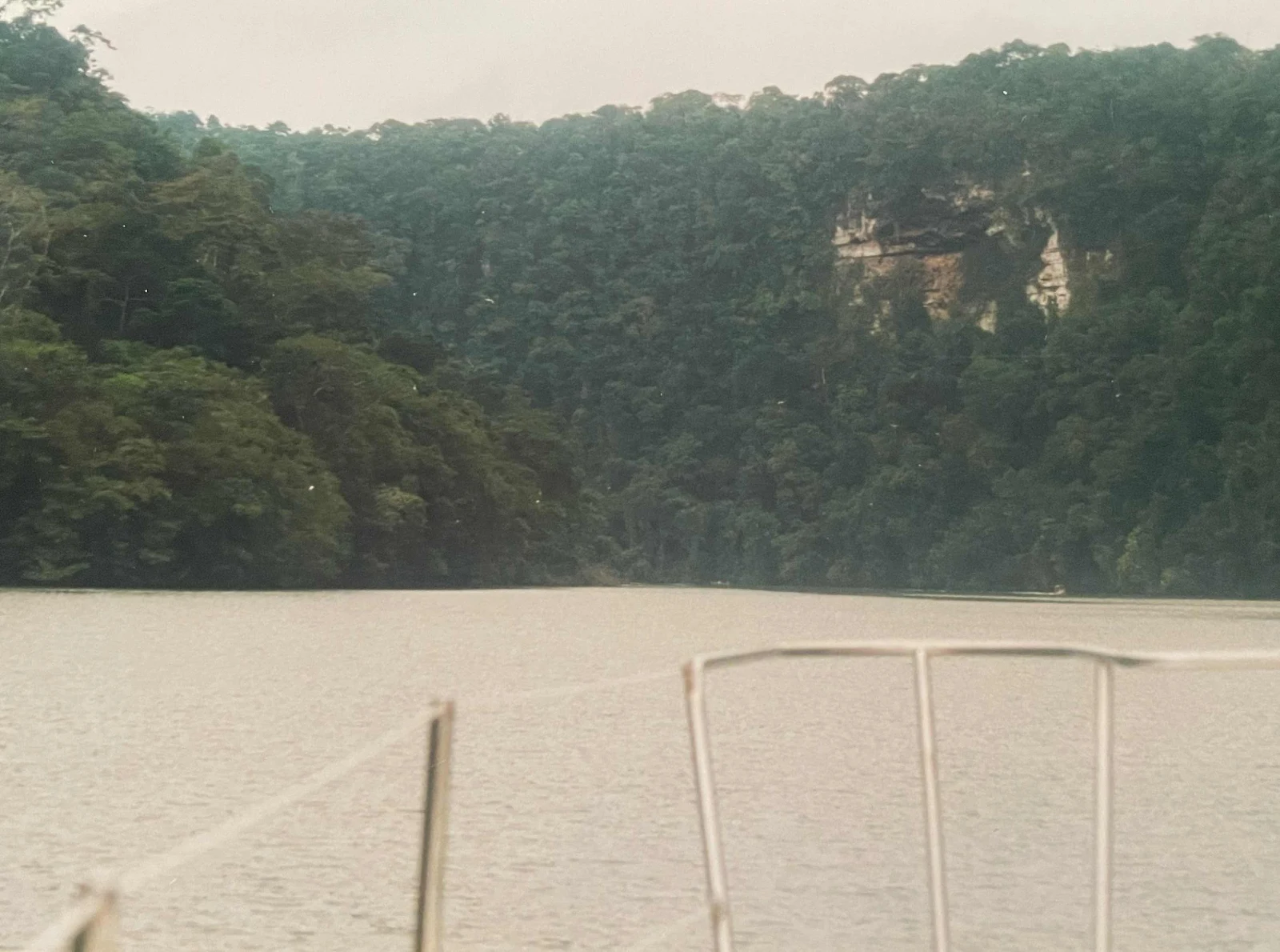
We ate some fried street food that disagreed with us, the only upset stomach we had the entire two years on the journey, and with thick hangovers we took off up the river, an imposing heart of darkness with huge wooded cliffs rising up either side of the gorge. I really enjoyed this exploration as the river was slow and smooth, deep and free of obstacles with scenery we had never seen before.

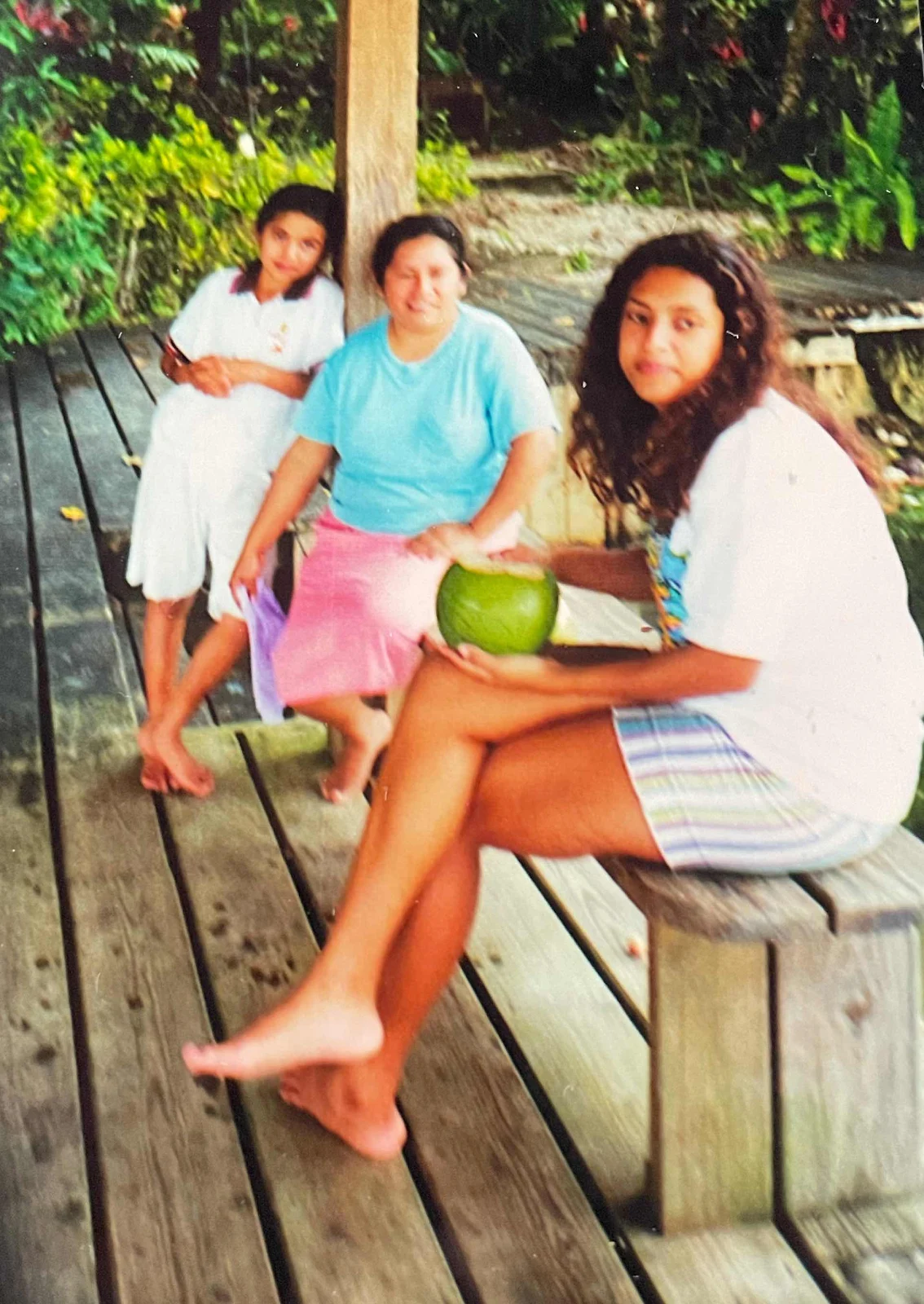
We ended up anchoring a few miles inland where we met a man and his family working as a caretaker of a section of riverfront for some wealthy Guatemalan. The New Year's holiday had put every motorboat in the country on the river and our slow moving sailboat was not at home amongst the roiling wakes and uncertain pilots. our sailing partners on this leg included a young Venezuelan woman seen here drinking from a coconut and she got us invited on a trip to a bat cave. 

Antonio's family lived a rather medieval existence on the water hemmed in by jungle covered cliffs which may appear idyllic but lest you forget it is not always huge fun being isolated from modern conveniences. We had tiny batteries and minimal electrical features on our boat, lights and fans basically with a tiny TV and DVD player and a couple of solar panels to keep us charged. They had next to nothing.

We were always ready total the dogs for a walk and they of course adapted to the weirdness of a boardwalk through the woods:

The drive to the town of Fronteras continued past homesteads on the banks that gave our journey the feeling of being more time travel than a journey through physical space.

Then of course the Guatemalan Navy put in a New Year's Day appearance, barely caught by my camera that was still letting in light unbeknownst to me. I really do enjoy digital photography despite what the nostalgia photographers will tell you.

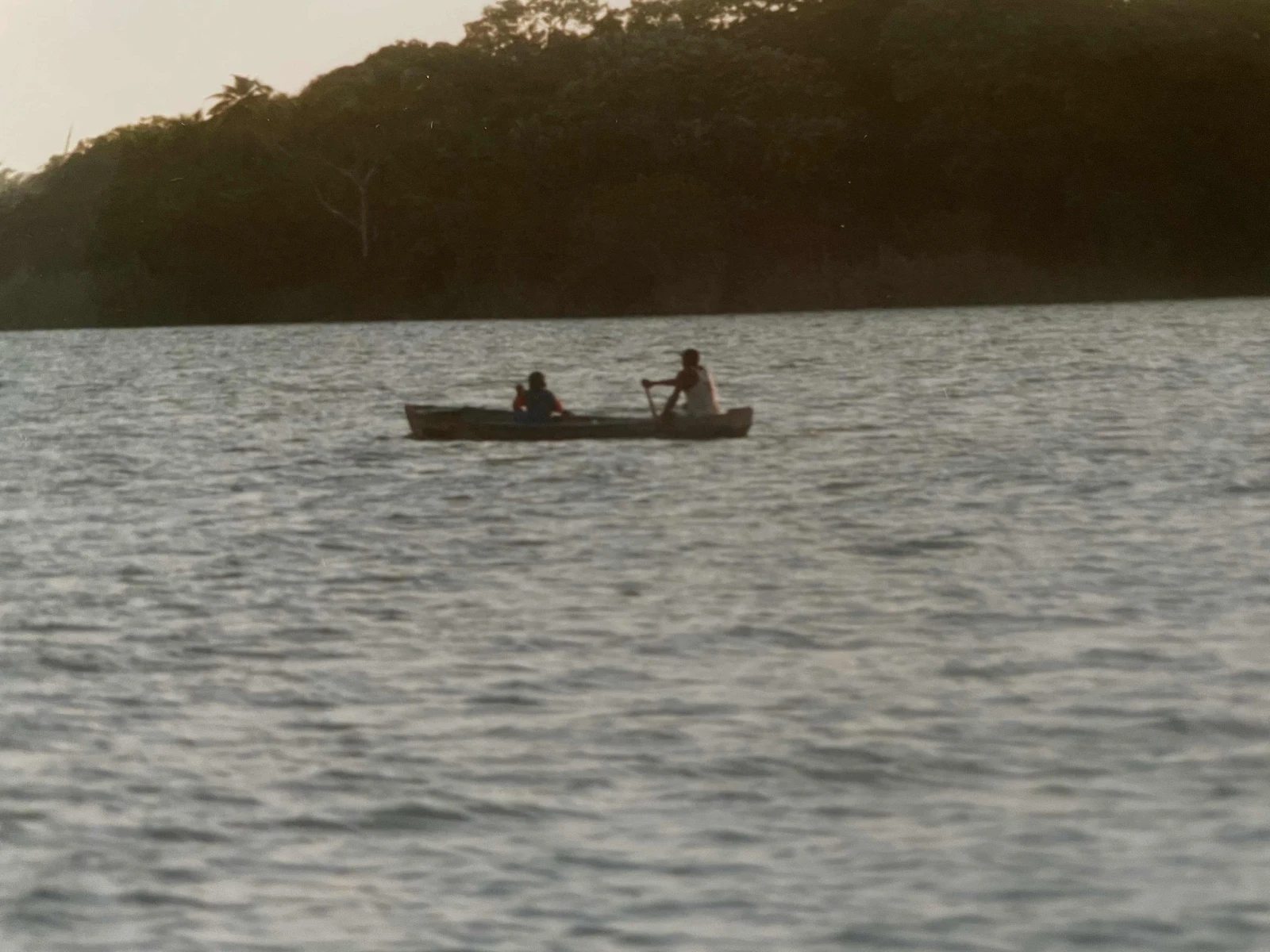
You can measure poverty by propulsion because anywhere there is fishing you will find outboards, mostly Yamahas to power the means to earn a living. On the Rio Dulce in the year 2000 it was all paddle power.

The bridge over the river at Fronteras was a very modern piece of engineering so we had some notion we had arrived somewhere. Then we saw marinas and sailboats with Canadian and American flags. Fronteras it turns out is one of those places where many sailors go but not all of them can figure their way out. The Guatemalans used their initiative and created a place with services, a bus line and a place to calla. refuge in hurricane season.

We saw a place to rent a car to explore the interior, which my wife had visited as a callow youth and was anxious to see once again. Meanwhile we took a trip up the river to the Lake which was essentially the end of the road.

Fronteras was your average modern agglomeration of stores, restaurants and people crowded along the highway. Oh and good old fashioned shoe shine boys. Boys who should have been in school but were earning pennies for their families instead. Not a particularly bright future for them, then.

I made my mark when, over lunch I posed the question to my wife, why did the roast chicken taste so much better here than in the US, whither we were bound at last and in a few weeks. She looked at me like I was an idiot and pointed out patiently they baste their meat in lard that imparts flavor and calories and would never be acceptable in the calorie conscious world we normally inhabited.

The thing about exploring by boat is that you have to walk everywhere, any time you ever want to seek out something, be it a part for the boat or a museum for the mind.  We walked like you wouldn't believe in those years, and I will tell you honestly our plans to travel by van will be immeasurably easier because we will be able to drive our 21 foot box almost everywhere.  We might walk a mile to see a movie, e might carry bags of groceries across town to get them back to the beach where our dinghy waited for us. We had to walk the dogs and they loved the less attractive parts of town.

We swam too and cool fresh water in abundance was a treat.

Lake Izbal is a large body of fresh water that feeds the Rio Dulce (the sweet water river) and the Spanish, in order to protect their conquests from English pirates built Fort San Felipe at the mouth of the lake. I wanted to at least see this infamous lake and sail Miki G around a bit. We did that and scuttled back to boring Fronteras after a quick scout on the lake.

Lake Izbal is a big oval surrounded by reedy shores and farms and not much else. We had heard reports of modern piracy on the distant shores with fishing boats coming alongside isolated anchored sailboats and their crews helping themselves to the contents. I have no idea how true the stories were but there was nothing attracting me to go deeper, or to spend the night there so we turned around and went back to a marina slip with easy dog access to the land, always a plus.

Next up we drive across Guatemala to the most beautiful lake in the world according to Aldous Huxley and we stayed in places so cold we fought over which dog to sleep with to keep us warm. The Guatemalan highlands were quite different and quite chilly in January.