When we went to the pasty museum I wasn’t sure what to expect. Layne said we had to make a pasty. That notion freaked me out. But I do enjoy these pasties so I figured how bad could the museum be? Pretty bad.

I parked the van and walked Rusty a minute while Layne bought tickets. She told the ticket taker she’d be back as she was going to get her camera. We left Rusty aboard GANNET2 and climbed the stairs into the central plaza of the magnificent museum.

No photos our guide admonished us as I got ready to document our efforts at party making. What? No photos? And were told only after we bought our tickets? I got pretty mad. Pedro our guide let me grumble and shrugged his shoulders saying that was the bosses decision to protect the integrity of pasty making. I thought that was bloody stupid and said so. Secrecy surrounding pasties when your towns tourism is dedicated to them? What idiots run this town? He didn’t disagree and I wanted to quit, but my wife was made of sterner stuff. Check Pedro out, himself a former miner and a superb human being it turns out. He made my day eventually.

An early model kitchen from the 18th century Spanish era roughly. It had room for wood underneath in the arched portion and a one dish oven. Pretty beautiful eh?

So how did I get pictures? First let me say I have not posted them anywhere else because they posted signs asking us not to take photos but let me also say I showed real interest in and appreciation of the museum and it’s displays and Pedro came to understand that. This is a later kitchen with three burners and a similar design to the earlier one also with room to store dry wood. At this altitude you have to store wood in dry season to burn it effectively in the cold wet misty rainy season. A big consideration in a wood fired kitchen. Take a picture Pedro ordered me when I demurred saying I didn’t want to get him in trouble. Ha, said the ex-miner. I did as I was told.

The Cornish era brought in more modern iron stoves and cookware in a design much more similar to modern stove design. Well, within reason of course but you can see ovens and warming drawers and so forth. Mid 19th century. By now Pedro and I were fast friends and he urged me to make pictures but I was reluctant telling him I still didn’t want him to get into trouble. He ignored my protestations and pushed me.

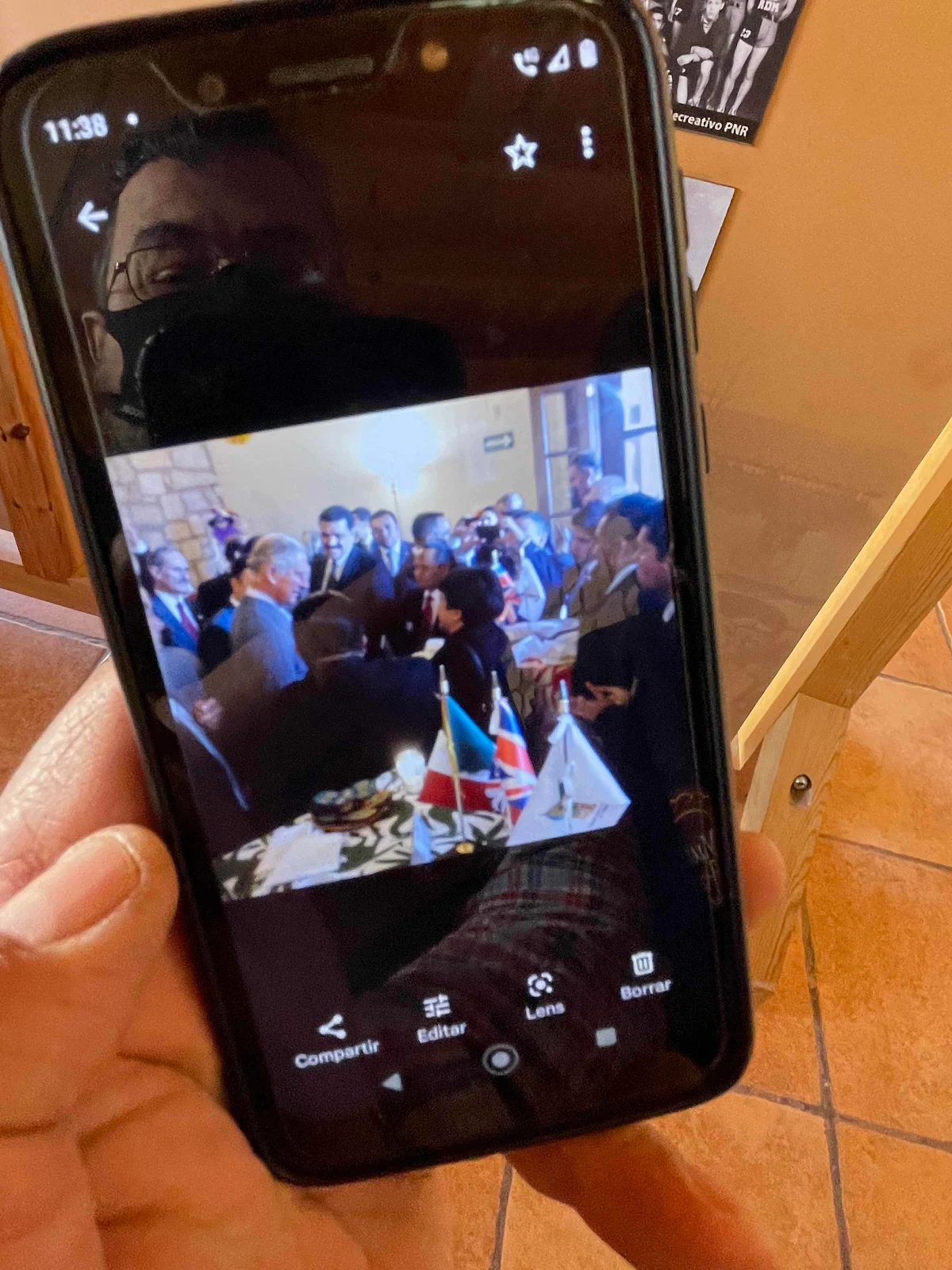
The Prince of Wales paid a visit and Pedro met him, the memories of a decade ago carefully stored on his phone.
 The man who maintained the Cornish cemetery (photos of our visit there further down this page) was made a member of the British Empire for his 45 years service. The connection through mining runs surprisingly deep.

It took a few years for the tight Corn ish community to connect with the locals as the story goes but once they did the binds never let go. Football of course was one glue but civilized treatment of the workers, double time pay on Saturdays and triple time on Sundays for voluntary overtime was treatment unheard of in the Spanish colonial era. Oh and lunch breaks! For those pasties! Pedro pointed out the better spiced Mexican version is about half the size of the foot long Cornish pasty.

Mr and Mrs Rule led the Cornish community and we saw their graves in the cemetery.

Pedro made me try on the safety gear of the modern miners. He ended up taking my grumpiness and instead let me see inside the world he had lived in as a miner. I was quite honored he understood my desire to understand. We parted on a tight tight handshake.

Oh and my pasty I wasn’t allowed to photograph in the making? It didn’t actually look bad when it was baked by the end of the tour. I thought the bean filling was delicious. They use proper pastry too, rolled out by me in this case. I woofed it.

On our way to the English Cemetery Layne stopped to get some bread at the ubiquitous pasty shops. She bought some of the vitamin enhanced bread preferred by the miners called pan de pulque which to me tasted like soft sweet Hawaiian rolls.

It was a winding narrow series of alleys that we followed on Google maps to the English Cemetery (“Panteon Ingles”) hidden in the shade on a tree covered hilltop.

Don Chenchon the eternal sentinel was the man honored with the OBE mentioned above. His replacement is a thoroughly unpleasant woman who yelled at me to put Rusty on a leash as we came up the road and her two dogs charged him yapping and growling. Sure I said I can put him his leash but what about yours? Nice way to greet visitors I added and turned my back on her. I think I surprised her. I certainly surprised myself but I had run out of patience with the touron attitude of Real Del Monte residents.


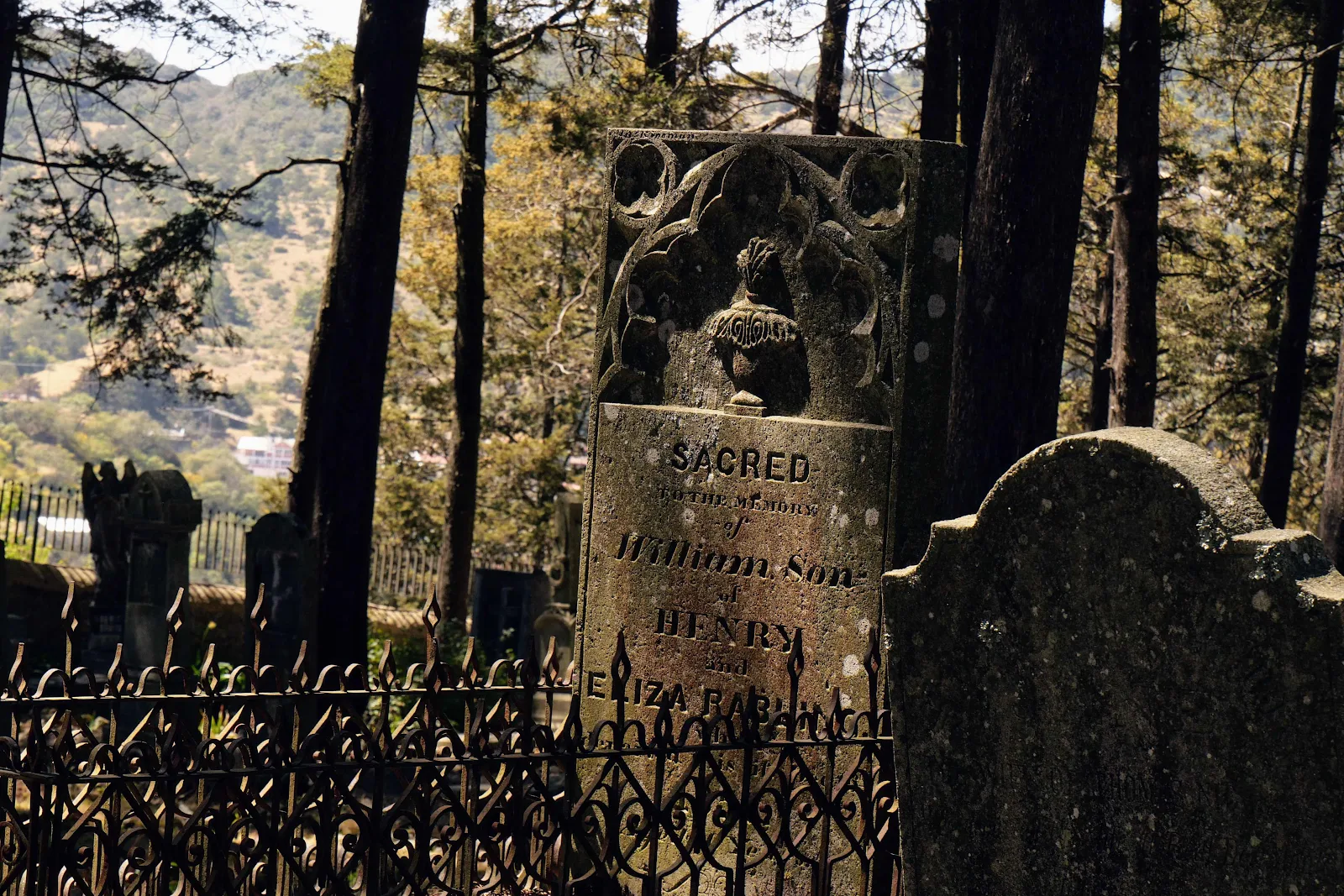


We met a young Cornish couple drawn to the town on their hitch hiking travels around the world and we gave them a ride back to town. They too got yelled at by the lady in the cemetery. Weirdly enough a local came by and asked if we had visited it and I said yes but the woman was really mean. He shook his head laughing and said yup she really is special, before going on his way. The cemetery is still very much worth it despite the gorgon guarding it.
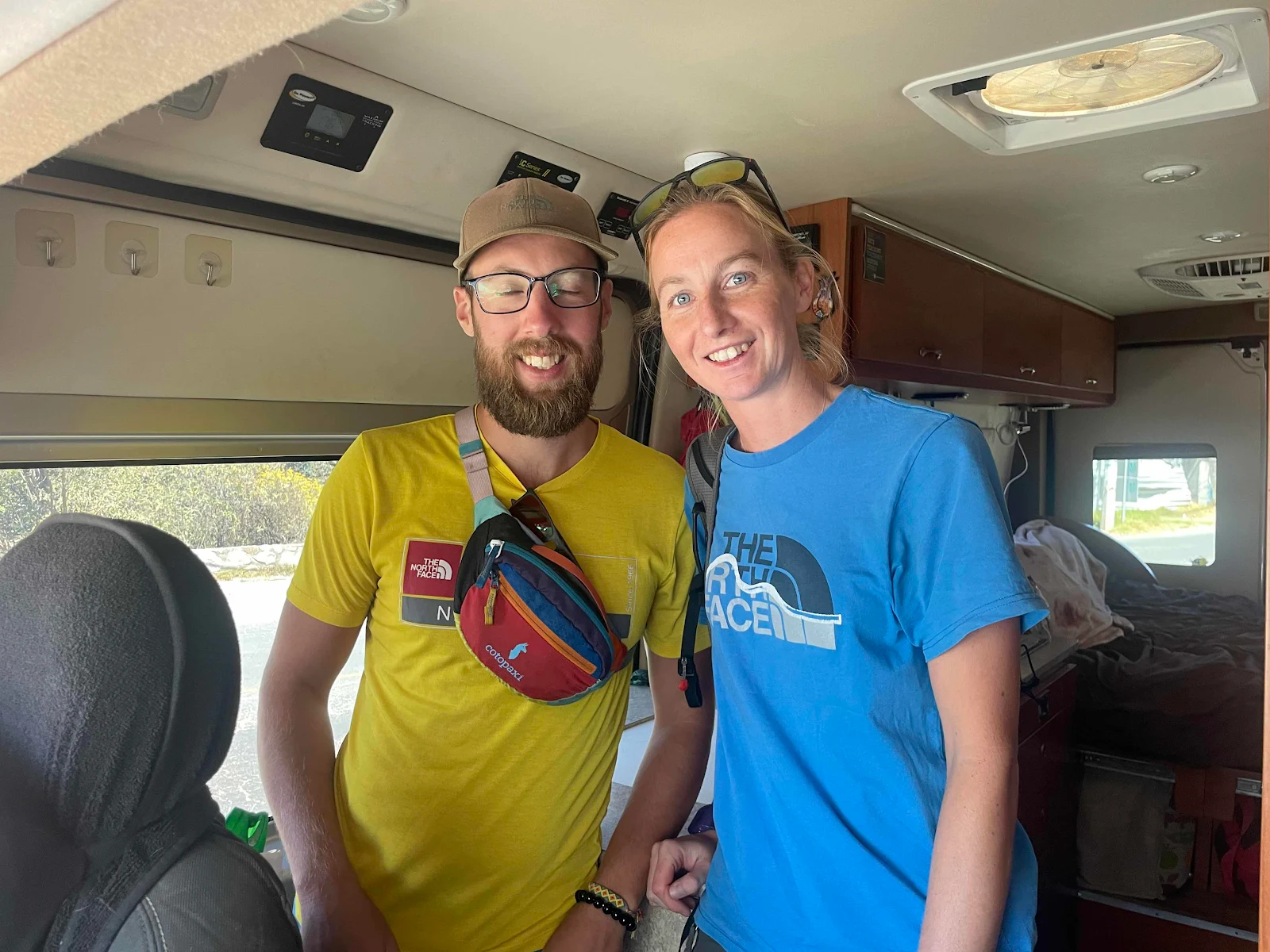
They had a plane to catch to New Zealand that night. Busy people and quite charming.
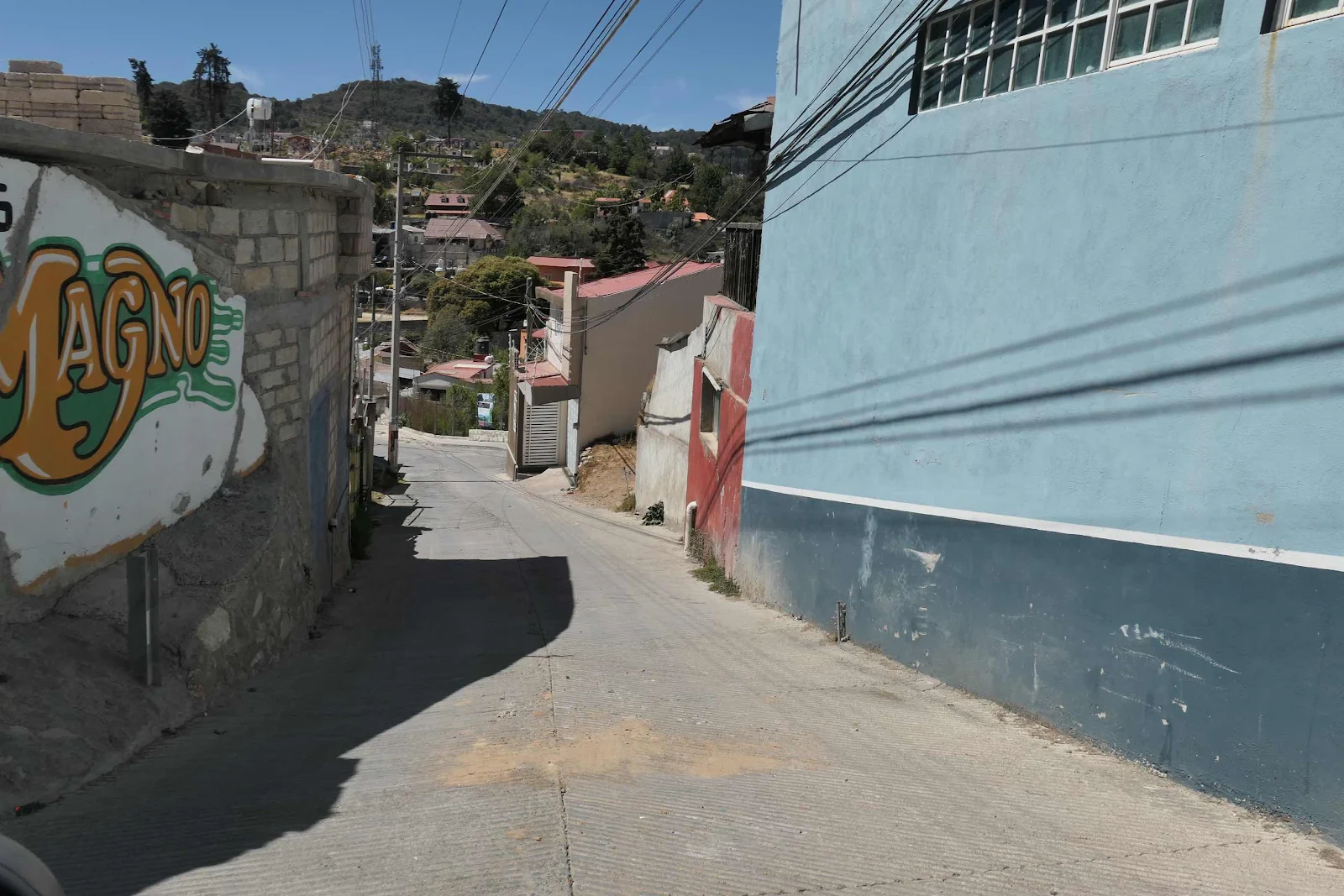
Real del Monte traffic jam. Getting out wasn’t going to be easy.

Next stop: Oaxaca.