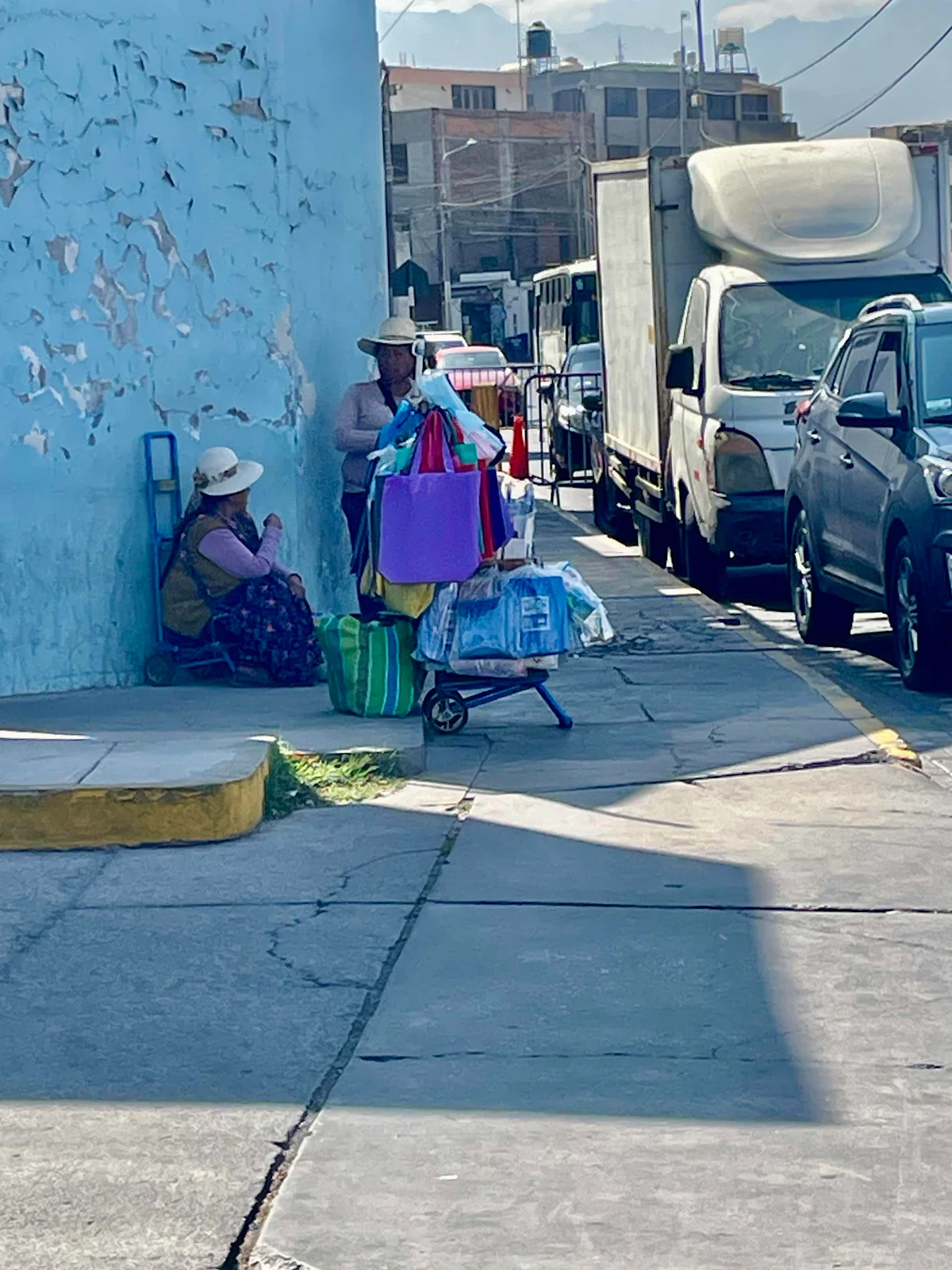
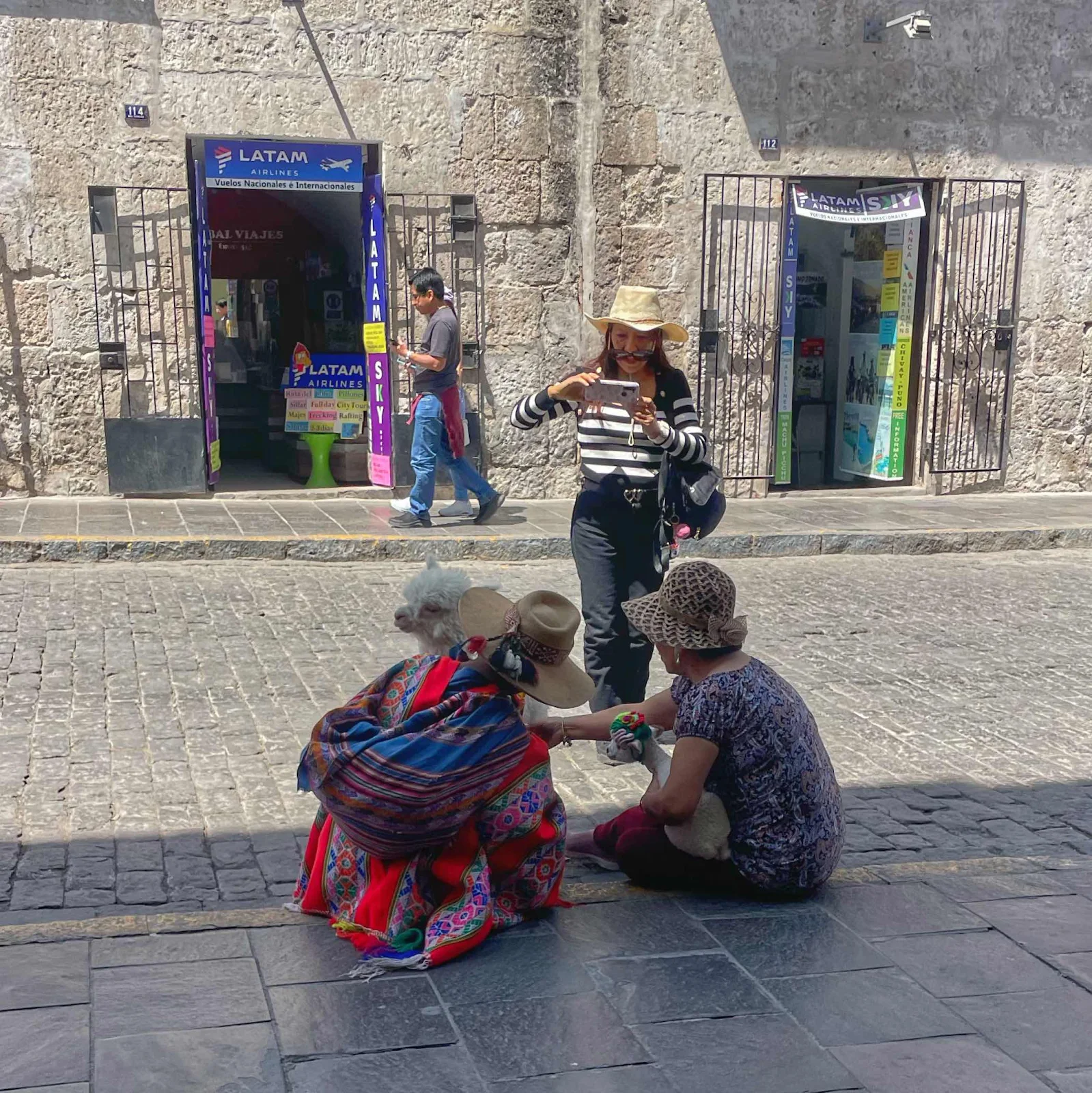
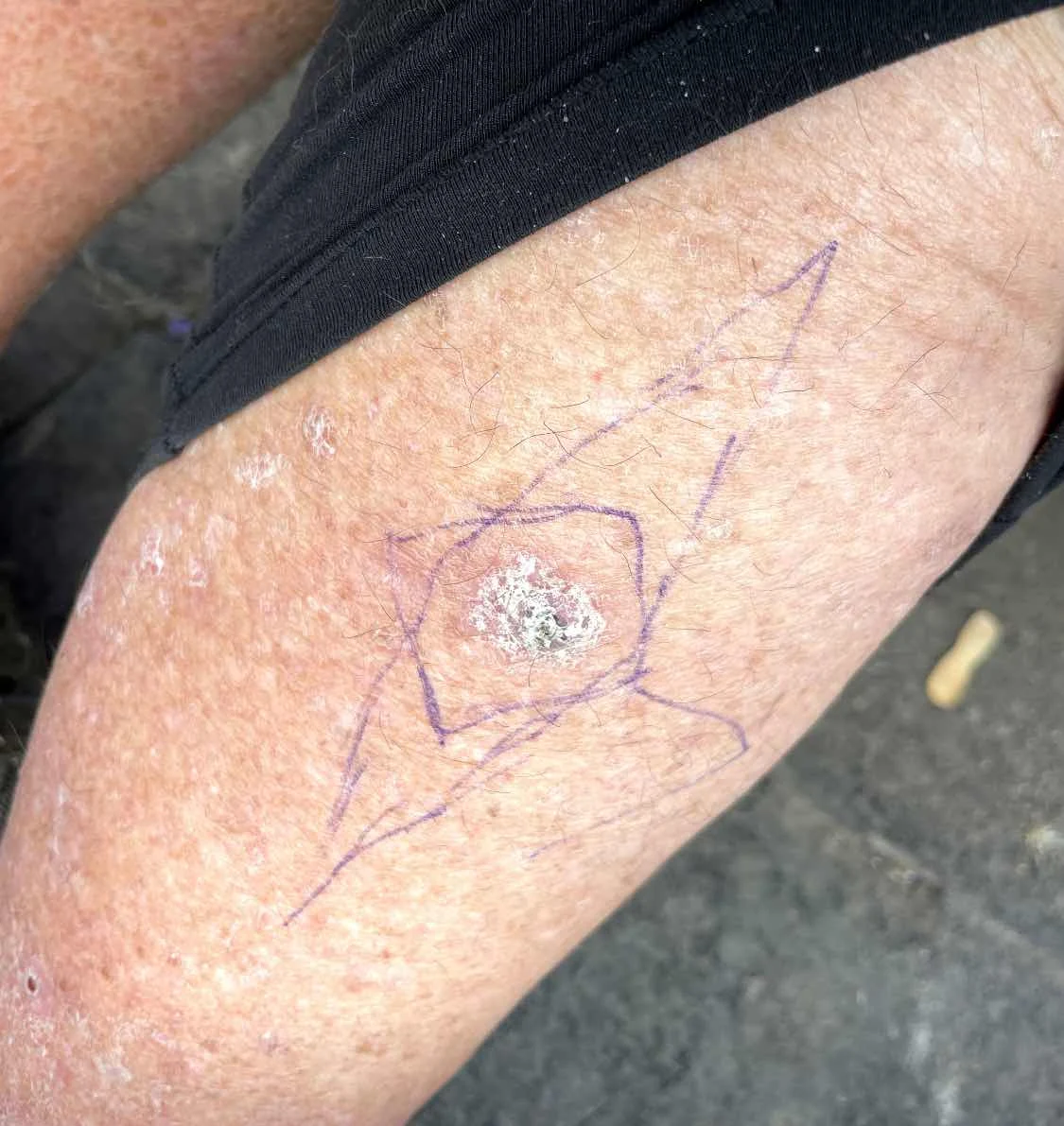
I must be feeling better because I got out and about yesterday. The usual morning in the clinic…and Layne is healing well.
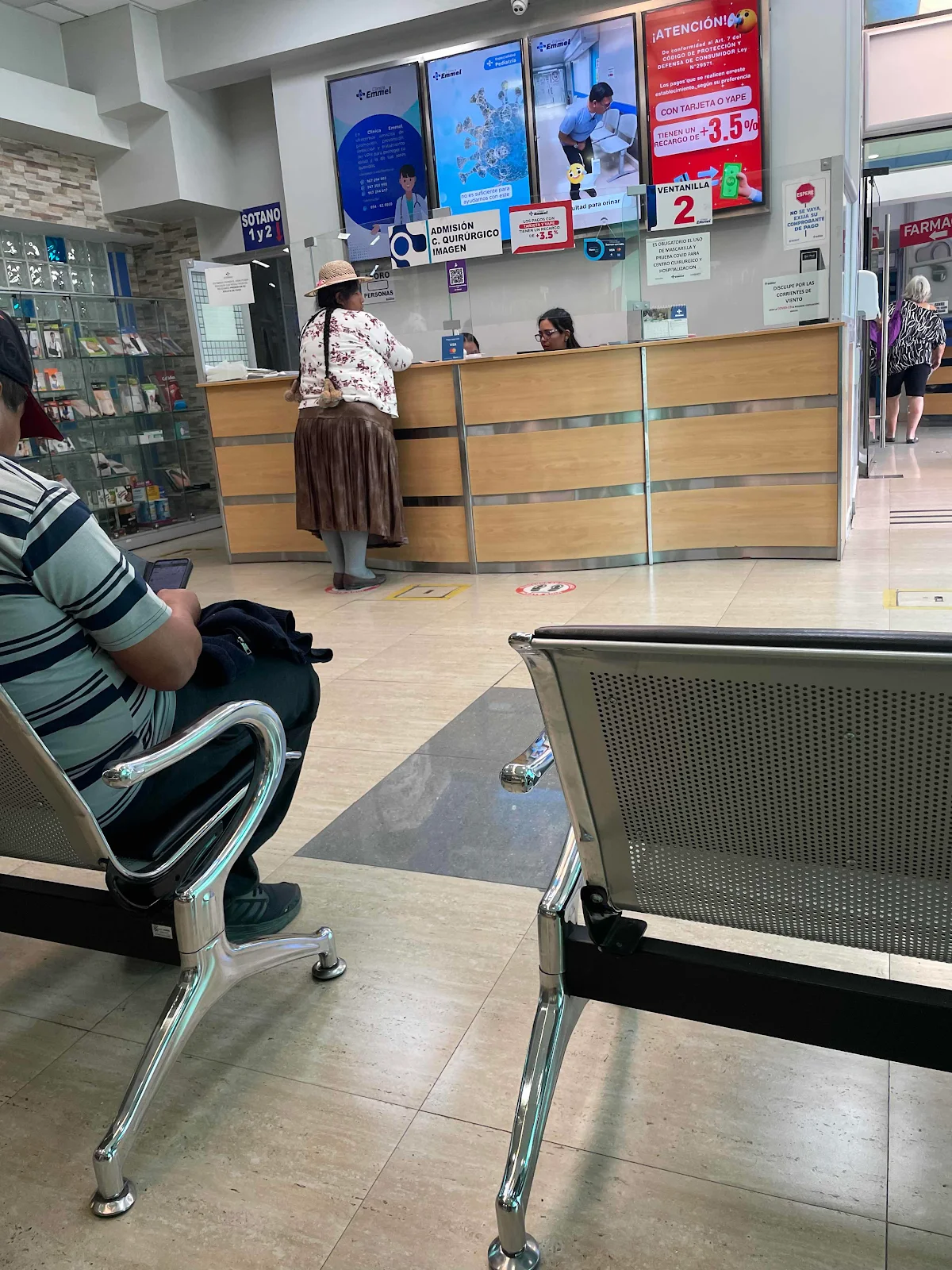
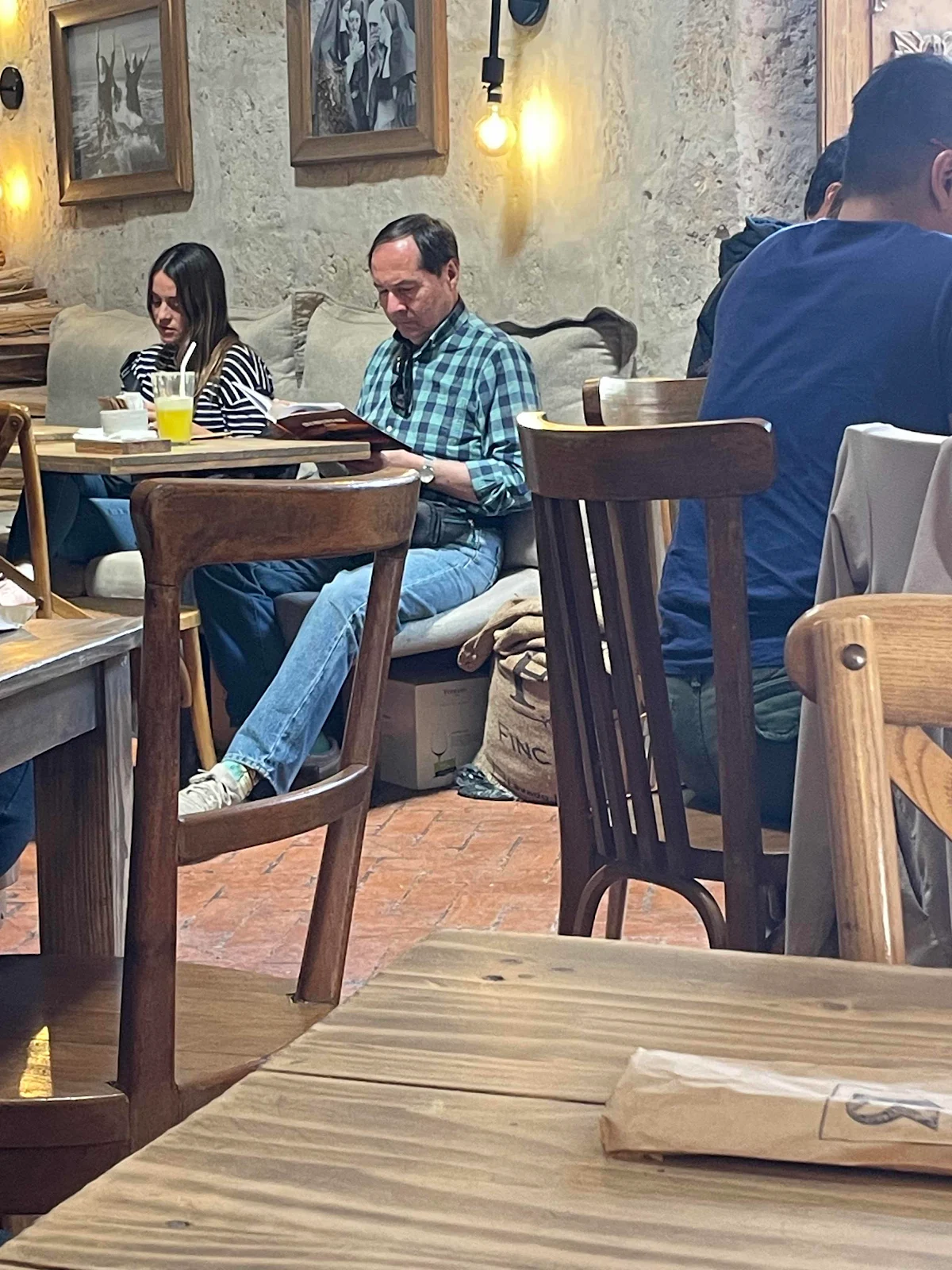
Lunch at our favorite eatery, 13 Nuns on St Catherine Street, where books compete with ubiquitous cellphones.
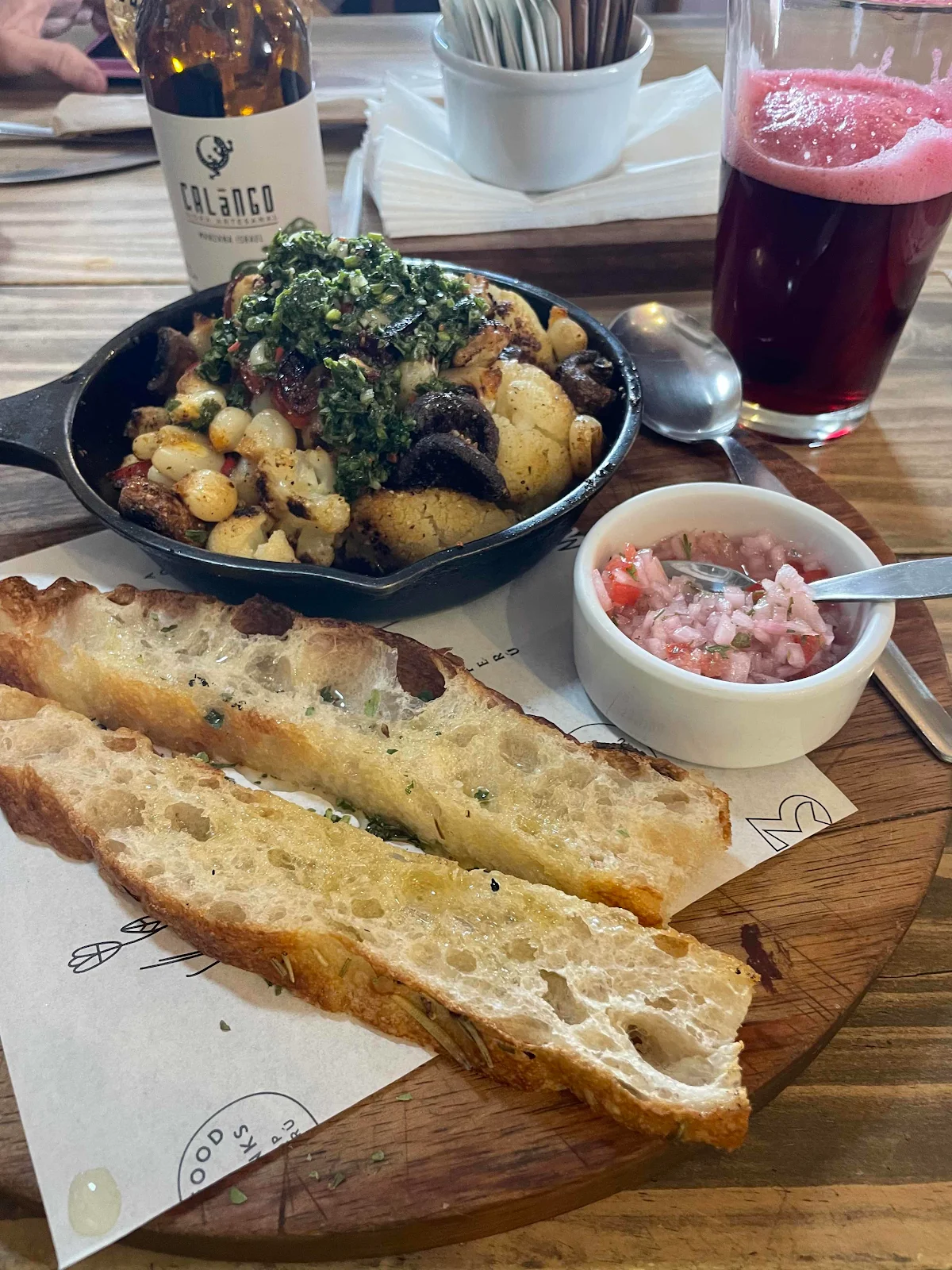
We had a couple of vegetarian dishes. Grilled cauliflower which was excellent:
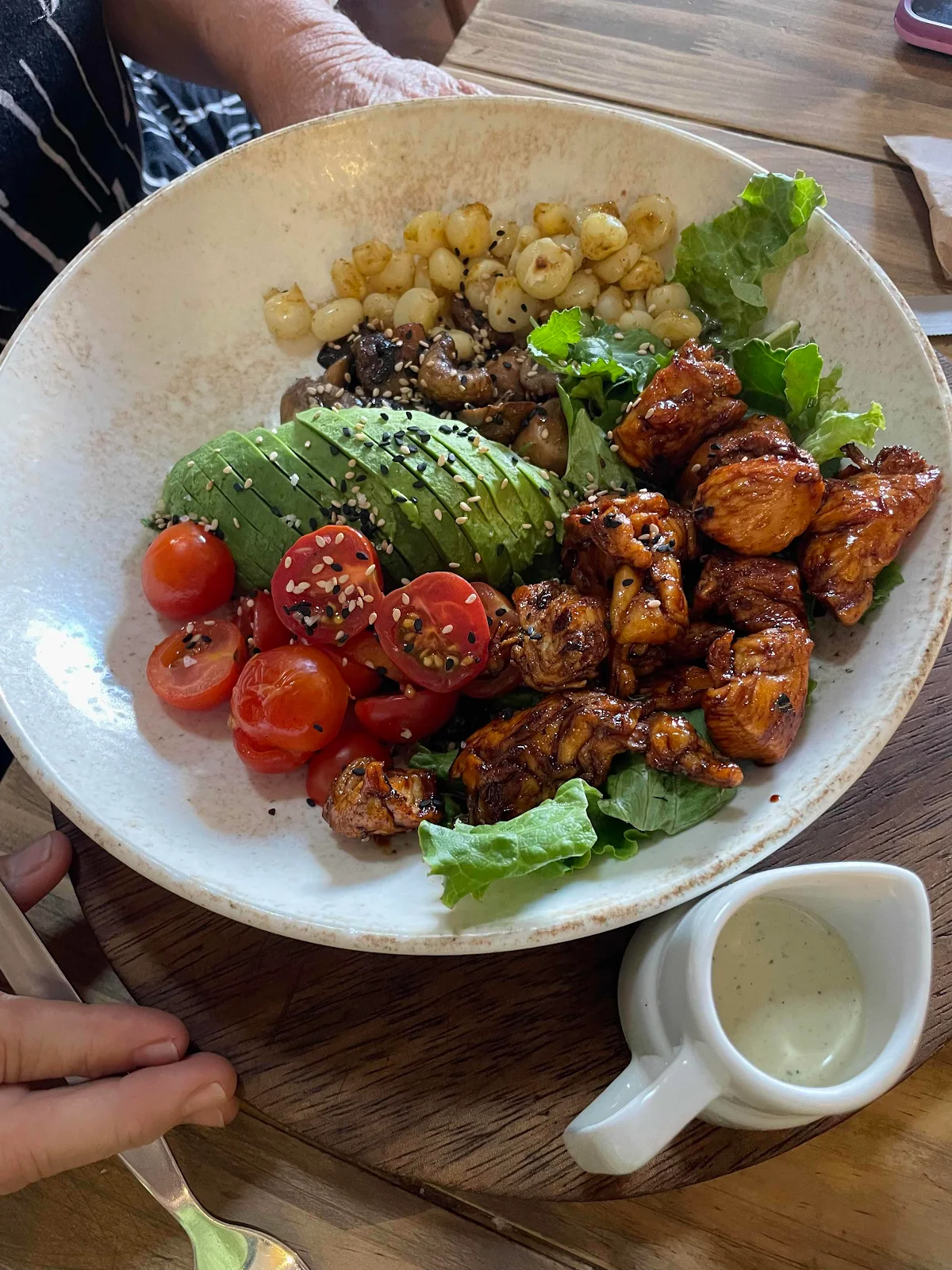
And a teriyaki chicken salad:
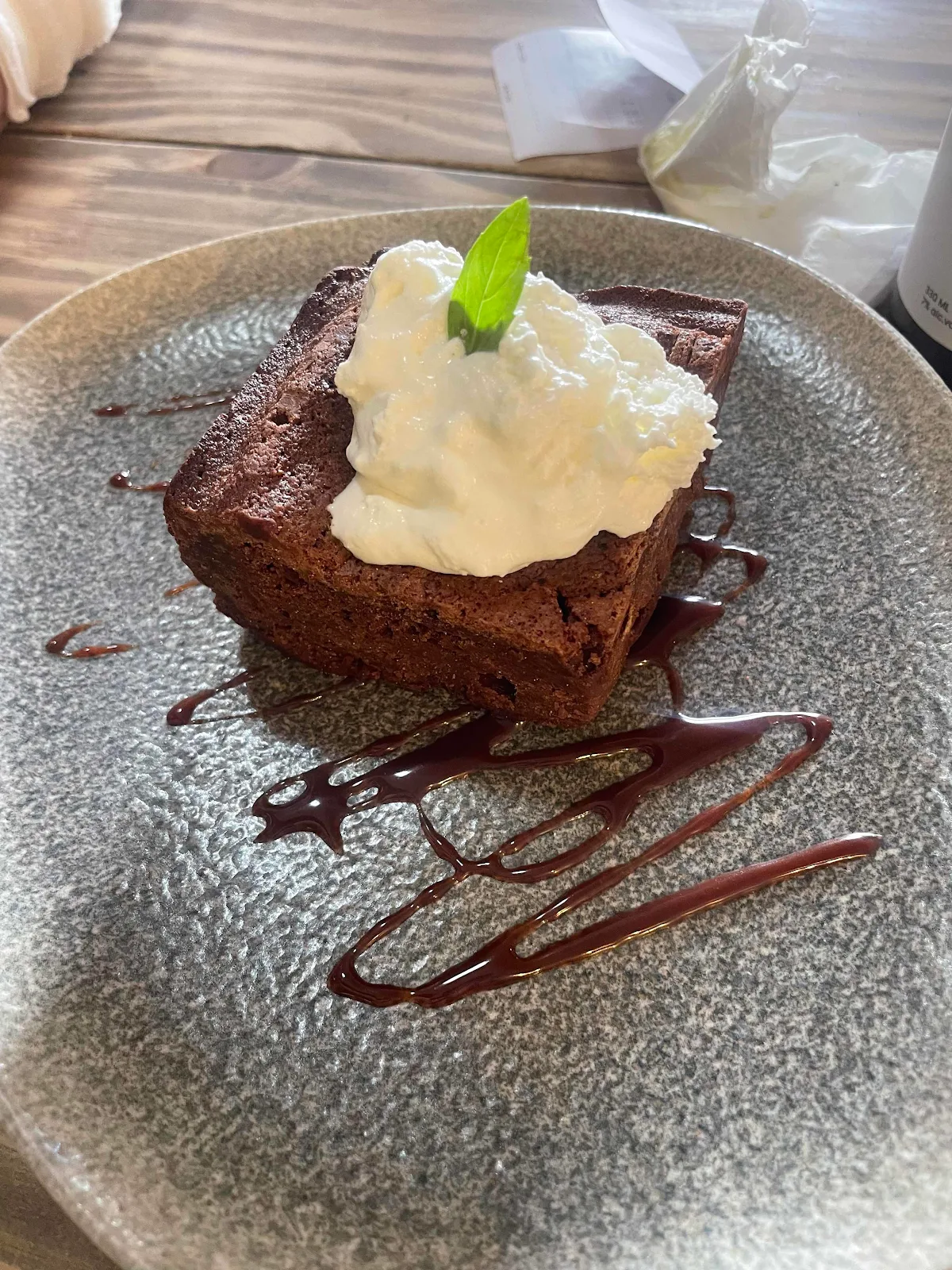
The maitre d’ was surprised to see us long term tourists back again and offered us a chocolate brownie to finish up. Excellent.
Then we split with Layne Ubering home, while I, with no walking restrictions went to see an actual tourist site.
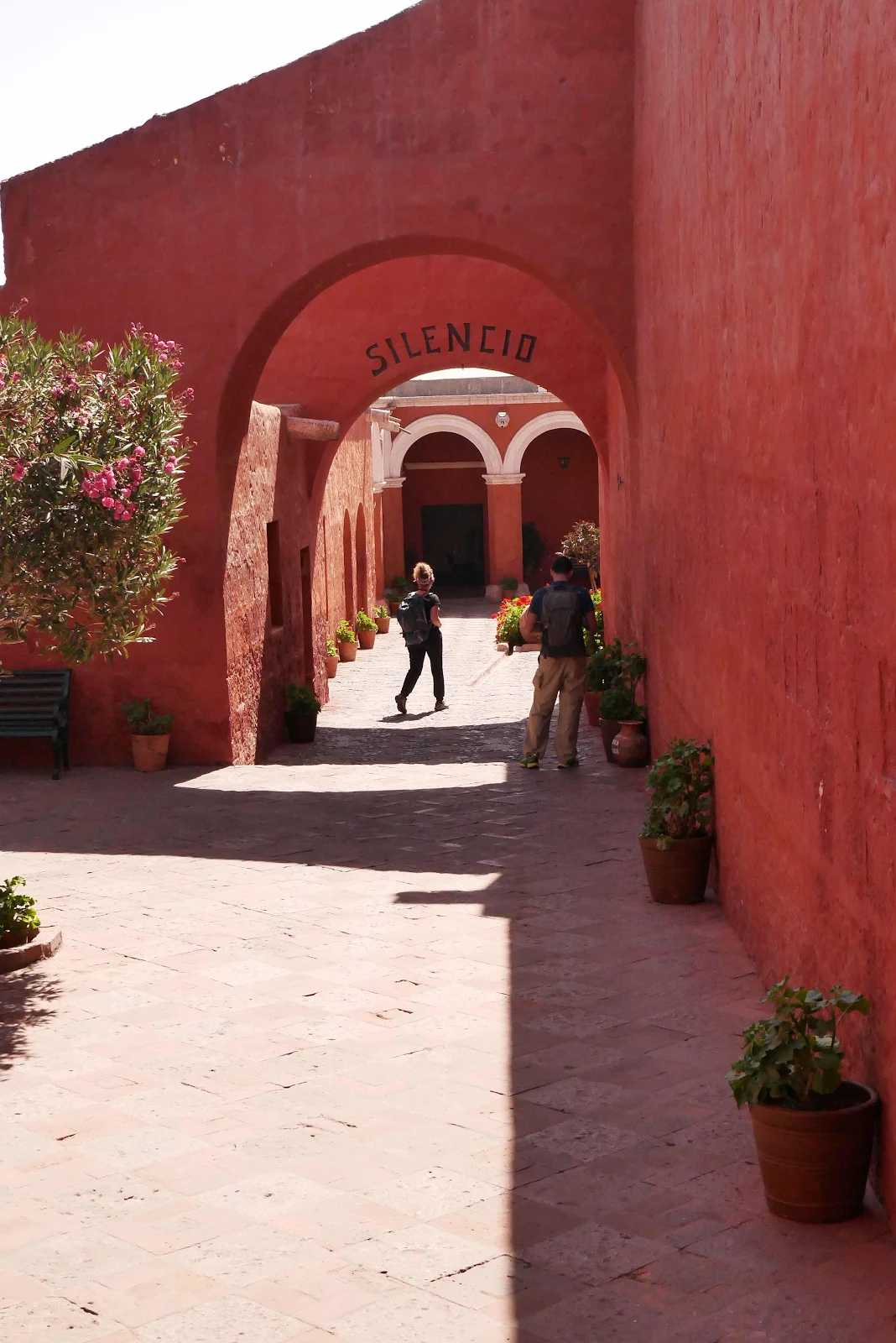
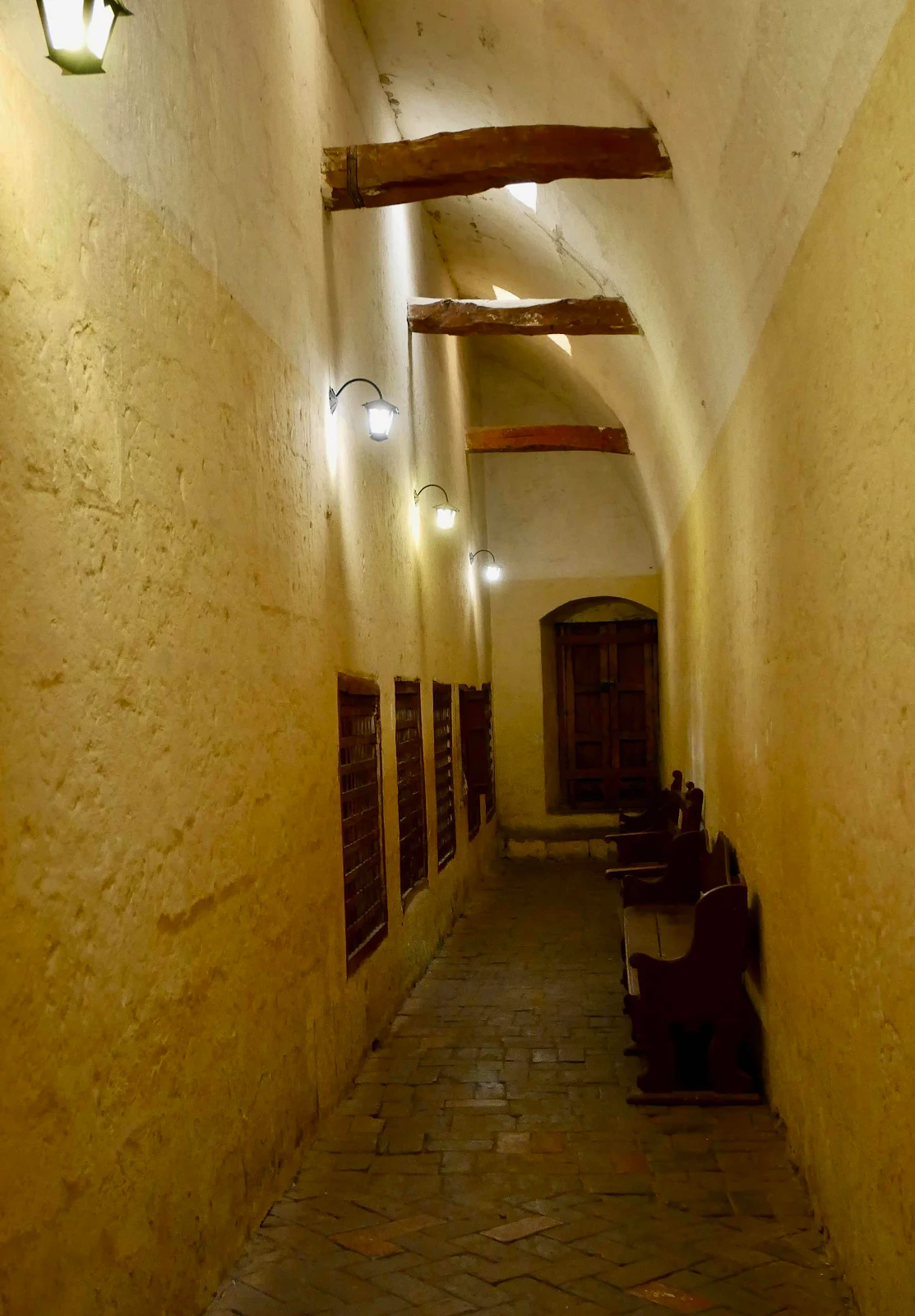
This Dominican nunnery was founded in 1579 and part of it is still functioning behind closed doors. The tourist site covers about five acres of walled city and is operated by a private cooperation as the nunnery was opened to the public in 1970. The literature claims that these cloisters put Arequipa on the tourist map. This corridor below is where the nuns used to come to meet visitors.
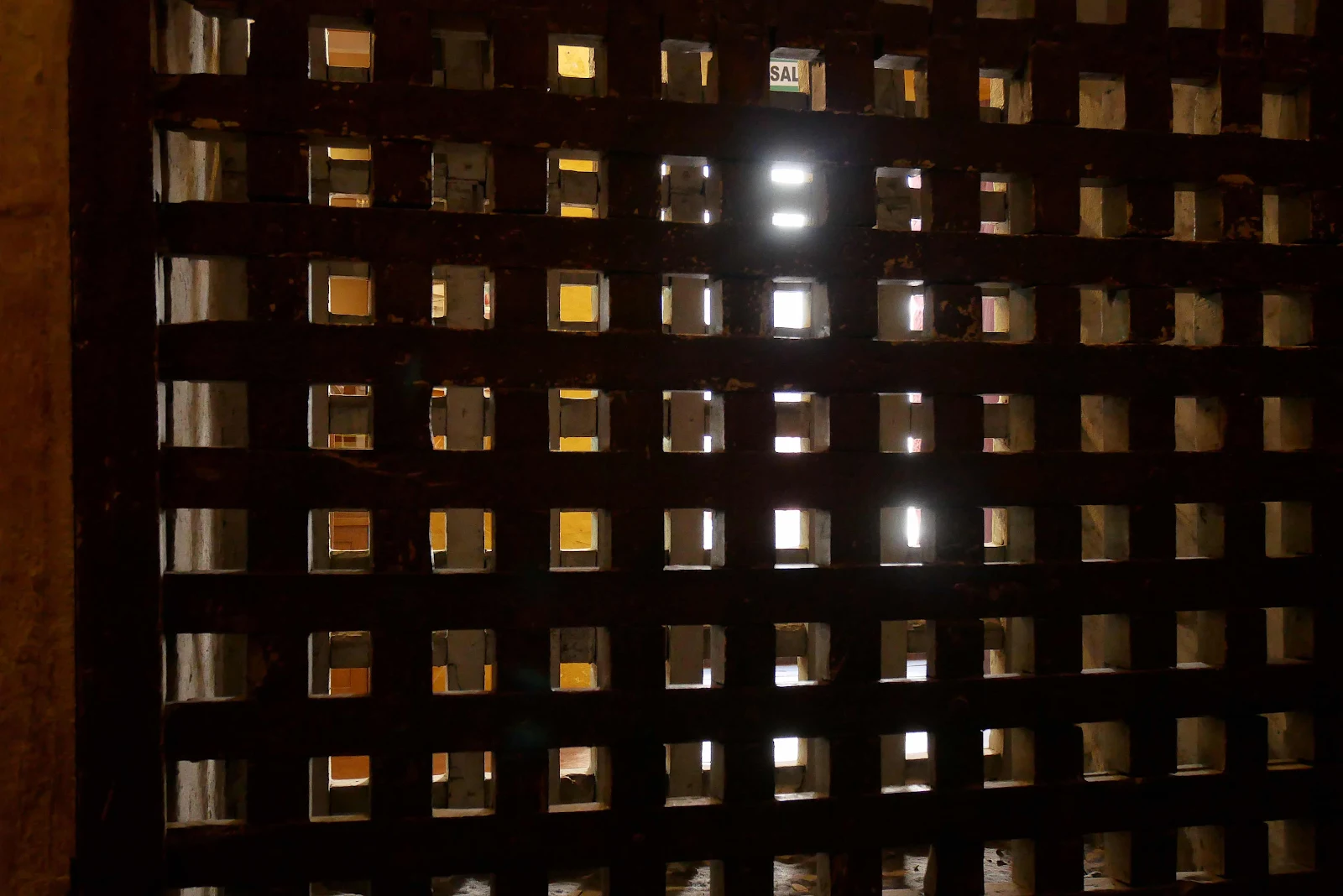
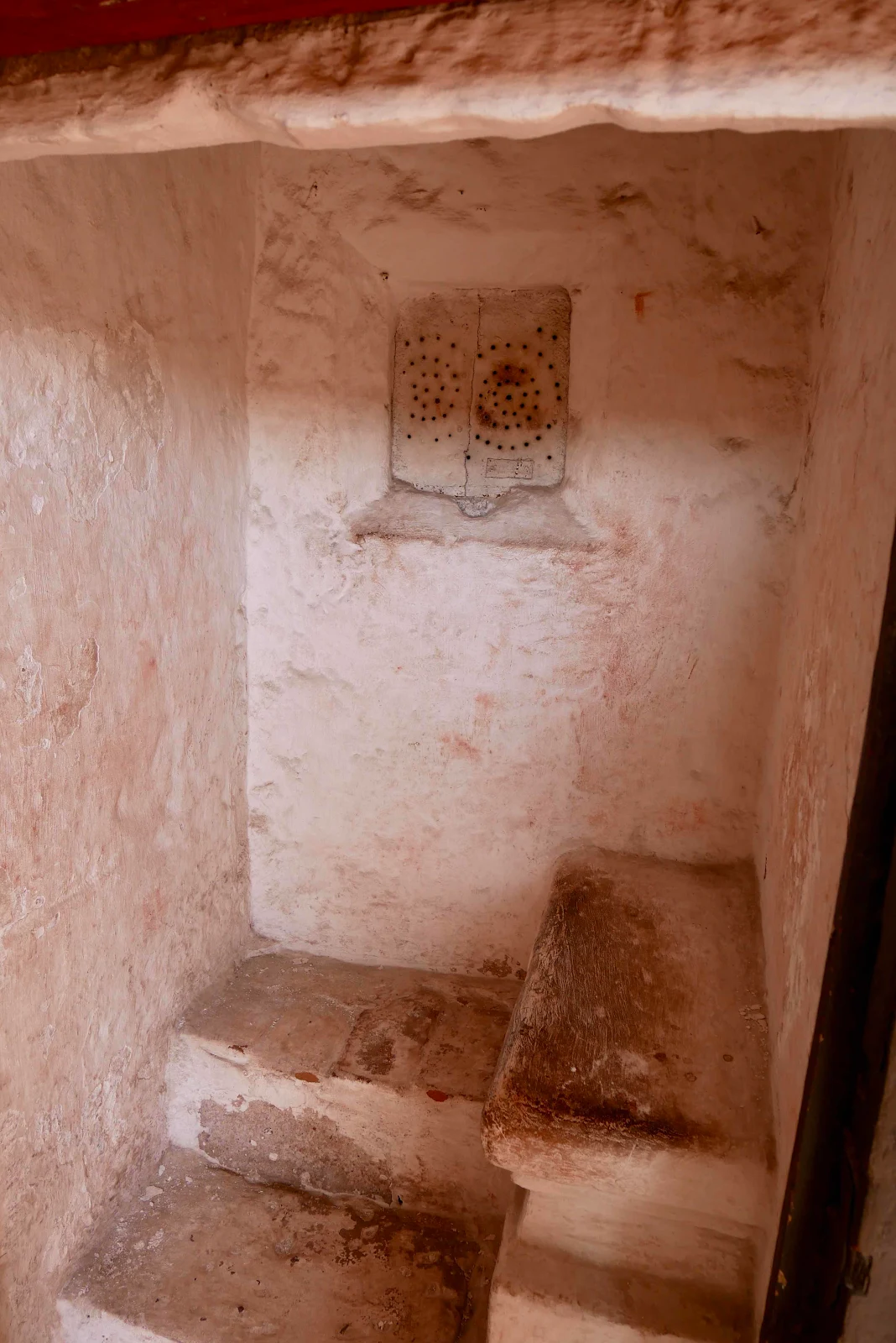
They talked to the visitors, usually family members, through this double grille. The intimacy was extended to any packages dropped off on a lazy Susan which prevented human contact.
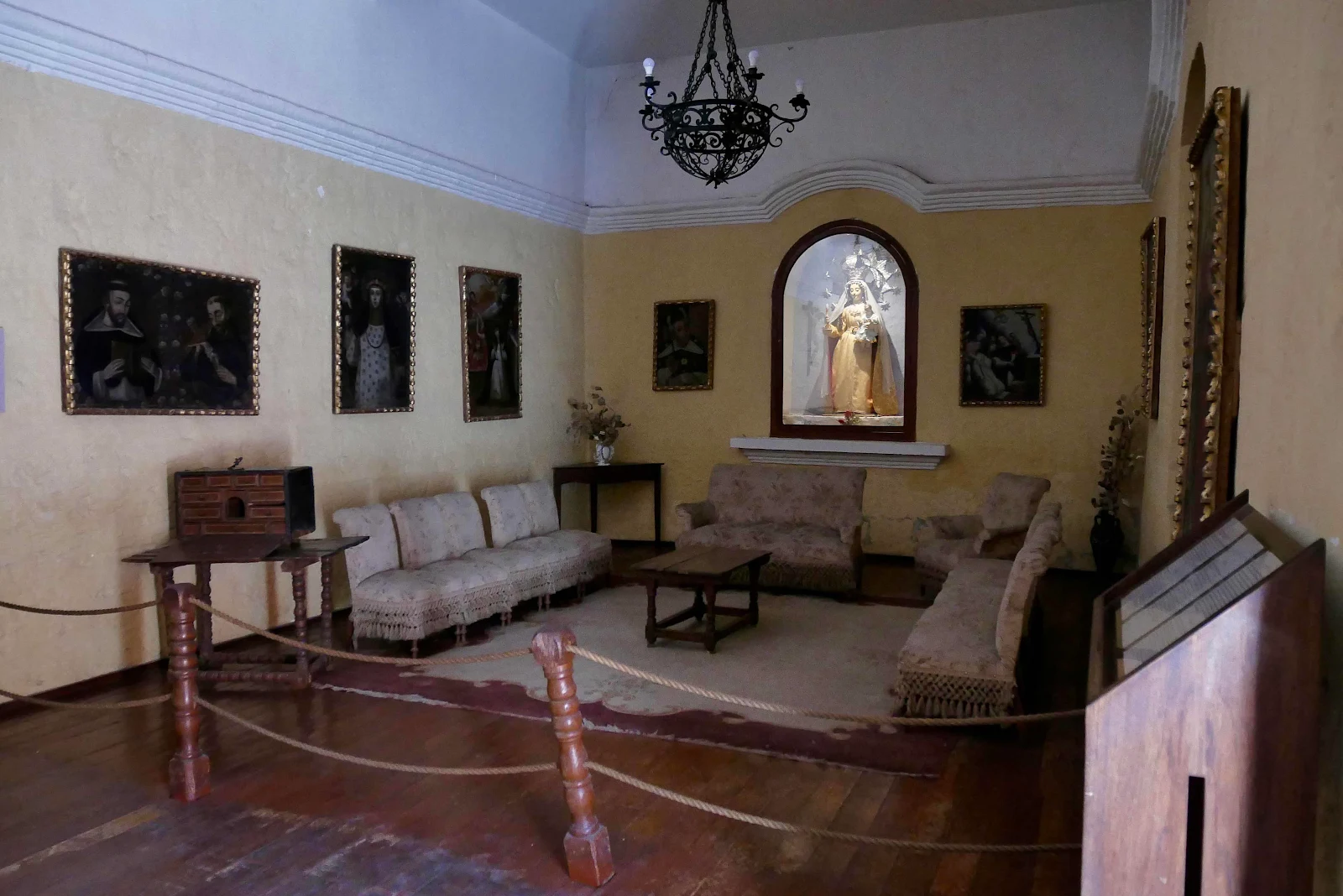
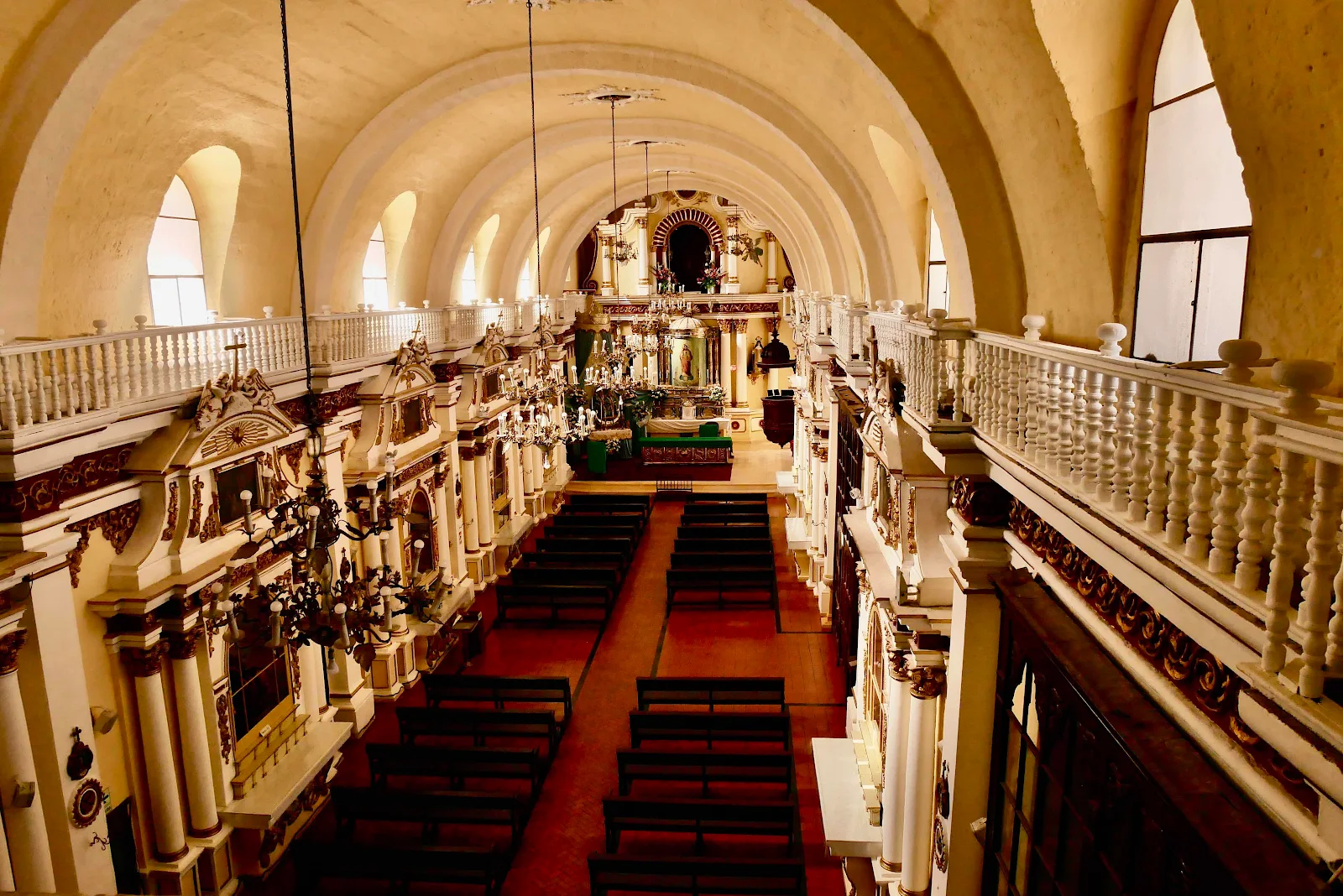
The nunnery is under the orders of the Archbishop of Arequipa so if he or other big dogs came calling there was a proper receiving room for them:
And beyond the modest visitor facilities lies the nunnery itself with its three famous cloisters.
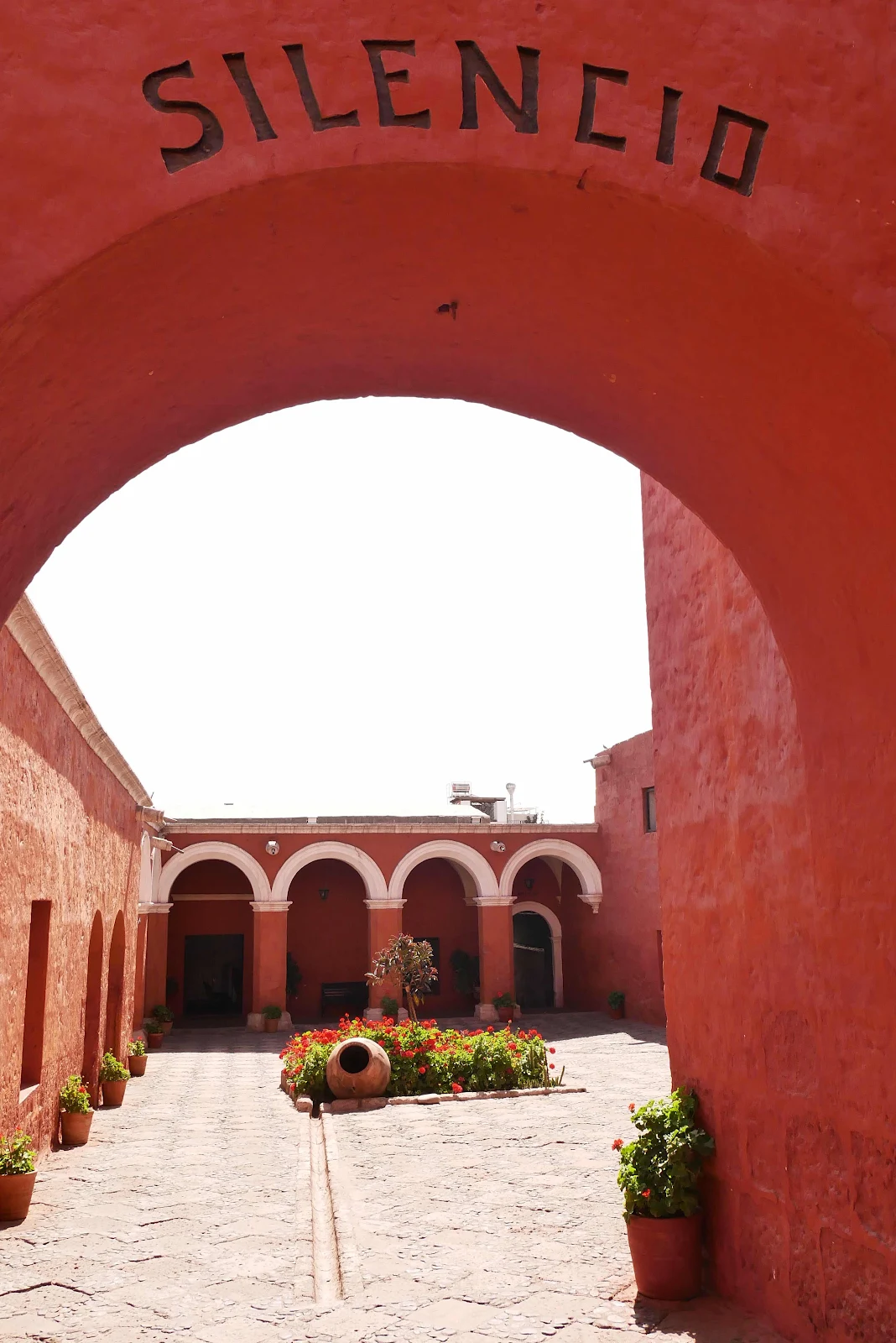
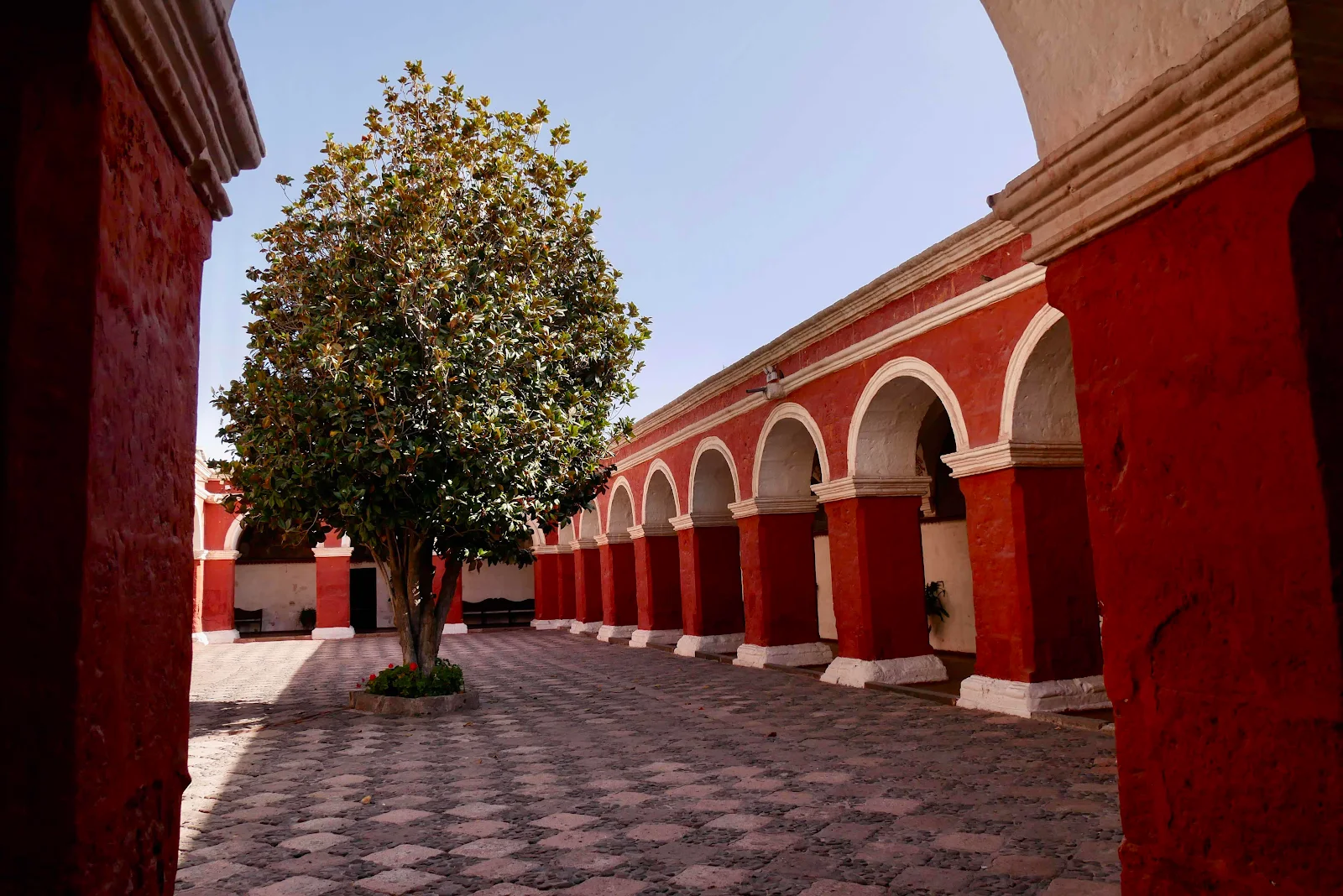
If you wanted to join the nunnery you started out as a novice for the first year and got your own cloister:
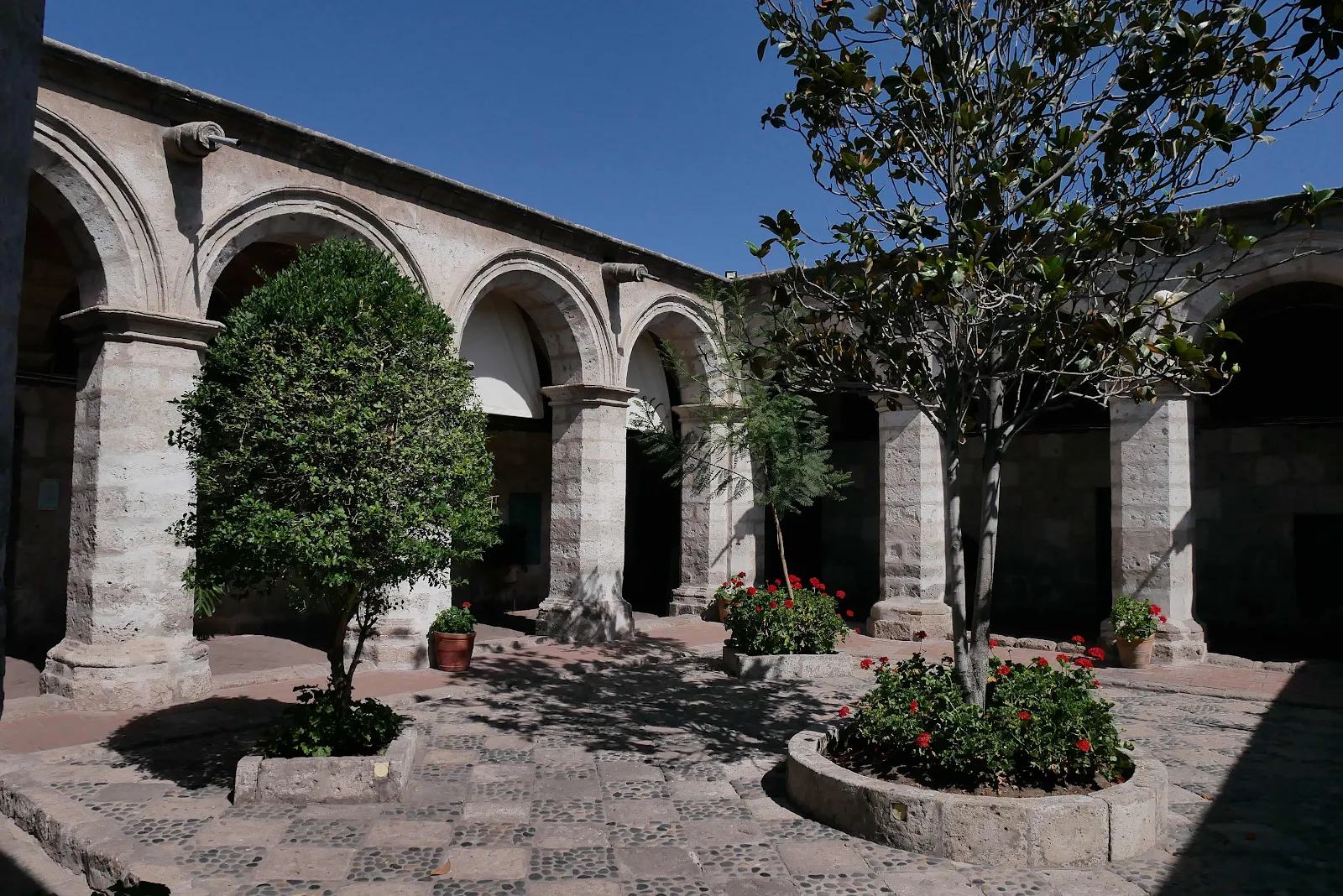
Think of these arched walkways as mediation spaces and gyms where you could pray and walk out of the weather.
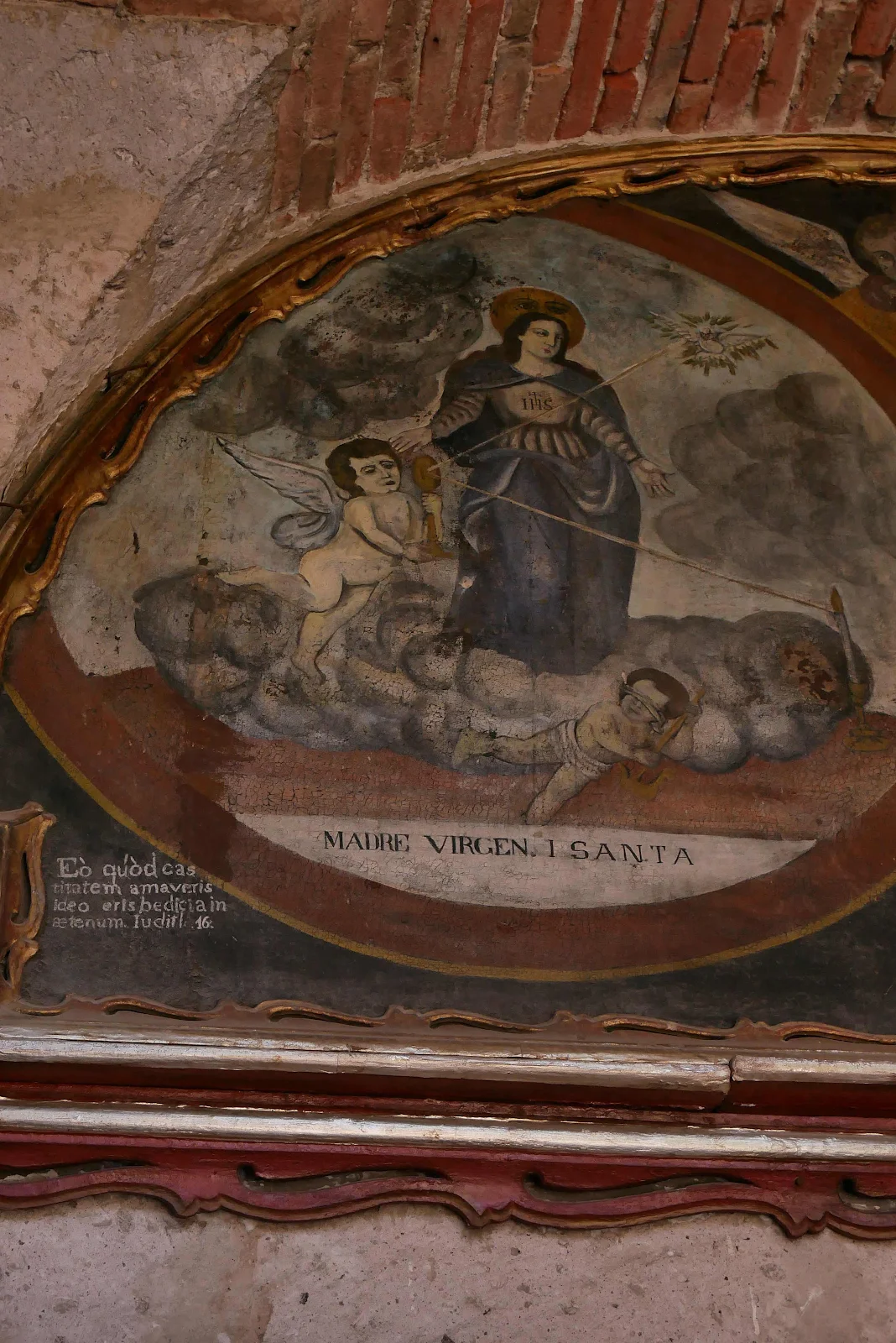
The novices wore white and walked around these cloisters as part of their daily devotional with one read the inscription on each painting “Mary Immaculate Virgin and Saint” and the group of novitiates would say in chorus “Pray for us” and in yo the next image.
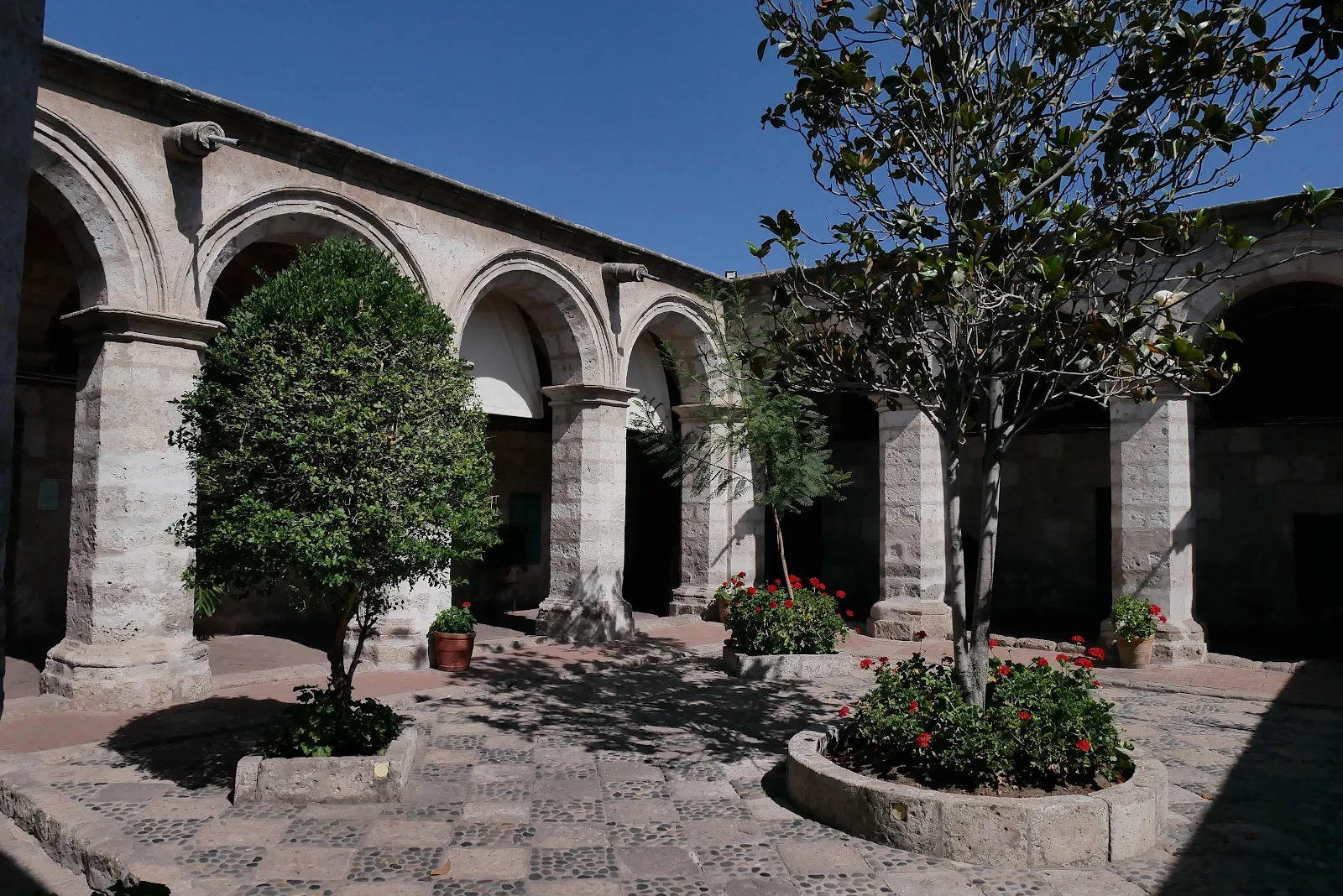
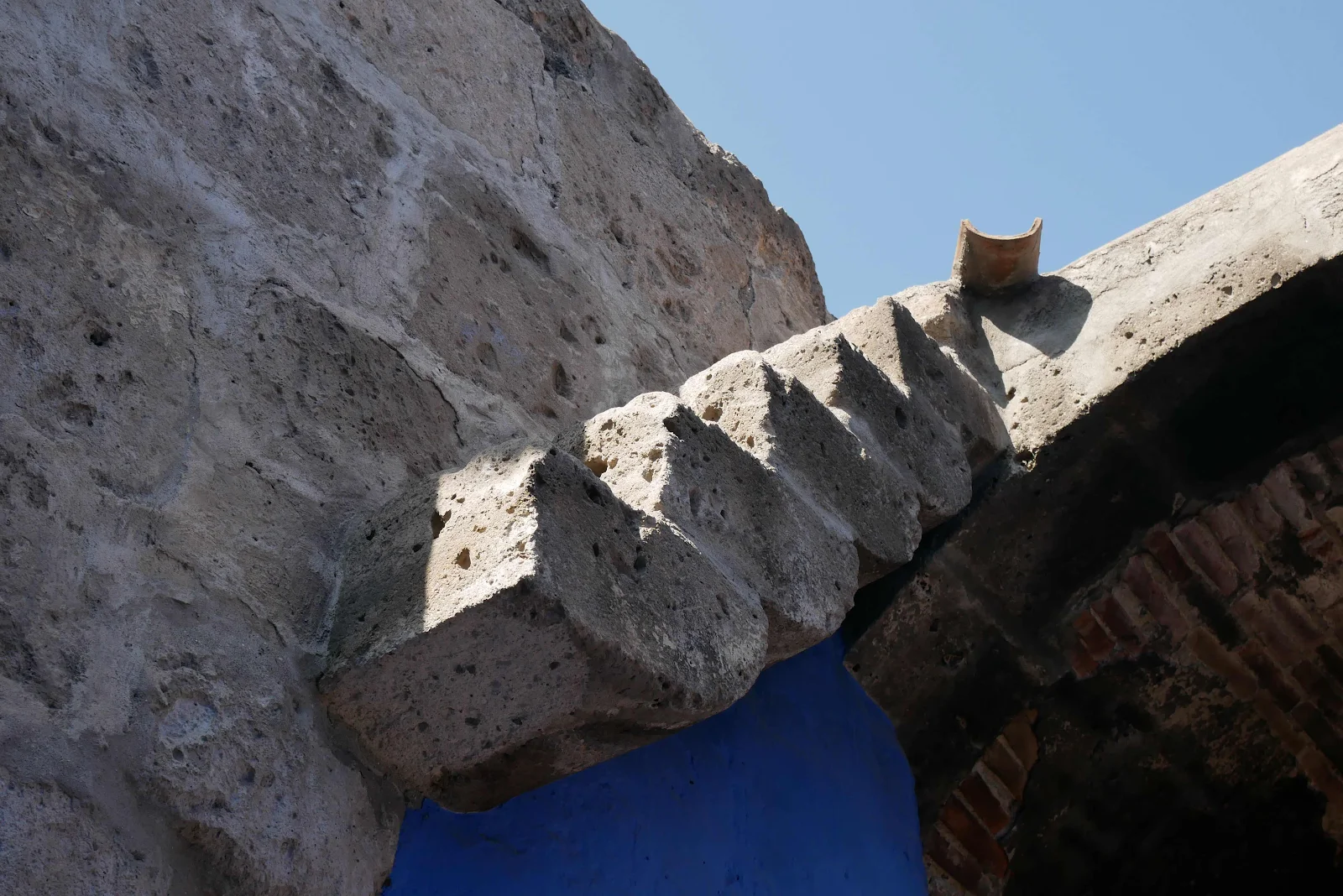
Outside the walls Peru might be in ferment but in here women stuck to their schedules. Below the ornate rain spout.
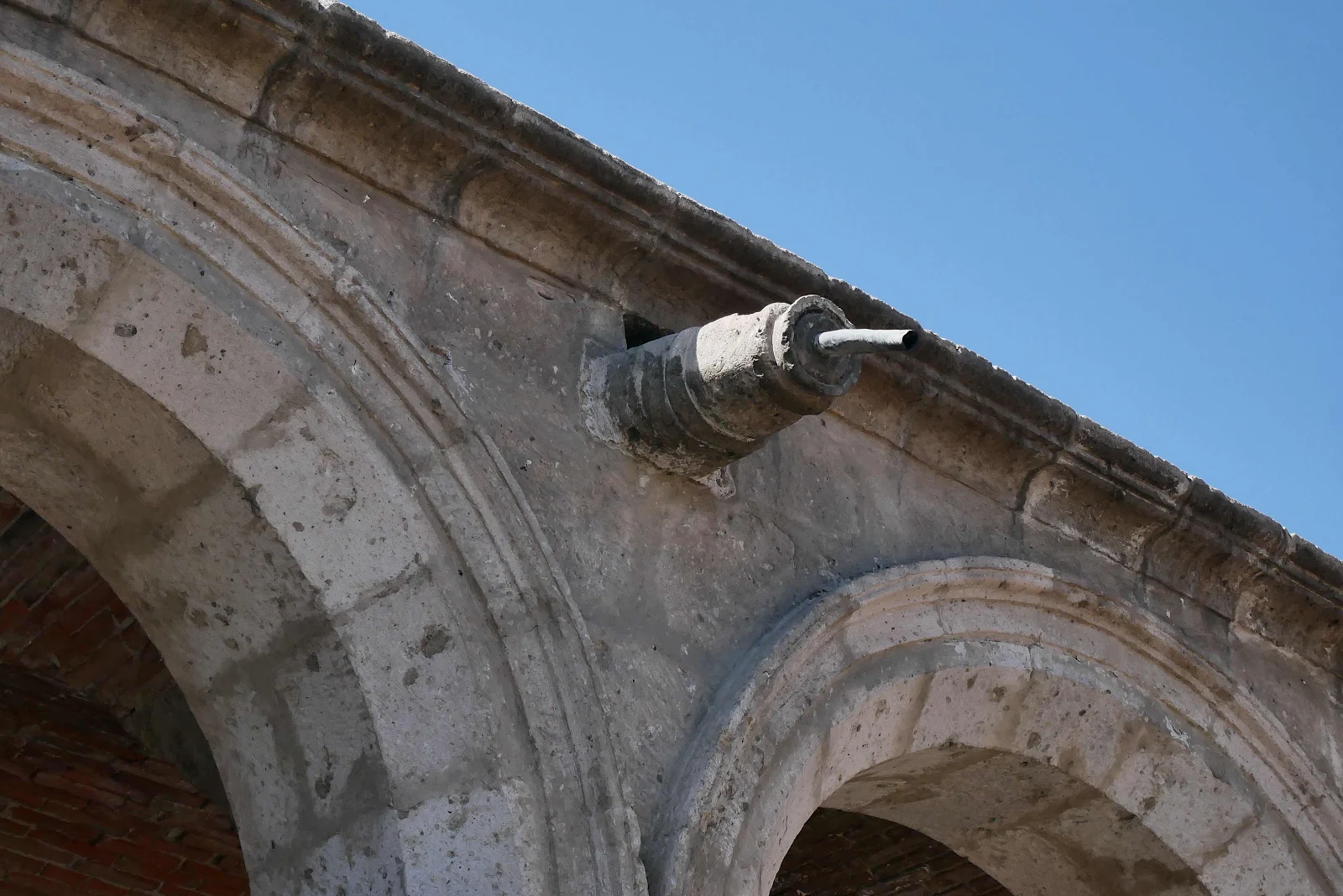
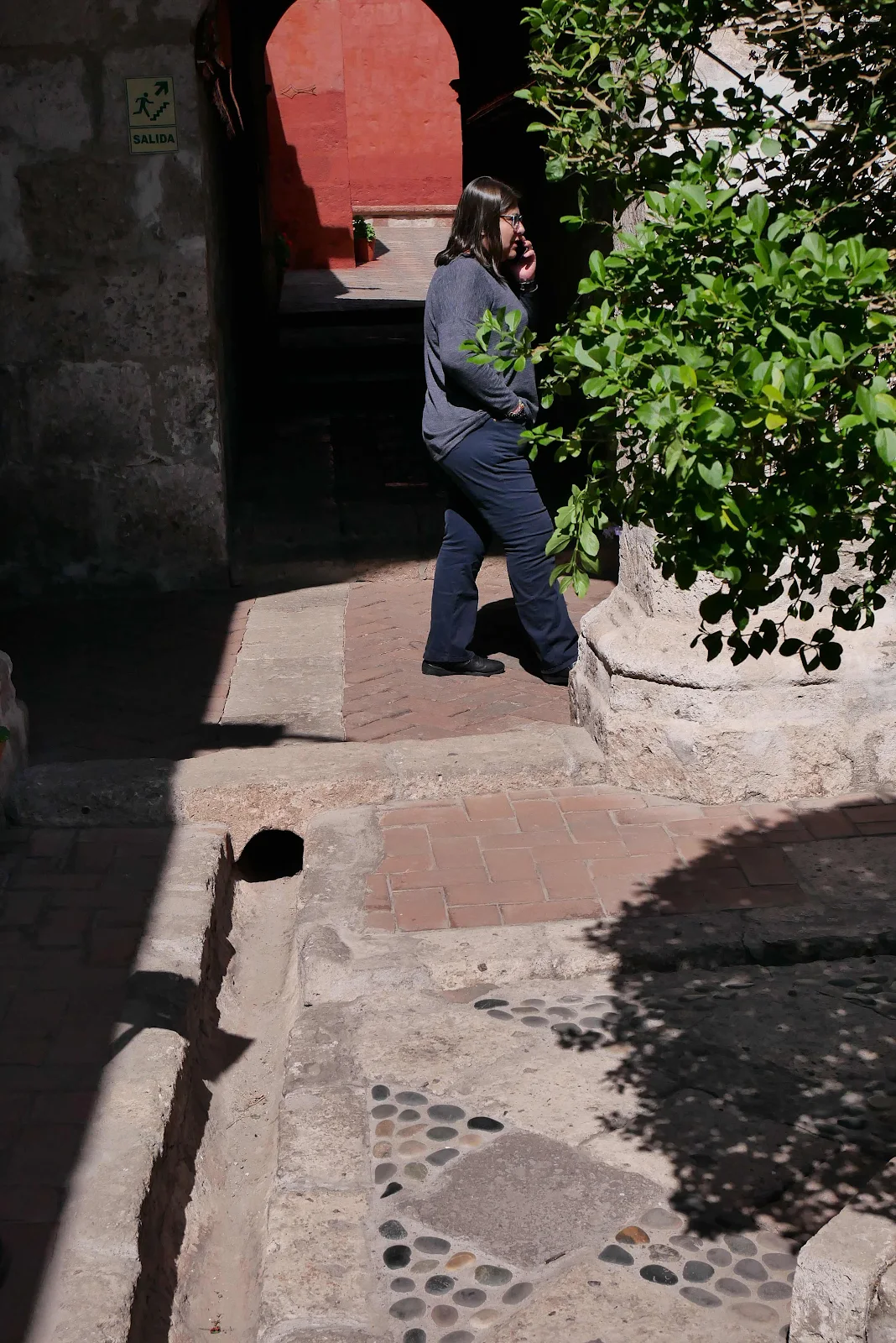
And below the elaborate system of open drains that funneled the rain from the spouts. The nunnery was a complex organization run as its own enterprise, a city with rules and customs and its own aggravations. There was a period where the Prioress (the boss elected every three years) got into a public fight with the bishop her nominal boss and the courts cane into play in a years long lawsuit.
I was educated in a large well known Catholic boarding school run by Benedictine monks so the weirdness of monastic life isn’t unknown to me. The abbey called Downside in southwest England, has been closed following a sex scandal (of which I knew nothing at the time) by predatory monks, so I view these kinds of places with a certain detachment even though the rituals and symbols are familiar to me.
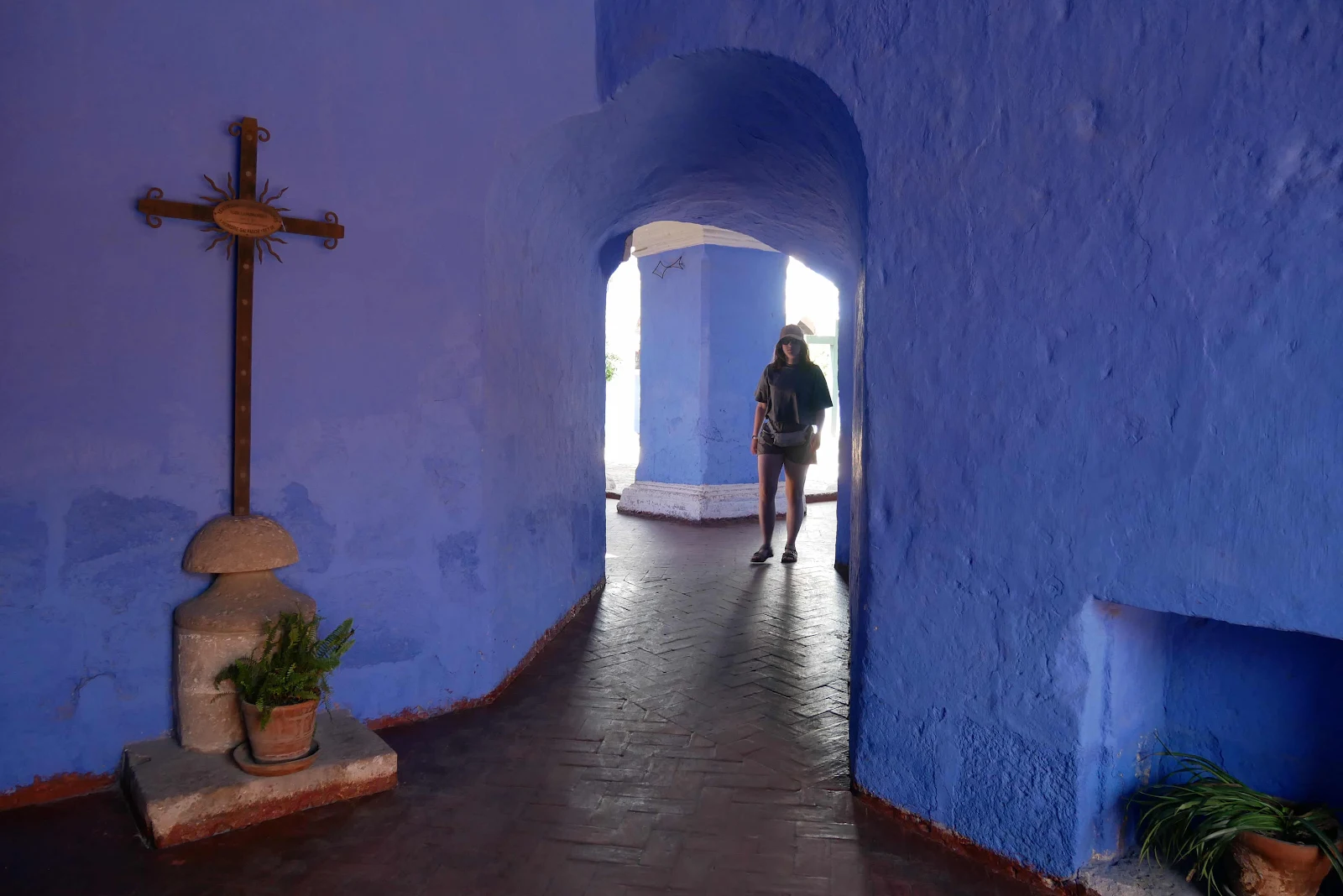
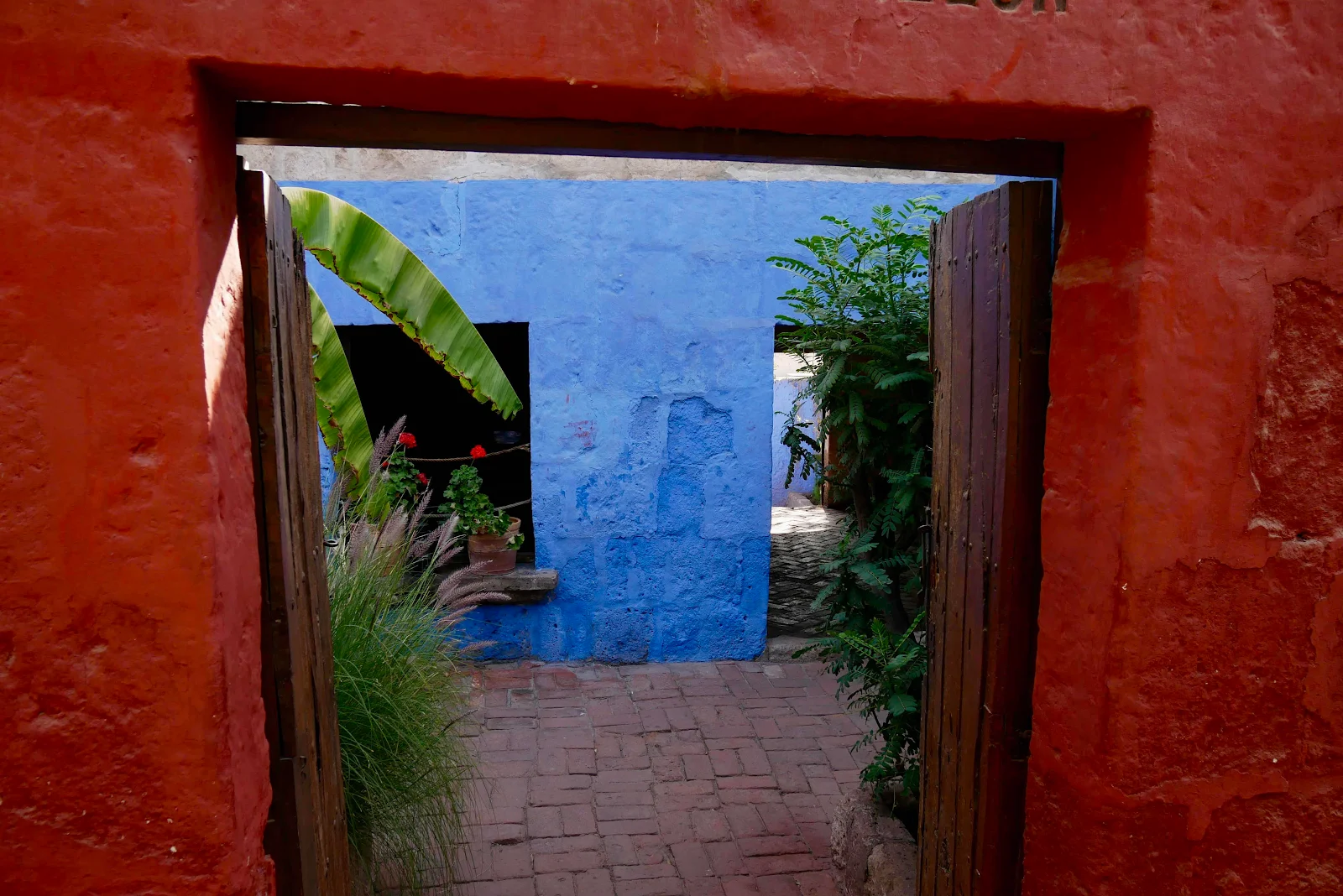
Here is the blue cloister with some orss as textures for shade.
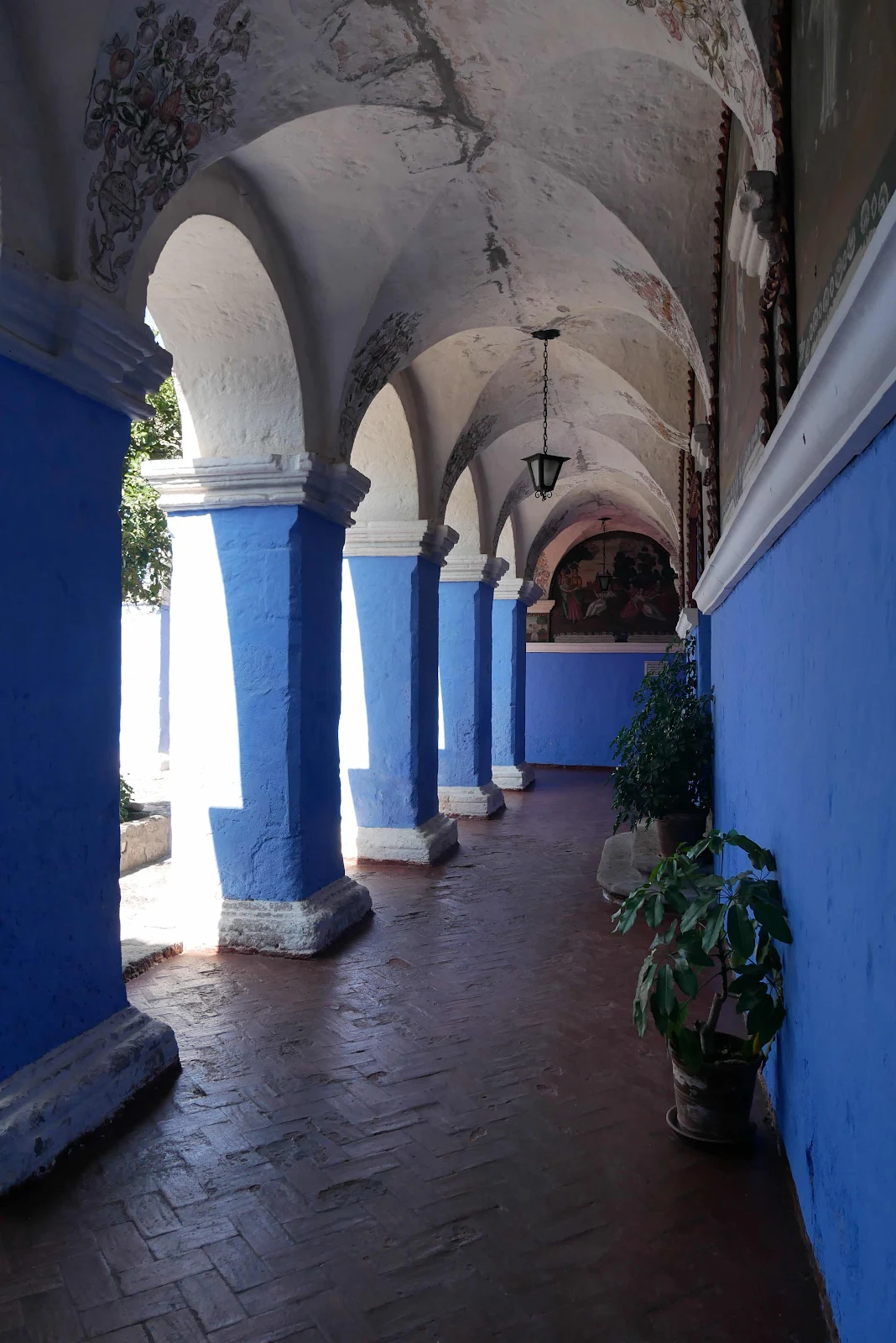
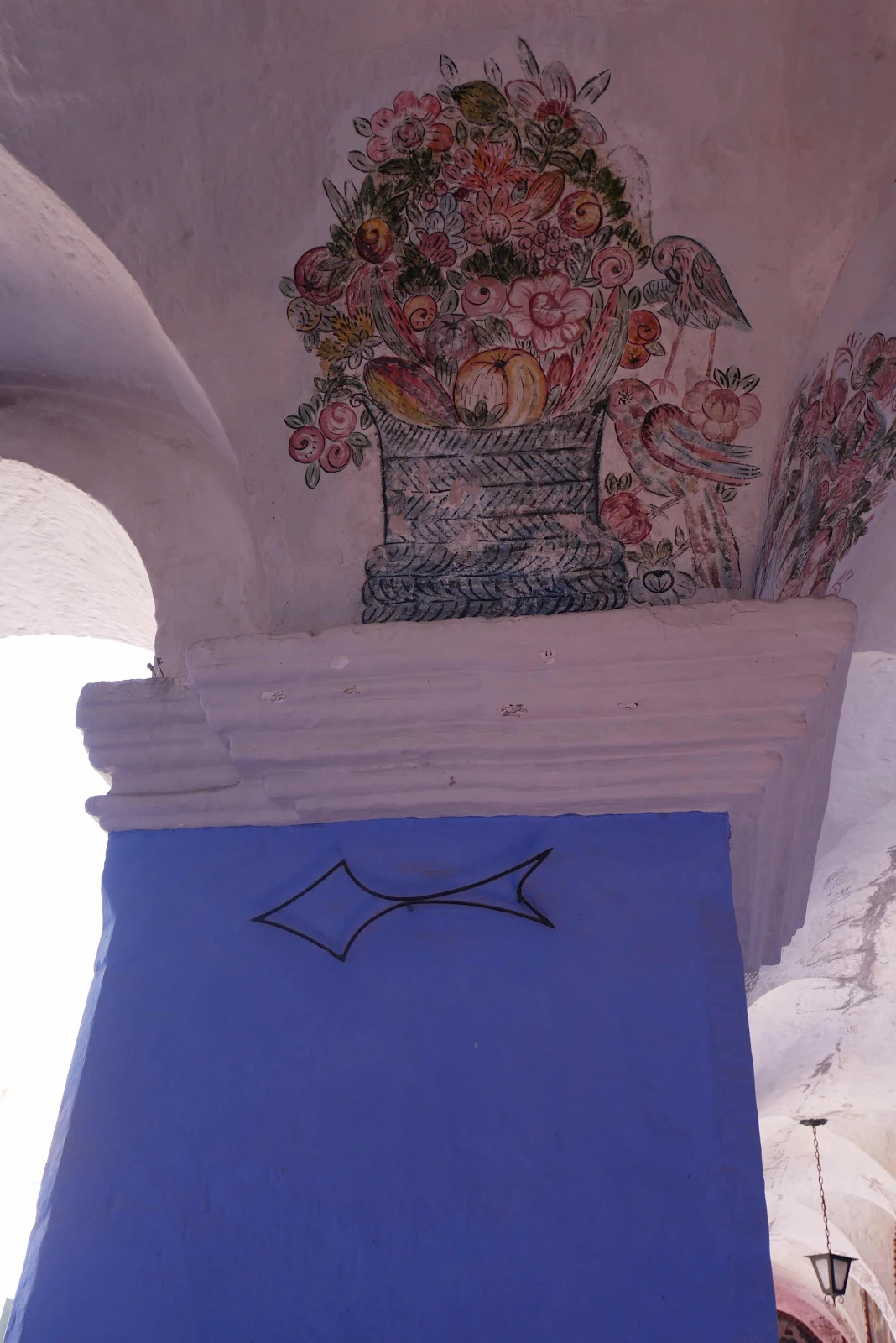
And decoration.
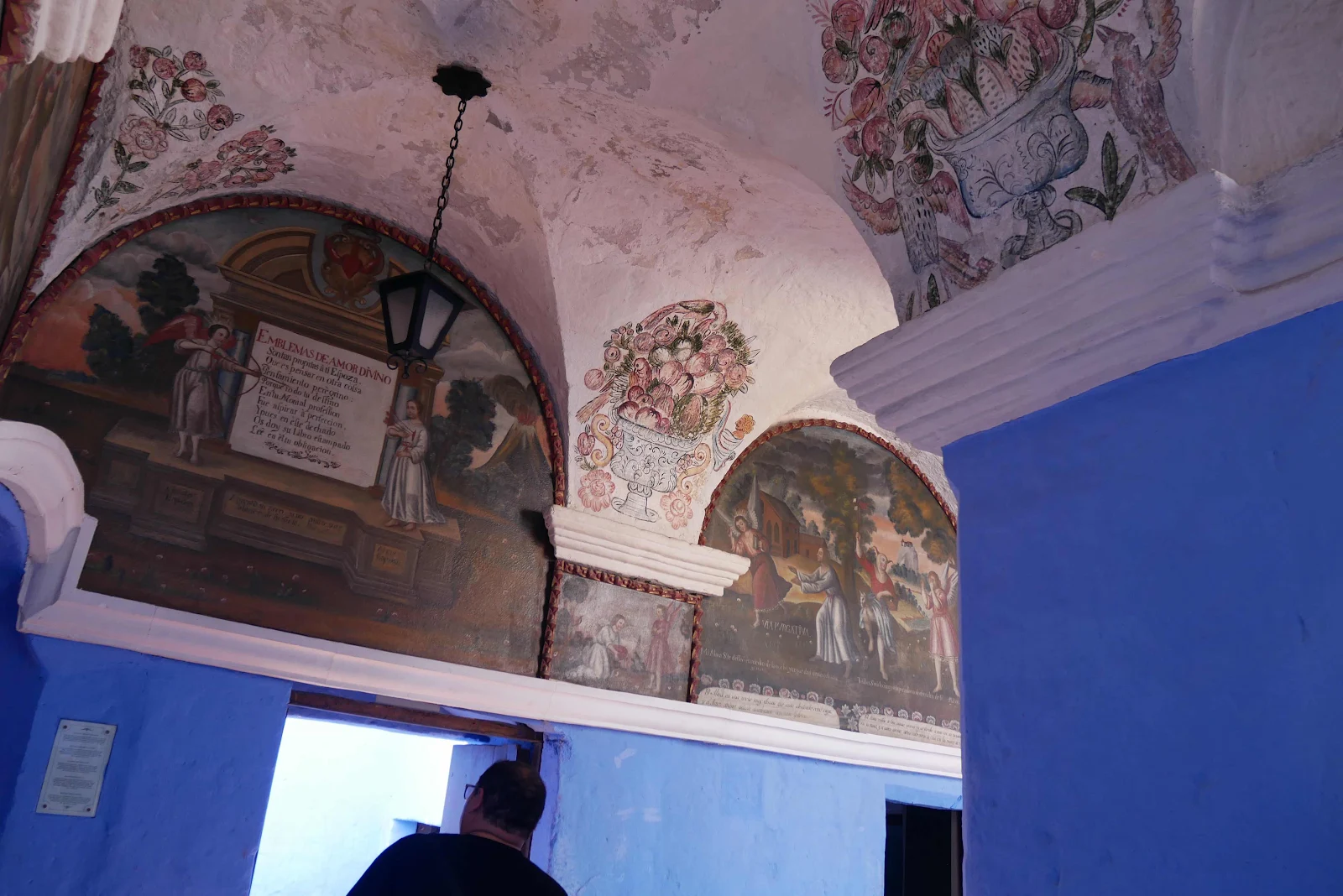
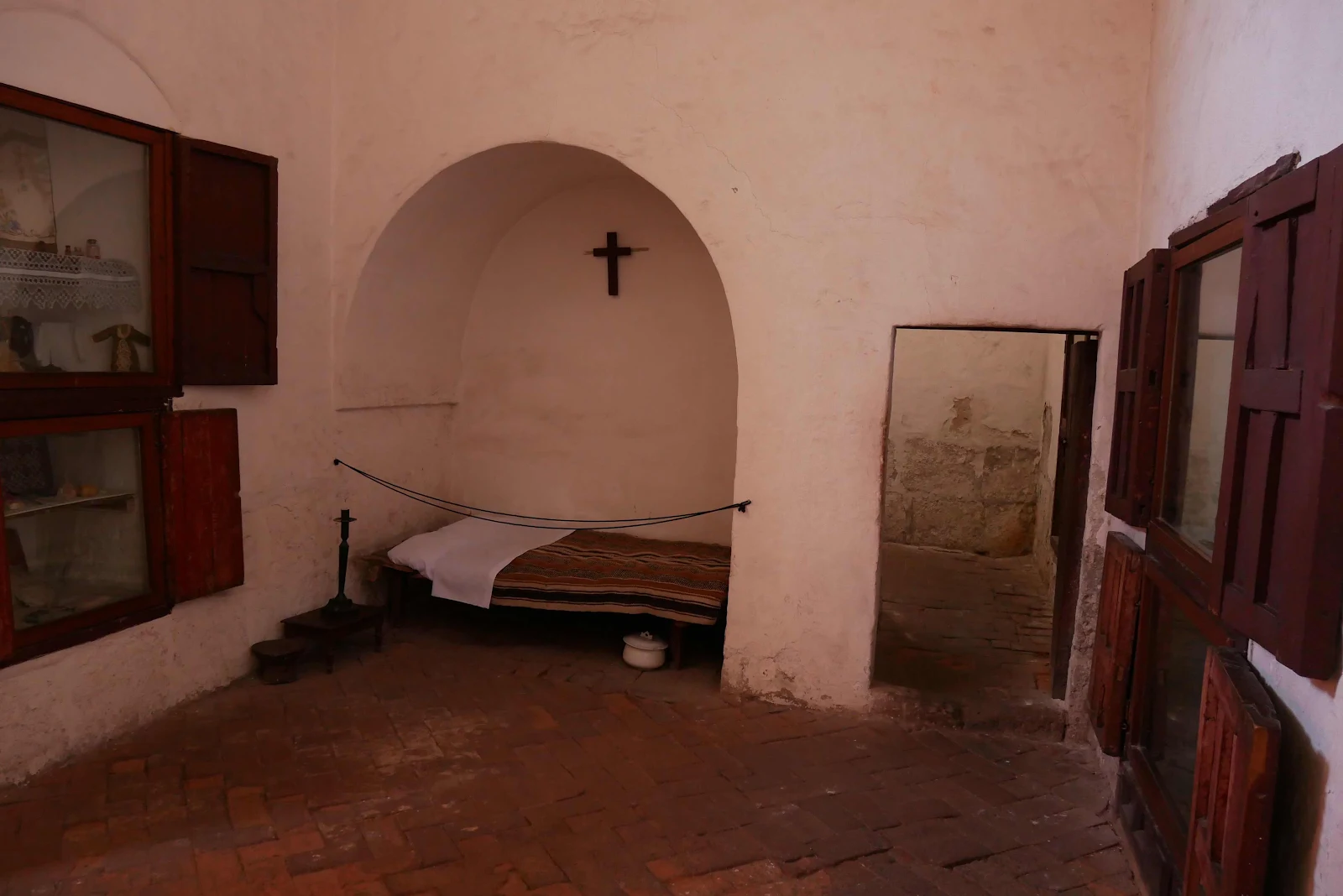
At its 18th century peak there were about 300 women, nuns and their servants living in this self contained walled community. One thing I found and find very weird is how women got a place at St Catherine’s nunnery. The short answer is money. If your family had money they paid a “dowry” so you could marry Christ and take vows of poverty chastity and obedience and based on the amount of money you got an apartment with a number of rooms based on your contribution.
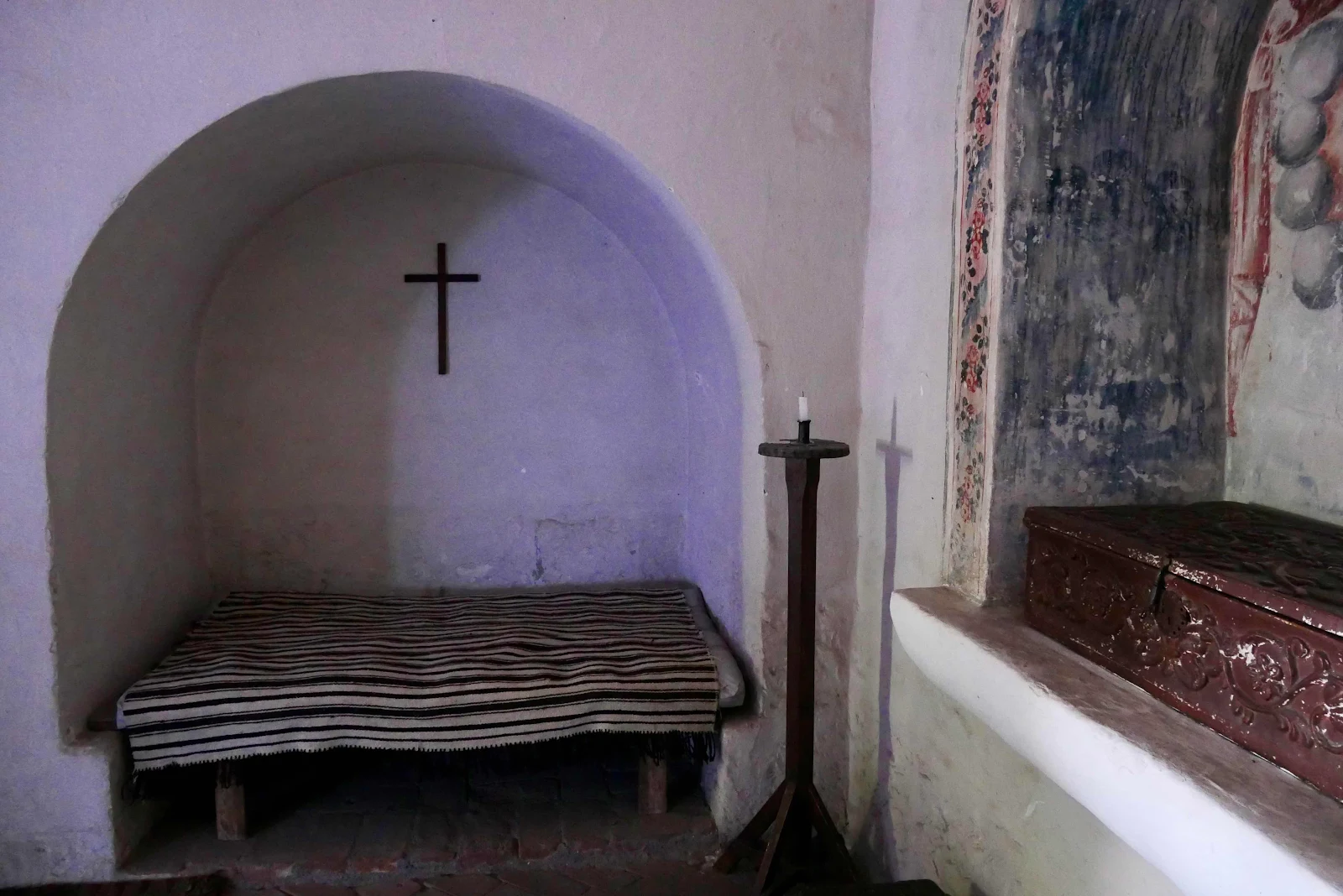
The rooms had alcoves with an arched roof to protect the occupant in the event of an earthquake. Wealthy nuns got an outside kitchen and perhaps a garden and servants as well. Poverty of a sort.
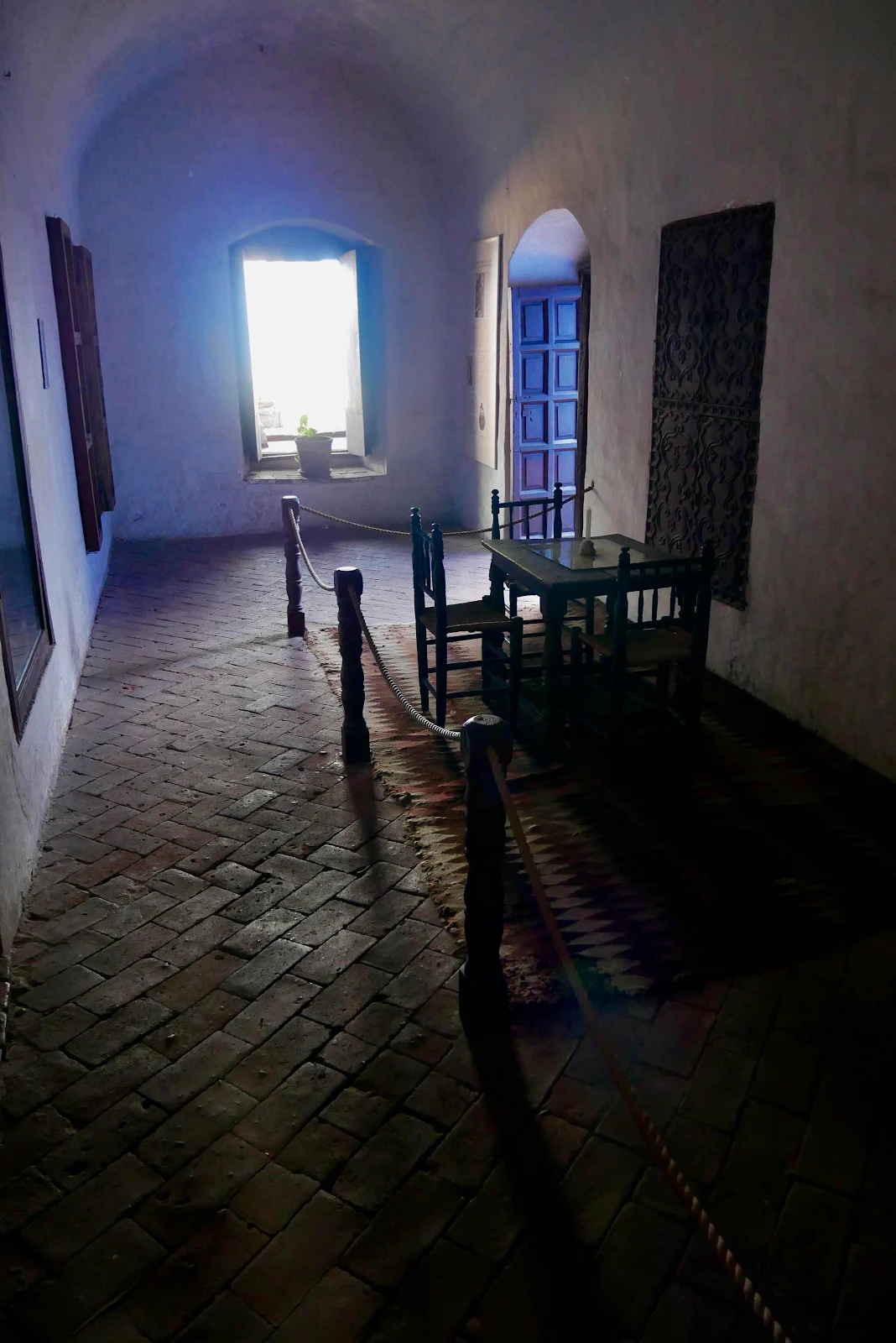
Women too poor to buy their way in could call themselves “donors” and donate their time to the cause by living in the nunnery and waiting on the wealthy nuns.
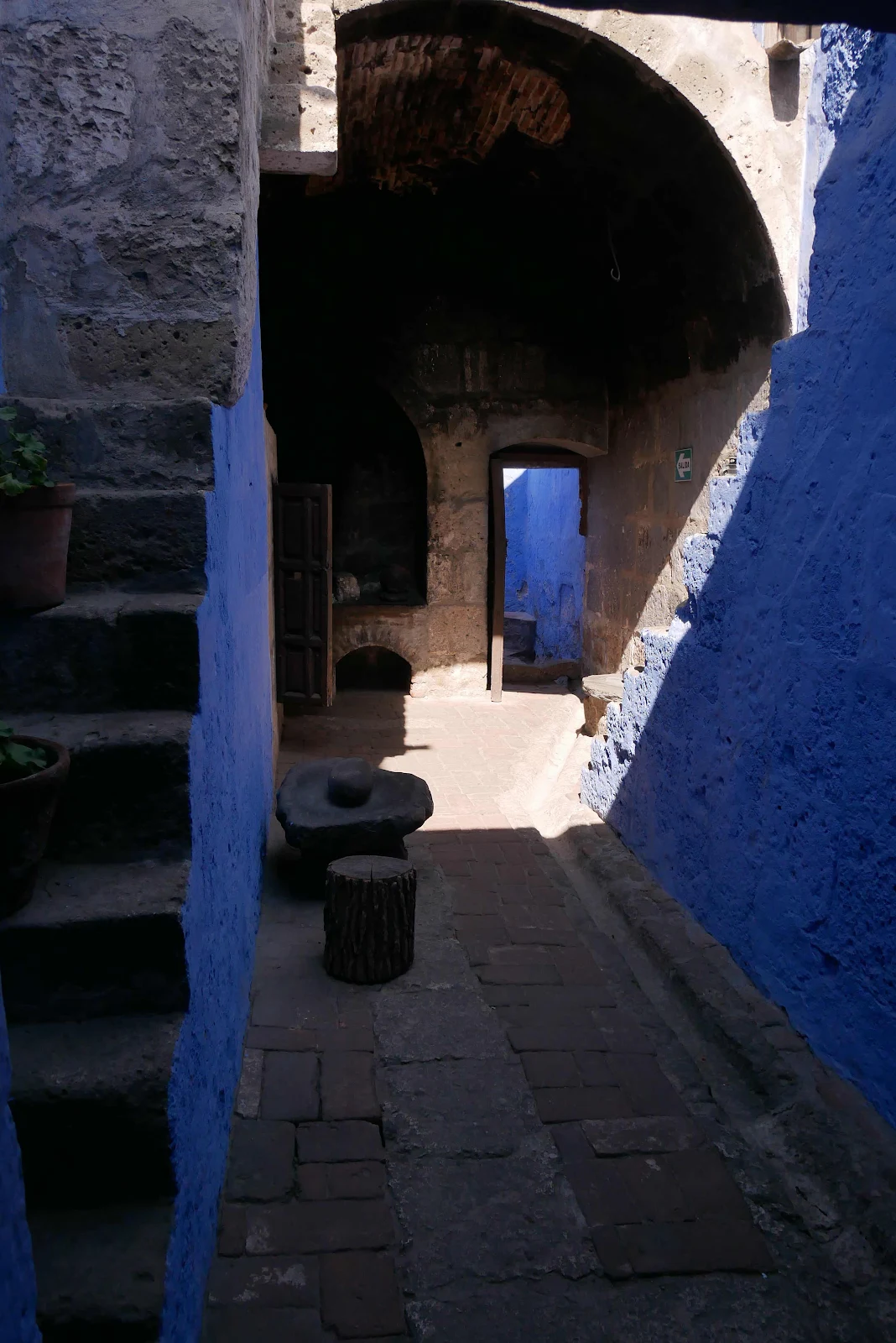
I can’t say women it had it easy then or to sine extent now in Peru so possibly retreating to the safety of a nunnery run by women offering a space for arts and crafts, peace and meditation and security was no bad thing but for me it’s c more an indictment of the world outside where women were chattel.
And if you had any religious fervor and your family did need you to seal a peace treaty by marriage a life in the cloisters in 17th century Peru would have been serene compared to negotiating one’s virginity, a prized possession outside. After wandering about a bit lost I finally figured out to follow the discreet cast iron arrows high on the walls.
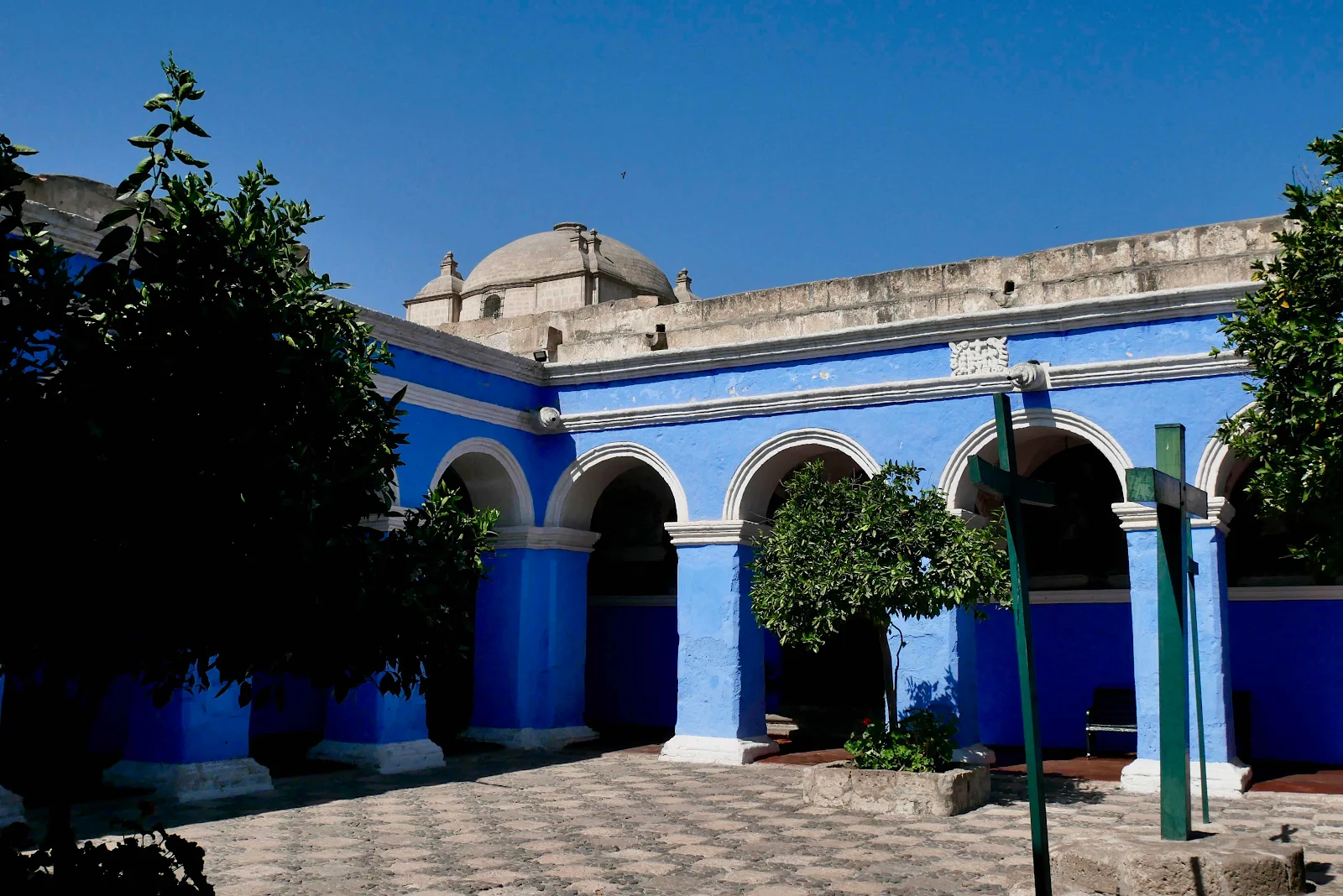
The cloister of the oranges:
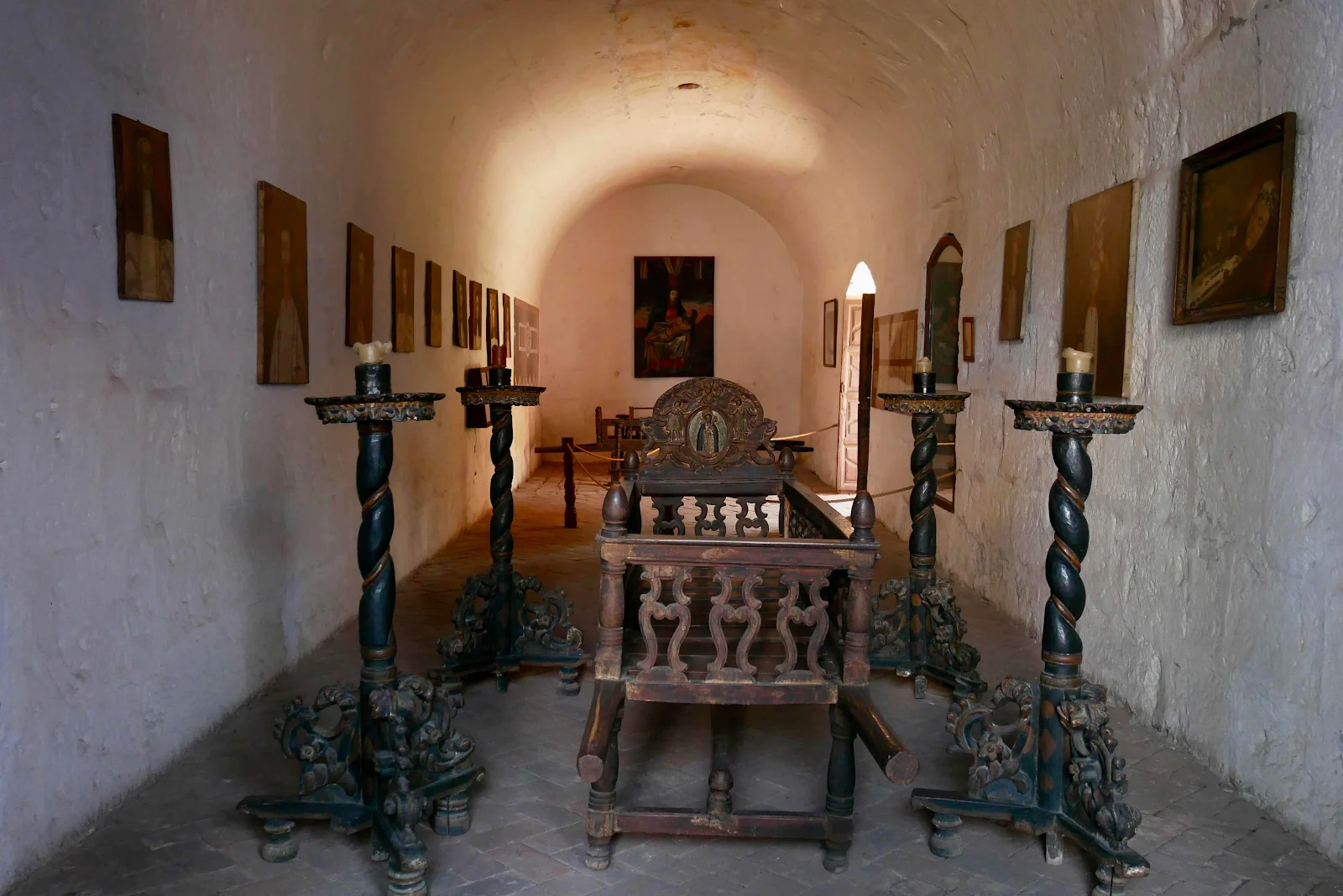
The mortuary laying out room lined with pictures of some of the dead nuns. Your body would be laid out, prayers said and best wishes for the journey of the deceased bride of Christ to meet her long lost husband.
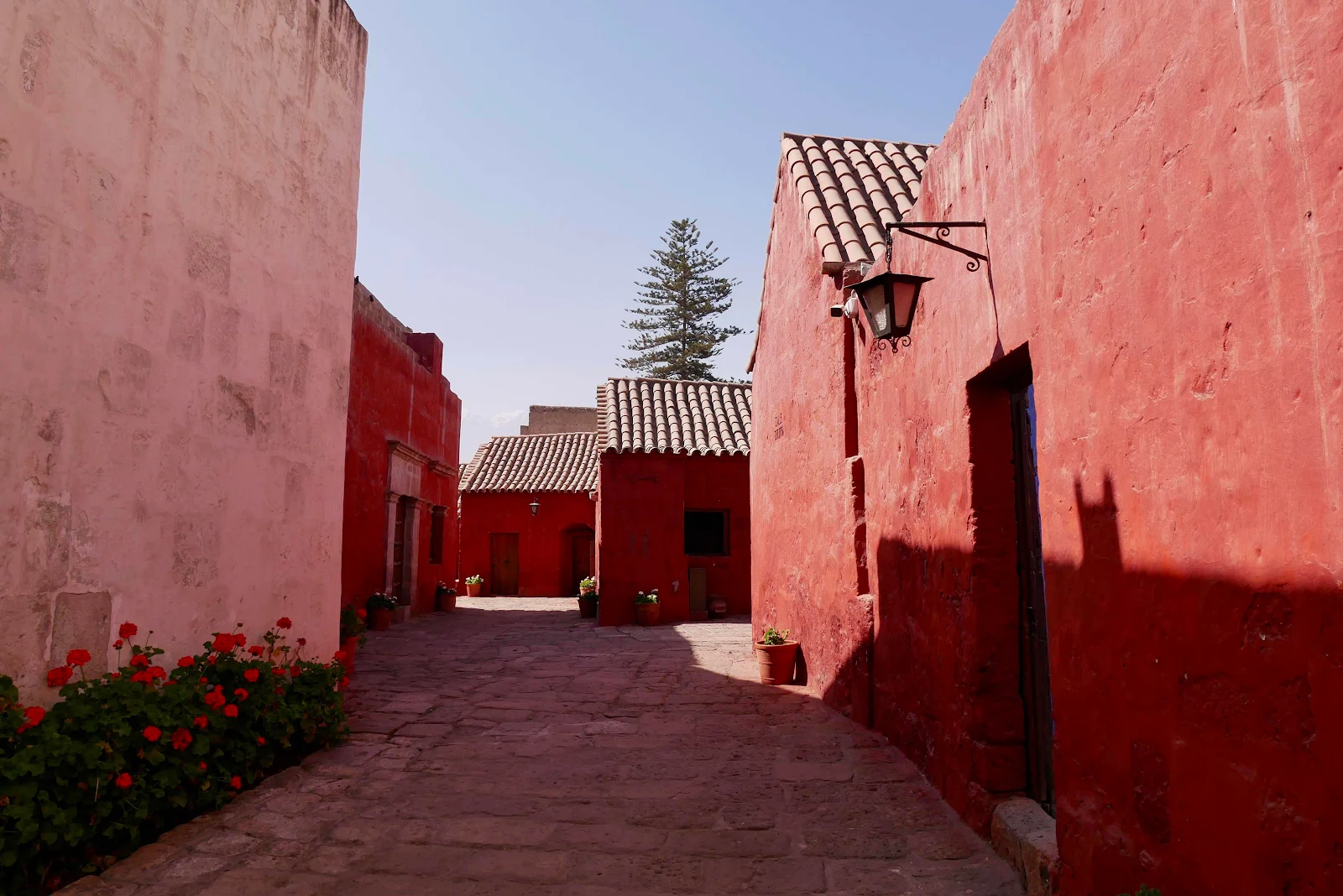
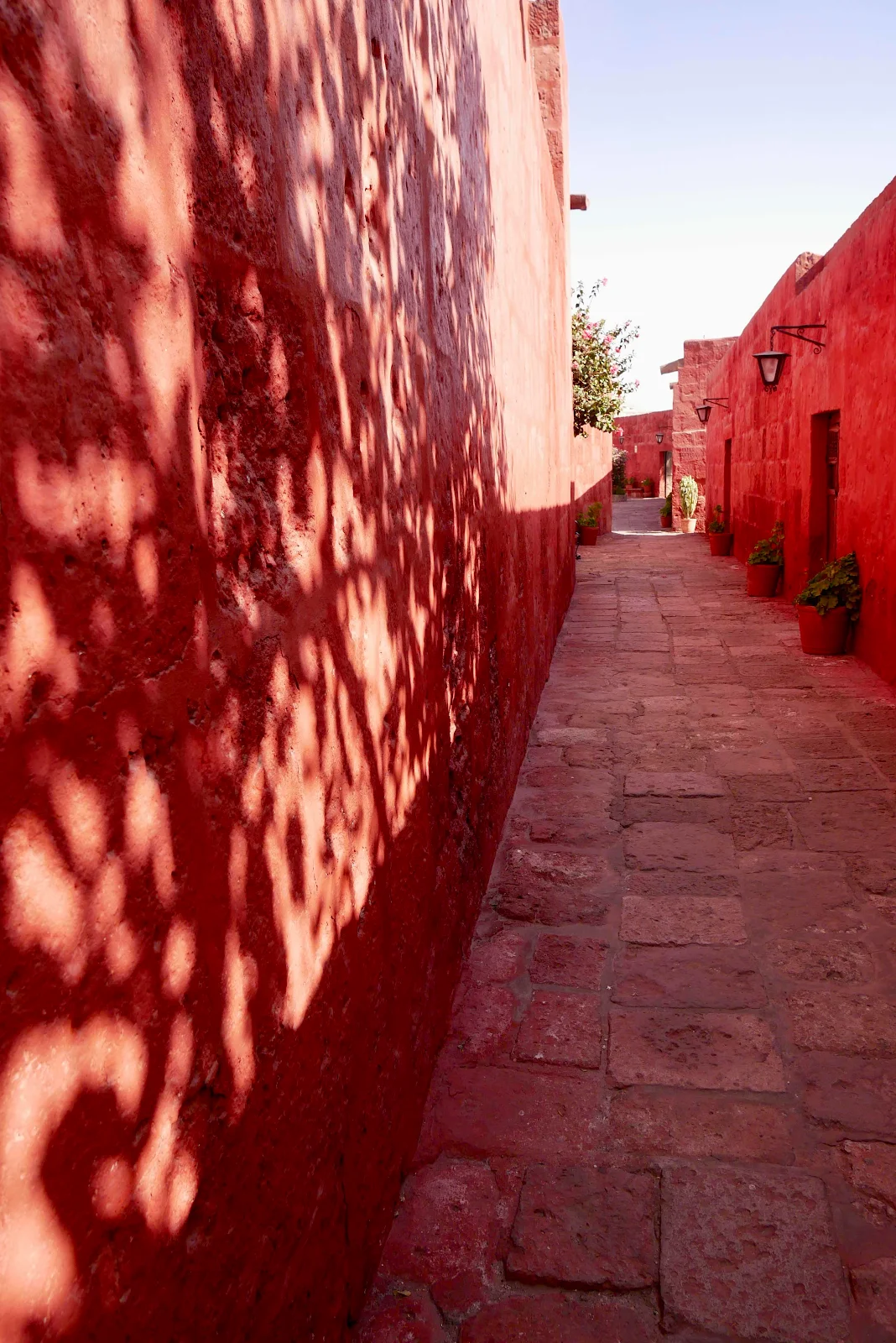
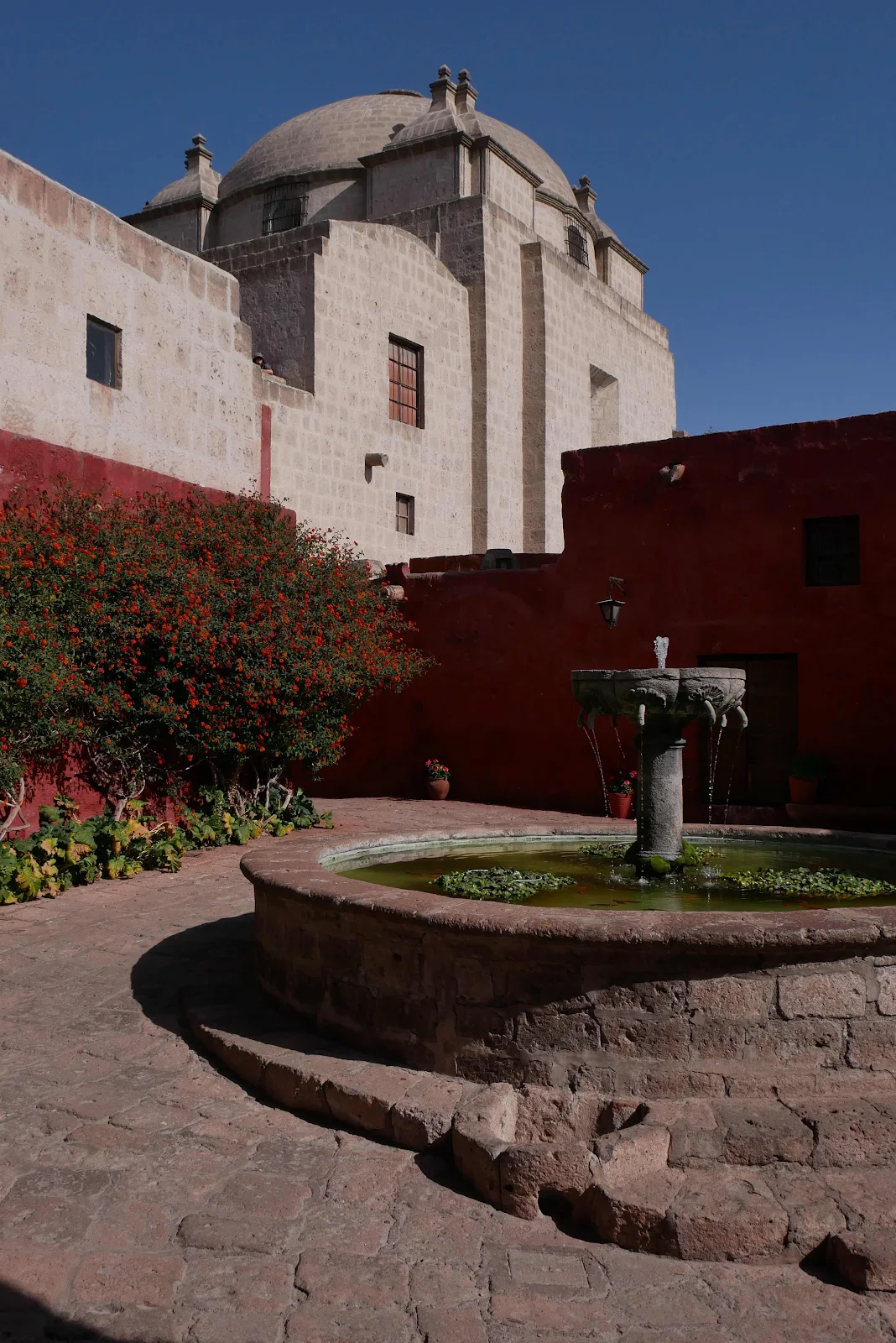
To accommodate the living there are a half dozen streets named for Spanish cities, Malaga, Seville, Burgos and Granada, Córdoba and Toledo with apartments and living quarters on each. Malaga:
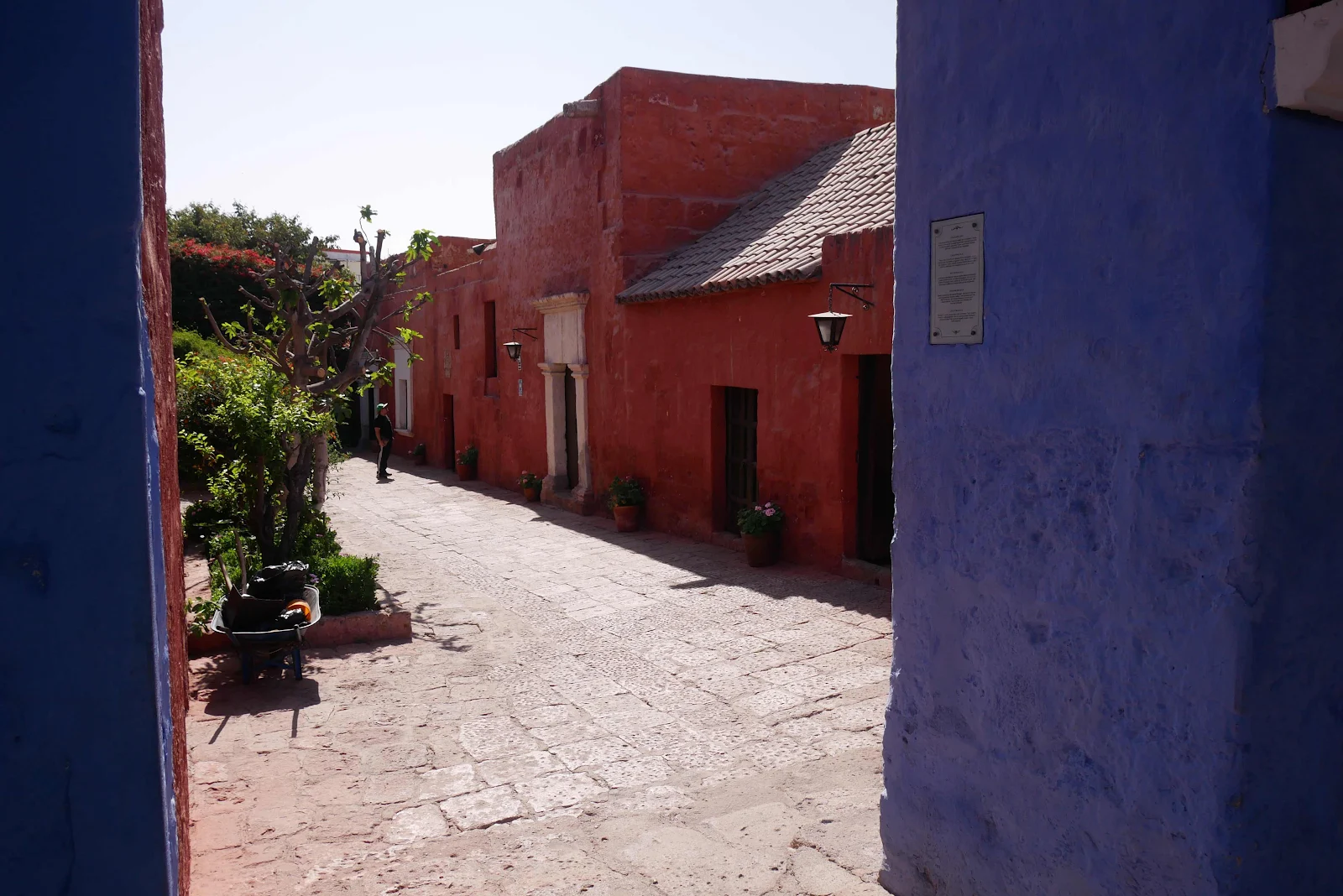
The infirmary with earthquake proof alcoves to house the sick:
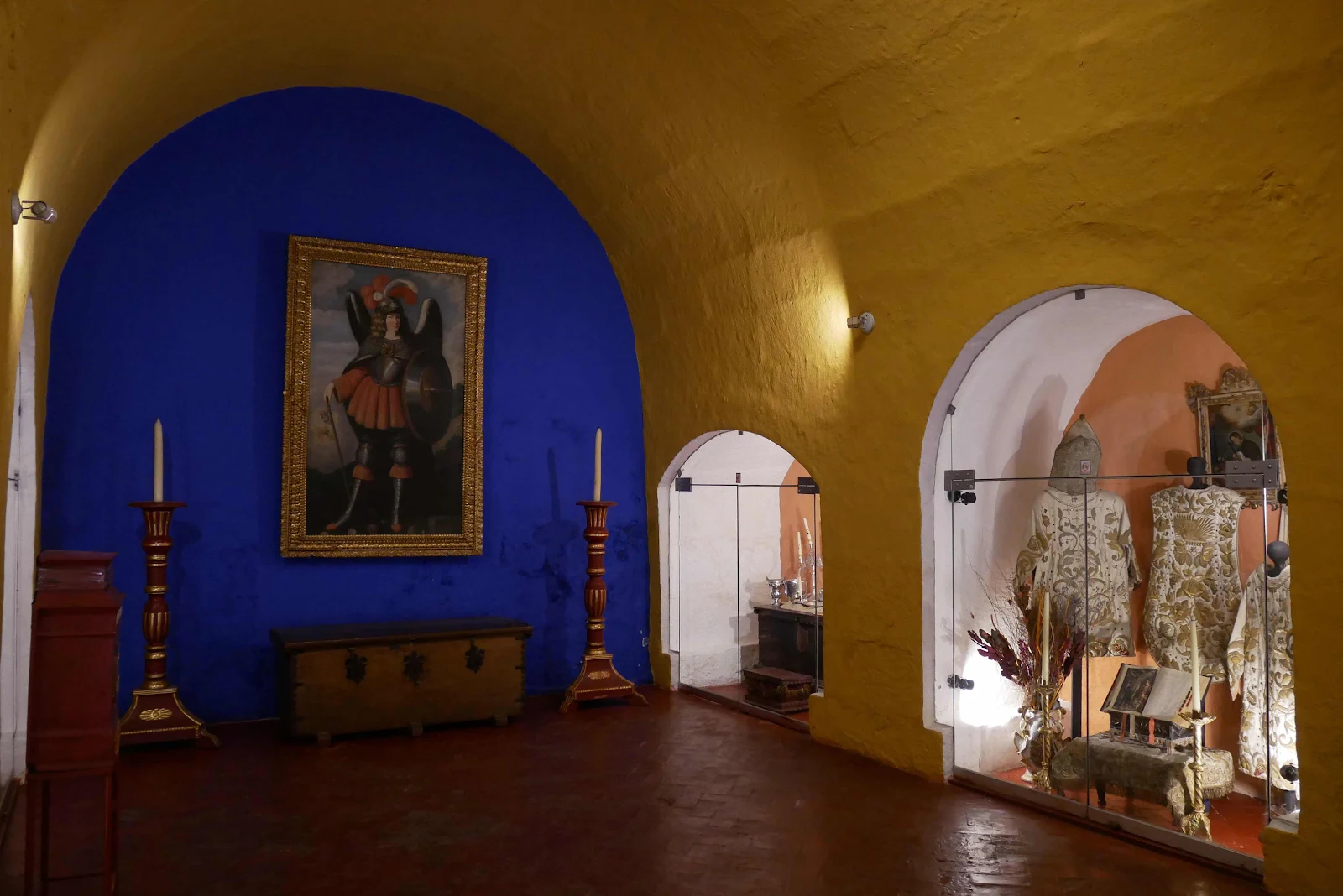
There is also a well equipped souvenir shop inside part of the infirmary. These cloisters are one of the biggest attractions in Arequipa and we found them choked with lines the first two times we tried to visit.
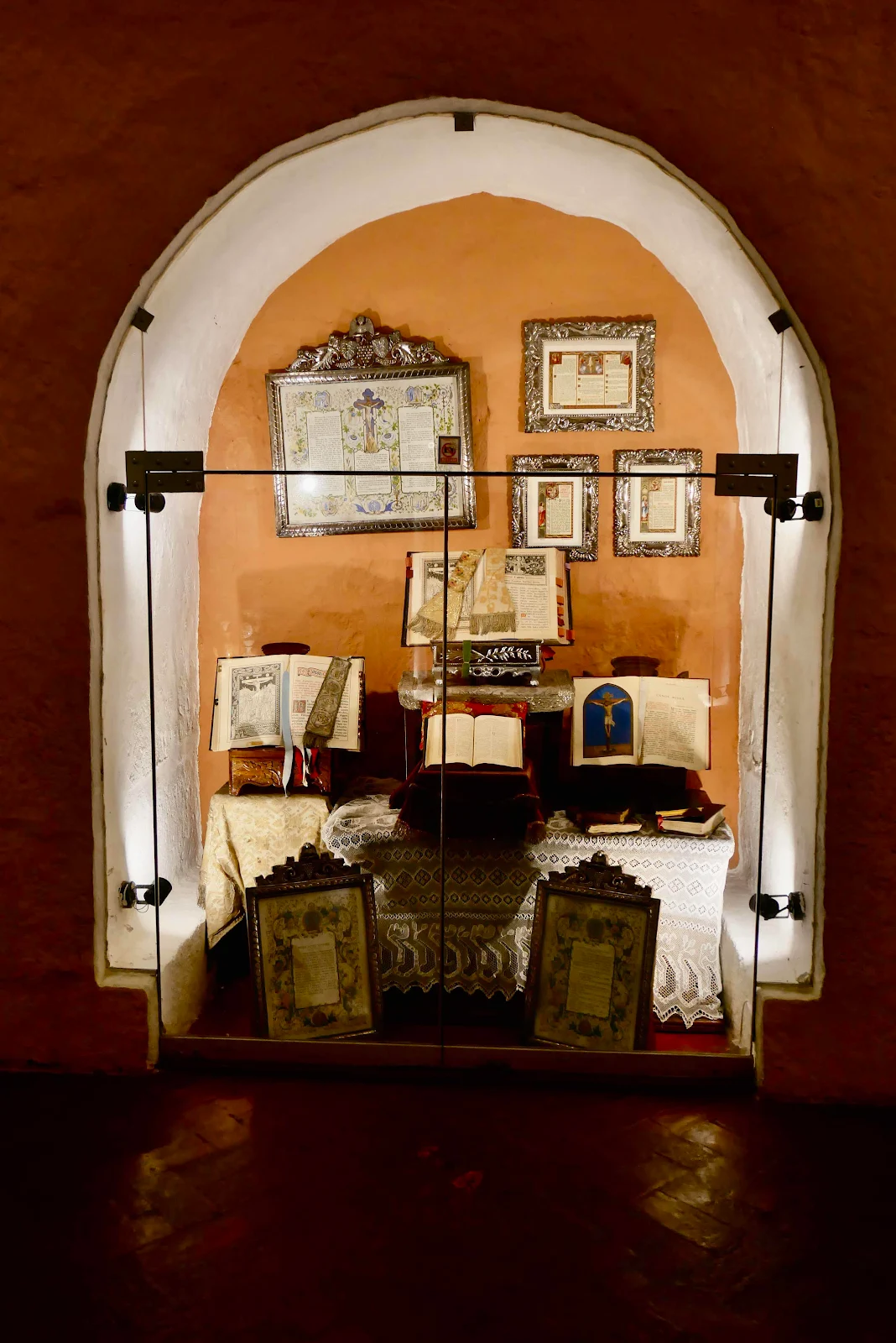
Cordoba:
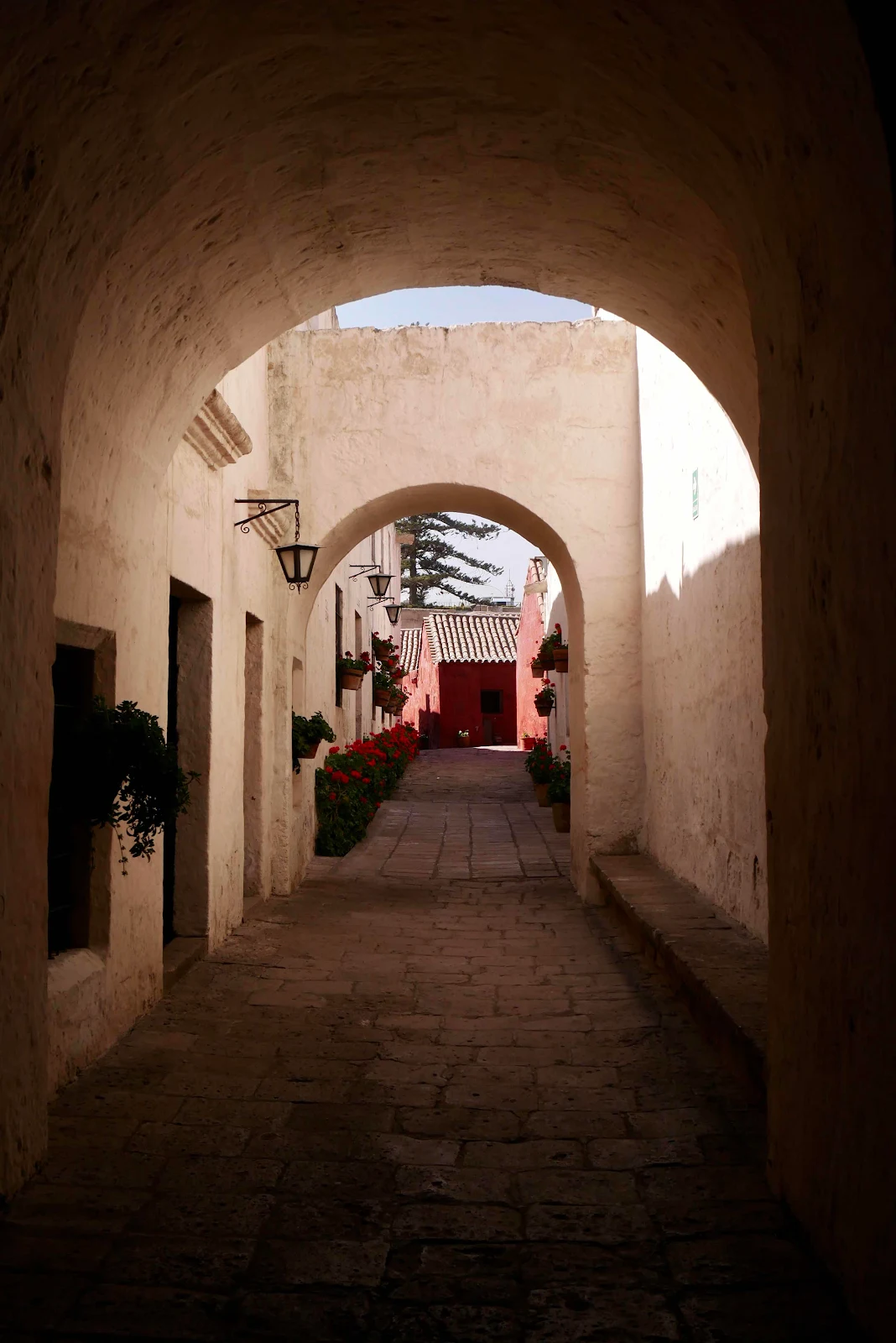
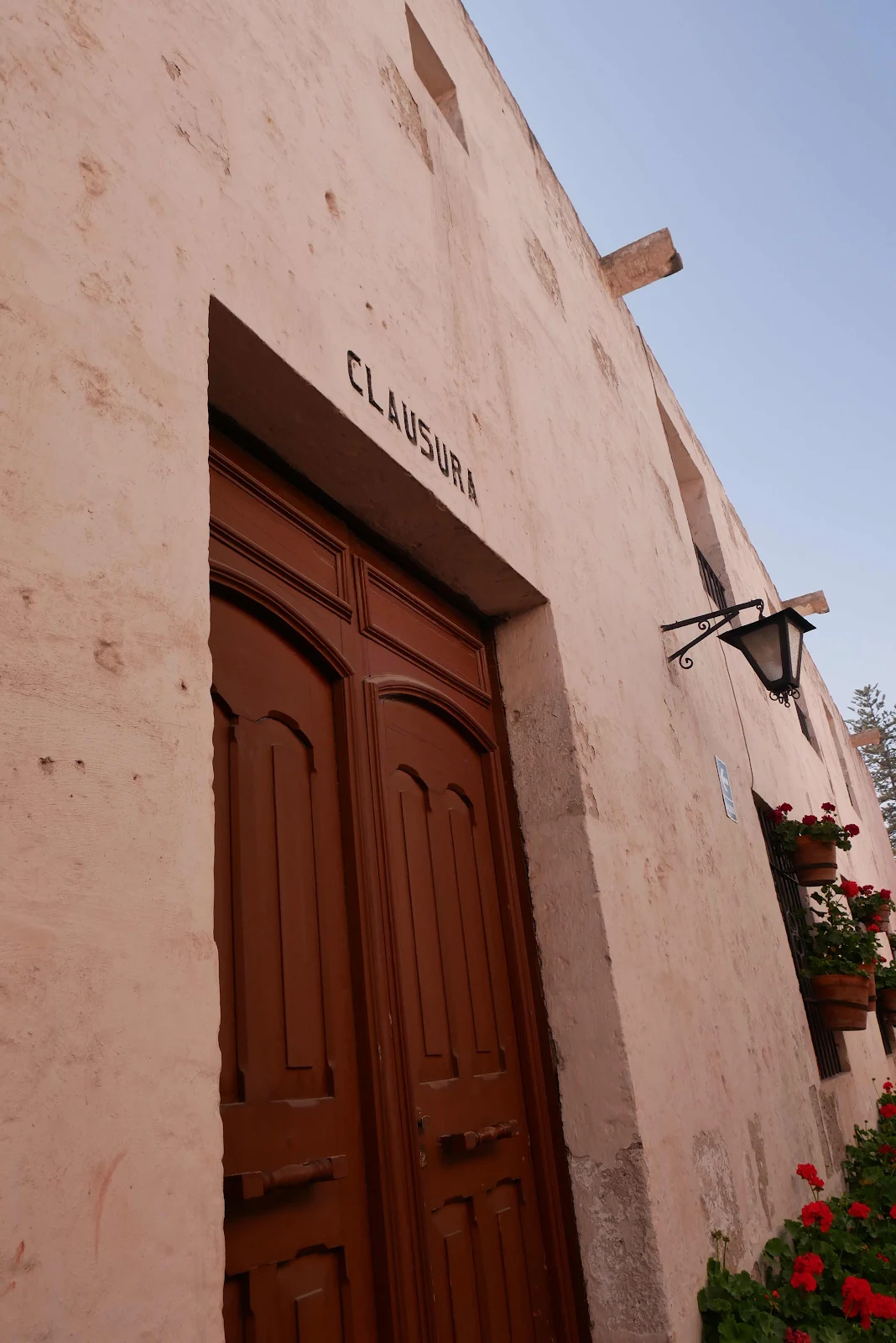
The door to the modern nunnery sectioned off since 1970 in a private area of the nunnery:
Malaga, the longest street:
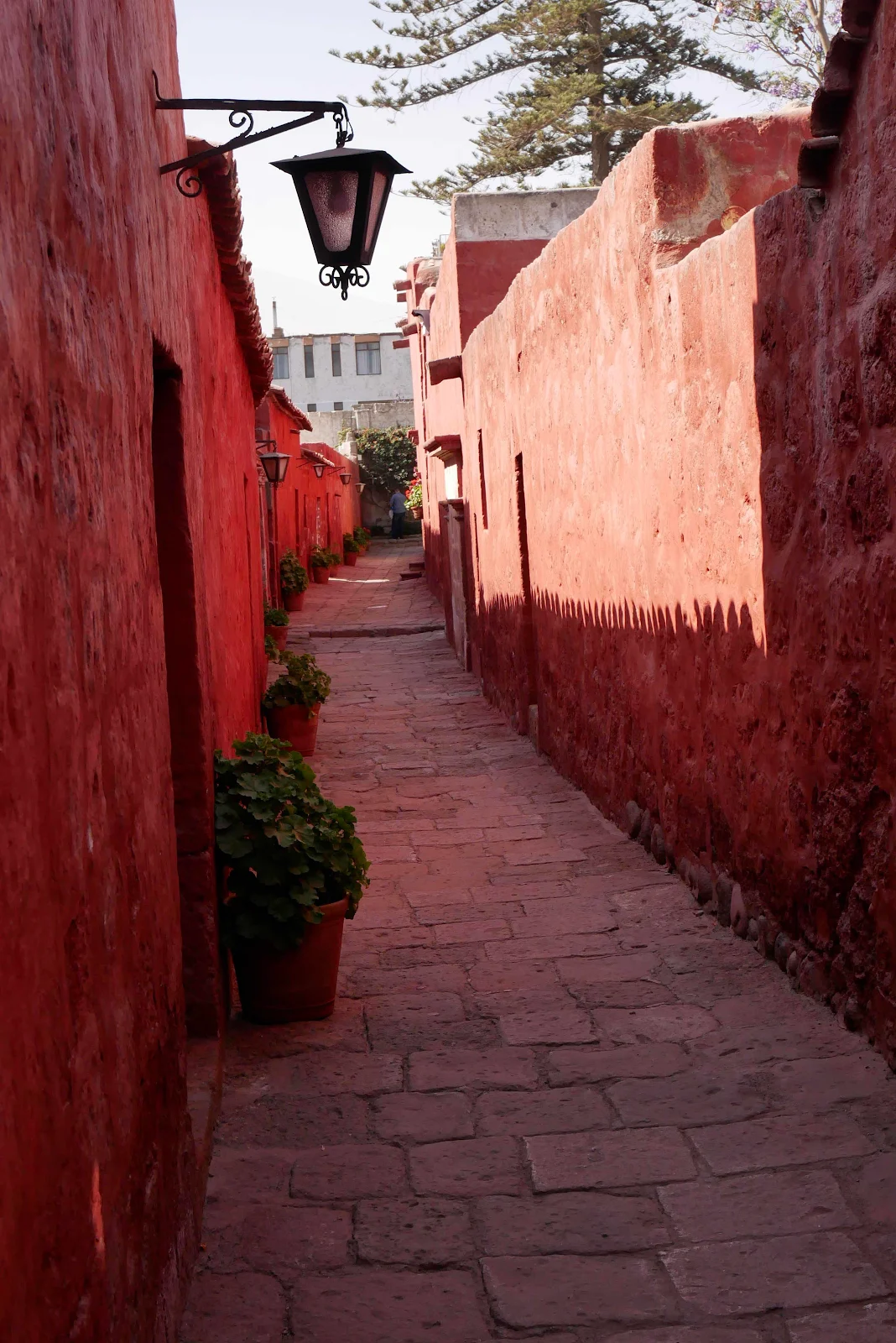
Seville:
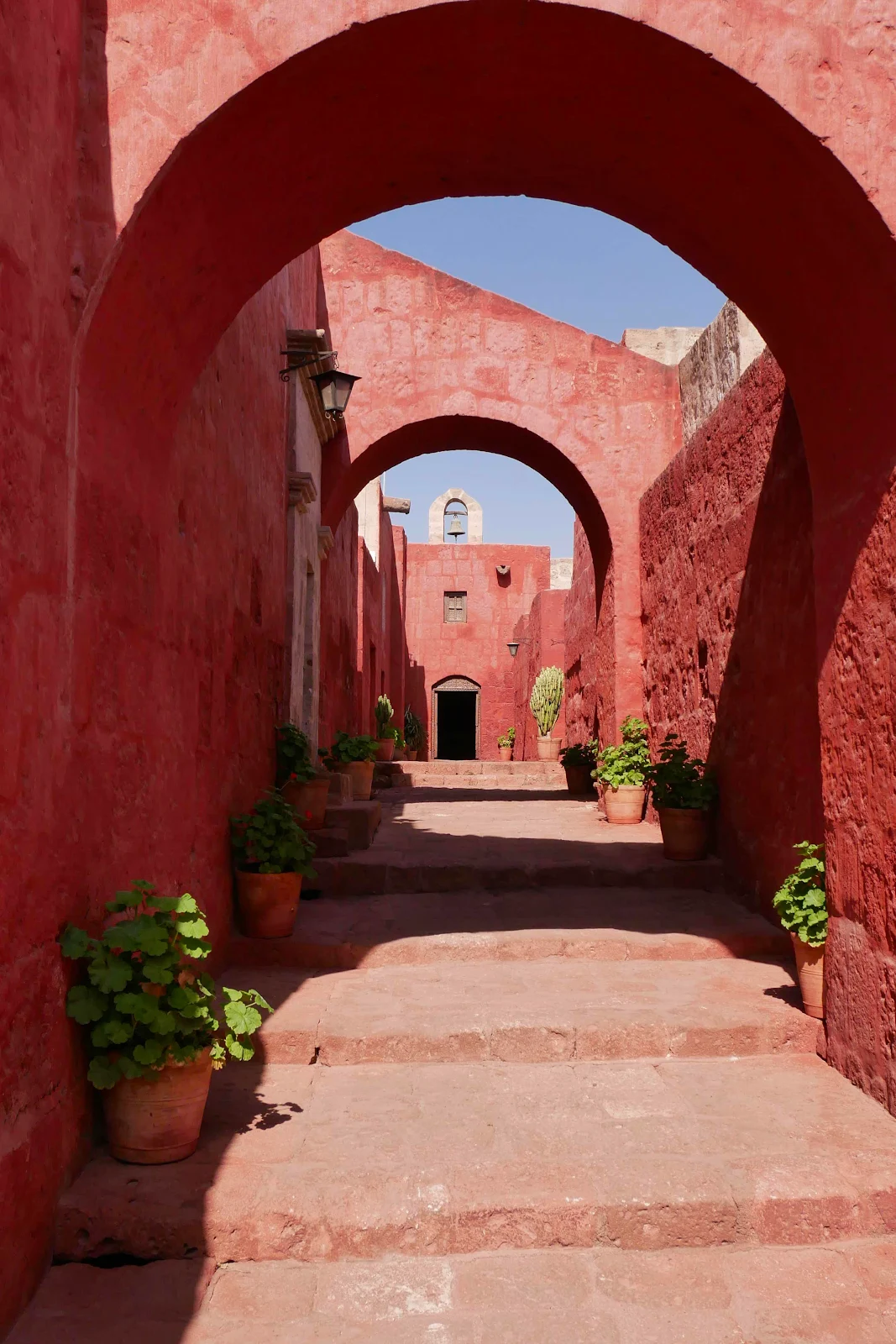
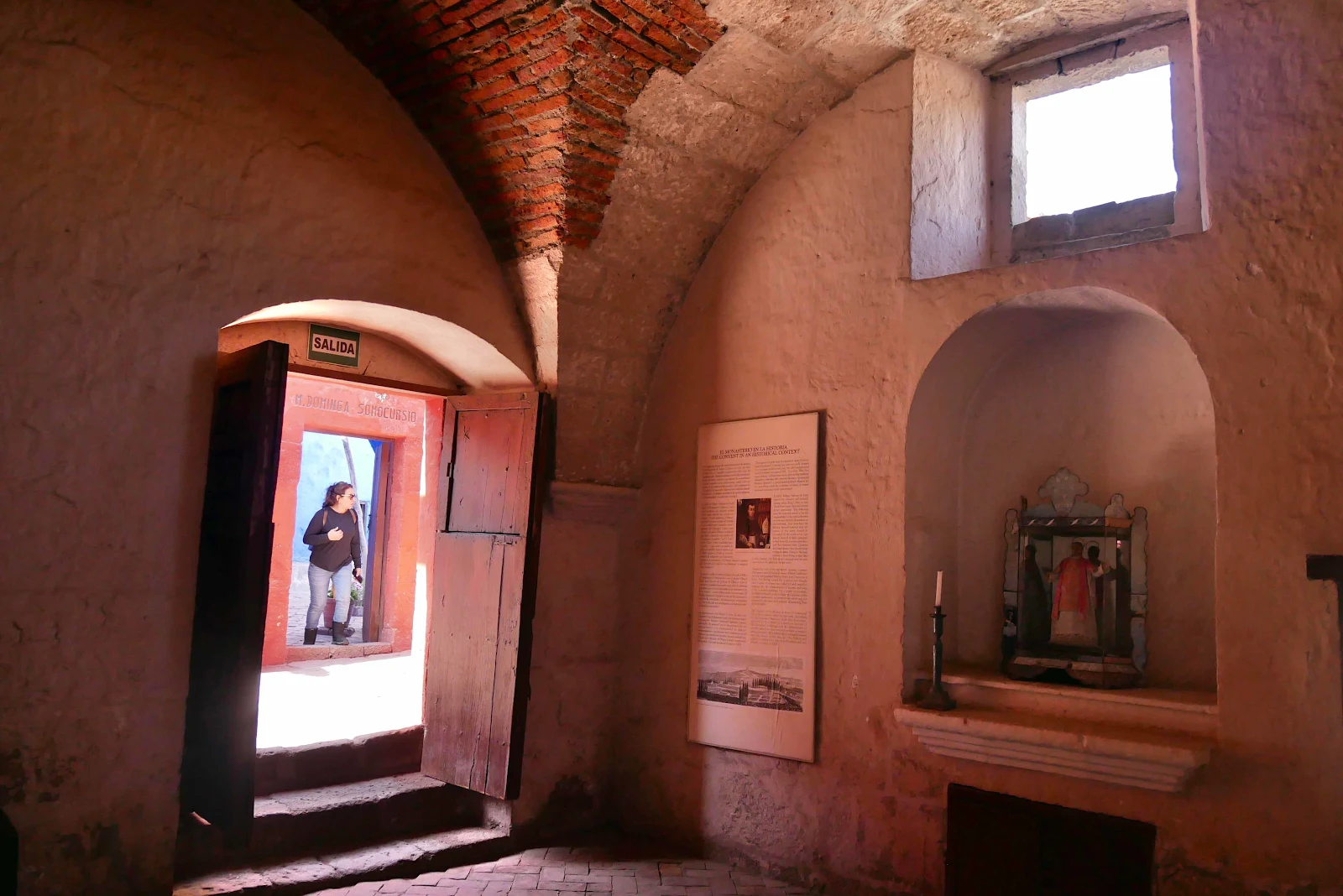
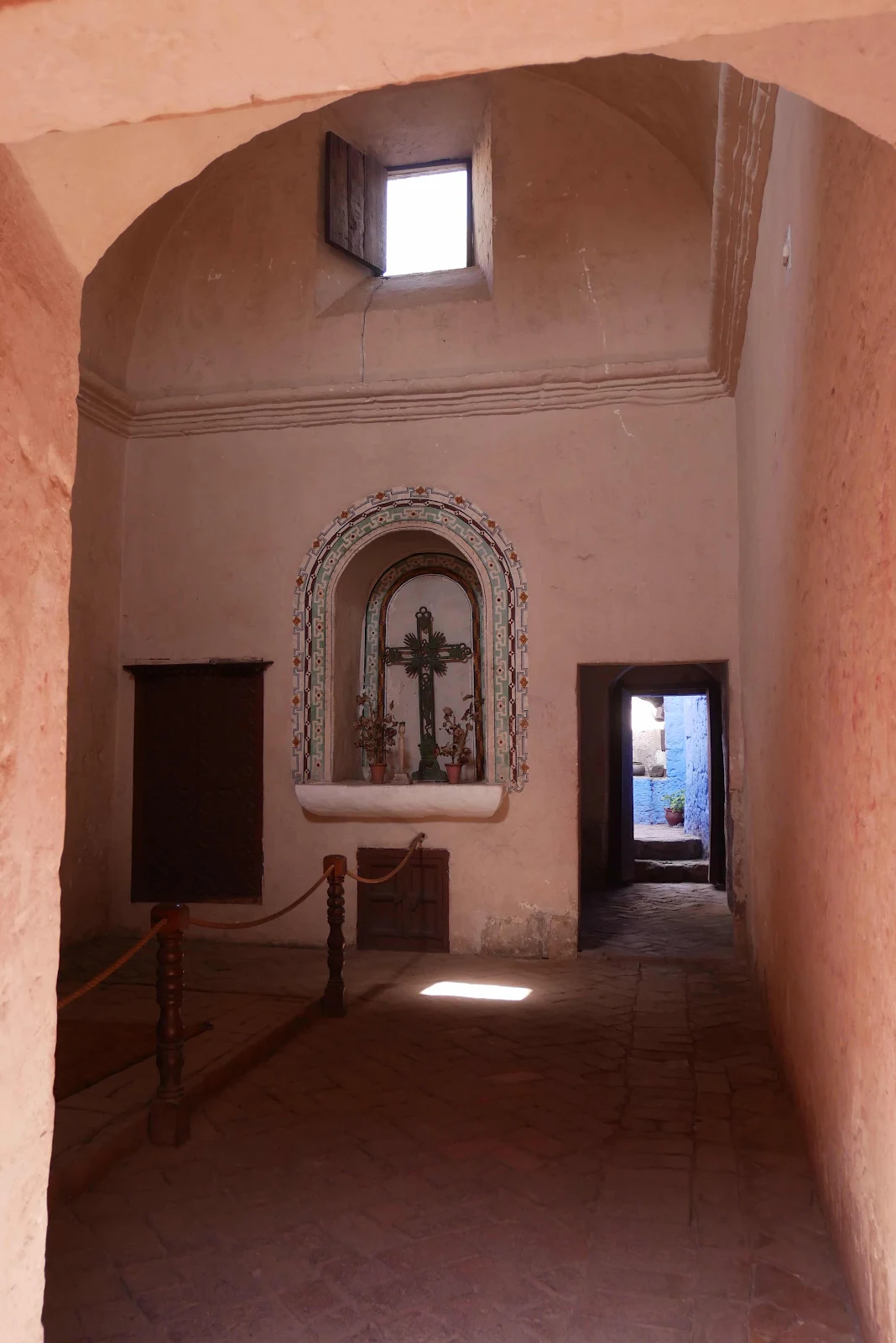
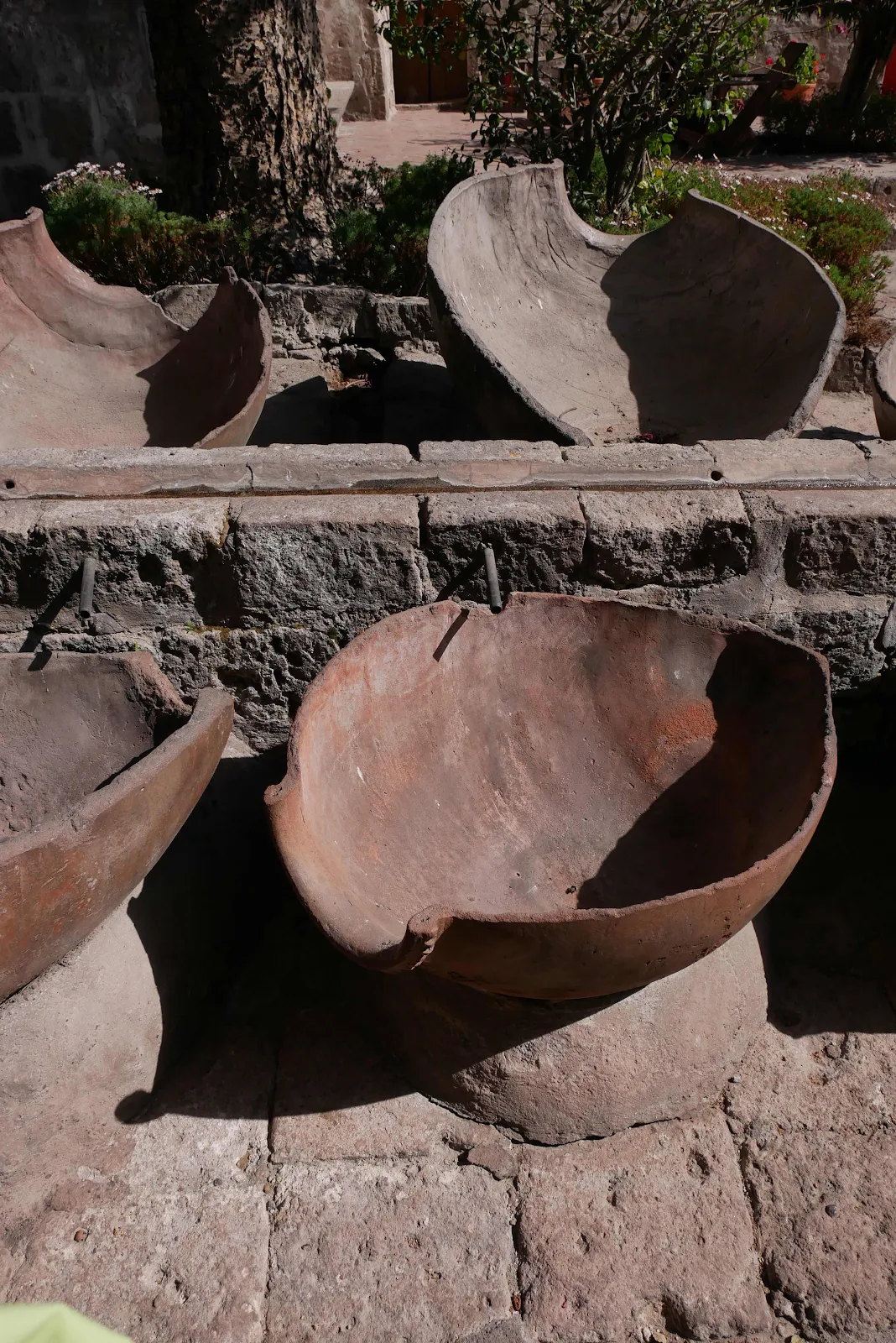
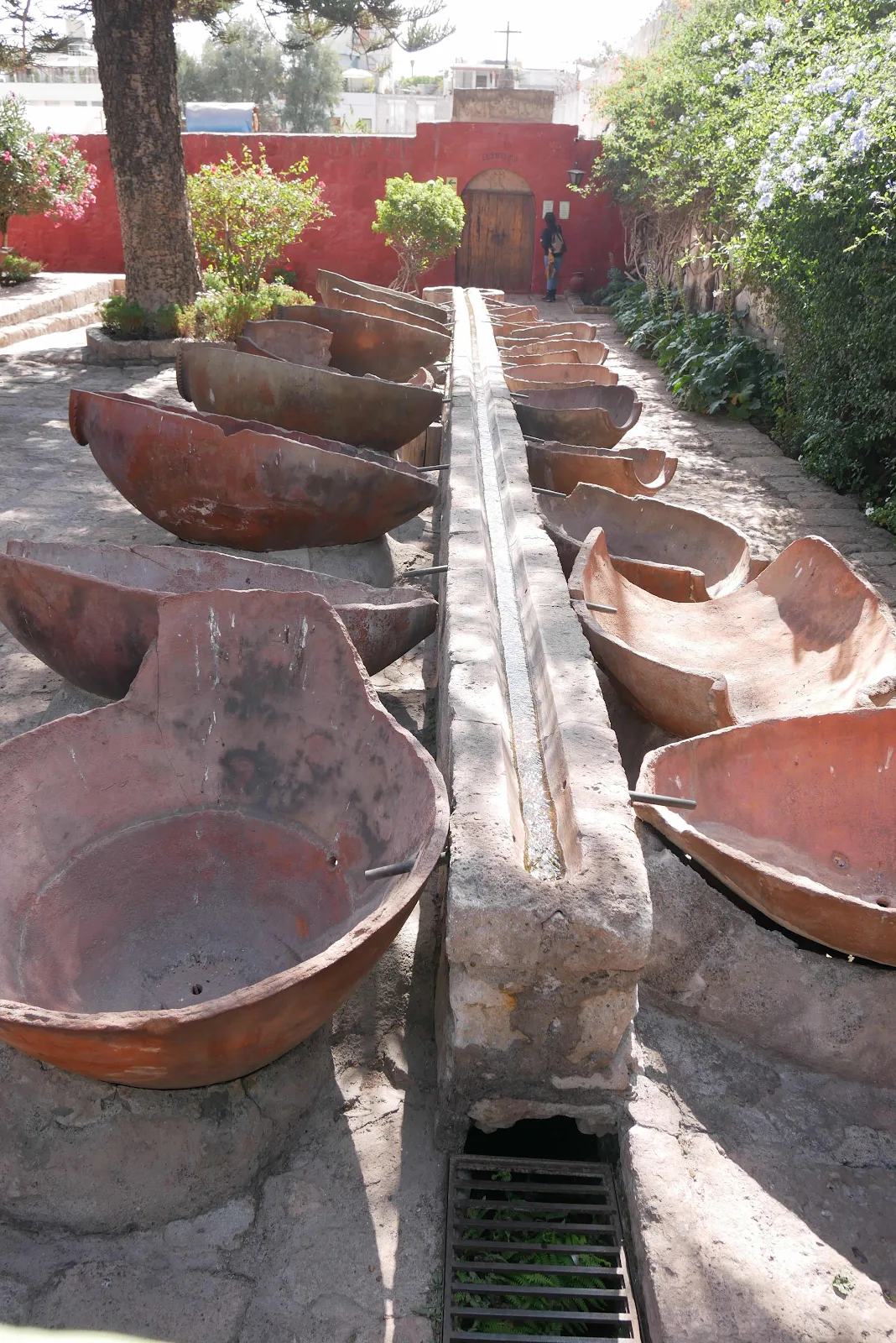
The outdoor laundry built in 1770, used repurposed clay jars cut in half and used as basins with water diverted from the garden irrigation system. No bad thing having a servant in here.
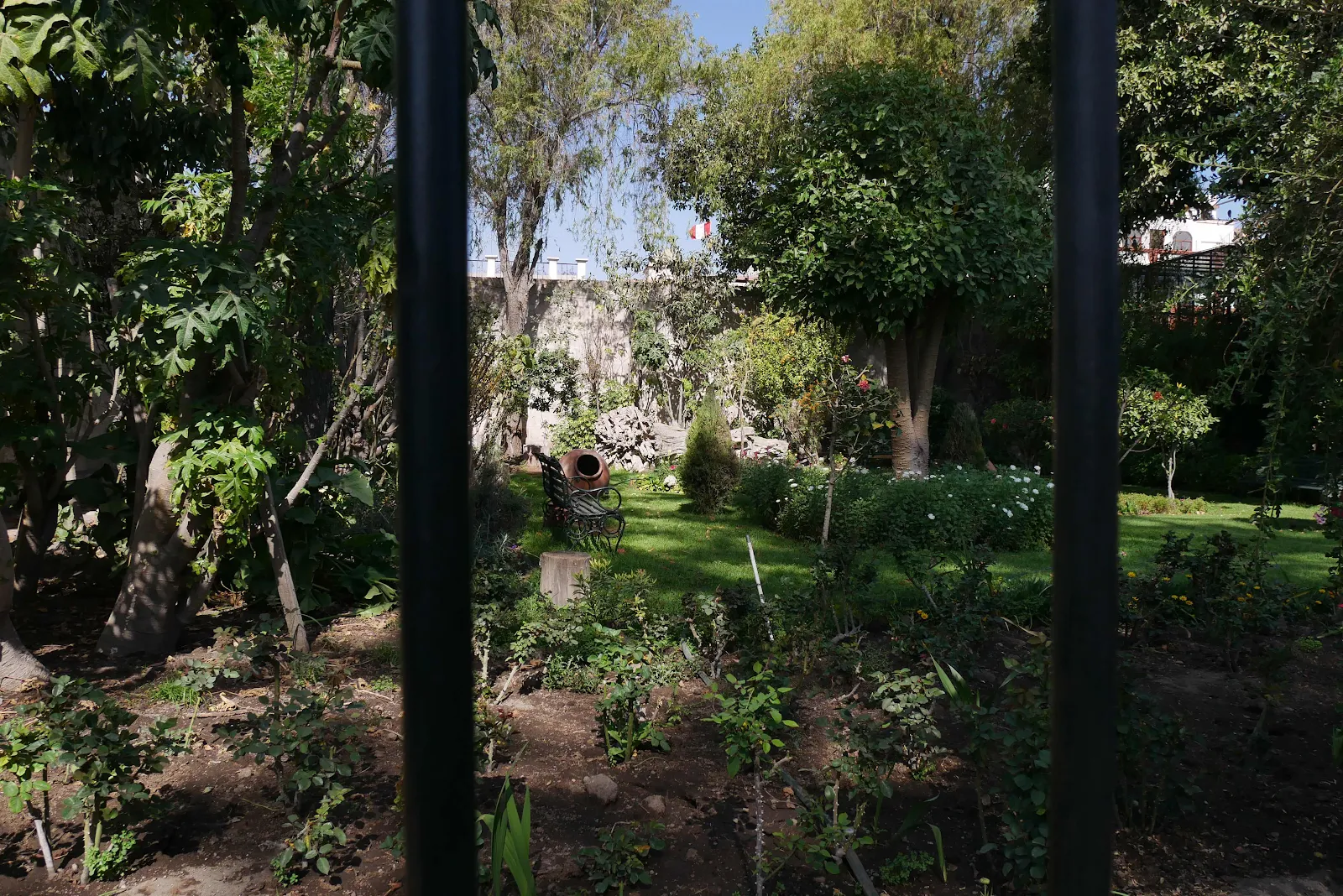
The vegetable garden. In times of turmoil women from the city were admitted to safety in here and they camped in the garden while they waited for the latest revolution to die down.
If a life of contemplation and withdrawal appeals you can see the attraction of this place. Plus you weren’t going to die in agony at an appallingly young age in childbirth the most common way women died in that era.
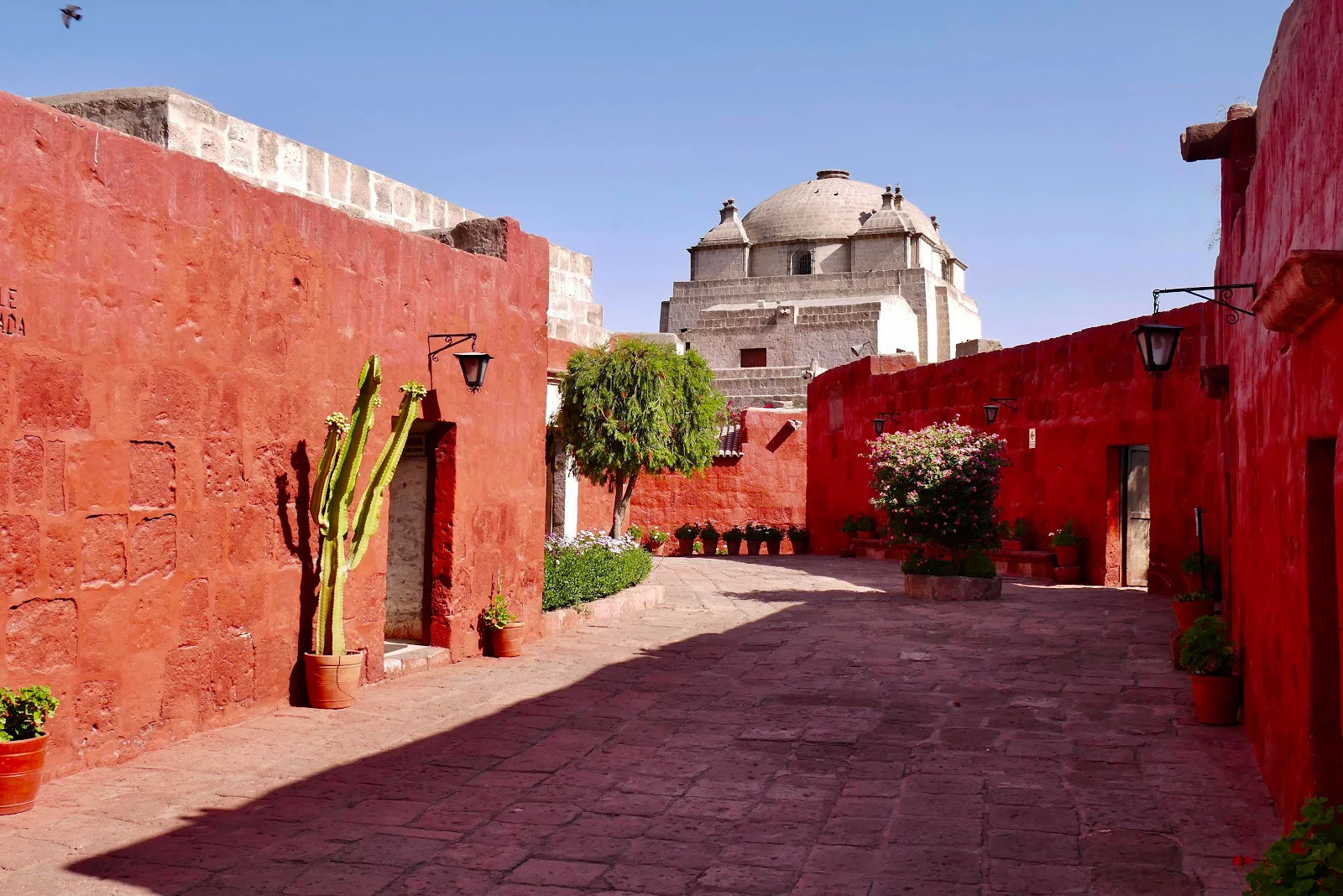
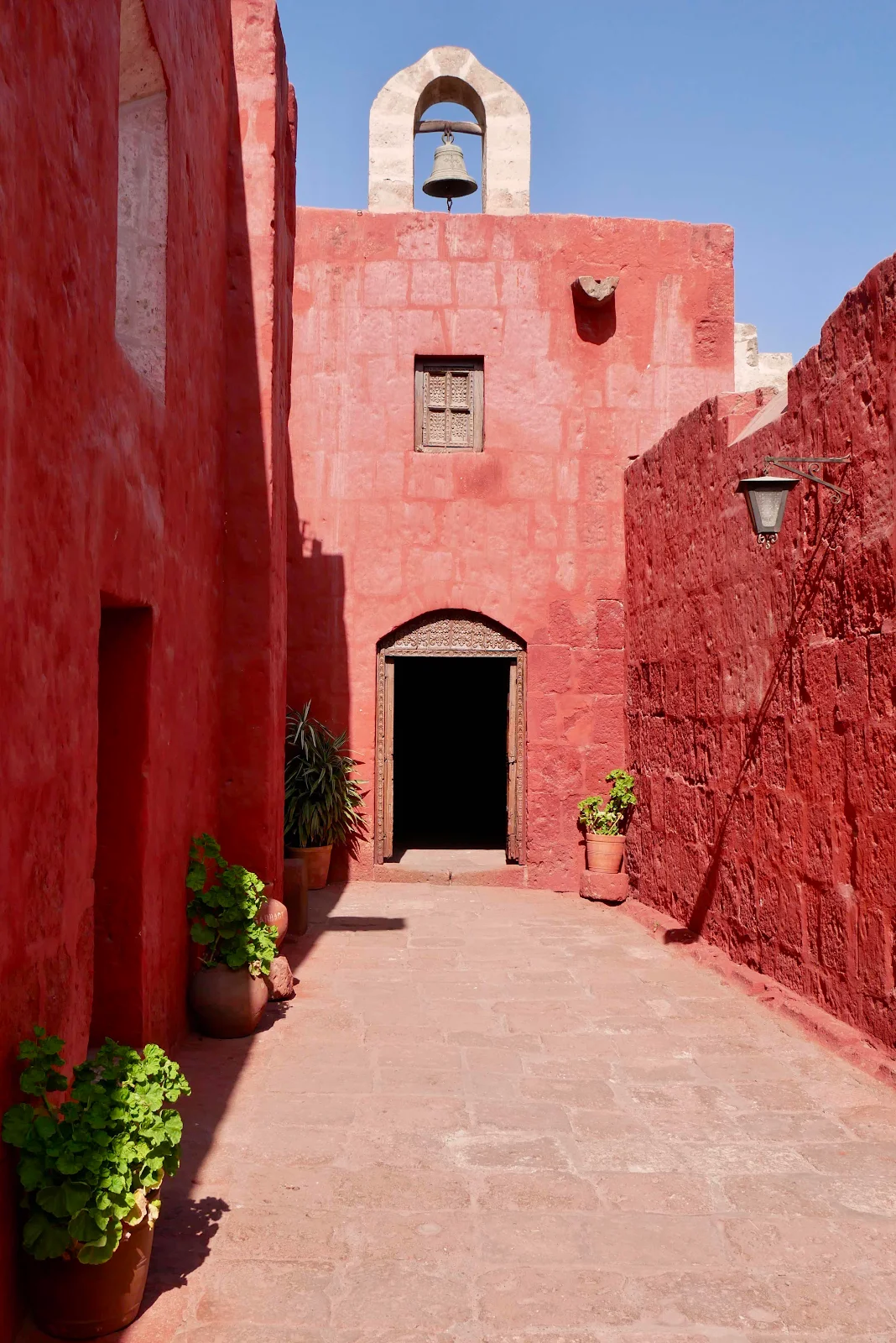
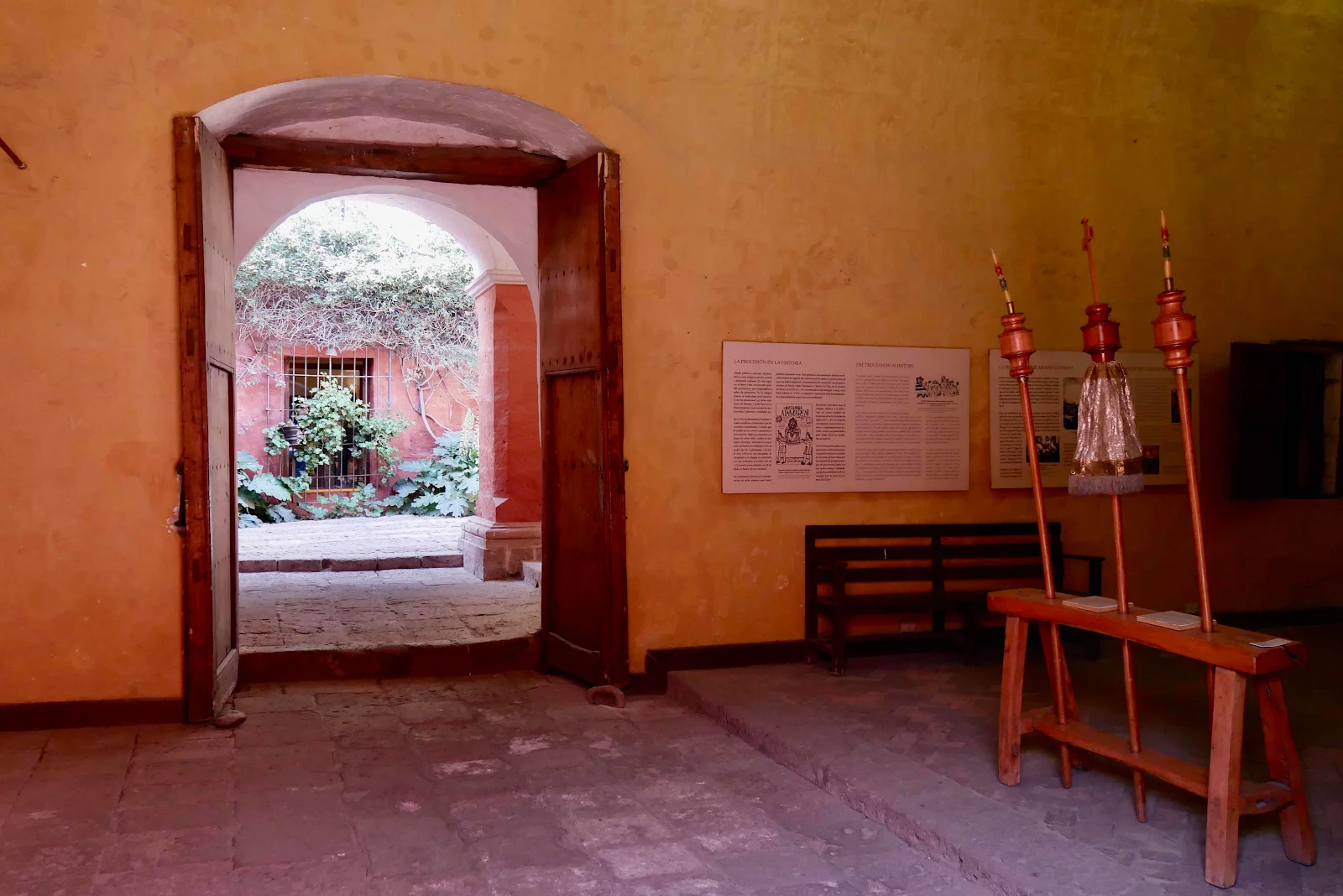
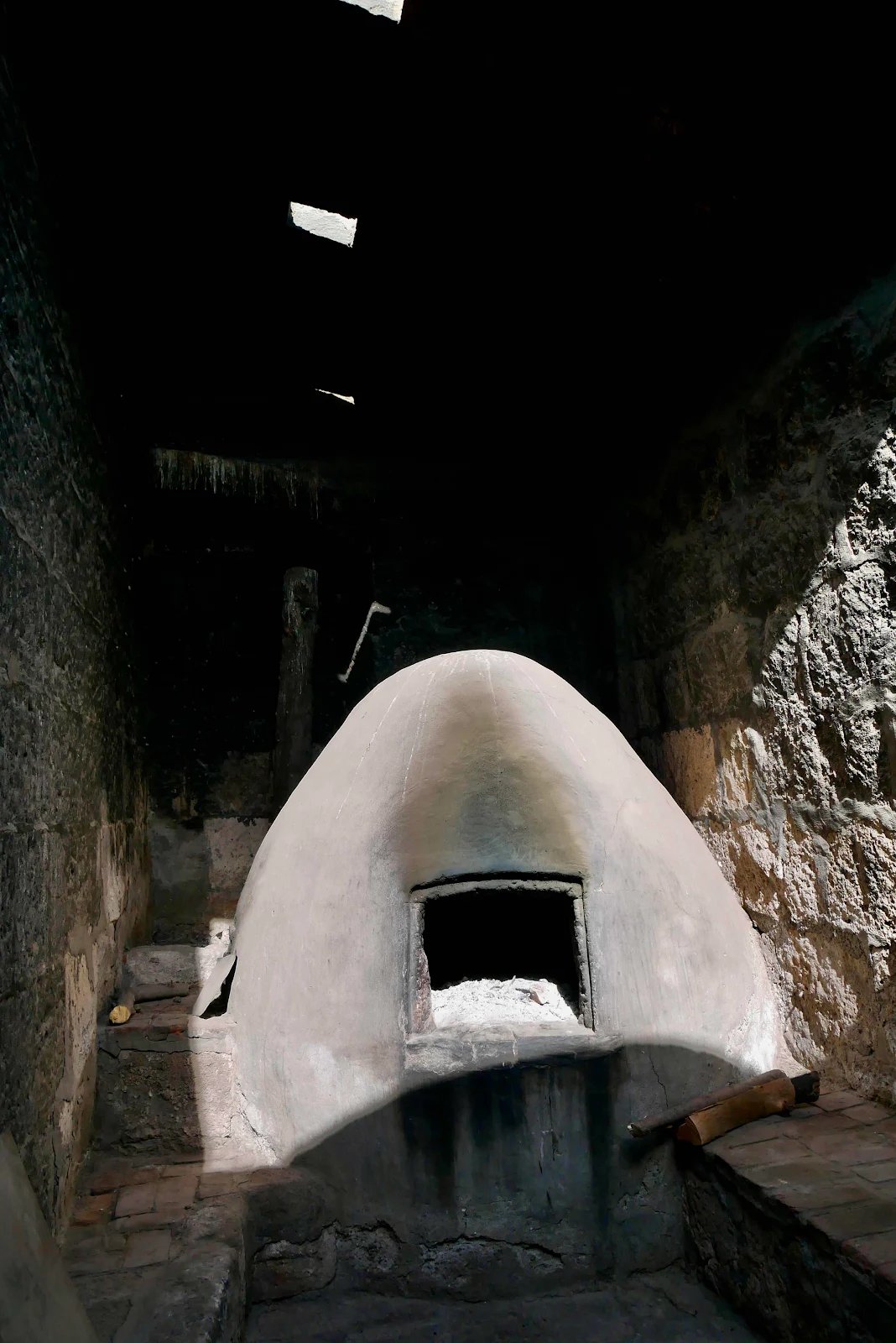
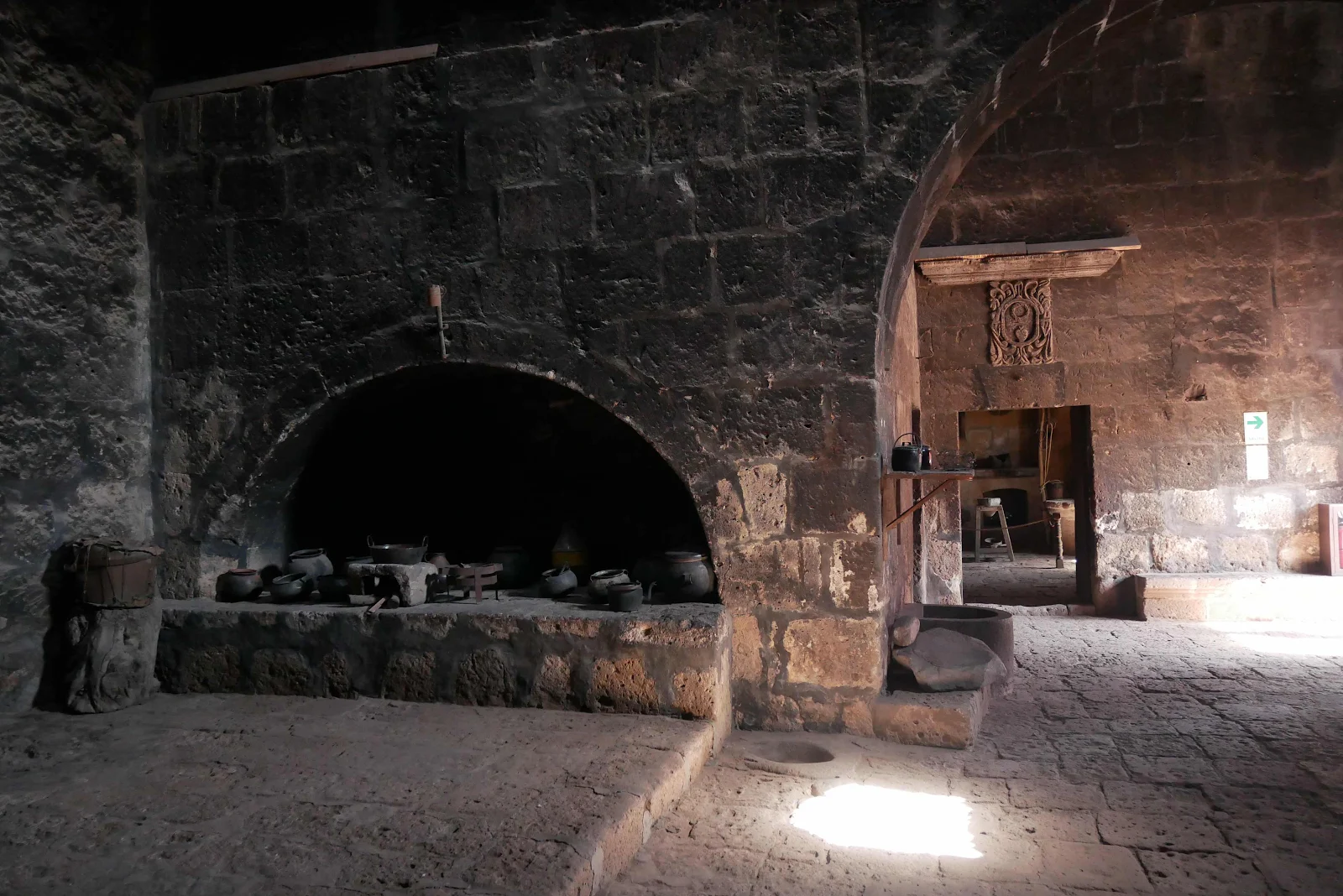
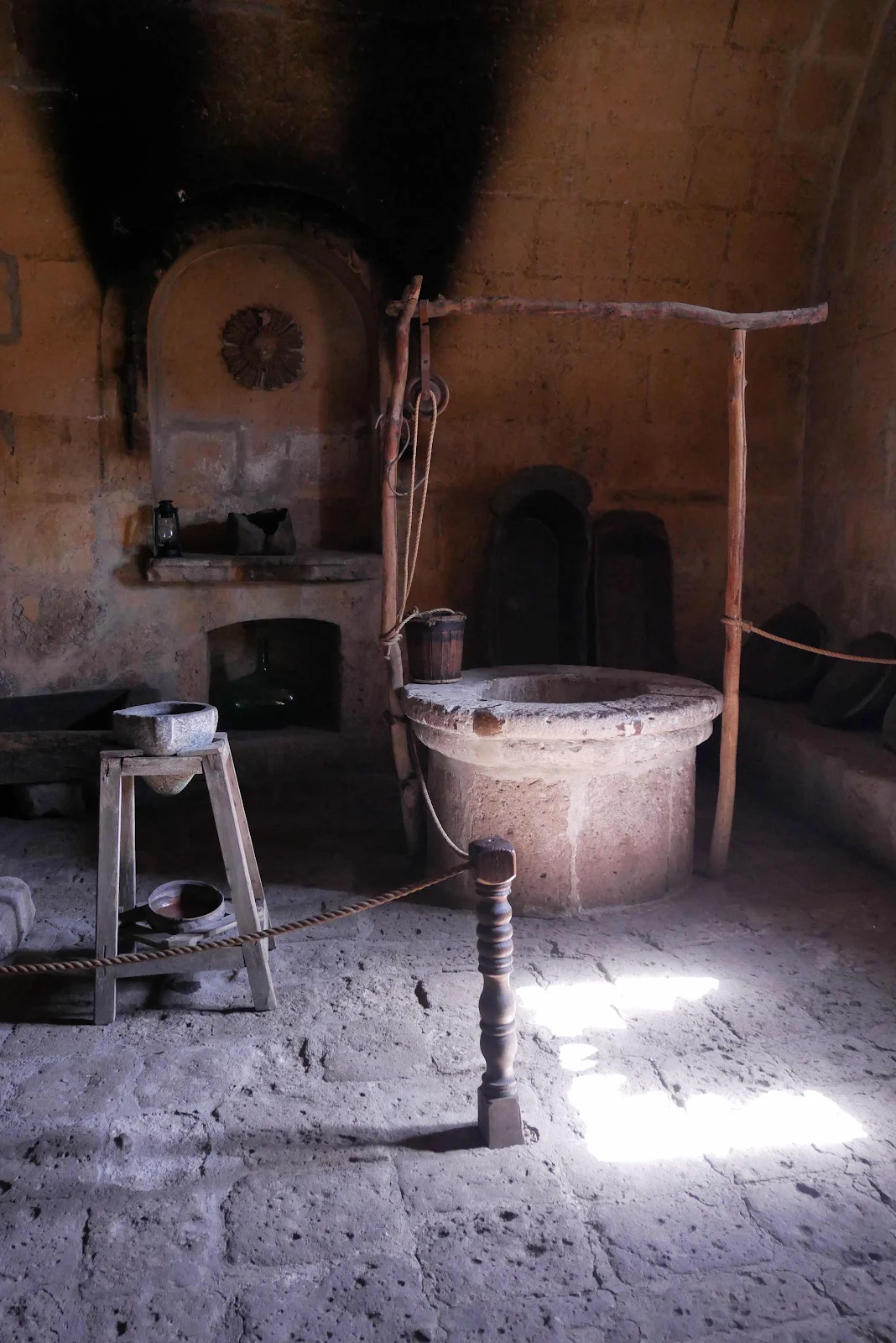
A nunnery it may be but it was a functioning society with a bakery and warehouses and stores to feed the occupants.
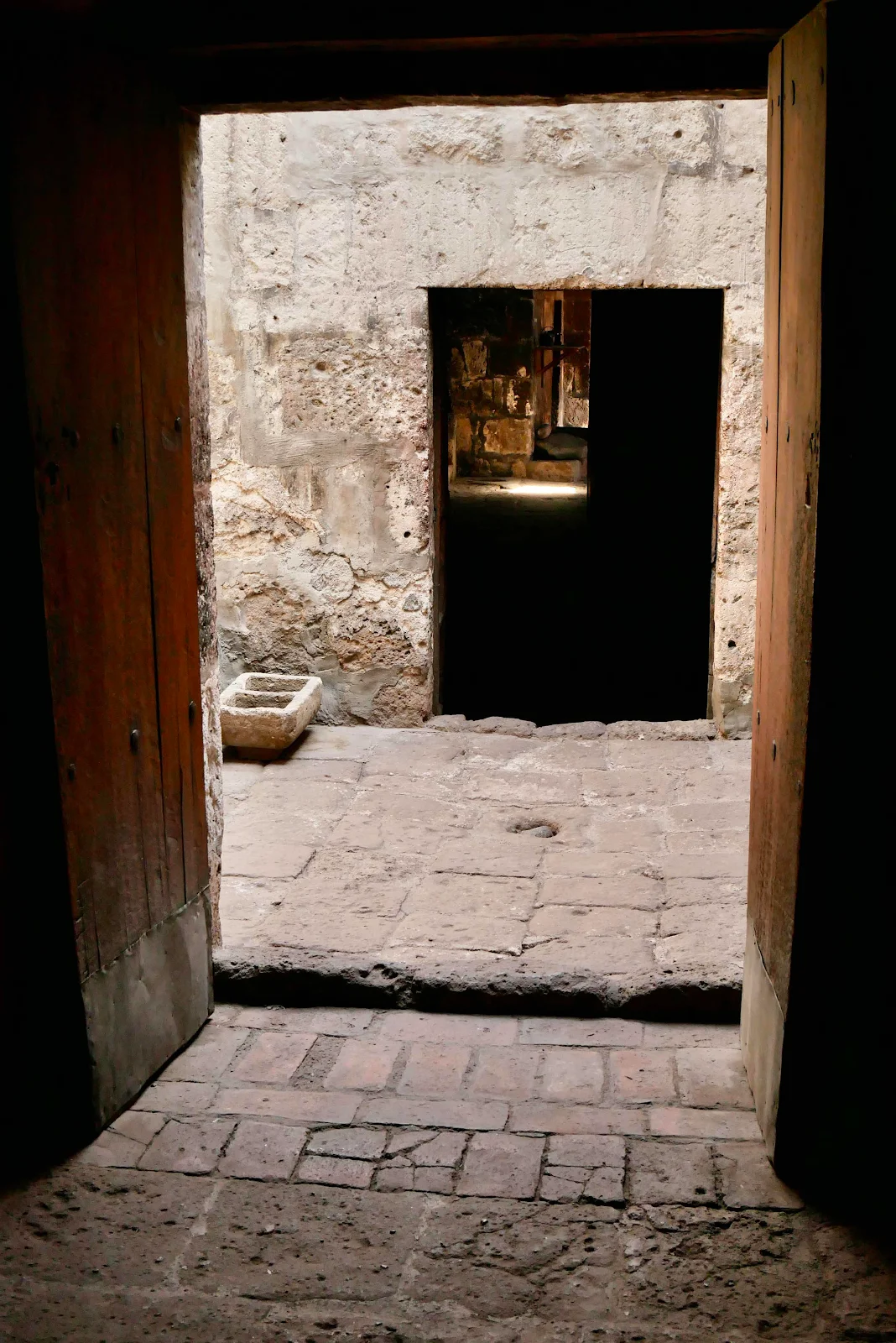
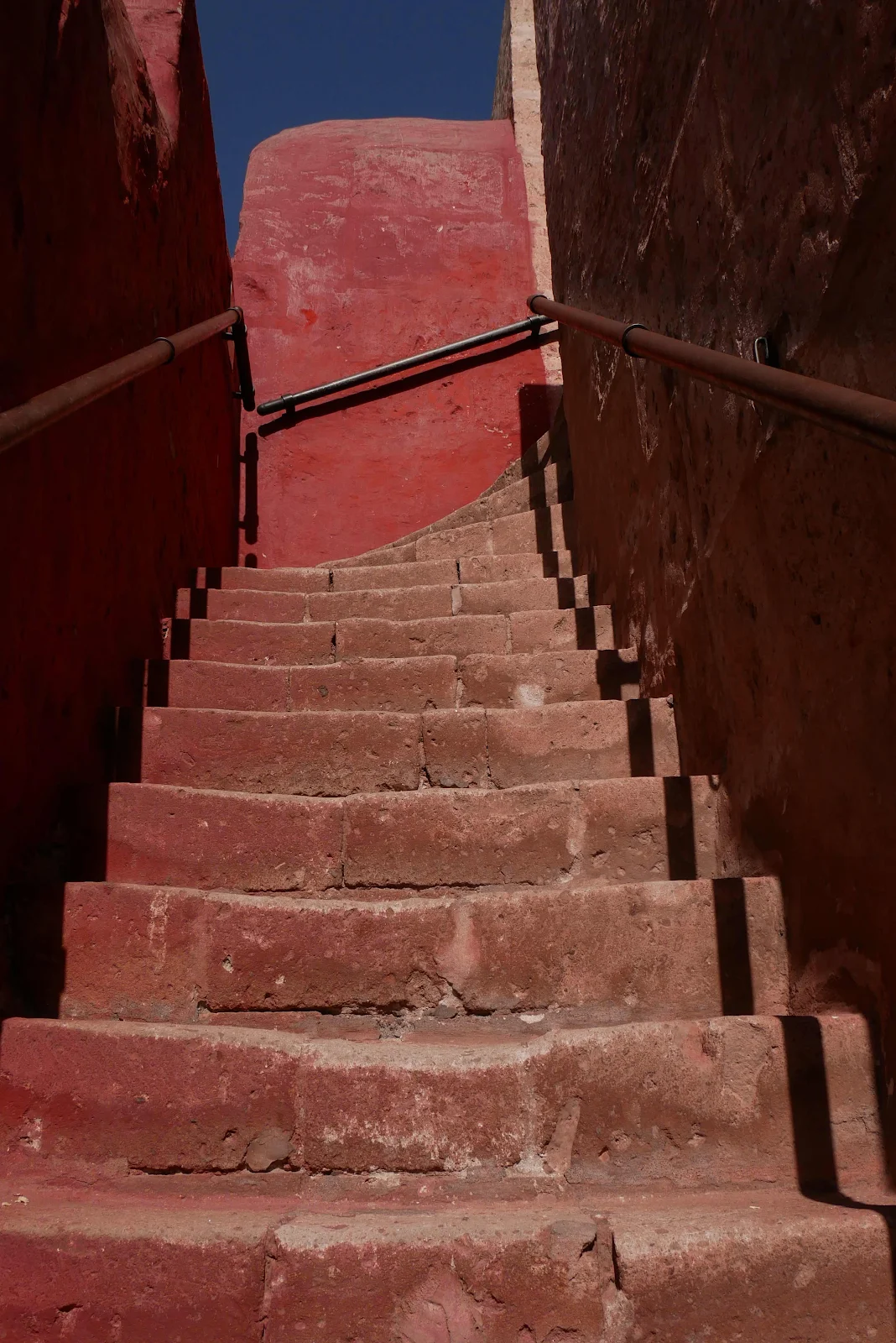
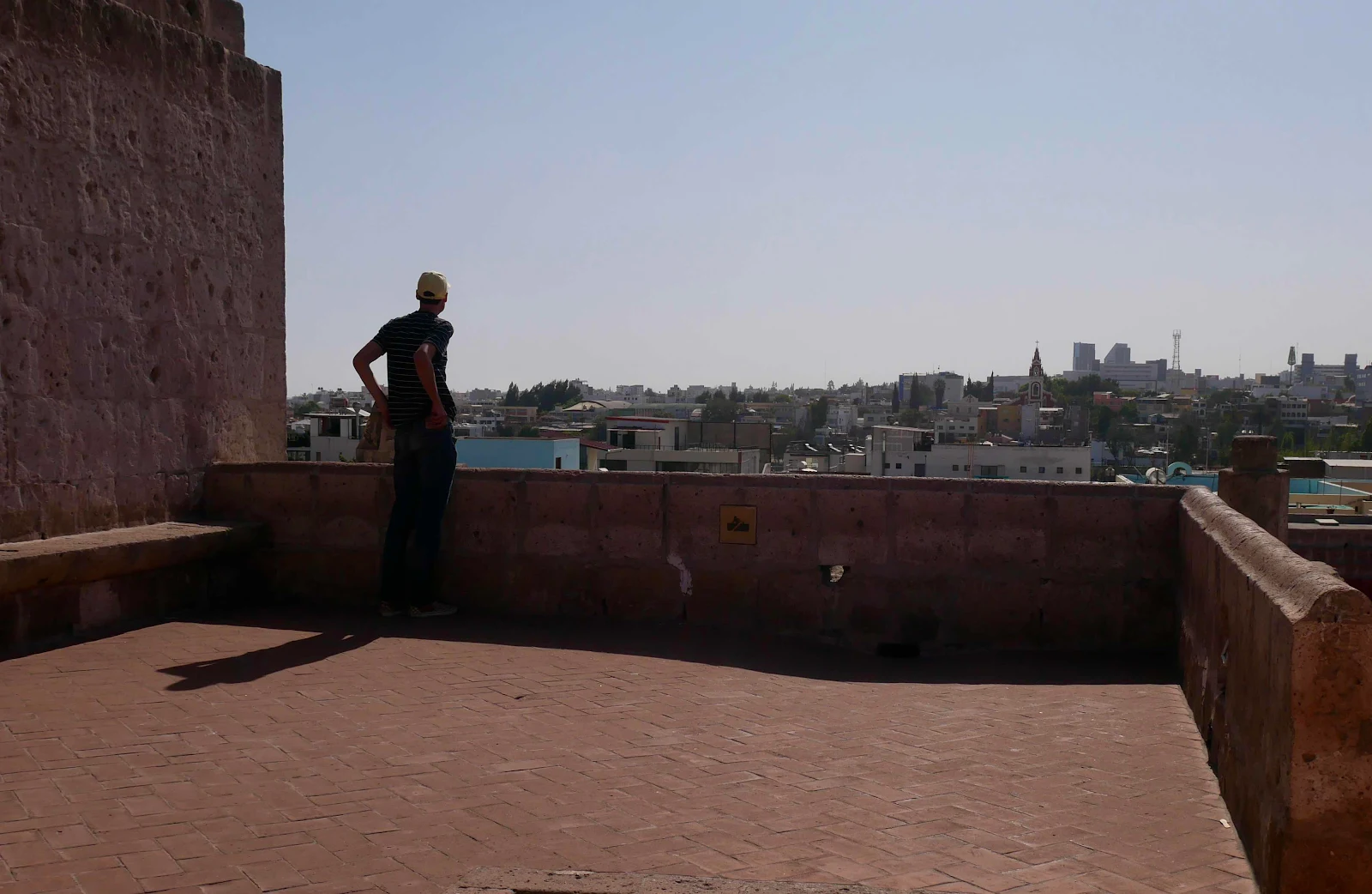

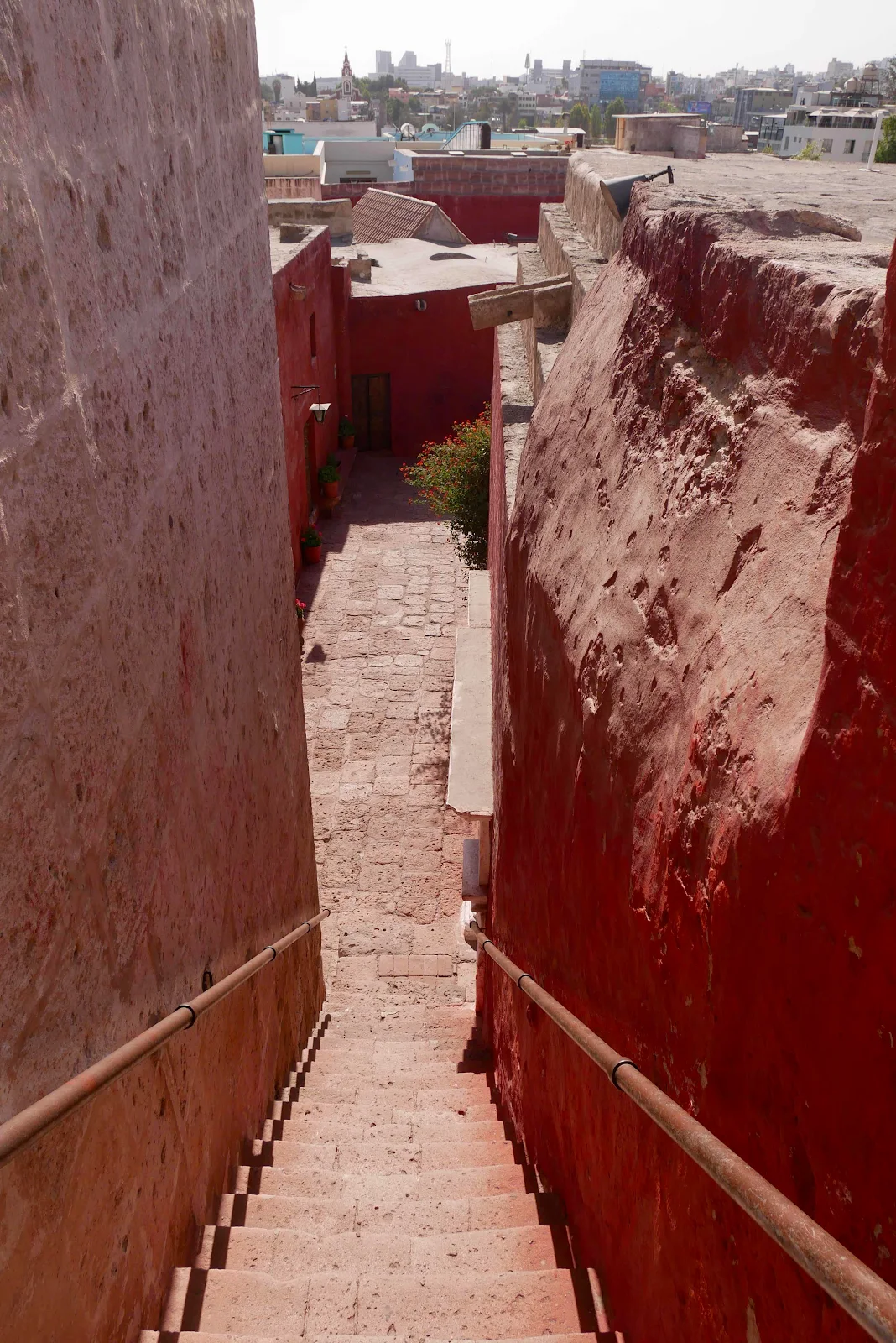
I do not find Arequipa to have a very scenic overview. Getting up high just seems to show off a jumble of untidy dusty rooftops.
Confessionals: the very Catholic art of wiping the slate clean every week as long as you have the nerve to say it out loud.
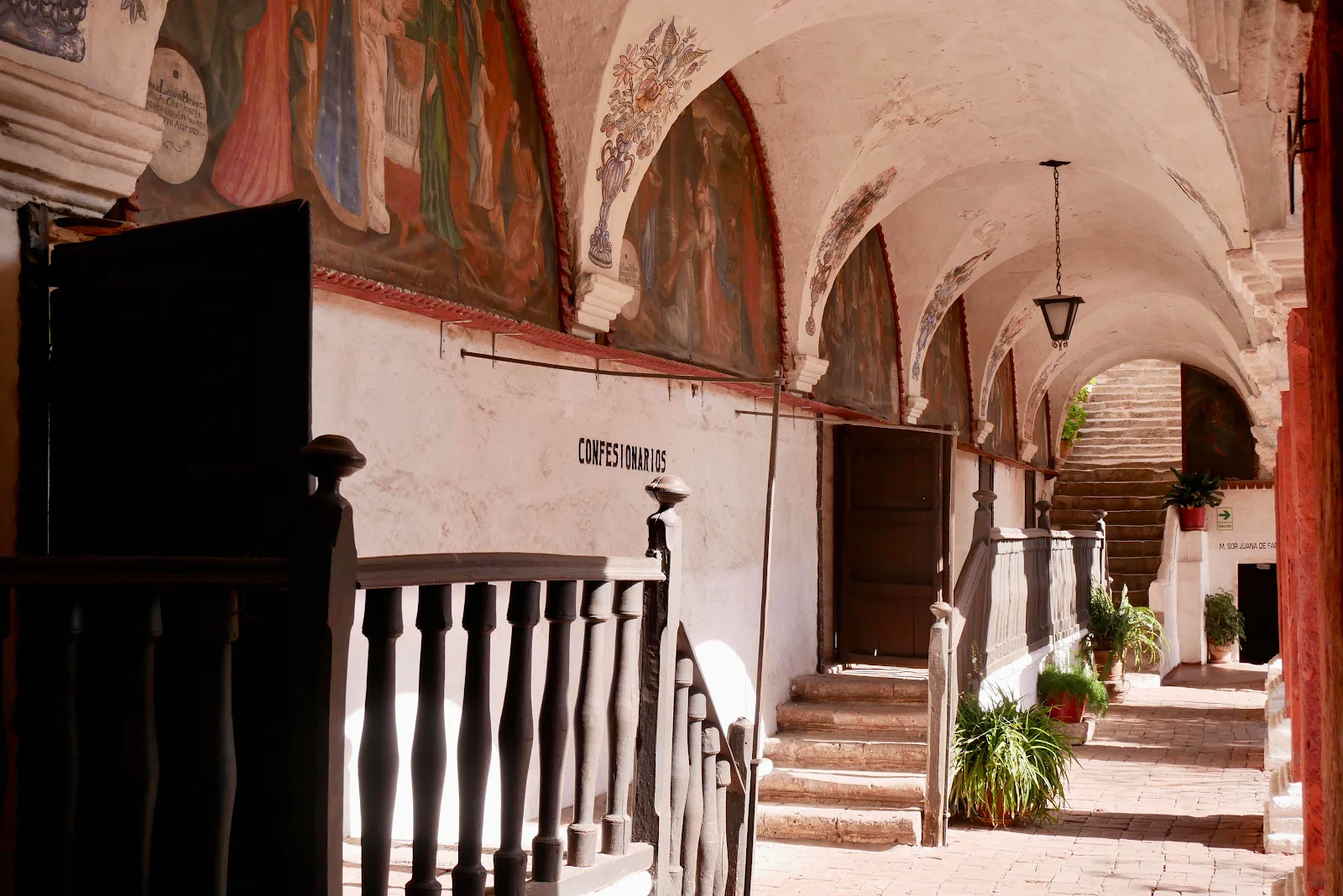
The confessions were heard by priests brought in for the job and hidden behind grates. Normal operating procedure more or less:
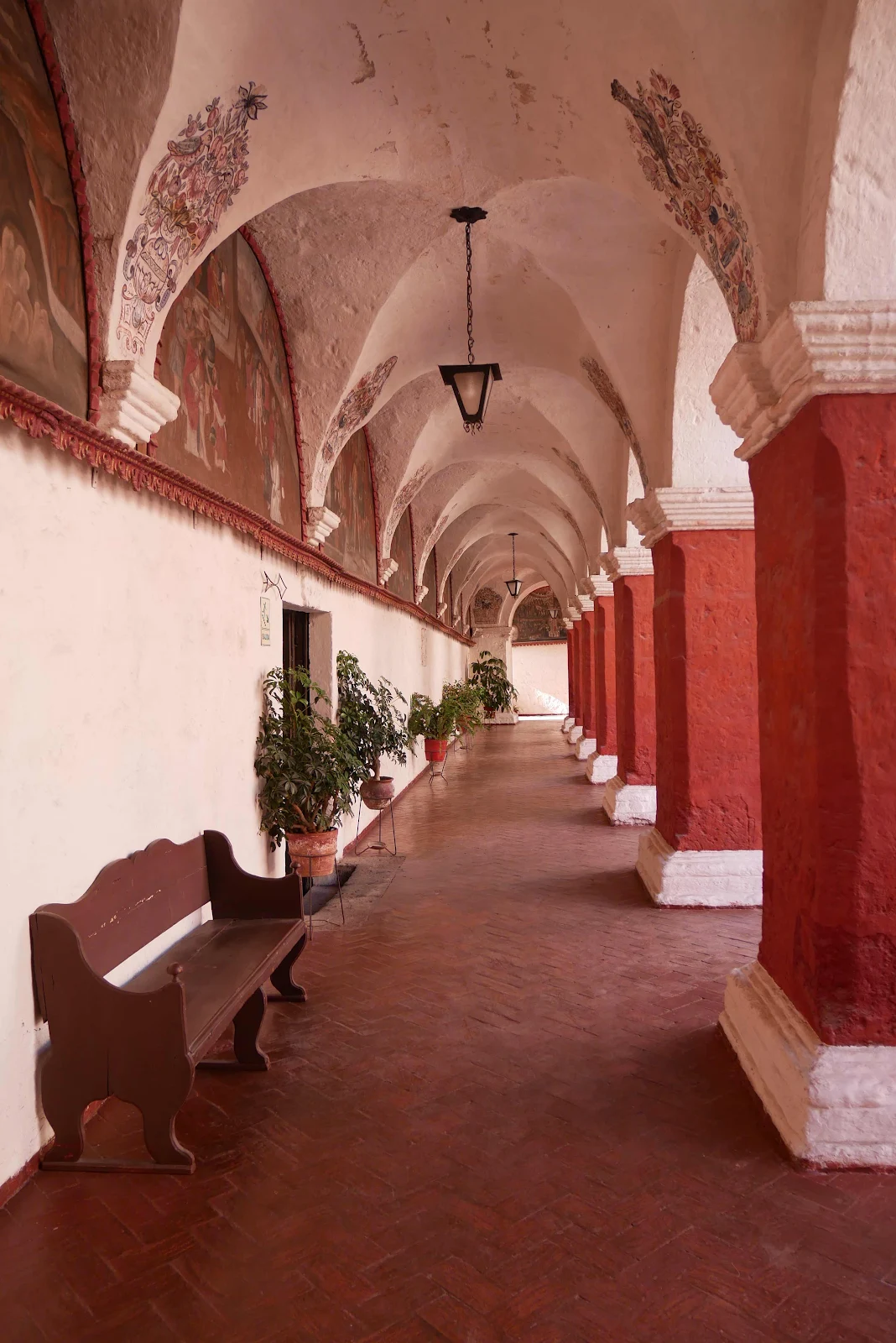
The main cloister. I was about ready to quit at this point but I pressed on and have the pictures to prove it if you’ve kept this far.
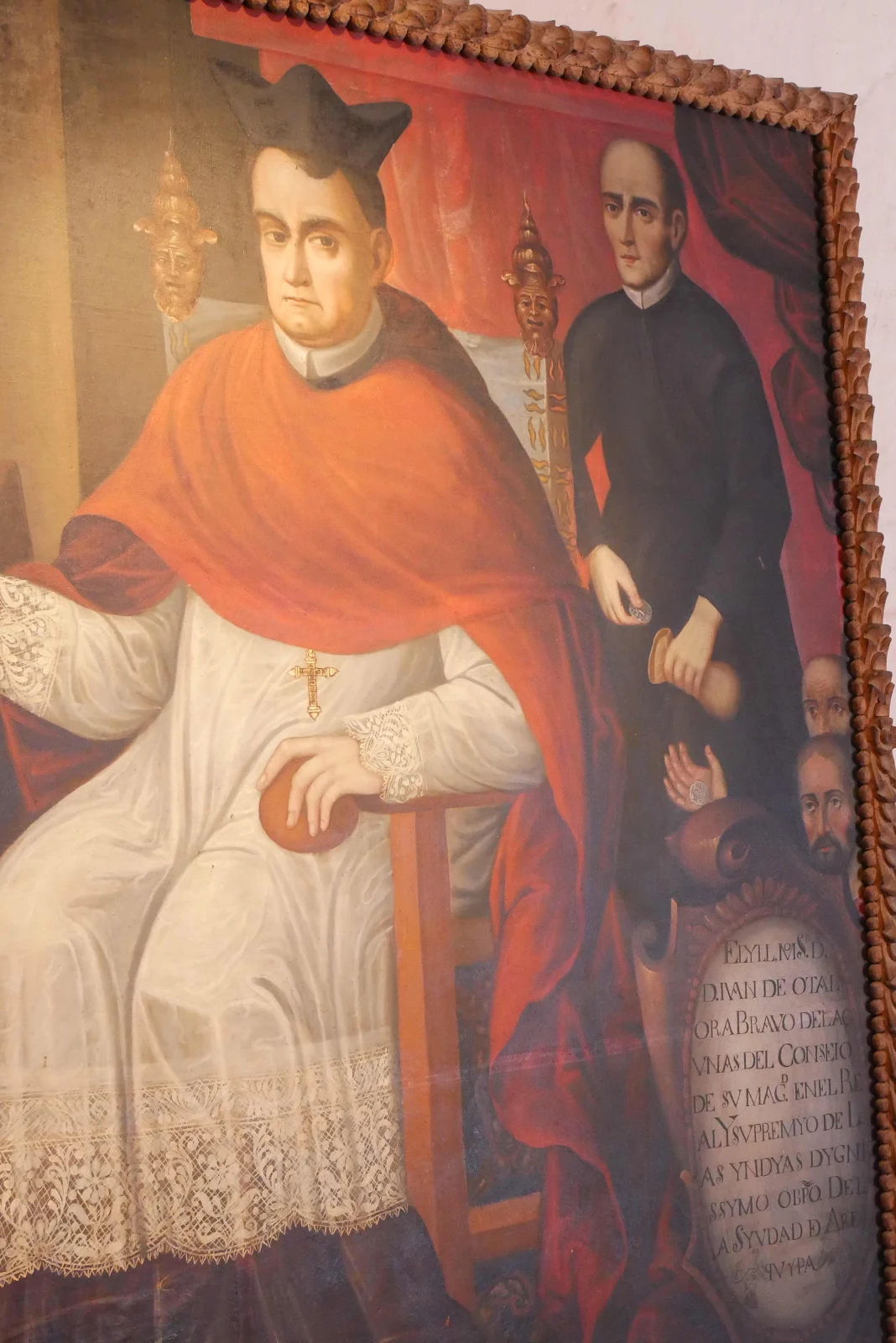
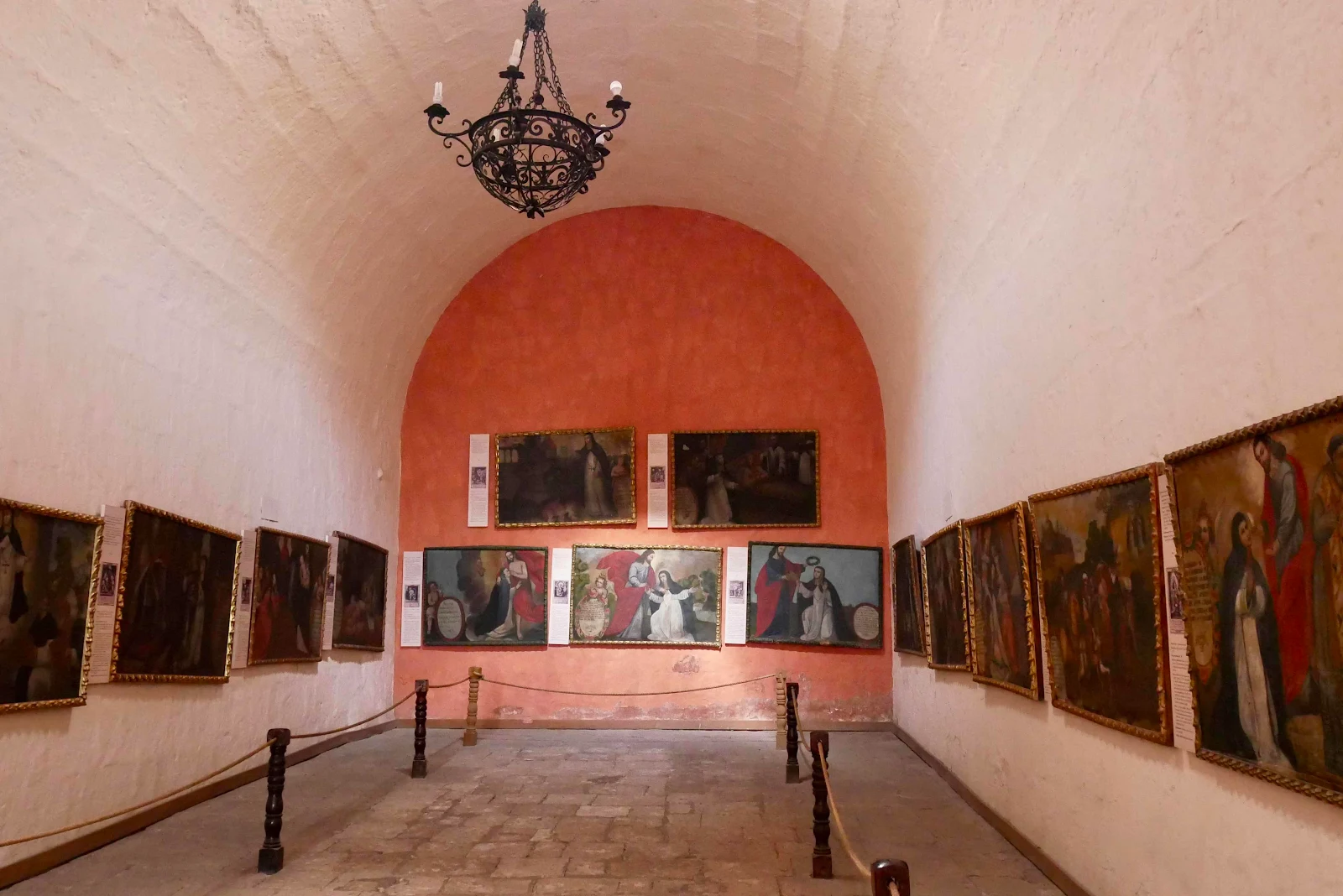
There were art galleries to view with 400 pieces of colonial art as they call it in the Cusco style. This one I liked with the bishop’s servants handing out alms:
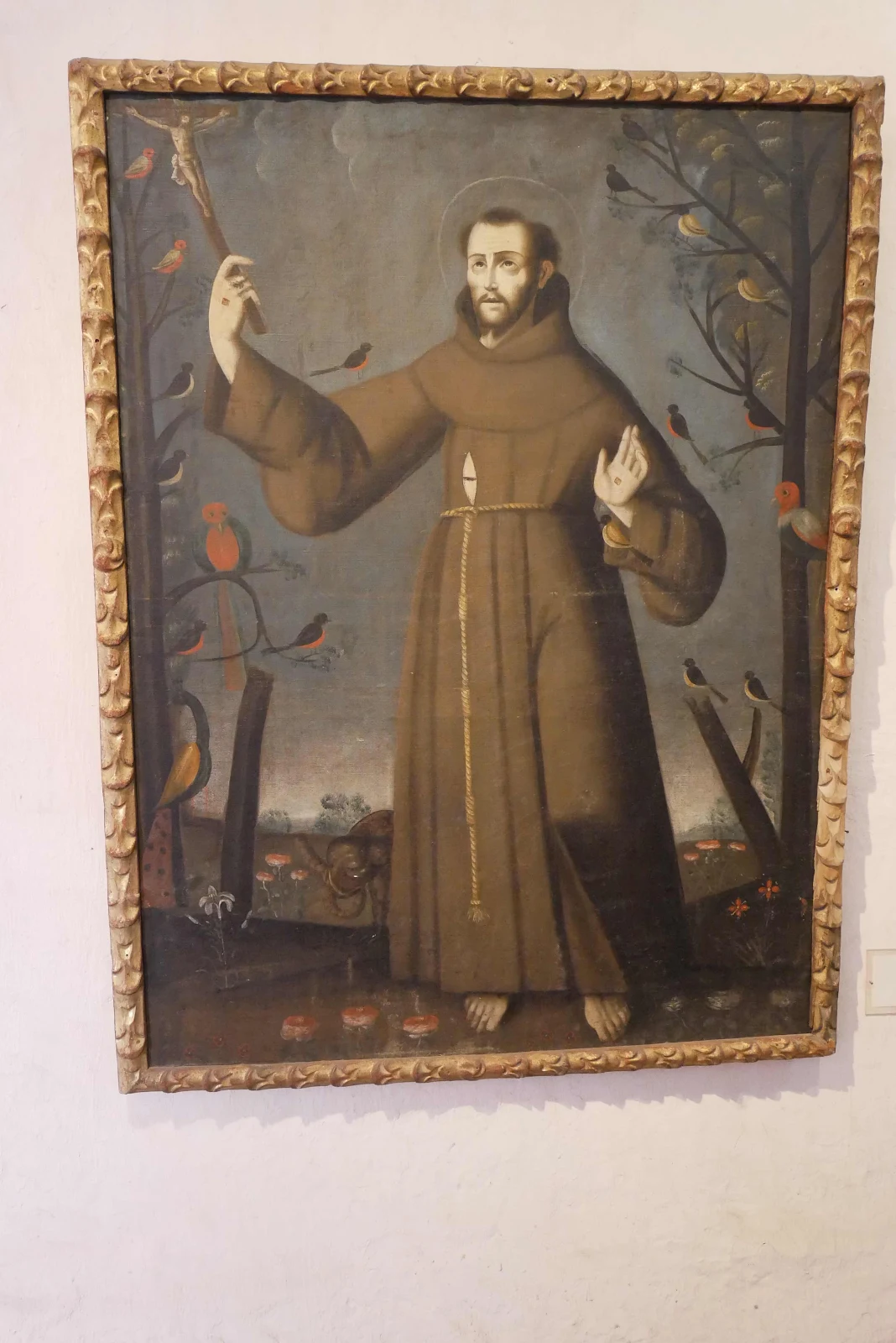
The most famous Umbrian of all was present. St Francis of Assisi depicted in the style of the Cusco school of painting:
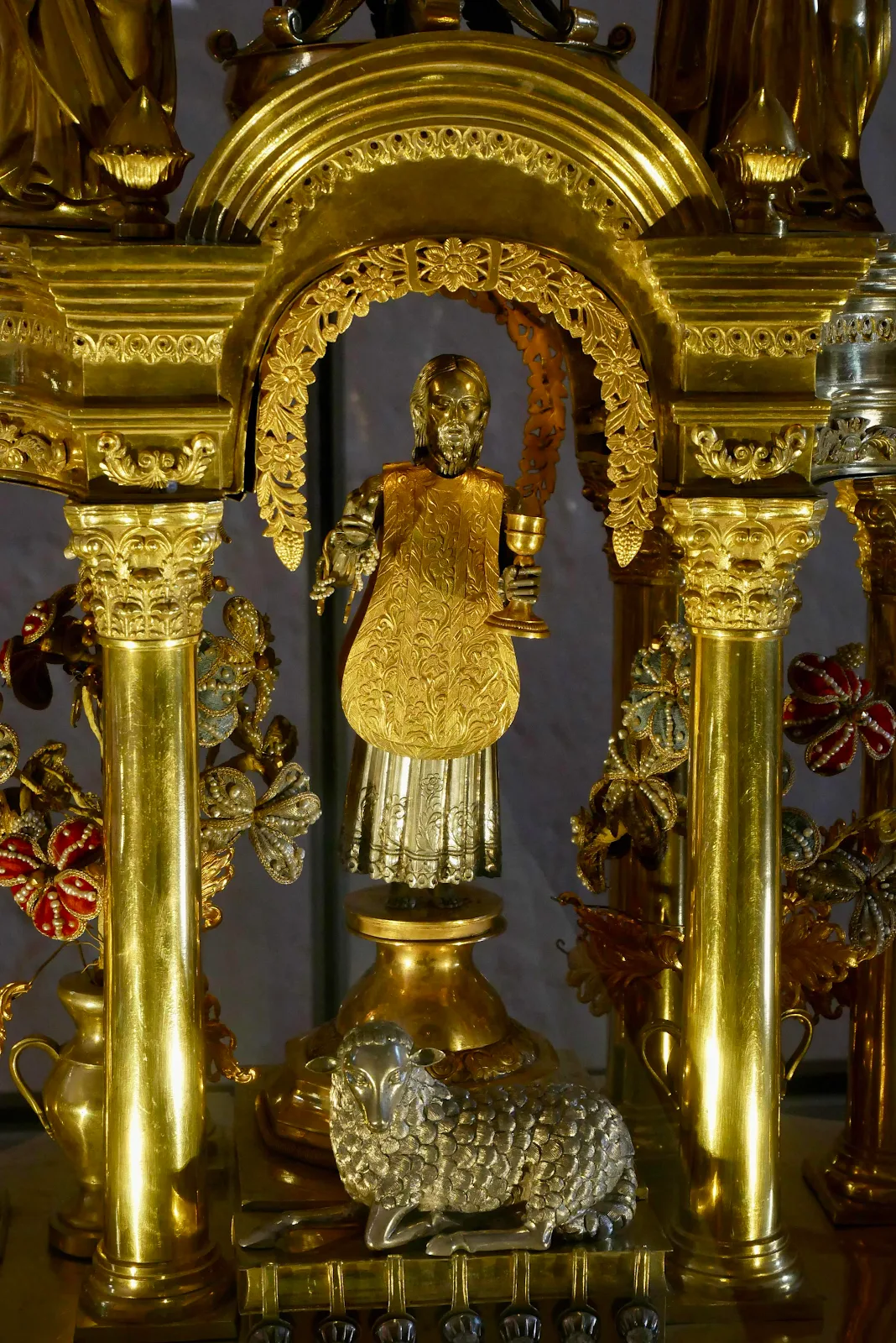
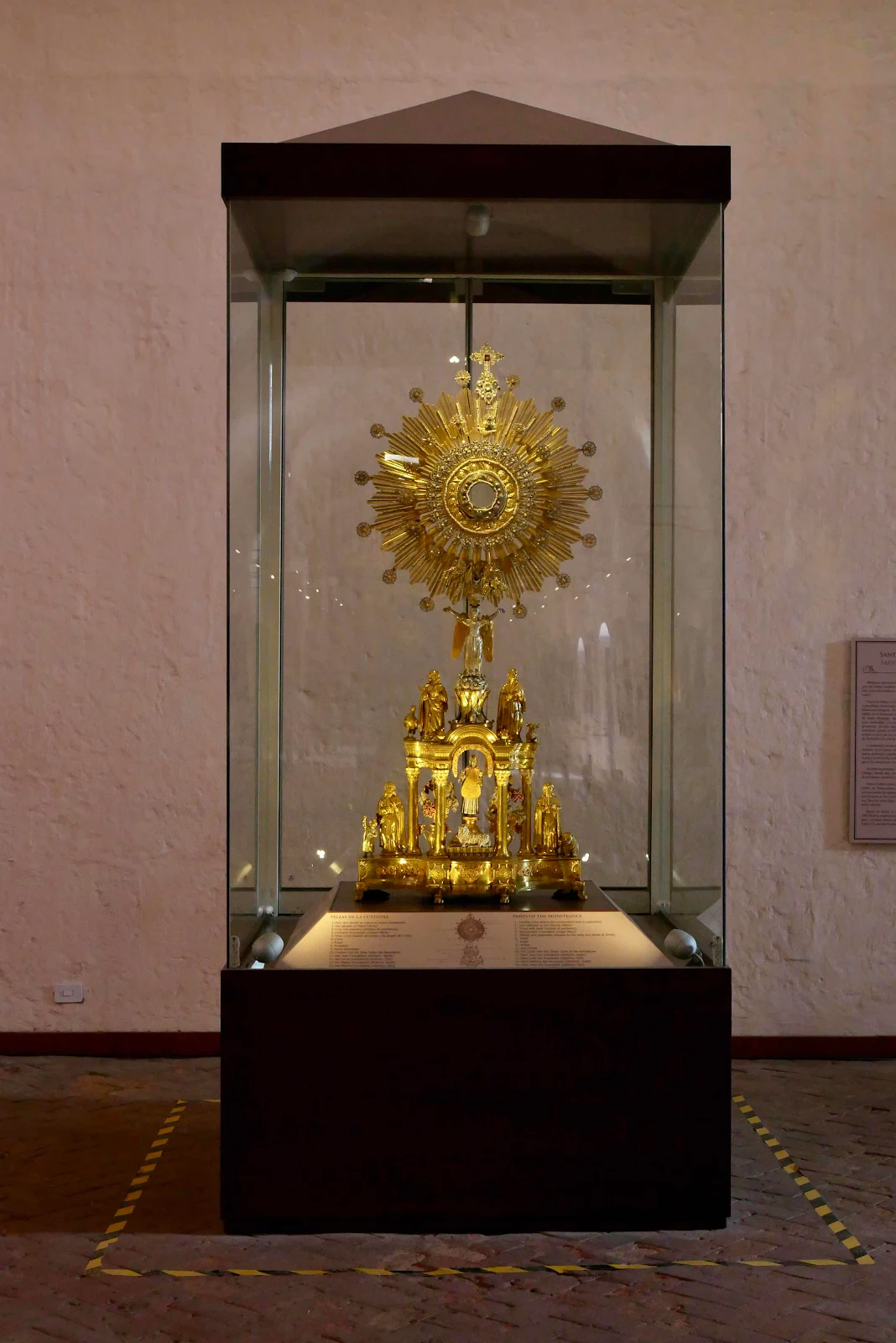
Catholics are required to believe that during Mass the priest turns bread into God and during the reformation hundreds of thousands of people died ordered tortured in this arcane point. For Catholics it’s actually god not a representation. Therefore you need something valuable to show off the consecrated host. It’s called a monstrance, it’s made of gold and Catholics worship the host contained within.
I dare say it was the most intrinsically valuable object we saw. God is a shepherd and we are his sheep.
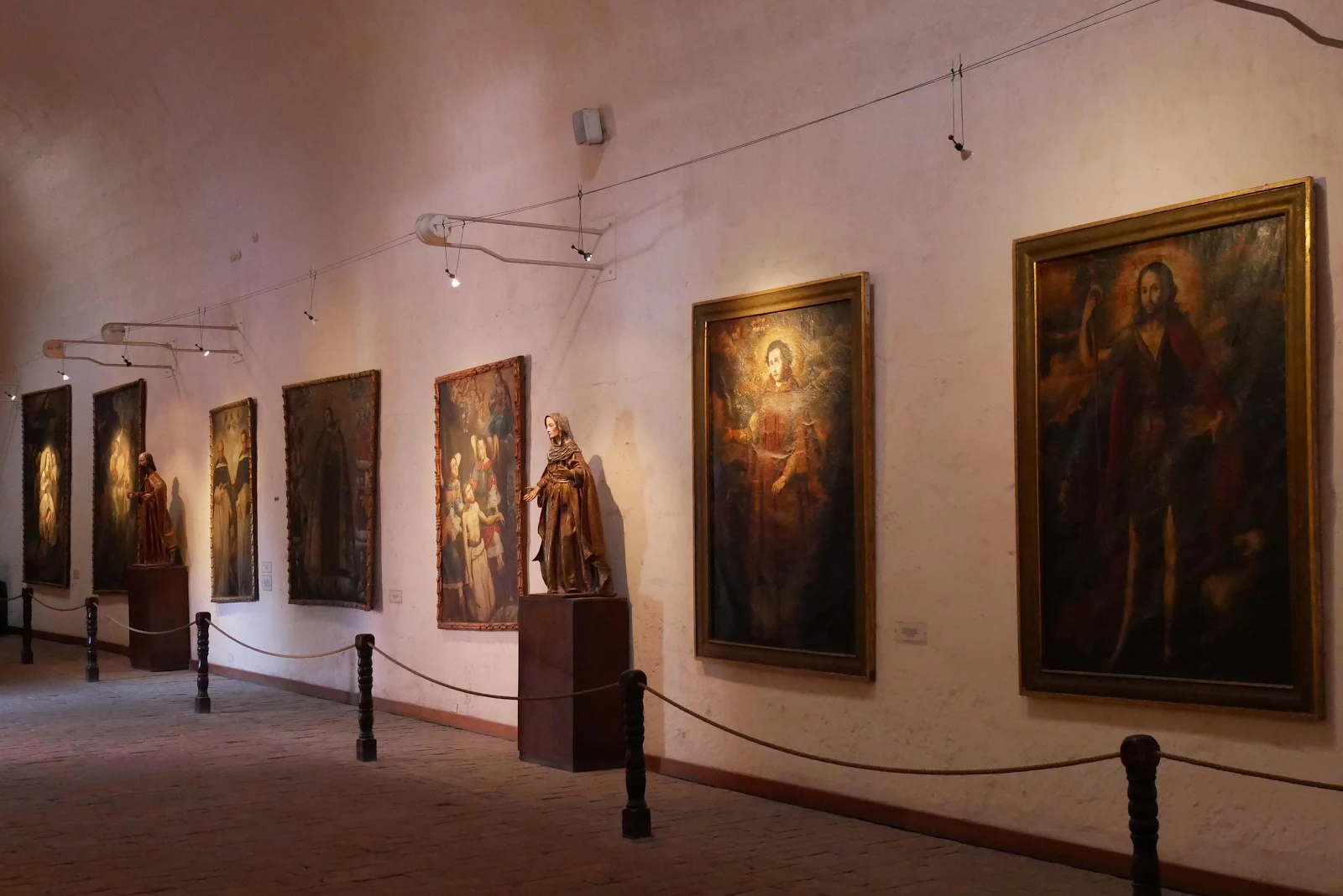
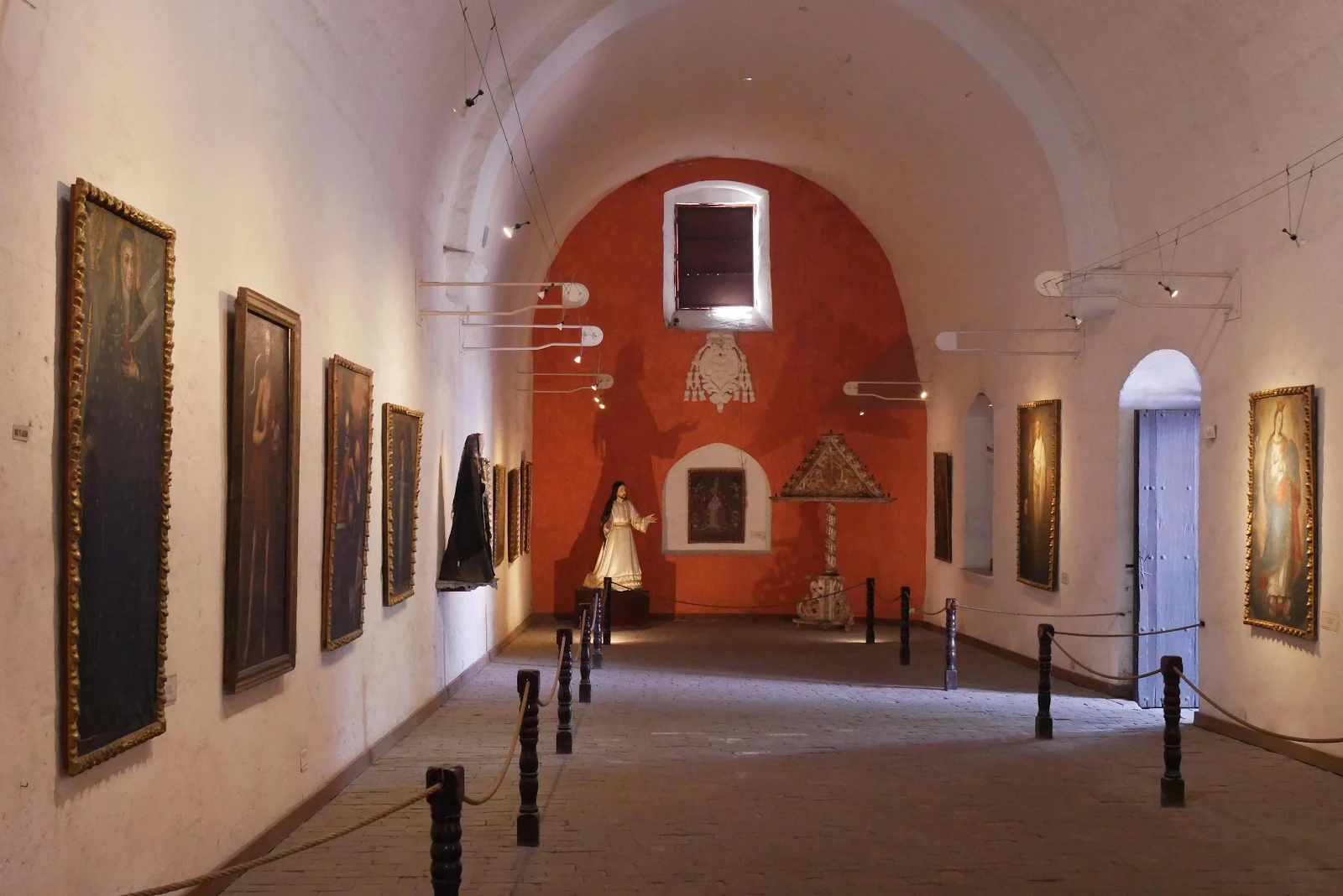
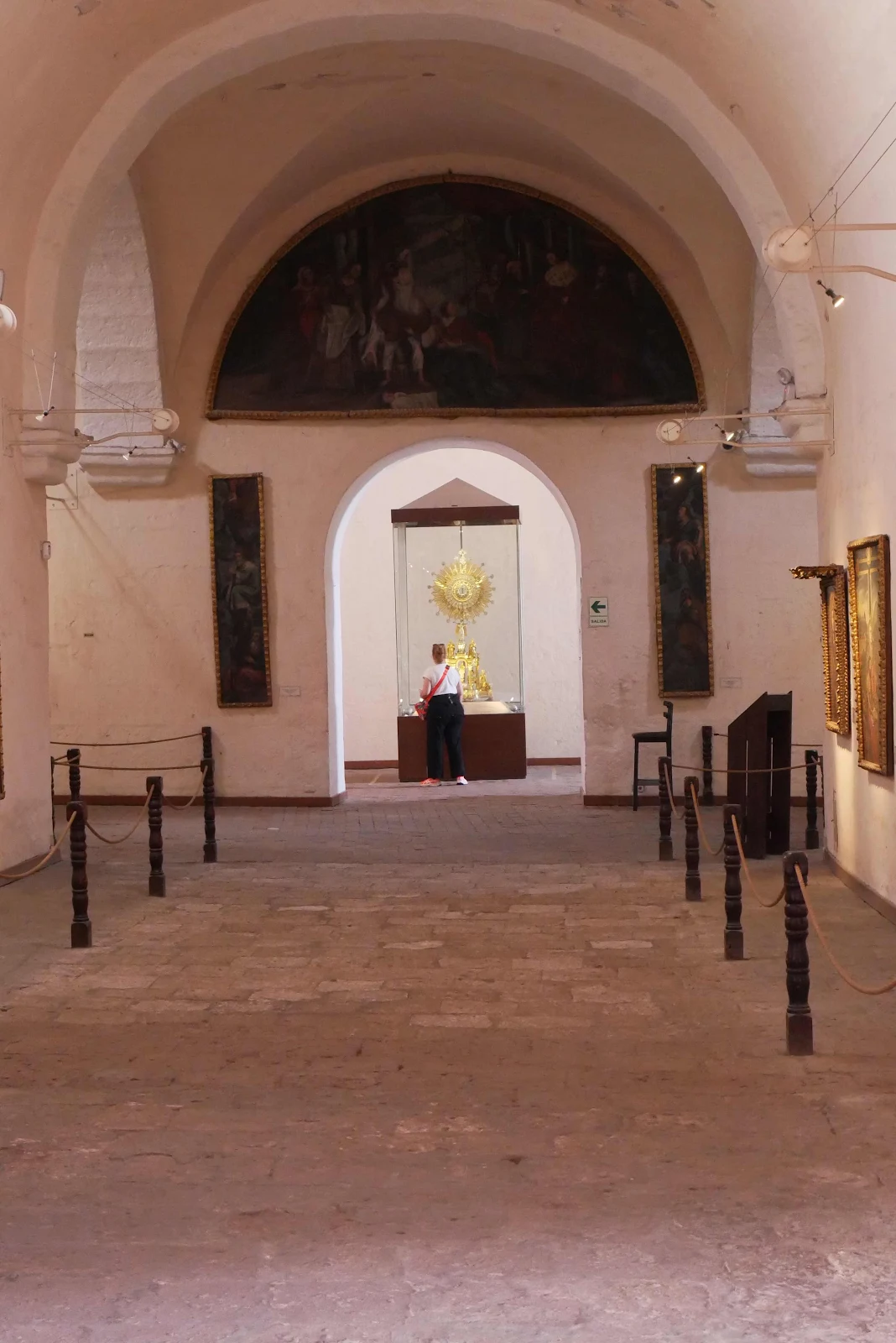
There it is, a bit closer surrounded by Art.
And let’s not forget the Blessed Ana of the Angels Monteagudo. Her name was sent by the bishop to the pope in 1686 after she died with a request she be considered for sainthood. A shipwreck derailed the effort and the letter never arrived in Rome. Two hundred years later they tried again and in 1985 in the fullness of Vatican time Pope John Paul II declared her blessed, the first step.
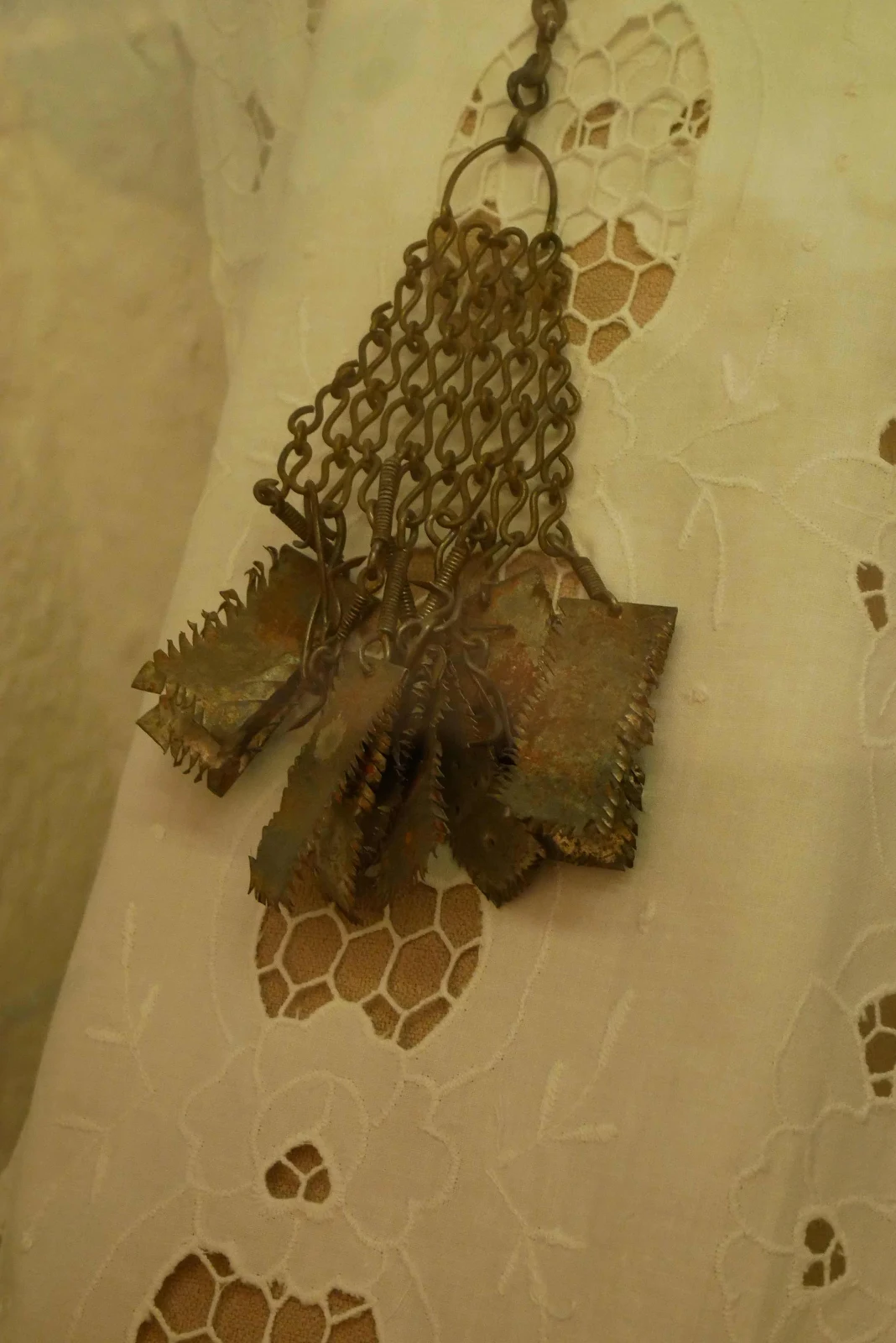
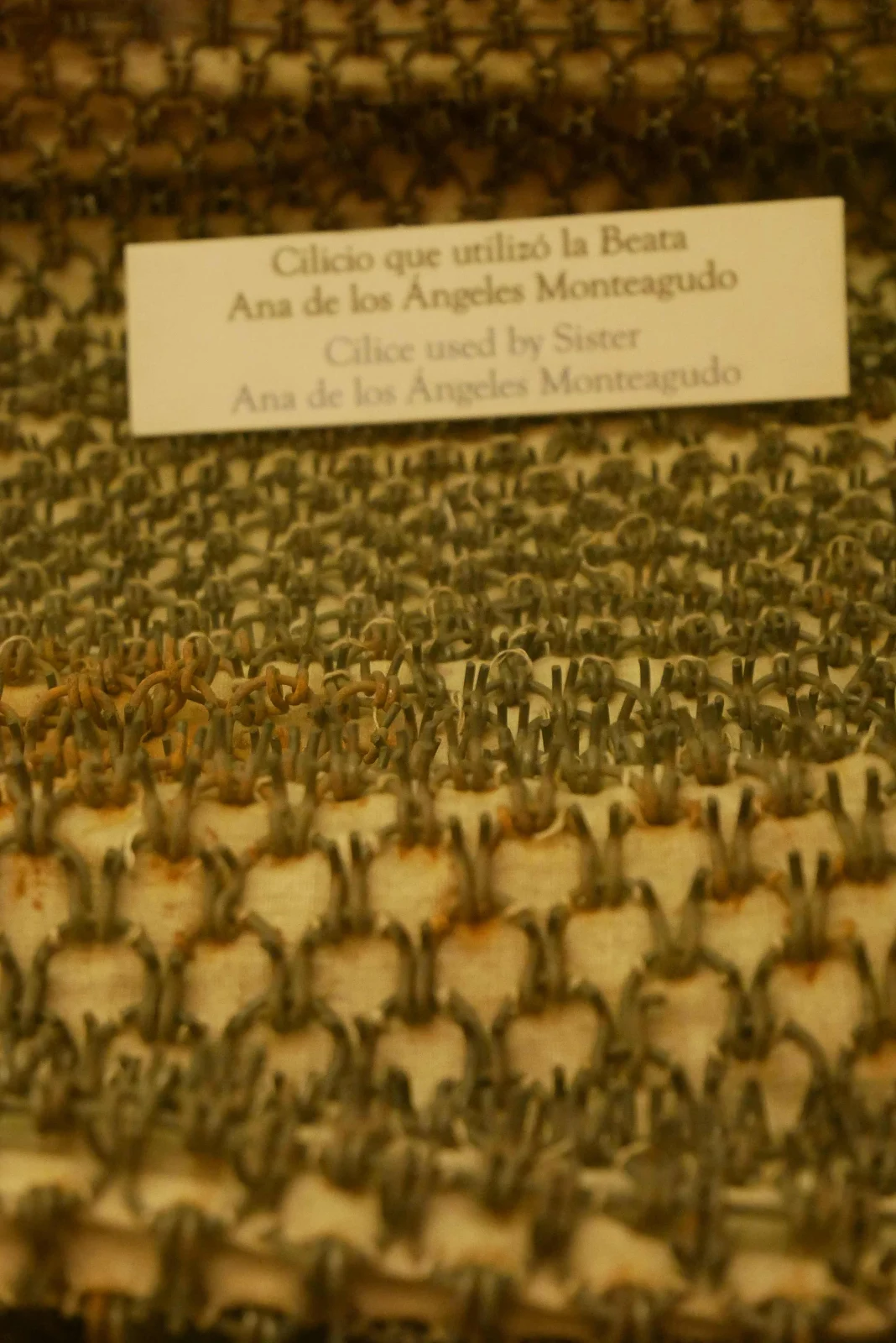
She made it into the nunnery despite her poverty and several miraculous cures are attributed to her. Above we see the whip she used to thrash herself and below we see her actual hair shirt. This stuff is pretty barbaric because this isn’t animal hair as the original hair shorts were made with animal hide worn to irritate the skin and make you forget your sinful self. No, this one is made of rusty metal pieces attached to a cloth that is worn on the back tied around neck and waist.
Anyway I got past the rusty instruments of torture and struggled to find my way out. The communal dining room.
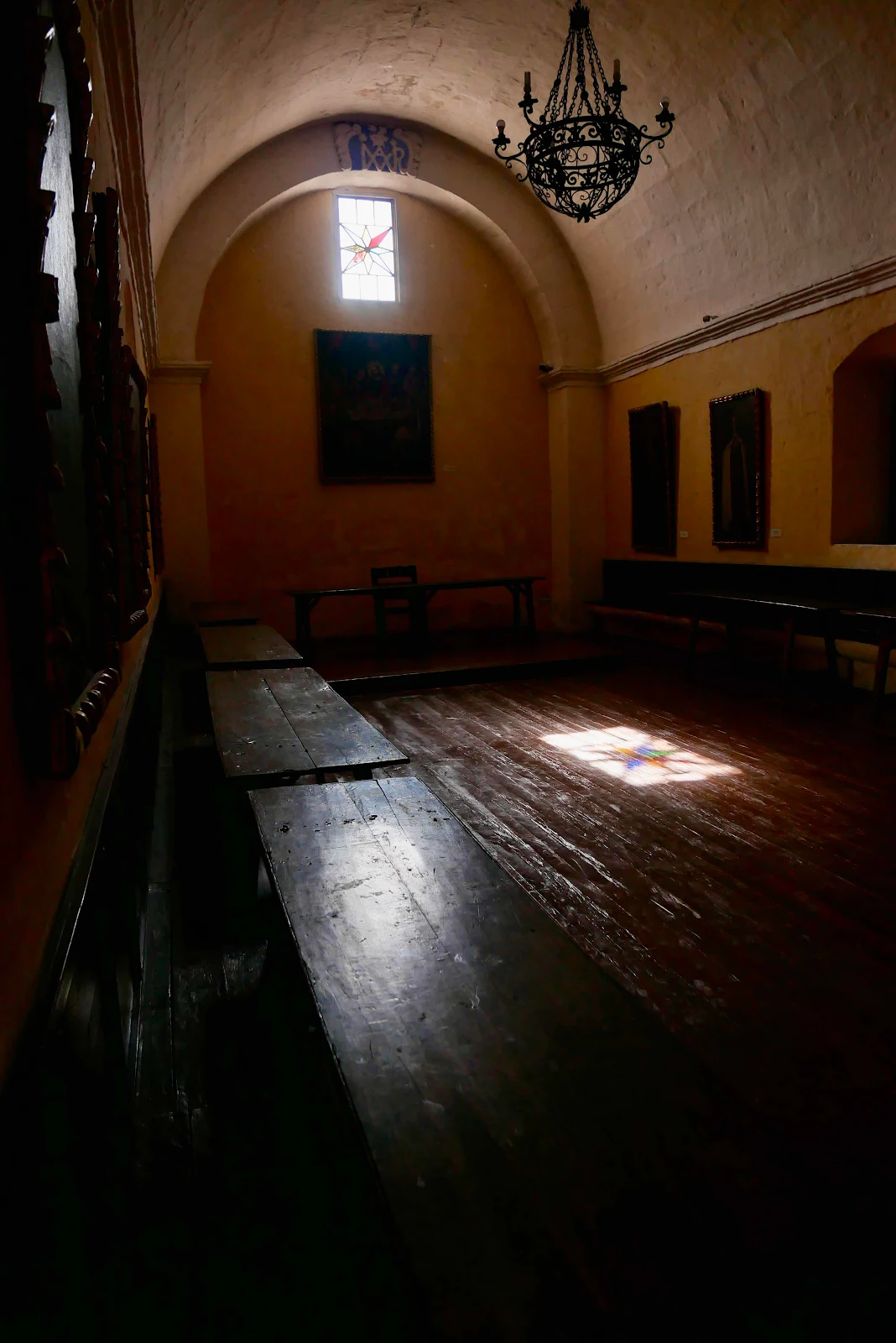
Meals were eaten in silence in this hall.
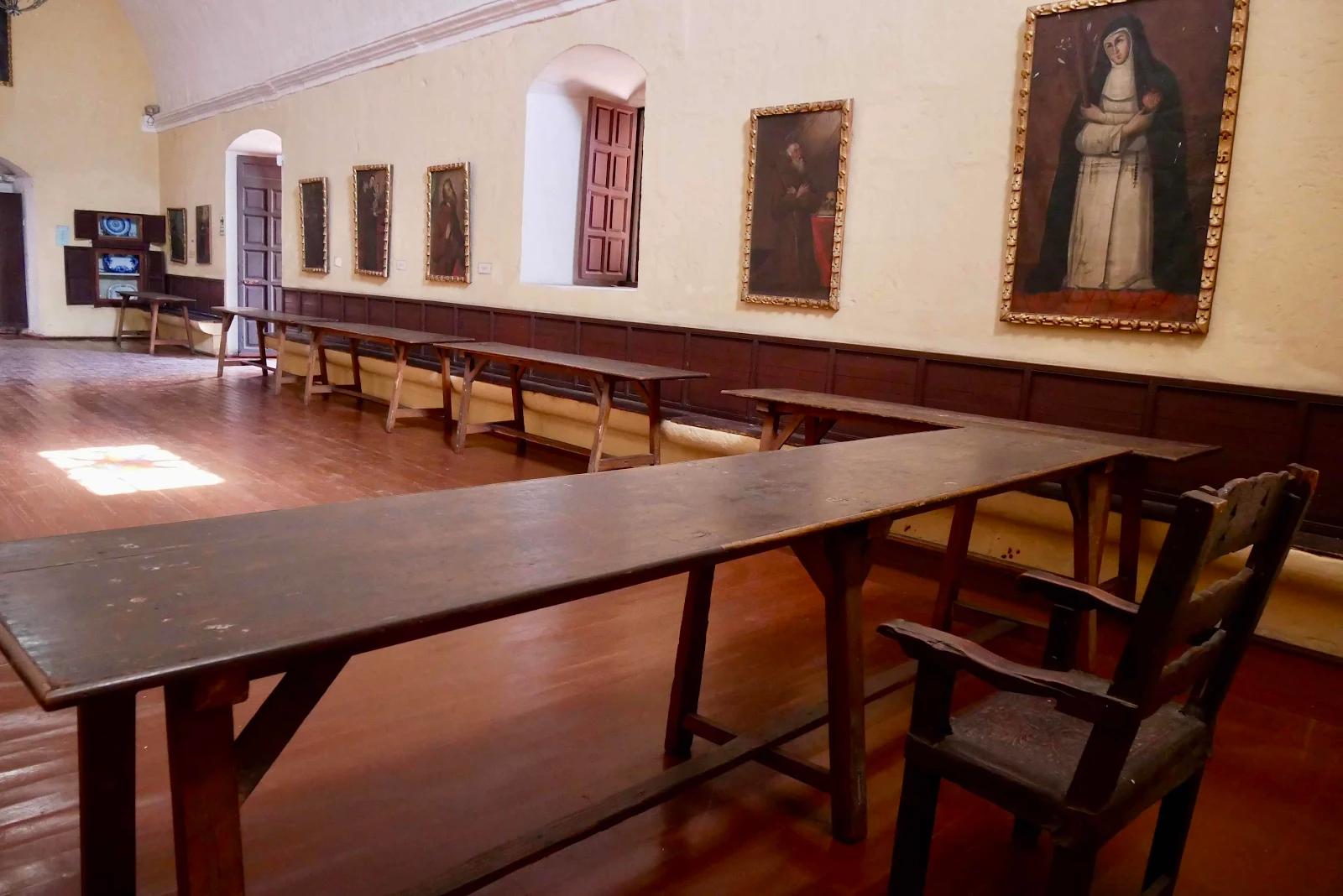
While one member of the community stood up here and read improving literature to the diners. Probably not exciting tales of knights errant but lore likely to d lives of the saints and so forth. It is a bit like the readers in the Cuban tobacco factory and the monks at my youthful monastery did the same thing. We students didn’t, we unruly mobbed yelled pushed, shoved and gorged in our civilian dining room then ran outside to torture each other. What sweet young things we were.
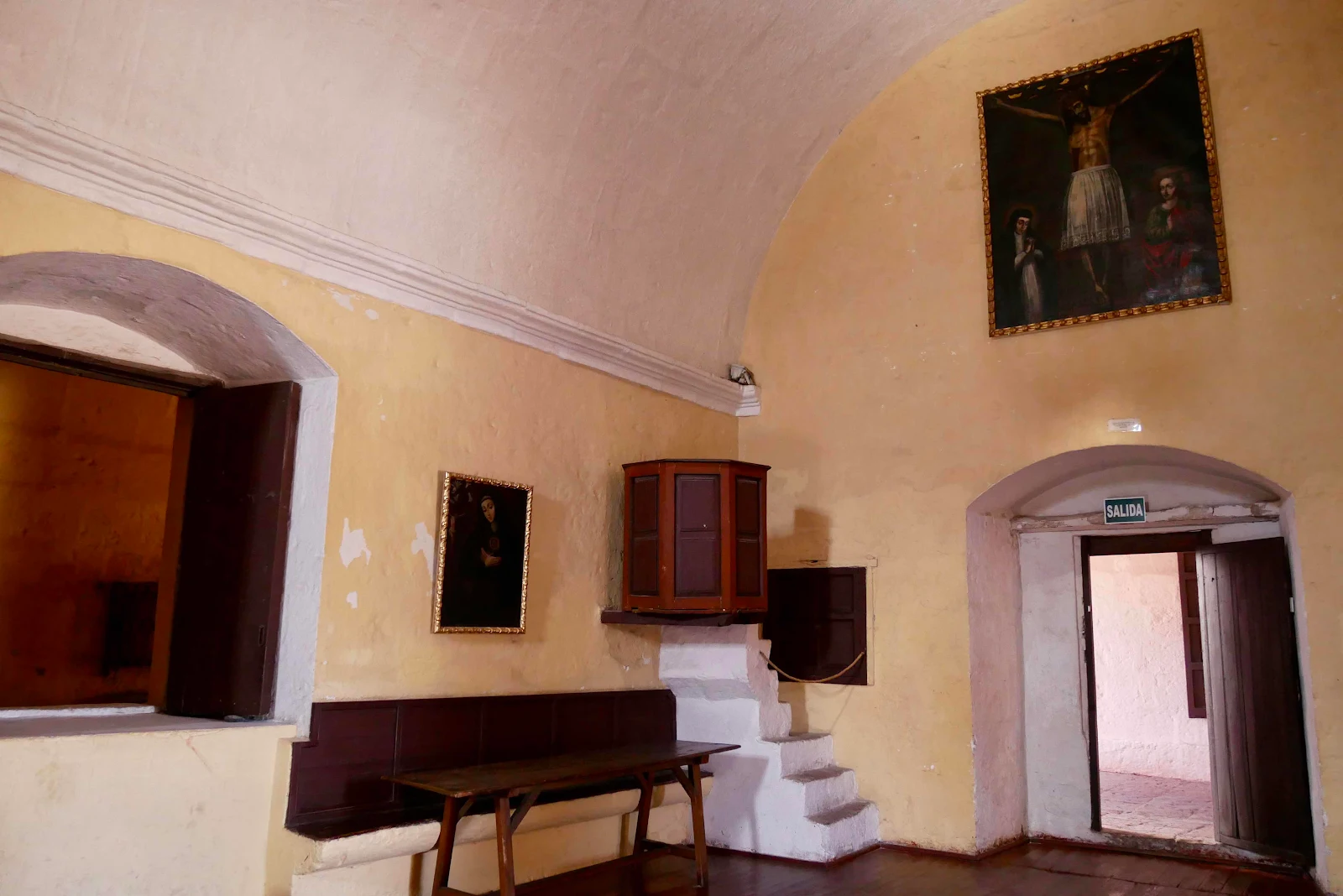
Back to reality.
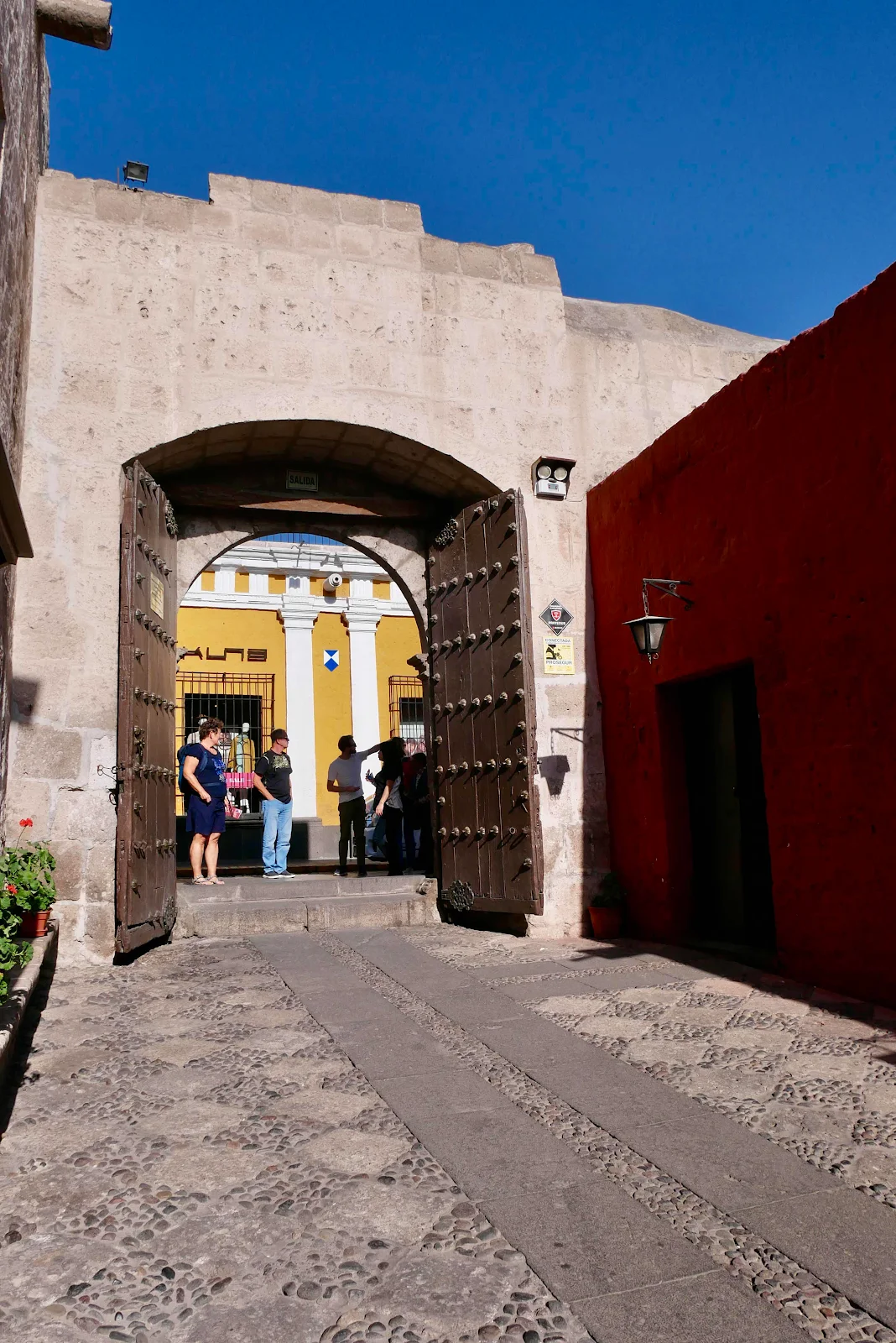
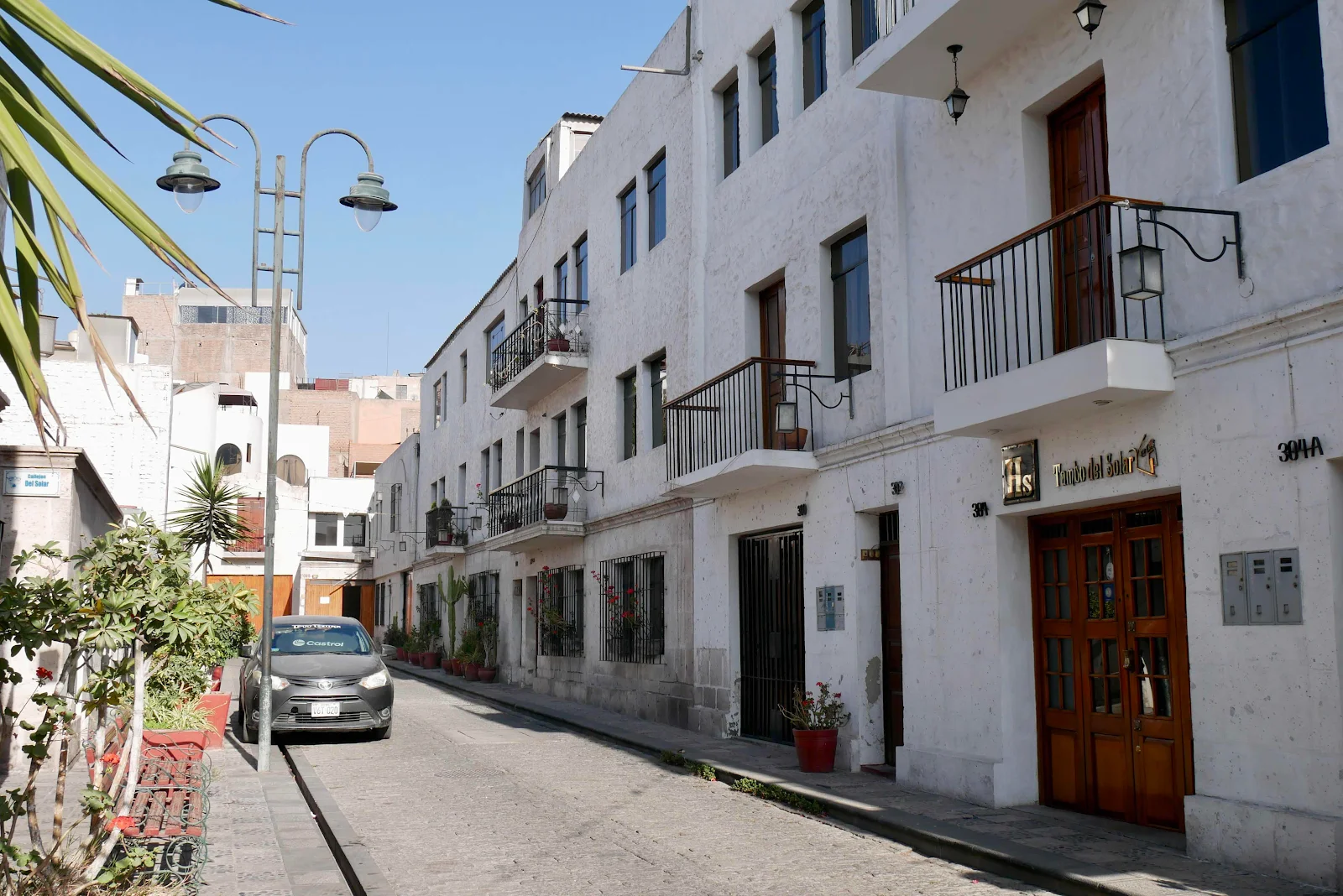
A neighborhood not dissimilar to the streets inside the nunnery…
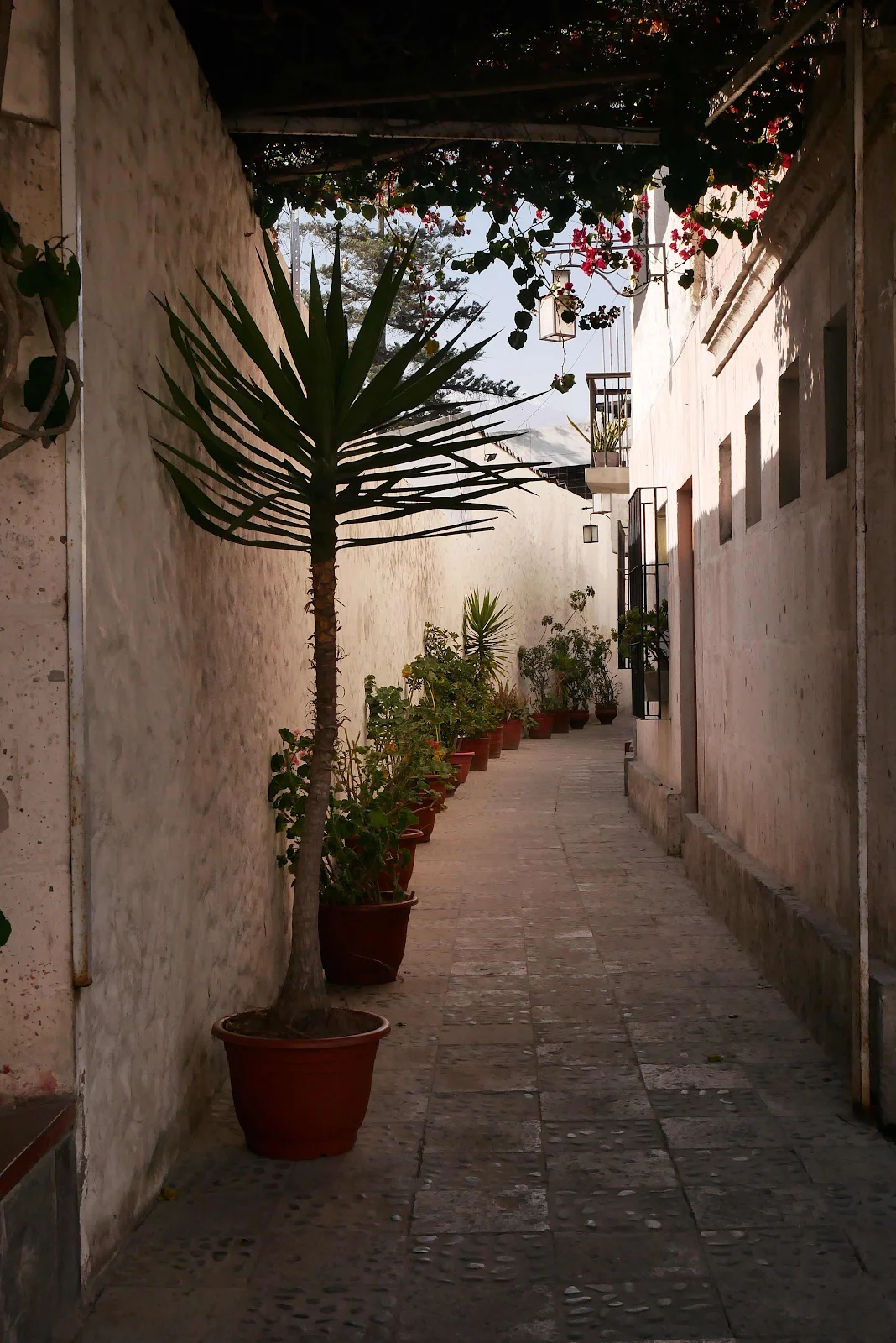
Similar rain gutters.
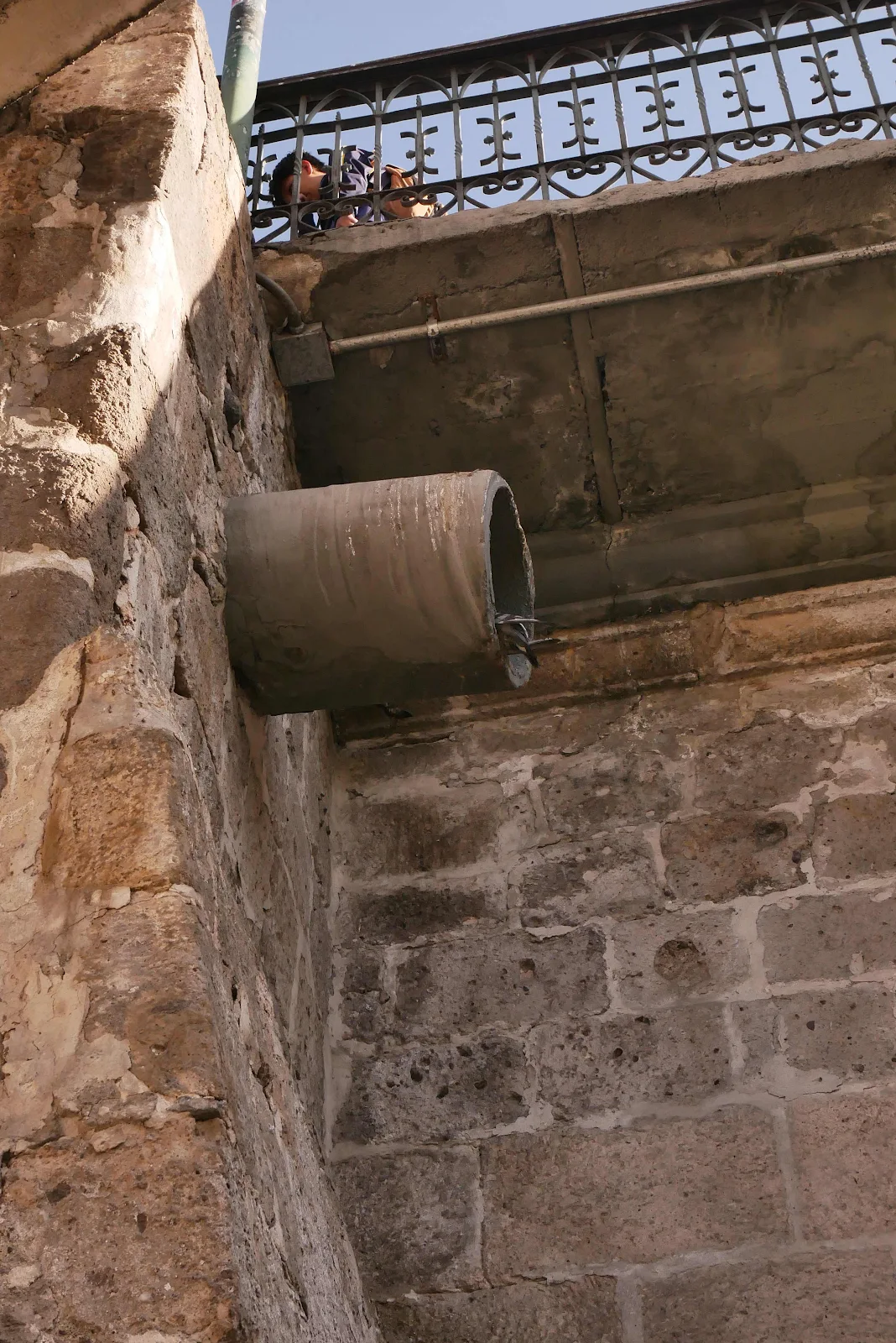
And a different life for them.