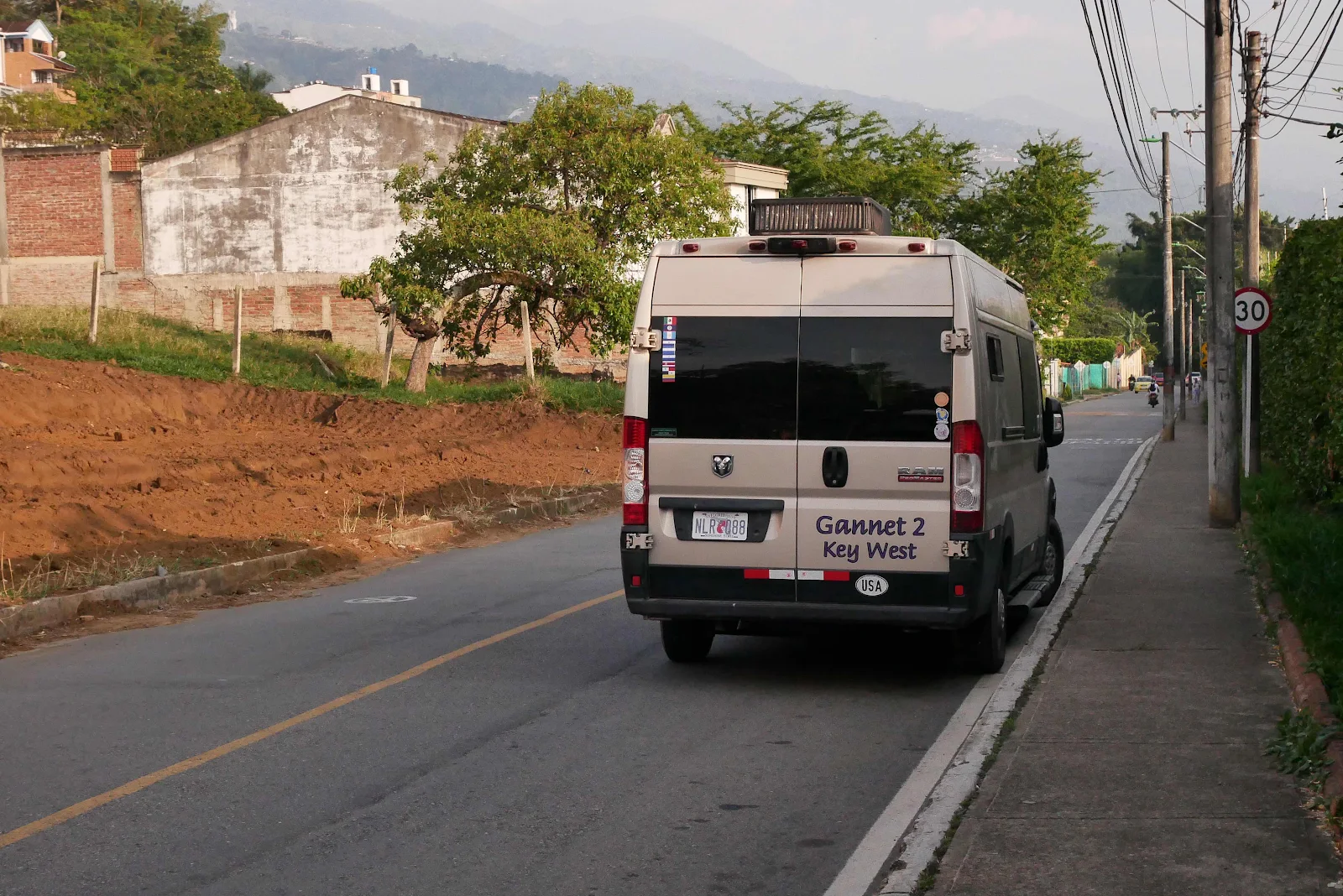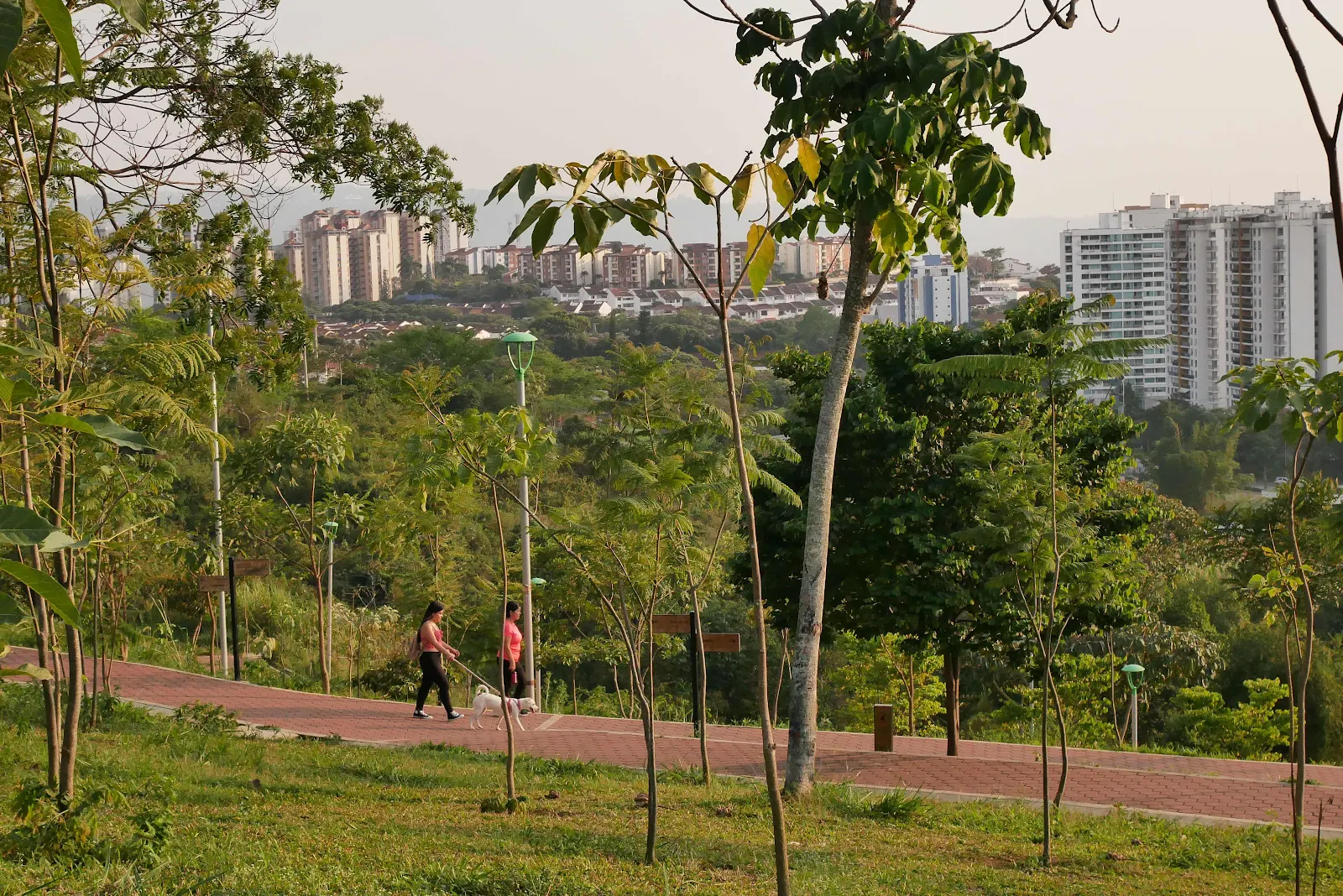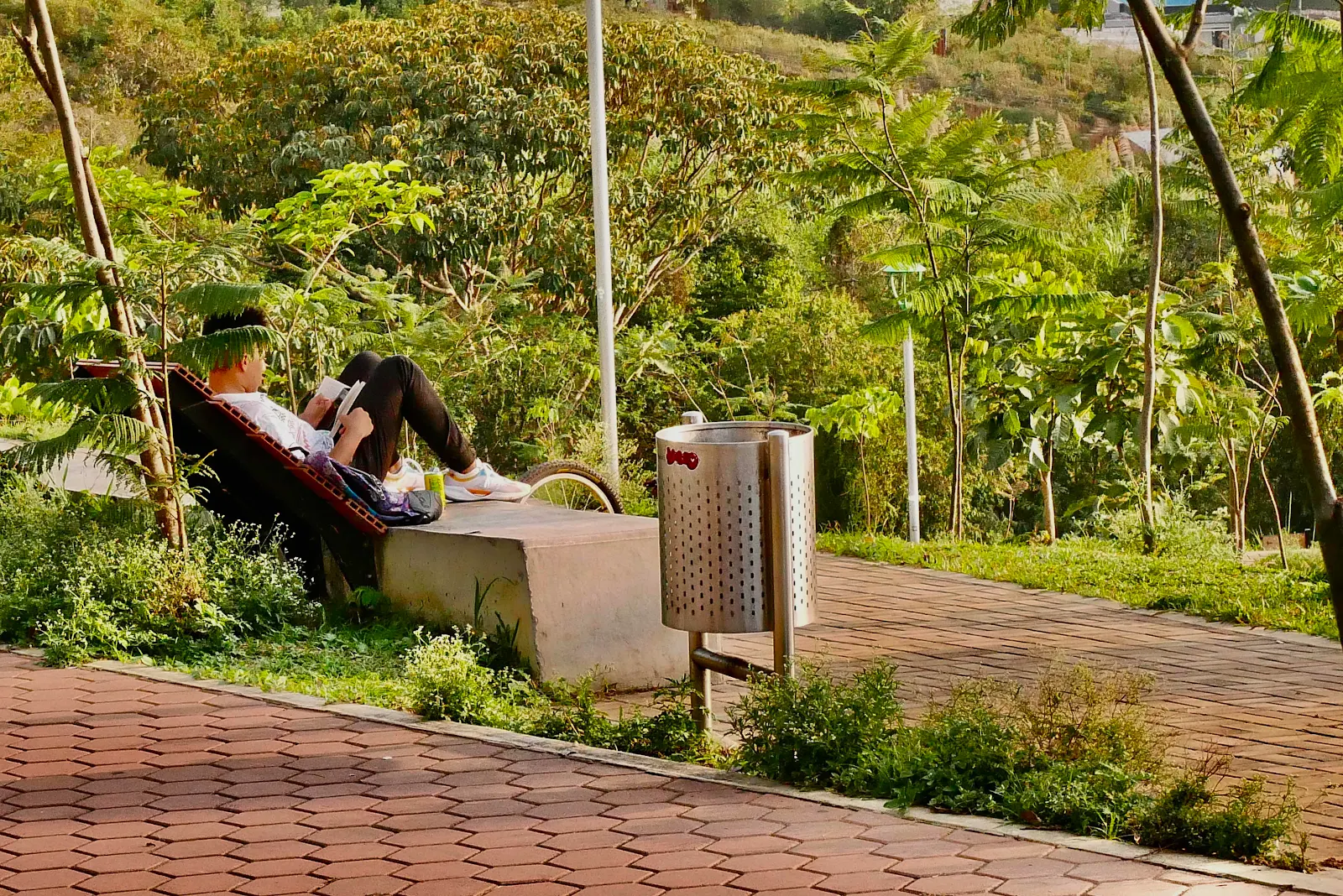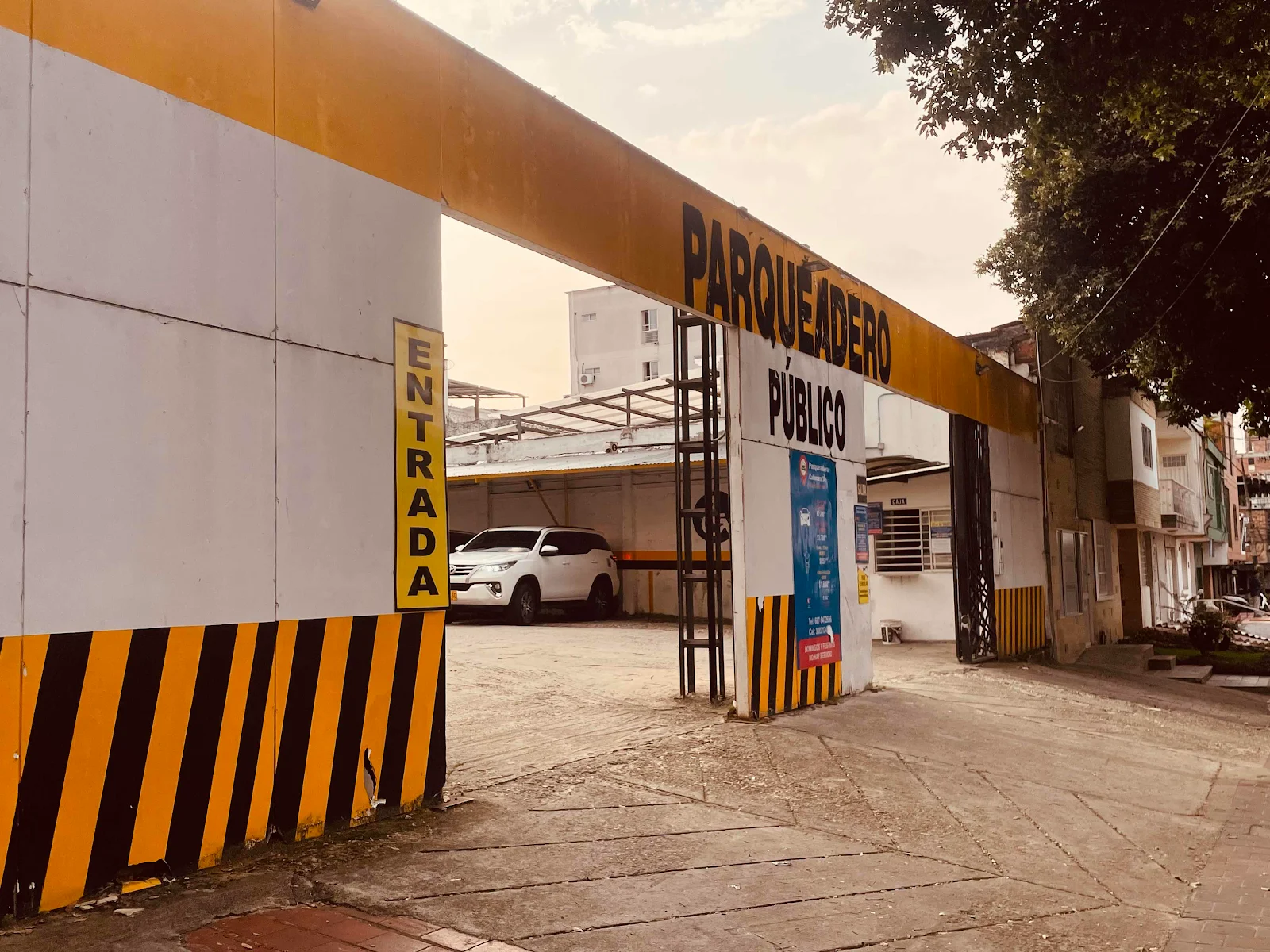
Friday was a hard day’s drive, and by the time the sun was setting my nerves were frayed and I was exhausted, and I am someone who enjoys driving more than anyone you know.
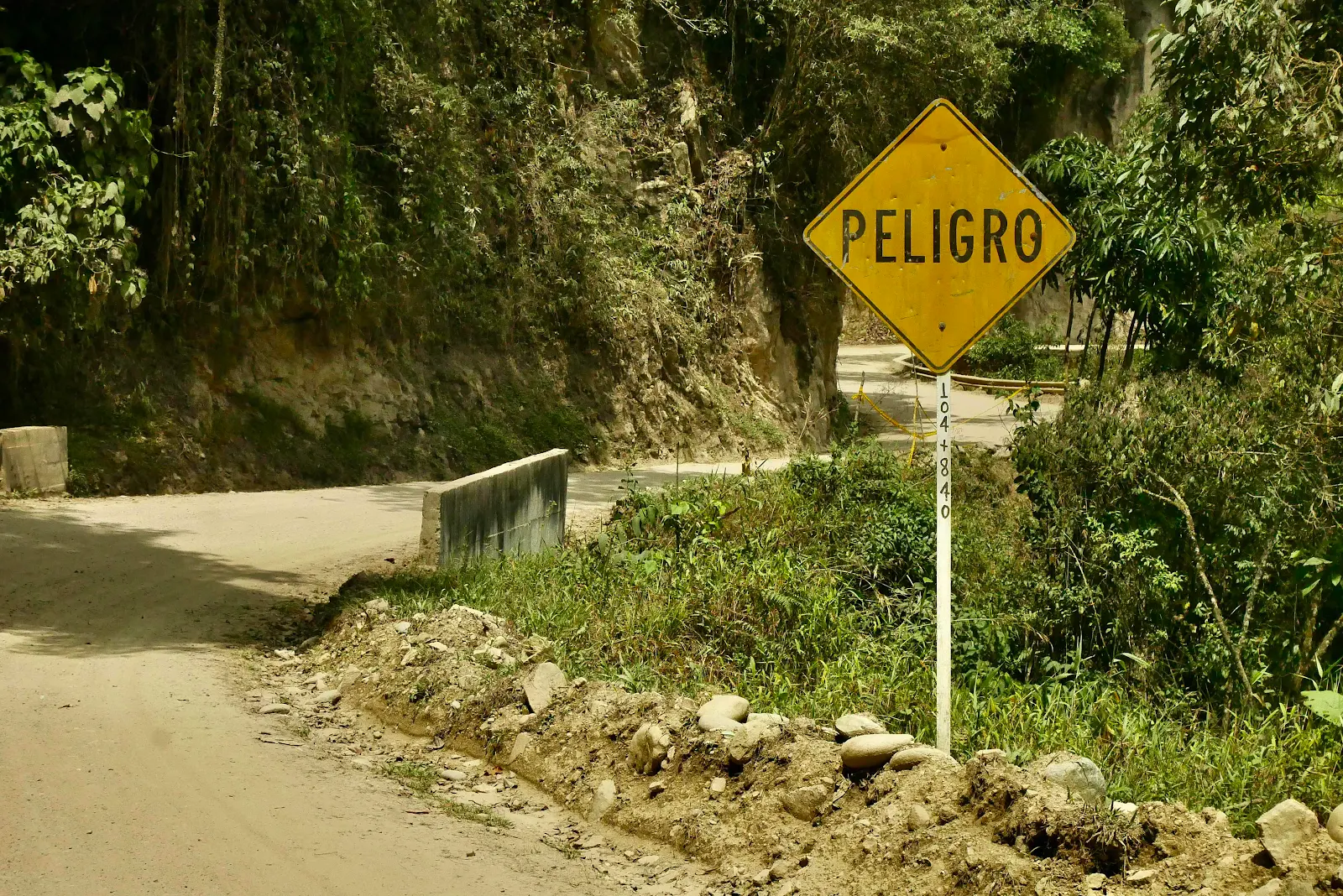
I have seen videos of death roads all across South America and now we have one of our own under our belts.
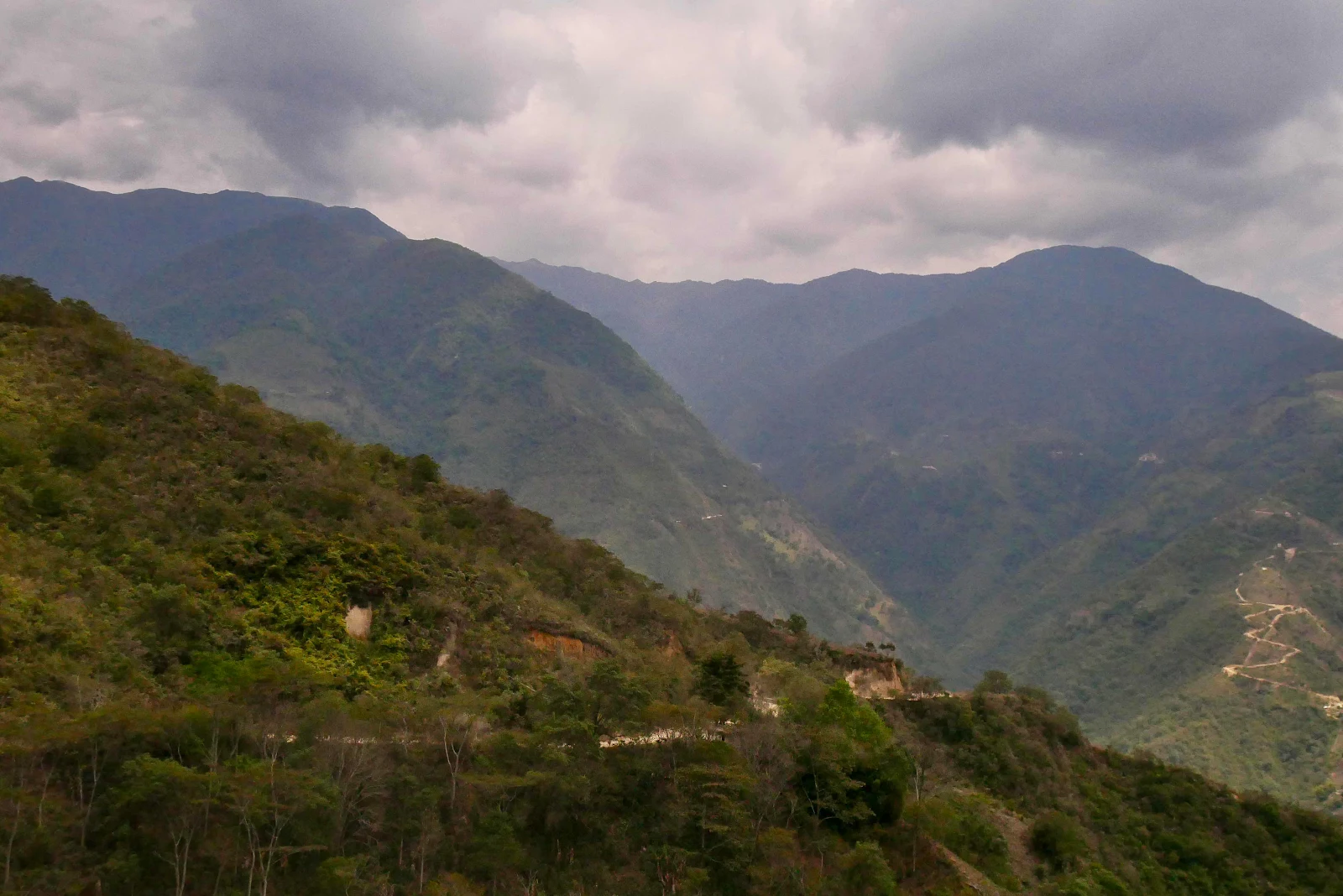
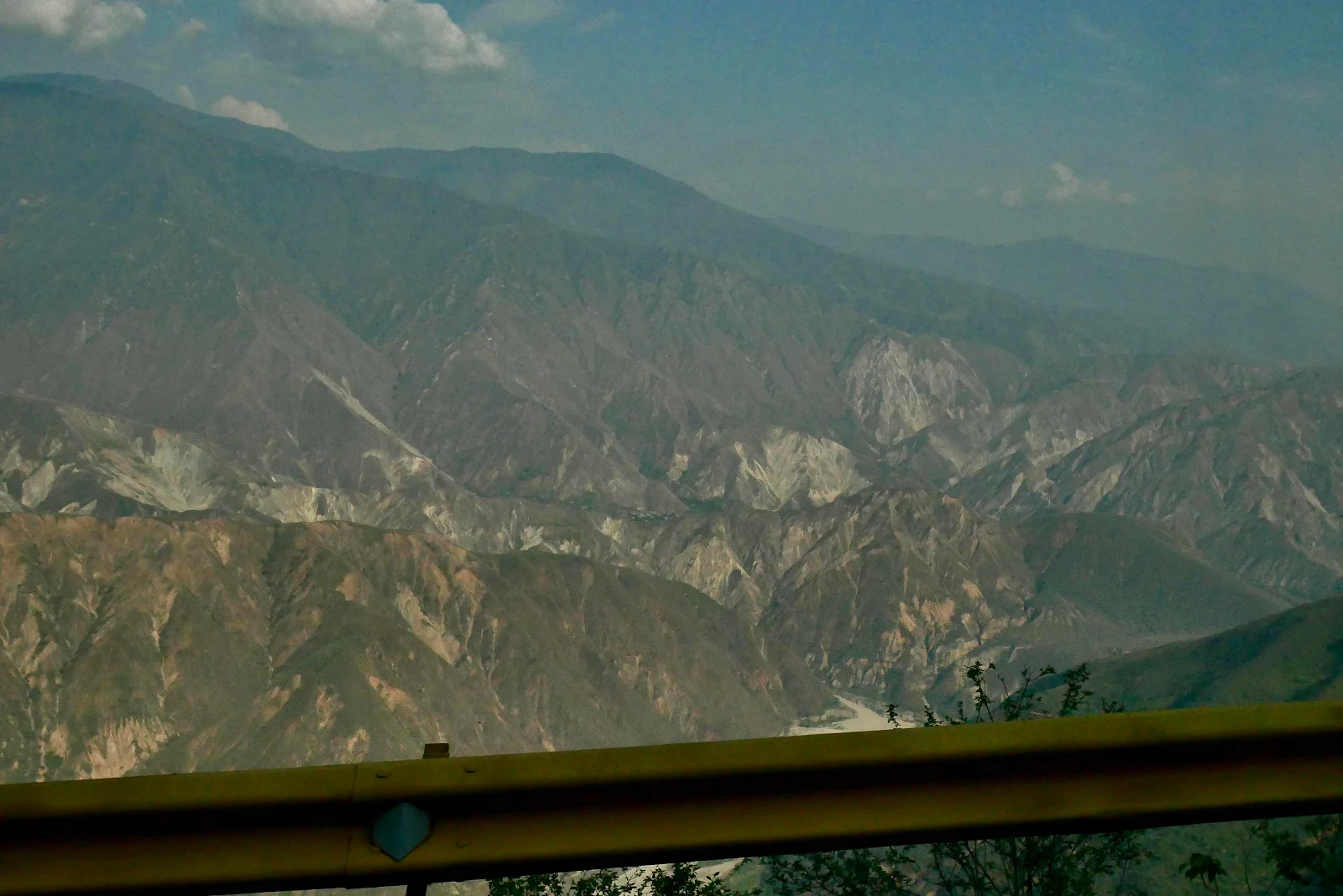
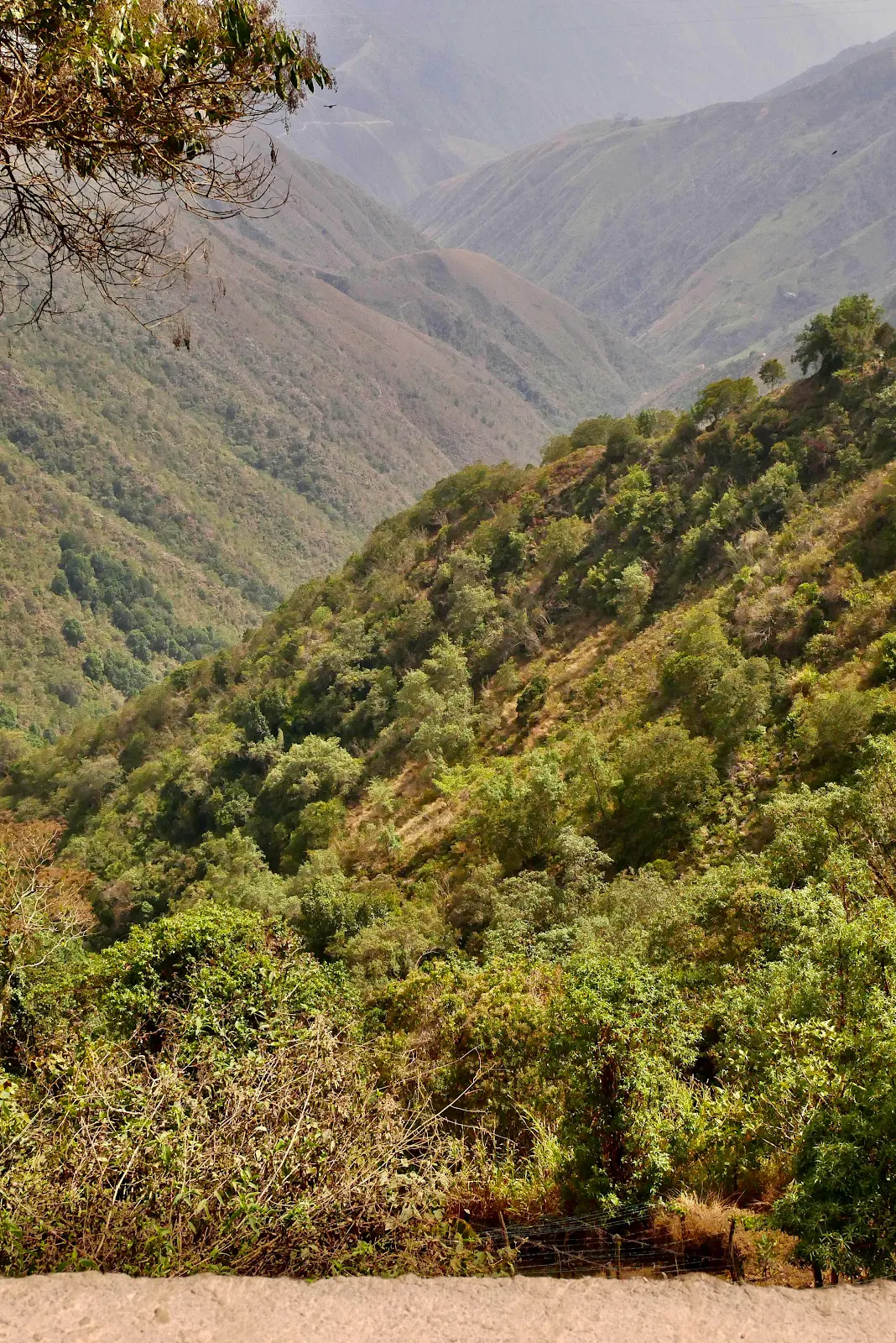
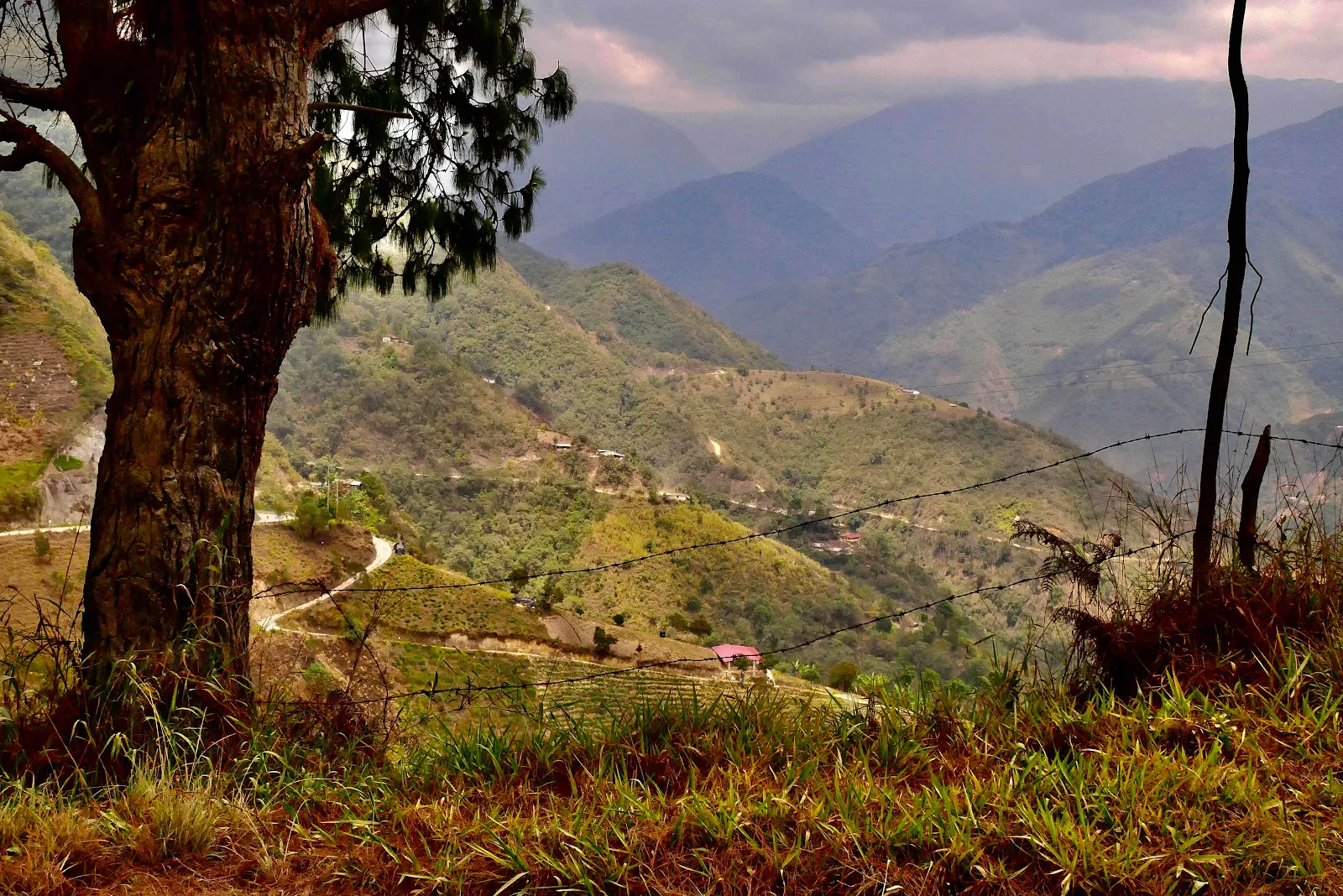
Officially it’s highway 55ST and we got to 7,000 feet peering into the abyss of a modest, yet vast, canyon in the foothills of the Andes and that was when we asked ourselves what were we doing there. We had no good answer, so after lunch…
…we turned around and drove two hours back down the mountain to the main road at 5,000 feet and arrived on pavement with a sigh of relief.
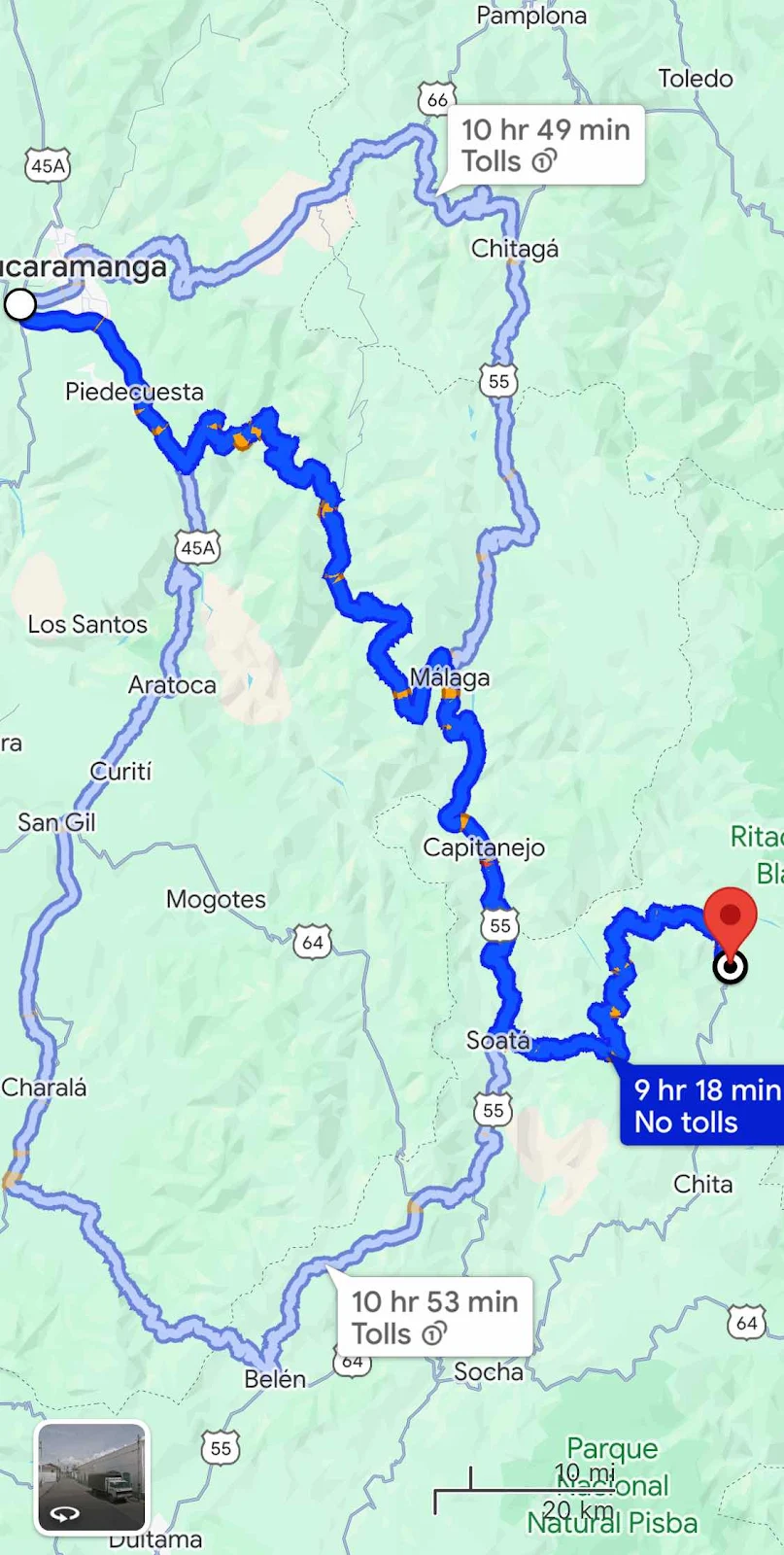
Our plan had been to drive to El Cocuy, a village set at 9,000 feet and the entrance to the national park of the same name; a park that incidentally doesn’t allow dogs. The idea had been to test ourselves at altitude driving a winding mountain road, spend a couple of days camping in overnight temperatures as low as 40 degrees and then come back down.
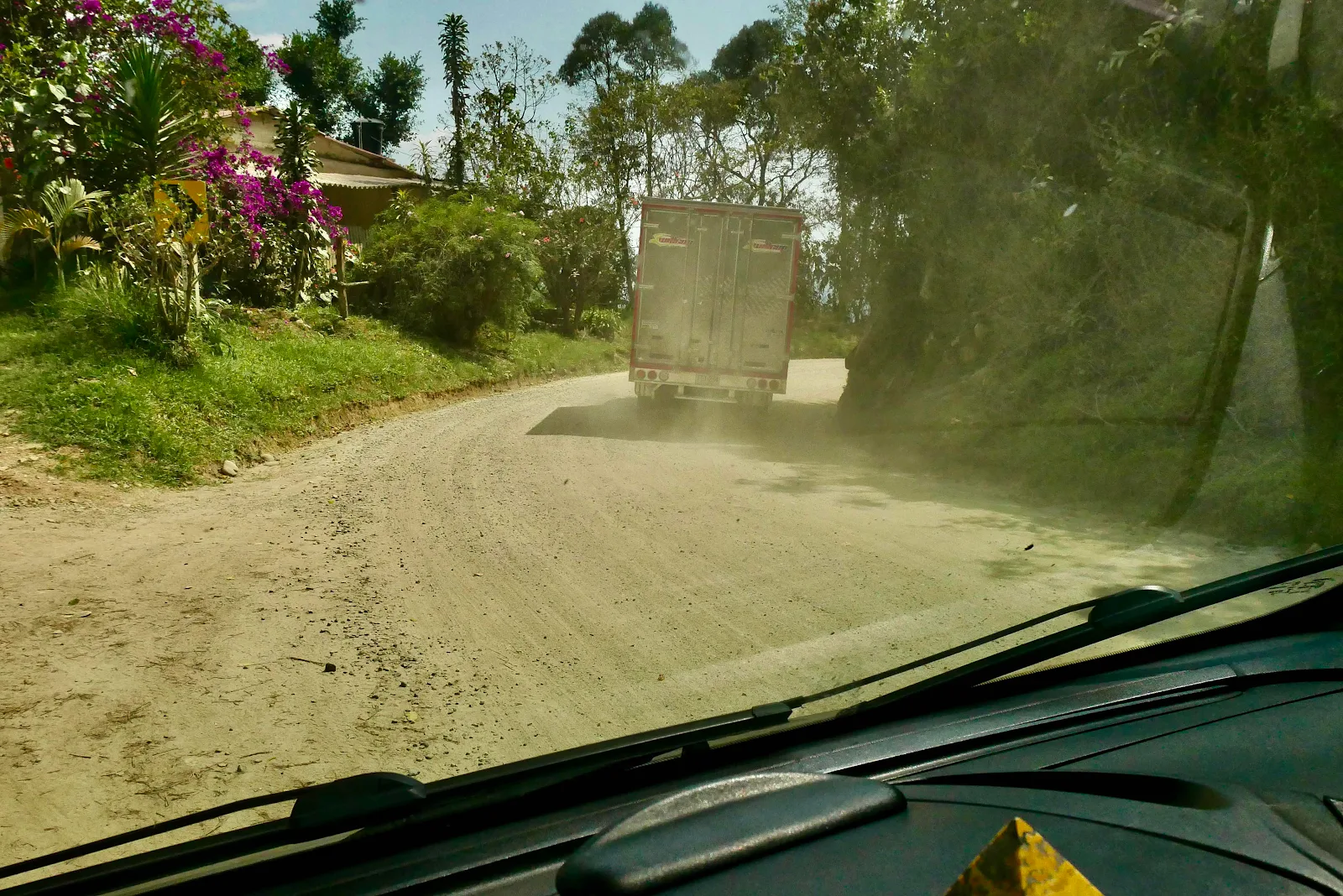
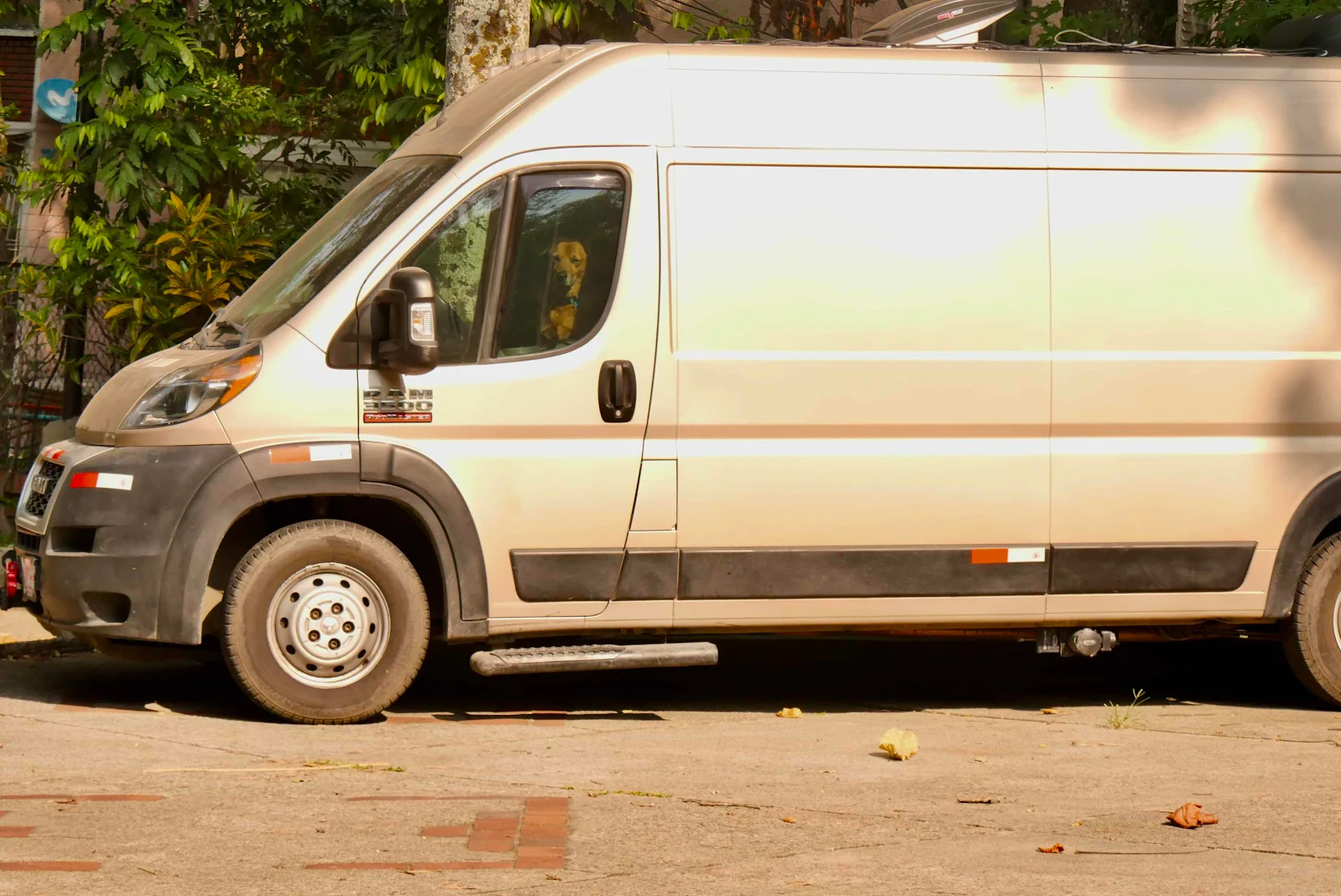
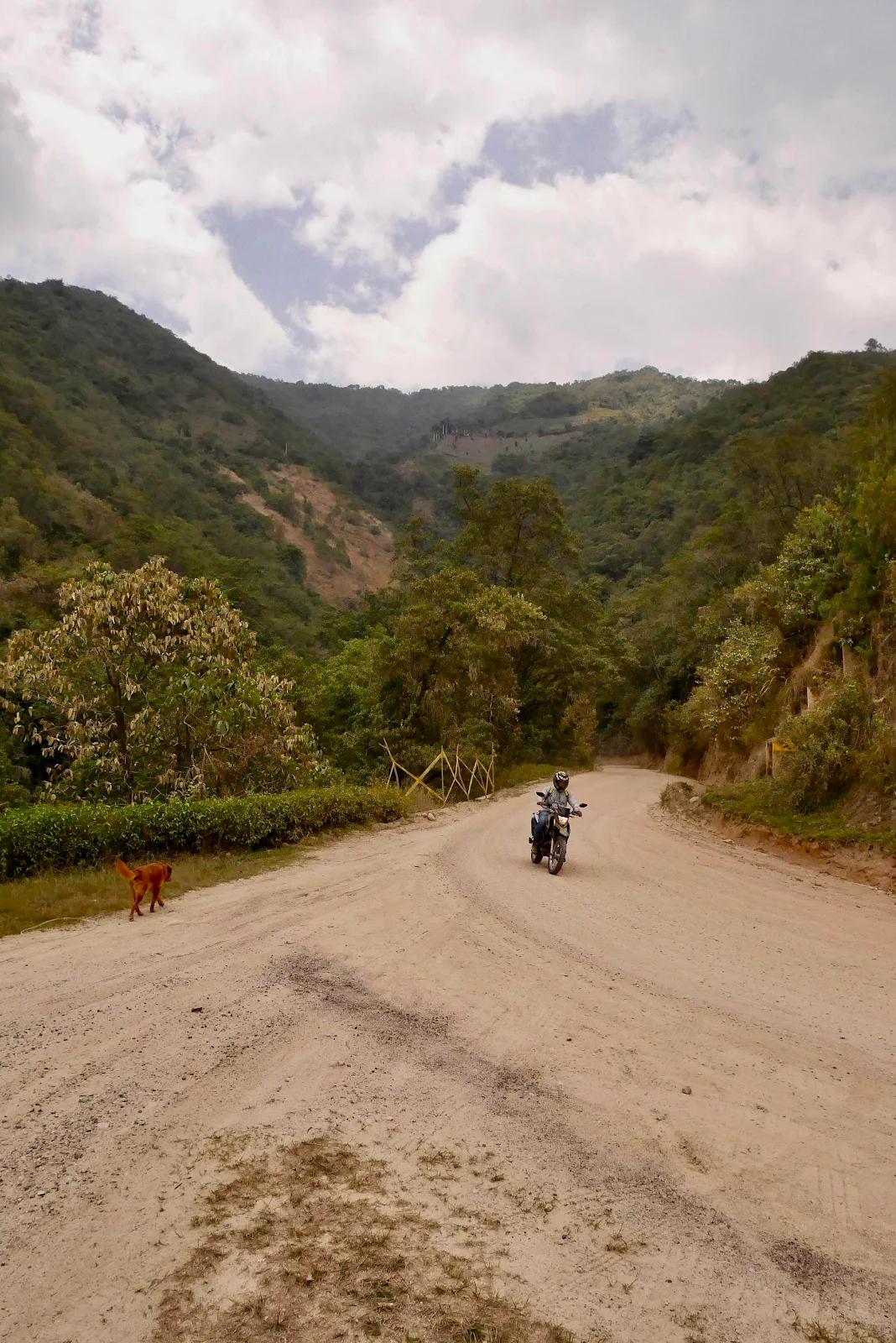
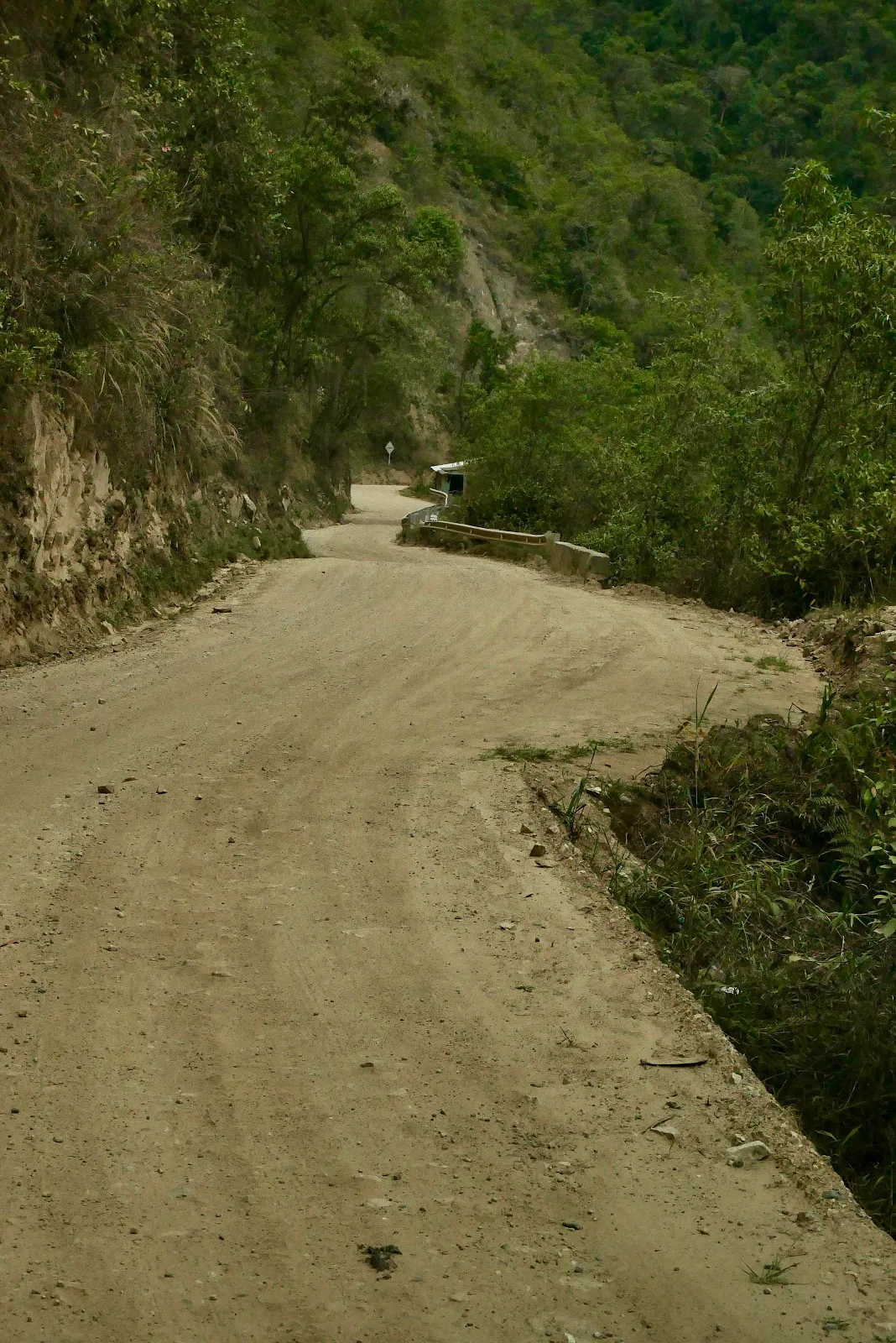
We found the road to be slow going for our heavily laden Promaster picking our way at ten or 15 miles per hour on hard packed dusty dirt that would be a muddy mess in the rain. The road surface itself wasn’t particularly technical even though it had its moments.
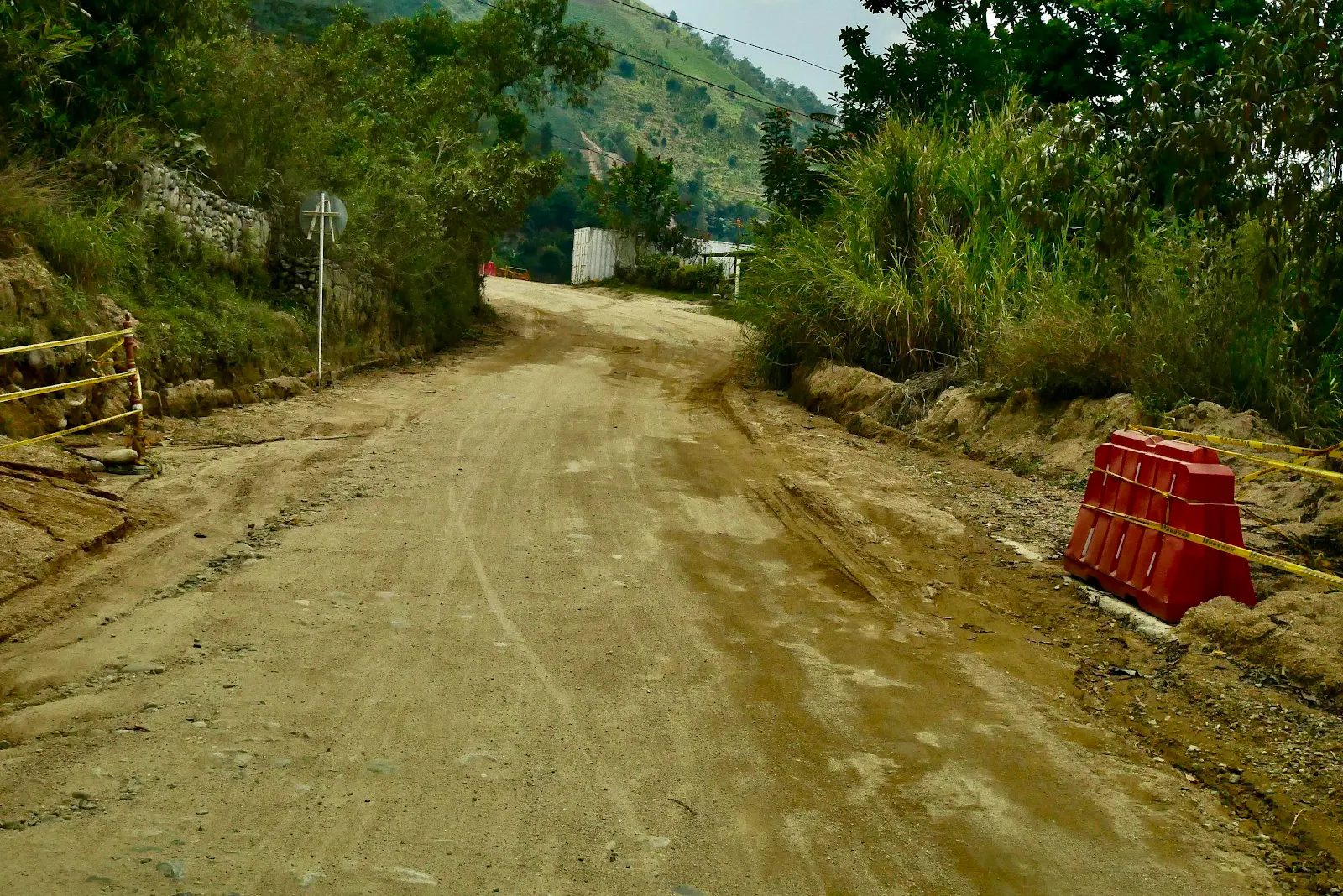
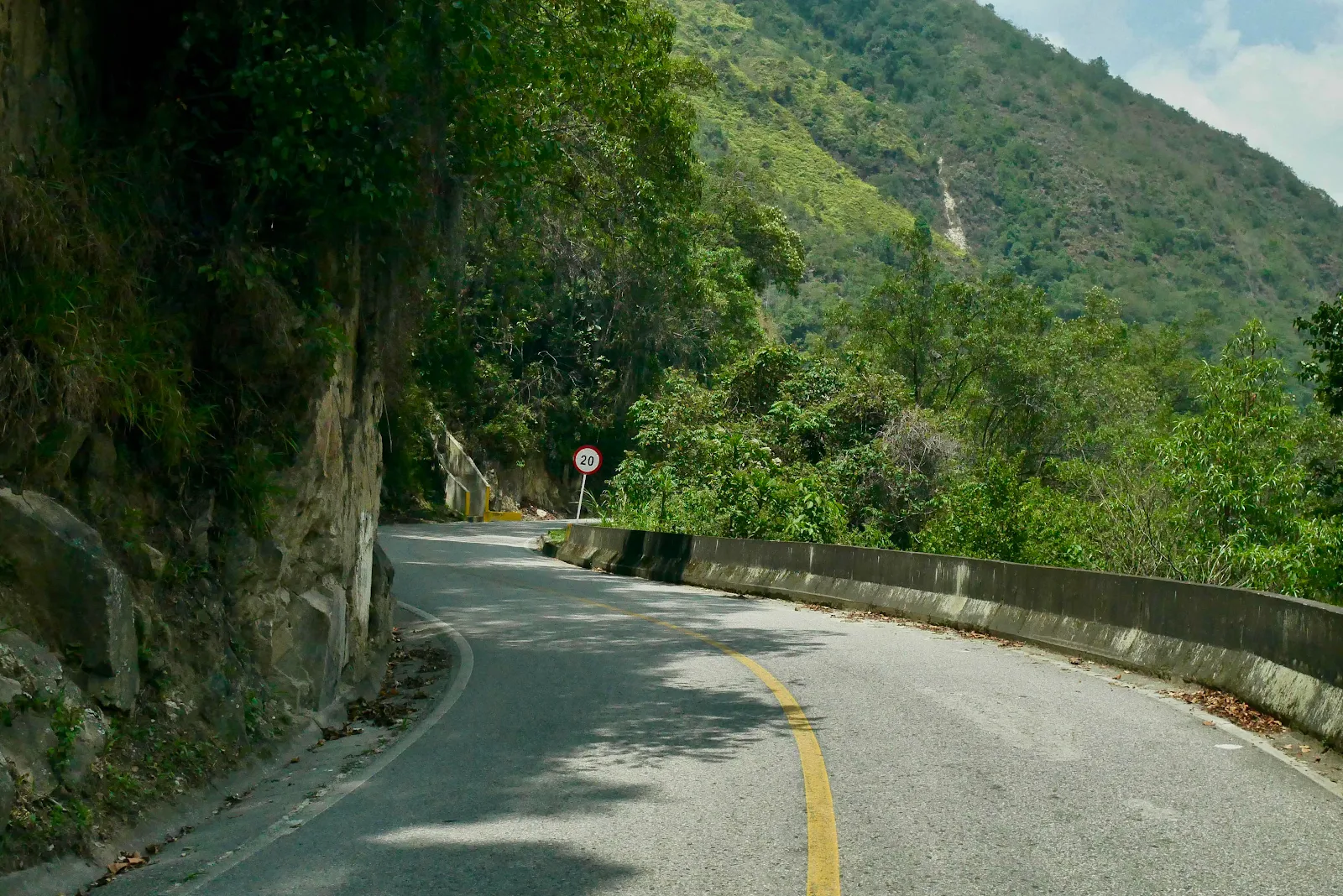
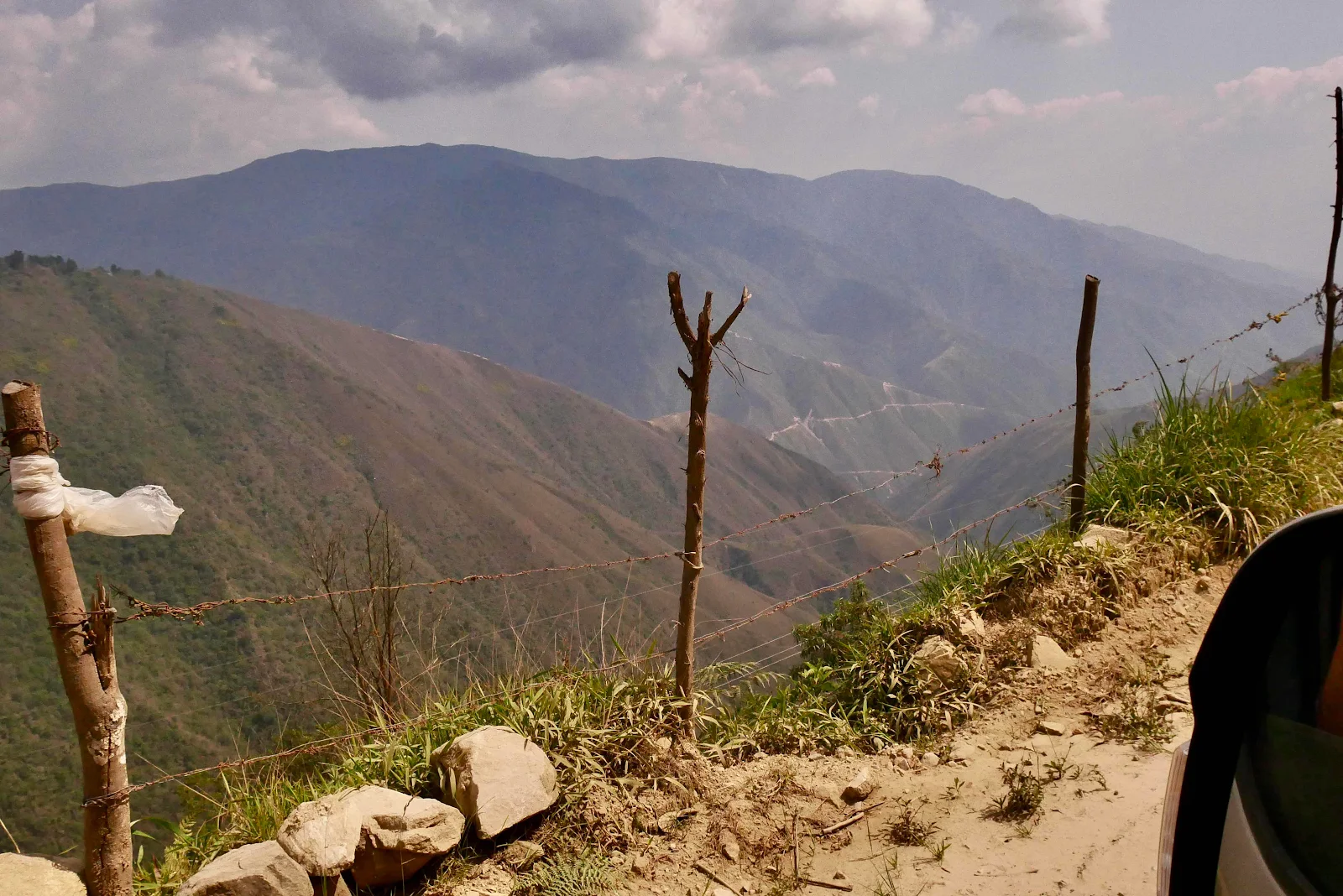
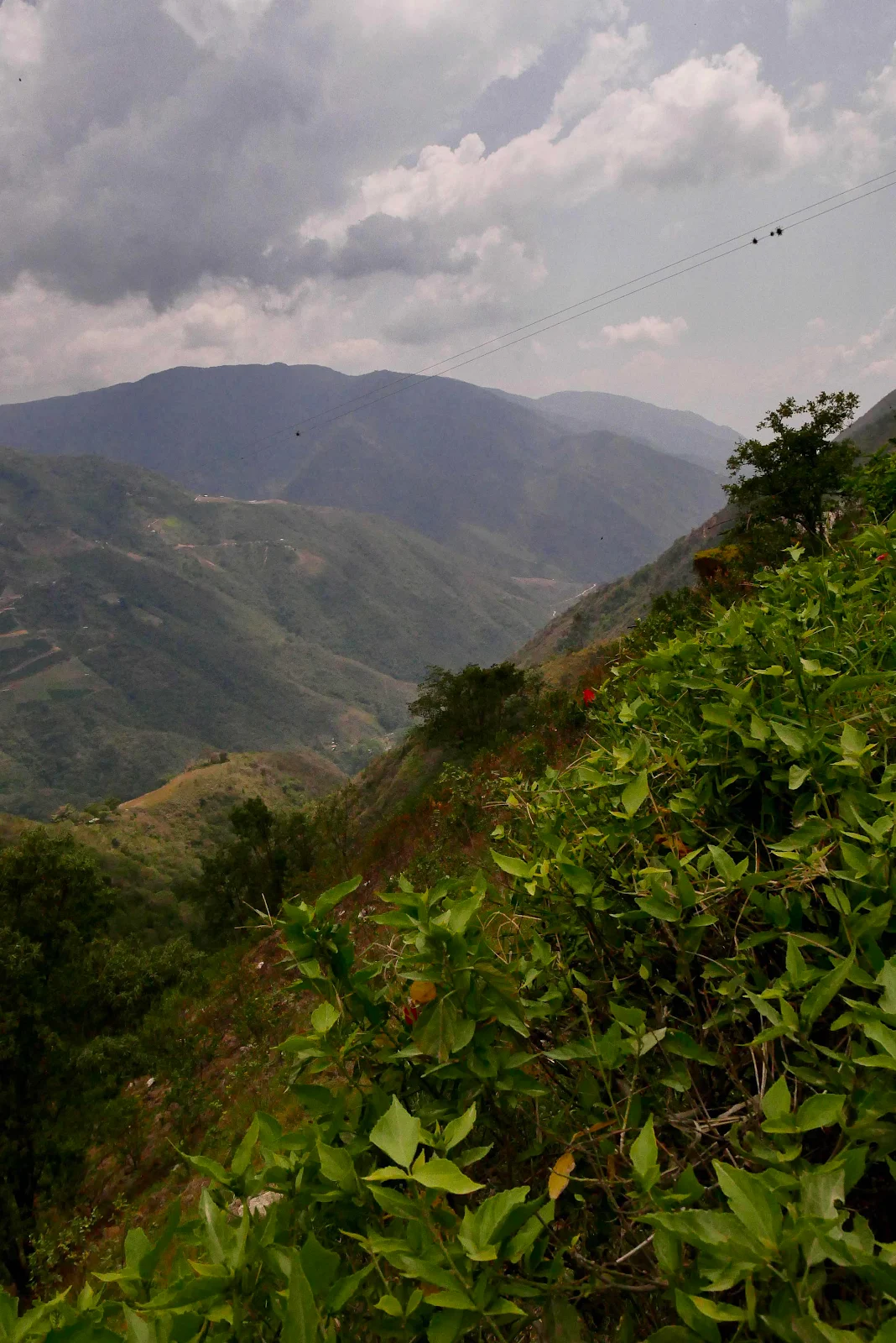
There were quite a few guardrails and cement walls along much of the road though on most of it you could stare over the edge into a vertical precipice thousands of feet deep. Evidence of landslides was common.
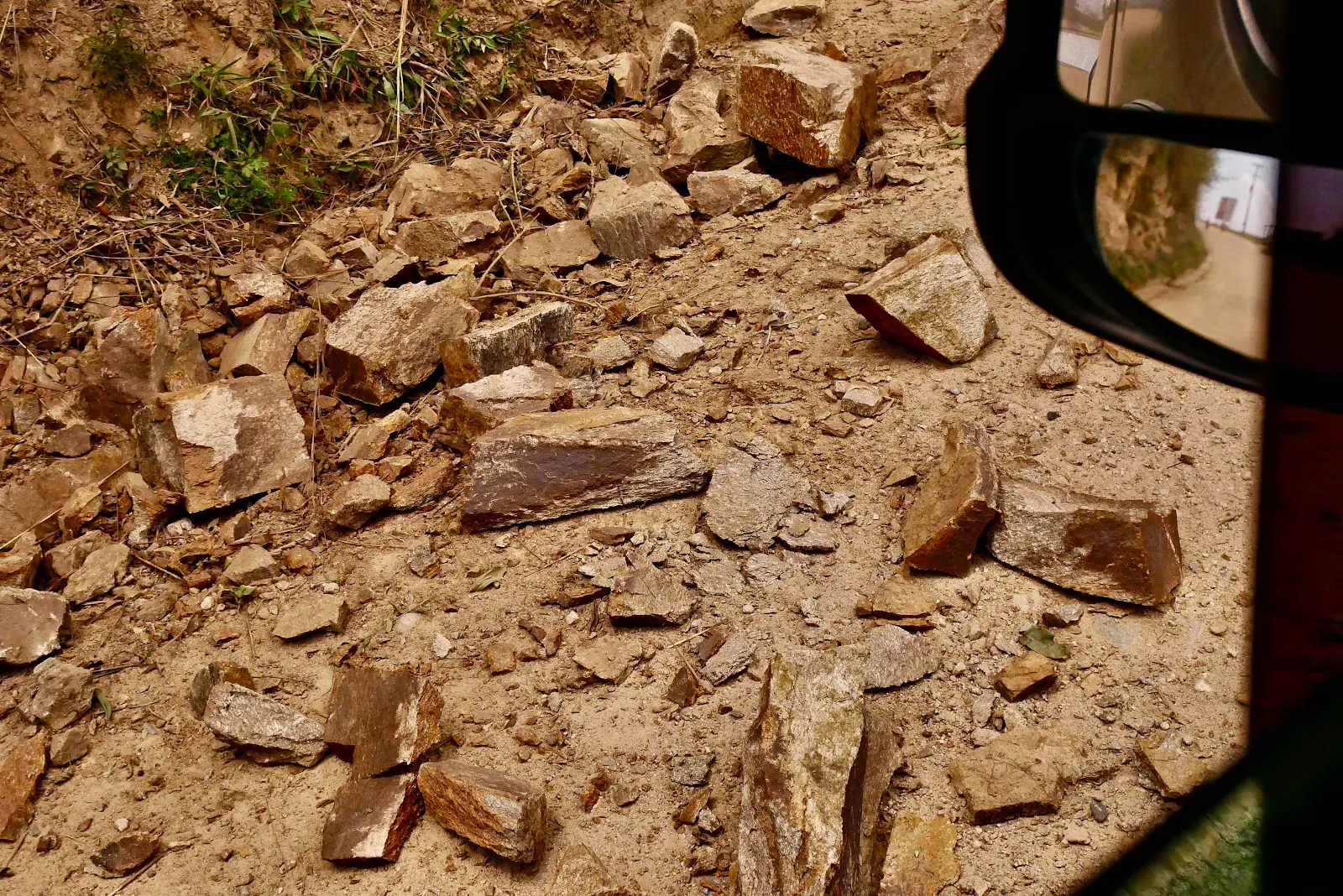
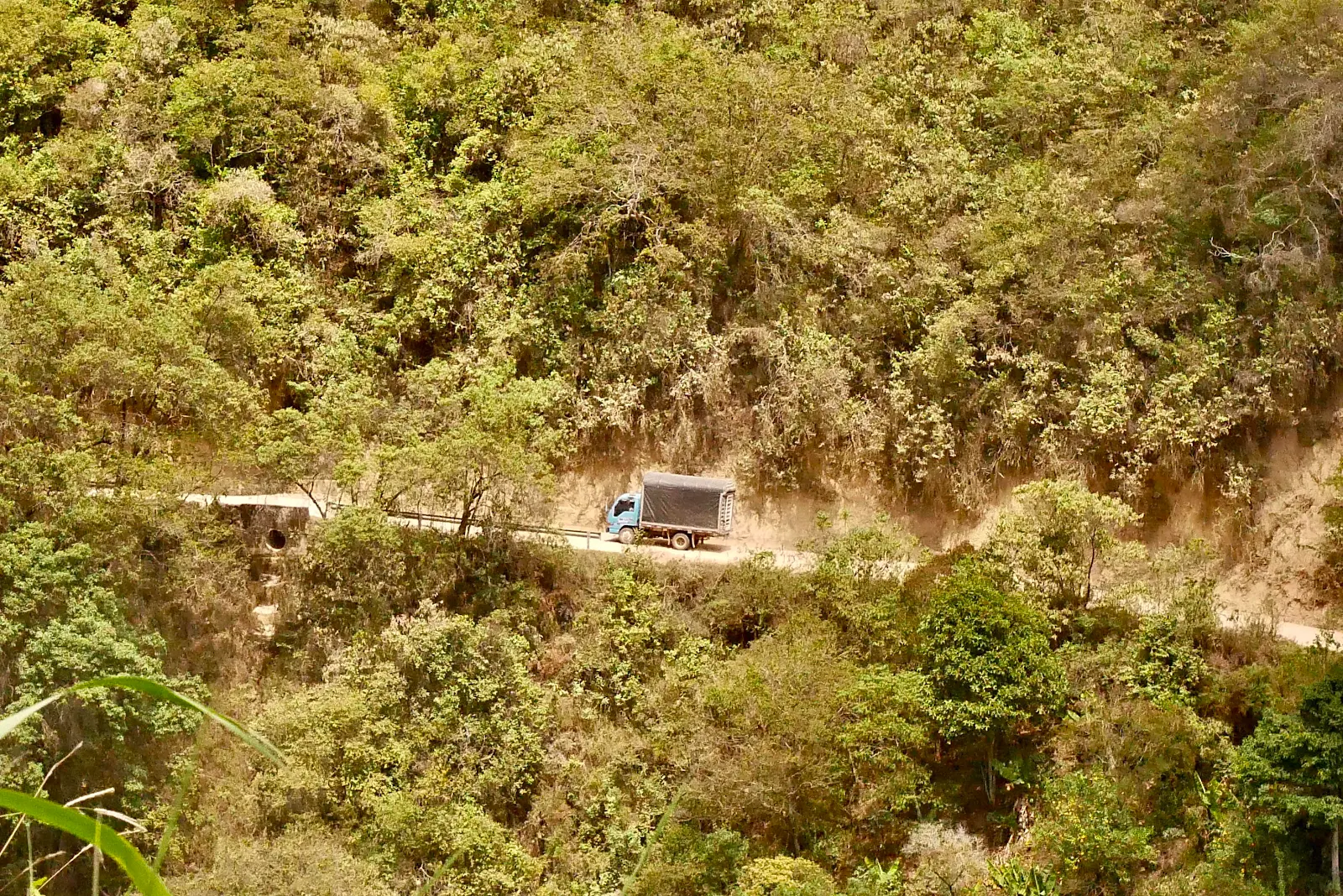
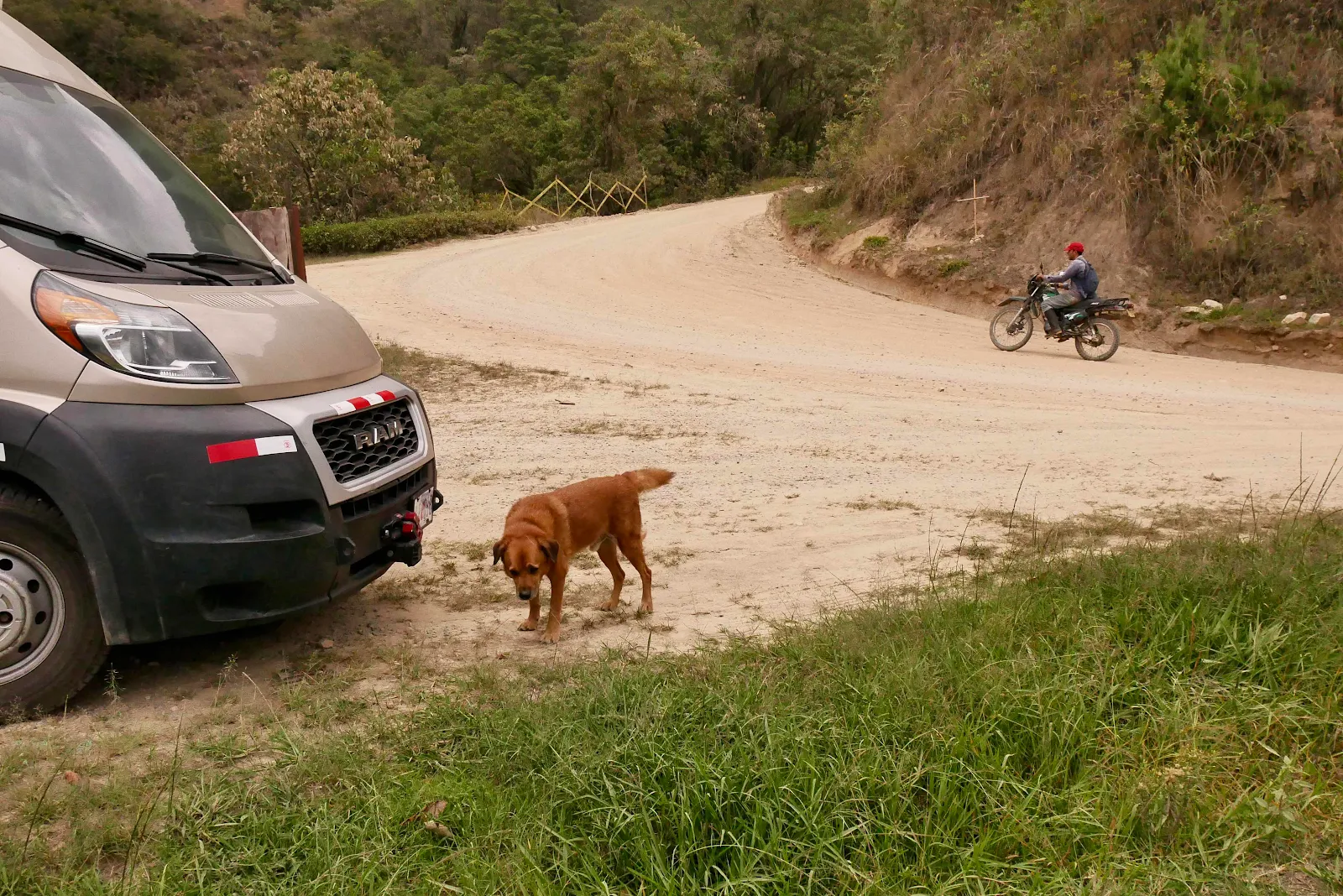
The worst of it was the traffic, not heavy but constant and utterly relentless. We looked across the canyons to gauge arrival times of plumes of dust and distant vehicles ripping along. The idea was to position ourselves in a pull out or wide stretch to coincide with the arrival of the speeding suicide driver.
We even met huge intercity coaches barreling along like they were on pavement and they did not slow down even a little when they crossed paths with us.
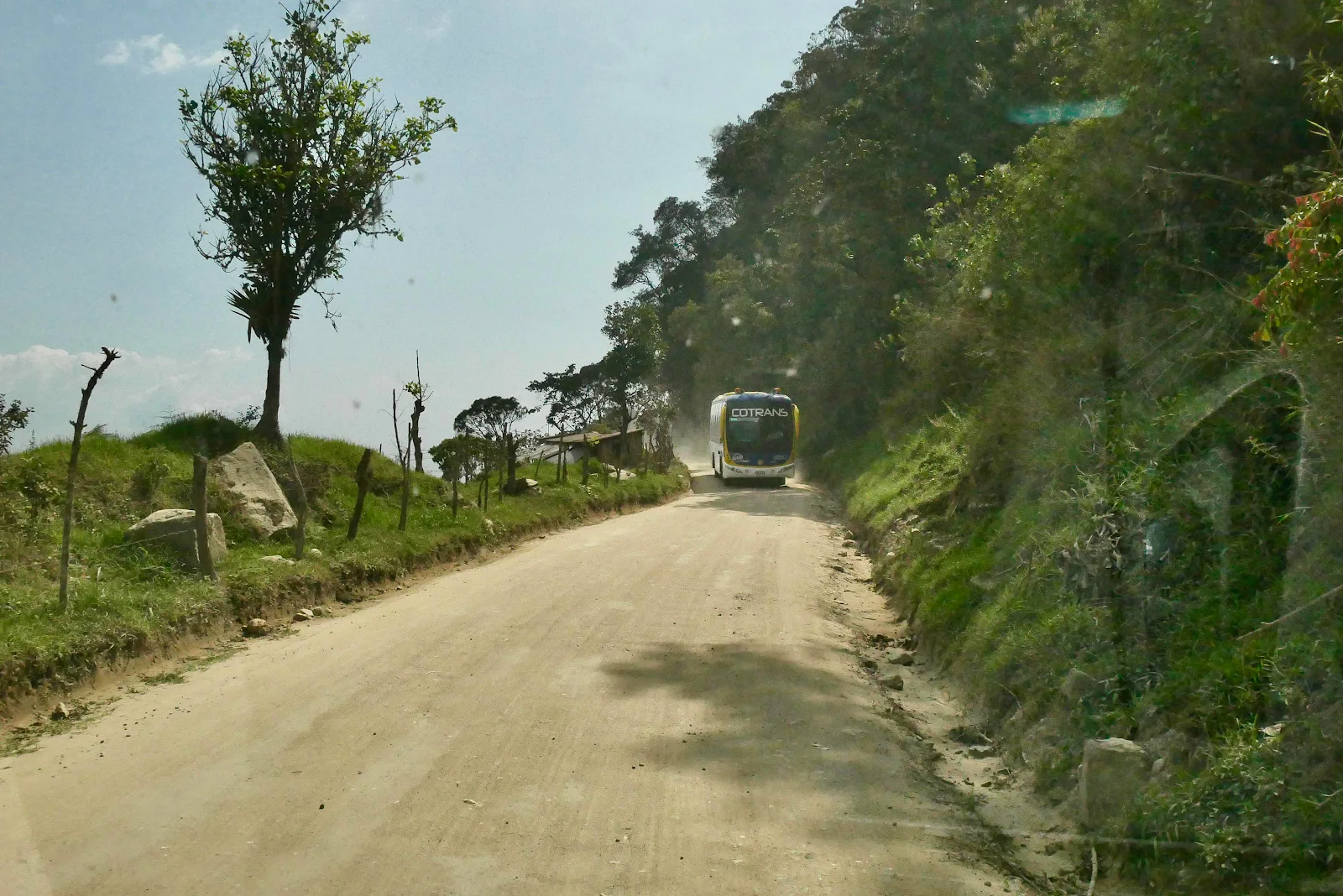
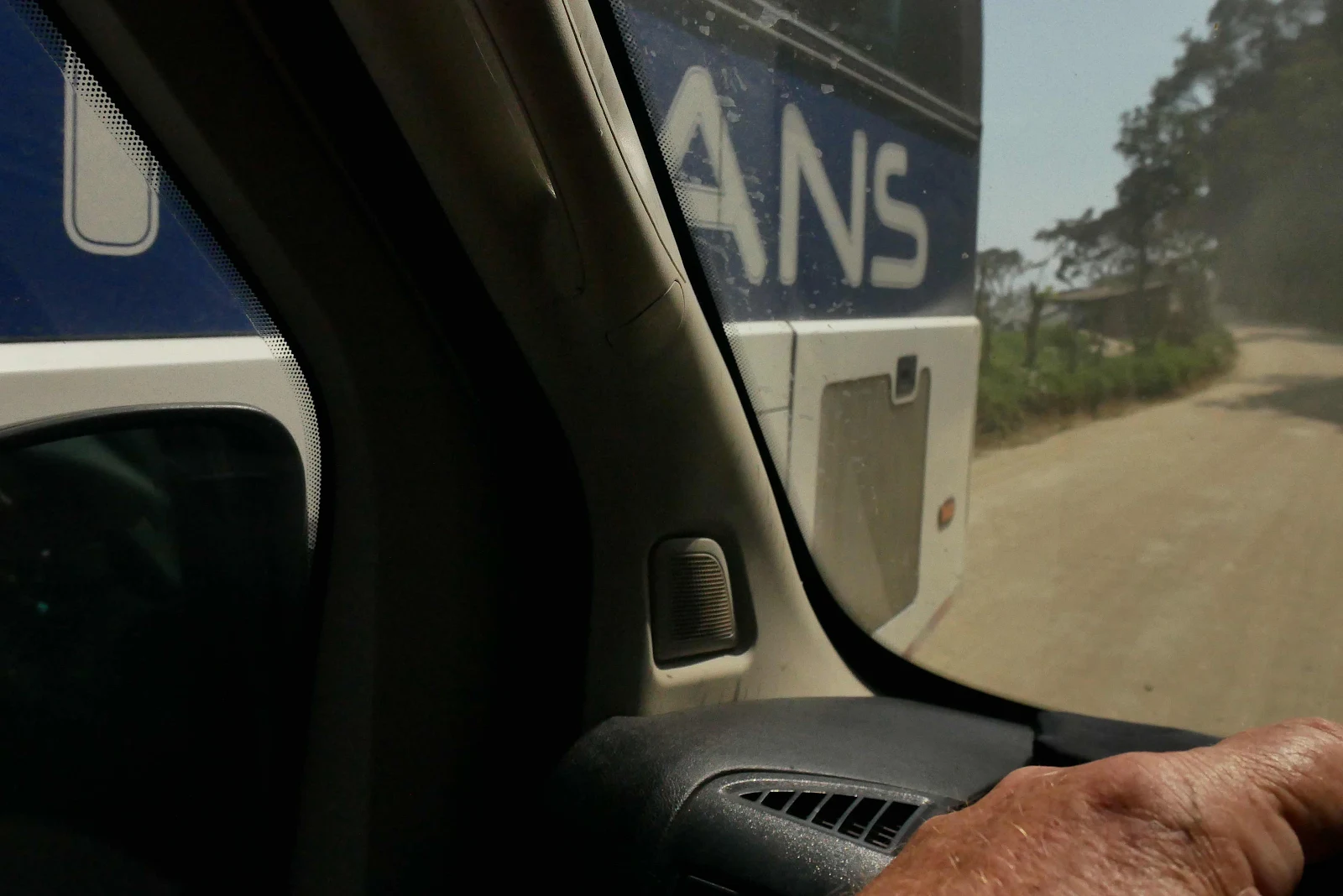
This was the perfect spot for the close encounter, notice the deep ditch on my side and no widening of the road even a little. I stopped and hoped for the best, but he didn’t even slow down. I closed the electric side mirrors and continued to hope…
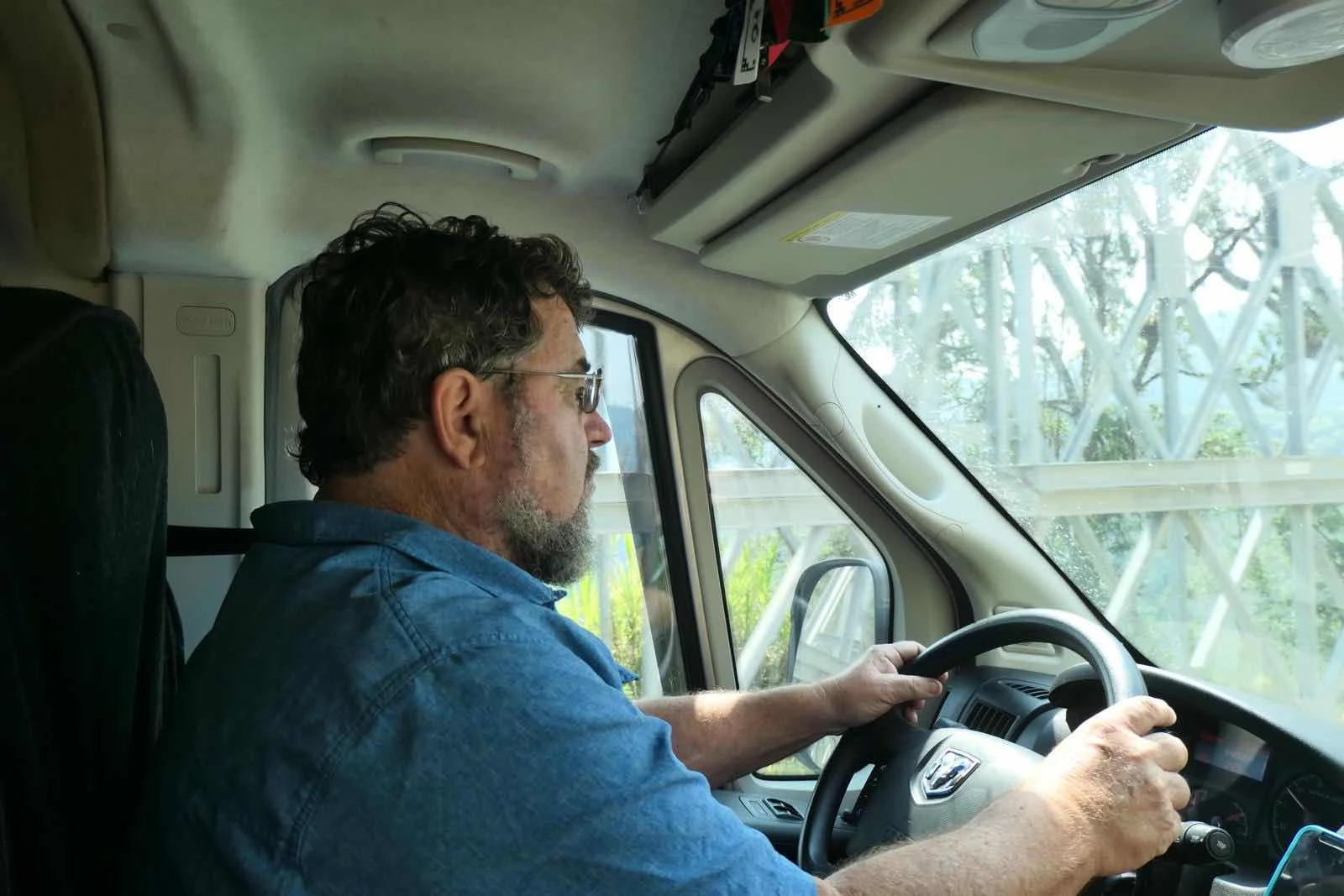
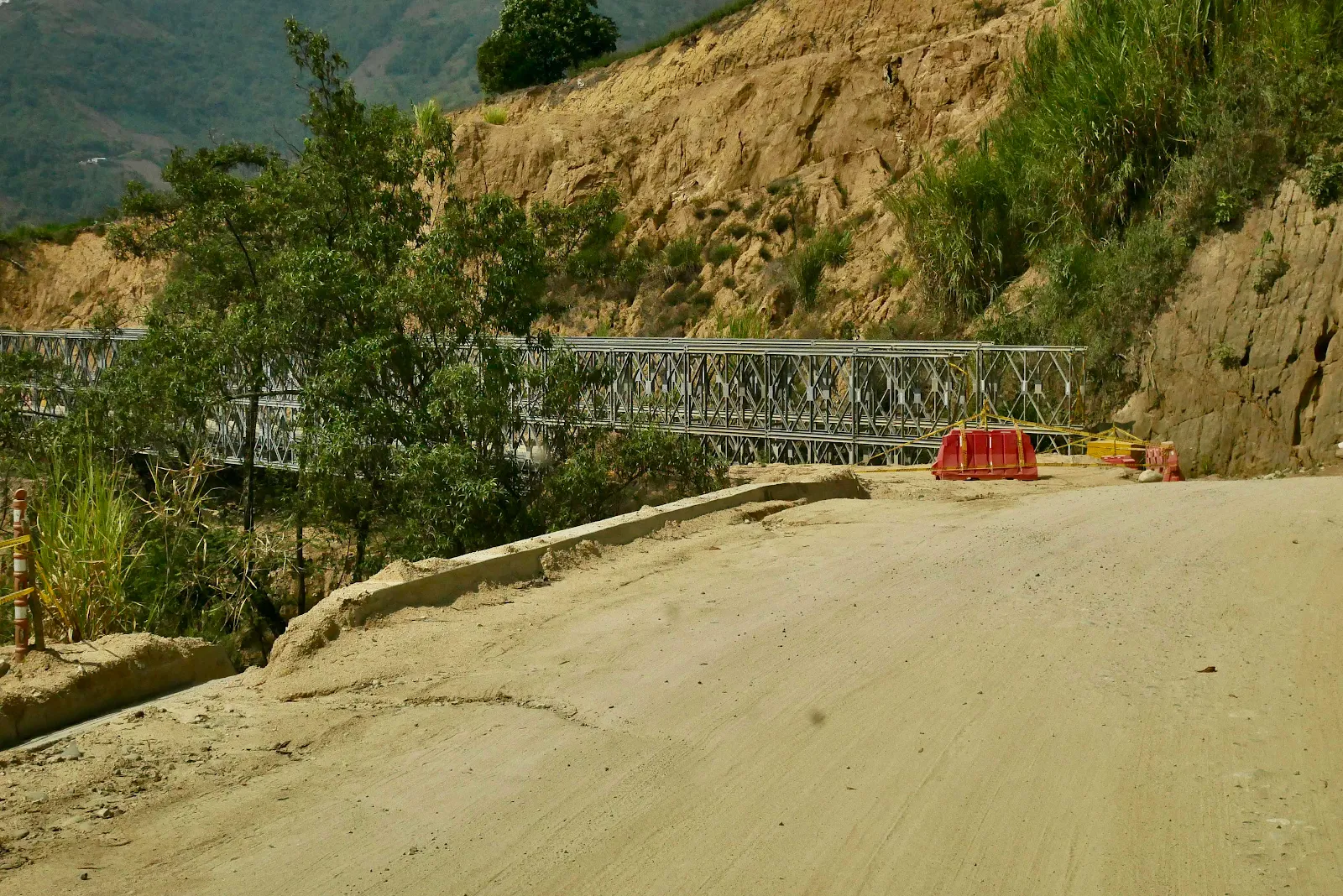
A recent huge landslide forced the construction of a temporary bridge over one gorge. One vehicle at a time the sign said. DO NOT STOP ON THE BRIDGE said another.
Okay then. Confidence inspiring it was not. I wondered if at some point the trucks and buses refusing to slow down might have dislodged an end or something. I hoped the US embassy in Bogotá would write a strongly worded diplomatic note were we to plunge…but we were fine, diplomatic incident narrowly averted.
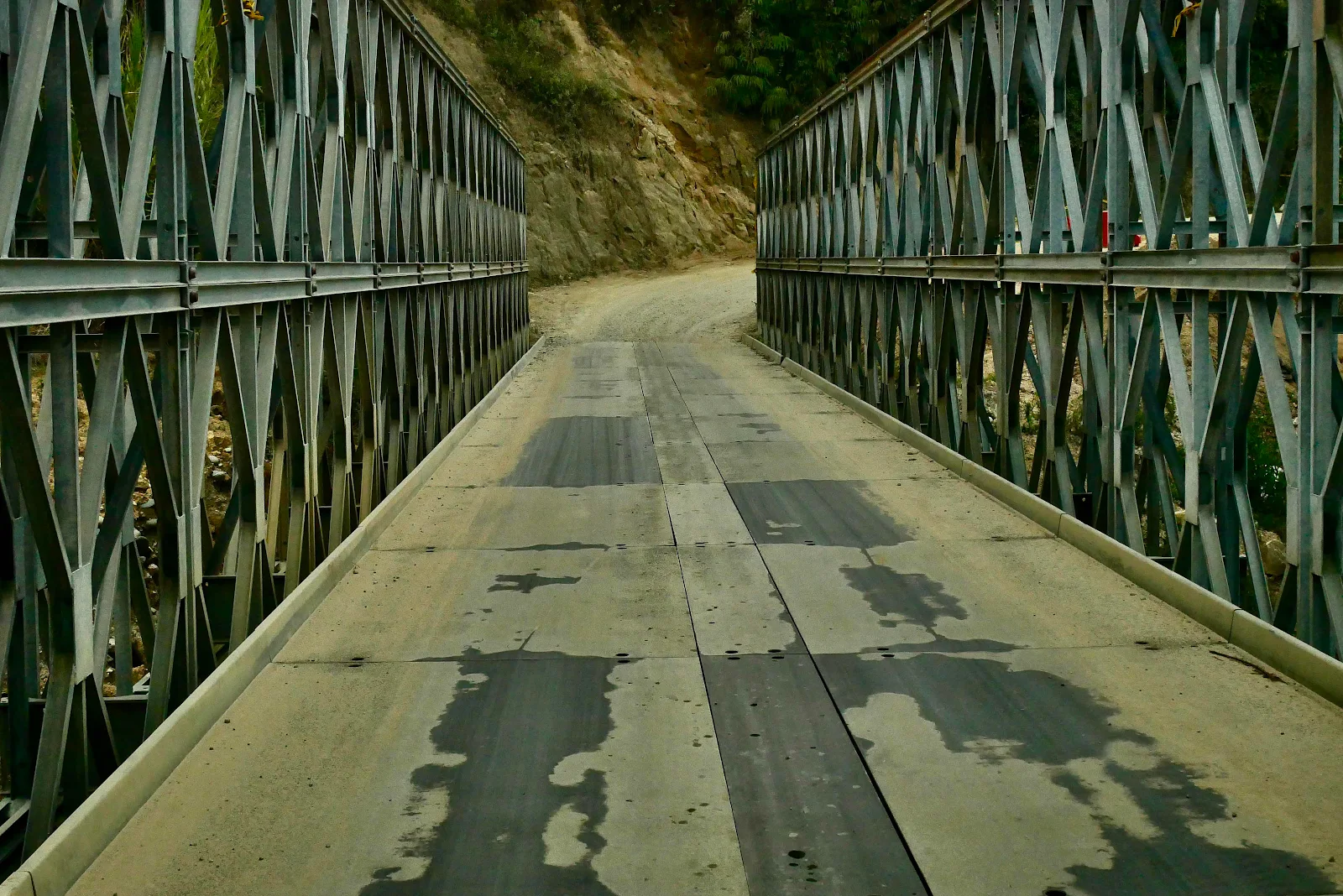
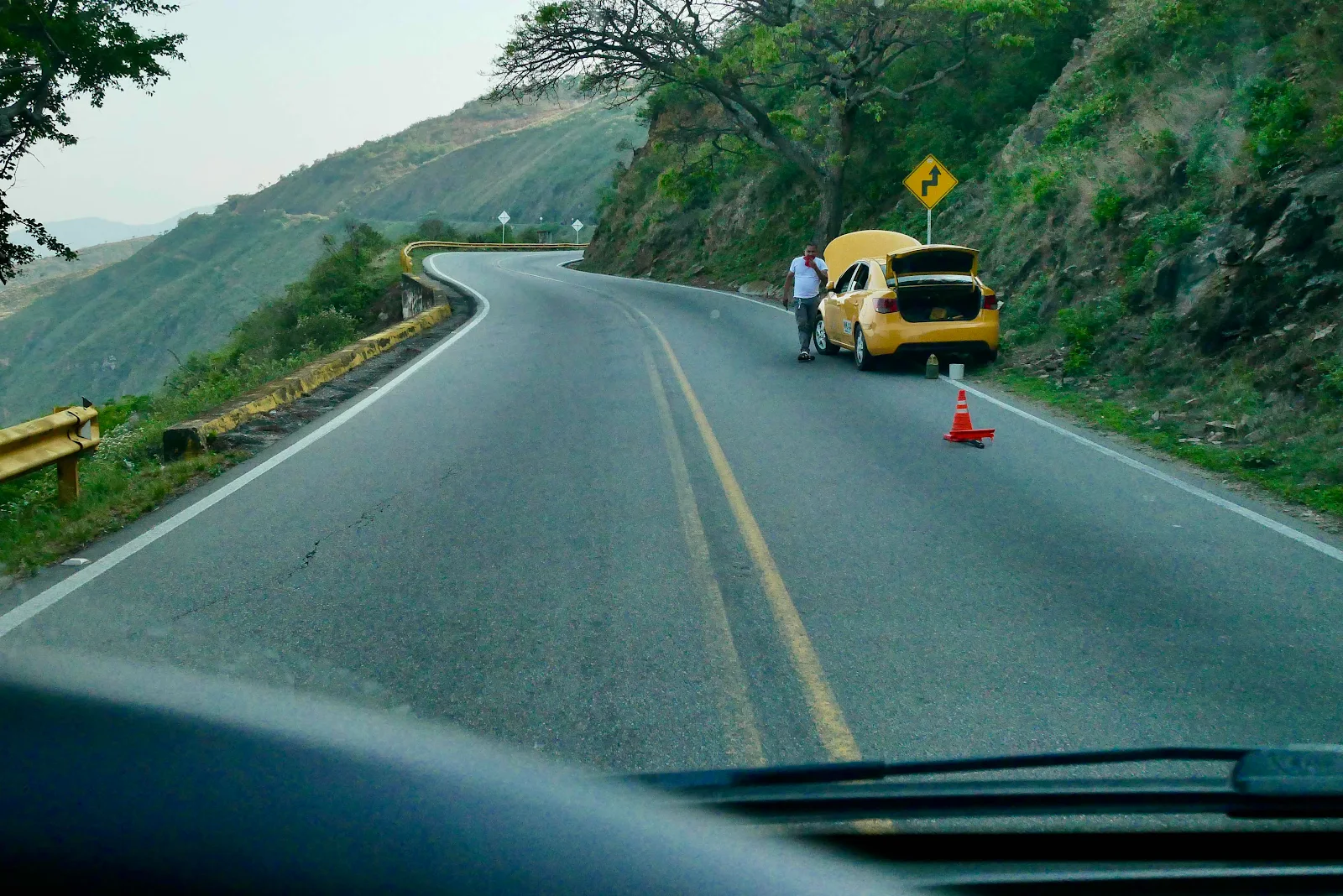
The trick was to not meet anyone in the narrow bits if you could help it.
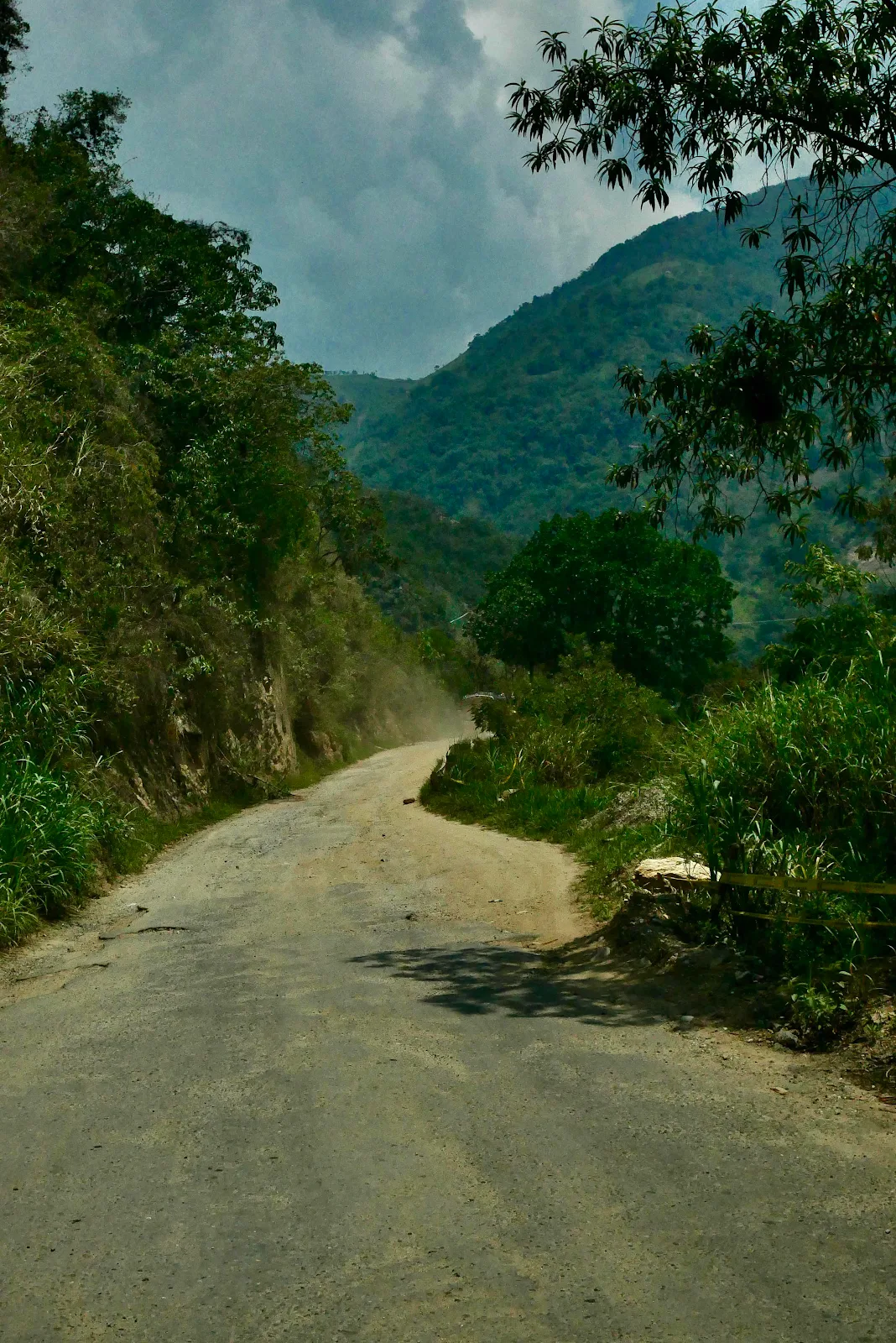
Or hope you were in a wide bit when you did. 20 kilometers an hour is 12mph and we were the only ones obeying that limit.
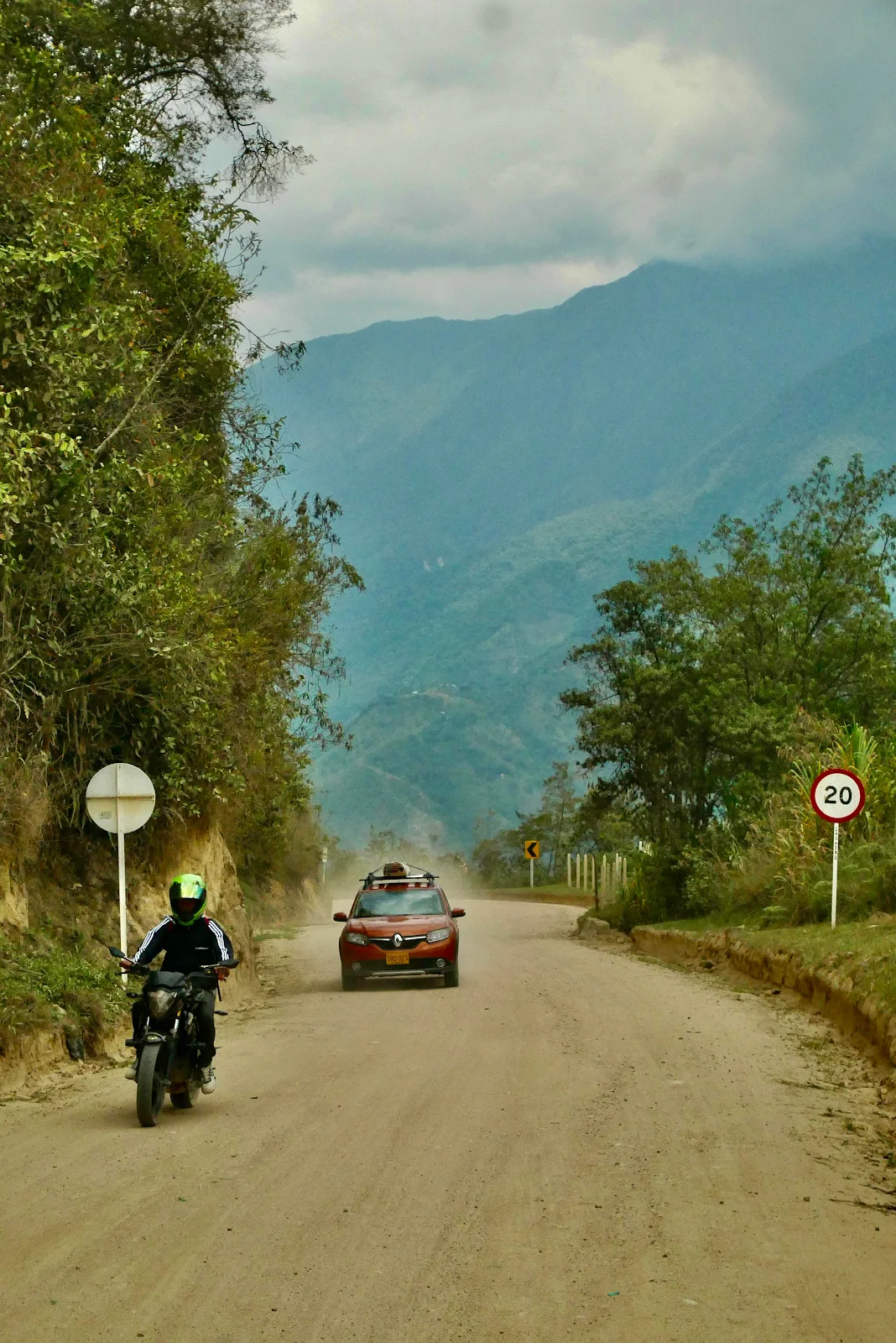
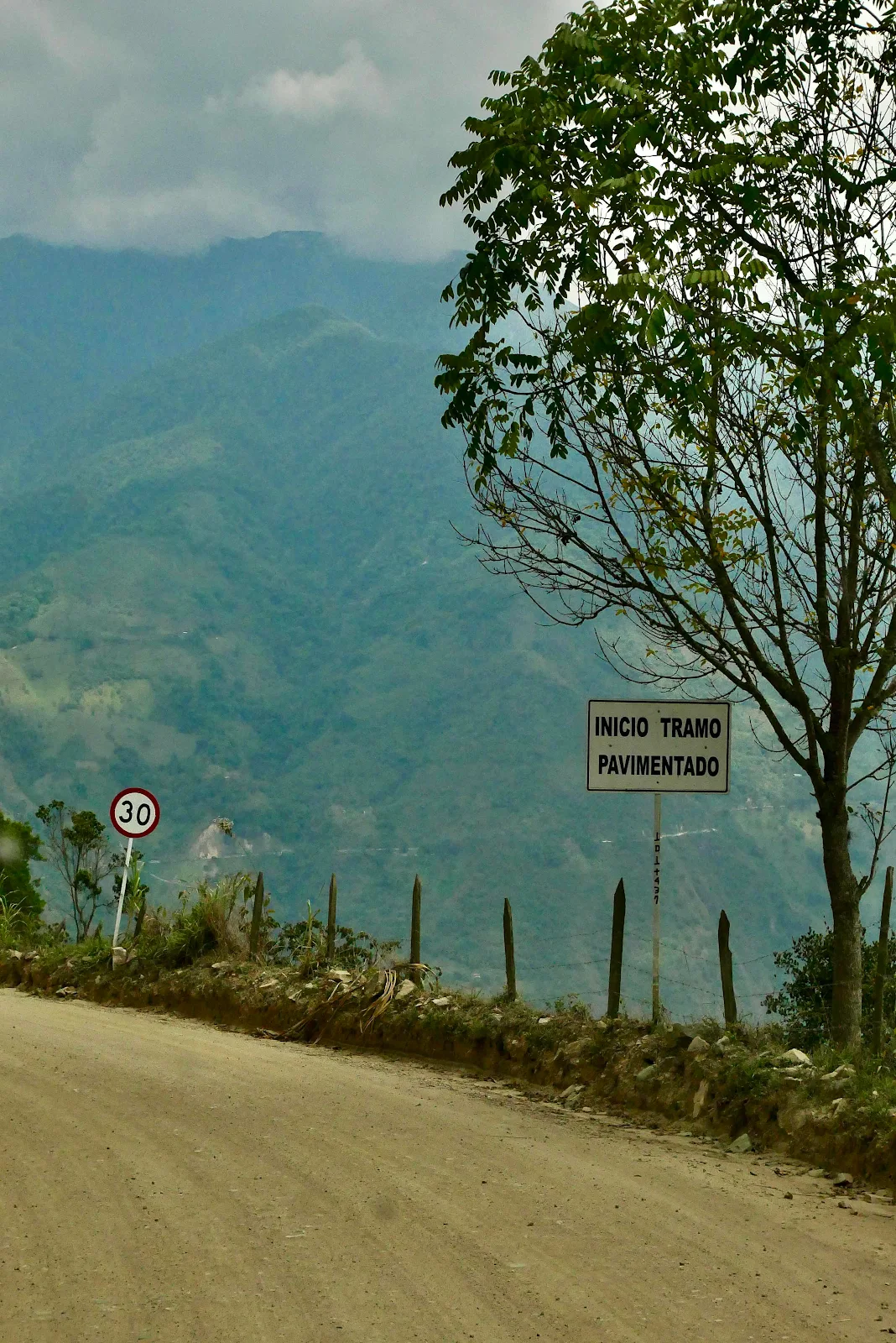
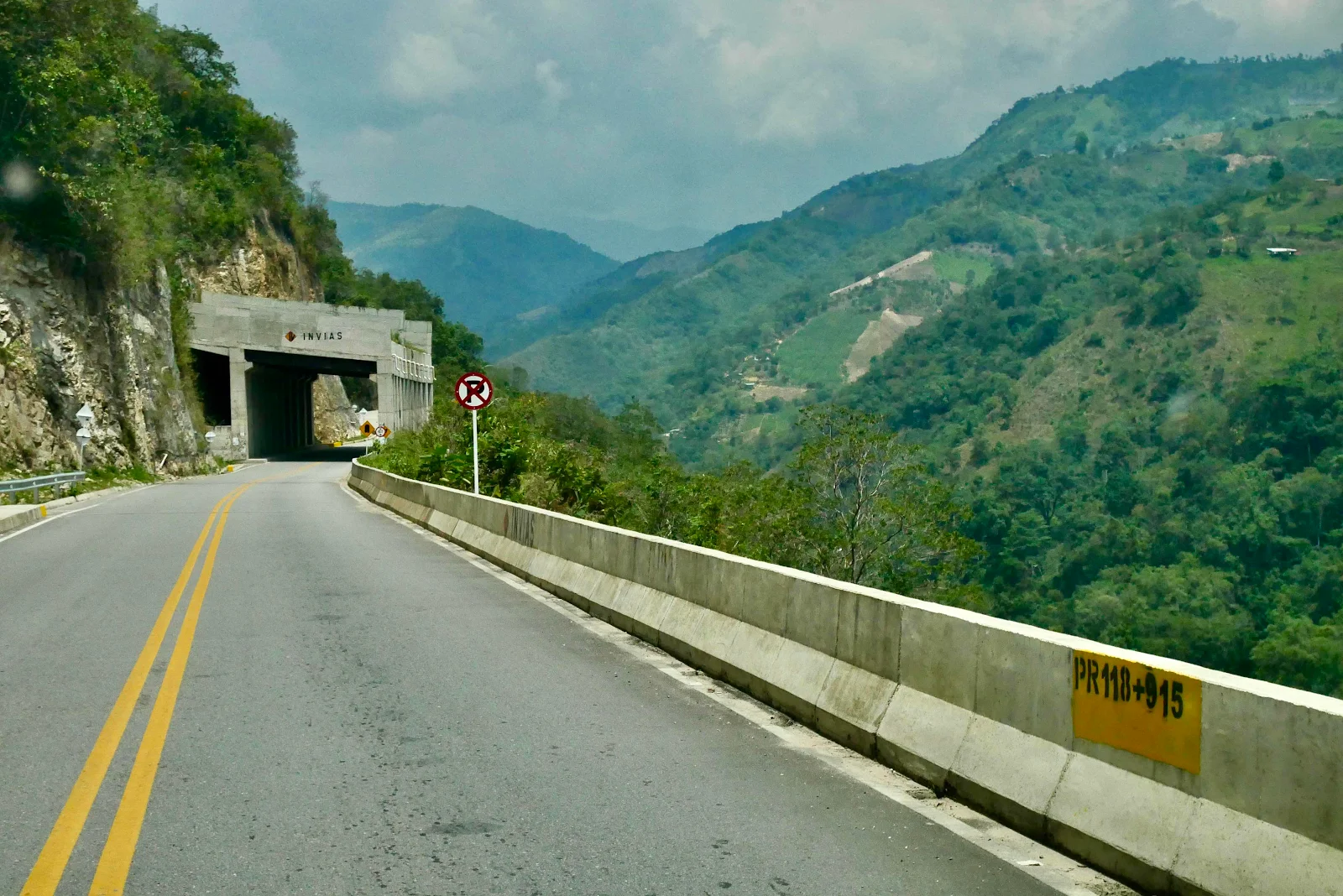
On the rare brief random stretches of pavement eccentrically placed on a whim around certain few corners, the speed limit shot up to 20mph. Once you realized the paved stretches were 200 yards long you understood the signs for the mockery they were. “Beginning Of Paved Section” indeed!
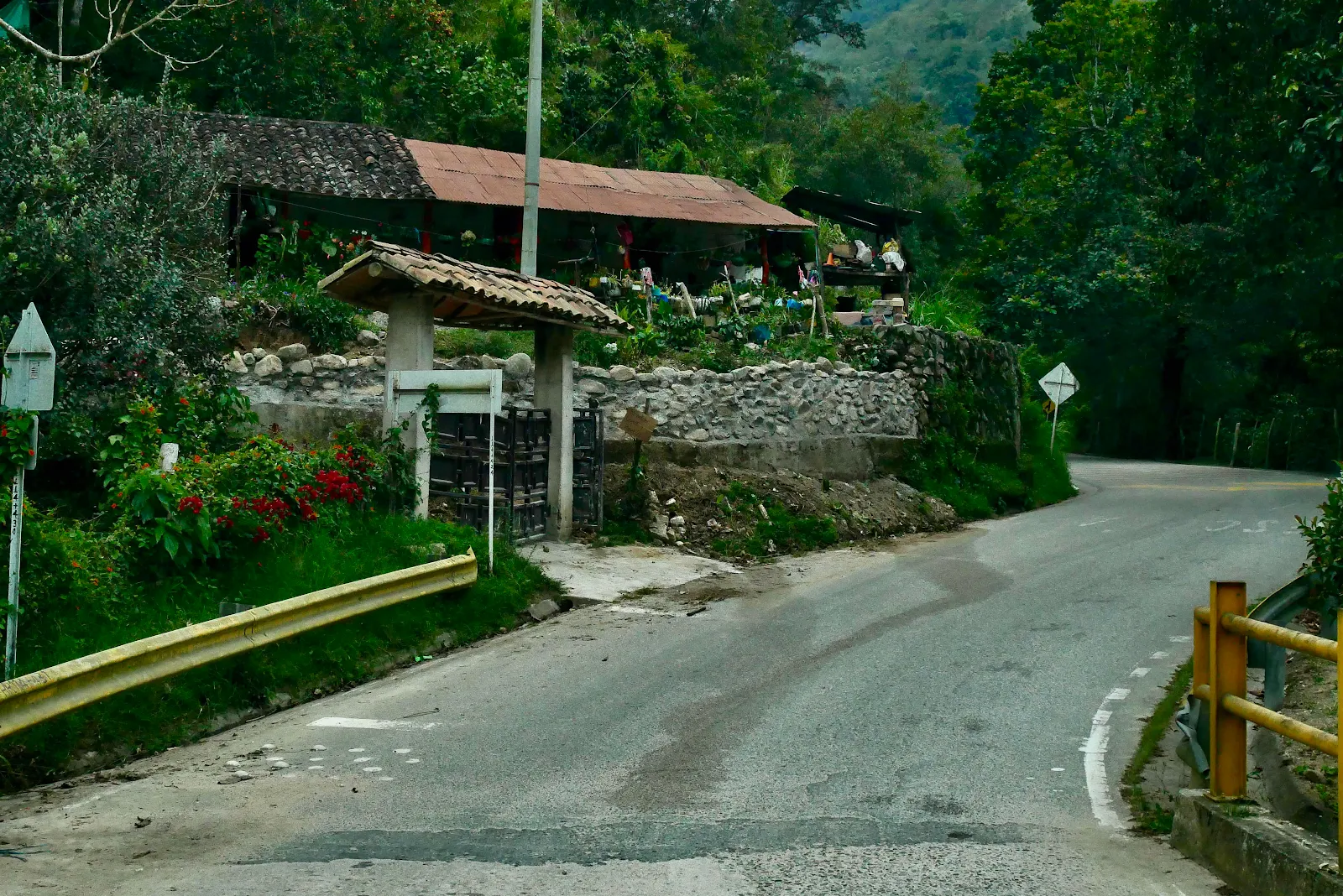
The lucky home owners on the paved stretches were noticeably dust free.
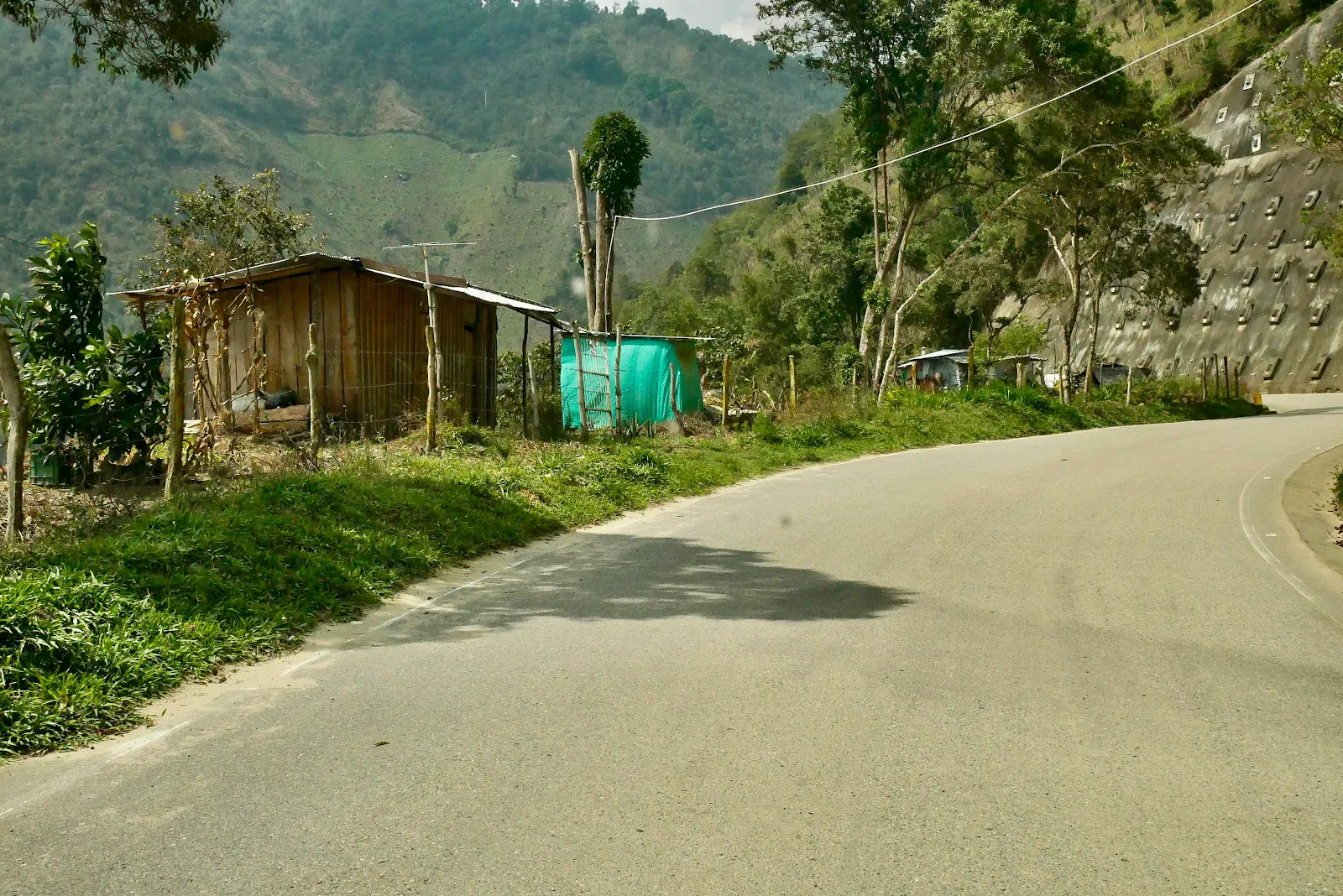
The rest live under a blanket of white talcum powder.
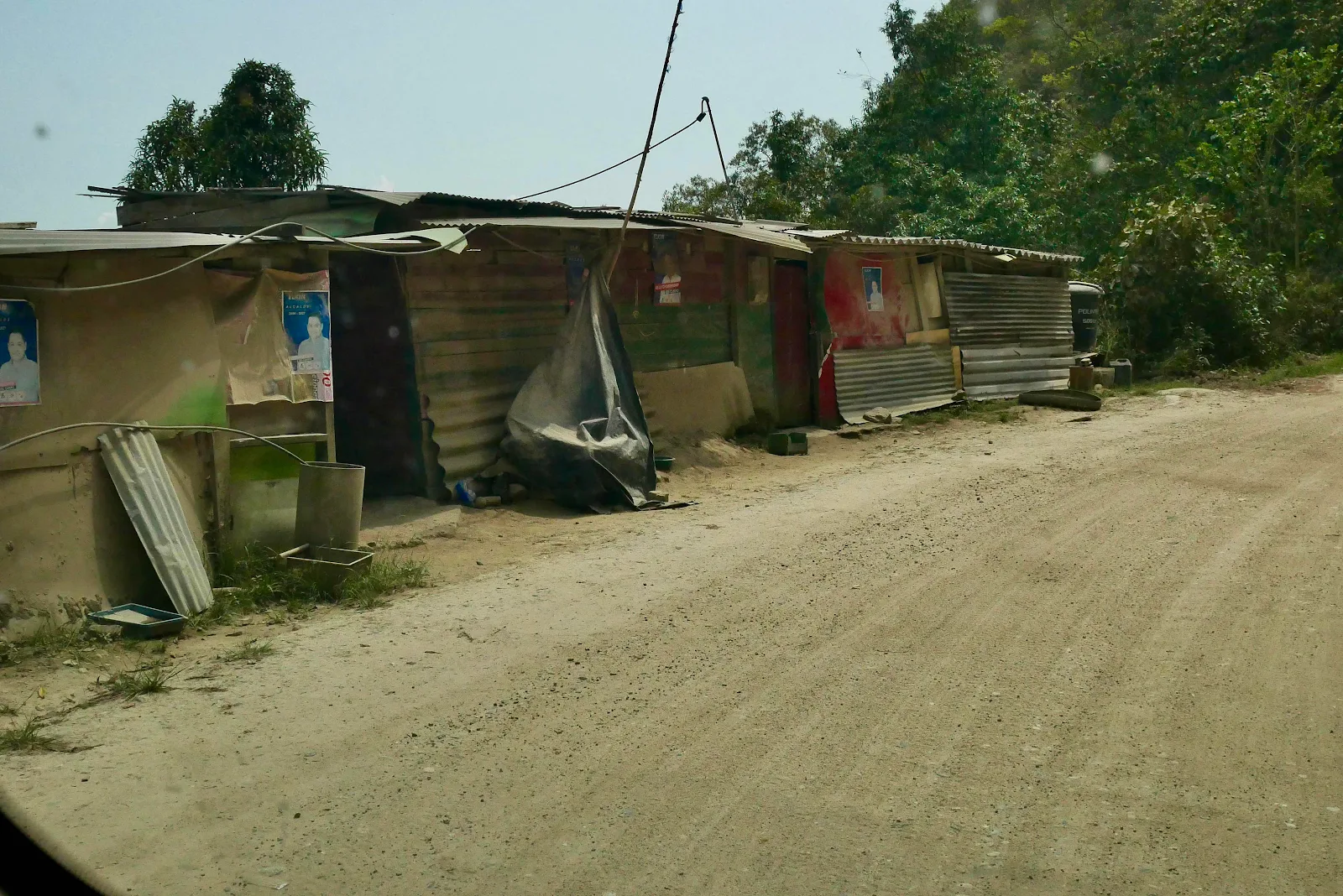
Which may not be the worst of their problems. I cannot imagine living, let alone farming on a vertical slope.
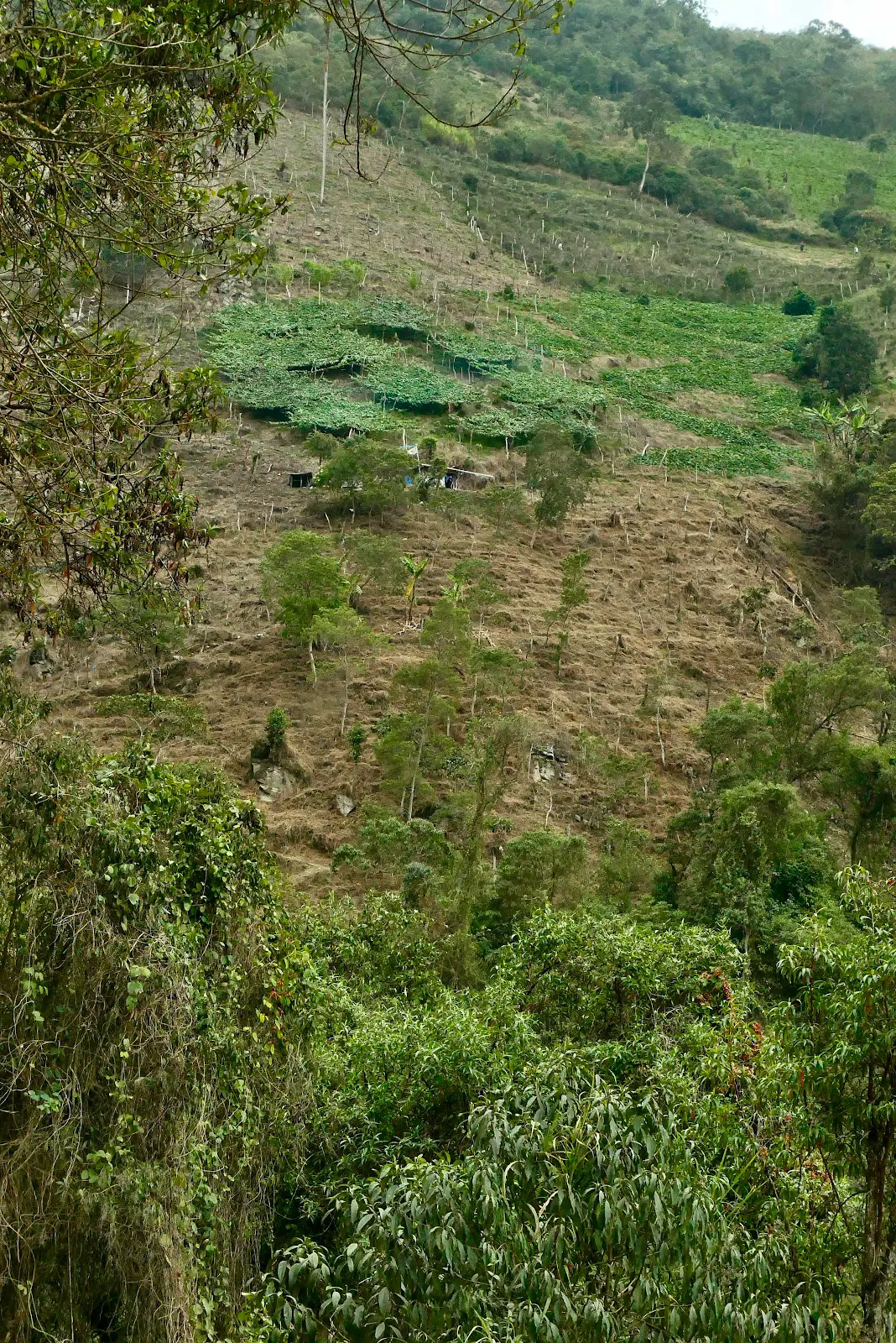
People are living here, carrying out their routines, getting covered in dust as you read this.
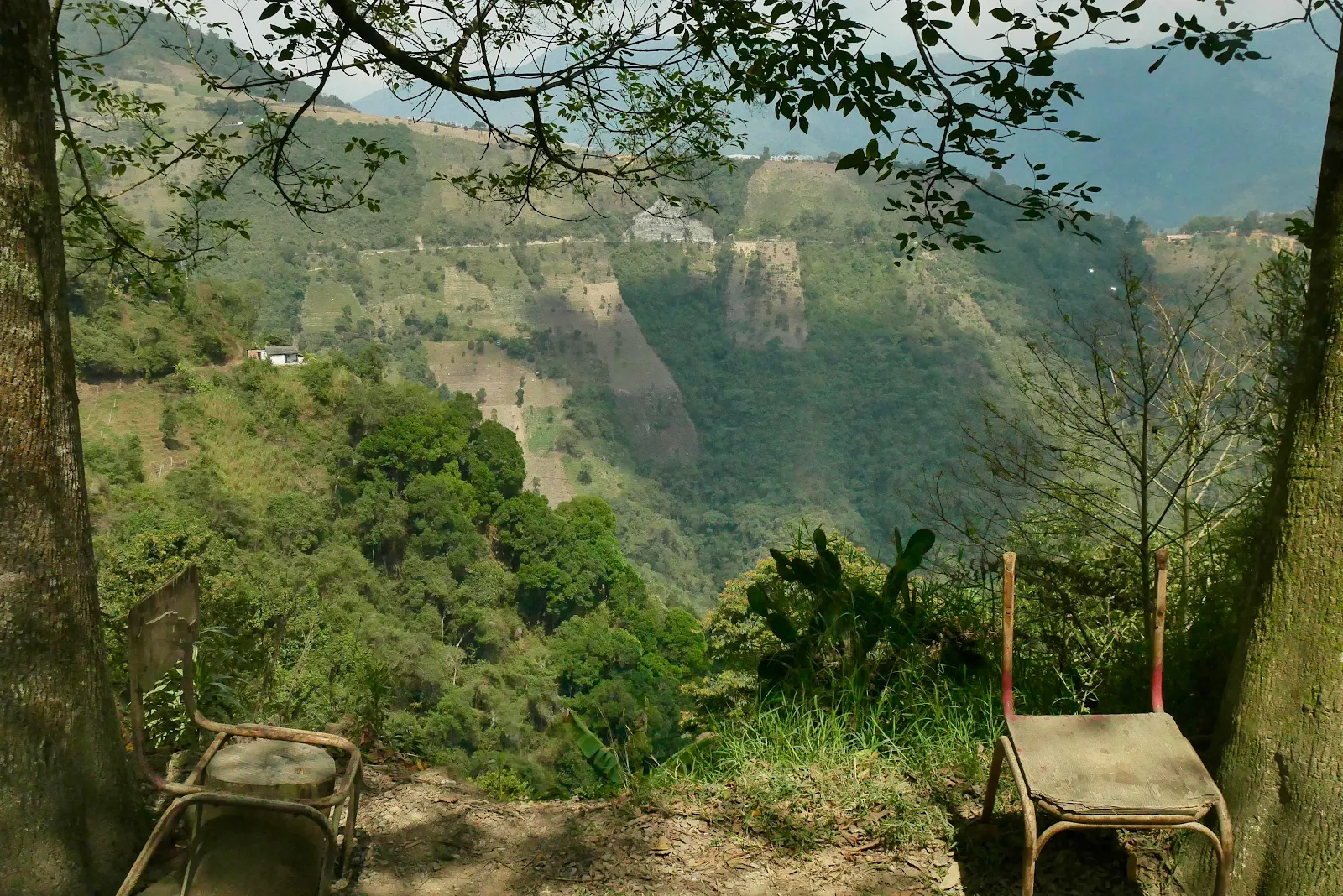
Imagine hanging your laundry on a vertical slope. One misstep and you plunge down to the bottom of a trench thousands of feet deep. I don’t think my photographs express the horror of it seen in person.
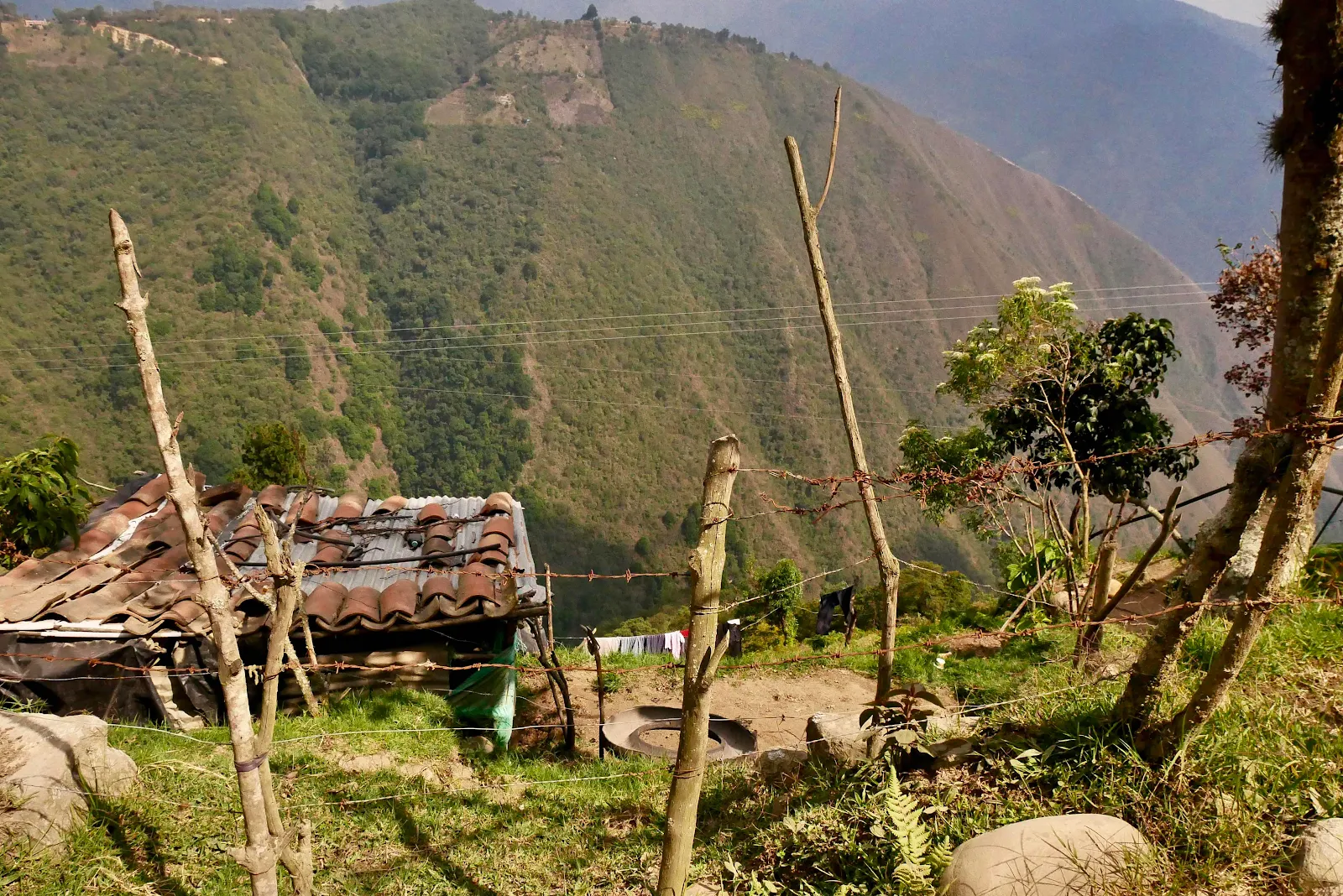
Layne is not fond of sitting in the passenger seat in places like these but she stuck it out without complaint.
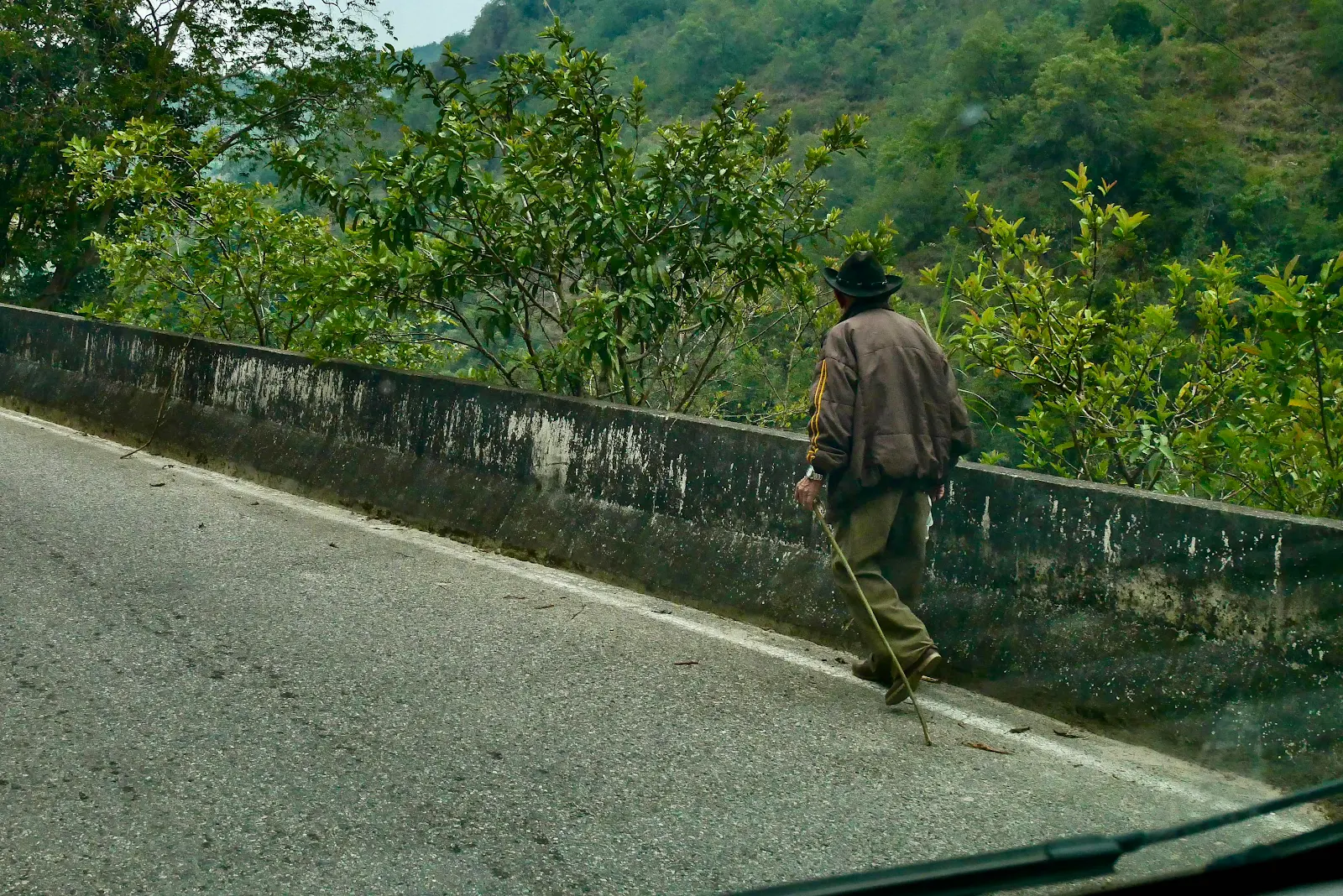
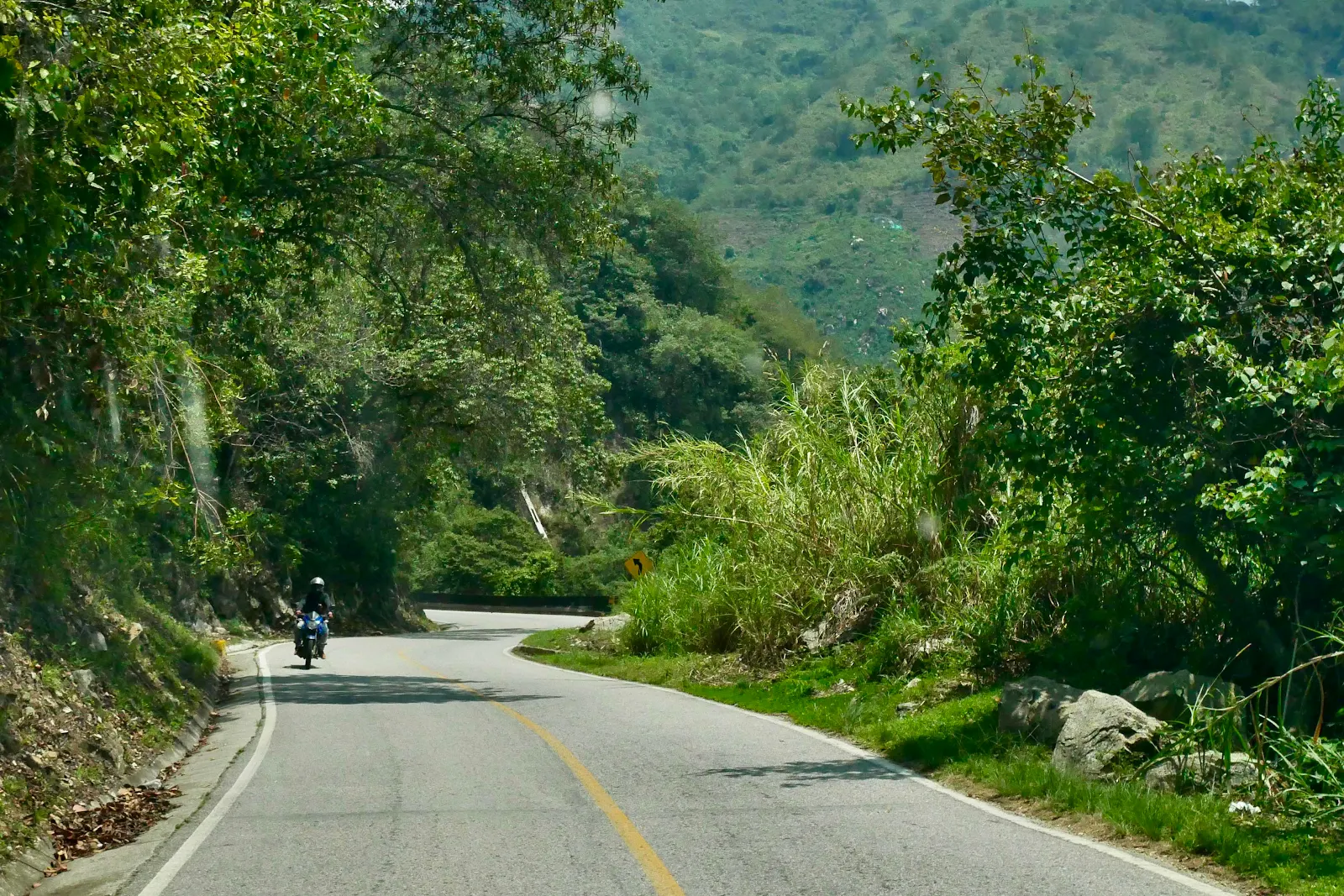
I caught a shot of a man out walking on the lower section of the road which is properly paved. We saw him on the way back walking firmly down hill. I wondered what he would say if I were to stop and ask him how he felt living his life up the canyon. No problem he’d probably reply puzzled by my apprehension.
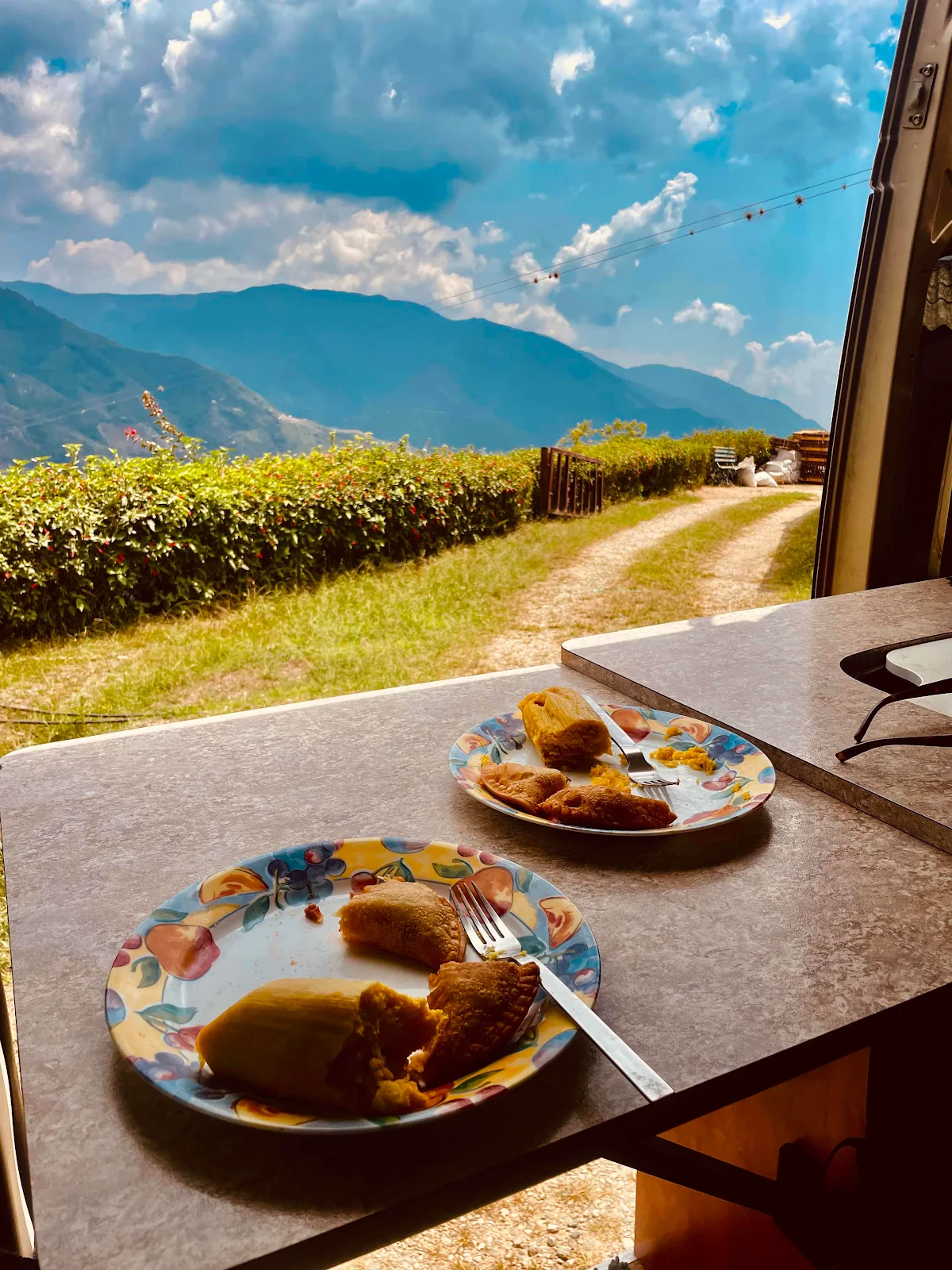
For us it was too much. We went over the numbers when we stopped for lunch at a wide spot in front of what appeared to be an abandoned restaurant.
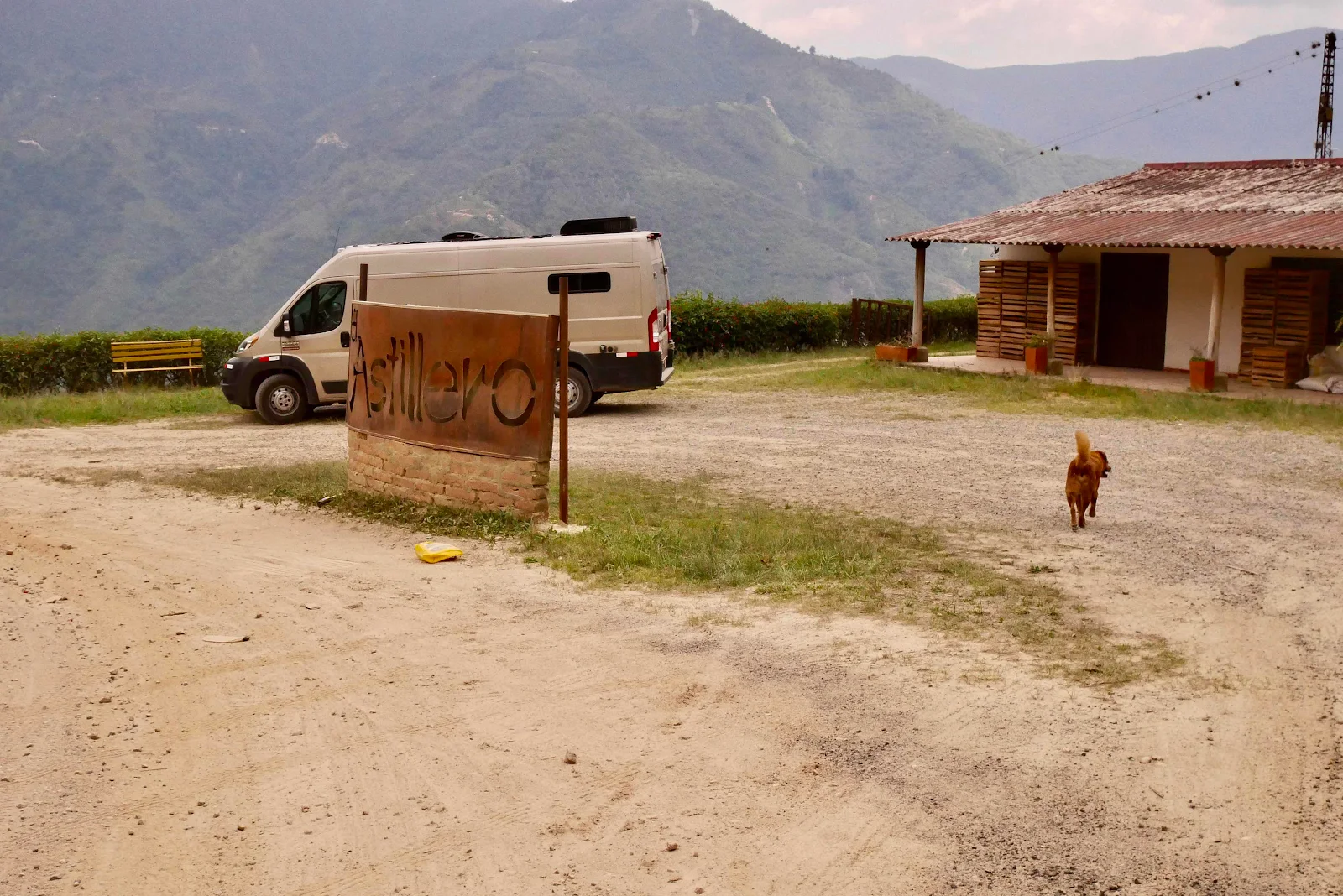
I walked Rusty, well away from the edge,while Layne cut up and heated a tamale and a couple of empanadas, one made of hot dog slices and corn kernels(!) and the other filled with meat and barbecue sauce a weirdly North American sweet flavor very popular in Colombia. Then we discussed our problem.
We faced a 200 mile drive to El Cocuy which Google estimated would take us ten hours and which we were figuring having come two hours and made no progress, might take us three days. Once there we could camp in a field at a hostel but unlike our Canadian friends we had no plans to hike 14 miles at 14,000 feet. They are lean and competitive where we are soft portly and enjoy comfort; I would be more inclined to rent a room with a fireplace than bust my lungs stumbling about above the tree line. Then after a few days of lounging in a frigid altitude adjustment we would face an equally long complex drive back down the mountains.
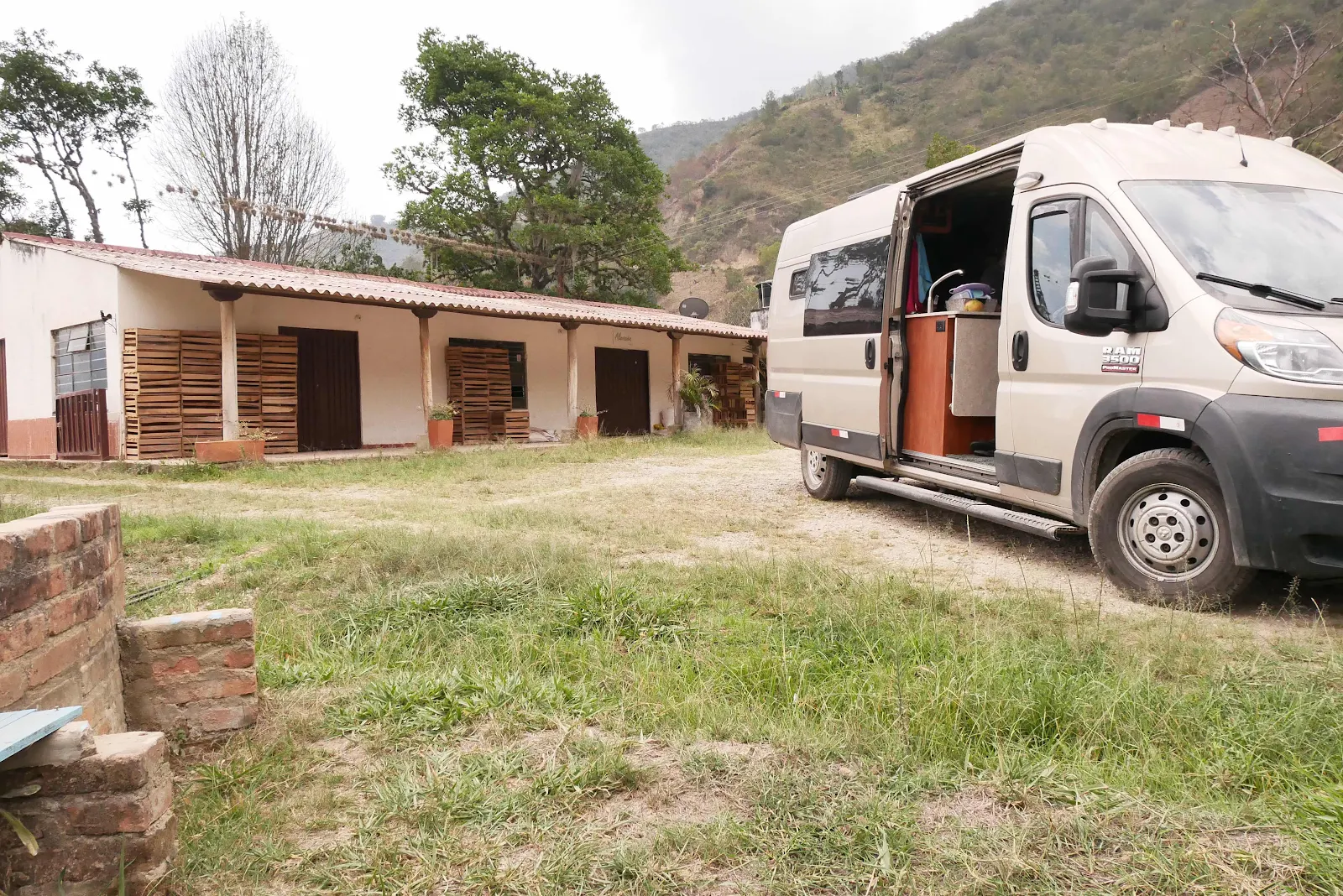
We both agreed that had this been the main road to somewhere we needed to be, we could in fact do it. GANNET2 is entirely capable and we though exhausted, could get the job done but driving an endless dirt road to go nowhere was not much like fun.
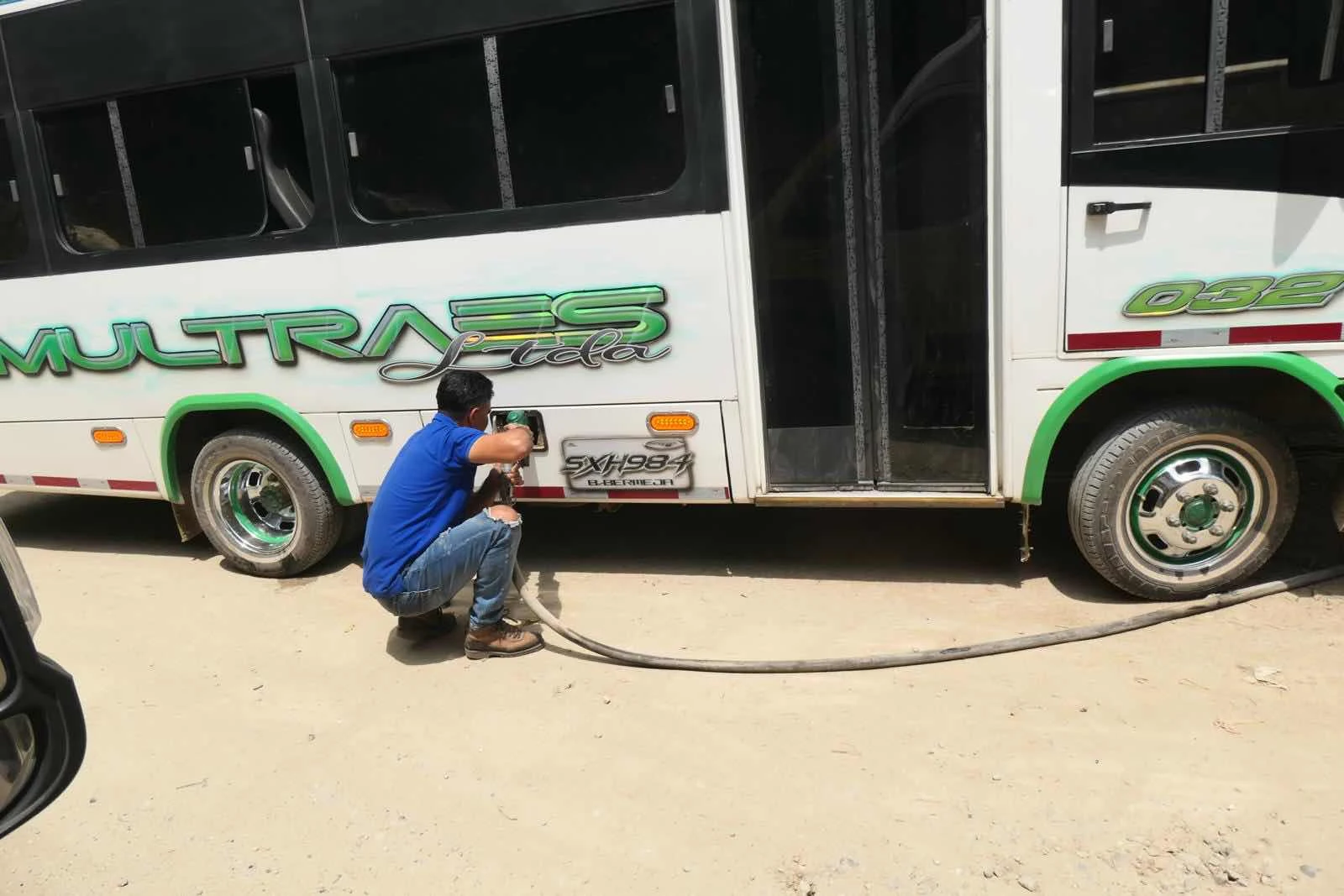
And the other important point we considered is that this road is not the culmination of our trip. We fully expect to drive roads, paved I hope, at twice this altitude for extended periods the length of several countries ahead of us. I certainly had my mountain fix and Layne felt like she could cope with driving along precipices so we saw no reason to press on.
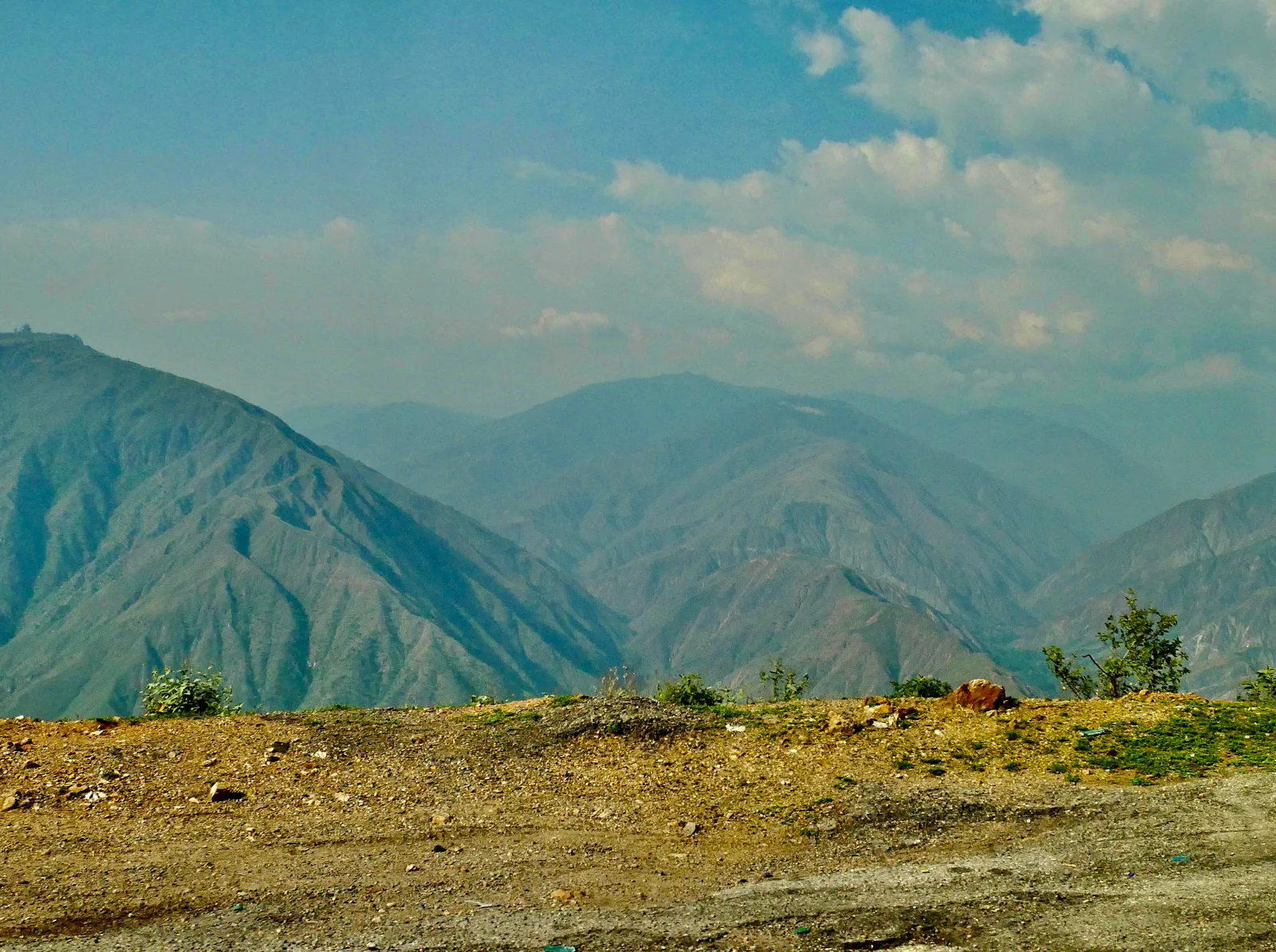
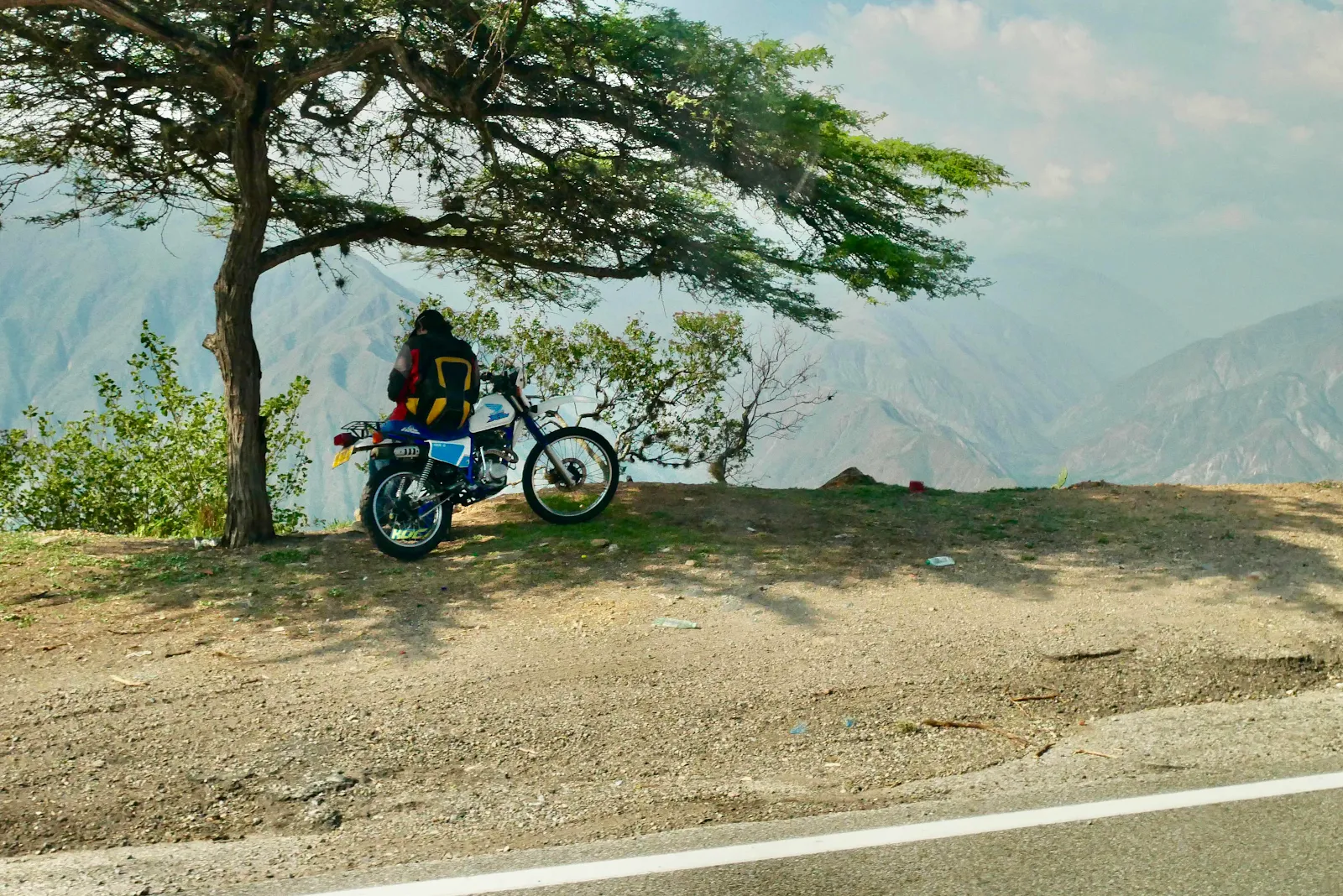
This road occupied my mind fully and I find driving dirt exhausting. Had we a more suitable vehicle that would obviously make it easier but we neither of us came here to go rock hopping or to drive deep off road to seek solitude or make heroic YouTube videos.
Layne is a member of a South American overlanders forum for people physically traveling South America, not for planners or dreamers. Apparently there are less than 350 members, so if you double that number to allow for people traveling not in the group the number of overlanders in South America is tiny.
Unlike public land in the United States where recreational camping is hugely popular down here what we are doing is almost unknown. Colombians we meet are constantly amazed by our vehicle and the concept of living on the road. We pretty much are alone everywhere we go.
Our van is heavy and comfortable and not designed to go off road, so our ability to go into the wilderness is limited and that was our choice. Layne wanted to have a home just as she did when we went traveling by sailboat and I don’t consider myself a rugged outdoorsman, not by a long shot!
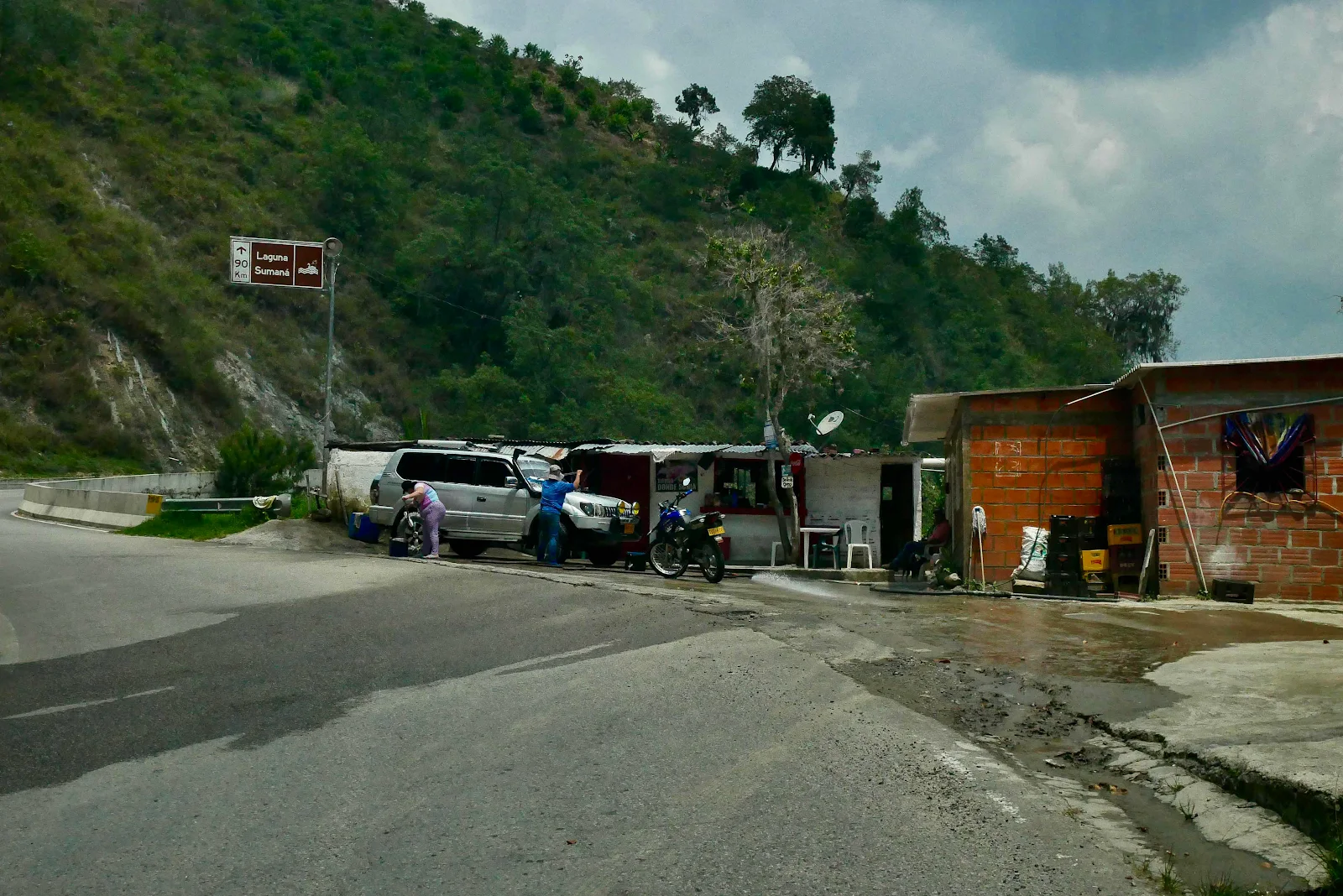
I actually was tempted to stop at this car wash set up at the end of the dirt road by an entrepreneurial family charging six bucks to hand wash your sedan. The fact is we enjoy beaches and parks and mountains but we also enjoy cities and museums and history. I find GANNET2 easy to drive in traffic and not particularly hard to park.
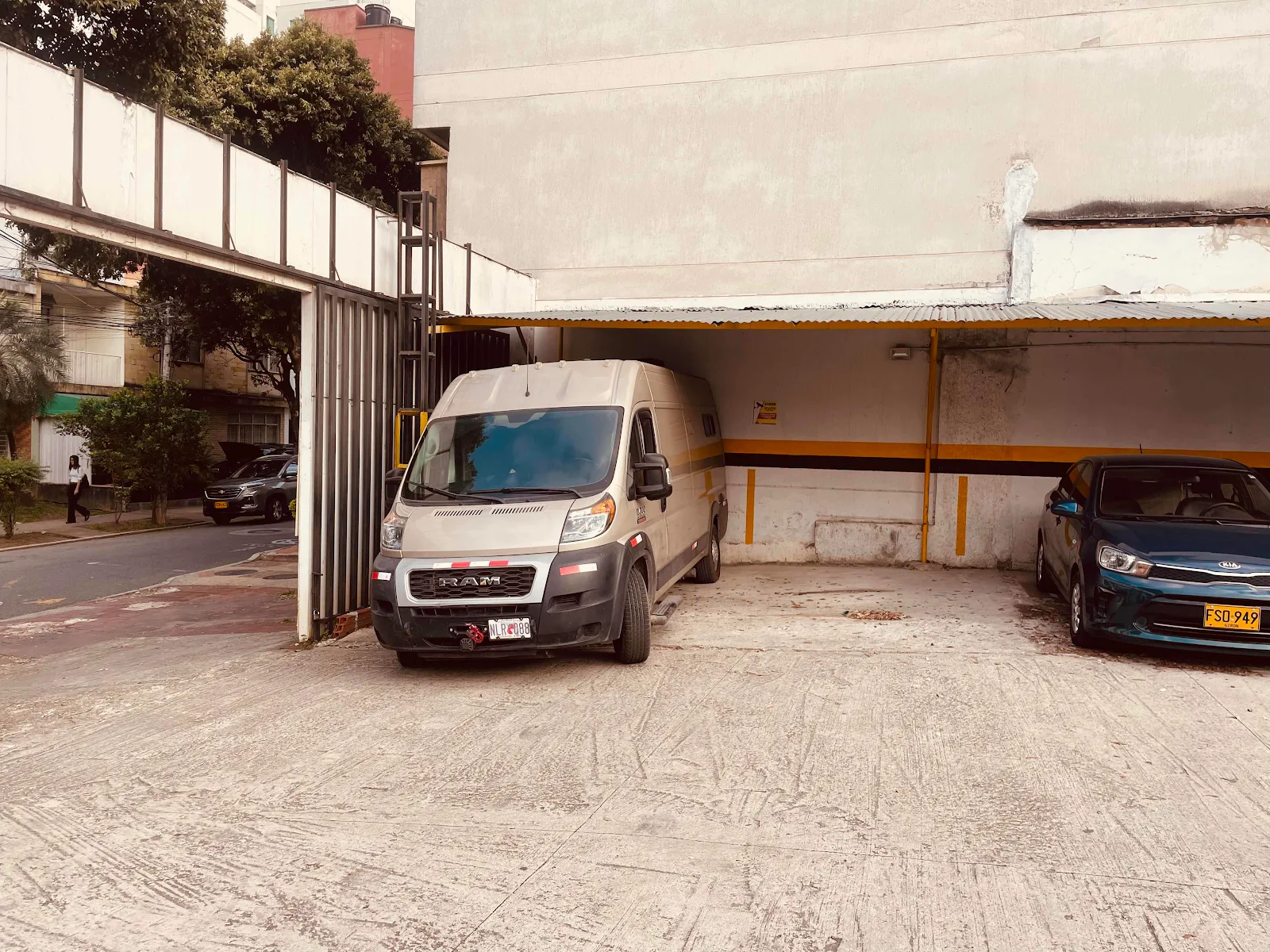
On pavement, the Promaster’s intended environment, the van is quiet and easy to drive and of course though we do not drive fast I find hours of driving to be enjoyable. As a home GANNET2 is what we call our suburban home on wheels.
I’ll drive dirt if there is a goal but I find the concentration required exhausting and listening to my home lurch is no fun.
Rainy season in Central America put extra stress on us as streams were high, dirt was mud and grass was slippery and all of that made our Promaster less than able. We had to pay close attention to where we drove. On the other hand we can sit out rain more comfortably than most campers.
And now that Layne has figured out how to make lemonade from lemons we have room to load what we need when we come across 25 pounds of lemons for five bucks.
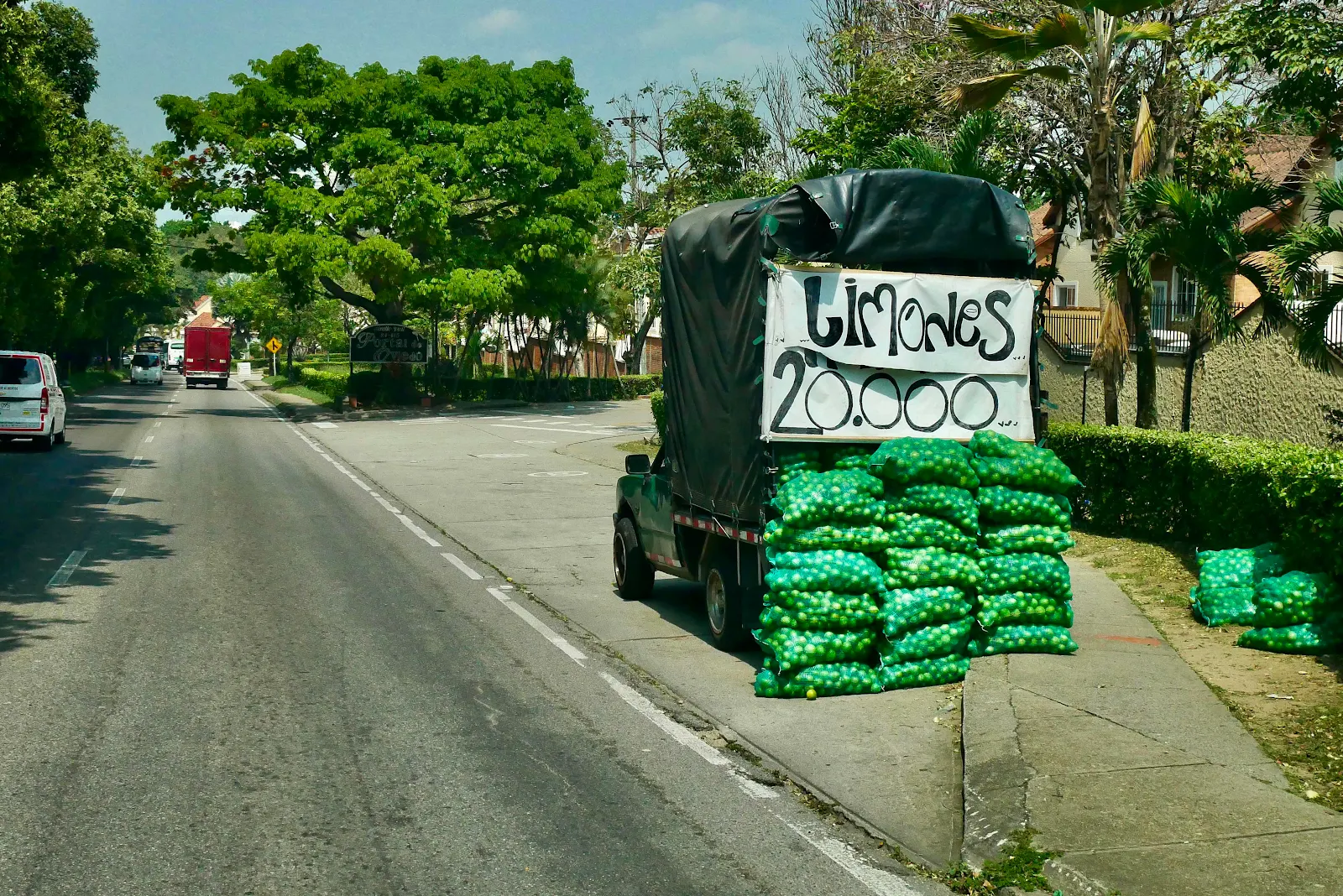
Well maybe not, that might be too much for us but even in a Promaster the choices of roads here seems limitless. Pavement is always preferred.