Wednesday, May 29, 2024

The Road To Medellin

There exists a poem by Rudyard Kipling telling a story of love in Burma between a British soldier and a maiden down by the Moulmein Pagoda on the Road to Mandalay. 
I kept humming, hopefully in my head, the chorus from the song of same name listening in my mind to Leonard Warren grinning madly as he stomped on the syllables in the word Mandalay.
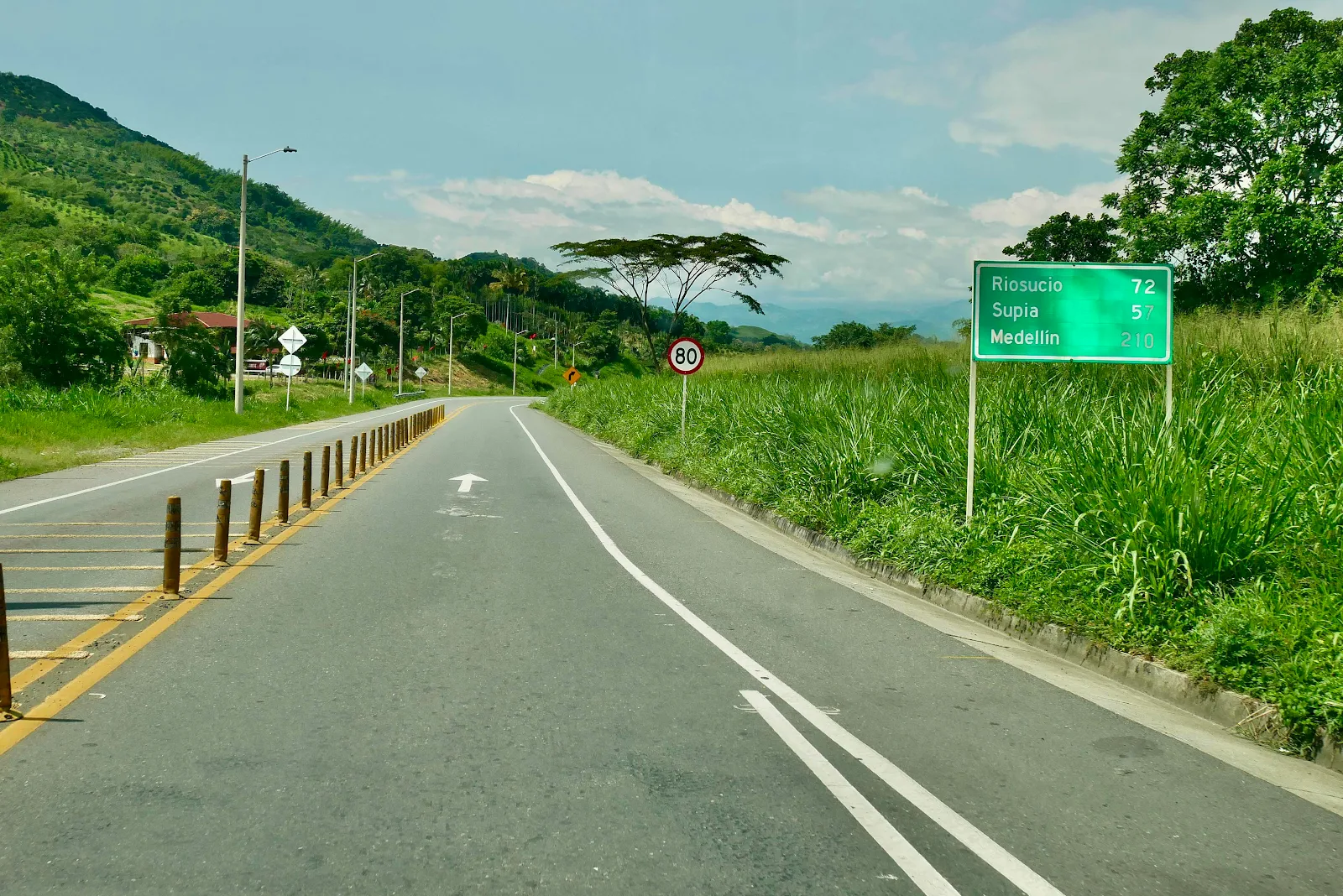
Medellin is not Mandalay but at the time of writing I’ve been to neither city and I suppose I should admit I had not much interest in seeing Medellin, a fashionable tourist hub done to death in photo and film but fashionable travelers. Plus there is no suitable convenient campground for us. The campground loved by overlanders is inhabited by six dogs and as lovely as they may be Rusty couldn’t cope with a pack like that so we’re not staying there. 
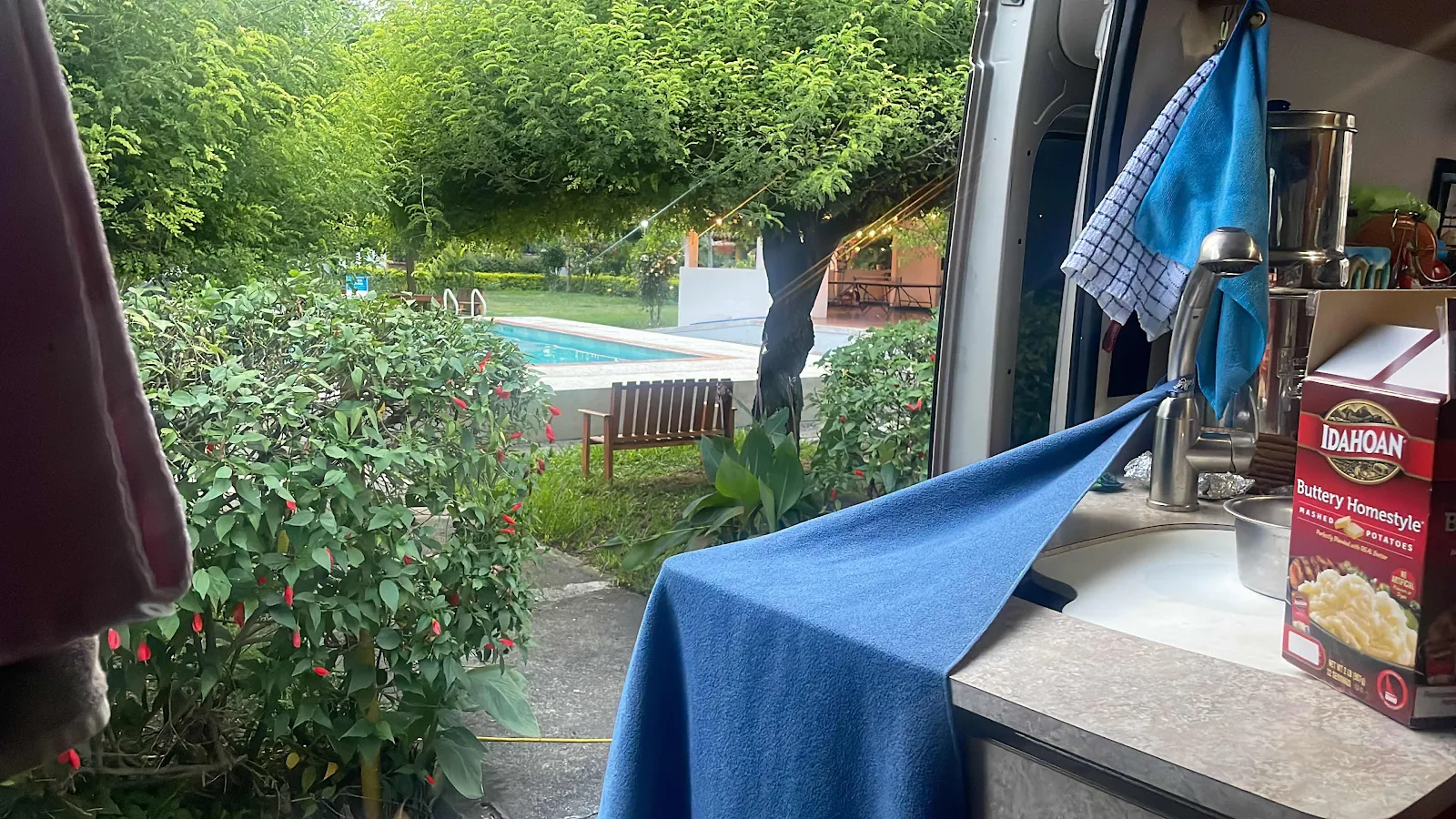
We left La Bonanza campground Monday and drove to Cali three hours north to shop for food, do laundry and go for a swim.
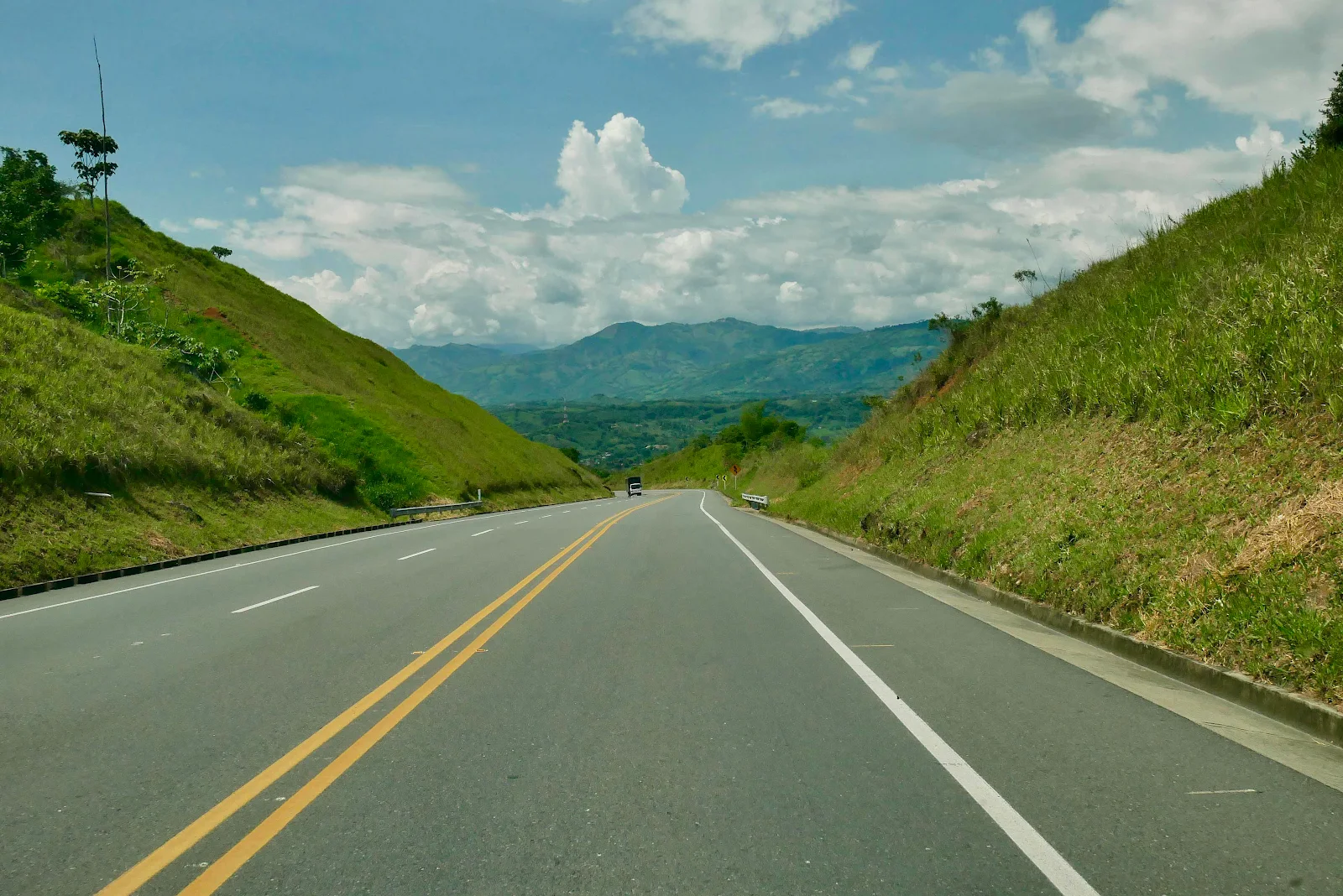
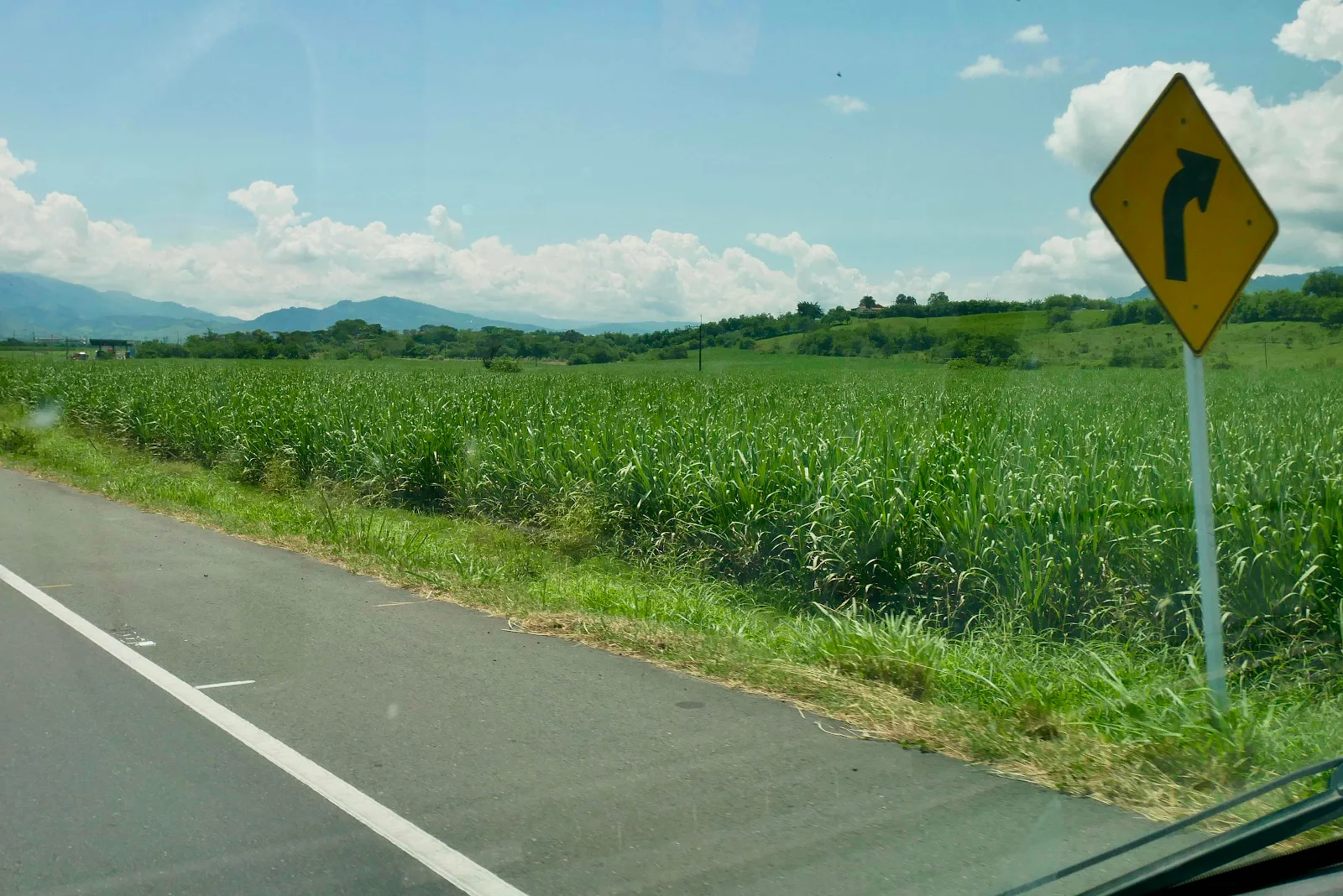
The road from Cali to Medellin is a seven hour drive roughly on a pretty decent highway that starts out across flatlands, hot humid and covered in sugarcane. Pretty tropical.
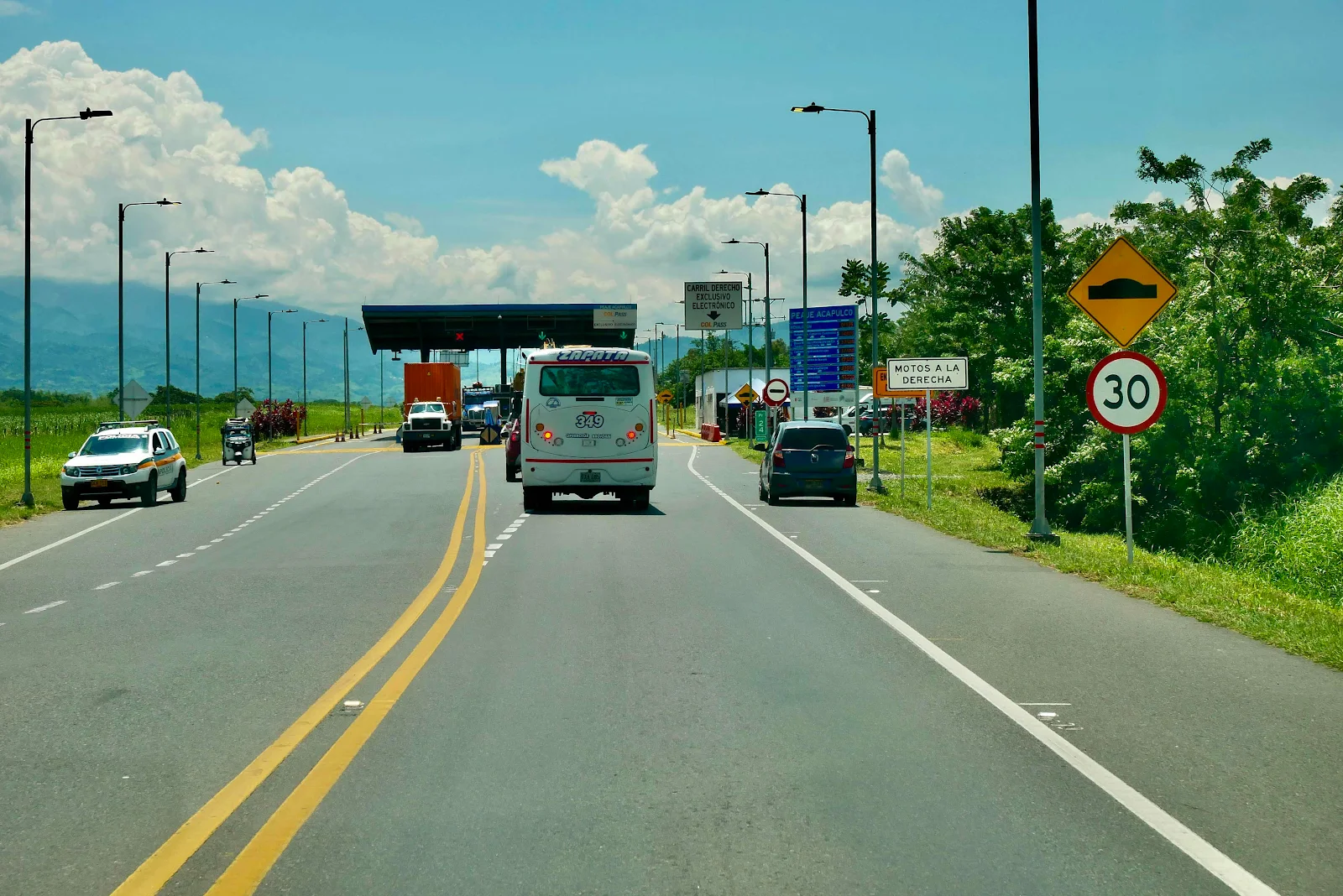
With frequent toll booths taking us for four bucks at a time, which isn’t the worst of it; the time it takes to get through the lines makes me happy I’m not driving for a living. 
Lunch was the usual robust Colombian fare of meat with meat and a side of meat with a fresh air sauce. Bloody hell it was a lot of sauce-free meat.
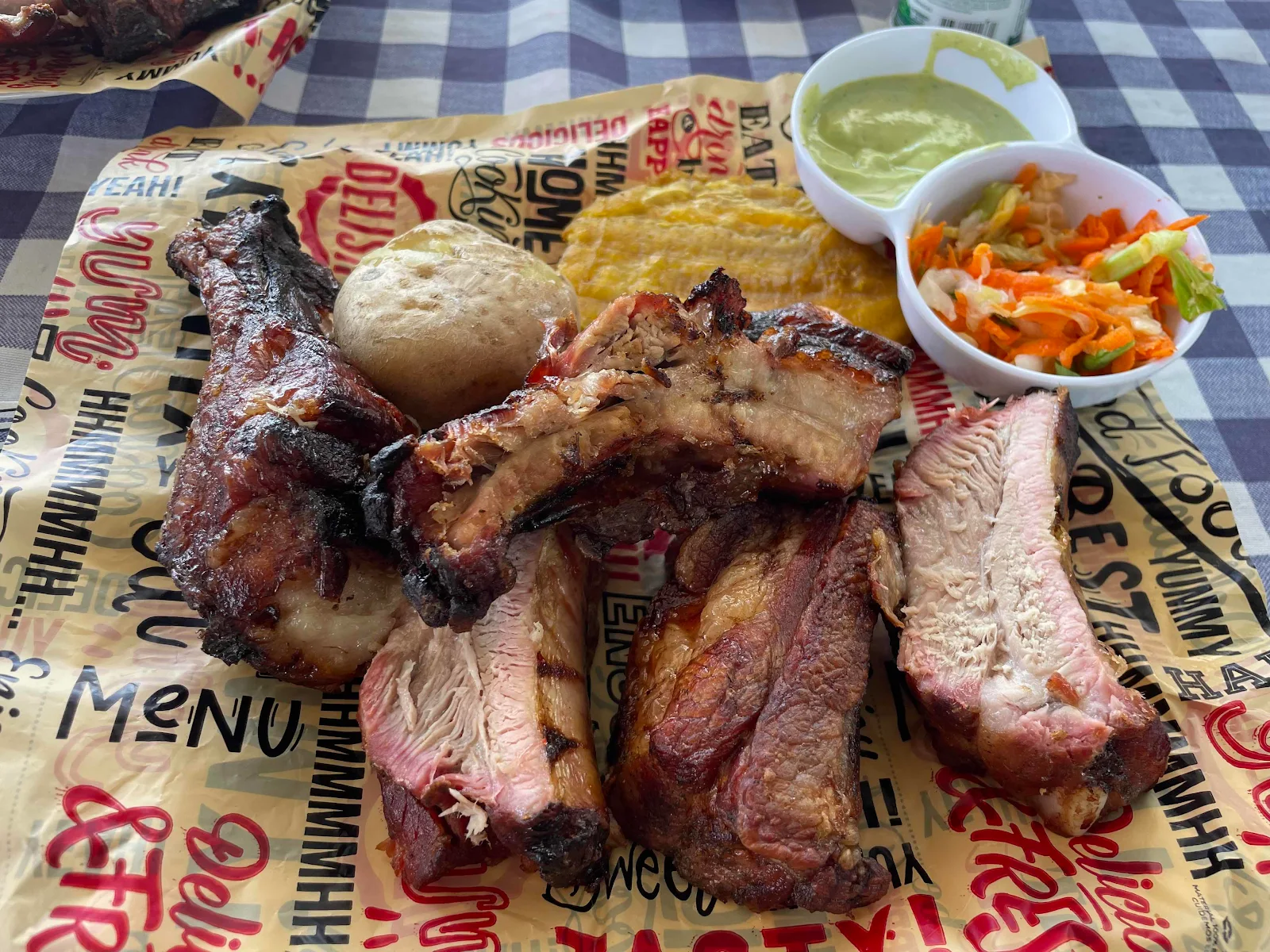
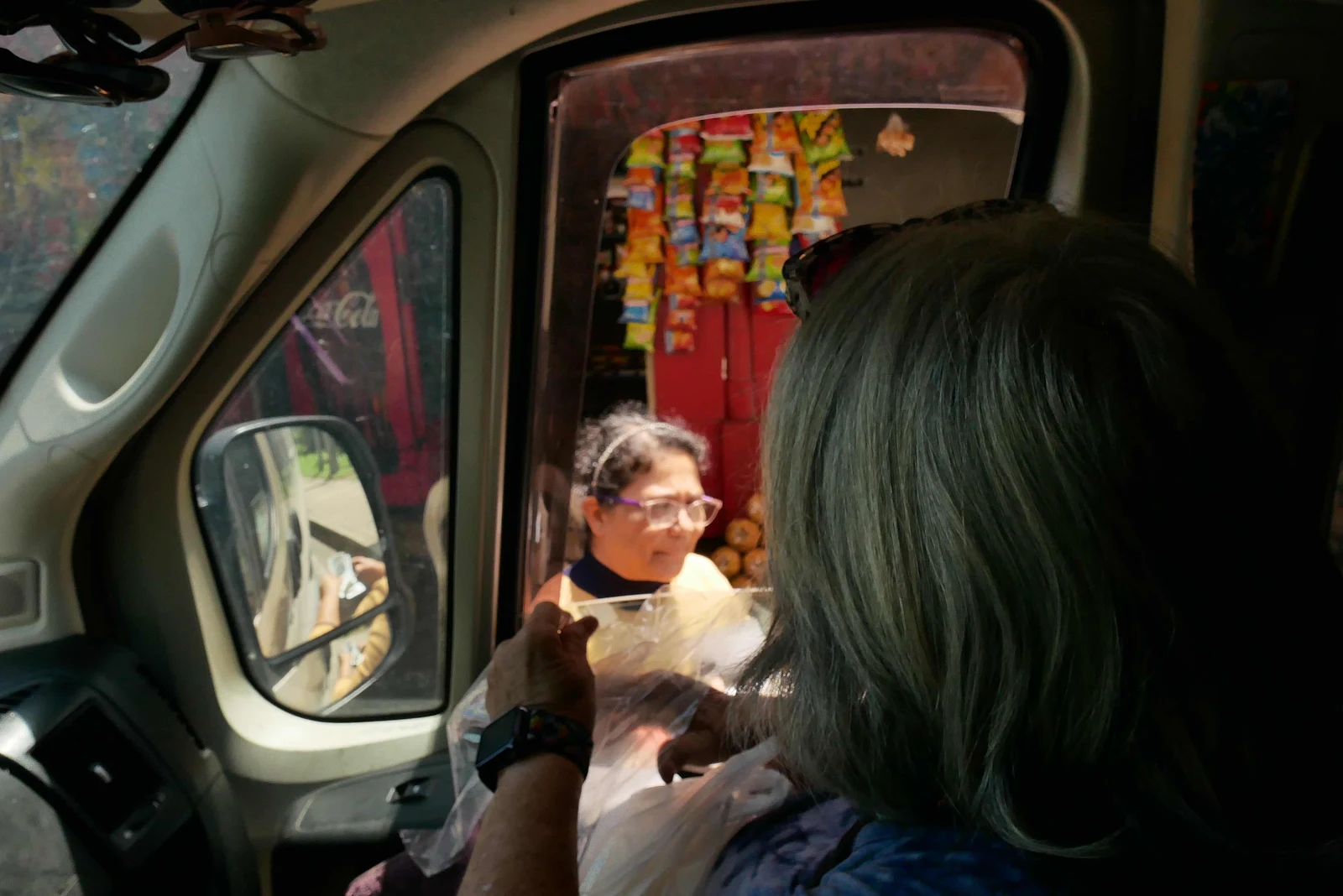
Don’t be surprised to hear Rusty got a treat and he liked it not least because the meat was seasoned and beautifully cooked. It wasn’t a $20 lunch though. 
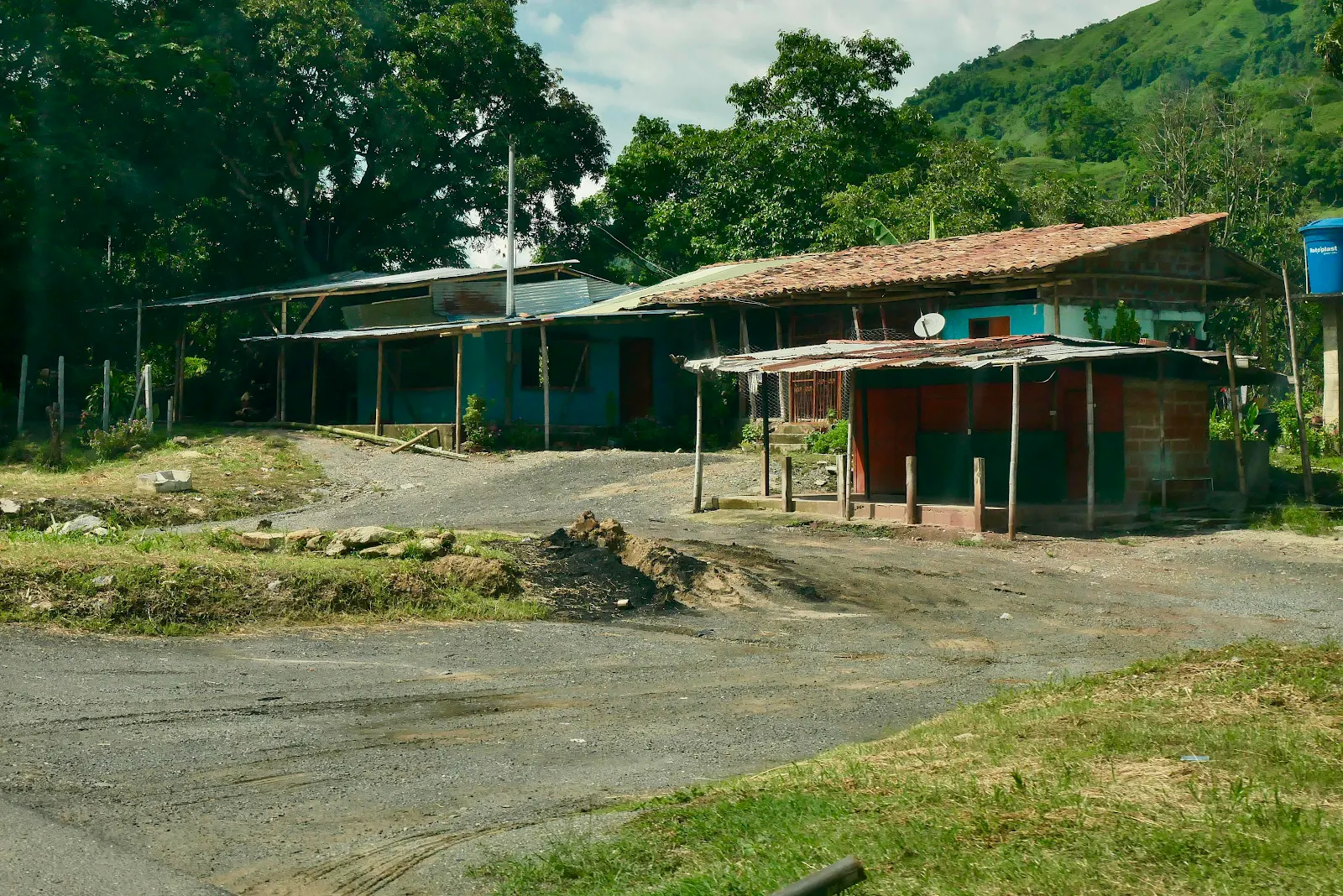
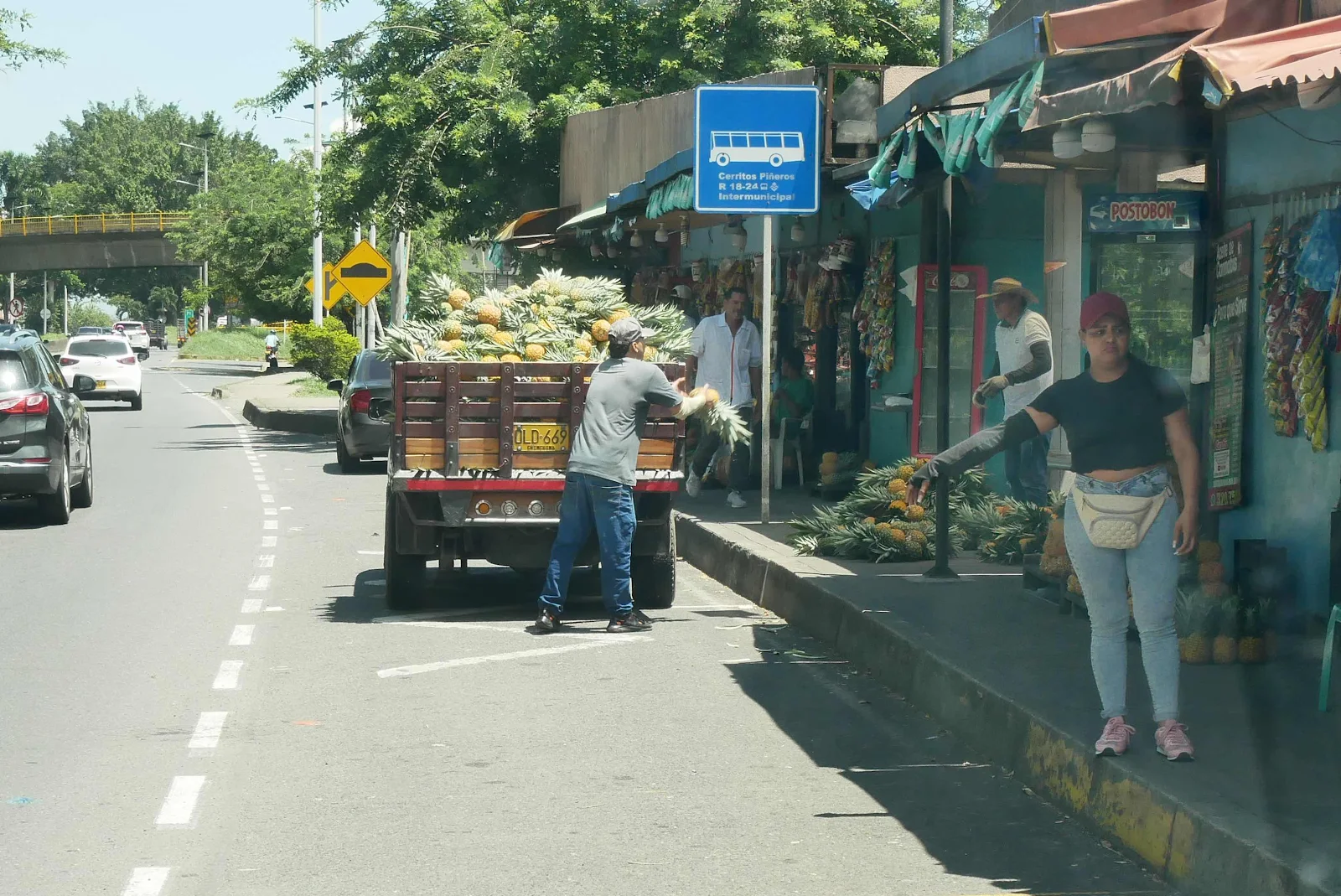
We stopped up the road at a fruit stand and Layne got herself a delicious pineapple as I watched two men load a truck full of them, one by one. The minimum wage in Colombia is $300 a month. The grumpy lady with her thumb out is touting for trade from the passing cars. 
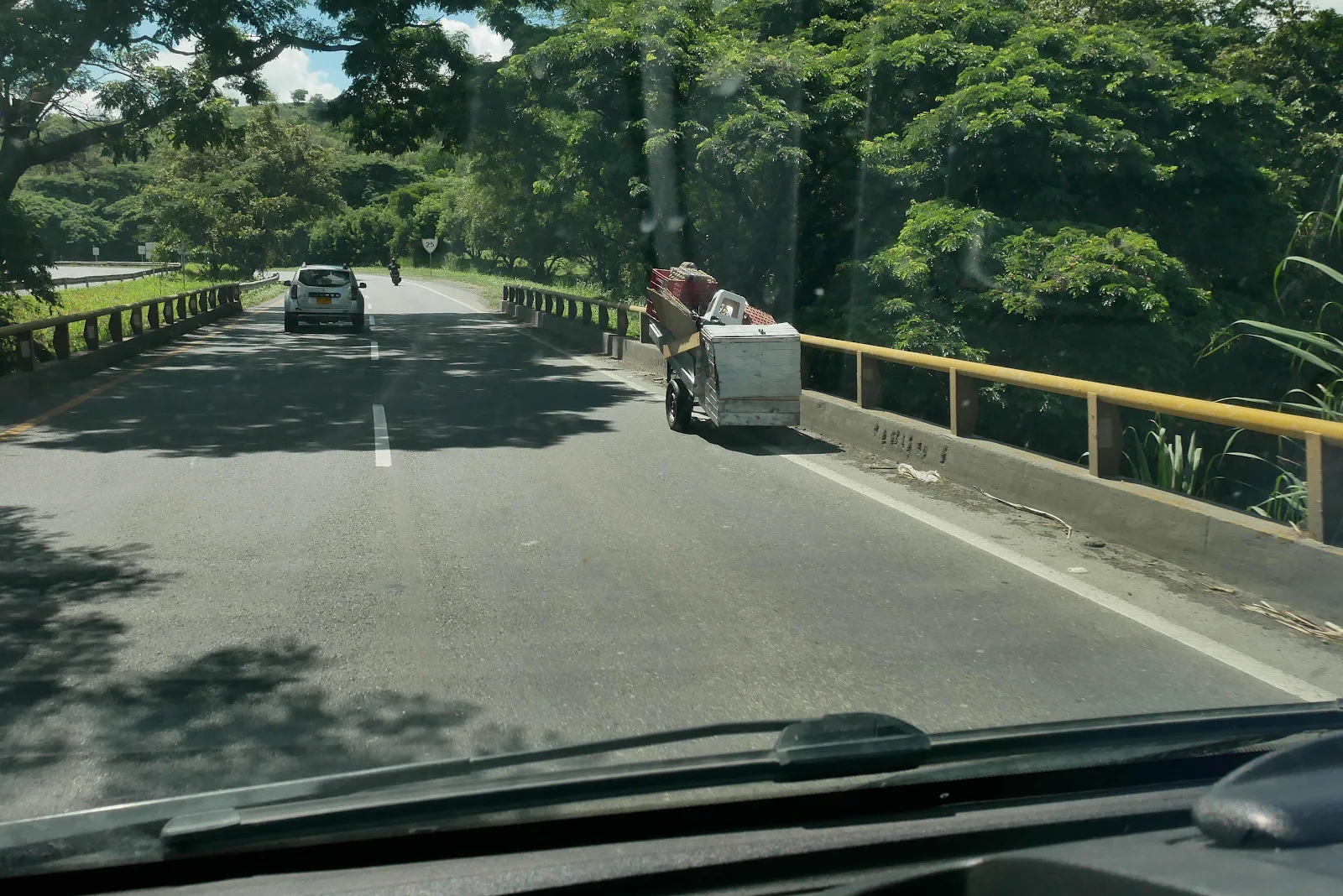
Driving a freeway in Colombia is an experience you wouldn’t enjoy I promise you. The weird thing is after four months I’m used to it and I enjoyed the drive. Even on the four lane I held down to 40mph and just as well. There was a horse and cart only another shoulder clipping along hauling a pile of sugarcane. I had to almost stop to let some suicide drivers pass on our left. 
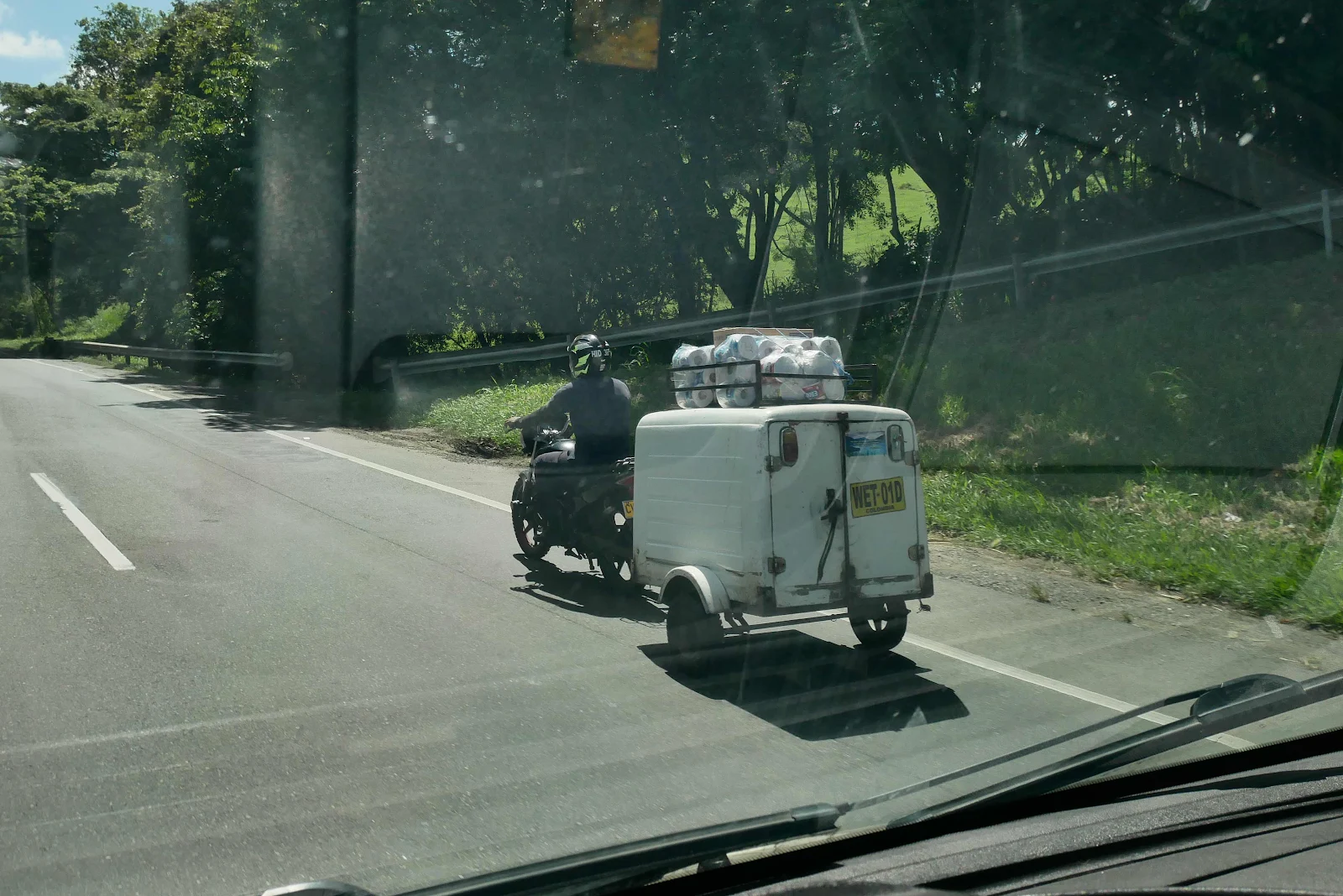
The problem you is you just never know what you’ll come across, a pothole possibly though most of the road is pretty good in that regard. Some motorcycles meander, some cars too so you come around a wide bend in the highway and you either switch lanes or if you are hemmed in you slow down, hard even from 40 mph. 
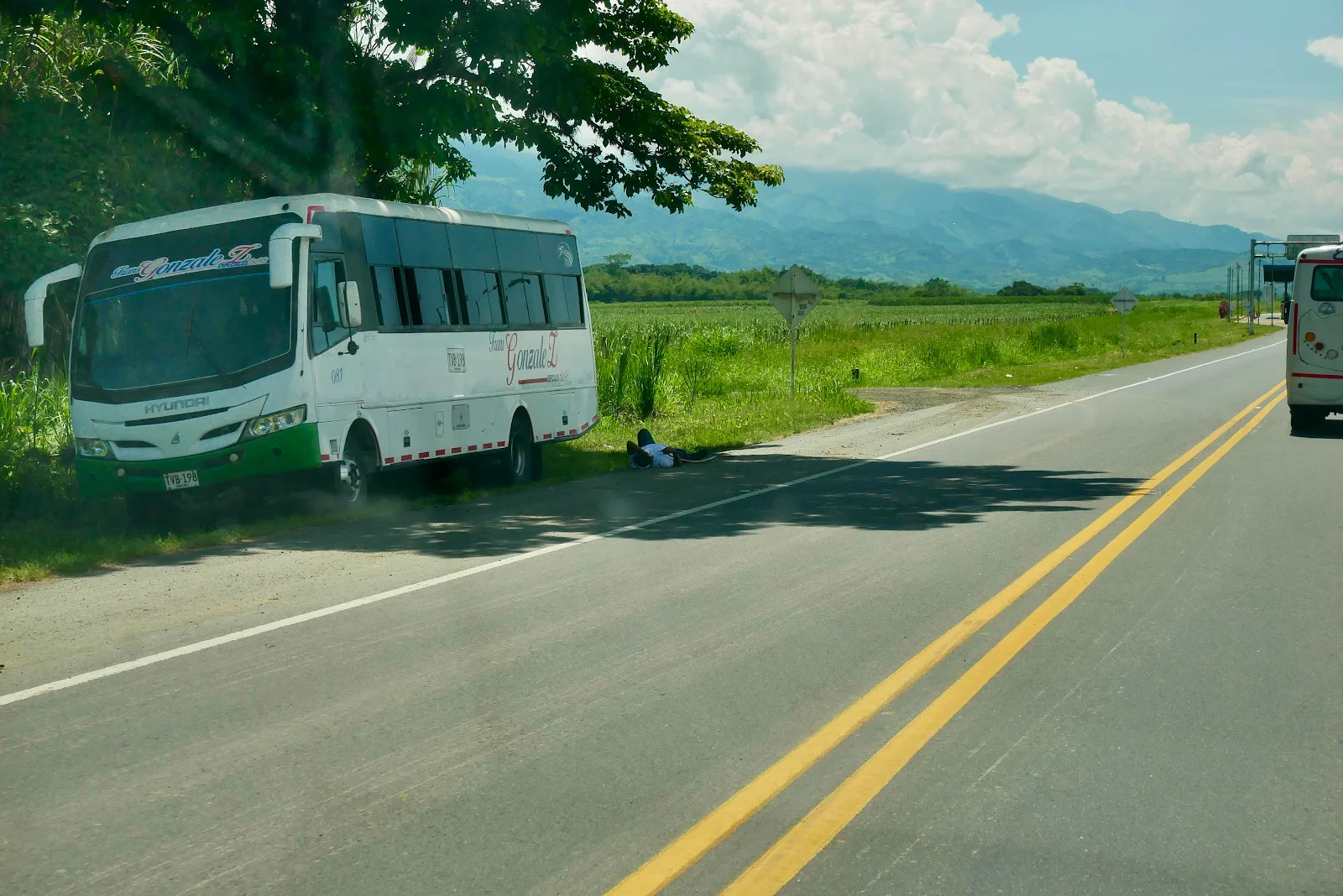
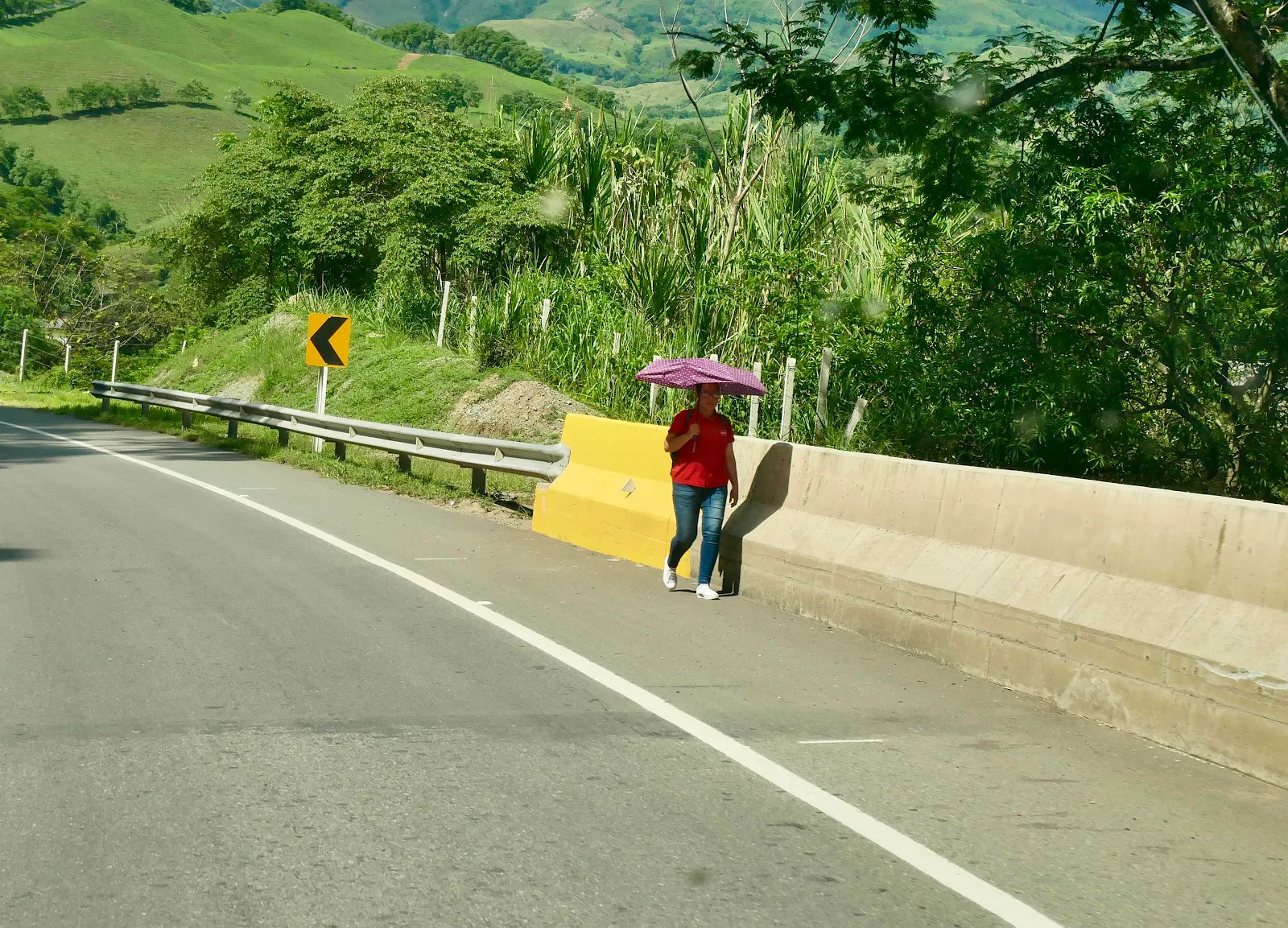
Then there are the Venezuelan refugees walking along the shoulder northbound toward the perils of the Darien Gap. You see whole families, parents infants and small children walking the family dog on a leash. It’s heartbreaking, asking ourselves where they expect to be welcomed. The new President of Panama wants to shut down the flow of people walking the Darien Gsp where thousands die amdcfisappear and thousands more start the walk toward Mexico and the US. Now Mexico’s President has said he will use US money from the Biden administration to stop the flow and organize repatriation from Mexico. And thousands more keep walking and overwhelming all the sound bites. Venezuela, land of oil, has a lot to answers to seek from its leaders.  
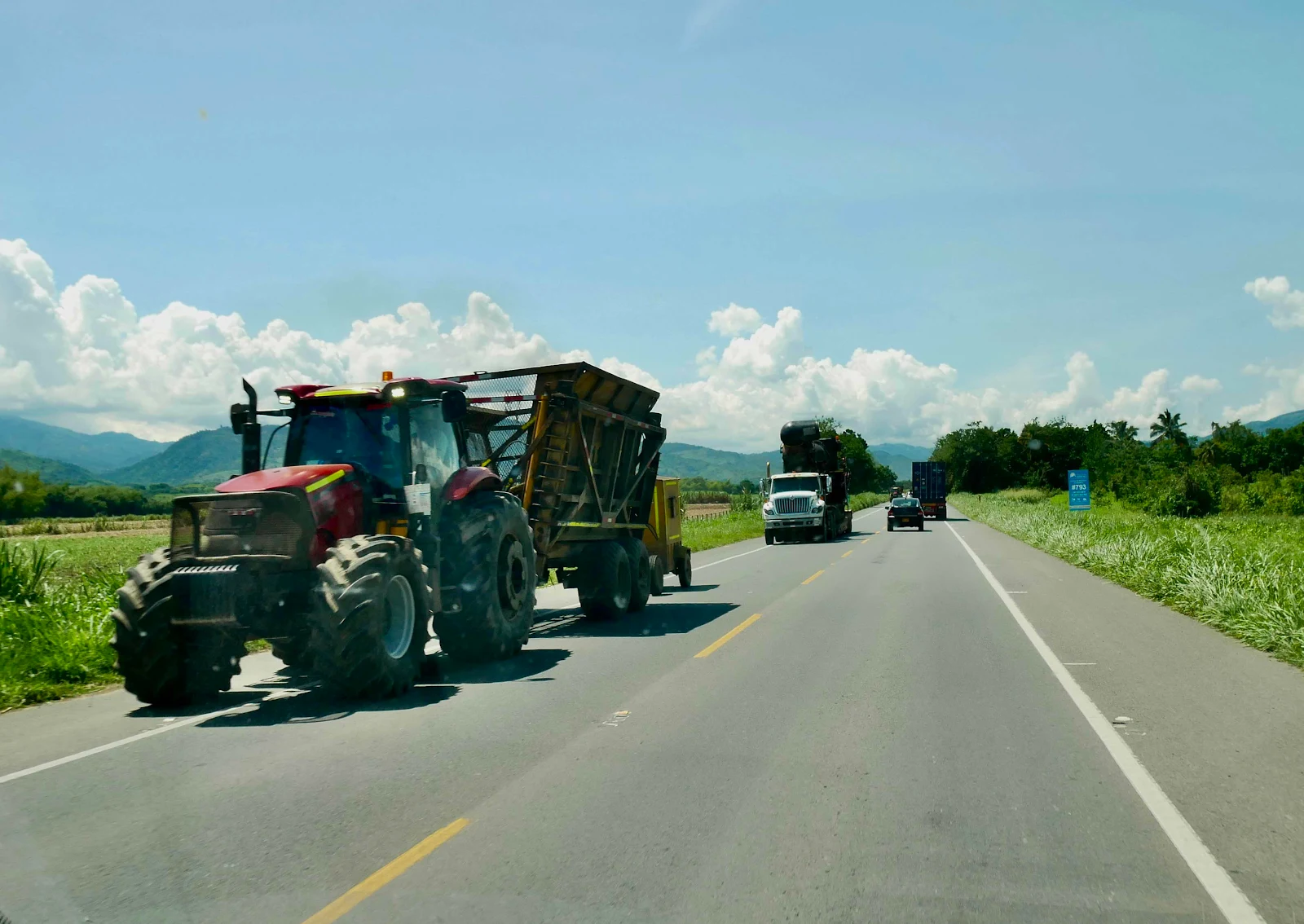
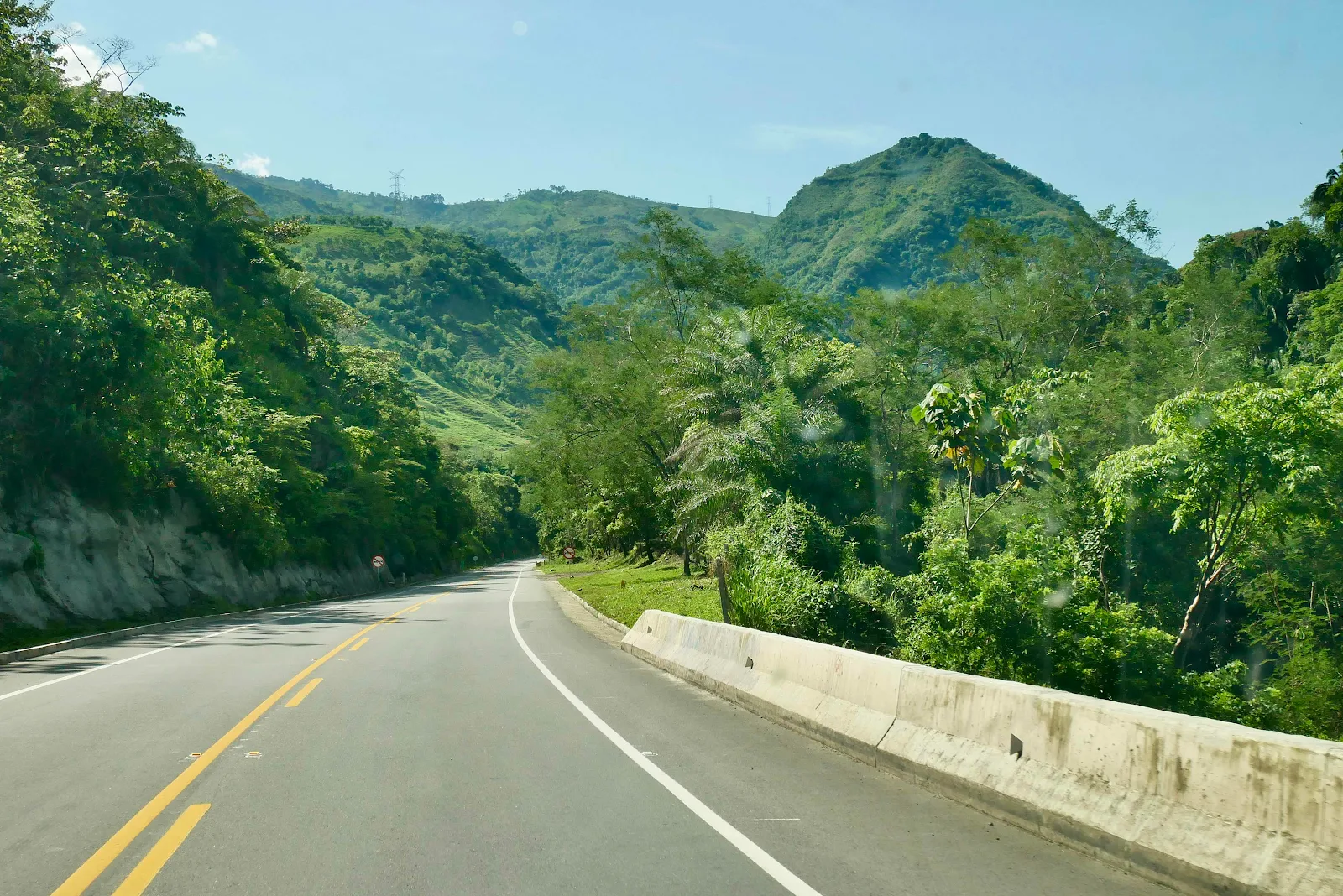
And the highway hits the mountains. 
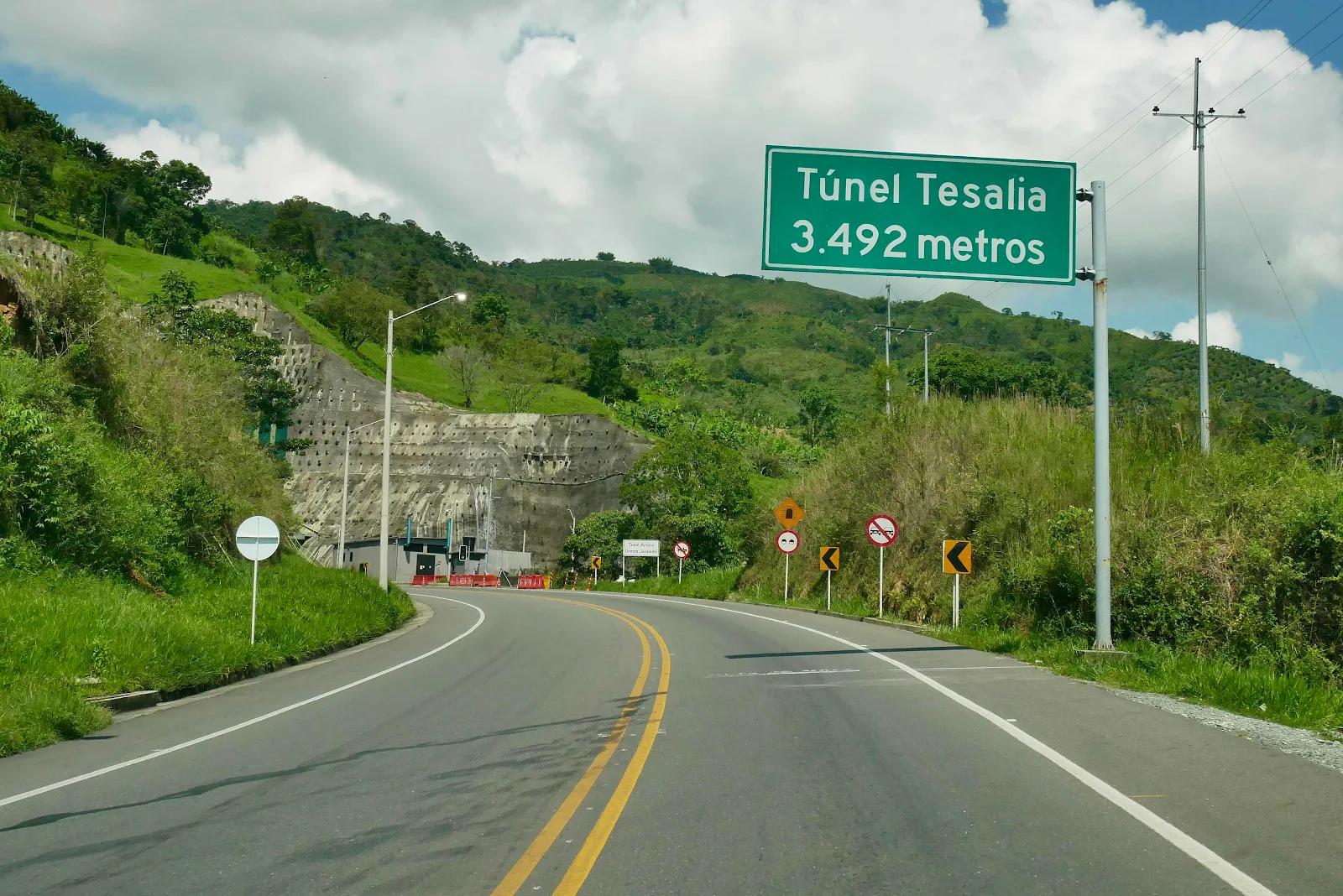
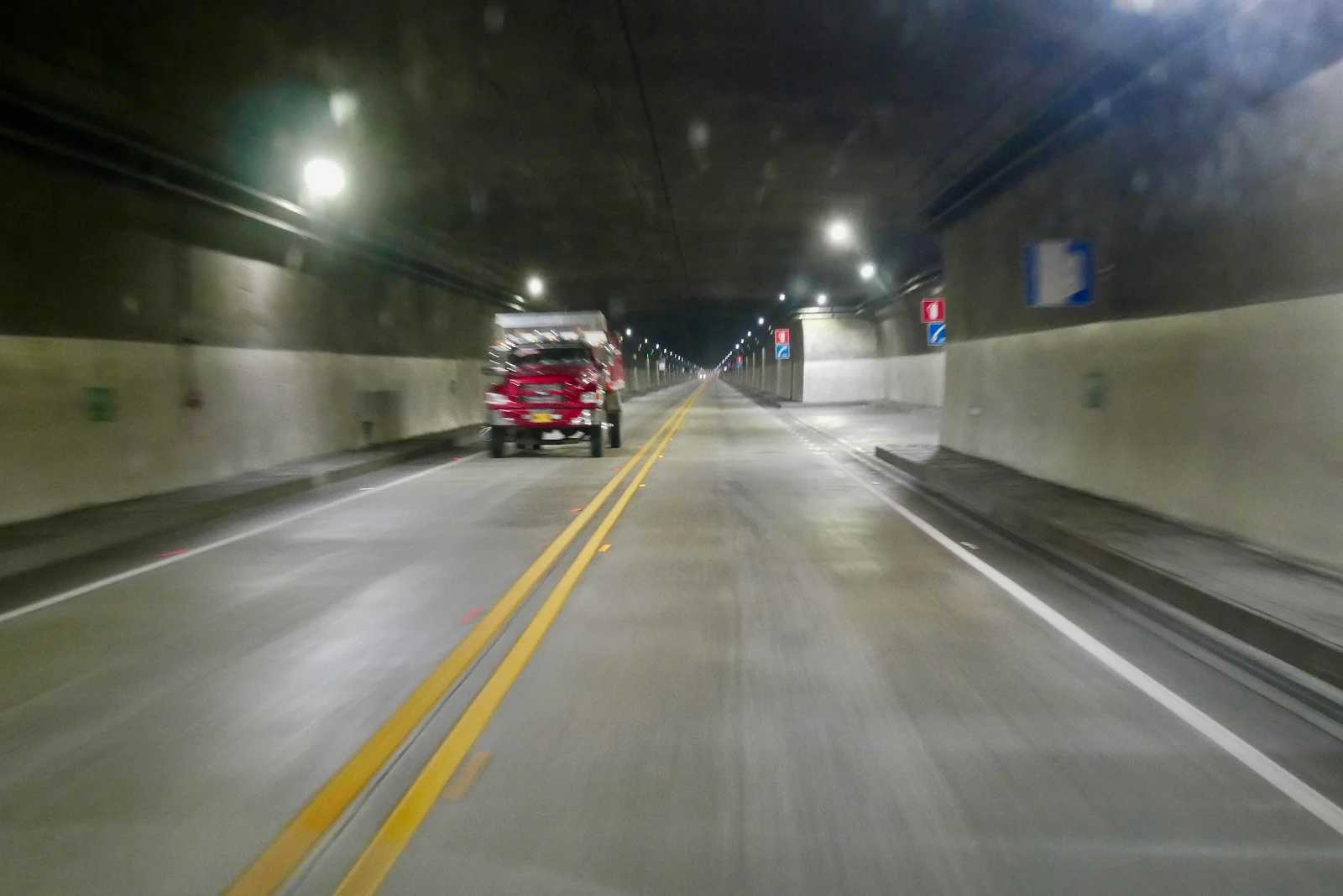
At just over two miles long the first of two tunnels surprised Layne who thought it was the longest she had transited. I was surprised how modern it was inside, honestly. 
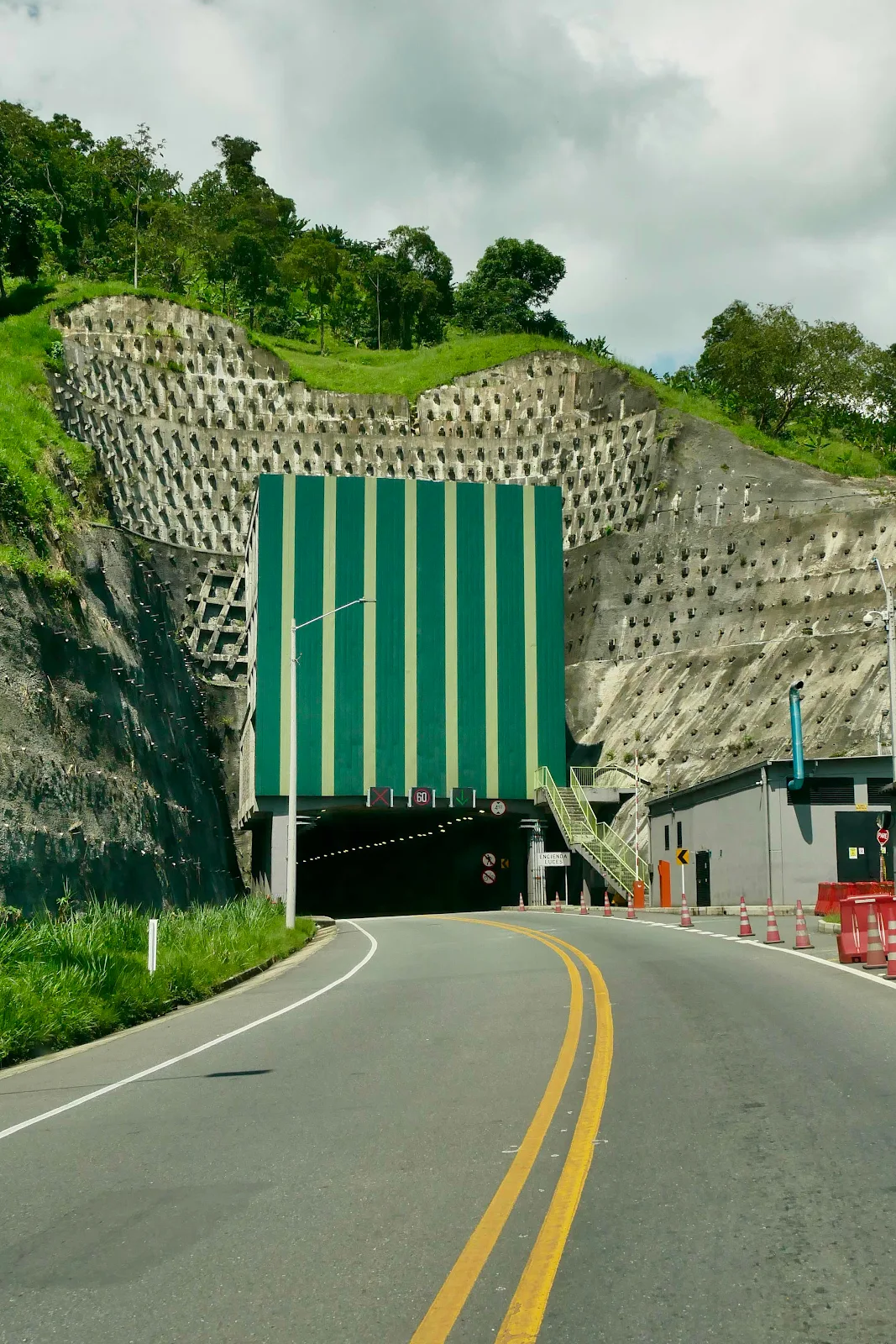
Of course not everyone had their lights on…
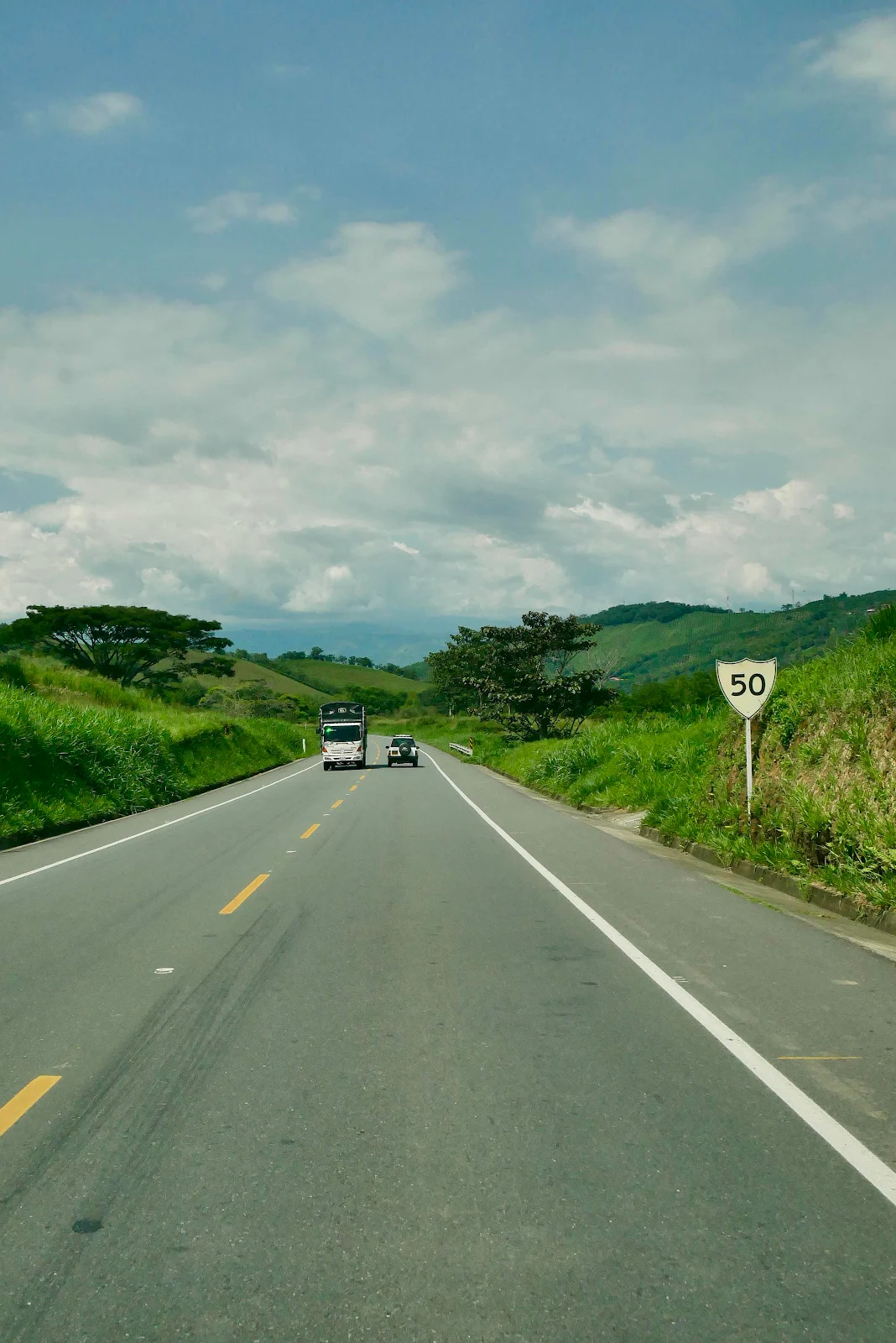
Colombia is far more beautiful than my photos show, mountains and clouds green fields and even greener forests everywhere. 


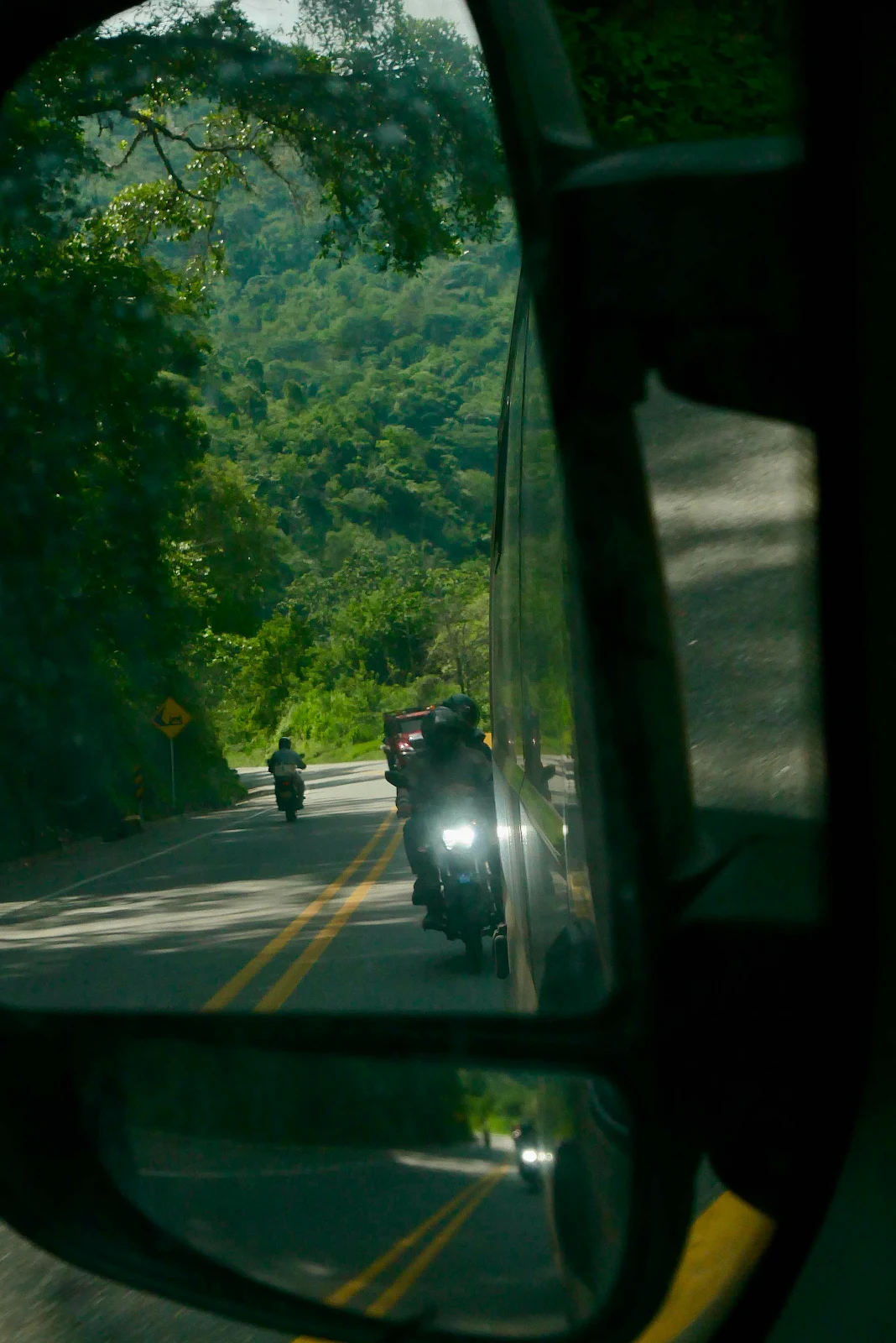
Motorcycles and cars constantly tailgating between the numerous passing zones. We saw a motorcycle fatality in Cali and an eighteen wheeler on its side in a curvy section of highway and there were more near misses than you want to know. Passing dangerously is in God’s hands here and frequently it seems more like the Devil is involved. 


On our side of the Cauca River is the department of Antioquia, while on the other side is Caldas. Antioquiz is the department headed by Medellin so we knew we were getting close to the city known mostly for cocaine cartels but that has been though a huge transformation into a tourist magnet. 
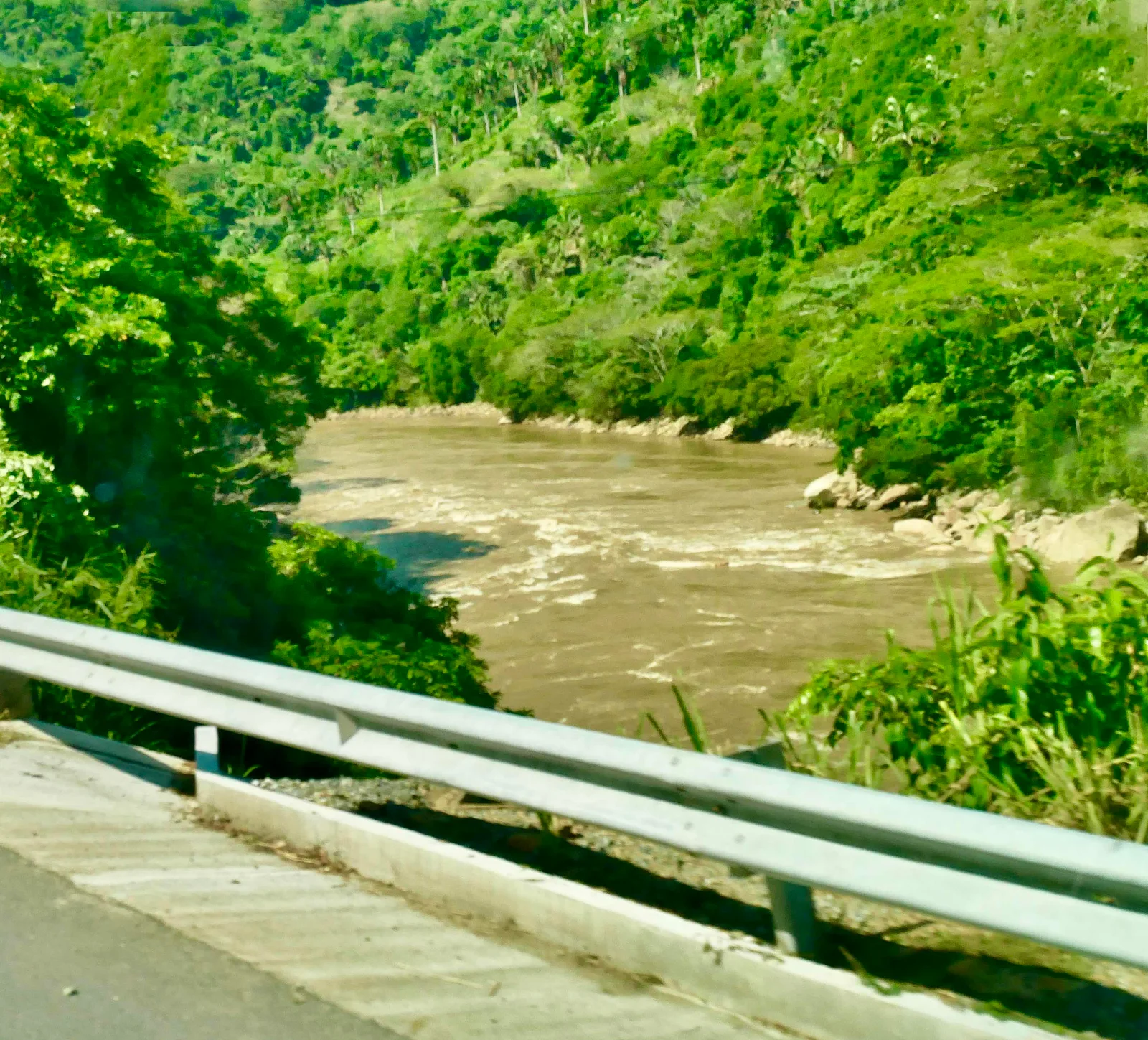
Honestly much of this drive through the steep river valley reminded me of West Virginia. 
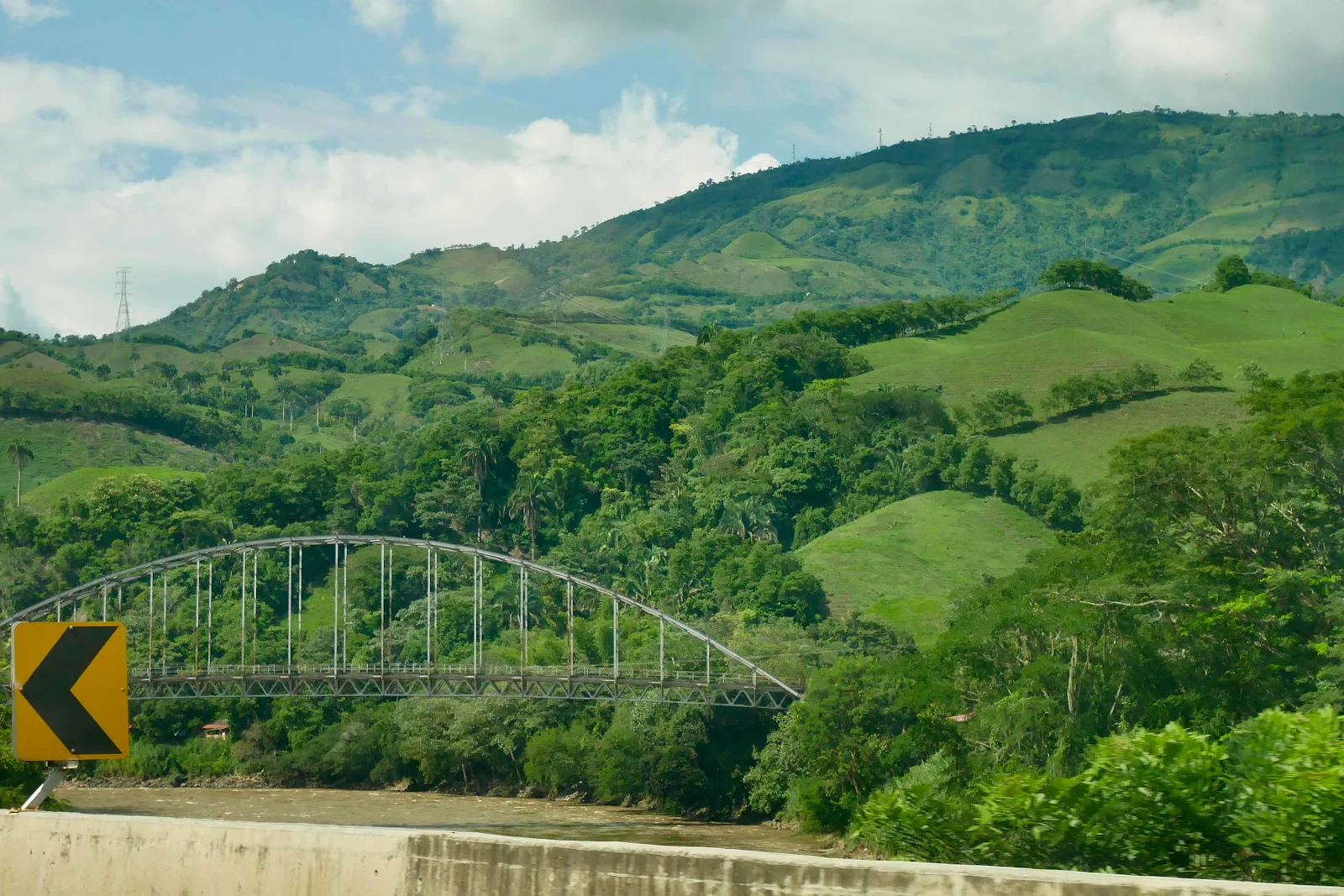
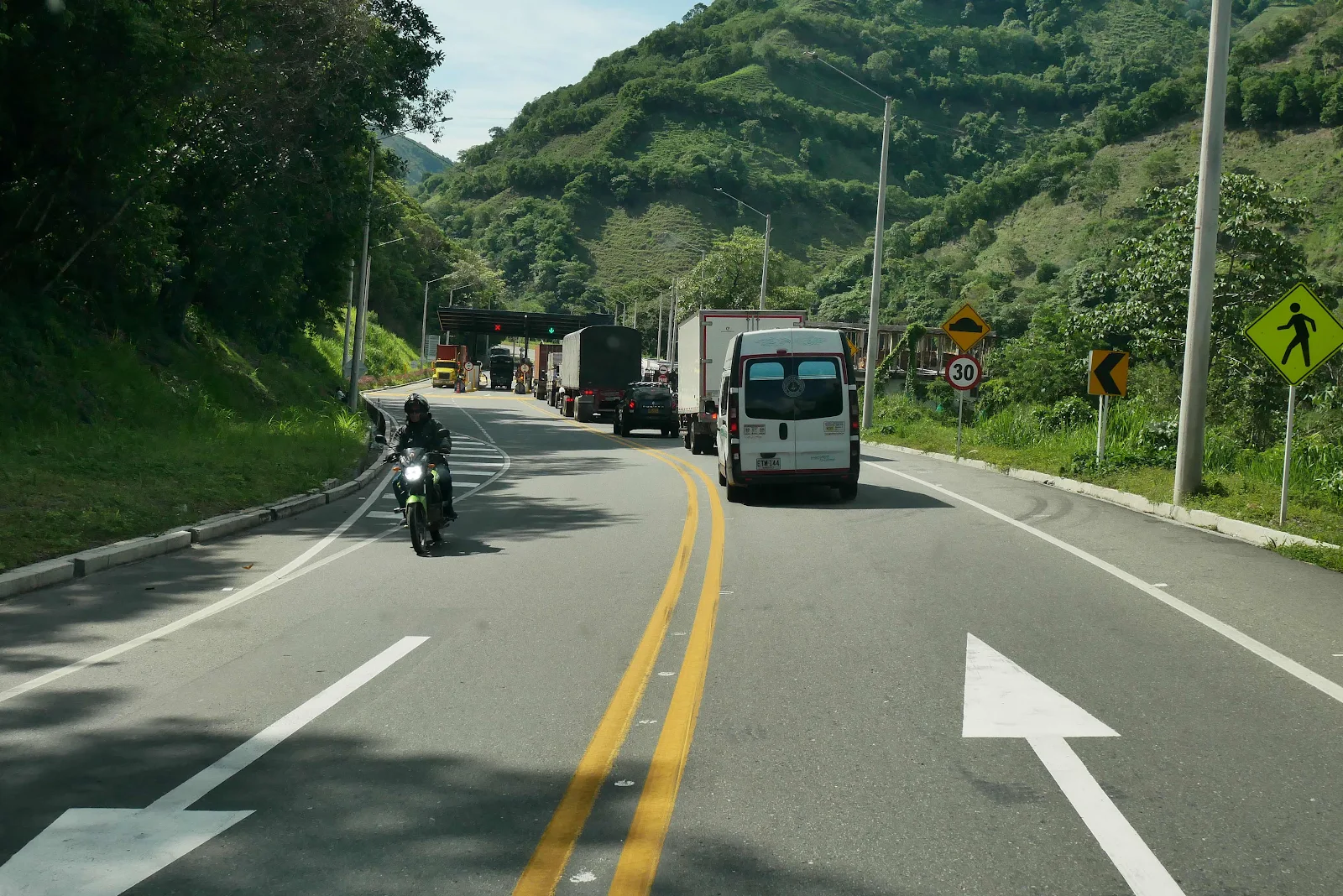
More long lines at the Peaje- toll booth - which didn’t seem so bad considering the quality of the road. 
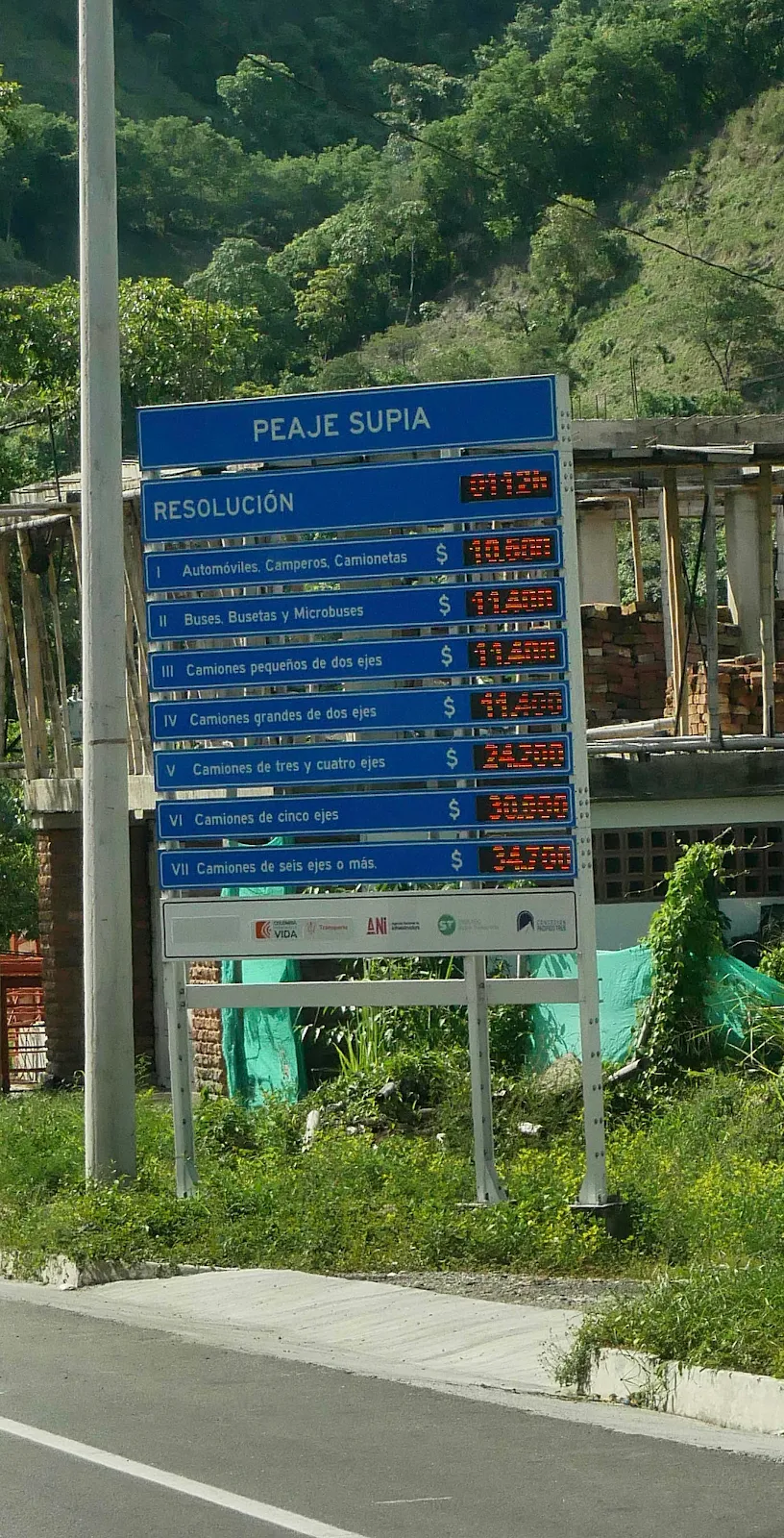
Unlike Mexico where the toll amount is a closely guarded secret until you get to the booth, Colombia gives you a chance to get the cash organized. At 1:12pm at the Supia toll booth cars, campers and pick ups paid 10,500 pesos which divided by four comes to about $3:75 ($1 equals 4,000 pesos). I always tell the attendant the van is “Sencillo” which literally means simple but in this case means no twin axles at the back where they always glance as I arrive. An “eje” is an axle if you check below. 


iOverlander revealed a campground at a hotel with pool in the town of La Pintada astride the Cauca River five hours from Cali. We arrived in time for a good long swim in the torrid heat.  $7:50 to camp and $7:50 to swim for both of us, with WiFi clean toilets and cold showers. 
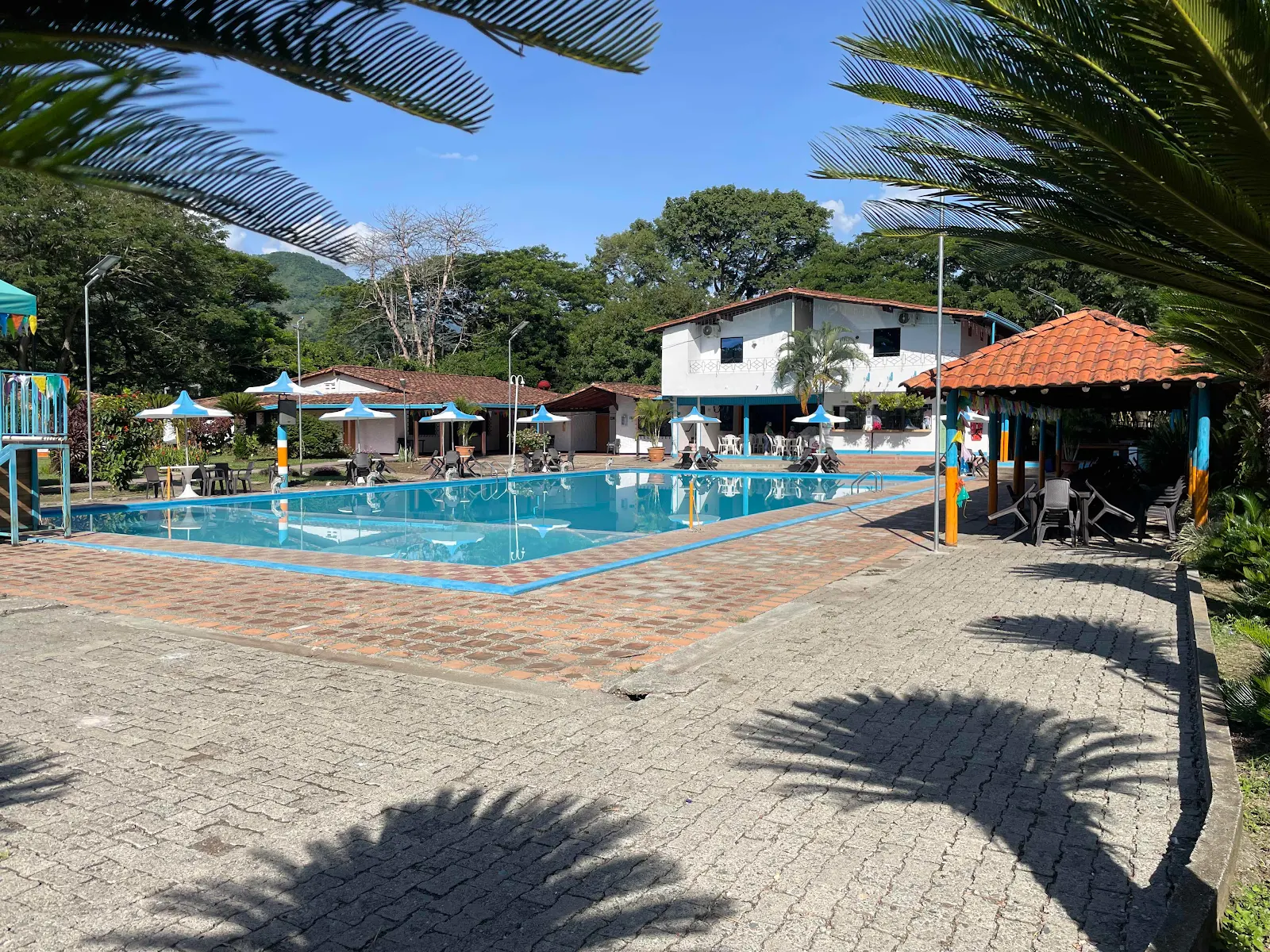
Back on the road in the heat down at 3,000 feet we used our air conditioner off our batteries while we had dinner. GANNET2 is running beautifully after our recent brake job and oil cooler replacement so this test run tells me we seem to ready for Ecuador. And at ten thousand feet it will be a lot cooler. 

Sunday, May 26, 2024

Sitting

Every day Layne hopes to wake up ready to travel and every day she is disappointed by her symptoms, a head cold, coughing and herself bed bound. It’s a good spot to not feel well with all the facilities in a good campground but life is stationary. 
Colombia has quieted down, the guerrillas are promising to kidnap more rich Colombians to fund their lifestyle and the government says in that case no more peace talks. The two sides are meeting in Caracas Venezuela in order not to talk. 
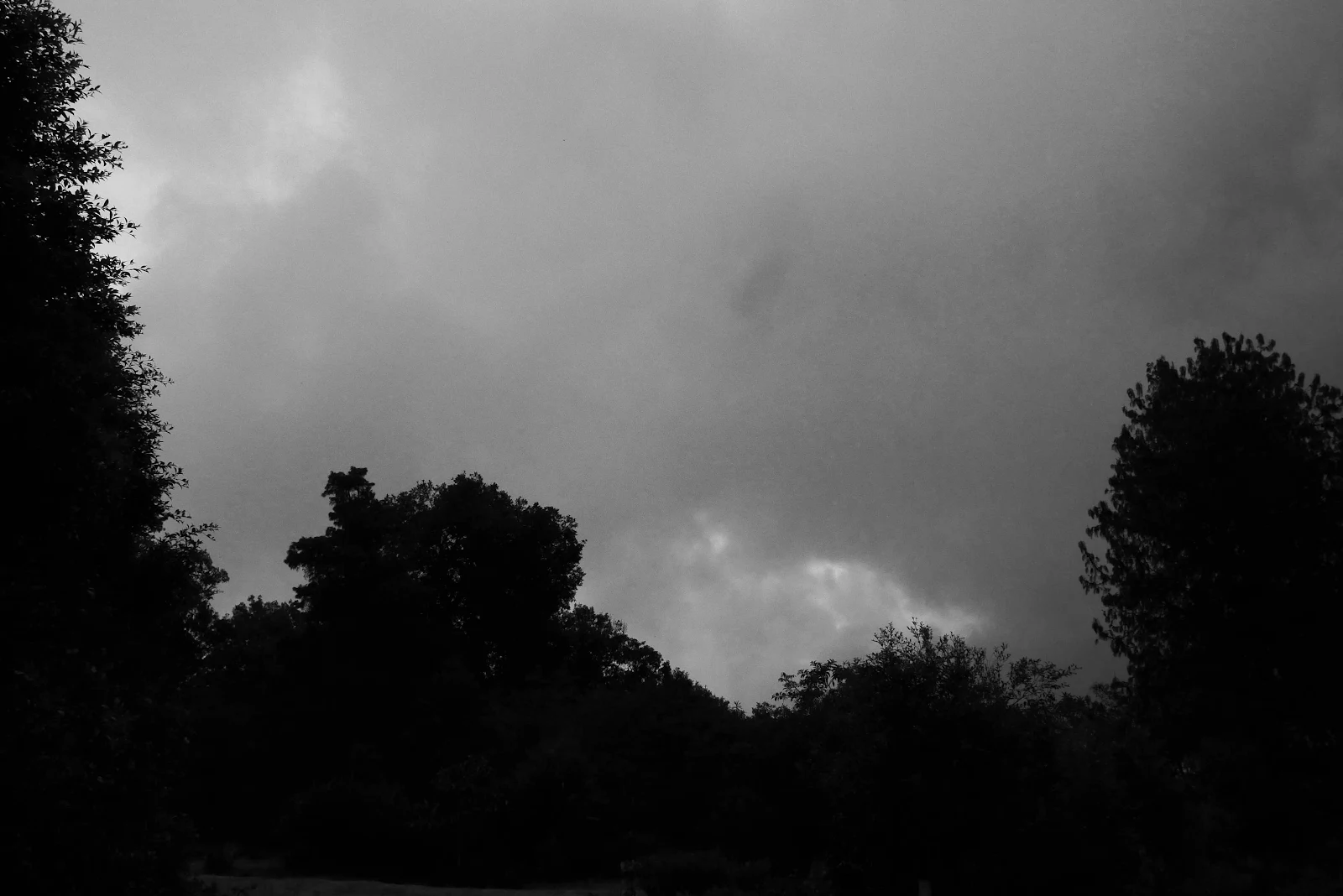
Rusty and I lounge around and then go for walks. The air at 8,000 feet is cool and crisp and bursts of sunshine alternate with threatening black clouds of rain. I told a Spanish overlander who just arrived here that rainy season is officially over. I guarantee it and she laughed at me. And yet no rain has fallen lately. 
Rusty is going gray and he freaks me out but he runs and jumps and plays the sand as always. I worry too much. 
We have some packages coming via Amazon, a new laundry bag and a dog food bag and an accidental camera lens for me and a new camp chair for Layne and they are supposed to arrive next week. 
Layne has a plan to double back to Medellin for a visit to the city we accidentally bypassed on our way south but we can’t leave until she gets well. 
I take my small Panasonic camera for walks with my new tiny telephoto lens and I come back to our Starlink and upload and wonder how long we shall wait to do something. 
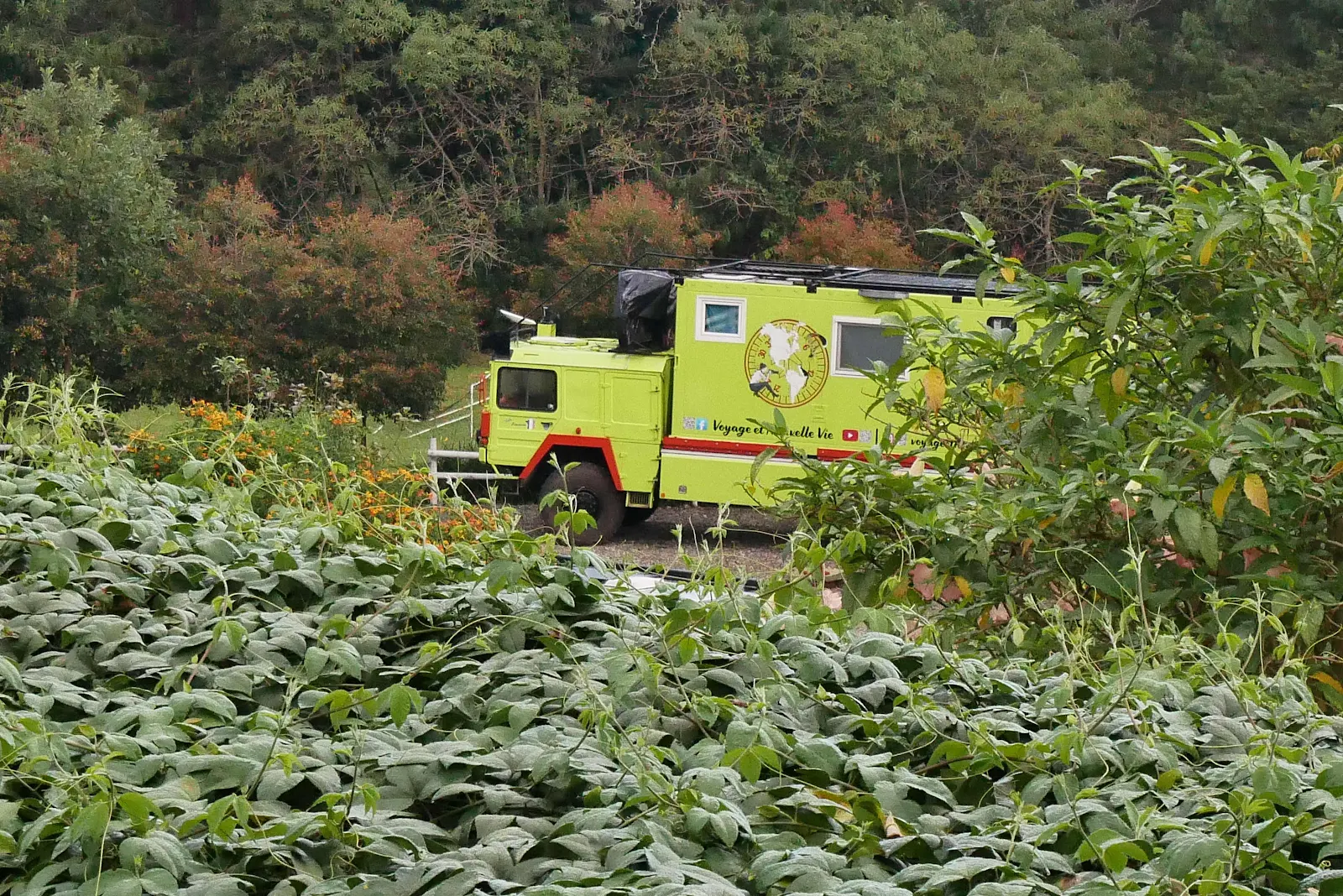
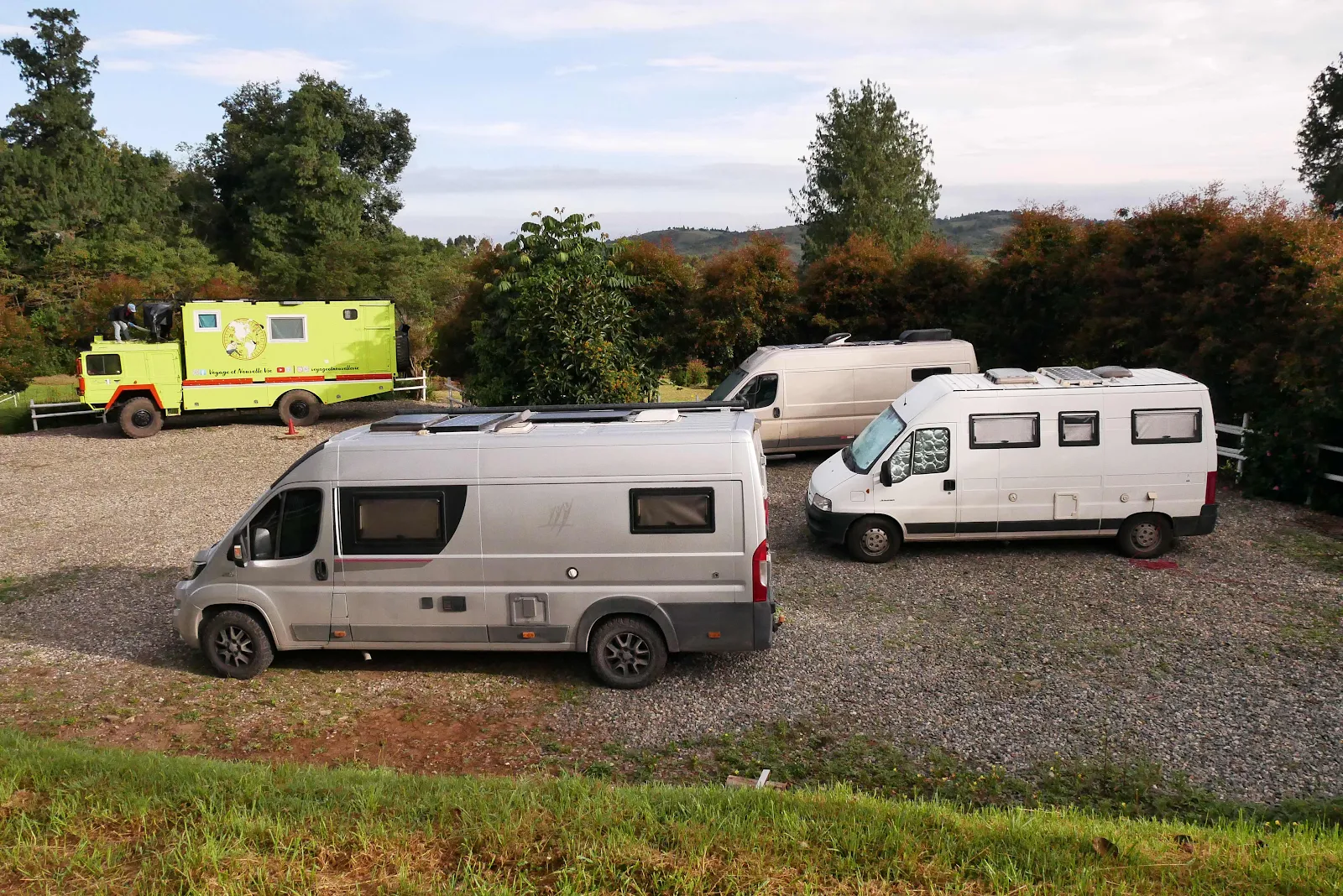
The giant green French truck left the campground yesterday returning to Ecuador but before they got to the border they were flagged down as their brakes were on fire. They had fire extinguishers but the last I heard they are sitting in Colombia pondering their next move. 

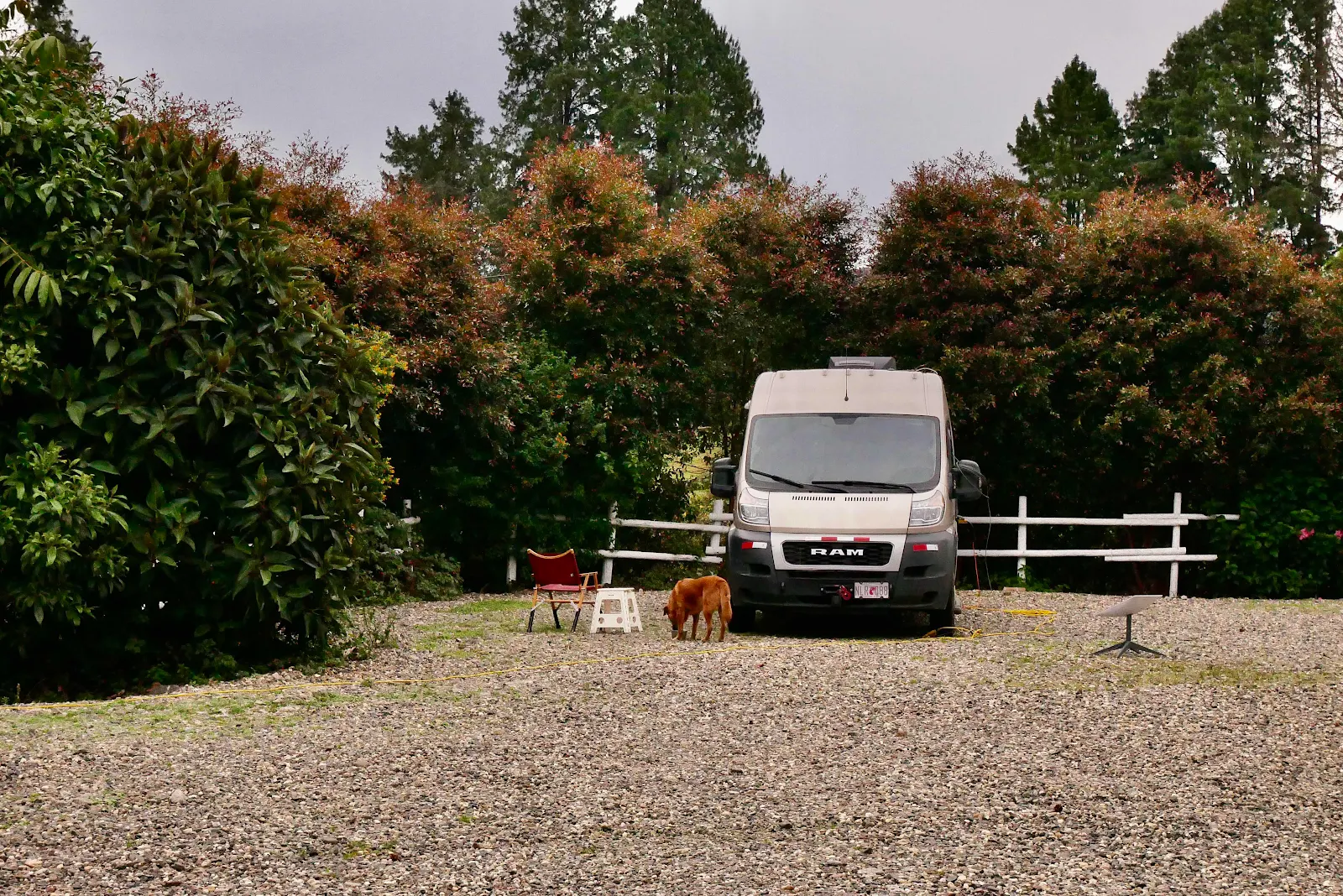
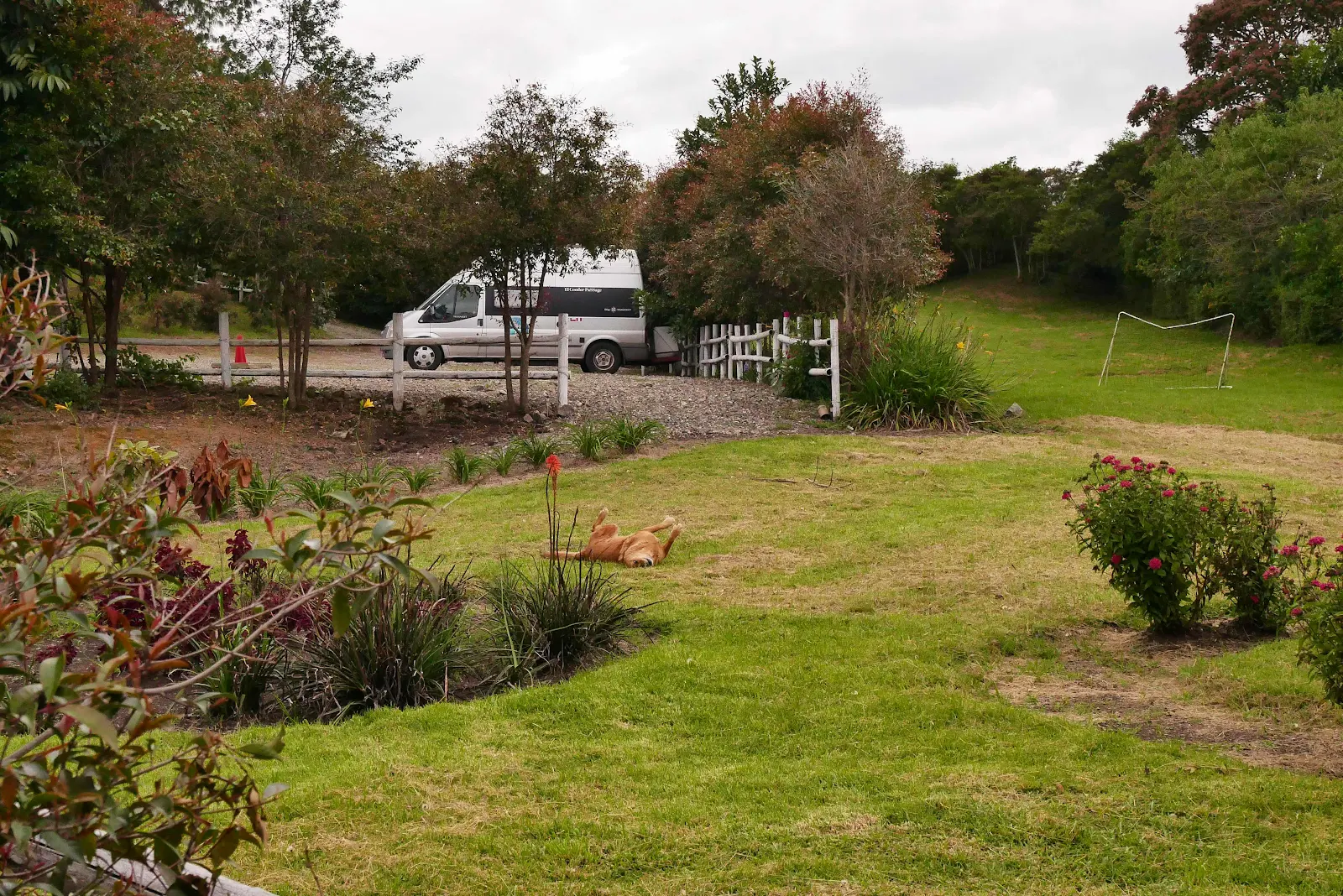
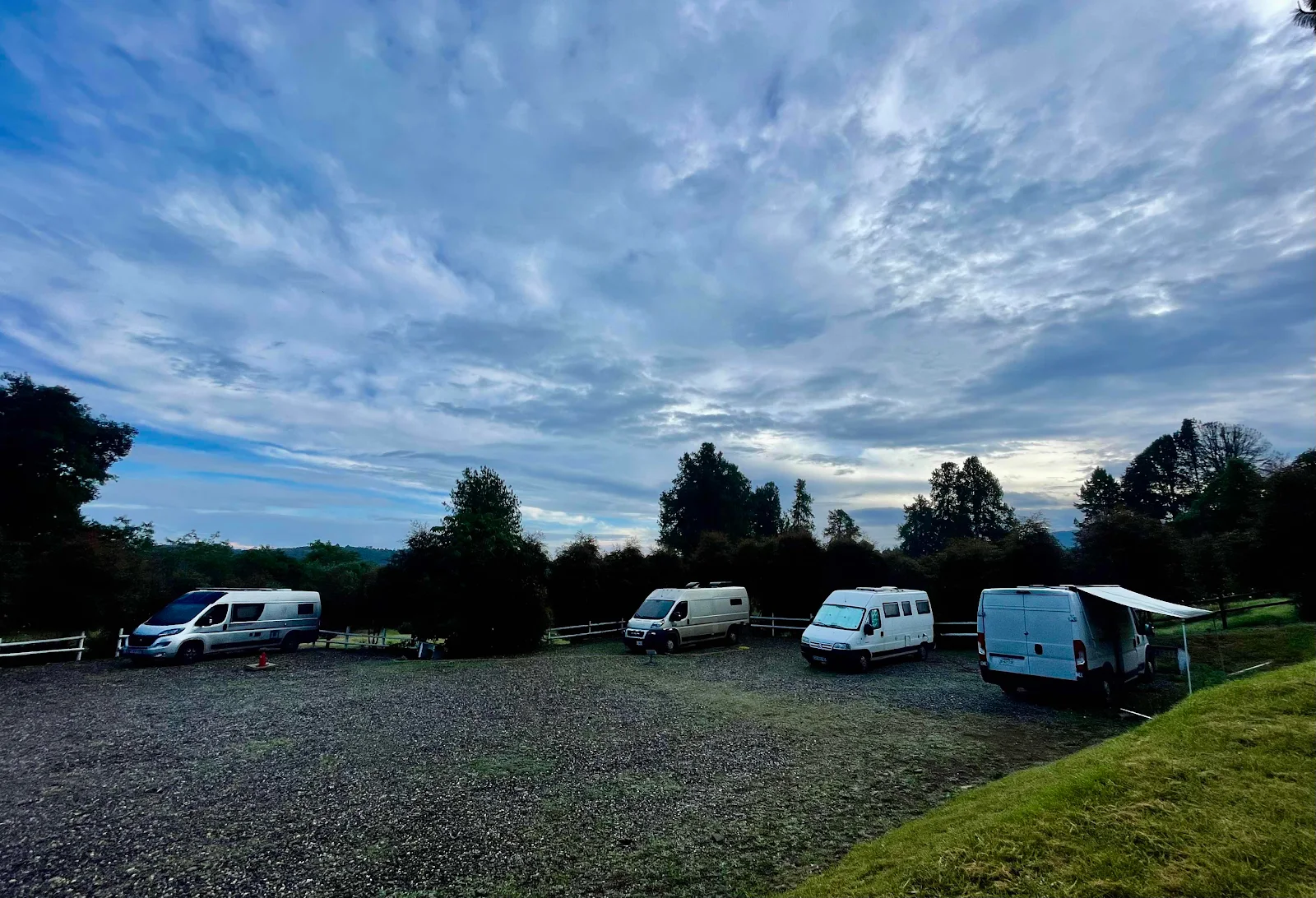
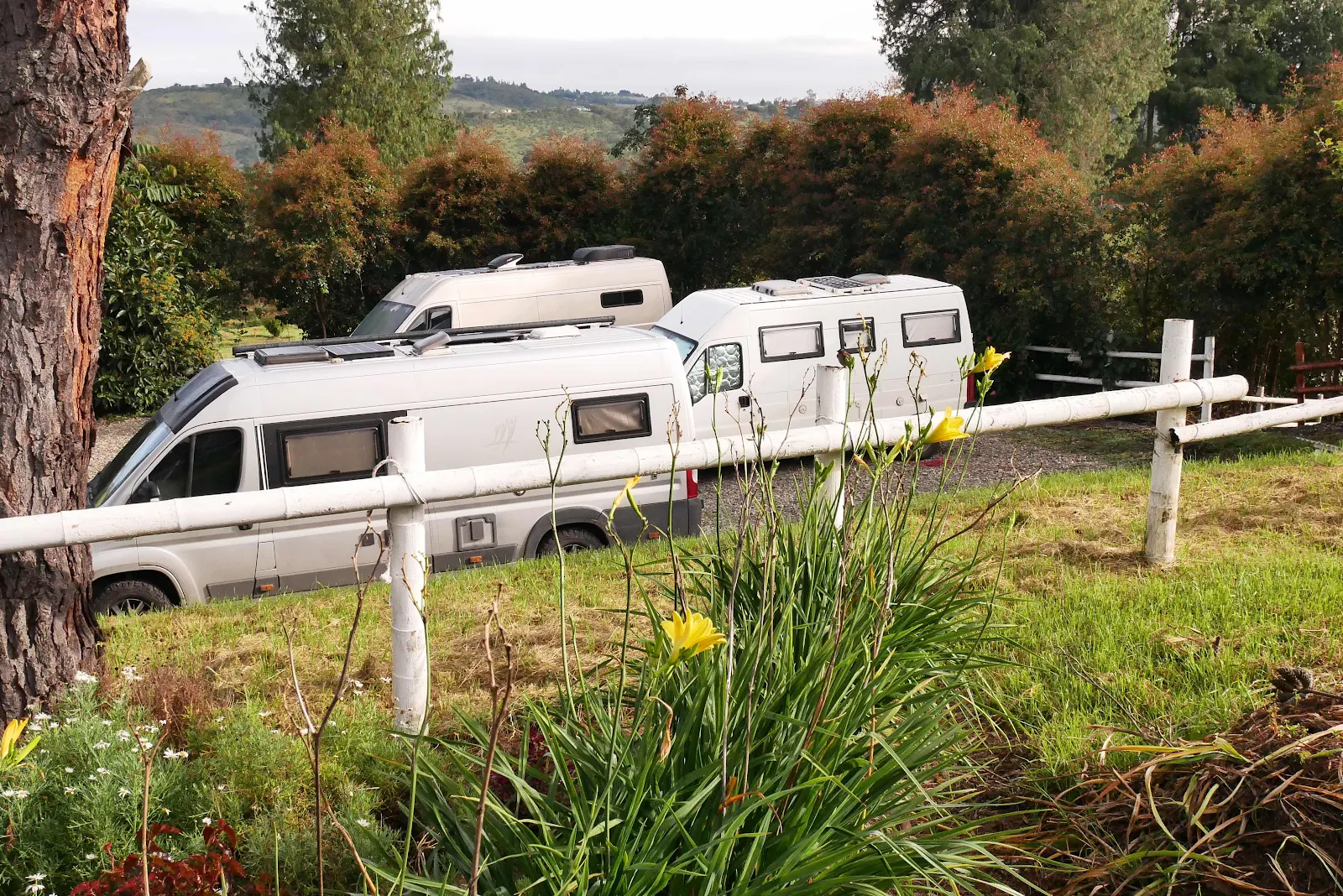
The Spanish van, the Peugeot Jumper on the right below with their awning out, is waiting to see the RV mechanic nearby. It’s a diesel version of our Smerican Promaster with similar low clearance. They went off road and whacked a rock so hard they have bent the frame at the rear. The estimate for repairs is a few weeks. 
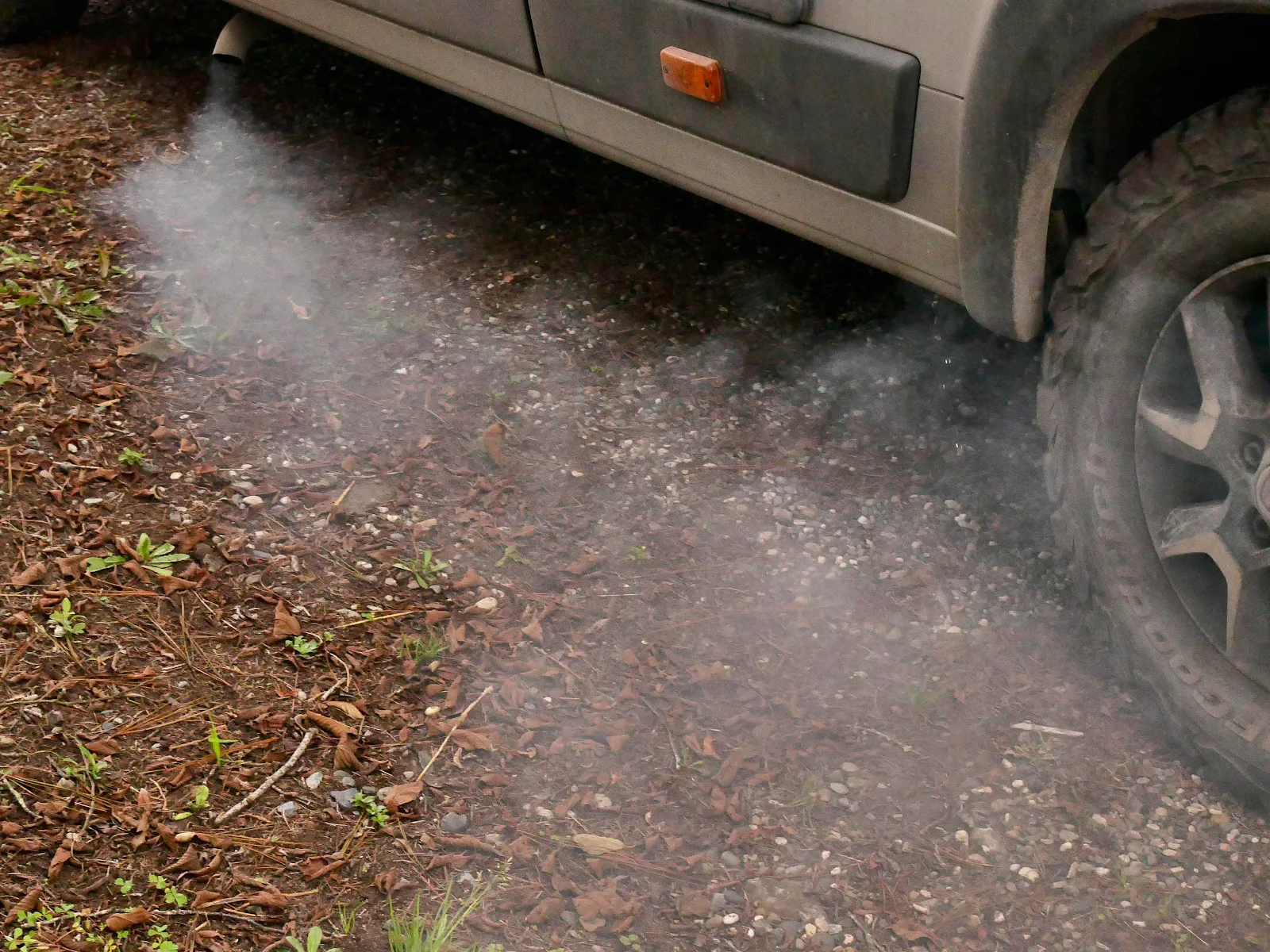
The silver colored Fiat van on the left above, the Italian version of our Promaster, was also in the shop apparently removed their pollution control devices as modern diesel engines  bog down at high altitude. They left yesterday after saying not a word to us and swept out as I walked Rusty covering us in their new free flowing exhaust. This is why modern diesels have pollution controls: 

That was also why I wanted a gasoline powered van when we left the US and the Ford Transit is a complicated machine with turbo charging and all wheel drive where I wanted simplicity. 
So here we sit waiting. Just another part of driving the PanAmerican Highway. Me hoping to stop hearing Layne coughing up her lungs soon. It sounds very painful. 


Saturday, May 25, 2024

Overlanding

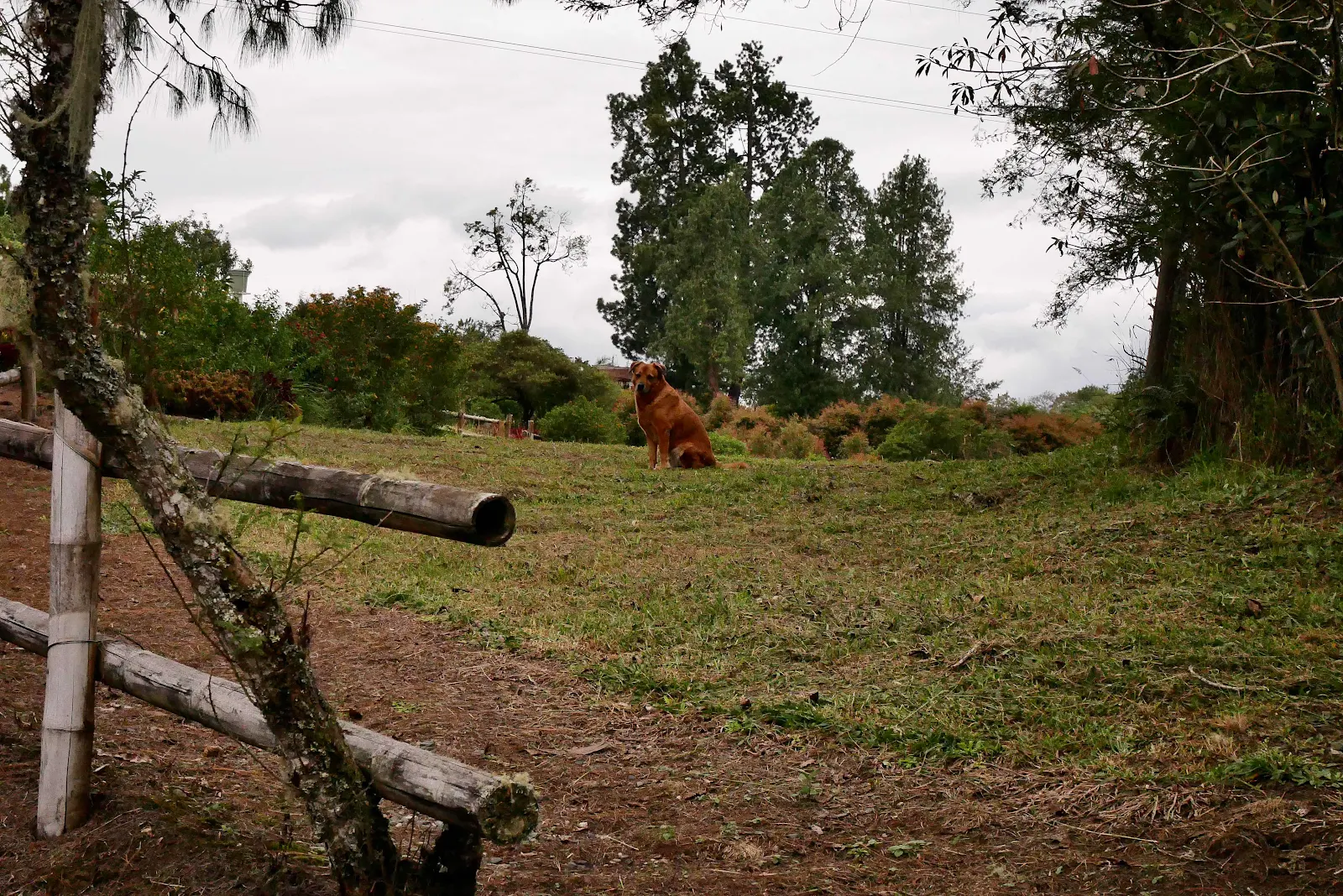
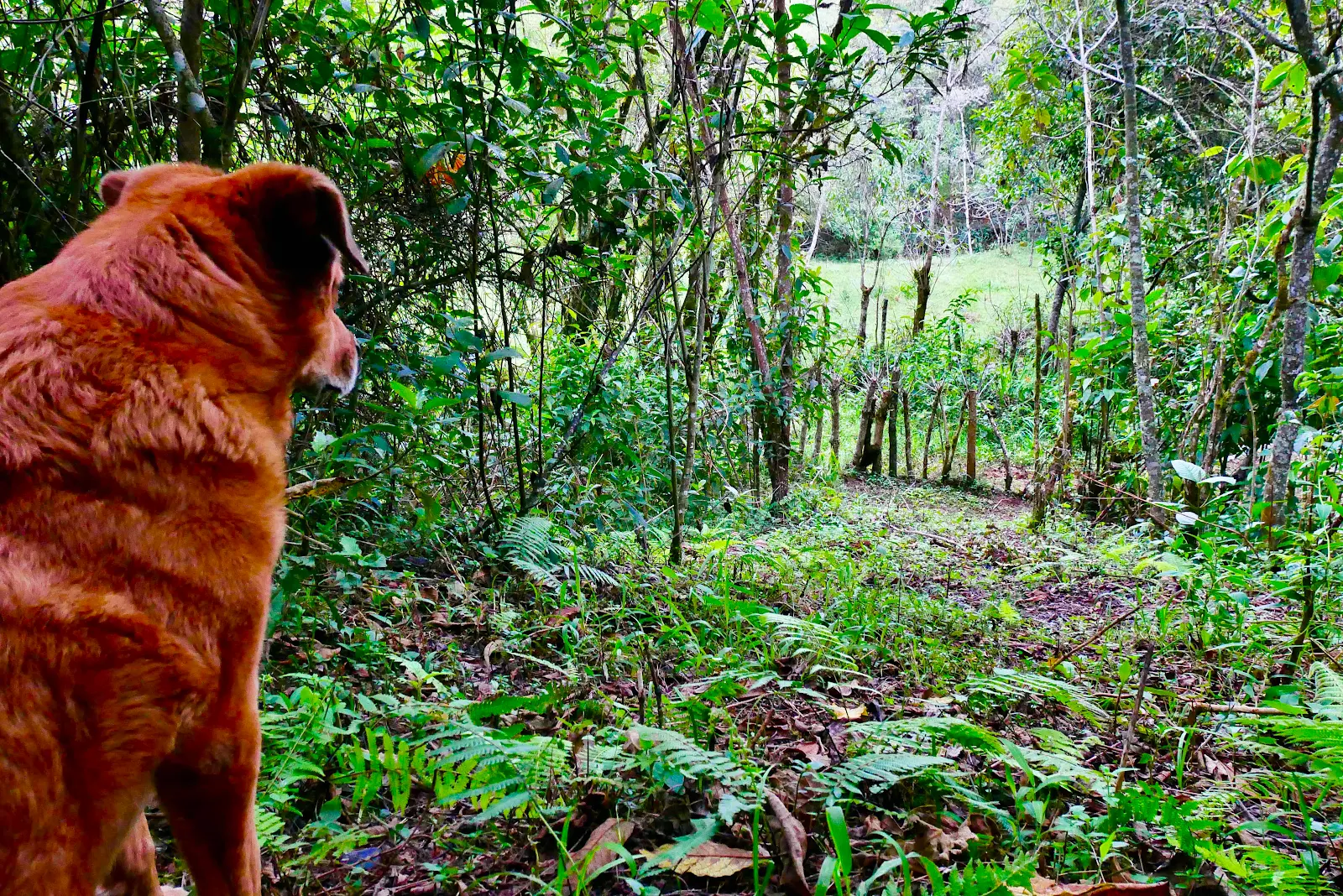
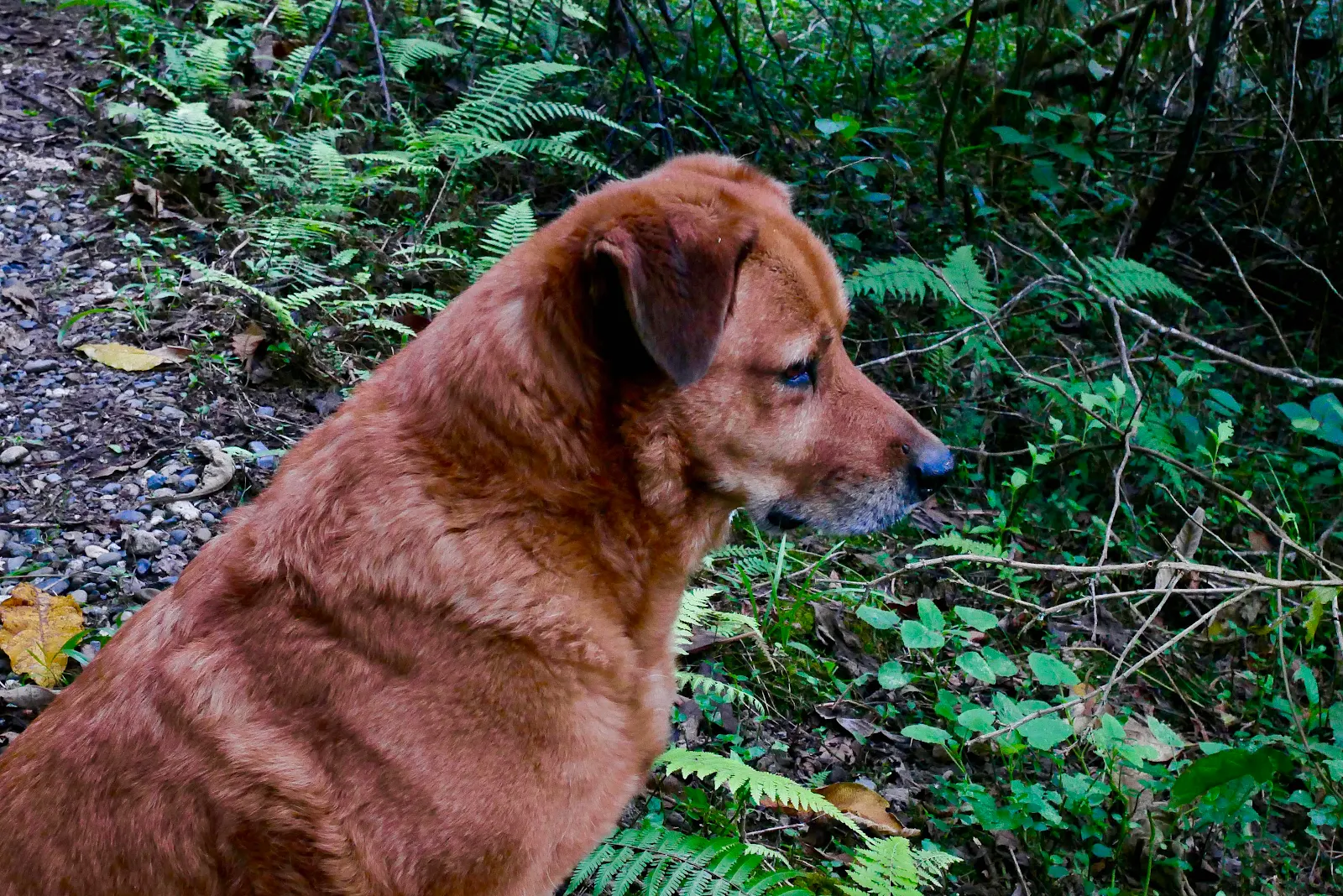
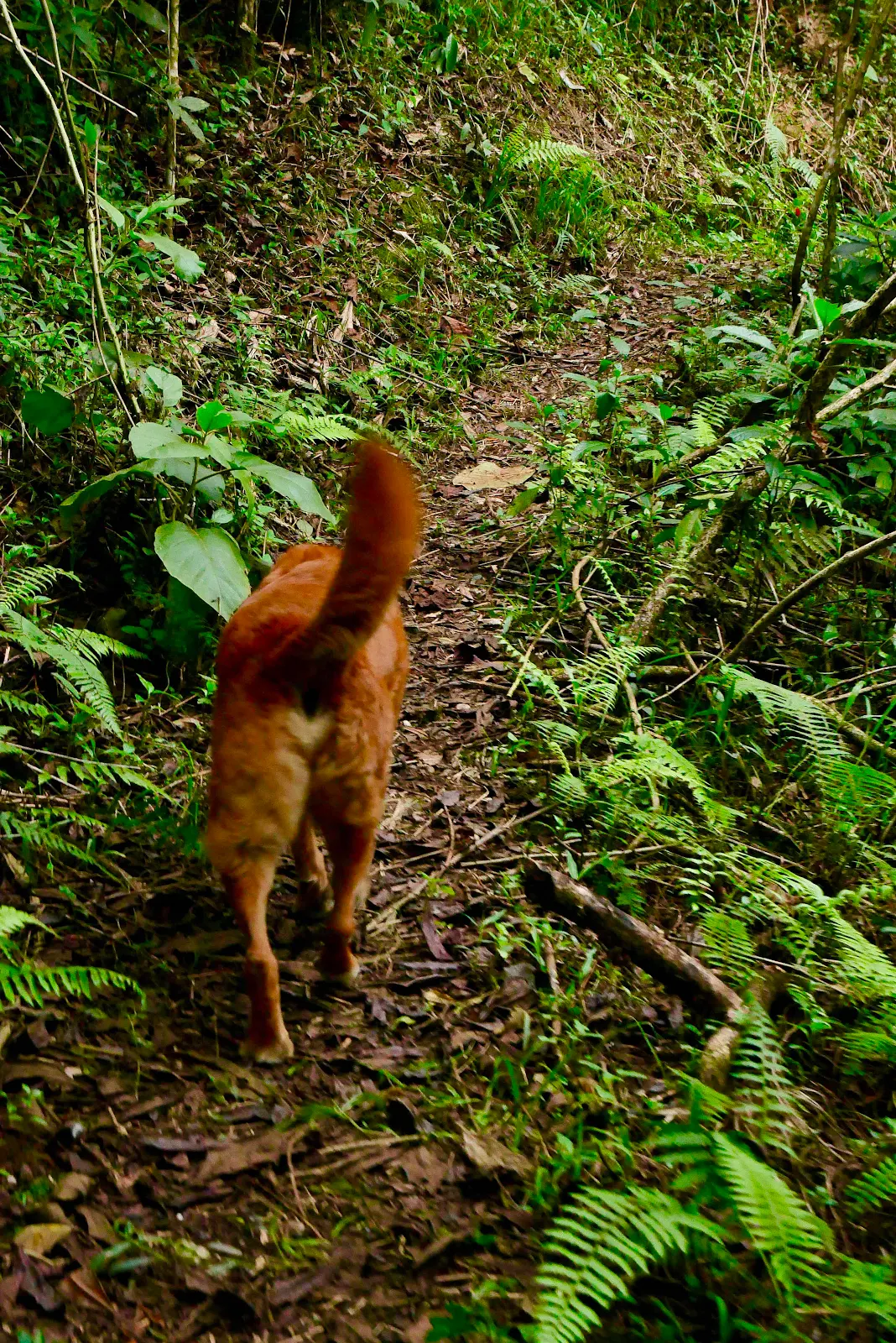
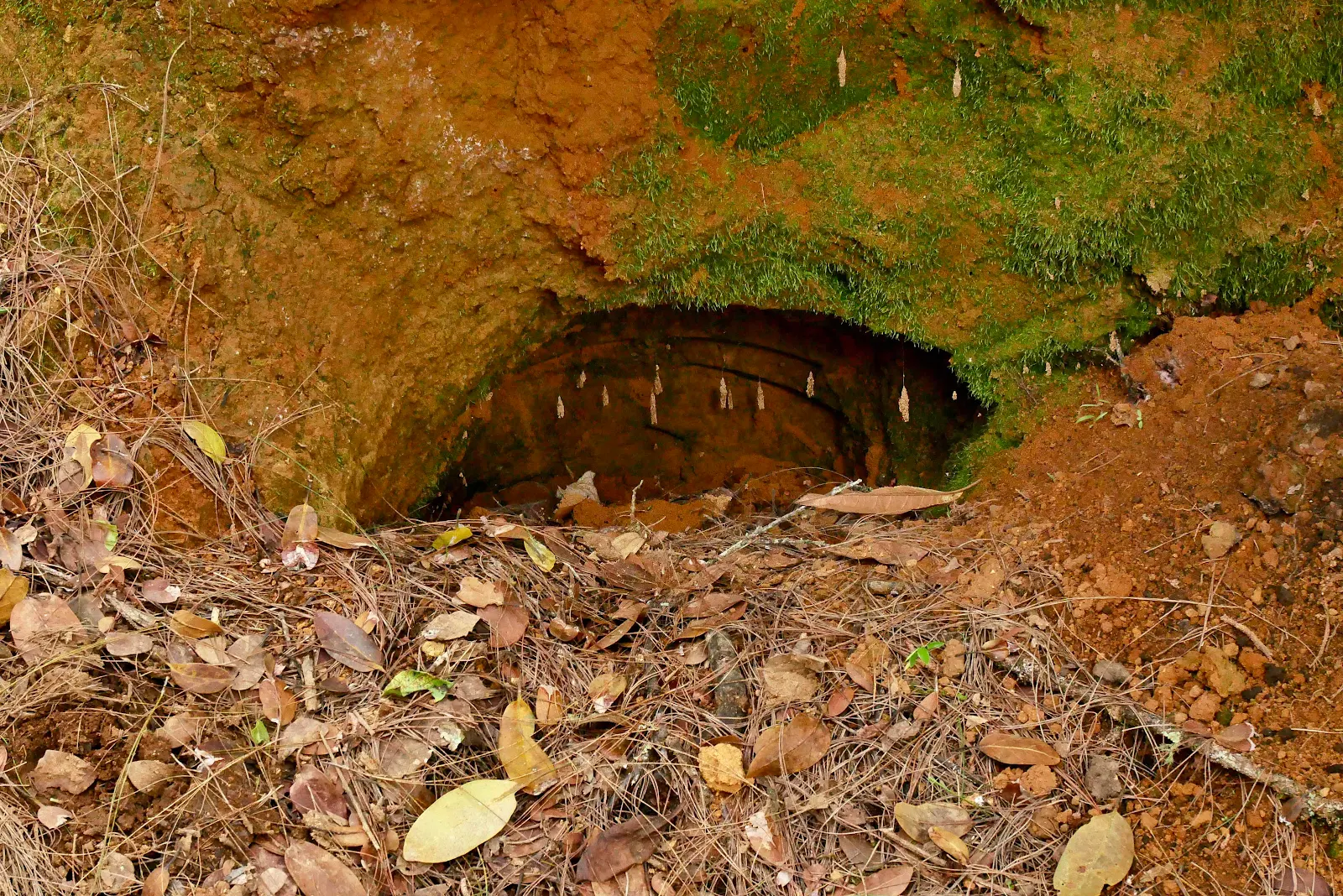
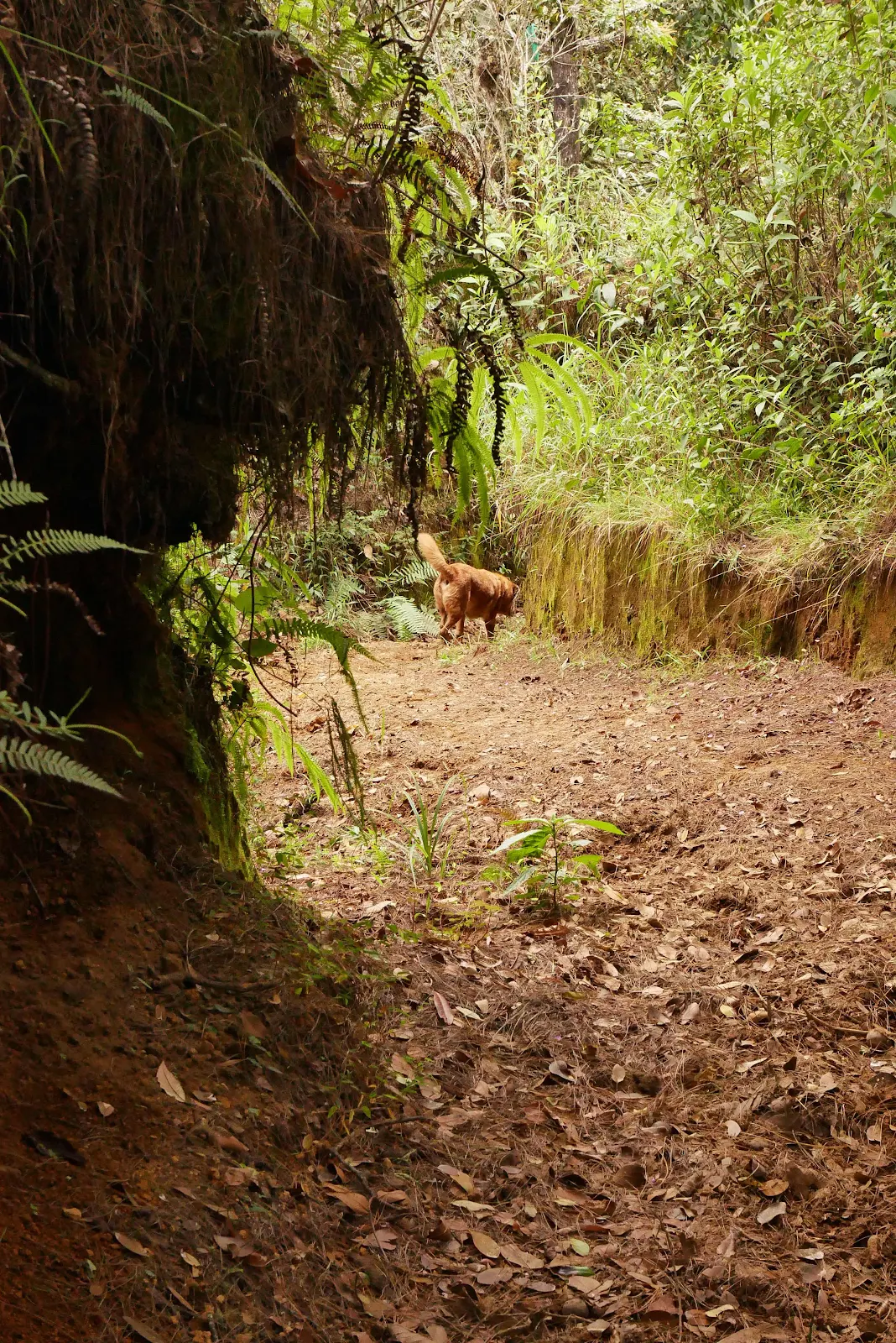
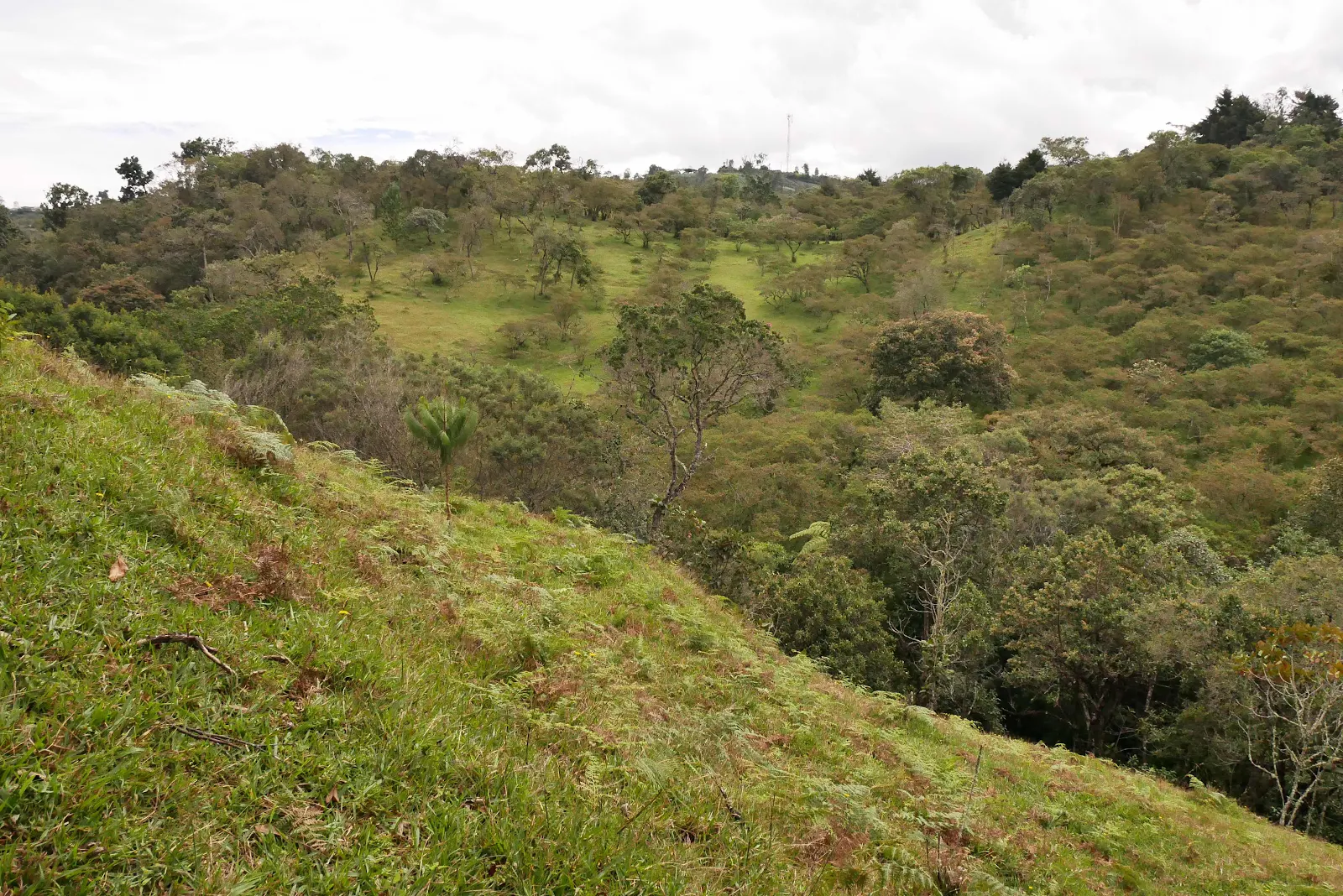
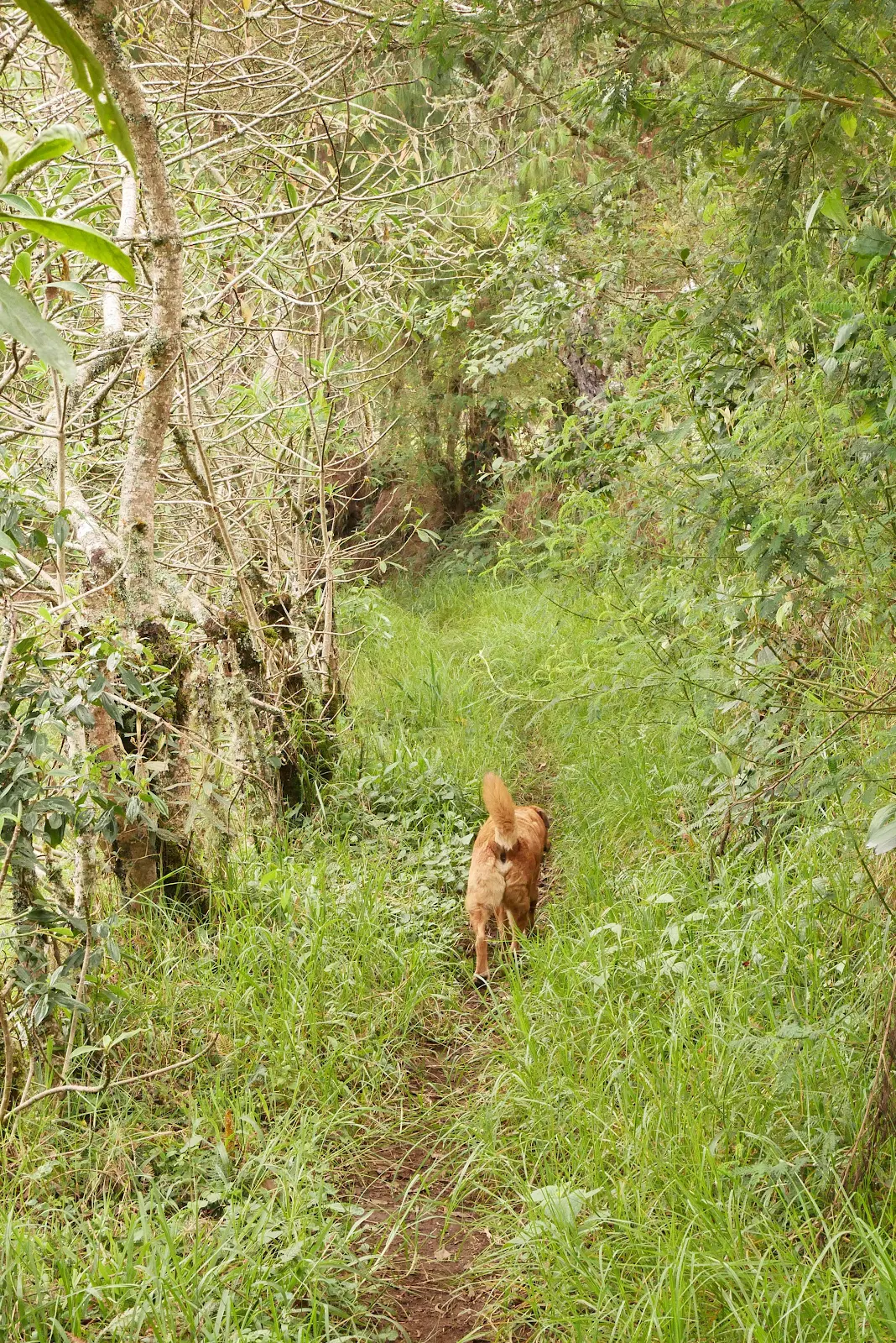
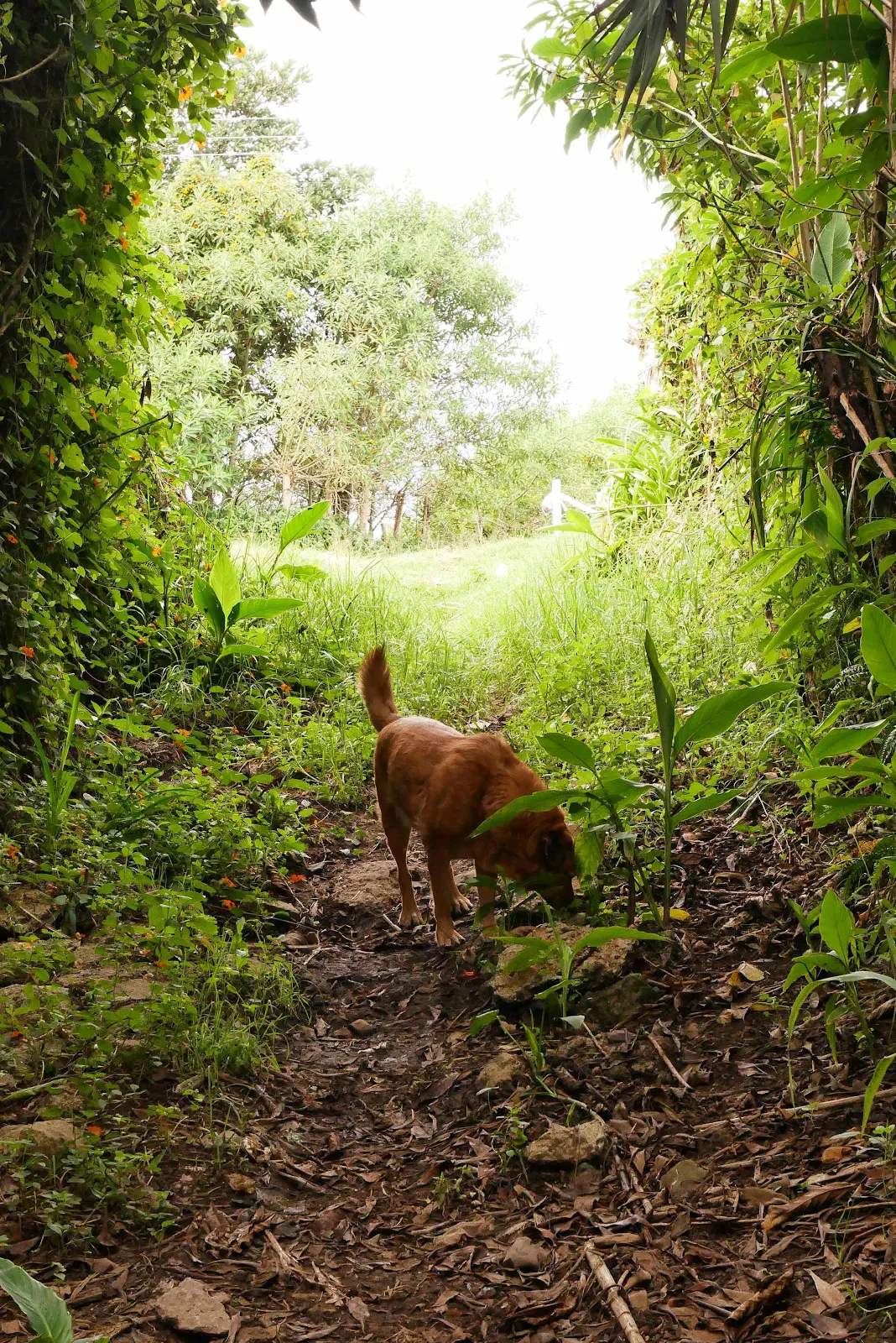
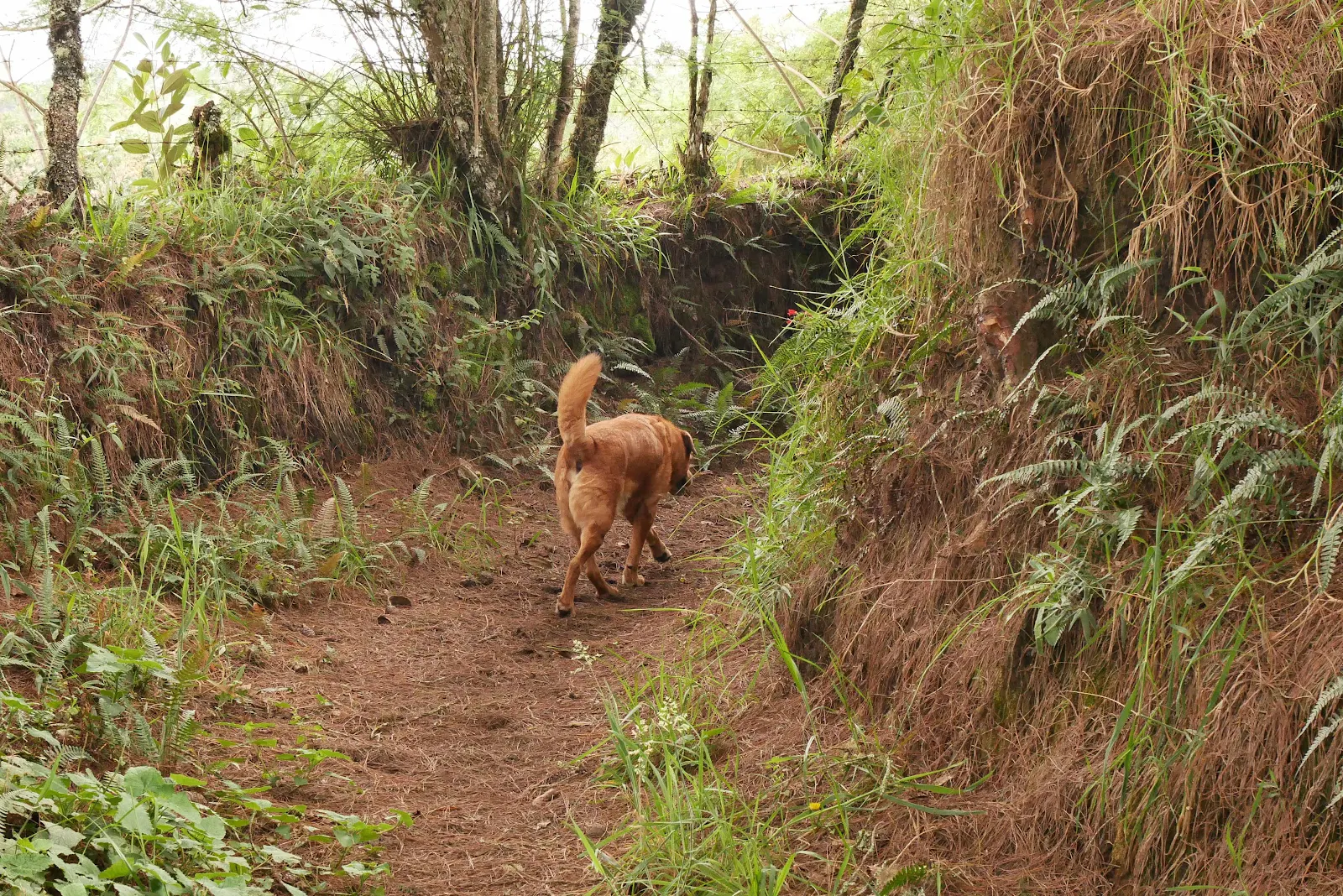
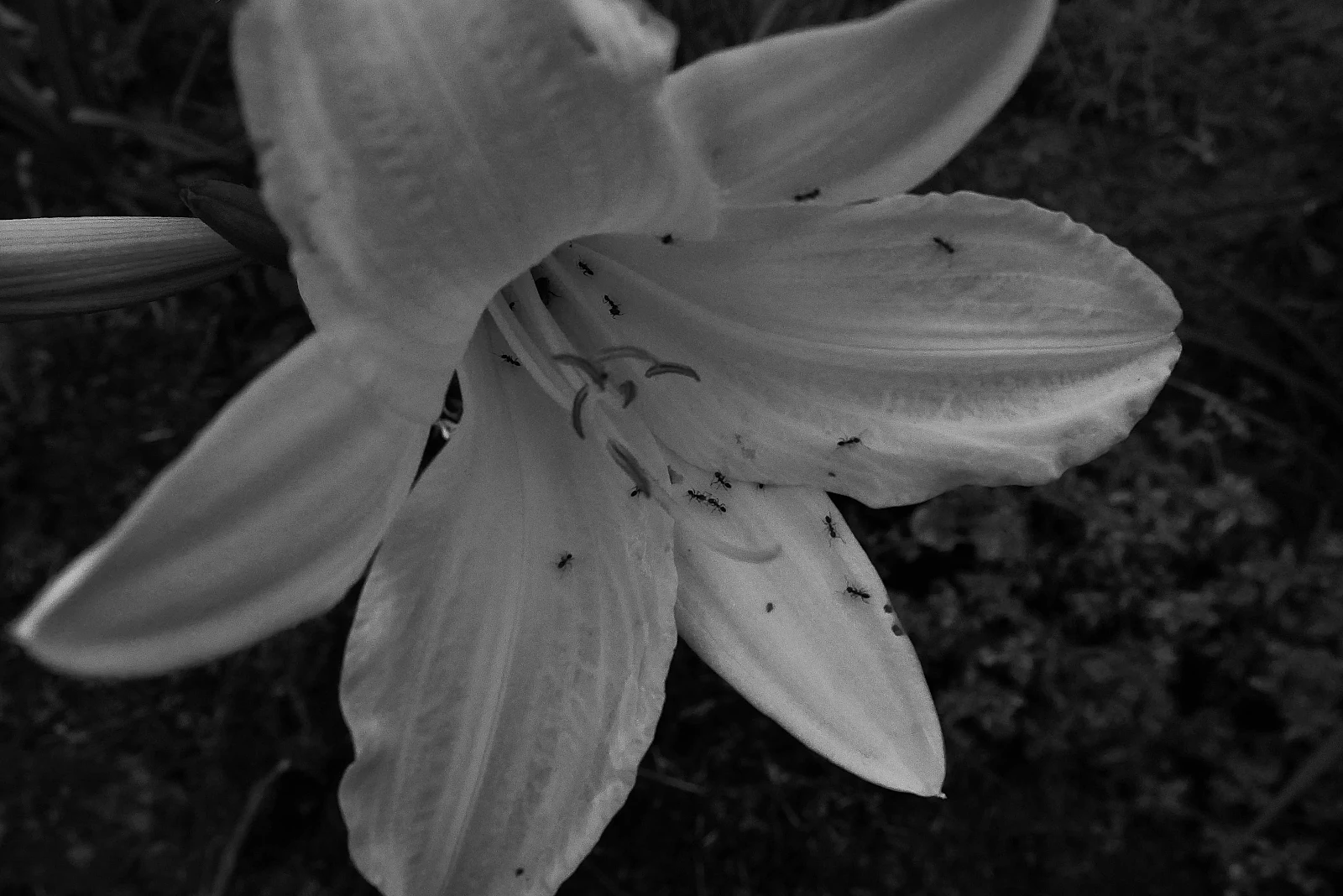
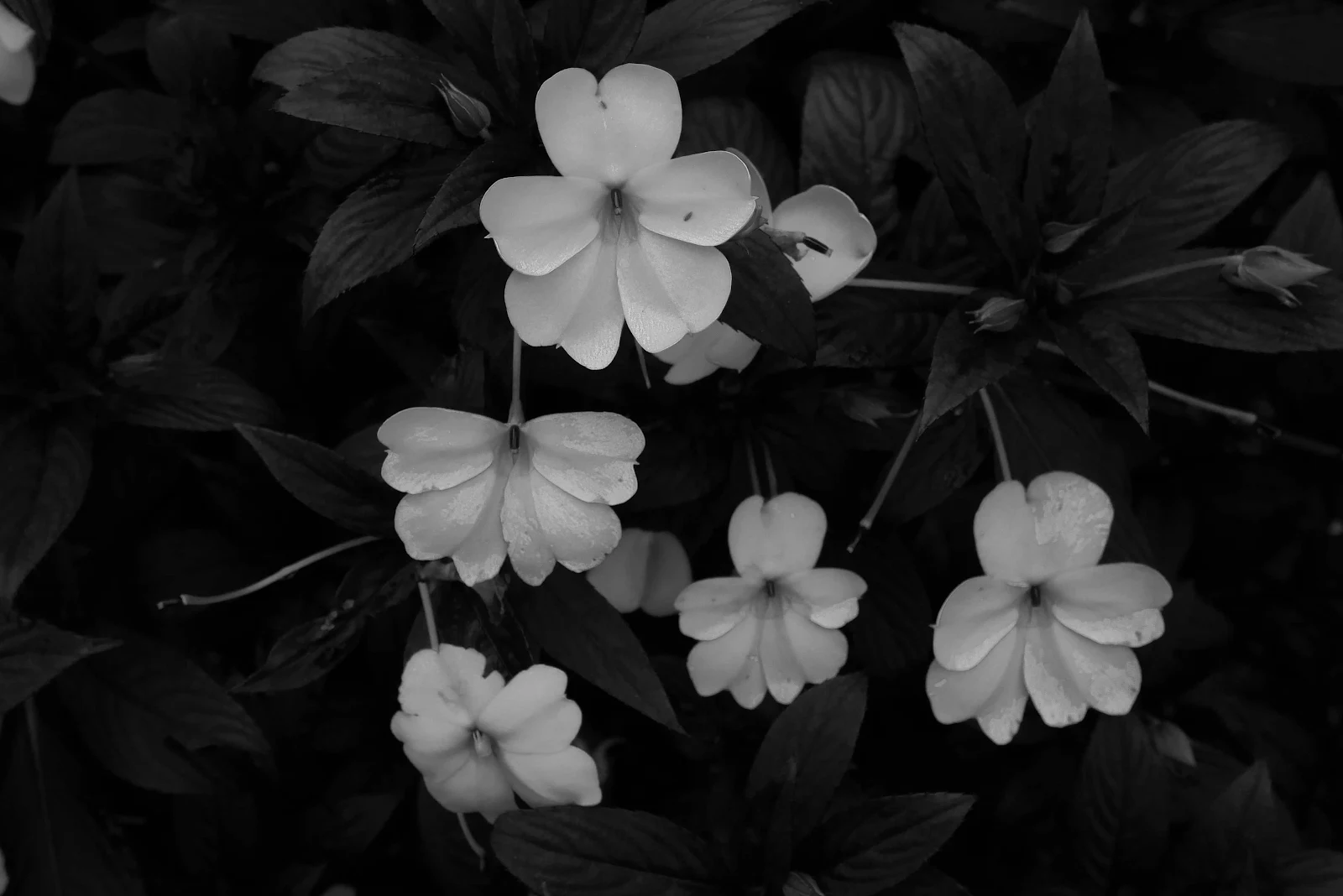
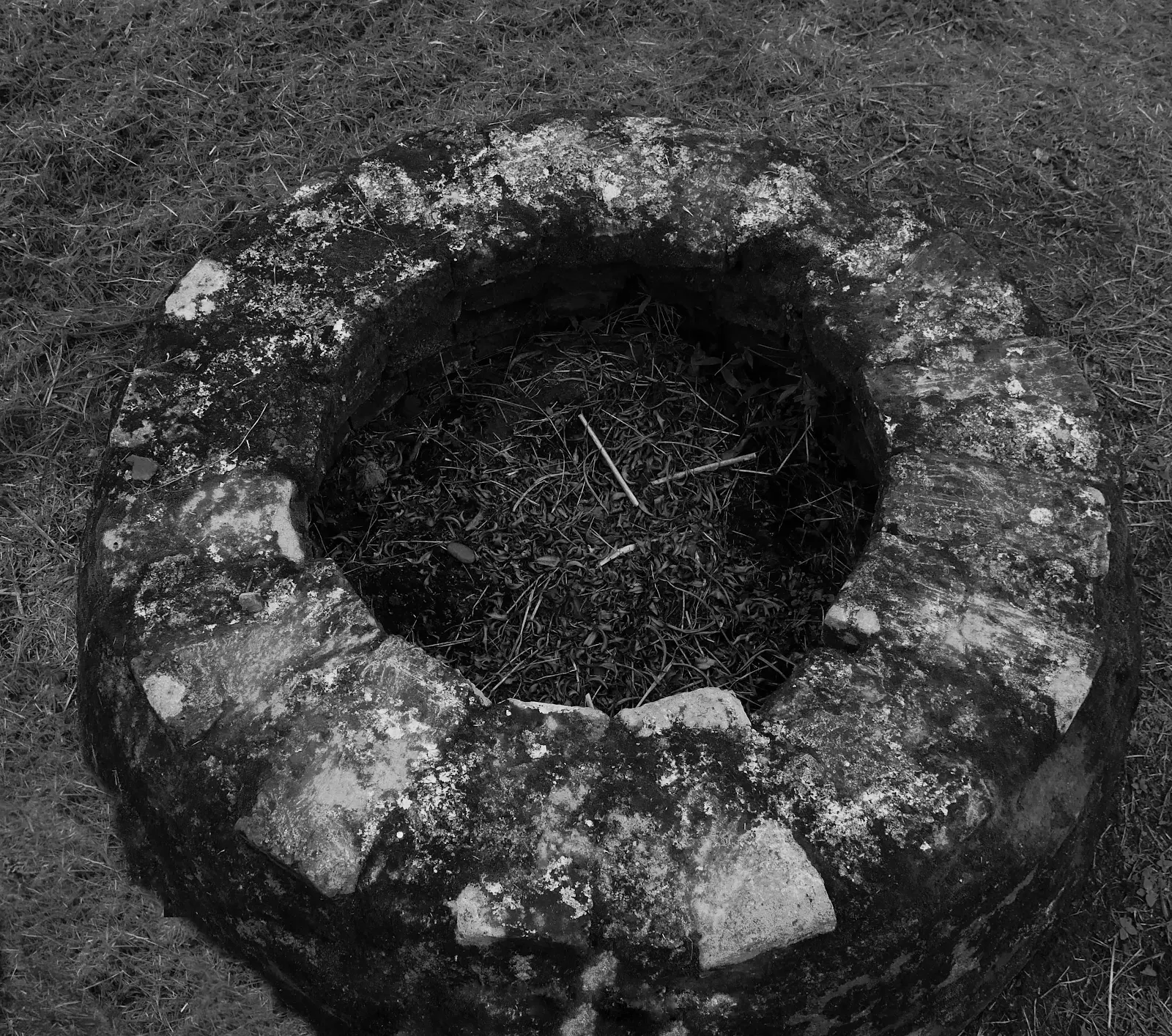
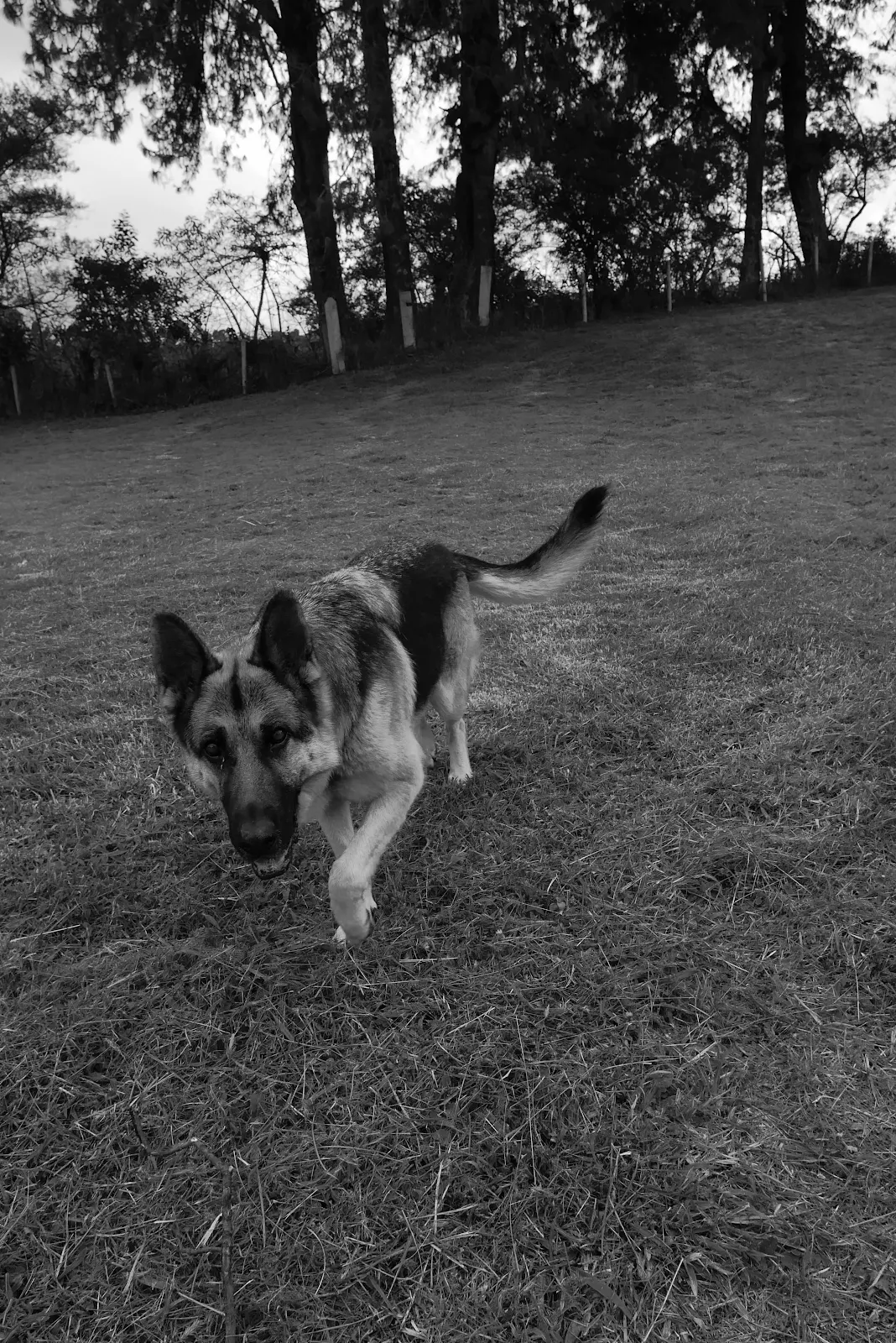
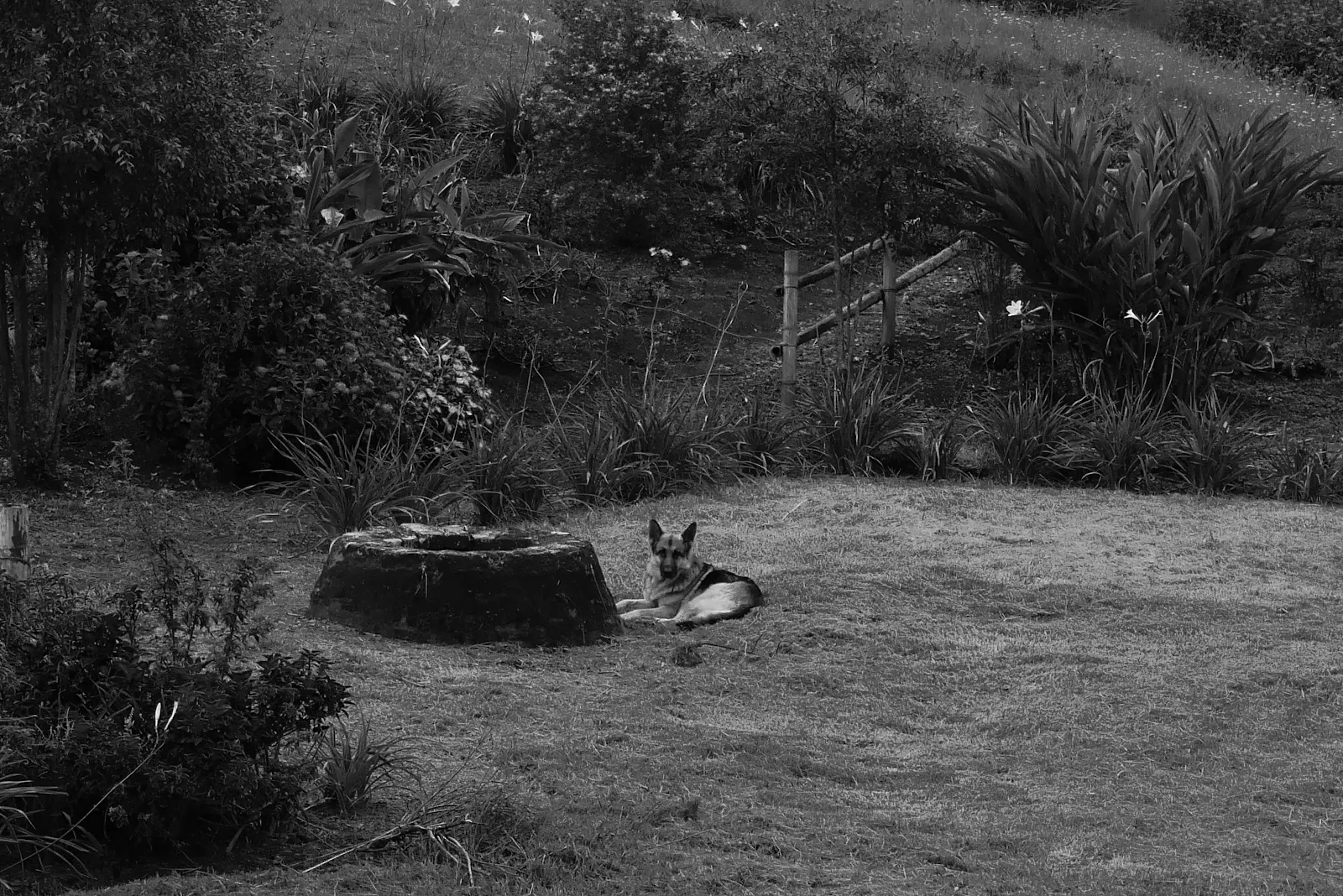
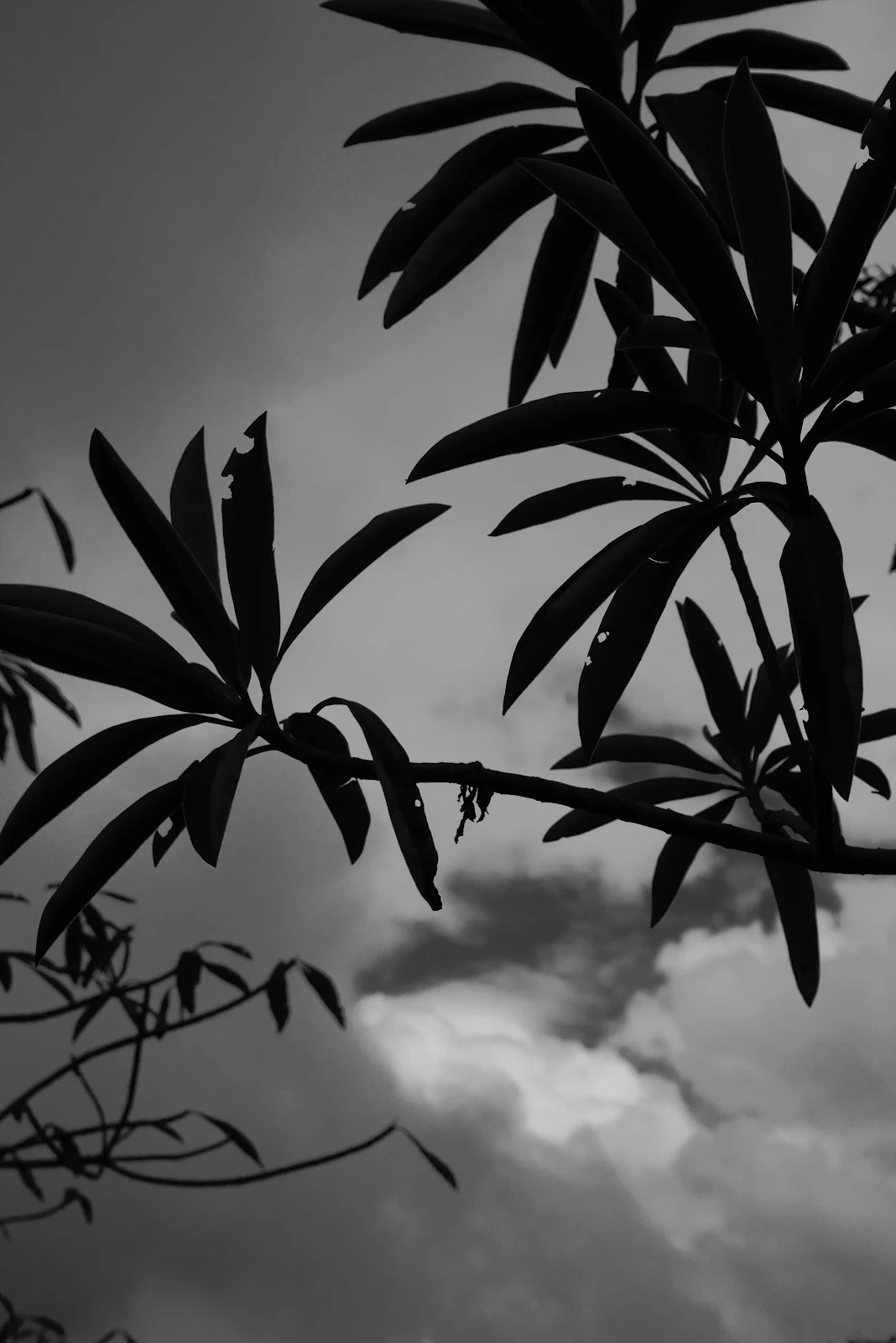
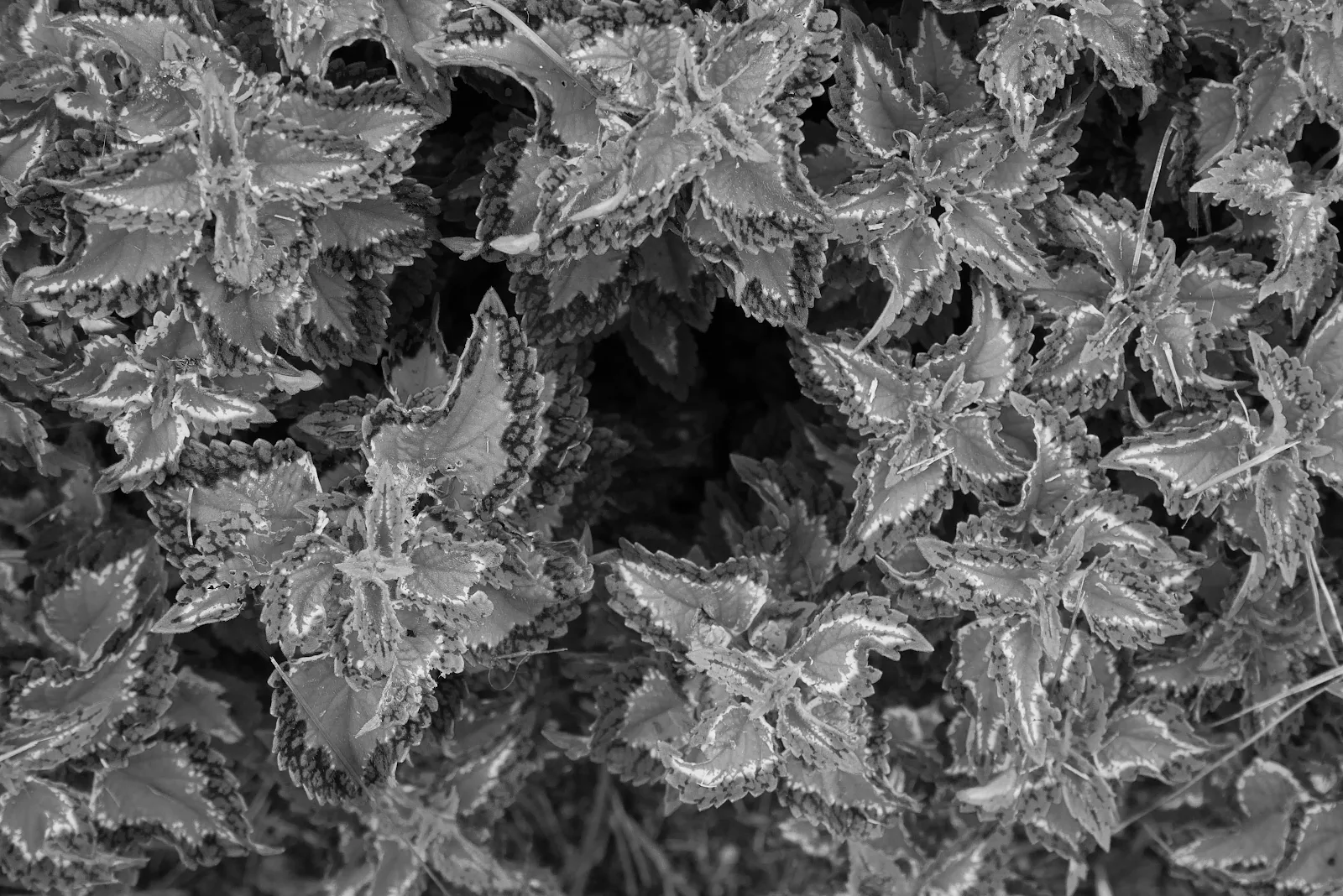
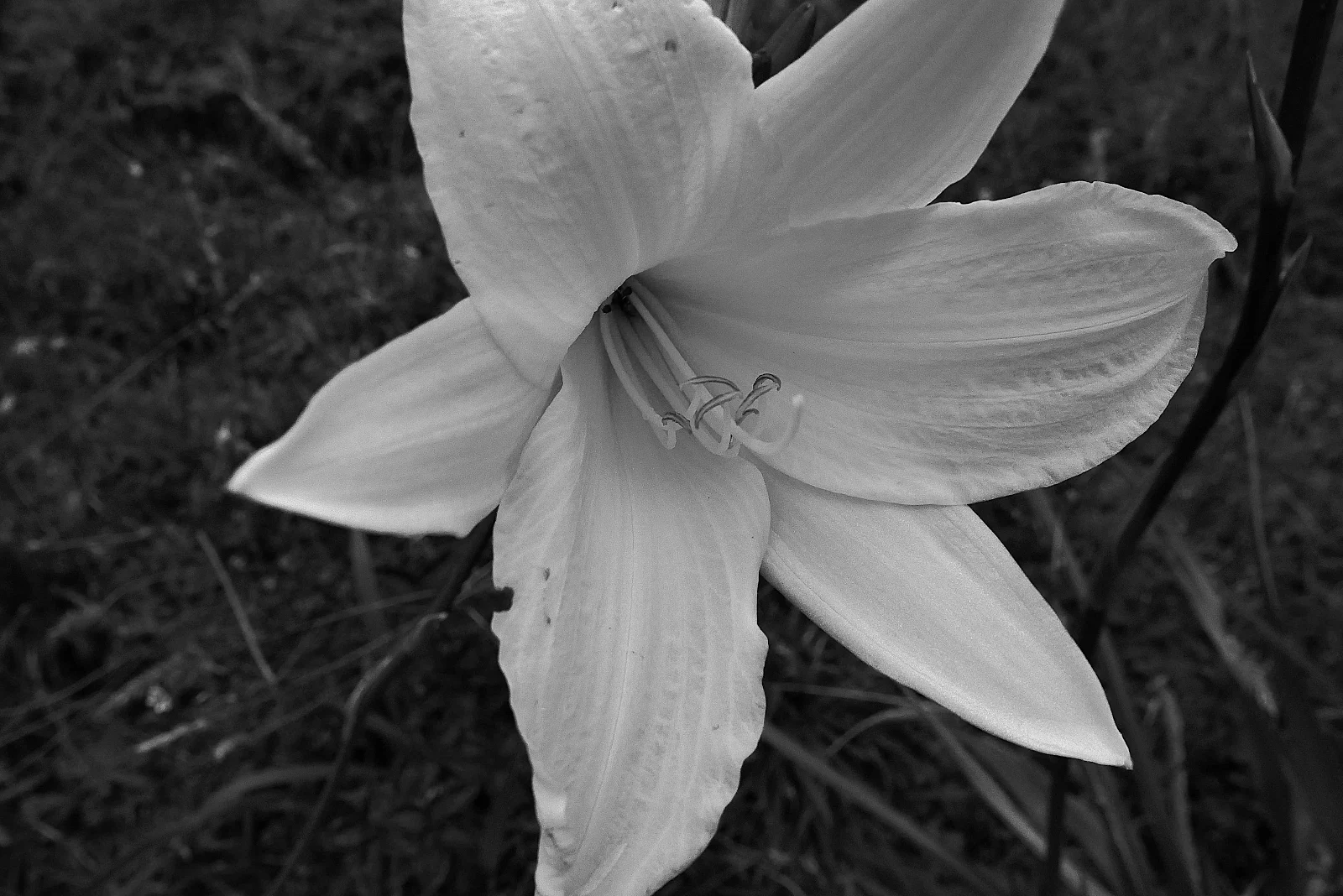
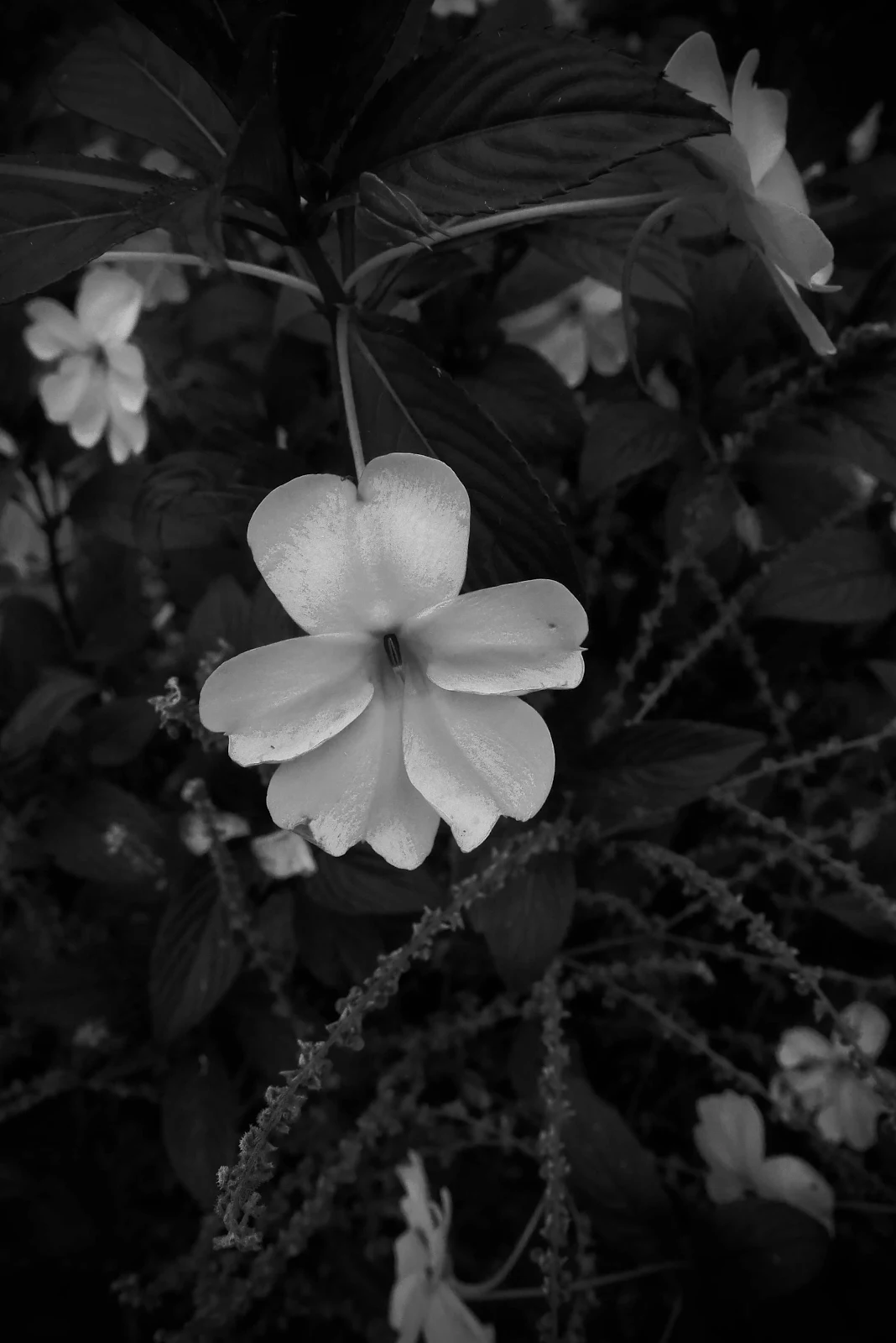
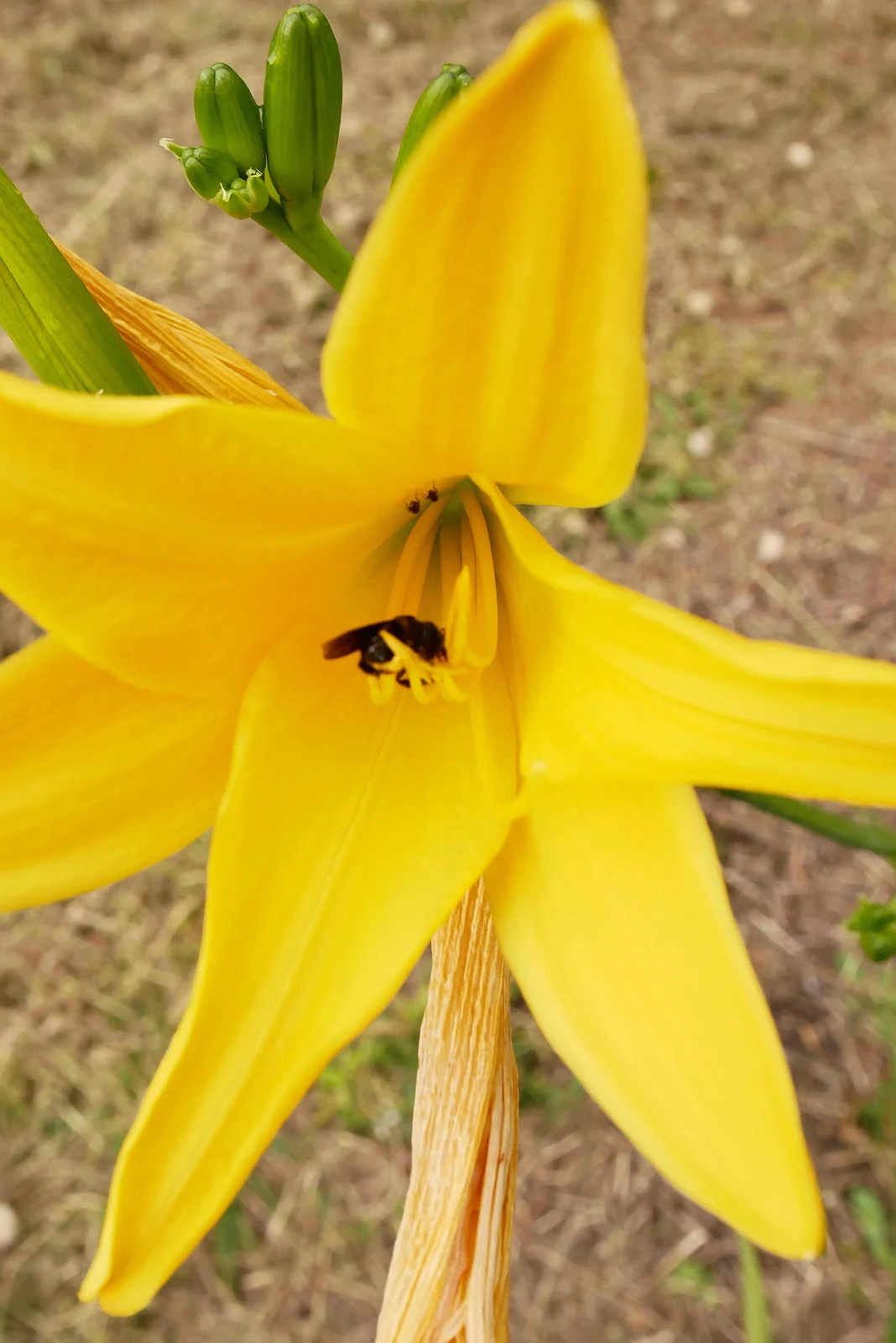
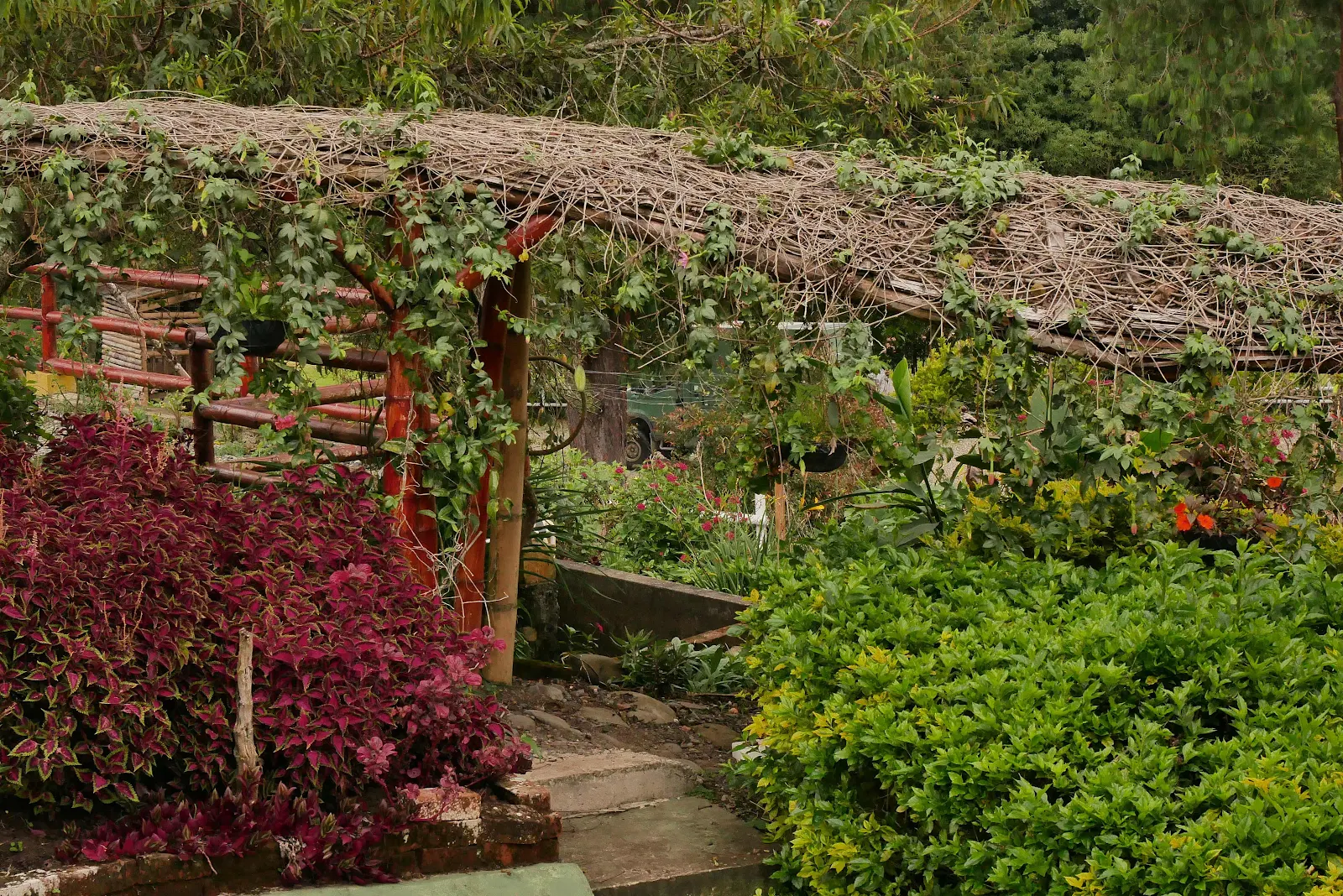
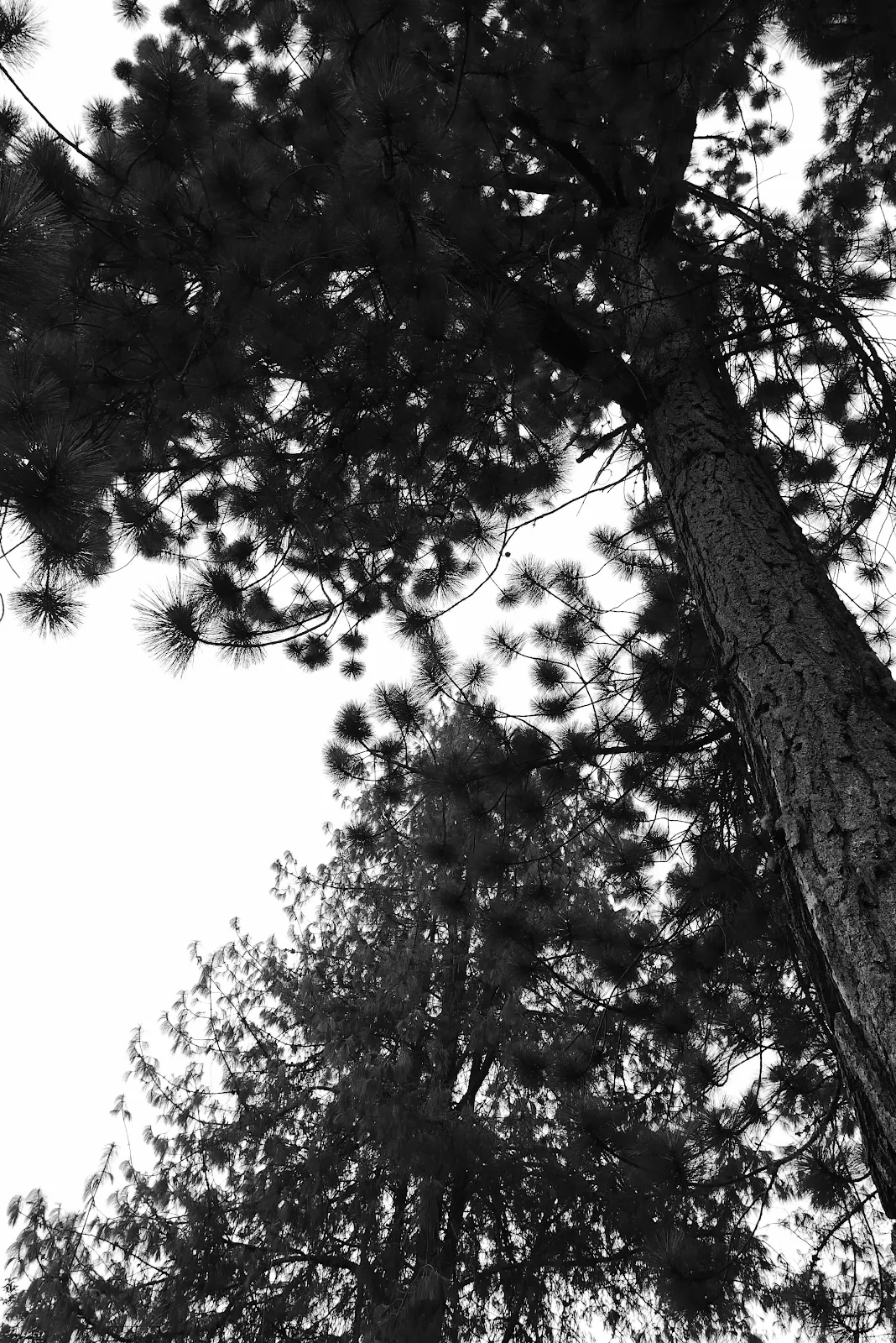
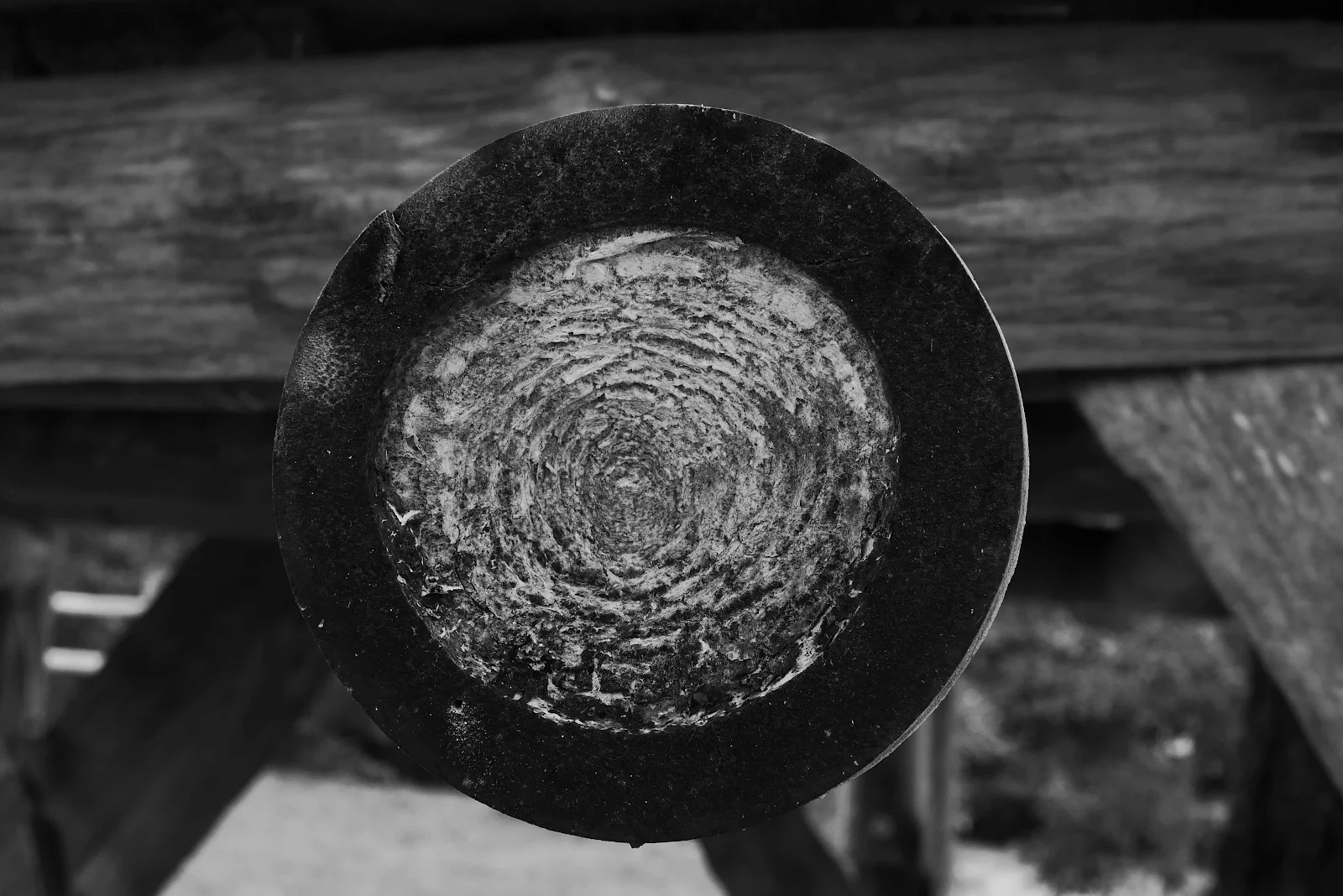
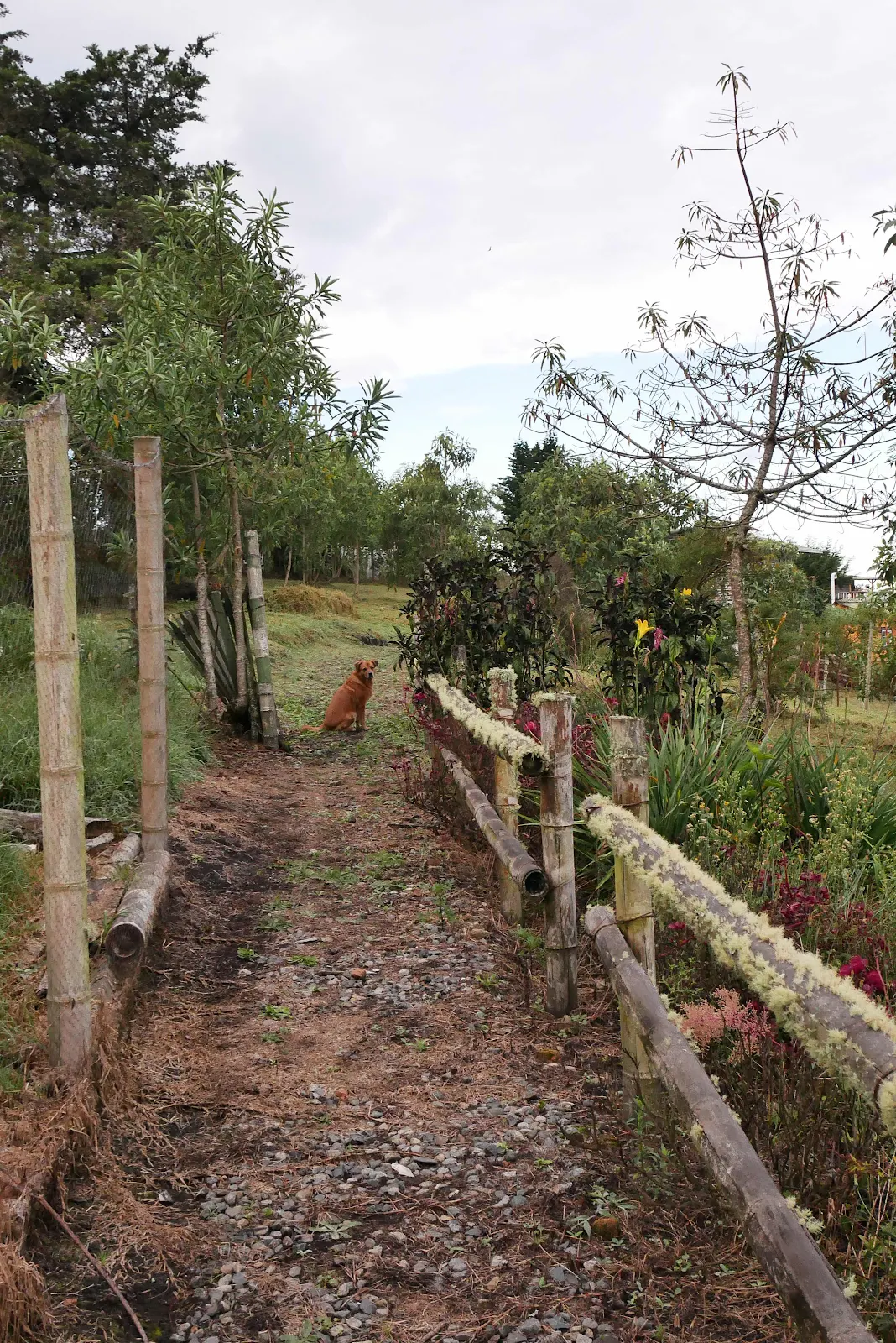
Usually my photography is on the road recording what I see for my diary. Today I get to post a bunch of pictures I took for wandering me, and that’s only because it was Rusty and I wandering the gardens at La Bonanza camp ground. 
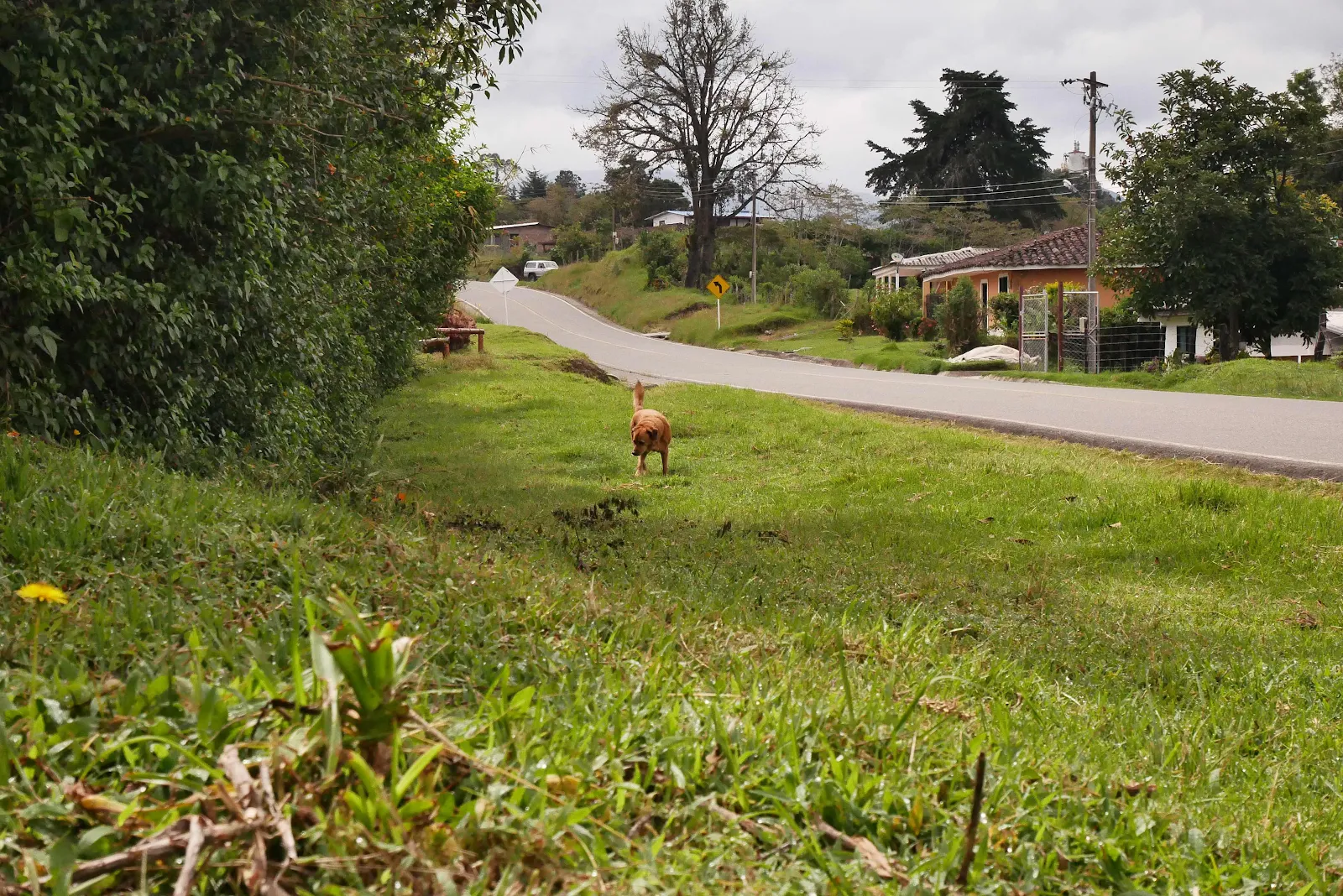
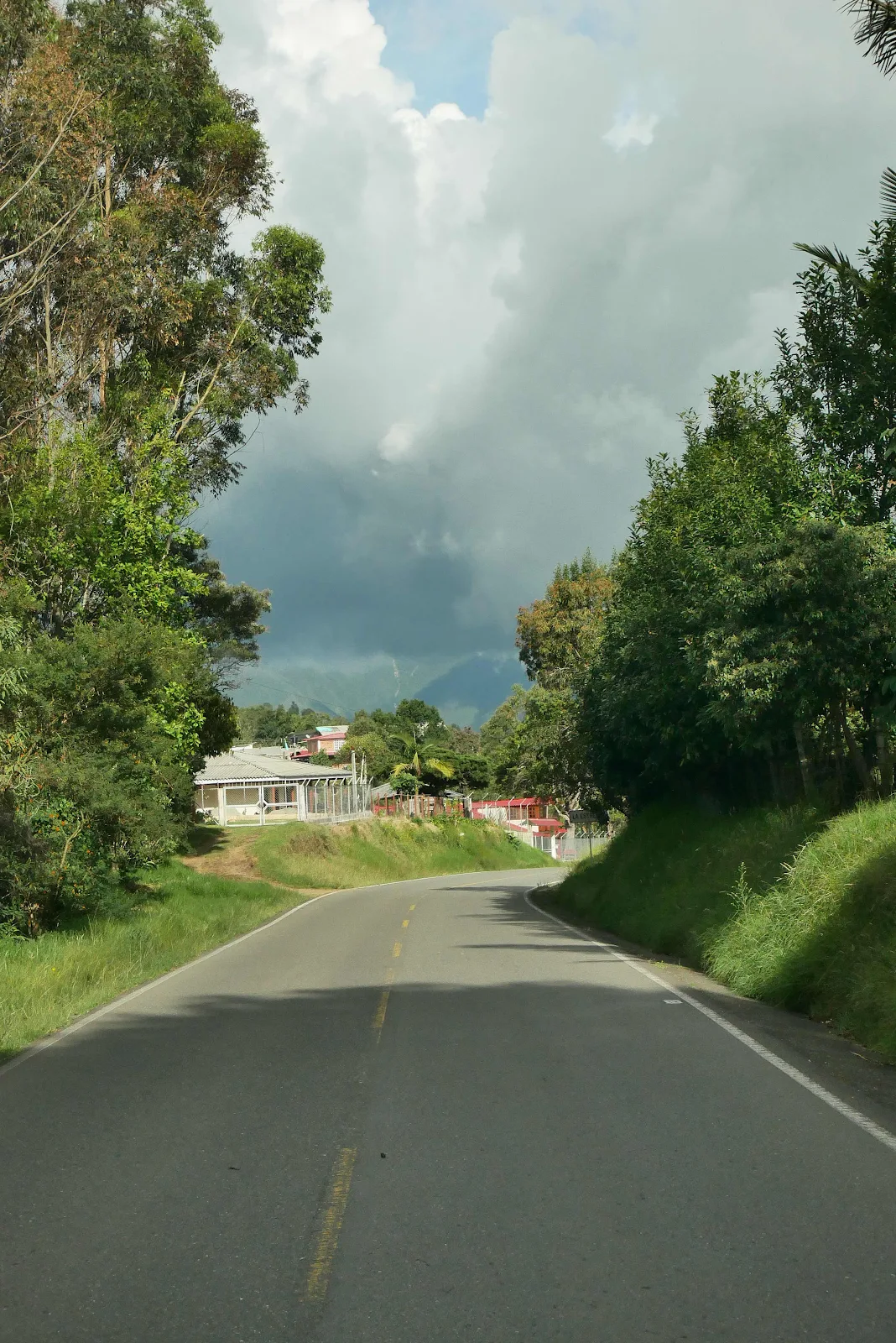
Outside La Bonanza there is a paved two lane road which runs from the town of Piendamó for 45 minutes through the hills to the town of Silvia. There’s no sidewalk, all land bordering it is fenced and private so our walks stay inside the campground and on the solitary trail through the woods nearby. 
It’s annoying to be stopped for the moment in our travels but these walks are my sanity check, getting out between rain showers, living under the gray skies, watching Rusty have fun while looking for pictures. 
It reminds me of walking Rusty in the Keys, looking for colors or shadows and light in the mangroves, the places we walked which only had mangroves. I’ve seen a few of those mangroves in our time together as the young Rusty raced through them. 
A day in the city tired old Rusty, and he’s going gray, as am I, Layne will hasten to point out. 
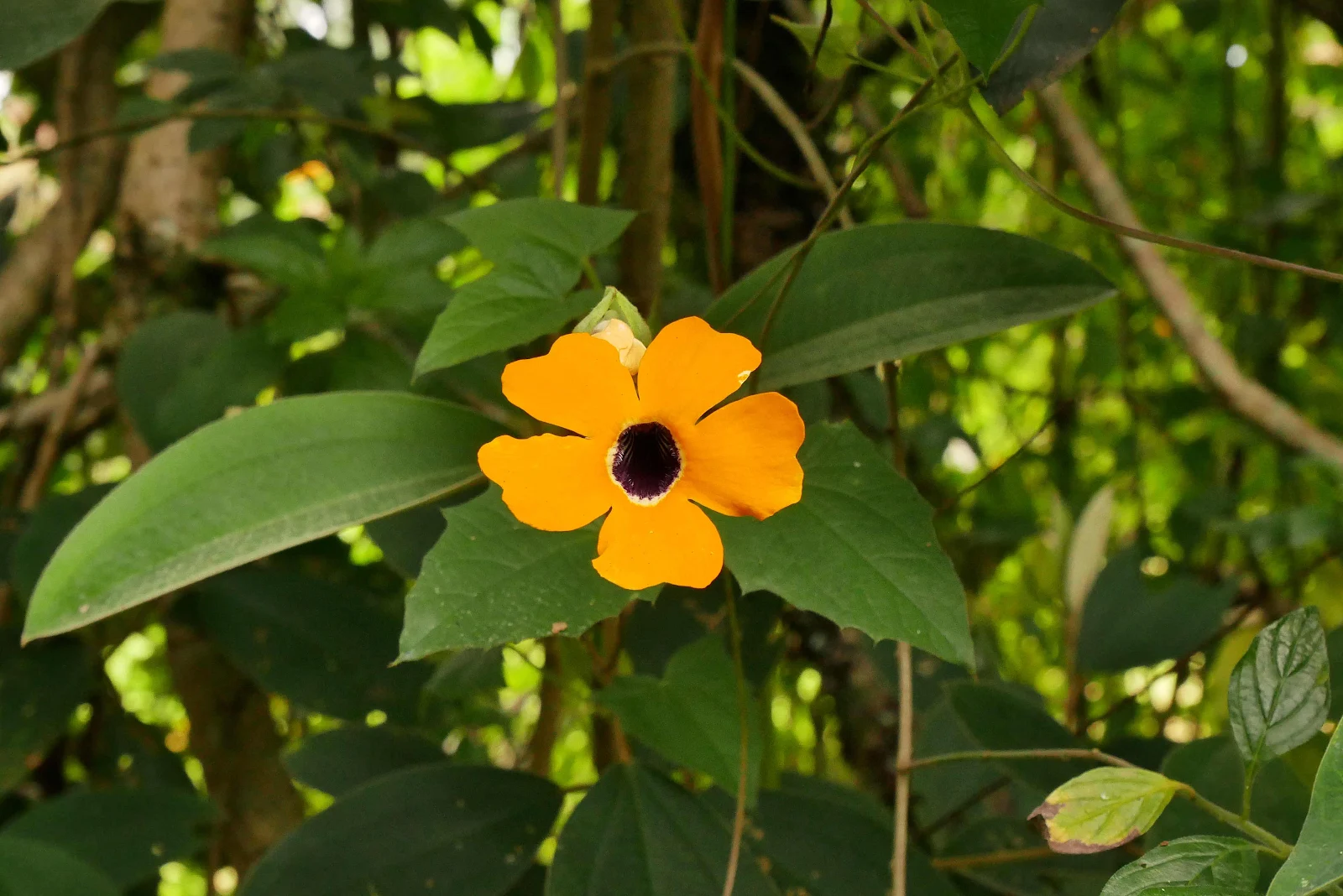
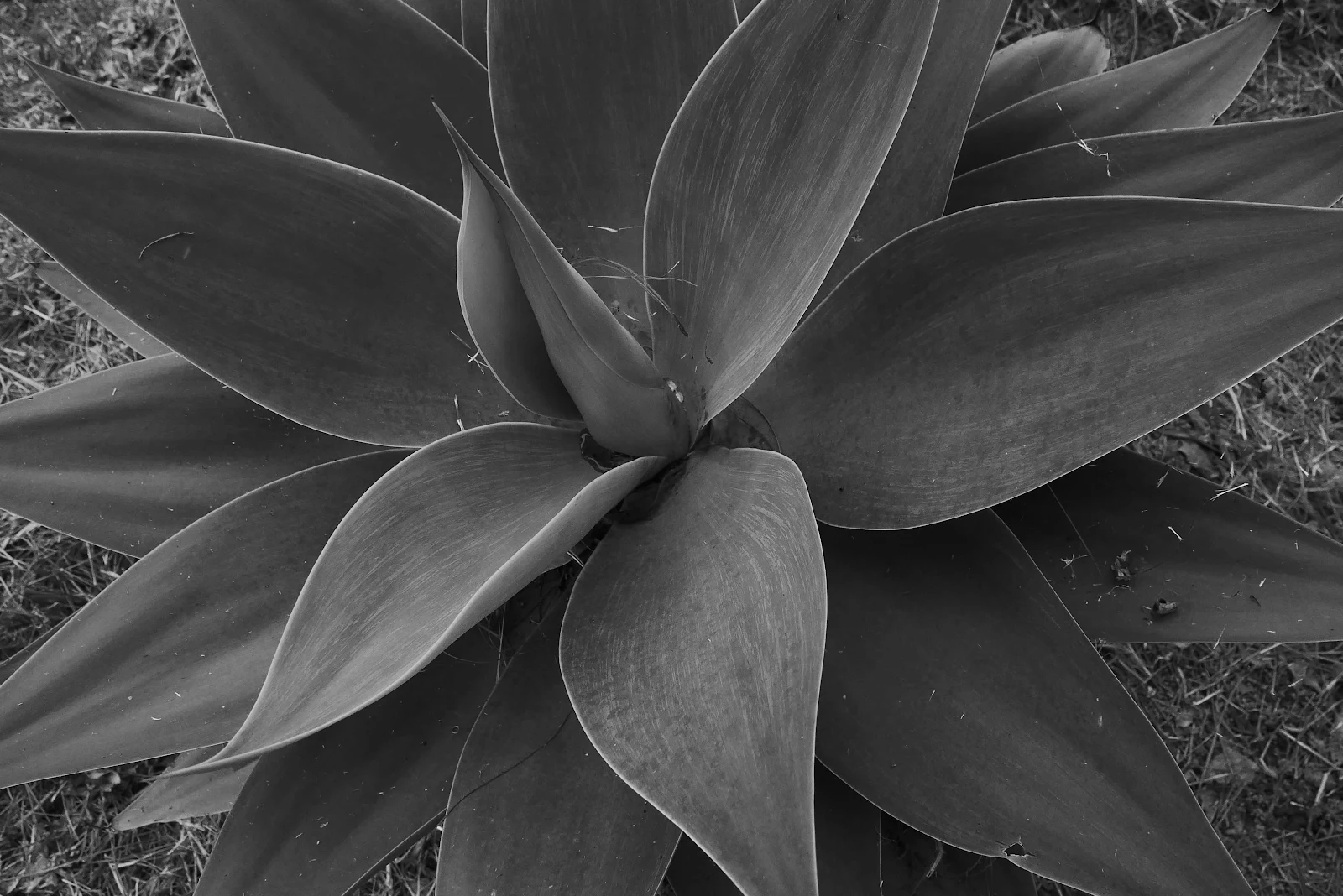
Kika and Anwar have a great gardener keeping this complicated garden under control and blooming. 
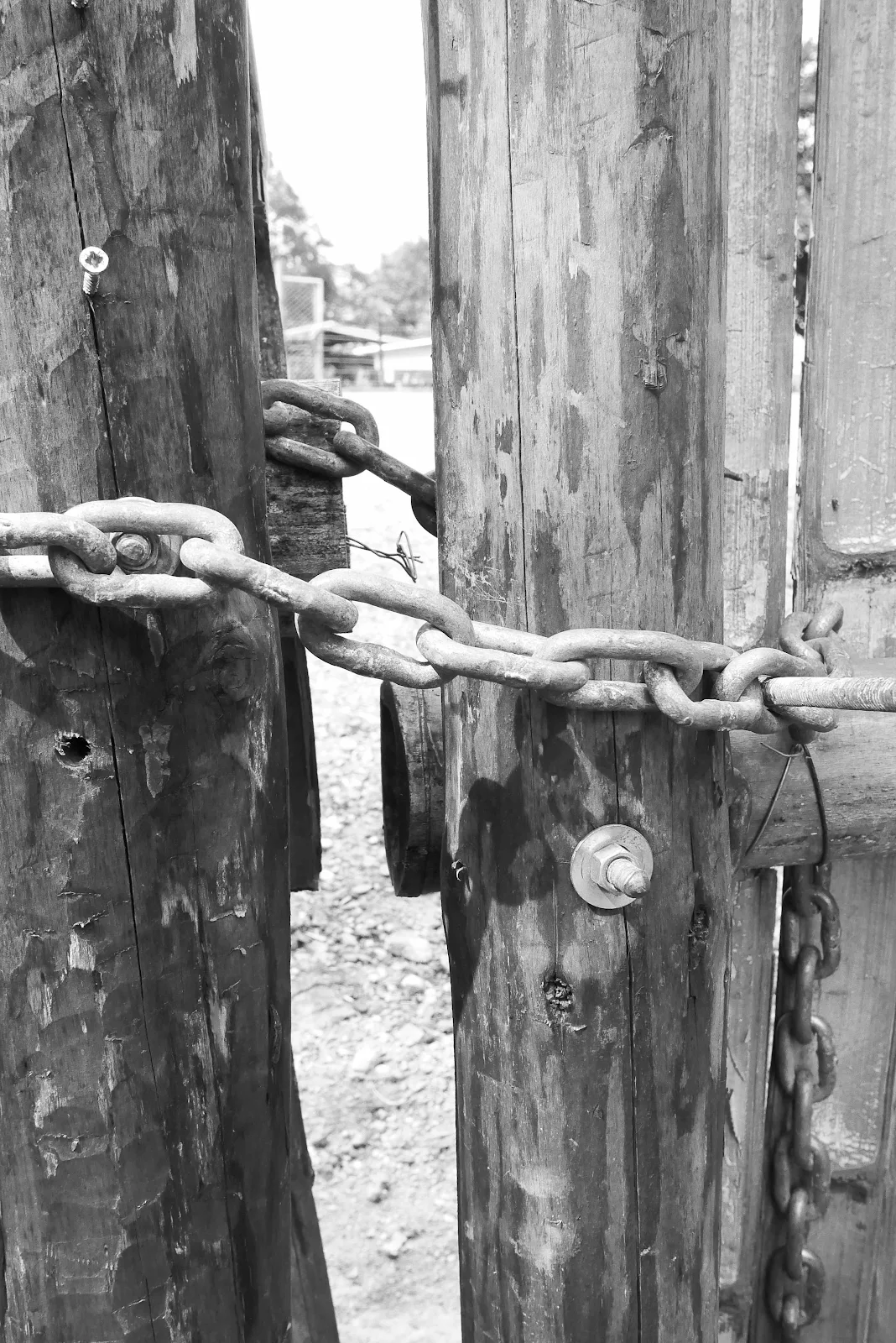
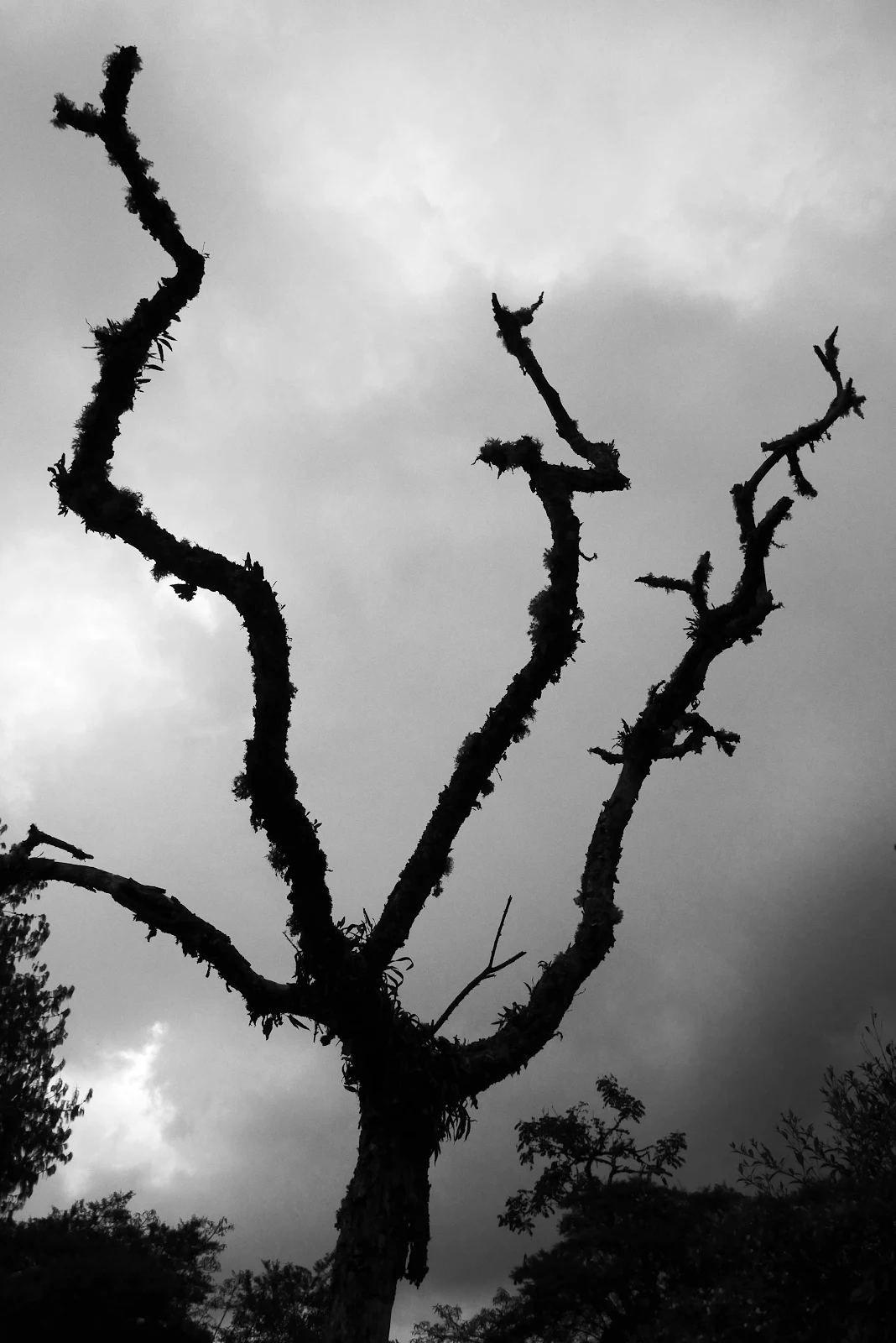
I just get to wander and using black and white I get to do something different from the usual recording of life on the road. 

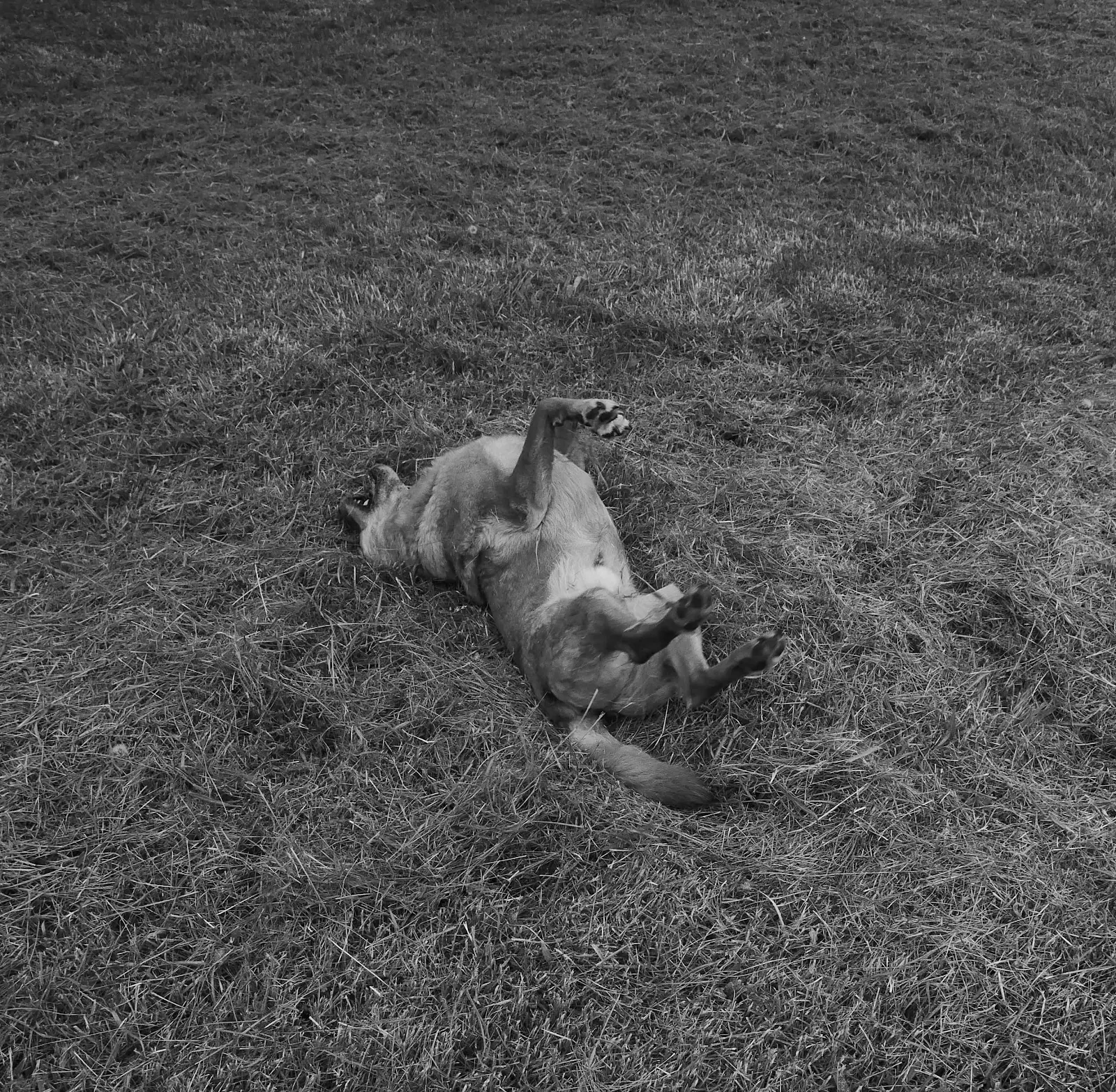
This is Mischief the campground dog and she has the energy of a puppy even though she’s seven years old. 
She annoys Rusty sometimes but he gets really annoyed at me if he sees me being nice to her. He is a jealous dog. 
To overland in the traditional sense of the word you travel by vehicle through foreign countries and here we are not quite overlanding right now. We have learned to slow down and enjoy not speeding and the privilege of being retired makes that possible. 
Webb Chiles says he’s not retired because he hasn’t had a pensionable job for almost all his life. His job is to be Webb Chiles which he is doing very well even now. My job was to get to my birthday each year without declaring bankruptcy. I’ve managed that at least. 
Now we are driving the PanAmerican Highway and our job is to get to Ushuaia at the southernmost point of Argentina. That’s 5500 miles away from La Bonanza where we are now. Naturally we won’t be driving that direct route, there will be many more miles. 
Webb wrote to me empathizing with our latest blockade and noting the freedom of open waters by contrast. He has a point and it’s well taken. For me the challenge of the road does something that sailing never did for me. It’s been a thought in my mind for a while and sitting still in Colombia has brought it home. 
Lots of overlanders fantasize about taking a sailing trip which is funny because when we say, oh yes we did that, they look at us like we’ve grown a second head. To drive a car is a skill anyone can master and we all do, so we can be independent and go to work or take our high school classmates to school and be cool. But to sail away? That’s different , that is in no way practical and can even be dangerous as people drown in water. When a van breaks you pull over to fix it, you don’t sink obviously. 
I didn’t leave the sea because I was afraid of it so much as I was curious about the land. I know so much more of Mexico from driving it than I learned from harbor hopping the coast.
I love driving and the Promaster is a great van to drive, comfortable, quiet with light controls and easy steering with front wheel drive. I really enjoy maneuvering the van in city streets or sitting back and rolling down the highway sitting high above the traffic watching South America go by. I look forward to the act of discovery that is driving. 
I never did die at sea, I didn’t sink any of the sailboats I owned and despite a few remarkable survival stories I managed to get through it all without hurting myself or anyone else, at least physically. I wasn’t scared but I never felt at ease, I always wanted to arrive to see new places; I never entered Webb’s “monastery of the sea.”
I met a French couple at the campground about our age and driving over the next month to the port at Cartagena where they will put their Peugeot van into a container bound for France. I’m sorry I said (I speak French) the adventure is over. Oh no she said, soon we will be home in France her eyes lighting up at the prospect. 
With almost three years on the road living in a van we aren’t normal anymore. For most people the PanAmerican Highway is a journey with a beginning and an end. If you are young you may have only a matter of months or possibly a year and a fixed amount of money, or if you are older you may have a sabbatical or simply a strong desire to get back to your grandchildren. Time is measured in weeks and months for most overlanders. 
For us in our weird child free world time is elastic and even endless, our journey ending in old age and immobility or even death. Or boredom and exhaustion, those enemies of effort. I get more homesick than Layne does and I miss wild camping in the States more than she does. But if we are held up by a problem all we have to do is wait. It is an immense privilege to have time and to be paid each month and to be on the road with no obligations. I wake up every day and thank the Key West Police Department for my pension. 
There are some Belgians in the gray Fiat van that looks like a Promaster but I haven’t even spoken to them, I expect we shall exchange platitudes at some point but I can only hope they have traveled widely and have an open schedule and if they don’t speak English Layne would be excluded so what’s the point? 

Language is the curse of travel and the expectation that fellow overlanders will speak English can be intensely irritating to the many Europeans on the road. And yet at a gathering of several nationalities most of the time English is the common language like it or not. And for many travelers conversational Spanish is out of reach. 
It’s a funny old life on the road, a mish mash of cultures and expectations, frequently not met, of irritations and setbacks all made worth while by the realization that every day is different and intense. On the road time doesn’t flash by, you don’t live a routine that allows you to forget what you did or how you got where you are. This isn’t commuting and repetition or even expectation. And that makes it worthwhile to me. And I have grown because of that.

I cannot foresee a time when I will long to settle down. I will have to but part of me will remember this as the best time of my life when I have the maturity to appreciate how I am living. And you don’t have to travel to have that happen; for me apparently I do.