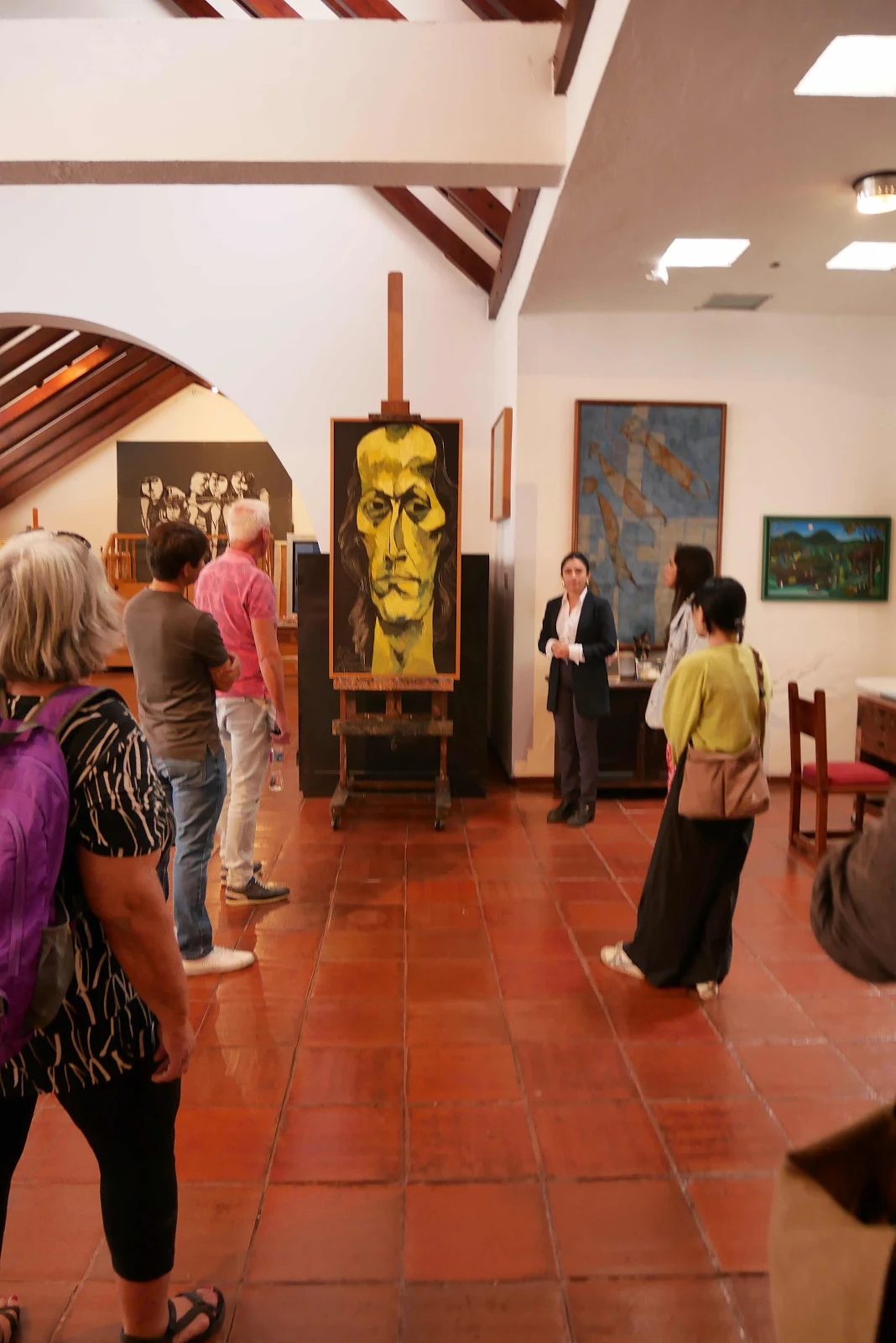
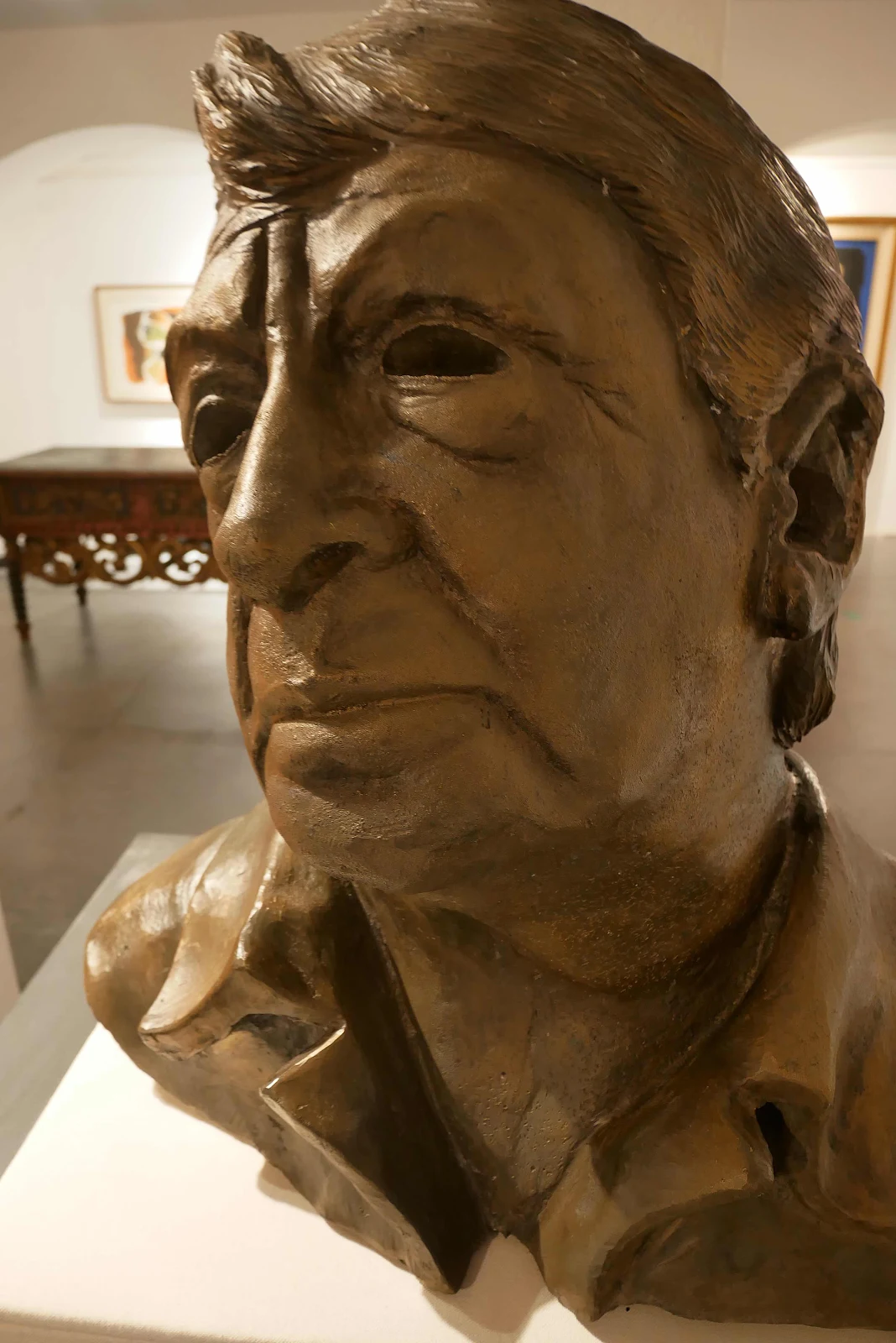
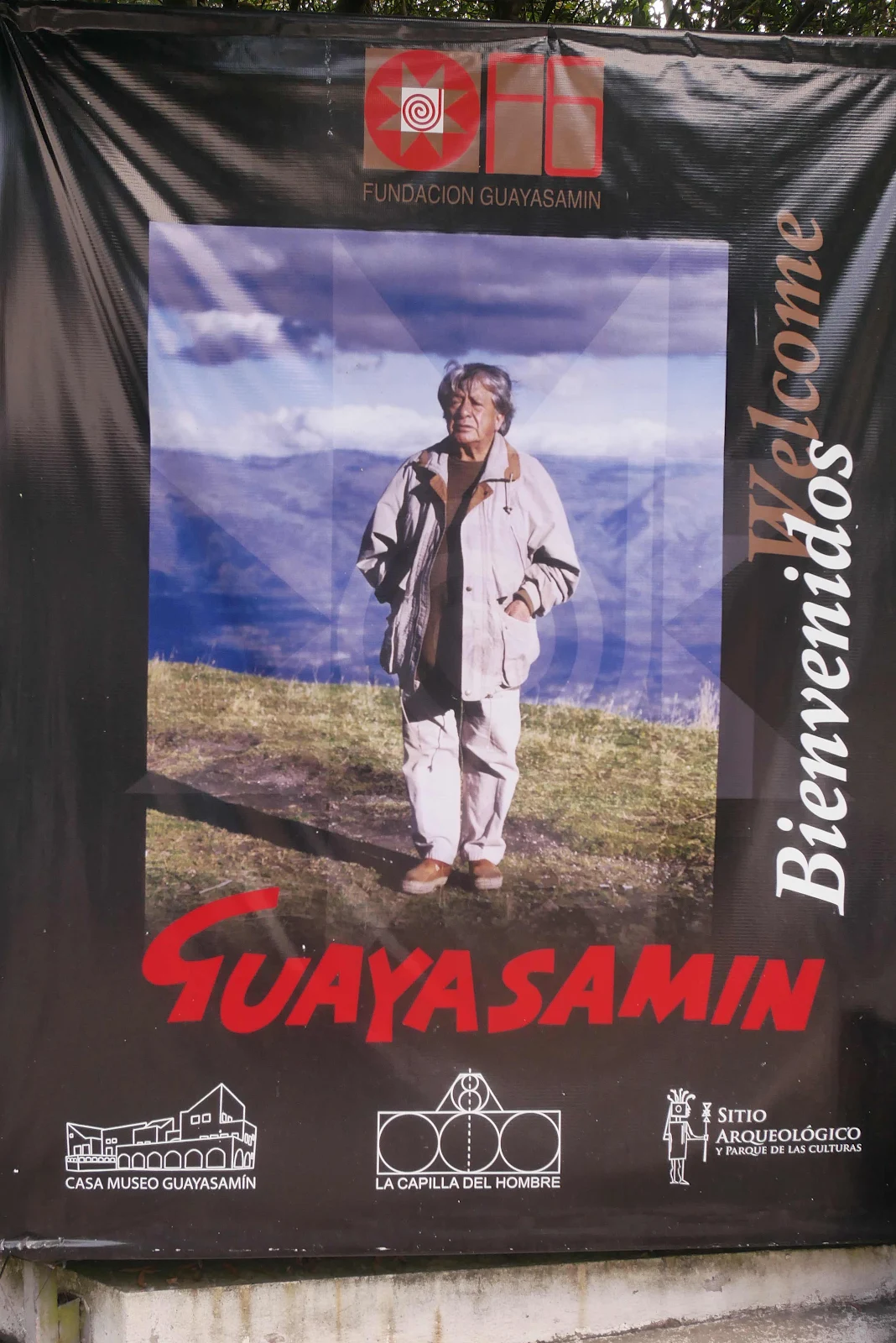
Somehow Layne found an art gallery open to the public in Quito at the home of Ecuador’s most famous artist. I would bet a trillion dollars no one in the United States not connected to Ecuador would have a clue who that might be. We didn’t and I’m still not sure who he is. Self portrait:
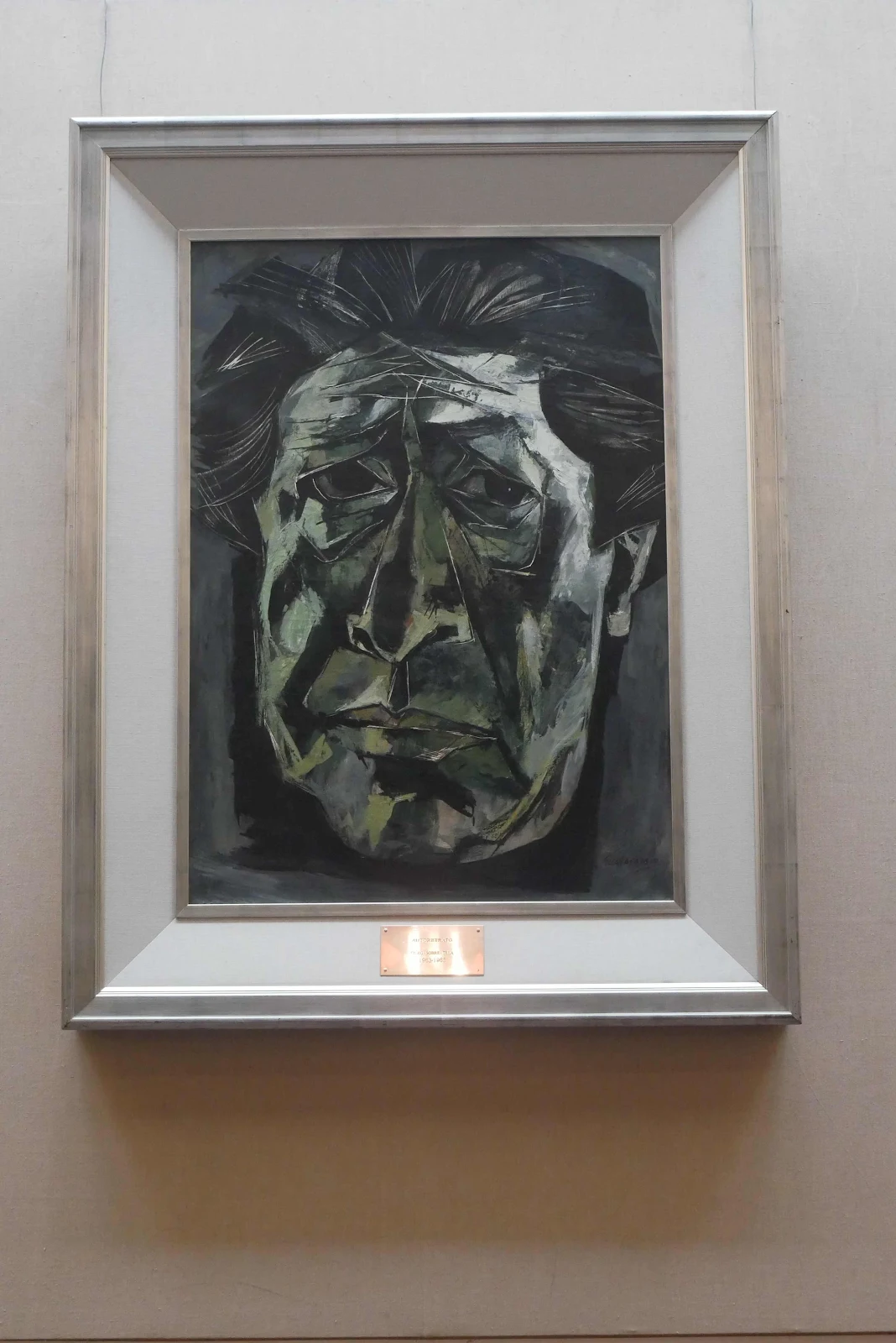
His name is Oswaldo Guayasamín and he lived from 1919 to 1999 when he died at 79 of a heart attack while painting. His home is now a shrine to his work.
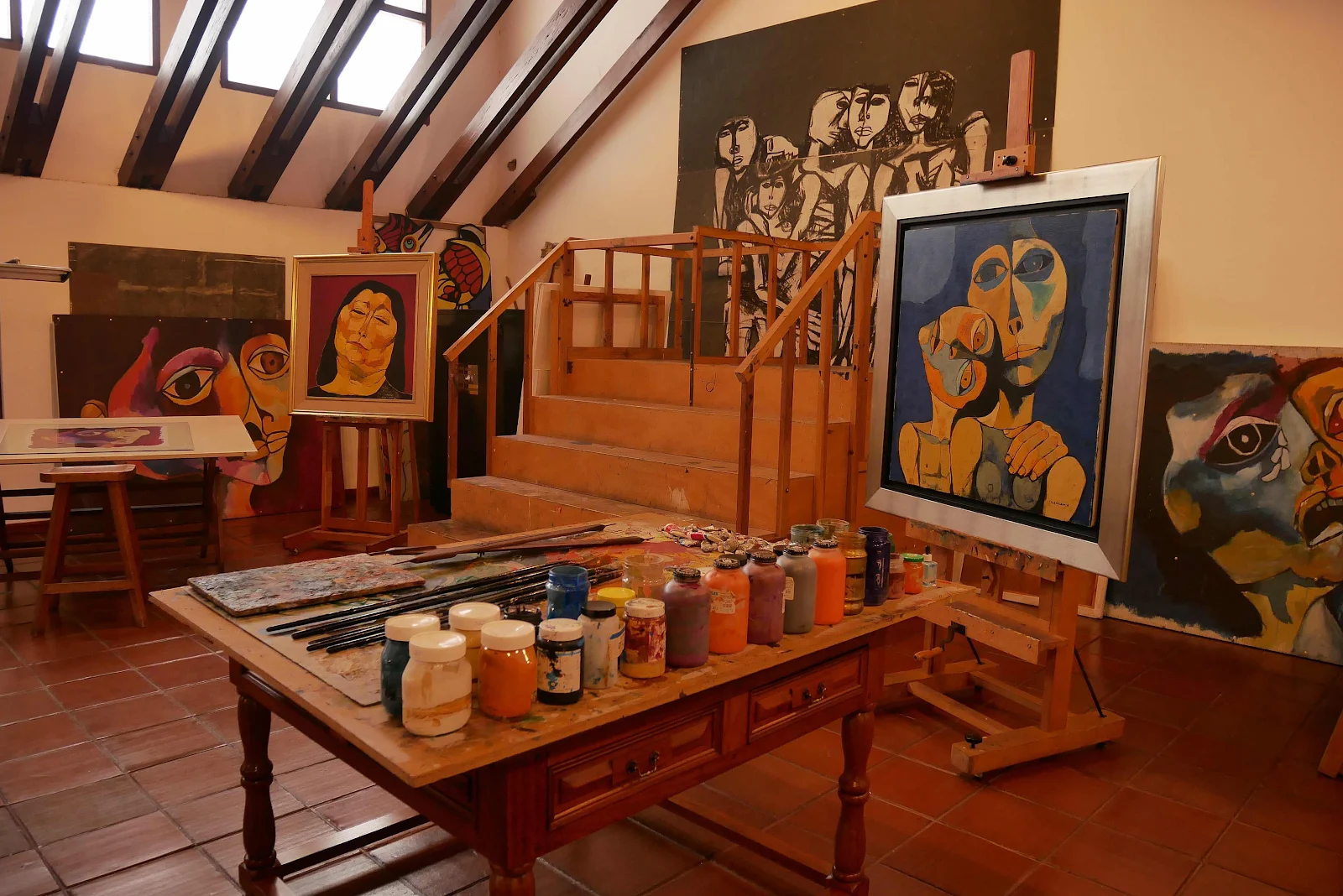
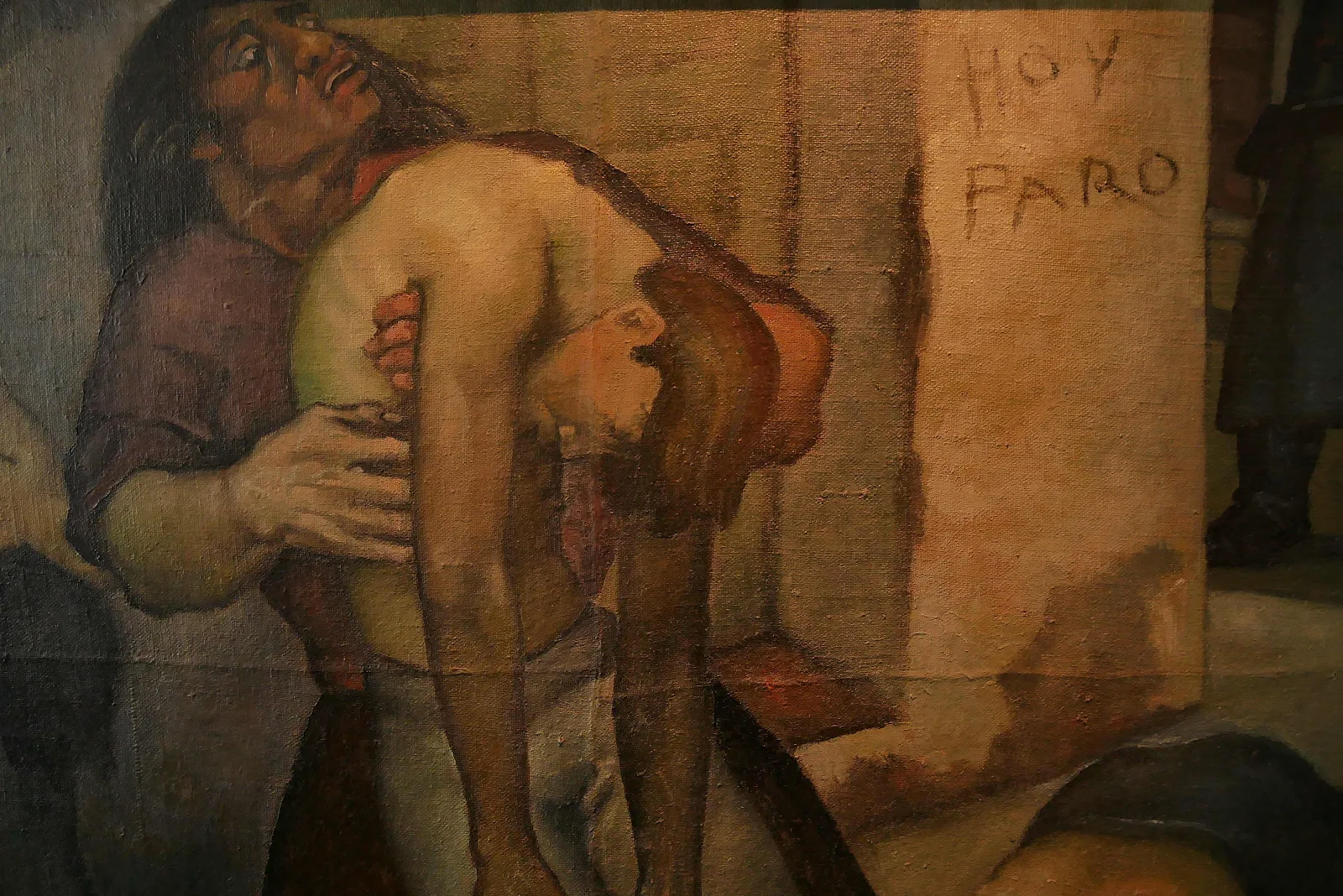
His paintings are a little odd, vast murals heavily laden with political messages, protests against war famine and oppression. As you can see they didn’t have a huge effect on the evolution of the people on the planet. He built a gallery space called the Chapel of Man where his pieces are on display and visitors are guided English as well as Spanish.
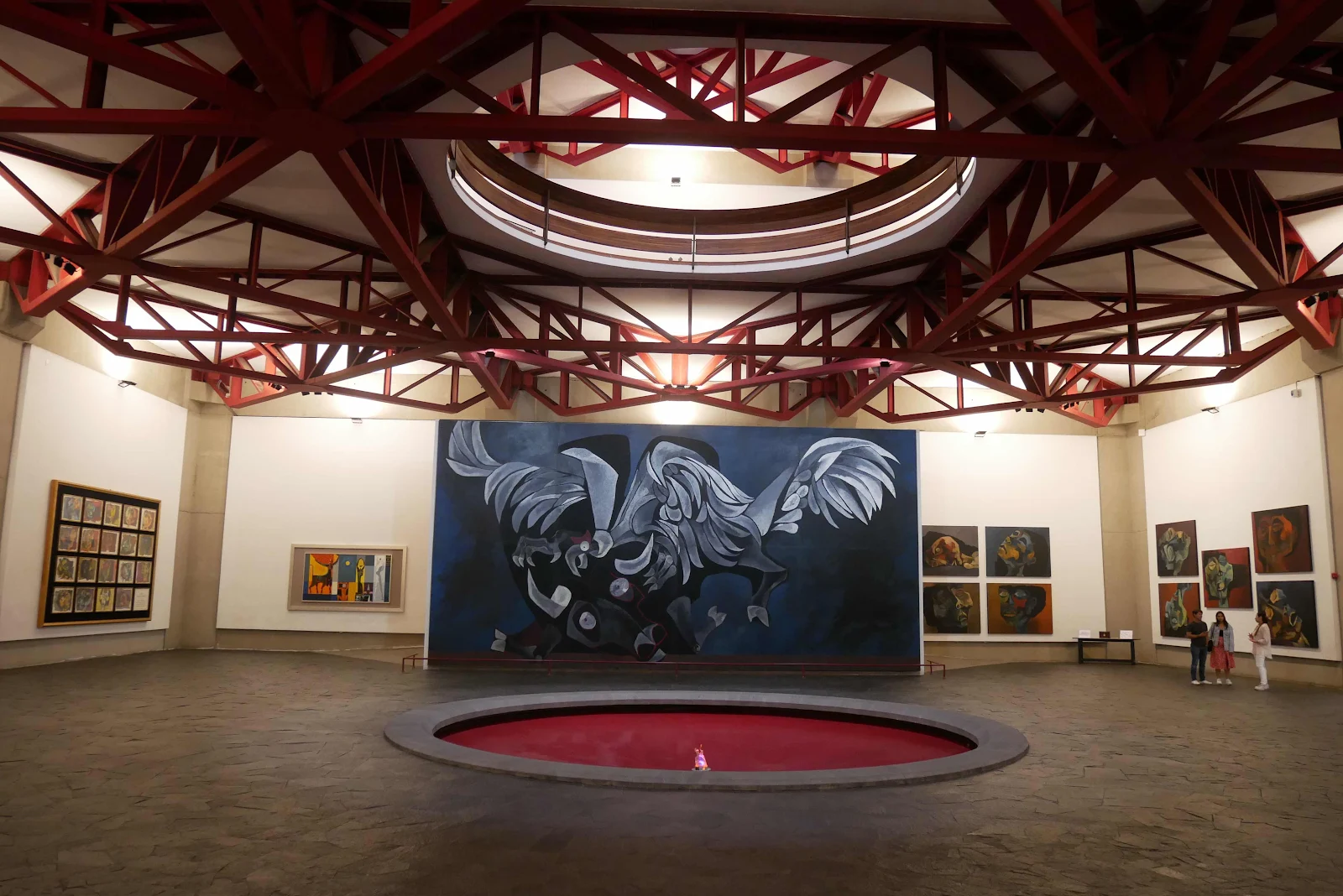
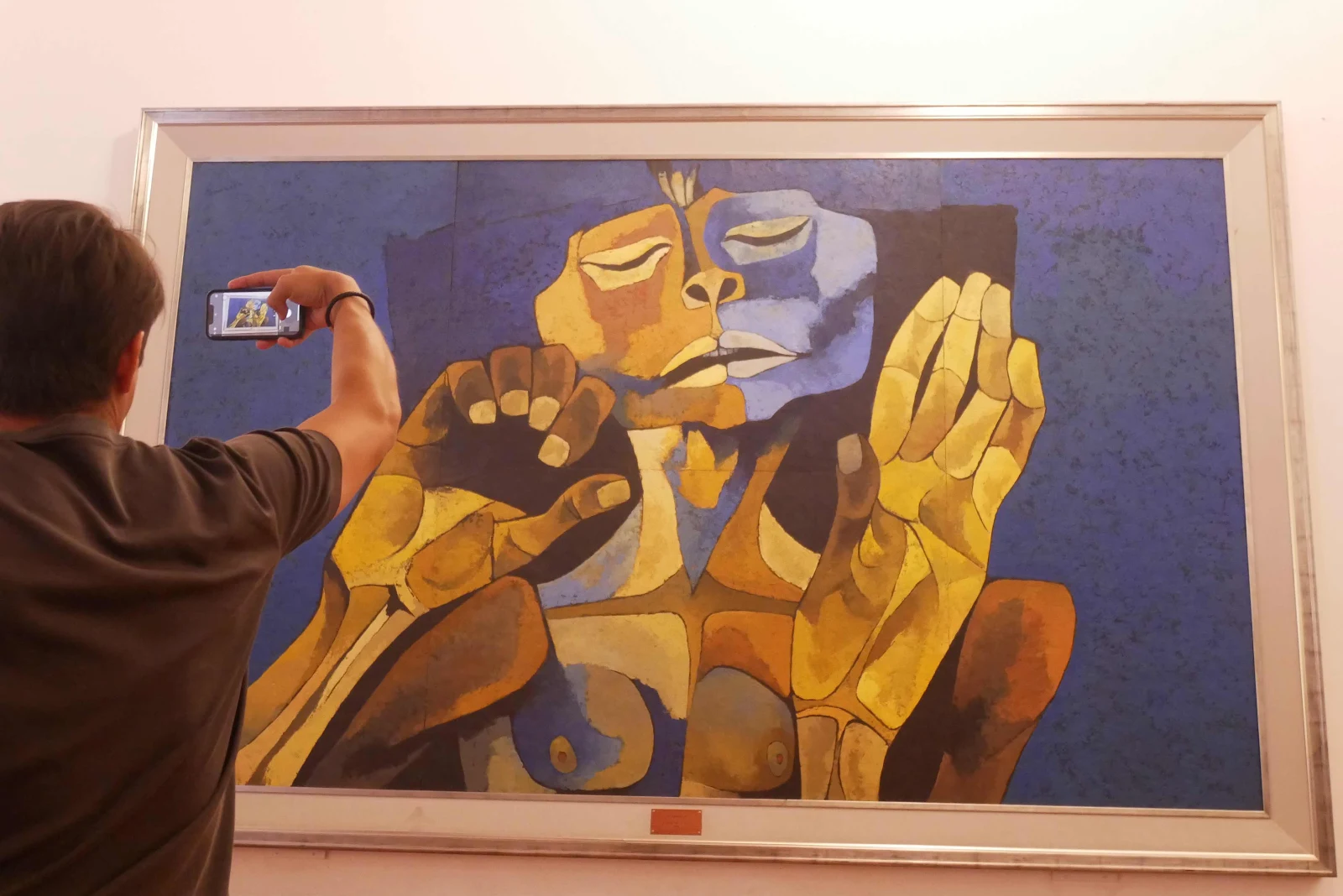
Above is the condor versus the bull, an allegory of indigenous people who organized these fights to see if the year ahead would promise good or bad crops. Below is a painting I quite like called “La Mestiza” which literally translates as a mixed race woman. Gusayamín was fascinated by Ecuador’s caste and racial separation where mestizo is someone of Spanish and indigenous blood represented by the yellow and blue colors.
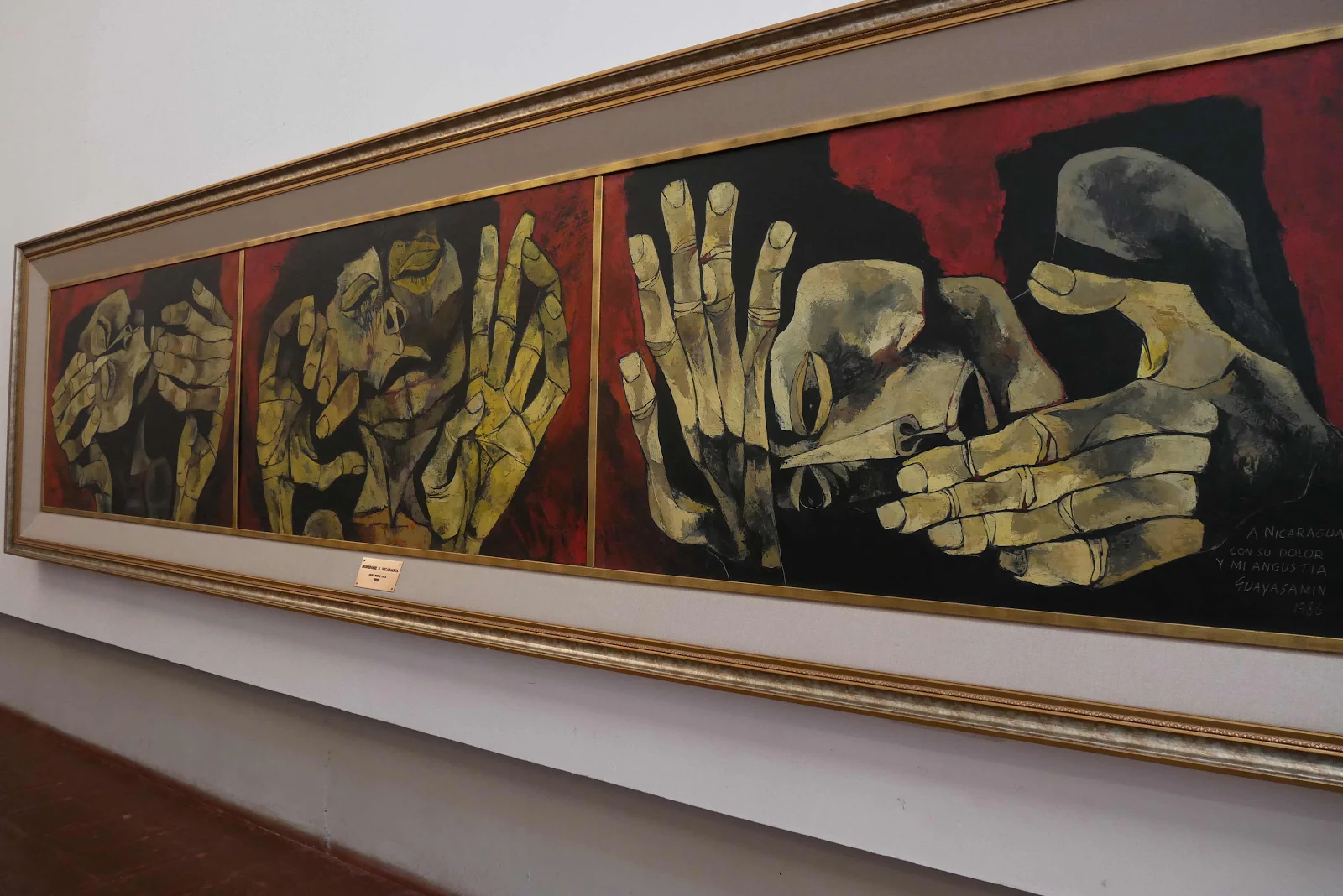
Women expressing hope pain and resignation over relatives disappeared in South America’s frequent political repressions. Always the huge fingers.
 Torture.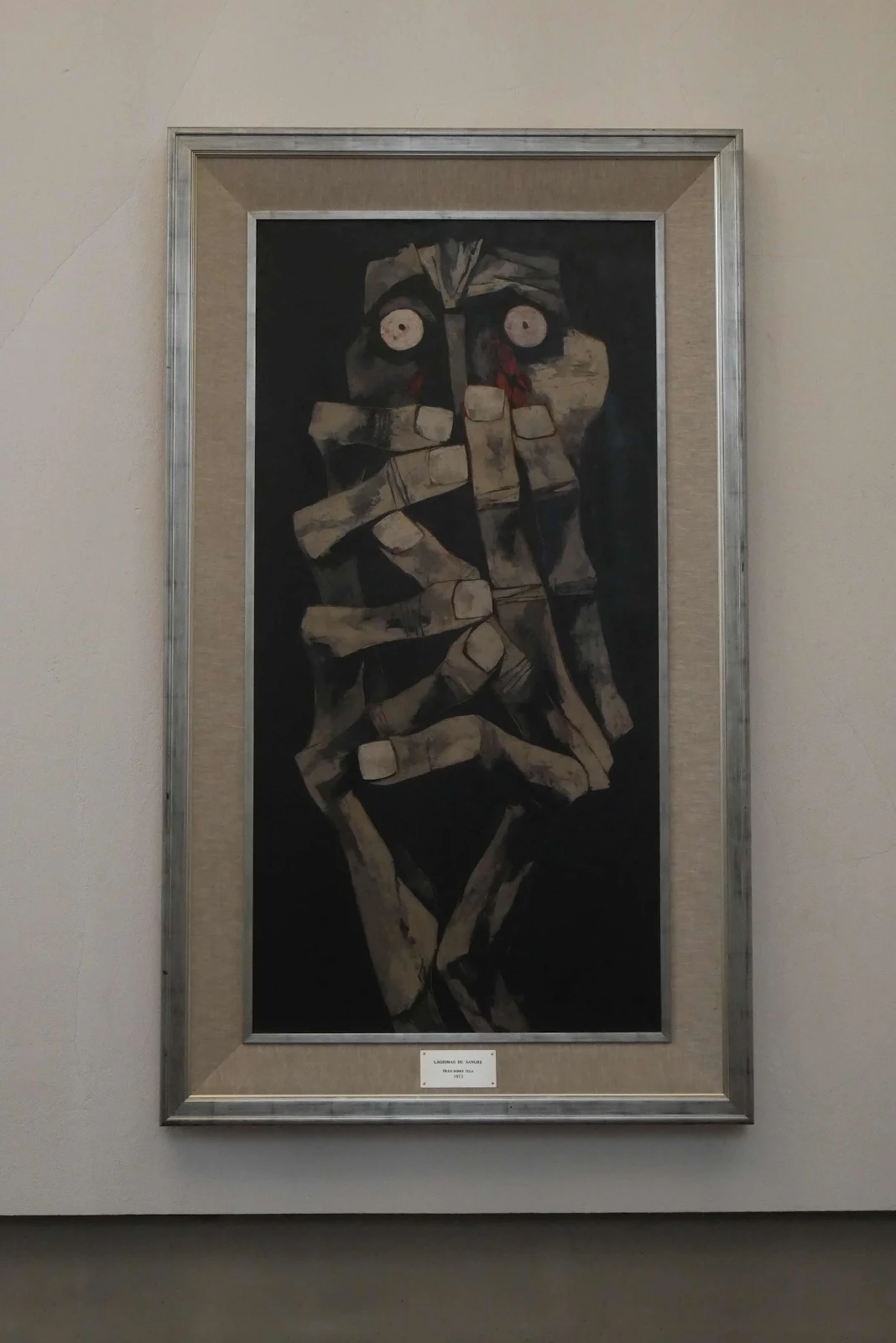
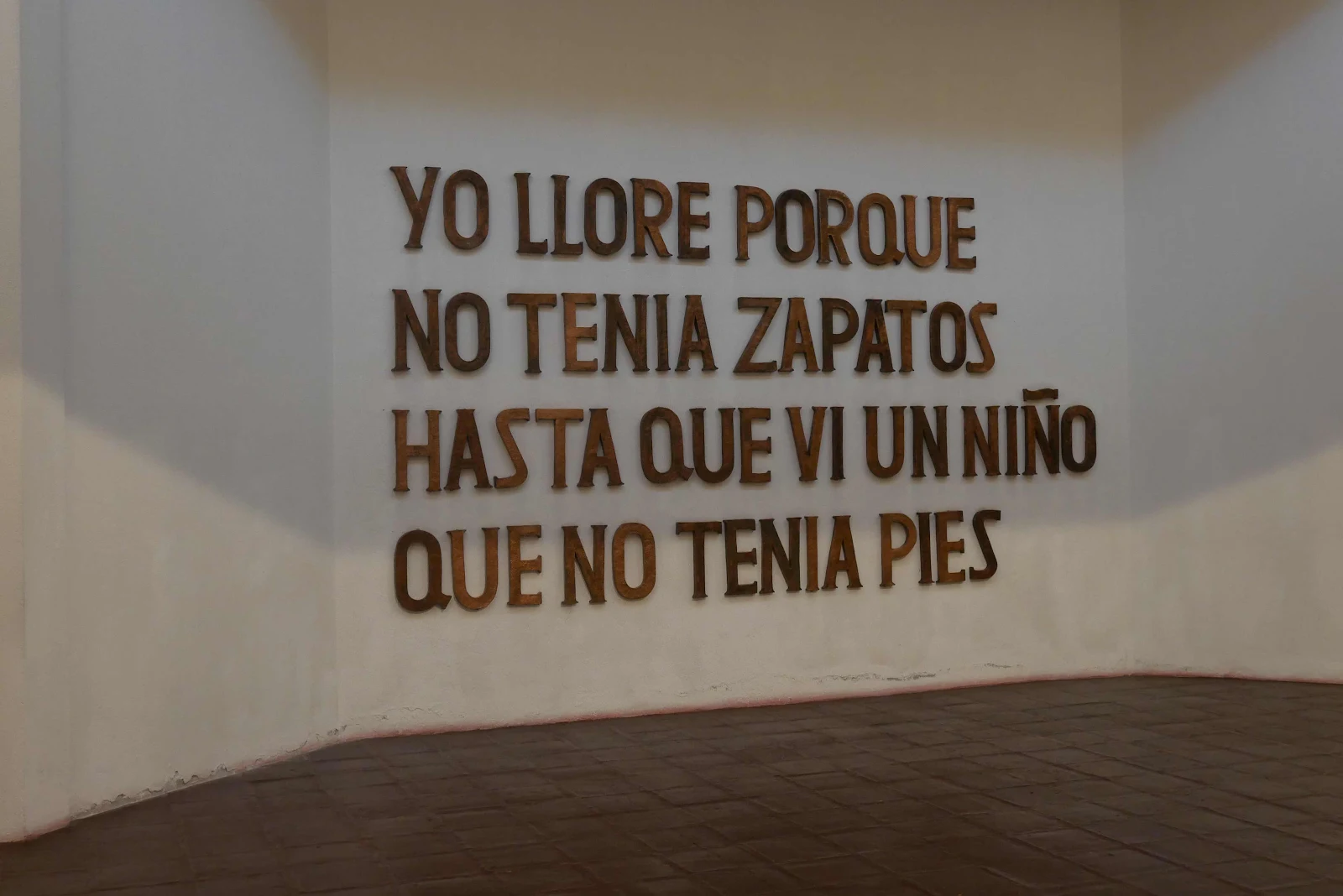
“I cried because I had no shoes until I saw a child with no feet.”
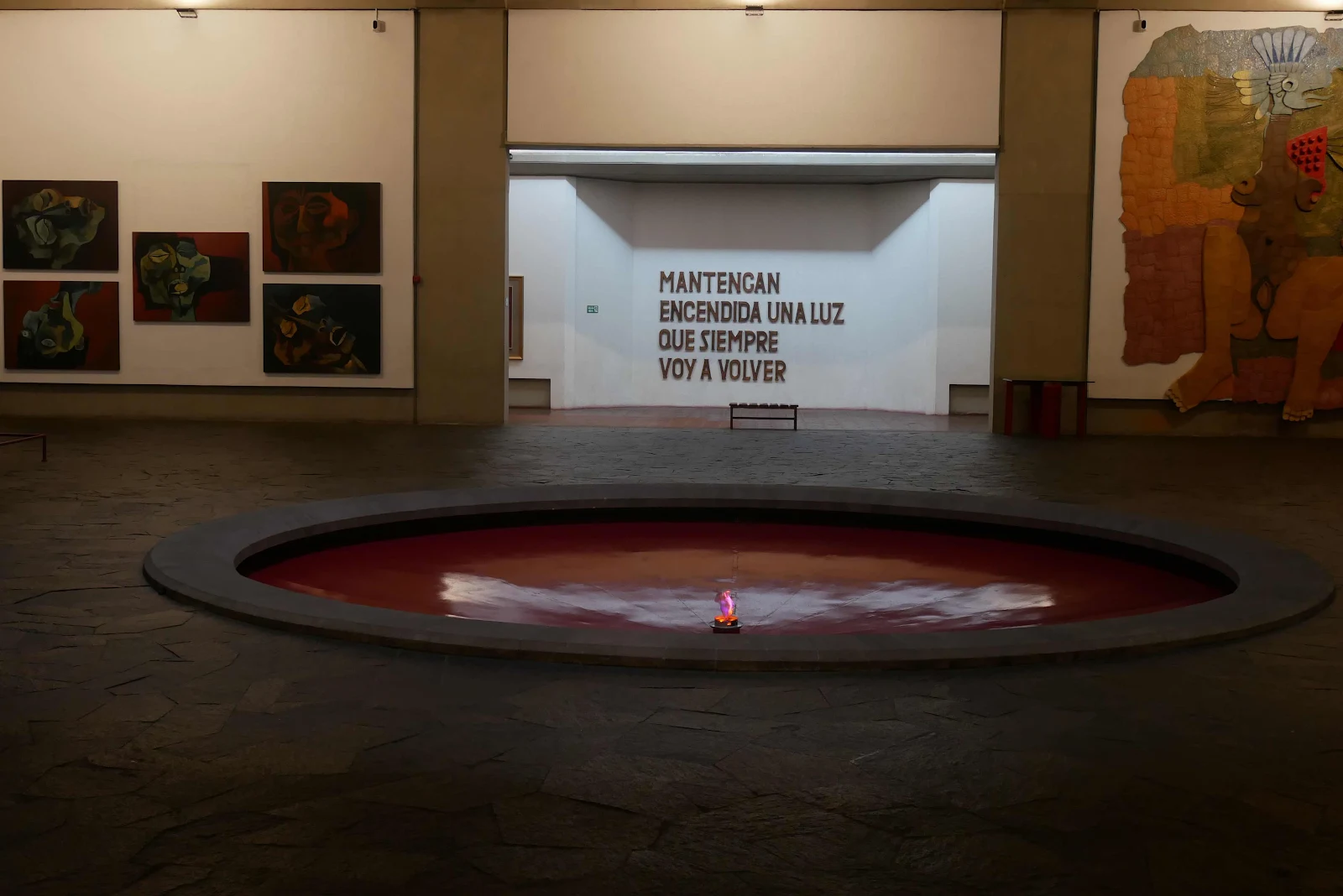
“Keep a light illuminated as I will return.”
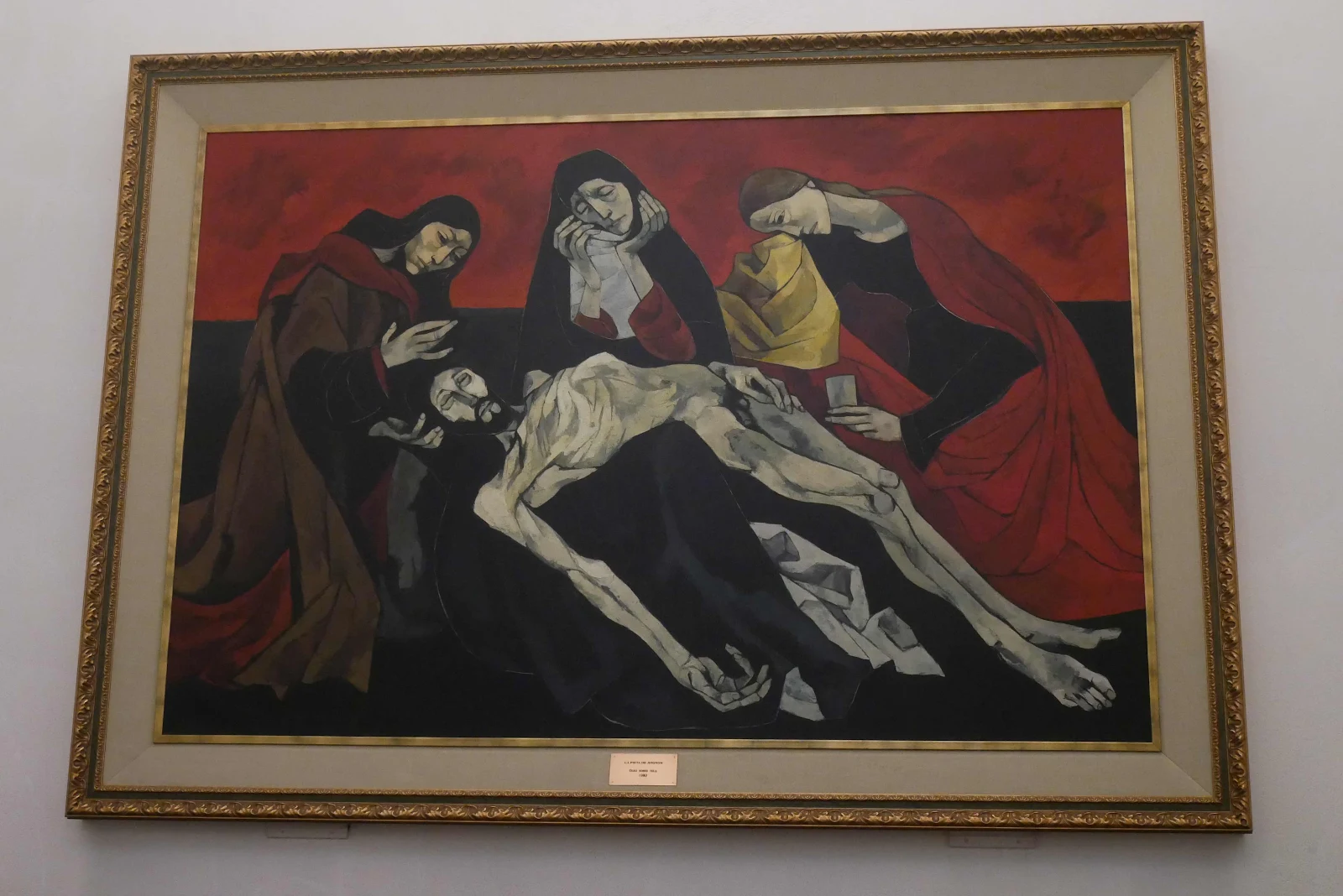
This is a representation of the 15th century Pietà of Avignon minus all the religious symbols.
 A slightly over sized earring: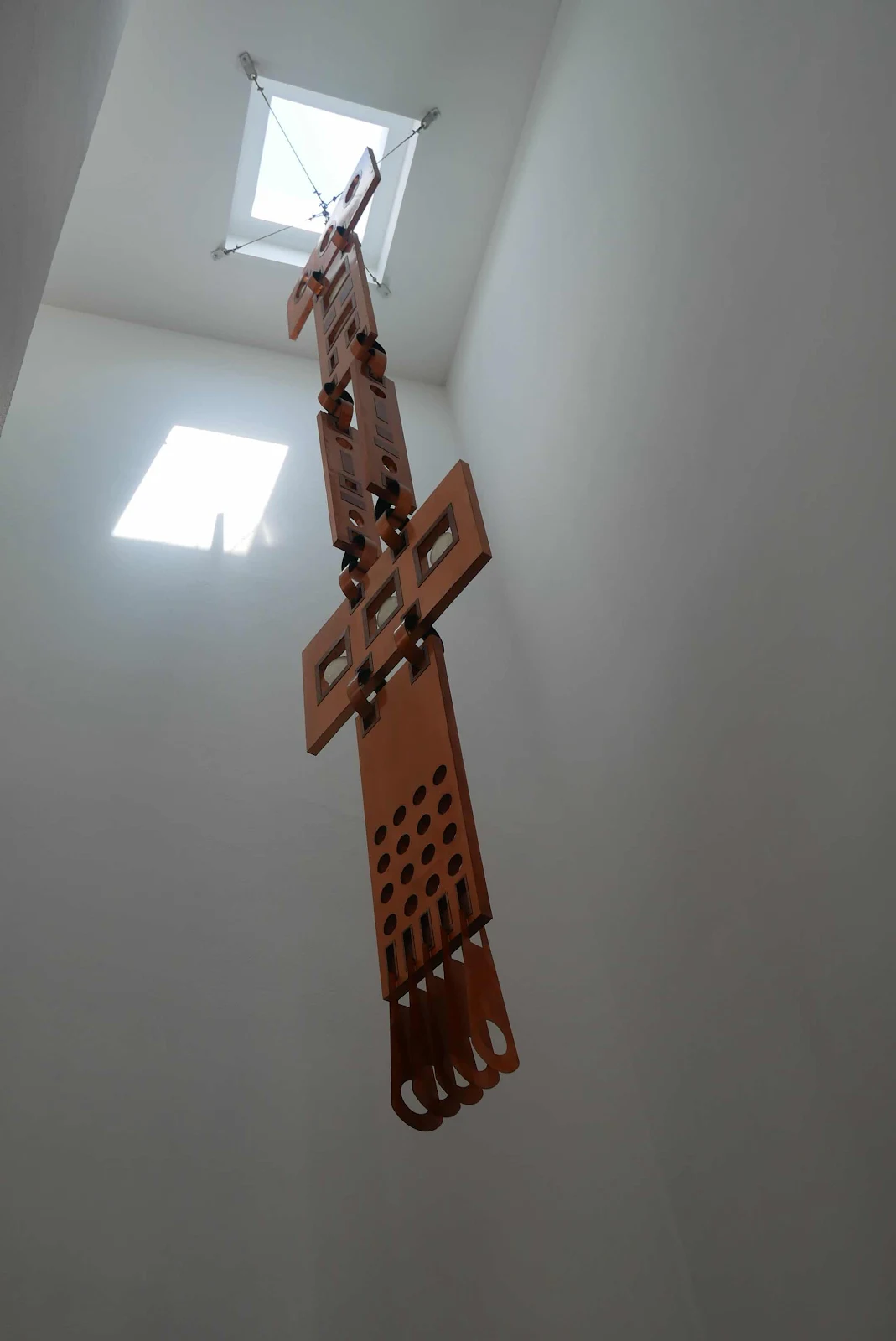
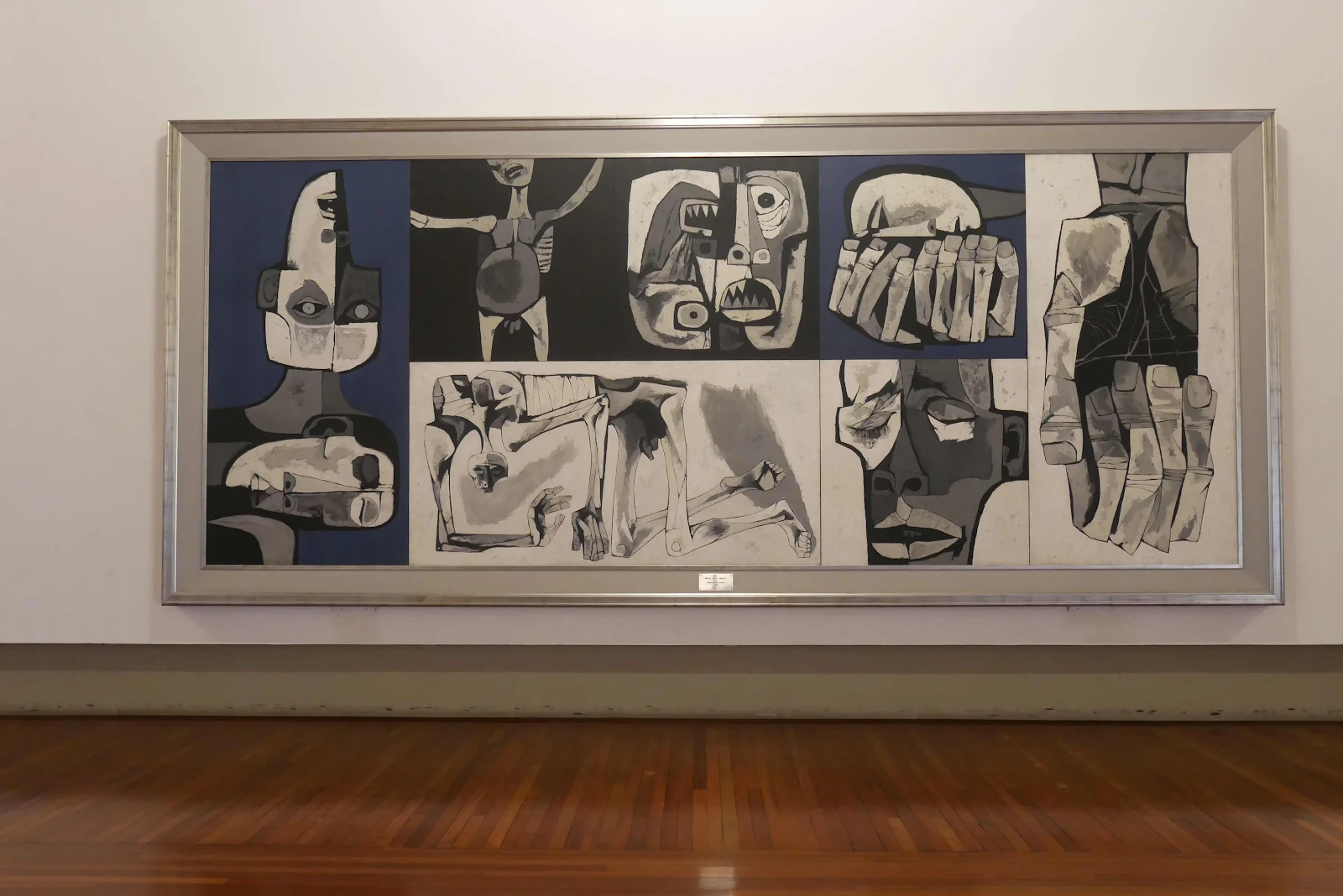
This mural below is interesting as it is painted on sheets of plywood and the individual pieces can be moved around. The hand in the right is begging this way up and the other way up it is a symbol of power for instance.
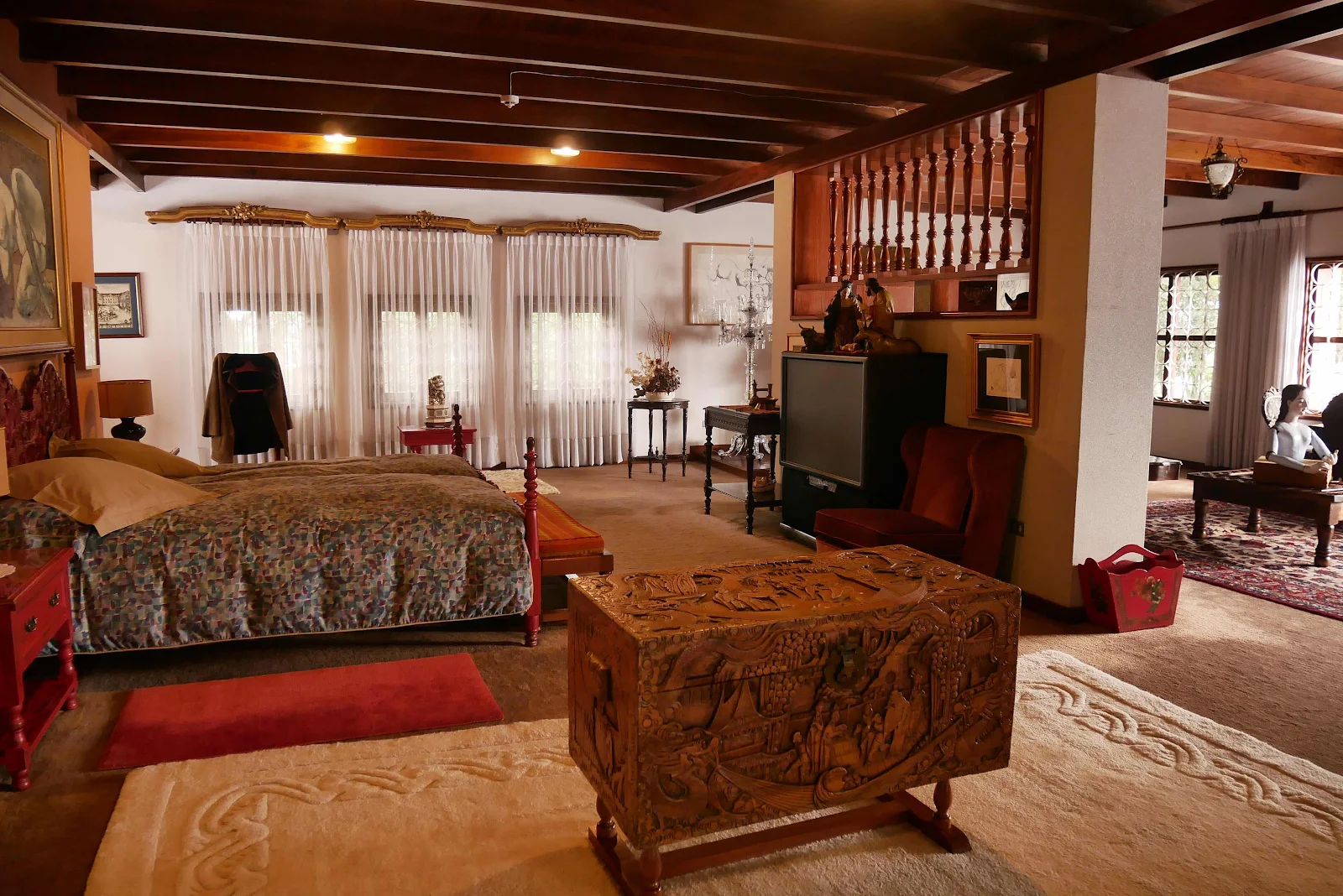
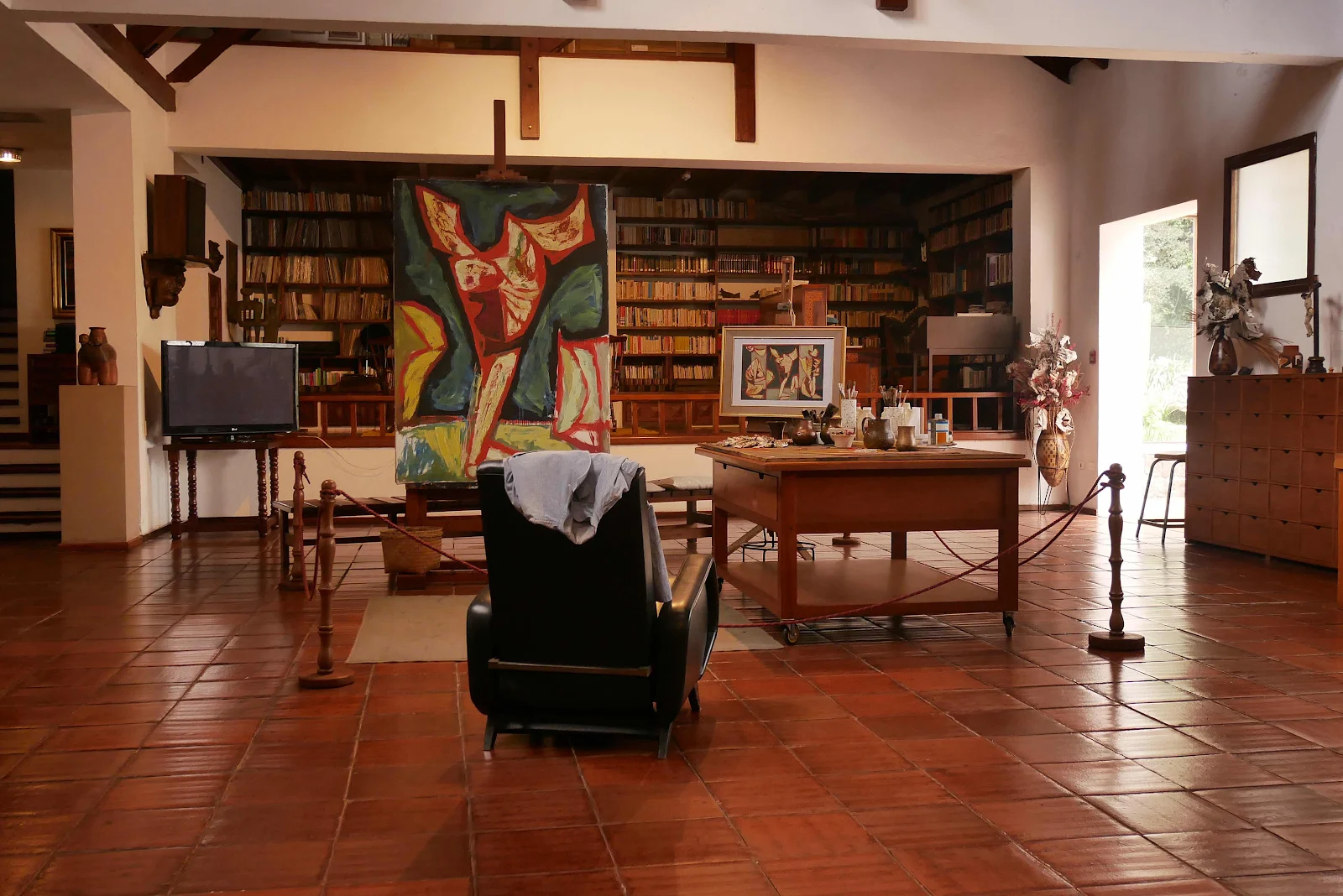
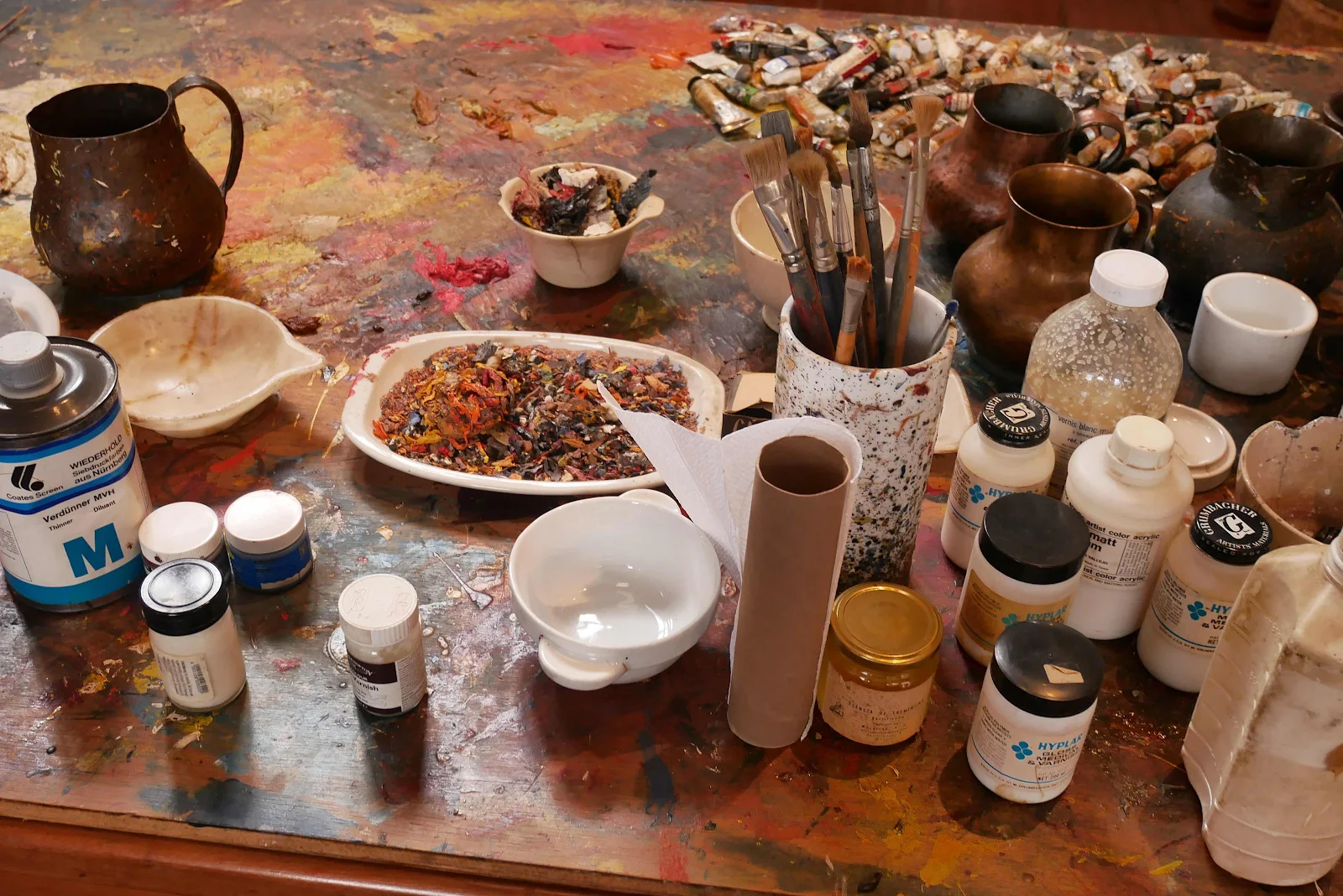
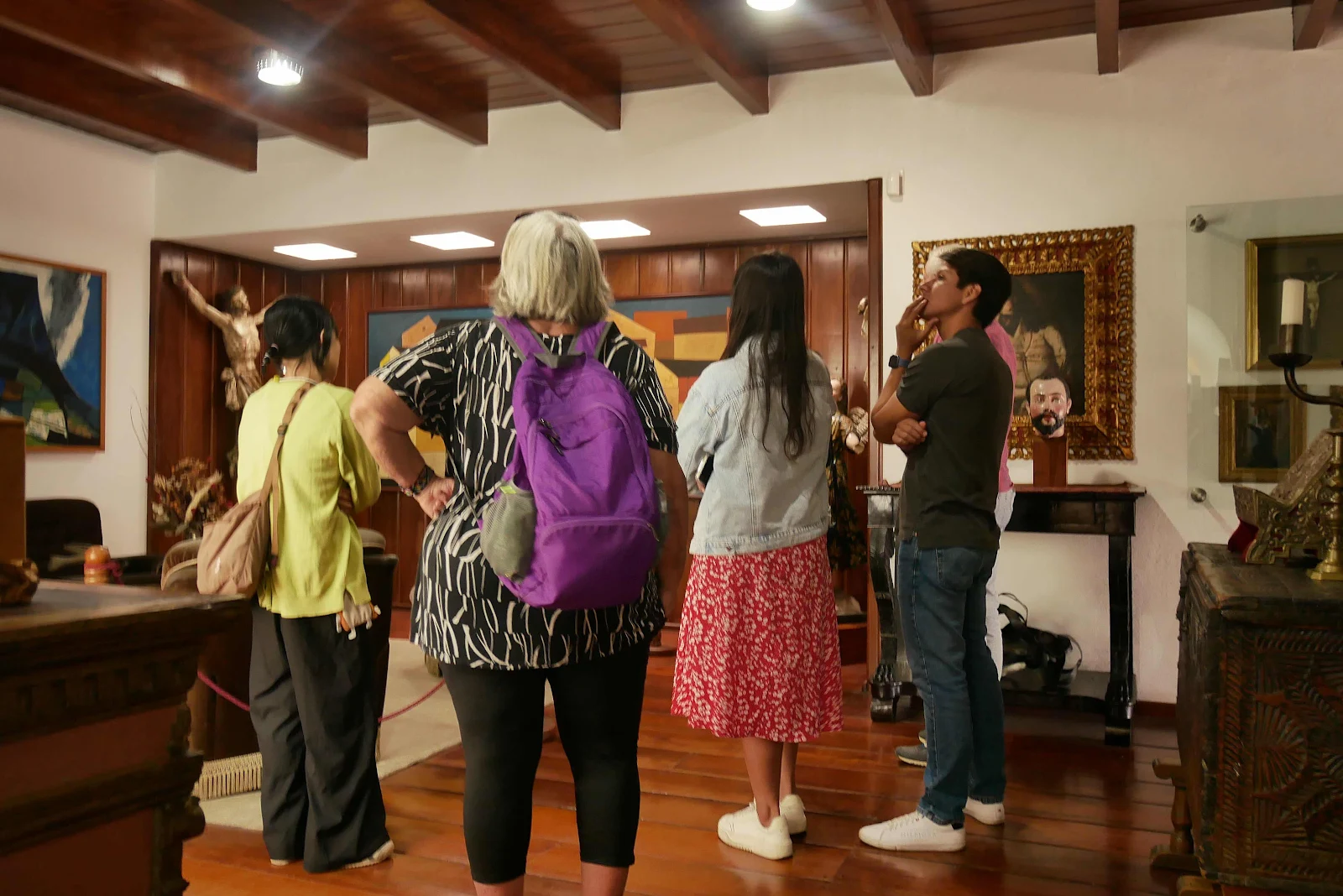
And then as part of your $17 entrance fee you get to see the artists home exactly as he left it when he died. He was married three times and after his last divorce he lived alone in this home for his final twenty years.
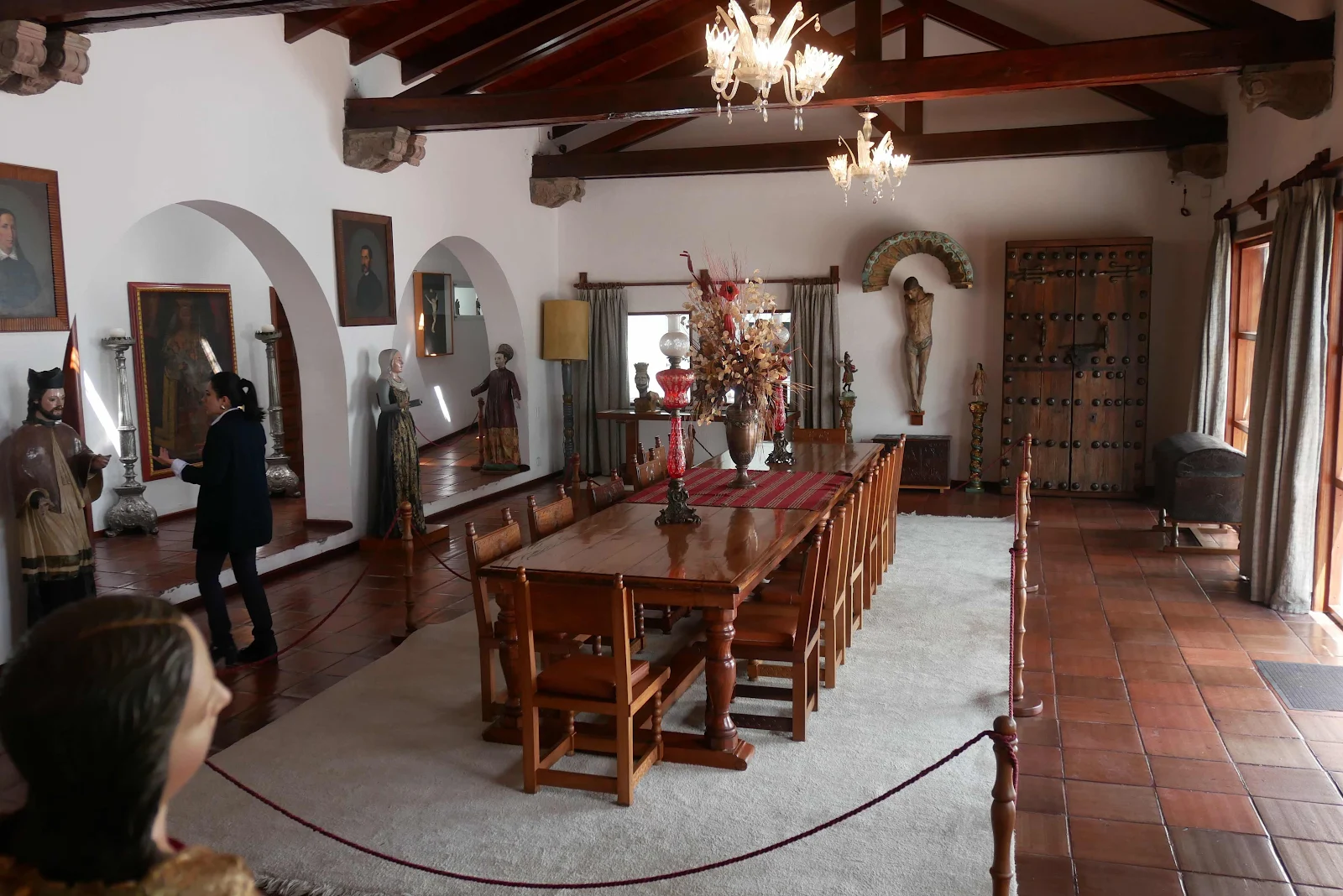
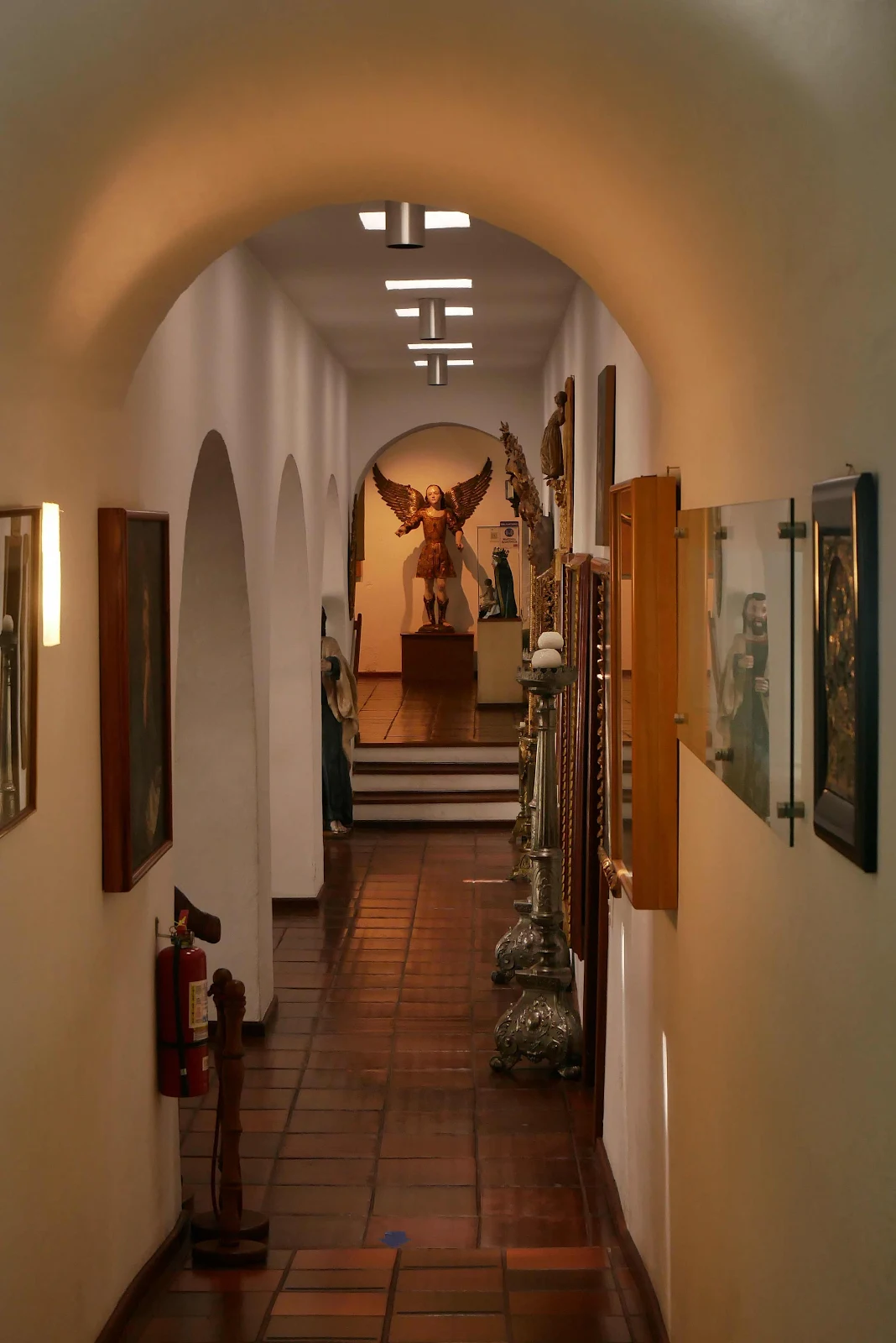
Frankly I found it a bit bizarre as the artist who described himself as an atheist surrounded himself with religious iconography.
Gusayamín loved to be around the powerful of his time and one wall was covered in photos of him meeting revolutionary world leaders of that era, Castro Mao and so forth.