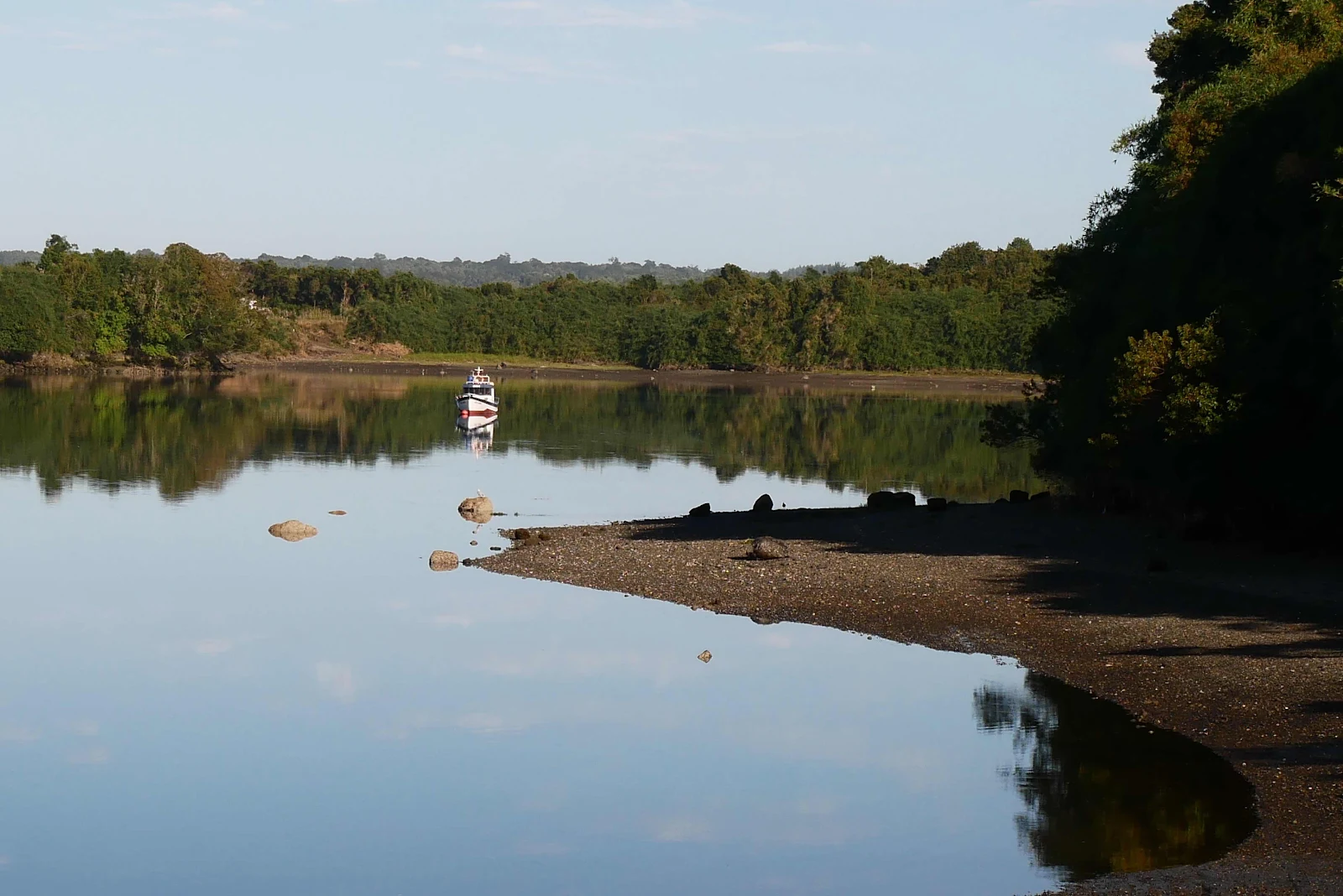
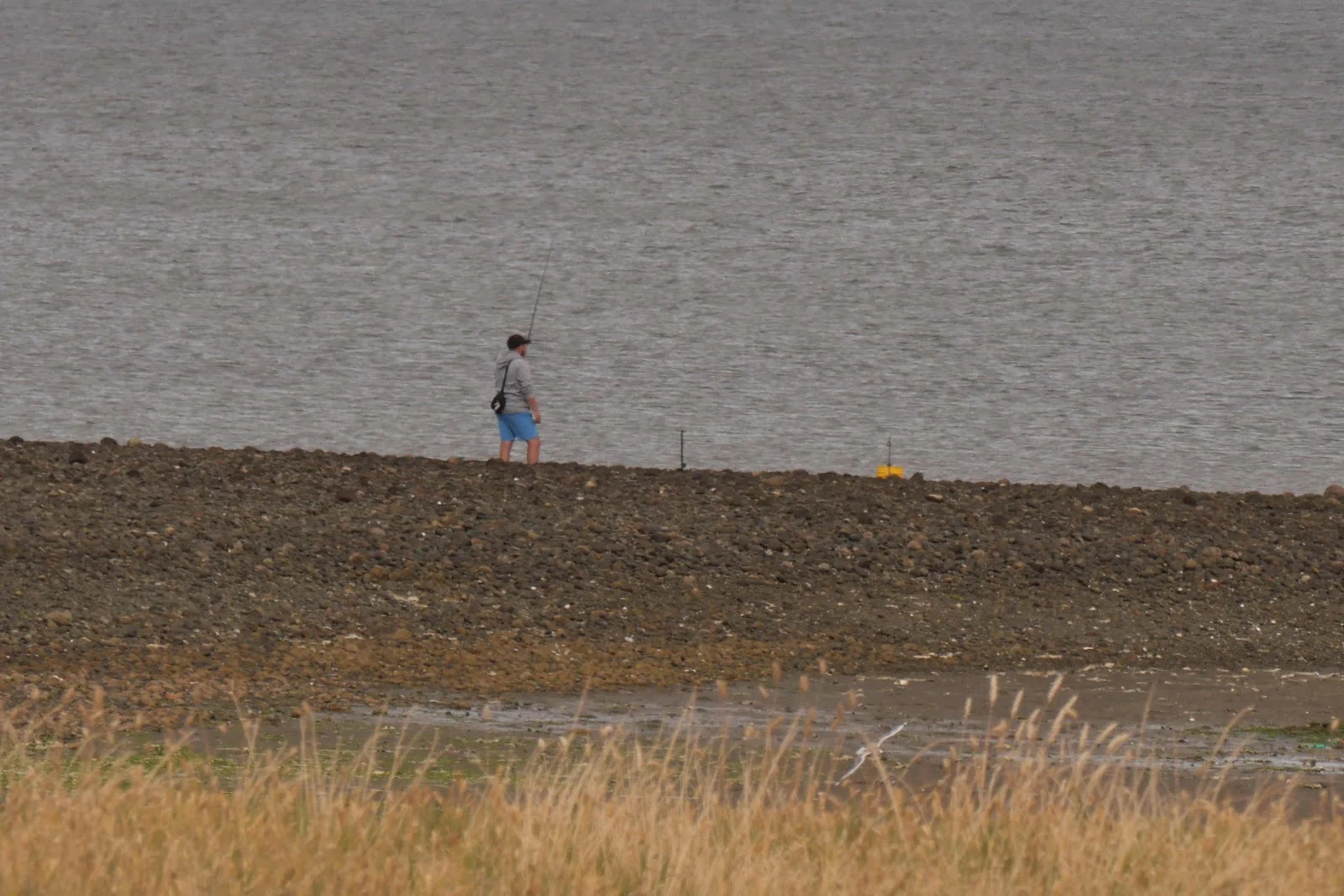
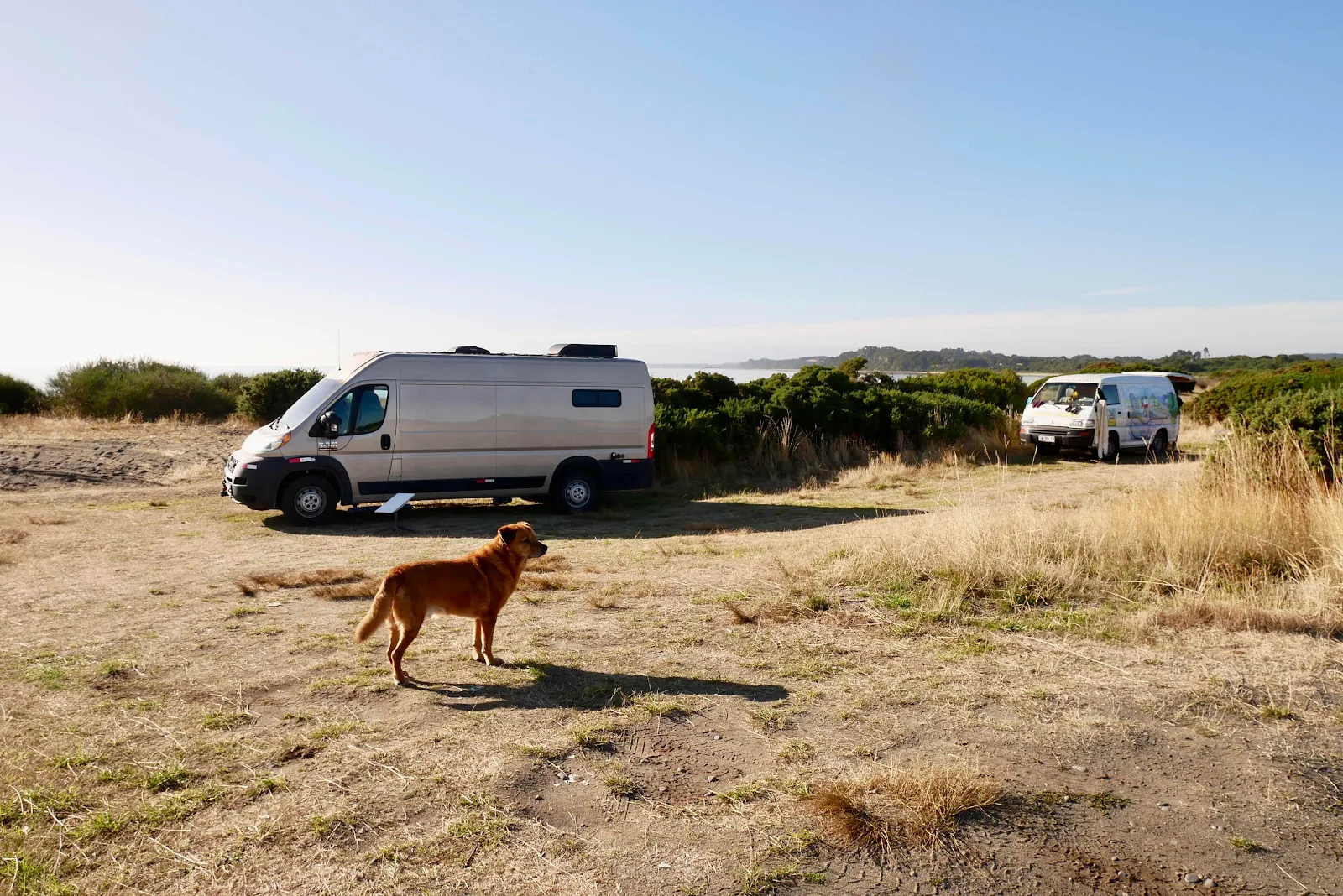
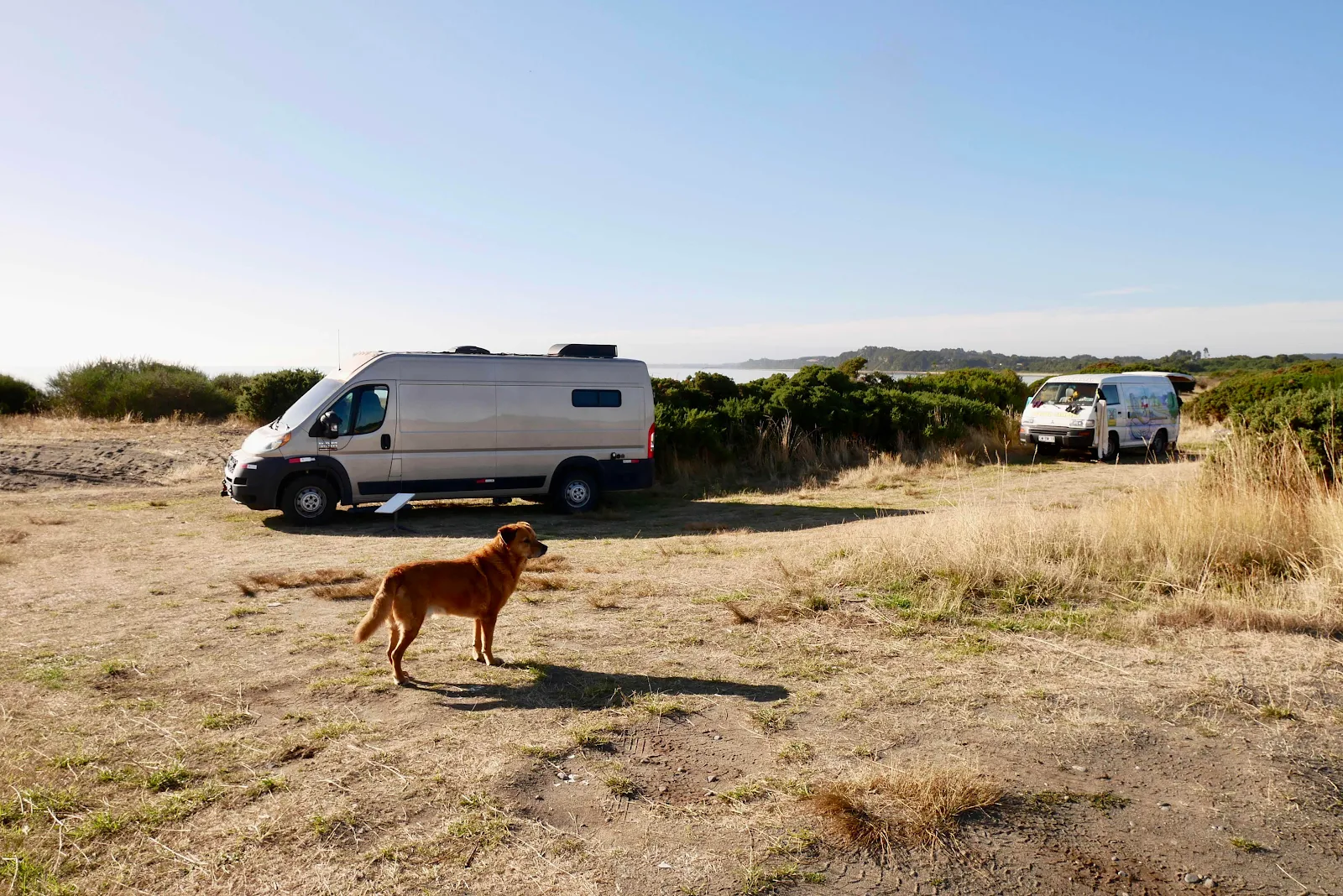
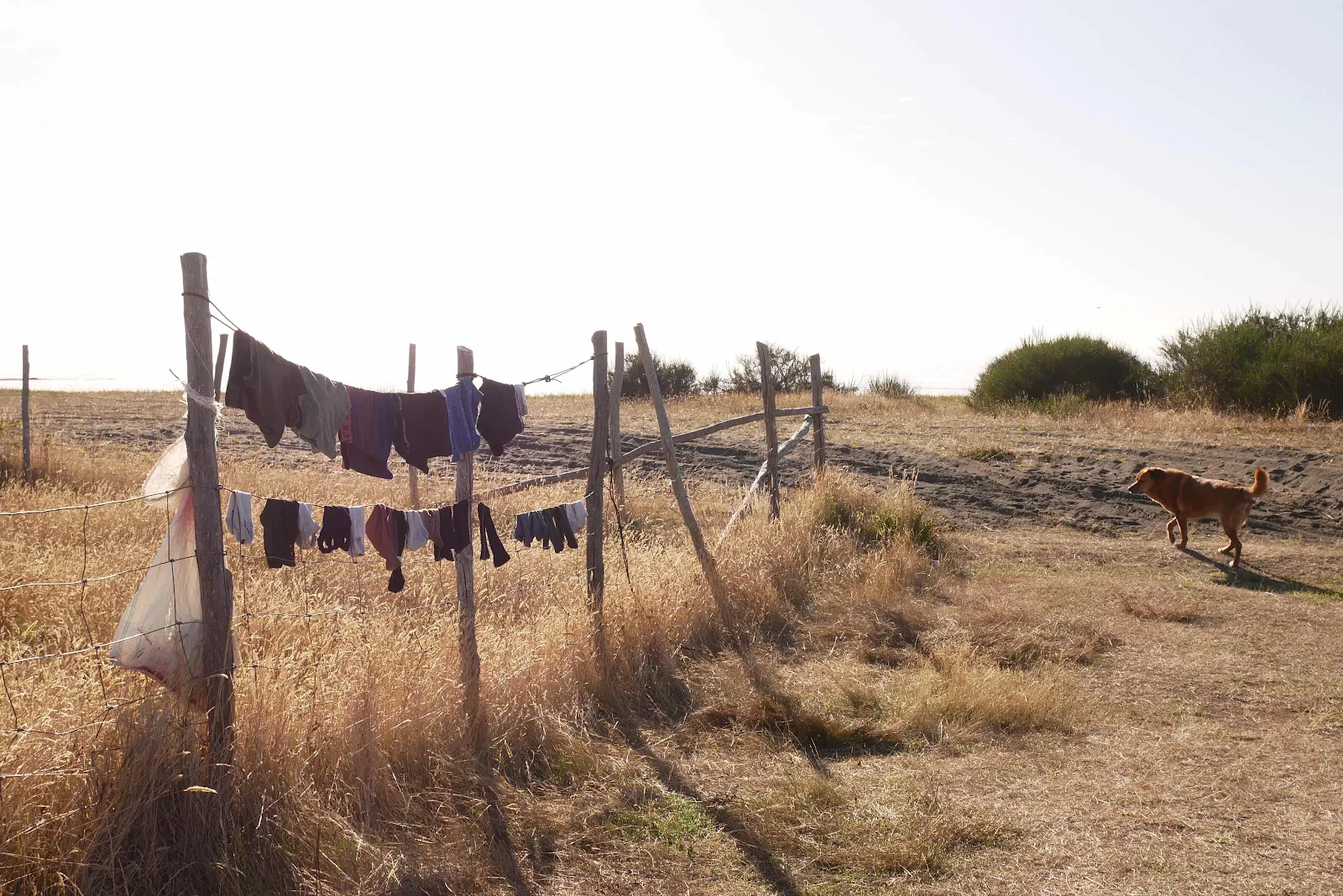
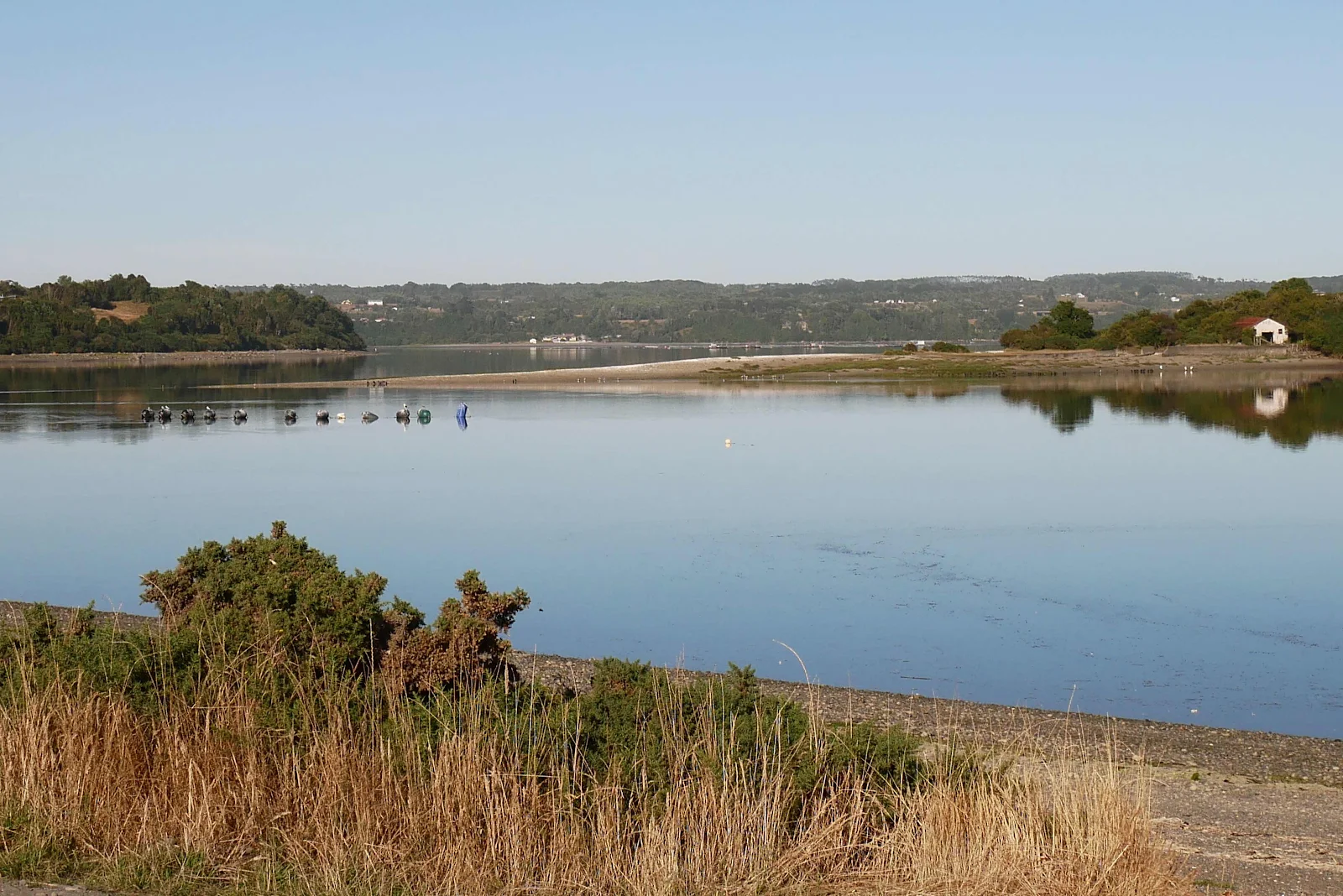
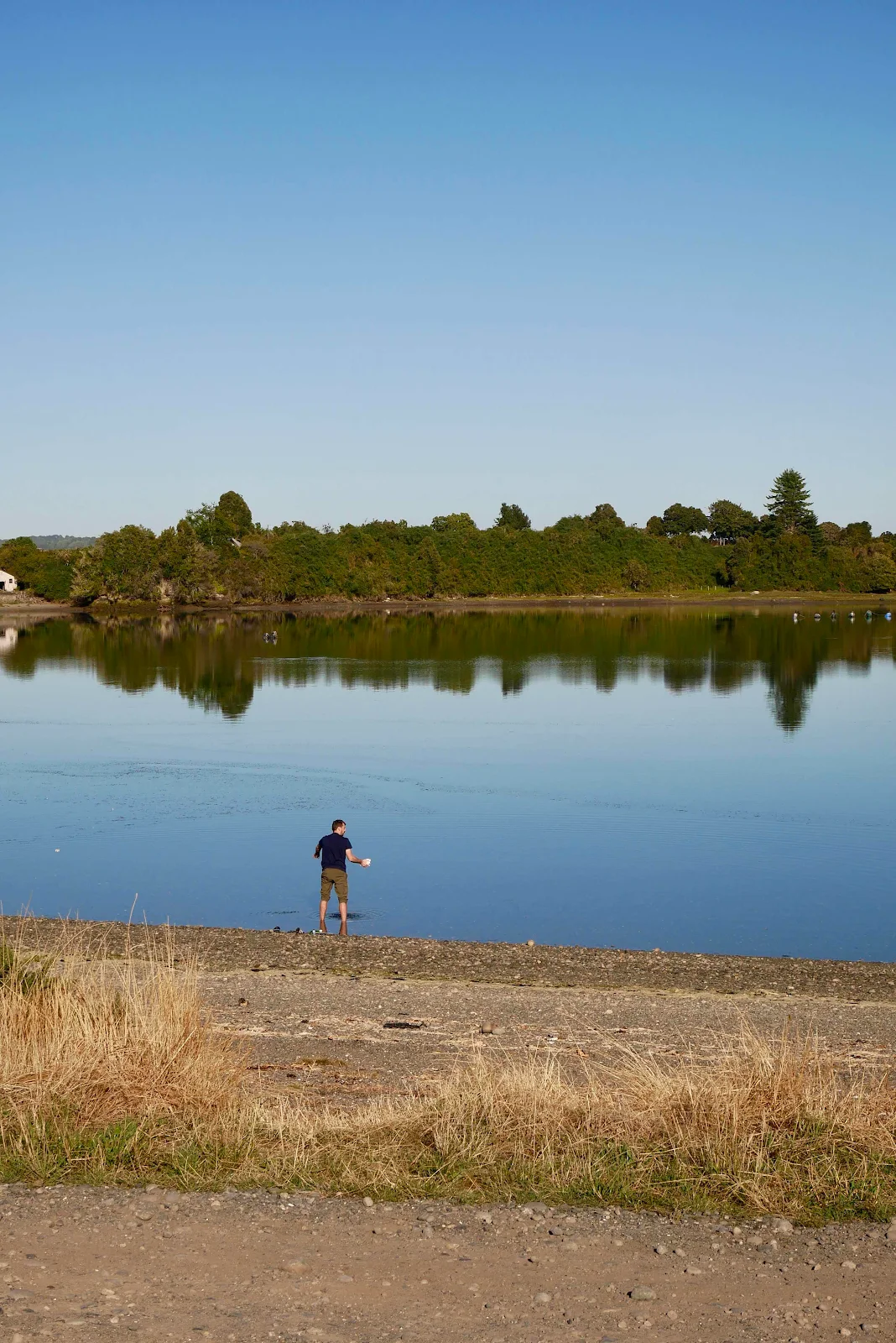
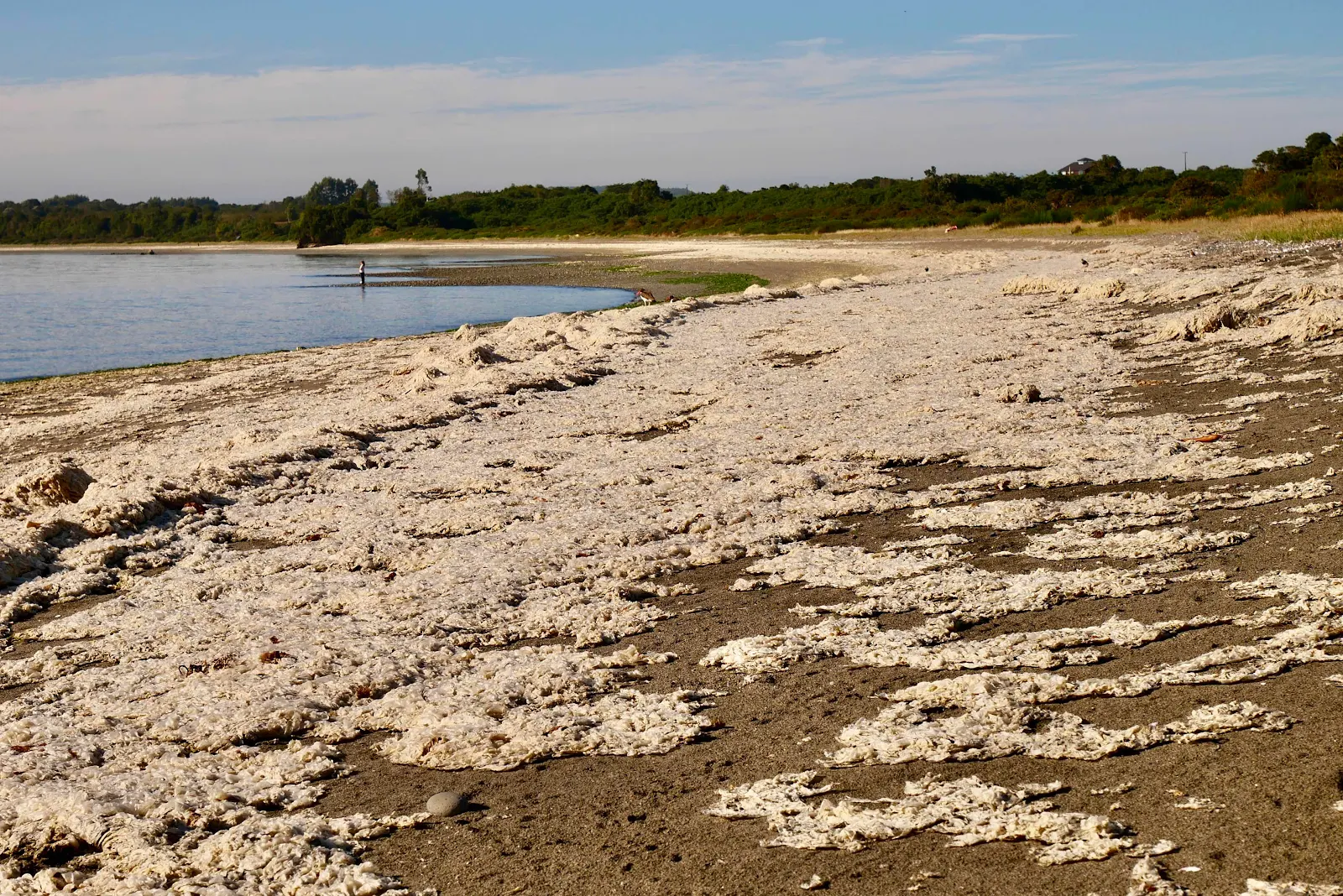
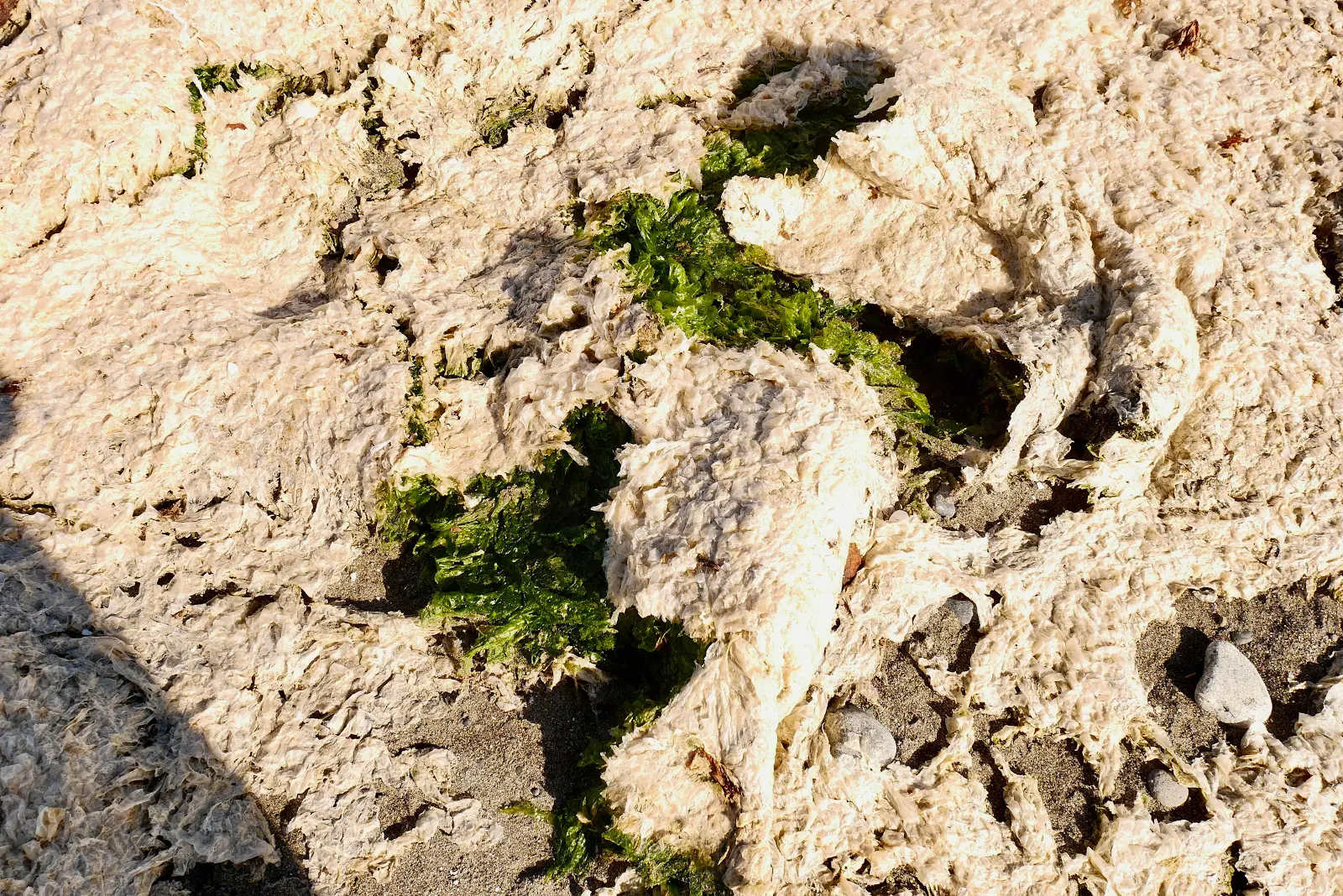
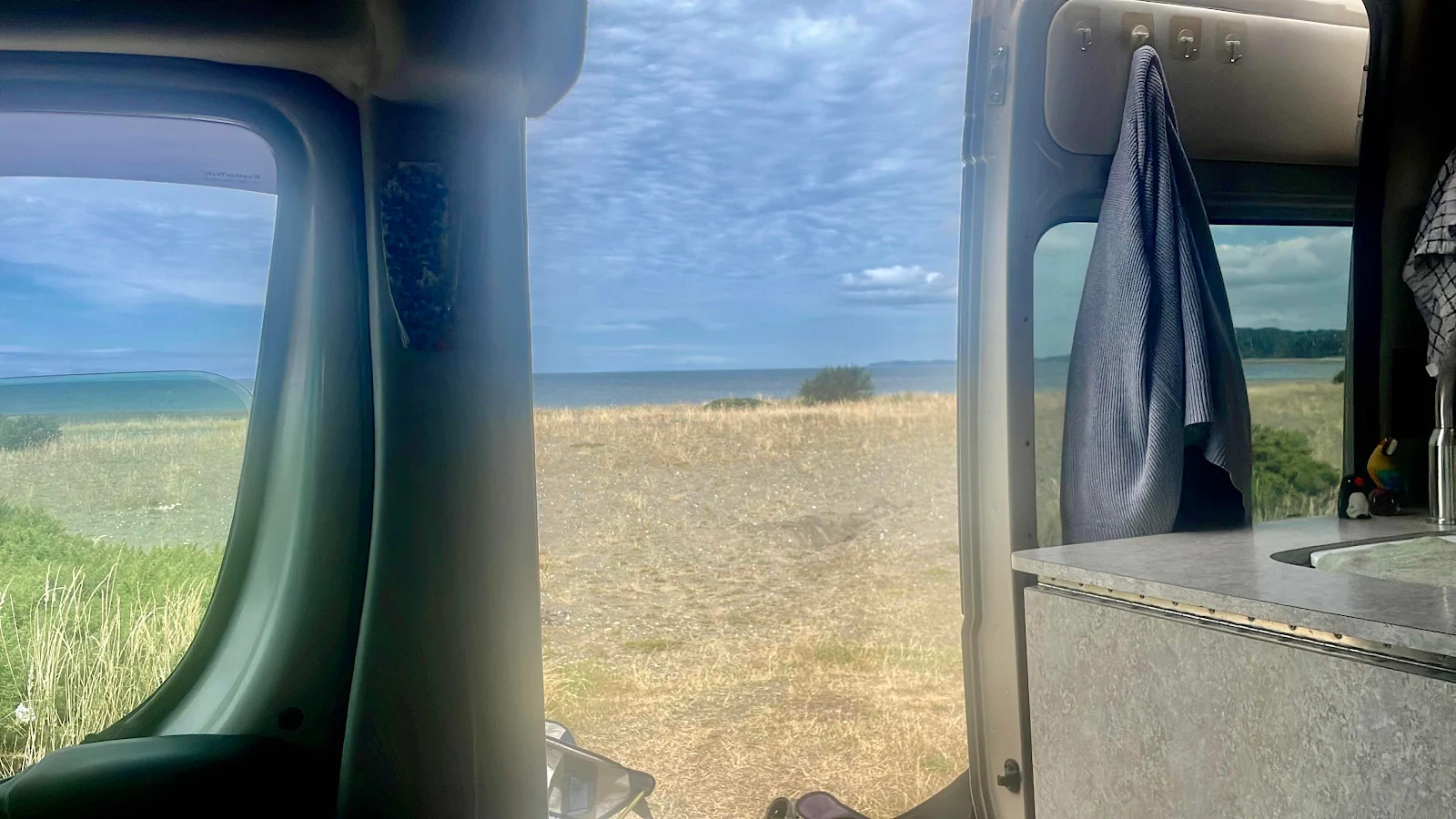
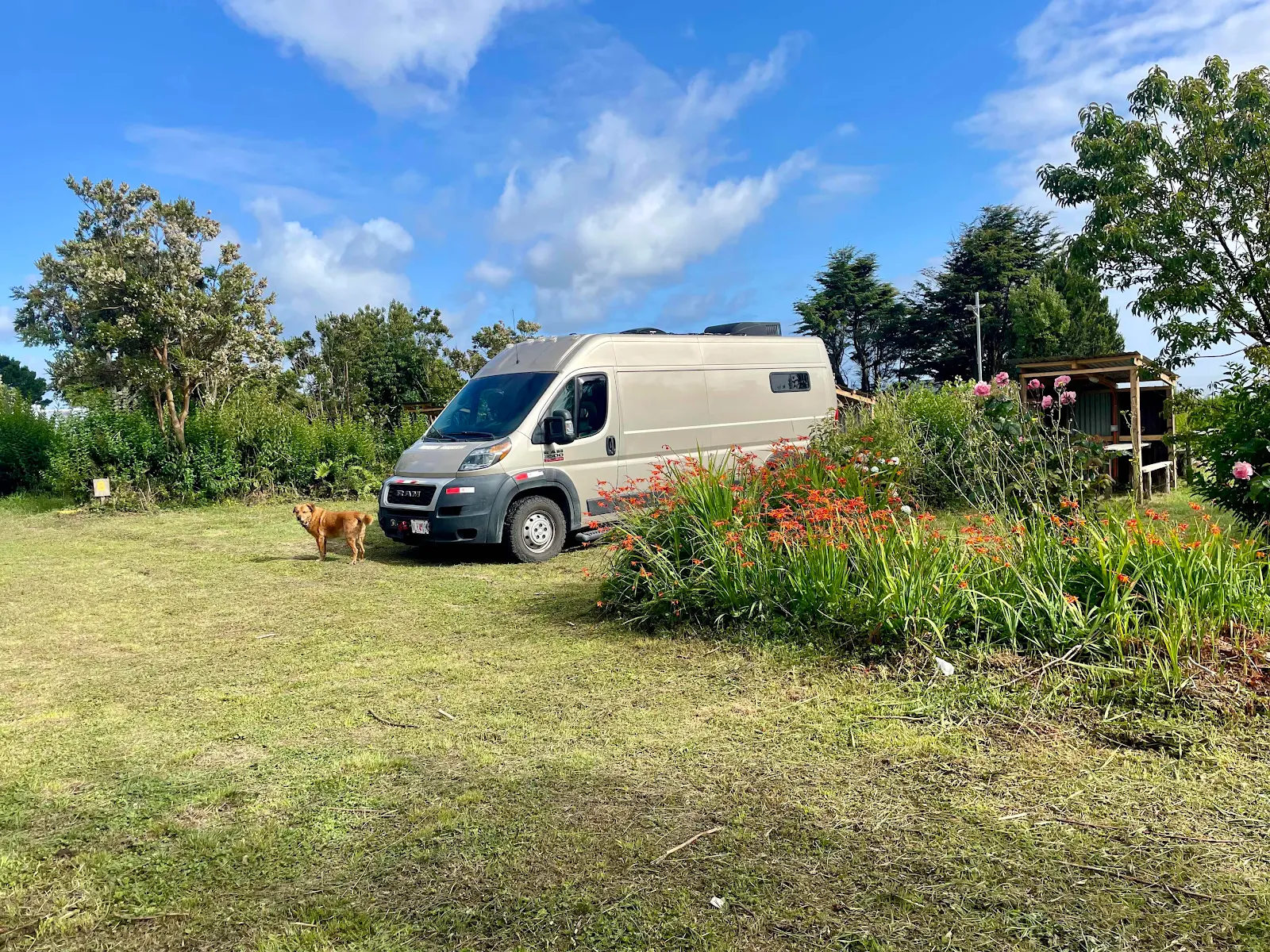
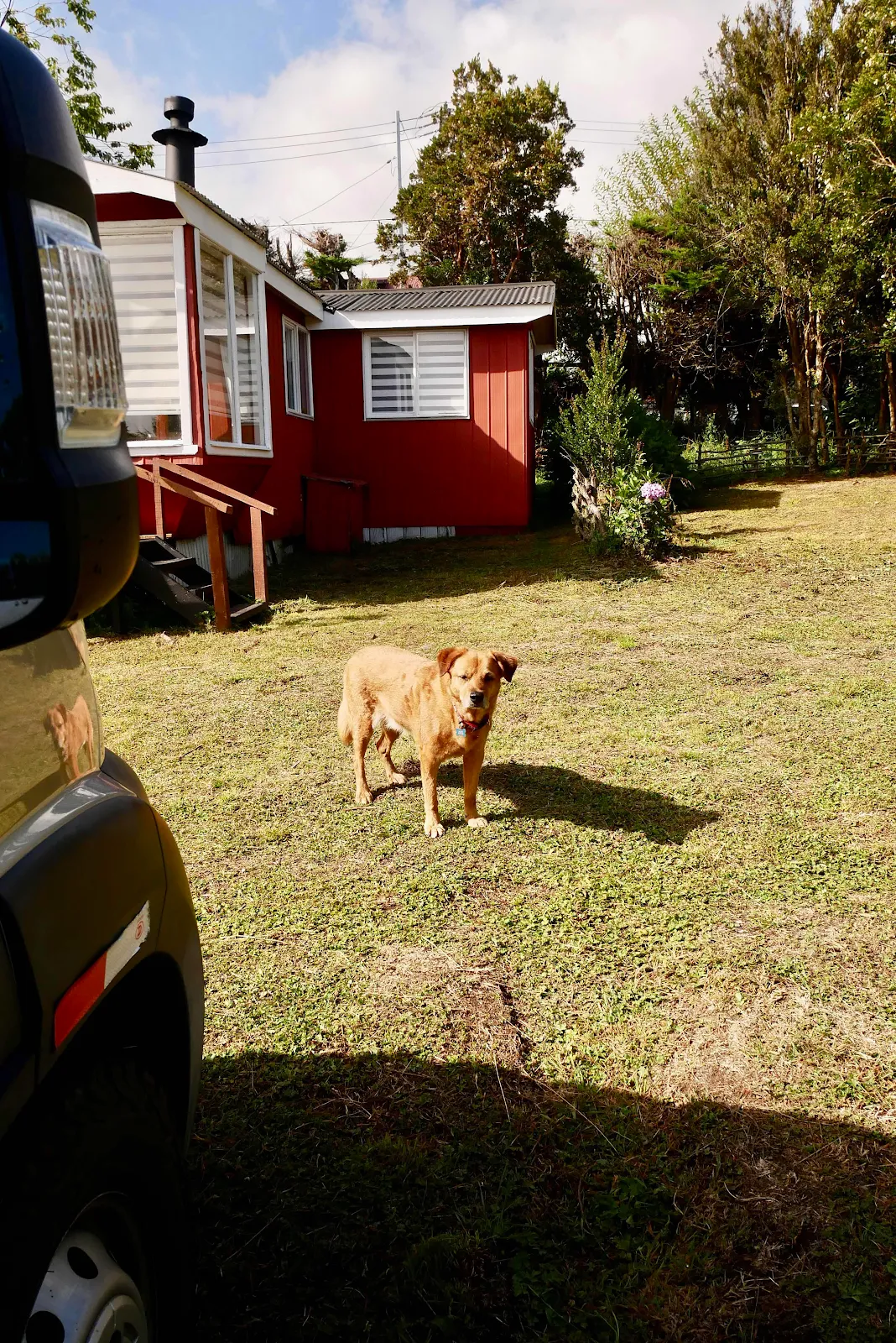
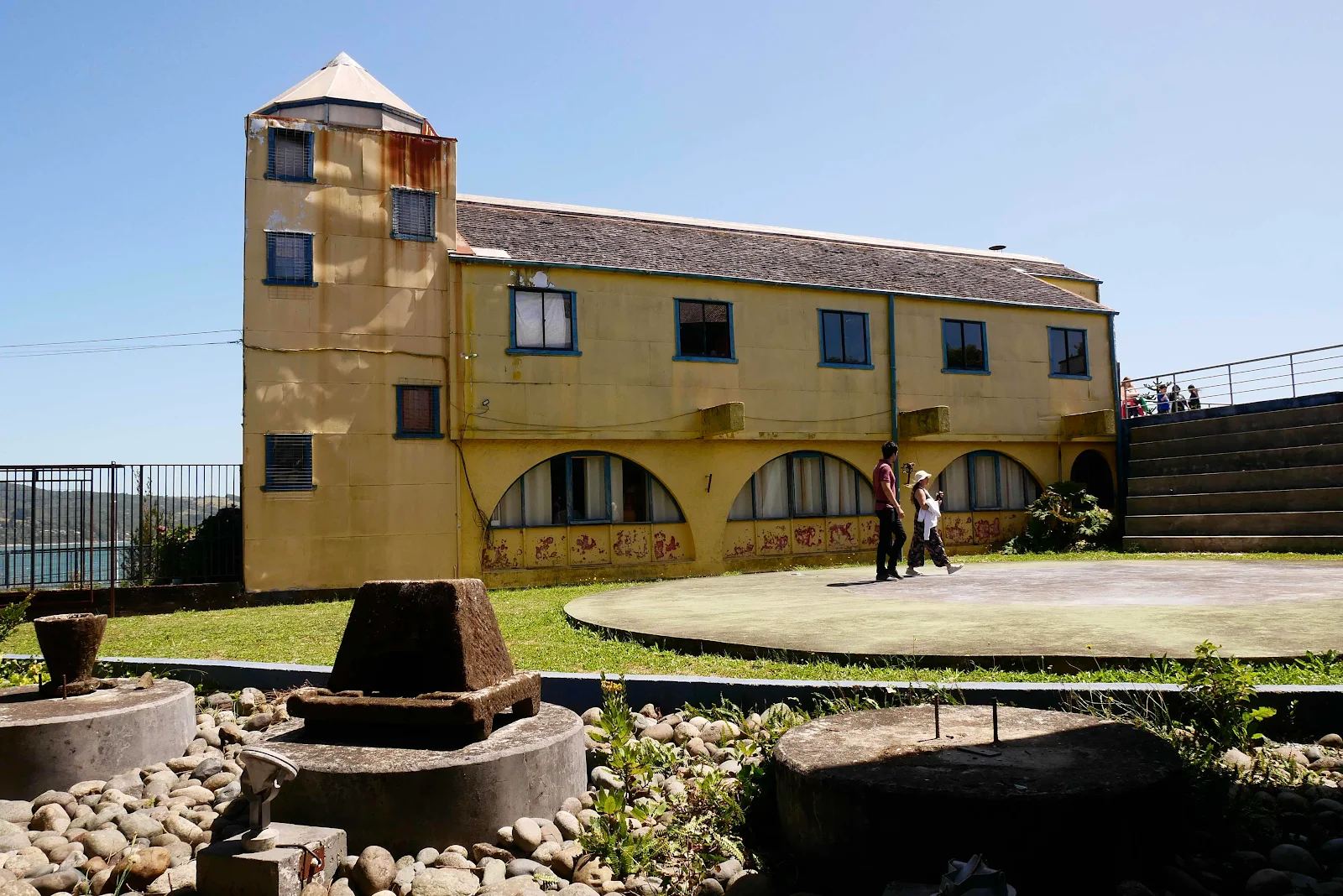
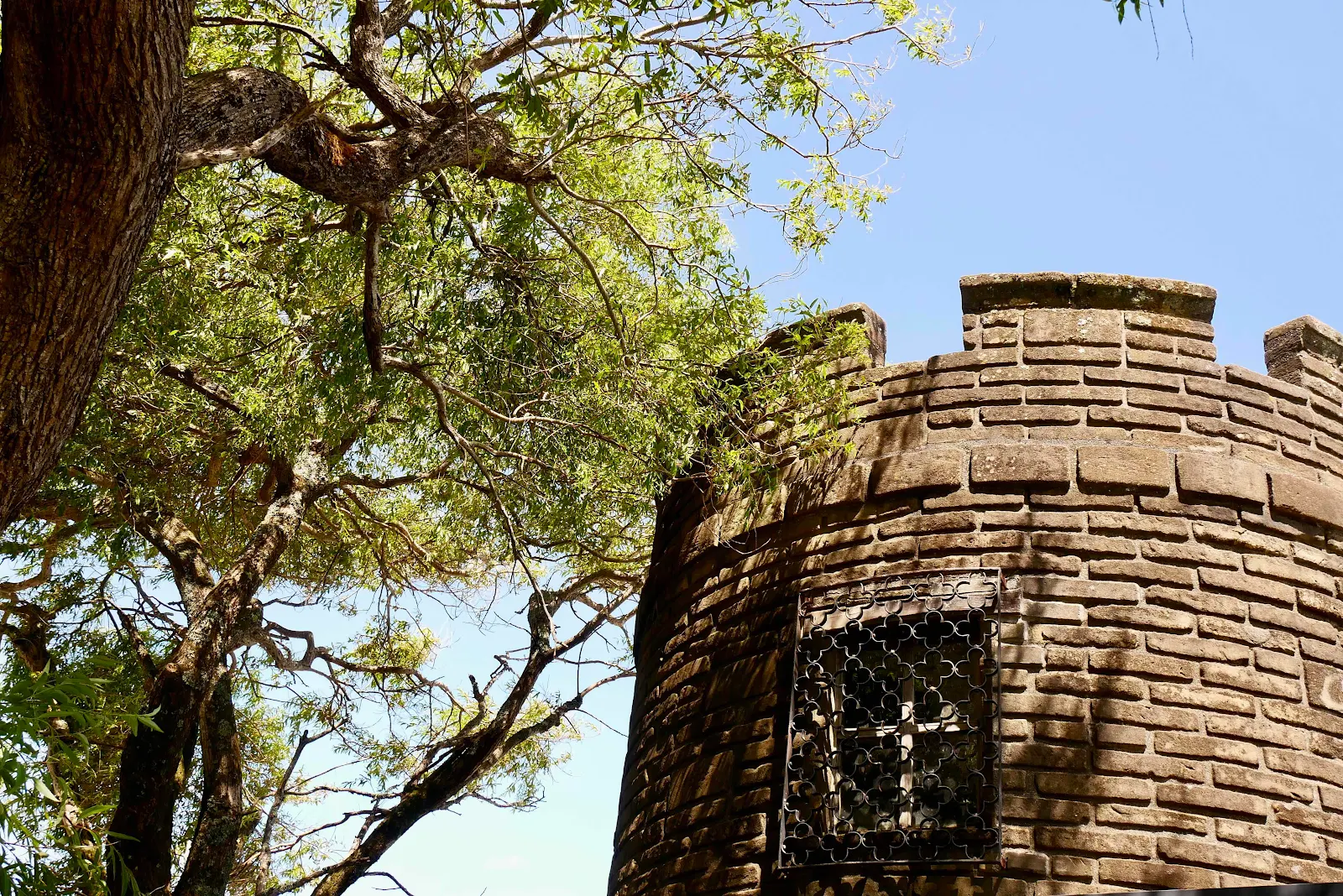
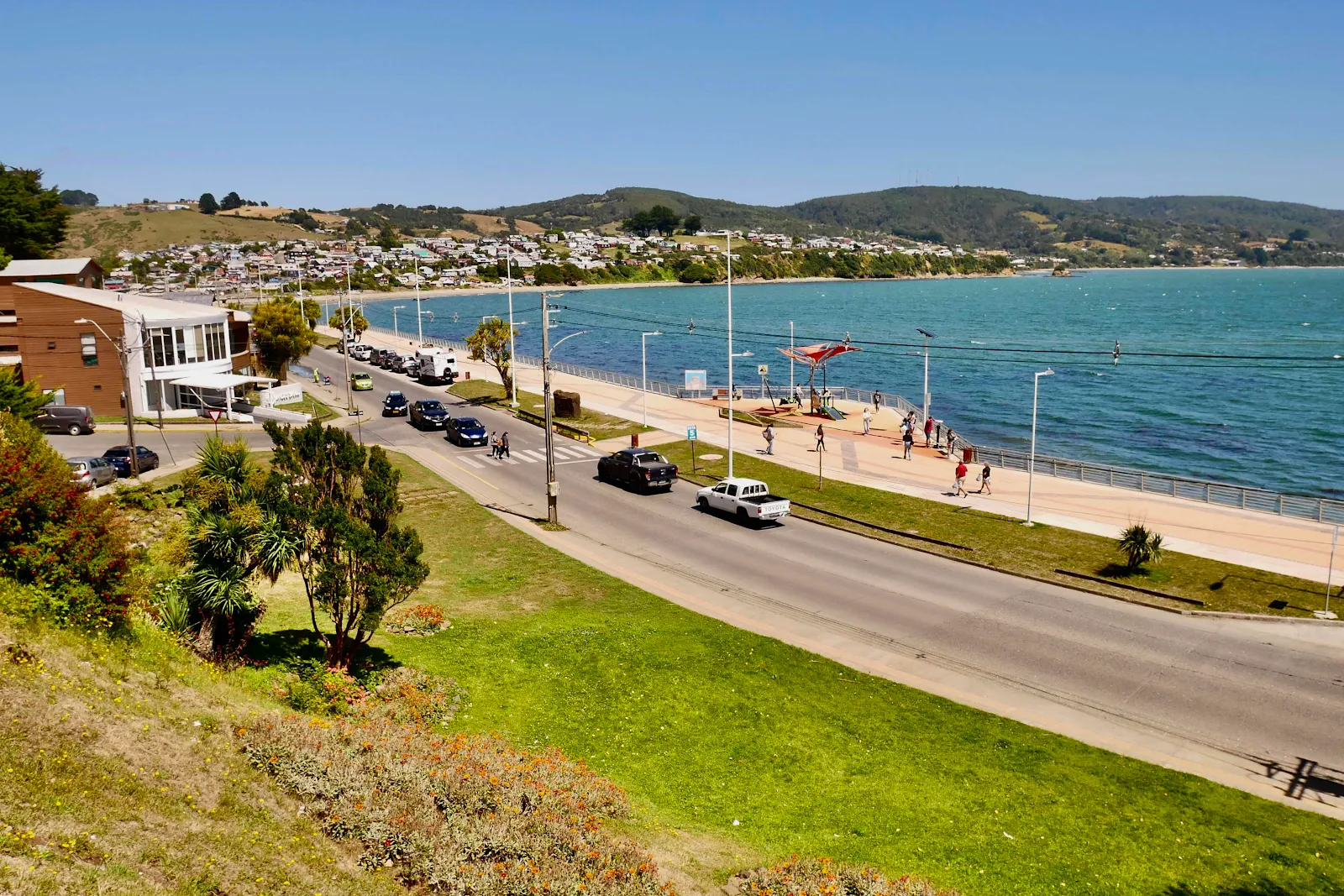
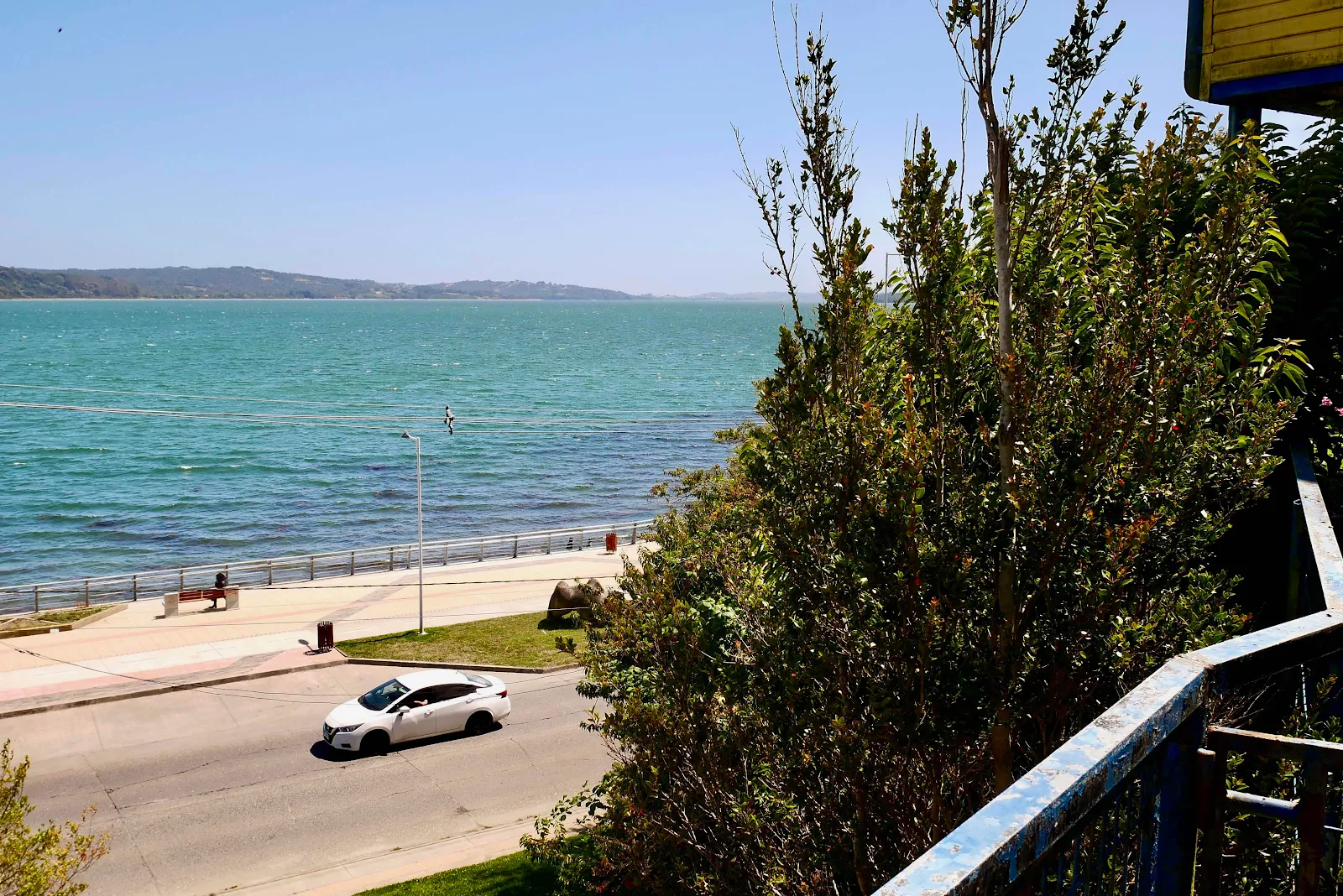
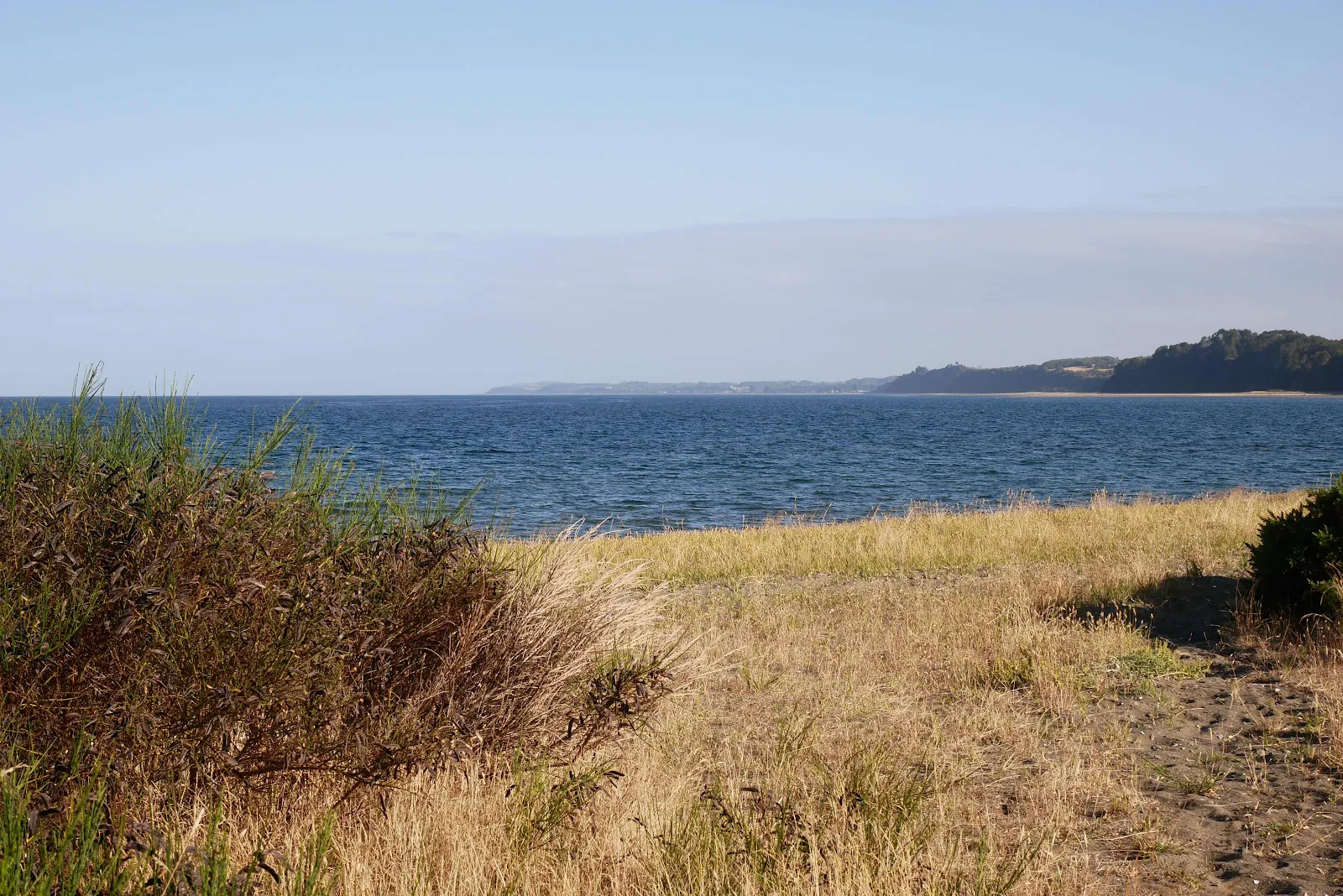
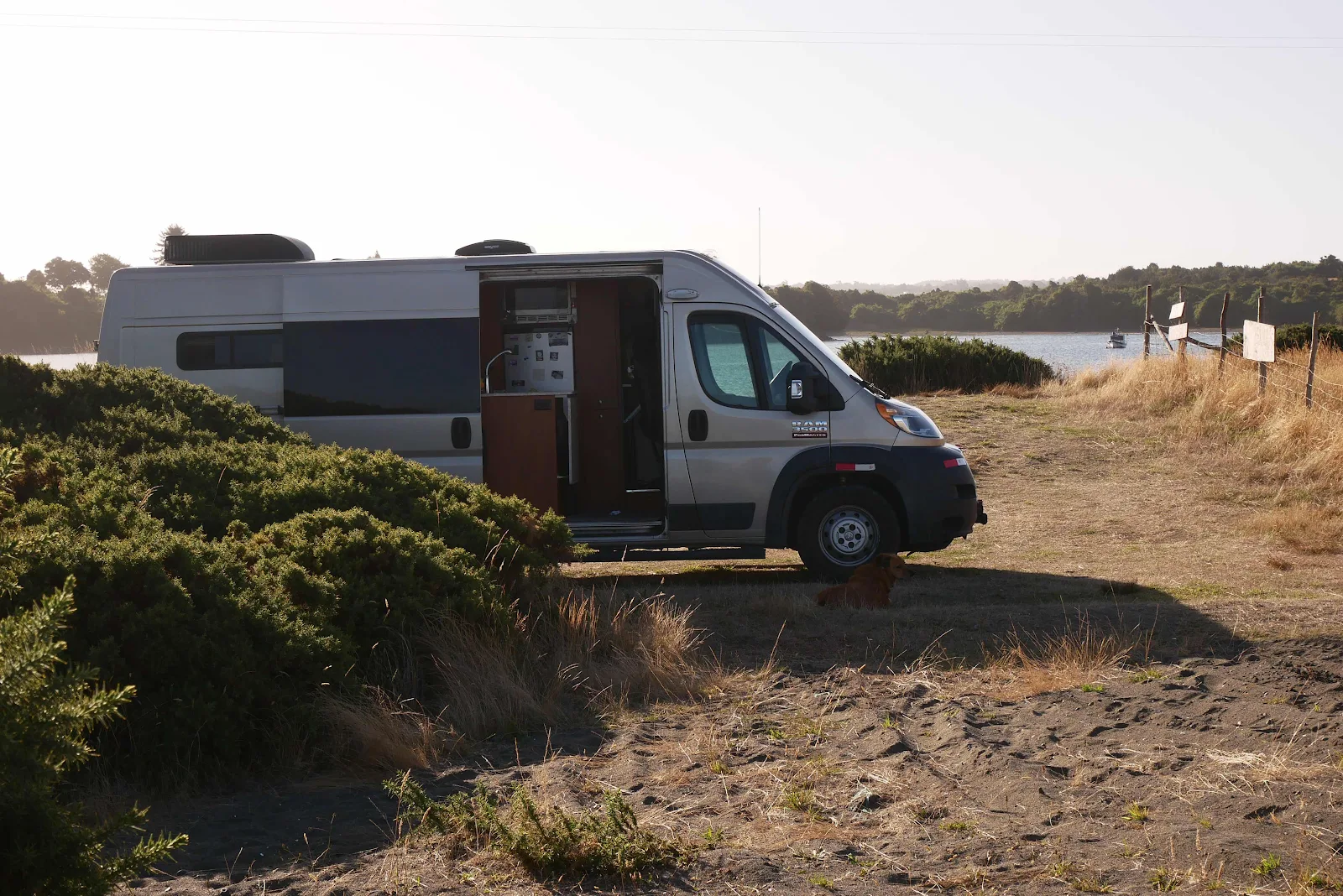
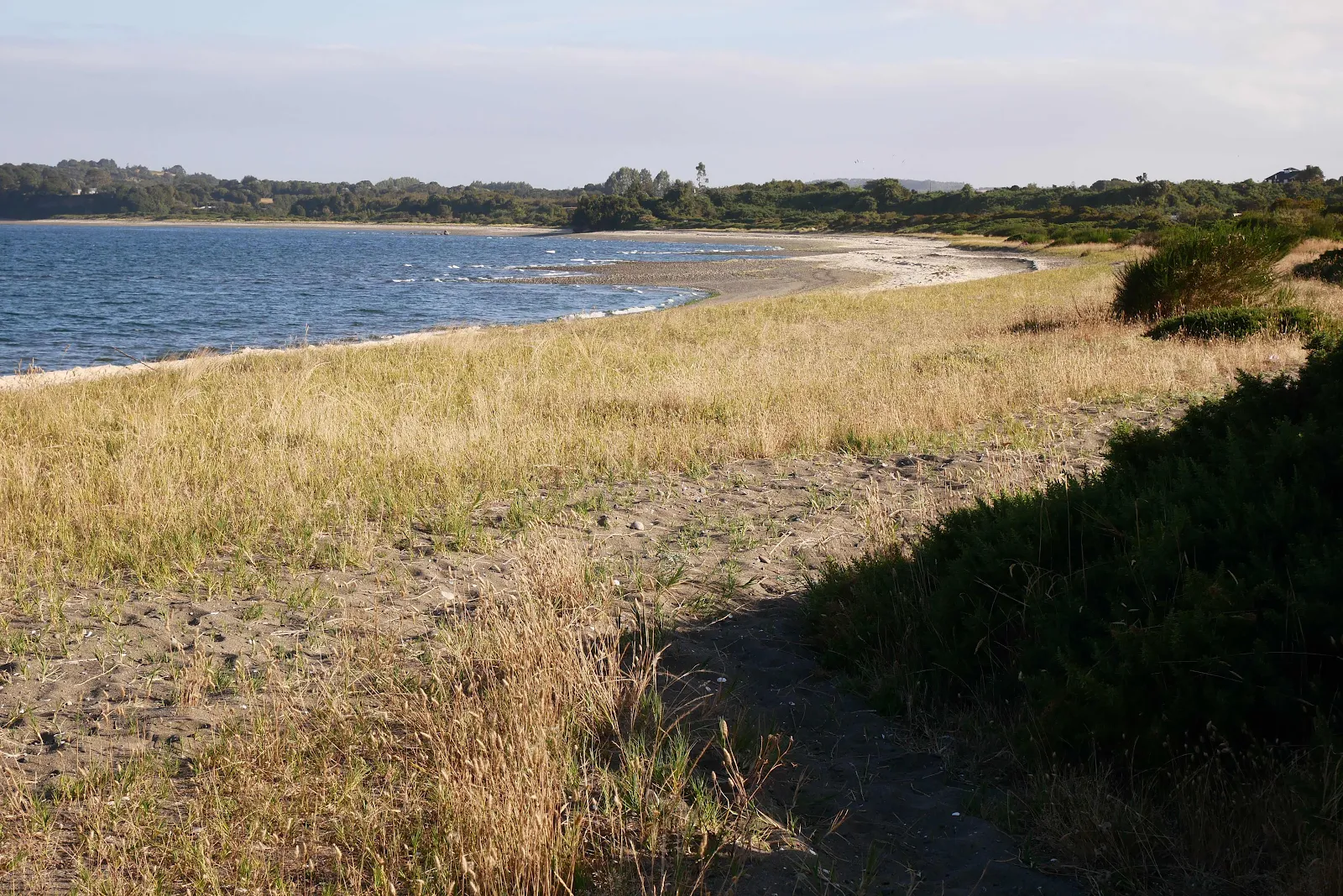
Hotel Arena Gruesa is a pretty space overlooking the water with a field for campers and other spaces tucked between hedges.
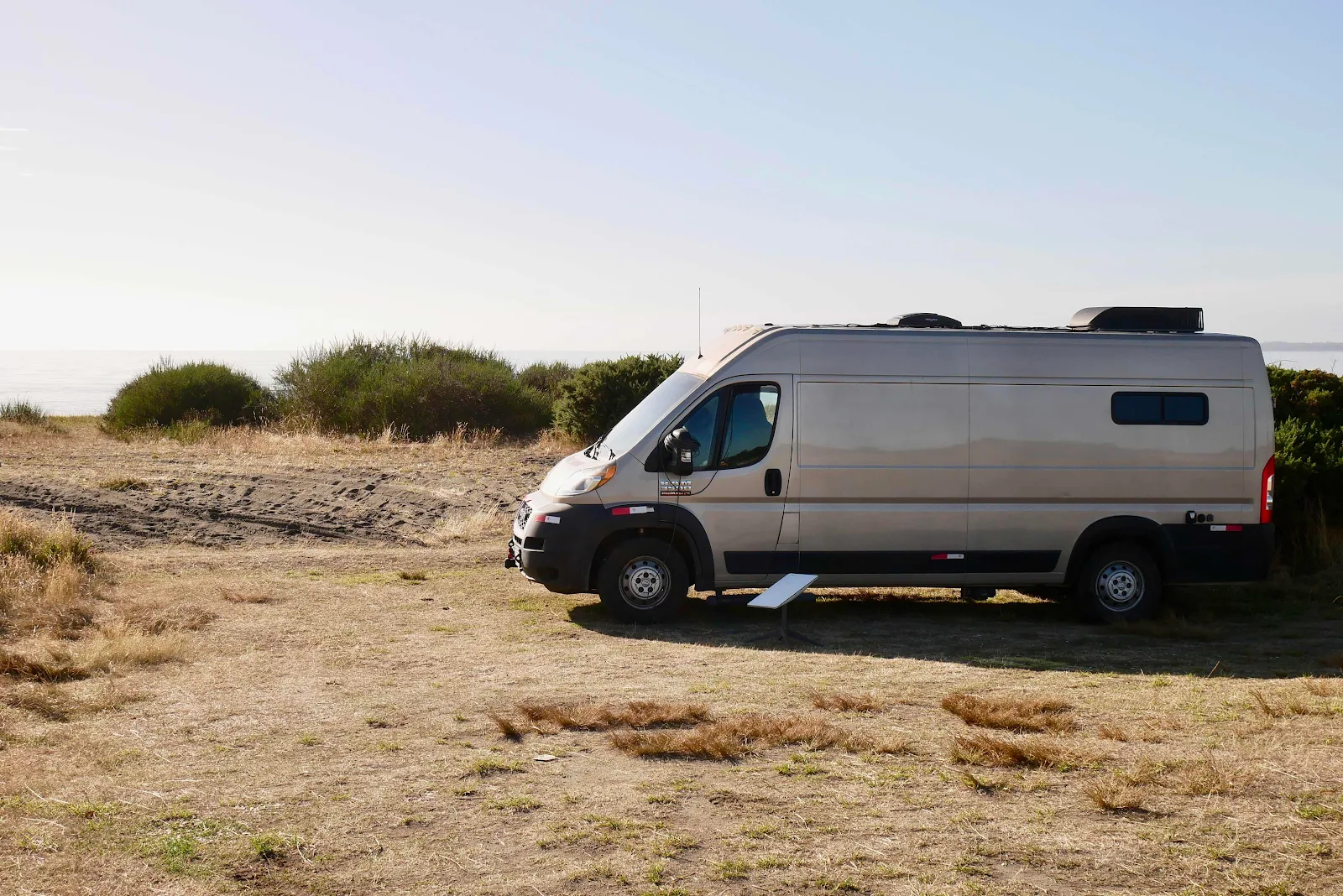
The flat spots overlooking the water were taken but we were happy to be up the hill in a hedge with an ocean glimpse.
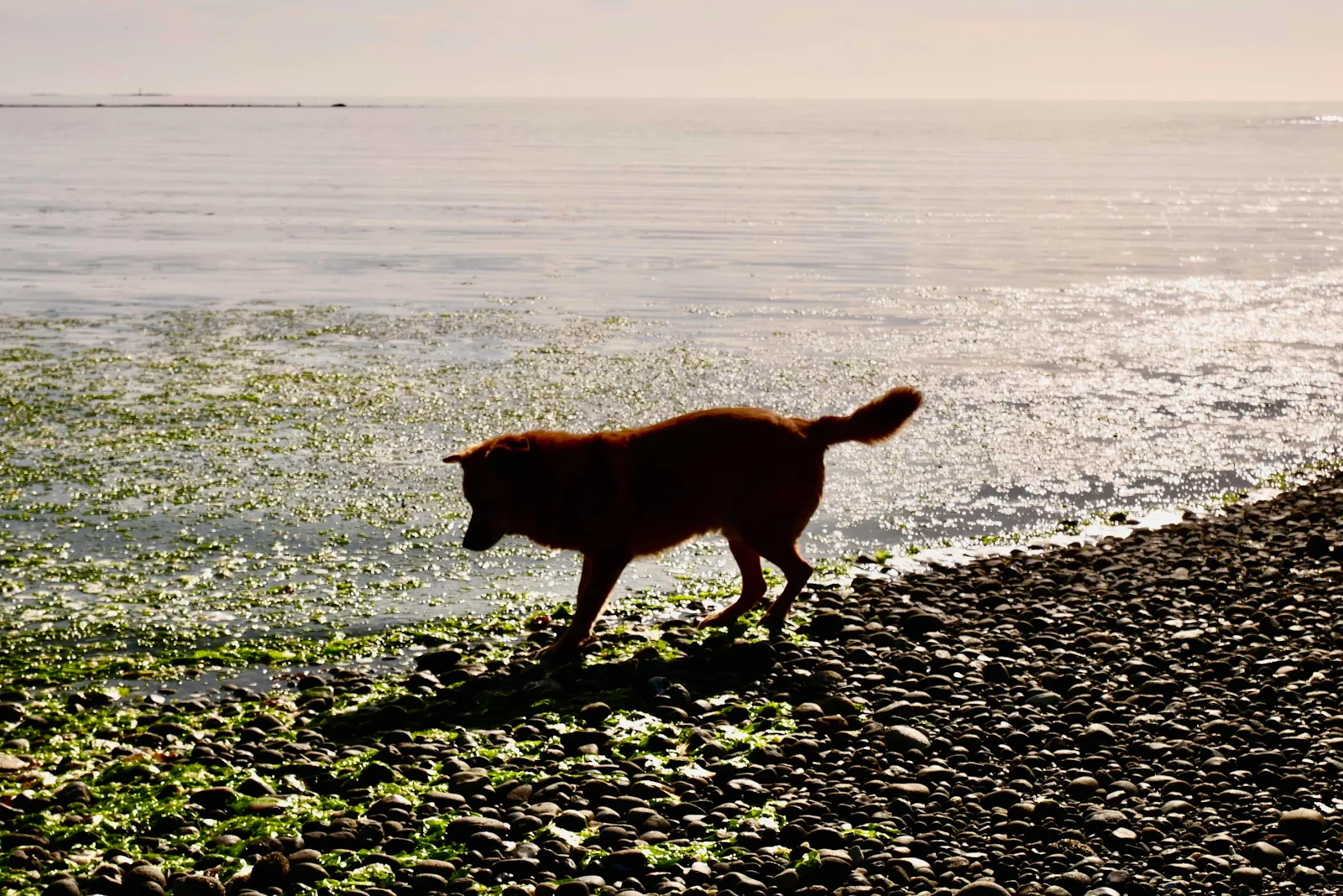
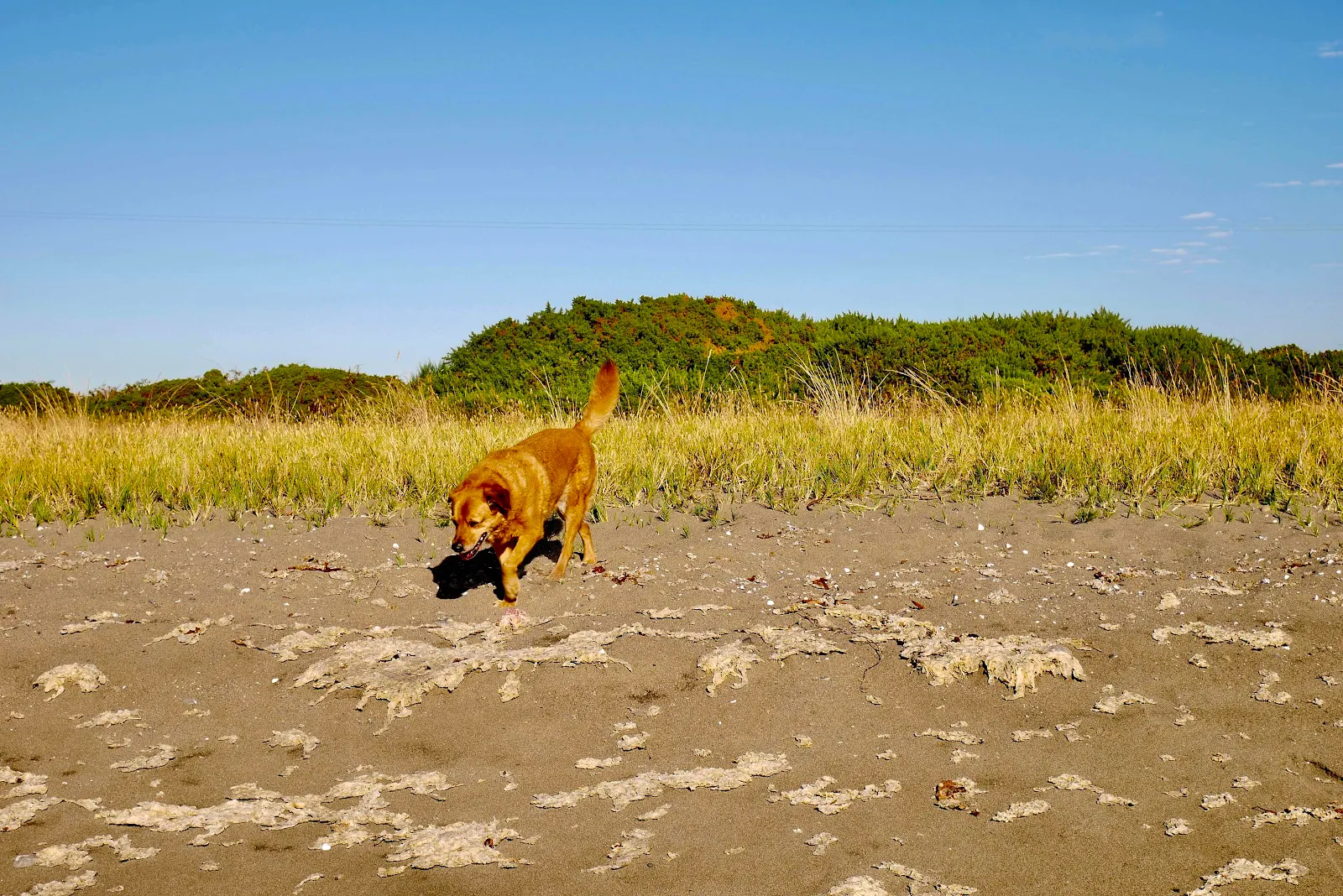
Rusty was happy wandering around so that’s good.
You can usually rent a cabin in these campgrounds but this wasn’t occupied.
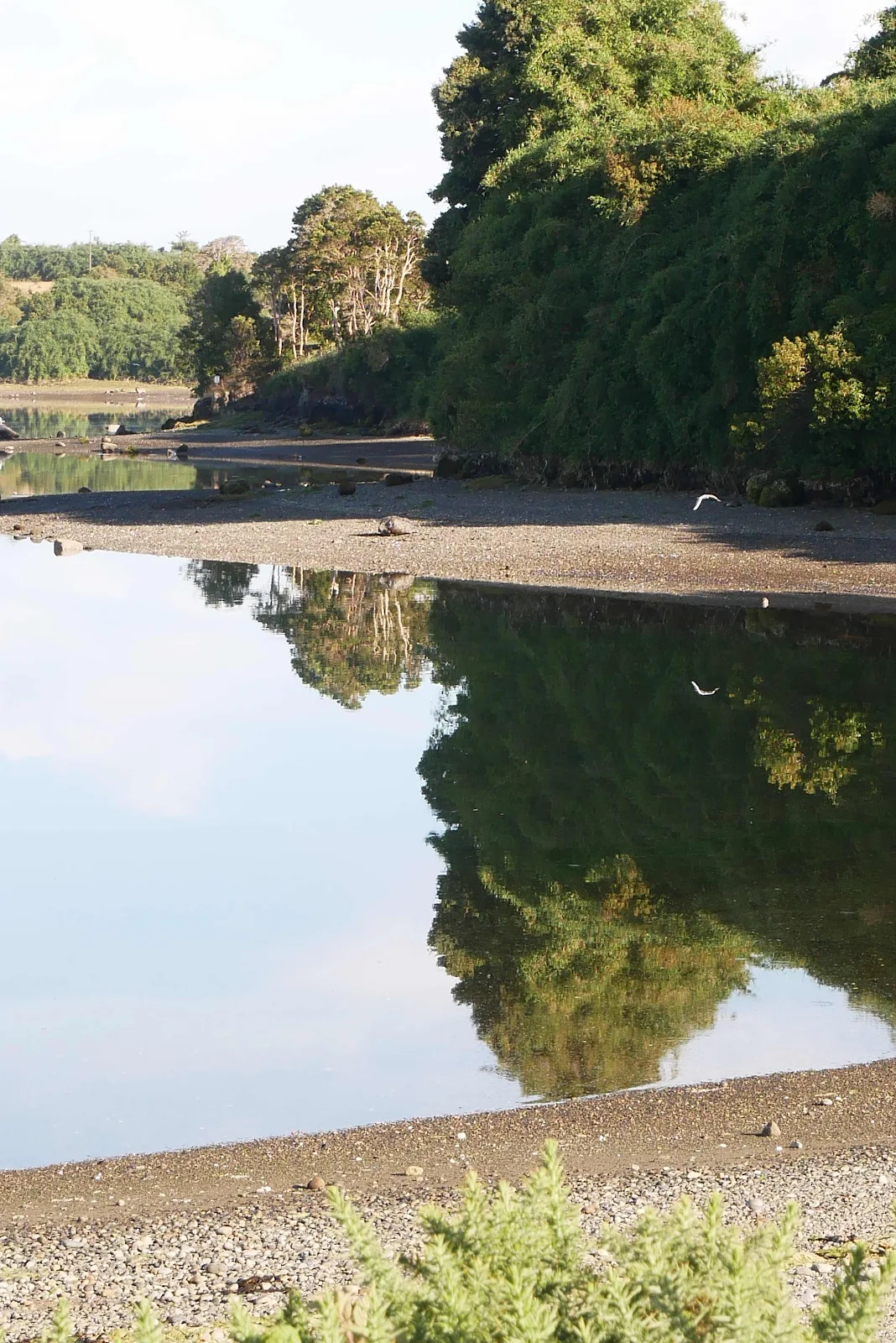
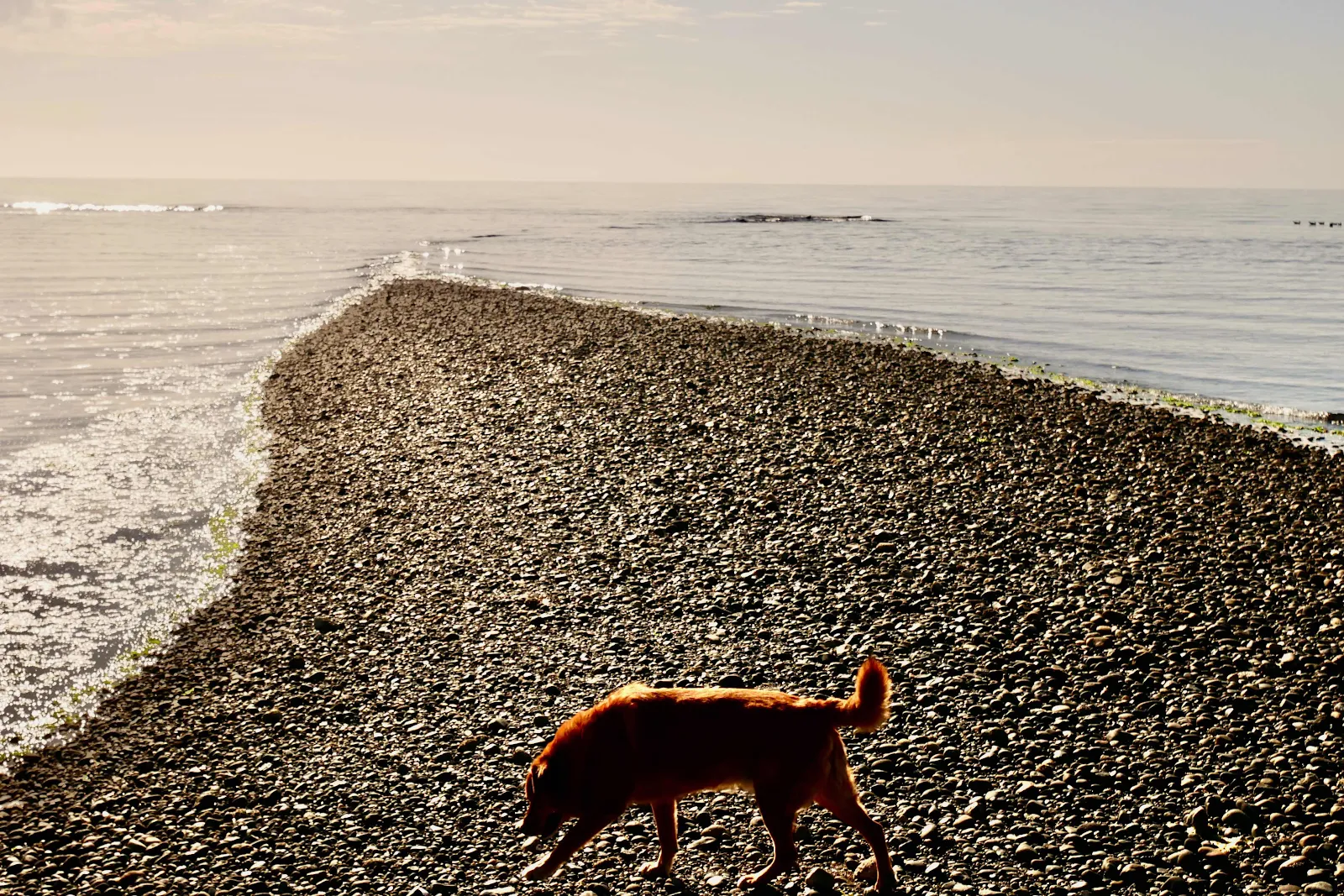
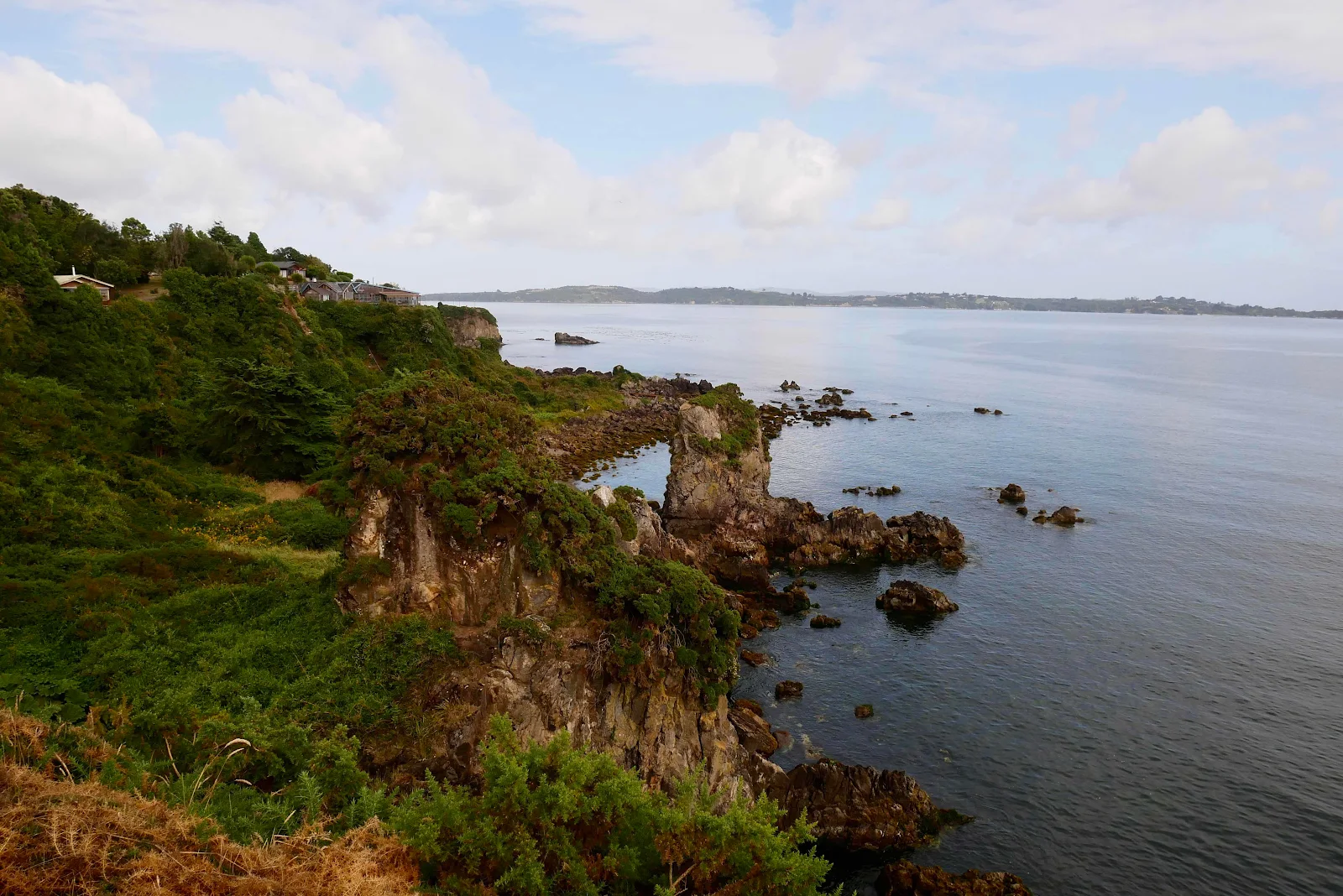
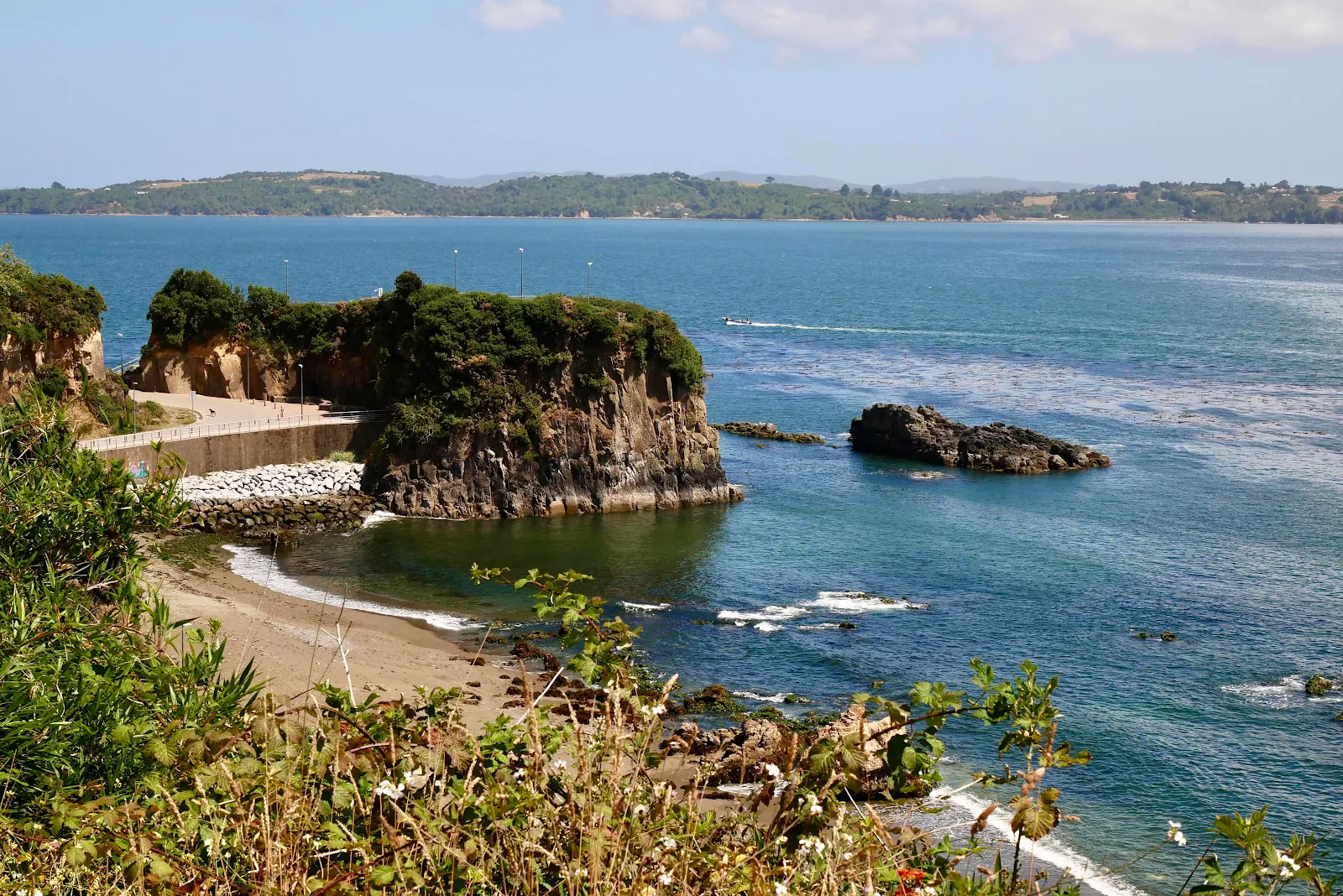
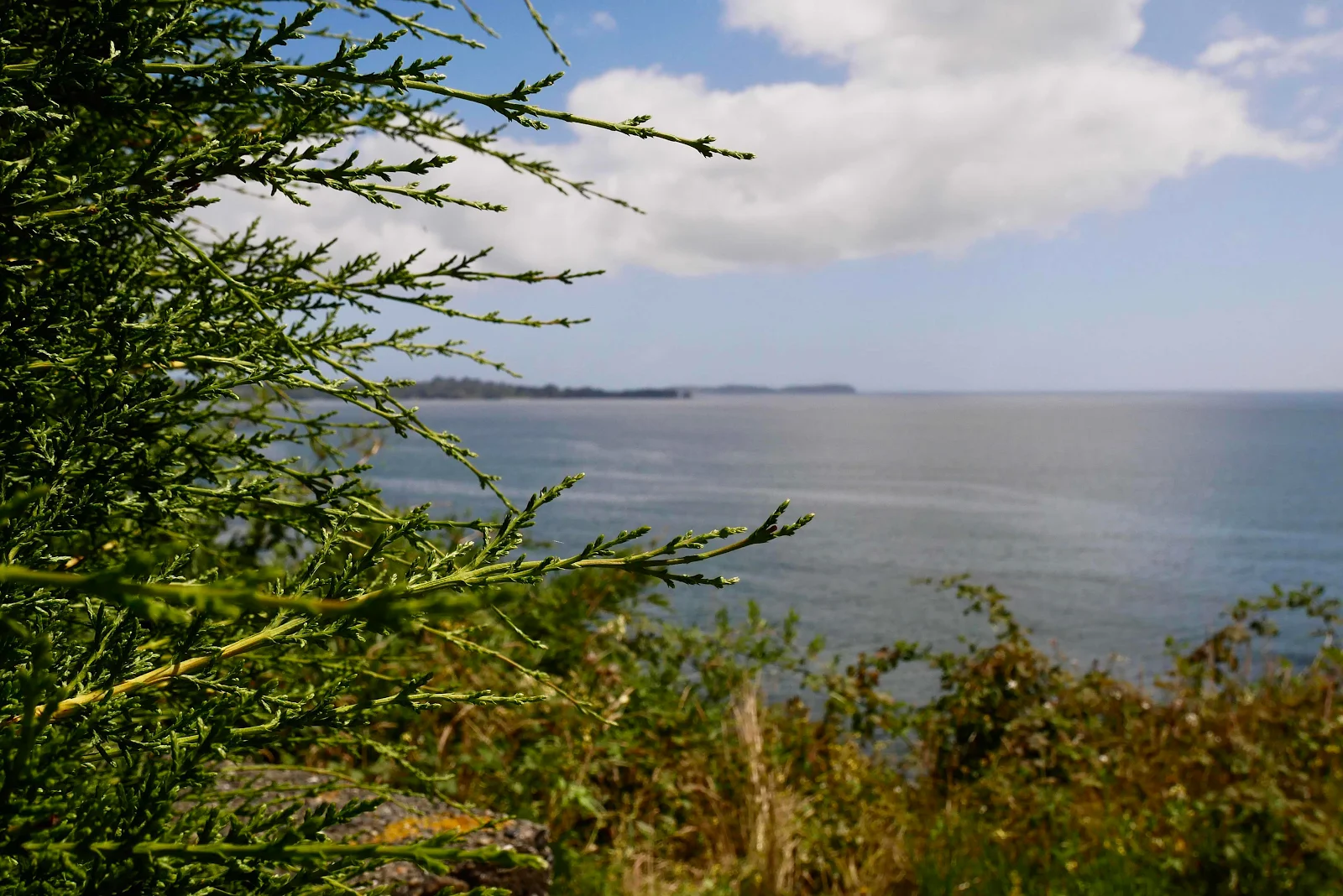
We left at noon and drove round to the overlook where we had chosen not to spend the night.
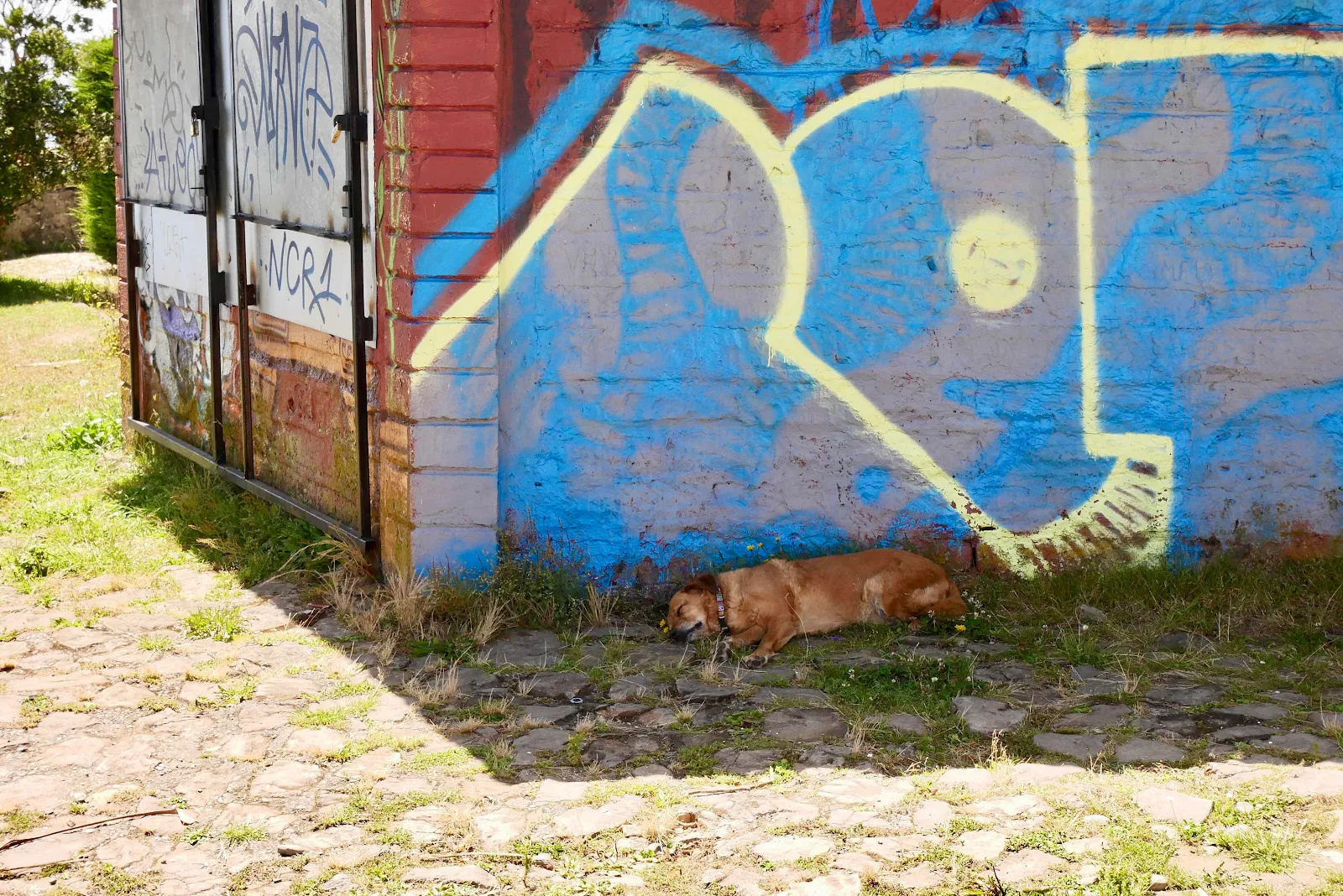
By day after a hot shower and a quiet night’s sleep it looked fine…
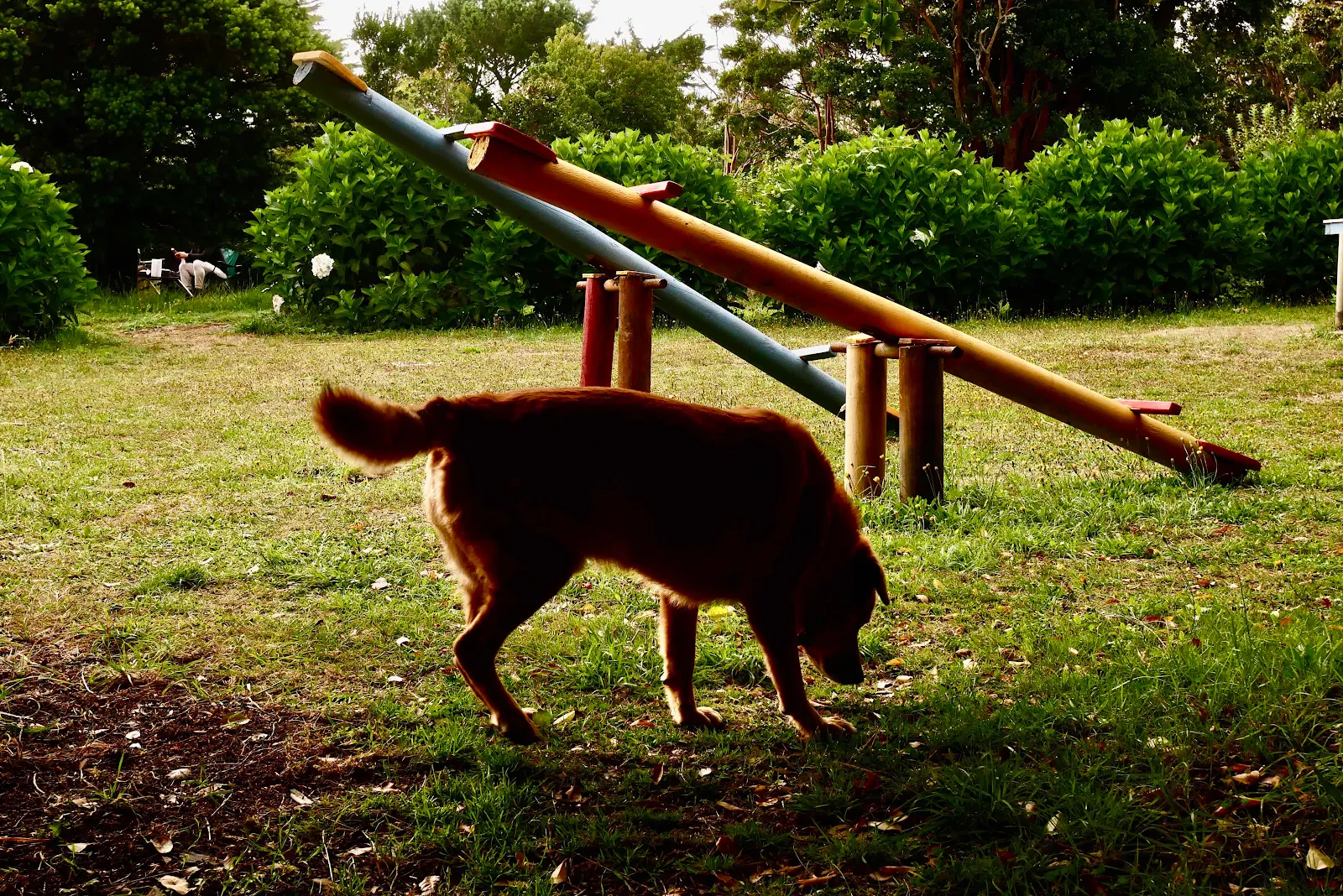
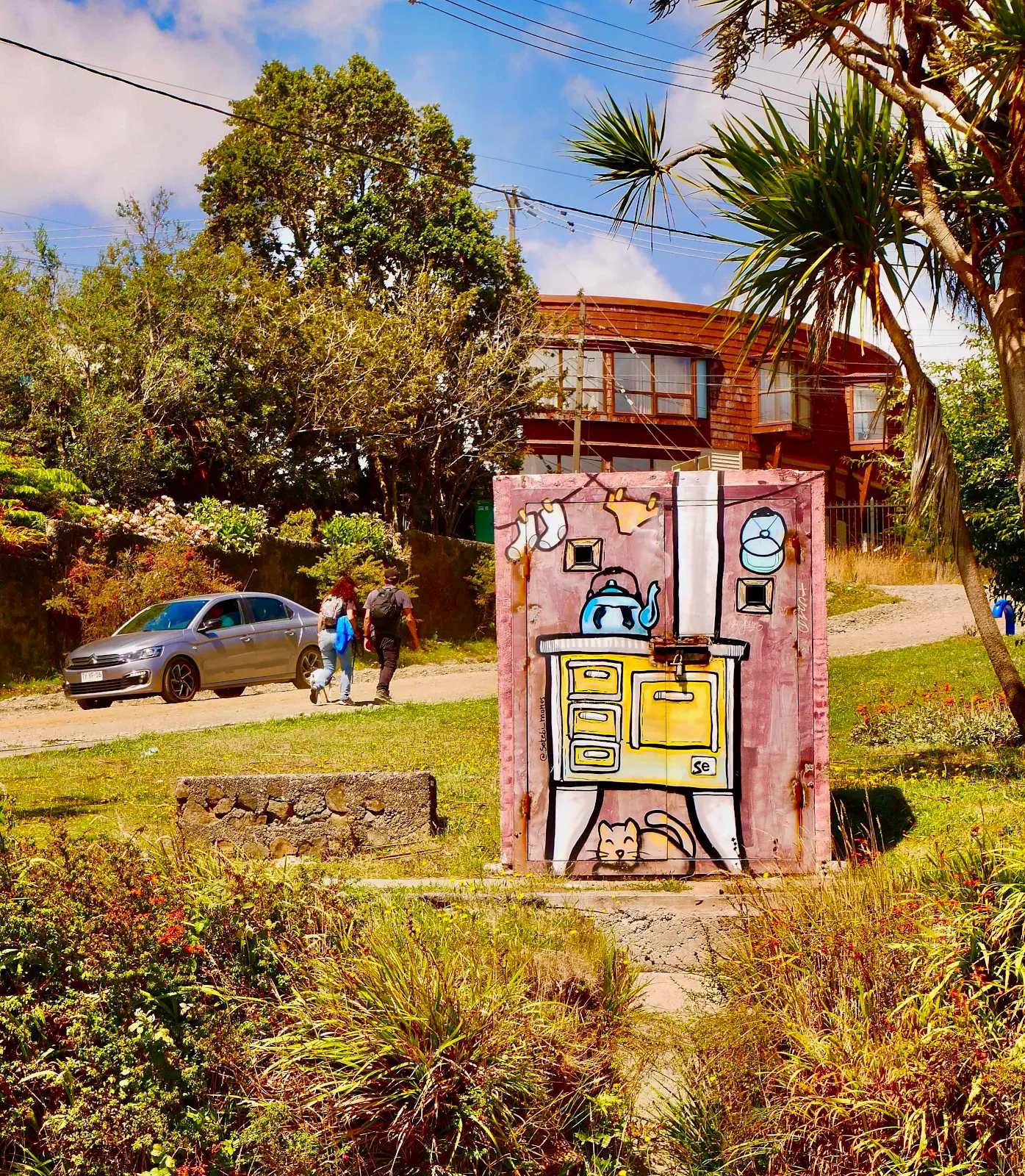
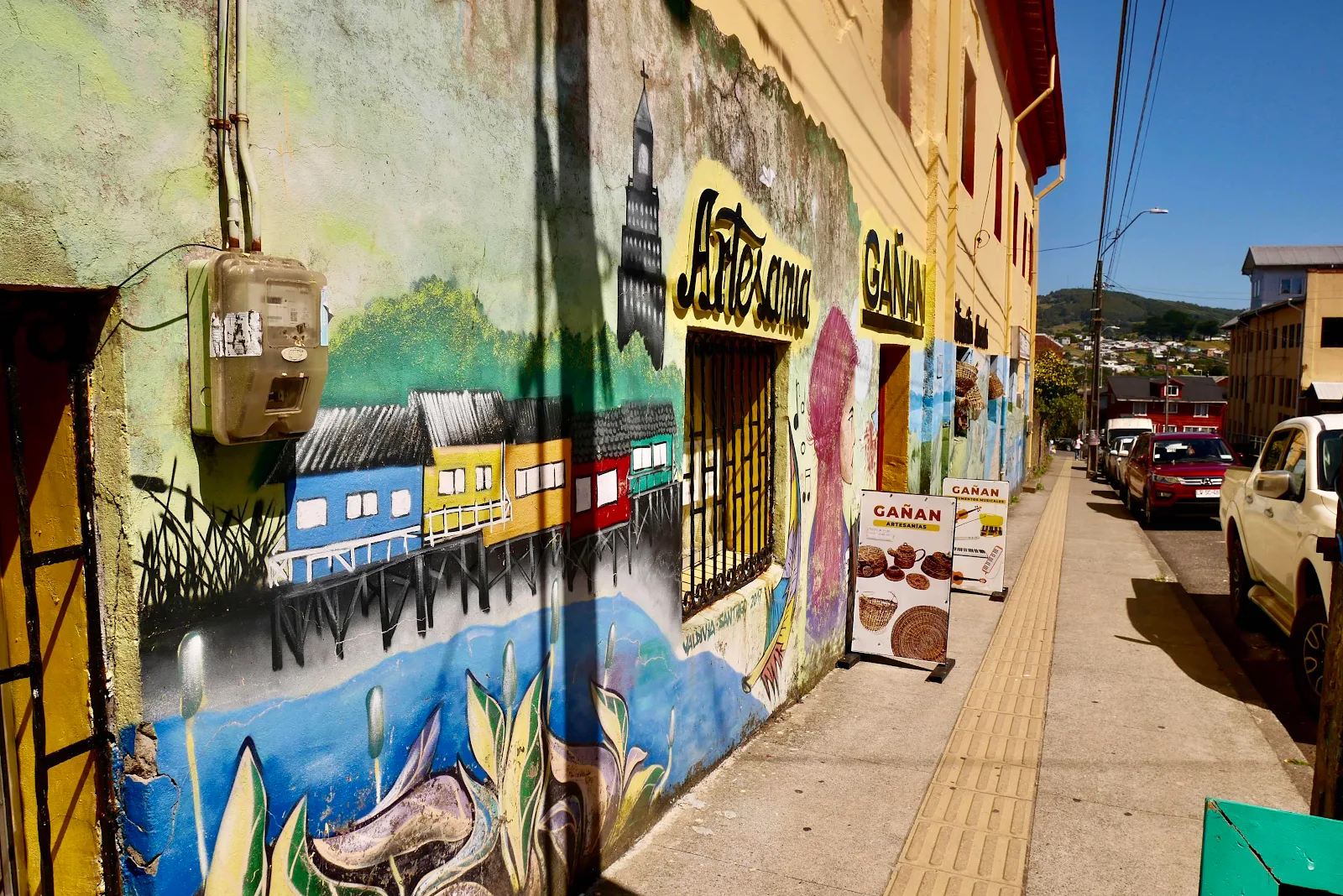
And there was even some artwork.
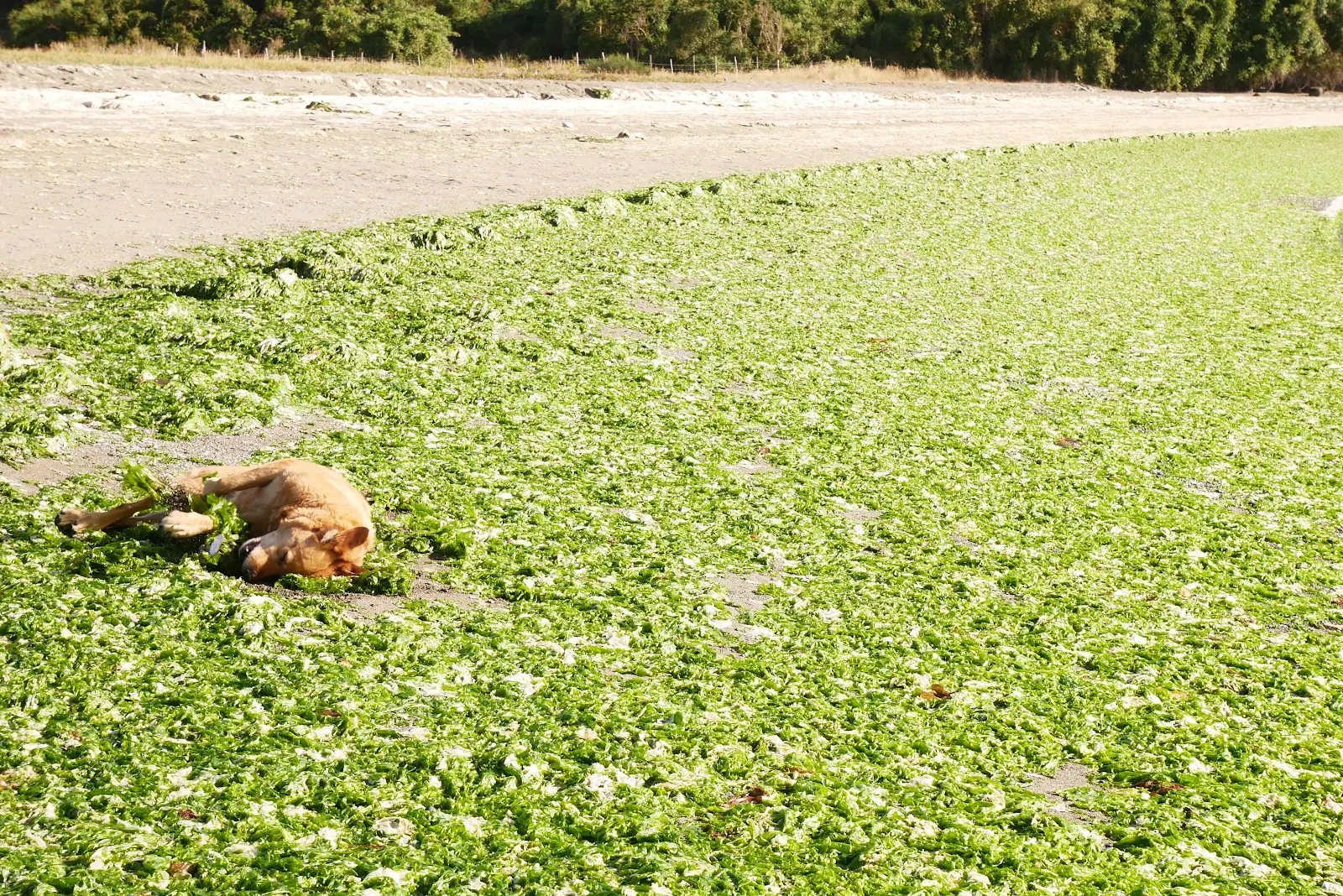
Oh, and a very tired dog, or possibly just lazy.
We lunched on Layne’s not very famous cheese and ham sandwiches with pickles which should be more famous as they aren’t at all bad.
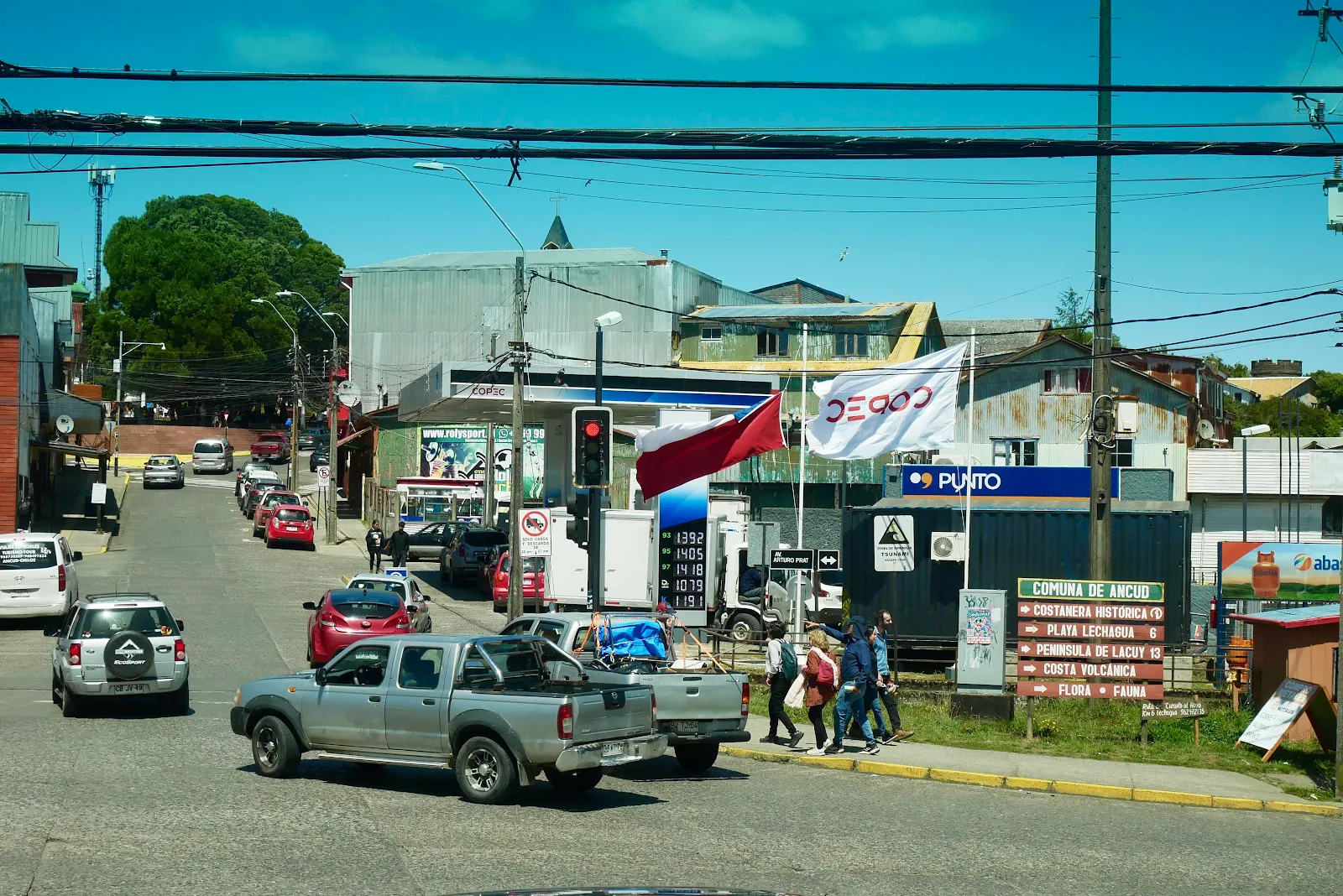
Then we went into town with Layne’s lengthy agenda to figure out. It was our agenda of jobs to be done, really but it didn’t all go brilliantly so I’ll call it Layne’s plan.
The biggest headache is finding a parking spot. Chile does not believe in dedicated parking lots and cities sell parking concessions. You park on the street and pay the person that controls that block. How much? What they ask, here about $1:25 per hour. We found a spot that took two spaces but she only charged us for one which was nice and got her a tip.
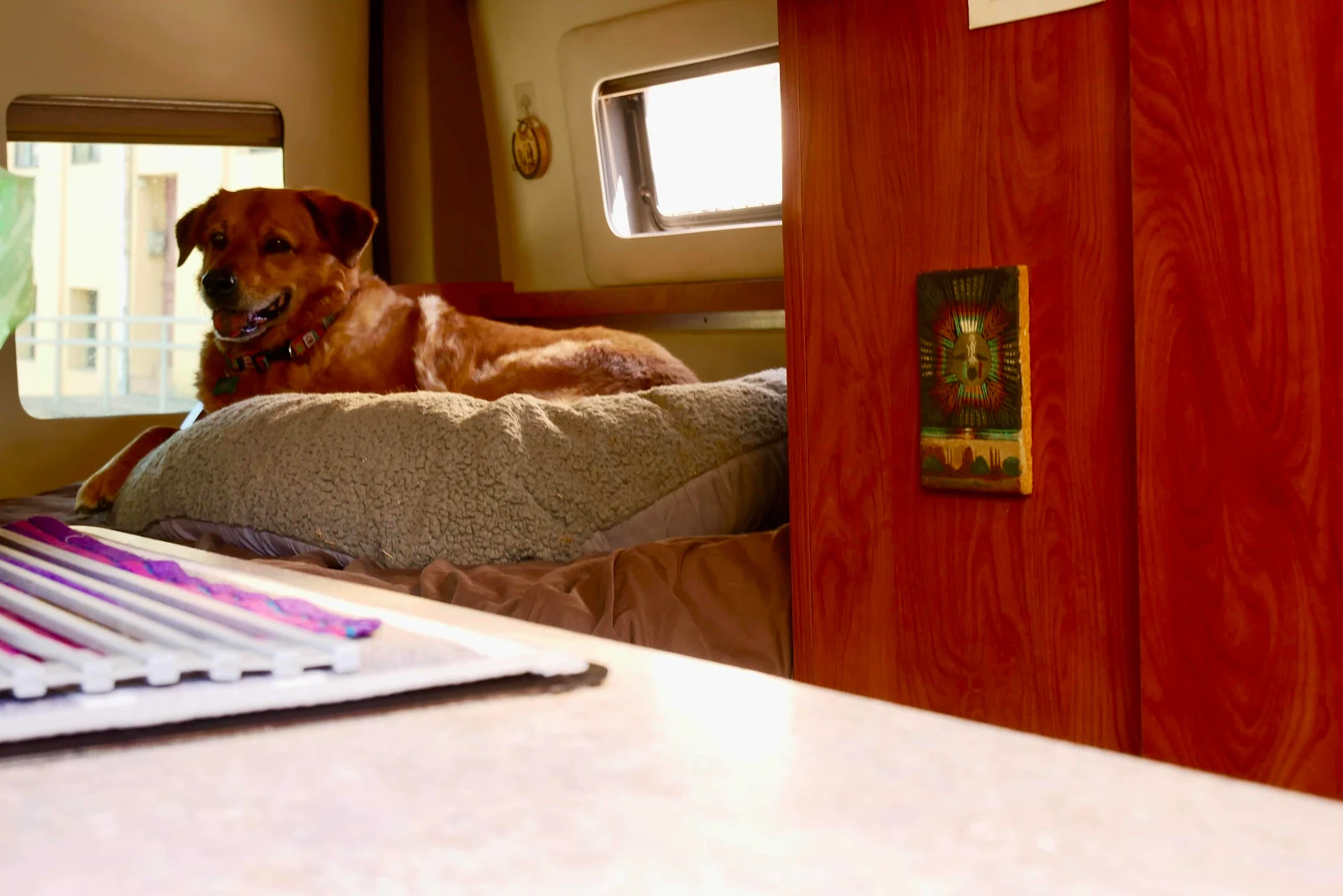
Someone got time to rest Ang after all that rest at lunch he needed it. He did enjoy a street walk later so got the best of both worlds.
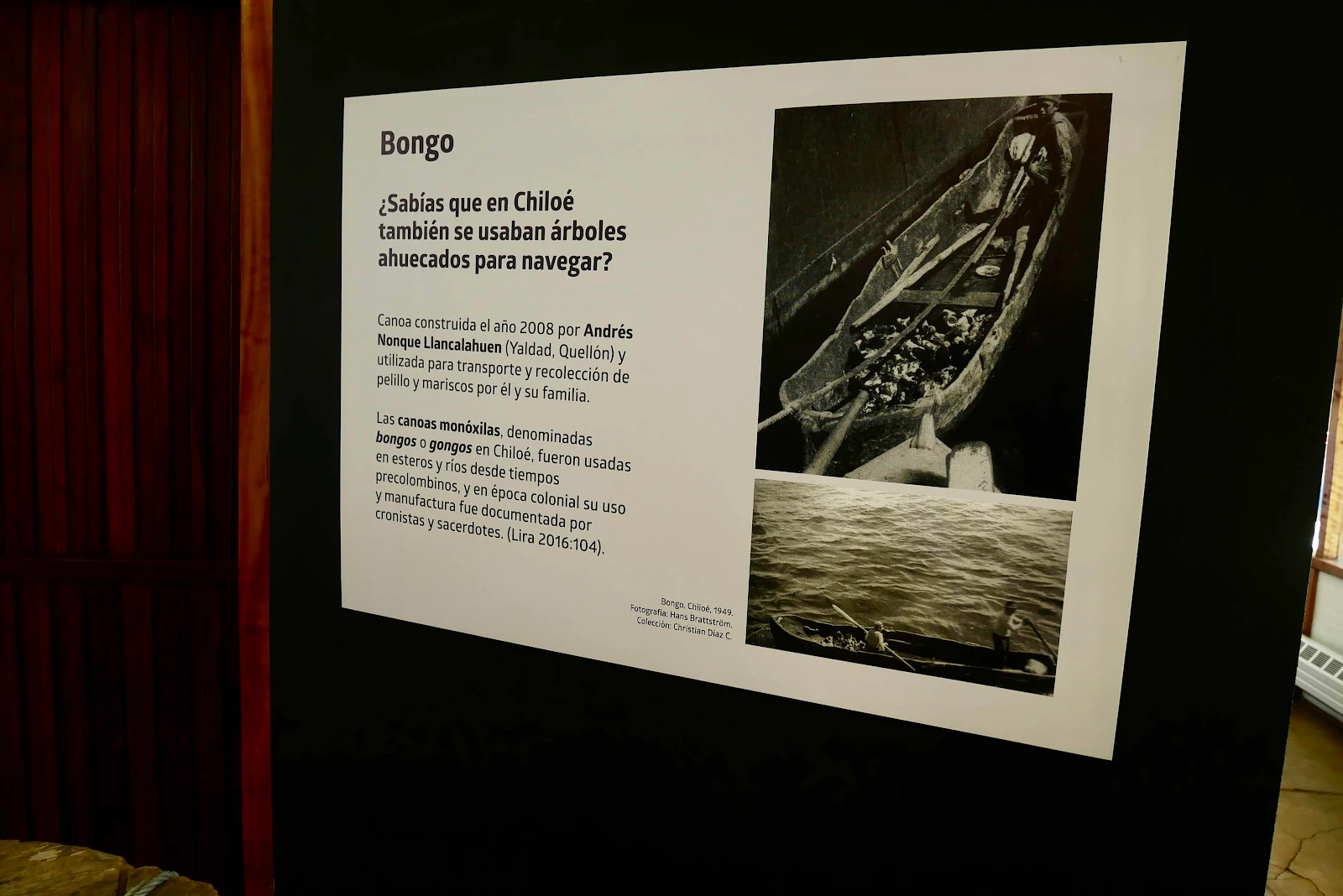
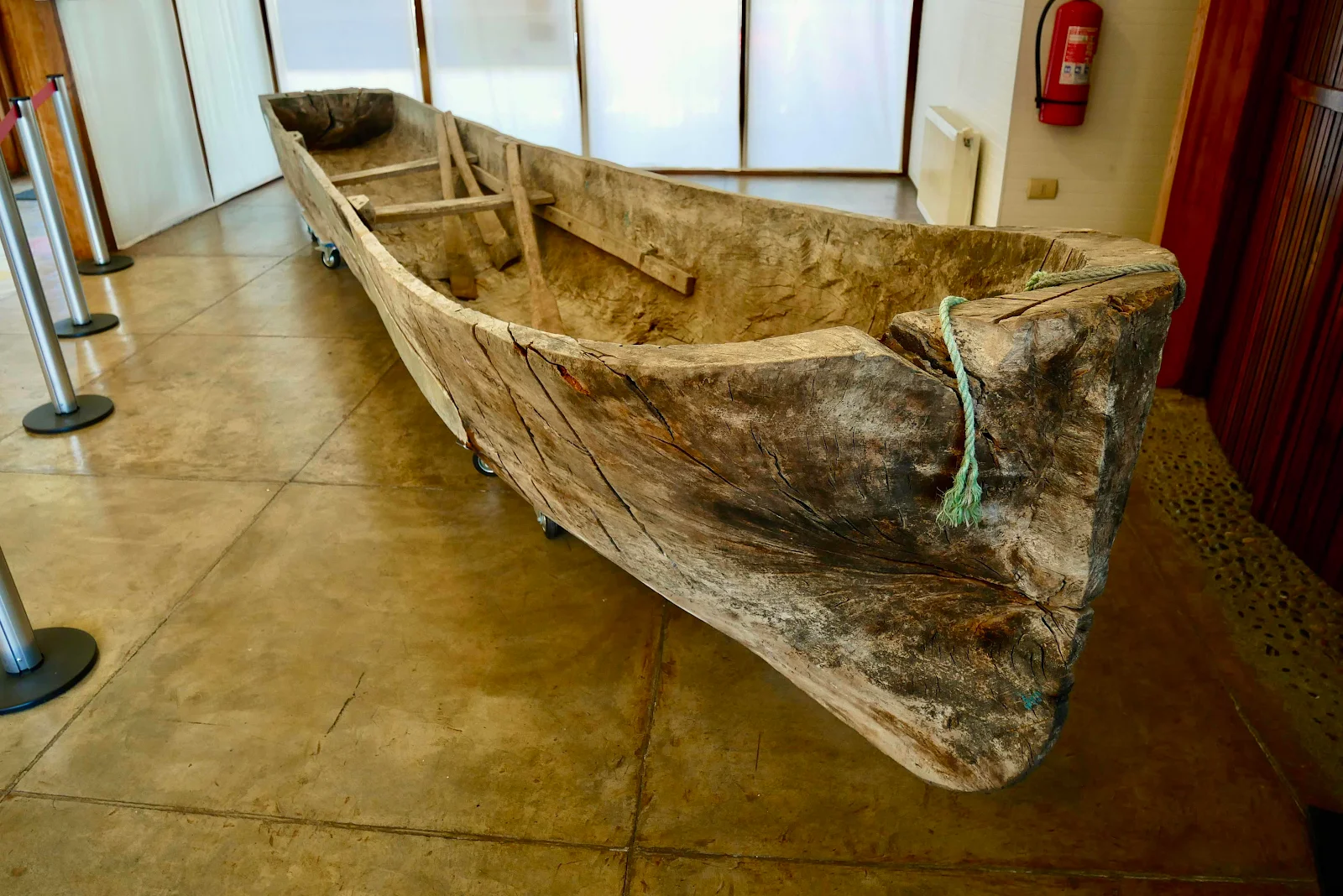
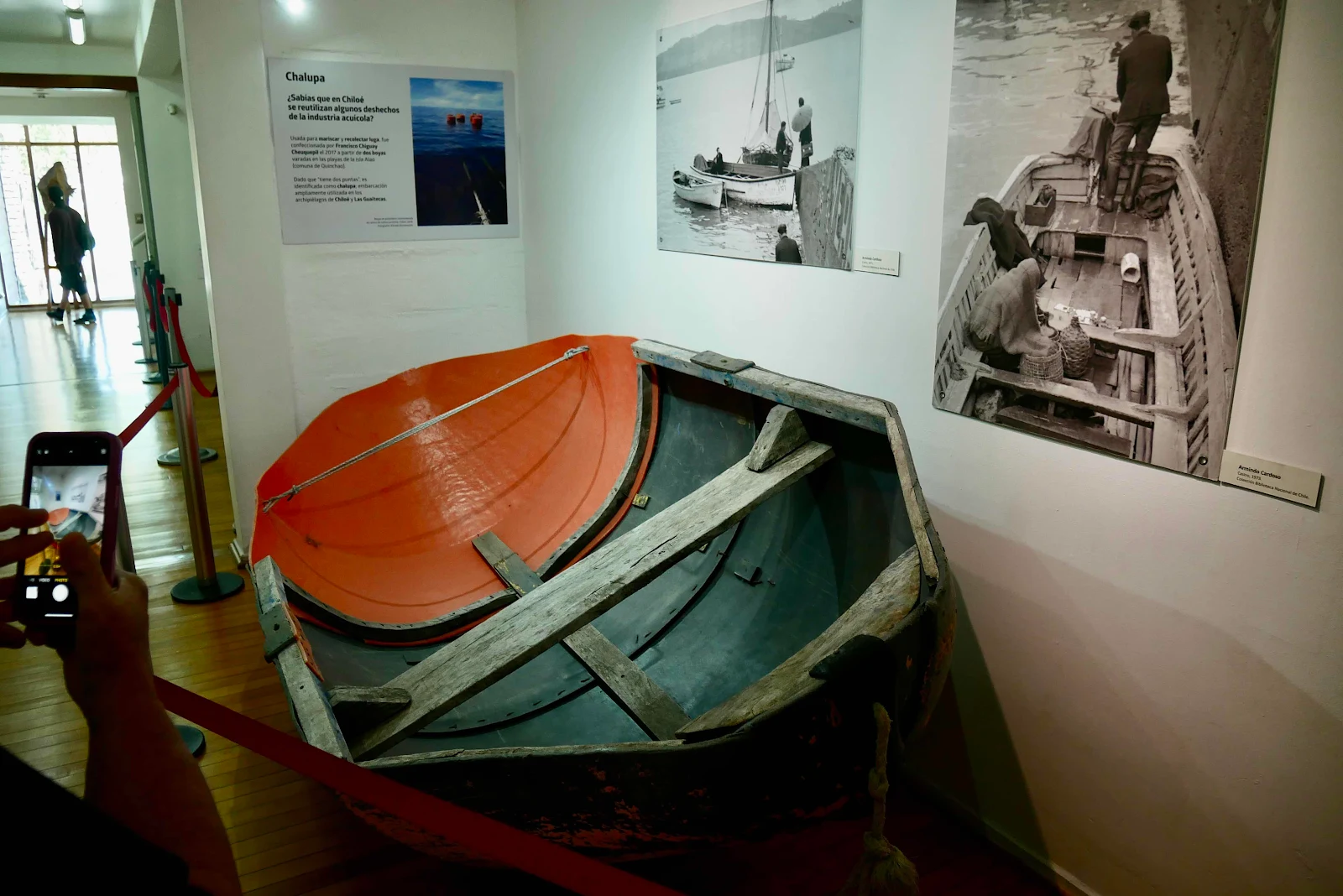
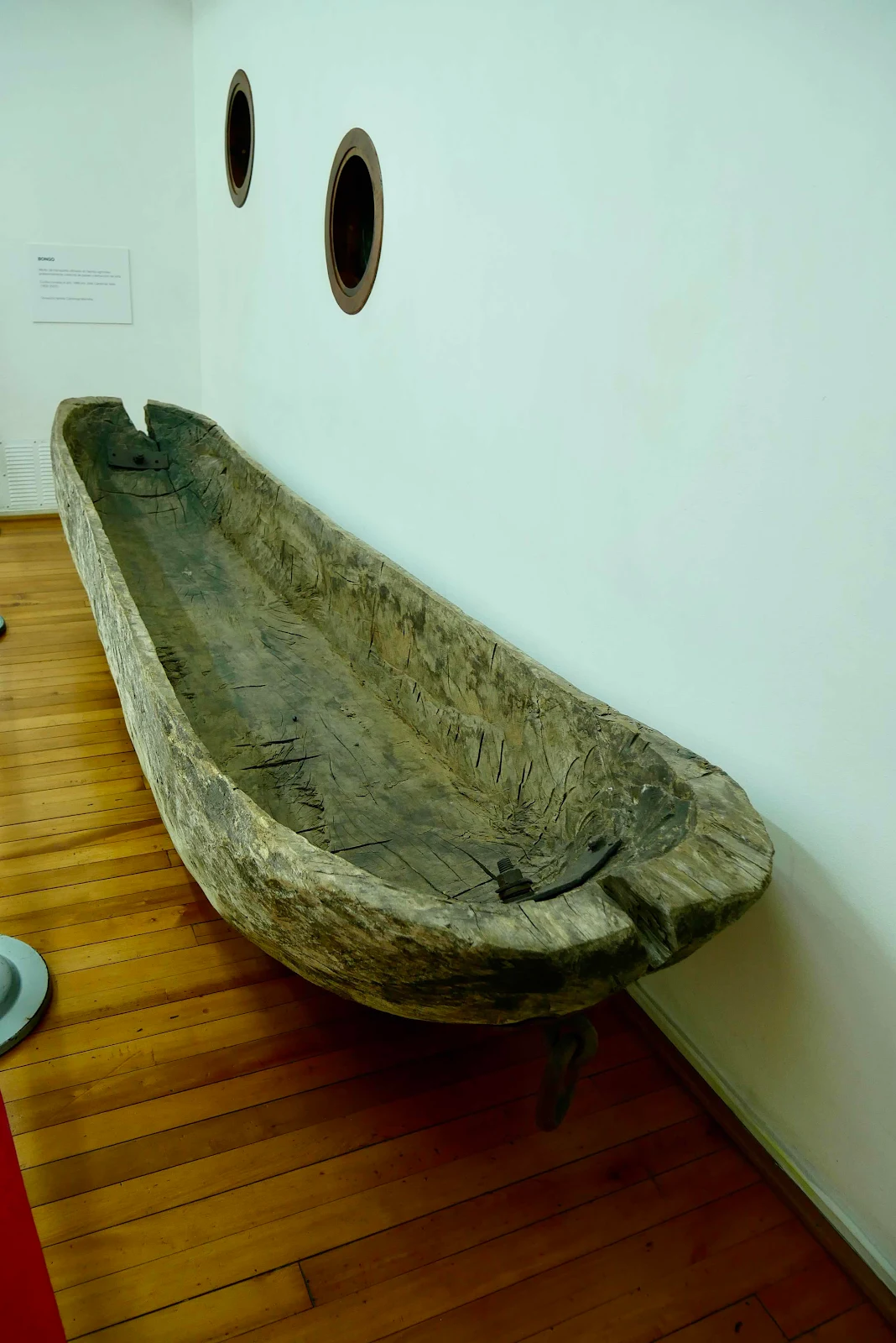
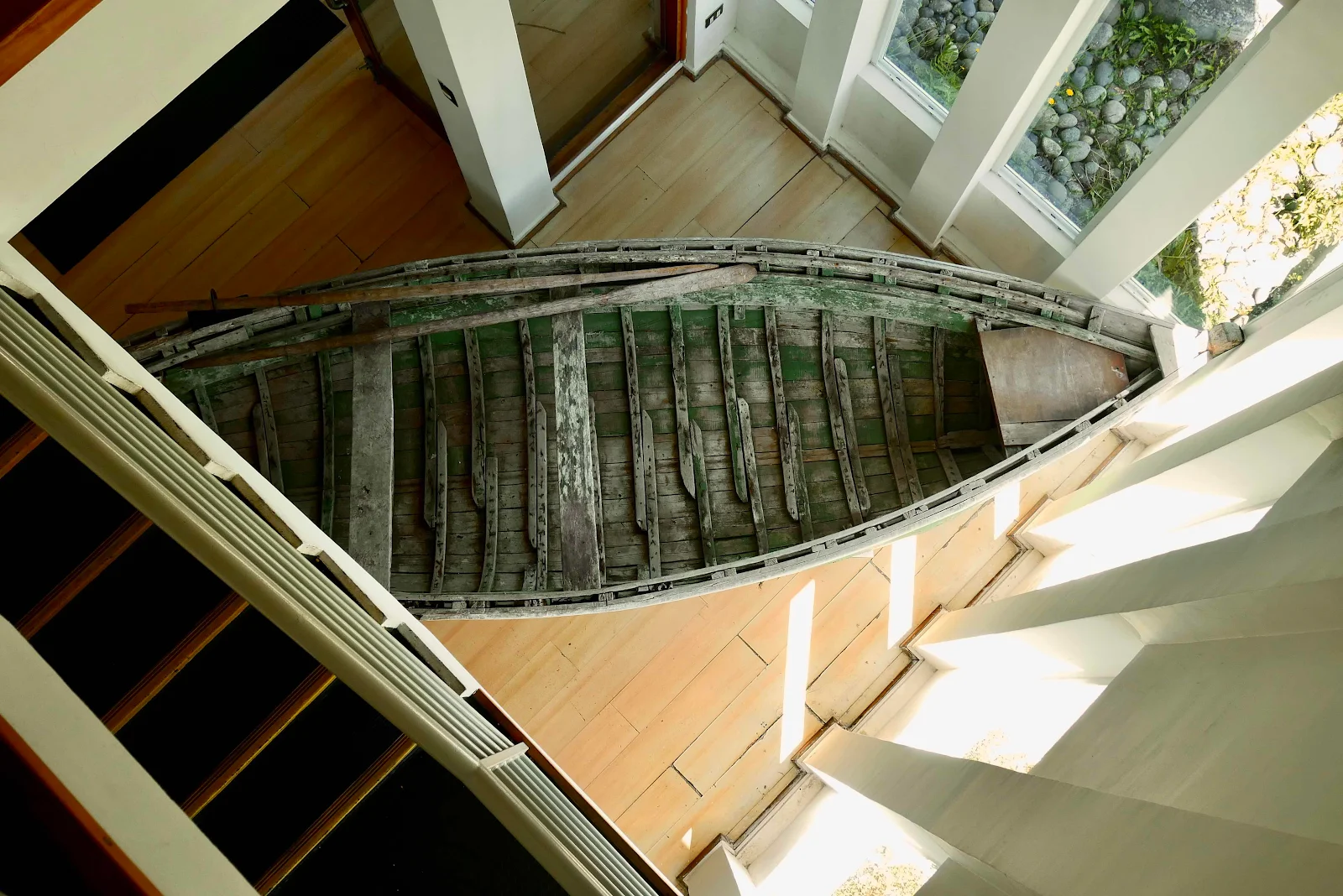
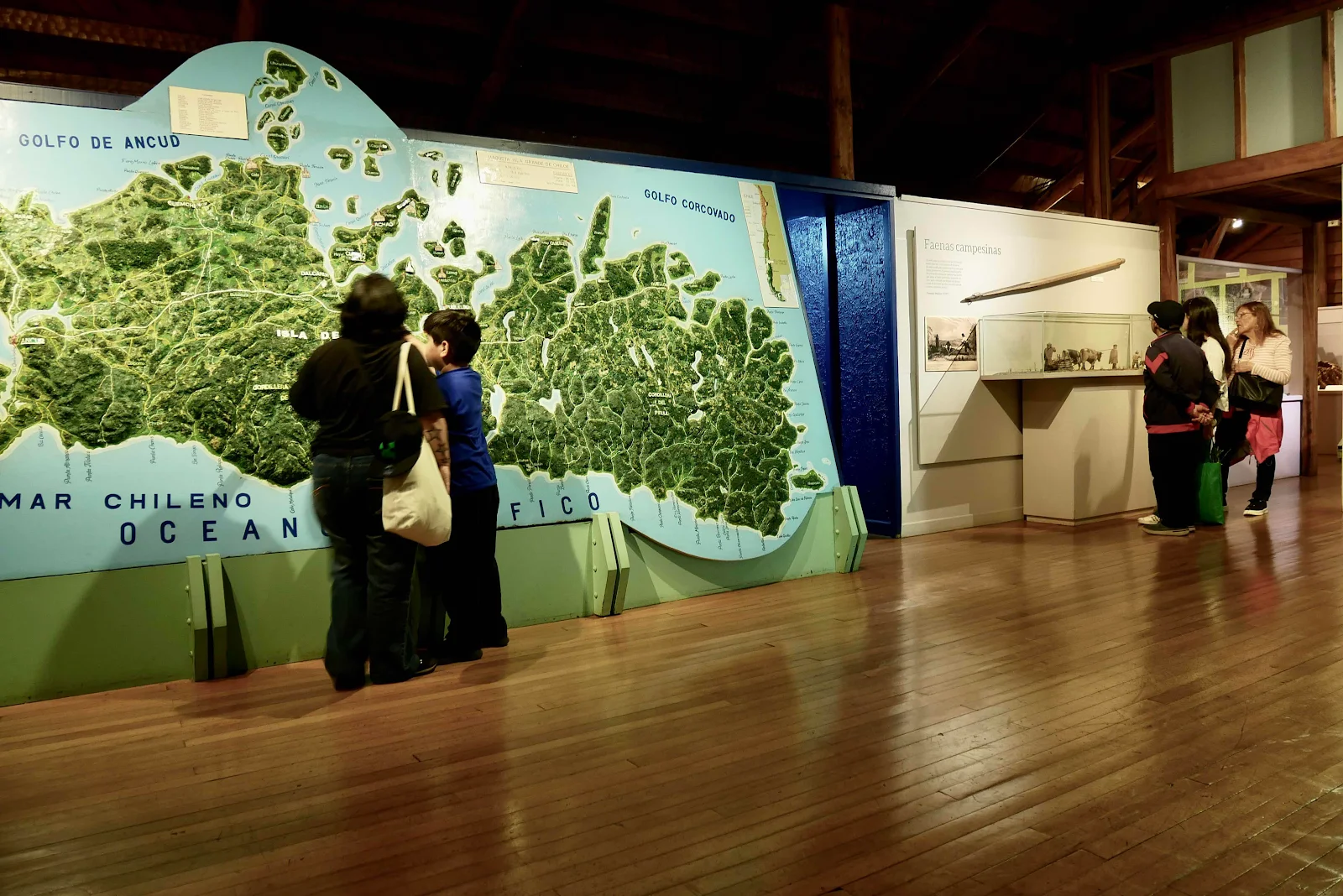
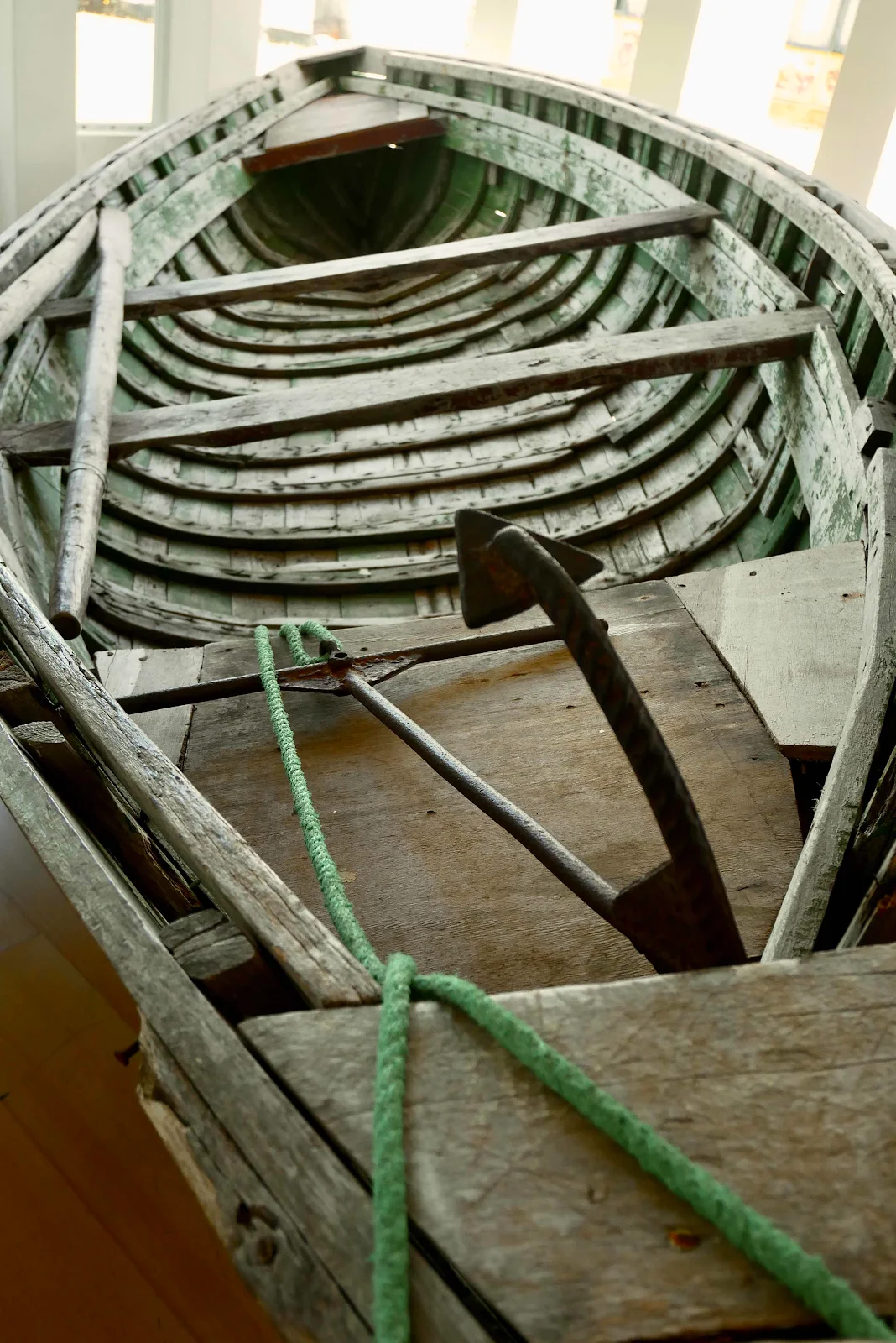
The history of Ancud and Chiloé Island was on display at the museum with boats first. The locals used various canoes to get around on the relatively flat protected waters in the archipelago and to my eye they did not look terribly seaworthy.
Ancud was founded in 1768 and grew into the capital. Chile’s history was rather odd in those two centuries before independence from Spain. A bongo canoe:
The indigenous tribes revolted and pushed European pioneers out of the region south of Santiago, and ran their territory for two hundred years. The stand out was Chiloé as Spain controlled the archipelago and that put the port of Ancud as the main base for exploration and conquest in the south.
Eventually Spain took control of the lakes region and central Chile and suppressed the Mapuche native culture, which at the tine was cause for rejoicing but nowadays Chile reveres its First Nations cultures as do we all (mostly). Humans are nothing if not ironic.
And then Chile sent settlers to Fort Bulnes outside modern day Punta Arenas which we visited last December. They made a hash of settling there until Germans built Punta Arenas and got serious about self sufficiency.
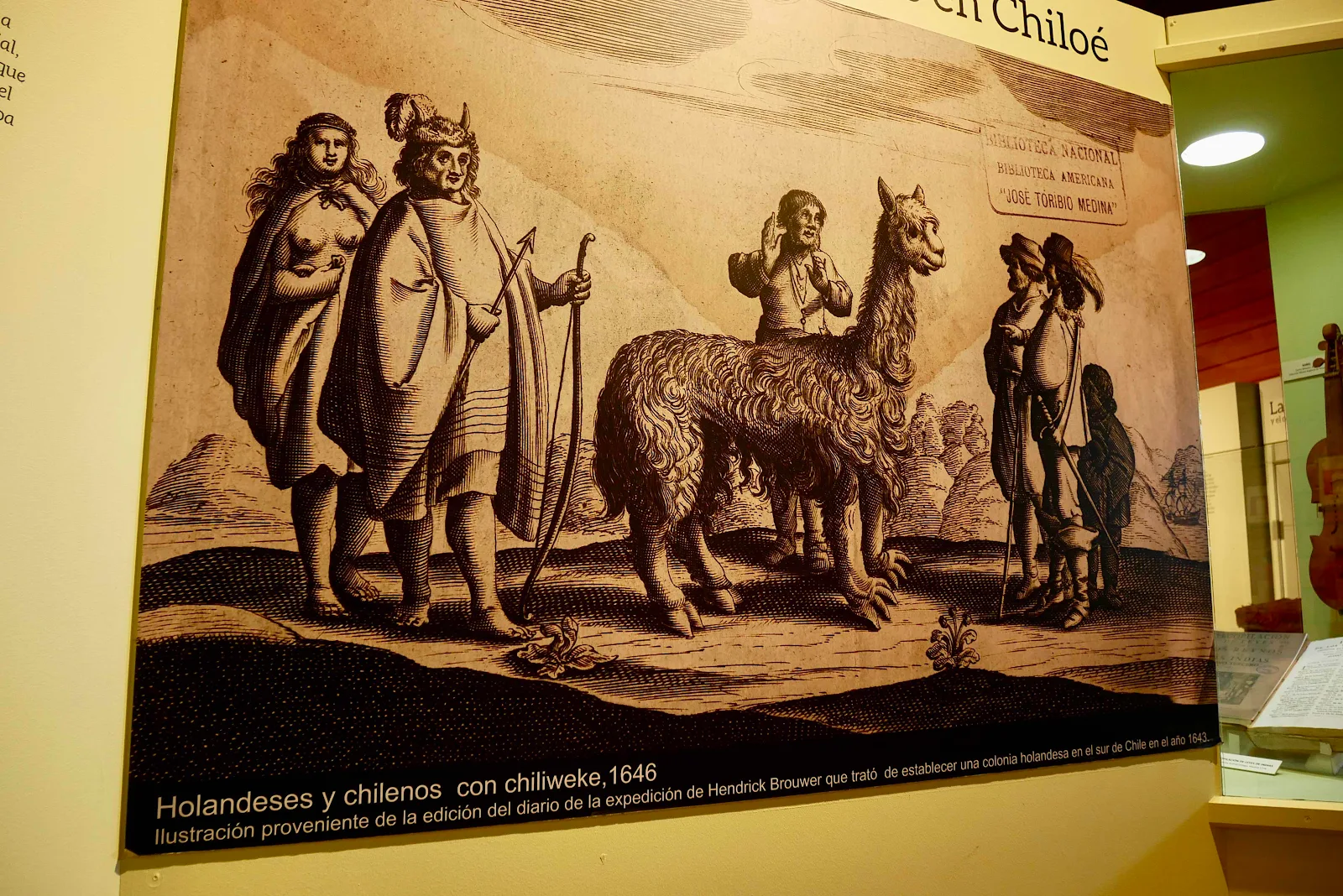
And the Spanish met guanacos here and called them sheep which worked for them. Actually they are related to camels but misnaming things and places never slowed the Spanish down.
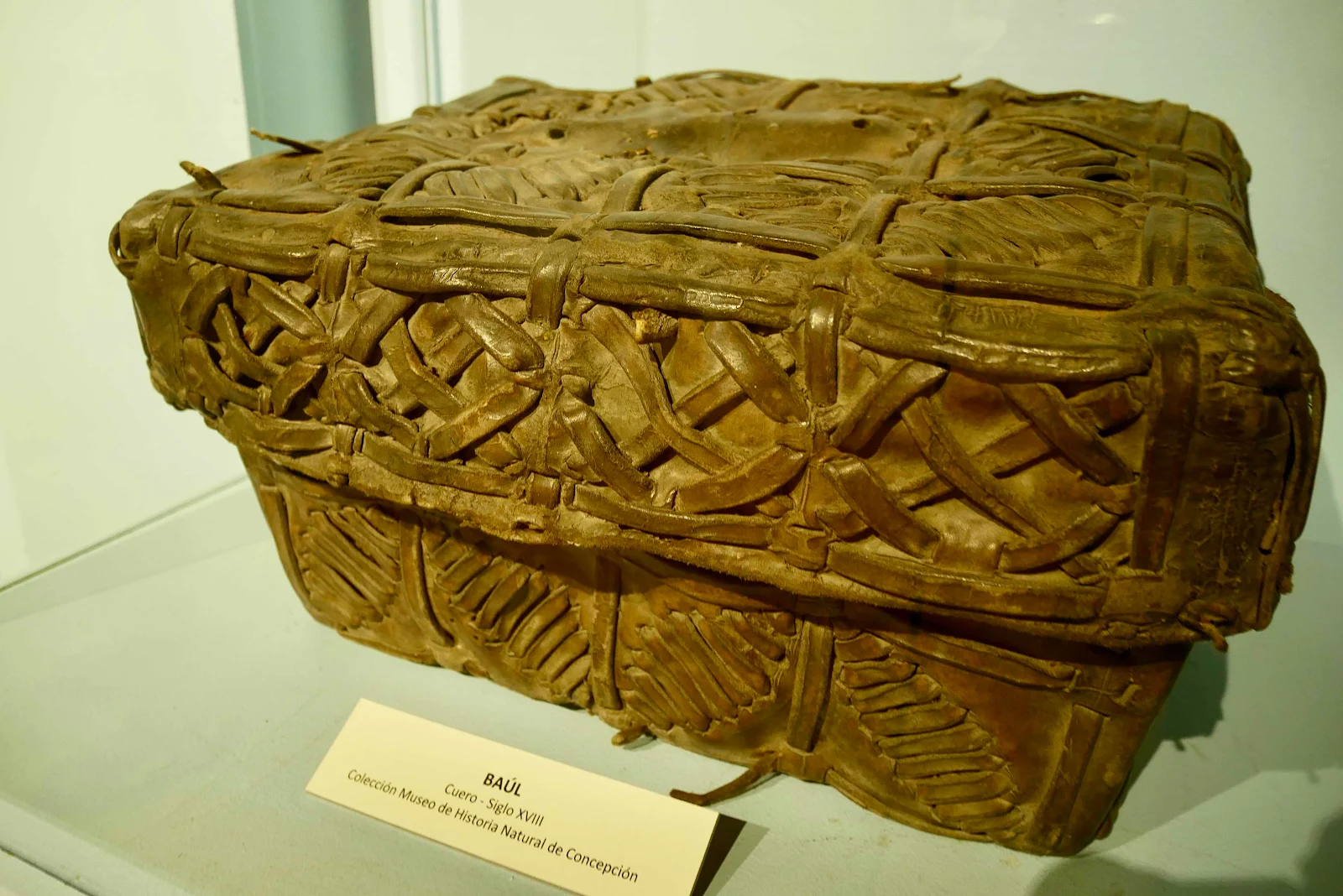
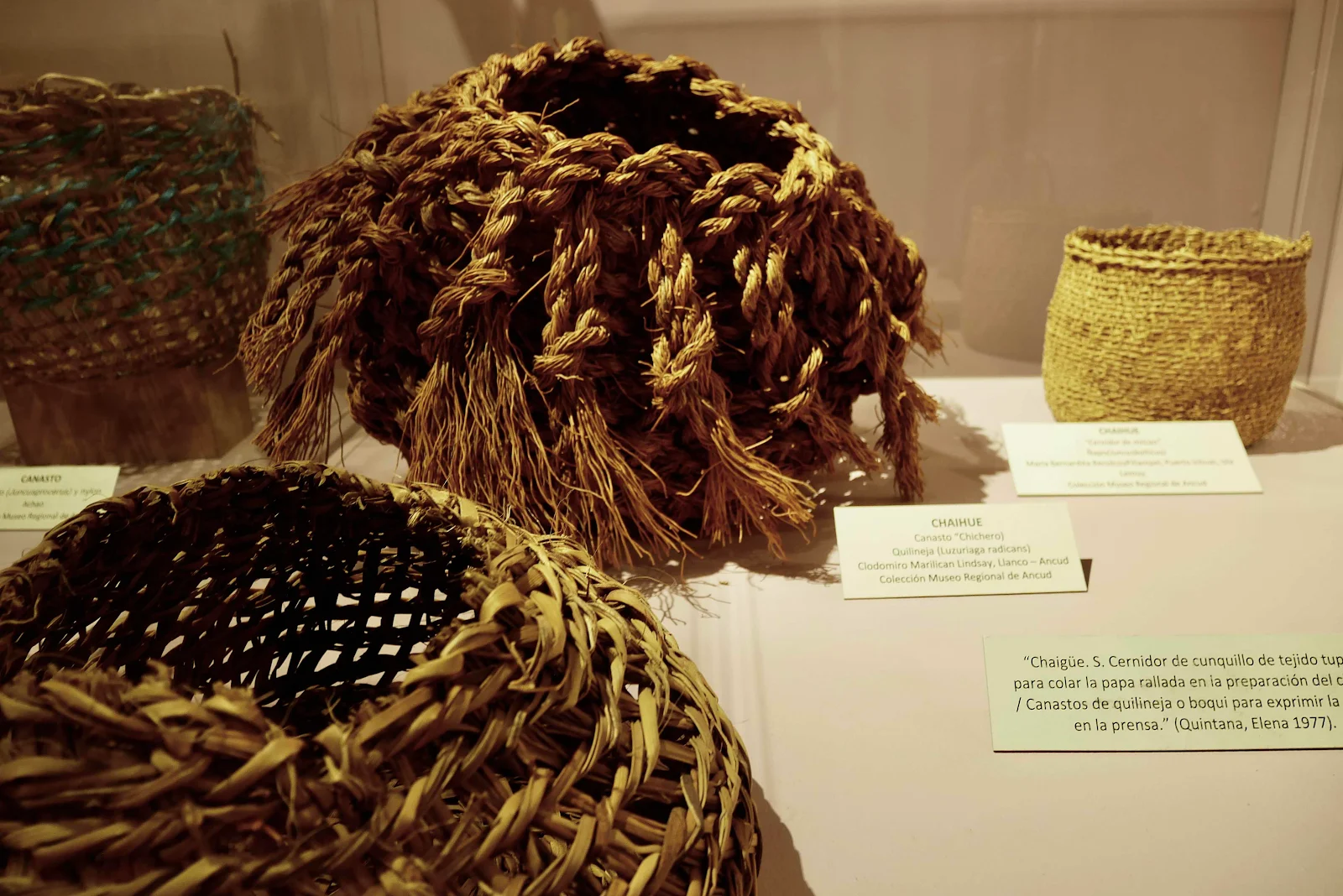
A four hundred year old basket shows the skills available in Chiloé in those frontier days.
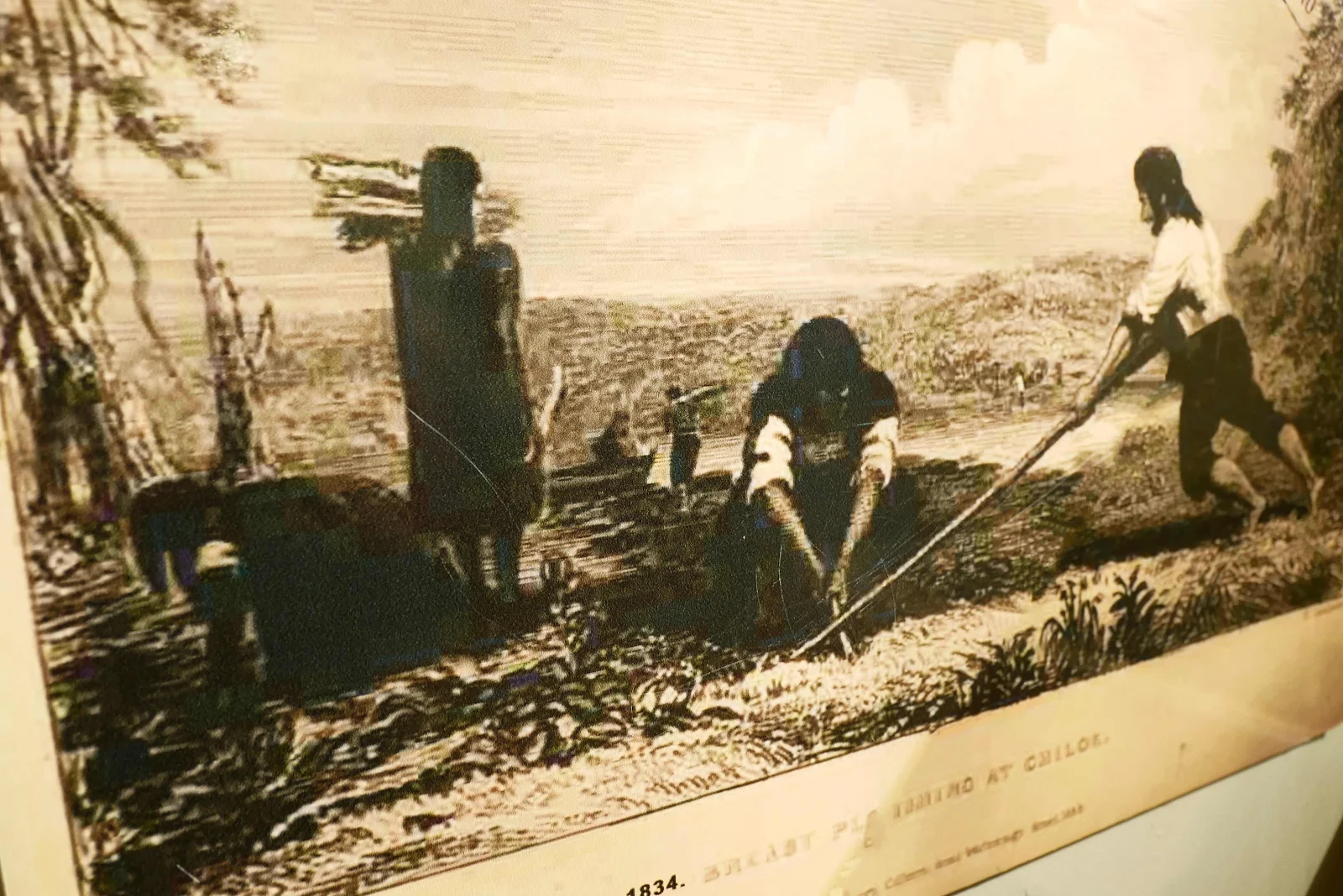
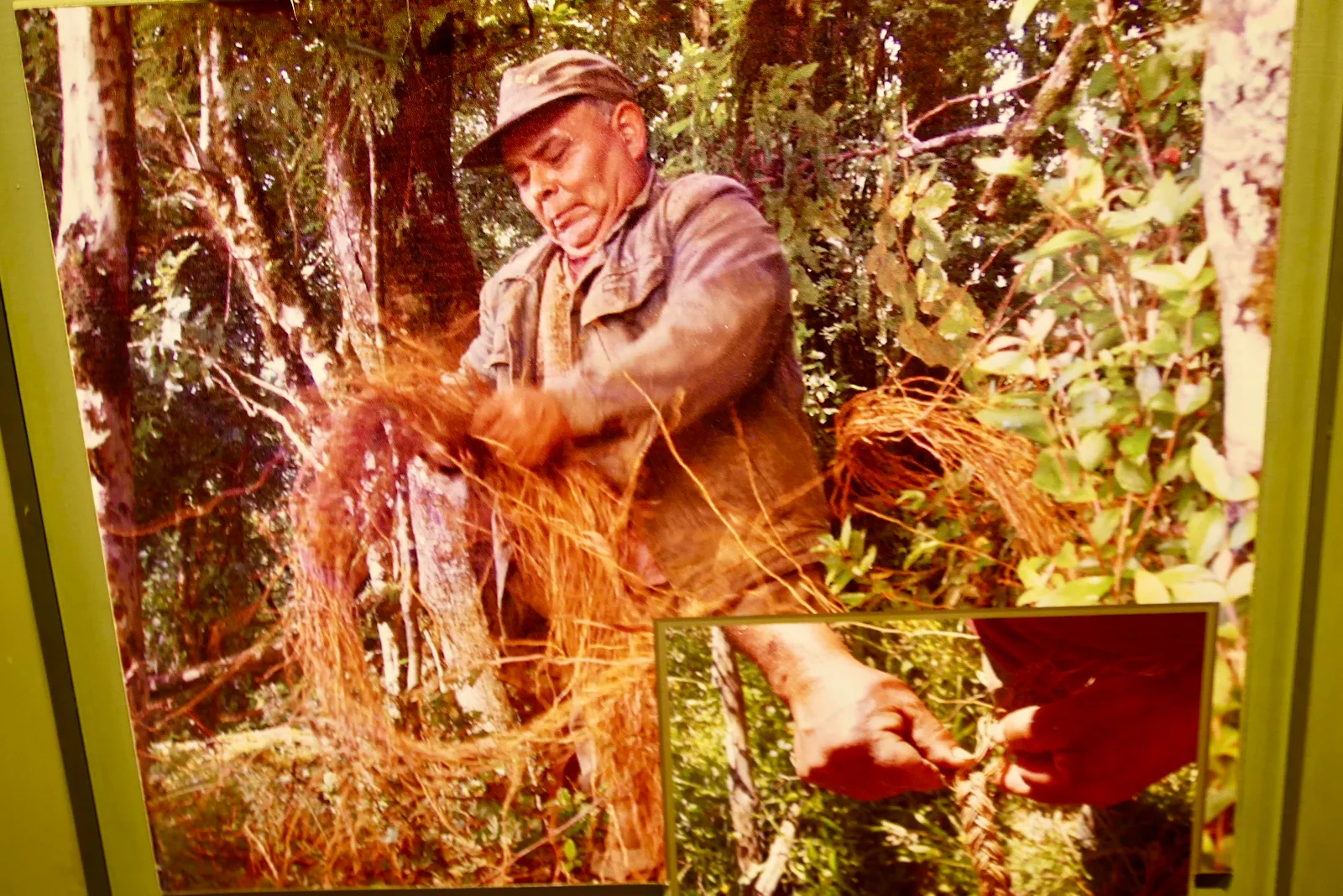
Before plows arrived here the Mapuche sowed seeds by using two sticks as shown below. One farmer holds a cross beam and the other pressed down with a long stick and swished it side to side to make a small trench for the seed.
They made it work but it sounds incredibly tedious to me.
Here’s the thing: nine months of the year it rains all the time. Locals shrug and say you get used to it. All this activity took place in downpours basically. It boggles my mind.
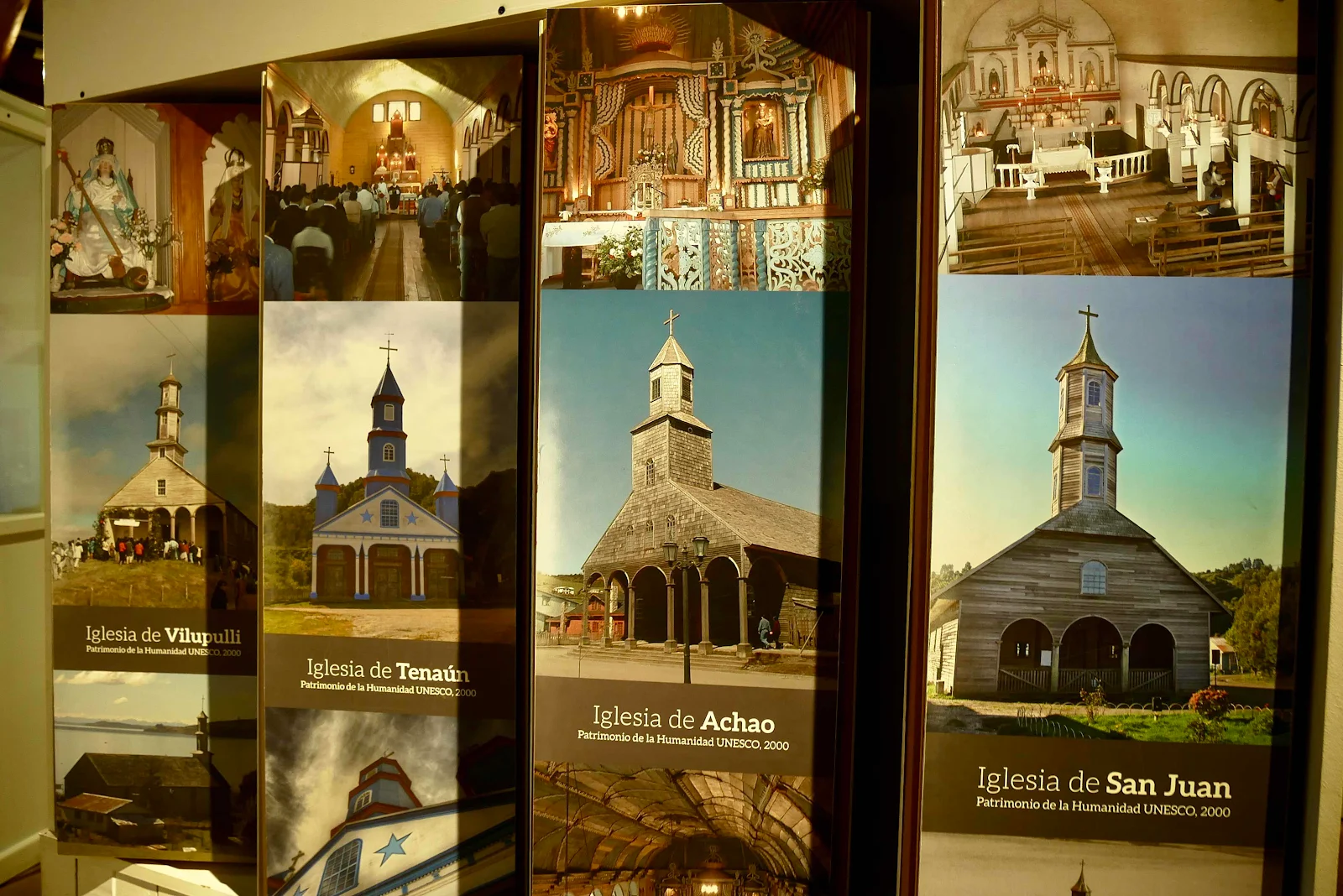
And they built wooden churches. There are sixteen of them all over the region. We’ve passed quite a few.
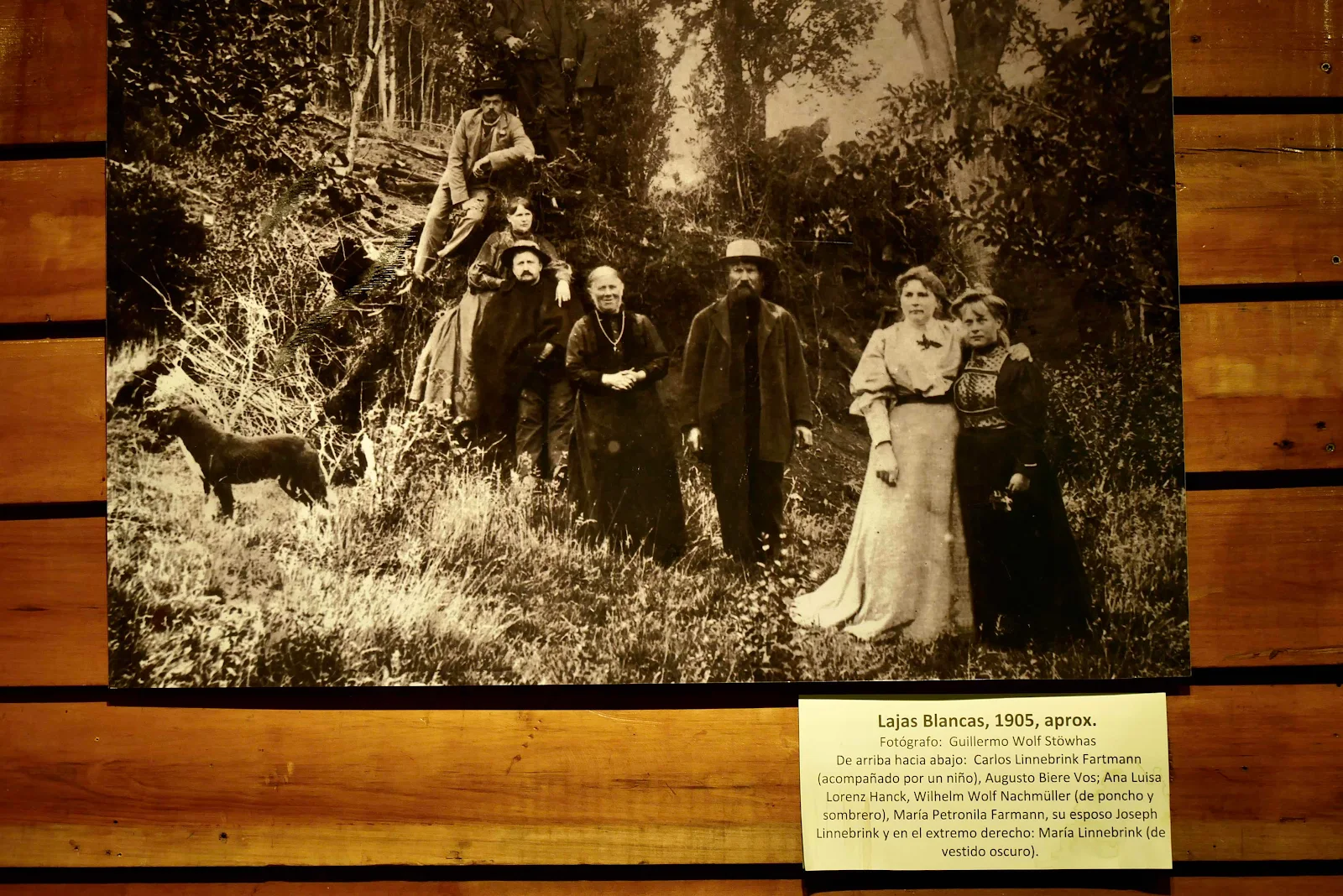
And of course the German immigrants who arrived in the mid 19th century and built functioning communities in the wilderness.
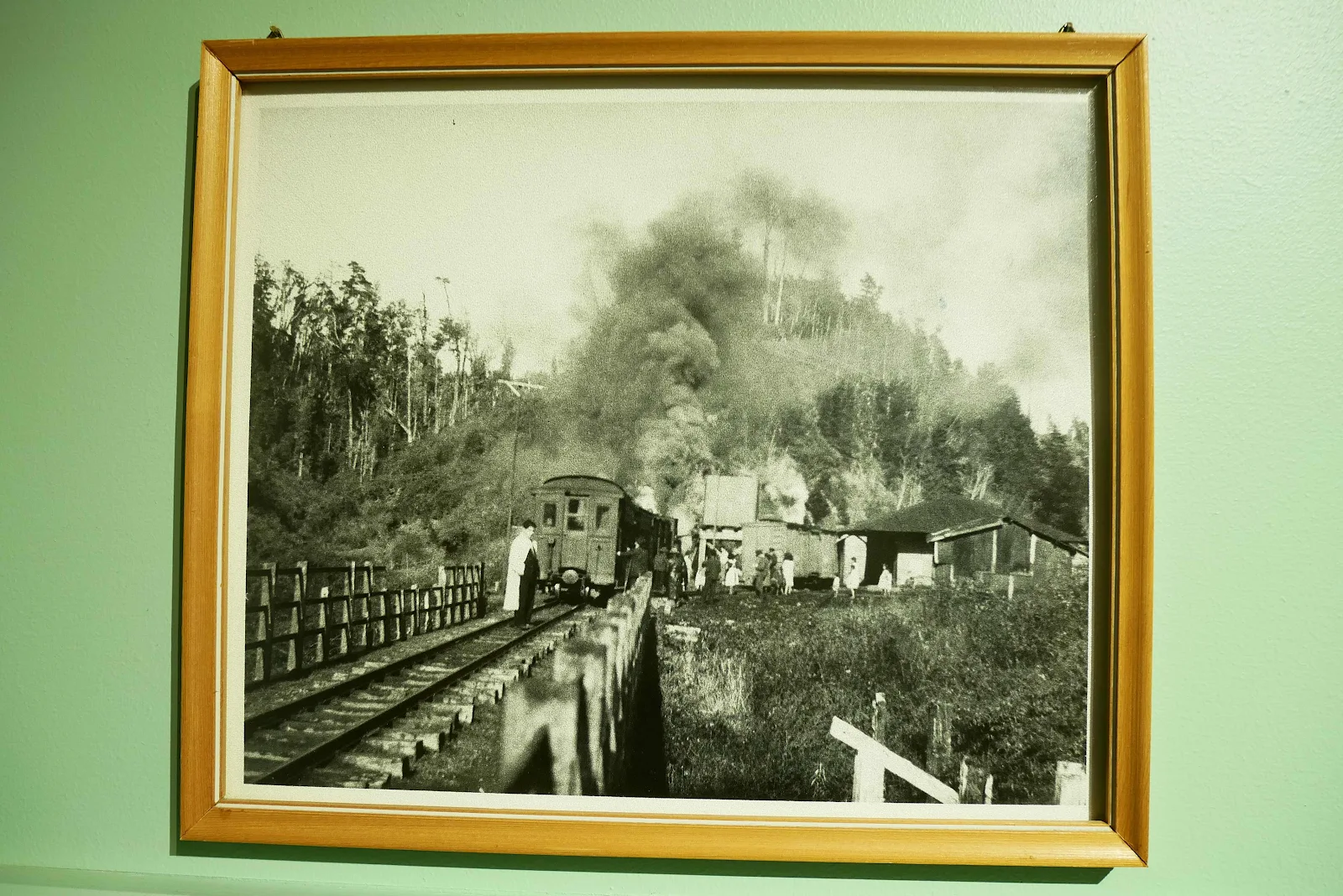
They built a railroad across half the island from Ancud to Castro. They kept it running until 1960 despite diminishing traffic.
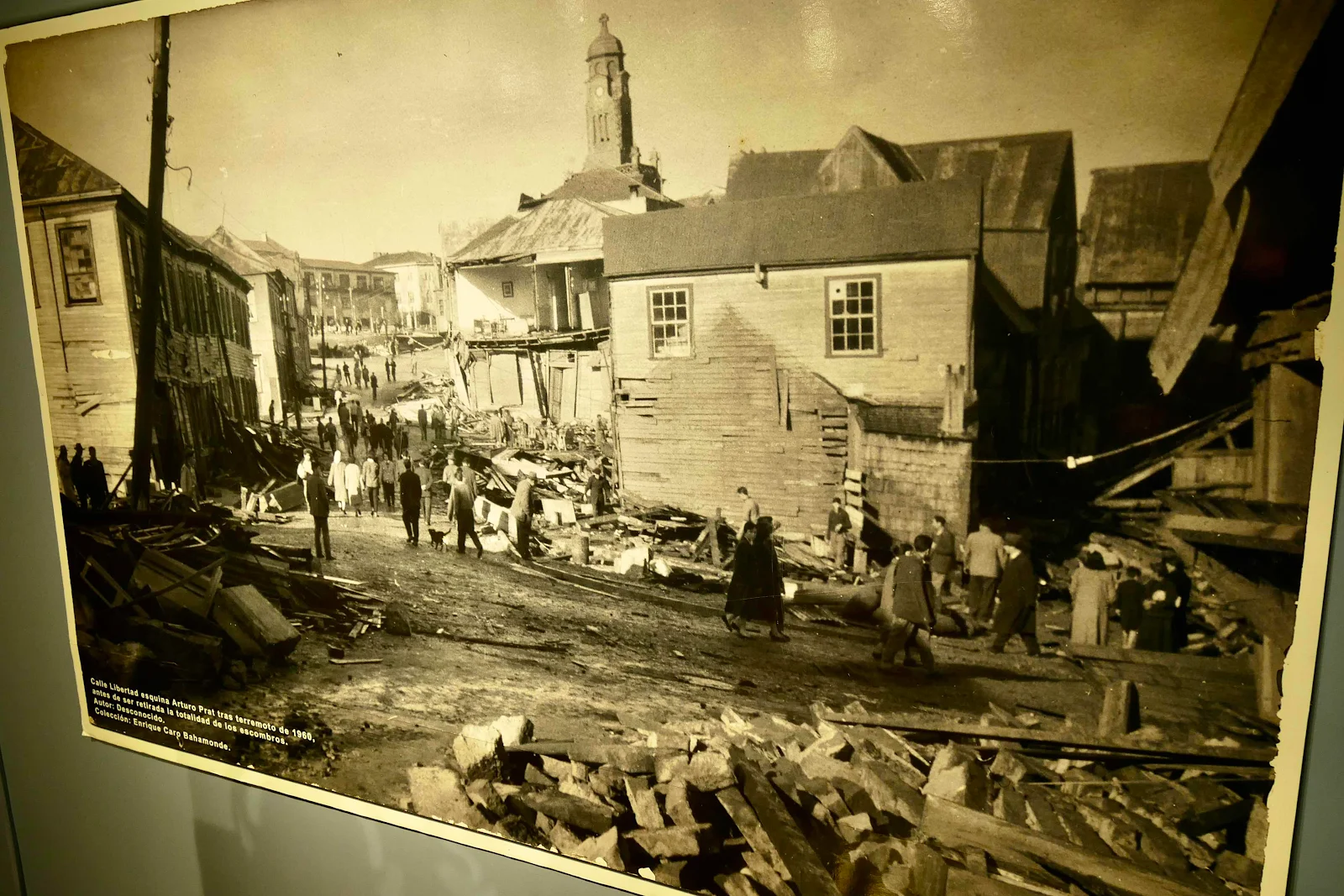
And then the world’s highest recorded earthquake was recorded here in 1960. The quake was set at 9.5 on the Richter scale by scientists. And that pushed a wave estimated at fifty feet high onto the beach. Much destruction of course.
Chile is a tough place on the Pacific rim of fire. Lots of destruction.
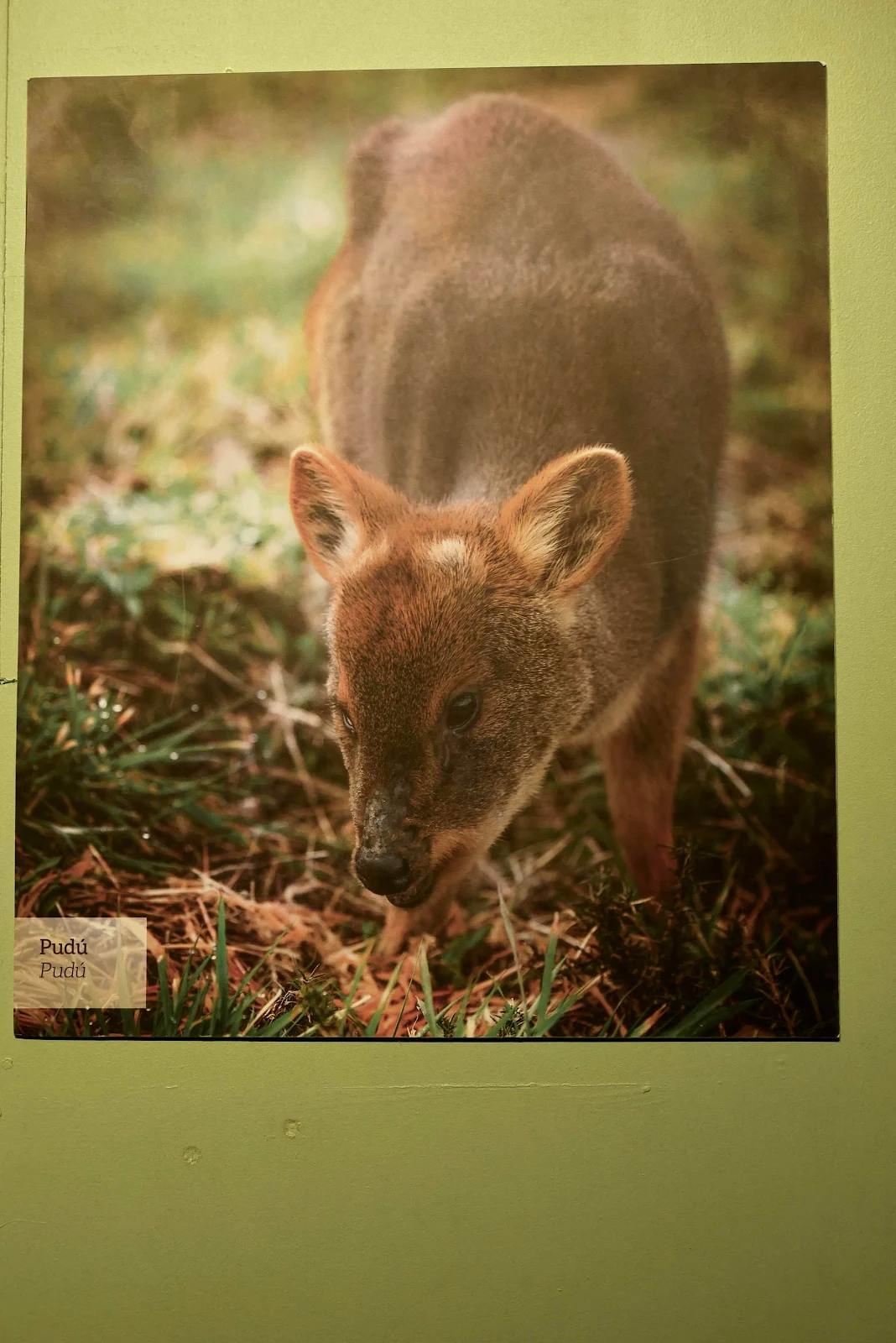
The elusive pudú, endangered and never seen by me in real life on Chiloé’s big island.
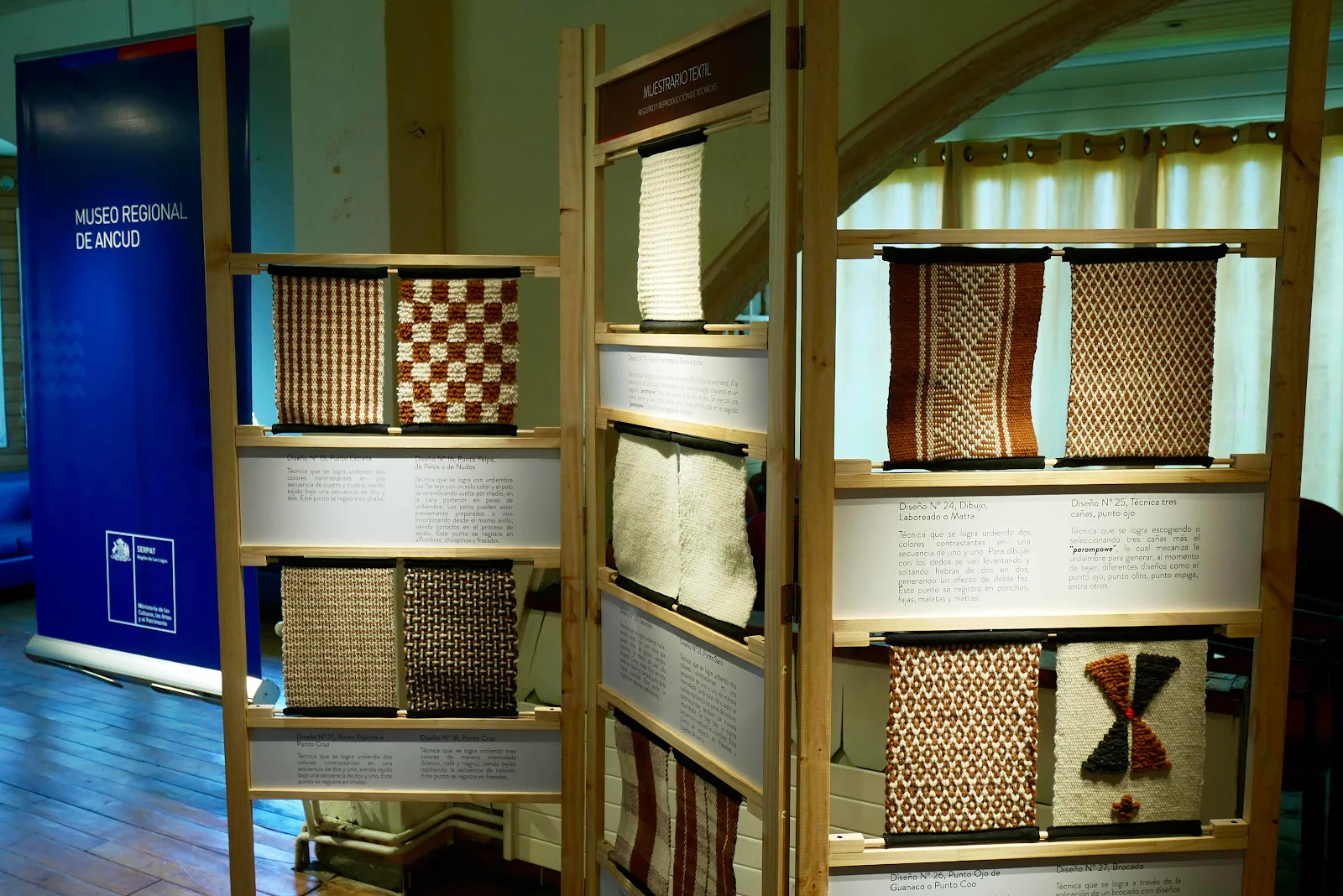
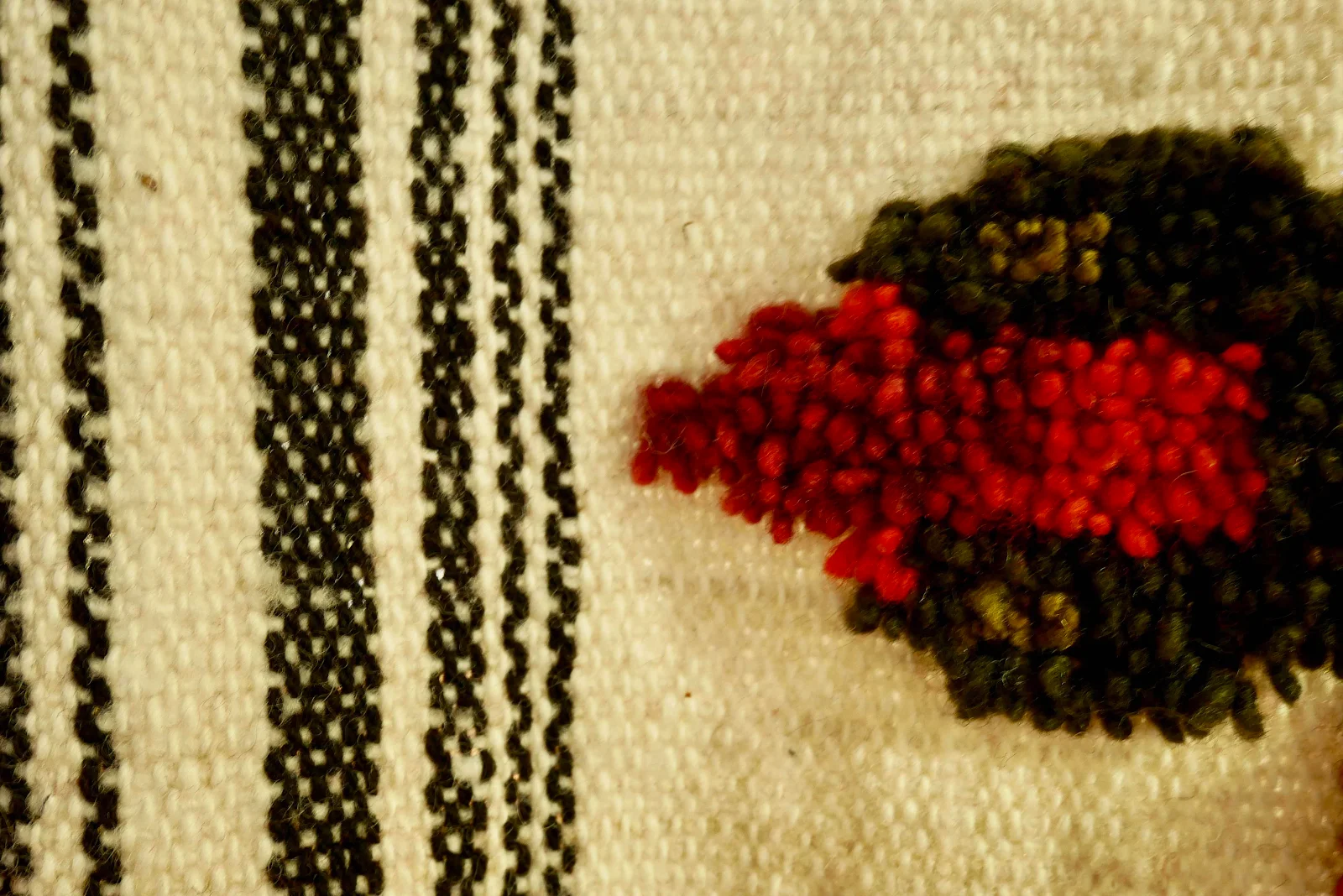
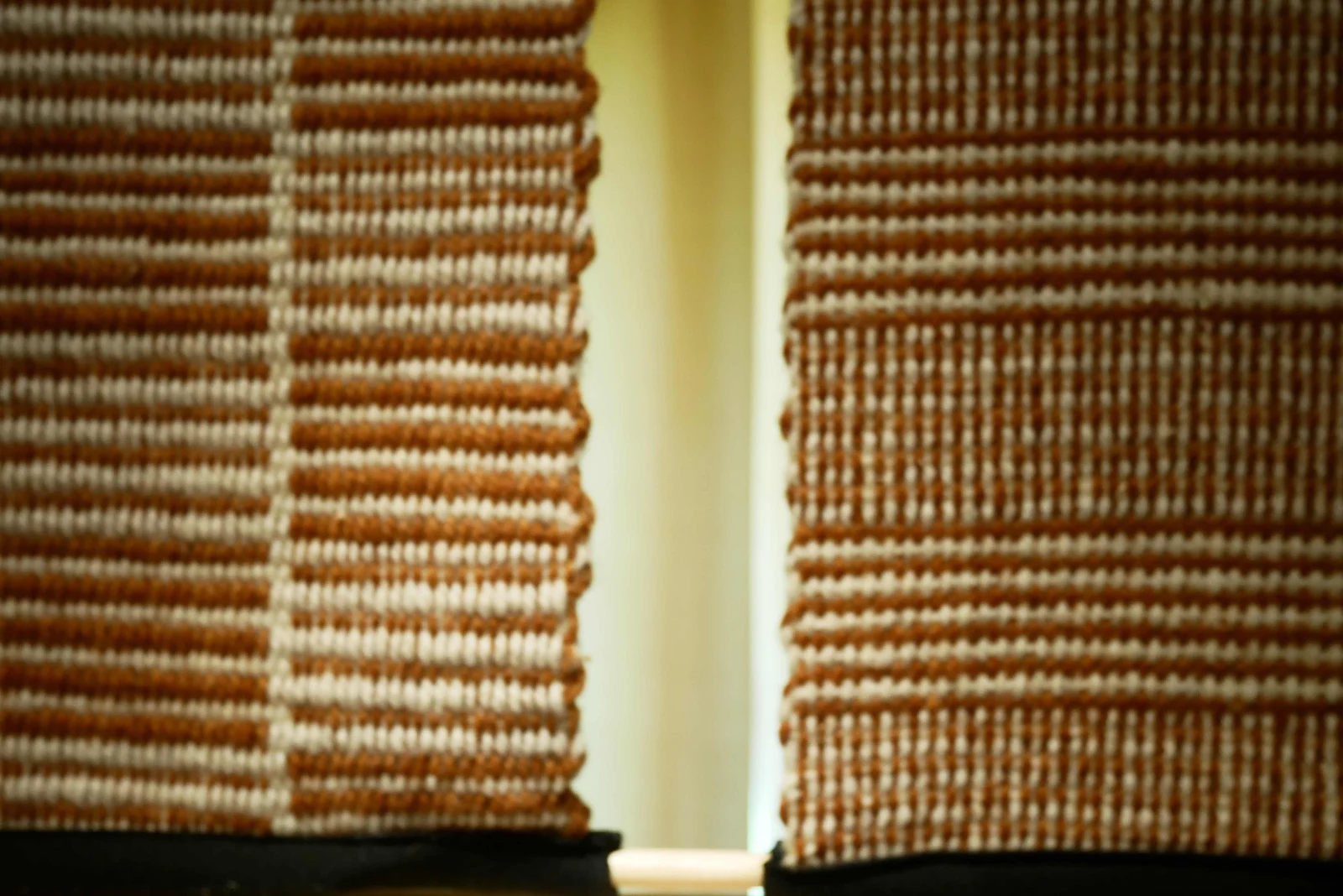
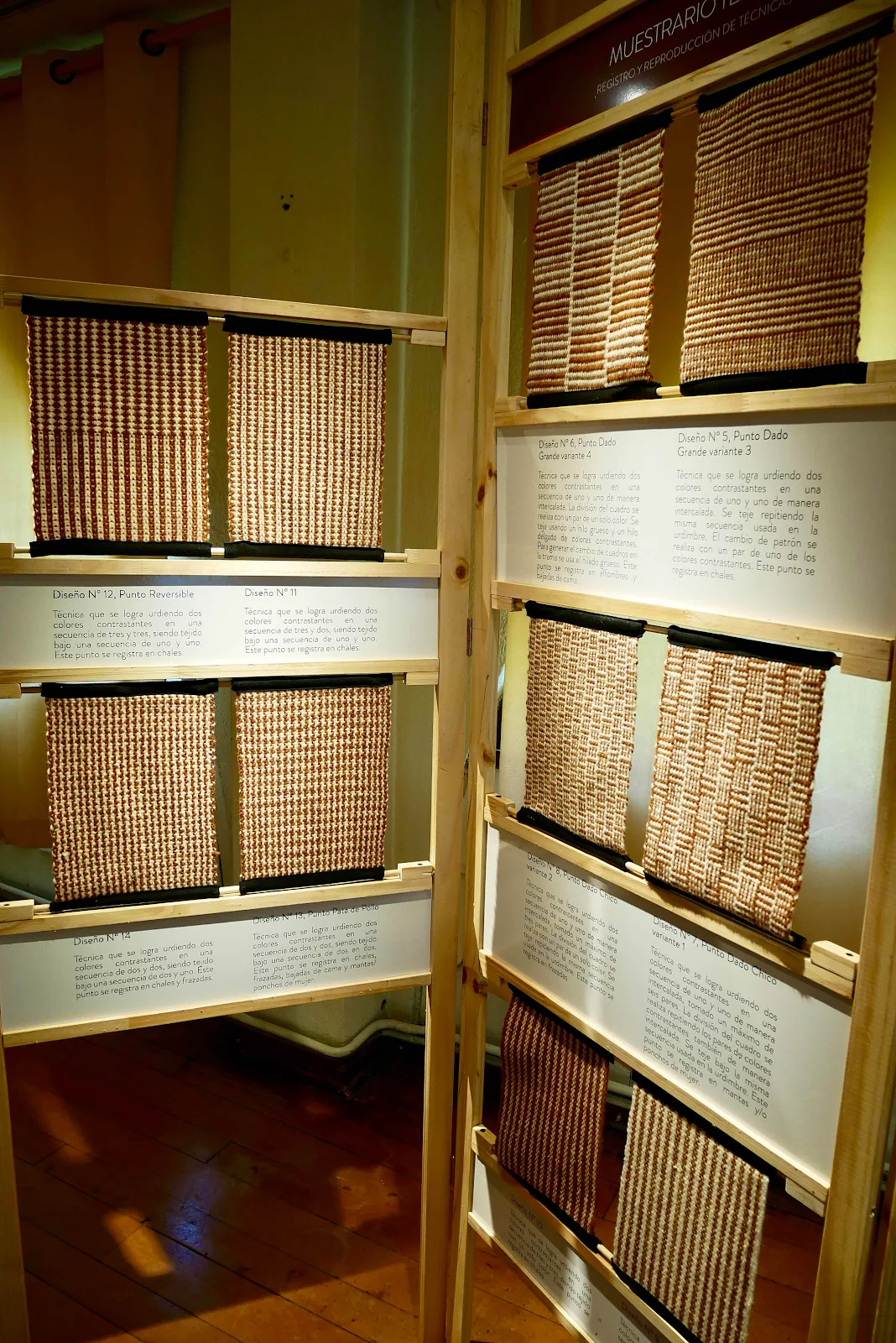
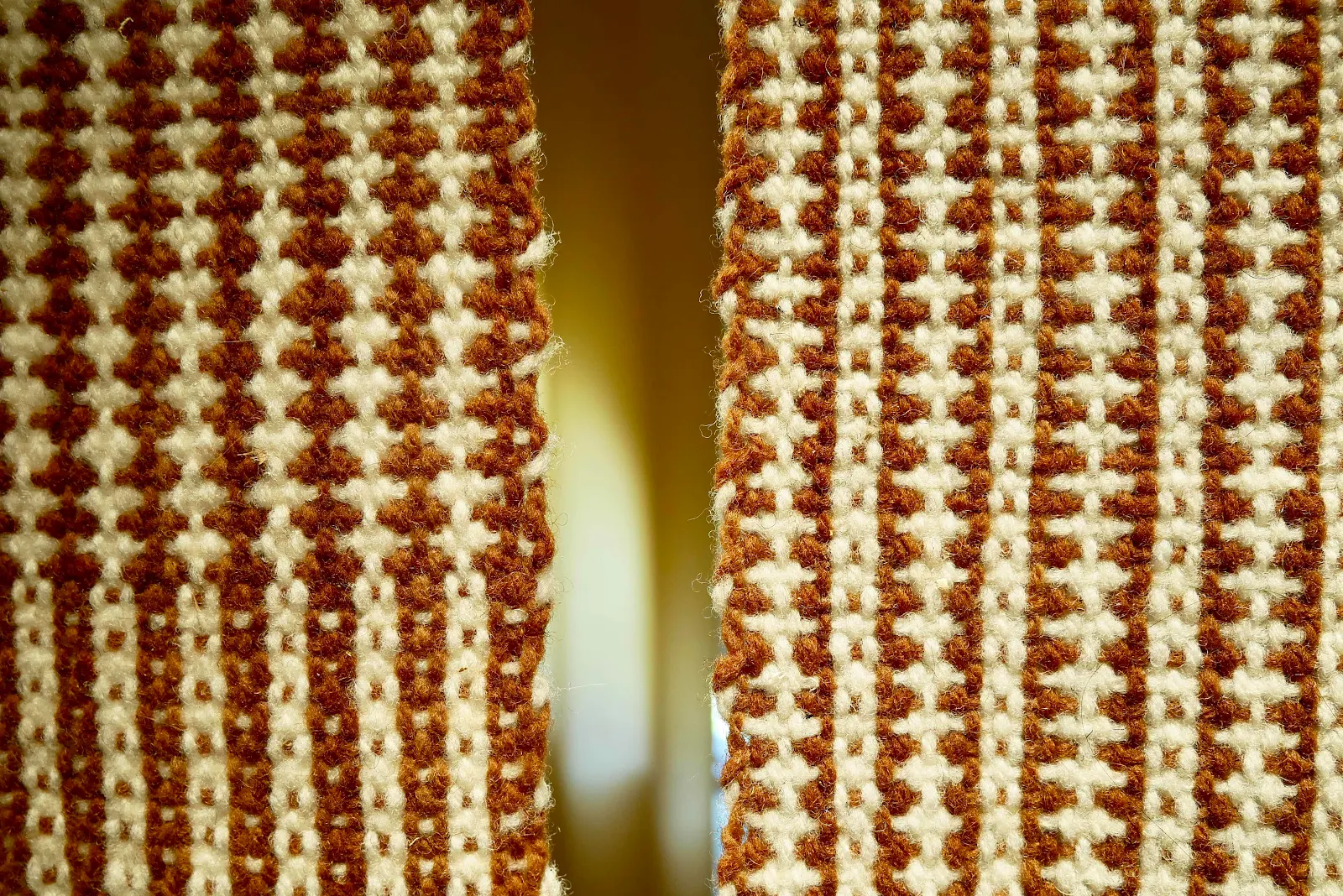
Some textiles representative of Chiloé.
The symmetry pleased me on the designs.
The precision.
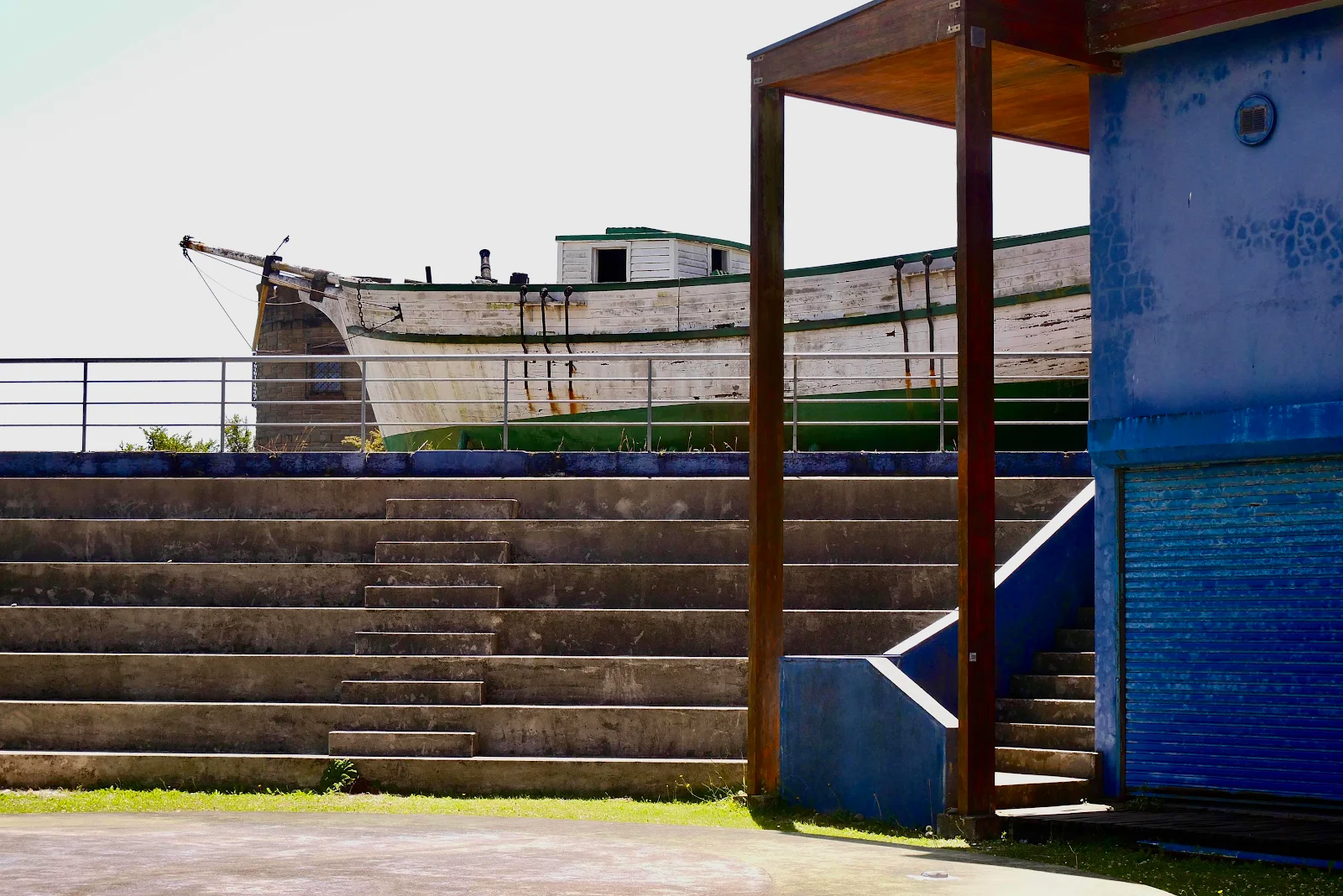
There’s another replica of the ship that populates the southern fjords, the Ancud.
Patagonia is lovely in the sun.
I get sucked in by the beauty of this remote land. And then it rains and I get pissed off. Call me flighty.
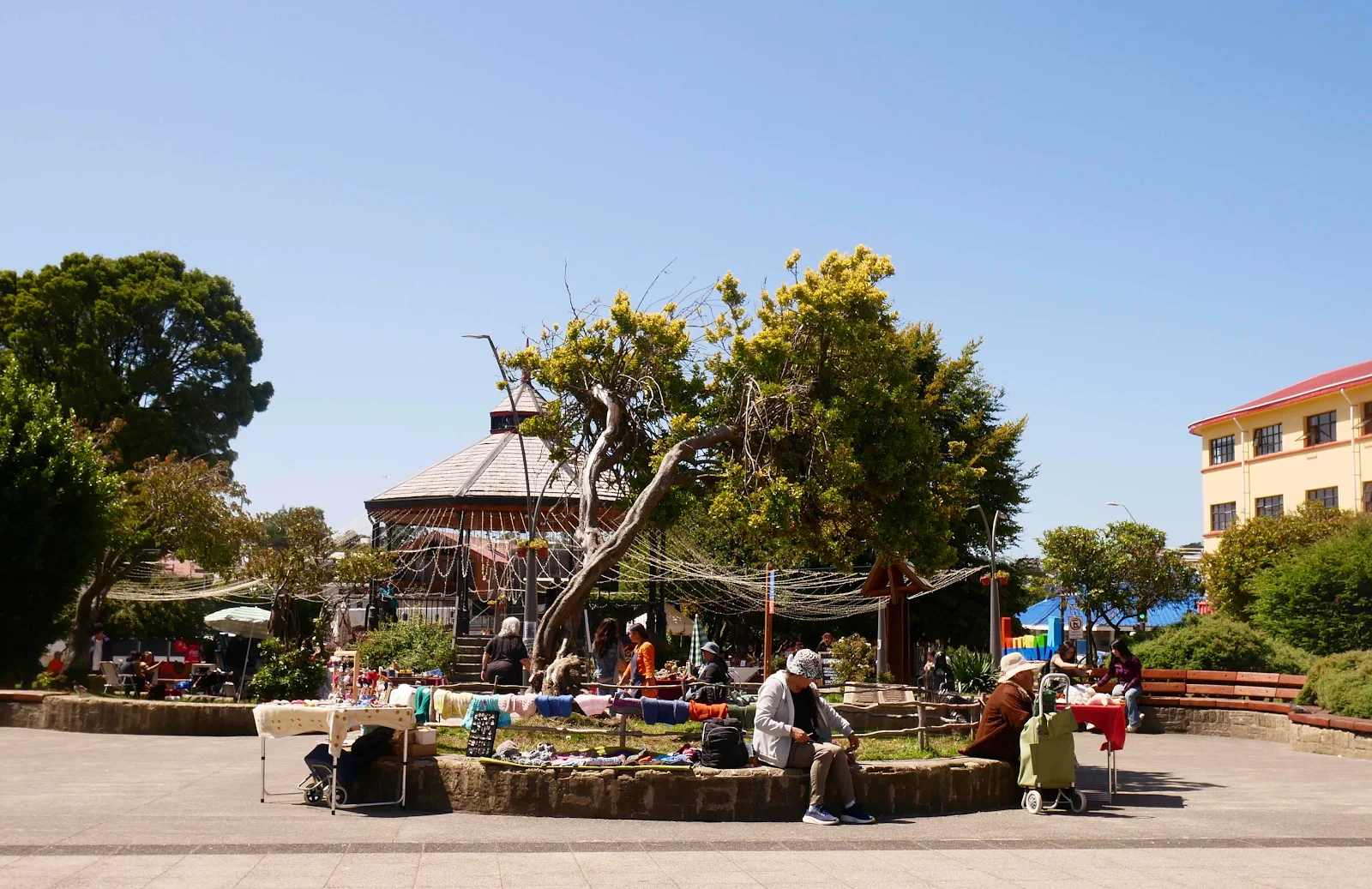
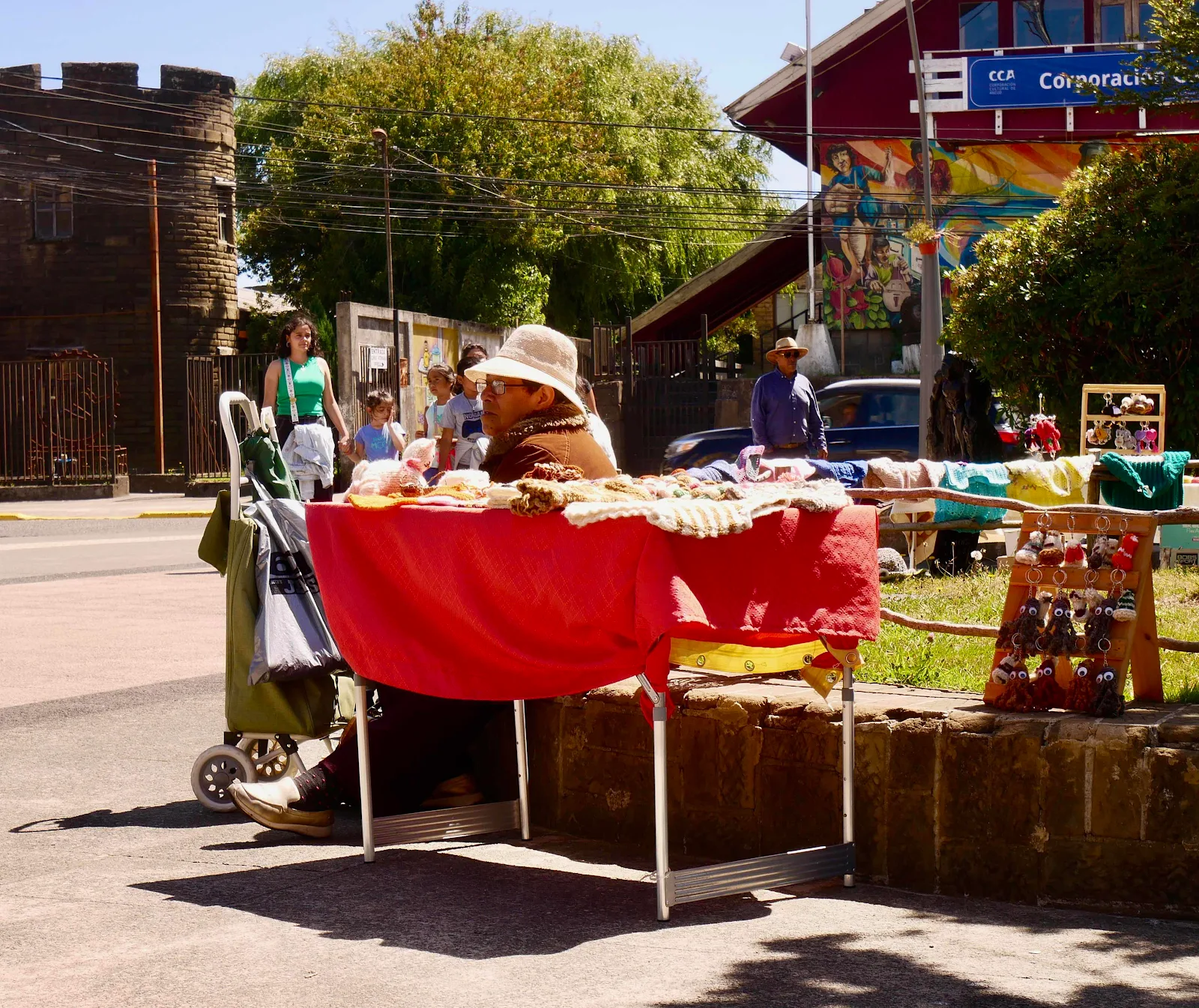
Of course Layne wanted to check the stuff for sale in the central square. The bank that gives cheap money from the ATM (Banco Estado) was shut, so she bought a souvenir and I’ll show it later because I forgot to photograph it.
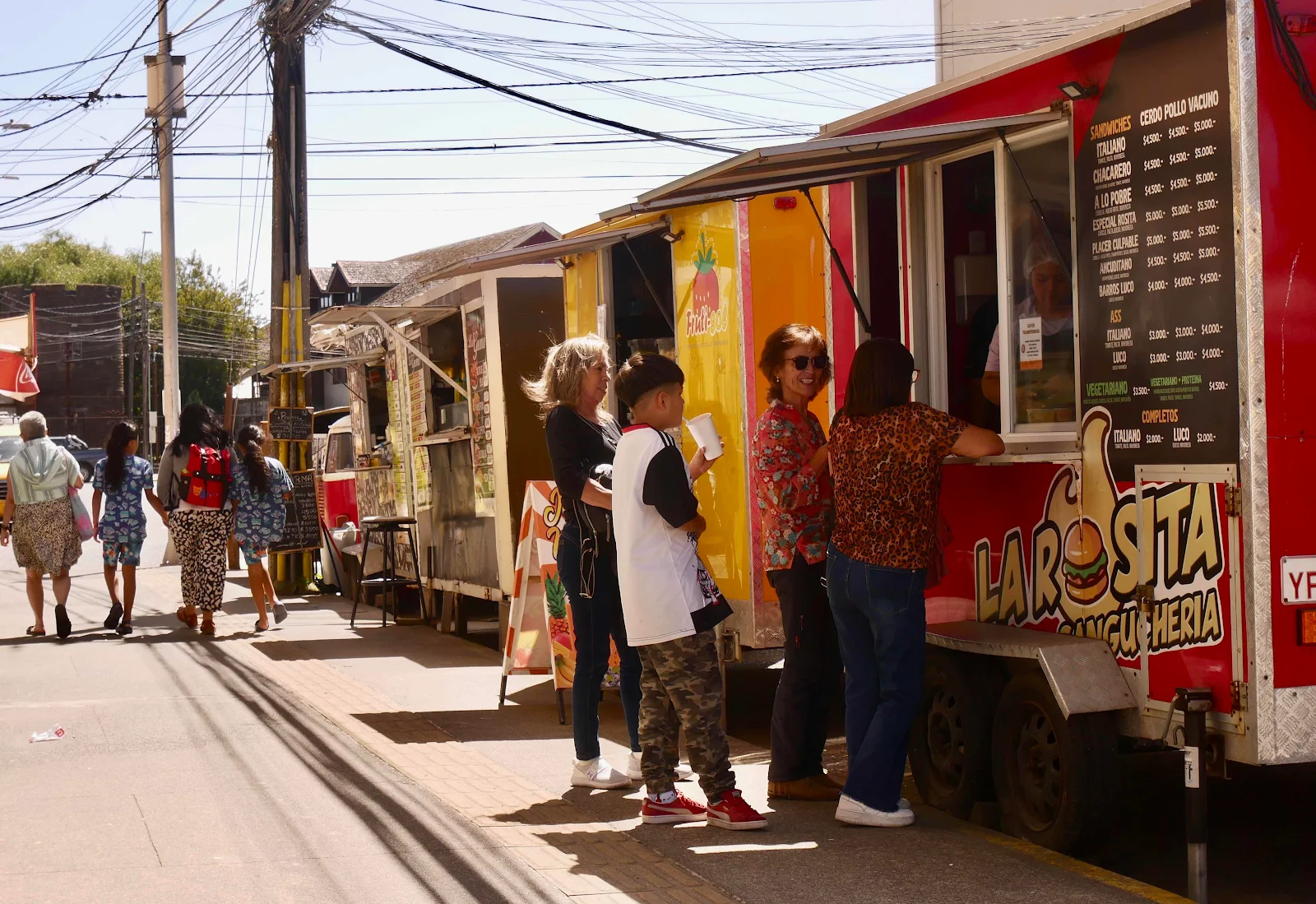
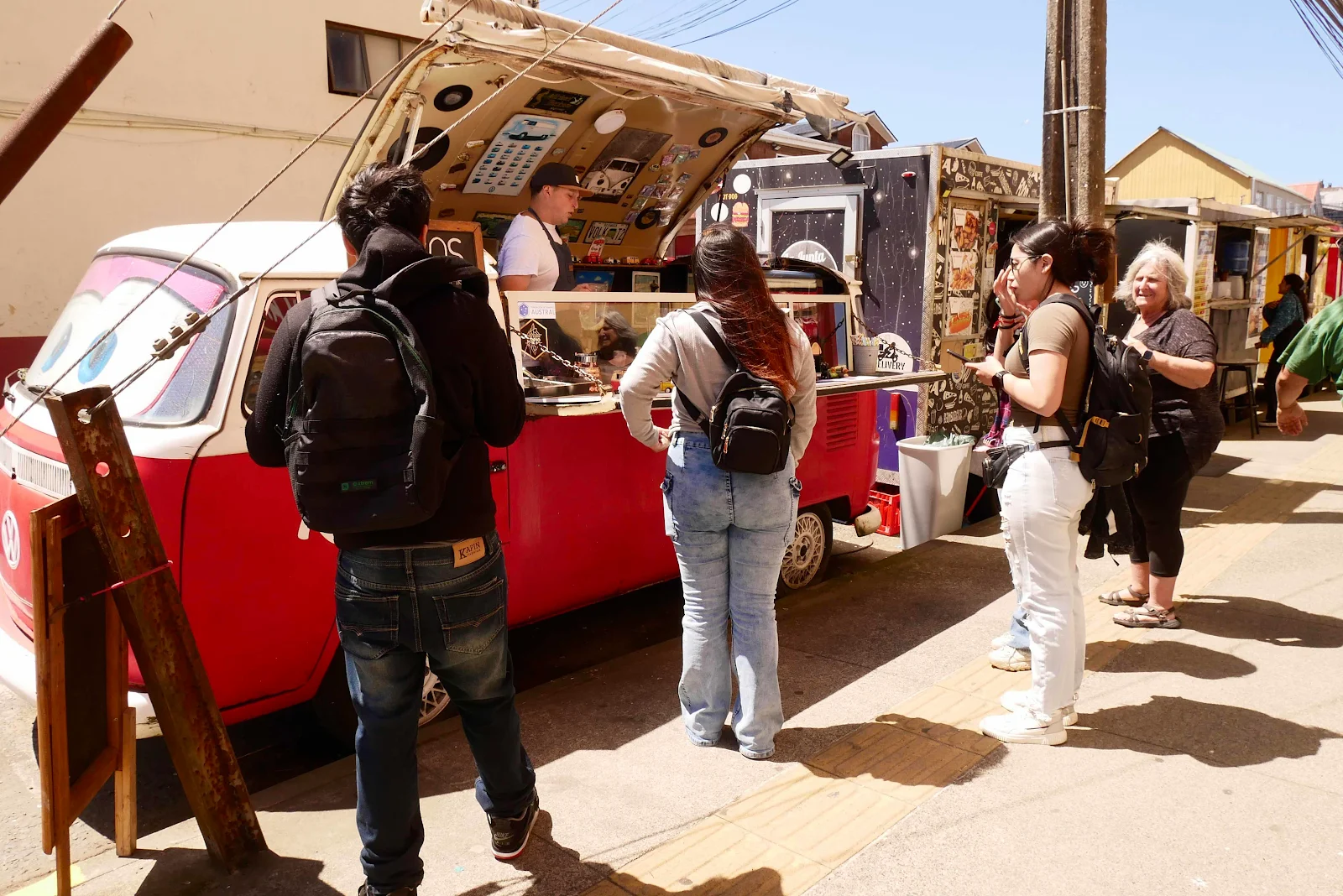
Then there were food trucks.
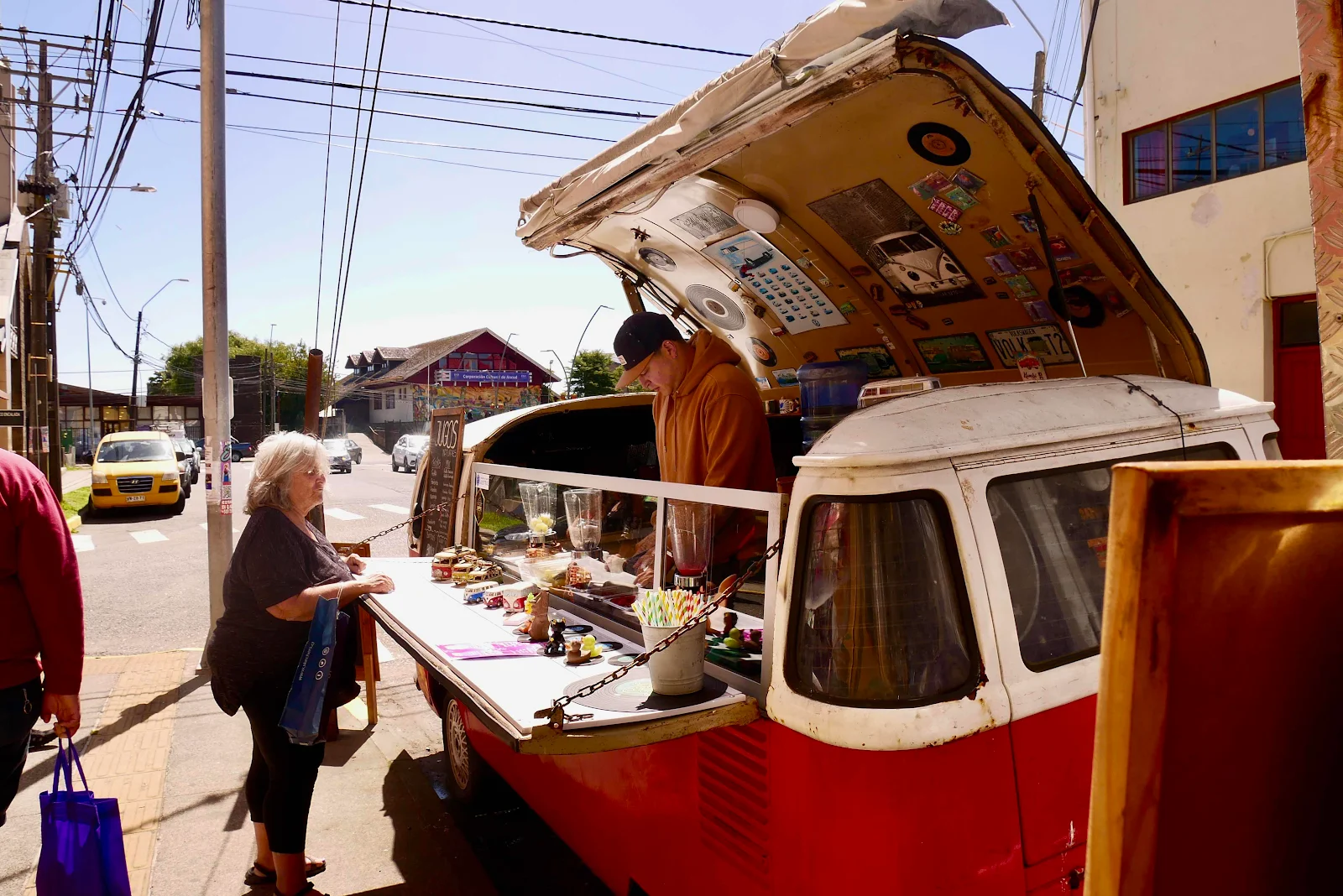
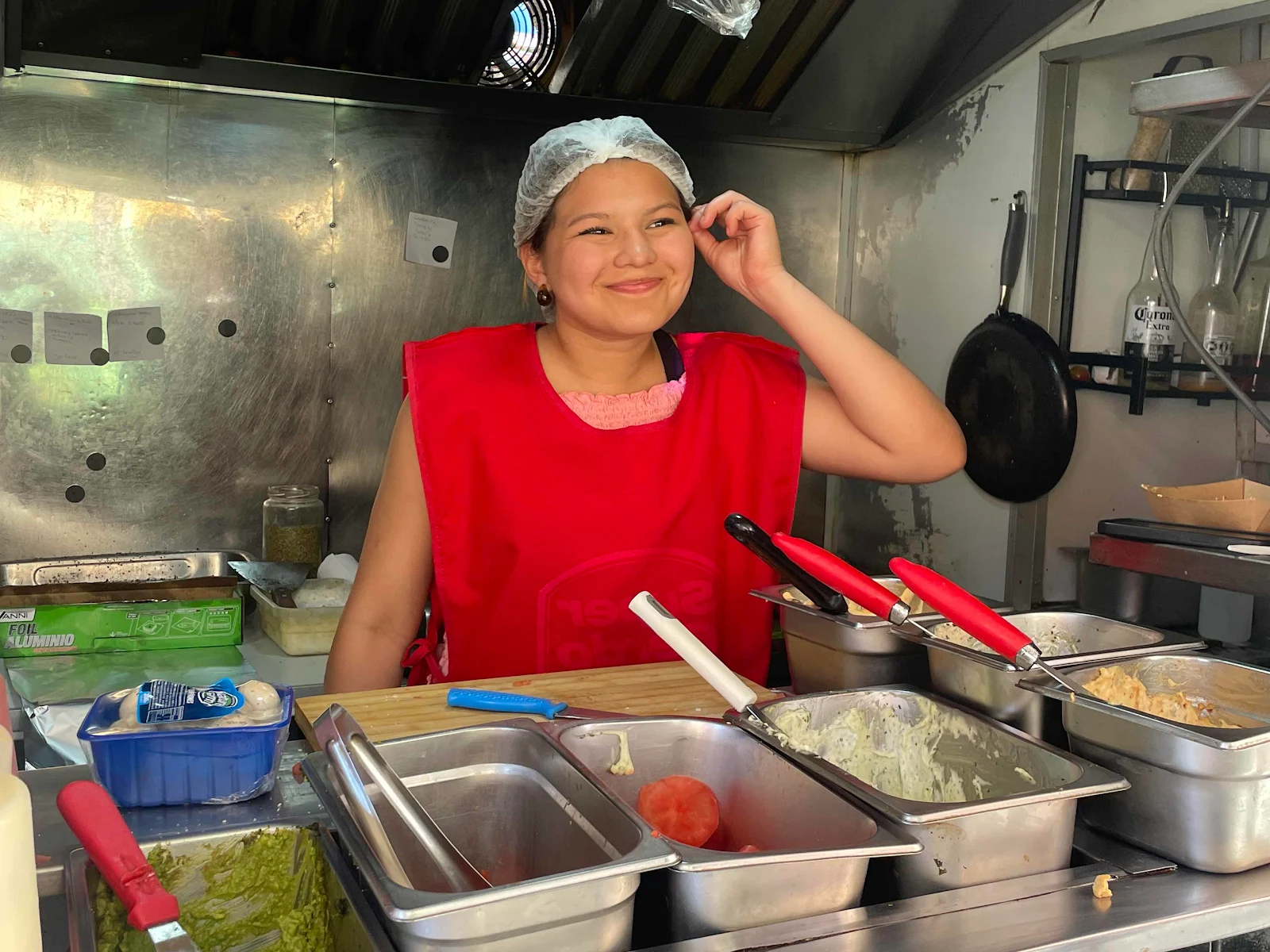
The VW with the lifting roof was staffed by a shy or withdrawn character making delicious fruit drinks. Layne had mango/passion fruit and I had lemonade.
She ordered and I stood by the sandwich truck which was making us a slightly odd pork burrito type sandwich rolled in a sort of flatbread. I liked it but it took a while to prepare and Layne got bored waiting so she didn’t like it as much.
Besides the two young women making it we’re cute.
This one is a Venezuelan refugee making a life here. We were talking about the poverty in Peru and she said you haven’t seen poverty if you haven’t been to Venezuela. That ended that conversation.
We got some lentil soup for dinner with our sandwich to split.
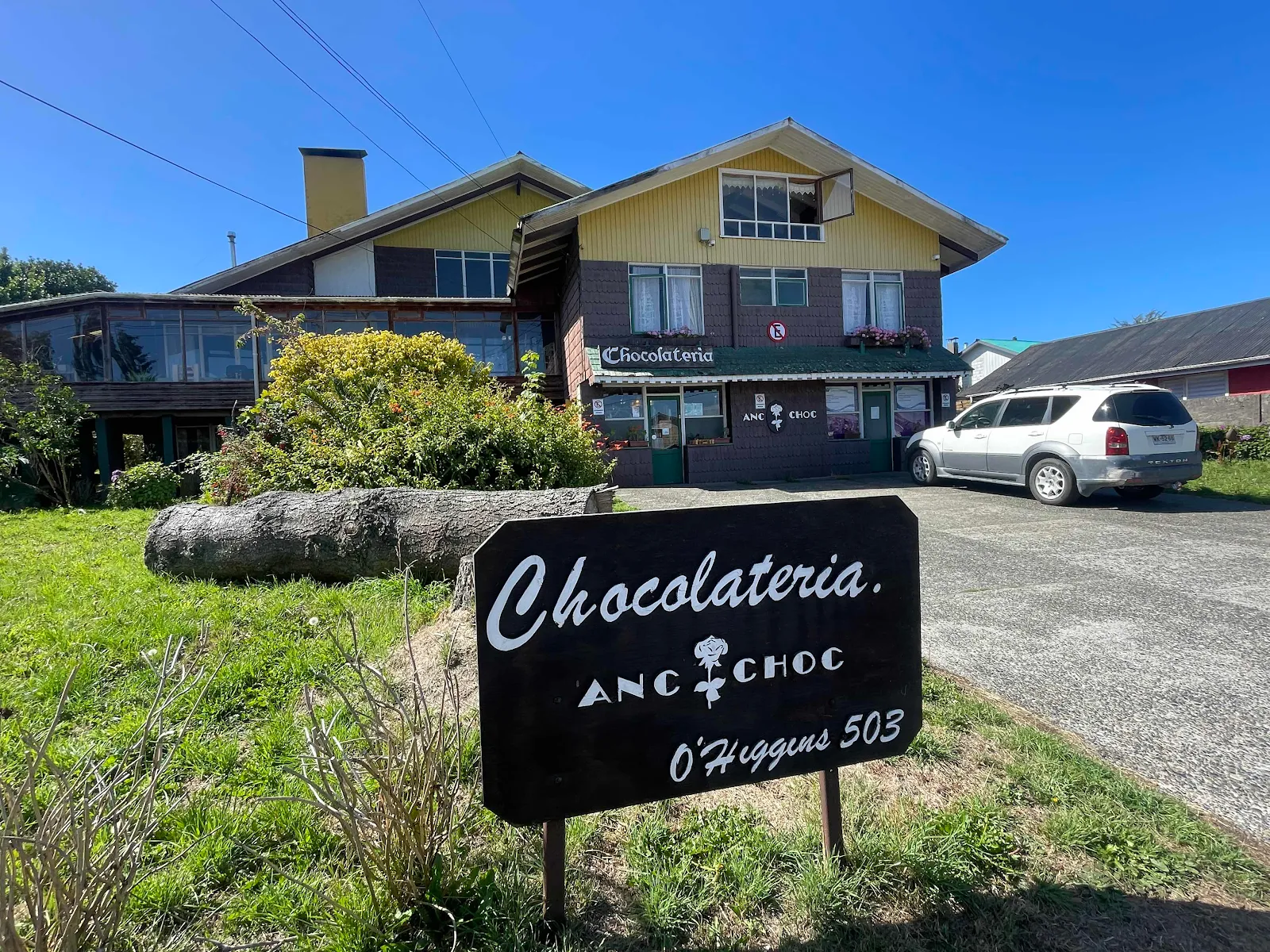
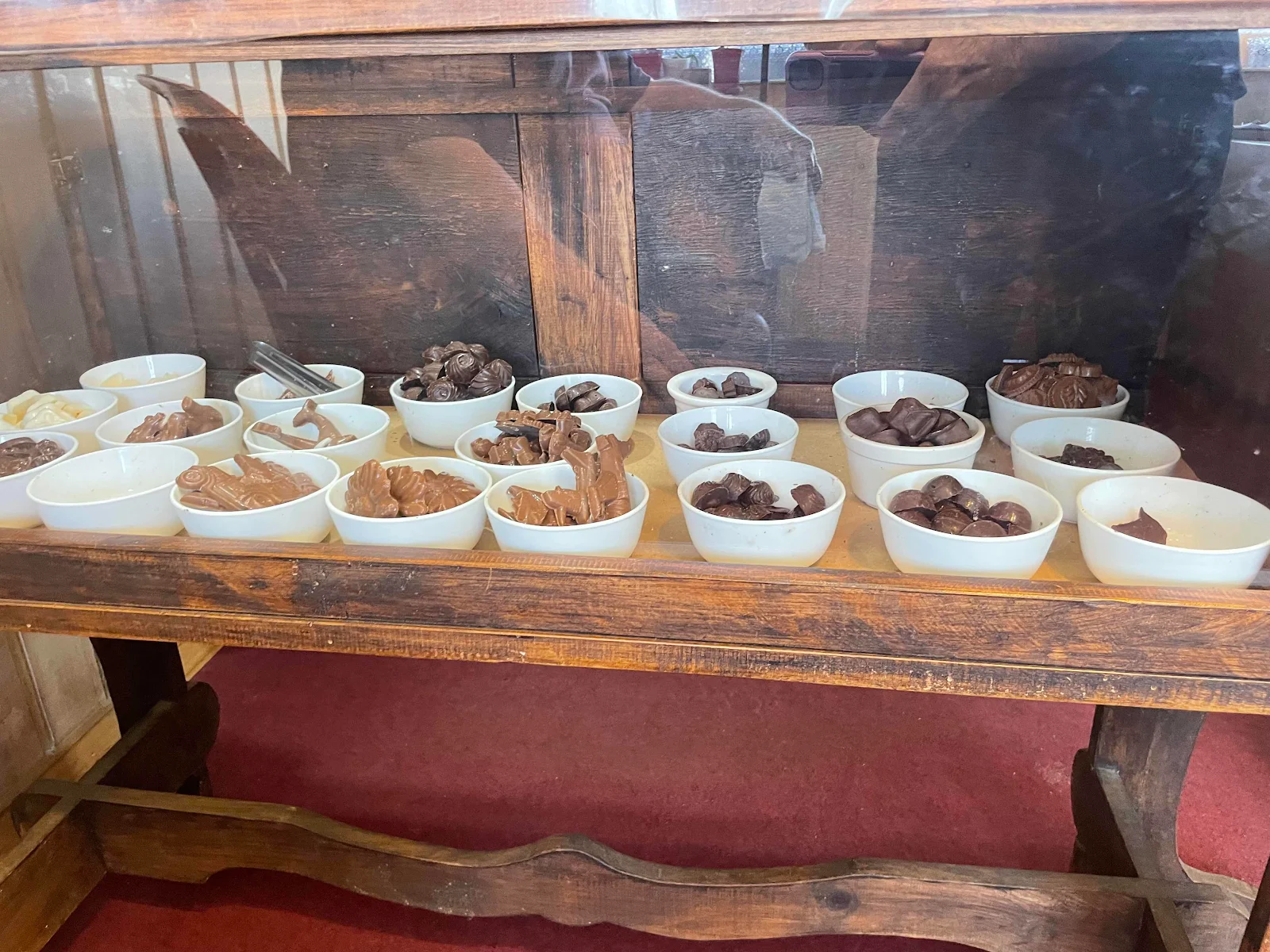
And here I tasted the best smoothest dark chocolate I’ve ever had. It was smooth and not at all bitter.
We got right buck’s worth of milk and dark chocolate. Quite the treat.
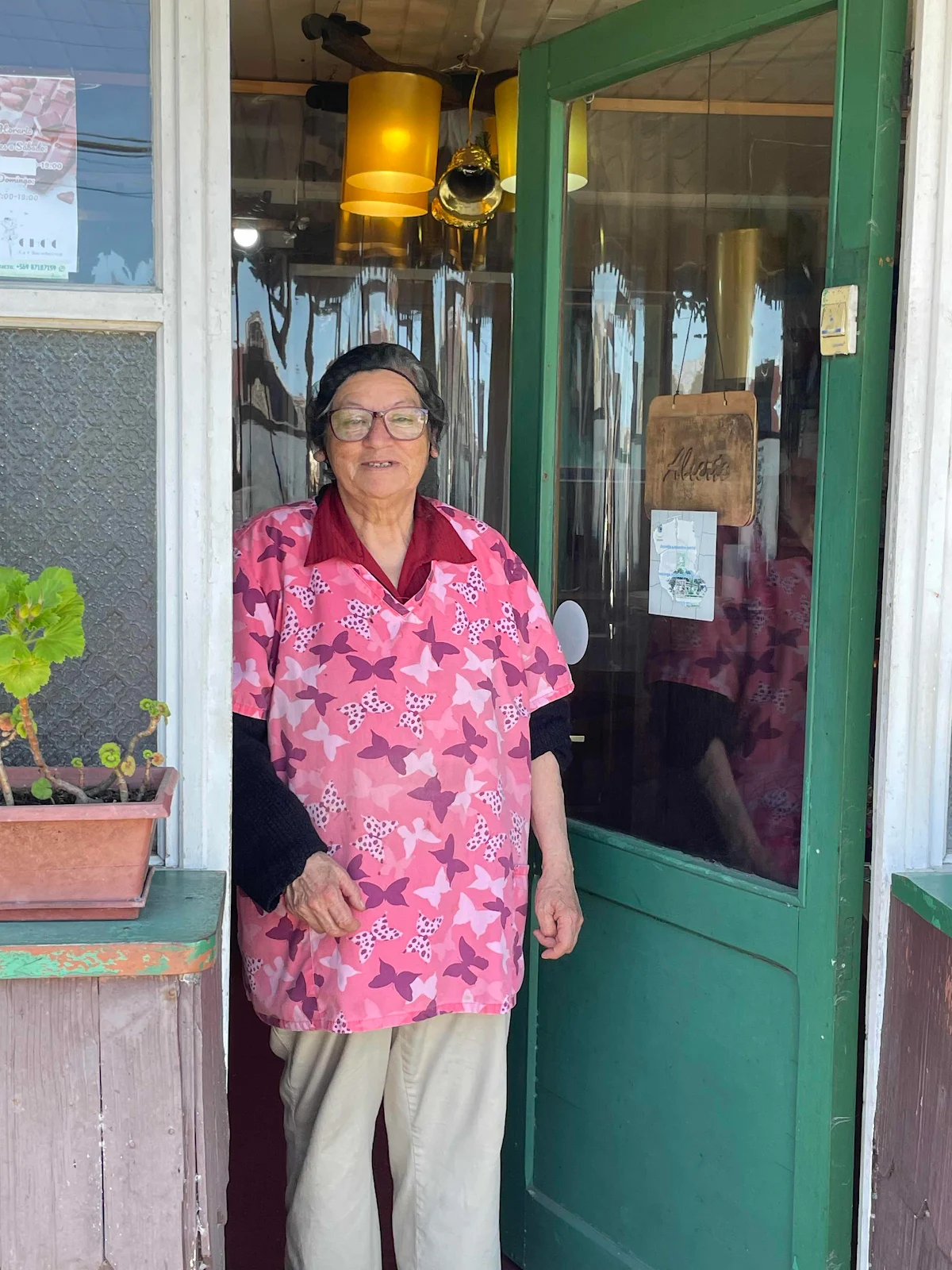
She’s a native of Puerto Montt across the water and she’s lived here for forty years and been making chocolate for 25. She’s really good at it, lots of flavors and fillings.
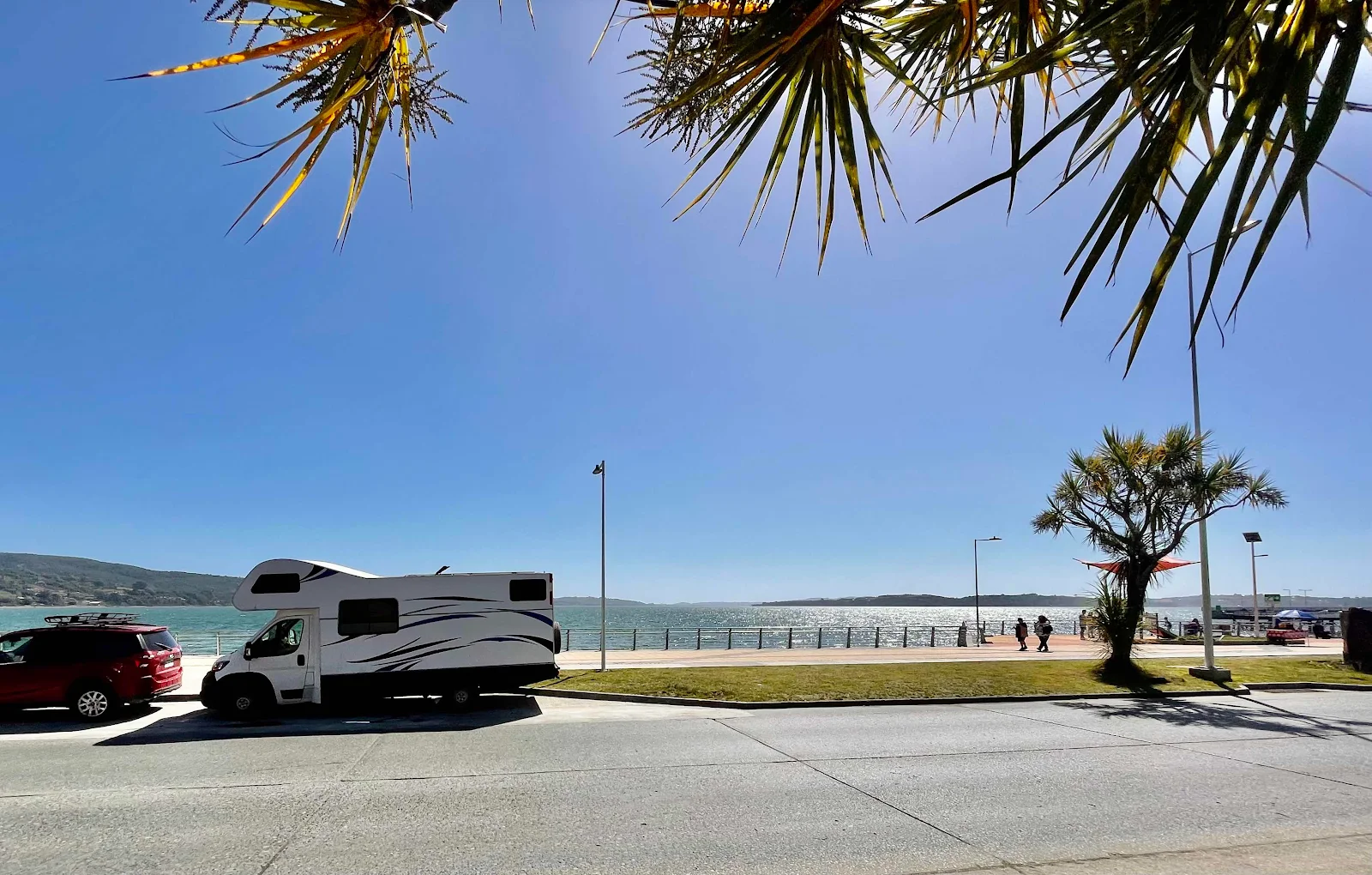
Ancud waterfront. The other bank we went to for cash had a broken ATM. I never said Chile was perfect.
We drive out of town after shopping for a few essentials at the supermarket but it was after seven when we reached our iOverlander free camp site.
It’s not a bad spot.
Rusty liked it; always good.
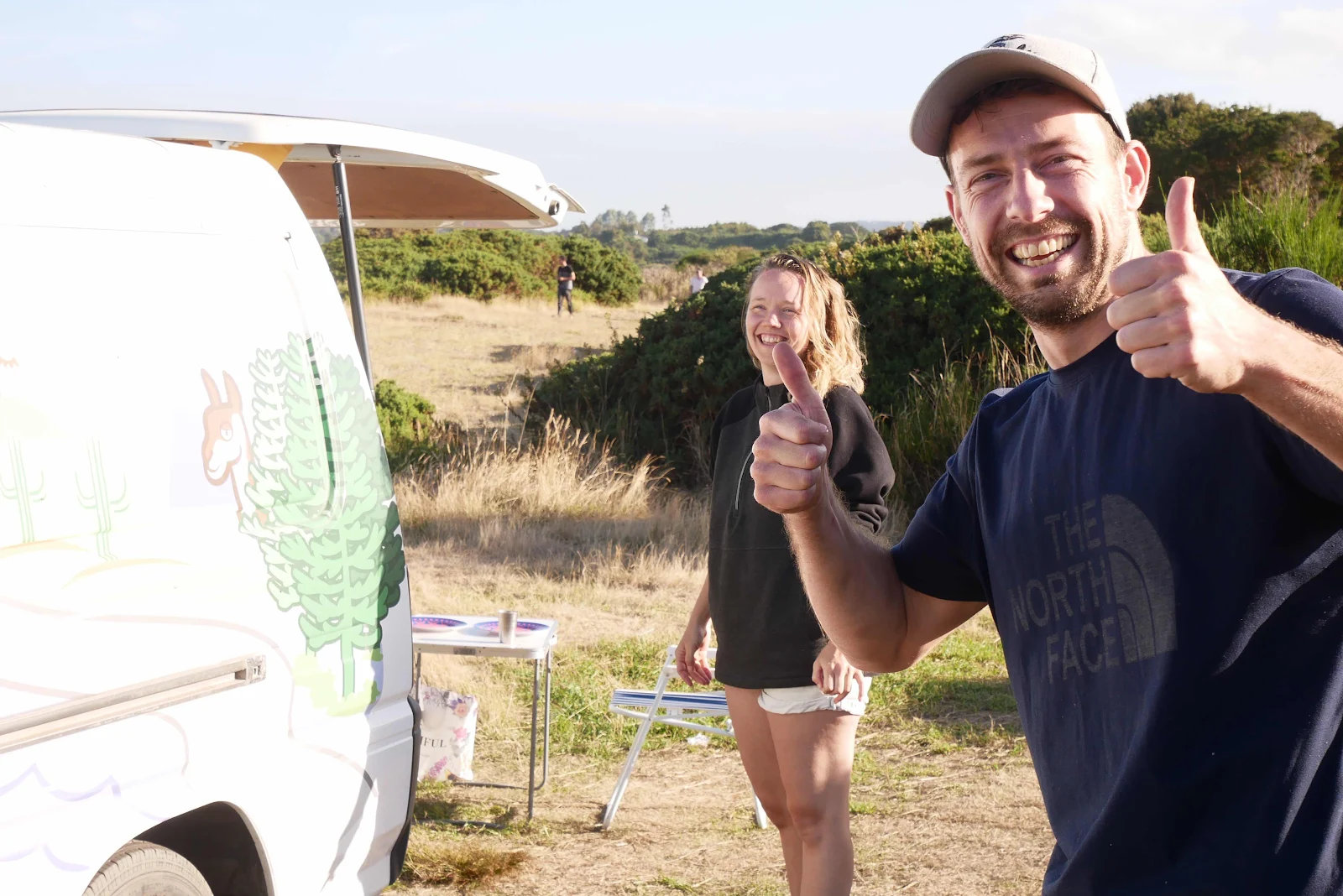
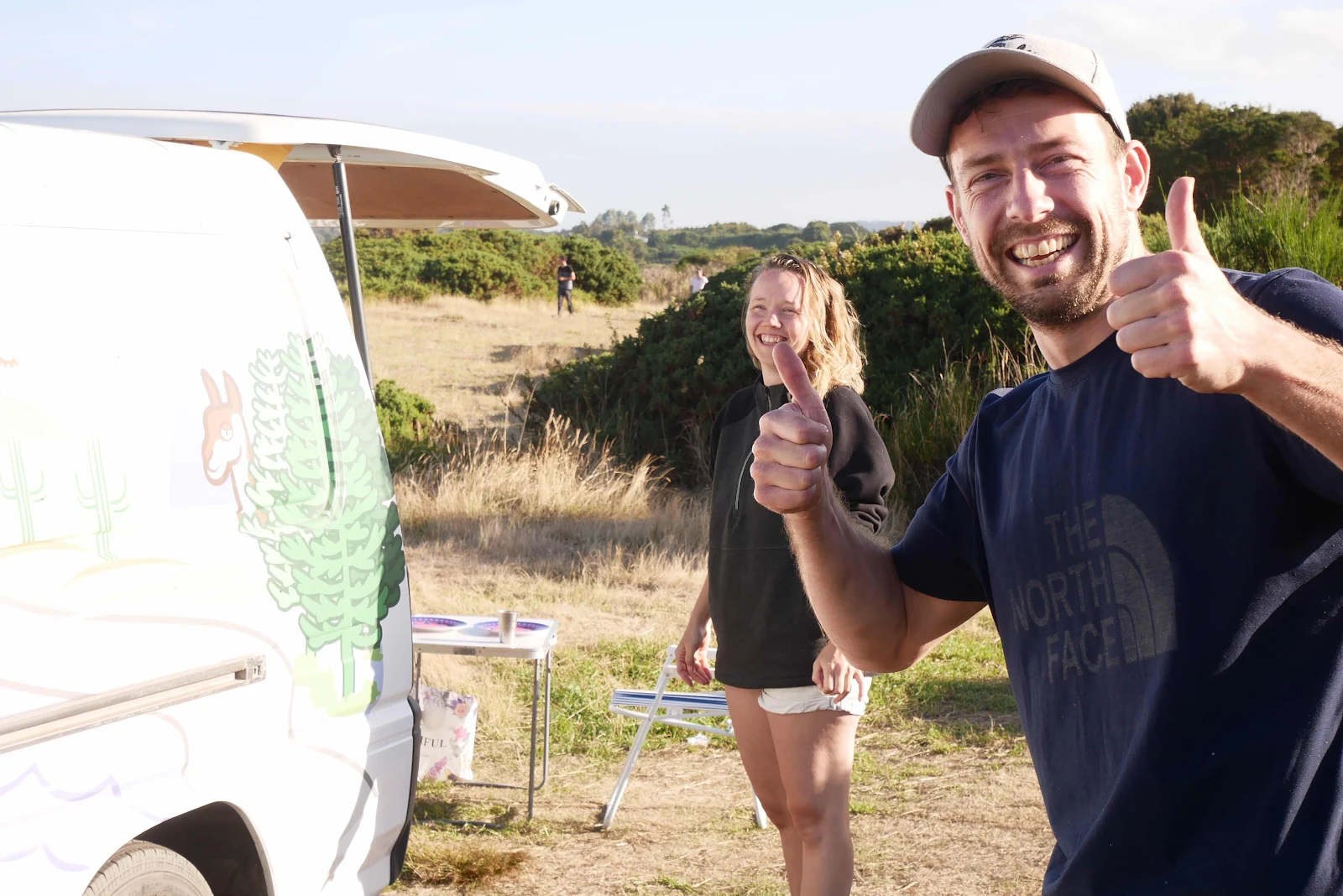
We met a young Dutch couple on a month vacation driving a rental van from Santiago to Punta Arenas and having fun.
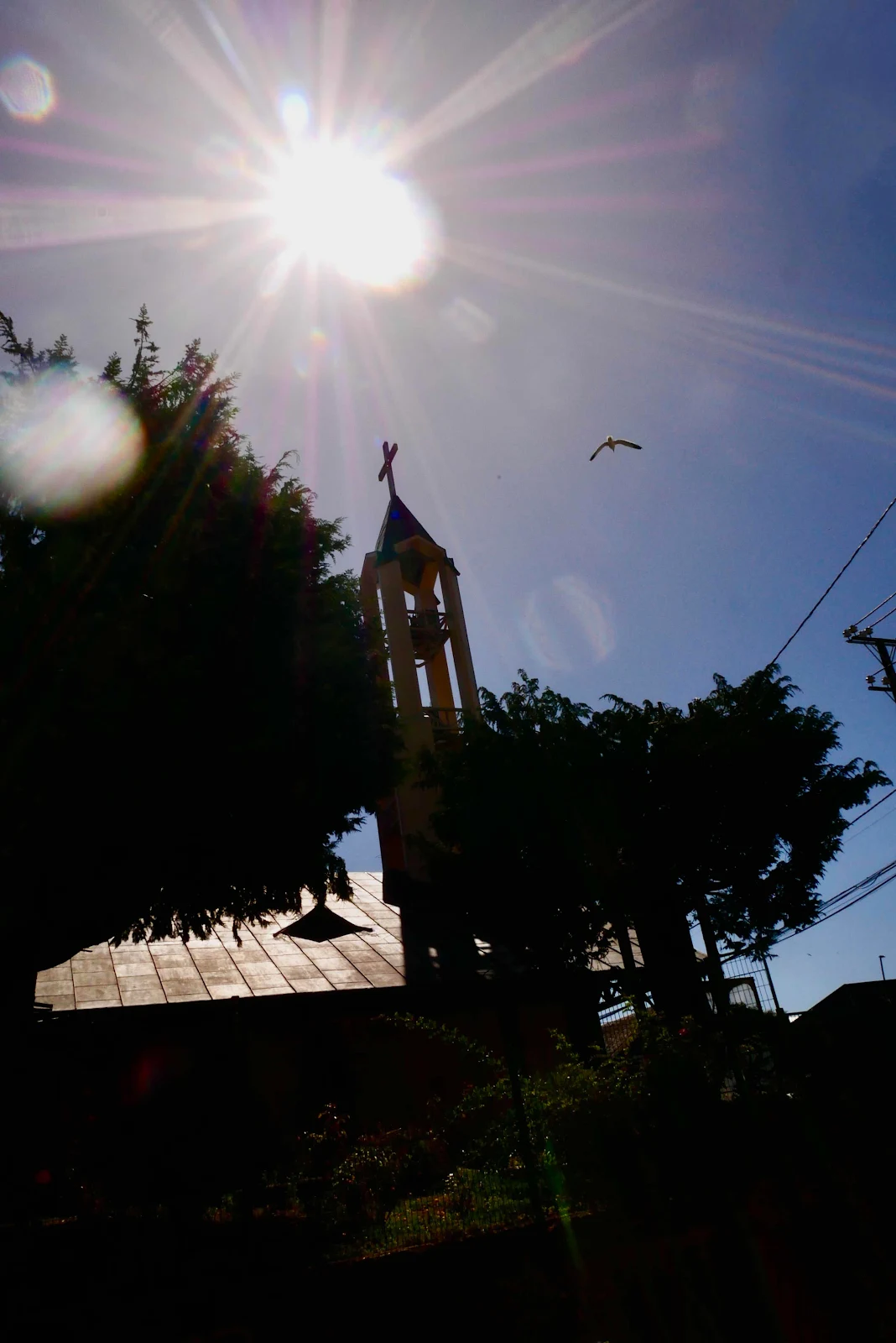
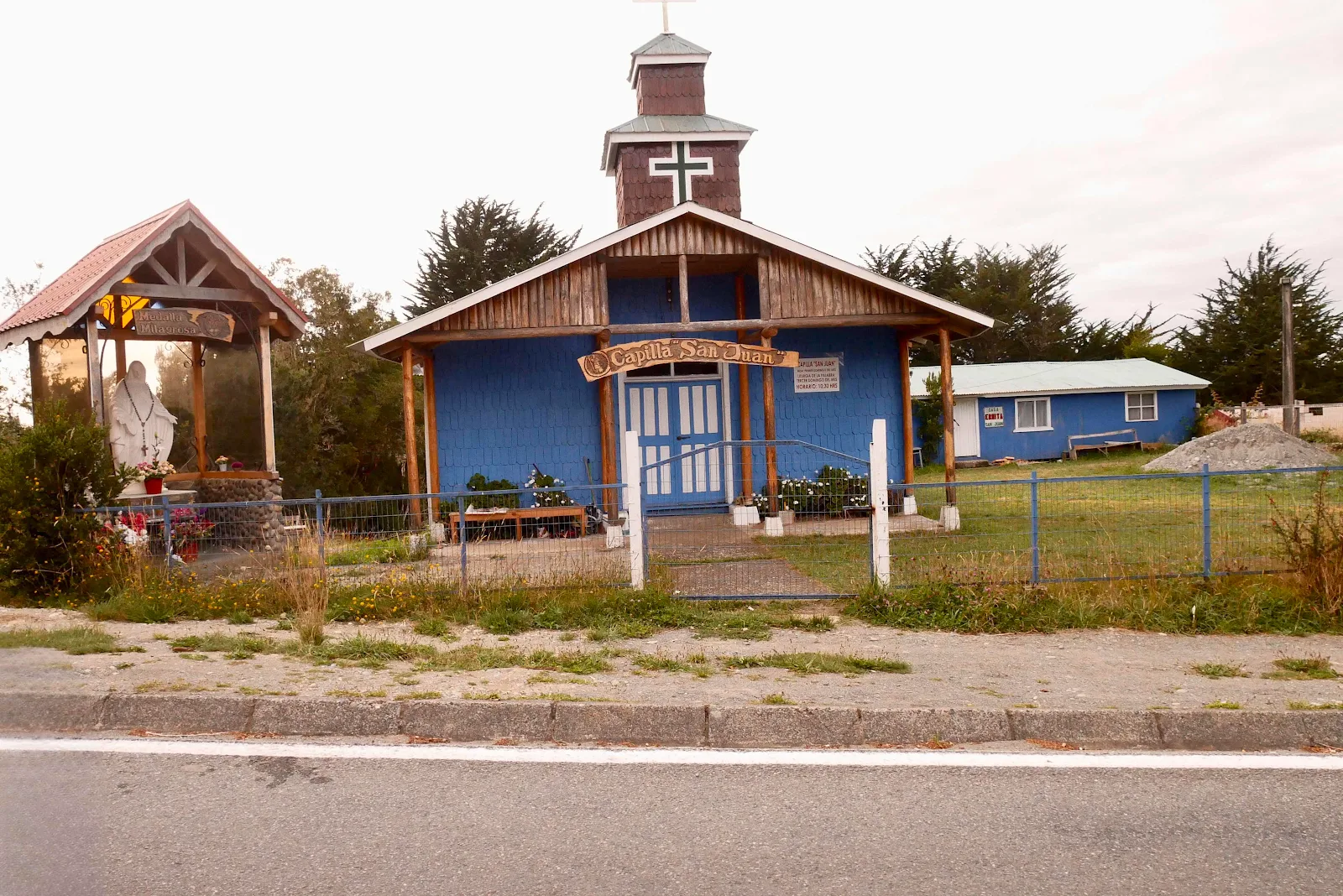
The ATM fiasco was annoying and the shopping was a crowded affair but really it wasn’t bad day yesterday. Laynes plan was a good one. Hope you did okay. A wooden church in real life: