I had never heard of San Juan a provincial capital wedged between Mendoza the famous, Cordoba the well known and up-and-coming Cafayate the new wine center, the illustrious cities of western Argentina.
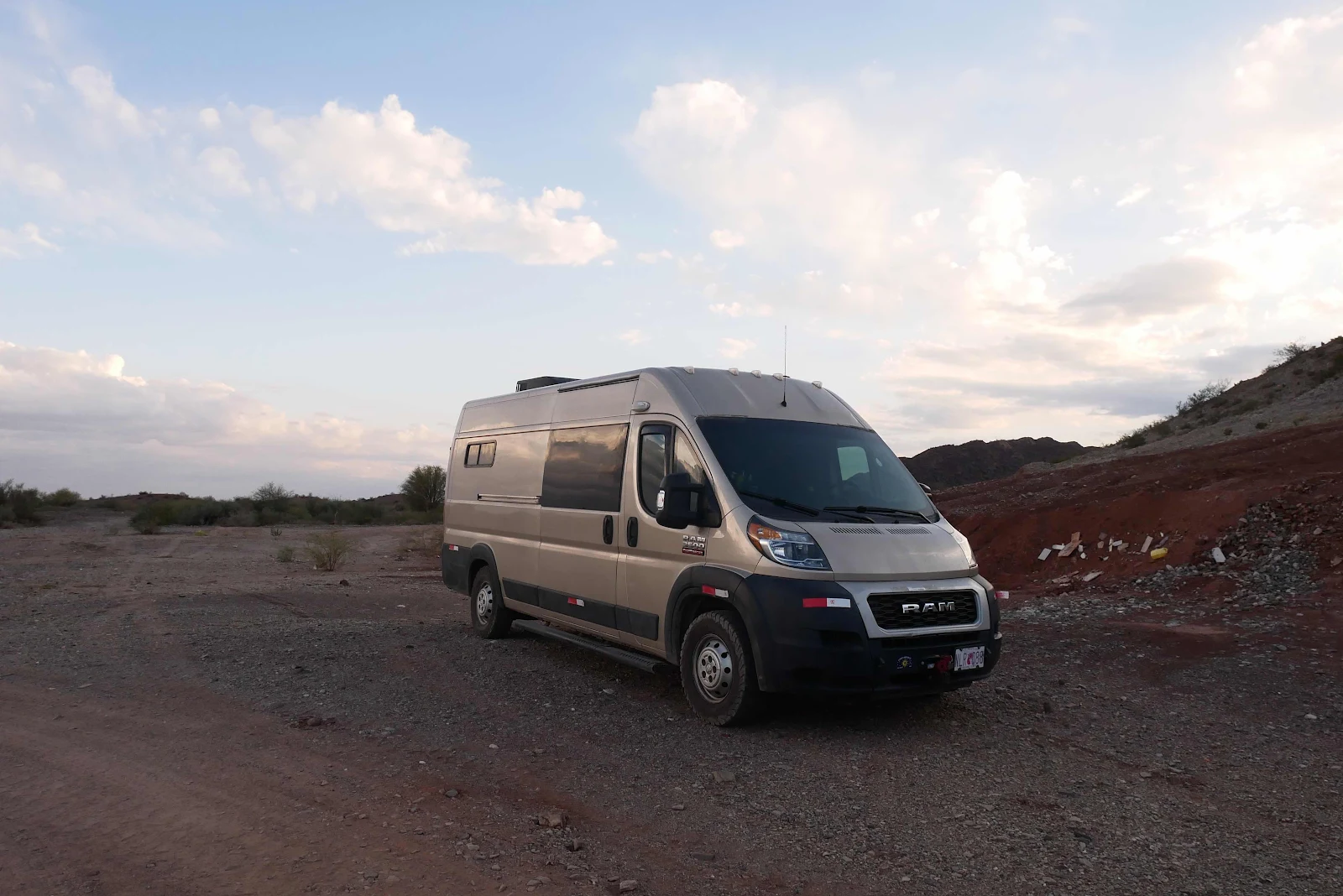
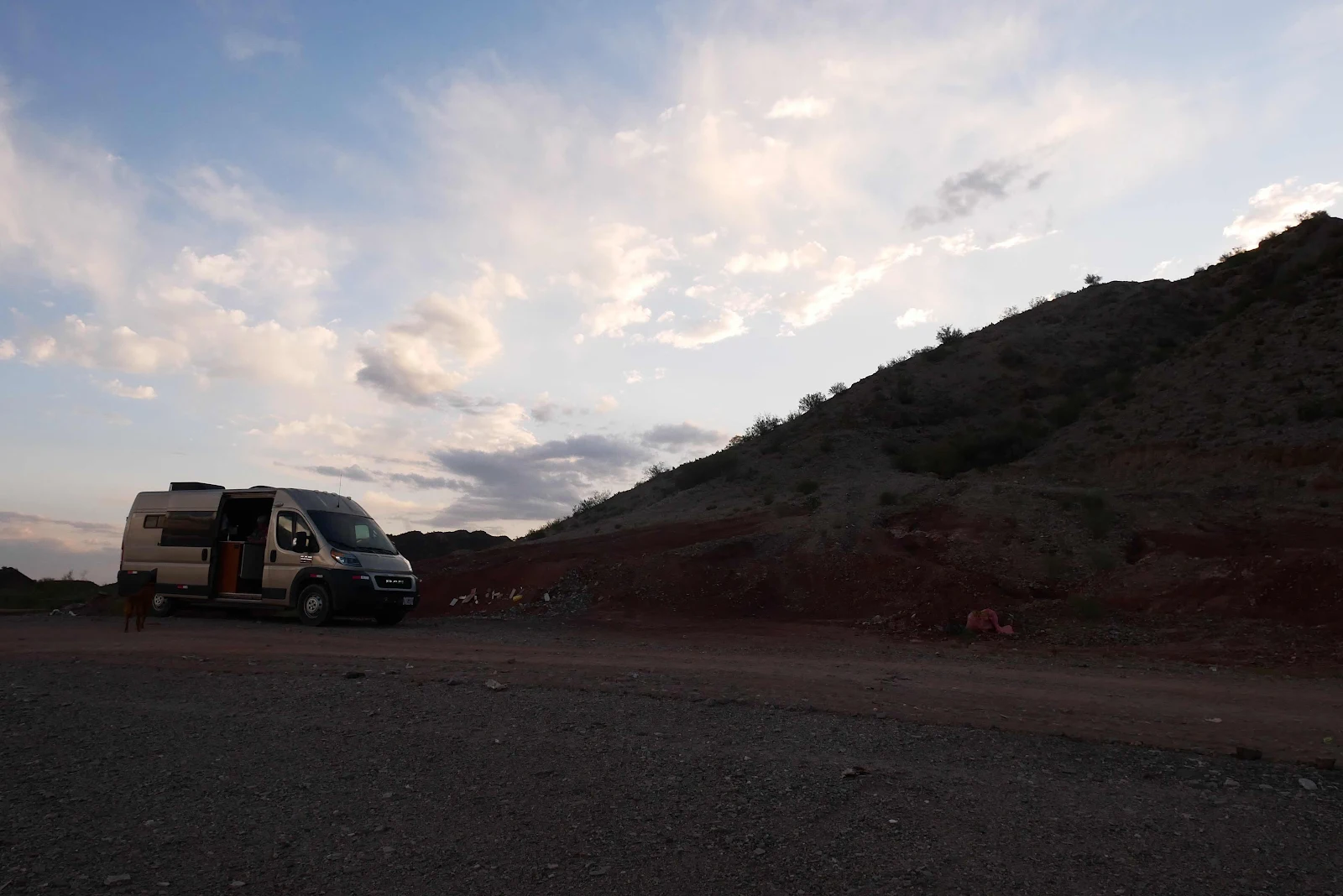
We were half an hour south of San Juan when we left our delightful quarry parking spot, so we were going to see this mysterious city.
It was Sunday afternoon by the time we arrived after a slow morning of cooking cleaning and watching tv as the drizzle and fog socked us in and made our van a snug cave. Rusty got into bed and let go, snoring without moving for four hours straight. He knew it wasn’t worth moving. By the time we got to town the air was cold, 55 degrees and the sky was dark gray. It felt like a winter afternoon.
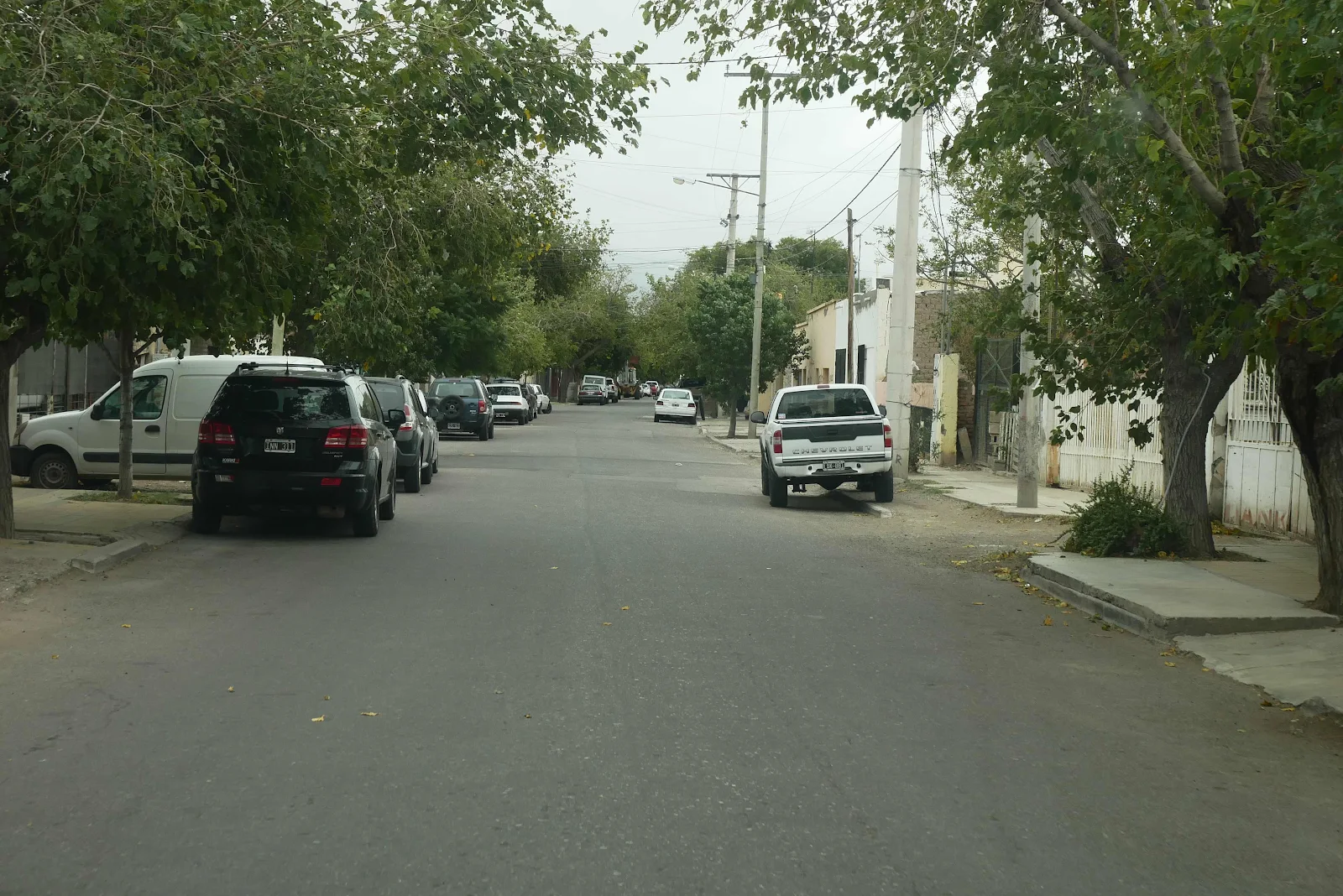
In the United States we see Latin America, if we see it at all, as one amorphous culture, an ill defined group of brown people dealing drugs and lying in wait to ambush American visitors. And that’s mostly Mexico but the further south you go the less that monochrome image applies.
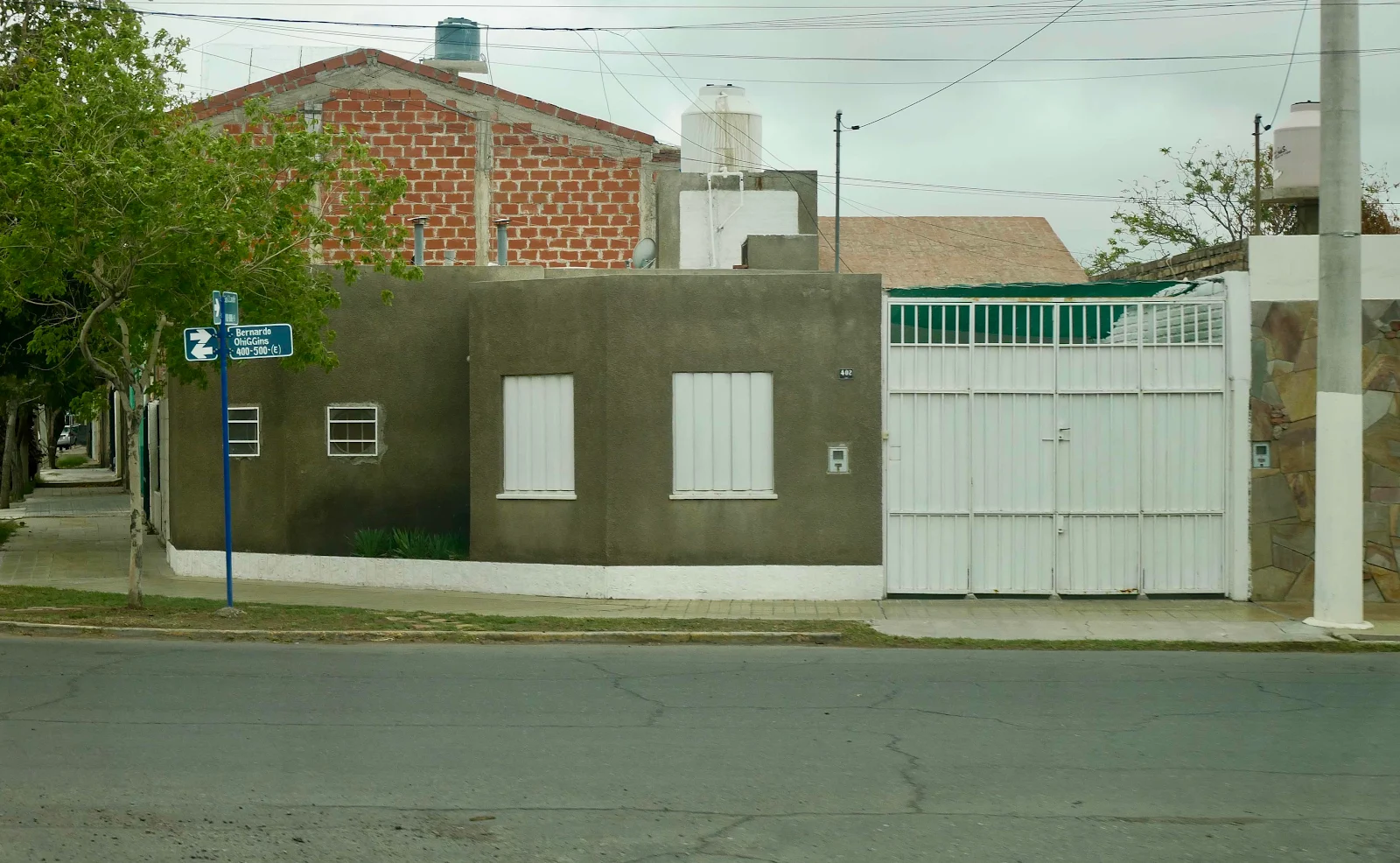
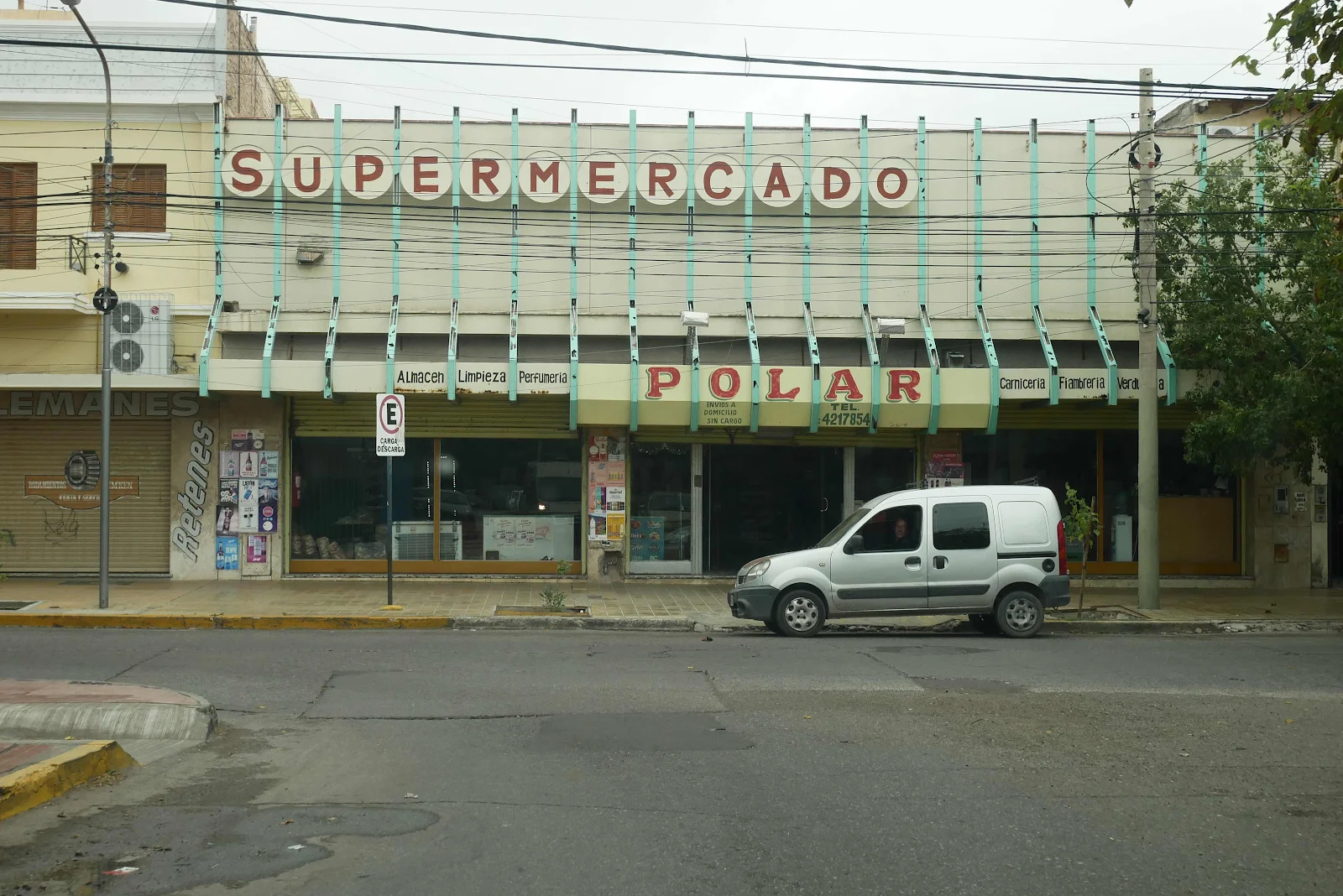
There is no Spanish colonial architecture south of Peru. The people in Chile and Argentina are overwhelmingly white and the architecture is an artist’s nightmare. Buildings are utilitarian beyond description: bricks, cement, cast iron, and cities are laid out in grid patterns, painfully symmetrical. Mexico with its culture of spice and music and color and emotion is a distant memory. This is Latin America but it’s not what we see through the border fence.
Consequently cities are less historically satisfying than those Up North with their bedecked facades and towering steeples and European sense of place. Argentine towns look more like US suburbs and not necessarily the cute towns like Stowe or Silverton or San Luis Obispo. Or Key West come to that.
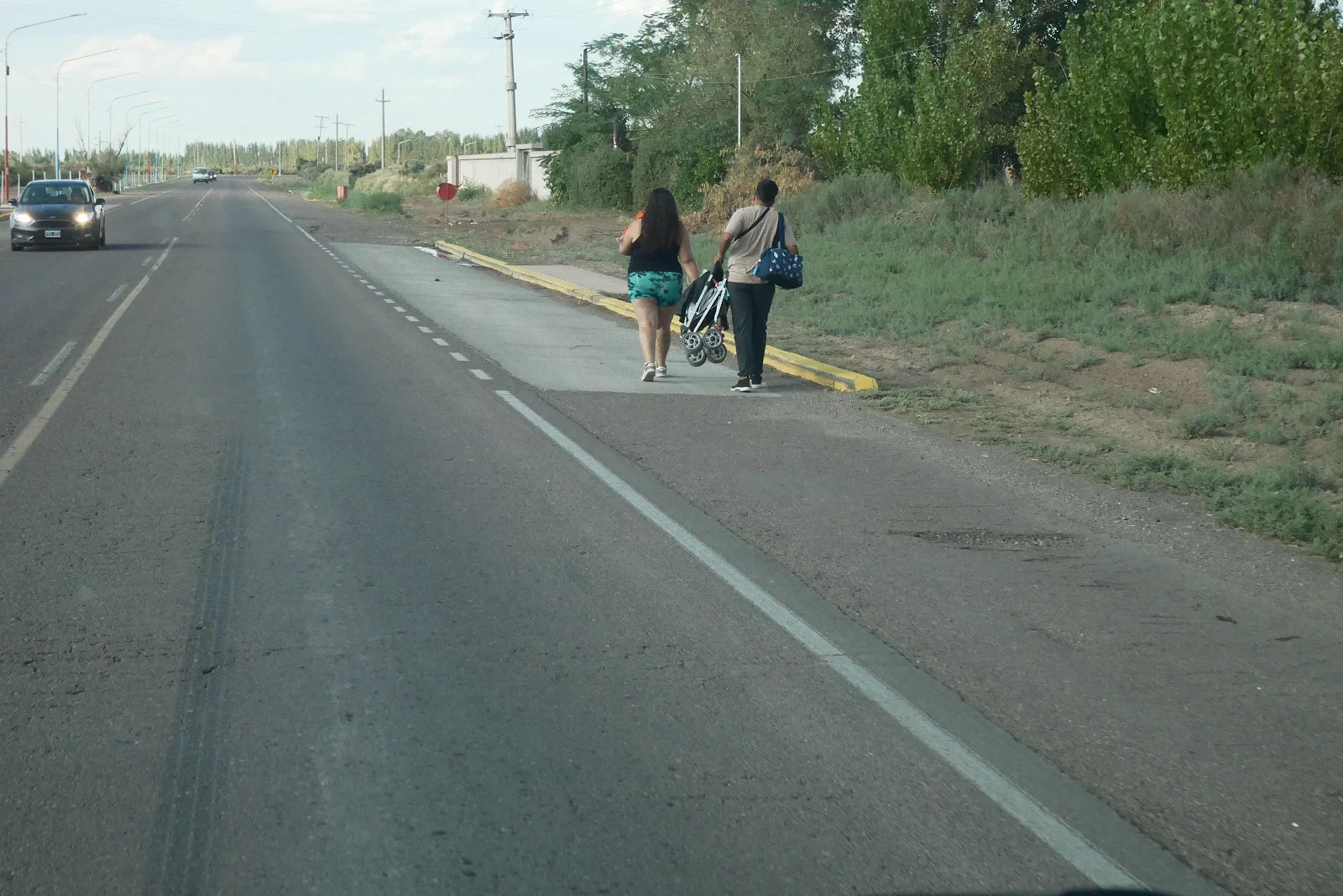
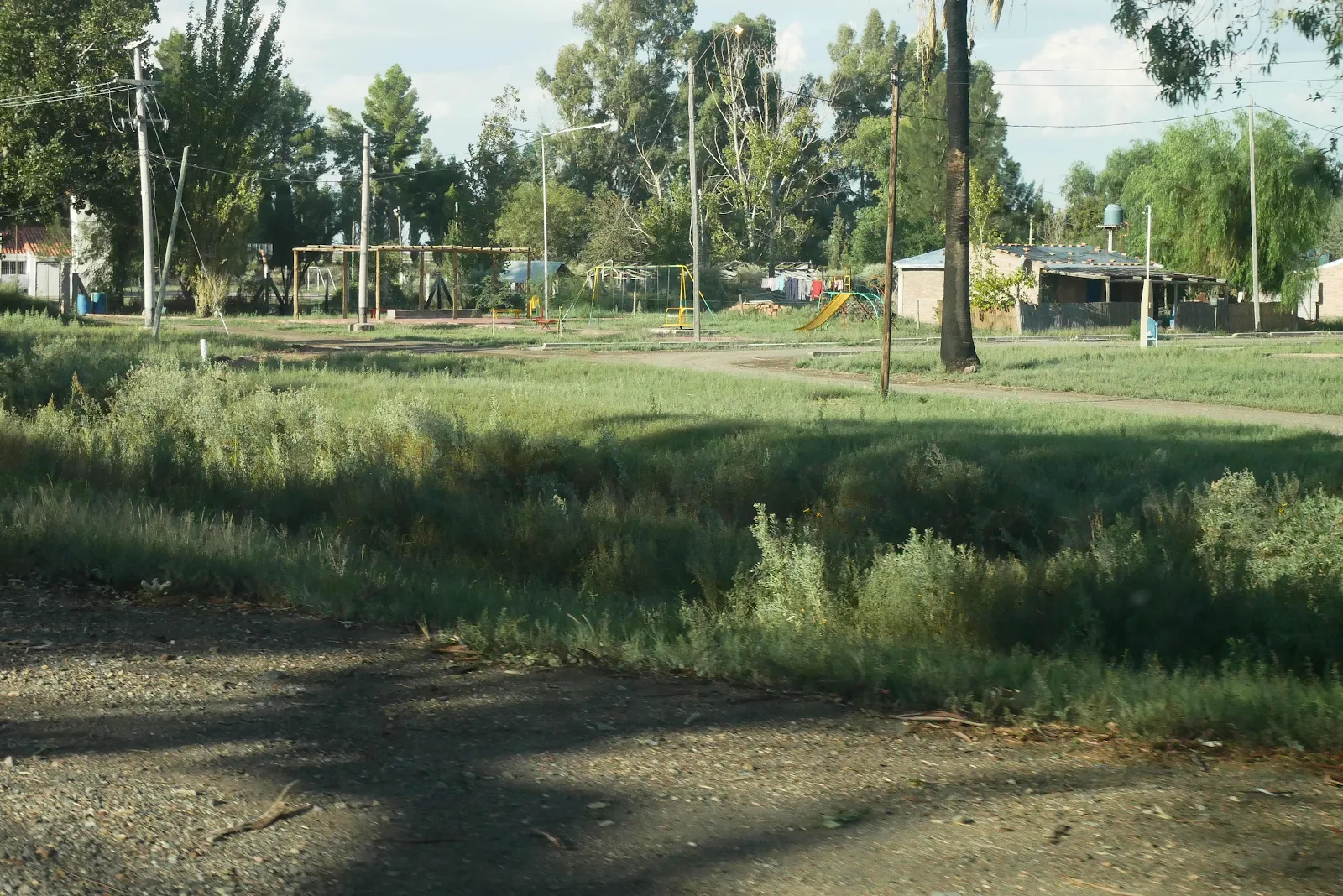
They do plant trees and many streets are one way so sidewalks can be broad and there is on street parking all very practical but the front yards are small cement spaces and everyone lives locked away behind bars. Cities are starved for funds so streets are generally of abysmal quality and weeds and dust predominate.
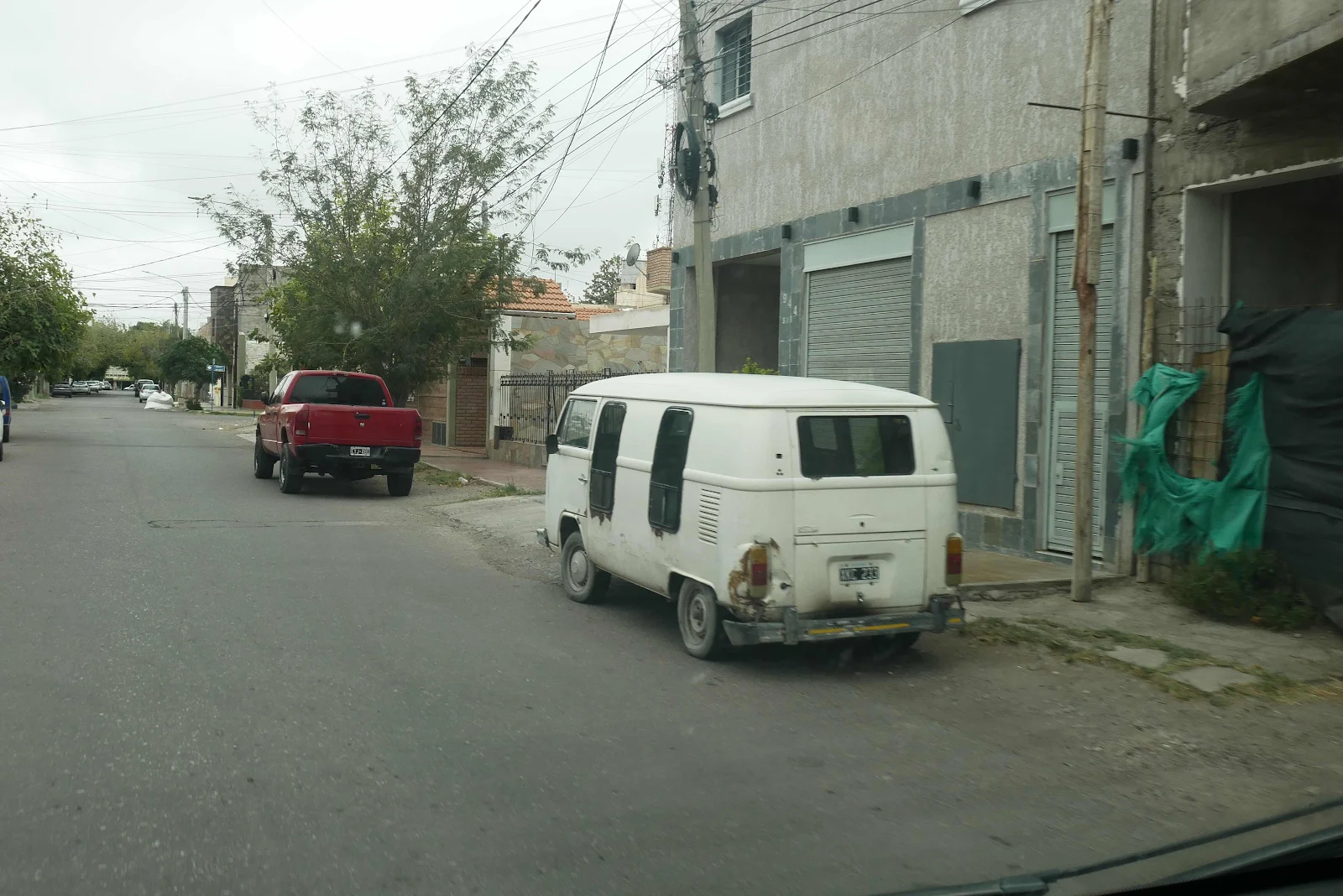
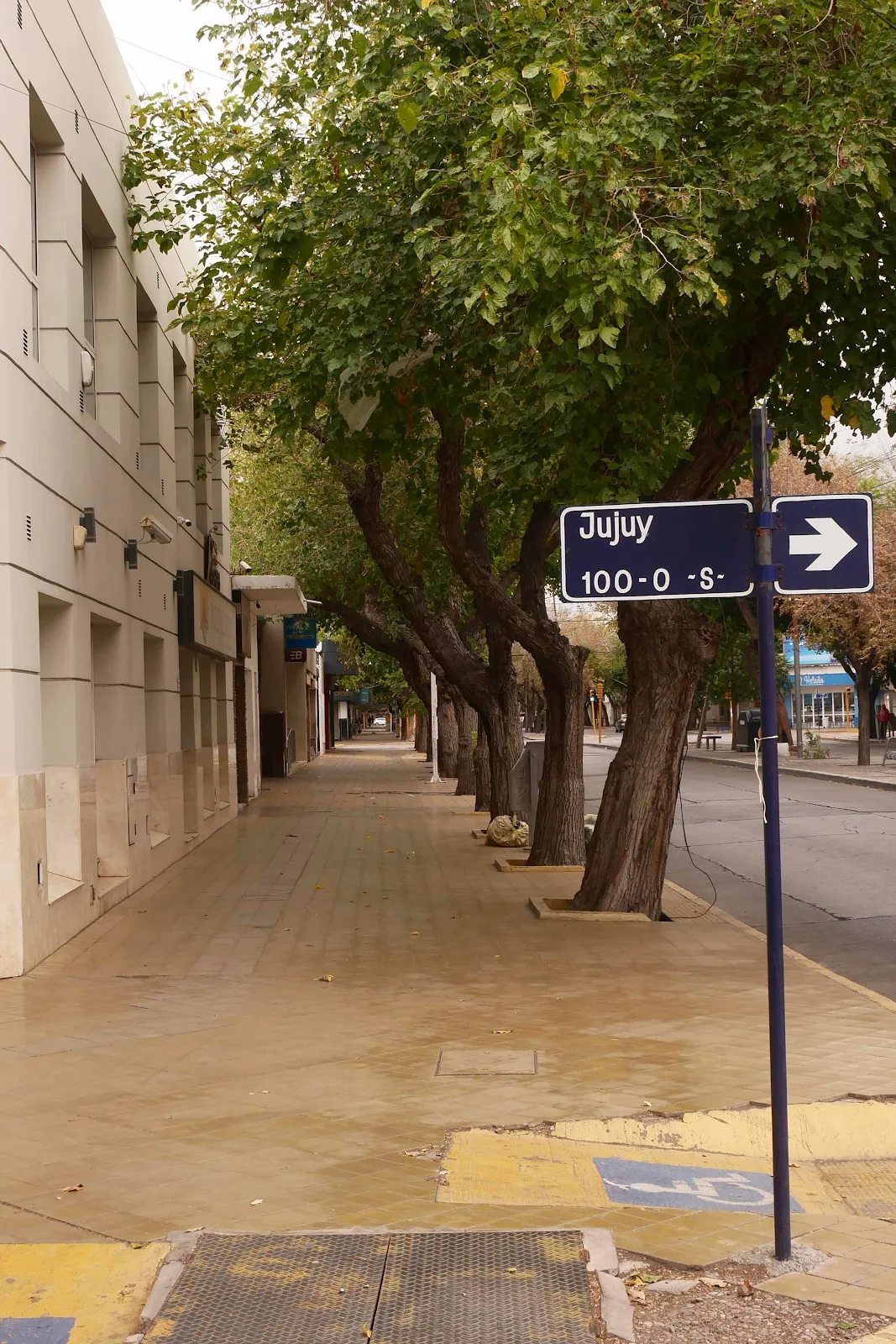
Below you can see the street sign and obviously that big white arrow means one way. However the right of way on city streets is utterly baffling. Rarely are there stop or yield signs which means it’s all a matter of guesswork and with the level of aggressive driving here every intersection ton is a crapshoot. It’s crazy and I say that as someone who has driven all over the world.
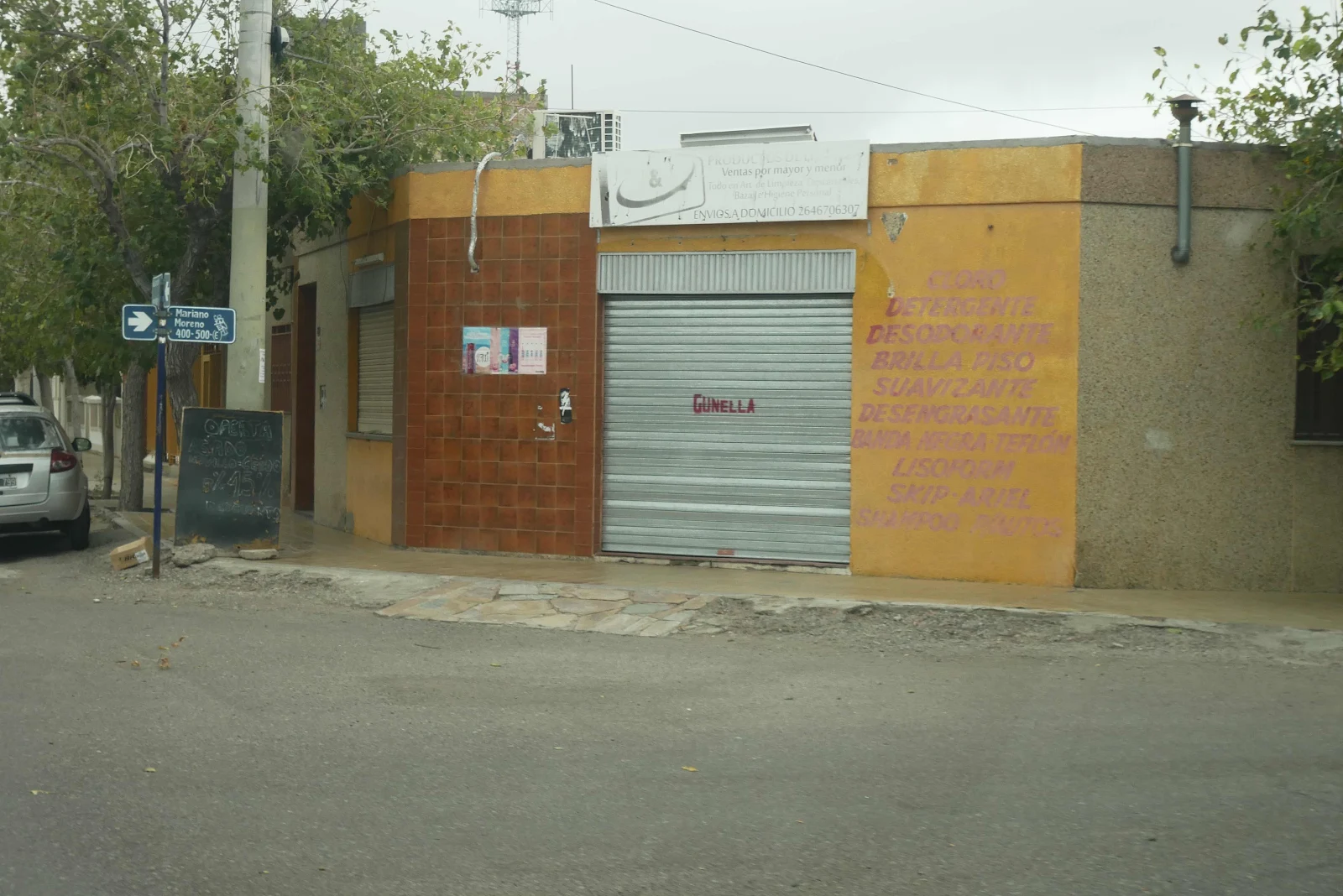
Look at the intersection below. Who has right of way? No idea. So my strategy is to approach each corner slowly looking hard for any stop or yield signs which could solve my dilemma. Below you can see there are no signs at all. If the side traffic slows at all I go first, slowly, but if they show no signs of losing their nerve I yield.
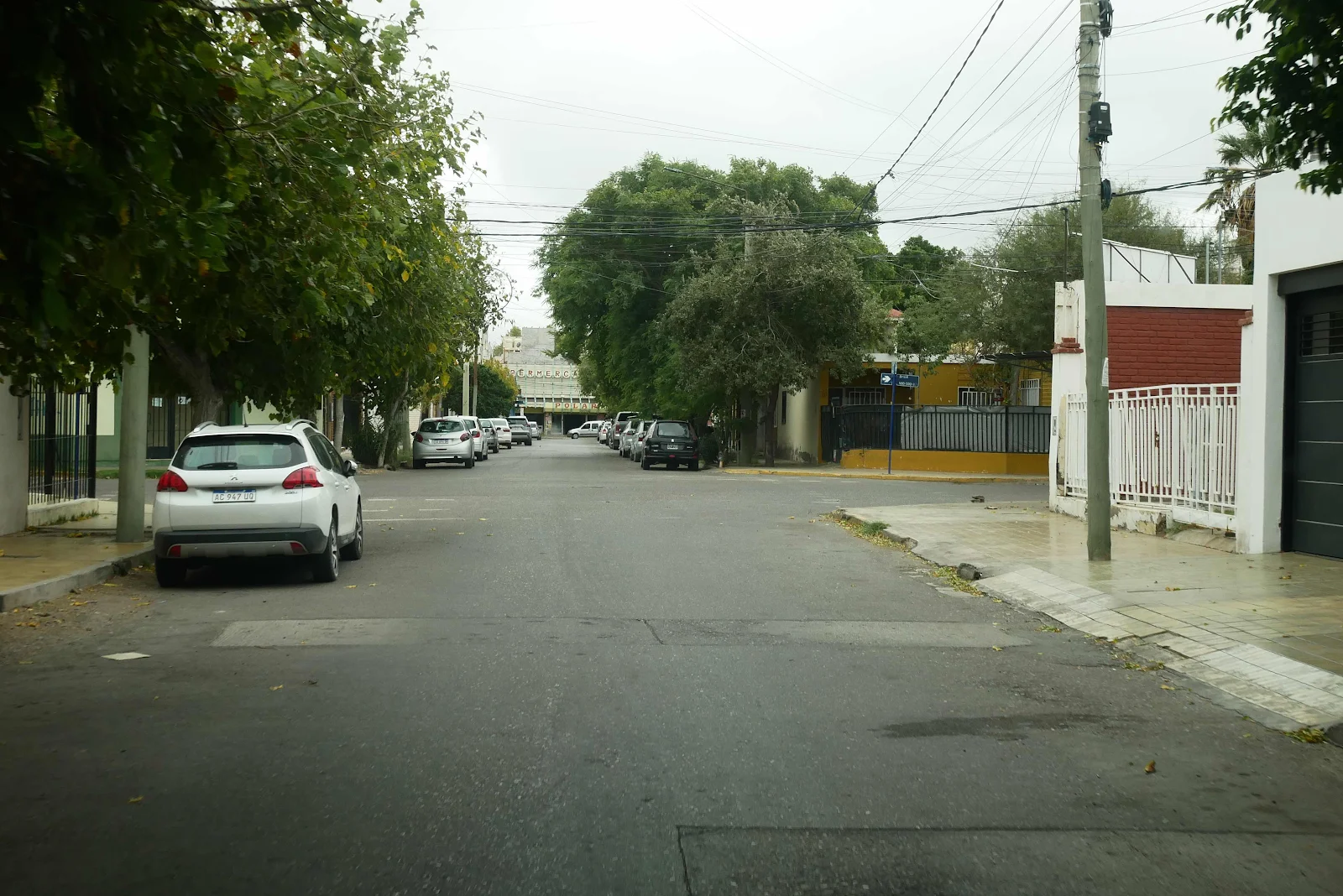
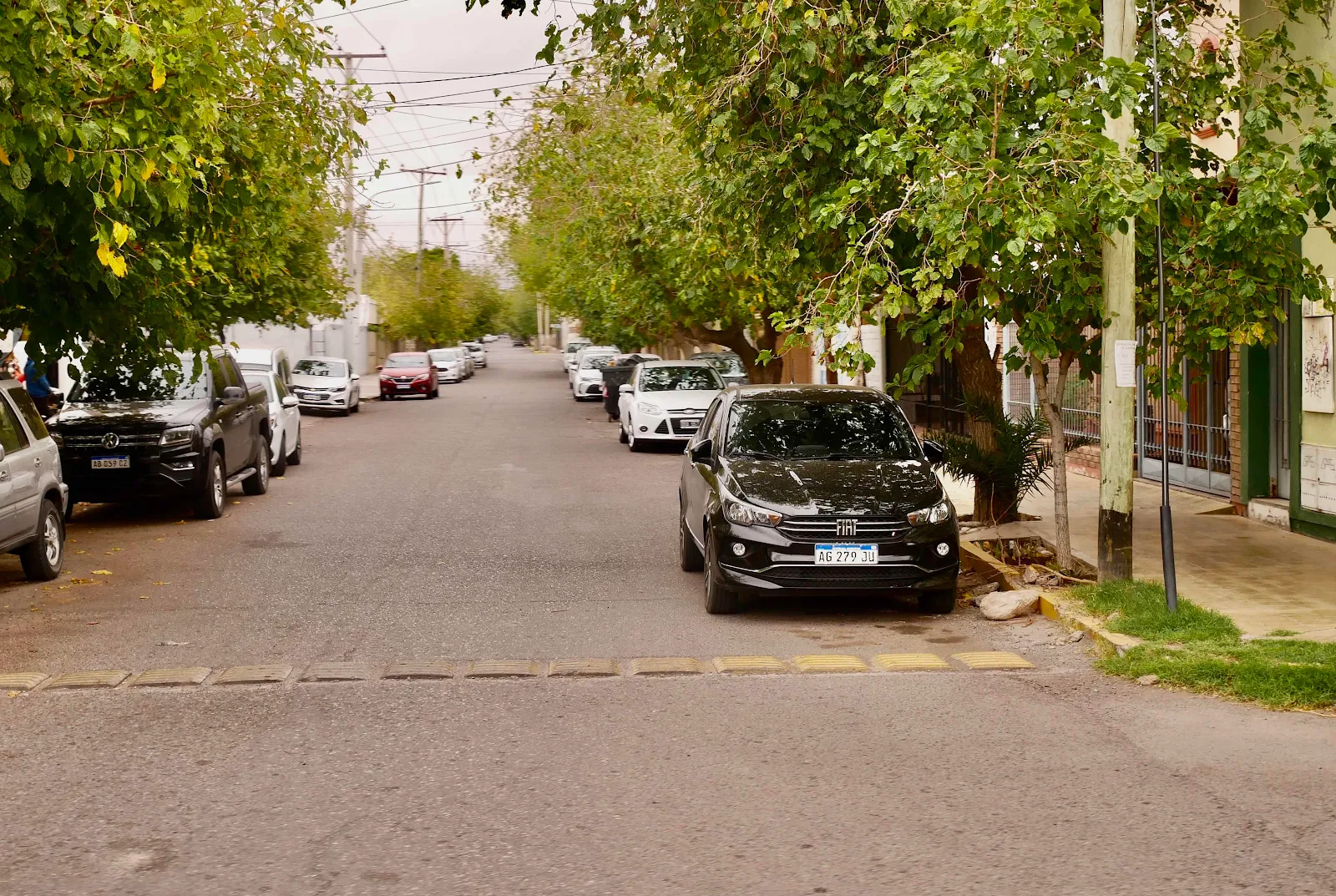
If I can I follow a car in front and I watch what they do and they can also provide warning of random speed bumps, see below. Most died bumps aren’t sign posted and many have lost their yellow paint and it’s infuriating because poor old GANNET2 bucks like a bronco I’d intact at speed.
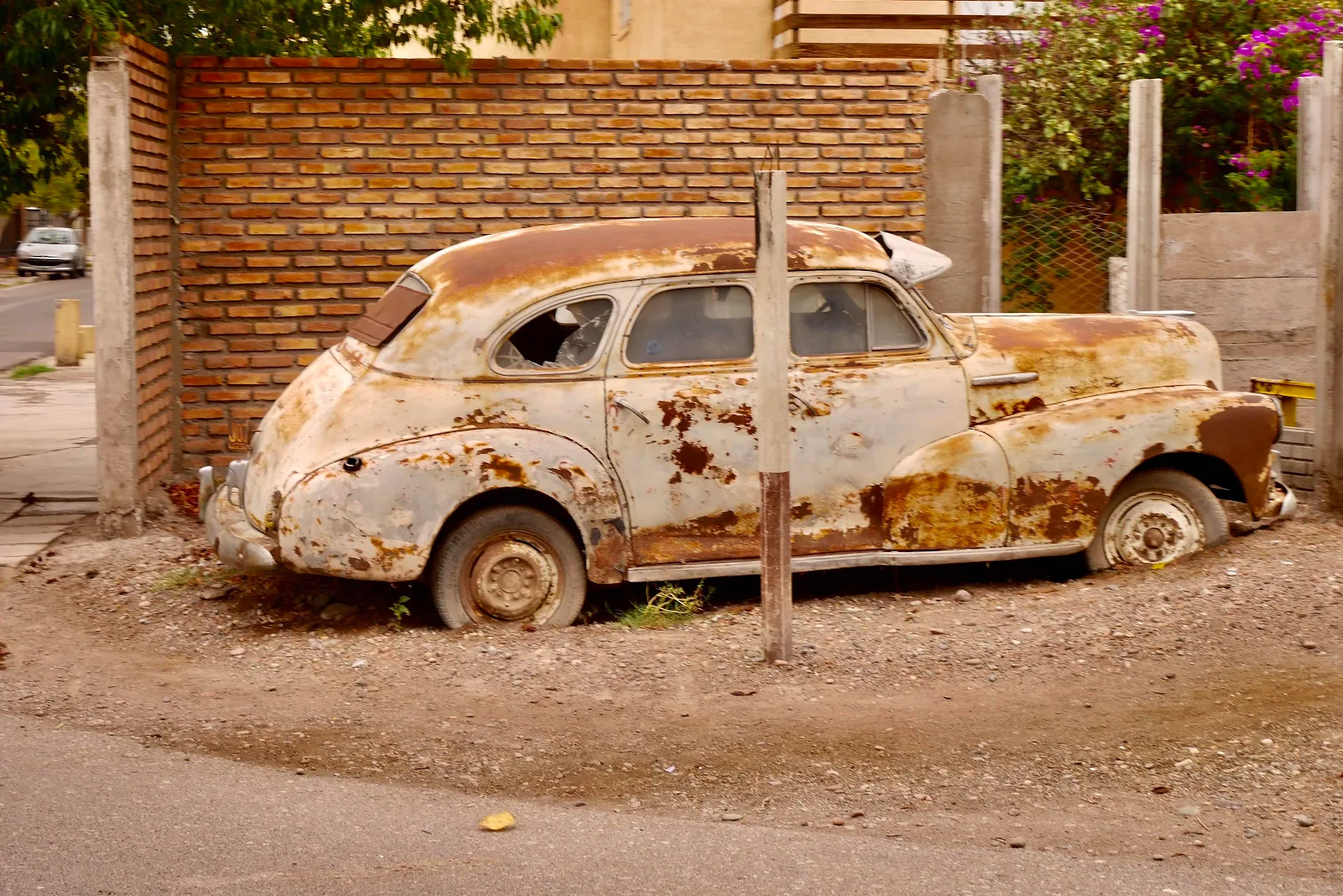
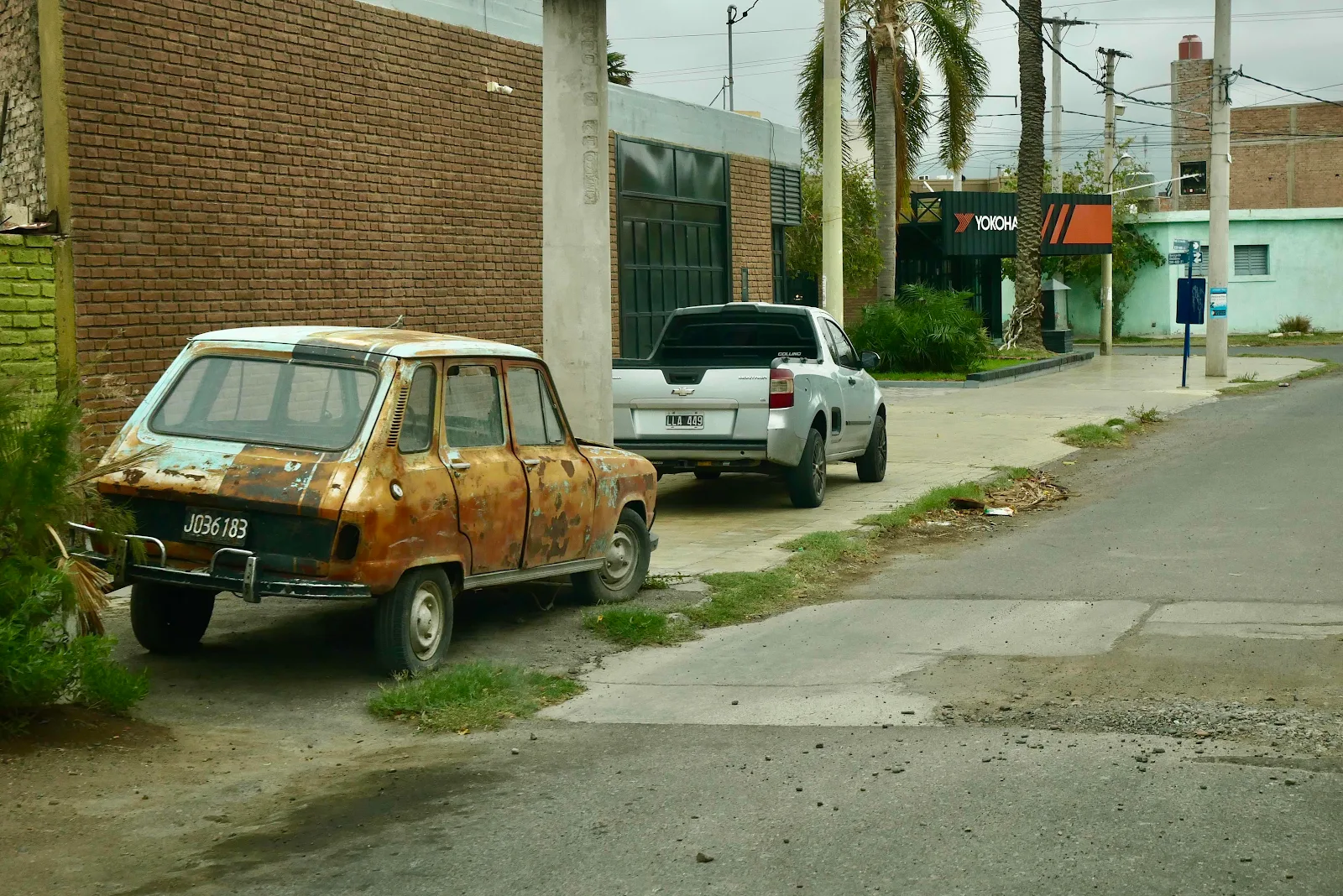
And then you see something out of the 1950s and you can’t help but smile ( and still ponder the right of way).
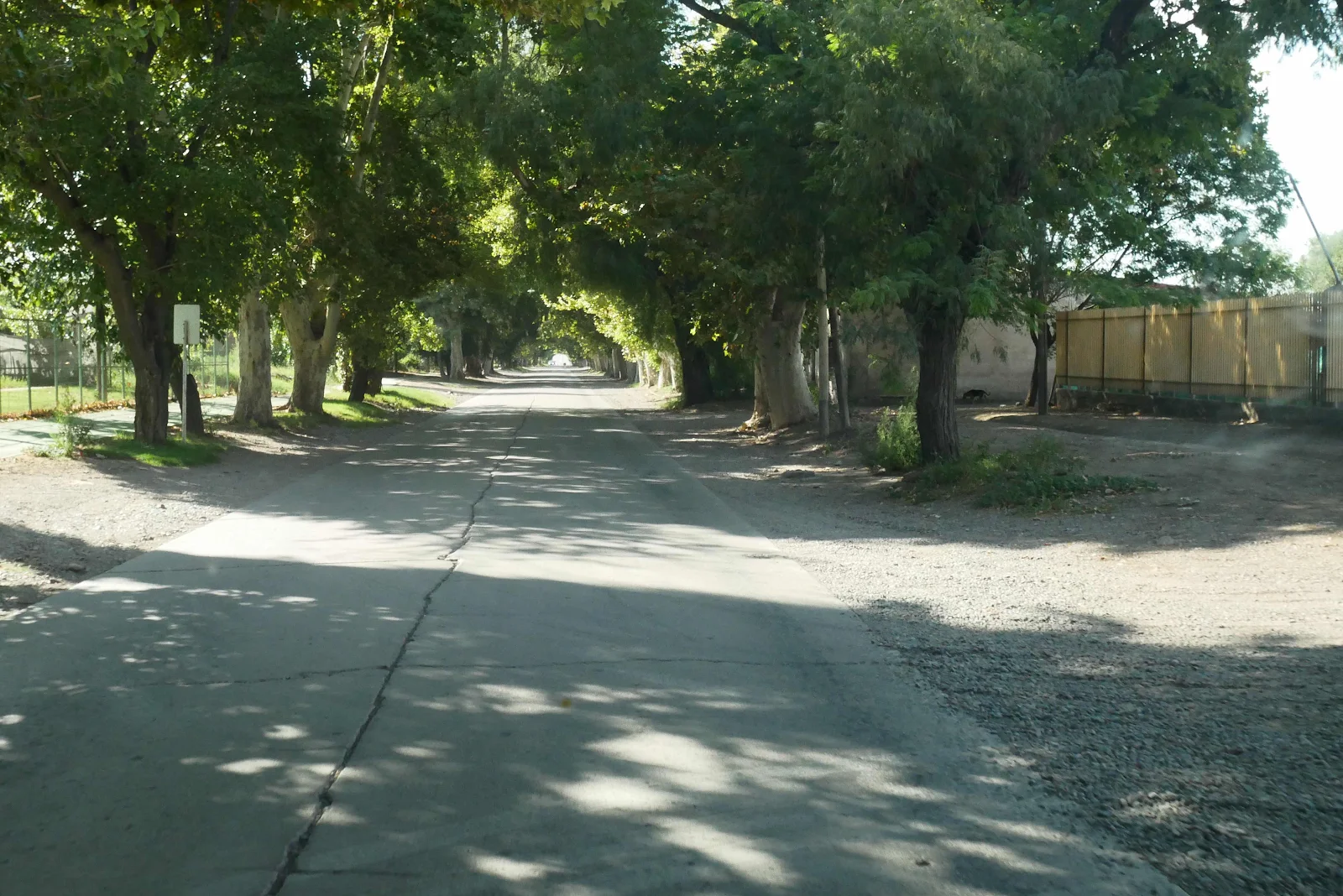
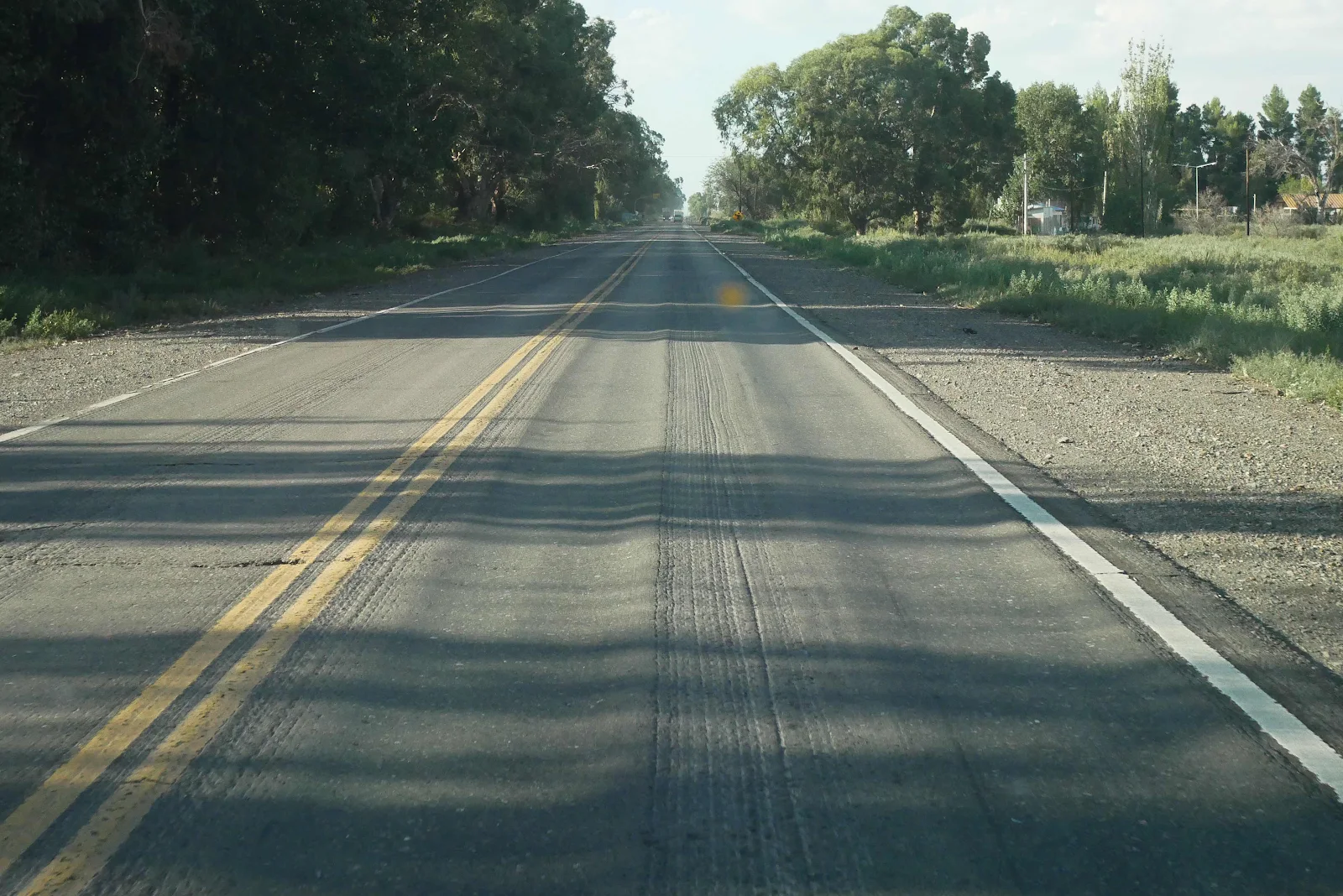
And because I like to travel I find some beauty in these tree lined avenues and as much as I hate bouncing like a pho stick on the seams and lurching through the holes I like wandering these towns following Google’s blue line.
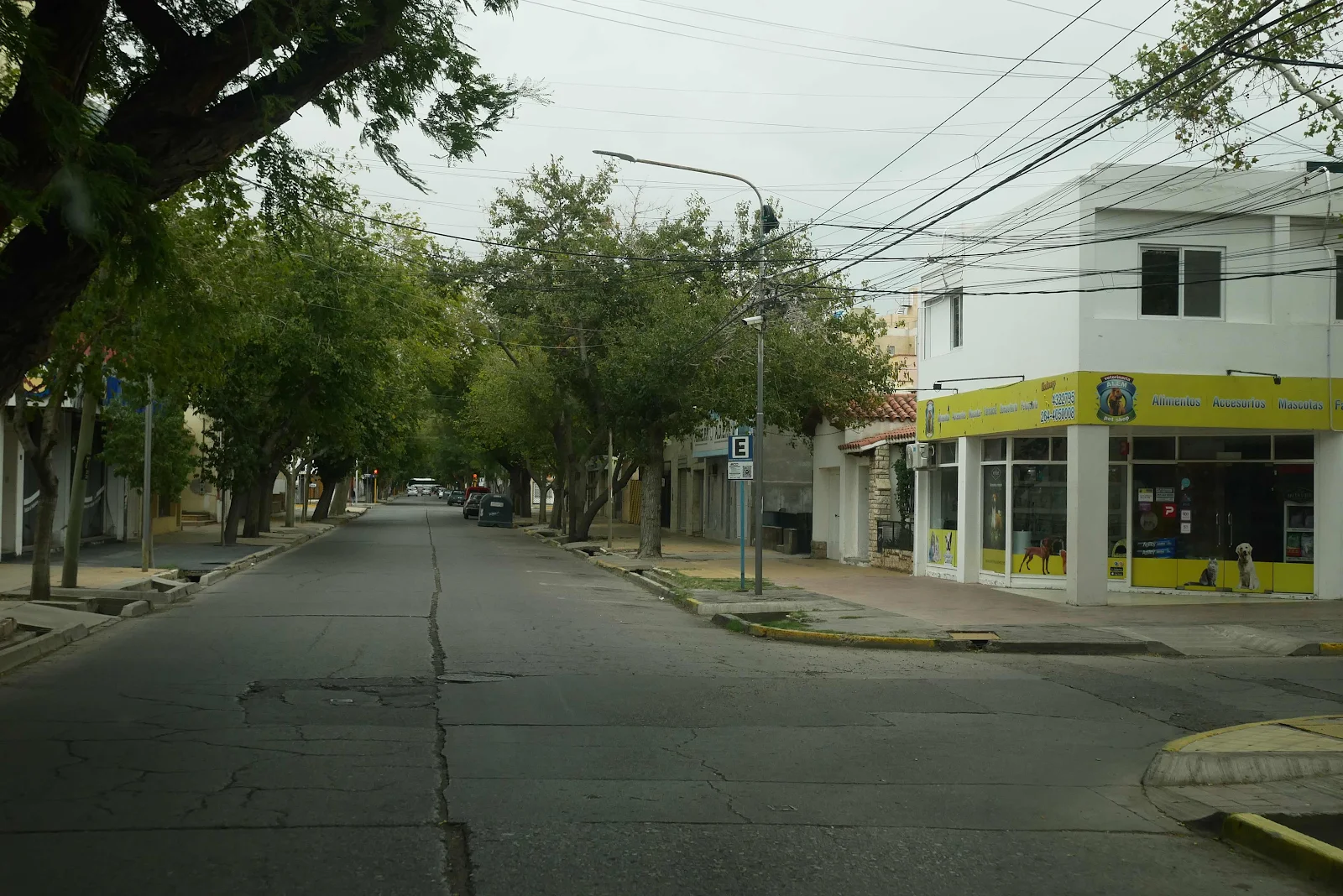
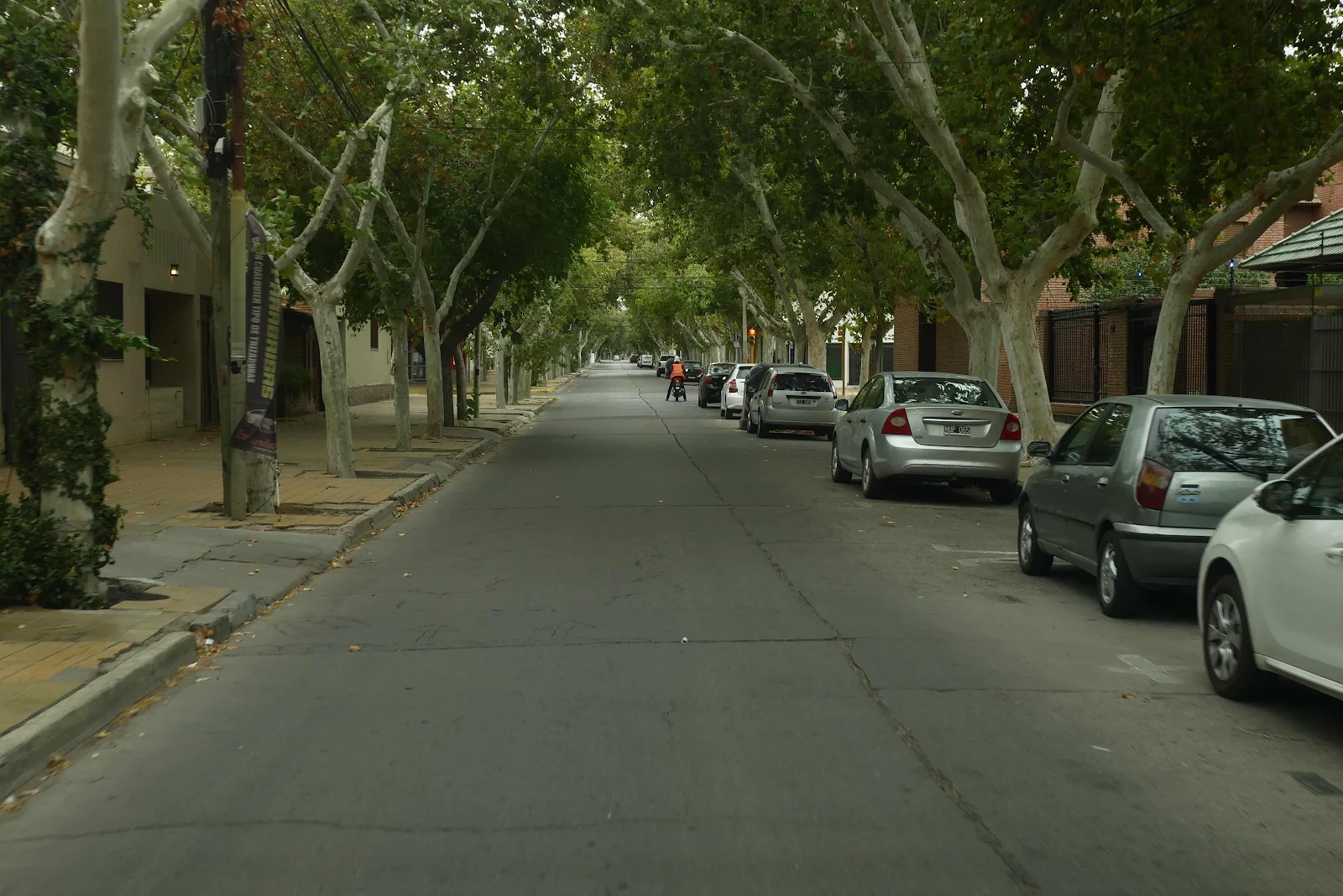
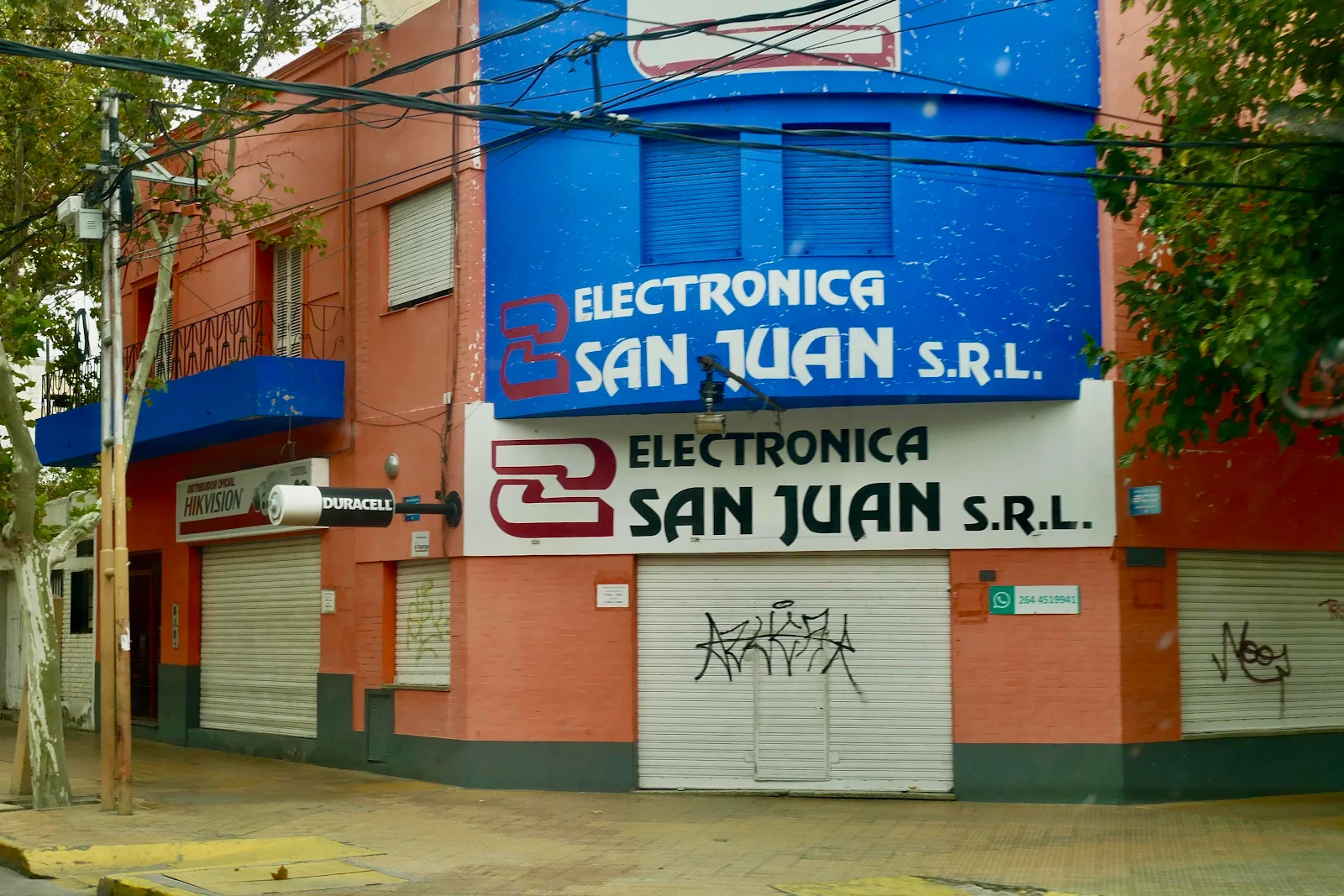
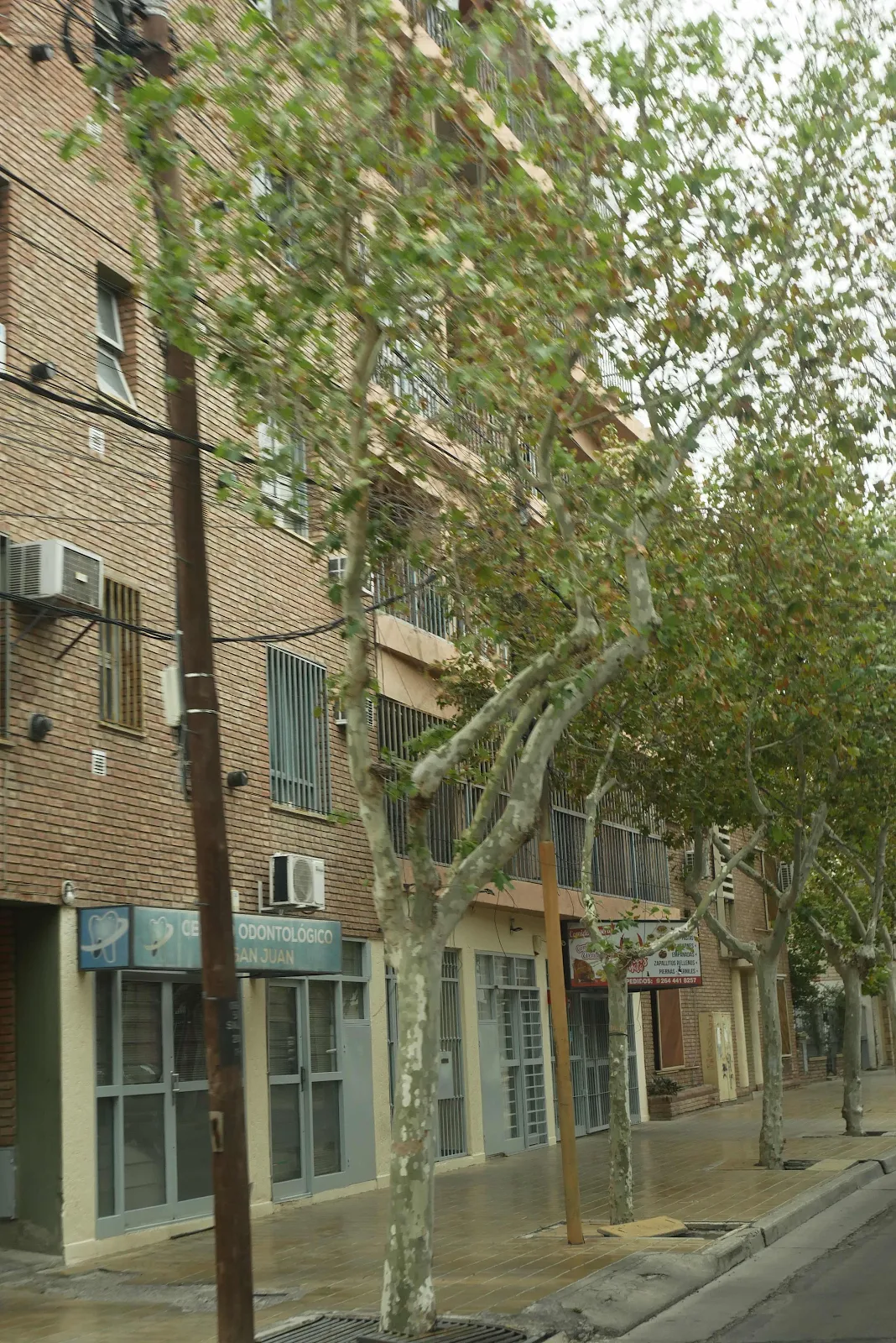
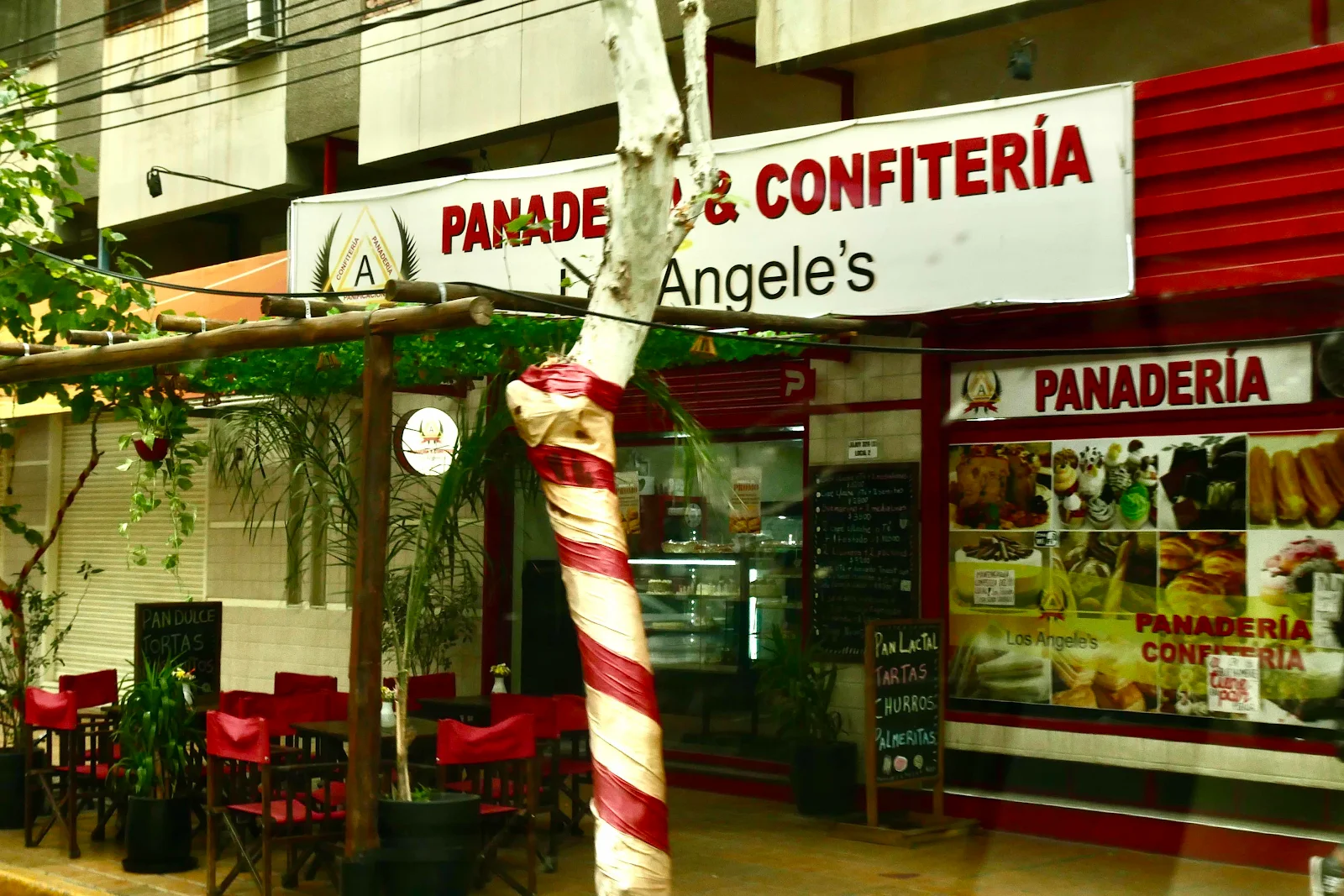
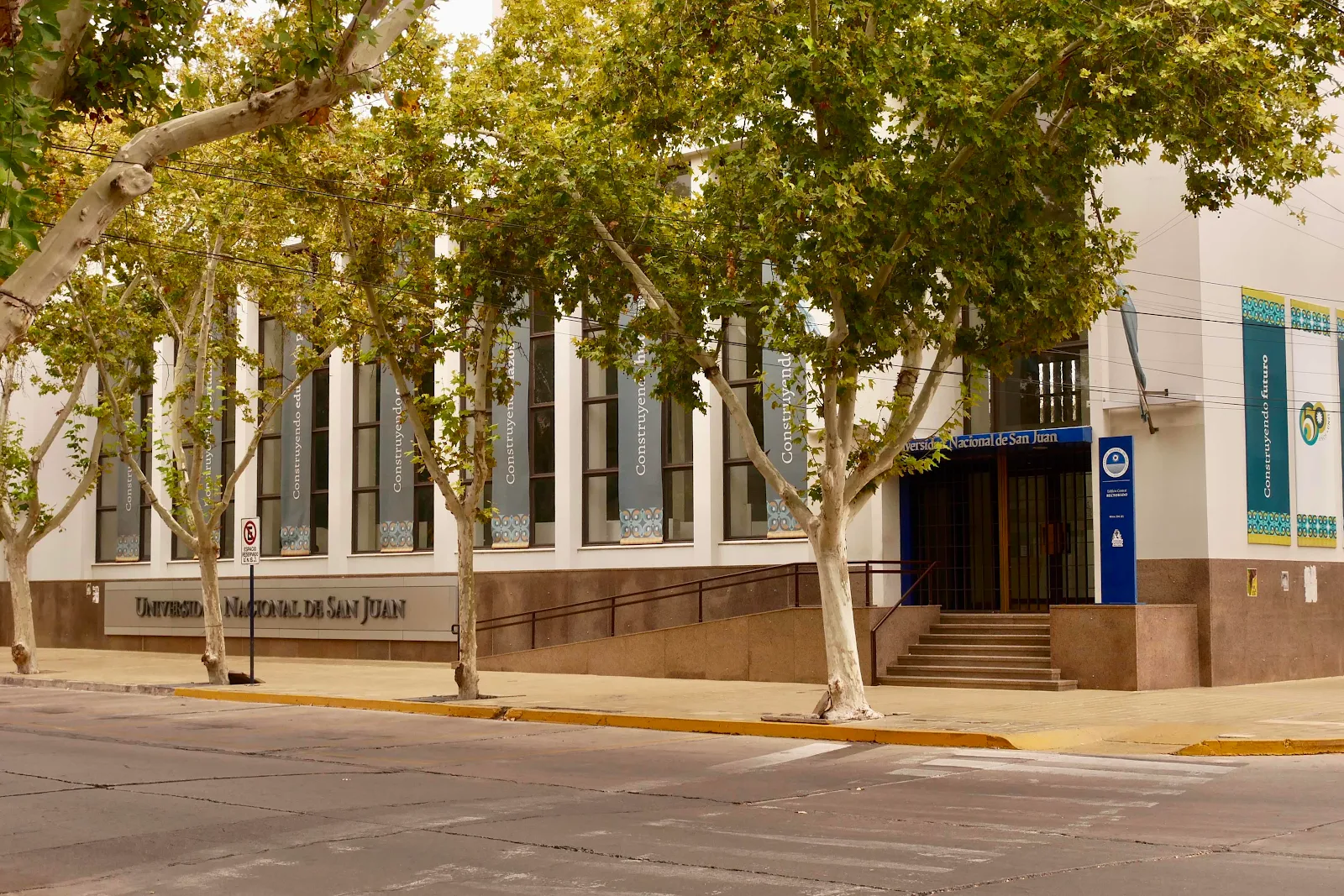
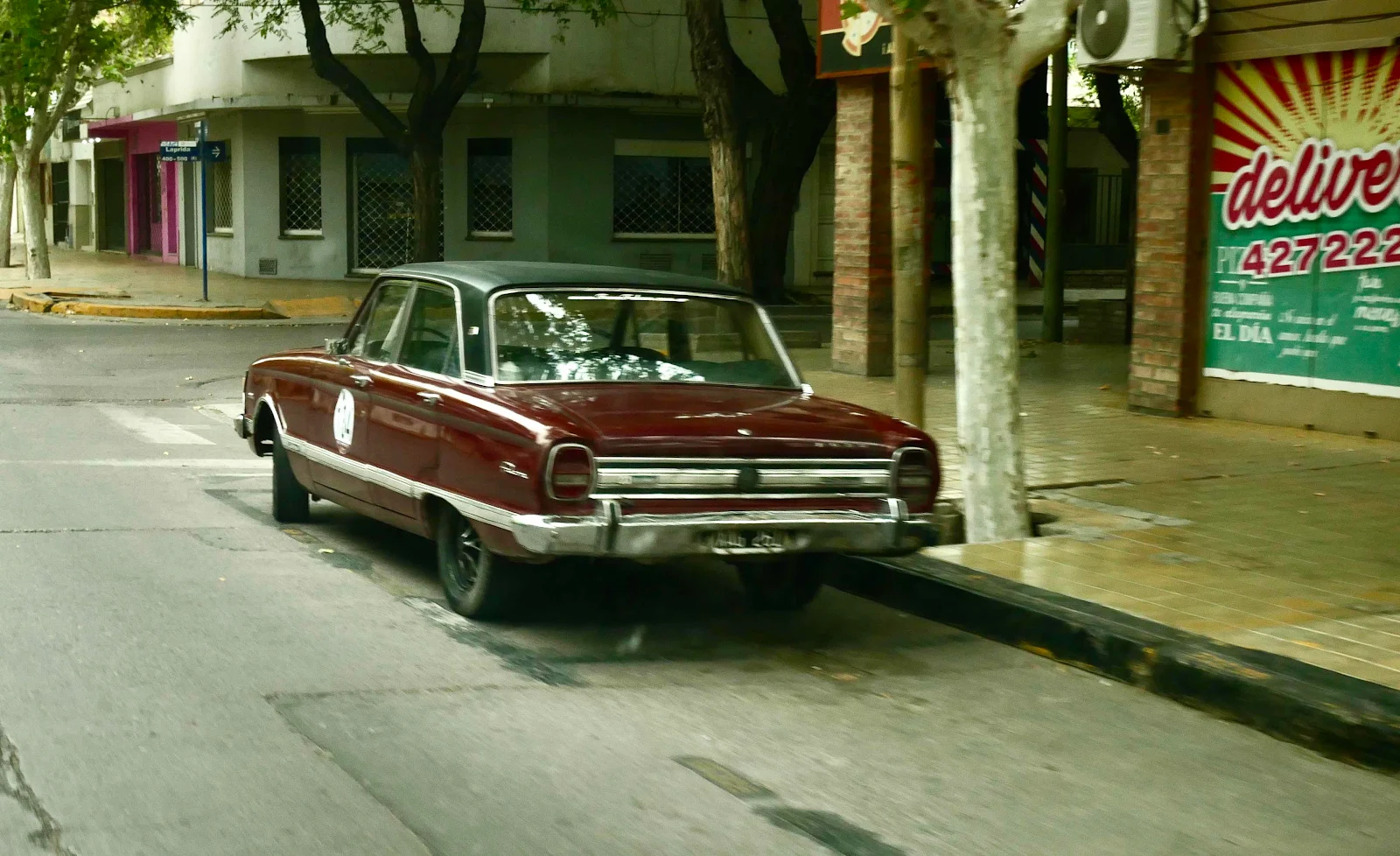
Sunday afternoon and the whole town looked depopulated. We had it almost entirely to ourselves. Amazing, on this long holiday weekend.
Monday the 24th was a national holiday, they call it Memorial Day when they remember those tortured and killed by the military junta that took power in 1976. Those were the leaders who ordered the invasion of the Falkland Islands and their defeat and 955 dead prompted a national uprising that restored the chaos of democracy in 1982. Layne saw this sign in the checkout at the Vea supermarket in San Juan.
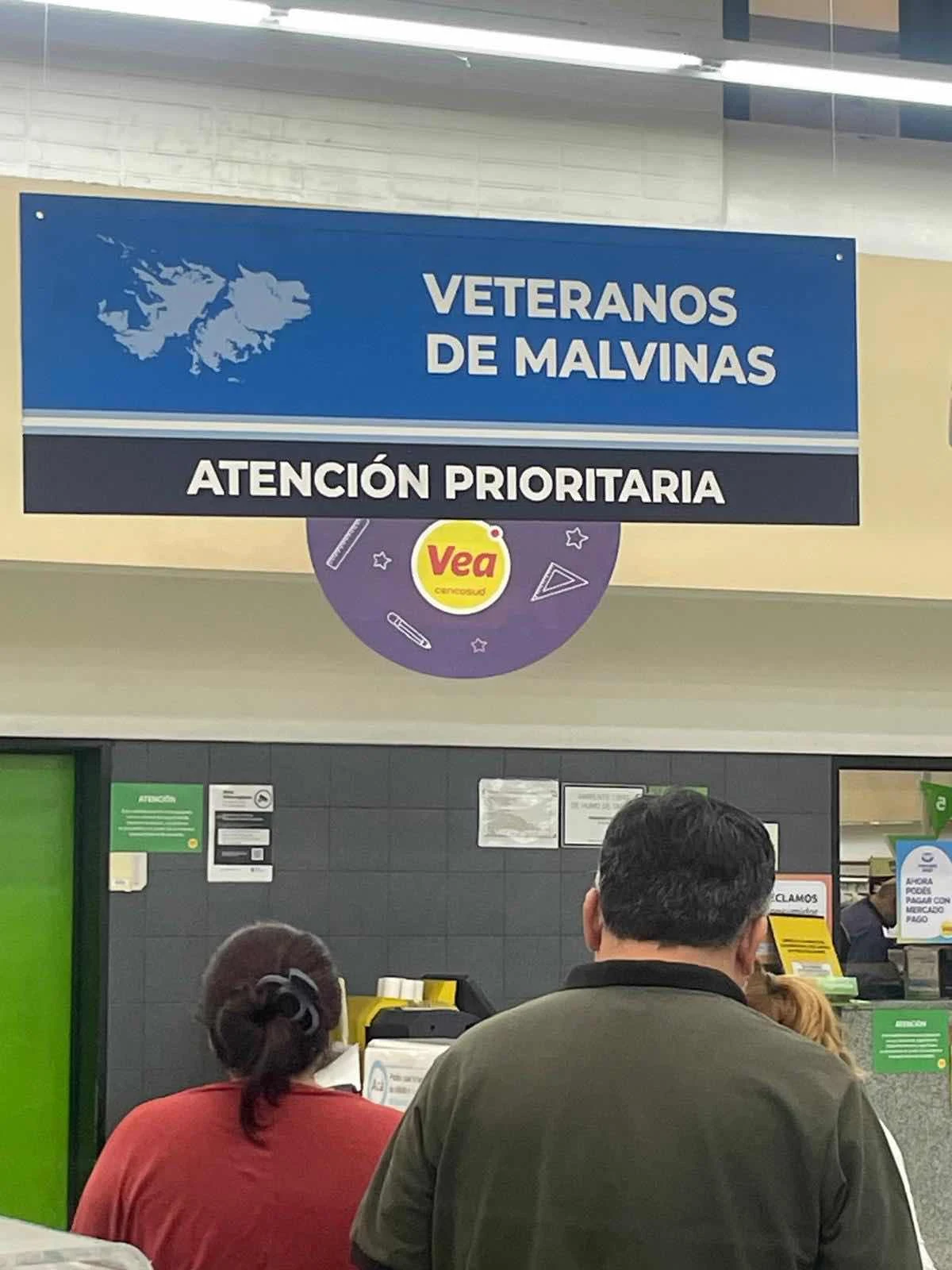
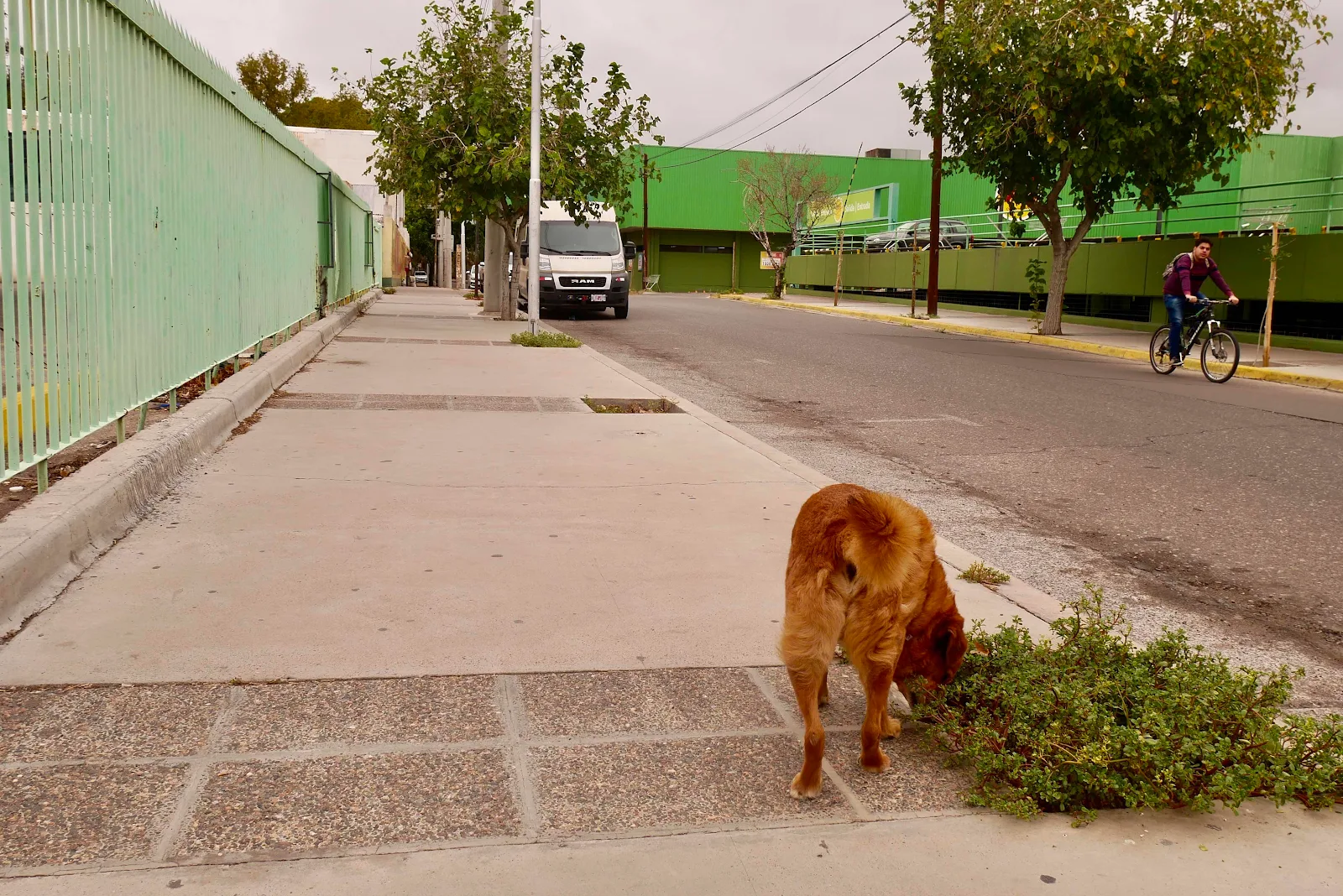
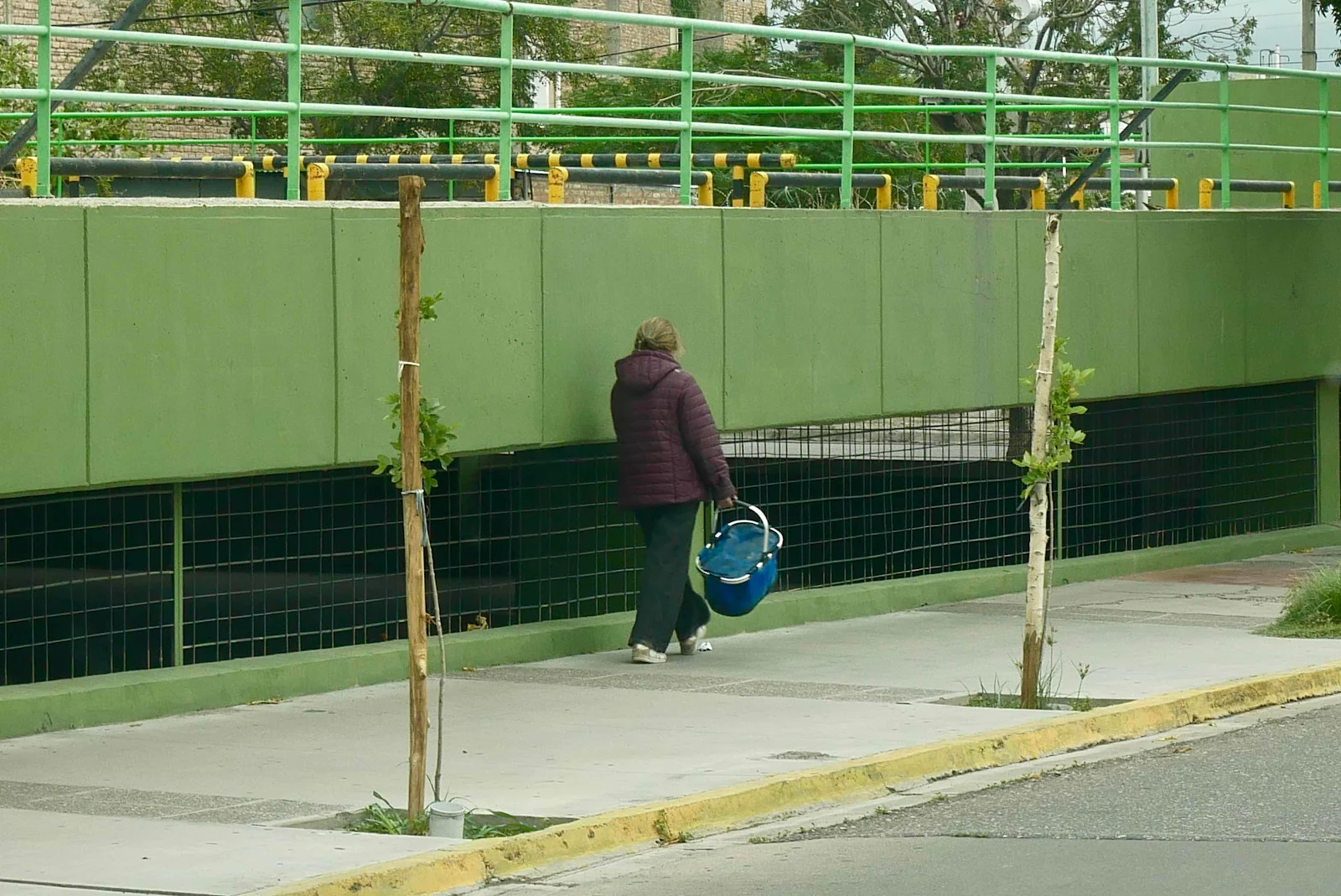
While she stood in the lane dedicated to people in their third age (tercera edad) and the handicapped I walked Rusty round the block but not too far from GANNET2 as break ins are common in foreign cars parked in Argentina. Poverty makes thieves.
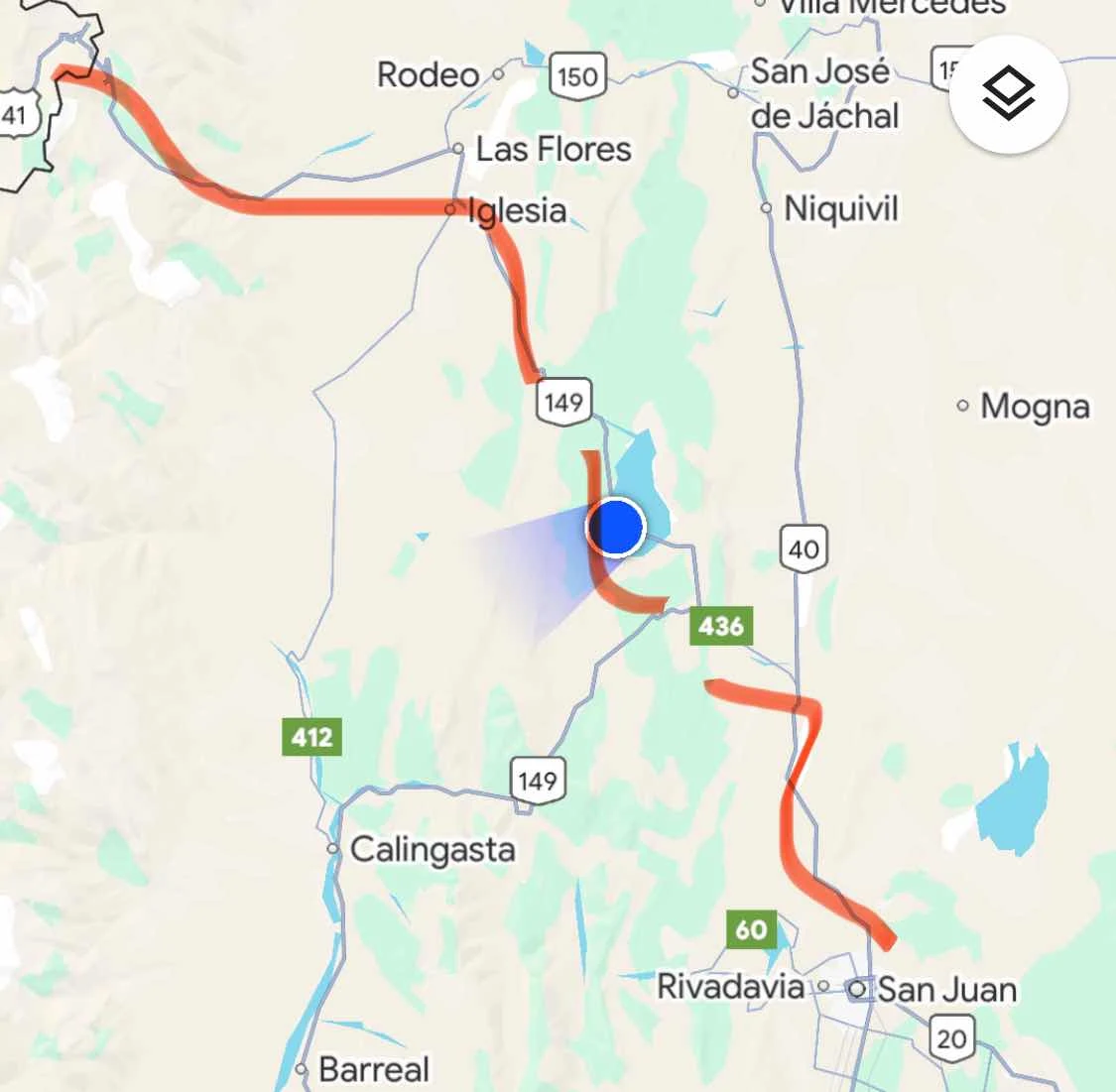
And then we left bound for Las Flores the town at the bottom of the pass that leads to Chile.
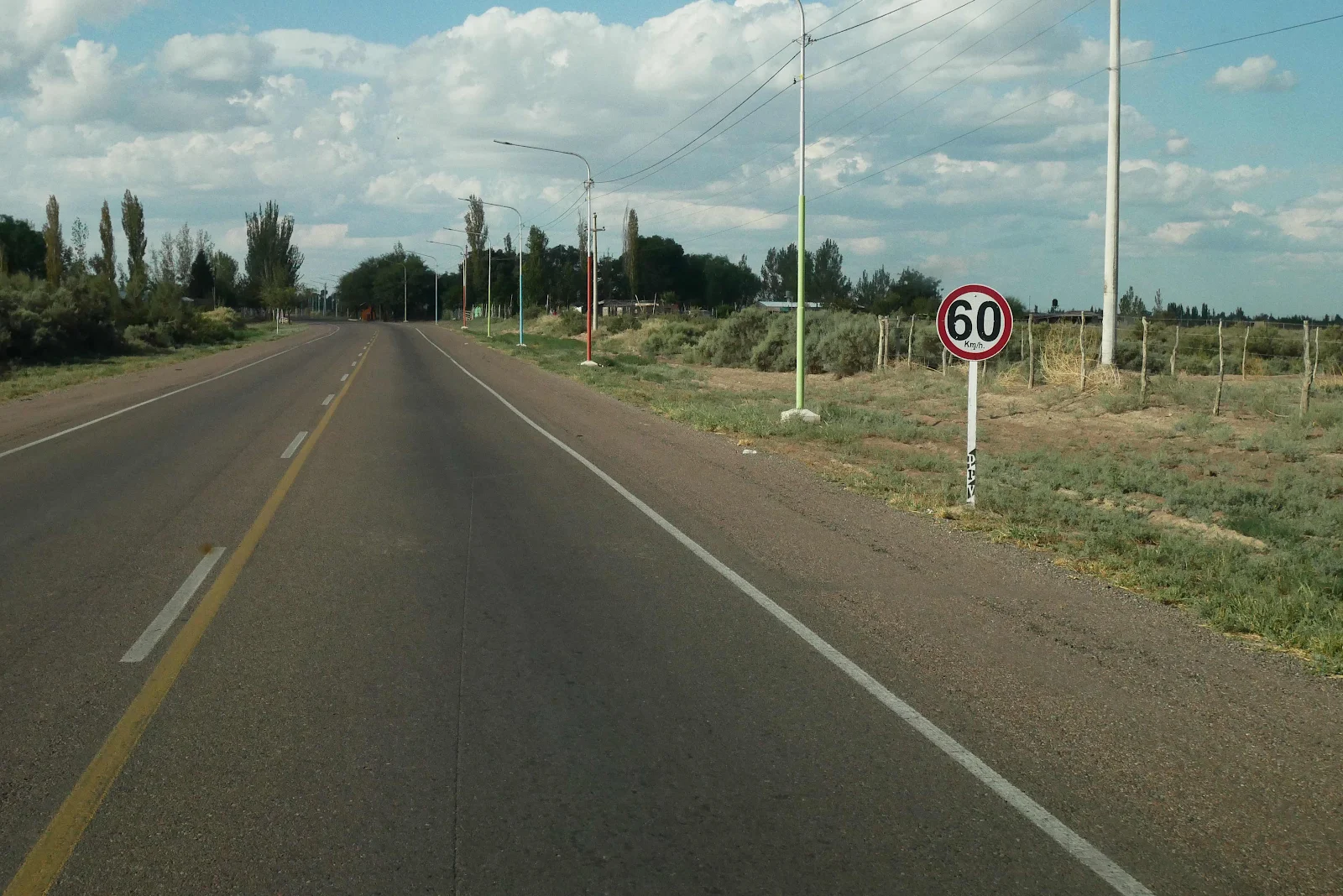
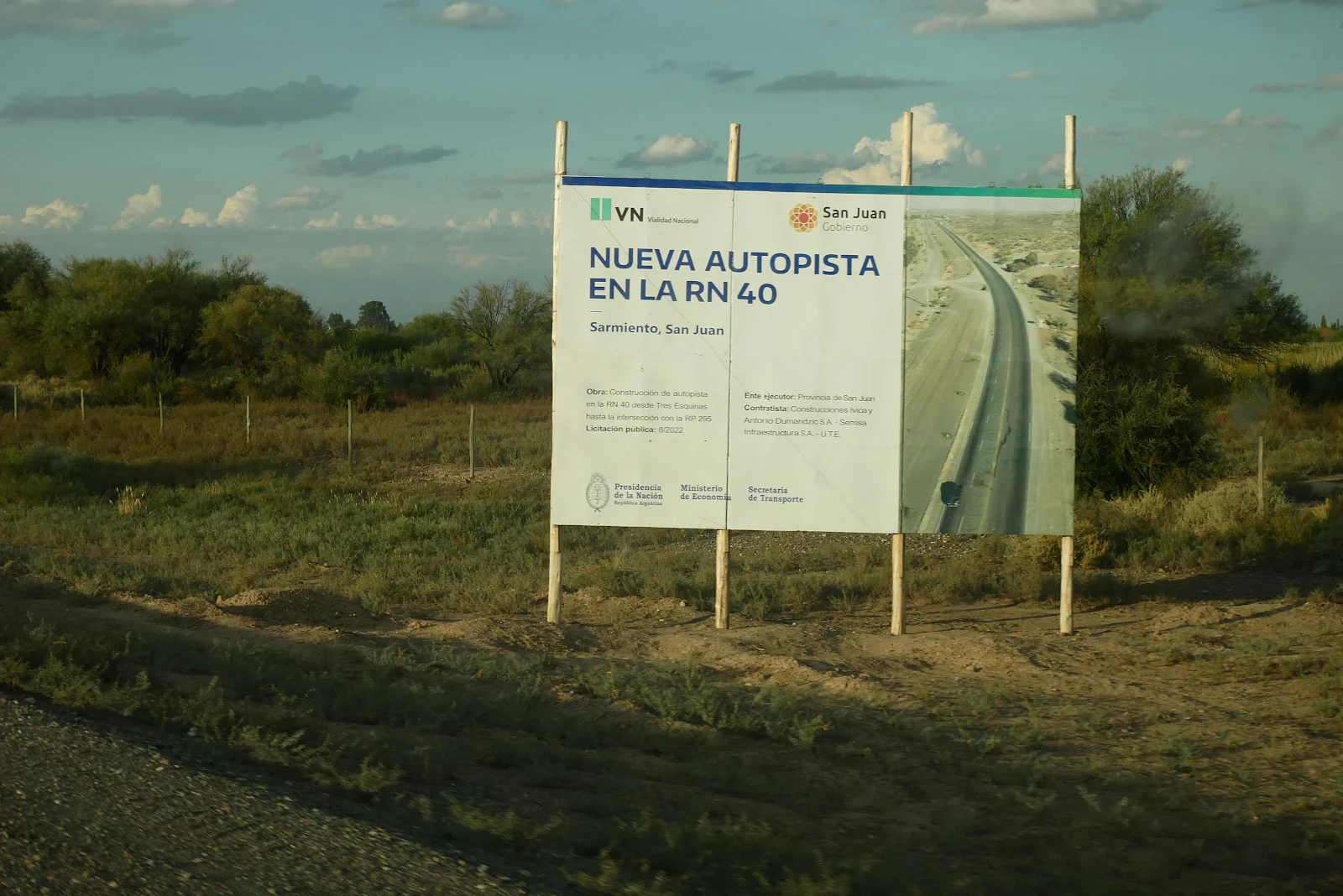
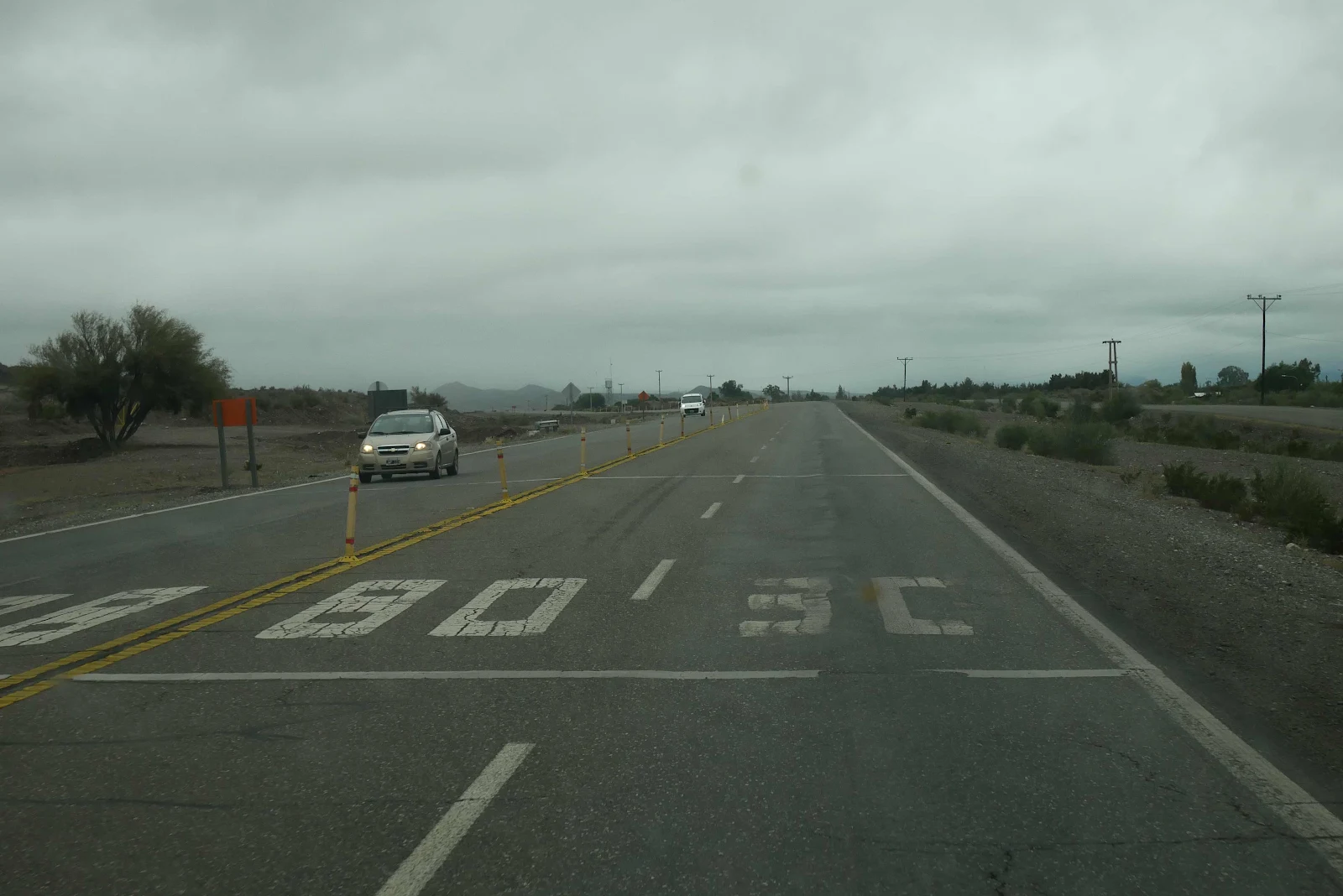
San Juan has a pretty nice freeway leading out of town as though coming and going you are welcome. And to emphasize the holiday the gas station had no lines.
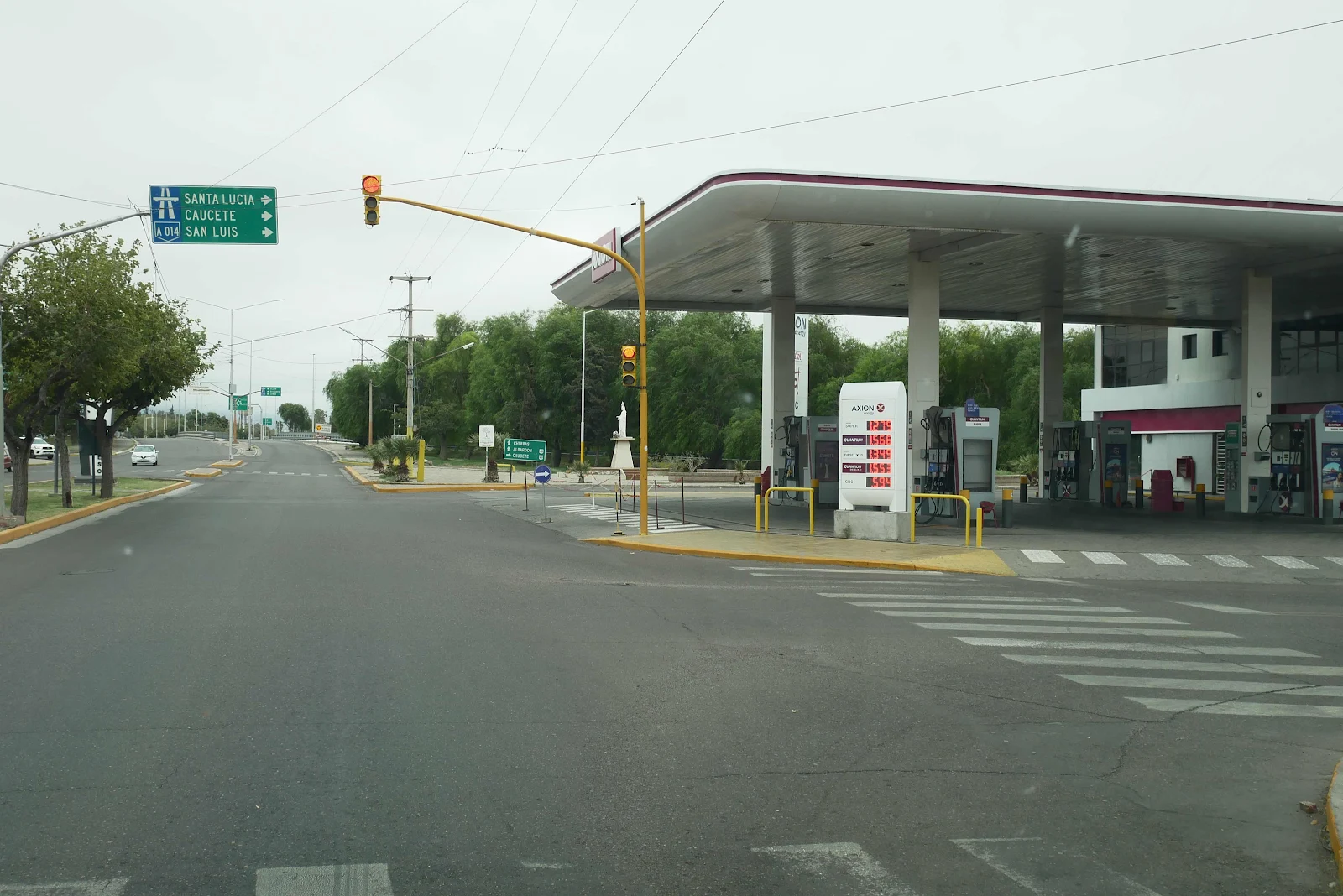
The bored gas attendant was really friendly chatting about nothing much. The weather cake up and he said, as locals always do that this cold snap wasn’t normal. Yeah right.
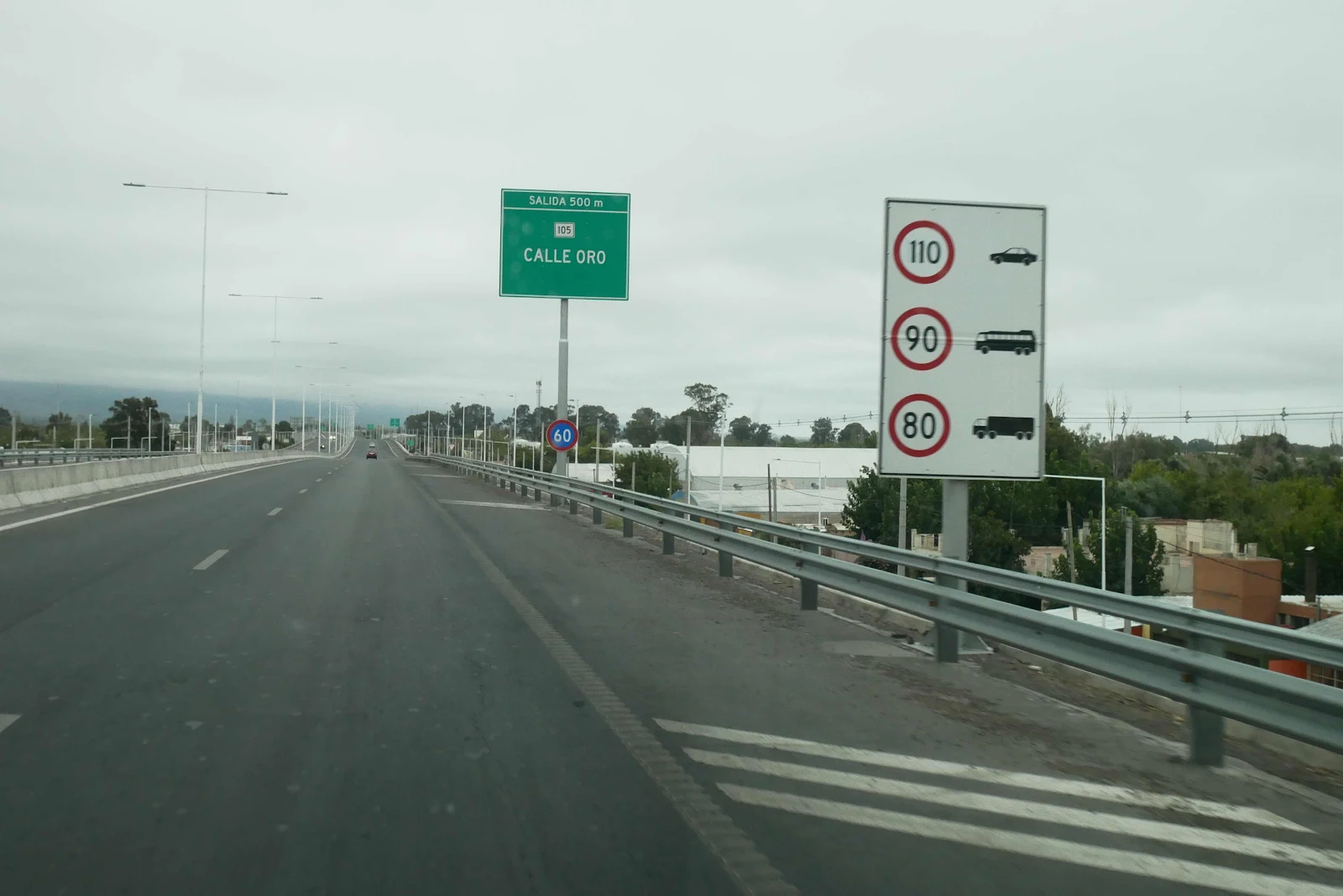
You could be in Europe for a couple of kilometers as you race down this euro-freeway.
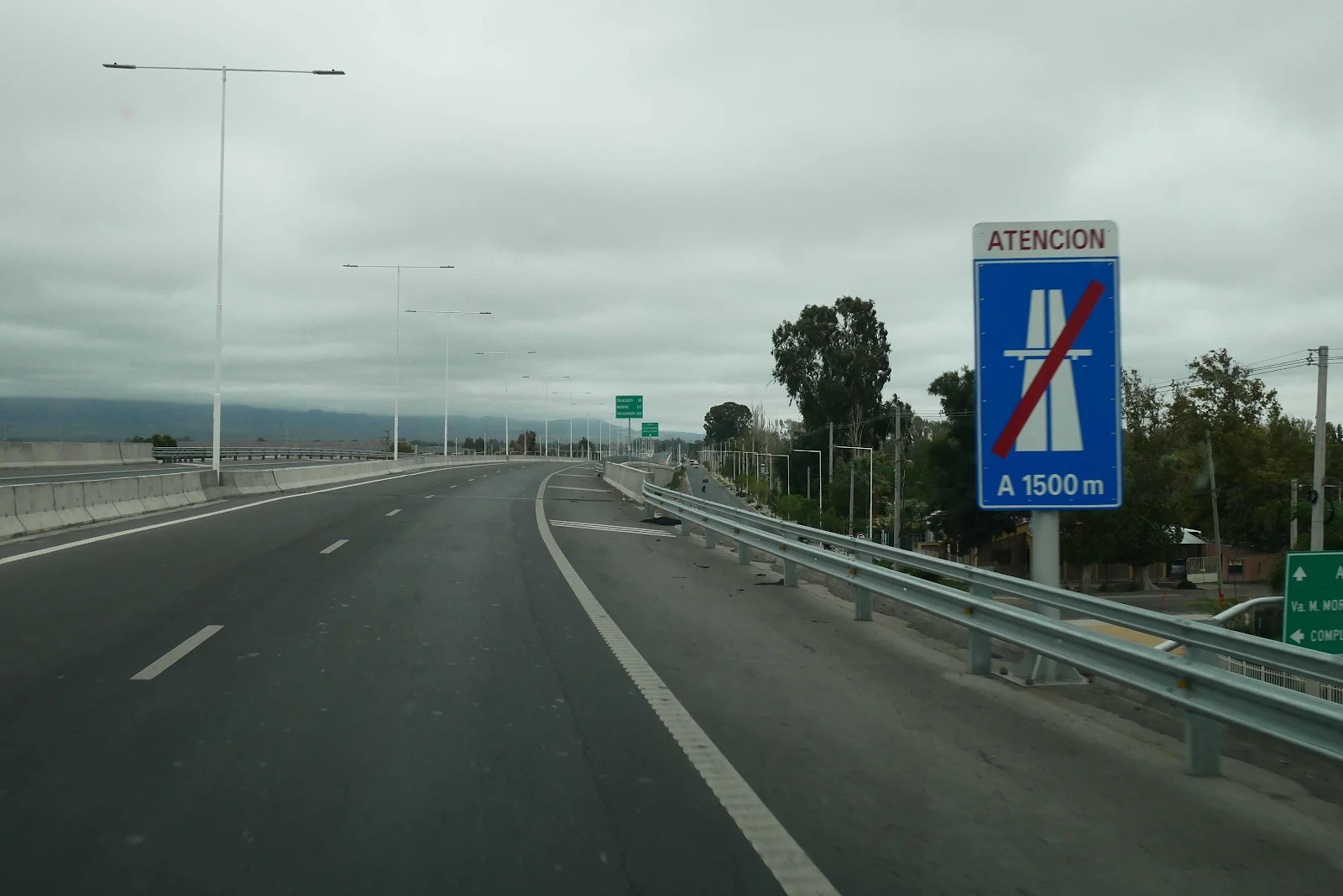
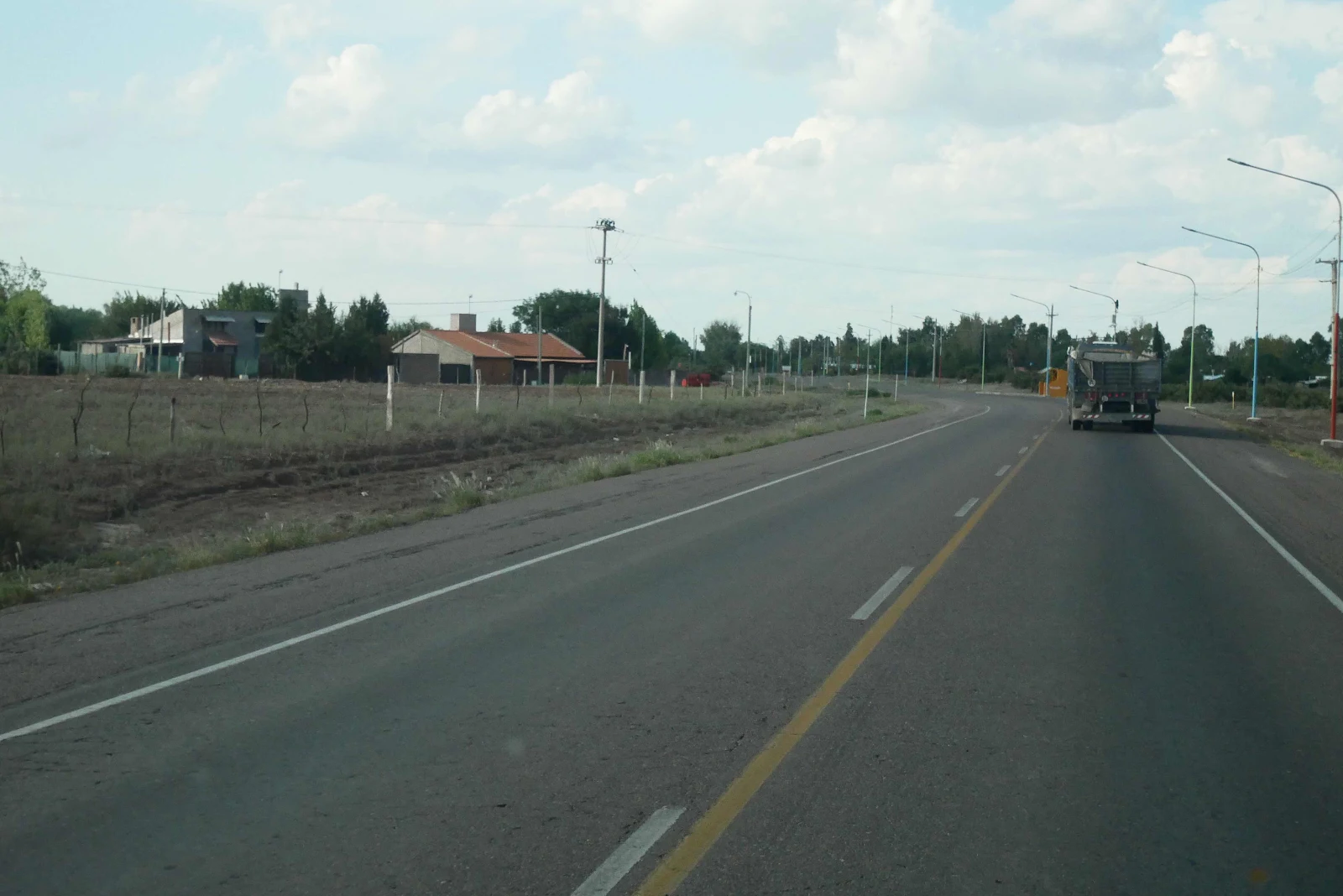
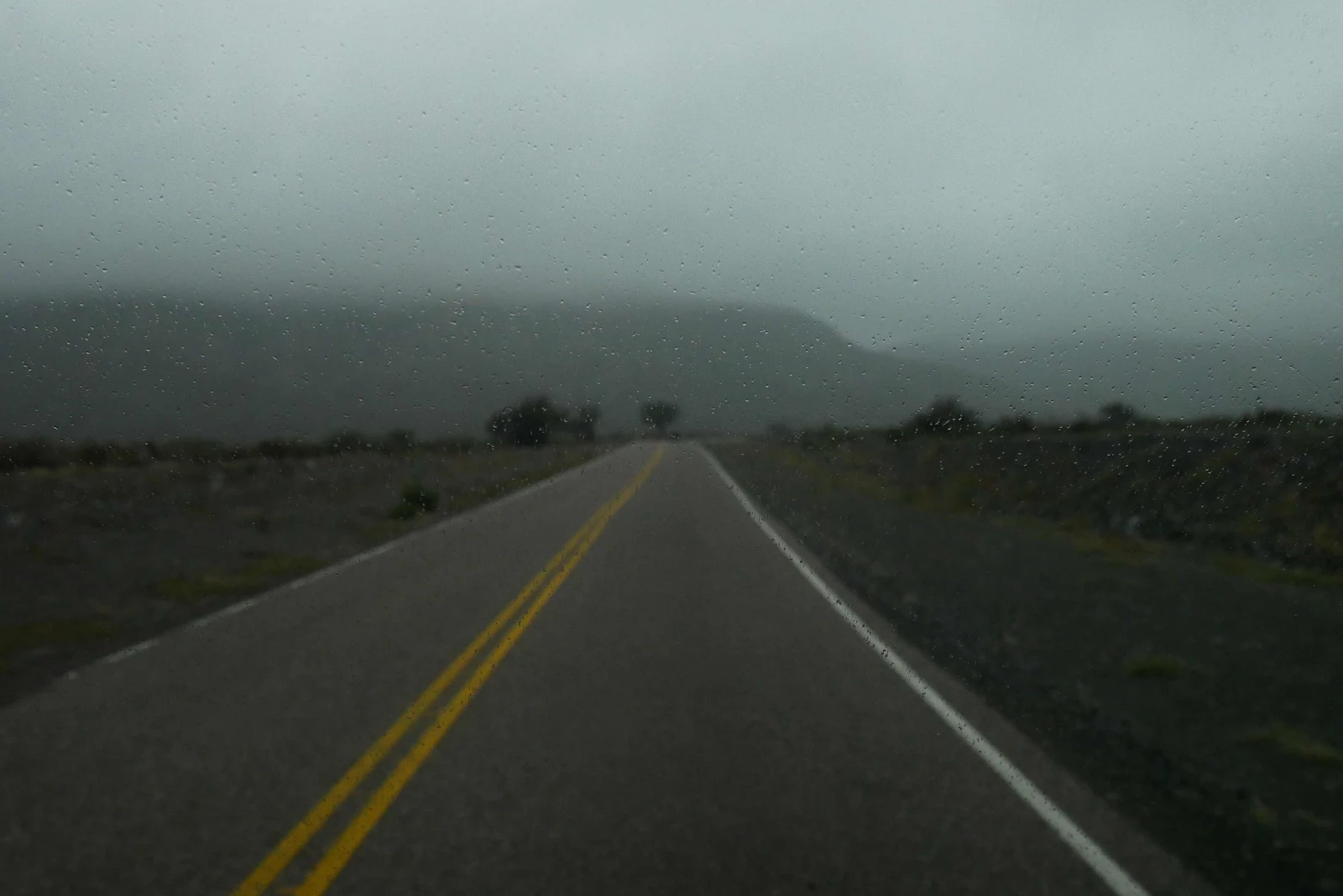
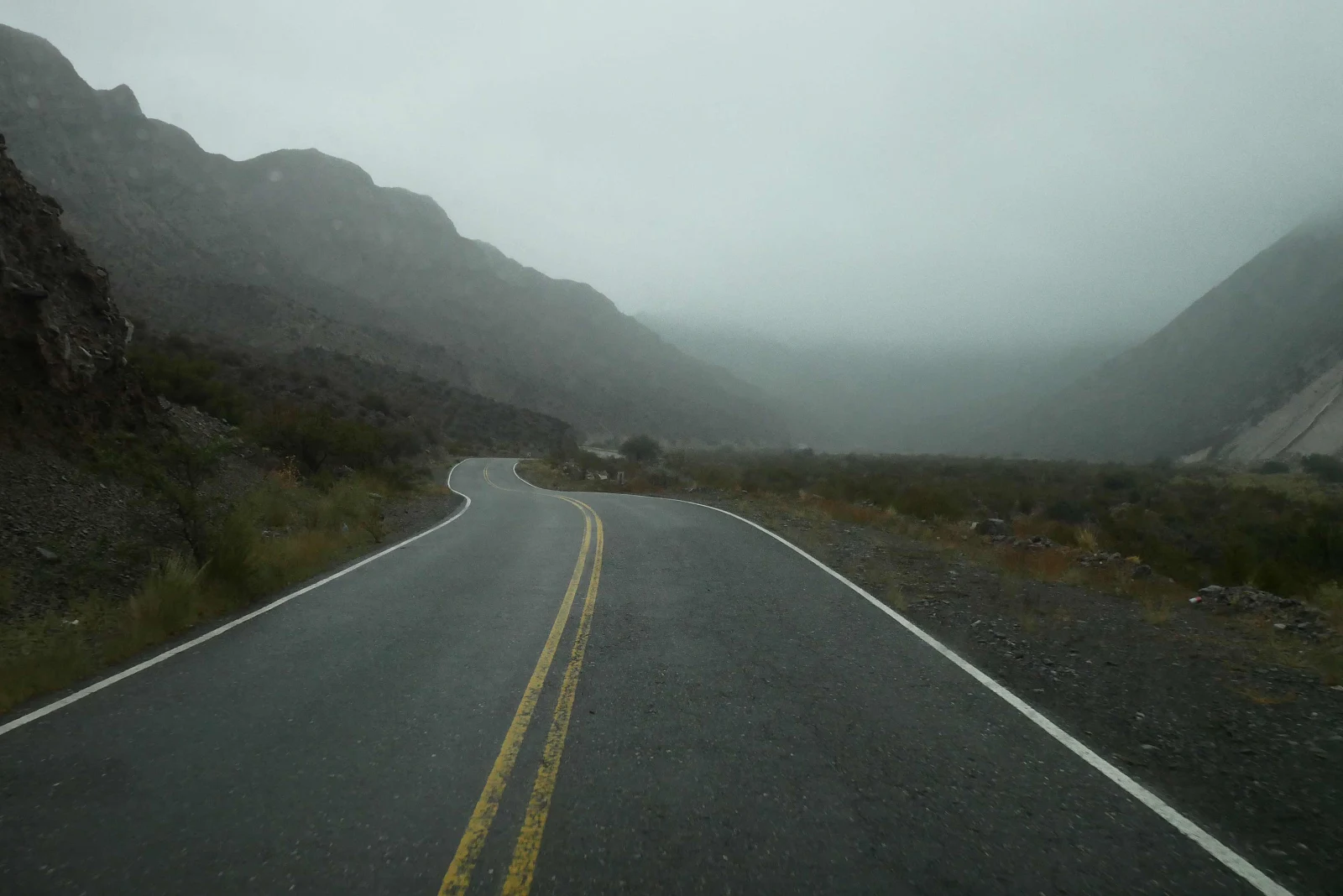
And then the ruts and dips of the rural highway 149 hauling is to to the pass at the top of the range around 6,000 feet, a temperature of 42 degrees, fog hanging low over the Andes. It was spectacular and ominous.
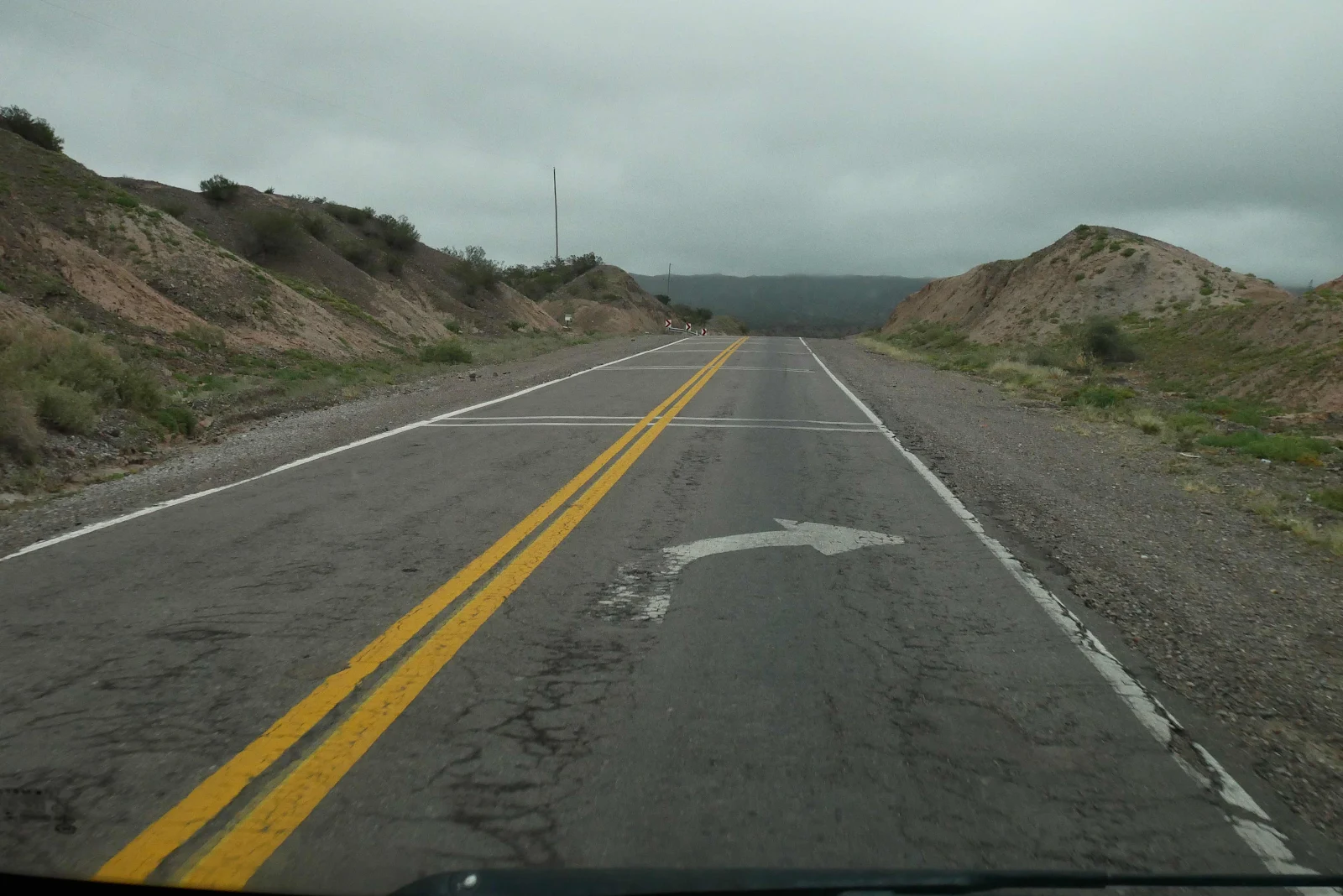
At Las Flores there is a road that passes through the Argentine border post and continues to the border itself at the pass at 15,700 feet. Half that route is gravel.
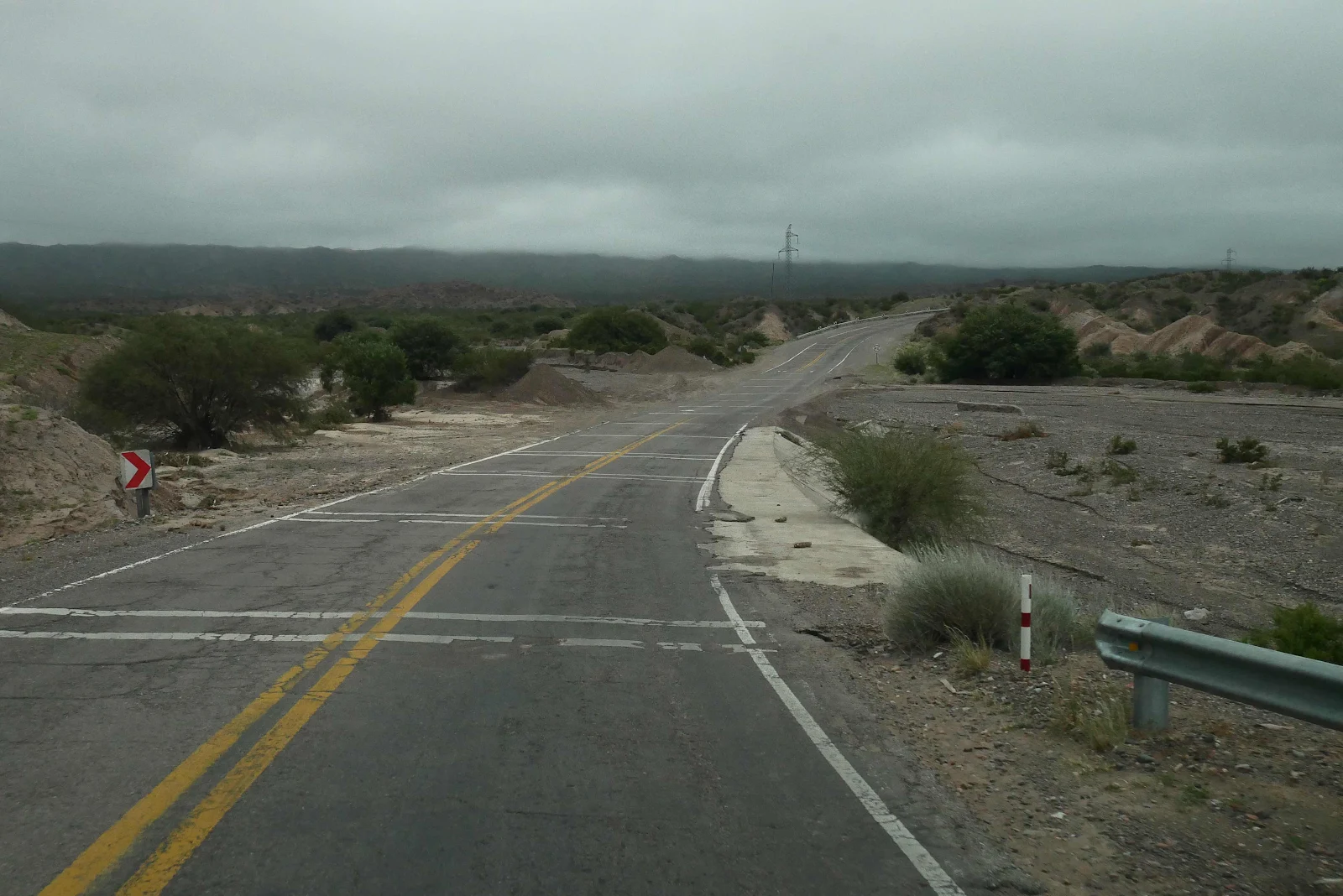
Then there is another forty miles down the other side to the Chilean border post and half of that winding hairpin road is gravel. The journey du should spectacular. But only if you can see the surroundings.
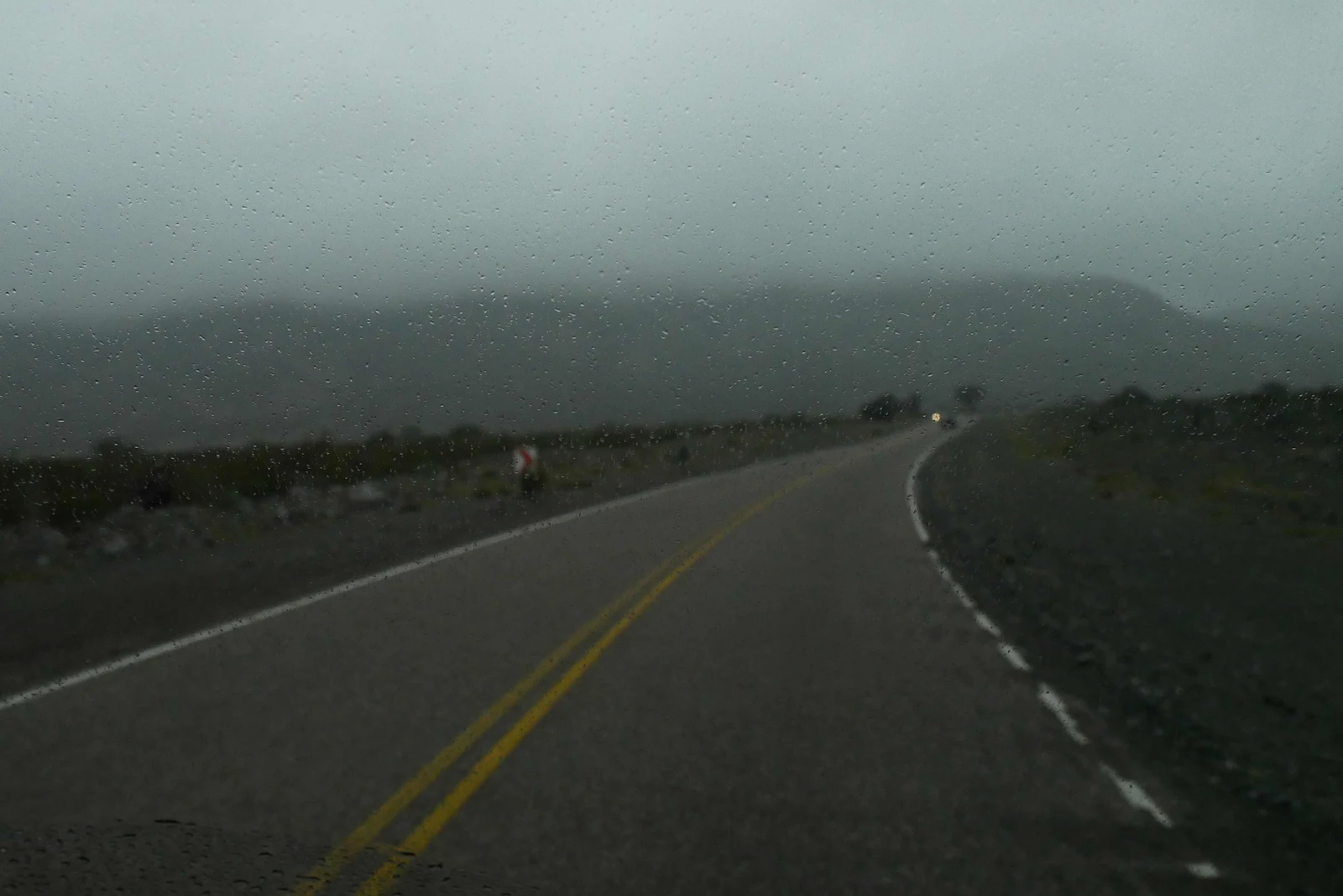
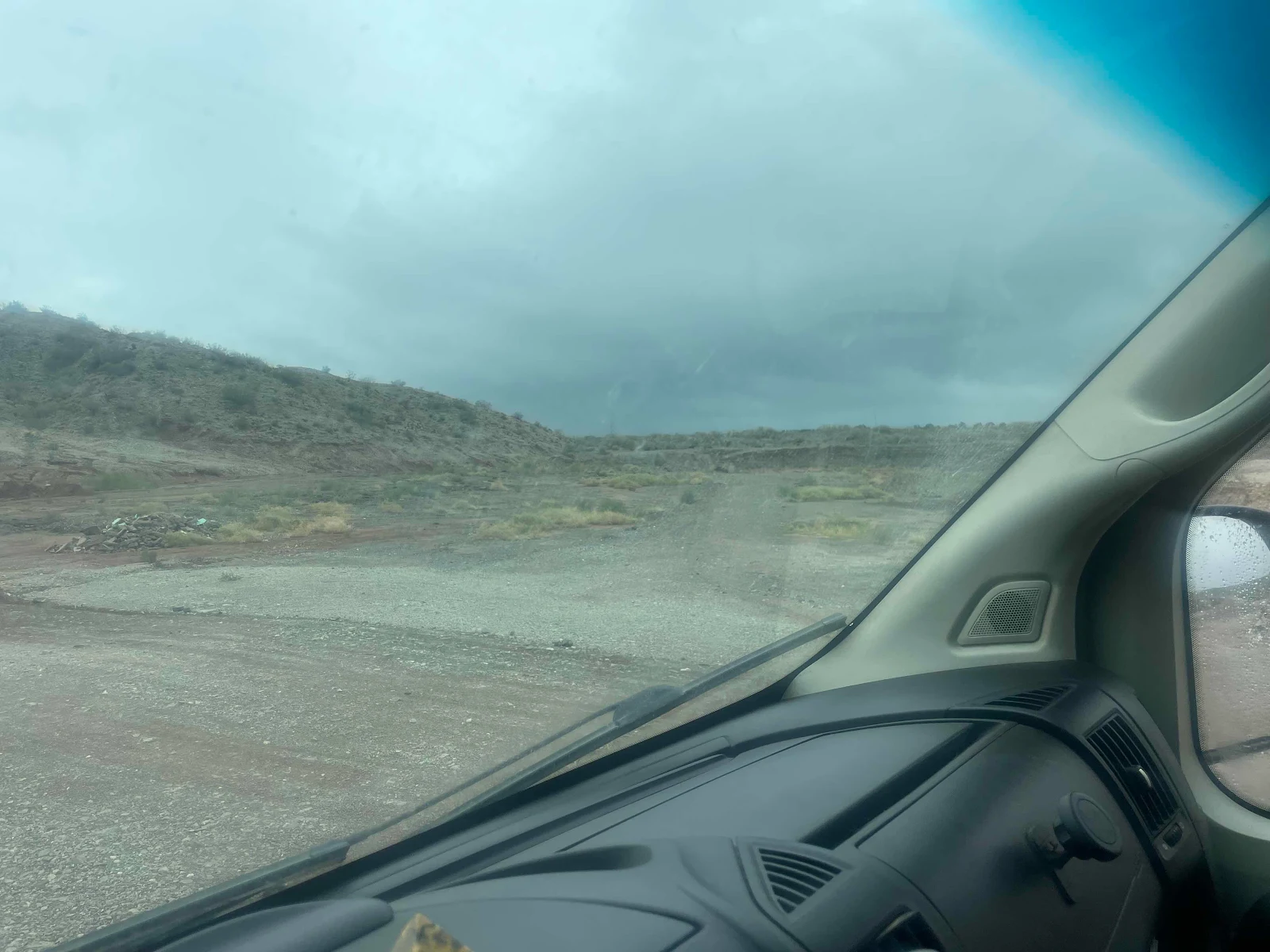
Down here at 5400 feet the air is cold enough at 42 degrees, but how cold would it be in fog and damp 10,000 feet higher up? Our plan was to wait for a sunny day to enjoy the drive, hopefully Tuesday but maybe Wednesday.
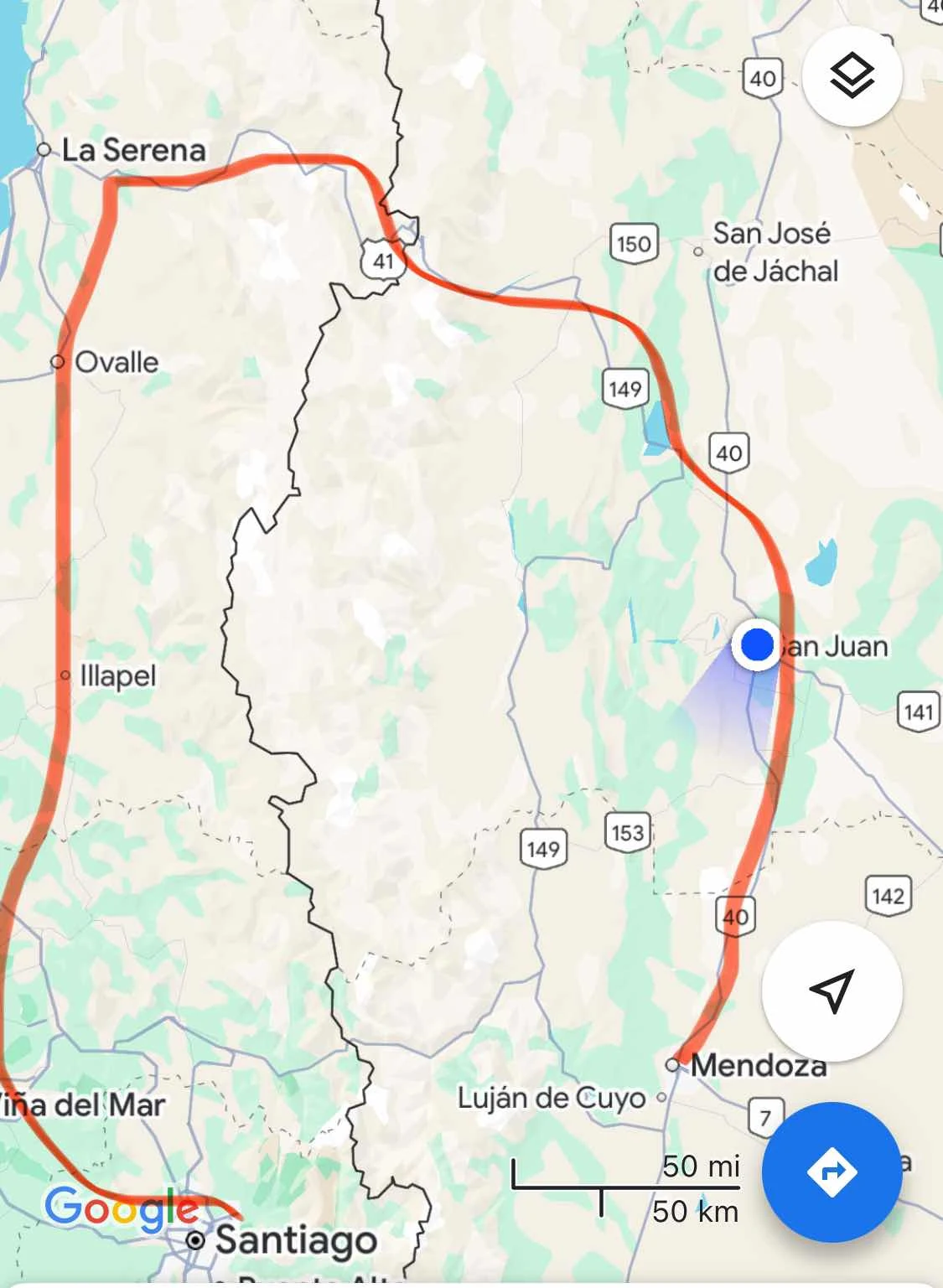
We could have driven the main pass known as El Libertador connecting Mendoza to Santiago the capital of Chile, our goal. The trouble is that all weather pass is a hell hole as Chilean customs are known to be brutal and lines are intense. Hugh and Sue said they had to empty their Land Rover and the drug dog was pushed up into their pop top tent to seek out contraband. Every traveler we have heard from has a similar story about the Libertador pass.
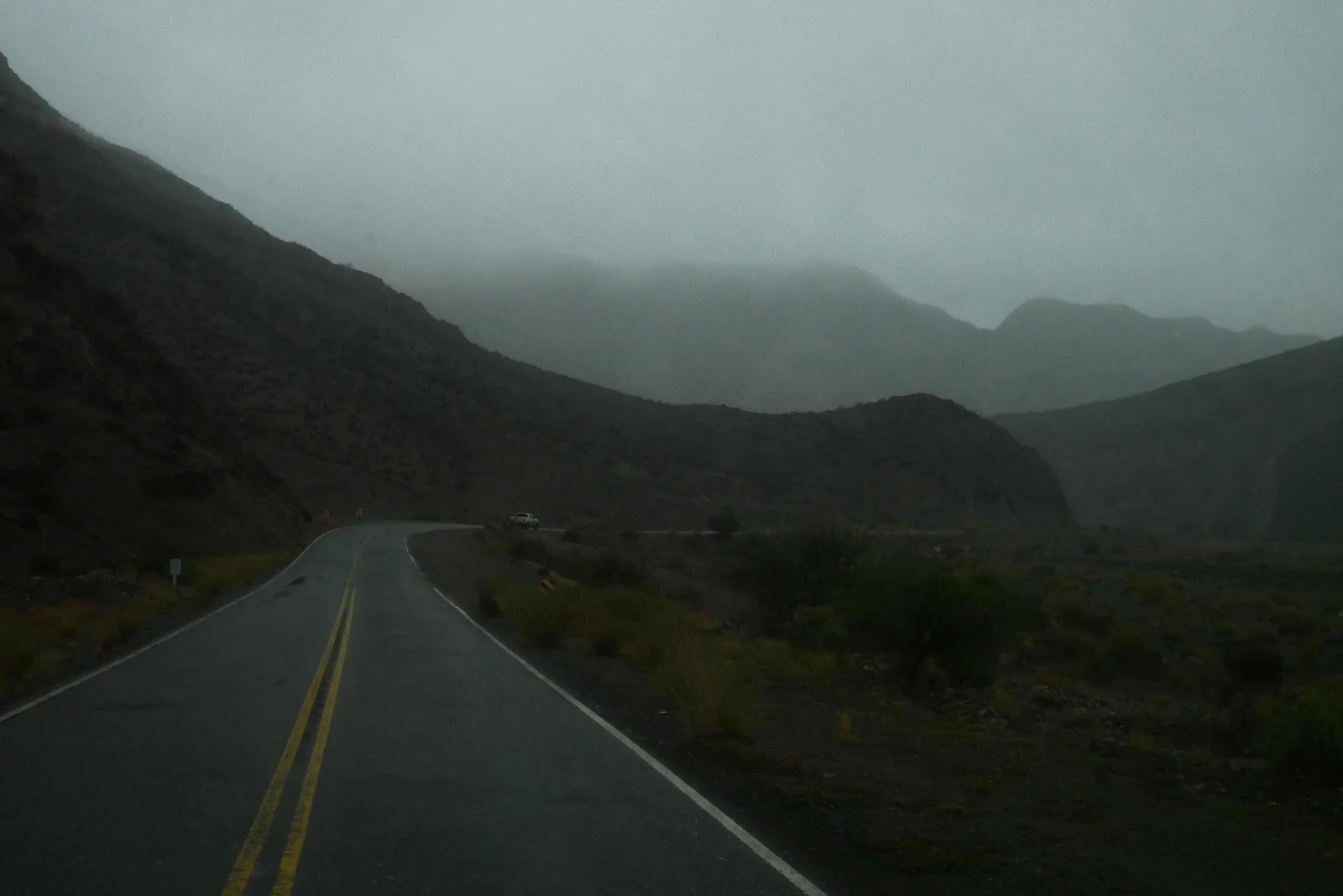
So we said let’s be slick and we found the next pass north a gravel road going intensely high up with views worth seeing across the hairpin bends. Let’s go we said in a fit of enthusiasm.
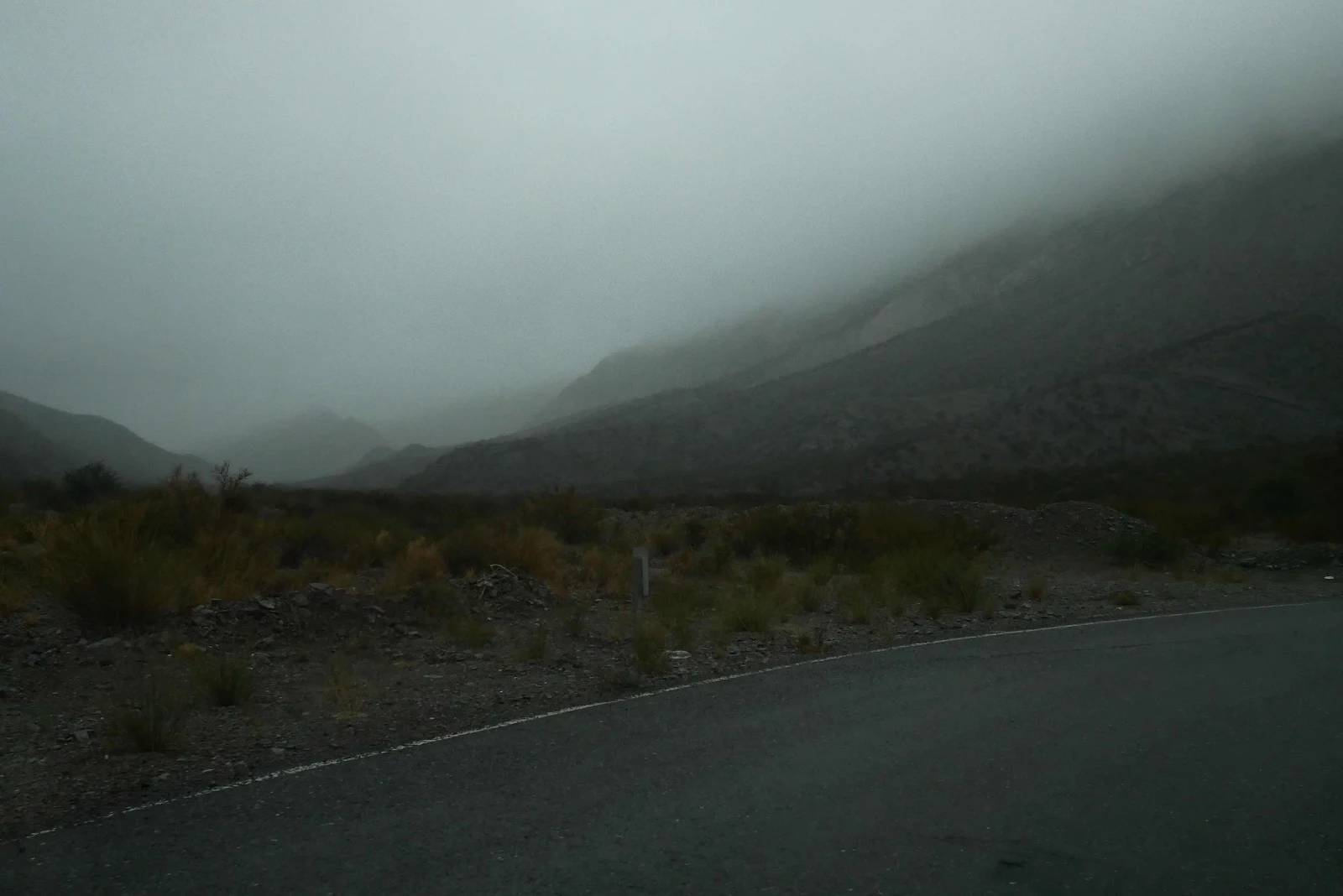
So now we will wait for weather, like a sailboat waiting for a propitious moment to leave the comfort of our harbor and make a dash for the border.
We had a plan to stop at a quiet lonely spot revealed by iOverlander. We passed a police checkpoint, two Gendarmes with rosy cold noses who chatted cheerfully about how unusual the cold snap was (again) and the passive open they said had waved us cheerfully on our way, no documents checked.
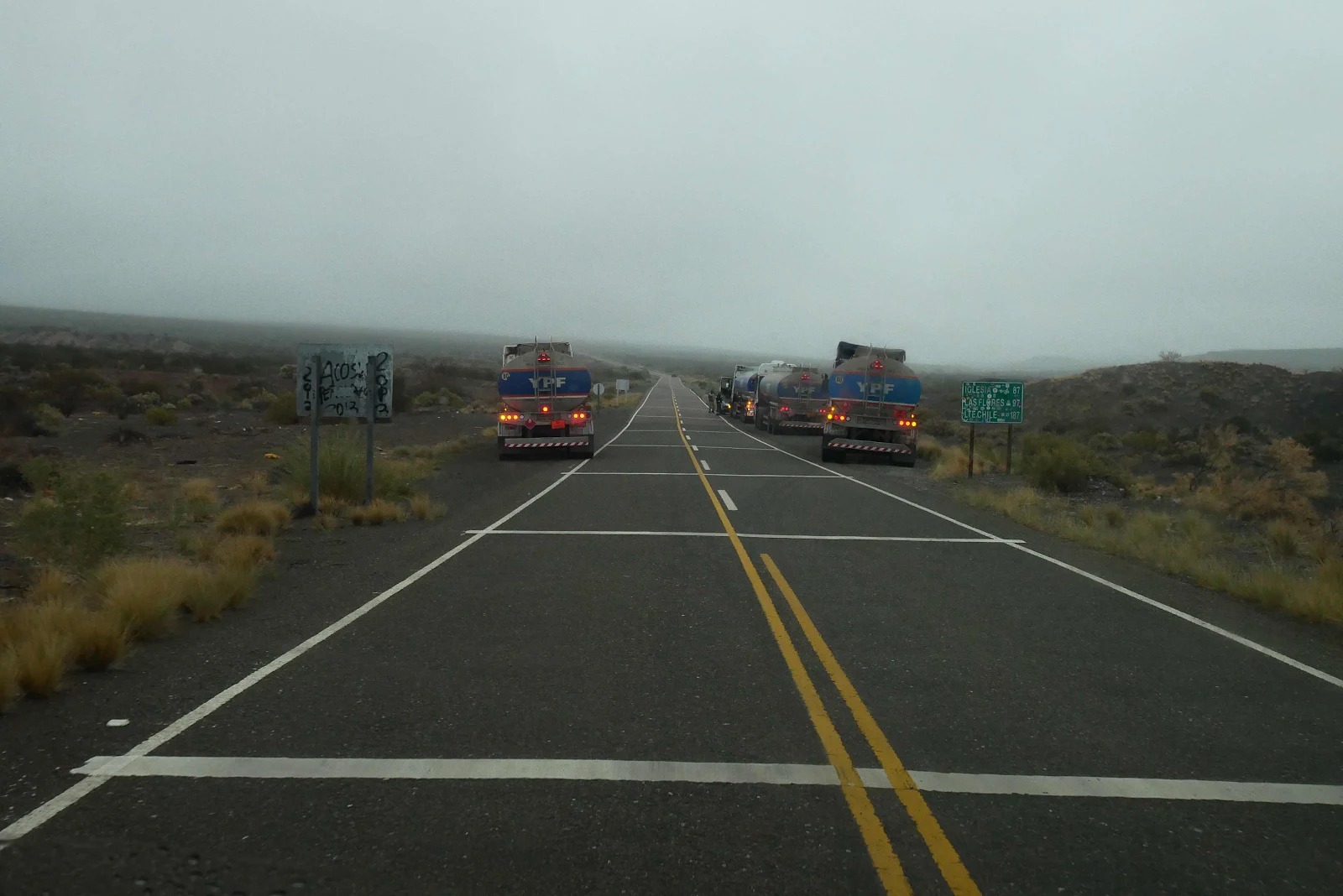
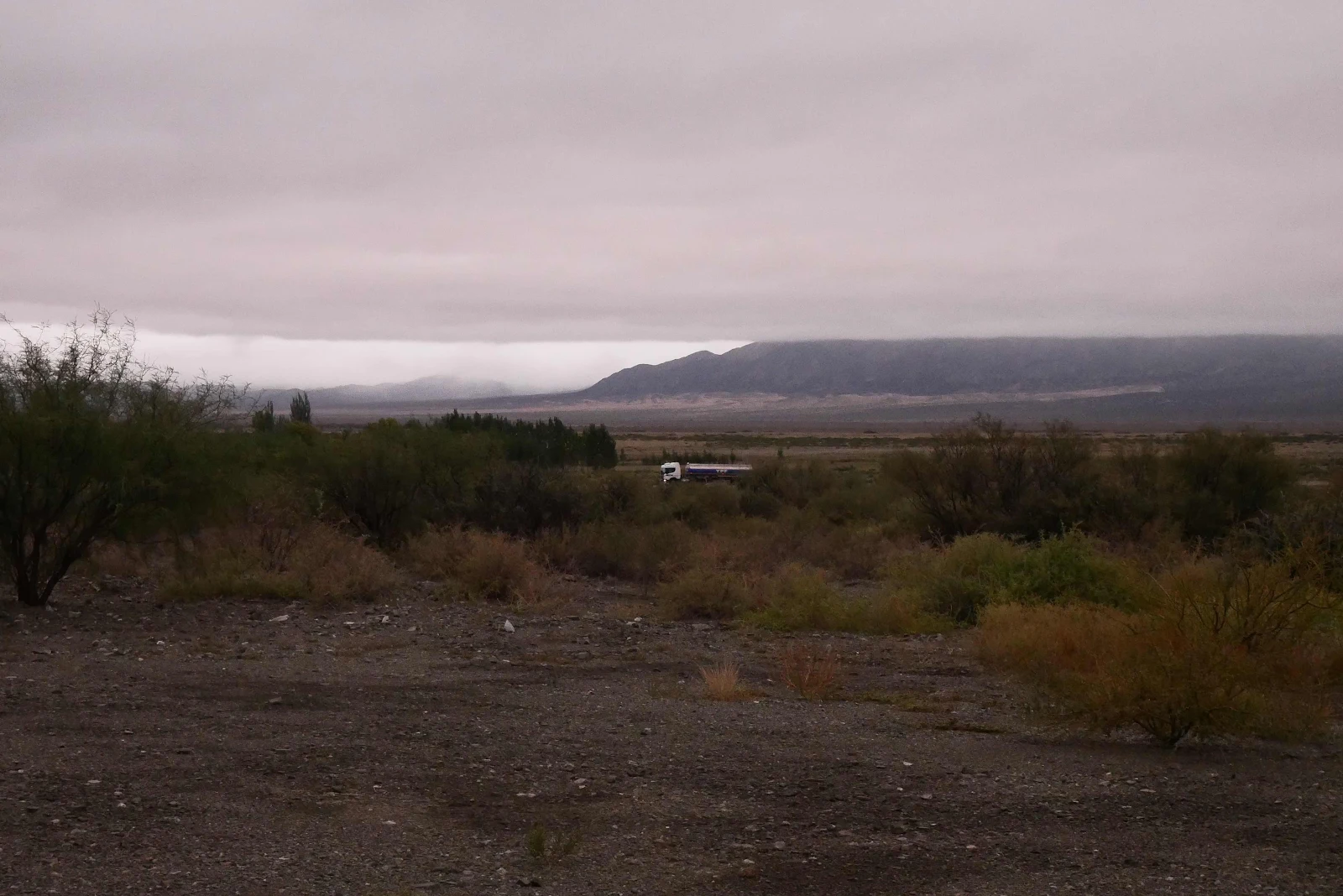
We passed a convoy of tankers assembling by the side of the road and plunged up Highway 149 toward Las Flores 60 miles away.
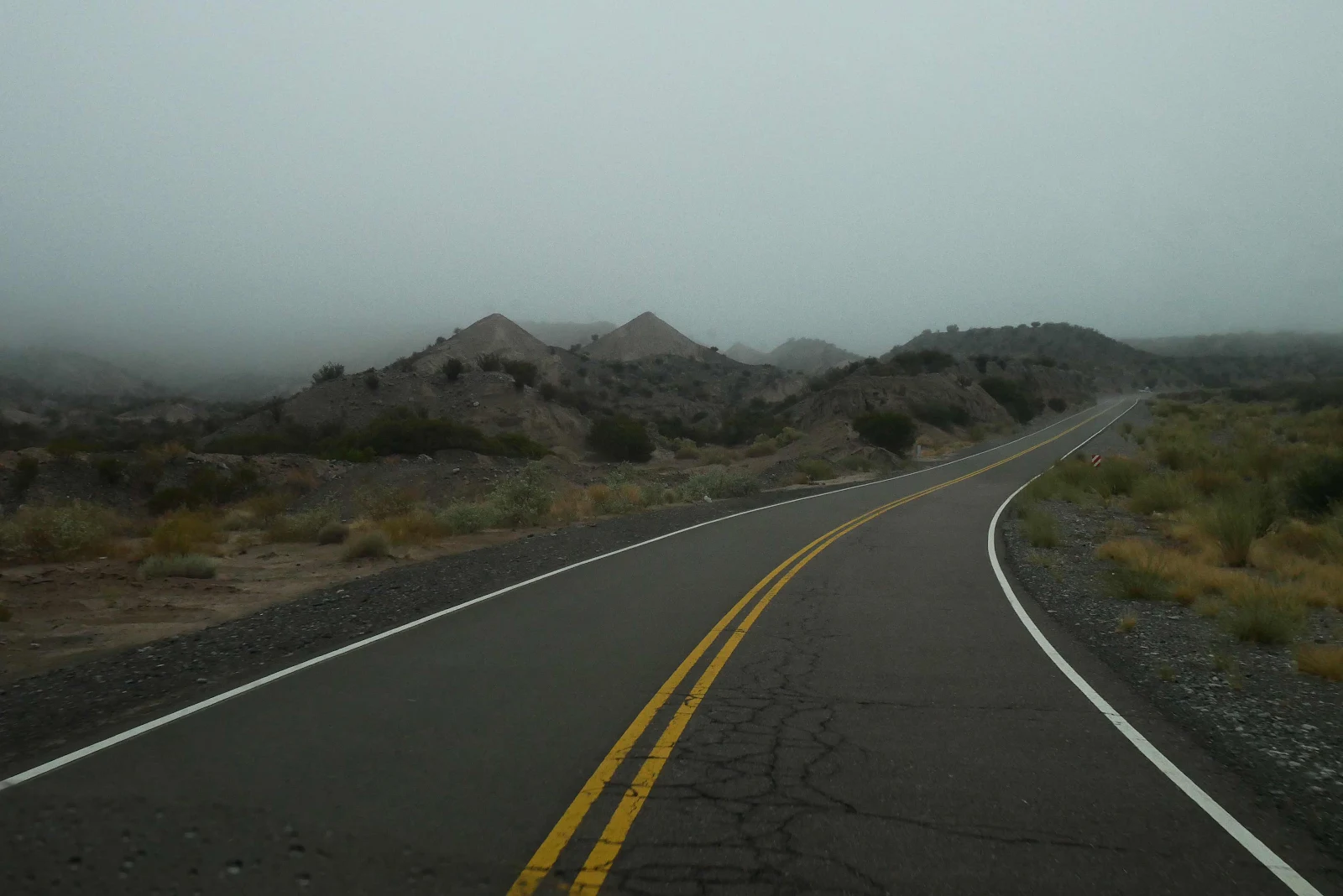
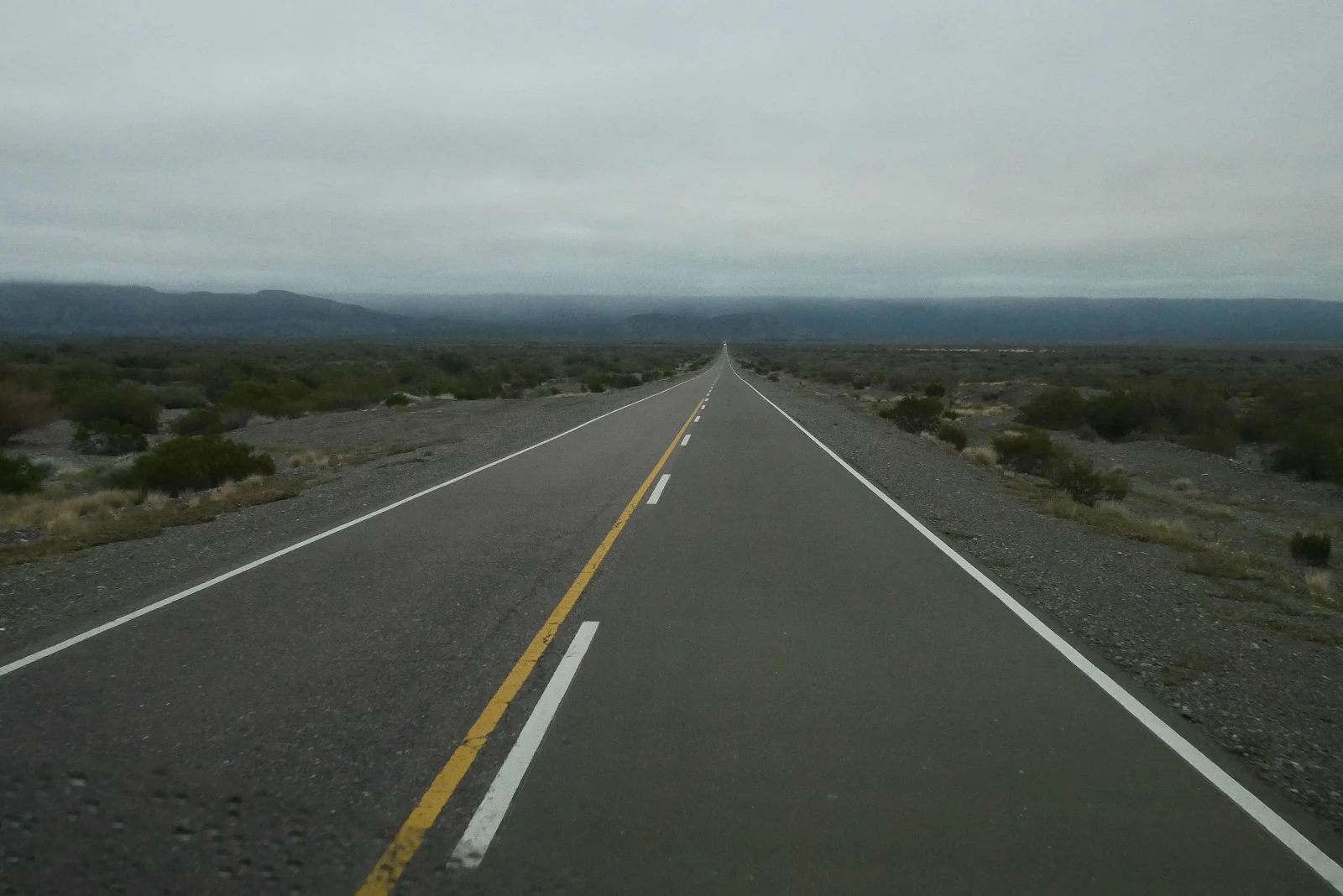
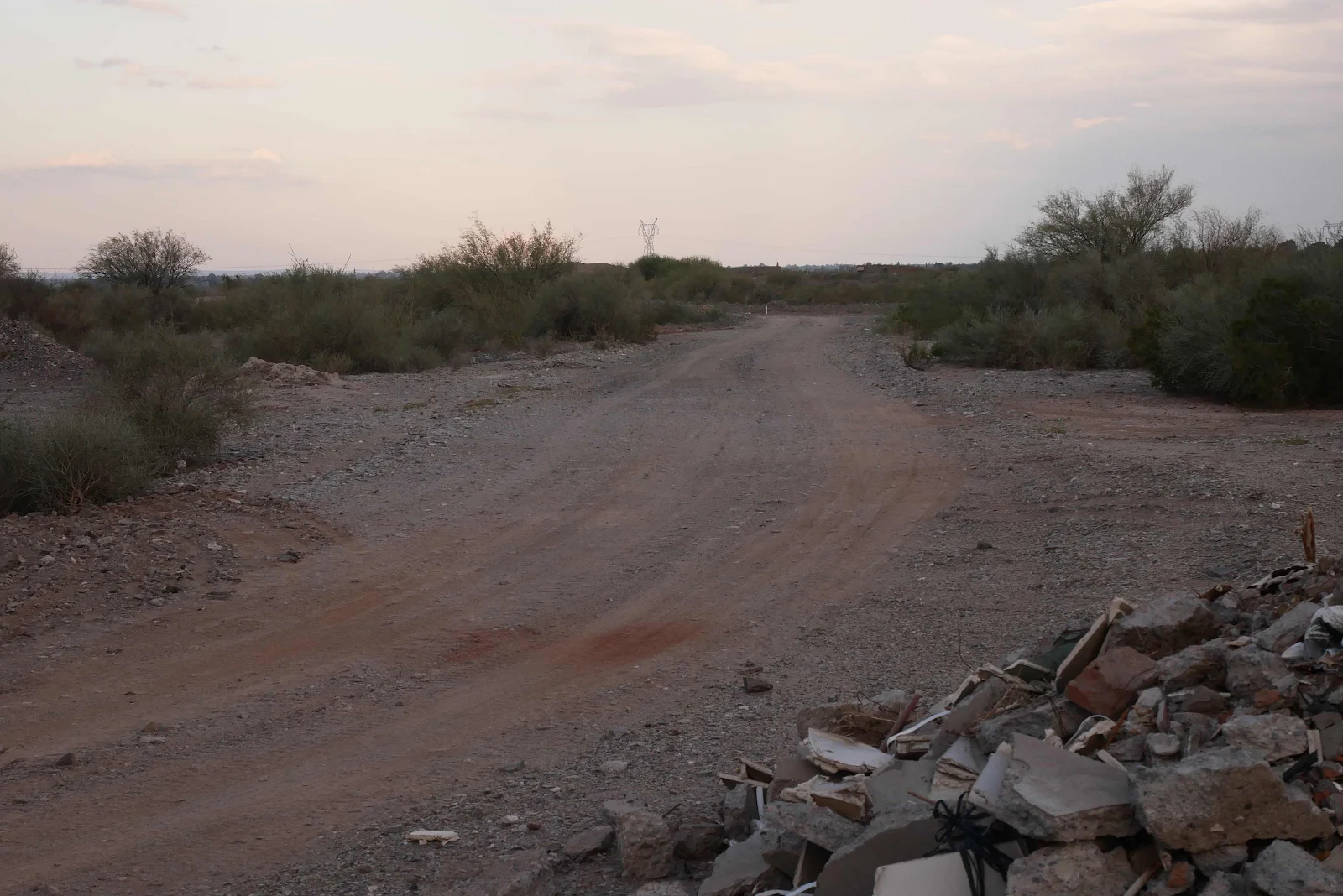
Our destination was to the left at this corner.
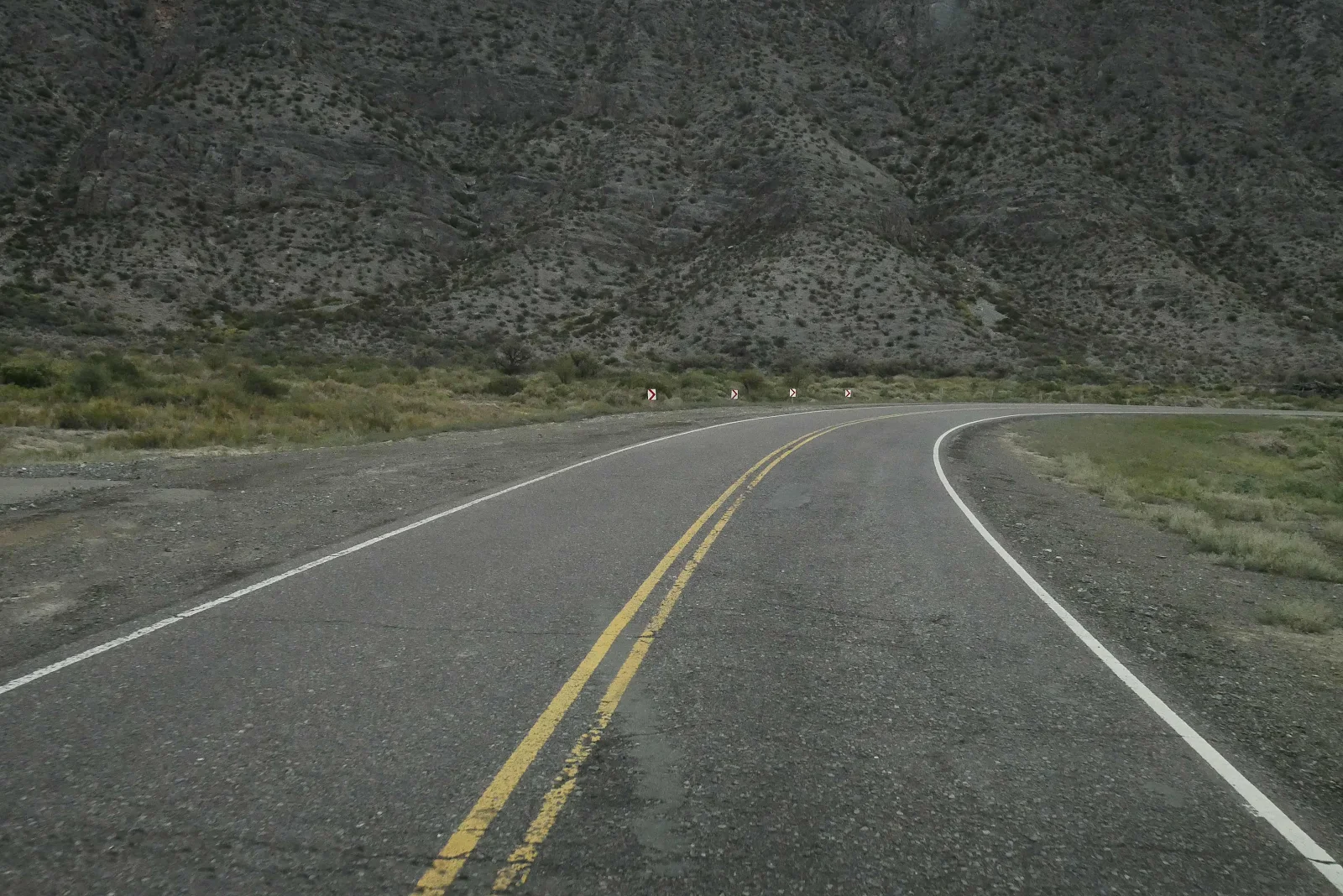
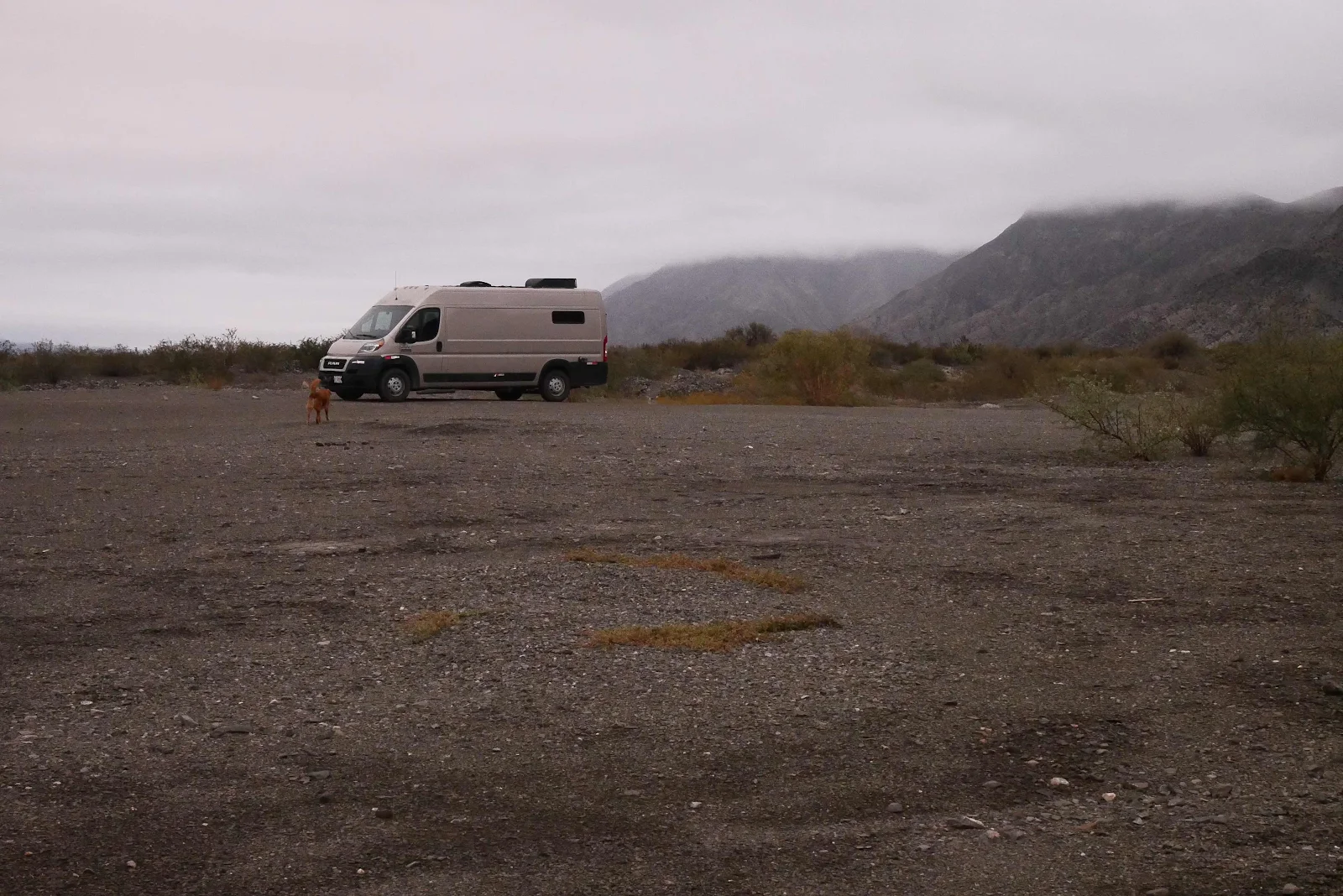
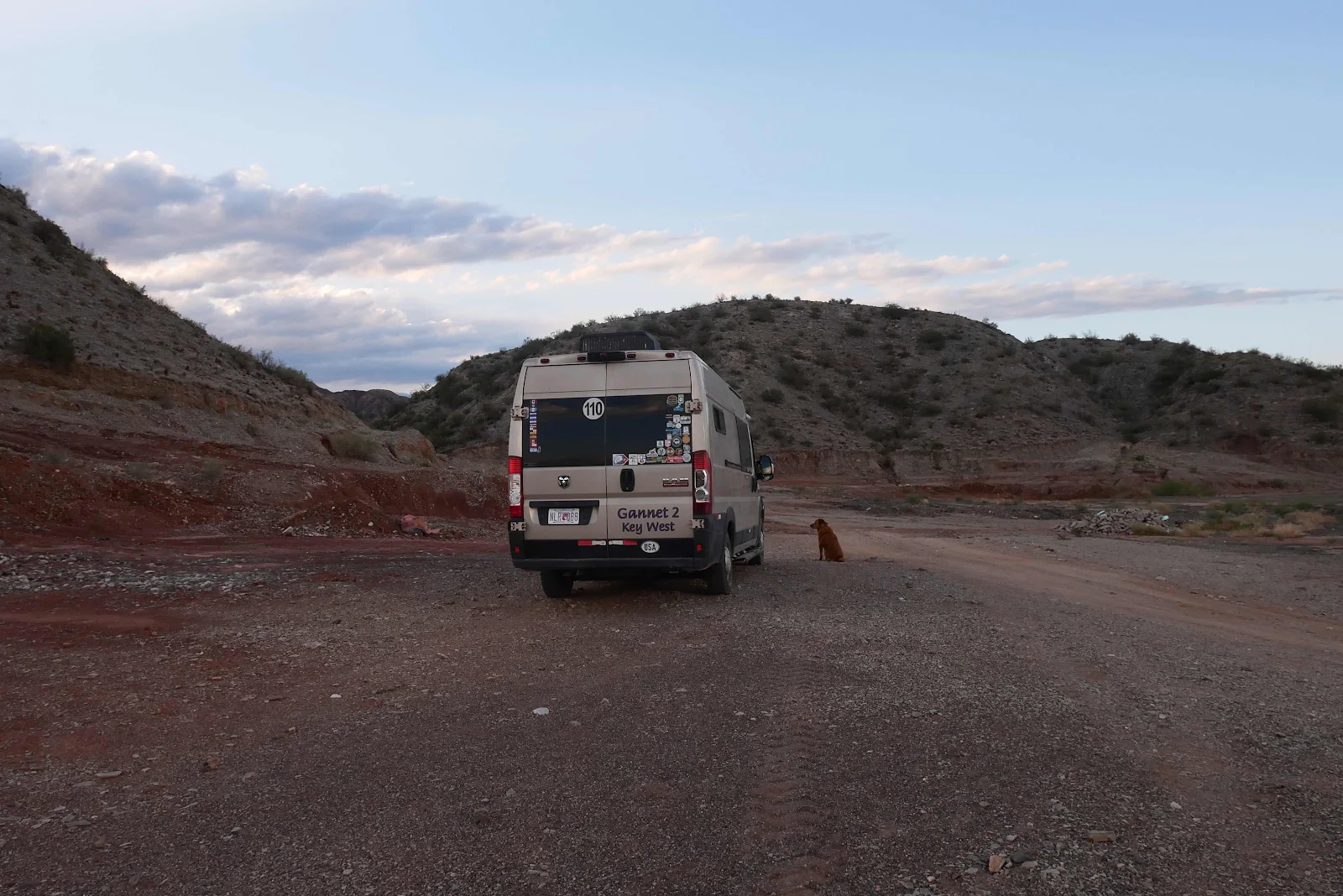
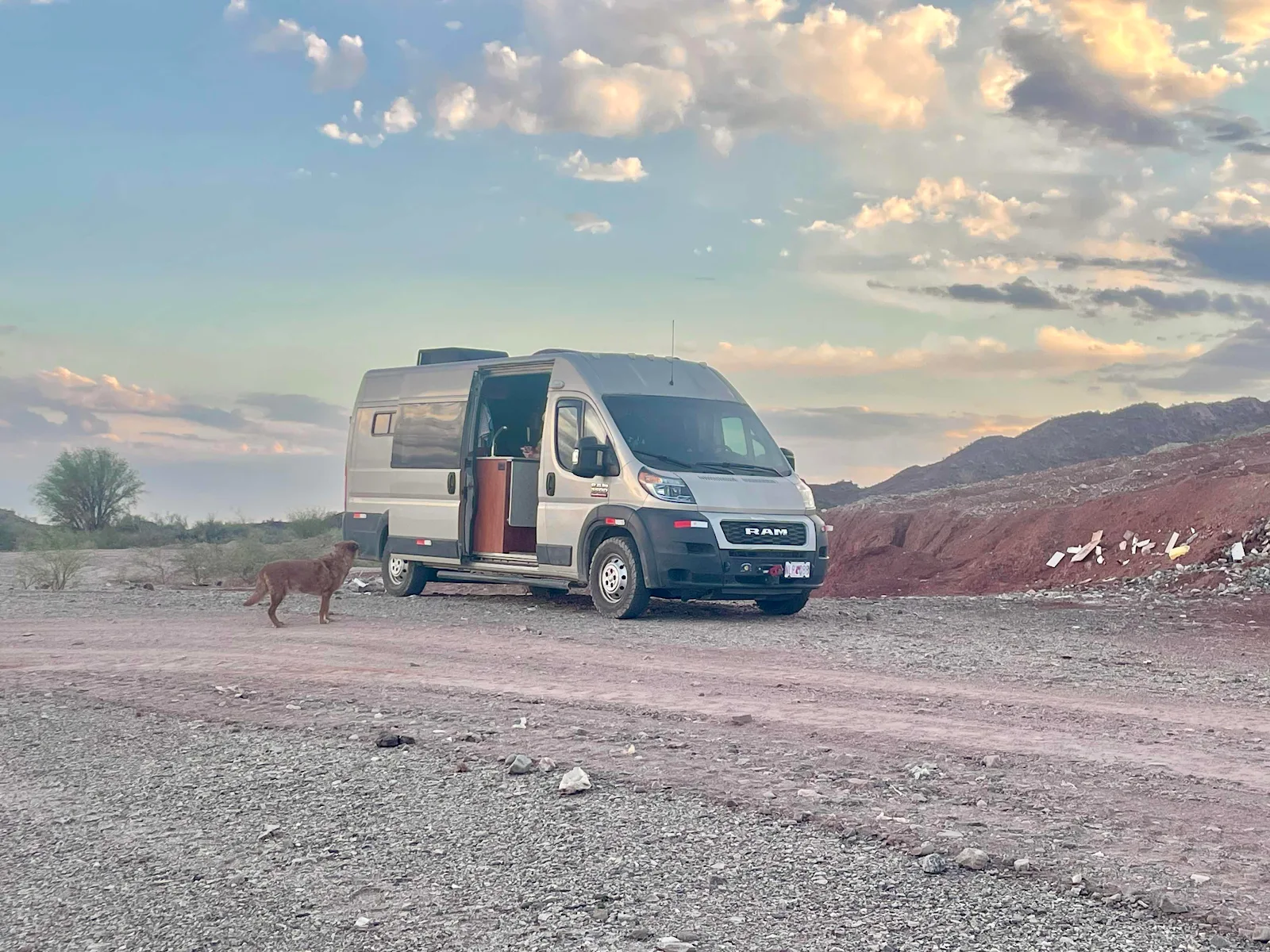
A mile along the dirt there we were.
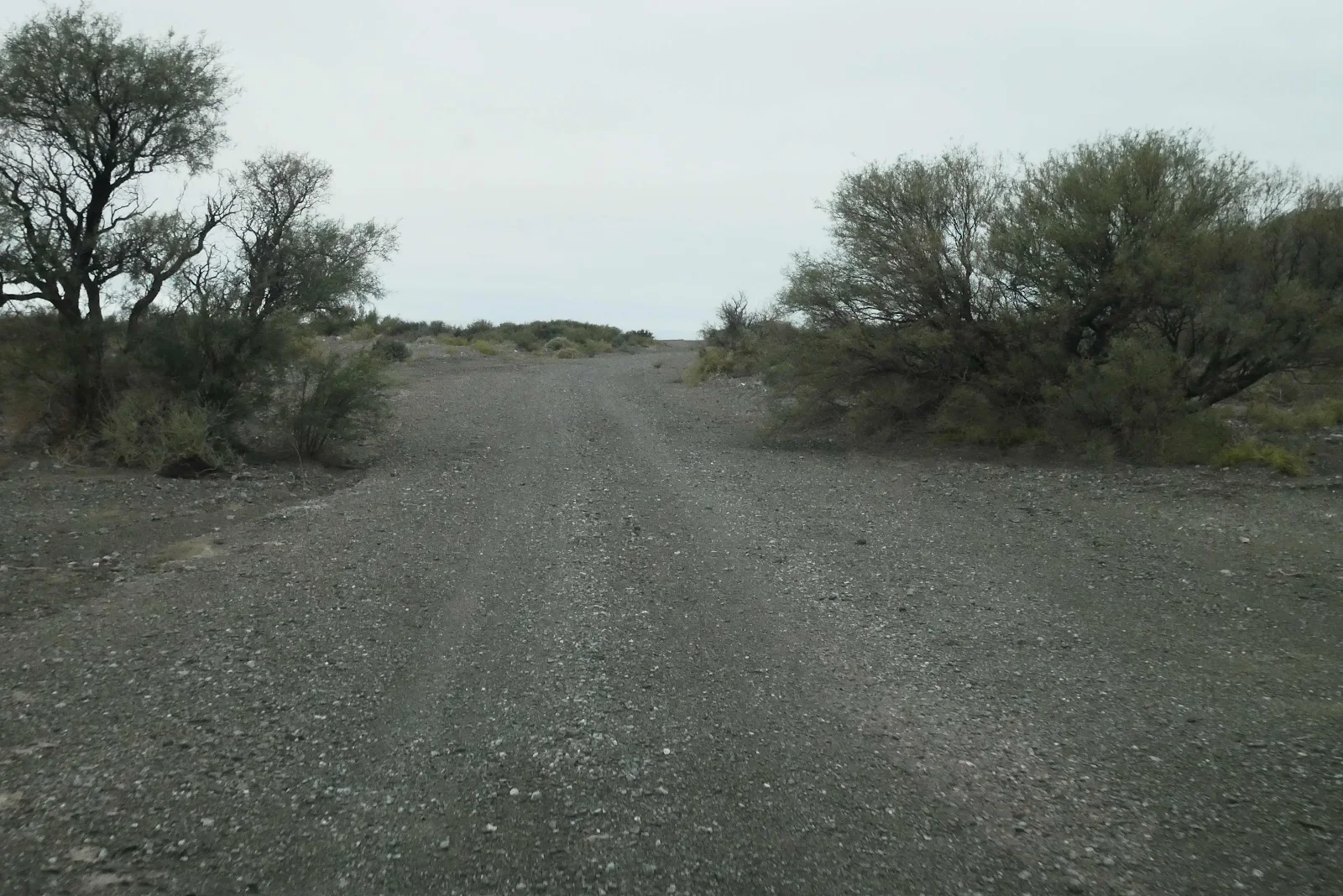
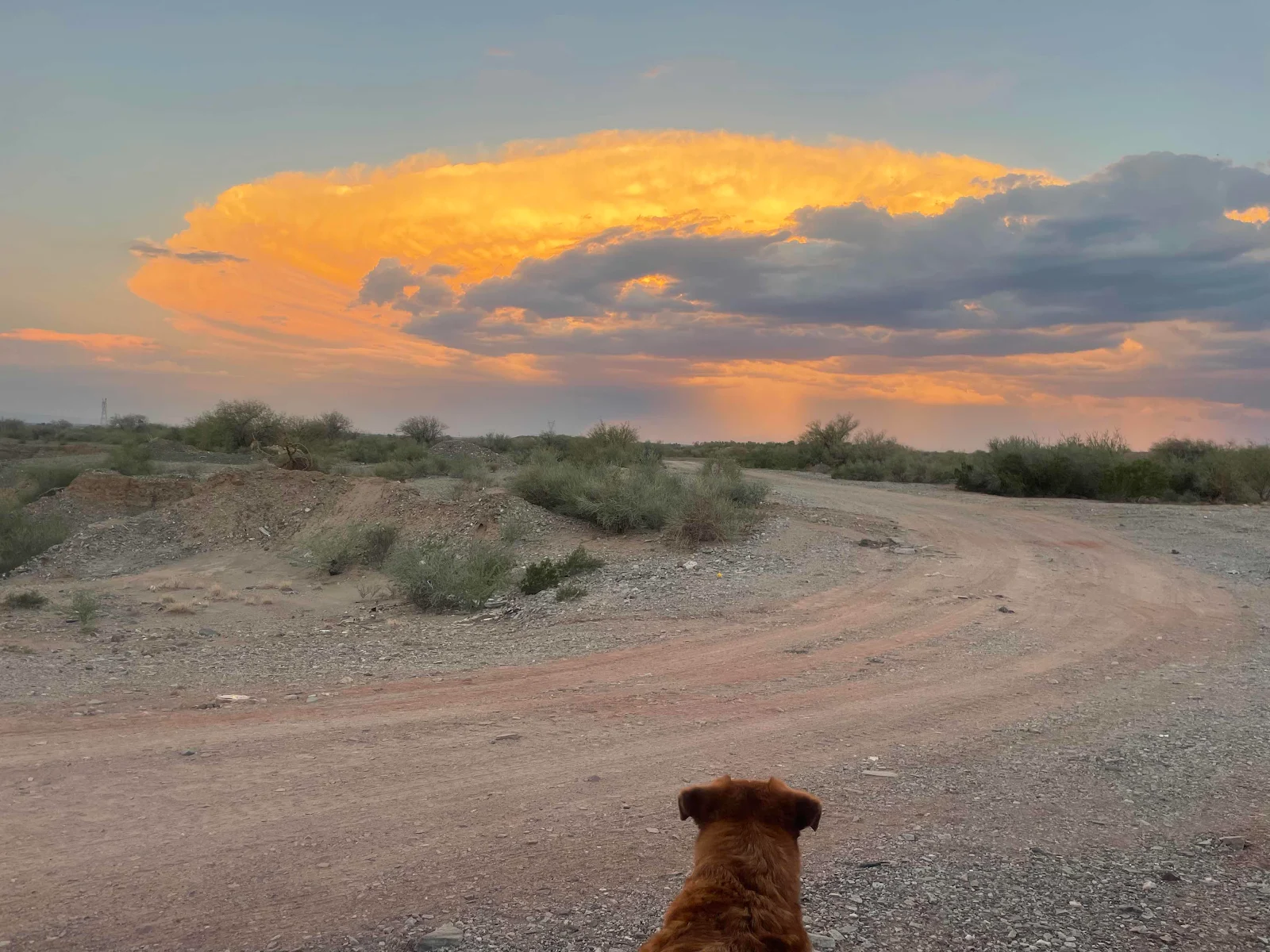
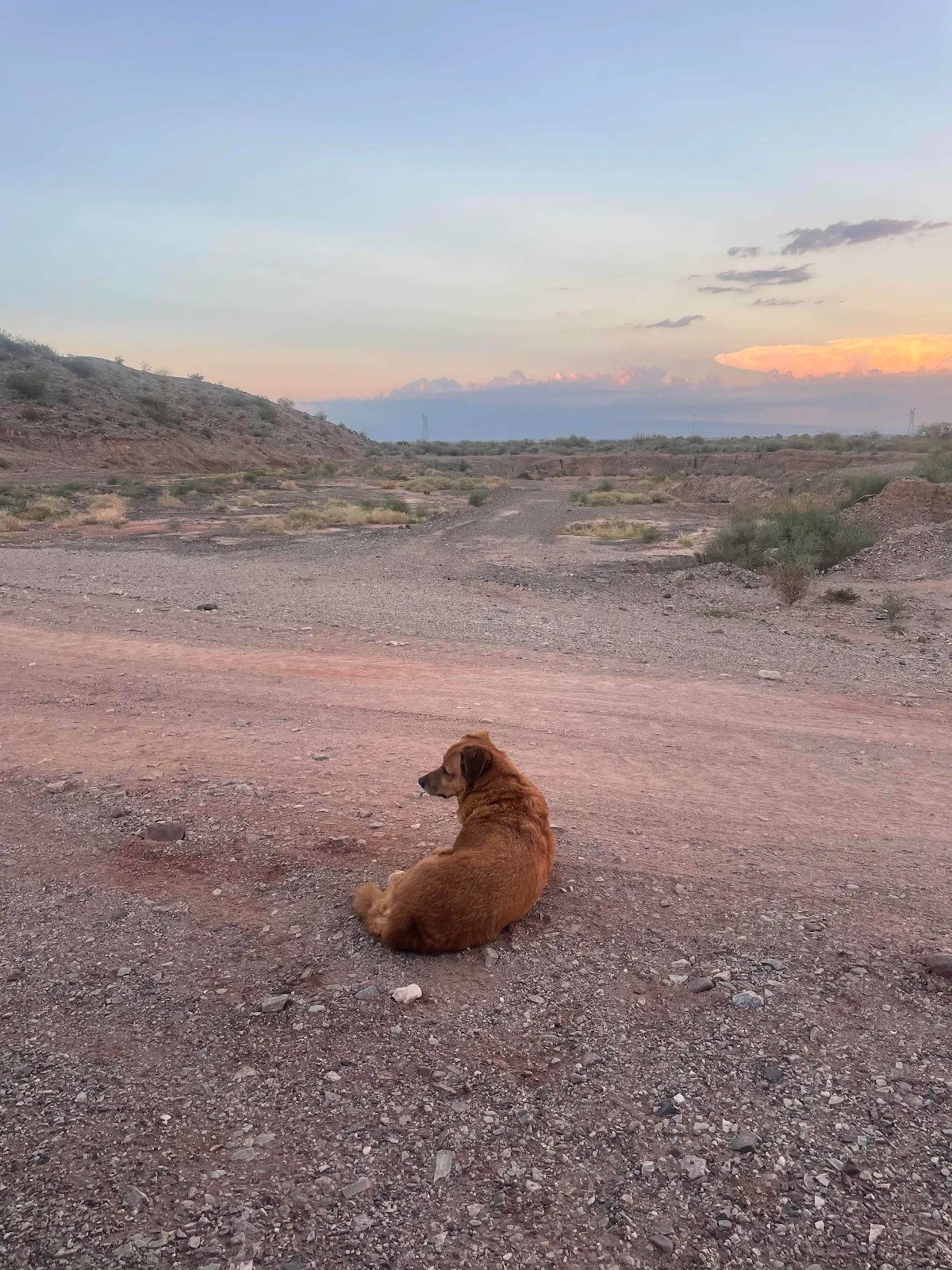
Our view:
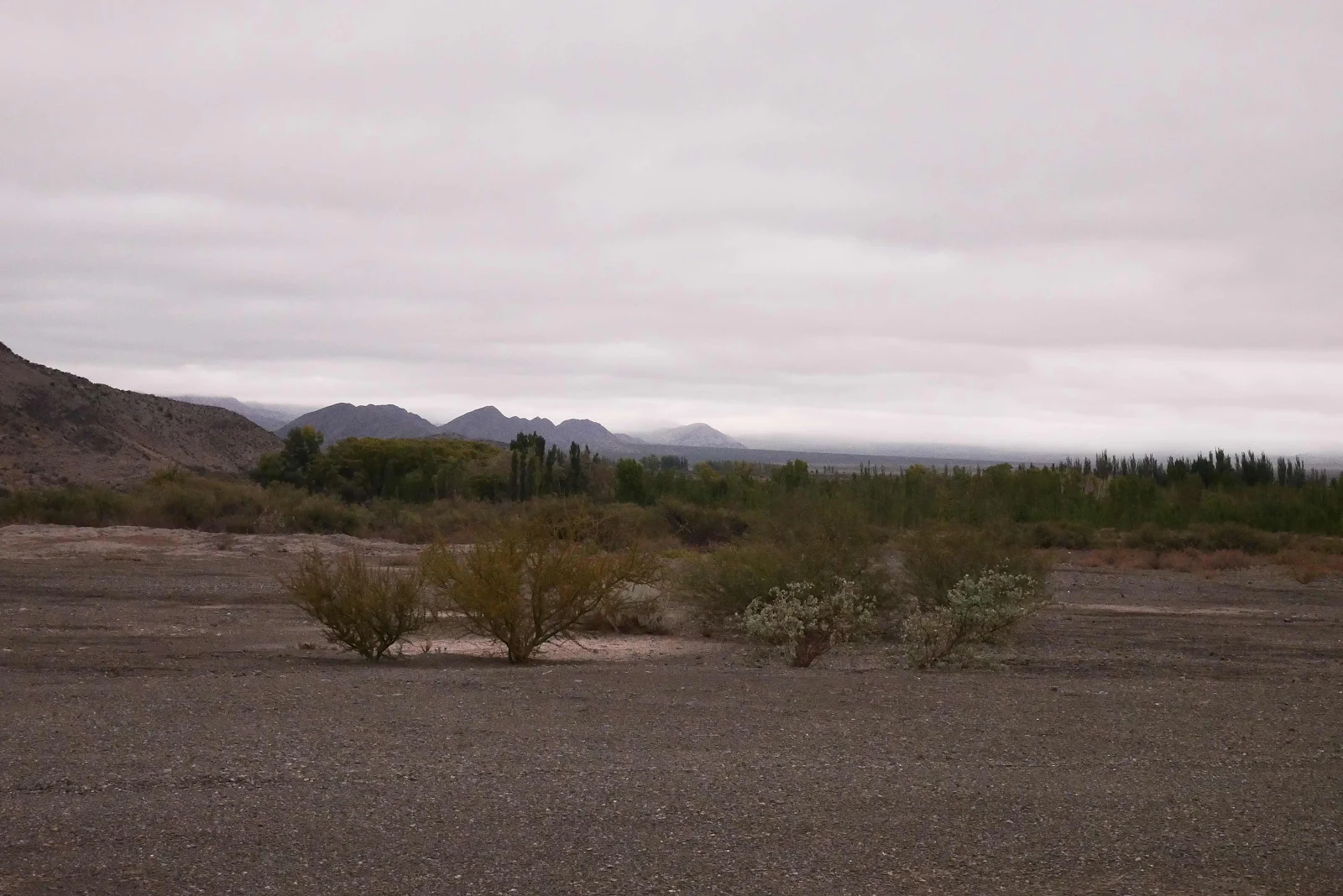
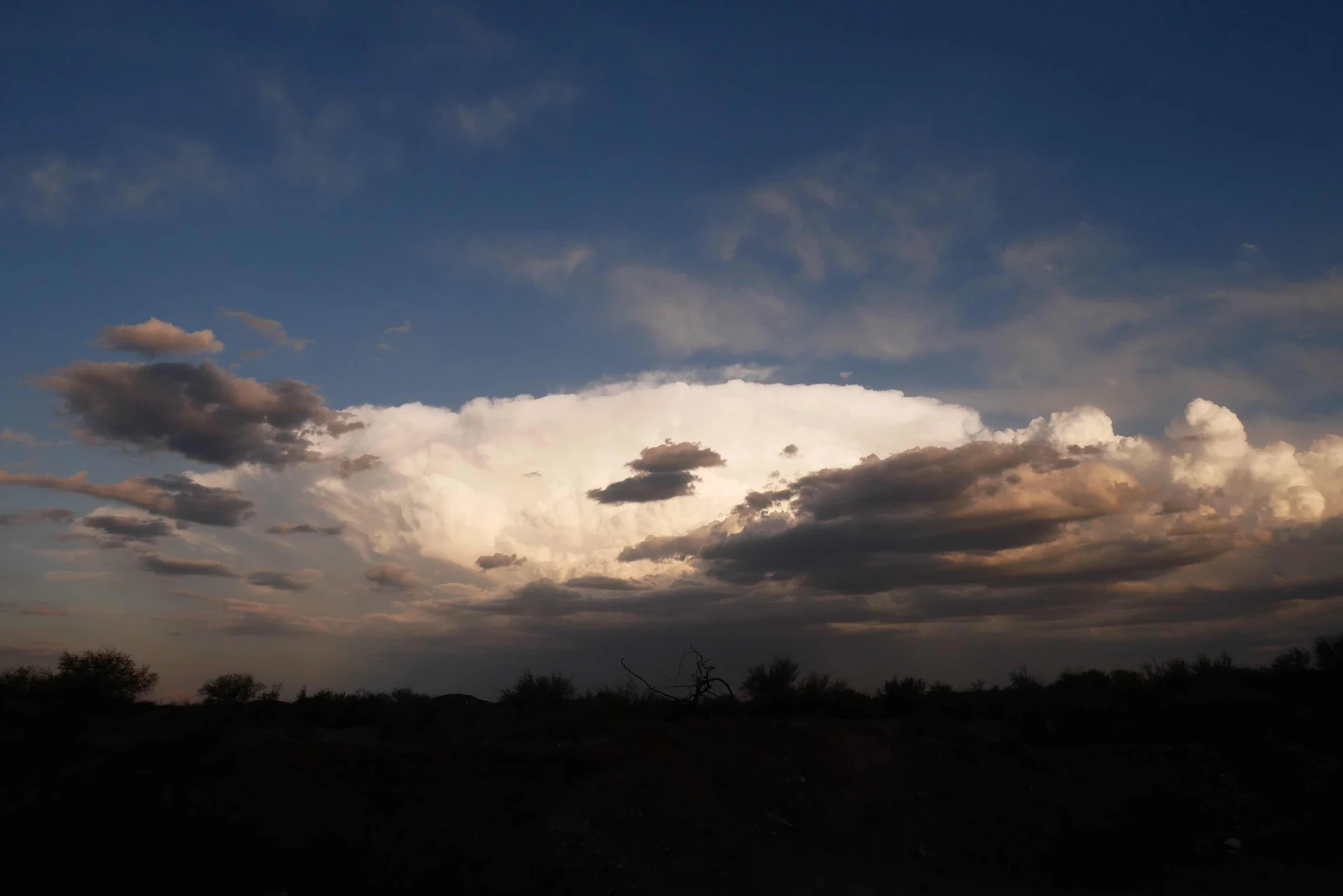
There goes the tanker truck convoy on the distant highway:
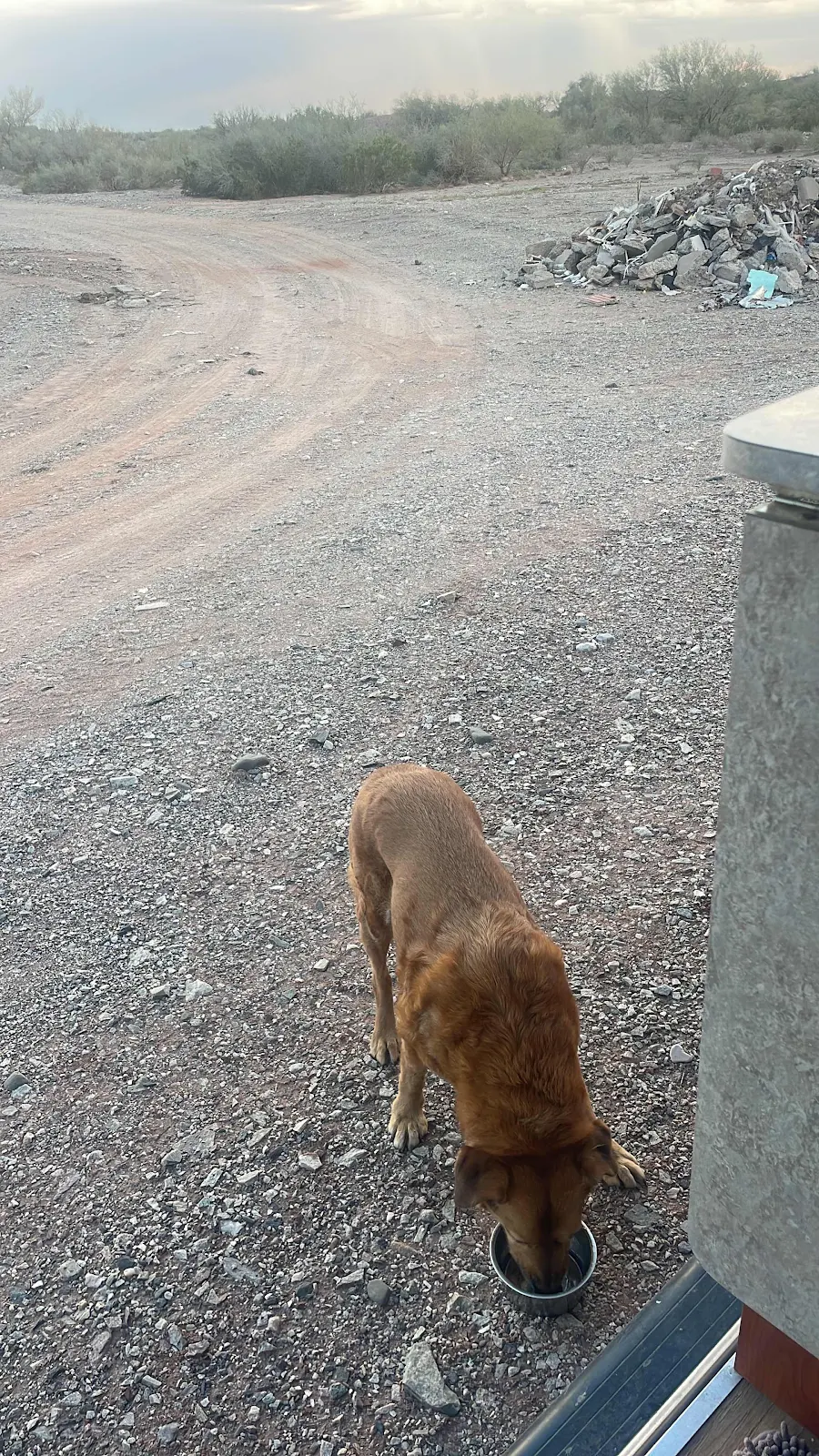
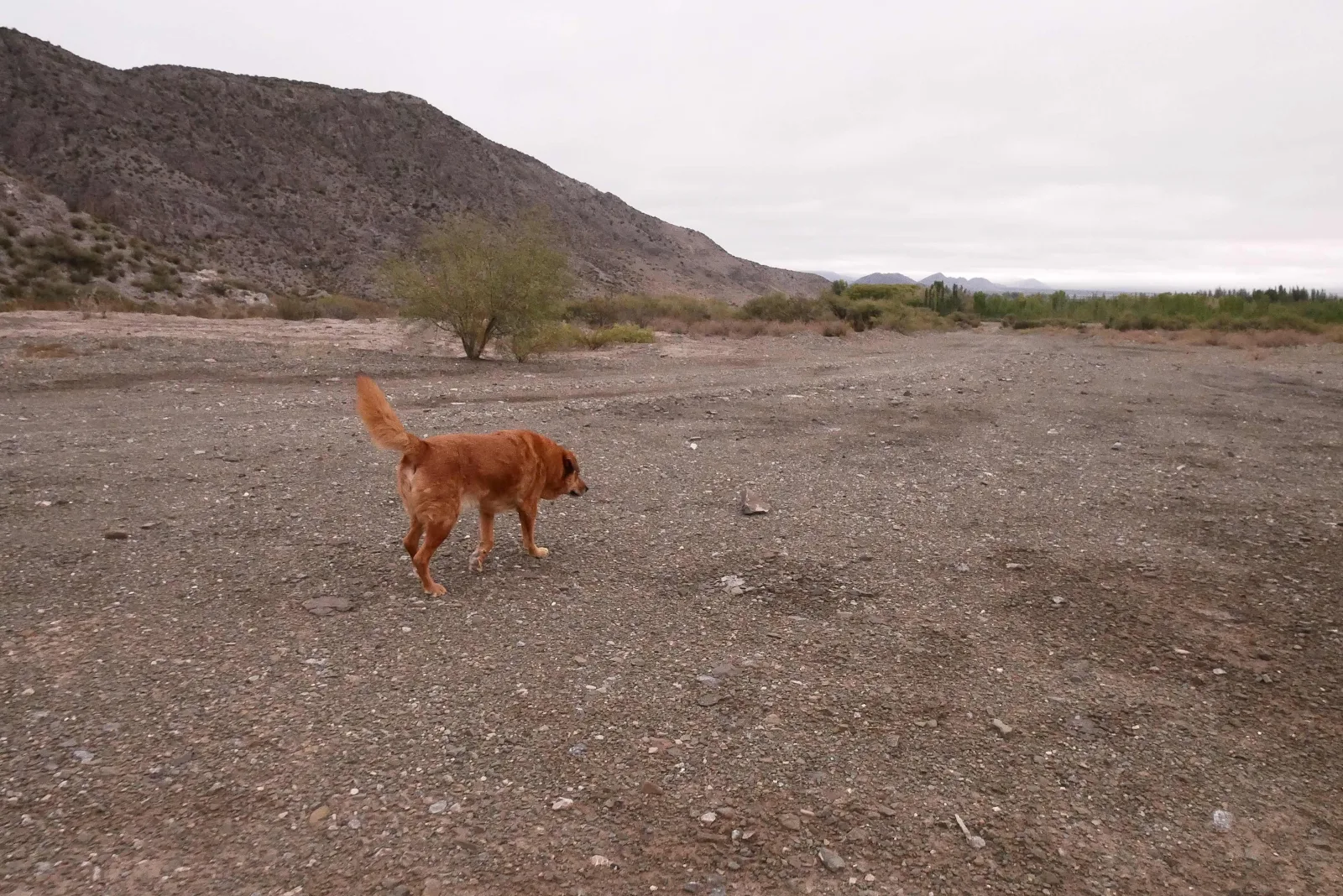
After a long morning snooze young Rusty was ready to walk, 42 degrees notwithstanding. At least there was no wind.
All to ourselves, and after dark not a light. Amazing. We put up our window covers and Layne cooked us left over steak and potatoes and here we are snug and waiting for the sun to show up.