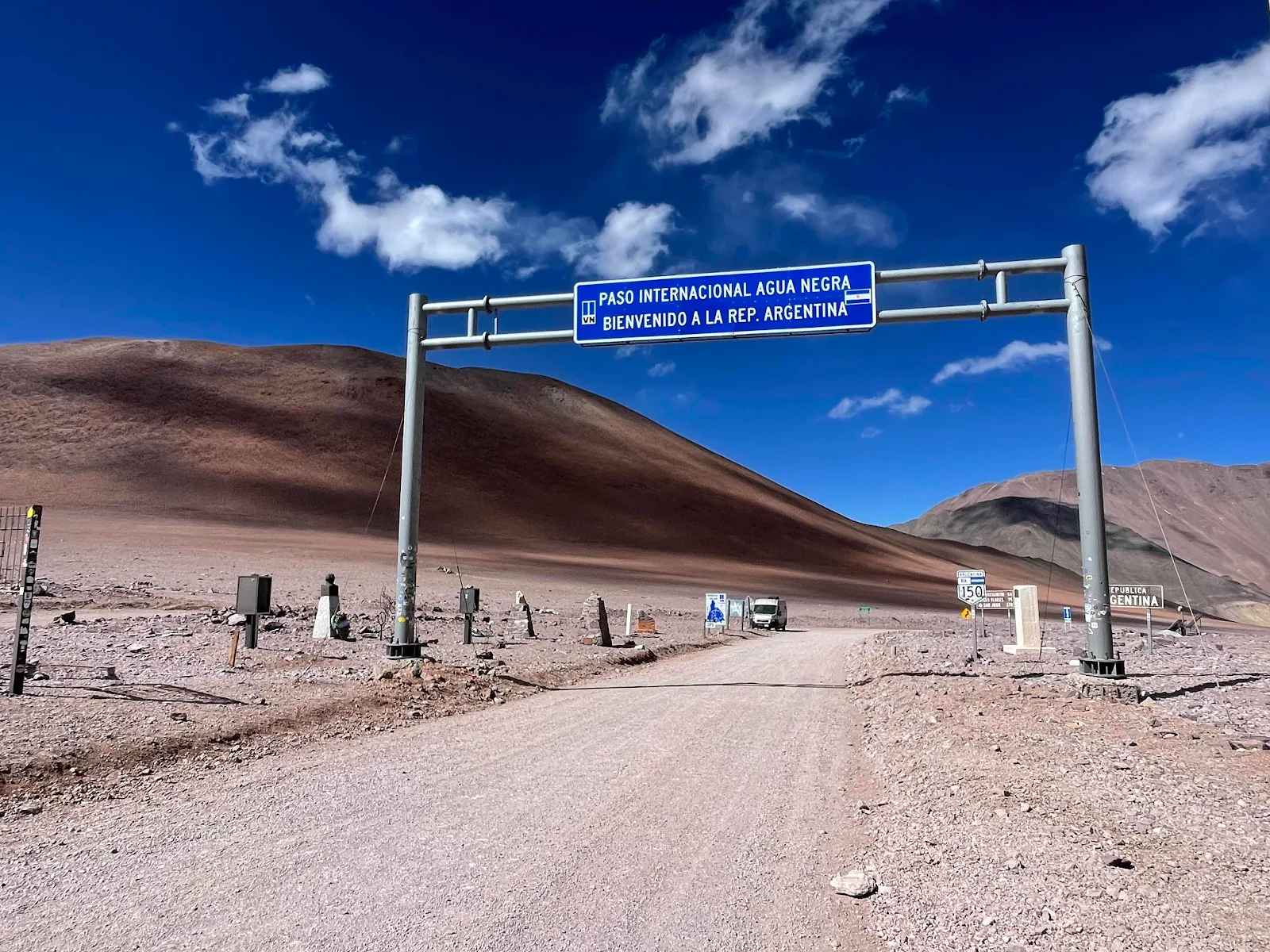
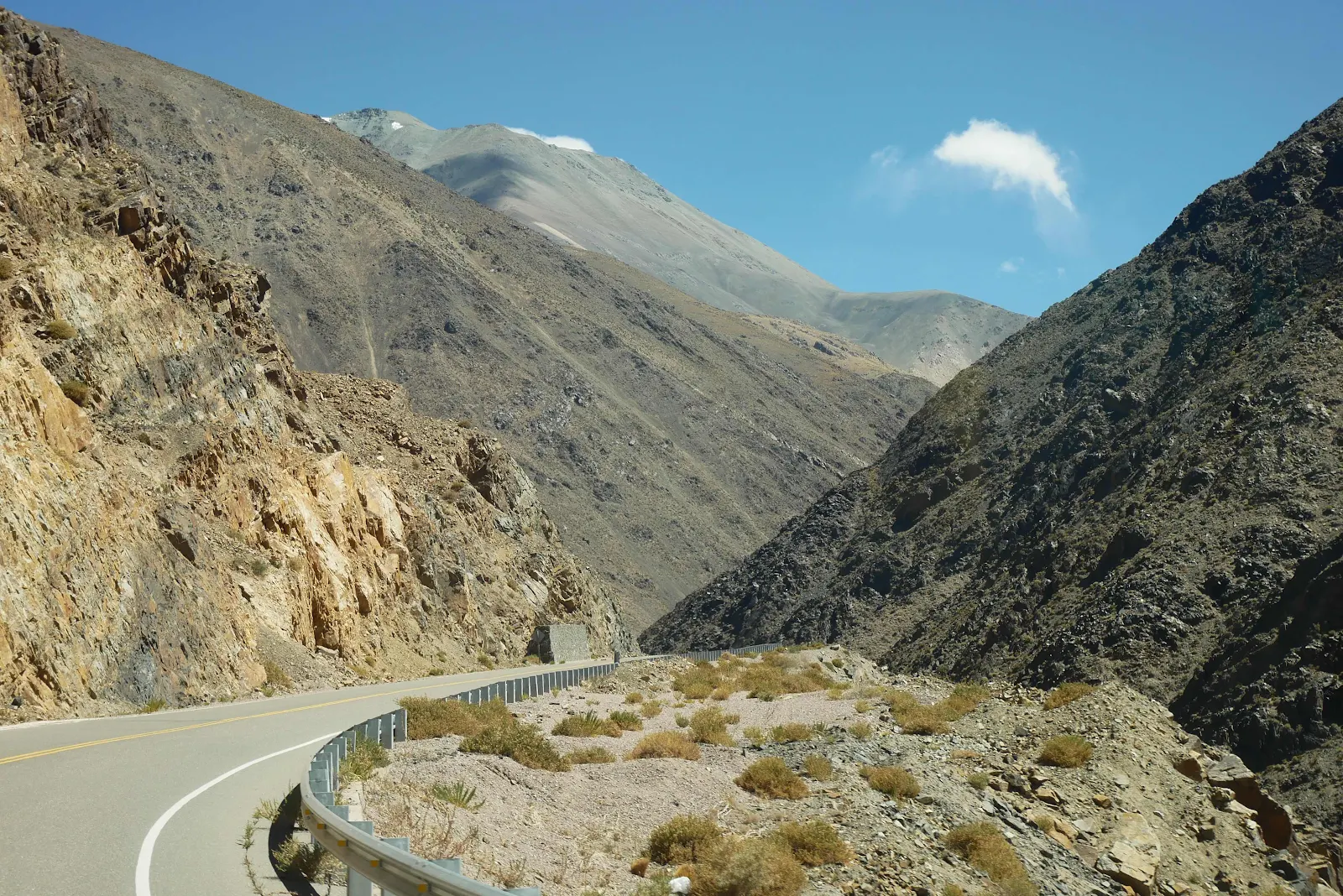
There is a legend in my mother’s family that my grandmother, an Italian opera singer of some fame in the beginning of the 20th century, crossed the Andes on a mule. Actually it’s a true story, she came on tour to sing in Buenos Aires in 1917 and the opera company traveled to Santiago by mule to sing in Chile. The journey they say took a month. We did it in six hours.
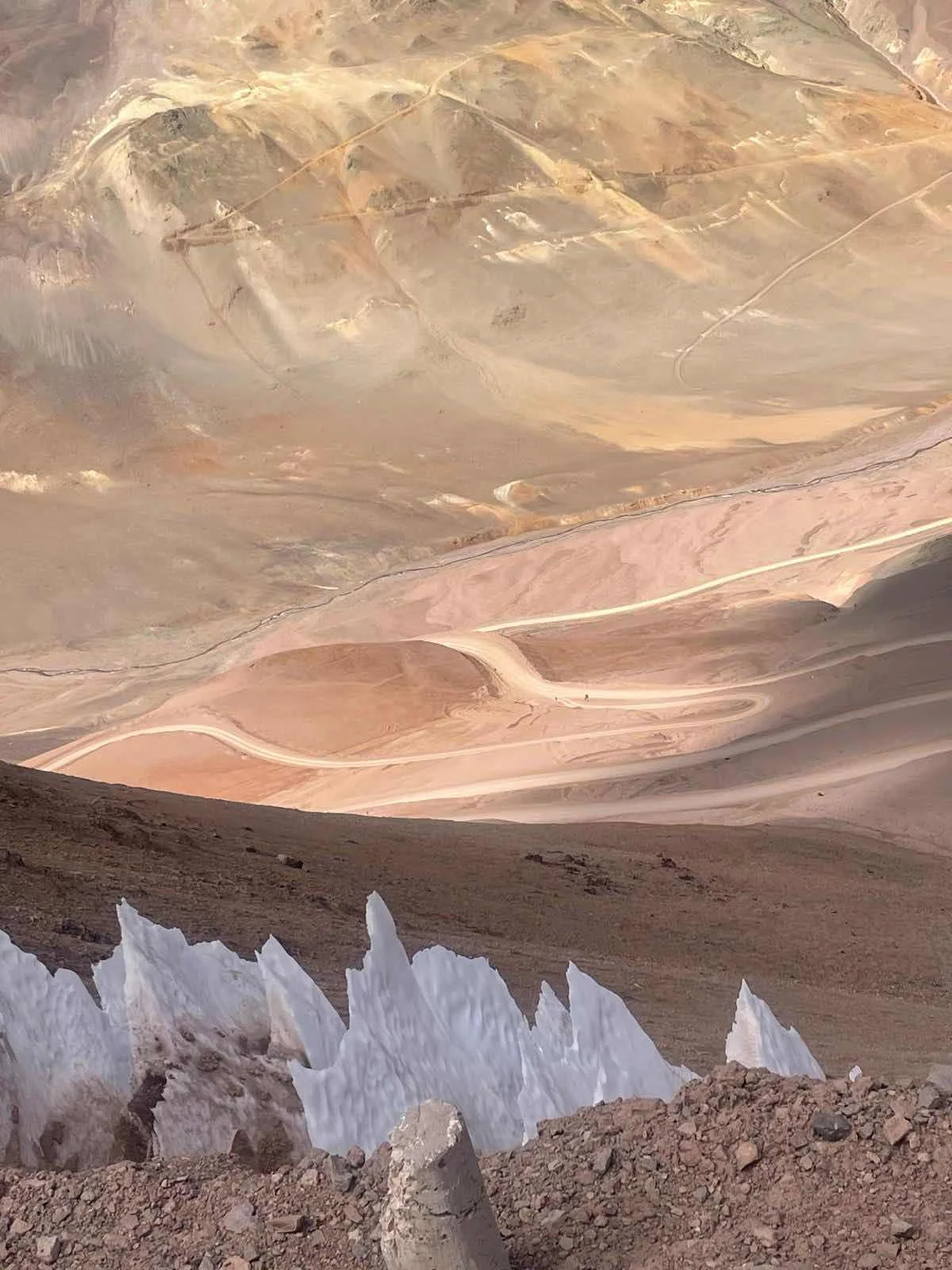
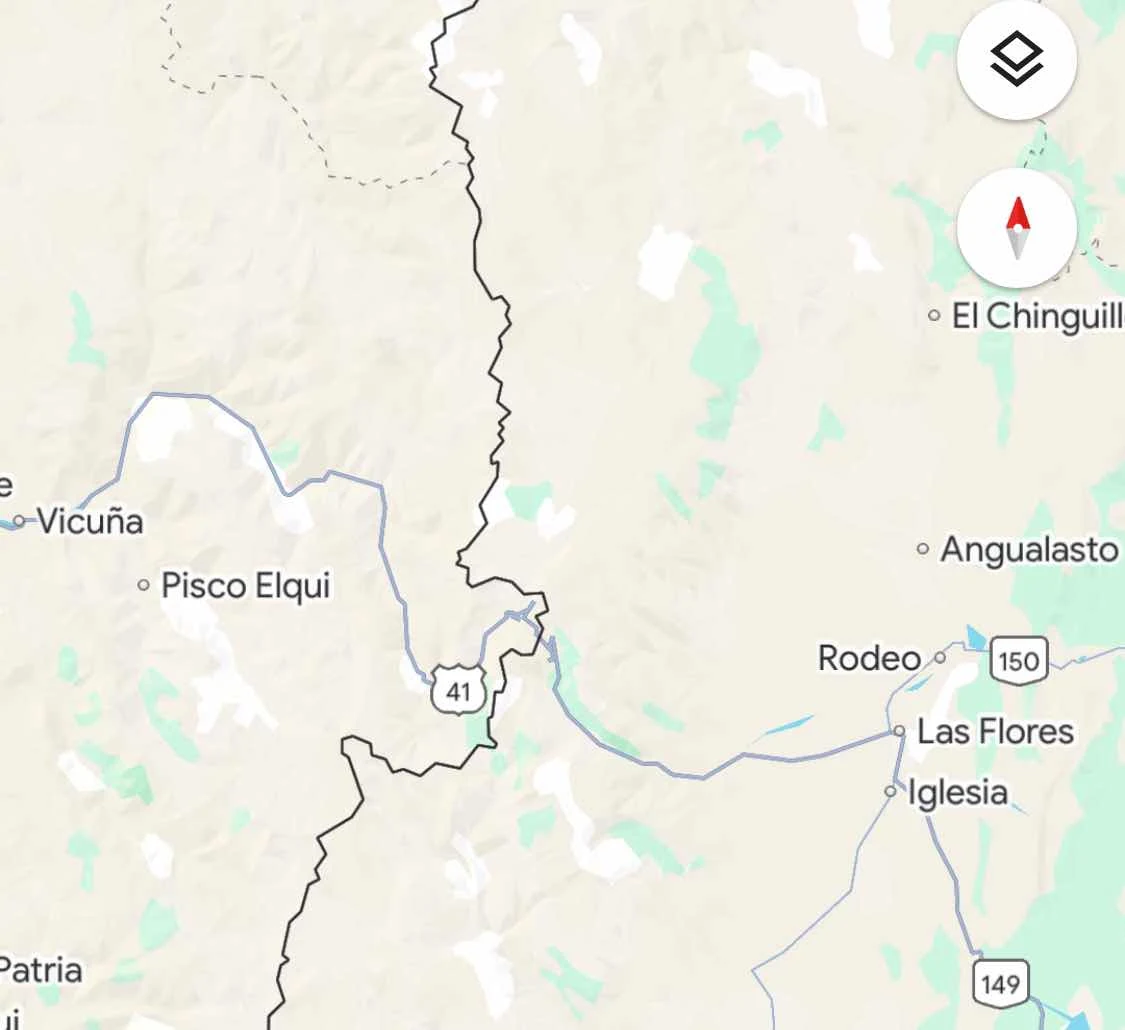
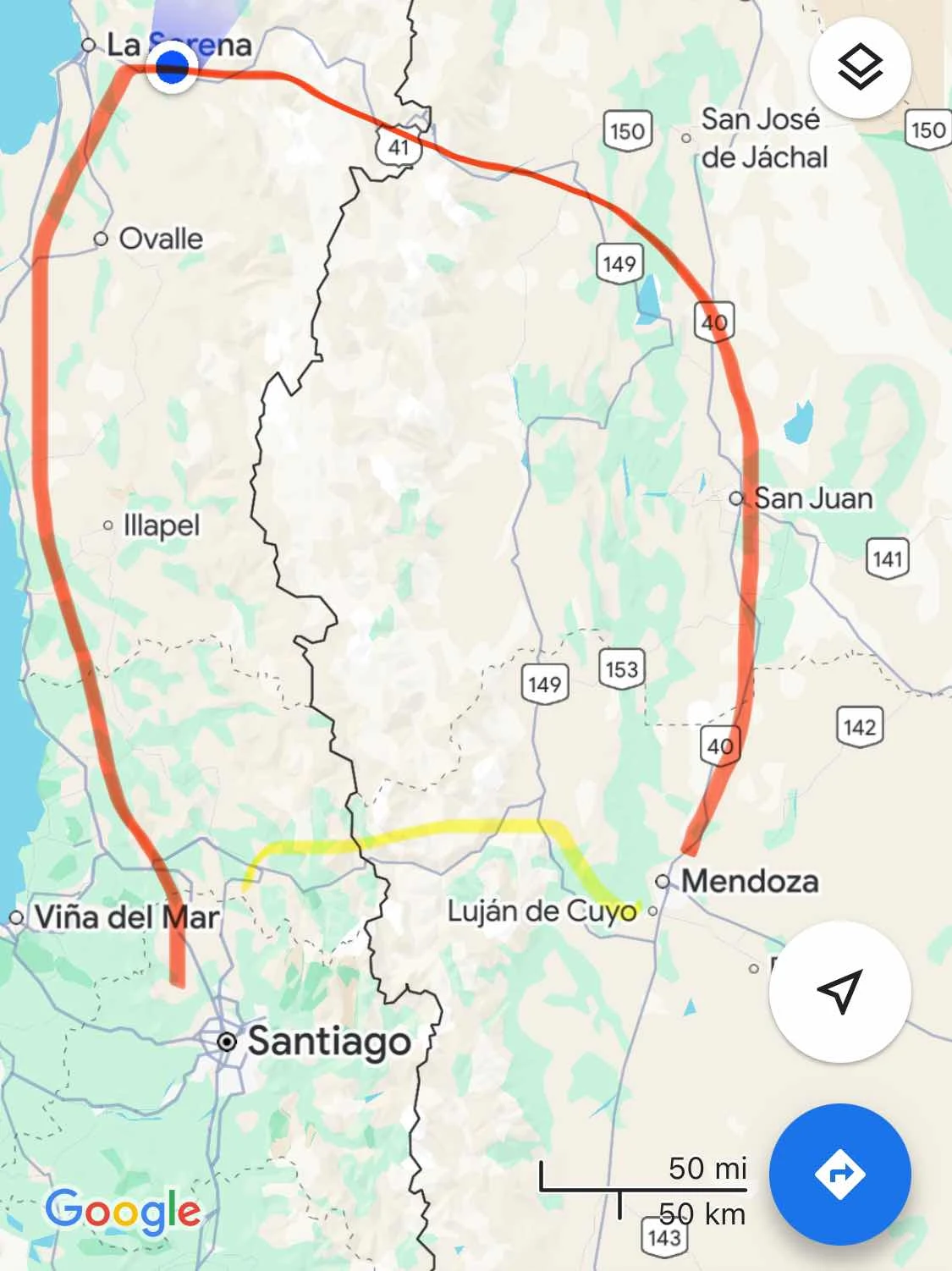
But that was only the worst of the mountain drive, six hours to the top and down to a safe altitude to camp for the night. Paso Agua Negra is only open in summer and it’s mostly a tourist attraction, where the officials are easy going and commercial trucks cross at the more modern Paso Libertador, a tunnel connecting Mendoza and Santiago, properly paved and open year round. Our route is marked in red, the direct route is in yellow.
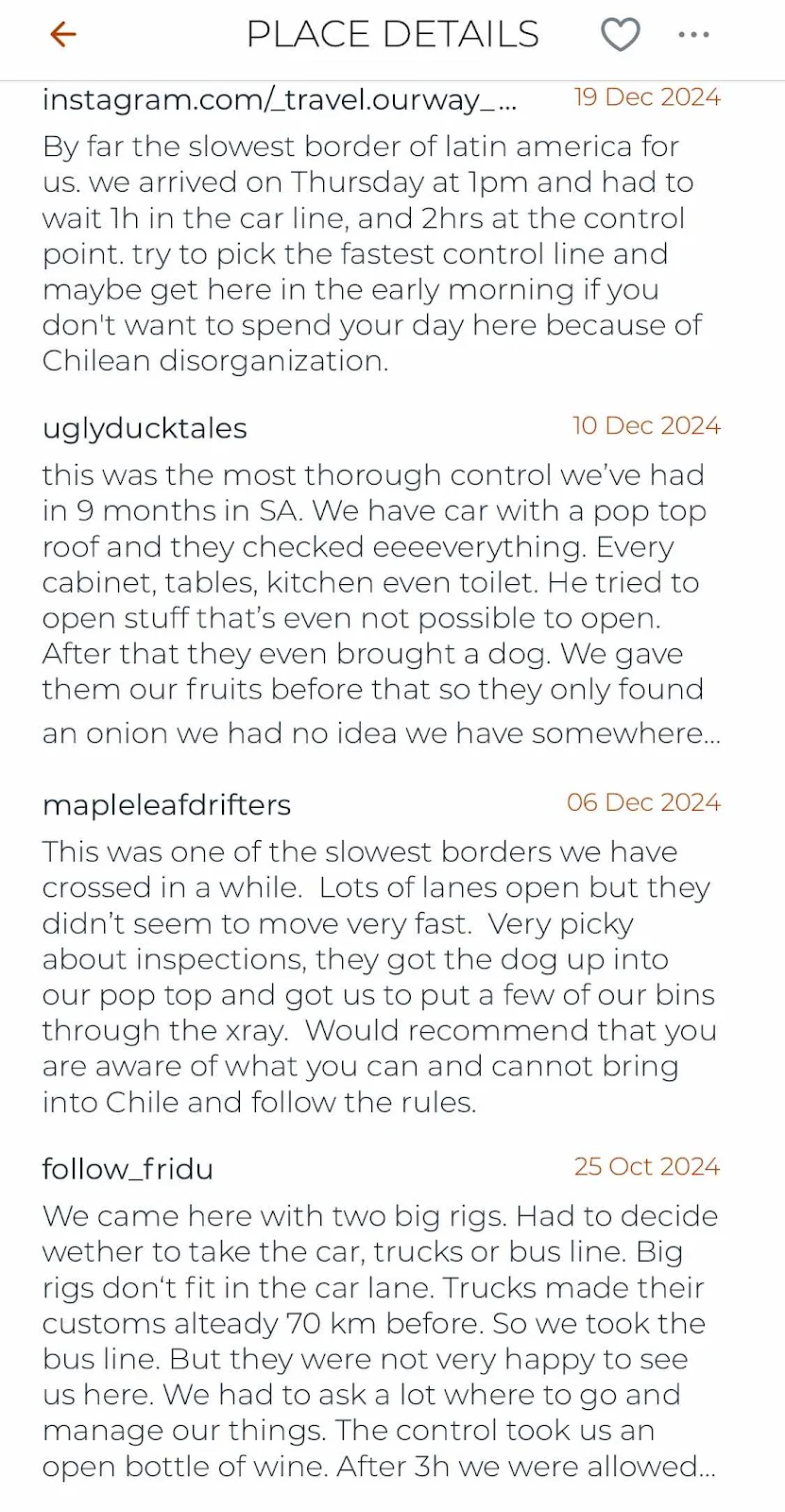
Why did we go the long way round? What a brilliant, if obvious question I asked myself. Firstly the comments in iOverlander are intimidating with friends of ours reporting the most intense searches of incoming vehicles by Chilean customs. It’s like the worst visit to a proctologist.
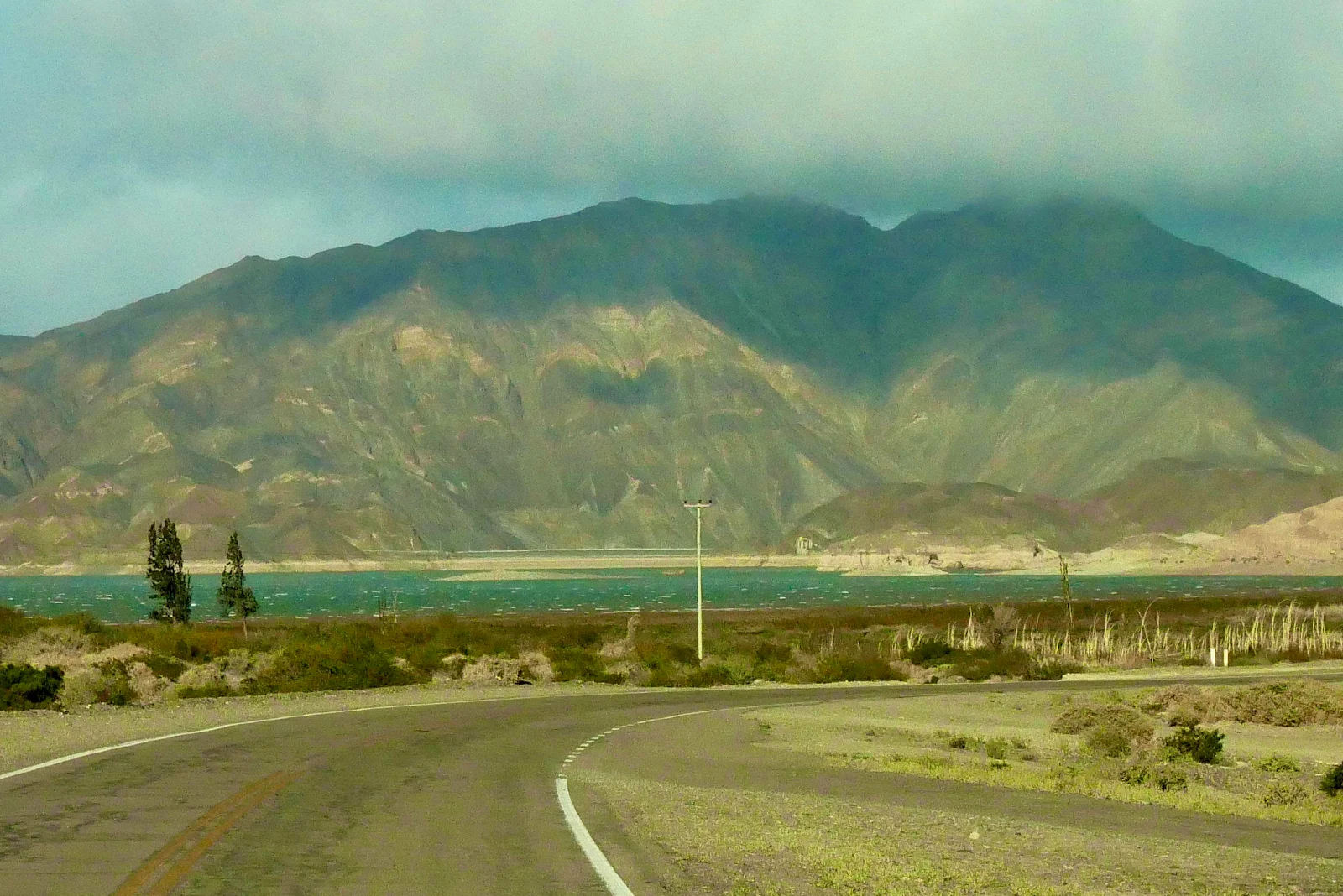
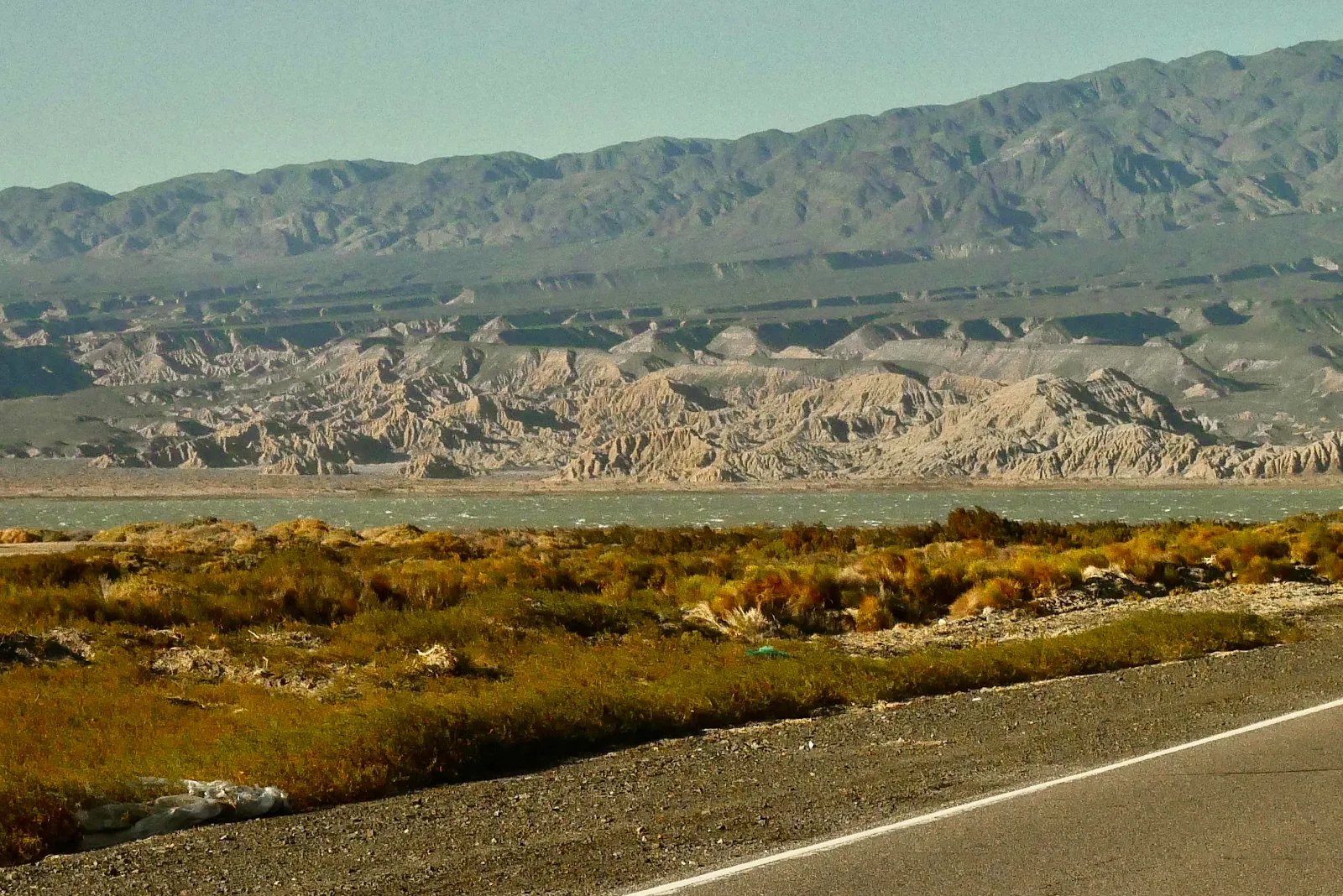
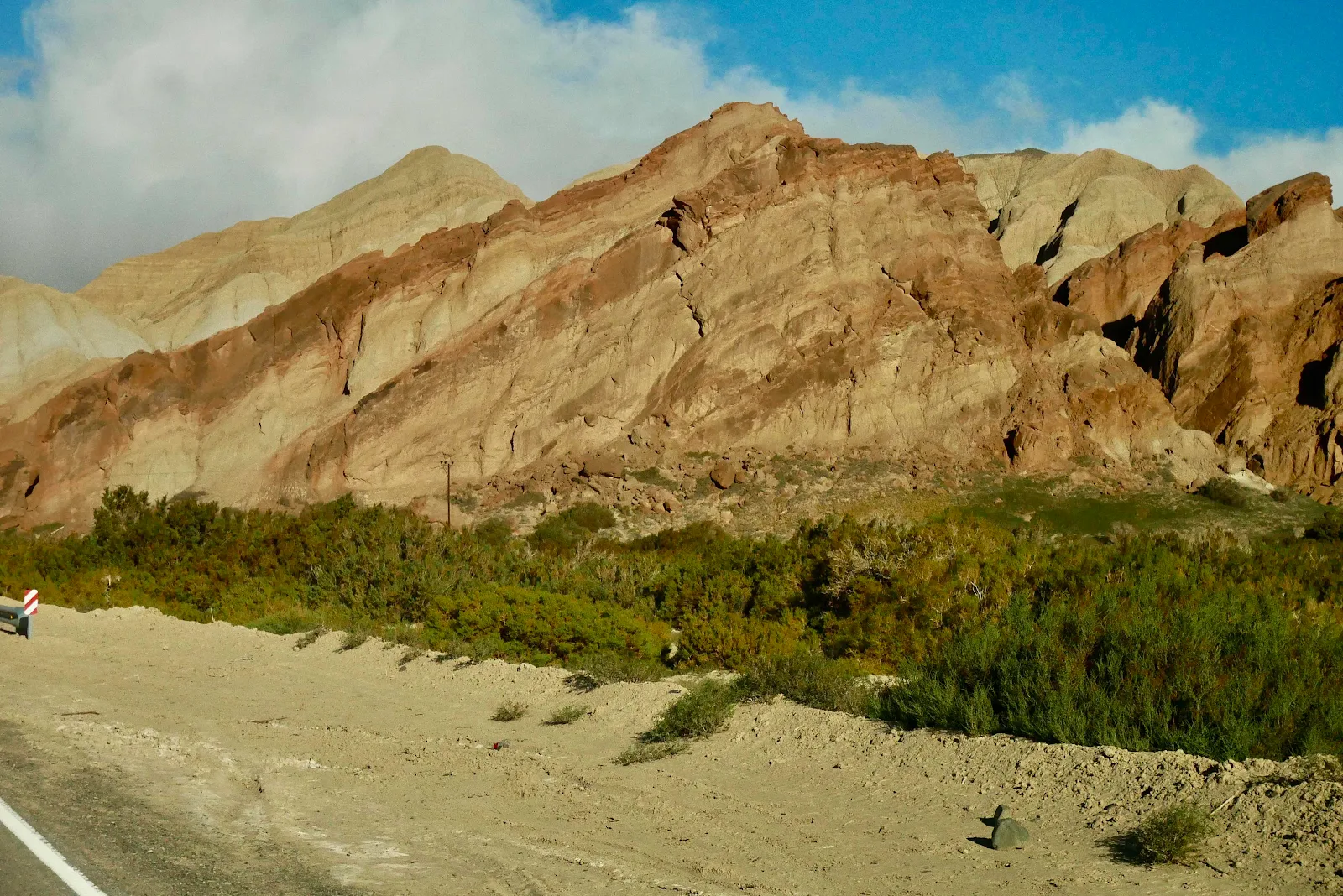
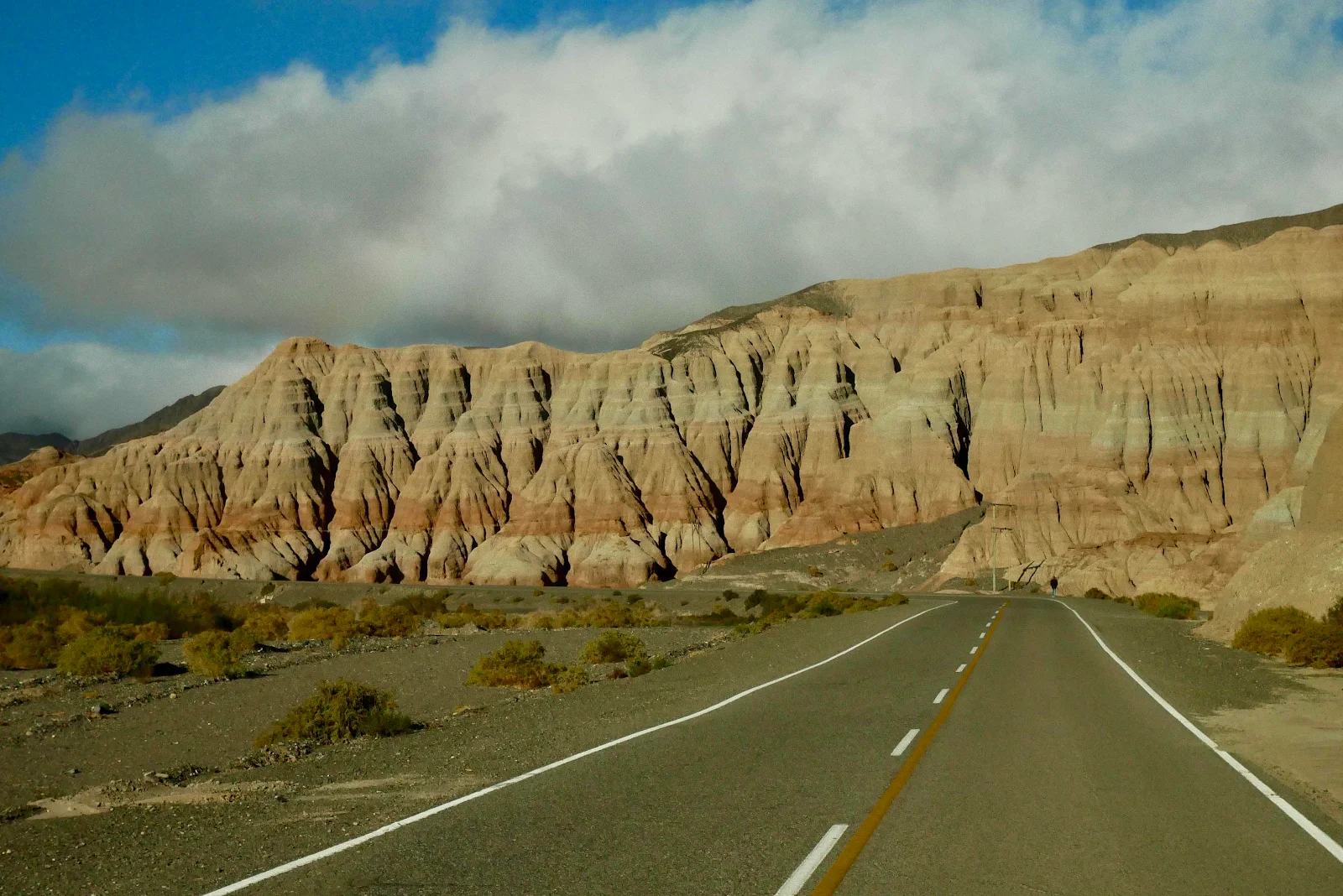
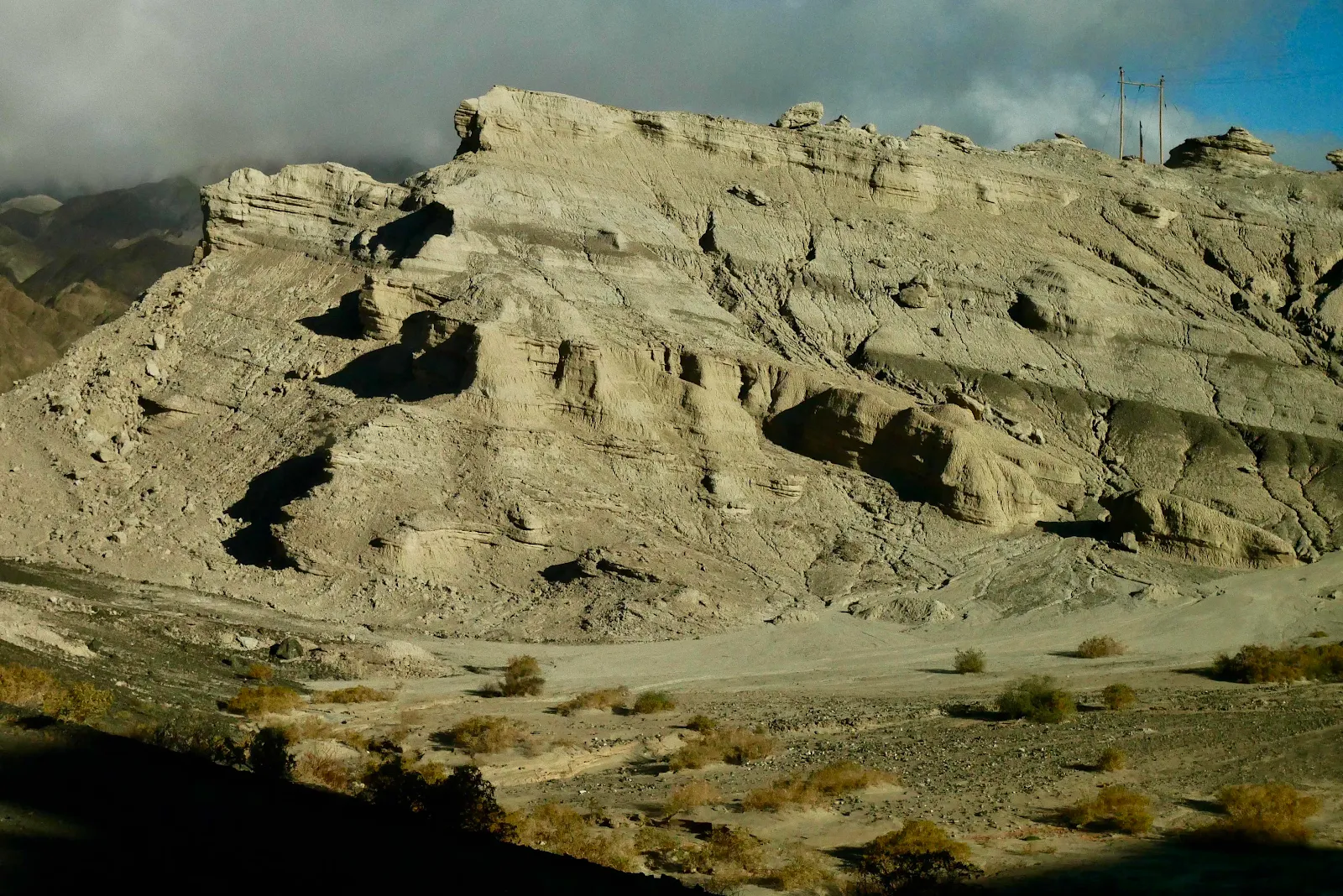
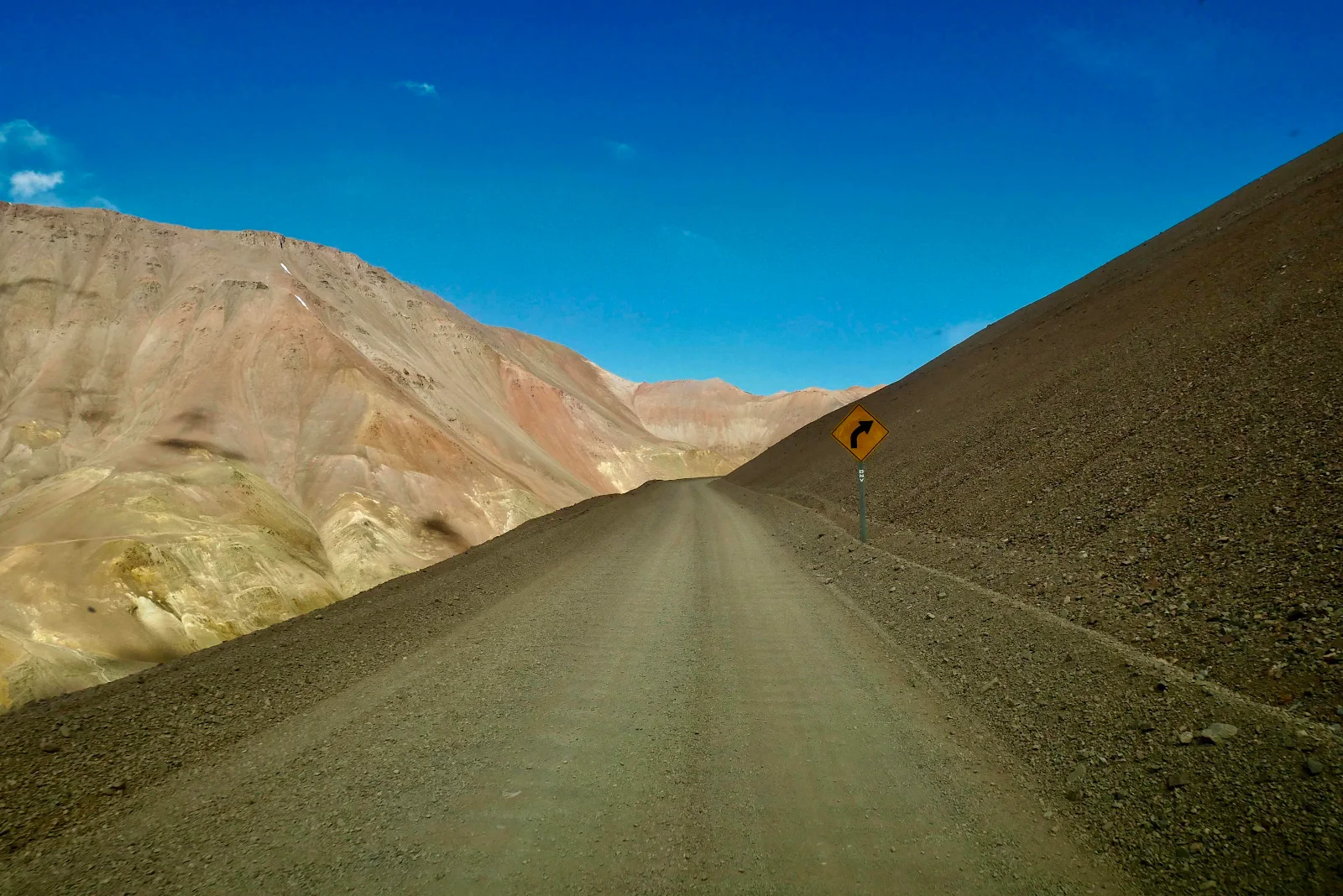
Secondly Paso Agua Negra has a reputation for fantastic beauty in return for a bit of hard work. That at least is true, the views were spectacular.
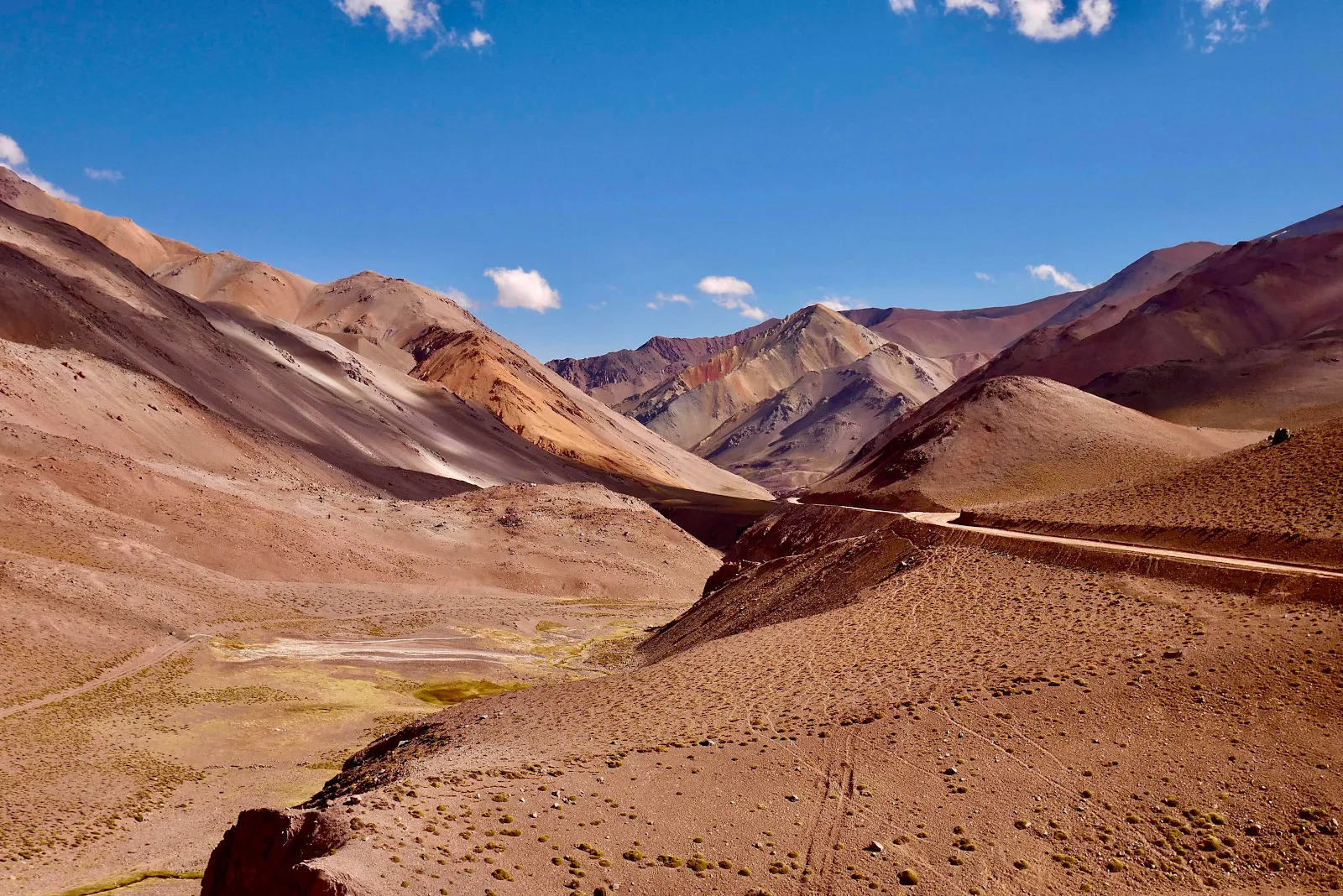
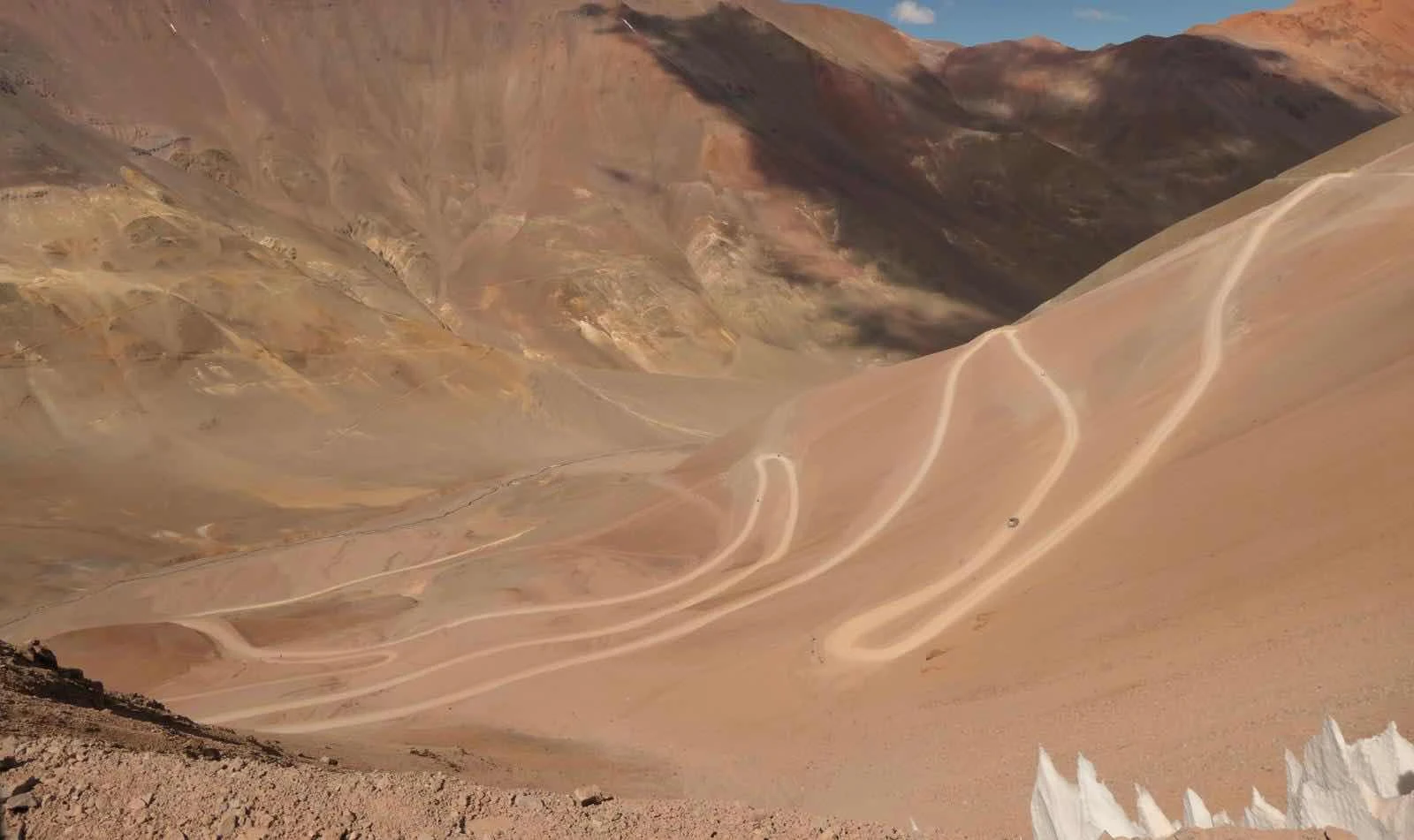
I trust you understand that our photos, taken as we went, don’t show the true grandeur of these mountain vistas above 13,000 feet.
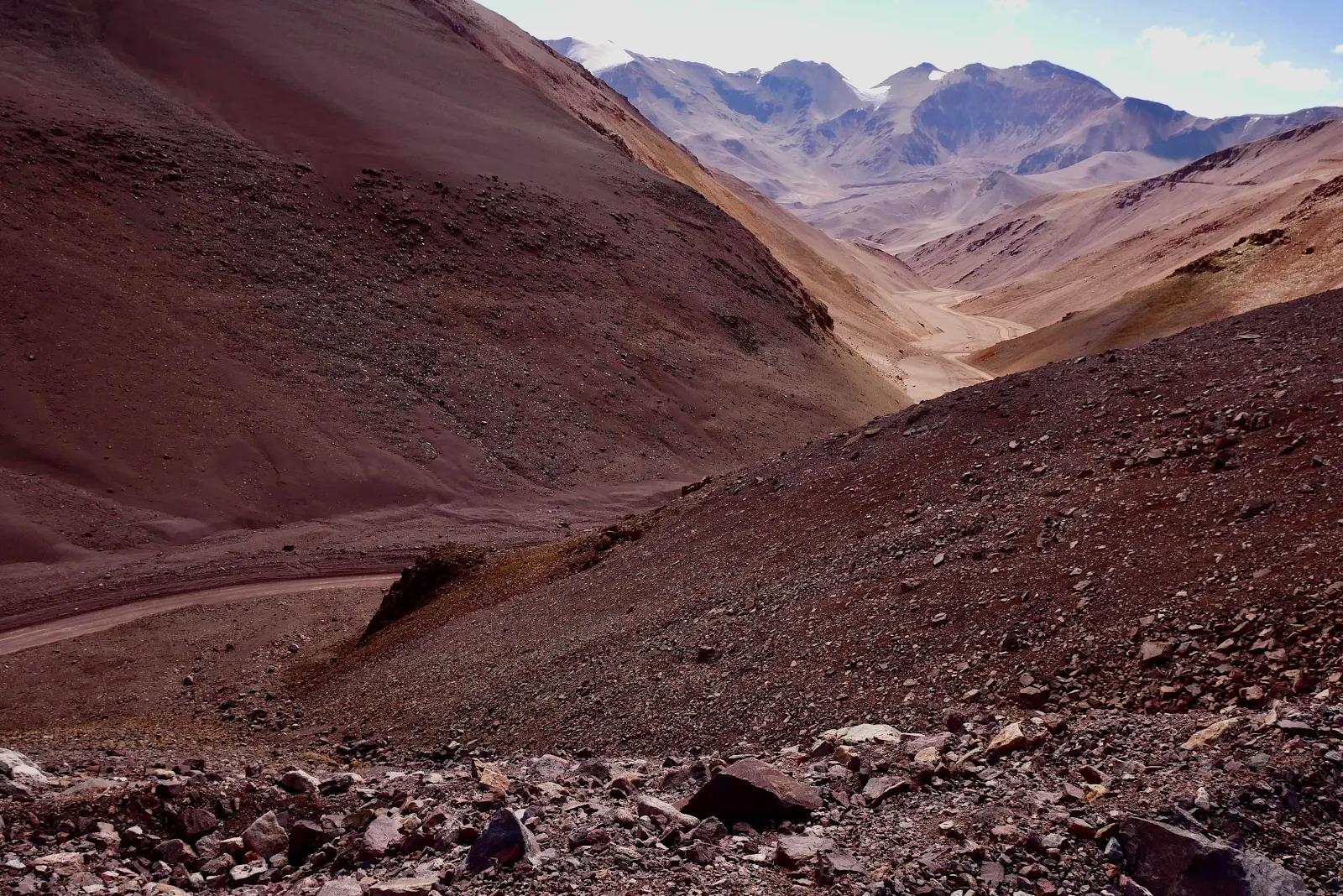
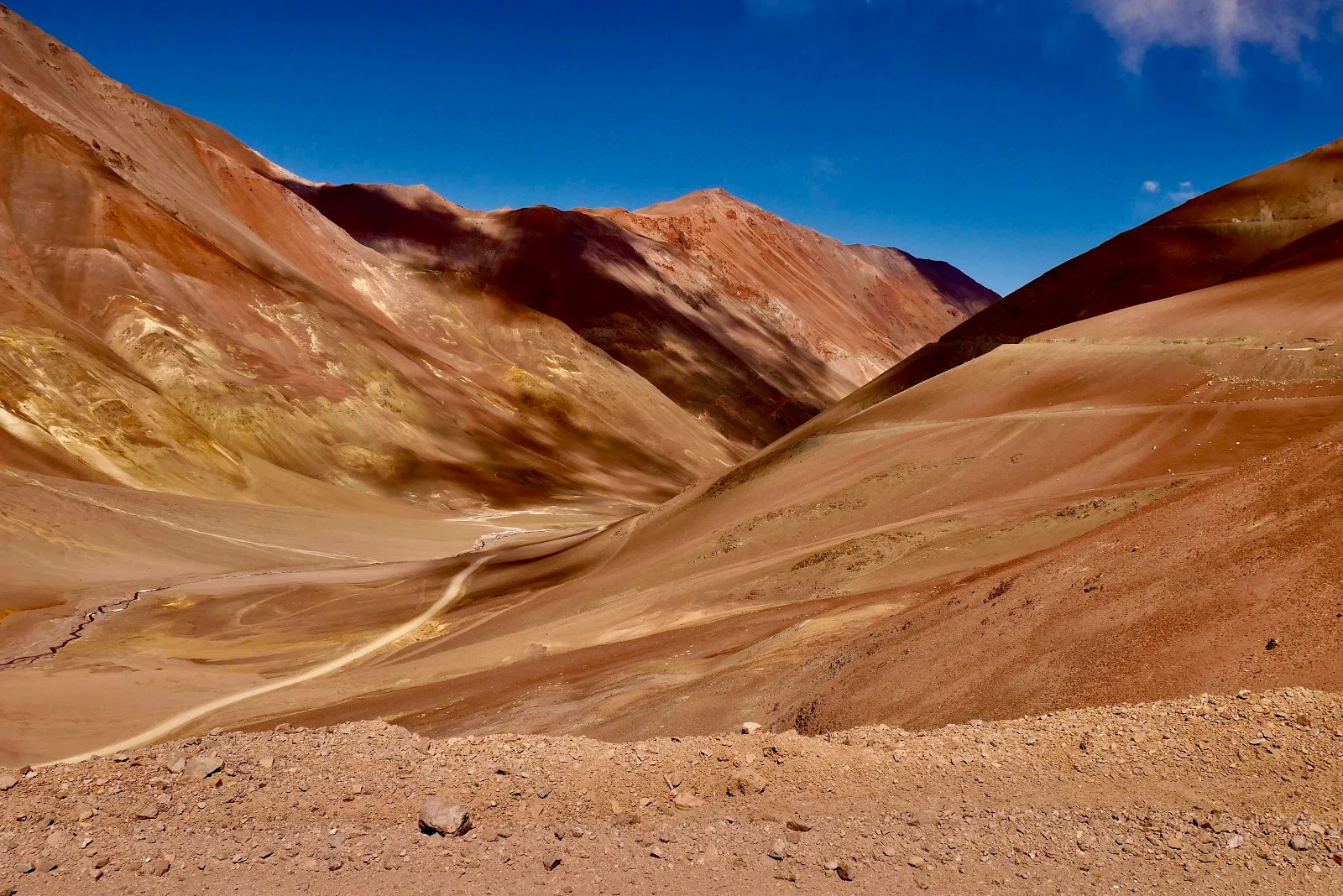
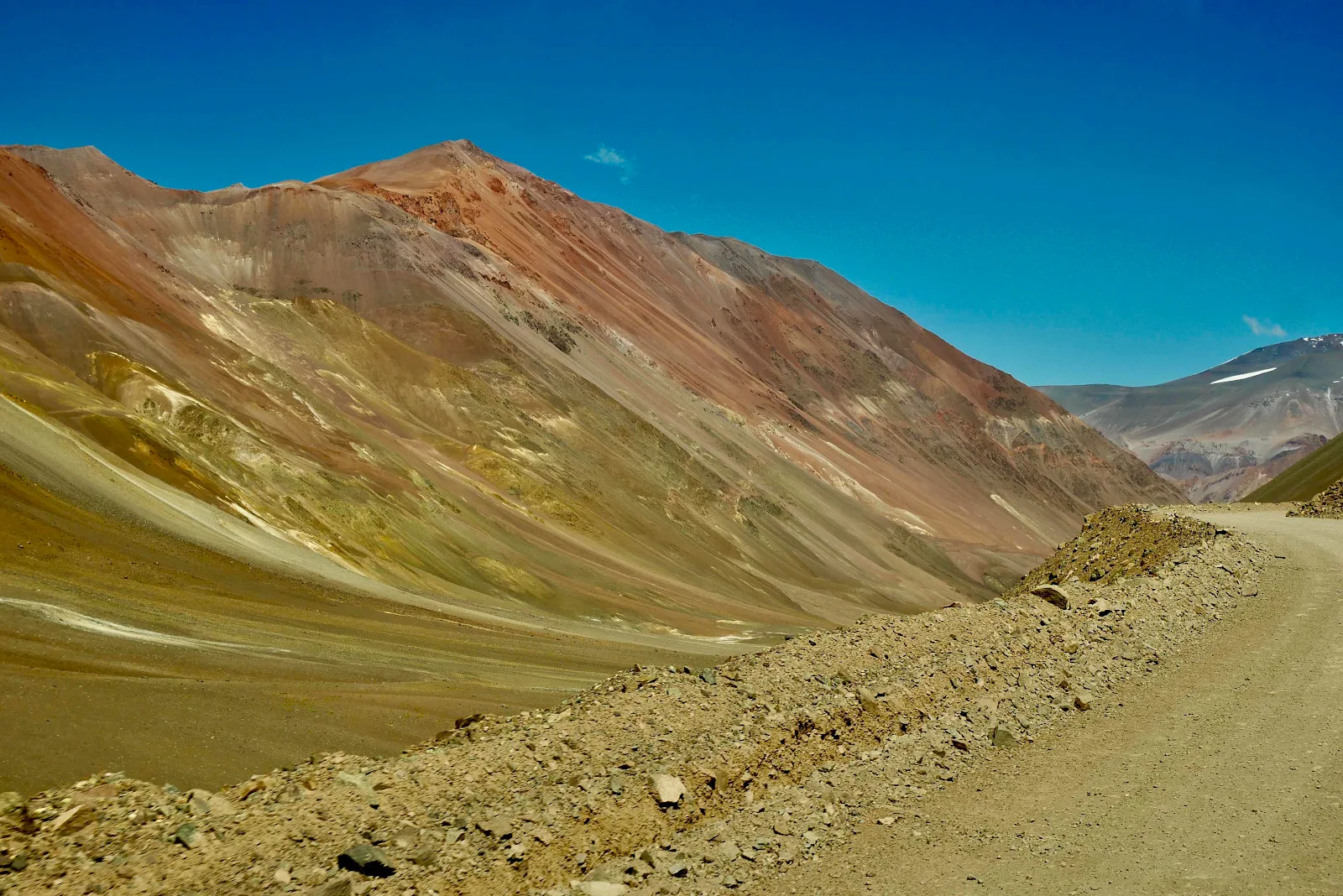
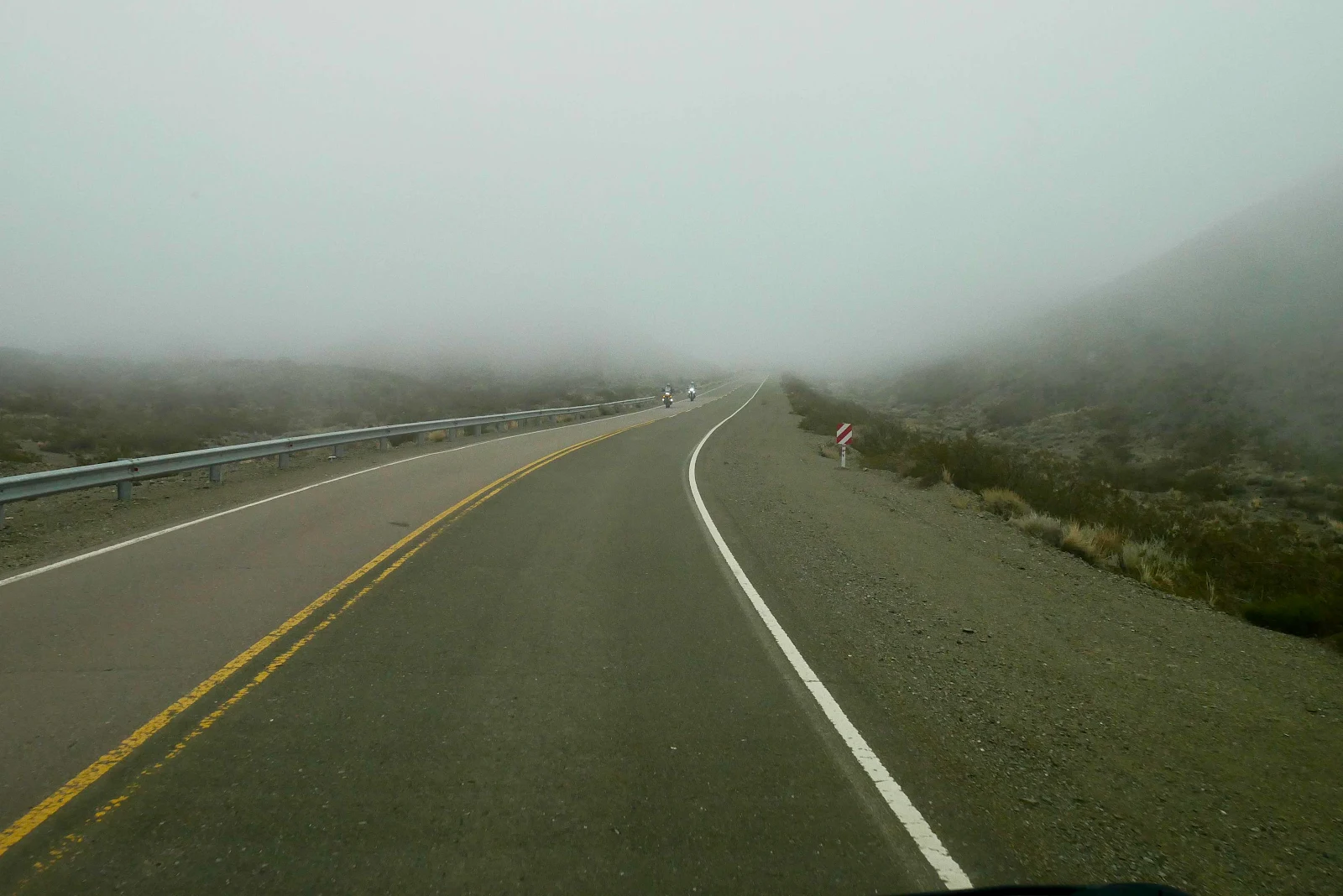
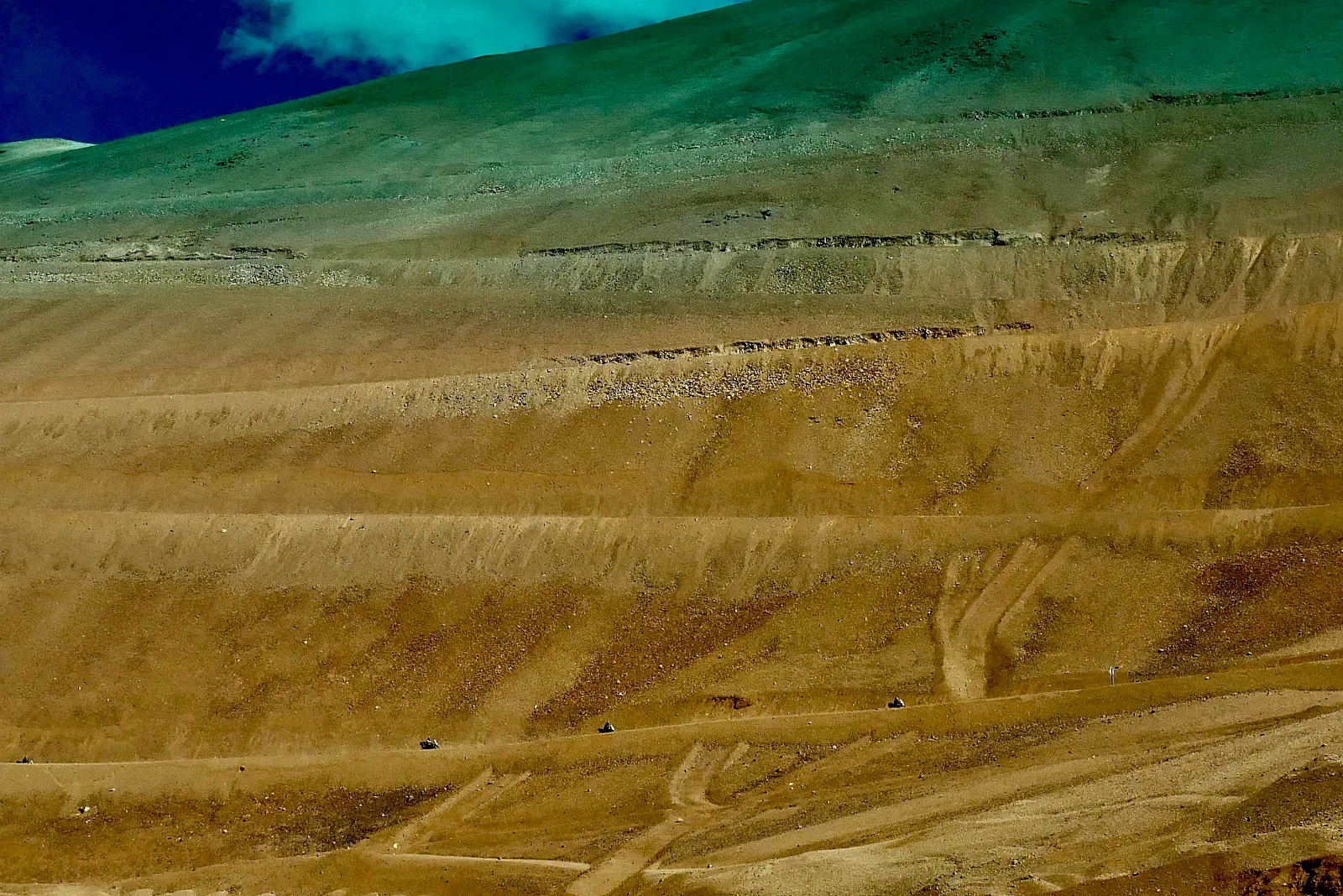
If you look carefully here you’ll see a file of motorcycles on the road taking the last few hairpins above 15,000 feet to reach the summit ahead of us.
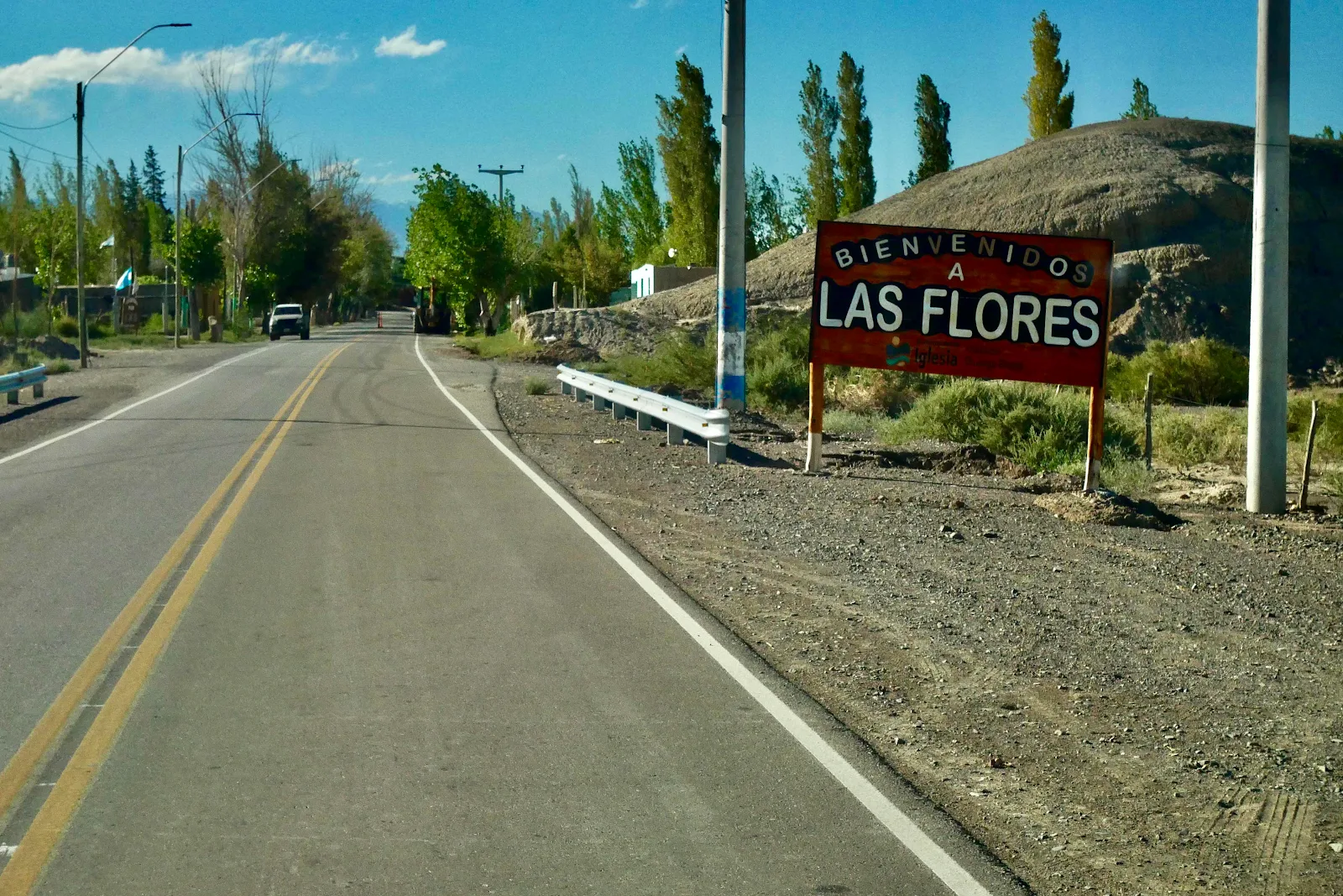
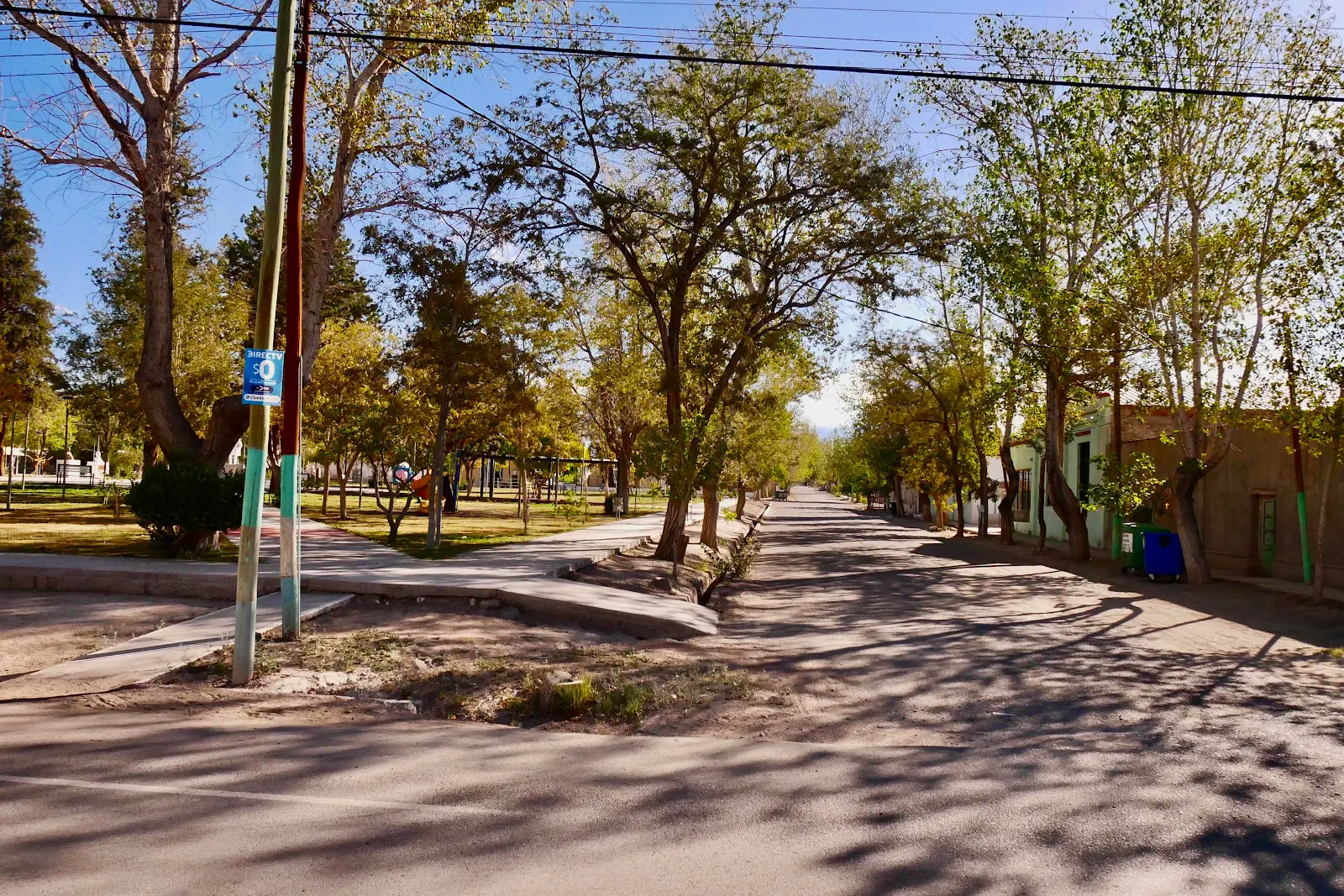
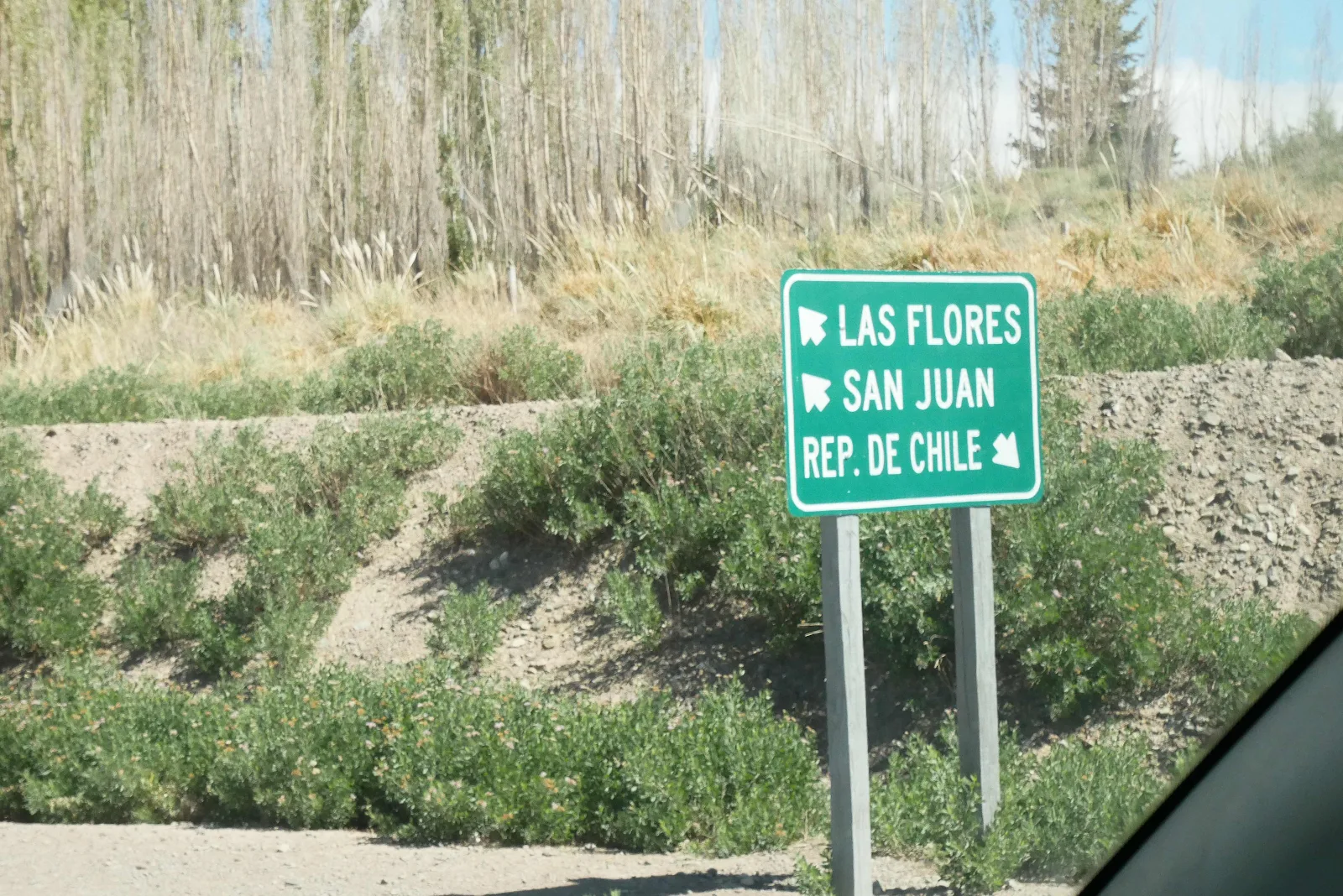
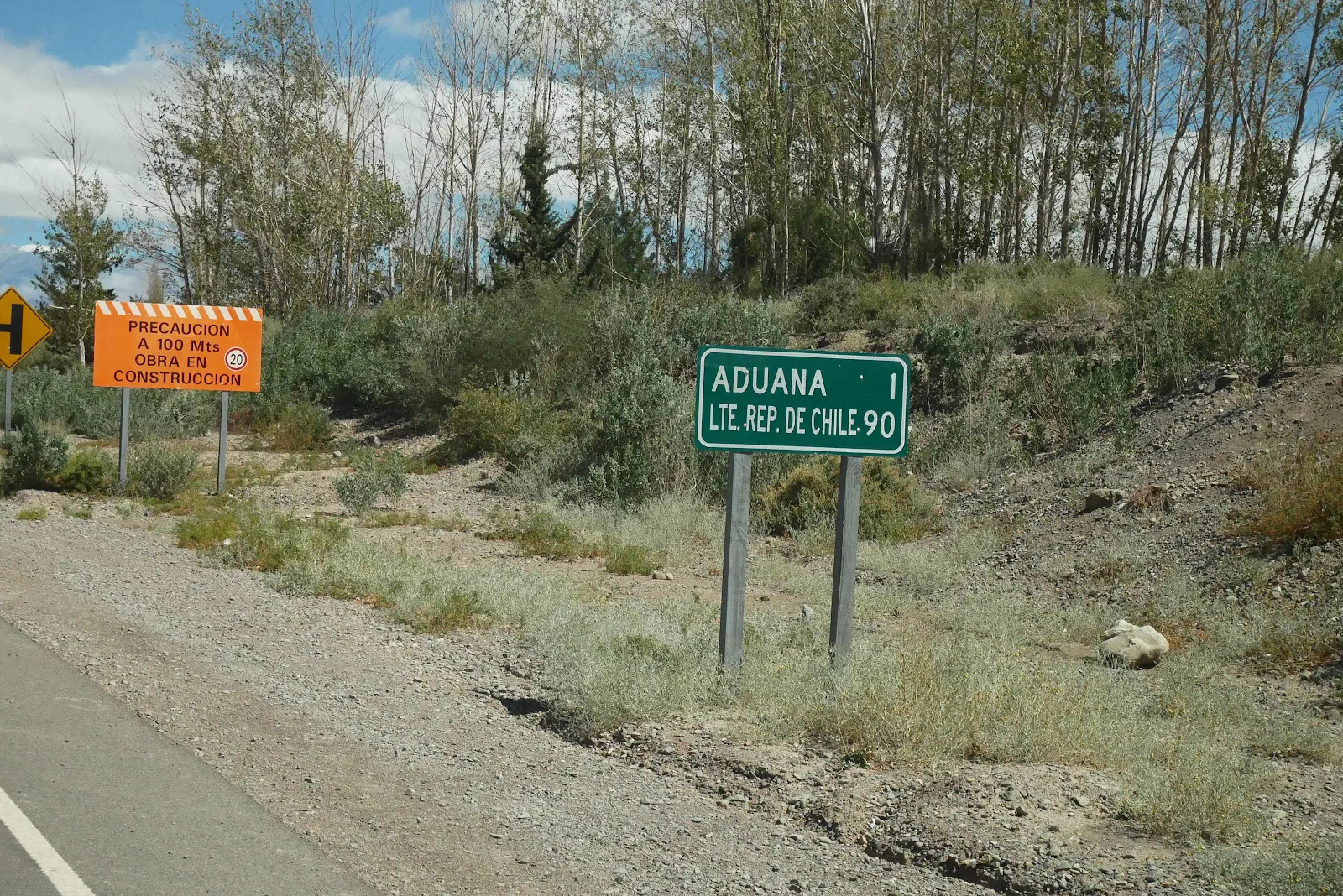
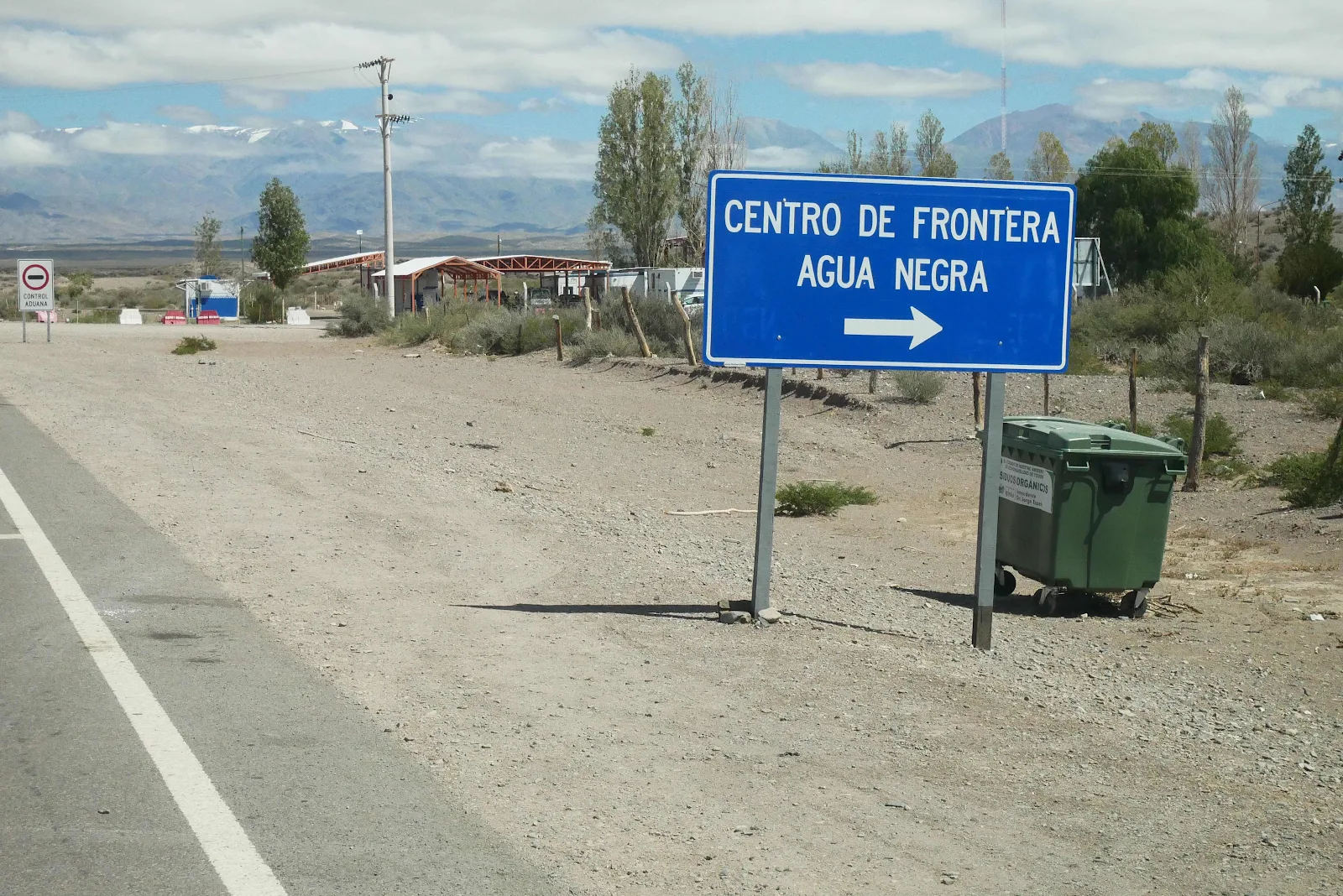
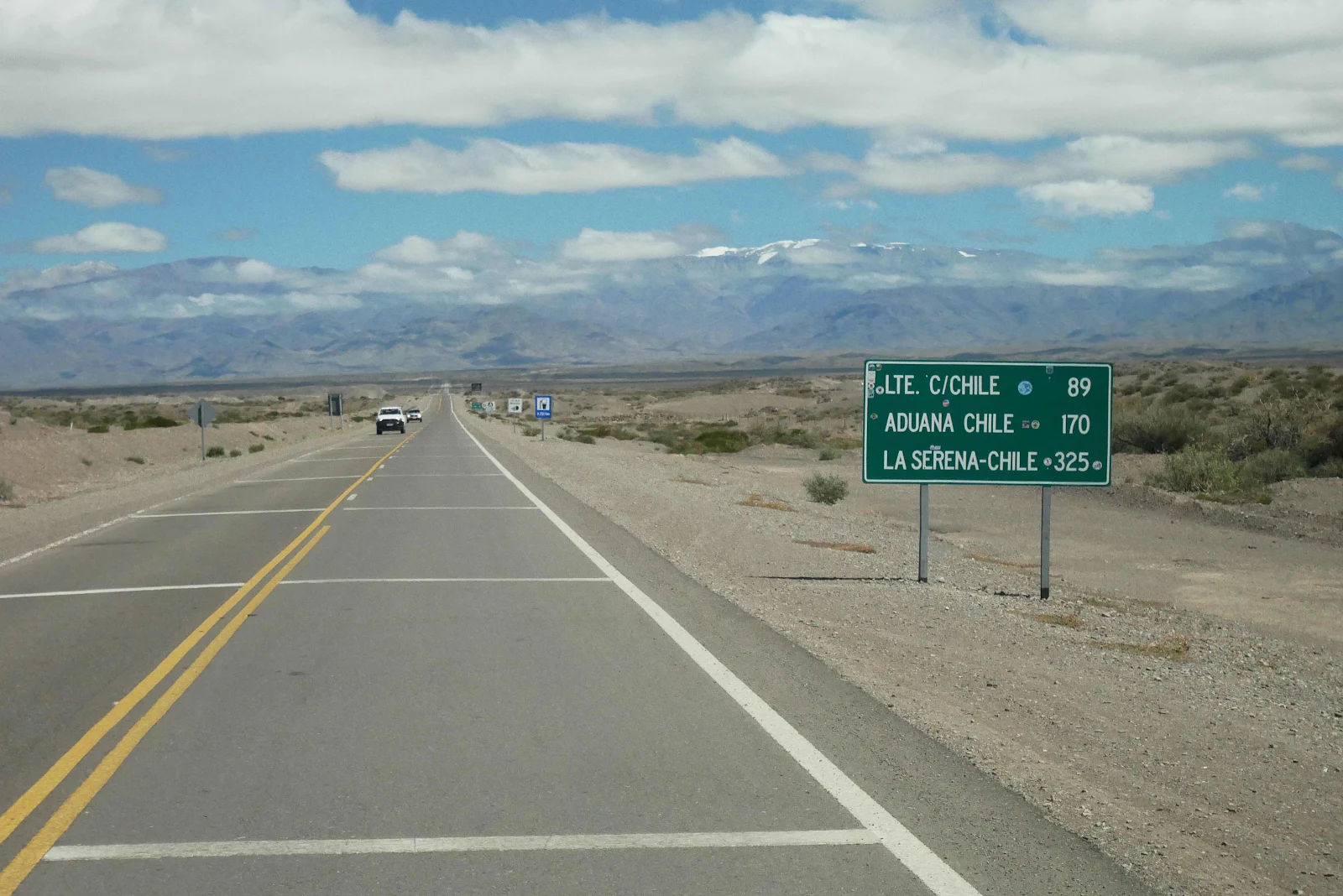
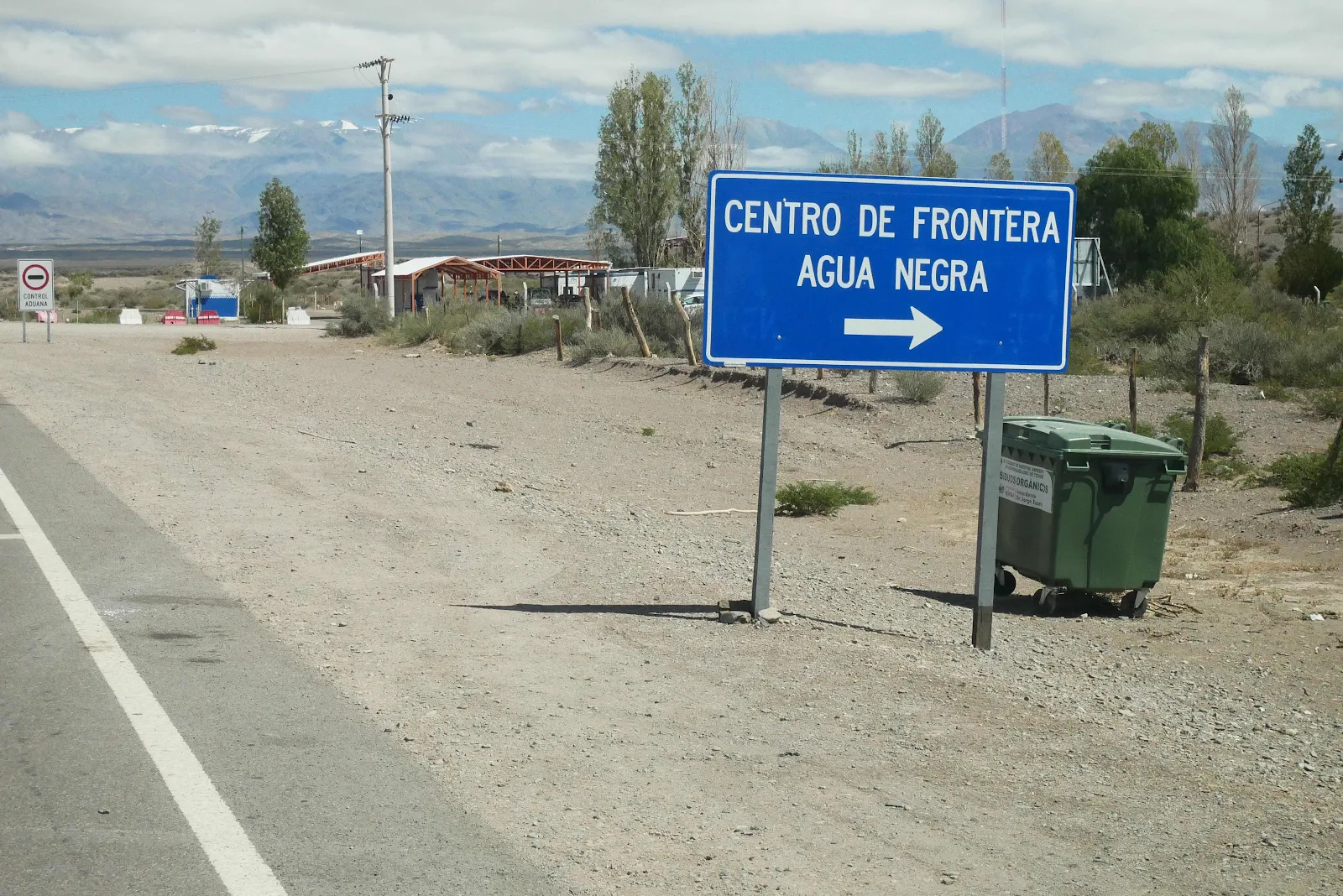
Highway 150 in Argentina is paved for the first thirty miles up the mountain. After you check out at the customs post at the beginning of the road out of Las Flores…
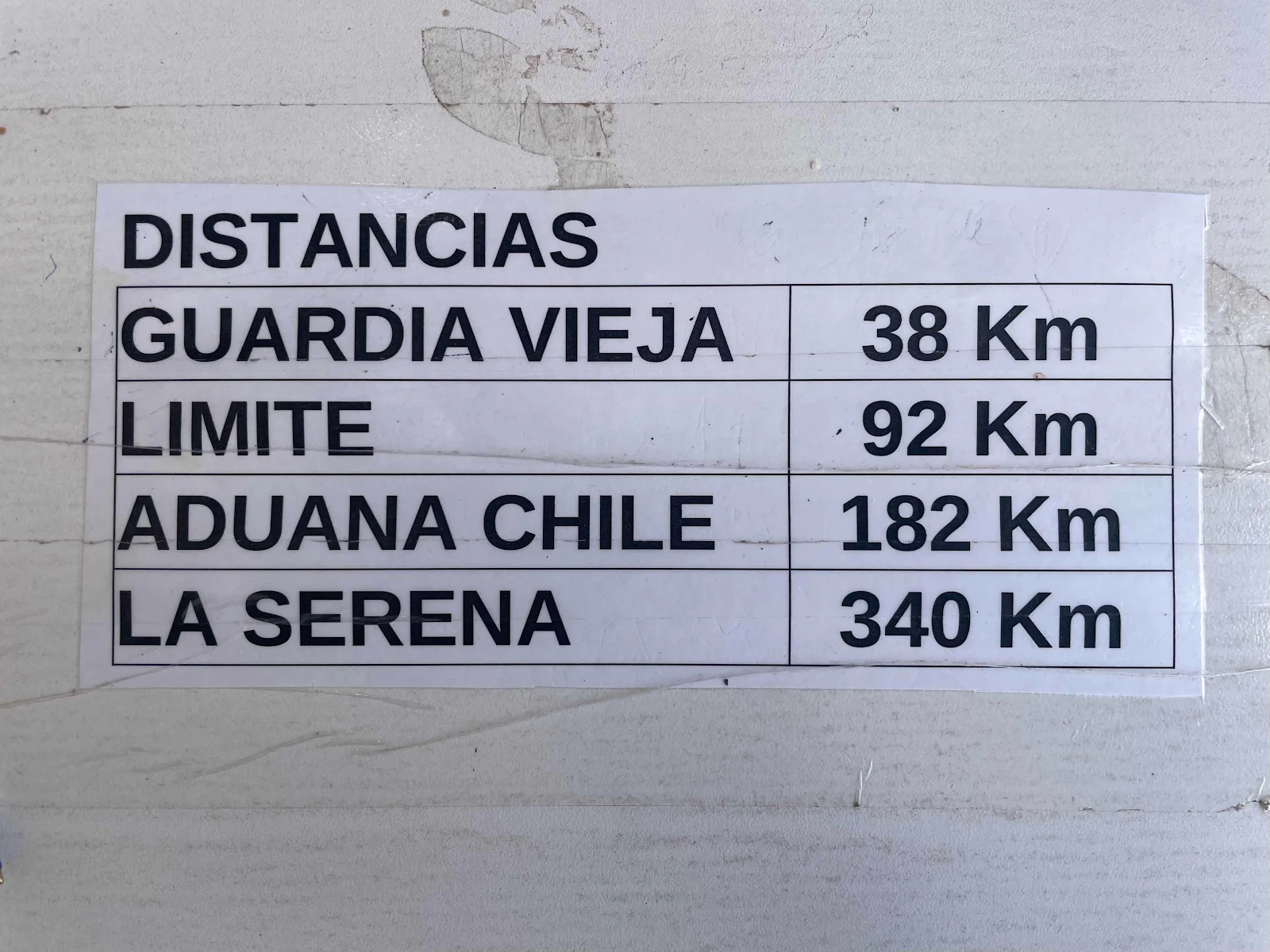
…you have 110 miles, half dirt to get to the Chilean customs post. And they have posted a notice where you hand in your passport, to remind you of the undertaking ahead of you.
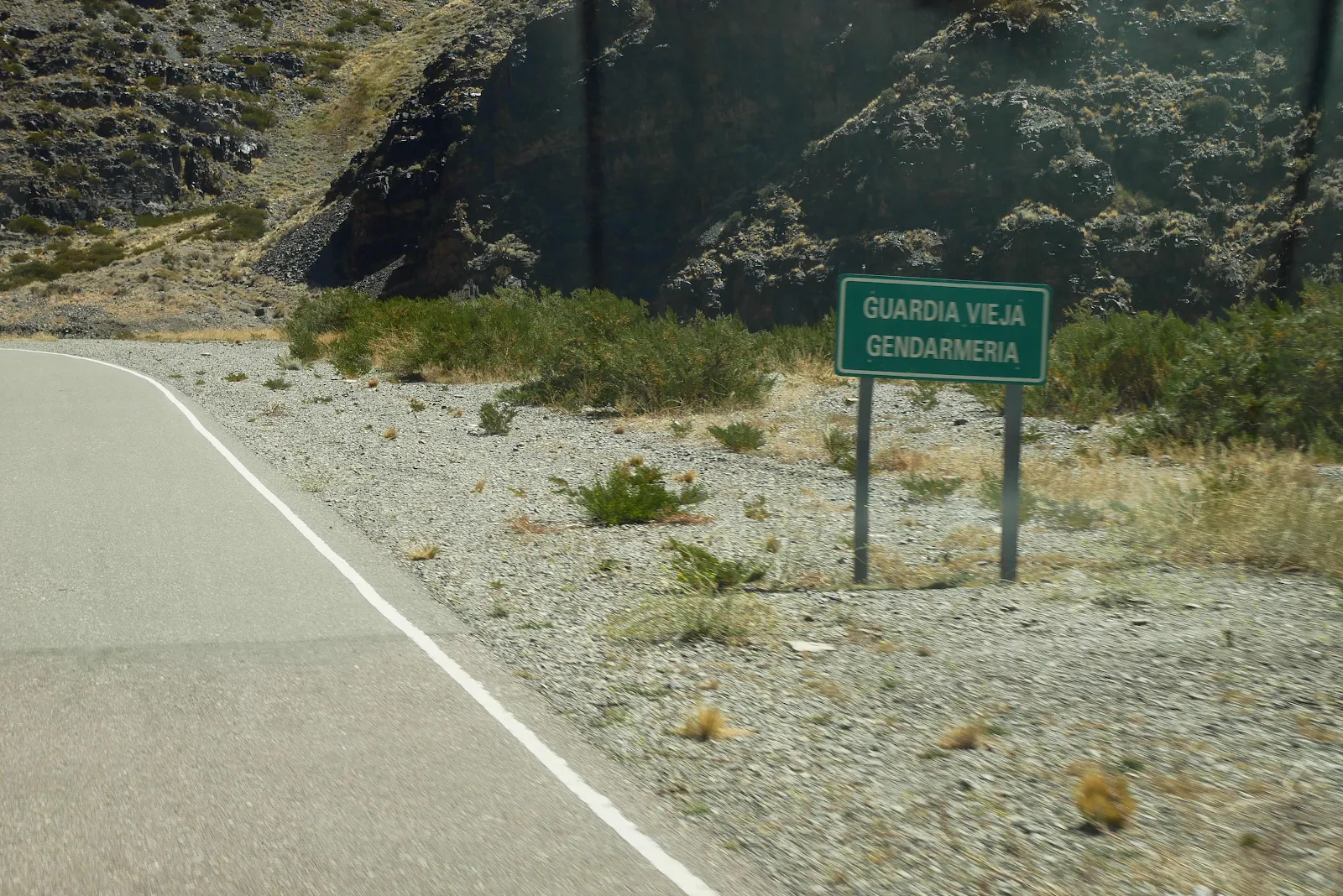
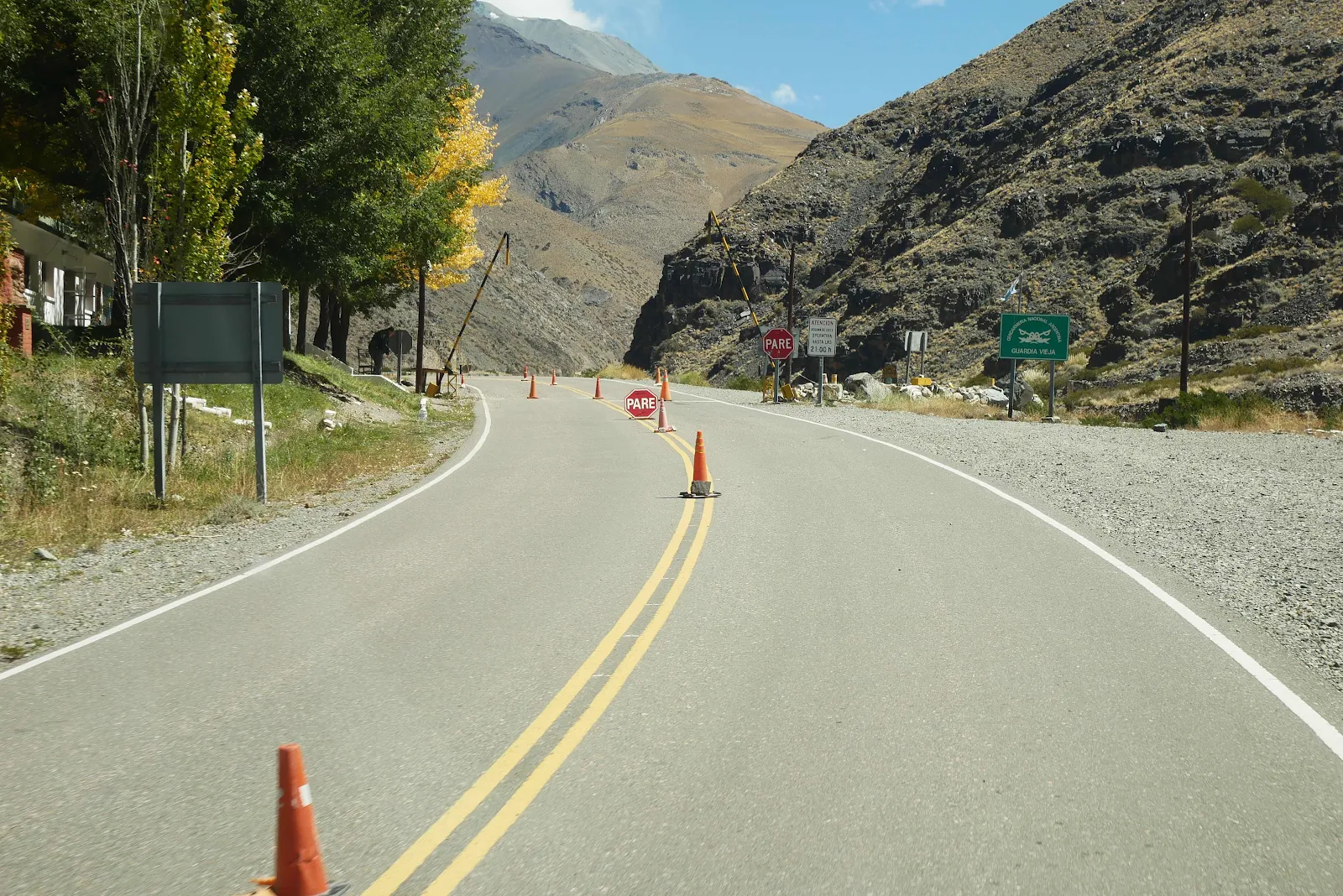
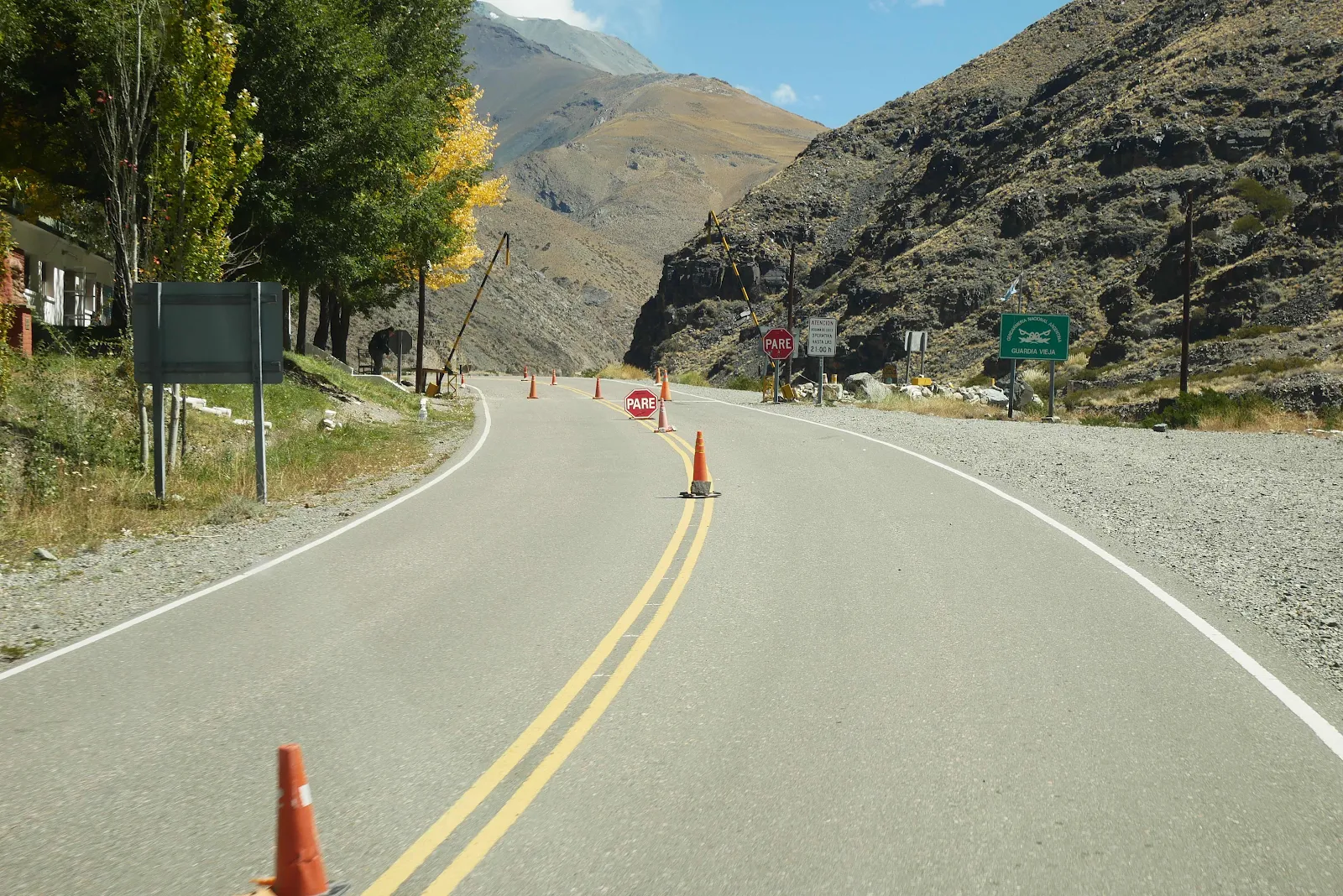
You get two slips of paper, one for Guardia Vieja (old guard post) 23 miles ahead telling the guard you are authorized to pass. This is where the road will be closed in a month when winter sets in.
The second piece of paper you have to hand In to the Chilean Gendarmes to check you off the list and save search parties coming out to look for you. We also asked permission to spend the night en route so Chile wouldn’t expect us the same day. It all sounds a bit excessive doesn’t it? You might be as surprised as we were to see the trouble people get into on this road and they do have to save people from themselves from time to time.
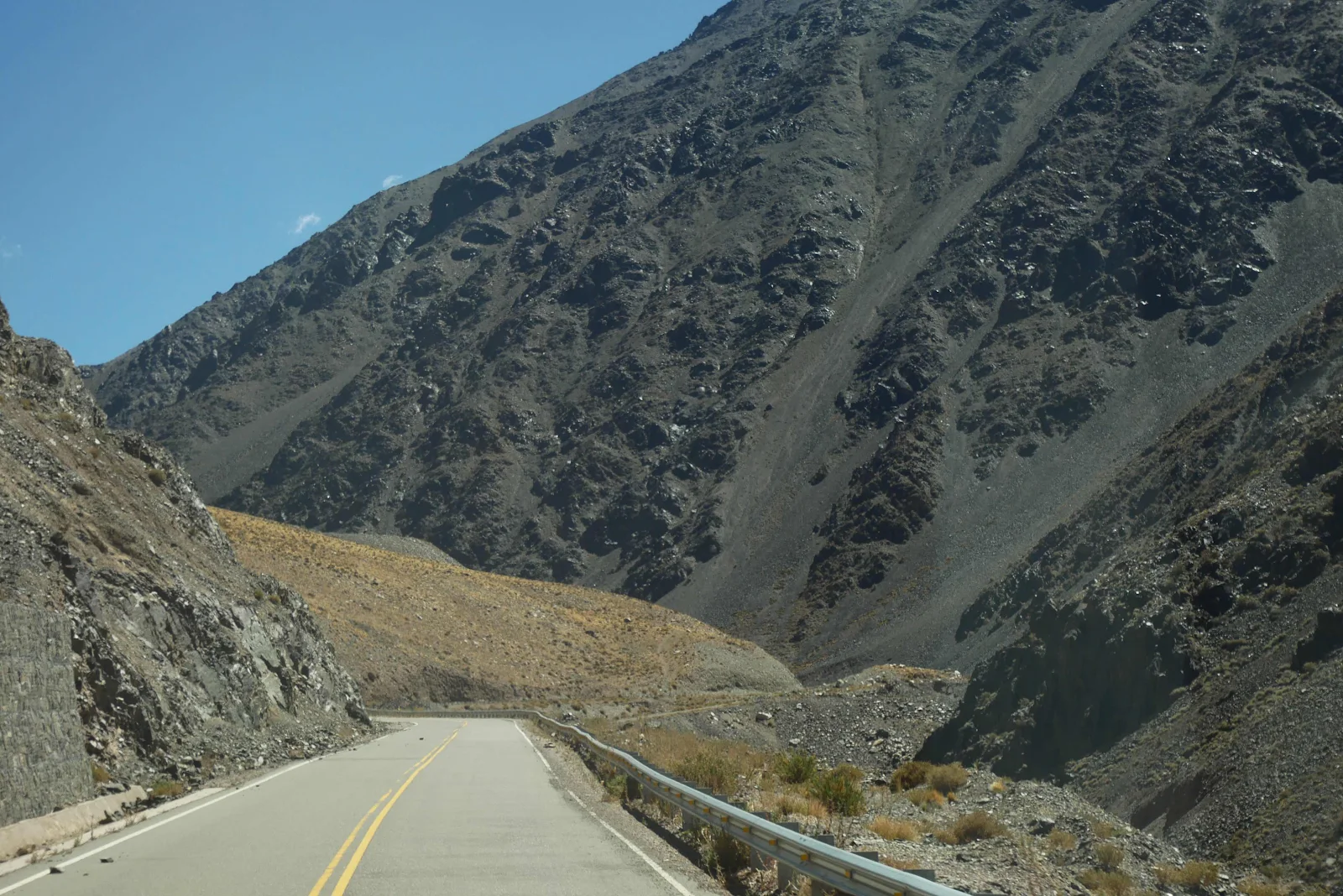
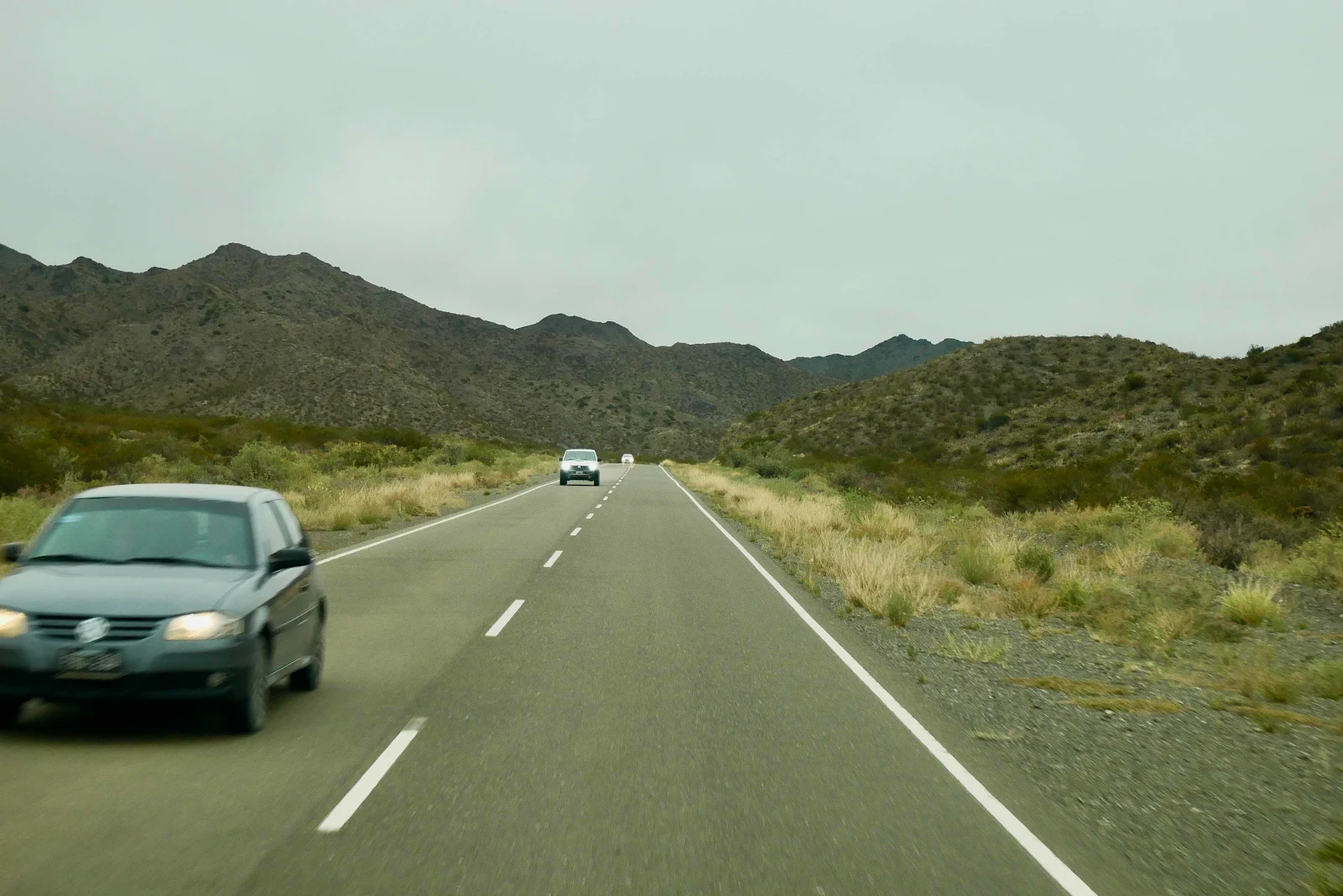
You know by now, and thank you for the words of encouragement, that I love pavement. This part of the drive was brilliant, not fast necessarily but easy in our big delivery van.
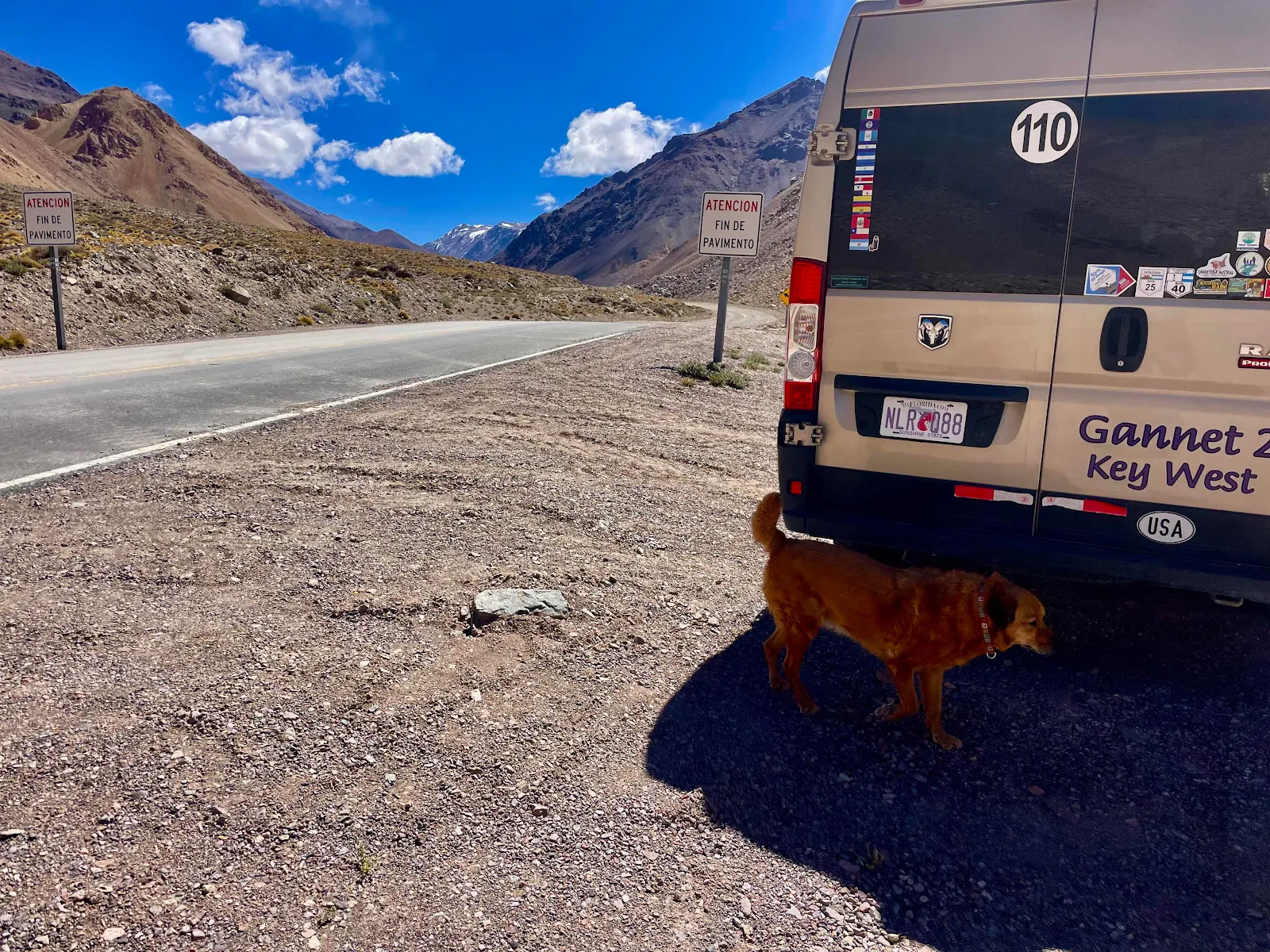
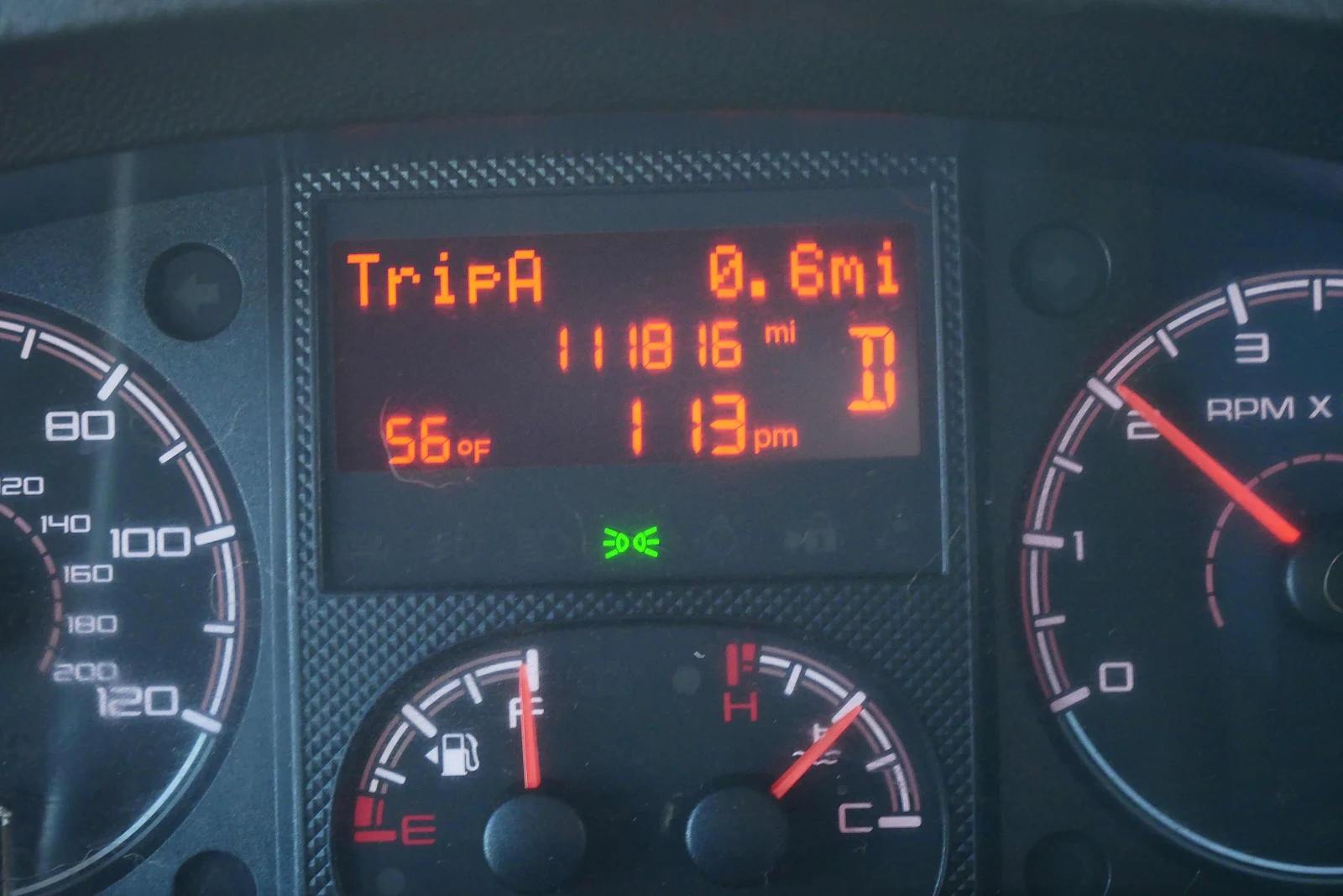
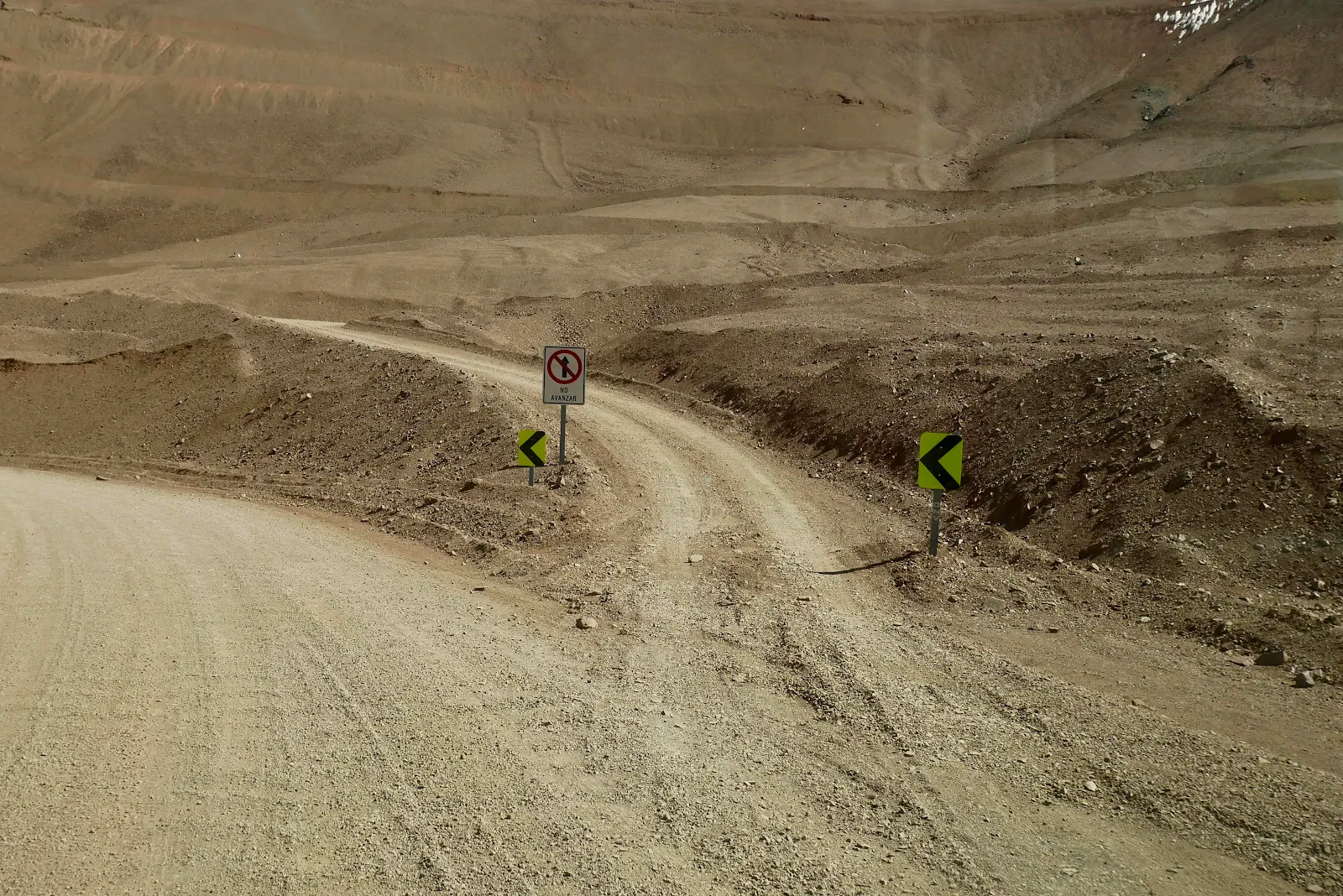
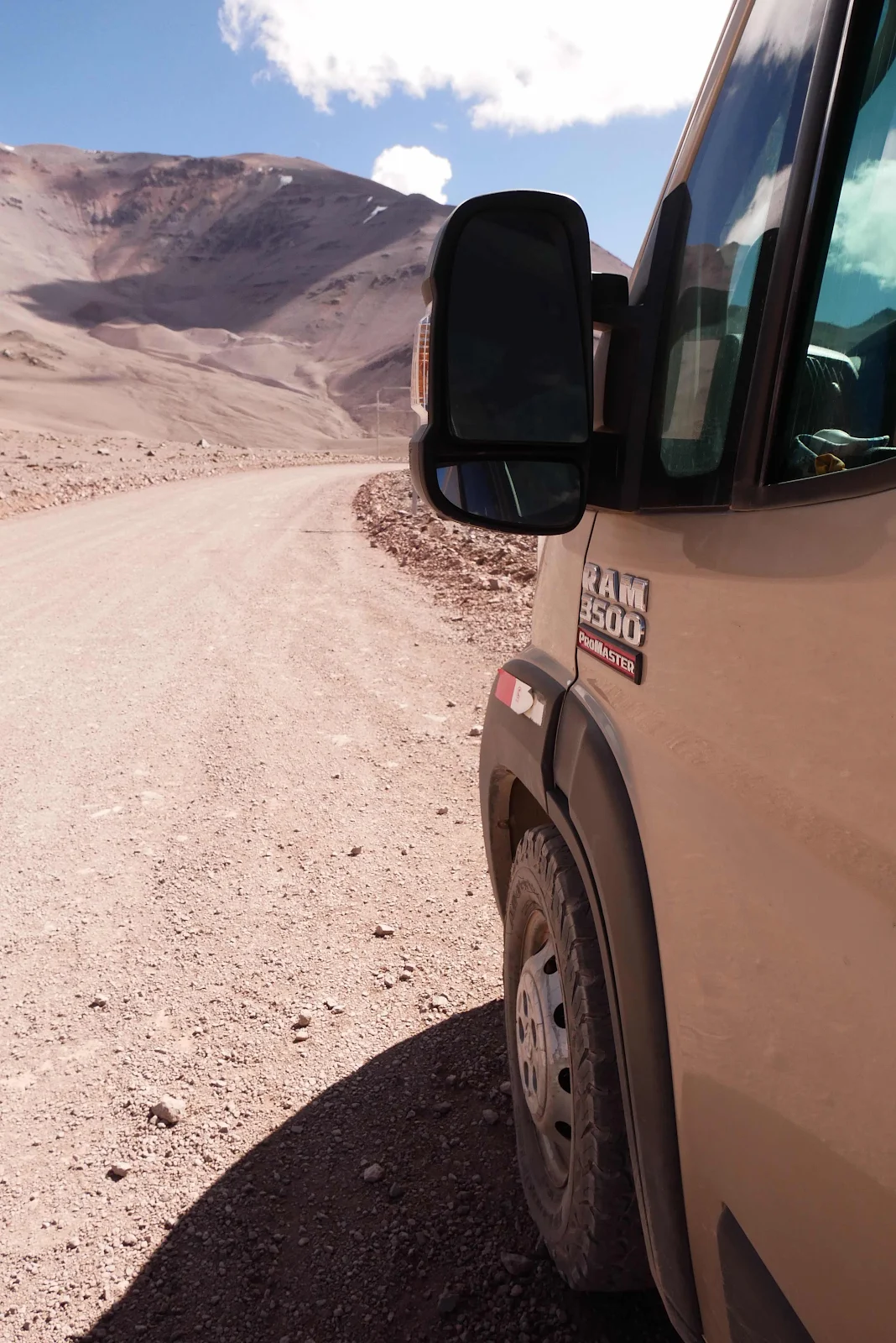
Then we had to stop to let air out of the tires. I air down about 50 percent to make the ride in our 9400 pound Promaster a bit easier on dirt roads. Less air also allows the tires to squash out improving traction but to prevent them overheating you cannot drive fast. We averaged 15 mph on the dirt so that isn’t an issue. Our mileage also dropped from 16 to 9 miles per gallon of regular gas driving dirt roads. The onboard computer told me that- I haven’t a clue otherwise. My least favorite road sign:
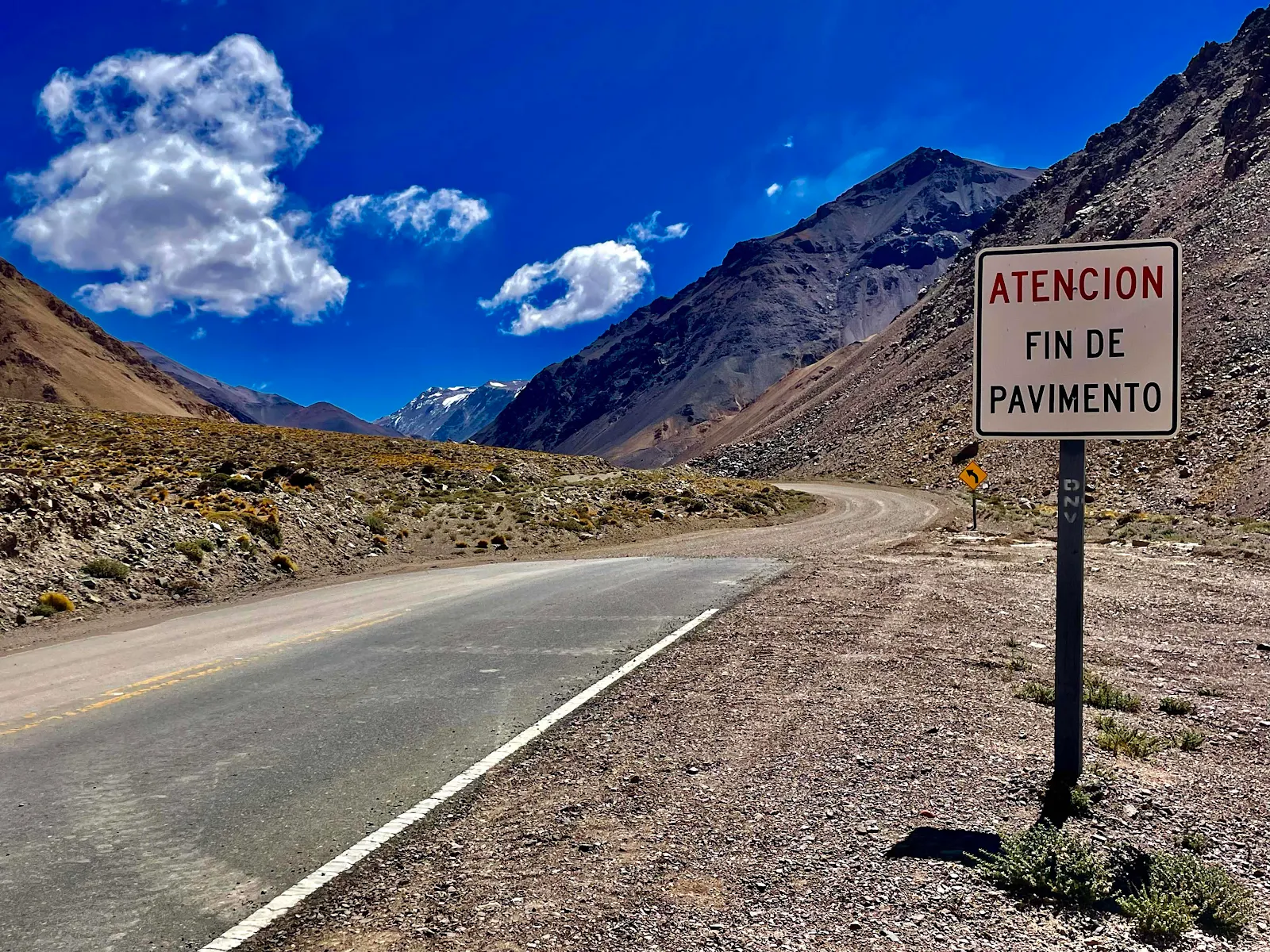
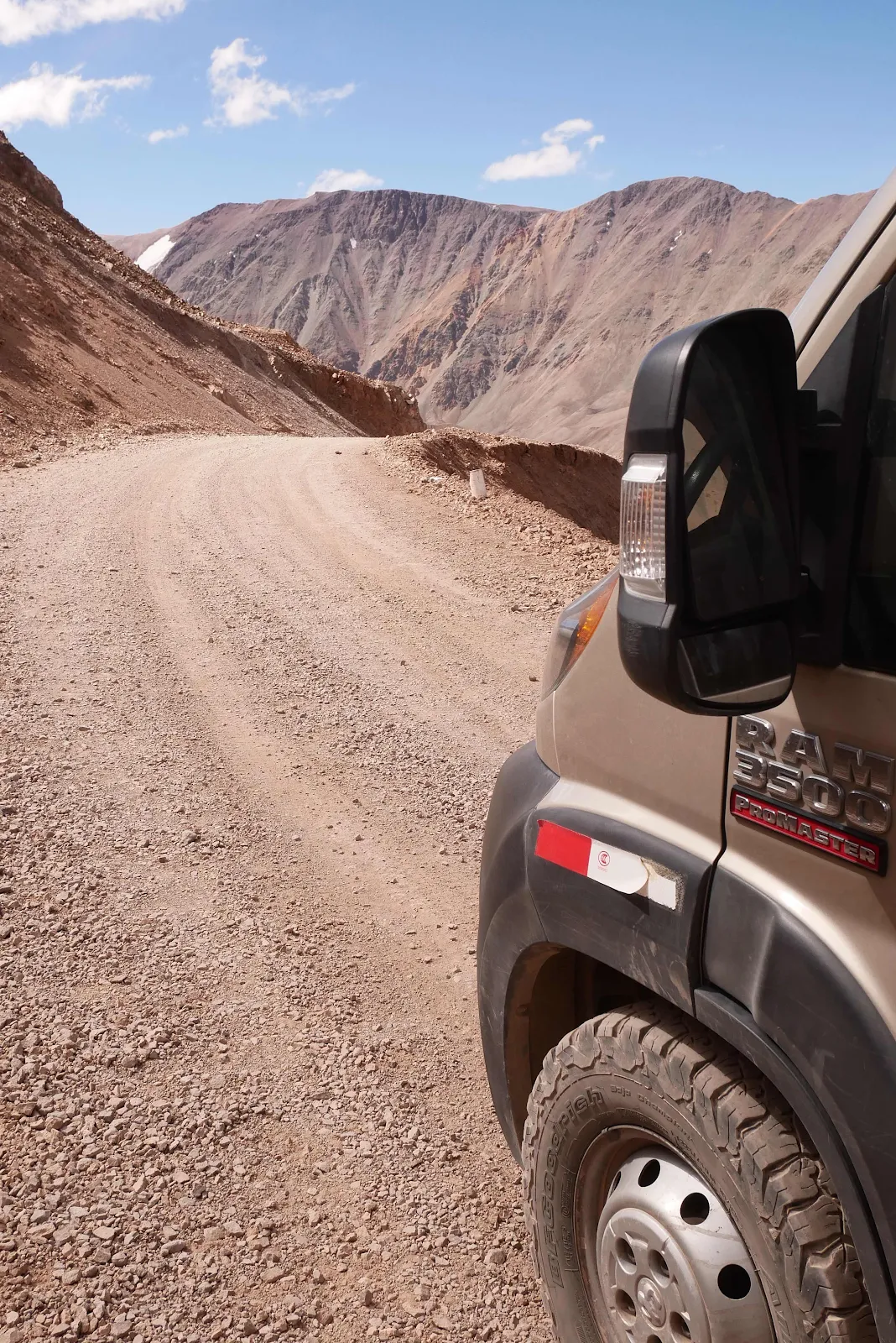
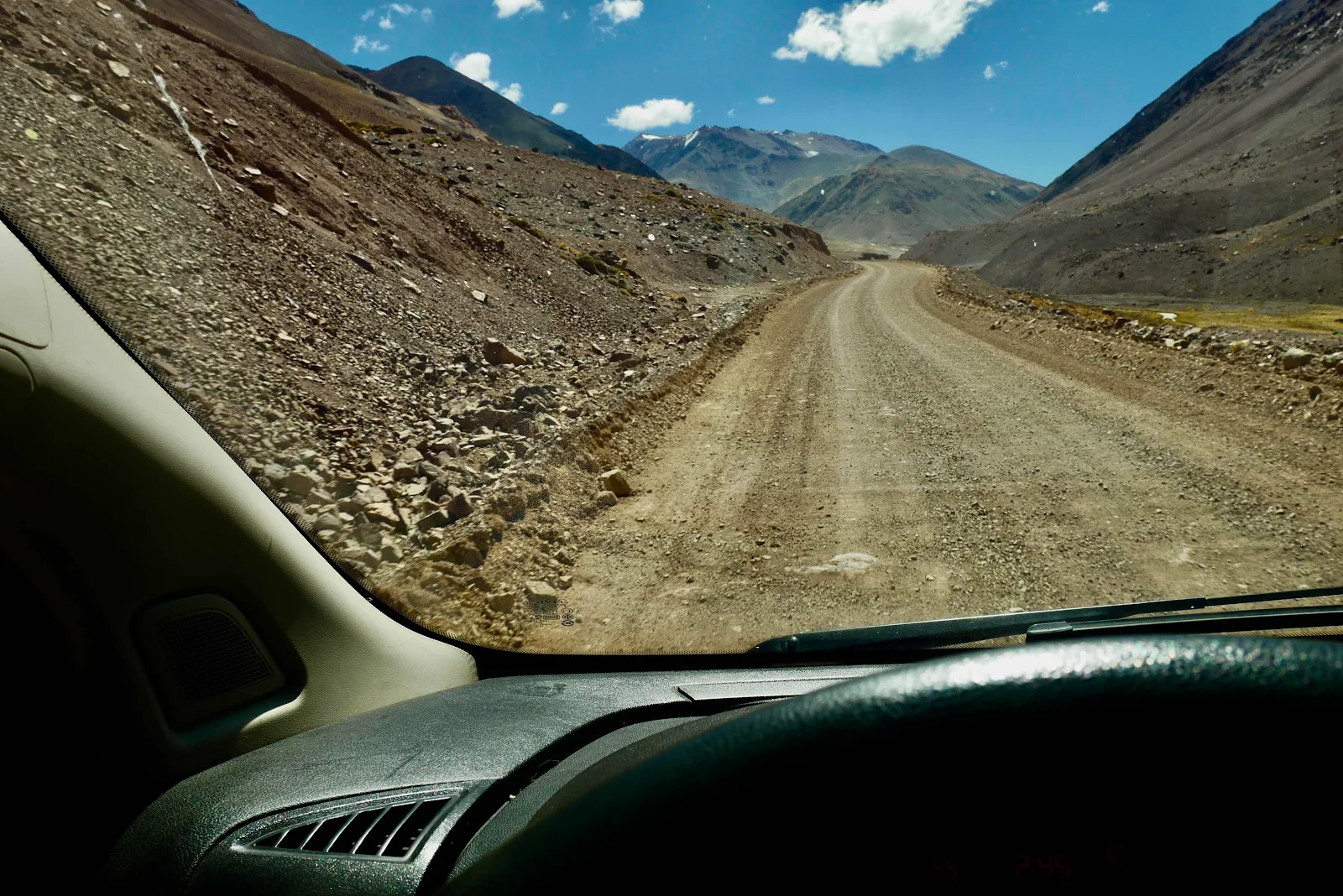
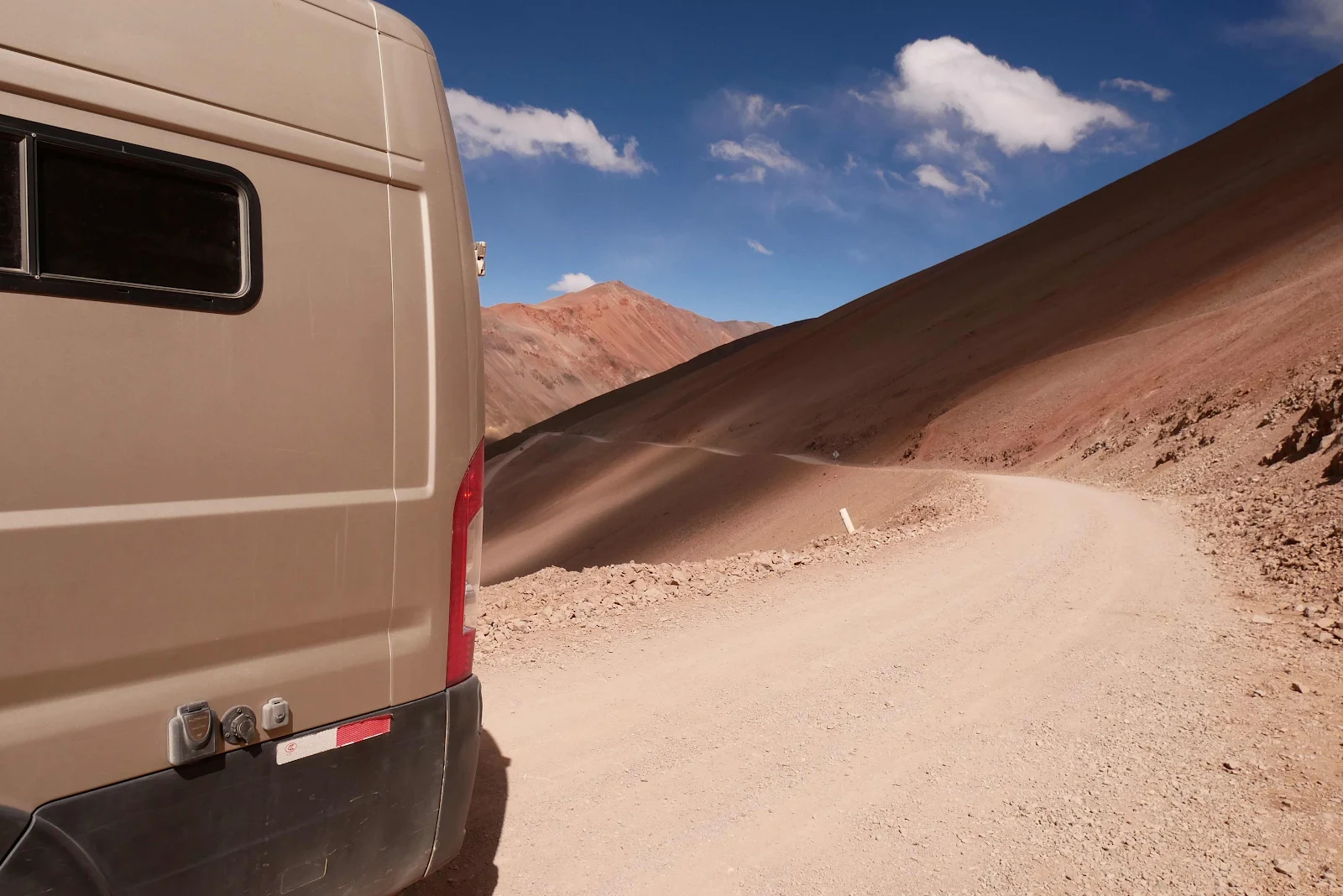
Neither Highway 150 in Argentina or Ruta 41 in Chile has gravel. They are simply well graded dirt roads carved out of the hillsides. Who thought these mountains were a good place to build a pass I have no idea. It really is quite intimidating to cast yourself off out here in the wilderness on nothing more than scraped dirt.
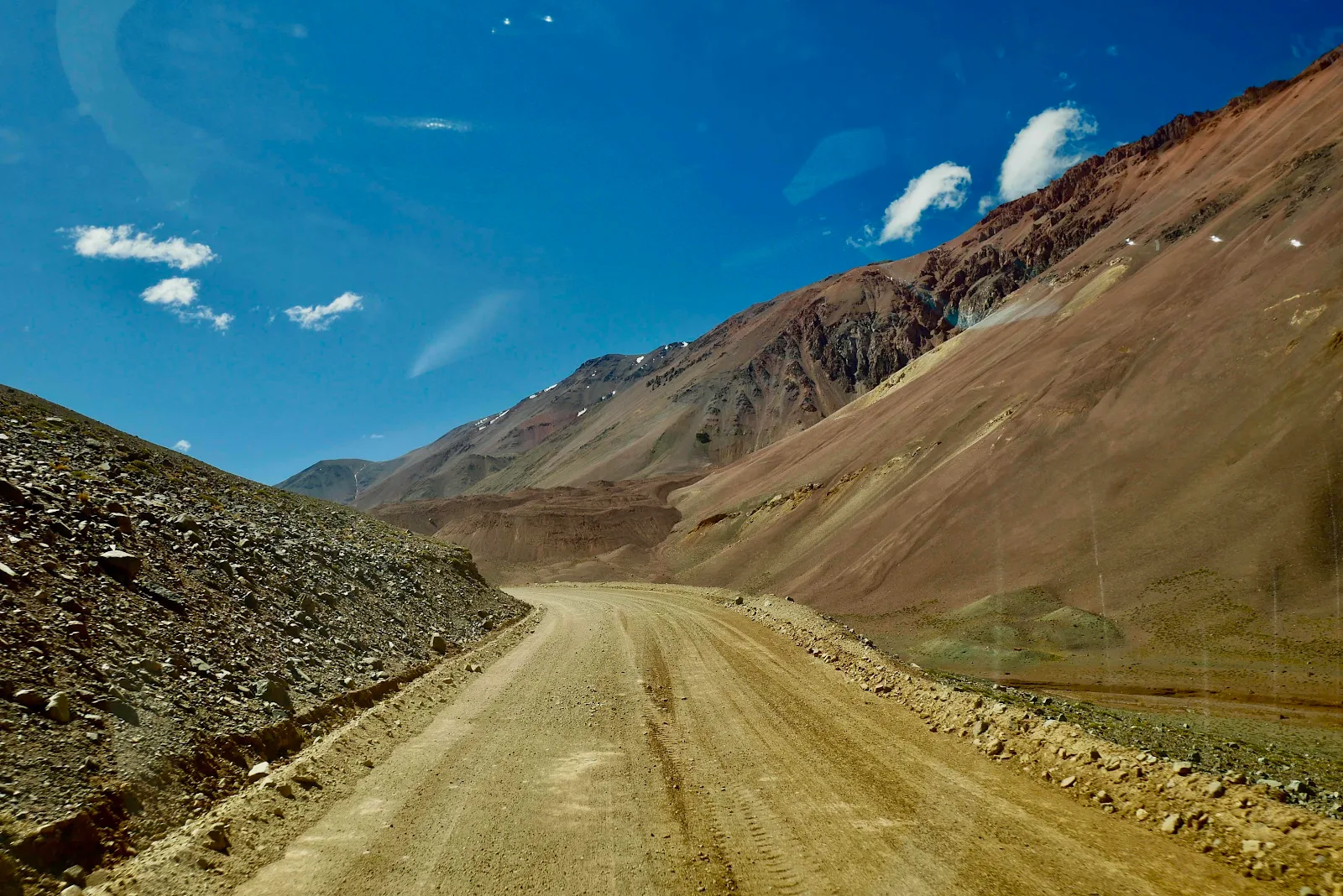
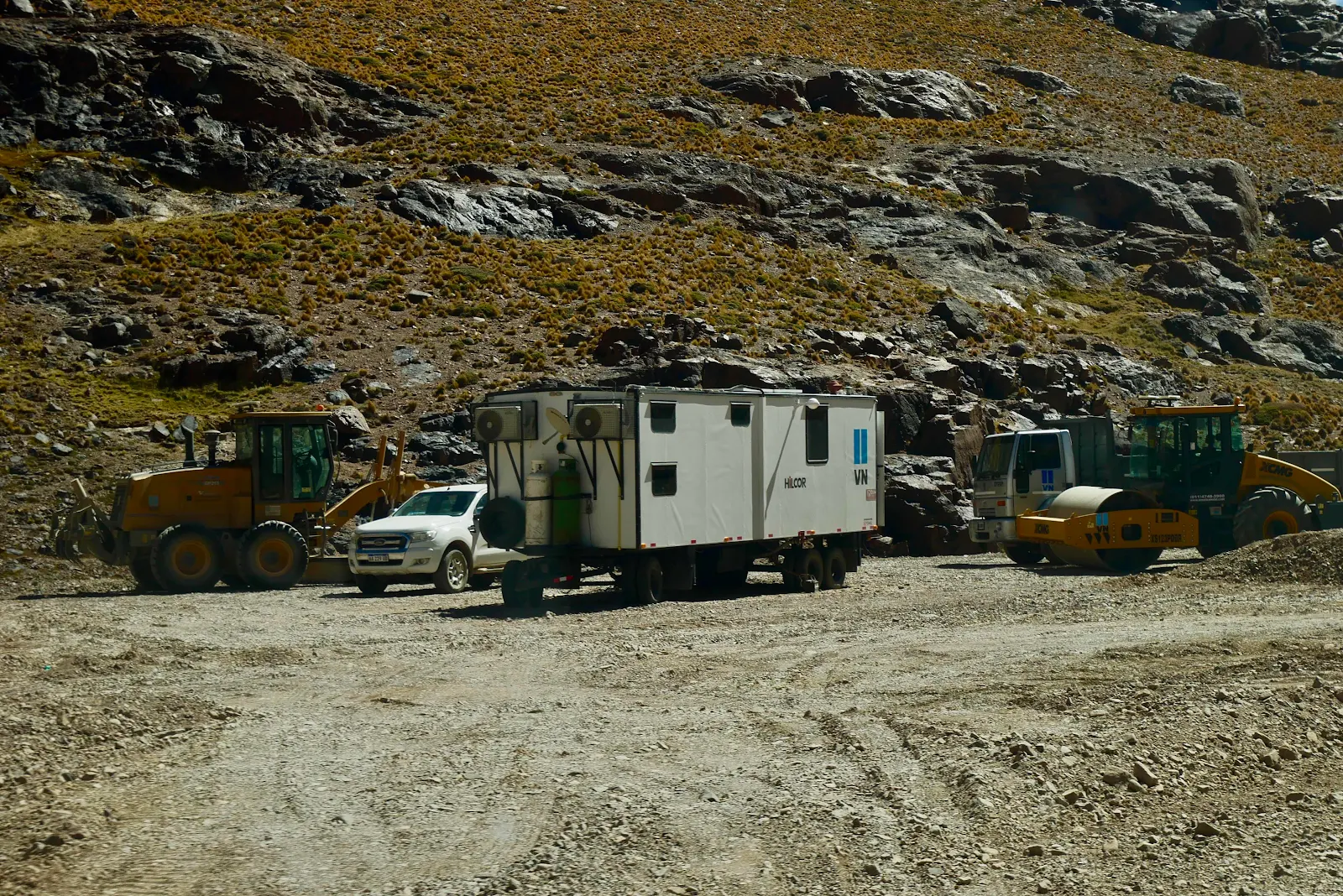
We saw Argentine road clearing vehicles parked. Working here looks like it deserves hardship pay to me.
We didn’t want to stop too much to make sure we got over the top before evening fell. At the same time we wanted to take in the beauty. A few cars passed us both ways as we trundled along no faster than twenty miles per hour and usually much less than that.
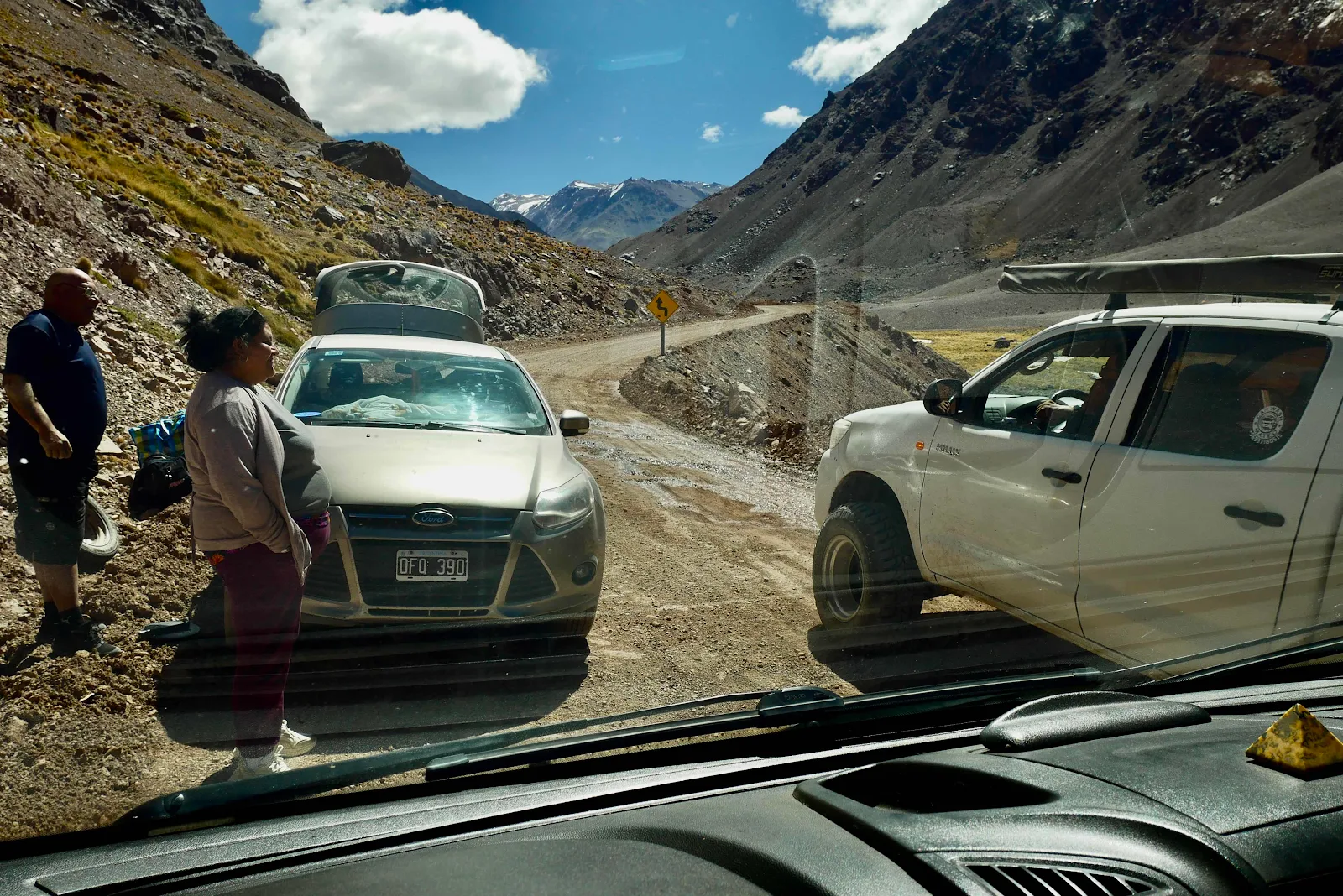
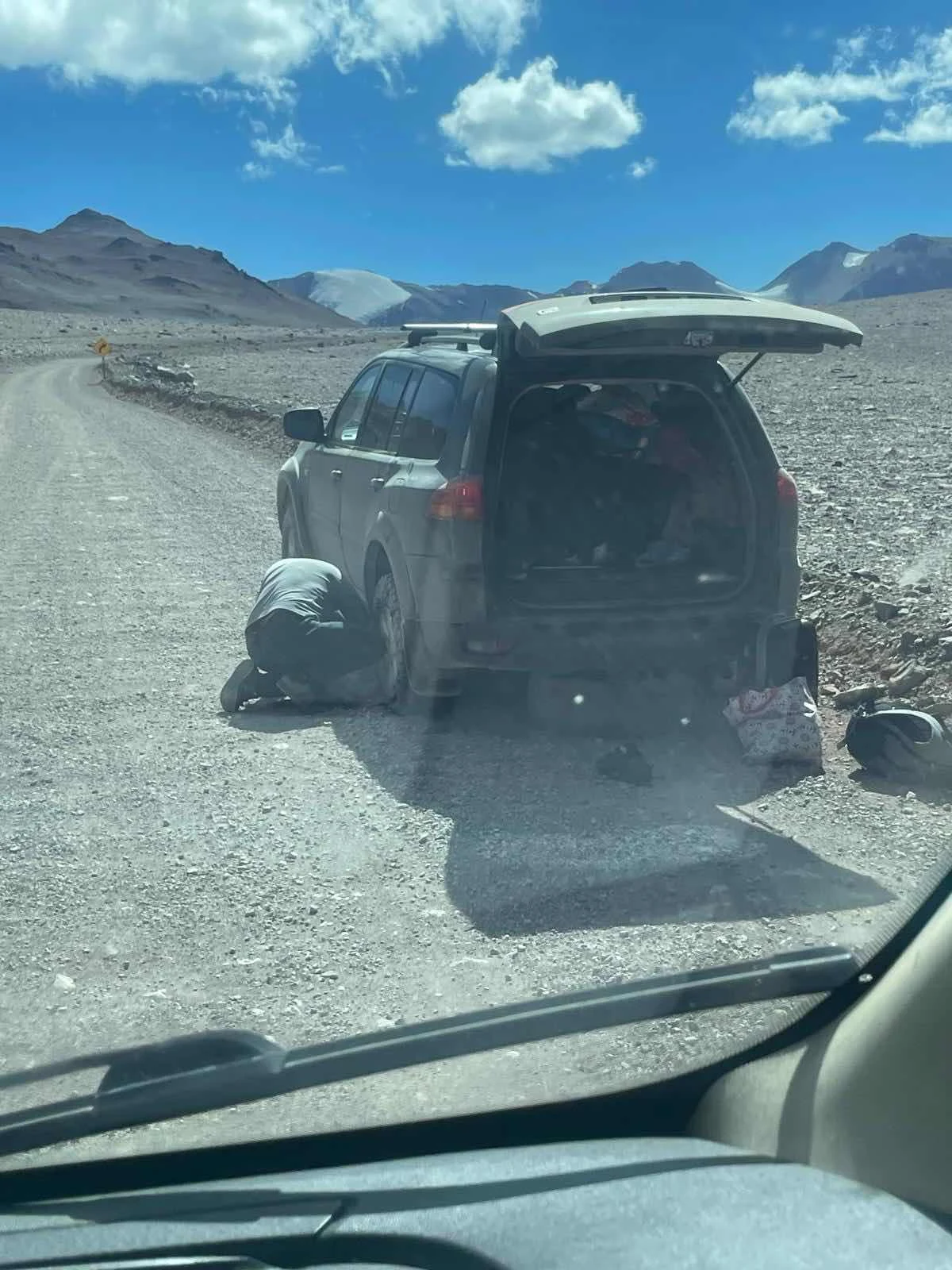
We met our first flat tire coming from Chile. They were grateful for the cold water we gave them. I was slightly concerned they didn’t have their own..
We had 30 gallons of water a full fridge but not much fresh stuff as it would be confiscated at the Chilean border, and a full fuel tank.
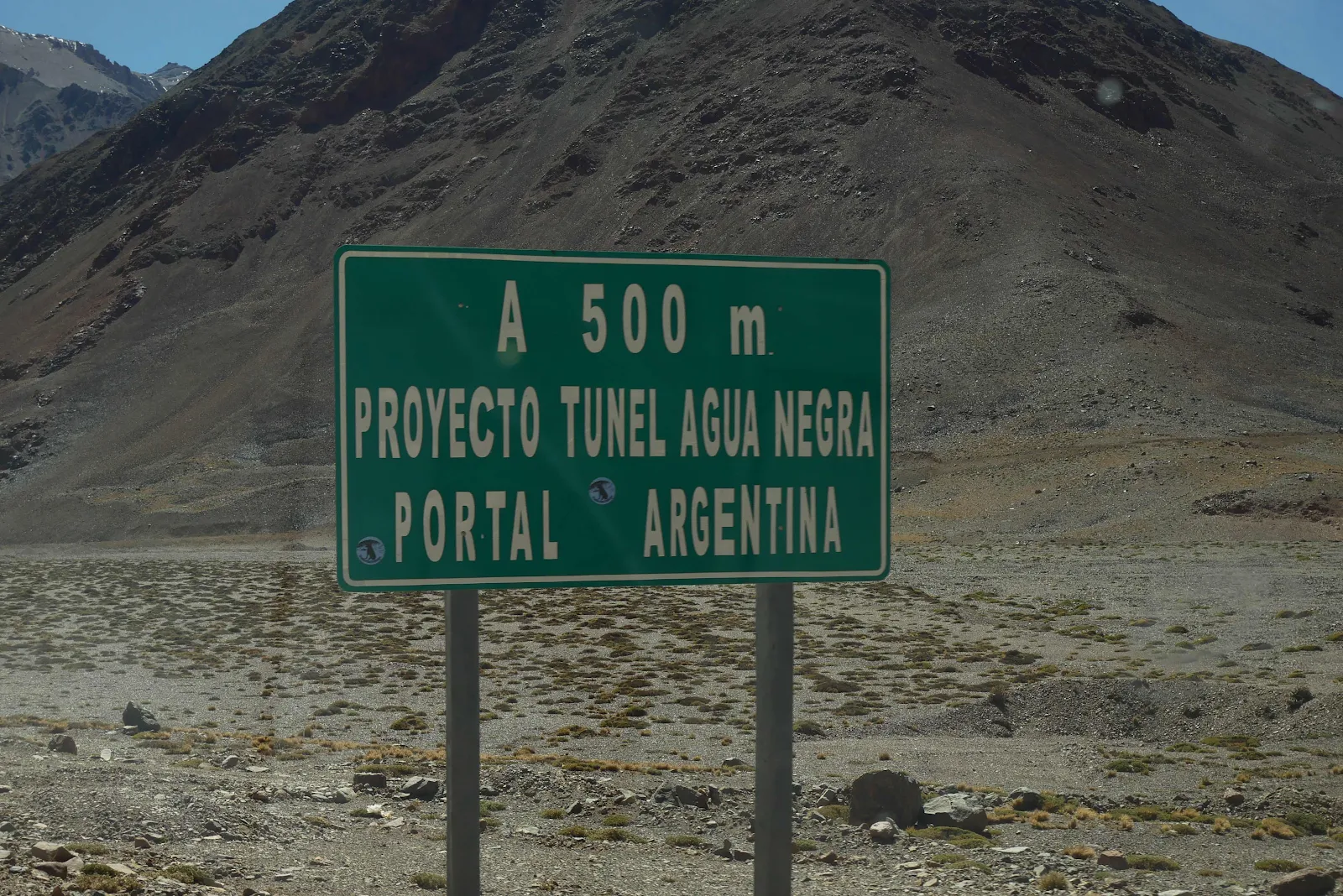
There used to be a plan to open a road tunnel here by 2027. Like all public works Argentina has decided to do nothing, not even take down the sign announcing the new roadway.
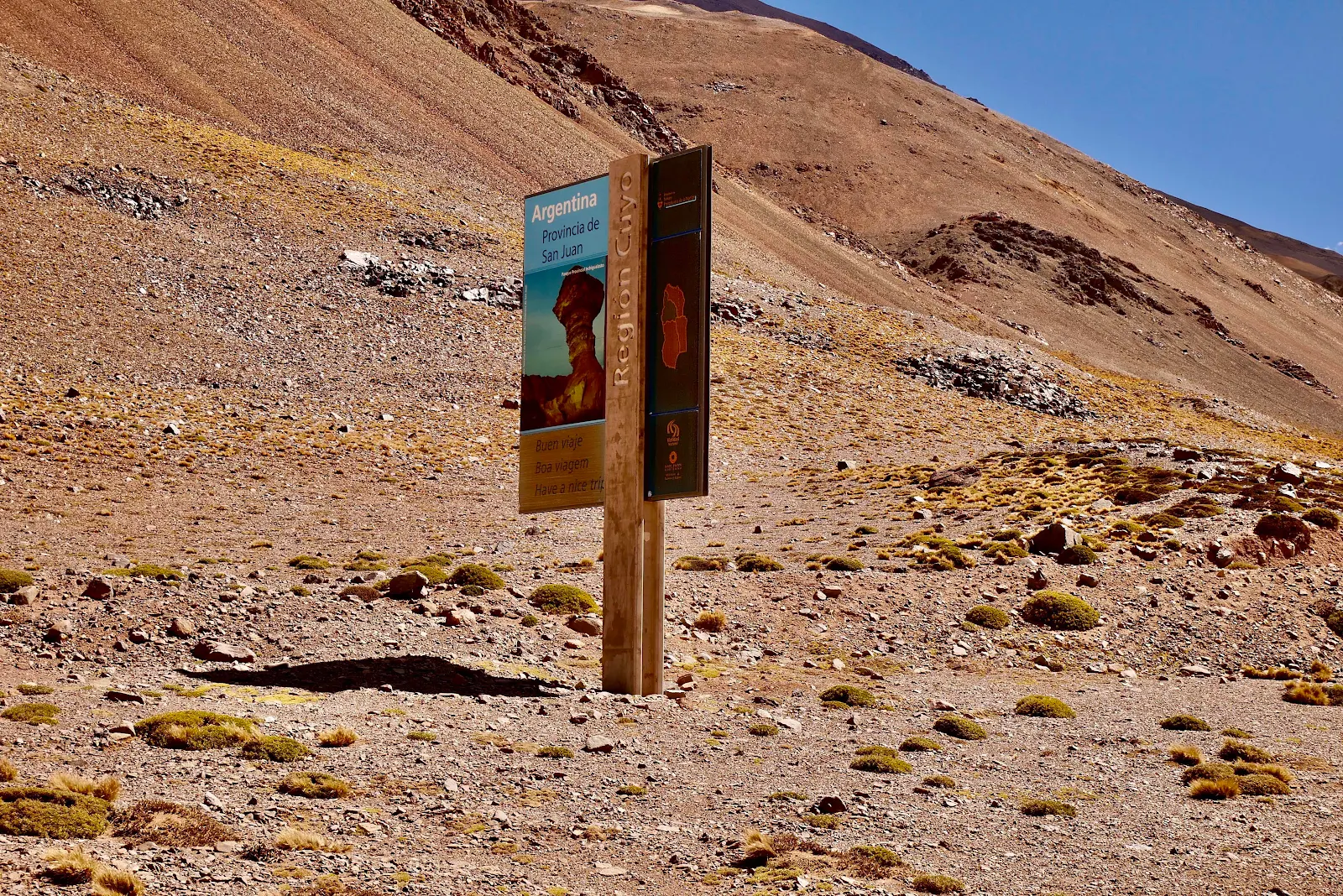
There is a tourist road sign for the Cuyo Region though looking slightly absurd on the dark side of the moon.
Fortunately for us the Argentine side of the road follows a tortuous path winding apparently at random through the hills and valleys and mountainsides.
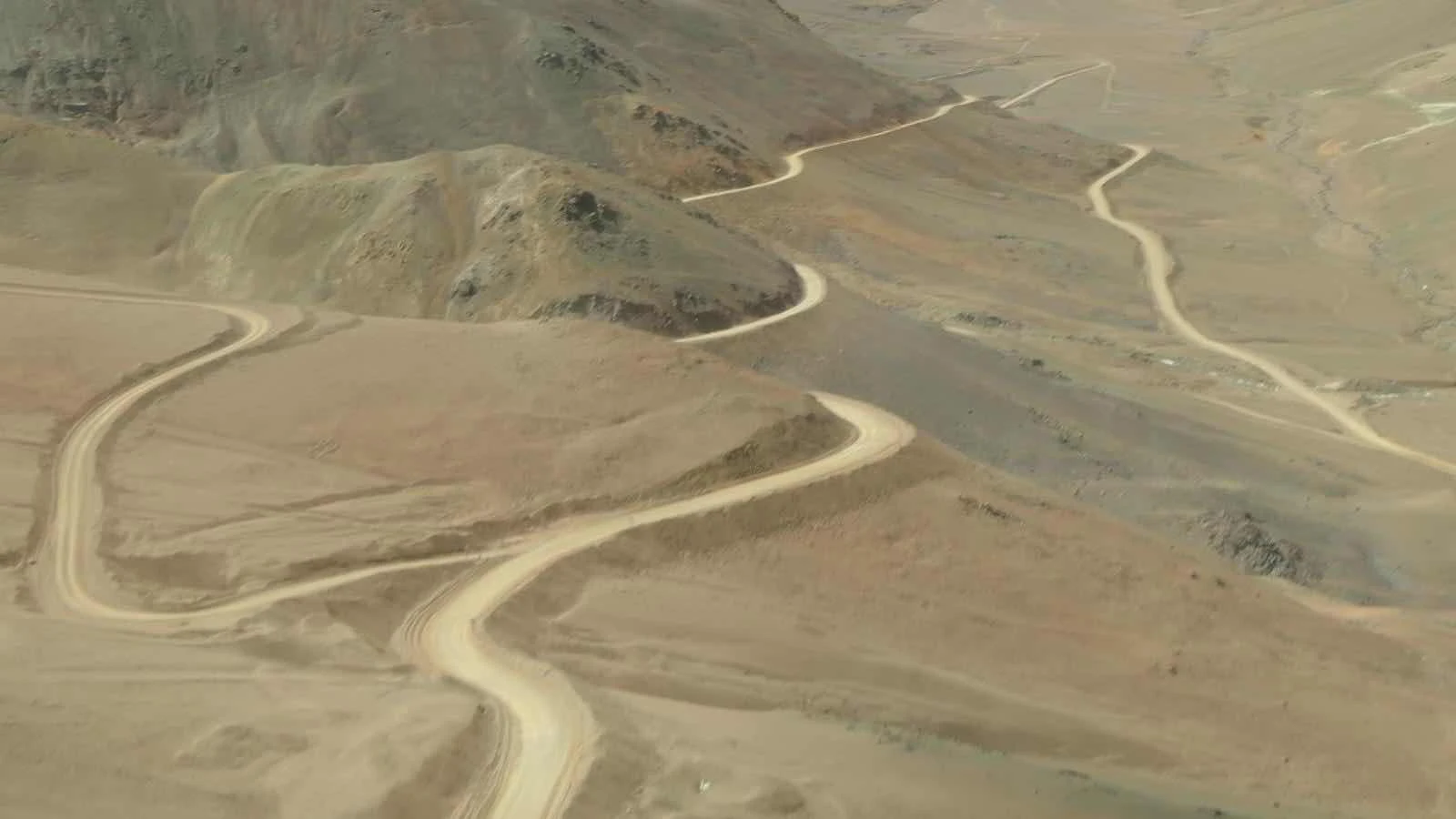
Fortunately I say because the grades were not that severe. On the Chilean side the grades are awful, straight up and down.
It is possible this stream could be the black water that gives its name to the pass but I have no idea.
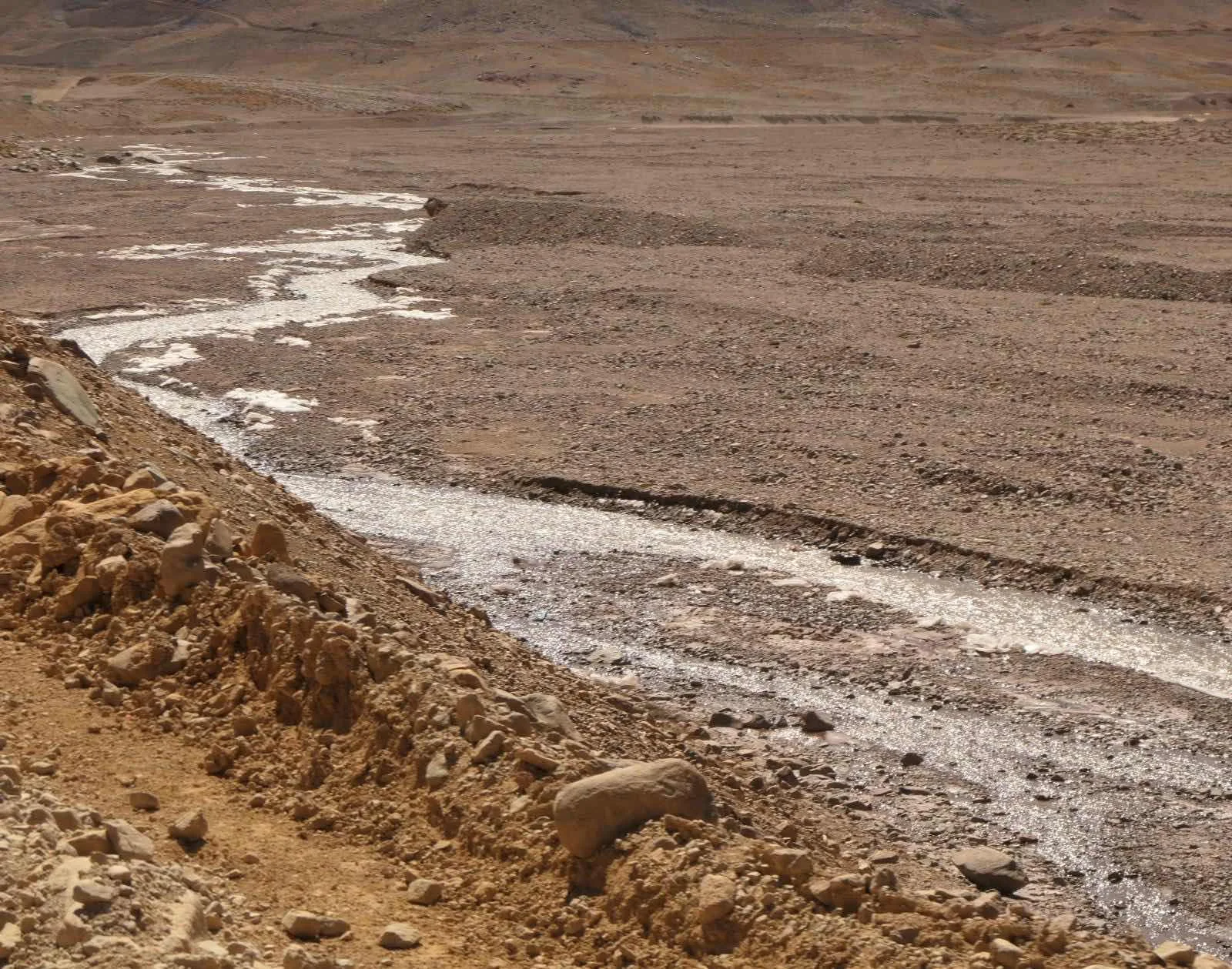
We left at 1pm from the Argentine customs and faced a lot of winding turns to get through before dark. We actually made good time but that fear of being caught out was always present.
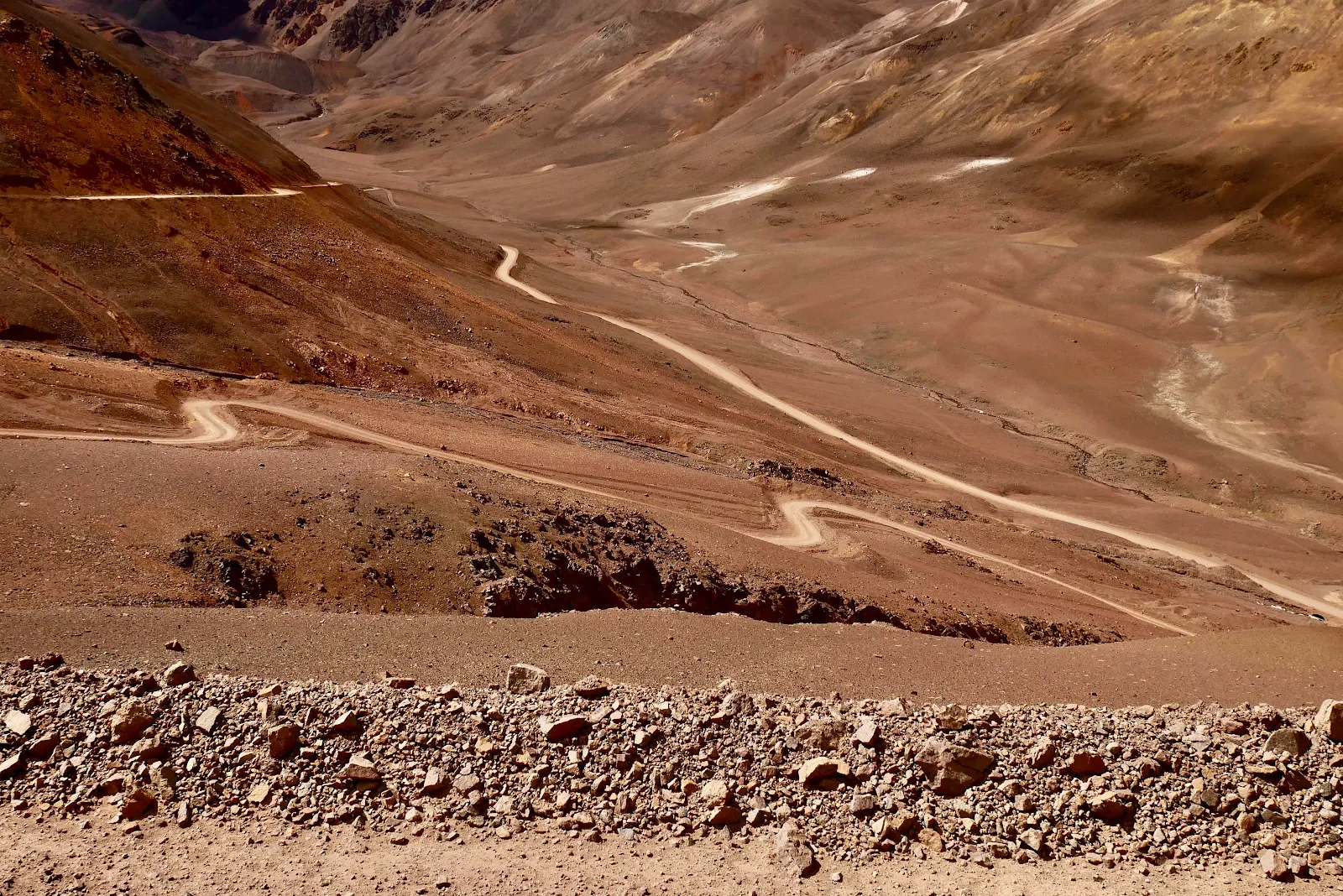
They even have side roads to nowhere in the Abomination of Desolation.
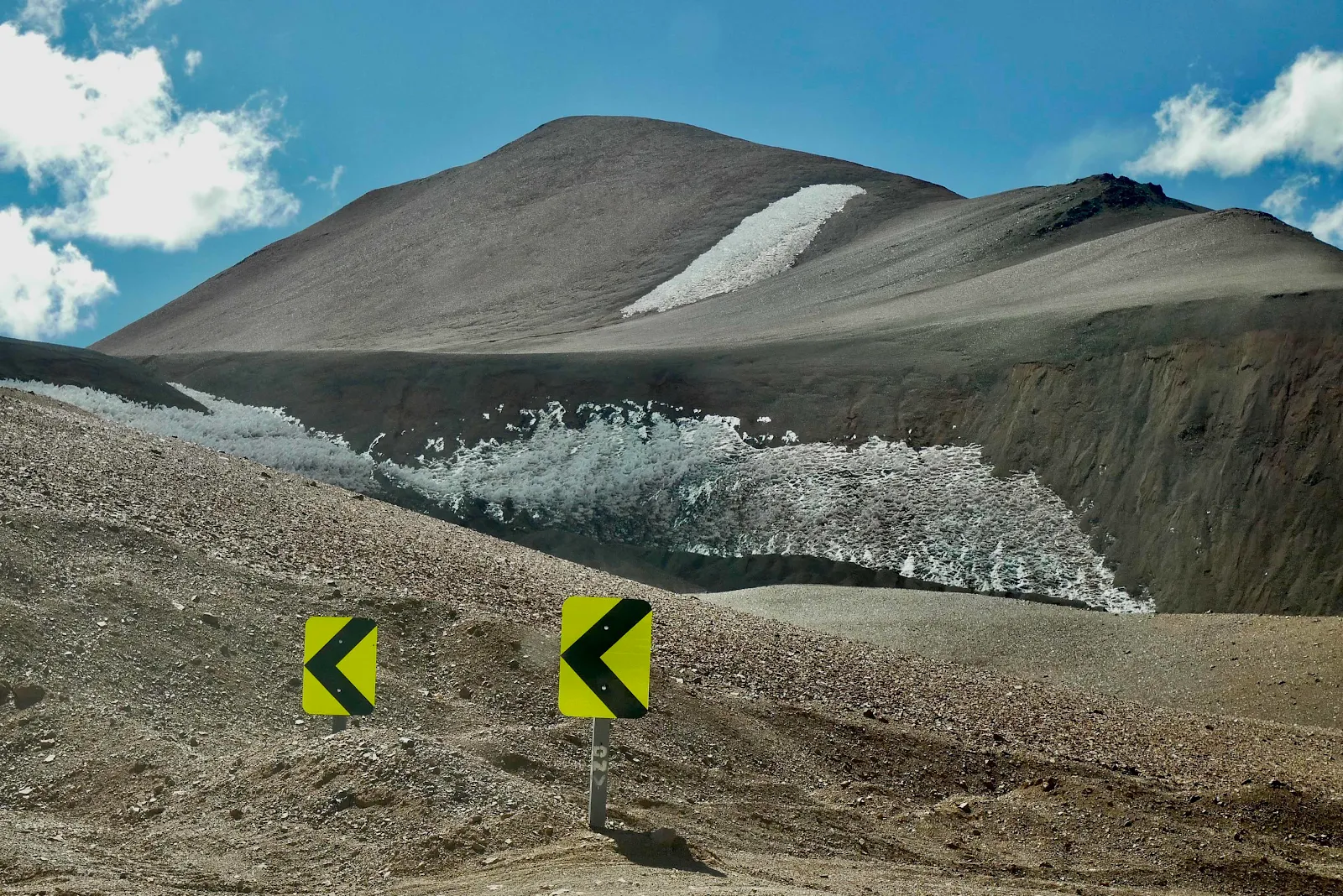
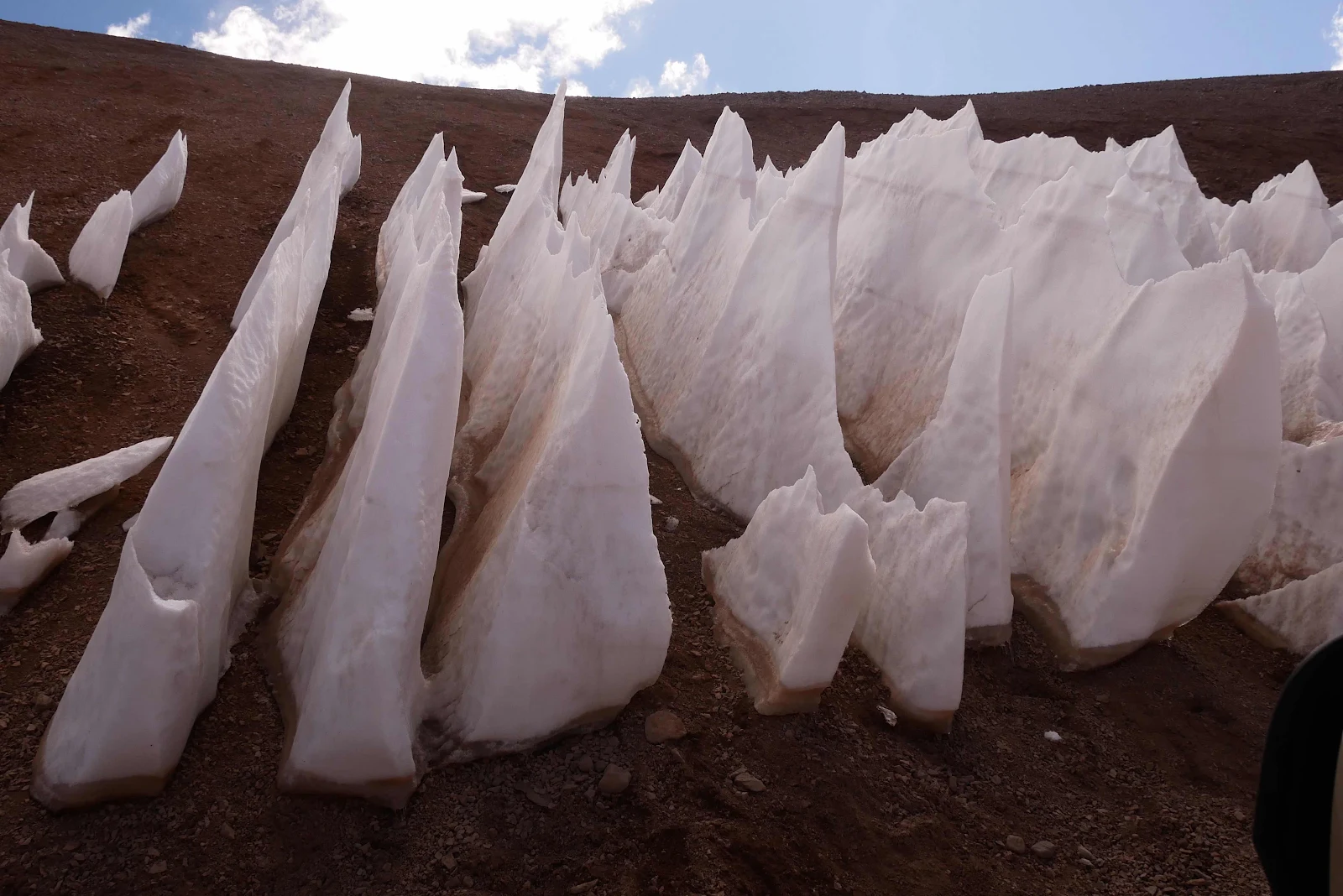
My favorite: frozen water. You chose to live in Key West to avoid this stuff. Rusty loves it.
When we saw cars coming in the distance I found the widest spot I could and waited.
The Agua Negra glacier as it looks at the of summer these days.
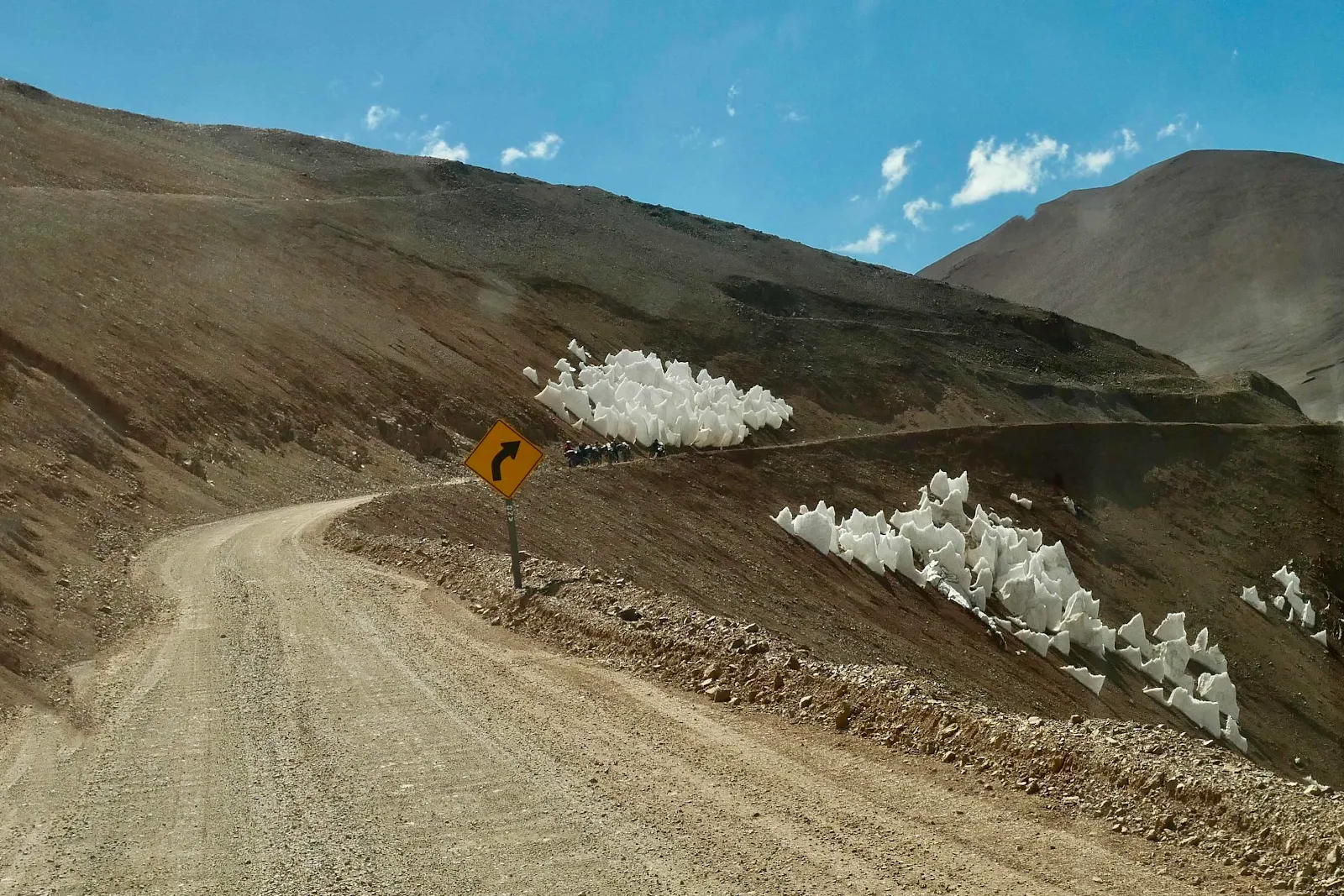
Oddly beautiful but to call it a glacier seems to be overstating the case by now.
We have come a long way in this brilliant van. Above 12,000 feet we stop to drink coca tea and pop Tylenols. GANNET2 just kept on chugging along. On the final hairpins I found the engine was losing a lot of power, crawling up to the turn at walking speed and offering no more but it never hesitated or stalled and easily picked up speed on the flat sections. It started easily when we paused right at the top and even though the check engine light came on at 12,250 feet it always does when we are at that altitude. The light turned itself off at 2500 feet when we were back in oxygen rich Chile.
The second flat tire we met. He st least refused even water as he was well equipped. Traveling alone but grinning at his own misfortune. And he was going to Chile.
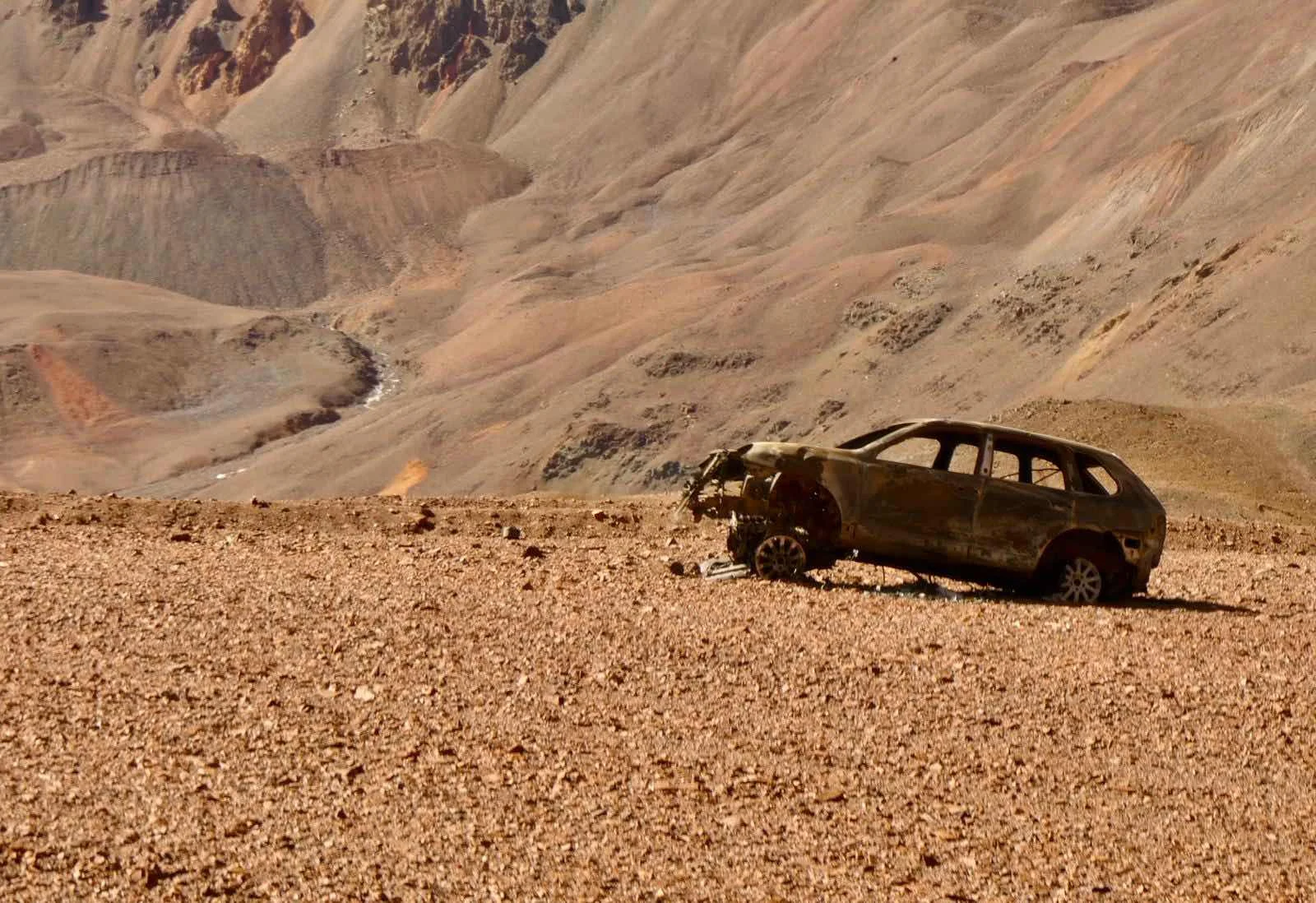
Who knows what disaster stopped this journey, below?
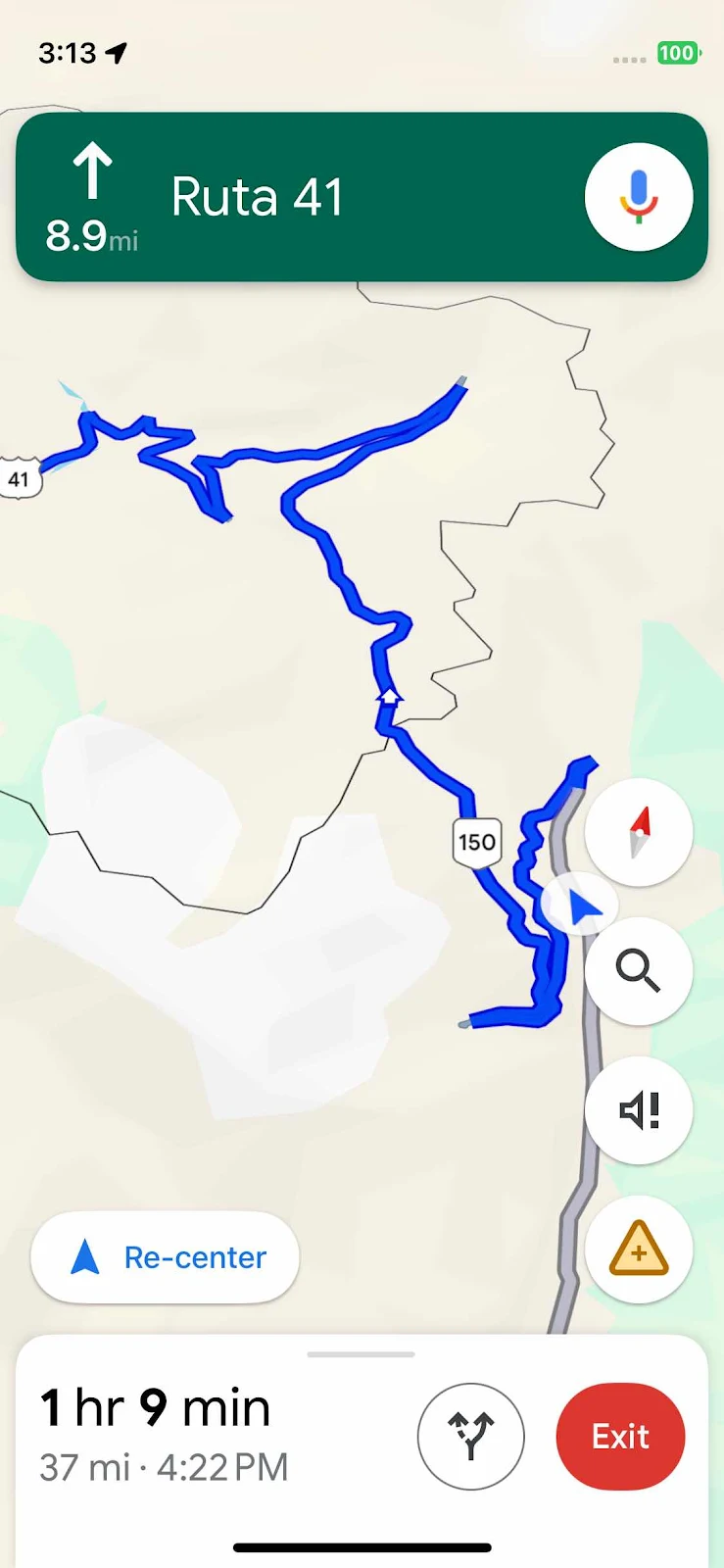
Just a few more hairpins…Ruta 41 is the Chilean border where the road changes its name. Just a few miles to go. We don’t use the metric system aboard GANNET2. We just find it easier to use miles and feet as it’s what we’re used to in any case.
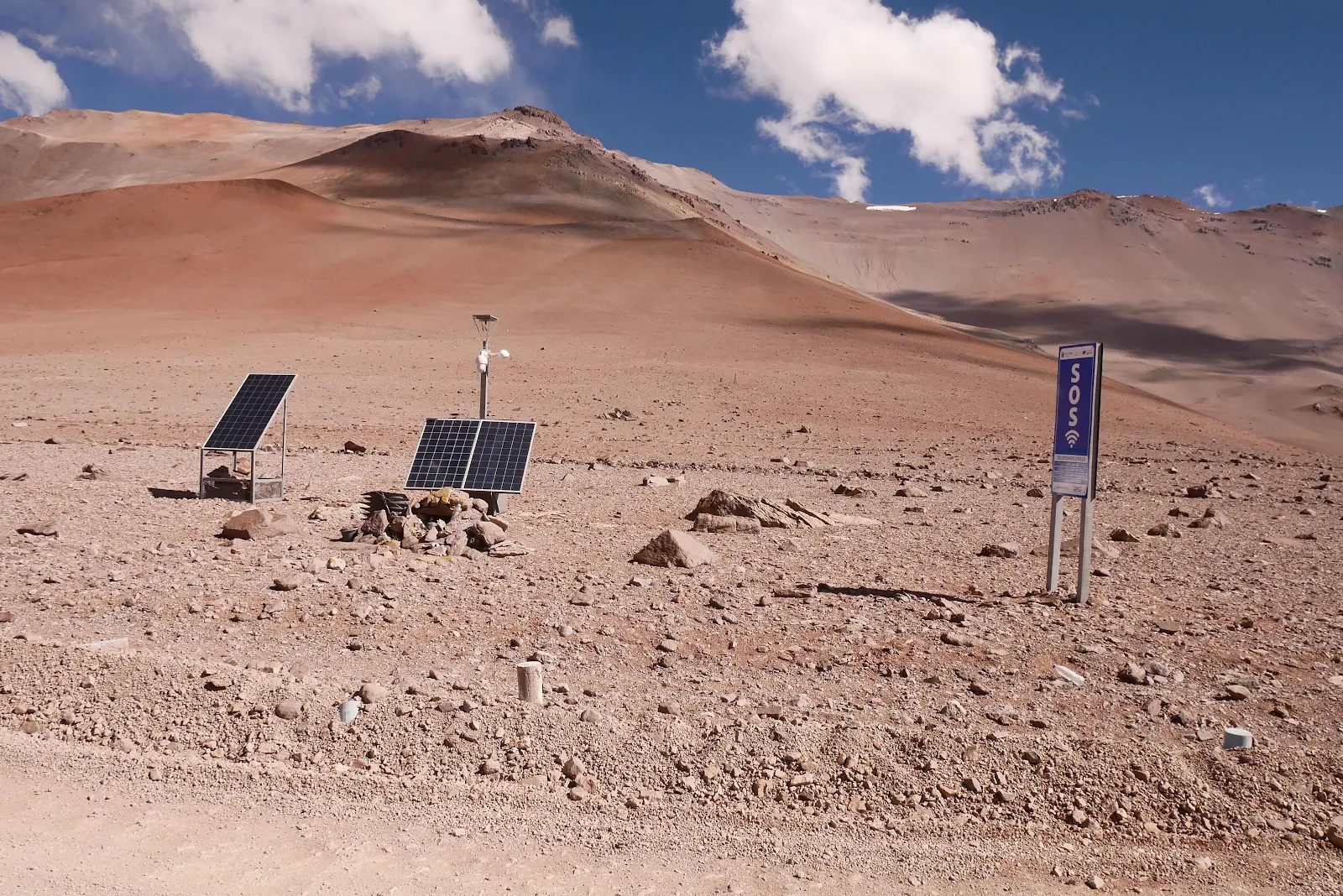
And then suddenly there we were at the top. And there was an SOS phone. We’ve learned that these phones use a WiFi hotspot to communicate with free public access. Layne got online and called Bruce to say hi from the dark side of the moon.
Rusty and I got out and went for a walk. It was cold and windy and I was lightheaded after a short walk up the hill.
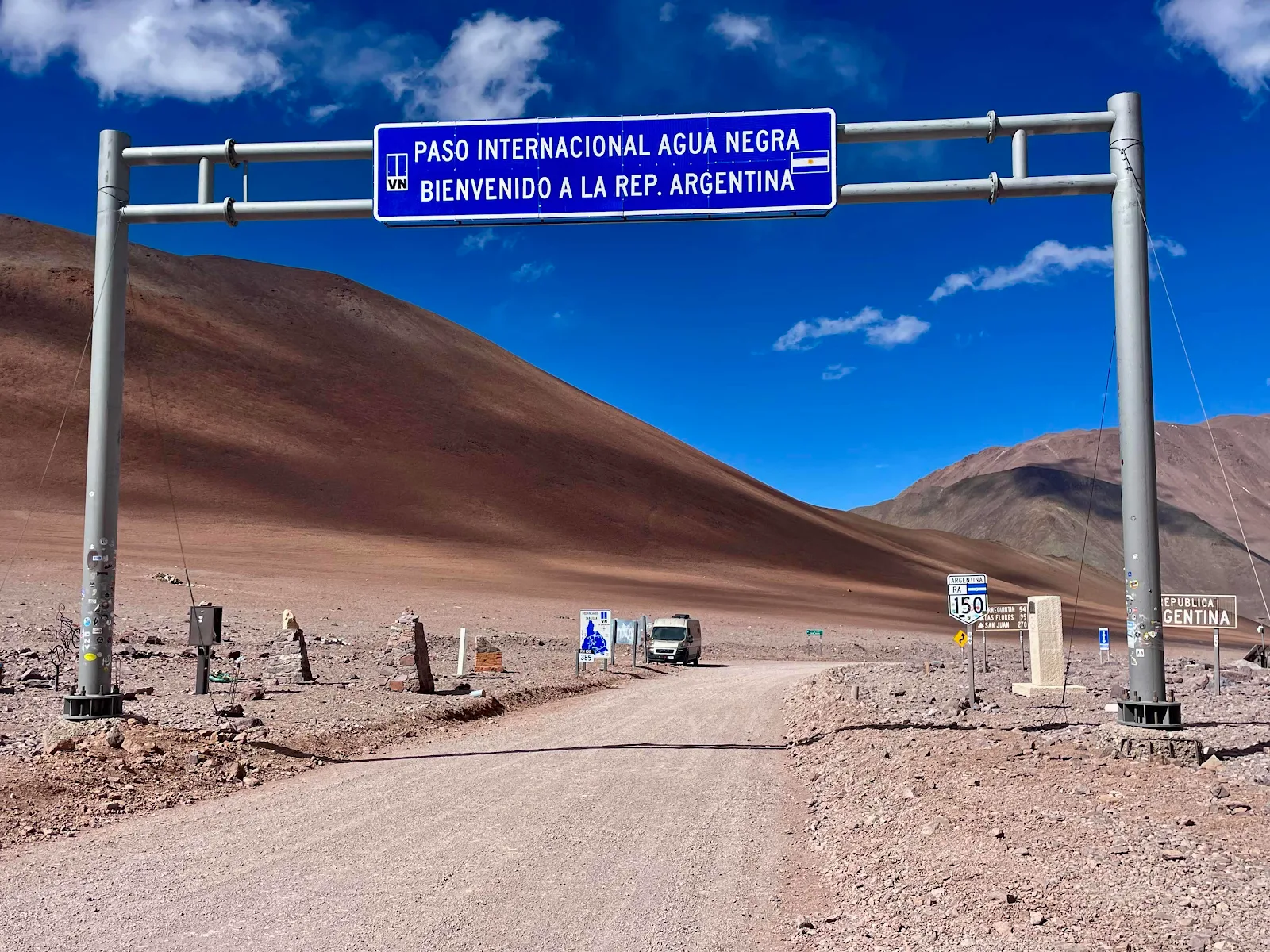
Rusty disappeared among the rocks running headlong into the wind into Chile. He felt no pain at all. I turned back to do my duty struggling not to drop my camera from my frozen fingers.
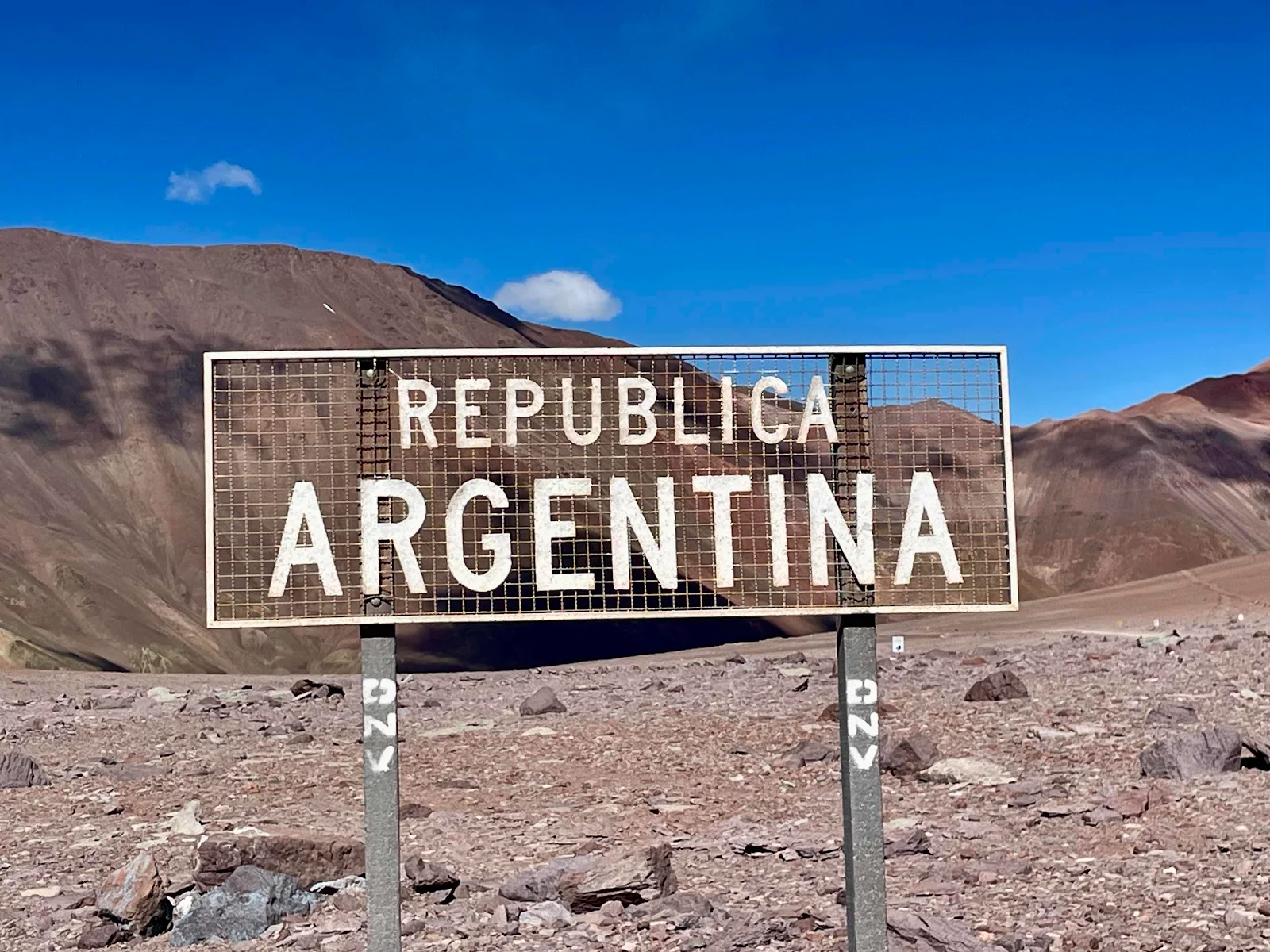
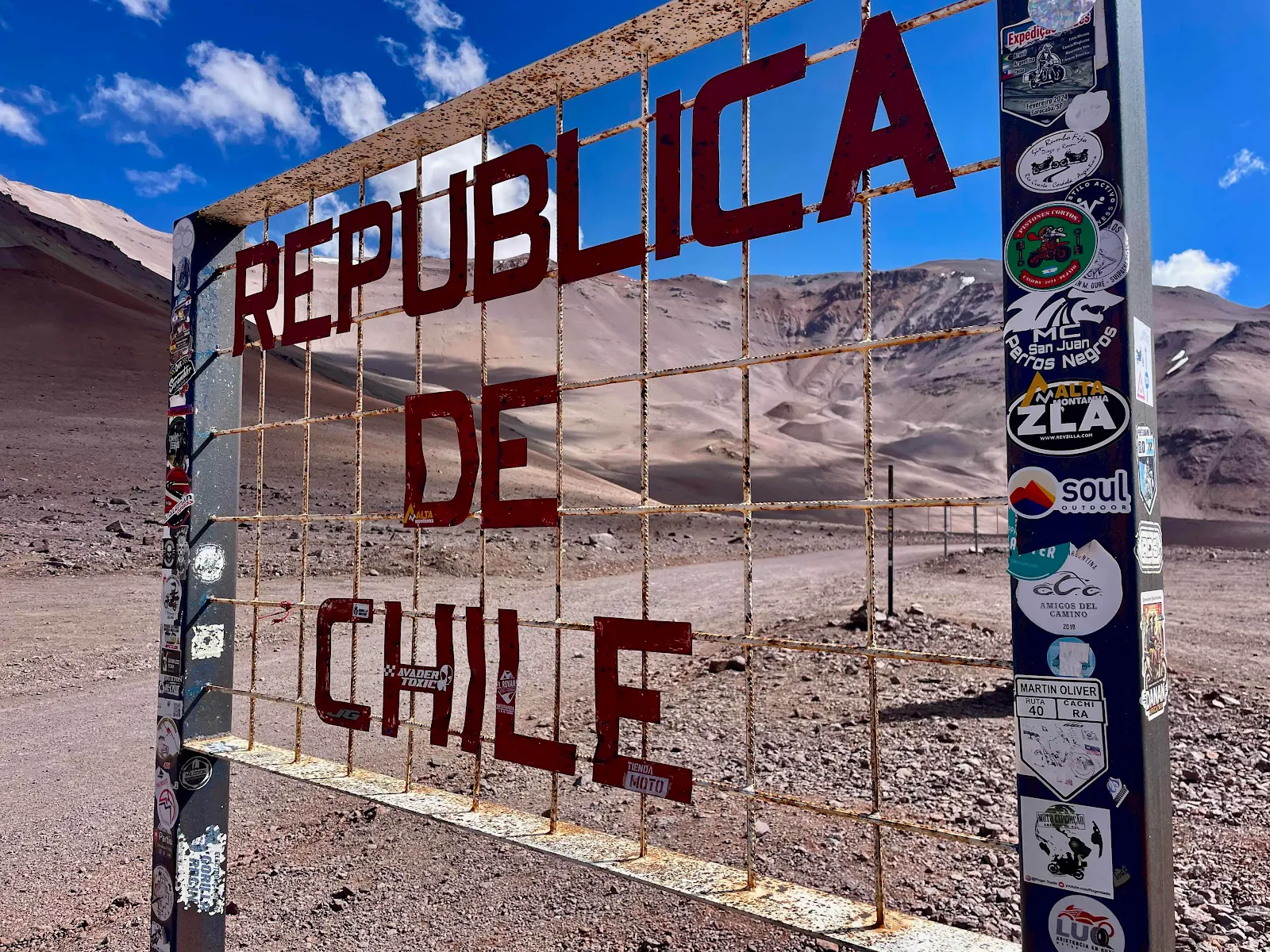
The border signs are wind proofed for this altitude.
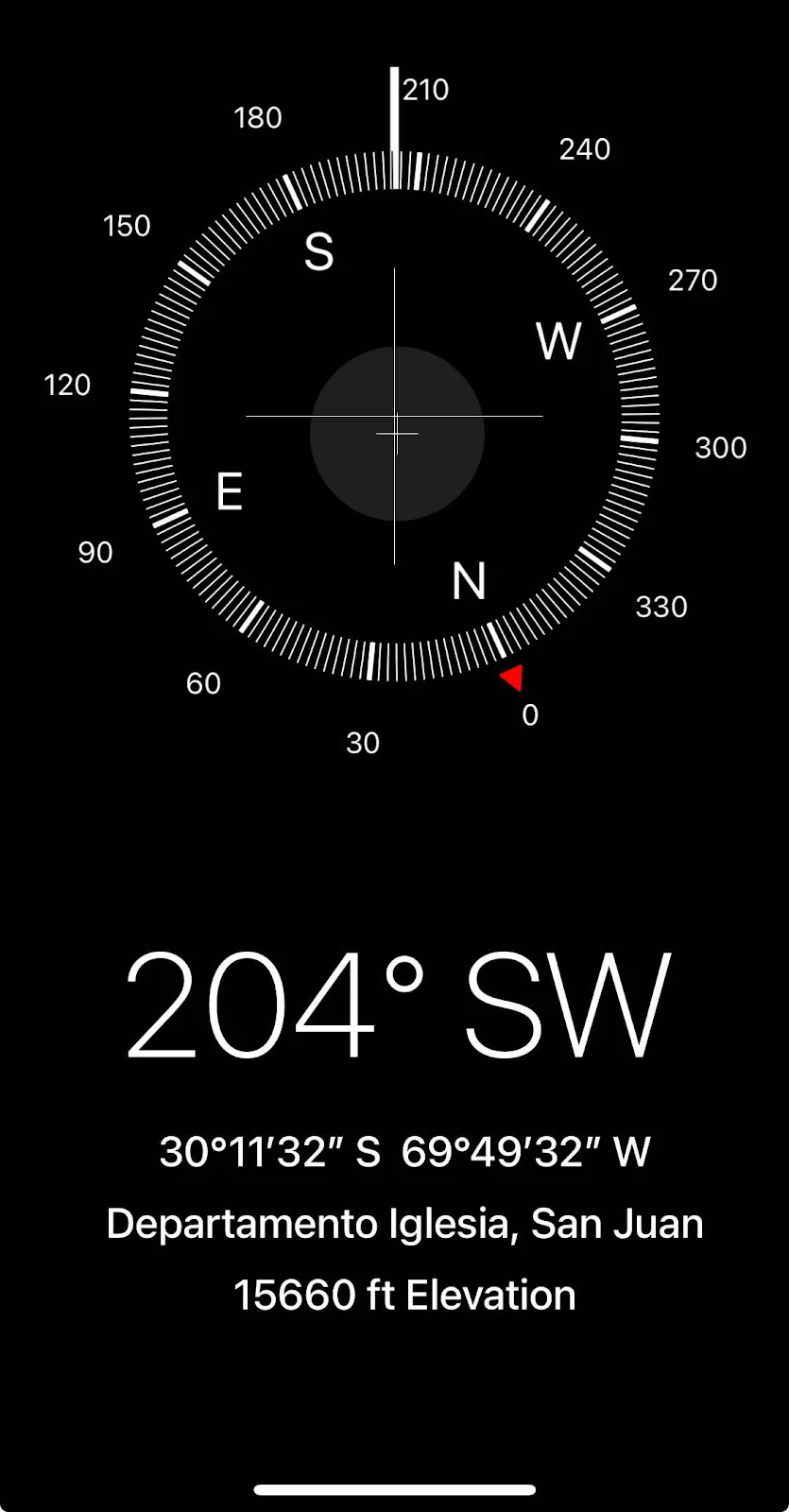
Looking back east into Argentina:
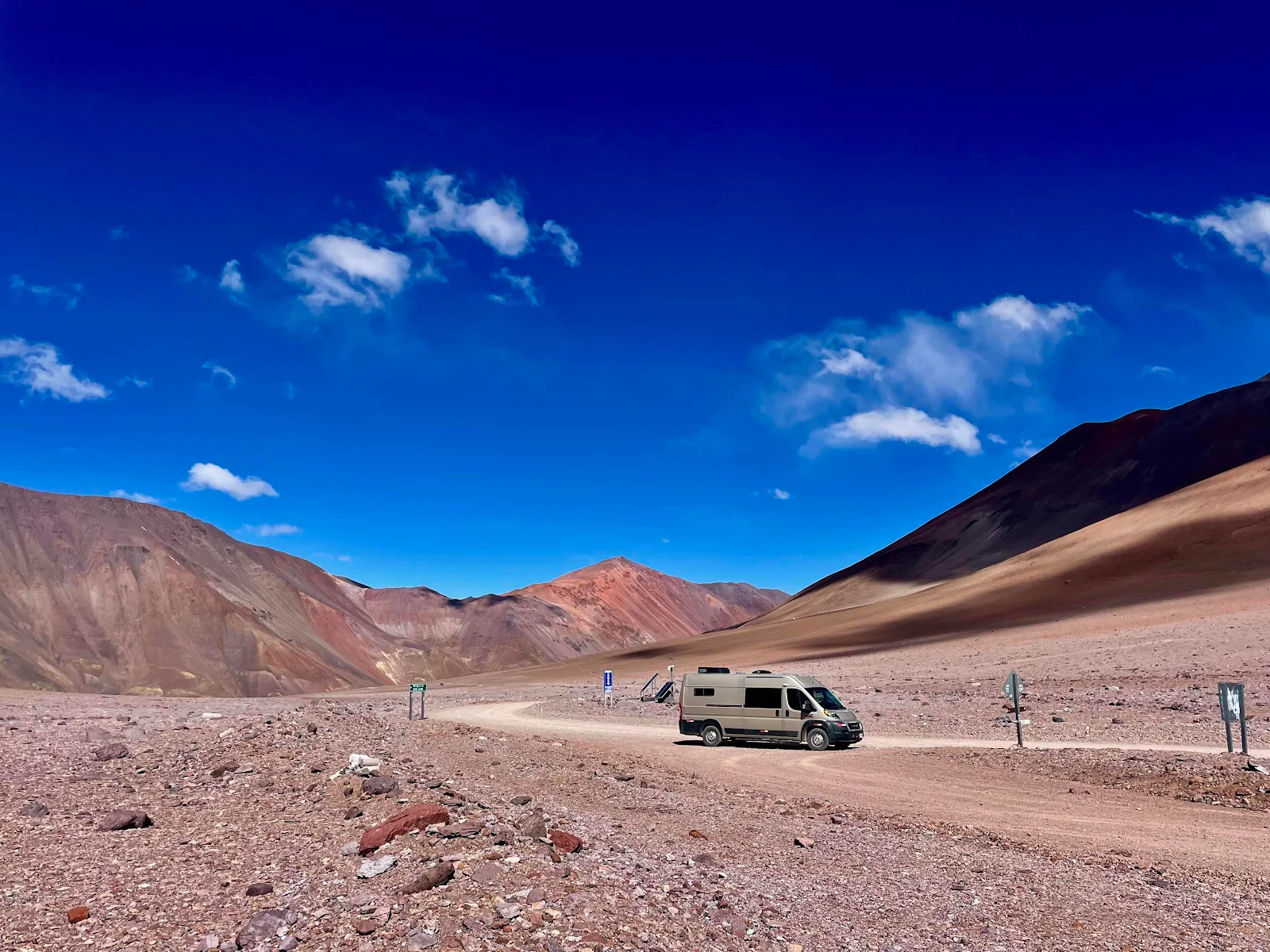
I finally met the motorcyclist we had been playing tag with on the way up. I pulled over so he could pass then we drove past him when he stopped by the side of the road and gave us a thumbs up to let us know he was okay.
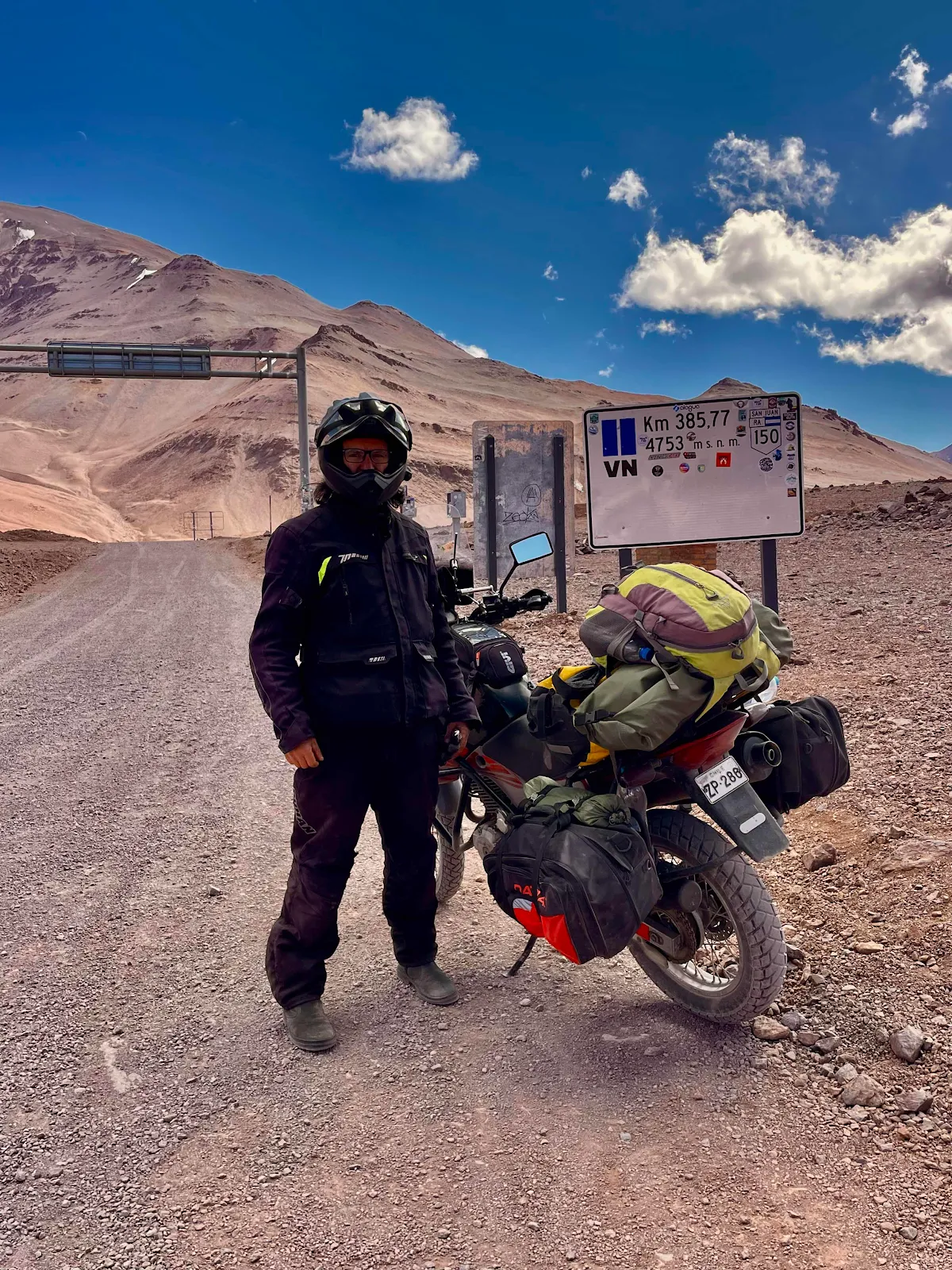
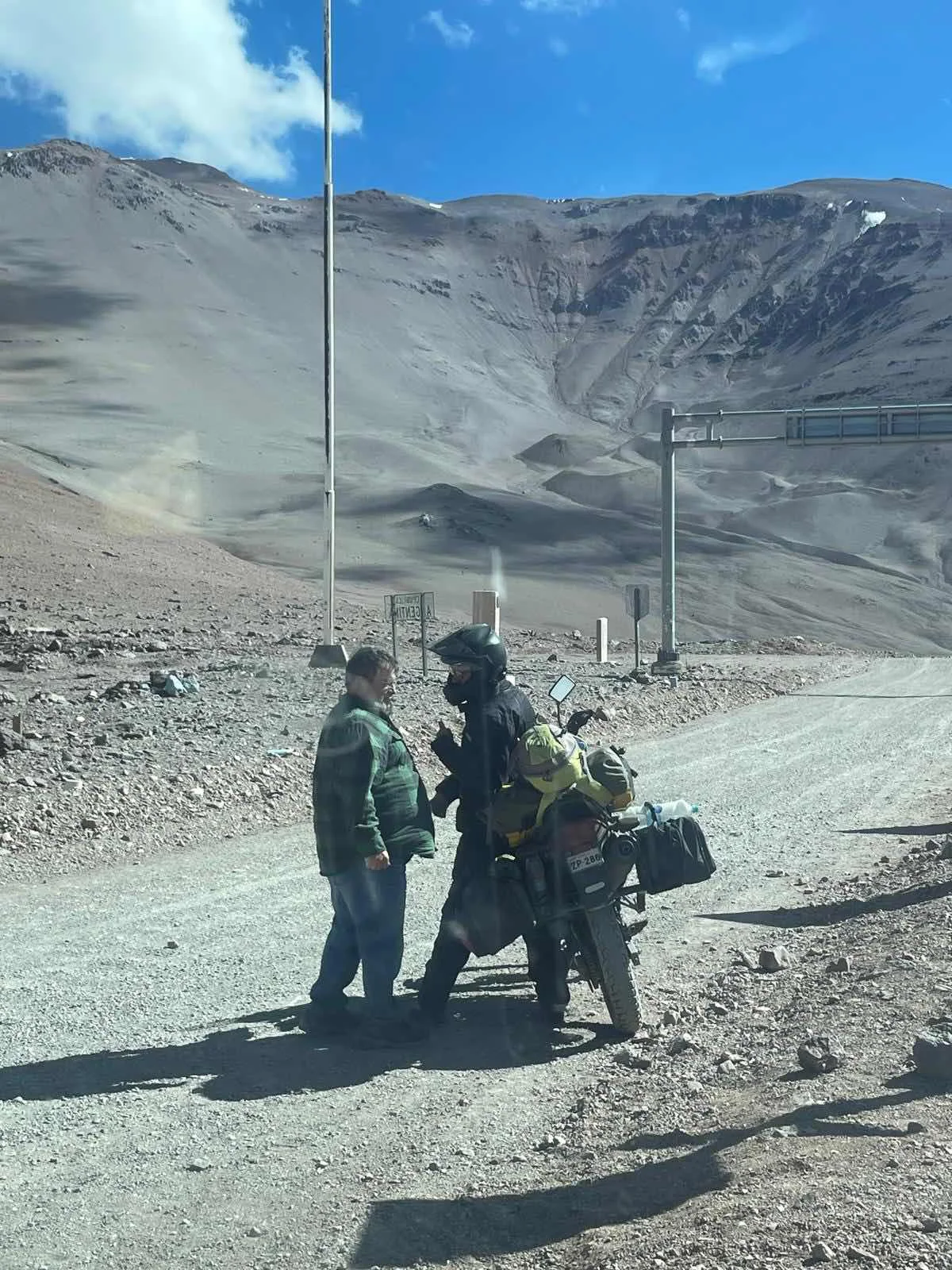
His phone was full and I couldn’t take his picture so I photographed him and promised to send him the pictures. It looks like we were coming to blows but I was trying to stay upright in the wind and he was trying to stop the motorcycle from falling on me.
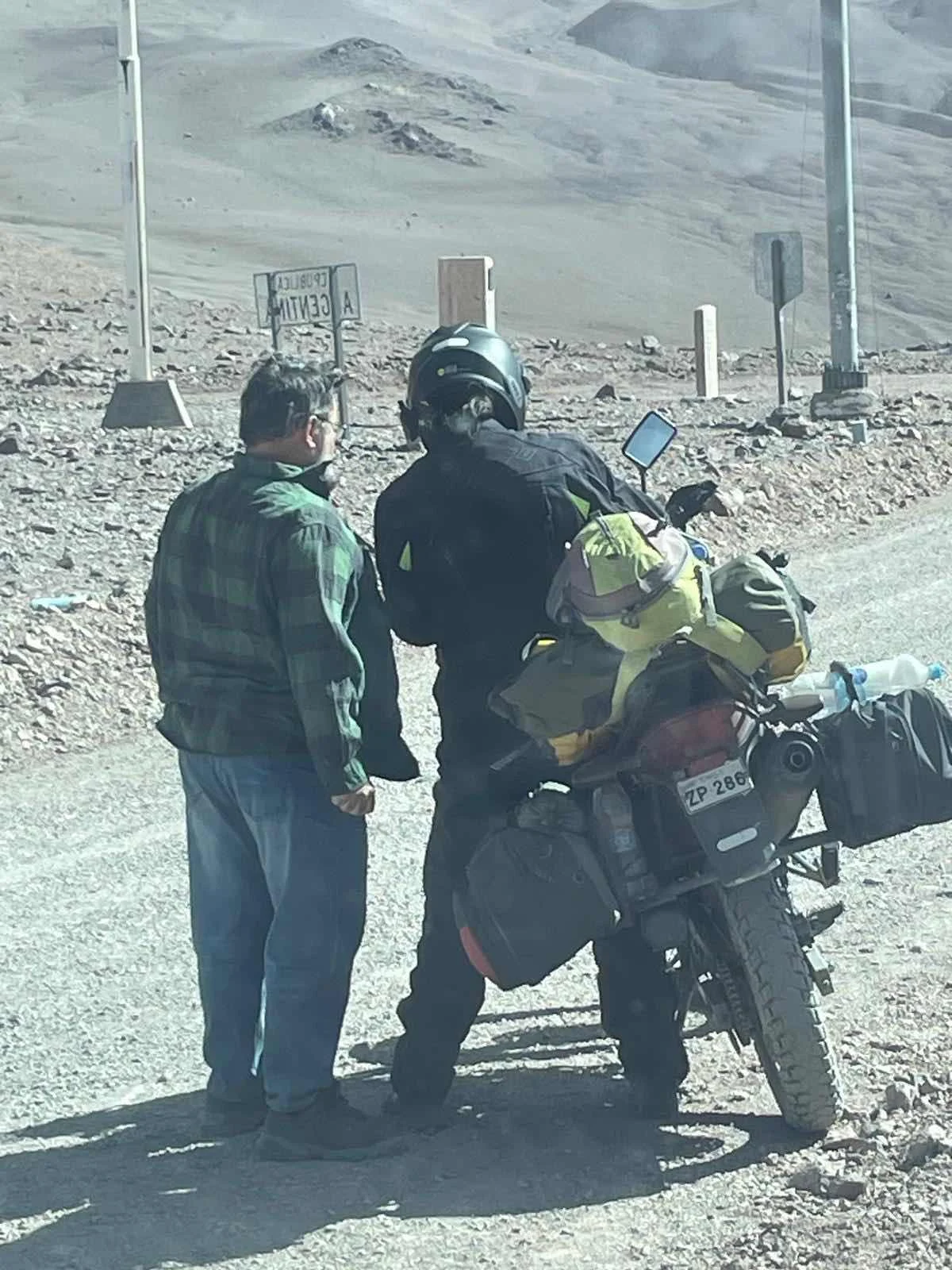
We both struggled with frozen digits and lightheadedness trying to exchange electronic addresses and in the end we got it done.
The interior of GANNET2 was lovely and warm when eventually I got in. It took both of us, me outside and Layne inside to get the sliding door open to let Rusty in. The little runt came back from his moonwalk very thirsty and ready to lie down. He got the water but we had to press on.
Time to go downhill into Chile.